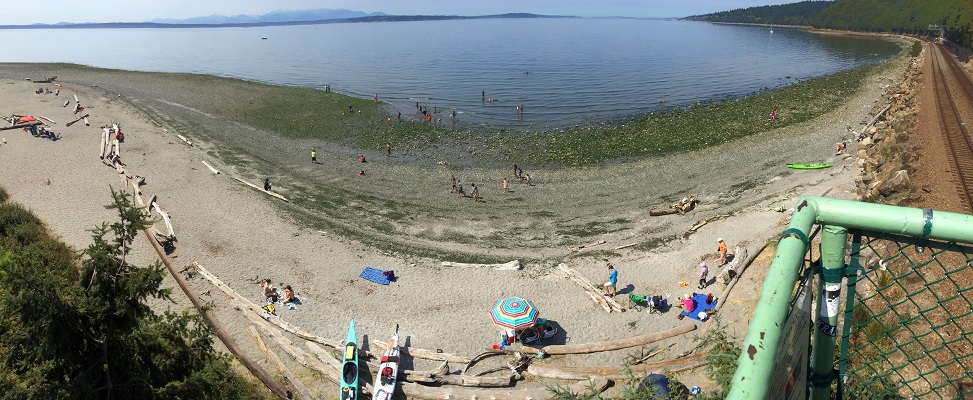
The foot bridge over the railway track offers a nice panorama of Puget Sound, its shoreline and the Olympics in the distance. (There are no views of the Seattle downtown skyline .. probably a good thing, right?).
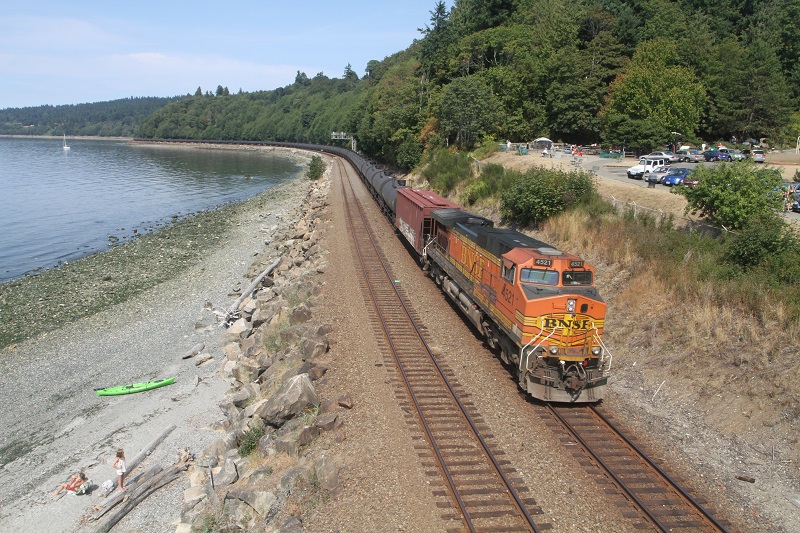
I drove out to Carkeek* Park on the northern outskirts of the Seattle metropolitan area this Sunday afternoon to enjoy some of the sunny weather. The Park is big .. 216 acres, and offers hiking trails and playgrounds in addition to the strip of pebbles and rough along Puget Sound. I waited for a train to come by, and my patience was rewarded : a Burlington North-Santa Fe oil train came along. I counted about 110 cars on the train!
*named after an English building contractor who came to Seattle in 1875.
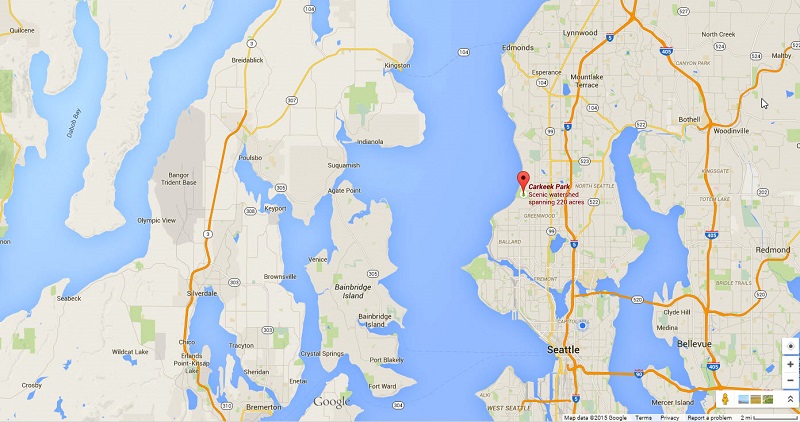
Carkeek Park’s location on the Puget Sound.I am on the bridge and looking north, and the train has just – all of it, finally – passed under the foot bridge. The front engine is already out of sight, snaking around the corner in the far distance up ahead.
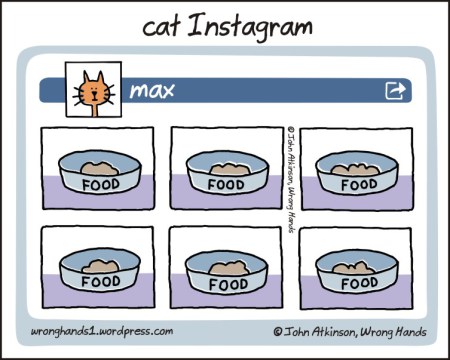
This cartoon is from John Atkinson’s ‘Wrong Hands’ cartoon blog, here. For my readers that may not know what the heck Instagram is, and what the cartoon pokes fun at, let me help. Instagram is an online mobile photo-sharing service. Its users (you need to set up an Instagram account first) take pictures and share them on Facebook and Twitter. People take all kinds of silly pictures with their phones, and many times of the food or dessert that they are about to eat : a totally 21st century social media phenomenon. So here we have a smart and dexterous kitty cat called Max, using his mobile phone and an Instagram account to post pictures of his food everyday. Go Max! How about a mouse?
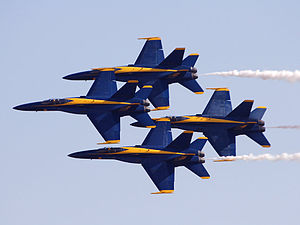
[From Wikipedia] The Blue Angels F/A-18 Hornets in their diamond formation. There is only 18 inches between the wingtip and canopy of the aircraft.It’s Seafair Weekend here in Seattle, part of a month-long series of events that include parades, airshows over Lake Washington, and a hydroplane boat race on it as well. Dare I say, this display of airplanes tearing through the air with ear-splitting noise, and the boat races, are going against Seattle and the region’s ‘pacific’ and environmental sensibilities. Just this Thursday Greenpeace protesters dangling from a bridge in Portland tried to prevent Shell Oil Company’s icebreaker from leaving its repair dock on the Willamette River. Thirteen of them had spent the better part of 40 hours in climbers slings and on portable platforms!).
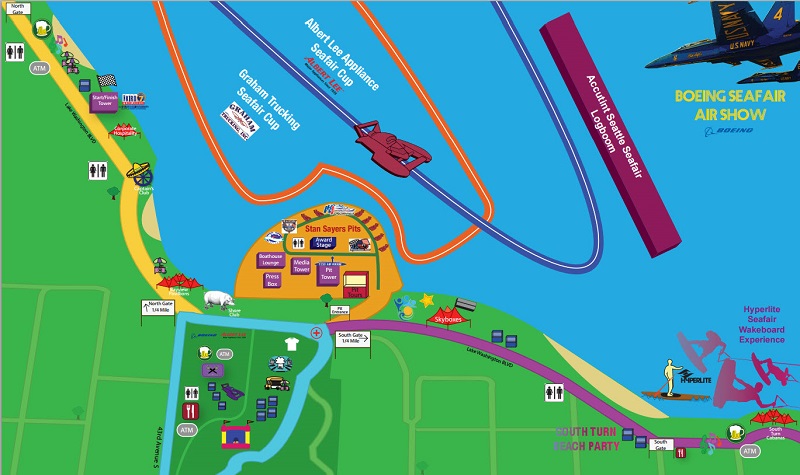
A map of the Lake Washington shoreline where the festivities are centered. The ‘logboom’ area is where motor boats and yachts are allowed to view the events from the water. Log boom tickets are NOT CHEAP, though .. starting at $400 and going up from there.
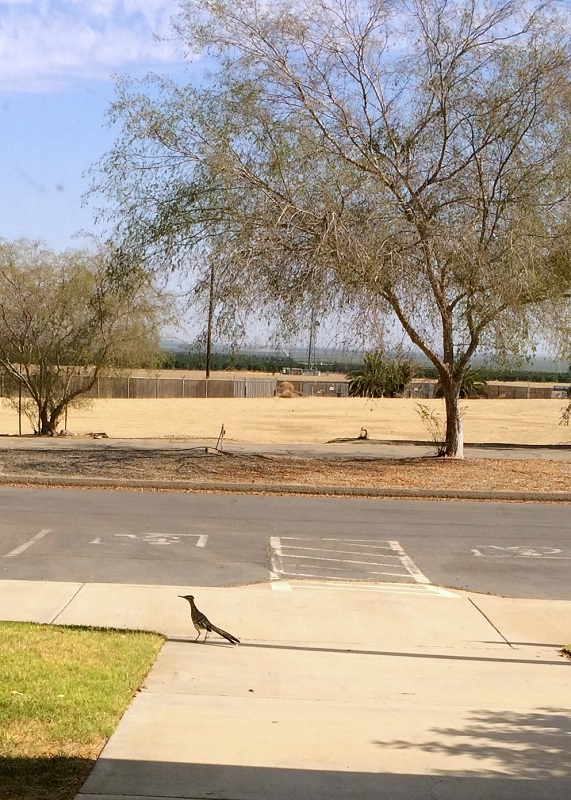
A road runner at our little office building came by to say hello (the real one of the namesake cartoon character in Wile E. Coyote and The Roadrunner). Now I want to watch some of those cartoons again, just to hear The Roadrunner say ‘Beep! Beep!’.
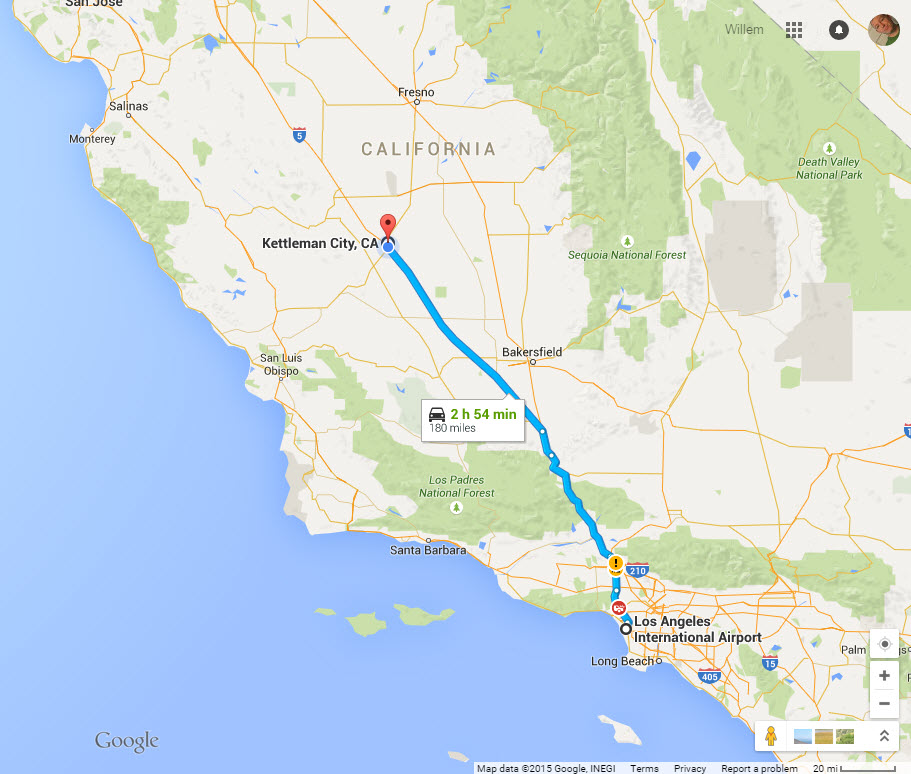
It was a long haul back from Kettleman City to LAX International Airport. I dropped off the rental car without refueling it since I was cutting it close for making my flight. Then our Hertz rental car shuttle bus was packed, and the Alaska Airlines stop was the last one (of six stops! Man! Are the contractors done yet with that LAX Train/ Automated People Mover System as it is called?). I see the now-infamous LaGuardia airport in New York City (it opened in 1939) is finally going to get a $4 billion make-over with a high-speed ferry and train connections. Construction of the project’s first half is expected to start in 2016, with completion scheduled for 2021.
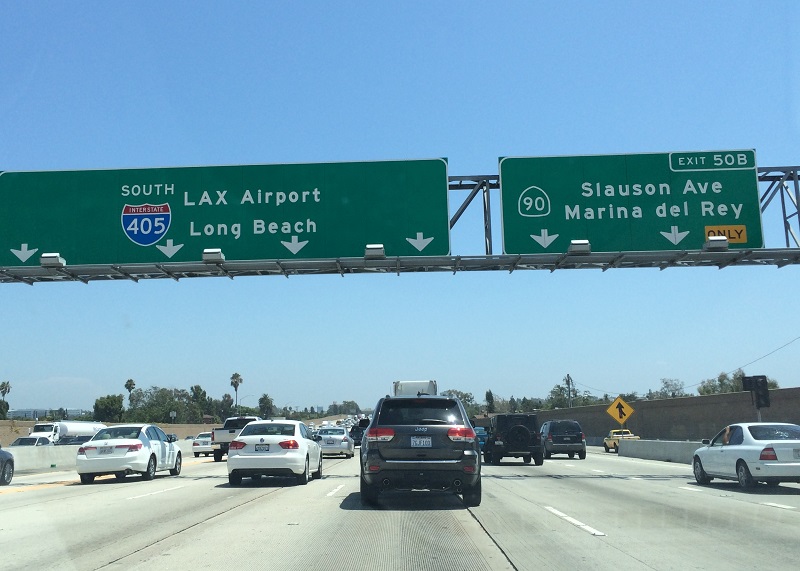
The San Diego Freeway or 405 South was full of traffic but at least we kept moving.
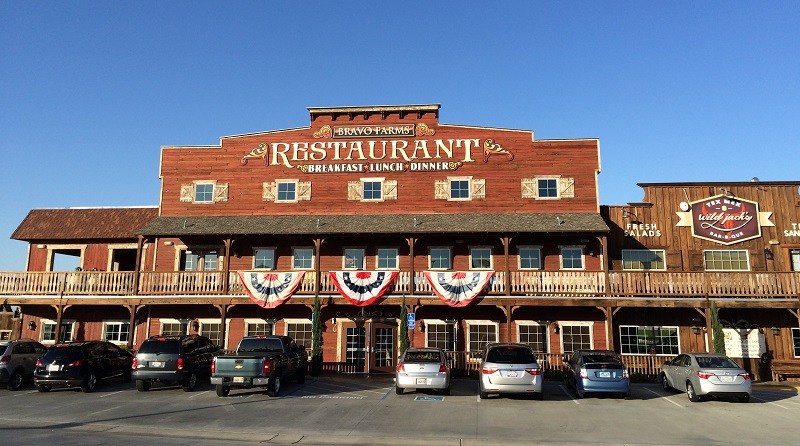
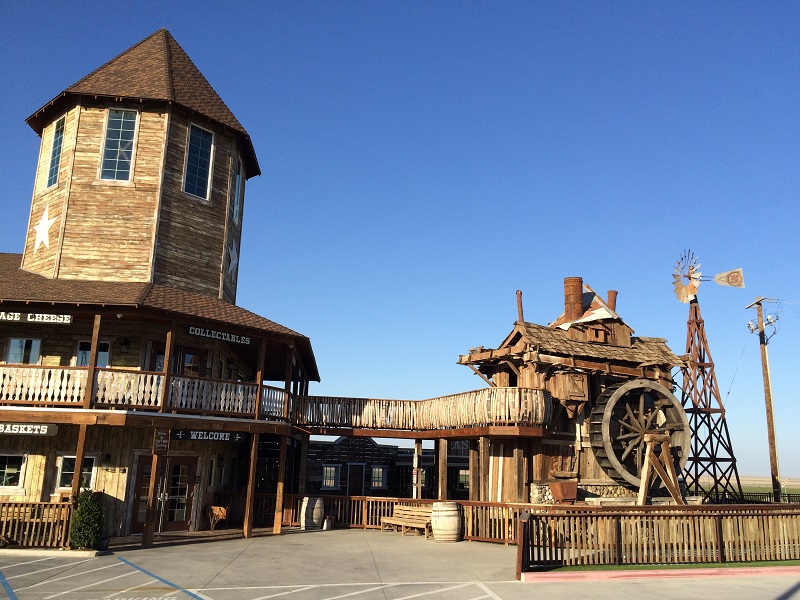
It was a scorcher .. the temperature in the outskirts of Kettleman City here in the sun-scorched Central Valley in California went up al the way to 110°F/ 43°C today. Here are pictures of the old-fashioned ‘Wild West’ storefronts along the main plaza in Kettleman.
The Bravo Farms Restaurant and other storefronts in Kettleman City’s main plaza.More structures in the Wild West style, at the end of the storefronts in the main plaza in Kettleman.
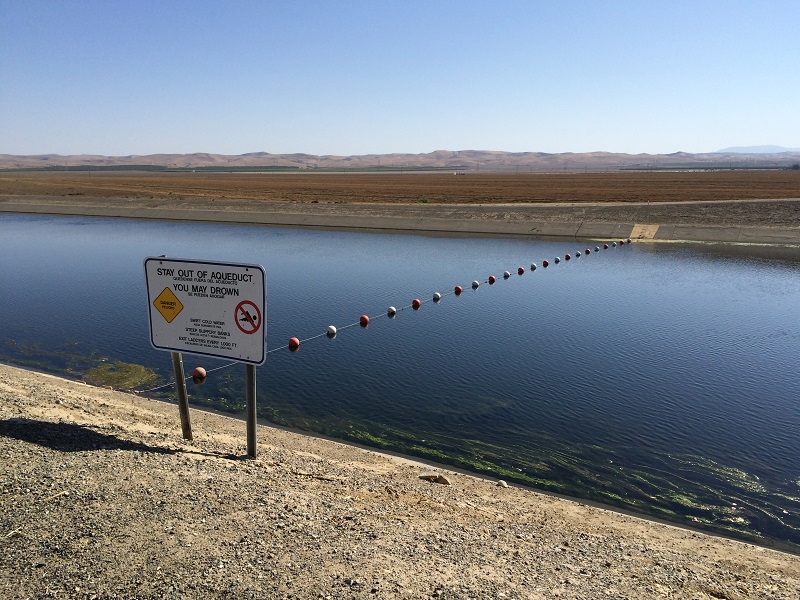
The Governor Edmund G. Brown California Aqueduct is a system of canals, tunnels, and pipelines that conveys water collected from the Sierra Nevada Mountains and valleys of Northern and Central California, to Southern California – across hundreds of miles. I drive across three aqueduct bridges from my hotel here in Kettleman City* to the training sessions. There are signs by the orchards here that says ‘No Water = No Jobs’ and ’25 million Californians are not getting millions of gallons of water they paid for’.
*I’m going to report them to Governor Jerry Brown. The sprinklers for the little bitty green lawn by the hotel entrance were on this morning. Sorry, but the lawn needs to go. Put some rocks and cactuses in!
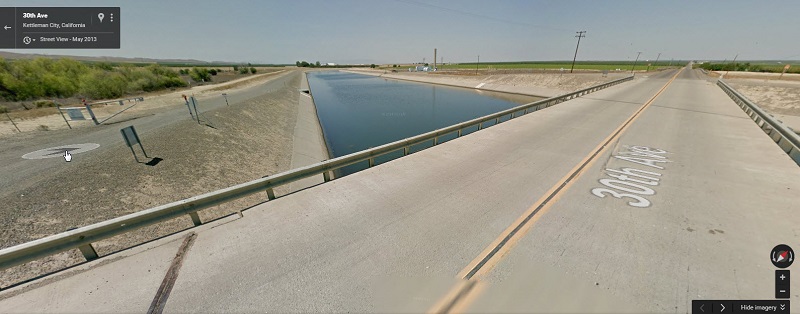
Here is one of the sections of the California Aqueduct that I cross to go to my training work sessions. This aqueduct is actually called the ‘Los Angeles River’ – a very man-made river that would in its natural state be almost permanently dry year-round. Here is the same spot shown in Google Streetview.
I had to get up early on Monday morning to go out and help with the training of our system’s new users, located in Kettleman City in the Central Valley in California. (There is a big gas pipeline compressor station there). Kettleman City is a small town just off of I-5. I took a flight out to Los Angeles airport and did the three-hour drive up north from there. It is hot out here – of course. At 7 o’clock this evening, it was still 96°F/ 36°C.
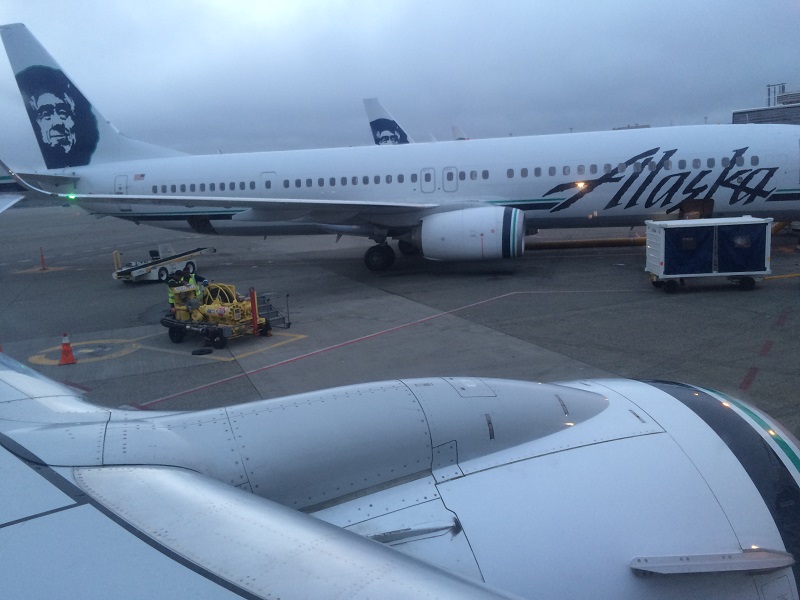
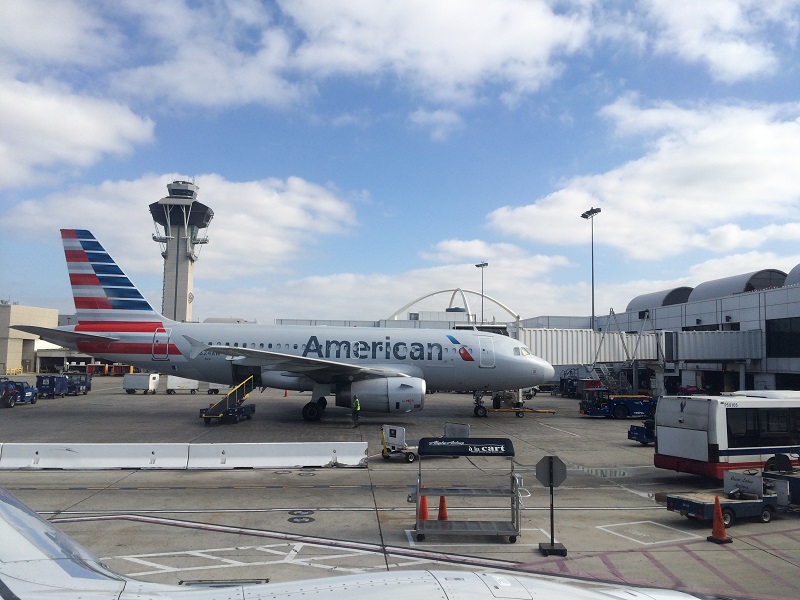
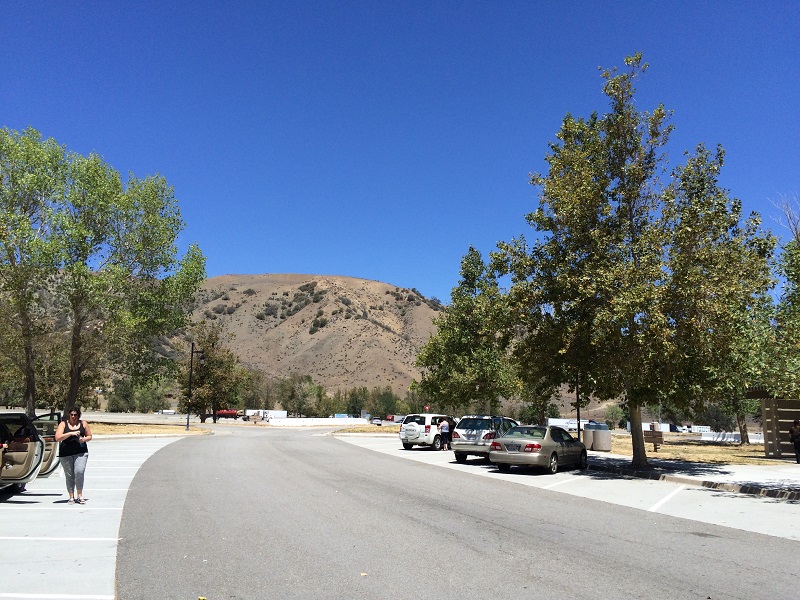
The clouds were still lying low over Seattle-Tacoma airport as we waited to get pushed back from the gate at 6.30 am. This was the view from my seat 16D on the wing.We’re at the gate in LAX. The old space age-y control tower is just visible in the middle of the picture. LAX is still sprawling and seems to forever under construction. ‘The next great world airport’ proclaims the signs on the construction fences.This is a stop I made at the Tejon Pass Rest Area. Everything seemed to shimmer in the afternoon heat, and the sky was a vivid blue.
On Sunday morning we had a little breakfast at the Hans Grille, and then made for the Bainbridge ferry terminal. The online page for the terminals give a count of the number of places on the ferry that remain for cars, and we were cutting it close for the 11.30 am departure*. As we pulled up to the payment booth, the clerk removed the 11.30 am sign and said we were ‘questionable’ for making the 11.30. But we made it, albeit with only two cars behind us. Yes!
*Worst thing that can happen when one does not make a departure, is to have to wait patiently for the next sailing, about an hour later .. except if it is the last one of the day of course. Then you would have to drive around the Sound like we did coming in. (And if it was that important to catch the ferry, one should have allowed more time to wait upfront, right?).
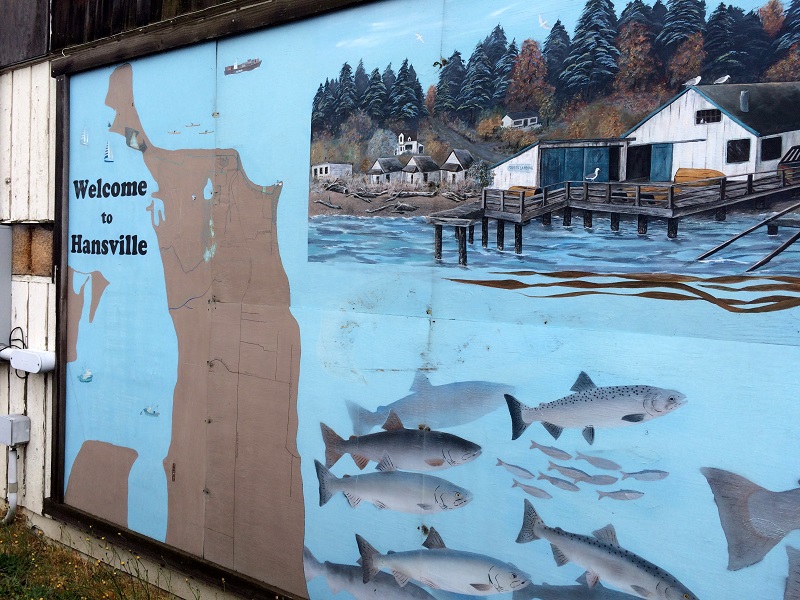
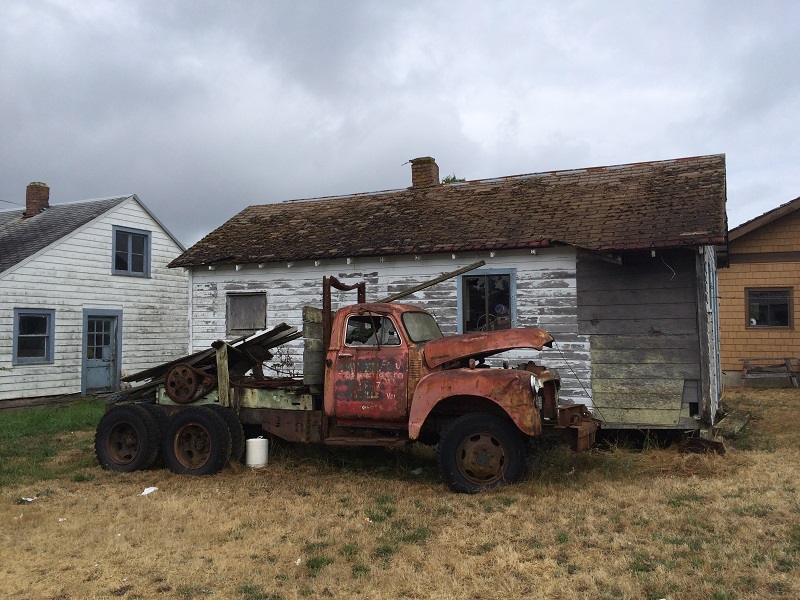
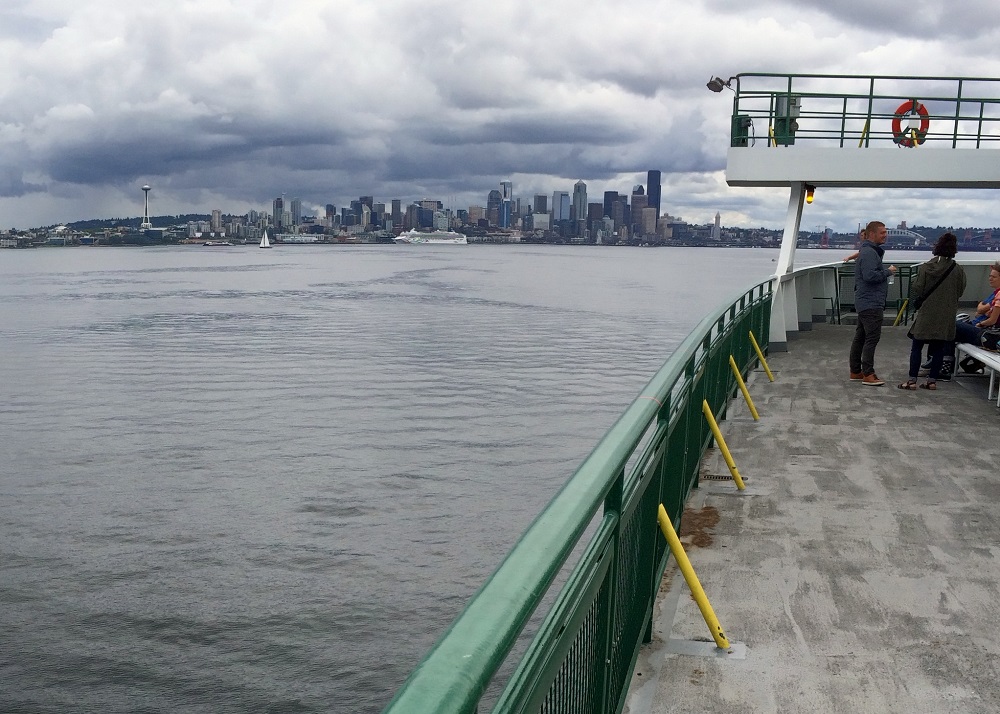
Here’s a nice little outline map of the northern part of Kitsap Peninsula outside the restaurant. The Hansville community number about 3,000, and many years ago there used to be a small fisherman’s wharf and buildings, and a cannery, shown in the mural.This rusted truck was nearby, and I had to take a picture.Here’s the Seattle skyline as we approach the city. The crossing from Bainbridge Island takes about 35 minutes. There is one cruise ship in the center of the picture, and there were two more further to the right (not in the picture).
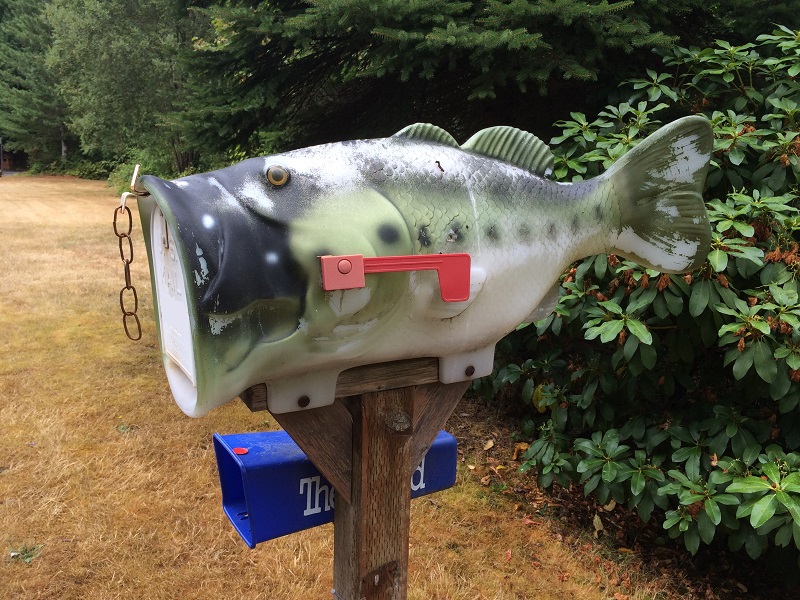
Is this fish mailbox too kitsch? (It’s a bass). I like it but I’m sure it is not everyone’s taste!
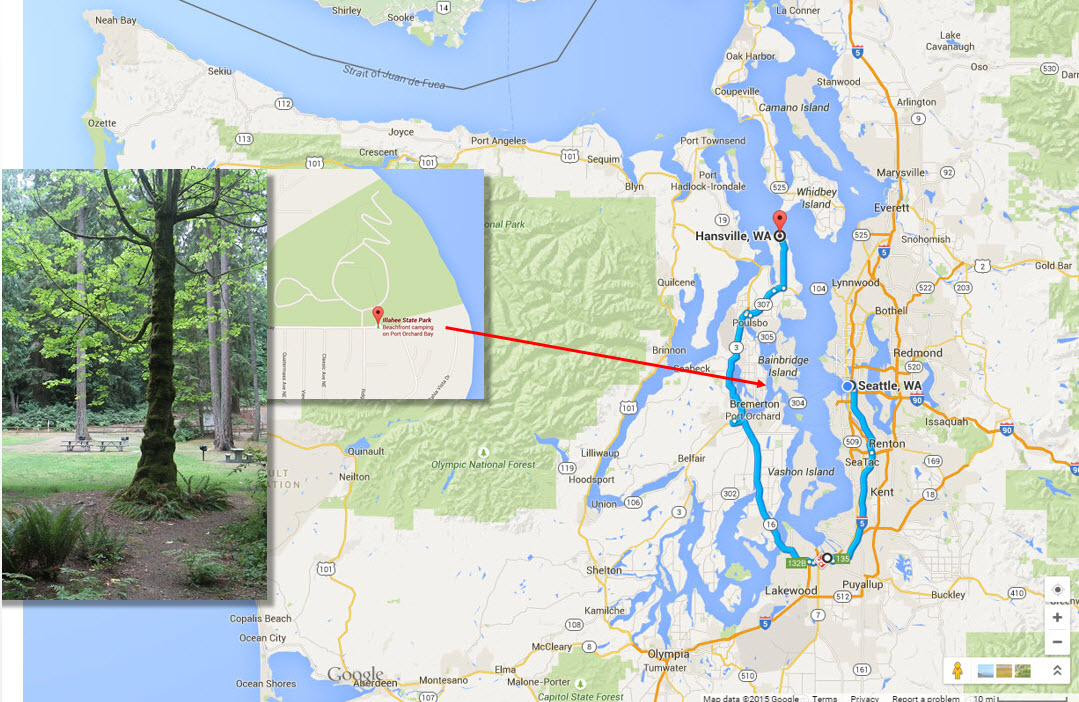
Illahee State Park is a 75-acre Washington state park located in the hamlet of Illahee, just north of East Bremerton, on Port Orchard Bay, part of Puget Sound. The word ‘Illahee’ means earth or country in Native American tradition. [Source : Wikipedia].
We made a stop there on Saturday as part of an overnight outing to Paul’s place in Hansville. There was rain and cool weather on the Kitsap Peninsula on Saturday, which we welcomed. The rain did not make it all the way across the sound to the city, but it may get there on Sunday.
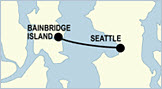
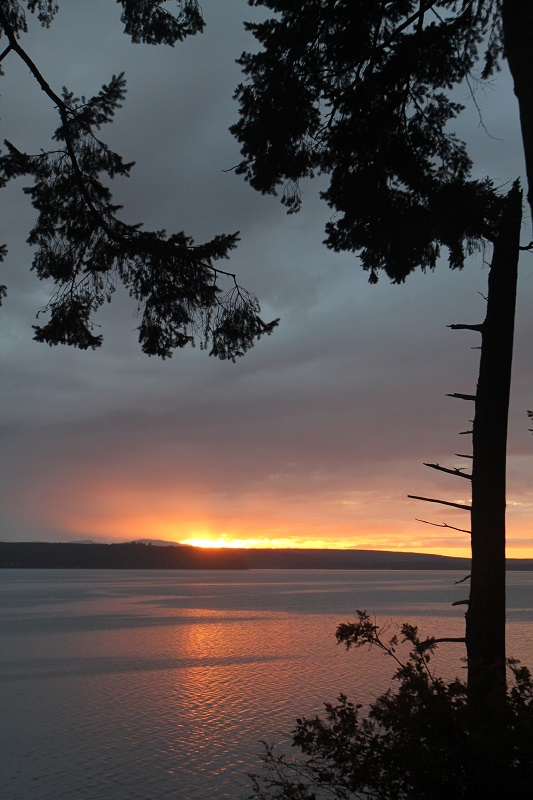
Here is our drive around the Sound (about 90 miles/ 145 km). The black dot at the bottom of the blue route is Tacoma, and one crosses the Tacoma Narrows bridge to get to the Kitsap Peninsula. Illahee State Park is on Pert Orchard Bay.The sun managed to squeeze its rays through the clouds and the horizon as it was setting. This view is from Paul’s house in Hansville and was just a little bit before 9 pm.
(of a building or object) in a state of disrepair or ruin as a result of age or neglect.
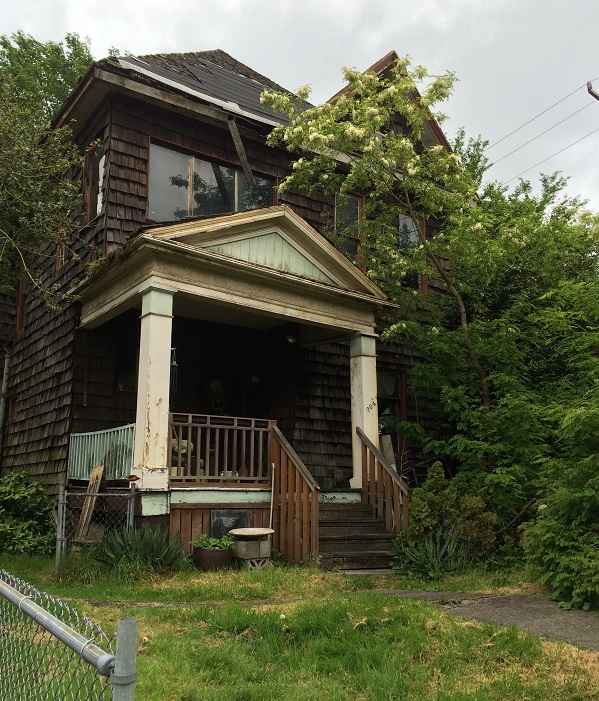
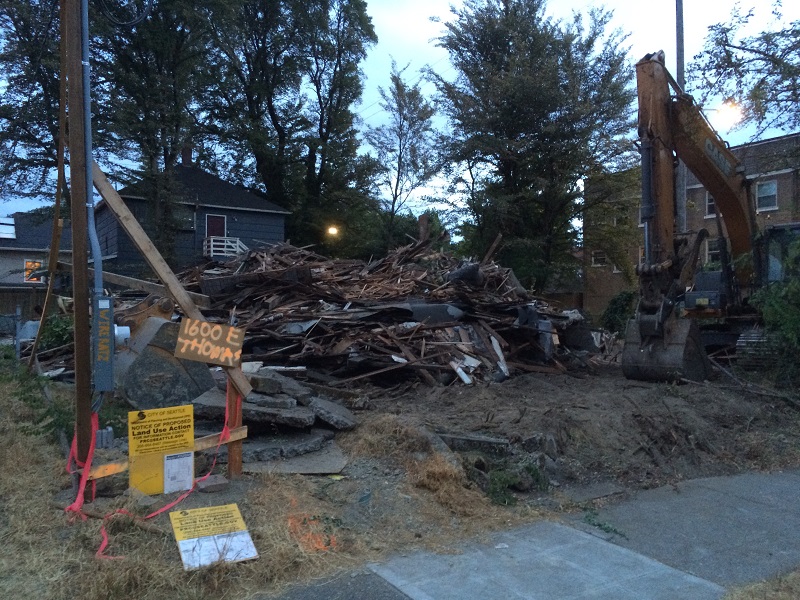
This empty house on the corner of 16th Ave E and Thomas St here on Capitol Hill is by the bus stop for the No 8 and No 43 bus (that I take sometimes), and so I had known since May that its days were numbered. Still, I was a little shocked to see the house all broken down when I walked by tonight. Built in 1900, it held out until now – but was in such disrepair that it was simply time to break it down and build something new in its place.
Here is the house (built in 1900) on the corner of 16th Ave and Thomas St on Capitol Hill just a few weeks ago .... and now it is all broken down, making place for a set of 4 townhouses.
Amazon reported blow-out earnings today. The company’s cloud computing business -which include Amazon Web Services – is up a whopping 81% from a year ago. Sure, Amazon sells and ships $23 billion of stuff in a single quarter, but it is only making 2% of profit on those sales. Its cloud computing business is now a $6 billion-a-year business and growing rapidly. The other thing that’s growing rapidly is the office space that Amazon is devouring in Seattle’s Lake Union District. The Seattle Times reports that Amazon may occupy as much as 10 million square feet in downtown Seattle in another few years. By comparison, Microsoft occupies an estimated 14.6 million square feet spread across the greater Seattle area.
Amazon’s ‘City on a Cloud’ Innovation Challenge is a global program to recognize local and regional governments and developers that are innovating for the benefit of citizens using the AWS Cloud. There is a lot of real-time information needs such as for bus schedules, train schedules, traffic congestion, geographical mapping information, utility poles and pipelines (where to dig), weather information and real-time camera surveillance of secure areas.
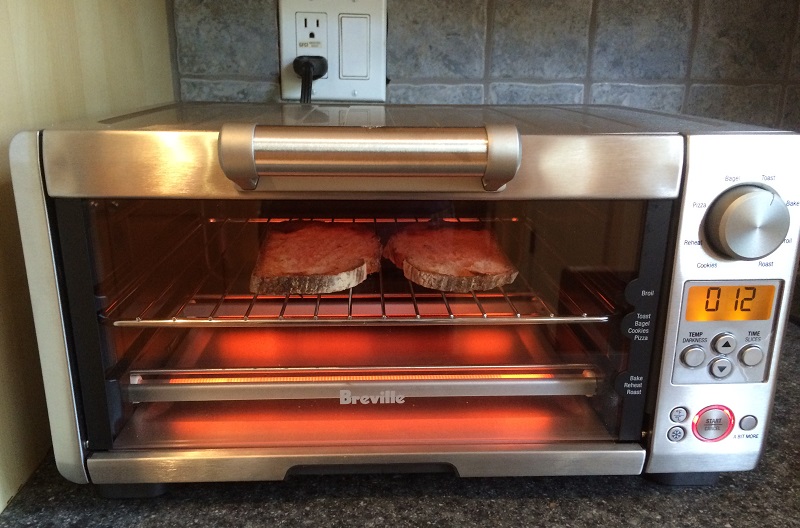
My ‘little toaster oven that could’, a cheap Black & Decker model, finally gave out after 12 years of service, so it was time for a new one. The new Black & Decker went for $60, but there was also a stainless-steel clad ‘Breville’ brand toaster oven (no, it’s not French or German, it’s made in China all the same). So I uhm-ed and ah-ed the way I sometime do in the store : do you really need a $150 model? Well, the more expensive oven won out. It had more heating elements for a perfect toasted cheese, and the crumb tray at the bottom is super easy to draw out and clean (not the case with the Black & Decker).
I usually eat toast and soup for lunch when I am at home. More times than not, one of the slices gets Marmite and avocado, and the other tomato and cheese. Yum.
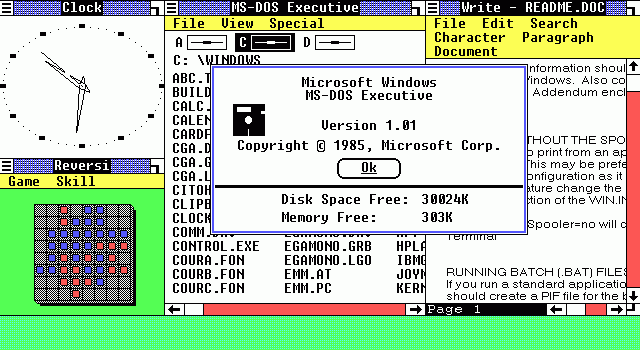
A screen shot of Windows 1.01 [Source : Wikipedia].Windows 10* will be available on July 29. Some call it a make-or-break operating system for Microsoft, since Windows 8 was widely panned for its missing Start menu, complexities and brazen attempts to further Microsoft’s business goals (never mind what users want). So lots of people with Windows 7 need to be enticed to embrace Windows 10, and it is telling that for the first time, the new Microsoft operating system is a free upgrade.
*There is no Windows 9. ‘It didn’t feel right to call it Windows 9’ said one executive. How about WindowsOne, to indicate it will serve as one same/ similar OS for the desktop, tablets and mobile phones? Well, the ‘One’ moniker has been used in many other Microsoft products already. And there has been a Windows 1.0 already after all – back in 1985 when the PC world was in its infancy!
The Milky Way is a spiral galaxy that measures an estimated 120 thousand light years across.
Monday was ‘moon day’ : the anniversary of the Apollo 11 moon landing in 1969, now 46 years ago in the rear view mirror. We may no longer land on the moon (or Mars, as people surely thought back then, we would be by now) .. but we are certainly exploring our galaxy with telescopes and unmanned spacecraft. ‘Our galaxy’ is the Milky Way, of course. And ‘our’ sun is but one of 200 billion stars in the Milky Way. That makes for about 11 billion other planets that are orbiting their suns in the habitable zone : at a distance not too warm and not too cold, so that there could be liquid water on the planet. And where there is water, there may be life.
The Kepler space telescope was launched in 2009 and its mission was to discover Earth-like planets orbiting other stars – which it has done very successfully. It’s just that these stars are 1,000+ light years away. But hopefully we can exchange radio signals with the FRIENDLY aliens that may be out there?
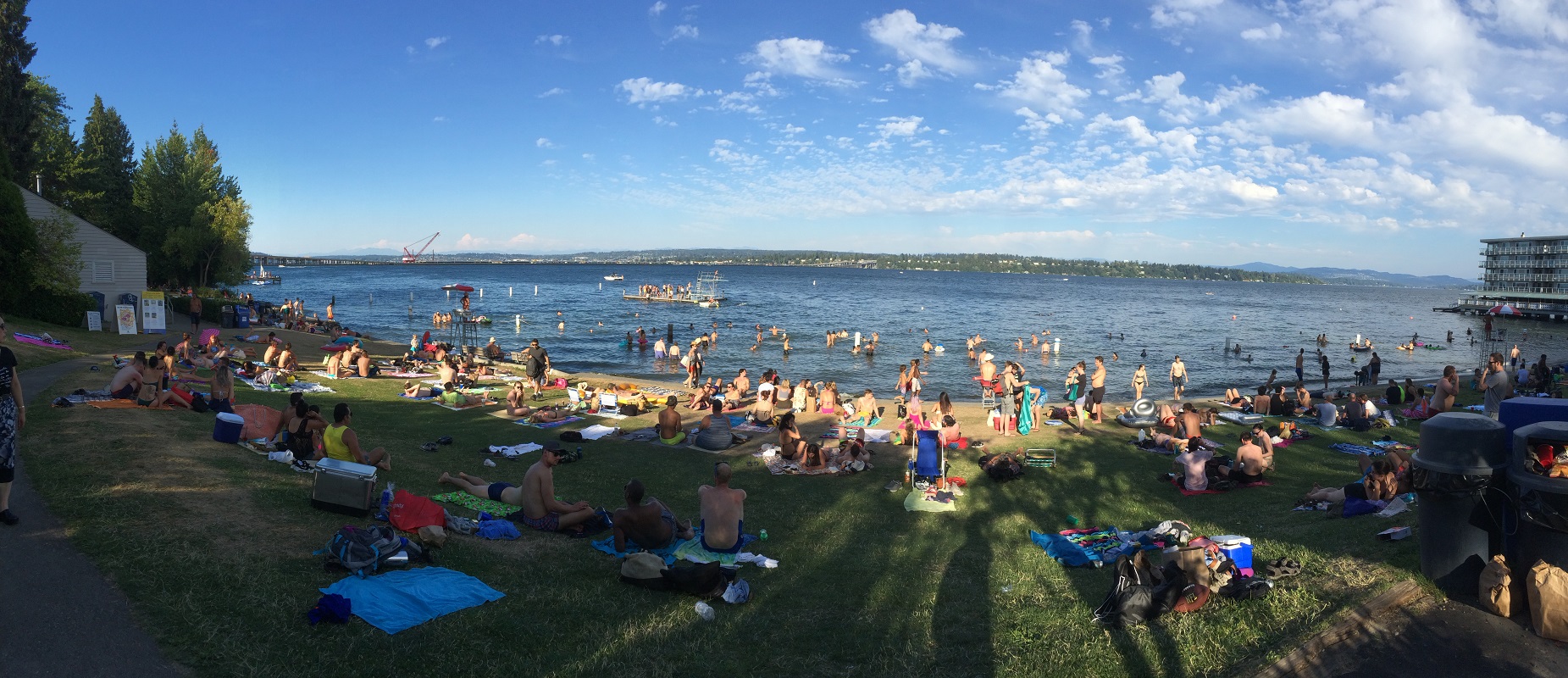
It’s not a real beach, but we call it one anyway : Madison Park Beach at the spot where Madison Avenue runs into Lake Washington. Lake Washington separates Seattle proper from the ‘East Side’ where the city of Bellevue, and Redmond, the home of the Microsoft campus, are.
The ‘beach’ goers were still out in full force at 6 pm today on Sunday afternoon. That’s a floating platform with two dive planks in the water .. and in the distance on the horizon is a big red construction crane working on the widening of the floating bridge across Lake Washington.Madison Park beach .. but no, it really has no sand to speak of, there is no surf, and it is a body of fresh water.
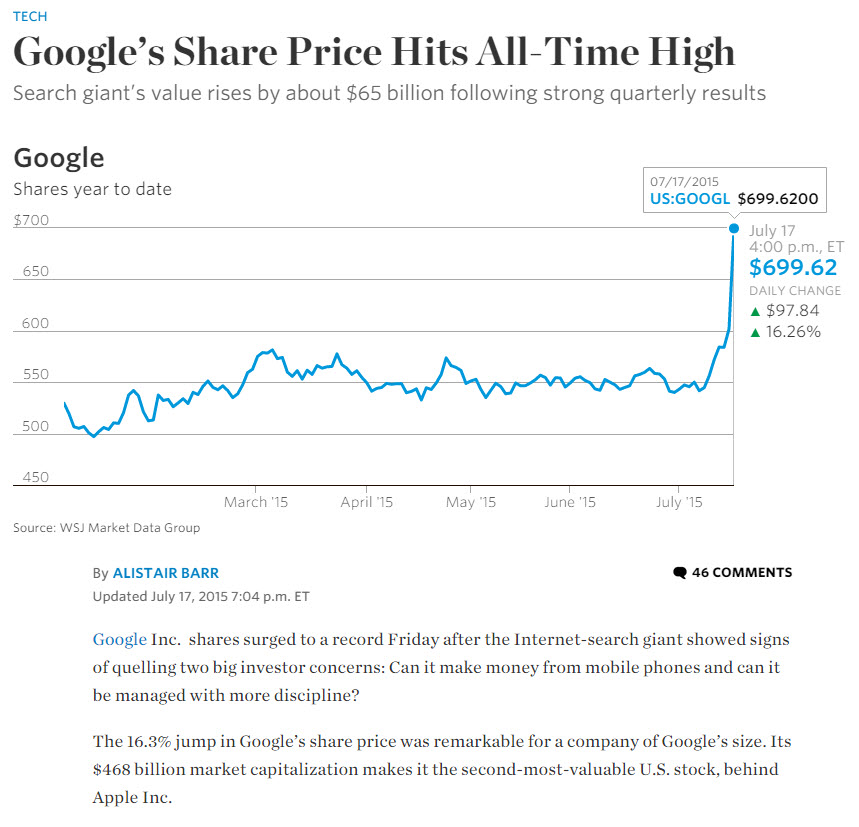
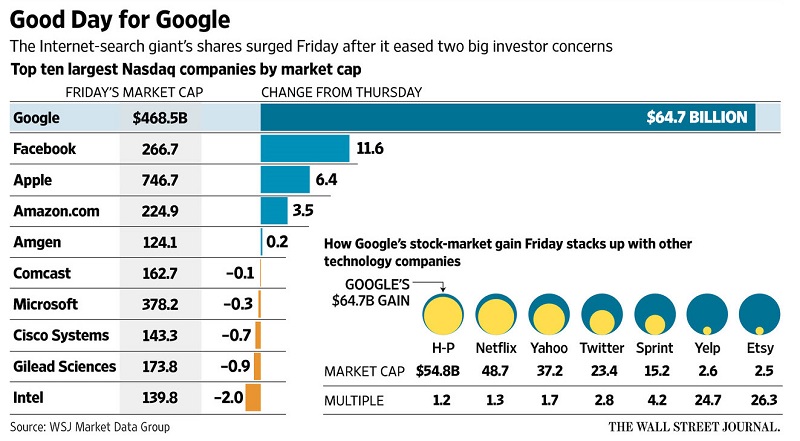
It’s not everyday that a giant company’s stock price jumps up by 16%, but that is what happened to Google on Friday. The Google’s Class A shares gained $97.84 to close at $699.62 to leave the company with a market value of about $469 billion. (That’s still a distant second among U.S. companies to Apple, whose market value stands about $747 billion).
P.S. Try these two Google search ‘Easter Eggs’ .. type in a search for ‘do a barrel roll’, and another for ’tilt’, and see what happens.
Article from the Wall Street Journal showing the big jump in Google’s share price.Google’s market cap gain on Friday was more than the entire market value of H-P, Netflix or Yahoo.
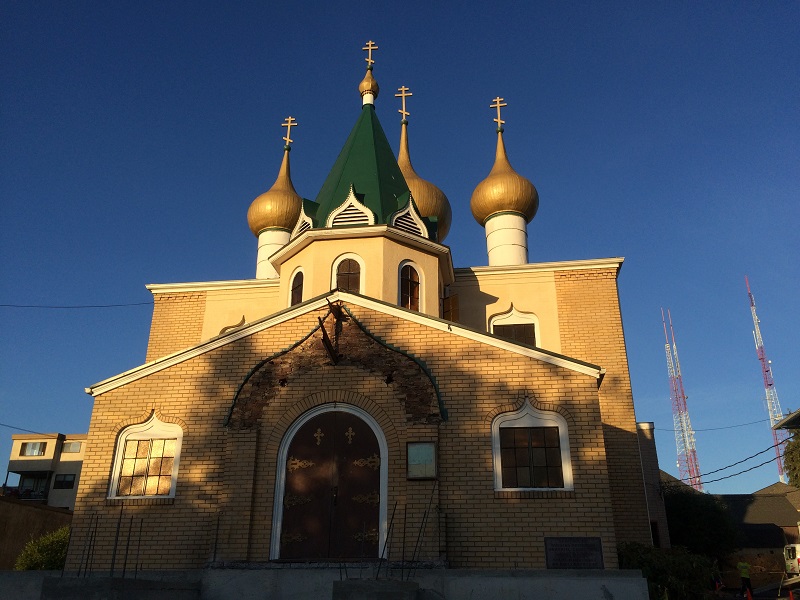
My walkabout on Friday took me by the Russian Orthodox Church on 13th Avenue here on Capitol Hill. The blue-roofed canopy at the front door is missing and hopefully just being renovated before being put back in its place. Seattle has about 10,000 Russian-speaking residents.
Seattle’s Russian Orthodox Church was consecrated in 1937. It reminds me a little of the famous Saint Basil’s Cathedral on Moscow’s Red Square. (Saint Basil’s was constructed way back in 1561).
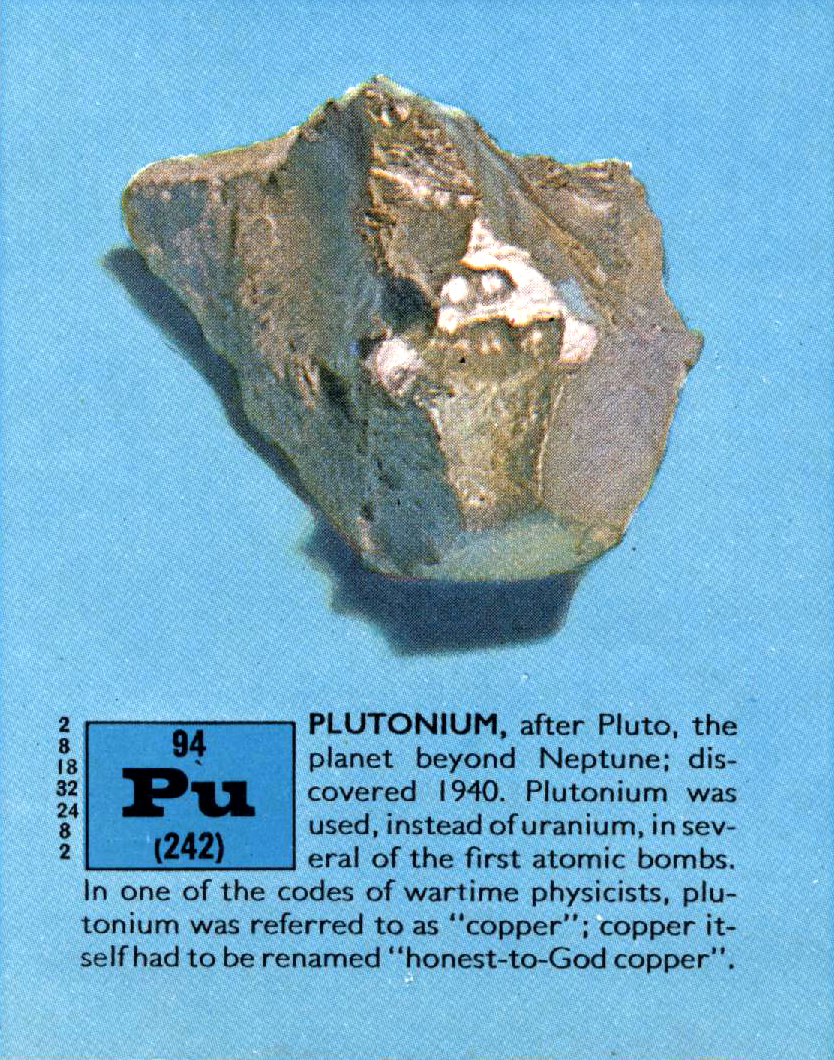
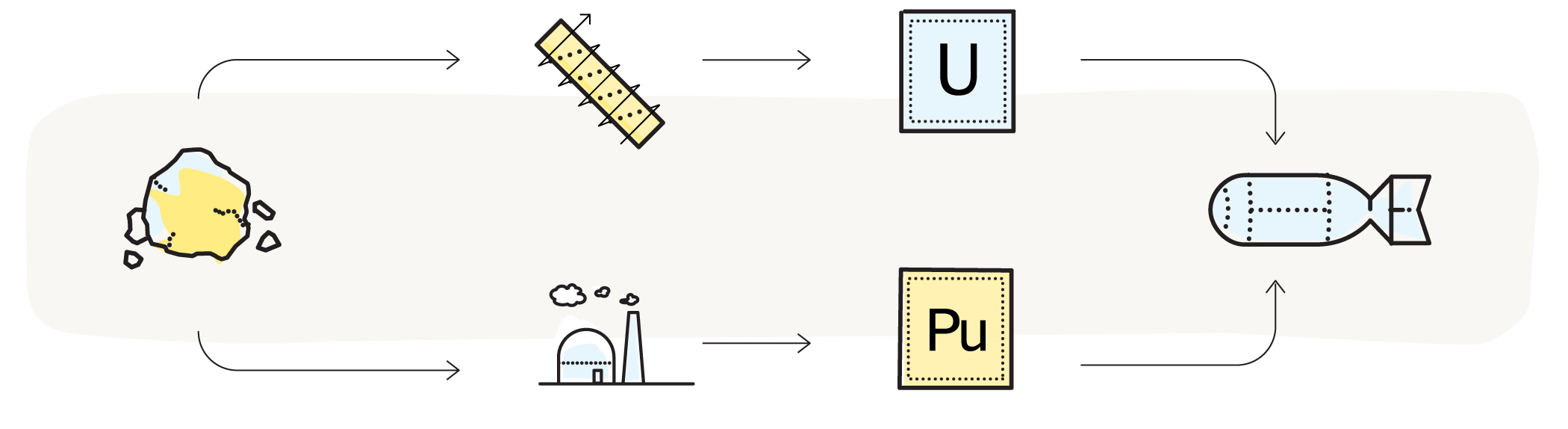
Plutonium was made in the laboratory by bombarding uranium with deuterons (an isotope of hydrogen consisting of a proton and a neutron), and named after the (then-) planet Pluto. So it is an artificial element, and there is likely no plutonium on Pluto. Uranium is the last of the natural elements (atomic number 92) in the periodic table. When the historic Iran Nuclear Deal was announced this week, uranium and plutonium was in the news. Here is the New York Times’s simple guide to the terms of the deal.
An atomic bomb can be made from two types of radioactive materials: uranium or plutonium. So the agreement with Iran (to prevent them from making atomic bombs) takes both these methods into account.
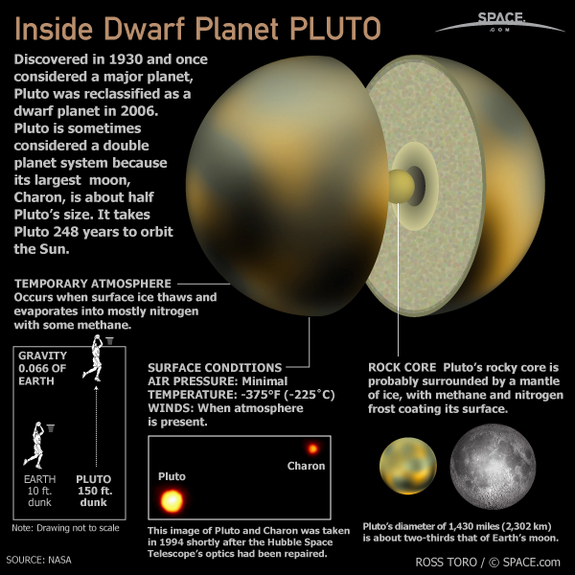
Here’s a nice animation from NASA’s website to show the close-up detail that we know have gotten with the intrepid New Horizons explorer’s flyby.
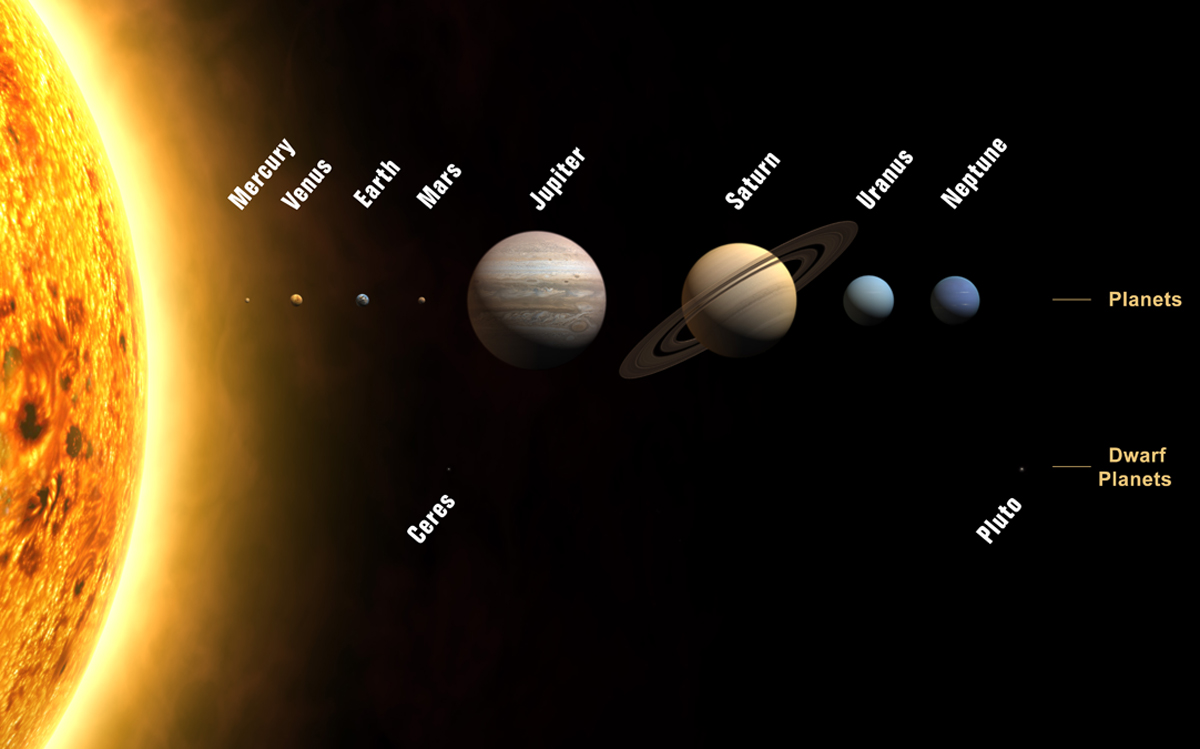
‘Meneer Van As! My Jas Sal U Nie Pas!’ .. a little Afrikaans mnemonic sentence that we learnt in school to name the planets from the sun. Pluto was still a planet then, of course.Source : NASA. This animation (click the picture) combines various observations of Pluto over the course of several decades. The first frame is a digital zoom-in on Pluto as it appeared upon its discovery by Clyde Tombaugh in 1930 (image courtesy Lowell Observatory Archives). The other images show various views of Pluto as seen by NASA’s Hubble Space Telescope beginning in the 1990s and NASA’s New Horizons spacecraft in 2015. The final sequence zooms in to a close-up frame of Pluto released on July 15, 2015.
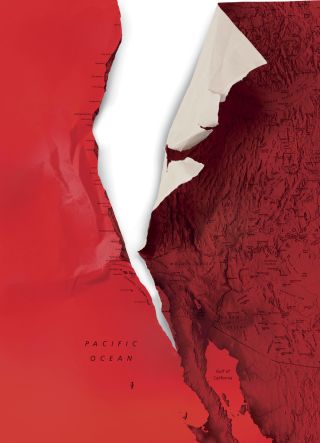
I was blissfully unaware of the Juan de Fuca Plate tectonic plate, the edge of which runs alongside the Seattle coast, when I moved here in 2000. That did not last long, because in 2001 there was a 6.8 magnitude earthquake in Washington State, the Nisqually earthquake. It was deep down and caused some property damage but there were no casualties. A new compelling article by Kathryn Schulz in The New Yorker with alarmist undertones and cataclysmic scenarios reminds us of the 9.0 magnitude Cascadia earthquake from Jan 26, 1700. And that the area is overdue for the next 9.0 earthquake. The logic is irrefutable : ‘ .. we now know that the Pacific Northwest has experienced forty-one subduction-zone earthquakes in the past ten thousand years. If you divide ten thousand by forty-one, you get two hundred and forty-three, which is Cascadia’s recurrence interval: the average amount of time that elapses between earthquakes. That timespan is dangerous both because it is too long—long enough for us to unwittingly build an entire civilization on top of our continent’s worst fault line—and because it is not long enough. Counting from the earthquake of 1700, we are now three hundred and fifteen years into a two-hundred-and-forty-three-year cycle.