Here are pictures from the time I spent in the Ginza district and in Akihabara. I spent way too much time in the Yodobashi electronics store – some of it drooling over a beautiful $430 Seiko titanium watch (no! go and think about it first is what I told myself).
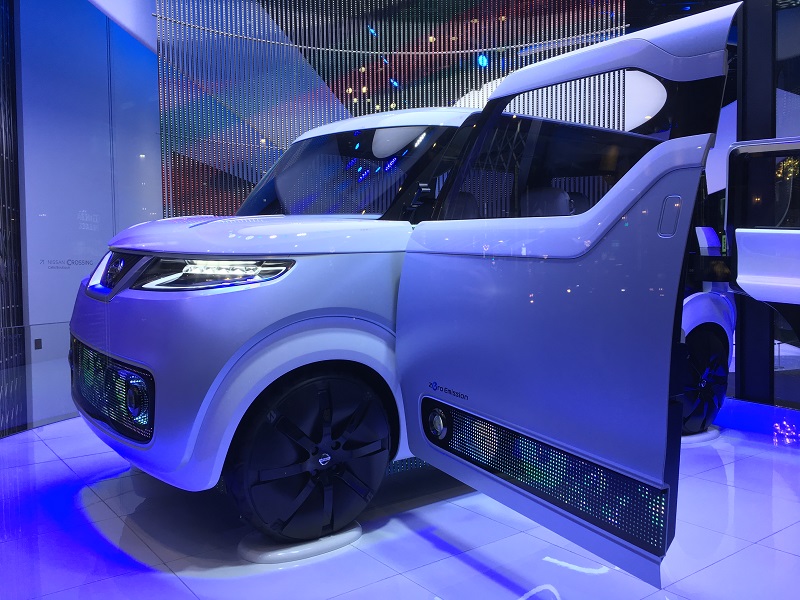
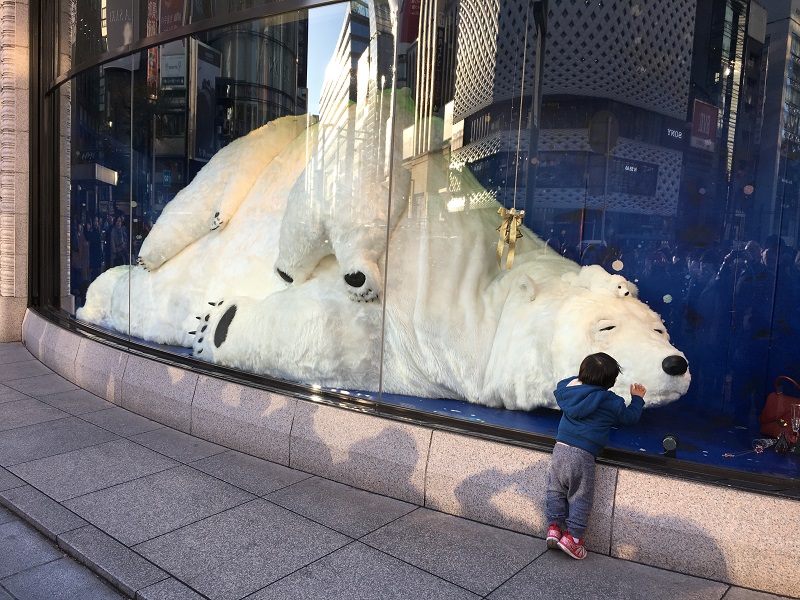
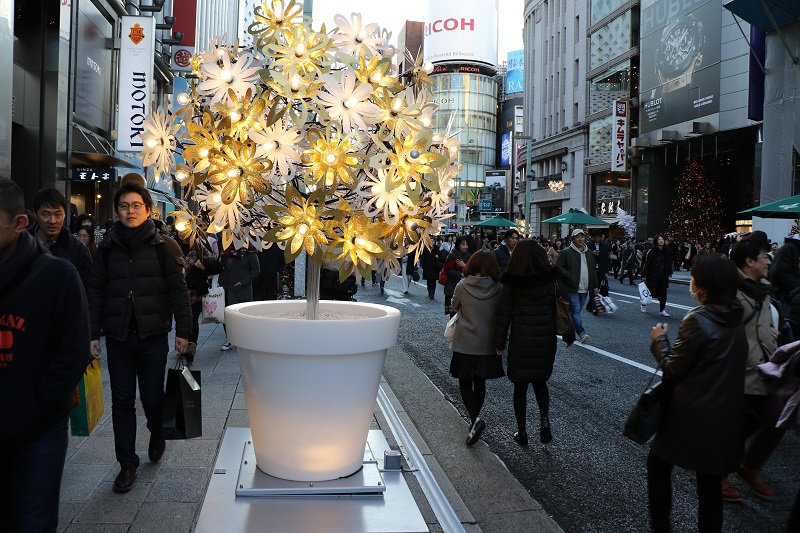
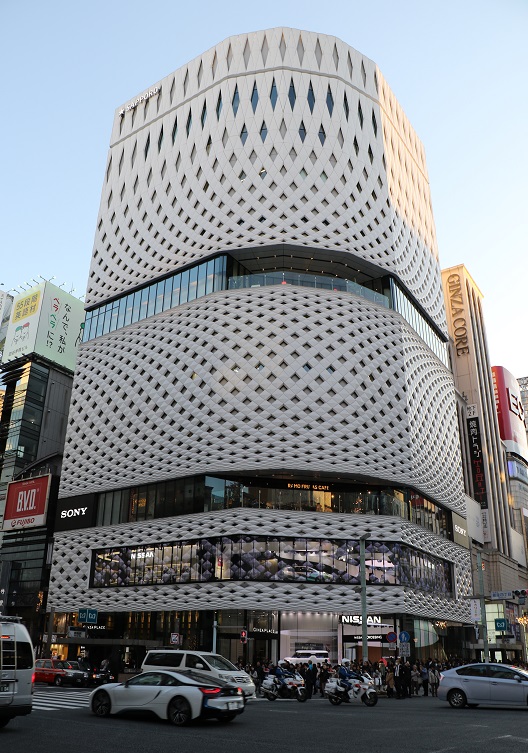
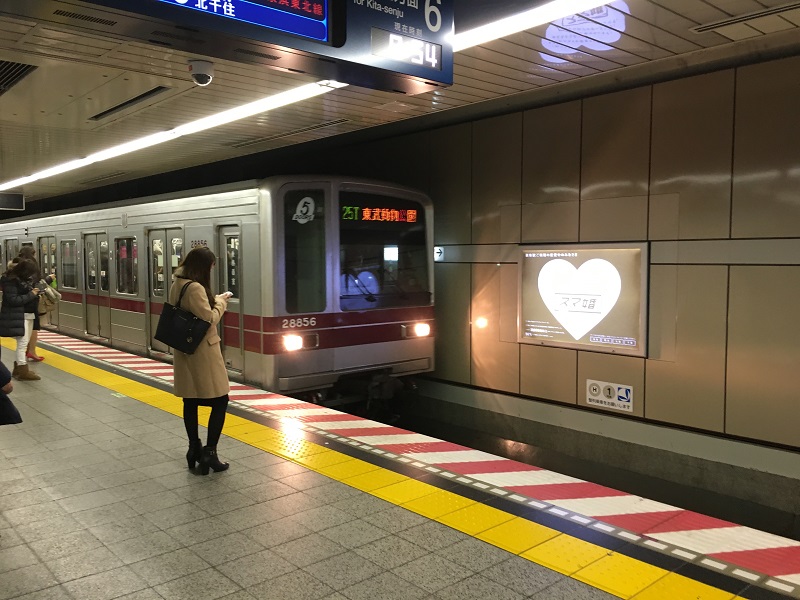
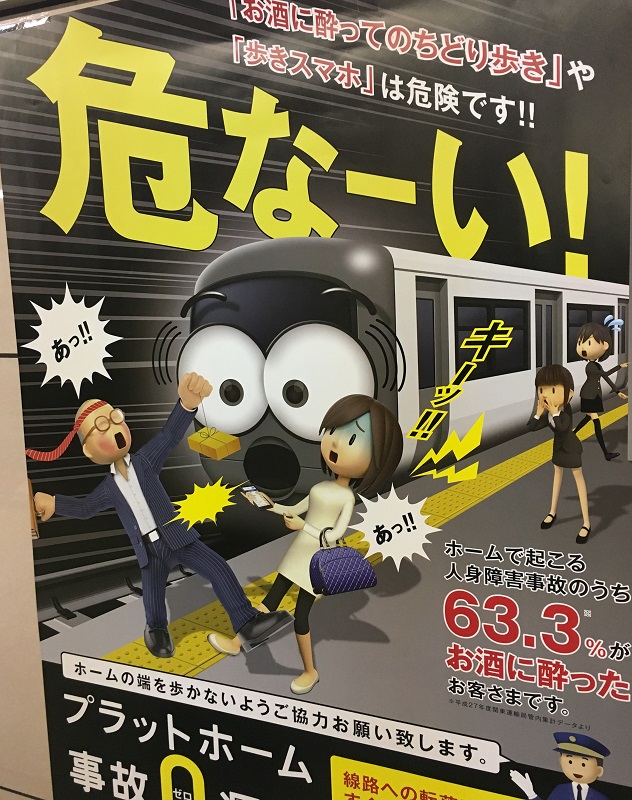
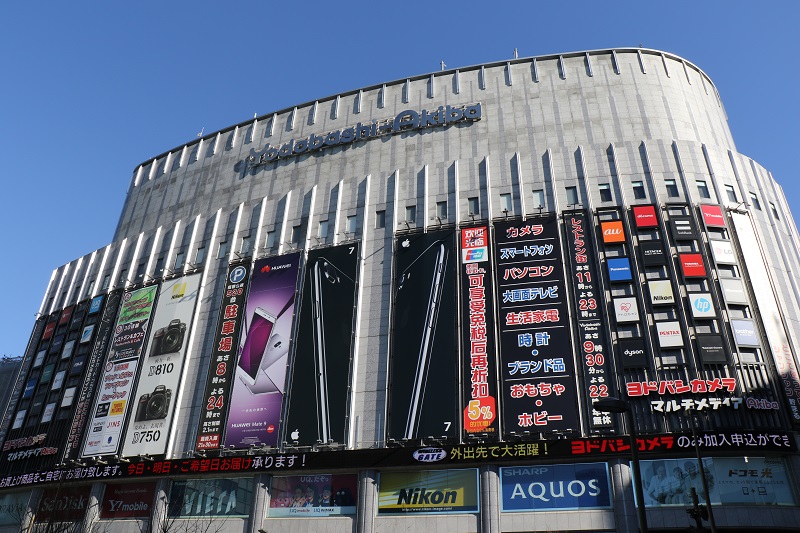
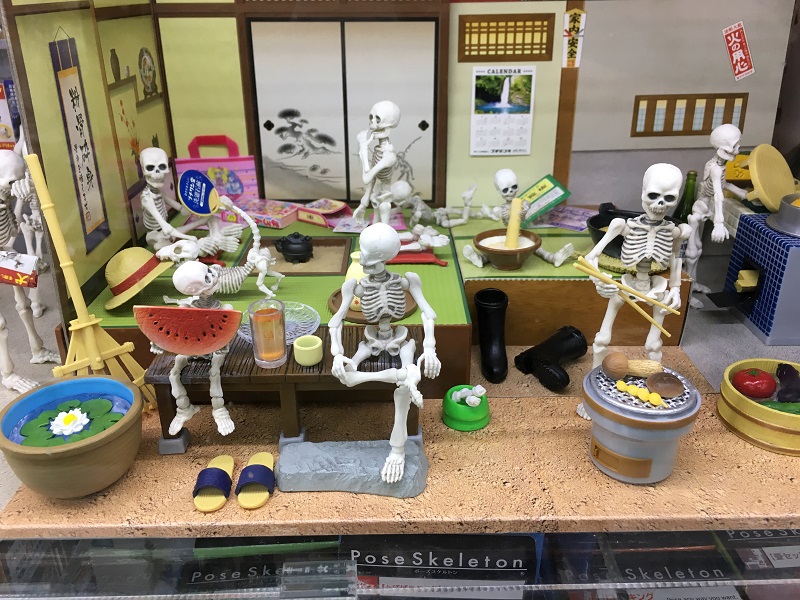
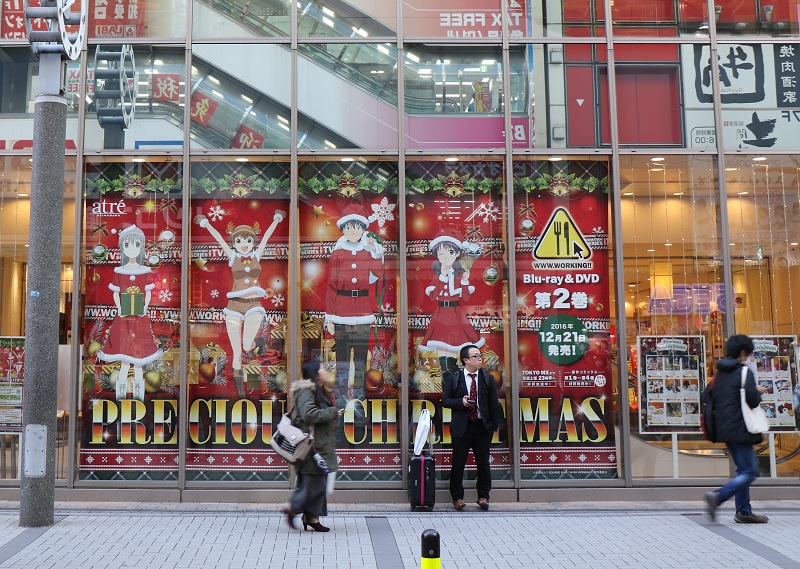
A Nissan concept self-driving car in a display on a street corner in Ginza.This giant ‘polar bear’ with two cubs is in the Wako department store. There is a button in the window that passers-by can push to ring the golden bell (up and to the left of the little guy checking out the bear). And then the bear stirs lazily and opens her eyes, and go back to sleep.Many of the streets in Ginza were closed for traffic, to allow shoppers to wander around in the streets. Several light displays of giant flowers add some festivity.Here’s the Sony building in the Ginza district. Look for a sleek all-electric BMW i8 at the bottom of the picture in black and white.This is the Ginza station on the Hibya line. I’m getting ready to go to Akihabara.This is a new sign, evidently warning of the dangers of texting or browsing while walking around on the platform at the same time. Yes – it can be very dangerous.The Yodobashi electronics and appliance emporium is as popular as ever, and I spent a lot of time there. That’s the iPhone 7 that is featured on its billboards.There are many, many sets of make believe characters in the toy department : the Sylvanian rabbit family, Lego friends. monsters and warriors, and then there are the ‘pose skeletons’. (A little weird, not?).Another somewhat jarring concept: anime characters dressed up in Christmas gear, for a show called ‘Precious Christmas’.
It’s November! The weeks seem to be turning into days as the year-end is rushing up at us, working away on our project. I do make a point of us to get out of the office over lunch time, and to go for a walkabout here in downtown.
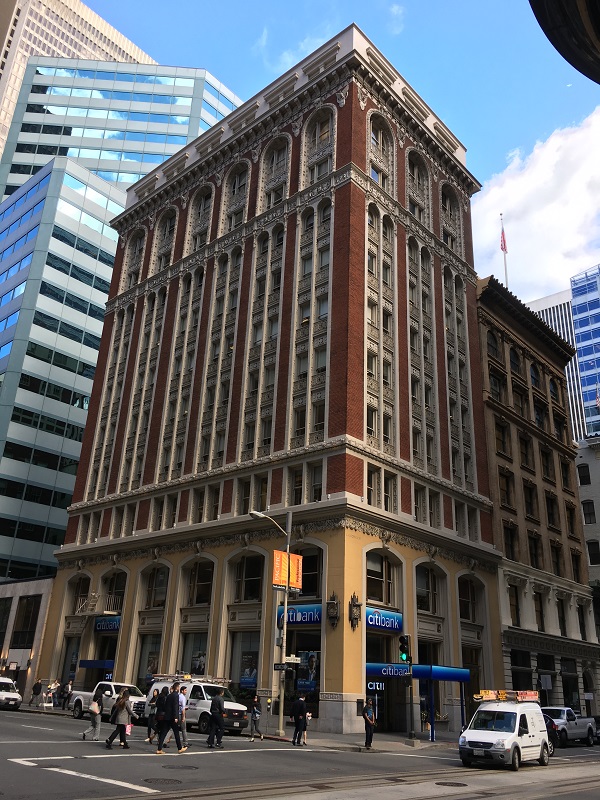
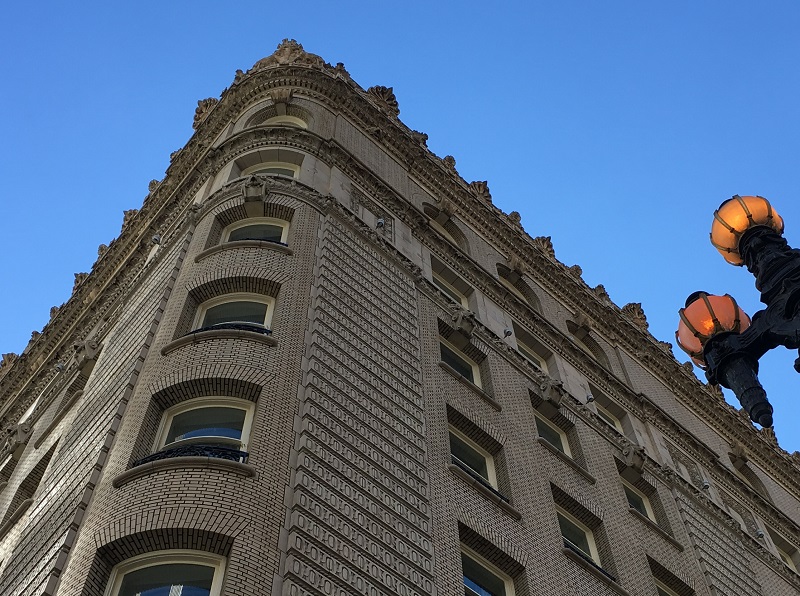
The beautiful Newhall Building on California St at Battery St in downtown San Francisco was completed in 1910 (so: after the big 1906 earthquake that struck the city). It is steel and brick, and built in the Beaux-arts architectural style.
Here are some interesting sights from Mission Street in downtown San Francisco.
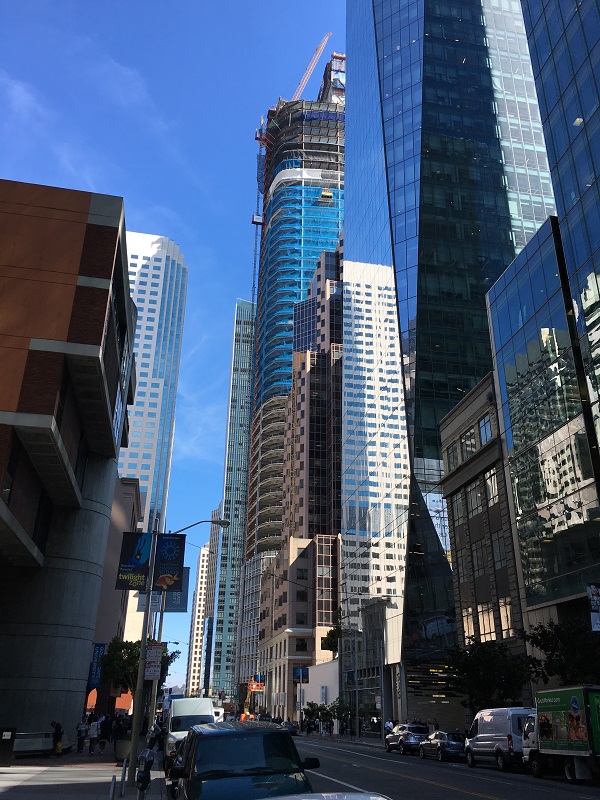
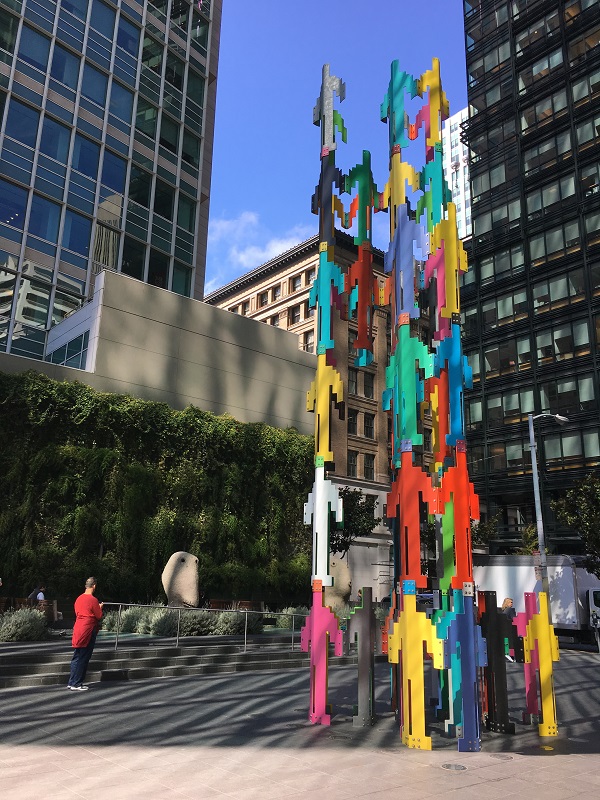
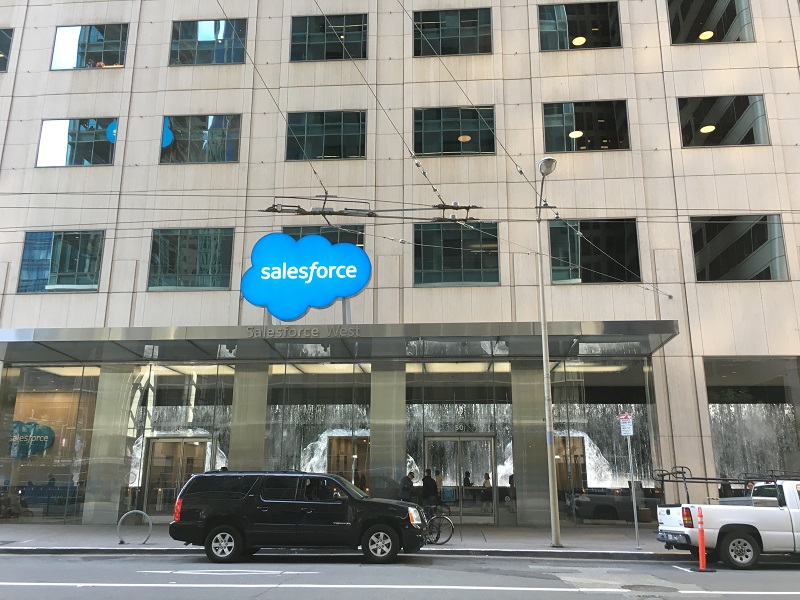
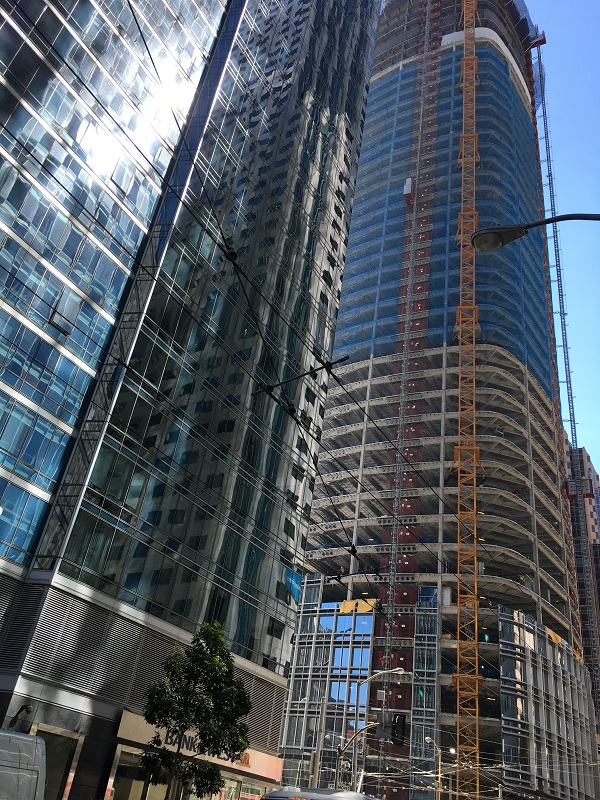
The Salesforce Tower construction continues nicely, from the looks of it about halfway done to the top (building with blue covers in the middle; will have 61 floors when done). The building with the modern prism-like architecture on the left of it is 535 Mission Street. It has 27 floors and opened in 2014.This People Tower is by artist Jonathan Borofsky, and is on the plaza at 555 Mission Street, in front of the Deloitte Consulting firm’s San Francisco office. (For my Seattle readers: Borofsky also created the giant black Hammering Man that is in front of the Seattle Art Museum). The odd little head sculpture in front of the ivy wall is by Ugo Rondinone.Here is Salesforce West, around the corner from the new Salesforce Tower, a 1985 building. Look at the ‘waterfalls’ in the lobby inside. It’s not real water, but giant LCD panels that go from black and ‘water’ starting to flow, up to full-on ‘waterfalls’ cascading down the wall.
Another week started in San Francisco for me. I went for a nice walkabout during lunch time. Sunny but mild outside (57° F/ 13° C), so light jacket weather – to ward off the wind chill from the breeze from the ocean.
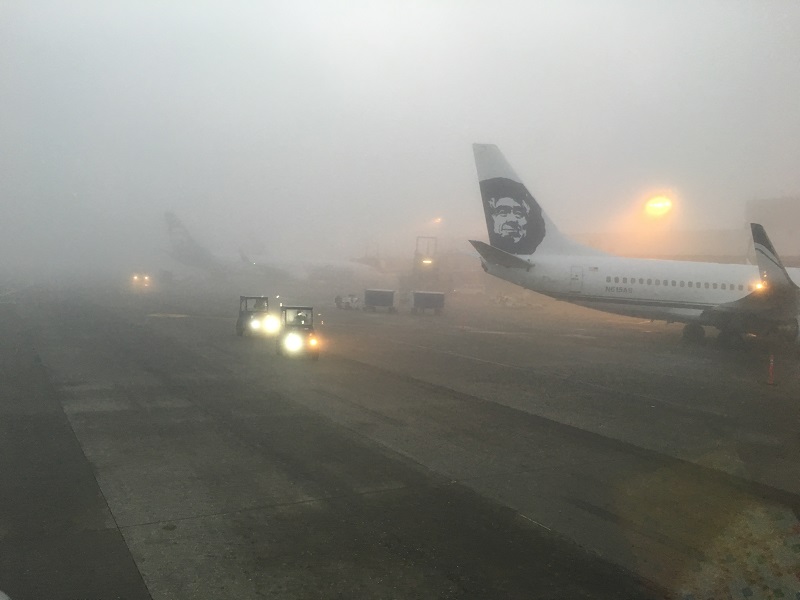
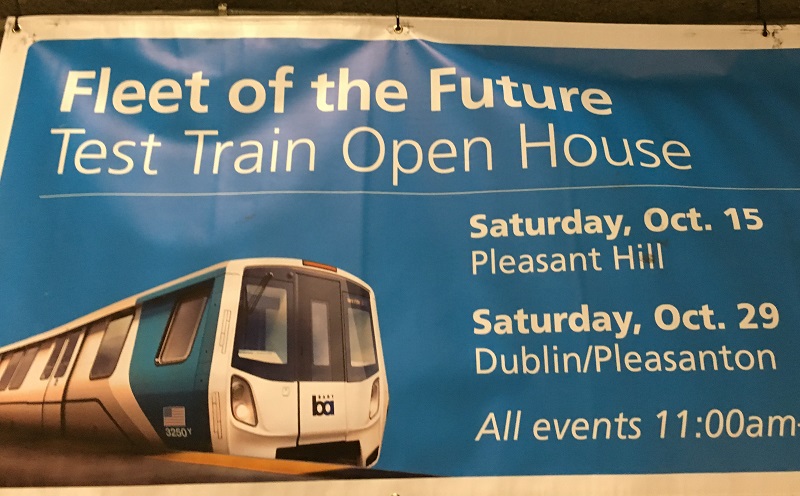
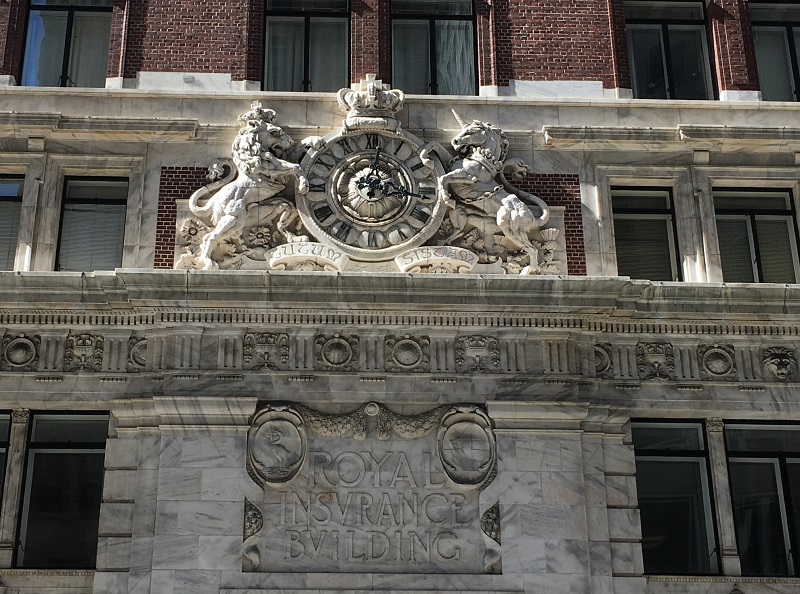
It was foggy at Seattle-Tacoma airport this morning. This is shortly after 7 am as we are getting pushed back from the gate.This sign is posted in the Embarcadero station. Finally! some new train cars are about to replace the 40-year old train cars from the Bay Area Rapid Transit (BART).This is the Royal Insurance Building at 201 Sansome Street. It is a San Francisco landmark. The Georigan Revival ornament is white marble.The Mills Building in the Financial District is another San Francisco landmark. The building across the street (in the reflection) is the Russ Building. It houses the San Francisco Chamber of Commerce.
It was a beautiful 63°F/ 17°C outside today when I took a walk at lunch time around the north end of Market Street here in downtown San Francisco.
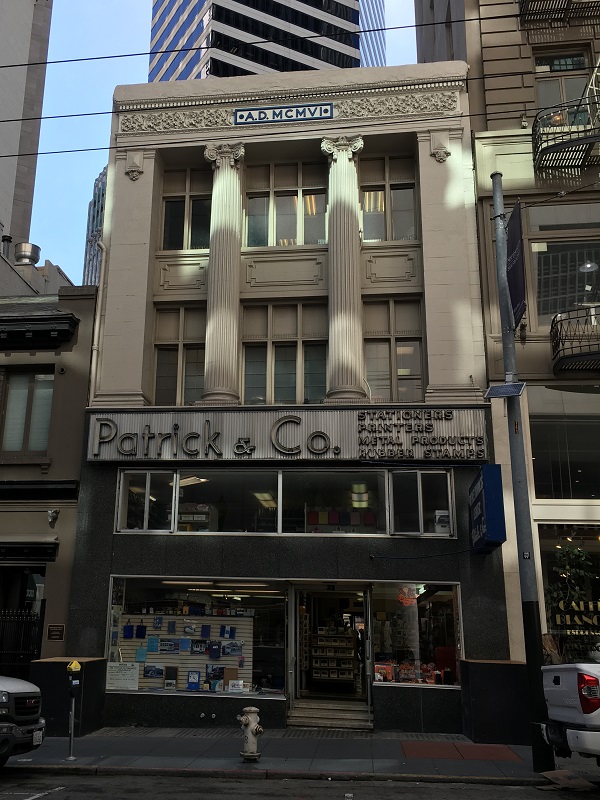
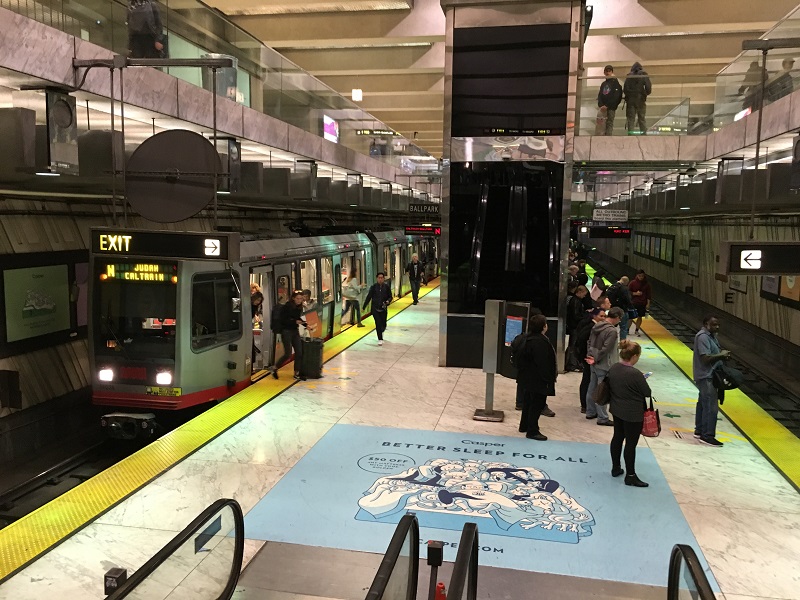
This is the corner of the Palace Hotel on Market Street. There is a Ghirardelli Chocolate store inside.The date on the Patrick & Co building on Sansome St says 1906: the year of the San Francisco Earthquake. A fire destroyed the building after the earthquake, but in 1920 the building was remodeled, and the stationary store was in business once again.Here the Muni train arriving at Embarcadero station. If you’re just going a few stops, the Muni train is much nicer than the BART.
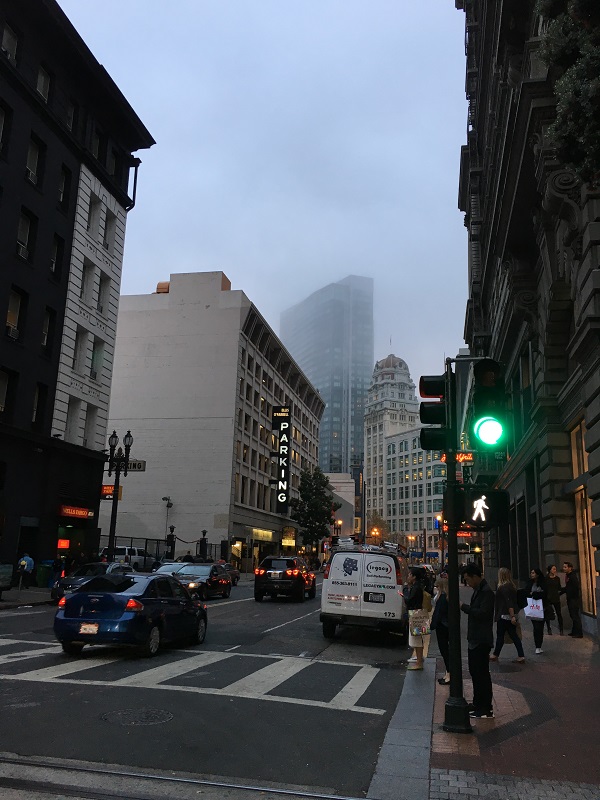
Well, the heat is gone. It was decidedly cool tonight at 6.30 pm on San Francisco’s streets (57 °F/ 13°C), with the high buildings shrouded in the fog that blanketed the city.
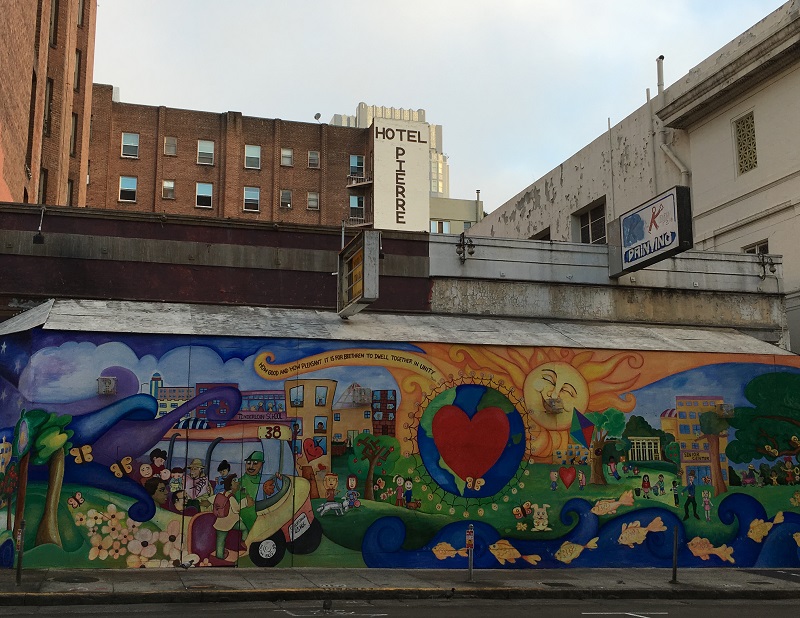
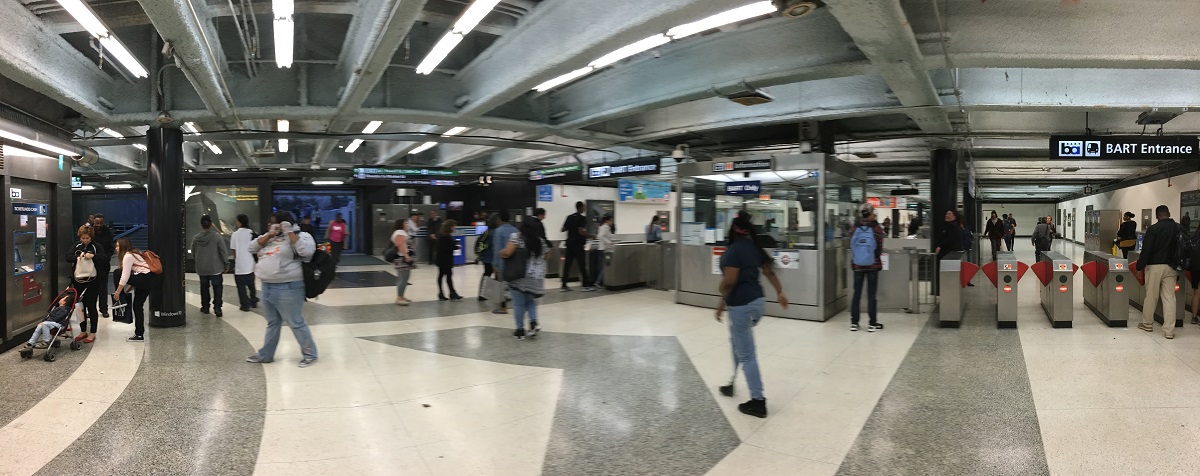
Here’s the mural across from the No 38 bus stop on O’Farrell Street (see? the bus in the mural is No 38). I’m on my way in to the office; 7.30 am in the morning.This is the inside of Powell Street station in downtown San Francisco. The Muni Metro train to Powell Street Station is my other means of transportation. I can walk to the hotel from there.This is the corner of Powell Street and Ellis Street .. check out the fog around the building a few blocks away.
I love this depiction of Einstein, wild hair and all (at the Saleasforce Tower constructon site). It’s the Salesforce Einstein, the artificial intelligence ‘engine’ in Salesforce that analyses customer and sales data.
There was a giant mosquito caught in a little spider’s web in the corner of my front door’s frame this morning when I left the house at 5.15 am.
Our flight out to San Francisco went without delay. There was no fog around, at all. The reason : it was a record (94°F /34°C) in San Francisco on Sunday, and still very warm today ( 90°F/ 32°C). It does look like we are on a cooling curve with the day time highs for the rest of the week here, though.
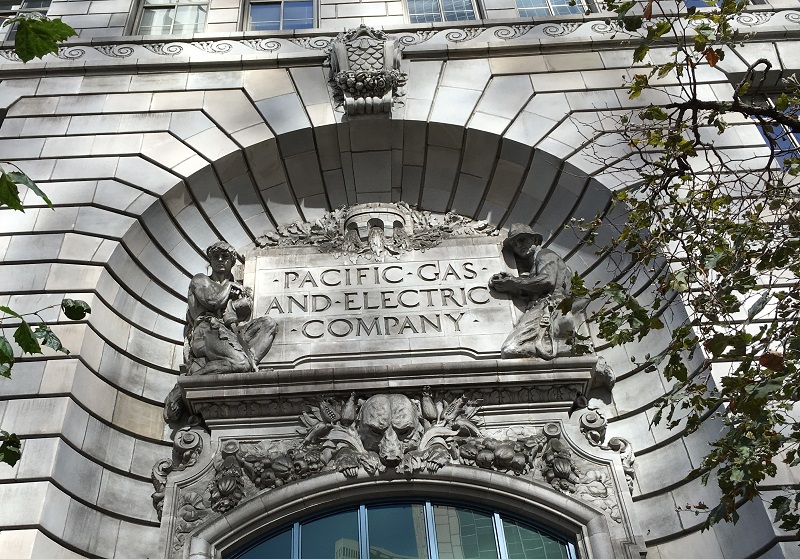
Here is the Pacific Gas And Electric Company building where I work on my project. That must be a California grizzly bear down below, surrounded by farm produce. The building was completed in 1971 and has 34 floors.Here’s an up-to-date picture of the Salesforce Tower’s construction progress.
Every night this week, after taking the bus uphill to the hotel, I have walked back down to Union Square and Market Street to get something to eat.
The sun sets at 7.15 pm, leaving just enough daylight to check out the buildings that line Post, Taylor and O’Farrell Streets.
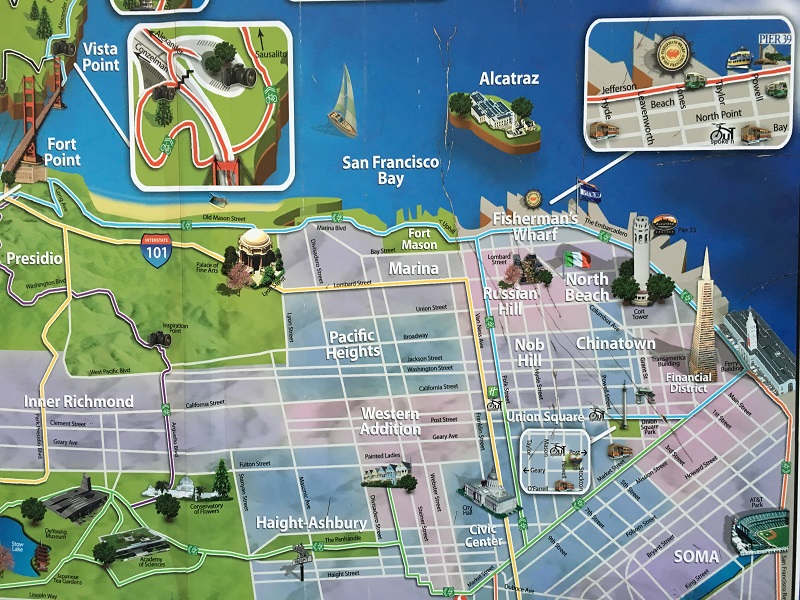
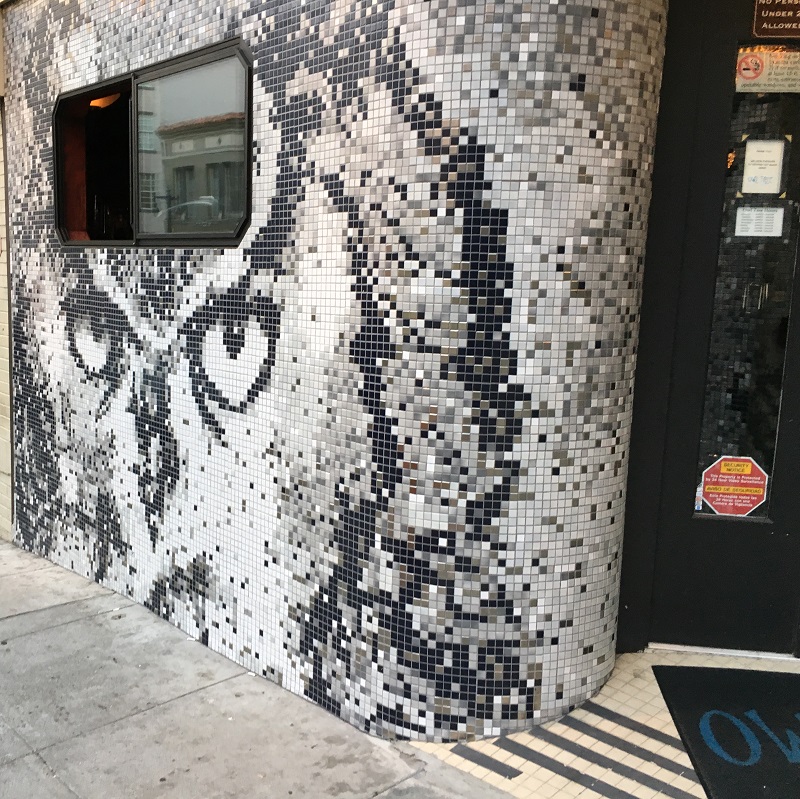
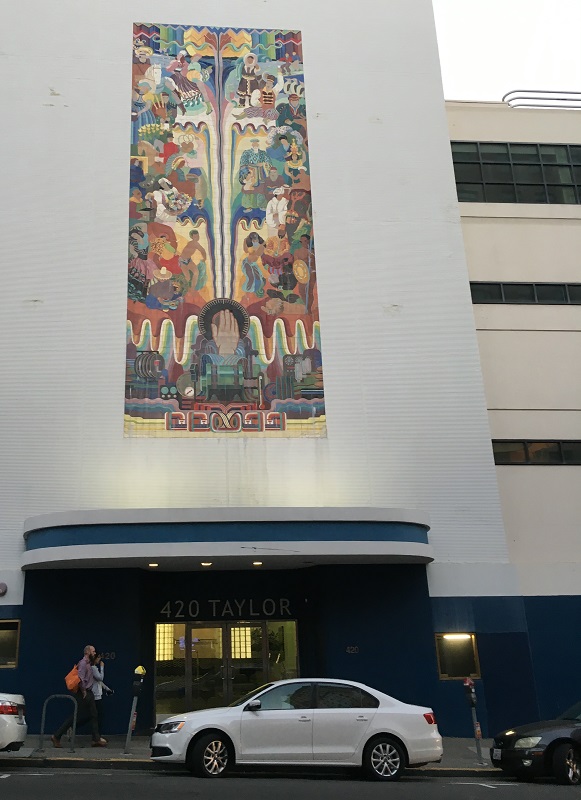
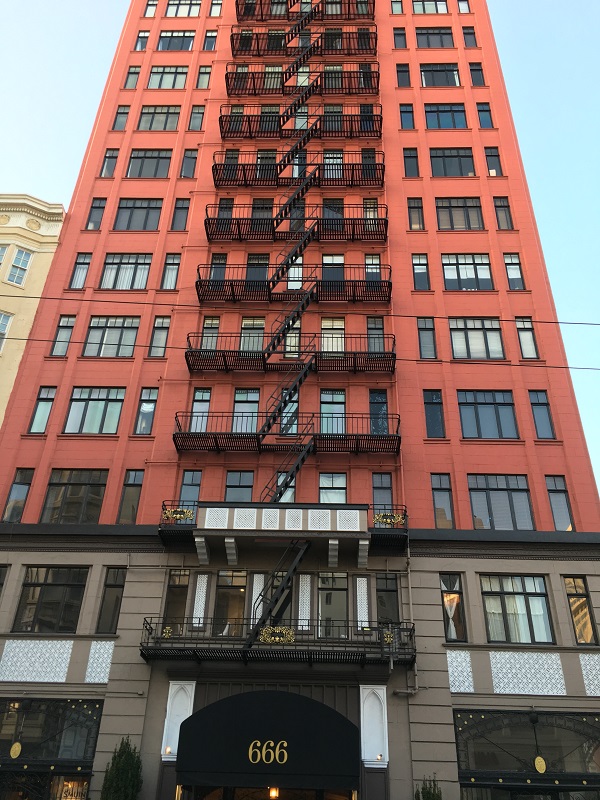
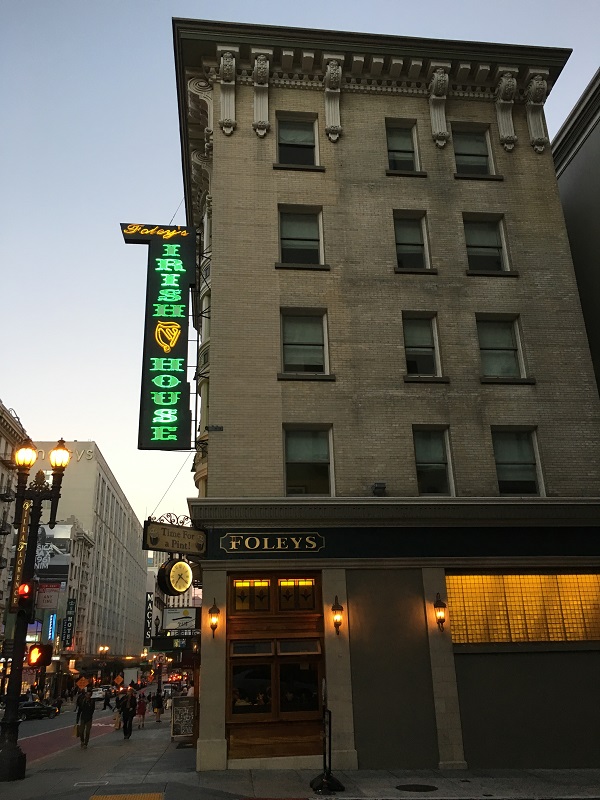
Here’s the lie of the land for downtown San Francisco. The green diagonal street is Market Street, and SOMA means South of Market Street.This is the Owl Tree Bar, a hole-in-the-wall bar on the corner of Post and Taylor Streets. It has red carpeting and black leather booths inside.Here is 420 Taylor, the current headquarters of bulletin-board discussion/ social media company Reddit. Reddit is a play on ‘I read it on Reddit’ and bills itself as ‘the front page of the internet’.666 Post is an apartment building, beautifully refurbished inside and out, from the looks of it.And here is Foley’s Irish House on O’Farrell. ‘Time for a Pint’ (of Guinness, I’m sure) says the sign on the corner.
Monday was the start of another week for in San Francisco for me, and I’m staying in the Courtyard Marriott ‘Union Square’. The name of the hotel is a little bit of a stretch, seeing that Union Square is five blocks away. The area around the hotel does have a good inventory of art deco buildings, and art galleries.
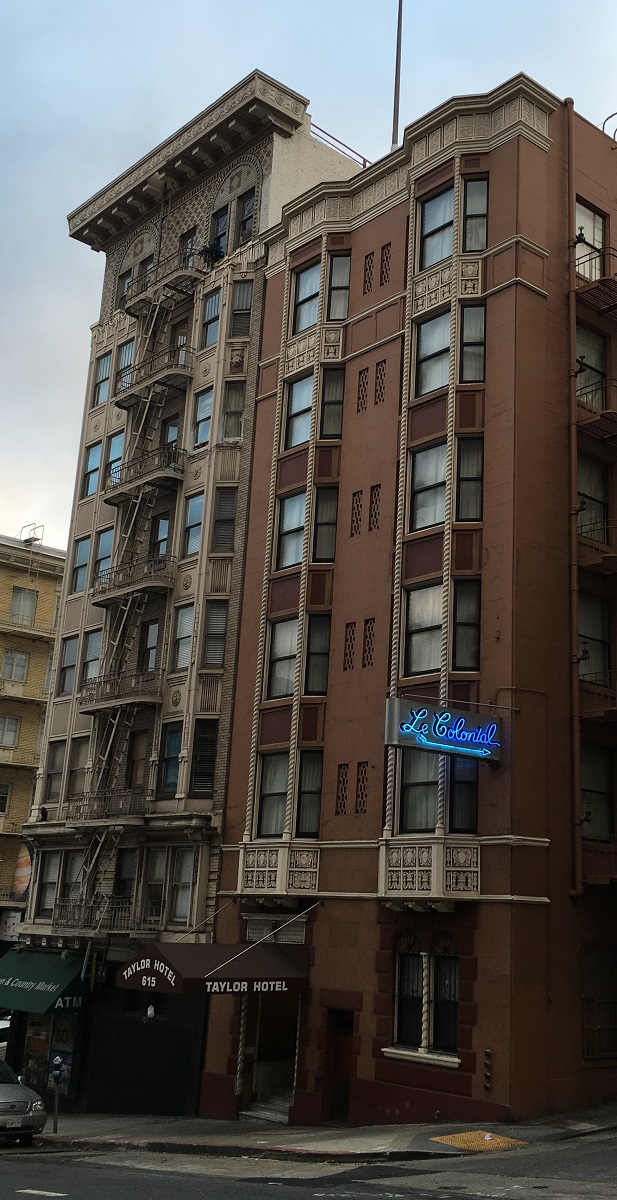
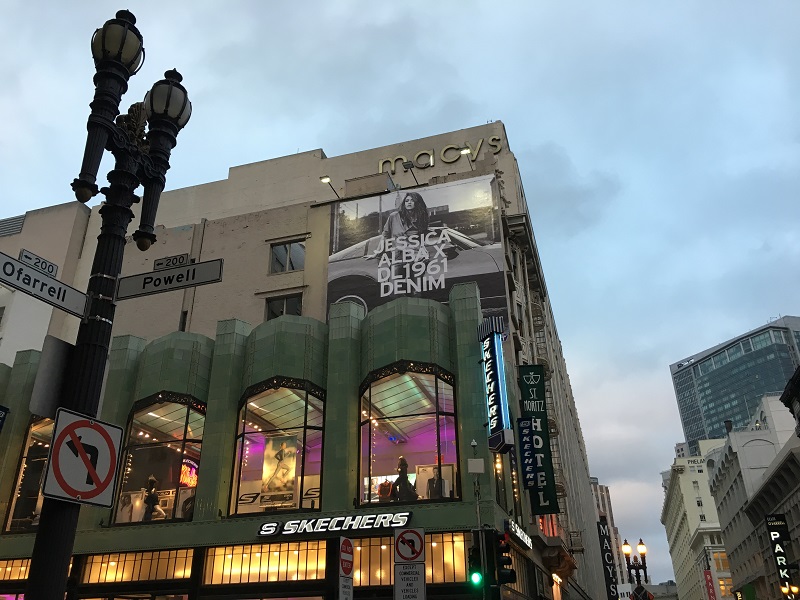
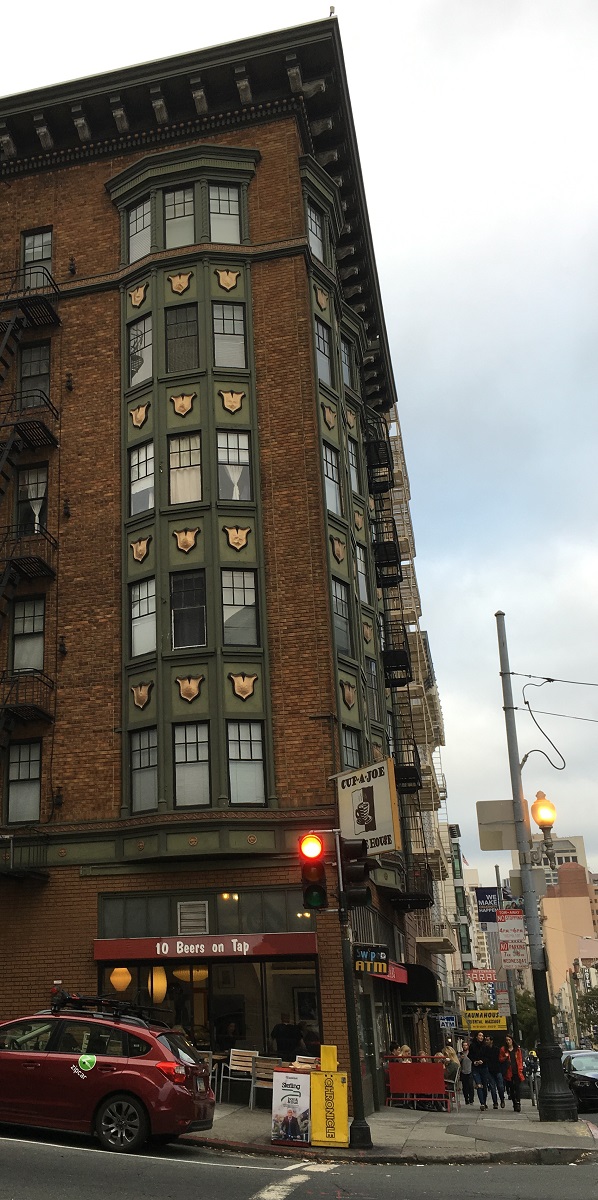
Here’s the Taylor Hotel (no frills-budget hotel) on Taylor Street.I love the green copper clad Art Deco exterior of the Skechers (shoe store) building on the corner of O’Farrell and Powell.This apartment building is on the corner of Sutter and Leavenworth.
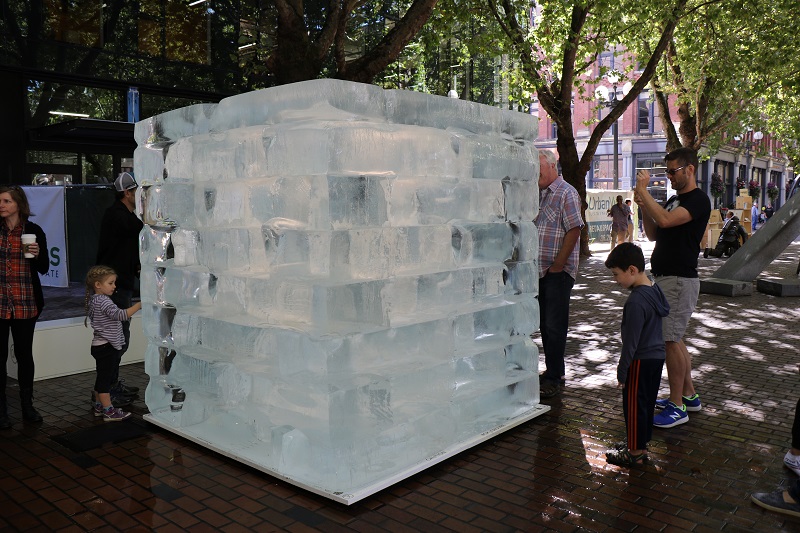
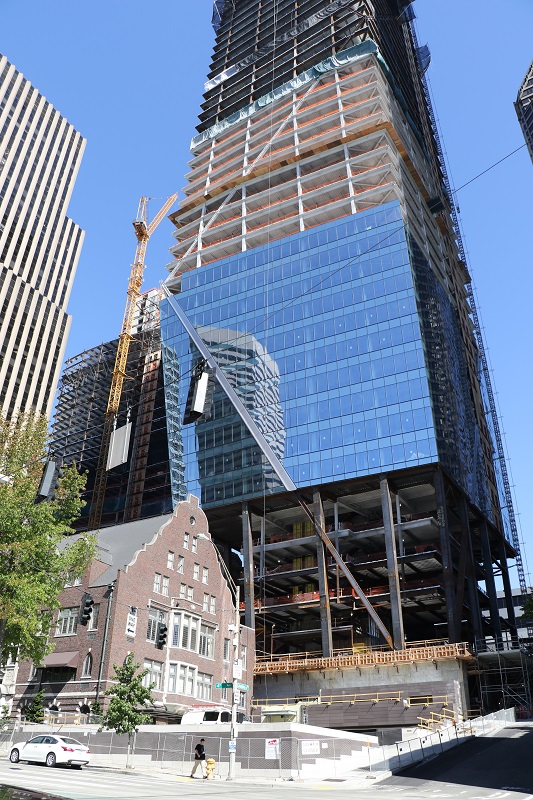
I took the light rail train down to Pioneer Square on Saturday to check out the ice cube (that I wrote about last Sunday). It’s pretty cool (icy, to be exact), but not a solid cube. Afterwards I walked up six blocks to University Street station and stopped along the way to check out The Mark, a new high-rise building under construction on Fifth Avenue.
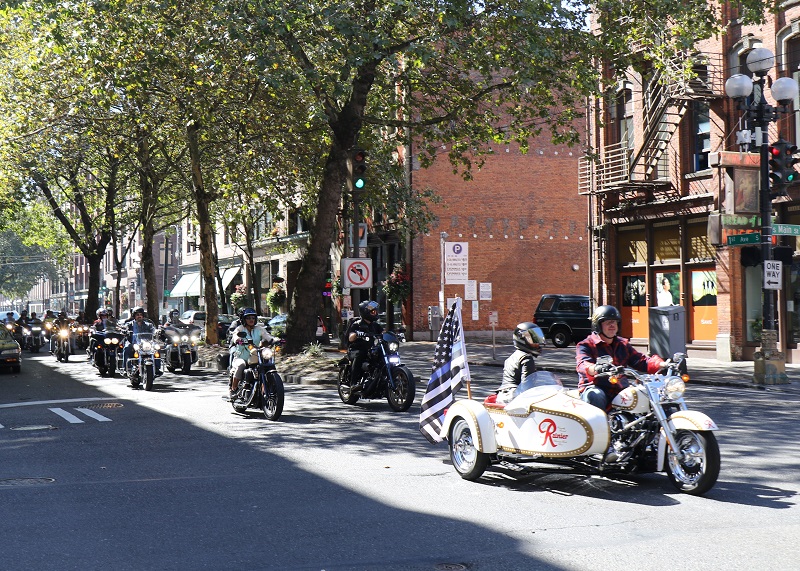
So .. here is the ice cube at noon on Saturday. It ‘landed’ in this spot in Pioneer Square in downtown Seattle on Friday night. I suspect it was put together on the spot, the eight layers of ice bricks that make the cube. The edges of the bricks are warmer than their core, and starts melting first, of course.This is a bike rally making their way up First Avenue, by Pioneer Square. The guy in front with the Rainier brewery sidecar has a ‘Thin Blue Line’ American flag : showing support for the nation’s police force.Here is The Mark, a 660-foot (200 m) high building that will have 44 floors when completed in April 2017. The base has the smallest footprint of all the floors. I’m sure that is why those diagonal beams are necessary: to add rigidity to the bulging structure.
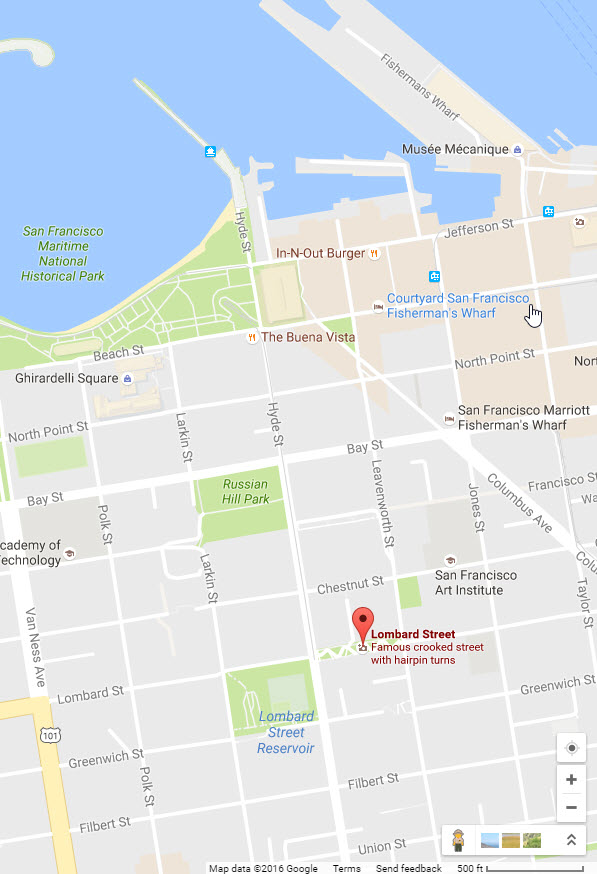
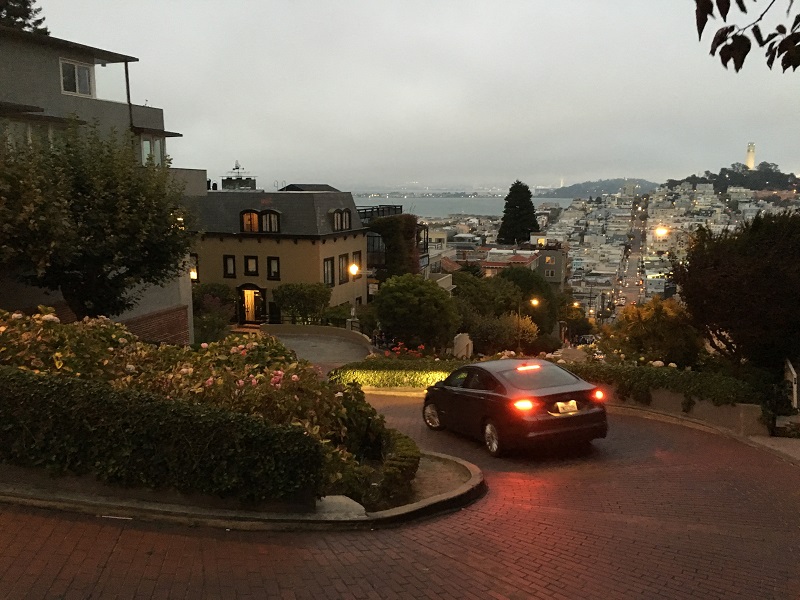
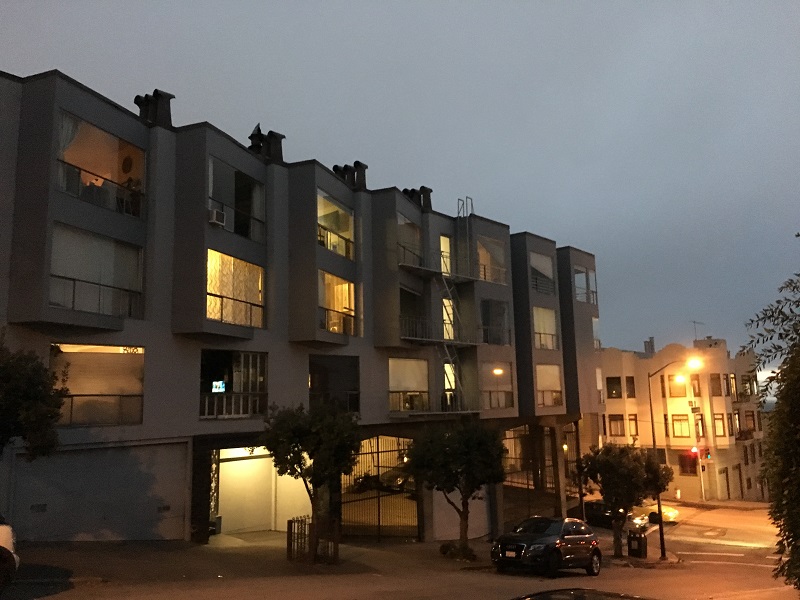
Lombard Street runs along the eastern segment in the Russian Hill neighborhood.Here is an early evening view from the top of the crooked section of Lombard Street (it’s nicely paved with brick all the way down). I believe that’s the straight section of Lombard Street in the distance, running by the hilltop on the right with Coit Tower at its top.Just an interesting apartment or condo building that I walked by. The homes in the neighborhood are eclectic : all a little different, or Victorian, or unusual.
There was a picture of Lombard Street (‘the world’s crookedest street’, with its 8 hairpin turns in one street block), in my hotel room. And since it was just a few blocks away from the hotel, I had to go check it out.
There are several parallels between San Francisco’s Embarcadero waterfront, and Seattle’s Alaskan Way Viaduct. The Embarcadero had an ugly double-decker freeway (built in the 1960s) that was finally undone and demolished in 1991, following the 1989 Loma Prieta earthquake.
Seattle’s Alaskan Way Viaduct has been a long-time eye-sore as well; and damaged in the 2001 Nisqually earthquake. It’s demolition will finally be under way in the next 18 months or so, with the completion of a replacement tunnel.
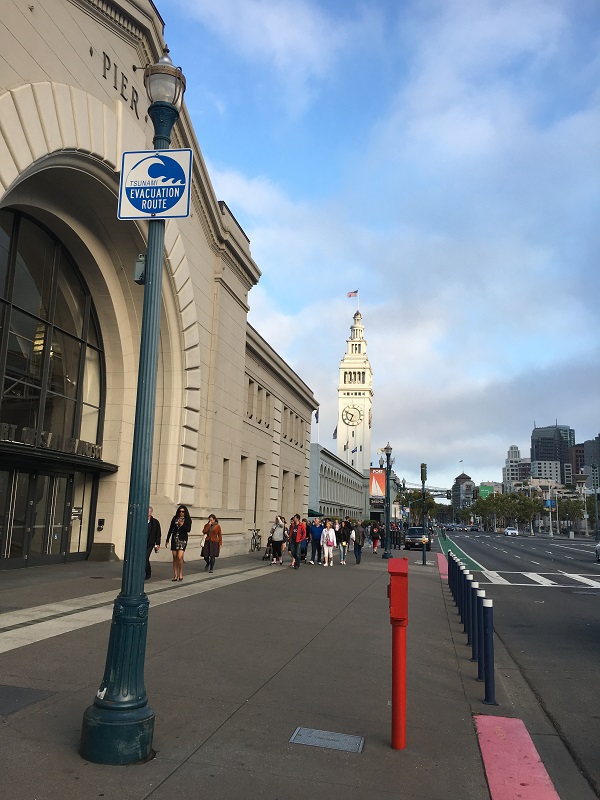
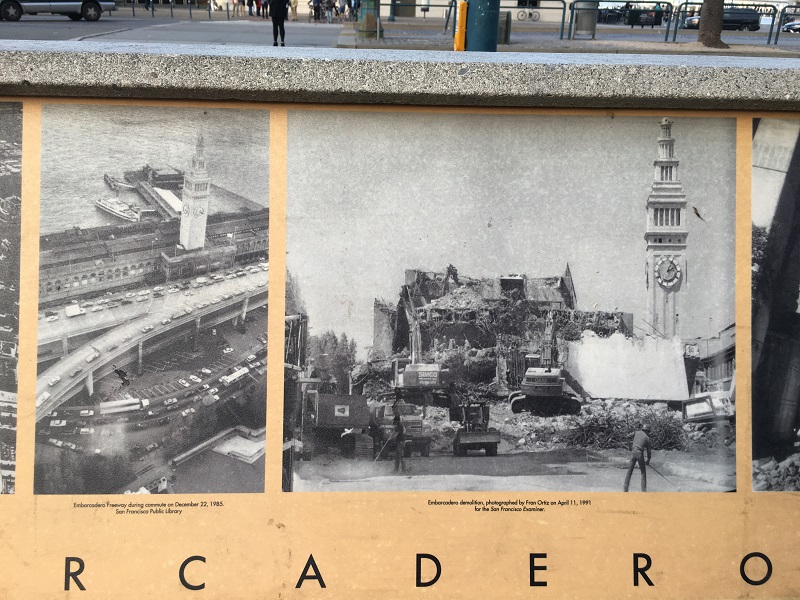
I’m on the Embarcadero, the waterfront street with street car tracks. The Ferry Building”s clock tower shows 6.50 pm, and I’m finally on my way back to Fisherman’s Wharf to the hotel.Check this little bit of history posted on a memorial of sorts with photographs and all : there used to be an ugly Embarcadero Freeway in the 1960s. It was finally torn down in 1991, after being severely damaged in the 1989 Loma Prieta earthquake.
.. and here are a few more pictures, these from my trip today to the camera store in South Lake Union. (The body of water visible at the top of the frame in the map in Saturday’s post).
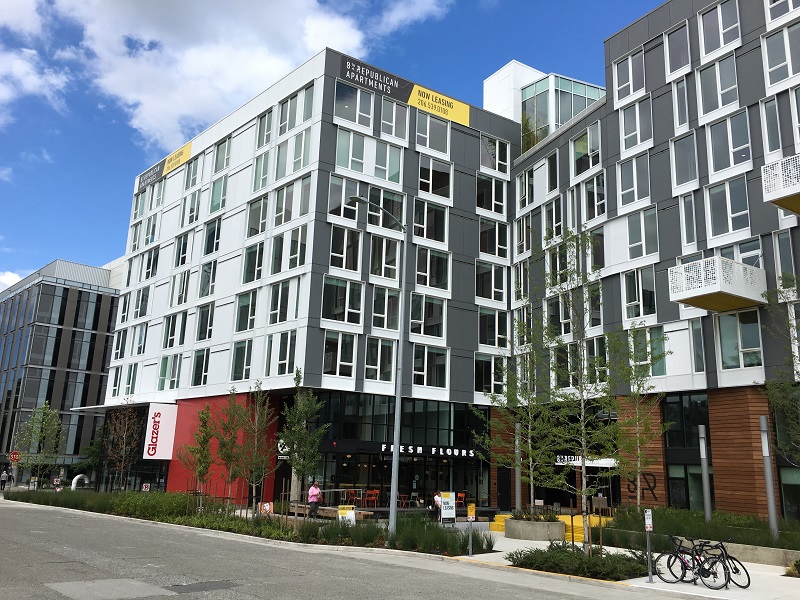
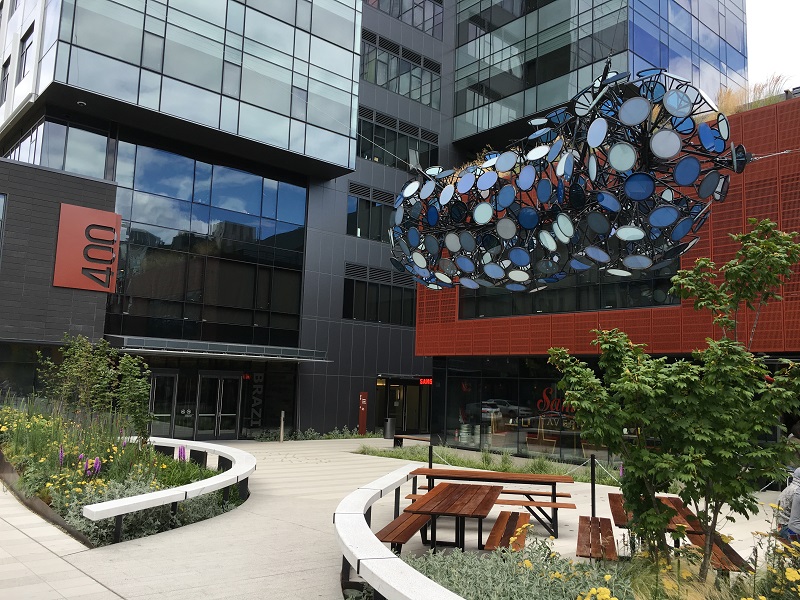
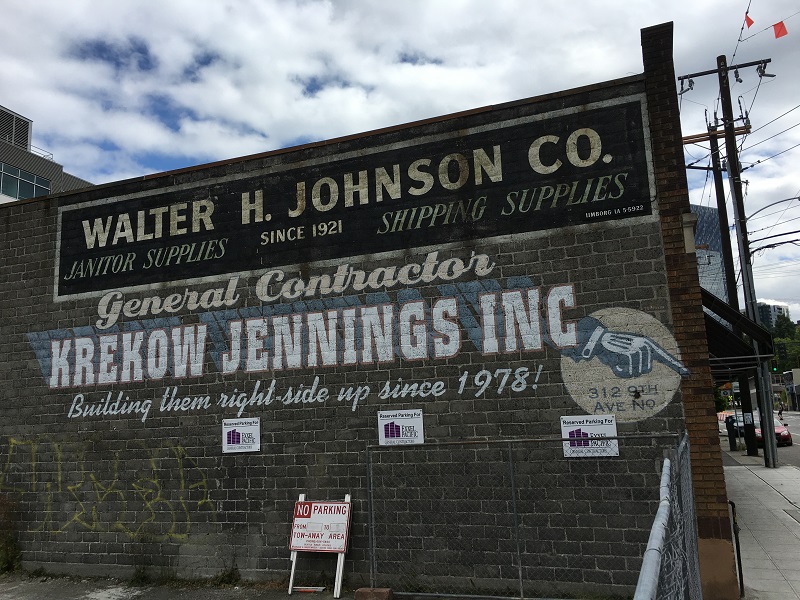
The camera store is called Glazer’s (the red on the ground floor), part of the 8th Ave & Republican apartment complex.This is the patio of Sam’s Tavern* (hmm, with very modern – lighting? overhead. Will have to go check it out at night). *When I hear ‘tavern’, I think of a very old, cozy brick pub in Europe.Hey, and if you’re lucky enough as a brick building to still stand after all the demolition, at least your lettering gets a refresh, as on this one. So this building has been around since at least 1921, and maybe that is why it was saved.
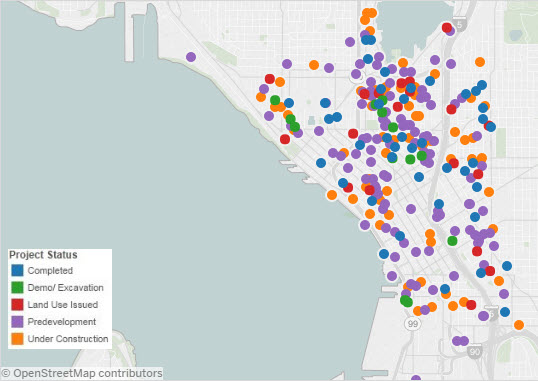
It really is quite incredible to look at a diagram of all the recent and on-going construction projects in downtown Seattle (on the right). At this time, there are 65 buildings under construction, with the total construction cost estimated at about $3.5 billion. The two pictures below are from my walk-about late Friday afternoon.
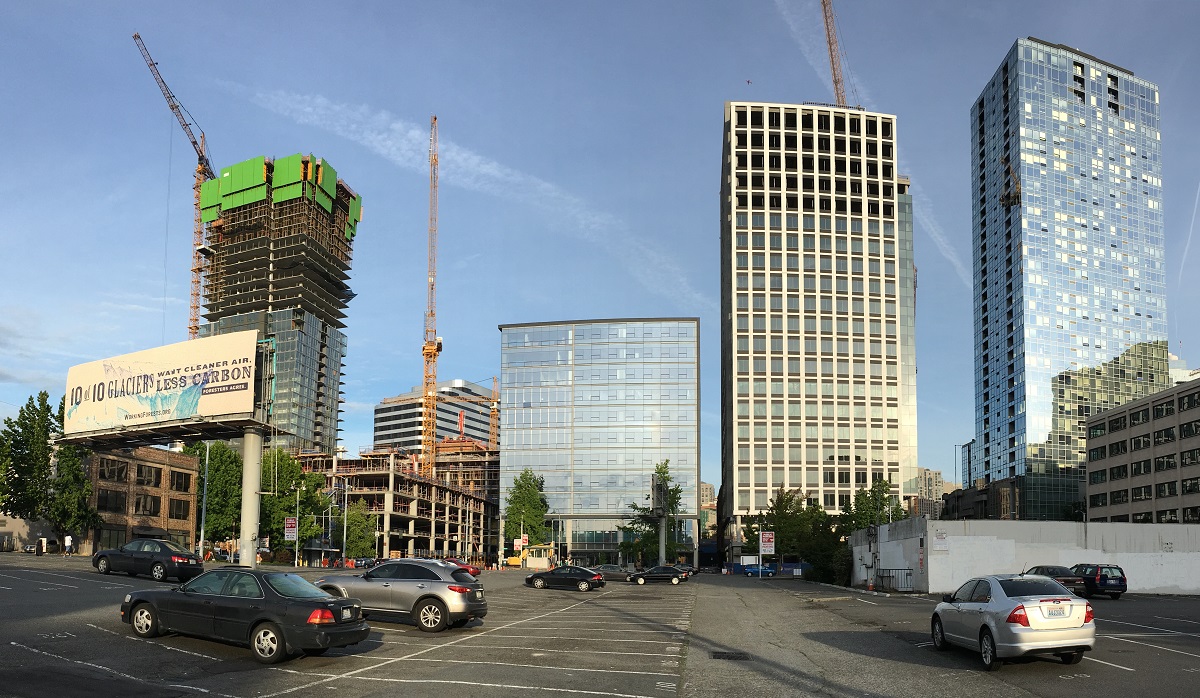
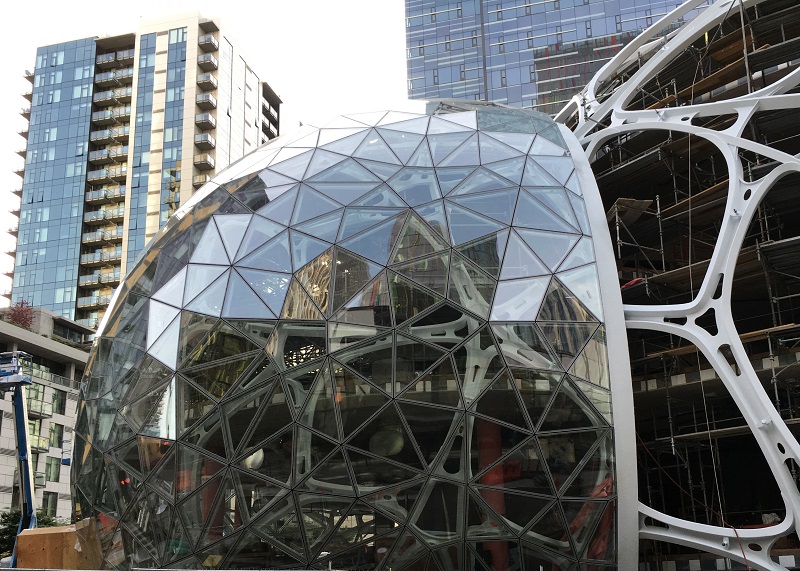
This is a view looking south from Virginia St & Denny Way. On the left is a 40-story wedge-shaped apartment project called Kinects. Next to it, construction has started (tall yellow crane) on ‘Tilt49’ : a 37-story apartment tower and 11-story office building. Next to it a Hilton Hotel and office complex, then (with the white frames), Midtown21 is a 21-story office building. On the far right the is the Aspira apartments building (completed in 2014)... meanwhile, further towards downtown, one Amazon biosphere (one of three) now has all its panels installed.
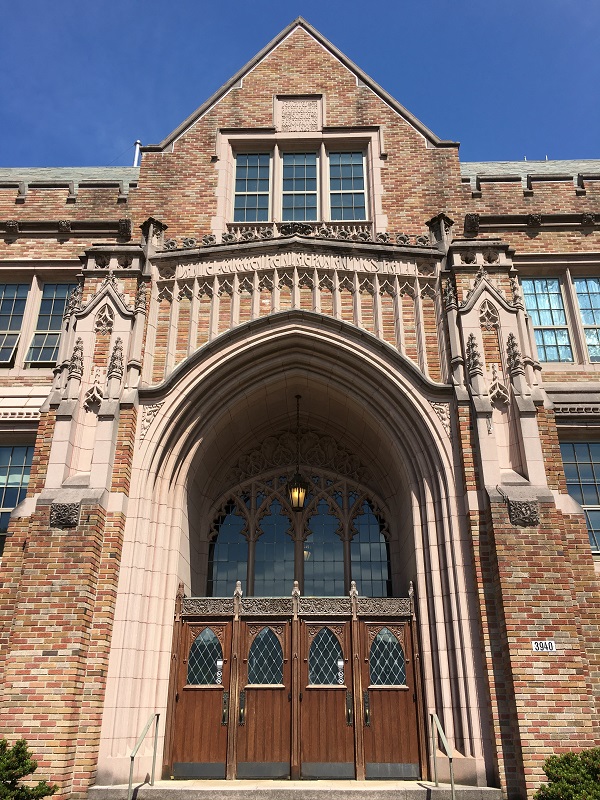
The weather here was finally warming up a little on Sunday, and I took the Light Rail train out there for a random walk around the campus. The 40,000-some students must be knuckling down right now in the dorms and in the library, and study for just a little longer : Final Examination (‘finals week’) starts next week.
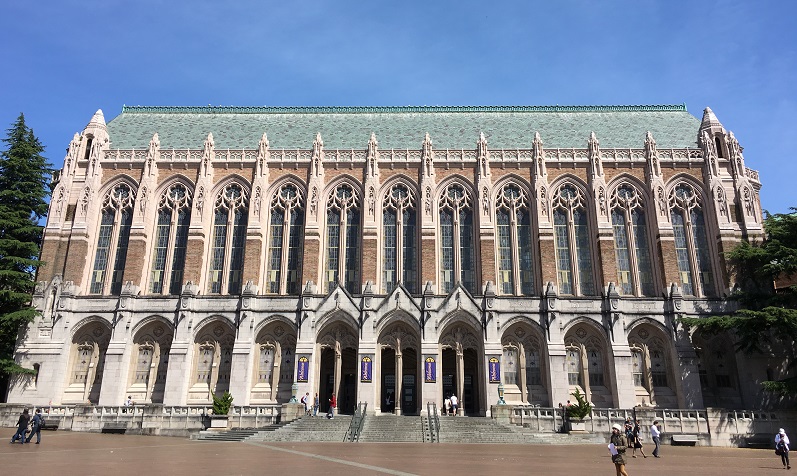
This is the Neo-Gothic architecture of the Suzallo Library. It is relatively ‘new’ (as these styled buildings go), and was completed in 1963.Guggenheim Hall was built for the study of astronautics and aeronautics. The facility was dedicated in April 1930, the same year the UW awarded its first degrees in aeronautical engineering.
The Marina district is named after the San Francisco Marina on the shoreline. There is also a strip of green lawn called the Marina Green between the water and the built-up area. Buildings in the Marina district have suffered damage to earthquakes on more than one occasion the last century or so, but as Wikipedia notes : physically, the neighborhood appears to have changed very little since its construction in the 1920s.
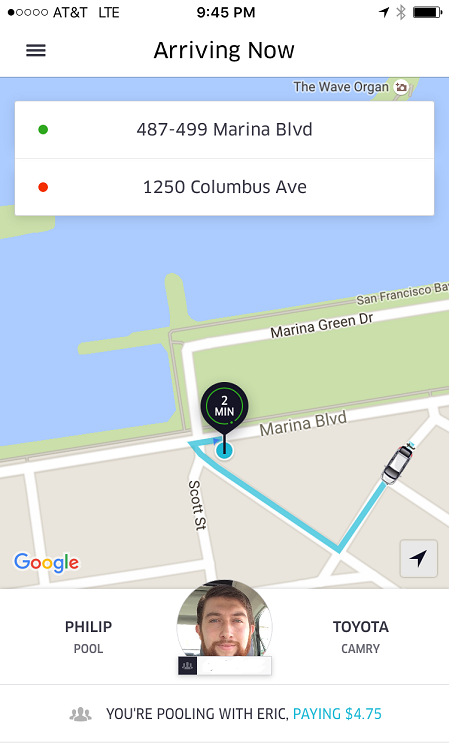
Four of us from work went to an Italian restaurant in the Marina district tonight, and I did the very San Francisco thing of taking an ‘Uber pool’ ride home. (Smart phone app used to summon a driver, shown on the map with his name and his car, as well as whom you will share your ride with, what the cost is, and what the estimated arrival time of the car is. Wow! That’s a whole lot of technology coming together!).
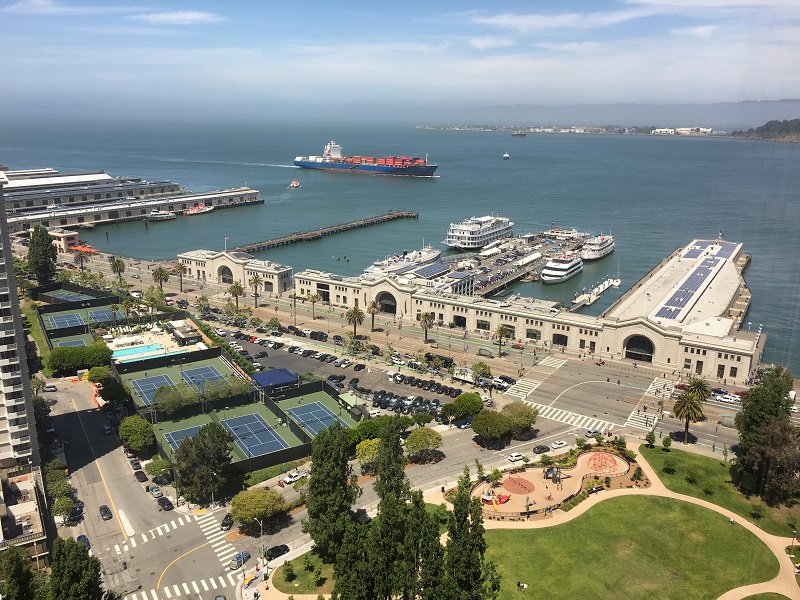
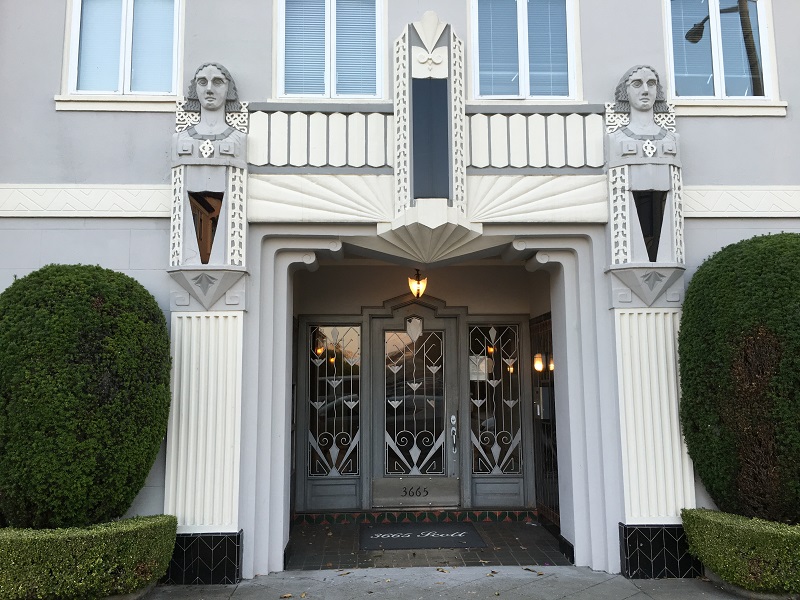
This is the view of Pier 1 (far right), Pier 3 and Pier 5 along the Embarcadero, from the conference room we met in today, from the 20th floor in the Embarcadero Three building. The container ship in the background is probably on its way to the port of Oakland a little further into San Francisco Bay.I love this 1920s Art Deco entrance to one of the condominium buildings in the Marina district. Not all of the buildings have entrances as nice as this one!
[From Wikipedia] Hamburg, a major port city in northern Germany, is connected to the North Sea by the Elbe River. It’s crossed by hundreds of canals, and also contains large areas of parkland. Its central Jungfernstieg boulevard connects the Altstadt (old town) and the Neustadt, passing Binnenalster lake, dotted with boats and surrounded by cafes and restaurants. Oysters and traditional Aalsuppe (soup) are local specialties.
I did the best I could with the day-and-a-half and rain/ freezing rain at times in Hamburg! I will have to try to come back in summer some time, when the weather is warmer. The HafenCity* area’s development continues, even after 15 years since it had started, and I would love to spend more time there when it had been completed.
*HafenCity is an urban center with many shops, restaurants, hotels and cultural venues as well as rising visitor numbers. More than 2,000 people now live in HafenCity as a whole; there are more than 5,000 students at the various academic institutions; upwards of 10,000 employees work in more than 500 businesses. It aspires to generate and use clean energy and be a model for the new cities that will have to be built around the world this century.
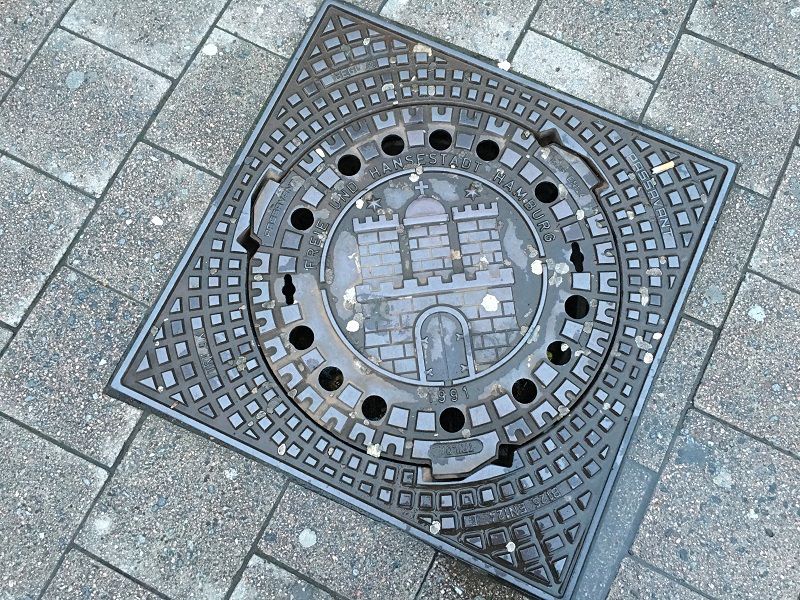
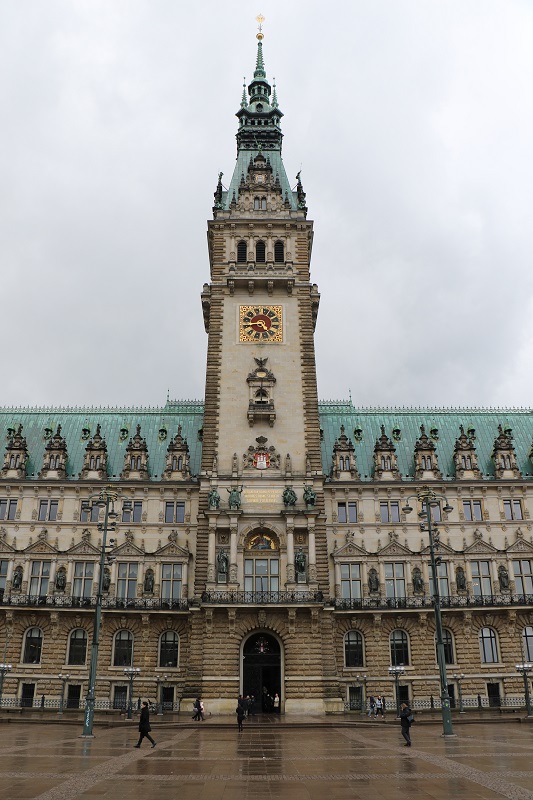
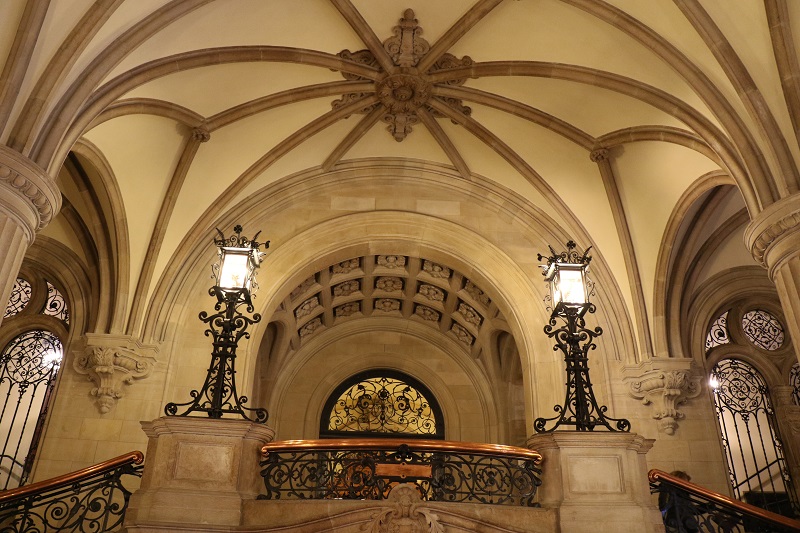
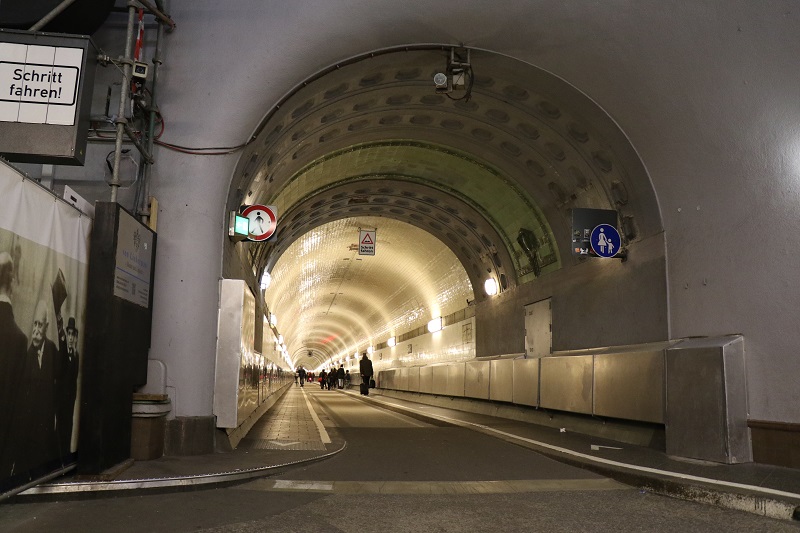
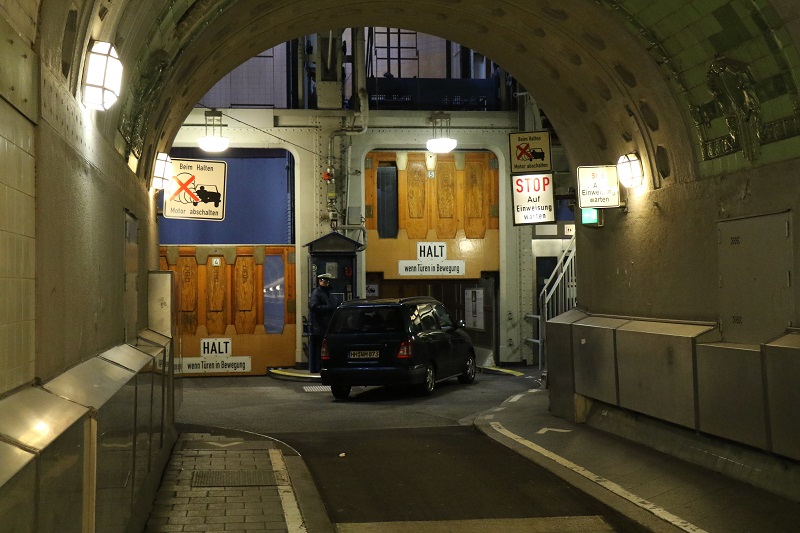
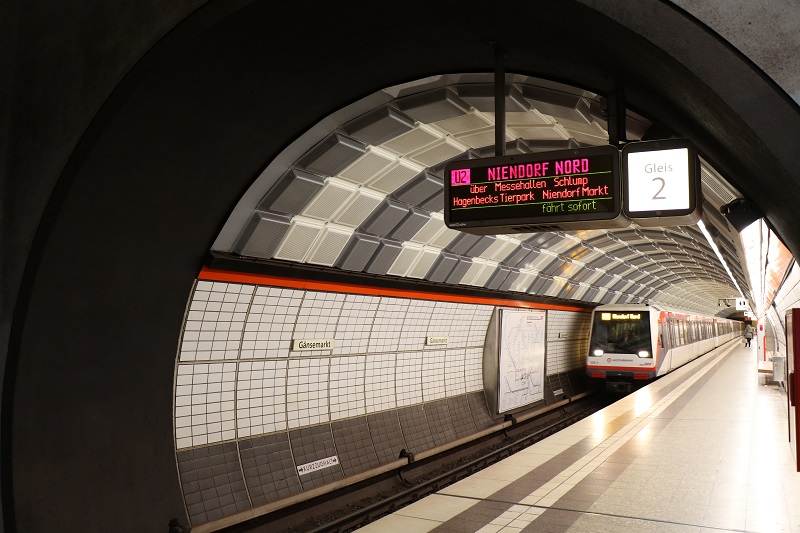
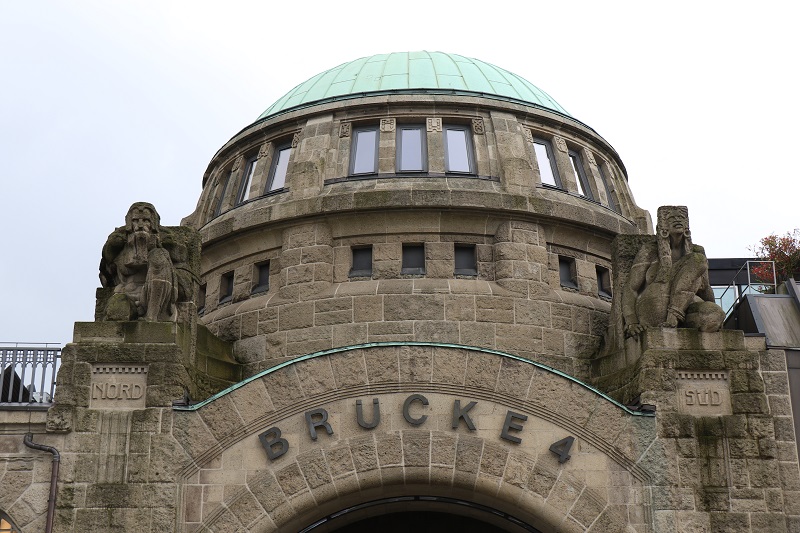
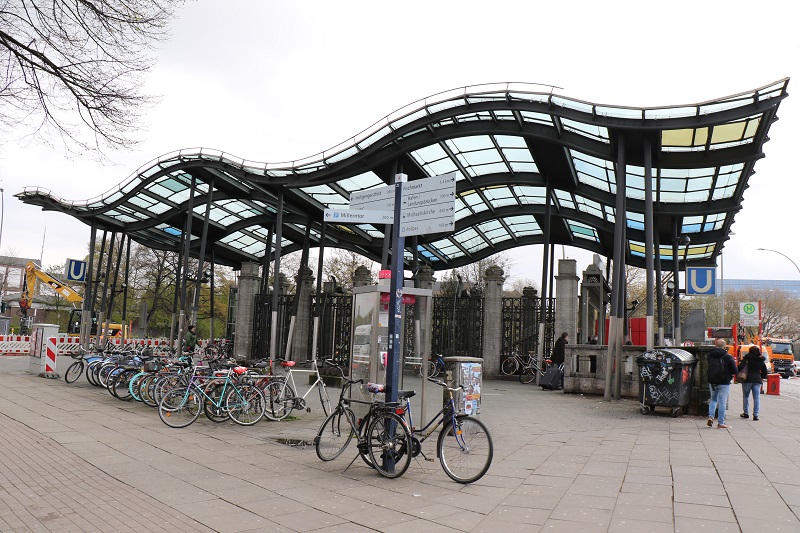
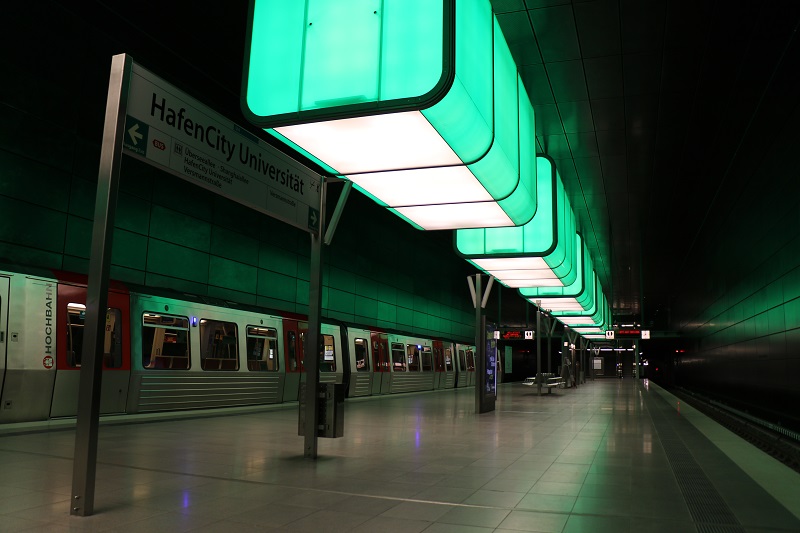
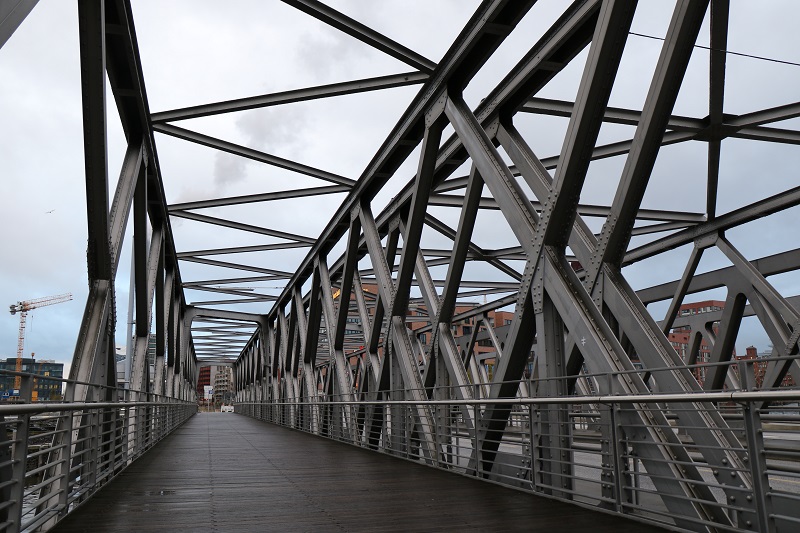
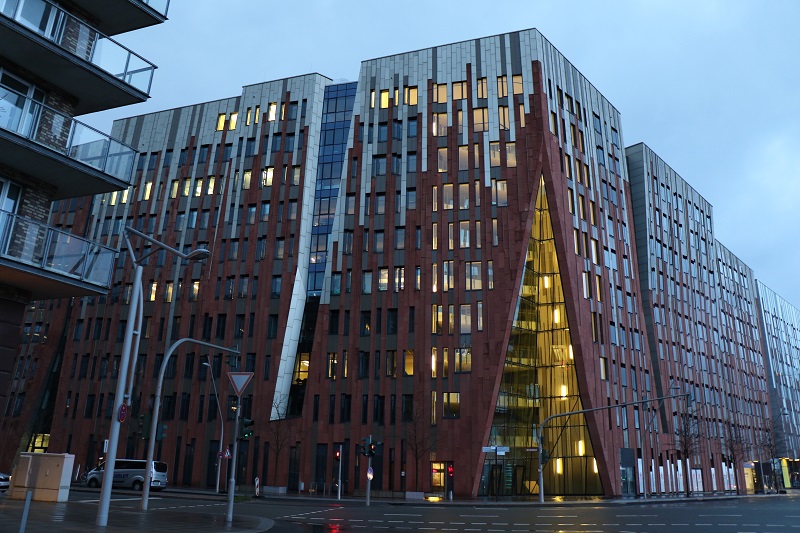
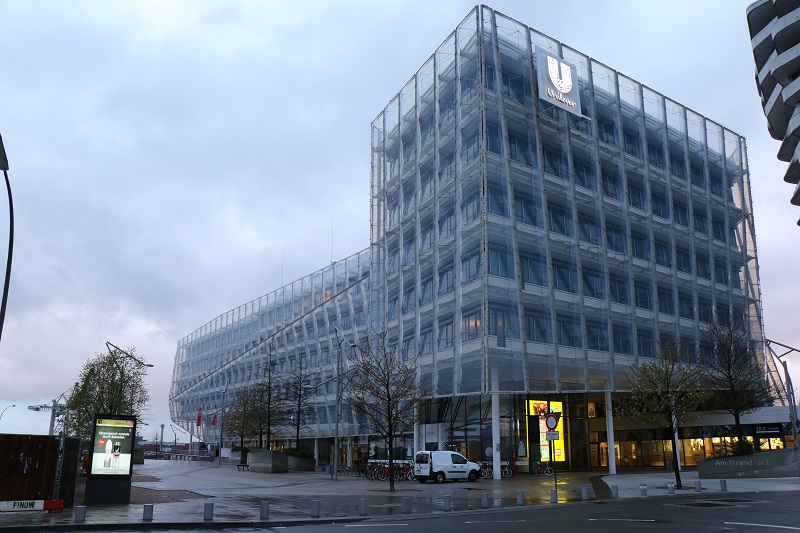
The Rathaus (Town Hall) of the Free and Hanseatic City of Hamburg is a spectacular work of art, inside and out. It was inaugurated in 1897.The inside of the main entrance hall in the Rathaus.This is the Alte Elbe Tunnel (the old Elbe tunnel), a tunnel that was completed by 1911 that runs under the Elbe river. It is still in use to this day : by pedestrians, bicyclists, and even the occasional car or taxi !Here is a car that had driven through the tunnel, and is entering the car elevator to get it up to street level. That HALT makes me think of the Berlin Wall and the World Wars!The U-bahn (and walking) was pretty much my only mode of transportation in Hamburg. In Copenhagen I used the bus much more, since there was a convenient bus stop right by the hotel. This is the train station at Ganzemarkt, on the U2 line.This is close by the Elbe Tunnel, stone construction on the river bank.An entrance to St Pauli U-bahn station, and by the Plante-en-Blumen Park. It was too darn cold, with an icy wind in the park! and so I spent very little time there.The U4 route goes to HafenCity Universitat, and the line and stations are much newer than the others. This green overhead light and color on the station changes to blue and purple .. and I would probably have seen more colors, if I stayed longer.A brand new truss bridge for cars and pedestrians at HafenCity.There are lots of stylish new office buildings and apartment complexes in HafenCity, such as this one.This building belongs to Anglo-Dutch multinational consumer goods company Unilever.
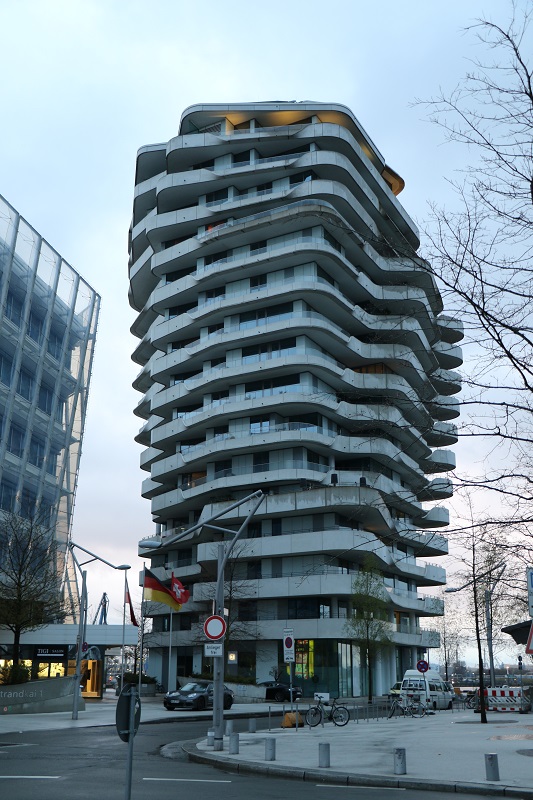
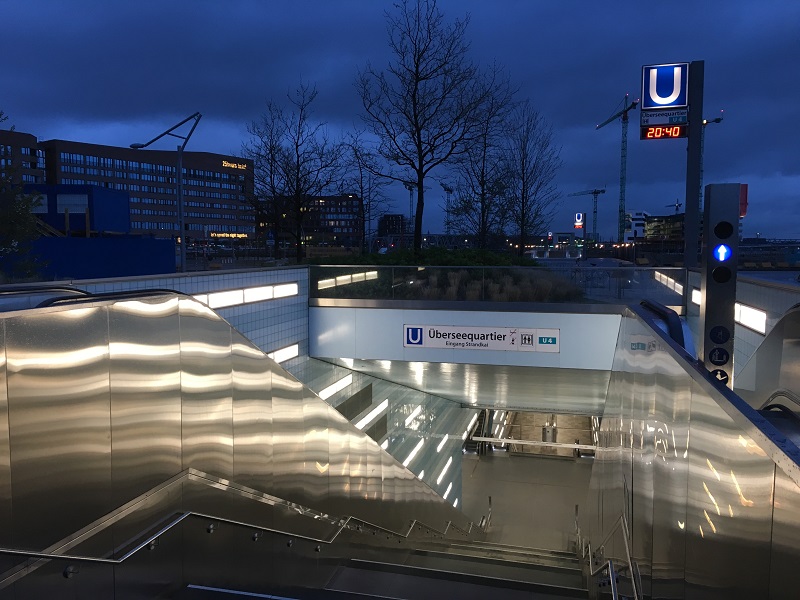
Right next to the Unilever building, in HafenCity .. I think this is an apartment tower.The entrance to one of the two new U-bahn stations at HafenCity, called Überseequartier.
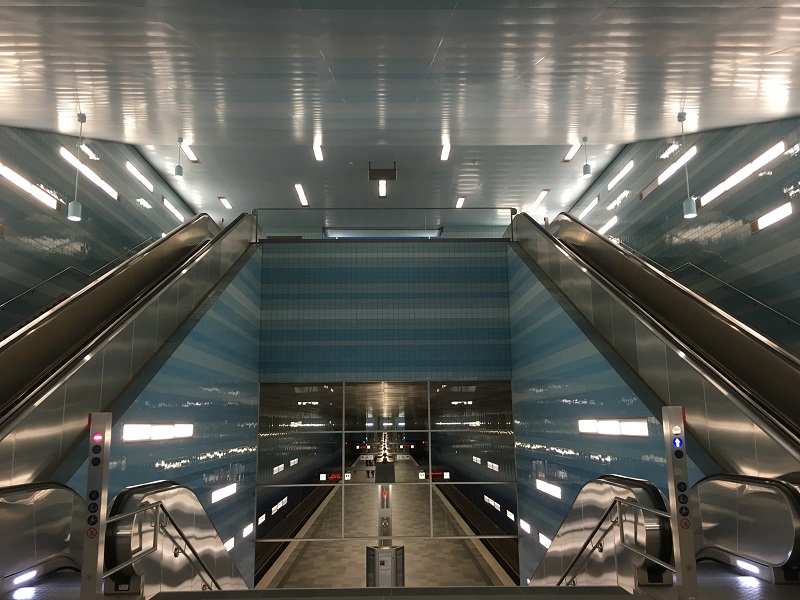
No, it’s not a work of art (but it could be) .. lots of reflections on the way down to the U-bahn platforms of the Überseequartier station.
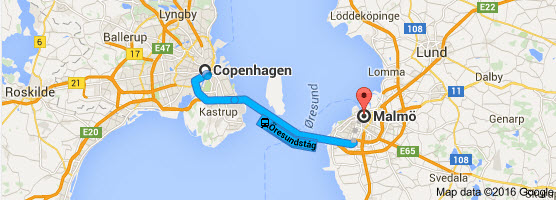
The Øresund Bridge connects Copenhagen and Malmo, and was completed in 2000 at a cost of €2.6 billion. The bridge made a big difference to the economy of Malmo.
I could see a bridge far away from my hotel room and discovered that it is the Øresund Bridge to Malmö in Sweden : a combined railway and motorway bridge across the Øresund strait between Sweden and Denmark. The bridge runs nearly 8 kilometres from the Swedish coast to the artificial island of Peberholm in the middle of the strait. So! I have to go, I thought, and besides, my feet and legs needed a break from walking all over the city of Copenhagen in between bus rides and train rides. I literally just had time to make the ride out there, look around the Central Station for 15 minutes, and then catch the train back again.
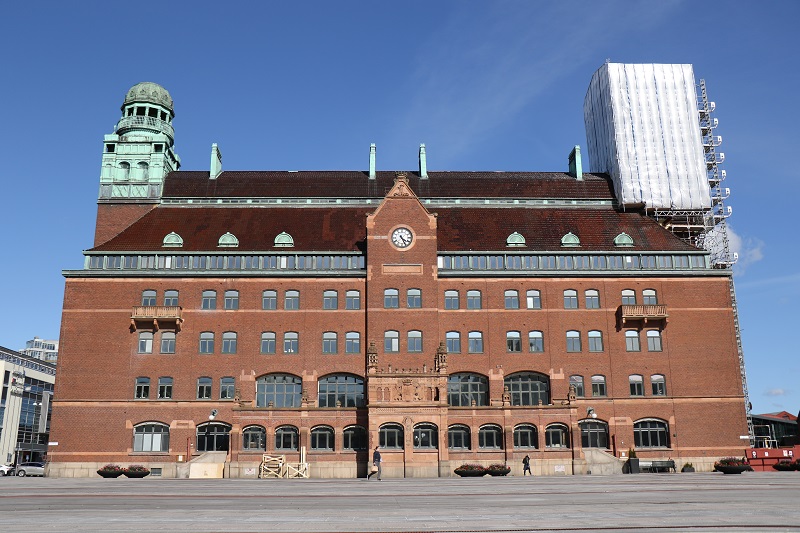
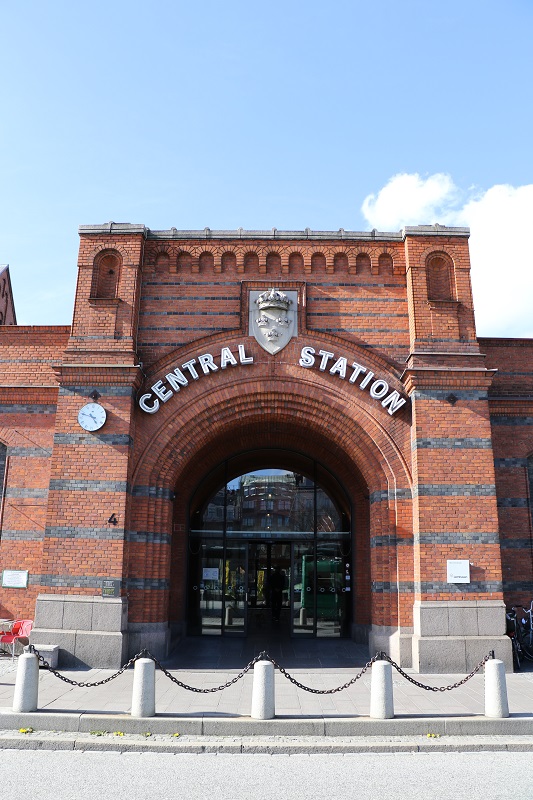
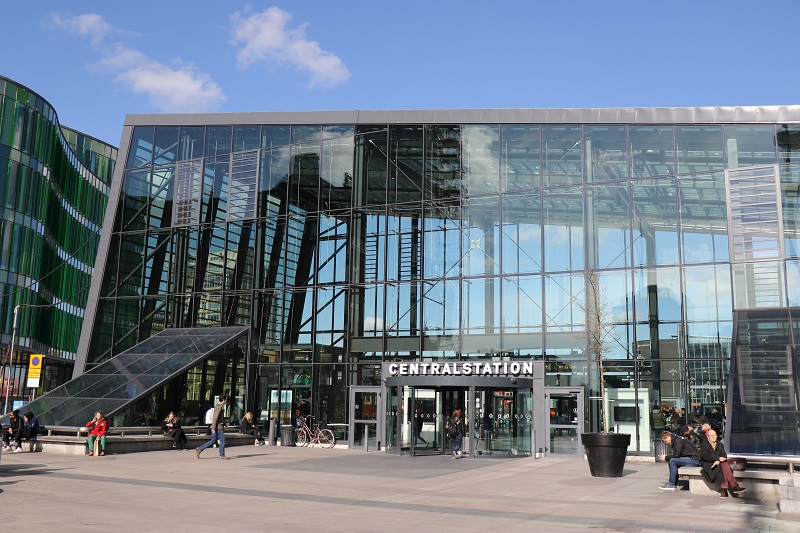
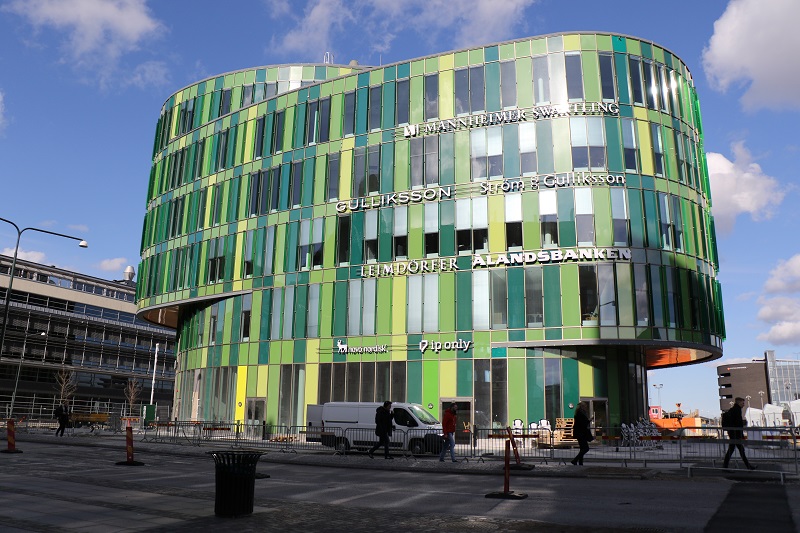
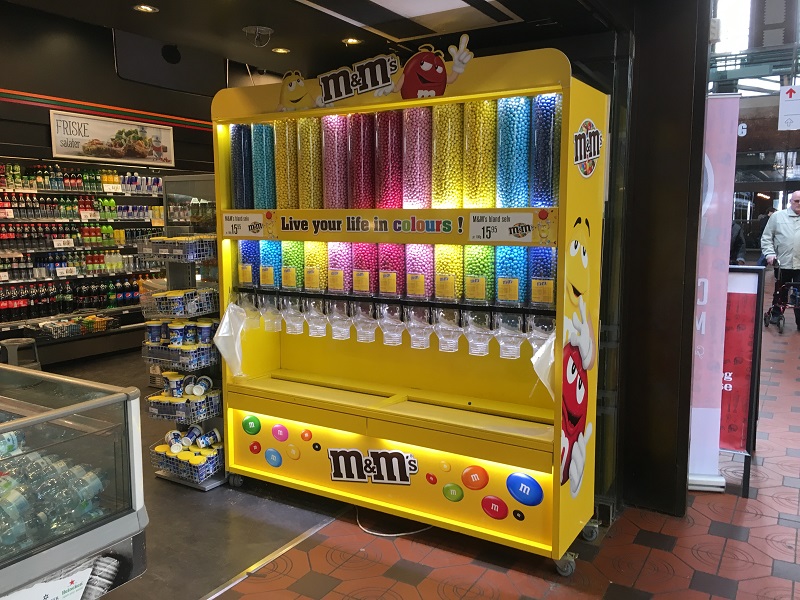
This is the grand old post office building across from the Malmo Central Station. Looks like the right side’s copper tower and dome is getting renovated.The original, old building of Malmo Central Station opened in 1856.And here is the new extension that had been added. I think it opened in 2011.This is a brand new building right next to the Central Station, still under construction. I think it is for a drug company.Hmm! An M&M candy machine right there at Copenhagen Main Station in the 7-11. (Why don’t we have these in the USA? But maybe that is a good thing for me, that there isn’t any).
Here are some of my favorite pictures from Saturday afternoon and Sunday. Yes, the Danes are very friendly and laid-back, and they speak good English. Watch out for bicycles : they go fast, so do not step into the bike lane or cross it before looking both ways! The public transport is top notch. Even the buses have display screens for the routes, and the connections at the next stop.
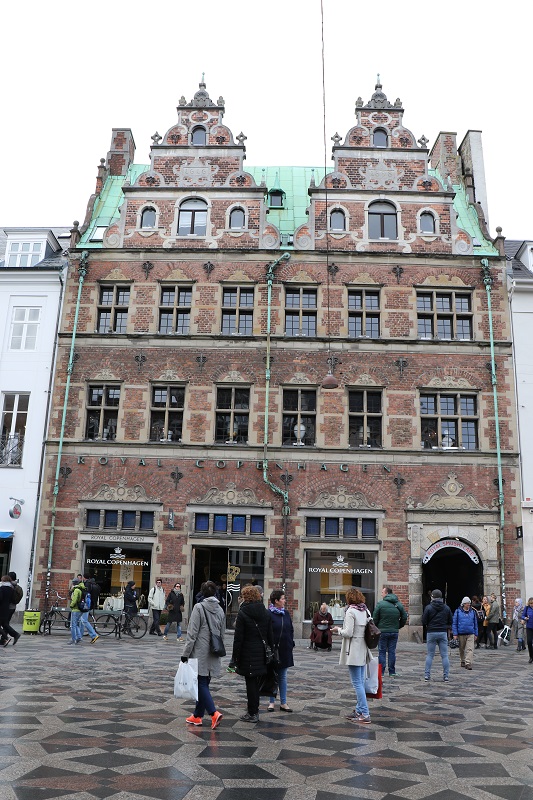
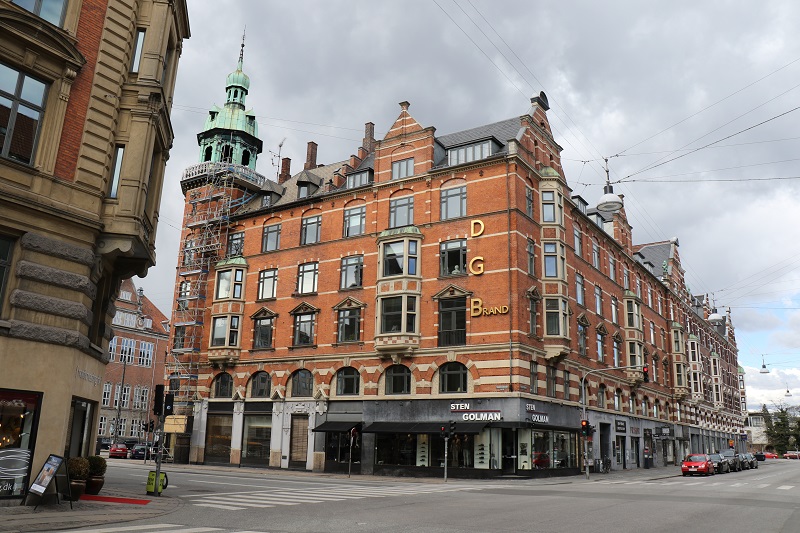
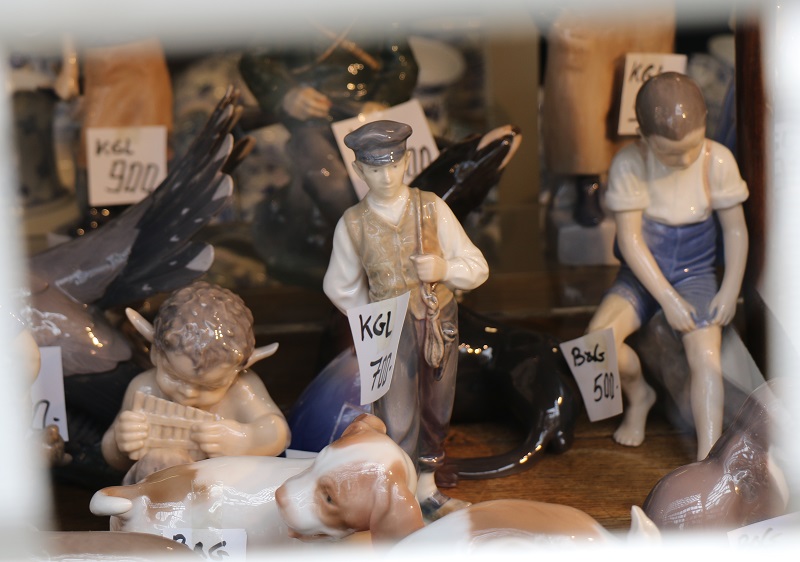
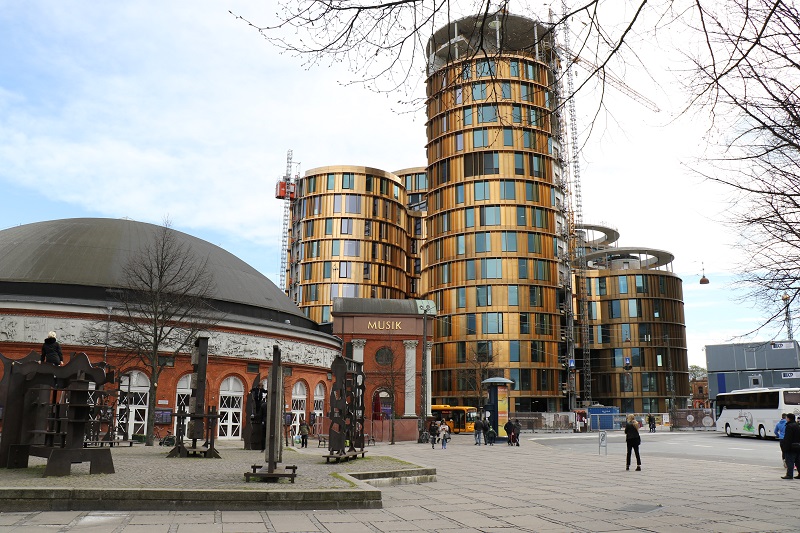
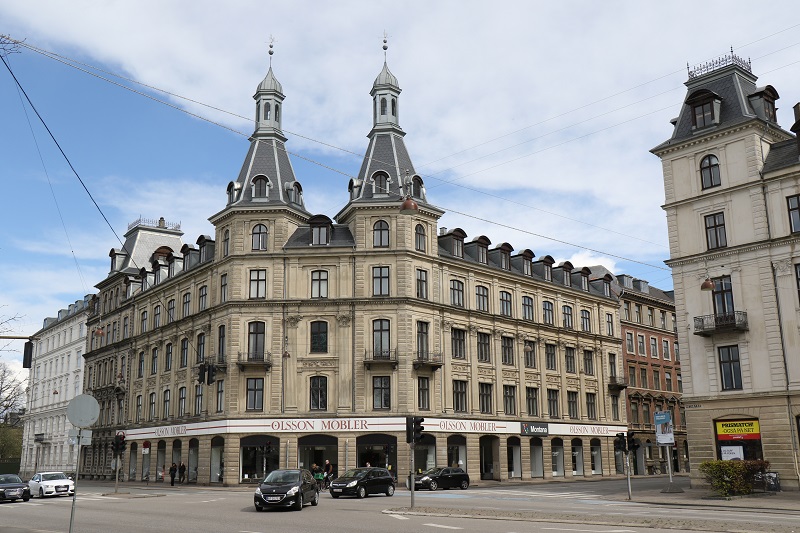
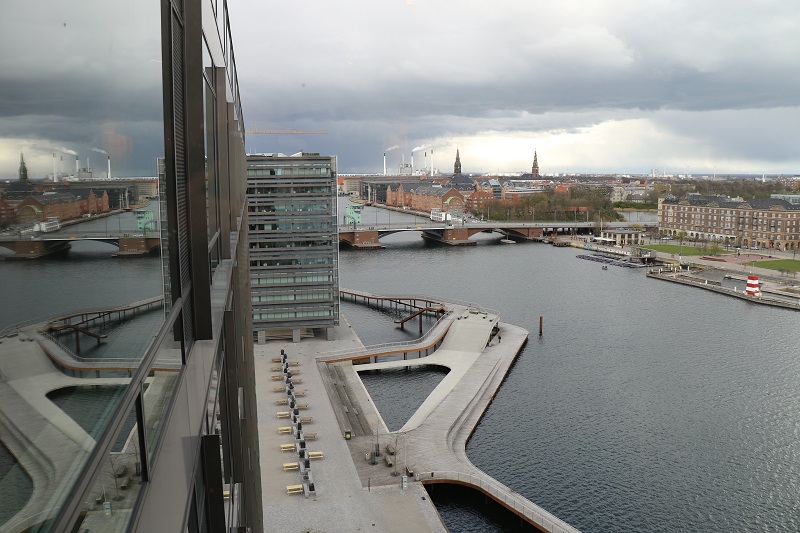
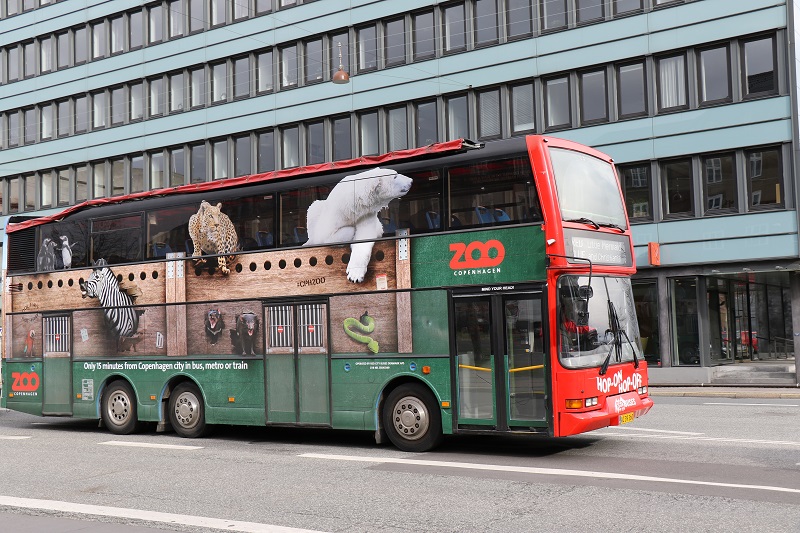
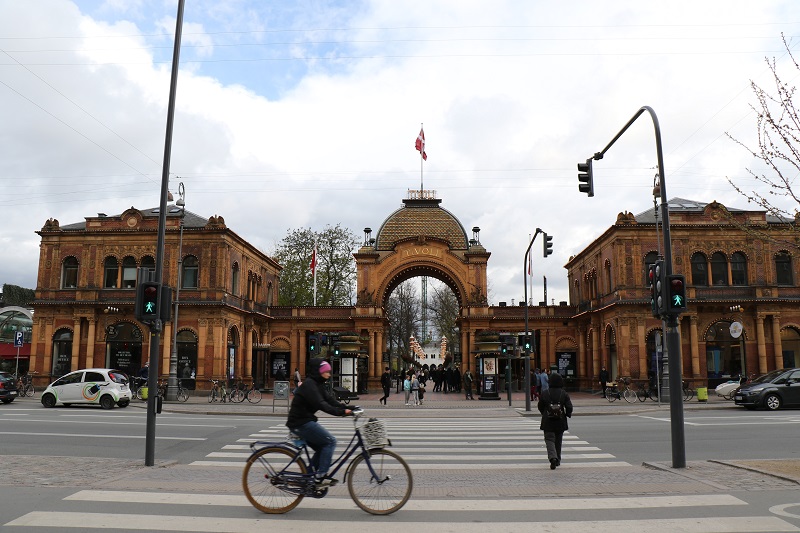
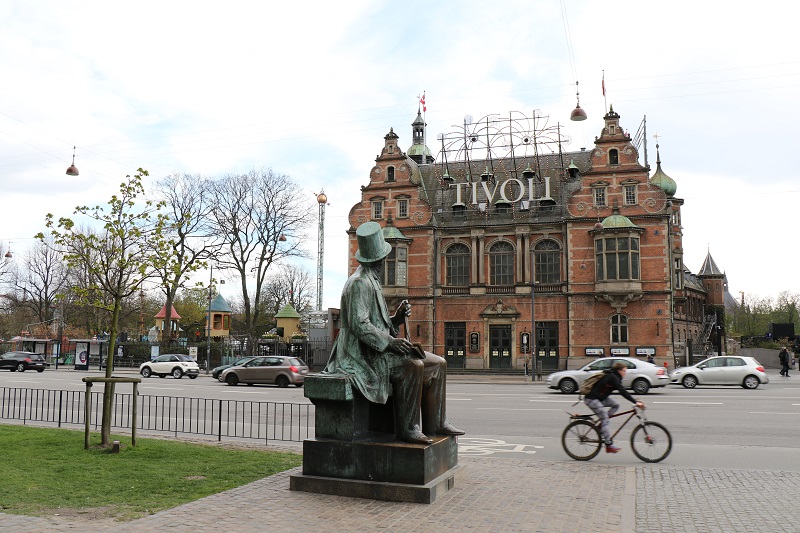
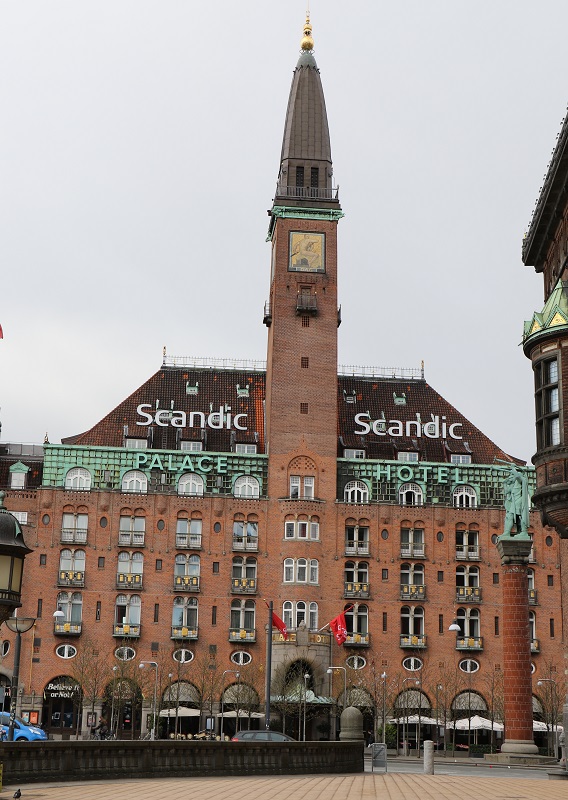
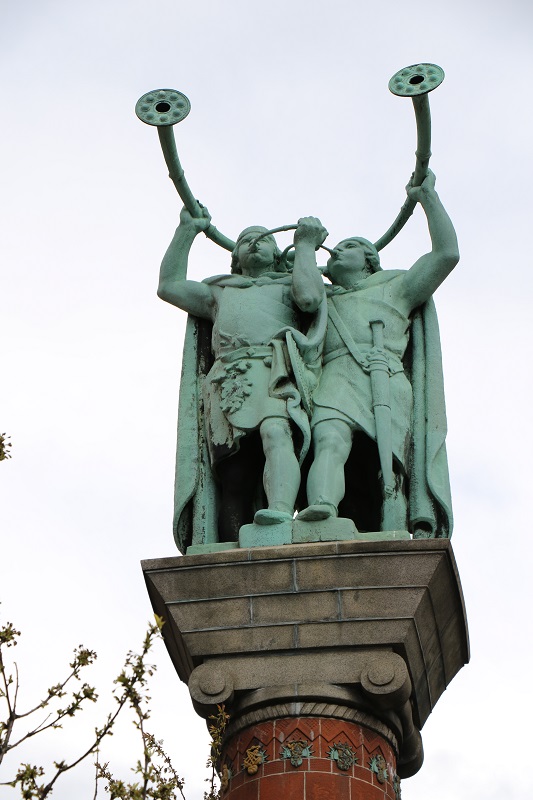
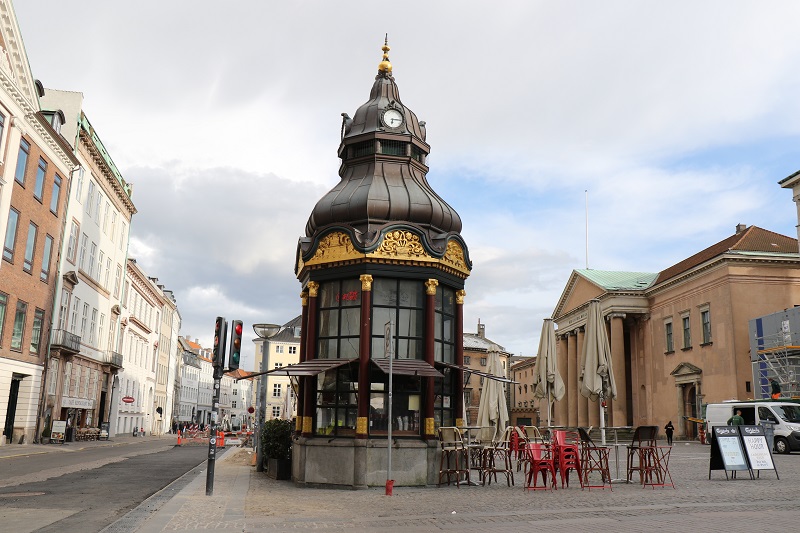
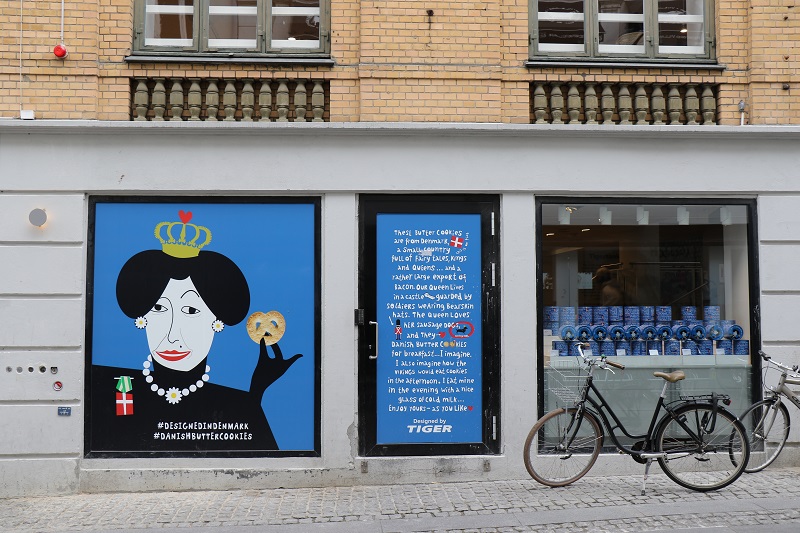
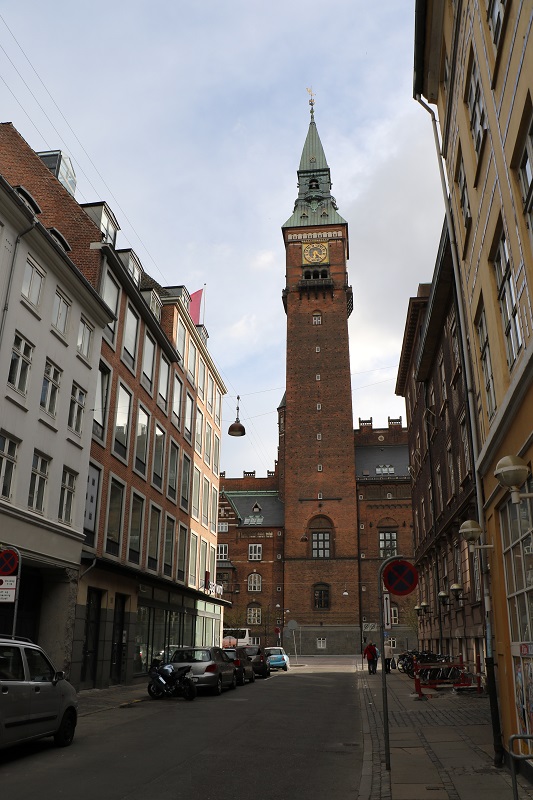
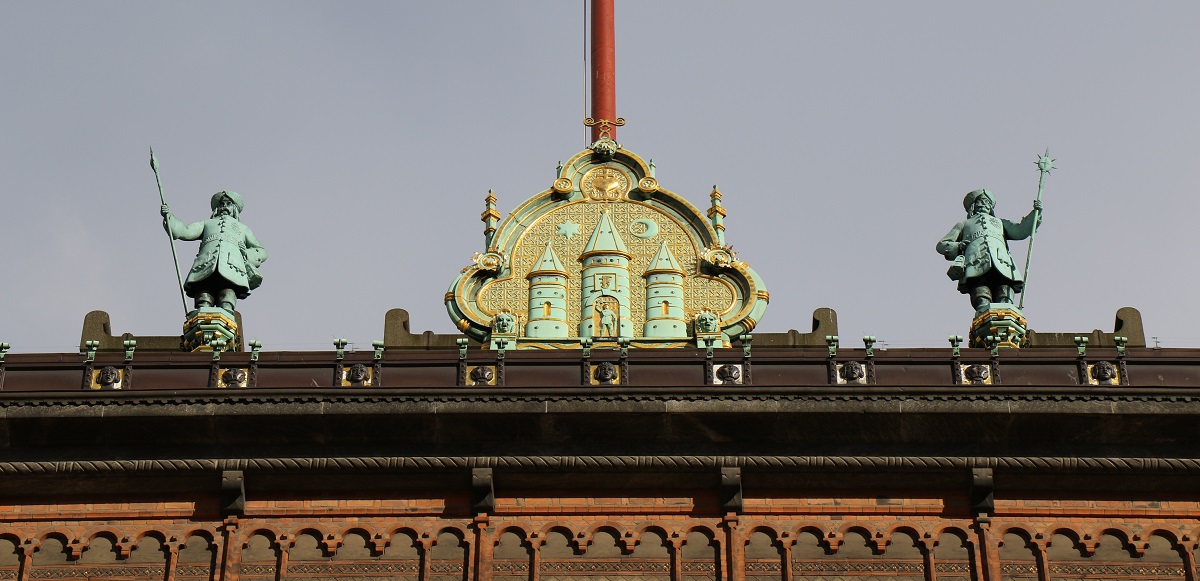
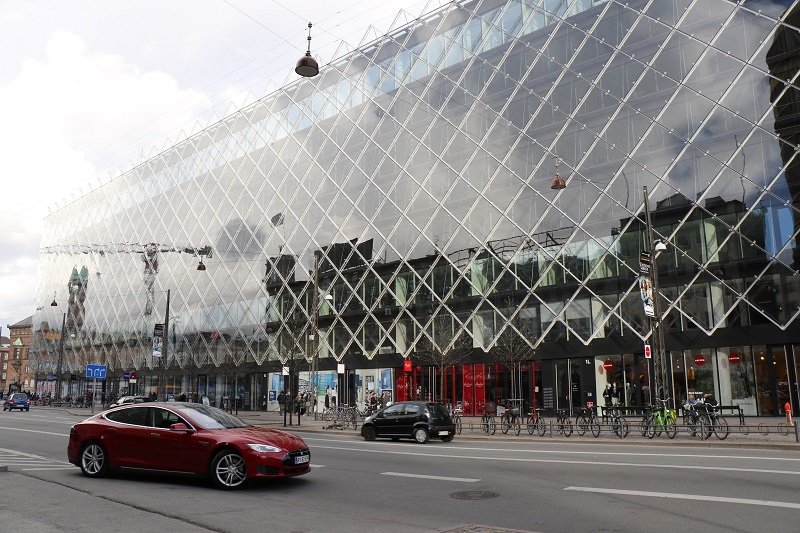
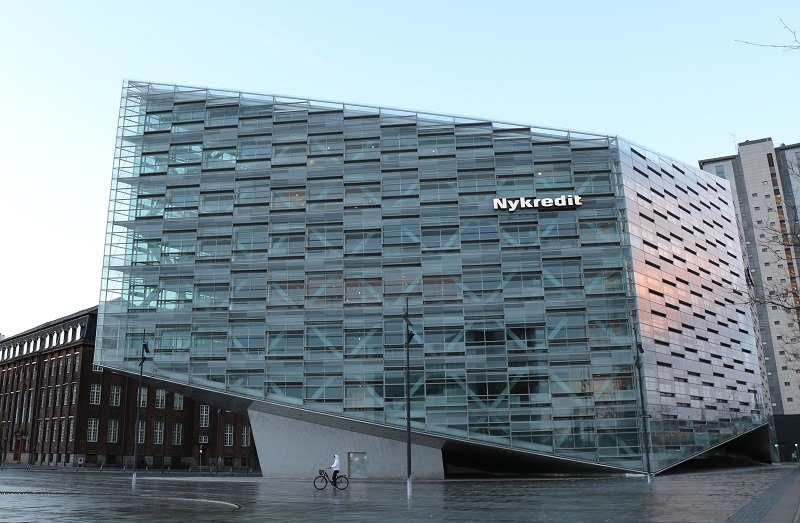
This is the Royal Copenhagen flagship store. Officially the Royal Porcelain Factory, it is a manufacturer of porcelain products and was founded in Copenhagen 1 May 1775 under the protection of Queen Juliane Marie.This building is on the corner of Studiestraede and Vester Volgade, but I could not immediately find the name of it.Porcelain displayed in an antique store.The new Axeltorv (Axel Square) towers are still under construction, but makes for quite a visual impact. ‘Copenhagen’s new landmark’ proclaims a sign on the construction fence. To the left is the is a circular building called the Circus Building, completed in 1886 to serve as a venue for circus performances. The last circus to use the building was in 1990, though. It now shows movies.Here is another building that I do not know the name of. I see the beautiful spires from a few blocks away, and then I just have to walk there and check out the building up close!This is the view from my 8th floor room in the Marriott Hotel on Kalvebod Brygge (literally “Kalvebod Quay”), a waterfront area in the Vesterbro district of Copenhagen.I don’t have plans to go to the Copenhagen Zoo, but I love this bus, especially the polar bear.This is the main entrance to Tivoli Gardens : a famous amusement park and garden. The park opened in 1843 and is the second-oldest operating amusement park in the world, after Dyrehavsbakken in nearby Klampenborg. It is still pretty chilly outside (45 F/ 6 C), but there were some brave souls out there on the swings, the roller coasters and dive bomber.Here is Hans Christian Andersen’s statue, looking toward the Tivoli gardens. He was a Danish author, a prolific writer of plays, travelogues, novels, and poems, but best remembered for his fairy tales.The Scandic Palace Hotel is gorgeous. Check out the gold trim on the balcony rails. [From Wikipedia] Influenced by the Art Nouveau style, the red brick building was designed by Anton Rosen and completed in 1910.Here is a close-up of the copper-clad trumpeter statue in the previous picture. They stand on a pedestal in front of the Scandic Palace Hotel.This little gazebo-style tower is on Nytorv (English: New Square or New Market) – a public square in the centre of Copenhagen. It serves up Carlsberg beer. The tourist season is not yet in full swing (it has to get a little warmer first!), so the outside spaces are still empty and quiet.Care for a Danish butter biscuit? Might that be Margrethe II (queen of Denmark), deployed in the window displat? Probably not!Here is the clock tower of the Copenhagen City Hall (Danish: Københavns Rådhus).This is the rooftop of the Copenhagen City Hall. Check out the incredible detail in the coat of arms and the copper-clad figuresHere is a Tesla that I spotted, actually making a very illegal U-turn. Hmm. The building in the background is the rebuilt (2013) headquarters of The Confederation of Danish Industry (DI). It houses several companies that do industrial design work. At night the white segments light up in patterns and in different colors.This is ‘The Crystal’ (completed 2001), the headquarters of Nykredit Bank. The founding of the bank date back to 1851, but this year in February 2016 Nykredit faced public outrage among their customers due to significantly increased service fees.
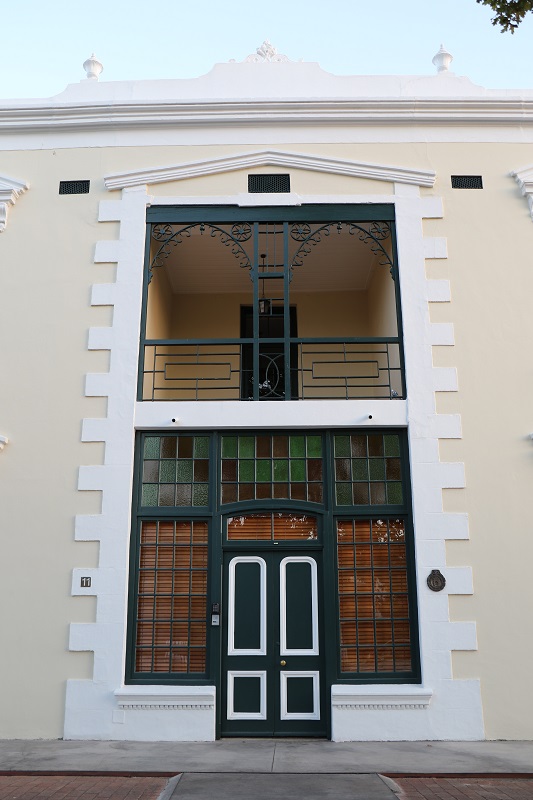
A visit to the Cape Town area is not quite complete for me without checking up on my old alma mater, the University of Stellenbosch, and the town itself. It was very late on Tuesday afternoon when I got there, though – and so the shadows were too long for taking fully lit pictures of the beautiful buildings. But here they are anyway.
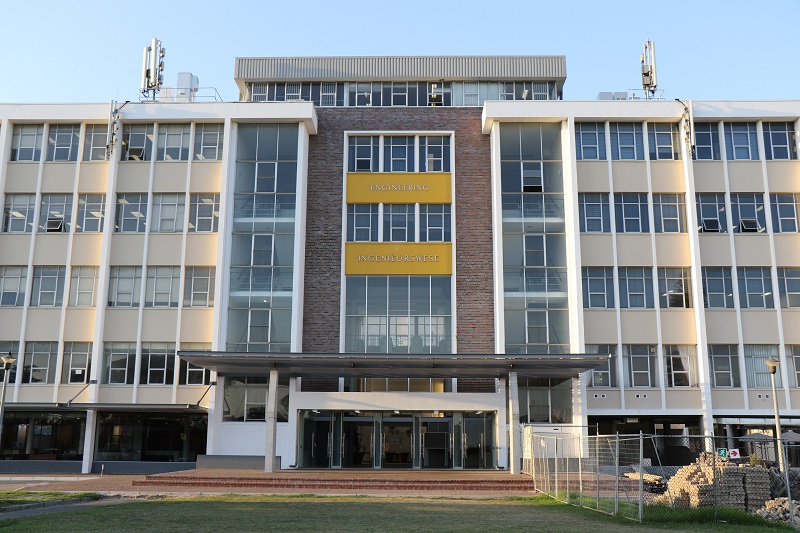
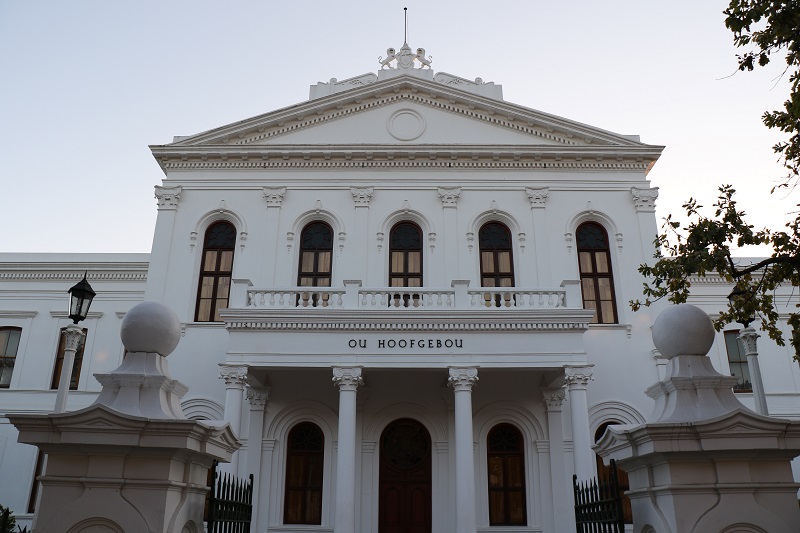
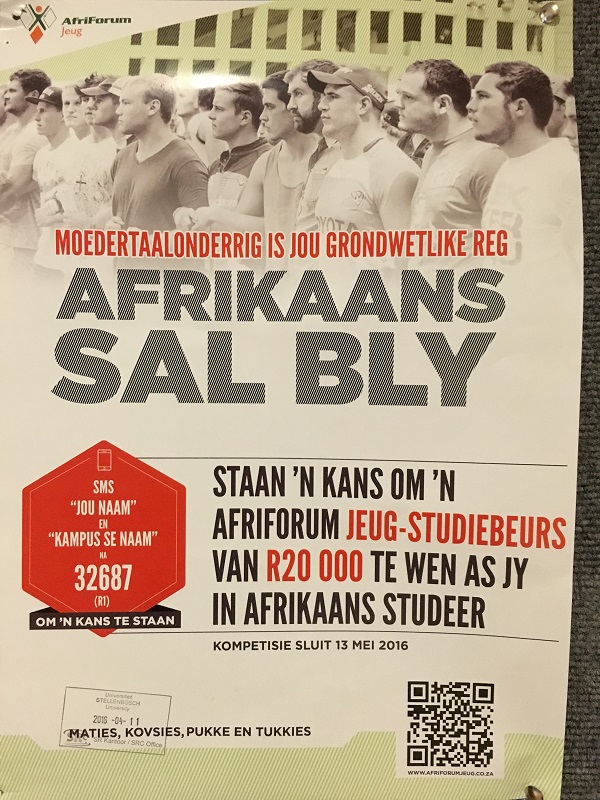
The renovation on the Faculty of Engineering’s main building is almost complete. The canopy at the entrance is new, and will help students to prepare for going out into rainy winter weather. The lecture rooms inside have been redone as well.One of my favorite buildings, the ‘Old Main Building’. I should have tried to use the camera’s flash to light up the two pillars for the gate in the foreground a little bit.This is Crozier House, a student residence that accommodates 6 or 8. I was squished in between the house and a big tree and a street behind me, and so I could frame only the middle section of the house. This is a case where I should try to use the ‘RAW’ version of the picture to increase the contrast between the pastel colors (this a .JPG picture).Stellenbosch used to have Afrikaans only as instruction medium at the university, but in recent times that has been challenged, with some organizations even calling for it to be abolished. In a recent settlement, though, Afrikaans and English will have equal status. This poster from the organization Afriforum says that ‘Afrikaans Will Stay’ and that education in one’s mother tongue is a constitutional right.