My first stop of the day was at the fish market at Noryanjin station. Then I went back to Seoul station to go check out the exterior in daytime. After that I made a quick stop at the Naedamun street market and then went off to see if I could find the cable car boarding station for Seoul Tower. I did, eventually!
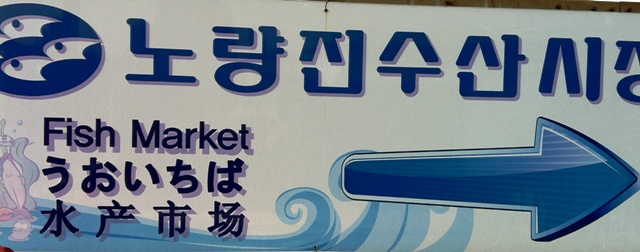
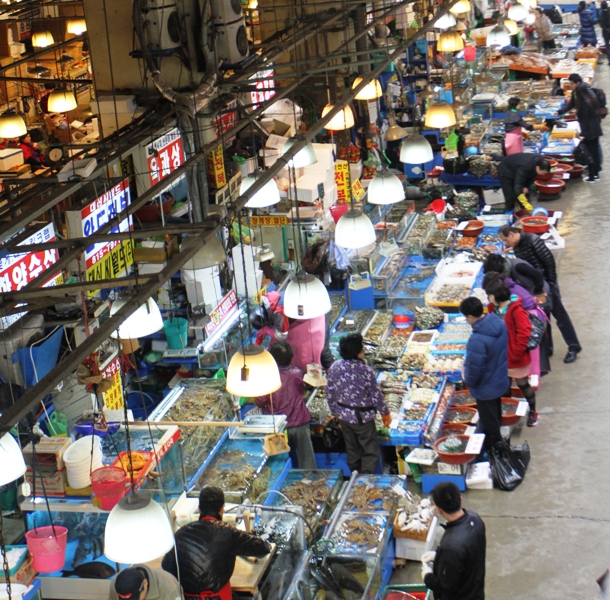
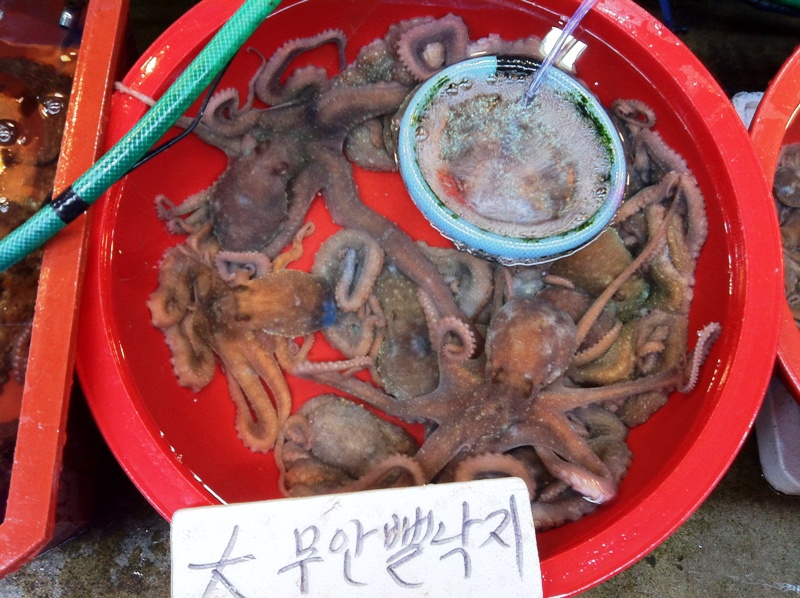
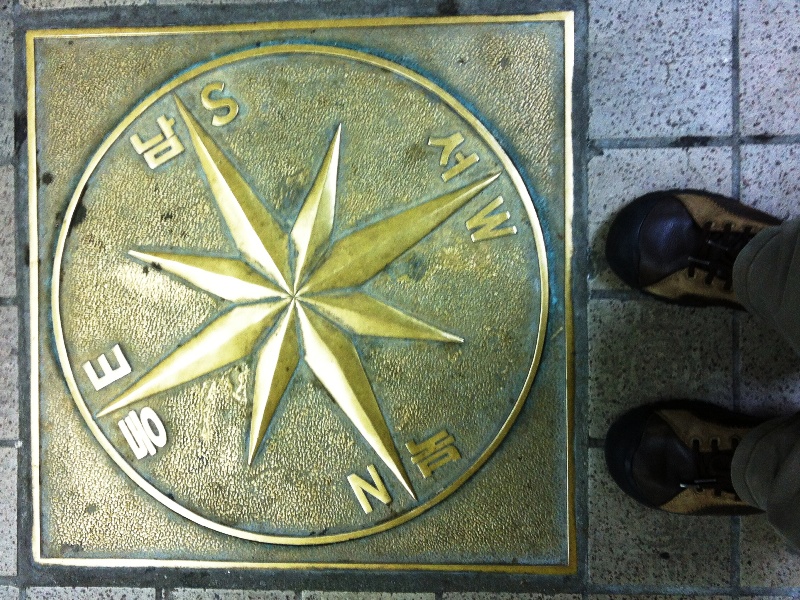
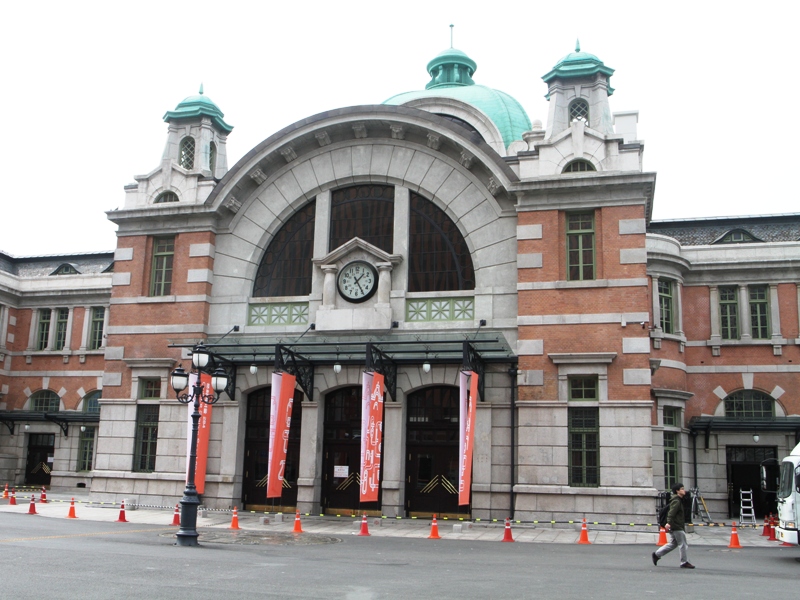
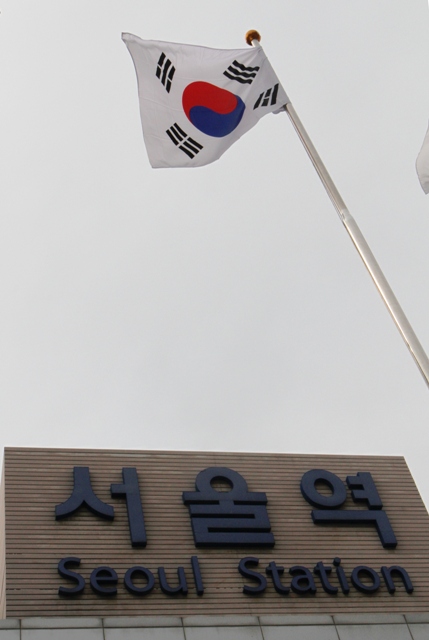
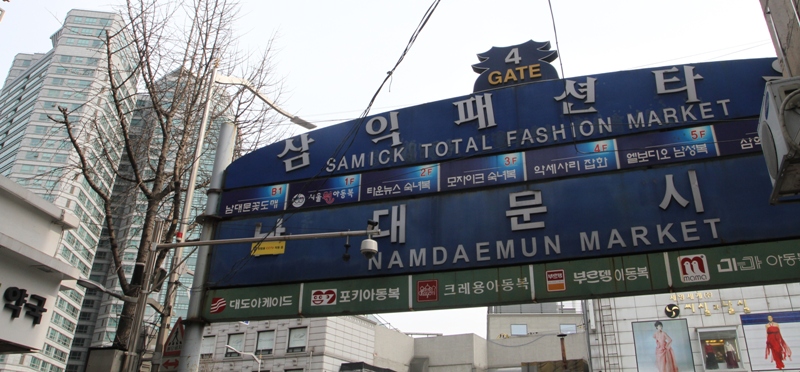
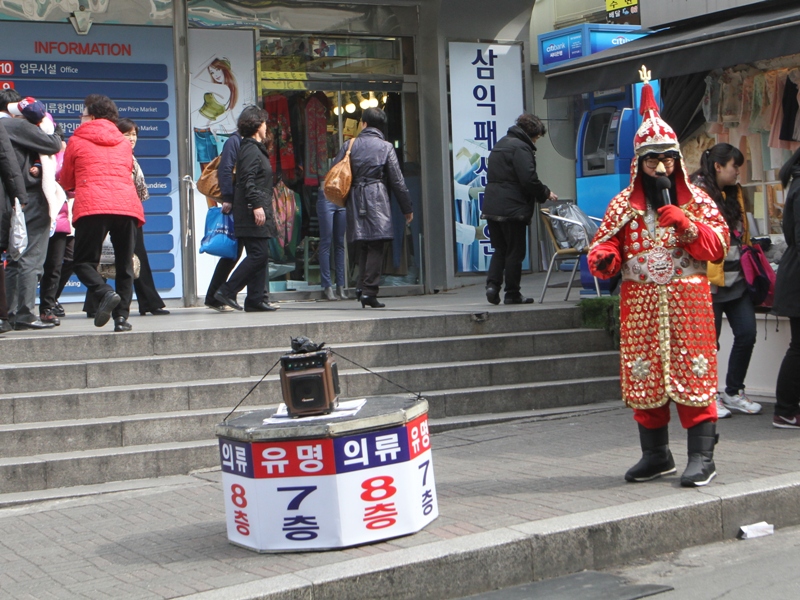
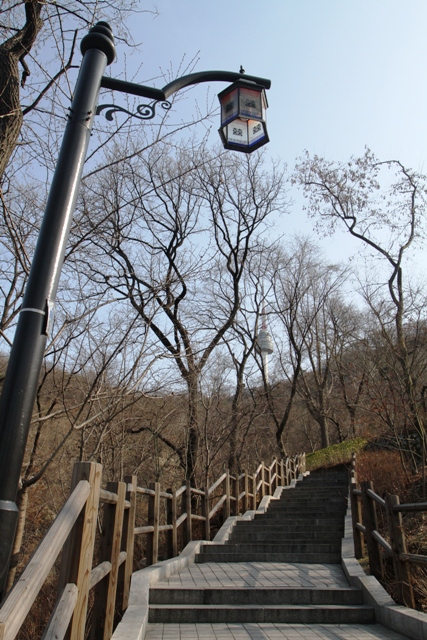
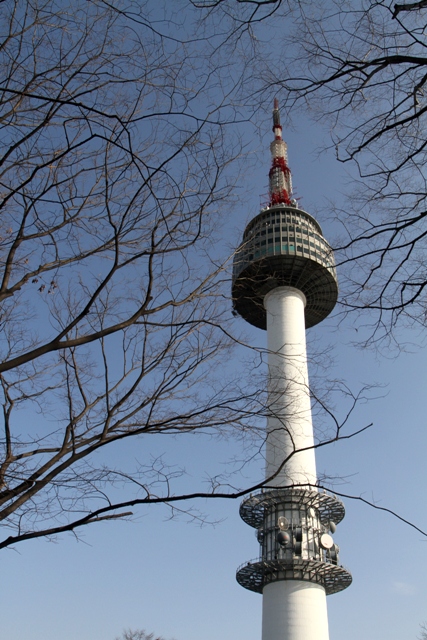
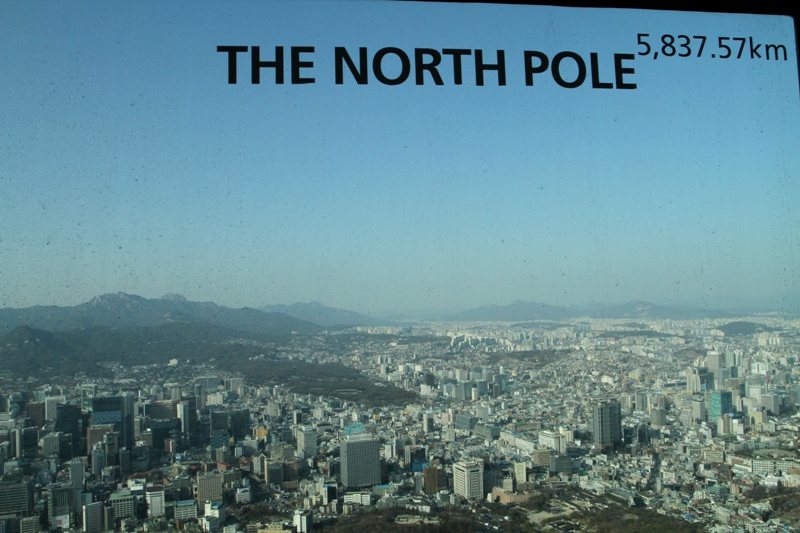
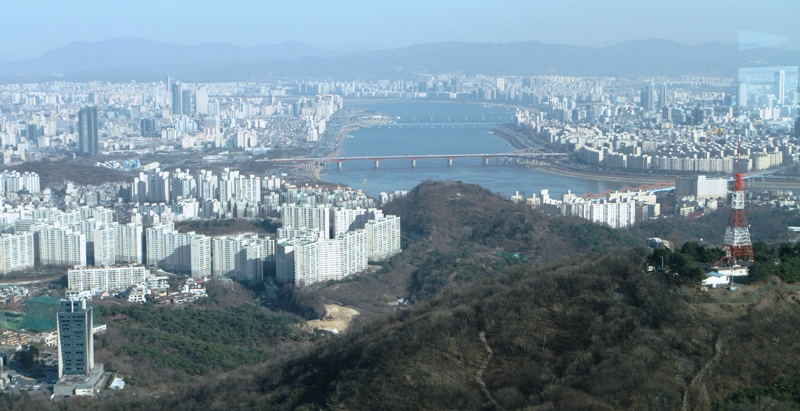
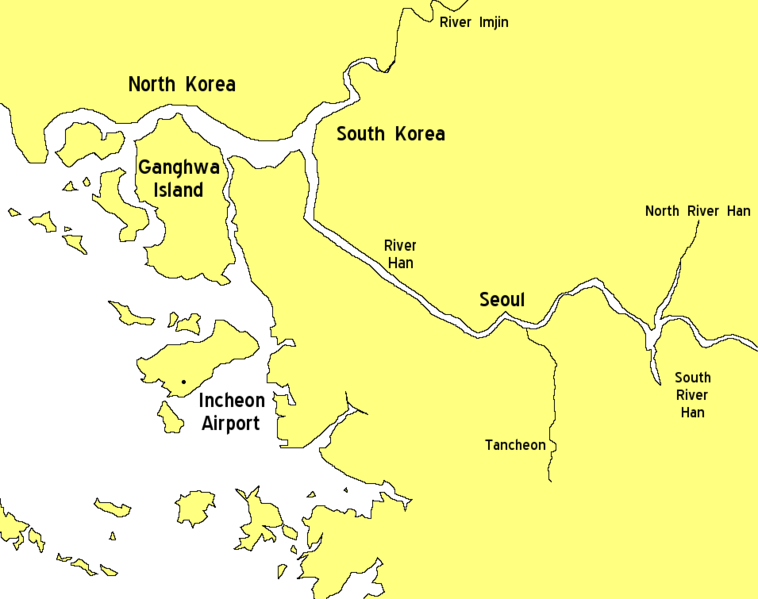
This sign is almost unnecessary (you can smell the fish market!) .. on the overpass at Noryangjin station on Line 1.The fish market is a large open warehouse with lots of vendors selling anything you might find in the sea.Some octopus for you? Which way to go? (The newer signs inside the metro stations are very clear, so these old metal floor signs have fallen out of use).Here is the exterior of the old arrival and departure hall at Seoul station. The new station hall is all glass and steel and not nearly as interesting as this one.The sign and the Korean flag on the new Seoul station arrival and departure hall.The entrance to the Namdaemun fashion street market. A fancy department store is right across the street behind it.I think this marketer’s outfit is of a traditional Korean warrior. Very nice. I want to dress up as a Korean warrior when the next Halloween comes by.See Seoul Tower in this picture? This foot path with stairs go all the way up to the Tower. But it was only a few degrees above freezing, so I walked down again to the cable station to take the cable car up to the Tower.This is on the way up, a view from the cable car. The building looks new but is in the traditional Korean architecture.Here is the view of the tower after one arrives in the cable car. There is another elevator up to the observation deck. The tower was built in 1969 and opened to the public in 1980. Its height is 236.7 m (777 ft) from the base.This view is from the observation deck, looking north. (Wow. The distance to the north pole given to the nearest 10 meters! 5,837.57 km comes to 3,637 miles).The Han river flows through Seoul. There are already 6 subway lines crossong it, and by 2018 there will be three more crossings, but these will be tunnels beneath the riverbed. Check out the cluster of white apartment buildings on the left. Seoul’s population is about 11 million people (seouls? seoulites?).The Han River flows through Seoul and then merges with the Imjin River shortly before it flows into the Yellow Sea. The total length of the Han River (to include its tributaries the Namhan and Bukhan Rivers) is approximately 514 kilometres (319 mi). Although it is not a long river, the lower Han is remarkably wide for such a relatively short river. [Picture and text from Wikipedia]
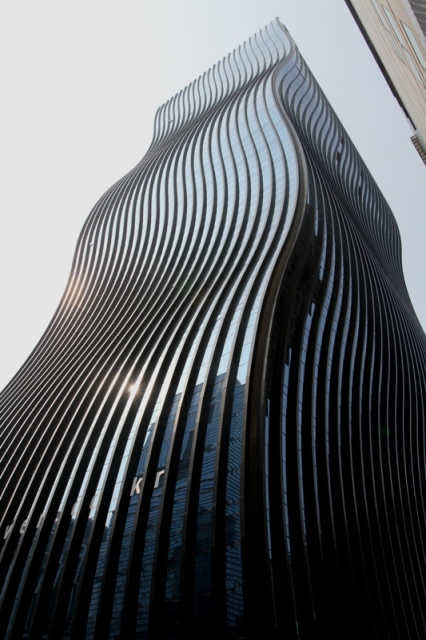
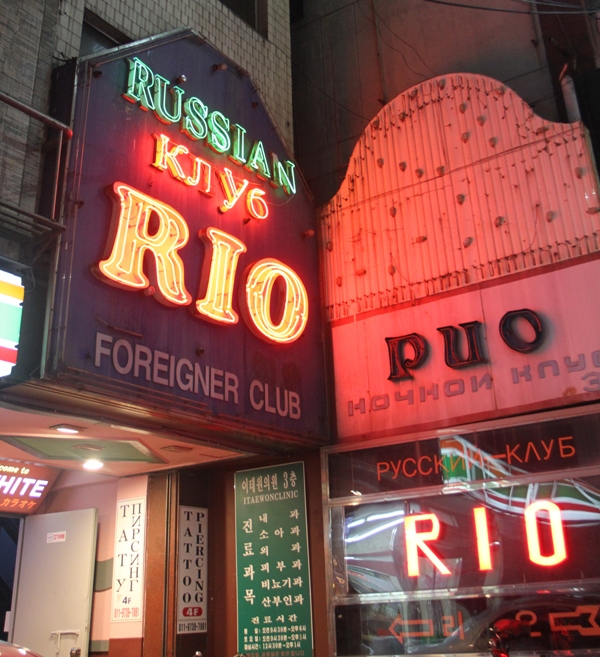
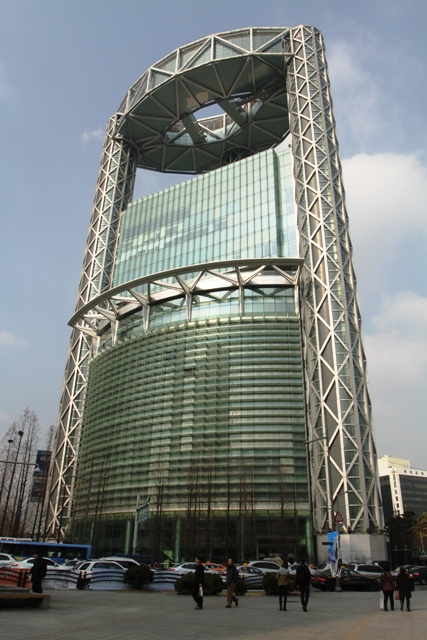
I read about the GT Tower East with its wavy exterior and had to go and take a look at it. It is by Gangnam station (use exit 9) between several other modern financial company buildings and Samsung buildings. Sunday night I went to check out Itaewon – the gritty expat area with bars and nightclubs, popular with US army personnel from the base nearby.
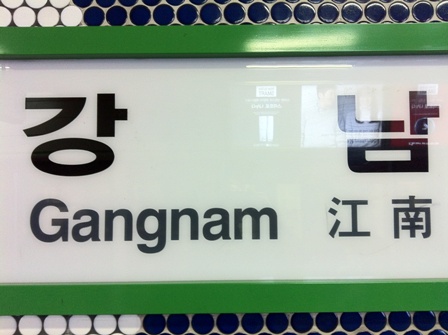
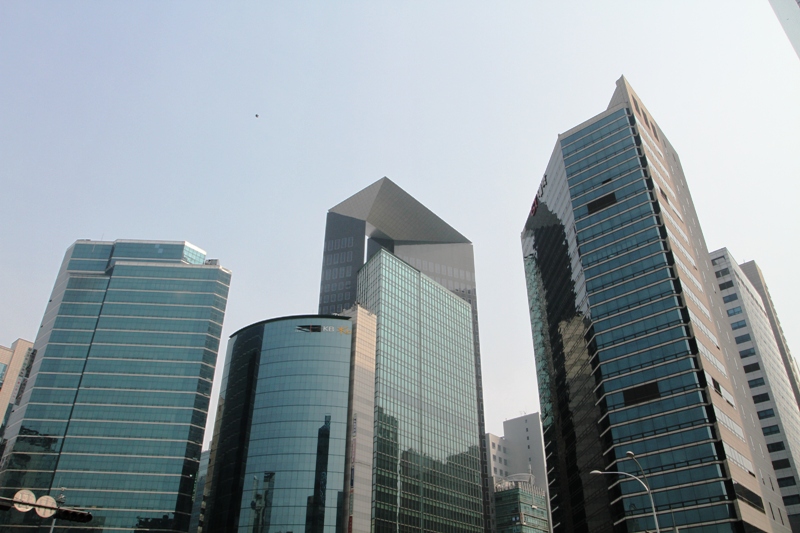
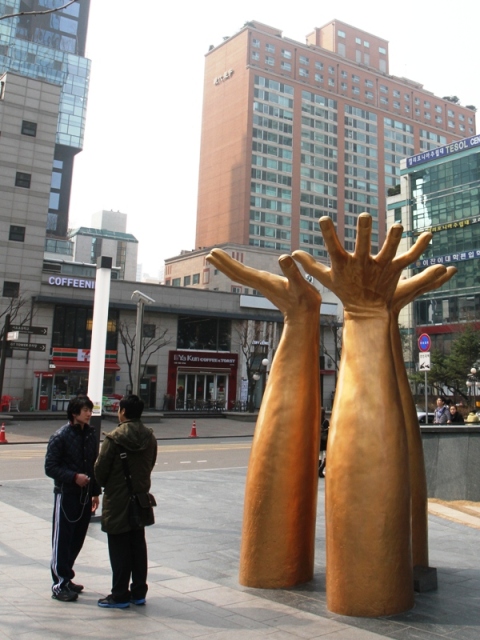
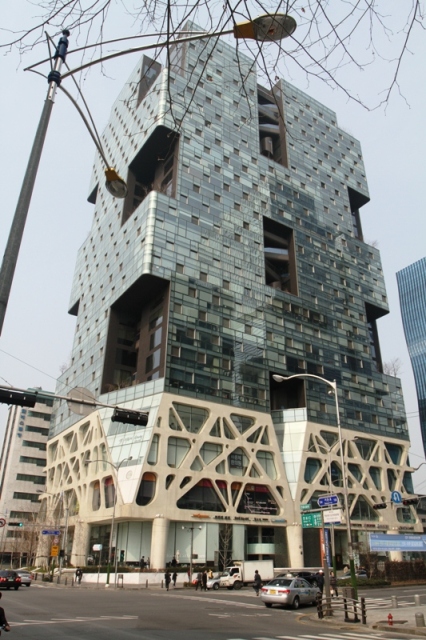
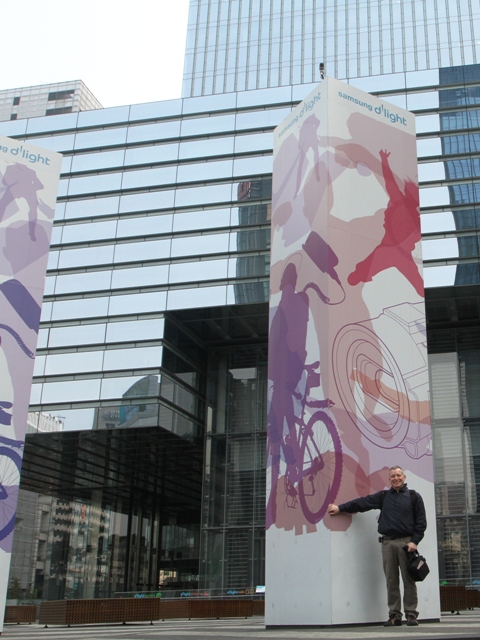
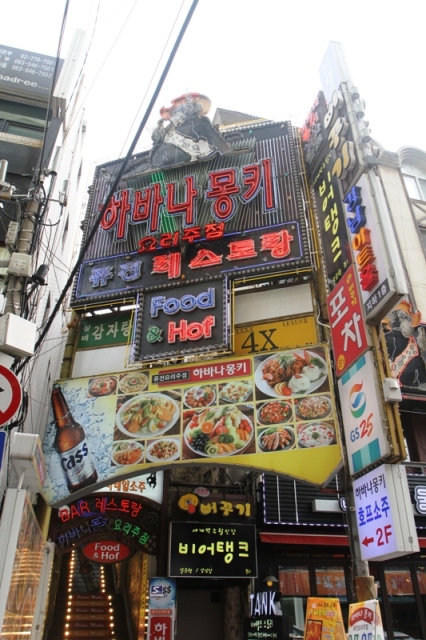
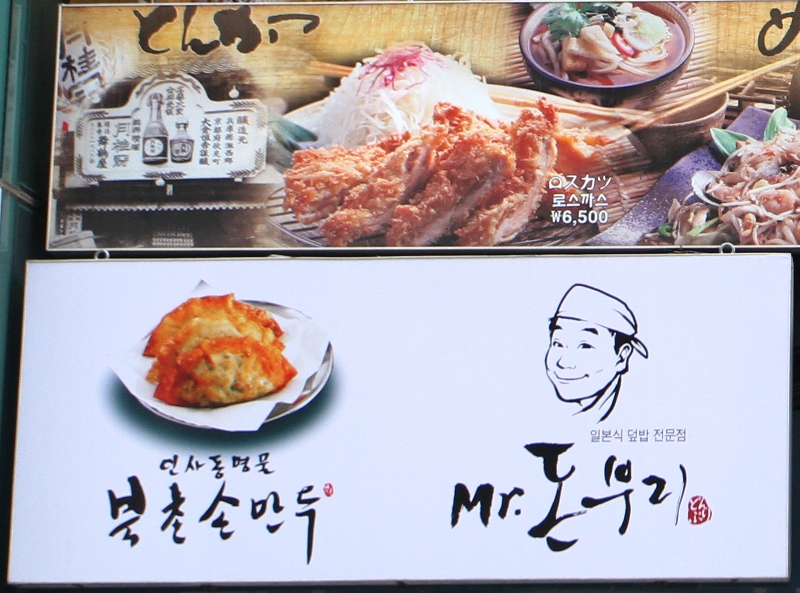
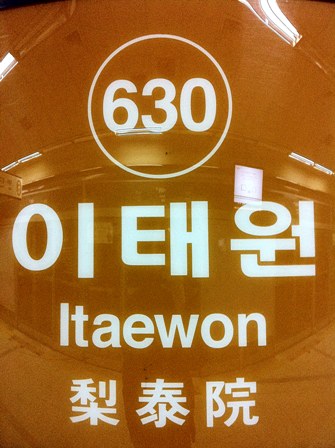
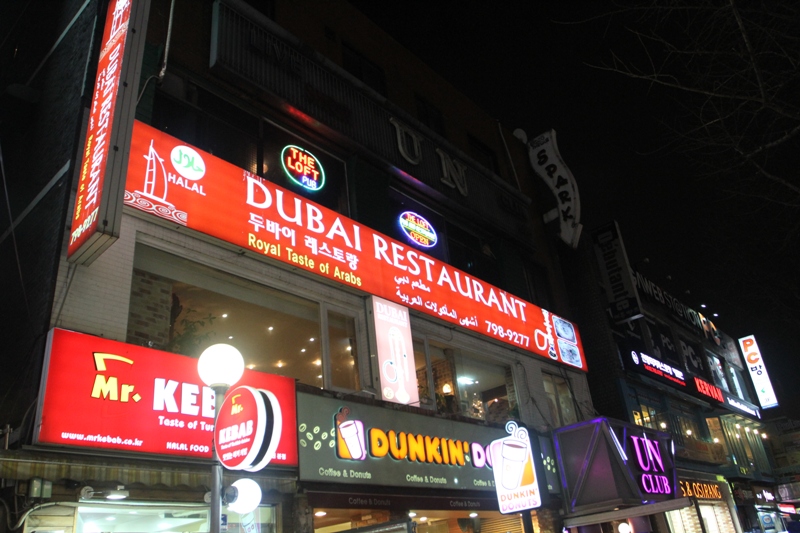
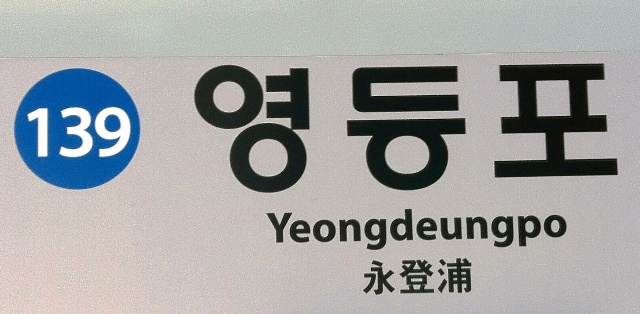
Gangnam station is in one of the most affluent areas of Seoul, located in the southeast.These buildings are right by exit 9 of Gangnam station, I assume most of them are of financial institutions.Here is the spectacular GT Tower East building 'making its waves' for me. It is 130m (390 ft) tall and was completed only recently (Feb 2011). It was a collaboration of Dutch architectural firm ArchitectenConsort and Hankil Architects & Engineers from Seoul.These hands are at the base of the GT Tower East.The Boutique Monaco building is close by and about as tall at 117 m (382 ft). It was completed in 2008 and designed by Cho Minsuk and Park Kisu.This is one of several Samsung buildings in the area. My picture was taken by a Chinese student. She 'accosted' me right there on the street - she needed someone to film her in front of the building while she did a little speech to apply for a internship at Samsung.This is a few blocks in from the main streets with the glass and steel buildings where the restaurants and bar signs jostle for business from the foot traffic.Yes, I would like a dumpling. And your name is Mr. .. ? I cannot read Korean 🙁Here's the sign for Itaewon station. I had to switch train lines twice to get to the darn place .... and ended up checking out only the outsides without going into any one of the establishments. Some are holes in the wall, others are in the basement and still others are on the 3rd or 4th floor of a building.The Dubai restaurant promising Arab food on top of an Dunkin Donuts and a Mr Kebab !
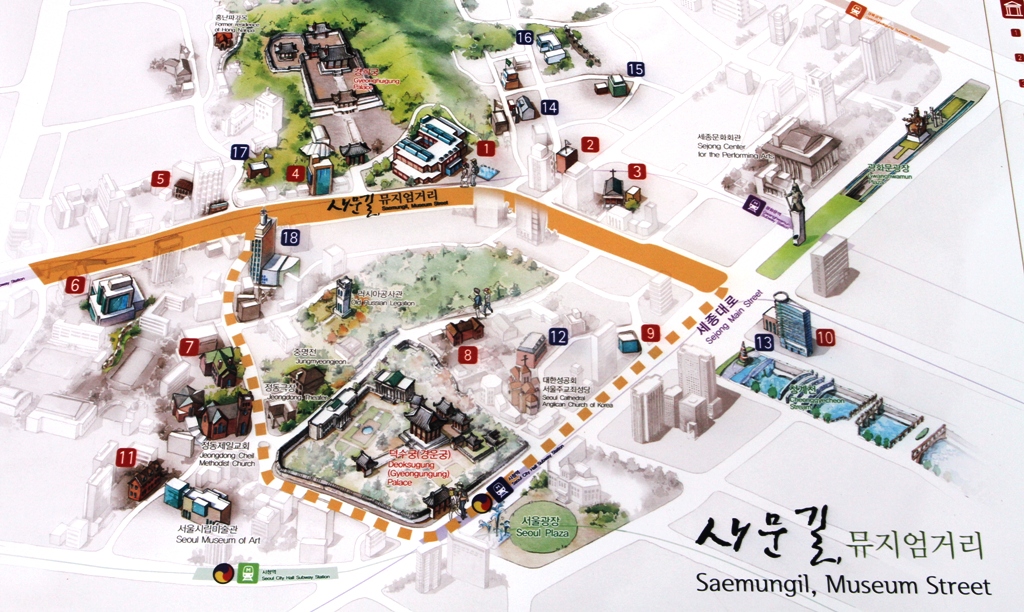
The two ancient royal palaces in Seoul are connected with Saemungil Museam Street and Sejong Main Street. I first went to Gyungbokgung Palace and then I walked down to Changdeokgung Palace, spending a lot of time in the underground museum with its entrance at the statue of a seated King Sejong The Great. I only made it to the entrance of the second palace, and plan to go inside tomorrow.
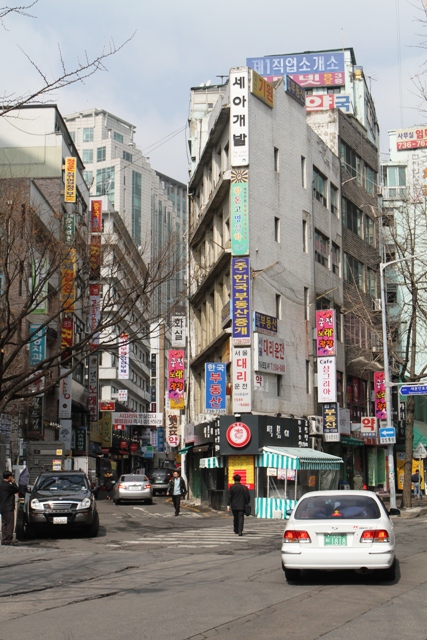
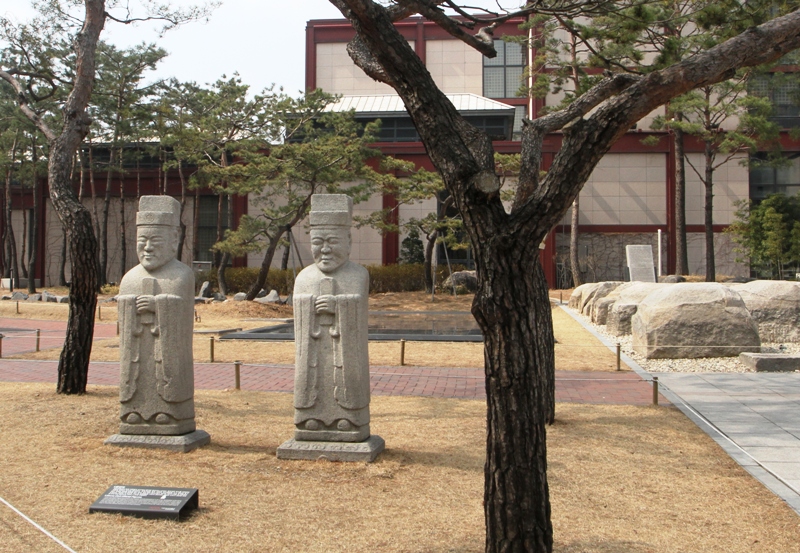
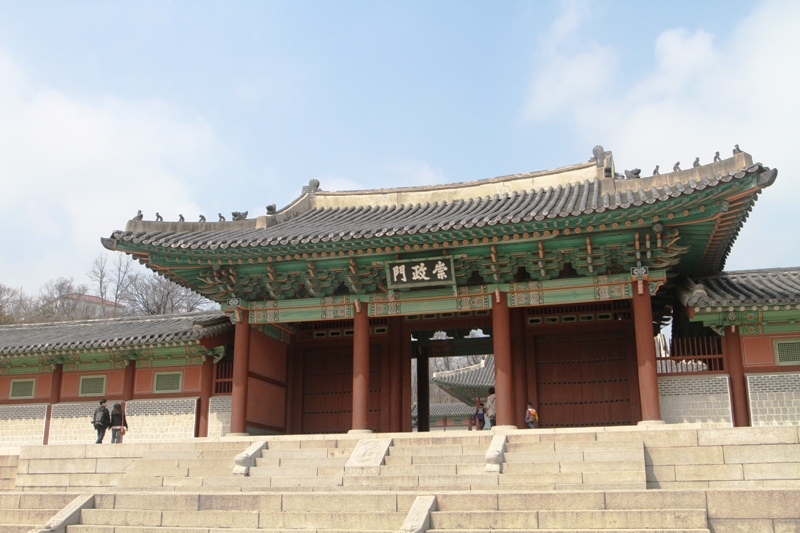
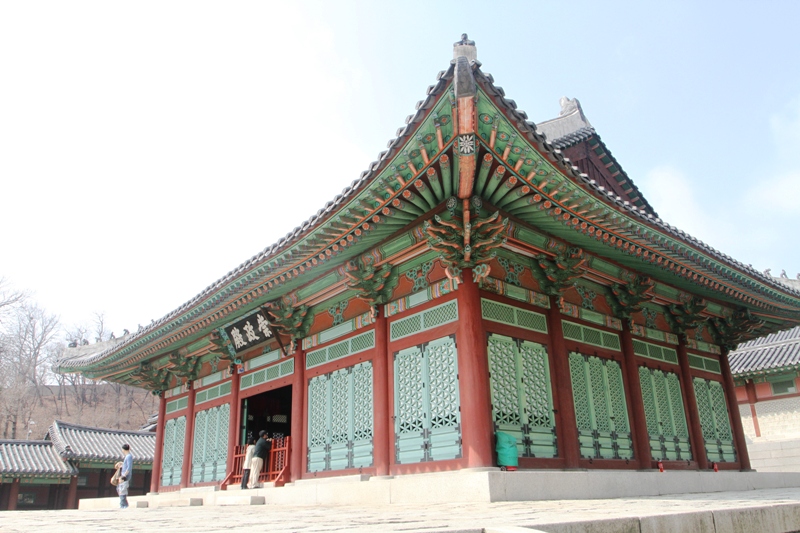
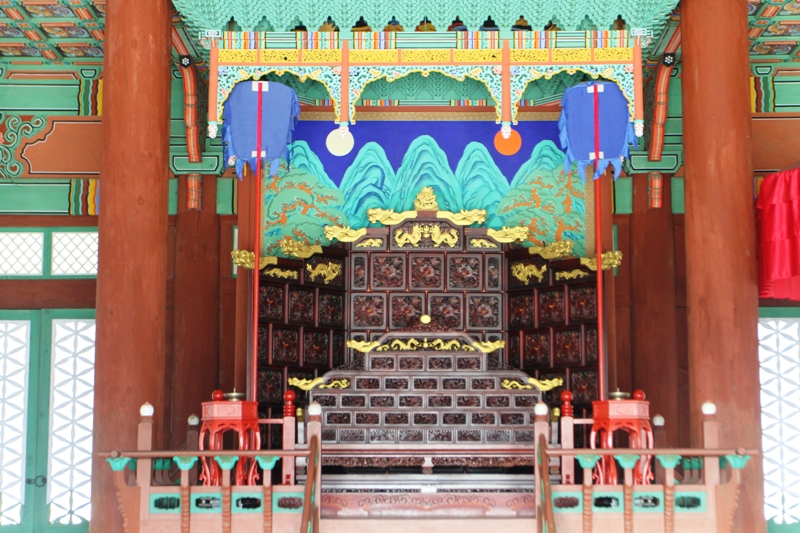
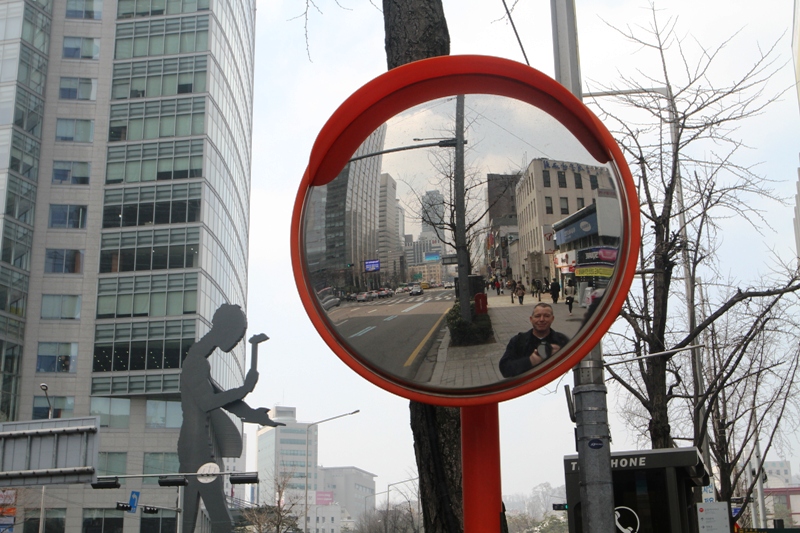
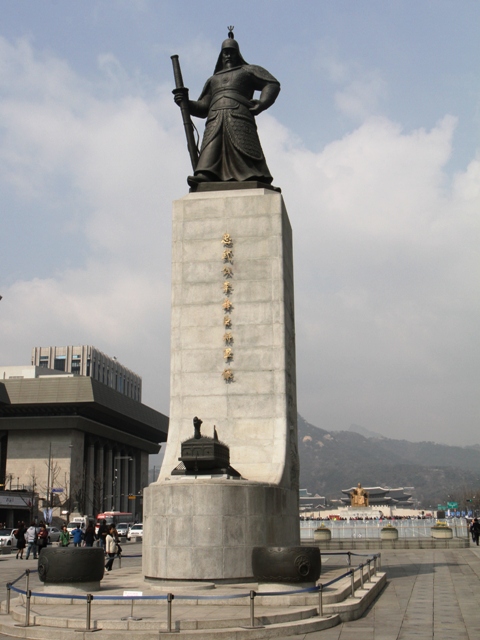
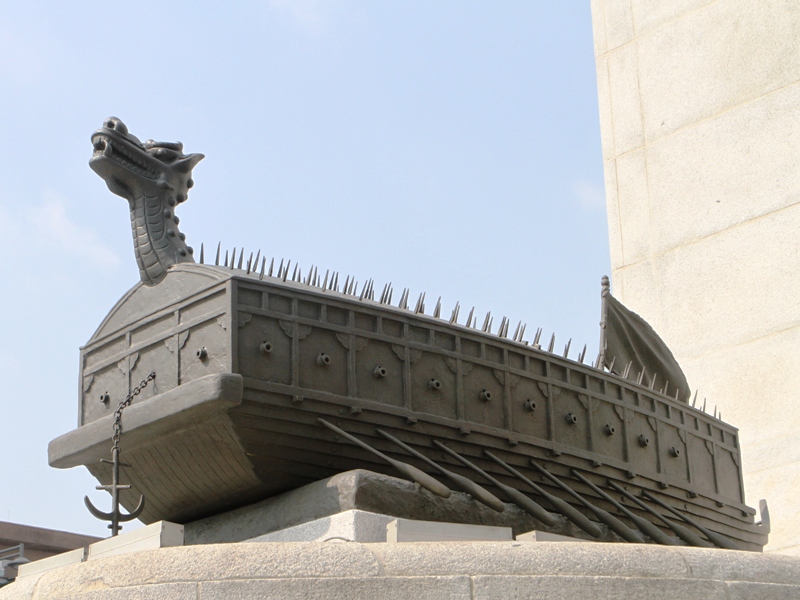
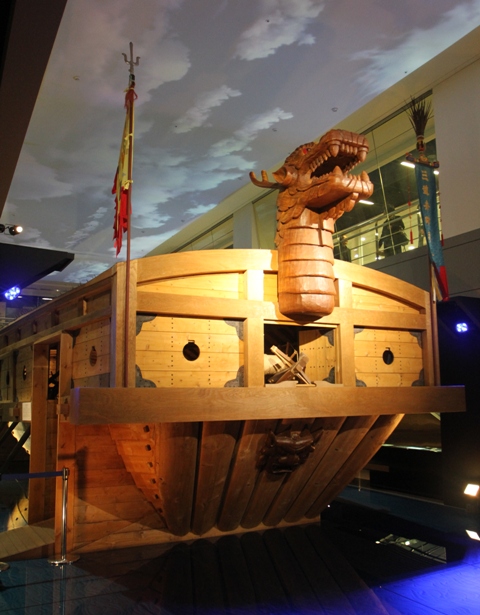
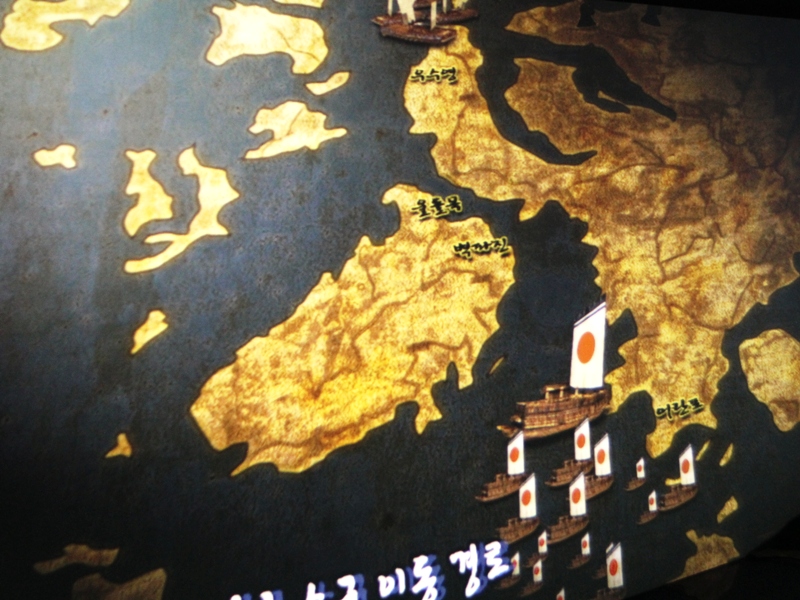
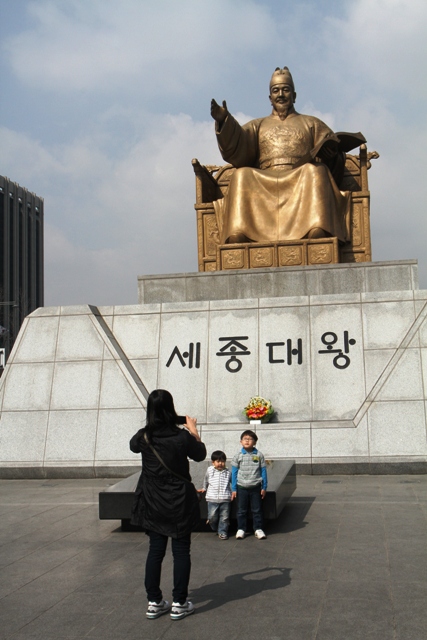
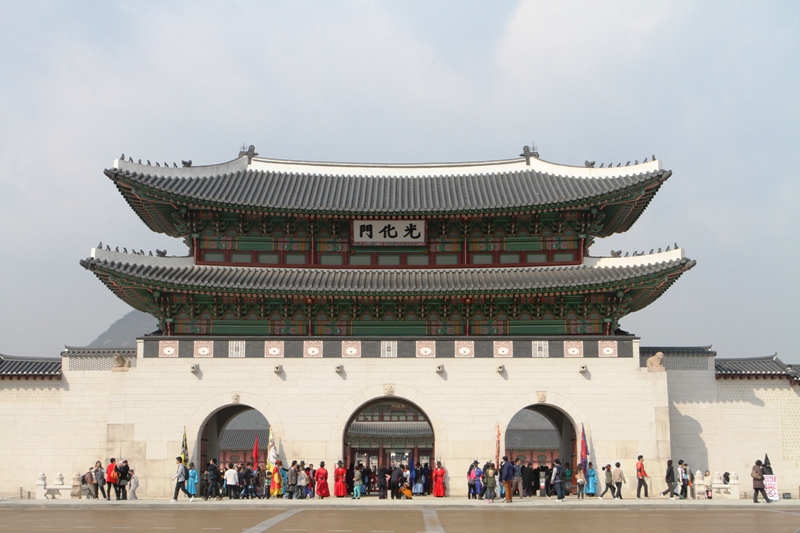
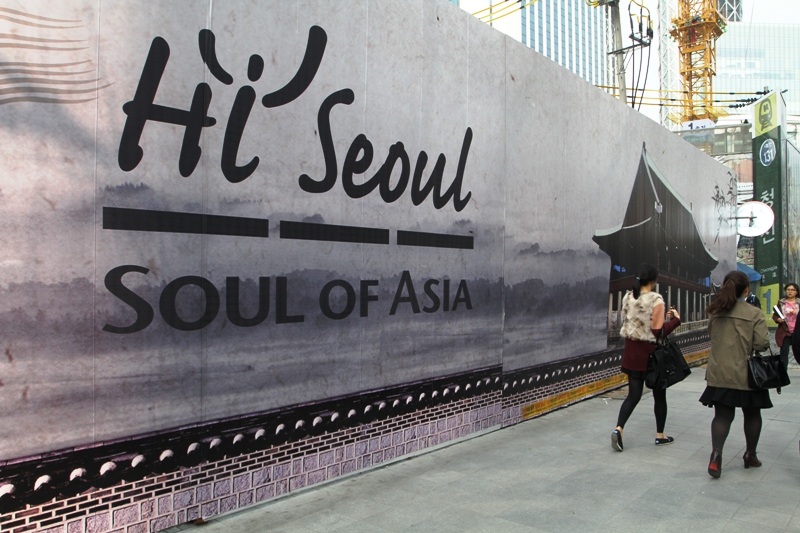
My 'home' station, the one closest to the hotel. 'Young dump-o' helps me to remember it.A street scene outside Gwanghwamun station. Lots of (Korean-made) Hyundai and Kia cars on the streets, of course.Here the layout of the two palaces that shows how they are connected with the Museum Street and Sojong Main Street. Watch for following pictures of the two statues on the Main Street.These two stony-faced guys are outside the Seoul National Museum of Korea.This is the first entrance to the Gyungbokgung Palace. First constructed in 1394 and reconstructed in 1867, it was the main and largest palace of the Five Grand Palaces built by the Joseon Dynasty. The original palaces consisted of hundreds of buildings on many acres.The corner of the main palace hall. There is an on-going reconstruction effort to restore more of the original buildings.A peek is given to visitors into the inside of the main palace building. That's the throne with golden dragon decorations.This ine is for my Seattle readers and friends! I'm in the traffic mirror, and that figure with the hammer in the background is exactly the same one we have in downtown Seattle in front of the Art Museum. Hmm, which one was first? I will have to check into it.Here is the monument for the legendary Admiral Yi Sun-sin. He is one of the most revered figures in Korean history - an oustanding leader, strategist and ship-builder and died in late 1598, in the Battle of Noryang, the final confrontation of the Imjin War with the Japanese.Admiral Yi's famous 'turtle ship' with a closed deck.This is a 1:55 wooden scale model of a turtle ship inside the museum.This picture from a short documentary shown inside the museum of the wars that raged in the Korean islands around 1600. Those ships with the rising sun flags are Japanese, of course .. and a bloody sea battle is about to start.This is King Sejong the great (hold still kids, so mom can take a nice picture!). He appears on Korean bank notes, and is credited with using military technology (think cannons and gunpowder) to strengthen his kingdom. He is also credited with creating Hangul, the Korean characters what are in wide use today for the written language. 1397, tHere's the entrance to Changdeokgung Palace. I haven't gone inside yet.A mural on the street promoting Seoul.This is Jongno Tower, a 33-story office building owned by Samsung Securities. It was built in 1999.
My trip from Hong Kong airport went very well. My plan to get from Incheon airport in Seoul to the Marriott Courtyard hotel at Seoul Times Square was not too bad, either. I did have a little trouble spotting the hotel in the dark and wet weather at my arrival at the closest metro stop. It was just a four block walk but the darn Marriott hotel sign was on the opposite side of the Times Square buildings (of course!).
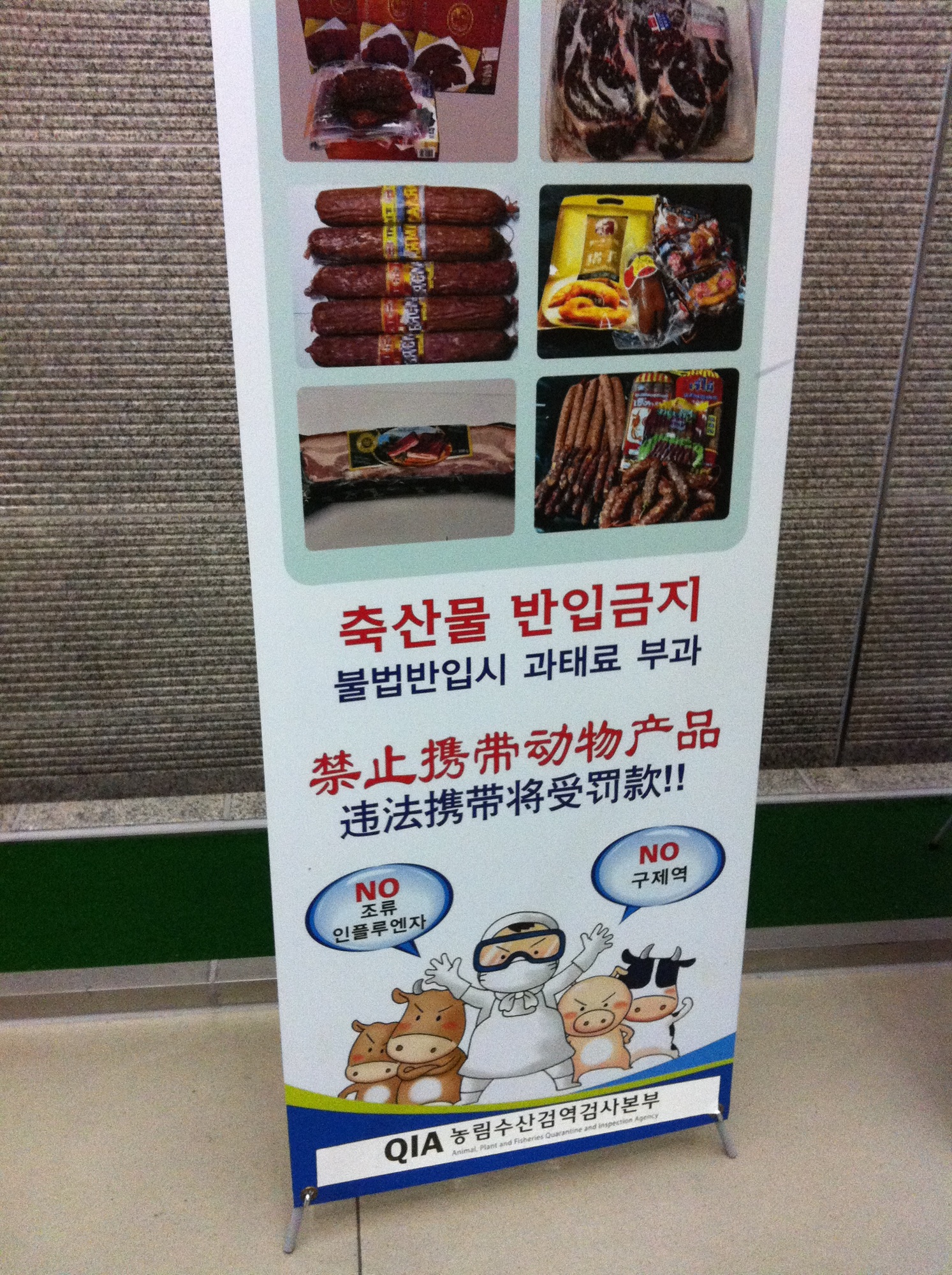
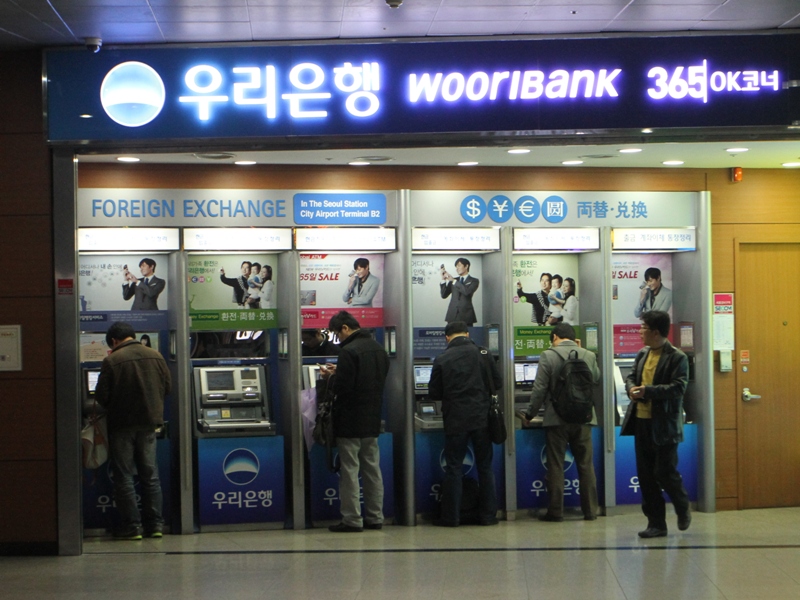
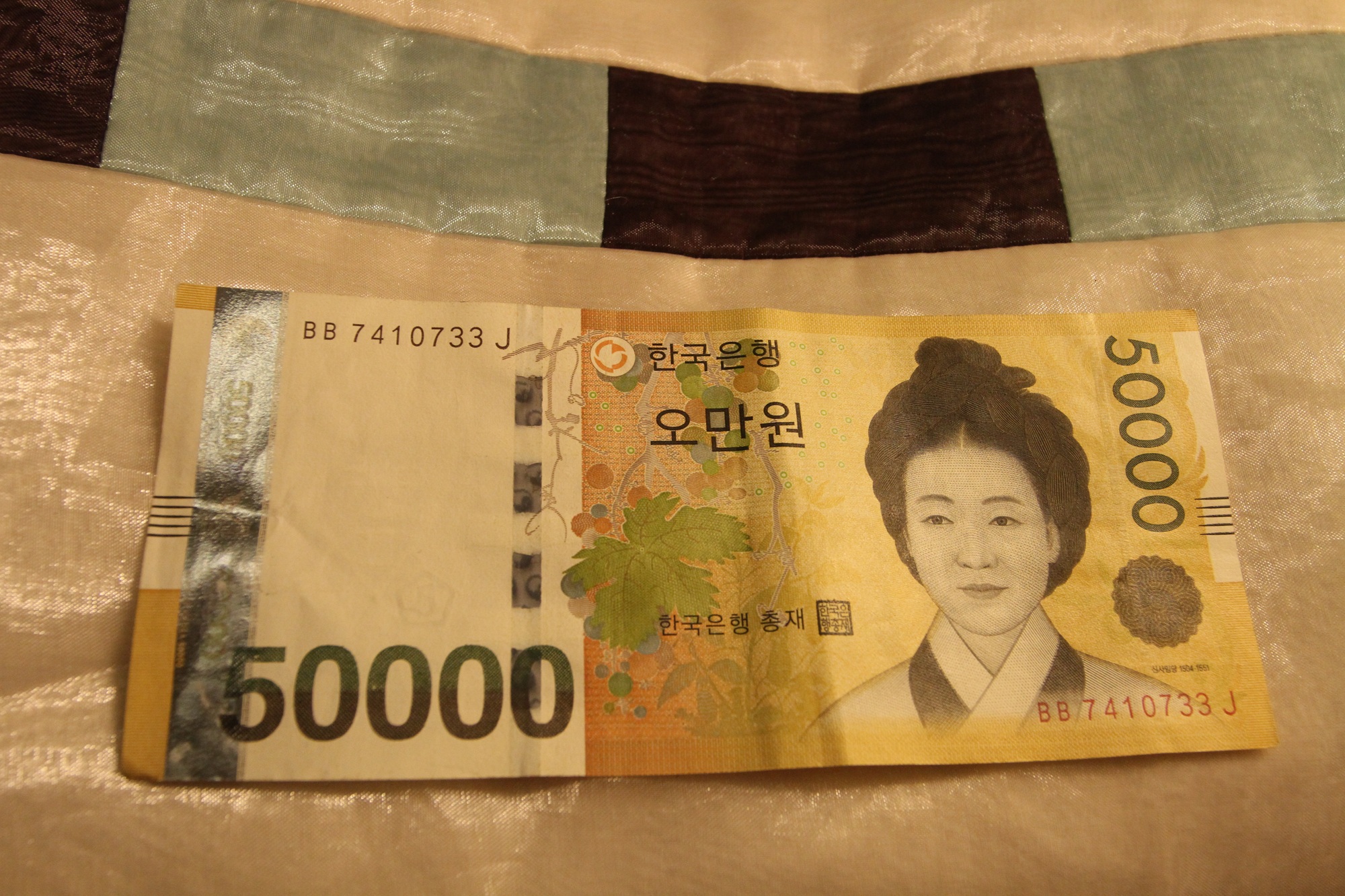
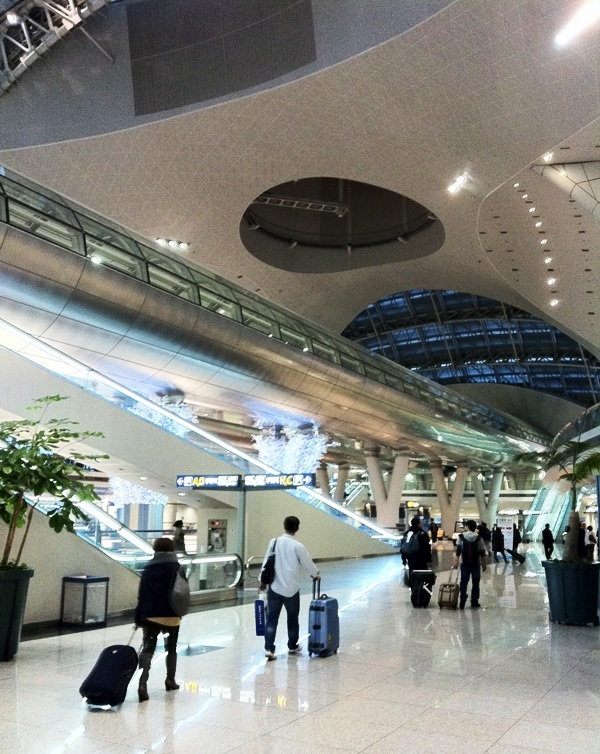
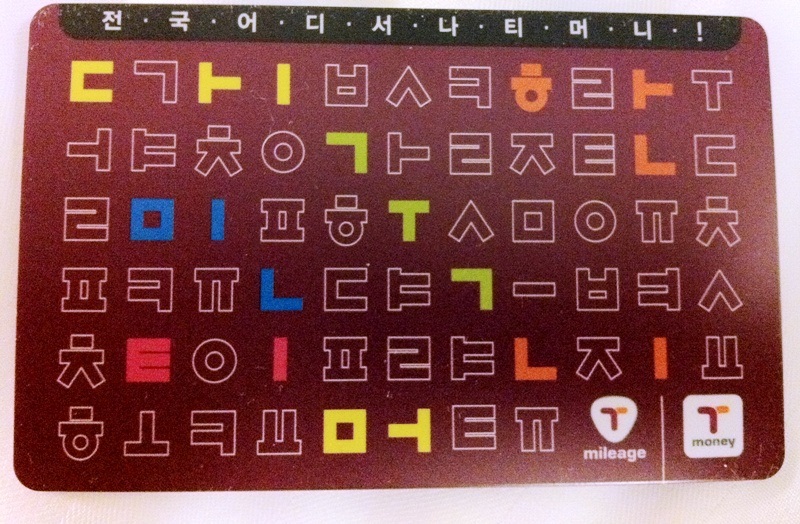
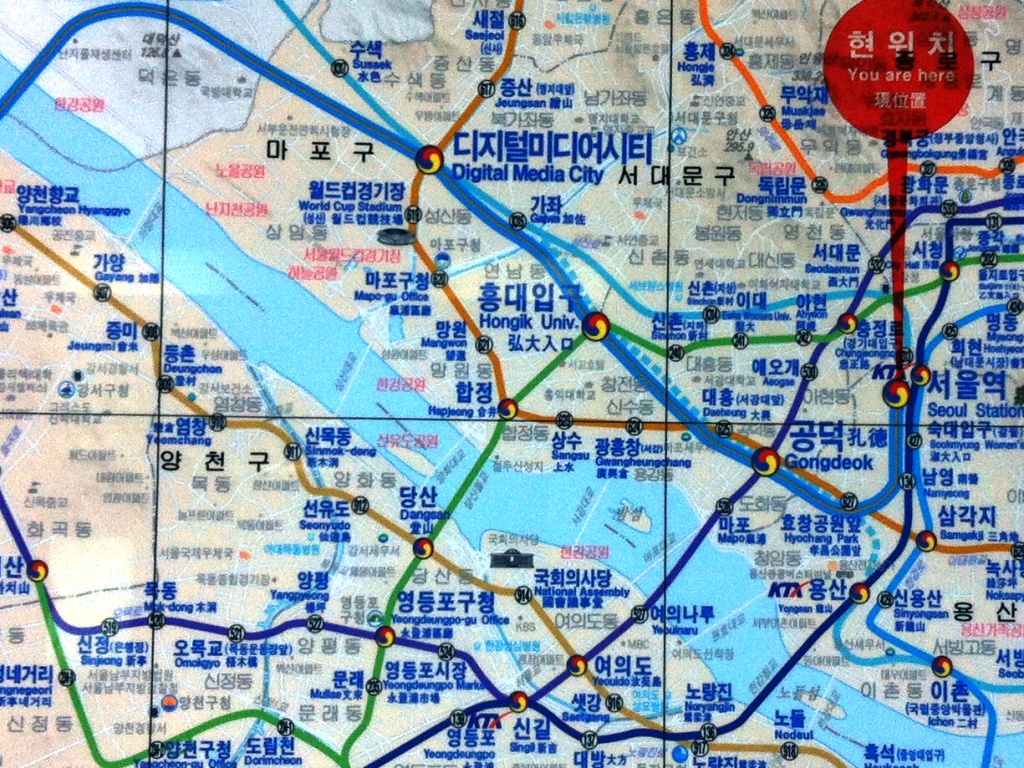
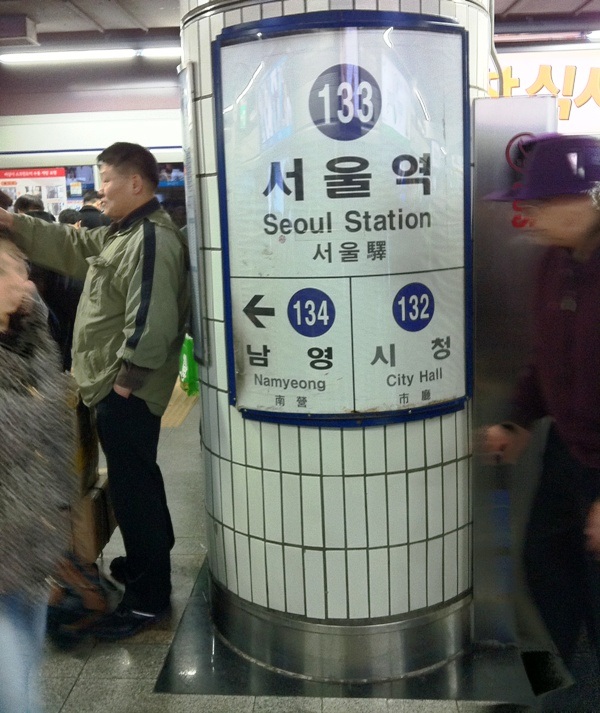
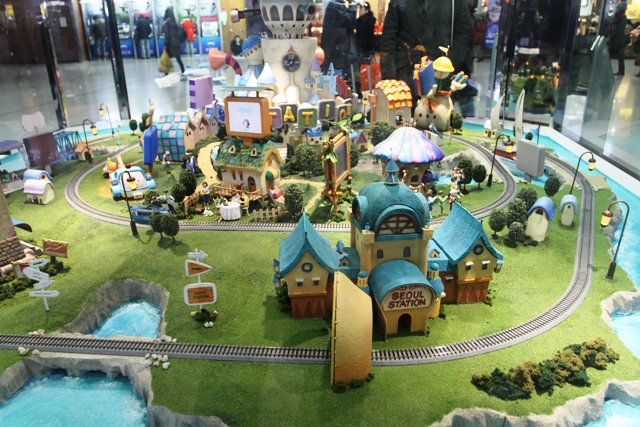
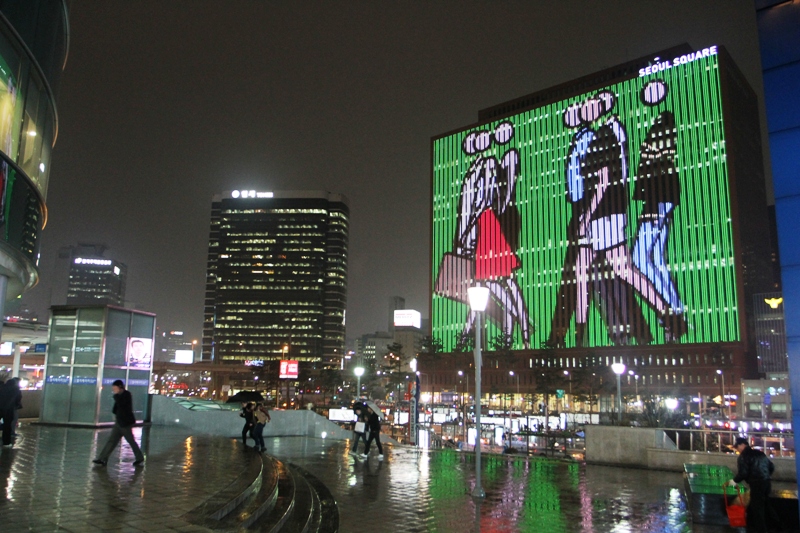
This sign was posted at the entrance to the baggage claim. No meat allowed! NO! NO! (I love the angry cows and pigs!).The Kookmin Bank. ‘Kook min’ means exactly ‘Cooking a little’ in Afrikaans. I guess that’s MY bank! (Sigh. I would love to cook MORE, but I have to be home to do that)... and here’s the Woori Bank. Is that a Korean or Australian (Aboriginal) name?The highest currency Korean note – 50,000 won. And how much is that? About US$44.The super luxe connection from the airport terminal to the Incheon train station : all gleaming steel and glass and curves.ere’s what you need to ride the Metro and buy yourself little snacks and knick knacks at the 7-11s and Family Marts : a T-money card.The big blue line comes in from Incheon airport at the west of the city. I took the Airport Express (ArEx) to Seoul station and then the Metro Line 1 down to Yeongdeungpo station. (Even the anglicised names are not easy to work with for a Westerner!)Waiting at the Seoul metro station on Line 1 for the train to Yeongdeungpo station.A cute whimsical display of Seoul station’s outside. There is a little model train that runs around and around, too. I will try to get some real pictures this weekend.This is a peek outside Seoul station before I made my way down to the Metro station. The huge display on the Seoul Square building is striking, because it is animated and the people keep ‘walking’ from right to left.
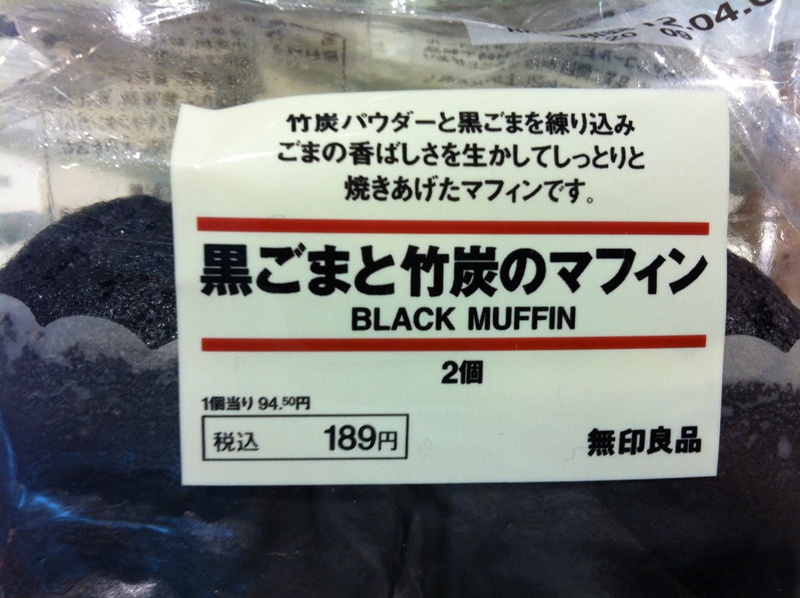
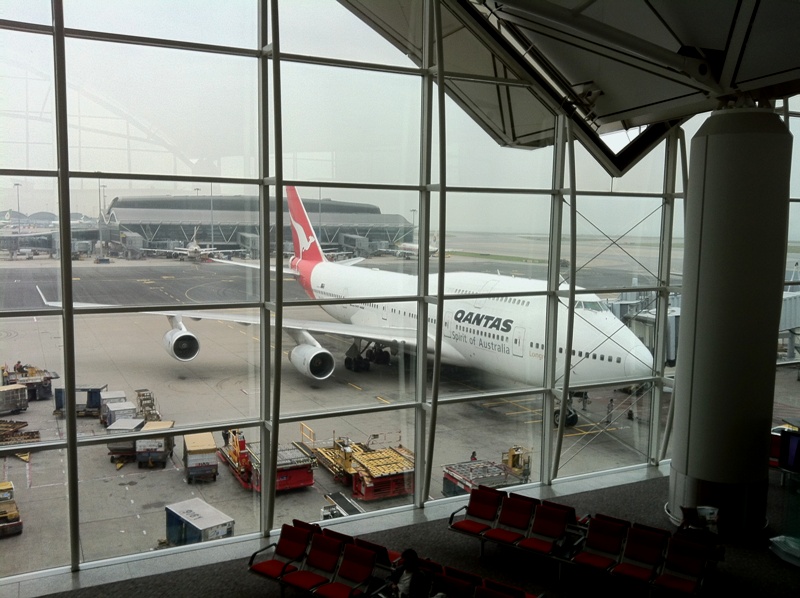
The black muffin from the Muji-To-Go store at the airport is a new item, said the display. (Hmm, and what makes it black?). And this Qantas 747 was j- u- ust pulling up to the gate as I walked by .. most likely in from Down Under. My travel advisory says the US-Korea Free Trade Agreement that took effect on Thu Mar 15 and prompted some street protests in Seoul – but at this point everything seems under control. The accord will remove duties on almost two-thirds of American farm exports, and phase out tariffs on more than 95 percent of industrial and consumer exports within five years. Tariffs will also be lifted on Korean car parts to the U.S. — which should increase South Korean exports of the products.
I’m in the hotel at Hong Kong airport, on my way to Seoul, South Korea for a long weekend. It’s not warm there yet, but at least warm enough to walk around at about 7 °C (44 °F). There is rain in the forecast for Friday, but it should clear up by Saturday.
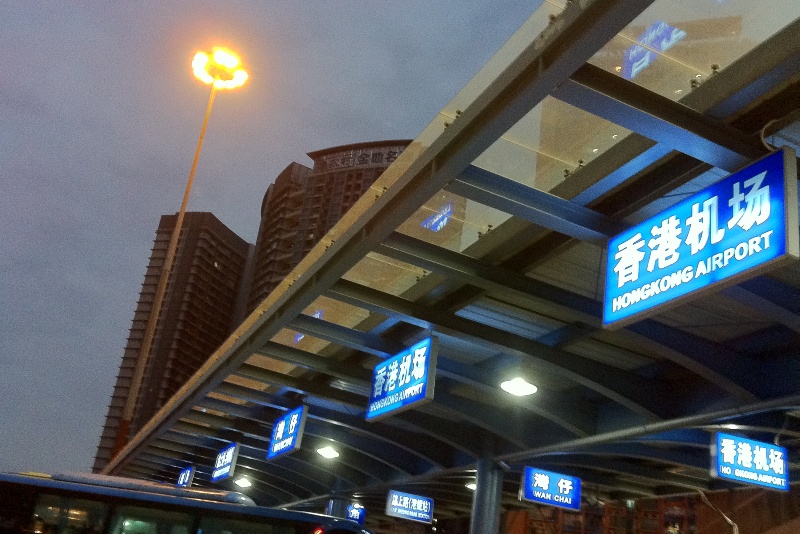
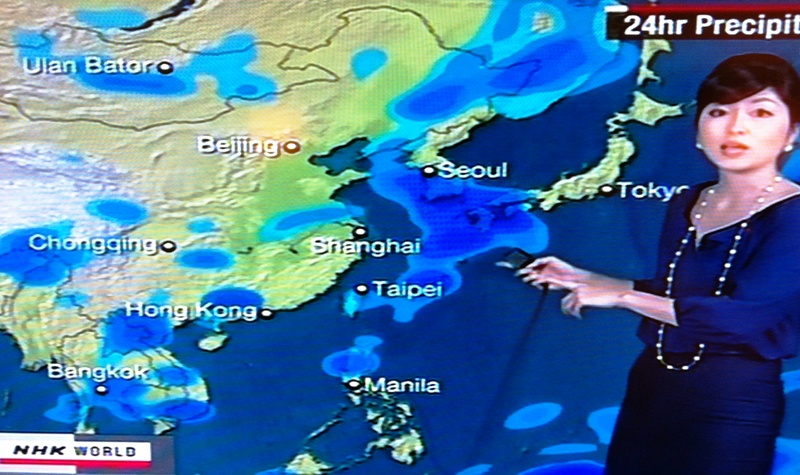
At the mainland China border crossing's Hong Kong side.NHK World says there will be some rain in Seoul on Friday, and about 7 °C (44 °F).
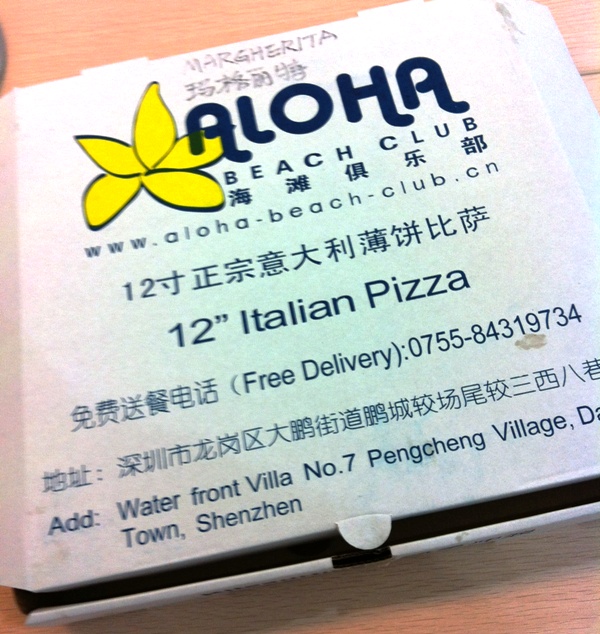
I was too late to snap a picture of the margerita pizzas* (玛格丽特 披萨 mǎgélìtè pīsà, we had on Wednesday here at work. (See the writing at the top of the box?). So one of the 24 pizza boxes is all I can show. The pizzas were quite good, with a thin crust. It is quite possible that the little Aloha Beach Club restaurant had to stretch the pizza dough it had on hand for our monster order.
*Legend has it that in 1889, during a visit to Naples, Queen Margherita of Italy was served a pizza resembling the colors of the Italian flag, red (tomato), white (mozzarella) and green (basil) .. and that is how Pizza Margherita got its name.
The green light has been given from the steering committee for our project’s ‘go-live’. (The last of the dragons have been slayed). So now the wheels are set in motion to move everything up from the Quality System into the Production System. That means all of our project’s extracted and converted data sets, additional system configuration table settings, program codes and user log-ins will be added into the live system. Our project will add three more nuclear power stations to the three already in the system, for a total of 6 stations altogether.
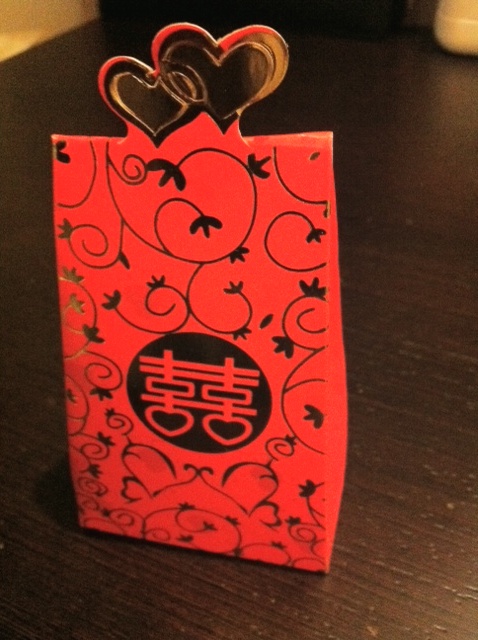
Double happiness 囍, says the characters on this little candy gift box.
There’s happiness 喜 (xǐ), and then there is double happiness 囍(also xǐ) !
The ‘double happiness’ term is really used in writing and especially used in connotation with marriage, as shown on this candy gift that each of us got from a colleague that is getting married soon. The heart-shaped modification of the bottoms of the happiness characters is artistic interpretation, of course. And I cannot quite find out for sure how old the use of the heart ♥ symbol is. Its uses started in Europe.
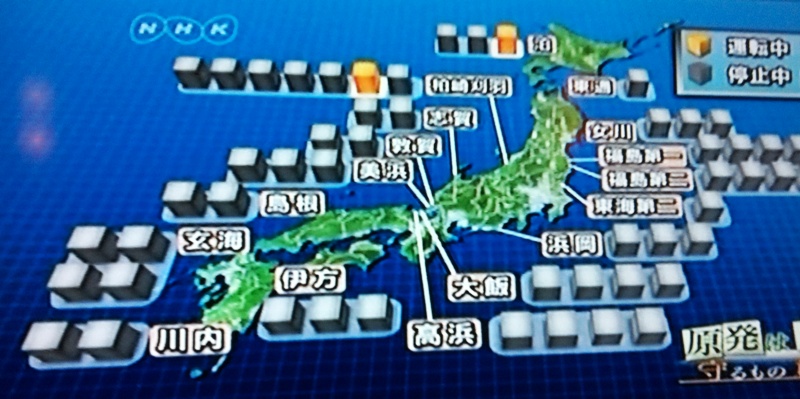
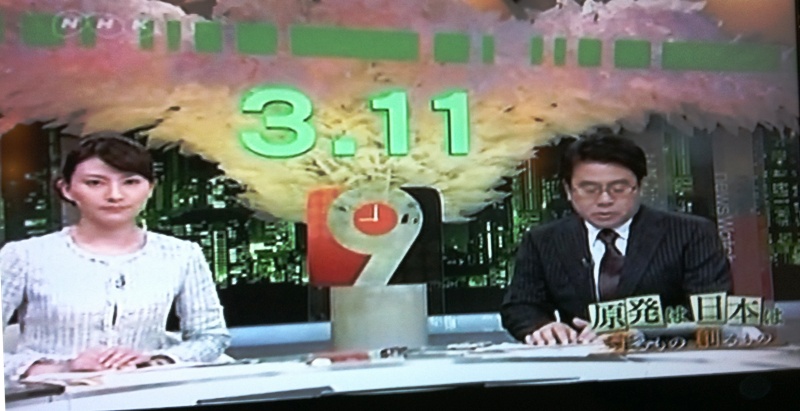
Sunday on Japan’s NHK World TV was dedicated to extensive coverage of the first anniversary of the earthquake and tsunami of March 11 last year. It made for a somber day to watch some of it. Isn’t the first anniversary is the most celebrated for happy events, and the most traumatic for disasters? (Yes). As for the nuclear industry there, the situation of running only 2 nuclear reactors out of 54 is unsustainable. It is costing utility companies billions of dollars to import gas, oil or coal to burn to make up the lost electricity, and they have not yet been allowed by the government to raise rates for consumers.
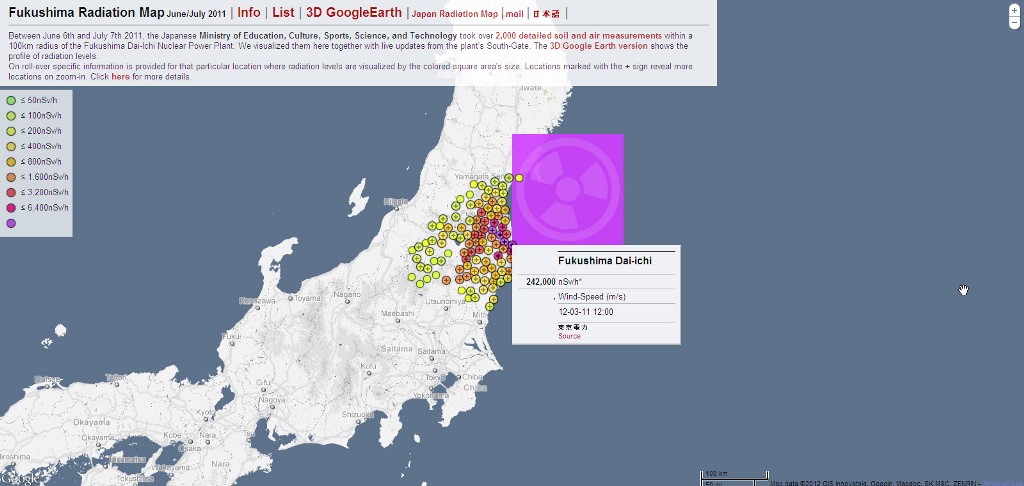
Here is the link for the interactive Fukushima radiation map (last picture). http://jciv.iidj.net/map/fukushima/, a compilation of readings done on 6 and 7 July 2011. I couldn’t immediately find a more recent update on-line.
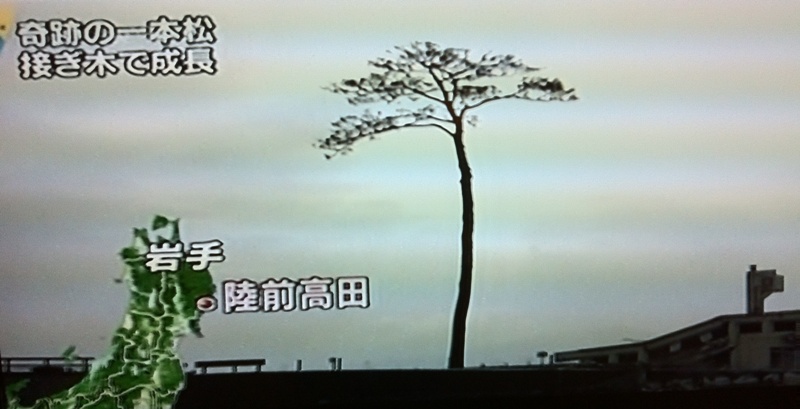
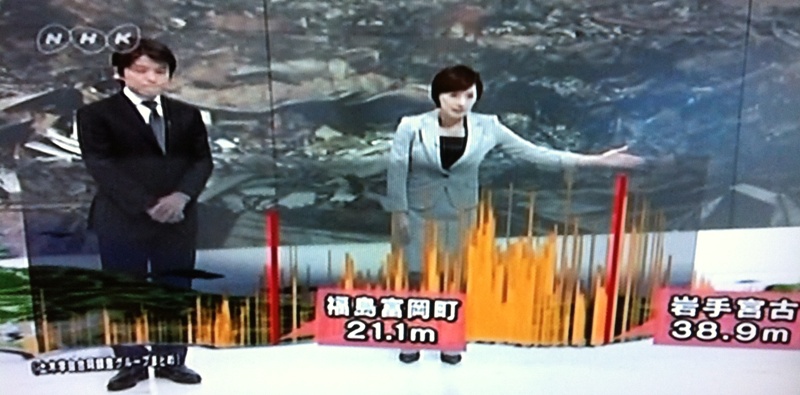
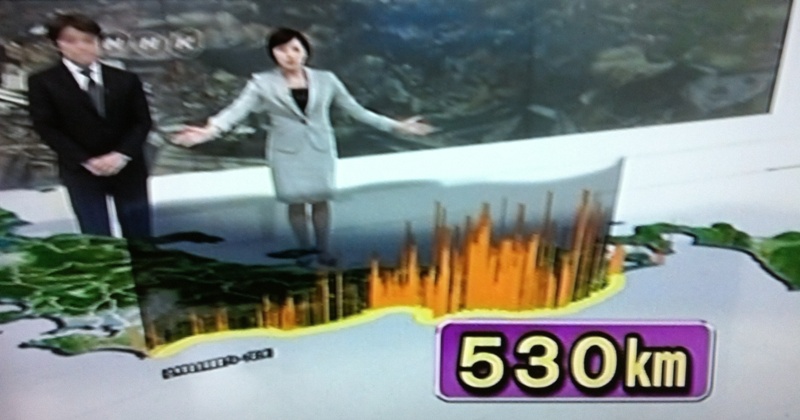
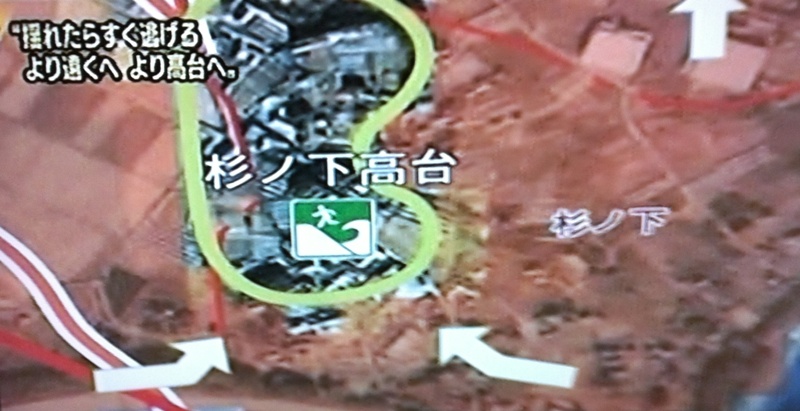
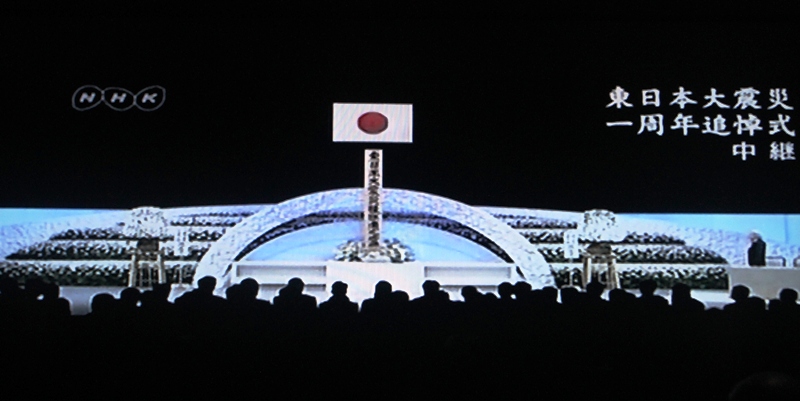
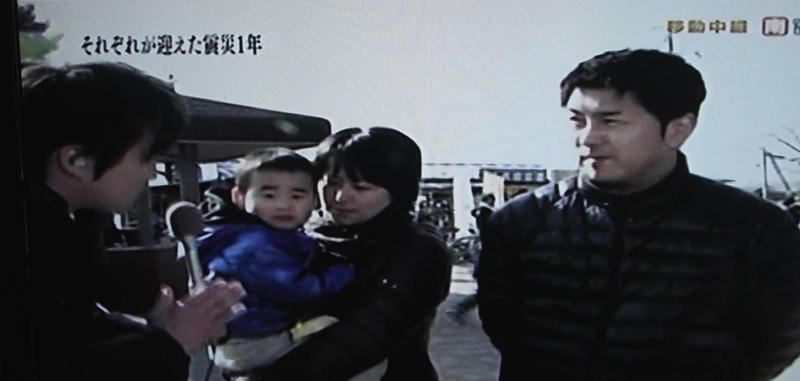
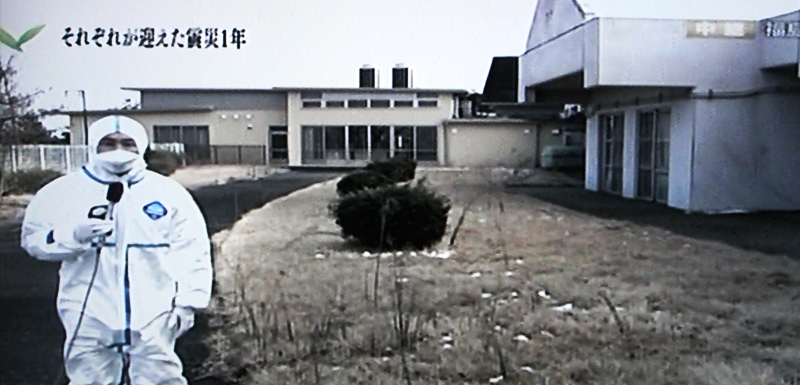
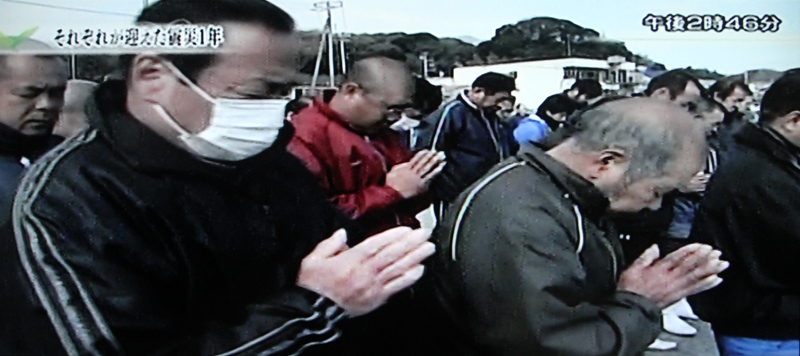
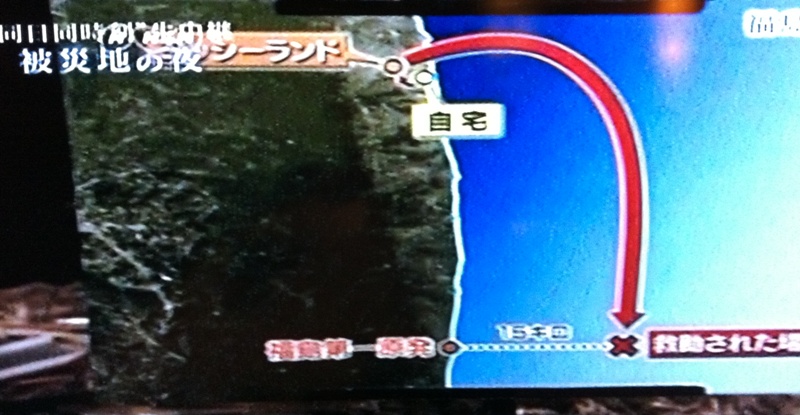
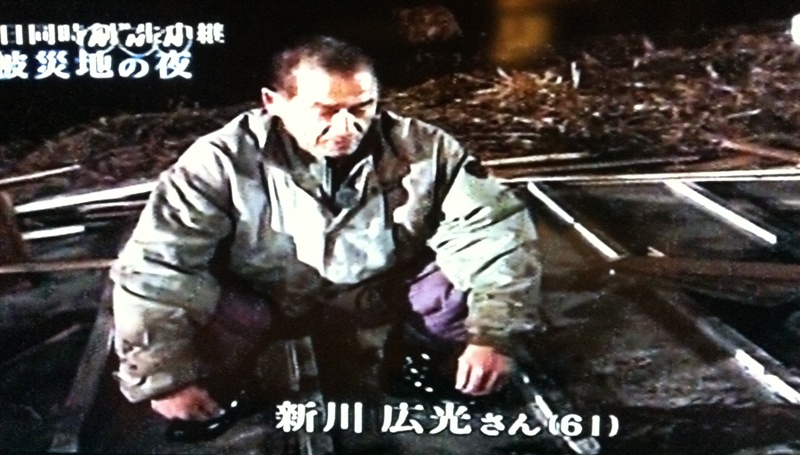
Only TWO of the country's 54 nuclear reactors are currently in operation - and even those might be shut down by the end of April.A segment of the 9 o'clock news every night the last week was dedicated to 3.11 reports.This was the only tree of a centuries-old pine forest by the sea at Rikuzentakata that survived. But now there are reports that it is dying because of the salty water in the ground.I think this diagram shows the height of the tsunami waves that hit the coast... snd this one shows that 530 km (330 mi) of coast line was hit.I'm not sure where this is - but it shows a vast surface area that was under water.This is inside a theater in Tokyo on Sunday. Japanese Emperor Akihito, 22 days after heart bypass surgery, stood with everyone inside for a moment of silence at 2:46 p.m.This is at one of many lookout points over the sea where the public could come and place flowers and remember the people that were lost. The boy grabbed the microphone as soon as he held it toward the mom to answer a question.Tens of thousands of people still cannot go back to their homes in the Fukushima area due to concerns over radiation levels there.This is on the pier and seawall of one of the many coastal communities where an alarm was sounded at exactly the same time as when the tsunami struck last year.This is one of many survivor's tales. This guy was first swept inward by the water, and then out to sea .... and here he shows how he sat on a large piece of floating debris until he was saved.
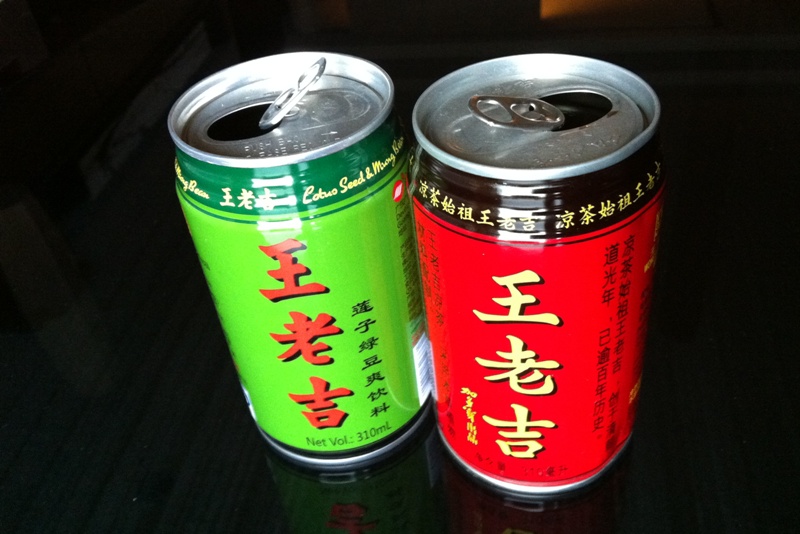
Lotus seeds (picture from Wikipedia) are used extensively in traditional Chinese medicine and in Chinese desserts.Mung beans (picture from Wikipedia) come from India.'Wong Lo Kat 王老吉' (Cantonese) or 'Wanglaoji' Lotus seed and Mung Bean drink (green can) and on the right herbal tea drink (red can).
Saturday was cold and rainy, so I felt better about having to knuckle down and work .. and drink my beverages that I got from the grocery store across the street. The sweetened Wanglaoji herbal tea (red can) rivals Coca- Cola in popularity in mainland China. I think the green Wanglaoji version is a new flavor since I had not seen it before. It’s certainly new to me : you go whoa! what are those flavors in there? Well – it’s lotus seed and mungo bean, buster ! And of course I had to look both up on Wikipedia to see that they look like.
This stuffed dragon is from the Carrefour department store here in Shenzhen. I took the picture a few weeks ago.
We’re in the final testing phase of our SAP project, and some ‘dragons’ have emerged that have to be slayed. One can even find – as we are – that standard SAP transactions are not working as expected. It all depends on the volume and combination of data that had been converted and the system settings and resources that have been put into place. So it pays to be paranoid when testing software*.
Test it again even if it was tested before (in a previous phase of the project), even if it’s out-of-the-box functionality from a top-notch vendor and even if you ‘think’ it will work. Of course, no project has infinite resources, so you have to apply what time and personnel you do have, as best you can !
*I am thinking of the Andy Groves quote ‘only the paranoid survive’. Grove was CEO of Intel from 1987 to 1998 and a pioneering figure in transforming the company into a giant. He insisted that people (working together) be demanding on one another, and is said to have been an idol of the late Steve Jobs from Apple.
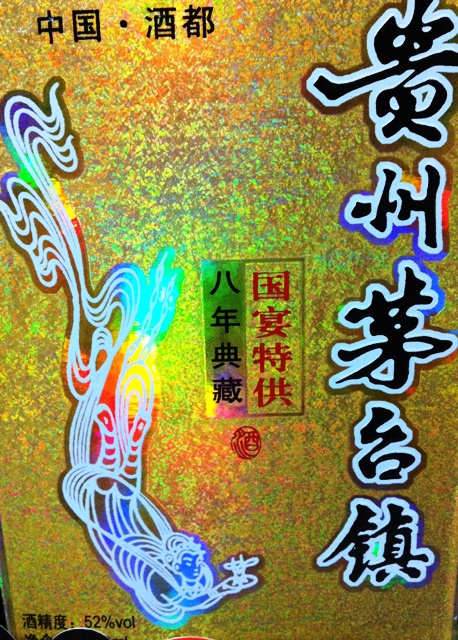
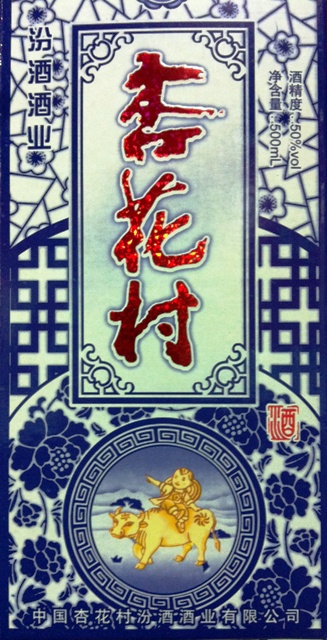
I like to check out the baijiu* packaging in the grocery stores here. Some are downright spectacular. And at 50% alcohol I am sure one soon starts to experience the fantasy worlds depicted on the boxes that the liquor is presented in.
*clear white liquor drink typically distilled from rice (southern China) or sorghum (northern China)
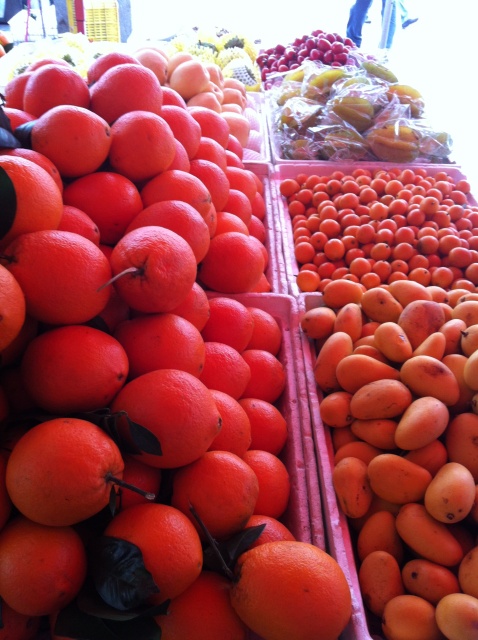
There is a wonderful fruit market here at the local shopping center at work. The oranges on the left are sweet and seedless. The little yellow fruit on the right are mangoes, but I’m not sure of the cultivar name. There are hundreds, says Wikipedia. The little ones have the same tough skin, and taste the same as the bigger, rounder ones that have a red ‘blush’ .. that wild tropical mango taste. I have never quite grown fond of the way mangoes taste, though. Maybe I just have not eaten enough of them to appreciate them!
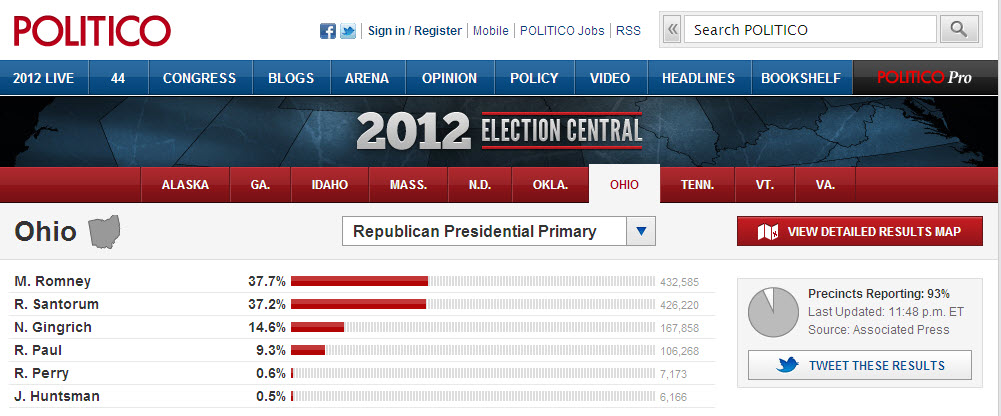
Tuesday is long gone in here in China (it’s 1.00pm Wednesday) – and almost gone in the USA. But the politicos at politico.com are posting up-to-the-minute tallies of the precincts in the outcome of the Republican primaries in the ten states of ‘Super Tuesday’. Wikipedia says the phrase Super Tuesday goes back at least to 1976 in US presidential primary elections. Right now the state of Ohio is most closely watched, where it’s a neck-and-neck race between Mitt Romney and Rick Santorum.
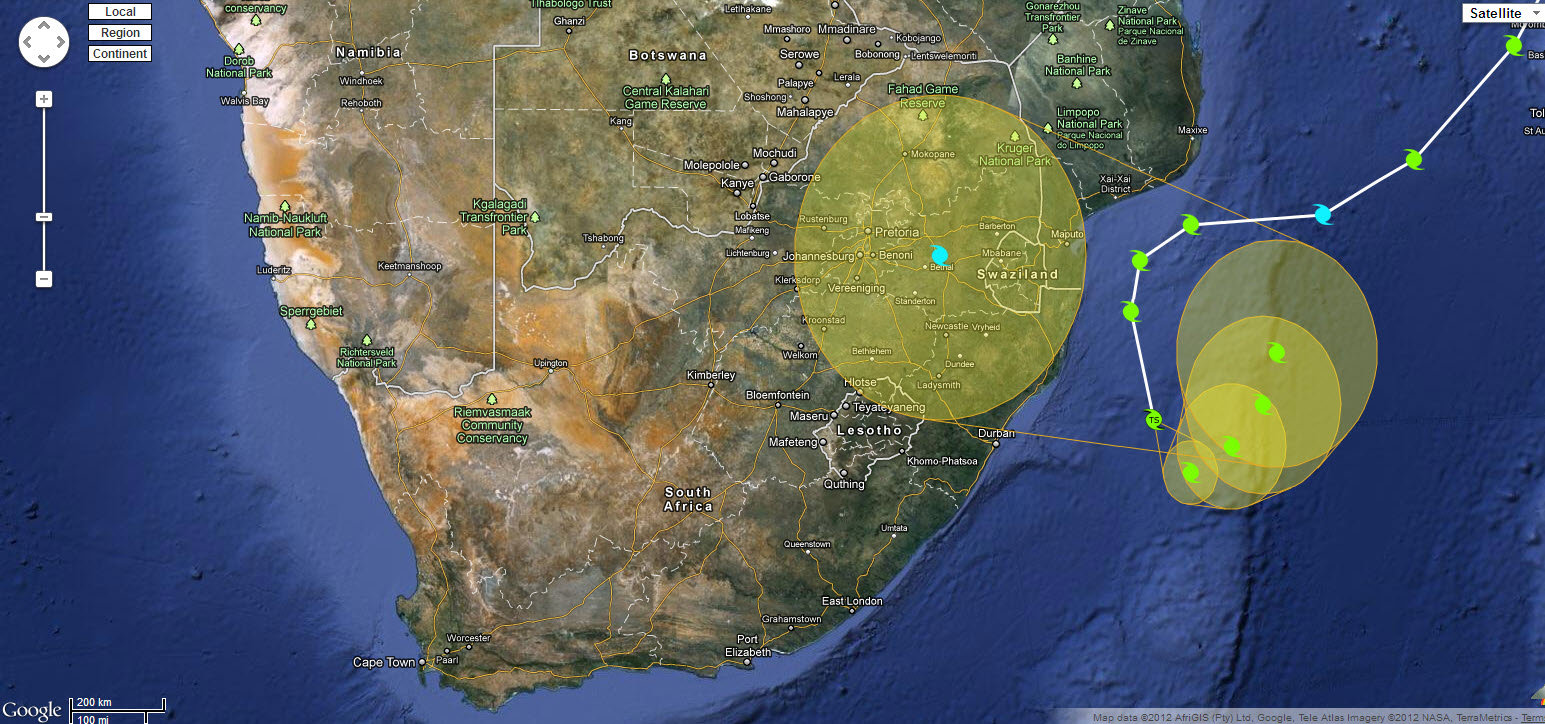
Cycle Irina is churning off the South African coast and likely to remain over open water between Maputo and Richards Bay for the next 24 hours, says a weather report. So it makes for very rough seas and a marine storm surge on the coast. Currently : Wind: 55 MPH — Location: -29.4S 34.5E — Movement: S
Here's the fish. We don't know the name. It might be a flounder of some kind.
My colleague and I ordered fish for dinner at a restaurant here. A good bet is always one of the flat white fishes. They are quick to cook – you pick one from the fish tanks outside! And the bones stay in one piece. We are not sure if it’s a kind of flounder, or maybe a sole. The fish is very white inside when cooked, and it is served up with a sesame oil-soy sauce and a garnish of spring onion. Very tasty.
.. and here's the restaurant. The blue at the bottom are fish tanks with fish, shrimp and other shellfish.
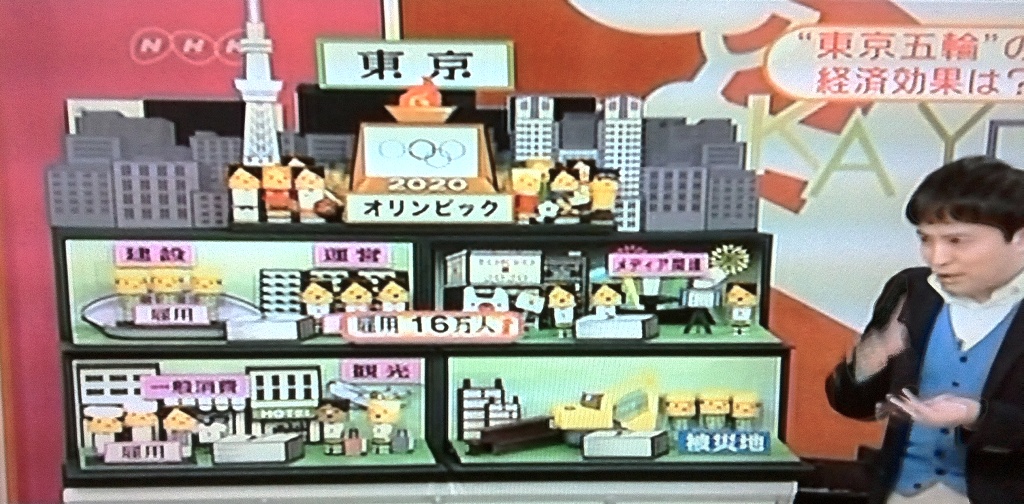
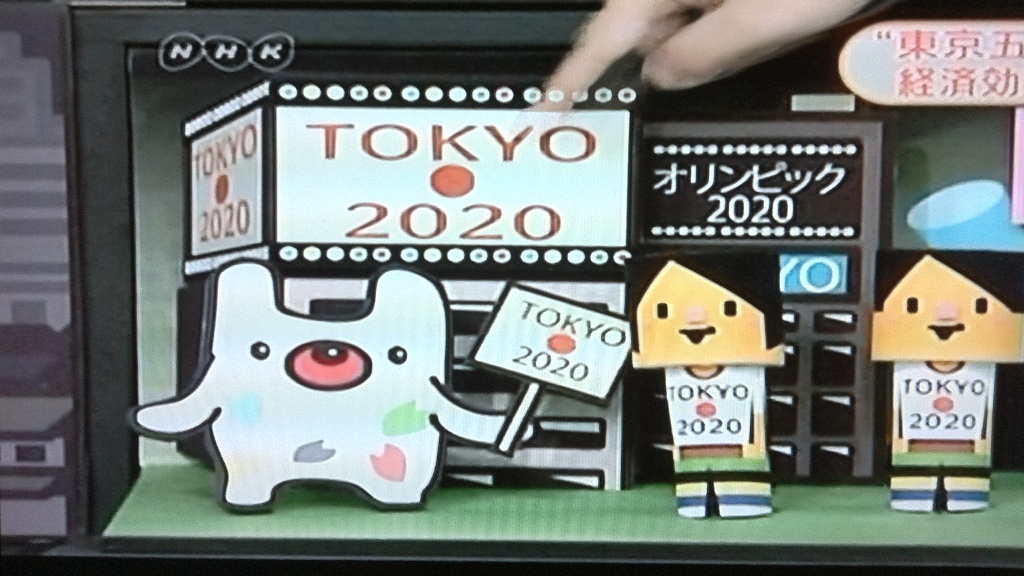
Tokyo is making a bid for the 2020 Olympics, and there was a section about it on NHK TV. They hosted in 1964 and will be able to use some of the facilities after upgrading it – such as increasing the capacity of the 54,000-seat National Stadium to 80,000 seats.
Which other cities are putting in a bid? Here are all of them. Baku and Doha are certainly not as well known as the other three! Rome withdrew its bid after the government dropped its support, citing the financial difficulties of Italy and that the money is needed elsewhere.
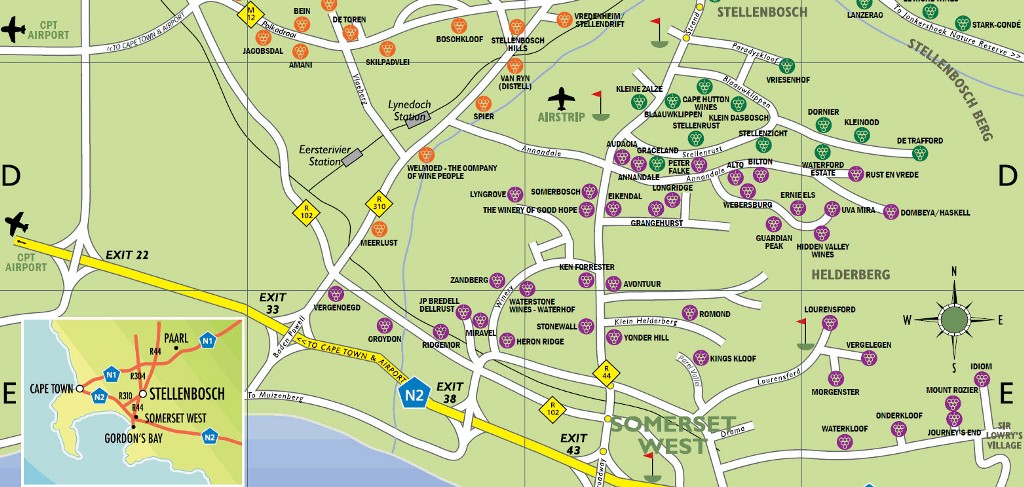
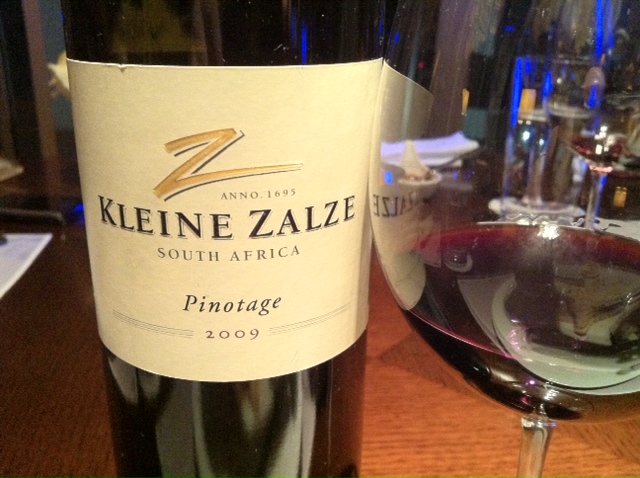
Stellenbosch is smack bang in the middle of South Africa's wine country. Look for the Kleine Zalze estate to the right of the airstrip (aeroplane symbol)..My glass is almost empty! The Kleine Zalze is not a fancy Pinotage - it comes with a screw top - but we liked it well enough.
Three of us went to the Dameisha Sheraton for dinner, but this time in the Italian restaurant instead of in the lobby downstairs. And what wine did we have? A pinotage from the doorstep of my South African homestead Stellenbosch where I was a student, and lived for some time later on. Pinotage is probably South Africa’s signature red grape, around since 1925. Even so, some South African winemakers will not have it in their vineyards. Says Wikipedia : ‘A common complaint is the tendency to develop isoamyl acetate during winemaking which leads to a sweet pungency that often smells like paint’. Ouch.
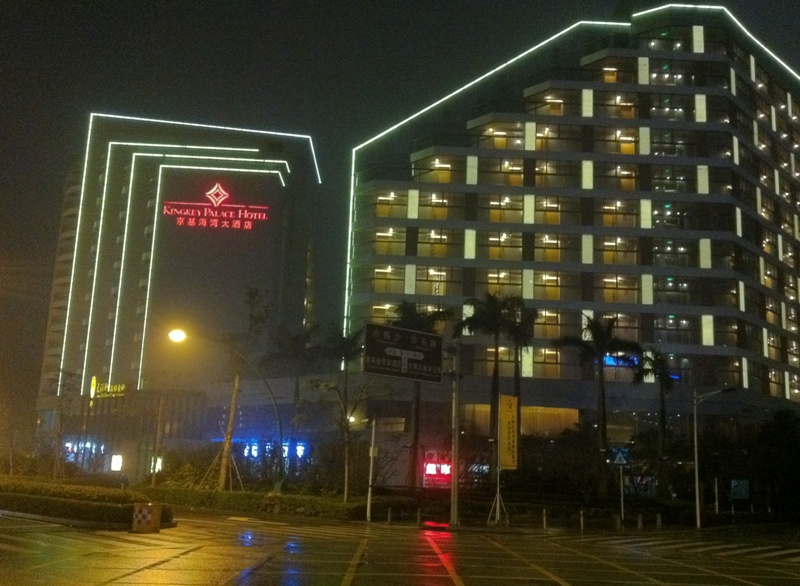
This morning the air was foggy and the streets were soggy. I knew about the fog Thursday morning even before I rolled out of bed. A fog horn that must be close by on the coast sounded a few times in the night. Fog horns emit sounds at around 50 Hz, and humans can hear sounds between 20 Hz and at most 20 kHz. (Check out the cool animated picture of a sound wave that I found on line). And my research also found that blue whales can hear sounds as low as 5 Hz, while on the opposite end there is the Jamaican fruit bat, that can pick up ultrasound squeaks pitched at 130 kHz. Whoah Mr Bat! What fine ears you have!