The gauge at Seattle-Tacoma airport recorded only 0.11 inches of precipitation for the month of August, far below the mean of 0.92 in.
The East Coast of America is getting soaked, and the West is dry as a bone.
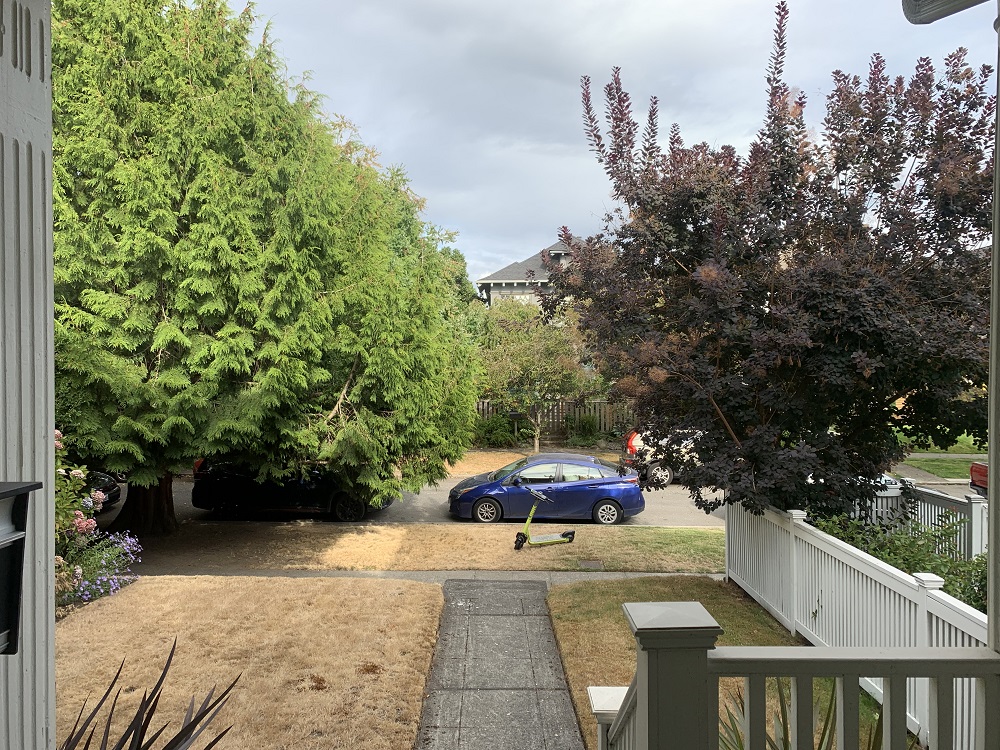
There were a few drops of rain today— just a few drops. So I went out and watered the shrubs and flowerbeds at the front of my house. (I don’t water the lawn. It will green up again when the rain starts). ‘I like your new ride’ said my neighbor, when he saw me. ‘Oh yes, I love it’, I said, thinking he referred to my new car. ‘No, no, this one’, he said, pointing to the LINK scooter that someone had left in front of my house. ‘Oh THAT – I’m not touching the scooter’, I said. ‘Riding it can only be trouble’.
It’s official: America’s 20 year-long war in Afghanistan is over.
The last cargo plane from the United States armed forces had left at midnight Kabul time on Monday night. Someone on flightradar24.com noted that the United States military has ceased to provide air traffic control functions at Kabul Airport, and that the entirety of Afghan airspace is now without air traffic control.
‘Afghanistan has once more completed a cycle that has repeatedly defined the past 40 years of violence and upheaval: For the fifth time since the Soviet invasion in 1979, one order has collapsed and another has risen. What has followed each of those times has been a descent into vengeance, score-settling and, eventually, another cycle of disorder and war’, writes Thomas Gibbons-Neff for the New York Times.
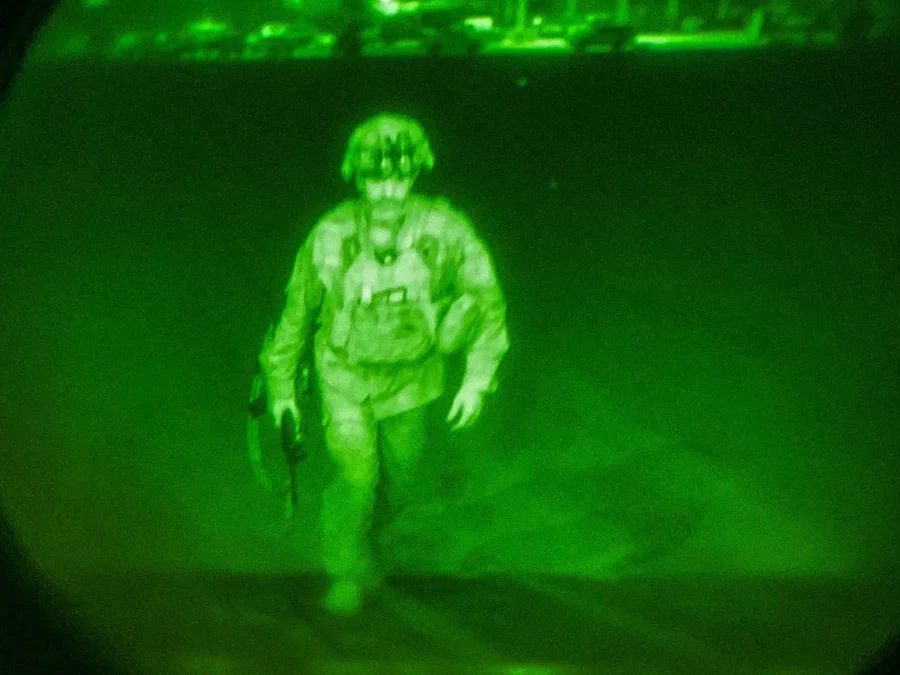
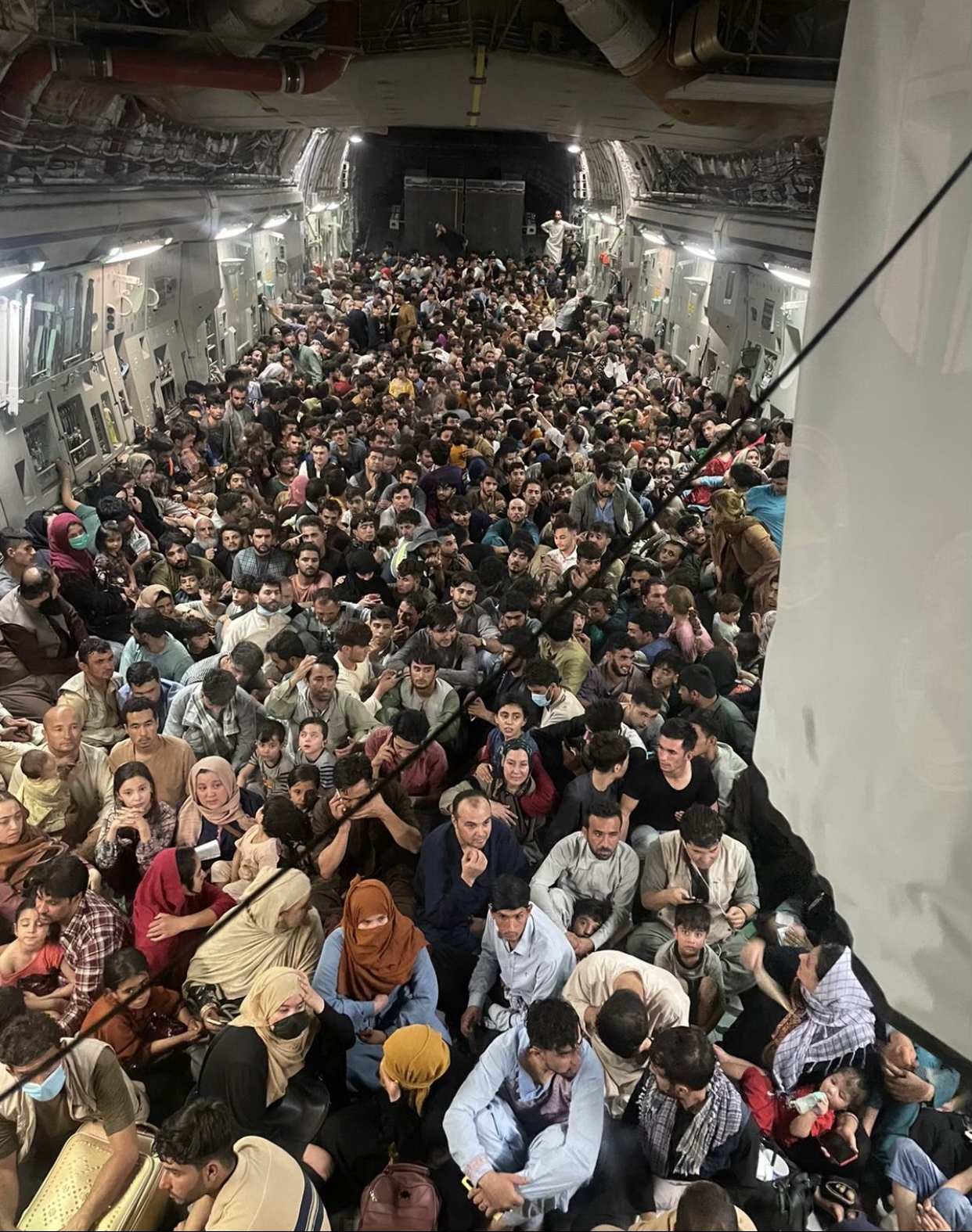
Aug 30, 2021 U.S. Army Maj. Gen. Chris Donahue, the last service member to board the last airplane out of Hamid Karzai International Airport. There were no civilians on this flight. The C-17 Globemaster III cargo plane’s handle is MOOSE94, and it was wheels-up one minute before midnight local time, on Aug 30. (So technically there were still 24 hours left before the Aug 31 midnight deadline). [Hand-out photo from U.S. Central Command, via Getty]Aug 15, 2021: Then there was this flight, crammed with some 640 Afghan evacuees, leaving Kabul airport for Doha, Qatar. The surge of anxious people had boarded the airplane, and the crew decided to just take off, even though the plane was not nearly designed to provide proper seating for nearly as many passengers. [Hand-out photo from U.S. Air Force]
Hurricane Ida is the ninth named storm of the 2021 Atlantic hurricane season, and formed on Thursday in the Caribbean Sea.
A levee failed near Highway 23, resulting in flash flooding. I hope Monday will bring news that the infrastructure that had been added after hurricane Katrina, to mitigate the storm surge threat from the ocean and the bodies of water in the area, had done exactly that.
Mon 8/30 update: Reported by Reuters: A $14.5 billion system of levees, flood gates and pumps has largely worked as designed during Hurricane Ida, sparing New Orleans from the catastrophic flooding that devastated the area 16 years ago in the wake of Katrina, officials said.
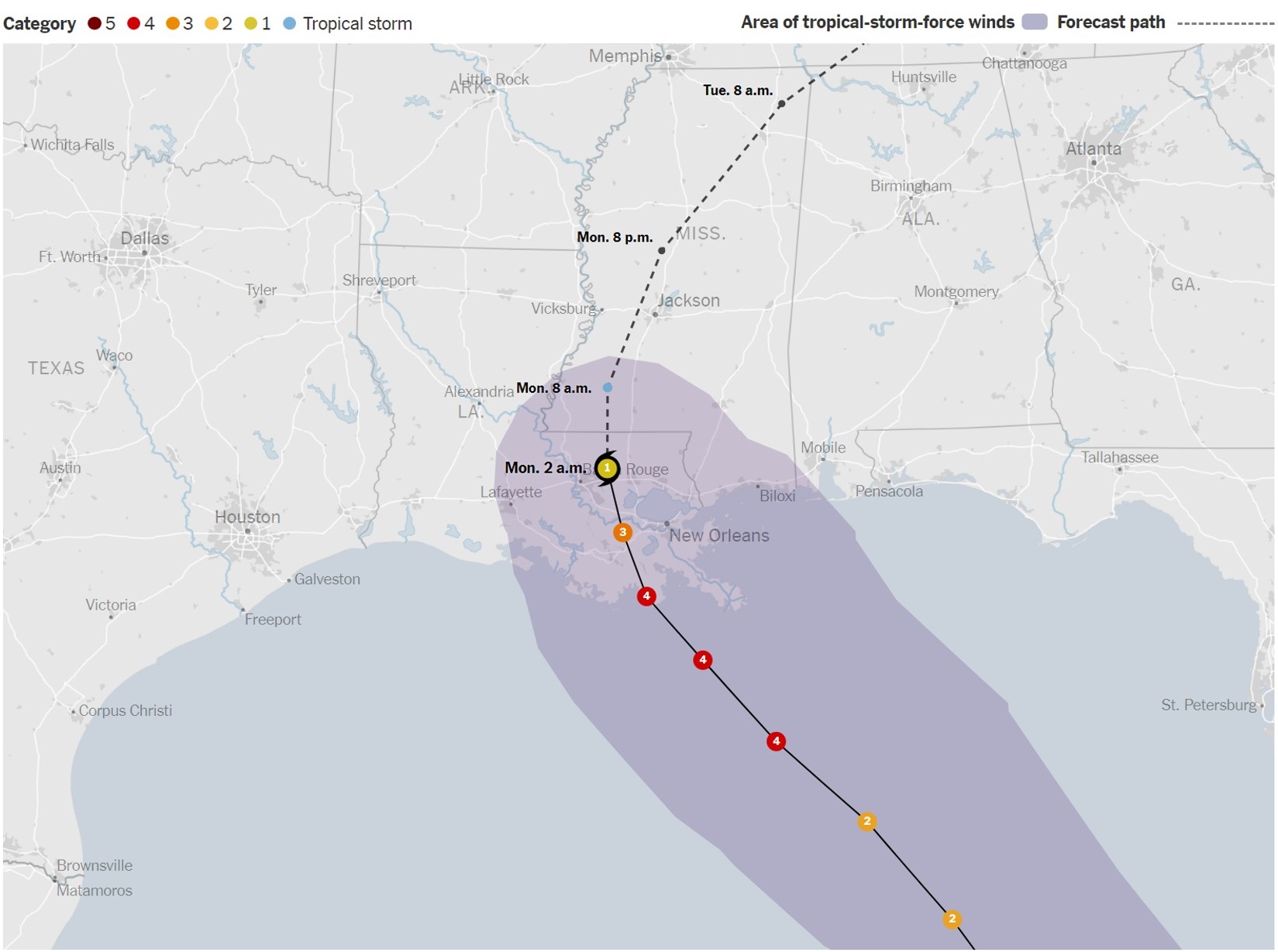
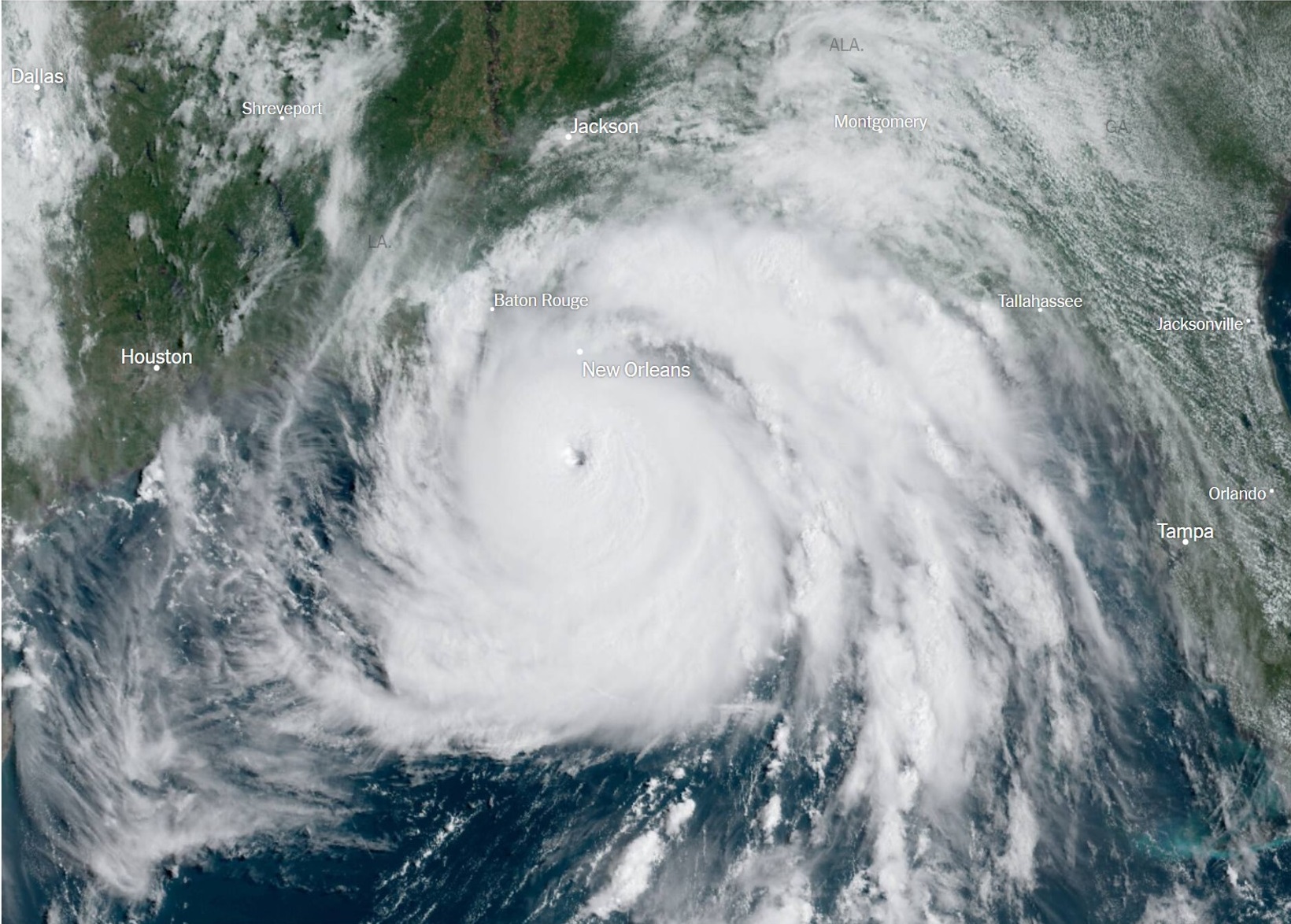
Here’s the projected path of Hurricane Ida. It dumped some 10 inches of rain on the Louisiana coast, and will soak Mississippi with rain on Monday. [Map by New York Times online].A satellite image of the storm on Sunday morning. It’s a massive, massive system, more than 500 miles across. [Posted by the New York Times online/ taken by the National Oceanic and Atmospheric Administration].
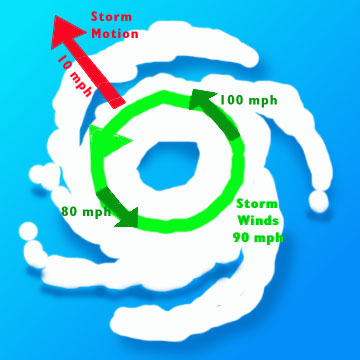
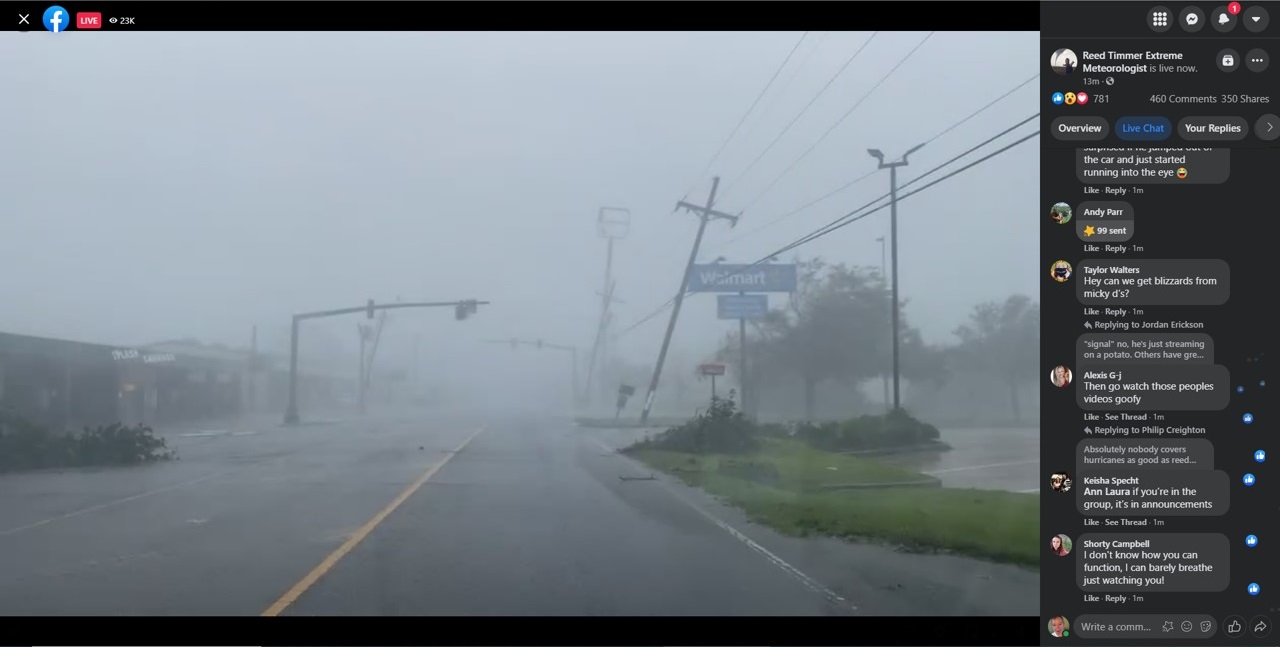
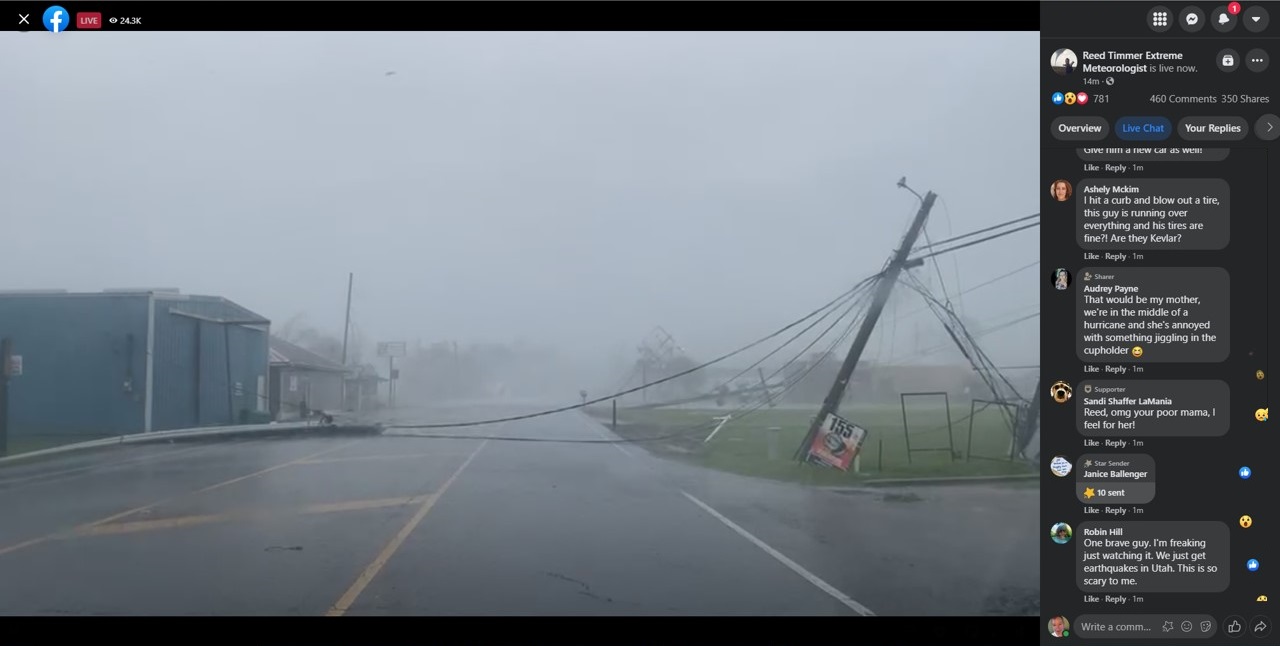
In the Northern Hemisphere, the winds in a hurricane go counterclockwise. The strongest winds are almost always found in the eyewall, at or near the right front— the forward—quadrant of the storm. The forward speed of the hurricane is added to the rotational wind speeds generated by the storm itself. [Graphic from Wikipedia].This is at the Walmart at Raceland, Louisiana, just off Route LA-1. I am guessing the wind speed is at least 80 mph here; Reed Timmer kept saying he is in the eyewall of the storm (it’s several miles wide), and trying to get to the eye of the storm. [Still from Facebook Live feed from Reed Timmer Extreme Meteorologist].
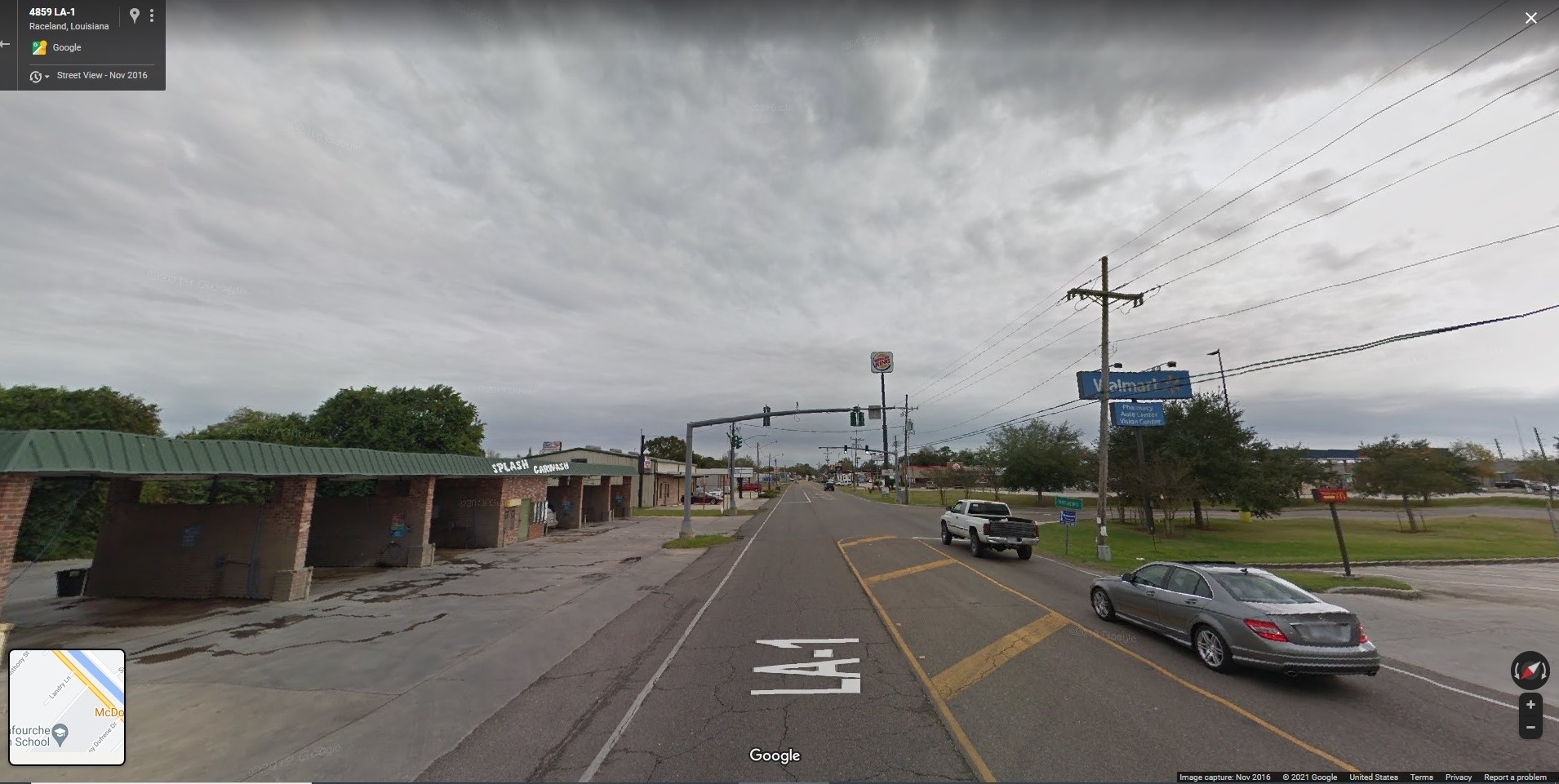
Here’s a Google Streetview shot of the same location in Raceland, LA. There’s a Splash Carwash on the left (will not need THAT today!), with the Walmart on the right.
Downed powerlines blocking the road just a little further up in the road on LA-1 by Raceland, LA. (Stating the obvious: always stay well clear of powerlines!). Storm chaser Reed Timmer found a way around these, using the surrounding streets. [Still from Facebook Live feed from Reed Timmer Extreme Meteorologist].Ida made landfall as a Category 4 hurricane near Port Fourchon, Louisiana. The entire city of New Orleans was without power on Sunday night.
I watched a little bit of storm-chasing on YouTube and Facebook Live today.
Below are stills from the Facebook Live feed from Reed Timmer ‘Extreme Meteorologist’.
With Hurricane Ida projected to slam Louisiana on anniversary of Katrina, anxiety grips the region
People across Louisiana were deciding Saturday whether to leave or ride out what officials were calling a potentially “life-altering” storm as Hurricane Ida rapidly gained strength in the warm waters of the Gulf of Mexico — threatening to become one of the strongest storms to make landfall in the state since 2005, when Hurricanes Katrina and Rita devastated the region.
The National Hurricane Center was predicting that Ida would strengthen to a Category 4 hurricane with 140 mph sustained winds before making landfall in rural Terrebonne Parish, southwest of New Orleans, on Sunday afternoon. The storm was projected to bring an “extremely life-threatening” storm surge, “potentially catastrophic wind damage,” and widespread flooding, and with Ida projected to come ashore on the 16th anniversary of Hurricane Katrina, anxiety gripped the region.
– Emmanuel Felton, Tim Craig, Carmen K. Sisson, April Capochino Myers, Leslie Fain & Ashley Cusick writing for the Washington Post
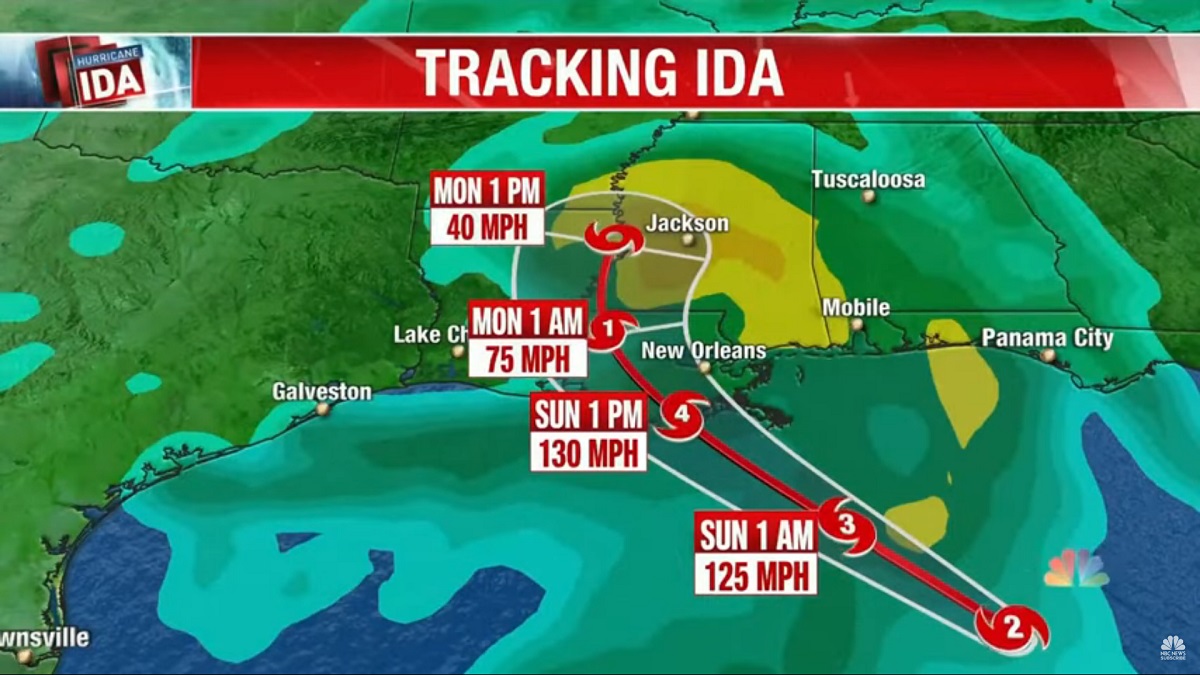
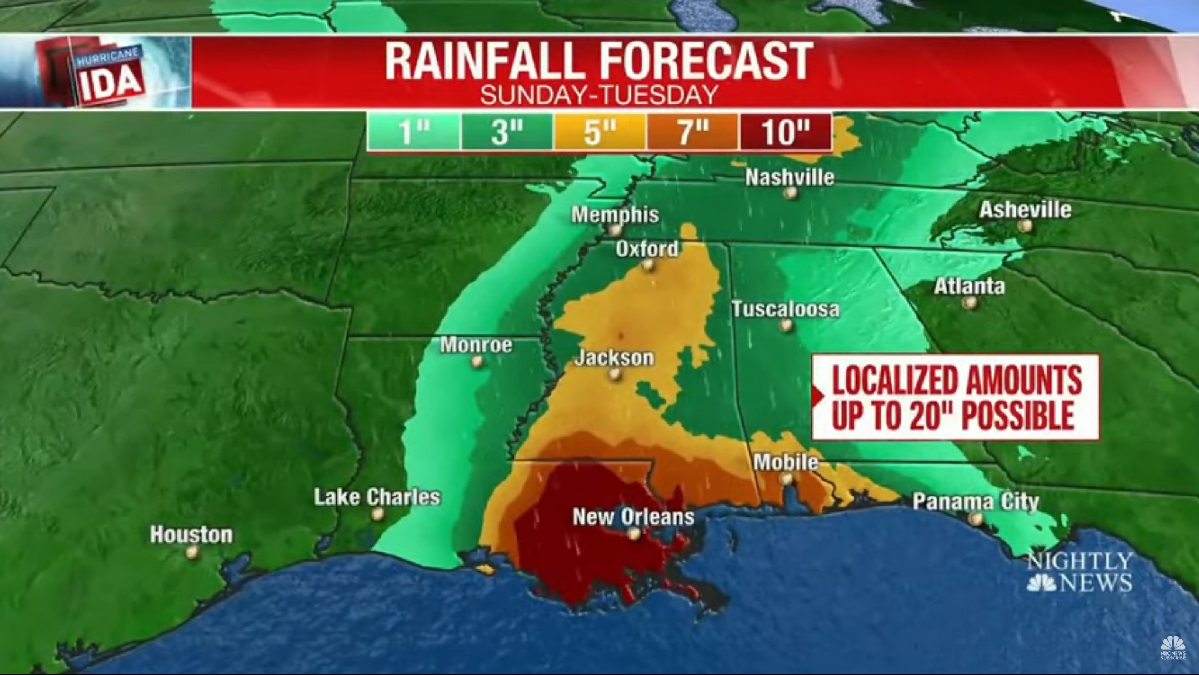
The eye of the storm was in the Gulf of Mexico on Saturday night. New Orleans and Baton Rouge in Louisiana are all but assured of hurricane force winds (potentially >110 mph) and a storm surge of up to 15 ft. [Graphic from NBC Nightly News]Rainfall exceeding 10 inches is expected around New Orleans. [Graphic from NBC Nightly News]
Batten down the hatches, close the gates
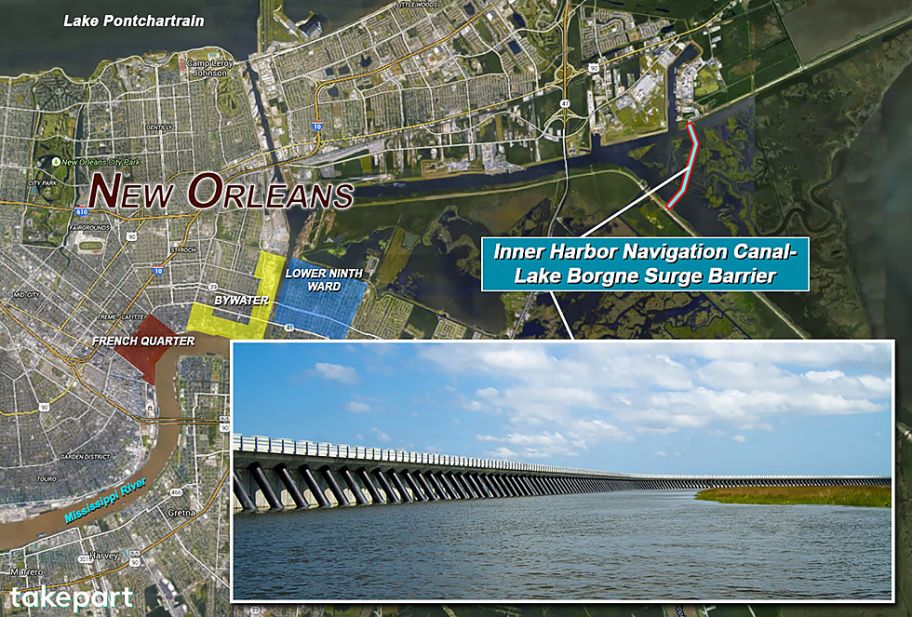
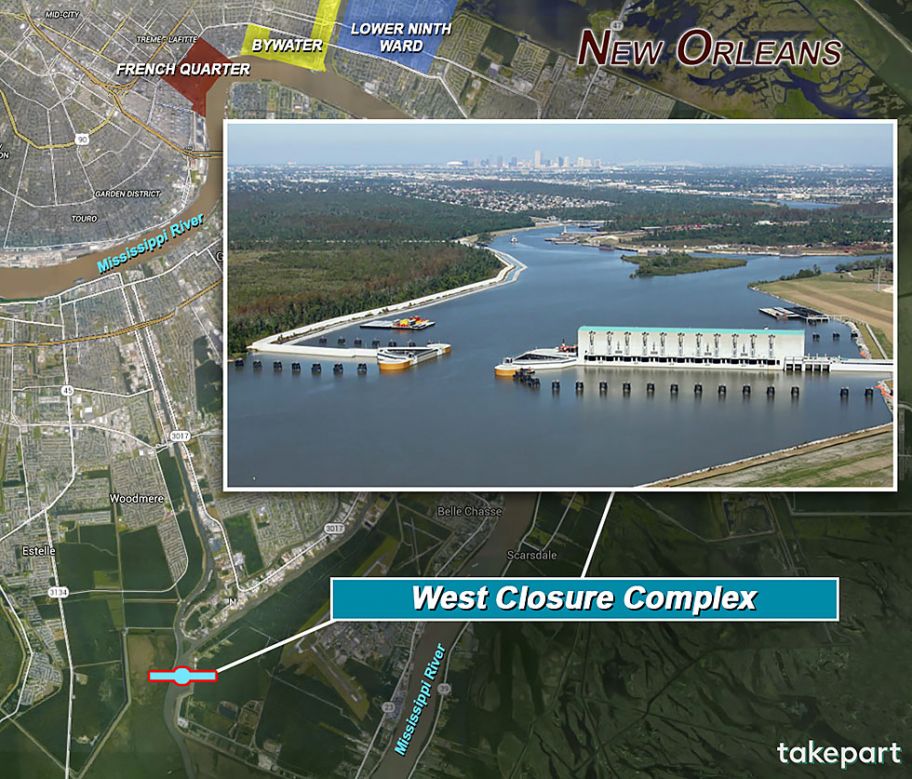
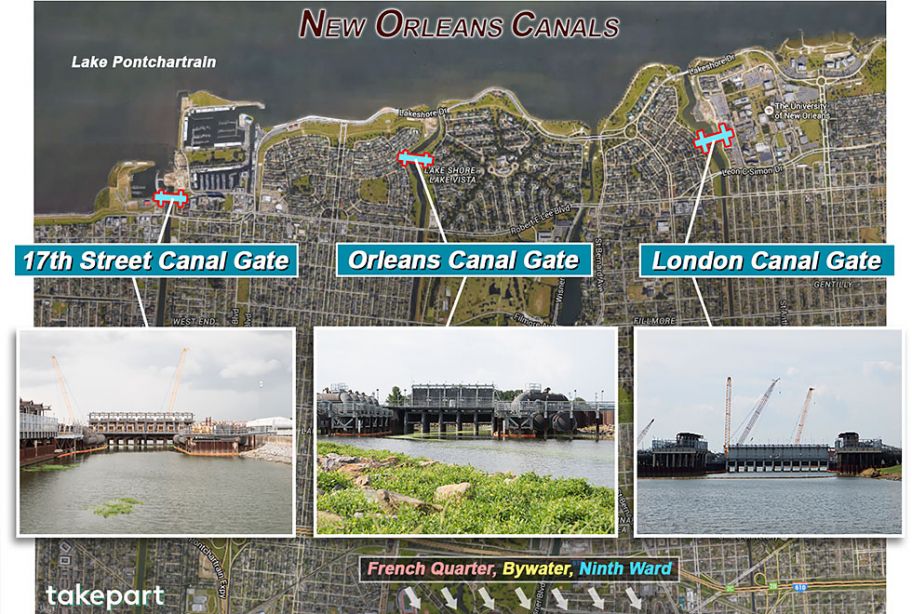
Today, a decade* after Katrina left 80 percent of New Orleans underwater and killed more than 1,600 people, the Big Easy has been reconstructed as a walled city. The Lake Borgne Surge Barrier is just one of a series of gargantuan structures and reinforced levees and floodwalls designed to defend the city against a 100-year storm—a Katrina-like catastrophe that has a 1 percent chance of occurring in any given year. This feat of engineering, prosaically called the Hurricane and Storm Damage Risk Reduction System, forms a 133-mile enclosure around New Orleans and the 350 miles of canals that traverse the city—the canals the Corps had relied on to contain floods and that failed so disastrously in 2005. “We’re taking the fight to the storm instead of letting it come to us,” says Boyett.
-*From a 2015 article asking ‘Will the ‘Great Wall’ of New Orleans Save It From the Next Killer Hurricane?’ by Todd Woody
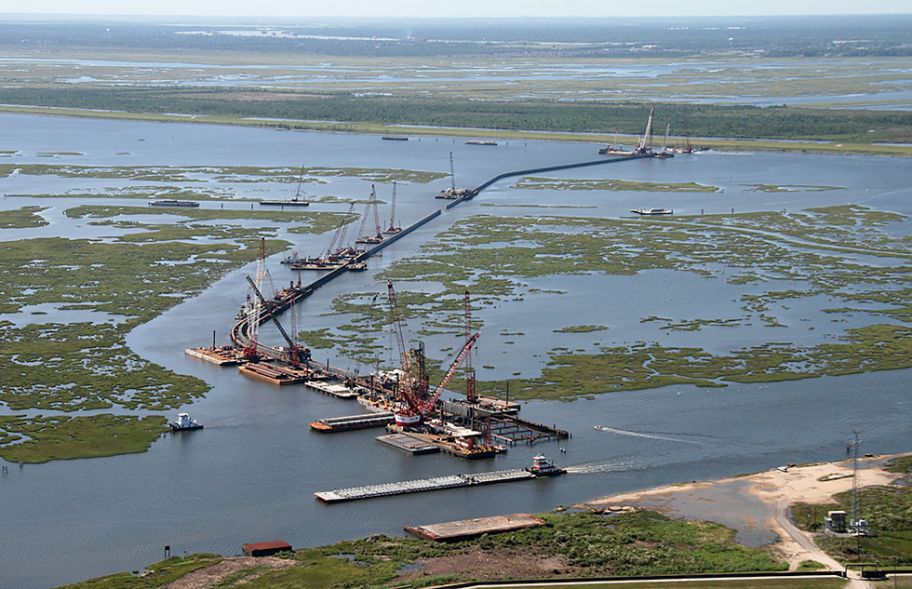
Inner Harbor Navigation Canal–Lake Borgne Surge Barrier. (Map: Google Maps; photo: ASCE/Facebook; infographic: Marc Fusco)Inner Harbor Navigation Canal–Lake Borgne Surge Barrier under construction in 2010. (Photo: Wikipedia)(Map: Google Maps; photo: Courtesy U.S. Army Corps of Engineers; infographic: Marc Fusco)(Map: Google Maps; photos: Mary Grace McKernan; infographic: Marc Fusco)
Summer is dwindling, and so are the flowers to be found on my neighborhood walk. Still, I got these two beautiful dahlias tonight.
Centuries ago, dahlia tubers were grown as food crops by the Aztecs. This use of the plant largely died out after the Spanish Conquest of the Aztec Empire (1519-21). The dahlia was declared the national flower of Mexico in 1963.
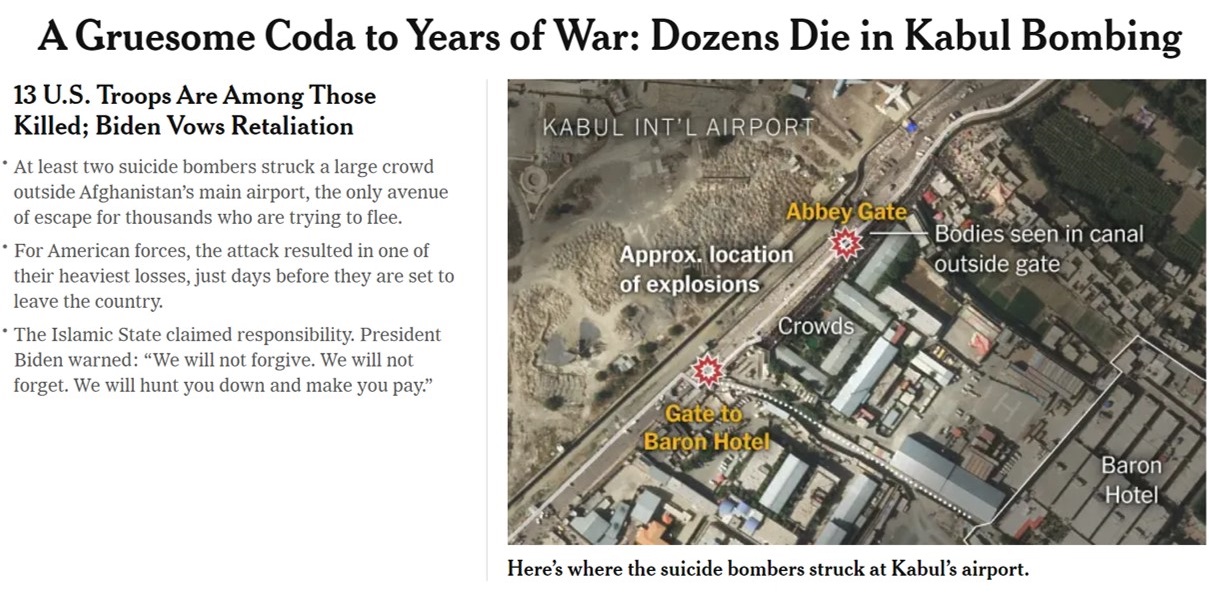
Reporting and map of the bombings from the New York Ties online. P.S. The Pentagon indicated later that there was in fact only one suicide bomber: the one at the Abbey Gate. There was no explosion at the gate to the Baron Hotel.
What a horrible day at Kabul International Airport.
The terrorist organization called ISIS-K (Islamic State Khorasan Province) claimed responsibility for the attacks. ISIS-K was founded by former members of the Pakistani Taliban, Afghan Taliban and the Islamic Movement of Uzbekistan.
ISIS-K sees the Afghan Taliban as its strategic rivals. It brands the Afghan Taliban as ‘filthy nationalists’ with ambitions only to form a government confined to the boundaries of Afghanistan. This contradicts the Islamic State movement’s goal of establishing a global caliphate. (From ‘What is ISIS-K?’ at theconversation.com by authors Amira Jadoon & Andrew Mines).
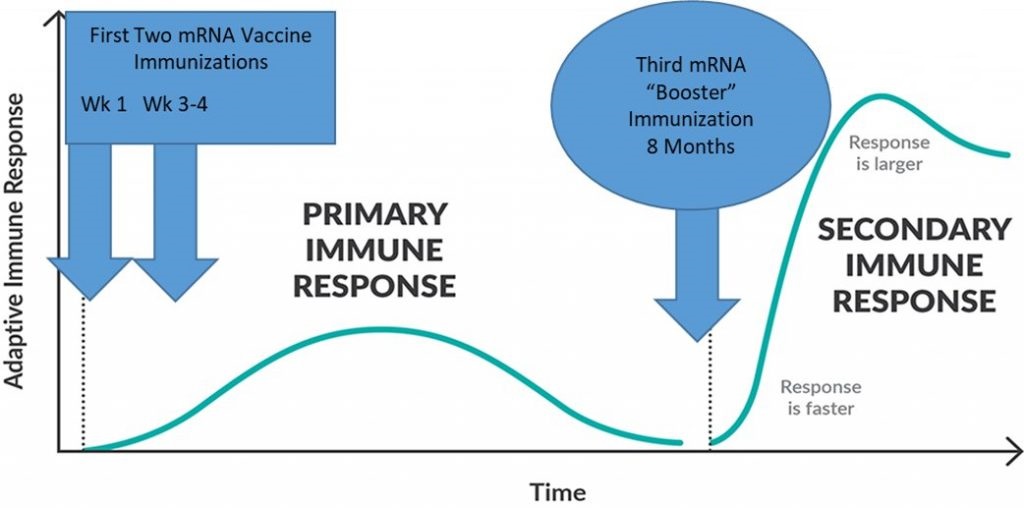
Here’s a graph tweeted by Prof Peter Hotez* MD PhD @PeterHotez that illustrates what booster shots do.
*Professor in Pediatrics Molecular Virology at Texas Children’s Hospital, vaccine scientist, author and committed to combating anti-science information.
A booster shot will induce a rapid and larger response (larger than the initial response) in the body, since the immune system is now primed and vigilant for what it sees as a ‘new infection’ of the virus.
The logo & name for Pfizer-BioNTech’s Covid-19 vaccine (say ‘co-MER-na-tee’). The name is a portmanteau of letters and syllables: CO = COVID-19 (which in turn stands for COronaVIrus Disease 2019, the year it was discovered); MIRNA = mRNA, the snippets of genetic code that tell cells to build proteins (proteins similar to the COVID-19 spike proteins, so that antibodies are produced); TY = a nod to the words ‘community’ and ‘immunity’.
The FDA approved Pfizer-BioNTech’s Covid-19 vaccine on Monday.
Will that move any anti-vaxxers to get their shots? Probably not, but more organizations big and small, public and private, will now mandate that their workers get vaccinated. For me, it’s nice to know the vaccine is officially A-OK.
Will Pfizer market Comirnaty on TV? I guess we shall see. It looks more and more likely that most of us will need booster shots by year’s end.
P.S. The US and New Zealand are the only two countries that allow full direct-to-consumer advertising of prescription drugs and vaccines. Pharma companies spent $5 billion on marketing in the US in 2016. (Sigh.)
The weather people say we will stay below highs of 80°F (26°C) into next week, so the summer’s really warm weather is behind us.
I found this rose near the Thomas Street Gardens here on Capitol Hill tonight. It smells divine. Red and pink roses have the classic ‘rose’ scent. White and yellows often smell of violets, nasturtium, and lemon. Orange roses often smell of fruits, violets, nasturtium, and clove. Rose oil was probably first made in 10th century Persia. Today rose oil comes from Bulgaria, Morocco, Iran, Turkey, and more recently, from China. [Source: Dr. Leonard Perry, University of Vermont, ‘Roses and Their Fragrance]
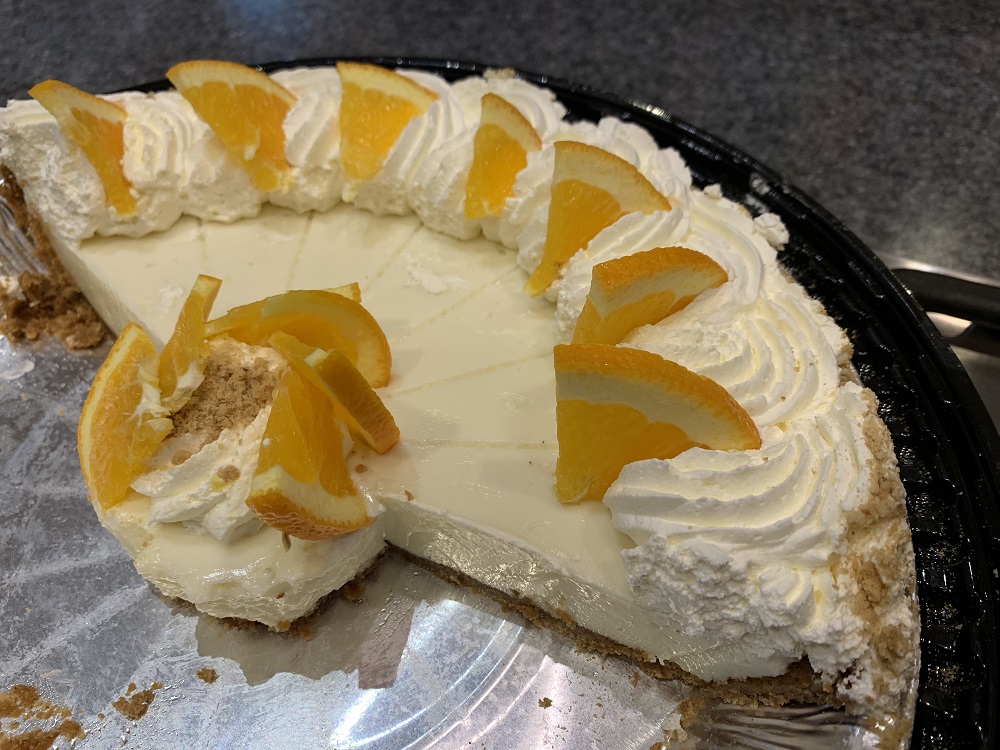
A large piece of the 12″ Key lime pie I had bought at Costco ($14.99) is left over from yesterday.
I had a piece for dessert tonight (of course).
Thomas added the garnish of orange onto the Key lime pie pie (I did not have limes). This pie is made with sweetened condensed milk and with key lime juice from concentrate, says the ingredients label. Key limes are smaller than golf balls, with yellow-green skin that is sometimes splotched with brown. Key lime trees are native to Malaysia, and it is thought that the fruits or seeds first arrived in the Florida Keys in the 1500s with the Spanish.
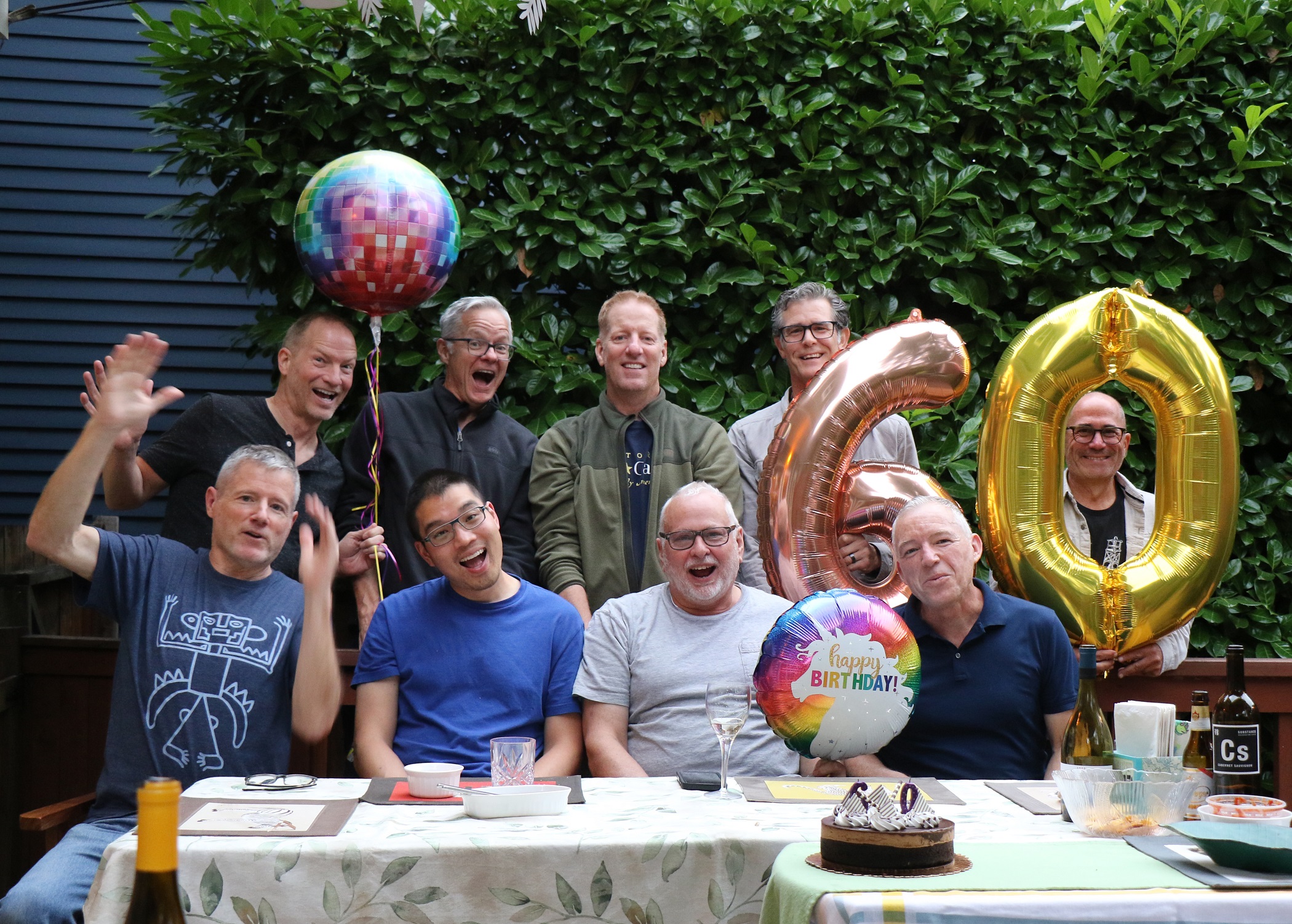
We did not take a group photo last year, and I insisted we do one this year. I set my camera up on its tripod, and had it take 8 pictures, 3 seconds apart. Hold still! But no — the objects being photographed got a little restless towards the end of the photo shoot.
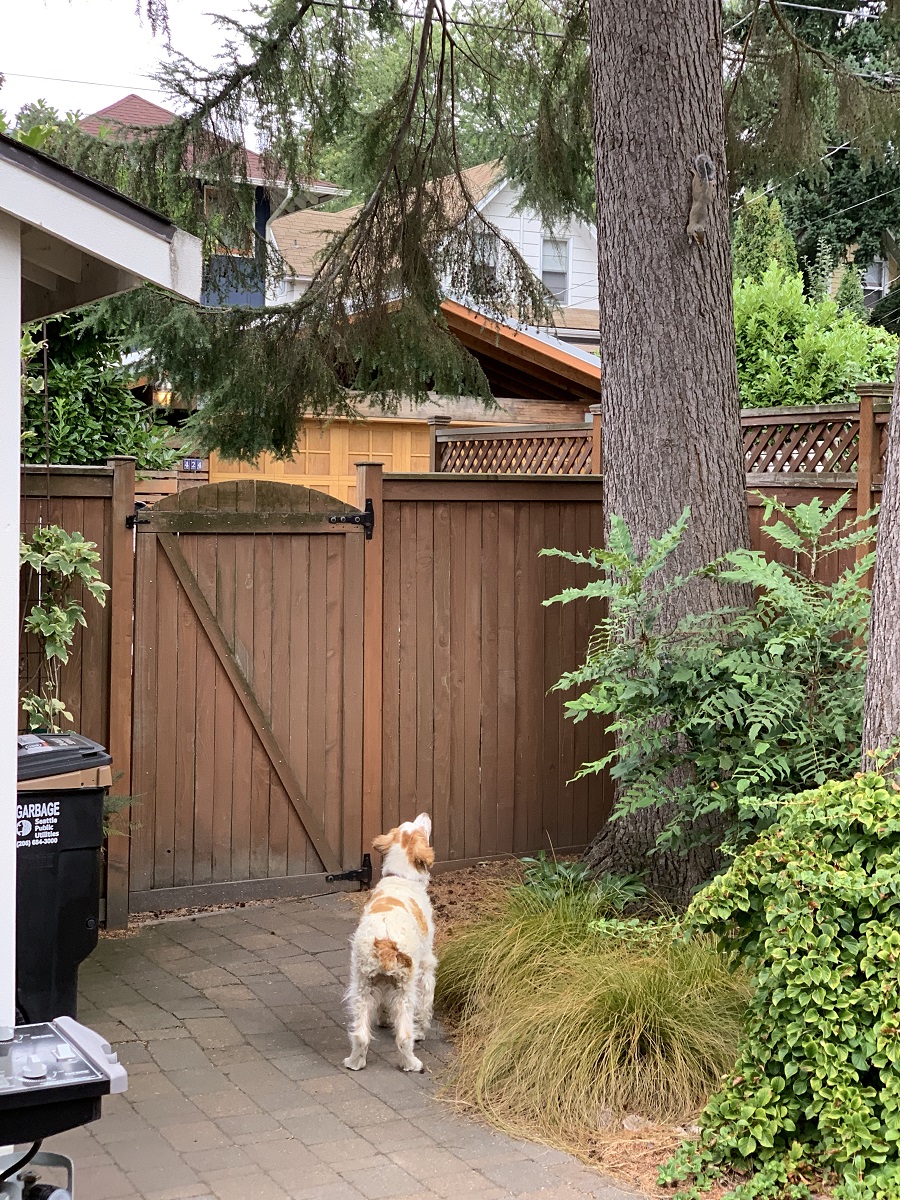
Are we done yet? How many more pictures will that camera take? (That’s a chocolate mousse cake in the foreground). At the back: Gary, Steve, Ken, Bill, Dave. In front: Bryan, Thomas, Paul, Willem.Sam the Brittany, and Mr Squirrel, staring each other down, sort of: one is the hunter and the other is the prey.
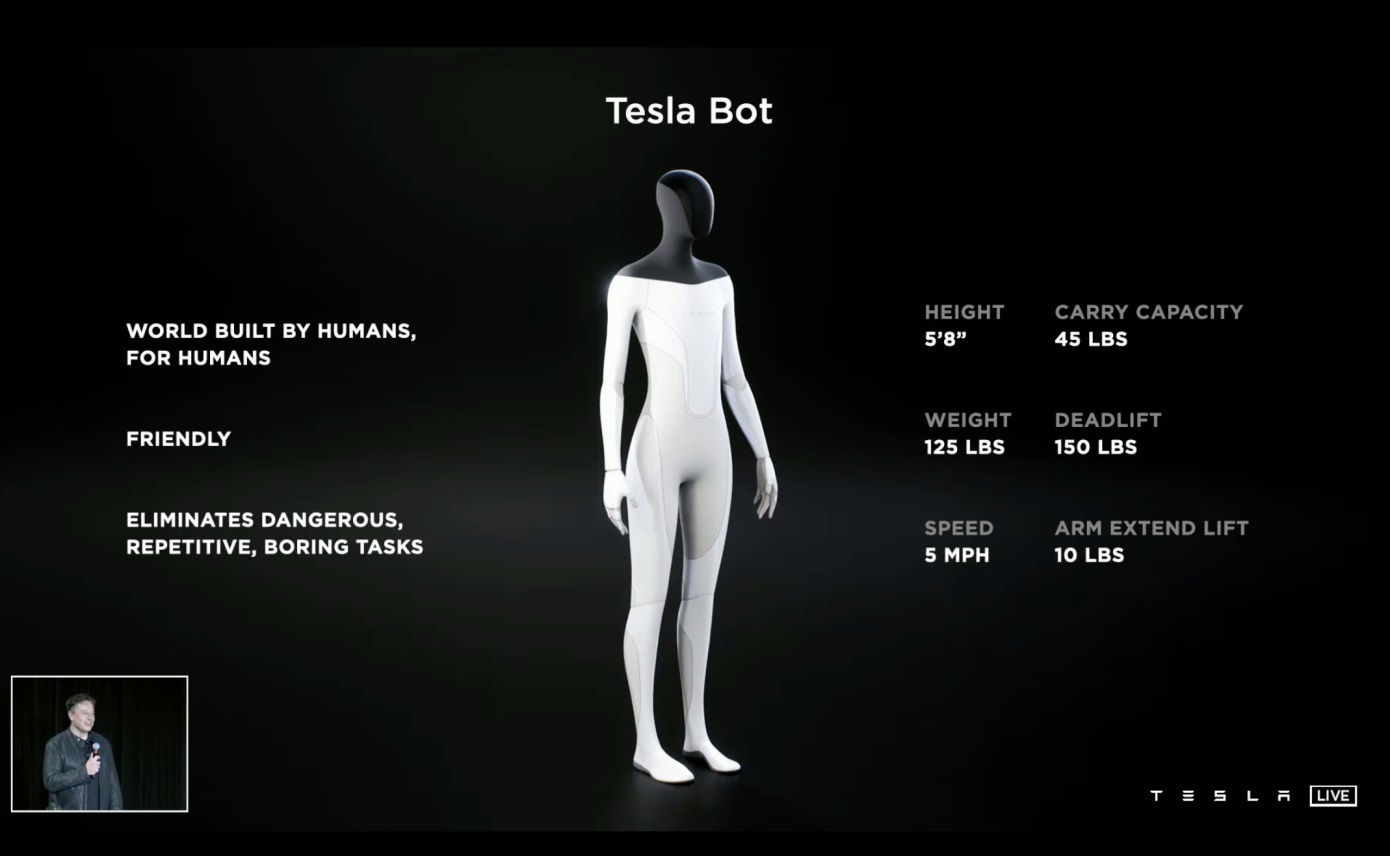
‘It’s intended to be friendly, of course, and navigate a world built for humans. We’re setting it such that at a mechanical and physical level, you can run away from it and most likely overpower it’
– Elon Musk describing the Tesla Bot
Yesterday, Tesla hosted what was billed as ‘AI’ (Artificial Intelligence) Day, in the same vein as last year’s Battery Day. The intention was/ is to draw attention to Tesla’s prowess in developing the AI that will power self-driving cars. It’s good for marketing & promoting the Tesla brand, and for attracting talented people from fields such as Machine Learning, to join Tesla.
After the presentation and just before questions, ‘one more thing’ was announced: the Tesla Bot, a ‘definitely real humanoid robot’. Tesla Bot will leverage some of the hardware and software used in Tesla’s cars, it was said. The robot will be able to do unsafe, repetitive and boring tasks, ‘essentially helping the company solve the problem of labor to some extent’.
Hmm. Is this thing for real? I think I go with the view of technology news website The Verge: ‘Don’t overthink it: Elon Musk’s Tesla Bot is a joke’.
The Tesla Bot is a skinny humanoid robot, not very fast, and not all that strong. A human dressed up as a Tesla Bot jumped around and made some moves on the stage, to demonstrate what the Tesla Bot would be able to do. The Verge notes that ‘Boston Dynamics, a company which makes Atlas, the most advanced bipedal robot in the world (unveiled in 2013), has never described these machines as anything but R&D. Atlas, says Boston Dynamics, is simply a way to push the cutting edge of robotics: it’s not even close to commercial deployment’.
I had a lovely day here in the Northern Hemisphere. It was not too warm and not too cold.
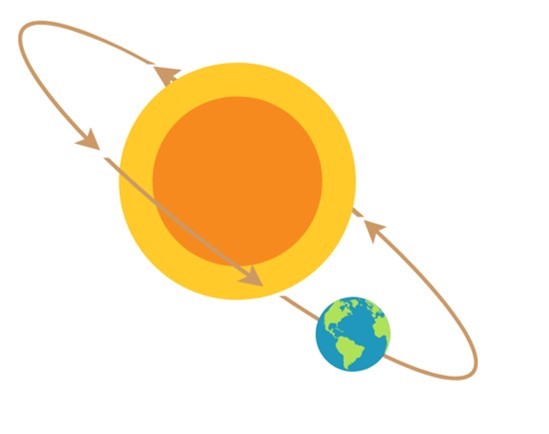
I have now completed exactly sixty trips around the Sun, and that earned me felicitations from family and friends (which I appreciated very much).
The Thursday night social tennis group also made a fuss over me— with cupcakes and beverages and a little gift bag and balloons. There will be more festivities on Saturday, when I plan to have a few friends over.
All teachers and school personnel in Washington State — including coaches, bus drivers and volunteers — will need to be fully vaccinated as a condition of employment, under a new policy announced by Gov. Jay Inslee on Wednesday. The requirement applies to staff regardless of the type of school in which they work: public, charter or private. The policy is the strictest vaccine mandate imposed to date by any state for teachers and other staff members in schools, allowing for only a few exceptions. School staff must be vaccinated by Oct. 18 or face possible dismissal.
– Dana Goldstein reporting for the New York Times
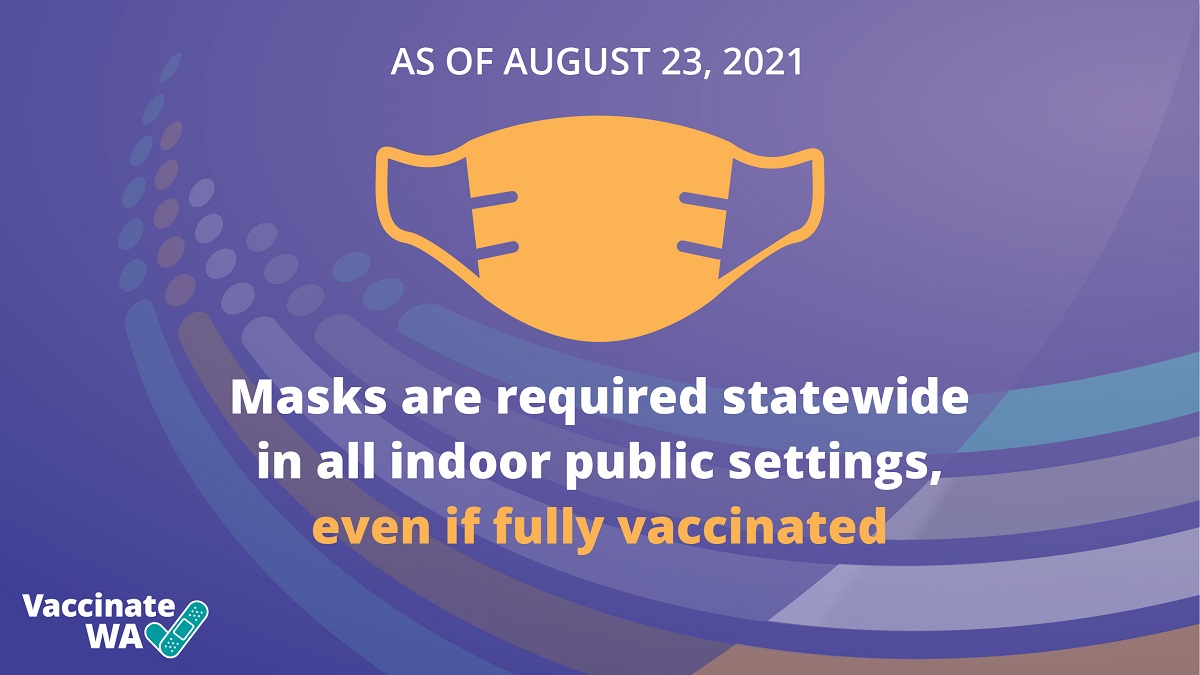
Governor Inslee also announced a mask mandate for indoor public settings for the entire state of Washington.
Masks are ‘recommended’ for crowded outdoor settings.
Oh- and booster shots are coming, for everyone. It’s only 2021.
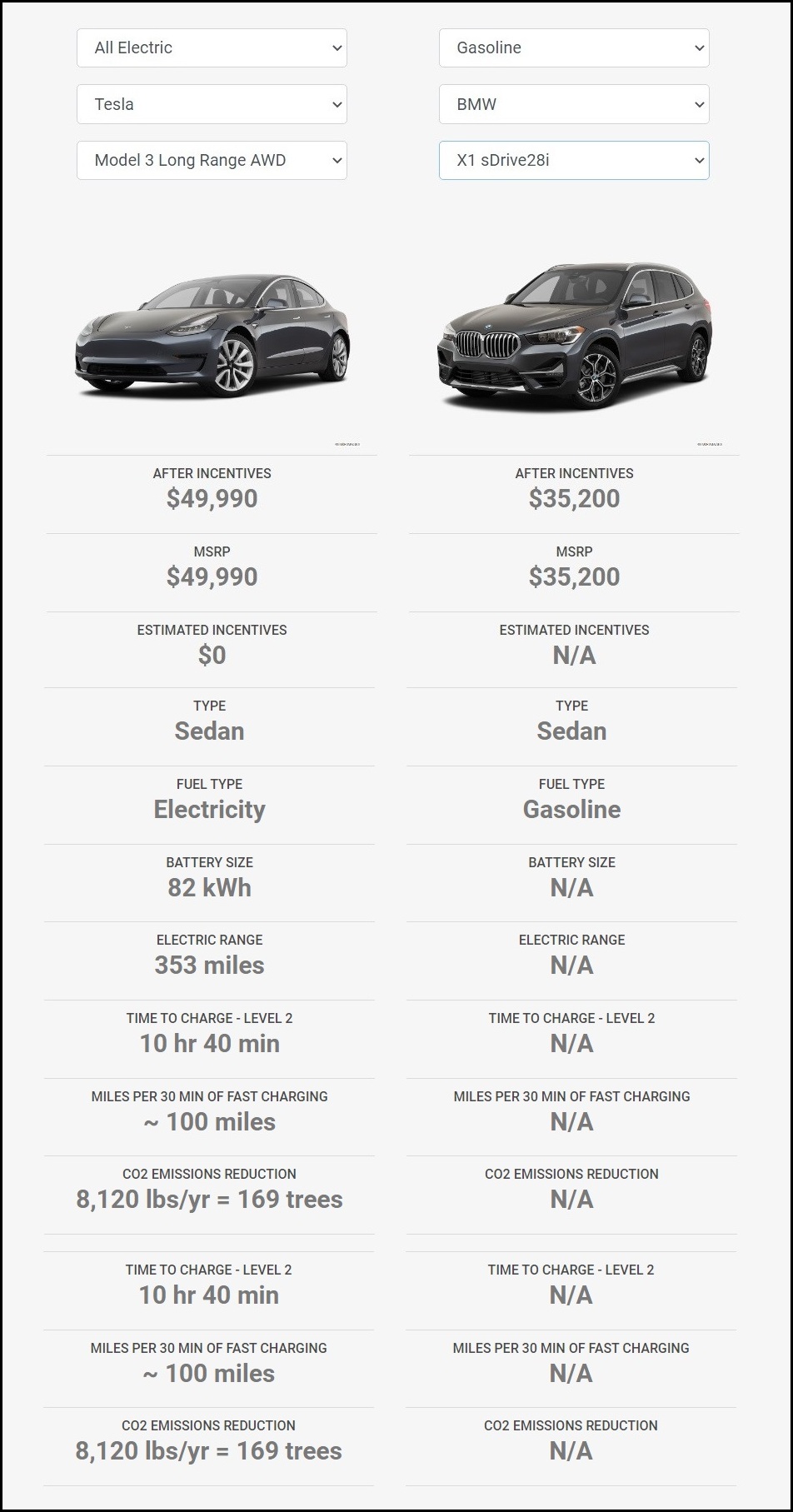
The Puget Sound Energy (electric utility) website has a cost calculator for equivalent electric and internal combustion engine ‘ICE ‘(gasoline) vehicles.
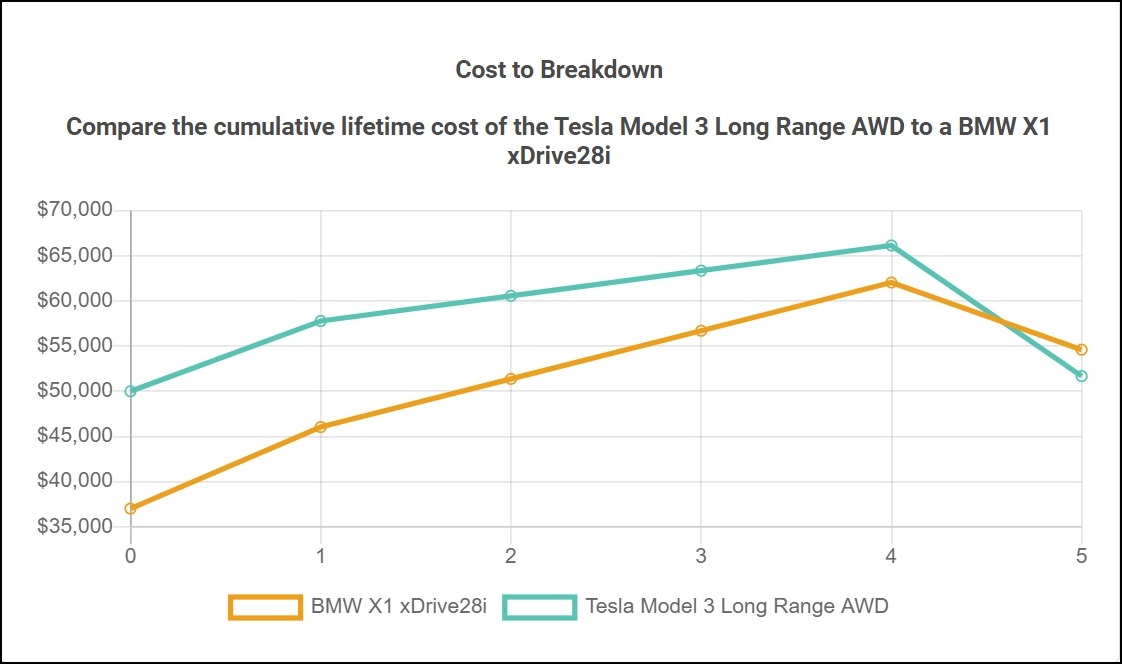
Here are the results for a Tesla Model 3 Long-range vs. a BMW X1 sDrive2Bi. Bottom line for me: It’s no contest. The Tesla wins from Day One (zero emissions), and outright from a total cost of ownership perspective, after 4 years.
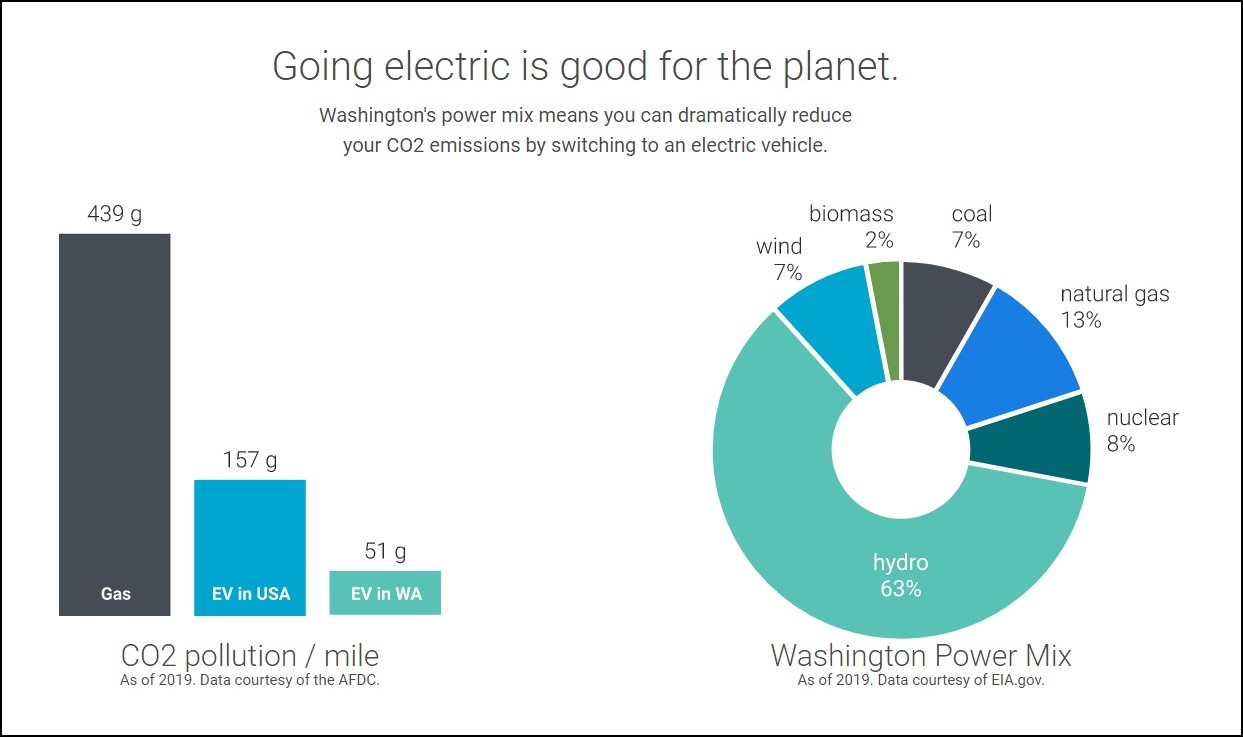
A typical gas-burning passenger car puts 4 US tons of CO2 (carbon dioxide) into the atmosphere every year: 20 pounds for every gallon of gasoline burnt. It seems impossible that a gallon of gasoline (about 6.3 pounds), could produce 20 pounds of CO2. However, most of the weight of the CO2 doesn’t come from the gasoline itself, but from the oxygen in the air that it combines with.
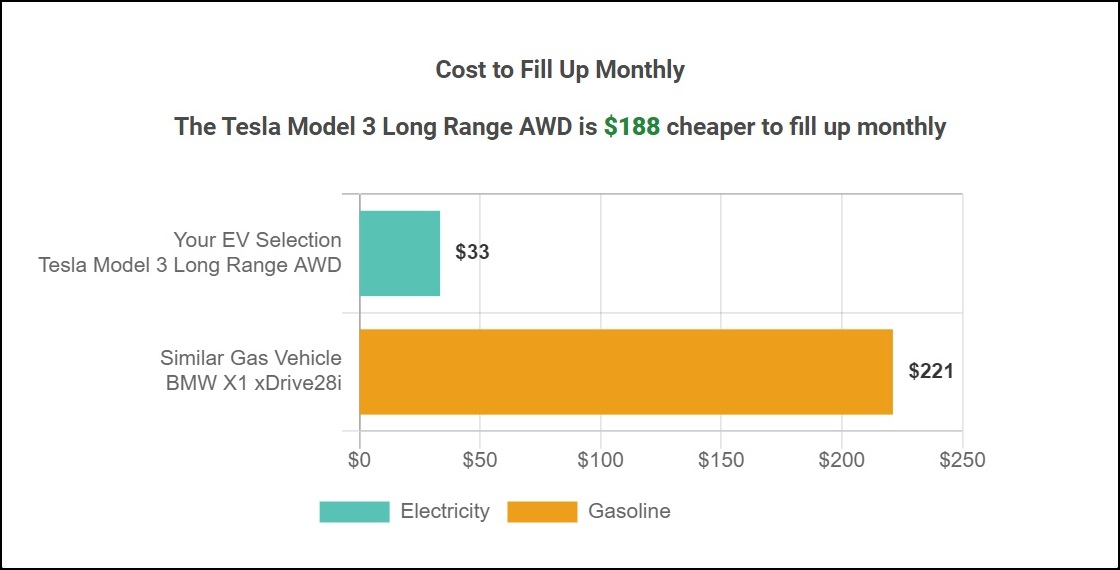
The PSE website figured that the X1 sDrive2Bi is equivalent to the Tesla re: style, size and class. OK, but technically these two are a world apart, as this chart shows. The last line is the most important.When it comes to charging the battery, or filling up with gas, the owner of the Tesla saves money from the get-go. Assumptions: Electricity Rate $0.107/kWh | Gas Price $4.60/ gal | Sales Tax 10%Some $3k Cost-of-Ownership savings over 5 years for the Tesla Model 3. Gas is easily 5 times more than the cost of electricity, and maintenance for the internal combustion engine-car is double than that for the electric car. Assumptions: Purchase Method: Cash | Mileage15,000 miles per Year | Sales Tax 10%Before 5 years, the lifetime cost of ownership of the Tesla is less than that of the BMW, and the gap will increase every year after that.In Washington State we are blessed with relatively green electricity generation, so going with an electric vehicle dramatically reduces the CO2 emissions of the driver.
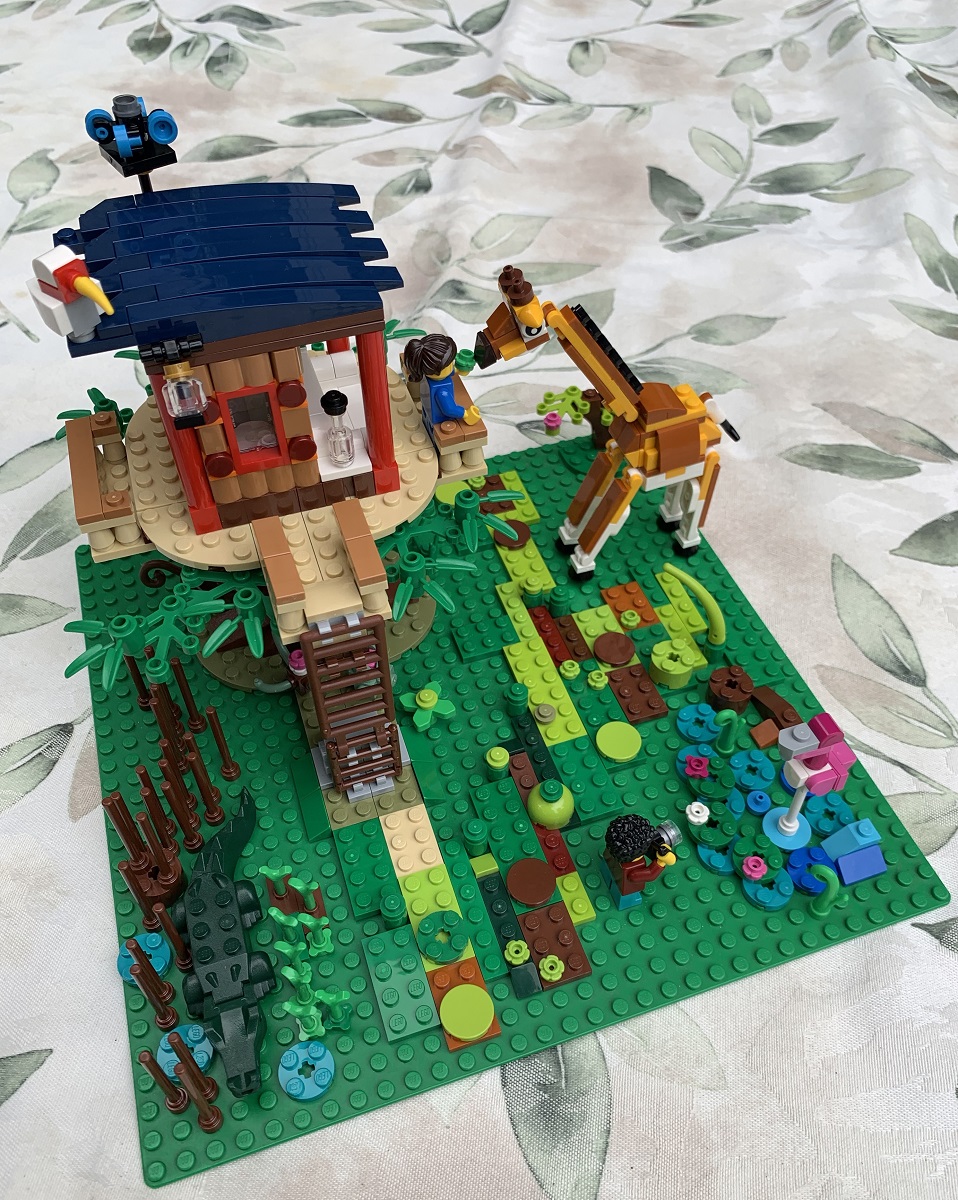
I finally built the LEGO Creator Safari Wildlife Tree House (31116) that I had bought in July.
The giraffe is the star of the set. I added the alligator* in the reeds, some leaves to the tree, and the color embellishments on the ground and around the flamingo.
*The alligator is one molded LEGO piece with a movable jaw and tail. Nice.
31116 LEGO Creator Safari Wildlife Tree House (and then some) What I love about the set: the giraffe, the rocks & the ladder attached to it, and the bird & anemometer on the roof. What I question somewhat: the red & blue colors for the treehouse structure, and the beige for the platform (a darker brown would have been better). And then: there is a complete toilet and washbasin inside the treehouse! Over the top.
I was out of milk and eggs, and thought to go check out the new Amazon Fresh store on 23rd Avenue & Jackson St.
The technology that Amazon had built into the ‘dash carts’ works fine, and made for a smooth experience. Is it something that will save me so much time that I will come back to the store just for that? I don’t think so— but then I have the luxury of extra time in my day, and I can avoid the crowds at stores (by going at a quiet time).
The store is in a long rectangular space (35,000 sq ft) and has a decent selection of items. Nice selection of fruit and vegetables.Here’s the high-tech ‘dash cart’ that is used in the store. It’s optional to use; they have regular carts as well. I logged into my Amazon account on my smartphone, and from there generated a QR code on the phone. This code is scanned by the cart, and then the shopper is good to go. Those built-in white lights front & back of the cart are scanners, and picks up what item is lowered into the cart. (There is a scale in the cart as well, to help it figure out if you put one or 2 items in, or maybe changed your mind and put one back on the shelf). I think if all else fails, the scanner on the right of the screen can also be used. P.S. Don’t judge my choices of food :). I buy cheap milk and expensive butter (Kerrygold from Ireland), and expensive eggs (free range, ‘Humane Certified’). They did not have my brand of Greek yogurt (Fage) that I buy in the big 35 oz. tubs.For fresh produce, the PLU code needs to be entered, and the quantity. 15c a banana is a bargain, but I can only eat so many before all the rest go bad— so I bought 5. When I was done shopping, I just pushed my cart through an automated finishing lane. The system rang me up and e-mailed the receipt to me. These dash carts cannot be taken out of the store, so the bags would have to be transferred to a regular cart if needed. I brought my own bags, but the store had dash carts available with paper bags at the ready in them, as well.
The sky was still hazy today, but it will clear out tomorrow.
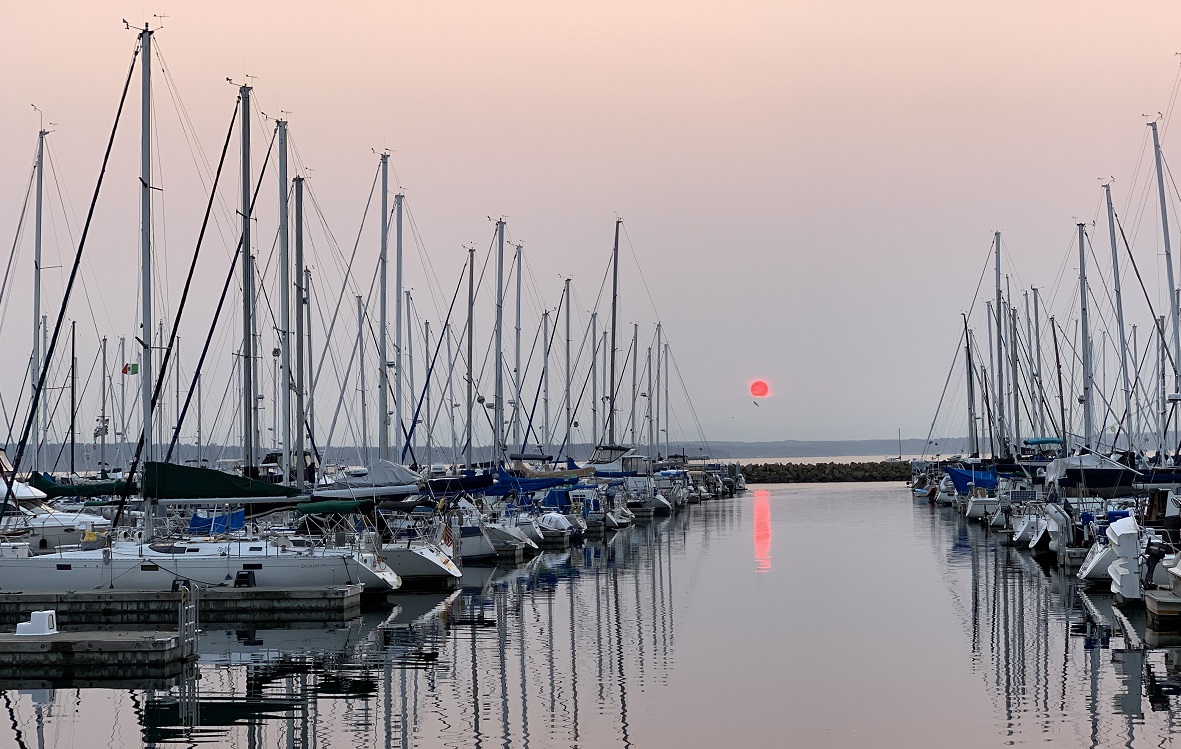
Bryan, Dale and I drove out to Shilshole Bay Marina after dinner, to catch the sun as it was setting.
It’s 8.05 pm and sunset today was officially at 8.22 pm. We are looking west, across Puget Sound and Bainbridge Island in the distance. Shilshole Bay Marina is in the foreground. Soon after I took this picture, the sun disappeared behind the (invisible) Olympic Mountains lying further to the west of Puget Sound. [Photo taken with iPhone Xs]
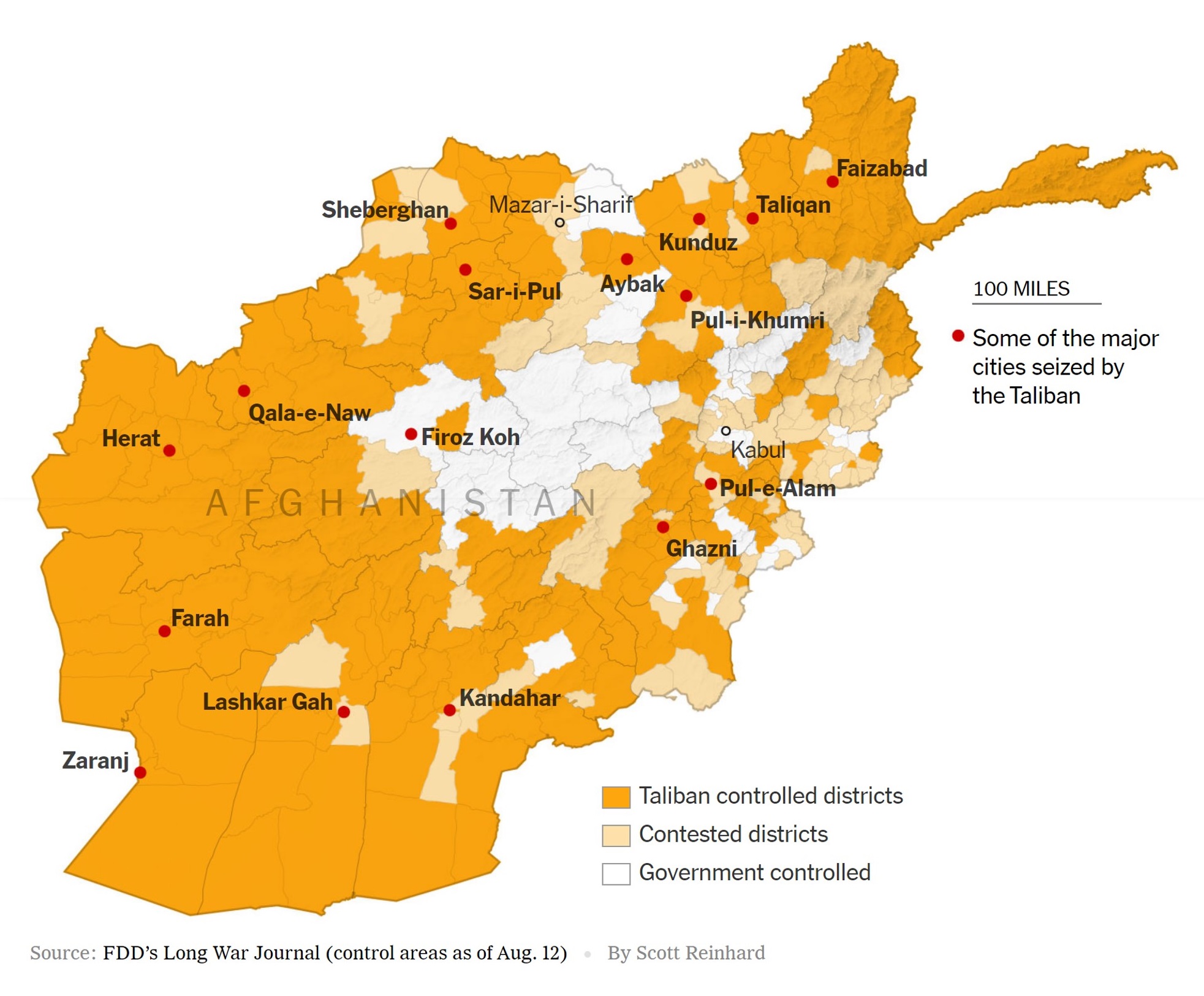
Kandahar, in particular, is a huge prize for the Taliban. It is the economic hub of southern Afghanistan, and it was the birthplace of the insurgency in the 1990s, serving as the militants’ capital for part of their five-year rule. By seizing the city, the Taliban can effectively proclaim a return to power, if not complete control.
– By Christina Goldbaum, Sharif Hassan and Fahim Abed writing in the New York Times
Lester Holt spent 10 minutes on NBC’s Nightly News on the Taliban’s unsettling takeover of Afghanistan.
Retired US Army general David H. Petraeus and Commander of the International Security Assistance Force in Afghanistan in 2010 & 2011, said on the radio today, that pulling out is a mistake, and that US forces need to go back in. It’s too late for that. Twenty years of effort and tens of billions of dollars of aid, to train an Afghan army, succumbed to the local corruption and internal strife there. The Biden* Administration has made it clear that the US troops are leaving, no matter what.
*Yes: Joe Biden is still the President of the United States. The delusional My Pillow guy had long touted today as ‘Reinstatement Day’ (which would see Trump put back in office).
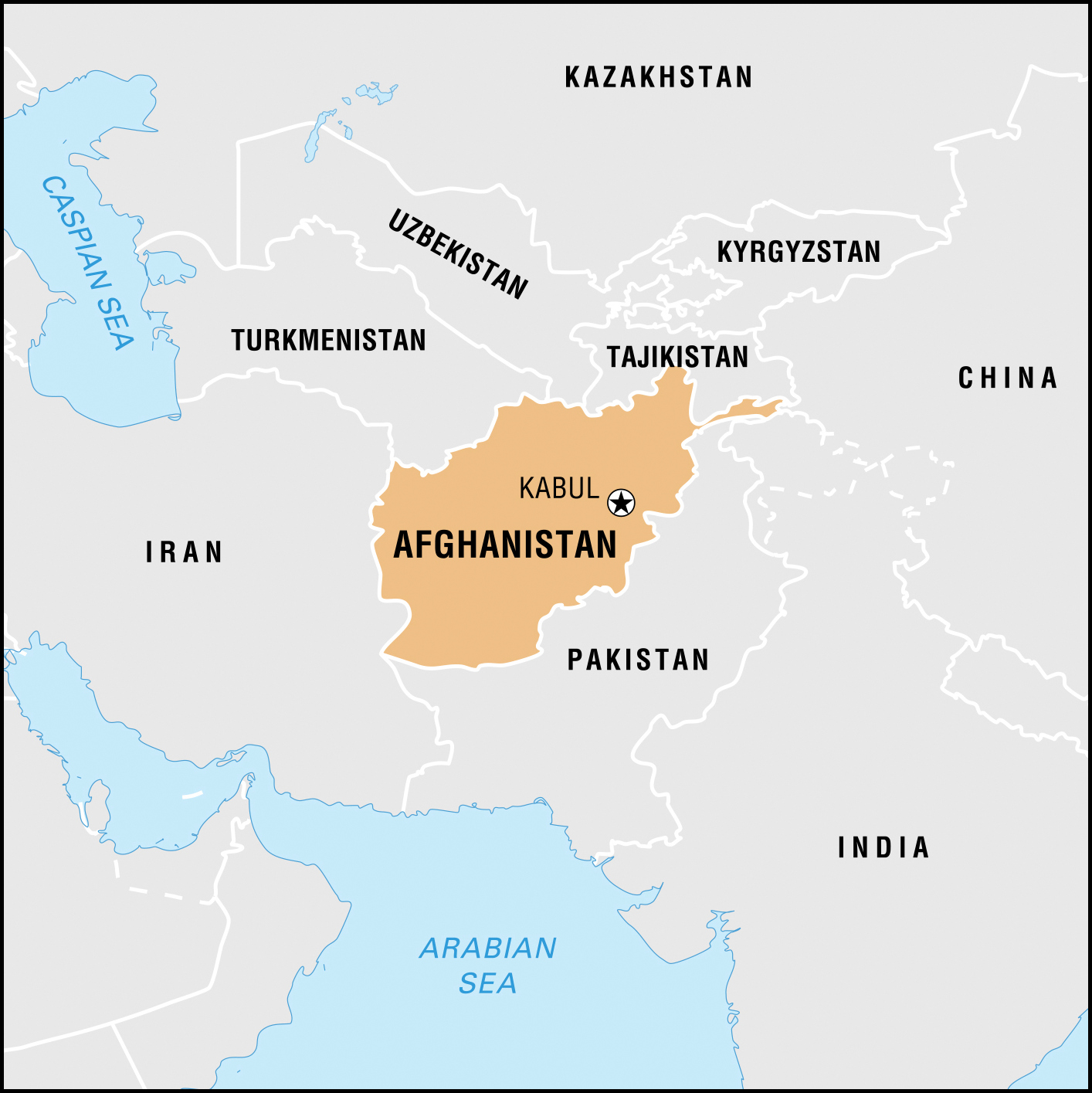
Map by Encyclopedia Brittanica.Afghanistan is a mostly mountainous country (the Hindu Kush Himalayas) with 38 million people and 34 provinces. It is about as big as Texas. In the south is the Registan Desert. Afghanistan is the biggest producer of opium in the world. Most Afghans live in poverty and literacy rates in Afghanistan are among the lowest in the world, at 43%. The Taliban controls an estimated 65% of the territory, as of this week. [Map from FDD’s Long War Journal, figures from Aljazeera.com]