“Open sesame!” (French: “Sésame, ouvre-toi”)
– a magical phrase in the story of “Ali Baba and the Forty Thieves” in Antoine Galland’s version of One Thousand and One Nights.
It opens the mouth of a cave in which forty thieves have hidden a treasure.
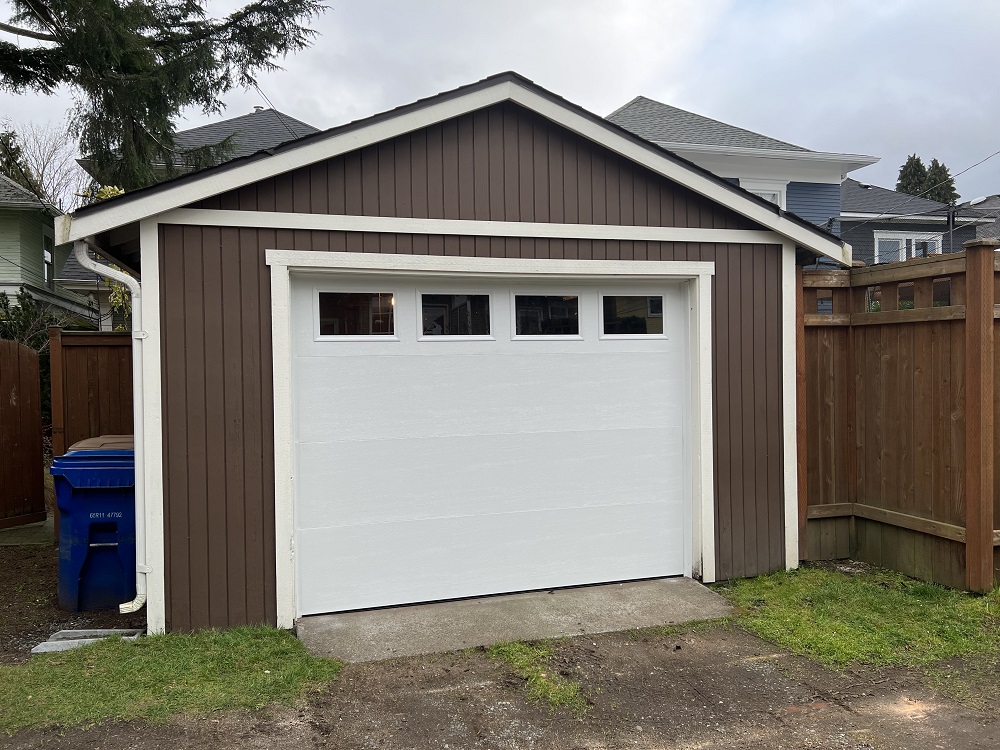
My fancy new garage door & opener arrived today, brought by the technician that did the installation. It took five months after I had placed the order, but that’s OK.
I can do an ‘Open Sesame!’ in four different ways.
1. Press the button on the garage door opener (the one with a clip that I can put in my car);
2. Use the key pad on the outside (enter a PIN code);
3. Use my smartphone app to open it from anywhere (through my home’s wifi network);
4. If all else fails, use the emergency release handle on the door opener inside.
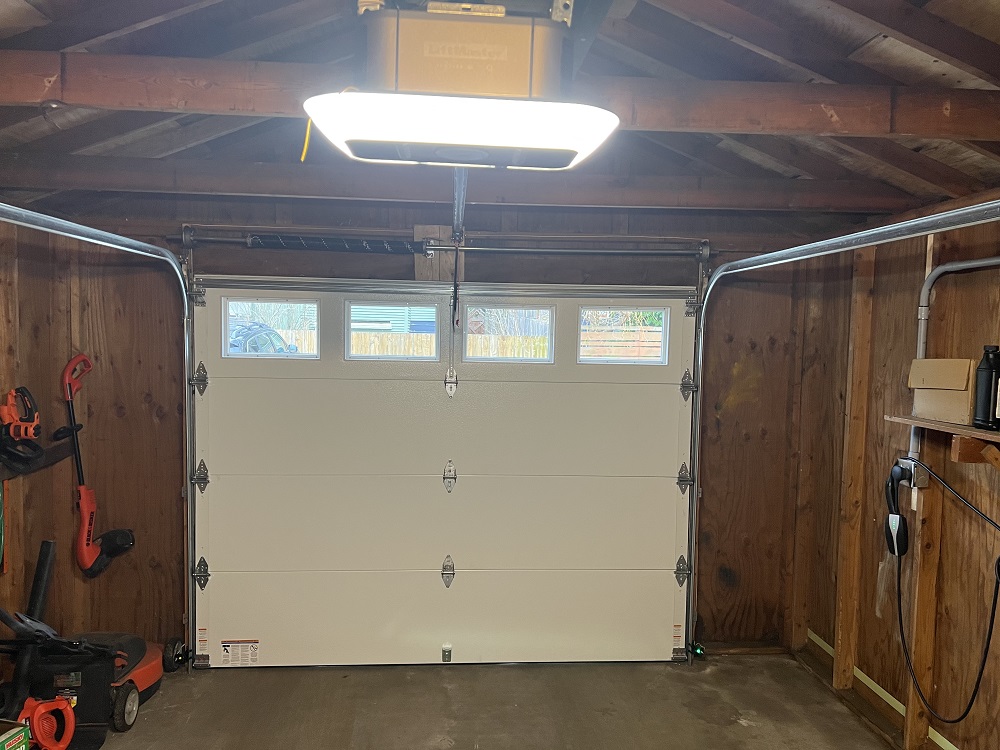
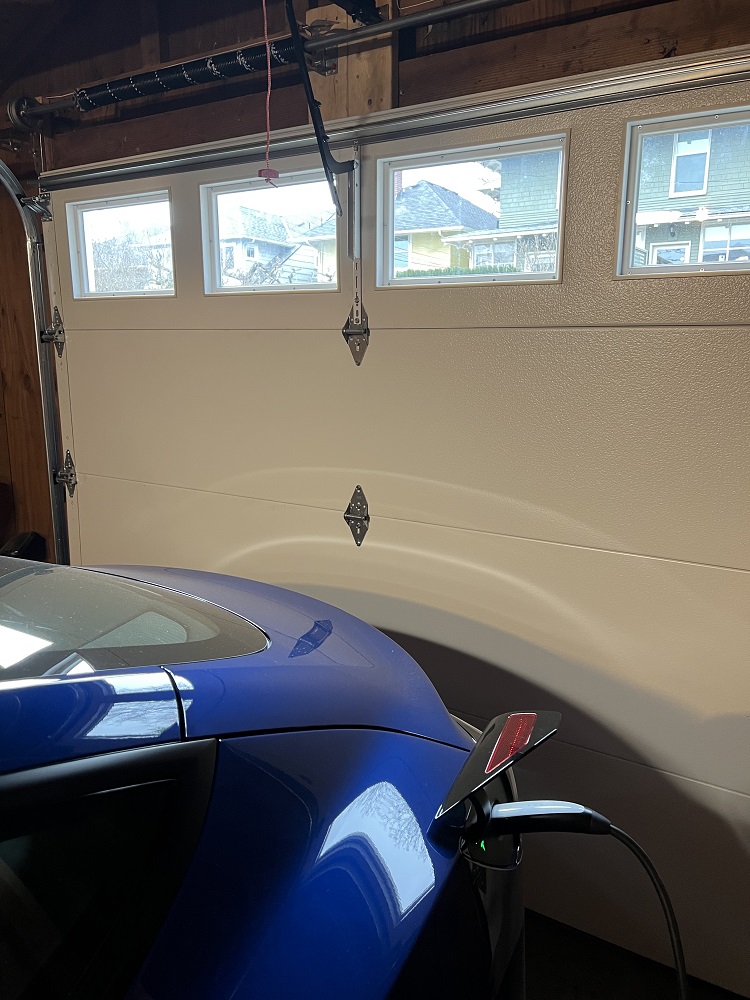
Just four panels, all white. (Yes, will have to see what the white looks like in a few months, but I can always paint it a darker color).Four windows to let in a little gray Seattle sunlight in winter, and a bright LED light that jumps to life when I open the side door. There’s the rail and (top left) the torque spring that pulls or pushes the panels in the rail track. My old single-panel door had two coiled tension springs along the sides of the door frame, with brackets that had started to buckle— downright dangerous.The door panels have insulated steel plating, front and back. The windows are plain and practical. There were rounded ones and decorative ones, and frosted panes to choose from as well.
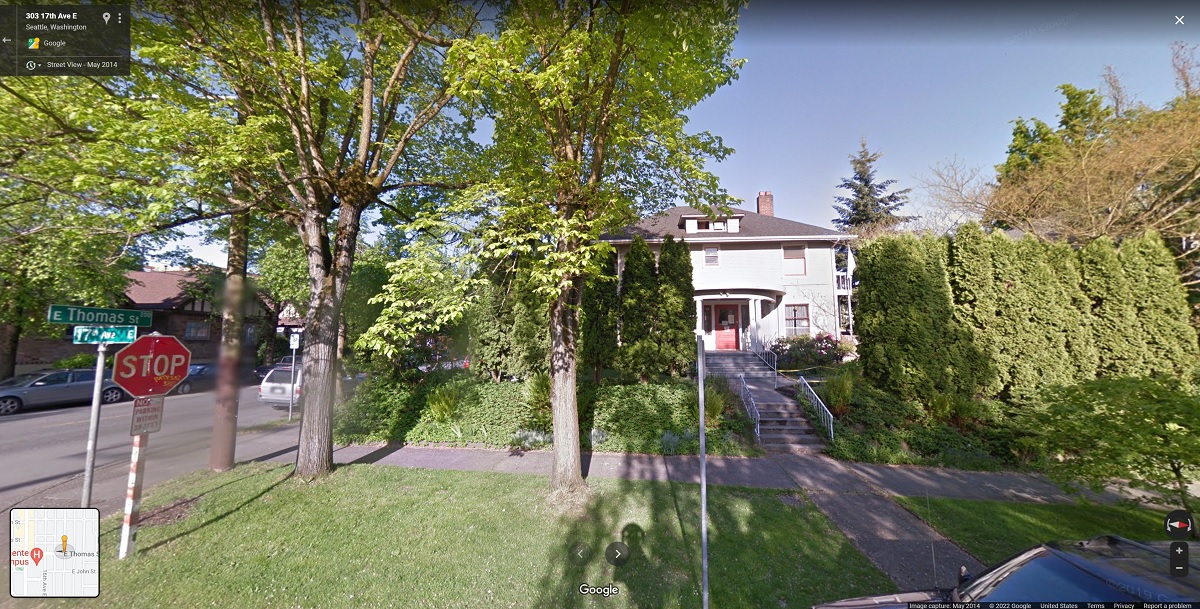
It’s been so long, that I had forgotten that this stately old house used to be on the corner of Thomas and 17th Avenue. It was constructed in 1906, and named Dunshee House when it became the home of the Seattle Area Support Groups & Community Center (SASG). It was sold to a developer and demolished in 2017. [Source: Google Streetview]
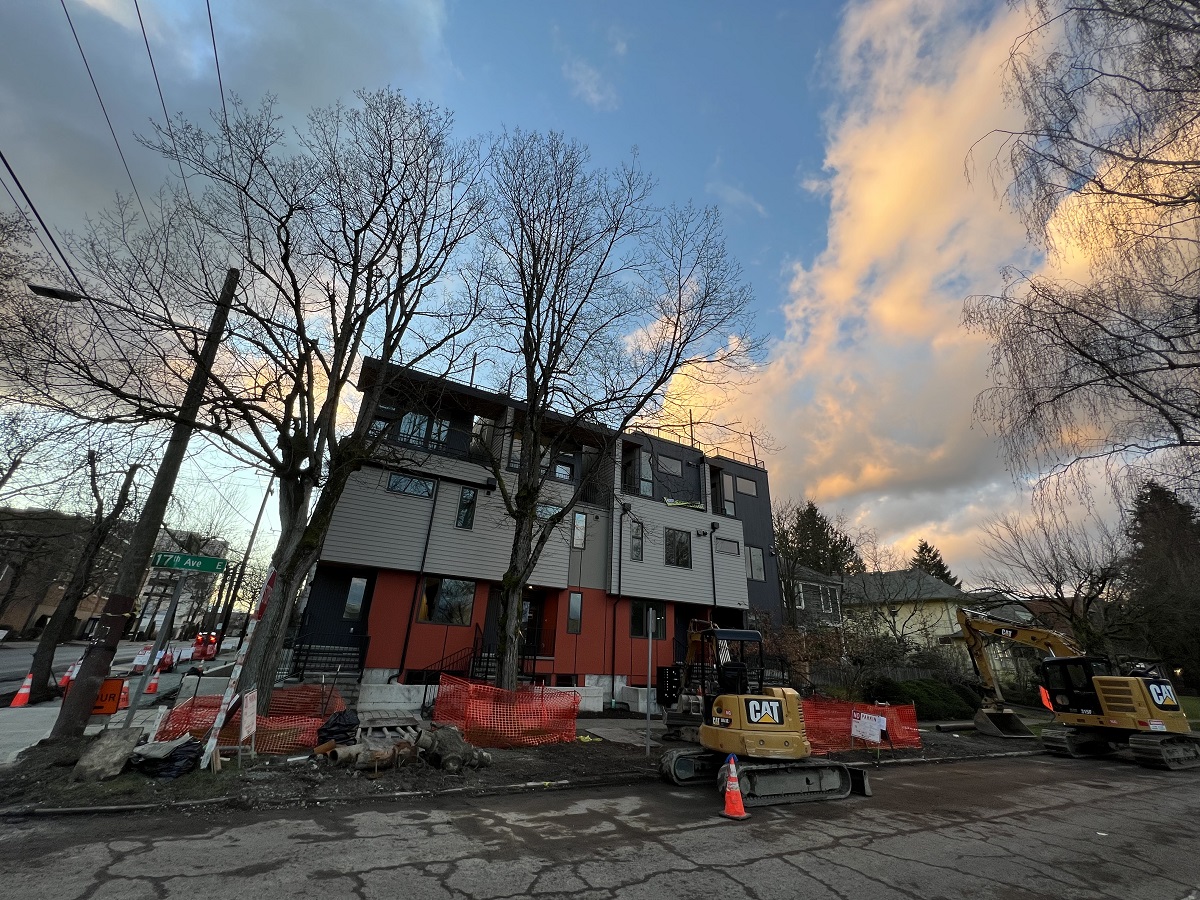
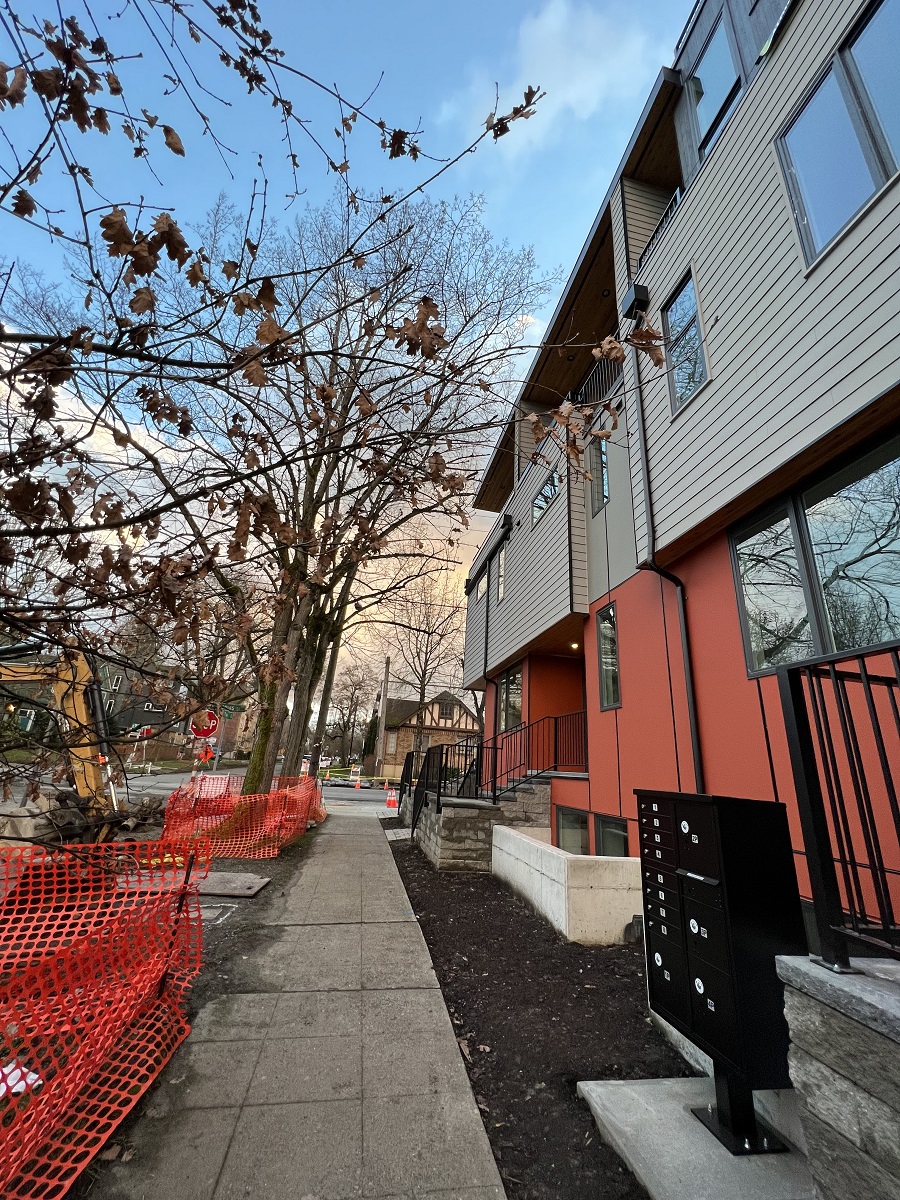
The townhomes at Thomas St and 17th Avenue East are done, five years hence from the start of their construction.
There are 4 new townhomes on 17th Avenue, and 2 that are facing Thomas Street. I’m not sure if they are all the same size. One is listed for sale on Redfin & Zillow for $1.4 million: 2,000 sq ft, 3- bedroom, 3.5-bath, detached garage and extra parking space.Here’s 17th Avenue looking south towards Thomas Street.
It was only 38 °F (3 °C ) as I walked back home today after getting a haircut.
It was good to get out of the house, though .. and hey! I thought: might as well try my luck to get another passport photo taken.
The kiosk at the Bartell pharmacy* at Broadway & Pike had me in and out with great photos in 5 minutes.
*Officially Bartell Drugs or the Bartell drug store. Yes, I know it’s prescription drugs —but it still doesn’t sound right to my ears.
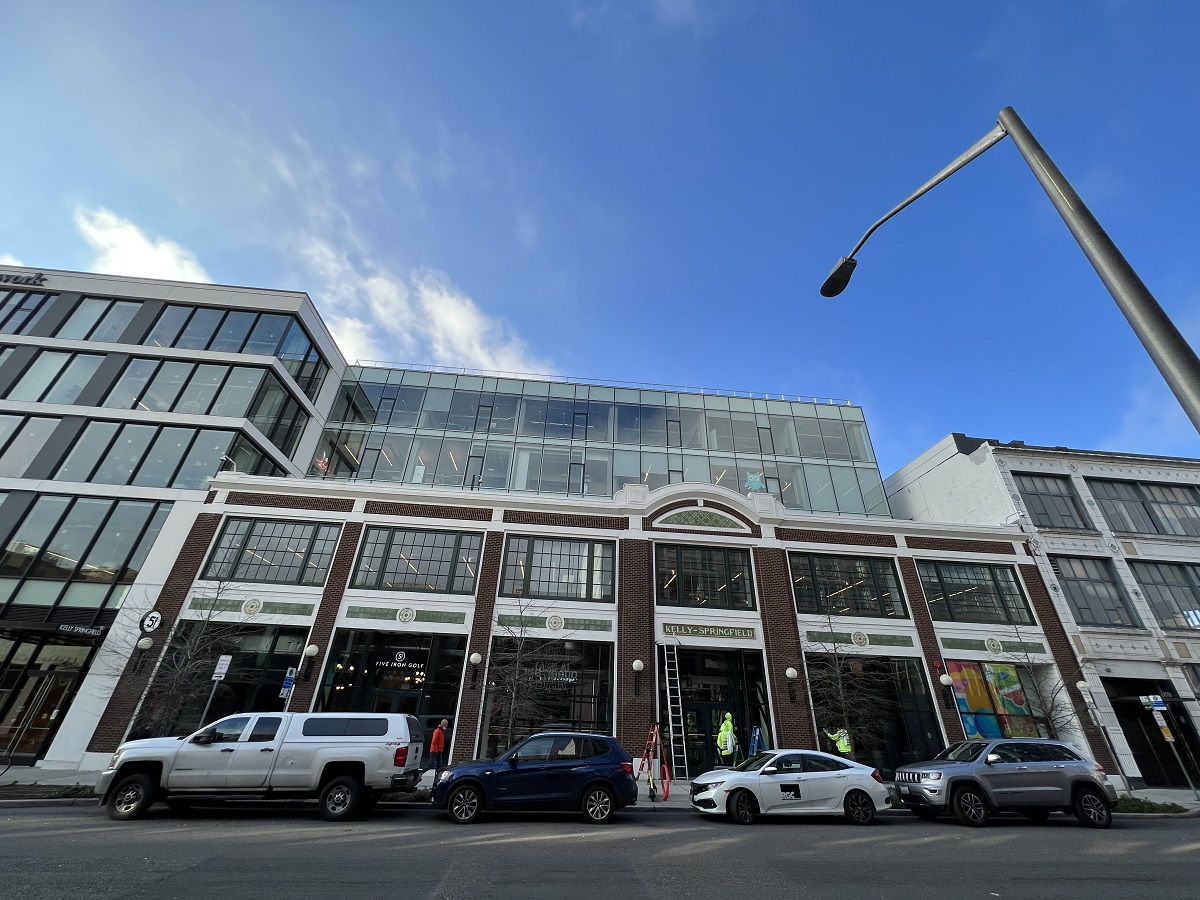
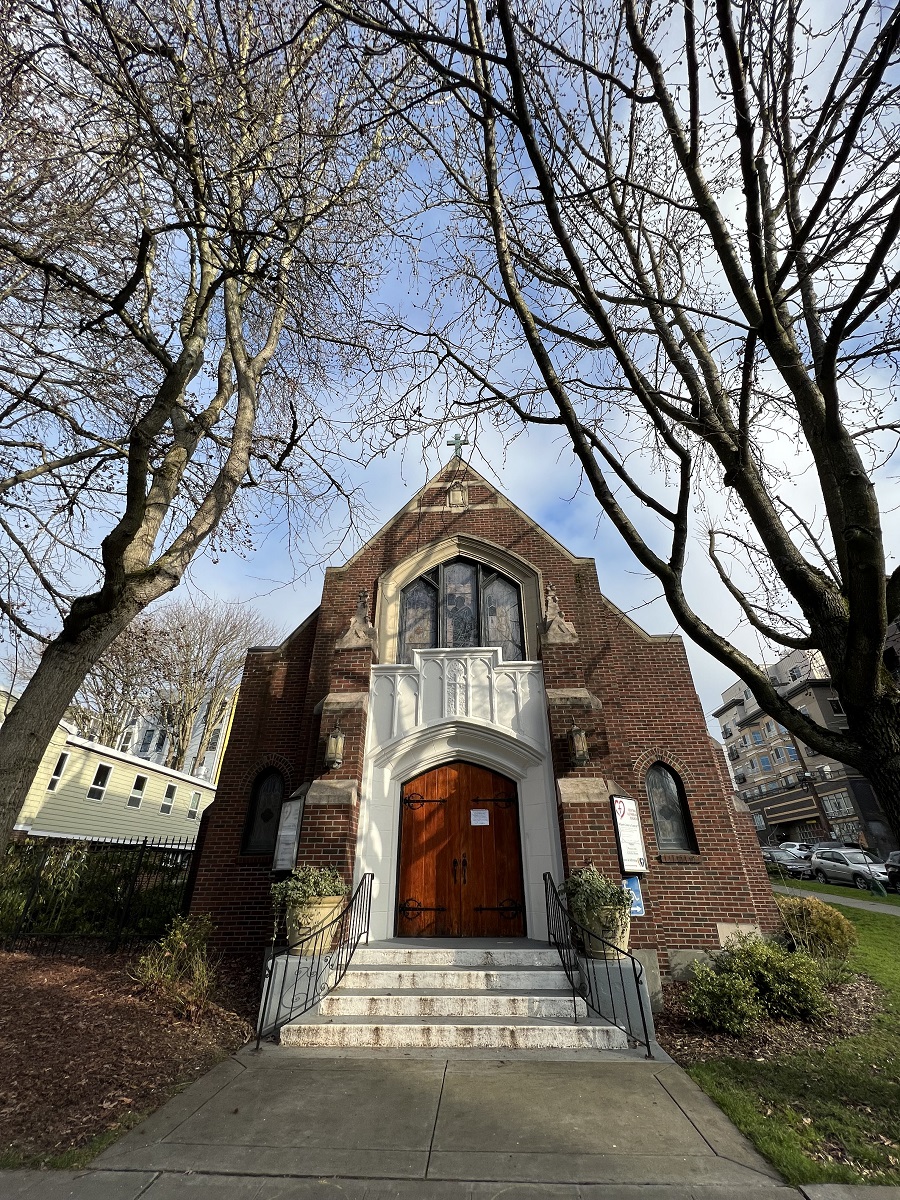
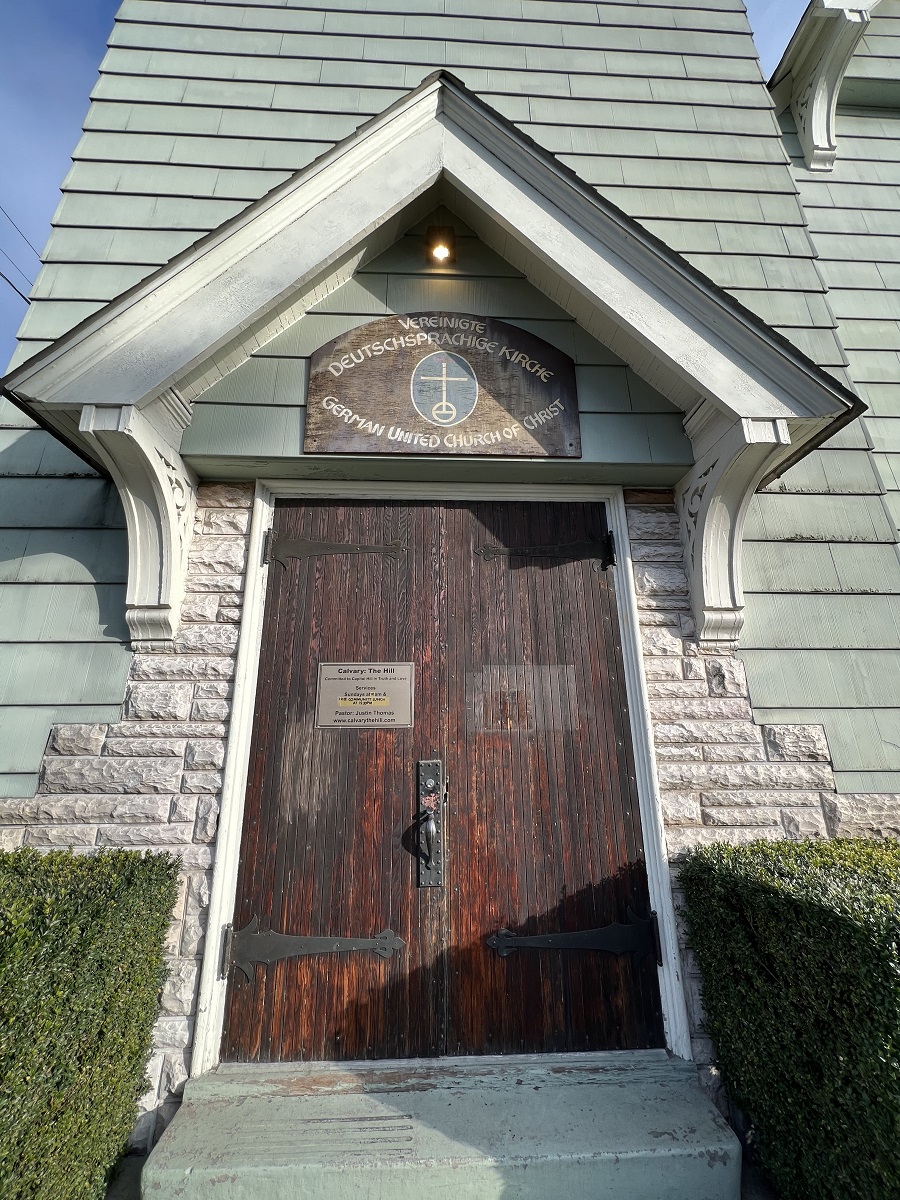
There was a crew cleaning up the main entrance of the beleaguered Kelly-Springfield Building on 11th Avenue. As it was getting ready to open is office spaces (most of it leased by WeWork), the pandemic came. And then in June 2020 the Capitol Hill Organized Protest and its graffiti and vandalism happened right there (half a block away) as well.A little further north on 11th Ave. on Capitol Hill, is the Central Lutheran Church building. It is boasting new white paint on its gothic-styled main entrance. The Capitol Hill location’s land was purchased in 1901 for $2,300, according to the Central Lutheran archives. The building must have been constructed soon after that.Nearby the Central Lutheran Church, is the German United Church of Christ, its building also more than 100 years old. It was founded in 1881 by early German settlers, calling themselves “The First German Reformed Church of Seattle.” Today they are largely supported by private donations, and the “German Heritage Society”, the “Plattdeutscher Verein” and the “Frauenverein”.
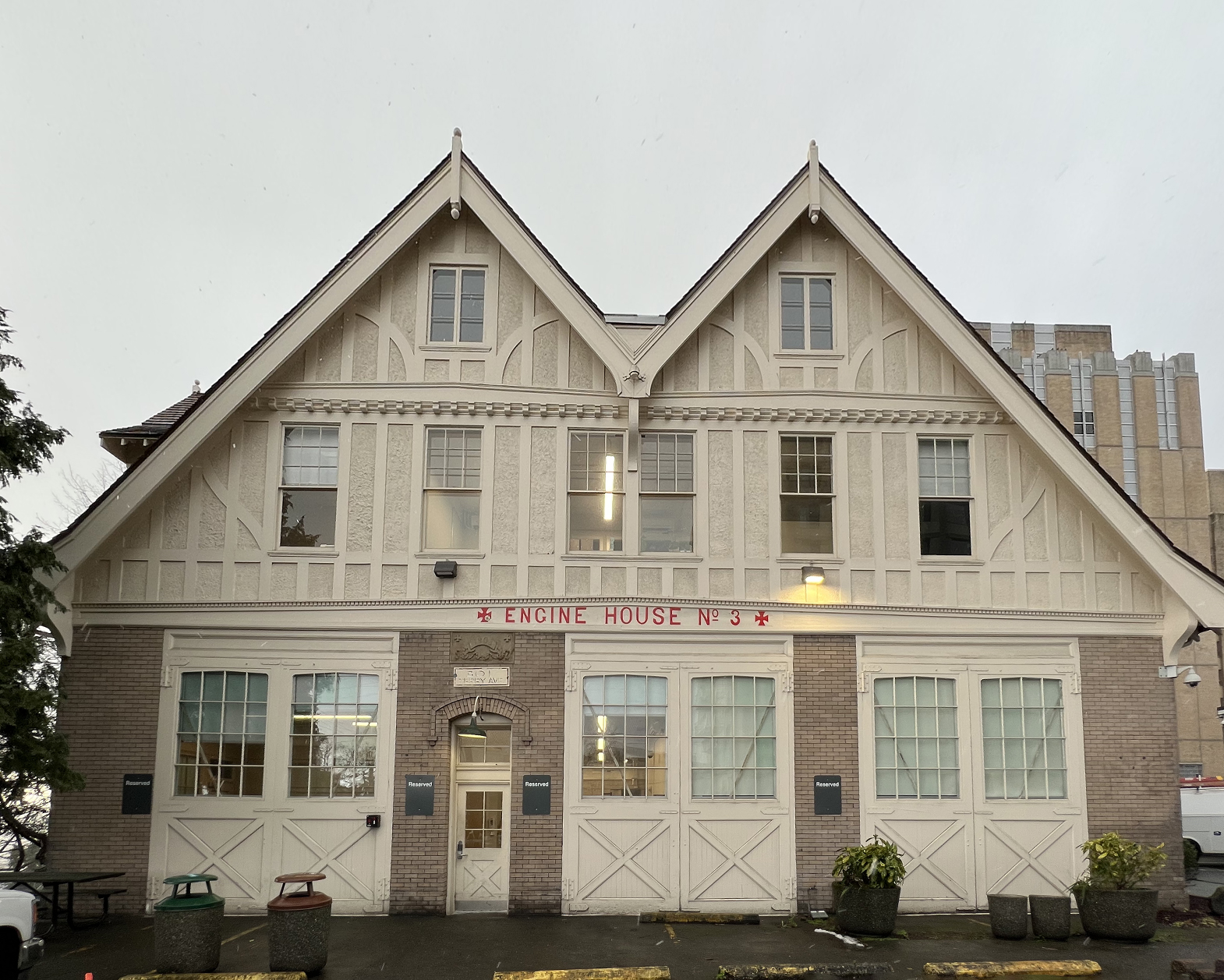
There was scaffolding all along the front of Engine House No 3 last April, as I walked by on the way to my first Covid shot next door.
The building now shows off a fresh coat of paint, and restored red lettering on the front as well.
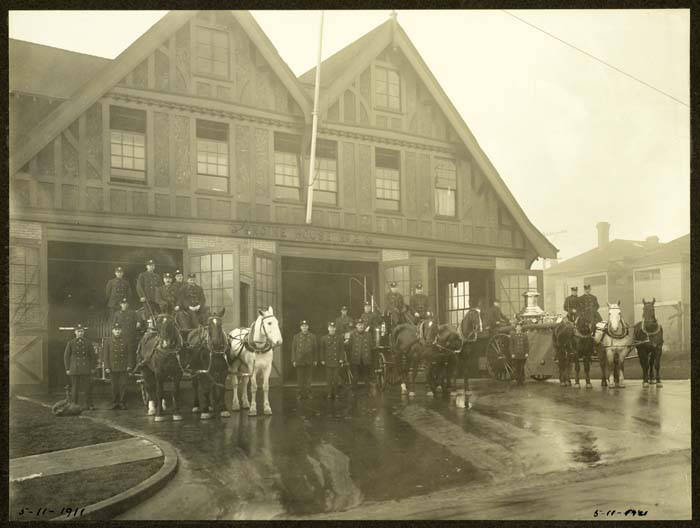
Engine House No 3 on Terry Avenue is an official historic landmark. The building served as a home for the local fire brigade until 1921. Over the years, Harborview Medical Center gradually grew up around it. The hospital continues to use the old station building to this day. ‘Foot Note’: I thought those red crosses are Maltese crosses, but they are not. They are cross pattée (‘footed crosses’), a type of Christian cross with arms that are narrow at the center, and often flared in a curve or straight line shape, to be broader at the perimeter. The form appeared first in very early medieval art.From 1890 to 1904, the Seattle Fire Department’s Engine House No. 3 stood in what is now the Chinatown/ International District. In 1904, it was replaced by a new Engine House No. 3 (this one), at the intersection of Terry Avenue and Alder Street, in what is now Yesler Terrace. This 1911 photo shows Engine House No. 3 in its heyday. Three fire wagons, with their crews and horses, stand in the station’s doorways on a rainy day. Handwritten on photograph: 5-11-1911. [Photo and text from Wikimedia Commons]
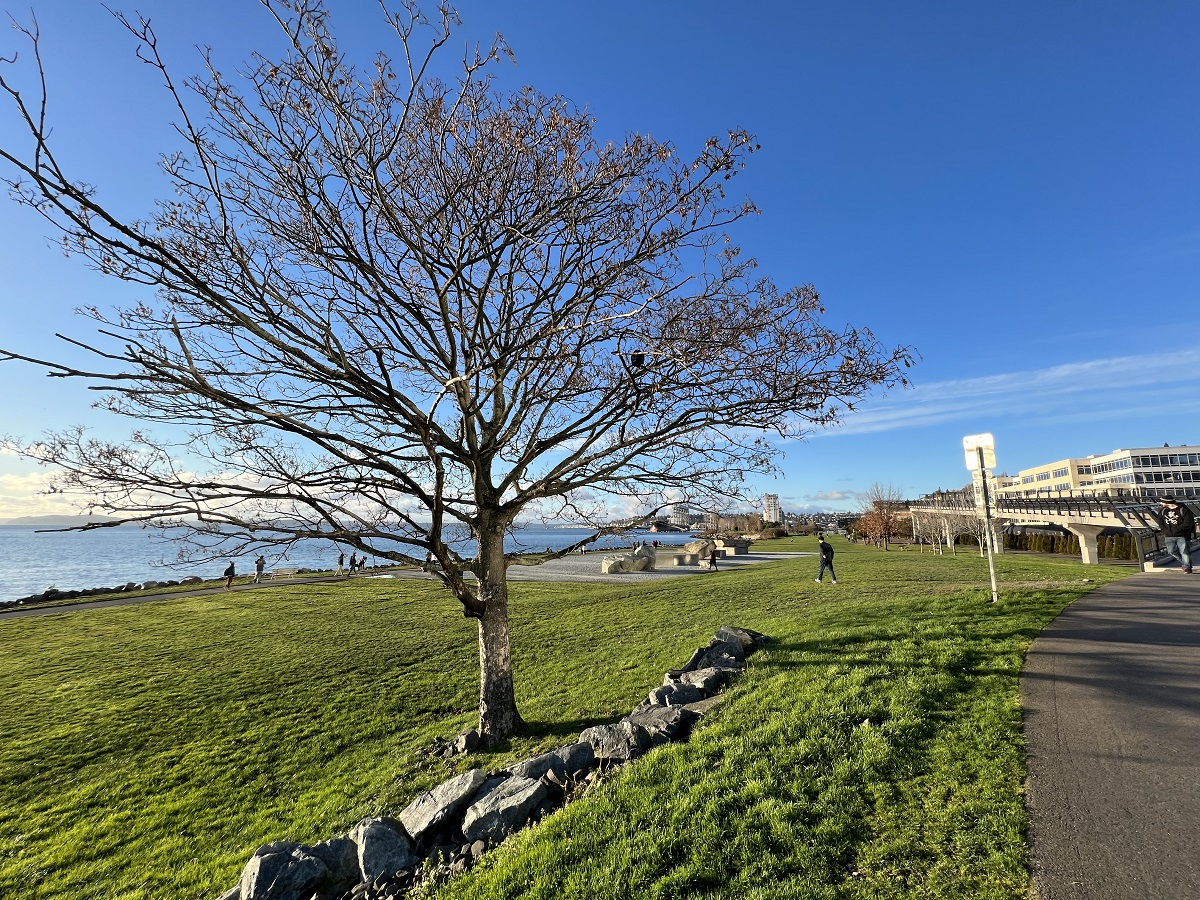
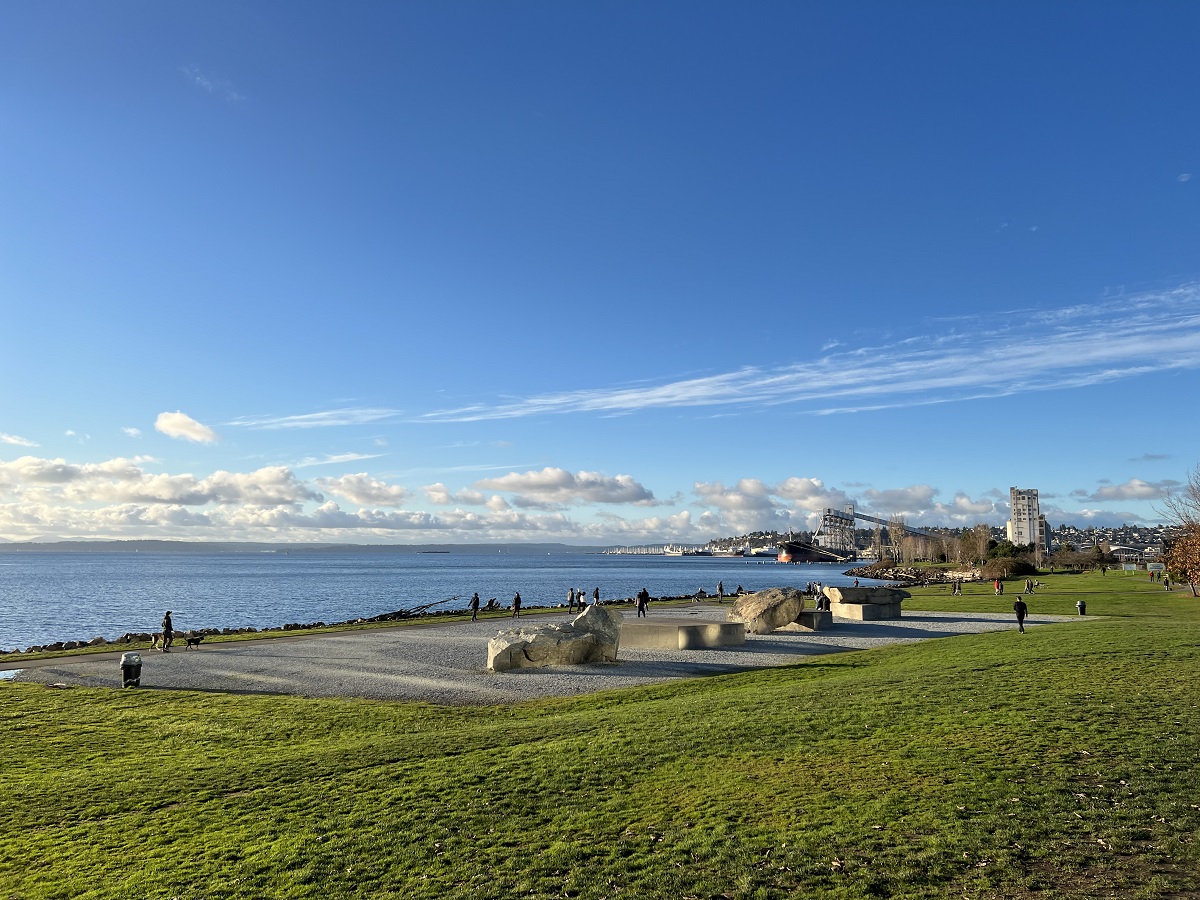
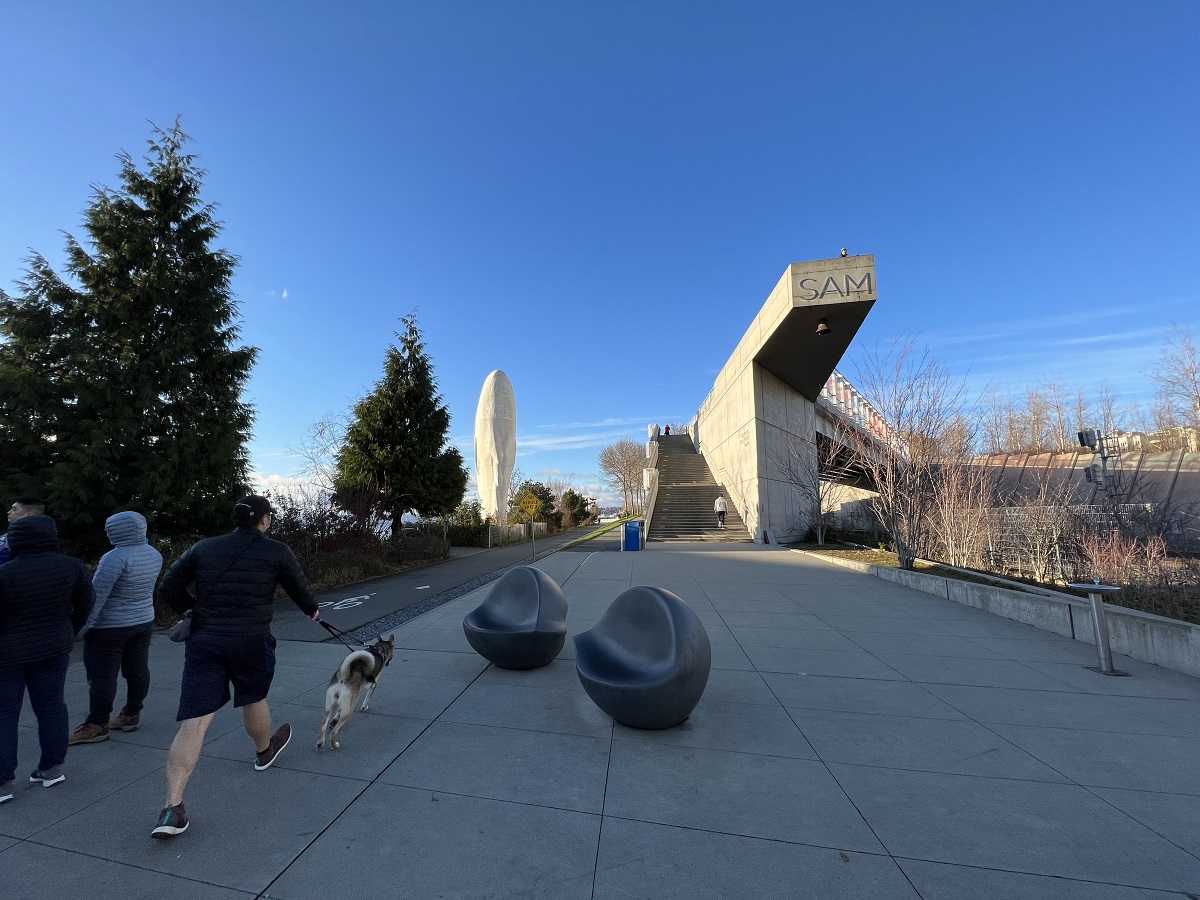
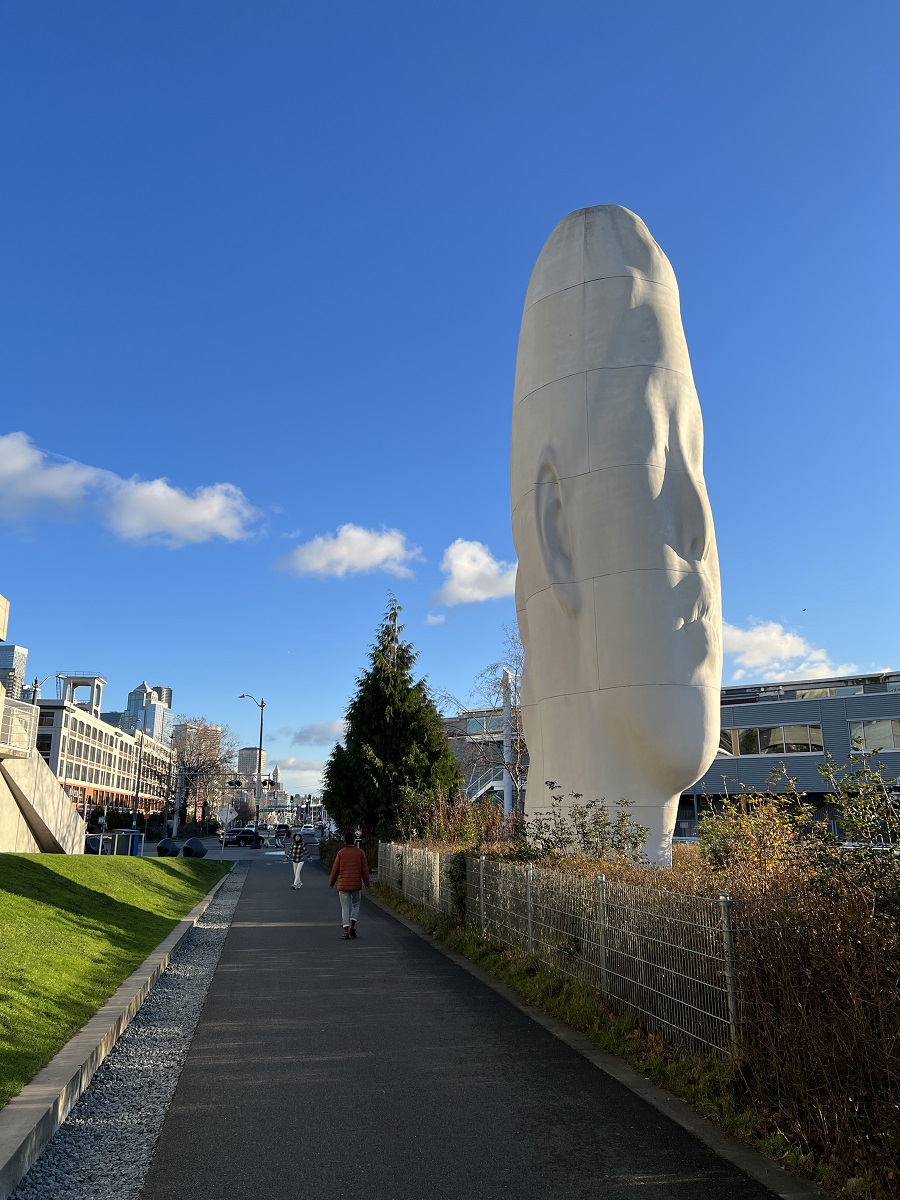
The skies were a beautiful blue today, and I went out to Olympic Sculpture Park to take a few pictures.
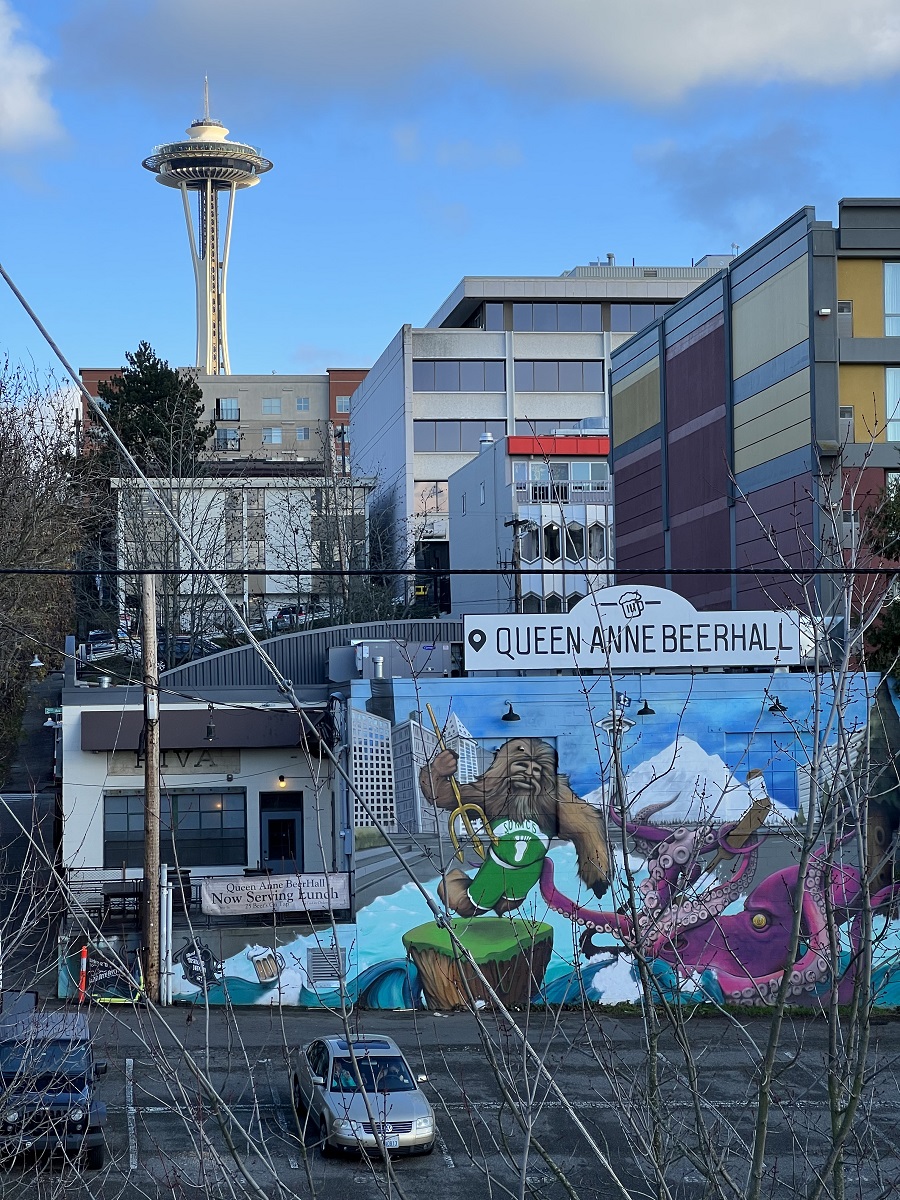
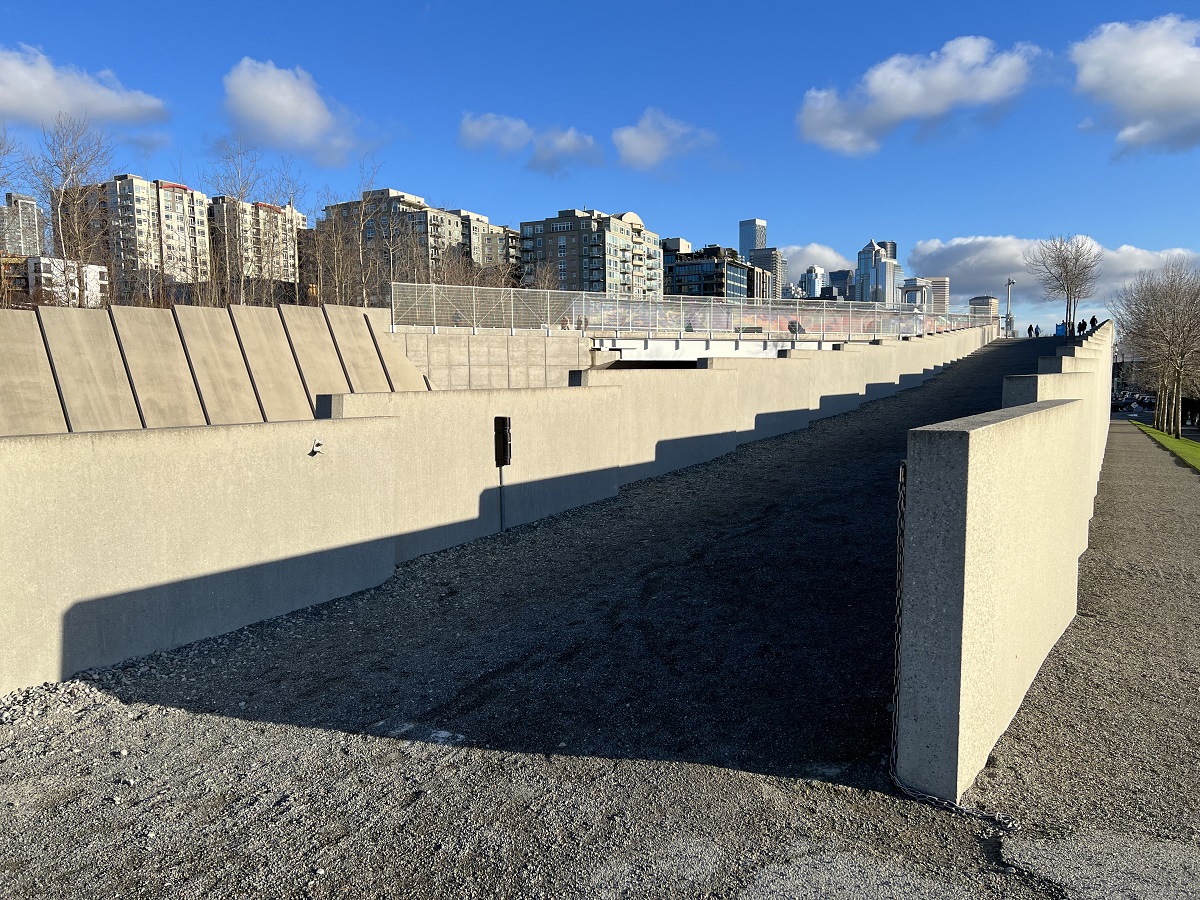
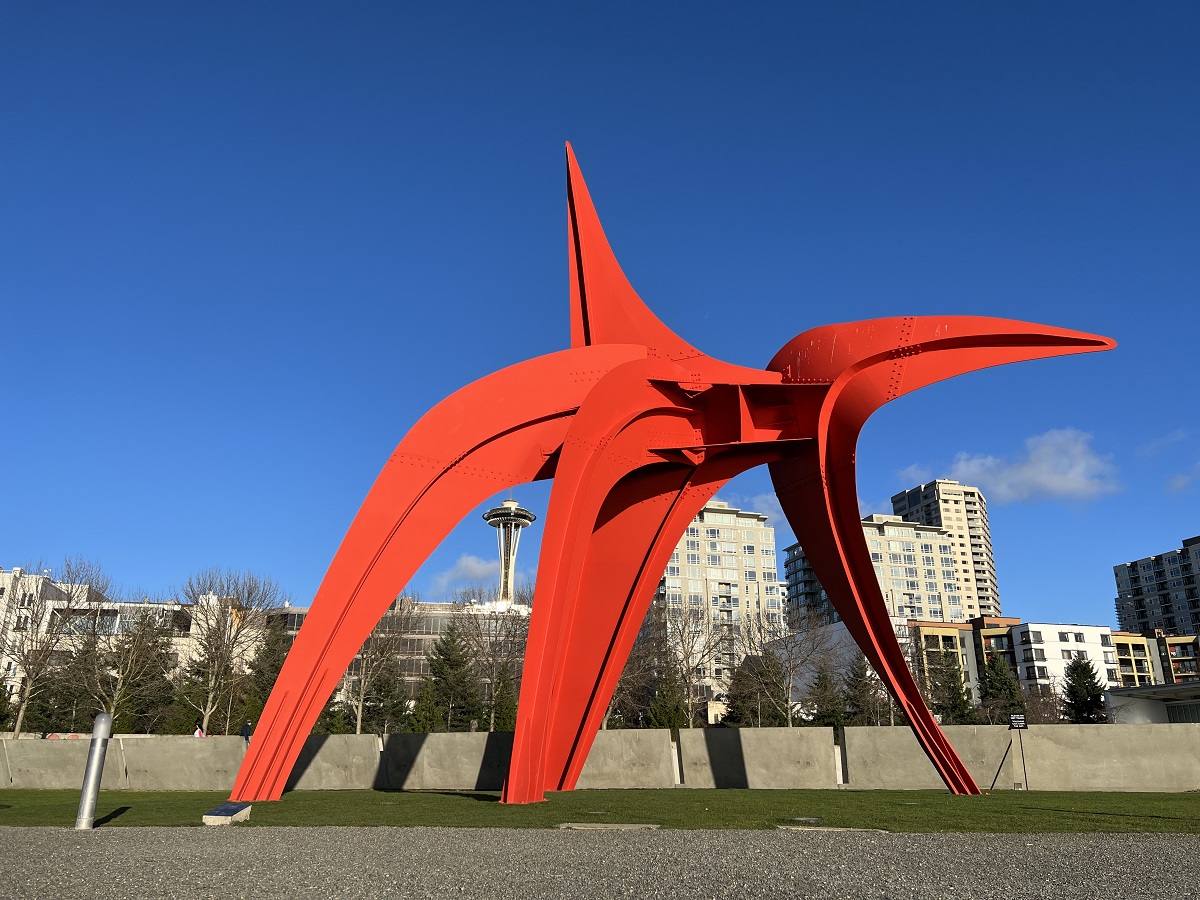
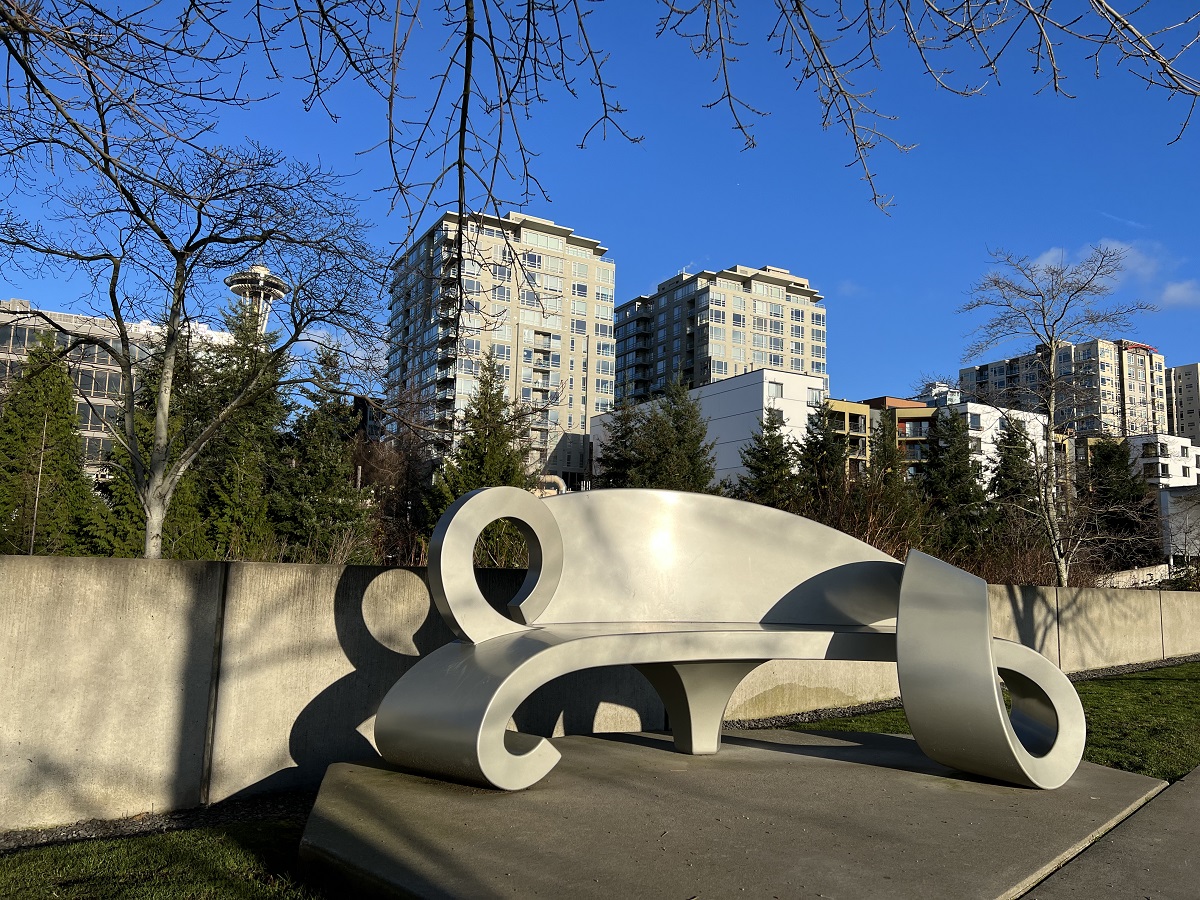
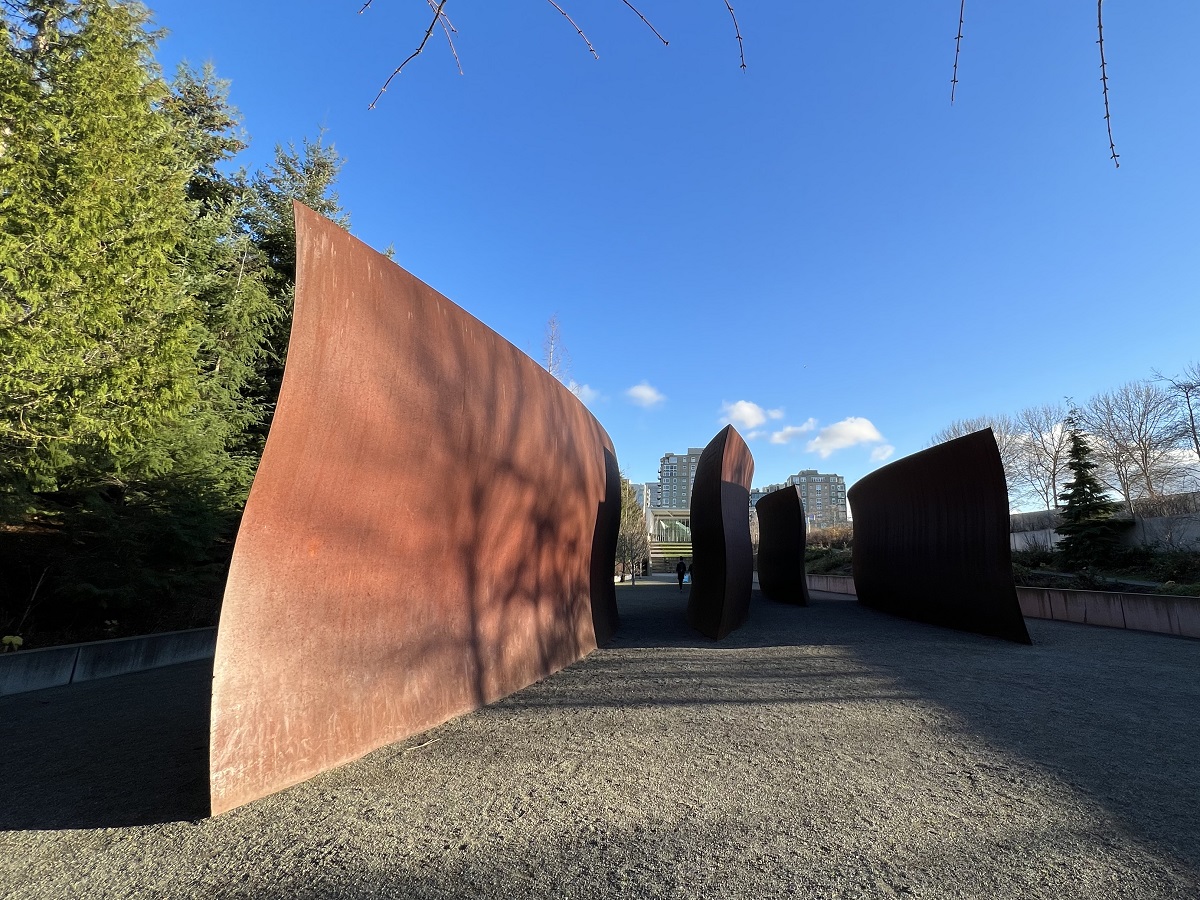
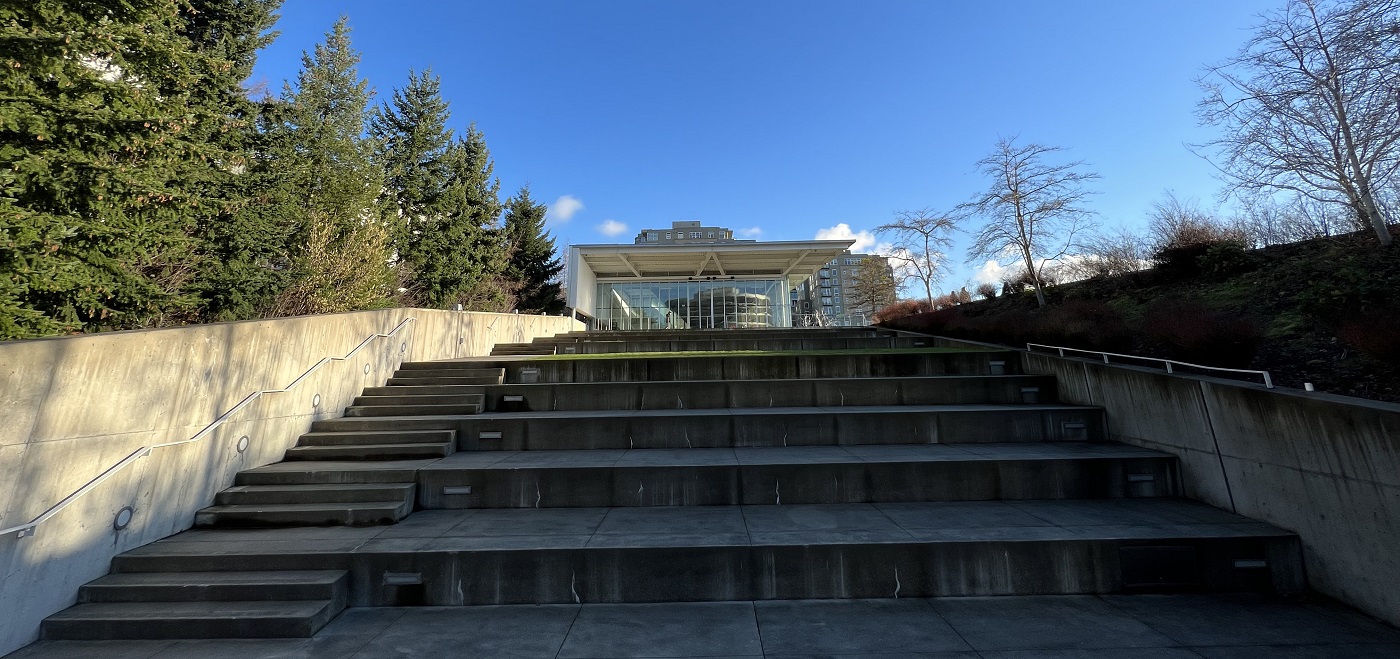
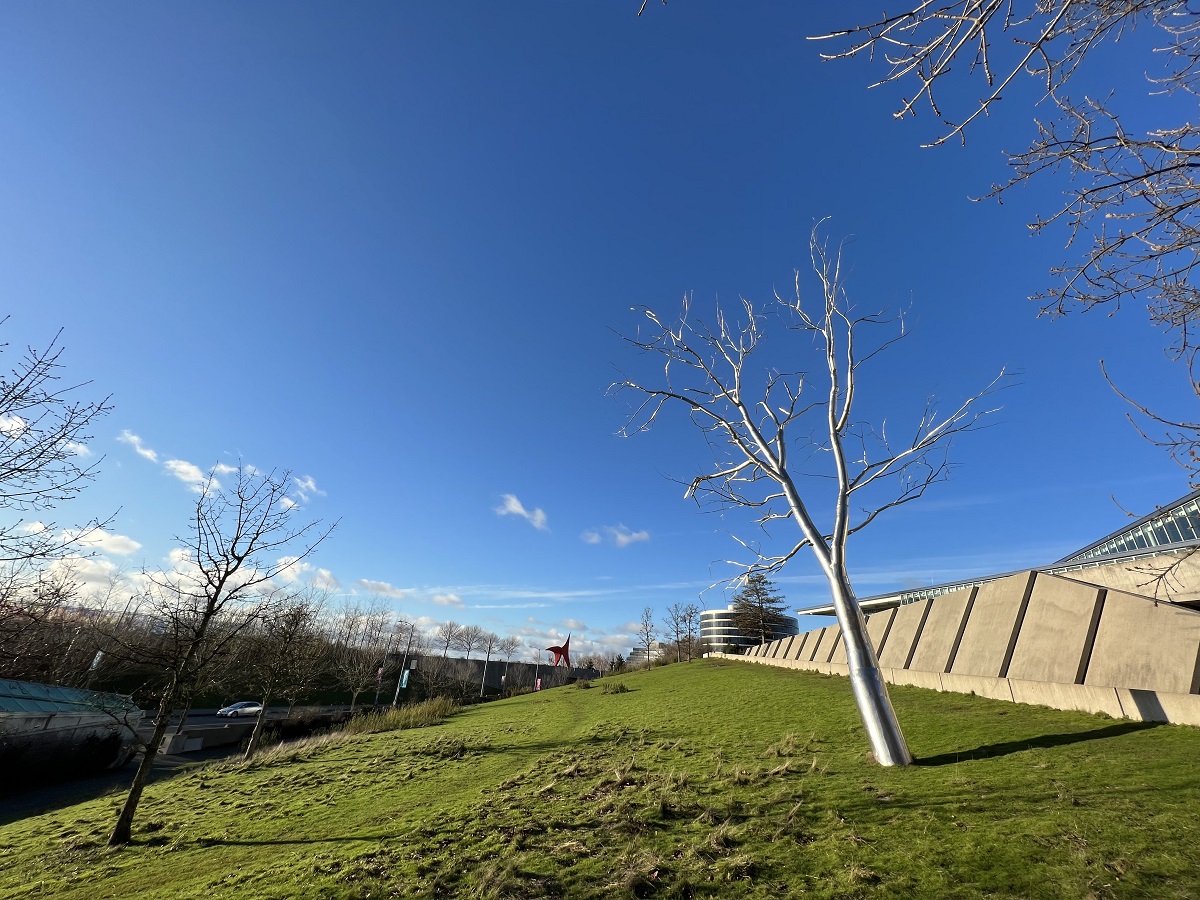
I parked by the pedestrian bridge on 3rd Ave West. This is a look back at the Queen Anne Beer Hall and the Space Needle from the bridge. I have not been to this Beer Hall; so I am putting it on my post-pandemic to-do list. Quaff a few beers at Queen Anne Beer Hall.Looking north after crossing the pedestrian bridge.A closer look at the artwork called Adjacent, Against, Upon (1976) by Michael Heizer. The granite slabs were quarried in the North Cascades. (This is Myrtle Edwards Park, on the way to Olympic Sculpture Park).The north entrance and ramp to Olympic Sculpture Park, with a long slanted pedestrian bridge that straddles the railway on the left.The Eagle (1971) by Alexander Calder.This bench is called Mary’s Invitation: A Place to Regard Beauty by Ginny Ruffner (2014), in honor of Mary Shirley, a benefactor of Olympic Sculpture Park.Wake (2004) by Richard Serra has five gently S-curved iron structures.The cafeteria and indoor space called Paccar Pavilion is closed. The steps in front of it is called the Bill & Melinda Gates Amphitheater.What is nature, and what is art? Split (2003) by Roxy Paine, a tree made of stainless steel tubes of 20 different diameters.Making my way back around the south end of the Park, with the south of the staircase going to the slanted bridge across the railway. SAM stands for Seattle Art Museum.Echo by Jaume Plensa (2011), a Barcelona-based artist. The sculpture’s title refers to a mountain nymph in Greek mythology that had offended the goddess Hera. As punishment the nymph was deprived of speech, except for the ability to echo the last word of another, spoken to her.
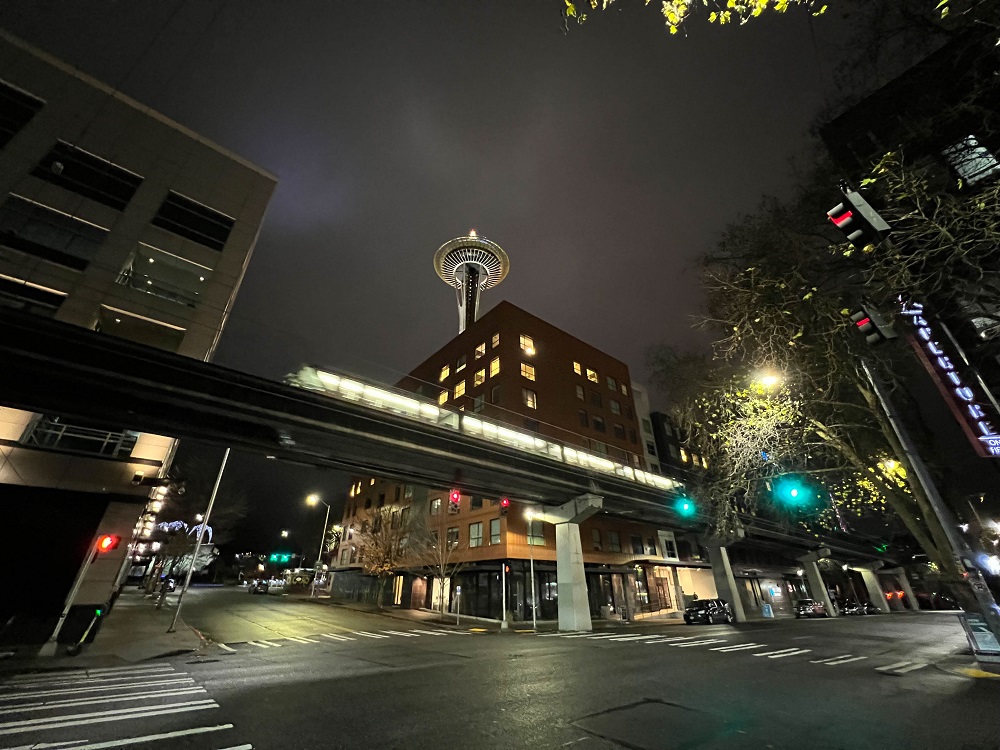
It rained most of the day, but it cleared up as night fell.
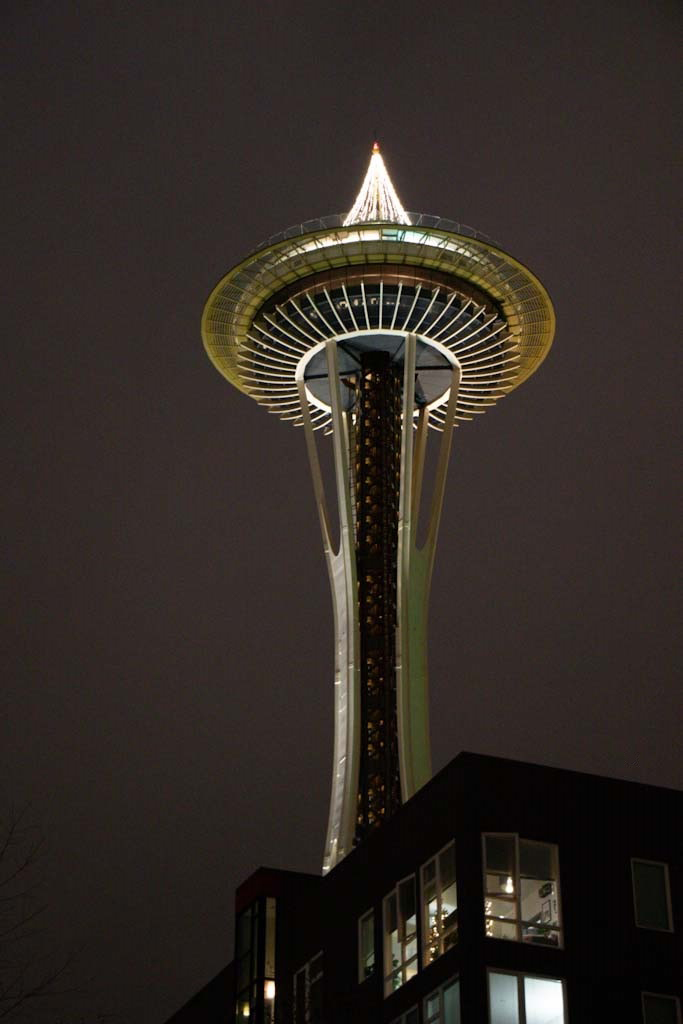
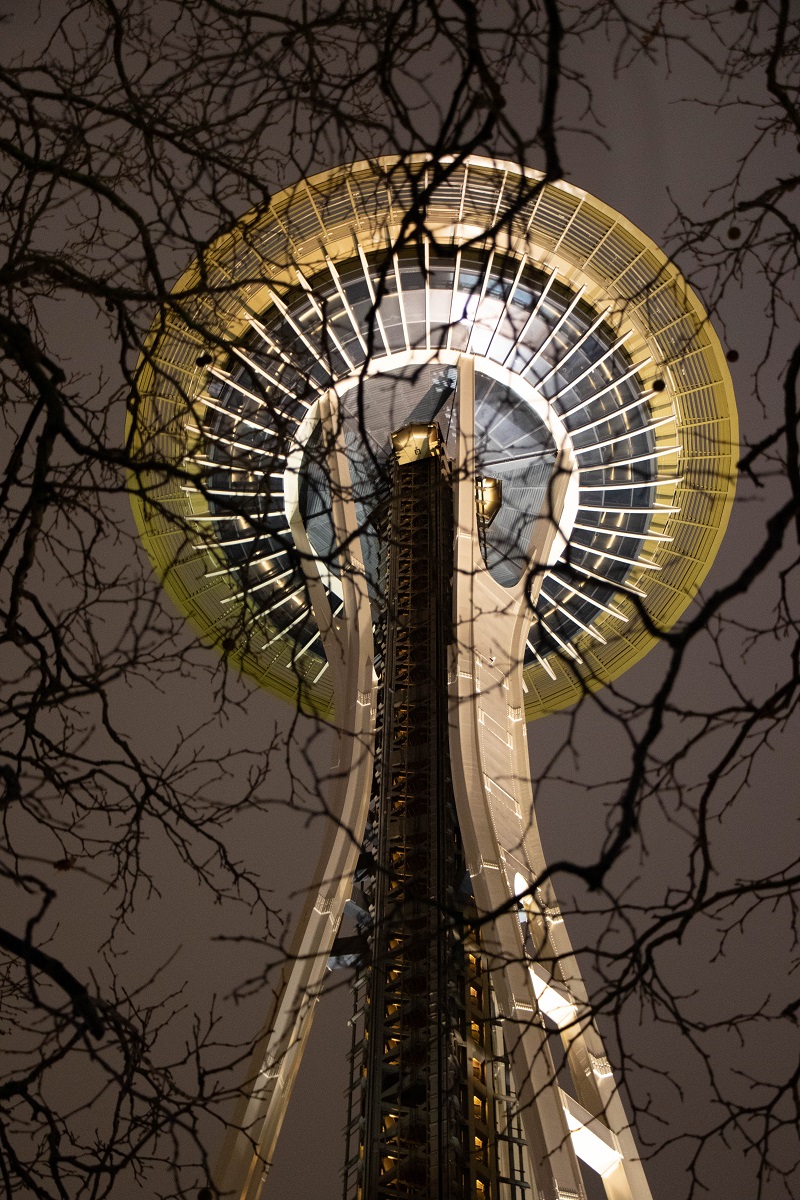
I made a run down to the Space Needle to take a few pictures of the ‘Christmas tree’ on it.
I went up Queen Anne hill for a few pictures, as well.
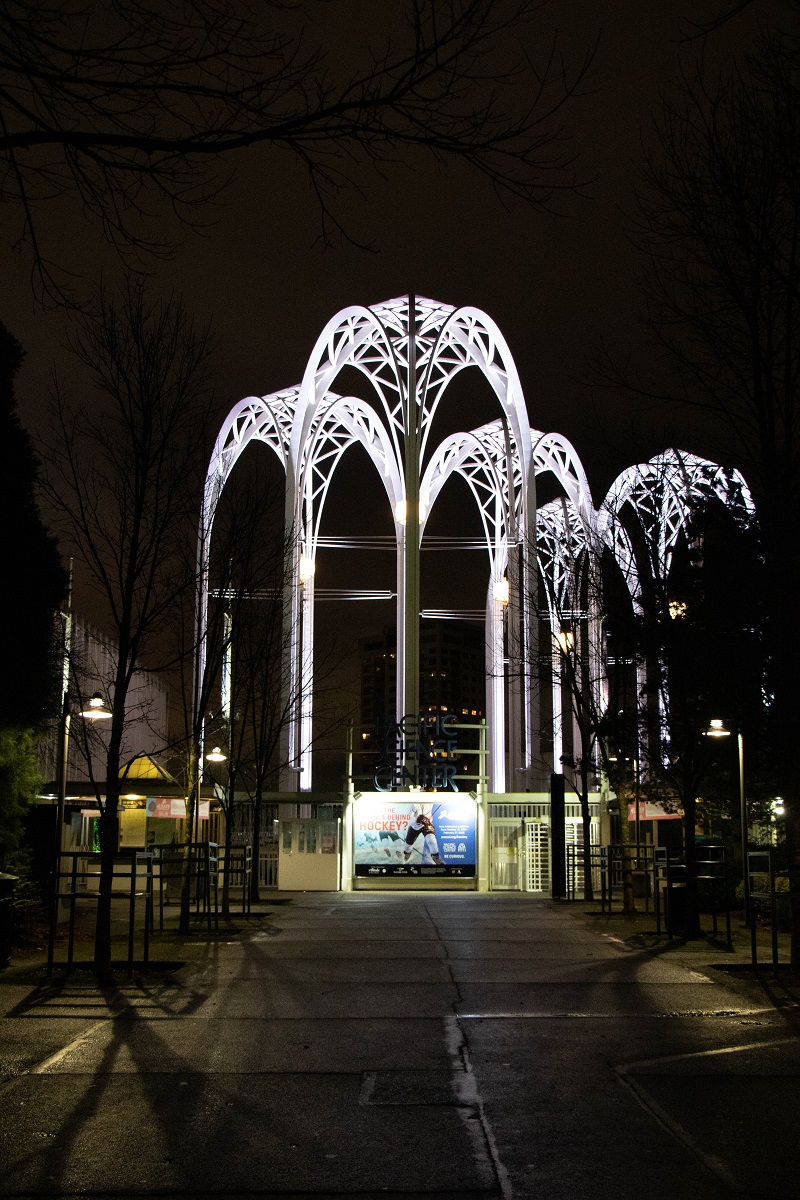
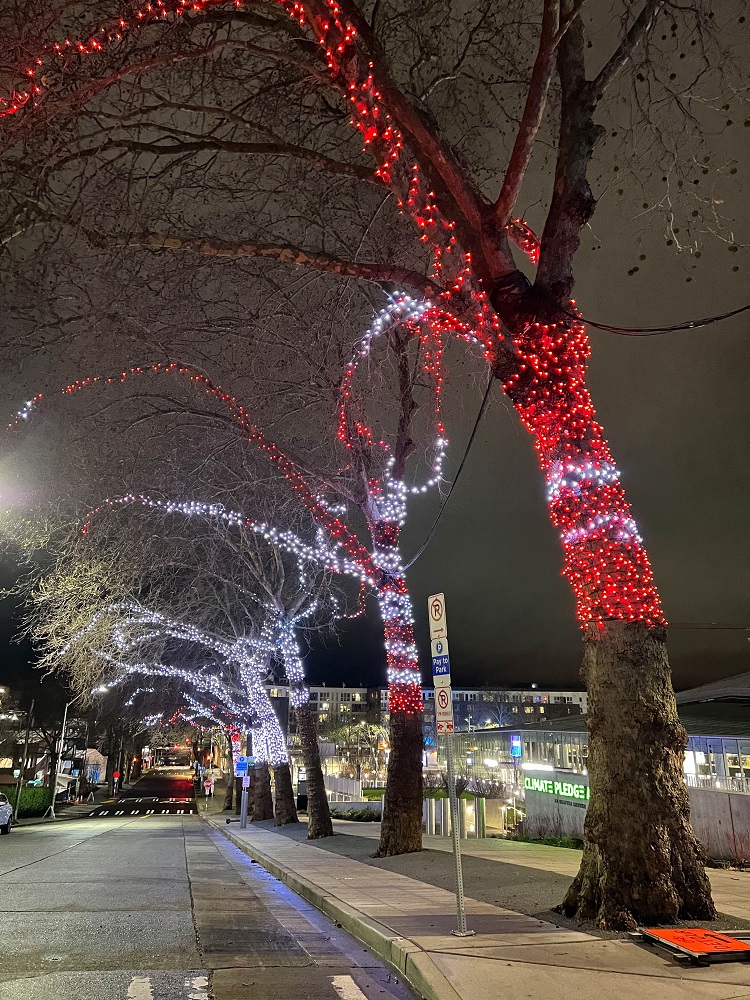
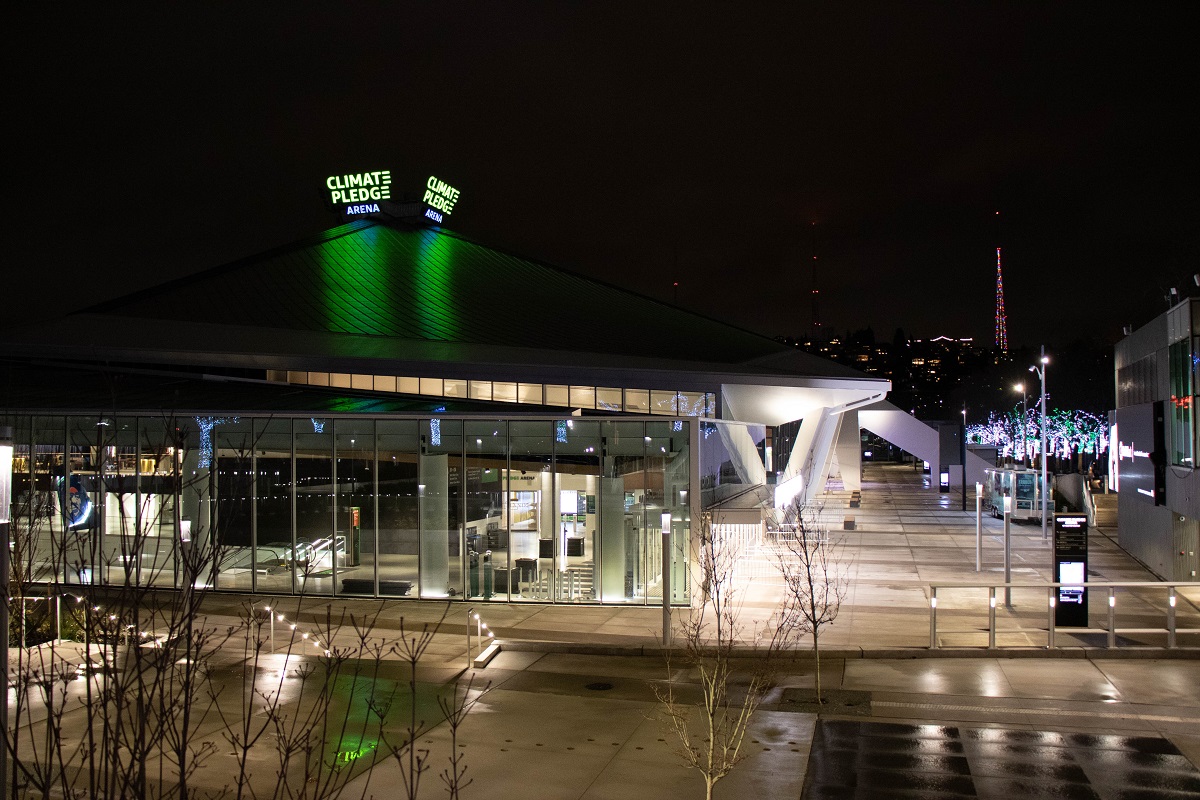
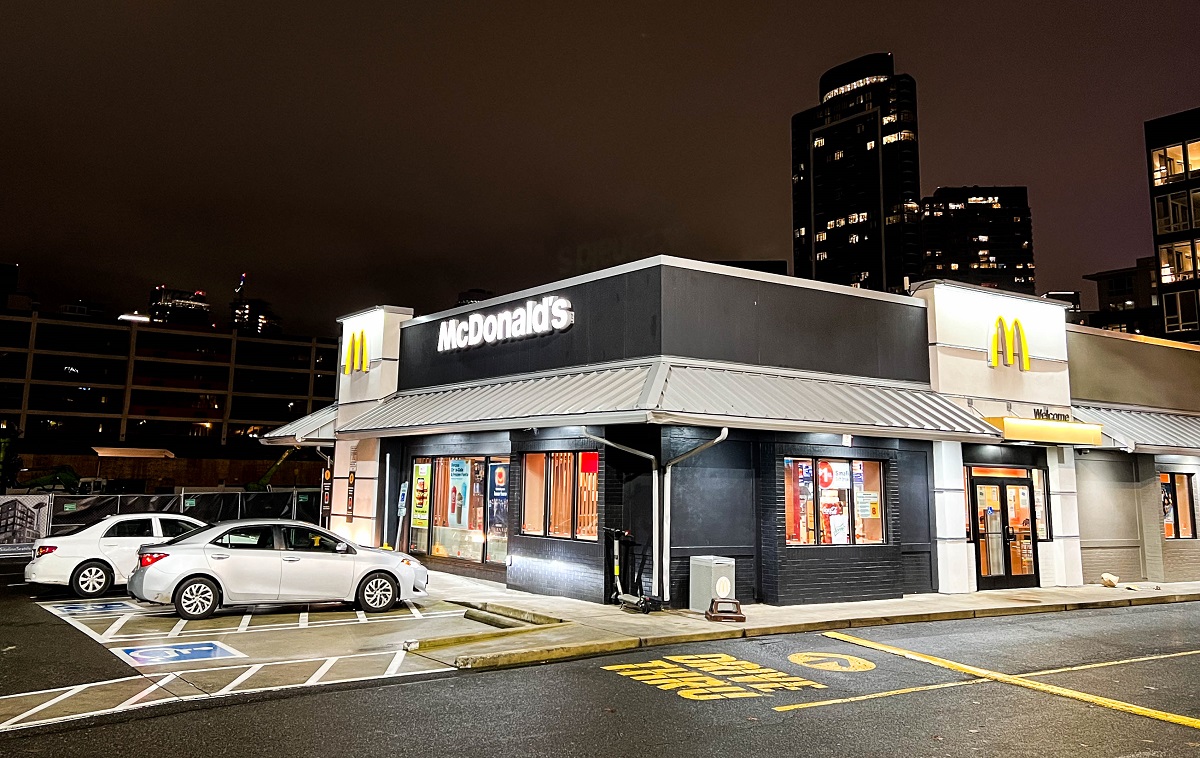
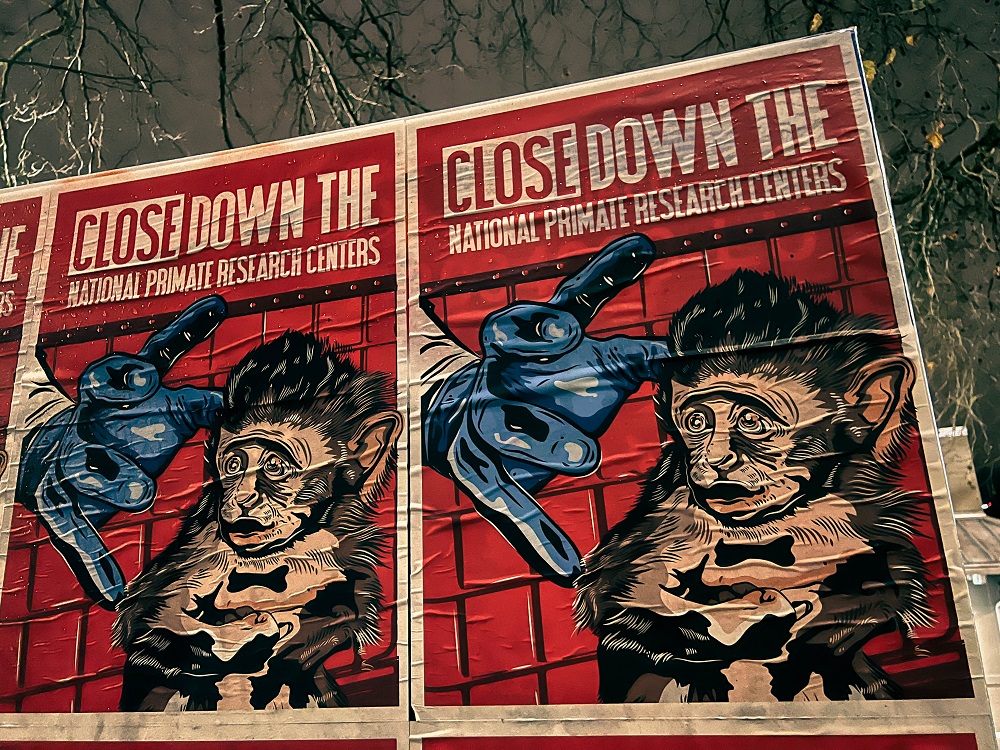
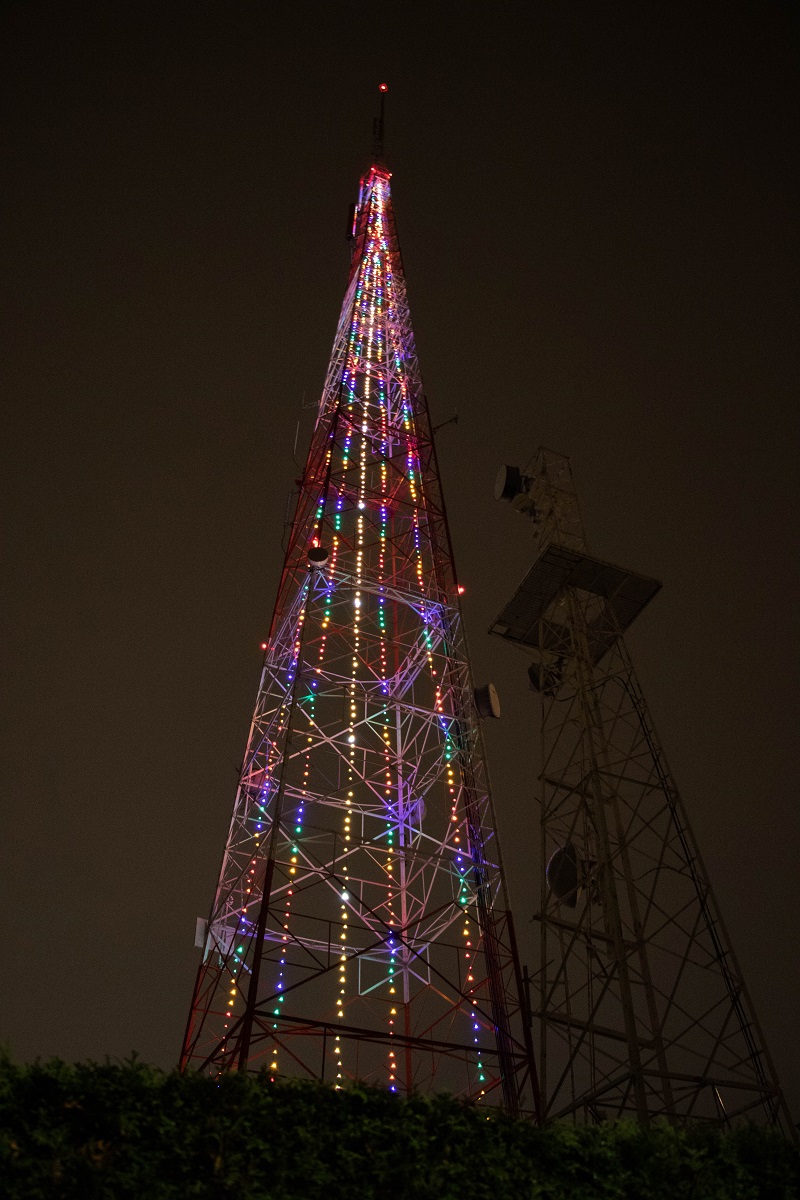
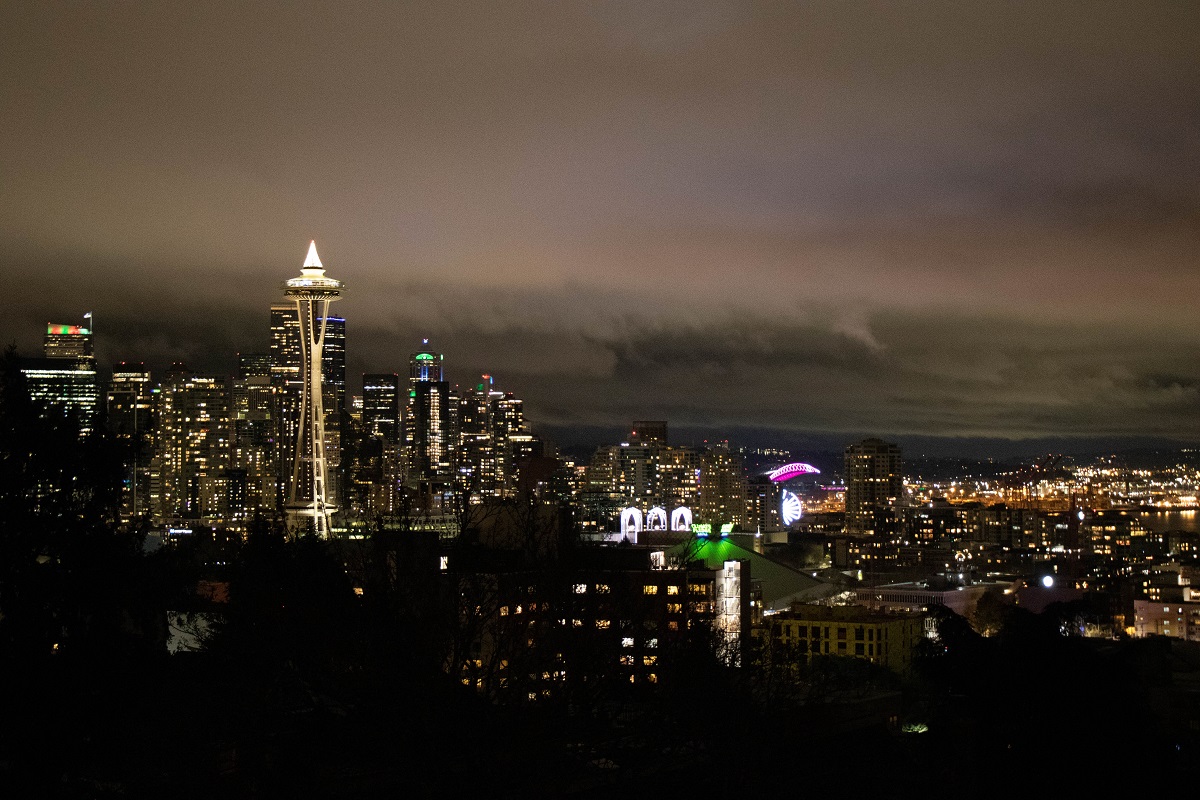
Here’s the monorail train at 5th Ave and John St, streaking towards Westlake Center. This is one of its last runs for the day. It stops running at 9 pm, I believe.The ‘Christmas Tree’ with its red aviation beacon is up on the Needle.A look from from below through the bare trees (grabbing at it with long bony fingers?) at Seattle Center. The golden elevator cage is all the way up, at the top.The arches at Pacific Science Center, nicely lit up in white.The trees on Thomas Street alongside Climate Pledge Arena are nicely dressed up in holiday lights. Many inside Seattle Center have been decorated as well.Climate Pledge Arena, of course. That radio tower in the distance with the colored lights and beacon on, is on Queen Anne hill. ‘Well, I will have to go and take a closer look at it’, I thought, and I did. (Picture is below).Making my way back to where I had parked my car. This 24-hour McDonalds is right by the Space Needle.Posters on the fence by the McDonalds. A blue gloved hand is about to grab the mortified monkey. National Primate Research Centers are a network of seven research programs in the United States funded by the National Institutes of Health to conduct biomedical research on primates. One of them is affiliated with the University of Washington here in Seattle. So should humans torture monkeys in the name of research? No, we should not, but we do. We should also not make weapons to kill each other with. We should also not destroy Earth.All right. Now I have navigated up Queen Anne hill, to the KING-TV Tower (decorated with its Christmas lights) that I had seen from Seattle Center. The first television broadcast in Pacific Northwest history was transmitted from this location on Nov. 25, 1948 as Channel 5 KRSC-TV (becoming KING-TV 8 months later). The station went on the air with a live high school football game on Thanksgiving Day between West Seattle High and Wenatchee at Memorial Stadium. This tower was constructed a few years later, in 1952, and stands 570 ft (174m) tall. The site itself is 430 ft (131 m) above sea level.My final stop was at Kerry Park in Queen Anne, a popular view point for taking in vistas of downtown Seattle and the ferries that come in from across the Sound. The green roof of Climate Pledge Arena is new, of course, and to its right is half of the Ferris wheel at the waterfront with the pink of T-Mobile Park, home of the Seattle Mariners baseball team. I’m using my Canon EOS 7D Mk II digital camera and zoom lens, and it’s doing OK. I would love a medium format DSLR to catch just a little more detail !
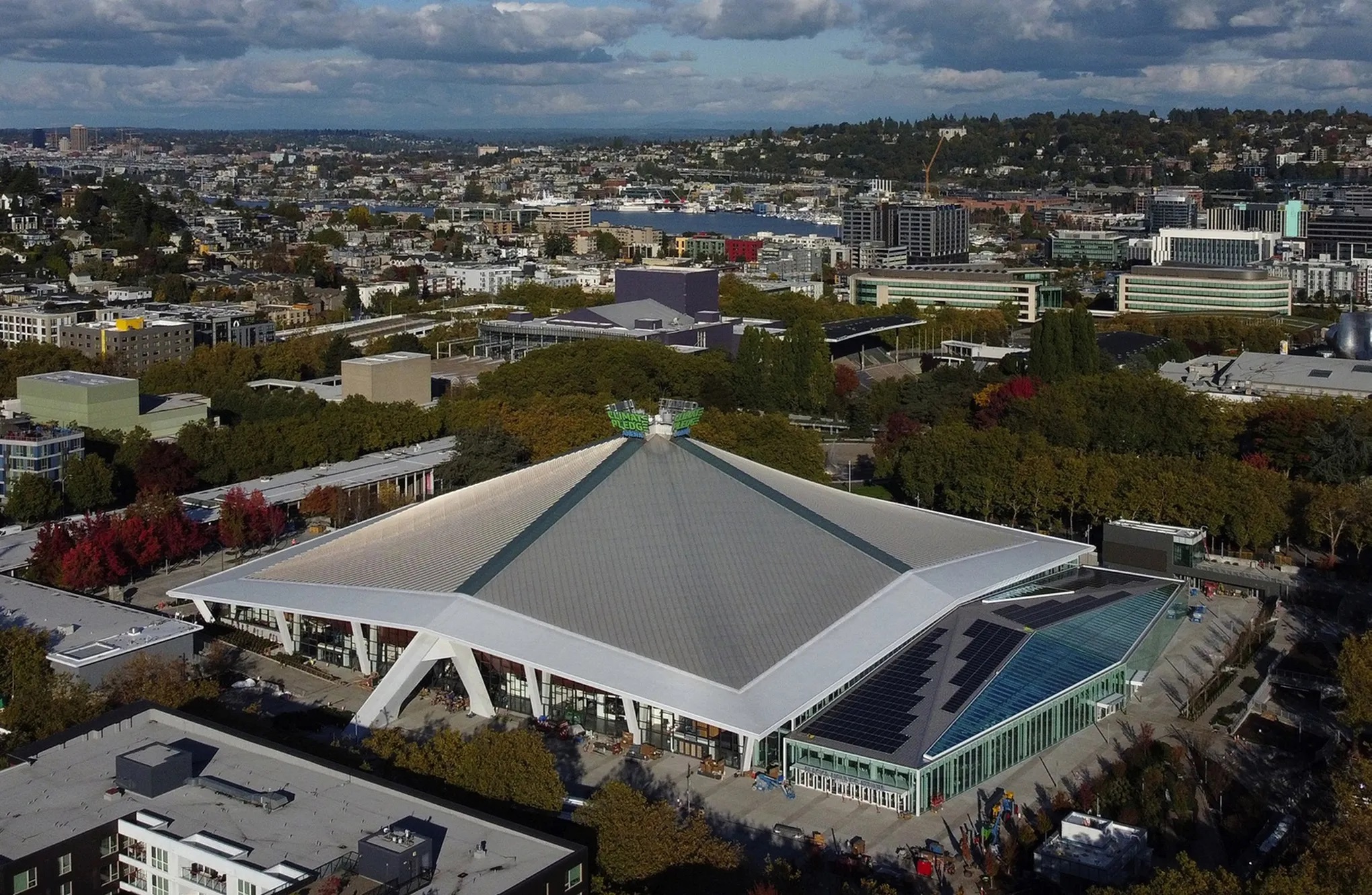
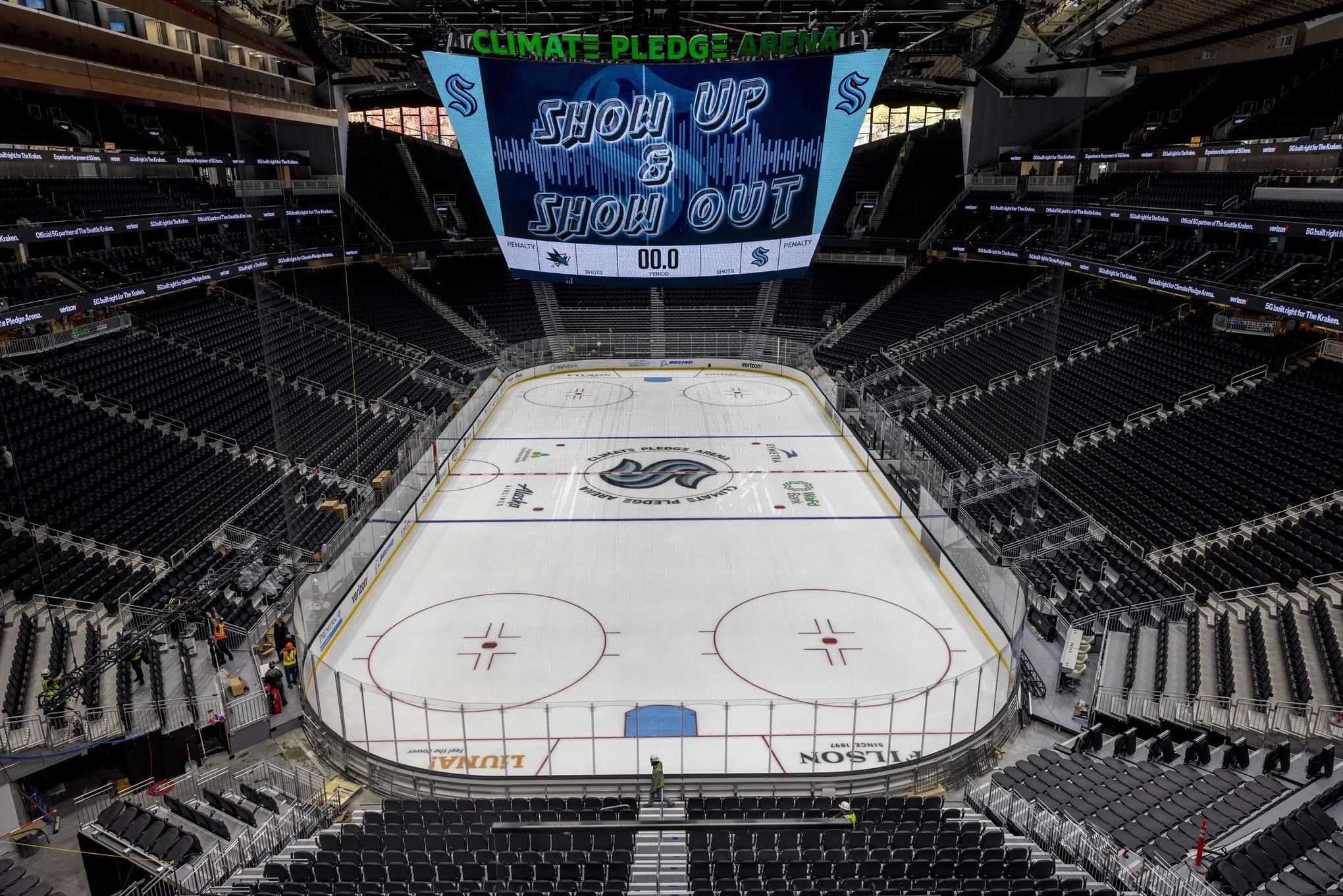
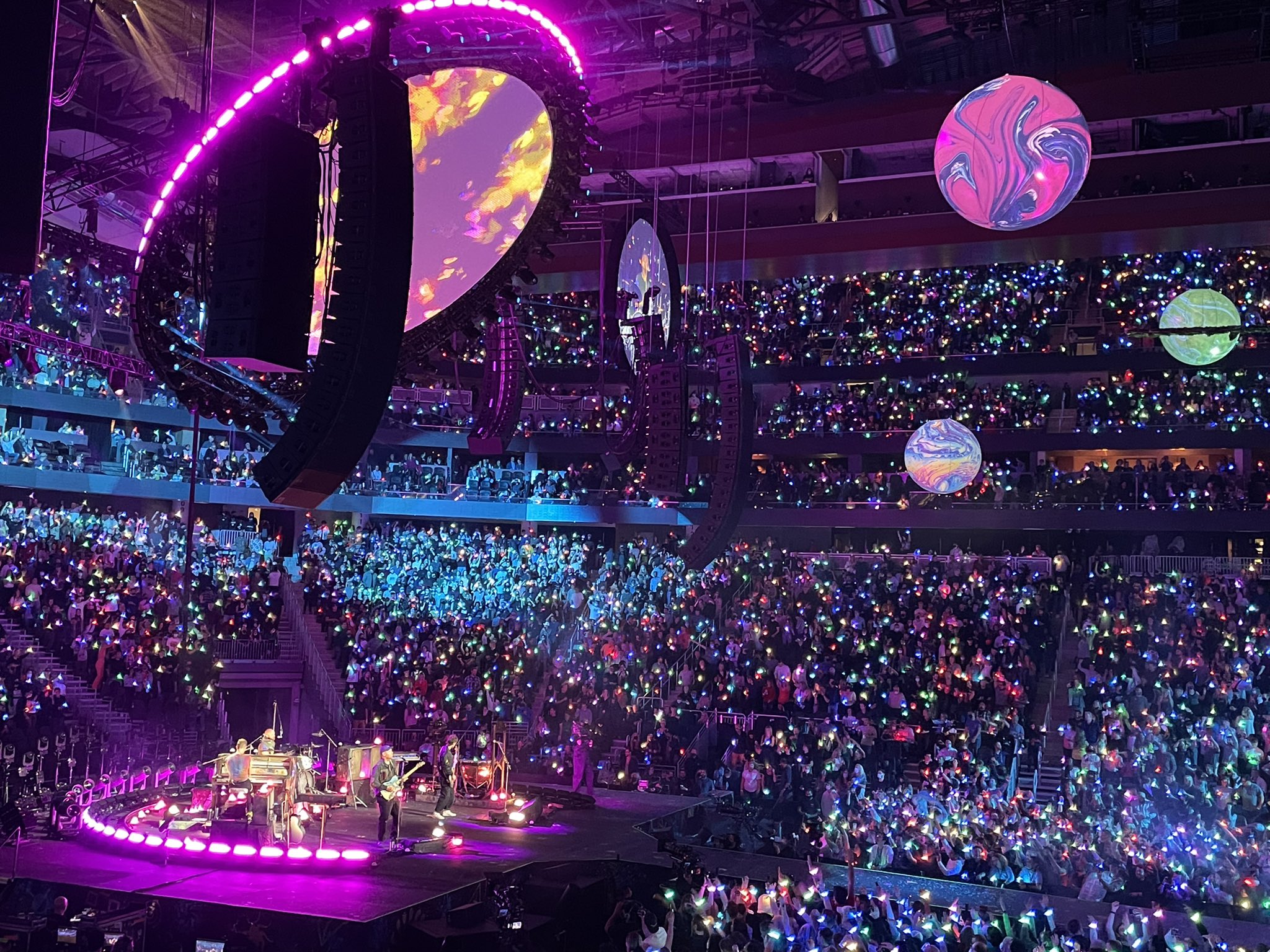
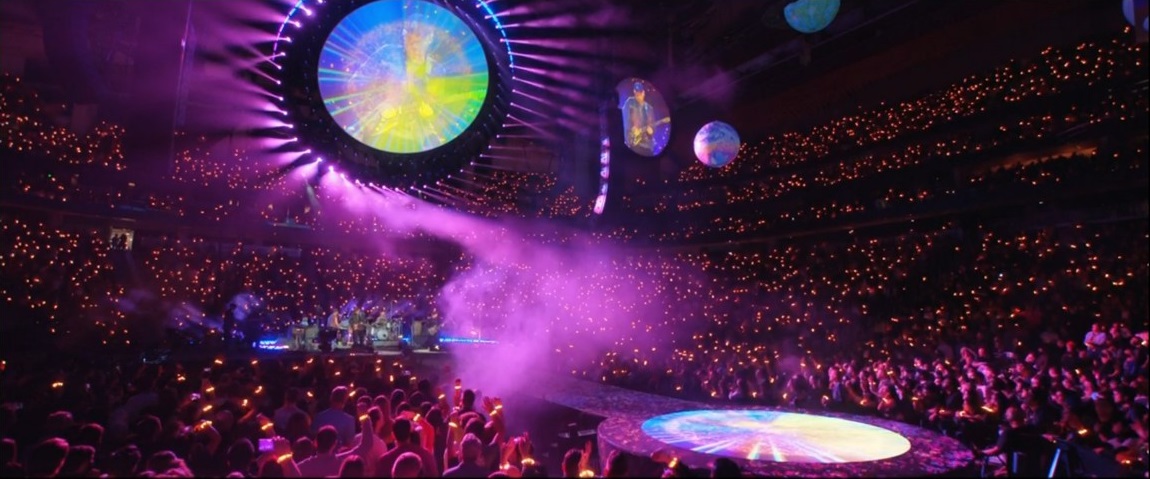
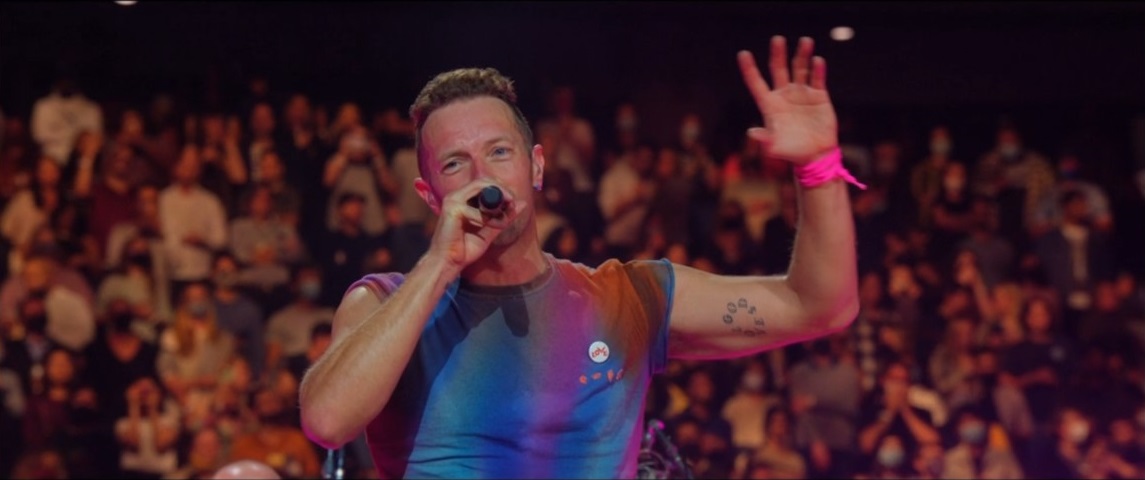
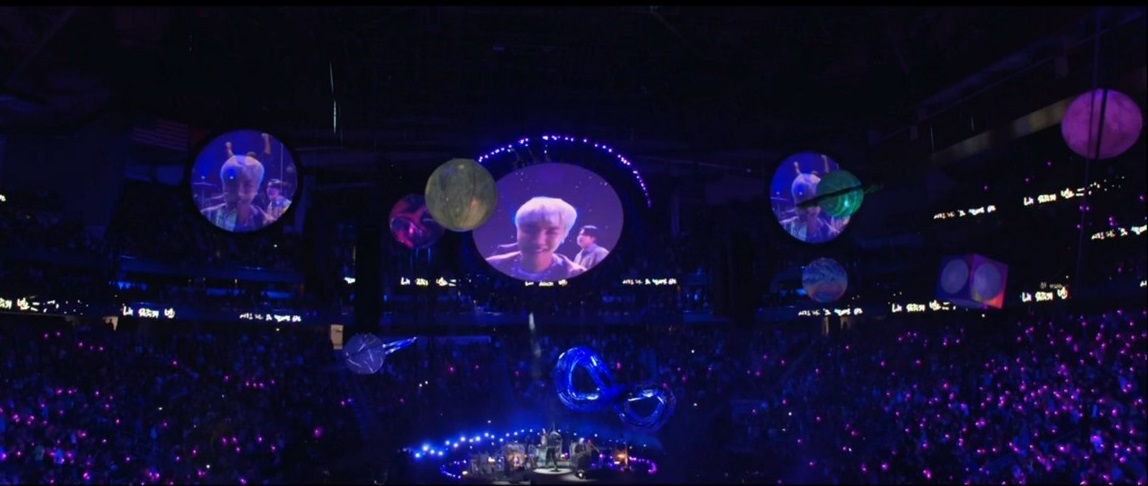
The new home of the Seattle Kraken (ice hockey team) opened today, officially. There was a concert tonight: the first live performance of Coldplay’s brand-new album, Music Of The Spheres. This was the band’s first arena show in nearly five years.
The crews now have 12 hours to turn the arena into an ice hockey rink for the first home game of the Seattle Kraken (against the Vancouver Canucks).
The new Climate Pledge Arena with the intact roof and windows of the old Key Area (architect Paul Thiry; built for the 1962 World Fair). Private equity groups invested some $1.15 billion in the facility’s make-over. The arena will use on-site solar panels and off-site renewable energy power to be powered 100% by renewable energy. [Picture Credit: Ken Lambert / The Seattle Times]Workers dug an extra 15 feet downward to form a new arena floor some 53 feet below street level. In addition, the steeper seating grade now makes for double the seating capacity that the Key Arena had. [Picture Credit: Oak View Group]The ice rink will not have the traditional center-ice scoreboard, but dual scoreboards, one on each end, and high enough not to interfere with the sight line of the spectators. [Picture Credit: Daniel Kim/ Seattle Times]
Wow. This wish-I-was-there picture of tonight’s Coldplay ‘Music Of The Spheres’ concert, tweeted by Ross Fletcher@RossFletcher1 on Twitter.
These are stills from the live-stream. The ‘spheres’/ planets and the lighting looked great. [Source: Amazon Prime Video livestream]Coldplay front man, vocalist, rhythm guitarist, and pianist Chris Martin (44 yo). Coldplay are a British rock band formed in London in 1996. [Source: Amazon Prime Video livestream]South Korean boy band BTS (make that SUPER-boy band), also known as the Bangtan Boys, also beamed into the concert. [Source: Amazon Prime Video livestream]
I had my biannual eye check-up at the ophthalmologist today.
I walked there along Minor Avenue from the No 12 bus stop on Madison Street, and back along Broadway.
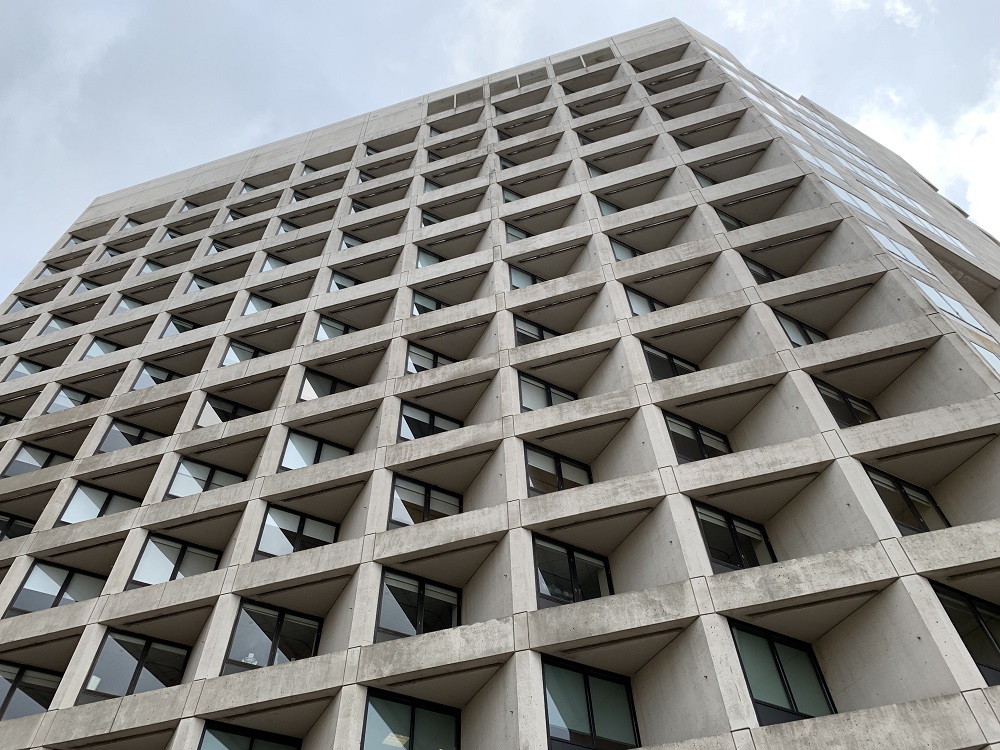
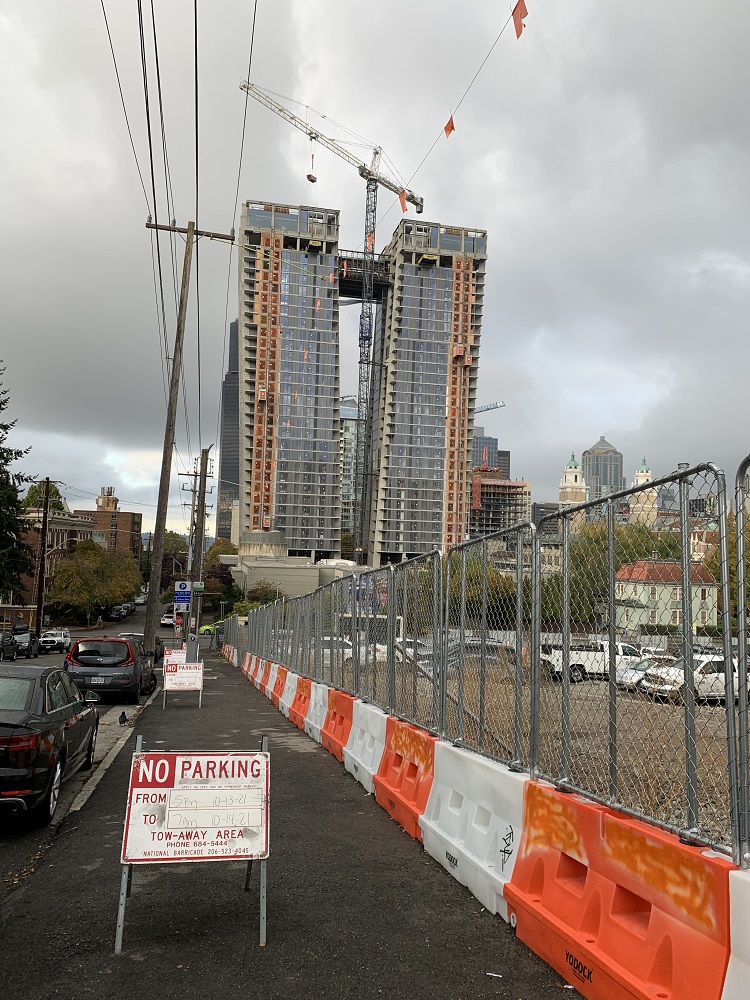
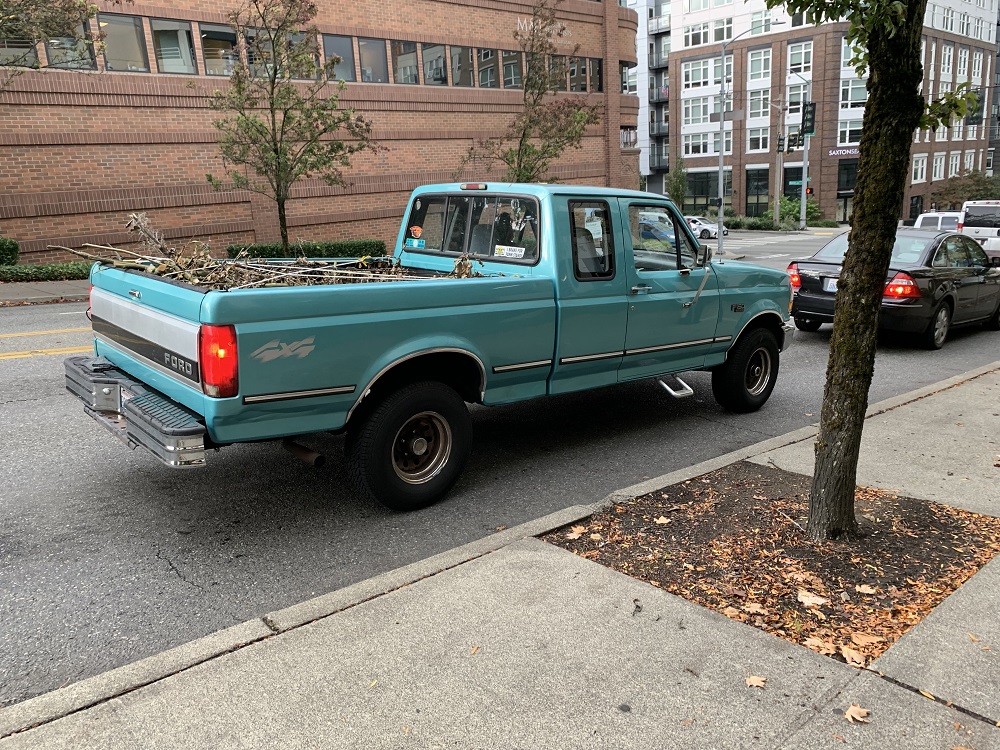
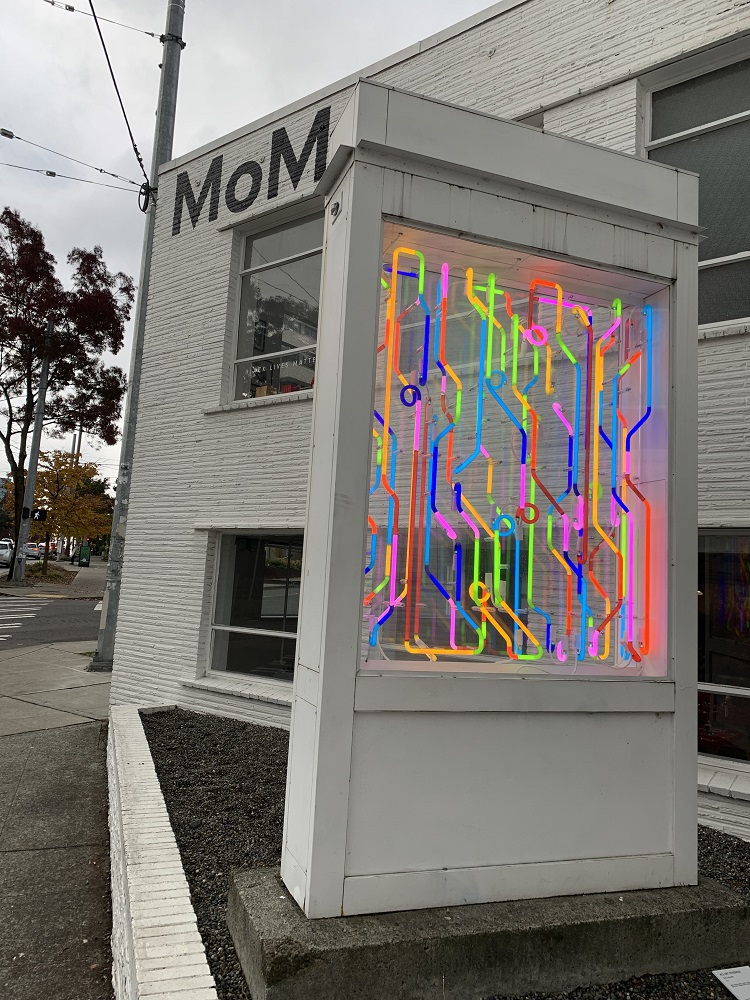
This is the Southwest Tower of Swedish Hospital’s First Hill campus. It opened in 1976 and was designed by architecture firm NBBJ. It may be an example of form of Brutalist architecture (my opinion; I could not verify it explicitly)— with its exposed poured concrete and its straightforward structure. The Brutalist movement started in the 1950s; has had severe critics, and was largely over by the late 1970s and early 1980s [Wikipedia].Looking west from Minor Avenue, towards 707 Terry Avenue: two, 33-story towers with 440 apartment units above a 3-story podium. That skybridge should provide bird’s-eye views of the city and the Sound.A nice turquois (teal?) Ford F-150 truck. Surely it’s a custom paint job. I cannot imagine Ford selling them in this color. ‘I brake for farm stands’ says the sticker in the window.On Broadway, near Madison Street: the Museum of Museums is a contemporary art center (opened in 2019), created and managed by curator, artist, and entrepreneur Greg Lundgren. This is a three-story mid-century medical building, also designed by NBBJ, on the Swedish Medical Center campus. The neon artwork is by Dylan Neuwirth and is called ‘All My Friends’.
It was nice to have the U District train (instead of the No 48 bus) to take home today after my visit at the doctor’s office.
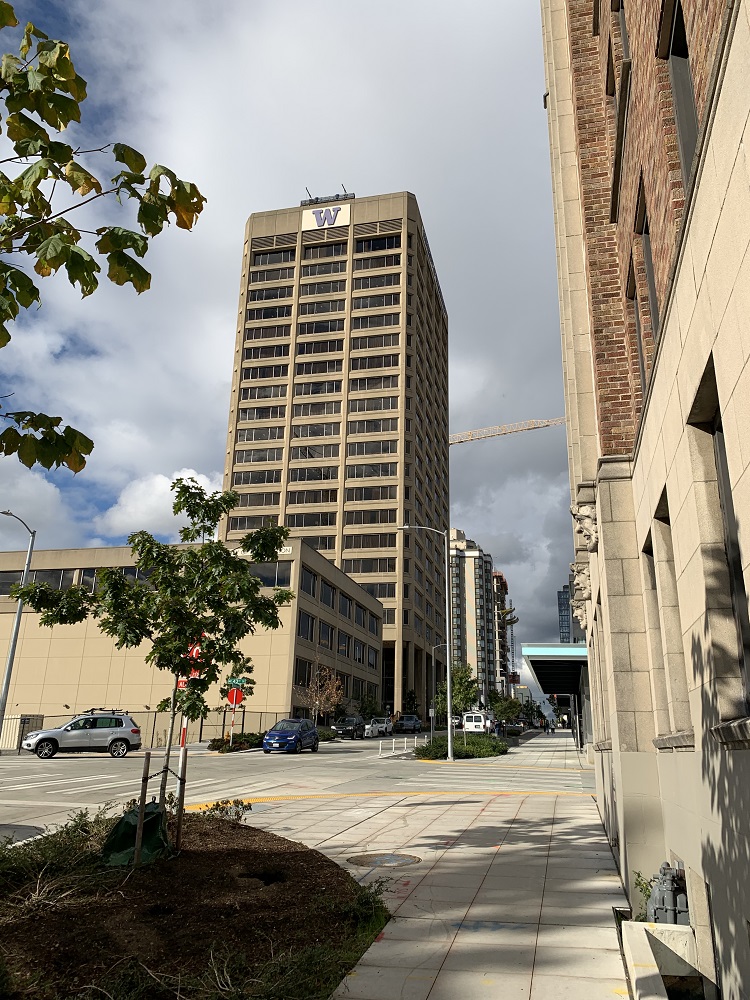
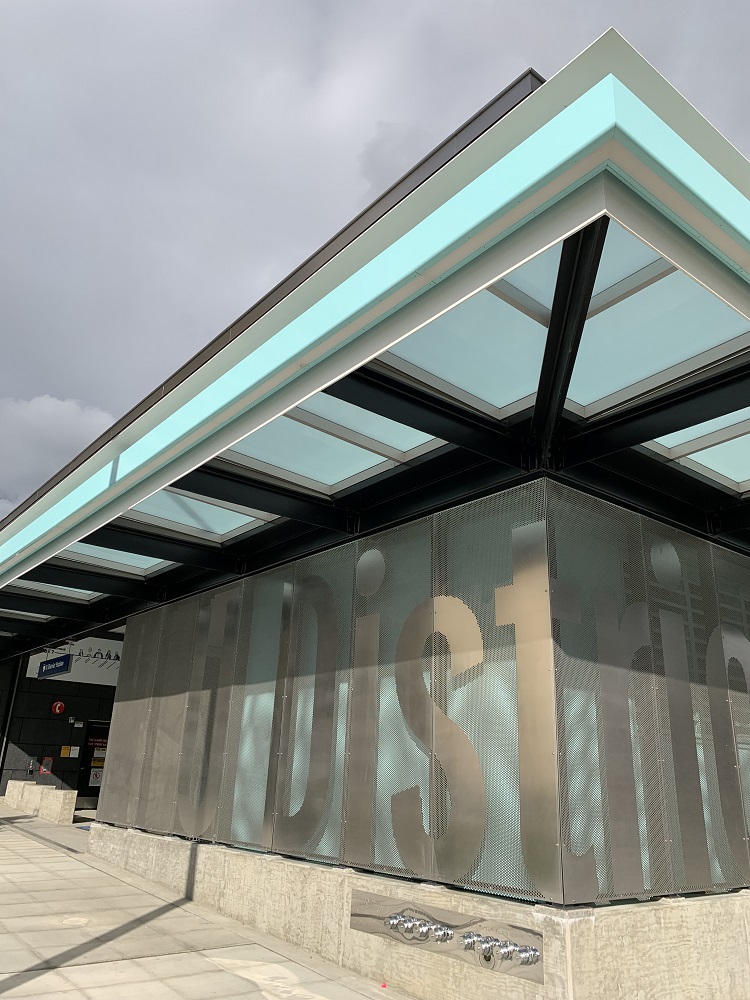
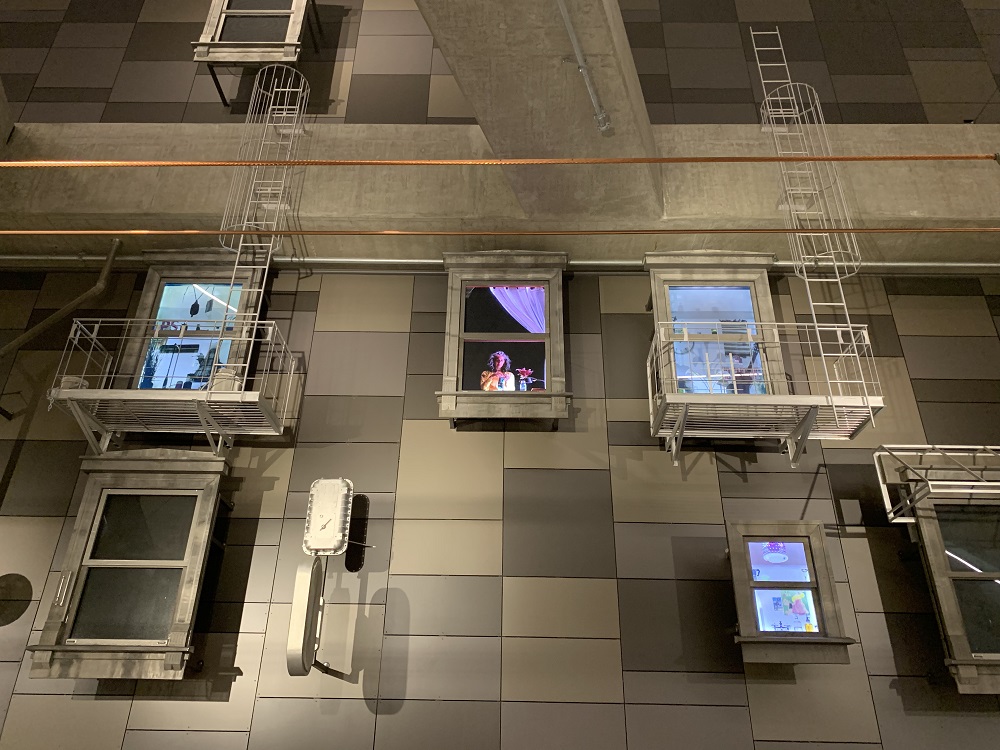
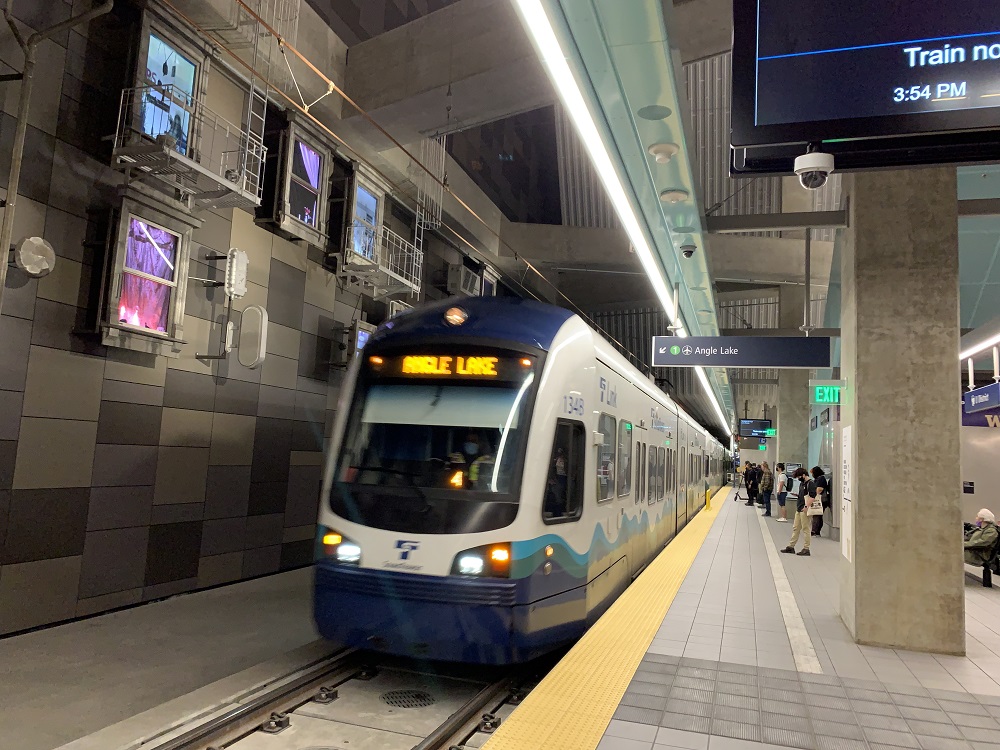
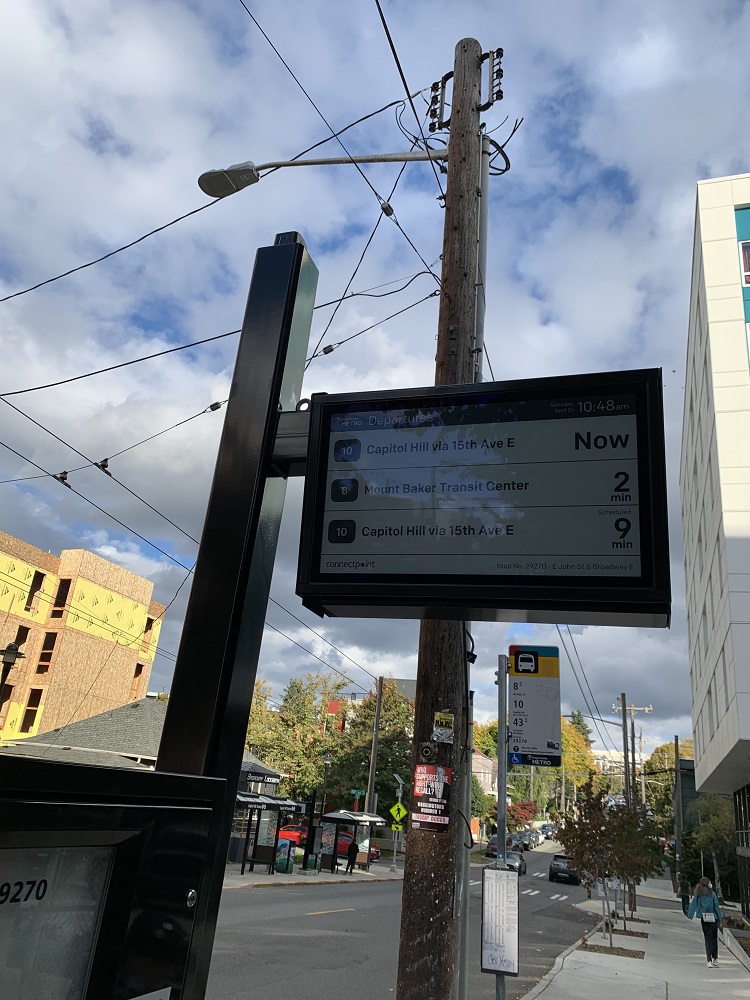
The 22-story UW Tower (completed 1975) is a nice beacon to use, to navigate to the new U District train station on Brooklyn Ave (teal canopy to its left, on the street). The UW Tower house the head offices of the University of Washington.Here’s the station’s entrance. I would call the color of the lining of the glass canopy turquoise, but it’s officially teal. (Between teal and turquoise, teal is the darker one).Inside the station at the platform level, looking at the Fragment Brooklyn art installation. The woman in the window is doing embroidering.Here comes the south-bound train. This train has the older train cars from Kinki Sharyo Co., Ltd. (also known as Kinkisharyo, one word), based in Osaka, Japan. It’s a 6 minute ride from here to Capitol Hill station. I think the No 48 bus to Capitol Hill takes 3 times this time (it has many more stops than the train, to be fair).Outside the Capitol Hill station two stops down from U District, I can catch either the No 8 or the No 10 bus to take me the 8 blocks up the hill close to where I live. This electronic board with the next arrivals that are due is new, and a nice addition to this bus stop.
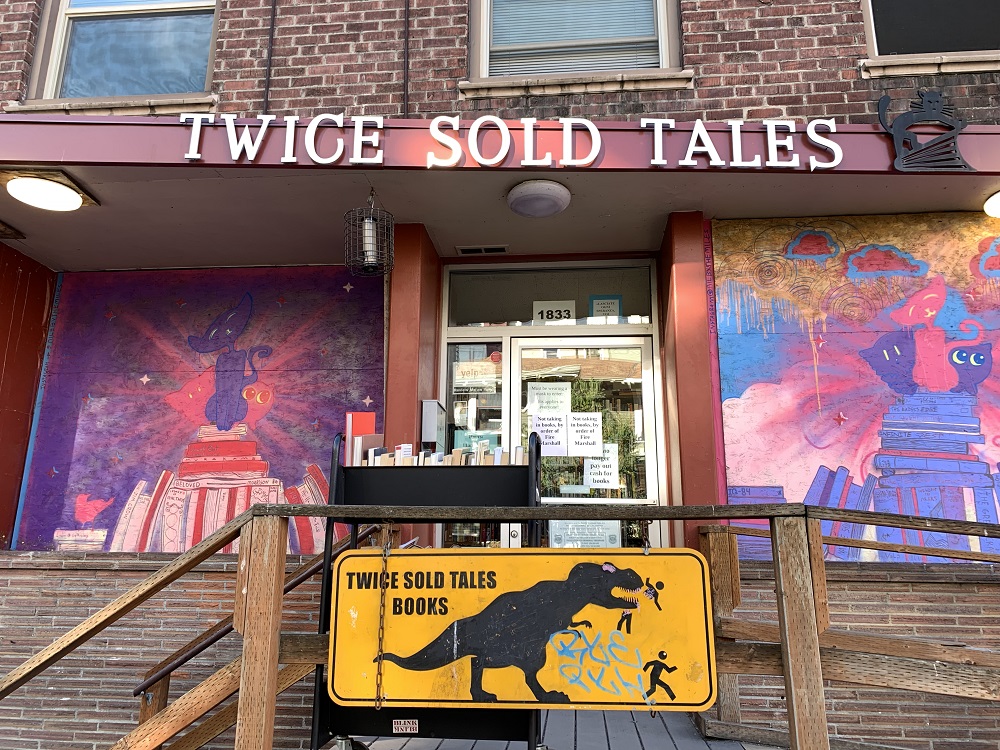
It was lovely outside today (76°F /24°C), and I walked down to the Twice Sold Tales bookstore on Harvard Avenue.
I browsed around in the store but did not buy anything this time. (It’s just fun to look at all the books, so mission still accomplished).
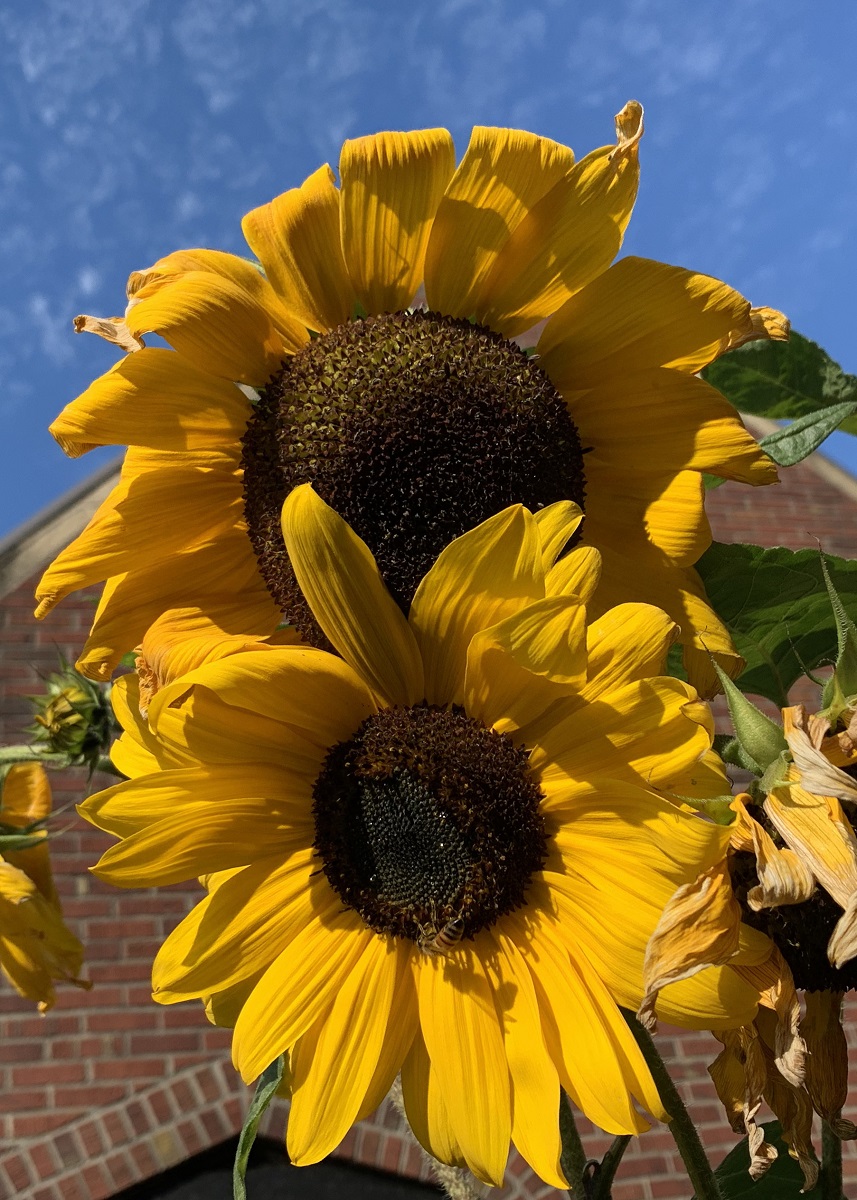
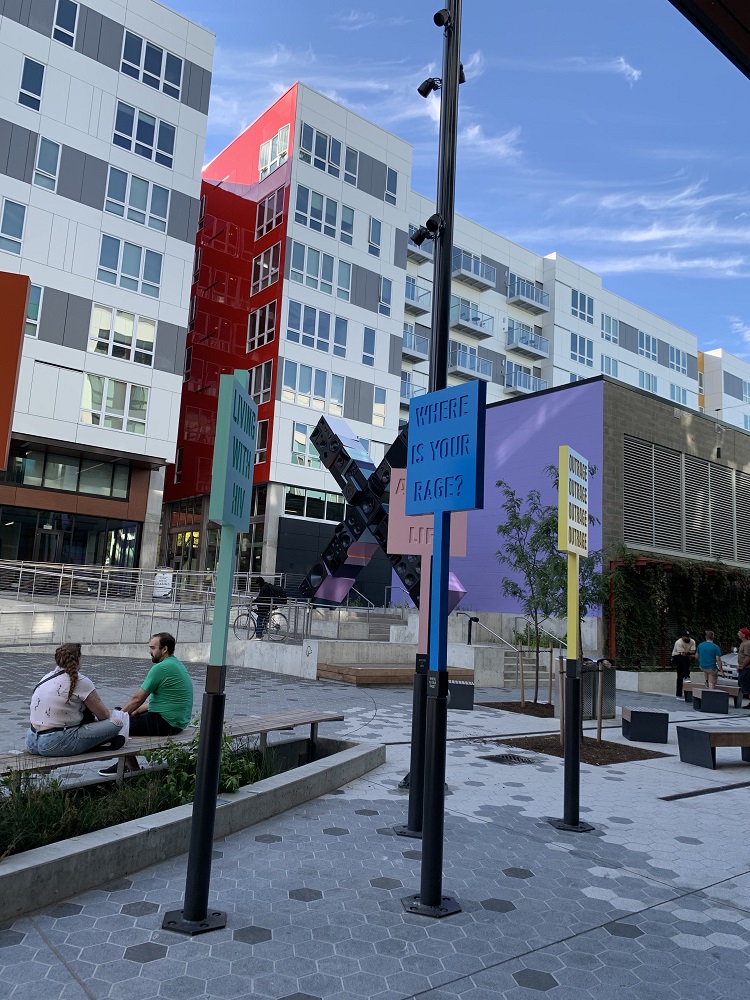
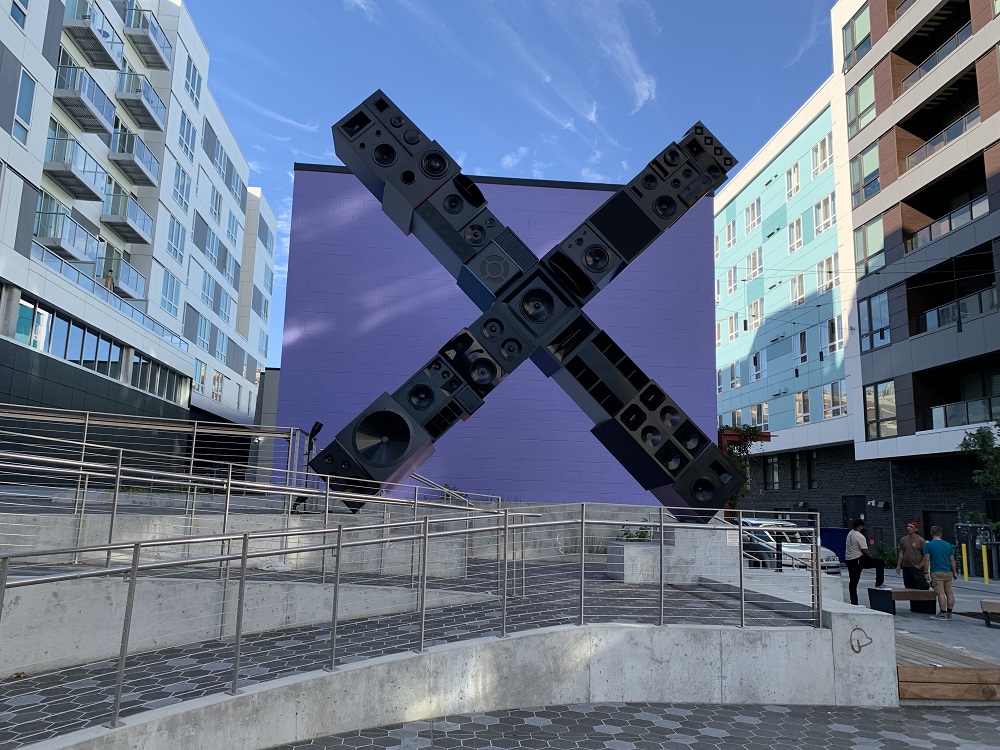
Sunflowers (Helianthus, from helios, Greek for sun) is a genus comprising about 70 species of annual and perennial flowering plants in the daisy family Asteraceae. Before blooming, sunflower plants tilt during the day to face the sun in order to gain more sunlight for photosynthesis, a response called heliotropism. Sunflowers are thought to have been domesticated 3,000–5,000 years ago by Native Americans who would use them primarily as a source for edible seeds. [From Wikipedia]The plywood boarding is still in place at Twice Sold Tales, a little curiously. Maybe the owner likes the artwork with the cats on. (The cats inside are still there, as well). I like the T-Rex sign, myself. The sign on the door says that the store is not buying books right now. Seattle fire marshal ordered the store to stop piling up so many books inside. (It makes it harder for fire fighters to navigate the inside, and for customers to get out).The little plaza by the Capitol Hill Light Rail Station is in good shape: no graffiti and no trash lying around.This 20-foot tall public art sculpture of silent speakers in the shape of an X (or a positive sign on its side) is part of the artwork commissioned for the AIDS Memorial Pathway (AMP) project, a tribute to the missing narratives of women and Black people lost to the AIDS crisis. It is called ‘andimgonnamisseverybody’. The artist is Christopher Paul Jordan (b. 1990), and he used bronze, aluminum and stainless steel.
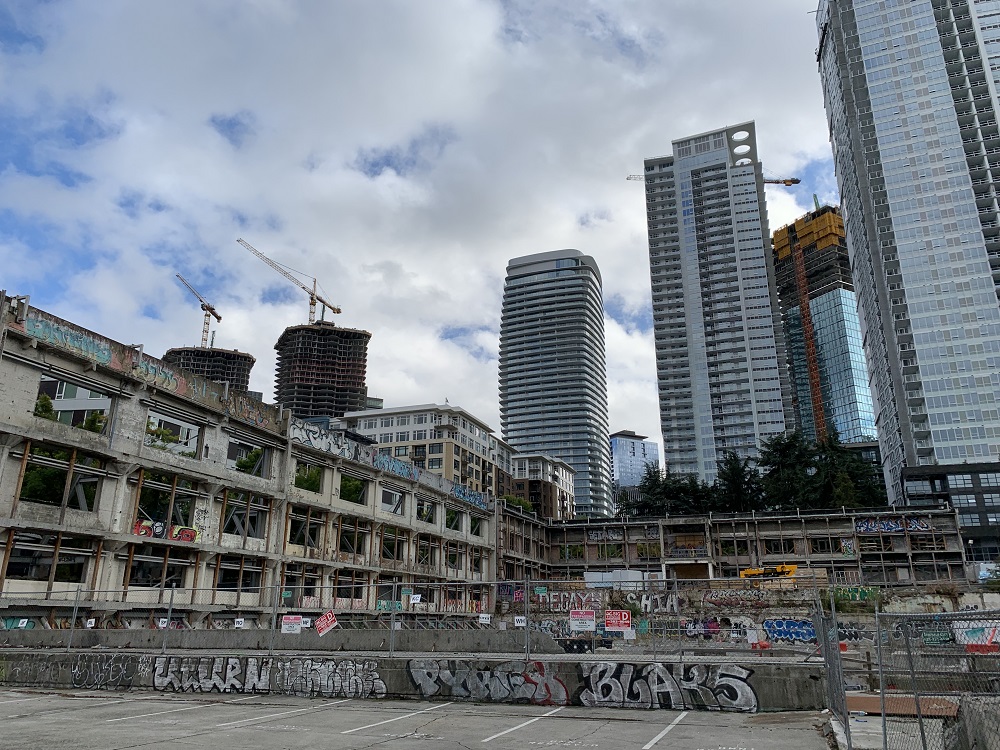
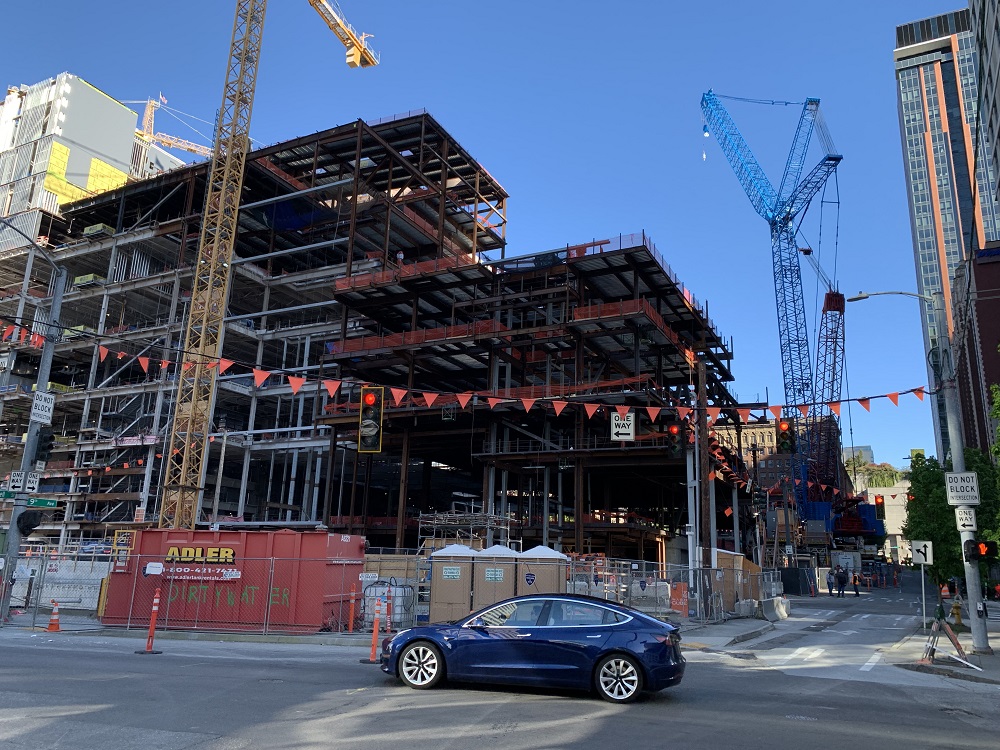
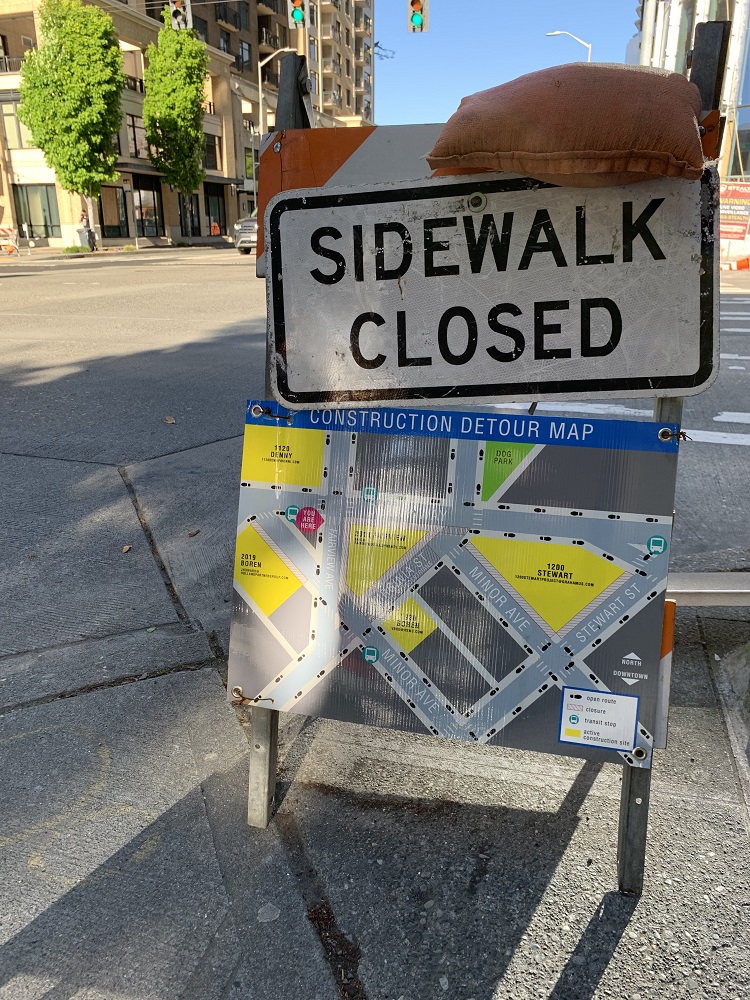
There was a break in the rain today, and I walked around the Denny Triangle (in downtown Seattle) to check on the construction projects there.
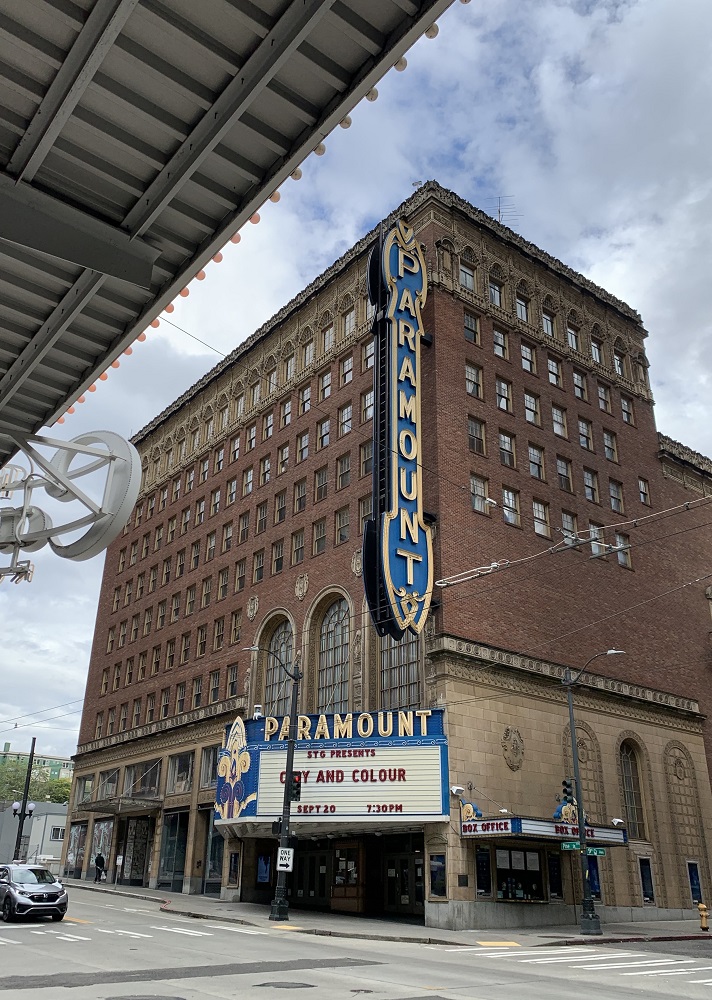
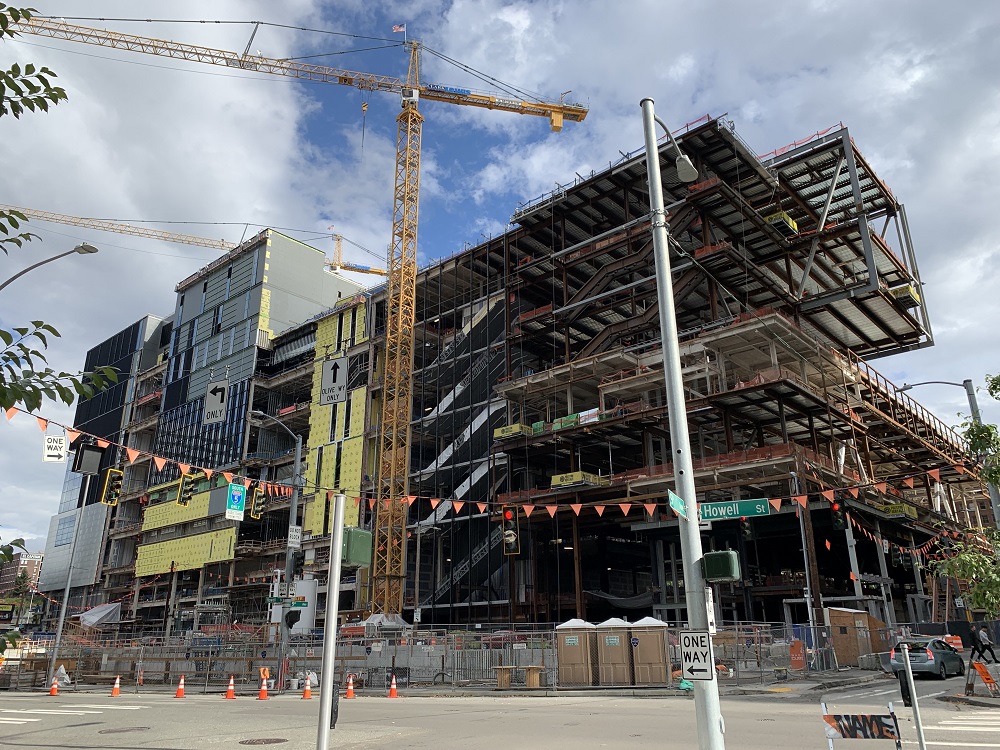
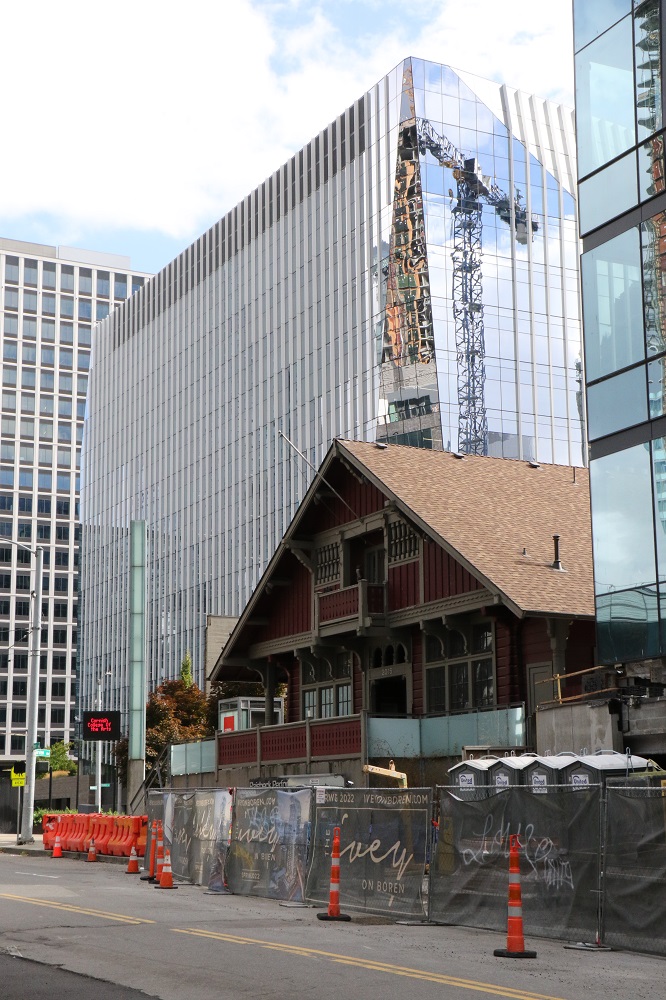
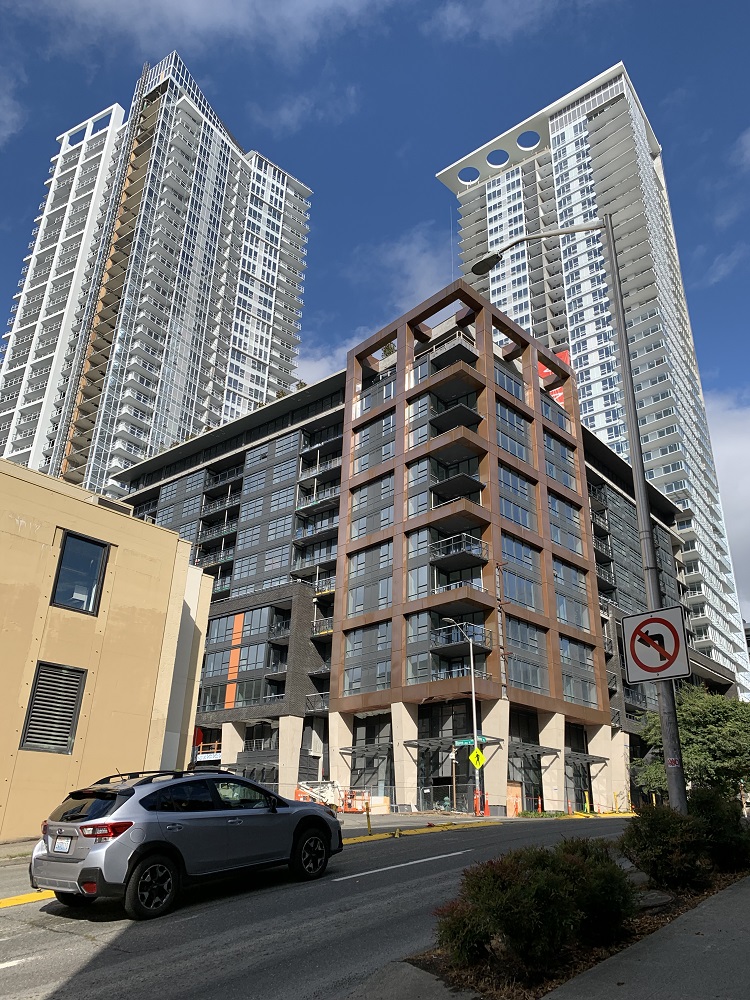
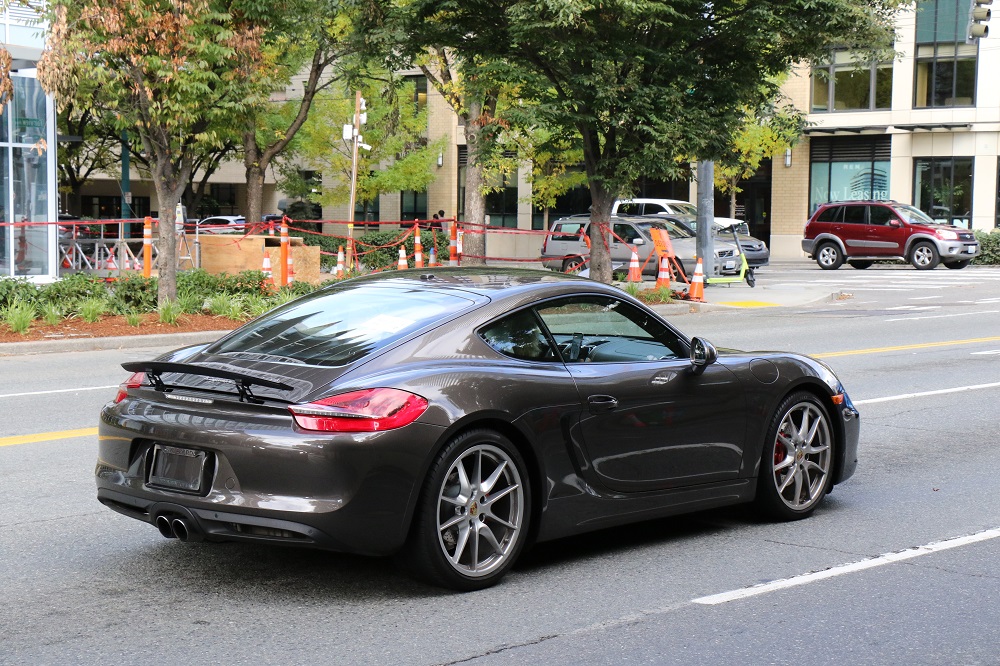
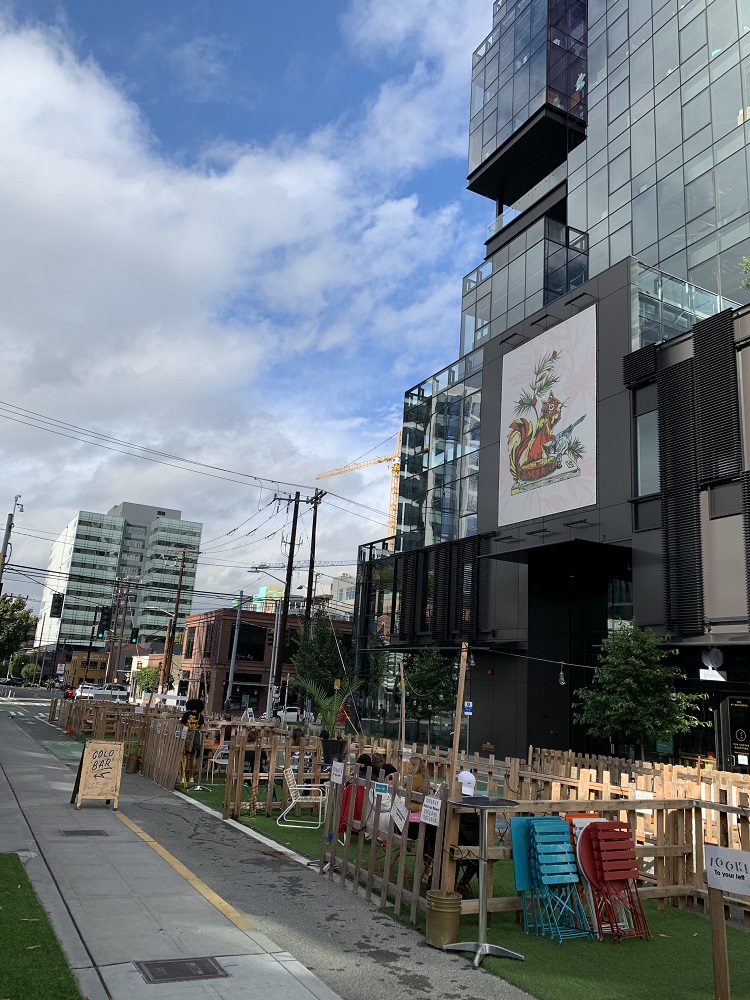
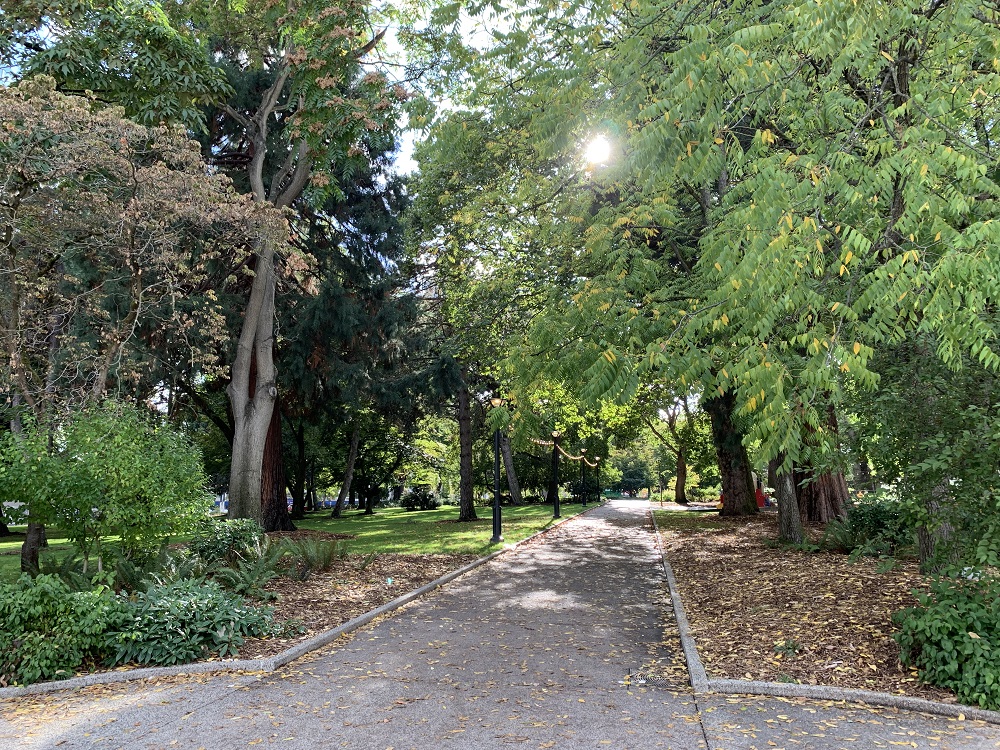
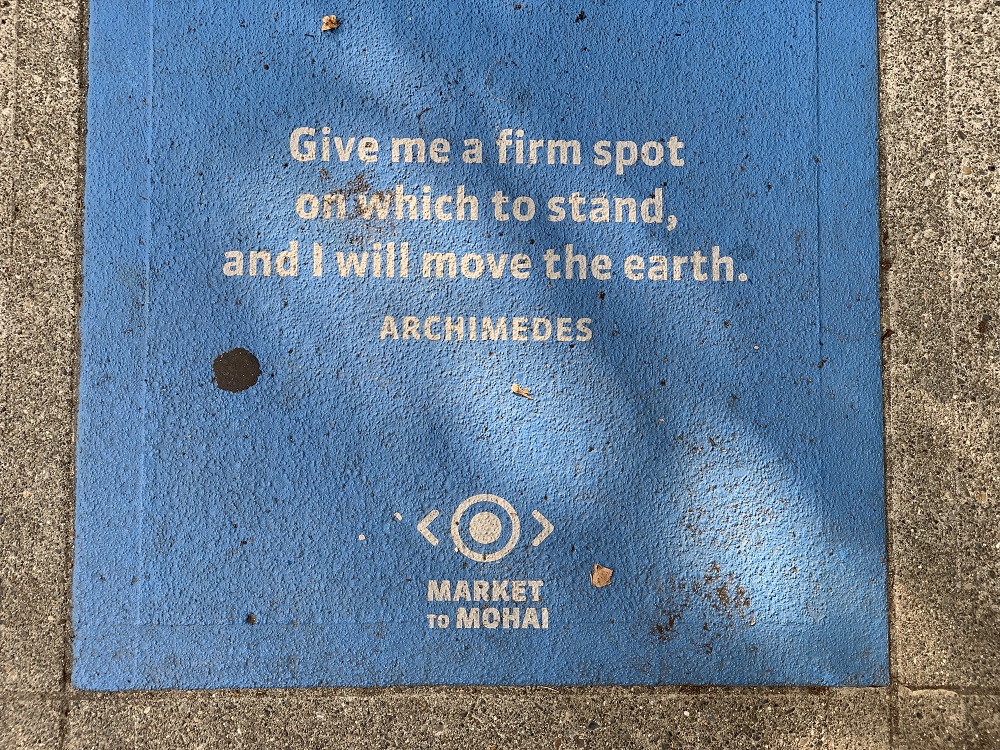
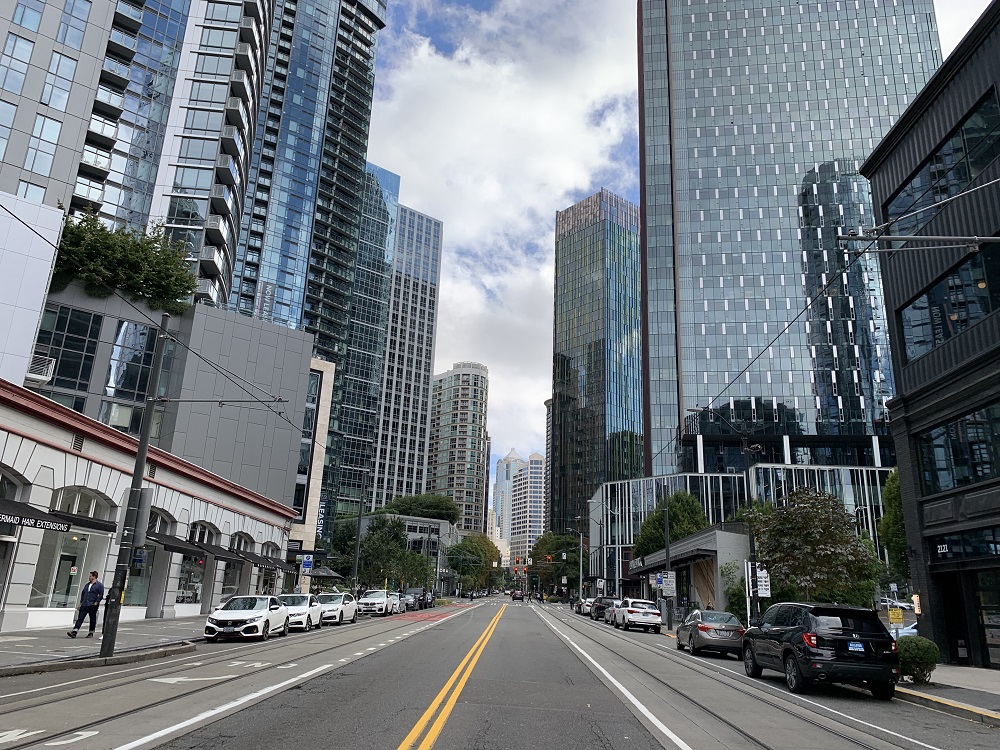
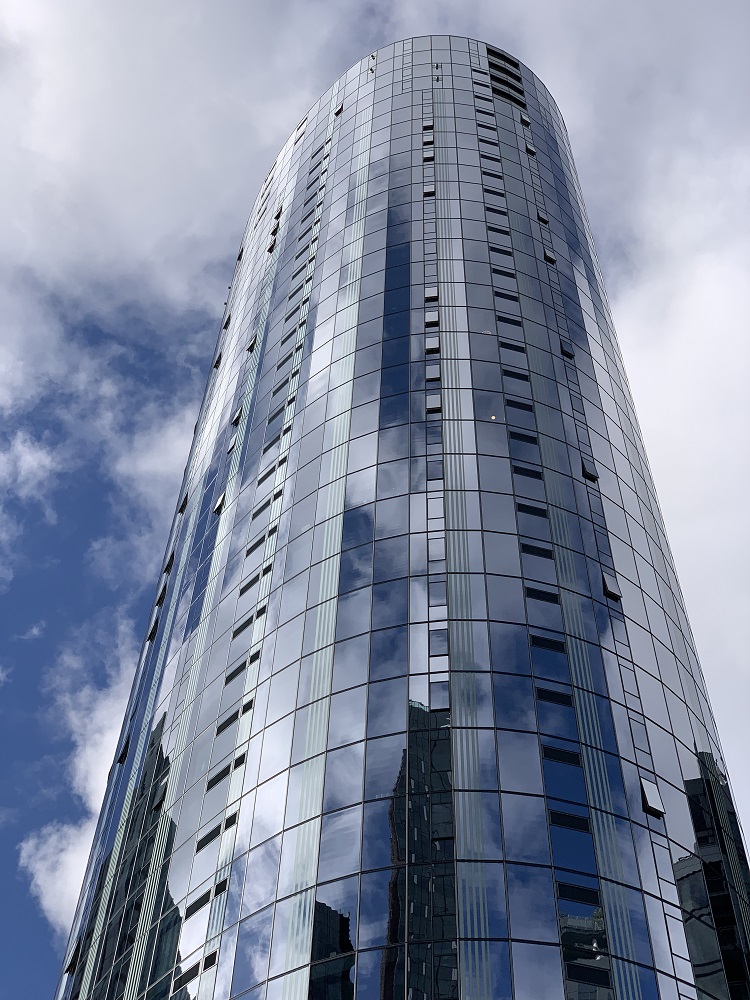
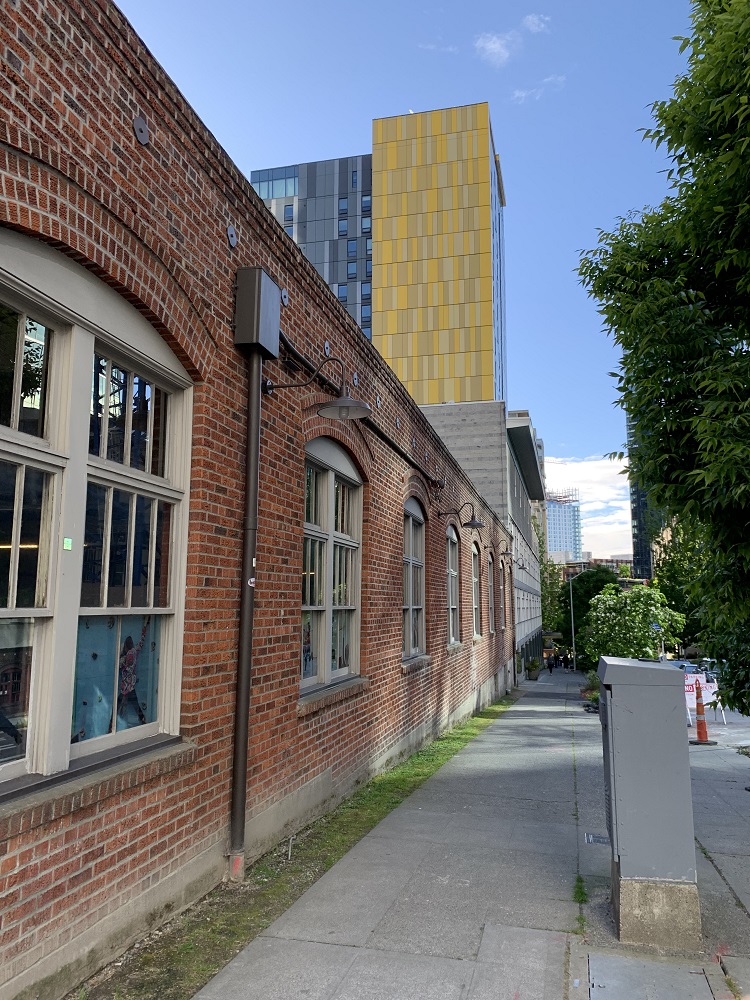
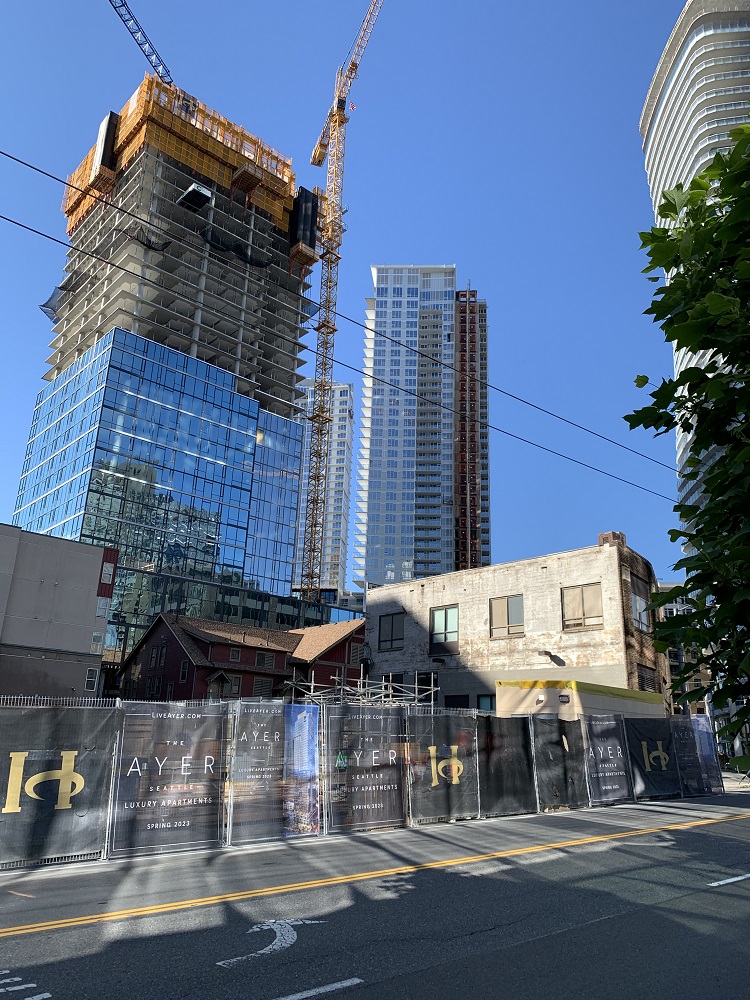
Broadway in New York City reopened this past week, and the Paramount Theater here in Seattle is, as well. ‘City and Colour’ is the alias under which the Canadian musician, singer, songwriter and record producer Dallas Green (40 yrs old), records under.The $1.2-billion expansion of the Washington State Convention Center has been three years in the making, and will be completed in summer 2022. Interstate 5 is just on the other side. The 10th-floor ballroom will provide views of Puget Sound.The Cornish College of the Arts building on Boren Ave (constructed 1915, traditional Norwegian Style, architect Sonke Englehart Sonnichsen), holding its own between the Seattle Children’s Research Institute: Building Cure at the back and The Ayer on the right, a new 45-story luxury apartment tower.The two apartment towers of 1120 Denny Way are complete, two stacks of white floors going up 41 stories. I’m trying to work up enthusiasm for the appearance of the black & copper structure in the middle – and not quite succeeding.A brand new Porsche 718 Cayman T* on Denny Way, waiting at the red light. (*I say it is a Cayman T because the double tailpipe & wheels match the picture of one on Porsche’s website). Even though the Cayman is sometimes called ‘the poor man’s Porsche’, this model starts at $70k. What a beautiful car, but it burns fossil fuels. Come on Porsche— make haste, and make it electric.Now I’m in the Cascade district north of the Denny Triangle. This is the skeleton of the old Seattle Times building where the newspapers used to be printed. Two office blocks, 16 stories, and 18 stories tall, will be built here. The three apartment towers at the back with the curvy sides are all on Denny Way.Looking west from Thomas Street and Boren Avenue North, and using my telephoto lens. Look for the golden elevator cage going up to the observation deck, in the middle of the Space Needle.The Gold Bar on 9th Avenue serves up cocktails and small plates & tacos. Kudos to them, for opening up their pandemic street space as soon as the rain had stopped. (That’s an active bike & e-scooter lane running along the pavement: something that patrons and the servers have to keep an eye on).There’s the sun, peering through the leaves in Denny Park alongside Denny Way.I took this picture (on the pavement by Denny Park) to remind me to look up/ determine how long the lever would have to be, to move Earth, in this famous statement from Archimedes. A discussion on physics.stackexchange.com provides the answer. The principle of a lever in balance is that on the one side, distance times weight, is equal to distance times weight on the other side: d1.W1 = d2.W2. Earth weighs 6×10^24 kg. Let’s make the load arm length (opposite of Archimedes’s side) 1 m long, and assume he can push down with the force needed for 60 kg of weight. Say that gravity where he stands, is equal to that of Earth’s, and that Earth’s weight is concentrated where it meets the load point on the lever. Then the lever’s force arm length (on Archimedes’s side) would have to be 10^23 m. That is a distance of some 10 million light years. (About 4 times the distance between our own galaxy, the Milky Way, and Andromeda Galaxy, the nearest one to us). If Archimedes pushed down on this intergalactical, perfectly rigid lever for 3 or 4 feet, Earth on the other end (10 million light years + 1 m away), would move by the diameter of an electron.Snapping a picture while crossing Westlake Avenue near Denny Way, and looking south towards downtown .... and the McKenzie luxury apartment tower nearby is a cylinder of blue, gray and white tiles.
I took the No 10 bus to downtown to go to the dentist this morning.
Here are a few pictures.
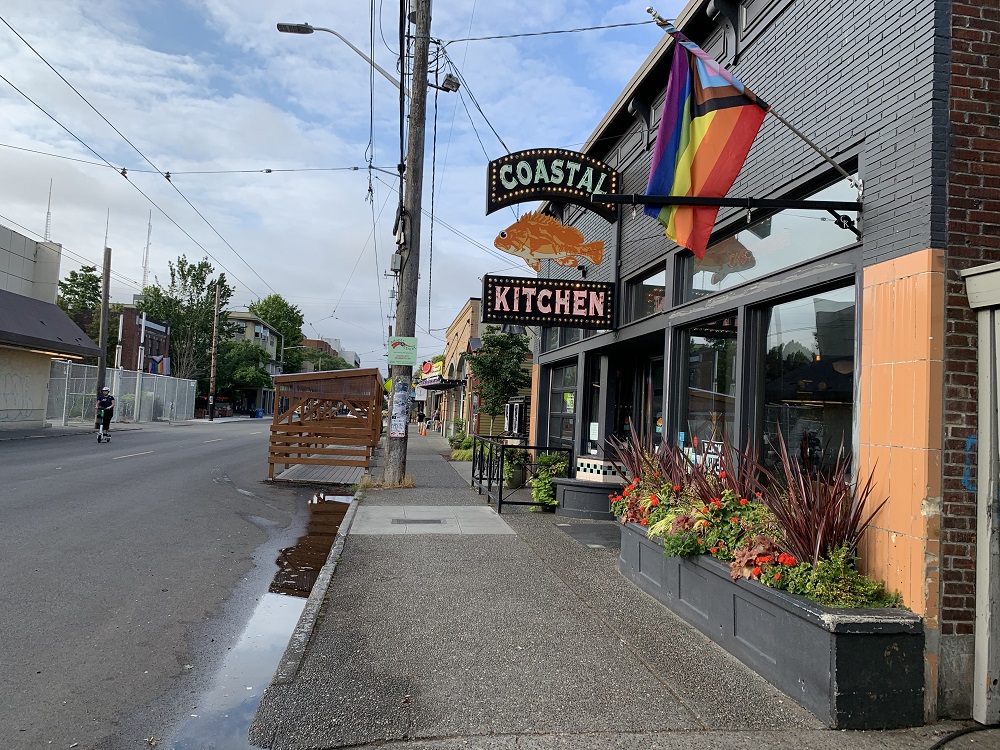
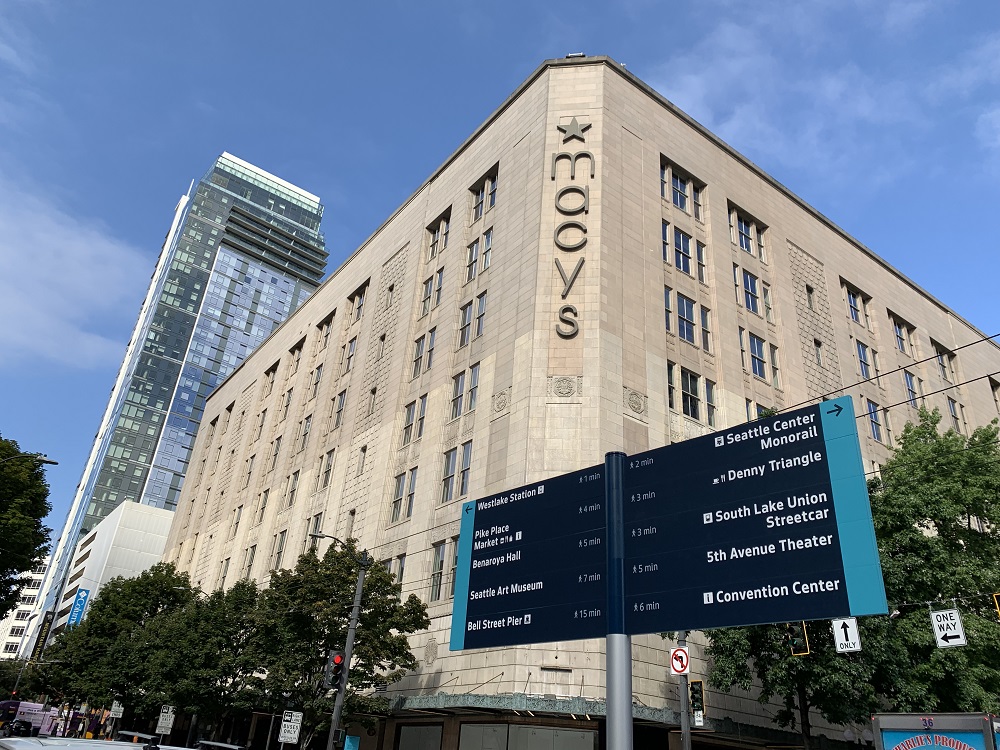
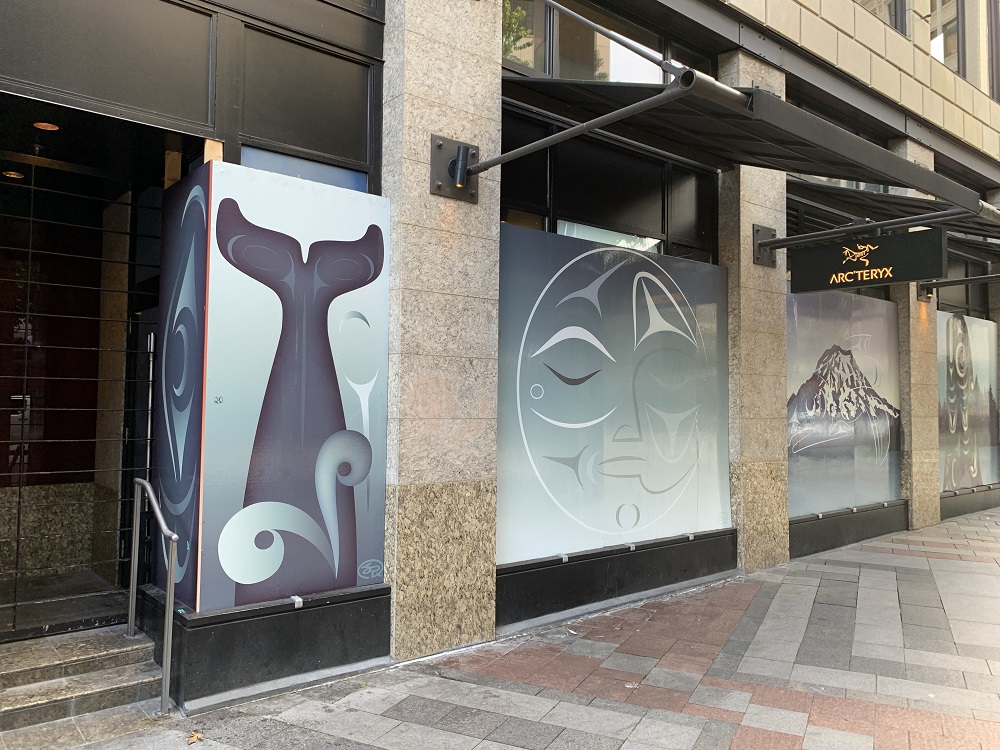
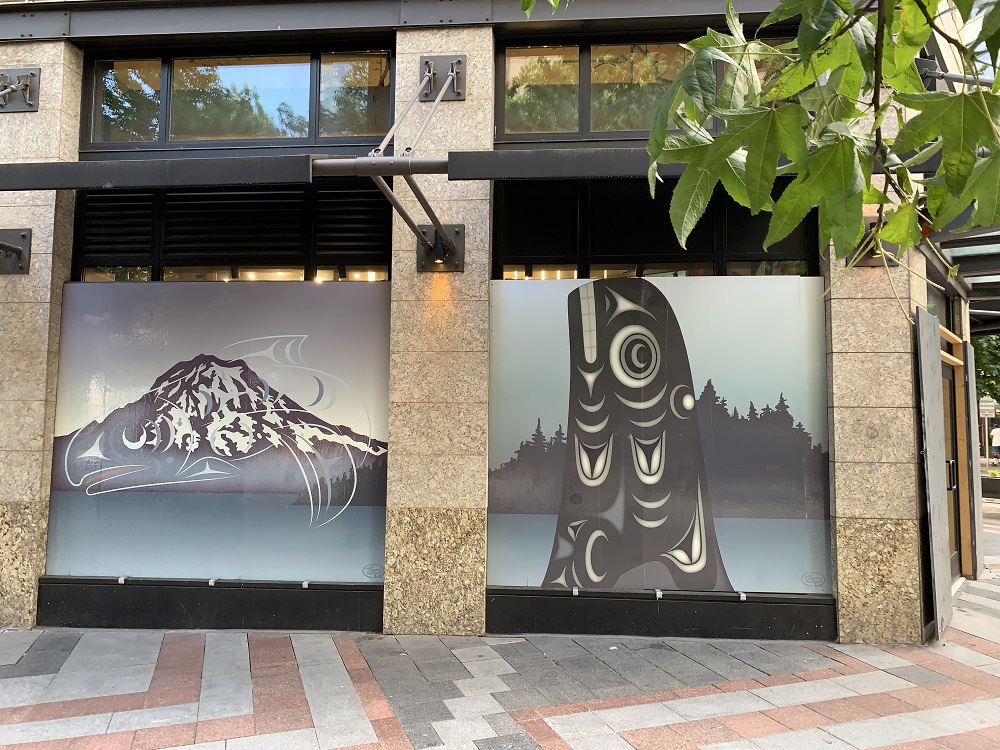
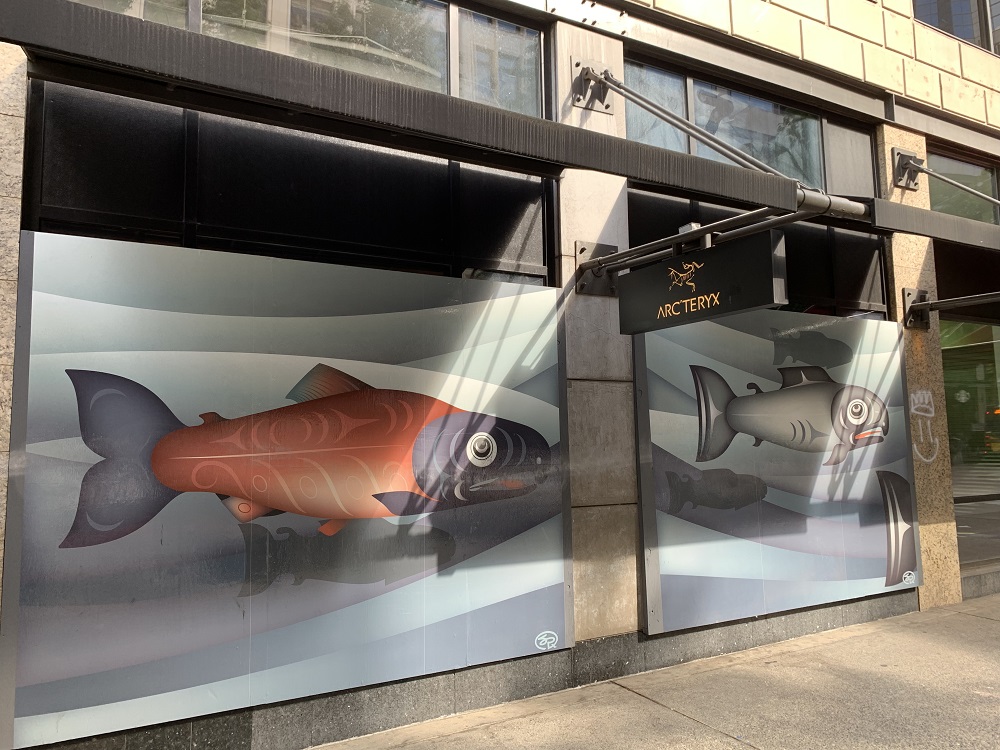
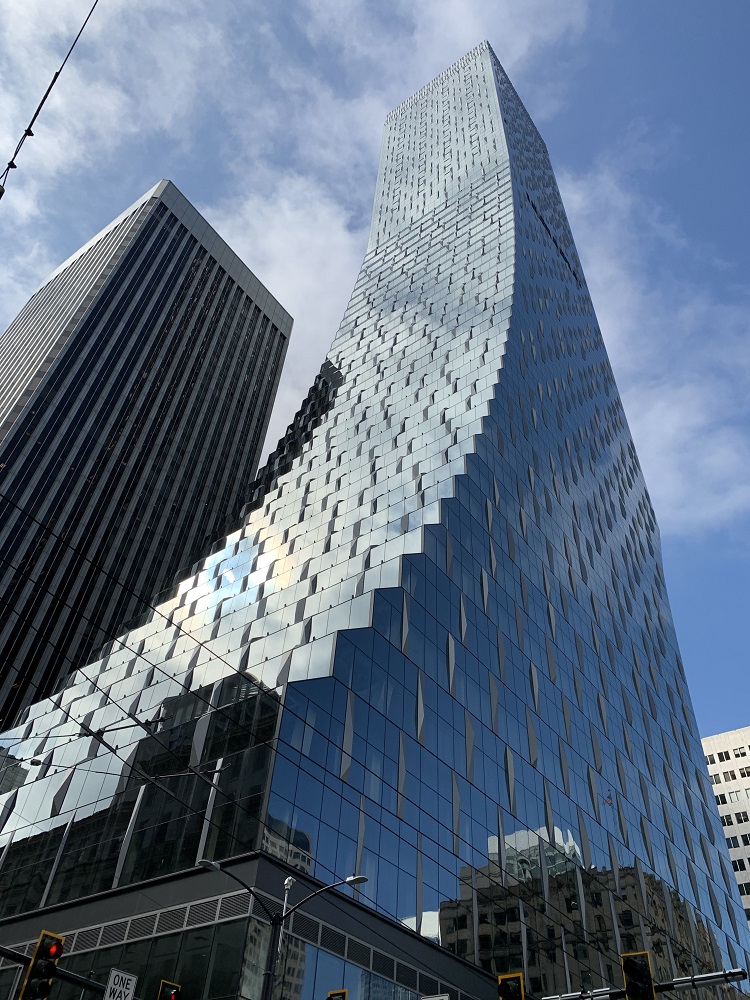
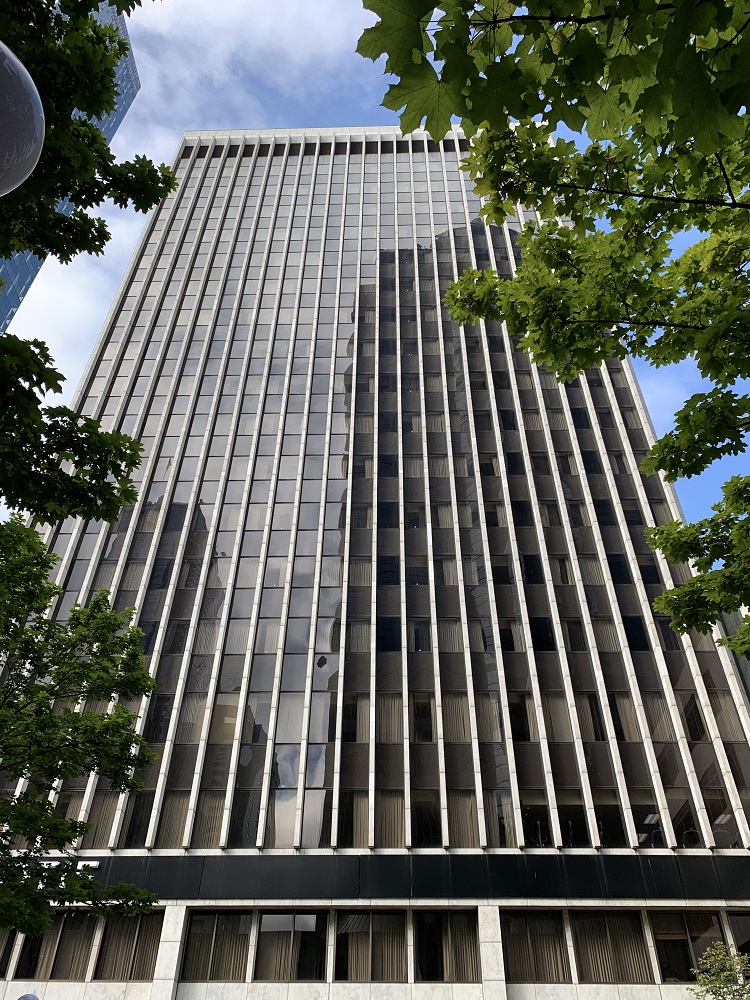
Looking south on 15th Avenue. Coastal Kitchenrestaurant is open but only Wednesday through Sunday. (The combination rainbow-transgender flag needs a little straightening out, but that’s OK). The former QFC grocery store building on the far left has been deserted & boarded up for a few months now. There is a non-scalable fence around the parking lot. The guy on the electric scooter is using the street (not the sidewalk: good), and wearing a helmet, also good. There are three e-scooter operators in the city: LINK, Wheels, and Lime.There are new signs at Westlake Center, for locals and tourists alike. The 1929 Macy’s building was sold in April for $580 million. The new owners plan to renovate the 85,000 sq ft-ground floor, mezzanine and second floor to accommodate new retail stores. Amazon is leasing the upper floors, but I doubt there are any workers in there. Amazon pushed back a return to the office for its workers to 2022.I love the Pacific Northwest artwork at the Arc’teryx outdoor equipment & clothing store by Westlake plaza. The moon is my favorite. (I could not find the name of the artist).On the left would be Mount Rainier, and that has to be an orca fin in Puget Sound, on the right.And finally some salmon. That’s a sockeye salmon (Oncorhynchus nerka) on the left, also called red salmon. Salmon are anadromous fish: spending most of their adult lives at sea, but return to fresh water to spawn. Catadromous fish (example: the North American eel) spend most of their lives in fresh water, then migrate to the sea to breed.Lastly, I had to go check out the completed $600 million Rainier Square Tower with its sweeping step-up side on 5th Avenue. Floors 39 to 58 at the top are ‘residences’ (apartments). The 1 bed -1.5 bath 896 sqft units start at some $4,400/ month. I’m sure a 2 bed 2 bath would be about double that. (Eek).Right across the street from Rainier Square Tower are the straight lines of this 1996 building that used to be a Red Lion hotel. I sat in its ball room in 2011, listening to my firm’s partners drone on about the value that a good brand brings to a firm (bottom line: you can charge more for your product or service than your competitors can). Then later that year in 2011, the Red Lion was sold. It was sold again in 2014, and a makeover made it into ‘Motif Seattle‘, now owned by Hyatt. Google Maps says there is a Tesla destination charger in its parking garage down below. (Destination chargers are installed by businesses and land owners for public use, but have a slower charging speed than superchargers).
Four weeks had gone by, and this morning it was again time for my little rental car to go back to Hertz, on 8th Avenue in downtown Seattle.
The pictures are from my walk back, along Pine Street, and up to Capitol Hill.
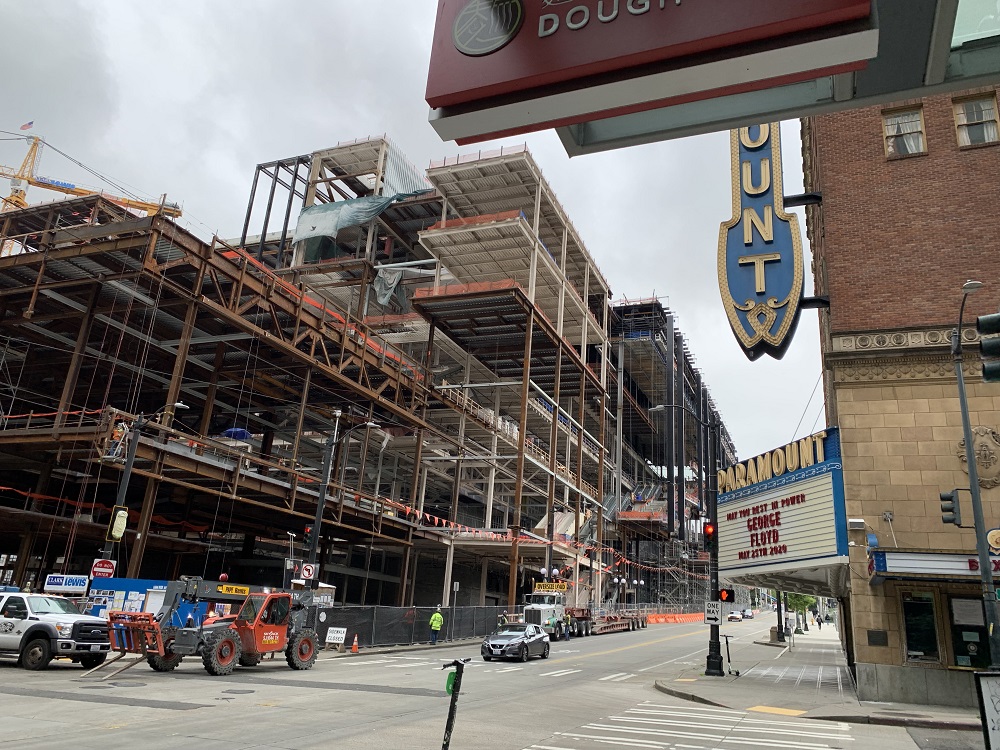
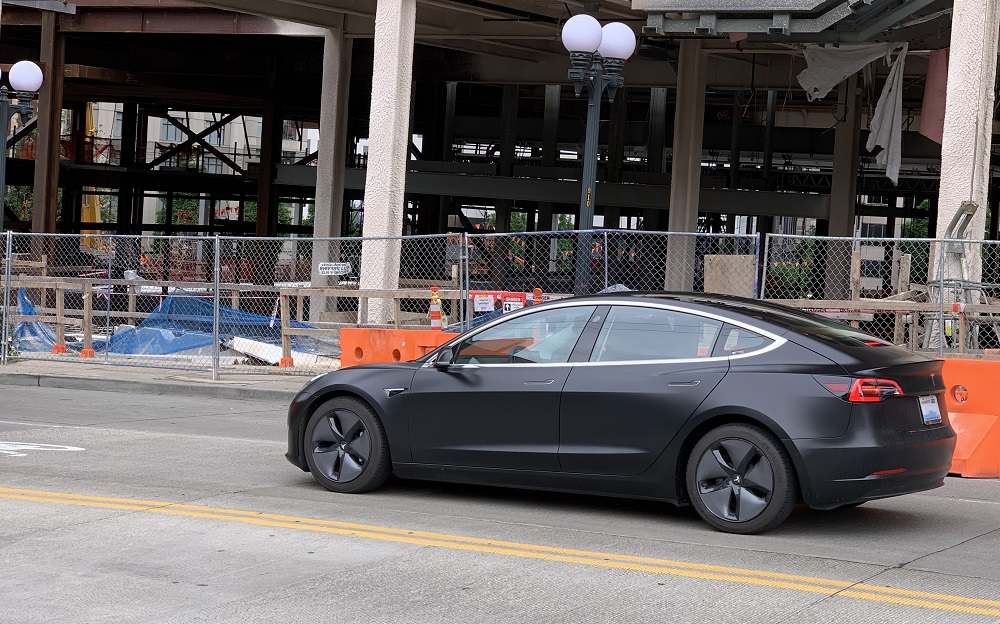
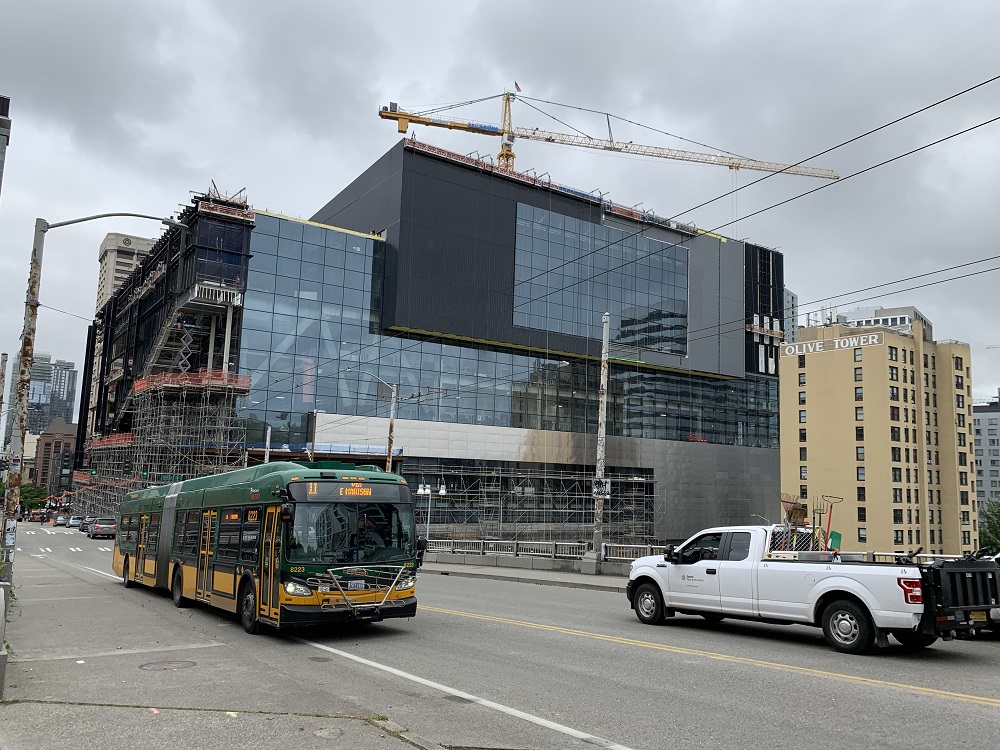
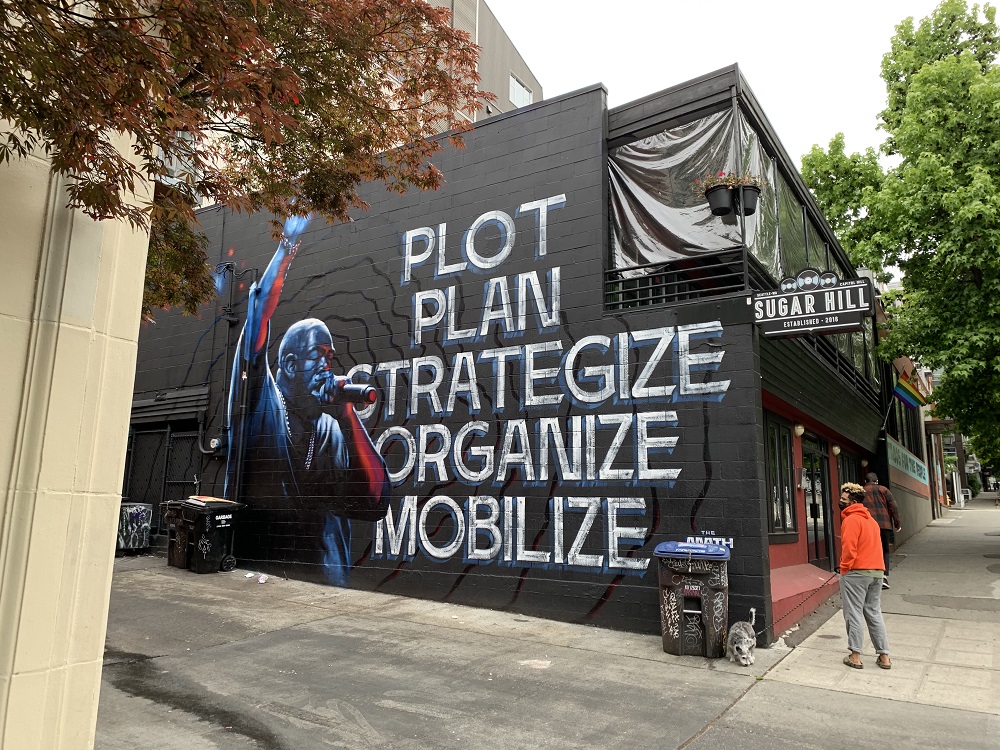
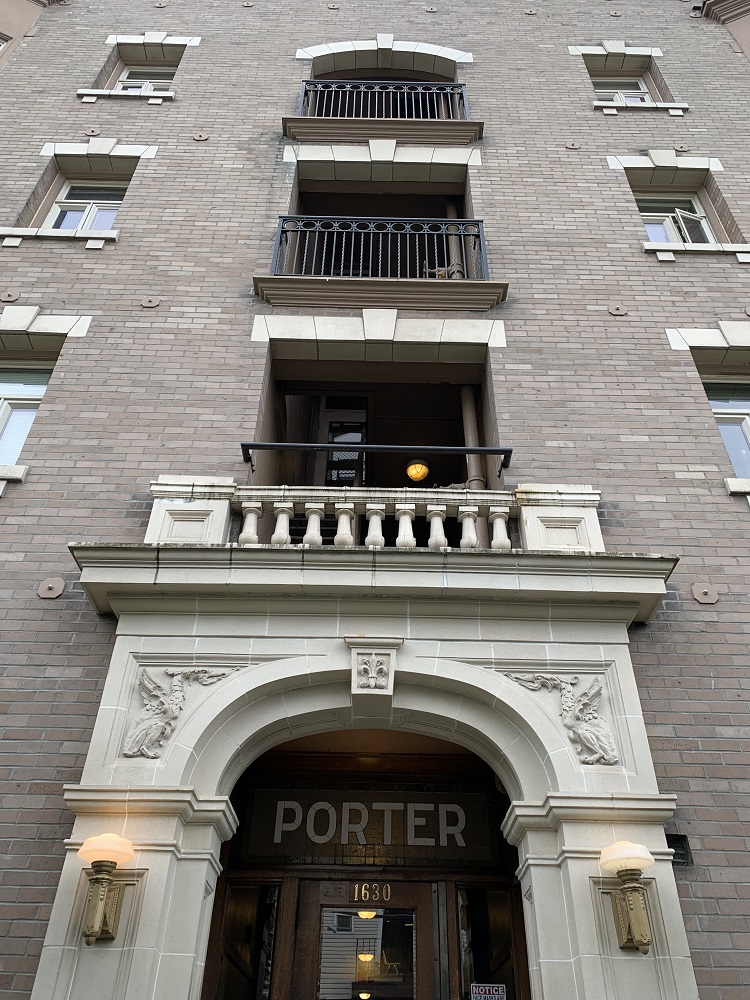
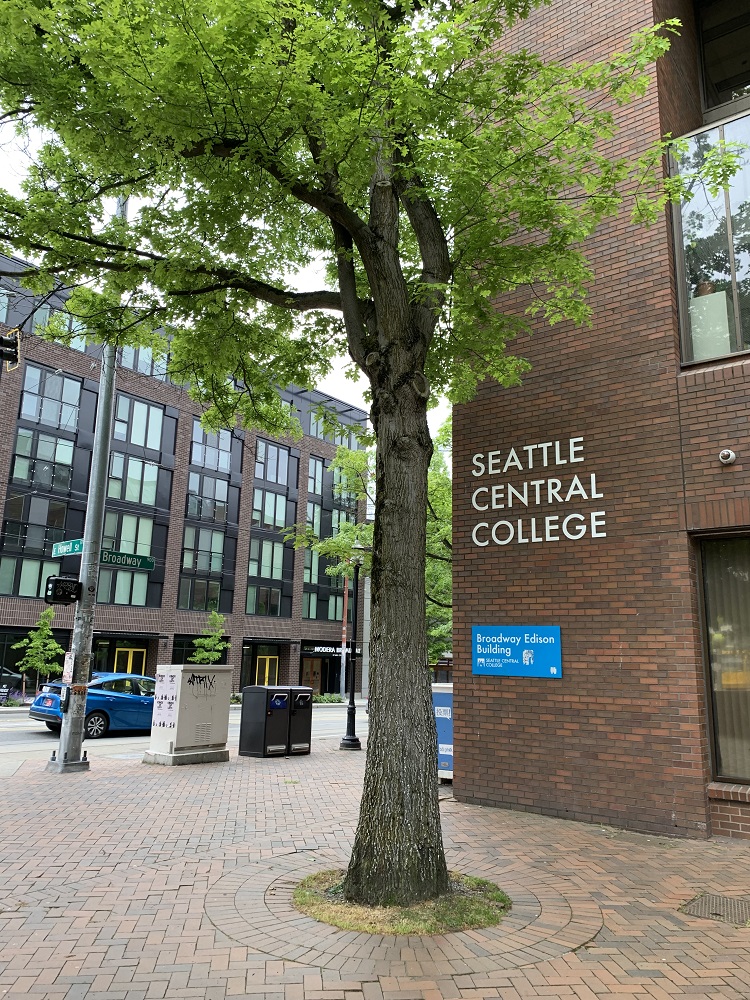
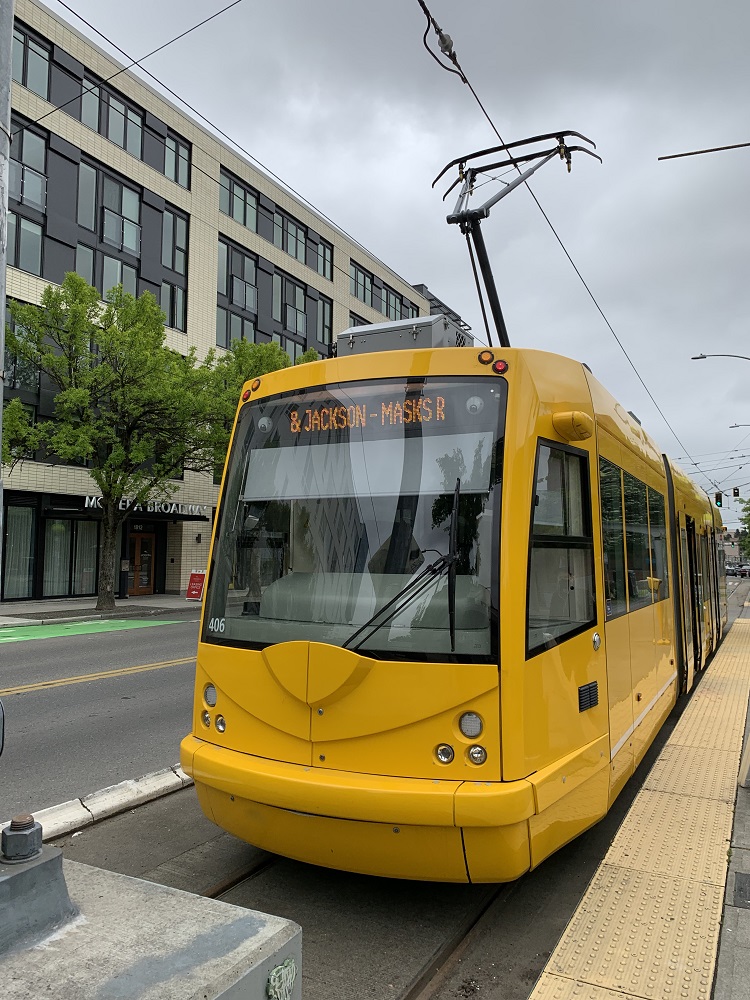
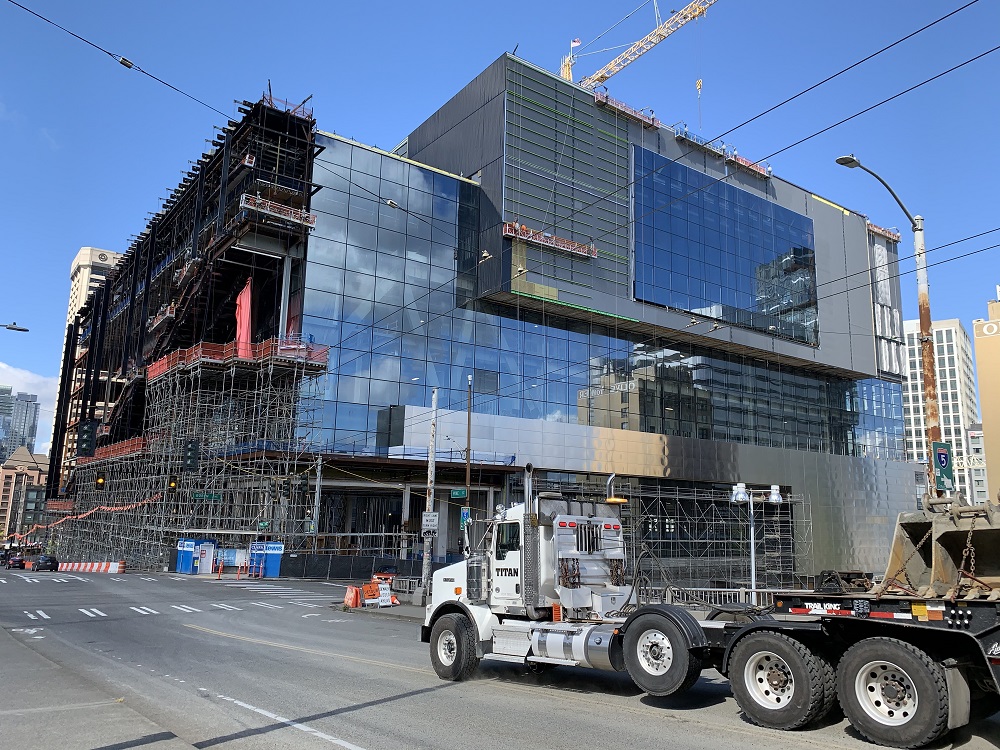
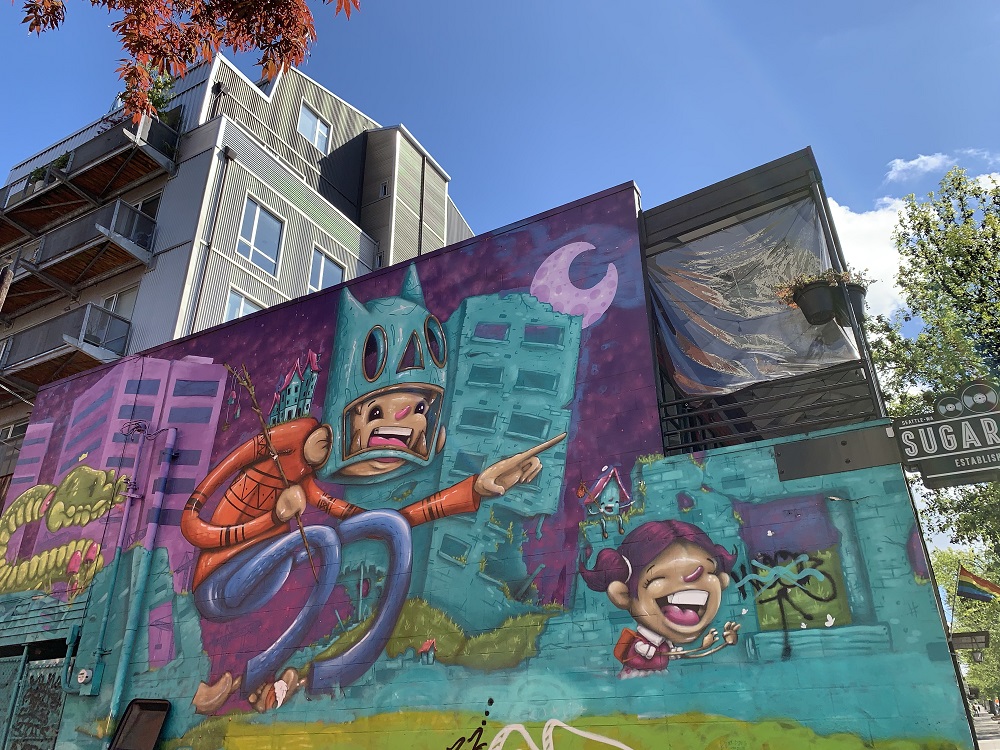
The construction of the Washington State Convention Center expansion can probably pick up its pace, now that the weather is better. Hopefully most of the workers have been vaccinated. The Paramount Theater bill board says ‘May you rest in power -George Floyd- May 25th 2020’.Today in ‘Model 3 spotting’: a matt black one. The matt black is not paint, but an after-market film wrapped onto the car (cost: about $5,000). This car has chrome trim on the door handles & windows. (Looks like the owner put some black on the door handles). The 2021 Model 3’s have ‘chrome delete’ trim (black trim, no chrome).The stainless steel cladding on the convention center extension’s east side is coming along. Hopefully, its shine will not be tarnished by the Pacific Northwest weather.There is new artwork on the Sugar Hill bar’s wall on East Pine Street: a Black Lives Matter organizer’s check list, of sorts. (Cute little doggie at the corner of the building).The Porter apartment building at 1630 Boylston Avenue was built in 1917. Its style is called ‘Vernacular’: architecture characterized by the use of local materials & knowledge, usually without the supervision of architects (source: Wikipedia). The brick building has an open center bay and terra cotta lintels on the main windows.The oak trees by Seattle Central College on Broadway have their new leaves. On the left, across the street, is 1812 Broadway, a new 7-story, 133-unit apartment building.A streetcar on the First Hill line, at the end-of-the-line stop called Broadway & Denny. These are Czech-made, model name Inekon121-Trio. This car has a battery, for ‘off-wire’ operation (a section of the First Hill line has no overhead electrical cables).
I went down to Denny Way and Stewart St to check up on the construction there, this afternoon.
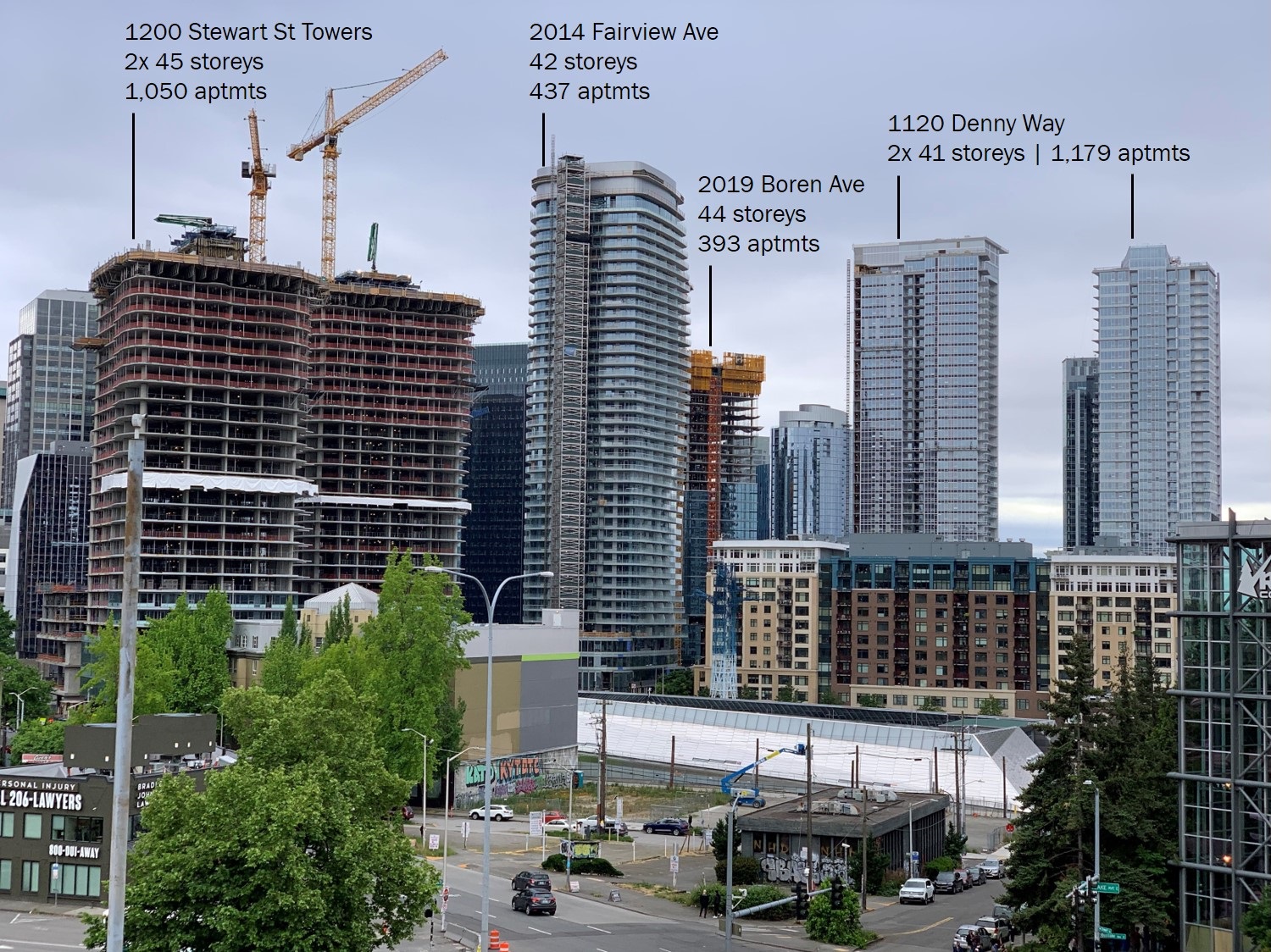
I counted 22 floor slabs for the two apartment towers at 1200 Stewart St. That is just about half of the 45 storeys they will each have at their completion.
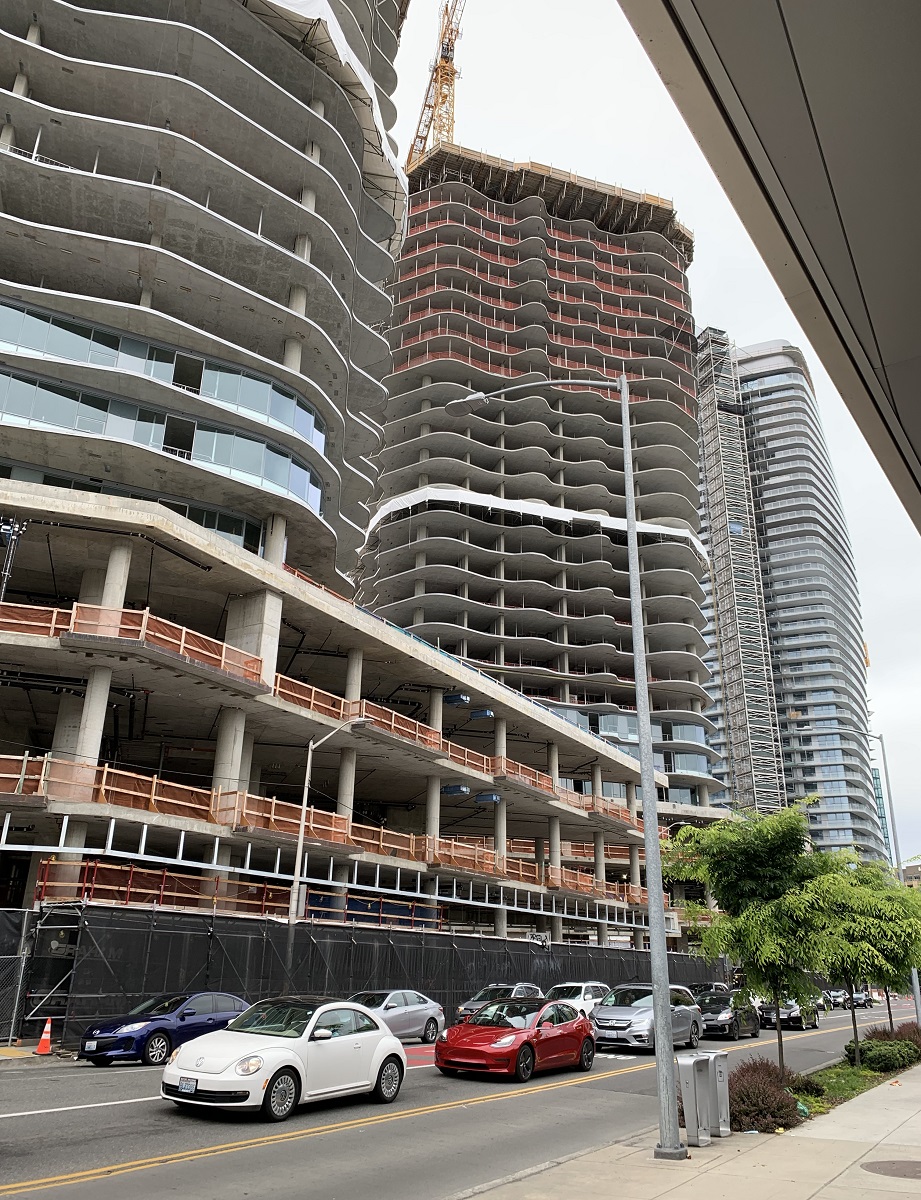
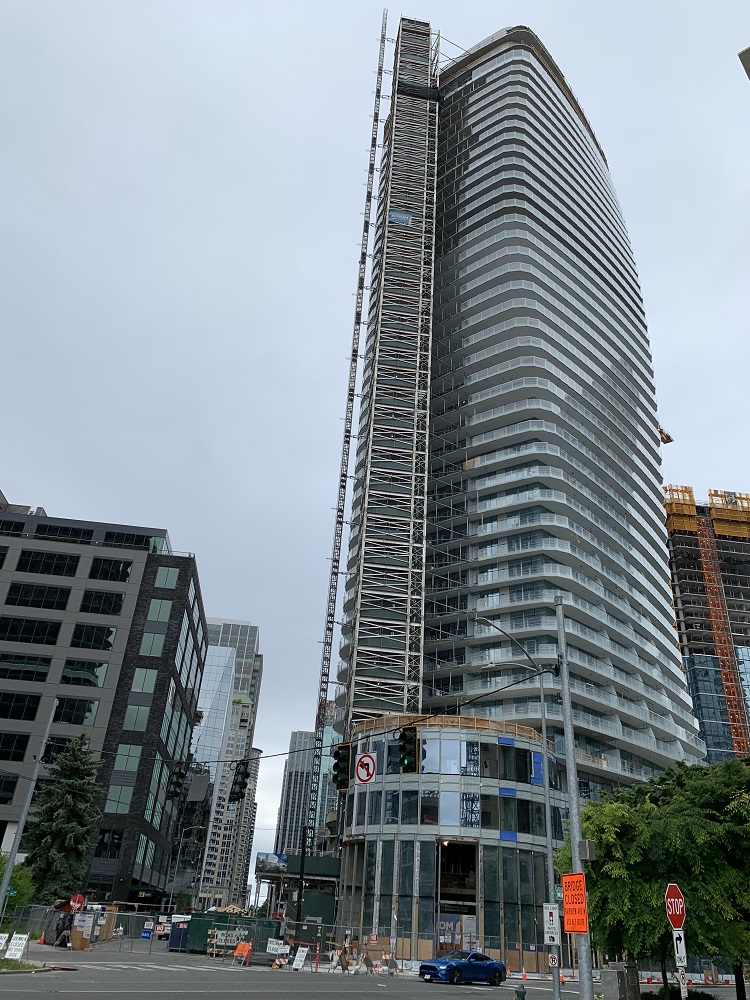
The two apartment towers at 1200 Stewart Street sit on a three-story podium. Red Tesla Model 3 on the street below. Nice car :). The tower on the right is 2014 Fairview Avenue, another apartment tower.Here’s a closer look at the 2014 Fairview Avenue building with the Denny Substation behind me. It will have 42 storeys, and by my count this is it. Its construction has topped out.Here’s a view after I had walked up along the Denny Way overpass over Interstate 5, from the elevation provided by Bellevue Avenue. It’s amazing that those two towers on the left will still get built up with another 20 floors. Added together, these new buildings will add 3,000 new apartments along Denny Way.
Here are pictures from Sunday, from my walk around South Lake Union.
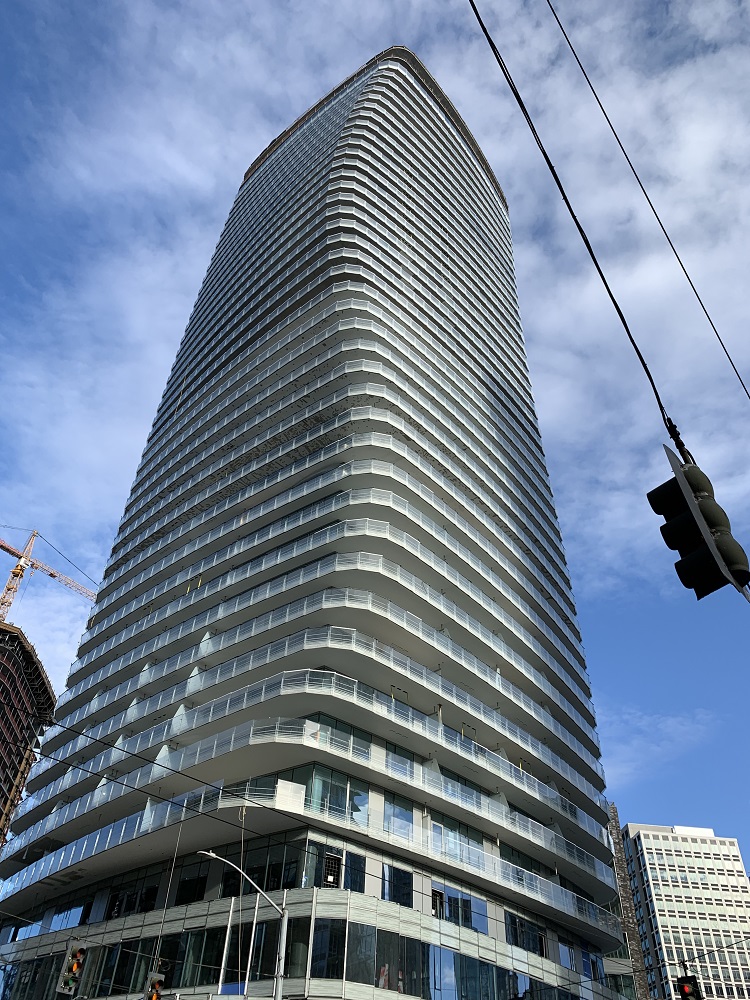
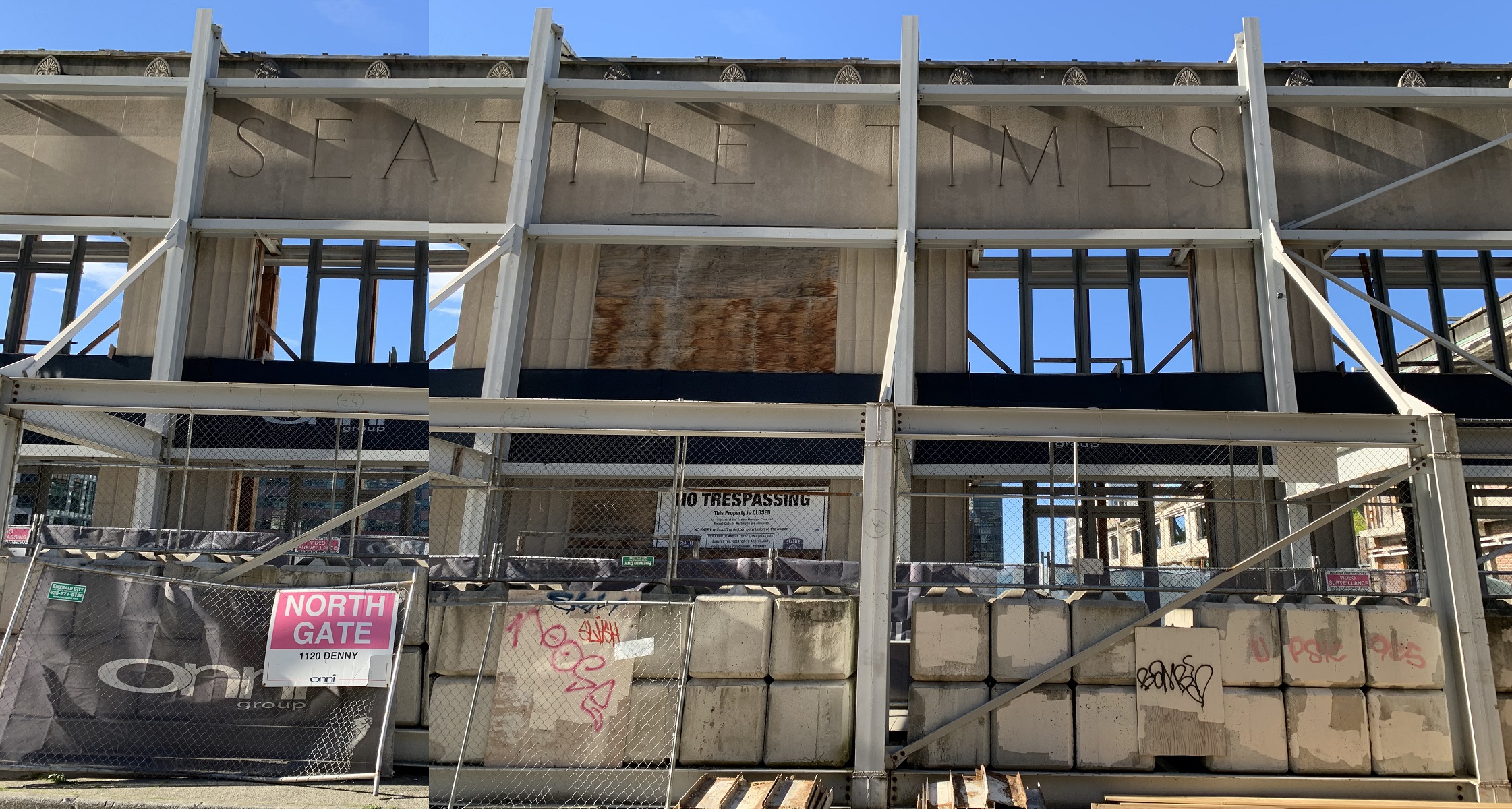
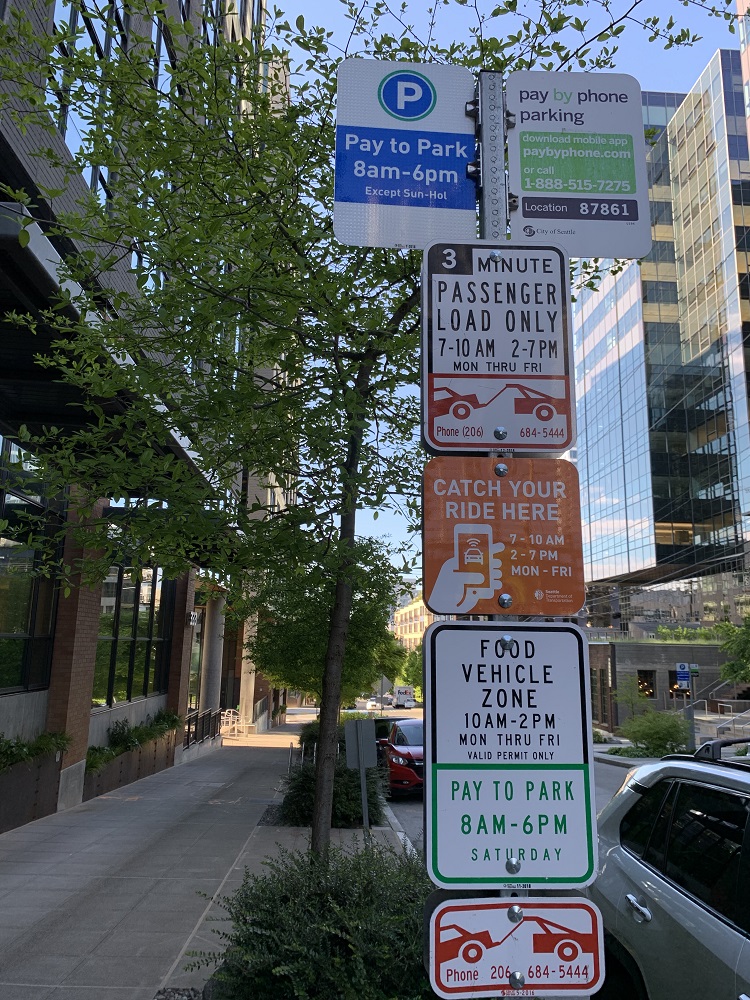
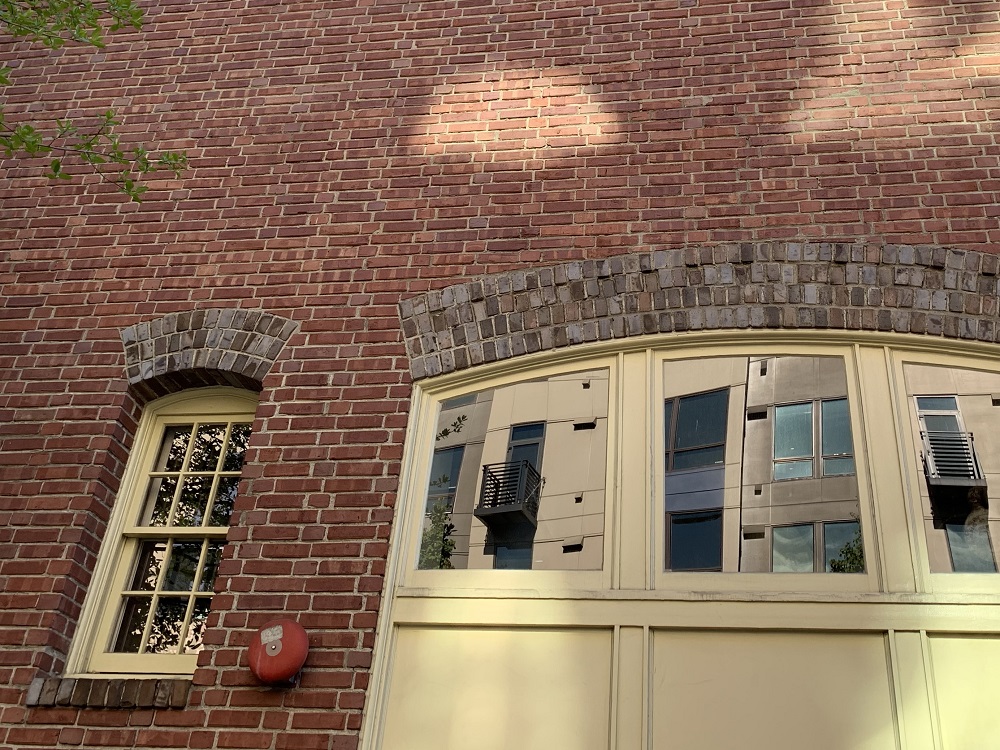
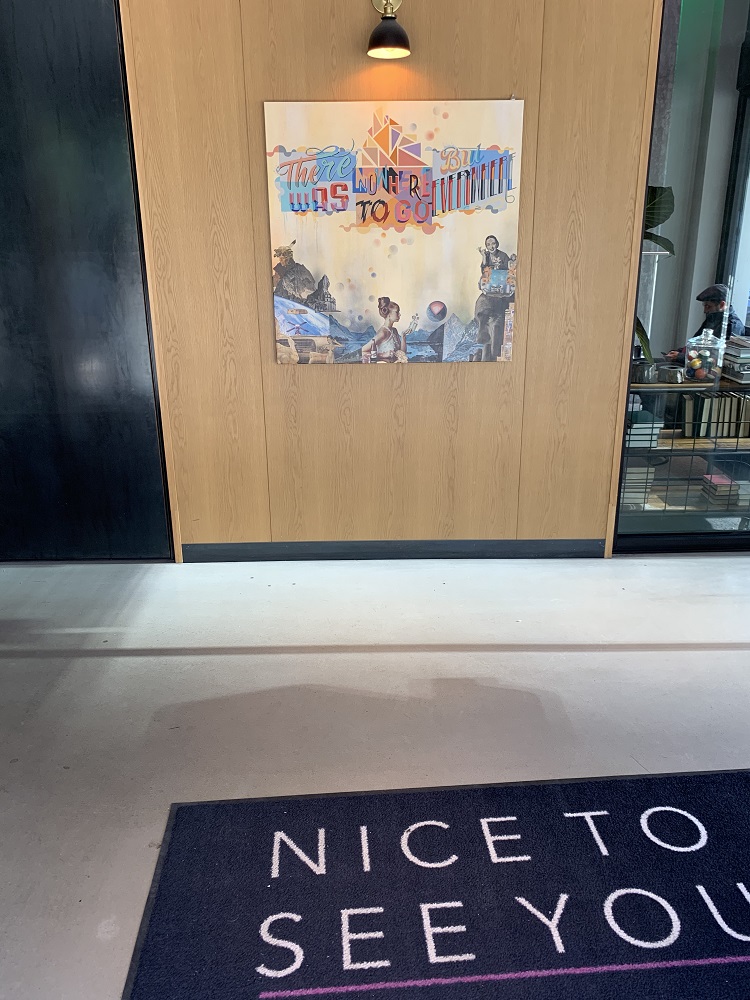
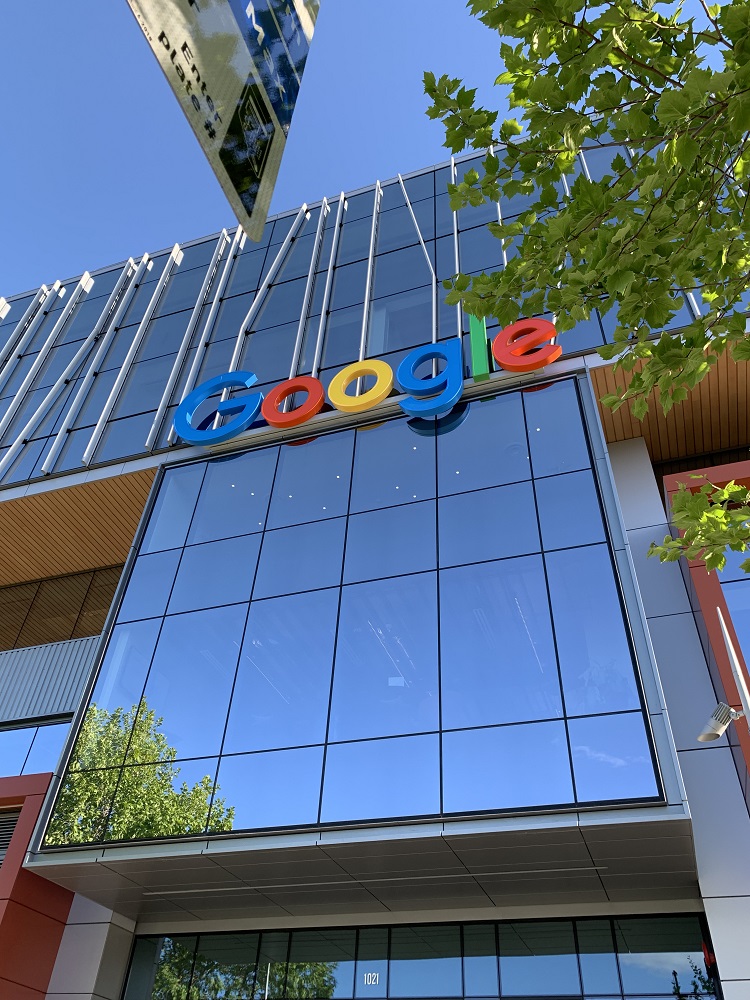
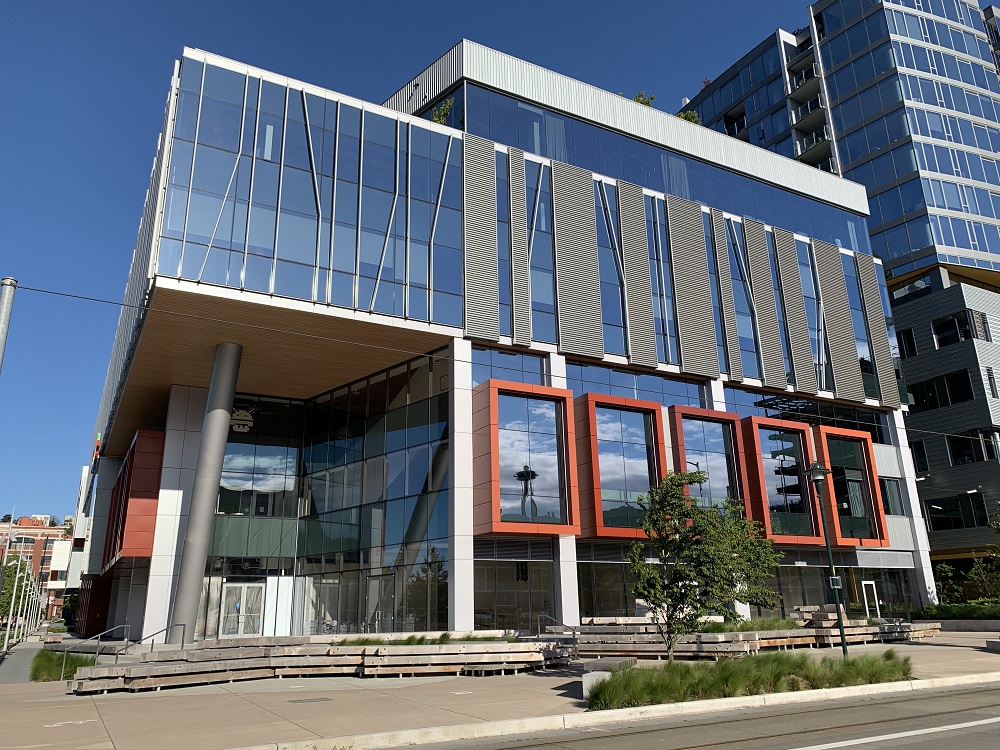
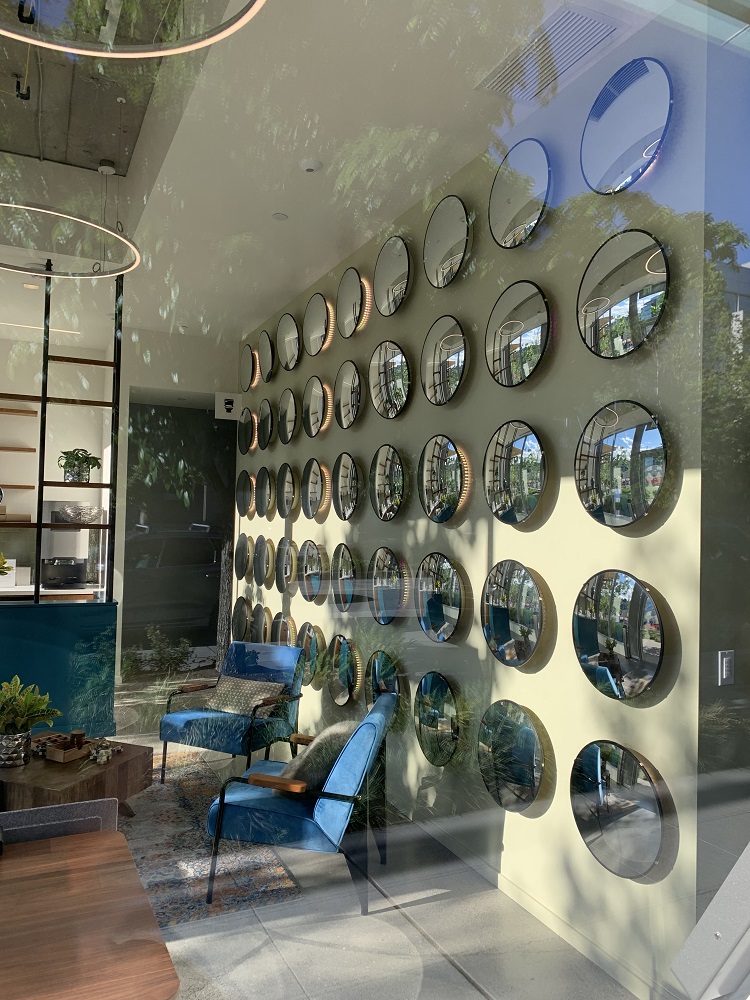
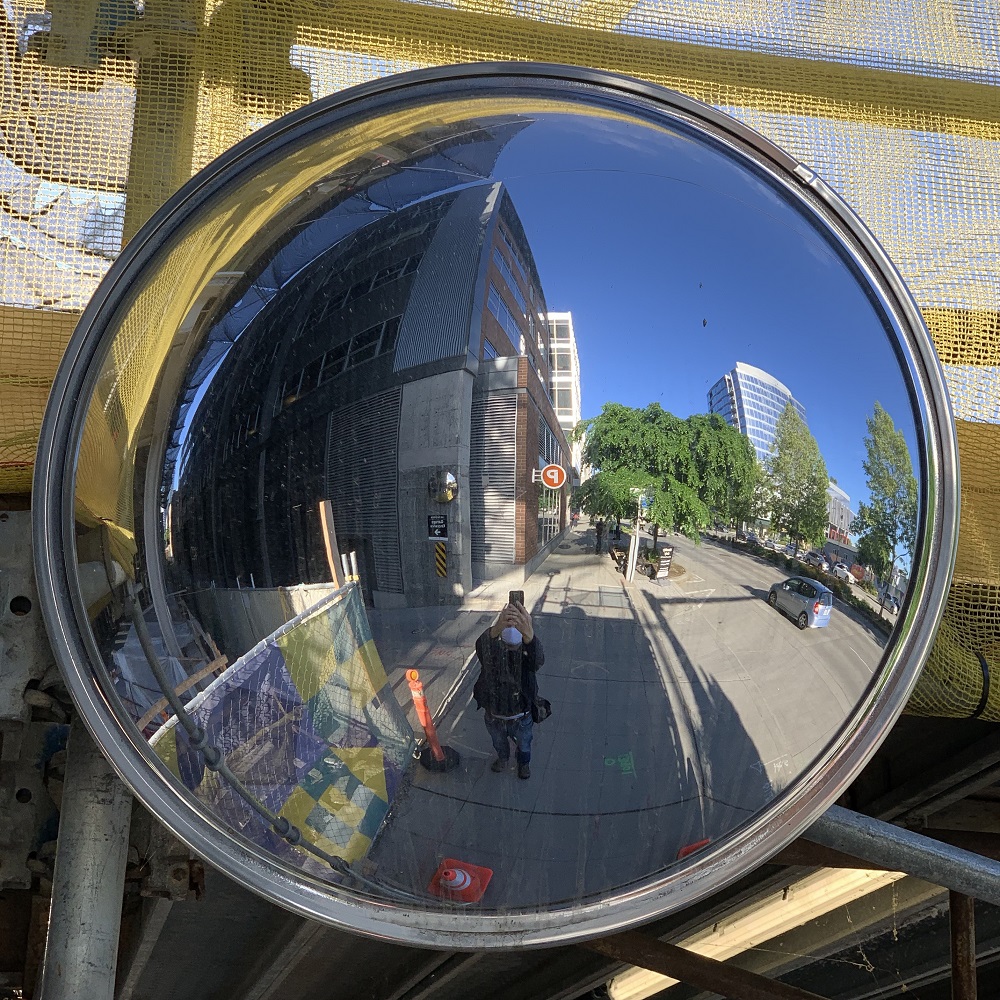
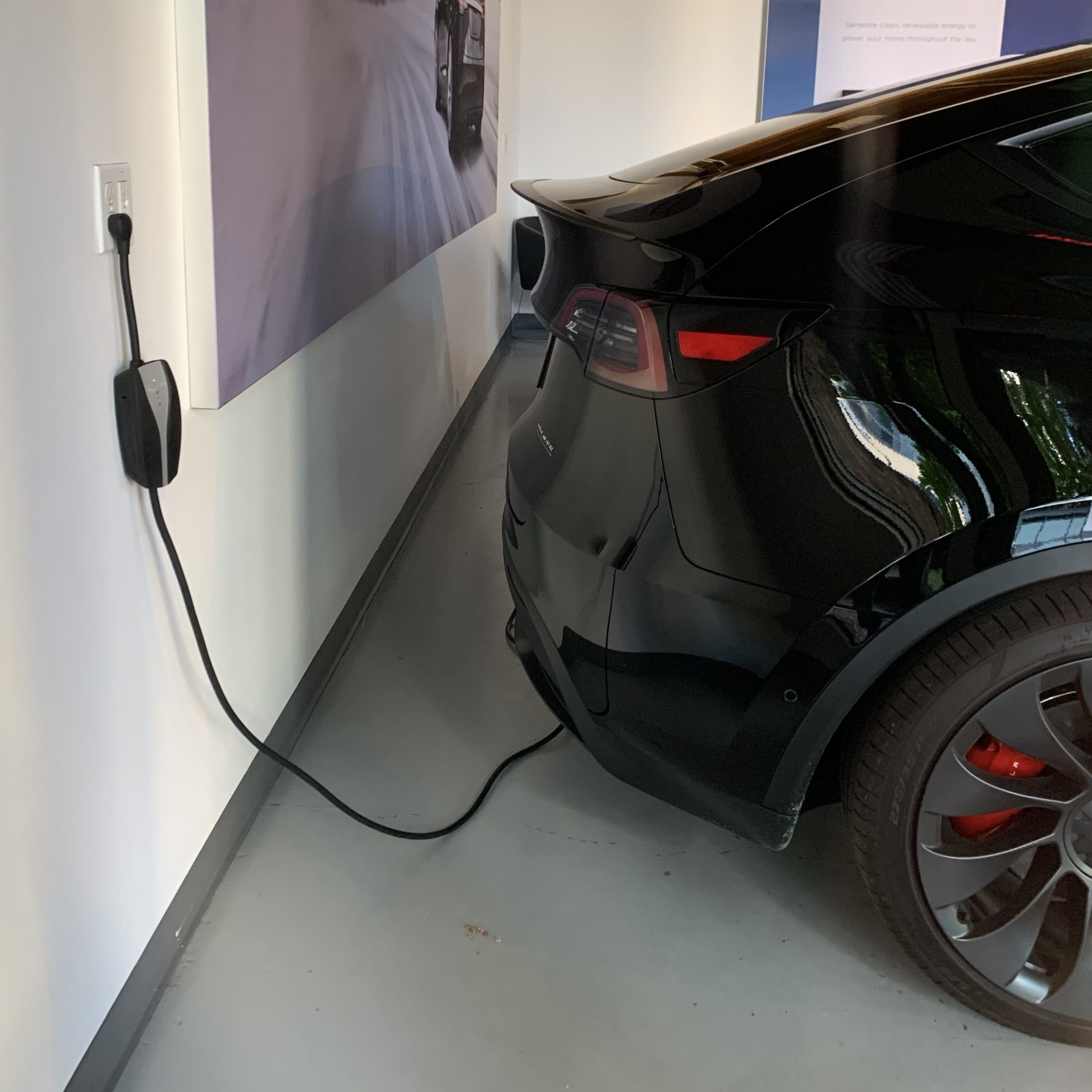
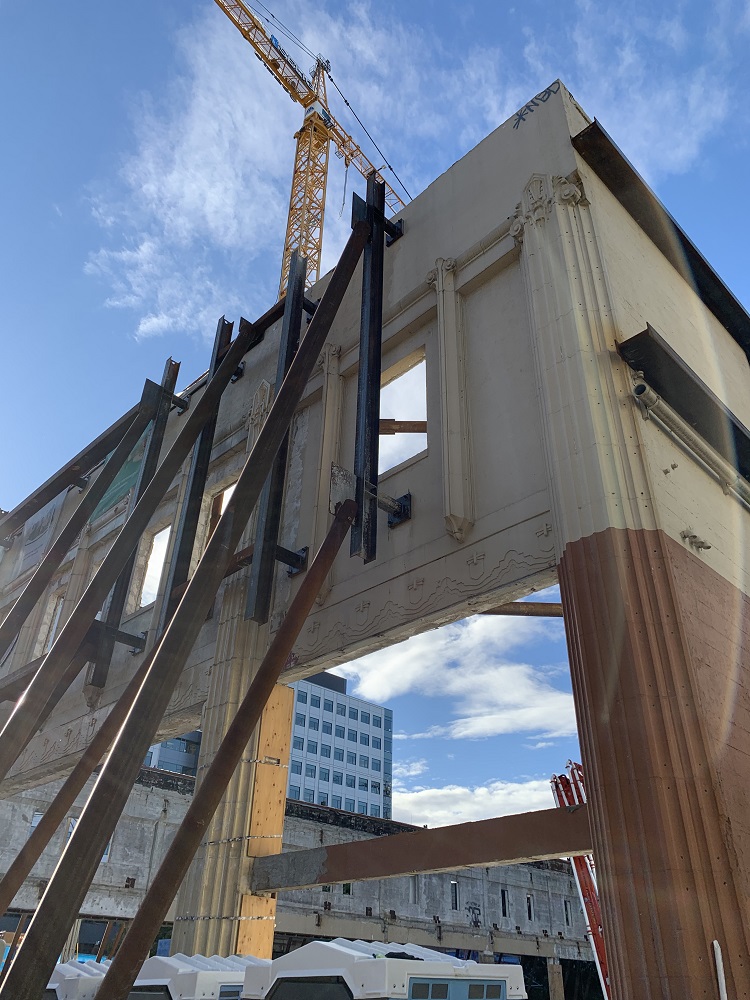
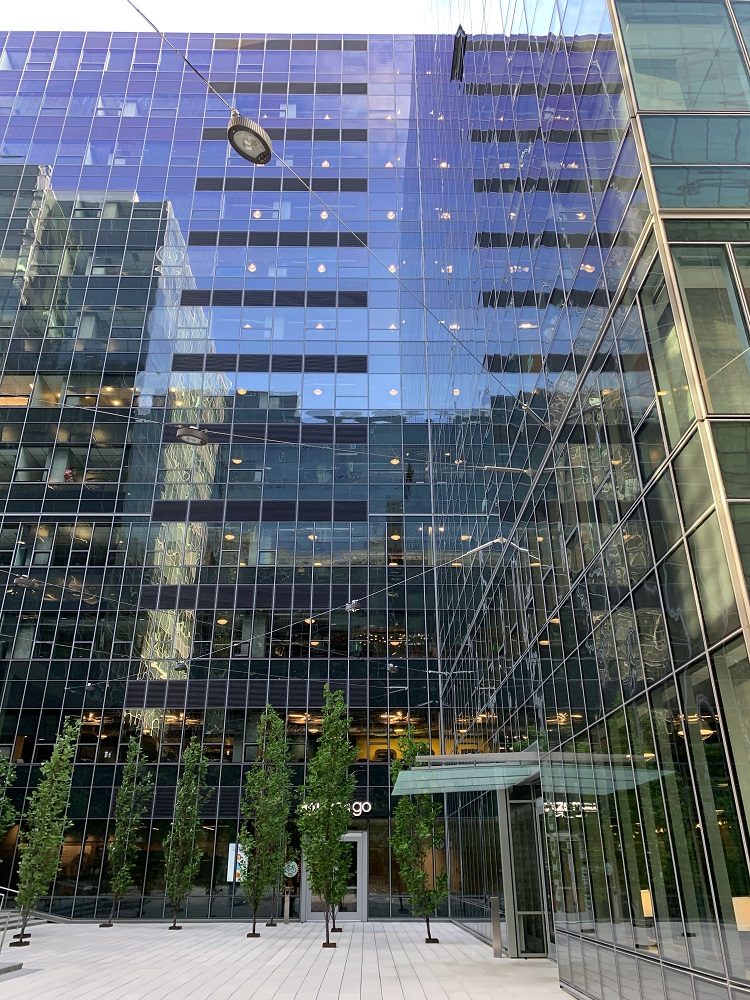
Out of the big hole that there once had been, a big building is rising. I was snapping the Washington State Convention Center’s expansion, seen here from the corner of Howell St and 9th Ave, when this Tesla Model 3 drove into my picture.Walking by Spruce Street School‘s brick building on Virgina Avenue, on the way to South Lake Union. The private school educates kids from kindergarten, through fifth grade ($28,650 per year per student).Here’s the Cornish College of the Arts (brown building), getting squeezed by new 44-storey glass-and-steel apartment towers on two sides, but still holding its own. The building was designed by architect Sonke Englehart Sonnichsen in the traditional Norwegian style. Constructed in 1915, it was used for Seattle’s Norwegian cultural and fraternal organizations until 1948. It hosted the City Beat disco club from 1974, which became Boren Street Disco. In the late 80’s it became the home of The Timberline: a country western & mainly gay dance club, renowned for its 25c beers, free peanuts (with shells thrown on the floor), Wednesday lube wrestling tournaments, country line dancing, and its Sunday Tea Dance. Sadly, the Timberline closed in 2003. (Information from seattlebars.org).A sign at the corner of Denny Way and Fairview Avenue. There is construction all around, and it will go on for at least two more years.Here is the 2014 Fairview Avenue apartment tower, a 42-story structure with its languid ‘S’ corner line, offering 437 apartment units and retail space at ground level. It’s a far cry from the little Denny Square strip mall and dry-cleaning joint that had been demolished to make room for it.I spliced together two pictures to catch all of the S E A T T L E T I M E S lettering. This used to be a 3-story building, occupied by the Seattle Times newspaper from 1931 to 2011. All that remains is the façade. Two office towers (16-story and 18-story) are to be constructed here, but the work has not yet started in earnest.A cluster of parking instructions. You have to pay, and the assumption is that you have a smartphone to do it with. There are no parking meters! Better to just catch public transport, or your Uber or Lyft ride right here.Here’s another brick building with a long history. Now called Amazon Van Vorst (it’s at 426 Terry Ave N), it was built in 1909 for the Club Stables, and had room for 250 horses. The building was then a furniture outlet, a transfer & storage facility, and from 1941-74, it housed the C. B. Van Vorst mattress factory. Then it sat empty for two decades, before it was declared a City of Seattle Landmark. (Information from HistoryLink).Here’s the minimalist lobby of the Moxy Seattle Downtown budget hotel. ‘Nice to See You’ says the floormat, and ‘There is Nowhere to Go but Everywhere’, proclaims the artwork on the wall. (Well. Maybe in 2023, but not just yet).All right. Finally I arrive at my intended destination, the new-ish building called Google Valley, the tech giant’s new Seattle offices, on the shore of Lake Union.The view from Terry Avenue. Look for a reflection of the Space Needle in one of the window panes, and for a white image of The Bugdroid, also called Andy, the mascot of the Google Android smartphone operating system.The entire lobby wall of the Helm apartment complex in the same building is decked out with traffic mirrors.And another one, put to real use to see oncoming traffic on Mercer Ave, at a construction site. (And put to use by me for a selfie picture).Making my way back now to where I parked my car, and walking by the Tesla dealership on Westlake Avenue. This all-black Model Y is getting a trickle charge from a regular 110 V wall outlet. It’s only getting 3 or 4 miles per hour added to its battery, but that’s OK. It might be all it needs for the test drives it is used for by potential buyers.Once upon a time some 15 years ago, I had Firestone tires put on my Toyota Camry in this old Firestone Auto Supply and Service Building from 1929. The 2-story building’s outer walls, with their distinctive Art Deco style, are kept, but not much else. A 15-story office building will be constructed on the inside.Here’s the courtyard between the Amazon Houdini North and Houdini South buildings. There’s an Amazon Go store tucked into the corner (the store where you check in with your Amazon app, walk around and put what you want in your basket, and walk out the door. You still pay 🙂 – the store knows what you had taken.Looking up, in the courtyard.The Houdini buildings are located on the site of the 1929 Troy Laundry Building. The brick façade of the old building is still there, showcasing a few items in the entrance lobby off Fairview Ave North.A peek into a ground floor meeting room from the lobby. I guess those chairs around the table are waiting patiently for squabbling, animated humans to come back. A Zoom meeting is a poor substitute for a rowdy in-the-flesh conference room meeting, no?Nice turquoise colors on the outdoor seating area for El Grito Taqueria. Hopefully the restaurants and eateries can hang on for just a little longer.And here are the two apartment towers at 1120 Denny Way (41 stories each) that are now nearing completion. It is the city’s largest-ever apartment building, with a total of 1,179 apartments.
I found a great deal on a rental car for four weeks, and went down to Hertz on 8th Ave to go pick it up. I hope to get my new car early in June. These pictures are from my walk down to Hertz on Friday.
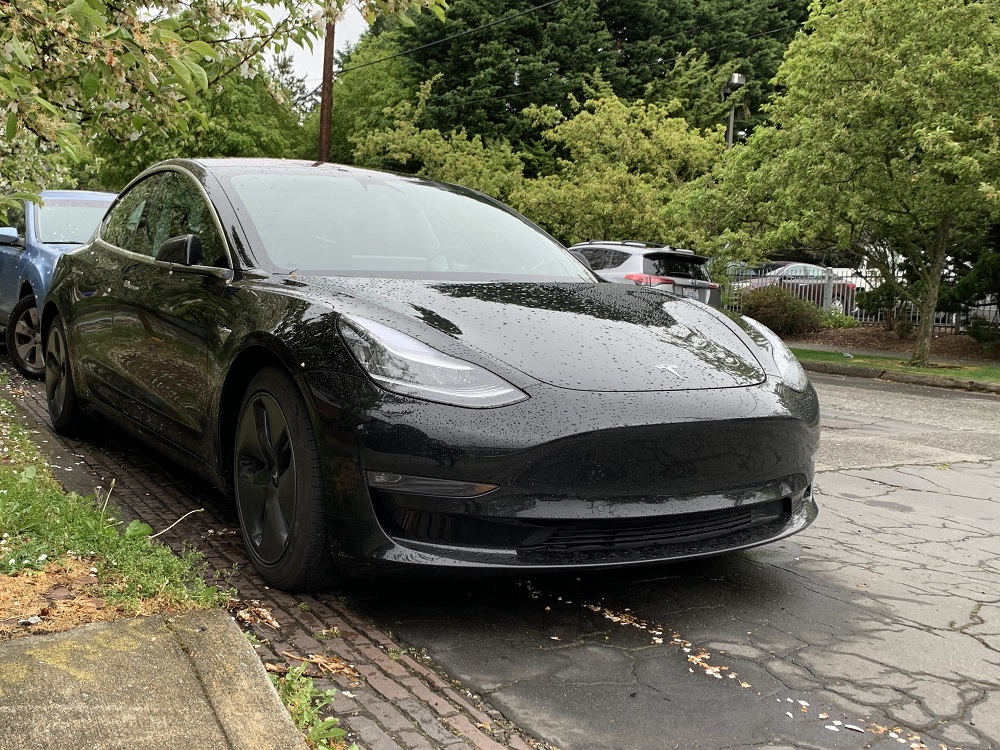
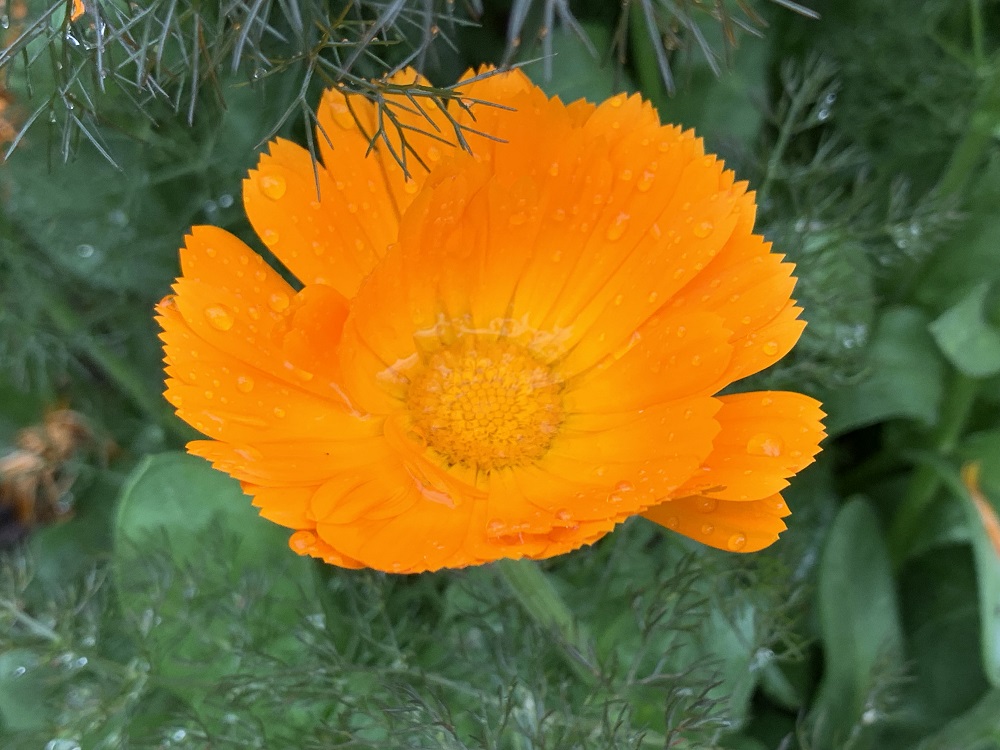
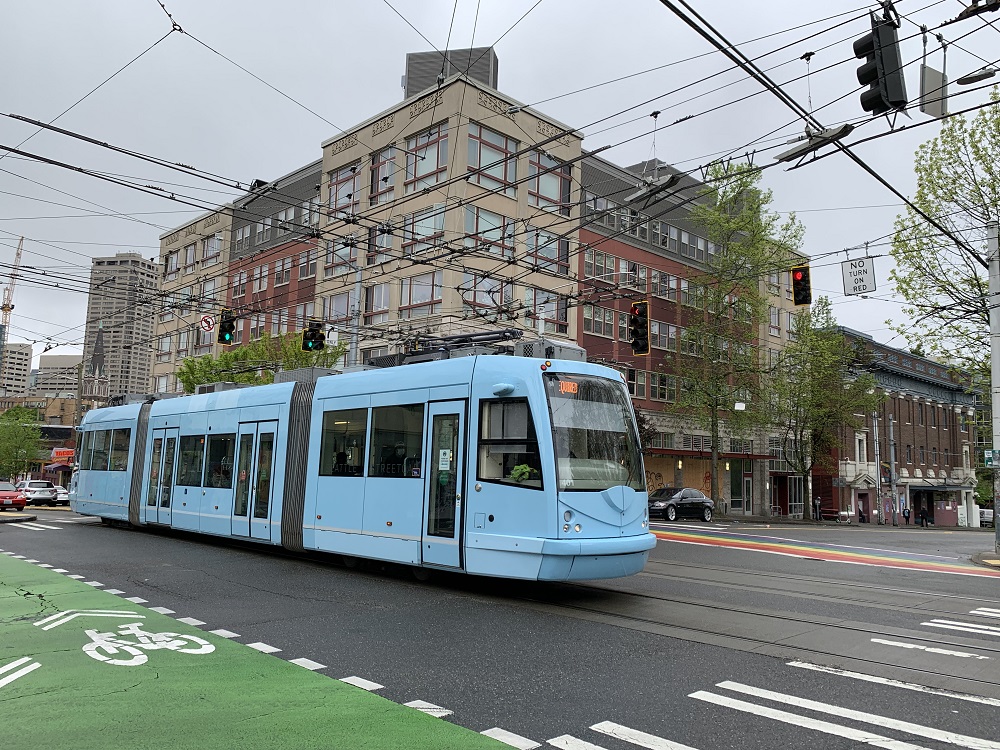
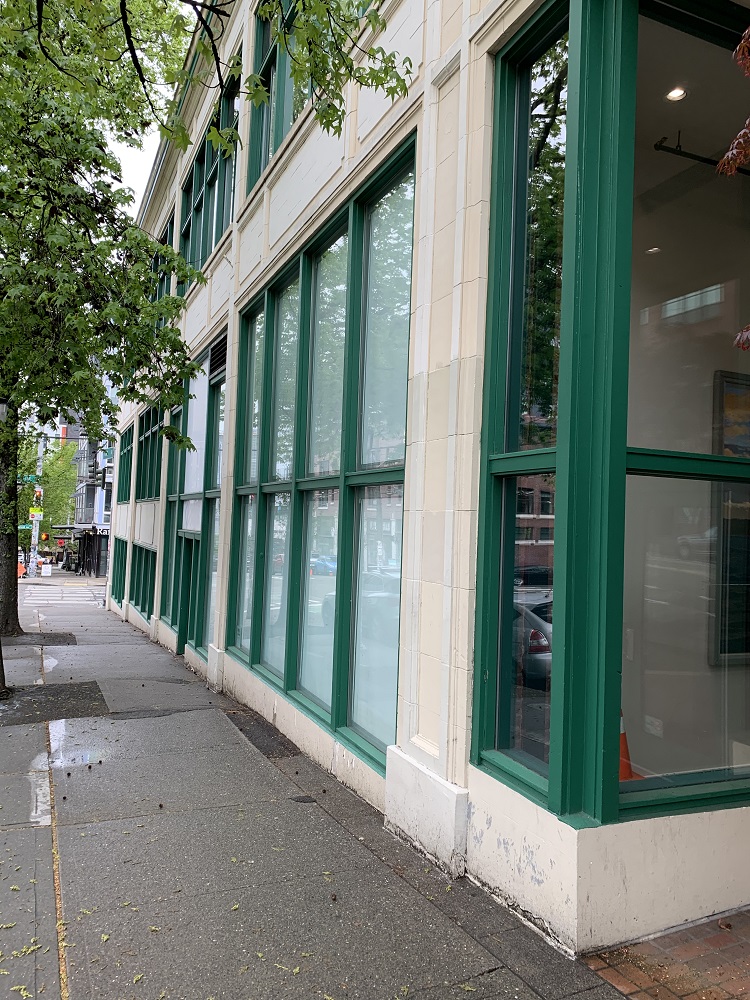
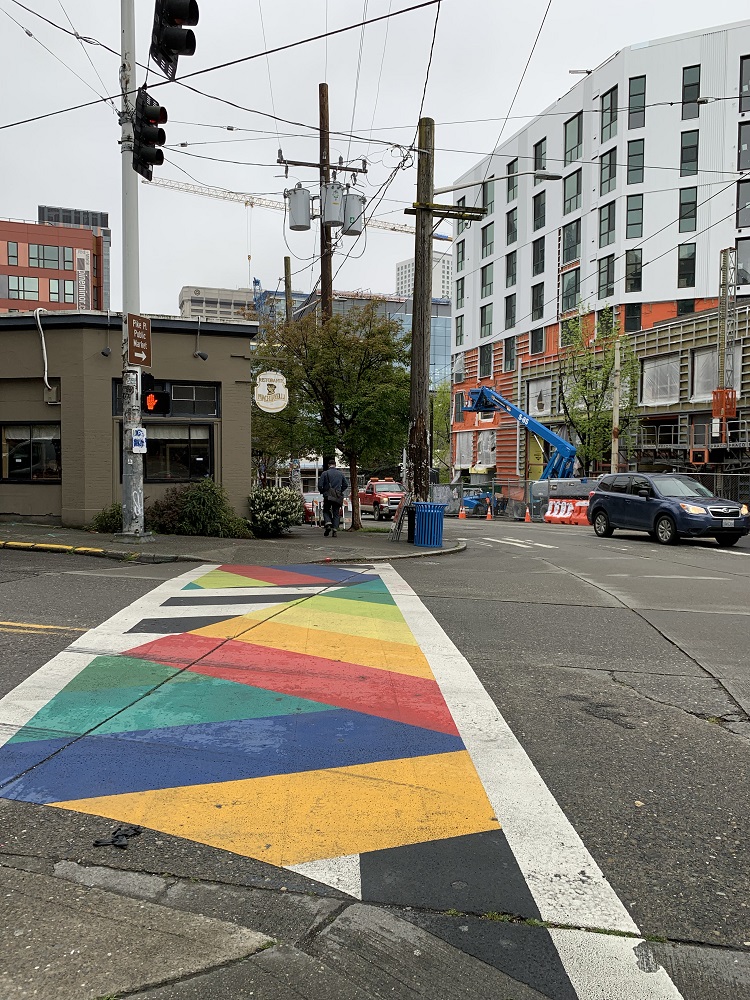
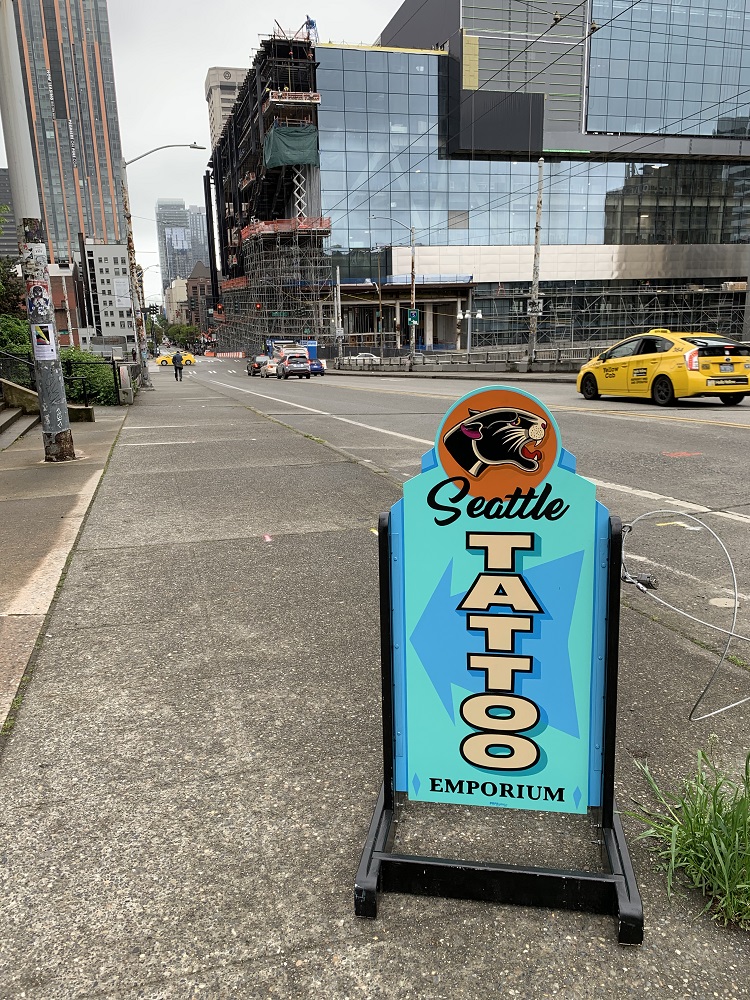
NOT my rental car! .. an all-black Tesla Model 3 parked on the street. Looks like a 2020 model, with the chrome door handles and trim. The 2021 model has ‘chrome delete’ trim (black door handles, black trim). This car has no front license plate, possibly because the owner feels it would spoil the car’s sleek look. Washington State law DOES REQUIRE a front plate, so the driver risks getting ticketed.The beautiful orange daisies are out, catching the little bit of rain that fell on the last day of April. This April turned out to be one of the driest ones on record: only 1.03 in (26 mm) whereas the average is 2.7 in (68 mm).Here comes the powder blue Seattle street car, plying the tracks along Broadway.Lots of green frames in the Pine Building at 400 East Pine. It was built in 1914 and renovated in 1985.The rain washed away the dirt on the crosswalk on the corner of Melrose & Pine St. The new construction on the right, at 1208 Pine St, is an 8-story, 71-unit apartment building with office and retail.Construction continues on the Washington State Convention Center expansion. The Seattle Tattoo Emporium is conveniently nearby, so attendees can swing by for a mountain lion tattoo, or any other that they might want!
I took my rental car back this morning. The plan is to go carless for a week or so, and then get another one. There is still a good number of weeks to go before I get my new car.
It was a pleasant day, and I could walk up, up along Pine Street to get to the other side of Interstate 5, and to Capitol Hill where my house is.
It’s about 30 mins of walking with no stopping, but I took my time, and took some pictures as I went.
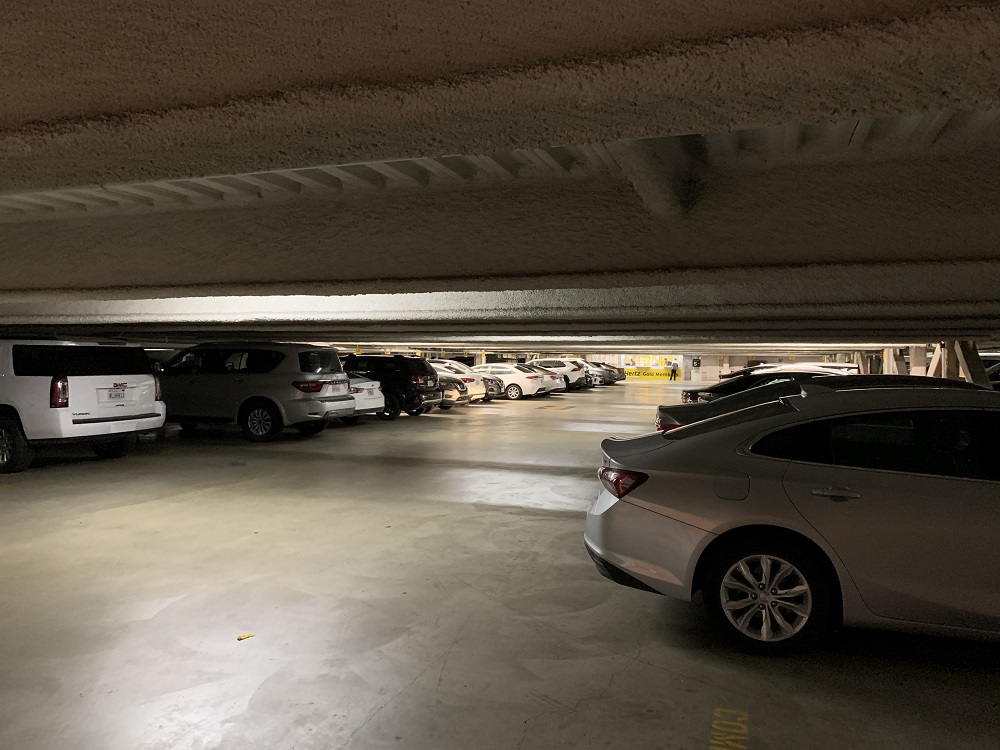
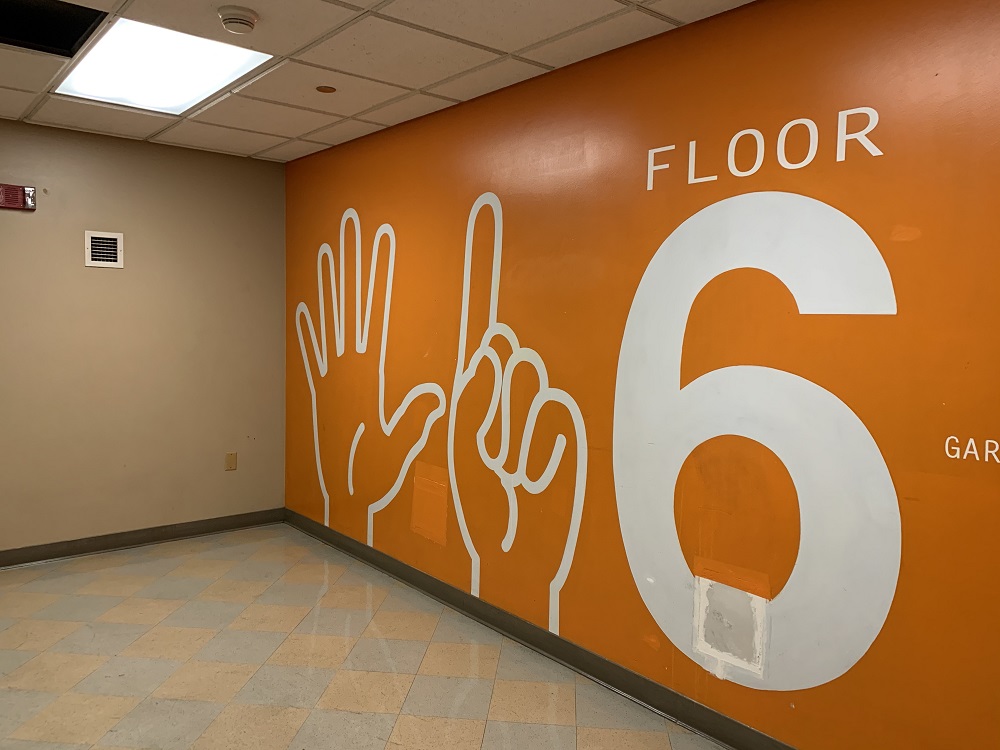
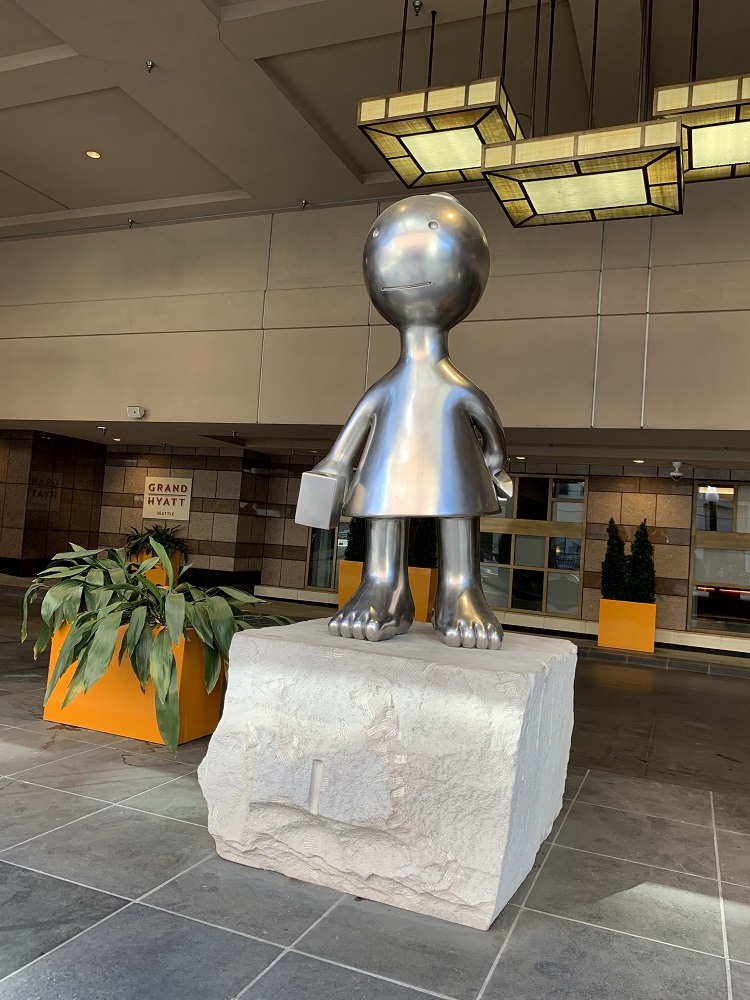
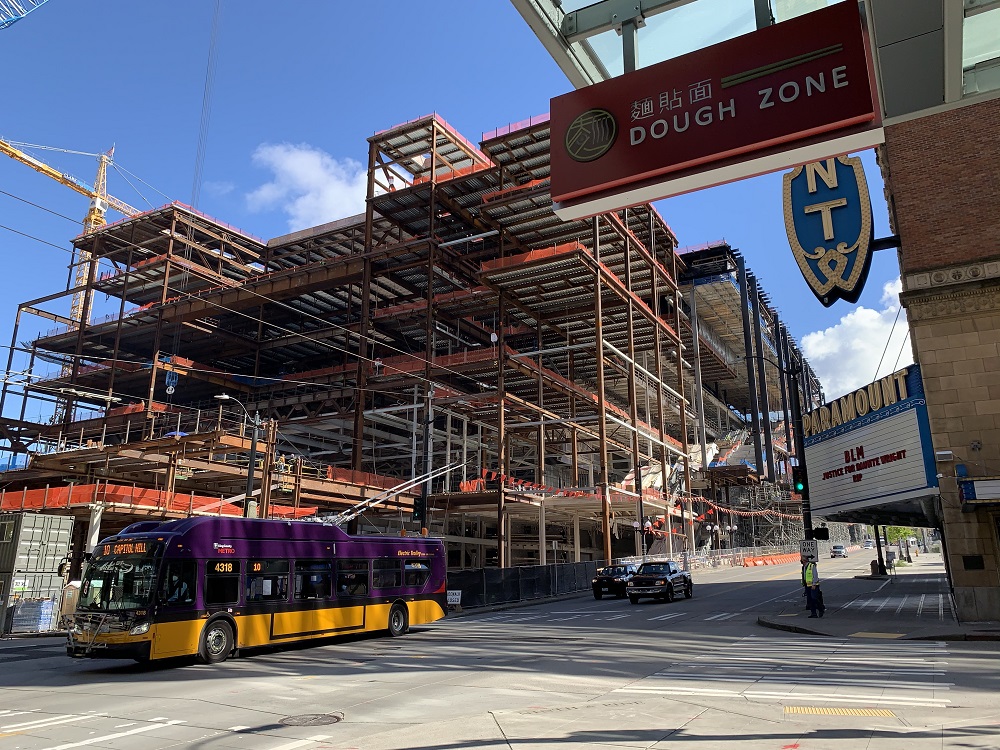
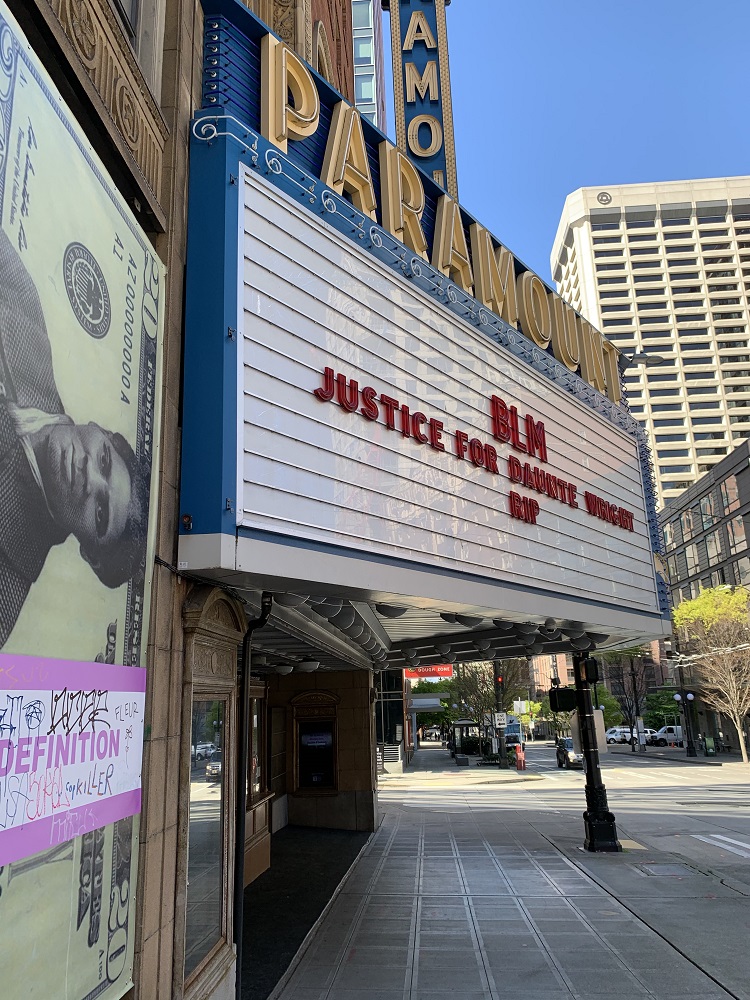
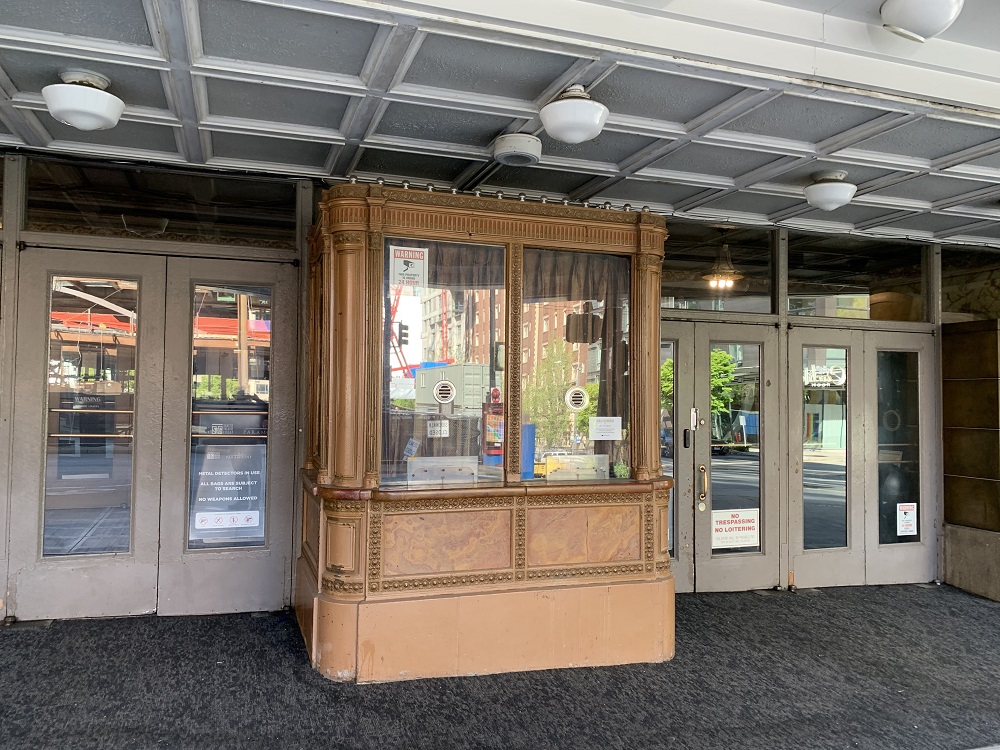
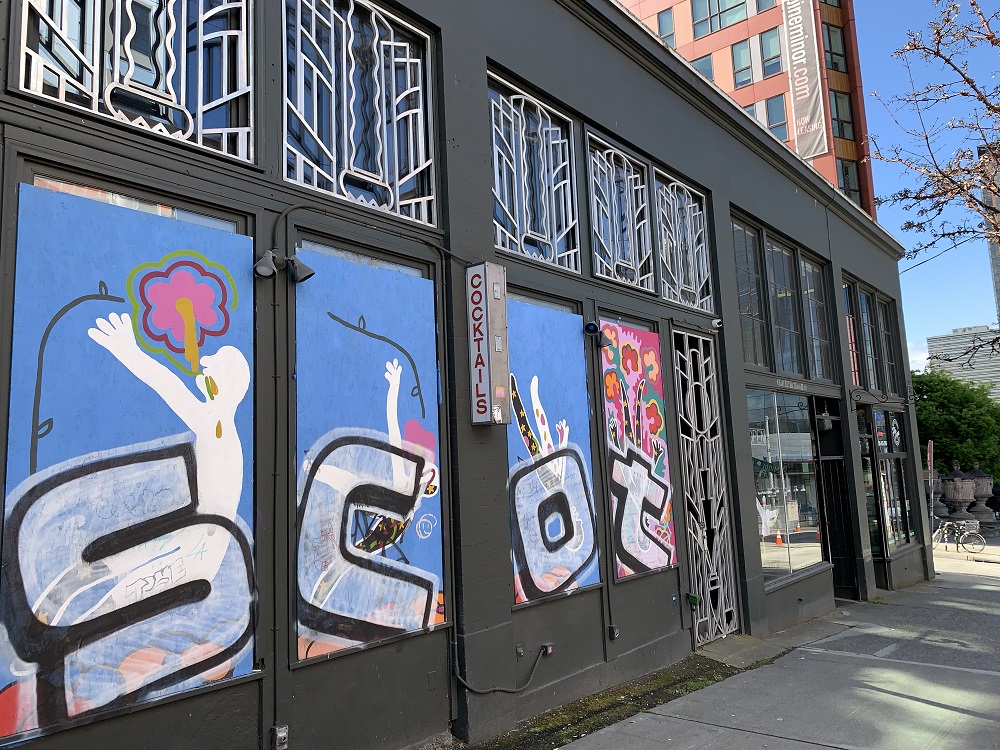
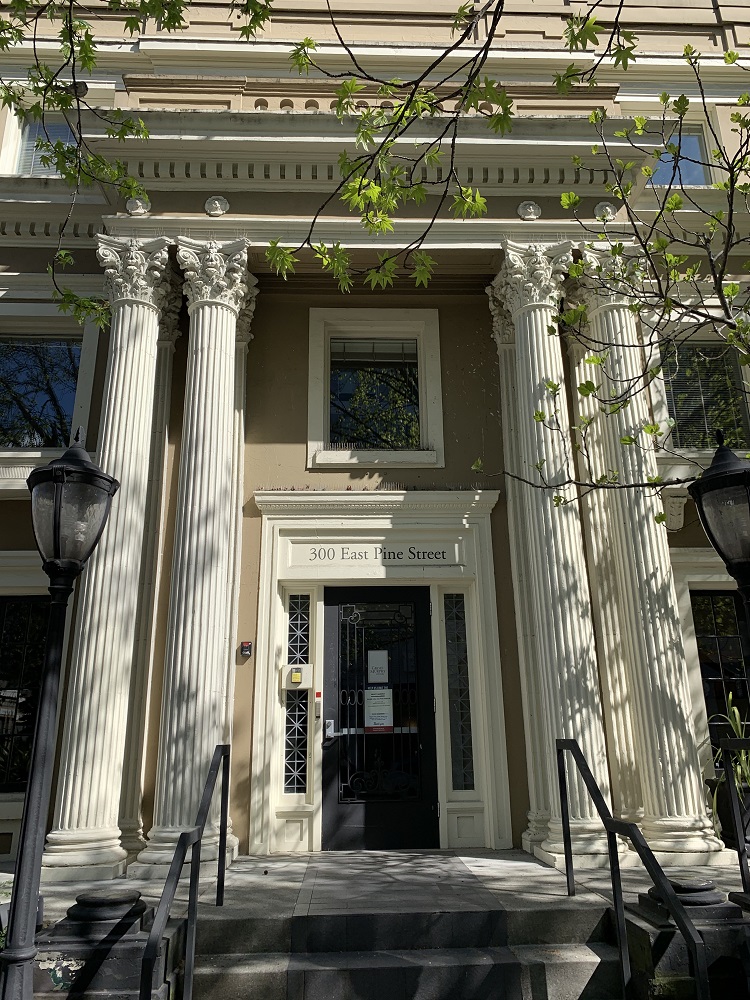
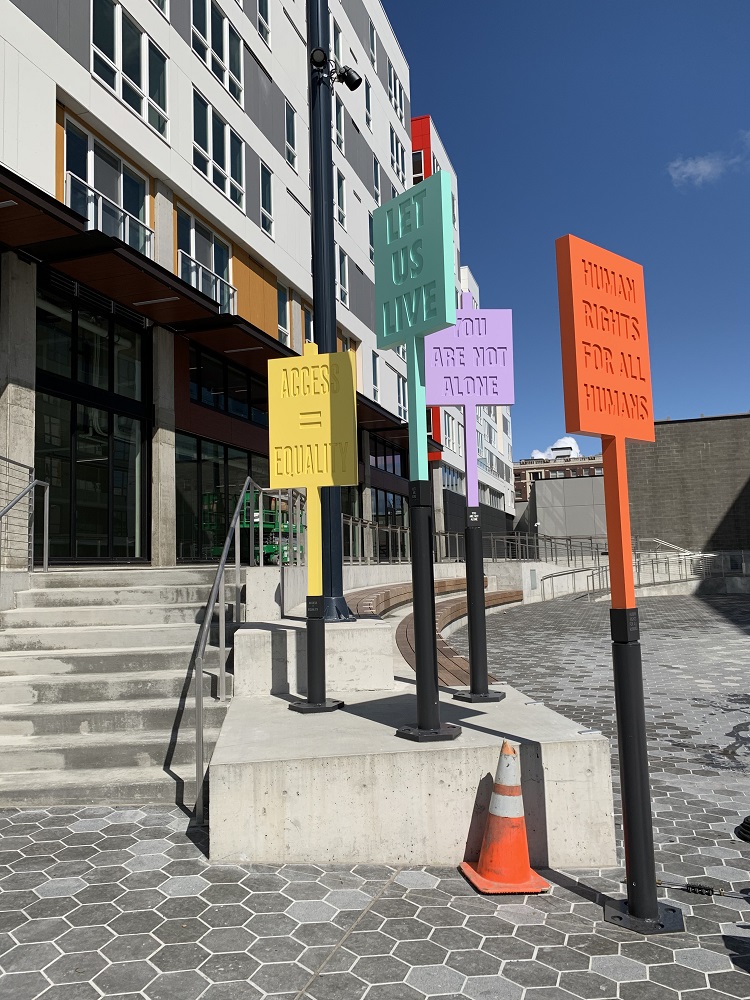
This is the Hertz rental car center on the 6th floor of a garage on 8th Ave in downtown. There’s the counter in the distance where I had dropped my car’s keys. These are basically all the cars they have; the five floors below are eerily empty. (Hard to know if all the floors had been filled with cars pre-pandemic, though). There’s definitely a shortage of rental cars right now, with people starting to travel again. In places like Hawaii, the fee for a small sedan is $195/ day. That is crazy, and 4 times or 5 times the ‘normal’ rate.I like the signage in the elevator lobby. I was tempted to stop at every floor to see what 1, 2, 3, 4 and 5 looked like, and what colors, then thought, no! just go all the way down.The upscale Grand Hyatt hotel on Pine Street is still closed. Many years ago, I had cocktails with friends in the lobby bar. One of them was from Houston, and he could not stop talking about his Continental Airlines frequent flyer miles. (Continental Airlines is no more. It merged with United Airlines in 2010).Corner of Pine St & 9th Ave, looking northeast. Dough Zone dumpling house Chinese restaurant on the right, Washington State Convention Center expansion construction zone on the left. That’s the No 10 bus from Capitol Hill, coming into downtown.The Paramount Theater is still shuttered as well, of course. ‘Justice for Daunte Wright’ says the sign, the 20-yr-old African-American man that was fatally shot on Apr. 11 by police officer Kimberly Potter during a traffic stop & attempted arrest for an outstanding arrest warrant, in Brooklyn Center, Minnesota. The US Treasury Department was “taking steps to resume efforts” to put the abolitionist Harriet Tubman on the $20 bill (left of the picture), but nothing new has been announced of late.Ticket booths at the main entrance of the Paramount Theater. The theater has 2,807 seats for the performing arts, and opened in March 1928 as the Seattle Theatre.Looking back at the Washington State Convention Center expansion, from the Pine Street overpass over Interstate 5. Maybe there is a little money left in the budget to also fix up that rusty lamp post on the far right.The Baltic Room nightclub & bar with its art deco ironwork is still boarded up, but not permanently closed, as far as I can tell.This space at 300 East Pine St houses attorney’s offices now, but some 15 years ago it was called The Chapel, a fancy wine & cocktail bar, filled with beautiful people on a Friday night, and a place for which one would dress up a little (in a city that had made grunge bands and grunge wear famous).The artwork on the alley side of the Sugar Hill eatery & bar at 400 East Pine has been there for a while, but is holding up. Sugar Hill bills itself as a ‘loungey, vinyl-fueled eatery/ bar for craft cocktails, Thai street food & late-night DJs’.I had left Pine St, and made my way to the new apartment buildings on Broadway by the Capitol Hill light rail station. This is the brand new plaza on the inside. I love the pastel colors of the art installation, with the brighter yellow & orange in there as well. I really hope it stays like this for a while: clean and graffiti-free.
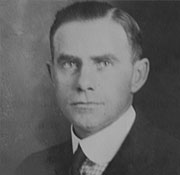
The Ellenbert Apartments building at 915 East Harrison St on Capitol Hill. It was built in 1928 in the the Jacobethan style, during the neighborhood’s pre-Depression apartment building boom.Architect Max A. Van House (1877-1966).
I have walked by the Ellenbert Apartments many times, on the way to Broadway market’s grocery store, and finally looked up its history today.
The architect is Max A. Van House, a Minnesota native (born in Moscow, MN). He spent time on Vashon Island as a youth, and picked up on-the-job experience by working for a variety of architectural firms, including a stint at one in Tacoma.
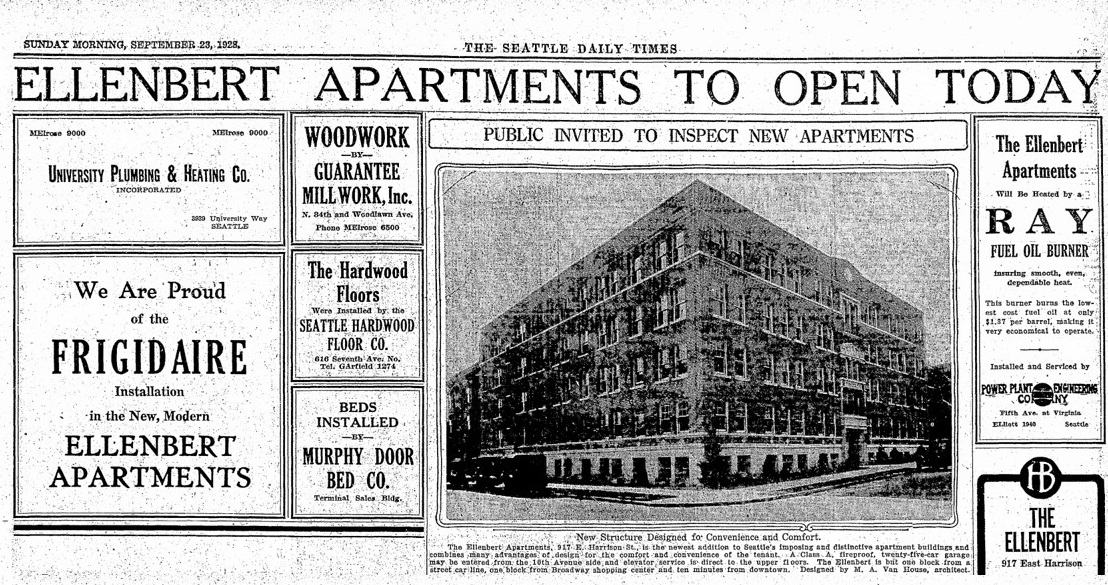
Invitation in the Seattle Times of Sept. 23, 1928 for viewing of the new Ellenbert apartments. Frigidaire refrigerators, hardwood floors, central heating by Ray fuel oil burner, Muralvox radio in every room. One block from the street car line. Downtown is 10 mins away. Sounds good to me!
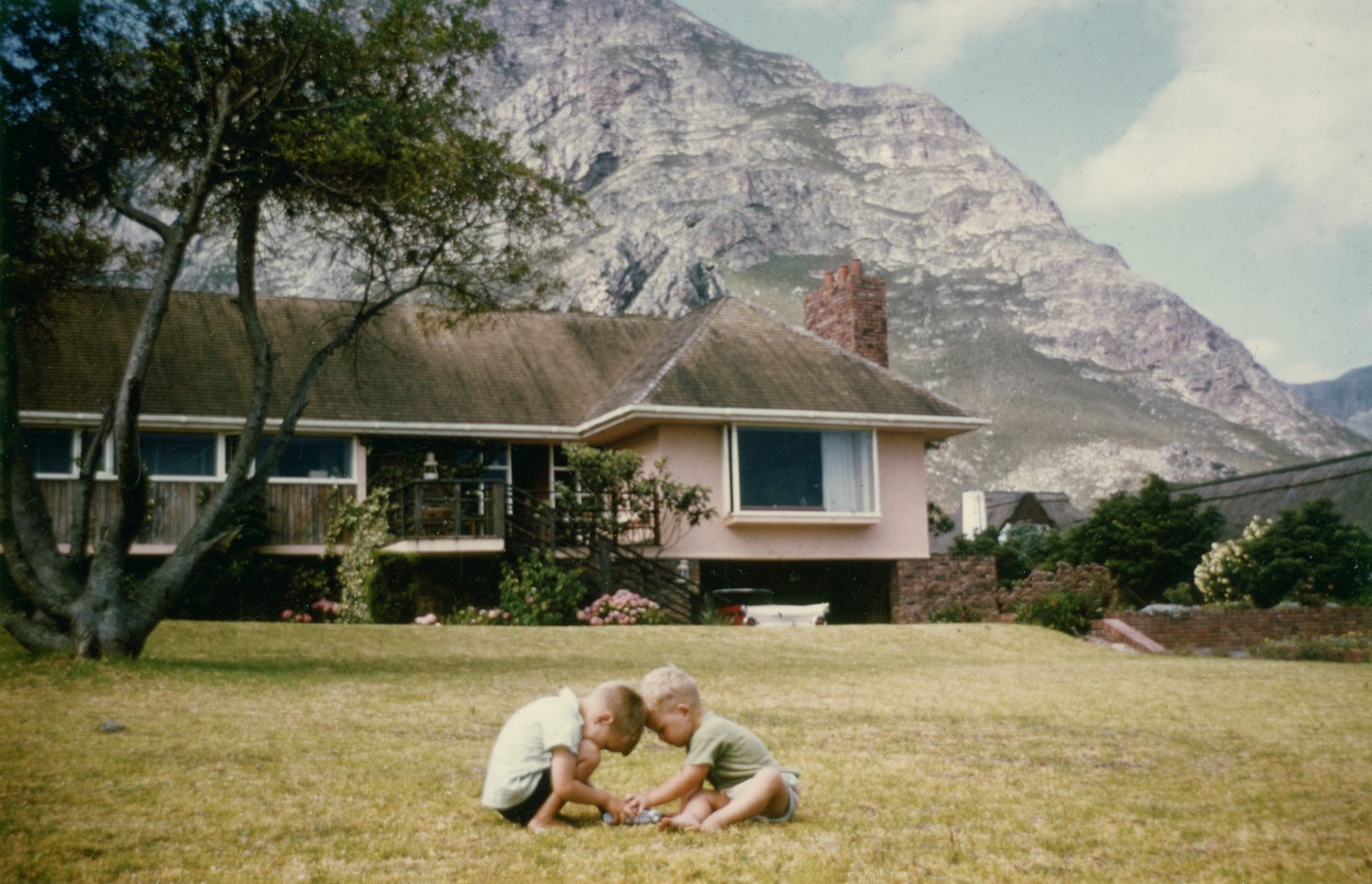
I knew the house in this picture from long ago was in Hermanus, South Africa .. but what would it look like today? I wondered.
I did not have the address, but that outline of the mountain in the background was all I needed to track it down. Here is what I found.
1964. That’s my brother and me (on the right), on the lawn of a rented beach house in Hermanus (a 90 min. drive from Cape Town, to the east). And what magnificent machine would that be in the garage? It’s my dad’s 1959 Ford Fairlane (it had a V8 engine). The name is derived from Henry Ford’s estate, Fair Lane, near Dearborn, Michigan.
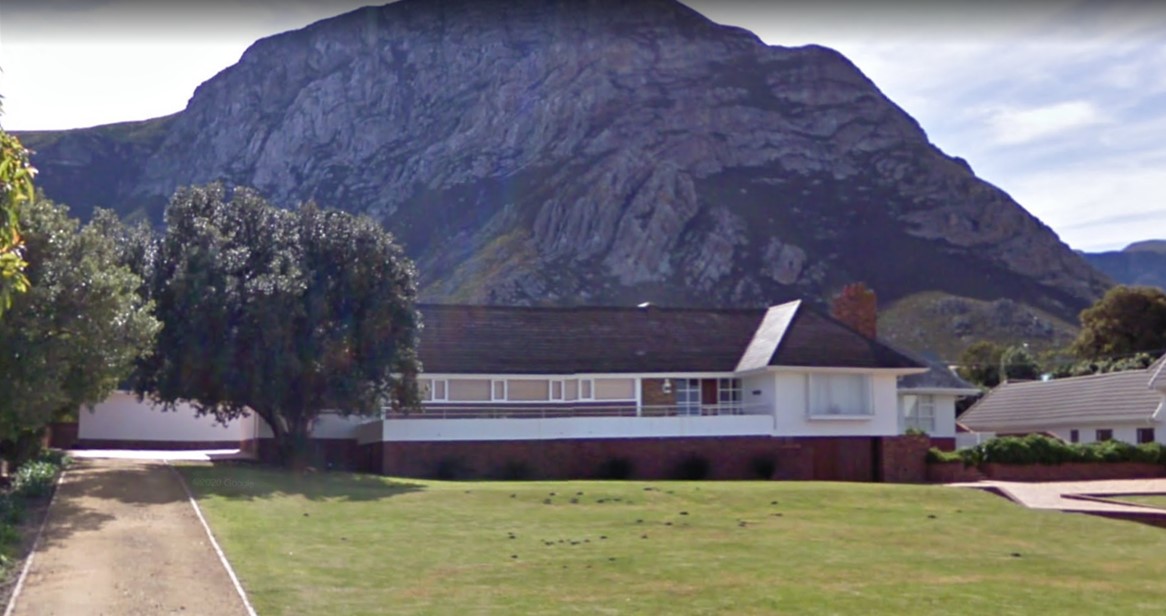
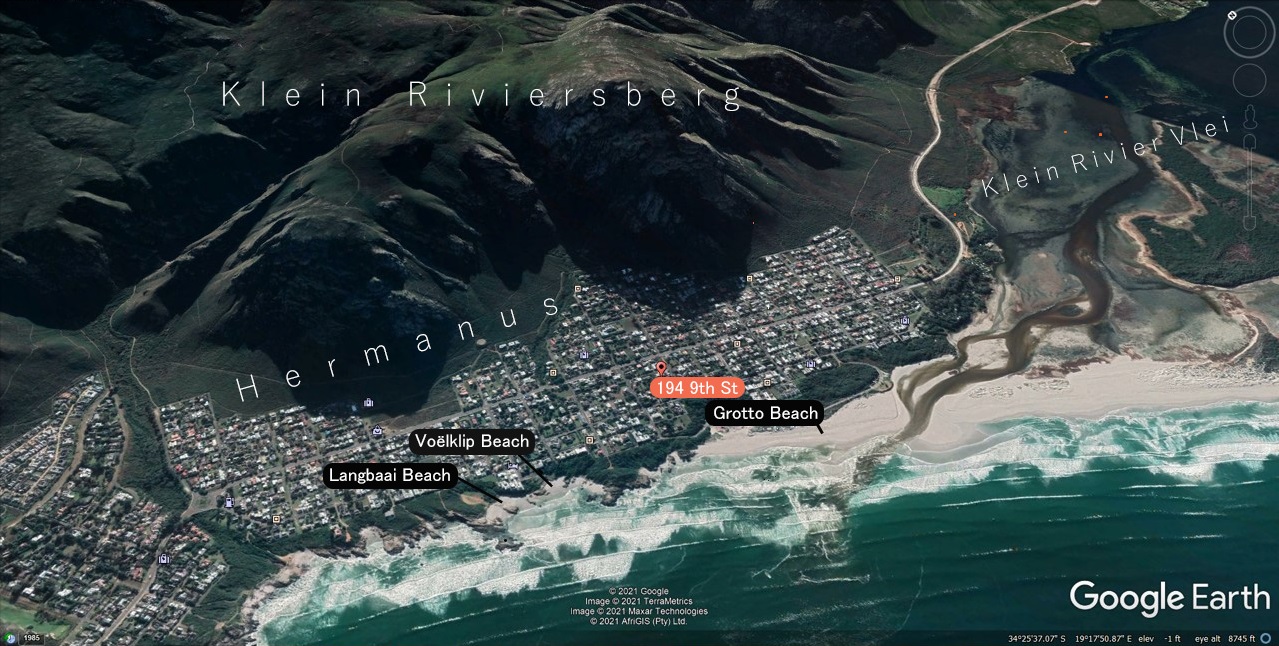
2021. So, some 57 years later. New roof & new paint on the house (of course), The brick chimney is still there. The hydrangea, ivy and big tree are all gone, but at least there is another tree or two. [Google Street View, Sept. 2010].And here’s a Google Earth view of the area, looking northwest. I added some annotation. The house was just about three blocks from the beach. The ocean water is frigid, though. The shores here catch some of the cold Benguela Current from the depths of the Atlantic Ocean. The main road that runs through Hermanus is Route 43 (R43). On the right of the picture is a vlei (a shallow, minor lake, mostly of a seasonal or intermittent nature) that is now part of a nature reserve. [Picture generated with Google Earth].
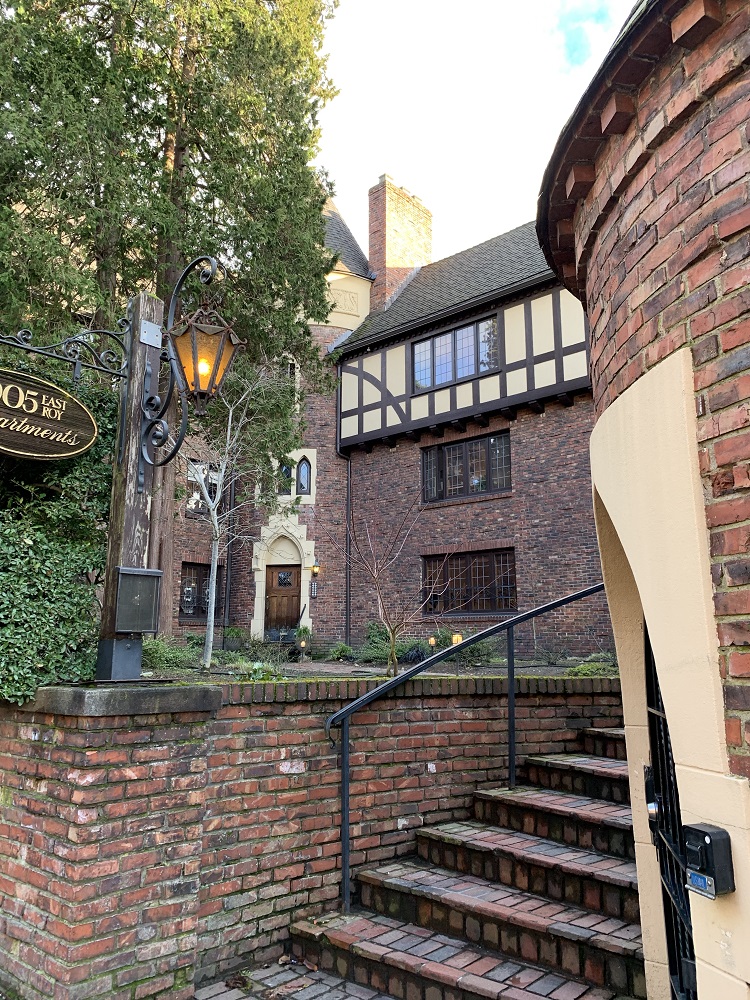
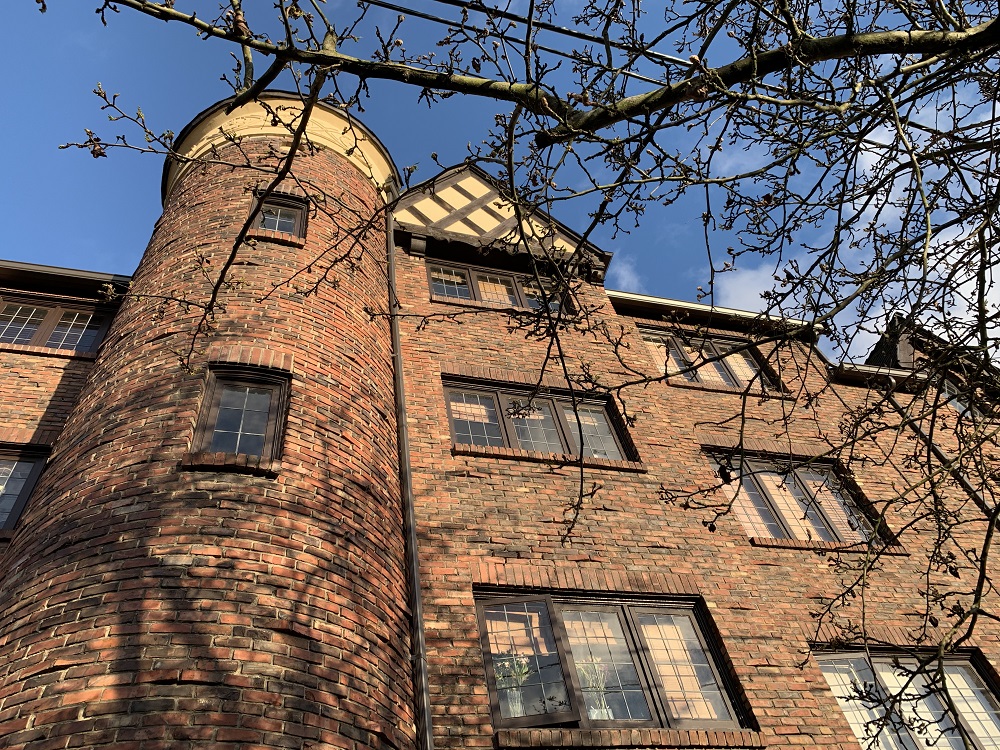
Here’s the apartment building called 1005 East Roy, here on Capitol Hill.
It was designed by Fred Anhalt (1896-1996), officially a developer and never an ‘architect’. Anhalt moved to Seattle from the Midwest in the early 1920s.
This apartment building was completed in 1930 (one of about 40 by him), and the first one in Seattle to feature an underground parking garage.
One of the ground floor residents has two Sphynx cats (the hairless ones). They sit in the window and check you out as you walk by.
1005 East Roy has 25 unique apartments. Apartments.com lists an open one at $2,995 p.m. for 2 beds, 1 bath, 1,195 sq ft (yes, that’s expensive, on a par with similar-sized brand new apartments in the city).A view of the building from 10th Avenue. Anhalt’s buildings have been referred to as ‘Castles in Seattle’. They incorporate Tudor and Norman elements, such as turrets, stained-glass windows, and spiral staircases.