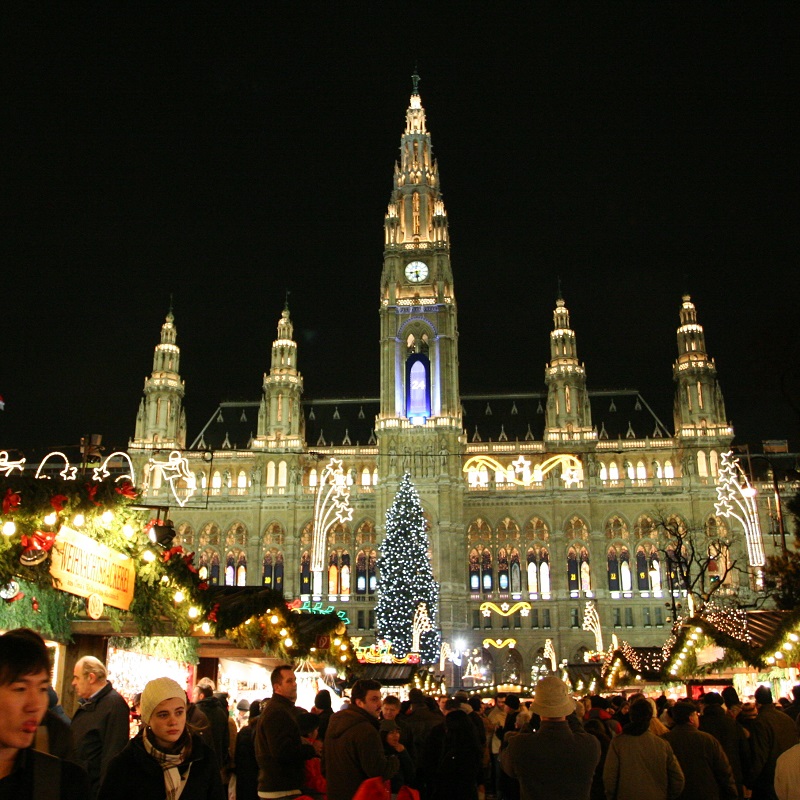
My bags are packed – more or less – for my departure on Saturday, for my journey down south to South Africa. I am making a two-night stop in Frankfurt on the way, and will end up in Cape Town by Tuesday night. Weather permitting (there is snow in the forecast for Frankfurt on Sunday), I will go to the Christmas market there on the Roemerberg, the old town square.
Here is my itinerary: on Iceland Air to Frankfurt via Reykjavik. Stay a day or two, then Air France to Paris, to fly from there to Cape Town a KLM Boeing 777.
You know with love comes strange currencies -from the song ‘Strange Currencies’, R.E.M. (1995)
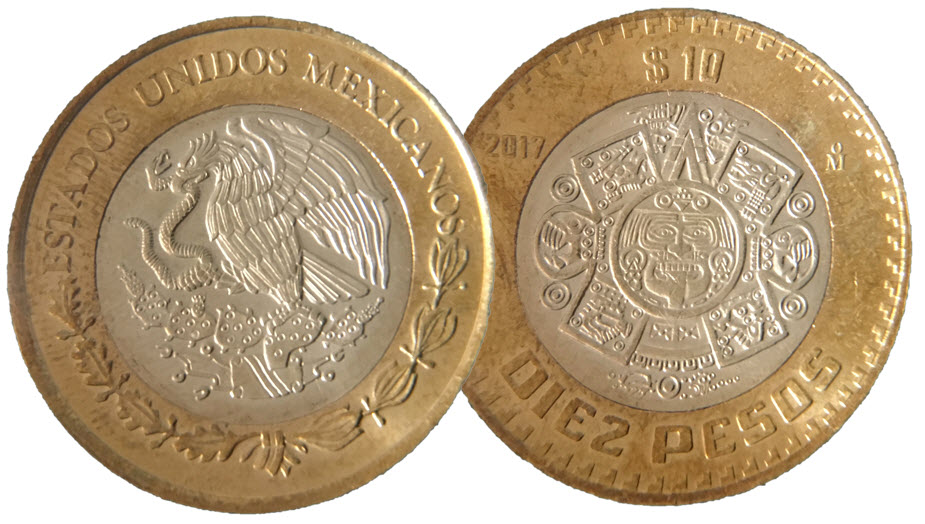
Also: with travel comes strange currencies. I sorted through my stash of foreign banknotes today, keeping the crisp new ones for my little amateur collection. I will exchange the others for Euros or US dollars at the airport, during my upcoming trip to South Africa.
I thought for sure, that by now the Hungarian forints that I got in Budapest in 2008, would be of no use – replaced by Euros – but no: they’re still good. The Hungarian government is in no hurry to adopt the Euro, apparently. I have Danish, Swedish and Icelandic krona notes as well, to exchange.
A bunch of notes, but not worth much! All those Hungarian forints on the left, Ft 12,100 in total, come to only US $45. The 6,000 Icelandic krona (bottom left) are worth US $58. Maybe I can spend these at Reykjavik airport when I stop there. The Danish & Swedish krona (top left) are only worth $10 or so.
Here are a few pictures from downtown San Diego. There are several new condo towers under construction, but the older buildings are the ones that are my favorites.
The San Diego City and County Administration Building, built in a Beaux-Arts/Spanish Revival-style, construction started in 1936, and it was dedicated in 1938 by FDR himself. ‘Good government demands the intelligent interest of every citizen’ .. never truer than in 2017.The Santa Fe Depot (as it was originally designated) station opened in 1915, to accommodate visitors to the Panama-California Exposition. That is the San Diego Trolley in front of it. The station is also a stop for Amtrak and the Coaster commuter train that runs up to Oceanside.The marquee of the Spreckels Theater Building on Broadway, which was completed in 1912. It has been in continuous use ever since, except for a few brief intervals for refurbishing.The Balboa Theatre is a historic vaudeville/movie theater (just a few blocks from the Spreckels Theatre in downtown San Diego), built in 1924.I took the Coaster from Santa Fe Depot station to Solana Beach’s station (picture), where I am staying (single fare ticket $5.50). The train cars are tall with three seating levels, and comfortable inside, and a great way to avoid traffic on I-5.
We checked in on the San Diego Zoo today. We tried to get there before the warmest part of the day (82°F, 27°C), when the animals hide away in the shadows and under rocks. Here are a few of my favorite pictures of the day.
The snow leopard (Panthera uncia) is native to the mountain ranges of Central and South Asia. They are very, very rarely seen in the wild, and are designated as a ‘vulnerable’ species. It looks to me as if this big cat lost its left eye. Aw.The African clawless otter (Cape clawless otter or ‘groot’ otter), is the second-largest freshwater species of otter. They are found in permanent bodies of freshwater in southern Africa.An African penguin taking a dive. Also known as the jackass penguin (they make a braying sound that sounds like a donkey), these are confined to southern African waters.The ring-tailed lemur (Lemur catta) is from Madagascar, and an endangered species (their numbers are decreasing).We spotted this giant panda from a bridge high above in its enclosure. All pandas are on loan from China. This one is one of Gao Gao, Bai Yun or Xiao Liwu, but I really don’t know which one!
Here are some pictures from our visit today at Birch Aquarium. The aquarium is managed by the world-renowned Scripps Institution of Oceanography at UC San Diego.
Left: The Ellen Browning Scripps Memorial Pier, viewed from the aquarium. It is a research pier, and was constructed in 1988. Right: These life-size bronze statues of gray whales at the aquarium entrance are called ‘The Legacy’ are almost 40 feet tall, created in 1996 by Randy Puckett.Clockwise from the top: A leopard shark in the kelp forest tank | a sea cucumber | a California moray gives me an evil eye | a stonefish (whatever you do – don’t step on it. Poison in its needle-like dorsal spine makes it one of the most venomous fishes in the world).Clockwise from the left: The (spectacular) leafy sea dragon, found only along the south coast of Australia | the garibaldi | California king crab | loggerhead sea turtle
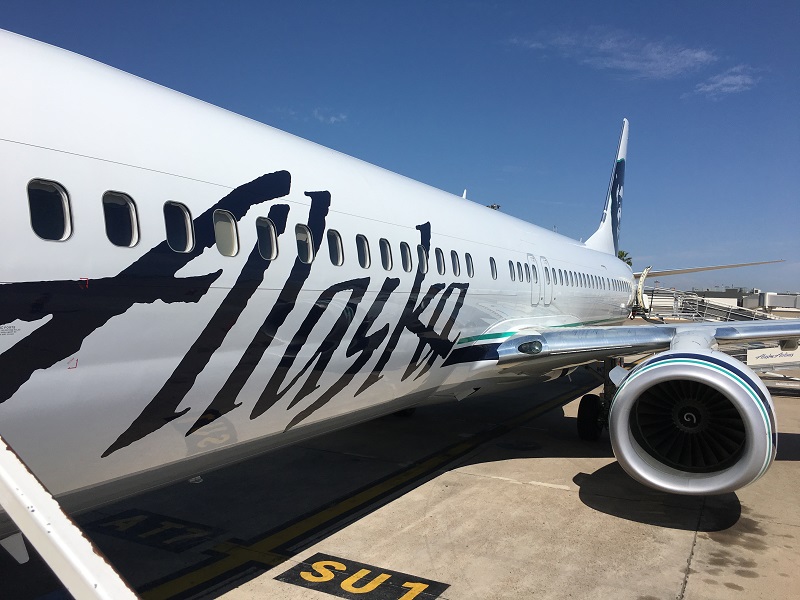
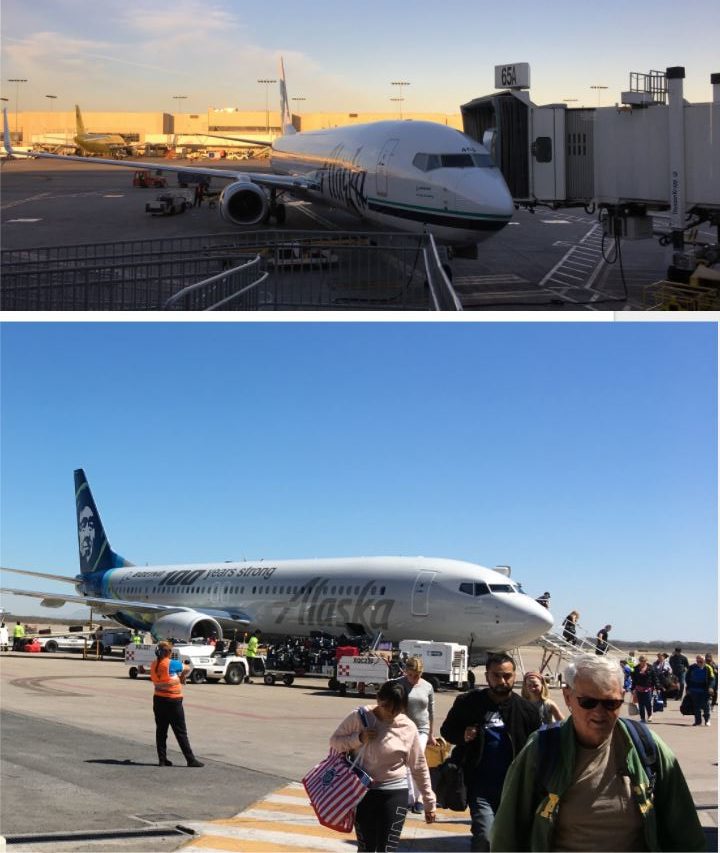
I made my way down to San Diego early on Saturday morning (on an Alaska Airlines 737), to visit my brother and his family for a few days. It was mild and sunny here (70 °F/ 21°C).
This is Solana Beach, at sunset today. The tide was out very low late in the afternoon, allowing beachcombers to check out the shallow waters in the rocks and seaweeds. Someone spotted a little octopus in one of the pools, but it promptly wedged itself underneath a rock, out of sight.
Today in Copenhagen: at about 13 o’clock on Friday the 13th, Finnair flight 666 took off to fly to HEL (Helsinki). The (regularly scheduled) flight arrived on time, safe and sound. Alas, this was the last flight to Helsinki with this number. Finnair is said to have rearranged their flight numbers, so soon there will be no more flight 666s to HEL.
Flight 666 from Copenhagen (CPH) to Helsinki (HEL).
(These pictures are from Wednesday). We made a stop at Lake Lenore on Wednesday. Lake Lenore is a long, narrow lake (8 mi long, 15ft deep) formed by the Missoula Floods in the lower Coulee just north of the town of Soap Lake. There is a trail that leads up to caves in the basalt rock.
Driving further up north on Highway 17 brings one to Dry Falls, named for the massive waterfalls that existed there during the Pleistocene Epoch, when ice sheets and glaciers covered huge parts of Earth’s surface. This area was at the southern end of the Cordilleran ice sheet, and the melting of the glaciers carved out the coulees in the basalt rock that we see today.
Clockwise from the top: looking southwest & northwest toward the ‘coulee monocline’ bluffs over Lake Lenore, with Highway 17 below; dry vegetation and a black beetle; Lake Lenore lies alongside Highway 17; view from inside one of the caves formed by the plucking out of pieces of the basal rock by the rushing Missoula Flood waters; footpath to the caves; beautiful lichen. Lichens are composite organisms that emerge from algae or cyanobacteria living among the filaments of two fungi in a mutually beneficial symbiotic relationship.The main picture is from inside the visitor center at Dry Falls. The picture that I took (bottom right) is the view looking south, away from the cliffs of the Dry Falls. The Pleistocene Epoch began about 2.6 million years ago and lasted until about 11,700 years ago. The most recent Ice Age occurred then (there have been at least FIVE in Earth’s history). At the time of the Pleistocene, the continents had moved to their current positions. Large parts of the northern continents were covered by glaciers, but they did not just sit there. There was a lot of movement over time, and there were about 20 cycles when the glaciers would advance and retreat as they thawed and refroze.
We stayed over in the town of Omak on Wednesday night, and made our way back to Seattle on Thursday over the North Cascades* with Highway 20. It’s about a 5 hr drive without stops, to go from Omak to Twisp, Winthrop, Newhalem, Darrington and then with I-5 (or I-405) to Seattle. It was a crisp morning when we started back from Omak (47 °F/ 8°C), but back in Seattle it was a record warm day for Sept 28 at (85°F/ 29 °C).
*The Cascade Range or ‘Cascades’ is a major mountain range of western North America, extending from southern British Columbia in Canada through Washington State and Oregon and into Northern California.
Clockwise from top left: view over the Skagit River Valley, with the Diablo Dam’s dam wall directly ahead; vintage ‘Wild West’ storefront in Winthrop; town hall of Okanogan; viewpoint in Washington Pass on Highway 20, with the Early Winter Spires (7,807 ft / 2 380 m); at Newhalem by the Gorge Dam and Power station; the diagram shows the Ross Dam and the Diablo Dam as well.Here’s a cool topographical map that I generated with a Google search for ‘Early Winter Spires’ that shows how Highway 20 follows the lowest contour lines through the North Cascades. The web site is http://www.summitpost.org. There is a hairpin bend in the road by the Spires, and the map also shows several alpine lakes. These are lakes or reservoirs at high altitudes, usually starting around 5,000 feet (1,500 m). These is still snow and ice visible further up, from small glaciers. Highway 20 gets so much snow in winter that it is completely closed for traffic, sometimes only opening again as late as June.View from a foot bridge overlooking the Skagit River at Newhalem; this is just downstream of the Gorge Dam. Flooding in the Skagit Valley has become a rare event due to the three dams that had been built upstream in the Skagit River (the Gorge, the Diablo, the Ross).
Paul, Bryan and I have embarked on a little road trip to eastern Washington, and we stayed overnight in the little town of Ephrata.
We took Interstate Highway 90 out east, stopped in Ellensburg, and stayed overnight in Ephrata. The truss bridge is the crossing of I-90 over the Columbia River. Mommy Yum Yum was our dinner restaurant, and the tunnel covers for I-90 in the Cascade mountains will be covered up to the top with soil, to provide wildlife a way to cross back and forth over I-90 without becoming roadkill.In and around the town of Cle Ellum. Clockwise: caboose at the old Cle Ellum railway station (out of use since the 1980s); the old Cle Ellum station depot building; a reference to the caboose in downtown Cle Ellum; post office in Cle Ellum.Clockwise from the top: Basalt bluff overlooking Wanapum dam (in the Columbia river). petroglyphs from Indians; these images were originally located at lower elevations and would have been covered by the dam’s waters, but were relocated; petrified wood log in Ginkgo Petrified Forest State Park; dinosaur model close by.
From Port Gamble, we took the ferry from Bainbridge Island to get to the Emerald City (Seattle).
Here are pictures from Friday and Saturday on Hood Canal. Hood Canal is a body of water with a bend in its southern end, that separates Kitsap peninsula from the Olympic peninsula. The Olympic peninsula is a large arm of land that lies between Seattle and the Pacific Ocean.
Clockwise: Carrot cake for my birthday, from Butcher & Baker Provisions (restaurant in Port Gamble); neat hexagon array in a yellow jacket wasp nest – unoccupied!; hummingbird, approaching feeder; submarine (far right) escorted to Naval Base Kitsap, during low tide on the Hood Canal; driving onto the ferry at Bainbridge Island terminal; Agate Pass bridge onto Bainbridge Island (see map); pebbles on beach by Hansville; belted kingfisher on same beach (I need a stronger zoom lens!).
We stopped by Point No Point in Hansville on Friday morning, before catching the Bainbridge ferry back to Seattle. Point No Point was named as such by Charles Wilkes during the United States Exploring Expedition of Puget Sound in 1841. (It does not appear to stick out from the surrounding land mass from a distance).
Clockwise: 1. There was a very low tide in Hood Canal on Friday morning, exposing the eel grass* (I think?) in the shallow sub-tidal waters. *Eel grass is not a seaweed; it is a blooming underwater grass which spreads by rhizomes or roots. 2. The Point No Point lighthouse contains a low-maintenance, post-mounted, rotating beacon. 3. Point ‘No Point’ is on the northern tip of Kitsap Peninsula. 4. The Hood Canal bridge close by, is a long floating bridge. The original bridge sank in 1979 during a wind storm, but was replaced by a new one by 1982.We spotted these American Indian rowers coming around Point No Point on Friday morning. In summertime, youths use traditional canoes and oars to row across parts of Puget Sound from one Indian reservation to another. The dinghy (bottom picture) provides support and assistance in case they need help. The tribe in the bottom picture is the Nisqually Tribe; I could not find the name of the tribe in the top picture, in spite of the lettering on the canoe.I think this is a Douglas squirrel (Tamiasciurus douglasii) – also called a ‘brown squirrel’ – by Paul’s house in Hansville. I like their brown color and golden bellies. The ones we have in the city are Western gray squirrels (Sciurus griseus): bigger, and more aggressive.
We took a leisurely drive up to Port Townsend on Thursday, with stops at Nordland and Fort Flagler Historical State Park.
Nordland on Marrow Island has a great general store, with canned products from Cape Cleare, Alaska. Fort Flagler was a United States Army fort at the northern end of Marrowstone Island, established in 1897 and closed in 1953. Check out the sign on the fence that says ‘Falling can be deadly’. There’s a 50 ft sheer drop on the other side of it. (Change to ‘Falling will kill you?). Ft Flagler was home to the Seattle Youth Symphony’s Pacific Northwest Music Camp from 1958 to 1989. Today it is open for visitors and has a campground. The Port Townsend ferry is arriving from Coupeville on Whidbey Island. Haller fountain was dedicated in 1906, and Galatea the Greek sea nymph, was added in 1922.This sharp-eyed bald eagle (Haliaeetus leucocephalus) was sitting on a drainage pipe sticking out from a cliff at Fort Flagler. The bald eagles is the national bird of the United States, appearing on most official seals of the U.S. government. They live to about 20 years old.Here’s the Jefferson County Courthouse in Port Townsend. The Romanesque style courthouse was designed by Seattle architect W. A. Ritchie. The Roman numerals on the base of the clock tower reads ‘MDCCCXC’, indicating that the building was constructed in 1890.Here’s the Hastings building on 833 Water Street, constructed in 1889. It was funded by Lucinda Bingham Hastings (1826-1894), the widow of Loren Brown Hastings (1814-1881), a local dry goods merchant, turned to real estate investment after her husband’s death.This bell tower dates back to 1890 and was in service for 50 years. It is a 75-ft tall wooden structure with a 1,500 lb bell (just visible in the top). It is the last such remaining structure of its kind in the United States (it was repaired in 2003). The original brass bell was made to ring in designated patterns that indicated the location of a fire in the city. The patterns were generated by electrical signals sent to the tower from signal boxes throughout the city.
Today’s drive up from Astoria to Hansville, and then driving down to Bainbridge Island for the ferry back to Seattle.Theses elk (also called Wapiti, one of the largest in the deer family) are part of a herd in the coastal town of Gearhart. They occasionally go into the surf, and even venture onto the streets in the town.An old art deco theater in Gearhart, now made into shops and game arcades. The gold pick-up truck supports the Seattle Seahawks (NFL football), even though the plates are from Oregon!Here is the beach at Cannon Beach, at sunset on Wednesday. A beach-goer has a little fire going in the foreground, and Cannon Beach is famous for the giant rocks in the shallow waters.We spotted these futuristic Tesla superchargers in a parking lot in Seaside. This station has 20 chargers, each operating at 480 volt and about 100 A of current, to provide a charge good for up to 170 miles of range in as little as 30 minutes.Thursday morning and we are looking for a good breakfast place. We got a little wet, and ended up going back to the Pig ‘n Pancake. The smaller places all seemed full of people, and understaffed.A final look at the Astoria-Megler bridge on the way back. We waited a little bit to cross since one lane is closed due to the maintenance work on the bridge (where the white wrap is, on the bridge pylon).
We made our way back today, with steady rain almost all the way from Astoria to Hansville, and Seattle.
By late night a good inch of rain had been measured in the city of Seattle – quite a lot for one day in June (on average, 1.6 inches falls for all of June).
Here are pictures from Wednesday night in Oregon and from Thursday.
Yes, it’s a real name: Cape Disappointment, north of the Columbia river and on the southwestern edge of Washington State. The cape was named on April 12, 1788 by British fur trader John Meares who was sailing south from Canada in search of trade. After a storm, he turned his ship around just north of the Cape and therefore just missed the discovery of the Columbia River.
We made our way there today with short hikes to two lighthouses in the area: the North Head Lighthouse, and the Cape Disappointment Lighthouse.
Here is a simplified map with some pictures I took today. Clockwise from top left: Looking south from the south end of Long Beach, from a spot called Beards Hollow; A crab’s claw at Beards Hollow; Lush greenery on the way to Beards Hollow; A short tunnel on Route 101 towards Fort Columbia State Park; A pre-WWII coastal artillary gun, one of two on display in Fort Columbia State Park; The Cape Disappointment Lighthouse. Built in 1856, it still beams out a red and white light visible for 10 nautical miles; A little cove visible from the trail to the Cape Disappointment Lighthouse; The view of the Pacific Ocean, this on the way to the North Head Lighthouse. The thin black line is a man-made breakwater.
The drive time down to Astoria is slightly less than 4 hrs. We made stops in Shelton and on the Washington State side of the Astoria-Megler bridge, which added to the travel time.This mural is off the main street in Shelton, a town on one of the south-western extremes of Puget Sound. It is a nod to the times when timber was transported by steam locomotives. The town still have lumber yards, but these days the transportation is done mostly by trucks.A rain-coated boatsman outside an antique store in Shelton. Shelton gets a LOT of rain, some 62 inches per year.This is on the Astoria–Megler Bridge: a steel cantilever-through-truss bridge that spans the Columbia River between Astoria, Oregon and Point Ellice near Megler, Washington. Construction was completed in 1966. The road surface and sidewalks are being renovated right now, and there was a short stop on the bridge. (Don’t worry, I’m in the passenger seat!).Here’s a view from the Astoria Riverwalk, on the old wooden piers just east of the bridge. So the Pacific Ocean lies in the distance, on the other side of a bluff in the distance.The Wet Dog Cafe Brewery is where we had a beer and something to eat. It is near Pier 11 on the Astoria Riverwalk. There is a trolley (really a train) that runs along the waterfront between 12 noon and 6 pm.The beautiful John Jacob Astor Hotel building in downtown Astoria. Originally built in 1923, it was renovated in 1986 with 66 apartments of subsidized housing. Businesses moved into the lower floors.The Museum of Whimsey is an art museum housed in a historic 1925 bank building that had been renovated.Hey! Nice to see some gay pride celebration lamppost signs. I see we just missed the parade though : it was this past weekend.
We made it to Astoria with a stop or two along the way (Shelton, Dismal Nitch. There was some rain on the way here, but later in the day it cleared up.
The Astoria column was built in 1926 on Coxcomb Hill in Astoria, financed by Great Northern Railway. The 125-foot (38 m)-tall column has a 164-step spiral staircase case to the small observation deck at the top.
We arrived early enough to check into the motel, and to walk around the waterfront and downtown Astoria.
I love the bobbing buoy on the little Buoy Beer Co. truck. Pronunciation note: In South Africa we say ‘boi’ but I learned that in the USA we say ‘boo-ē’.A map of the ship channel (dredged waterway) in the mouth of the Columbia river. There are pairs of buoys in the water and on land at different elevations, that should line up when looked at from the ship, to confirm that the vessel is in the shipping canal.This is artwork at a little plaza that is dedicated to immigrants in downtown Astoria.These murals are on old warehouses on the Astoria waterfront, a nod to times long gone now, from the last century.Some of the trash cans downtown are decorated with the seafood cannery labels from long ago.
Kingston is on the west side of the Kitsap Peninsula. The short way to get there is by using the Kingston-Edmonds ferry. It can also be reached by driving the long way round, south around Puget Sound.
I went out to the Kitsap peninsula on Monday, to get ready for a little road trip down to Astoria in Oregon with my friends Bryan and Paul. (We had a nice dinner at the Kingston Alehouse).
The plan is to drive down to Astoria, Oregon on the Pacific coast and stay there for two nights, and explore the interesting sights in the area.
We’re pulling away from Edmonds for the Edmonds-Kingston ferry crossing.The marina at Kingston on Monday night. The dinghies in the foreground may have been cleaned and need to go back onto their respective yachts or boats, The Kingston ferry terminal is immediately to the left of the marina, and on the right is Appletree Cove.
This ‘homage’ to a hamburger (served up cold, from a refrigerator on the airplane) is served on Air Koryo flights.
So : no nuclear test blasts on Friday in North Korea (good), during the Day of the Sun military parade. The Rachel Maddow Show (daily news and opinion TV show) reported that the three-times-a-week flights from Beijing on Air China into Pyongyang has been suspended, though.
That still leaves the option of going there with Air Koryo, on a Soviet-era airplane (no jeans, no talking to locals, no traveling solo). As the Koryo Tours website notes : Travelling with us to Pyongyang, and beyond, is something you’ll remember forever.
Great colors in the graphics on the main page of the Koryo Tours website.One of the pictures on the Koryo Tours website. Traveling solo is not allowed in North Korea – you will always have two tour guides with you.