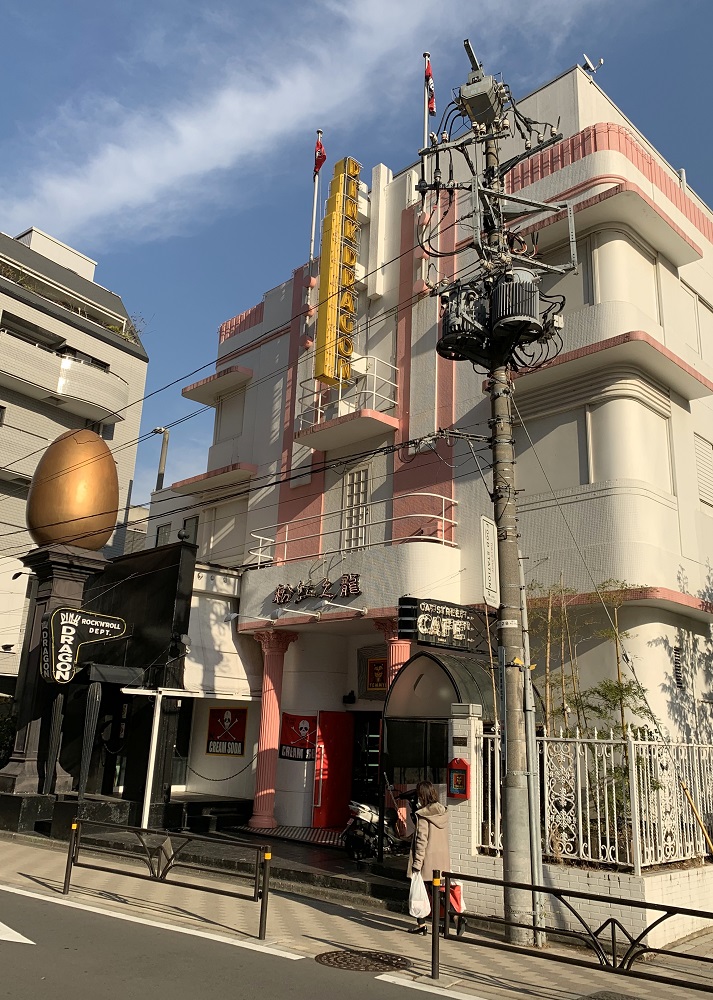
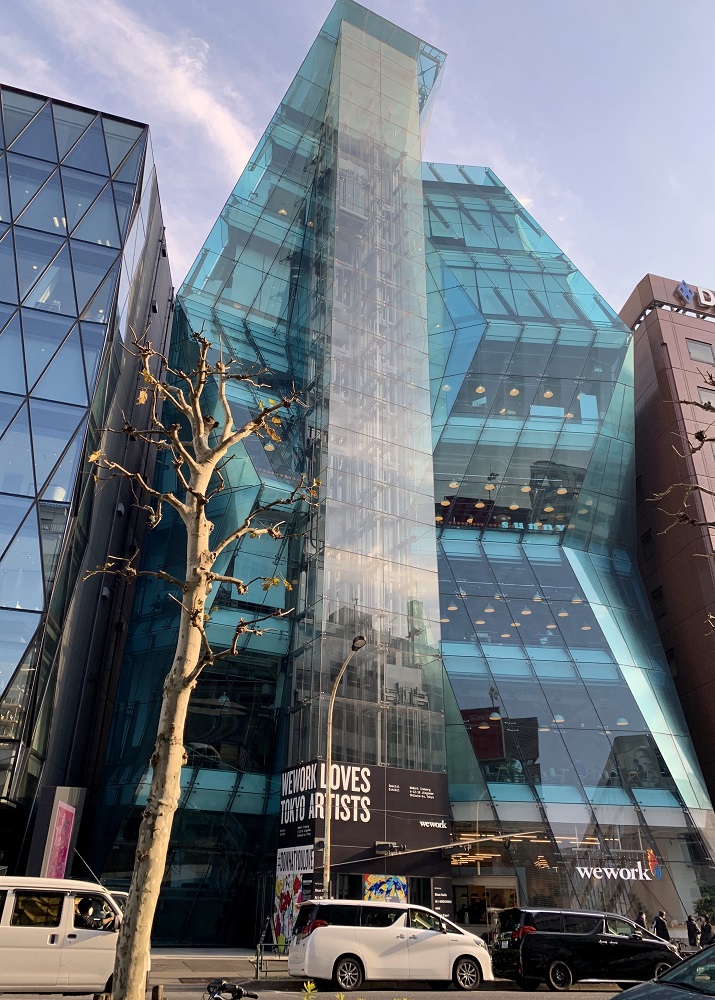
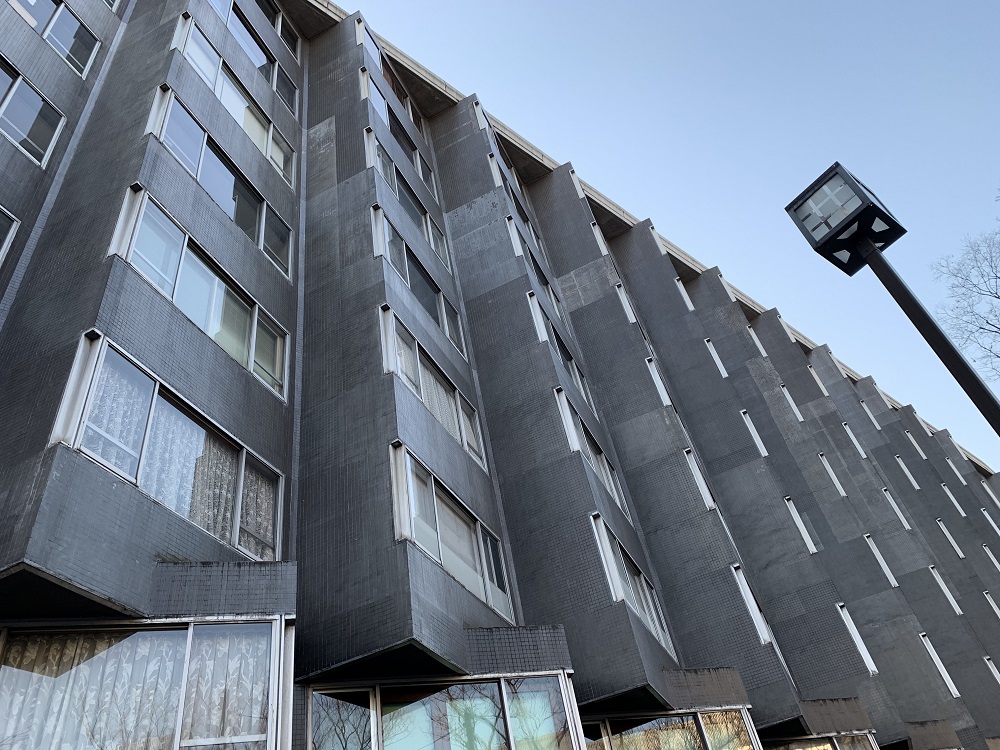
I spotted some unusual buildings along Meiji-Dori avenue today, while walking from Shibuya to the Harajuku station.
Some days I run myself ragged with too much walking! So for tomorrow, I plan to take the Nozomi Super Express to Nagoya. It’s 1h 40m in one direction.
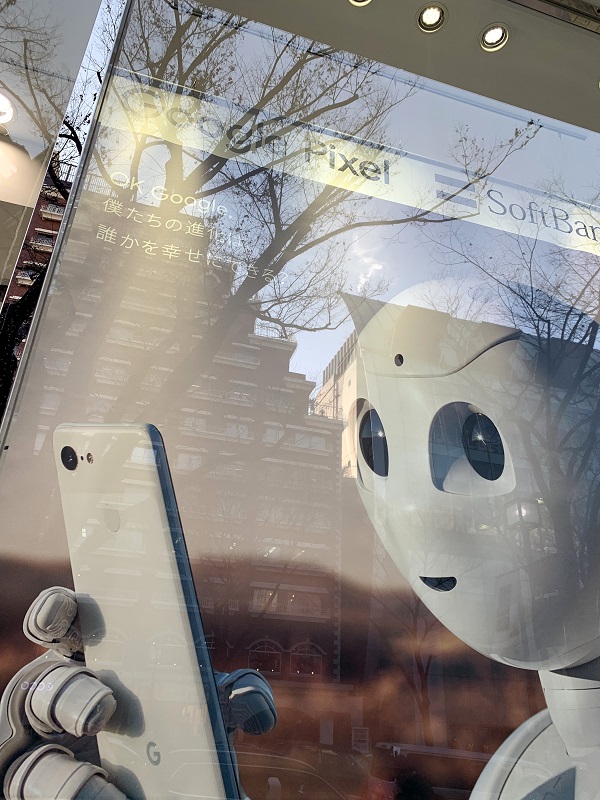
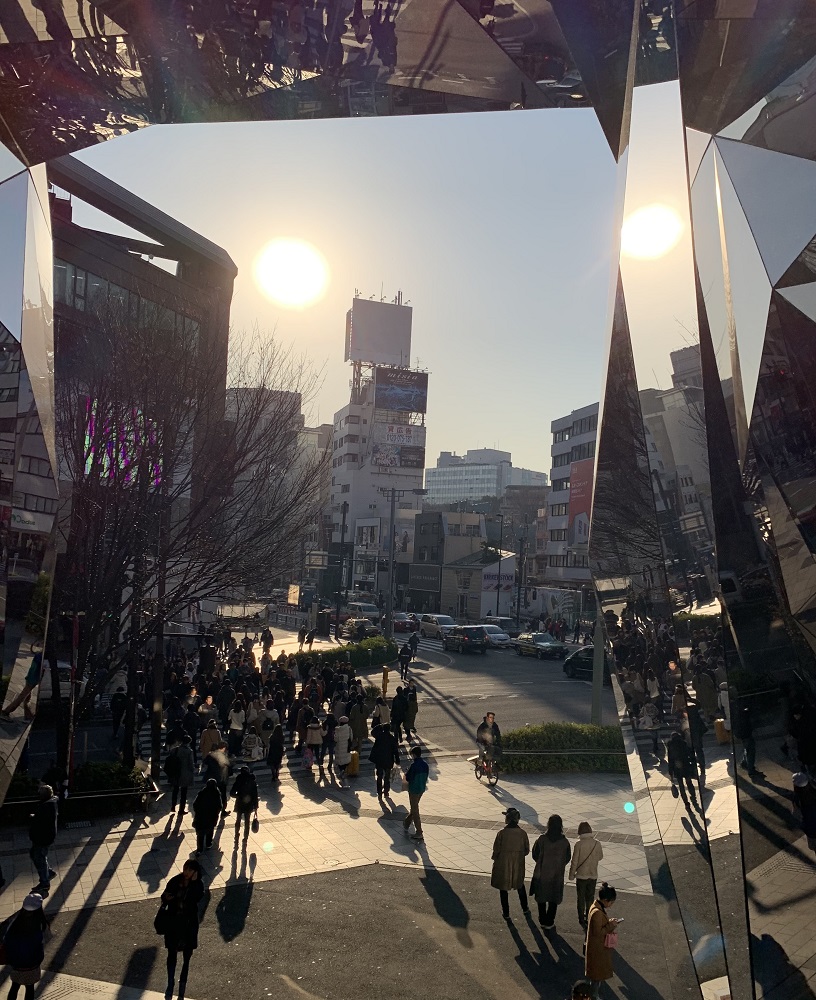
The not-quite Art Deco building for the Pink Dragon store sells 1950s retro clothes, accessories and clocks. Down below is Cat Street Cafe, and a golden egg perched on a pillar .. but what that stands for, I am not sure!Here is the swank new WeWork co-working space called The Iceberg, which opened in Aug 2018. They have offices around the world, also in Seattle.An older apartment building near Harajuku station. I don’t know the name – I just liked the angled columns of bay windows.A window display that shows Pepper the robot* coming to grips with his new Google Pixel 3 smartphone. (Does he ask: ‘OK Google, who is the smartest robot?’ ?). *Manufactured by SoftBank Robotics.The Tokyu Plaza shopping mall near Harajuku station has a faceted entrance covered with mirrors. It is only 3 pm, but the sun is already low. It sets at 4.40 pm.
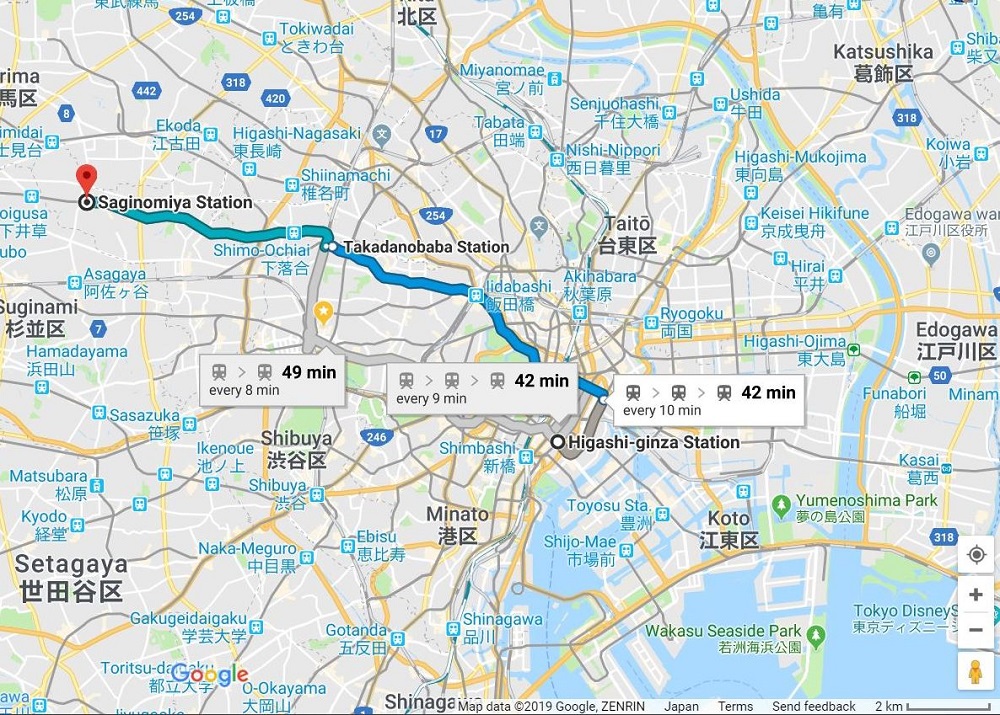
I ran out to Saginomiya station on Sunday, to visit friends of ours from Seattle, that live here in Tokyo.
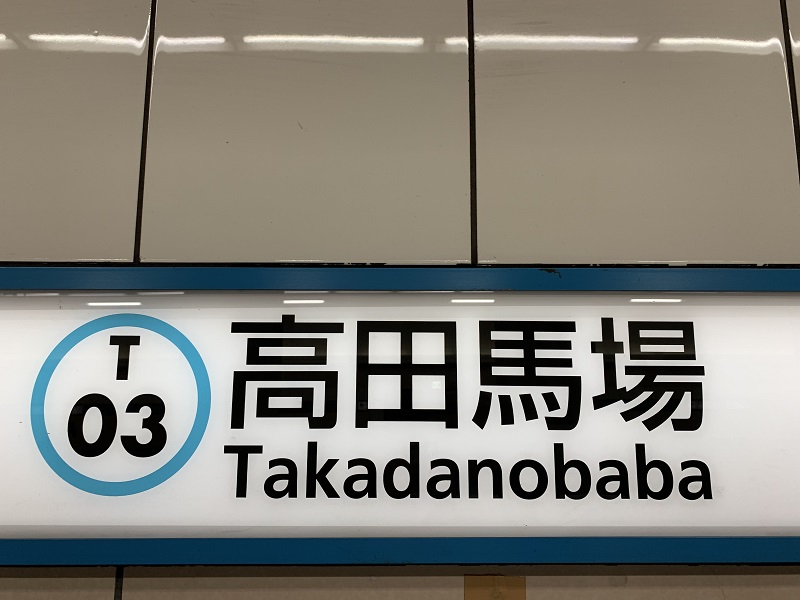
The transfer I had to make at Takadanobaba station was a little ugly*, but I was fine after asking the station attendant for directions.
*The Seibu-Shinjuku line is from a private operator, and not shown on my Tokyo Metro app.
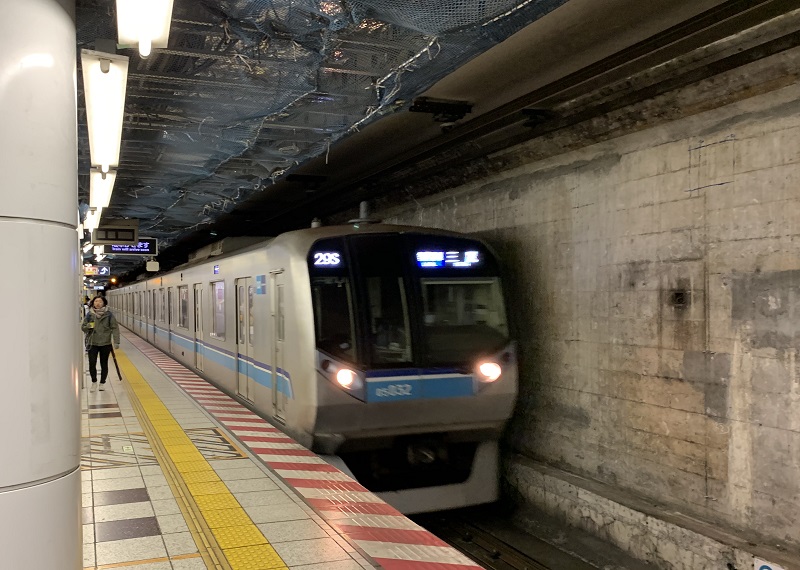
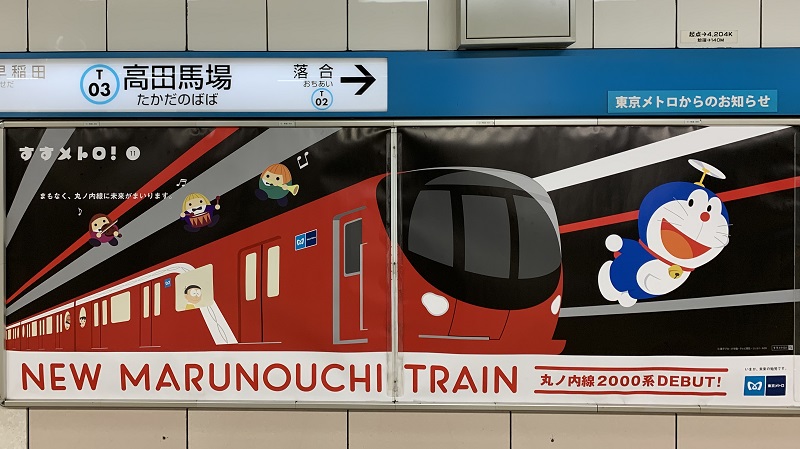
It took three lines to get me where I wanted to be: the grey Hibiya line, the blue Tozai line, and the green Seibu-Shinjuku line.Here comes the train, at Kayabacho station. Yes, the inside is a little rough, but I’m sure it will get fixed up when they install its platform fences.When faced with a long complicated station name to remember, I just say to myself remember ‘Taka-something’. (Of course, the risk is that the line has other station names that also start with Taka- !Billboard for a fancy new train that will start operating on the Marunouchi line, in February. The line carries about 1.35 million people every day. (That character in front of the train is Doraemon, the robotic cat from the 22nd century, from the manga series by Fujiko F. Fujio).
This morning, I took the Yurikamome line’s train to the new Toyosu fish market from Yurakucho Station (not much to see there), and then went on to Shimbashi Station. The line offers plenty of great views of the waterfront and of Tokyo Bay.
The Yurikamome line was completed in 1995, and is Tokyo’s first fully automated transit system – controlled entirely by computers, with no drivers on board. It looks like a monorail, but it is not: the trains run with rubber-tired wheels on an elevated concrete track guided by the side walls.
I had just stepped off the train at the Shijo-mae station close to the Toyosu fish market, and waited for the next one to arrive (to take a picture, of course). Note that there is no rail or rails on the track. The train runs on rubber wheels, controlled by computer.The bidding for blue-fin tuna happens early (5 am to 6 am) at the market, so by late morning there was no action to be seen through the double-pane windows for visitors. This is a model of the largest tuna recorded (at the old Tsukiji fish market), 496 kg/ 1,094 lbs, in 1986. It just so happened that early today, a Japanese sushi tycoon paid a whopping US$ 3.1 million for a giant tuna at this market – by far the most ever. Let’s also just note that blue-fin tuna is an endangered species due to overfishing. Oy.The upside down pyramids of Tokyo Big Sight, officially known as Tokyo International Exhibition Center. That’s a giant wood saw in the foreground.The Yurikamome line runs under the Rainbow Bridge, a suspension bridge crossing northern Tokyo Bay. The railway line is encased in fencing, seen in the middle on the right of the picture.
I am in the Marriott Courtyard Ginza this time, a better Courtyard than the one at Tokyo Station.
I’m going to stay a whole week! (Long story: I purchased the ticket back to Seattle a long time ago, and now it’s very, very expensive to change).
No matter: there are lots of interesting things to do and see in a great city such as Tokyo.
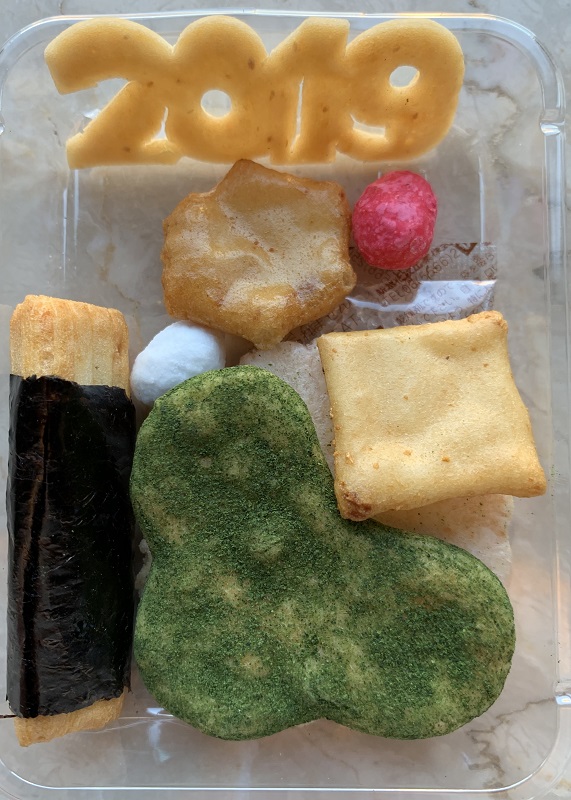
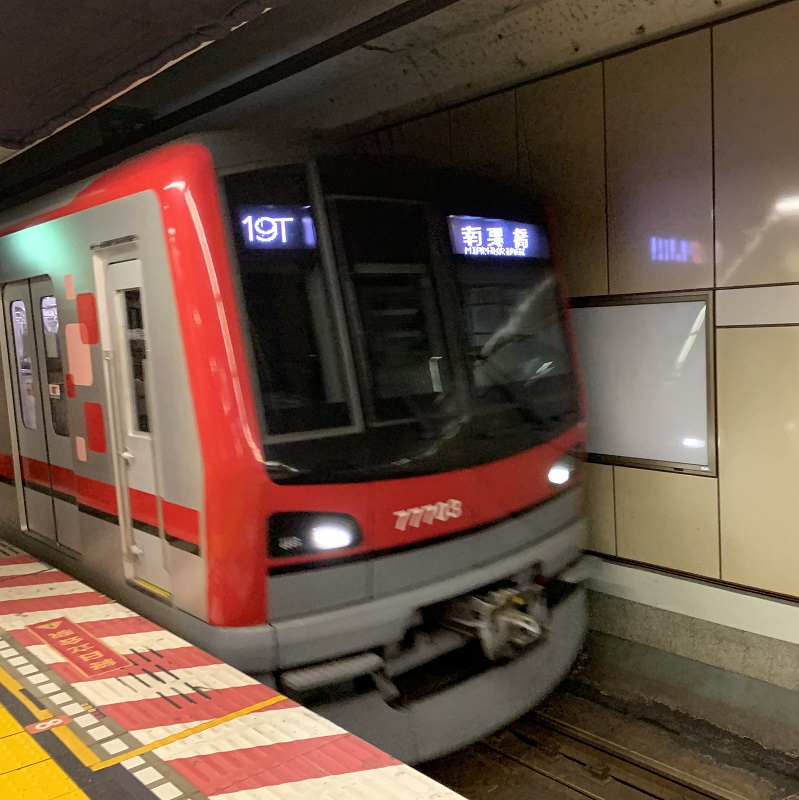
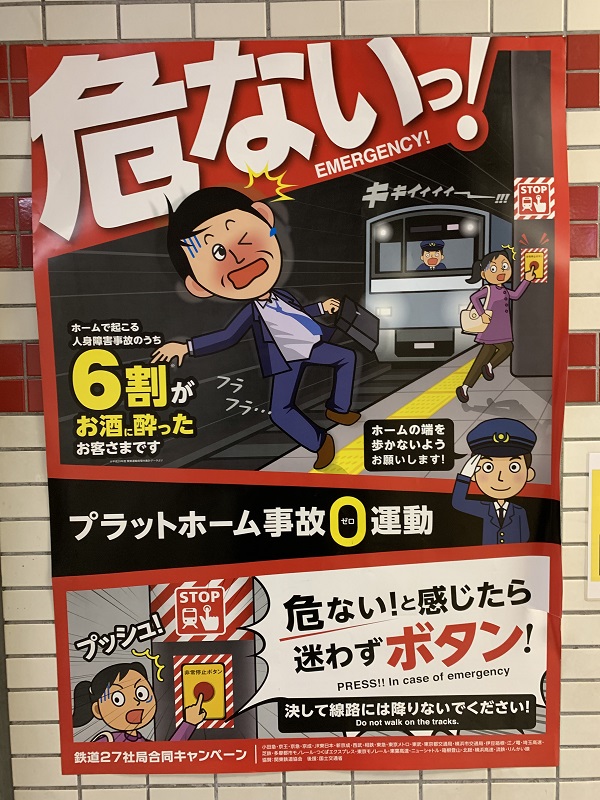
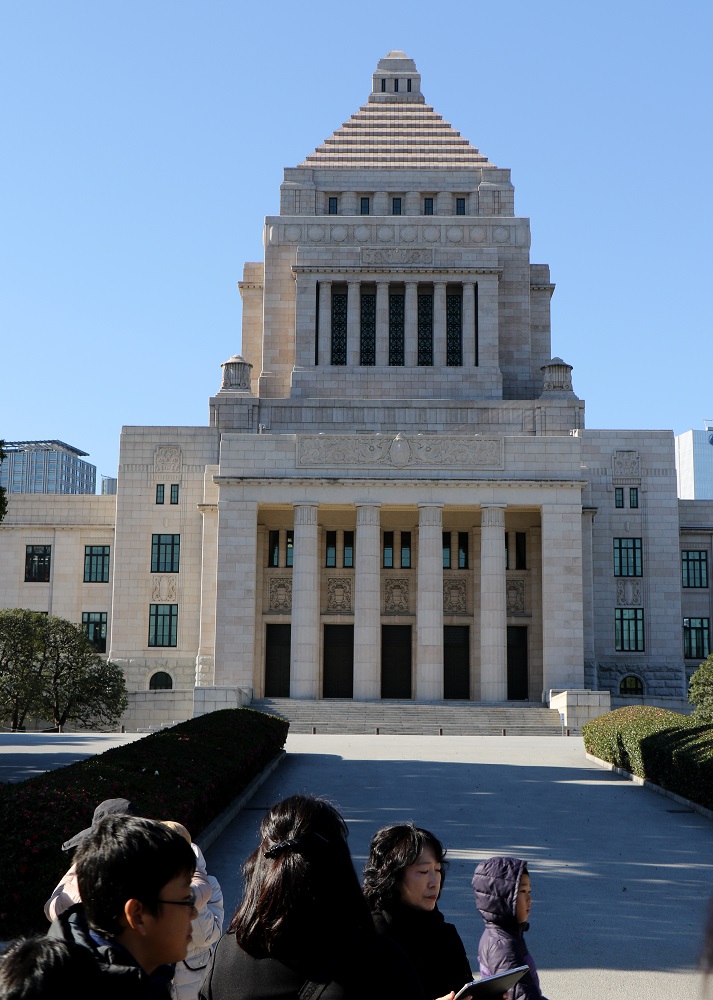
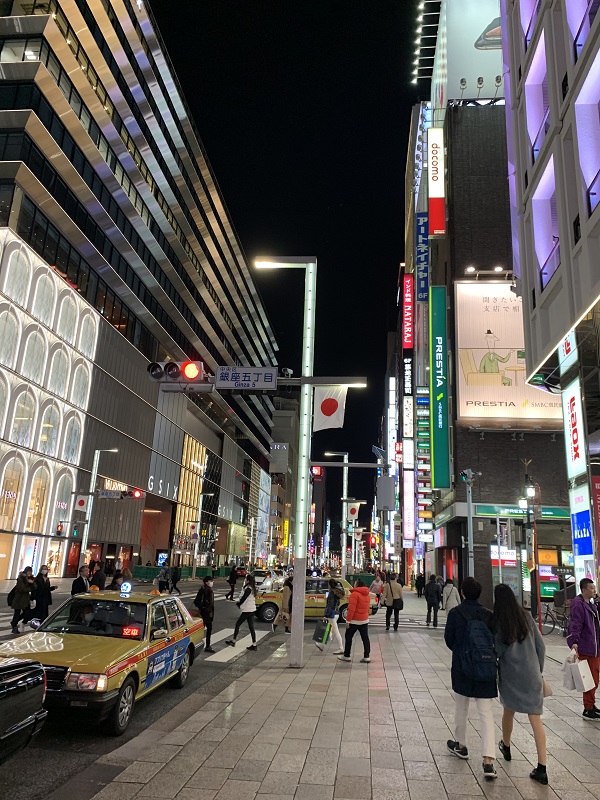
Happy New Year! These yummy rice crackers were my welcoming gift in the hotel room. (I already chewed up 2019).The Higashi-Ginza station still does not have platform doors – which means I can still take a clear picture of the train as it arrives.Call in an emergency if you see a person obviously impaired on the platform, says this poster. There was a fatal accident in August 2016 along the Tokyo Ginza subway line, in which a visually impaired man was struck by a train after falling from the platform. There are plans to install platform doors at all 882 train stations in the Tokyo metropolis before the Tokyo 2020 Olympics.I hopped off the train when I saw it was the station near the National Diet Building (the ‘parliament’ where the House of Representatives and House of Councillors meet). To see anything more than this view at all, though, one has to sign up for a guided tour, like these people. The entire block of government buildings is fenced in and guarded by a heavy security presence. I stuck my camera lens through the barriers in the fence (with the approval of the guard!) to take this picture.I’m happy to report the Christmas decorations are gone from the window displays and lamp posts in Ginza! The lamp posts now have Japanese flags on: nice.
I’m at Hong Kong airport.
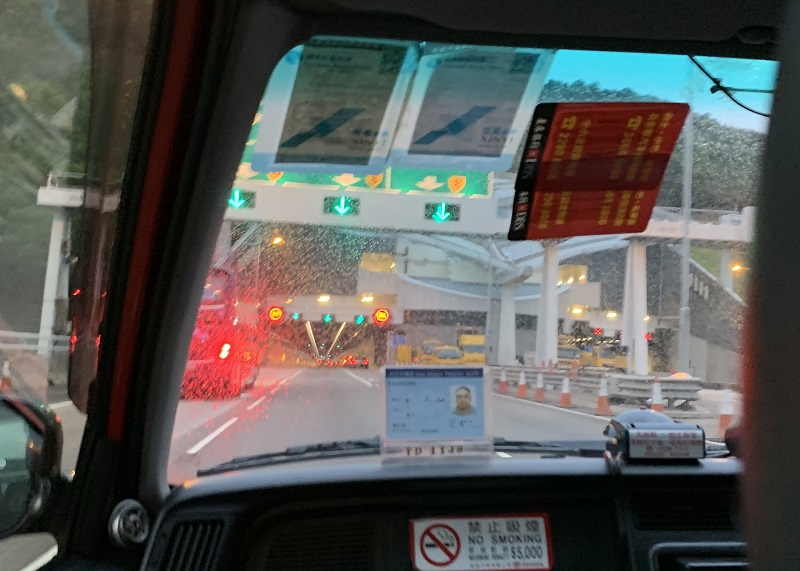
I took a taxi from the hotel. I had just too much luggage to lug to Sai Ying Pun station & transfer to the Airport Express!
Besides, it’s nice to experience the serious infrastructure that gets one to the airport by car: first the Western Harbor Crossing (an immersed tube tunnel under Victoria harbor), then the Tsing Ma suspension bridge, followed by the Nam Wan Tunnel and another suspension bridge, the Kap Shui Mun bridge. And let’s not forget the entire Hong Kong airport was built on a man-made island.
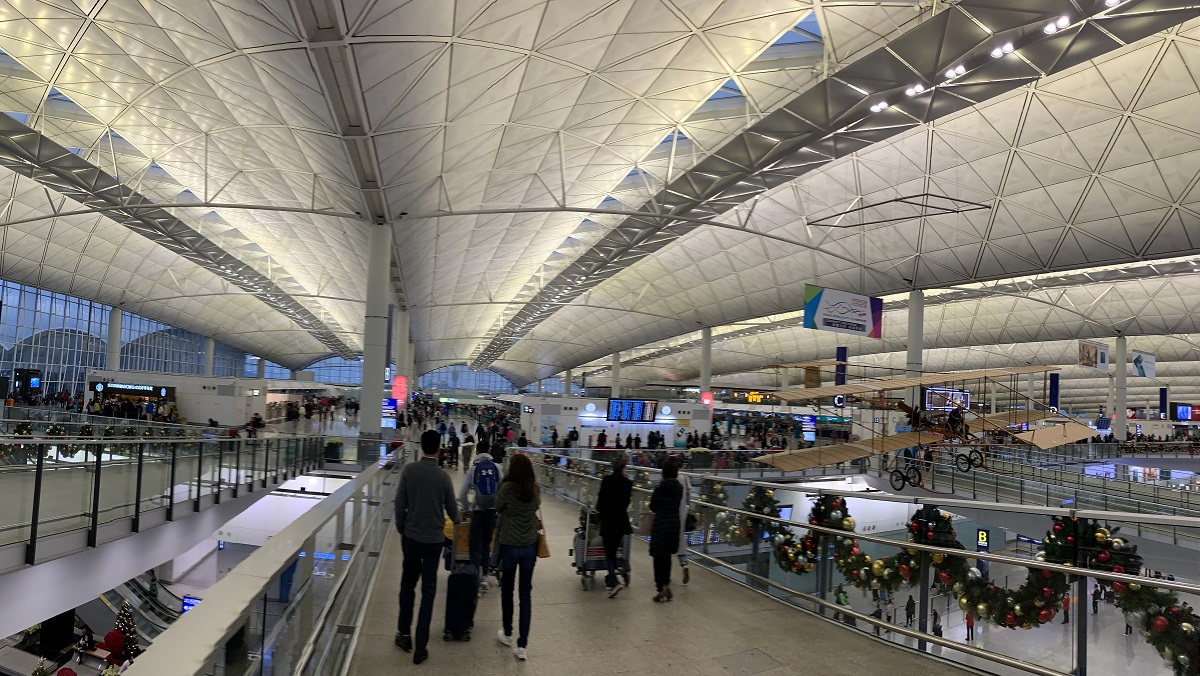
Approaching the Nam Wan Tunnel. It is a twin-tube tunnel 1.2 km long (0.75 mi), with three lanes in each direction.Here’s the departure hall in Terminal 1, as one steps into the airport after getting out of the taxi.
Here are more of my favorite pictures of this Hong Kong visit.
I am leaving for Tokyo in the morning, to stay over again for a few days. It is the final stop on way back home in Seattle.
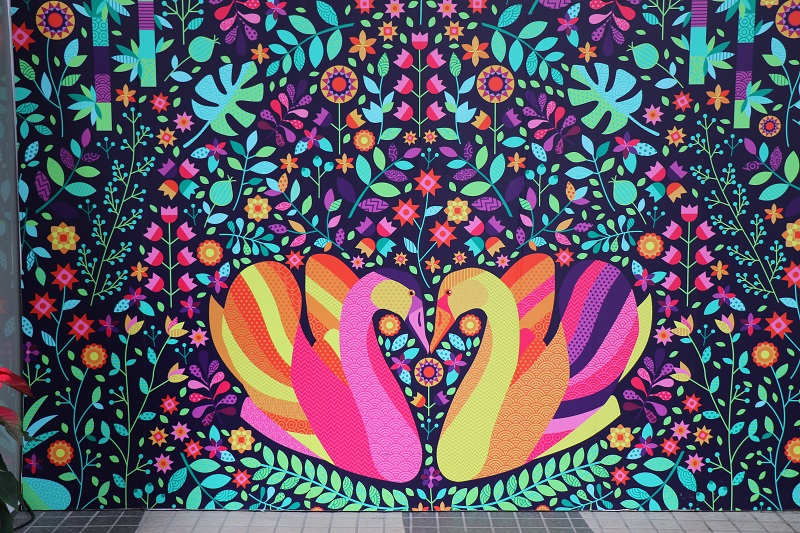
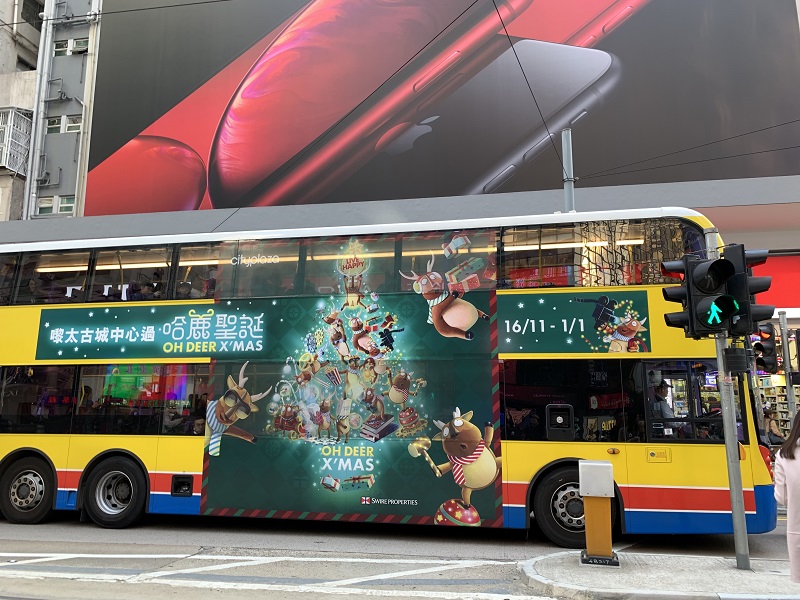
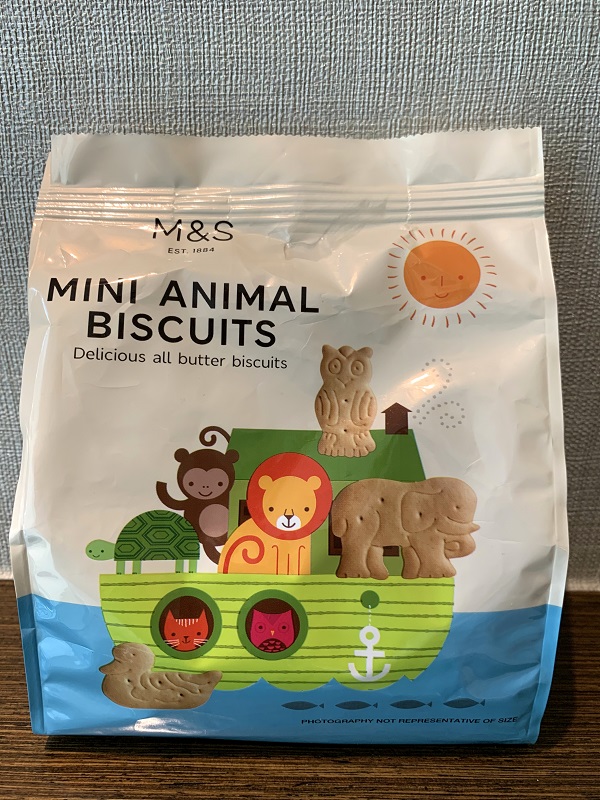
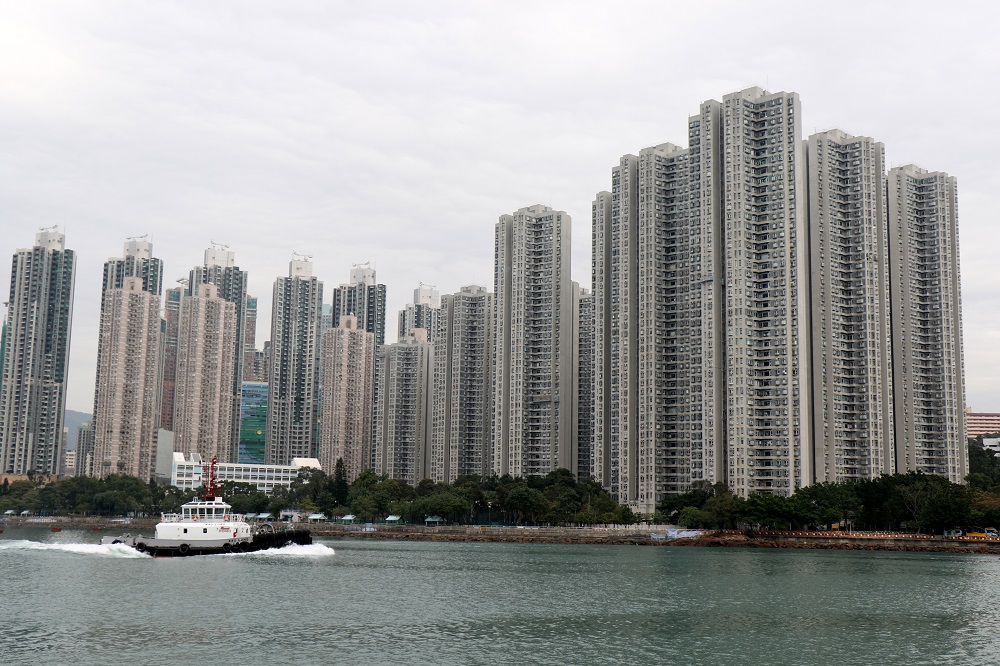
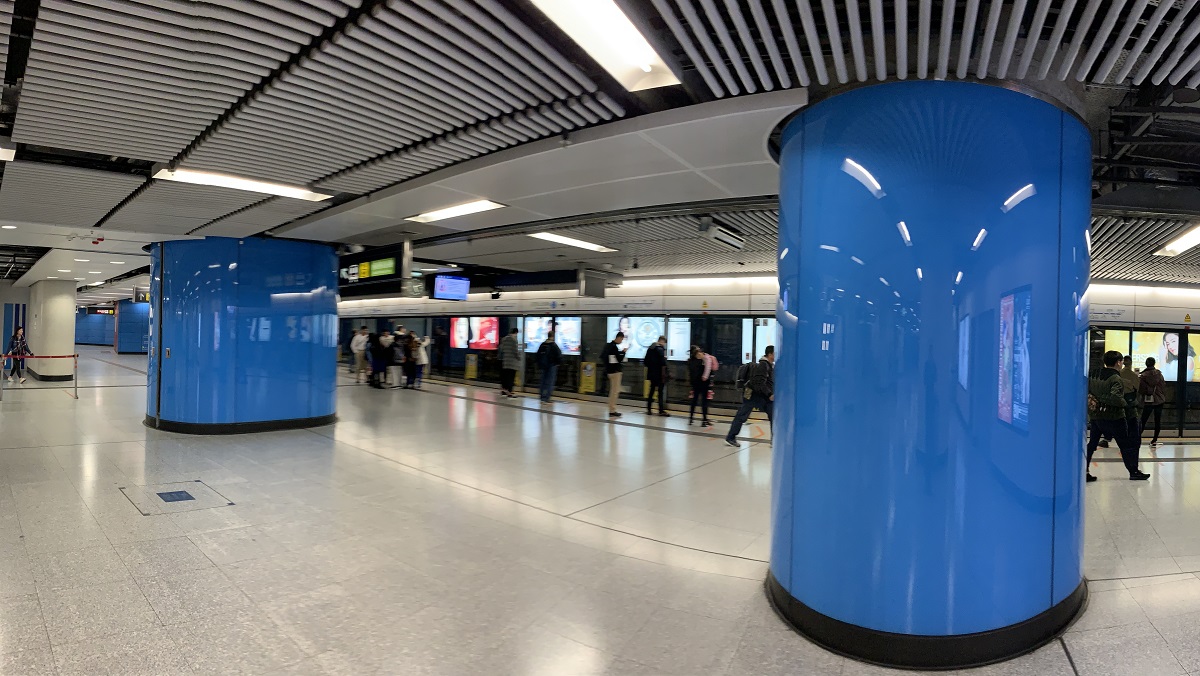
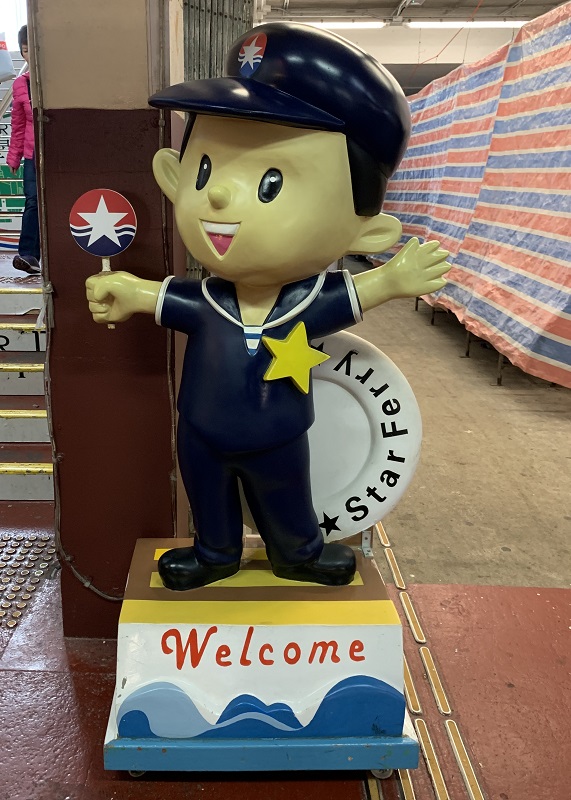
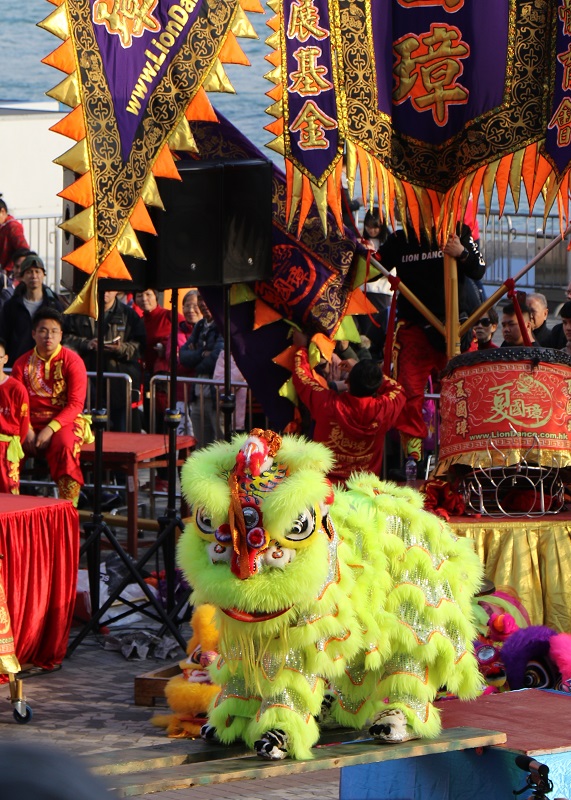
I love this eye-catching mural. It is at the entrance of the World Trade Center shopping arcade in Causeway Bay.‘Oh Deer X’Mas‘ indeed. On the buses, in the stores, in open spaces: Christmas trees and decorations are still found everywhere in the city as of today. One even hears Christmas music in the stores. People! Christmas is O-V-E-R. Maybe I need to send an SOS message ahead to Japan: N.O. M.O.R.E. Christmas.I love the little snacks that the Marks & Spencer food stores purvey around the city.The view across from the Tsing Yi station’s promenade: phalanxes of forty-story apartment buildings. These apartments might be small, but are still OK, I guess. Newspapers still report on the plight of thousands of Hong Kong residents living in tiny subdivided housing units known as “coffin homes’.These beautiful gleaming blue pillars at the Admiralty station on the blue Island Line (the line is blue on subway maps).The Star Ferry runs across Victoria harbor between Hong Kong Island, and the Hong Kong mainland. This cute little sailor welcomes passengers as they board the ferry.This was on New Years Day: a Lion Dance festival at the Tsim Sha Tsui promenade. The yellow lion has two kids in that make it perform all kinds of moves.
I have been to Hong Kong many times, and there is always a new construction project, or an extension of the subway rail network to check out.
The new high-speed rail link between Hong Kong and Guangzhou in mainland China opened in Sept 2018, after many years of delays.
Unfortunately my American passport is not much help to get me into the new train and across the border! Aargh. I would need a confirmed itinerary/ formal invite for a visa, which takes FOUR business days. I will be gone by then – and it’s too much effort for a jolly ride, anyway.
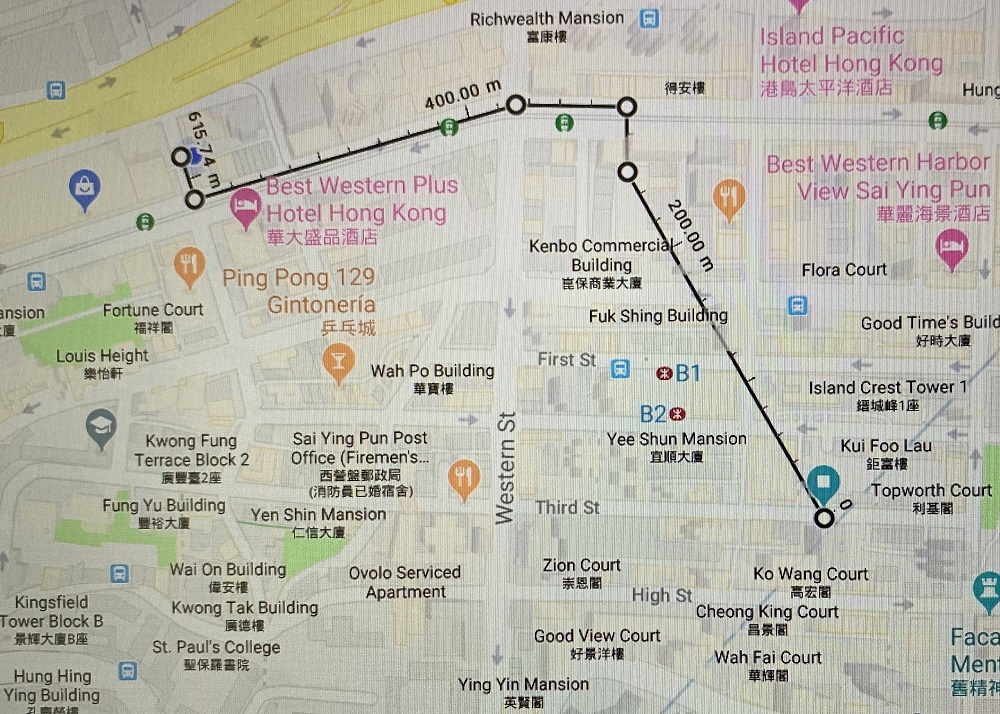
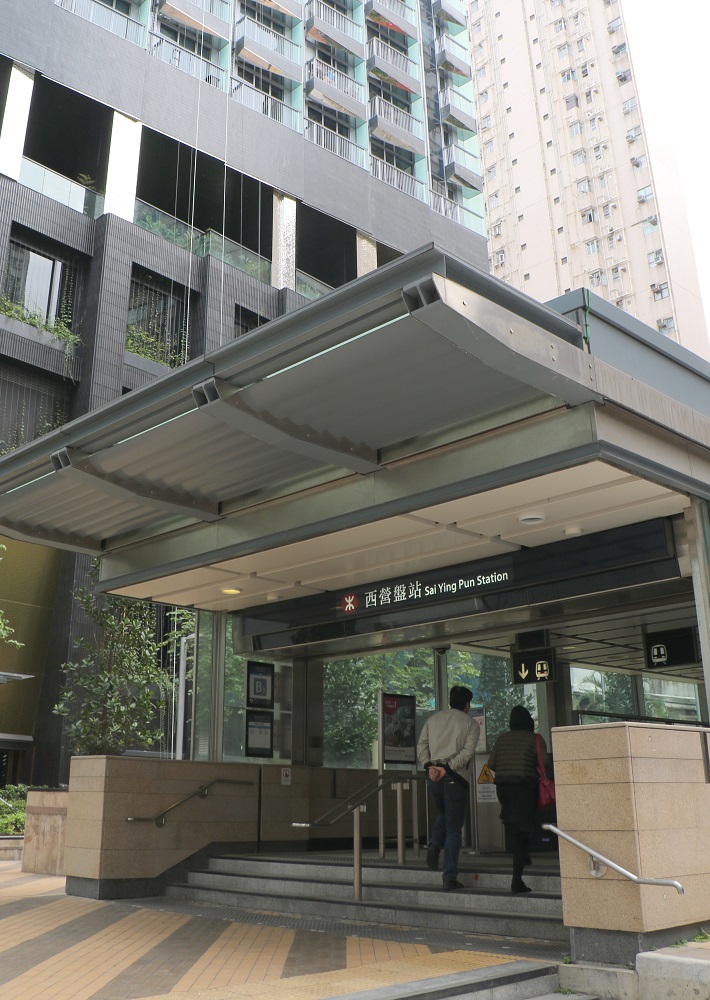
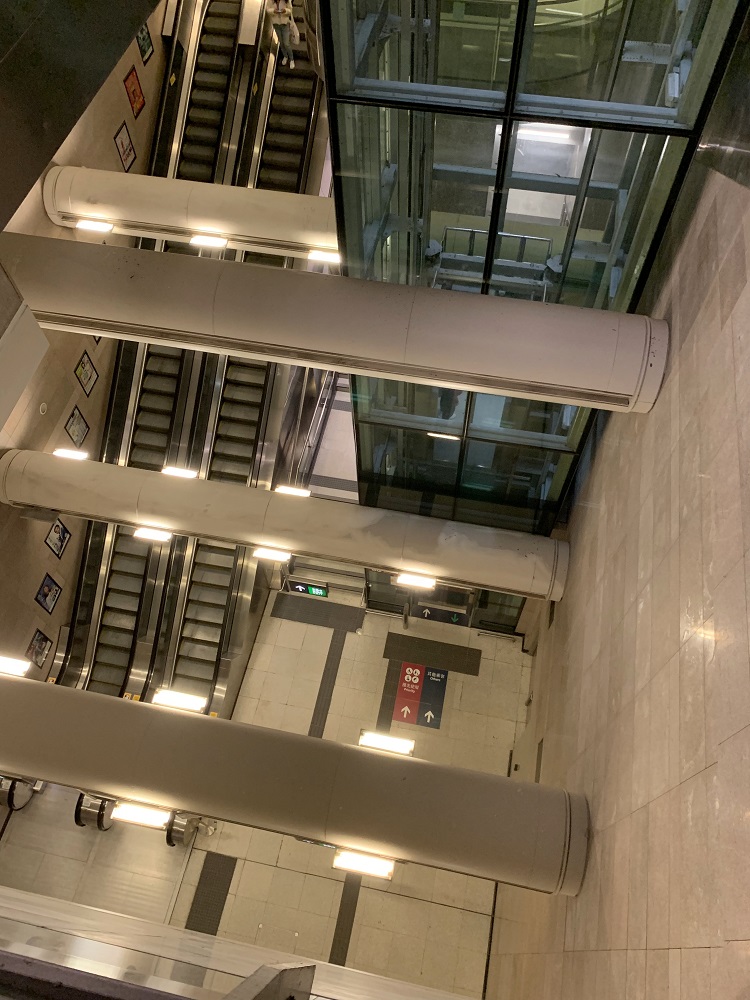
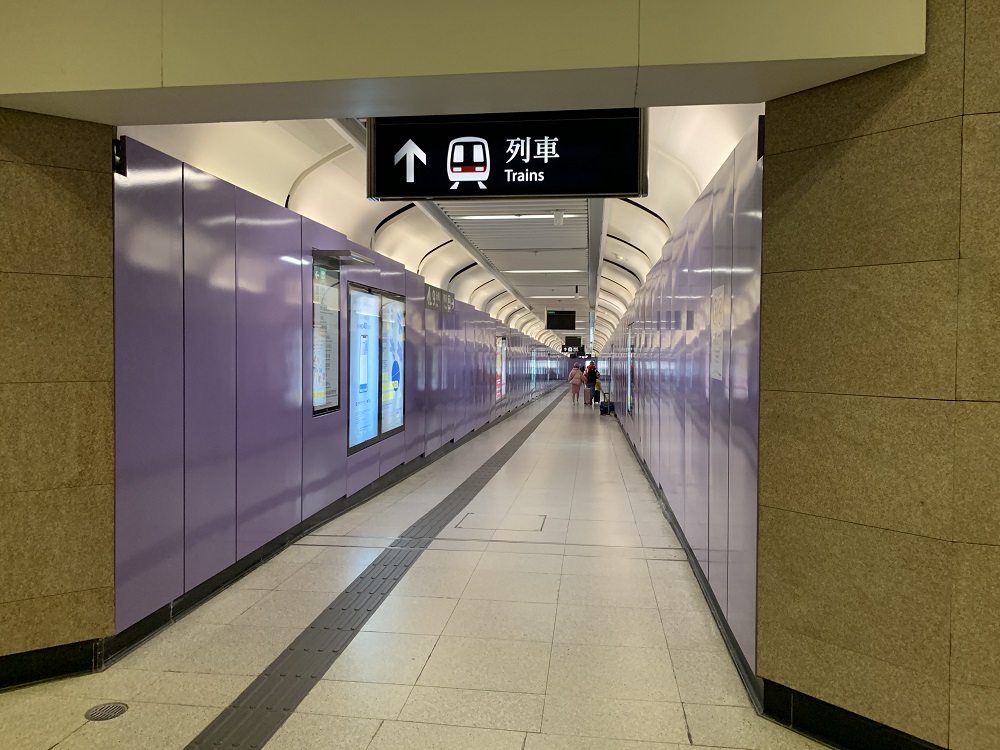
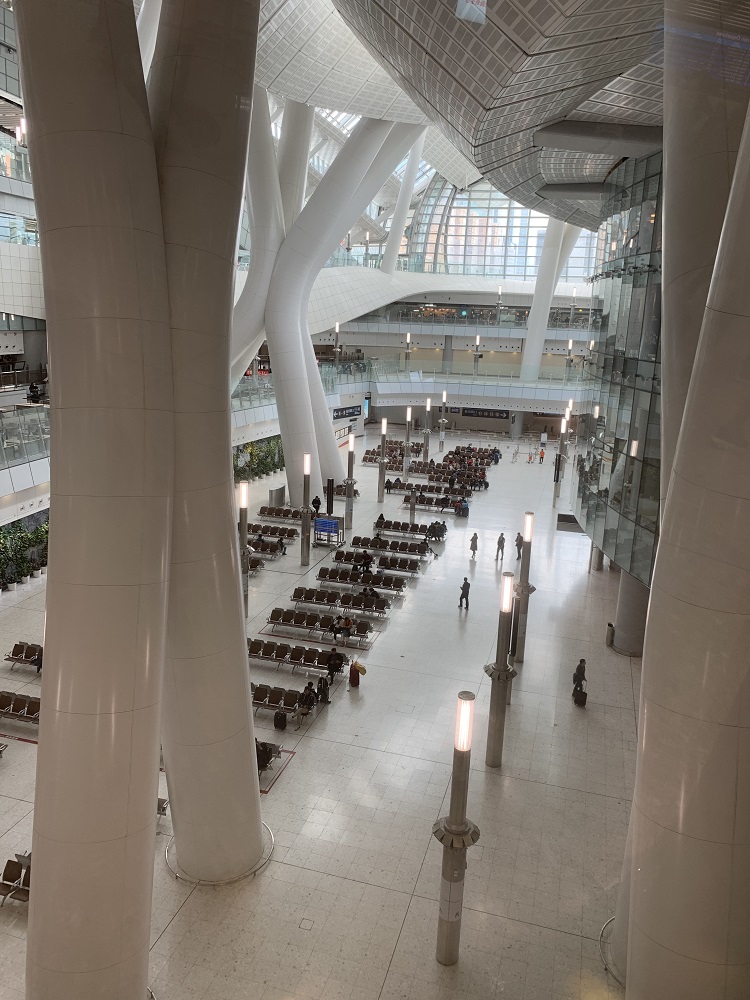
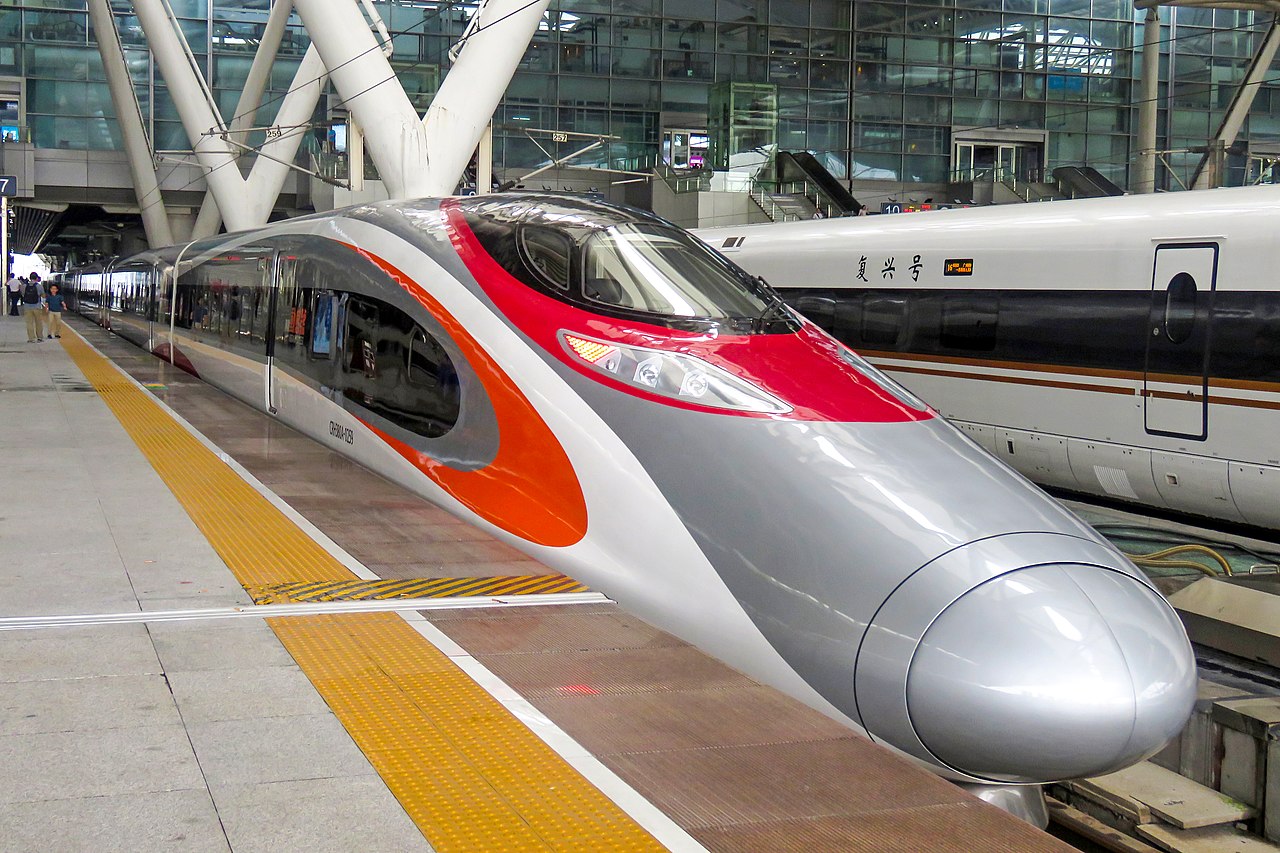
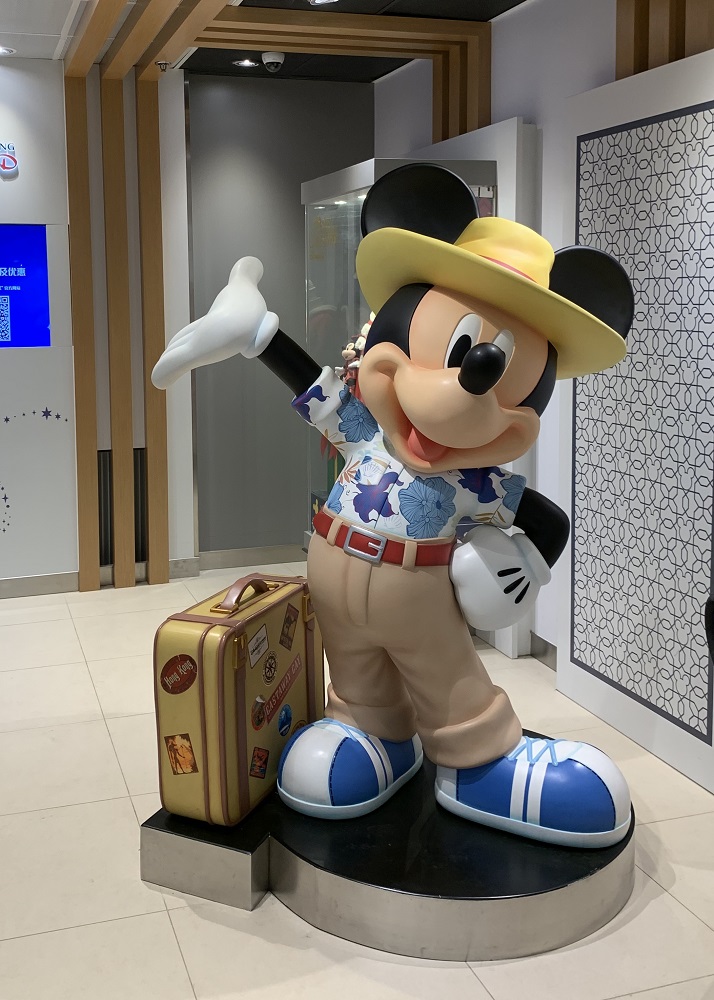
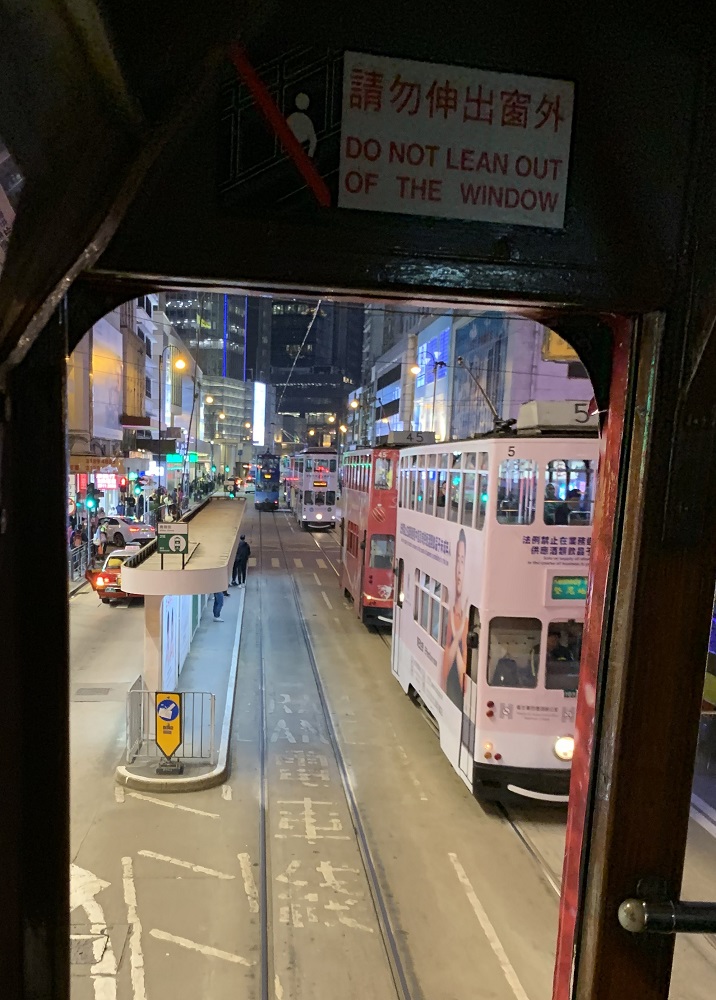
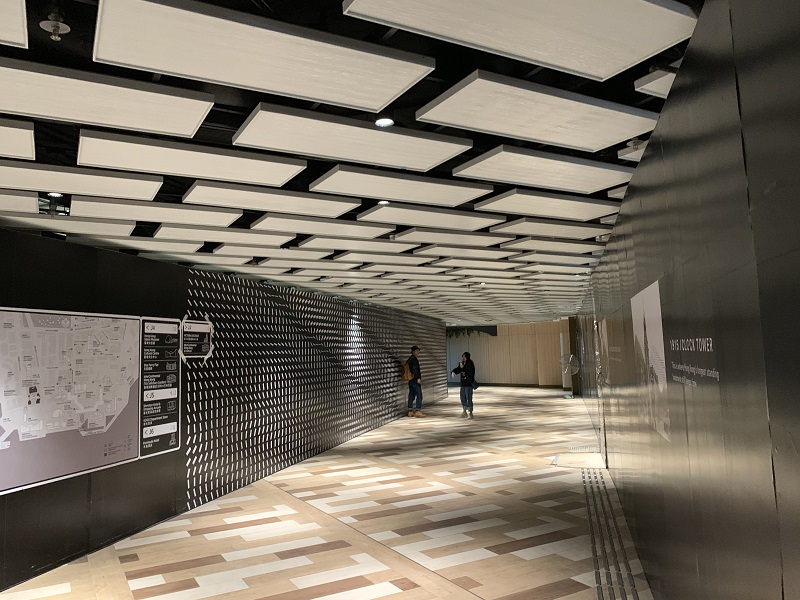
Slide 1 of 4: This is the 615 m/ 0.38 mi walk from the Marriott top left, to the new-ish Sai Ying Pun station (opened in 2015). The 200 m/ 0.13 mi to the green bubble where the train stops, is an underground pedestrian tunnel. Yes, it’s a little walk to get there, but once there, there are 93 destination stations on 11 lines to choose from .. for only for a few dollars!Slide 2 of 4: The entrance & exit B3 to Sai Ying Pun station. There are several others scattered around the station. The apartment tower was built along with the station entrance.Slide 3 of 4. (Successfully took a picture without dropping my new phone into the abyss). It takes three escalators (or the elevator) to get to the bottom of the pedestrian tunnel that goes to the train station. There is also a spiral staircase winding around the escalators: a means to get into or out of the station during a local power failure.Slide 4 of 4. The pedestrian tunnel that goes to the train station.Here is the cavernous inside of the departure lounge at the brand new Hong Kong West Kowloon station, the terminus of the Hong Kong section of the Guangzhou–Shenzhen–Hong Kong Express Rail Link. Those pillars are just enormous, and the roof with its skylights is at least 6 storeys up.I did not have access to the platform to check out the train, but here is a photo from Wikipedia. This is train G6581, getting ready to leave Guangzhou South, bound for Hong Kong West Kowloon, on the first day of running on the Hong Kong section in September. These trains are built in China.Mickey Mouse in the arrivals hall of the Hong Kong West Kowloon station, beckoning to travelers to visit Hong Kong Disneyland. I think he looks very cute, and is doing a great job.Hey! And above ground, the 110-year old tram system on Hong Kong Island is still going strong. Fares are now HKD 2.60 (33 cents US), up from HKD 2.00 (26 cents) ten years ago. Got to pay the bills, right? This was on New Years Eve, with the trams on a modified schedule. All these were heading out in quick succession to pick up people that wanted to travel to the city center.This pedestrian subway tunnel under Salisbury Road by Victoria harbor was nicely remodeled as well. Pressing the camera shutter makes for instant abstract art!
It was well after 1 am this morning when our delayed flight finally left Perth, and the flight arrived an hour late into Hong Kong this morning as well.
I took the Airport Express to Hong Kong Island, and the Marriott hotel’s front desk checked me in – even though it was barely 10 am! So I could take a little catnap before going out into the city for a bit.
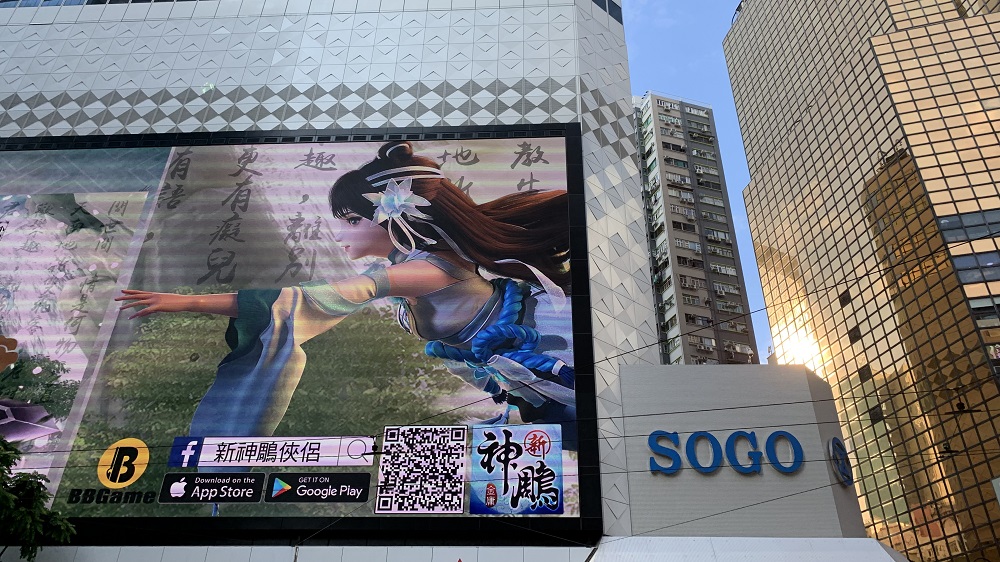
Here’s our Cathay Pacific Airbus A350 bird on short finals approach, ready for touching down on the runway at Hong Kong airport at about 8.30 am.The Airport Express ride into Hong Kong Station on Hong Kong Island is about 24 mins. We’re approaching Tsing Yi Station here.This giant electronic billboard is outside the SOGO Department Store at the Causeway Bay Station.The happening place at sunset was the promenade by the Hong Kong Cultural Center, overlooking Victoria Harbor towards Hong Kong Island. The Central Plaza skyscraper (78 storeys, completed 1992) is reflecting sunlight onto the water. The Hong Kong Convention Center is in front of it. On the right is the IFC (International Finance Center) tower, the city’s second tallest at 415 m/ 1,362 ft (88 storeys, completed 2003).
I’m taking a red-eye flight to Hong Kong tonight, to stay there over New Years Eve, and for another day or two.
Here’s a new A$50 that landed in my wallet; it features David Unaipon, indigenous Australian of the Ngarrindjeri people, a preacher, inventor and author. The polymer note has all kinds of security features, and four birds of which only three are visible. Green swan, white swan, flying bird above it, and the fourth one is only visible under UV light. How come the USA has such blah banknotes?I love this cartoon that appeared in today’s The Australian’s Weekend Edition. The cartoonist is Jon Kudelka.This Instagram picture was taken in March by Tom Cannon, but was also printed in the newspapers as one of the top tourist pictures of the year. Coral Bay is some 1,100 km/ 700 mi up north the coast of Western Australia from Perth. (It’s an optical illusion; the fish did not ram the boat).
Our time is running short here at the resort by Geographe Bay.
There is a nice walk & bike track that runs along the beach. For me, it’s hard to just walk, though, and not stop and investigate the sounds and glimpses of the exotic birds in the bushes.
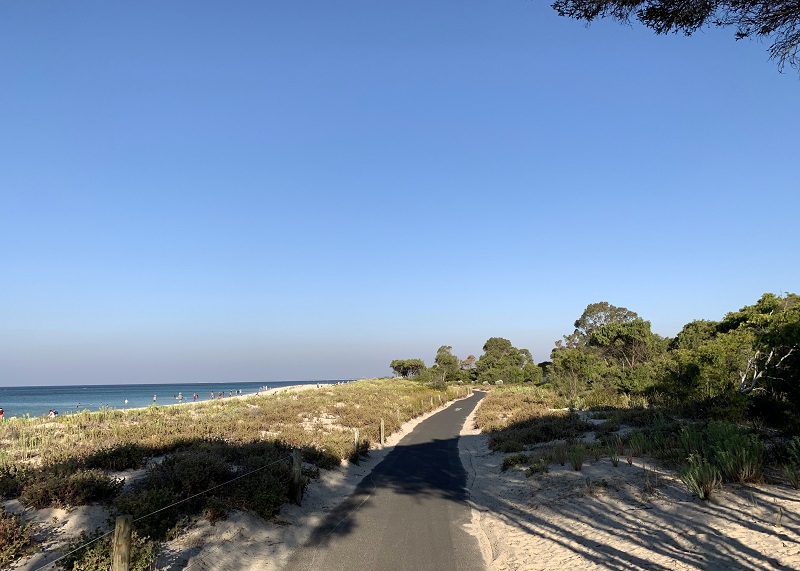
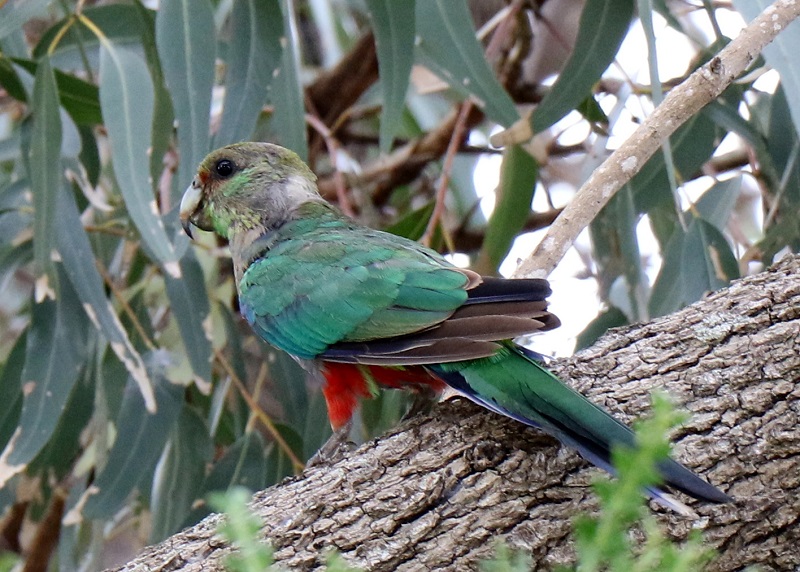
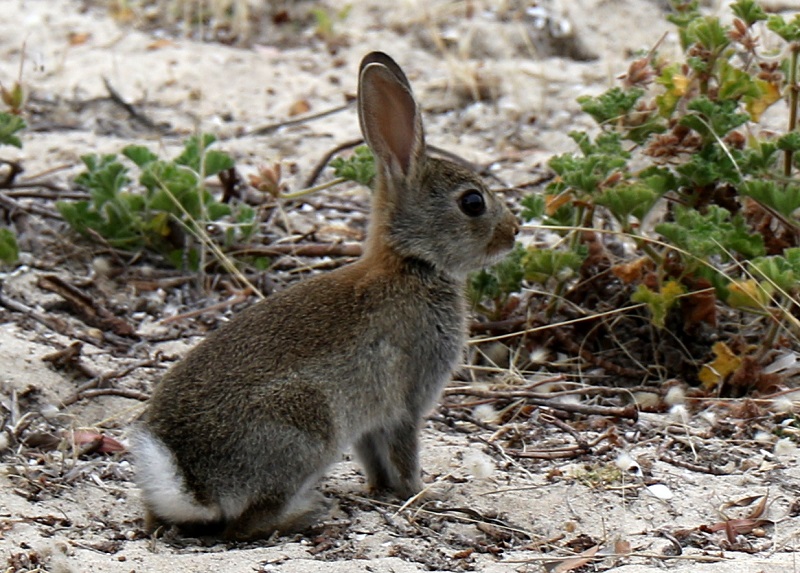
Here’s the late afternoon scene outside our resort: a nice walk & bike track that goes on for miles, a sandy dune, and the beach nearby. That’s Geographe Bay, tranquil with great swimming and snorkeling, and not as much to offer to surfers and paddle boarders.This is a young red-capped parrot (Purpureicephalus spurius), native to this southwest corner of Western Australia. This one still has a greenish plumage overall, but before long it will sport a bright crimson crown (same color as its leg feathers), and yellow cheeks.Yes, this fella is an oh-so-cute little wabbit – BUT WAIT: it is an European rabbit (Oryctolagus cuniculus). They were first brought to Australia by the First Fleet in 1788, and have become a serious invasive species and pest, since then. They do serious damage to crops, and destroy food supplies critical to native species.
On Monday we went to the beach for a bit, and then stopped at a viewpoint in Boranup forest.
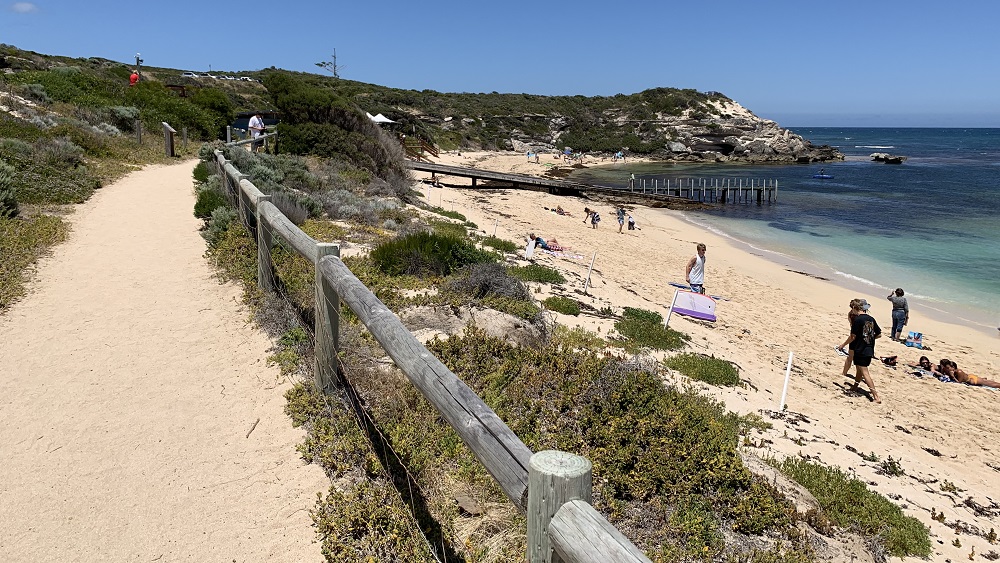
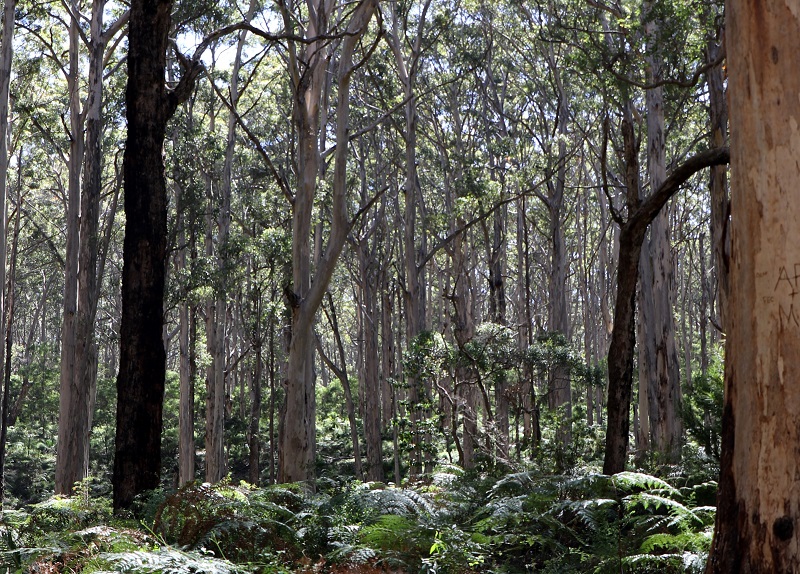
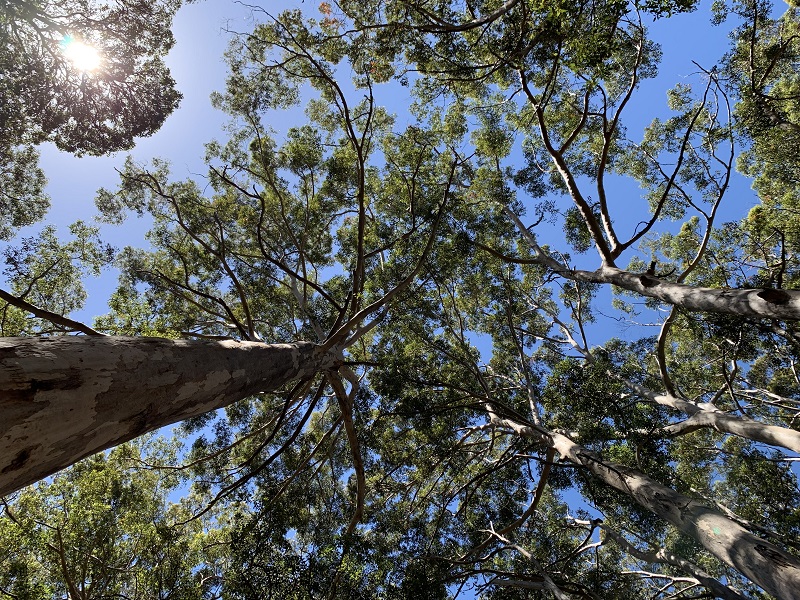
Here’s Gnarabup beach (the ‘g’ is silent). The jetty in the distance is for jet skis and sea kayaks, and not for fishing boats. It was a little windy, but the water temperature was great for swimming.This is Boranup Forest between Margaret River and Augusta. It is a karri forest (type of eucalyptus tree) with towering trees, but also with ferns on the forest floor.It’s a long way up! Some 50 m/ 150 ft to the top of the tree canopy.
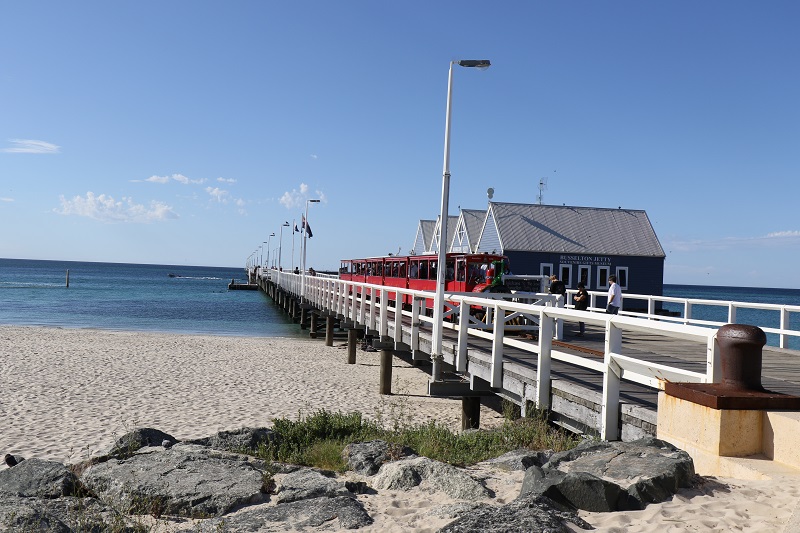
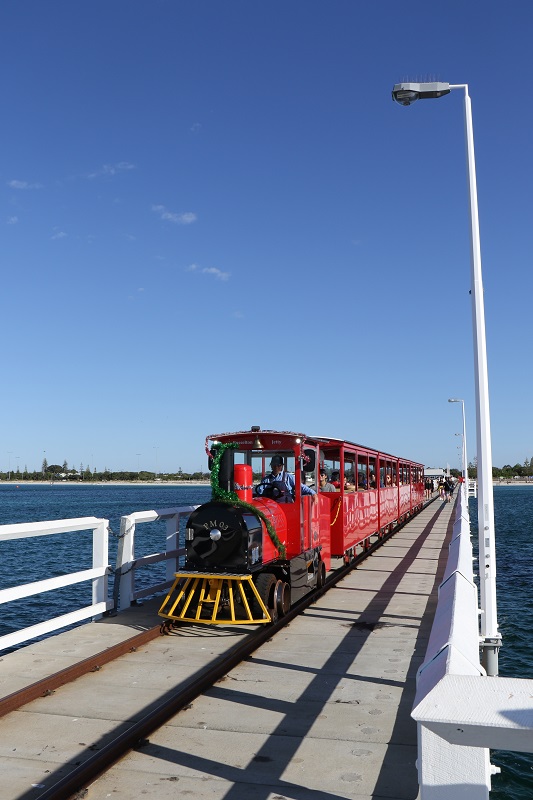
We walked out to the very end of the long Busselton jetty today. There is a little train and an undersea viewing area as well, but maybe we will do that next time.
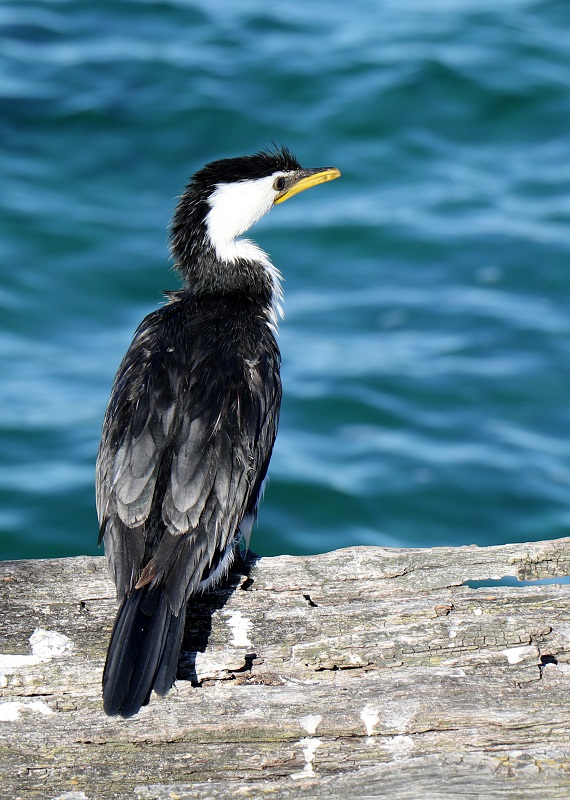
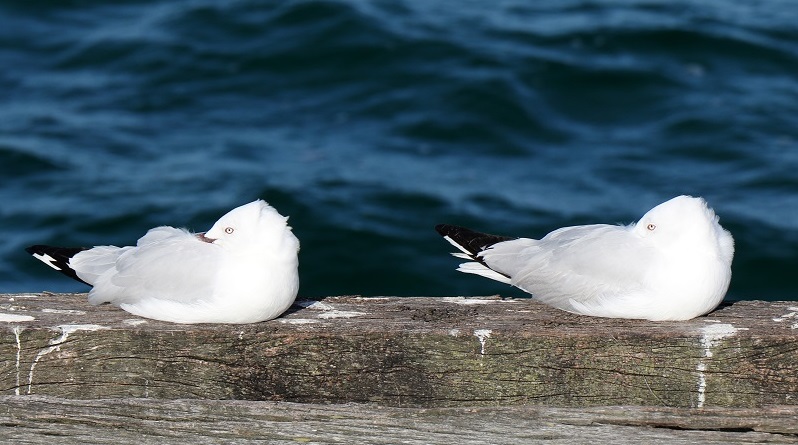
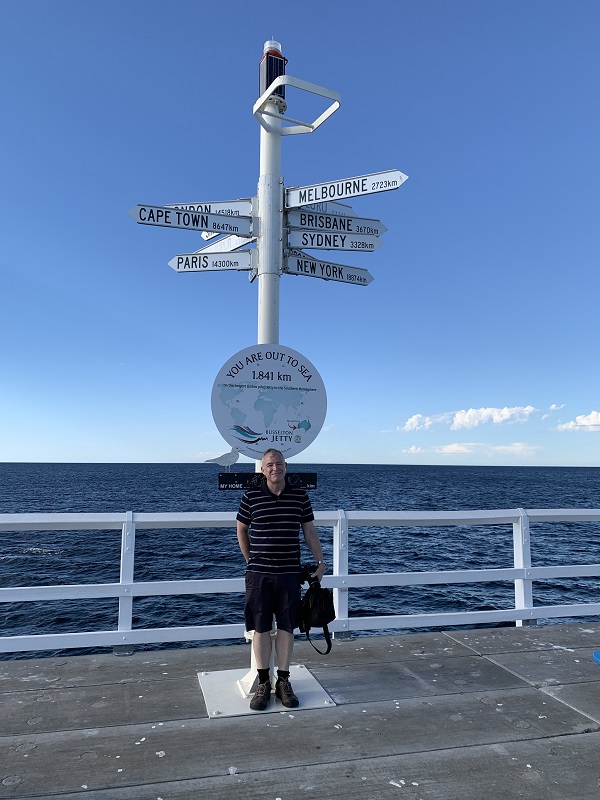
The current incarnation of the Busselton jetty. The original jetty’s construction began in 1865. Yes, that’s a little red train, that runs on tracks to the end of the jetty. It’s 1.84 km/ 1.2 mi long to the very end.A little pied cormorant or kawaupaka (Microcarbo melanoleucos) on wood beams next to the pier. The bird is a diver, finding prey on the sea floor in shallow waters.Looks like these silver gulls (Chroicocephalus novaehollandiae) are getting ready to turn in and get a little sleep, even though it was only 6 pm. This the most common gull seen in Australia.Here comes the electric train called the ‘Stocker Preston Express’. It’s really not an express train. It runs only barely faster than one can walk!.The distance sign at the very end of the pier. Cape Town is 8,647 km (5,372 mi) away. Seattle is 15,021 km (9,334 mi) away!
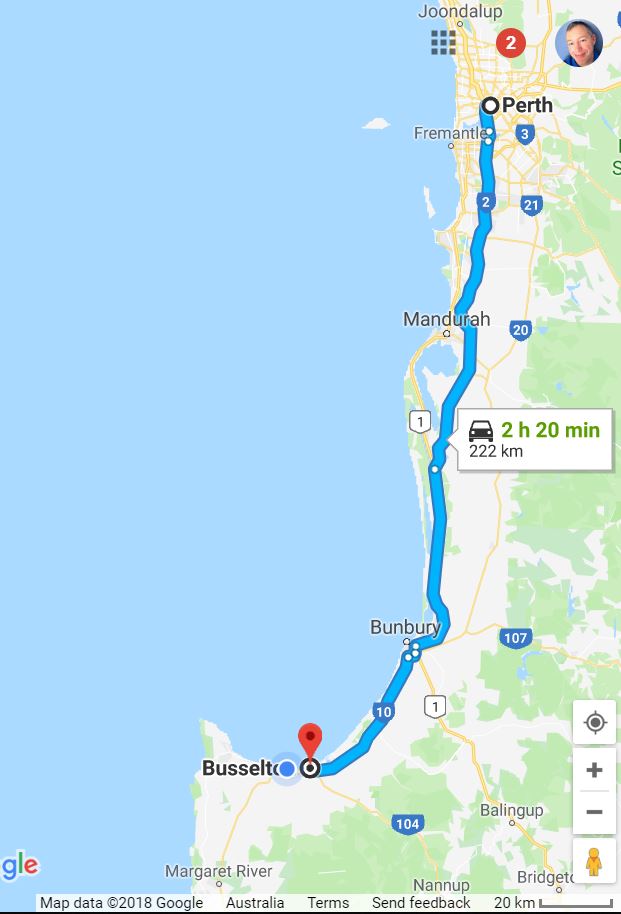
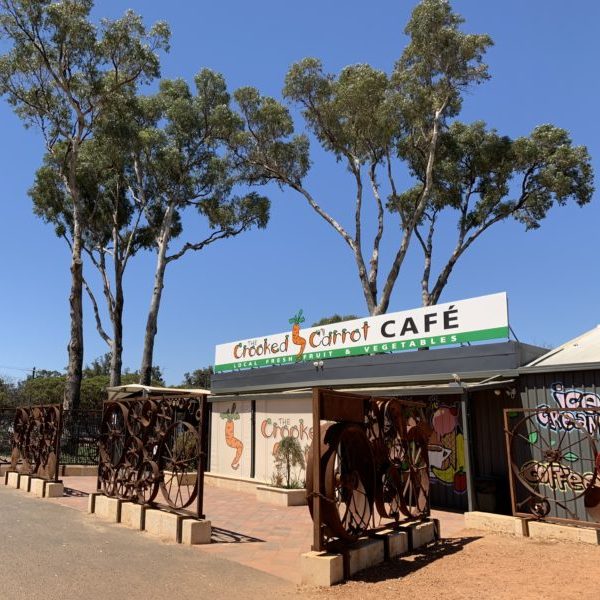
Busselton (pop. 38,289) is 222 km (138 mi) south of Perth.Our pit stop at the air-conditioned Crooked Carrot Cafe. Its roof is outfitted with solar panels. Those at the back are eucalyptus (blue gum) trees, native and widely cultivated in Australia, but considered an invasive plant elsewhere in the world.
The five of us – my brother & his family, and I – packed up the SUV and made our way down to the town of Busselton on Saturday. We are going to stay there, on the southwestern Australian coast, over Christmas.
On the way there the car’s temperature gauge reported 42°C/ 108°F! .. but the high temperatures at the coast should be much more moderate, in the order of 27°C/ 80°F.
I took the train from Bull Creek Station to Perth Underground station today – it’s only 11 minutes.
The Western Australian economy must have picked up steam the last two years, because there is a lot of new construction going on in downtown Perth.
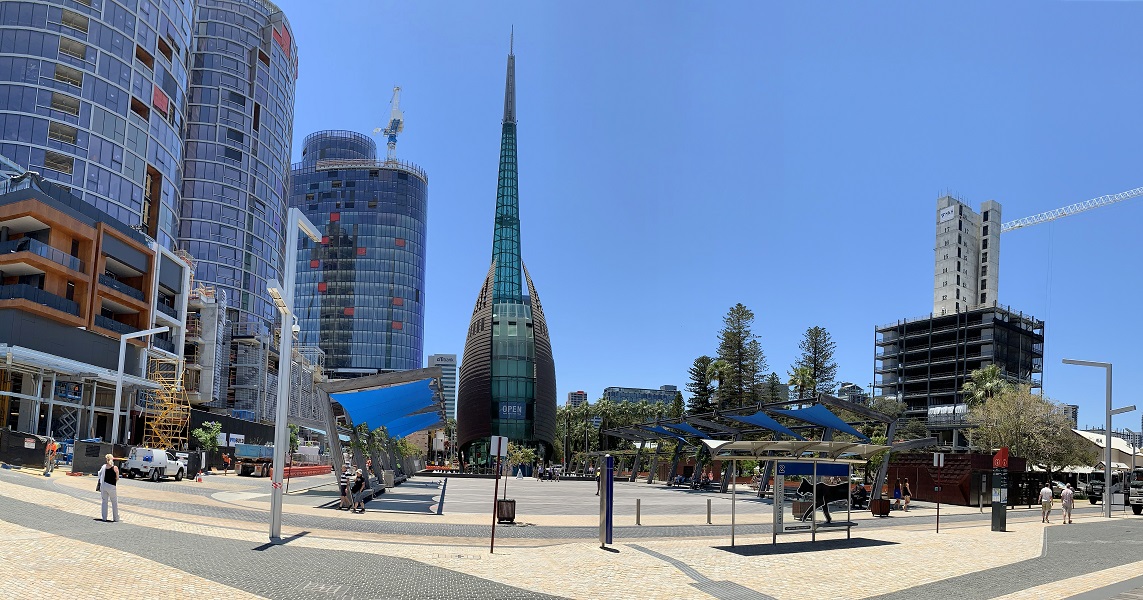
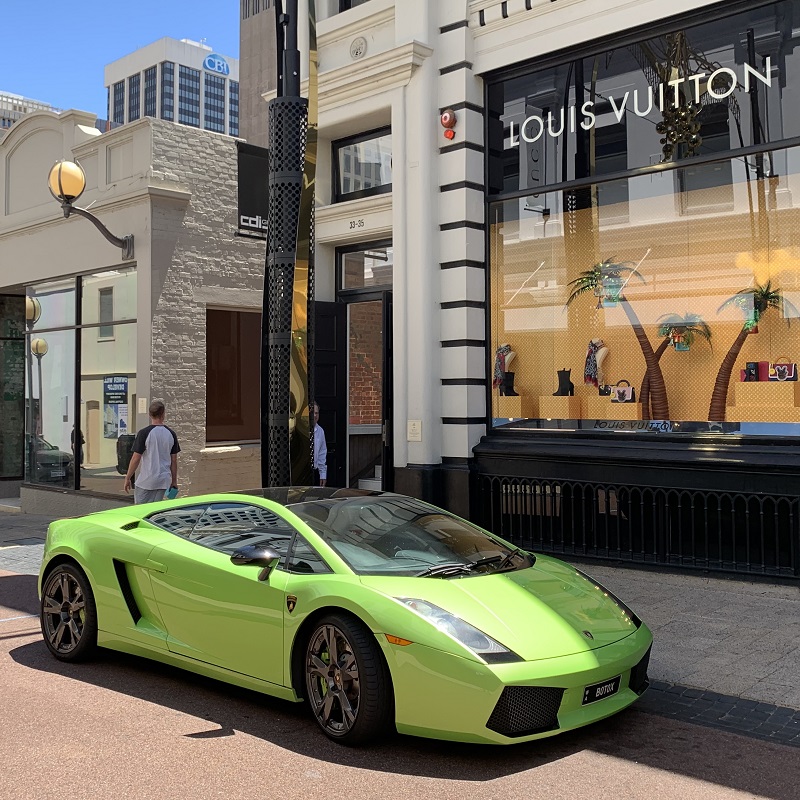
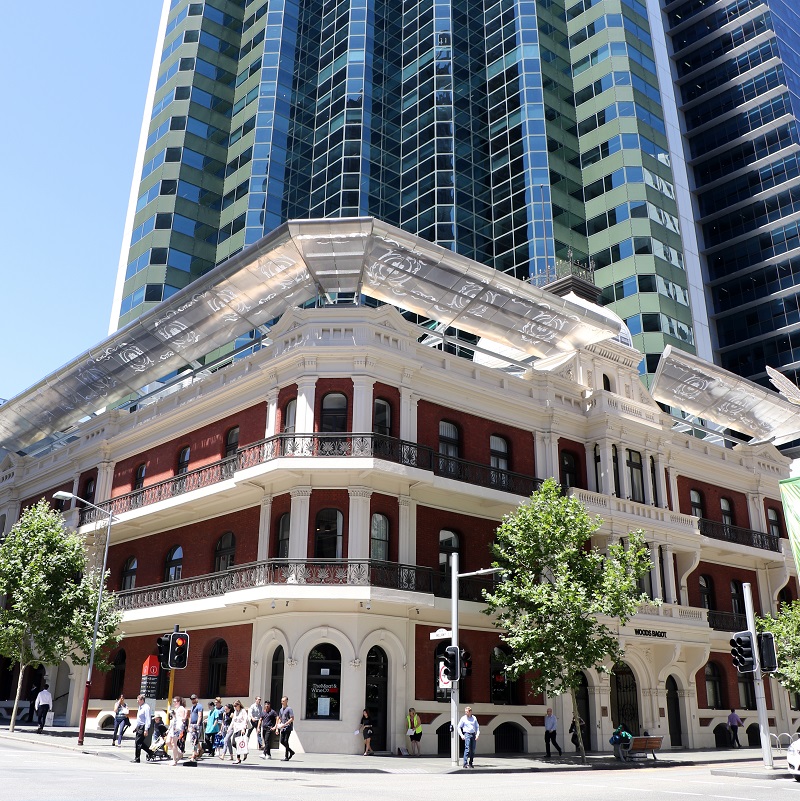
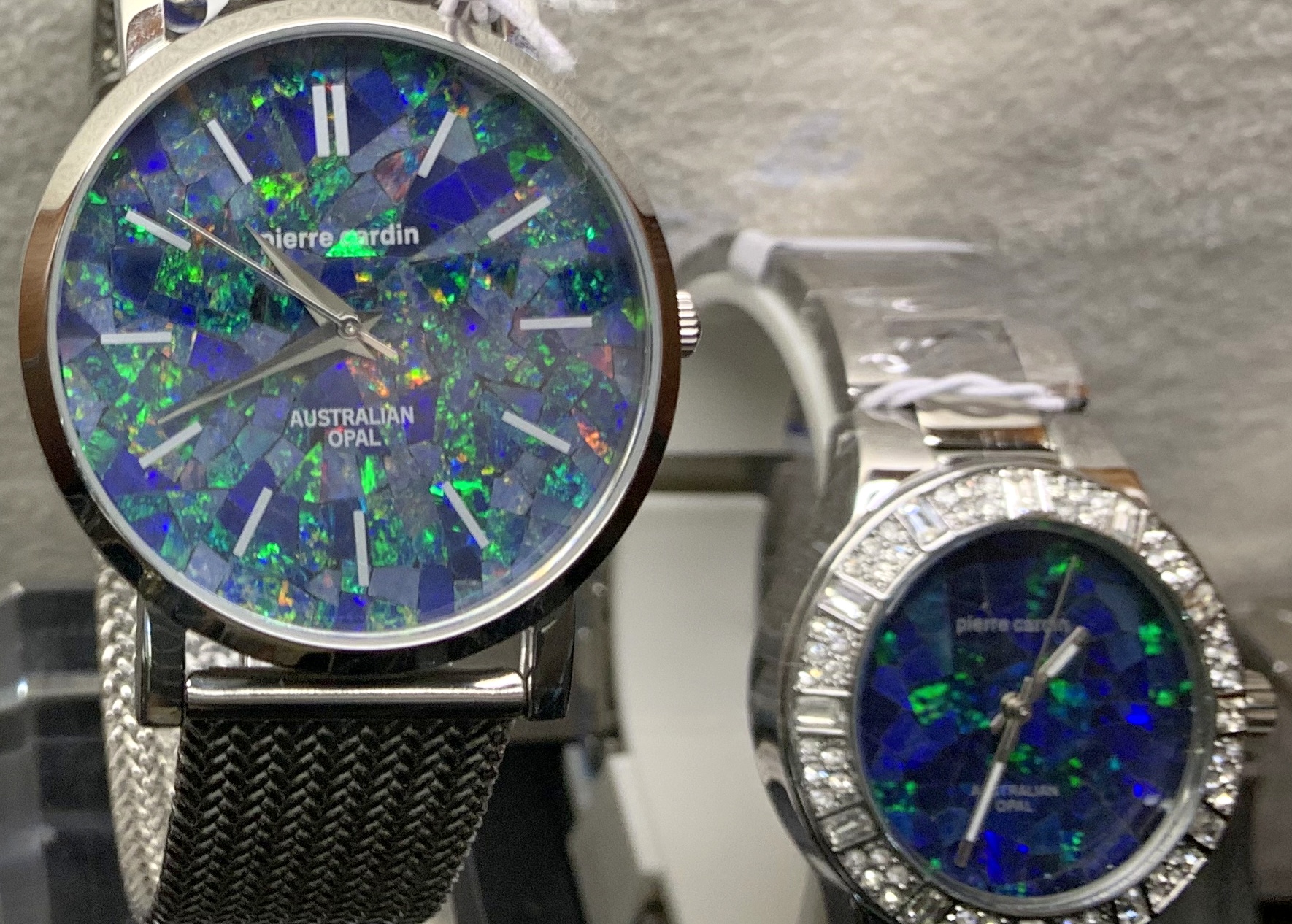
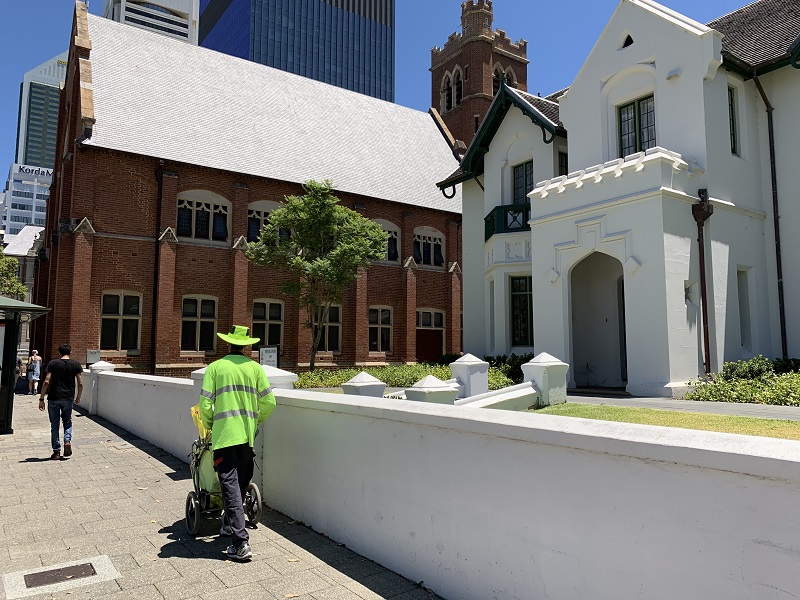
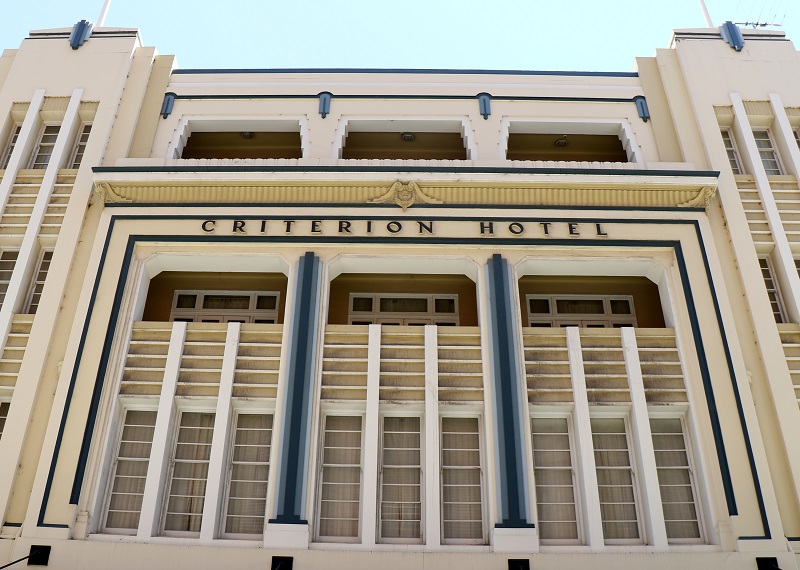
Here is the landmark Bell Tower (built 1999), surrounded by the Elizabeth Quay construction which is coming along, but not quite completed yet. Those oval towers on the far left are the The Towers at Elizabeth Quay, and offers 1-, 2- and 3-bedroom apartments for sale. The 3-bedrooms go for AU$1.2 million (US$ 860,000).This lime-green Lamborghini (‘Lambo’) in front of the Louis Vuitton store has a plate that says ‘BOTOX’ .. is it a tongue-in-cheek joke? Does the owner love Botox? I don’t know.Here is the old Perth Palace Hotel on the corner of William St and St George’s Terrace (built in 1897 during the Australian gold rush). Behind it is the BankWest Tower, completed in 1989 (52 floors, 214 m / 702 ft).I found this opal watch at the Perth Mint. Nice to look at, I’m not sure I like it well enough to wear it on my wrist.Here is the mail man (in the neon green), about to stop at the gate of the annex (the white building) to St Mary’s Cathedral. It was warm today: 33 °C/ 92°F.The gorgeous building of the Criterion Hotel, formerly the Regatta Hotel, is a hotel in Perth, Western Australia. It is the only remaining Art Deco hotel in the Perth Central Business District. [Source: Wikipedia].
It was 5 hrs from Tokyo to Hong Kong, and 7 hrs from there to Perth, due south from Hong Kong.
I made it in to Perth late on Tuesday night. The passport checkpoint is automated: a machine scans the picture page, and then a camera takes a face picture. I am sure while all this is happening, the computer runs a database & records check, and that a human will show up if everything does not check out!
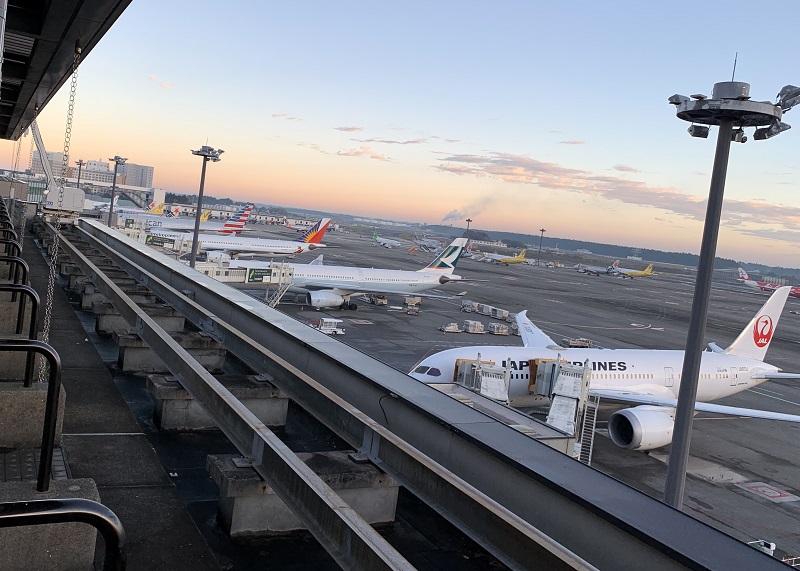
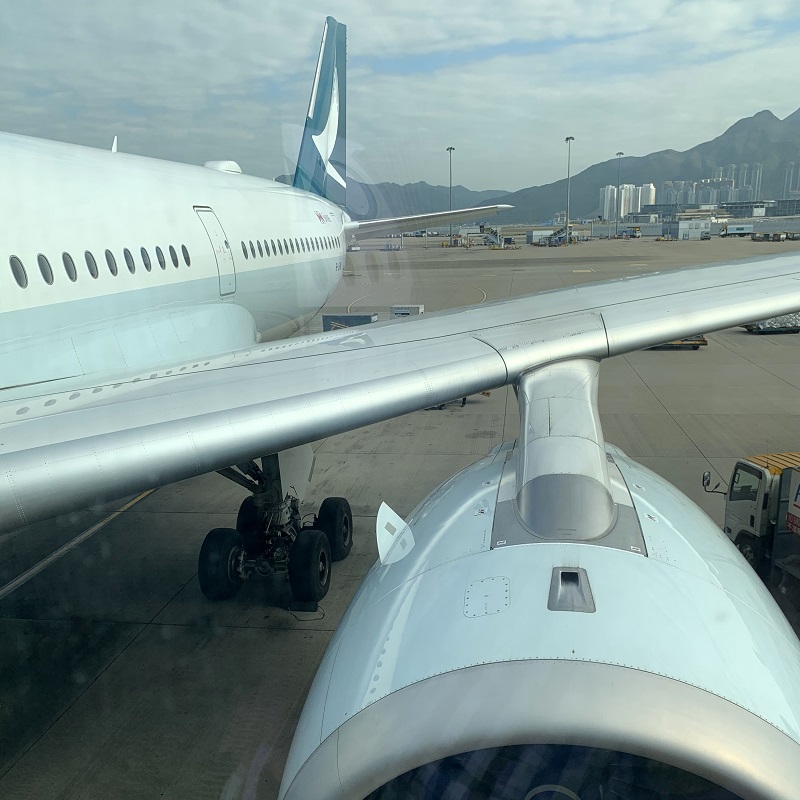
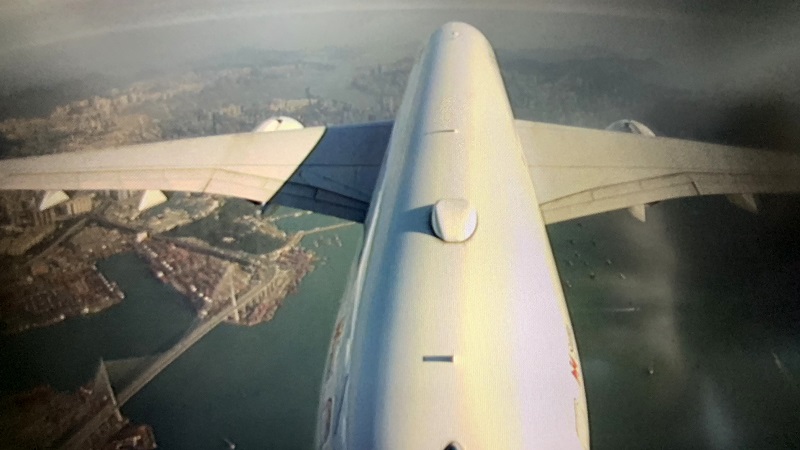
Here is the observation deck at Narita Airport’s Terminal 2, at 7 am in the morning. I am about to go to the gate for my flight to Hong Kong.This is the connection at Hong Kong airport. We are just boarding Cathay Pacific’s Airbus A350 for the flight to Perth. The big old Rolls Royce engine will work for 7 hours to get us there.Here is the view from the tail camera shortly after take-off in Hong Kong. Down below is the Stonecutters Bridge, a high level cable-stayed bridge. It has a very long cable-stayed span: the third longest in the world.
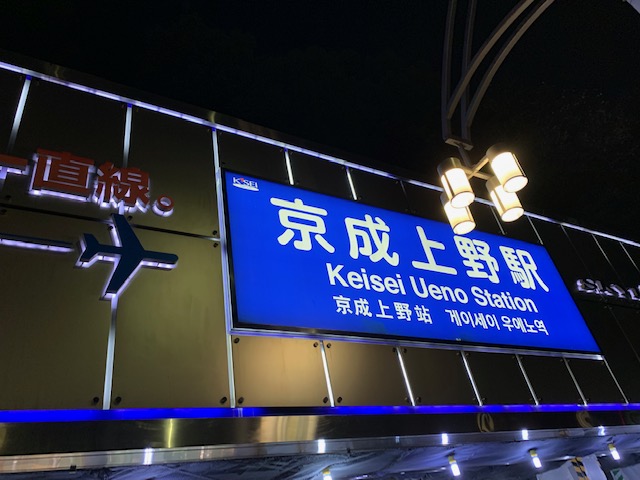
I am at Ueno Station, on my way to Narita airport to catch the Cathay Pacific flight to Perth. I had planned to take the local subway (the Ginza line), to get here, only to find that my station of departure at the hotel, was closed until 5.40 am. (Then how come the train schedule showed its first train departs at 5.18 am? Oh well). So I just took a taxi here.
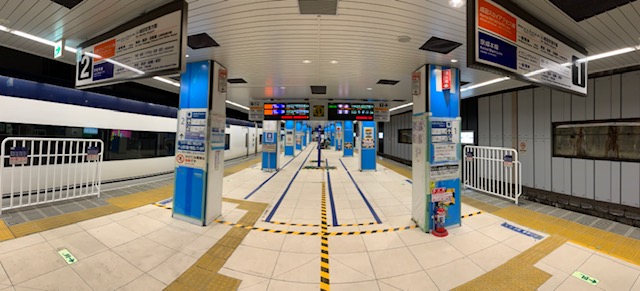
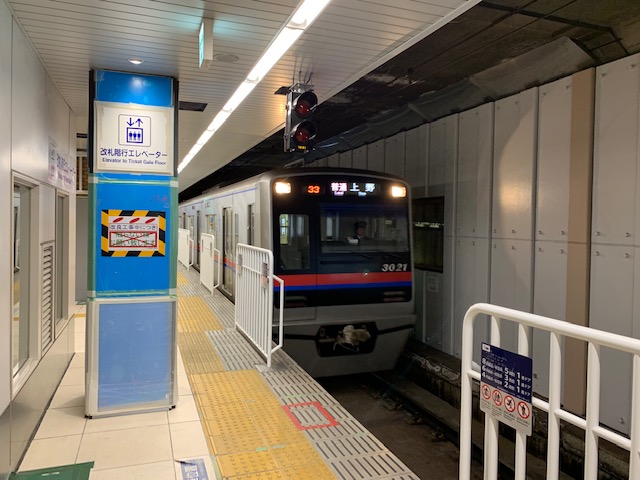
You know you are at the right place when there is a big old aeroplane and a sign that says ‘Narita airport’.The station for the Keisei Skyliner express train is still a little rough around the edges! .. but hey, here is the train waiting. The doors will open in 20 minutes or so, then I can board.Here is another train that just came in on the opposite platform.
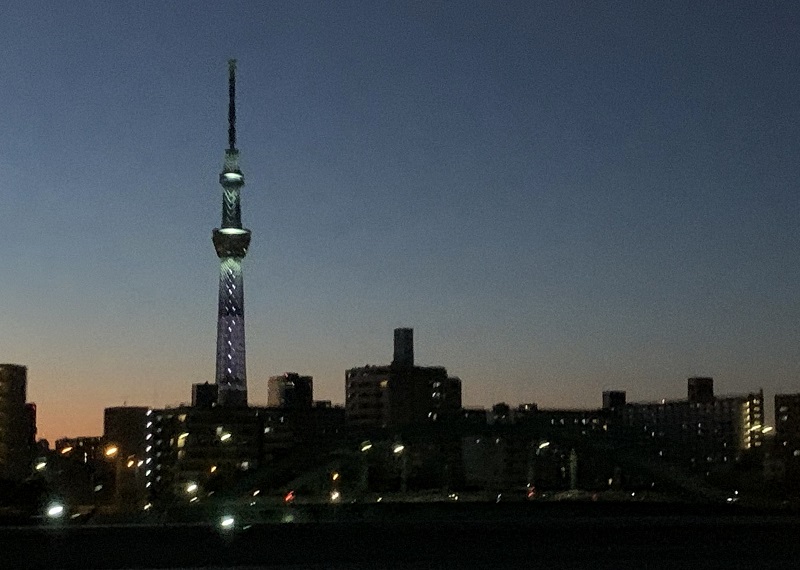
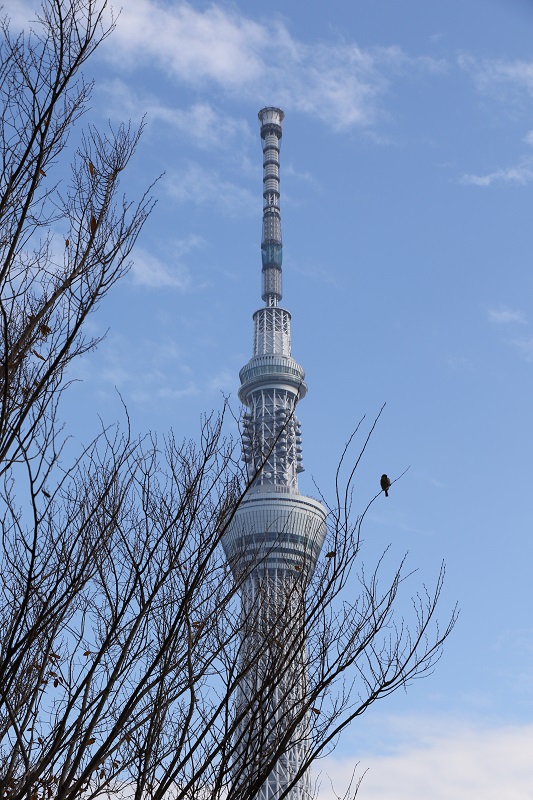
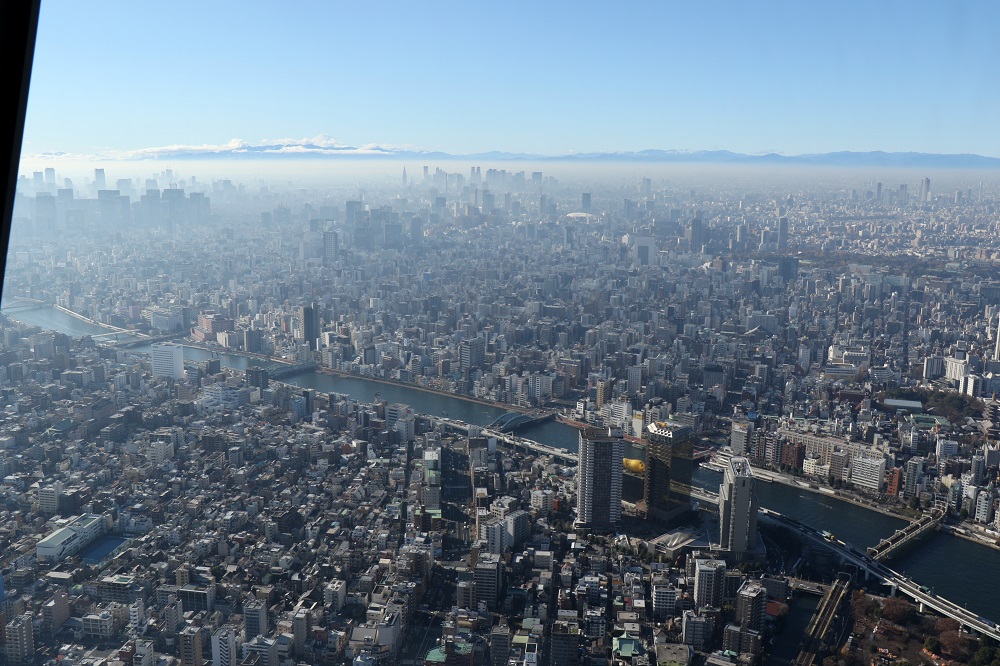
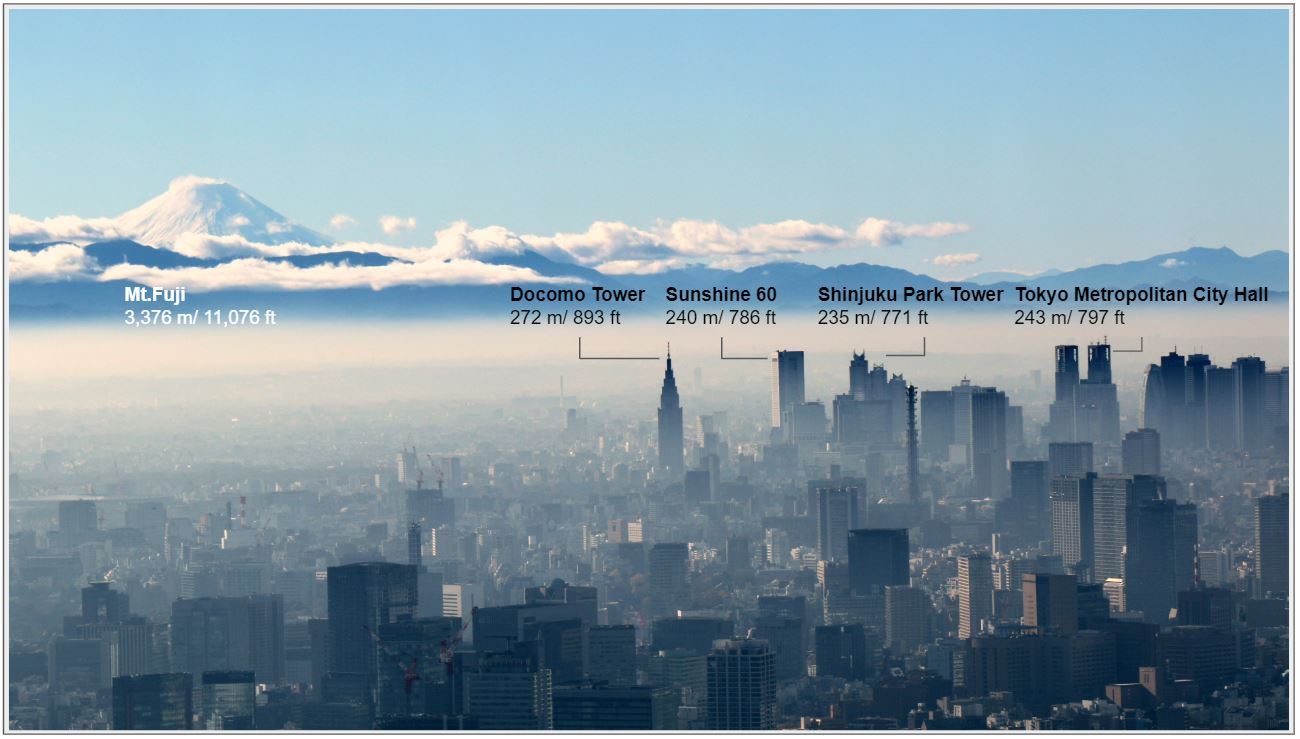
The Tokyo Skytree is the tallest freestanding broadcasting tower in the world. The lines for its public observation decks were short today, and so, up I went. The view of Mt Fuji in the distance, blanketed in snow, and floating above the clouds and the Tokyo skyline, was wonderful to see.
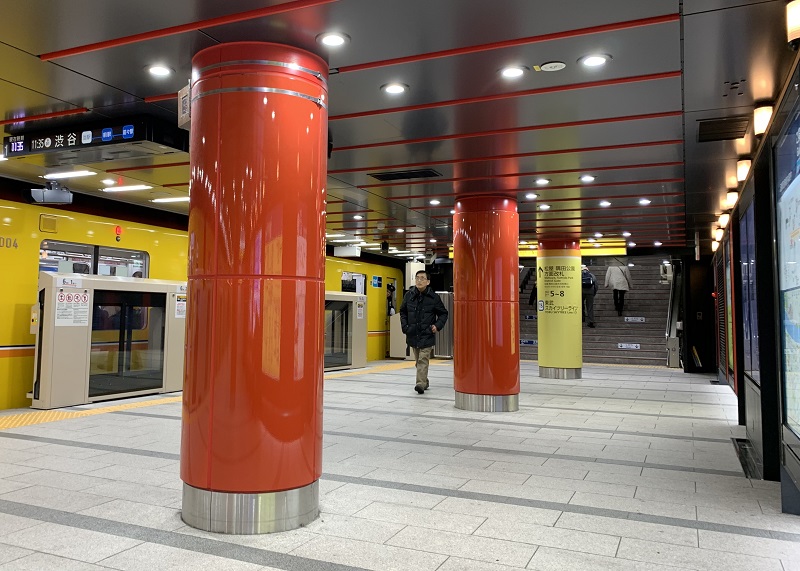
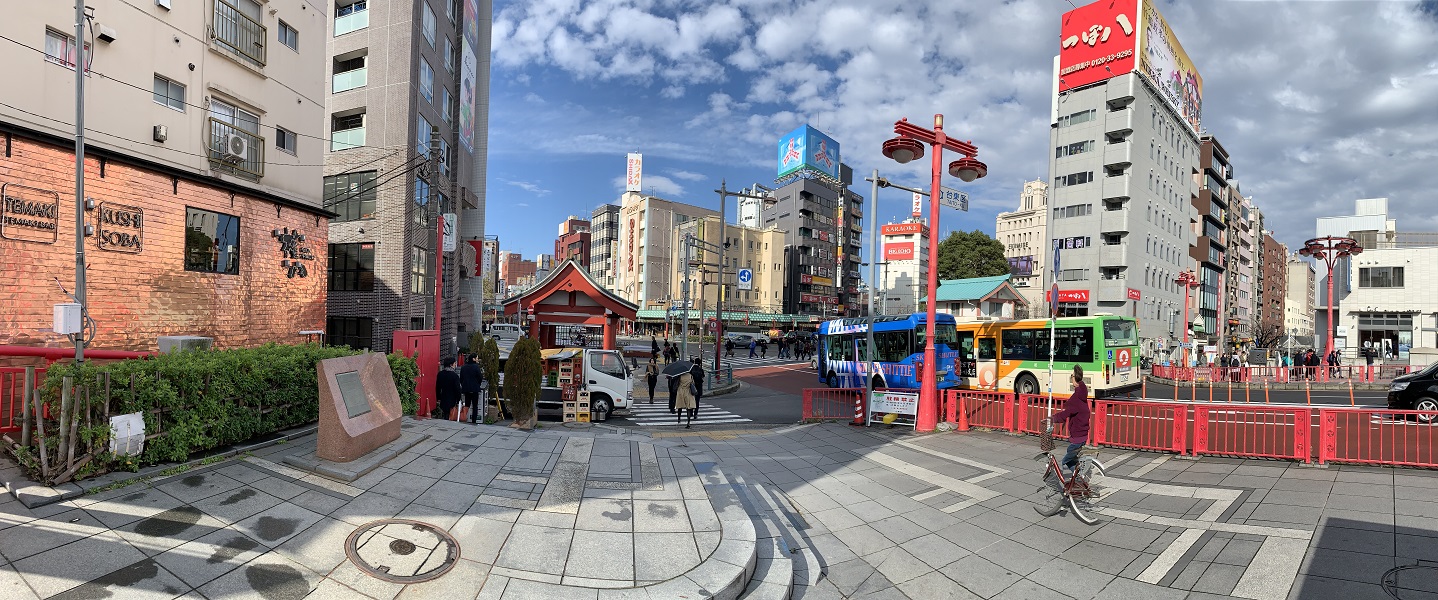
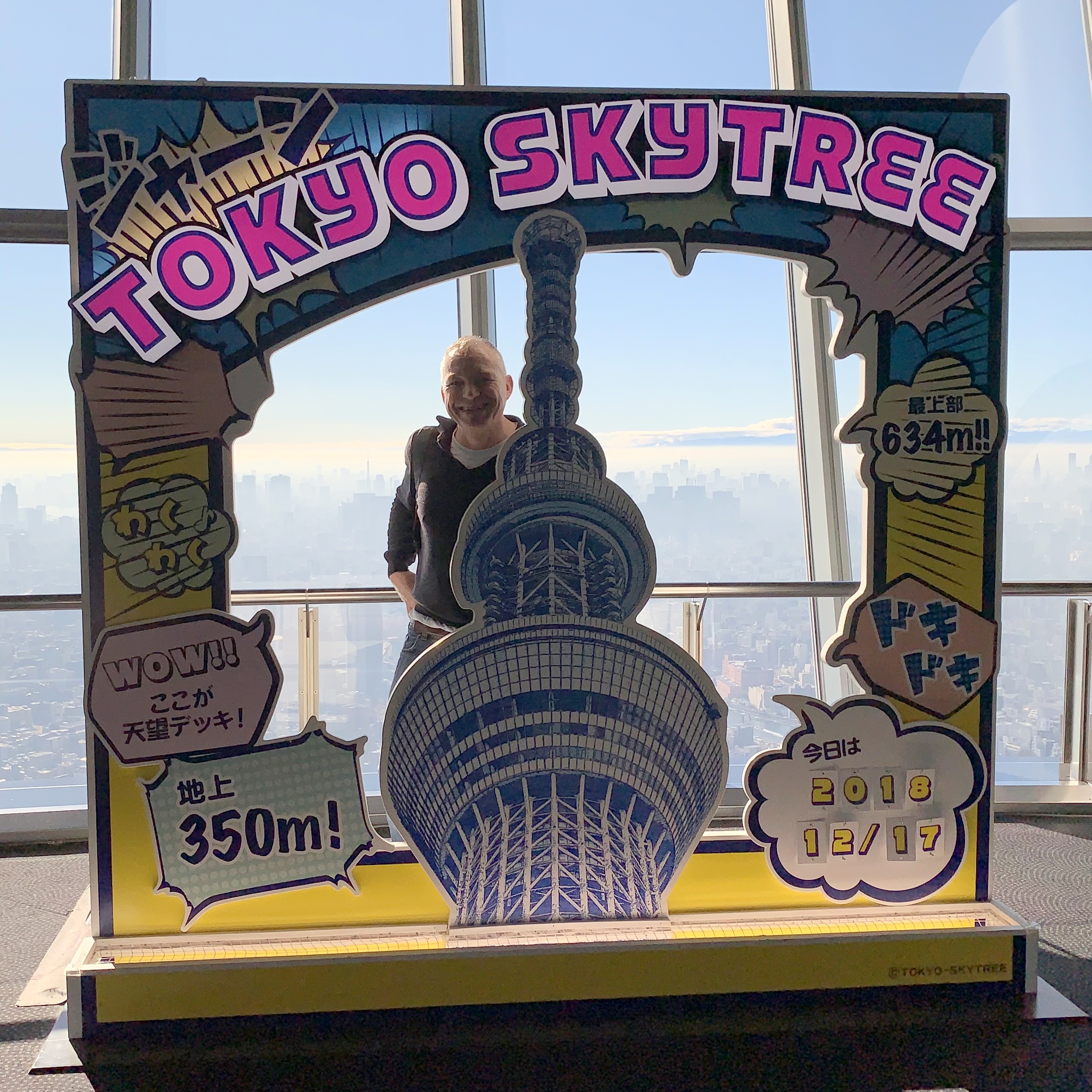
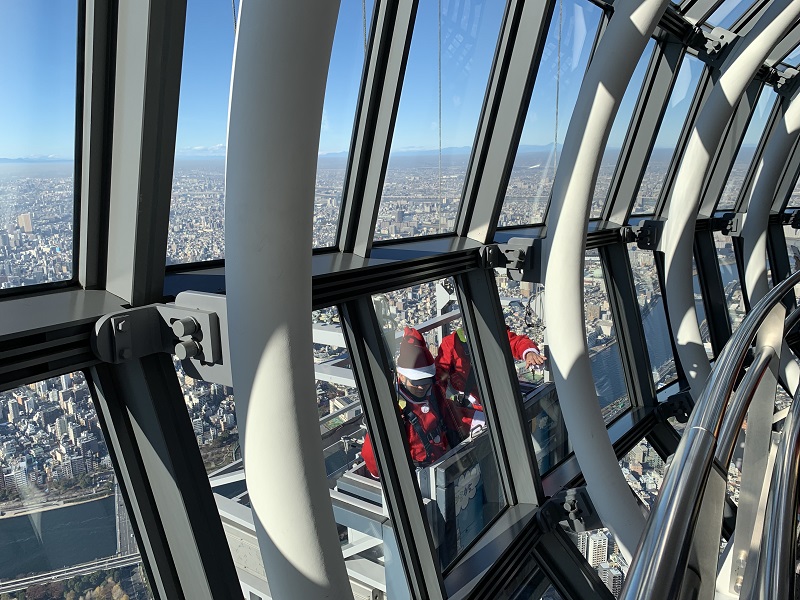
This is Asakusa station at the end of the Ginza line, on the way to Skytree. The Ginza line opened in 1928 and is the oldest subway line in Asia. Its stations have been upgraded many times, of course. Most of the stations have safety fences with sliding doors installed now, such as these at this station.Outside the Asakusa station, at the start of the Azumabashi bridge. It’s still about 2.2 km (1.4 mi) to Skytree. I walked half the way, and then took the Skytree line the rest of the way.Built in 2011, Tokyo Skytree is the 2nd tallest structure in the world at 634 m/ 2,080 ft. Only the Burj Khalifa in Dubai, at 829.8 m/2,722 ft, is taller. The first observation deck is at 350 m, with a second smaller one at 450 m. I went to both (of course).Here is a naked-eye view towards Mt Fuji (the highest point in white, left on the horizon). The Sumida river is in the foreground. The golden ‘head of foam’ of Asahi beverage company’s headquarters stands out among the shades of grey.Here is the view of Mt Fuji and the skyline below it from the 450 m deck, drawn closer by my camera’s zoom lens, and with the contrast bumped up. I noted some of the tallest buildings in the skyline. Mt Fuji (‘Fuji-San’) is an active volcano* about 100 km (62 mi) southwest of Tokyo. *Last eruption 1707 to 1708.Boo! The photo frame on the 350 m deck. Tough to get a good picture with that harsh bright background. My phone’s little flashlight was not quite up to the challenge.Look at these guys, suspended in a box from the window washing crane outside the 450 m deck! They did double duty as window washers AND as Santas, waving at the kids inside.
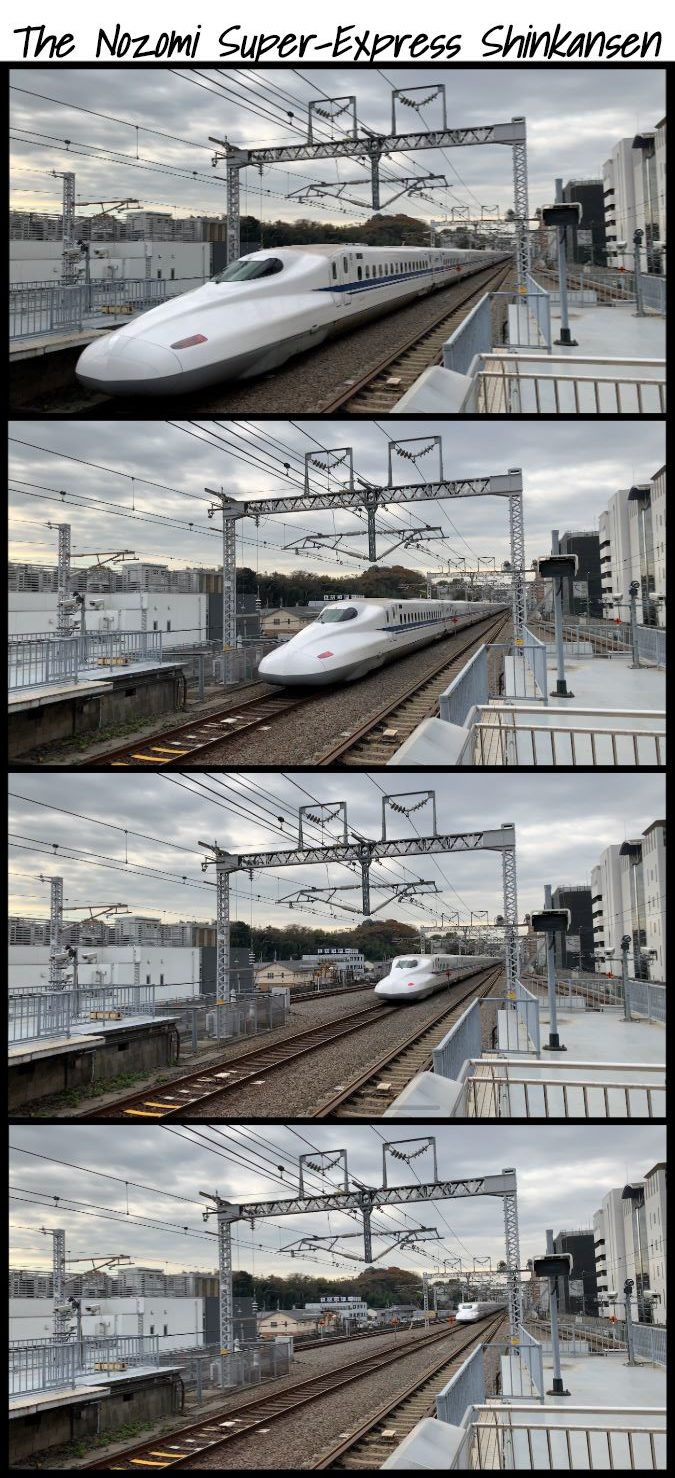
It was finally time for me to try one of the other express trains (besides the Narita Express that I had taken several times to and from the airport). I picked the Nozomi (のぞみ, meaning ‘wish’ or ‘hope’) Super Express – the fastest of the fast bullet trains – running on the Tokaido/Sanyo Shinkansen lines.
The ride to Shin-Yokohama station towards the south of Tokyo Bay takes only 20 minutes. We started out in Tokyo, made a quick stop at Shinagawa station a few minutes later, and then the Super Express could express itself and pick up speed.
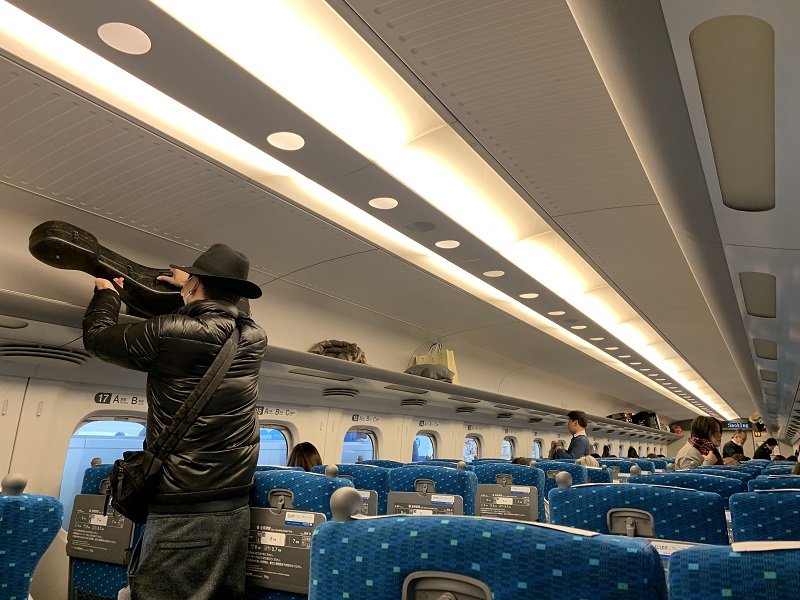
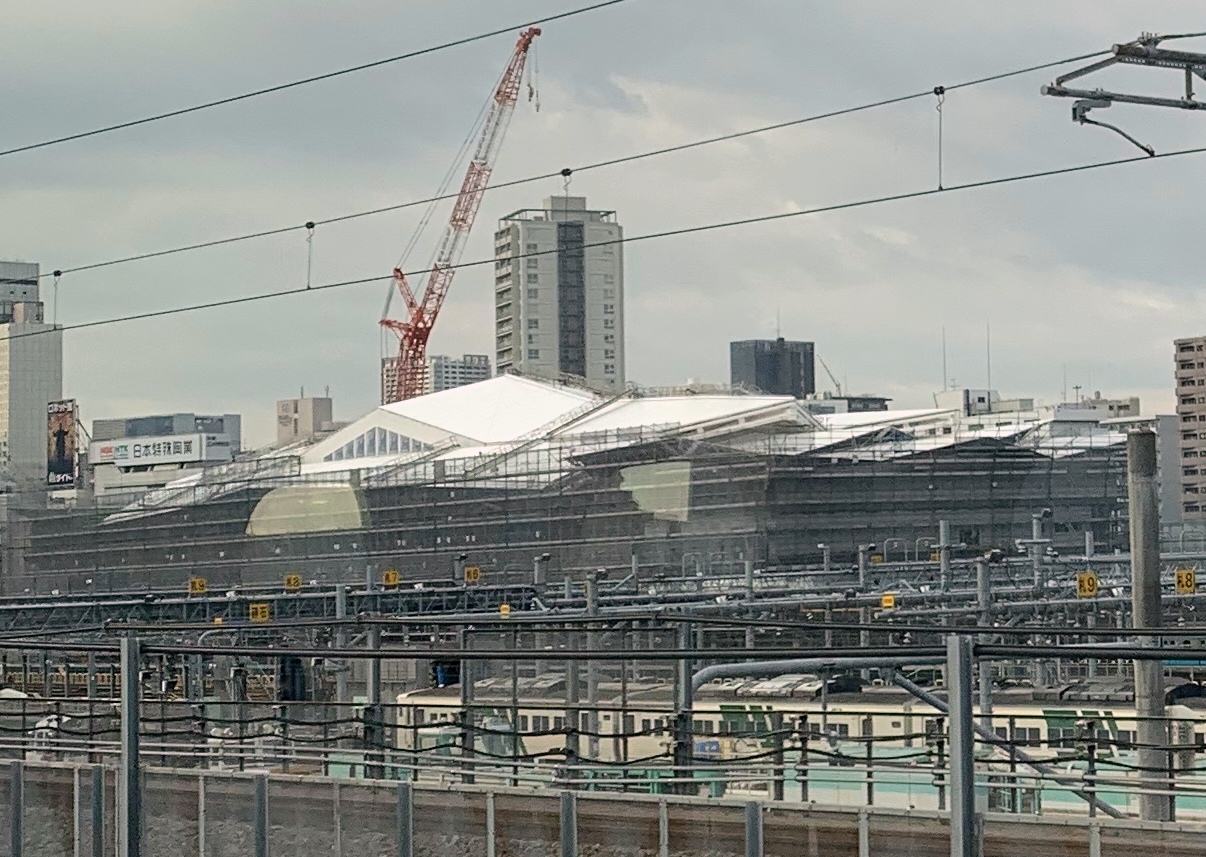
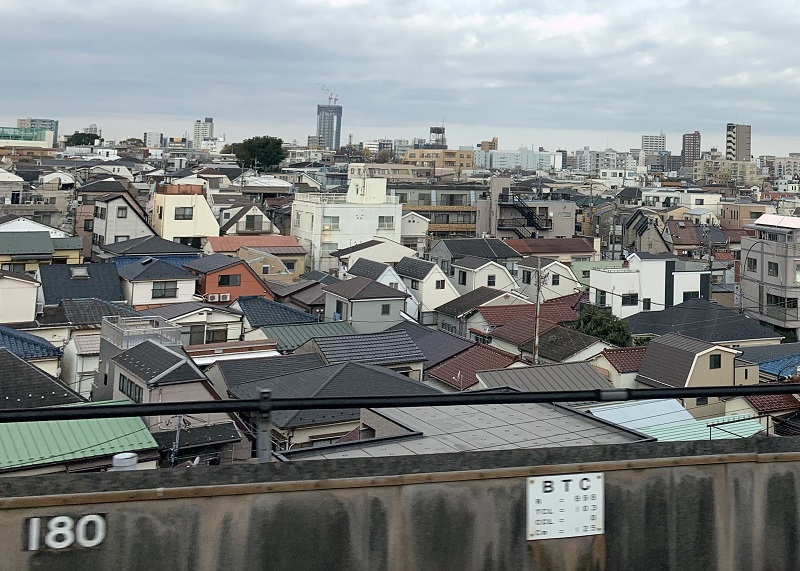
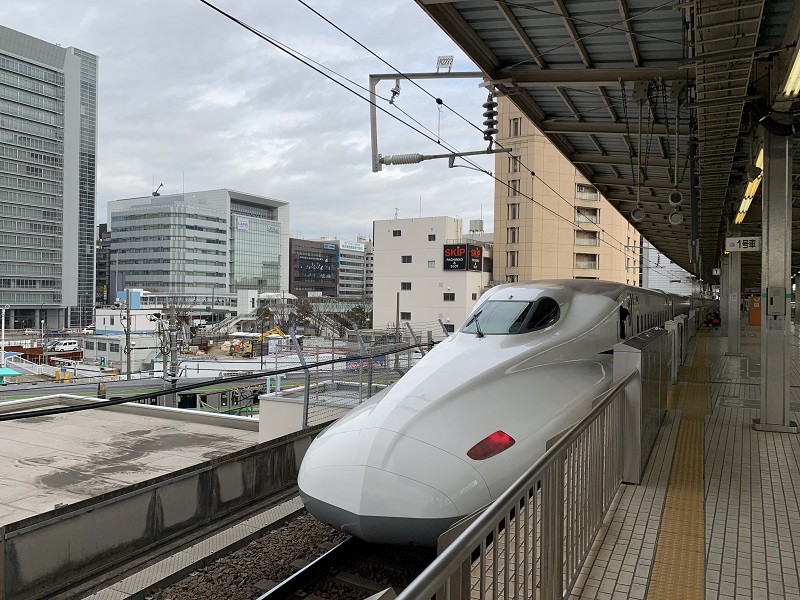
Going, going, gone! I stood at the end of the platform at Shin-Yokohama, and as the train on the opposite track slid out of the station & picked up speed, I took a series of pictures. The front and the back end of the train both have the sleek bullet nose. This train is the N700 series, and they reach speeds of 300 km/h (186 mph).Here is the inside. A cool musician dude with a black hat and jacket is stowing his guitar as we all get settled in at Tokyo Station.We are approaching Shinagawa, and I was able to catch a glimpse of the new station under construction on the Yamanote Line. Its name will be Takanawa Gateway. The station is set to open between Shinagawa and Tamachi in the spring of 2020, in time for the Olympic Games.Urban area flashing by as we go on to Shin-Yokohama. The homes on my street on Capitol Hill in Seattle are close to one another, but these are packed in even tighter!A picture of the beast at rest. As it approaches the station, there is an announcement, and a flashing message on the overhead boards: ‘Train Approaching’. If you stand on that yellow line, oblivious, as the Super Express swooshes in, you are GOING TO SPILL YOUR COFFEE! Or DROP YOUR PHONE!
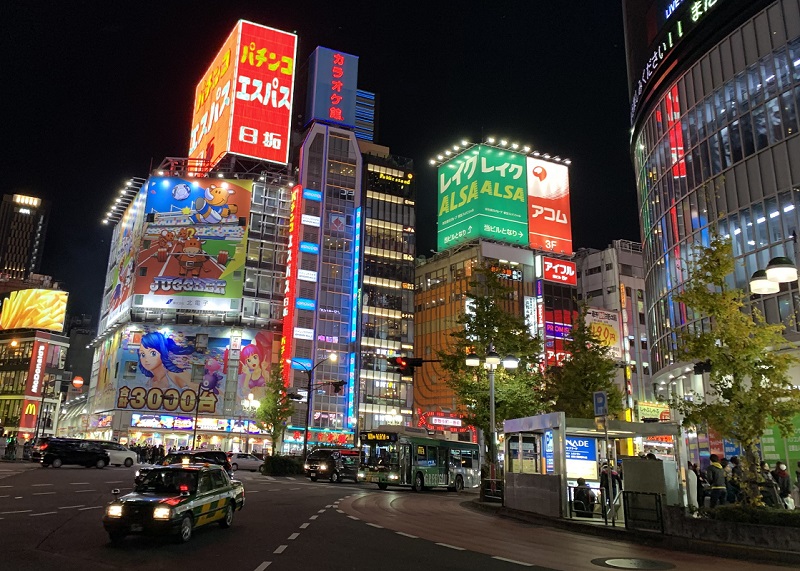
I went out to Shinjuku Station today to Tokyo’s skyscraper district, west of the station. I took a little break after lunch and went back early in the evening, to take a few pictures of the billboards and neon signs.
Man! There is a lot of people out and about on a Saturday night – what a surprise, right?
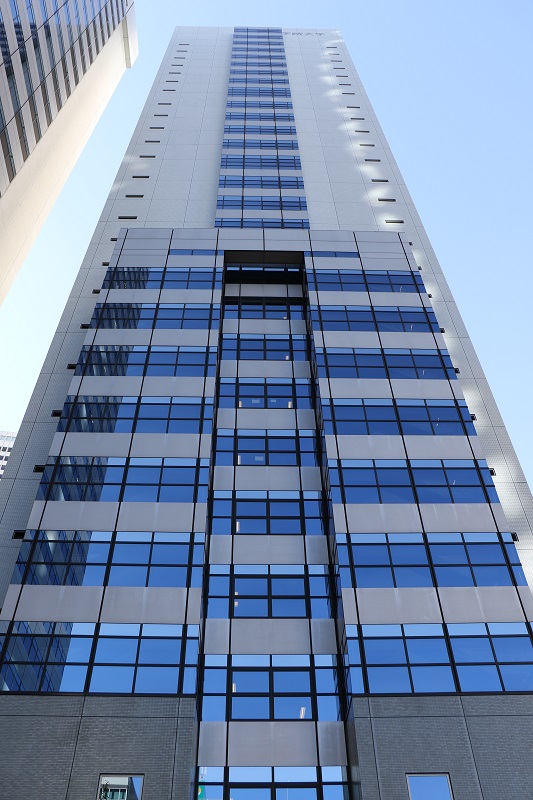
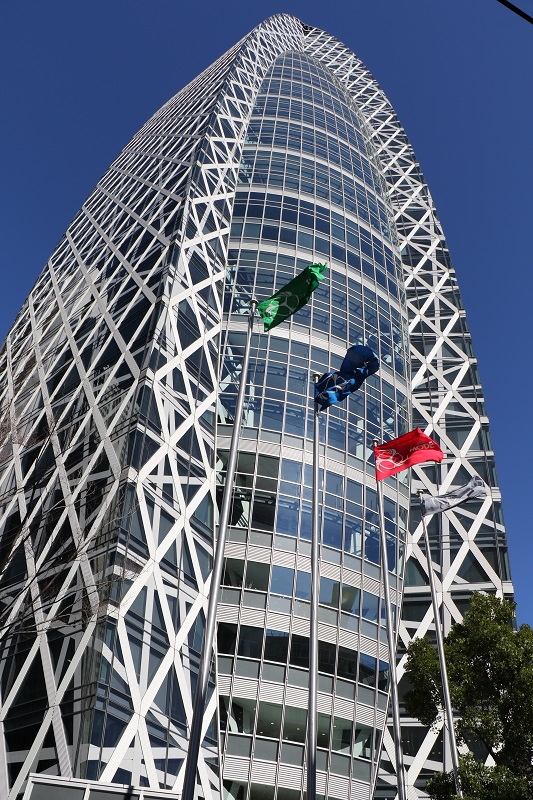
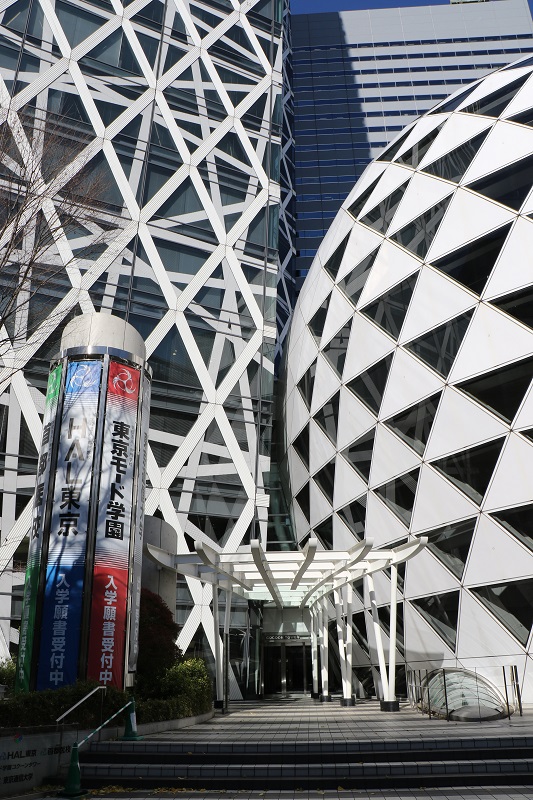
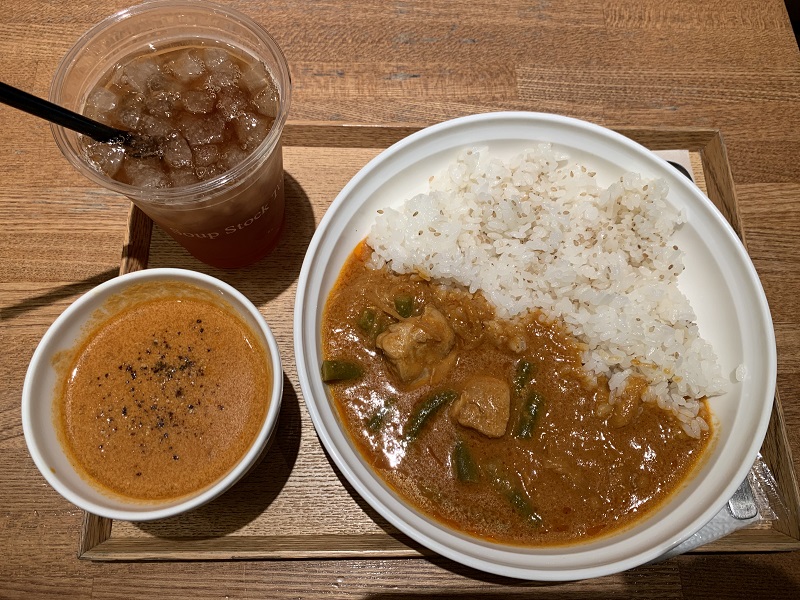
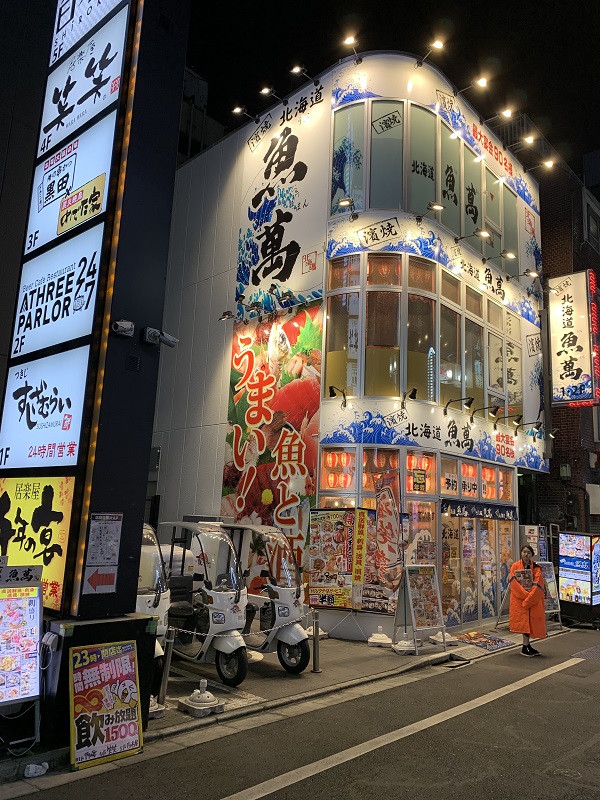
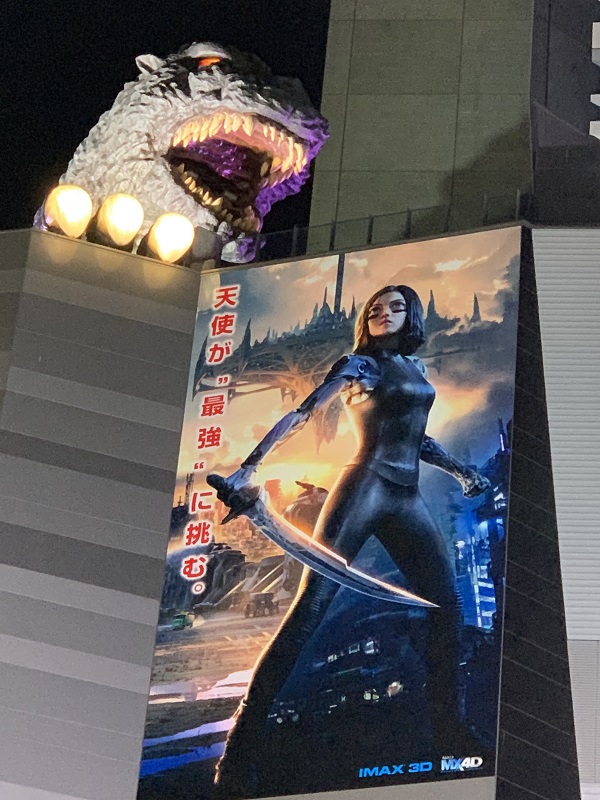
Here is the Shinjuku building of Kogakuin University (completed 1989, 29 floors). The blues and grays complement each other nicely.The Mode Gakuen Cocoon Tower is just across the street, and home to three educational institutions. Completed in 2008 and 50 storeys (204 m/ 670 ft) tall, its architectural style is called ‘Deconstructivism’. (The design brief called for a building that is anything but rectangular). The architect used white aluminum strips and dark blue glass to make the cocoon.Here is the entrance to the south of the cocoon. I guess the architect thought: oh well, we have a cocoon, why not throw in a geodesic dome at its base as well? ( ! ).Here’s lunch today, from a franchise called Soup Stock Tokyo. It’s chicken & veggie curry and rice, bisque soup and iced tea (with tiny cubes). It was spectacular .. I was SO hungry and SO tired as I sat down and scarfed it all up.Here is a street corner close to Shinjuku station decked out with billboards and neon signs. Shinjuku is a happening place on a Saturday night: beer halls, restaurants, pachinko parlors, karaoke bars, upscale stores and not-so-fancy stores, department stores and more.A colorful restaurant on one of the side streets. It was still early, so not many people in the street, but the hostess is ready to beckon them in. I suspect those scooters are for take-out food delivery.And here is a Godzilla installation at the IMAX movie theatre. I’m sure it is to advertise Godzilla King of the Monsters, due out in summer of 2019. The heroine with the sword must be from a different movie.