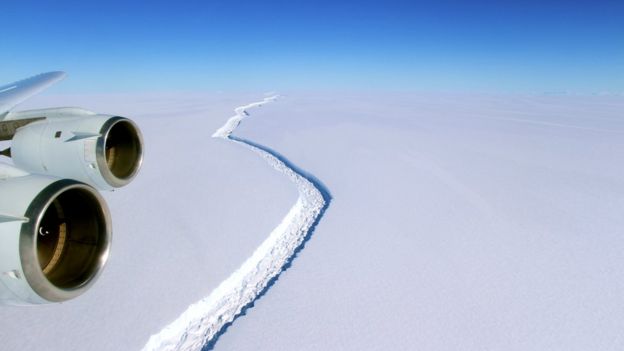
An ice shelf is an enormous flat expanse of ice floating on the ocean. The crack in the Larsen C ice shelf is 1/3 mile deep, down to the floor of the shelf. This picture from NASA, taken in November 2016.
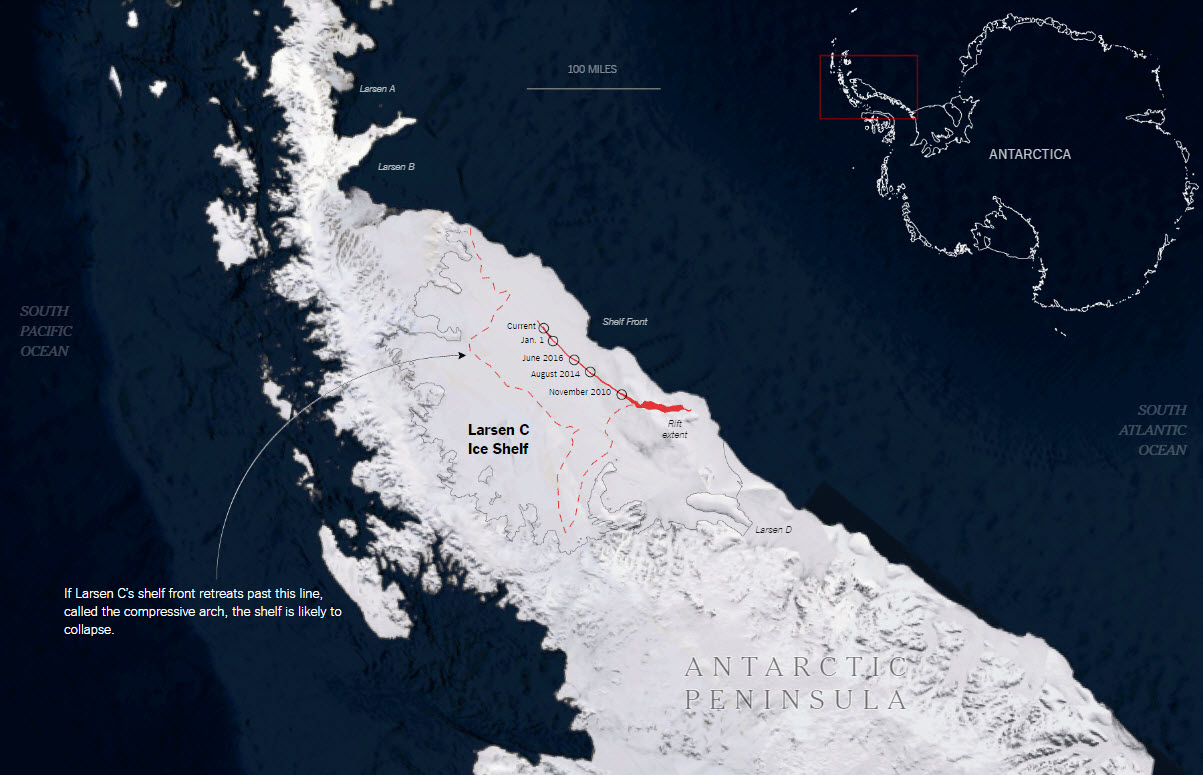
Antarctica’s Larsen A and B ice shelves already disintegrated in 1995 and 2002, but both were drastically smaller than the large ice shelf called Larsen C, on the Antarctic Peninsula. The impending collapse of part of Larsen C will really not raise sea levels, but it could affect glaciers behind it, and accelerate their melting. Check out this article and graphics from the New York Times.
A Crack in an Antarctic Ice Shelf Grew 17 Miles in the Last Two Months
By Jugal K. Patel – The New York Times, Feb. 7, 2017
A rapidly advancing crack in Antarctica’s fourth-largest ice shelf has scientists concerned that it is getting close to a full break. The rift has accelerated this year in an area already vulnerable to warming temperatures. Since December, the crack has grown by the length of about five football fields each day.
The crack in Larsen C now reaches over 100 miles in length, and some parts of it are as wide as two miles. The tip of the rift is currently only about 20 miles from reaching the other end of the ice shelf. Once the crack reaches all the way across the ice shelf, the break will create one of the largest icebergs ever recorded, according to Project Midas, a research team that has been monitoring the rift since 2014. Because of the amount of stress the crack is placing on the remaining 20 miles of the shelf, the team expects the break soon.
There is even a webcam available to keep an eye on this bad boy. All is quiet .. for now.
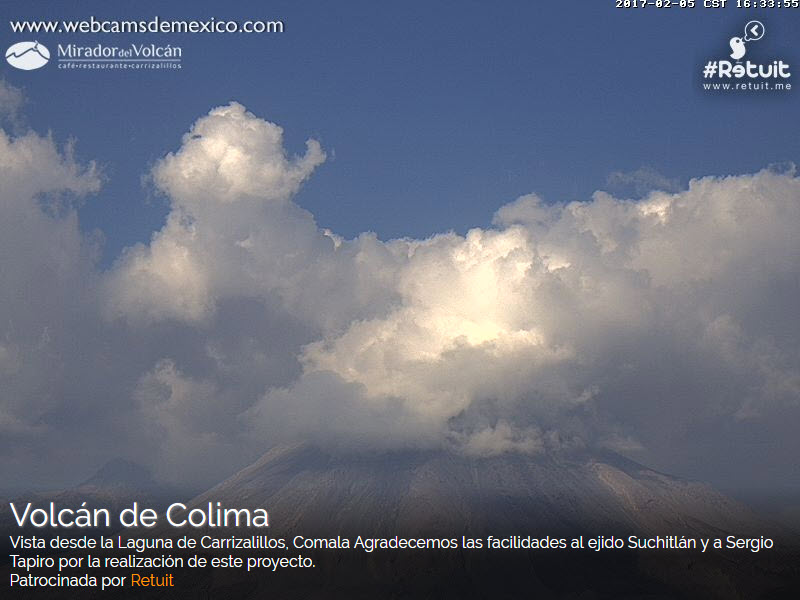
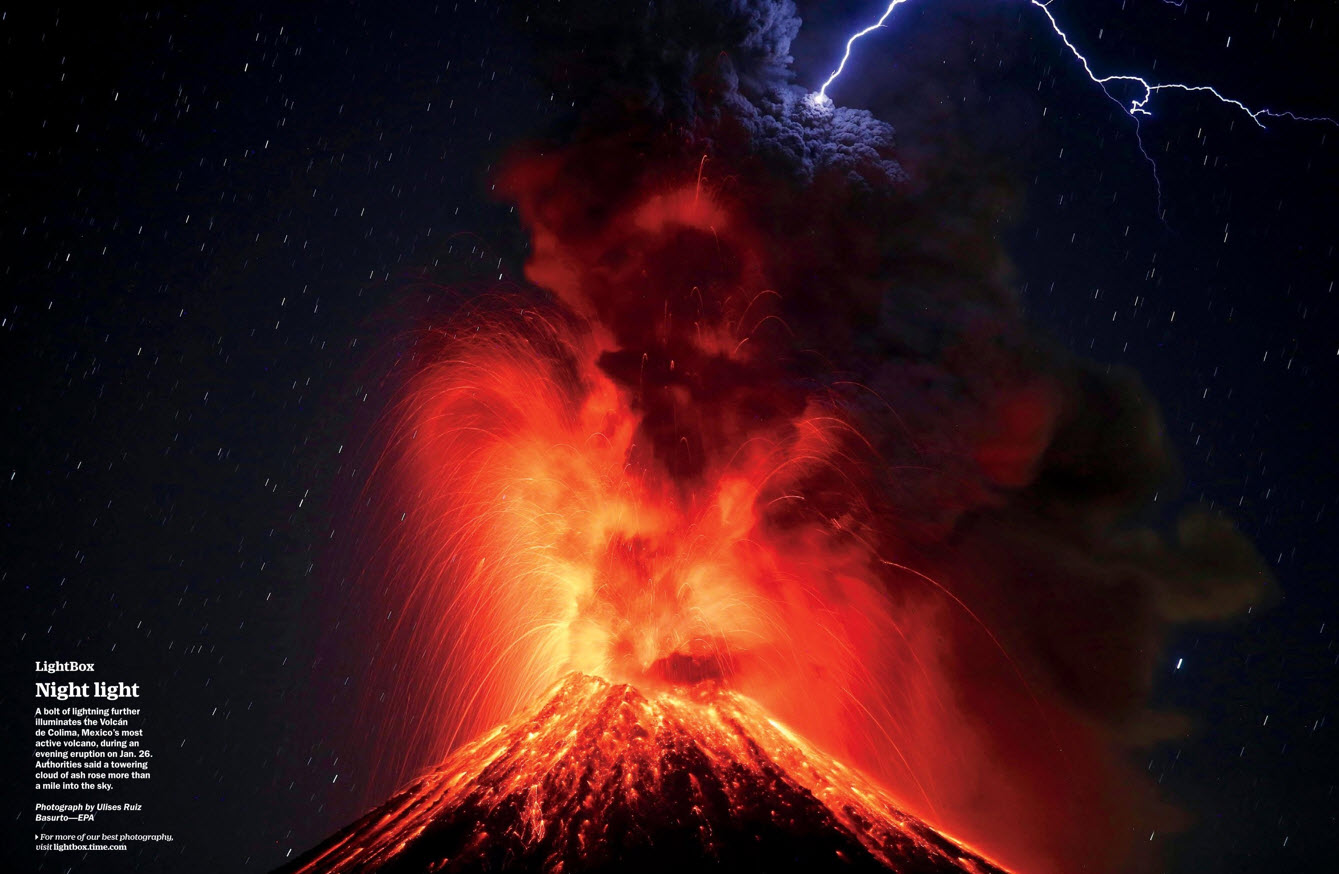
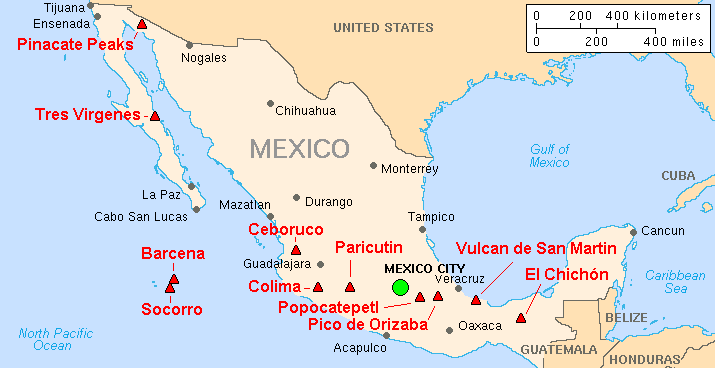
There was an eruption at the volcano of Colima in Mexico on Jan. 26. (I did not even know there really are volcanoes in Mexico!). This volcano is the most active in Mexico, and the night-time picture from Uleses Ruiz Basurto in TIME magazine features a volcanic lightning bolt as well. Whoah .. better to keep some distance when earth and the heavens are this angry!
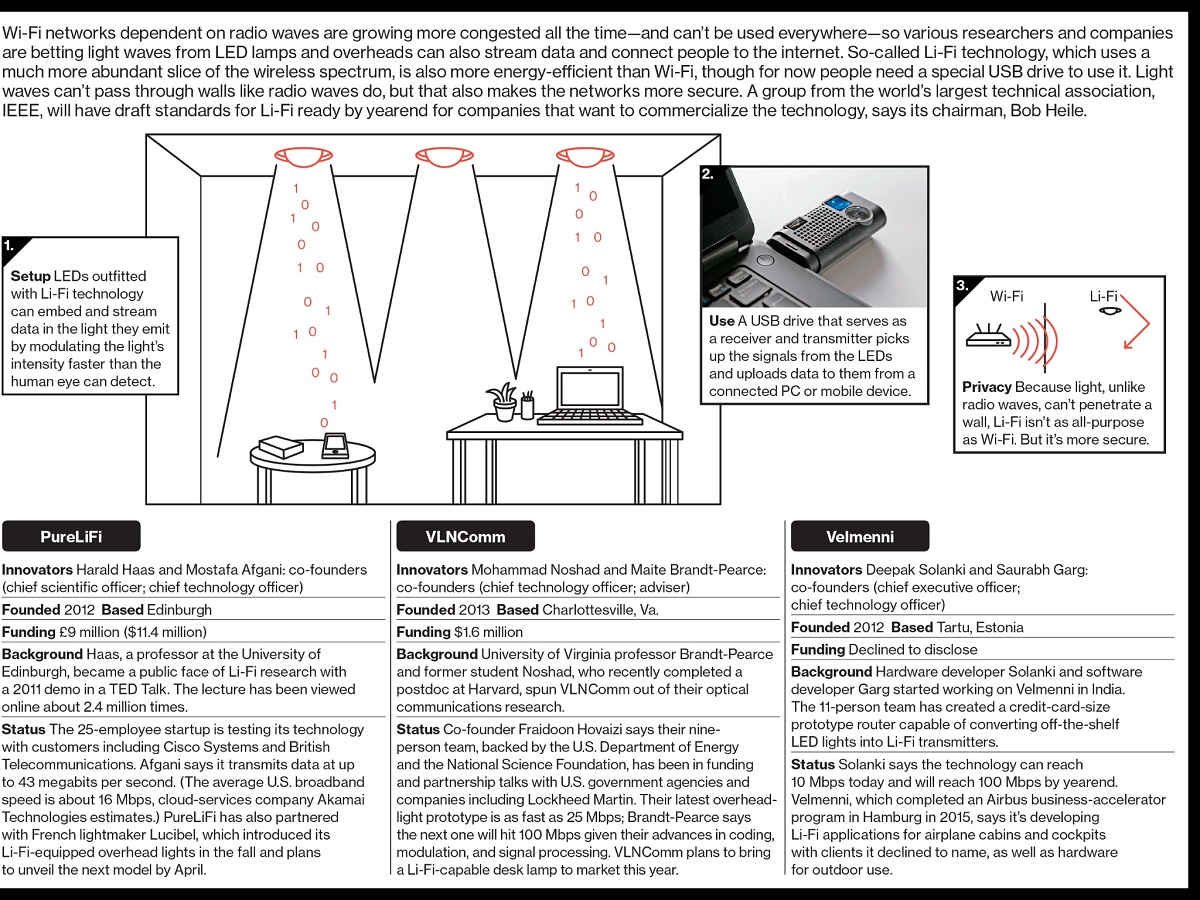
Check out Bloomberg Businessweek’s update about a new ‘Li-Fi’ technology that might start to get rolled out next year by some upstart companies. The zeroes and ones for one’s internet connection will come through (and go back to) the overhead LED lights in the ceiling. Hmm.
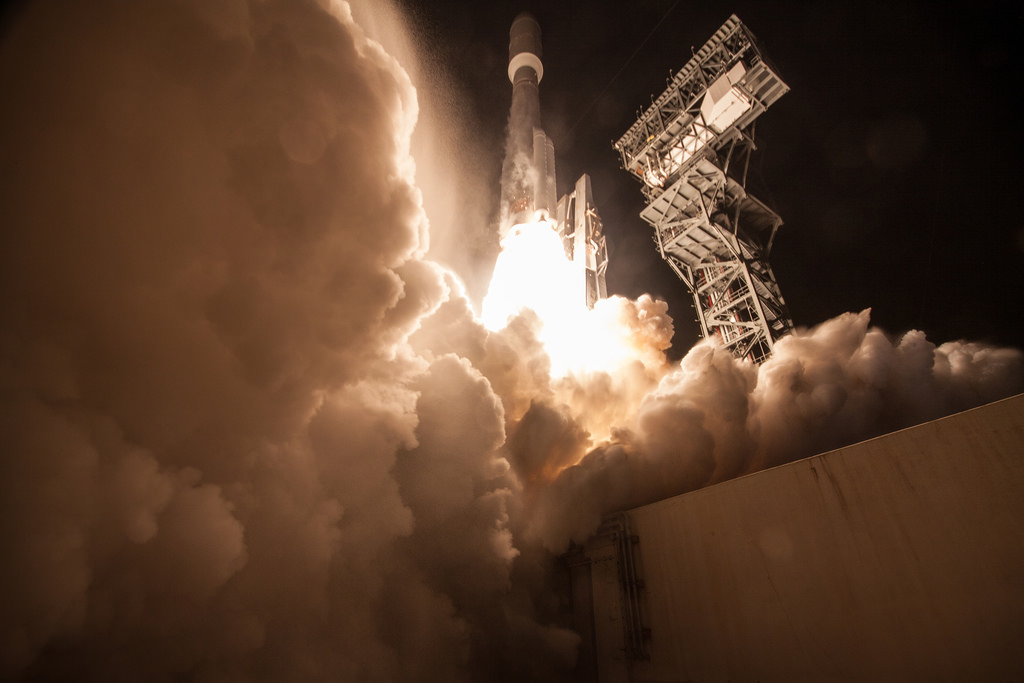
I see I missed the GOES-R satellite launch on Nov 19 – a sophisticated new weather satellite that will beam weather images in 4 times the current resolution, and scan the atmosphere 5 times quicker. In about another week, once GOES-R is situated in orbit 22,300 miles above Earth, it will be known as GOES-16. Within a year, after undergoing a checkout and validation of its six instruments, the new satellite will become operational. Check out the description NOAA scientist Dr. Steve Goodman gave of the lightning mapper –
The GOES-R Geostationary Lightning Mapper (GLM) is a total lightning optical detector of in-cloud lightning and also lightning that strikes the earth, which we also call cloud-to-ground lightning. Ground-based lightning network data that you might see on TV use a network of radio receivers to locate the lightning. The lightning mapper is an optical instrument most correctly described as a transient event detector, rather than an imager as you might think of a camera taking pictures very, very quickly. The instrument processes 1 million pixels every 2 milliseconds, and does a frame-to-frame subtraction of the background at each pixel to identify lightning. If the current signal exceeds the background pixel amplitude level by a certain amount, the pixel is flagged as a lightning event. We use spatial (8 km pixel), temporal (2 millisecond sampling rate), and spectral filtering (we use the OI (1) oxygen emission line triple centered at 7774 nm) to detect the lightning optical pulse against the sunlit cloud top. Lastly, we do the frame-to-frame background subtraction mentioned above. The instrument processes all these data at 20 MHz and transmits all the detected data (lightning plus false non-lightning events) to the ground at 7.7 MB/sec. On the ground there are data processing algorithms to convert the detected signal to a geophysical radiance, geolocate, and assign attributes for each pixel. These pixels are further clustered in space and time to create “lightning flashes.” Thus, the final product that streams to users is a lightning flash with information on the radiance, latitude, longitude, and time. We cannot uniquely discriminate flash type- in-cloud or cloud-to-ground – on an individual flash basis; however, studies have shown that an increase in total lightning activity dominated by the in-cloud component is often a precursor to severe weather on the ground (tornado, wind, hail).
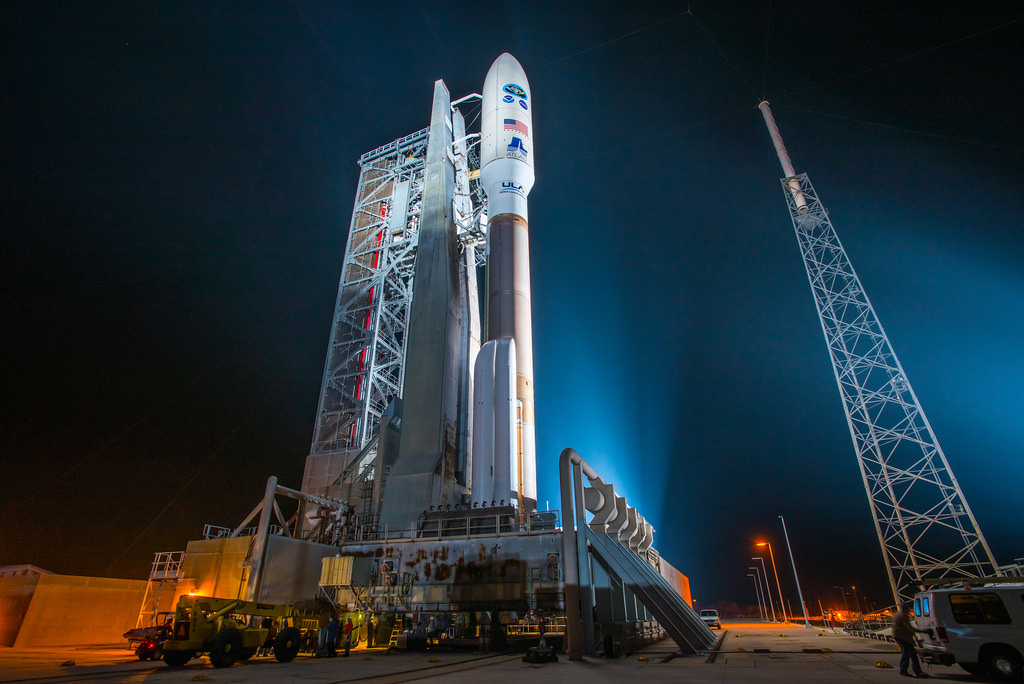
GOES-R was successfully launched from Cape Canaveral, Florida, on November 19 at 6:42PM EST.Here is the satellite on the launch pad.
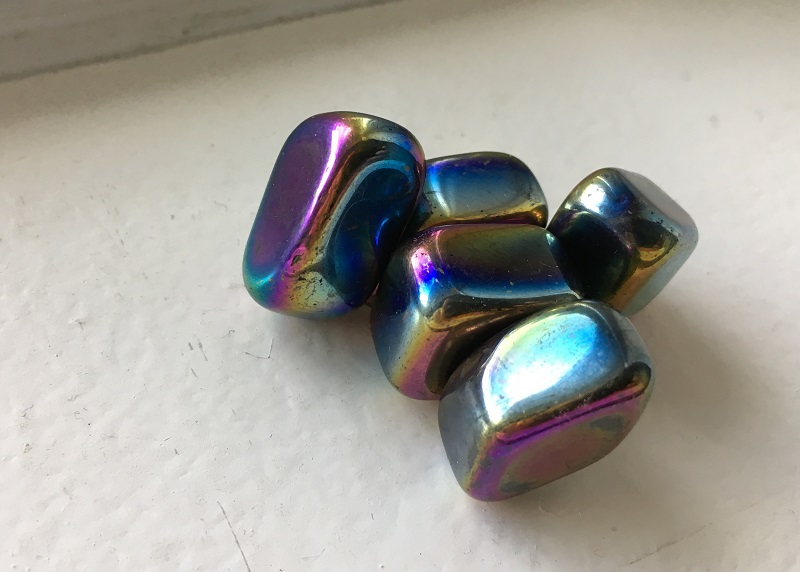
Hematite is the mineral form of iron (III) oxide (Fe2O3) and exhibits permanent magnetic properties.
I checked out these little hematite pebbles (ground into rhomboid shapes) at a little gem and jewelry store at Sea-Tac airport when I came in on Thursday. Once you start playing with them, they are hard to put down (and so I had to buy a few!). The pebbles are magnetic, and immediately stick to each other if they get within a range of two inches or so. Electro-magnetism is one of the four forces between particles in our physical universe : electromagnetism, gravitational, weak nuclear and strong nuclear.
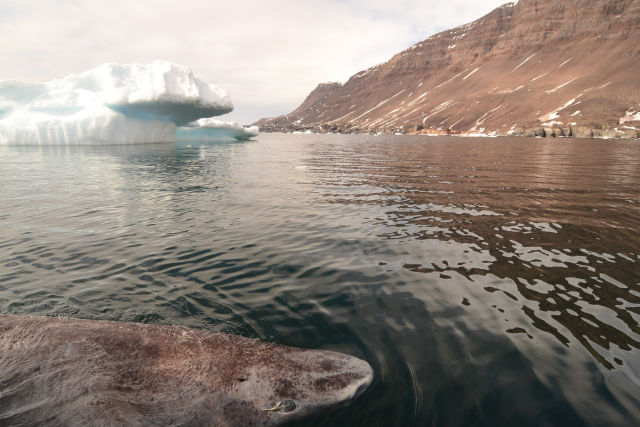
This article about Greenland sharks is fascinating. Sharks don’t have bones for carbon dating, so a research team used a protein in the shark’s eye to determine that these sharks easily reach 200 years in age, and some that are almost 400 years old have been found. They only reach reproductive age at an estimated 156 years!
Picture by Julius Nielsen, from the on-line article on http://arstechnica.com/
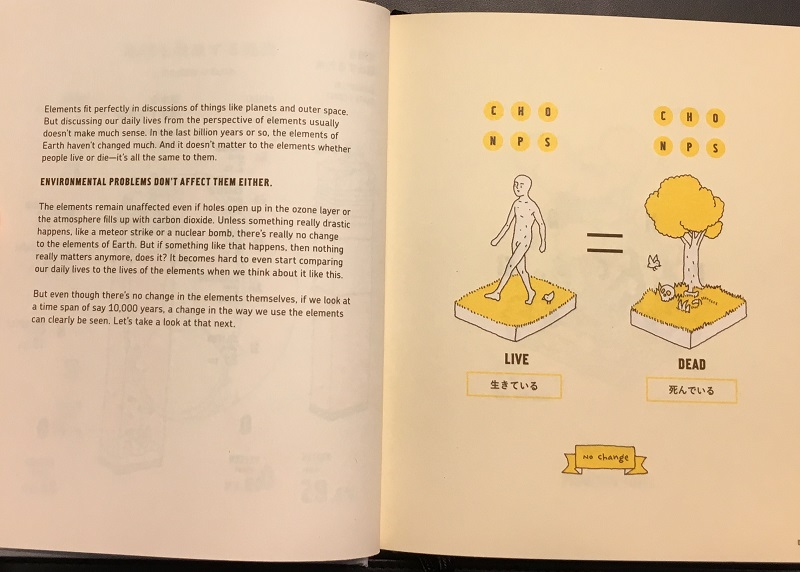
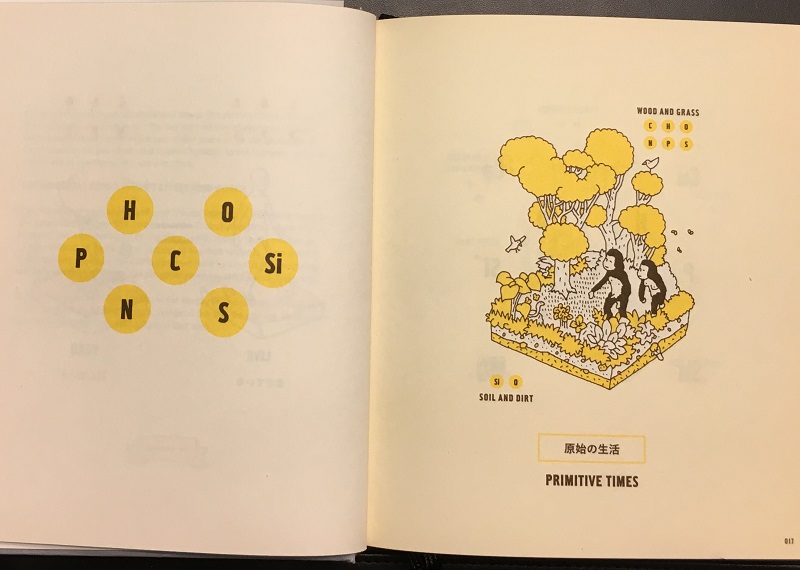
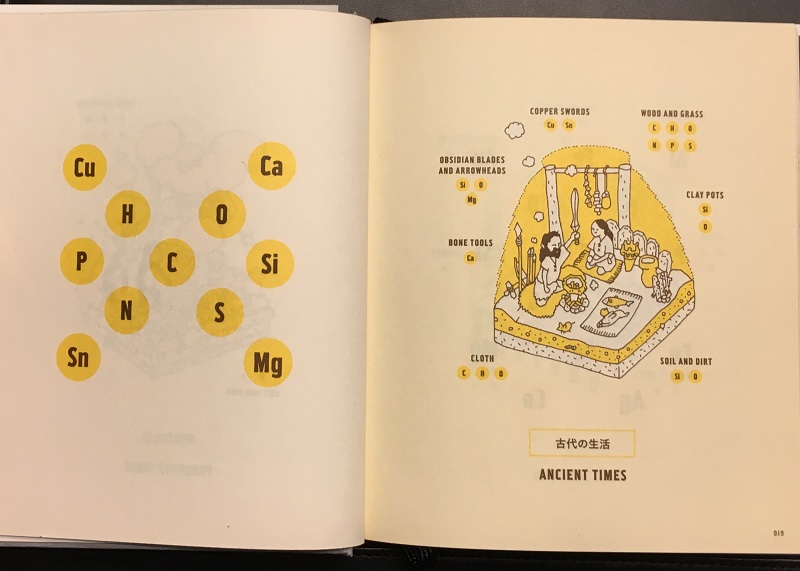
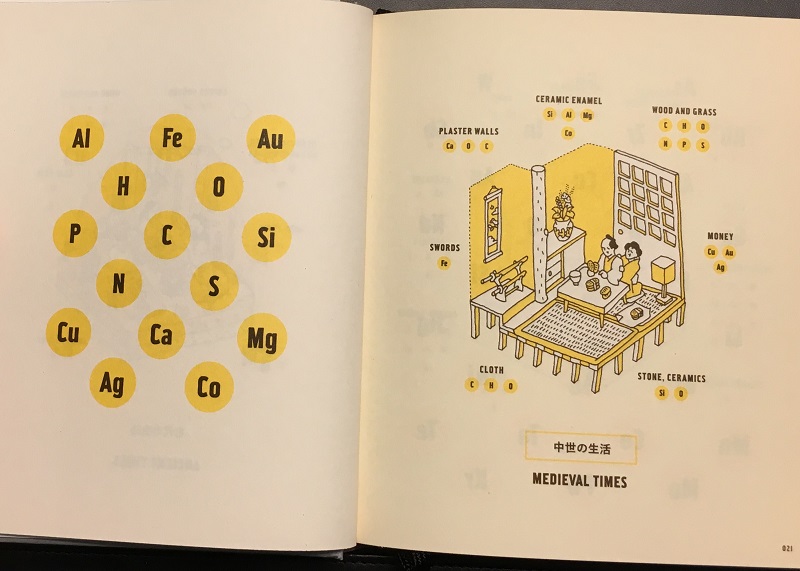
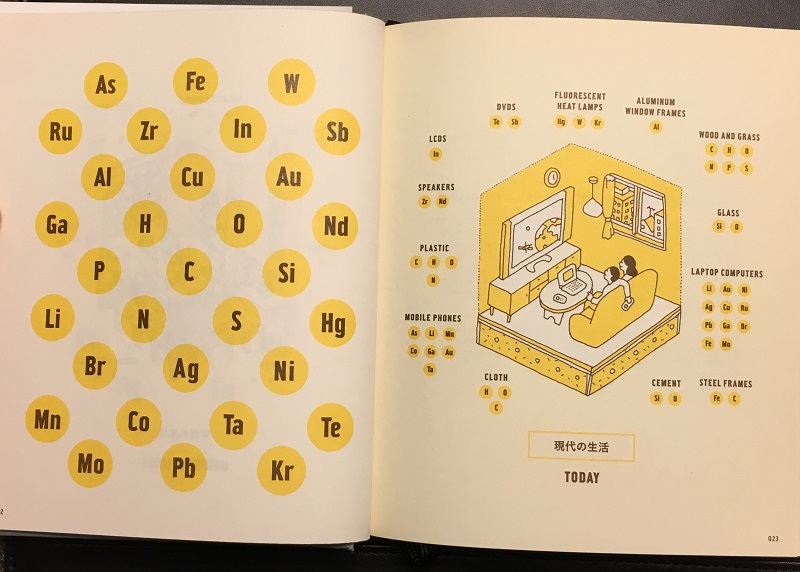
I bought a nice little Japanese book (translated to English) by Bunpei Yorifuji called ‘Wonderful Life with the Elements’. In the first few pages he gives an overview of how mankind learned to extract and use more and more elements from the earth’s crust. The universe is made mostly of hydrogen and helium, but Earth (by mass) is made of iron (32.1%), oxygen (30.1%), silicon (15.1%), magnesium (13.9%), sulfur (2.9%), nickel (1.8%), calcium (1.5%), and aluminium (1.4%); with the remaining 1.2% consisting of trace amounts of other elements.
Dead or alive, humans and trees have the same elements (presumably the ‘Dead’ in the picture refers to the soil and not the tree).Yes .. the primates did not extract any metals to make weapons. They just ate bananas and leaves.Here we go, now the metals such as copper, tin, magnesium, calcium and phosphorous are getting extracted and used by humans.In medieval times, iron was added, as was cobalt, gold and silver.Finally, today we have unearthed the ‘rare earth’ metals and put them into computers and cell phones and TV sets. I would have added a U for Uranium to this chart as well. But OK : I guess we are not talking nuclear submarines or power stations here, and hopefully very, very few homes have uranium in them.
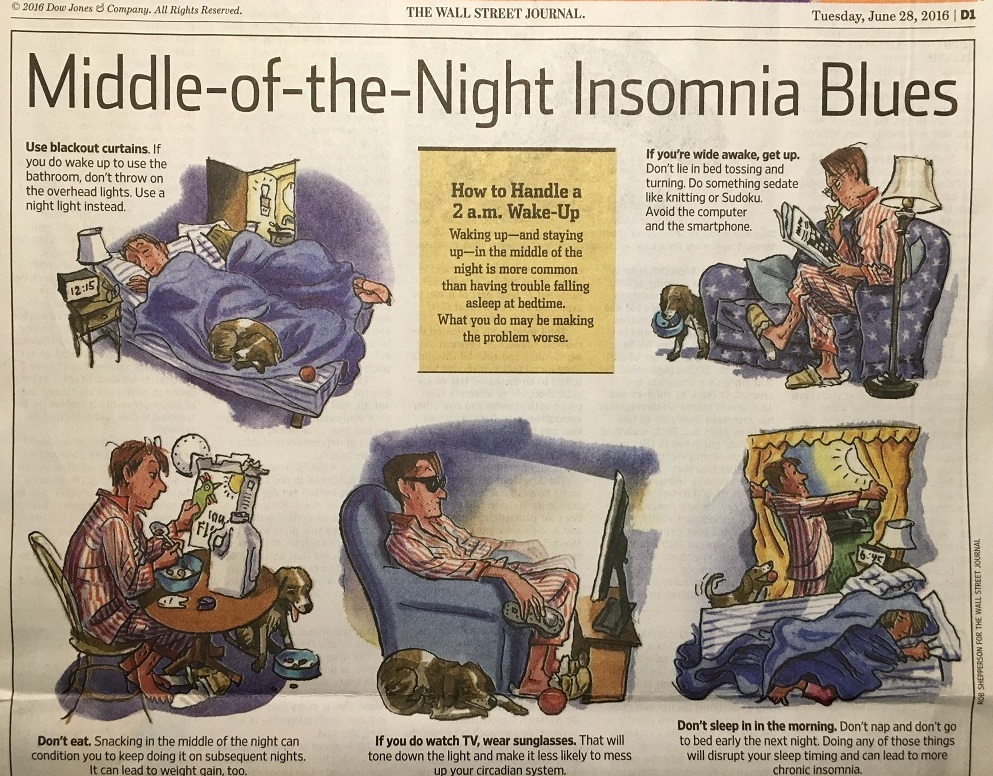
Here is the Wall Street Journal’s tips for getting over spells of waking up in the middle of the night. (Wow. Watching TV with one’s sunglasses on .. I will have to try that! I don’t really wake up in the middle of the night, I just hate to get up in the morning!).
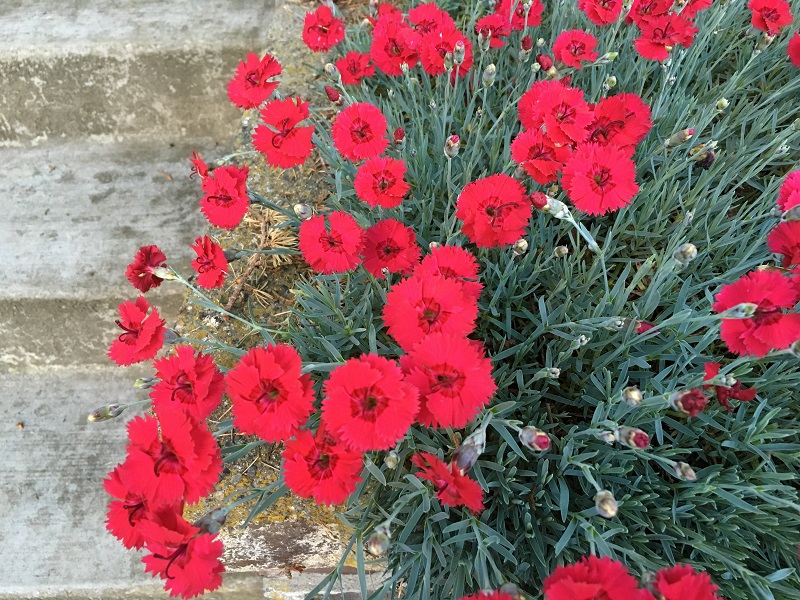
Bright little red flowers from my walk Thursday night .. not sure what these are, but they do look like little carnations.
We have had the warmest April on record, and some unseasonably warm weather here in Seattle for May so far as well. Some 20 degrees above average/ 11 degrees Celsius. So we will have to wait and see how high the peaks of the summer days will be, and if we are going to reach up into the 90s or even 100. (The hottest temperature recorded here ever, was in the summer of 2009, on July 29, when the mercury hit 103 °F/ 39.4 °C).
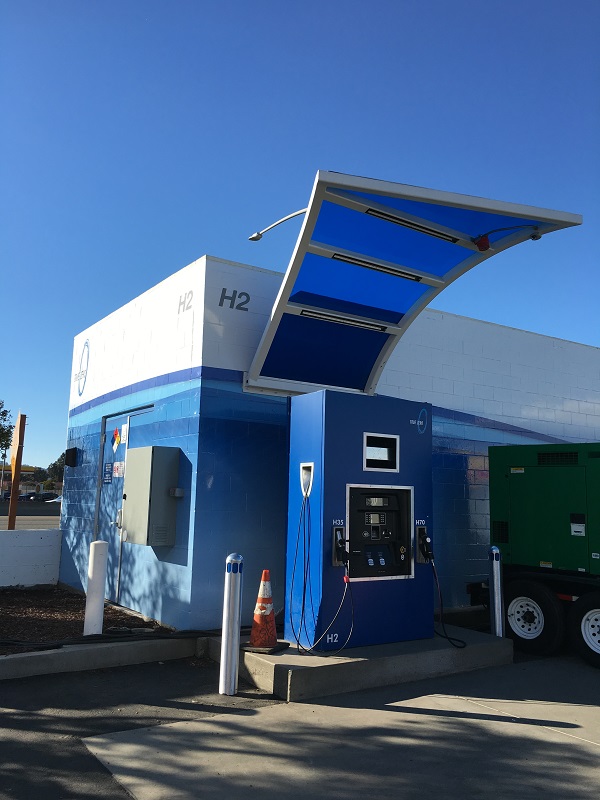
Here is a hydrogen gas dispenser station that I noticed as I was filling up my rental car with fossil fuel gas on Thursday. Whoah, cool ! Let me take a closer look, I thought. I’m still on the look-out for catching a glimpse of a FCV (Fuel Cell Vehicle, such as a Toyota Mirai), on the freeways here in California.
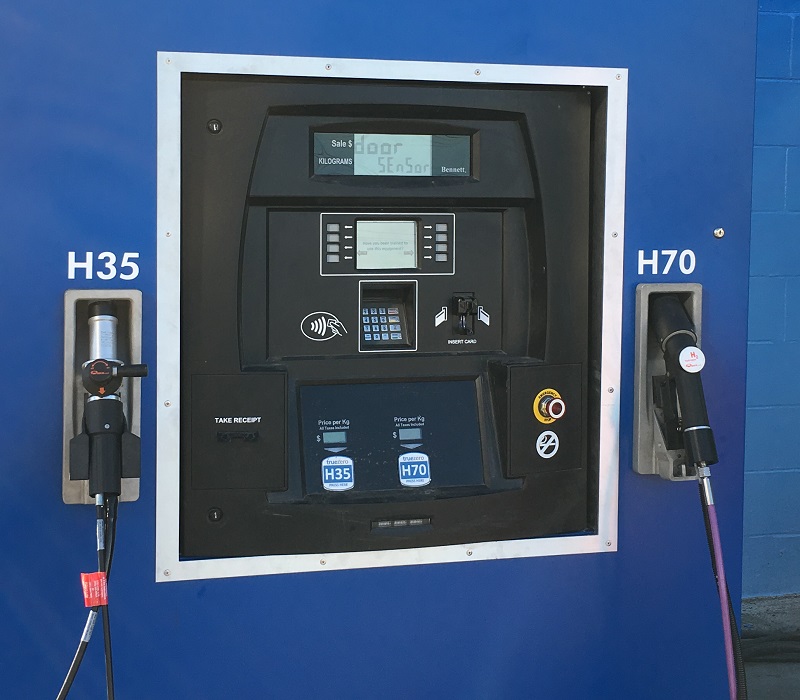
A hydrogen gas station near San Francisco airport. ‘True zero’, says the logo on the pump. There are only about 60 hydrogen stations in operation in the USA right now, clustered in and around San Francisco, San Jose and Los Angeles.H35 and H70 stands for different pressures of the hydrogen gas. For H35, the fuel goes directly into the vehicle. If the driver is dispensing fuel at H70, the hydrogen first goes into another small compressor where the fuel is pre-cooled and compressed even more before dispensing. And the cost? About $16 per kilogram. A Toyota Mirai will take about 5 kg of hydrogen fuel.
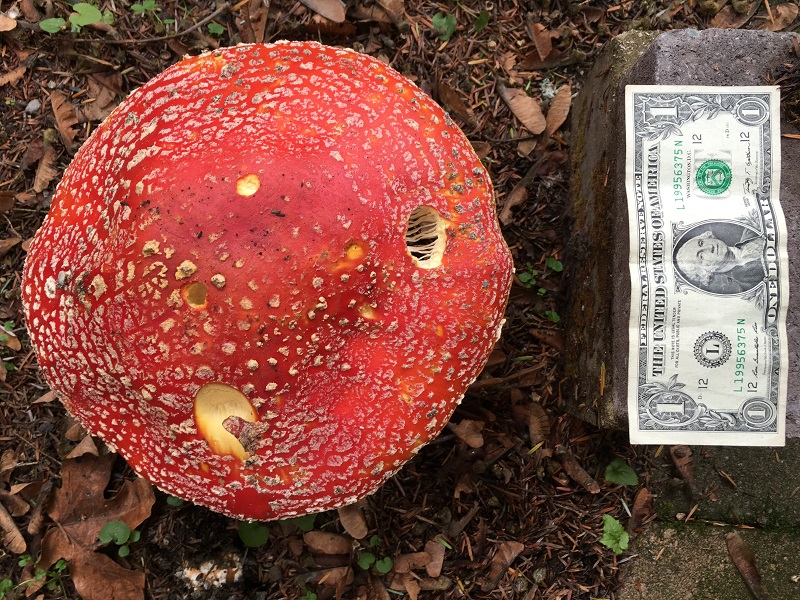
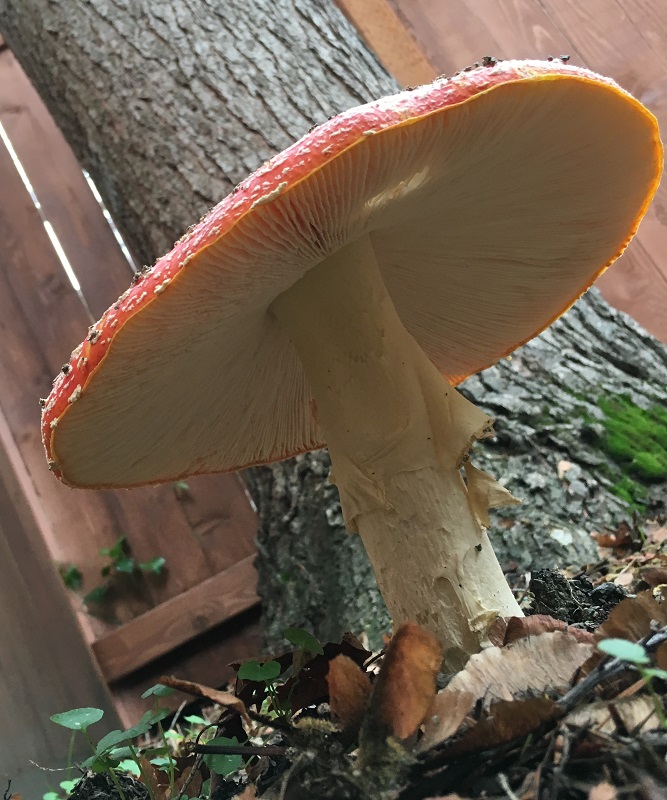
Here is last Friday’s mushroom now in ‘full bloom’.
Alas, I have no toads in my backyard to come and sit on it !
The mushroom cap is about 8 inches (20 cm) in diameter. A dollar bill is about 6 inches long.The vertical faces of the gills underneath produce millions of spores.
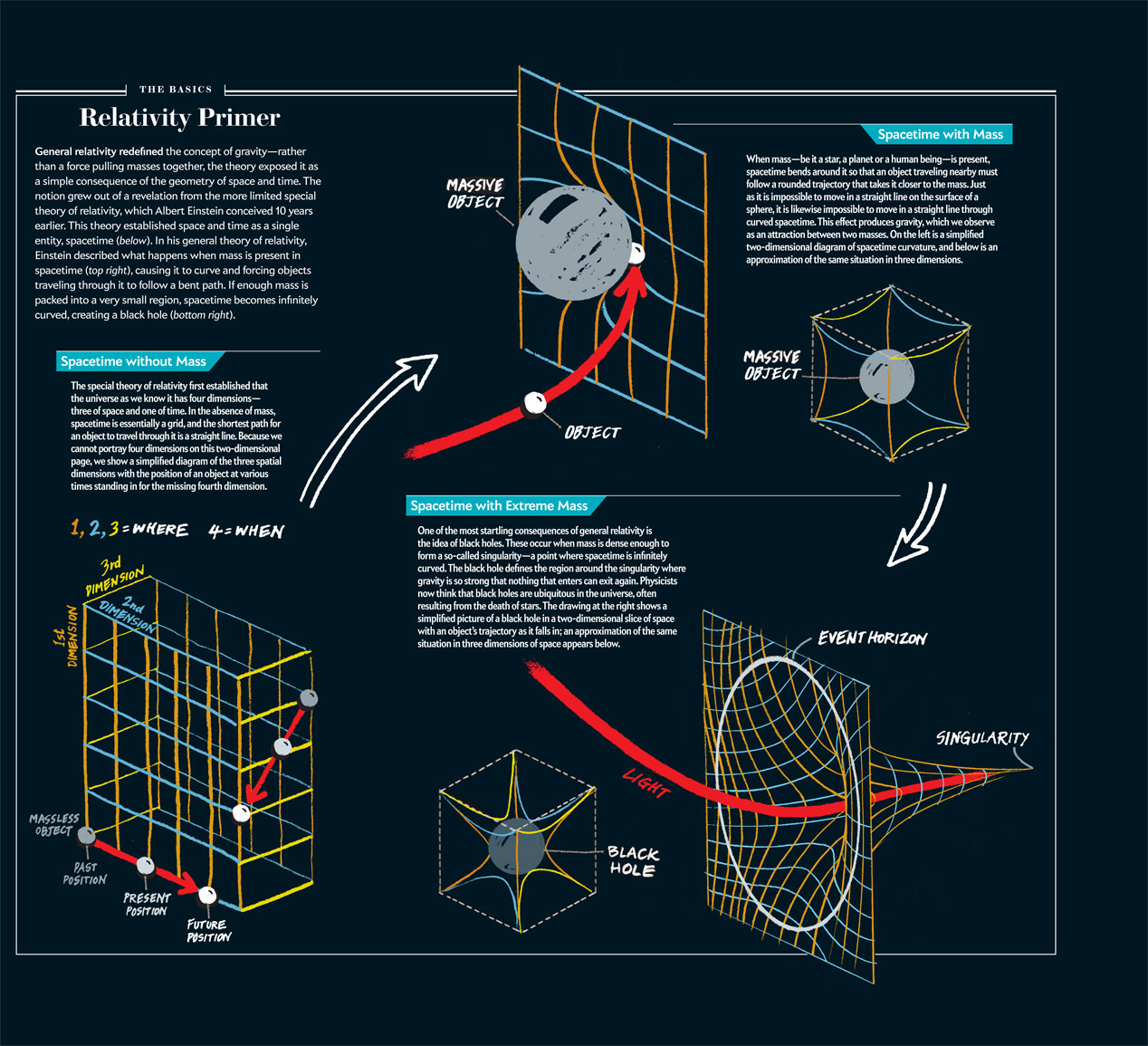
This ‘Relativity Primer’ by Nigel Holmes appeared in a recent issue of Scientific American. Einstein’s equations correctly predicted the exact amount that light from behind the sun would bend when passing by it. When a 1919 experiment during a solar eclipse proved him right, it made him famous world-wide. In 1921, Einstein traveled through the United States to a media circus that probably wasn’t matched until the Beatlemania of the 1960s.
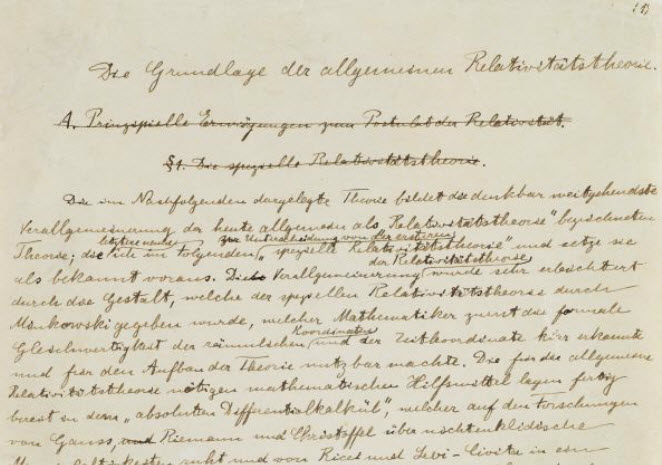
It is 100 years ago this November that Albert Einstein published his series of four papers called ‘The Foundation of the General Theory of Relativity’, each separated from the other by a week: on the 4th, 11th, 18th and the 25th of November 1915. From the Einstein Archives Online : ‘In Einstein’s universe, gravity is not regarded as an exterior force, but rather as a property of space and time, or spacetime. Einstein’s curved four-dimensional spacetime ‘continuum’ is often likened to a suspended rubber sheet stretched taut, but deformed whenever heavy objects – stars, galaxies or any other matter – are placed on it. Thus, a massive body like the sun curves the spacetime around it and the planets move along these curved pathways of spacetime. As Einstein put it : ‘matter tells space how to bend; space tells matter how to move’.
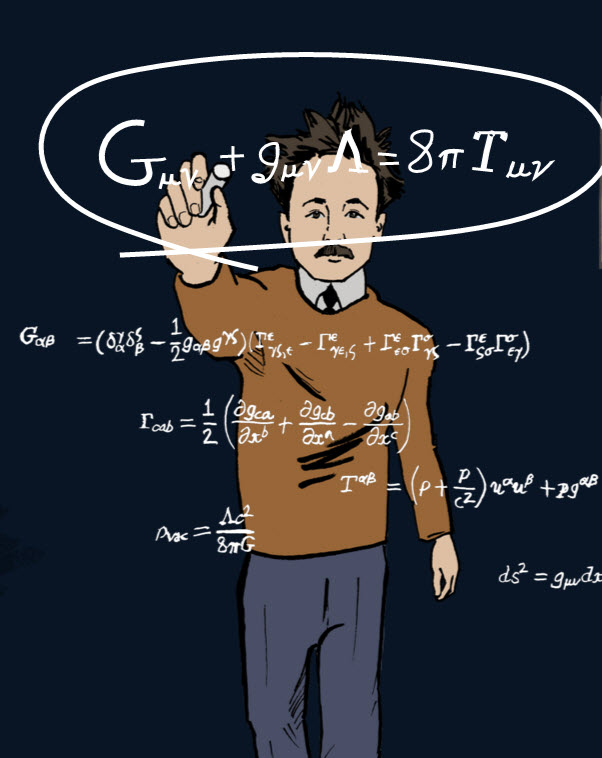
It is of course one thing to put forth a philosophical theory, but Einstein did much more than that. He wrote up a set of ten equations known as the Einstein Field Equations that described the fundamental interactions of gravitation, matter and energy in spacetime.
Einstein donated his original manuscript in German to the Hebrew University of Jerusalem in 1925. It is on-line at http://www.alberteinstein.info/gallery/science.html.
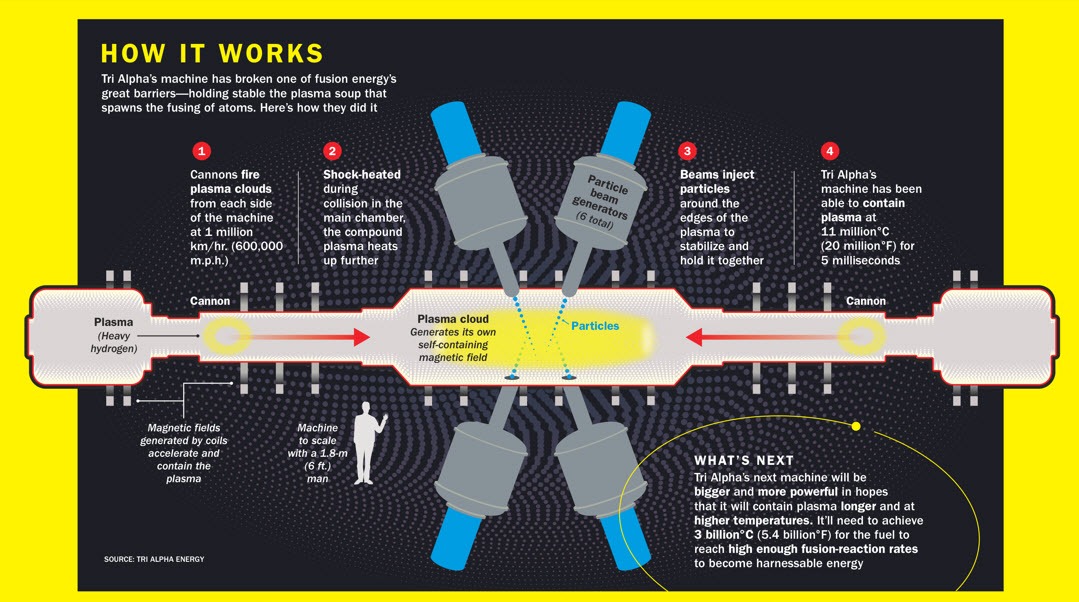
TIME magazine has an excellent write-up on the on-going efforts – and progress made – to build a fusion reactor to solve the world’s needs for cheap energy. Check it out here. The engineering challenges are mind-boggling, but so are the possibilities, if humanity can ever solve the challenge of harnessing the energy released by controlled nuclear fusion. From the TIME article : The endgame for these companies isn’t acquisition by Google followed by a round of appletinis. It’s an energy source so cheap and clean and plentiful that it would create an inflection point in human history, an energy singularity that would leave no industry untouched.
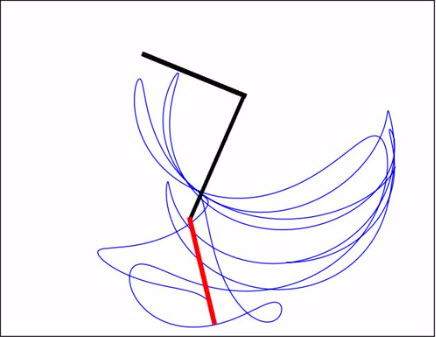
The Experiminta Science Center is just a block from the Marriott hotel as well, and it was great to see such unabashed enthusiasm for math and science on display. My pictures are of some items that interested me, but there are many other interactive displays geared toward school kids of all ages. Here is the link for Rott’s Chaotic Pendulum.
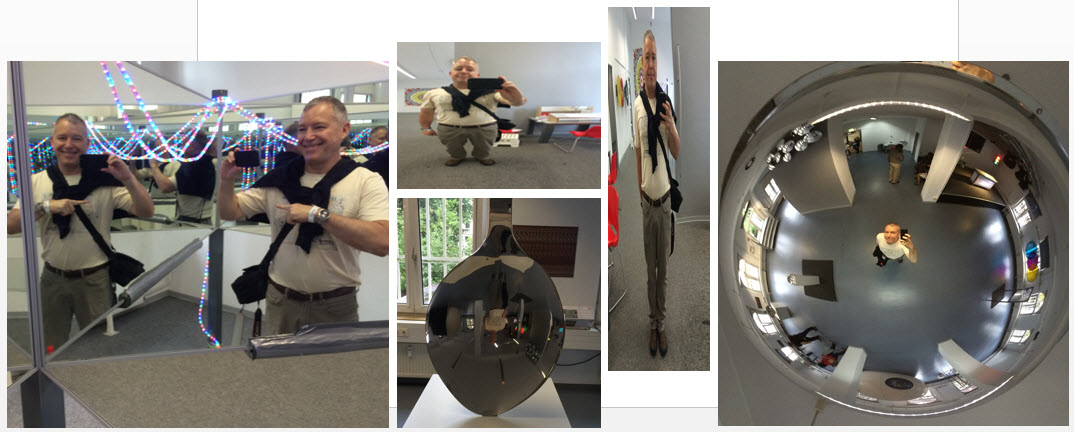
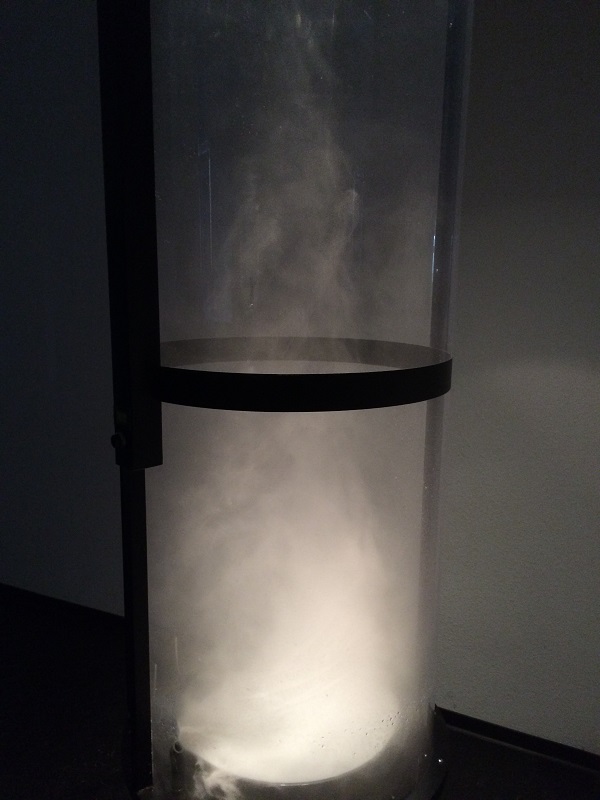
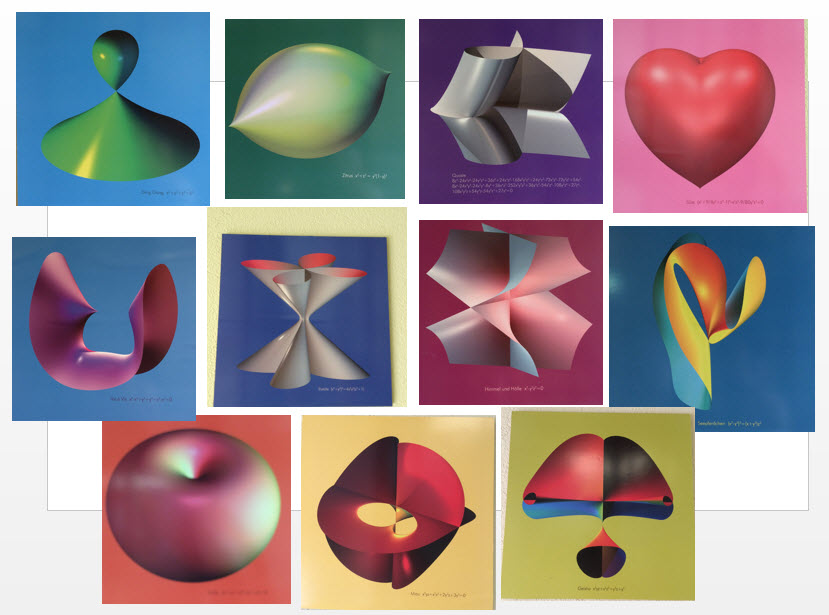
Sorry! but I could not resist the mirrors. Inside the 3-sided mirror caleidoscope, ‘wide’ me, ‘skinny’ me, ‘upside down’ me in a giant spoon mirror, and ‘center of attention’ me in a ceiling mirror.Here’s a tornado in a tube .. a six foot high display of what happens when hot air and cool air mixes and gets a twist.These colorful (and playful) 3-D math representations all have names, which I suspect were assigned by the mathematician that had spare time to play around with Mathlab (a graphic modeller of mathematical equations) !
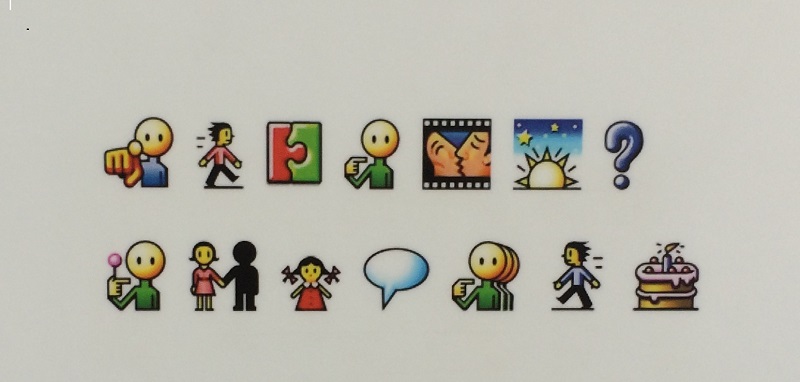
What do these emoji sentences convey? 1. (The message sender is blue). Will you come with me to the movies tonight? 2. (The message sender is green). I heard that your friend’s little sister said that I am coming to the (birthday) party.Rott’s Chaotic Pendulum consists of a middle piece that can rotate around its center (the black segment in the middle) .. but then it has additional segments attached to its ends that can rotate through 360 degrees as well. The trace of the tip of one of the attached segments is quite unexpectedly ‘chaotic’.
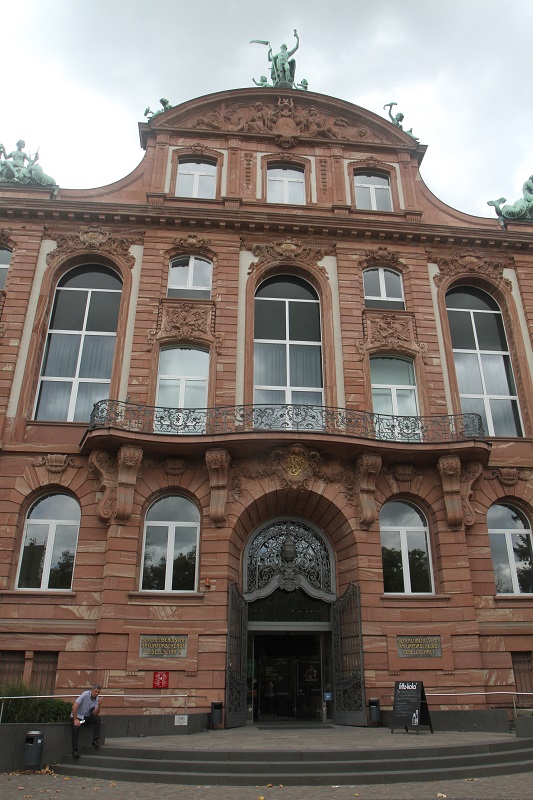
I was surprised to learn, from looking at my Frankfurt map, that the Senckenberg Naturmuseum was barely a five-minute walk from my hotel. Well, you have to go then, I told myself, and hurry up ! The museum closed at 6, along with every other establishment in Germany*.
*Shopping malls close a little later, at 9 pm .. but there is not much open on Sunday (convenience stores at gas stations are). I think that’s a good thing .. even with the Saturday evening rush that I got caught in at a grocery store just trying to buy a yogurt and bananas.
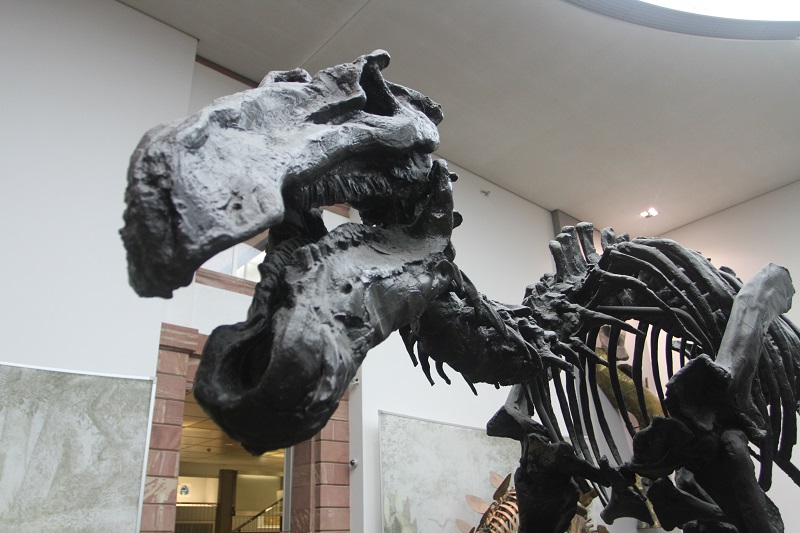
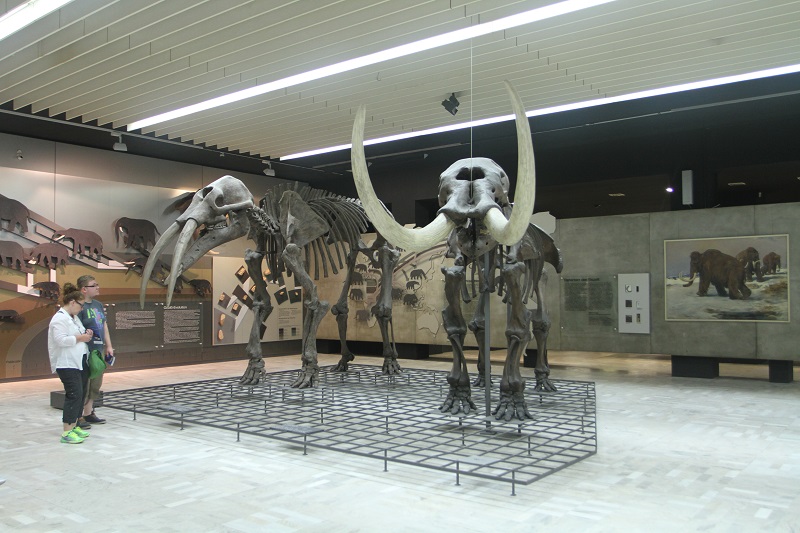
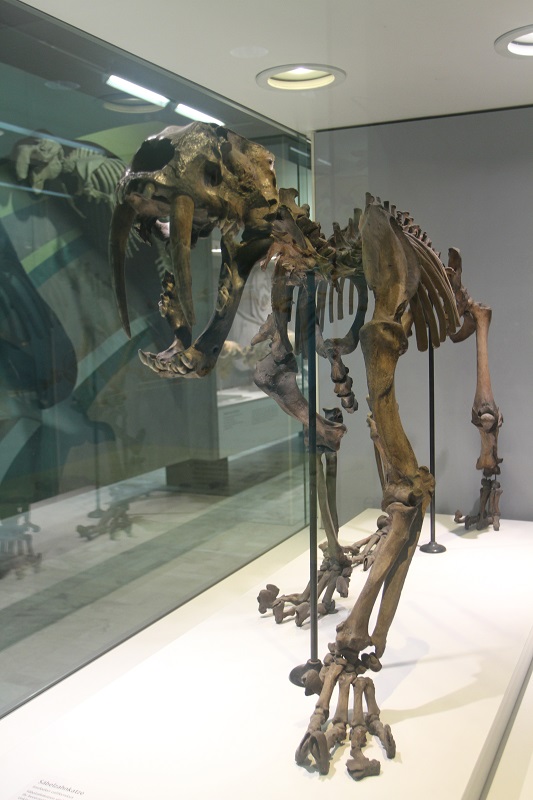
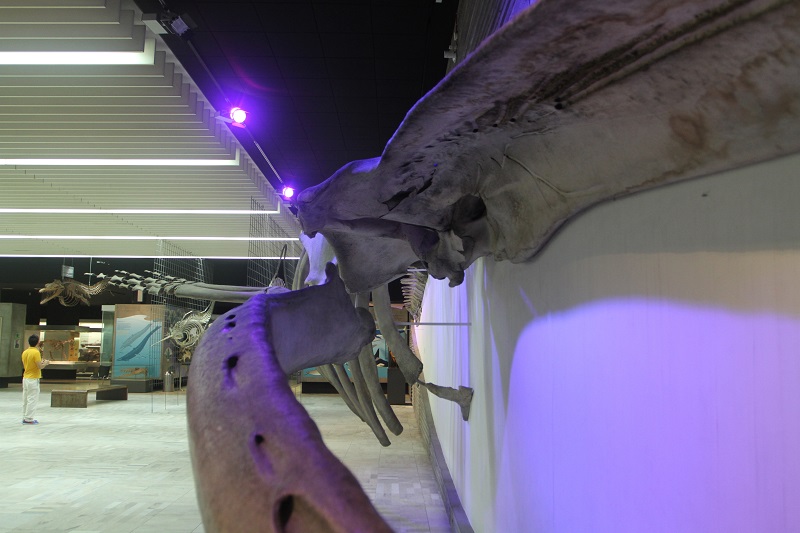
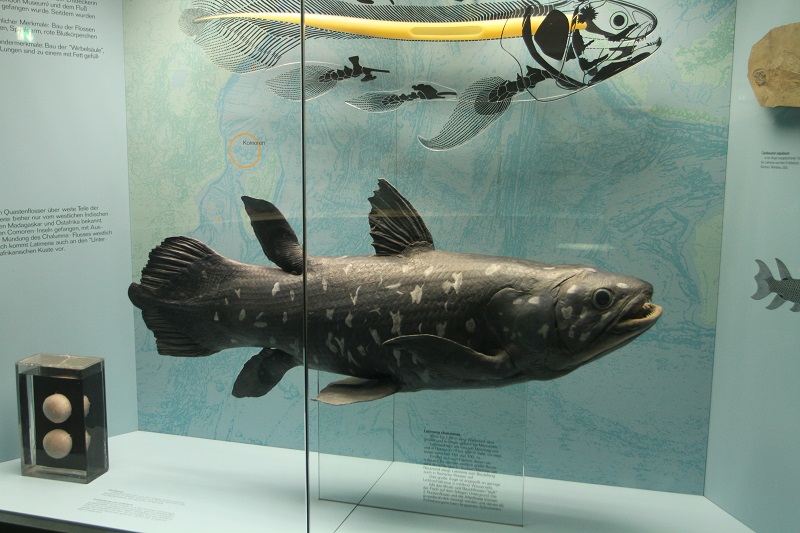
Here is the entrance to the Senckenberg Naturmuseum (museum of natural history) here in Frankfurt.This is the main exhibition hall. One the left is an Iguanodon, and on the right a complete Diplodocus skeleton, gifted from the American Museum of Natural History in 1907. Diplodocuses roamed around on earth 156-147 million years ago.Ready for your close-up (encounter with a 5-ton iguanodon?) Lucky for humans the beasts died out 110 million years ago.These are two woolly mammoth skeletons : on the left the ‘Mühldorfer mammoth’, a complete skeleton found east of Munich. On the right the American woolly mammoth, found in Little Britain in the New York State area. Most woolly mammoth populations disappeared between 14,000 to 10,000 years ago.Saber-toothed cats lived for 42 million years until about 11,000 years ago. This specimen’s bones were found in California.Open wide! Lucky for us this big fin whale does not eat humans! A close relative of the bigger blue whale, this skeleton lines the entire wall in the big exhibition room.Here’s the Coelacanth, the famous ‘dino-fish’ with bones and all, and a lung. A live fish was caught in a net off the South African coast in 1938, a sensational find for the archaeologist community, and today methods have been put in place to try to prevent catching the rare fish in fish nets.
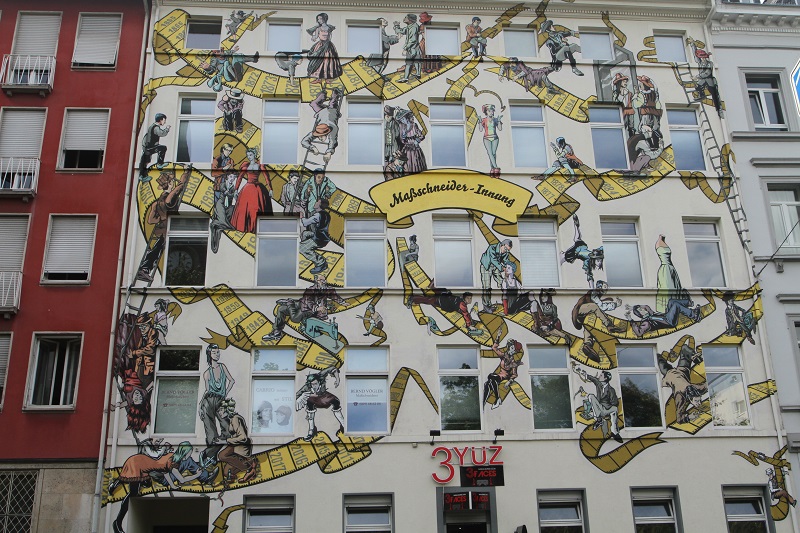
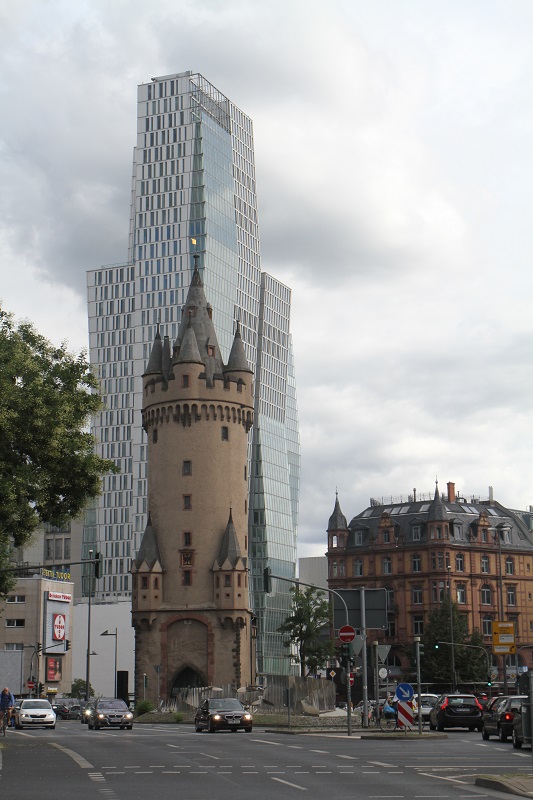
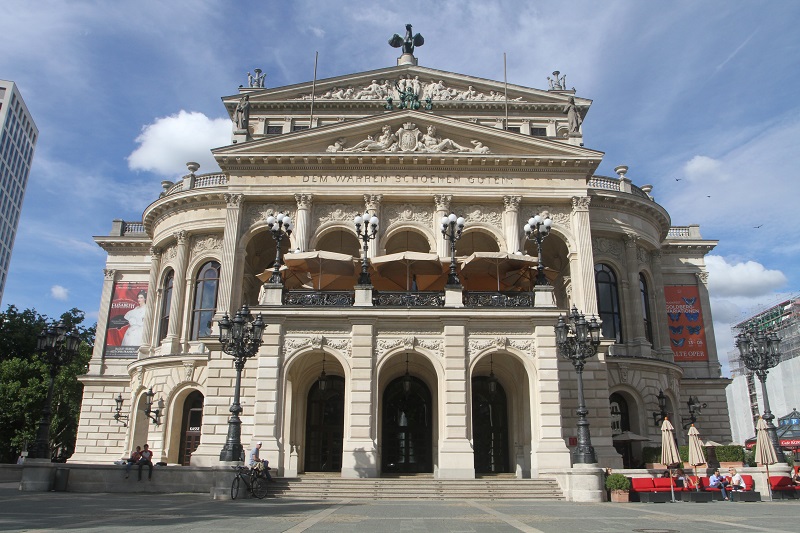
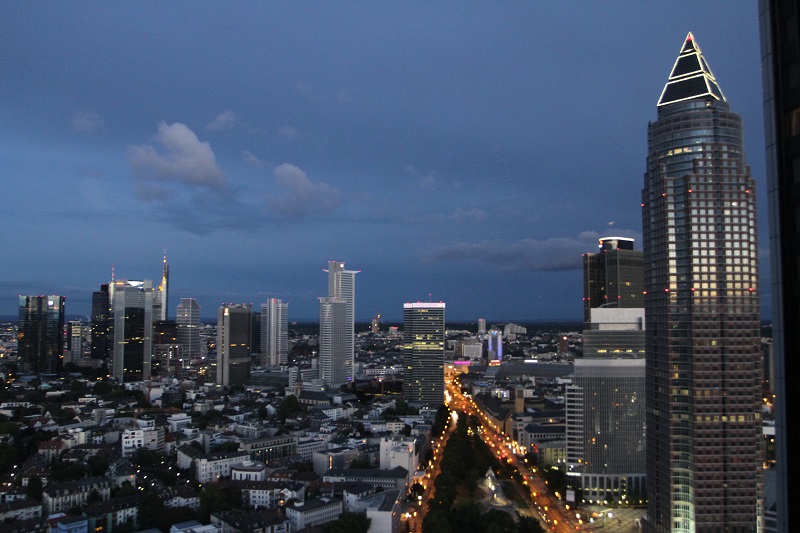
I like the pictures and the tailors’ tapes on this tailor shop and offices for the sharply dressed man (and woman)., on Bleichstraße.The old and the new : in front Eschenheimer Tower (built in 1810) that guarded the old city’s Gothic walls, behind it the Jumeirah Frankfurt Hotel that opened in 2011.This is the Alte Oper, the old opera house. The original building was badly damaged in a World War II night raid, and only the facade remained. It took several decades before the building was restored.The early evening view from my hotel window. The little red aircraft warning lights are already lit up. The building with the pyramid is the Messeturm (offices); the silvery stepped building in the middle the West End Tower; the black building two more to the left of it is the Frankfurter Büro Center, home of my German namesake company, PwC.
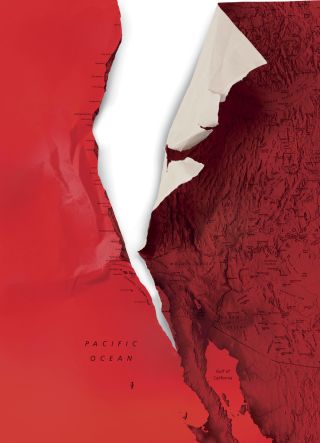
I was blissfully unaware of the Juan de Fuca Plate tectonic plate, the edge of which runs alongside the Seattle coast, when I moved here in 2000. That did not last long, because in 2001 there was a 6.8 magnitude earthquake in Washington State, the Nisqually earthquake. It was deep down and caused some property damage but there were no casualties. A new compelling article by Kathryn Schulz in The New Yorker with alarmist undertones and cataclysmic scenarios reminds us of the 9.0 magnitude Cascadia earthquake from Jan 26, 1700. And that the area is overdue for the next 9.0 earthquake. The logic is irrefutable : ‘ .. we now know that the Pacific Northwest has experienced forty-one subduction-zone earthquakes in the past ten thousand years. If you divide ten thousand by forty-one, you get two hundred and forty-three, which is Cascadia’s recurrence interval: the average amount of time that elapses between earthquakes. That timespan is dangerous both because it is too long—long enough for us to unwittingly build an entire civilization on top of our continent’s worst fault line—and because it is not long enough. Counting from the earthquake of 1700, we are now three hundred and fifteen years into a two-hundred-and-forty-three-year cycle.
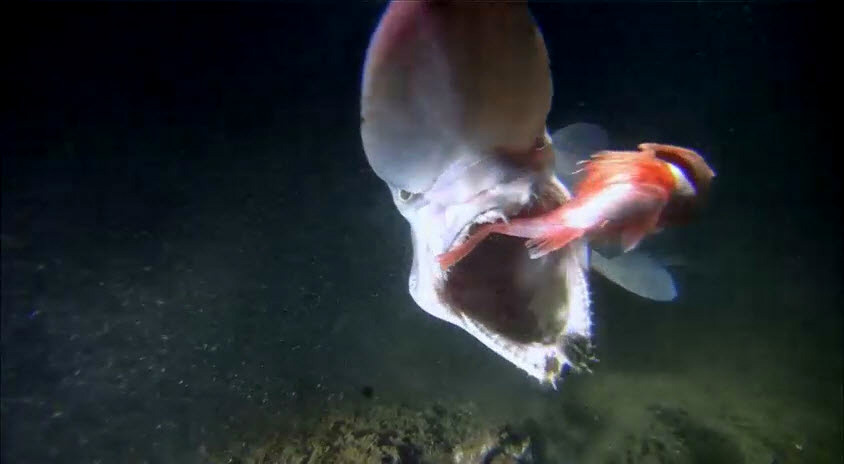
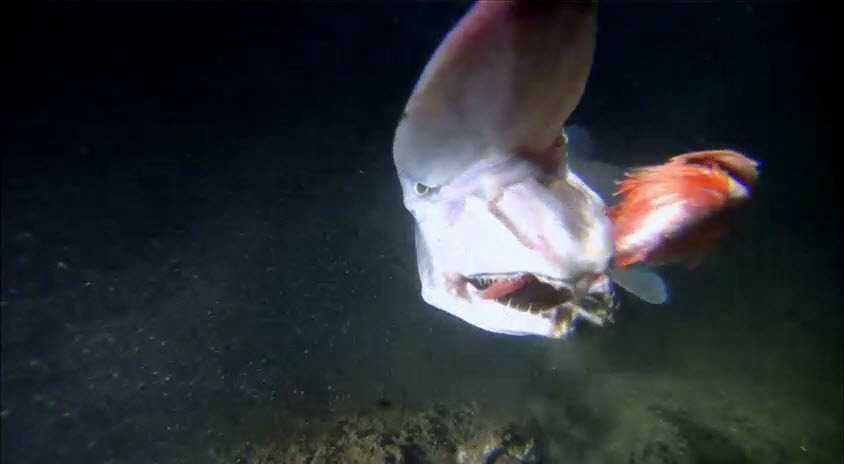
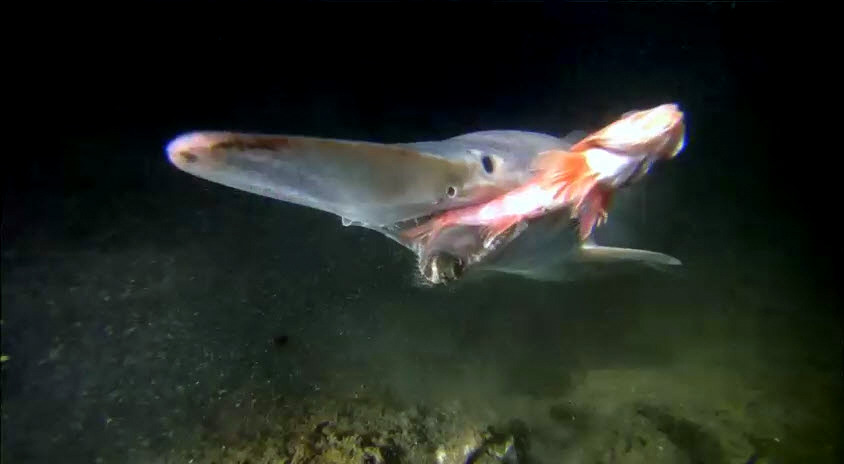
It’s Shark Week on Discovery Channel here in the USA .. and here is a goblin shark gobbling up a fish. These stills are from the Discovery website, here. This creature is a living fossil – in that it is the only one remaining from a family of sharks with a lineage dating back 125 million years. Its specialized jaws can snap forward to capture prey. The elongated flattened snout is covered with ‘ampullae of Lorenzini’ that enable it to sense minute electric fields, as little as a 10 millionth of a volt.
There was a smattering of stargazers and their telescopes out at Volunteer Park on Tuesday night when I walked by there. I soon found out the excitement was over the two brightest planets in the night sky – Venus and Jupiter – that were to appear very close together in the night sky. They only appear to do so, though, because of their locations in the night sky. At the time of the conjunction, Venus was 49 million miles from Earth while Jupiter was more than 10 times farther, 564 million miles. Check out this video from NASA. As time goes by, the planets appear closer together.
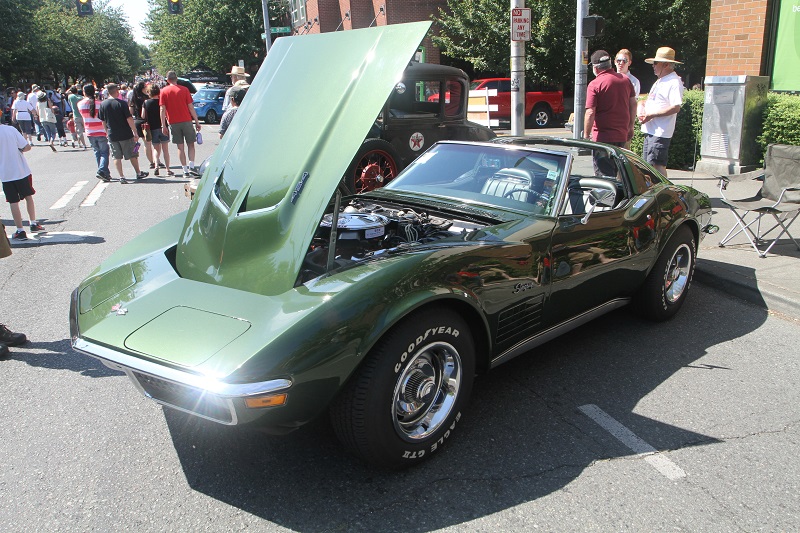
We went to the annual Greenwood Car Show on Saturday. It is organized by the Greenwood Knights and a fundraiser event for local non-profit organizations. Vintage car owners are invited to exhibit their driving machines along Greenwood Avenue North in the Greenwood and Phinney neighborhoods of Seattle.
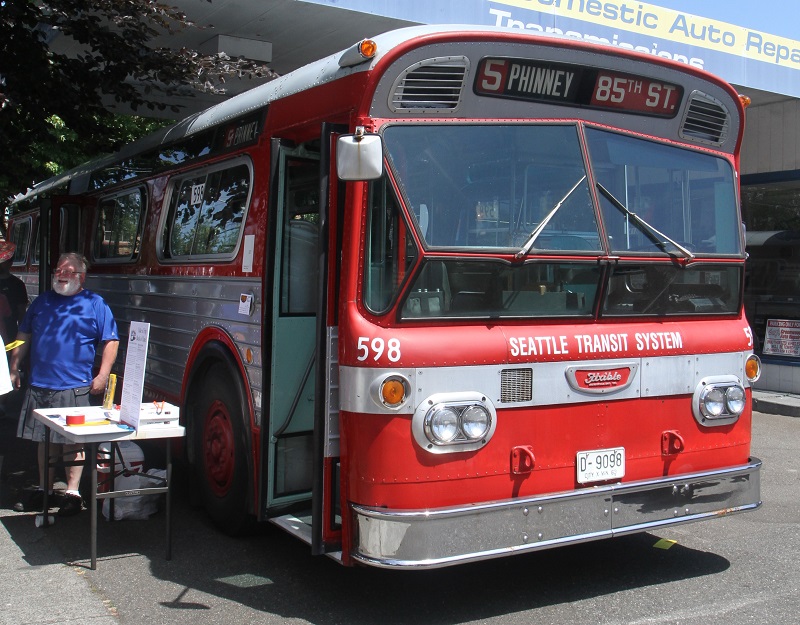
Here’s the scene at Saturday’s Greenwood Autoshow. This is a 1970 second-generation Corvette Stingray. The chrome bumper on the front soon after disappeared (in model years after 1972).This restored Seattle City bus hails from 1963. It is 40 ft long and seats 51 people. The bus was built in Loudonville, Ohio and dubbed a “Transi-Cruiser”, one of a fleet of buses that enabled Seattle Transit to extend service north of 85th Street to 145th Street.
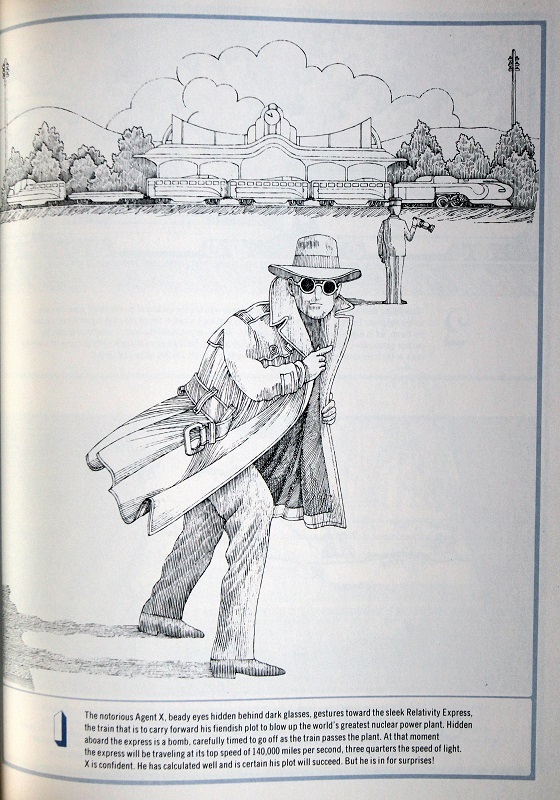
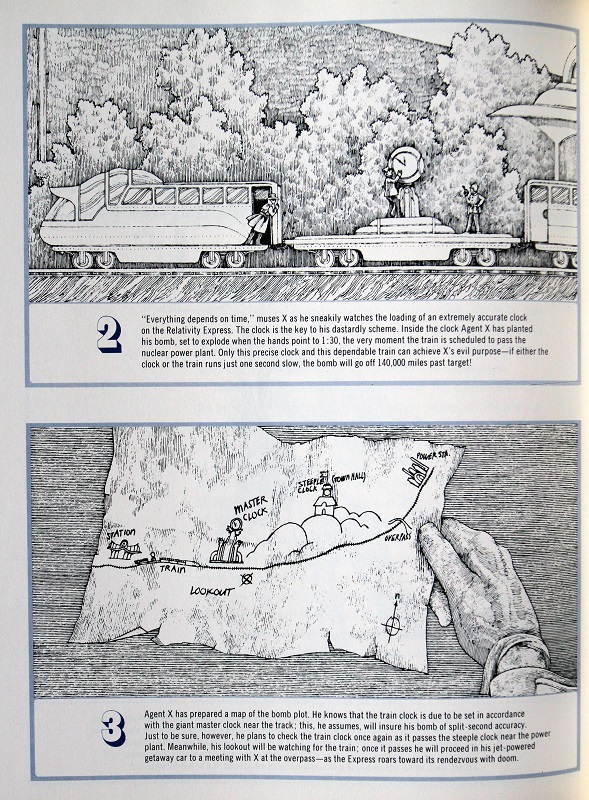
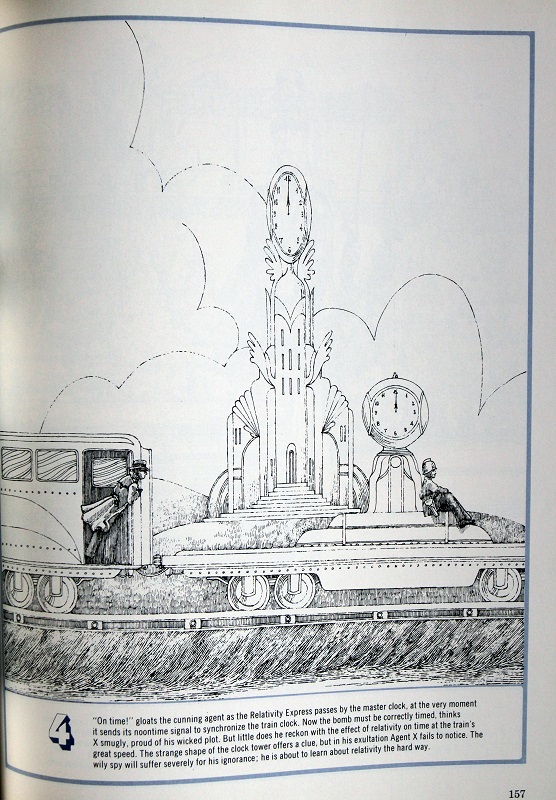
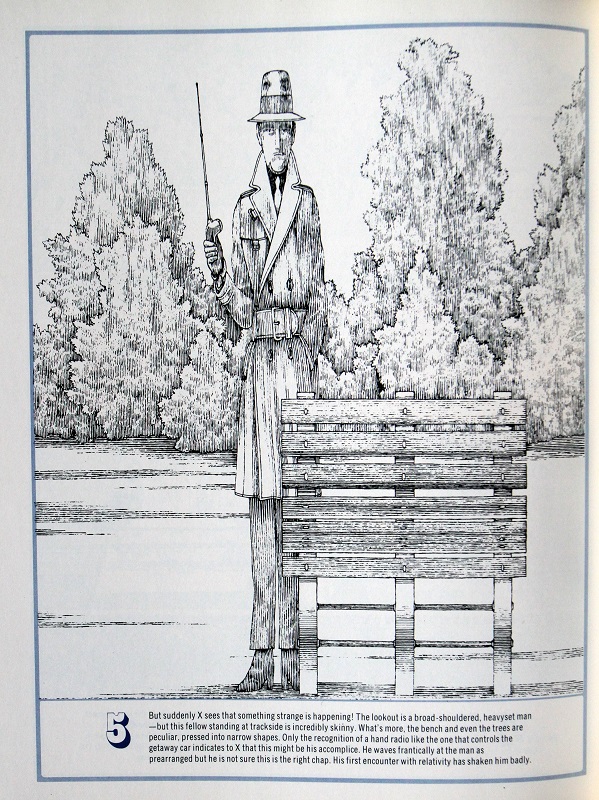
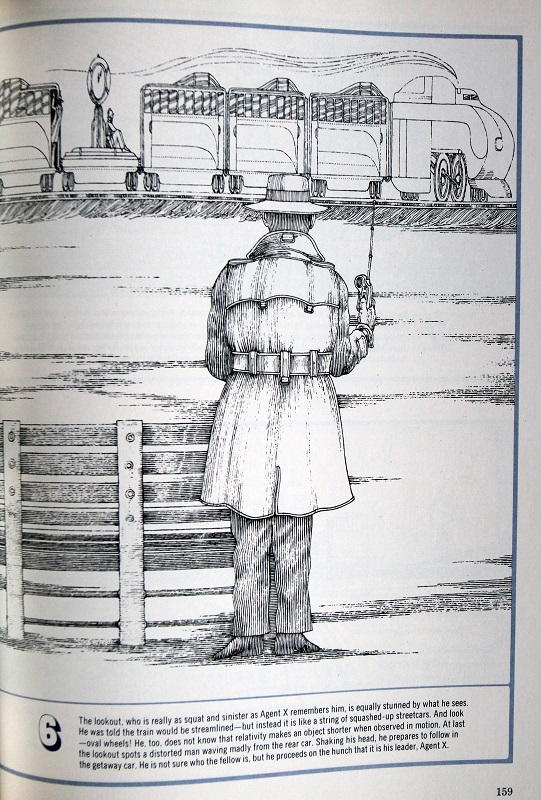
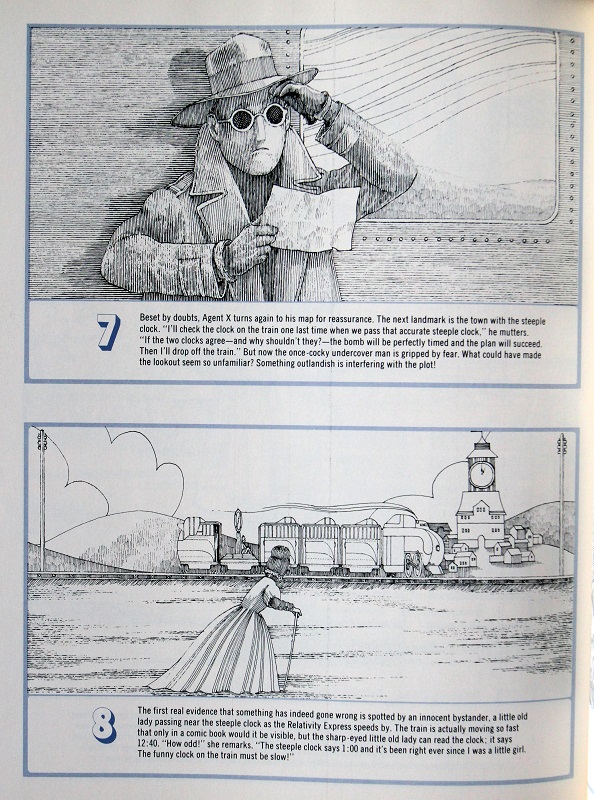
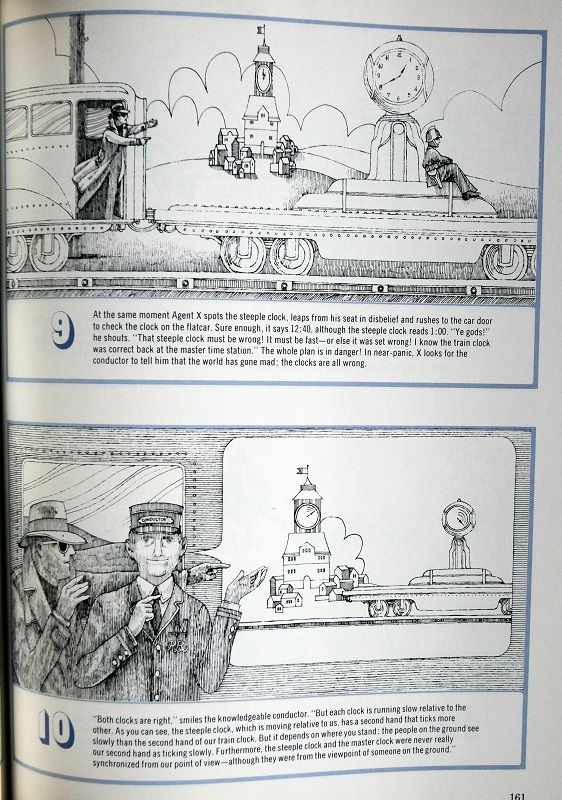
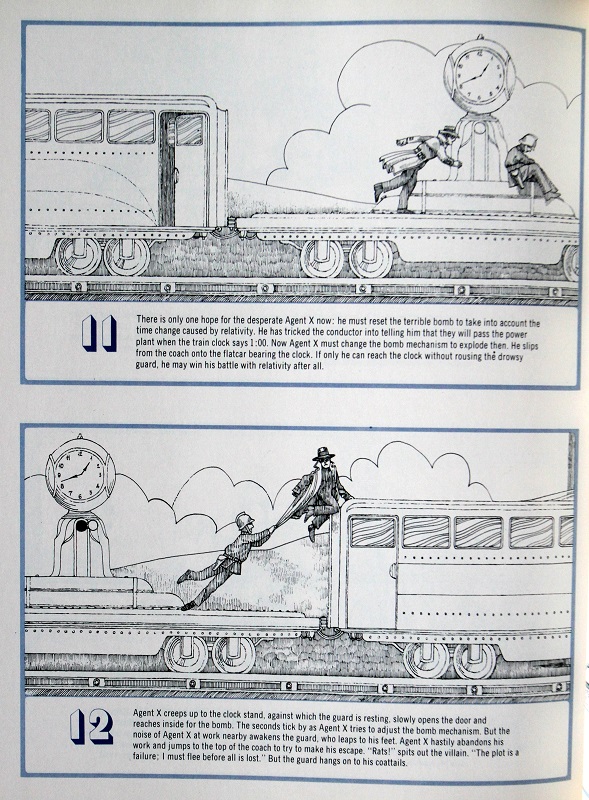
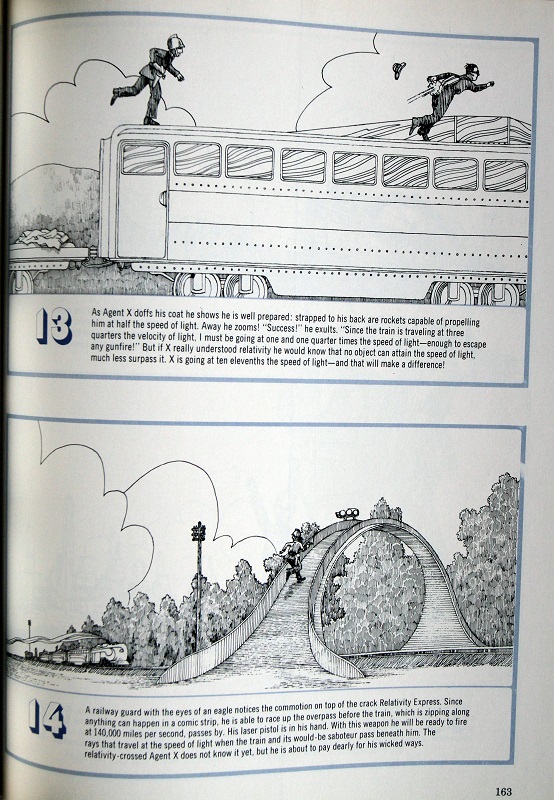
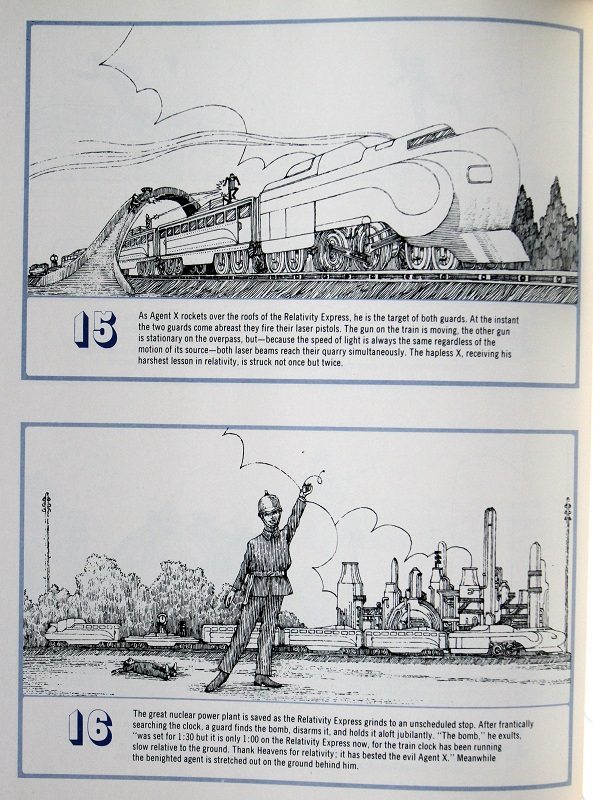
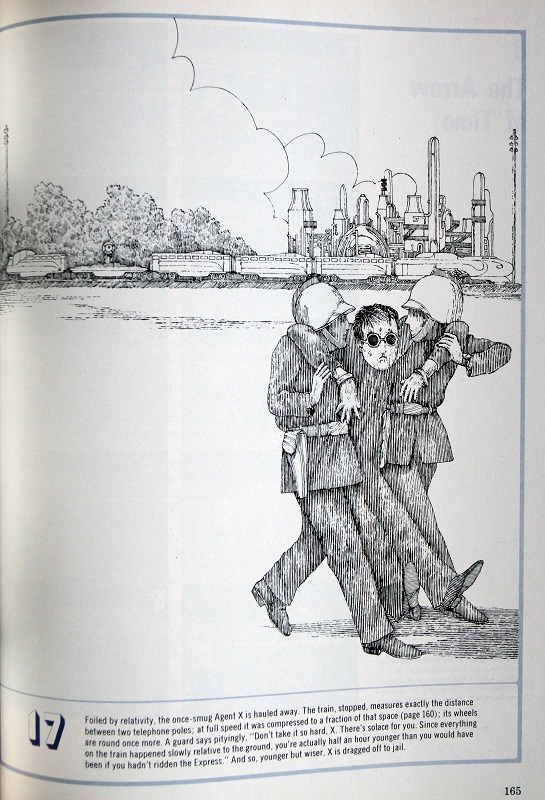
Check out the pages from my Time-Life Science Library book that I bought for $7 from Amazon. I remember the book from when I was growing up, and I wanted it especially for the explanation of the effects of relativity, illustrated by a fantastical train called the Relativity Express and the doings of the evil Agent X. The Relativity Express will get you there in a flash : it travels at ¾ the speed of light !