Caturday

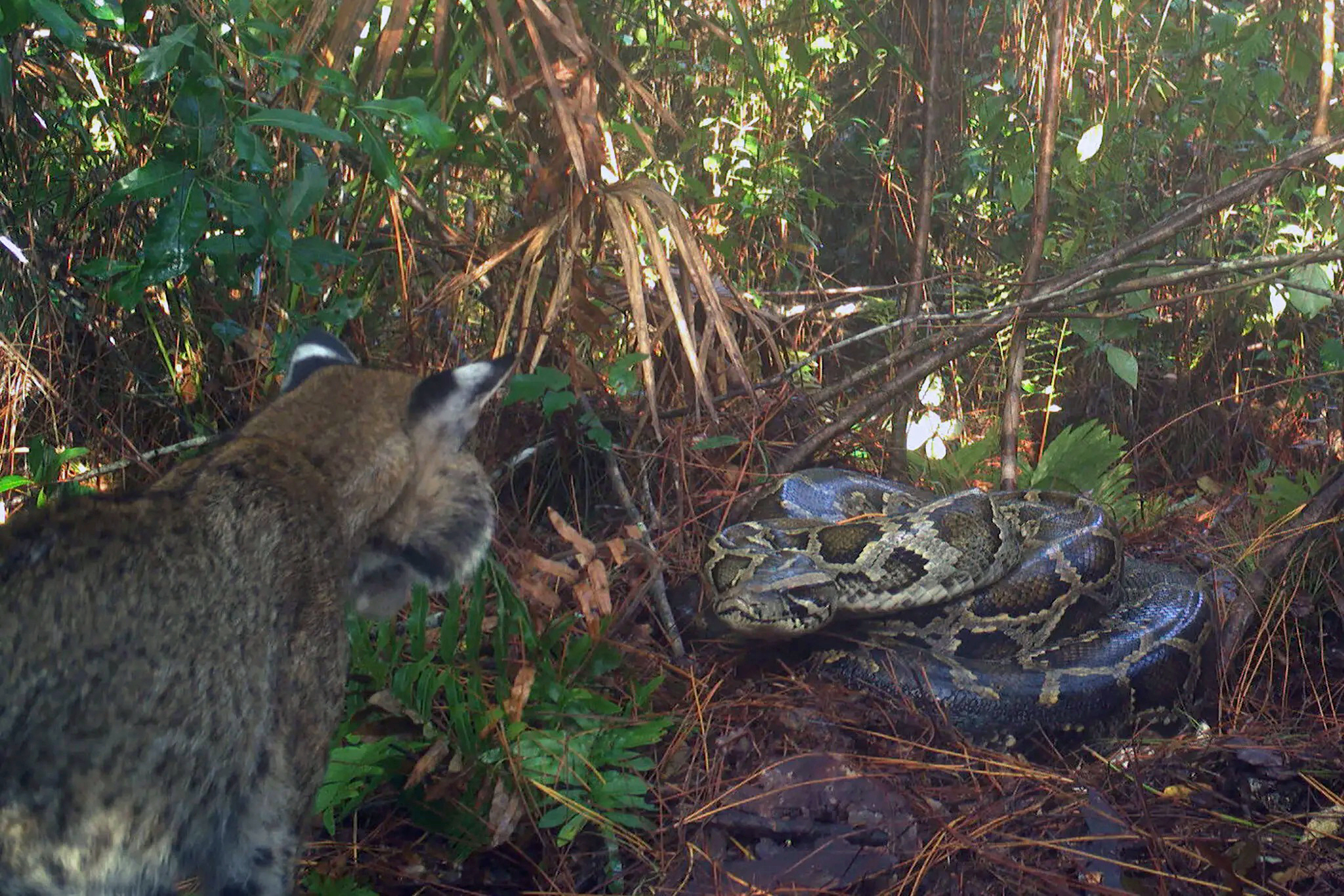
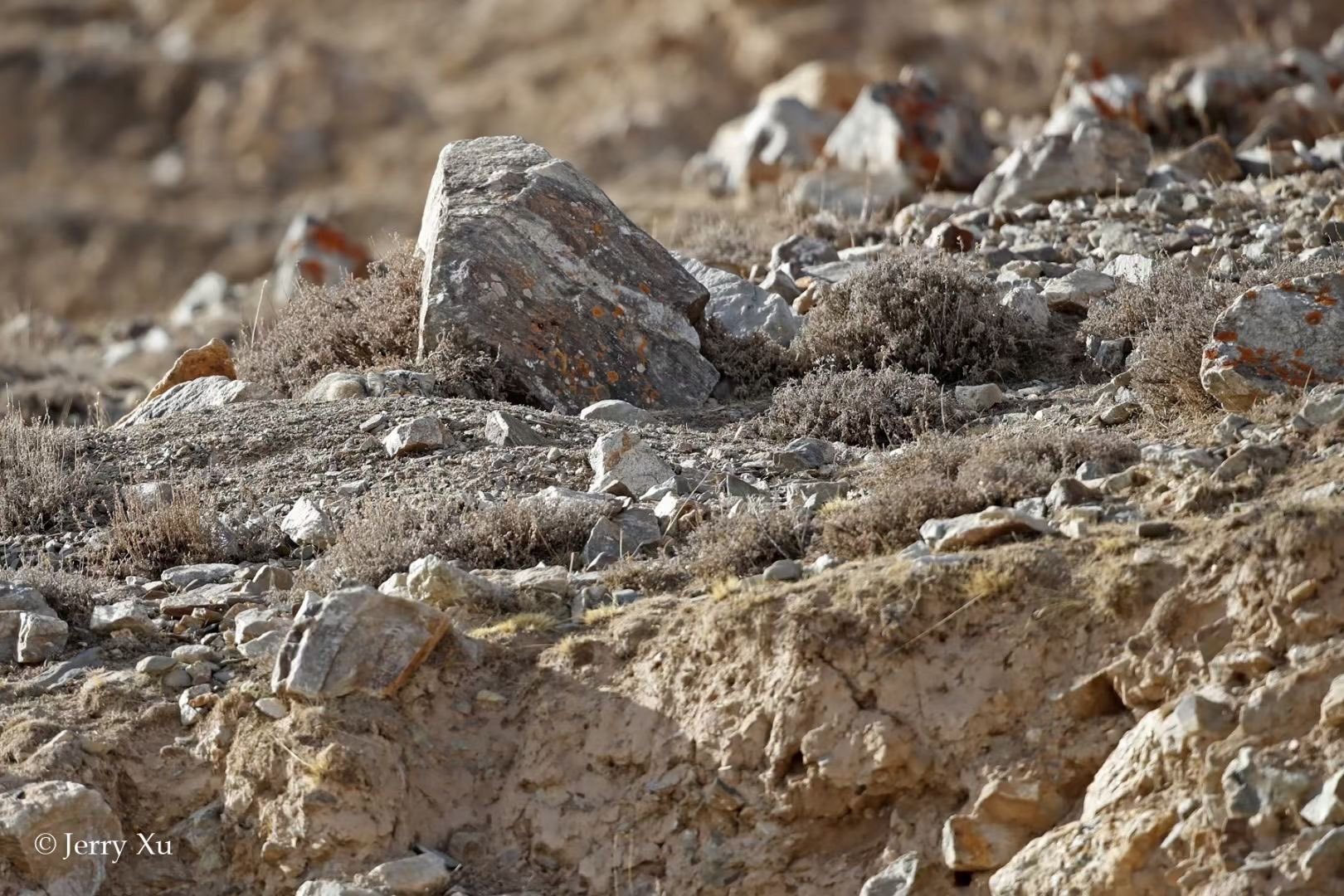
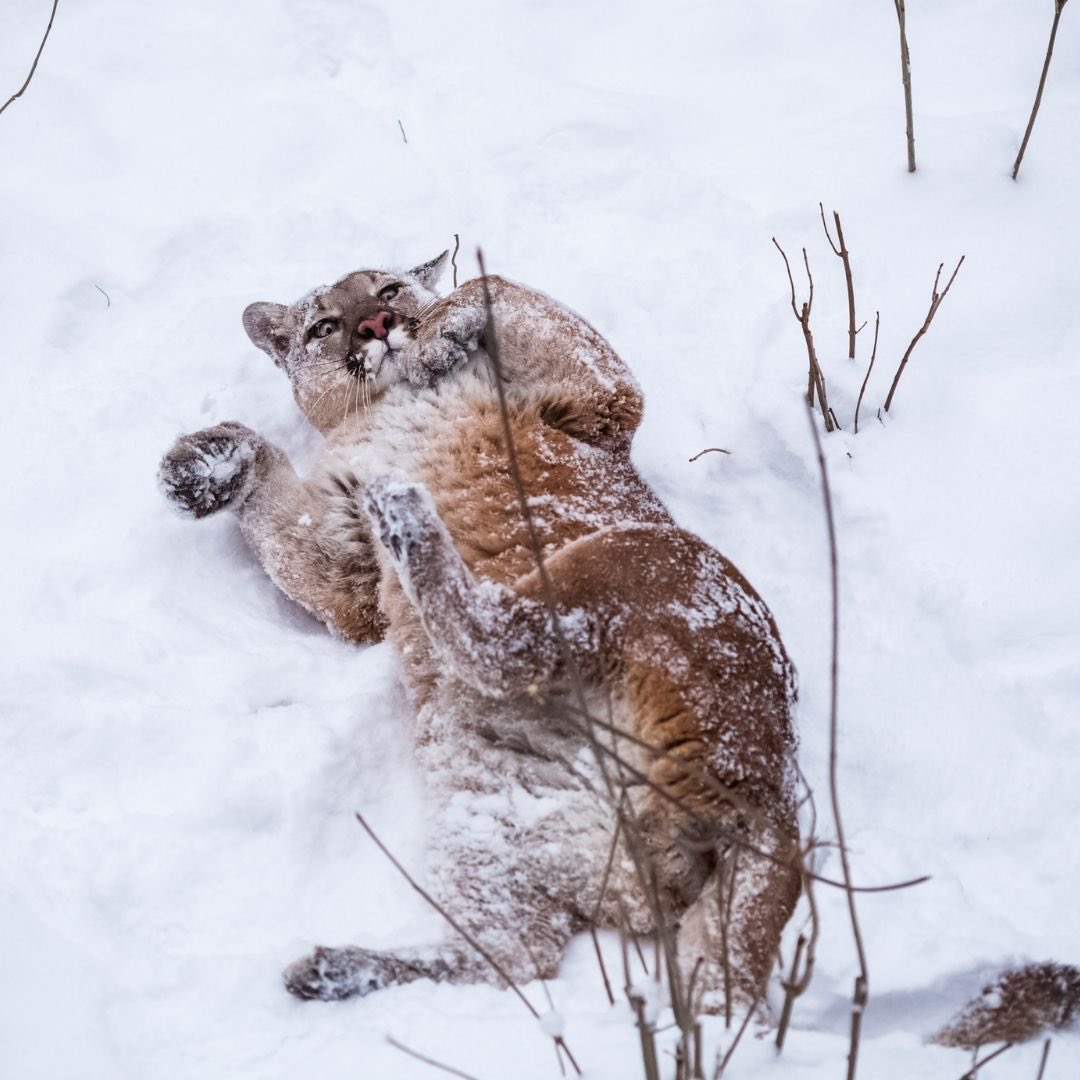
‘What’s that?  No, I’m not cold. I’m wearing my fur coat.’
Mountain lions were extirpated in the eastern and midwestern United States after Europeans settled those areas, but they are making a comeback in some states outside their known range around the Rocky Mountains in the western Unites States and Canada.
[Picture by the Oklahoma Dept. of Wildlife Conservation @OKWildlifeDept. The little joke line is mine. @OKWildlifeDept did not say where the picture was taken, but I assume its Oklahoma, since sightings of mountain lions there are reported from time to time].

Sunday/ sunny and ‘cold’

It was sunny and ‘cold’ (I guess one could say ‘brisk’) today with a high of only 42°F (5.5°C).
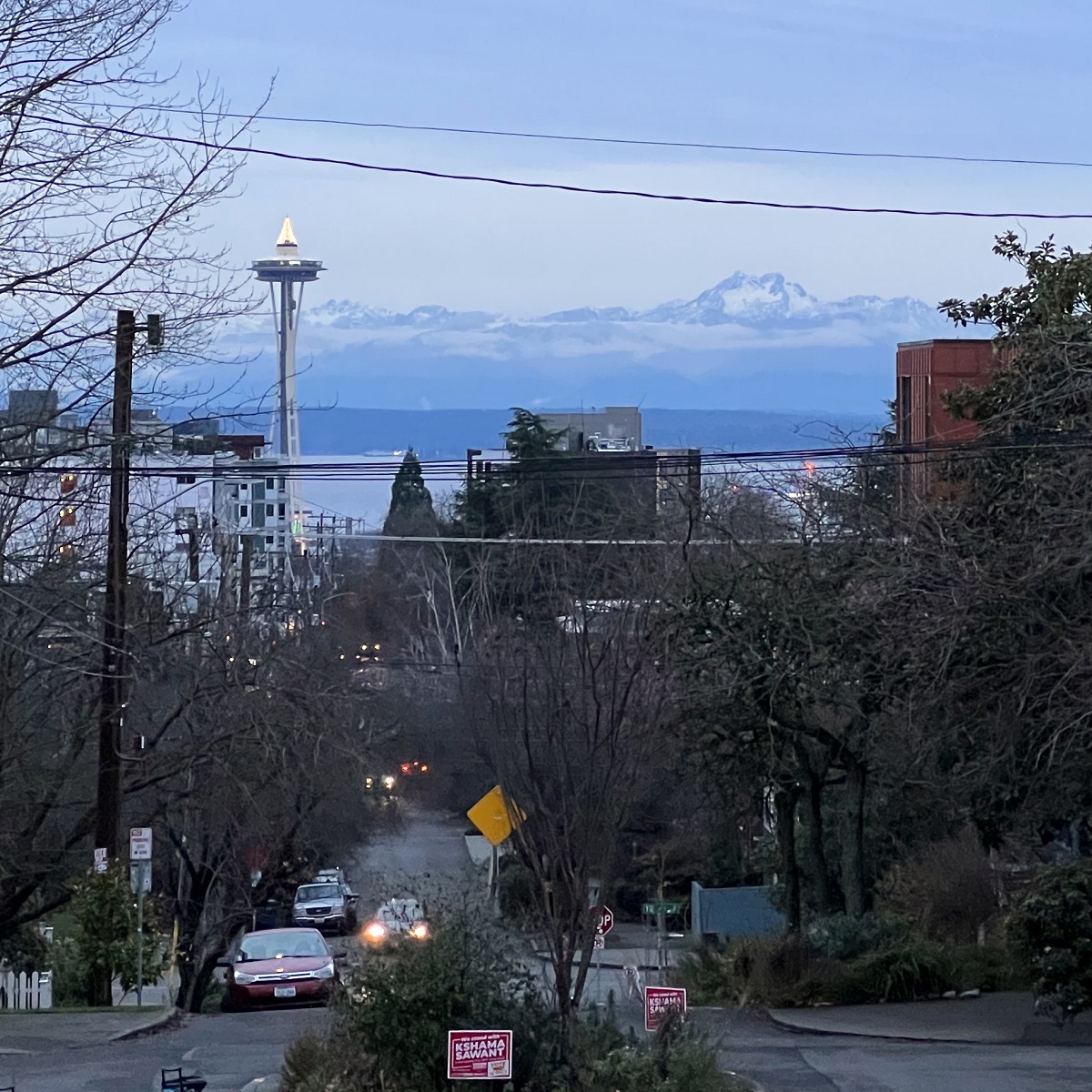
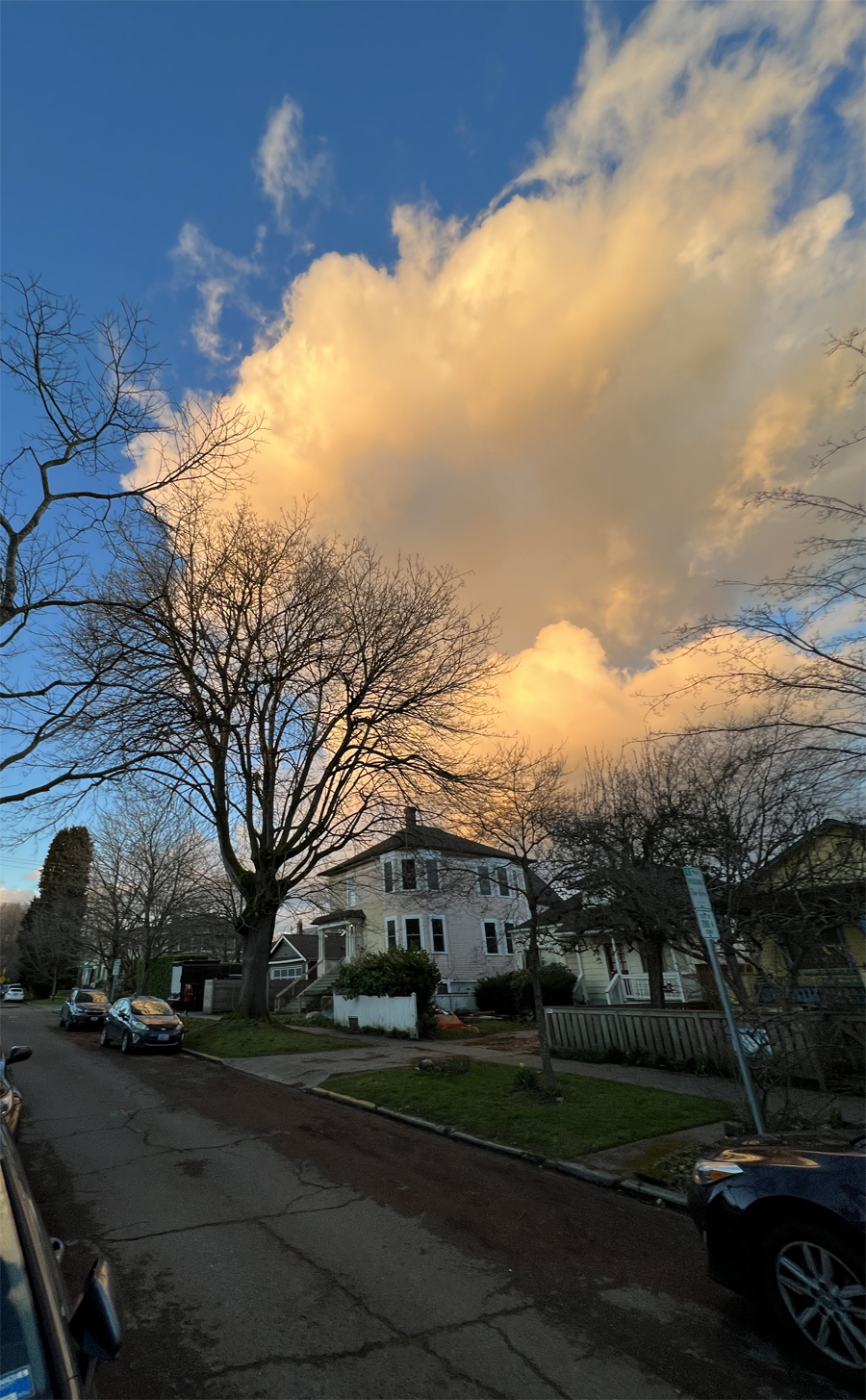
Here’s a few minutes after sunset (4.18 pm), looking towards the Space Needle from the corner of 14th Avenue & Thomas St. Those are the Olympic mountains in the distance (on the Olympic Peninsula). The two peaks towards the right are The Brothers*, with the south peak at 6,842 ft (2,085 m) a little higher (by 192 ft/ 59 m) than the north peak. There are no official trails to these summits, but the south peak is considered a non-technical climb (meaning no equipment such as body harness, rope, crampons, or ice tools are needed). Good to know, but no thank you!
*Not the highest peaks in the Olympic Mountains; Mount Olympus peak is at 7,963′ (2,430 m) elevation.
[Information from Wikipedia]

Caturday

The Norwegian Forest Cat (or Wegie as it’s often called) is a sweet, calm, and gentle feline who’s often shy around new people, but is known for being sociable and affectionate with those they know well. During World War II, the breed became nearly extinct.

[Picture credit: Instagram]

Tuesday/ Snoqualmie Falls

I drove out to Snoqualmie Falls today.
The falls are only some 30 miles east from Seattle as the crow flies, but a 40-minute drive.
Snoqualmie Falls has a 268-foot (82 m) drop, and is by far the most famous waterfall in Washington State. It draws a million visitors a year.
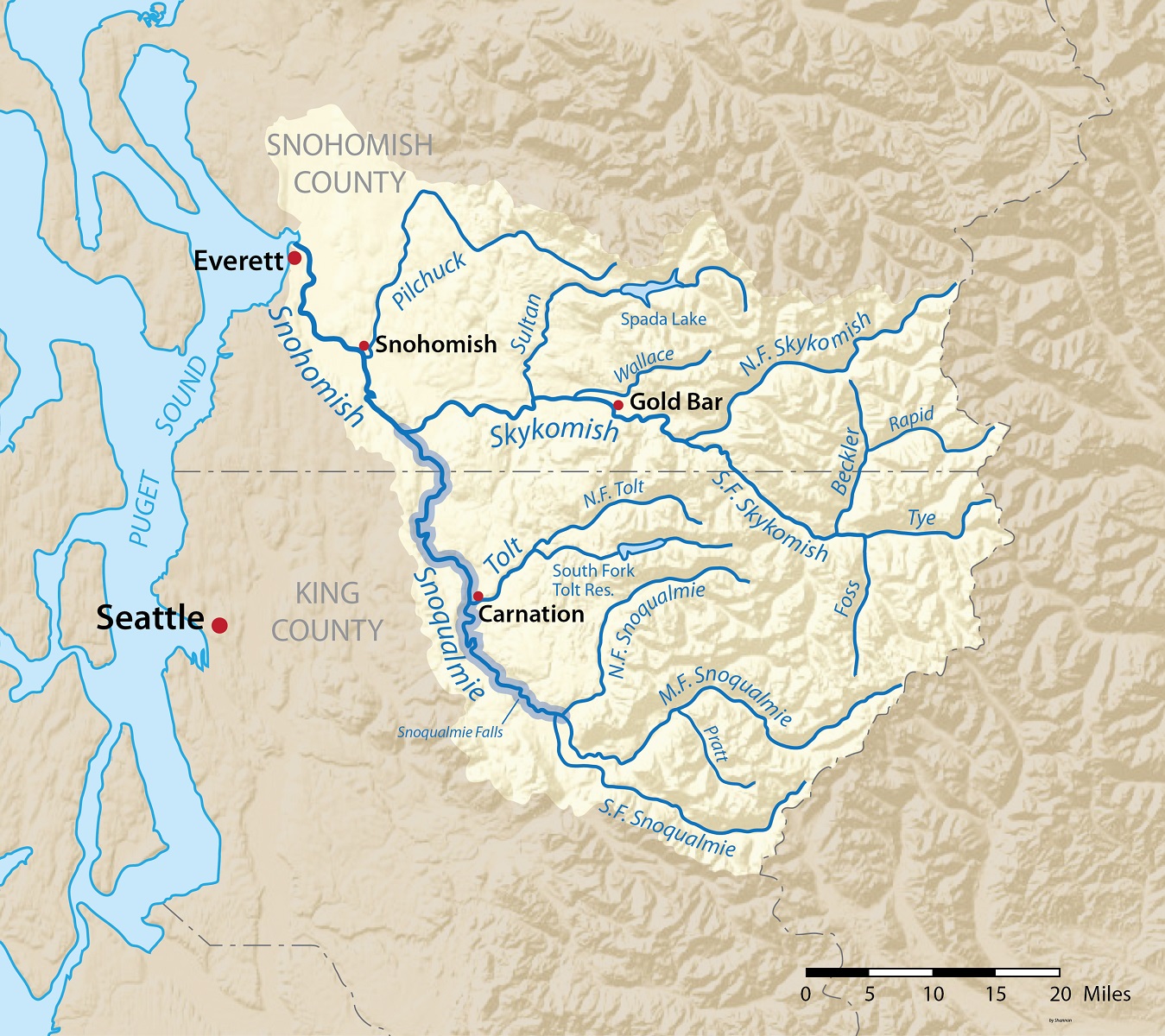
The Snoqualmie River is a 45-mile/72 km-long river in King County and Snohomish County in Washington State. The Snoqualmie River is part of the Snohomish Watershed, on the  west side of the Cascades. The Snoqualmie runs into the Snohomish River, which empties into Puget Sound at Everett. [Map from Wikipedia, made using USGS National Map data]
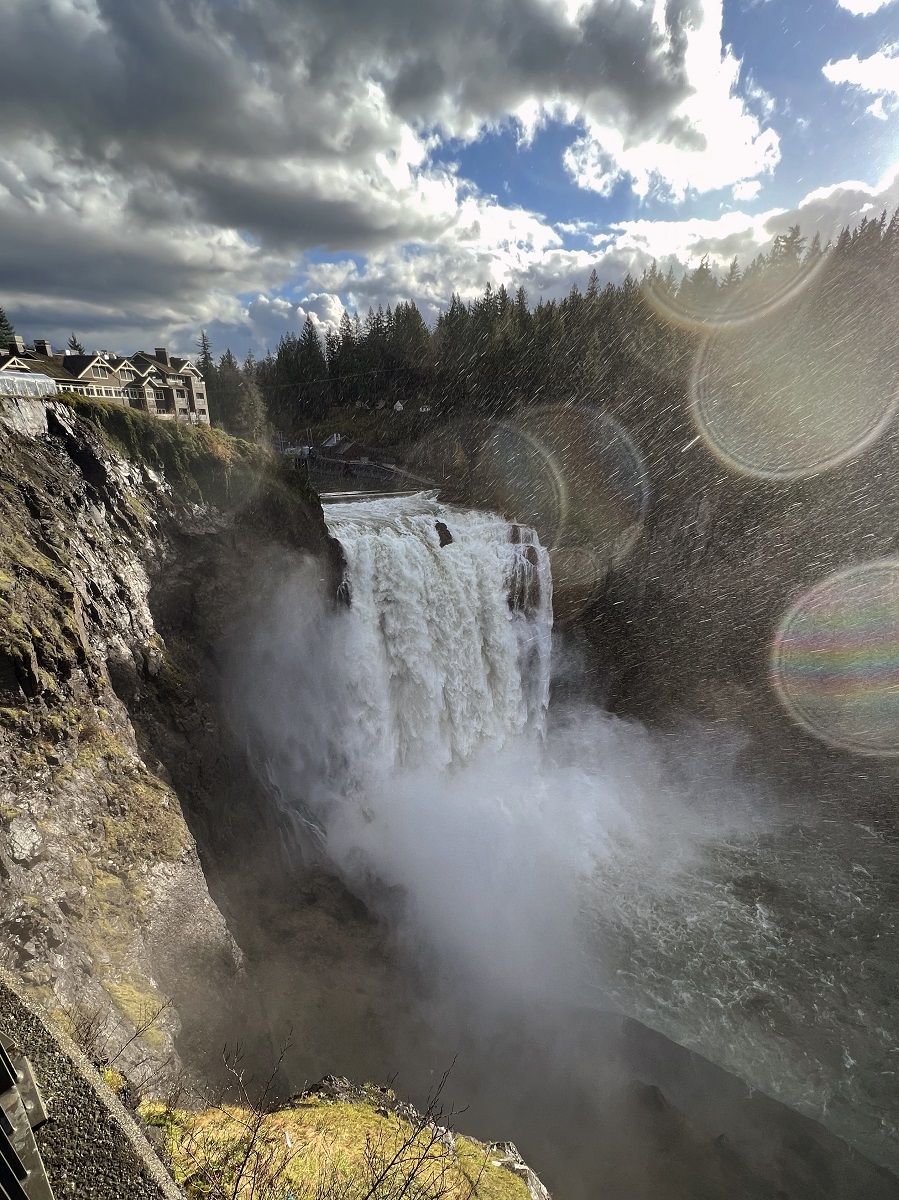
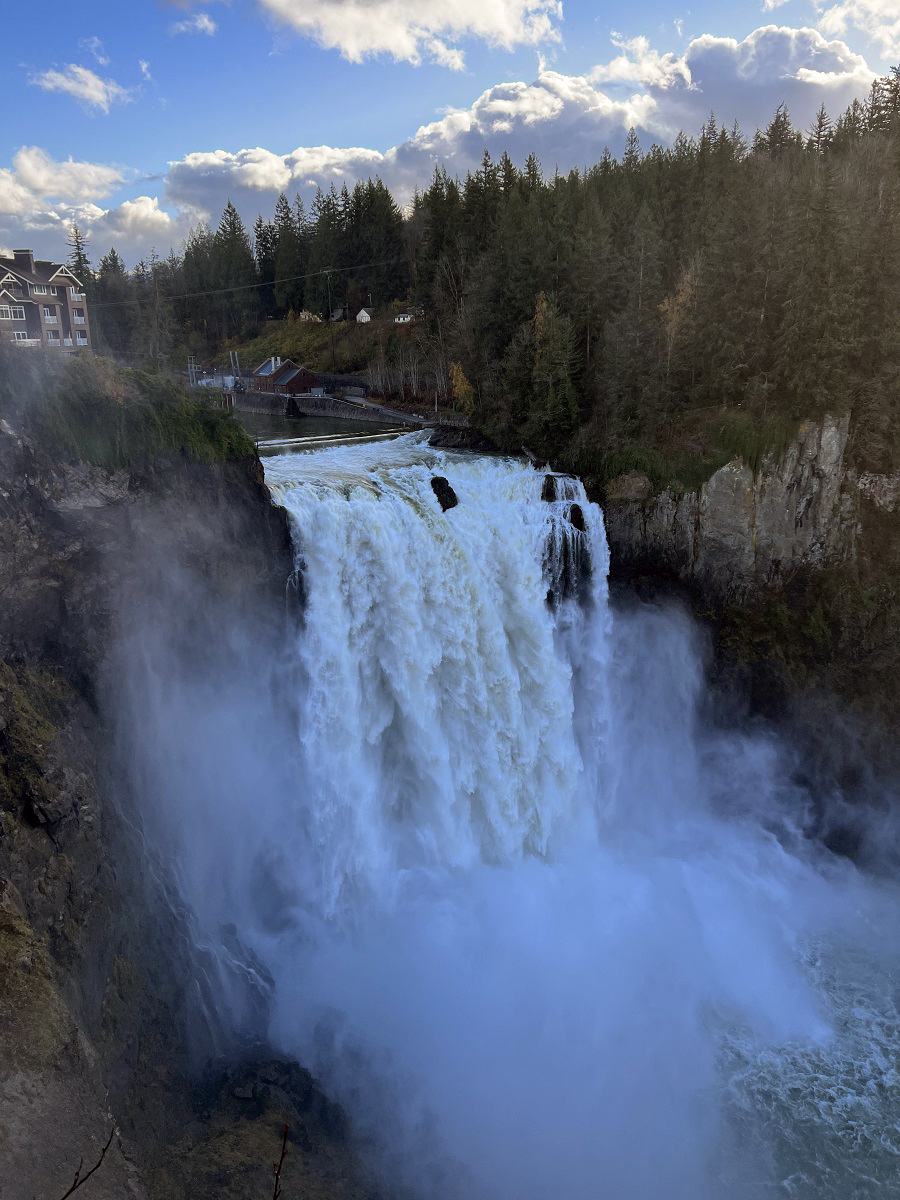
Snoqualmie Falls seen from the high view point farthest from the lodge. (There is a trail to the bank of the river down below for a different view, but a sign said that the trail is closed). That’s the Salish Lodge & Spa on the left, and parts of the Snoqualmie Falls Hydroelectric Plant are visible on the opposite bank (middle of the picture).
[iPhone 13 Pro picture, standard lens]
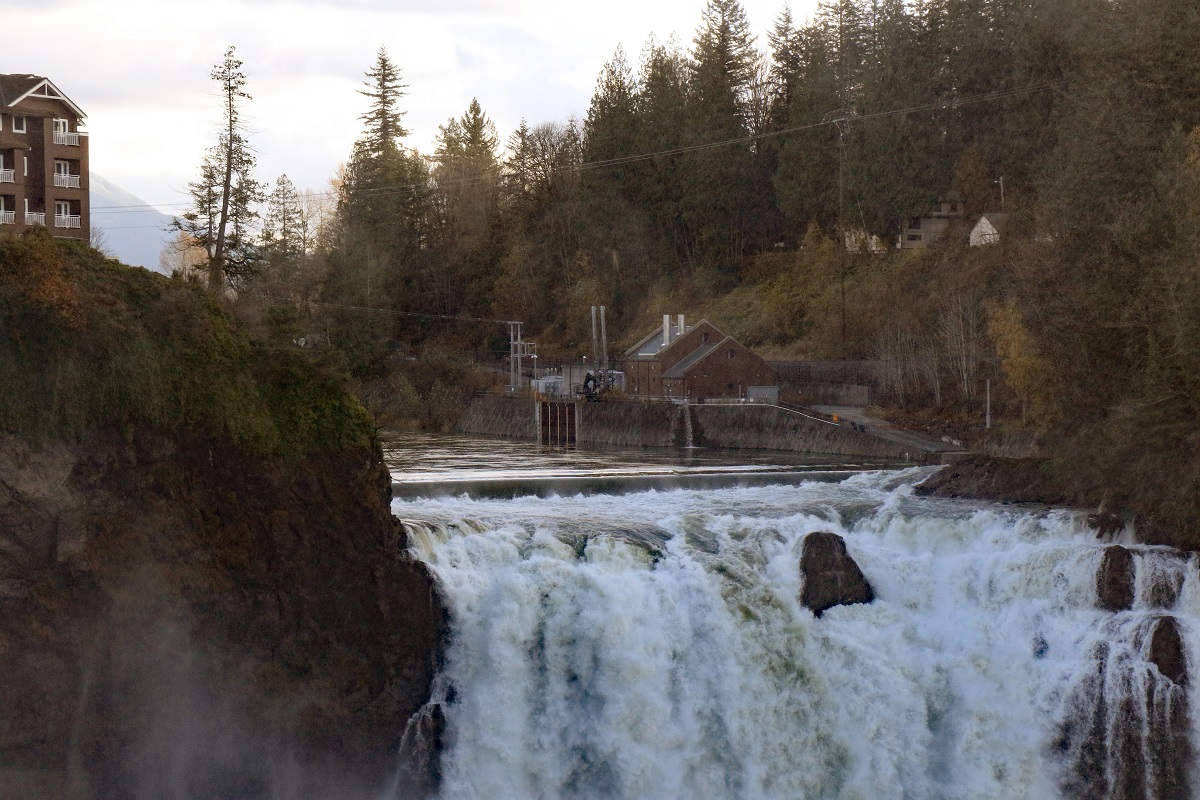
 

A closer look at the power plant. It consists of two power houses. Plant 1 is underground (installed capacity 13.7 MW) and was completed in 1899, and the picture shows Plant 2 (40.2 MW) which was completed in 1910, for a total installed capacity of 53.9 MW.
[Canon EOS 7D Mk II, telephoto lens]
Most of the pictures that I took were spoiled by the persistent mist and water droplets from the thundering falls down below. The large lens of my big digital camera kept getting fogged up and downright wet. My iPhone with its tiny lens openings worked better under these conditions. At this time of day (early afternoon) the sun sits in the wrong place for an evenly-lit picture, but hey, you work with what you have. The lens flares even have little rainbows in them.
[iPhone 13 Pro, Wide-angle lens]

Saturday/ a mushroom, very fly

fly3
adjective

INFORMAL
NORTH AMERICAN
stylish and fashionable.
“Where’d you get that fly shirt?”


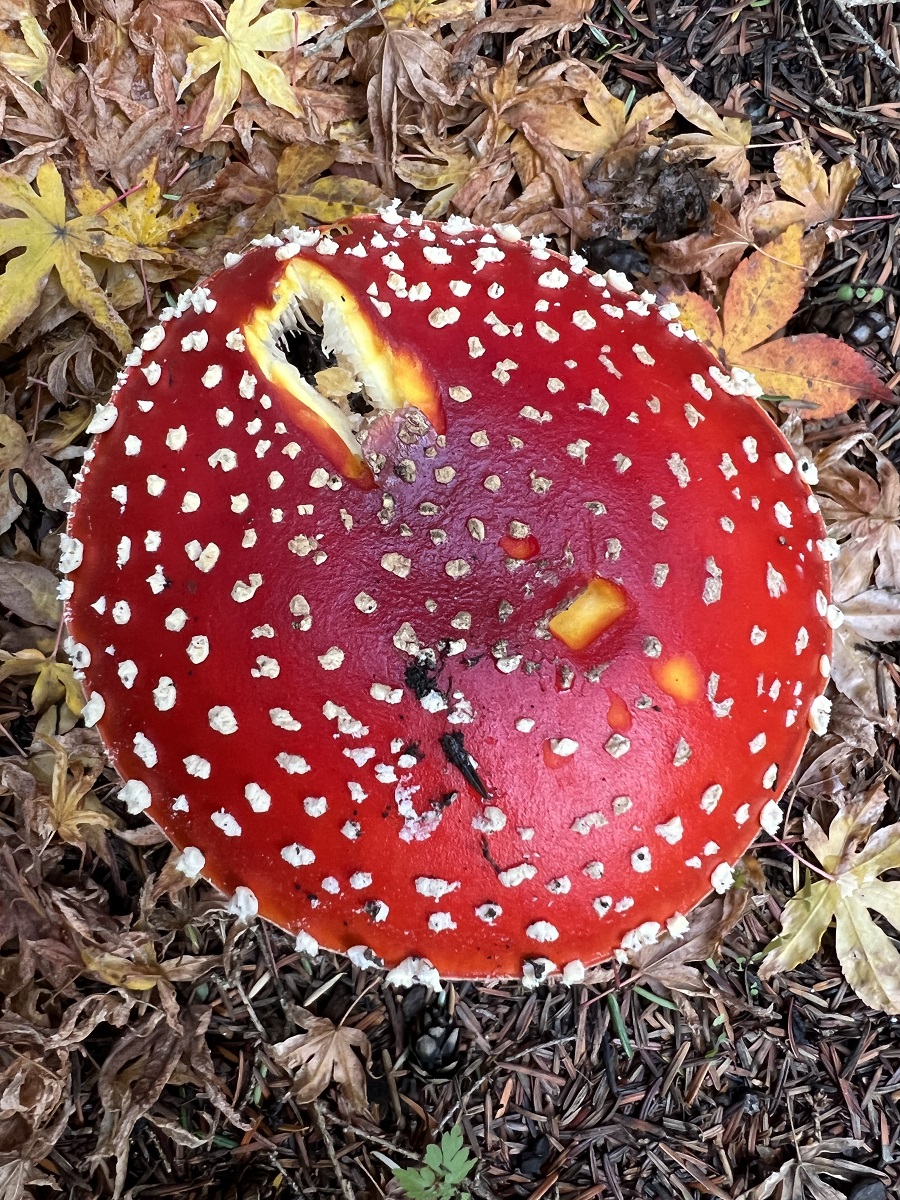
The fly agaric mushrooms popping up in my back yard were smaller than usual, this year.
A fly agaric mushroom, Amanita muscaria. This is one 5 inches across. The squirrels gnawed at it for a bit, and then left it alone.

Saturday/ Daylight Saving Time: does not save Time, does not save Daylight

It’s that time of the year again in the United States, when we attempt to outsmart the universe.
We have to set our clocks back by one hour tonight.
Can we please pick one time and stick to it?

As David Policansky writes in The Washington Post:  “The people of Fairbanks, Alaska, show that it is possible to adjust to very early sunsets or very late sunrises. There just isn’t much advantage in shifting daylight around when you have only three hours and forty-two minutes of it on the shortest day. But in the Lower 48, in the mid-latitudes where most of us live, we complain”.
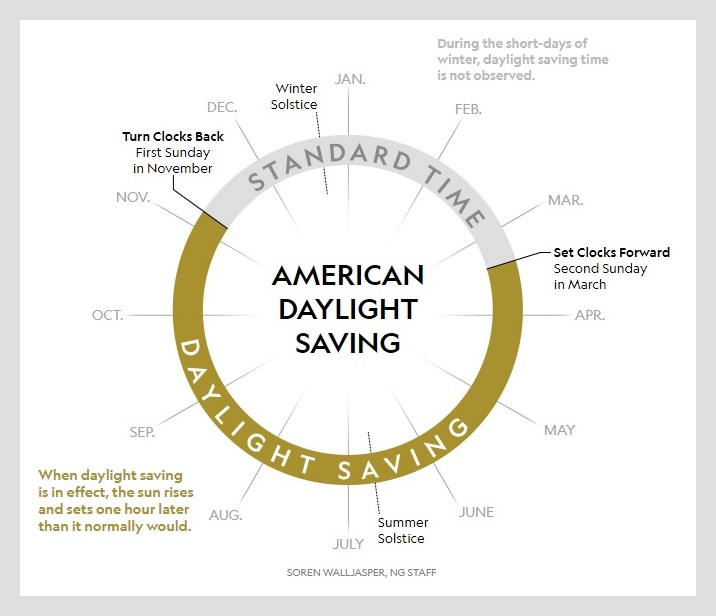
The Uniform Time Act of 1966 allows states not to observe Daylight Saving Time. That’s why residents of Arizona and Hawaii do not have to adjust their clocks twice every year. My vote for Washington State: Just Say No. Stop observing Daylight Saving Time.
[Infographic by the National Geographic at nationalgeographic.com]

Thursday/ the earthworms are happy

It rained most of the day. It is November after all, and so it rains a lot.
We are also coming out of a very wet October.
The rain gauge at Sea-Tac airport recorded 5.76 in of rain in October, two inches more than the average of 3.76 in.
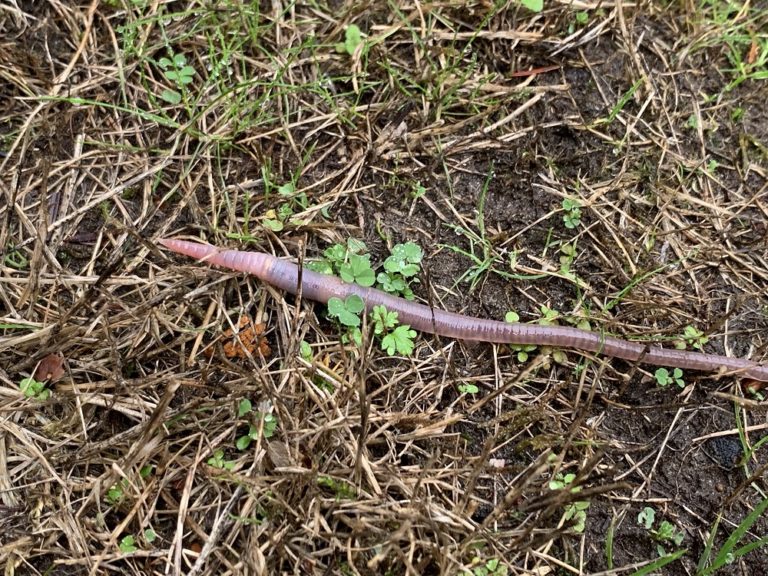
Living dangerously (a meal for robins and crows): an earthworm on my lawn that is just beginning to green up, along with other unwanted little greenery. Earthworms are invertebrates and lack true skeletons, but maintain their structure with fluid-filled coelom chambers that function as a hydrostatic skeleton. The earthworm eats a wide variety of organic matter and the digestive system runs the length of its body.

Saturday/ King Leonardo

It’s Caturday— and may I present my favorite picture of Leonardo, the Burmese cat that my brother and sister-in-law used to have.
Leonardo lived out the last of his nine cat lives some years ago, reaching a grand old age of 17.
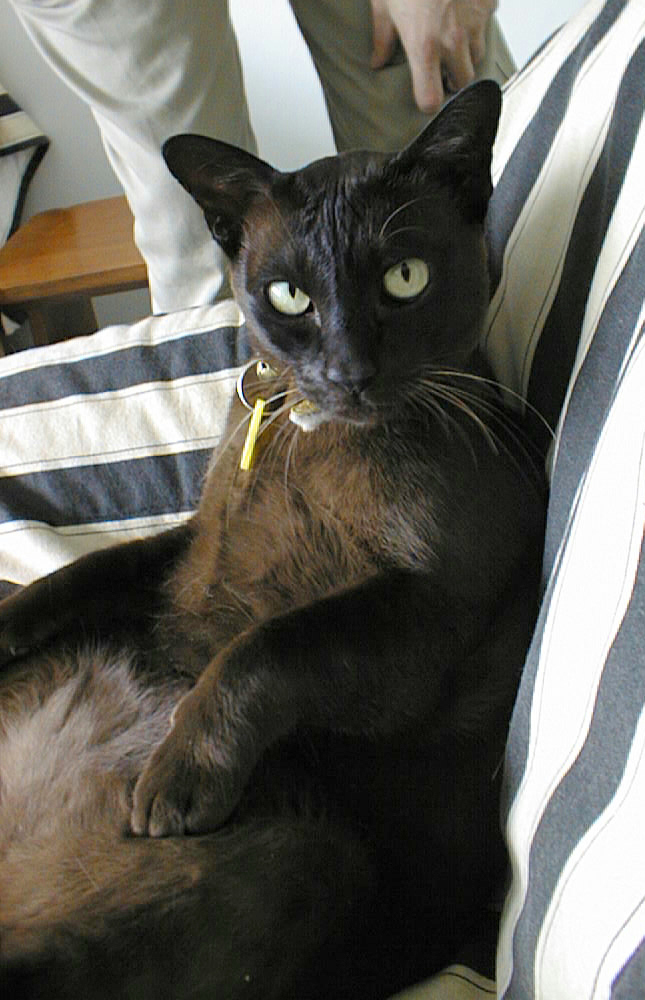
Leonardo striking a regal pose. This photo is from 1997, taken with the same Olympus D-320L that I had mentioned in yesterday’s post. Most modern Burmese are descendants of one female cat called Wong Mau, which was brought from Burma to America in 1930 and bred with American Siamese. Originally, all Burmese cats were dark brown (sable), but now they come with coats in a wide variety of colors. [Wikipedia].

Friday/ got my bookstore fix

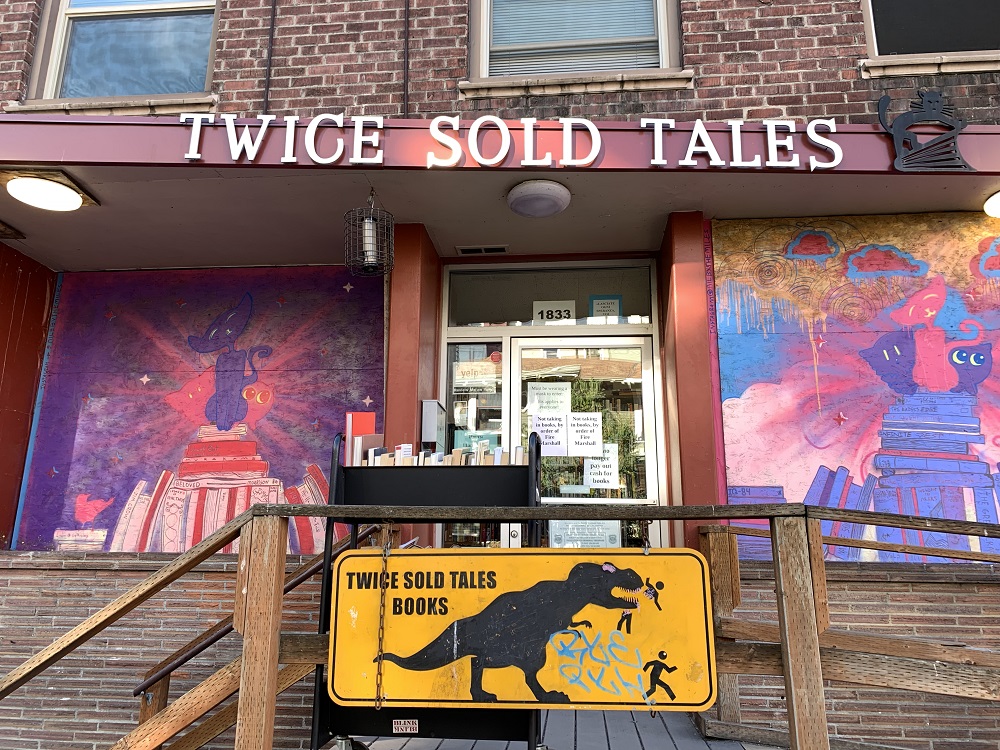
It was lovely outside today (76°F /24°C), and I walked down to the Twice Sold Tales bookstore on Harvard Avenue.
I browsed around in the store but did not buy anything this time. (It’s just fun to look at all the books, so mission still accomplished).
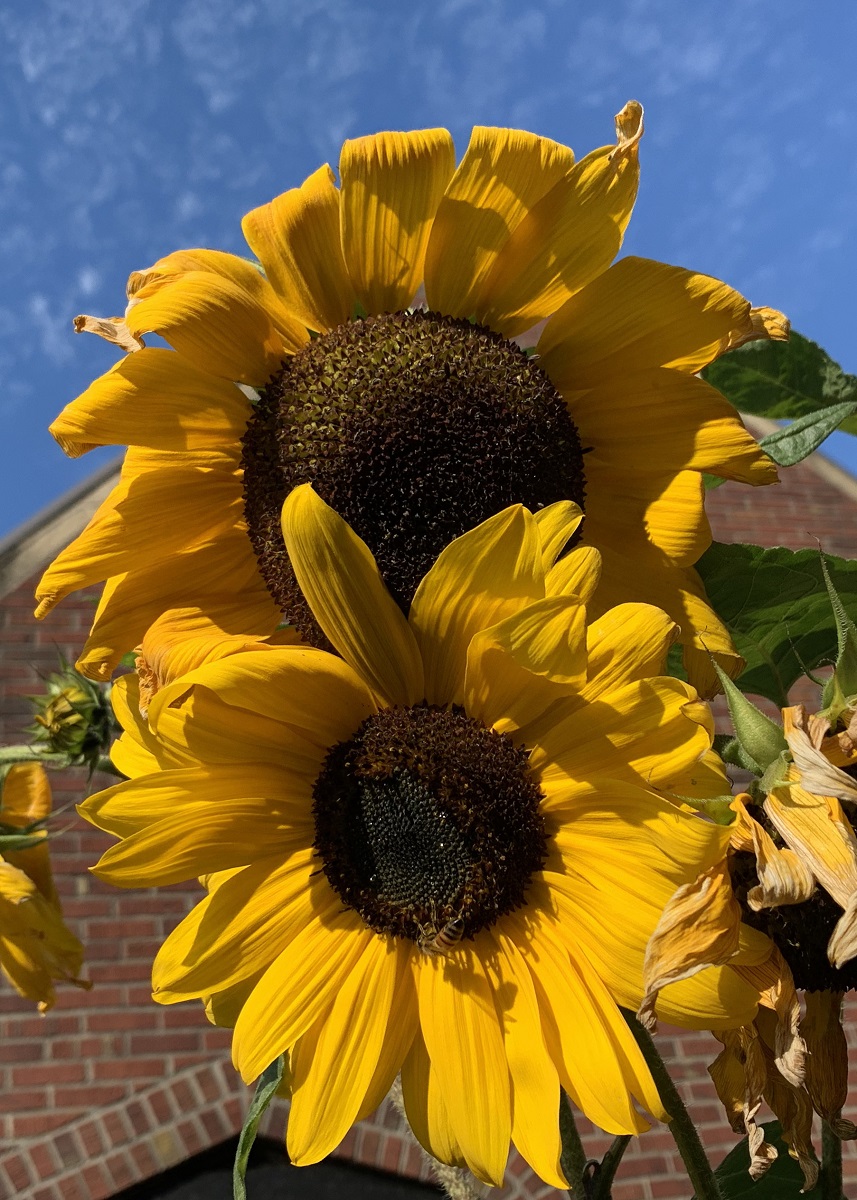
Sunflowers (Helianthus, from helios, Greek for sun) is a genus comprising about 70 species of annual and perennial flowering plants in the daisy family Asteraceae. Before blooming, sunflower plants tilt during the day to face the sun in order to gain more sunlight for photosynthesis, a response called heliotropism. Sunflowers are thought to have been domesticated 3,000–5,000 years ago by Native Americans who would use them primarily as a source for edible seeds. [From Wikipedia]
The plywood boarding is still in place at Twice Sold Tales, a little curiously. Maybe the owner likes the artwork with the cats on. (The cats inside are still there, as well). I like the T-Rex sign, myself. The sign on the door says that the store is not buying books right now. Seattle fire marshal ordered the store to stop piling up so many books inside. (It makes it harder for fire fighters to navigate the inside, and for customers to get out).
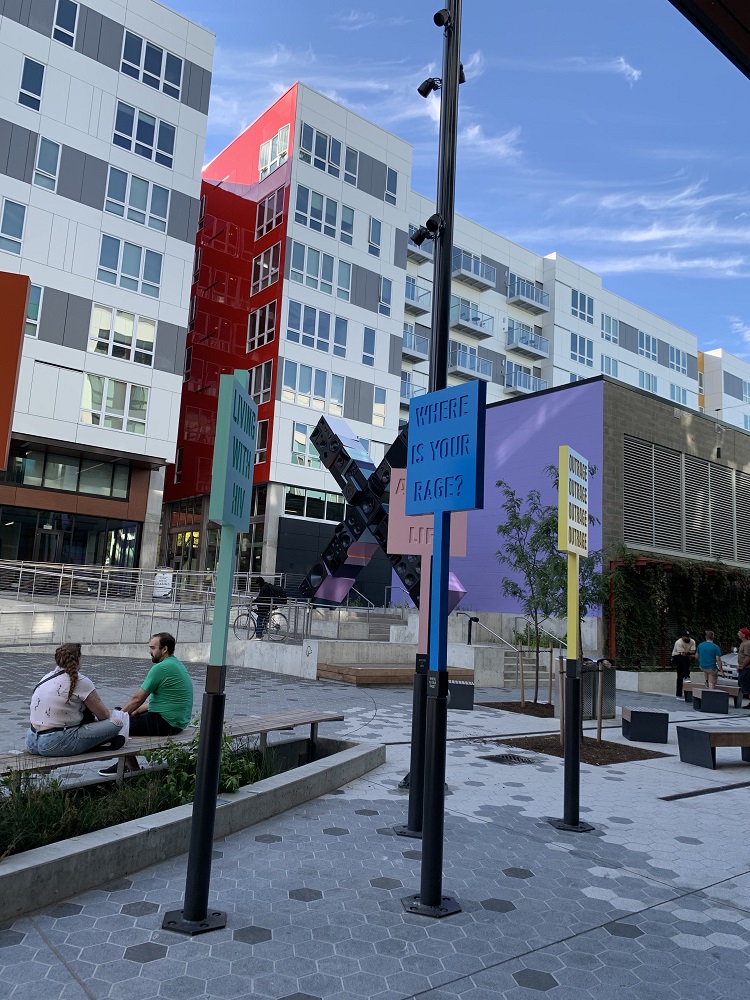
The little plaza by the Capitol Hill Light Rail Station is in good shape: no graffiti and no trash lying around.
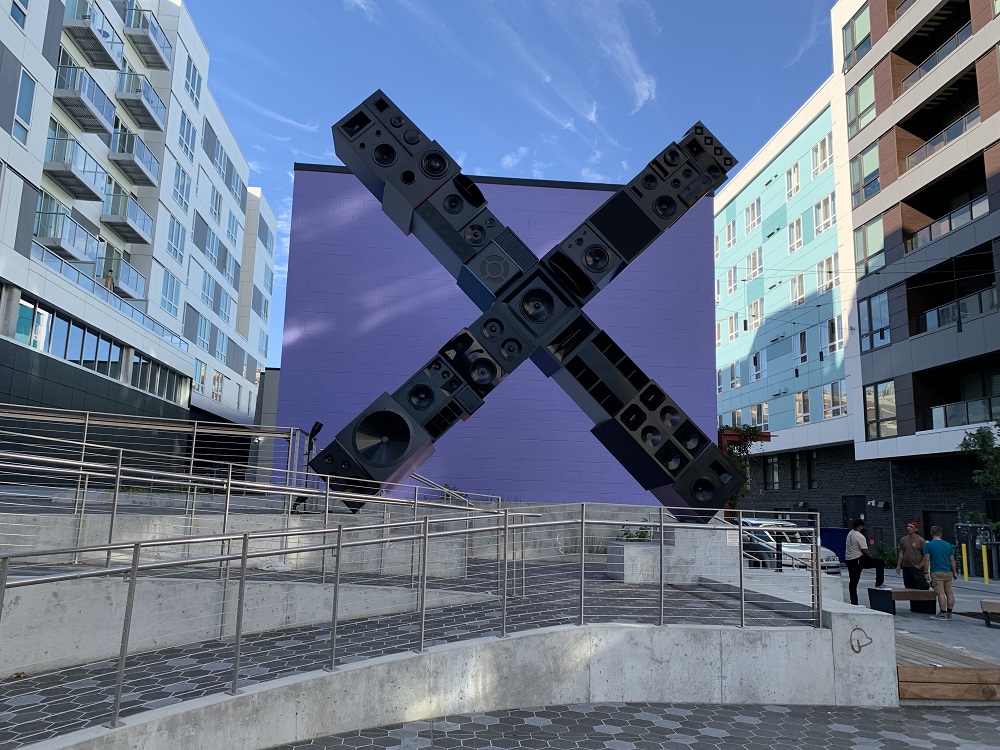
This 20-foot tall public art sculpture of silent speakers in the shape of an X (or a positive sign on its side) is part of the artwork commissioned for the AIDS Memorial Pathway (AMP) project, a tribute to the missing narratives of women and Black people lost to the AIDS crisis. It is called ‘andimgonnamisseverybody’.
The artist is Christopher Paul Jordan (b. 1990), and he used bronze, aluminum and stainless steel.

Sunday/ a little rain

There was a little rain on the ground this morning, and still enough to hear it patter down the gutter from the roof, as I opened my back door.
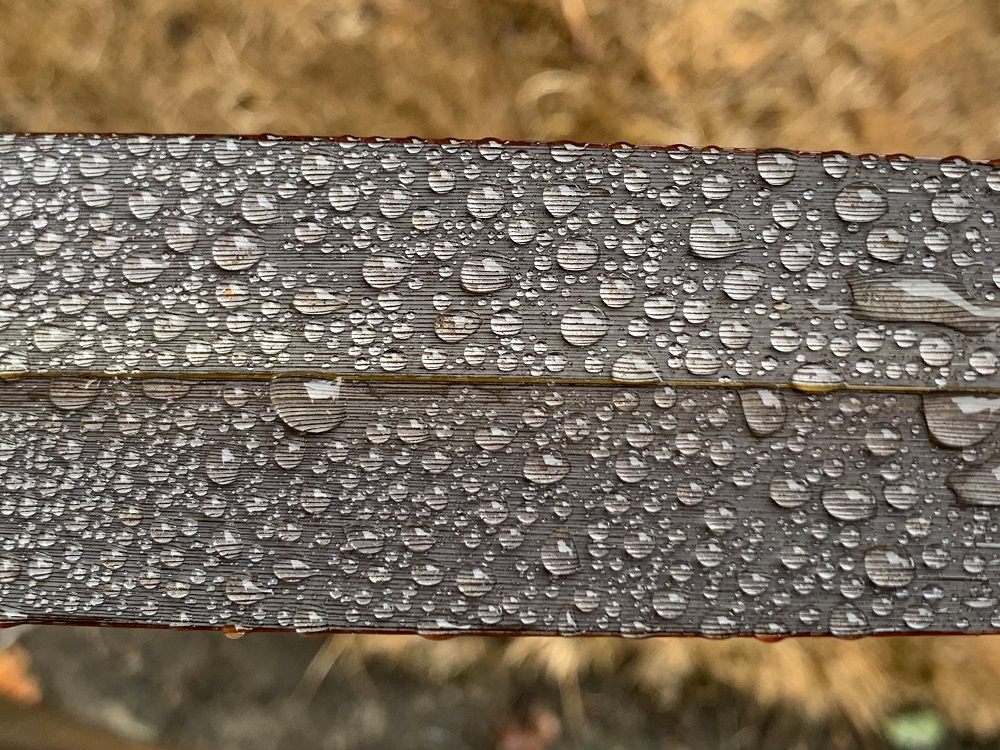
Sticky blobs of rainwater, magnifying the fine stripes on the dark burgundy leaves of my ‘Black Adder’ phormium flax plant. The dry lawn grass below should start to green up now that the rain is coming back.
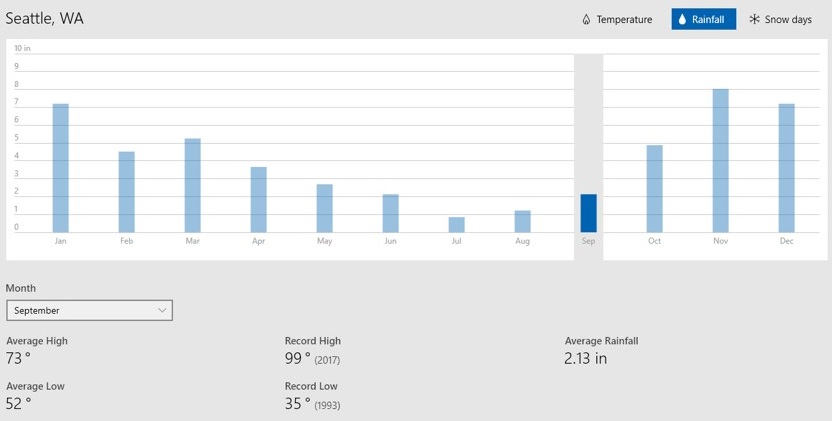
September should bring some 2 in. of rain.

Friday/ the national flower of Mexico

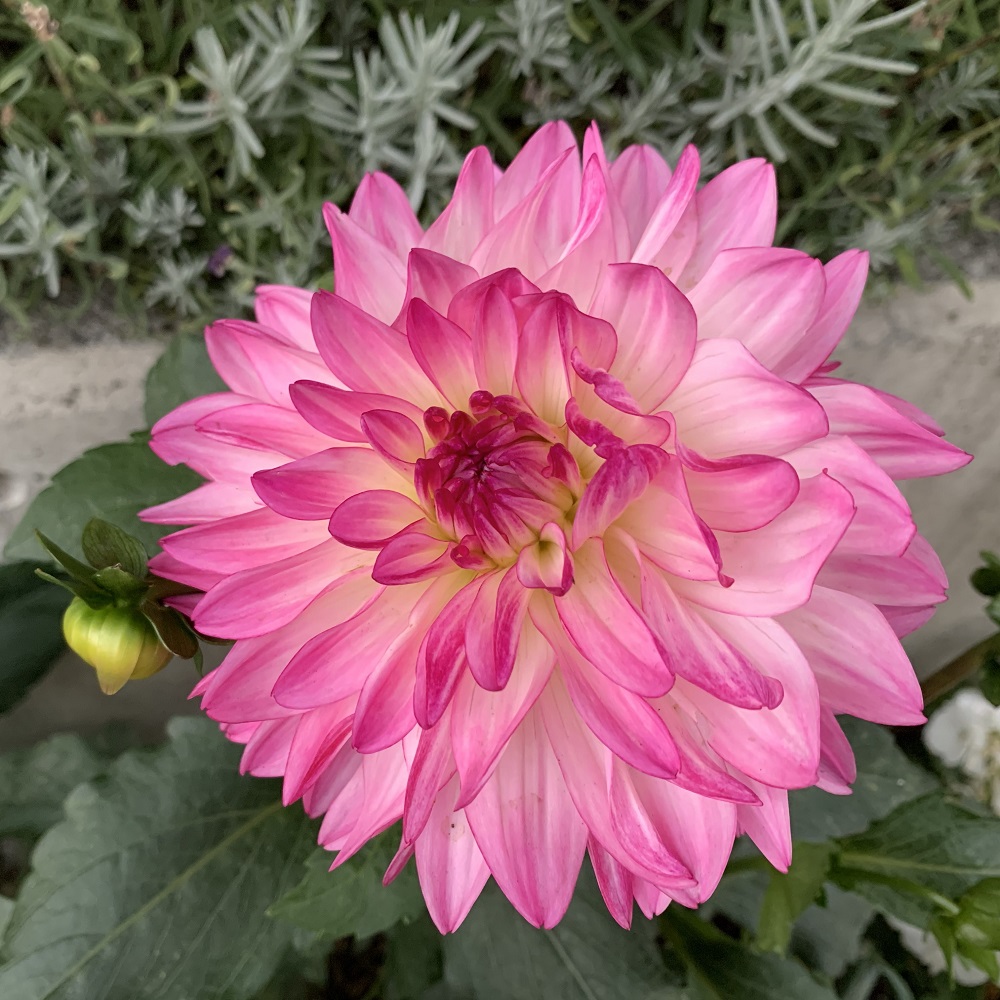
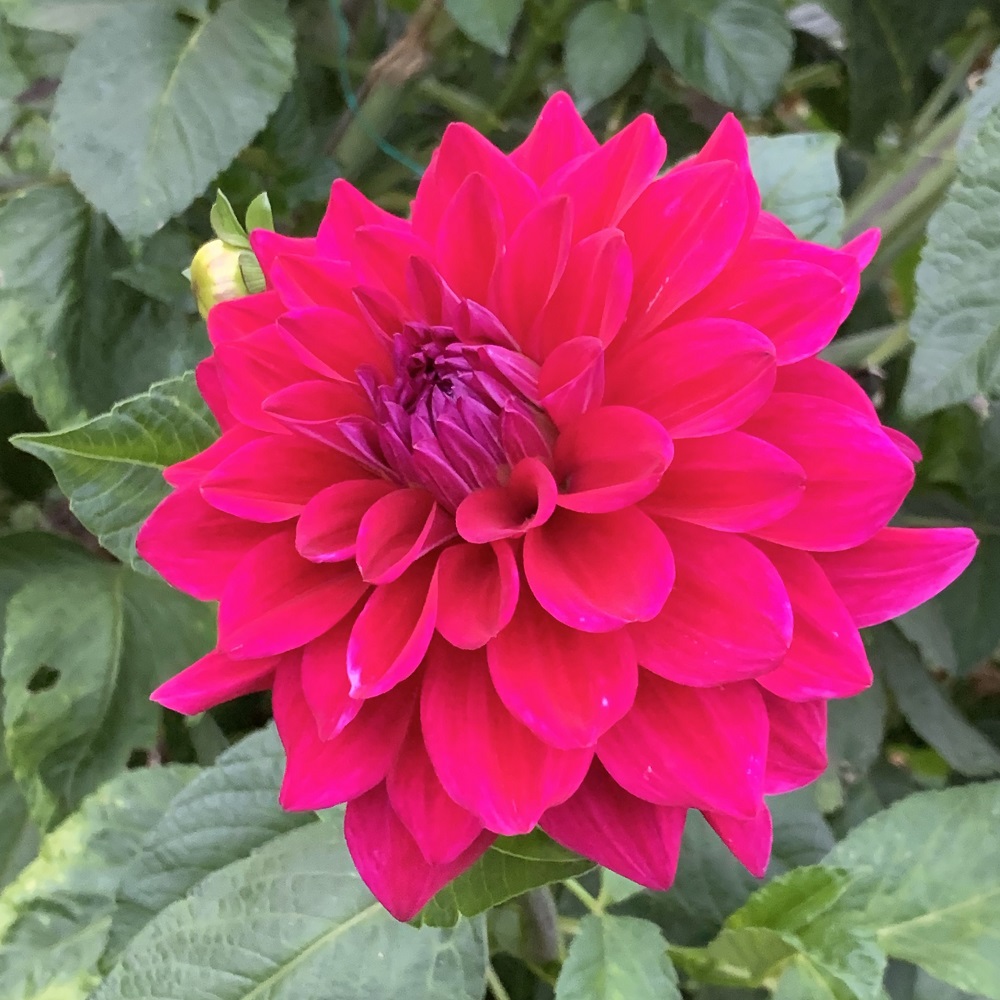
Summer is dwindling, and so are the flowers to be found on my neighborhood walk. Still, I got these two beautiful dahlias tonight.

Centuries ago, dahlia tubers were grown as food crops by the Aztecs. This use of the plant largely died out after the Spanish Conquest of the Aztec Empire (1519-21). The dahlia was declared the national flower of Mexico in 1963.
Monday/ the scent of a rose

The weather people say we will stay below highs of 80°F (26°C) into next week, so the summer’s really warm weather is behind us.

I found this rose near the Thomas Street Gardens here on Capitol Hill tonight. It smells divine. Red and pink roses have the classic ‘rose’ scent. White and yellows often smell of violets, nasturtium, and lemon. Orange roses often smell of fruits, violets, nasturtium, and clove. Rose oil was probably first made in 10th century Persia. Today rose oil comes from Bulgaria, Morocco, Iran, Turkey, and more recently, from China.
[Source: Dr. Leonard Perry, University of Vermont, ‘Roses and Their Fragrance]

Thursday/ damage from the Dixie Fire

The Dixie wildfire in Northern California has now torched 500 square miles.
More than 100 homes and much of the downtown of Greenville (pop. 1,000 or so) have burned down.

I wanted to see what the historic Gold Rush-era Sierra Lodge on Main Street used to look like, and found it on Google Streetview.

2009 Google Streetview picture of the Sierra Lodge on Main St. in Greenville, Ca. 2021 Operations Chief Jay Walter passes the Sierra Lodge as the Dixie Fire burns through the Greenville community of Plumas County, Calif., on Wednesday, Aug. 4, 2021. The fire leveled multiple historic buildings and dozens of homes in central Greenville. (Associated Press Photo/Noah Berger)
I marked the location of Greenville on this map. By Friday Aug 6, the Dixie Fire had become the third-largest wildfire on record in California.  [Map by the New York Times © Mapbox © OpenStreetMap]

Saturday/ das Krallenwuschel

Here is a cute cat picture for Caturday, as ailurophiles like to call Saturdays.

Aw. This grumpy cat with its stormy eyes, referred to as ‘dieses Krallenwuschel’ (this fuzz ball with claws), was wandering around in the Friedenau neighborhood in Berlin, and picked up by the Polizei (police). The feline is unchipped, and the police are looking for its owner.
[Picture posted by German newspaper Tagesspiegel @Tagesspiegel on Twitter]

Sunday/ a hollyhock

The city of Seattle had 83 °F (28 °C) today.
It’s been steady as it goes temperature-wise, with no rain. (A smidge of rain fell early Tuesday morning).
We might see 90 °F (32 °C) on Friday, say the forecasters.

These beautiful hollyhock flowers are from 18th Avenue here on Capitol Hill.

Hollyhock flowers (genus: Alcea). The genus of about 60 species of flowering plants in the mallow family Malvaceae, are native to Asia and Europe. The single species of hollyhock from the Americas, the streambank wild hollyhock, belongs to a different genus. [Source: Wikipedia]

Saturday/ it’s a damselfly

Damselflies (Afr. waterjuffer) are similar to dragonflies (Afr. naaldekoker), but they are smaller and have slimmer bodies.
Most species fold the wings along the body when at rest, unlike dragonflies which hold the wings flat and away from the body (for that ‘airplane’ look).

Look! a little dragonfly, I thought, as I watered my flowerbed today. It’s actually a damselfly (1 ½in. long): a female white-legged damselfly (Platycnemis pennipes). They are predators, like dragonflies, and eat other insects. 
Damselflies and dragonflies belong to an ancient insect group called Odonata. Their prototypes are the giant dragonflies from the Carboniferous Period, some 325 million years ago.

Wednesday/ blue sky, white clouds

The woodpeckers were back this morning. Only a few of the mahonia’s berries remain.
There was a beautiful blue sky and white clouds overhead at 5 this afternoon.
We’ve been lucky thus far this summer here in Seattle: no smoky air from the wildfires.

The northern flicker (Colaptes auratus).

Tuesday/ the apocalypse is now

Every year that summer that rolls by here in the Northern hemisphere now, I think: just let it be over (summer). When is it over (summer)? Of course: then next summer comes.

There’s the mega- forest fires, burning out of control under an extreme drought here on the west of the United States. Flooding in Germany, Belgium & The Netherlands, and now in China. Videos on Twitter tonight of dozens of cars washing away in Zhengzhou; a subway entrance collapsing; people trapped inside a subway train car, the water chest-high (12 people dead in the subway, reports Aljazeera).