The beautiful fly agaric mushrooms (Amanita muscaria) that come up every year in my back yard, are back.
Monday/ golden leaves
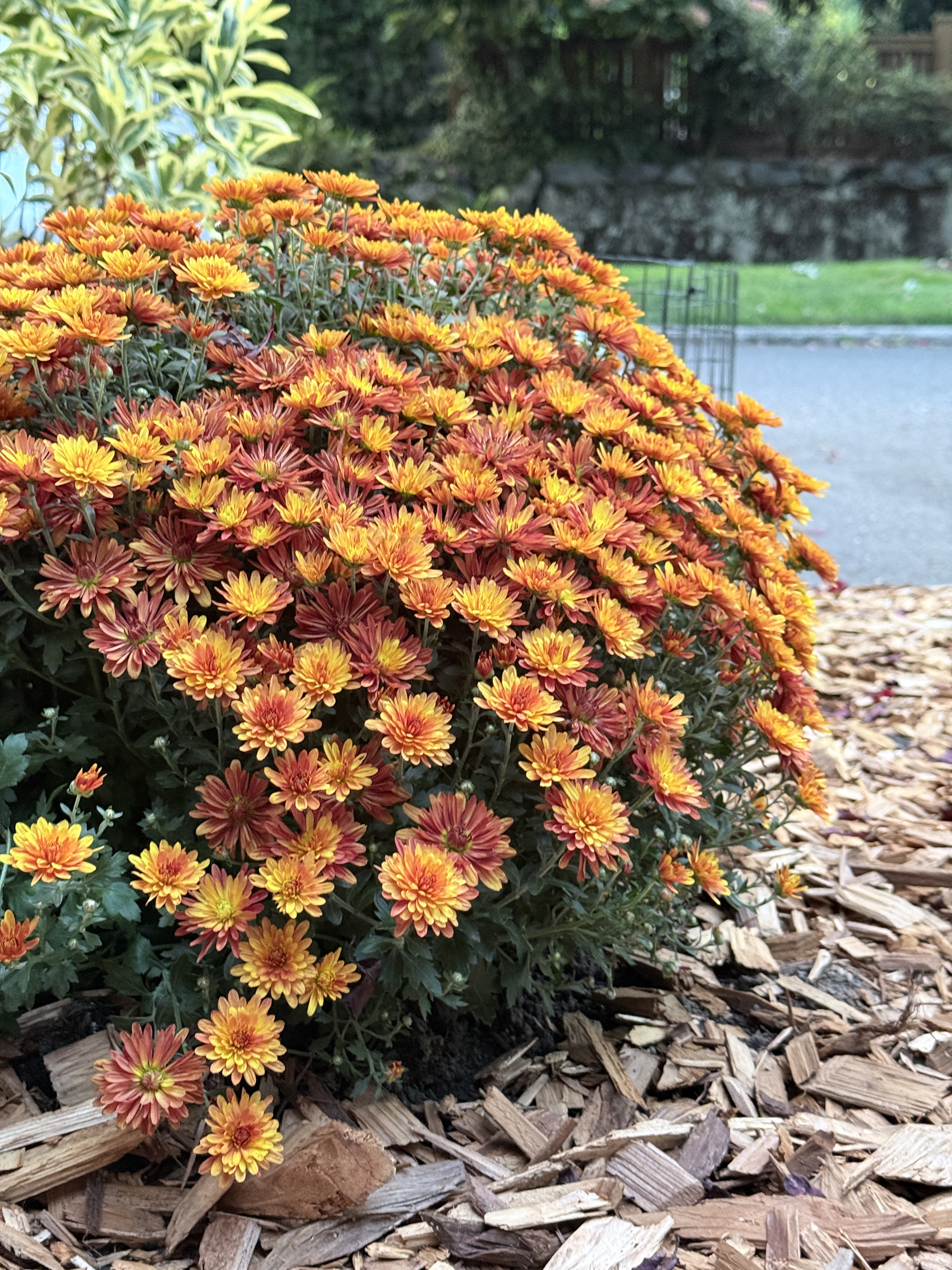
Monday/ more colors of fall 🍂
Tuesday/ the Appalachian Trail 🥾
Here is the other sheet of 2025 stamps that I bought at the post office on Friday.

Issued Feb. 28, 2025
Perf. 11 serpentine die-cut |Self-adhesive |Design: Antonio Alcala |Sheet size: 15 stamps | First-Class Mail®’FOREVER’ stamps (75c) |Engraving: Ashton Potter (USA) Ltd. | No watermark
[Source: stampworld.com]
From USPS.com: Take a hike from the stresses of modern life with The Appalachian Trail stamps, celebrating the century-old footpath that rambles through unspoiled nature from Maine to Georgia.
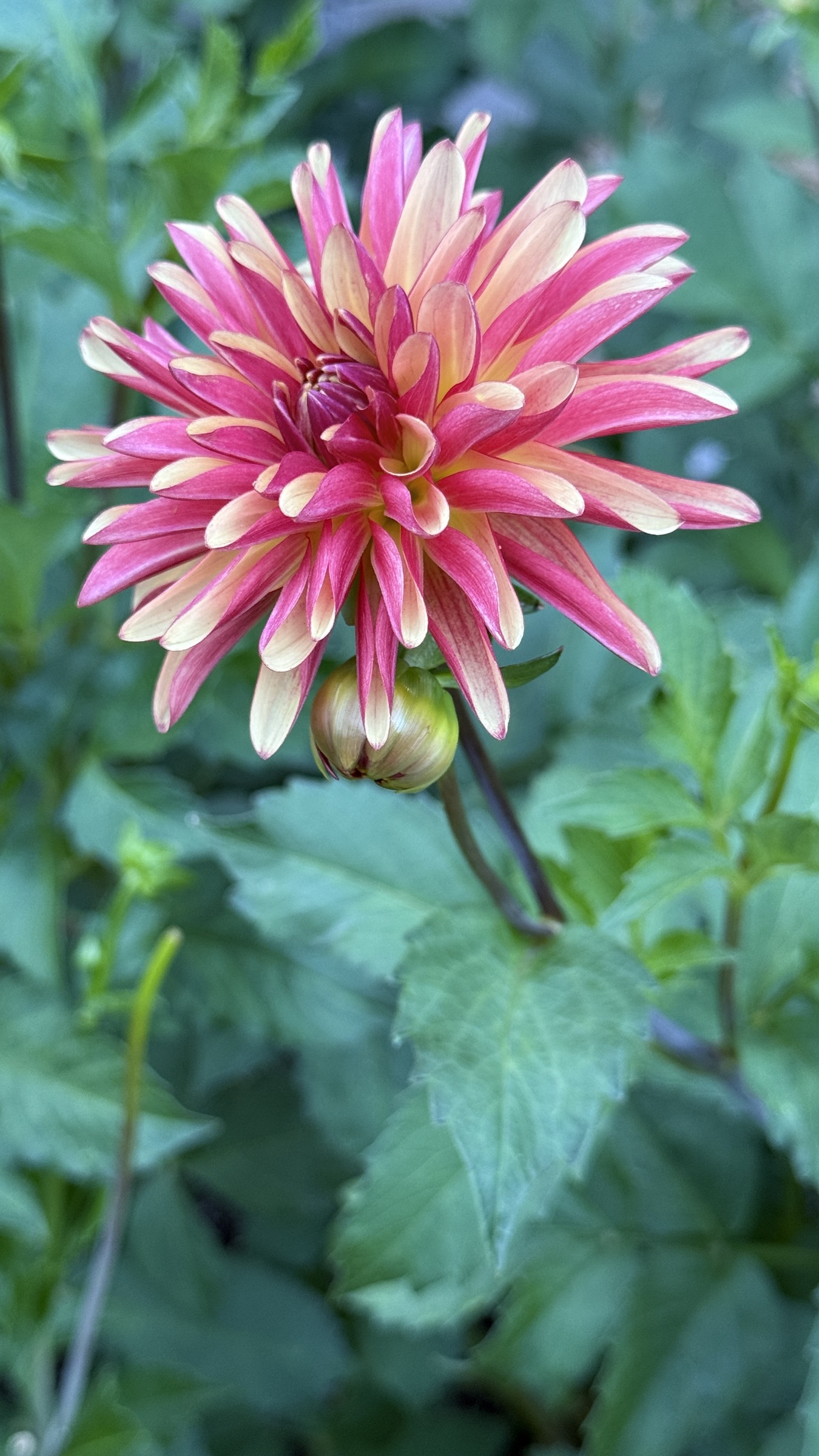
The pane of stamps includes a photographic view from each of 14 states through which the trail winds. An additional stamp represents the so-called “green tunnel,” an affectionate nickname for stretches of trail through dense forest.
[From Wikipedia]
Monday 🍂
It was not to be— the Seattle Mariners playing in the World Series.
They lost 3-4 in Game 7 tonight against the Blue Jays, in the deciding game in the American League Championship Series (ALCS).
The Toronto Blue Jays will now take on the Los Angeles Dodgers in the World Series.
Beautiful fall foliage surrounds the playfields at Miller Community Center on 19th Avenue East on Capitol Hill.
Tuesday/ the first frost ❄️
Sunday/ at the Ballard locks ⛵
Three of us ran out to the Ballard locks* this morning.
Even though the salmon runs for the season are over (there were none to be seen in the windows by the fish ladder), there was still a lot of activity to look at.
*The Hiram M. Chittenden Locks, or Ballard Locks, is a complex of locks at the west end of Salmon Bay in Seattle, Washington’s Lake Washington Ship Canal, between the neighborhoods of Ballard to the north and Magnolia to the south.
[Source: Wikipedia]

It looks like the Salmon Bay bridge (drawbridge) had to be opened just for the little sailboat with its tall mast! (in the middle of the picture). There are seagulls in the sky above the sailboat, and a speck that is a seaplane, as well.

The gates are just closing behind the two vessels. We chatted briefly with the owners (an elderly couple) of the larger vessel at the back that goes by De Anza III.
She was built in 1958, and this was the first summer they owned her.


So even though the salmon runs for the season are over and done with, there are still a few of them in the water. I wonder if the fish are fatigued (from their swim upstream), and easy to catch.


So there are distinct times for the peaks of the runs of the different species of salmon.
Q. And how do they count the fish?
A. Fish are counted at the Ballard Locks through daily visual counts by Washington Department of Fish and Wildlife (WDFW) and Muckleshoot Indian Tribe staff using the fish ladder itself. Fish are observed passing through the ladder during specific periods, and these visual counts are converted into daily and weekly totals to estimate the overall fish run for the year.
[Google AI Overview]
Tuesday/ Takara Tomy animals 🦁
September is a wrap.
We had rain yesterday and today here in the city of Seattle.
The Republican Party is shutting down the United States government at midnight.
This afternoon I opened my remaining Takara Tomy animal figures that I bought at Yodobashi Camera’s toy department in Tokyo.

There are actually two species of gorillas: the eastern gorilla (Gorilla beringei) and the western gorilla (Gorilla gorilla). And yes, wild gorillas eat pineapples, skin and all.

The Nile crocodile (Crocodylus niloticus) is native to freshwater habitats in Africa, where it is present in 26 countries (including South Africa and Botswana).

Chameleons (or chamaeleons) are a distinctive and highly specialized clade* of Old World lizards with 200 species described as of June 2015.
The members of this family are best known for their distinct range of colors, being capable of color-shifting camouflage.
*Clade: a group of organisms believed to have evolved from a common ancestor
[Source: Wikipedia]

The lion (Panthera leo) is a large cat native to Sub-Saharan Africa and India. It has a muscular, broad-chested body; a short, rounded head; round ears; and a dark, hairy tuft at the tip of its tail. Adult male lions are larger than females and have a prominent mane.
The meerkat (Suricata suricatta) or suricate is a small mongoose found in southern Africa. It is characterised by a broad head, large eyes, a pointed snout, long legs, a thin tapering tail, and a brindled coat pattern.
[Source: Wikipedia]
The cheetah (Acinonyx jubatus) is a large cat and the fastest land animal.
It has a tawny to creamy white or pale buff fur that is marked with evenly spaced, solid black spots. The head is small and rounded, with a short snout and black tear-like facial streaks.
[Source: Wikipedia]
Monday/ a typhoon at autumn equinox 🌏
Happy autumn equinox (spring equinox south of the equator).
There is a very strong typhoon brewing in the South China Sea— Super Typhoon Ragasa. (Ragasa is Tagalog for scramble.)
The water level in Hong Kong is forecast to rise about 2 meters (6.5 feet), and the maximum water level in some areas could hit 4 to 5 meters (13.1 to 16.4 feet) above the typical lowest sea level.
HONG KONG (AP) — Southern Chinese cities scaled back many aspects of daily life on Tuesday with school and business closures and flight cancellations as the region braced for one of the strongest typhoons in years that has already killed three people and led to the displacement of thousands of others in the Philippines.
Hong Kong’ s observatory said Super Typhoon Ragasa, which was packing maximum sustained winds near the center of about 143 mph (230 kph), is expected to move west-northwest at about 14 mph (22 kph) across the northern part of the South China Sea and edge closer to the coast of Guangdong province, the southern Chinese economic powerhouse.
– Kanis Leung writing for Associated Press

[Sources: Google AI Overview; Hong Kong Observatory]
Saturday/ out of my luggage 🧳
My clothes are out of my suitcases, and through the washing machine.
My refrigerator has milk and eggs again.
And I have started to open up my ‘acquisitions’ that I have made on my trip.
I have several more of the animal figures from Yodobashi Camera’s toy department and will post more tomorrow.

The fire salamander (Salamandra salamandra) is a common species of salamander found in Europe.

The Indian peacock or Indian blue peafowl (Pavo cristatus), is the national bird of India and is native to the Indian subcontinent and Sri Lanka


The emperor penguin (Aptenodytes forsteri) is the tallest and heaviest of all living penguin species and is endemic to Antarctica.
Saturday/ the bear necessities 🐻

The bear, which the sheriff’s office nicknamed Fuzzy, sampled as many flavors as it could get its paws on, the authorities said.
Tubs lay overturned, ice cream half eaten, the authorities said. Paw prints stretched across the black-and-white floor like stick stamps.
The deputies startled the bear, which stopped eating but could not find the exit. They shouted and shined their lights. Finally, the animal lumbered through the front door and back into the dark, the authorities said. The deputies followed to shoo it away from nearby buildings and into the forest.
—Mark Walker writing for the New York Times, about a bear found in the ice cream parlor at 4 am in the morning at Camp Richardson, a 128-acre resort in South Lake Tahoe, California.
Thursday/ on Lake Union 🚣♀️
I was near Lake Union for two appointments this morning and took these pictures.
Top to bottom—
Rowing lessons for kids near a flotilla of moored yachts;
Troublemakers (Canadian geese) on the docks;
Space Needle and Museum of History & Industry (MOHAI);
Incoming floatplane;
Departing floatplane— the last one of four in a row— but then the first to become airborne (in the center of the last picture).
Sunday/ it’s World Lion Day 🦁
World Lion Day is celebrated annually on August 10th.
It’s a day dedicated to raising awareness about the challenges lions face in the wild and supporting their conservation. The day was founded in 2013 by Derek and Beverly Joubert to highlight the declining lion populations and the threats they face, such as habitat loss and poaching.


When we were there in July 1993, though, one of the locals came to tell us of a lion that they had spotted nearby. Seven or eight of us piled into an open-top Jeep ( ! ), and I took this picture through the mopane leaves with a telephoto lens.


“When I’m eating Jell-O, I wish I were a lion .. because then I could roar for more of my favorite dessert! (Jell-O, of course!)”


Look at the center of the picture for the lions that once roamed in North America.
The North American lion, also known as the American lion, became extinct around 10,000 years ago along with several other large mammals.
[Picture taken inside University of Alaska Museum of the North, Fairbanks in 2023]


I believe the photographer is Chris McLennan and that the pictures were taken in 2019. I’m sure it is in Africa, but I don’t have the specific location.


Monday/ more animals 🦏
This series is still called the sixth definitive series of South African postage stamps— but the redrawn version of it.
The images of animals and birds are larger and without frames.
Up to four different kinds of paper were used in the printing process for some denominations.
I still don’t have all the combinations, but this is a great start.
Saturday/ the 6th Definitive Series 🇿🇦
I reworked my pages with the sixth definitive series of South African postage stamps.
The inscriptions with the animal names were first in Latin (1993).
A new set with additional denominations was issued later, with inscriptions in English (1996).
These pages with 8 pockets (rows) allows me to display all the stamps in one set on one page— very nice.
P.S. Some of the pairs of stamps look the same but they are printed on different paper, with slightly different shades of white. That makes the ink colors look different as well. And of course I cannot just choose one. I need to put both in.
Friday/ dry ⛱
Wednesday/ in full bloom 🪷
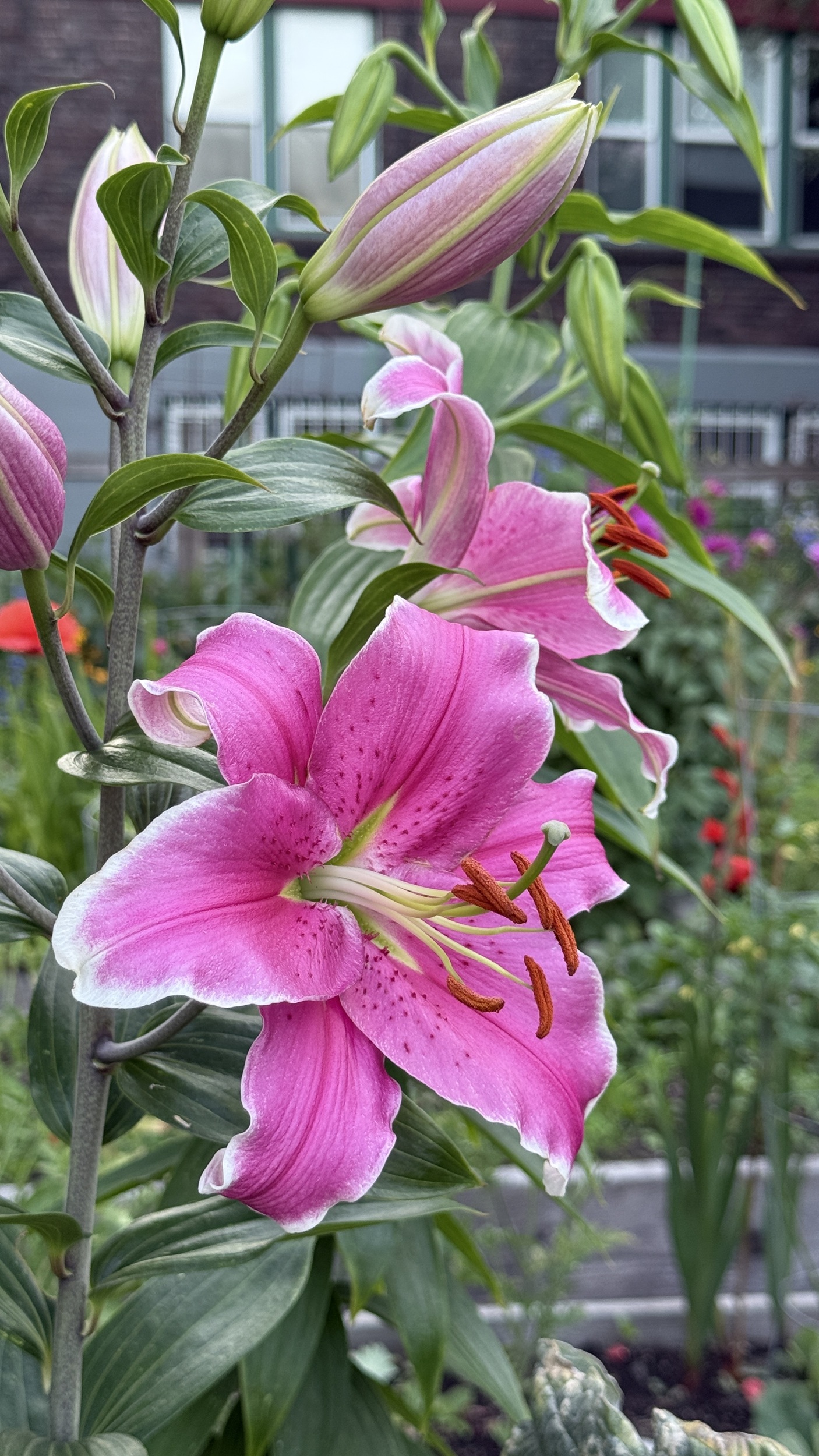
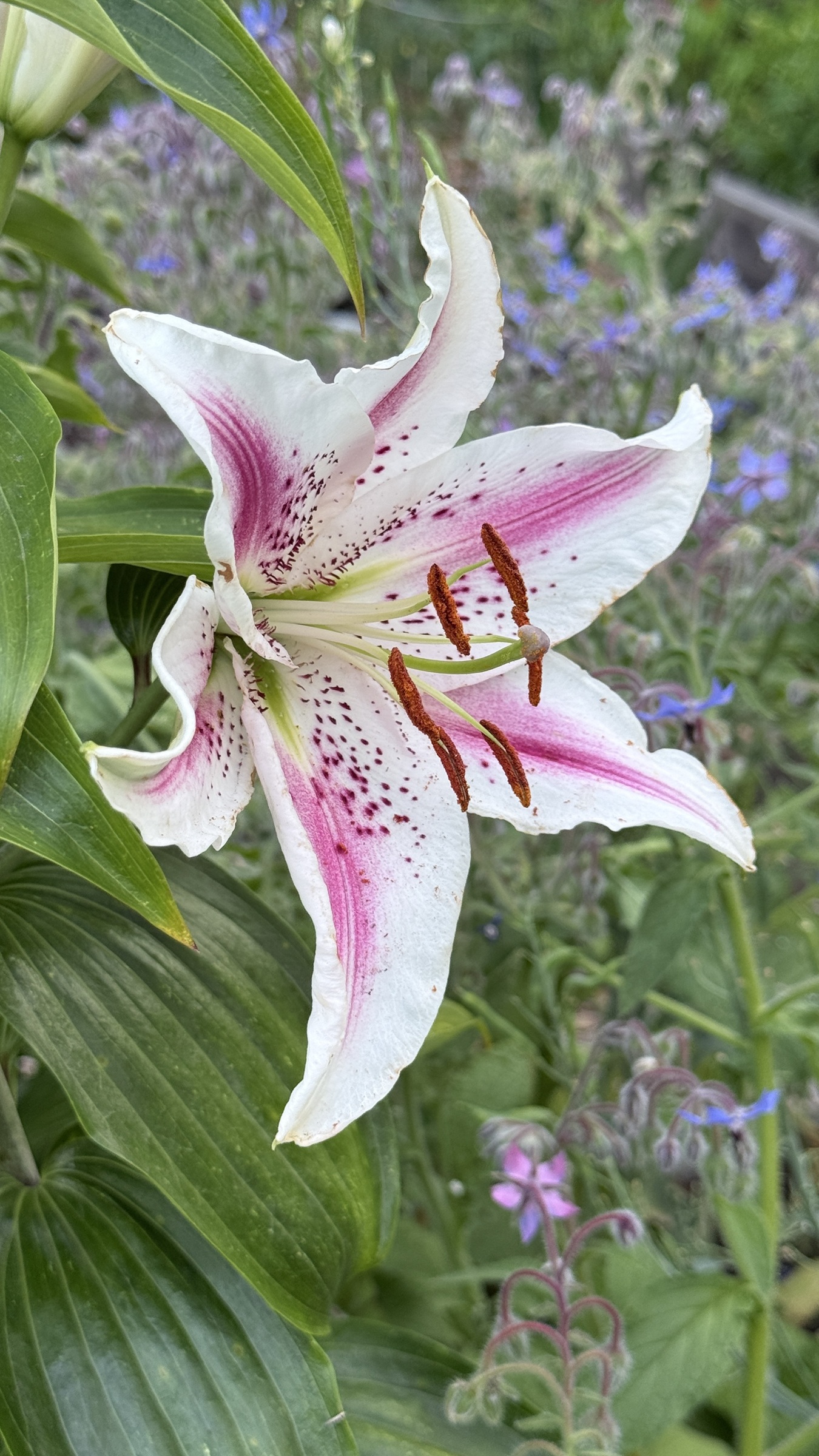
The lilies in the community garden at Republican St and 20th Ave E here on Seattle’s Capitol Hill are gorgeous.

[From Wikipedia and Google Search Labs | AI Overview]
Saturday/ hello kitty (don’t eat me) 🦁
A reader sent in this set of photos to the South African newspaper Die Burger (The Citizen).

The reader Estelle Jordaan writes:
“A once-in-a-lifetime experience .. we were in the Kgalagadi Transfrontier Park (in the Kalahari Desert region of Botswana and South Africa, bordering Namibia to the west).
On our early morning drive from Nossob (at Marie se Draai) we came across seven young lionesses who came walking up the road from the front. One was very curious and approached our vehicle. The next moment she first stood with her paws on our pickup’s runner board, and then upright against the pickup with a ‘high five’ with one paw against the window (luckily the window was closed!). Then she decided she wanted to explore the side mirror more closely and taste it… the damage to the mirror? A small tooth hole, and a few light scratches– but we rather see it as lasting evidence of the best memory so far.”
[Photos by Estelle Jordaan. Published in Die Burger newspaper online, Thursday Jul. 10, 2025]
Thursday/ ocelot & opossum 🐆
Researchers at Cocha Cashu Biological Station in southeastern Peru set up a camera trap to study bird behavior, but they got a surprise guest appearance instead: an ocelot trailing an opossum through the jungle at night.
The ocelot, a wild cat slightly larger than a house cat, and the common opossum, a marsupial, are usually predator and prey. But in this video, they moved in tandem— like two old friends walking home from a bar.
Intrigued, they contacted researchers in other parts of the Amazon who turned up three additional, nearly identical videos from different locations and years.
…
Opossums’ attraction to ocelots remains a mystery, but Dr. Damas-Moreira and her colleagues suspect there’s something that draws both animals. One hypothesis is “chemical camouflage.”
“Opossums have a strong smell, and a close-by ocelot might help hide the opossum’s scent from bigger predators, or the opossum’s odor might mask the ocelot’s presence from prey,” said Ettore Camerlenghi, an evolutionary biologist and ecologist at ETH Zurich and an author of the study.
Opossums are also resistant to the venom of pit vipers, a snake that lives in the Amazon. Ocelots lack that defense, and teaming up could give both animals an edge when hunting, Dr. Camerlenghi said. In North America, a similar alliance exists between coyotes and badgers, who buddy up to hunt squirrels.

Wednesday/ a green flower 🌱
We did have the hottest day so far this year here in Seattle, with a high of 91°F (33°C). I waited until it was almost dark before I ventured out for a walk.
Sunset is now at 9.02 pm.

I found this coneflower (genus: Echinacea) tonight. They usually come in purple and pink varieties. This is likely a hybrid, perhaps the ‘Green Twister’ (Echinacea purpurea) that features a distinctive two-toned appearance with lime green and magenta petals.