The leaves from the big maple tree next door are starting to come down in large numbers. If I sweep them every weekend, I can manage to get away with not buying giant yard waste paper bag at the home depot store. (I put them in my giant yard waste bin).
And luckily, the big dog next door that used to bark at me from the fence while I sweep the leaves, left with his owners when they moved out. Voertsek!*, I would bark back at it when I could no longer ignore the ruckus.
*An Afrikaans word, from the Dutch ‘voort seg ek’ , commonly applied to animals. It means ‘go away!’ or ‘get out of here!’
Here’s the view from my BART train on the way back to the airport today, as we were approaching Daly City, south of San Francisco.
[From Wikipedia] ‘Little Boxes’ is a protest song written and composed by Malvina Reynolds in 1962, which became a hit for her friend Pete Seeger in 1963. The song was reportedly inspired by the boxy houses of Daly City and expresses alarm at conformity and loss of individuality. Well, the little boxes are still there today, but I see in writings of historians and sociologists that the people populating them are actually quite diverse with large Filipino and other Asian communities there.
Here are the words for the song.
Little boxes on the hillside,
Little boxes made of ticky tacky
Little boxes on the hillside,
Little boxes all the same,
There’s a green one and a pink one
And a blue one and a yellow one
And they’re all made out of ticky tacky
And they all look the same.
And the people in the houses
All went to the university
Where they were put in boxes
And they came out all the same
And there’s doctors and lawyers
And business executives
And they’re all made out of ticky tacky
And they all look just the same.
And they all play on the golf course
And drink their martinis dry
And they all have pretty children
And the children go to school,
And the children go to summer camp
And then to the university
Where they are put in boxes
And they come out all the same.
And the boys go into business
And marry and raise a family
In boxes made of ticky tacky
And they all look just the same,
There’s a green one and a pink one
And a blue one and a yellow one
And they’re all made out of ticky tacky
And they all look just the same.
We had to work hard this week to round up the hundred-some documents for our solution’s design. These are done in formatted Microsoft Word documents with imbedded tables and several fonts, and then posted onto Microsoft SharePoint. (SharePoint enables users that collaborate on documents to access them via the intranet).
So what went wrong? Well, we found that documents checked out of SharePoint and checked back in again, lose their formatting. So Big Bold Headings now disappeared into the body of the text on the pages, and indented sections are flush against the left margin. It took a lot of time to fix – too much time, and in the end we chose substance over style. We will fix the formatting later. Grrr.
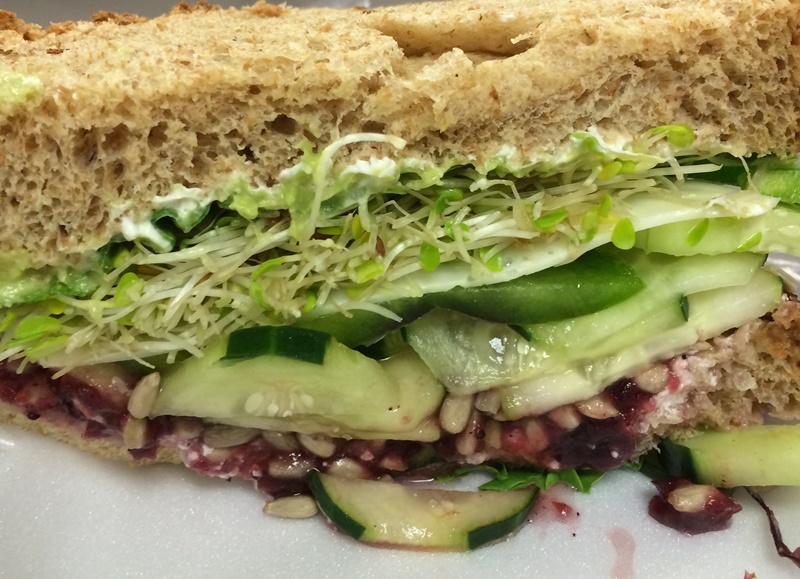
We ran out to our favorite sandwich shop here in Walnut Creek today at lunch time. I ordered a vegetarian one with ‘everything’ on : cream cheese, lettuce, bean sprouts, cheese, green pepper, cucumber, sunflower seeds and raspberry jam.
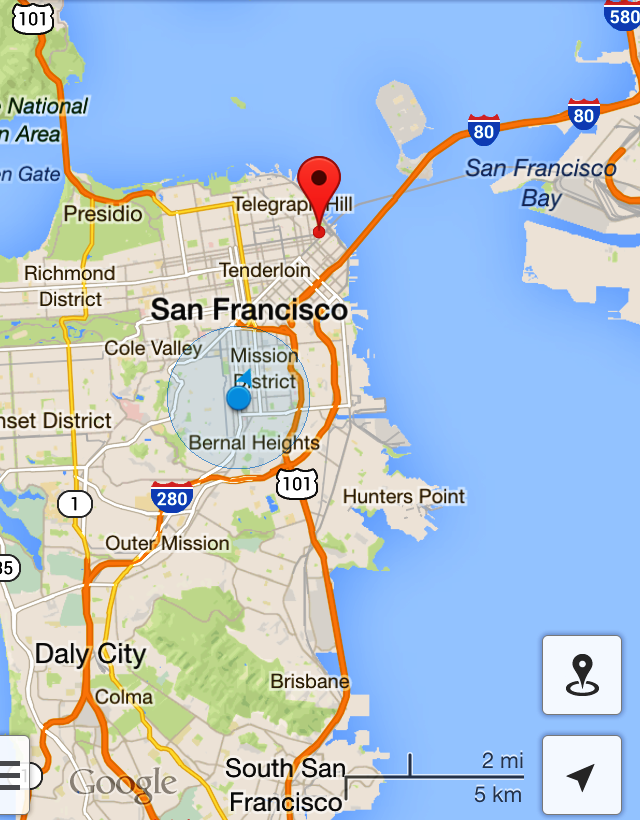
I’m on BART (blue dot) and my way from the airport to The Embarcadero – where my firm’s office and our client’s head office are (red pin).
I finally got to ride on BART today : the veritable and well-ridden by now – Bay Area Rapid Transit – in service since the ’70s and showing it. Taking it to Walnut Creek at rush hour was a crowded, sweaty affair!
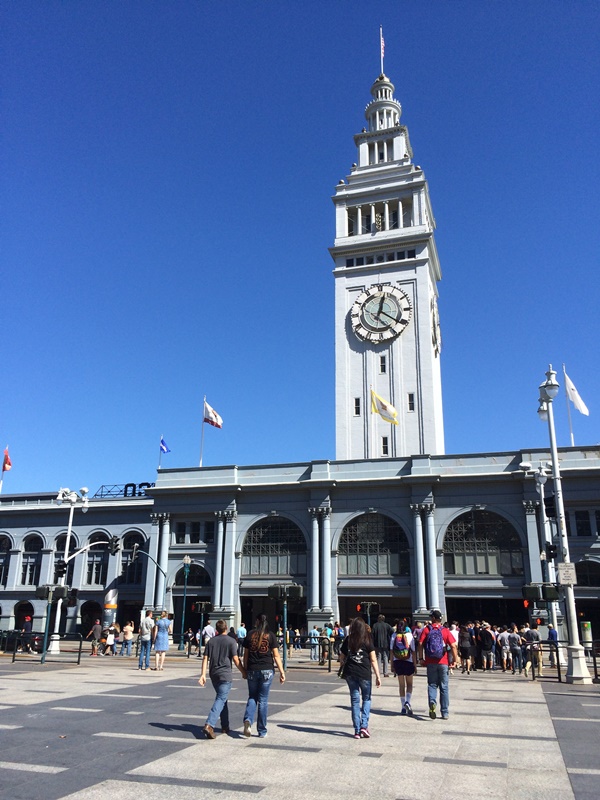
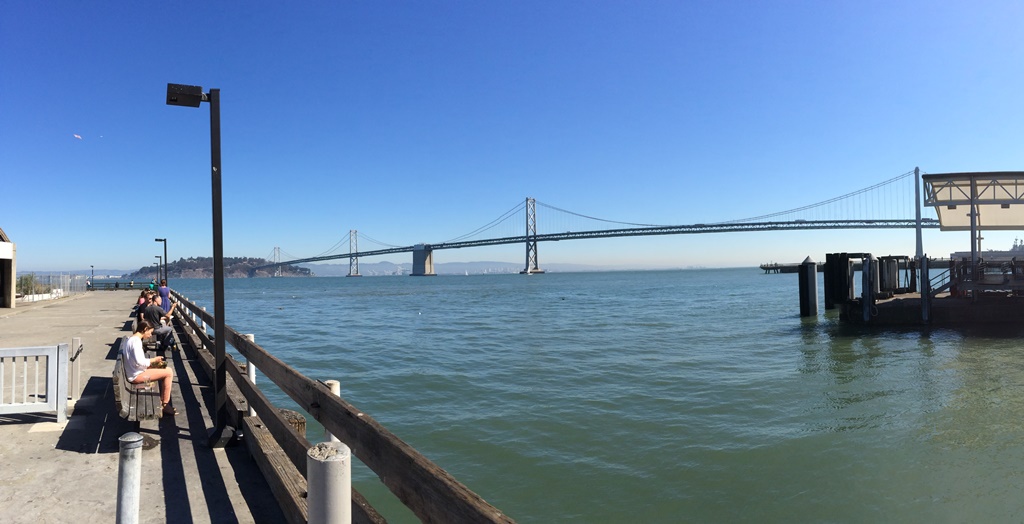
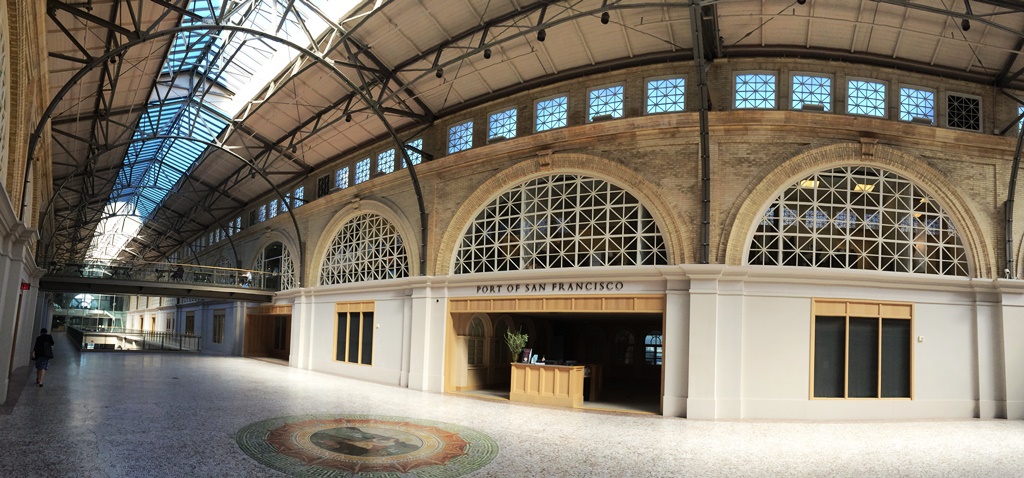
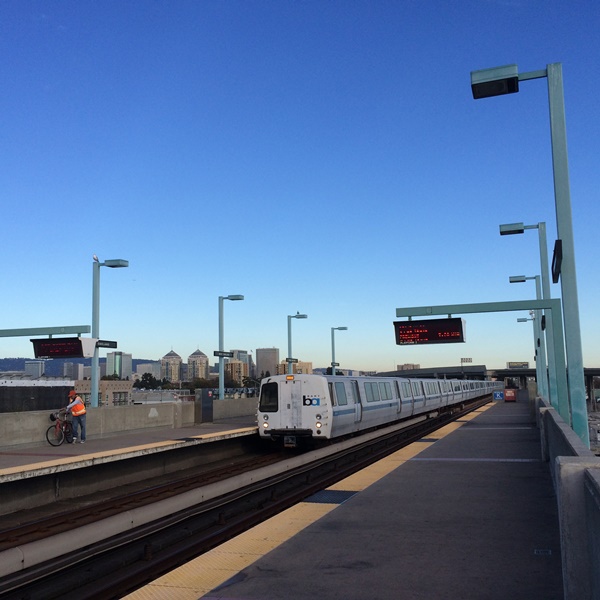
The San Francisco Ferry Building was completed in 1898. The clock tower is 245 feet tall. The inside was renovated in 2002, and the ground floor is now filled with restaurants and food shops.Here’s the Bay side of the Embarcadero, and the Bay Bridge. (It is the older western section that connects downtown San Francisco to Yerba Buena Island).This is the gorgeous inside of the Ferry Building, the second floor. The second is mostly empty (not full of stores and people, the way the ground floor is) and a guard wanted to know what I wanted. ‘I want to take a picture’ I said. May I? Yes, no problem, go ahead, he said.Here’s what the BART train looks like. Not too shabby on the outside, right? Most of the BART stations seem very utilitarian, not splashy or with artsy displays at all.
Over lunch time I got to see some of the sights in the Embarcadero area in downtown San Francisco. It was a warm cloudless day. I did not have a lot of time and just walked straight to the waterside to check out the Ferry Building to see the water in the Bay.
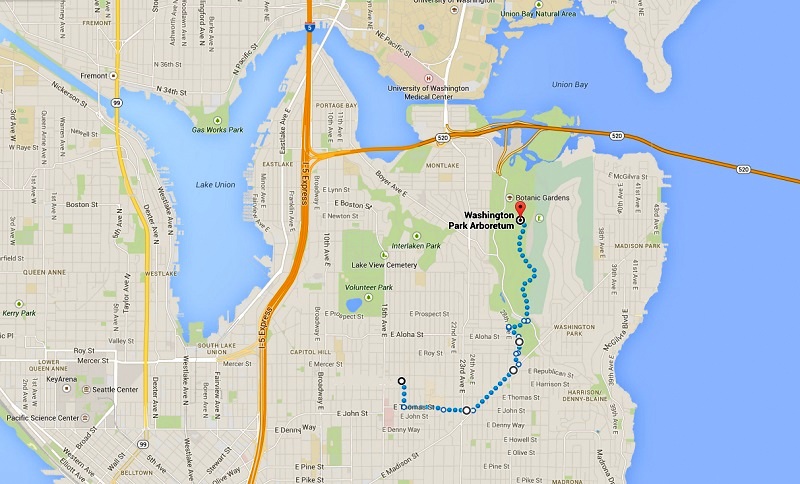
It’s a 40 minute walk to the north end of the Washington Arboretum from my house.
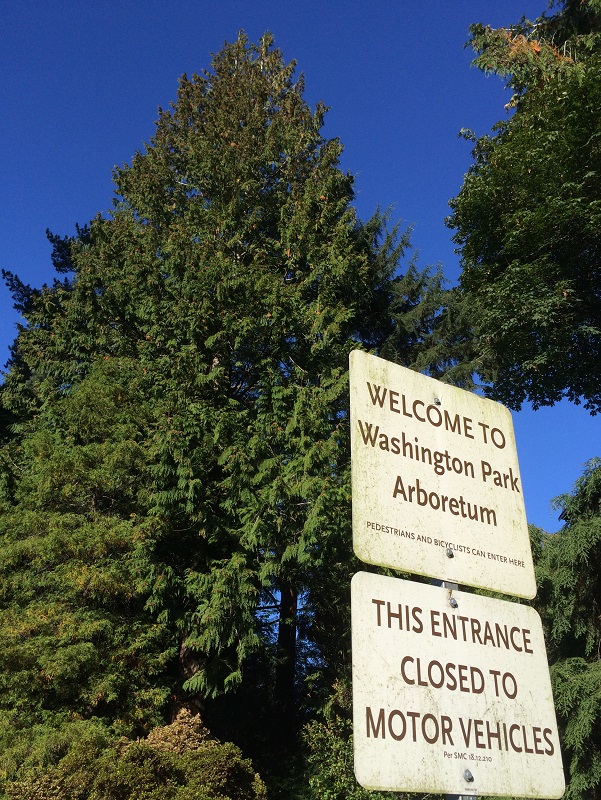
It was a mild blue sky day here in the Pacific Northwest (72 °F/ 22 °C). So off I went this afternoon, for a little urban walk down hill and up to the Washington State Arboretum. That took about 40 minutes, and I then I hopped on the bus to get back to the house to get my laundry done and pack my bags for San Francisco.
Bryan, Gary and I watched a Netflix on Saturday night called ‘Tiny : A Story About Living Small’. movie. The backdrop (from Wikipedia): In the United States the average size of new single family homes grew from 1,780 square feet (165 m2) in 1978 to 2,479 square feet (230.3 m2) in 2007, despite a decrease in the size of the average family. The ‘small house’ movement – also known as the ‘tiny house movement’ is a return to houses less than 1,000 square feet, some as small as 80 square feet (7.4 m2).
The main story is about the effort of two young people who decide to downsize their lives by building a ‘tiny home’ on a flatbed trailer. In the end it took a year and $26,000. The movie features several other small houses as well. To me, the larger points made are the most important. Figure out what you want from life and how you want to live early on. In the really-big-picture perspective, life goes by in a flash. Make conscious choices. Don’t just do what everyone else does (such as buy a house that’s so big and expensive that you can enjoy hardly anything else in life). It is not necessary to keep up with the Joneses’ bigger house and newer car. You are not a ‘better’ person because you own a big house !
I am at the airport here in San Francisco, heading home. It is Friday and even at the early hour of 2.30 pm there was a little more traffic on the freeways* on the way here than we have on Thursdays.
*I should not say freeway. I see on Wikipedia that the word freeway was first used in February 1930 by Edward M. Bassett, but it is now an outdated word. We should just go with highway. Or parkway.
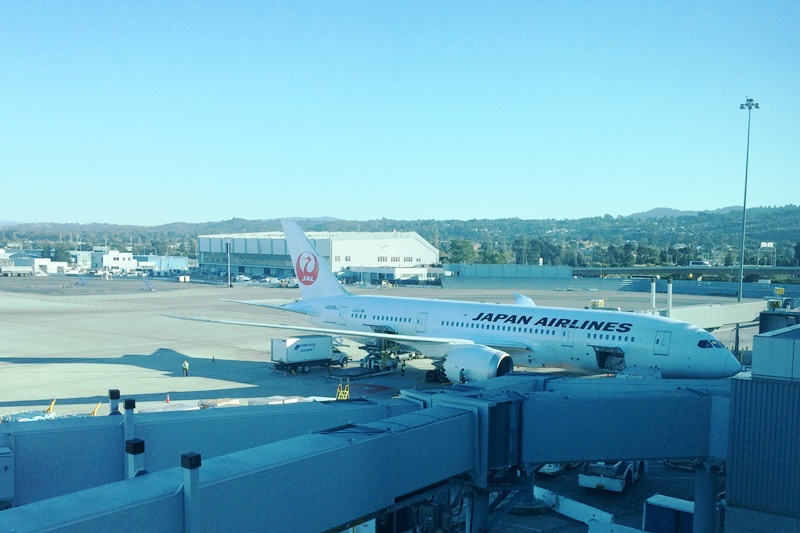
The Japan Airlines Boeing 787 snuck in here to where I am sitting without me noticing it. They actually have 15 of these new ‘birds’ in their fleet.
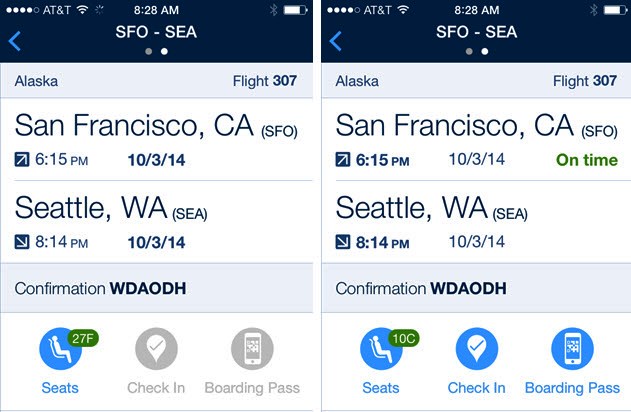
Here’a a before and after synch of the Alaska Airlines mobile app on my phone. The ‘after synch’ screen (on the right) shows that I have checked in, that the flight is on time, and that my seat has changed from the back of the bus to closer up front.
Systems and applications are going ‘mobile’ – even colossally large corporate enterprise system such as SAP. Of course, only small parts of its ‘back-end’ functions and data are getting deployed to mobile devices. The deployment is in the form of the little apps that appear on the mobile device (such as an iPhone or iPad).
In the case of SAP, part of the project that we are working on is to provide field technicians with a mobile device that shows their work orders for the day, along with the technical documentation that they need to perform the work. (It’s a mobile deployment of SAP Plant Maintenance called ‘SAP Work Manager’). Every day before the technician goes out to the field, they will ‘synch’ their mobile device with the back office. The synch can also be done several times a day. Nothing is instantaneous, though! We still live in the real word. There are real zeroes and ones that need to get transmitted in little wireless internet protocol packets, so that the data can be written as magnetic zeroes and ones in the memory of the device. And out in the field the band-width may be limited – or there may be no connection at all.
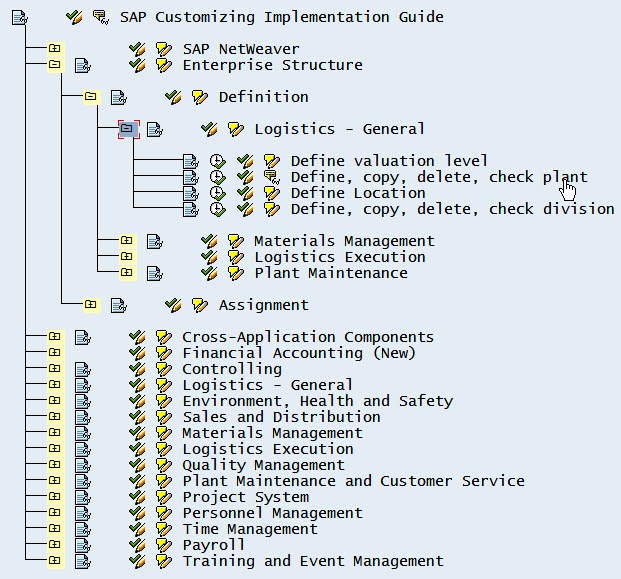
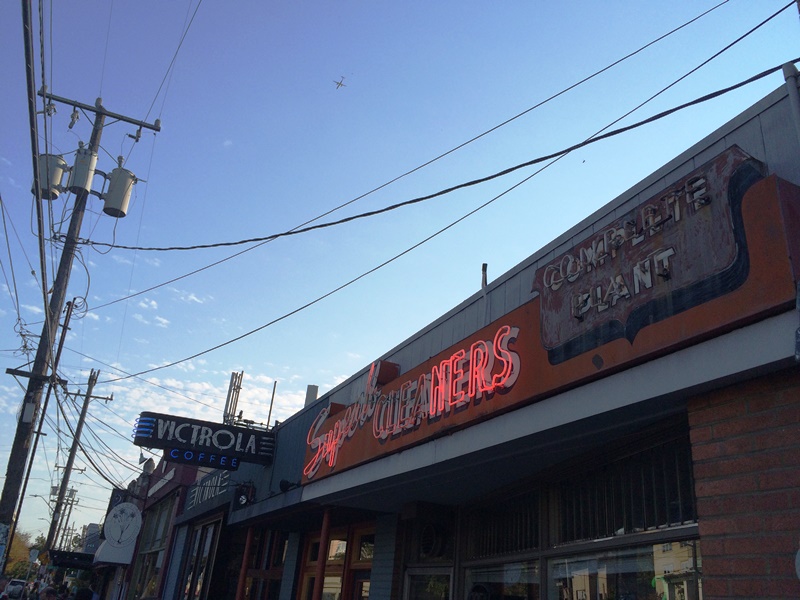
Here is where Plant Codes are set up in the SAP configuration menu. It’s not a matter of jumping in and doing it in 5 minutes! It takes many weeks of discussion and collaboration with the business to settle on what needs to be set up for the ‘enterprise’ as SAP likes to call it.‘Complete Plant’ says this defunct neon sign at the dry cleaner by my house in Seattle. We’re actually headed back there with little local power plants (solar or otherwise) getting installed into new buildings.
We started configuring our new solution for our project on Wednesday. Company Codes and Plant Codes are critical underpinnings of the whole SAP installation for a company, and one has to get these right to make the system work. I can write a book about the SAP Plant Code and how it should be set up (but I will not do that here !). The Plant Code is where lots of equipment are co-located – that the company uses to make stuff or to run its business. How many to create, or where to draw the lines for separate Plant Codes is sometimes hotly debated !
 come down in large numbers. If I sweep them every weekend, I can manage to get away with not buying giant yard waste paper bag at the home depot store. (I put them in my giant yard waste bin).