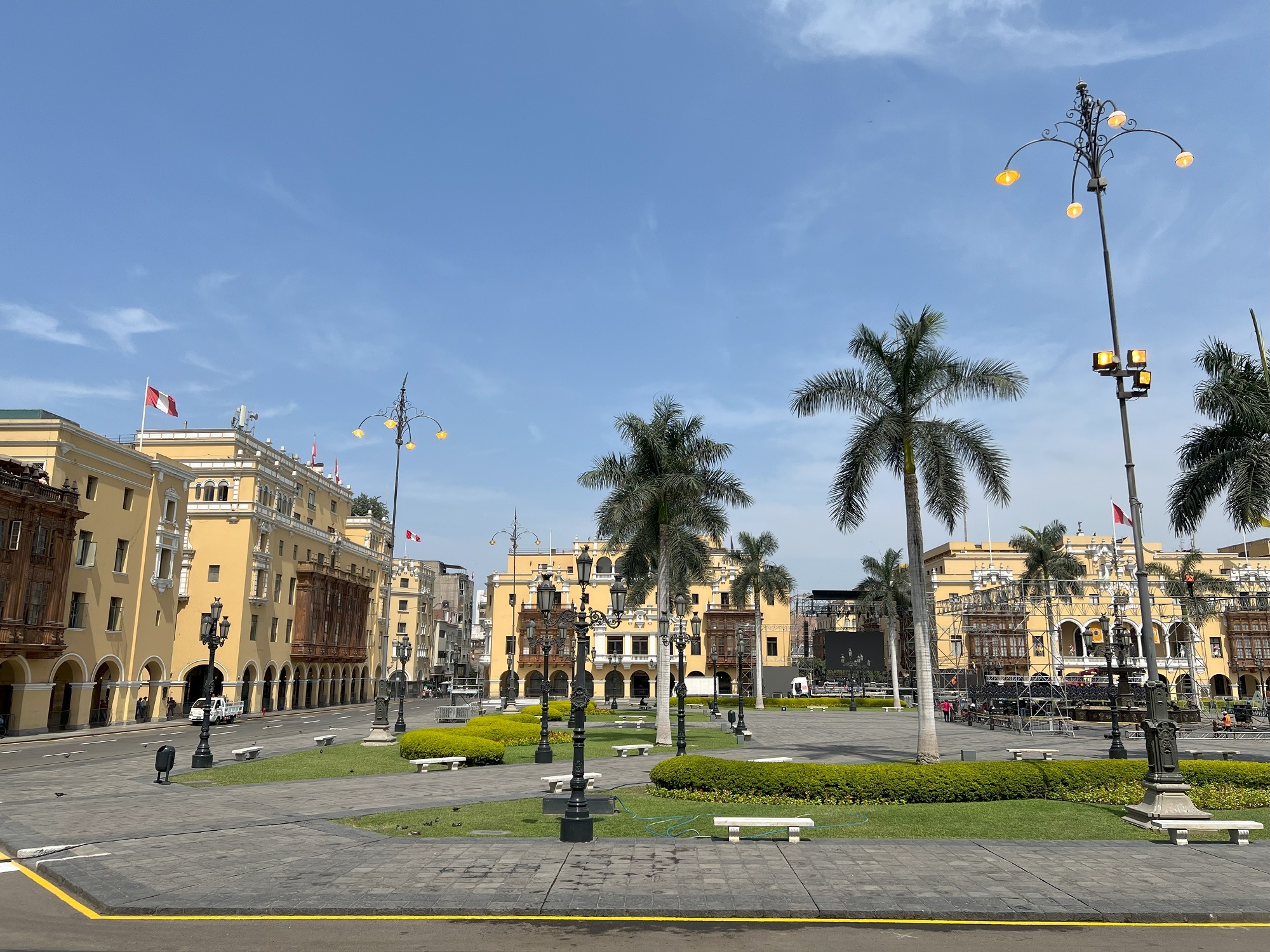
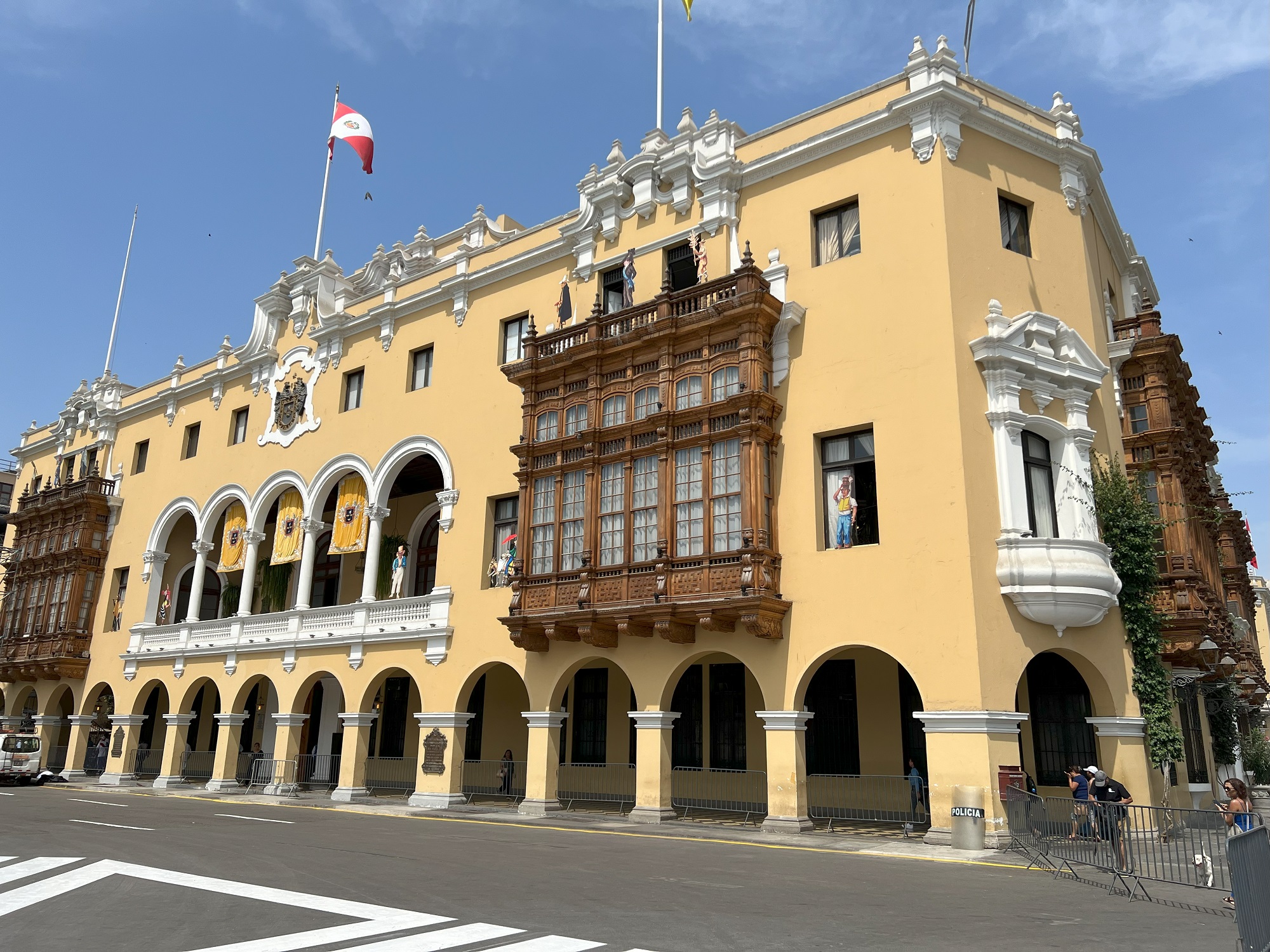
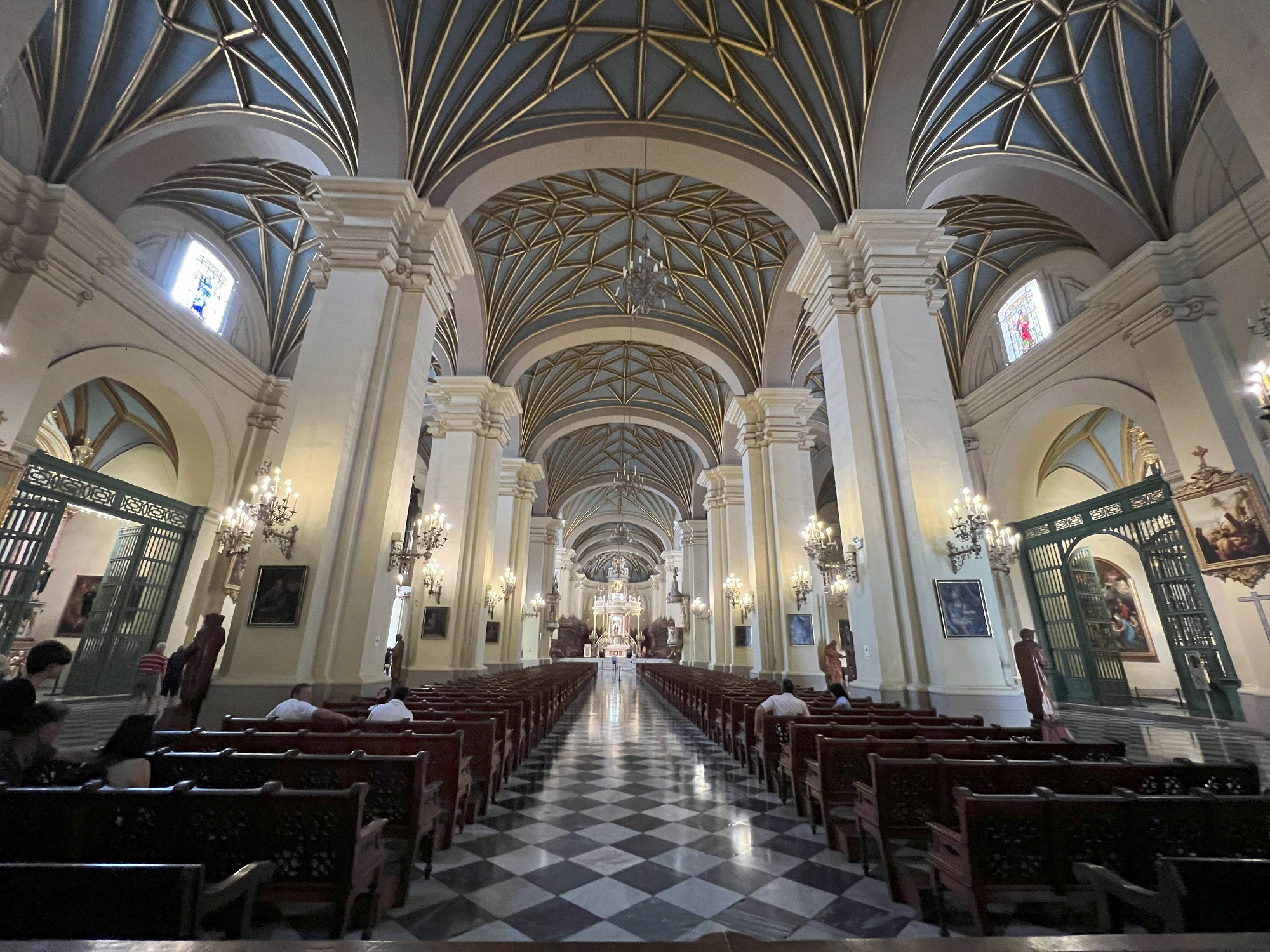
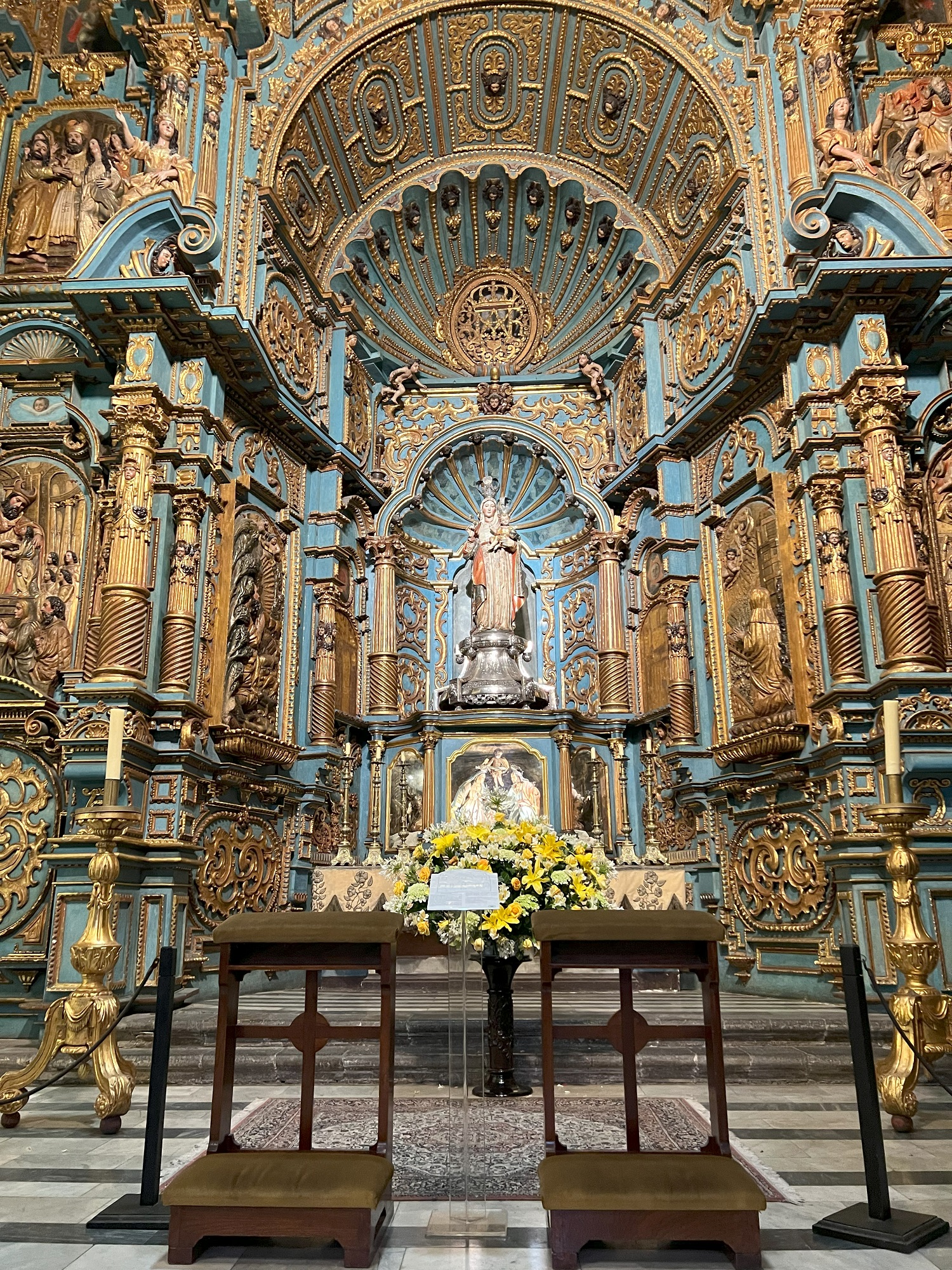
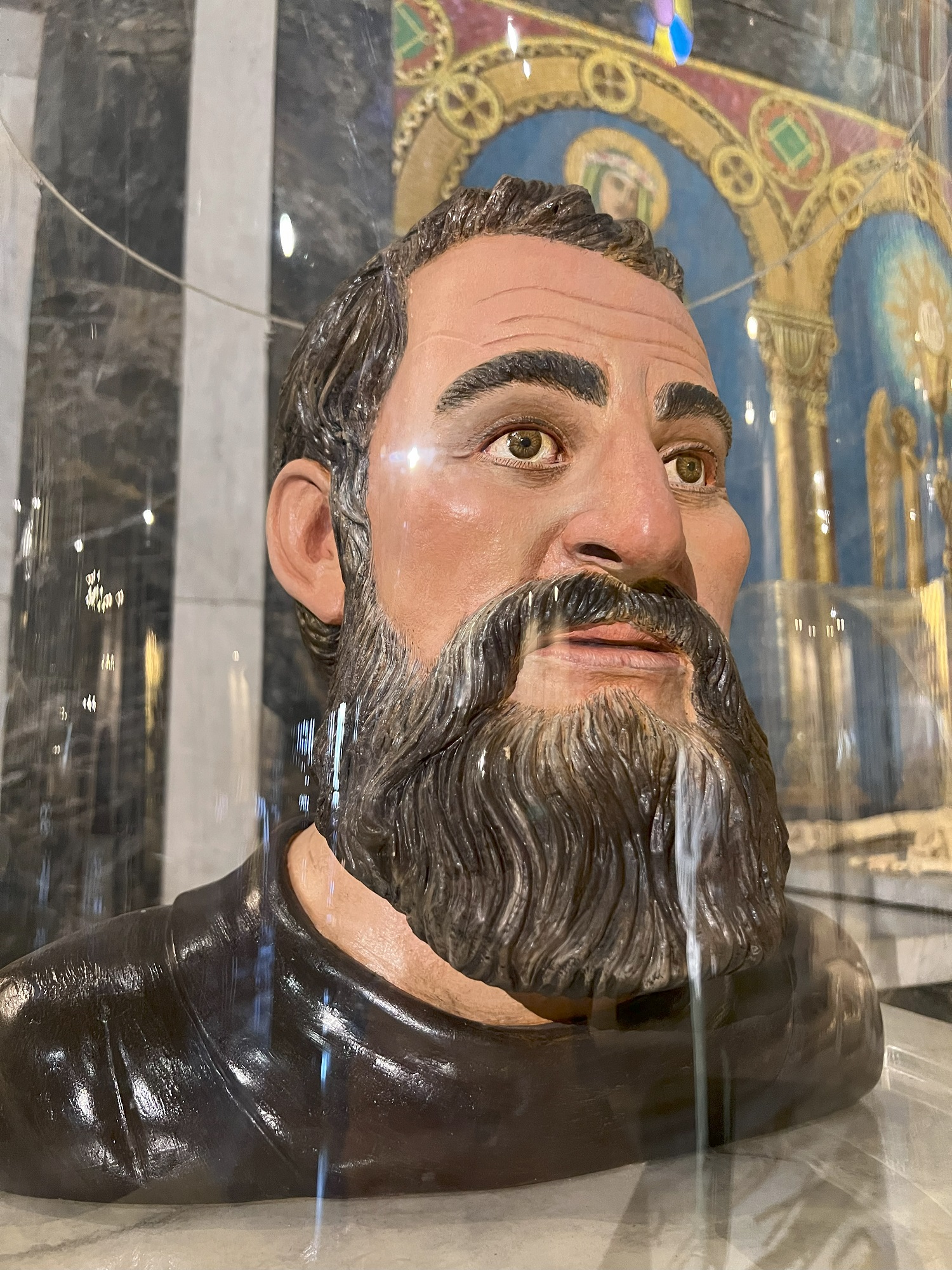
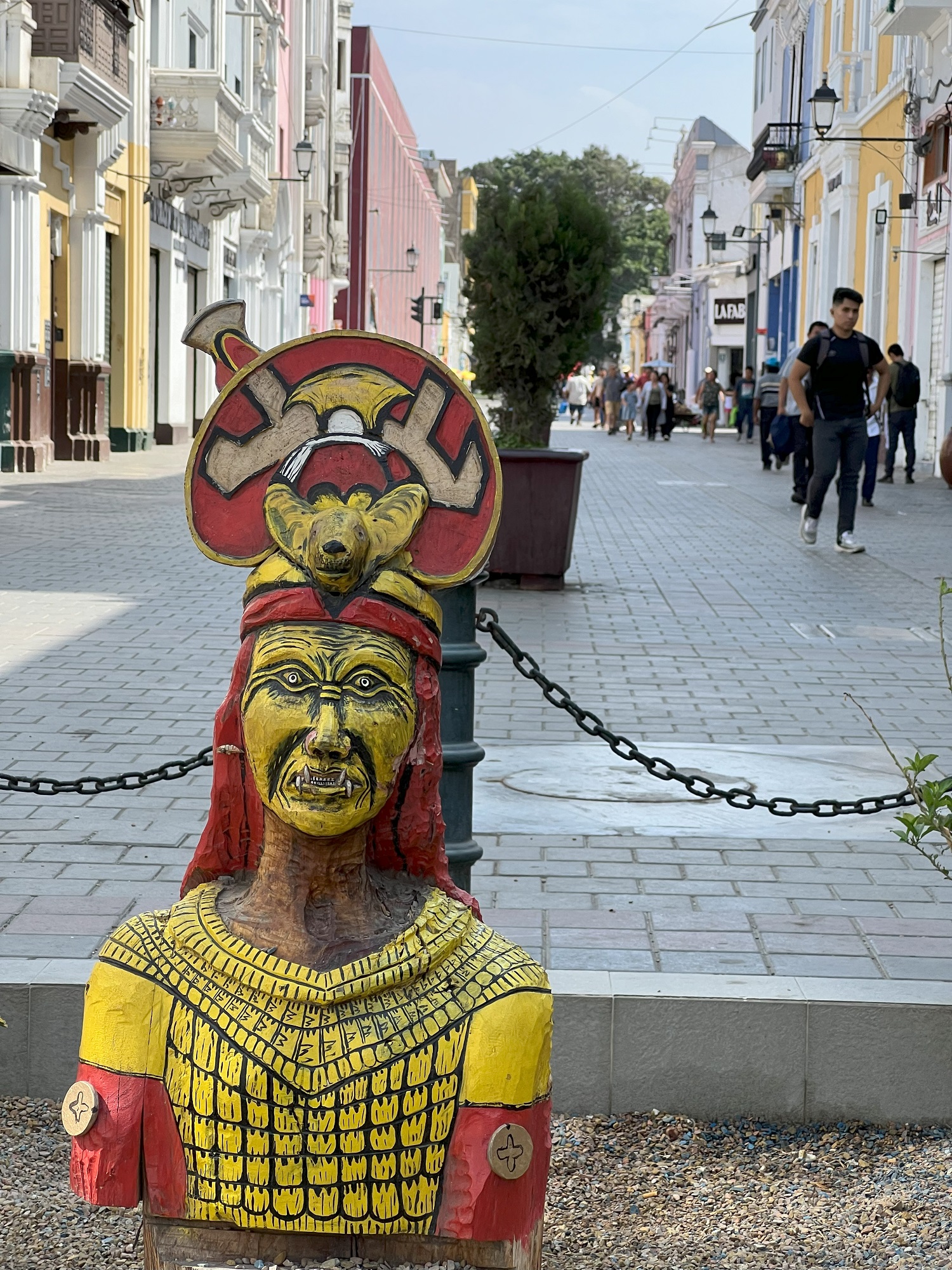
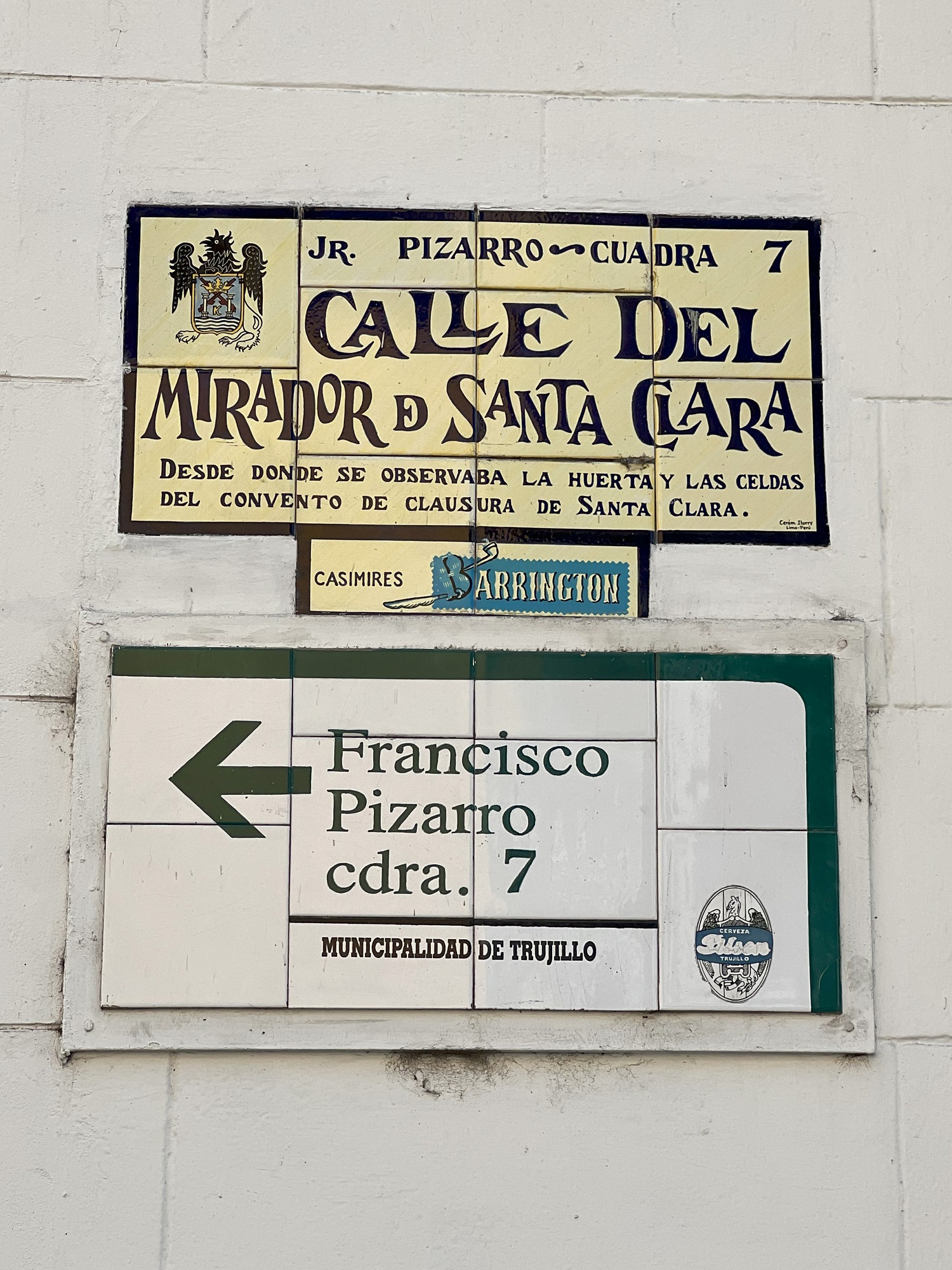
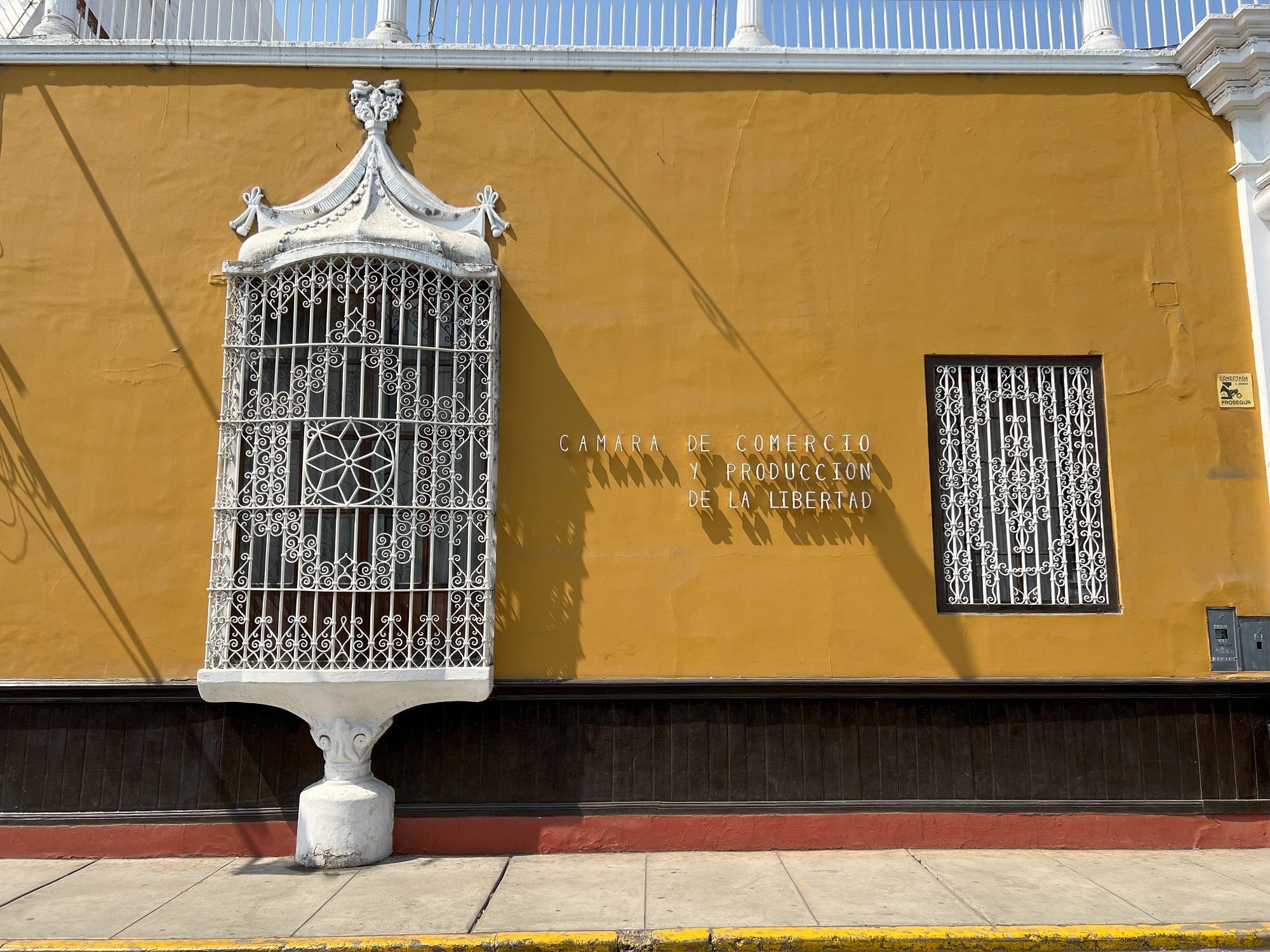
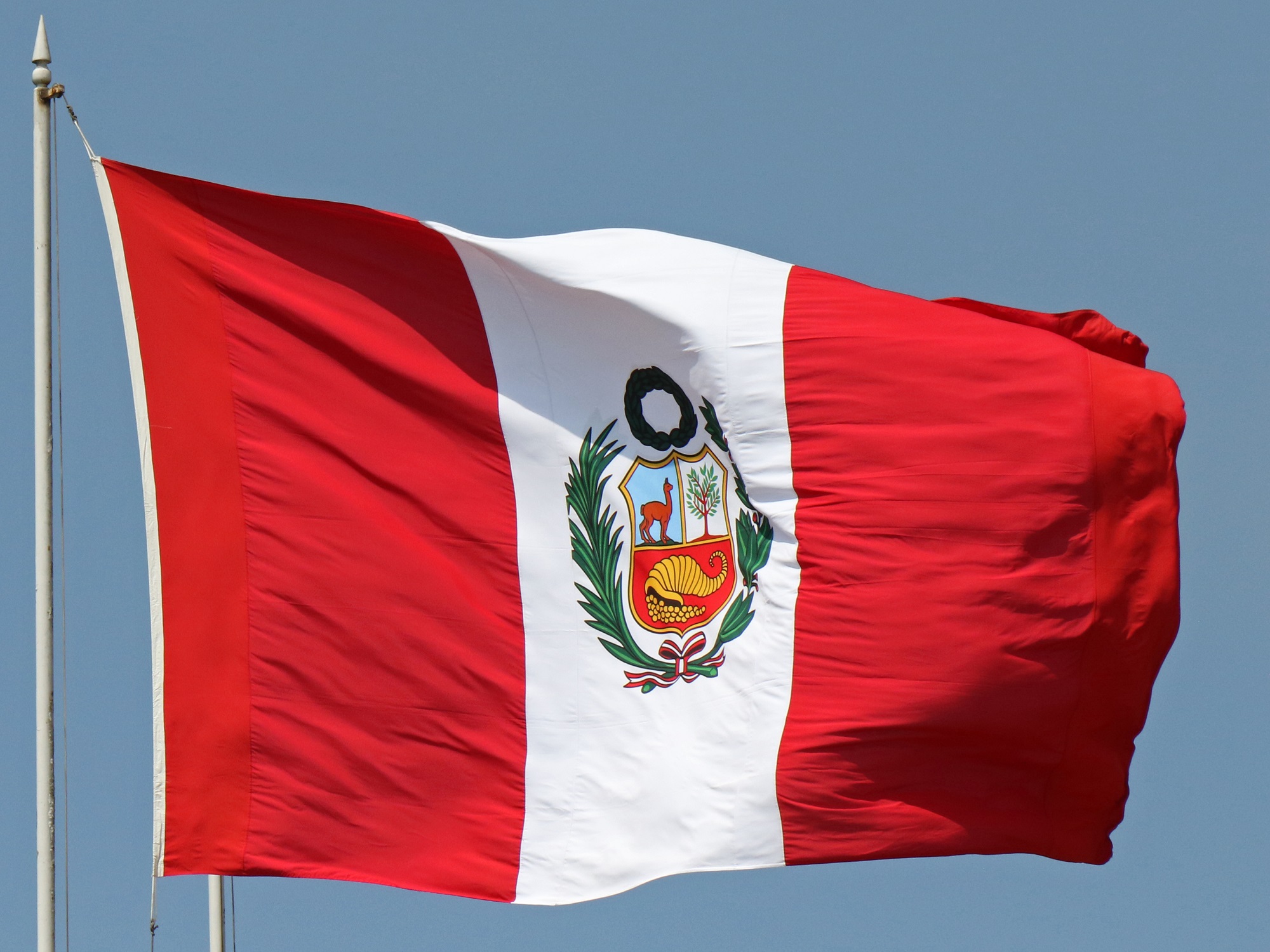
Today’s excursion into Lima took us to Lima Main Square (Plaza de Armas) with the Lima Cathedral just adjacent to it.
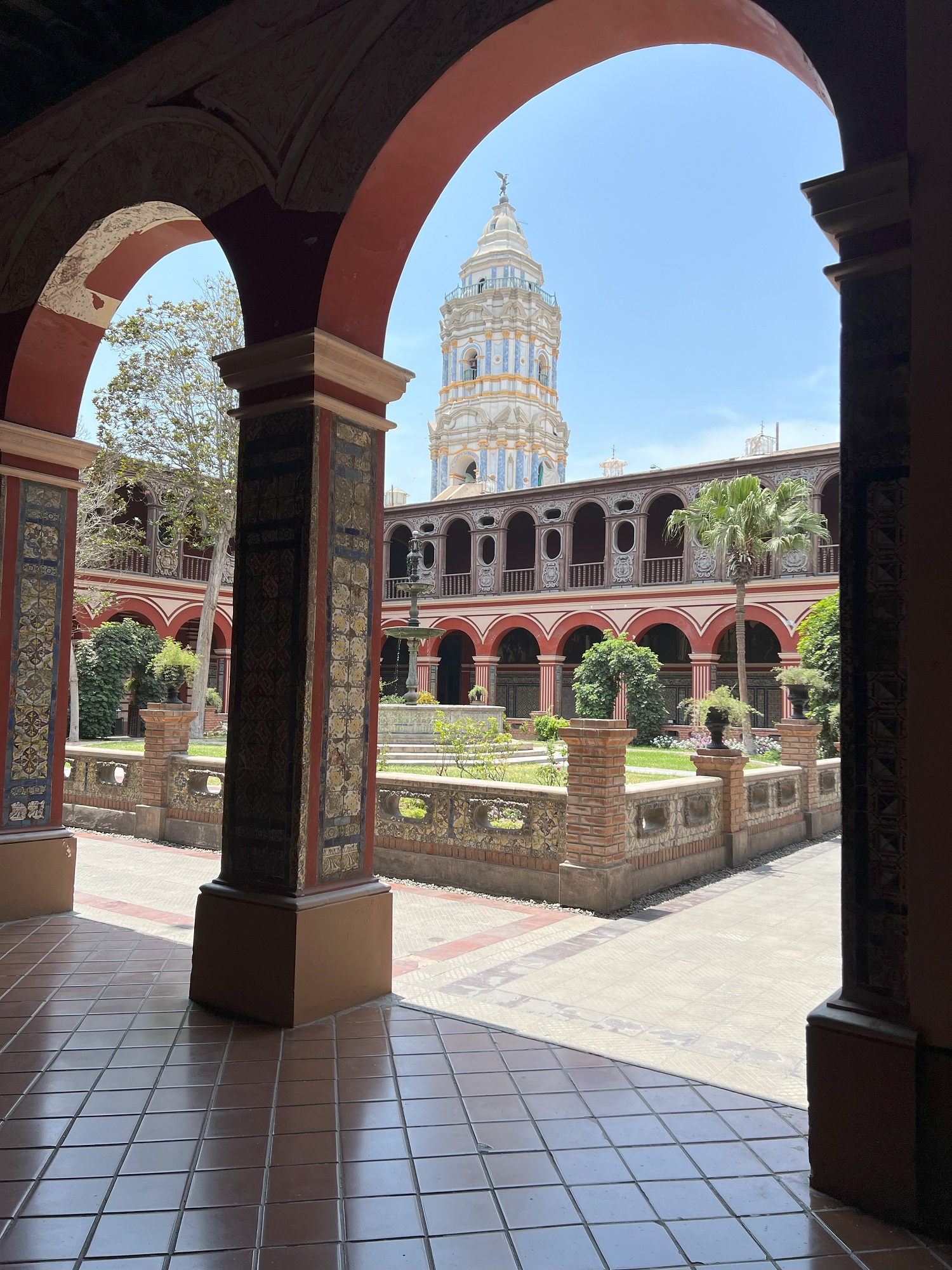
We also stopped by the Basilica and Convent of Santo Domingo.
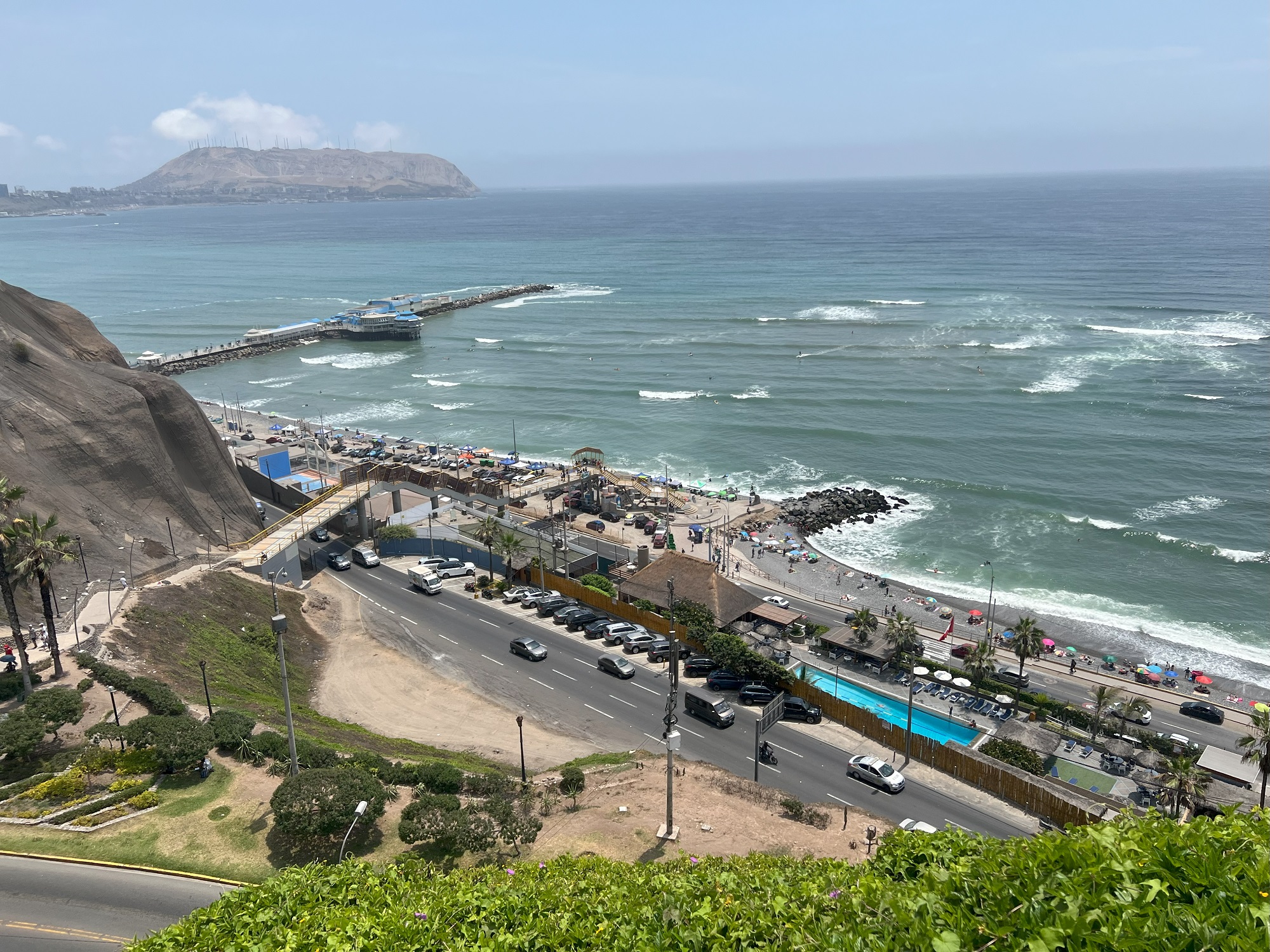
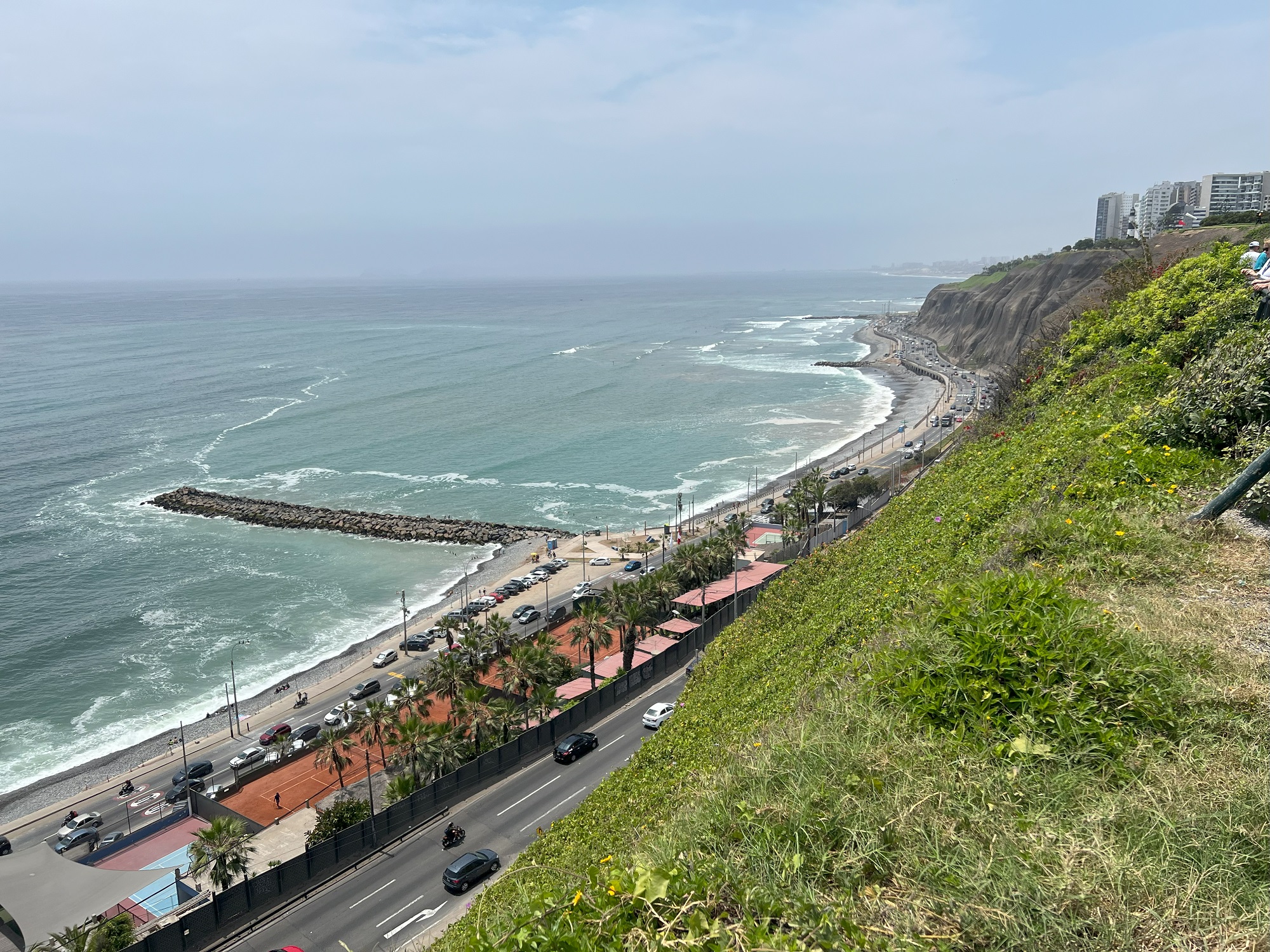
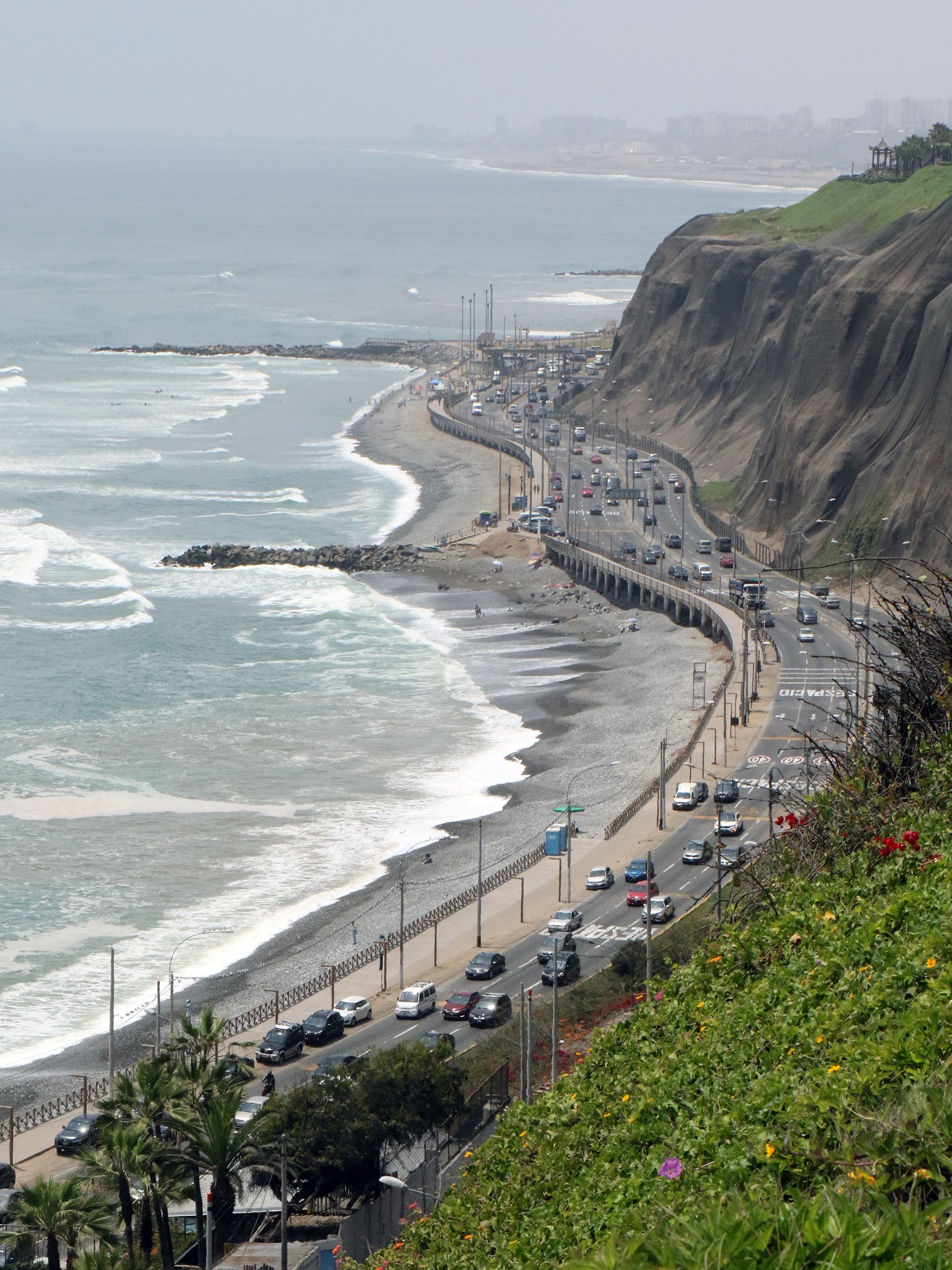
On the way back to Callao and the cruise terminal, we stopped at the Parque Domodossola in Miraflores for a look at the Pacific Ocean and the playas (beaches) below.
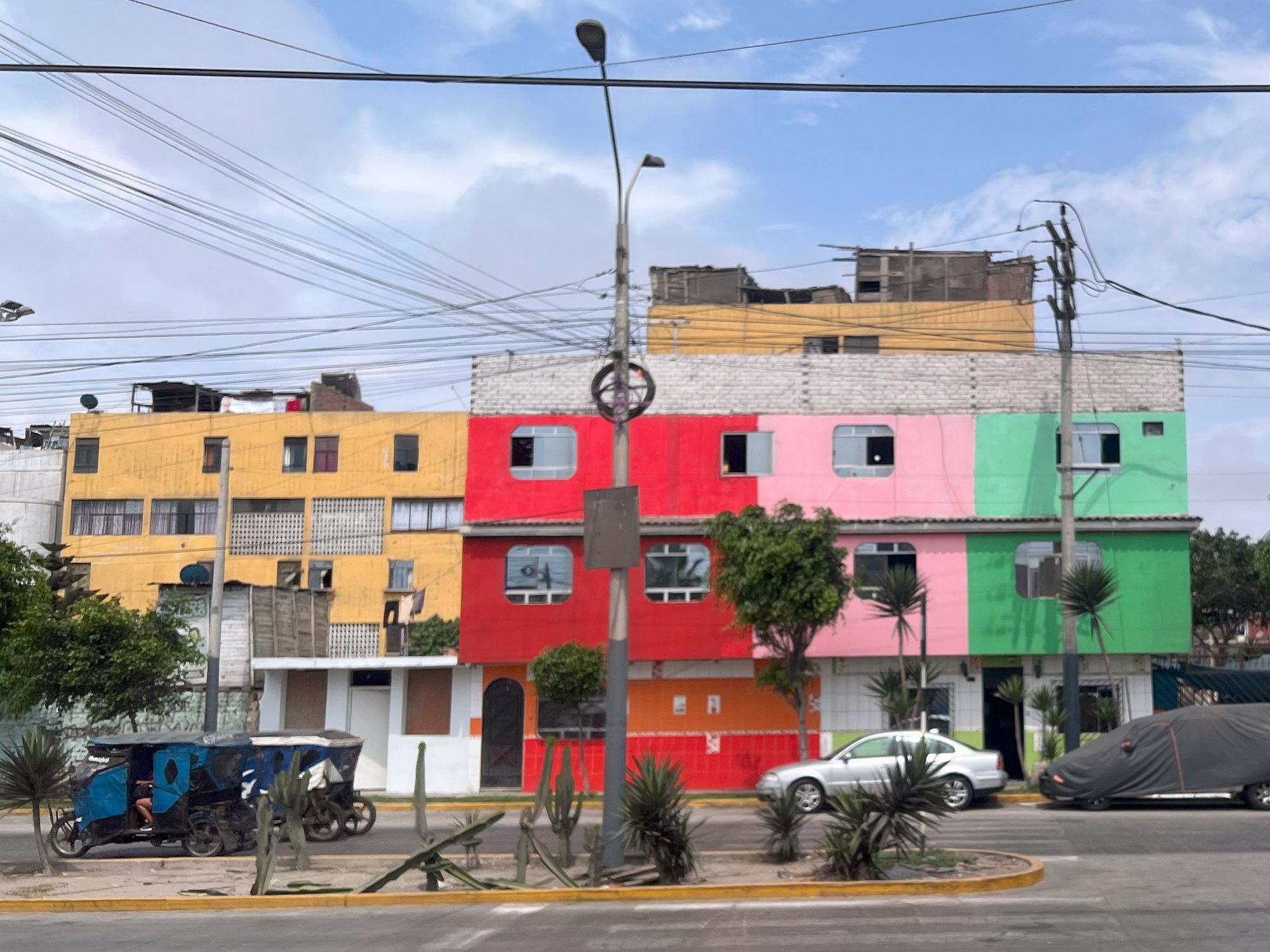
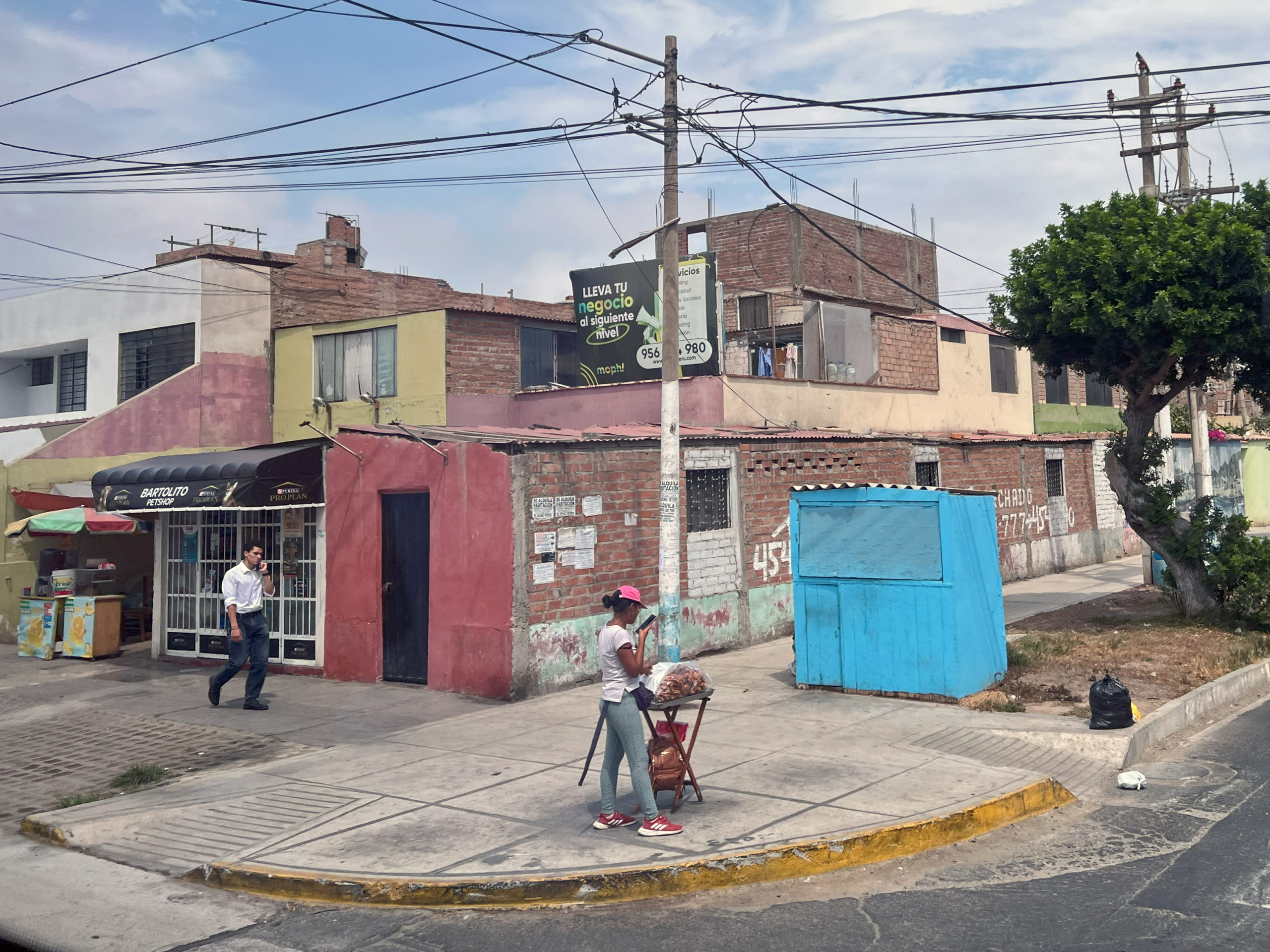
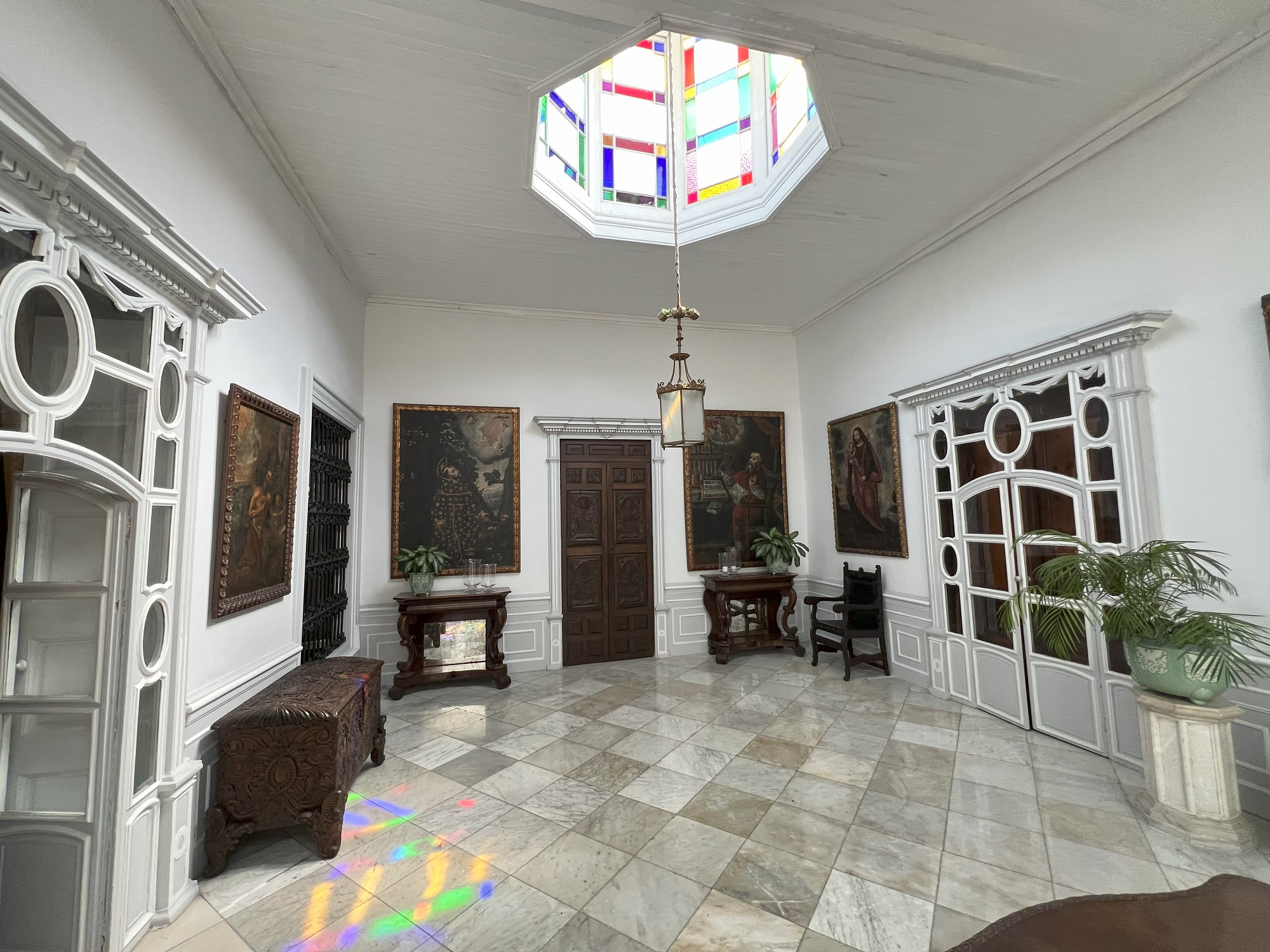
Colorful housing in Callao. We again drove through Callao (where the cruise terminal is) to get to central Lima.There are lots of street vendors to be seen in Callao, but also on the city streets in Lima.Lima Main Square (Plaza de Armas). Unfortunately we could not really walk around the square since preparations are underway for a major celebration.The Municipal Palace of Lima building that borders the square. The ornate wooden window frame is made from wood from Central America.Inside Lima Cathedral that also borders the main square. It is a Roman Catholic cathedral. This third and current Cathedral of Lima was built between 1602 and 1797.Several very ornate and Baroque-style altars are found in coves inside the church. This is of Mary Magdalene holding a golden rose.The bones of Francisco Pizarro are interred in the Lima Cathedral. Pizarro, Marquess of the Atabillos, was a Spanish conquistador, best known for his expeditions that led to the Spanish conquest of the Inca Empire. Born in Trujillo, Spain to a poor family, Pizarro chose to pursue fortune and adventure in the New World. He was assassinated in 1541 by Spanish soldiers. [Wikipedia]This is a beautiful and historic private house a stone’s throw away from the square that we toured. I did not write down the name of the family that owns it.Inside the Basilica and Convent of Santo Domingo.Looking towards the south from Parque Domodossola .. .. and looking north.Another viewpoint from the park, showing the cliffs along the shore. Peru lies outside the infamous ‘Ring of Fire’ series of fault lines, and do get earthquakes and tsunamis from time to time.
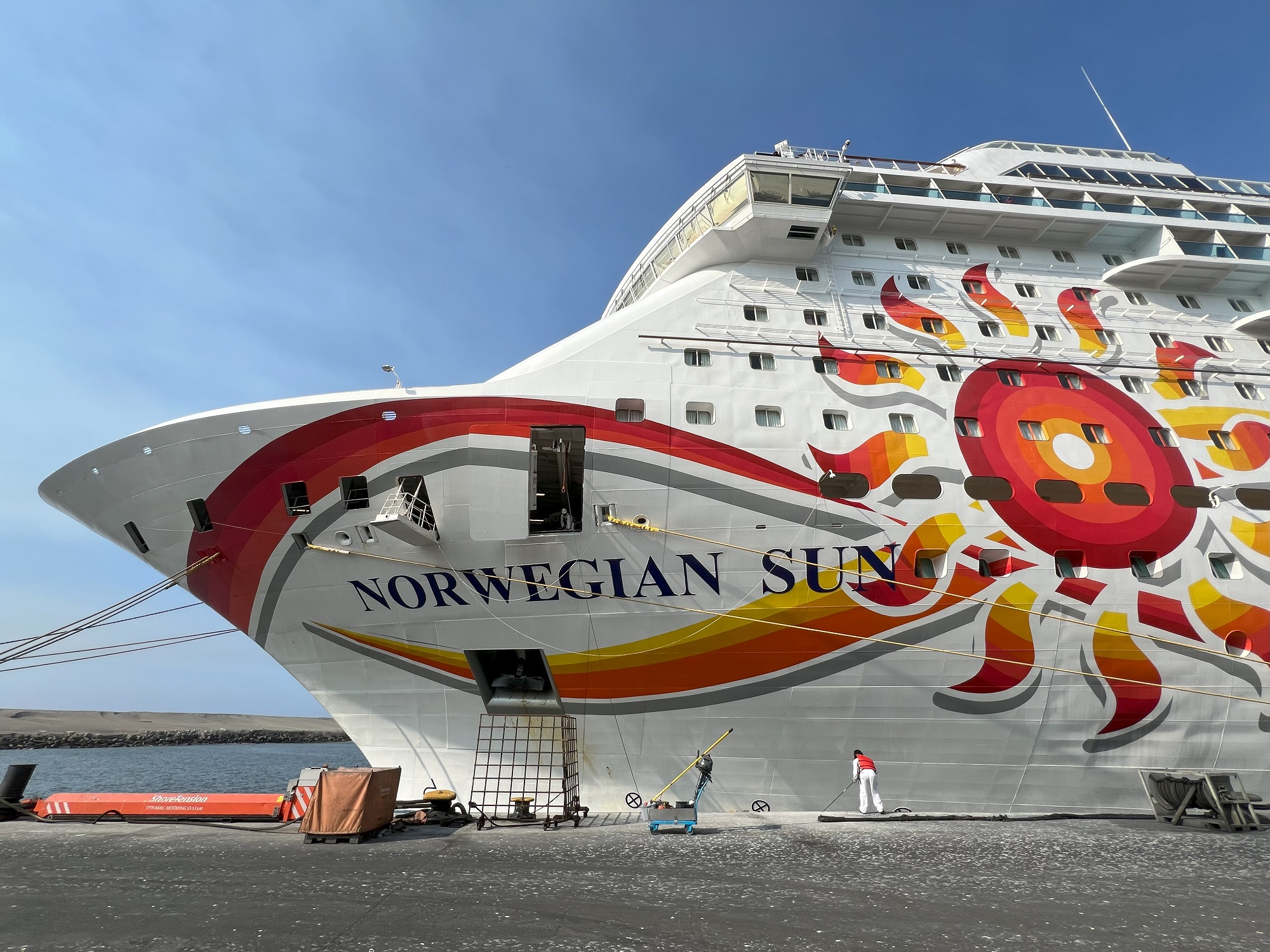
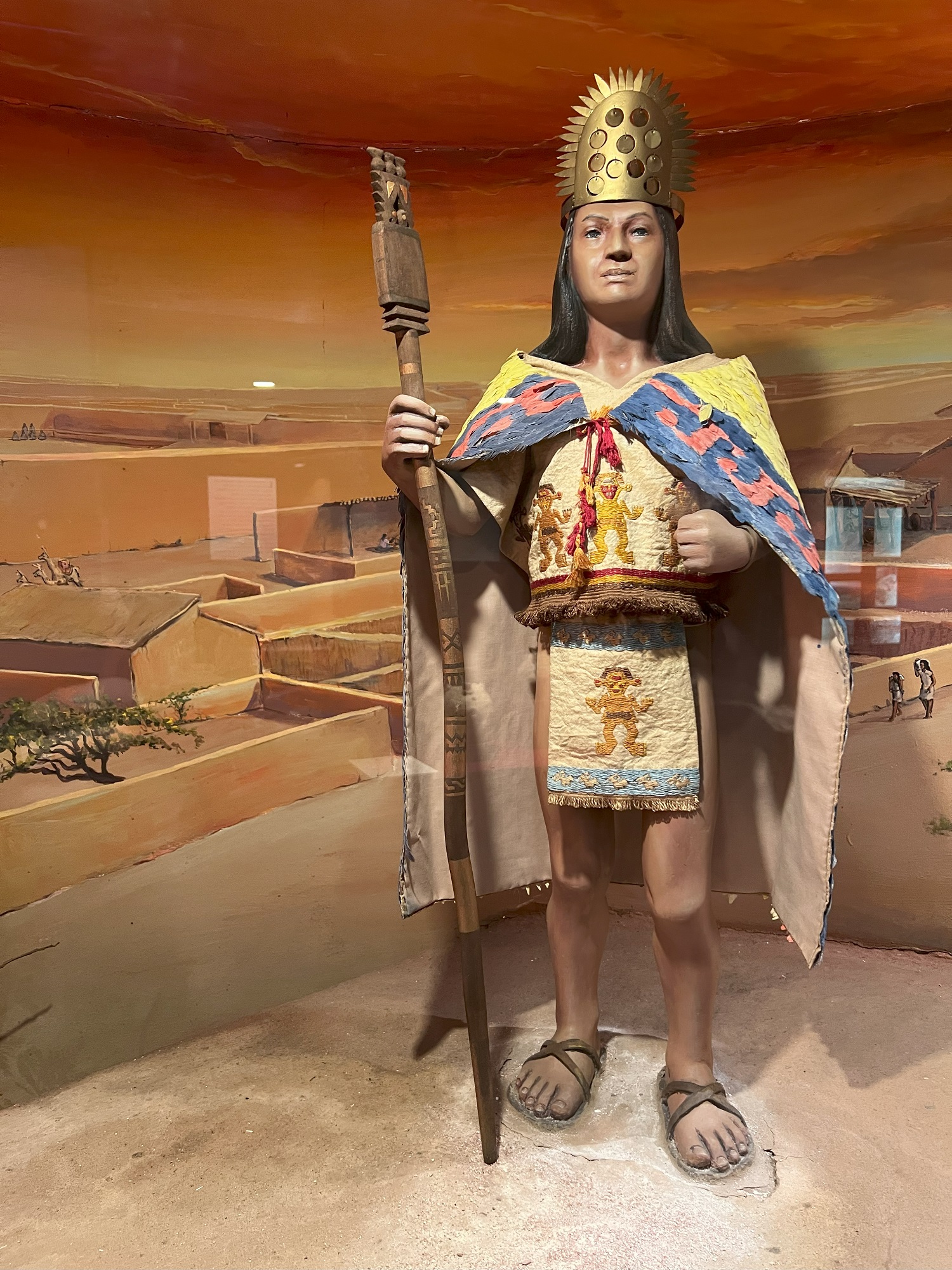
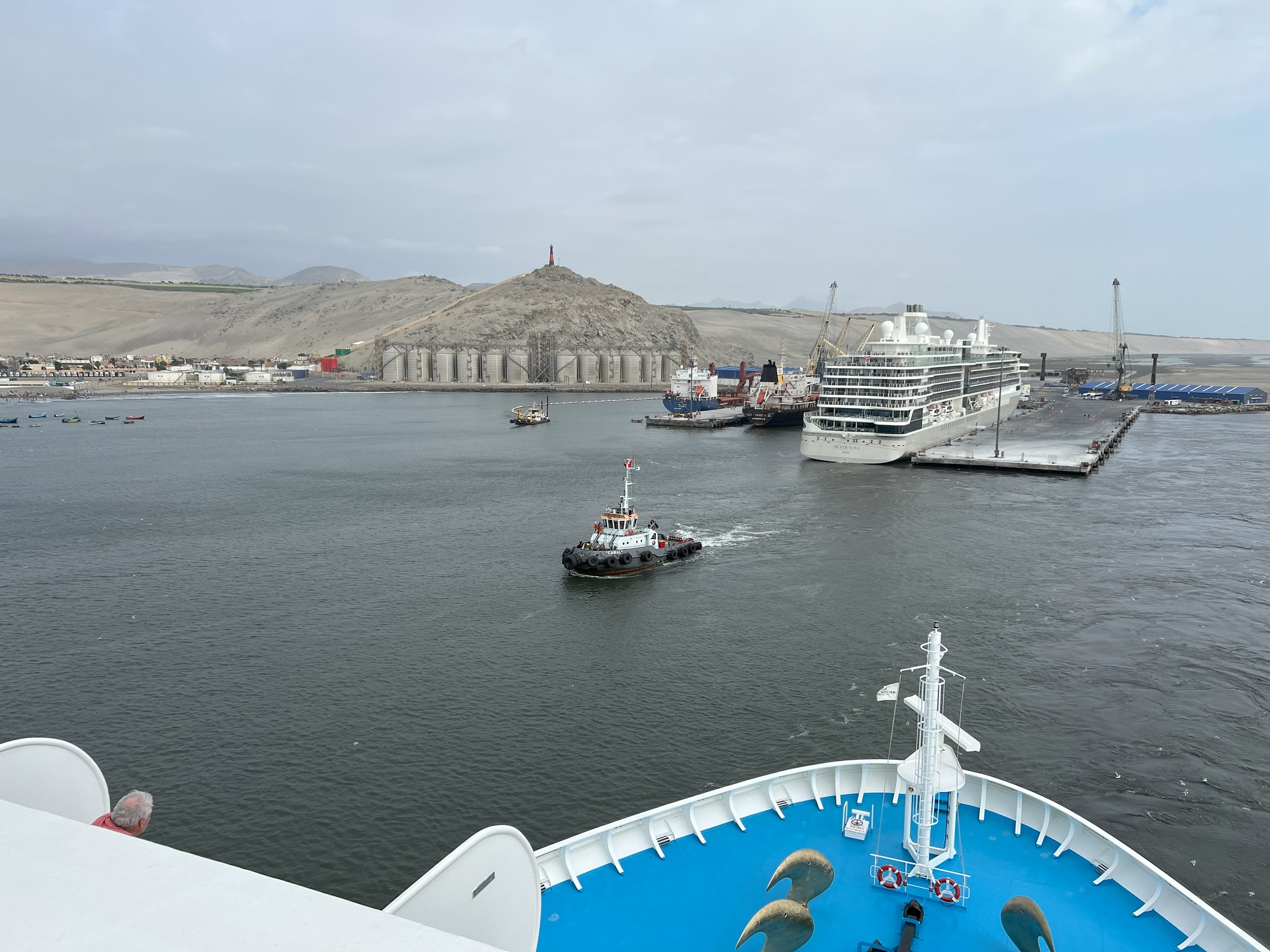
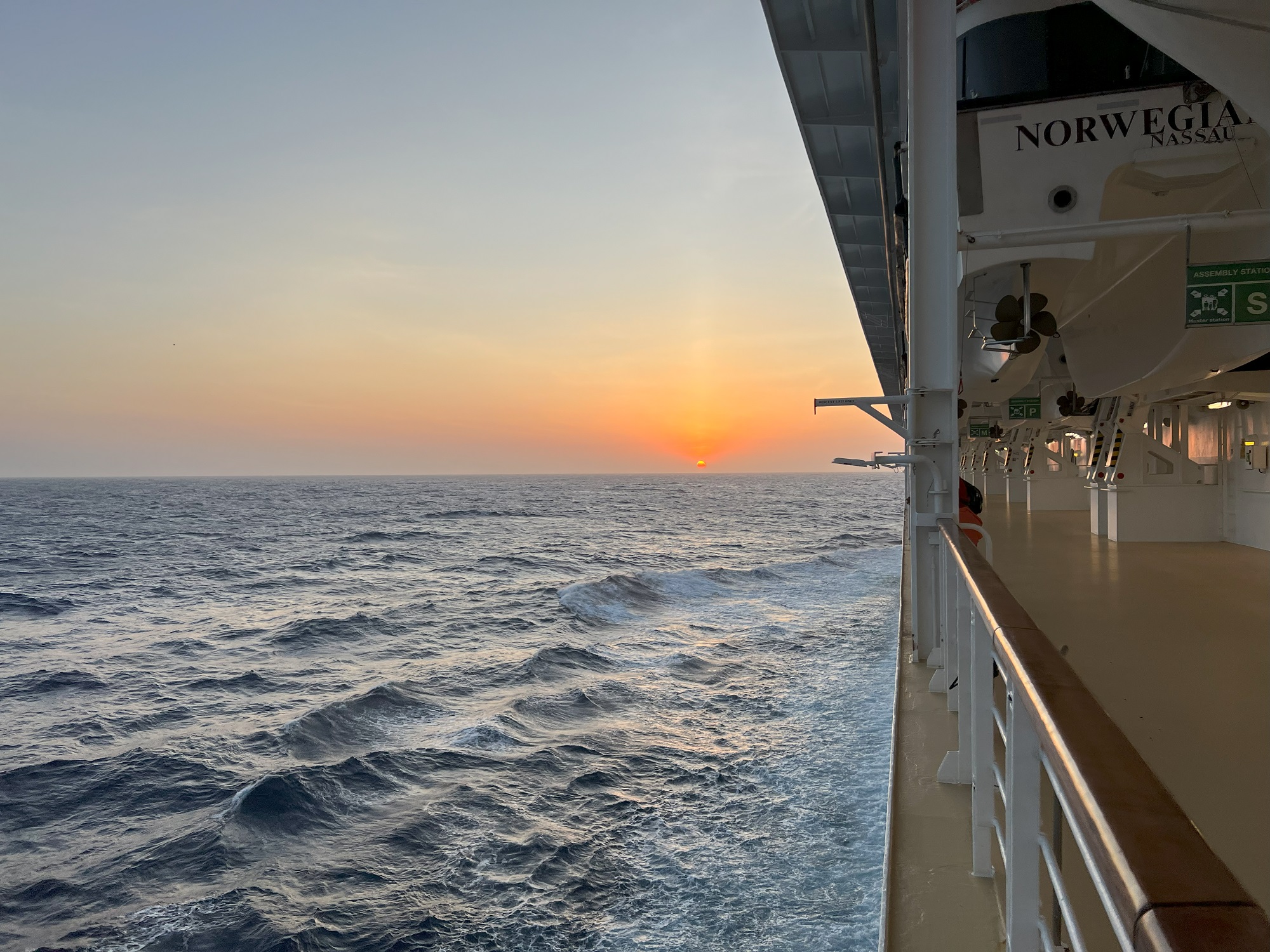
The Norwegian Sun made it into the port town of Salaverry at seven this morning (first picture).
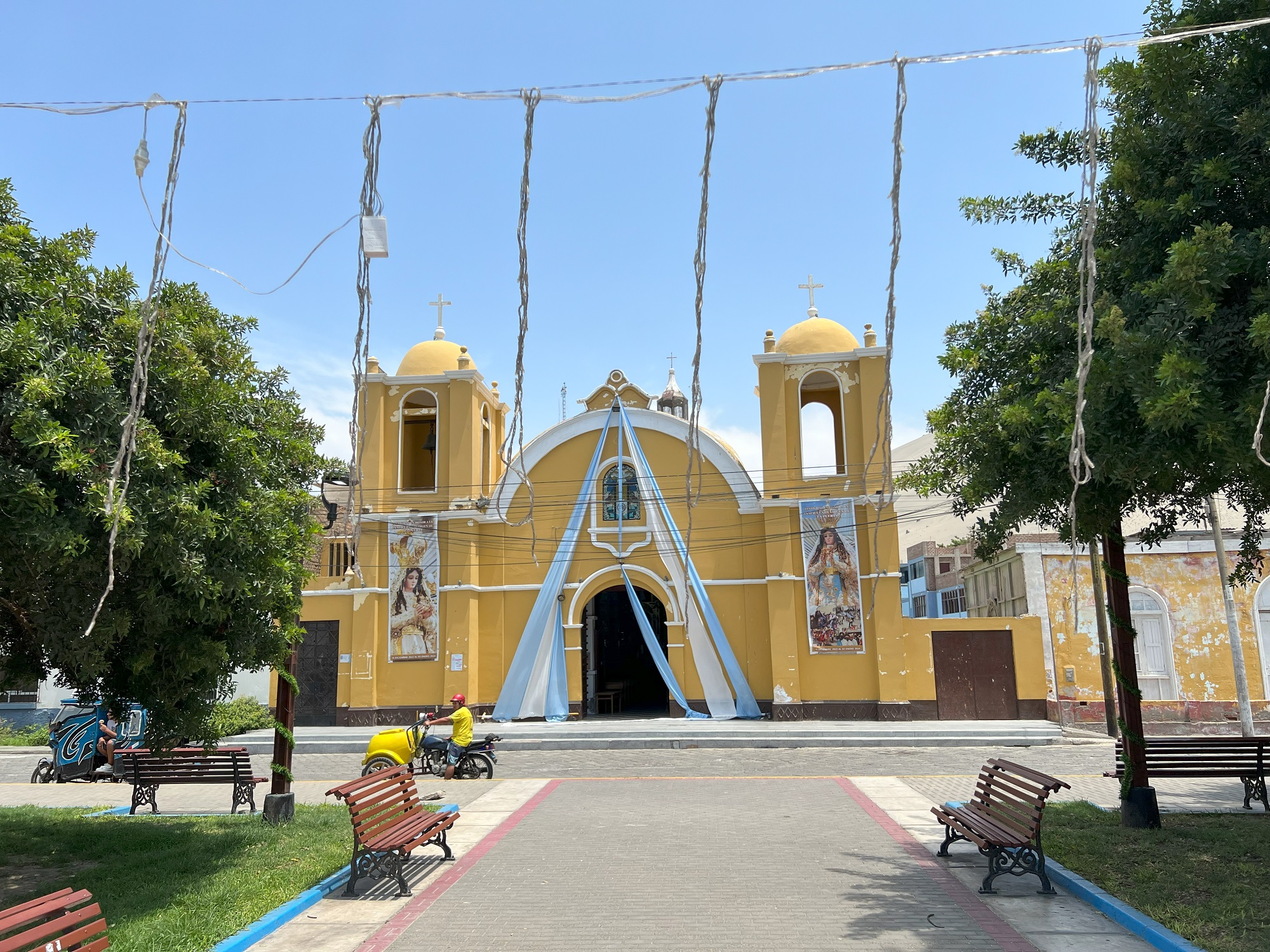
There was a shuttle bus out to the main plaza in Salaverry (third picture), and from there my party of three were left to our own devices to find transport to the city of Trujillo (pop. about 1 million).
This whole area nearby is the site of the great prehistoric Moche and Chimu cultures before the Inca conquest and subsequent expansion.
We solicited a taxi for the 25-minute drive into Trujillo and all went well until we paid the driver in US dollars. Best we could tell that he was not happy with the quality of the $20 and two $5 dollar bills. The US dollars have to be changed into Peruvian Sol by moneychangers for him. Anyway, we gave him the newest dollar bills we had, and that solved the problem.
We used Uber to get back. That was cheaper and worked a lot better: no exchange of paper money needed.
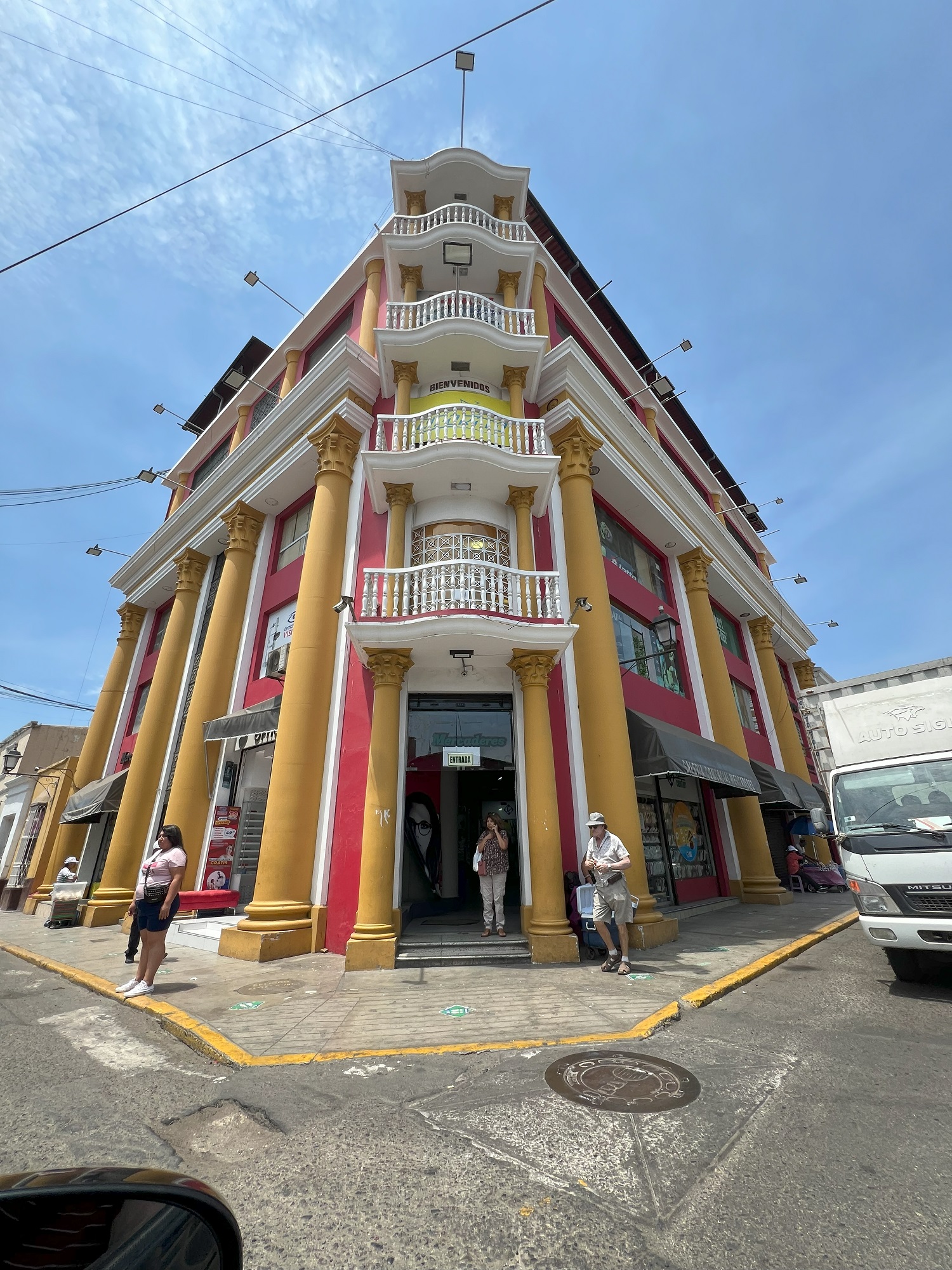
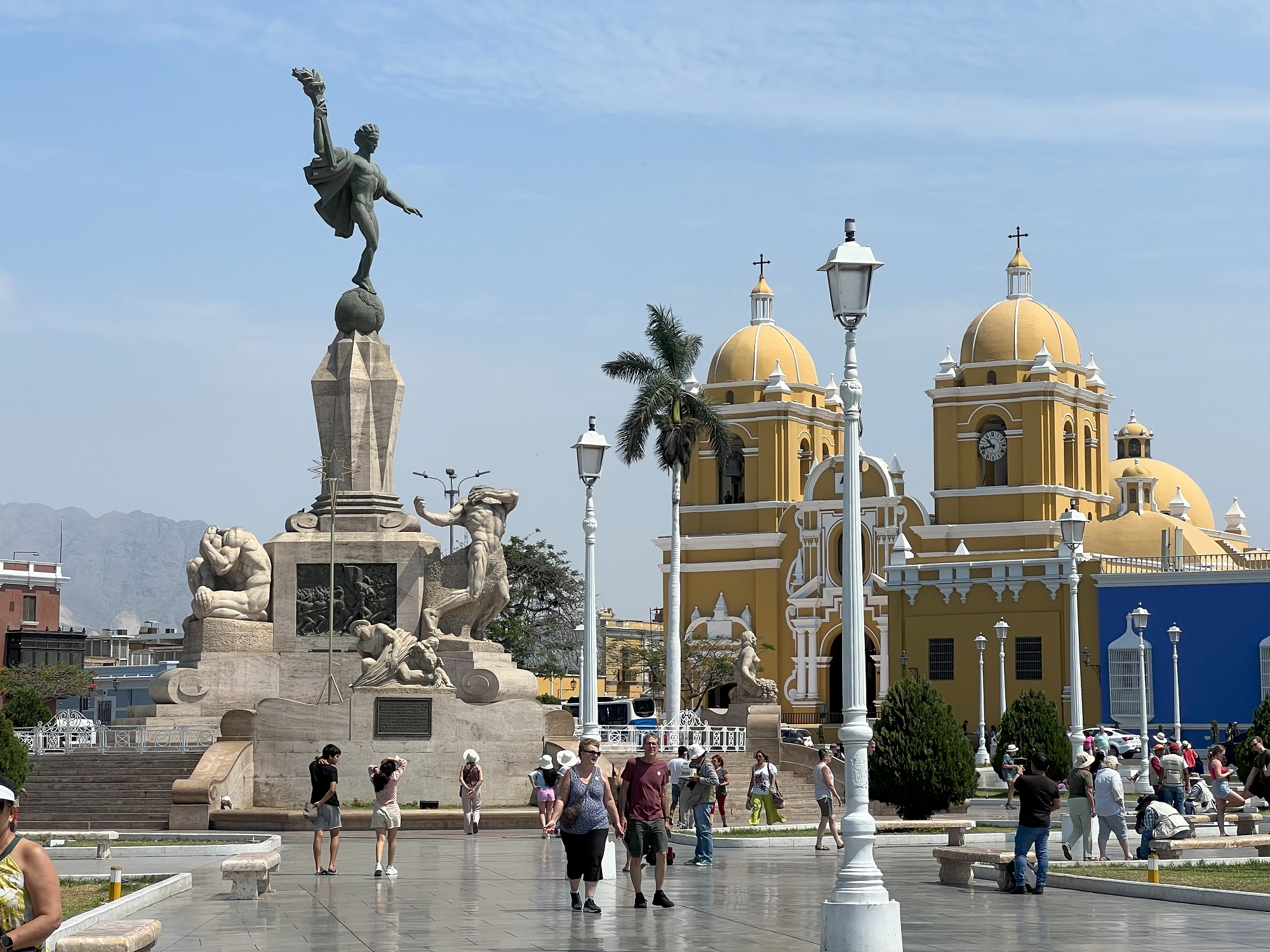
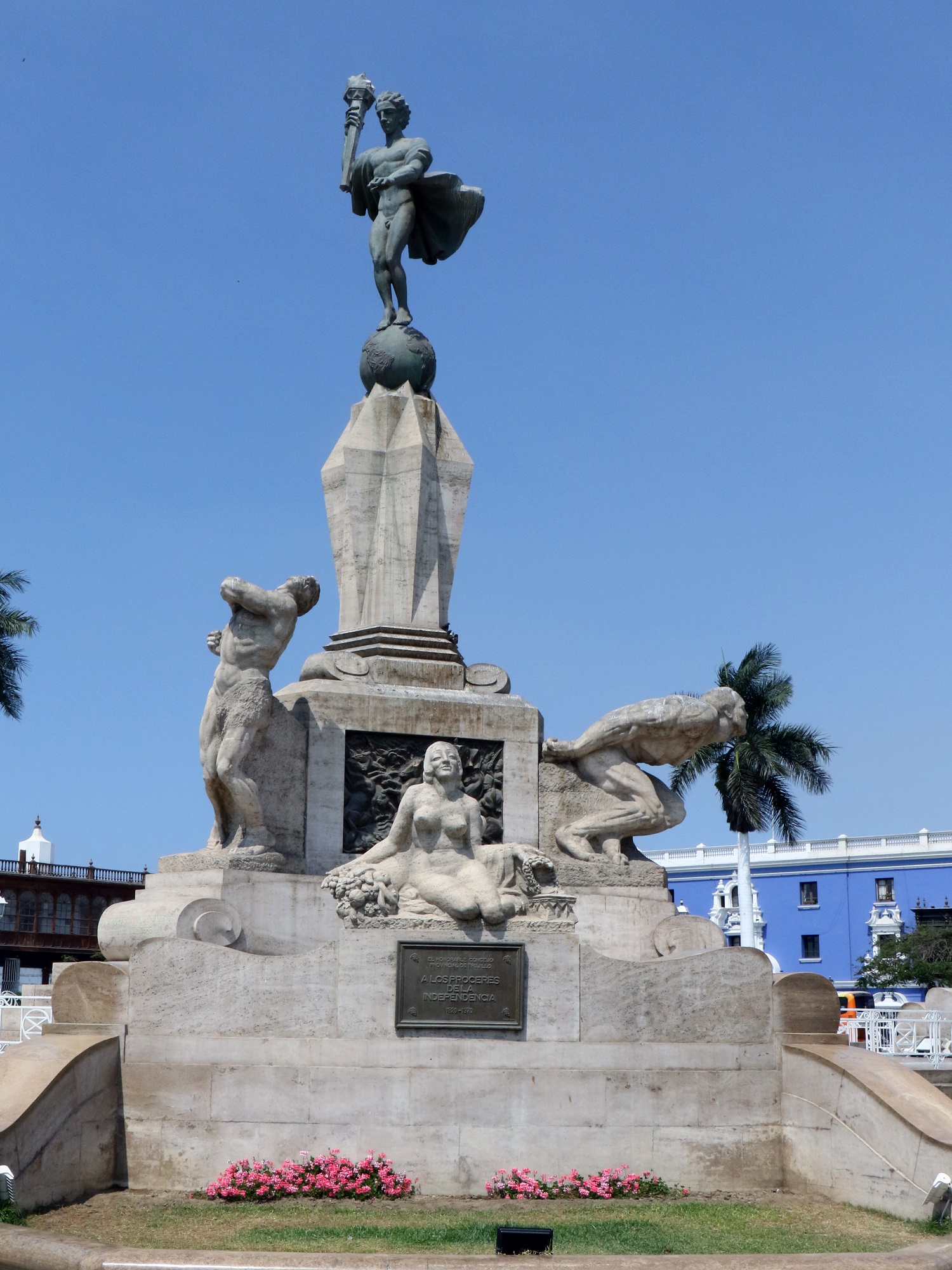
Look for the Plaza de Armas of Trujillo in the pictures below, with the Freedom Monument and the Cathedral of Trujillo nearby.
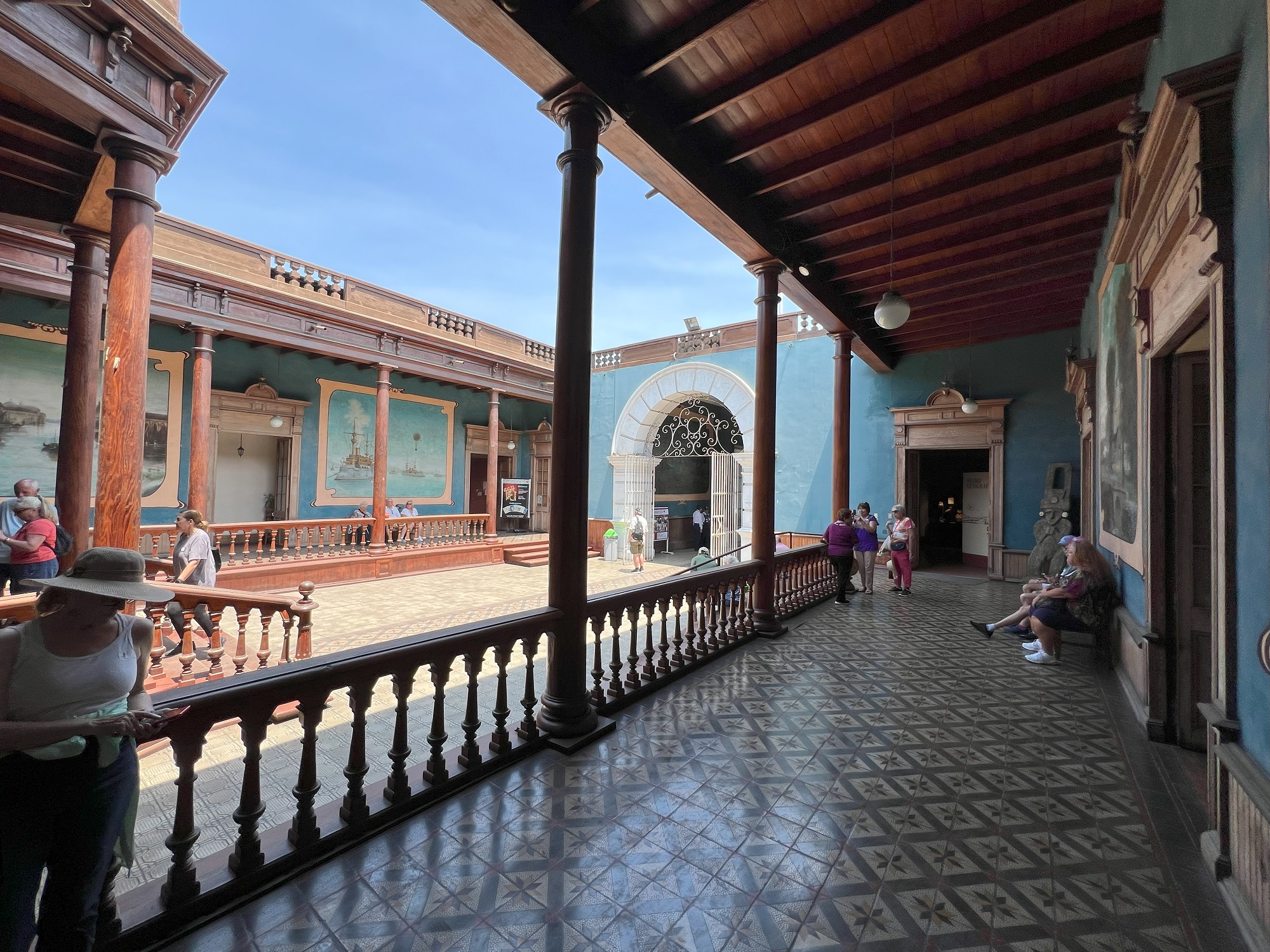
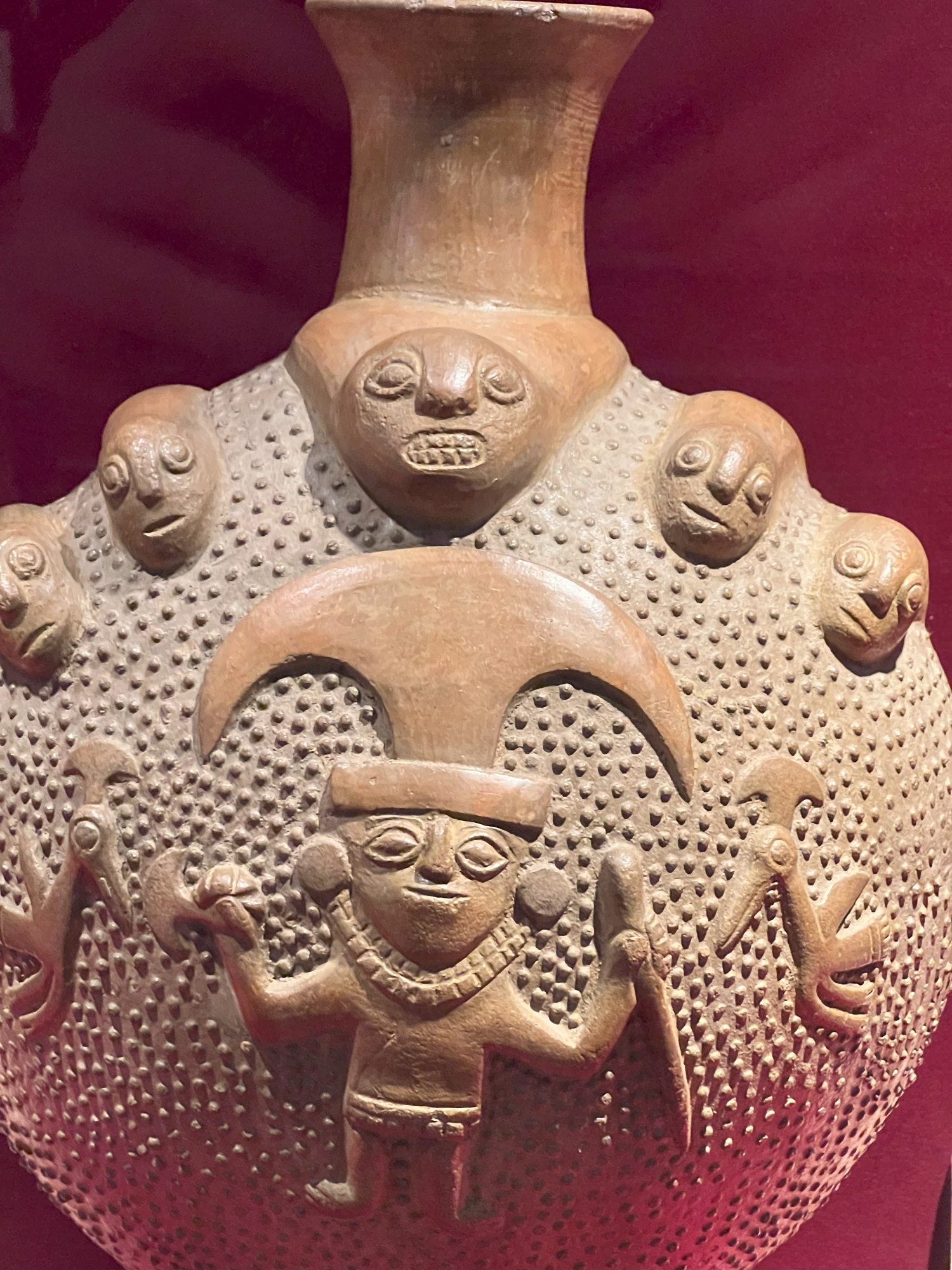
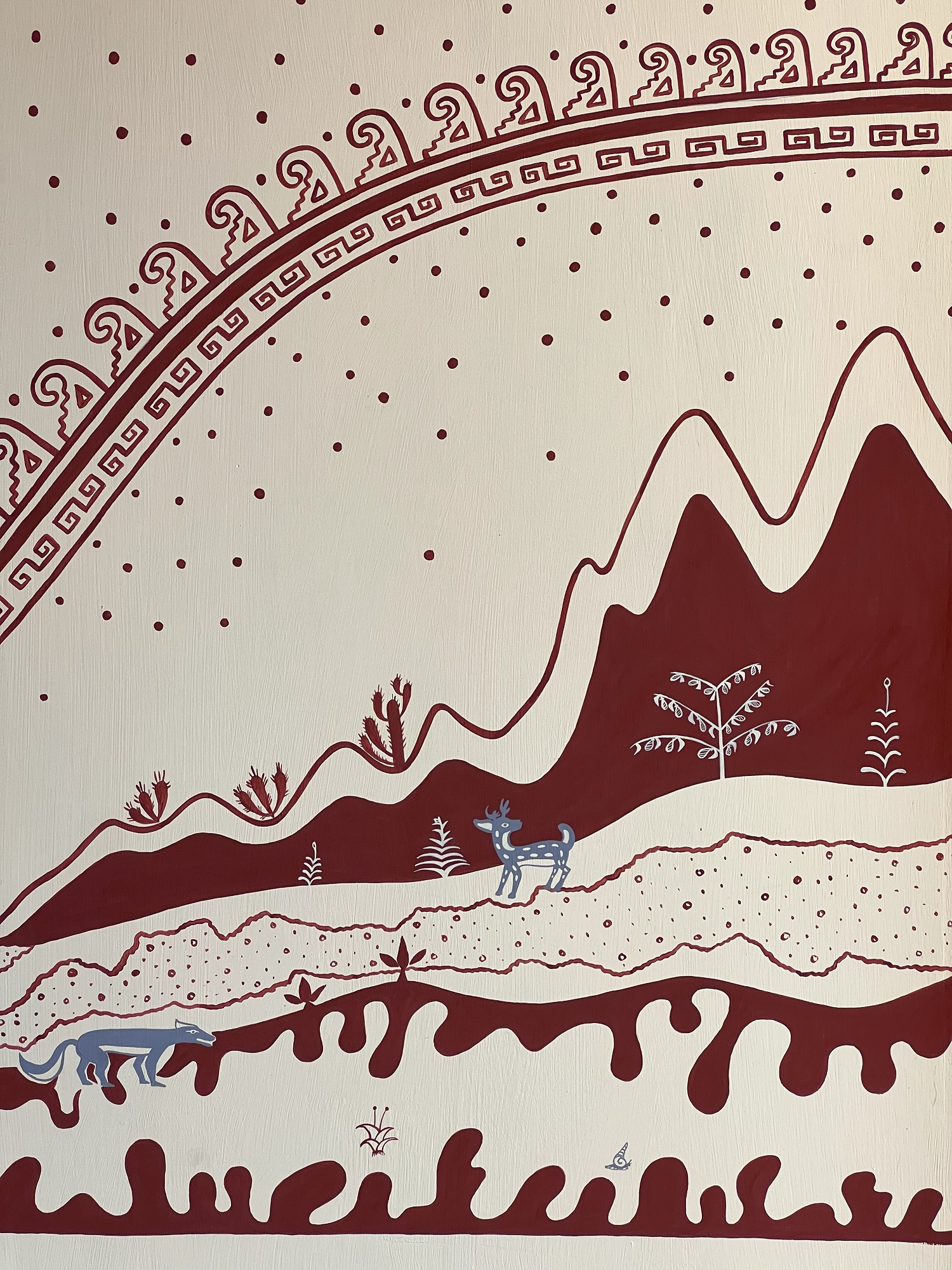
The beautiful building of UNT Archeology Museum and pictures of just a few of the displays inside, follow after that.
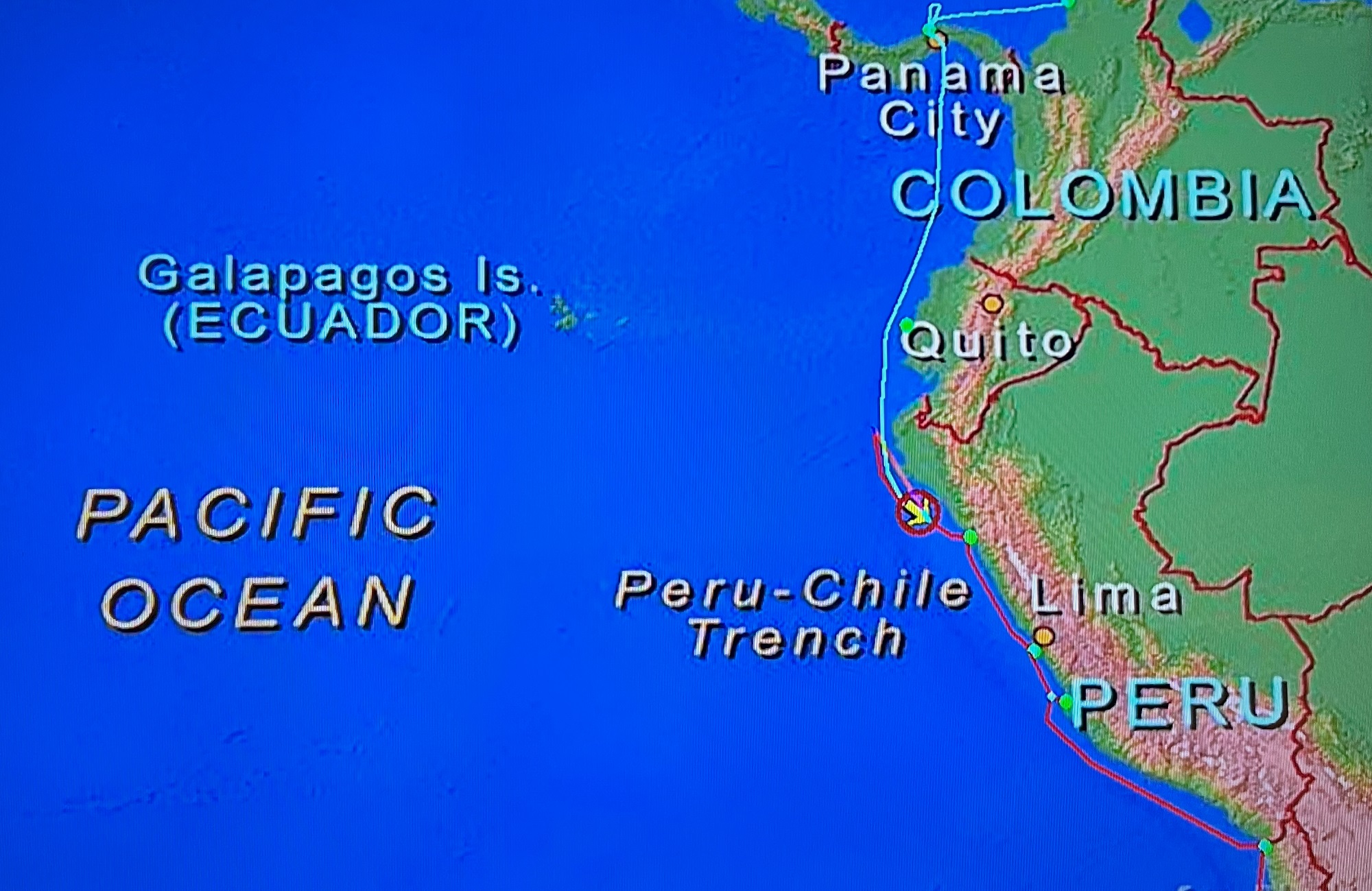
That green dot that we are headed for is the port town of Salaverry. The Peru-Chile Trench on the ocean floor is nearby. From Wikipedia: The Peru–Chile Trench, also known as the Atacama Trench, is an oceanic trench in the eastern Pacific Ocean, about 160 km (99 mi) off the coast of Peru and Chile. It reaches a maximum depth of 8,065 m (26,460 ft) below sea level in Richards Deep (23°10′45″S 71°18′41″W) and is approximately 5,900 km (3,666 mi) long; its mean width is 64 km (40 mi) and it covers an expanse of some 590,000 km2 (230,000 sq mi).
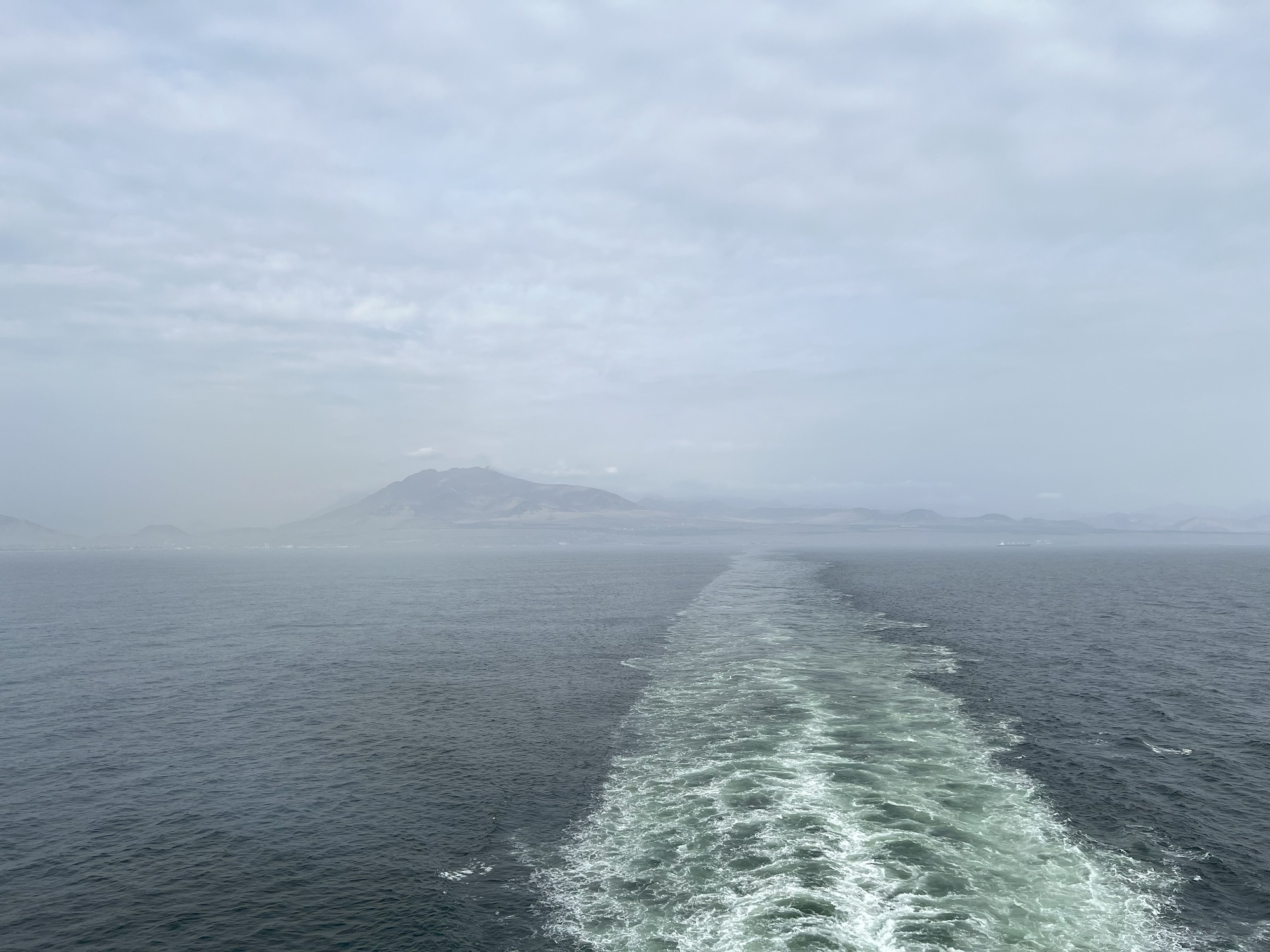
We spotted the coast of Peru this morning.
The Norwegian Sun is on course to arrive at the port town of Salaverry early in the morning, after three days at sea.
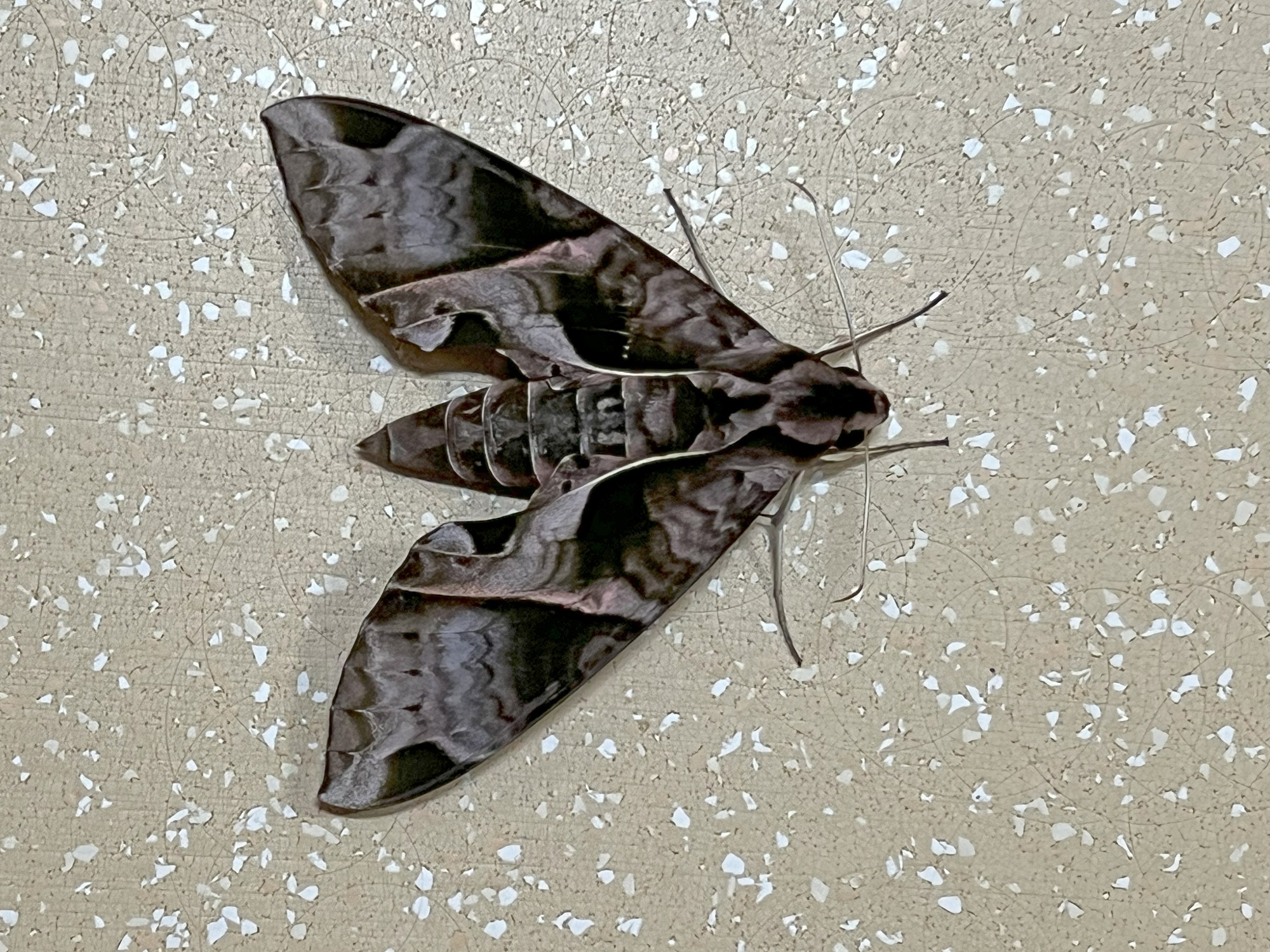
We found this banded sphinx moth (Eumorpha fasciatus) on the promenade deck two nights ago. Adults are on wing year-round in the tropics.
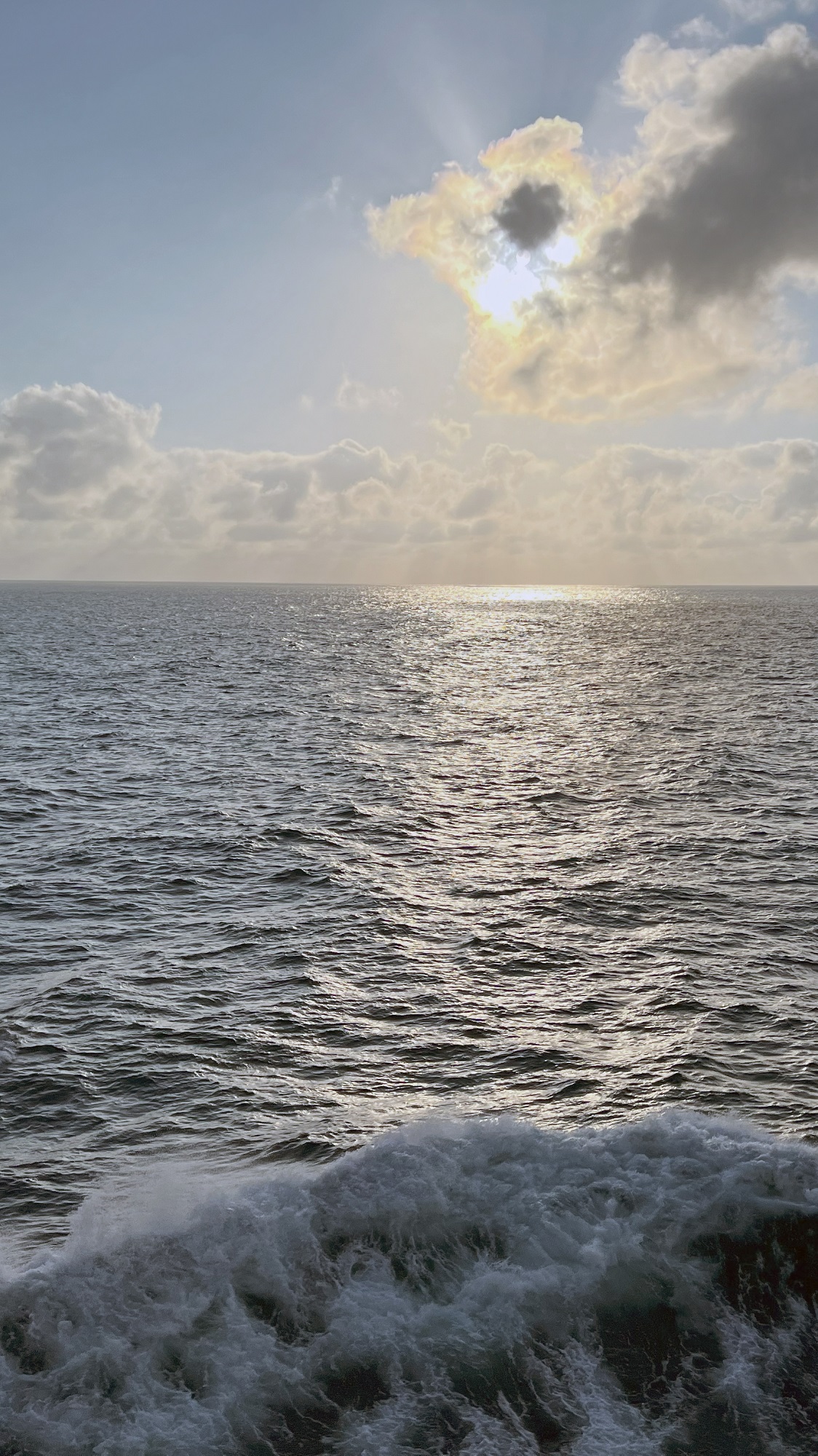
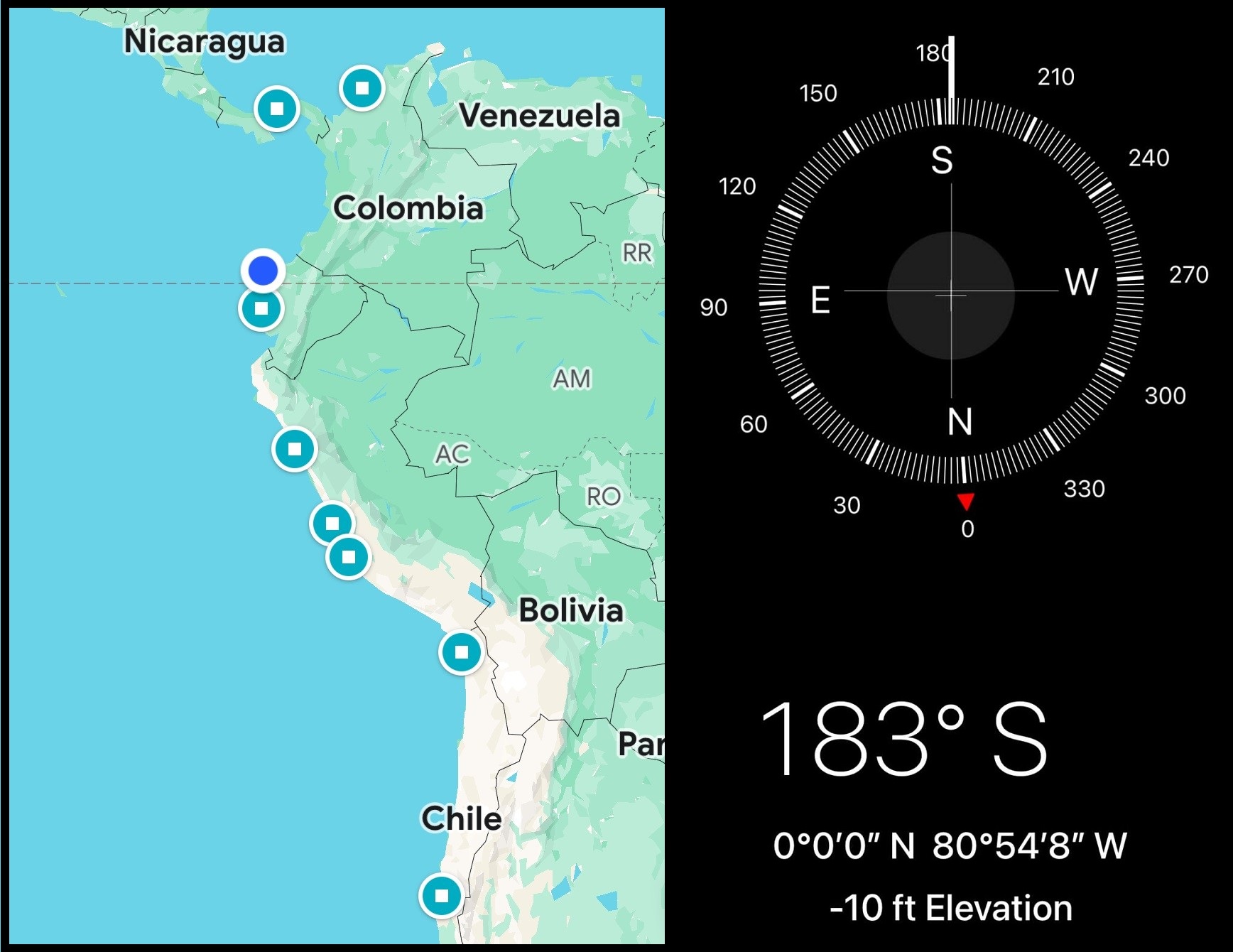
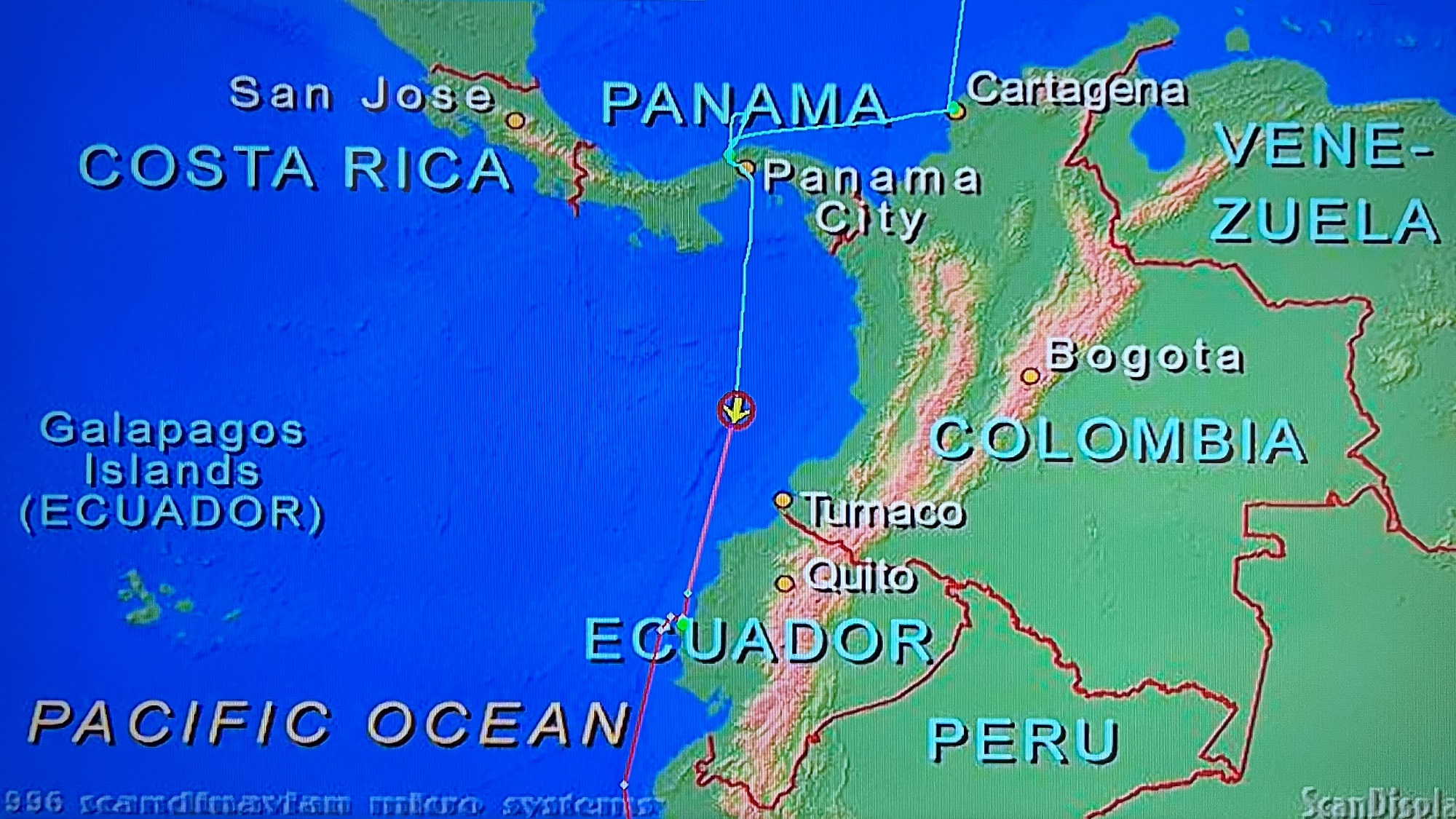
We were sailing just about due south, as we crossed the equator at noon today, close to Manta on the coast of Ecuador.
The captain made an announcement, and sounded the horn of the ship.
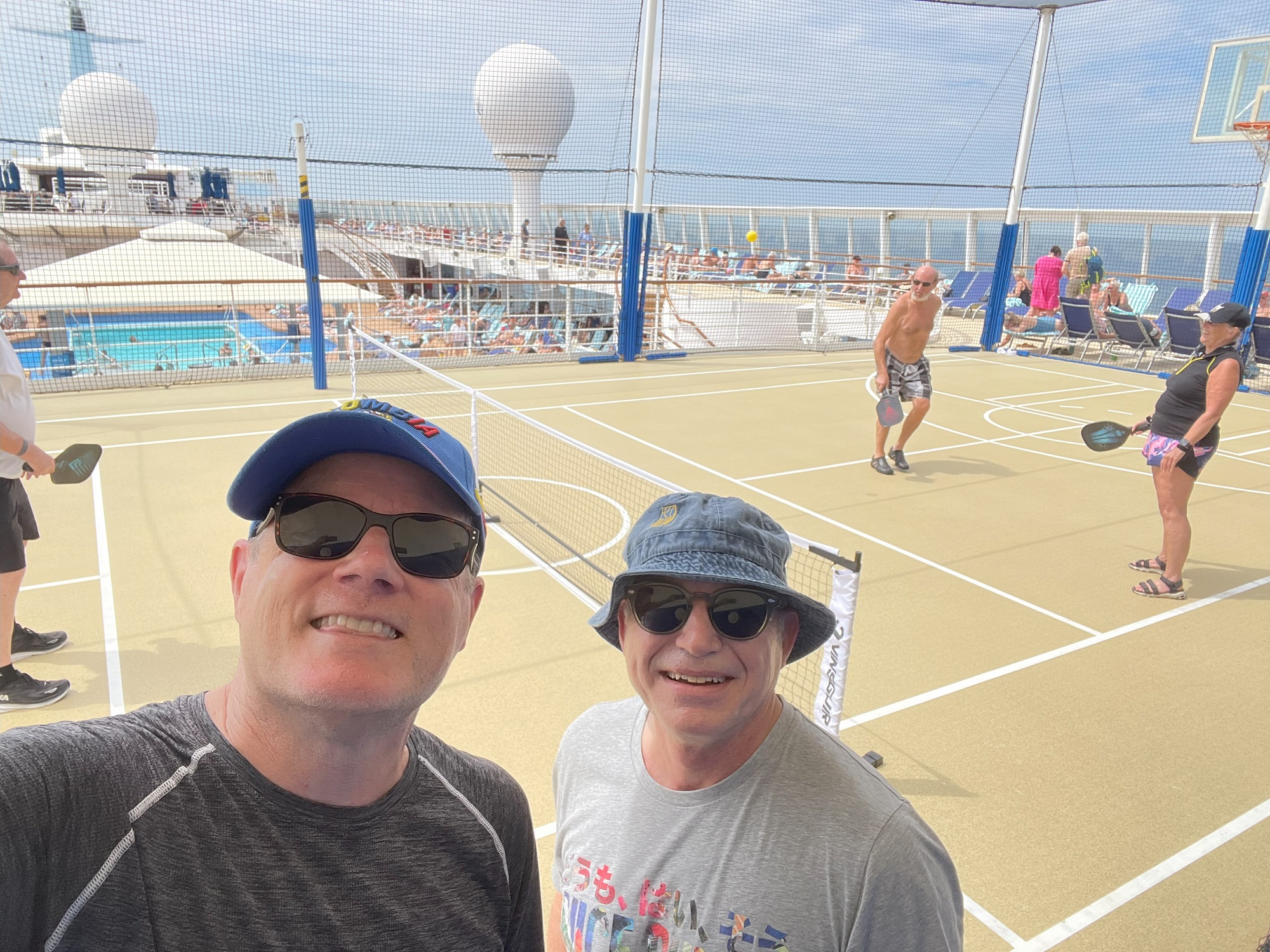
There it is, the imaginary line that divides Earth into the Northern Hemisphere and the Southern Hemisphere. My weather app instantly changed the location from North Pacific Ocean to South Pacific Ocean, and the latitude has now turned negative (south) as well. (Thanks to Bryan for the iPhone compass picture).There was pickleball today— on deck and on the equator, how about that? Two of the five pickleball Amigos from Seattle showed off their skills on the very breezy pickleball enclosure. The entire space is enclosed by netting, so that the pickleball cannot go flying into the ocean. Great!
Violence erupted across Ecuador this week after a well-known gang leader disappeared from prison. Explosions, looting, gunfire and burning vehicles were reported, and there were uprisings in several prisons. In the largest city, Guayaquil, gunmen stormed a TV studio during a live broadcast on Tuesday.
President Daniel Noboa declared a 60-day state of emergency, imposing a nationwide curfew and authorizing the military to patrol the streets and take control of prisons. Mr. Noboa also deployed thousands of police officers and military personnel to search for the gang leader, Adolfo Macías.
– from the New York Times
The Norwegian Sun’s position at 3 pm on Thursday afternoon.
We were going to stay over for one night in the port city of Manta, Ecuador, but due to the violence and political uncertainty in the country, the Norwegian Sun will now pass it by.
This means that today was the first one of three at-sea days in a row.
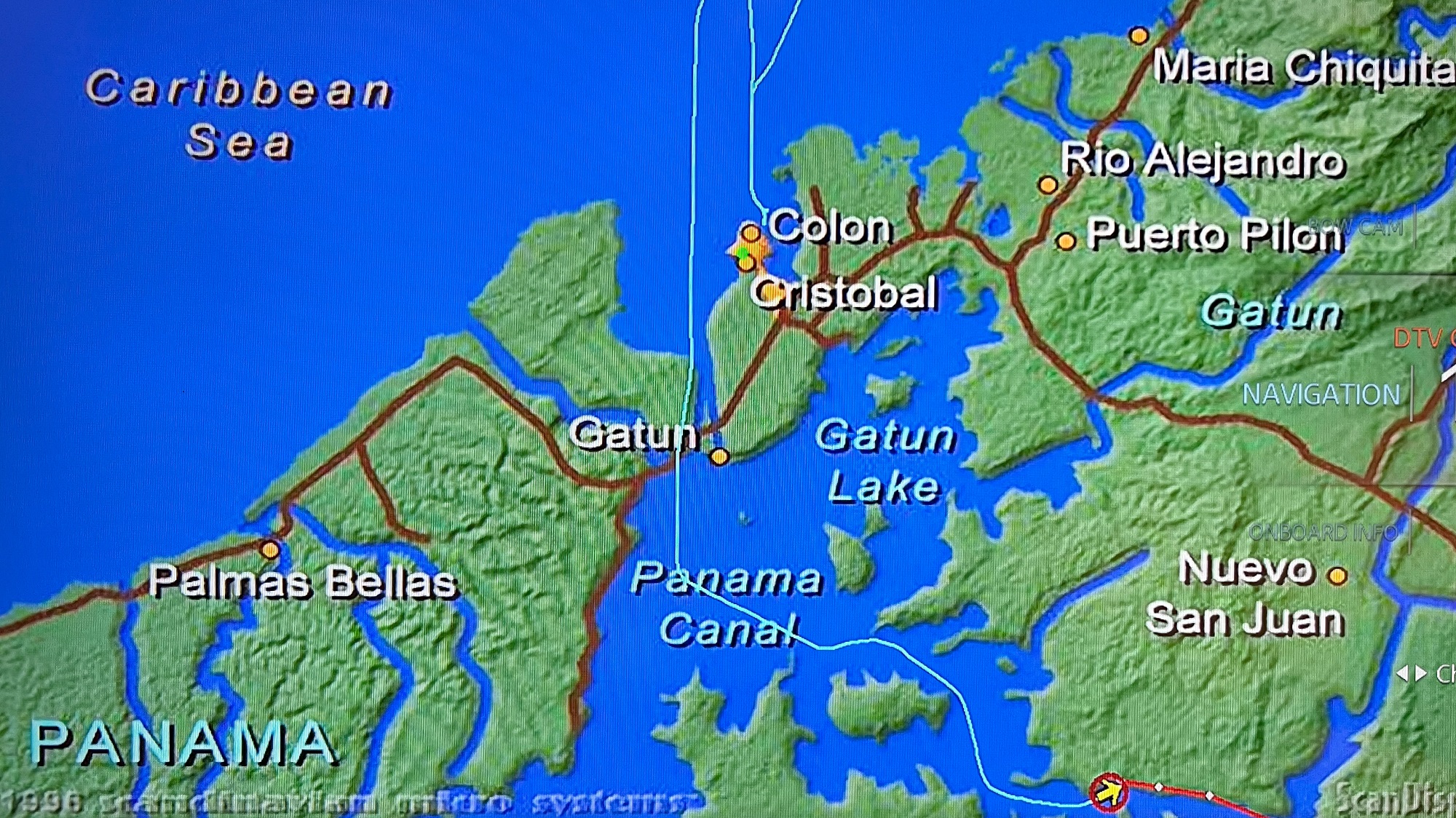
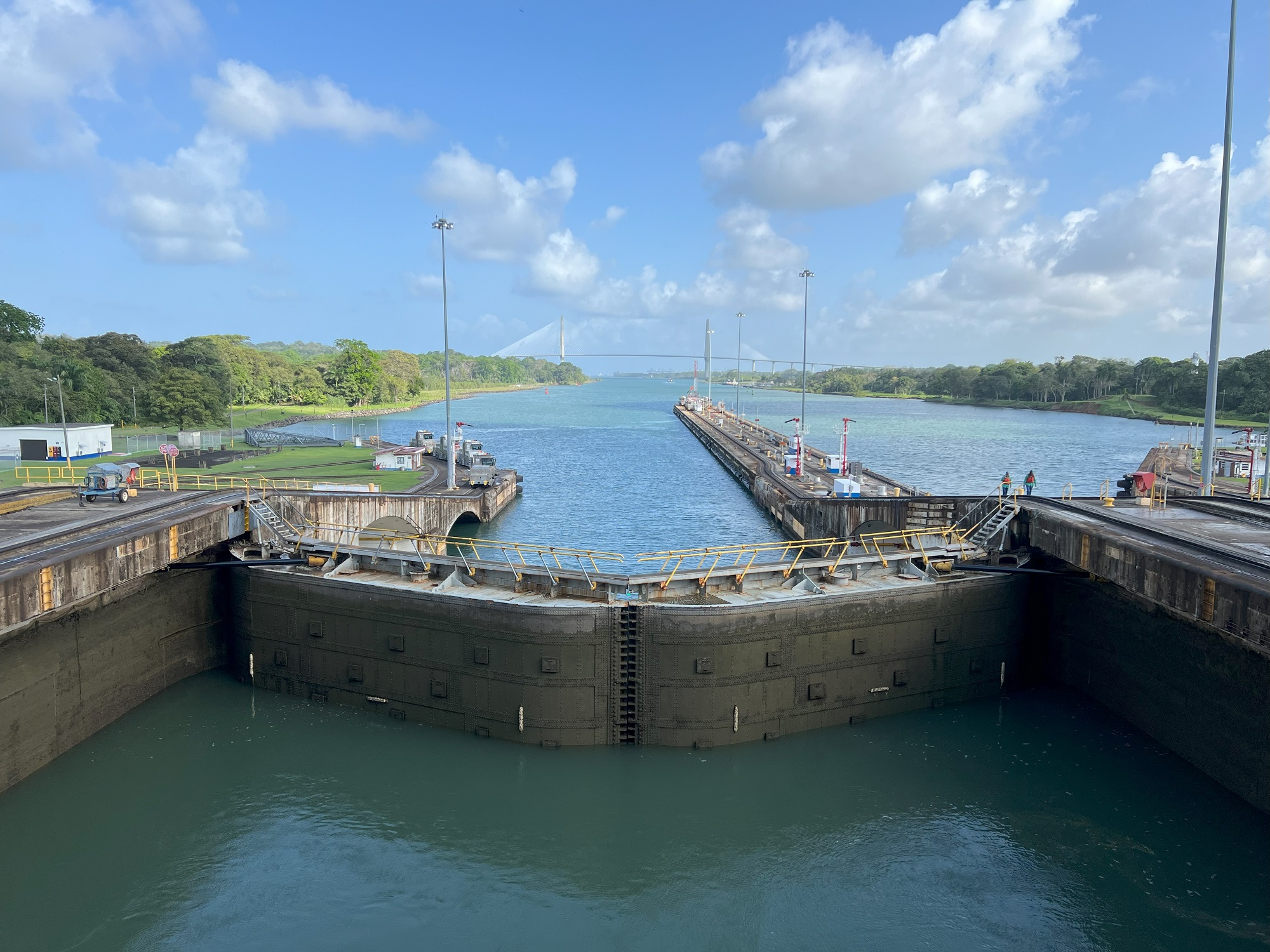
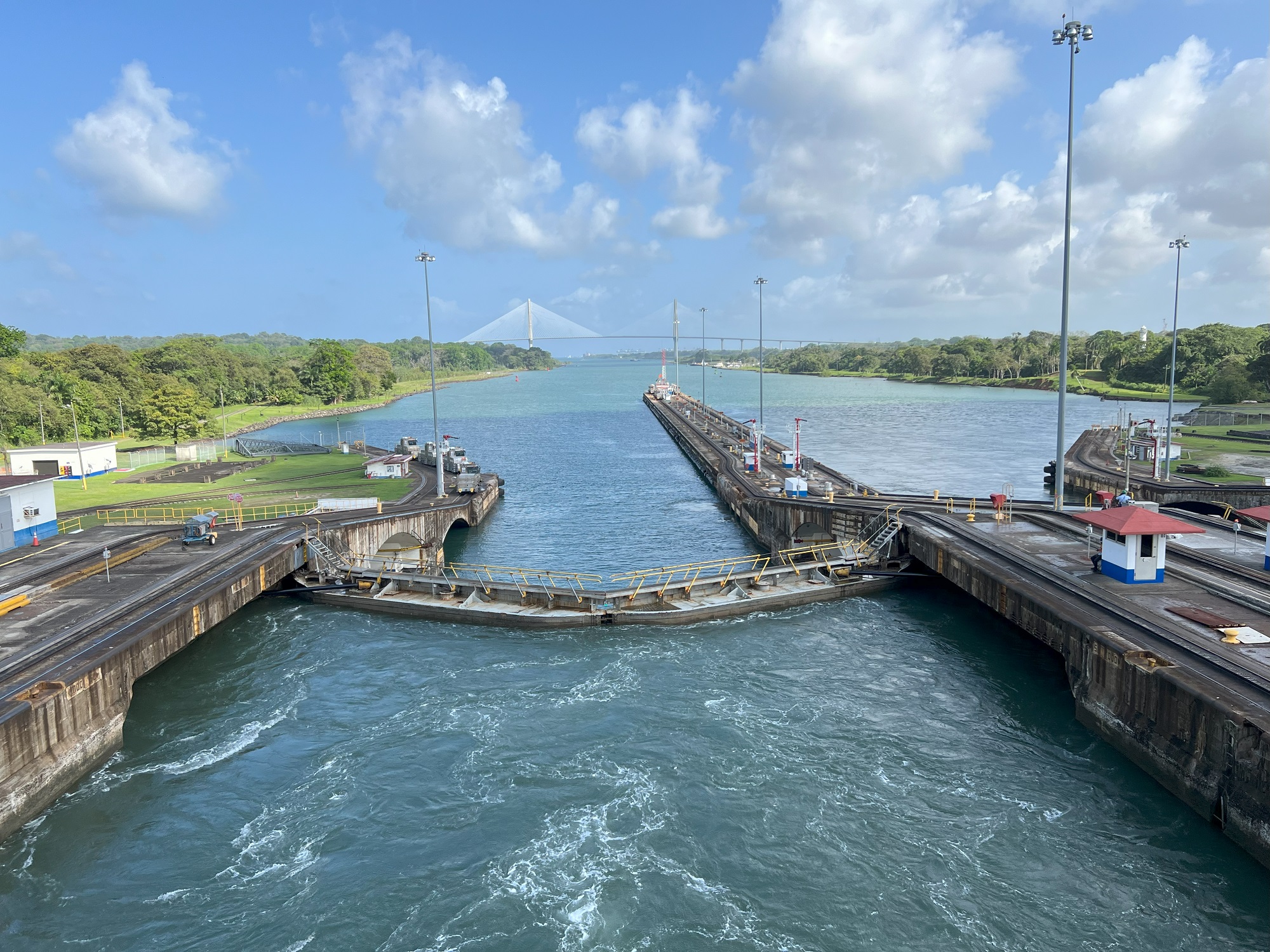
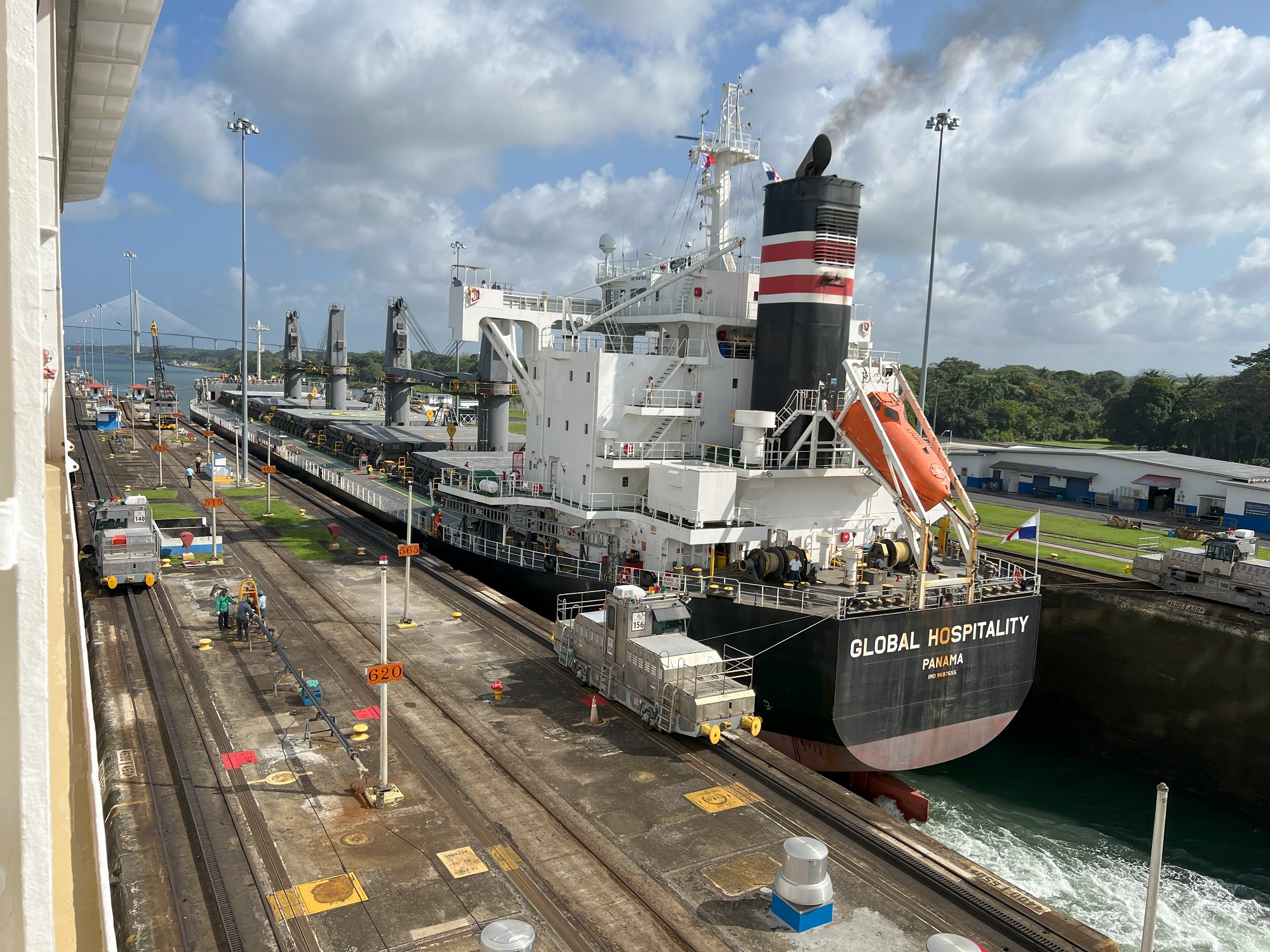
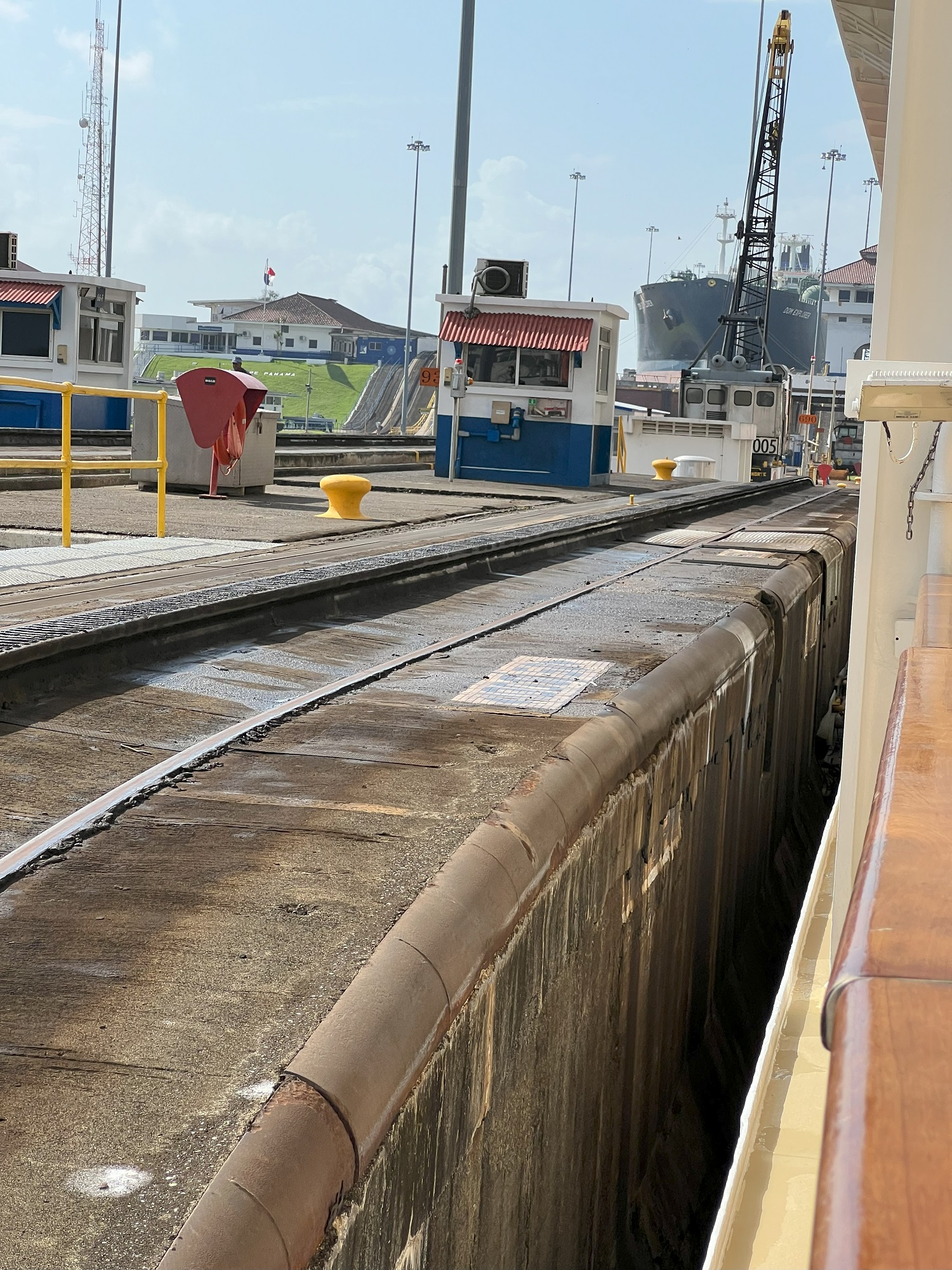
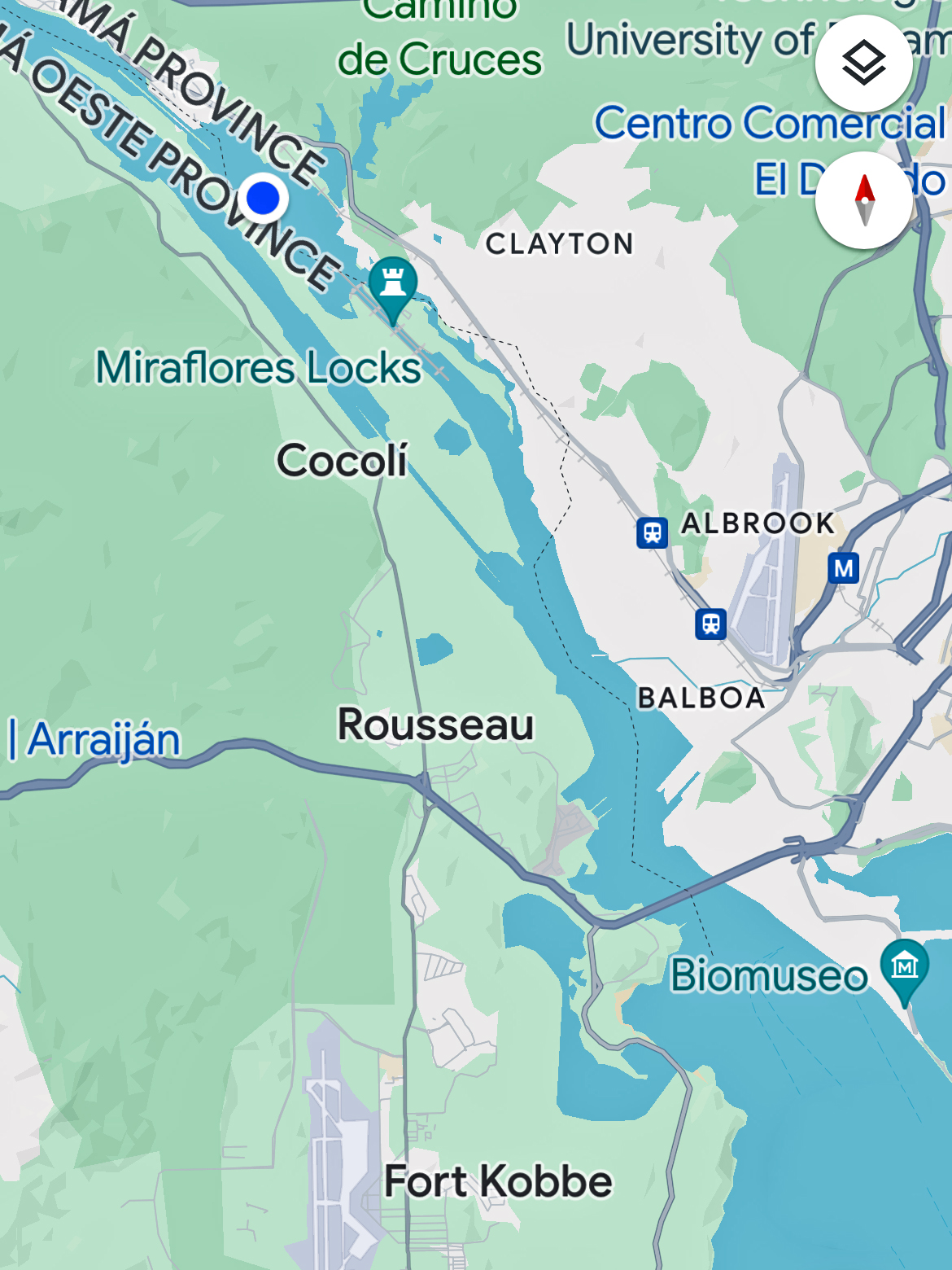
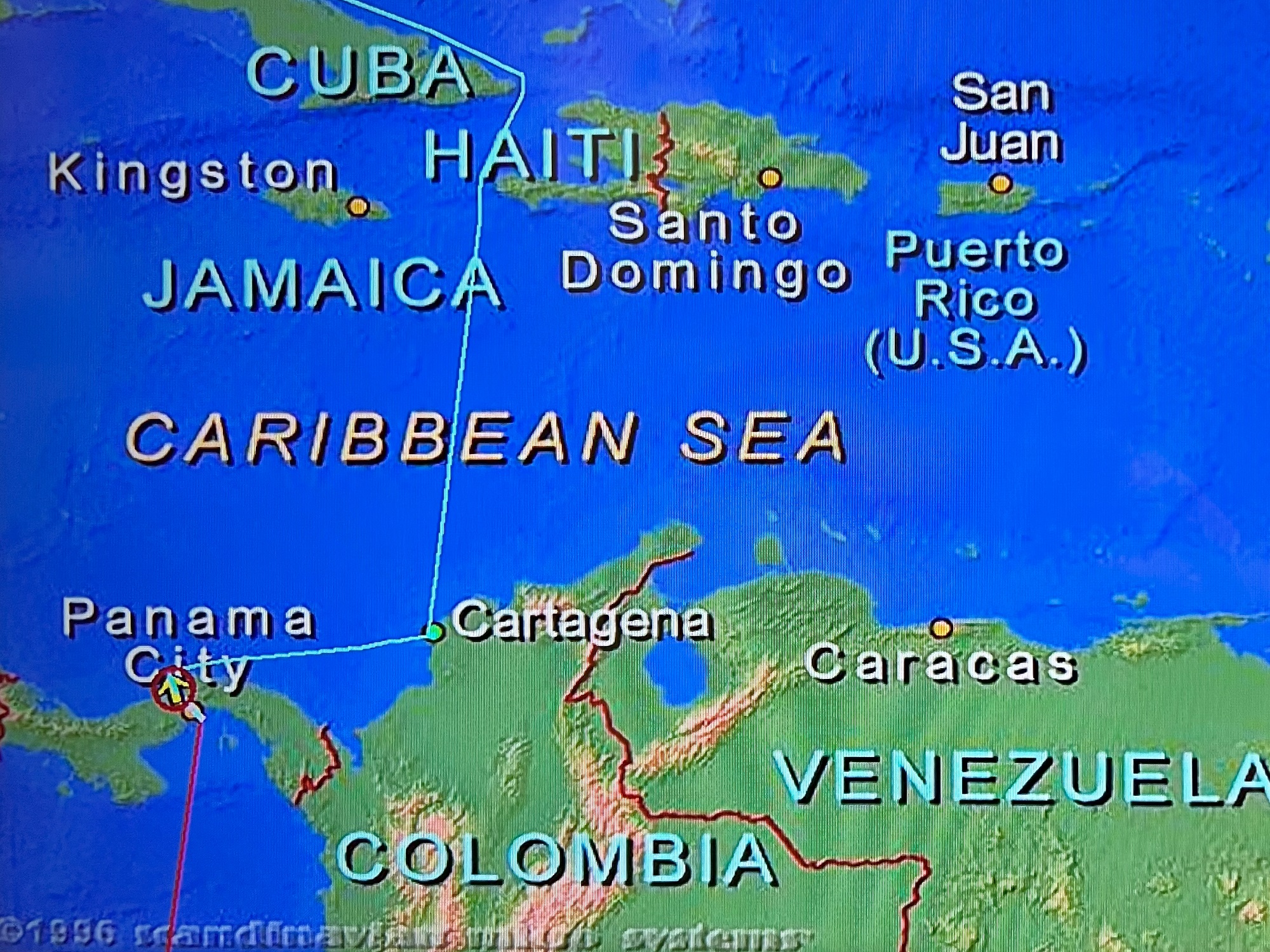
The Norwegian Sun’s position at 4.38 pm this afternoon: leaving Gatun Lake to enter the Miraflores Locks. [Image: The ship’s navigation TV channel]We traversed the engineering marvel called the Panama Canal today.
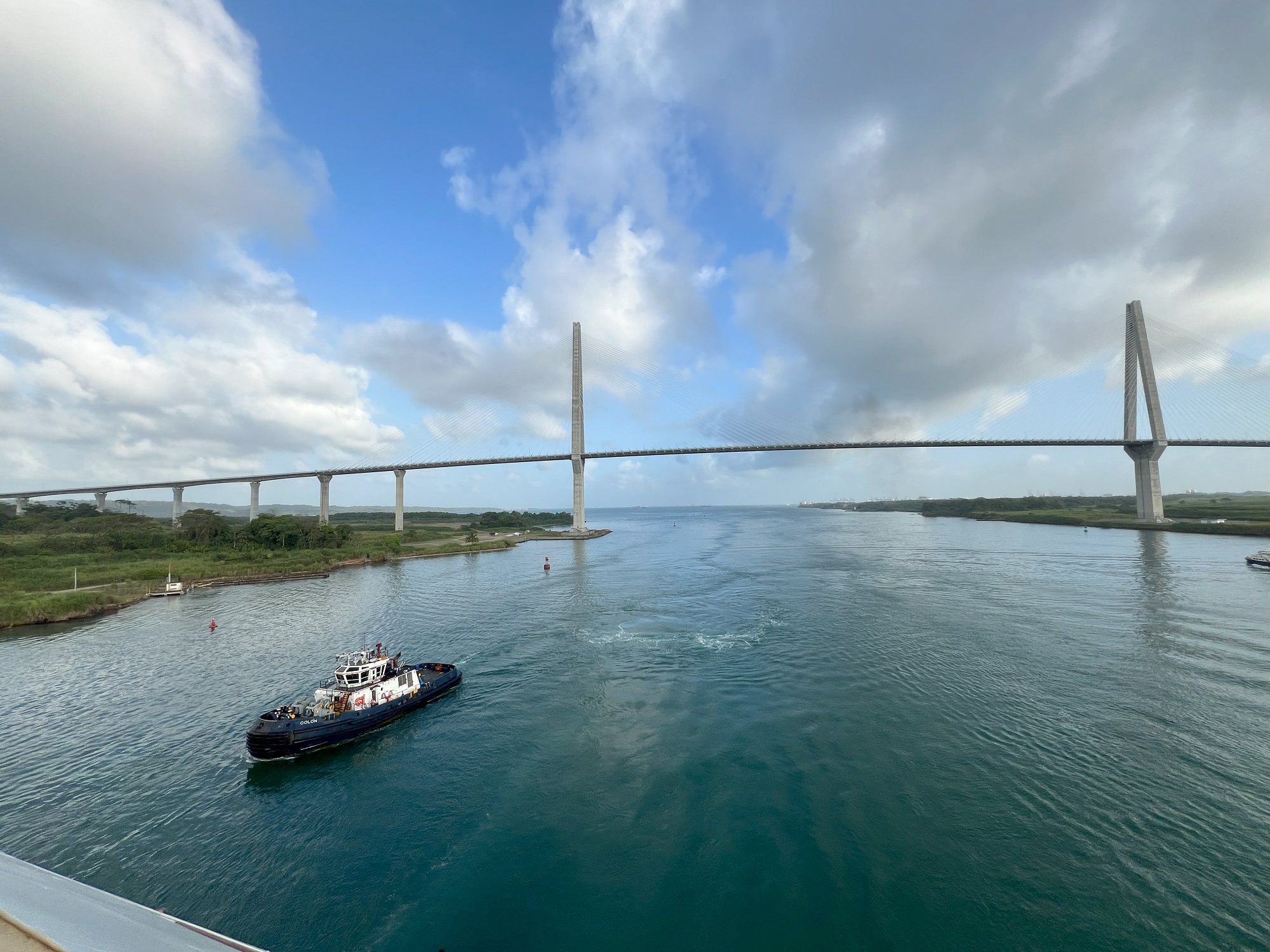
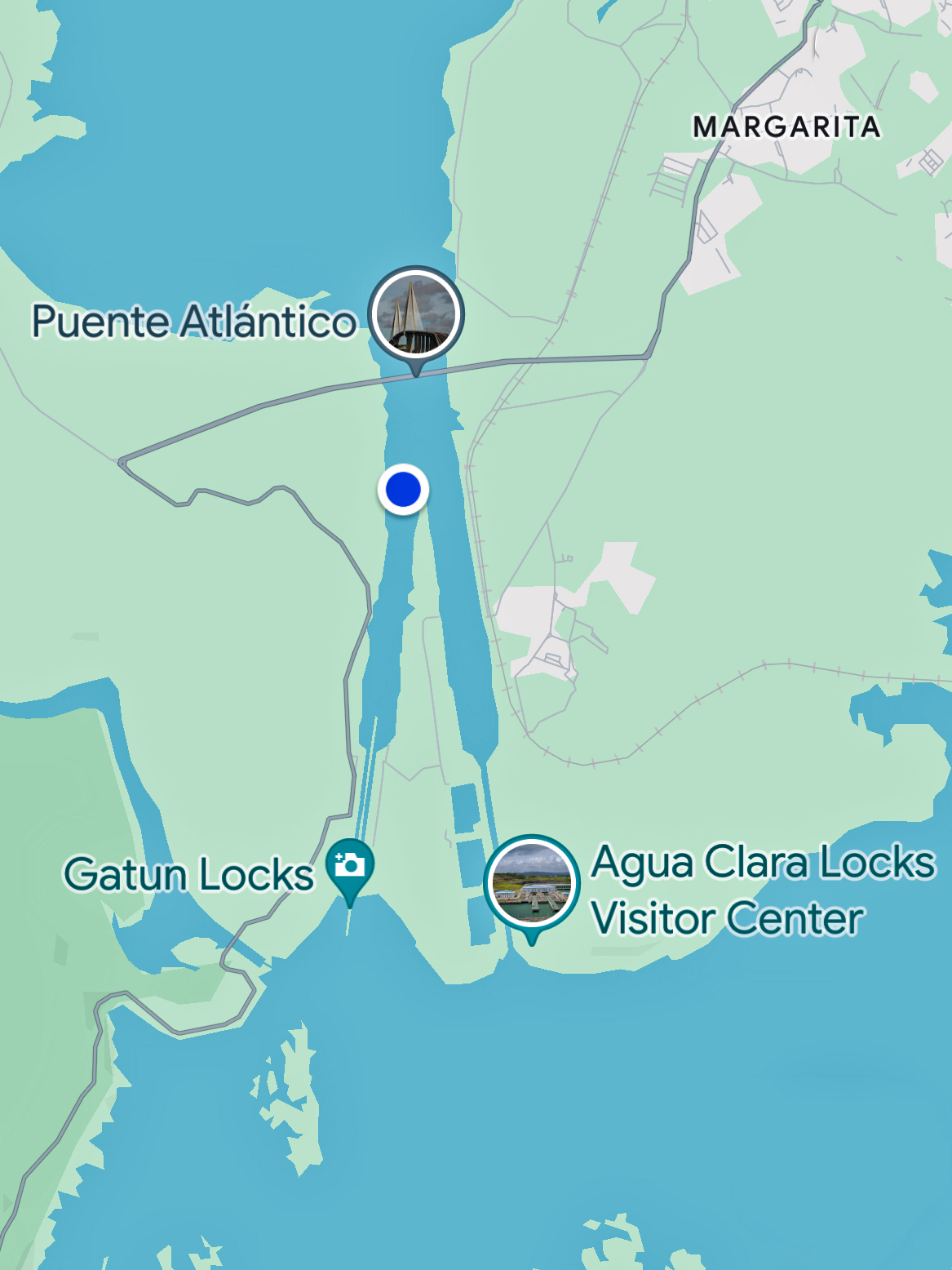
First up to admire was the Atlantic Bridge (Puente Atlántico), the new 15,092 ft (4,600 m) suspension bridge completed in 2019.
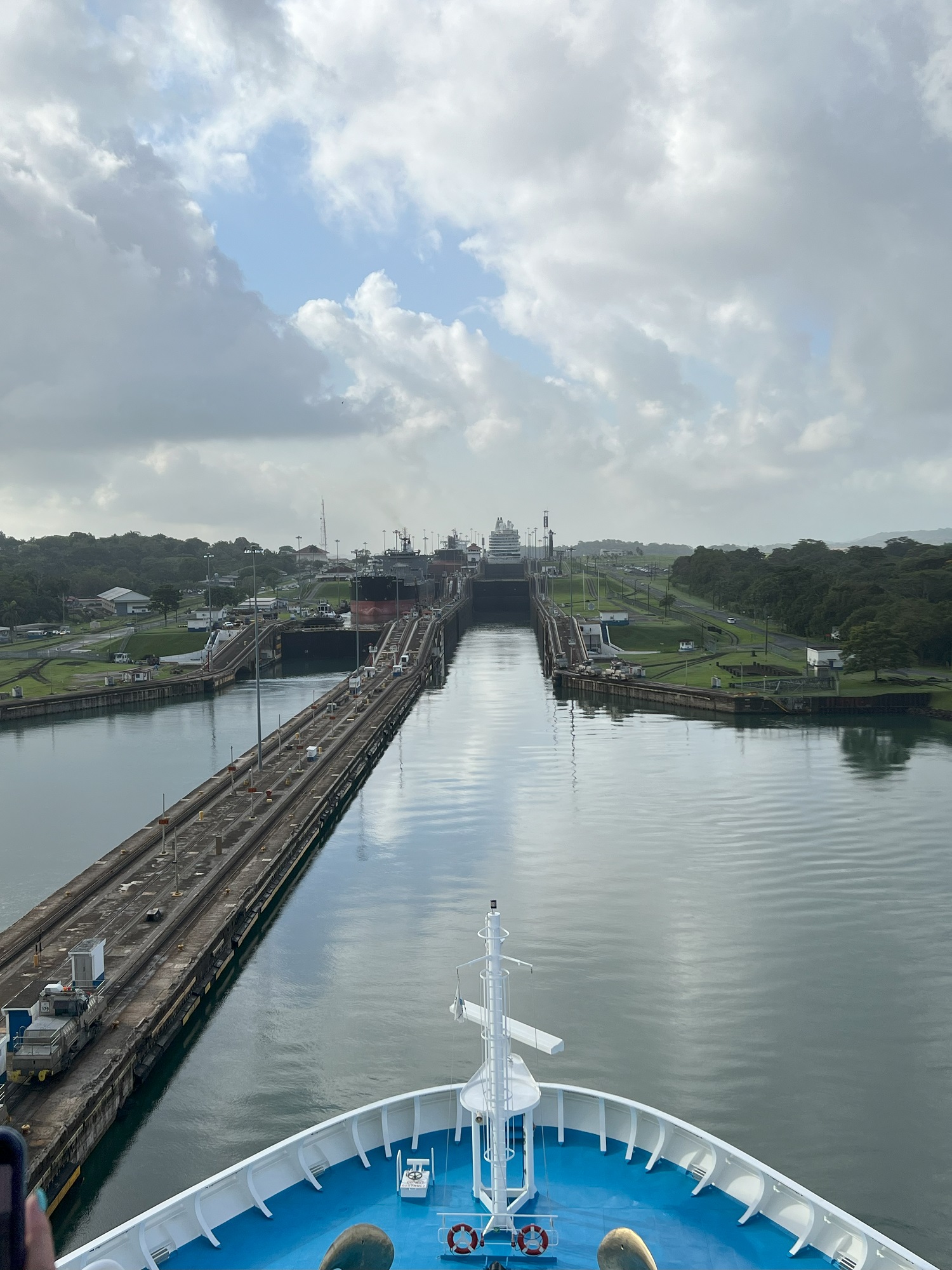
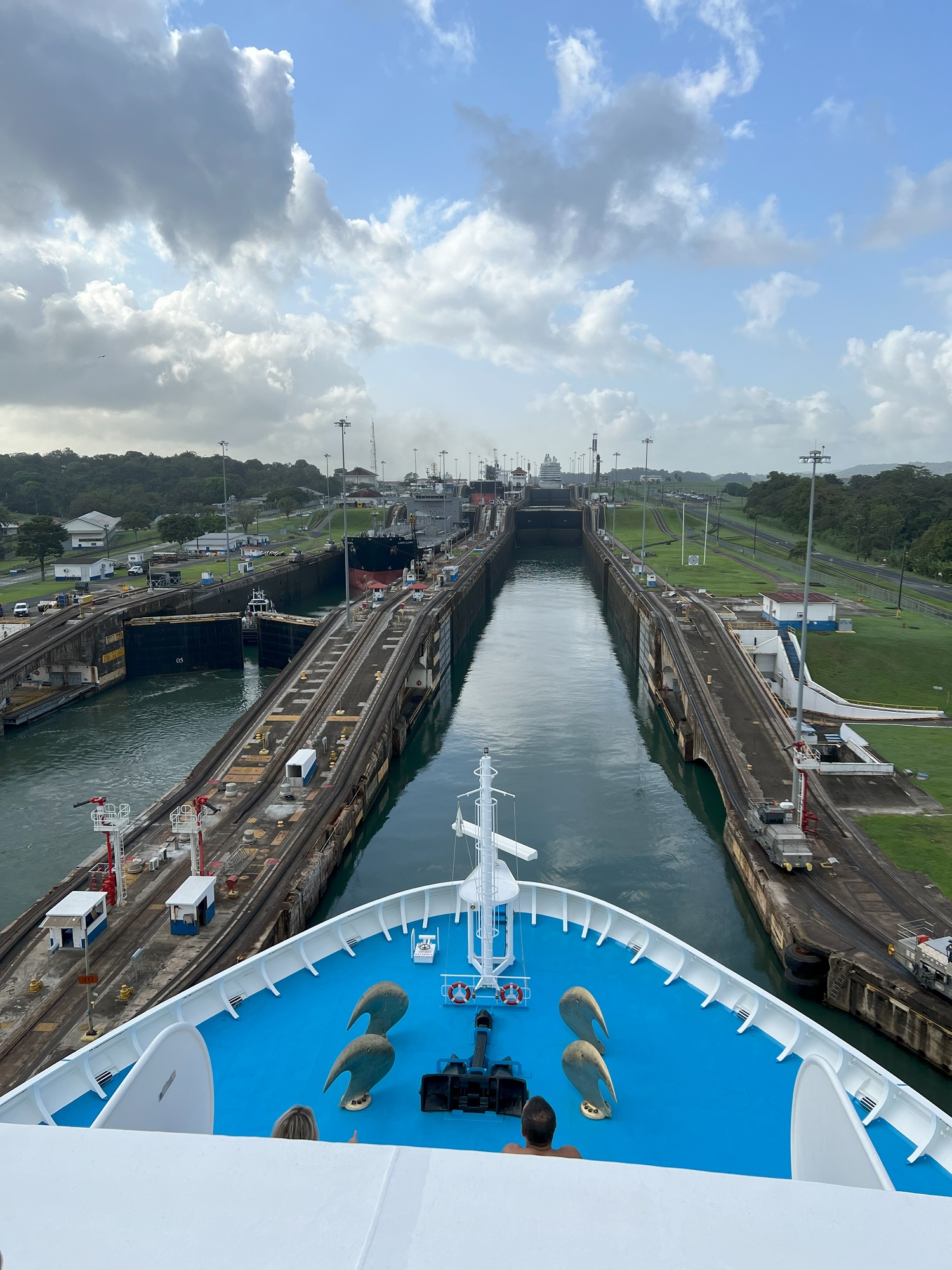
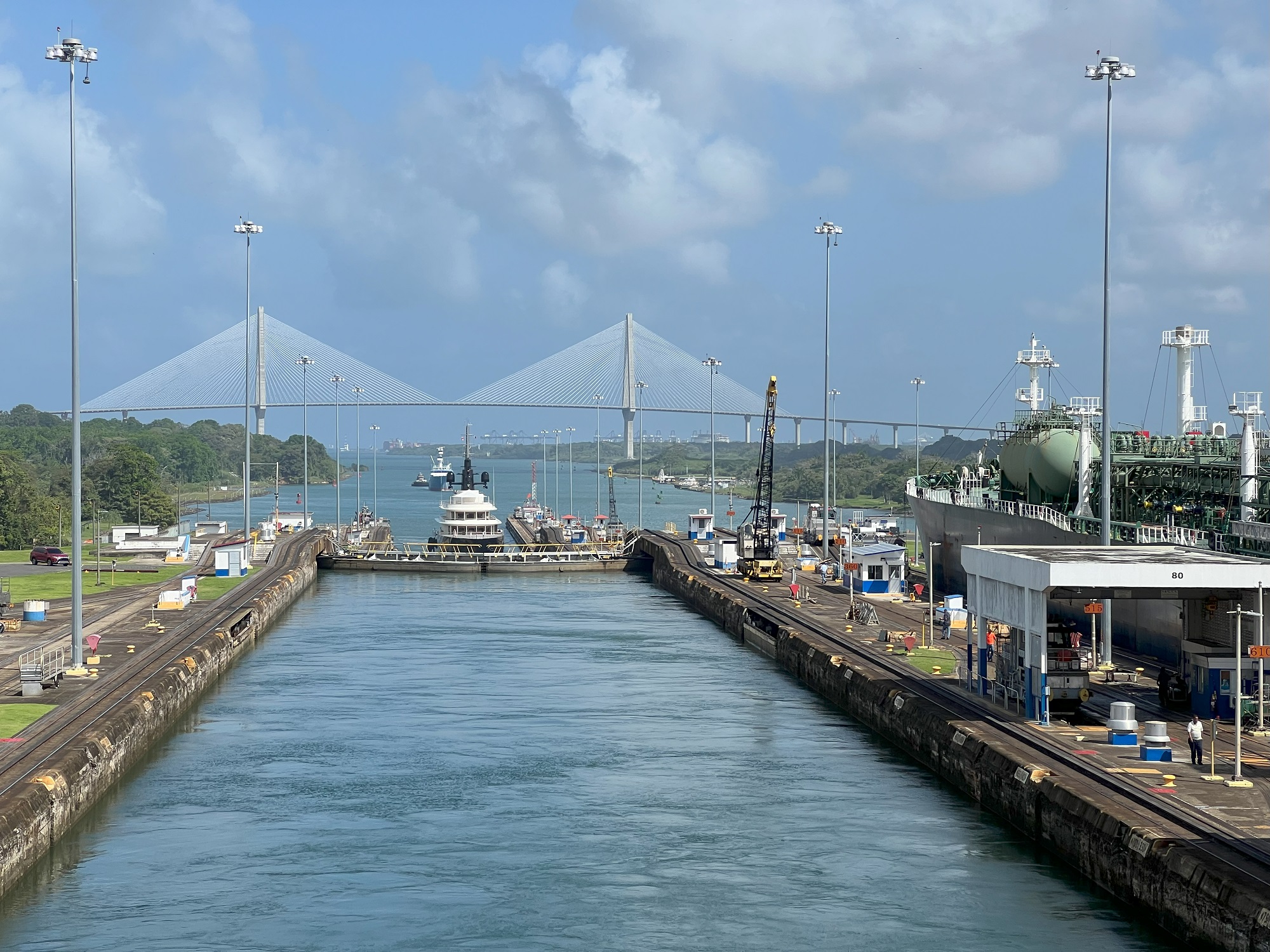
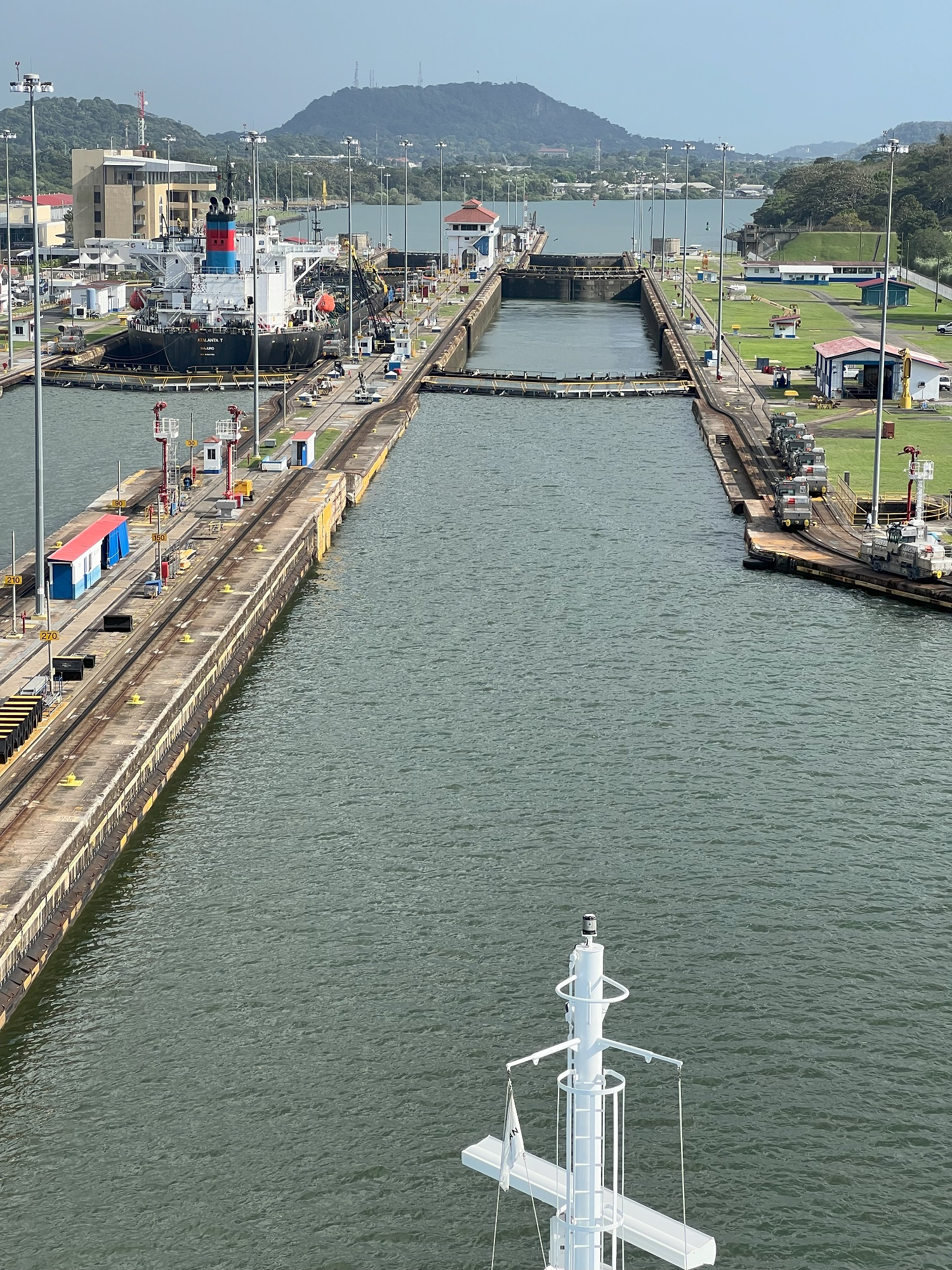
Then we entered the Gatun Locks.
This sequence of three locks opened in 1914, is the largest of the locks in the Panama Canal and lift ships up 85 ft (25.9 m) to the level of the sprawling Gatun Lake.
The man-made Gatun Lake lies between the two sets of locks that lifts and lowers vessels, and therefore allows passage to the Pacific Ocean or the Atlantic Ocean.
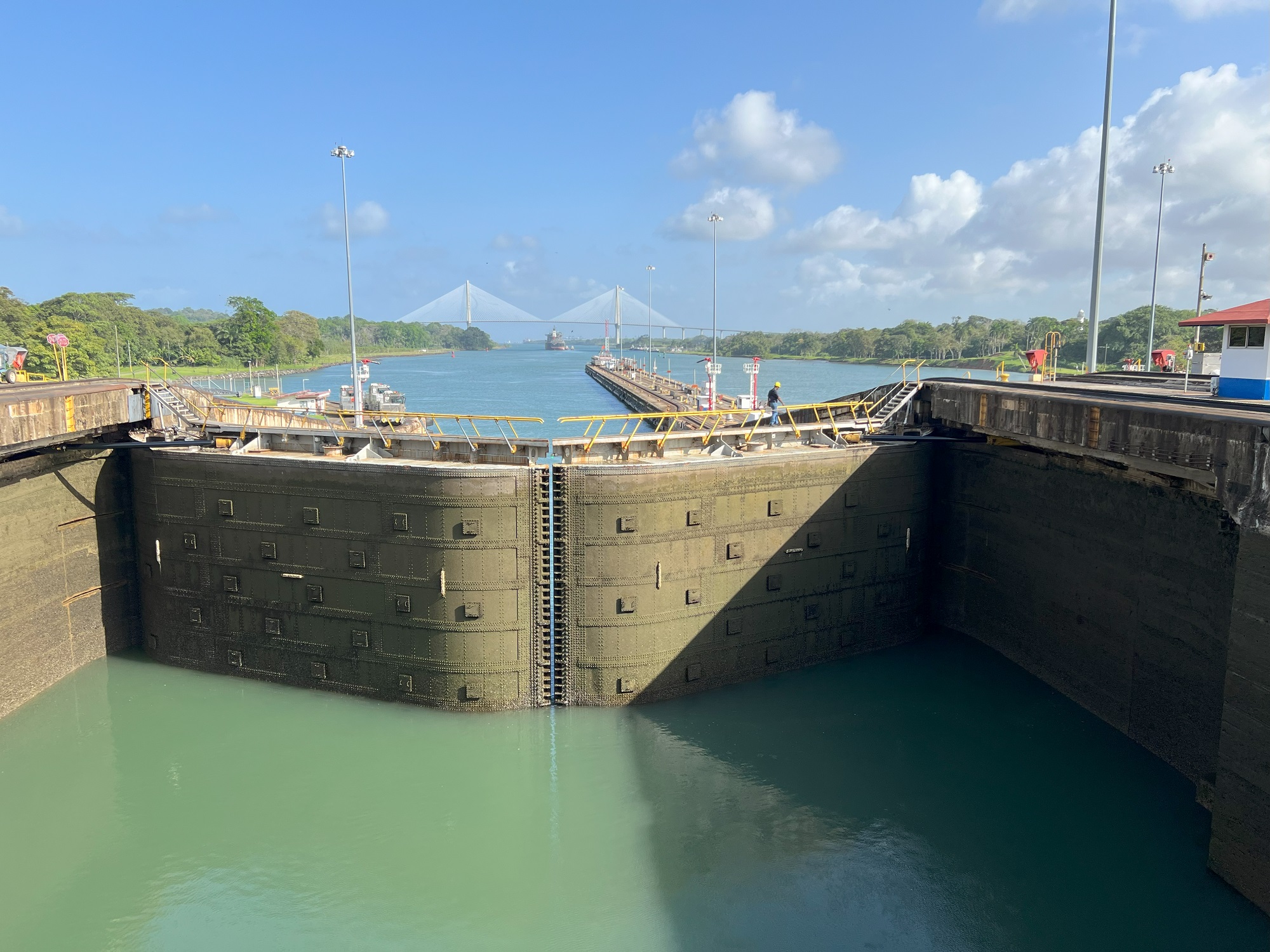
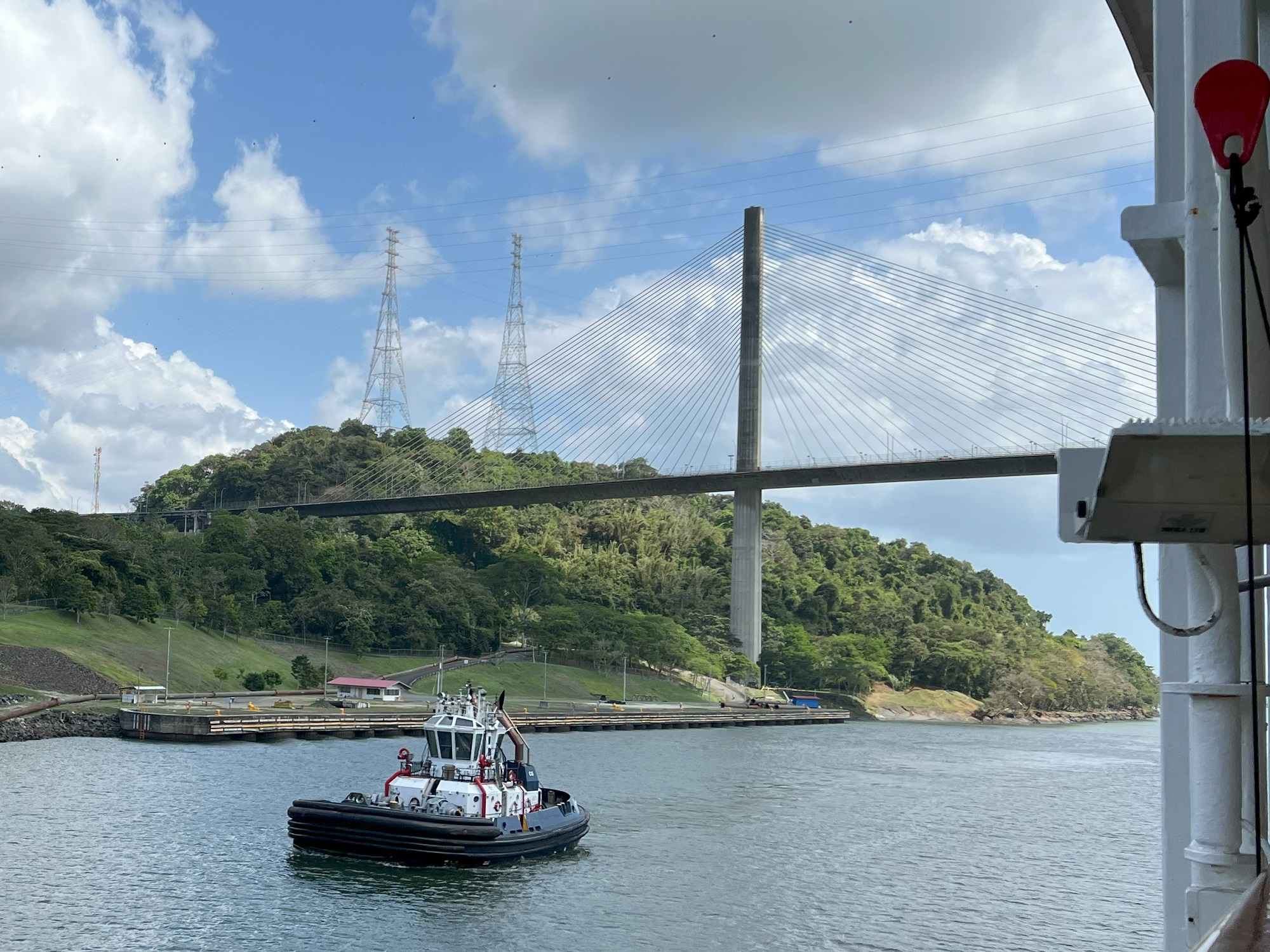
After crossing Gatun Lake, we passed under the Centennial Bridge (Puente Centenario). This bridge opened in 2004 and spans 3,451 ft (1,052 m).
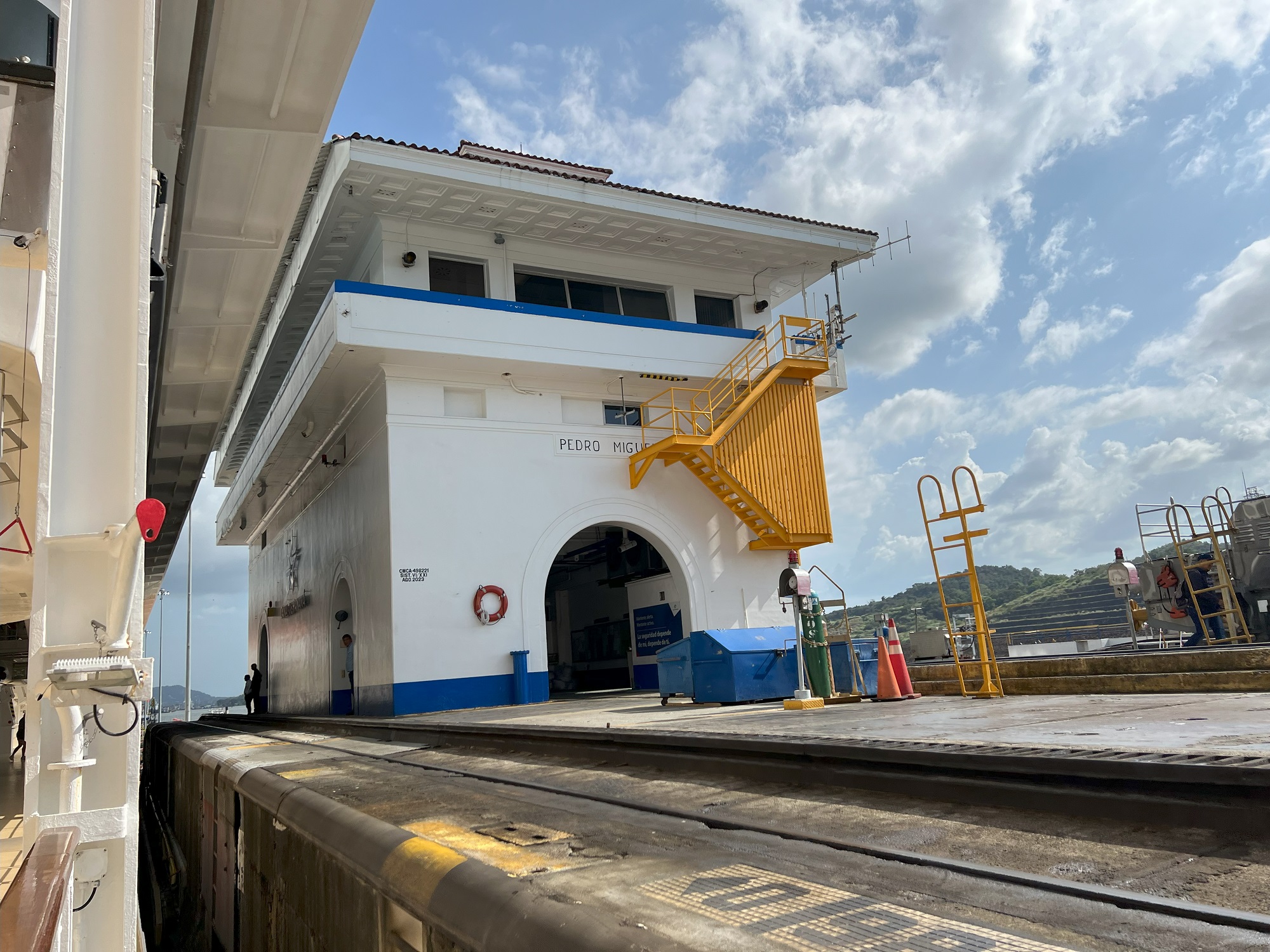
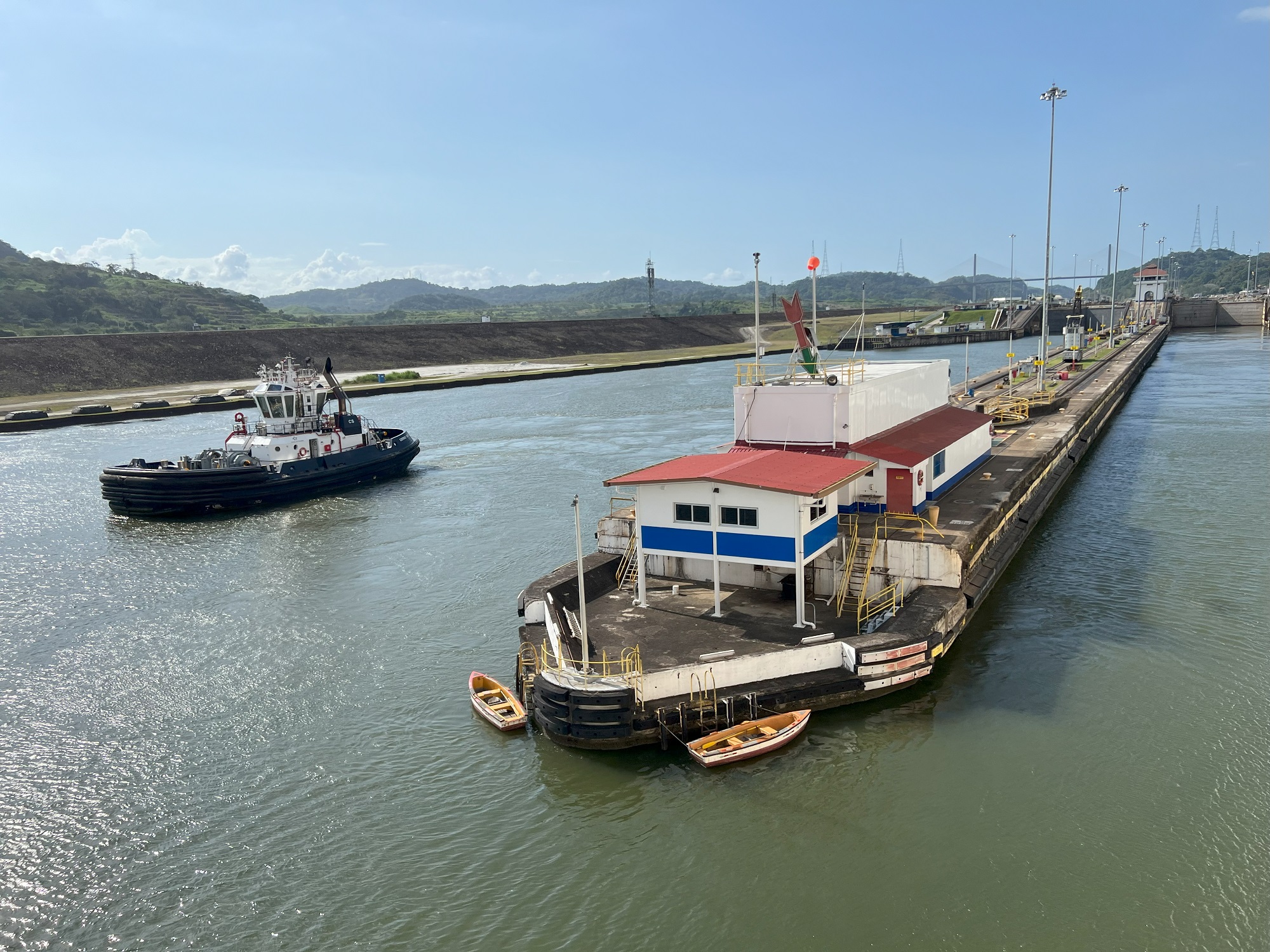
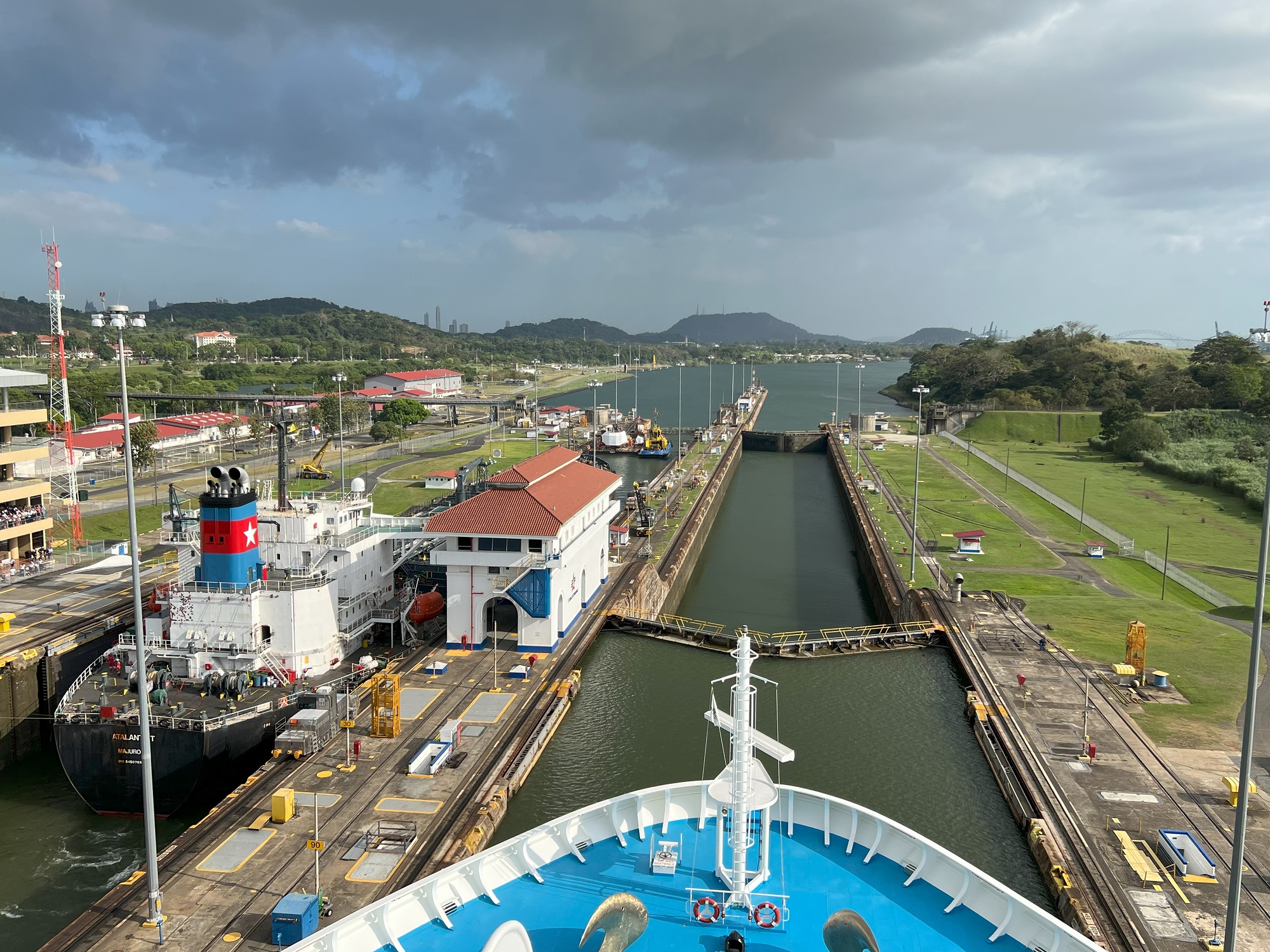
Soon after that it was time to enter the Pedro Miguel Locks and the Miraflores Locks. These locks lowered the Norwegian Sun to the level of the Atlantic Ocean— the ocean that used to be a continent away from the Pacific, and not a mere 51 miles (82 km).
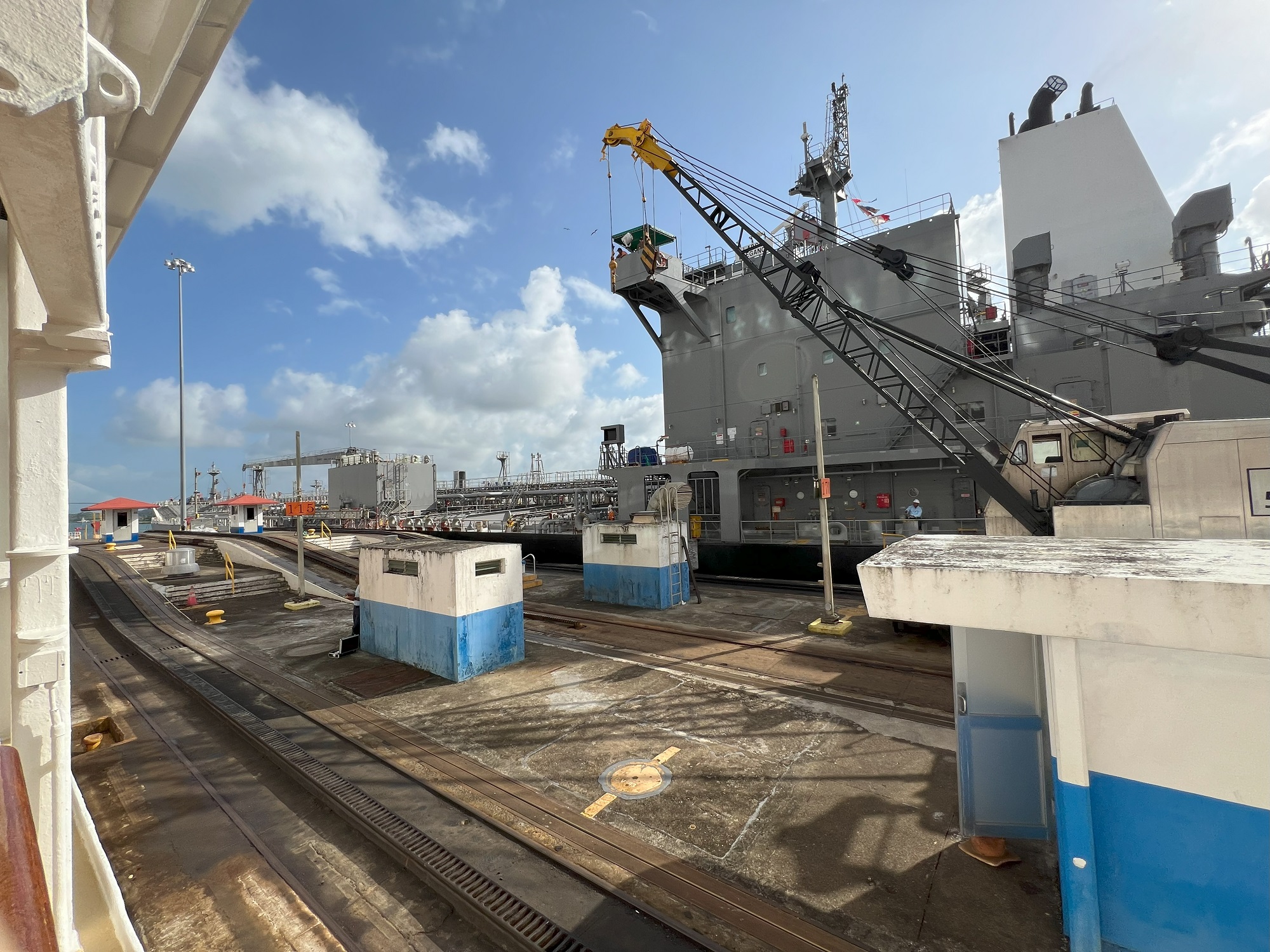
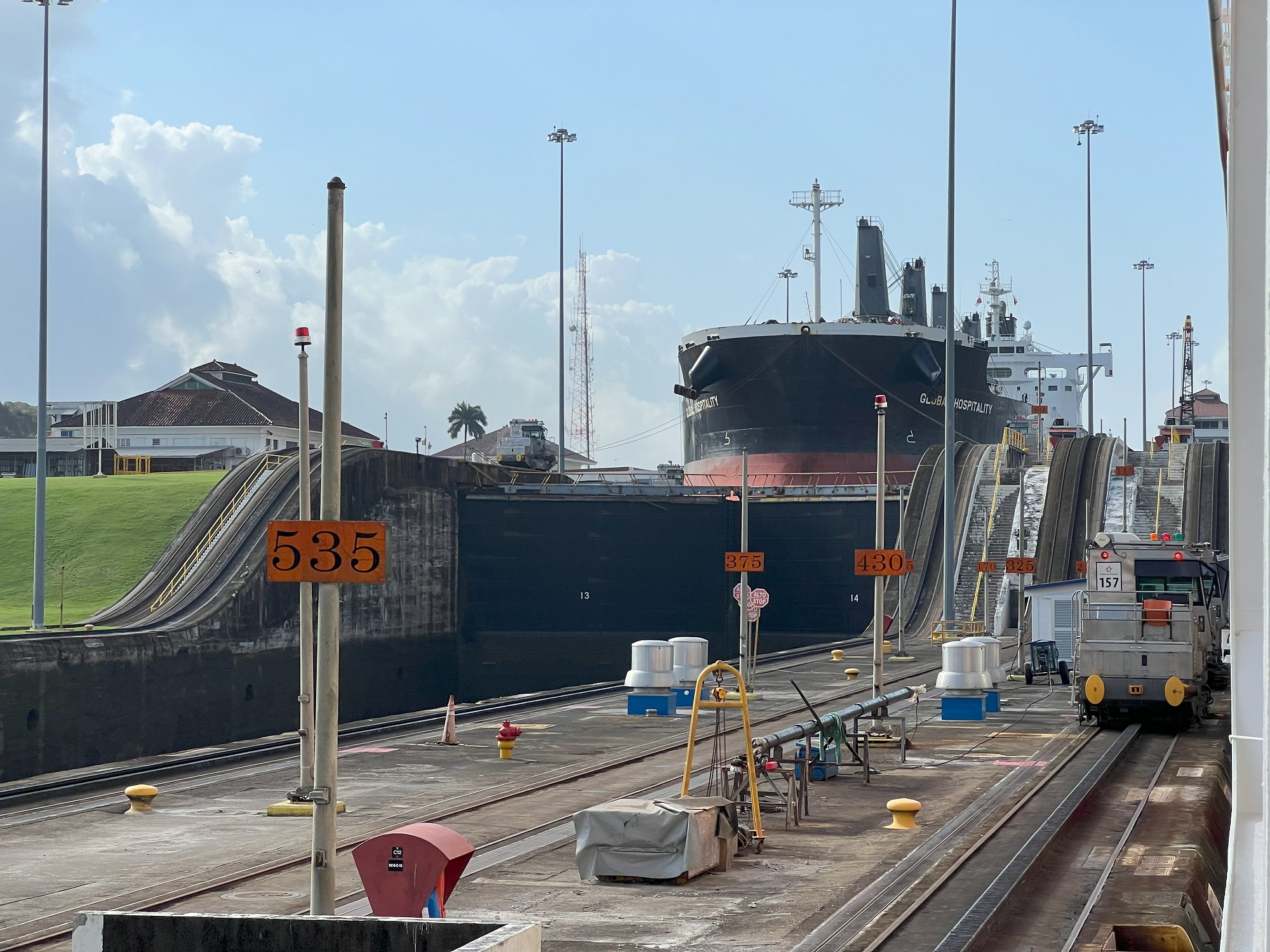
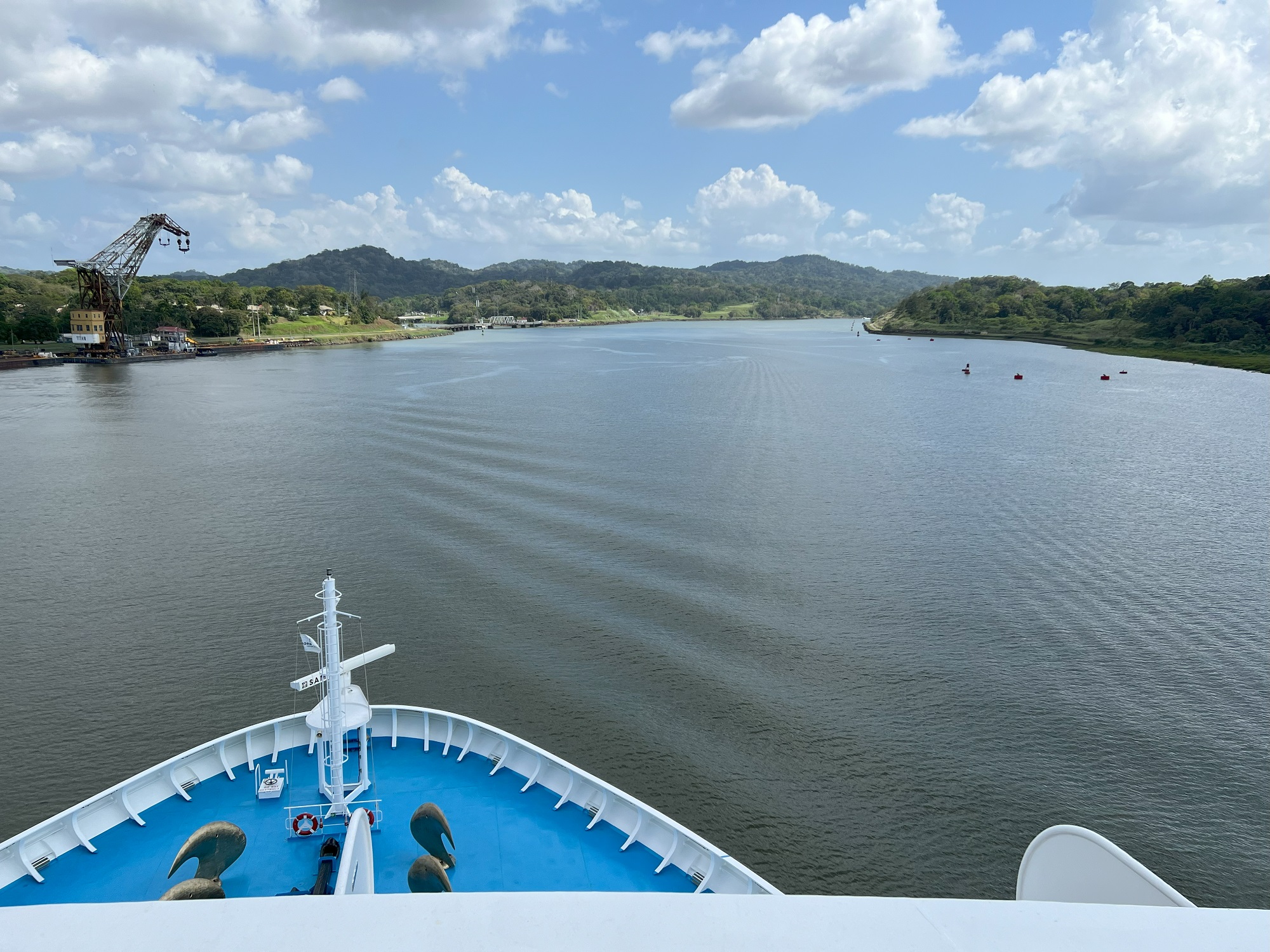
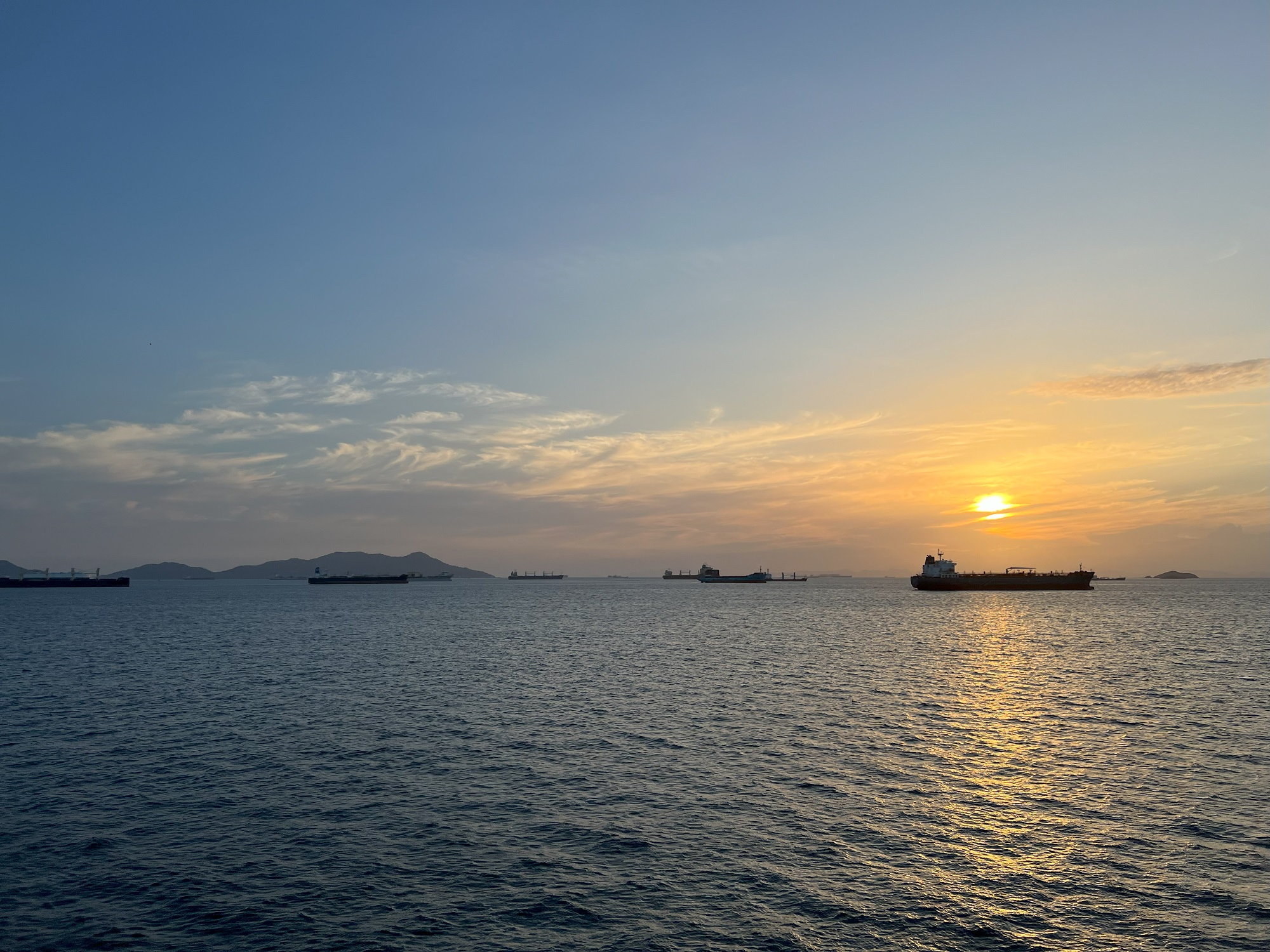
Atlantic Bridge (Puente Atlántico), the new 15,092 ft (4,600 m) suspension bridge completed in 2019.Entering the Gatun Locks. The newer, wider Agua Clara Locks to the right were completed in 2016.Approaching the Gatun Locks. Will she be able to squeeze in? (Yes.)Entering the Gatun Locks.No, we’re not on dry land— still floating but inside the lock. Another ‘Panamax’ size* vessel is coming through in the opposite direction. *The Panamax dimensions give clear parameters for ships destined to traverse the Panama Canal and have influenced the design of cargo ships, naval vessels, and passenger ships.Gatun Lake lies 85 ft (25.9 m) above sea level, and here comes the second (of three) Gatun locks that will raise the ship. Look for the mule on the right edge of the picture. These are powerful electric locomotives that run on paired 5 ft (1,524 mm) broad gauge railway tracks, tethered to the ship on both sides with cables, to guide it through the locks.Now Norwegian Sun is inside the lock, with the gates in front of her bow closed, and this one at her stern as well. (Looking back at the Atlantic Bridge in the distance). The lock is about to be filled with water to raise her up.Getting there ..The lock is filled, and the one at the front of the ship has been opened. We have started to move forward, into the next lock.A view of how the mule on the tracks is attached to a vessel.There is very, very little room to spare between the hull of Norwegian Sun and the walls of the lock.Tight. Very tight. I am not sure what this gap in inches is, but it seems to be less than a foot. Another look back as we leave the first of the Gatun Locks.Now out of the Gatun Locks, and on the large and sprawling Gatun Lake. More than a dozen crew from Norwegian Sun stepped onto this boat alongside Norwegian Sun.Crossing Gatun Lake. This is the area that we looked down onto yesterday, from the observation tower that we had reached with the Gamboa Aerial Tramway nearby.Approaching the Centennial Bridge (Spanish: Puente Centenario) that was completed in 2004.Inside the Pedro Miguel Locks, the first of the locks that will lower the Norwegian Sun back to sea level.Leaving the Pedro Miguel Locks.Approaching the Miraflores Locks.Approaching the two locks called the Miraflores Locks.Another tight fit: inside the Miraflores Locks.Sunset— our first one over the Atlantic Ocean.
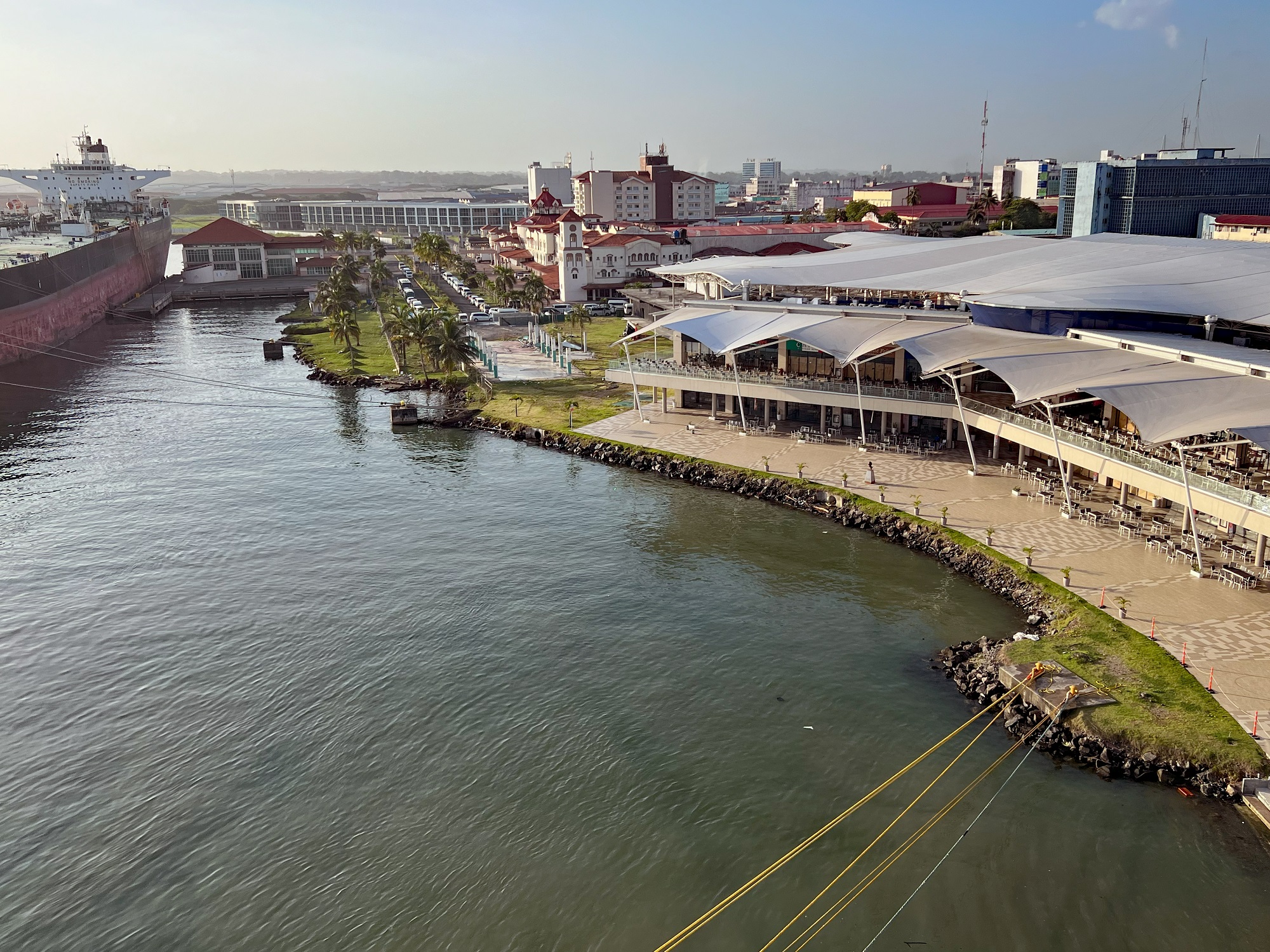
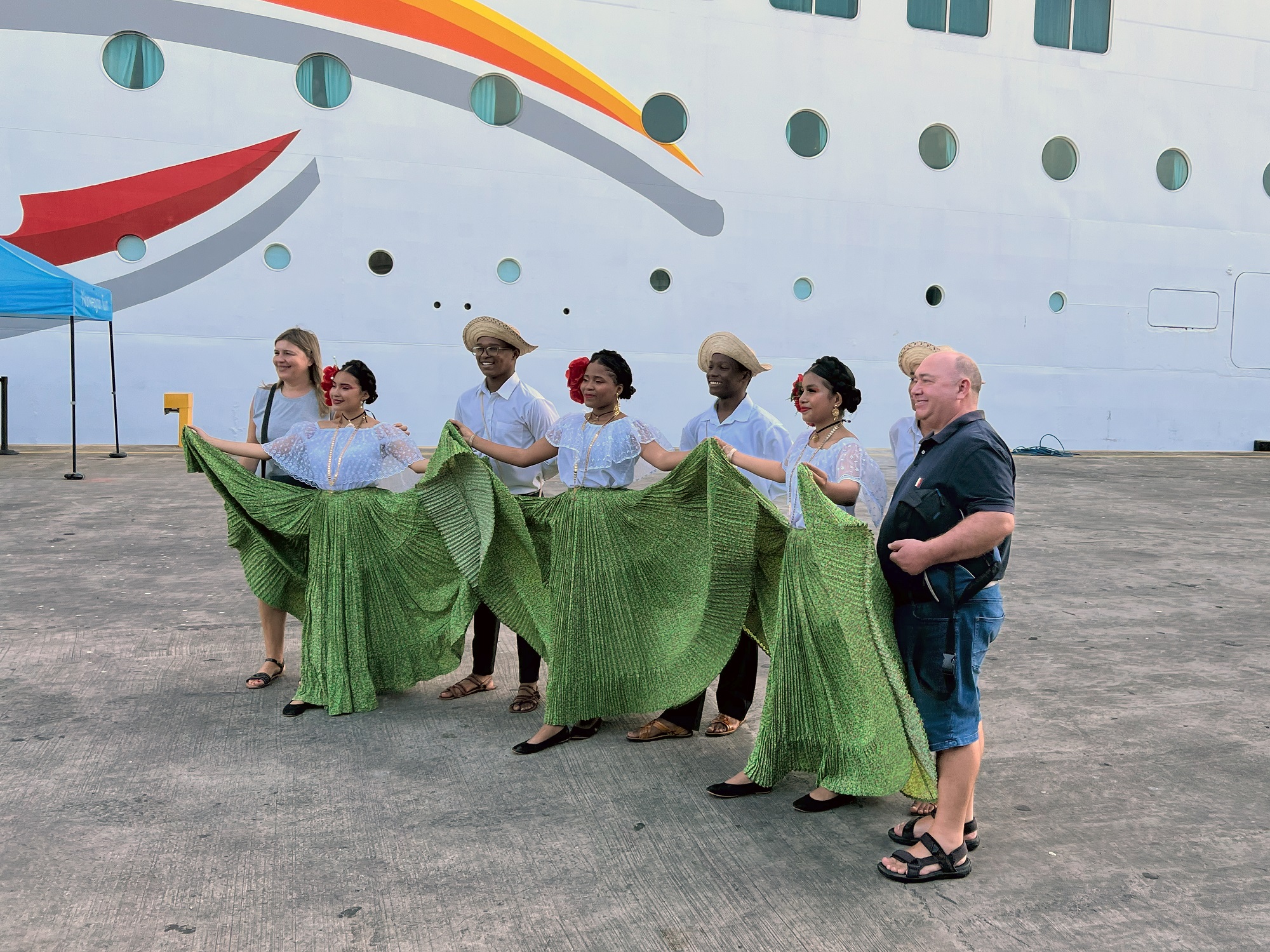
We reached the seaport of Cólon early this morning. Cólon is at the northern end of the Panama Canal.
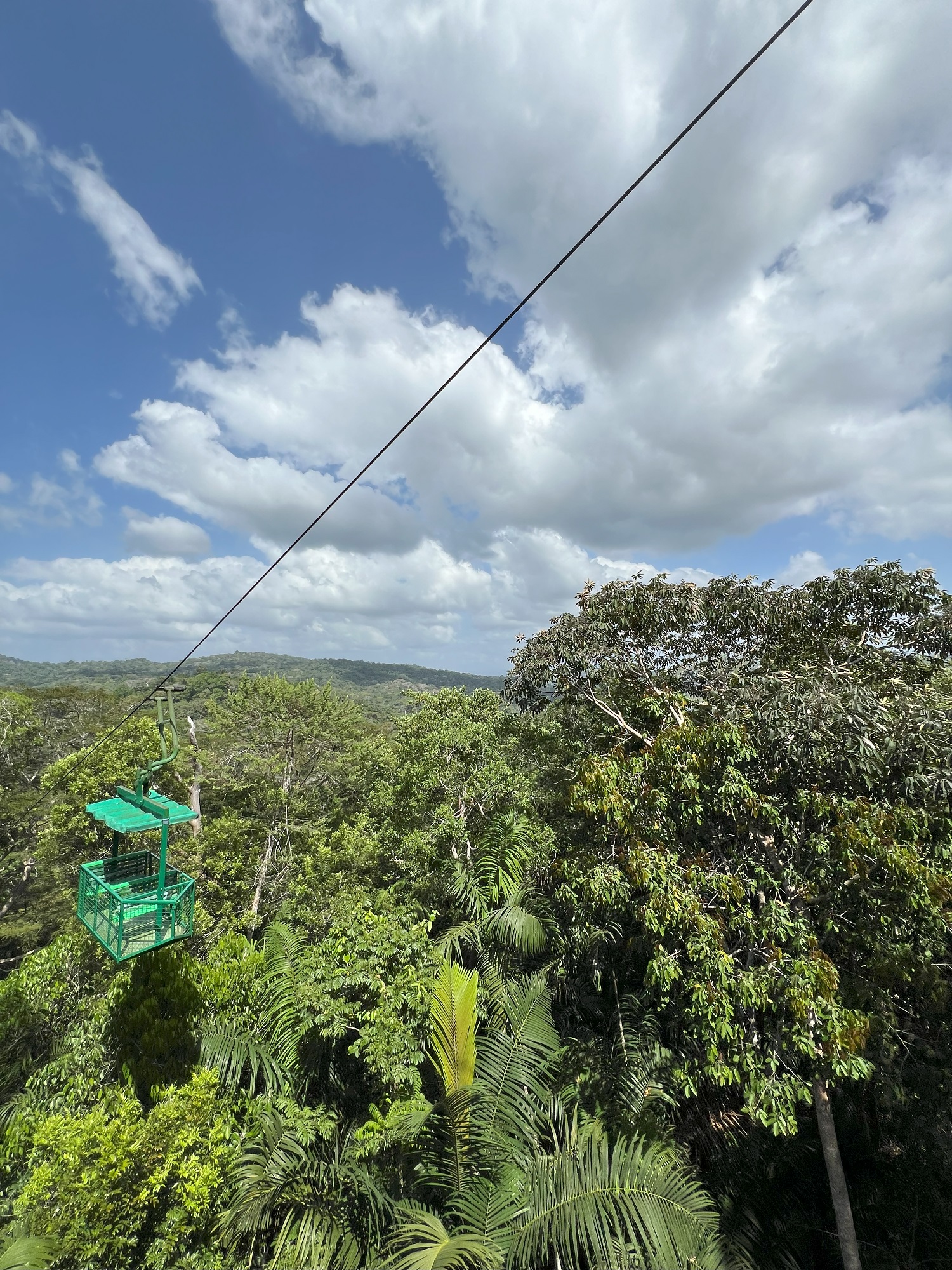
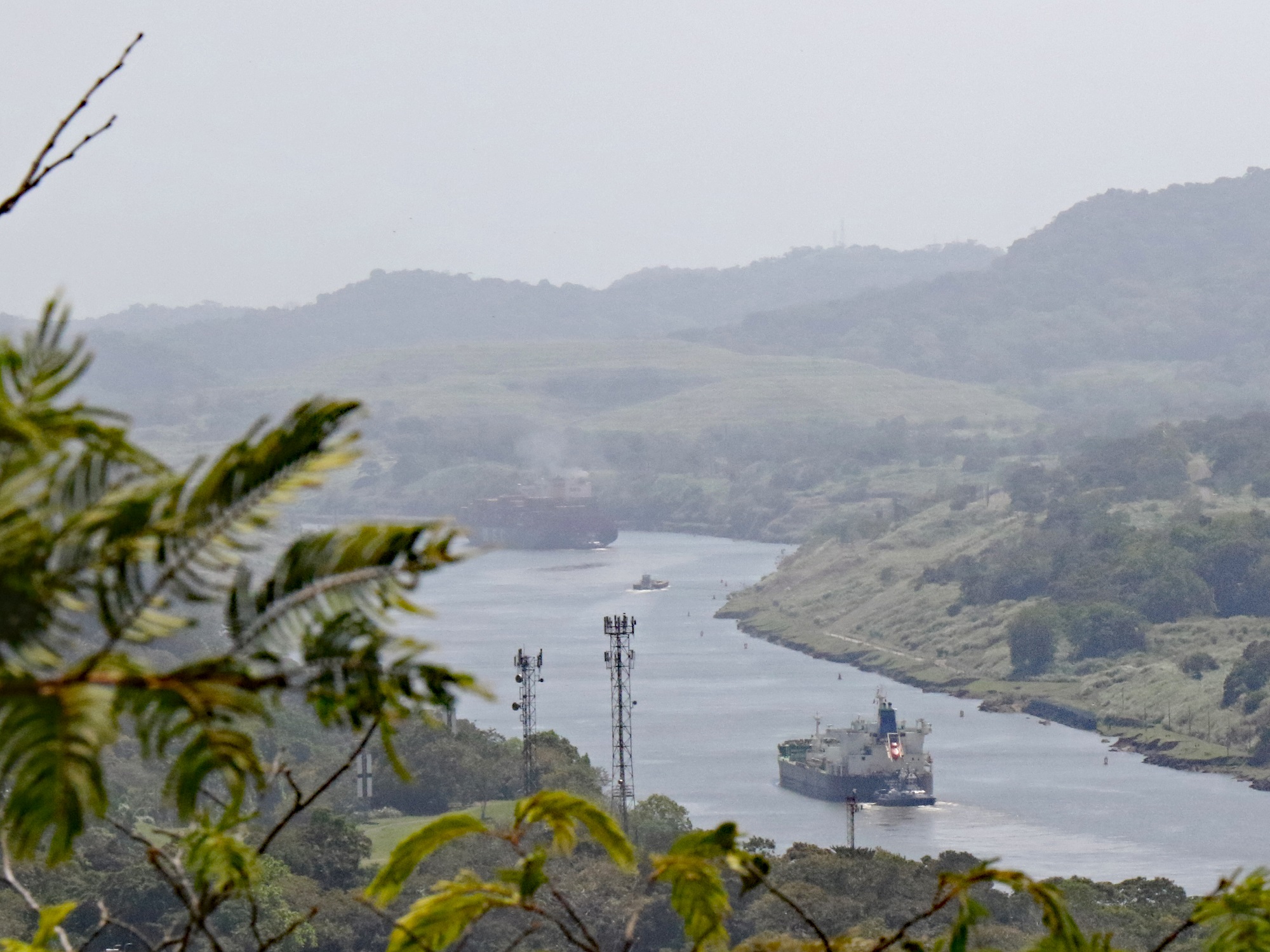
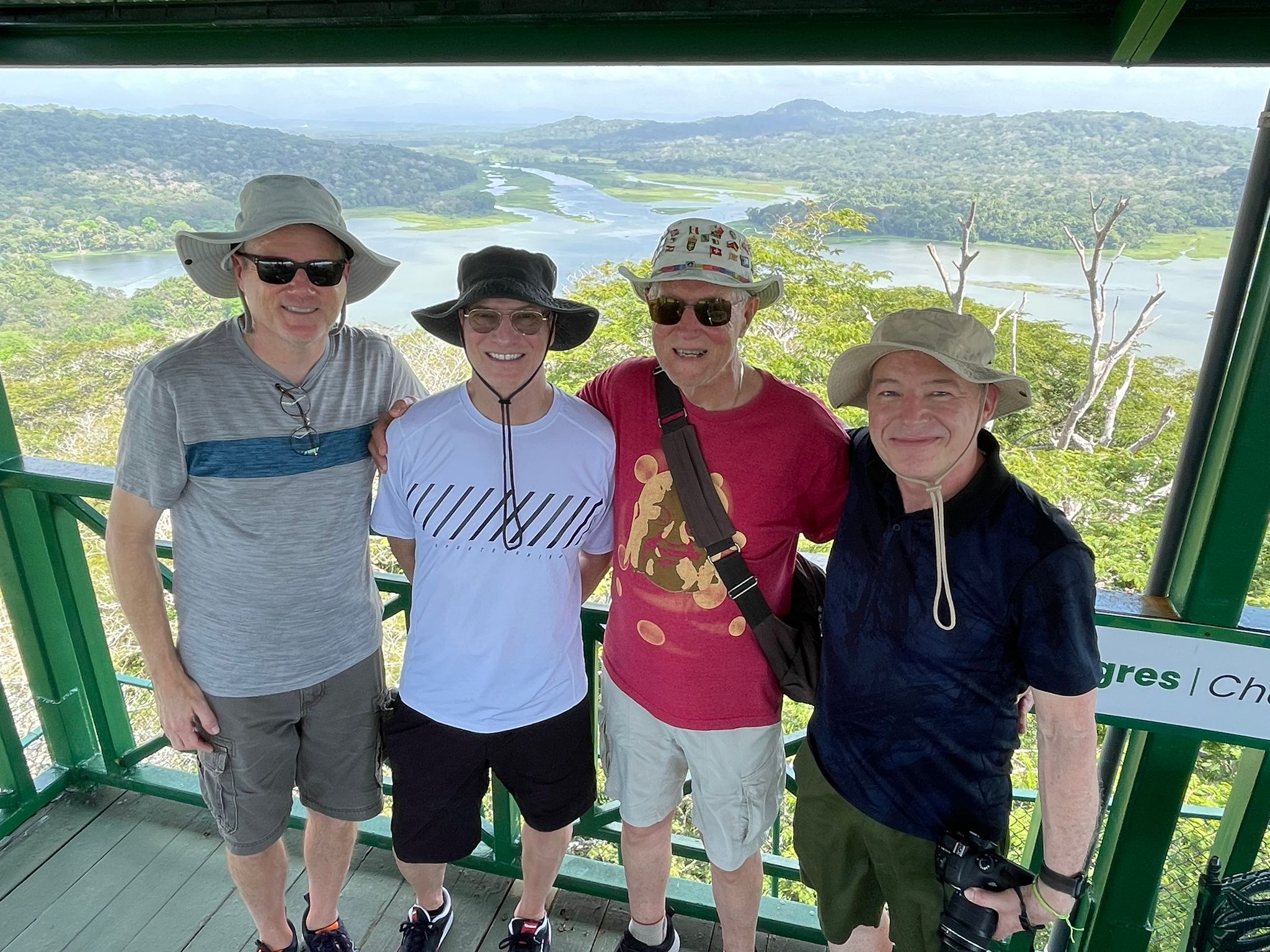
After breakfast, we went on our excursion for the day: an aerial tramway tour through the Gamboan forest canopy.
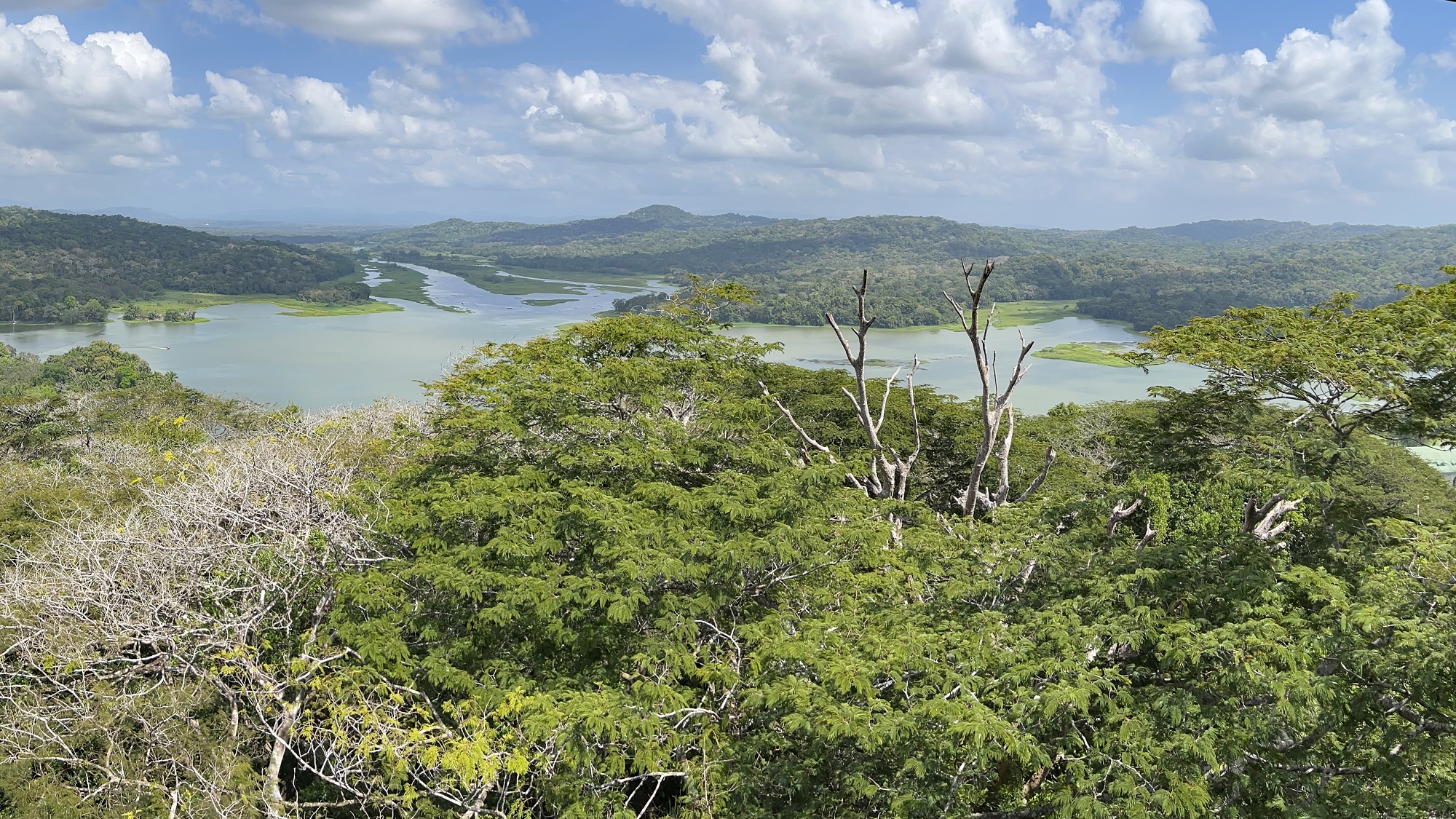
At the top of the tramway― called Cerro Pelado― there is an observation tower with panoramic views of Soberania National Park, the Chagres River and the Panama Canal.
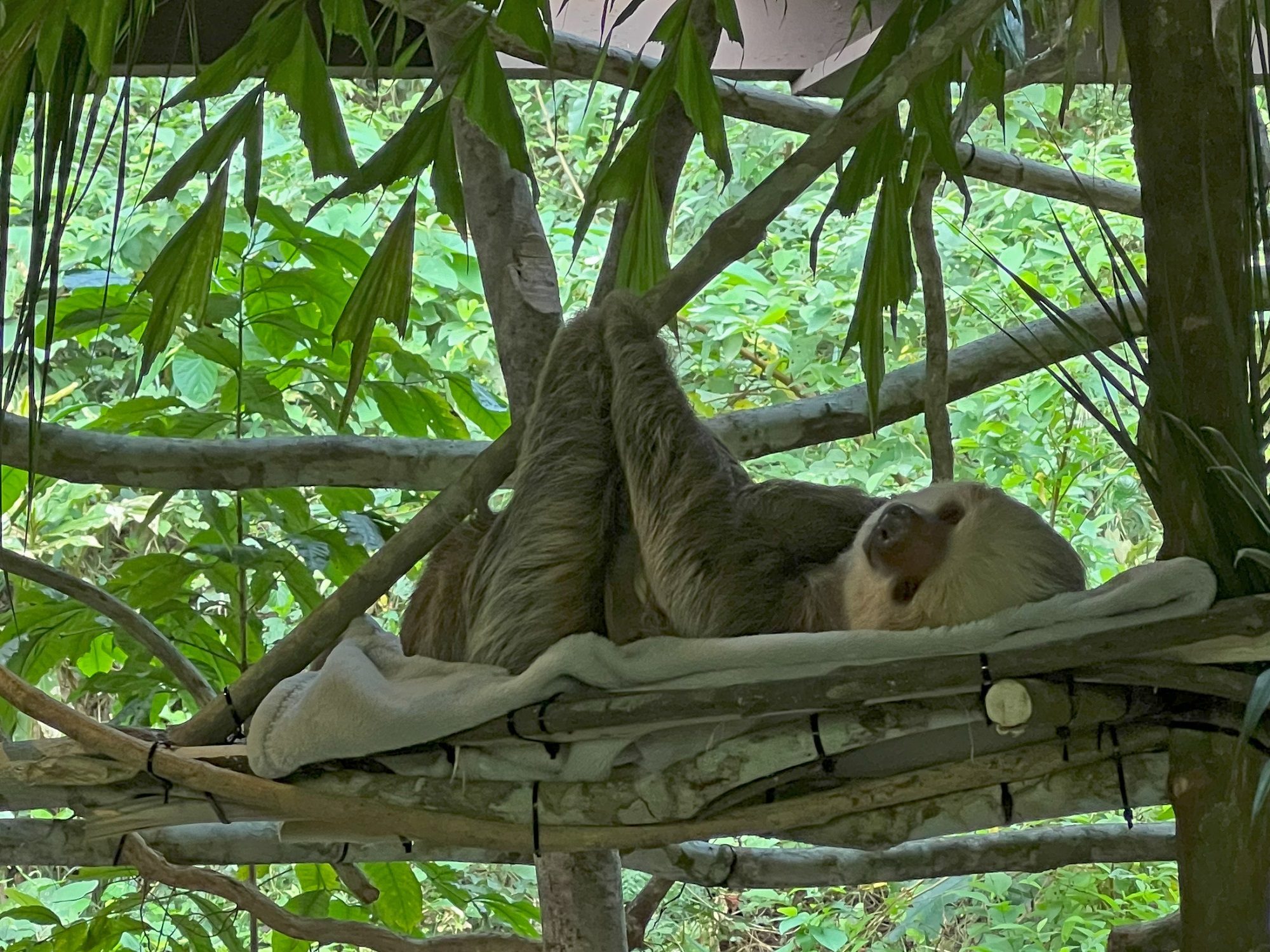
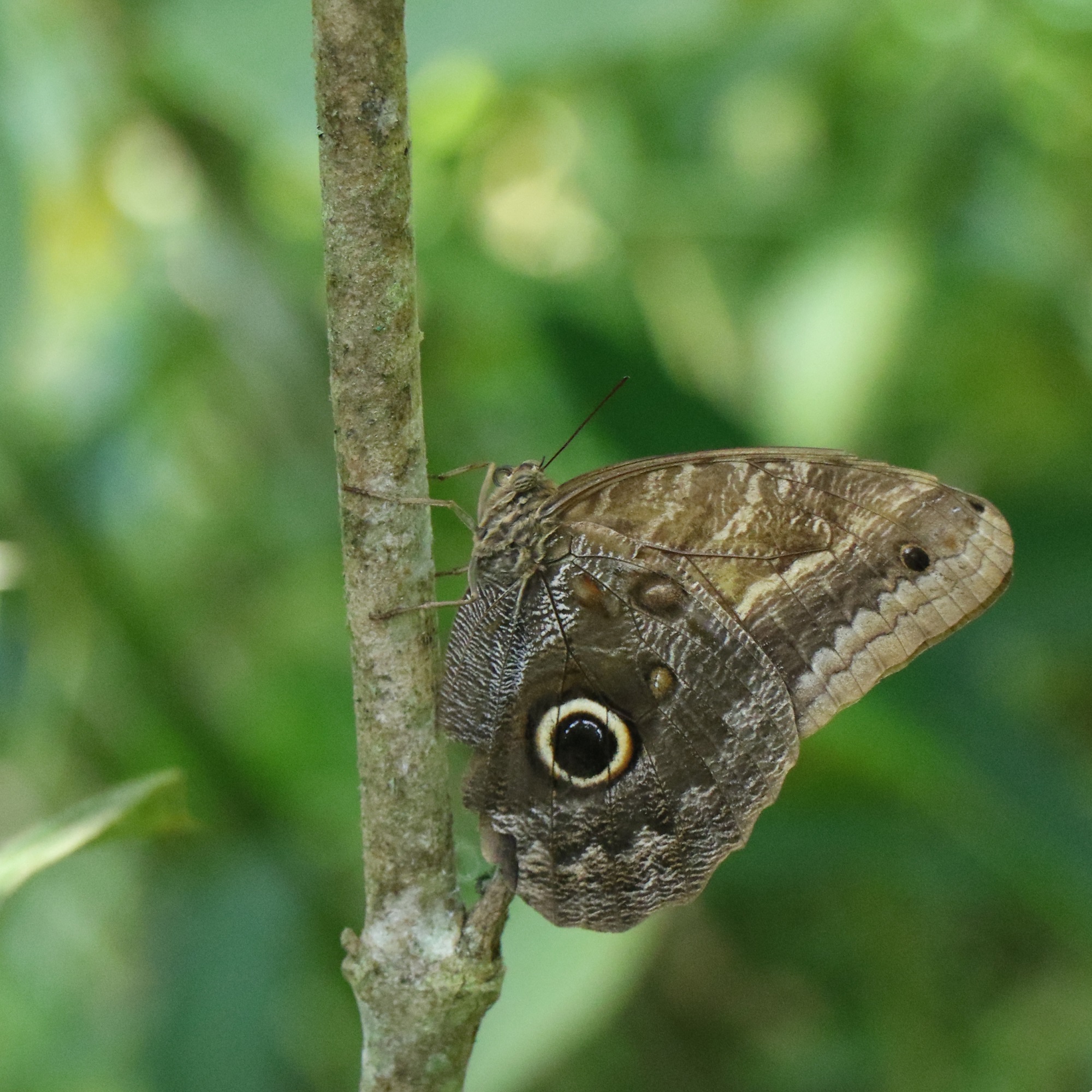
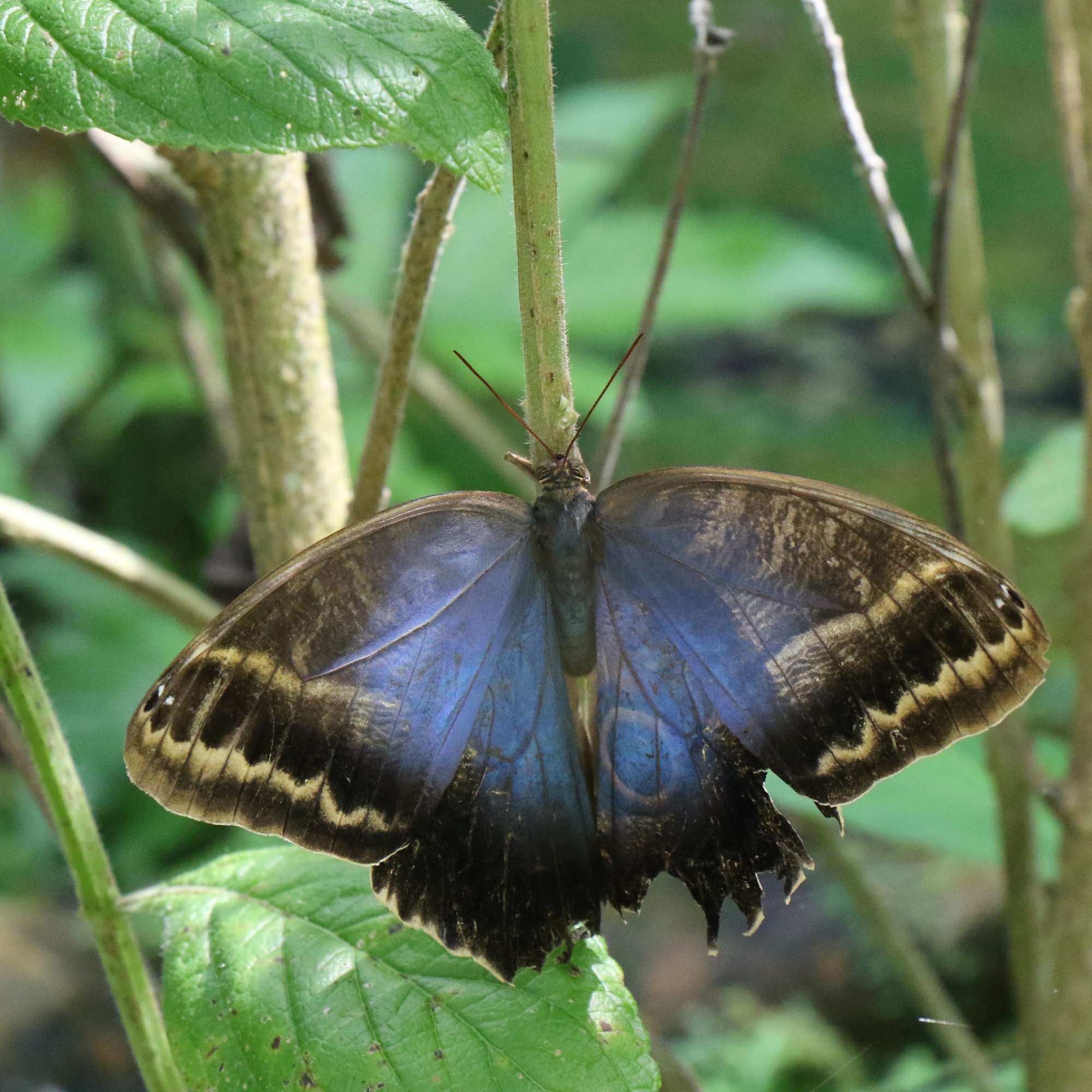
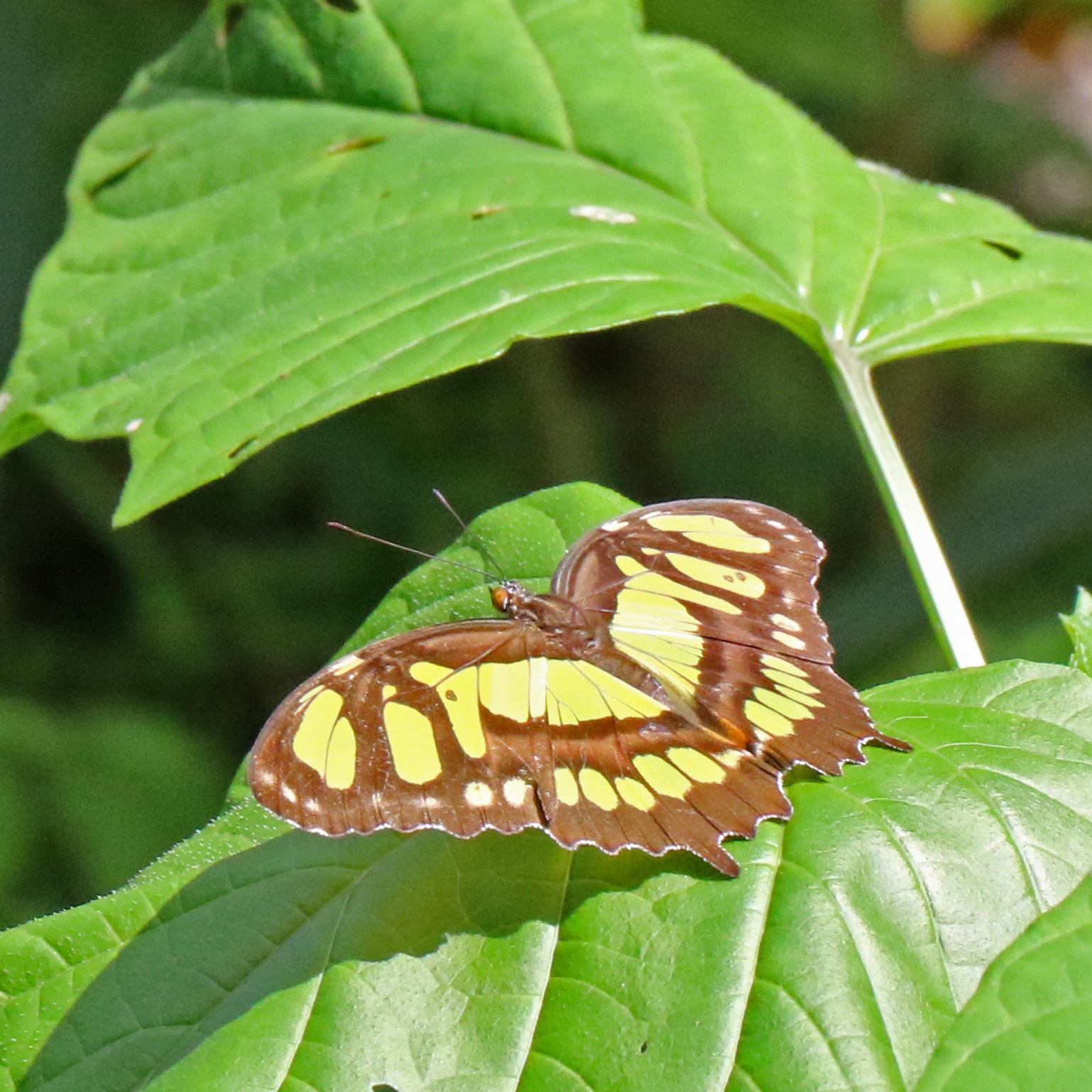
Our tour included stops at a sloth sanctuary, an orchid house and a butterfly enclosure.
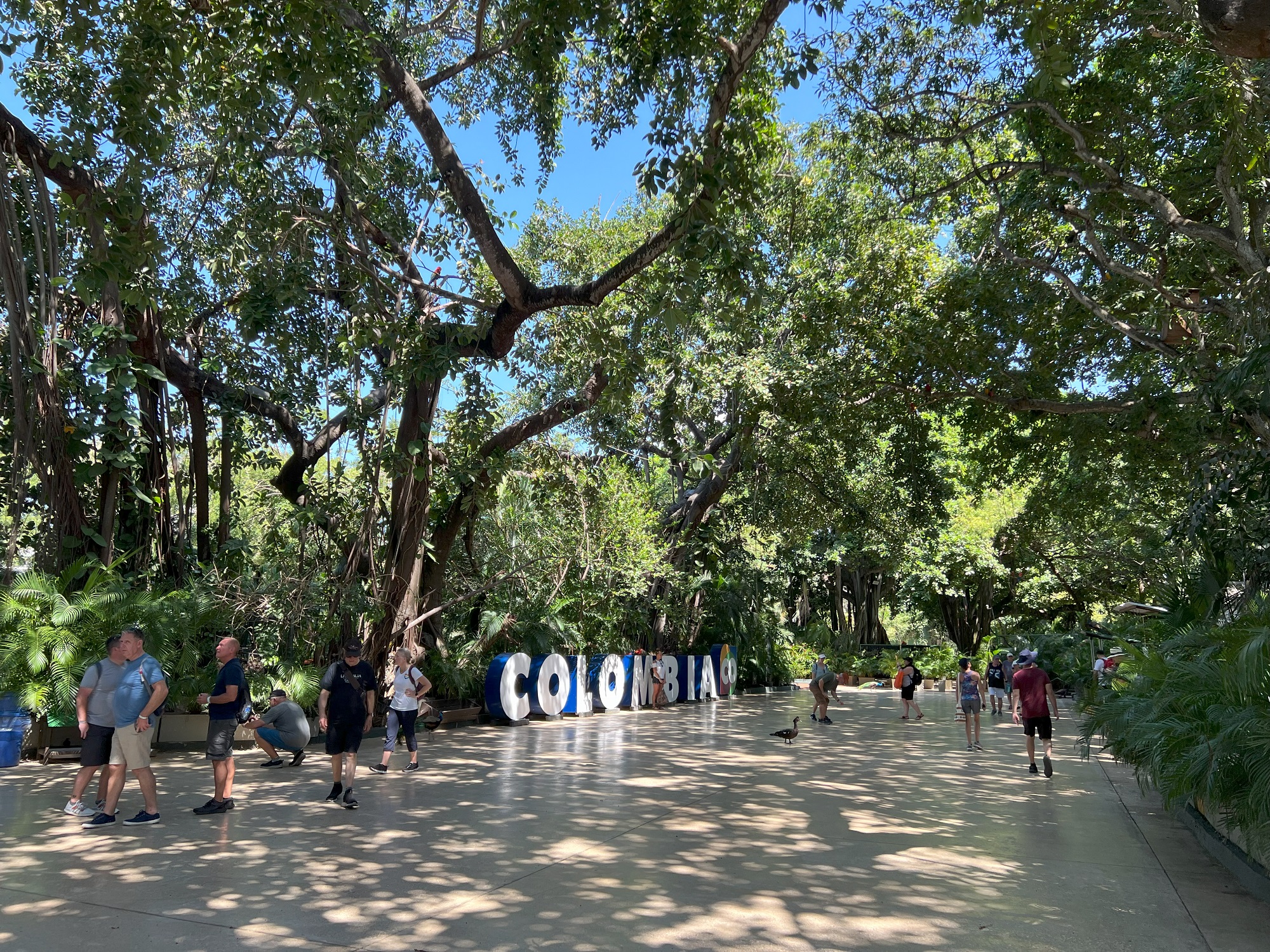
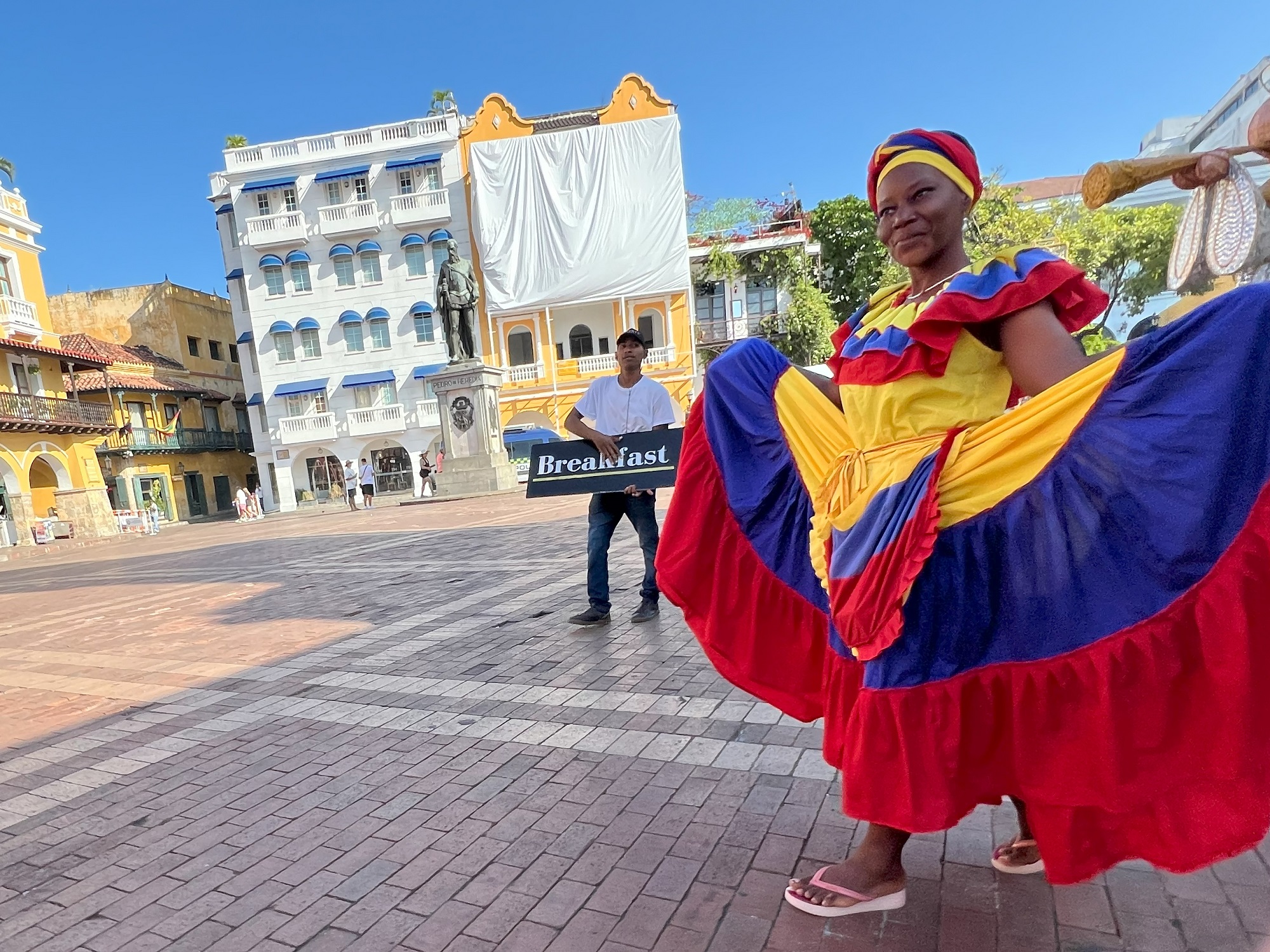
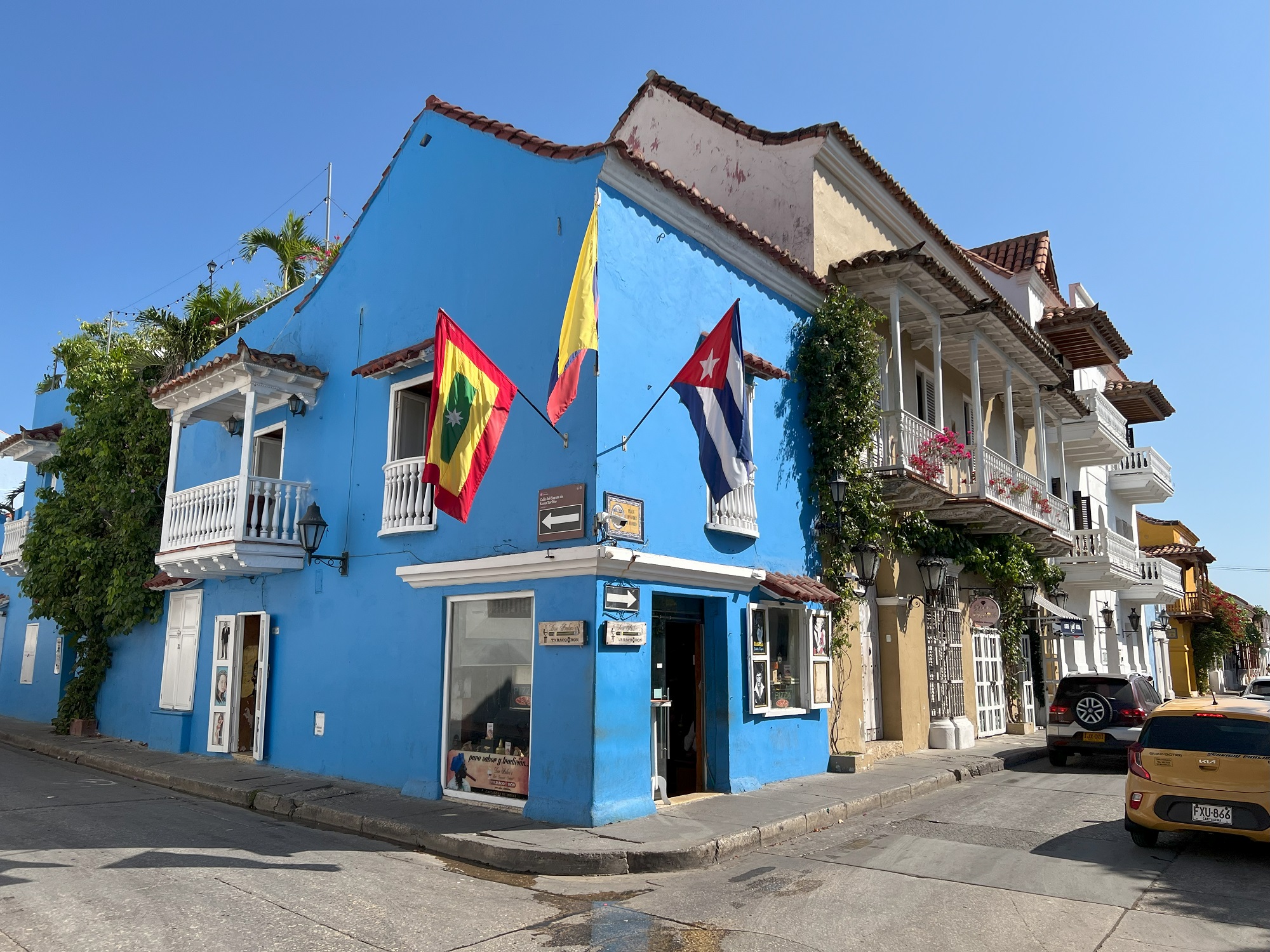
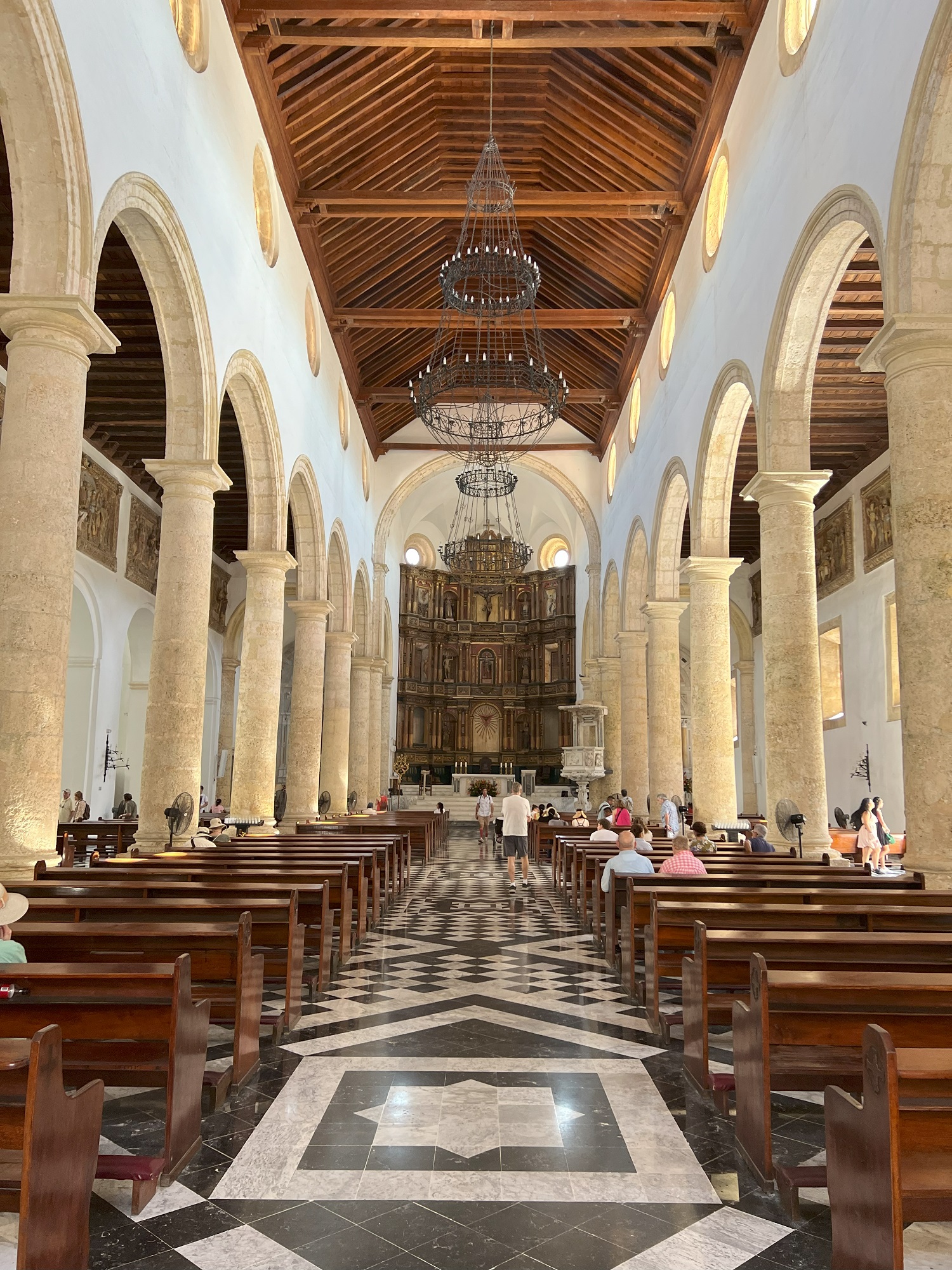
Cartagena (pop. 914,500 in 2020) is a port city on Colombia’s Caribbean coast. By the sea is the walled Old Town, founded in the 16th century, with squares, cobblestone streets and colorful colonial buildings. With a tropical climate, the city is also a popular beach destination.
– Google
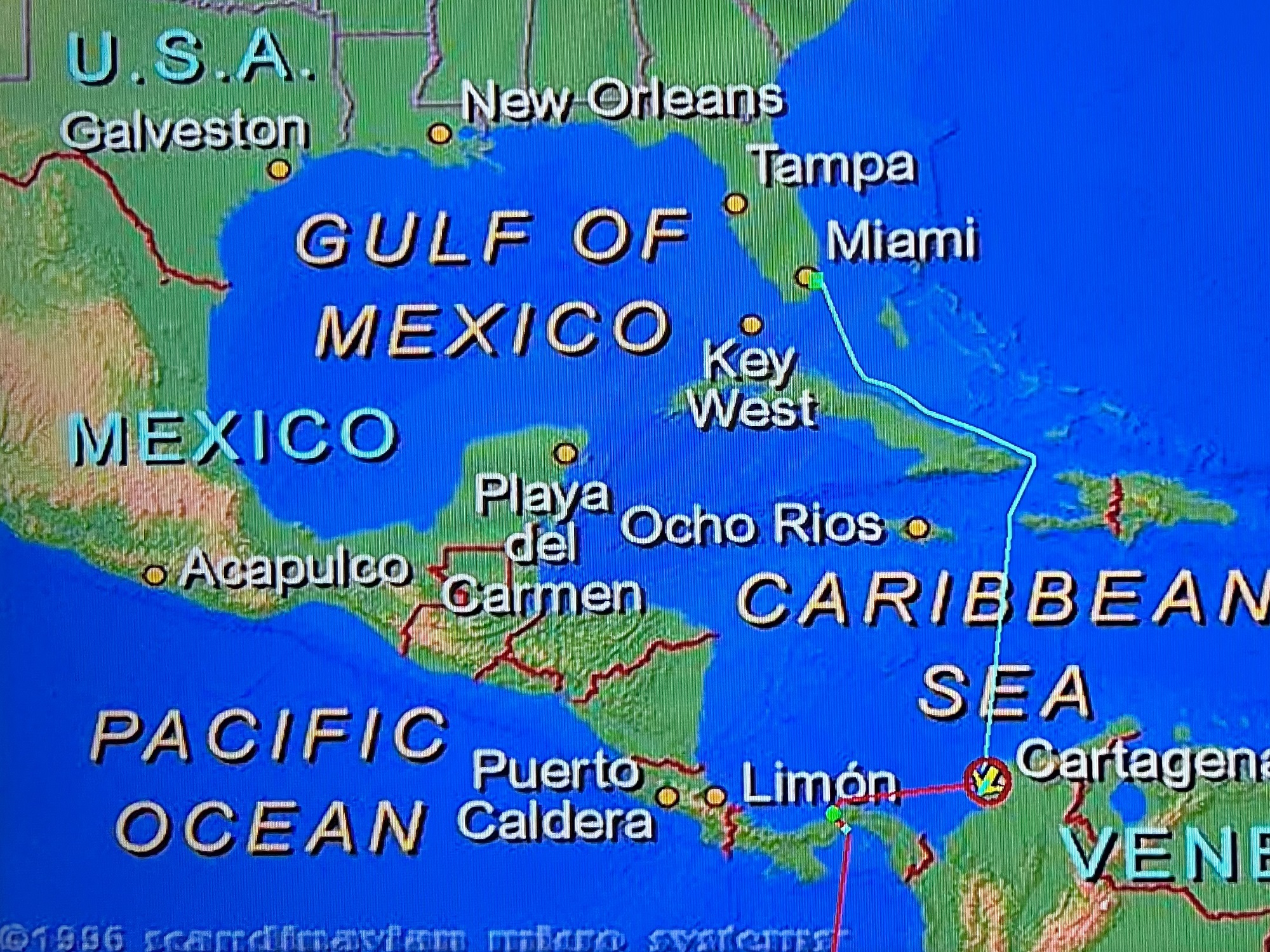
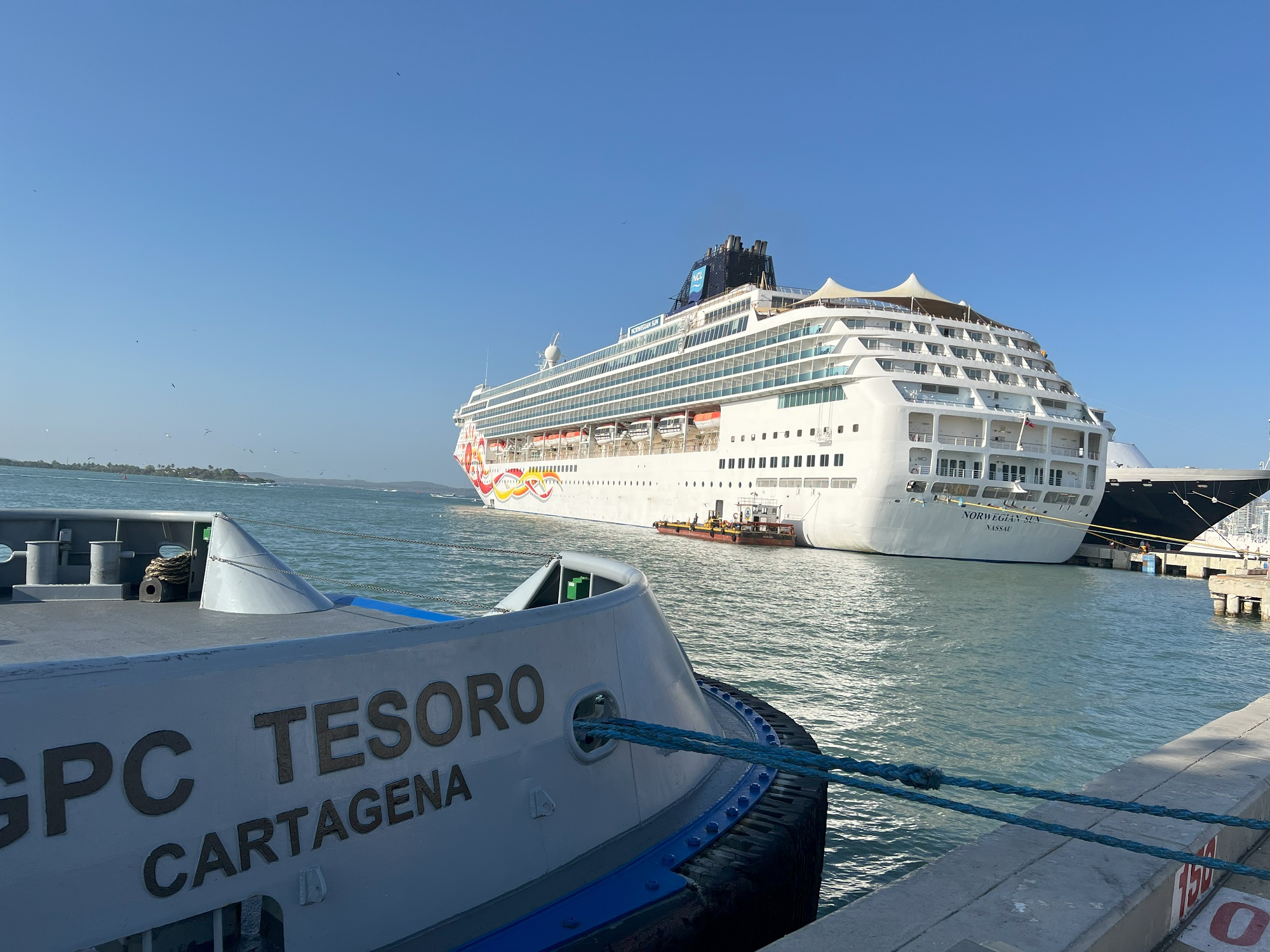
Late Monday afternoon we left Cartagena and sailed almost due west, towards Colon at the northern end of the Panama Canal.
We spent some three hours in the Old Town of Cartagena this morning, and came away with a good impression.
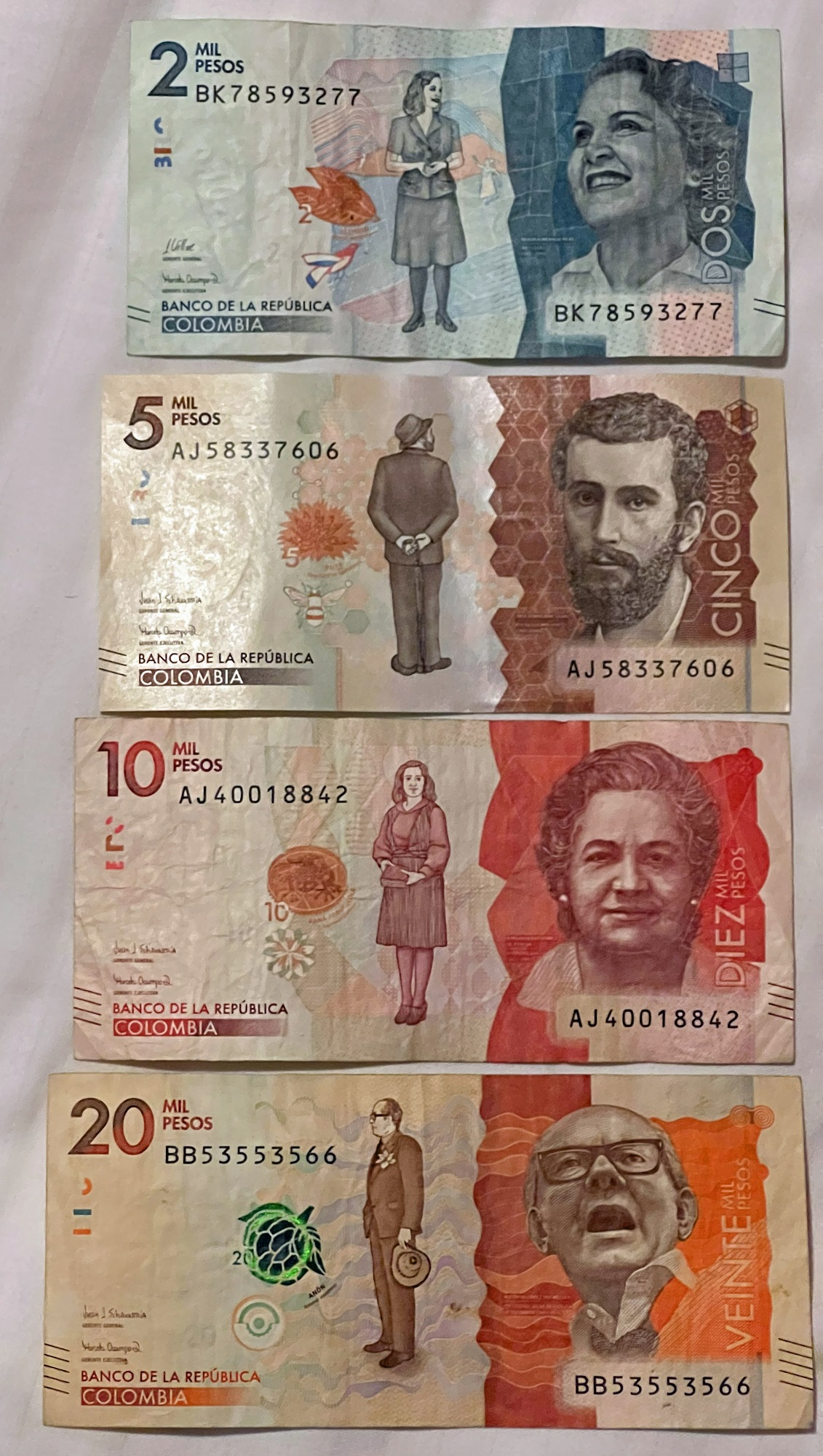
Just be prepared to say no gracias many times, to the street vendors selling t-shirts, hats, bottled water and soda, souvenirs and cubanos (cigars).
The day temperature rose rapidly through the morning, and it was already 90 °F (32 °C) when our taxi driver met us to take us back to the ship.
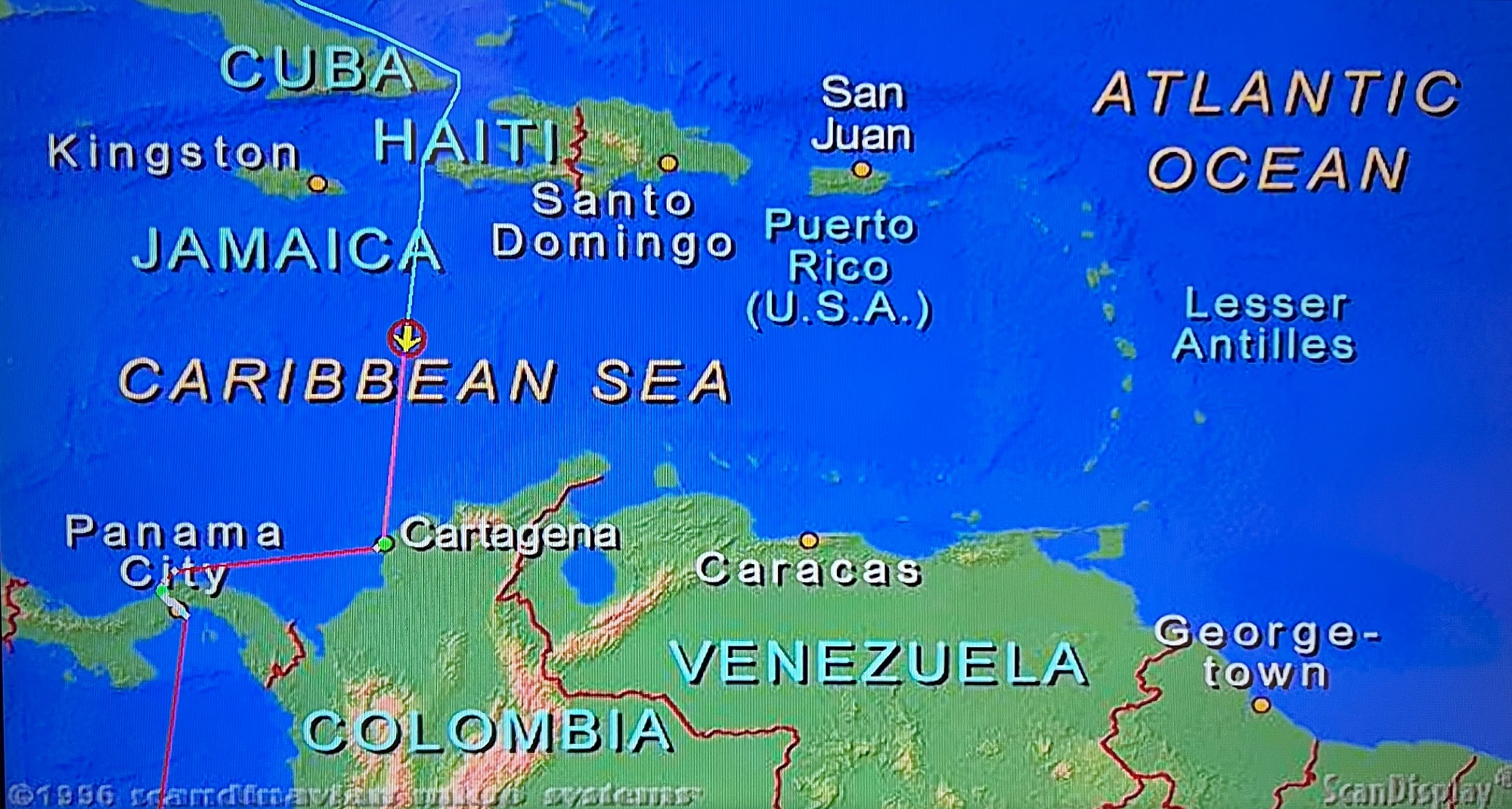
The Norwegian Sun made her way through the Windward Strait in the Caribbean Sea last night, between the islands of Cuba and Hispaniola. Today, she sailed almost due south at 184° towards Cartagena in Columbia.
We are still at sea, approaching Cartagena on the Caribbean Sea coast in Columbia.
It was mostly sunny today, but very breezy on the top deck— due to a 35-knot wind from the west.
A two-foot wave of water in the big swimming pool sloshed forward and backward. (The pool had a net on, closed to all of the sunseekers. A smaller pool behind it was still open).
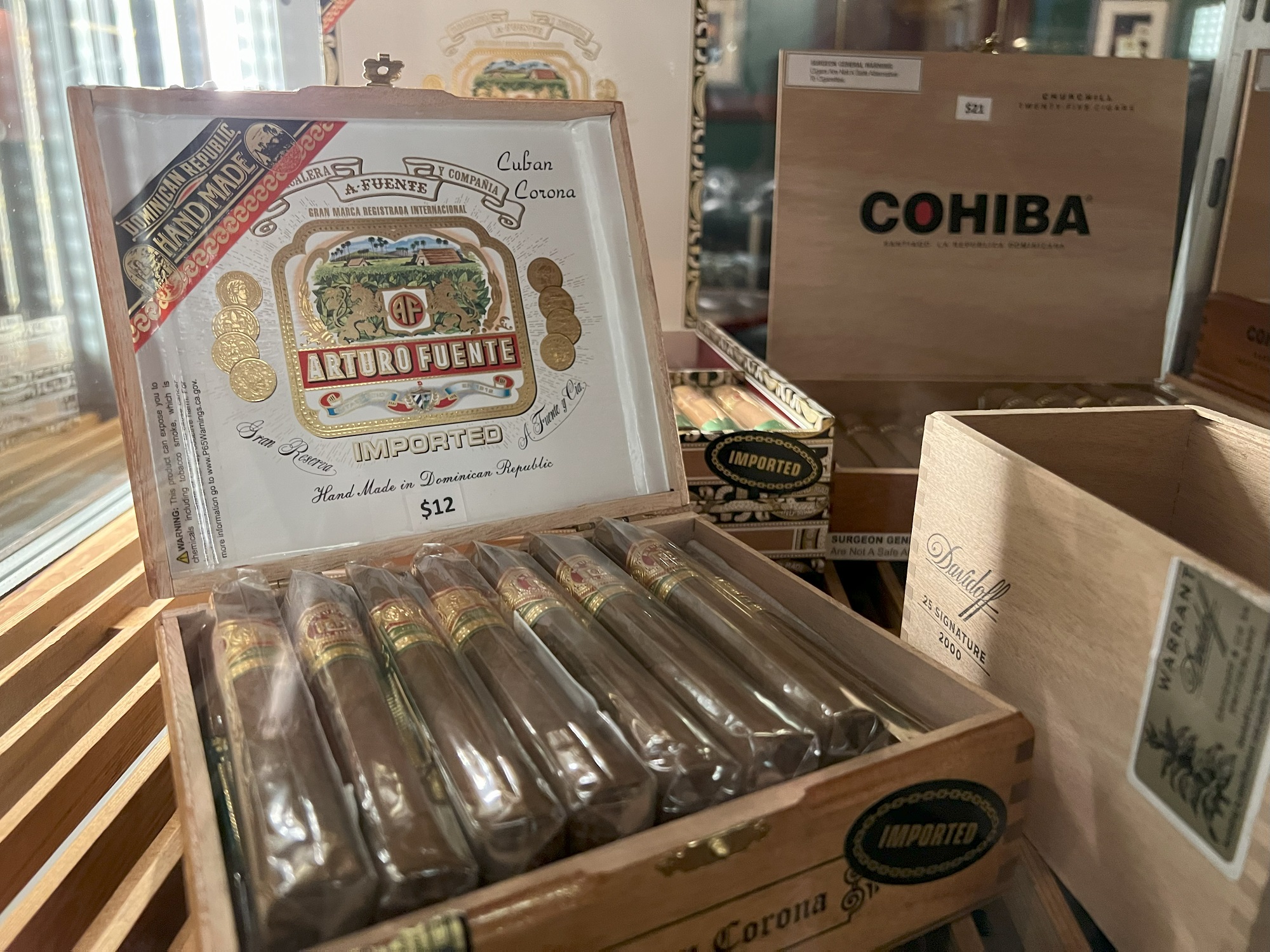
Cigar offerings from the cozy Havana Bar— right next to the larger Windjammer Bar, two nice spaces to go sit in and relax in on a windy day such as today.
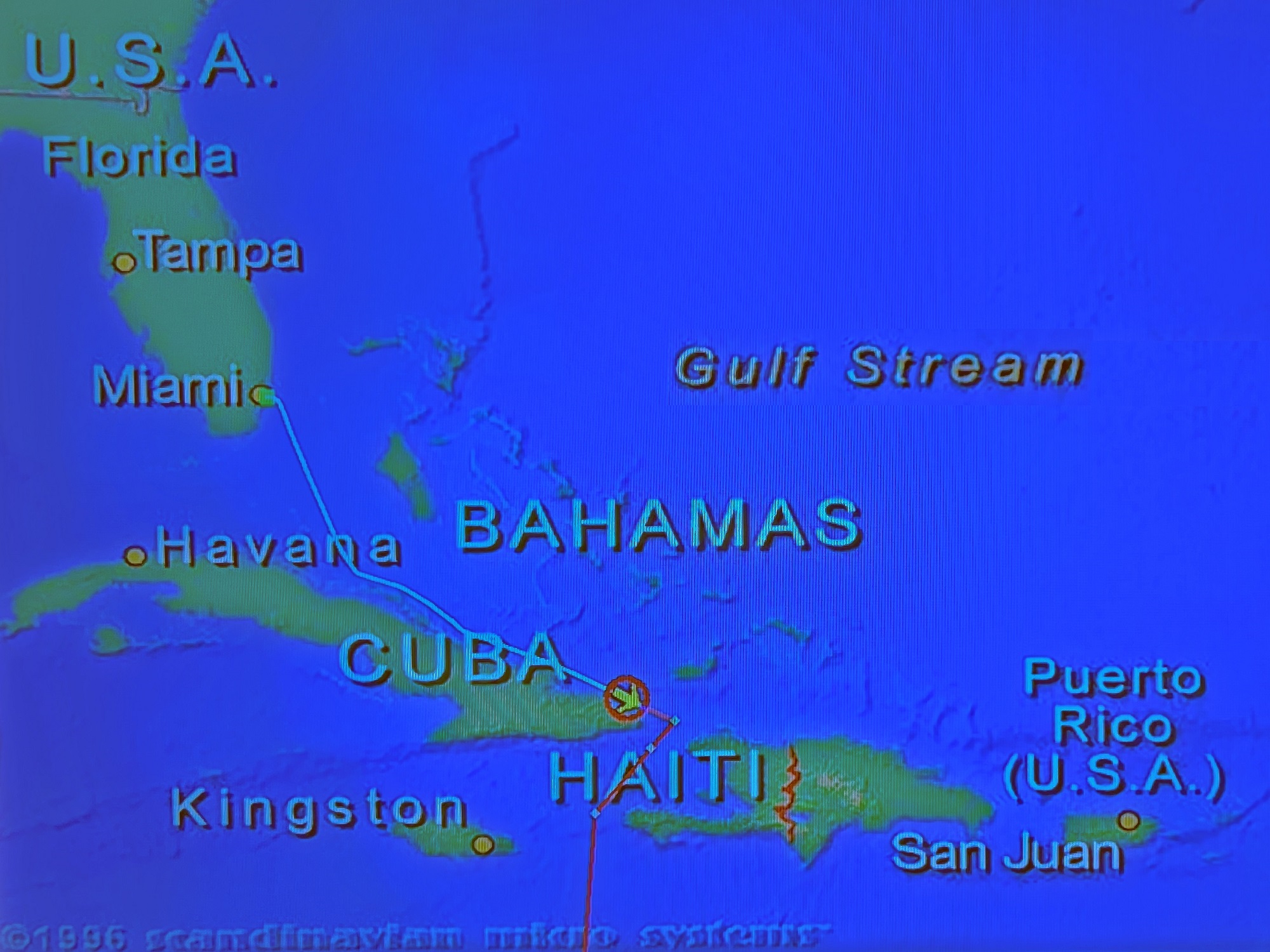
Cuba is in the way of sailing due south, and so we had skirted it towards the southeast for most of today. (Position shown for 9 pm Eastern Time on Saturday night). We could see the lights of the towns near the Cuban coast tonight.
We were barely an hour or two out of Miami (after our departure at 6 pm on Friday night), when the captain announced that one of the passengers had fallen gravely ill, and that the best option was to return to port to disembark the patient for the medical care that she needed.
After that, Friday night and all of Saturday seemed to go without any major incident.
Pictures:
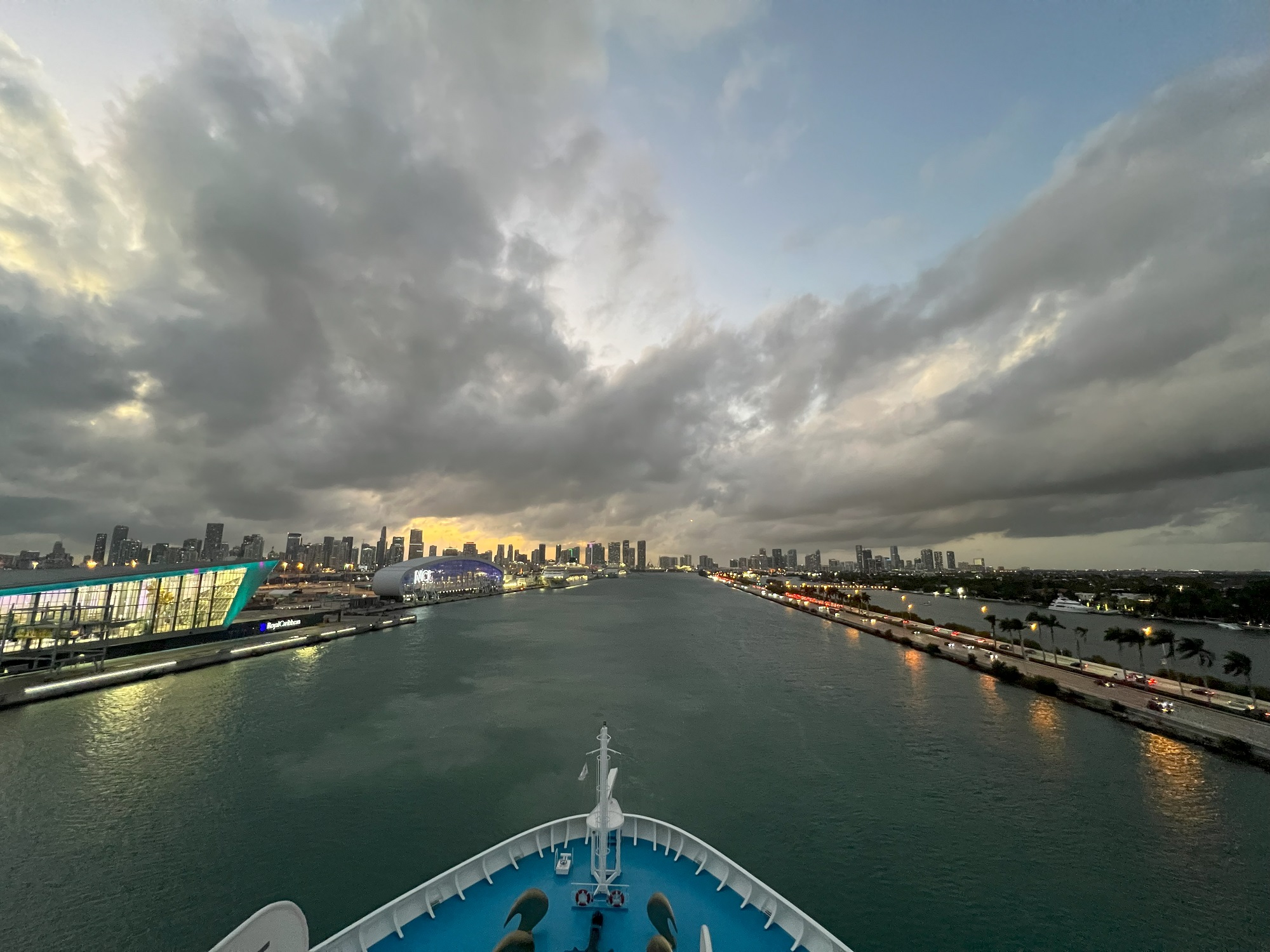
The view from atop the bow of the ship on Deck 12, while backing out of the channel alongside Dodge Island, leaving the Norwegian Sky in the distance (and the fancy Royal Caribbean cruise terminal building on the left edge of the picture);
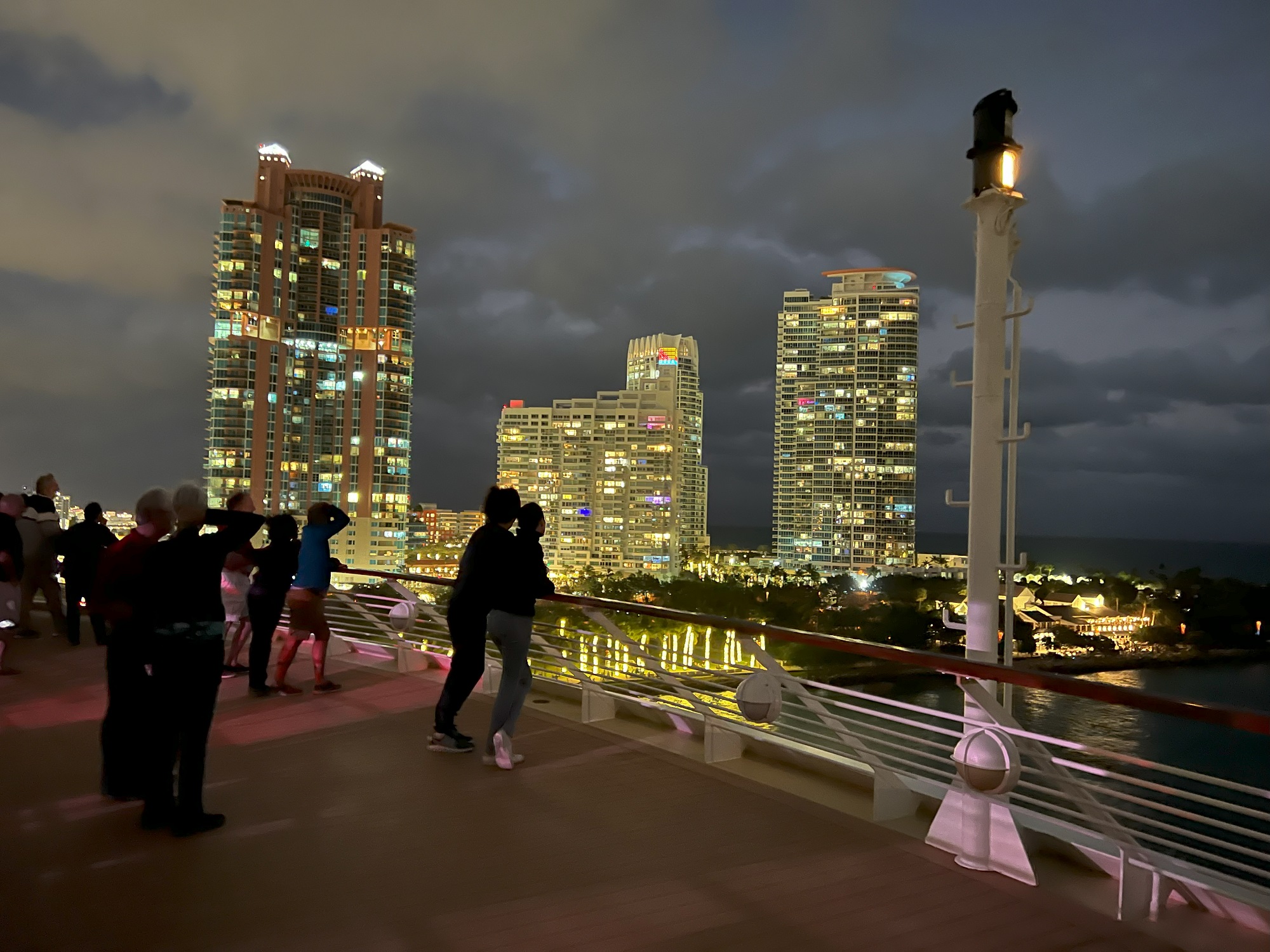
Another view from Deck 12, of the last of the condo towers before we reached the open seas;
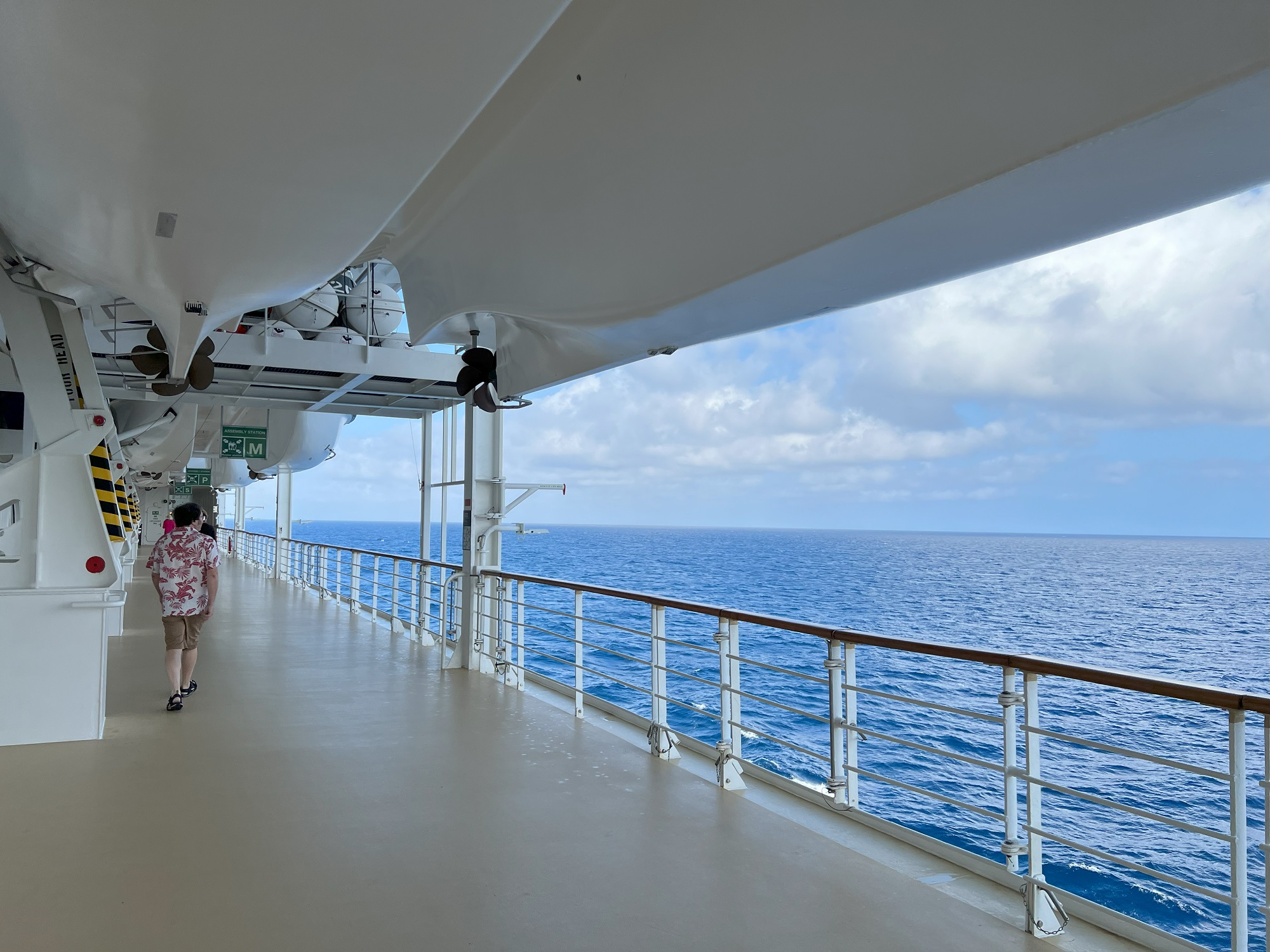
The starboard view from the promenade deck;
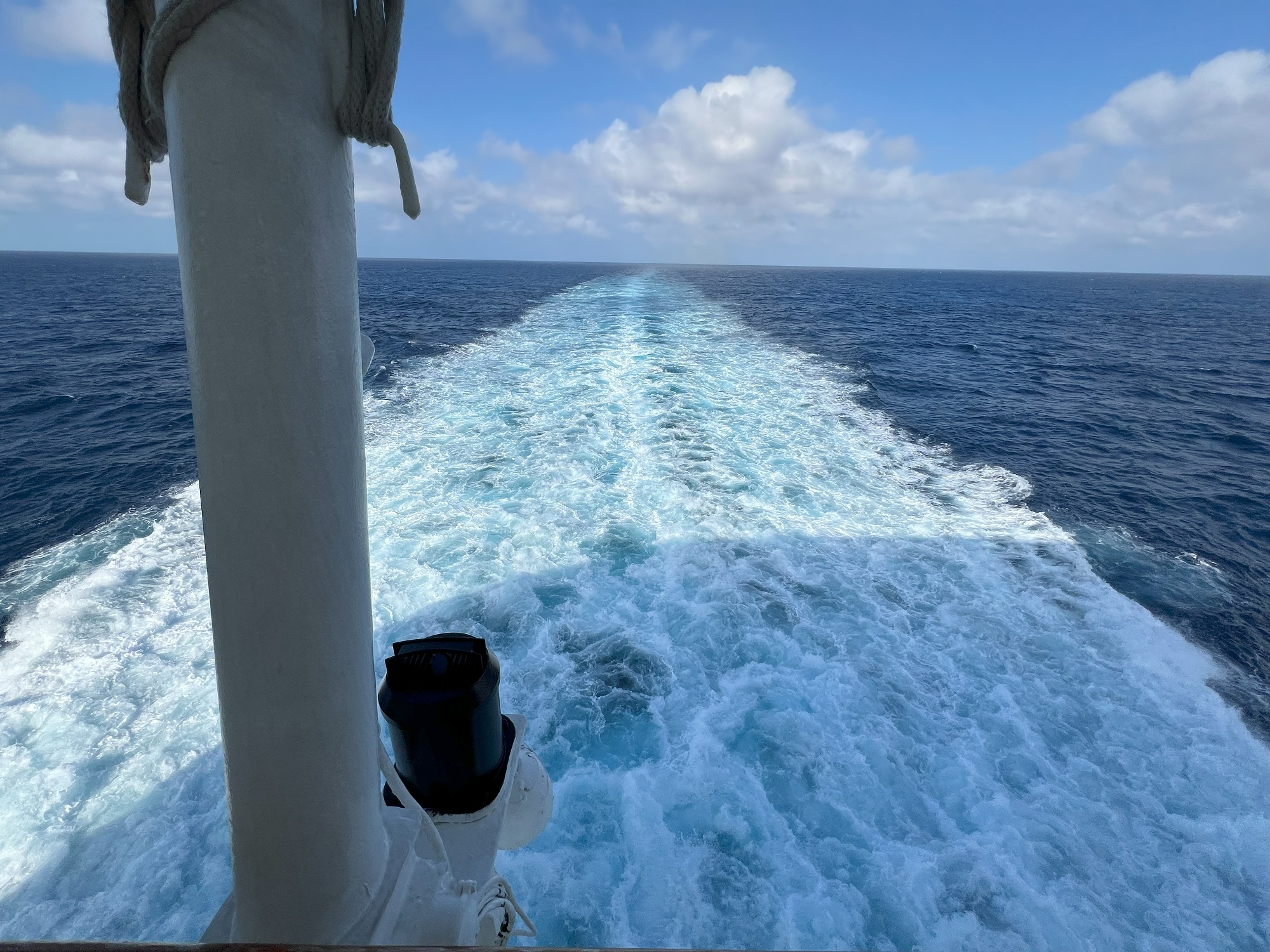
The view from the promenade deck and the stern of the ship;
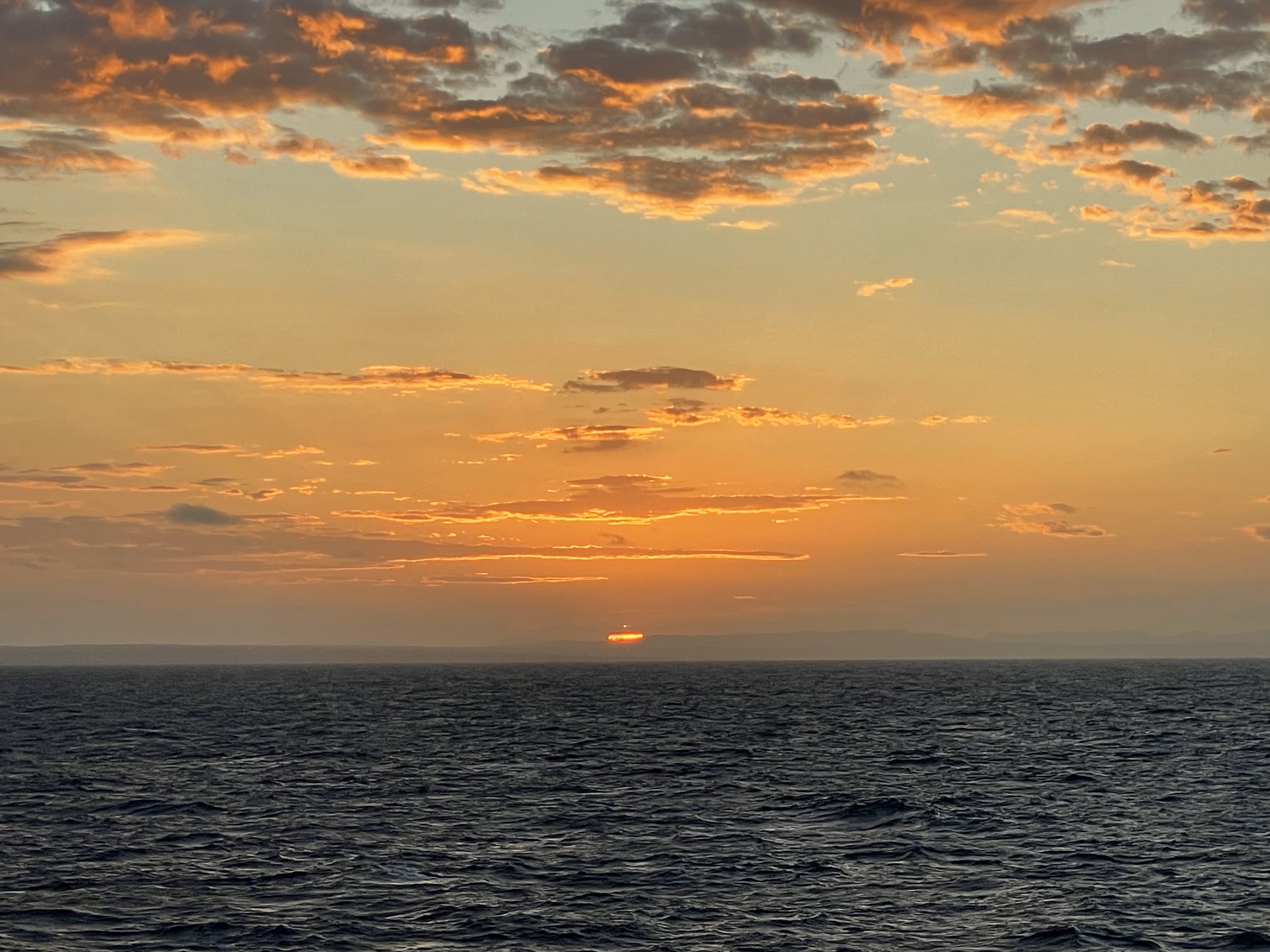
Sunset, around 5.30 pm (picture courtesy one of my fellow shipmates).
We stepped on board the Norwegian Sun at the cruise terminal on Dodge Island here in Miami at around 11.30 am, and will set sail at 5.30 pm.
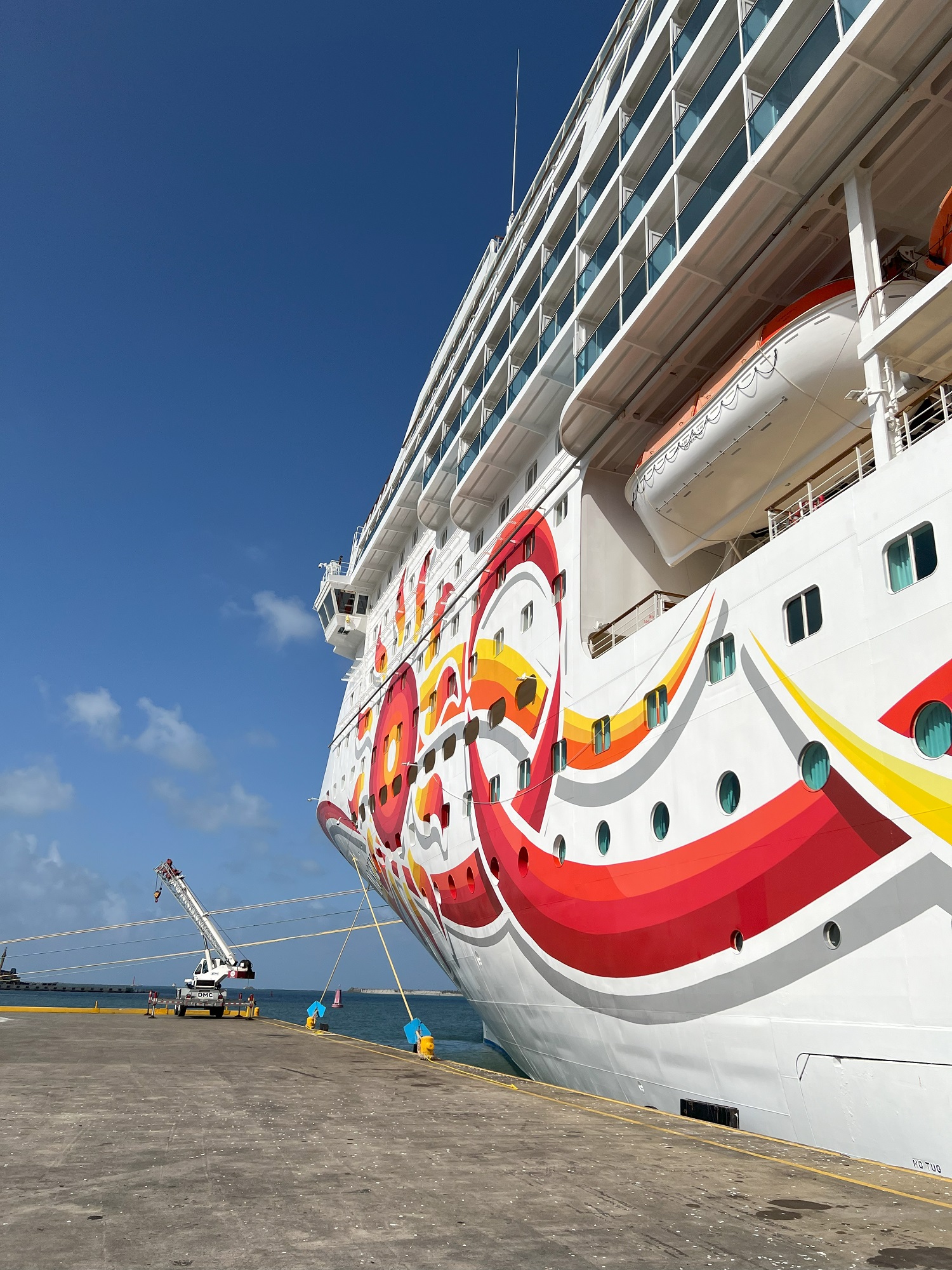
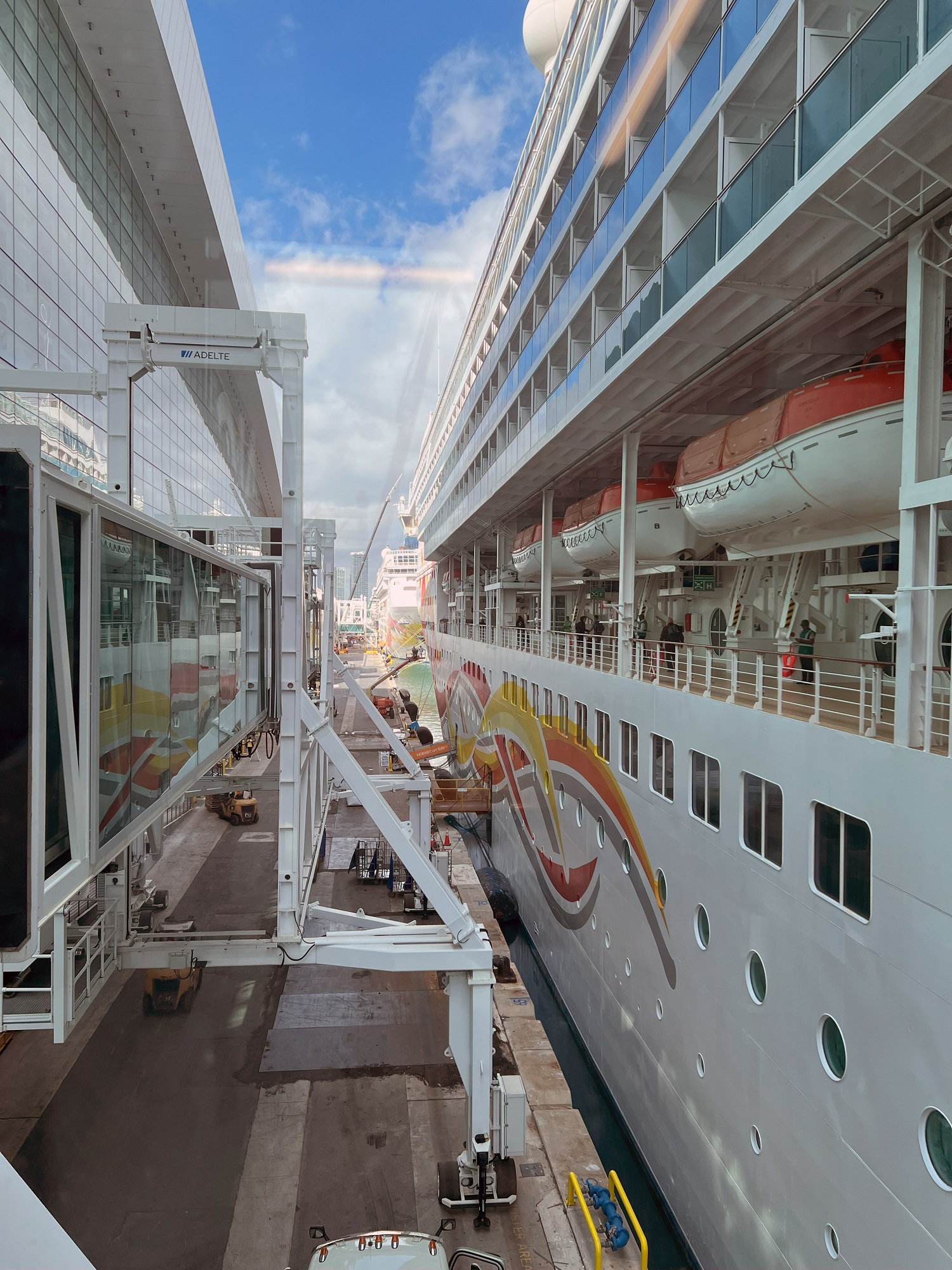
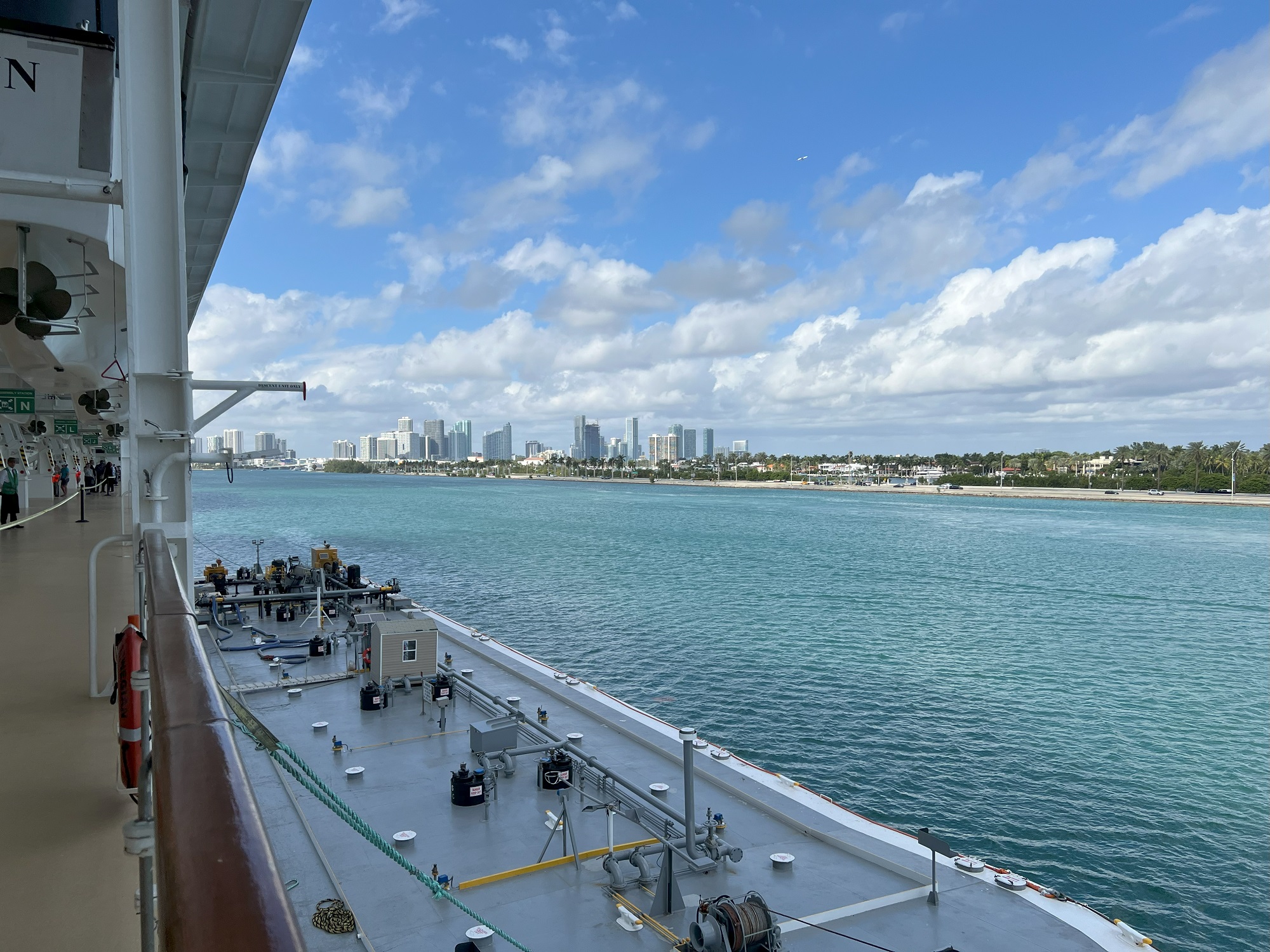
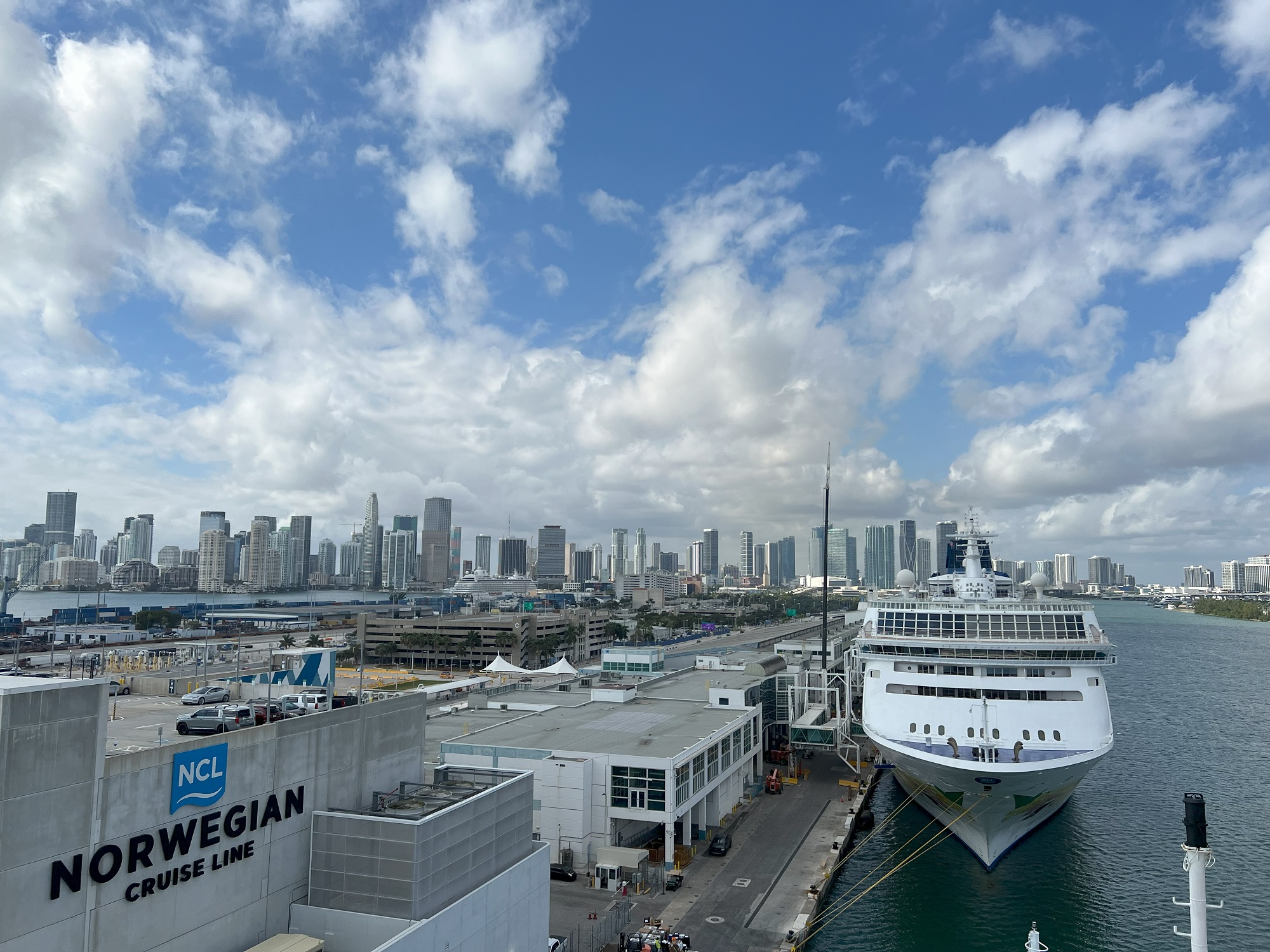
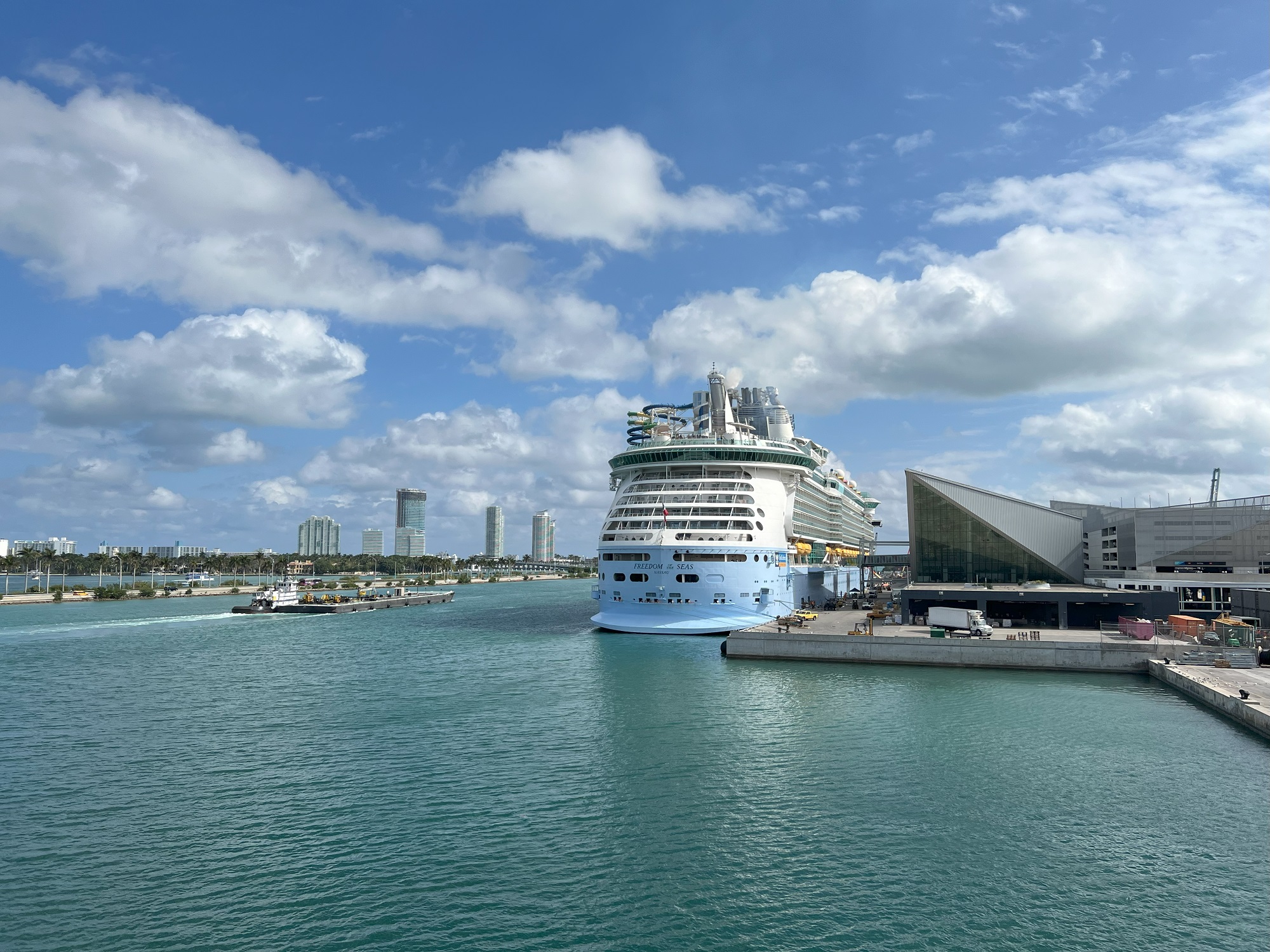
A glimpse of Miami condos from the shuttle bus on the way to the cruise terminals in the Port of Miami. Condominium living is a big thing in Miami. The Miami metro area had a population of 6.2 million in 2023.Stepping on board the Norwegian Sun at the cruise terminal on Dodge Island. First things first, after stepping on board: passengers have to check in at their muster station on the promenade deck (the station to report to in case of an emergency on board).A barge next to the ship, seen from the promenade deck. The Norwegian Sun made her maiden voyage in 2001. Tonnage: 78,309 tons, Length: 848 ft, Avg. Speed: 23 knots, Passenger Capacity: 1,936, Normal Crew Size: 906.Looking northwest towards the city skyline in the distance. That’s the Norwegian Sky (launched in 1996) in front of us, similar in size to the Norwegian Sun.Behind us is Freedom of the Seas from the Royal Caribbean cruise line, a newer and much larger vessel than ours. It was launched in 2006 and can accommodate 3.634 passengers.
We made the 5-hour flight into Miami International Airport.
Our scheduled departure from Seattle at 7.19 am was delayed by almost an hour, due to issues with loading the bags onto the plane.
After that it was smooth sailing*.
(*Flying, the sailing will start tomorrow).
My compadres and I are flying out to Miami in the morning, so that we can board the Norwegian Sun to set sail with us on Friday.
She will be heading to South America through the Panama Canal, and I will try to post about our whereabouts every day, of course. There will be wi-fi on the ship, but I suspect it is not going to be super-snappy and solid.
I could see my breath today (low 40s, about 5 °C outside)— a tad too cold for a long walk.
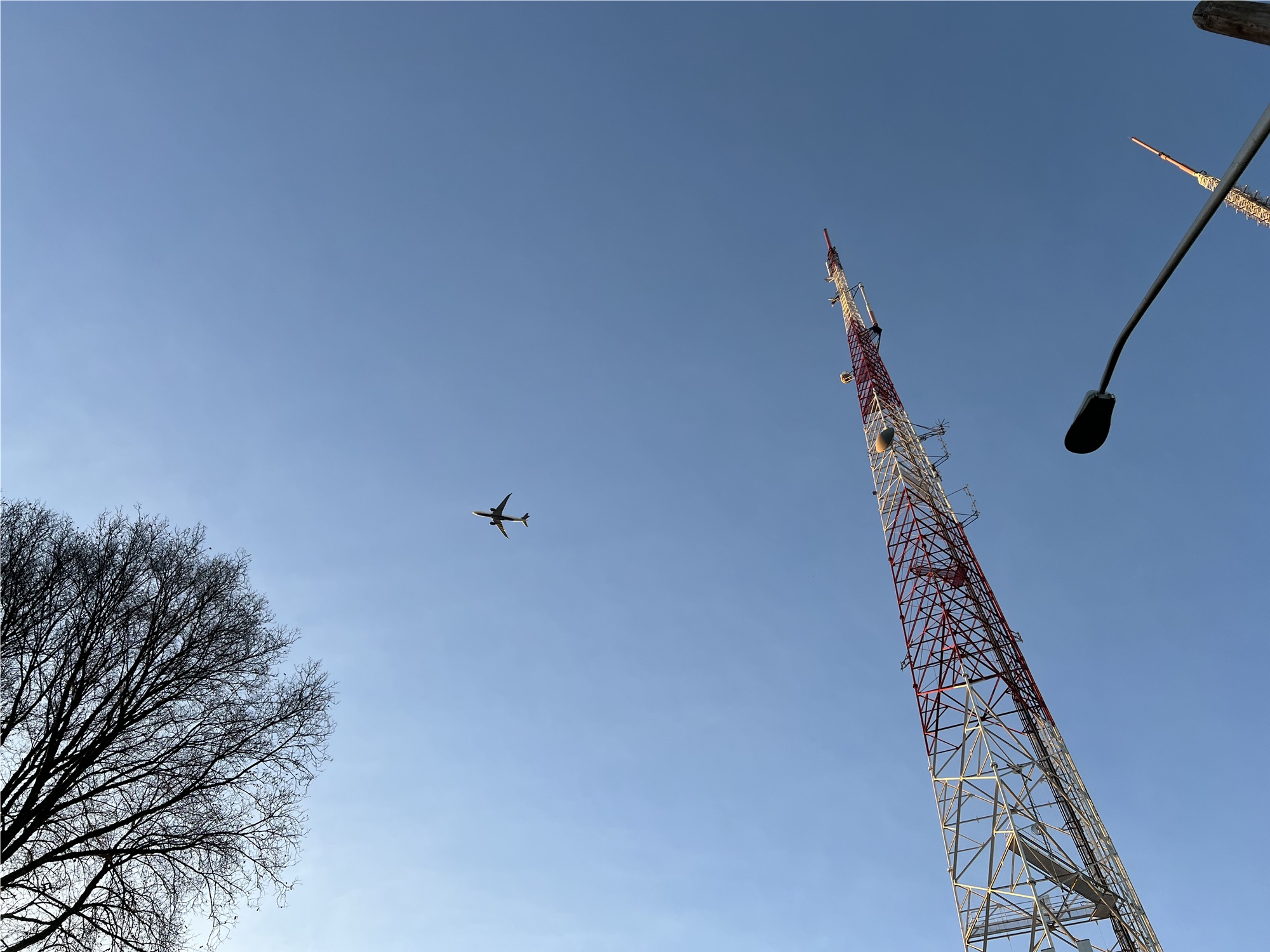
There were no clouds in sight 4 o’clock today by the high antenna towers on Madison Street and 18th Avenue on Capitol Hill. That’s Delta DL 282 from Shanghai, coming in to land at Sea-Tac (flight time 11 h 15 min), some 90 minutes later than it had been scheduled.
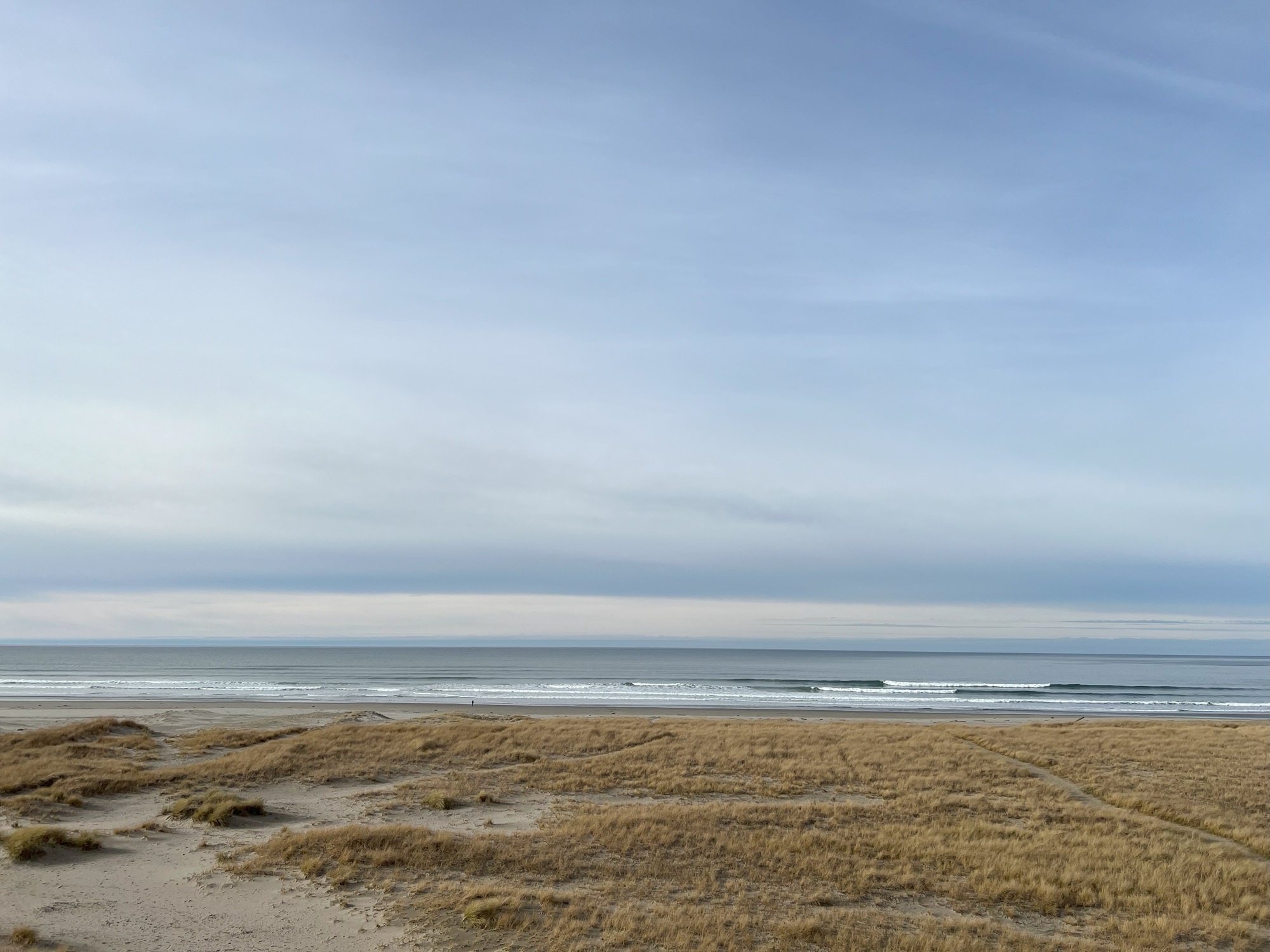
Wednesday was clear and quiet, but there was rain on Thursday morning in Seaside as we packed up and headed home to Seattle.
Pictures:
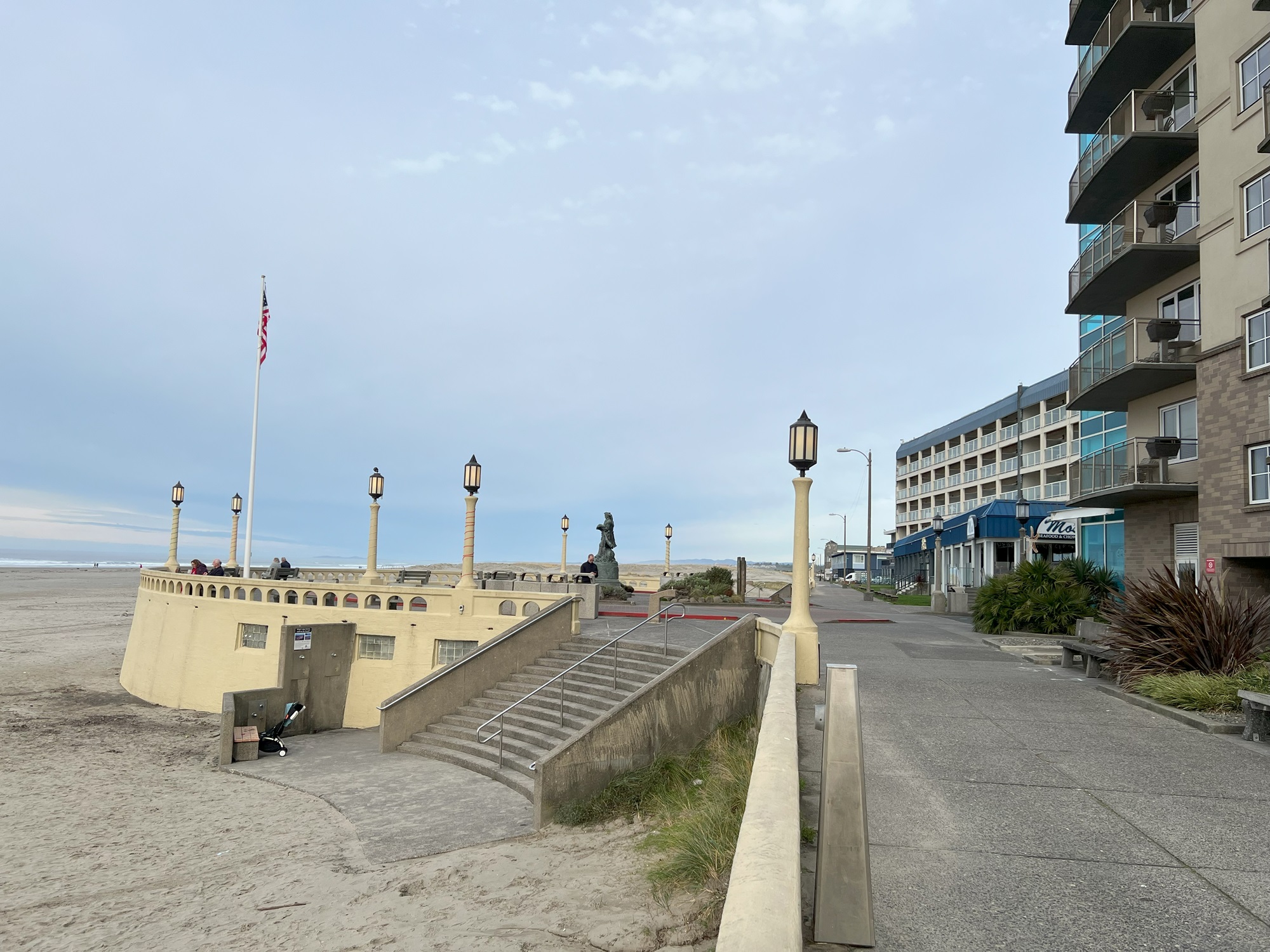
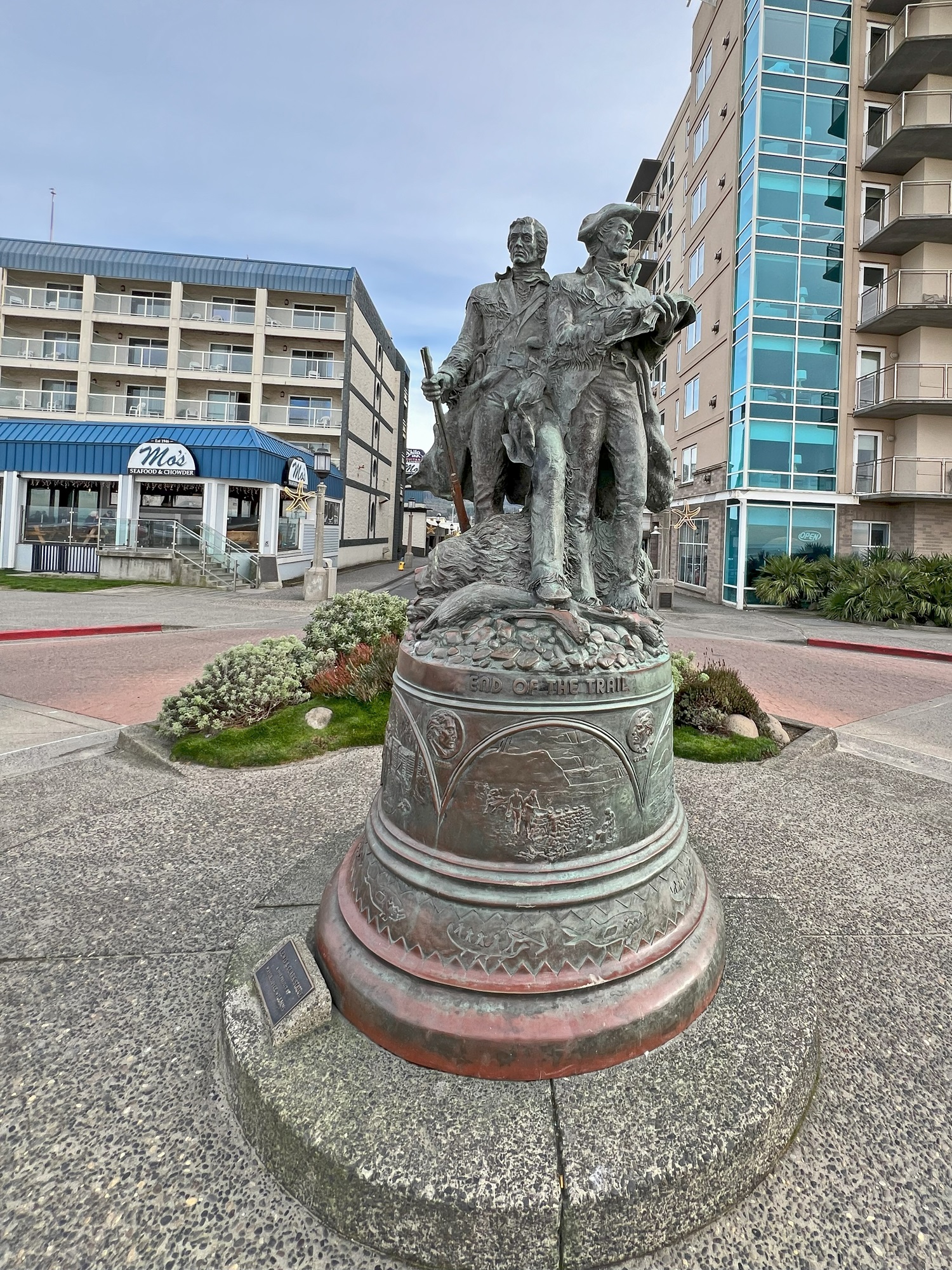
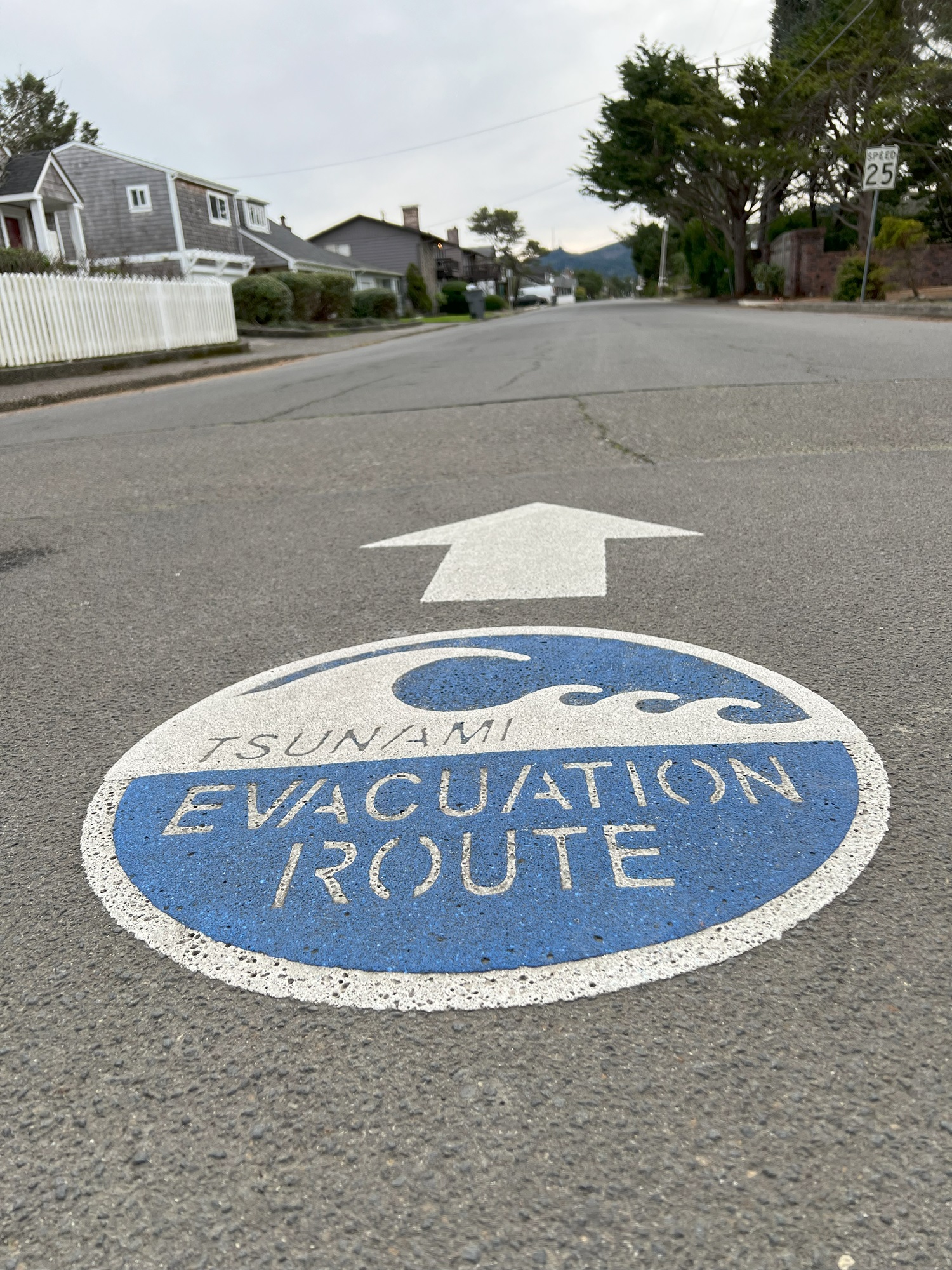
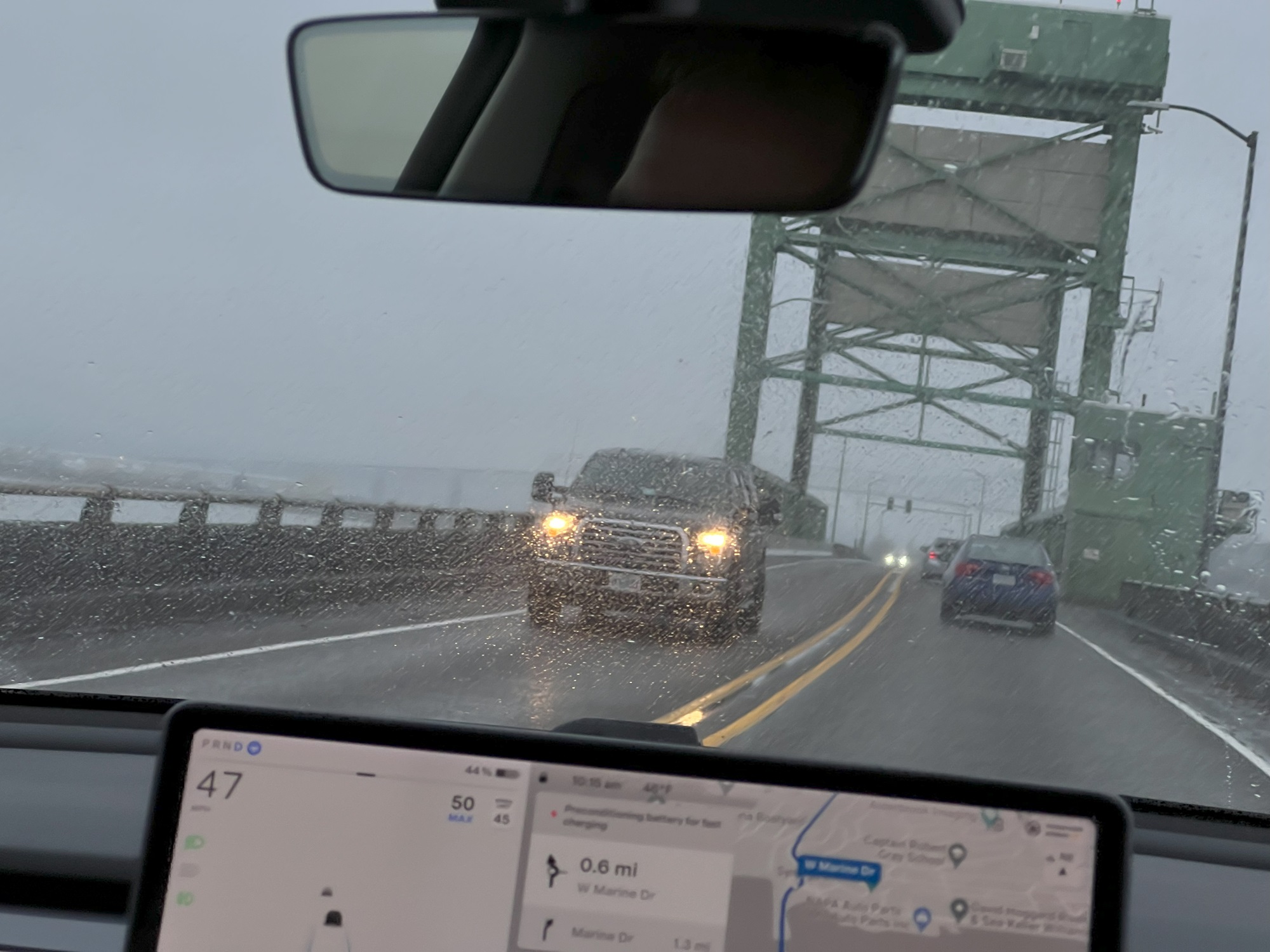
Seaside beach around noon on Wednesday | The historic Seaside Promenade is 1½ miles long and was dedicated in 1921 | Monument for Lewis and Clark, whose expedition had started in St Louis, MO, in May 1804, and ended at Fort Clatsop in Sept. 1806, nearby Seaside, to its north | A marker for an evacuation route (Seaside is only at 23′ elevation and vulnerable to tsunamis) | Approaching the drawbridge on US-101 going over Youngs River
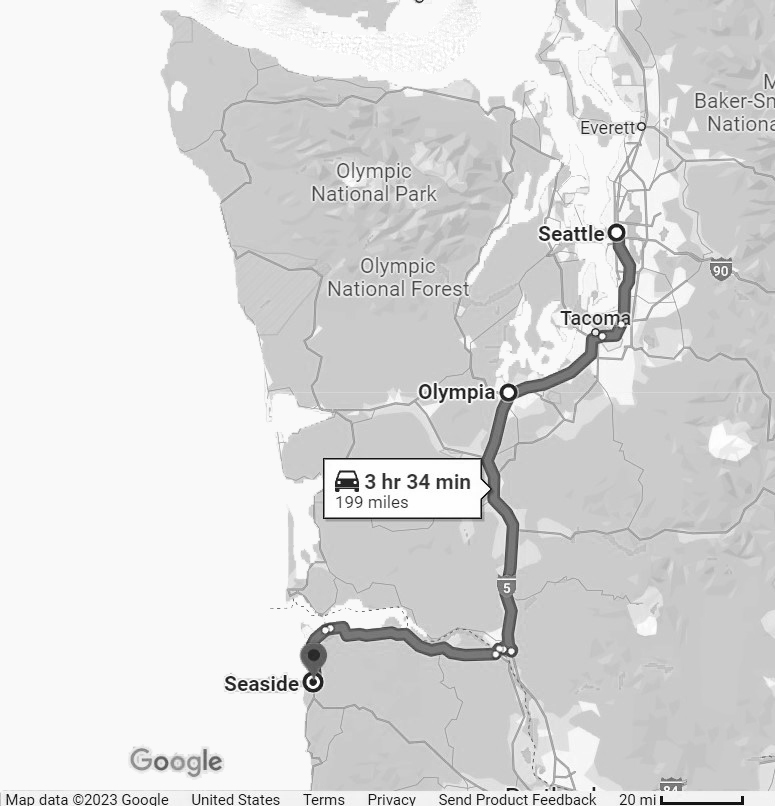
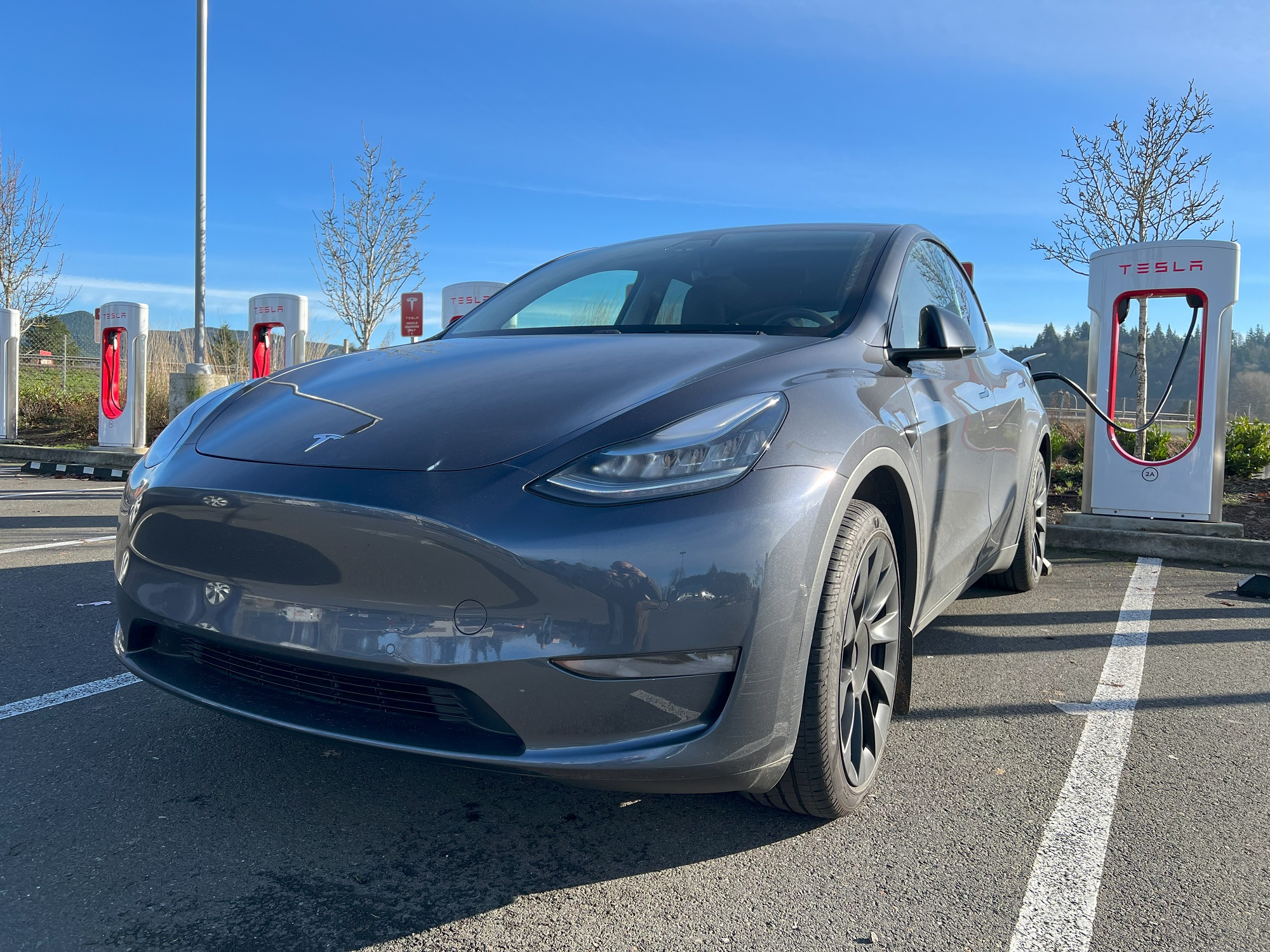
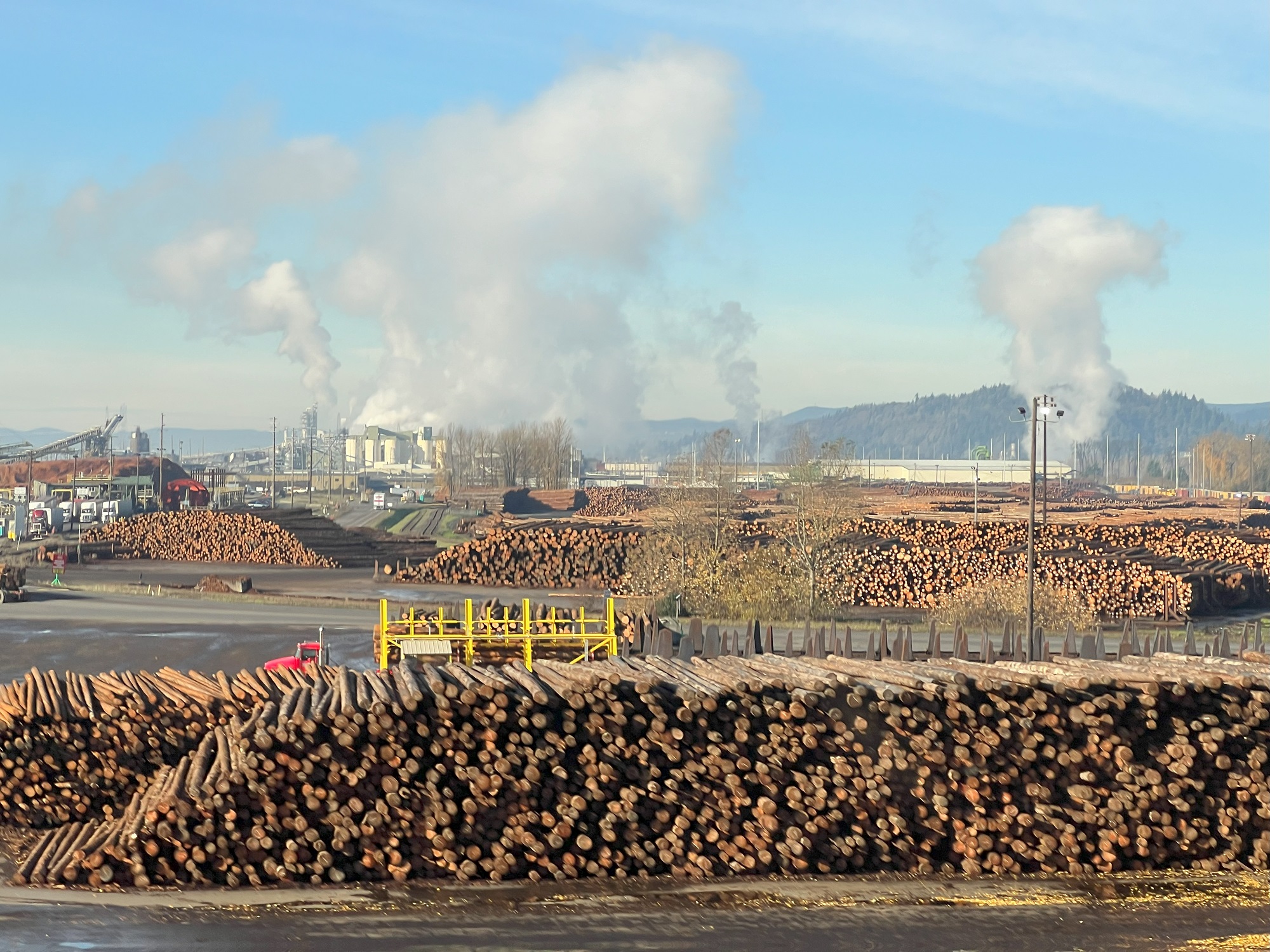
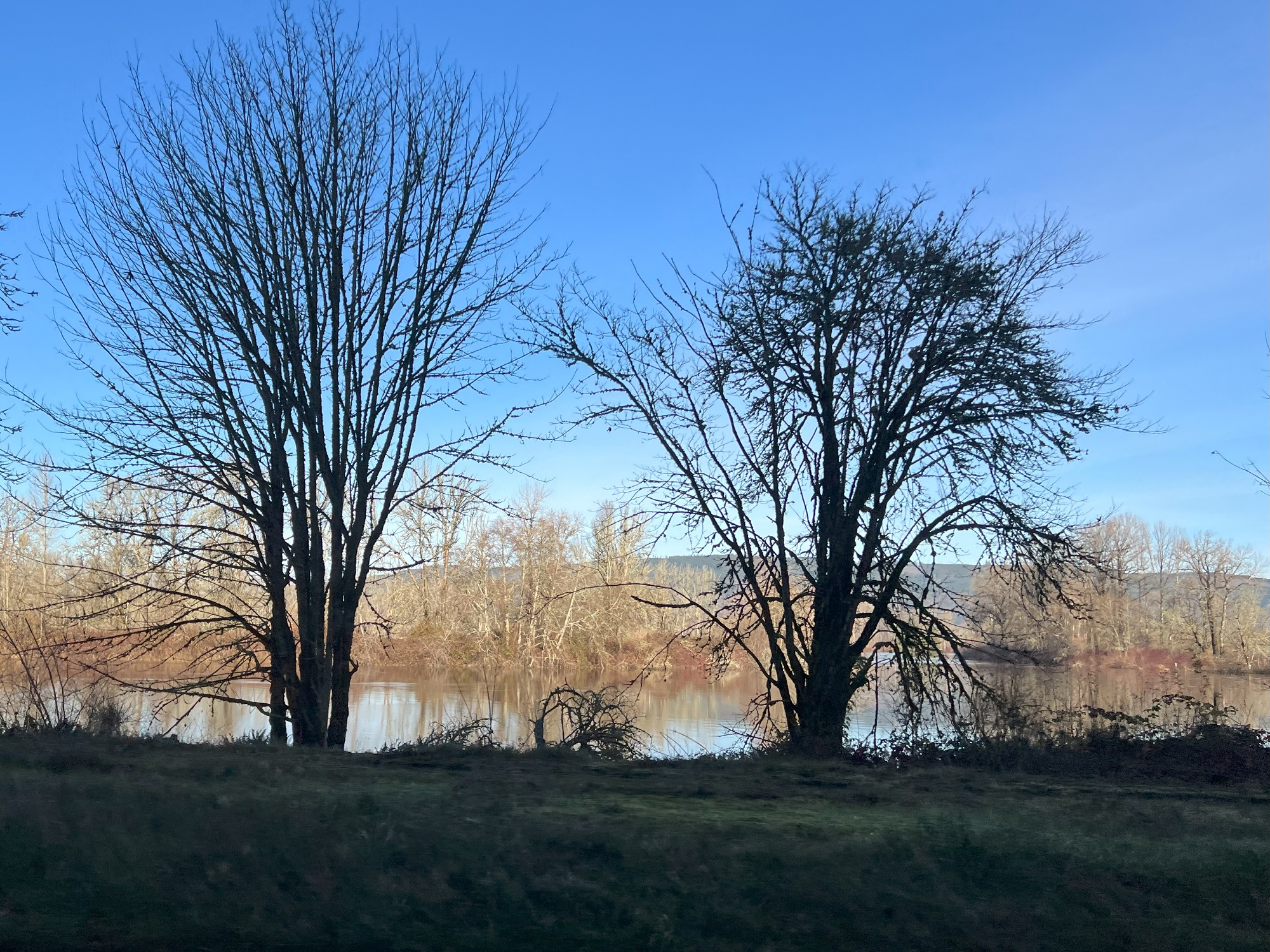
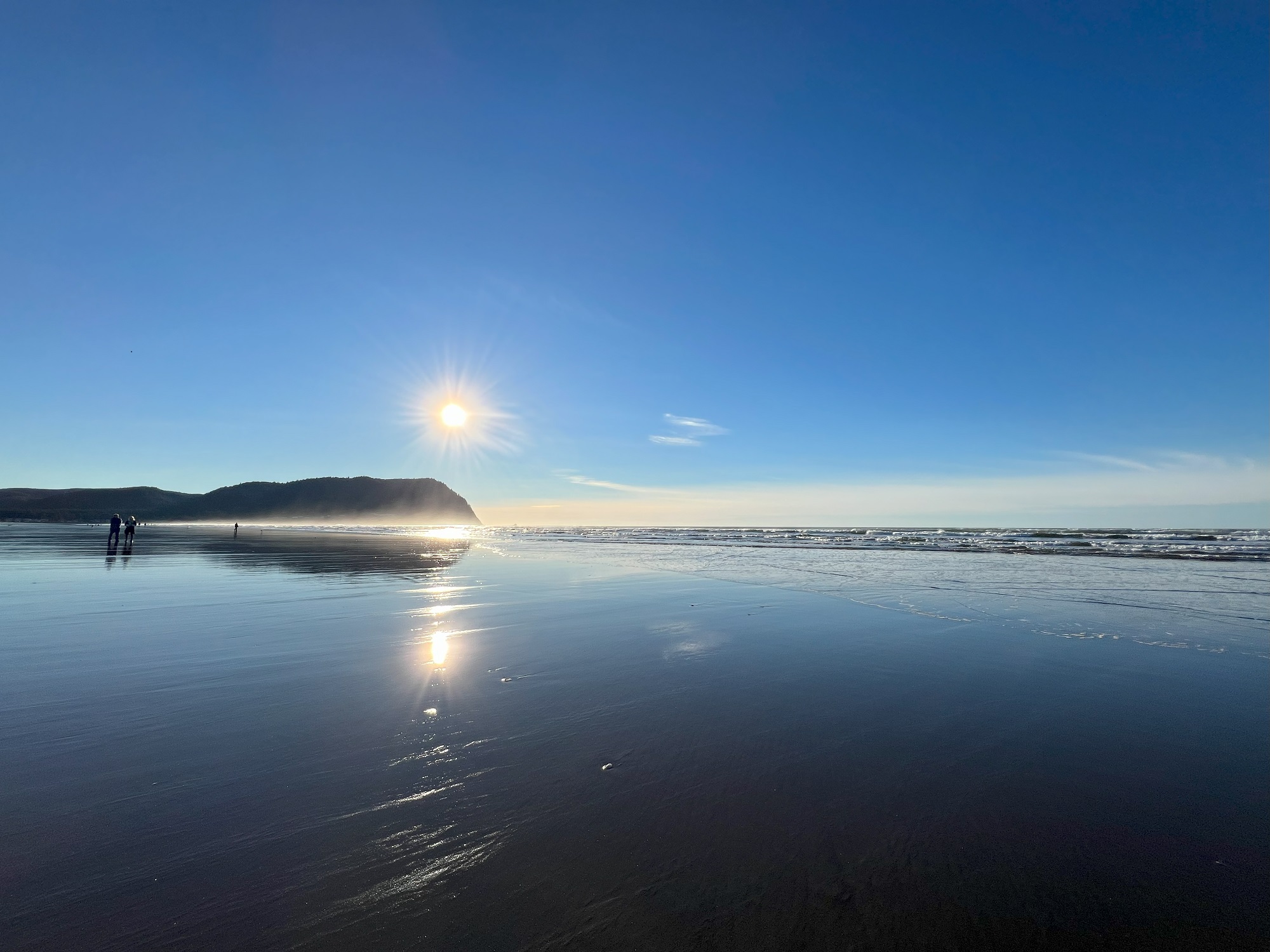
Three amigos drove down to Seaside, Oregon today, to join two amigos that were there already.
Pictures:
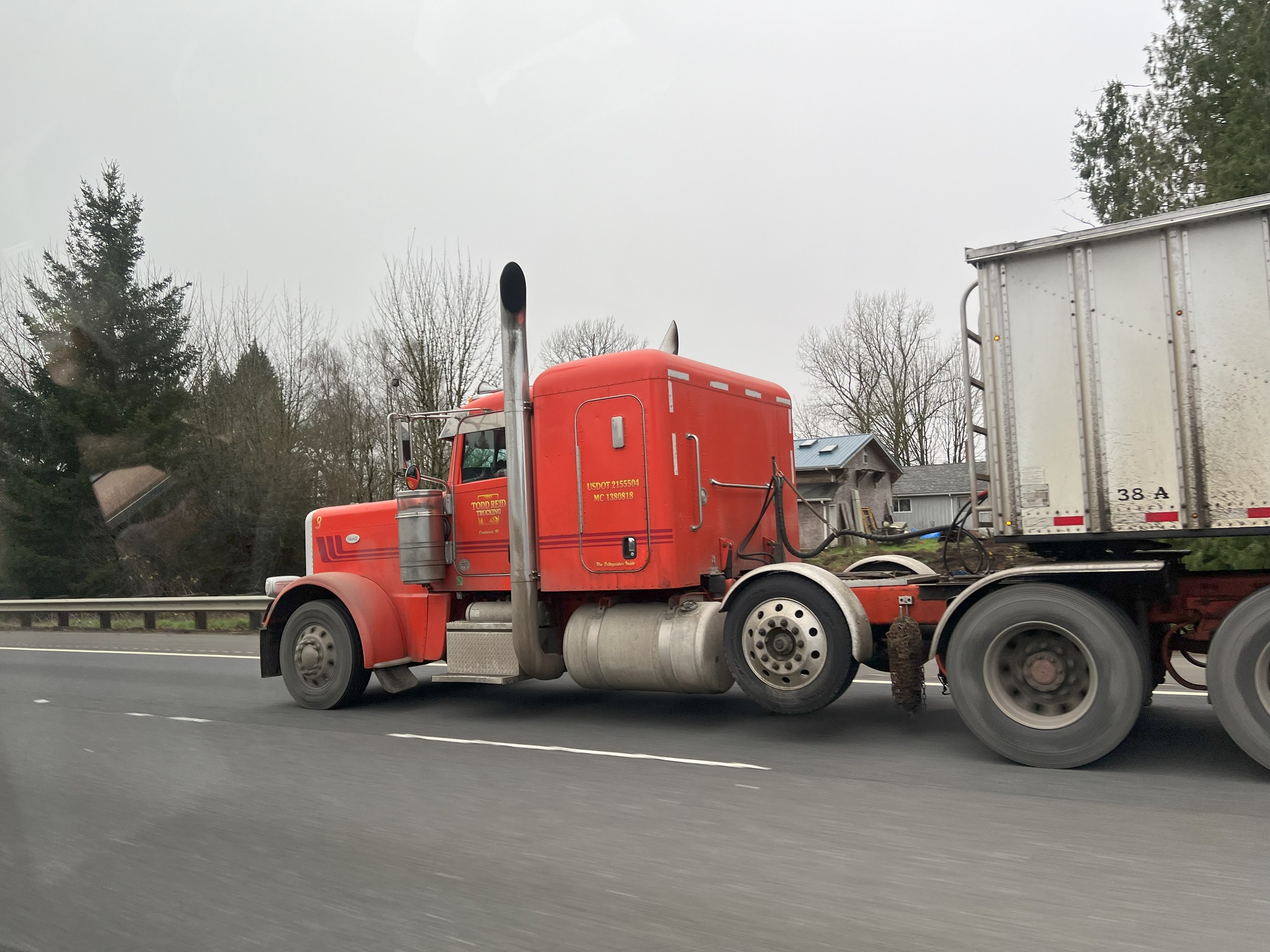
There were plenty of trucks, and fog until noon on I-5 South | At the supercharger in Kelso, Washington | Weyerhaeuser Company’s sawmill at Longview on the Columbia River has been in operation since 1929 | Crossing the Lewis and Clark Bridge and the Washington-Oregon state line on the Columbia River | The marshlands near Kerry Island, Oregon | The beautiful beach at Seaside
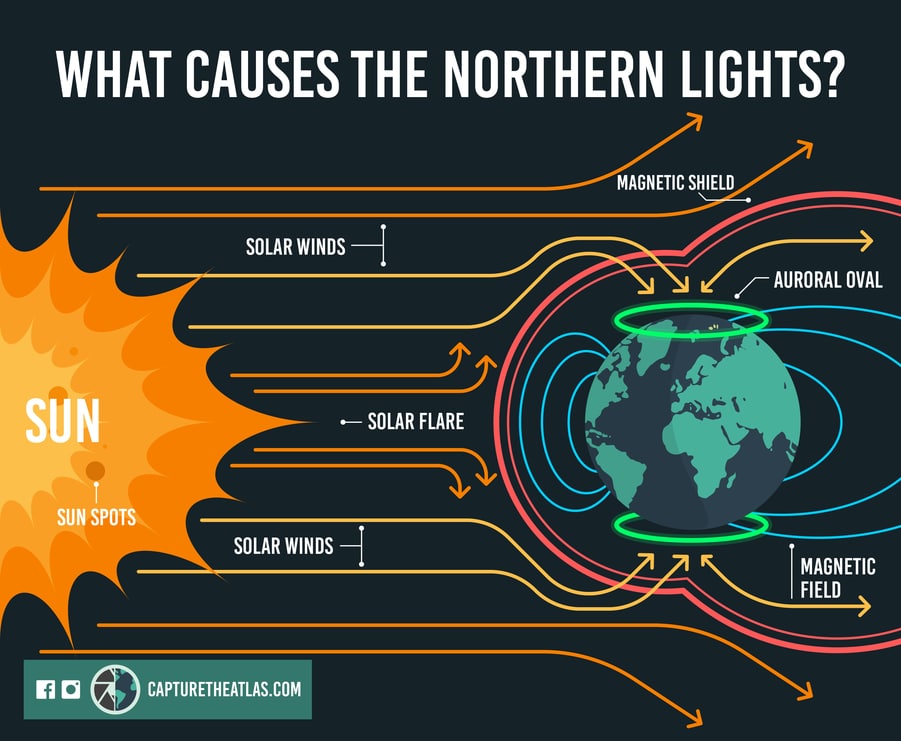
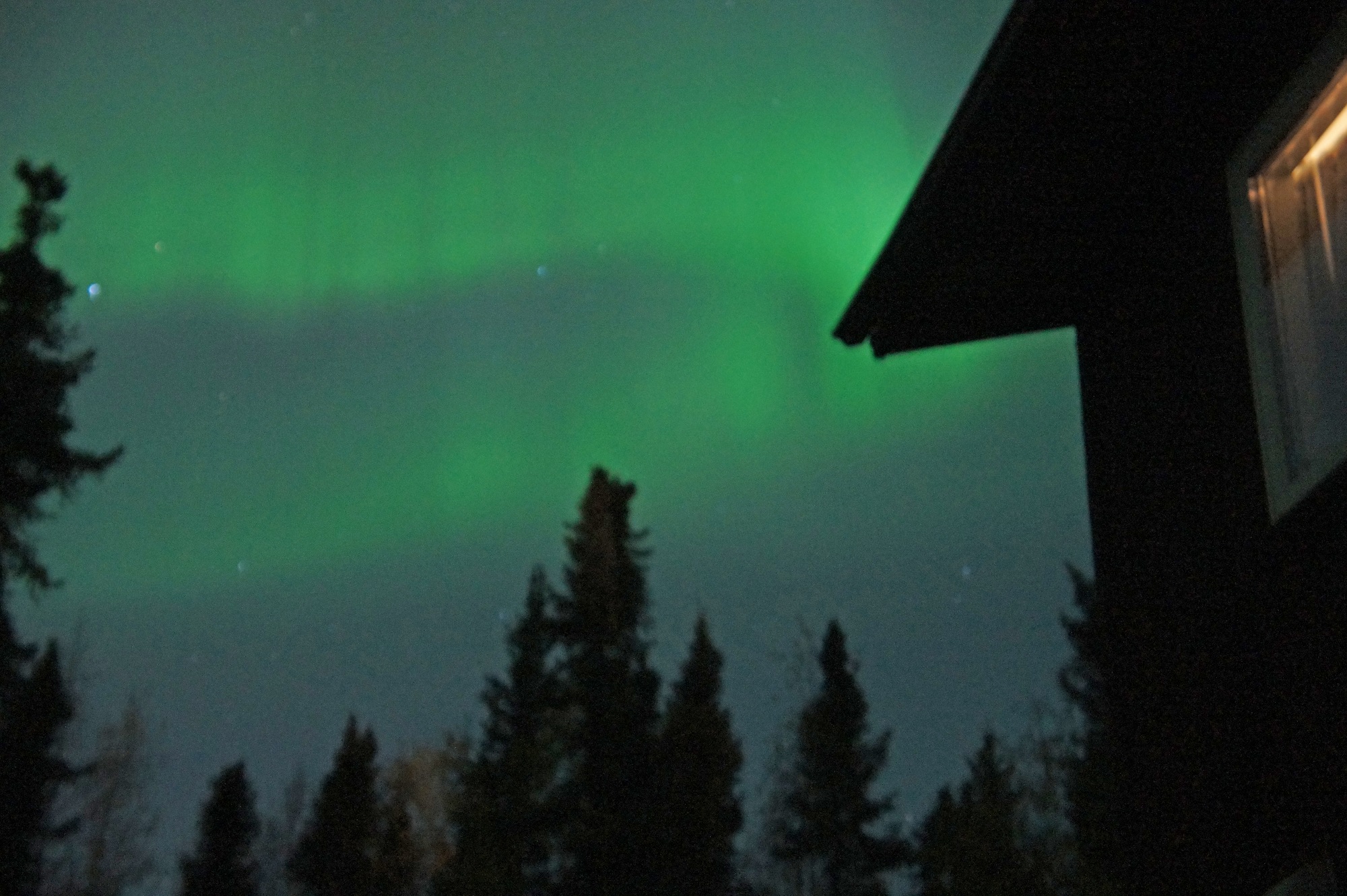
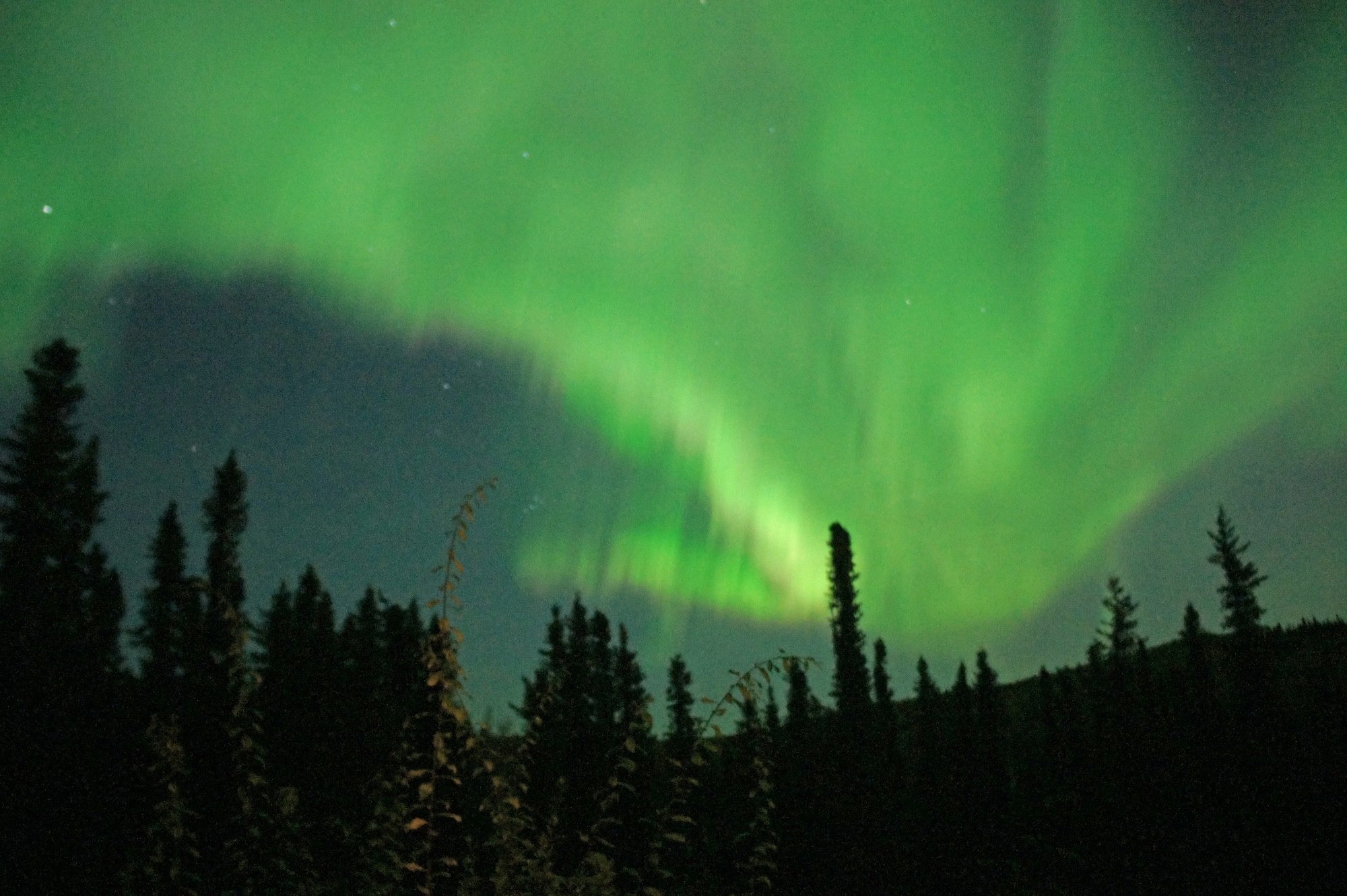
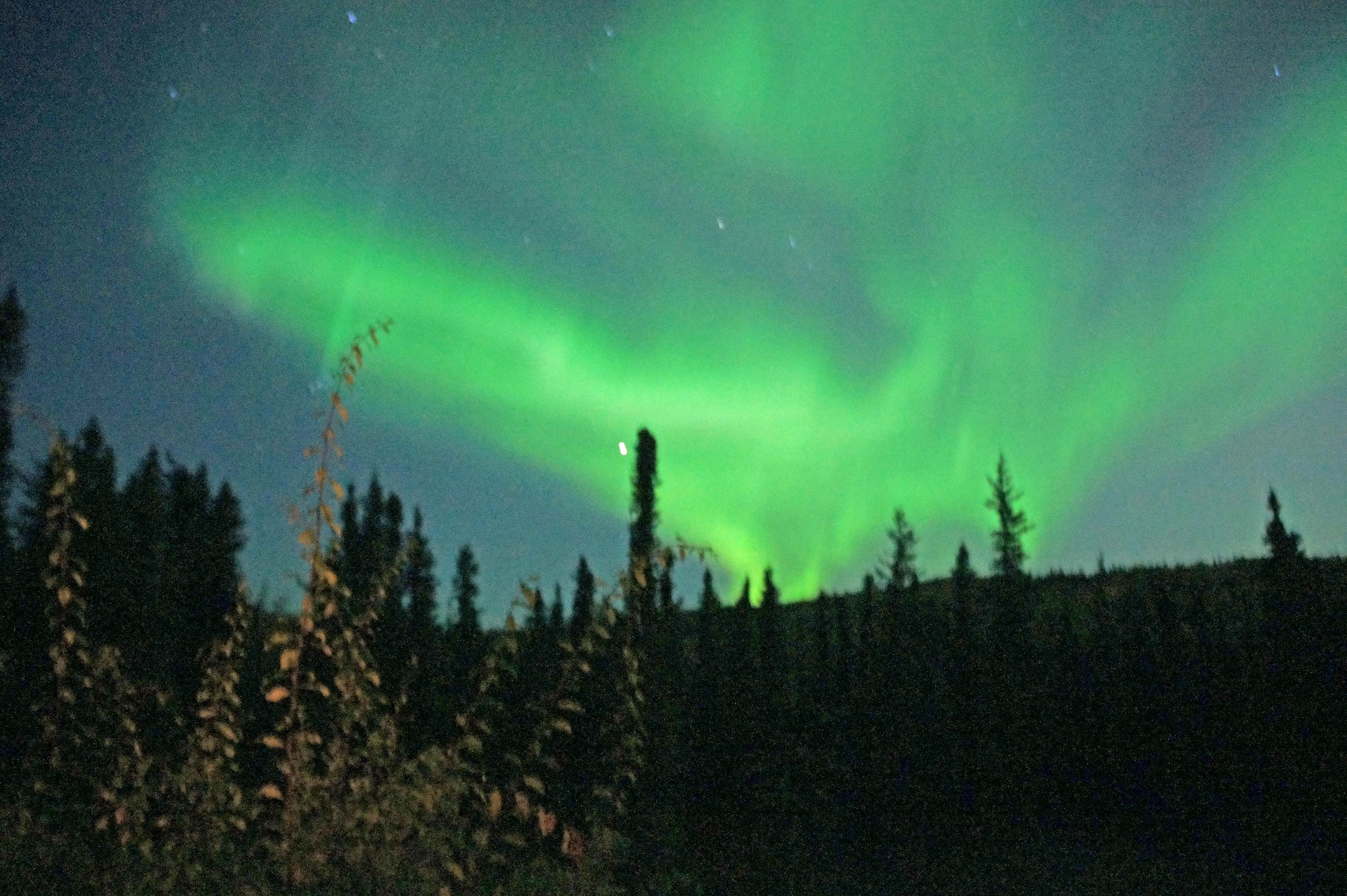
When a solar storm comes toward us, some of the energy and charged particles from the sun (mostly electrons and protons) can travel down the magnetic field lines at the north and south poles into Earth’s atmosphere. There, the particles interact with gases in our atmosphere resulting in beautiful displays of light in the sky. [Infographic by capturetheatlas.com]These pictures are from the northern lights (aurora borealis) as we saw them from our lodgings some 15 miles outside Fairbanks.
Please note: a camera presents severe limitations when the lights appear in an animated fashion, and in the entire night sky overhead!
The photographer is Francois Theron and he used a Sony NEX-3 digital camera with a 10-second exposure.
The three friends made their way back to Seattle today, taking an early 7 am flight out of Fairbanks on Alaska Airlines.
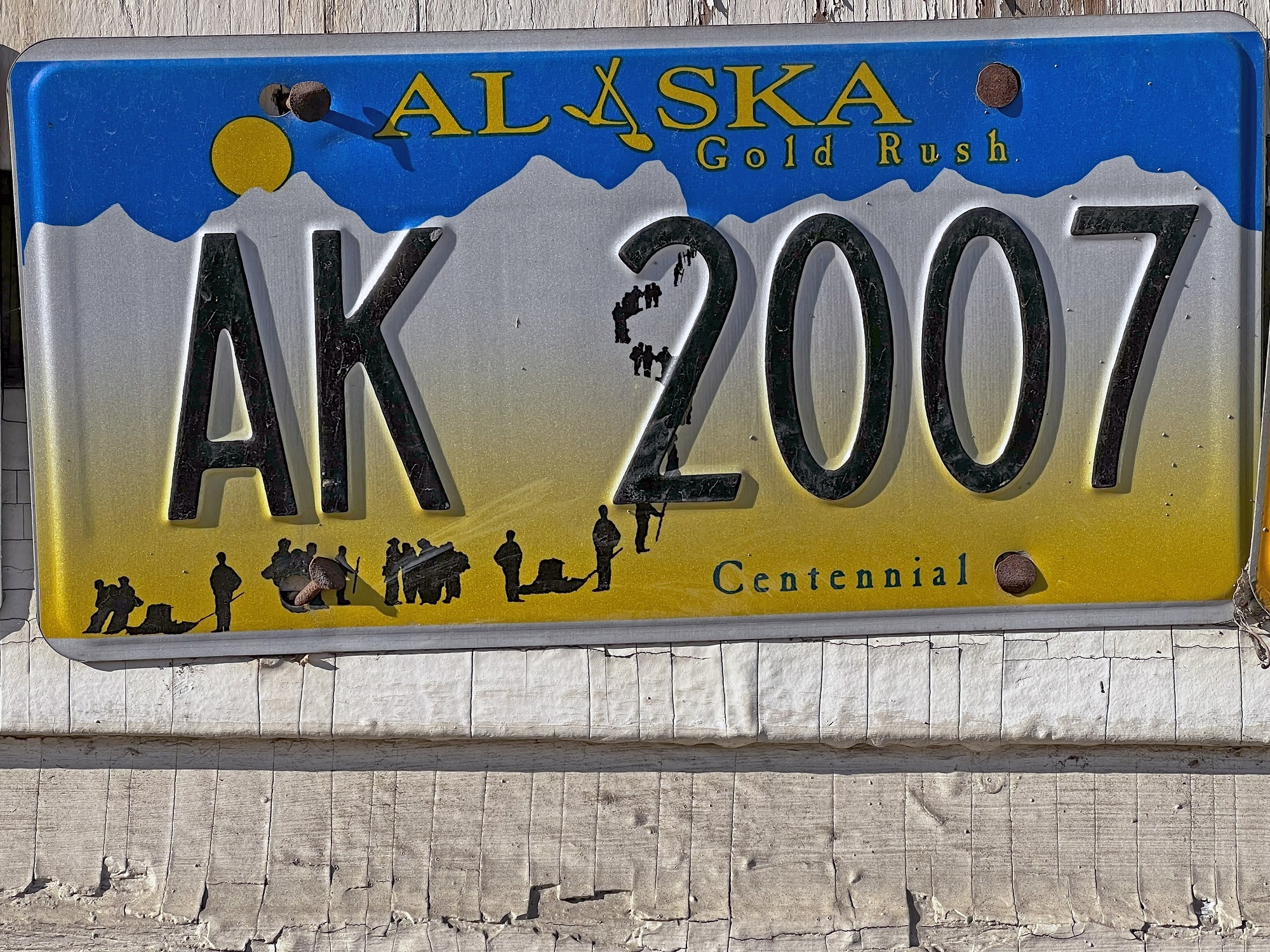
A license plate commemorating the Alaska Gold Rush (also called the Klondike Gold Rush). Some 100,000 prospectors made the trip from Seattle to the Klondike region of Yukon, Canada, between 1896 and 1899. Gold is mined in Alaska to this day, and the state’s largest mine is in fact 25 miles northeast of Fairbanks. The mine’s name is Fort Knox and it has been operating since 1996.
We made a brief stop in downtown Fairbanks today, and then headed to the The University of Alaska Museum of the North (the museum is on the campus of the university).
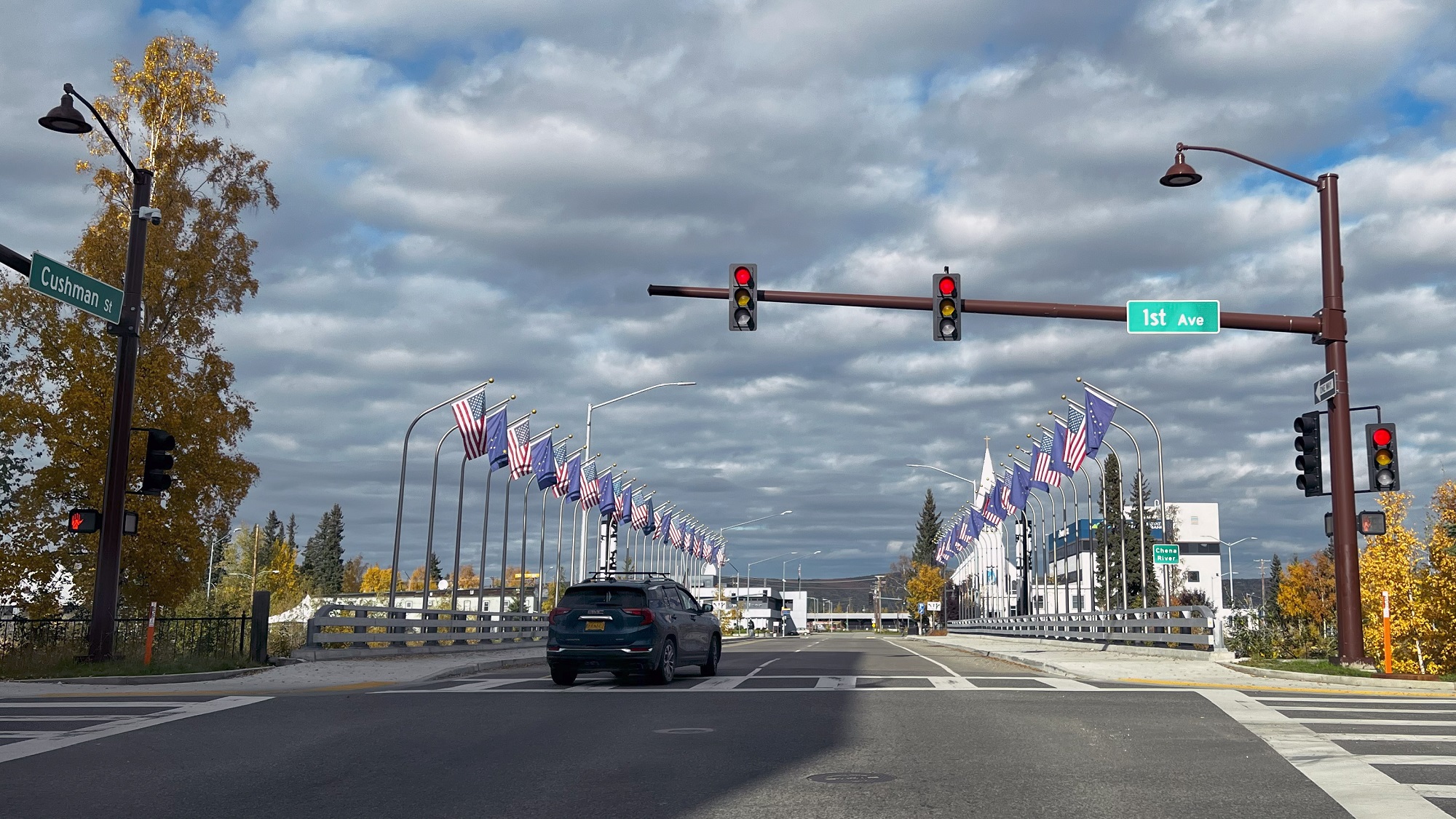
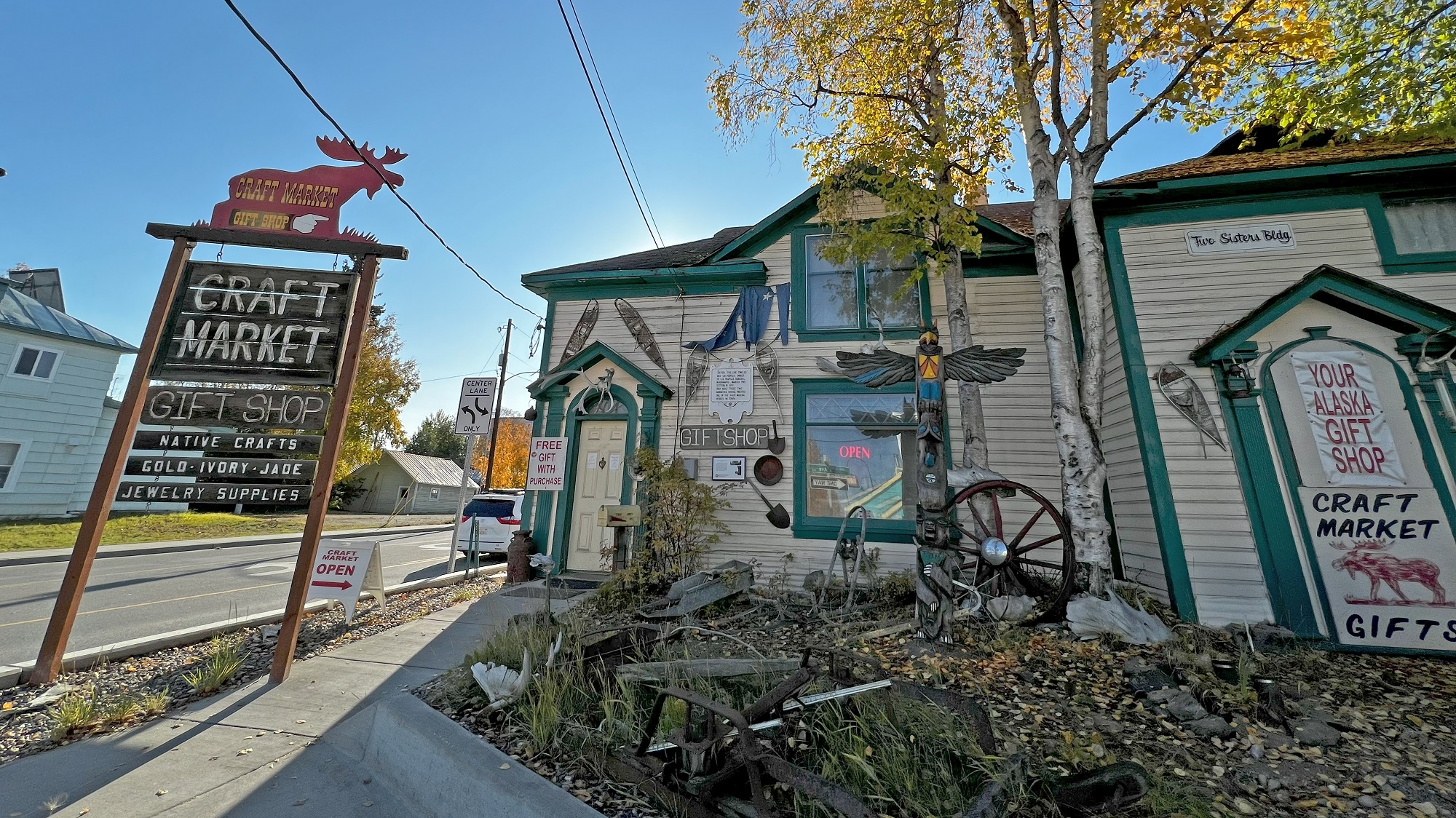
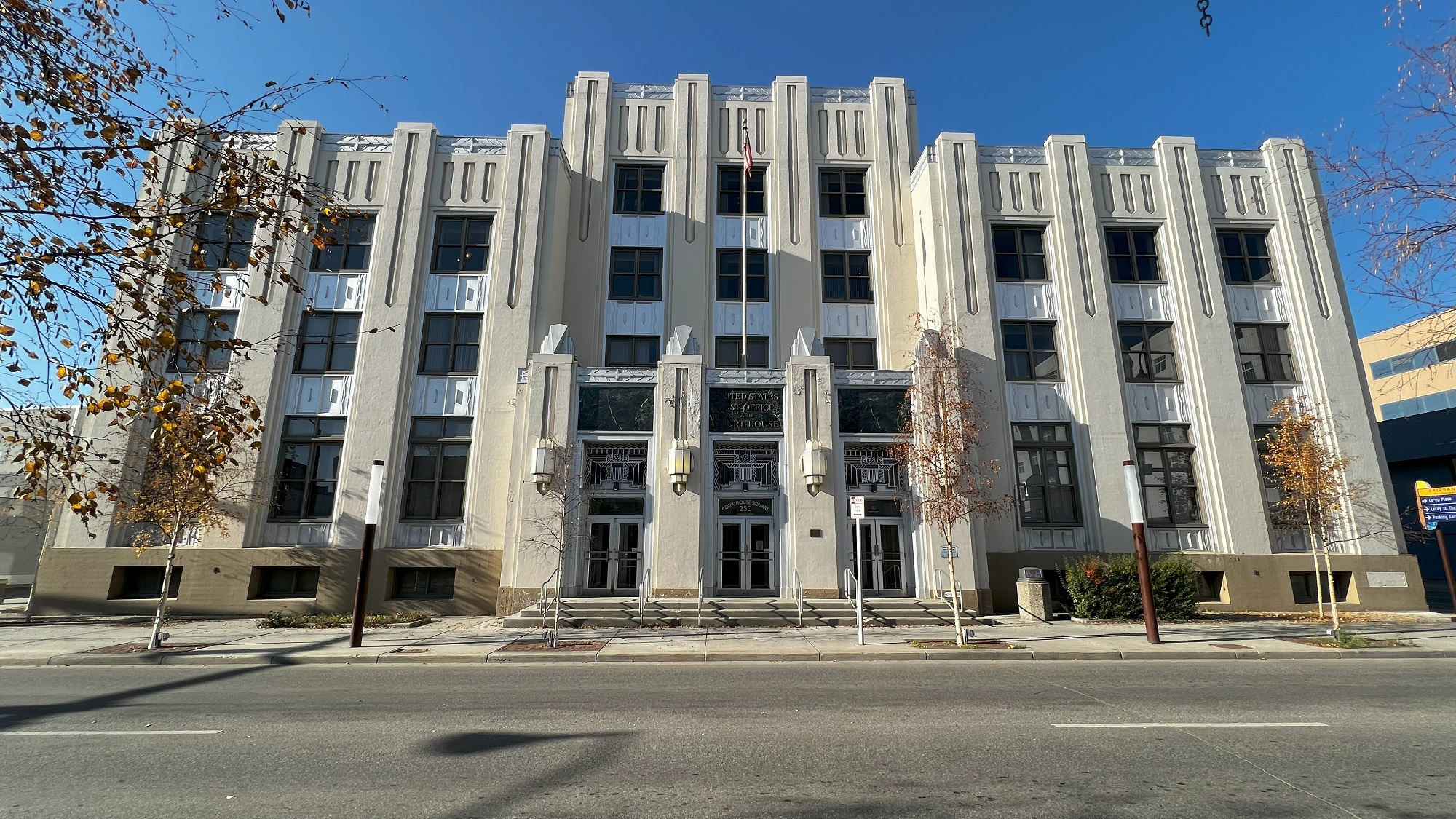
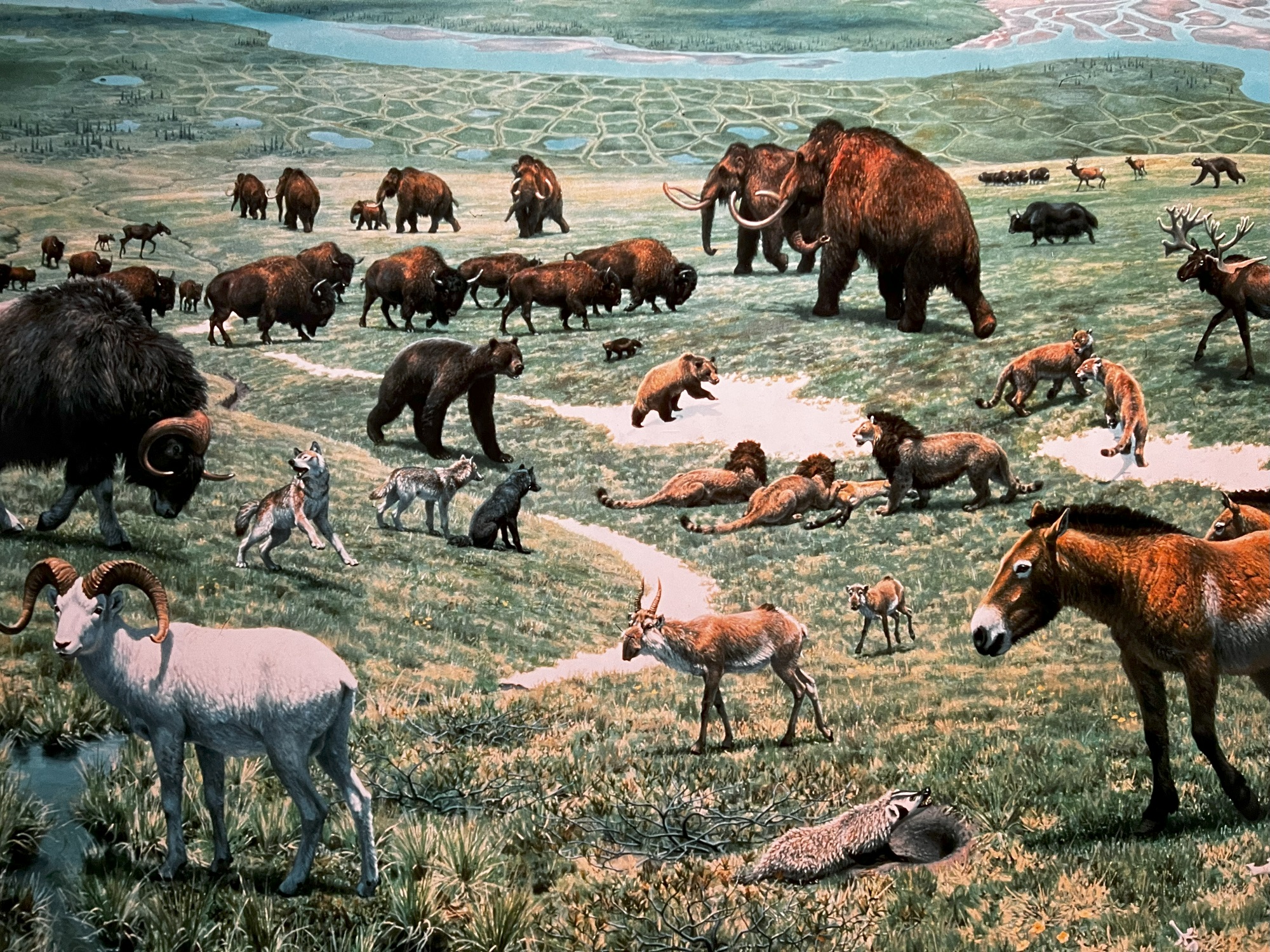
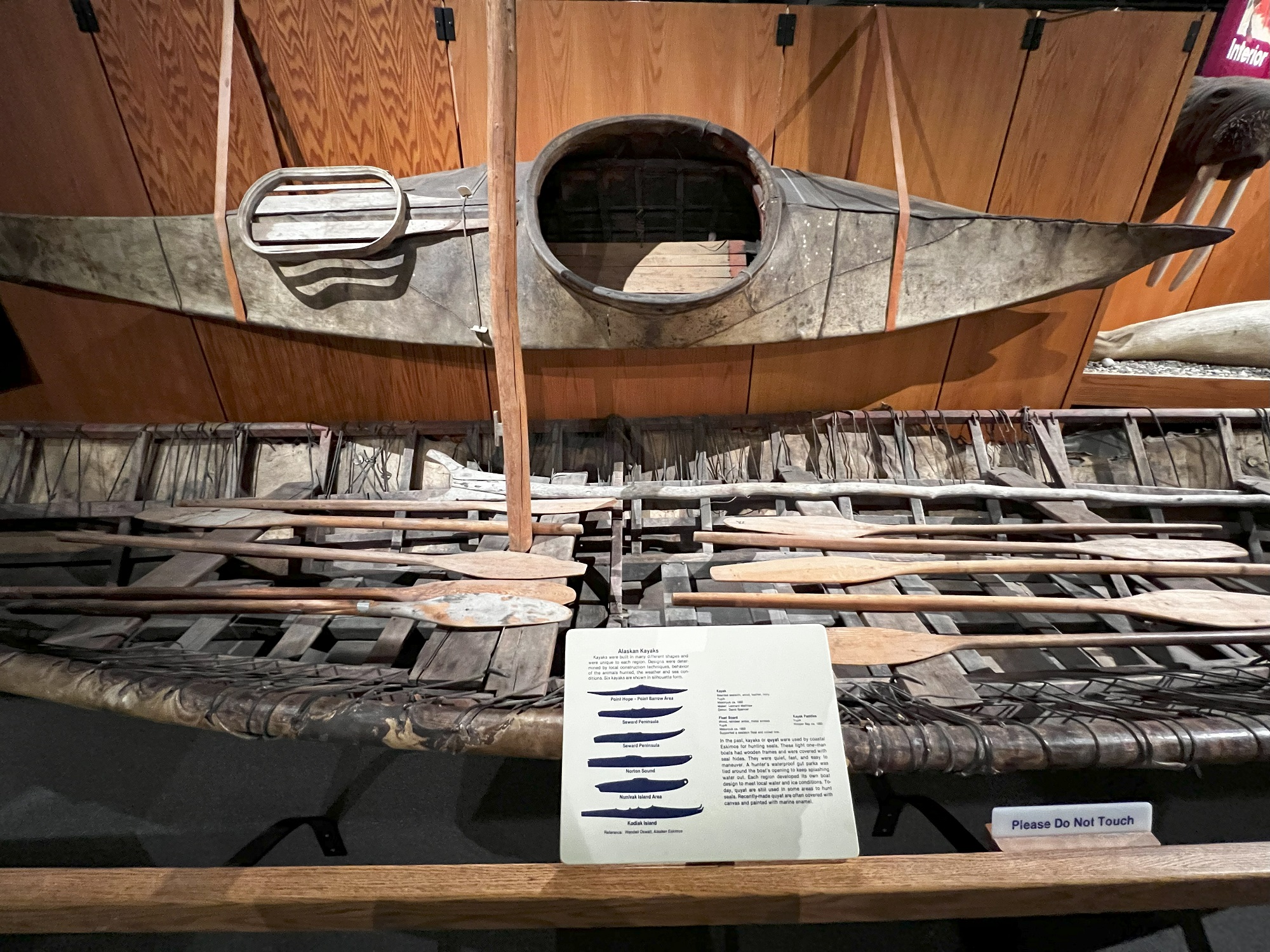
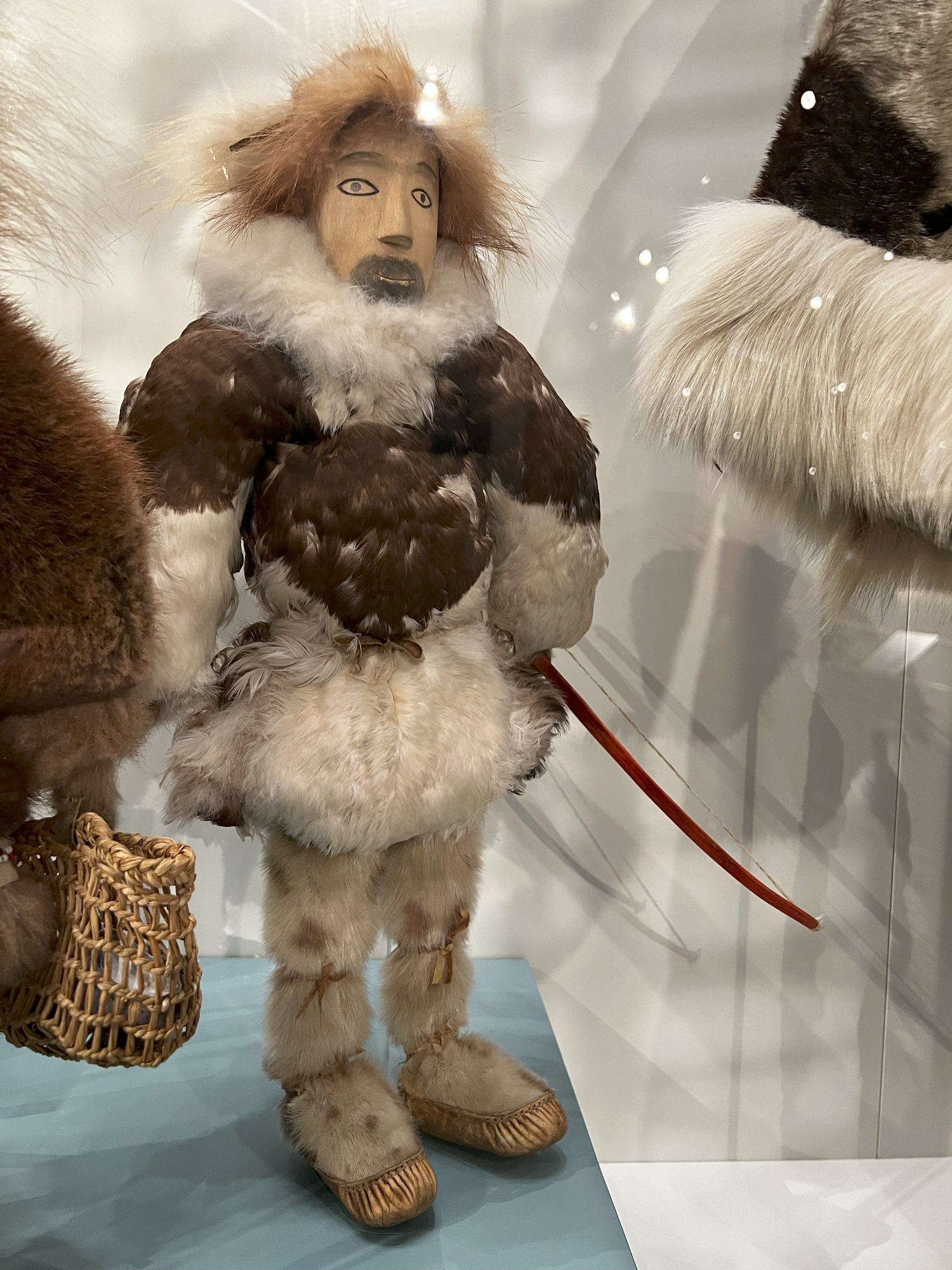
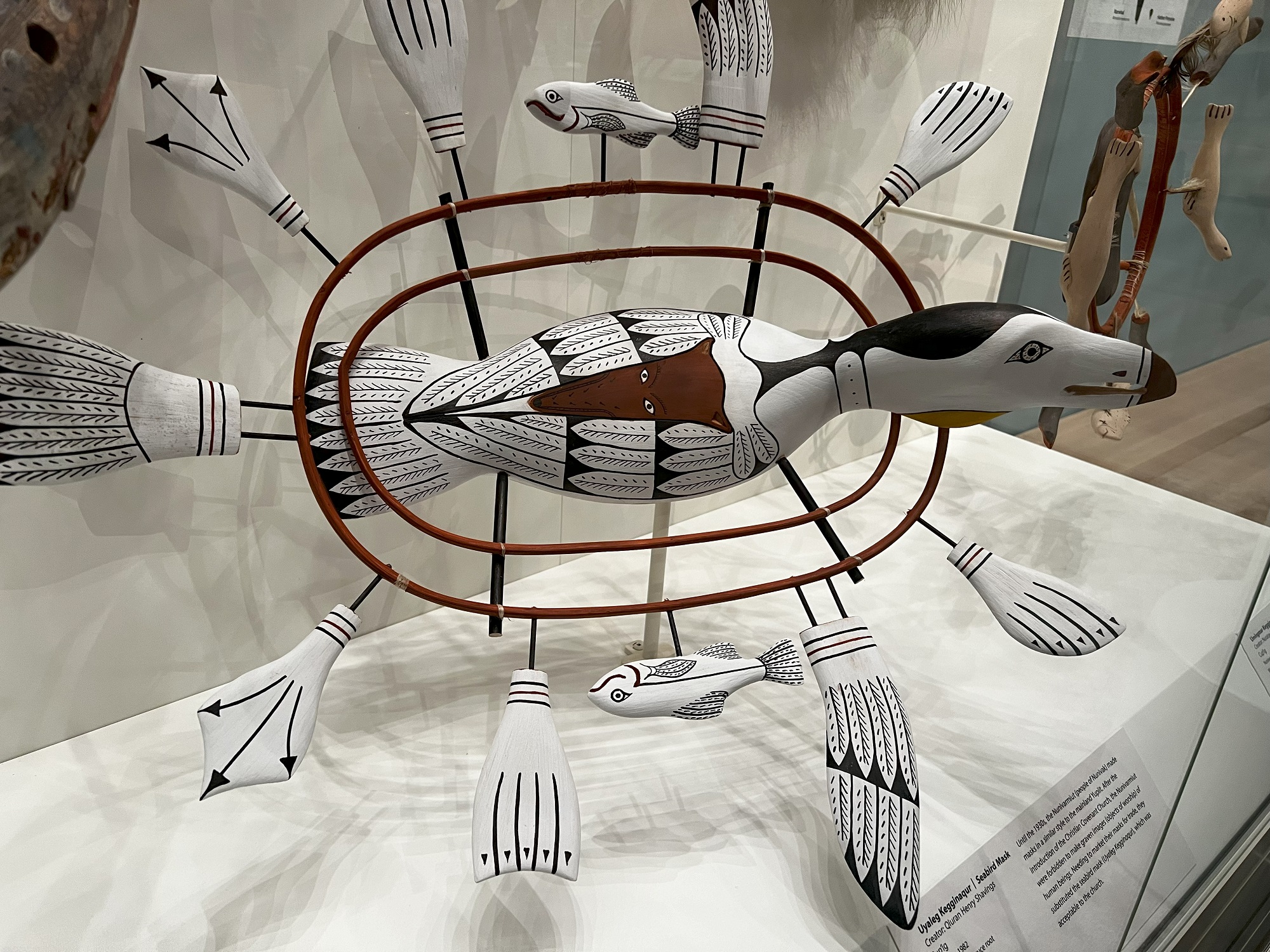
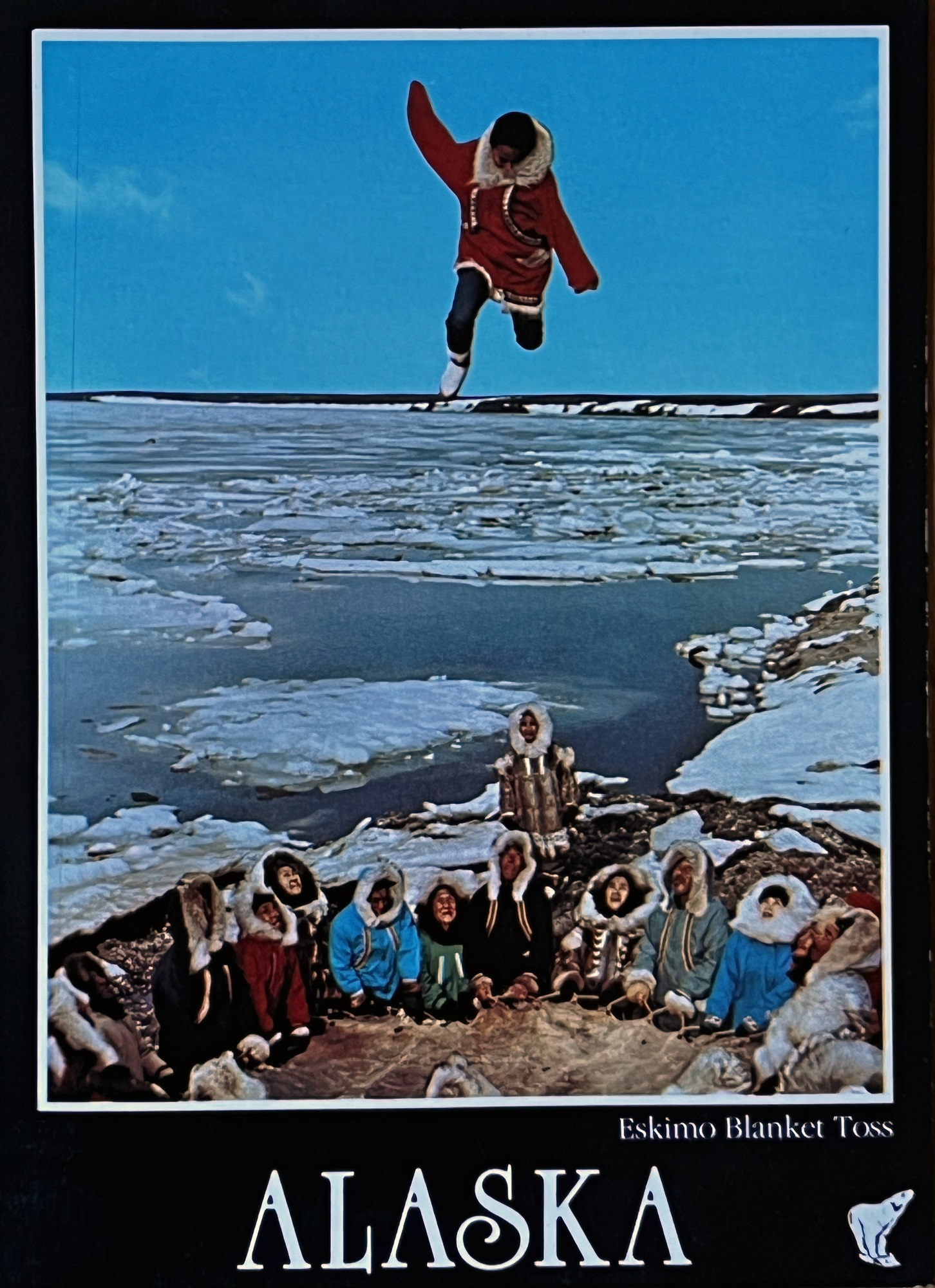
The bridge over the Cena River in downtown Fairbanks is lined with the Stars and Stripes and the Alaska State flag.We stopped by this arts and craft market with its vast collection of weird and wonderful souvenirs and antique items.The U.S. Post Office and Courthouse building on Cushman St. between 2nd and 3rd Ave. was constructed in 1932-33 and features aluminum trim with Art Deco detailing.The next set of pictures are all from the Museum of the North. This illustration features animals that roamed around what is now Alaska, from the Pleistocene Ice Age that began 2 million years ago.That’s a kayak above, of course— and an umiak below: an open boat made of animal hide stretched over a wooden frame, designed to carry many people.Male Doll, 1998. Artist Rosalie Paniyak. Sealskin, rabbit, wood, textile, beads and waxed thread.Seabird Mask ‘Uyaleg Kegginaqur’ 1982. Creator: Qiu Henry Shavings.Postcard of the 1970s of young people doing a ‘blanket toss’.
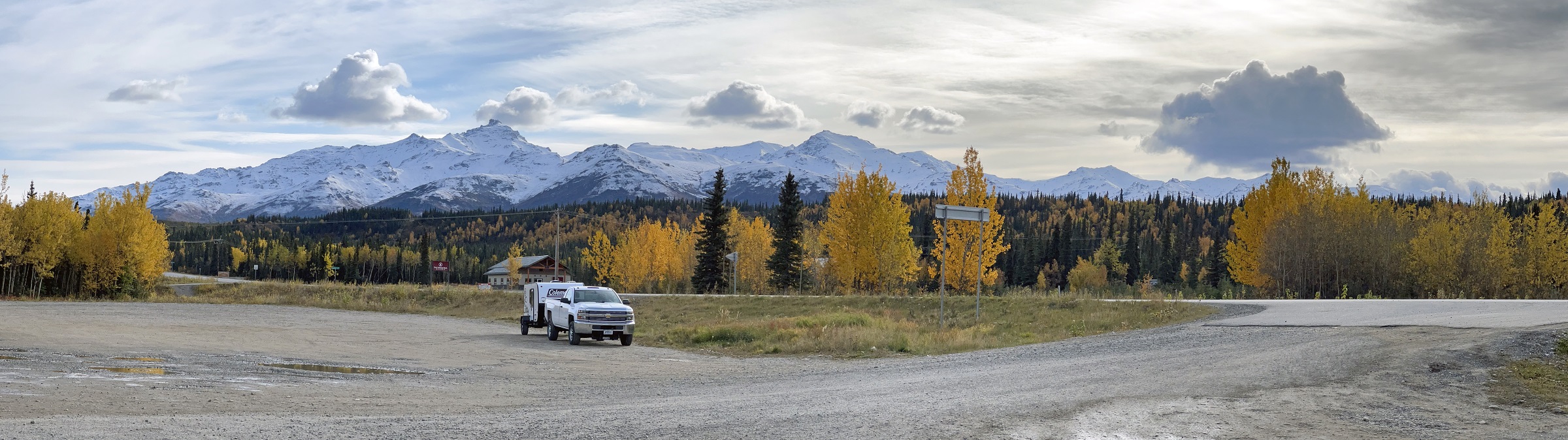
These pictures are from a four-hour roundtrip drive on Alaska Route 3 South— from Fairbanks to the Denali National Park Visitor Center.
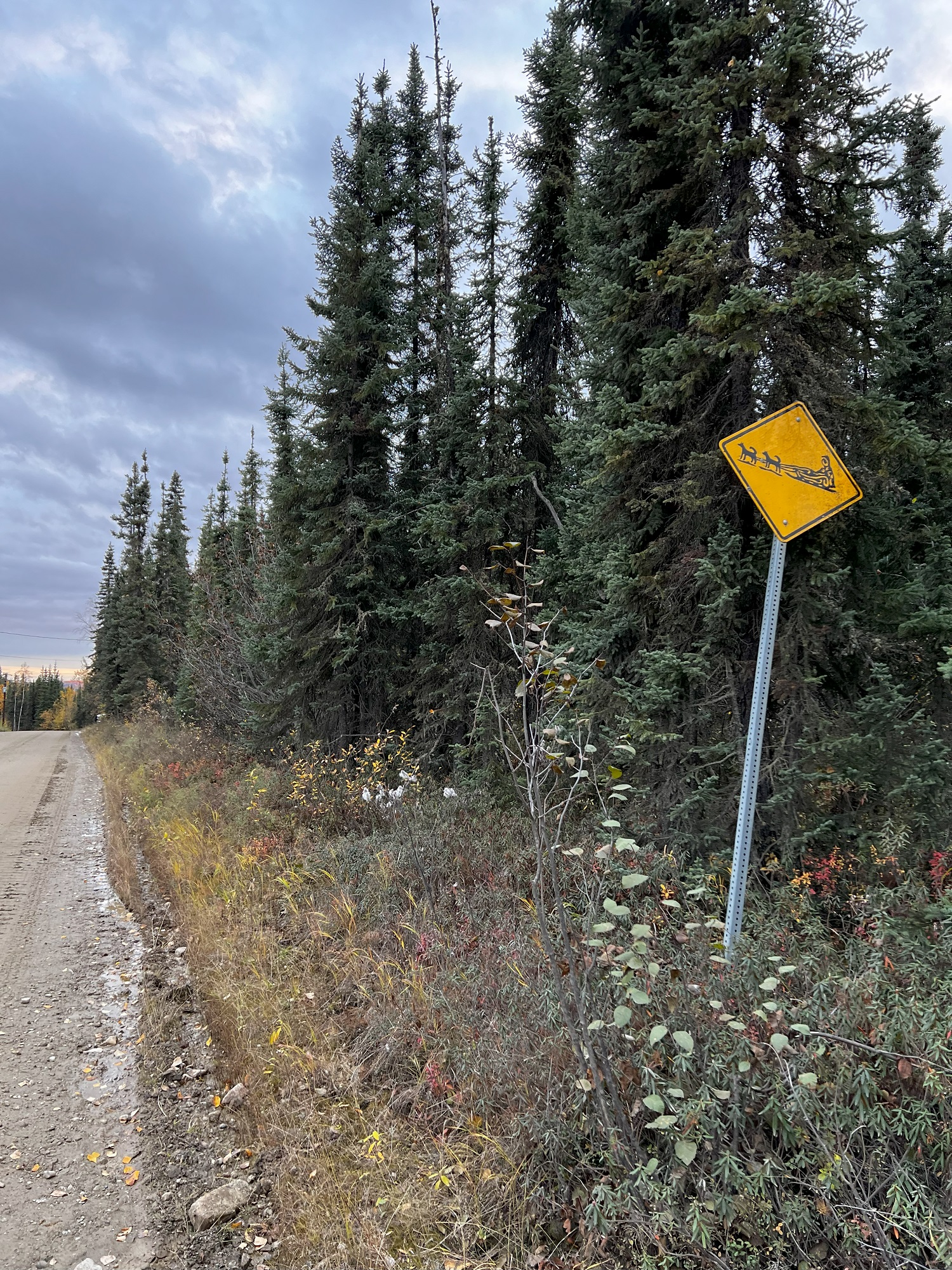
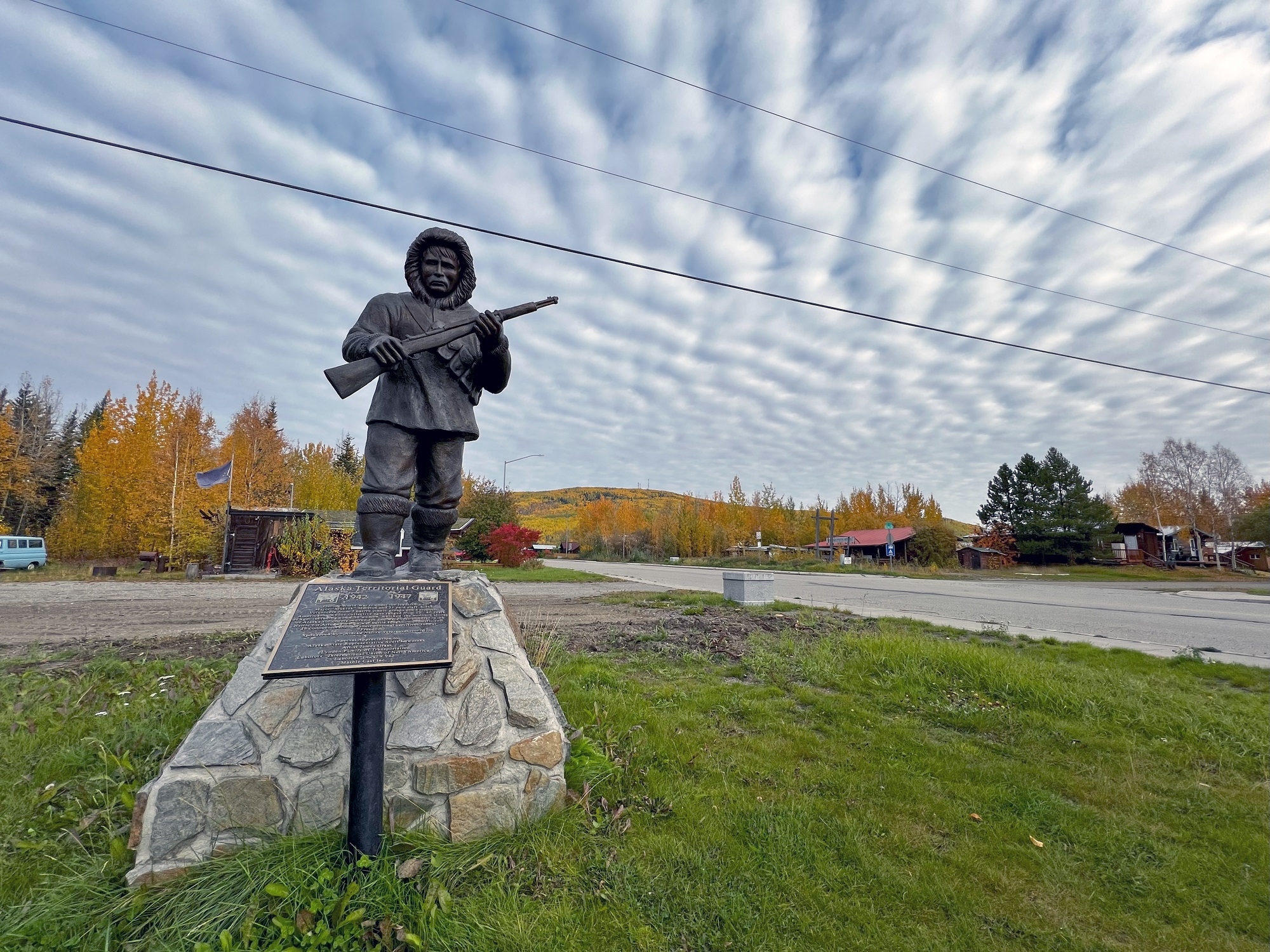
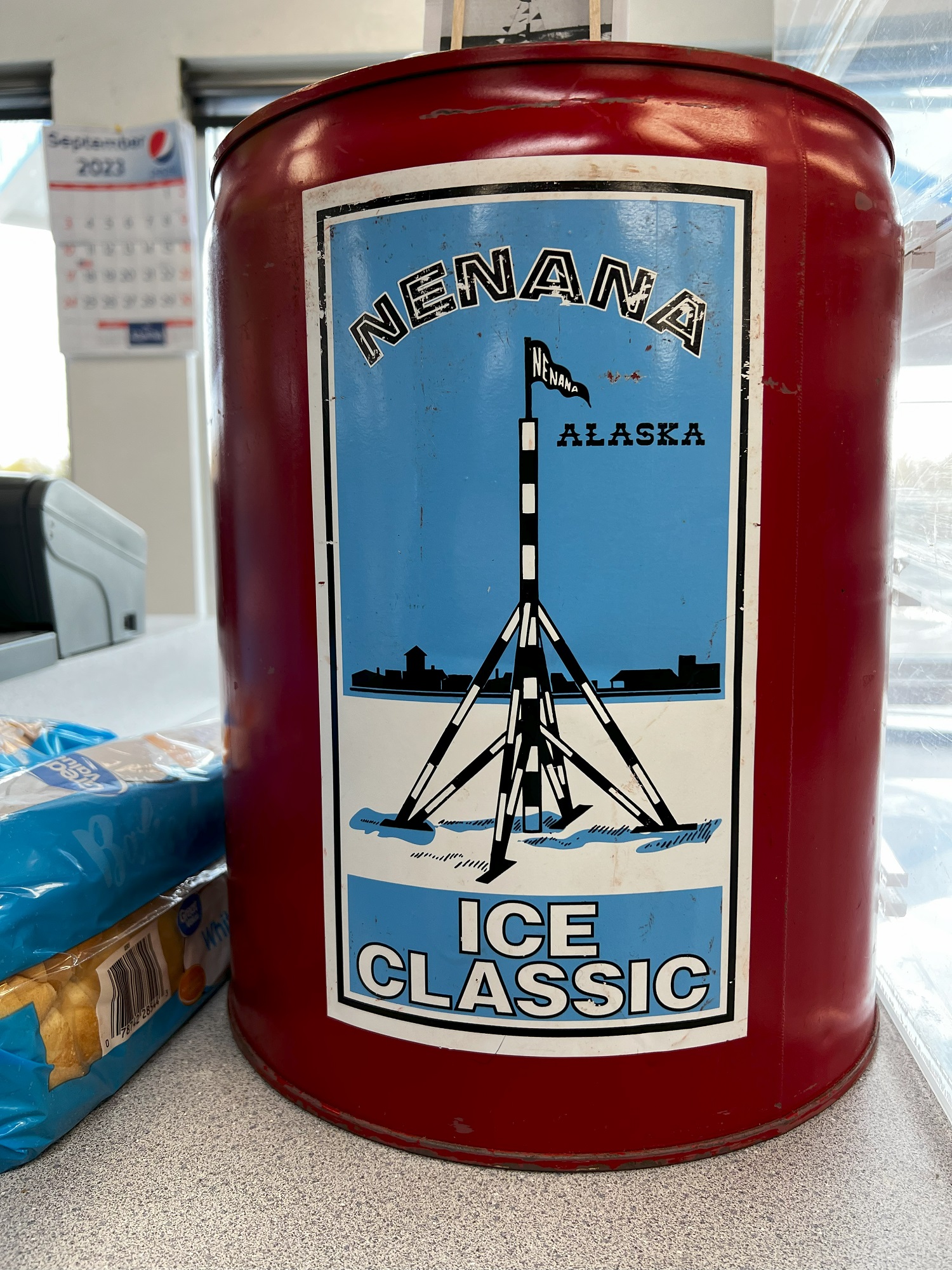
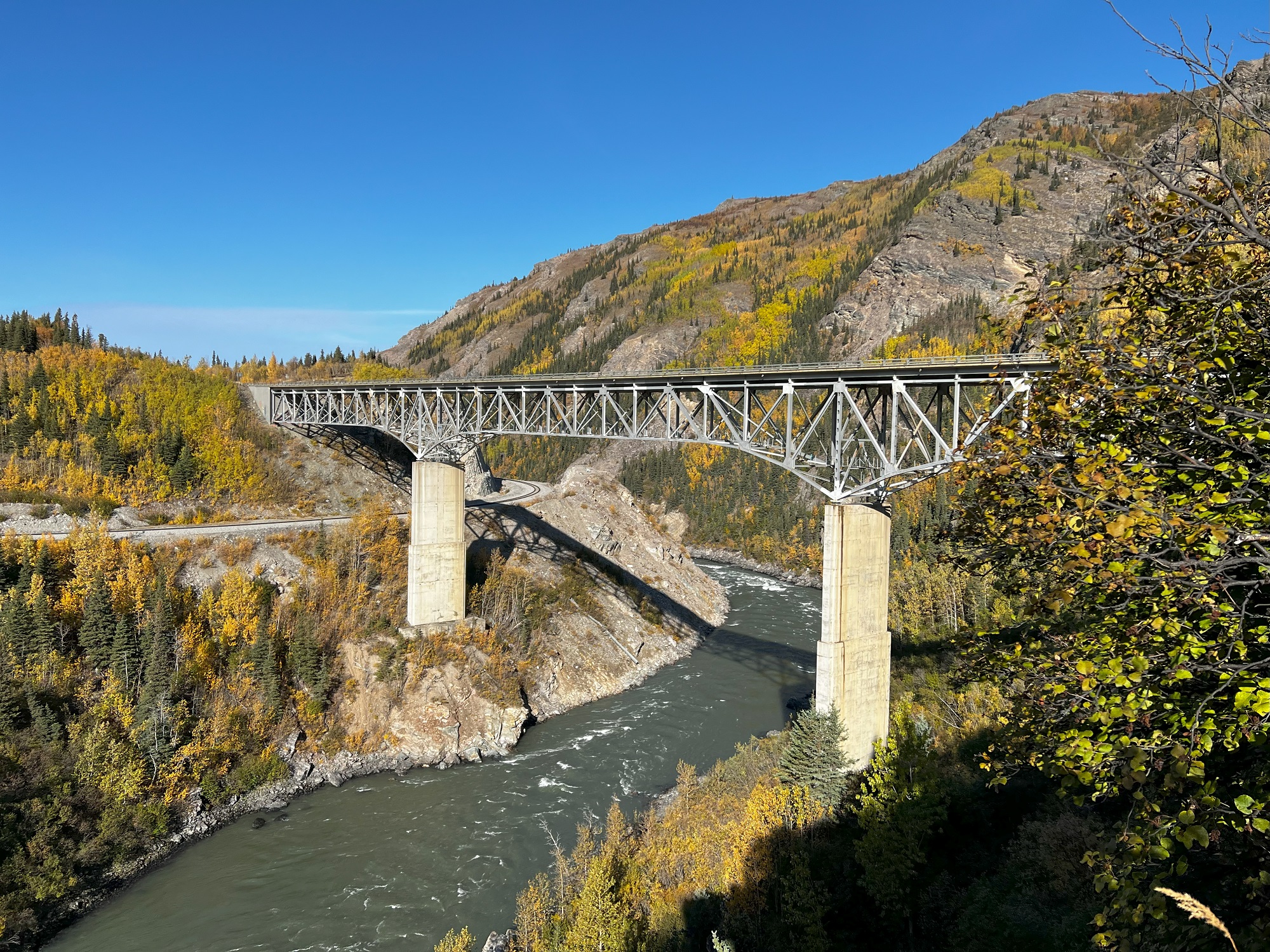
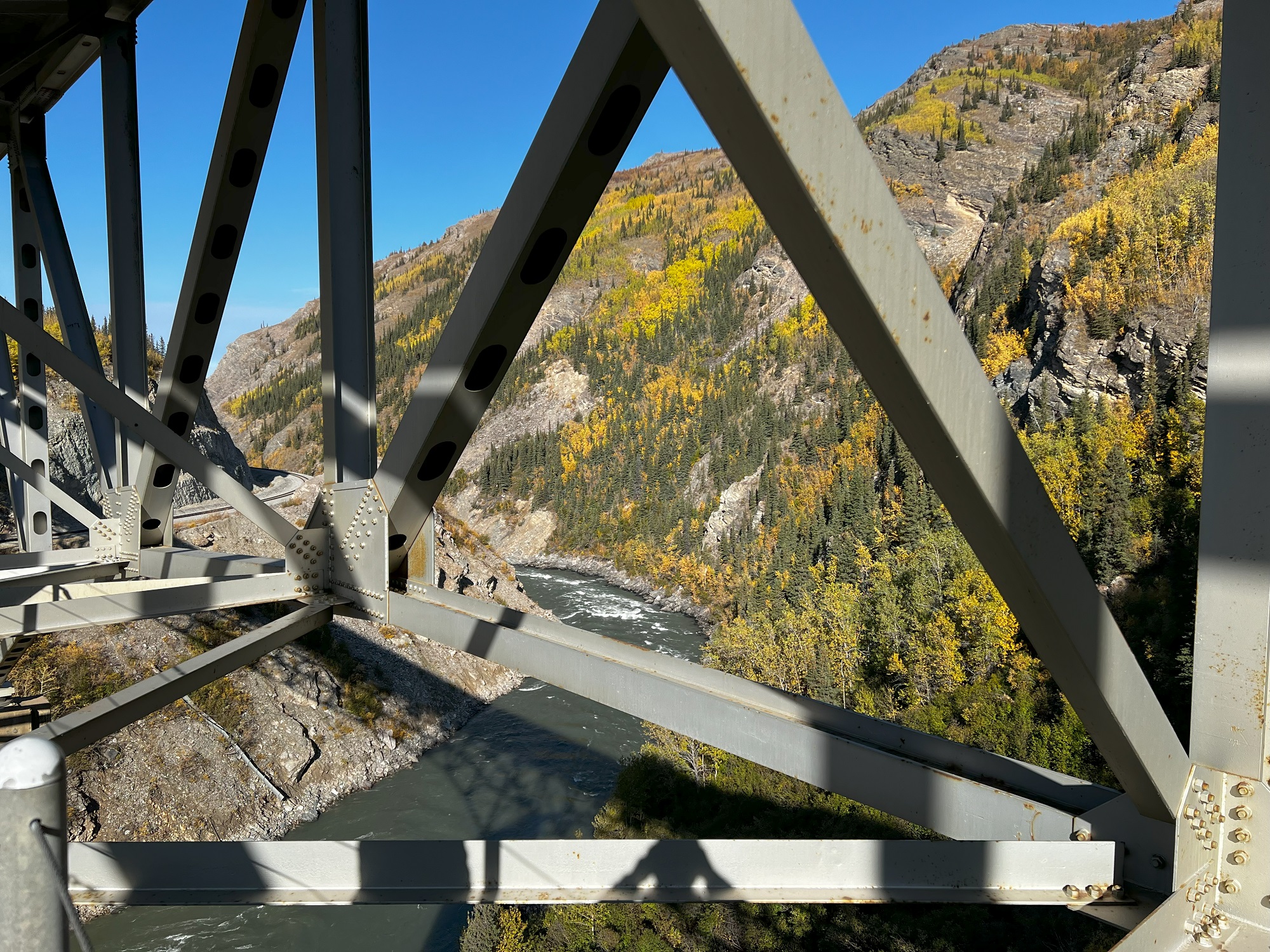
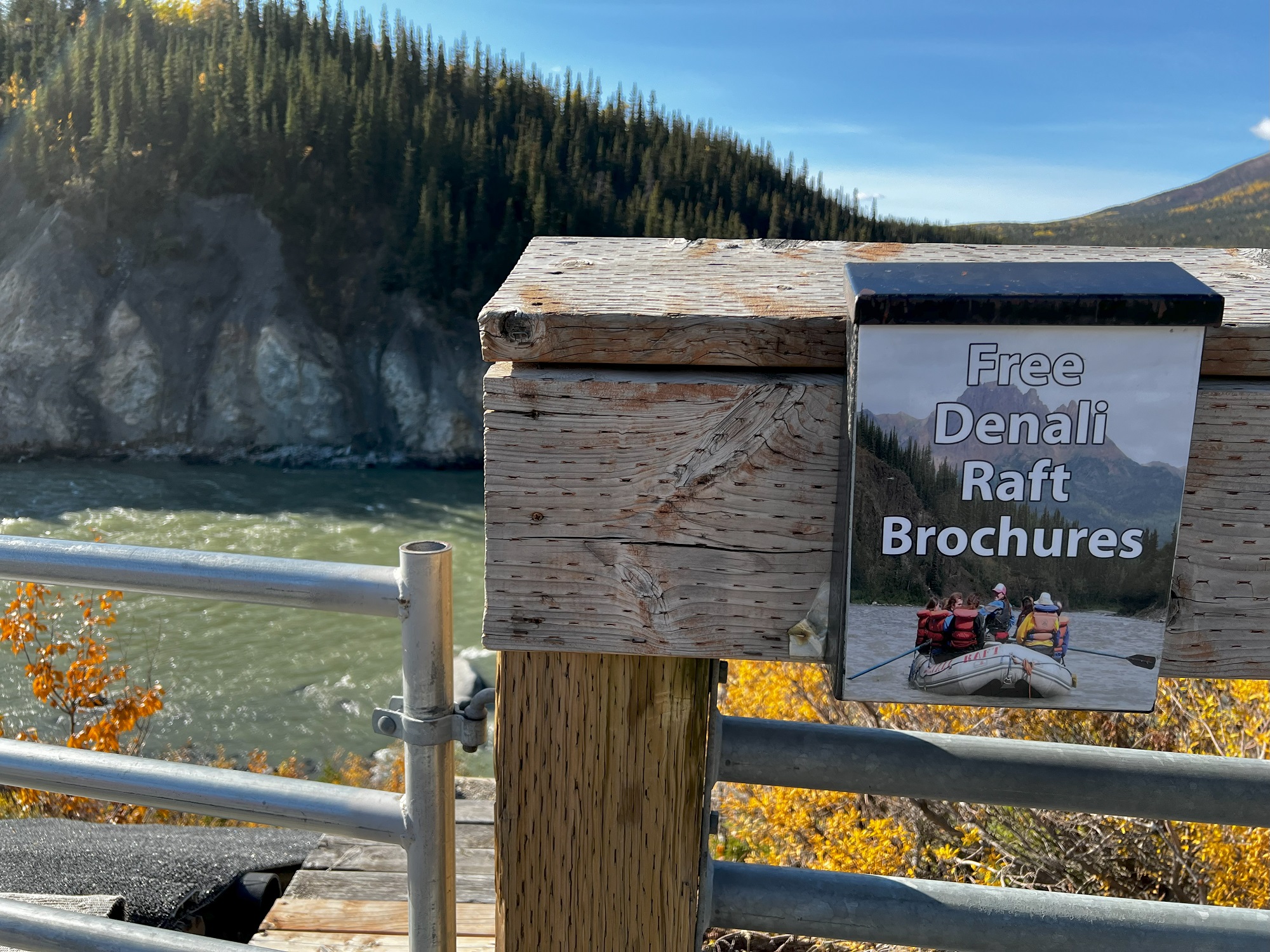
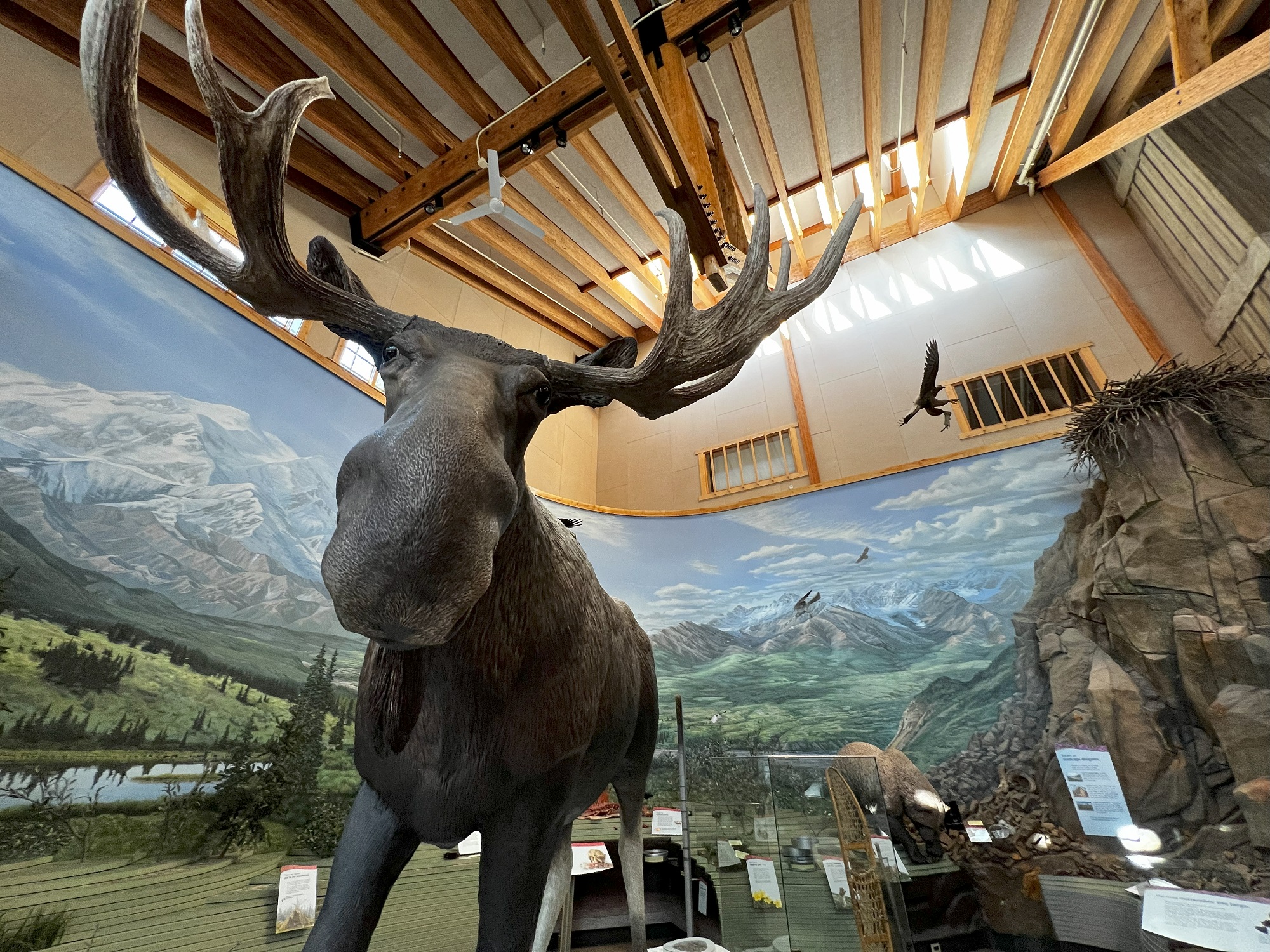
There is a dog sled sign on the dirt road from our cottage to Fairbanks. It’s not that the dogs and sled will cross the road— they will sharethe road with traffic (in wintertime, when there is several inches of snow on the ground).That’s the Alaska Native Veterans’ Honor Bridge over the Tanana River in the distance, constructed in 1967.This monument is at the entrance of the town of Nenana. The plaque on the monument reads as follows: During World War II under the leadership of Major “Muktuk” Marston and 21 paid staff, 6,368 volunteers from 7 native ethnic groups and European Americans, whose ages ranged from 12 to 80 years old, and including some 30 women, watched the northern shores of Alaska for enemy movements and were instrumental in the Battle for Attu, a foreign war battle fought on domestic soil. In commemoration of their personal sacrifices for our Freedom.This canister accepts entries for a ‘lottery’ for which entrants need to predict the exact minute in May of 2024 when this beacon on the ice of the Nenana River will fall over, due to the melting of the ice in spring. (Winner gets several thousand dollars, depending on the number of entries).The Nenana River Bridge near Healy, not far from Denali National Park, was constructed in 1970.A view from under the Nenana River Bridge.The tourist season is over and the rafts are gone, but here is a picture of what the rafts looks like. There is a steep embankment and a launch ramp (without people in, I presume!) for the rafts to the waterside on the left of the picture.Hellooo Mr Moose. Inside the Denali Visitor Center.Looking back at Denali mountain, from Healy on Alaska Route 3. The summit of Denali is the highest mountain peak in North America, elevation 20,310 ft (6,190 m).