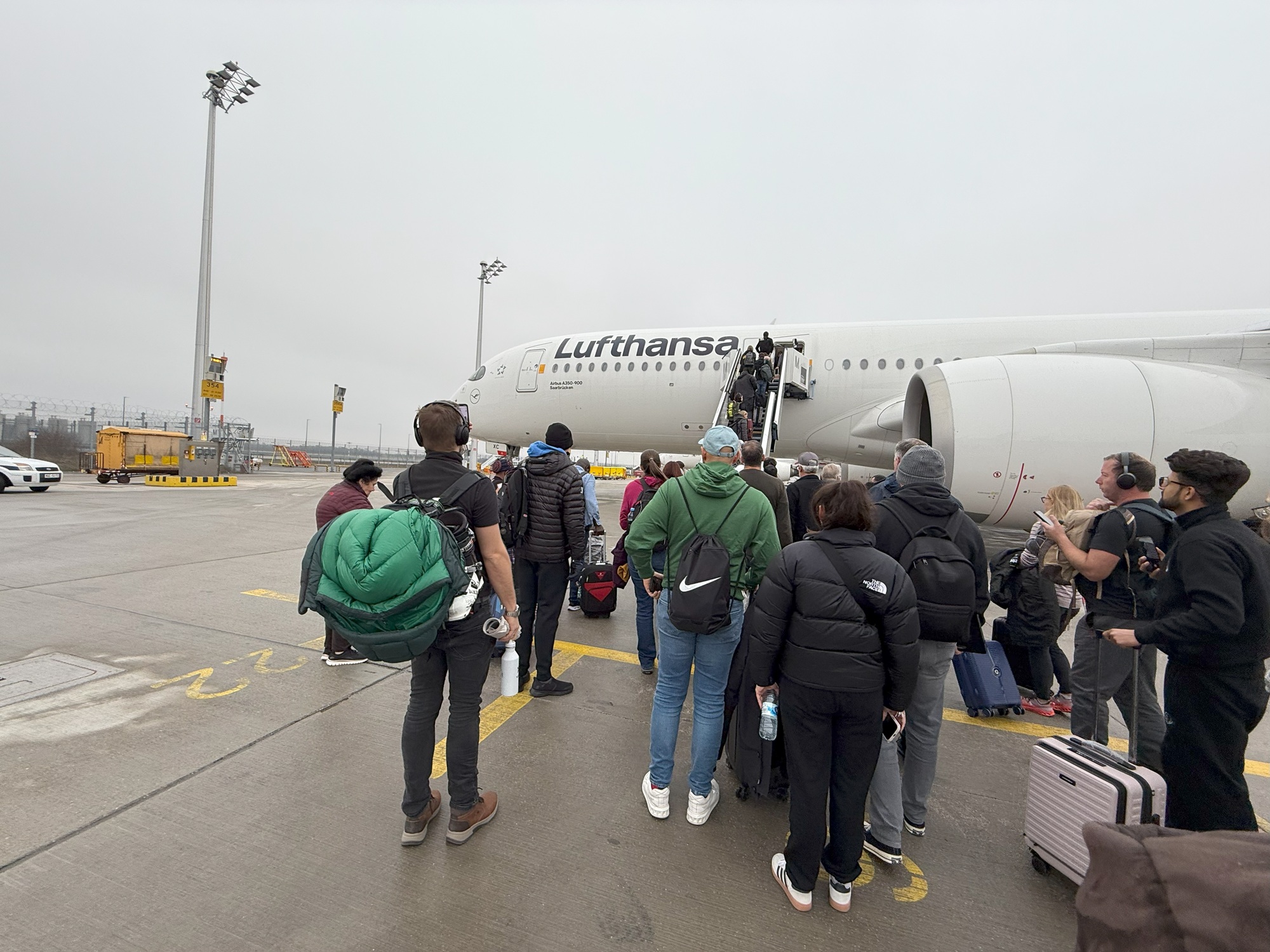
Friday/ arrival into Boston 🛬

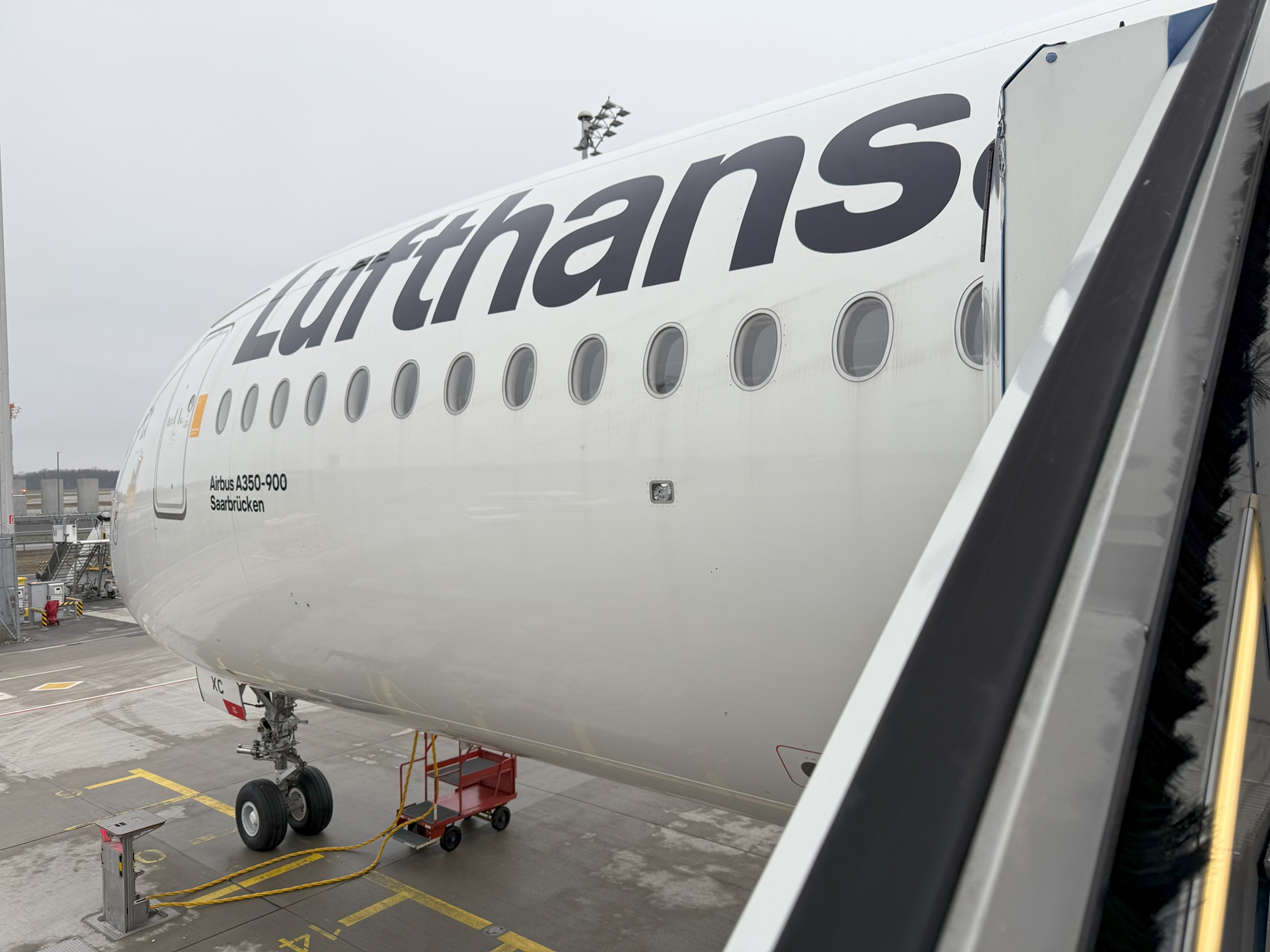
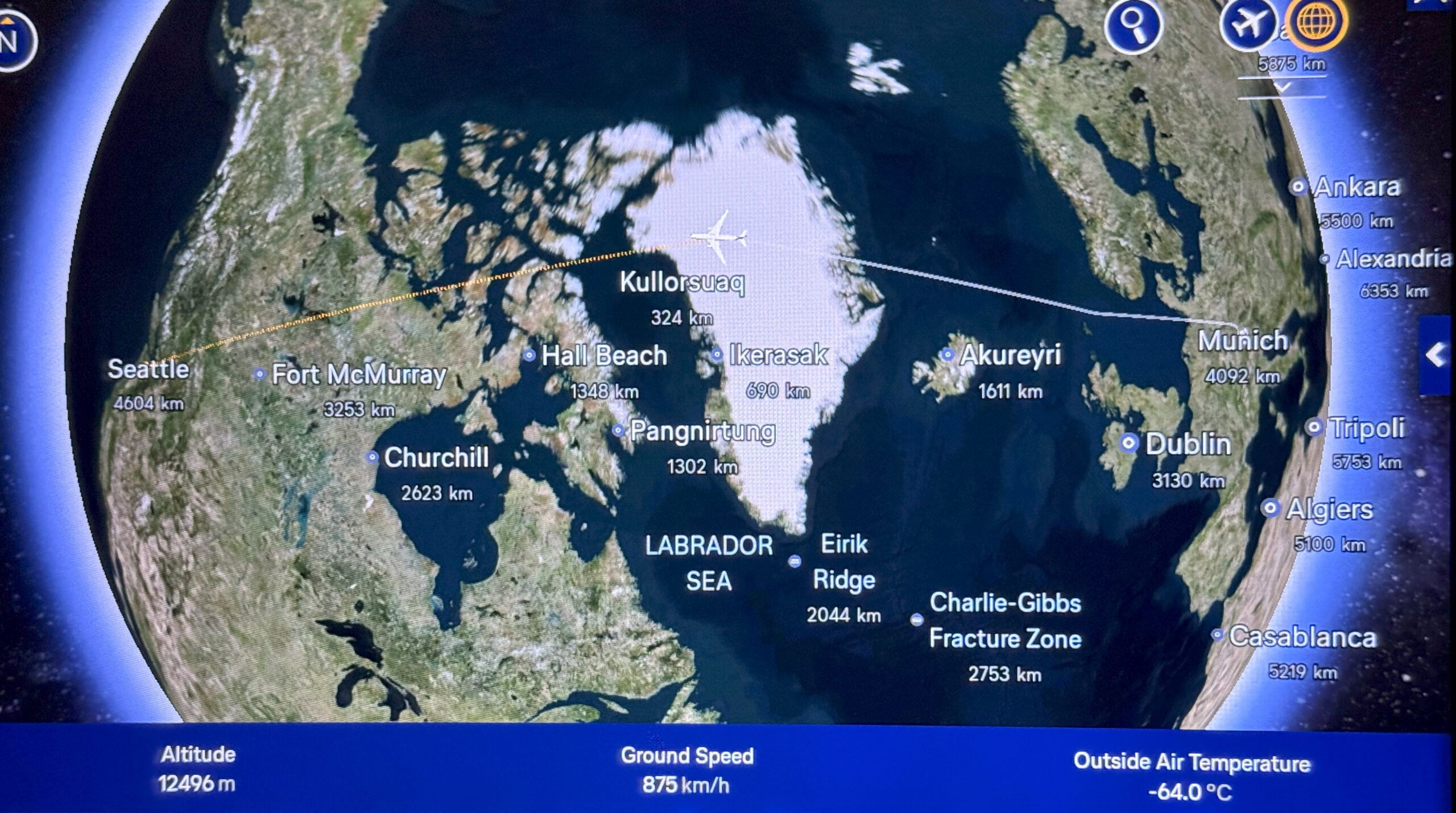
It was a direct flight to Boston, just over 5 hours of flying.

At Boston Logan airport, the Silver Line bus took me to South Station on the MTBA’s* Red Line. I went four stops to Central Station, close enough to walk to my hotel.

*Massachusetts Bay Transportation Authority

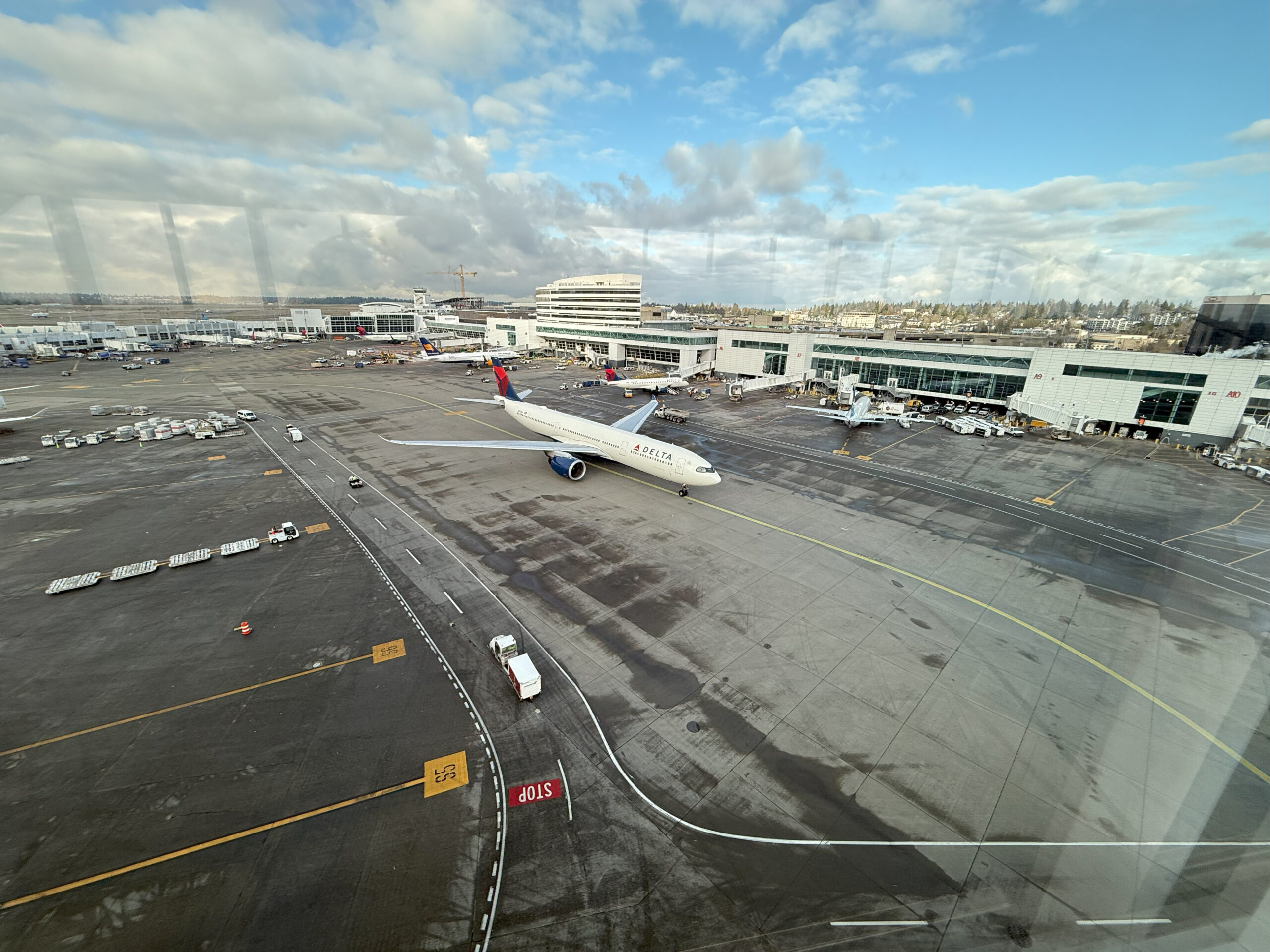
Departing for Boston from Seattle-Tacoma airport’s North Terminal.
A little bit of New England coastline— a minute or two before touchdown at Boston’s Logan international airport. That’s a water tower in the middle of the picture, and in the far right in the shallow waters are five barriers called The Five Sisters.
On the Sliver Line bus now (using Google Maps to make sure I go more or less in the right direction!). We are 1. on Interstate 90, the interstate highway that runs across the northern United States and into Seattle, 2. in the Ted Williams Tunnel running under the waterway called Boston Main Channel in Boston harbor.
The Ted Williams Tunnel (TWT) was the first major link constructed as part of Boston’s Big Dig. When the TWT opened in 1995 it was only available to authorized commercial traffic. Later, non-commercial traffic was allowed to access the tunnel on weekends and holidays. In 2003, with the substantial completion of the I-90 portion of the Big Dig, the tunnel was opened to all traffic at all times.
[Source: Wikipedia]
Inside the Sliver Line bus, in the Ted Williams Tunnel under Boston Harbor.
At South Station. Here comes the Red Line train. These trains have been running a long, long time. The downtown portions of what are now the Green, Orange, Blue, and Red line tunnels and rails were all in service by 1912.
The sun sets early, as it does in Seattle: at 4.20 pm here. There was just enough light left for me to walk to the hotel from Central station. This cute hole-in-the-wall place is on River Street in Cambridge.

Thursday/ my bags are packed 💼

I’m leaving for Boston in the morning to visit for a few days.
I have been there before, a lifetime ago.

This is June of 1995.
The MIT Press Bookstore is still there, at 314 Main Street in Cambridge, and right by the exit of the Kendall/ MIT stop on the Red Line train line.

Monday/ Wenatchee and Leavenworth 🌄

We clambered up the steep 2.6-mile loop trail called Saddle Rock Trail this morning (it is just outside of Wenatchee), and then spent some time in Leavenworth before driving home.

We took this route back, along I-90 and over Snoqualmie Pass. Without stops, it comes to a 3 hour-trip from Wenatchee to Seattle.
Here we go. The Saddle Rock Trail winds along the contours to the top— for the most part; some parts are steep.  And yes, we made it all the way up, to those rhyolite (igneous rock) outcroppings at the summit.
Our smart watches showed an elevation of 846 ft (257 m) at the summit, relative to the trailhead at the bottom.
The Chelan-Douglas Land Trust has worked to protect the foothills around Wenatchee through trail building, land acquisition, and partnerships with the community.
A lot of the vegetation around the trail is tinder dry, but still beautiful to look at from up close.
Beautiful sage green and lime green rock lichens. A lichen is a fungus plus one or more types of algae or blue-green bacteria that perform photosynthesis. I could not track down what these ones are called specifically, though.
Some of the sage brush is still flowering.
Throughout the Columbia Basin, Big Sagebrush (Artemesia tridentata) is the dominant species of sagebrush.
Woo hoo! At the summit, and looking southeast with the Columbia River on the left.
Turkey vultures (Cathartes aura) overhead, circling the summit of Saddle Rock Trail.
I found this little lizard it at the base of the rocky summit of Saddle Rock Trail.
It is a Northern sagebrush lizard (Sceloporus graciosus).  This one was 5 or 6 inches long head to tail. They have lost more than 70% of their habitat since the 1970s in Washington State, and the status of this species is of concern to Washington Dept. of Fish and Wildlife.
Looking more or less towards the north from the summit of Saddle Rock Trail, across West Wenatchee on the banks of the Columbia River. The Wenatchee River is not really visible in the picture, but its confluence with the Columbia River is south of Highway 2, the concrete bridge structure over the Columbia River in the middle of the picture.
Here’s a panorama picture of Wenatchee, situated in a fertile valley in Central Washington at the confluence of the Wenatchee and Columbia Rivers. A sign at the entrance to the the city says ‘Welcome to the Apple Capital of the World’.
The city of Wenatchee is the second most populous city in the central part of the state and serves as the Chelan County seat. To the south and west, mountains provide a dramatic backdrop for the city.
All right. We had a rest at the top, and enjoyed the spectacular views, and are now making our way down. It’s steep down here as well, and the gravel can be treacherous. Better to stick to the bare part of the trail that does not have gravel.
Here’s Leavenworth where the buildings along the central part of the town comply with Bavarian village architecture, with just about zero exceptions.
This is a beer hall (festhalle).
Balconies, hanging flowers and flags of the USA, Bavaria and Germany, of course. Lots of souvenir shops, but also clothing, sporting goods, stores for Christmas decorations, candy and chocolate stores, restaurants and coffee shops.
This cider house sign pays homage to the mountains and the apple orchards around Leavenworth. The summer crowds are now gone, of course, but the ‘Bavarian village’ will soon brighten itself up with Christmas lights and decorations to attract visitors during the holiday season. How did Leavenworth get to model its downtown after a Bavarian village? Two of the leaders instrumental in this effort were Pauline and Owen Watson, longtime residents of Leavenworth who owned and operated Alpine Electric out of one of the buildings on Front Street. In 1965 the decision was made by key business owners to adopt the Bavarian theme and remodel their buildings.
It does not matter if you are a Subway sandwich shop, or a 76 gas station. Thou shalt dress up as quaint Bavarian village businesses.
Cloppety-clop, cloppety-clop. This was the only horse-drawn carriage doing the rounds that we saw, though.

Sunday/ a little road trip 🚗

Three amigos and I went on a quick road trip to Leavenworth and Wenatchee on Sunday.  We overnighted in Wenatchee.

Three amigos picked up the fourth at the Edmonds train station, and from there we drove along Highway 2 (the Stevens Pass Highway) to Monroe, Gold Bar and Leavenworth to reach Wenatchee in Chelan County.
We crossed a number of truss bridges on Highway 2. This one is just outside Sultan in Snohomish County, crossing the Skykomish River.
It was constructed in 1932. Washington DOT categorizes it as Functionally Obsolete.
(Functionally Obsolete: Bridges in this category are typically too narrow, has inadequate under-clearances, has insufficient load-carrying capacity, is poorly aligned with the roadway, and can no longer adequately service today’s traffic).
Here is the Wenatchee River seen from Highway 2 as we were approaching Leavenworth from the west.
The welcome sign to the Leavenworth Bavarian Village.
Charging our Tesla Model Y a little at the supercharger by Dan’s Food Market in Leavenworth. There are16 Superchargers, available 24/7, charge rate up to 150kW.

Monday/ the Lynnwood Link🚆

Here are my pictures of a ride today on the new northbound extension of the  Sound Transit light rail system to downtown Lynnwood.

Here it is: the $3 billion extension from Northgate to Lynnwood with four new stations, 16 years in the making.
Voters approved it with along with Obama’s election in 2008; planning was done from 2010-2016, design from 2016-2019, and construction from 2019-2024.
The 1 Line extension hugs 8½ miles of Interstate 5 and crosses over it north of the Mountlake terrace station. A fifth station will open in 2026 at NE 130th Street.
[Map from Sound Transit website]
Northbound and approaching the existing Northgate station here. Interstate 5 traffic on the left. Much of the extension is elevated compared to Interstate 5, though, due to the uneven terrain there.
Here is the view from the elevated rail and platform at the Lynnwood City Center station. There is a large parking garage at the back (not visible here), a parking lot on the left, and the canopies and bus stops of the Lynnwood Transit Center. Buses can be taken from here to Everett in the north, or to either of the ferry terminals at Edmonds and Mukilteo.
Glass mural artwork on the boarding platform at the Lynnwood City Center station. The artist is Preston Singletary. The art was inspired by his Tlingit heritage and family, and influenced by his father’s recent death.
Here’s the train at the Lynnwood City Center station, with the parking garage at the back of it.
One of two identical sculptures called “Shift” down on the grounds below. The artist is Claudia Fitch and are a nod to the lamps from Lynnwood’s Interurban trolley system, which operated from 1910 to 1939.
Here is Claudia Fitch’s “City Hummingbird” and “Kitchen Window Curtain” at Lynnwood City Center Station, to honor the history of neon road signs that once lined Highway 99 as well as the nature Pacific Northwesterners see in their own backyards.
[Description of artwork and text from Seattle Times]
Getting ready for the 30-minute ride back to Capitol Hill train station. The overhead graphic of the 2 Line (blue) and 1 Line (green) shows that more stations will open in the near future. Stations have numeric identifiers as well, which should make it easier for foreign language speakers and visitors to find the stations that they need to use.
A peek into the future, looking at a little section of rail north of Lynnwood City Center station that has already been constructed. The next push north is scheduled for 2037 with stops at West Alderwood near the mall, Ash Way, Mariner, Highway 99 in South Everett (possibly) and Southwest Everett Industrial Center near Paine Field. Two final stations at Evergreen Way and downtown Everett are aimed for 2041, depending on funding.

Monday/ floatplanes 🌅

Here’s a beautiful view from this morning, of the south end of Lake Union.
I took the picture from the seventh floor of a building off Fairview Avenue North.

At about 8.15 am this morning, there was a line of five float planes getting ready to take off (four are in the picture), and one that had just come in. 
Those taking off could be heading the San Juan Islands, or even to Vancouver Island or British Columbia’s Inside Passage.

Sunday/ back to the city 🛳

Our weekend on Kitsap Peninsula was over, and we took the Bainbridge-Seattle ferry to get back to the city late this morning.

The Agate Pass Bridge (steel truss bridge built in the 1950s) on Highway 305 connects Kitsap Peninsula with Bainbridge Island.
Here is our departure from the Bainbridge Island Ferry Terminal. The new overhead pedestrian walkway for walk-on passengers (on the right, middle of picture) opened in February. The seismically safe steel-fortified walkway set on concrete and steel columns replaced a 50-year-old wood-supported walkway.
We could see this seagull’s nest from the ferry (in one of the terminal pillars) but it was hard to see all of the spotted chick/s in the nest.
Approaching the Emerald City and there is the rainbow flag on the Space Needle.
The annual Pride Parade was underway in downtown as we arrived at the Seattle ferry terminal.
This year is the 50th anniversary of the first Pride parade in Seattle in 1974.
🌈 Happy Pride!
A view of the city skyline from the lower car-deck on the ferry.
We sailed on Marine Vessel Tacoma. She is a Jumbo Mark II class ferry, constructed in 1997, and can accommodate 2,500 walk-on passengers and 202 vehicles.

Monday/ direct flights to Africa 🌍

Airbus has released the results of a study that documents which air routes to African cities are underserved (extracts from the report below).

Factors at play are constraints on the number of flights due to bilateral agreements that are in place, challenges with capacity at airports, and economic variables such as the profitability of these routes.

Just in general, Airbus reports that the expectation is for air travel worldwide to increase by about 4.1% over the next 20 years, which would mean some 1,180 new aircraft need to be built, and 15,000 additional pilots would be needed.

It looks like Johannesburg is seen by Airbus to be adequately served by direct flights from Europe, but that a few more direct flights from Europe to Cape Town should be added.
Is it technically possible to fly direct from Seattle to Cape Town (10,200 miles)? I’m not sure it is. Maybe.
From cabinzero.com, as of Aug. 2023: At the moment, the world’s longest nonstop flight is the route between New York and Singapore. With a calculated distance of 15,349 km (9,537 miles) and almost 19 hours of flying, the route operated by Singapore Airlines is the longest in the world.


Monday/ going back 🛫

My weekend in San Diego and California was over on Monday morning, and I took Alaska Air back to Seattle.

Palm trees lining West Laurel Street, with San Diego International Airport coming up on the left.
Looking out the window from inside Terminal 2.
The Alaska Airlines aircraft with the smiling Inuit face on the tail is getting a pushback from the gate. It is heading out to Newark Liberty International airport, all the way to the East Coast in Newark, New Jersey (a 5 hour flight).
Behind it, with two great white sharks on the tailfin, is a Frontier Airlines plane, and at the back the colors of a Southwest Airlines plane.

Saturday/ sea and sun 🌊

Here are today’s pictures— from the Del Mar area north of San Diego.

Nala the house cat posing for us since it is Caturday.
Hawaiian Red Anthuriums at Swami Seaside Park in Encinitas.
Daisies at Swami Seaside Park in Encinitas.
Koi in the pond at Swami Seaside Park in Encinitas.
Blue skies and palm trees outside Swami Seaside Park in Encinitas.
It was a perfect day for surfing off the beaches at Encinitas.
On the beach at Fletcher Cove State Park. The sand behind us has been moved there by a huge dredging and pumping operation, funded by money from the Biden Administration’s Bipartisan Infrastructure Law of 2023.
And here is the sunset that we came to see, from the beach at Fletcher Cove State Park.

Friday/ to San Diego ✈️

I was off to San Diego for the weekend on Friday.

I am at Seattle-Tacoma airport, at the D gates, and looking at the Alaska Air tailfins at the North Terminal. The airport was shrouded in fog early on Friday morning, but by noon it was clear.
At the gate in San Diego airport, after a 2 hr 43 min flight.
Our magnificent flying machine was a Boeing 737-900 (twin-jet), and our flight went without incident. This aircraft was put in service in 2016, so it is 8 years old.

Friday/ following the Sun ☀️

Happy Friday.
I have been keeping tabs on the Norwegian Sun every few days, ever since I had stepped off the ship eleven days ago.
She left the Falkland Islands yesterday and is headed for Punta del Este in Uruguay. She will arrive there on Sunday (the dotted line).
From there it is just over 90 nautical miles (about 100 miles) to the port of Buenos Aires in Argentina, for the completion of the 14-night sailing out of San Antonio, Chile.

Map and route of Norwegian Sun depicted by cruisemapper.com.

Tuesday/ catnap 🐱

Here’s a cute picture that was posted on the ‘Terrible Maps’ account on X.
(Argentina has more than three times the land area that Chile has).


Saturday/ a maiden voyage 👧

People film and wave from South Pointe Park, as Icon of the Seas, the world’s largest cruise ship, sails out of Port Miami on its first public cruise.
[Image: Rebecca Blackwell/AP/picture alliance]
The world’s largest cruise ship, Royal Caribbean’s Icon of the Seas, began its maiden journey on Saturday as it set sail from Port of Miami in the US.
The vessel runs nearly 1,200 feet (365 meters) from bow to stern.
The ship— which is embarking on a seven-day island-hopping tour through the tropics— was officially christened on Tuesday with help from soccer star Lionel Messi and his Inter Miami teammates.

The Icon was built over a period of 900 days at a shipyard in Turku, Finland. It comprises of 20 decks and can accommodate 7,600 passengers at maximum capacity and a crew of 2,350.
There will be 50 musicians and comedians as well as a 16-piece orchestra on board as the ship goes on its sold-out inaugural voyage.
The $2 billion (€1.84 billion) Icon features the latest technology and, despite its gigantic size, claims to be more eco-friendly than some smaller cruise ships.
The Icon is powered by what the Royal Caribbean Group says is eco-friendly Liquefied Natural Gas (LNG).
Some experts, however, say LNG systems can leak damaging amounts of methane gas into the atmosphere.
– Reporting by dw.com

Tuesday/ back in the North 🌎

The flights that brought us home to Seattle went without incident.
It was 10 hours from Santiago to Dallas-Fort Worth, and then some 4 hours to Seattle.

On the way to Santiago International airport, just about 10 miles away from here.
It’s summer at 33° South in the Southern Hemisphere, and only a little snow is visible on the Andes Mountain Range in the distance, only some 50 miles away across the border with Argentina. The Andes Mountains form the longest continental mountain range on the planet.

Santiago’s Arturo Merino Benítez International Airport has two terminals: a domestic one and an international one. Santiago International is the longest non-stop destination for most European carriers including Iberia, Air France, and British Airways from their respective hubs in Madrid–Barajas Airport, Paris–Charles de Gaulle, and London–Heathrow Airport.
Our flight from Santiago International to Dallas Fort Worth took us by Lima, Peru, across Mexico’s Yucatan peninsula.

Monday night/ at the airport ✈️

We were late off the ship this morning due to a delay with the crew processing our luggage.
So we had to scramble to find a replacement driver that could take us around the area before we head out to Santiago airport for our red-eye flight out to Dallas.
It all worked out— we did a whirlwind road trip out to Valparaiso, to a restaurant with live music for lunch, to wine farm, another stop for pisco and beers, before we headed out for the airport.


Monday morning/ the journey’s end ⚓️

We have just arrived at San Antonio, a port city, commune, and the capital of the San Antonio Province in the Valparaíso Region.

Alas— our journey at sea and around South America has come to an end.
The Norwegian Sun has just arrived at the port of San Antonio and we will disembark shortly.

We will take a long-haul red-eye flight from Santiago to Dallas at midnight, to catch the flight that will take us home to Seattle on Tuesday morning.

Sunday/ Coquimbe, Chile 🇨🇱

We arrived at the port city of Coquimbo this morning.
Our excursion today was a bus ride along the shoreline into the neighboring town of La Serena, followed by a drive inland to the commune of Vicuña (pop. 25,000).

The Monumental Lighthouse of La Serena (Faro Monumental de La Serena) is located on the beach at the Avenida del Mar of La Serena. It was built between 1950 and 1951 at the request of President Gabriel González Videla.
The beautiful, parched landscape and cactuses, as seen from our bus on Route 41 on the way to Vicuña.
Lush green vineyards in the Elqui Valley.
We stopped by a pisco distillery on the way to Vicuña . Here is my sample of pisco sour, made from distilled muscatel grapes and lemon juice. Pisco is the national drink of Peru, but a version of it is made in Chile as well.
Here is the municipal theater house in Vicuña.
We were one of four buses full of cruise ship tourists had lunch at this restaurant. We had an empanada appetizer, followed by a large steak with rice and tomato salad, and papaya for dessert. Oh, and they served pisco and original Coca-Cola for drinks.
Back in Coquimbo, for our final stop at a little tourist market next to this church.

Saturday/ at sea 🐡

Our next-to-last stop tomorrow morning will be the port city of Coquimbo in Chile’s Elqui Province, and located on the Pan-American Highway.

Norwegian Sun is making her way down south along the Chilean coast, and we crossed the Tropic of Capricorn* today.

*The Tropic of Capricorn lies 23° 26′ 22″ (23.4394°) south of the Equator and marks the most southerly latitude at which the sun can appear directly overhead at noon.