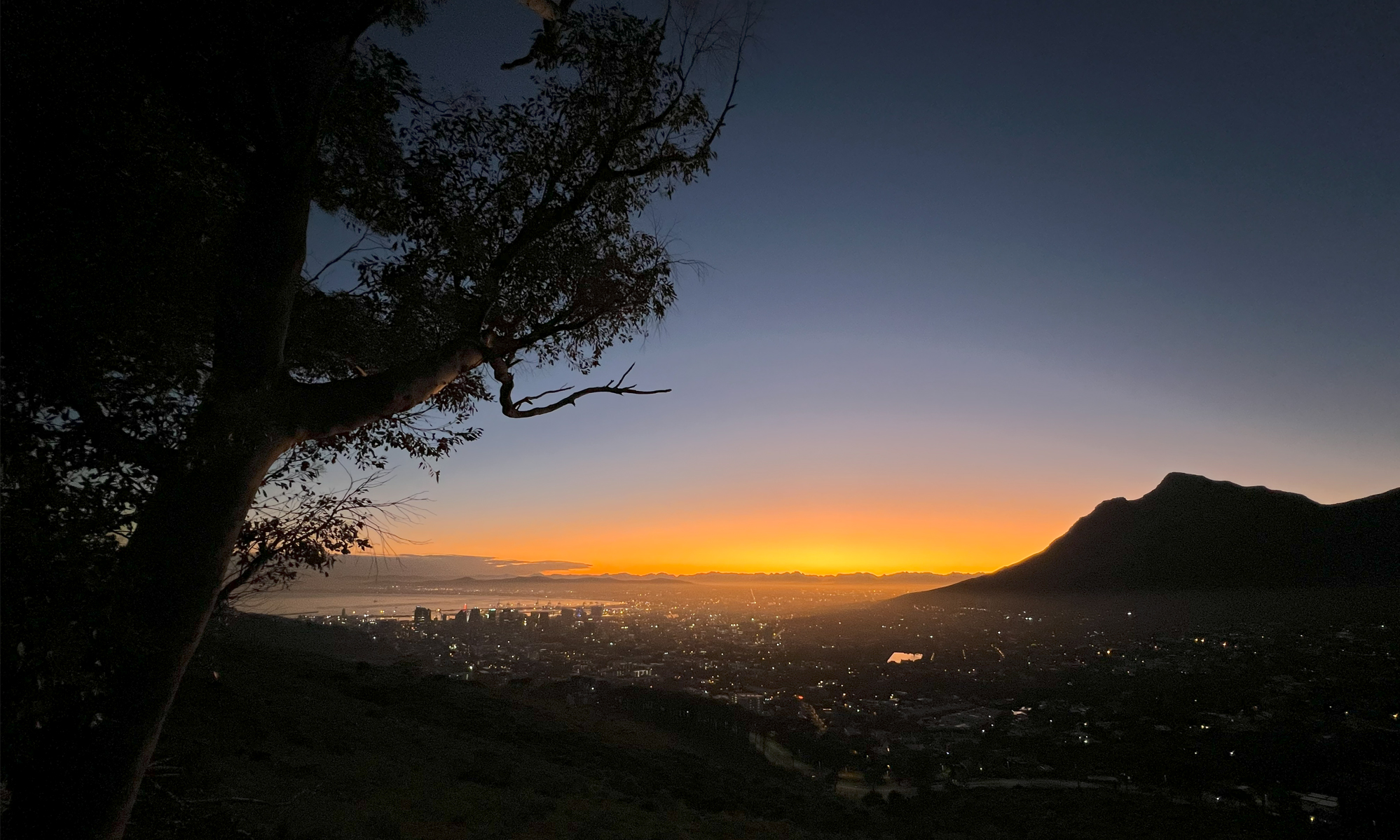
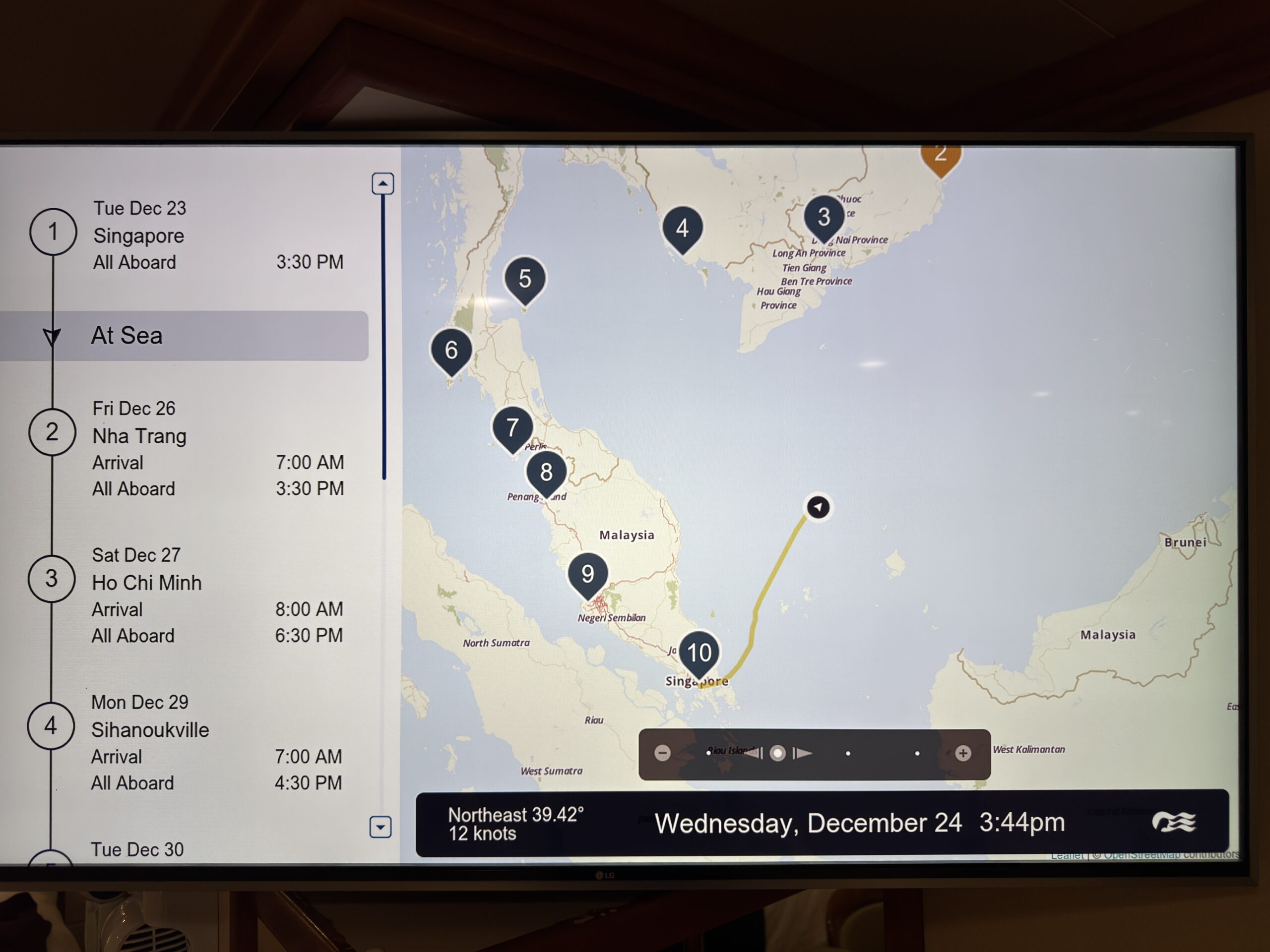
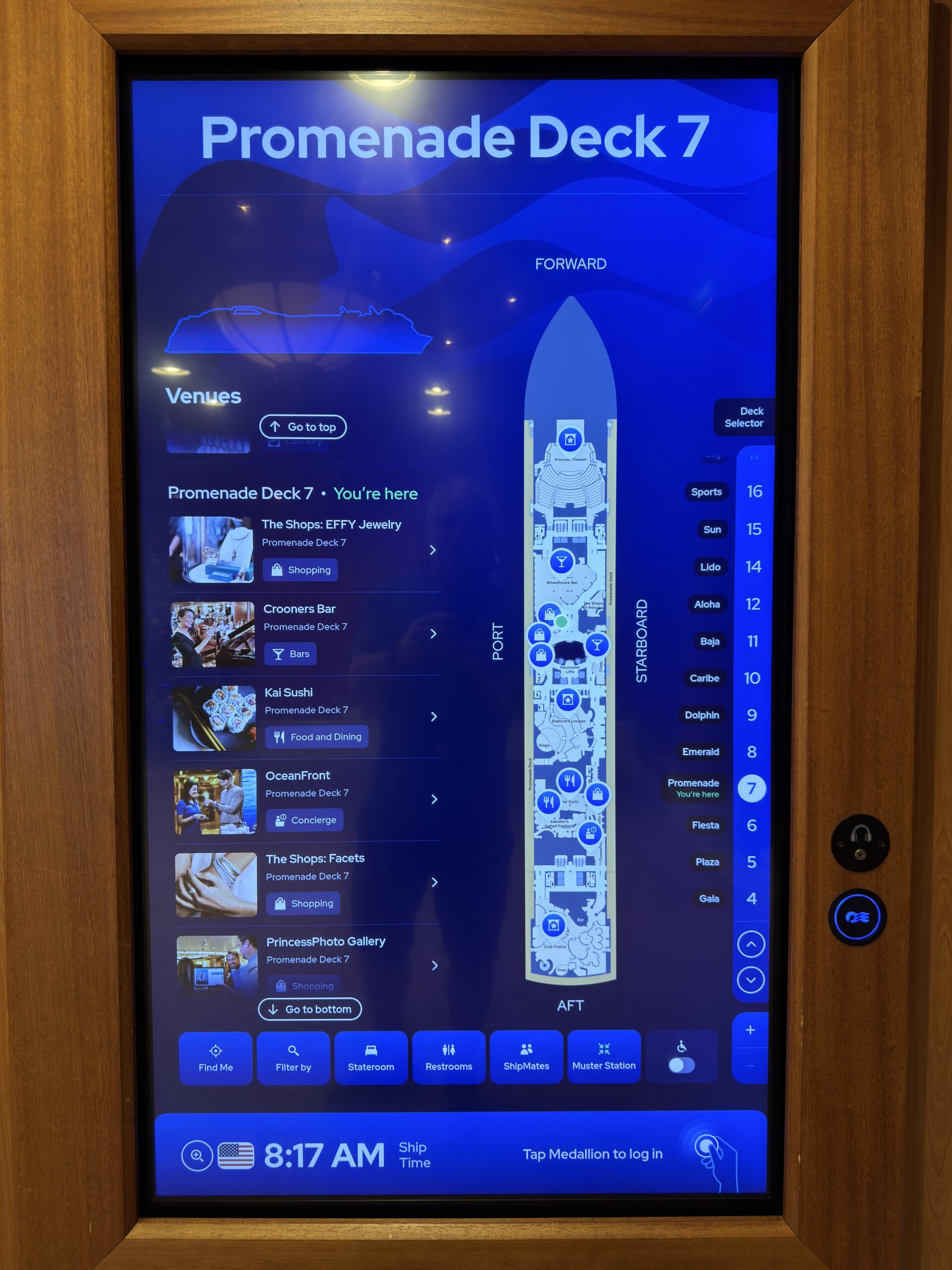
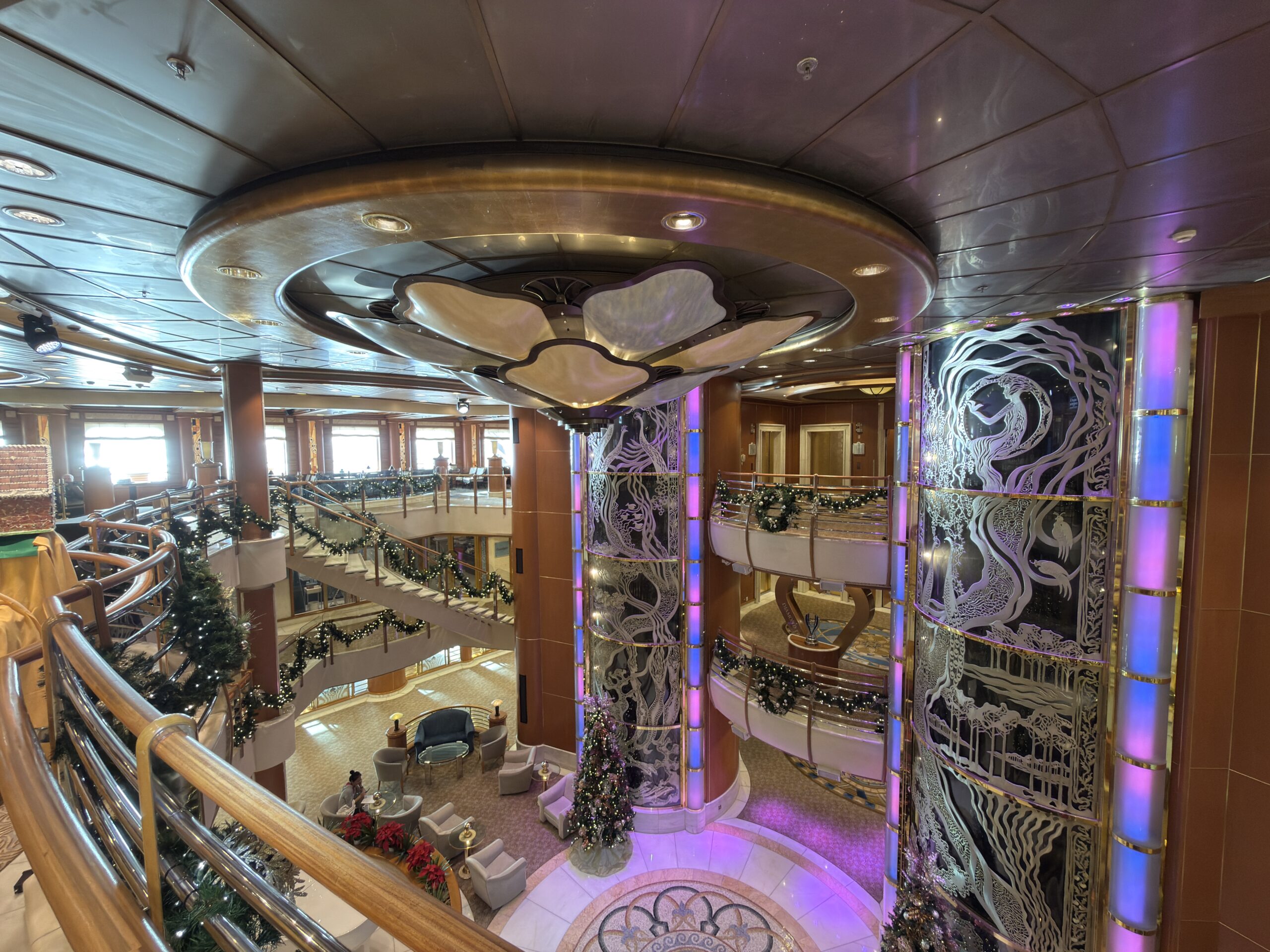
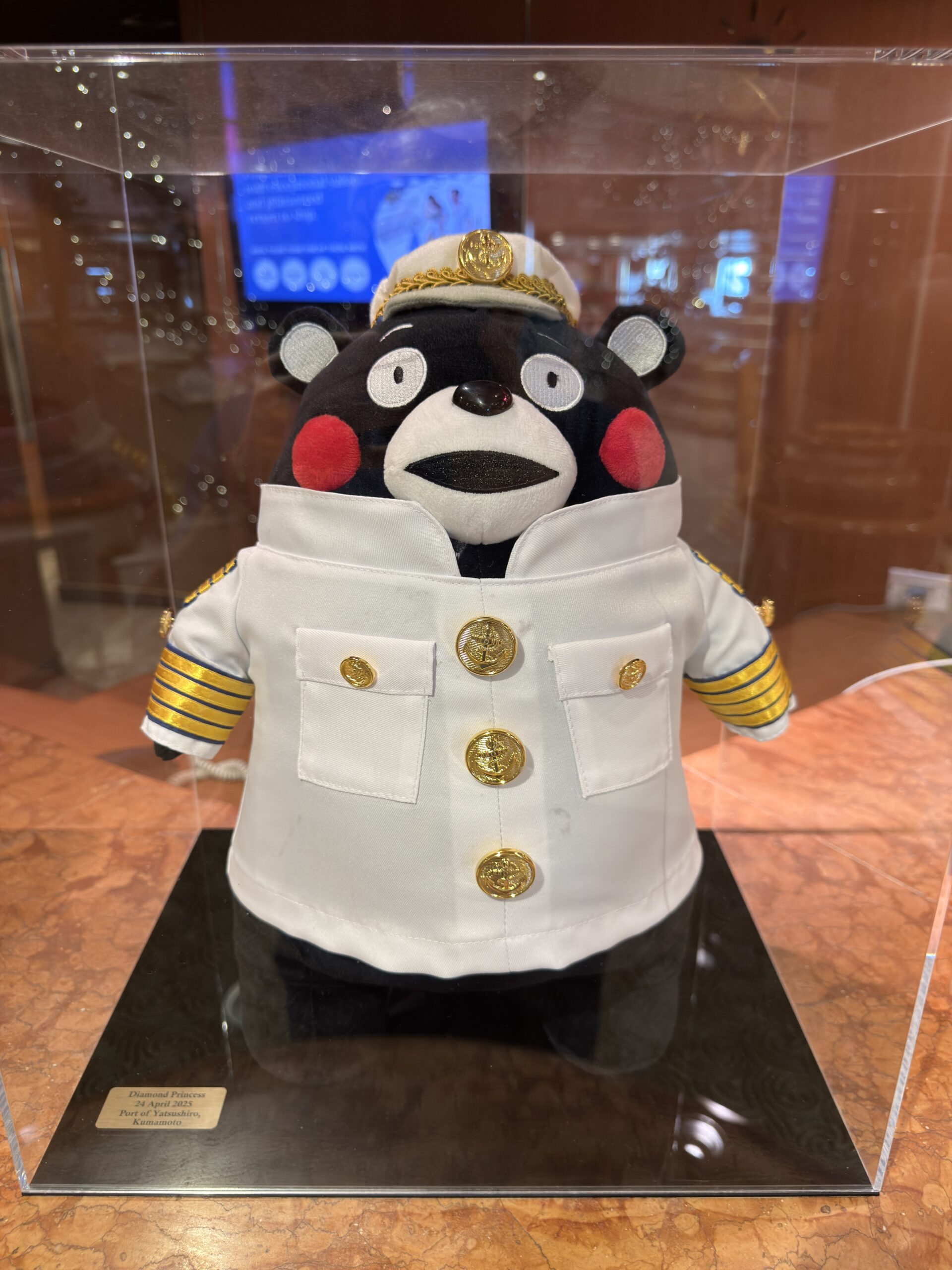
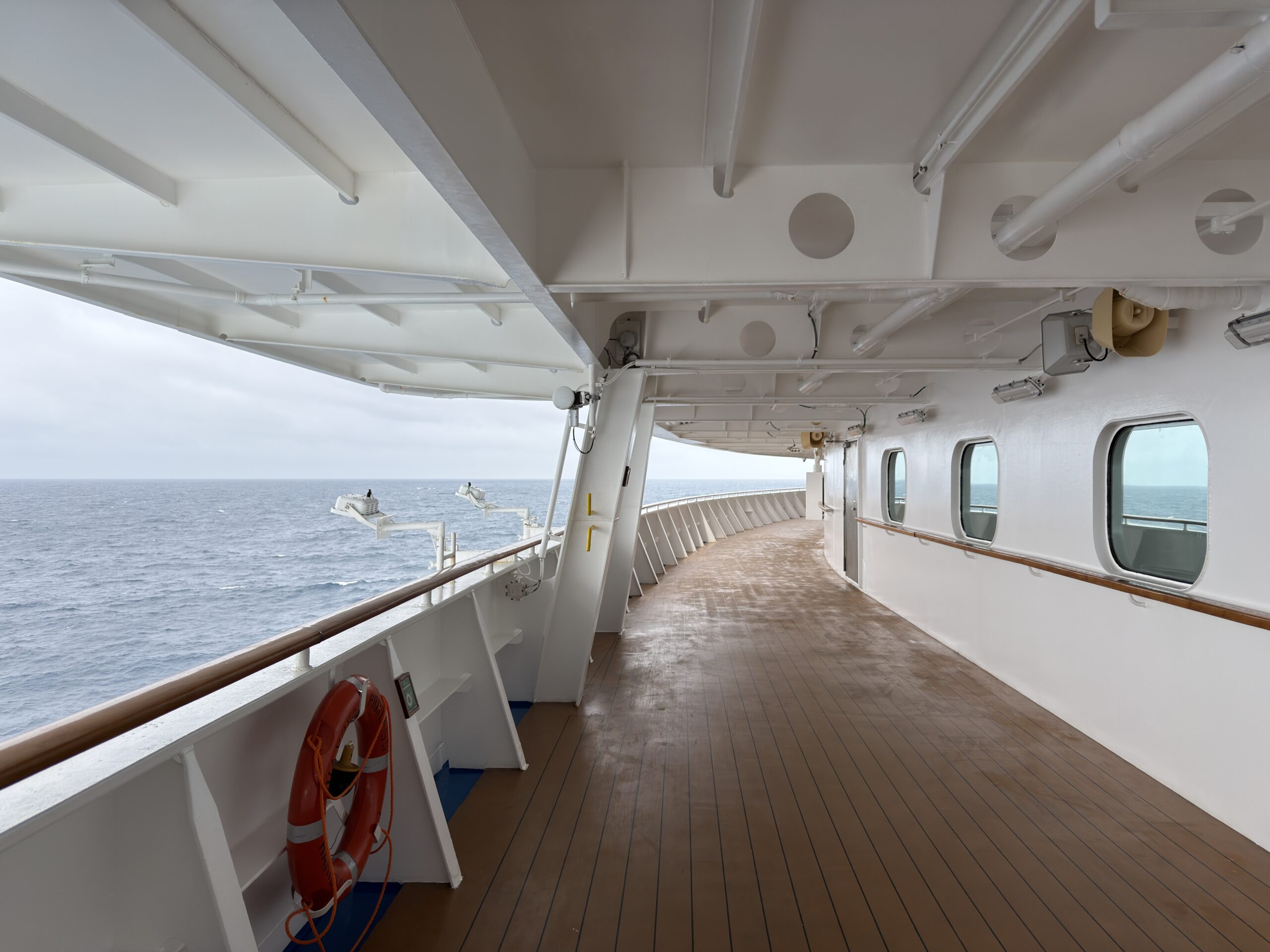
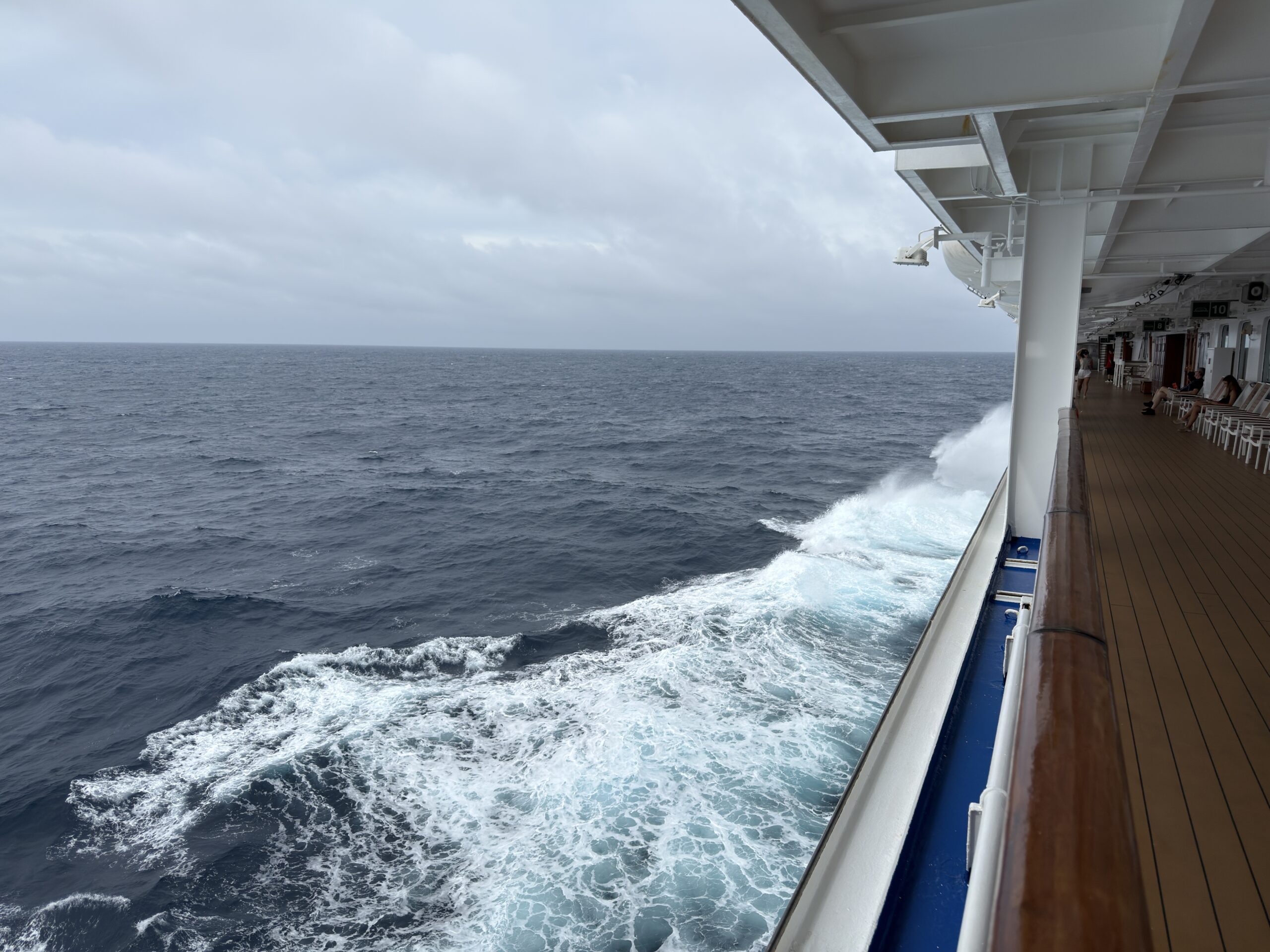
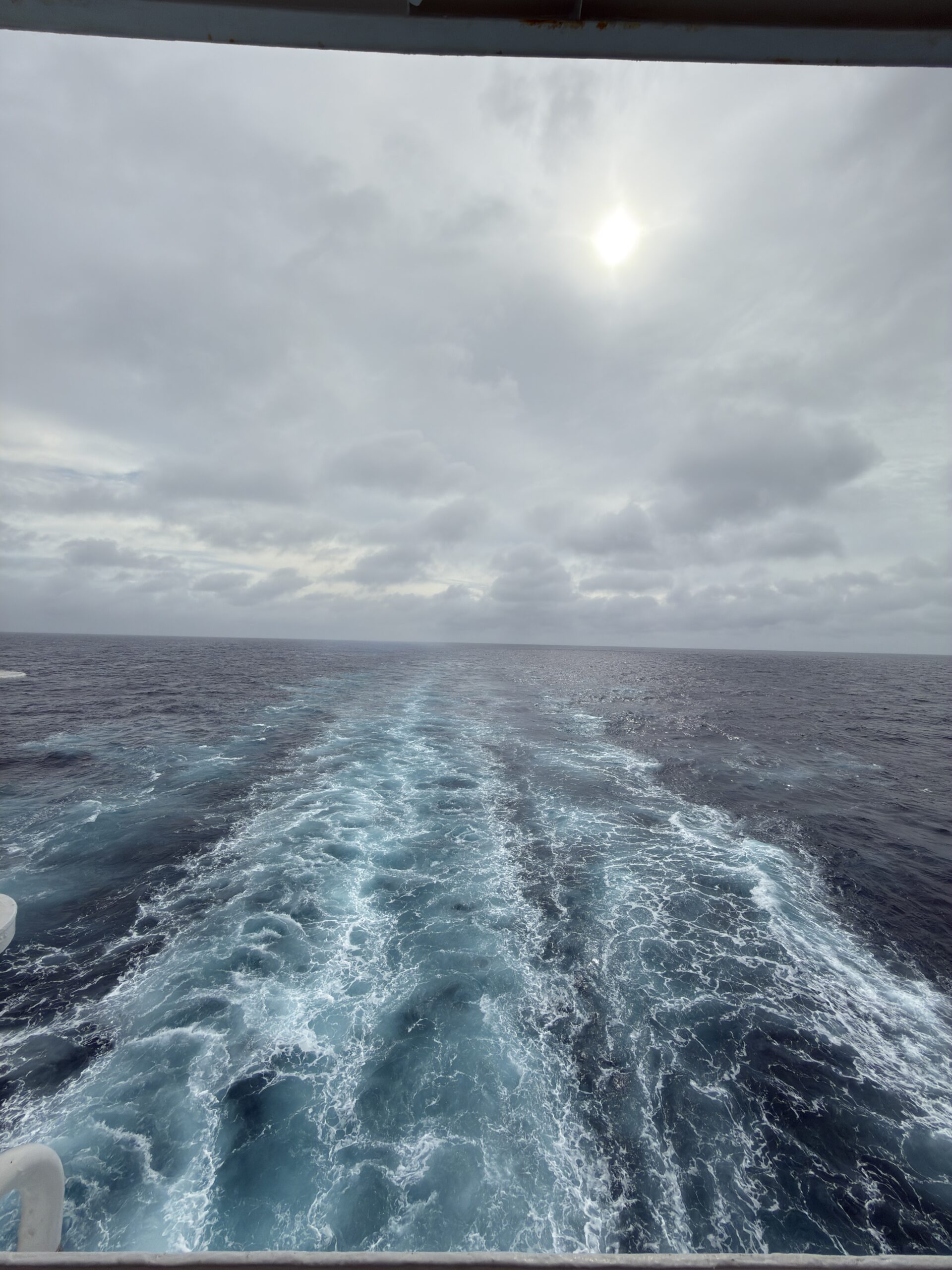
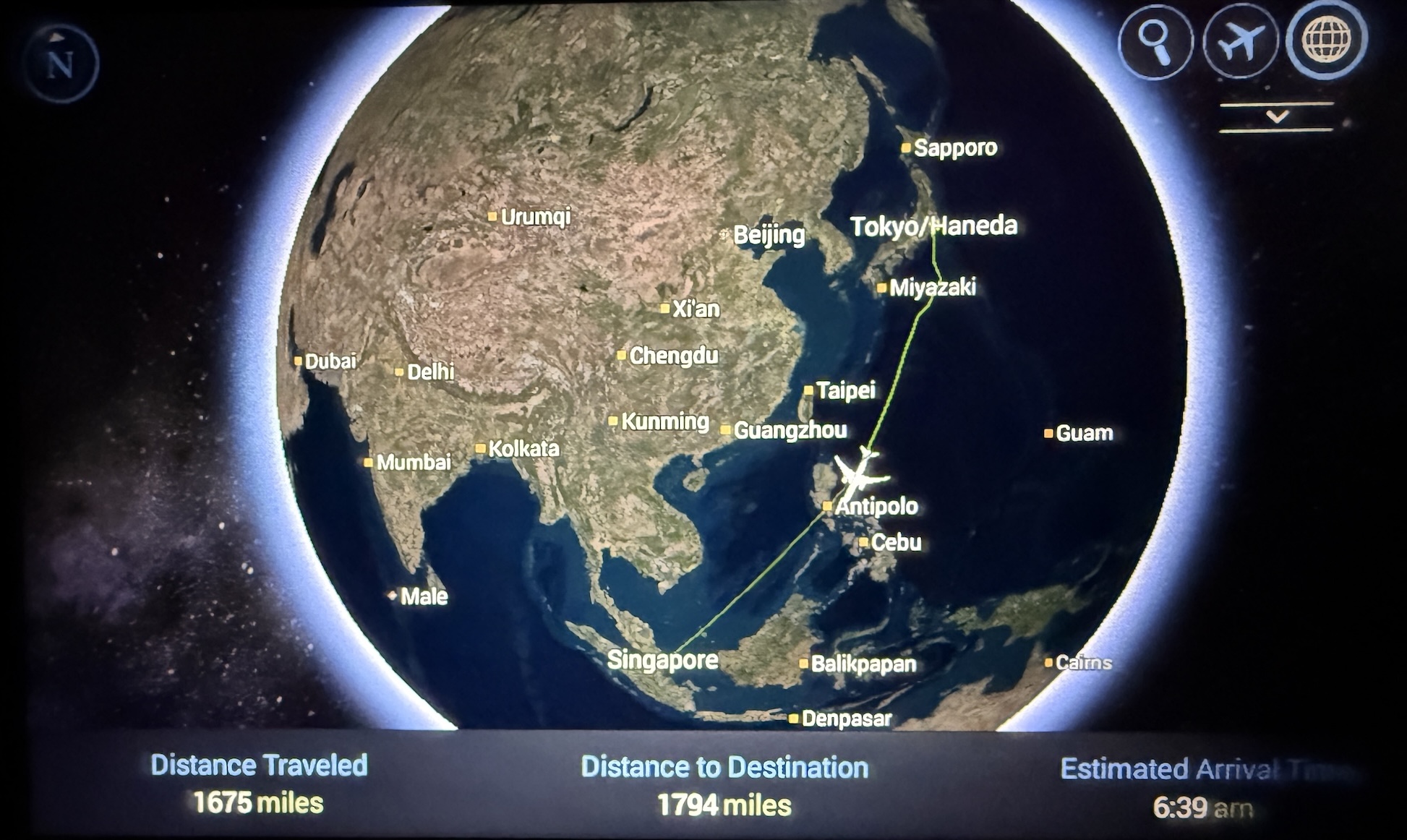
The Diamond Princess is making her way northwards across the South China Sea towards Cam Ranh Bay— the large and deep natural harbor on Vietnam’s south-central coast.
Cam Ranh is famous for its strategic military history as a major US naval and air base during the Vietnam War.
Fifty years on, it is now a developing tourism spot with beautiful beaches like Bai Dai and proximity to the city of Nha Trang.
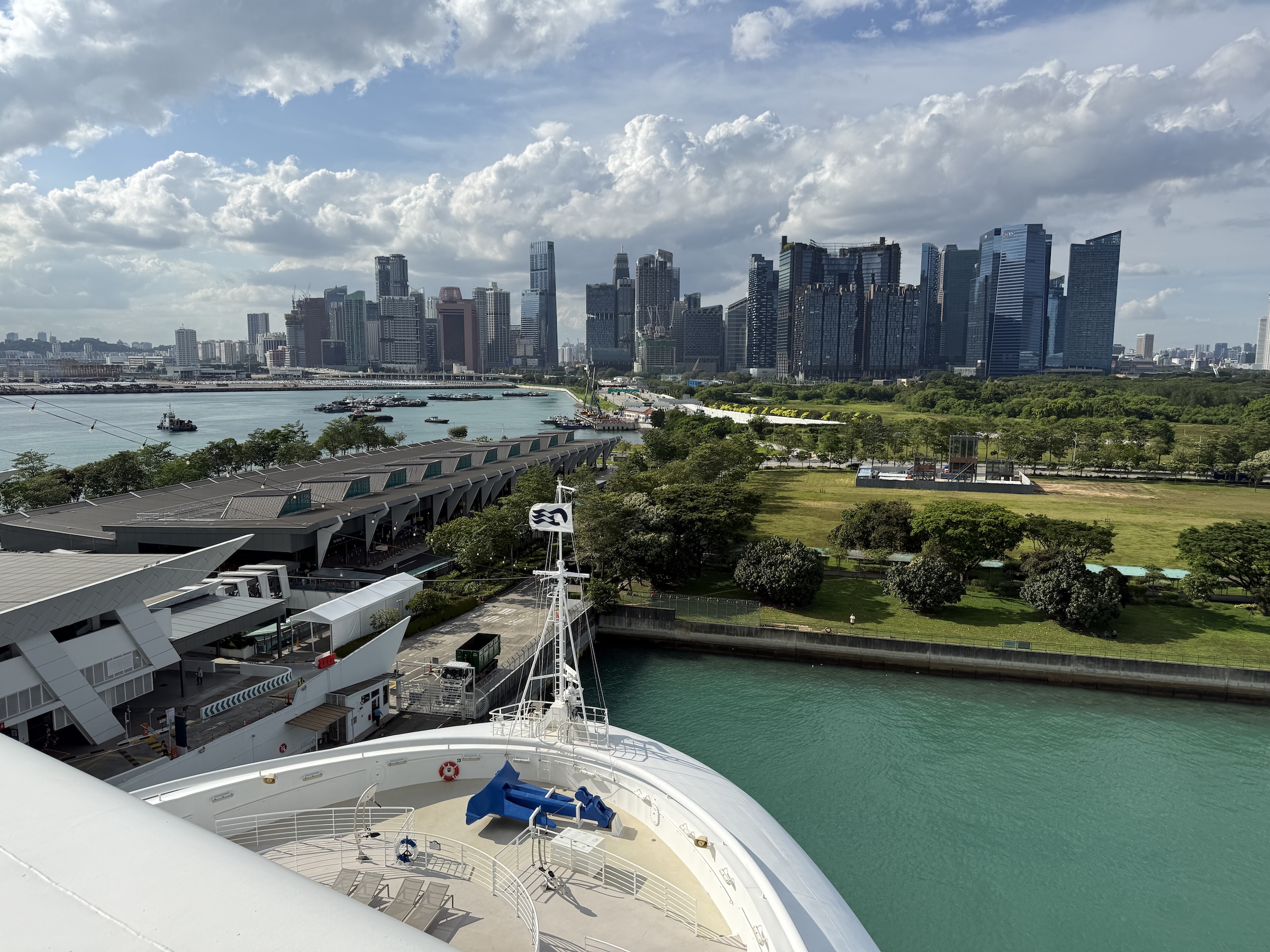
Early on Tuesday afternoon, it was time to run out to the Marina Bay Cruise Centre Singapore to board the Diamond Princess for our 14-day cruise up and down and around the Malay Peninsula.
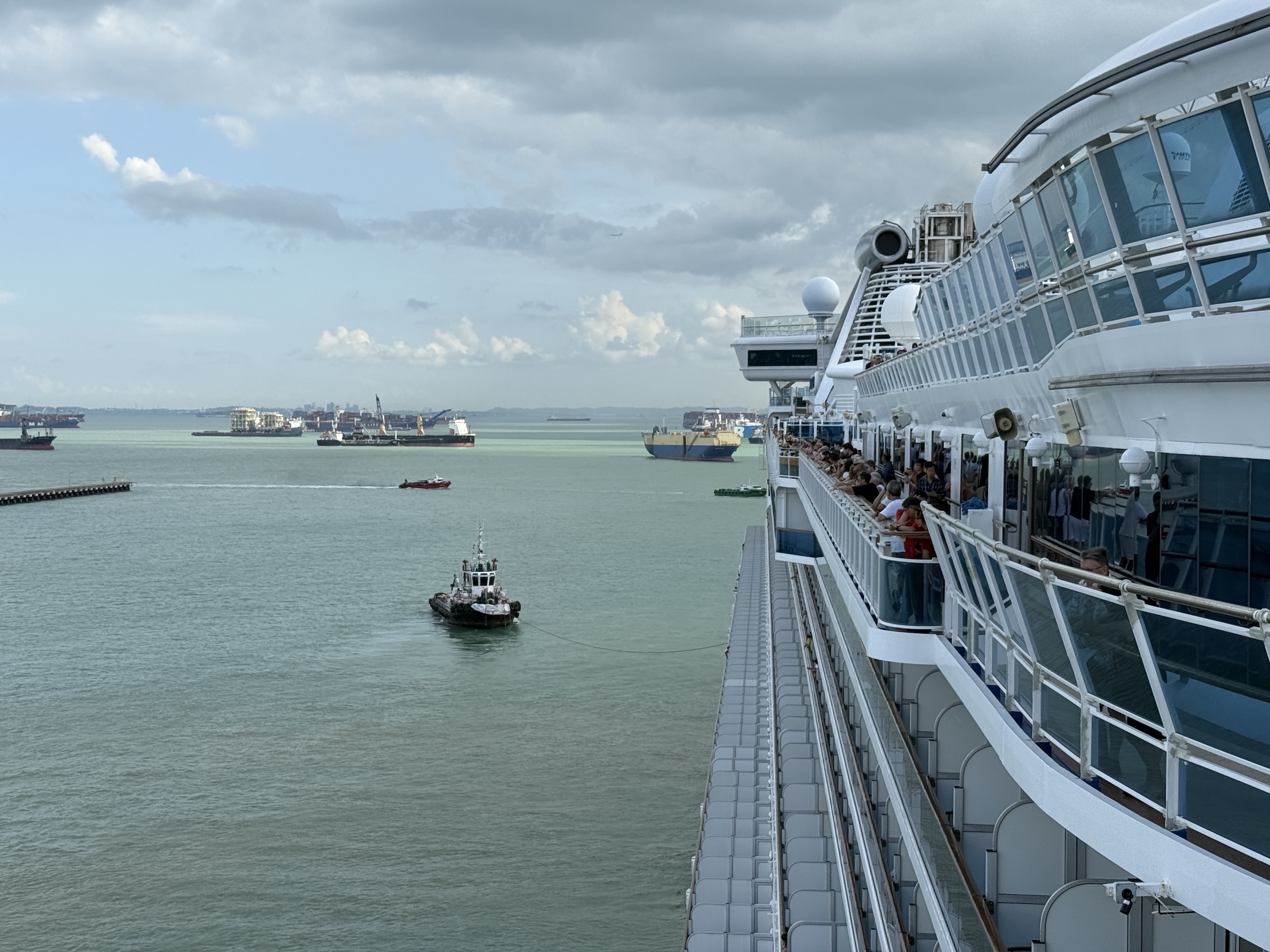
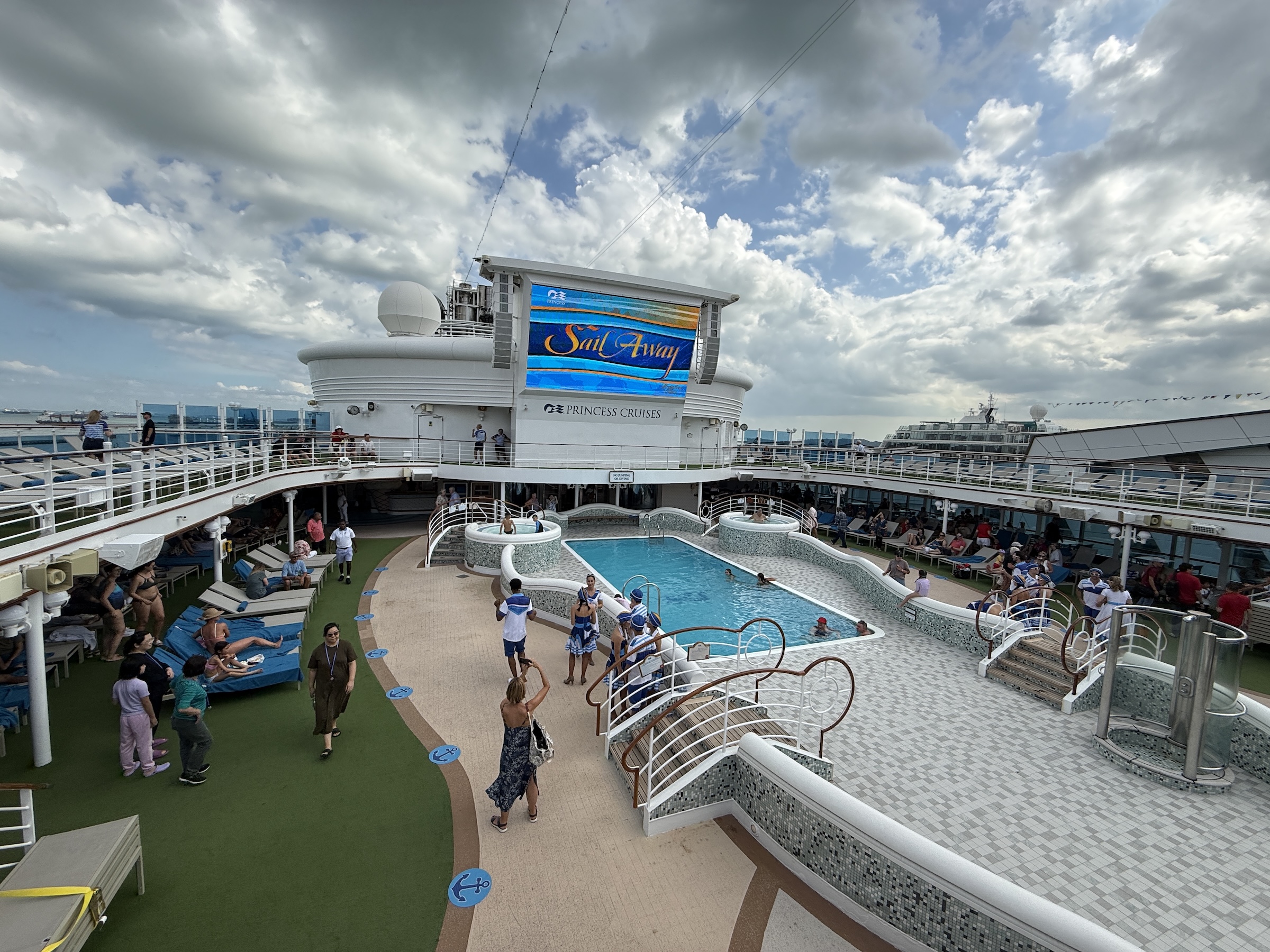
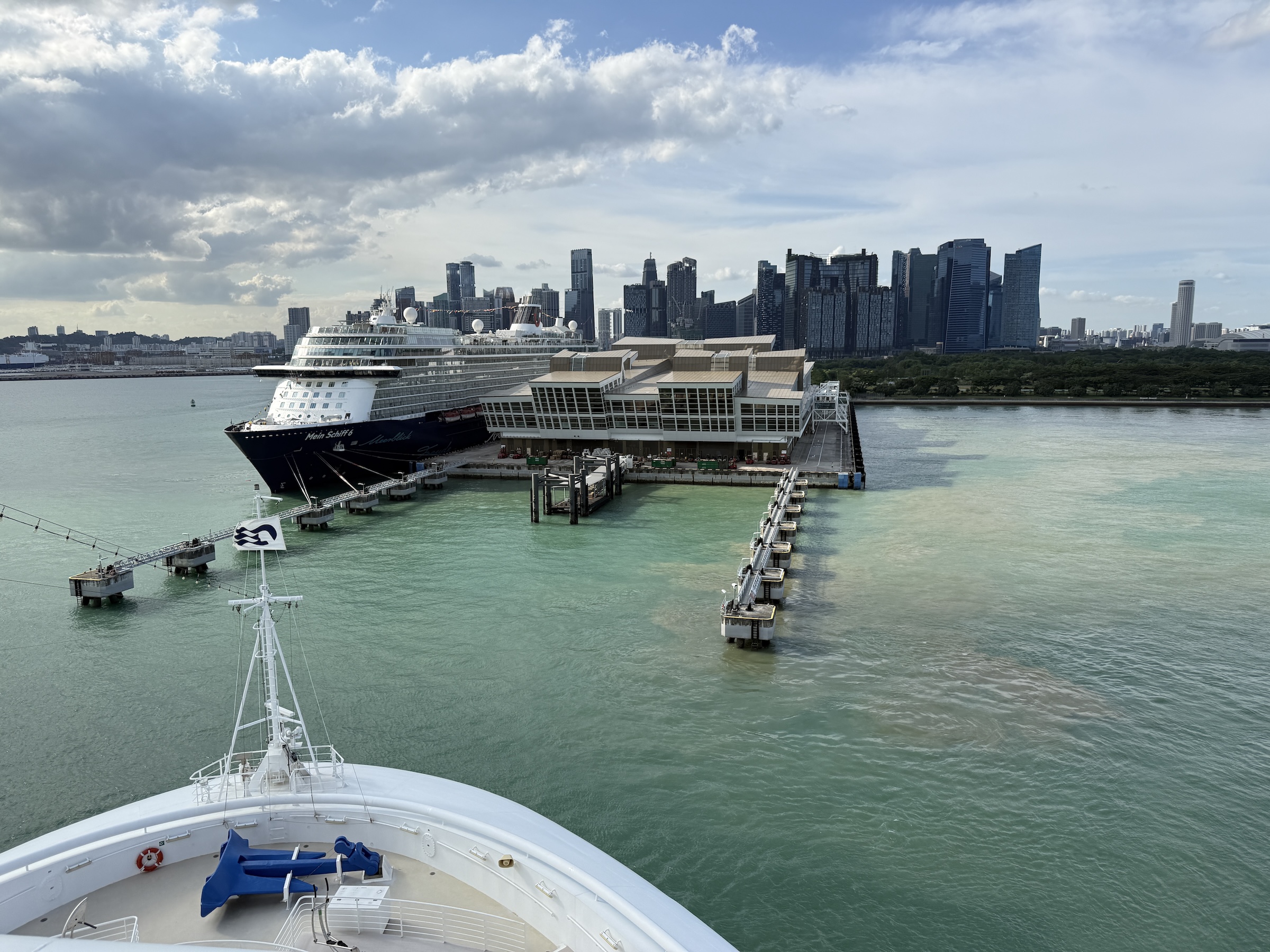
The view from the top deck of the Diamond Princess alongside Pier 1 at the Marina Bay Cruise Centre Singapore, with the Singapore city skyline in the near distance. The construction of the S$500 million terminal began in October 2009 and was completed in May 2012.The tugboat helps a little to make sure the Diamond Princess pulls away from the pier securely.In the mean time there is party music and Sail Away festivities happening on the top deck.At about 4.35 pm we had moved away from the cruise terminal and we were on the way. That is Mein Schiff 6 at Pier 2, a cruise ship owned by TUI Cruises.I was too late to make it to the top deck to catch a glimpse of the setting sun and will do better tomorrow. The Diamond Princess is making her way due east from Singapore and will soon turn northeast.
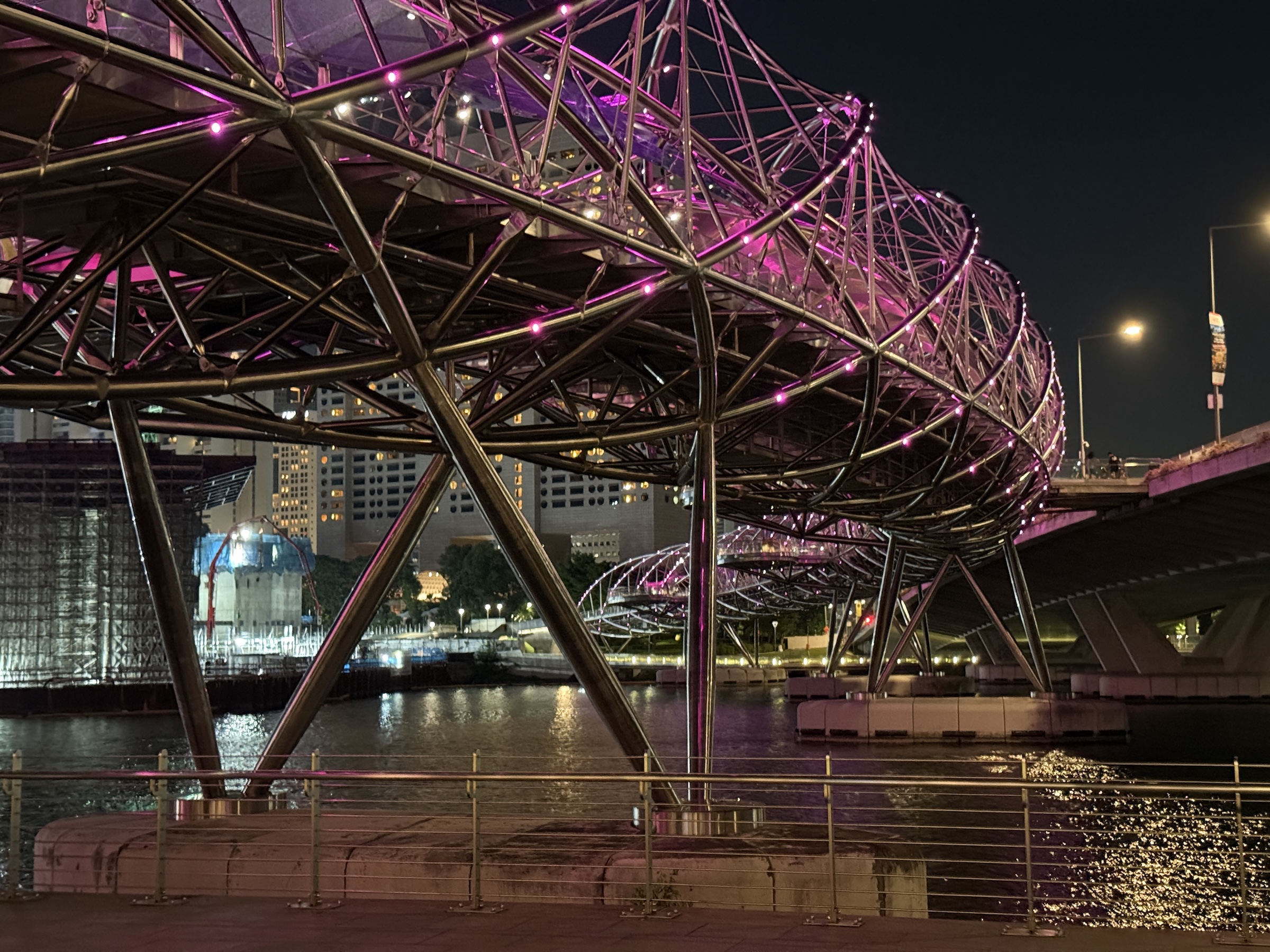
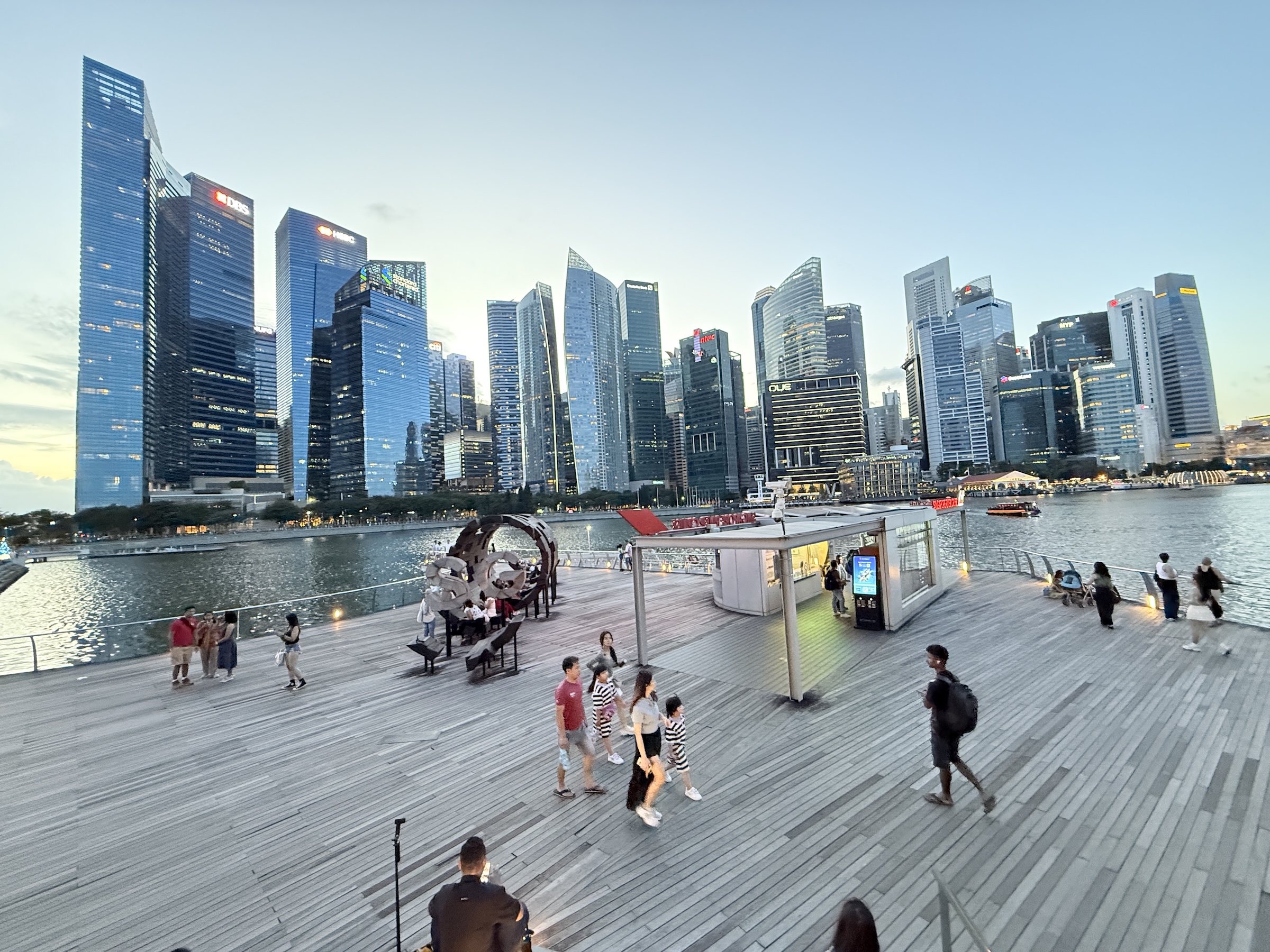
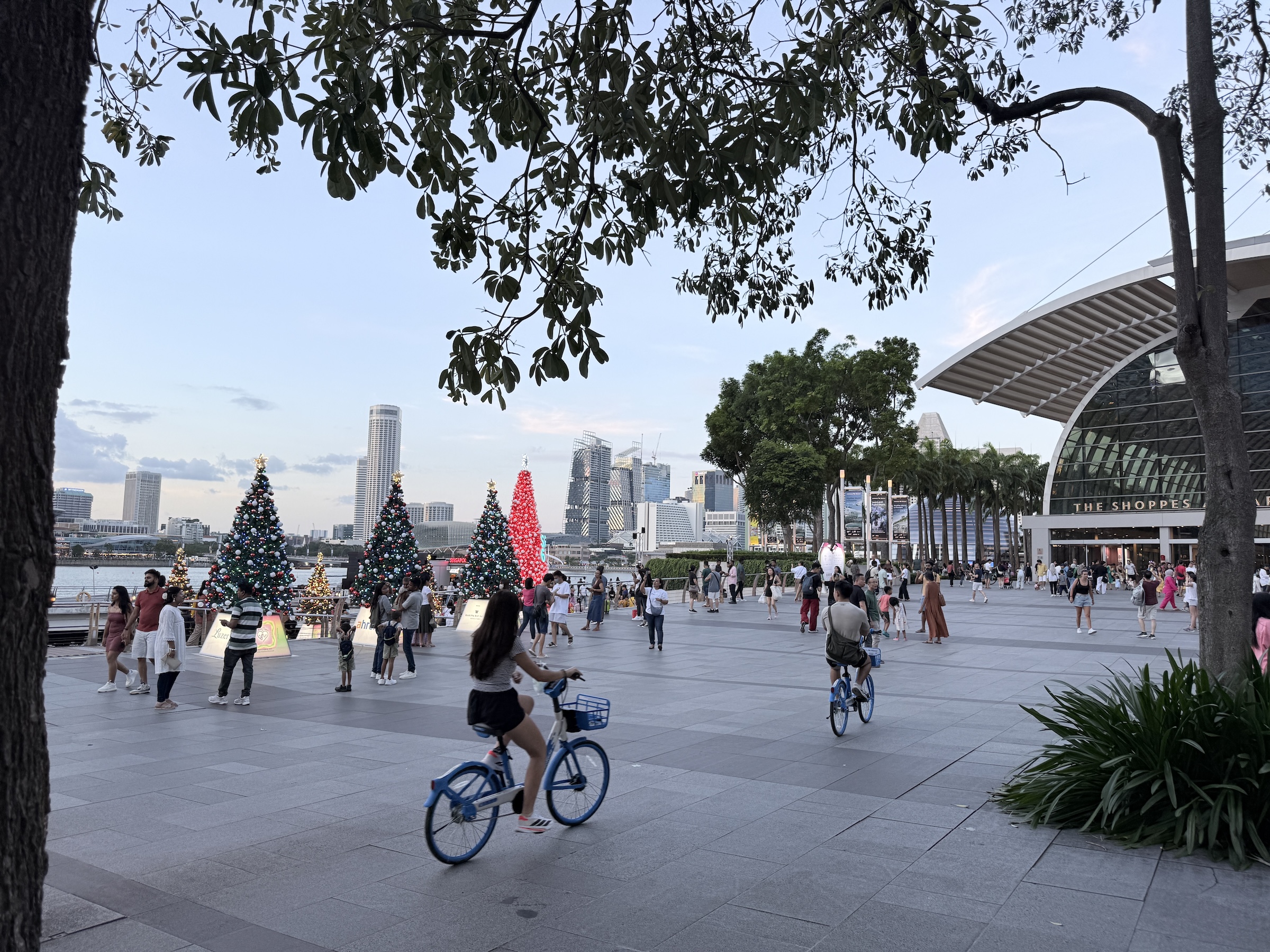
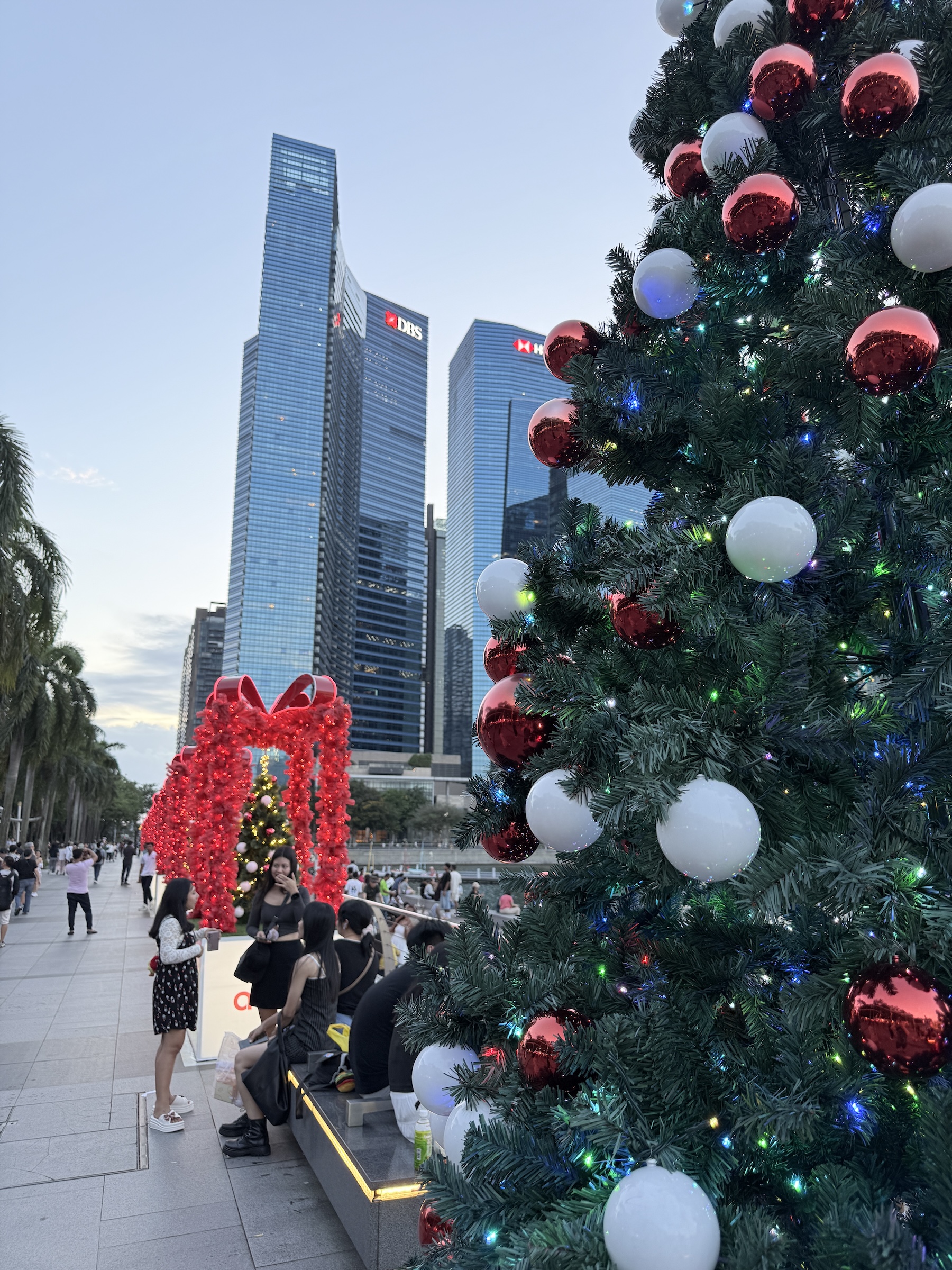
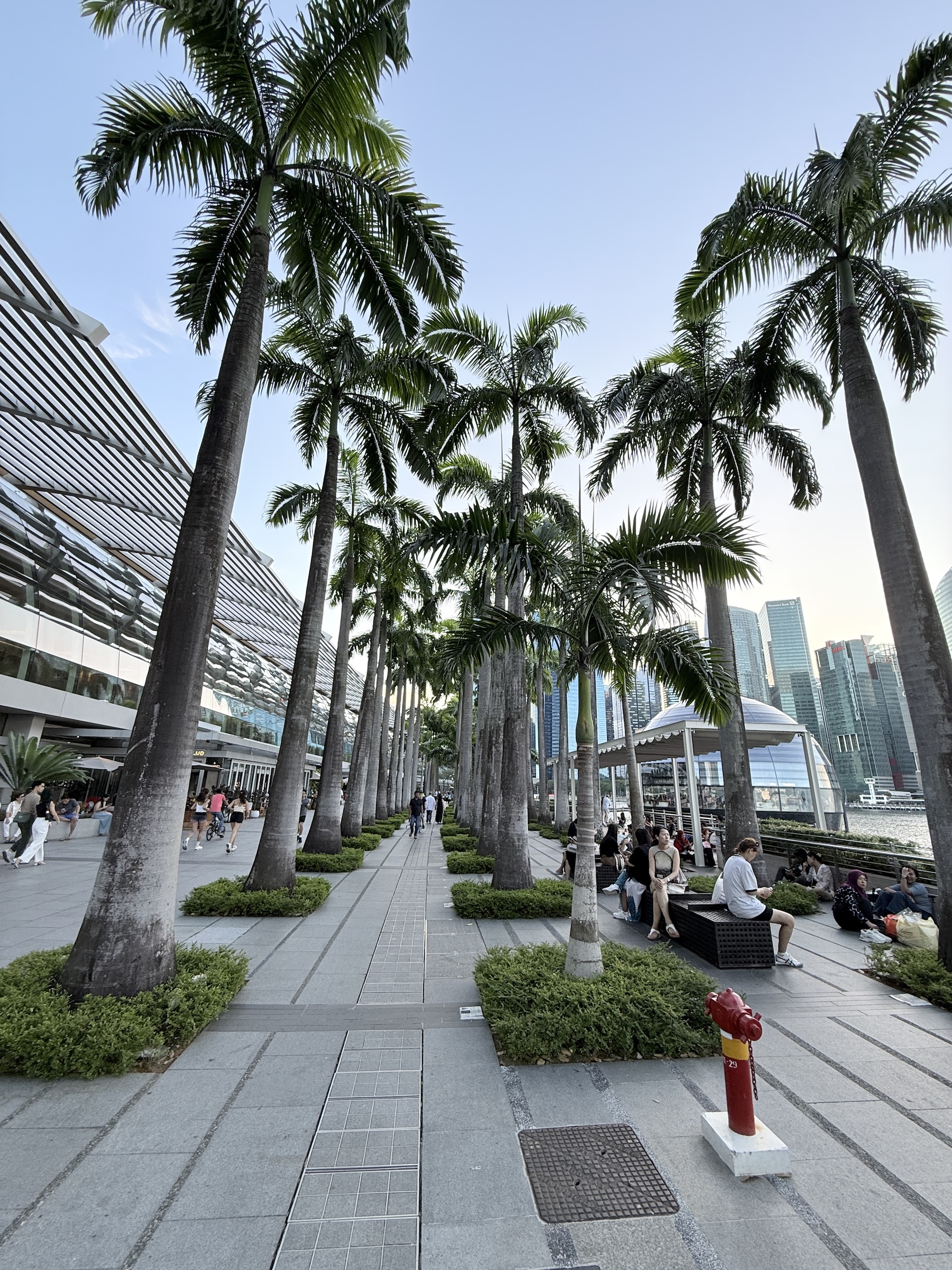
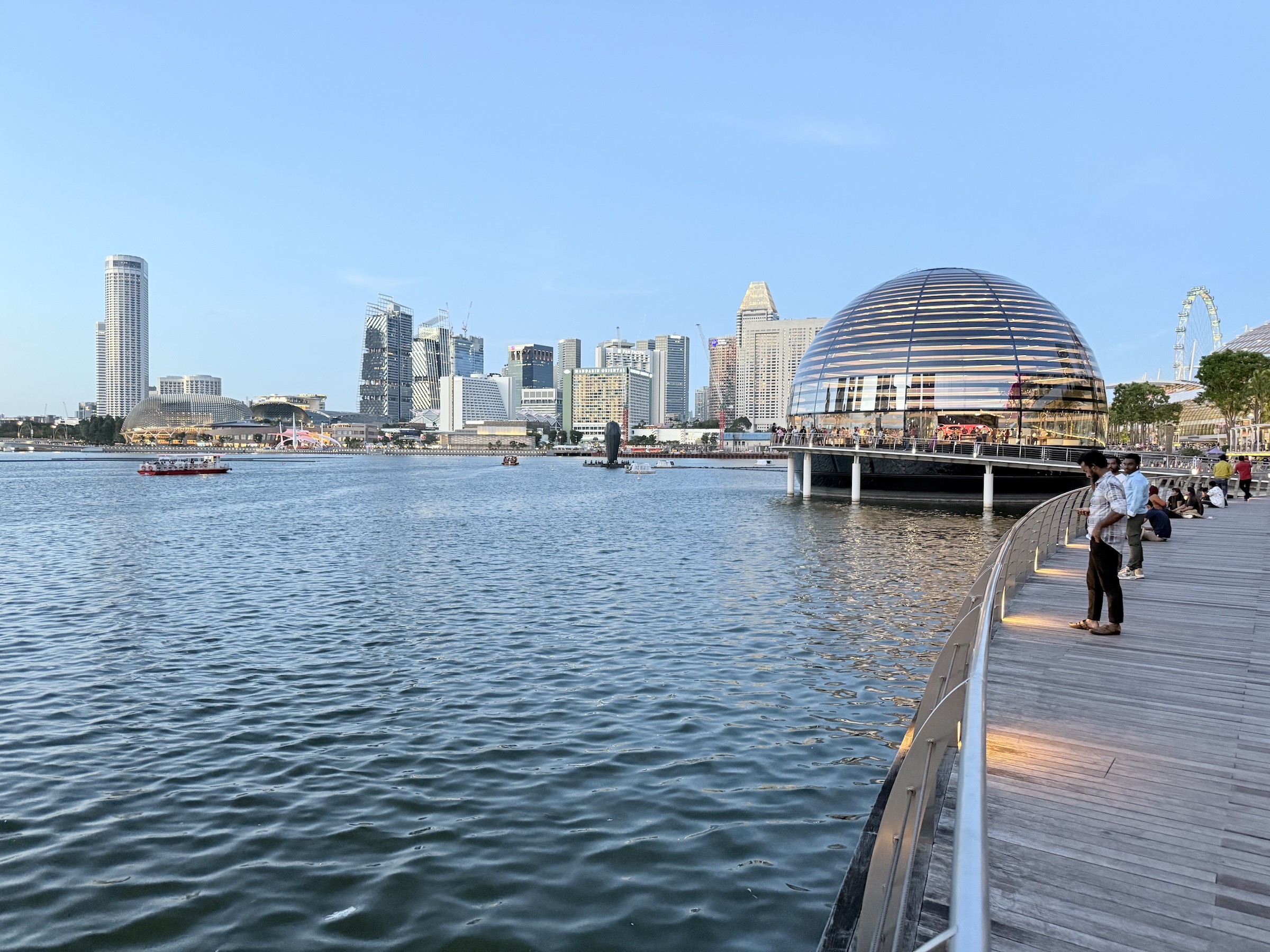
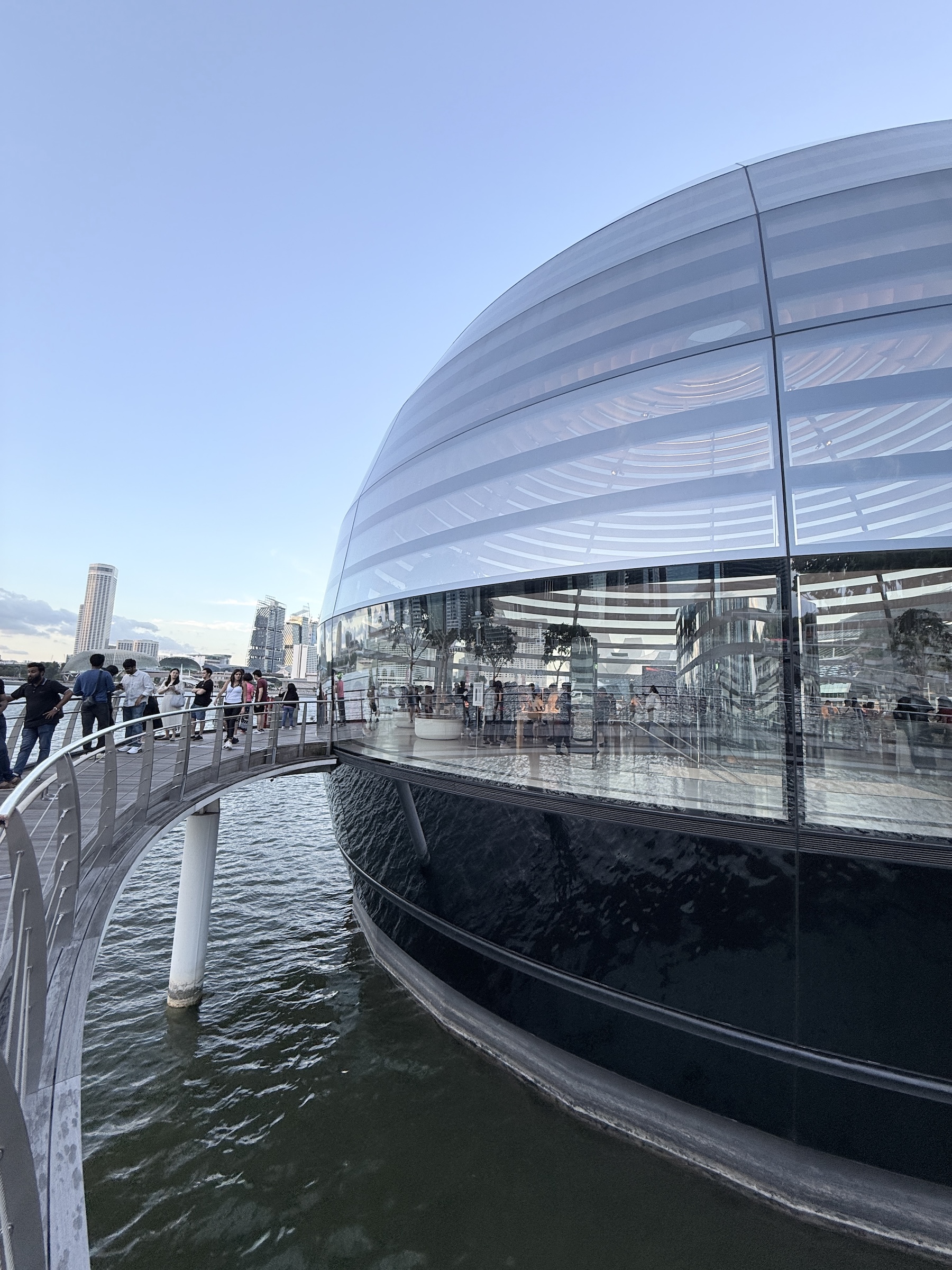
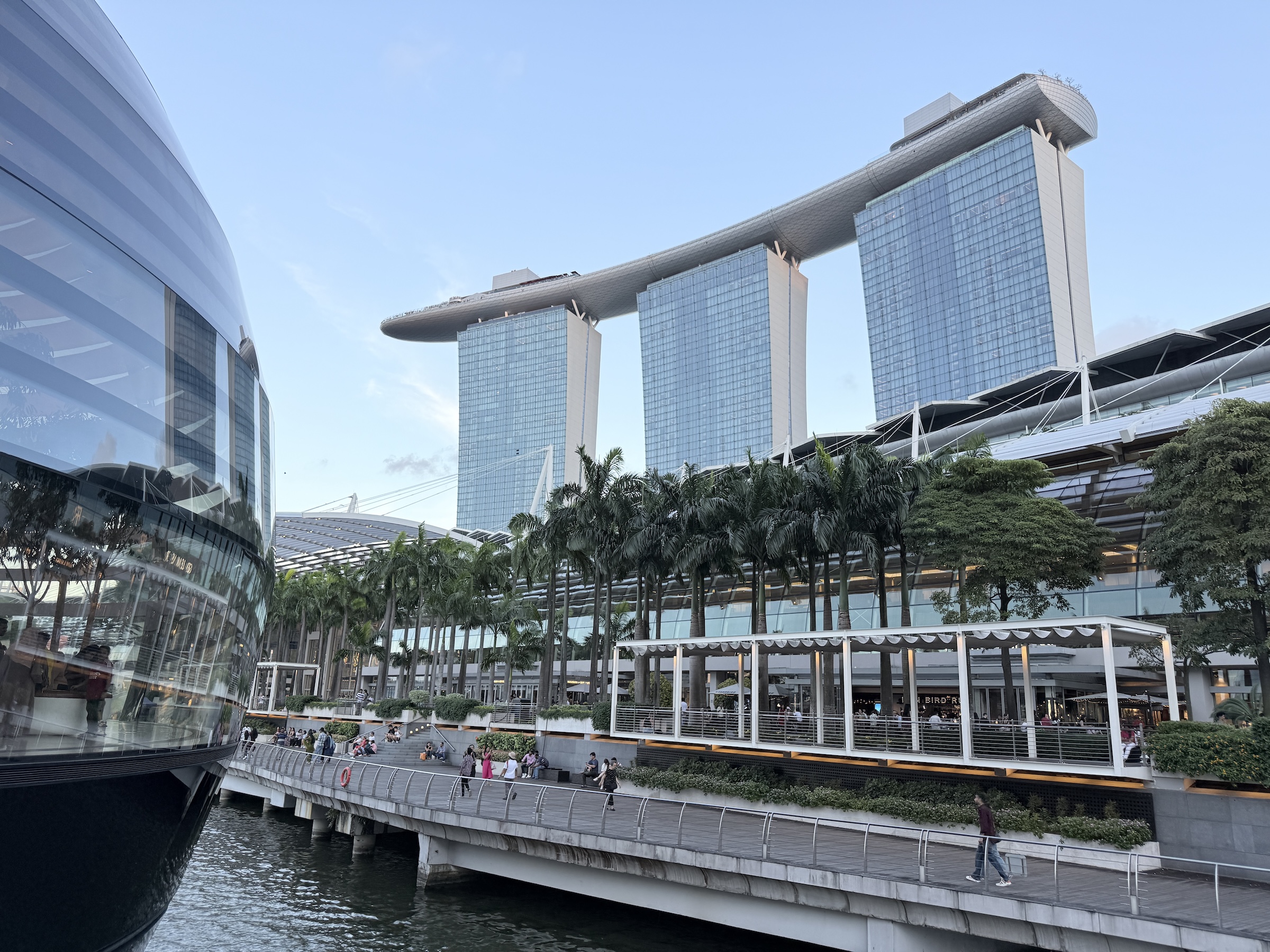
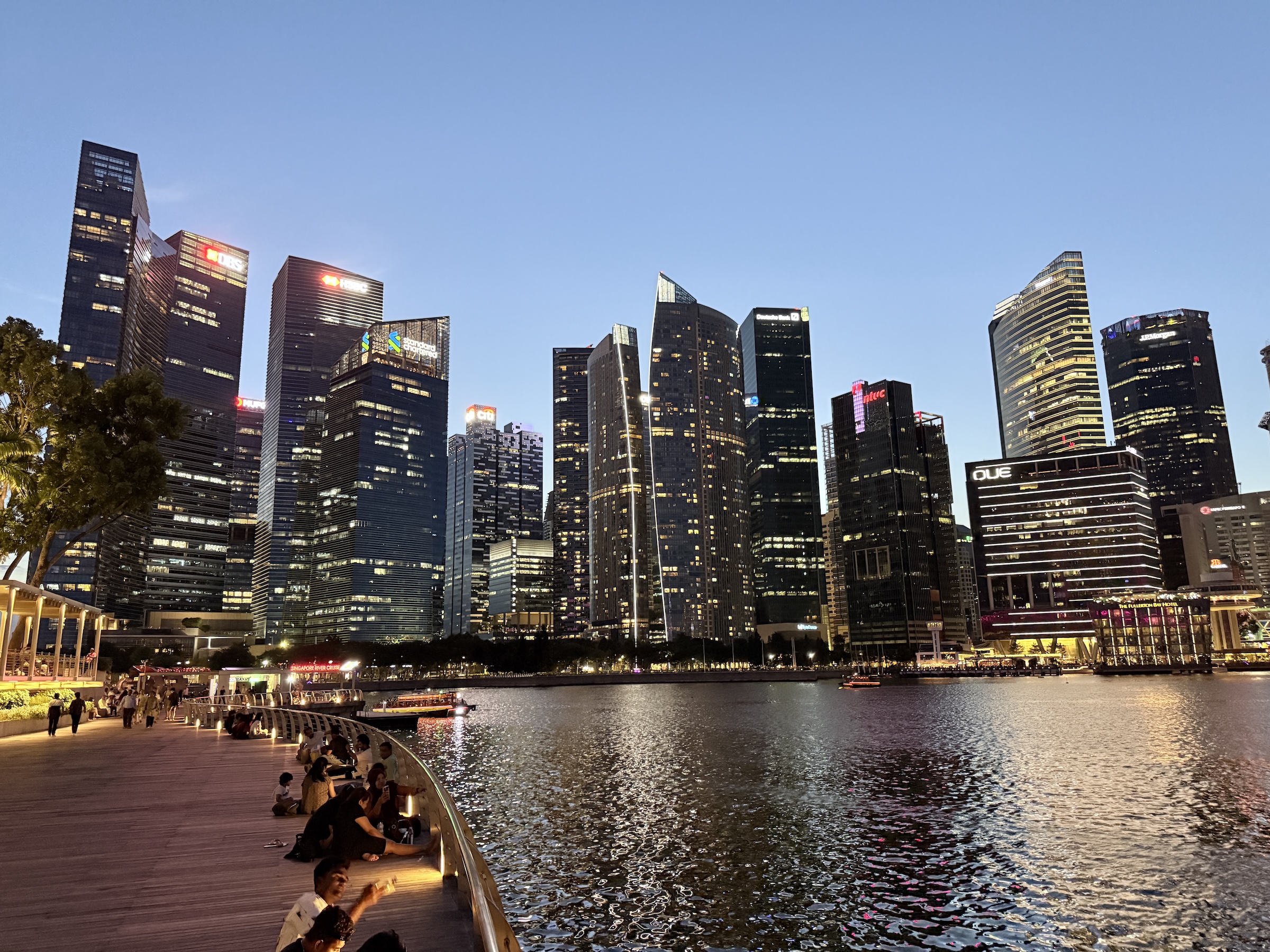
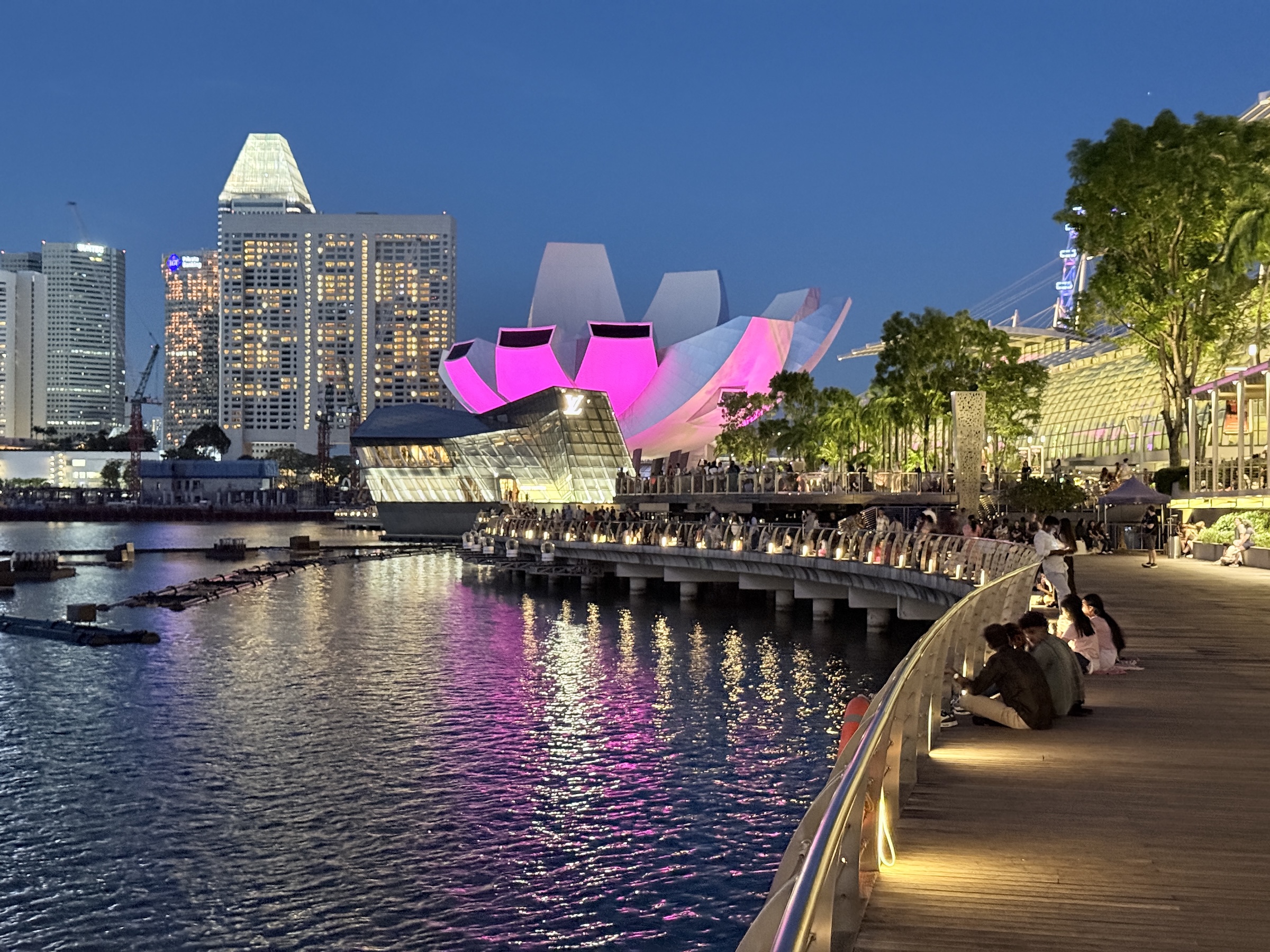
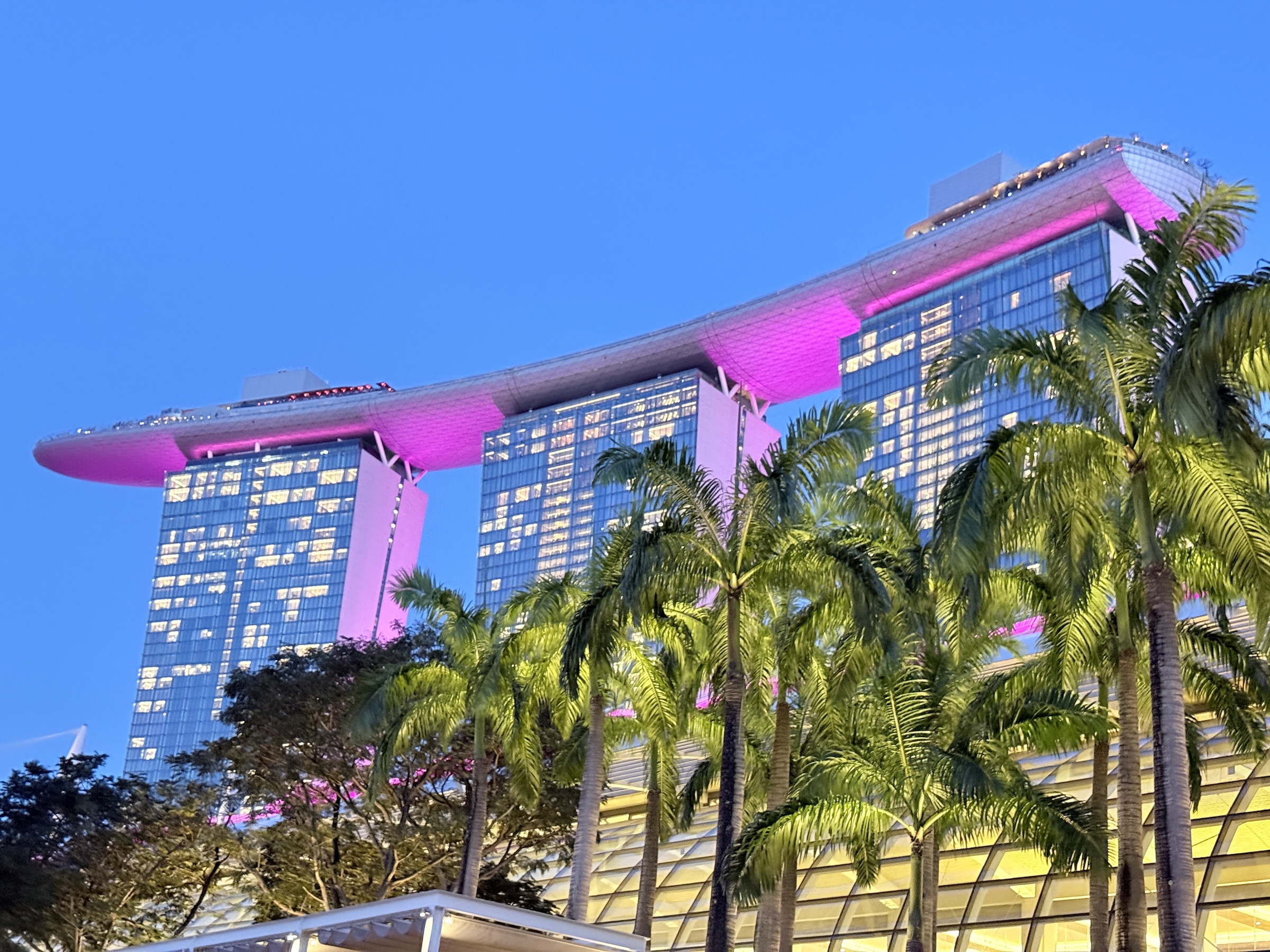
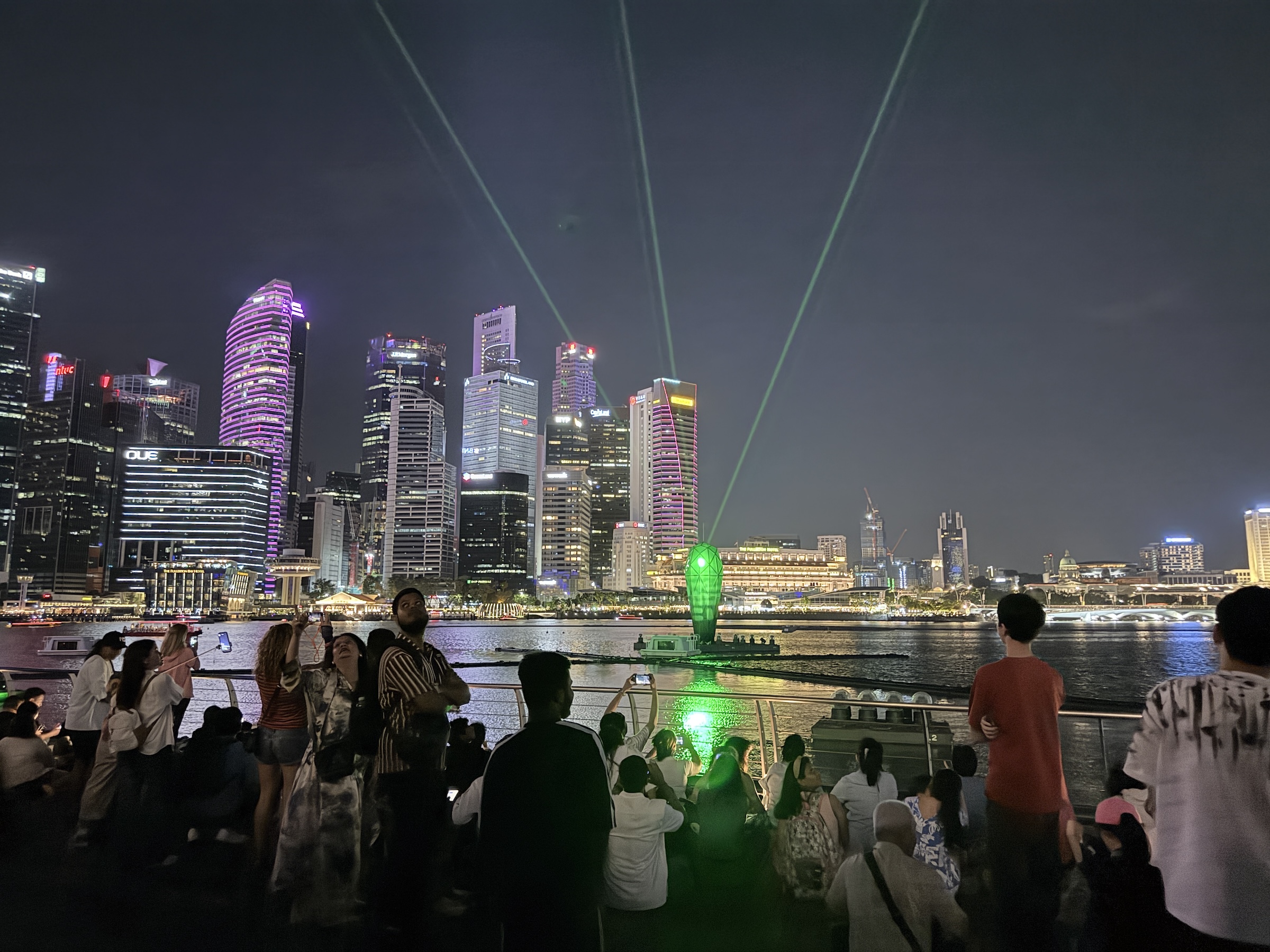
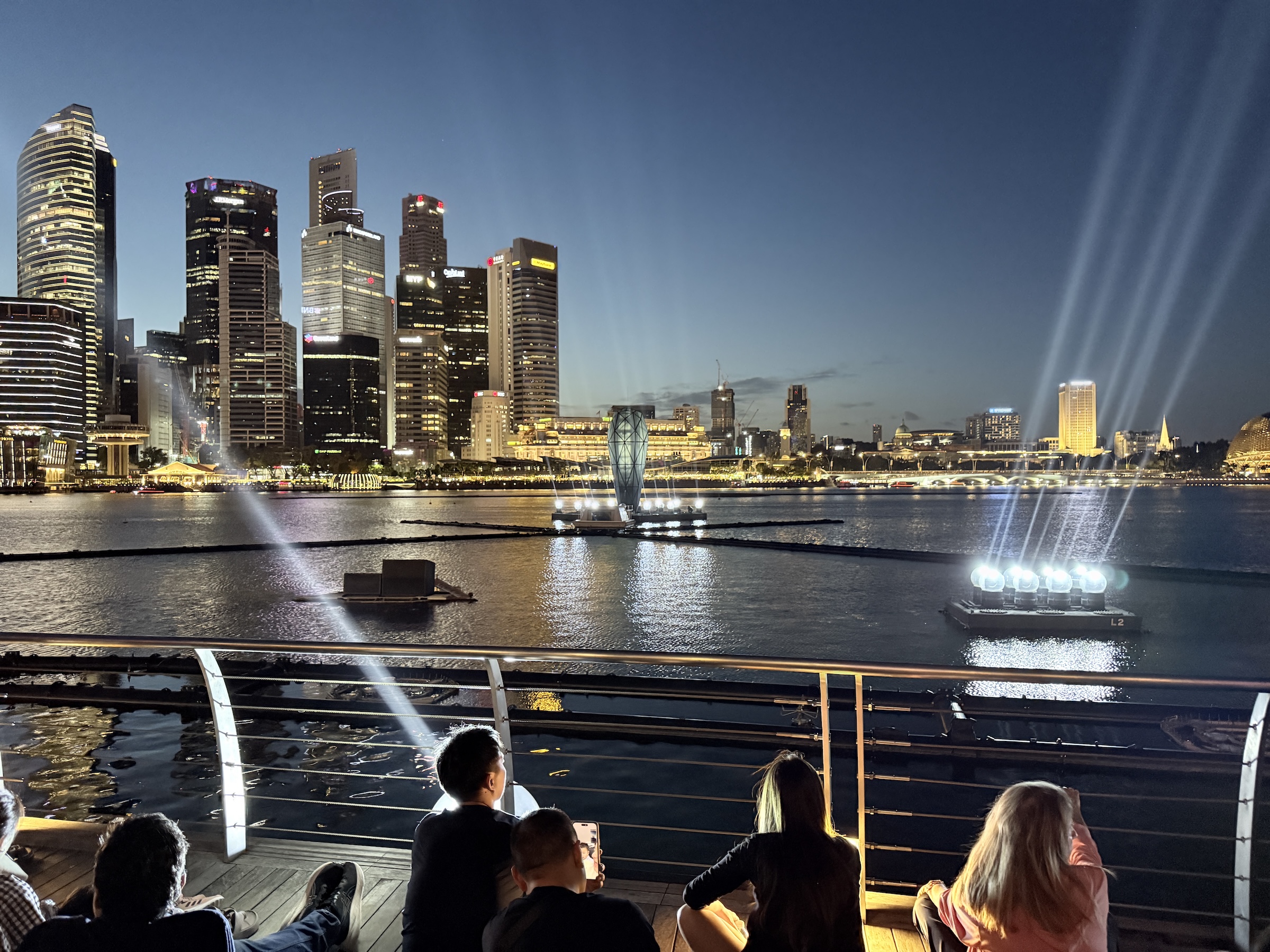
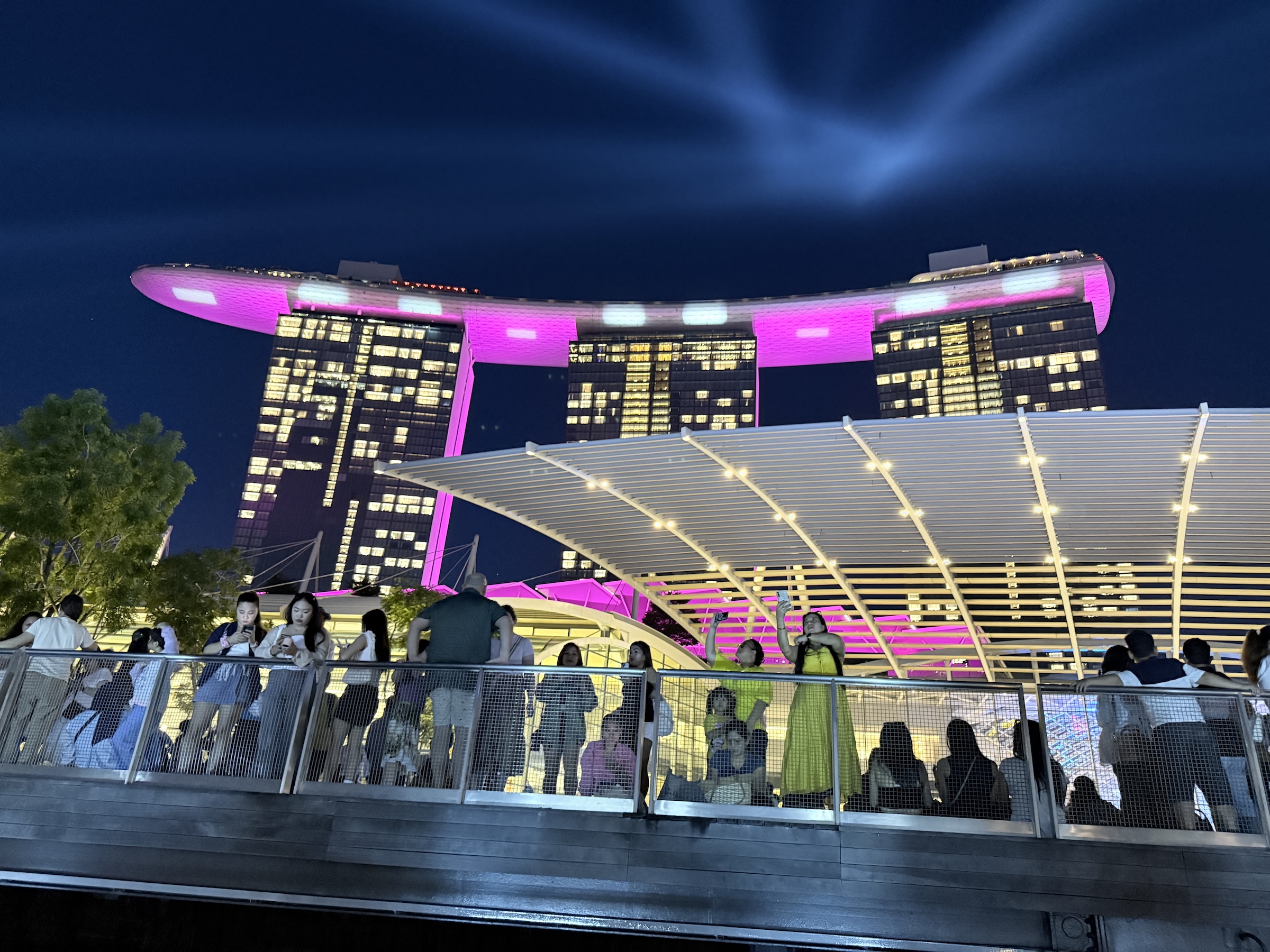
These pictures are all from the Marina Bay Waterfront Promenade where the Marina Bay Sands Hotel is.
The hotel’s grand opening was in February 2011.
It was designed by Moshe Safdie Architects (Safdie Architects), and features three tilted hotel towers linked by a massive, surfboard-like SkyPark at the top, housing gardens, restaurants, and the famous infinity pool, inspired by a deck of cards.
The sphere in the water is an Apple store and the building with the petals of a flower is the ArtScience Museum.
After sunset, there was a laser and fountain show.
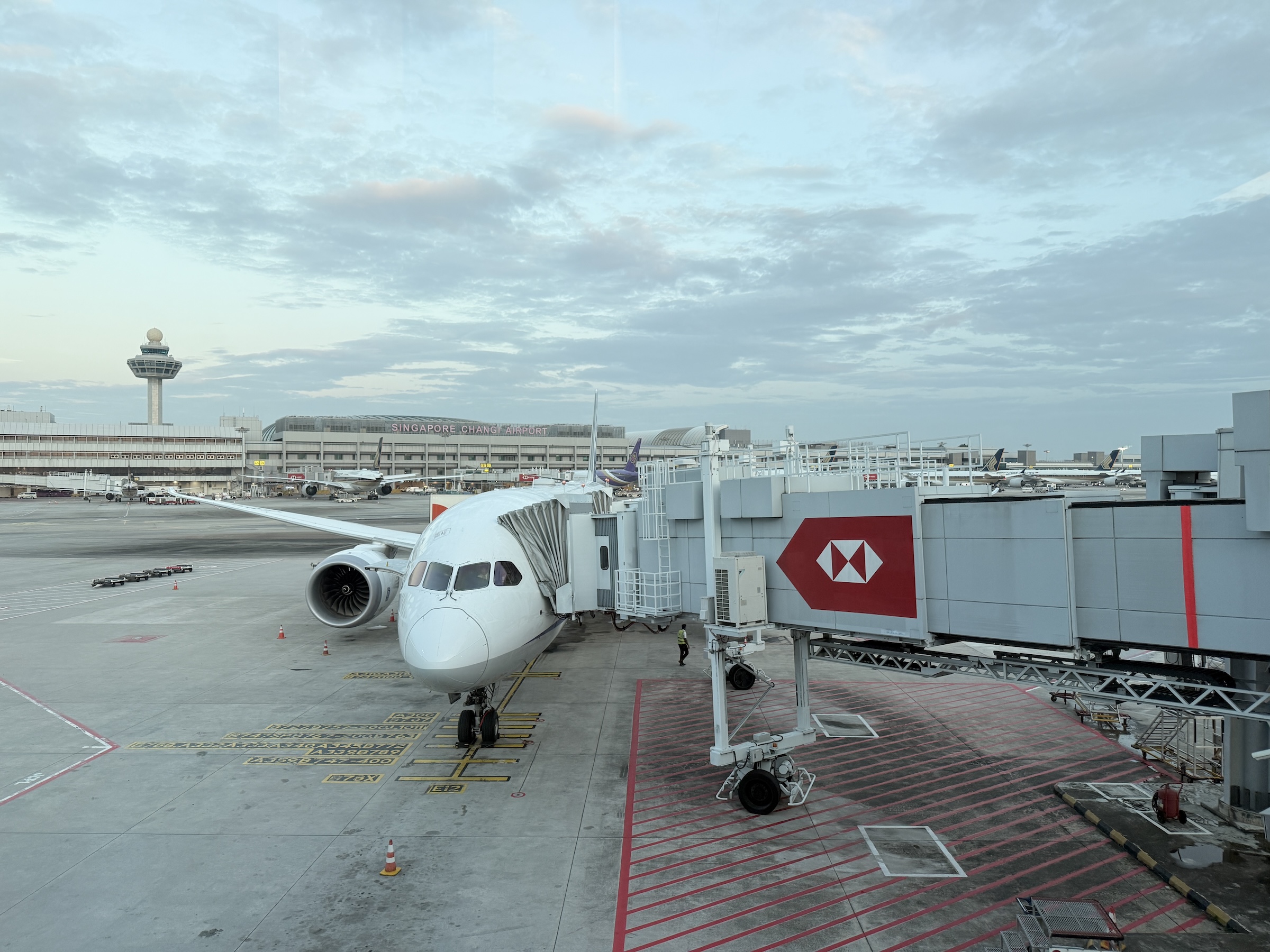
My red-eye flight that departed out of Tokyo after midnight local time (12.35 am), landed in Singapore at 6.55 am.
Passport control and customs was quick and efficient. I interacted with no humans— only with two camera stations.
One did a facial recognition scan (after I had scanned my passport picture page) and the other instructed me to press my right thumb on the glass for a fingerprint. Twenty seconds and done.
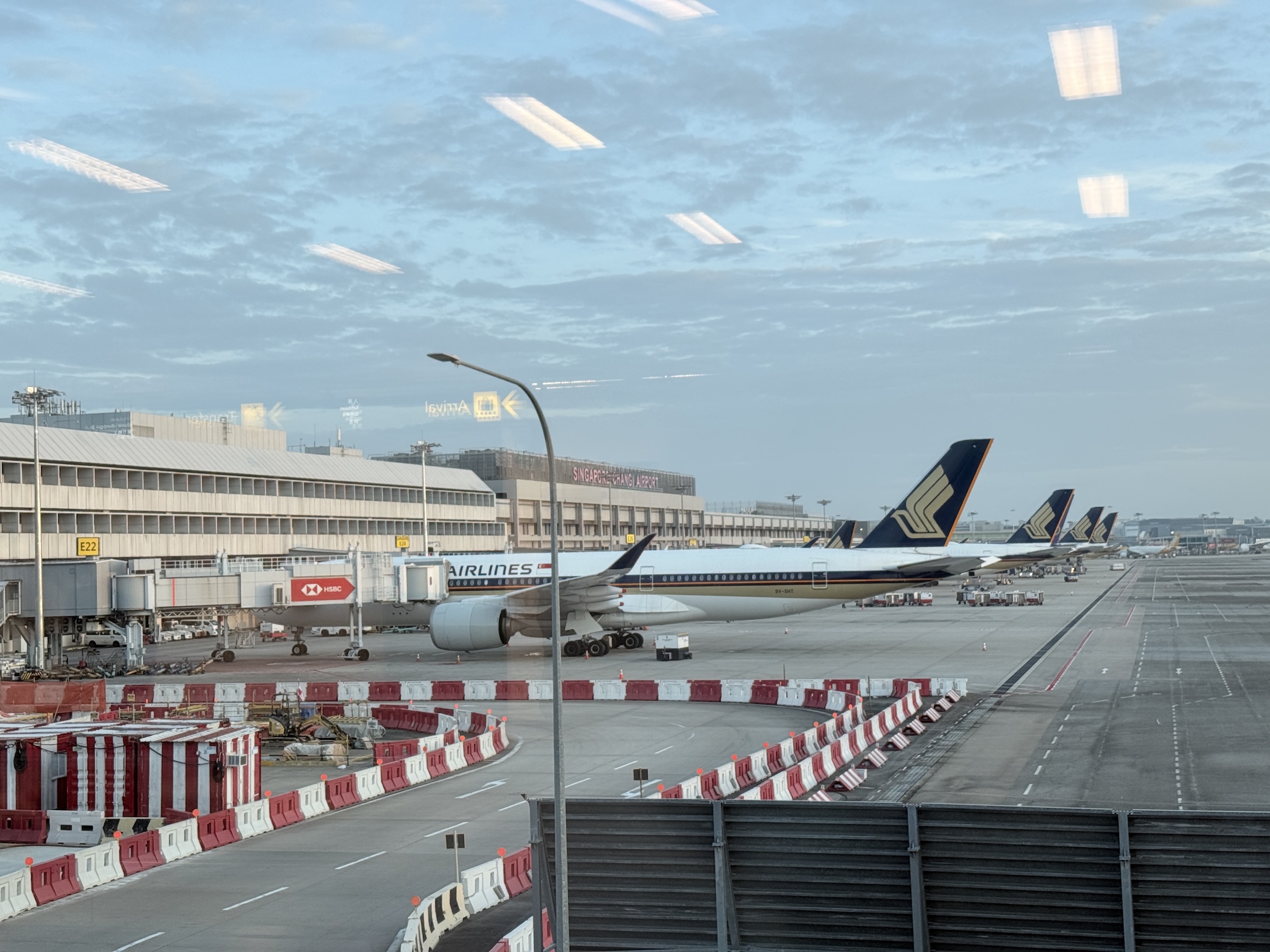
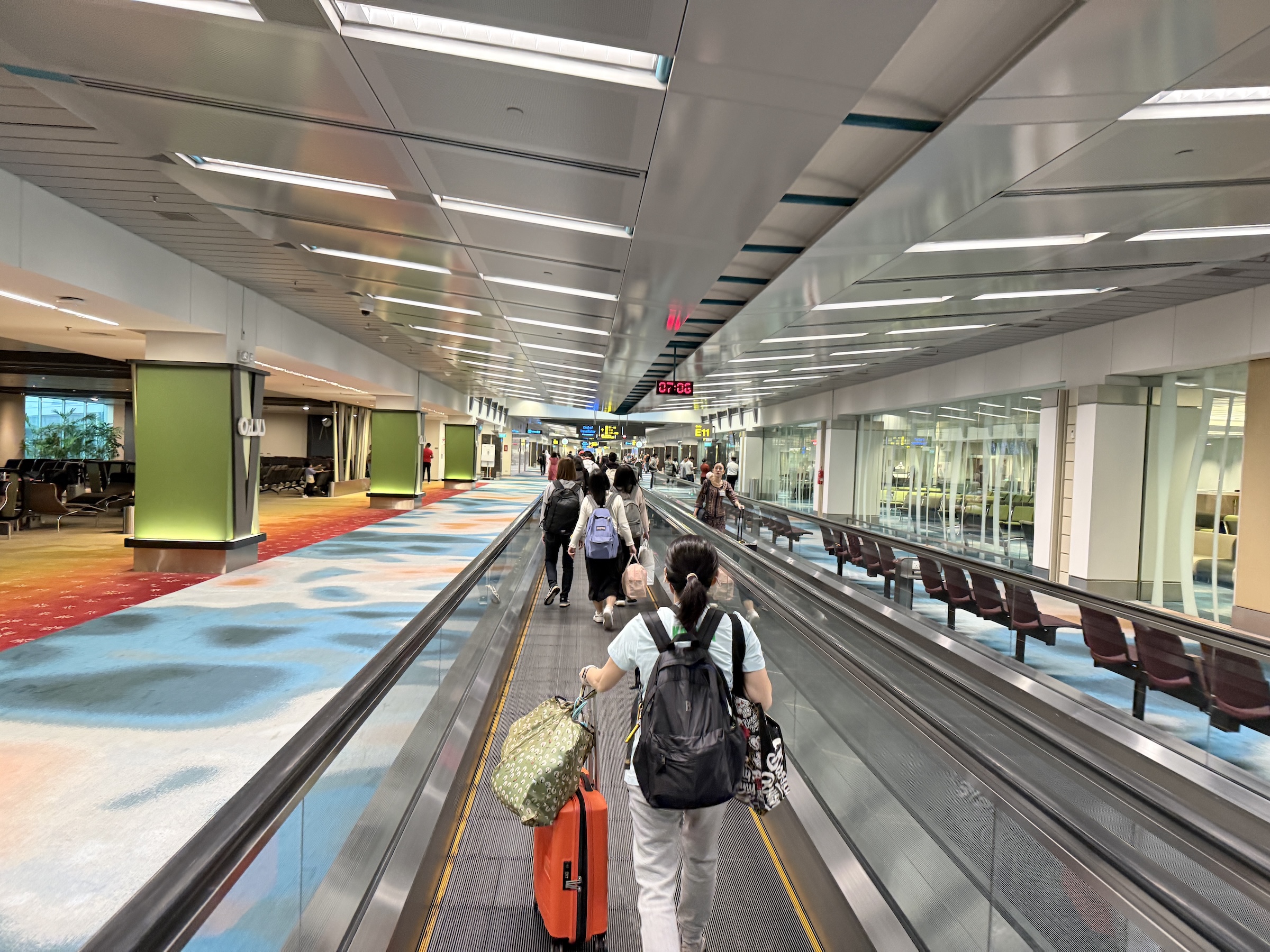
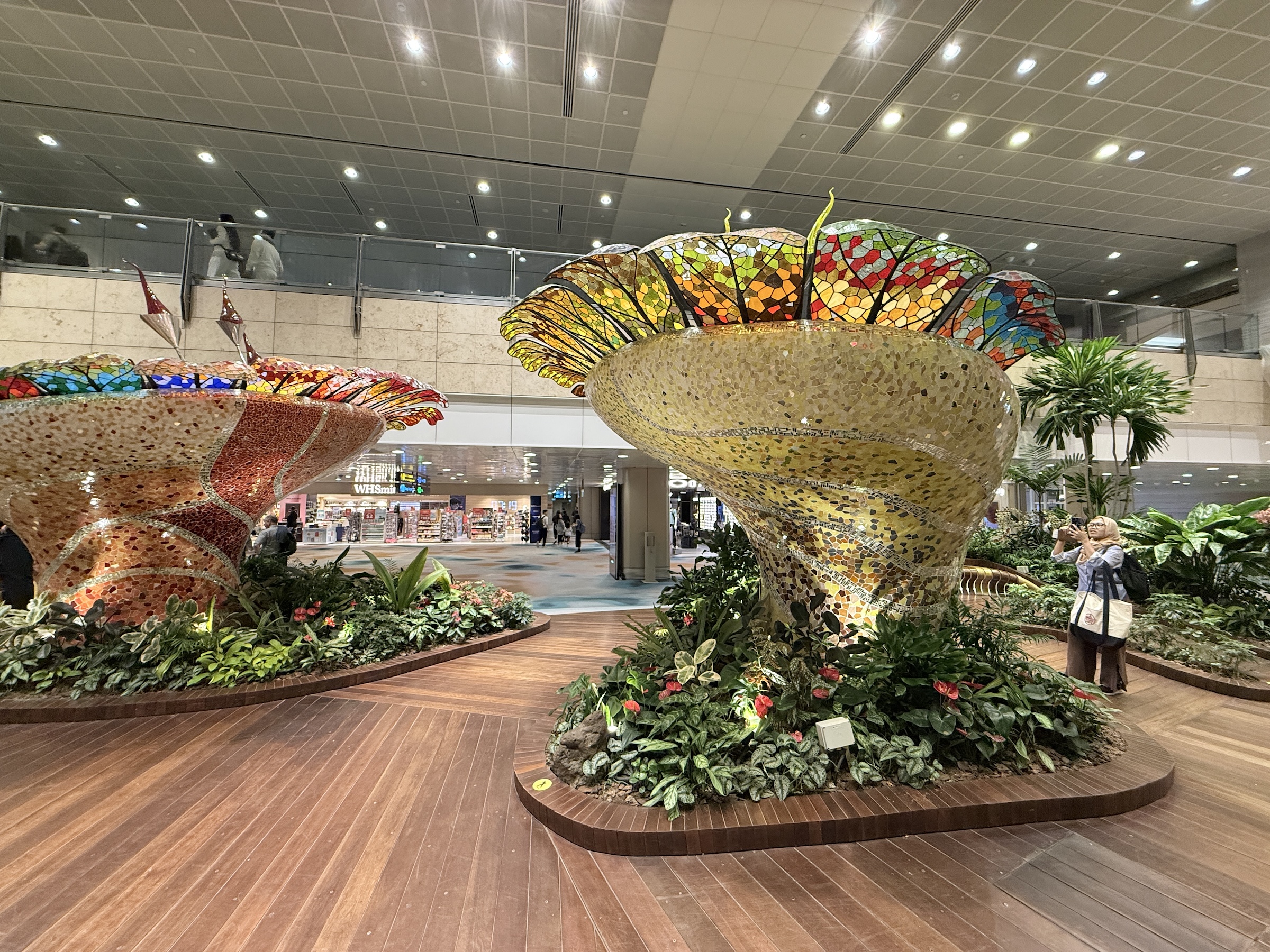
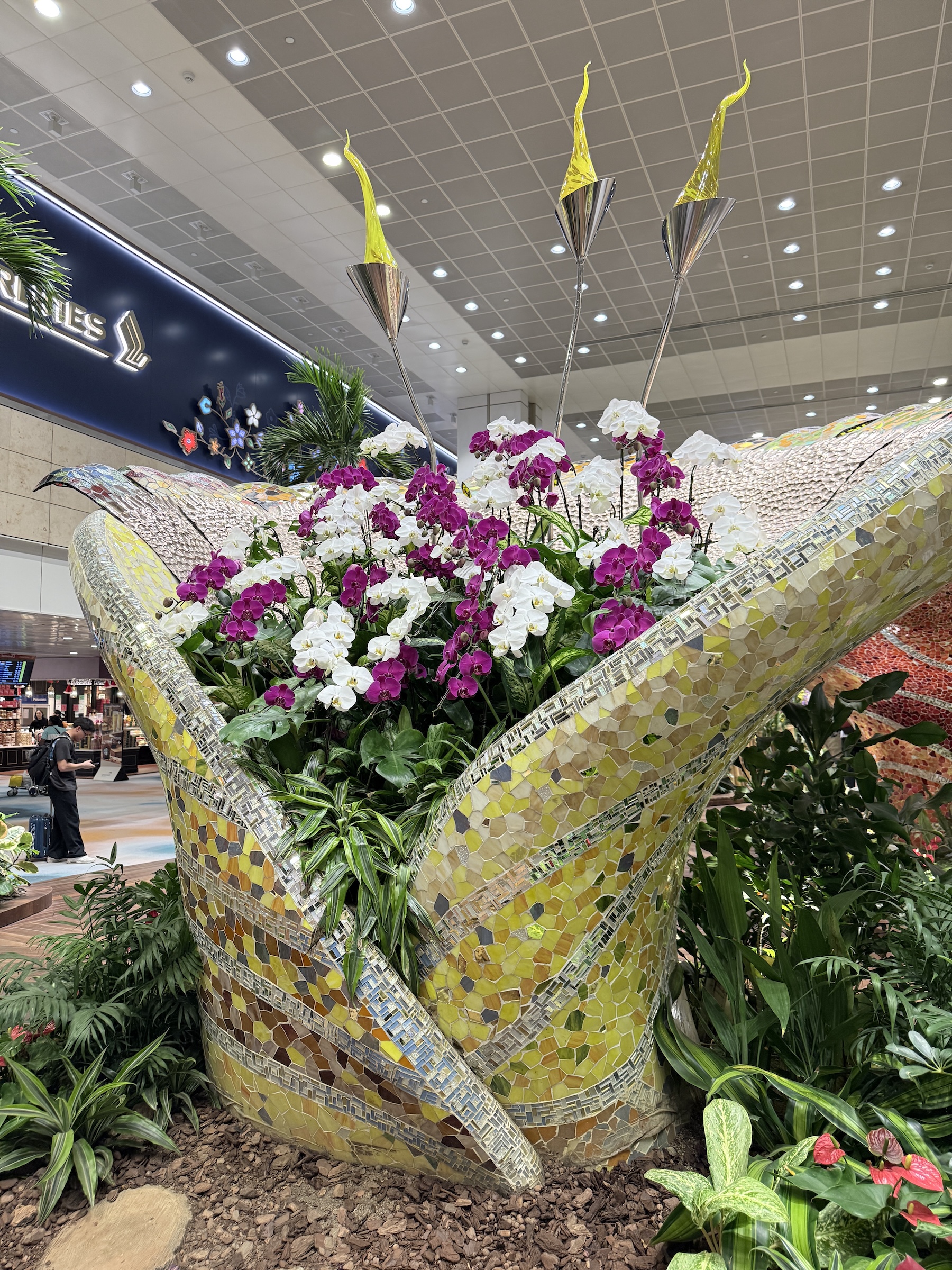
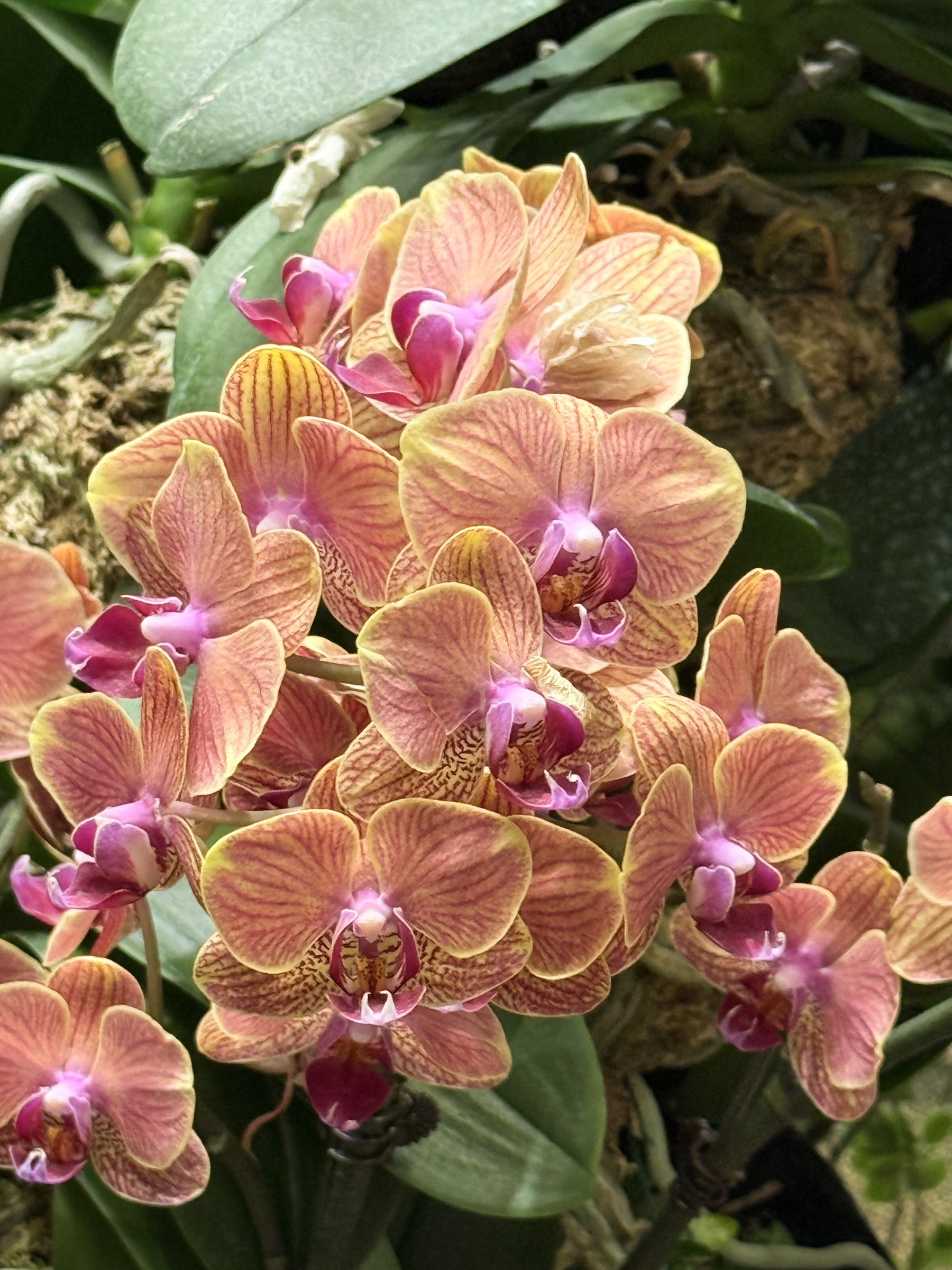
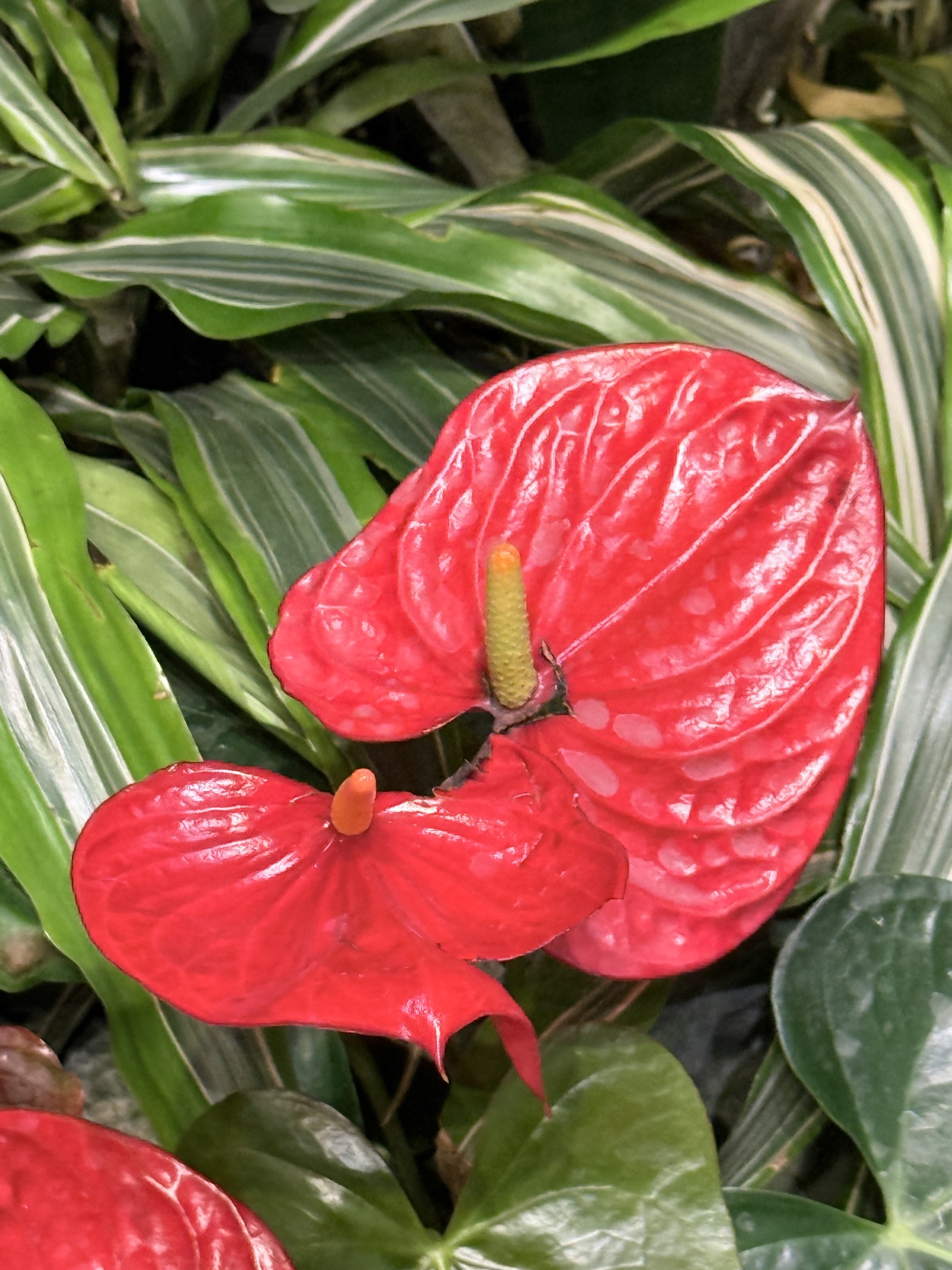
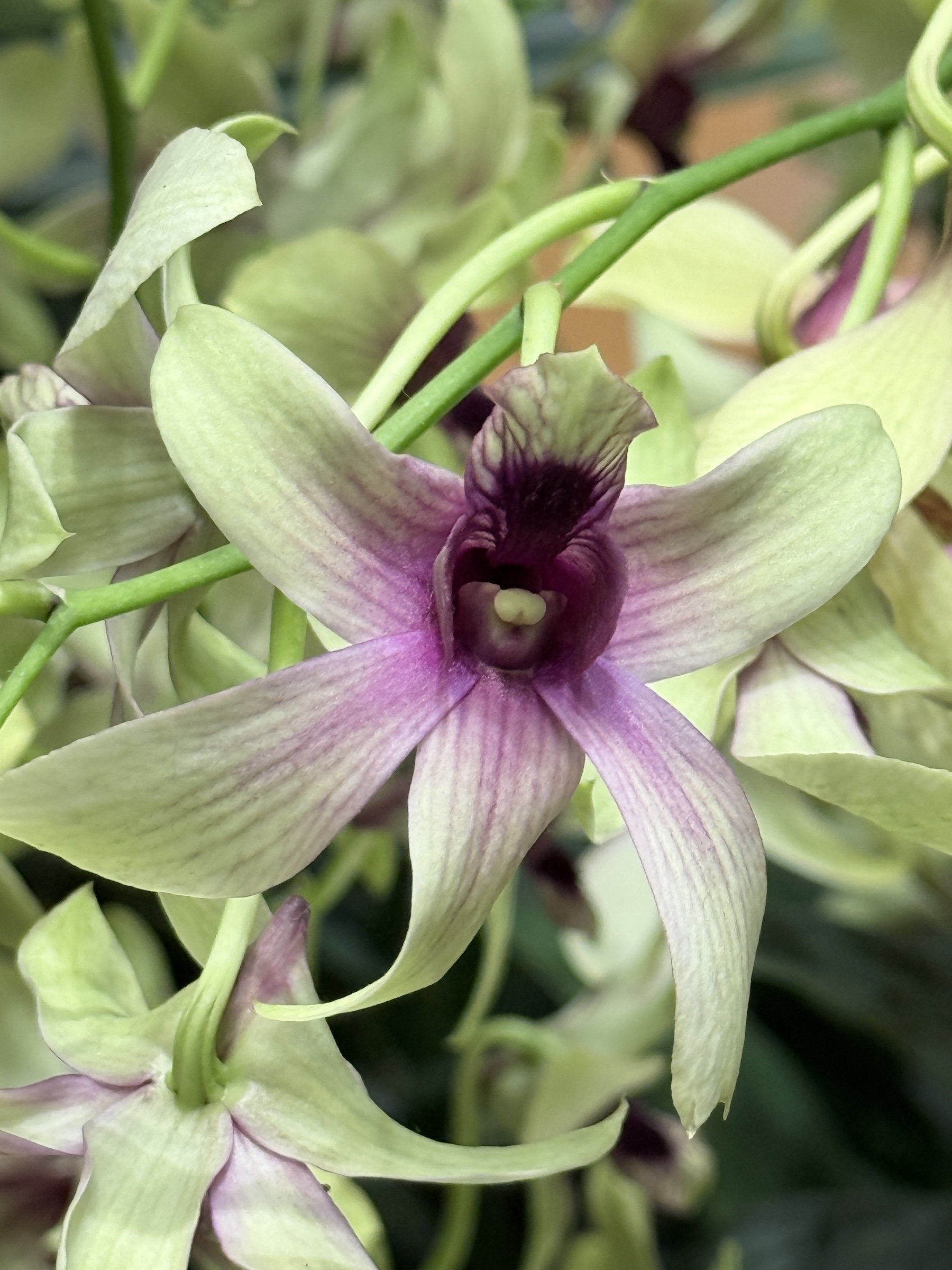
I took a few pictures of the orchids inside the secure area at Changi airport, and then had to move on to pick up my bags and go through passport control.
The mid-day conditions outside— 88°F (31°C) with a little humidity— is a shock to someone now used to Pacific Northwest winter weather.
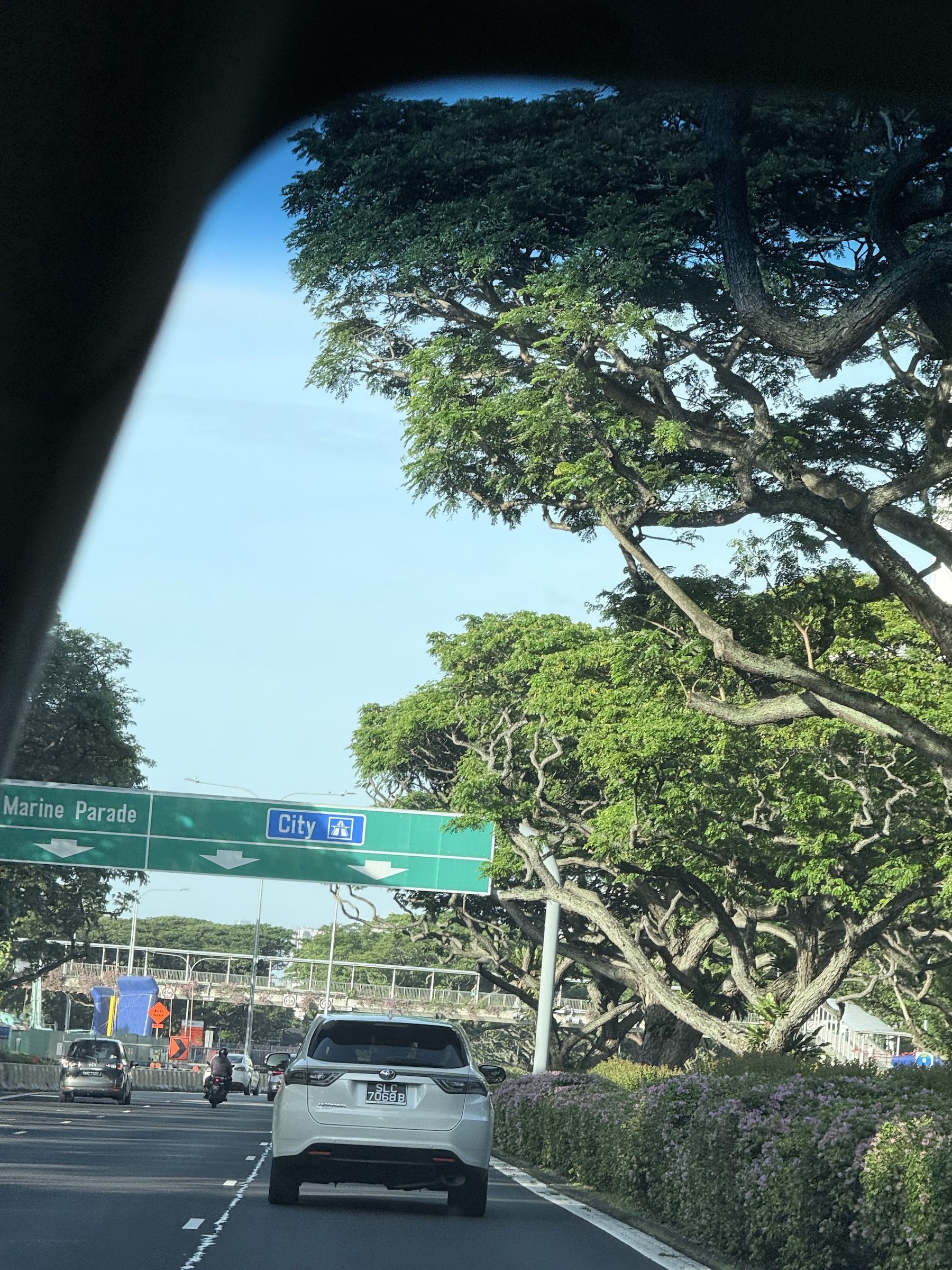
I took a taxi to the hotel, instead of roughing it by walking with my luggage and using the metro train.
We arrived at Tokyo’s Haneda airport at 6.25 pm Saturday night local time (well past midnight, Friday night Seattle time).
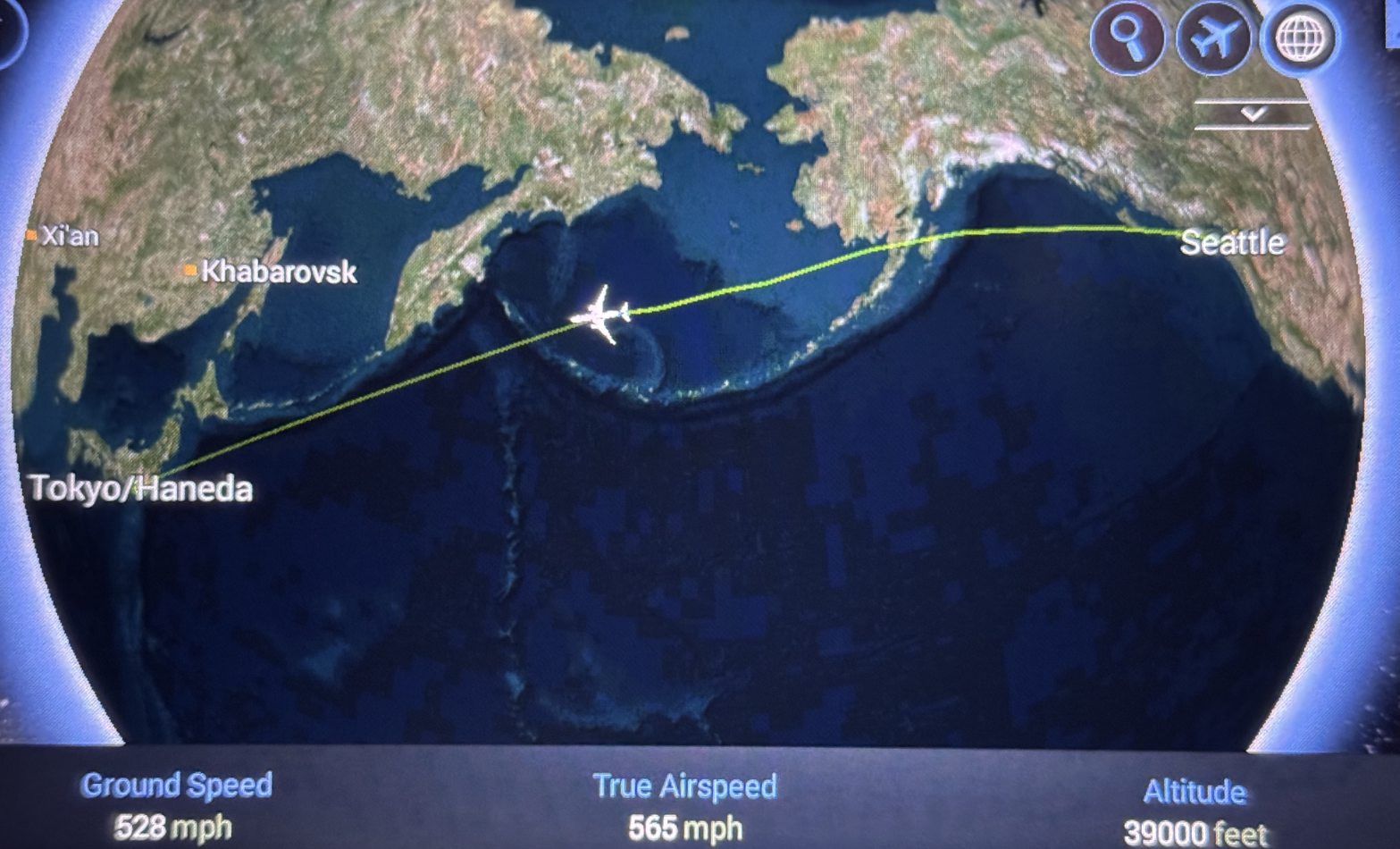
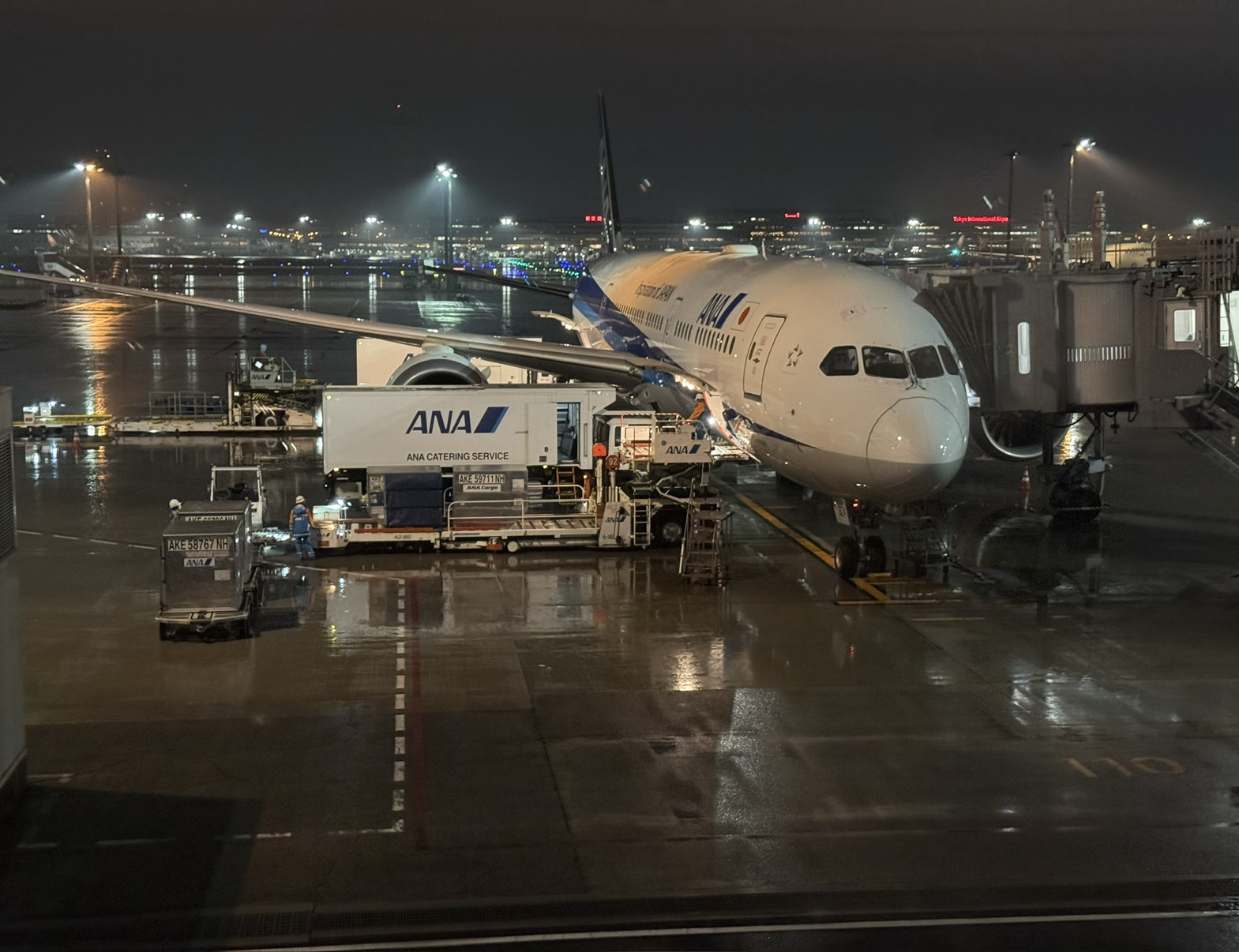
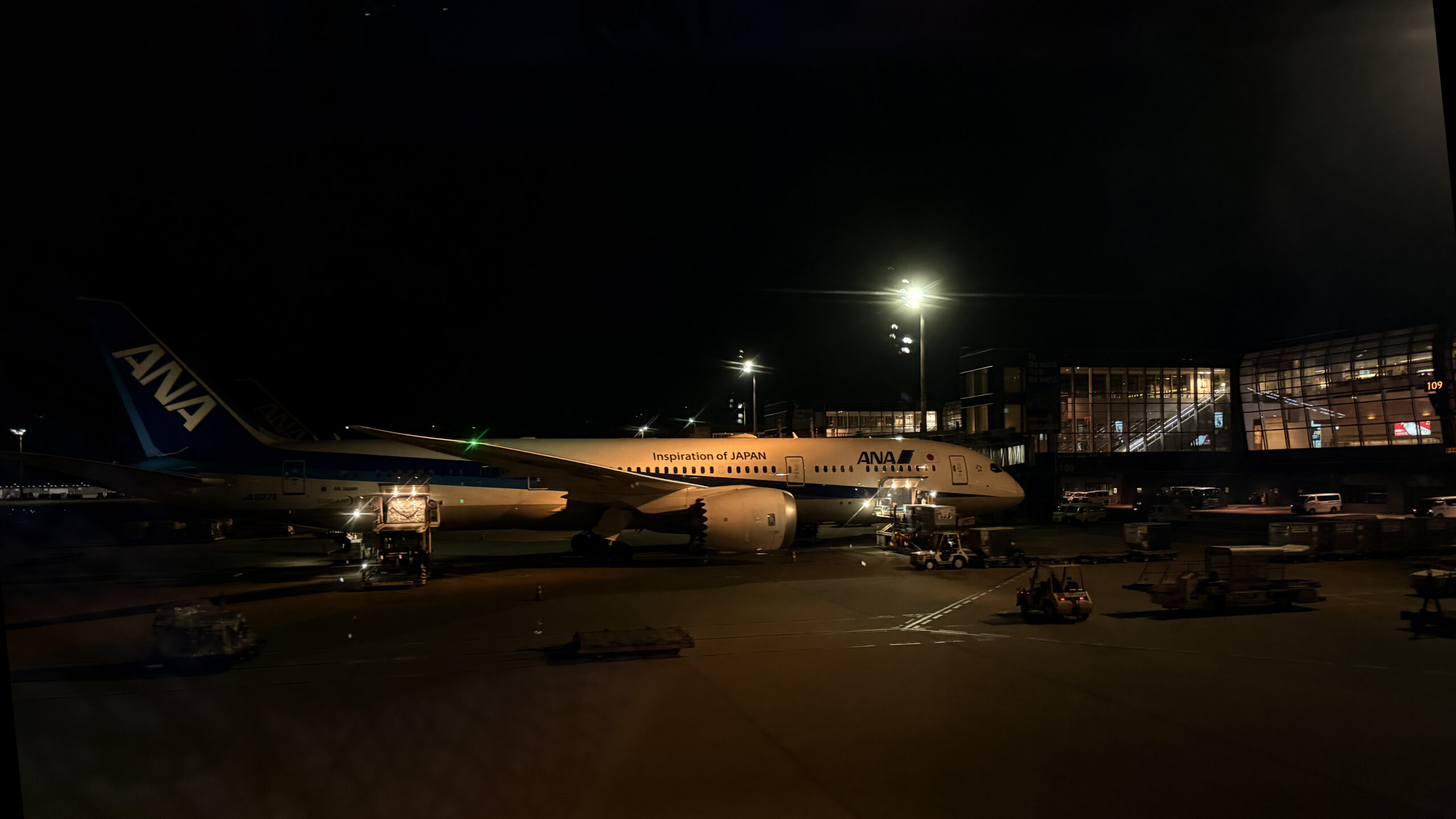
It’s 9 hrs 45 mins from Seattle to Tokyo, crossing the International Date Line (IDL) flying westward. There are two methods to calculate the arrival time in Tokyo: Method A Depart Seattle Friday 15.40 pm Fly 9 hrs 45 mins Arrive Seattle Saturday 1.25 am Arrive Tokyo Saturday 6.25 pm (Tokyo time = Seattle time +17 hrs) Method B Depart Seattle Friday 15.40 pm Arrive Tokyo 6.25 pm Is it Friday or Saturday in Tokyo? It’s Saturday (+1 day) because the IDL was crossed flying west to eastOur All Nippon Airlines ‘Inspiration of Japan’ Boeing 787-9 Dreamliner after arriving at the gate at Tokyo’s Haneda airport. There was a steady rain as we taxied in from the runway.
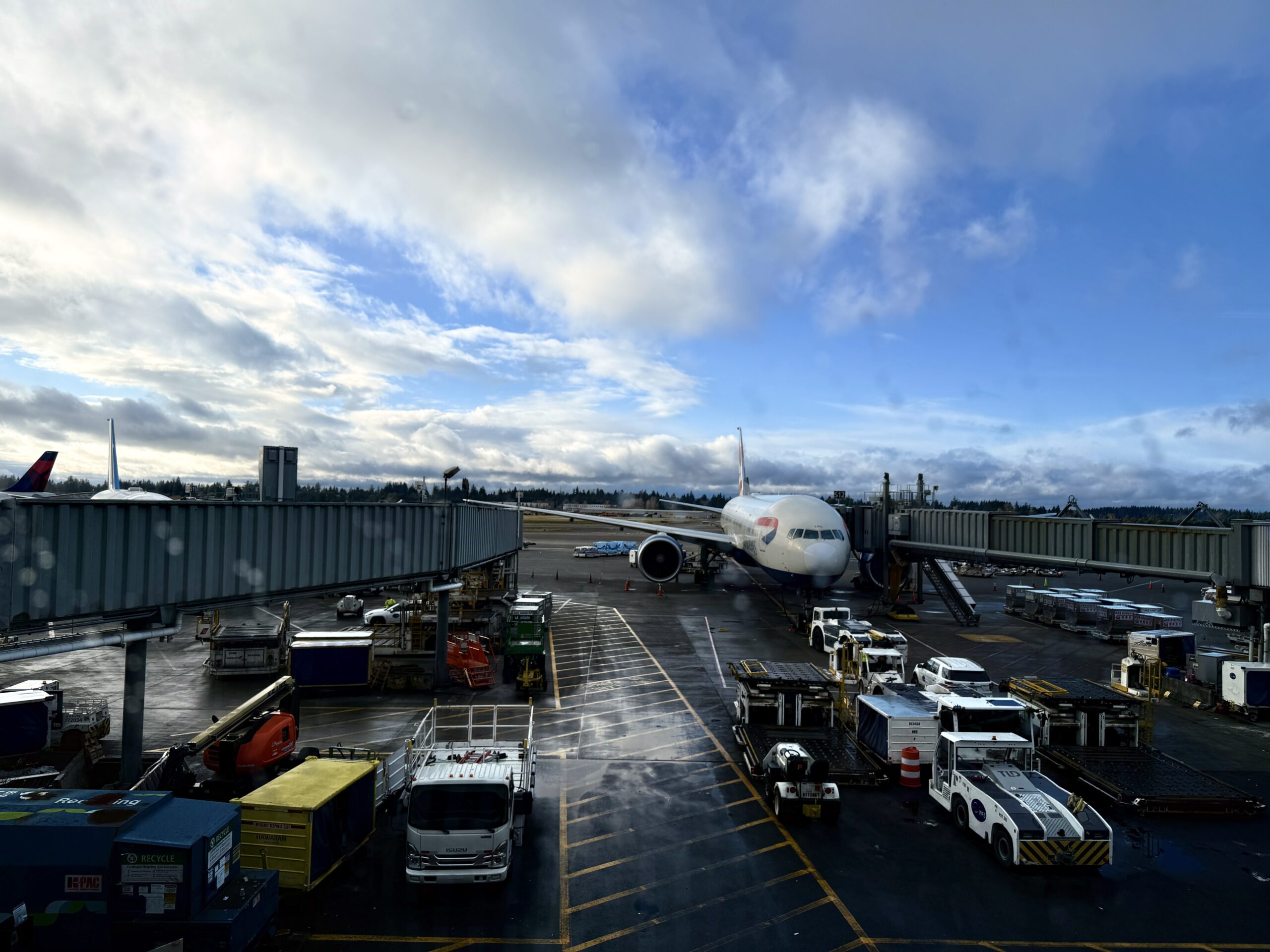
Here’s looking out the window at Gate S15 at Seattle-Tacoma’s South Terminal. This is British Airways 52 that departed for London a half-hour ago at 13.47 pm.
On the left I can see the tail of the All Nippon Airlines Boeing 787-9 Dreamliner that will fly us to Tokyo.
My bags are packed for my trip out tomorrow. (Well, almost. I still have to put a few things in and close them).
I fly out to Singapore on All Nippon Airlines with a stop at Haneda airport in Tokyo, Japan.
I will arrive in Singapore early on Sunday morning local time, and spend two days there before my Princess cruise departs on Tuesday.
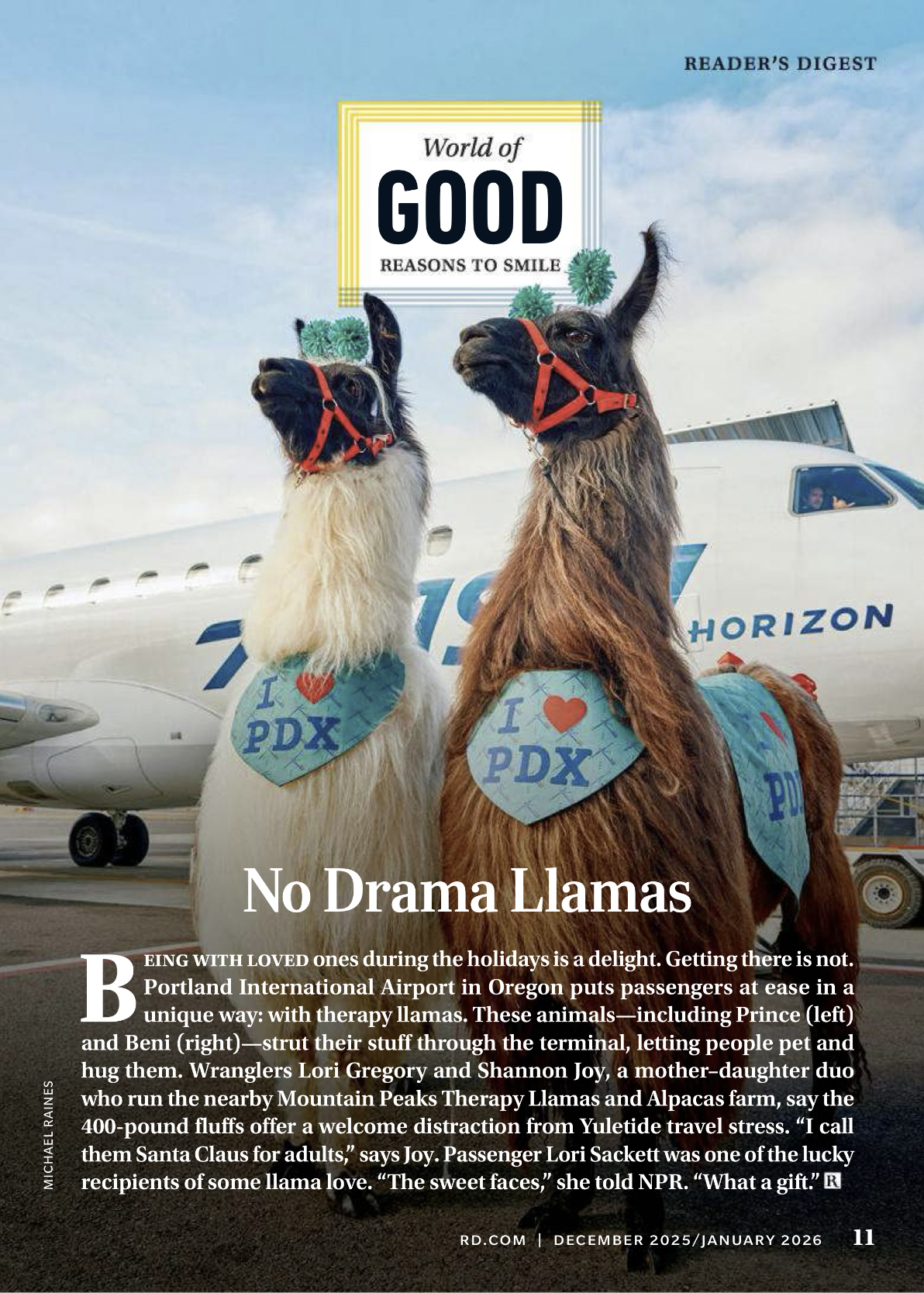
We don’t have therapy llamas at Seattle-Tacoma airport— and I really should be OK without needing these gentle beasts for my flight out tomorrow. 😁 (Do they not have a reputation for spitting at you if they find you annoying? I will have to look into that first before I get too close too them). [Page from the online Readers Digest at rd.com]
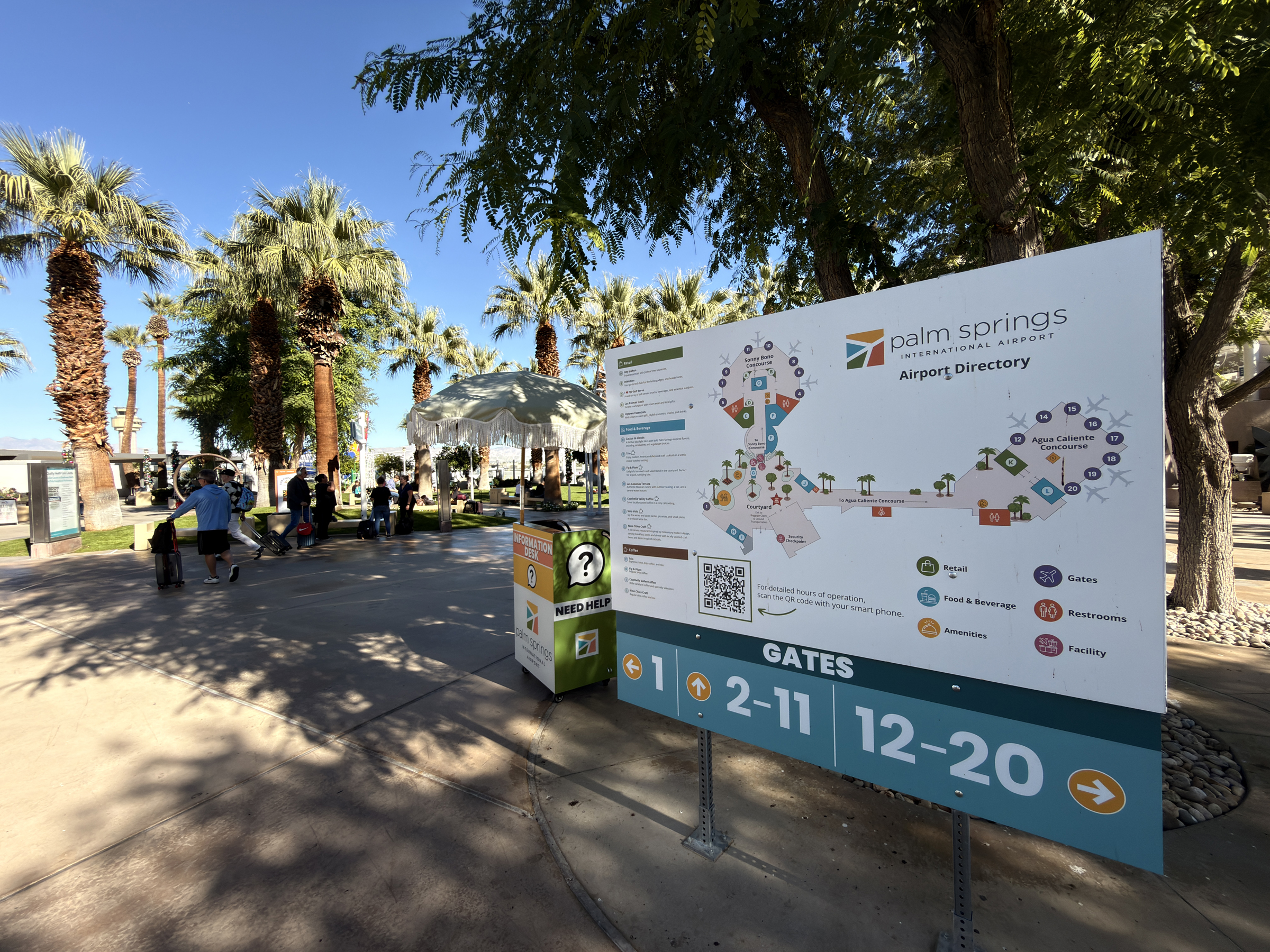
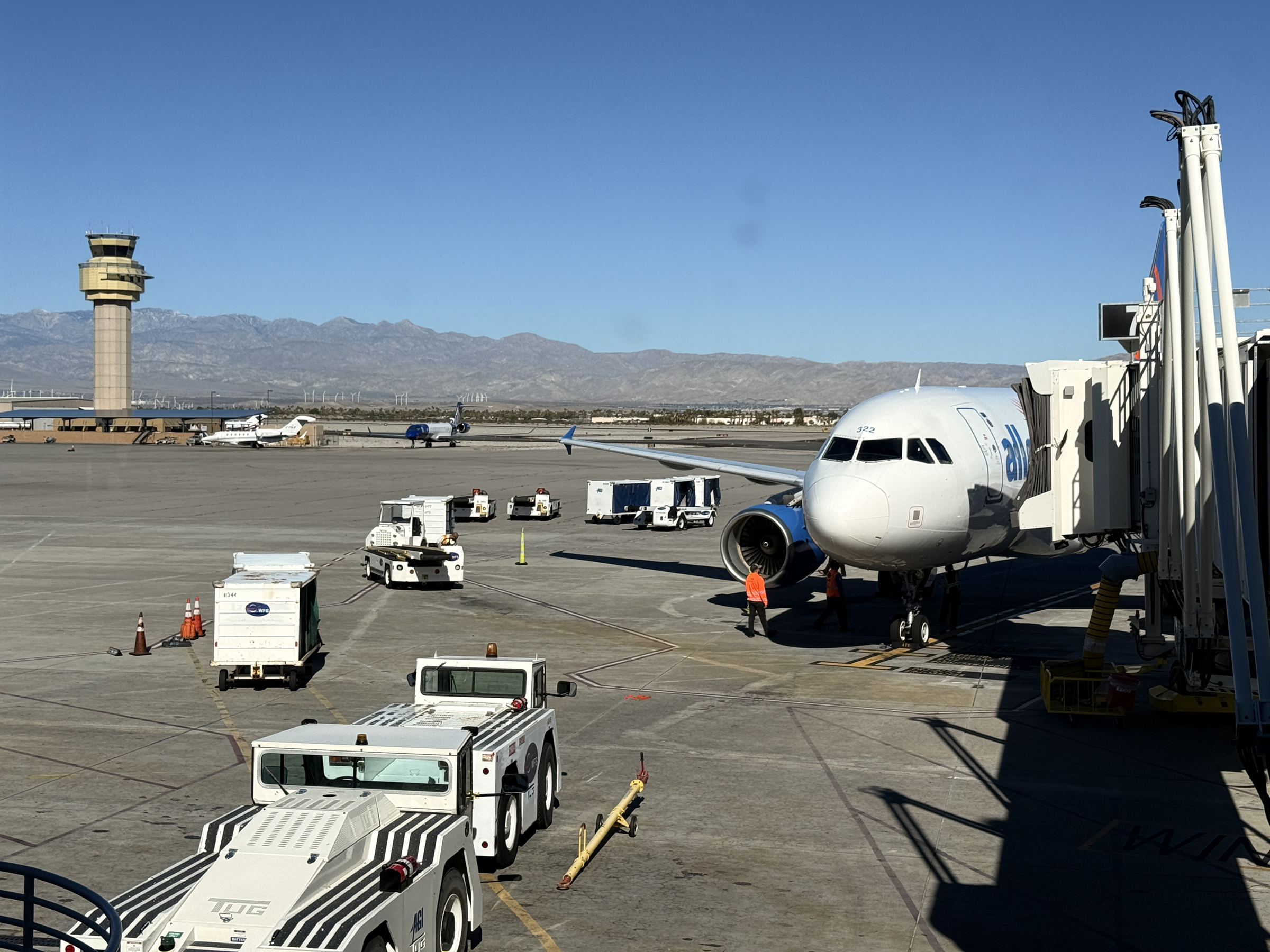
It was time to go home today, and I took a flight on Alaska Airlines from Palm Springs airport to Seattle.
Pictures:
The (somewhat unusual) courtyard inside the secure area at Palm Springs airport;
Allegiant Air getting ready to fly out to Bellingham airport in Washington State;
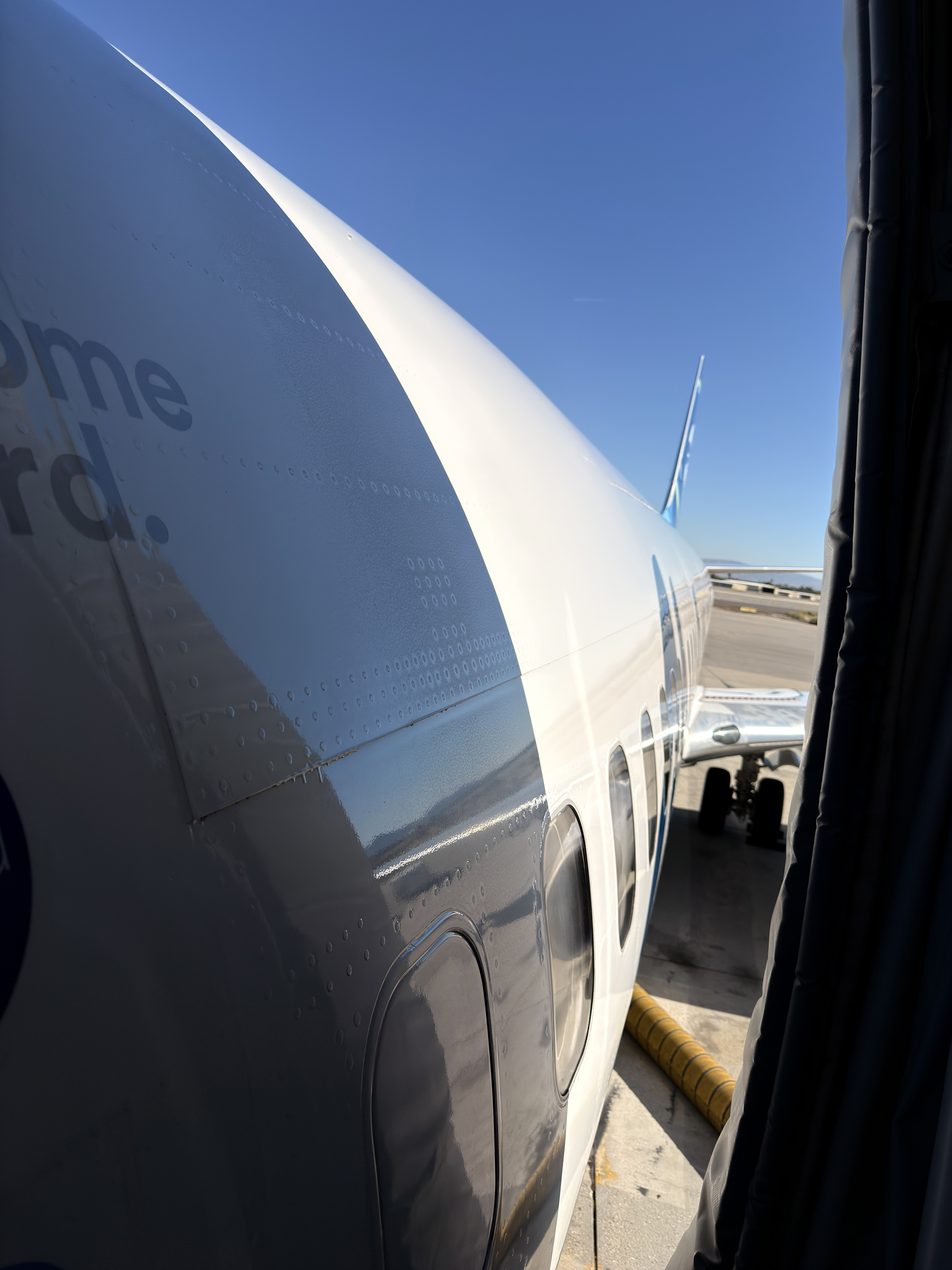
Stepping on board my own flight— a Boeing 737-900 (twin-jet) from Alaska Airlines;
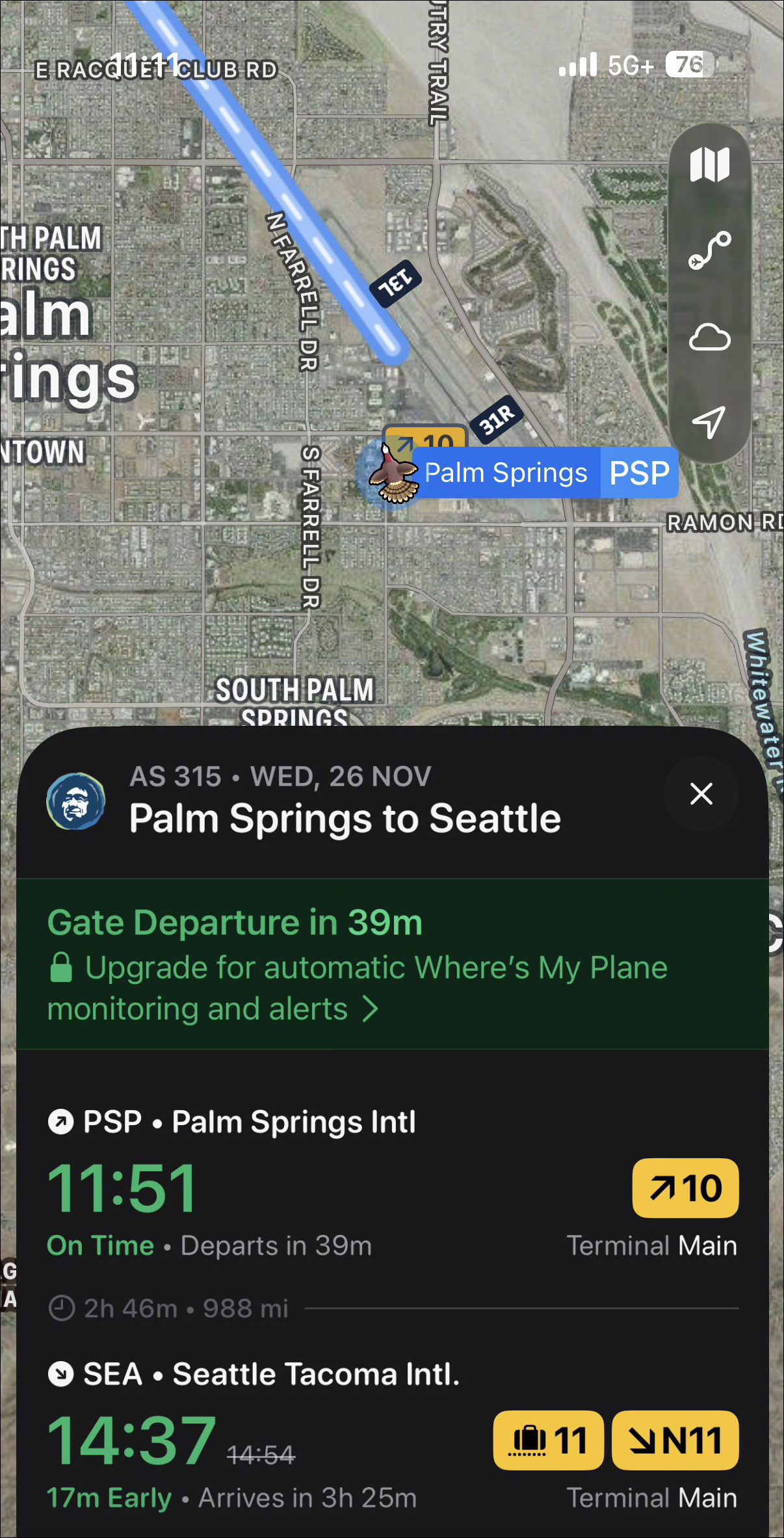
The Flighty app replaced the airplane with a flying turkey— a nod to Thanksgiving, of course;
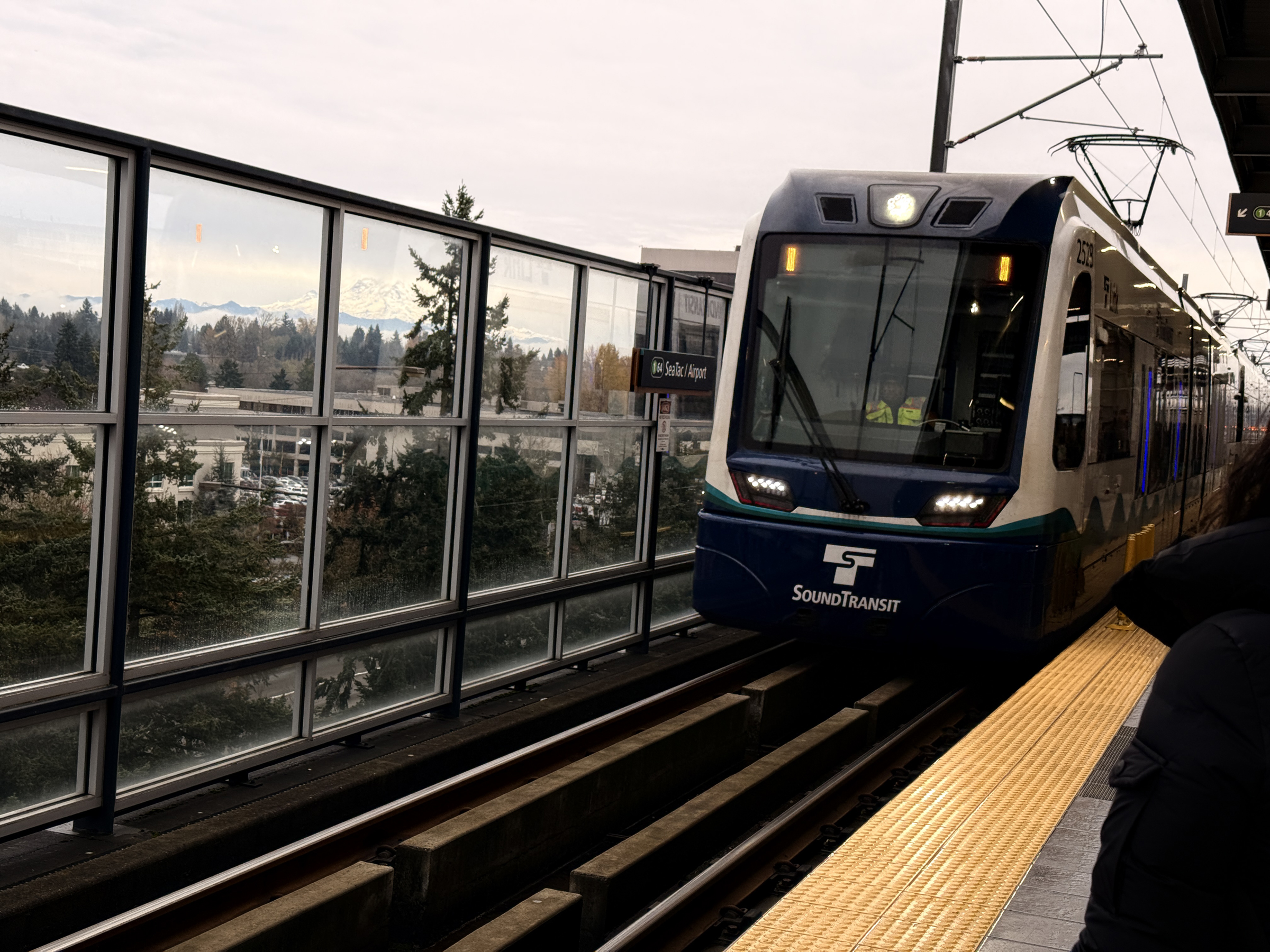
Arrived at Seattle, got my checked bag, walked the half-mile to the light rail station, and here comes the train (look for the Mountain that is out, through one of the glass panes);
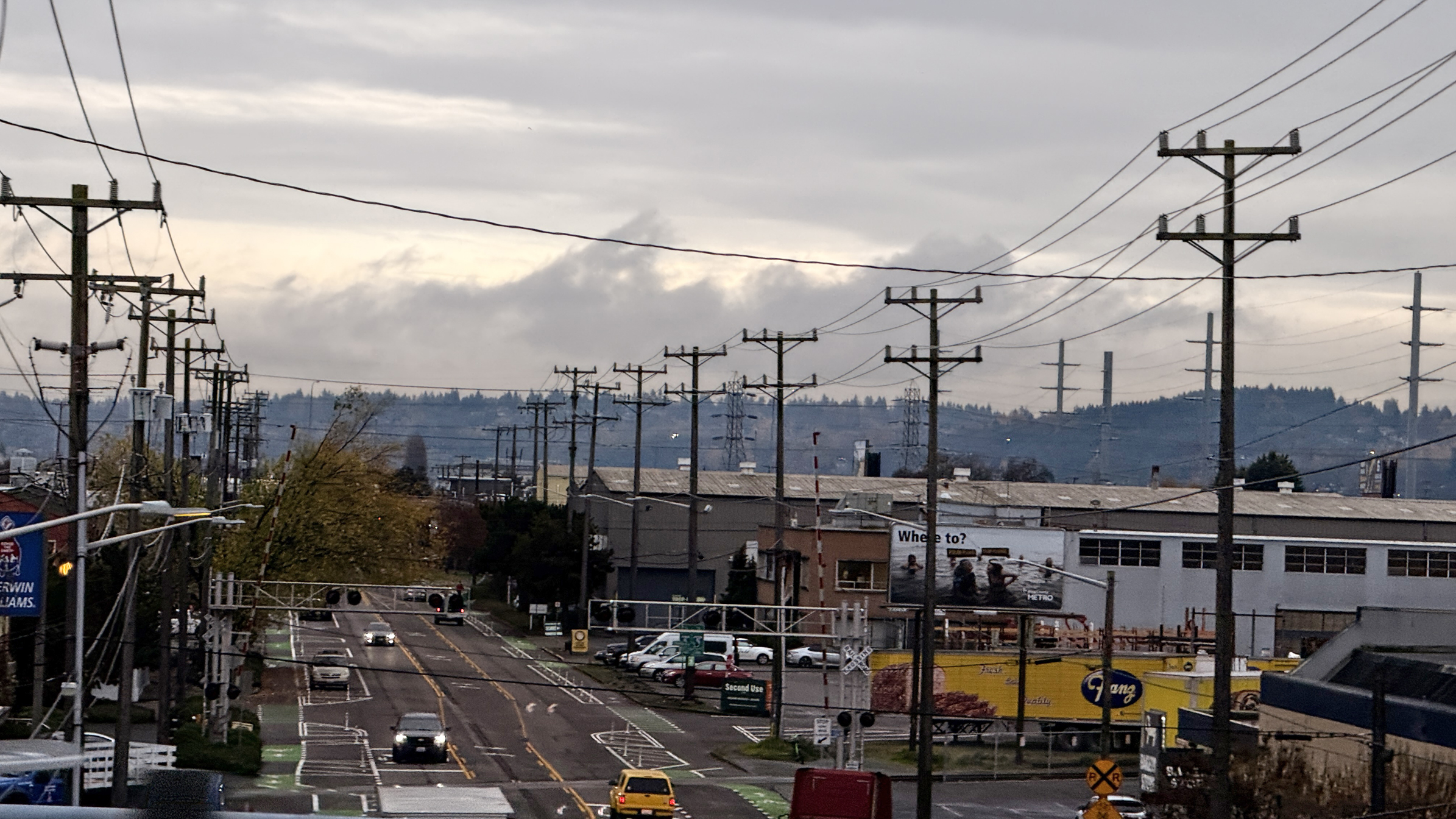
Utility poles and power cables on the way;
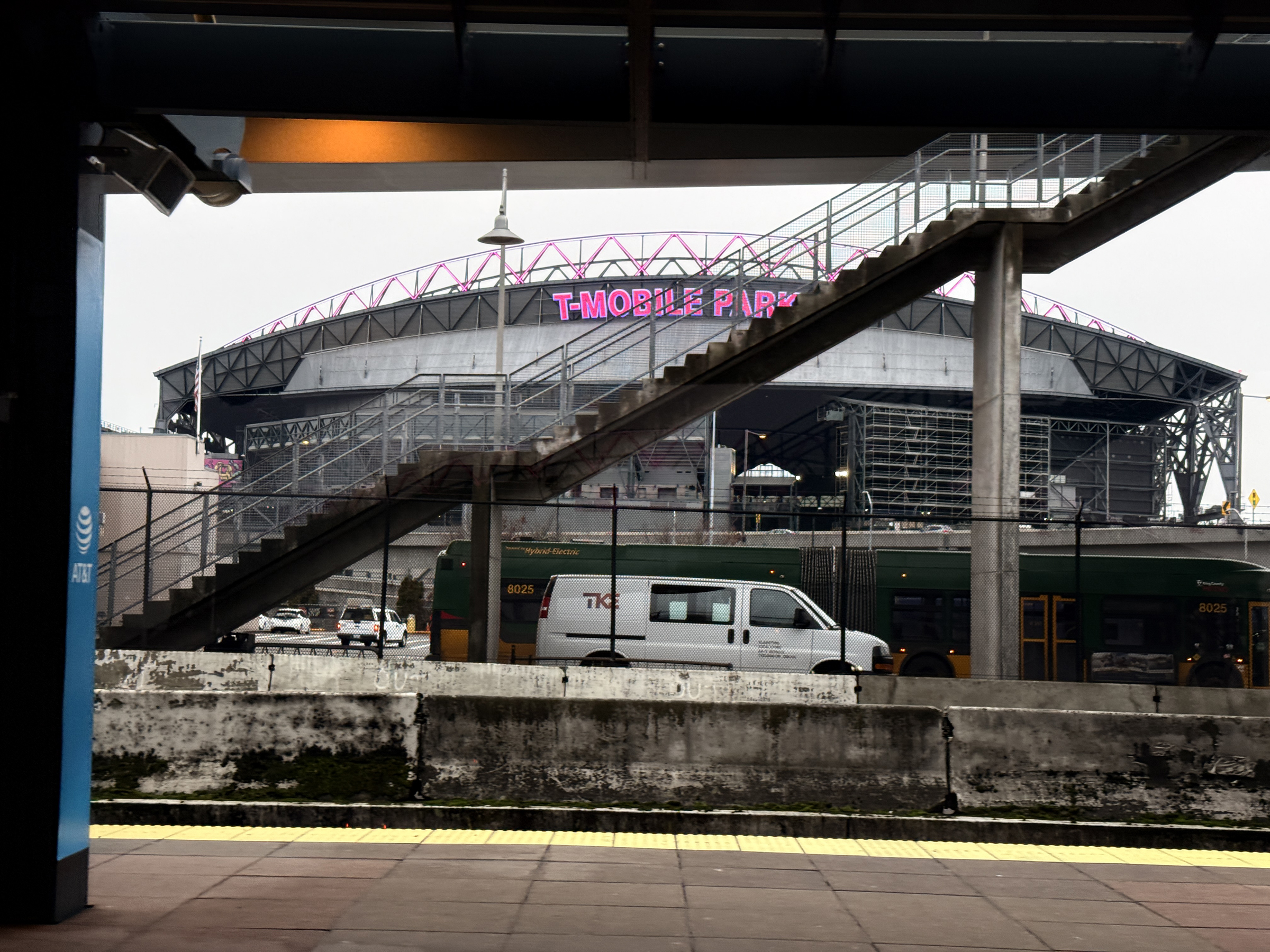
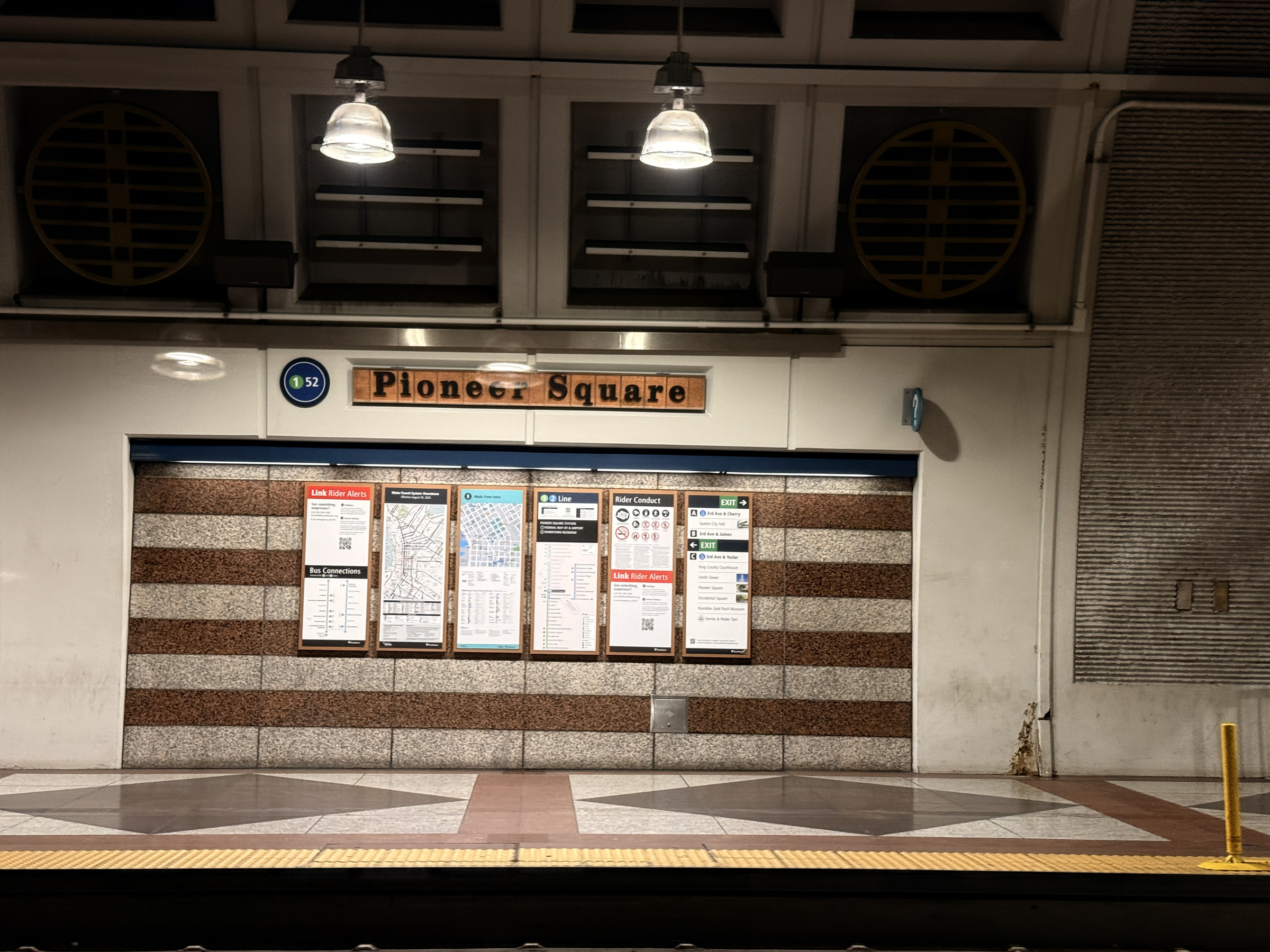
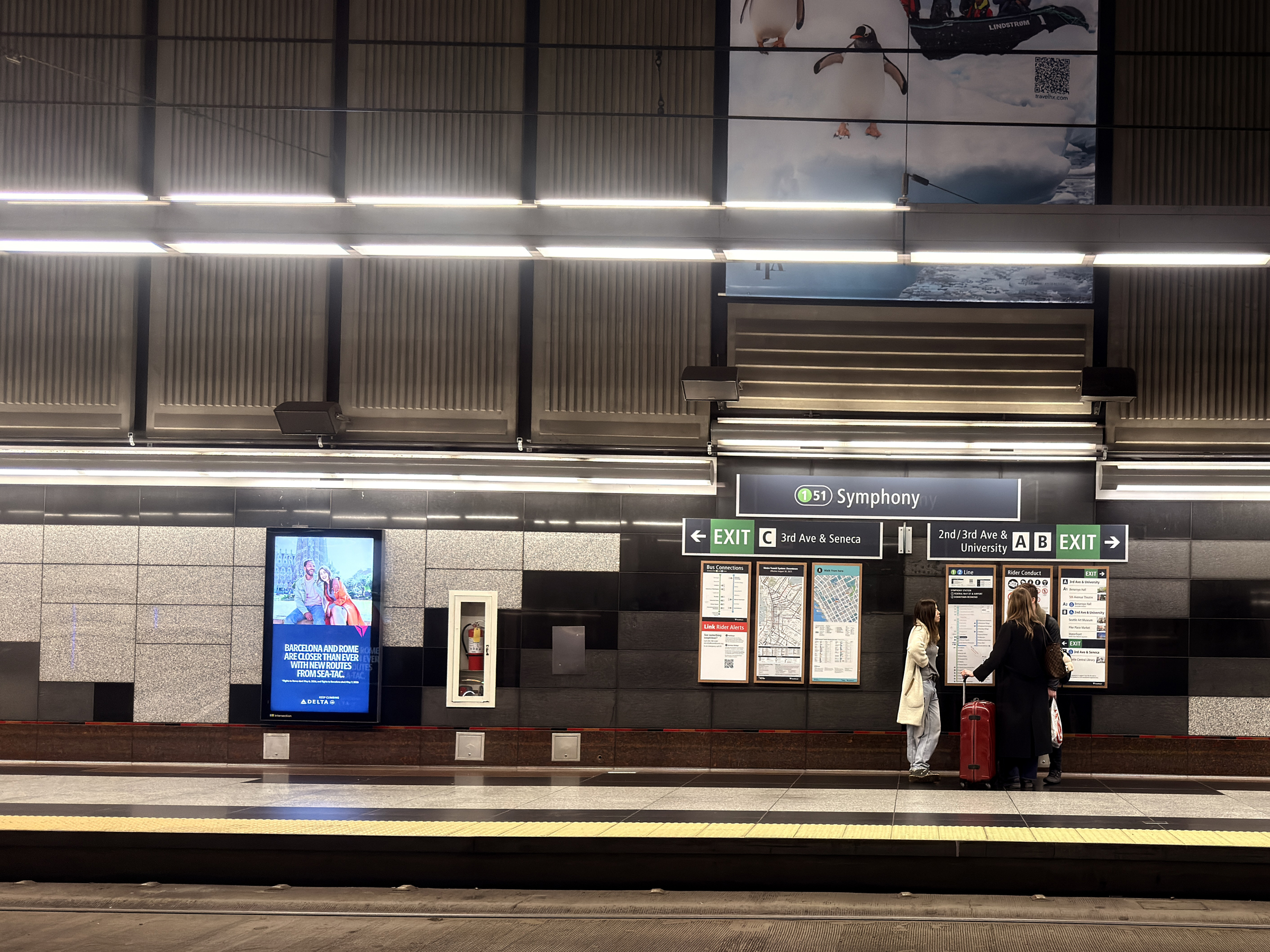
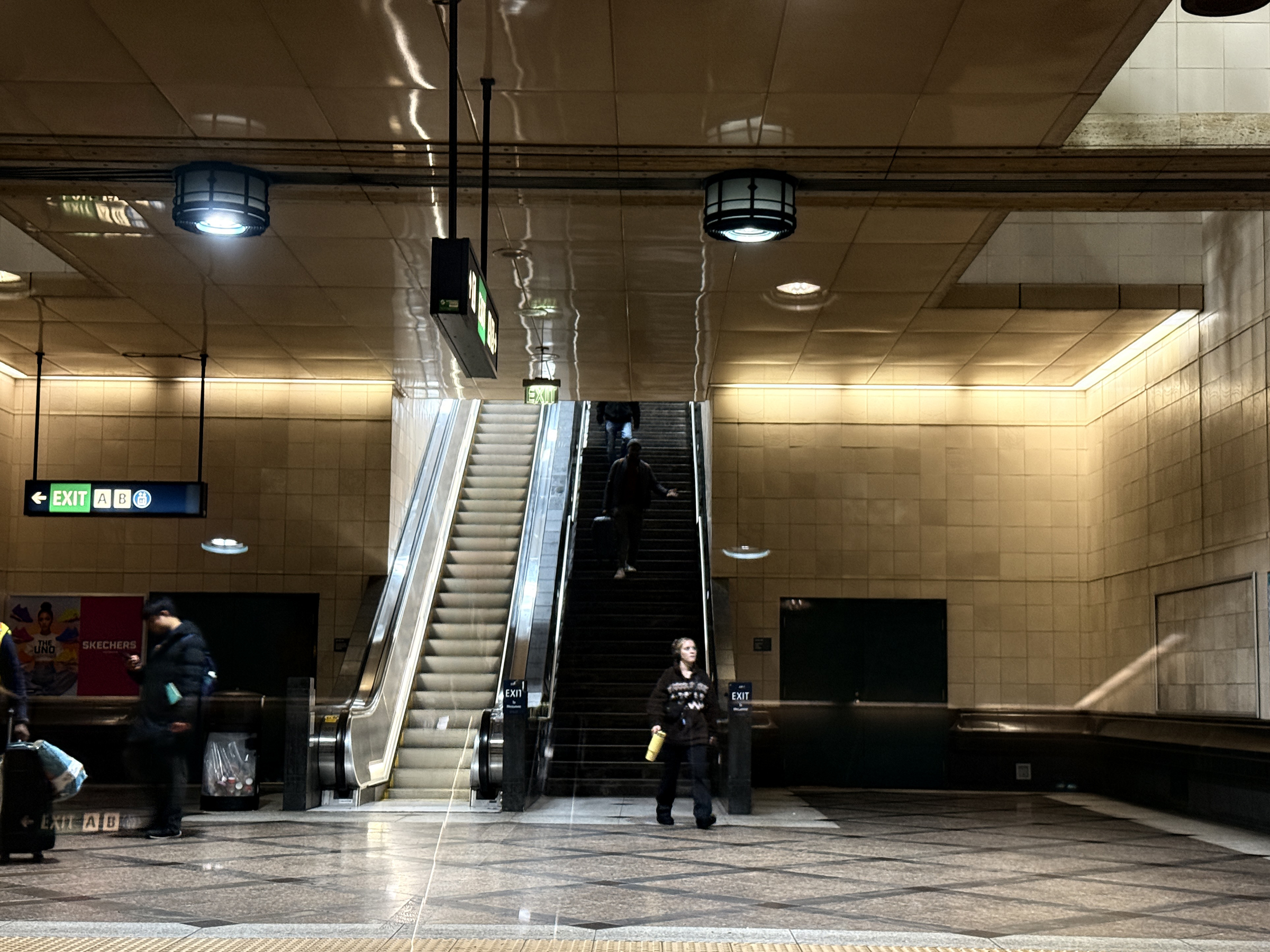
Views of the stations called SODO, Pioneer Square, Symphony and Westlake.
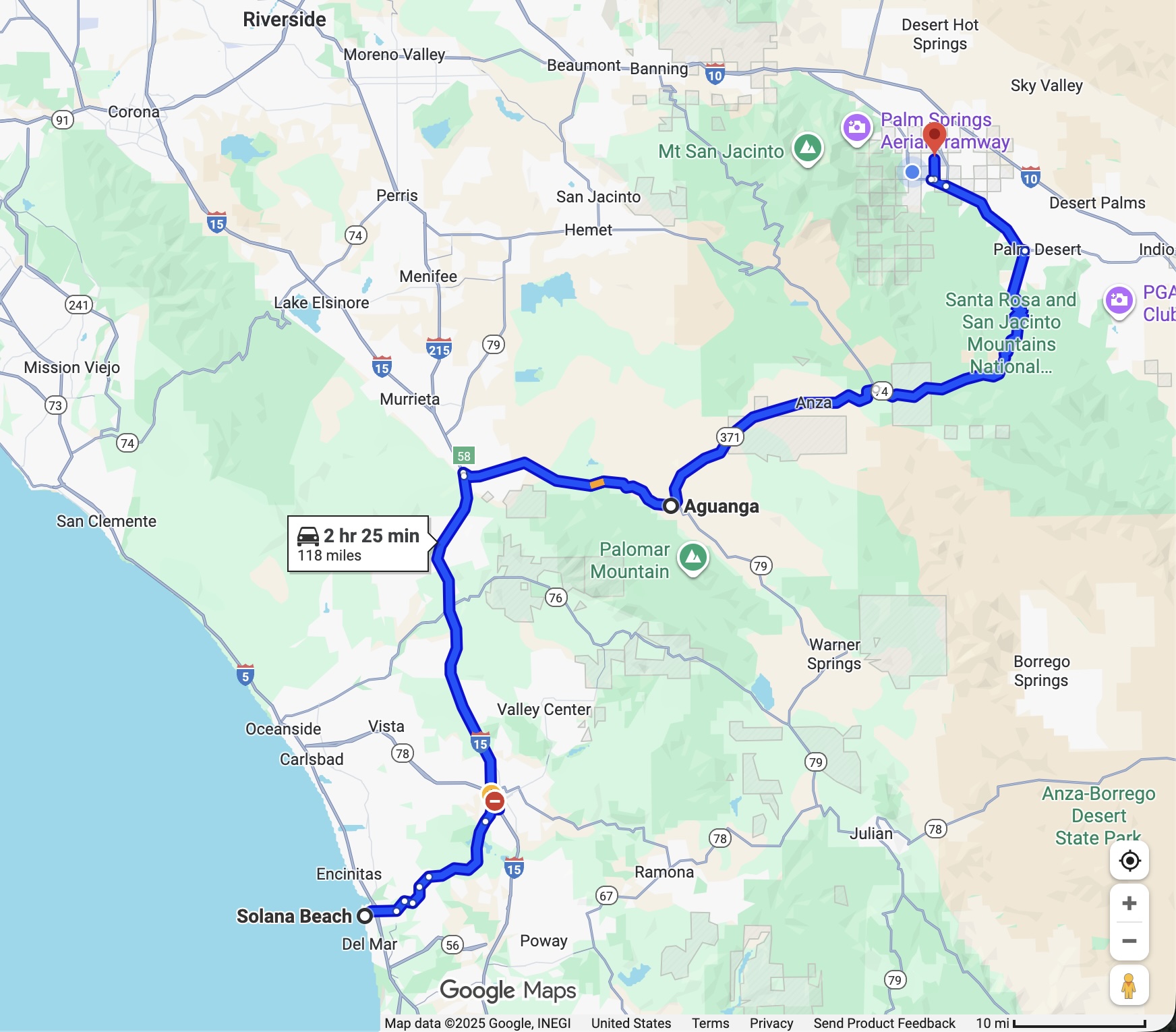
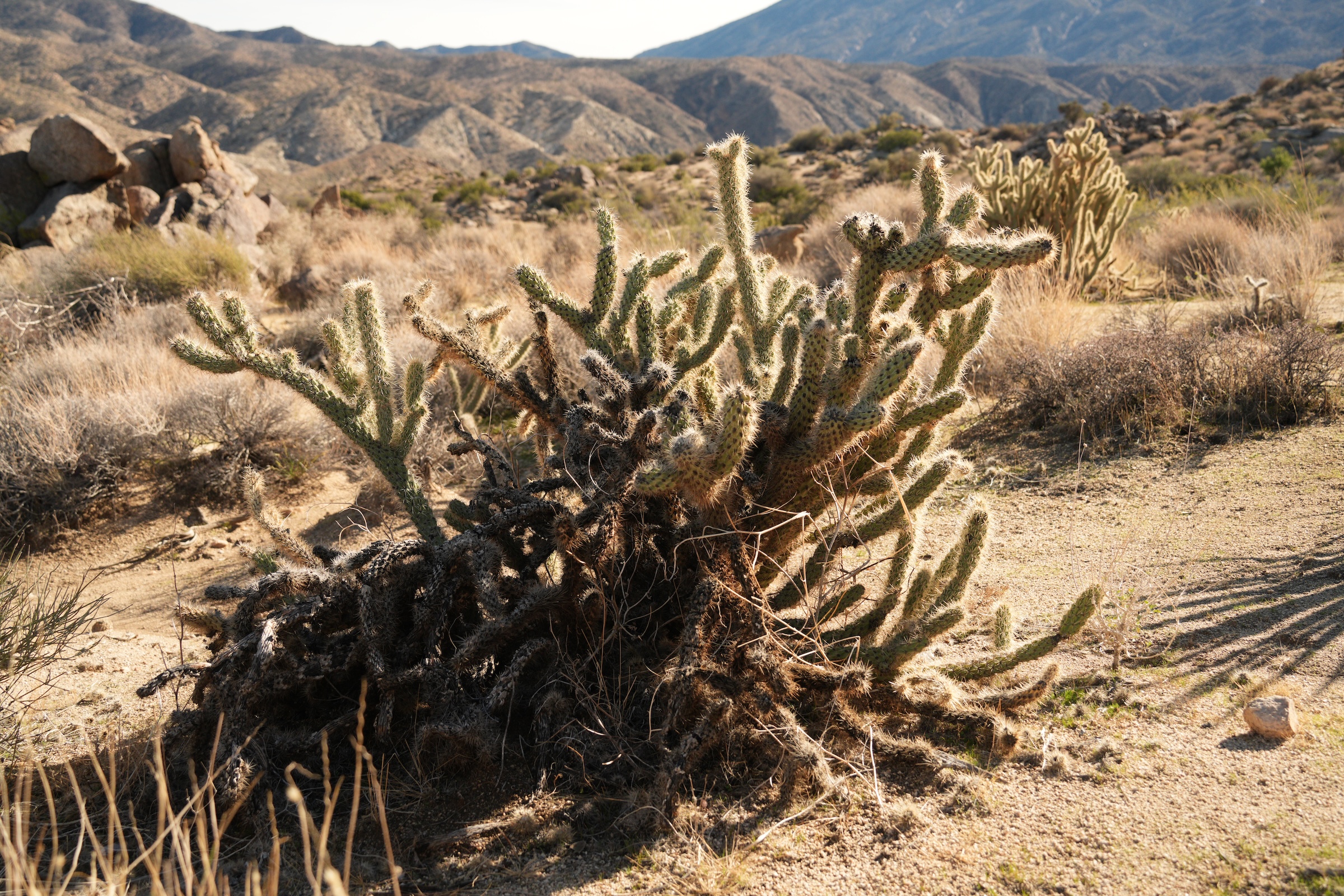
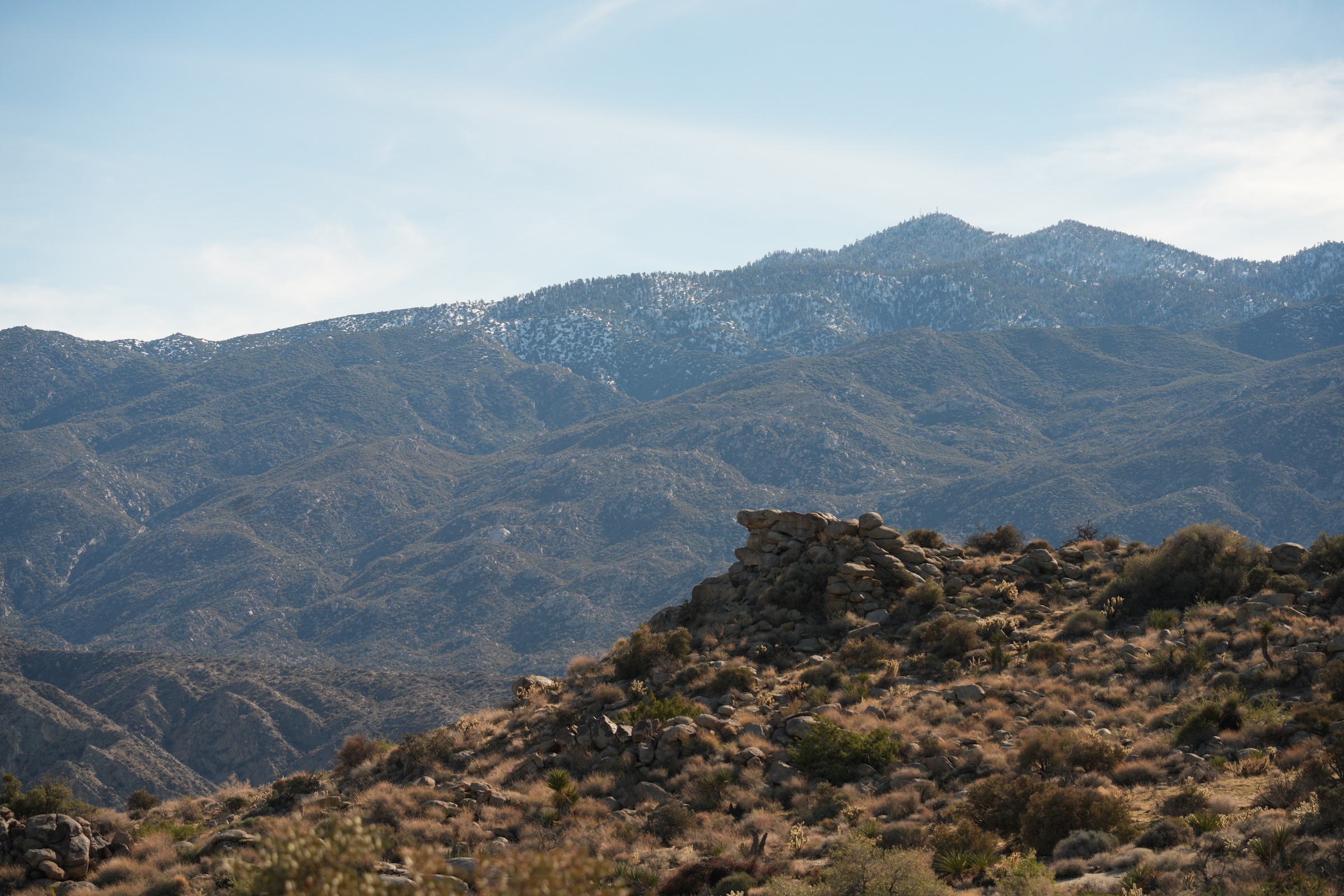
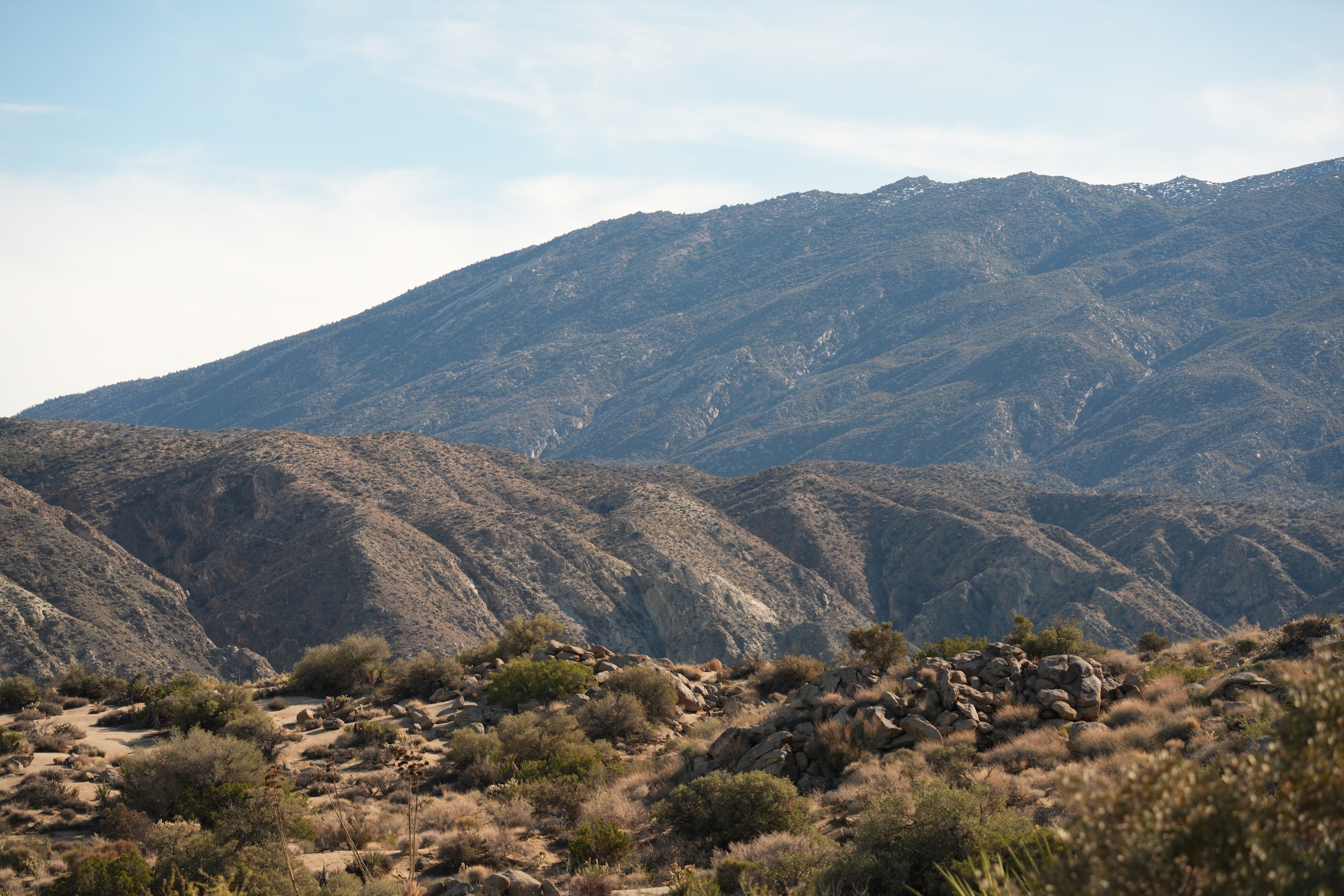
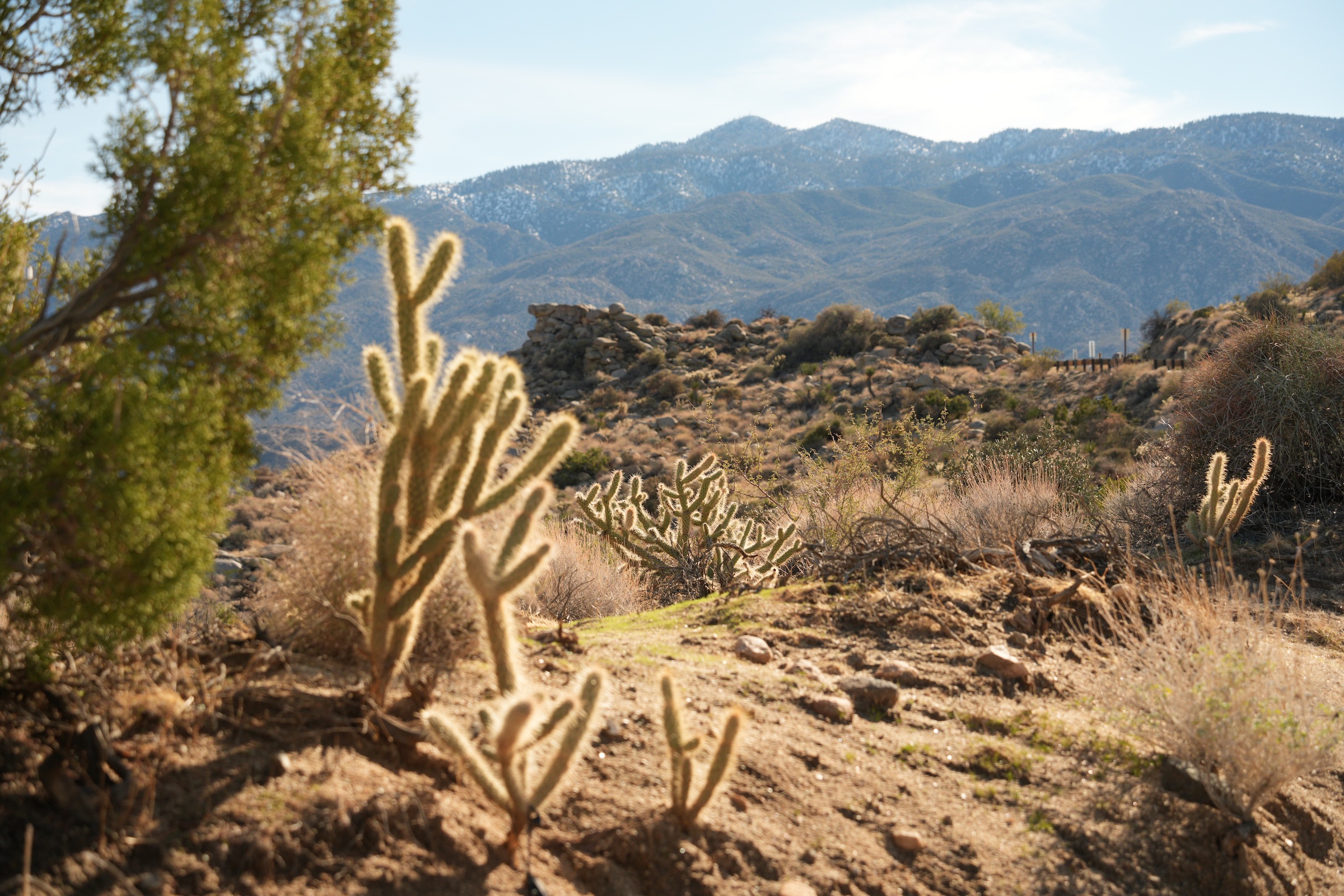
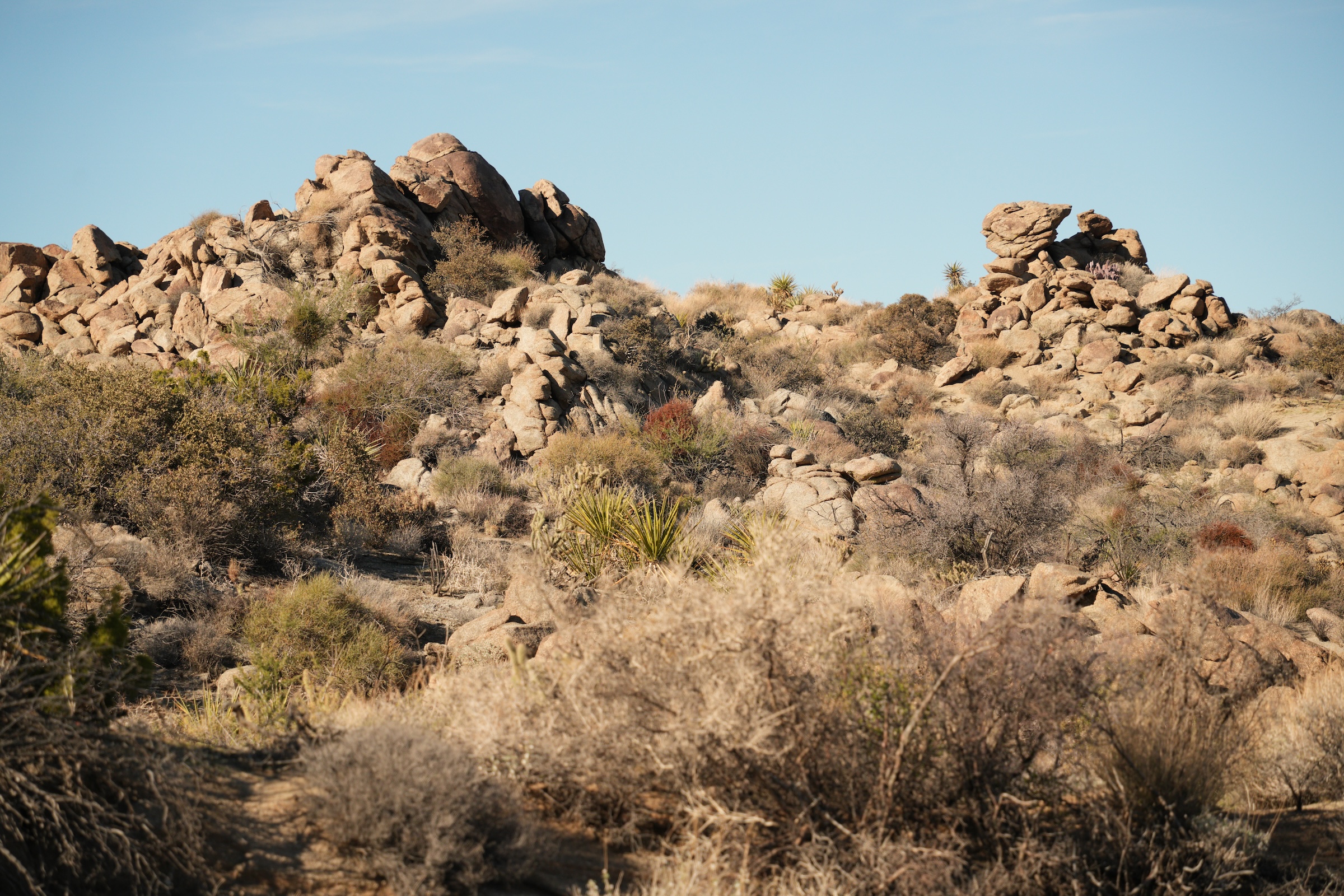
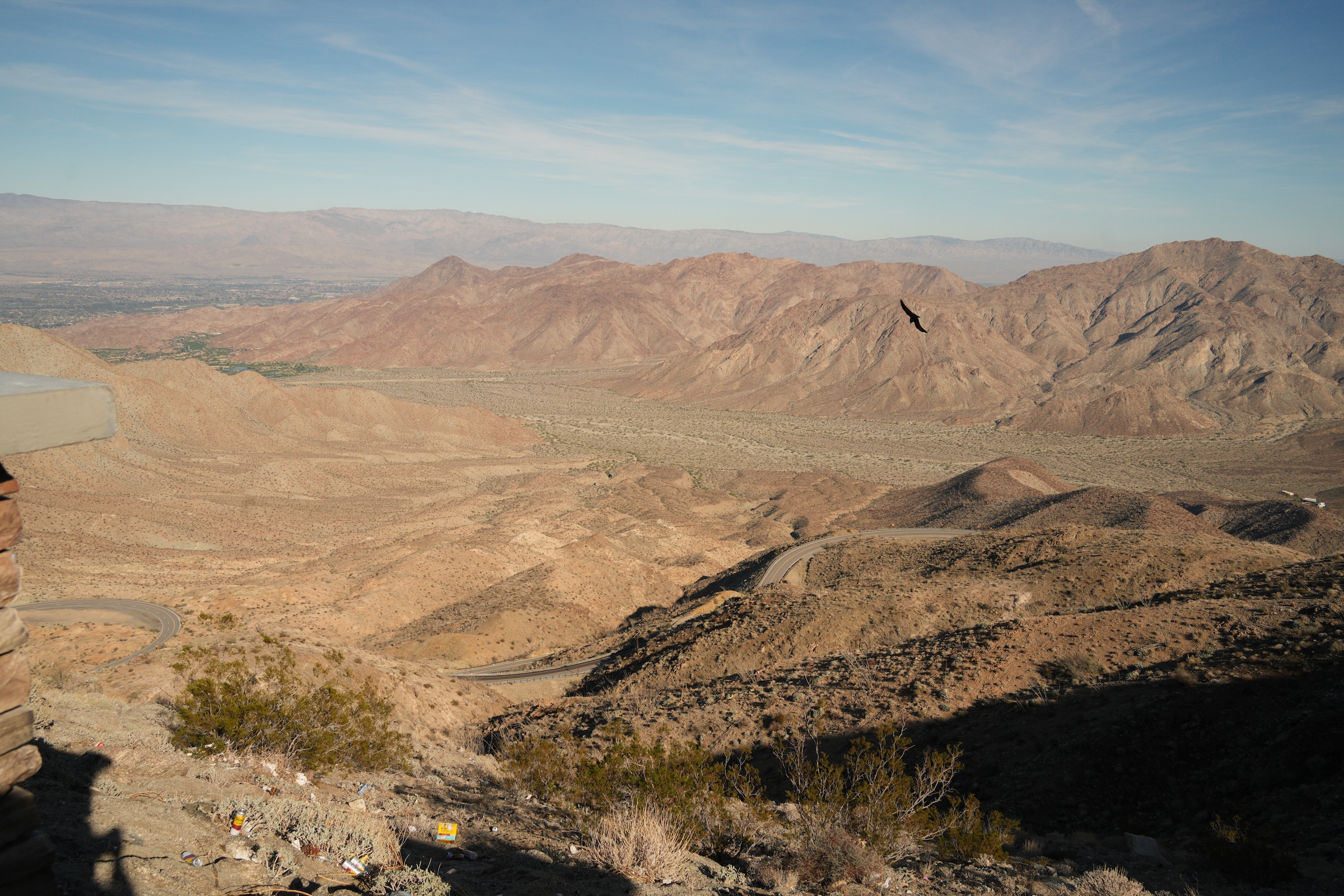
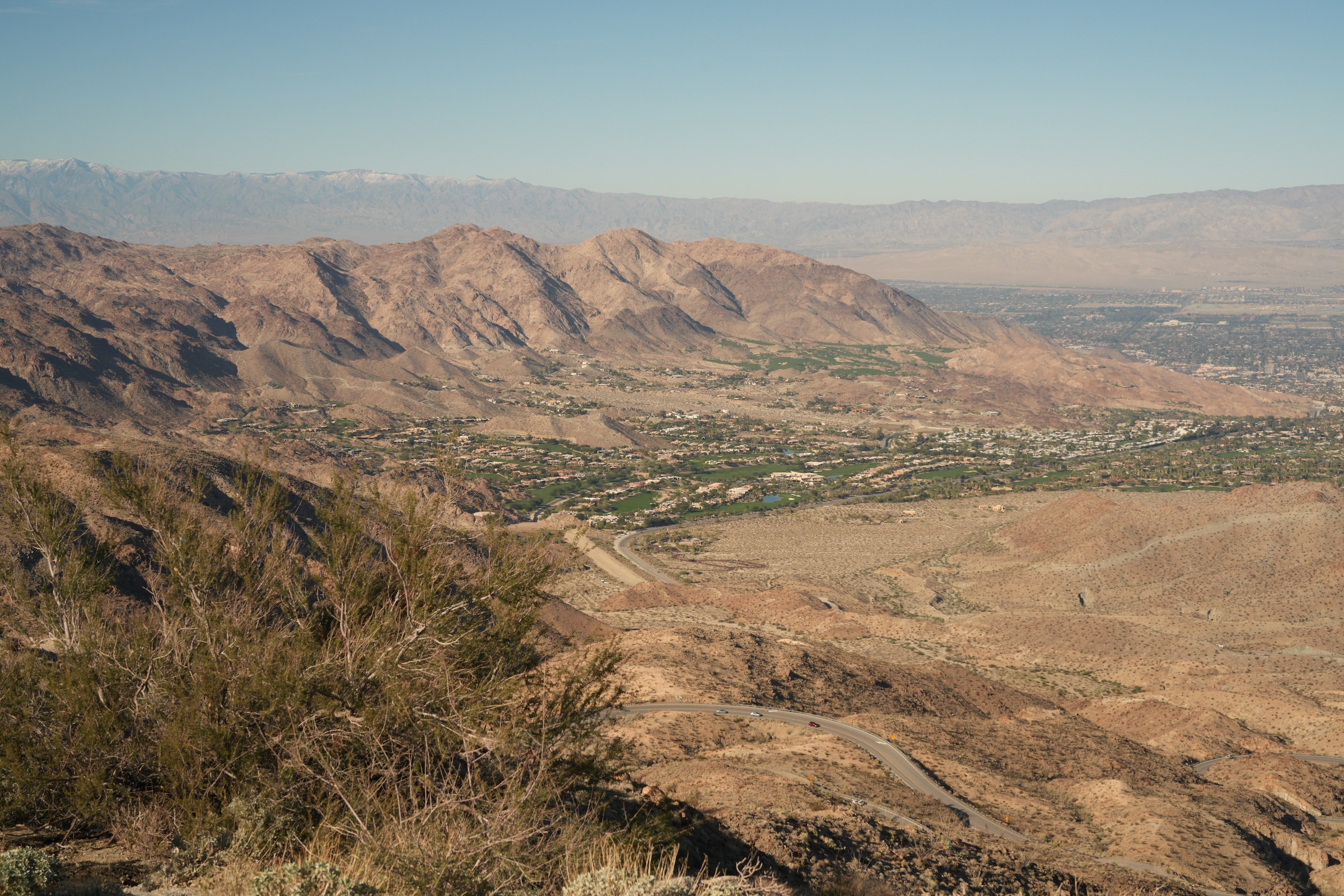
I took the scenic route from Solana Beach to Palm Springs today, driving across the Santa Rosa and San Jacinto mountains.
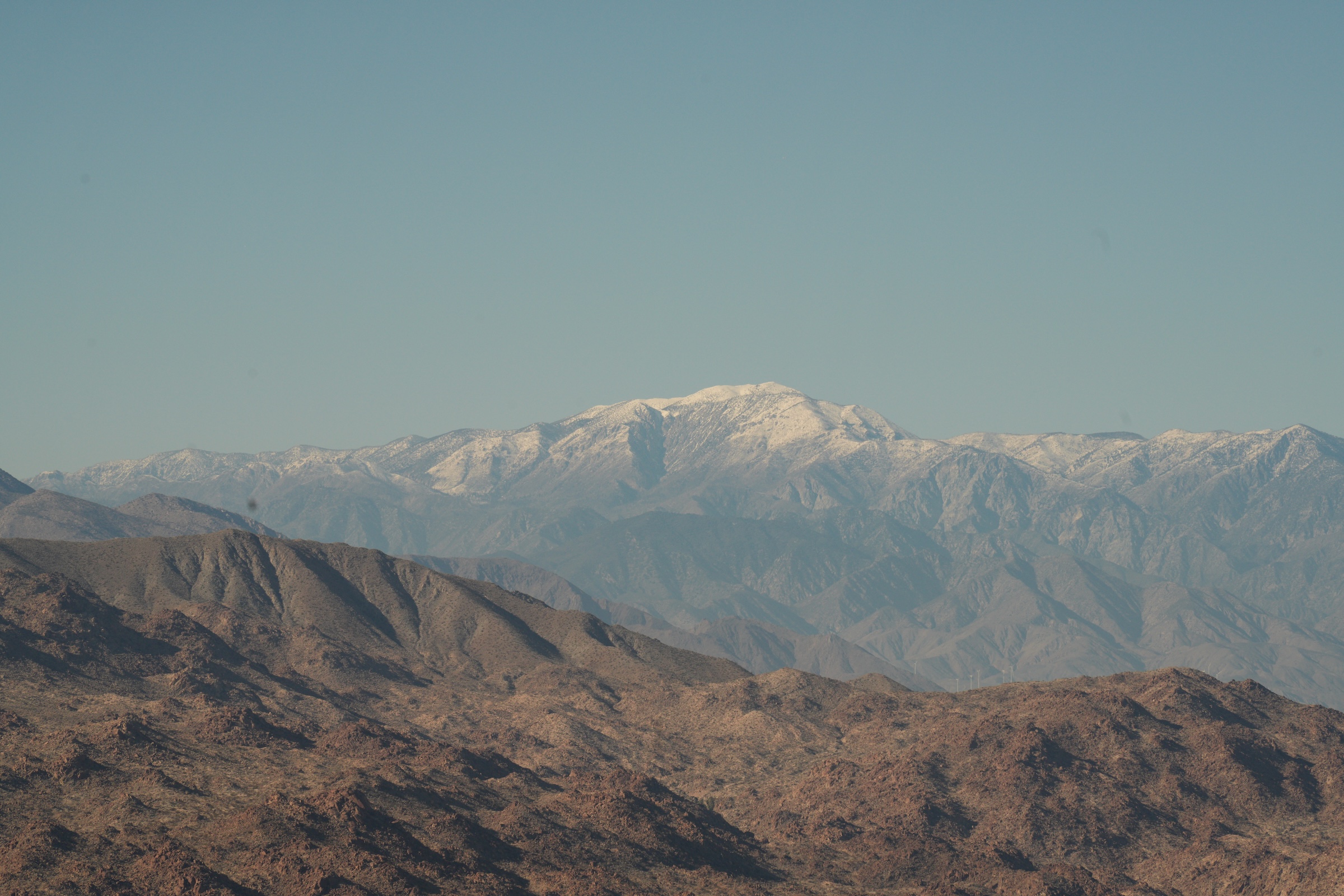
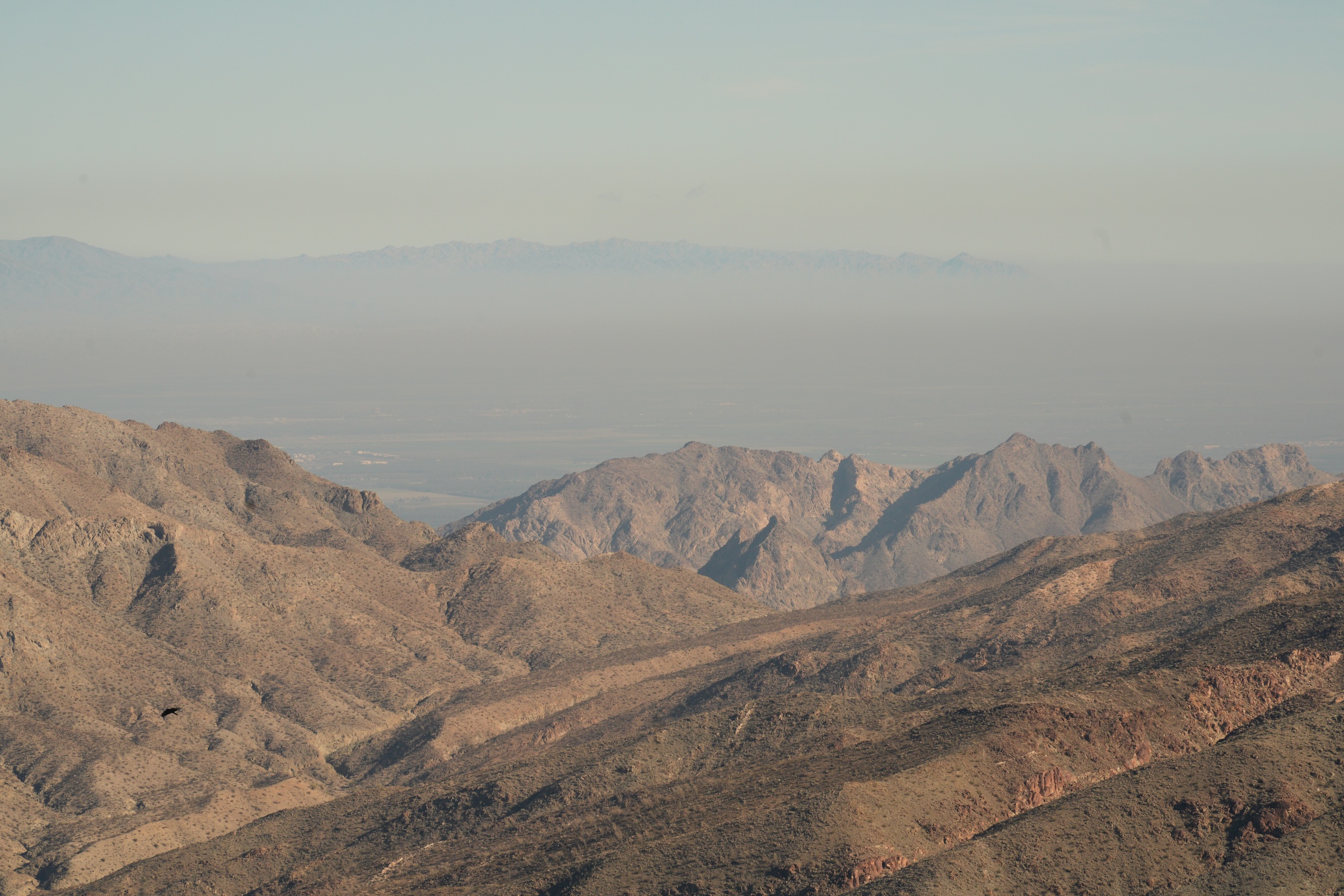
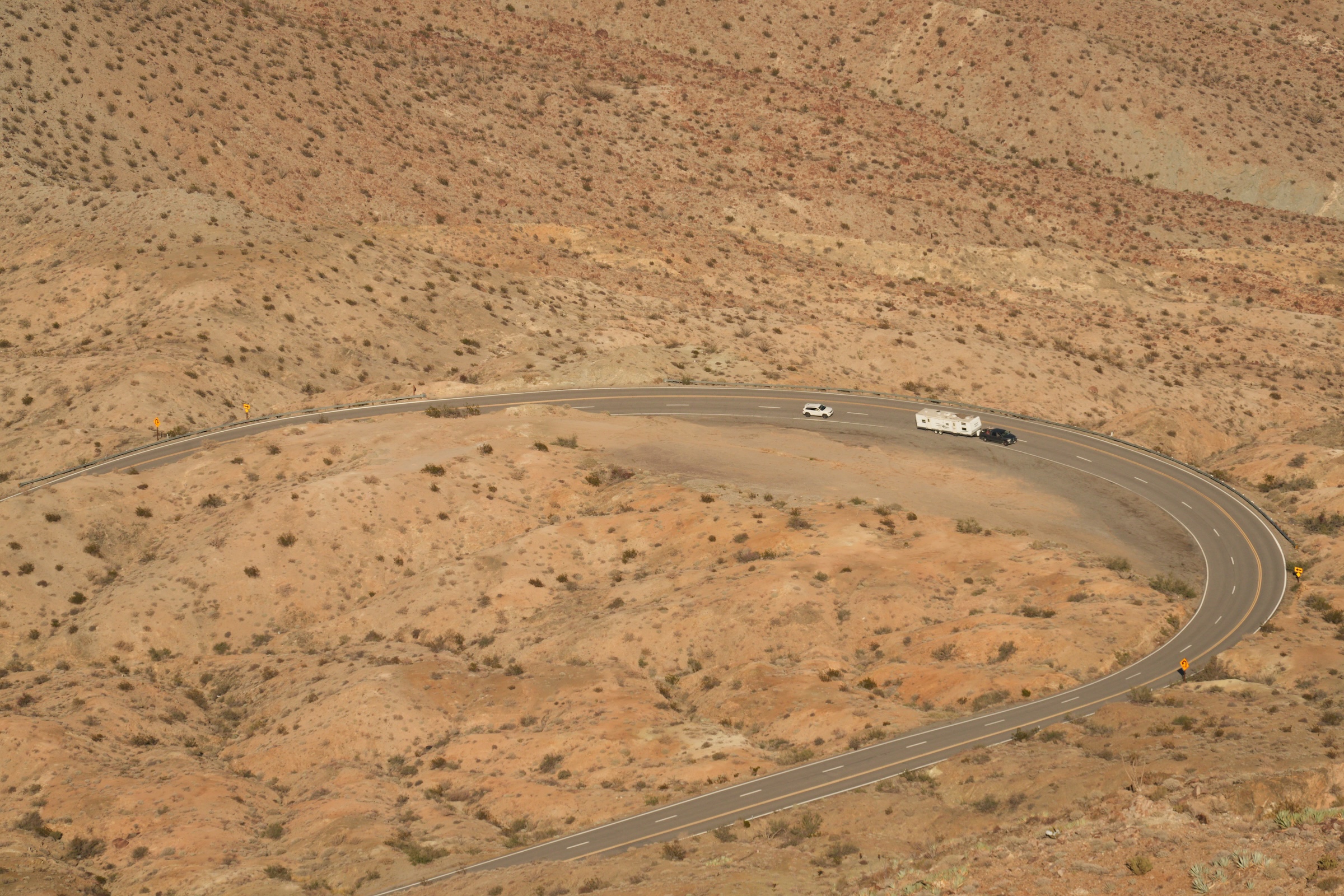
The first few pictures are from a turnout point a few miles after Ribbonwood (elevation 4,397′) on Highway 74.
The last ones were taken from the Coachella Valley Vista Point on Highway 74, with Palm Desert visible down below in the valley.
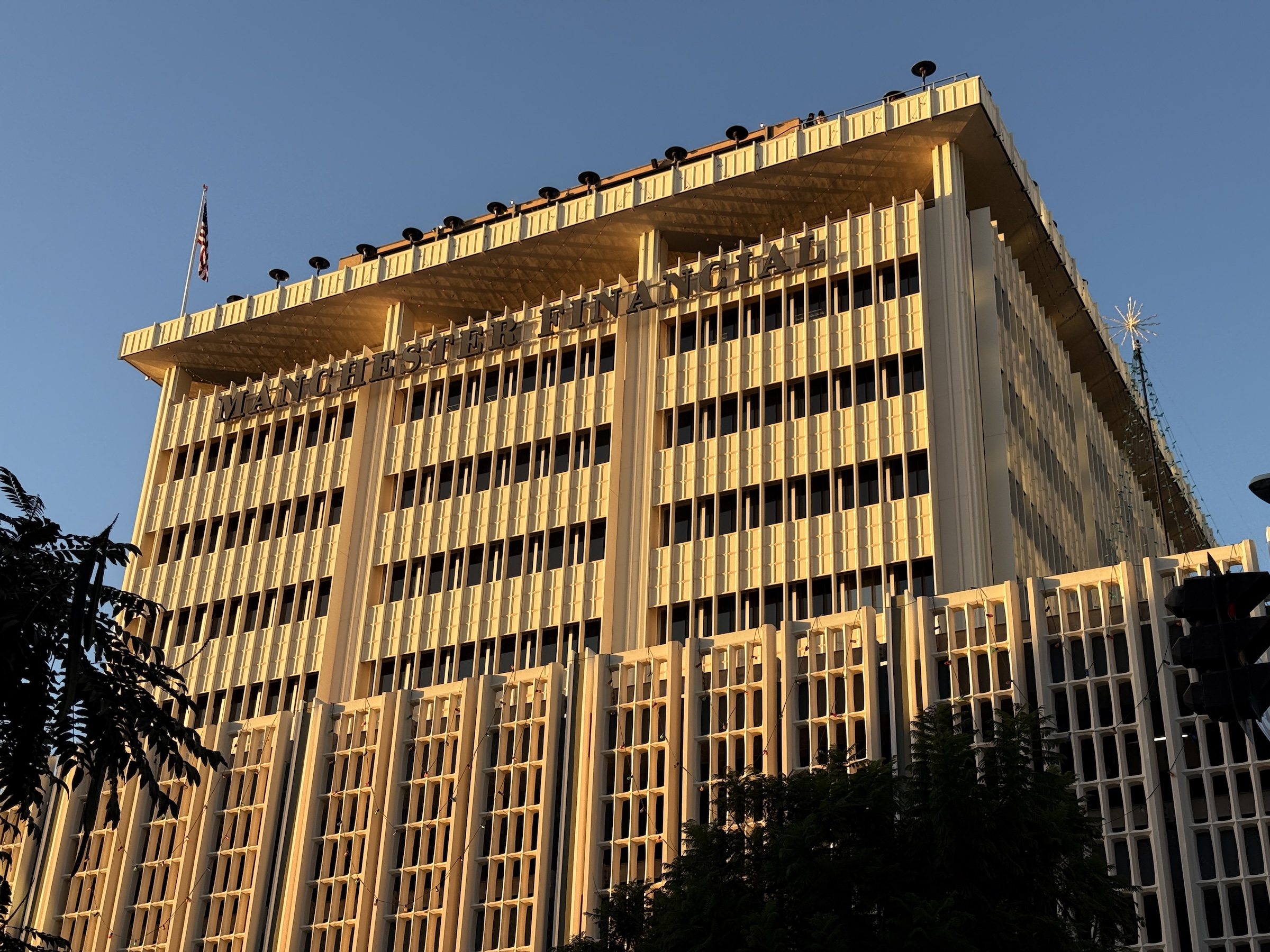
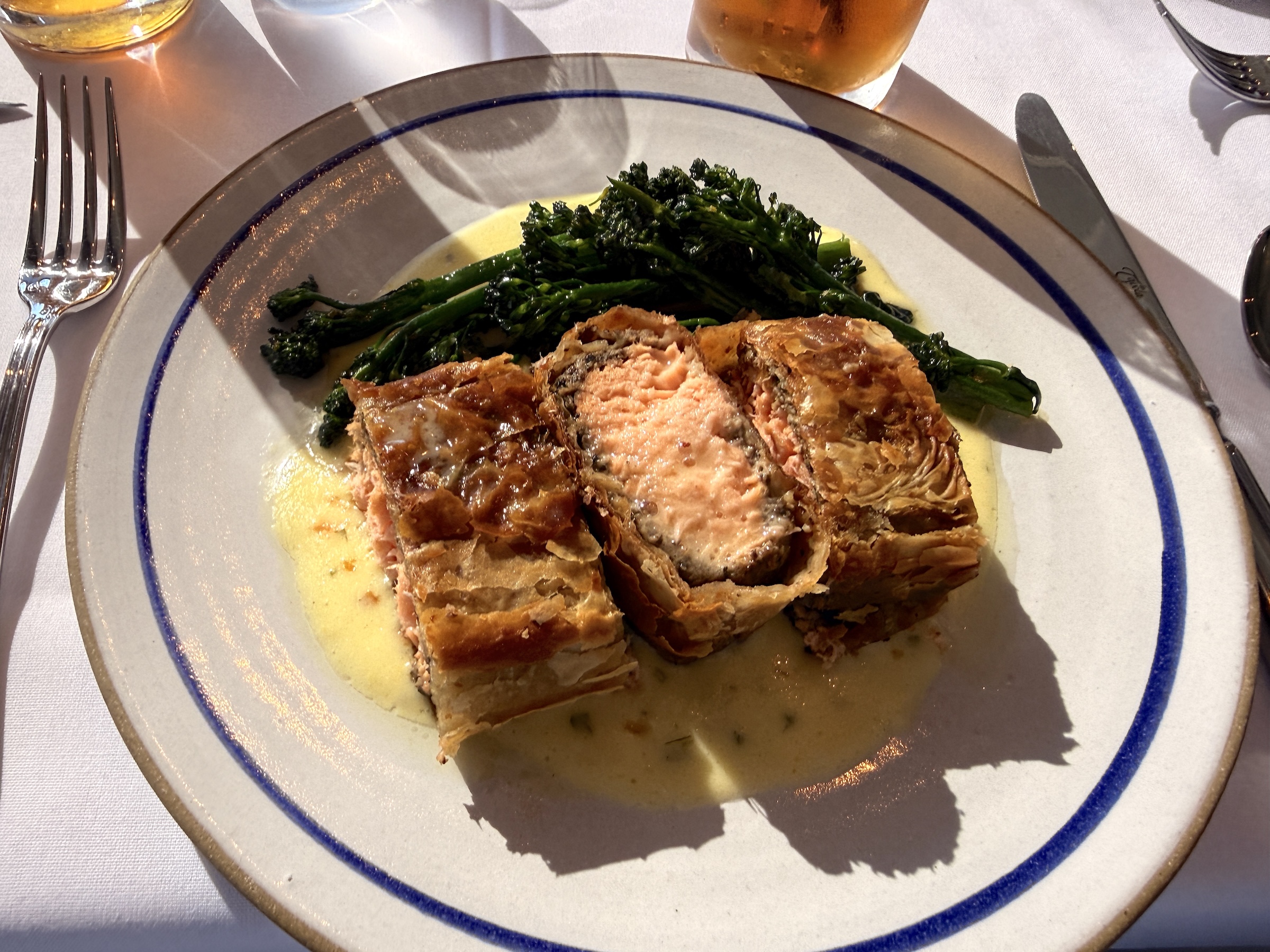
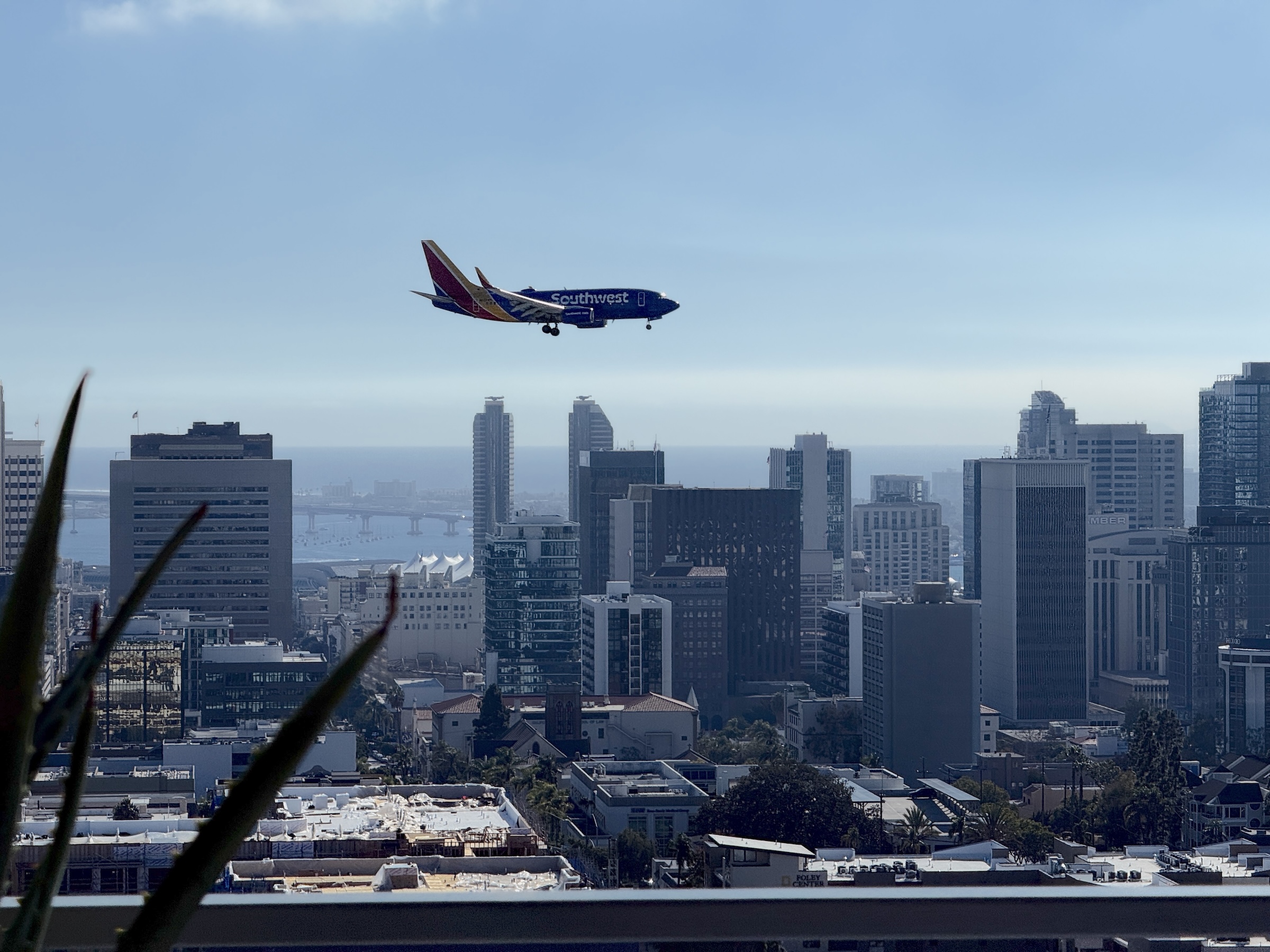
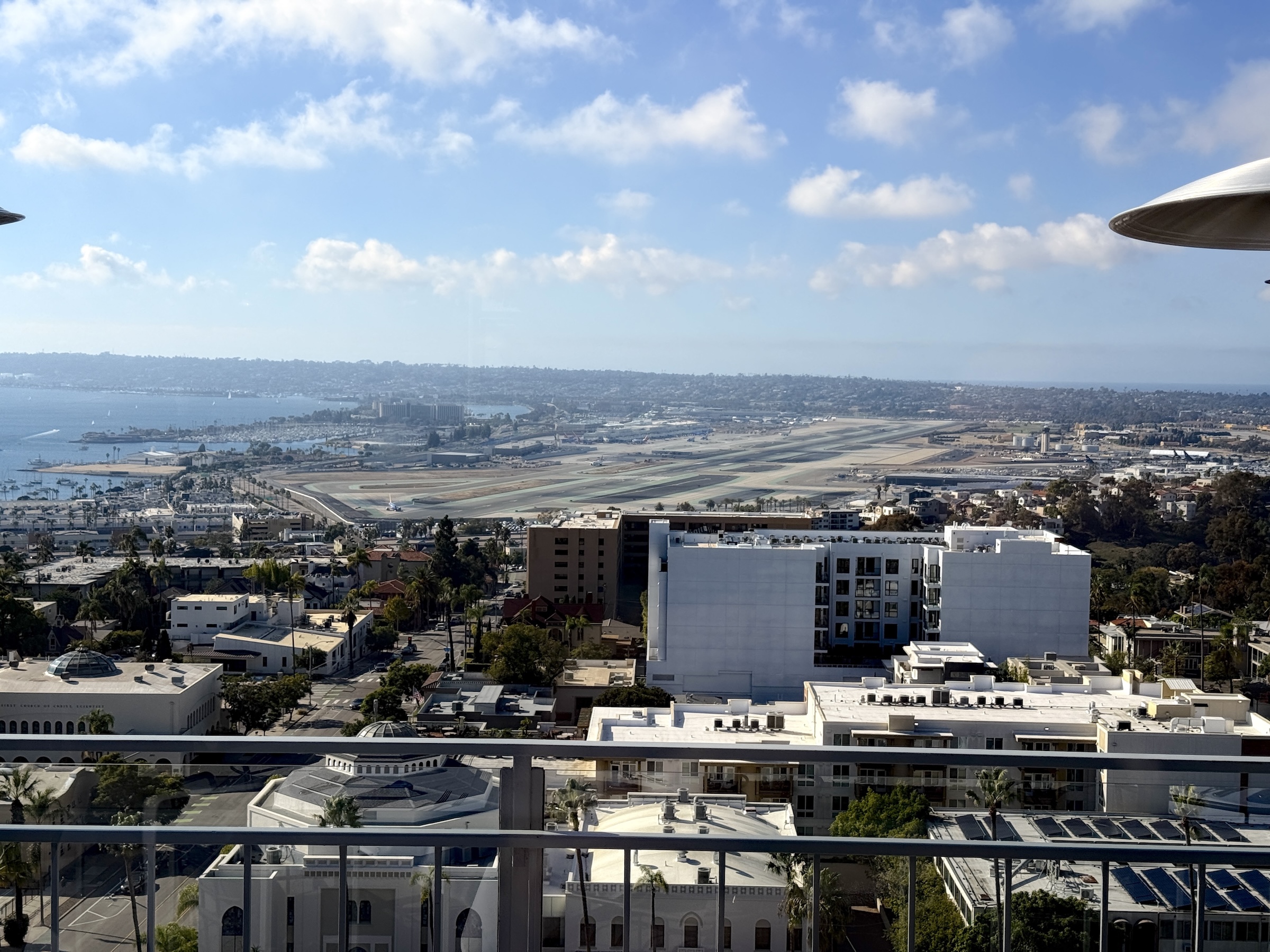
Three of us had a lovely lunch at Mister A’s restaurant in downtown San Diego. The restaurant is on the 12th floor of the Manchester Financial Building and offers great views of downtown, the Coronado Bridge and even the runways at San Diego International airport.
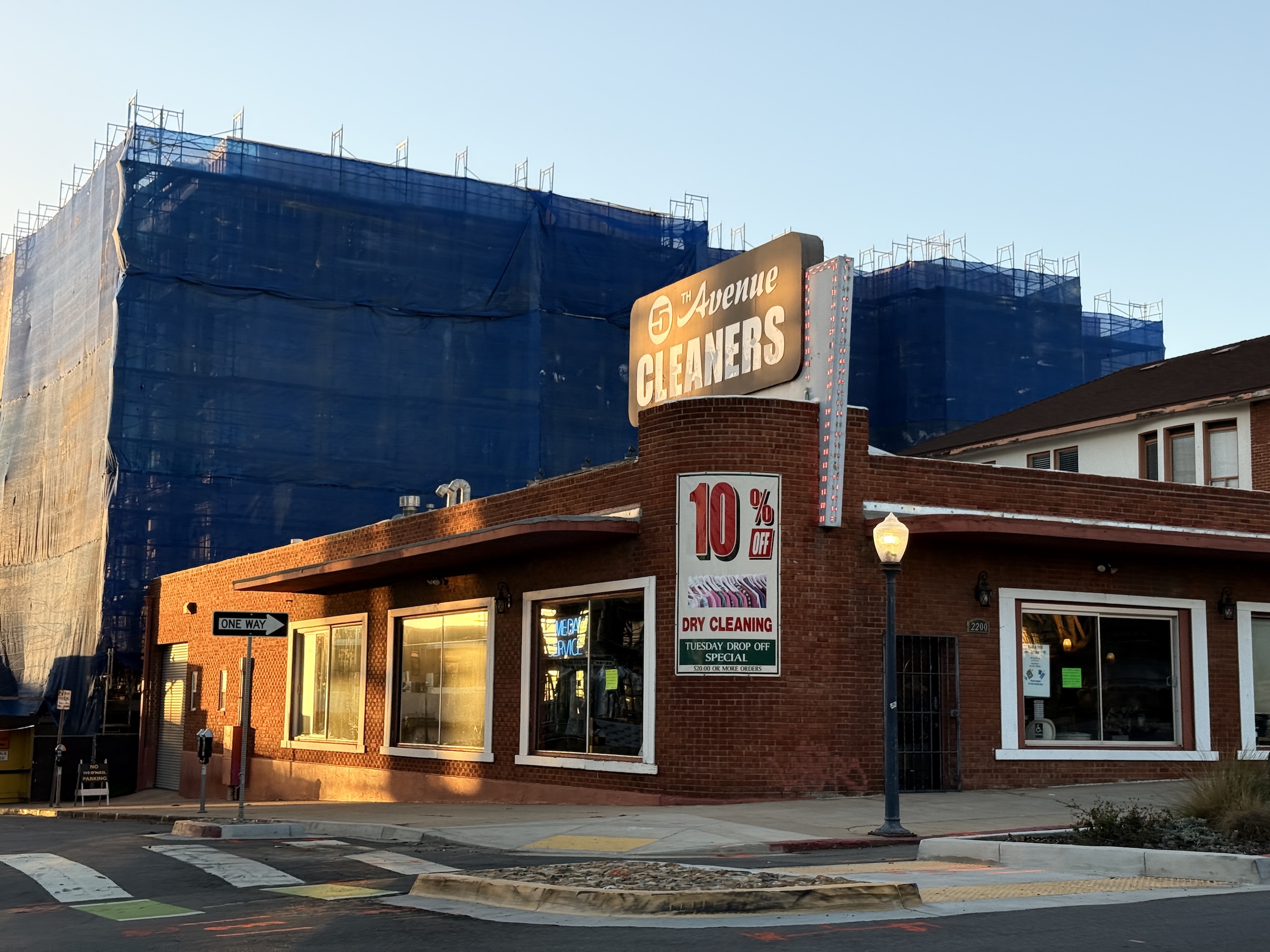
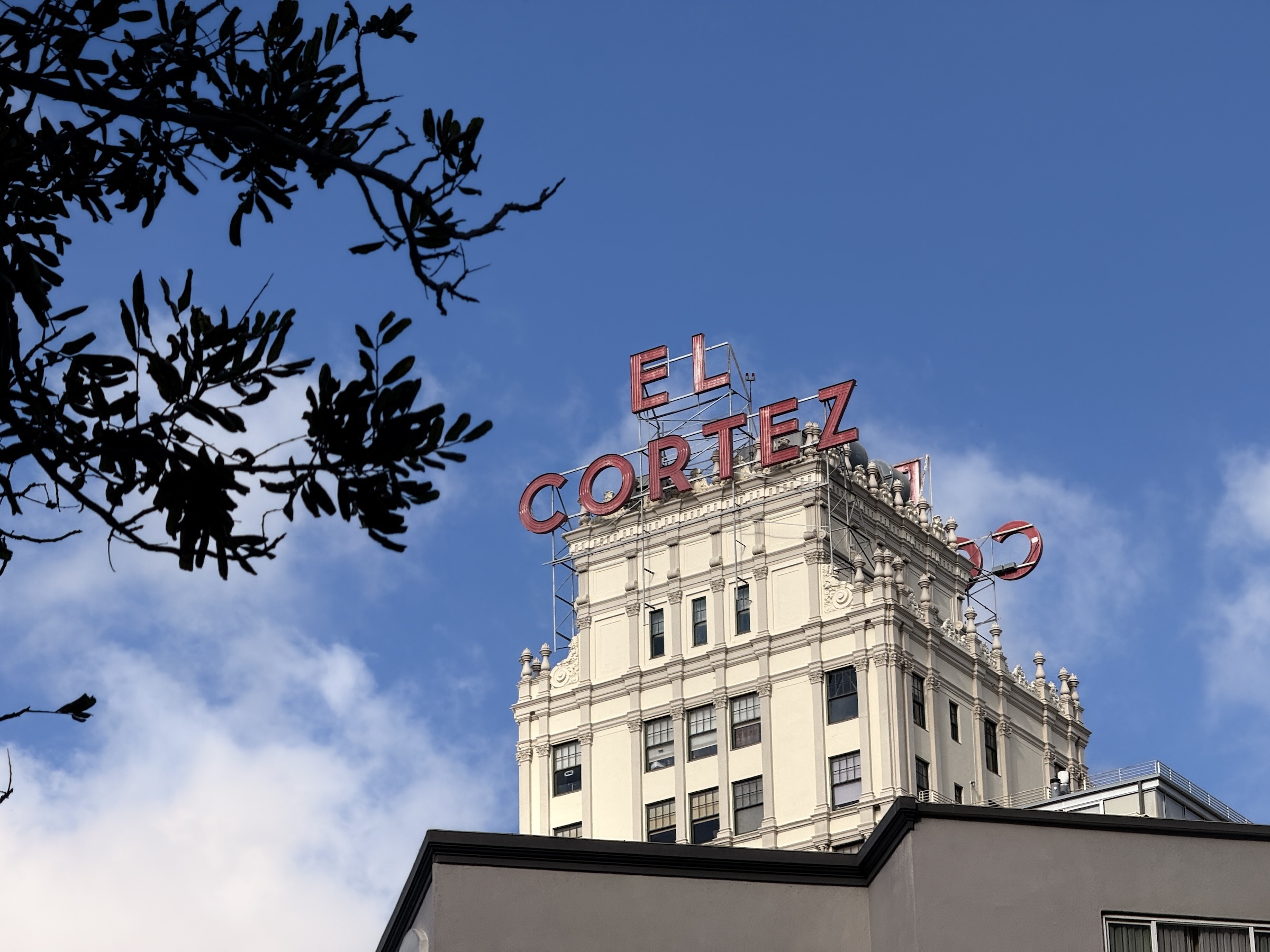
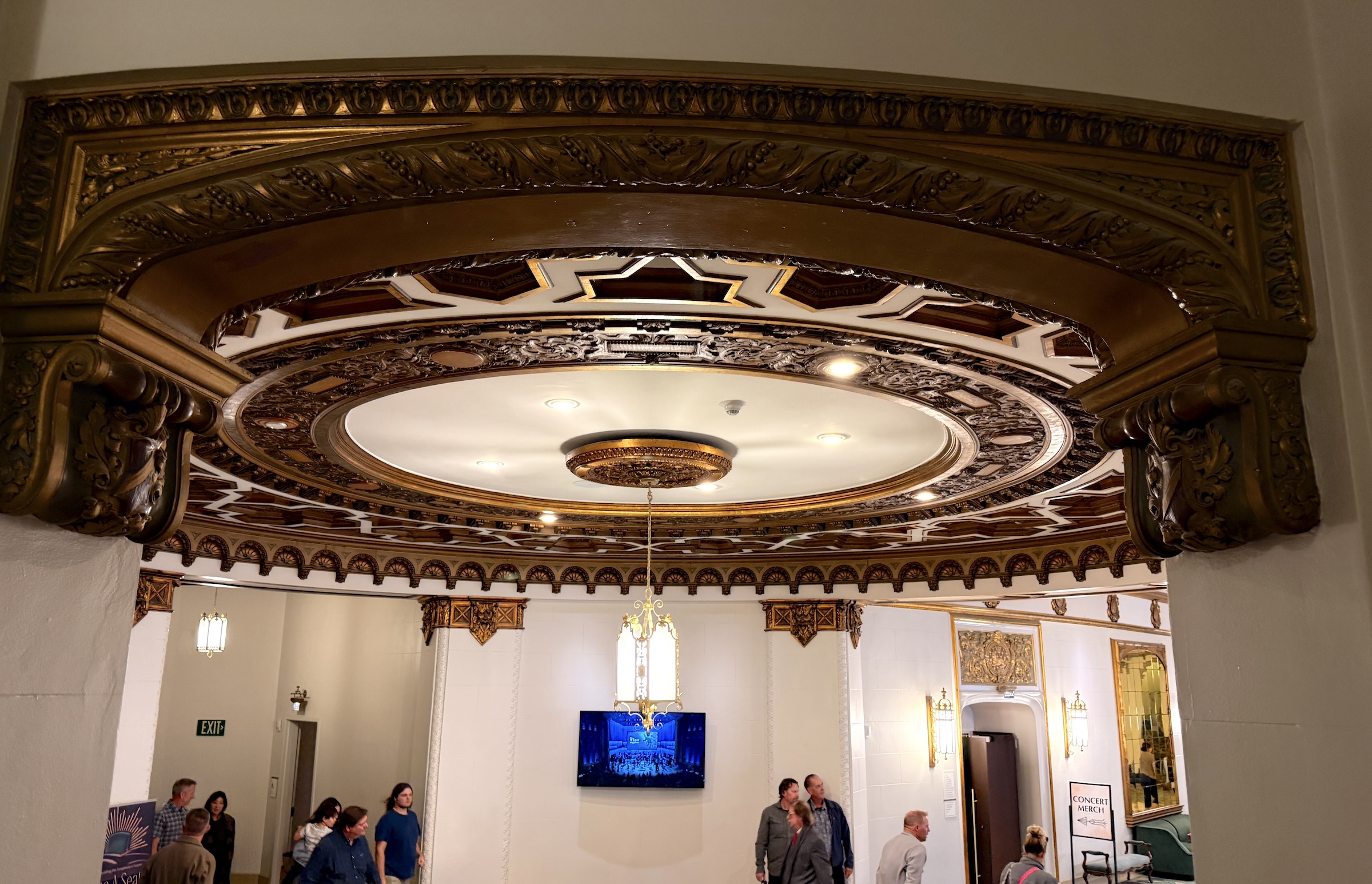
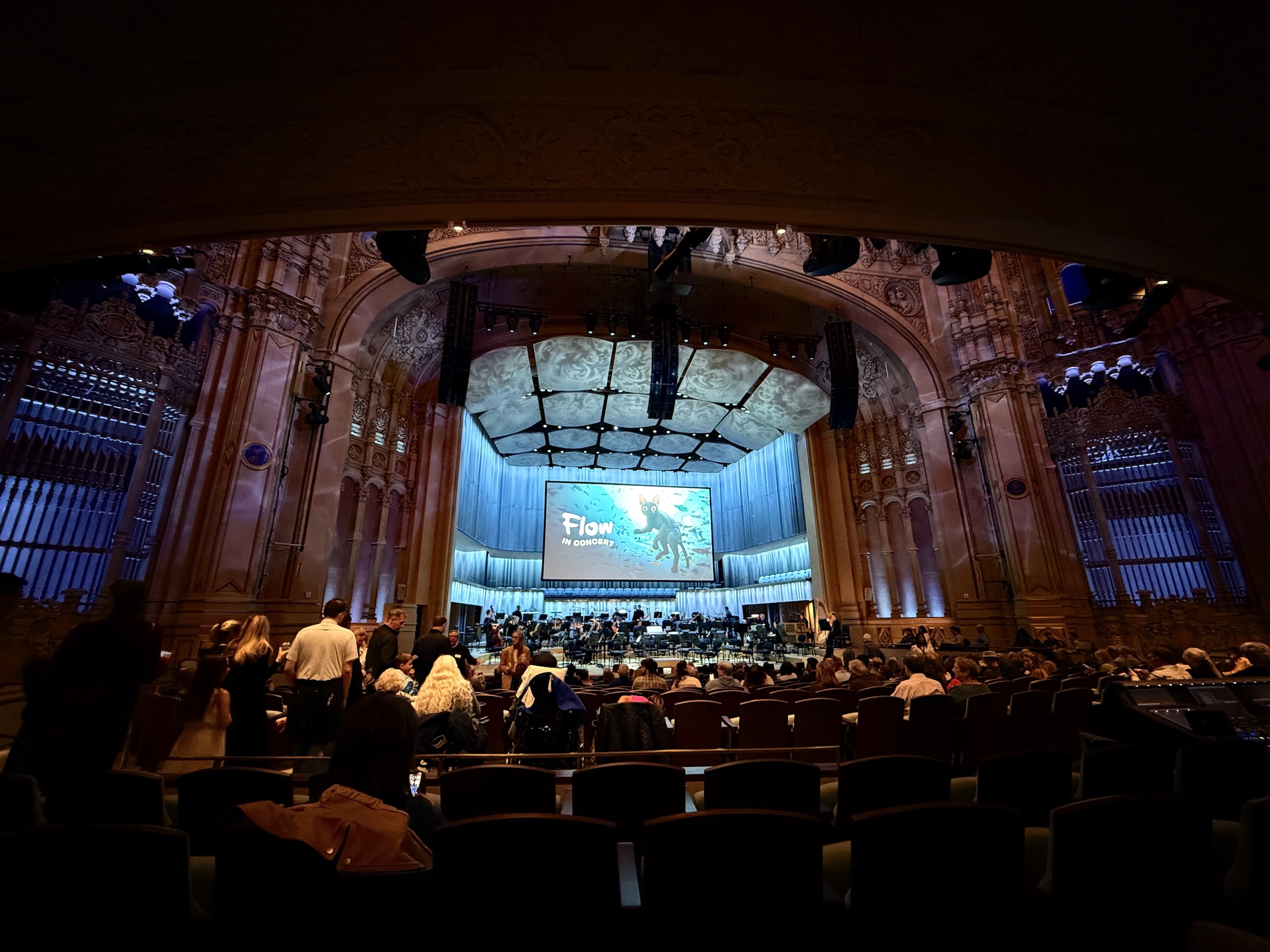
After lunch* we made our way down 5th Avenue to Jacobs Music Center to attend a live performance by the San Diego Symphony of the music that was composed for the animated movie Flow (released 2024).
*Mine was a king salmon ‘Wellington’ (shown below).
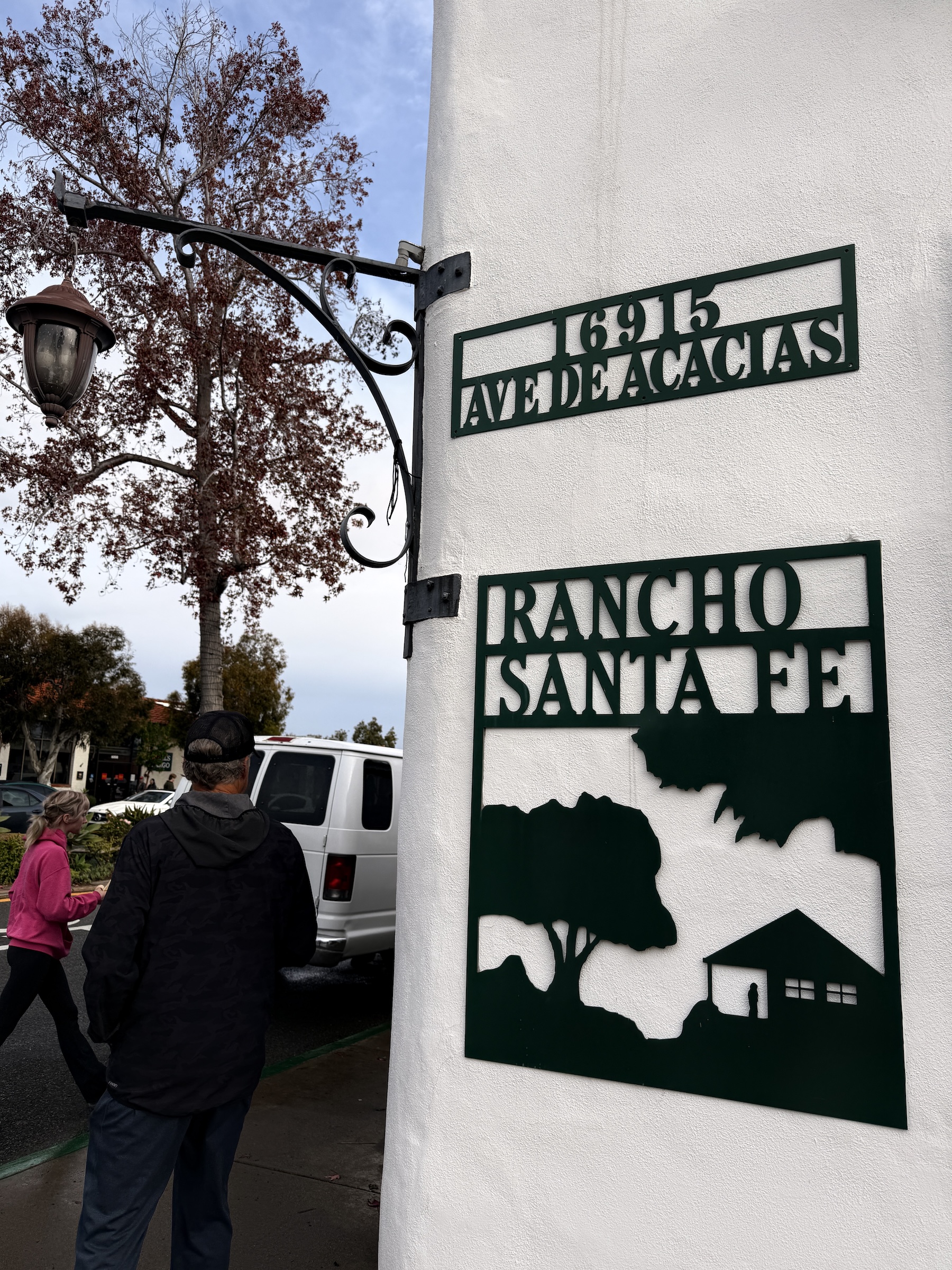
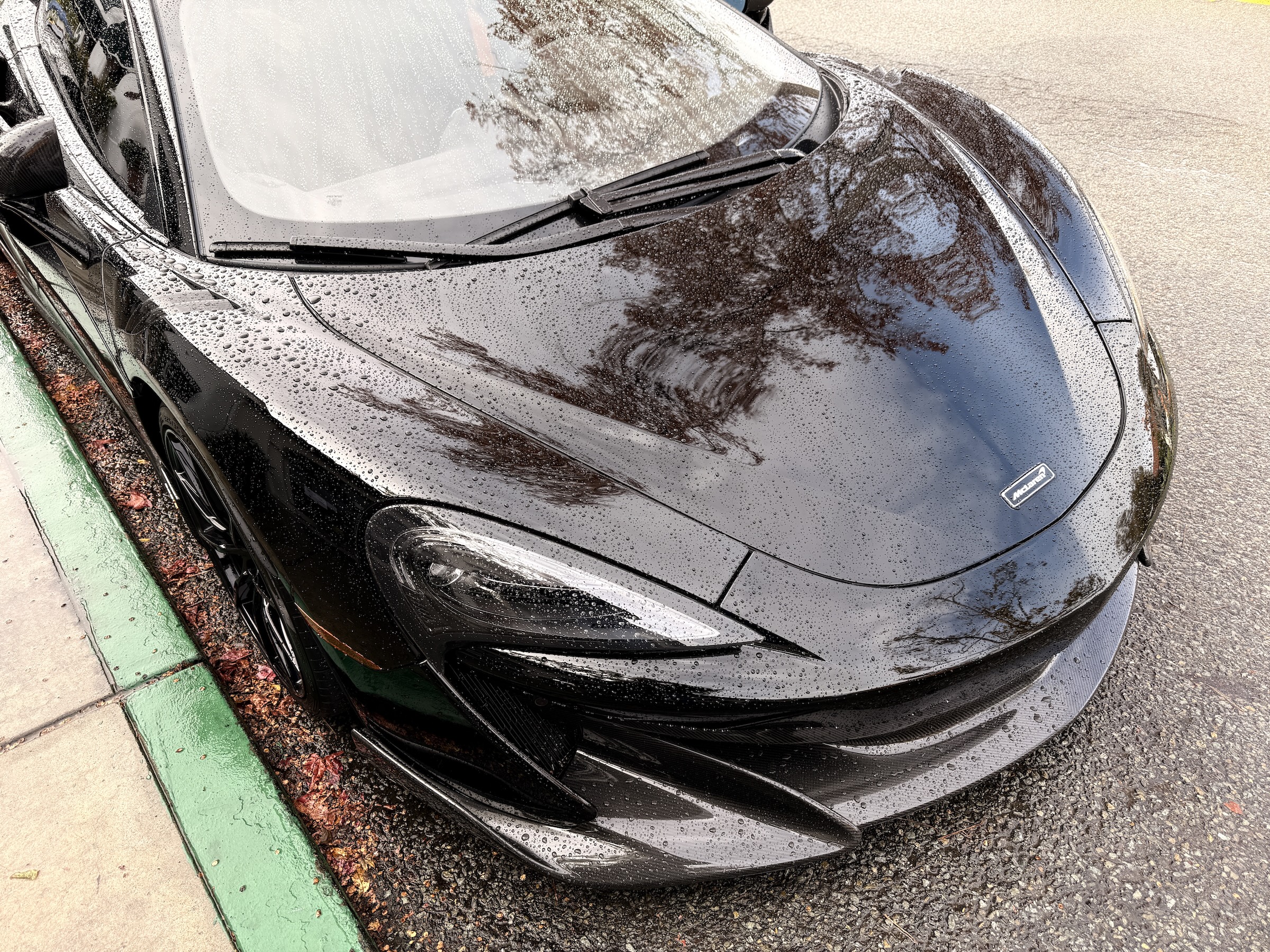
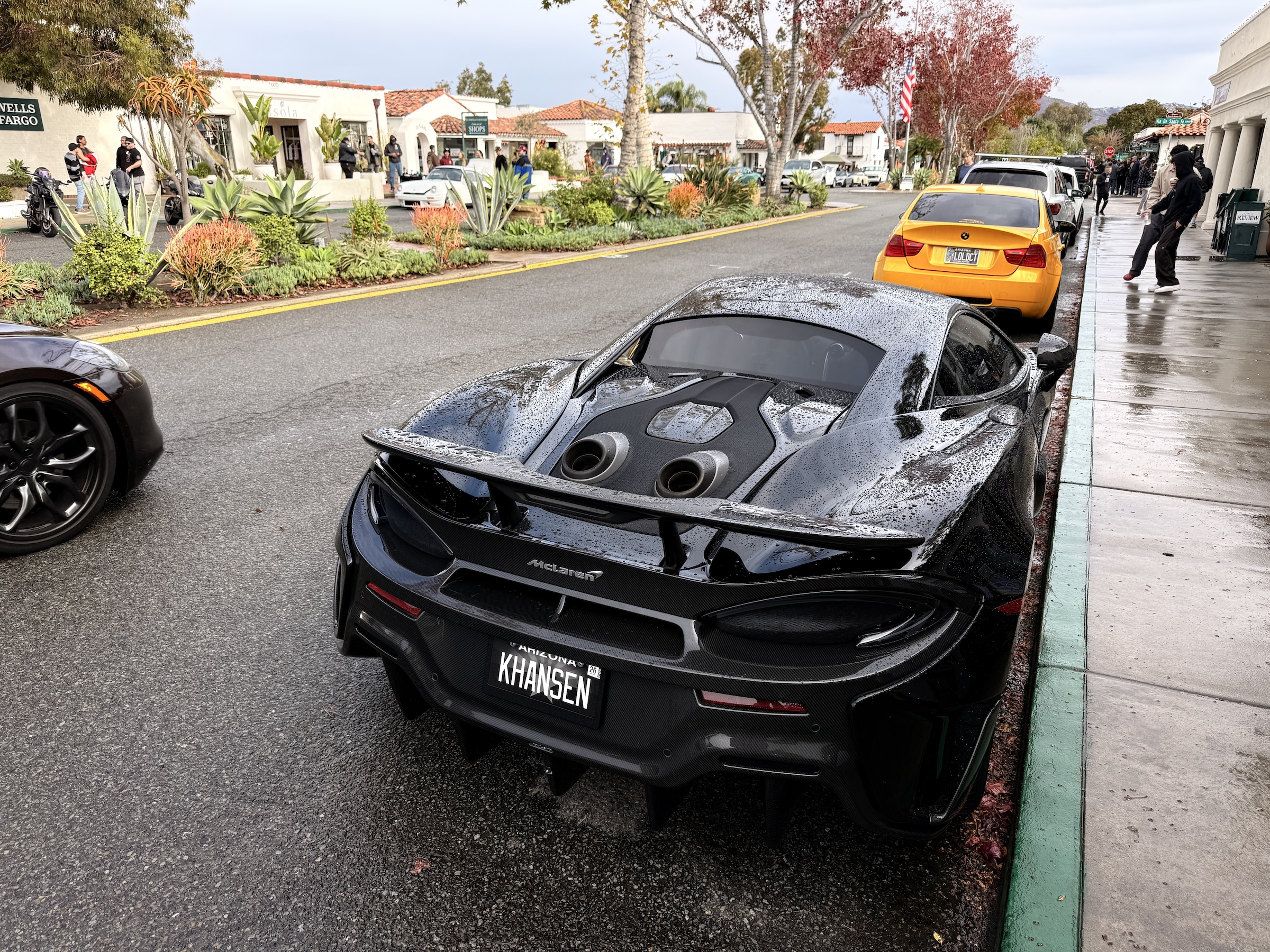
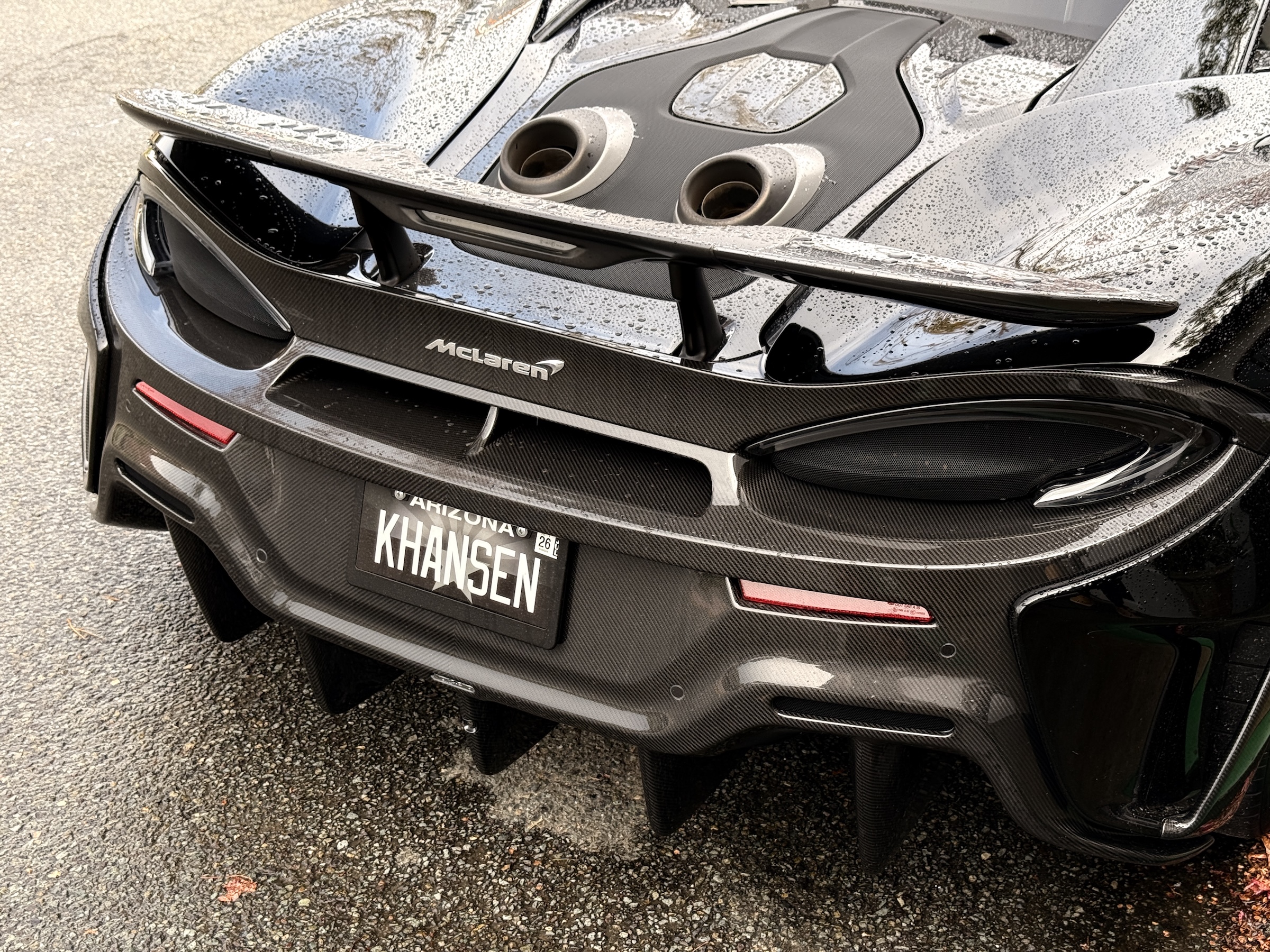
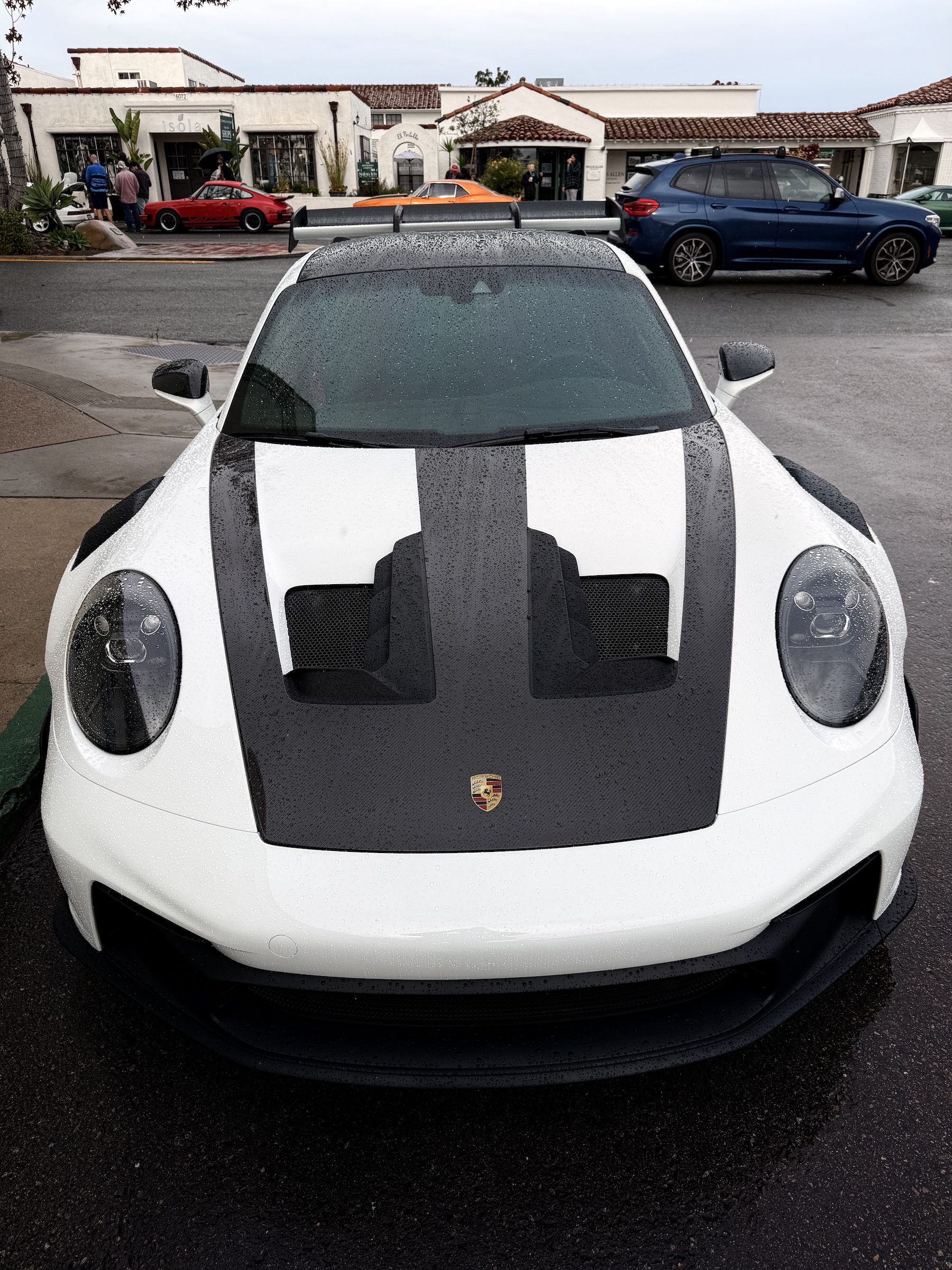
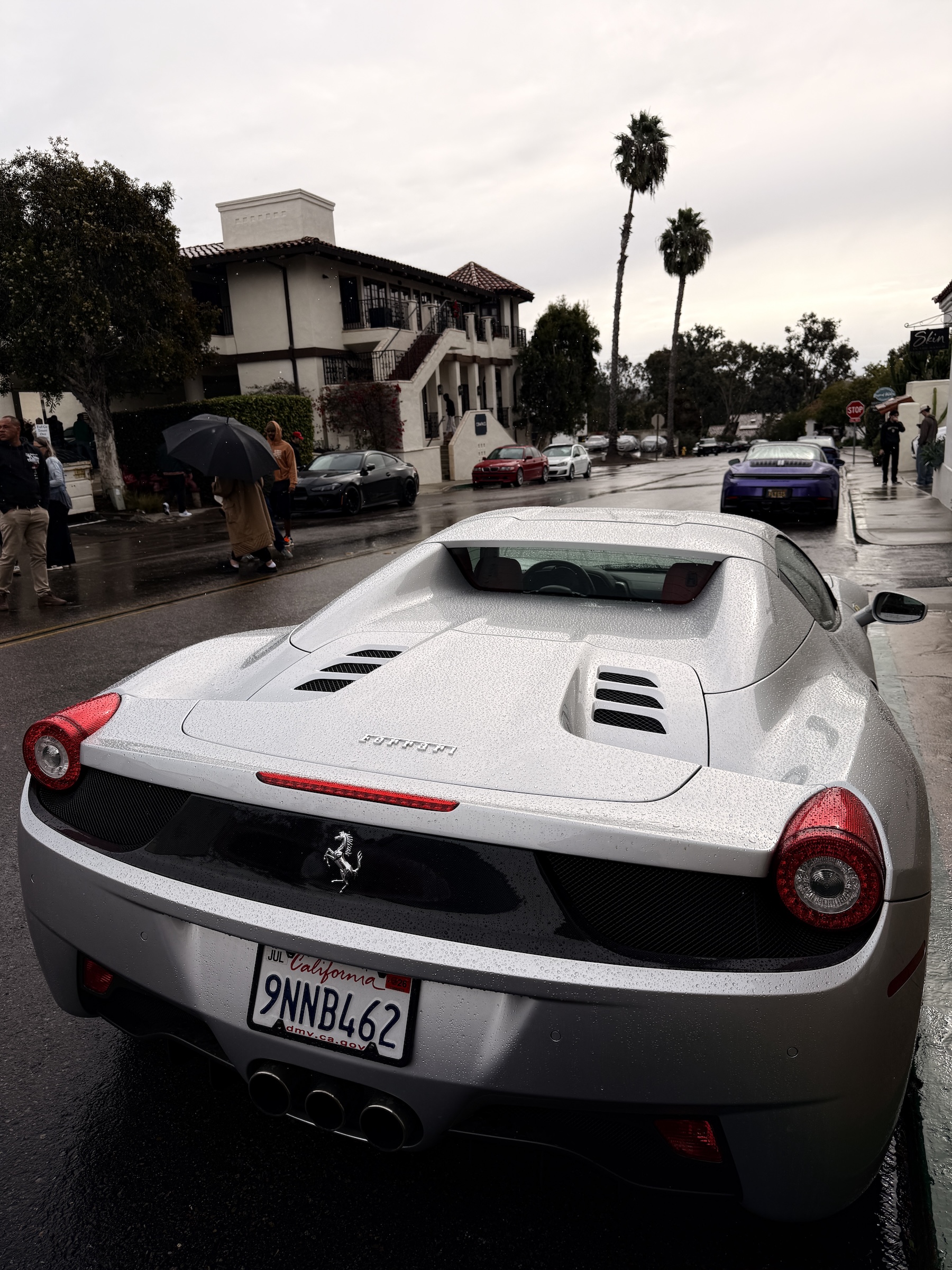
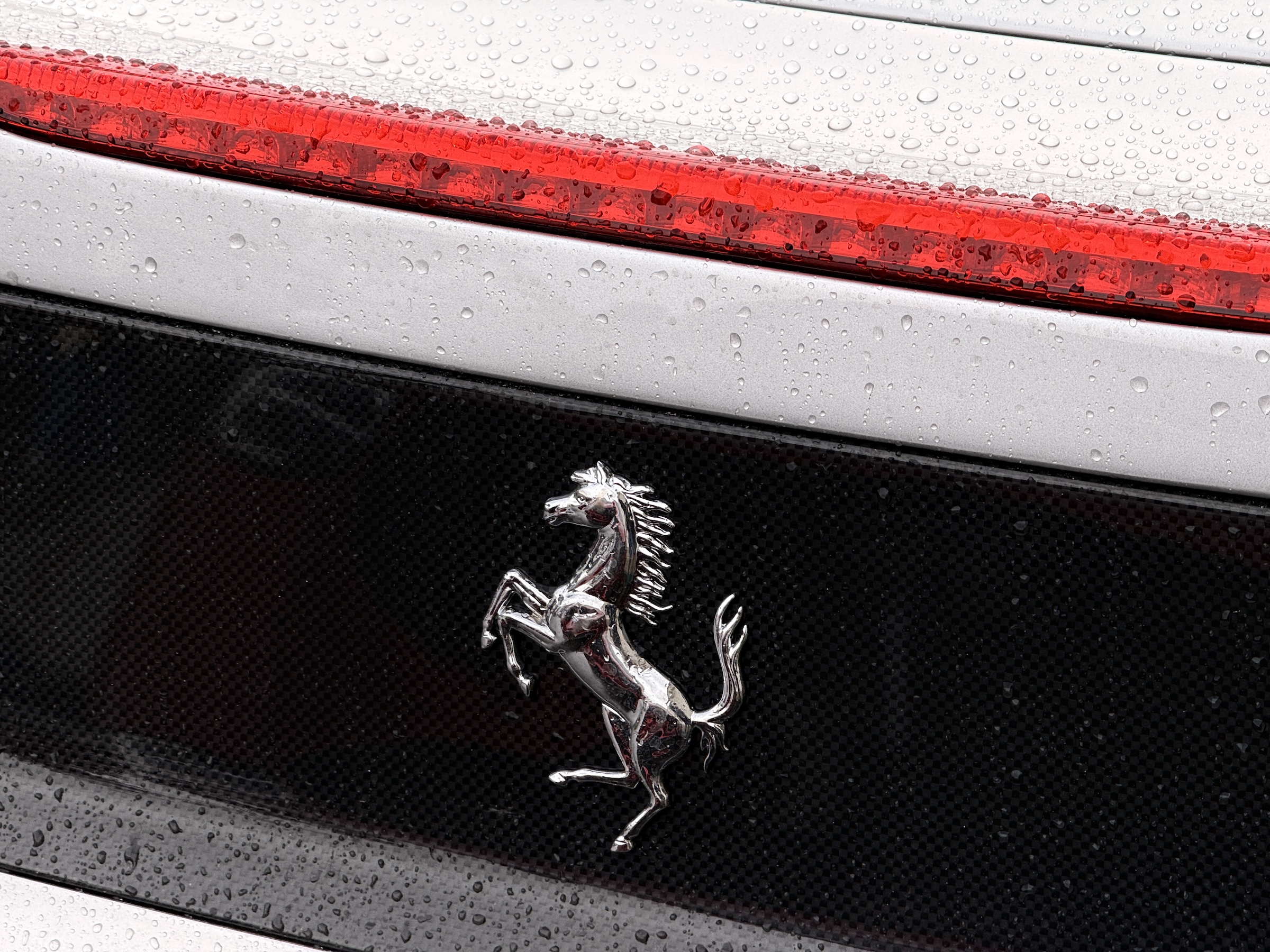
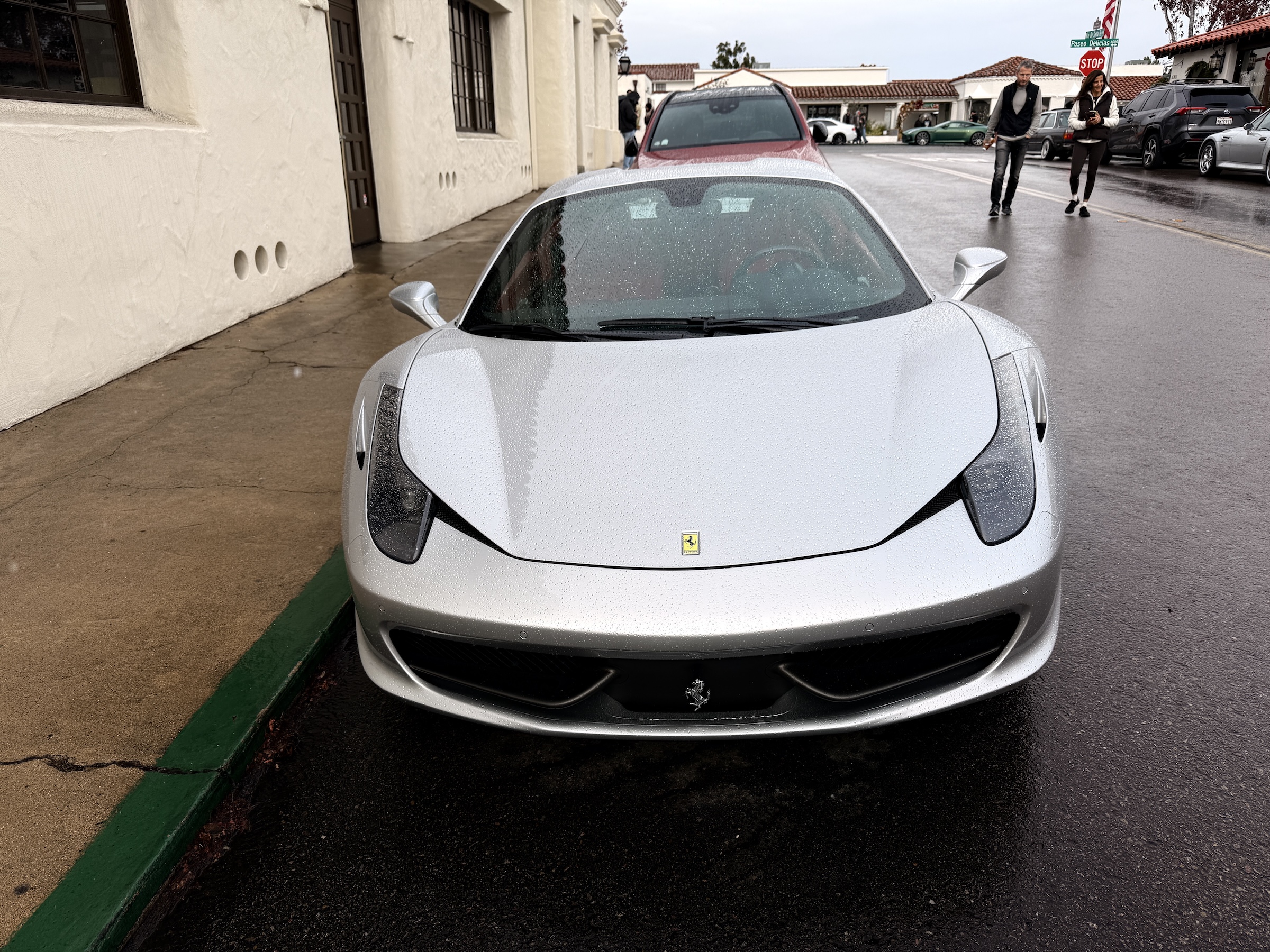
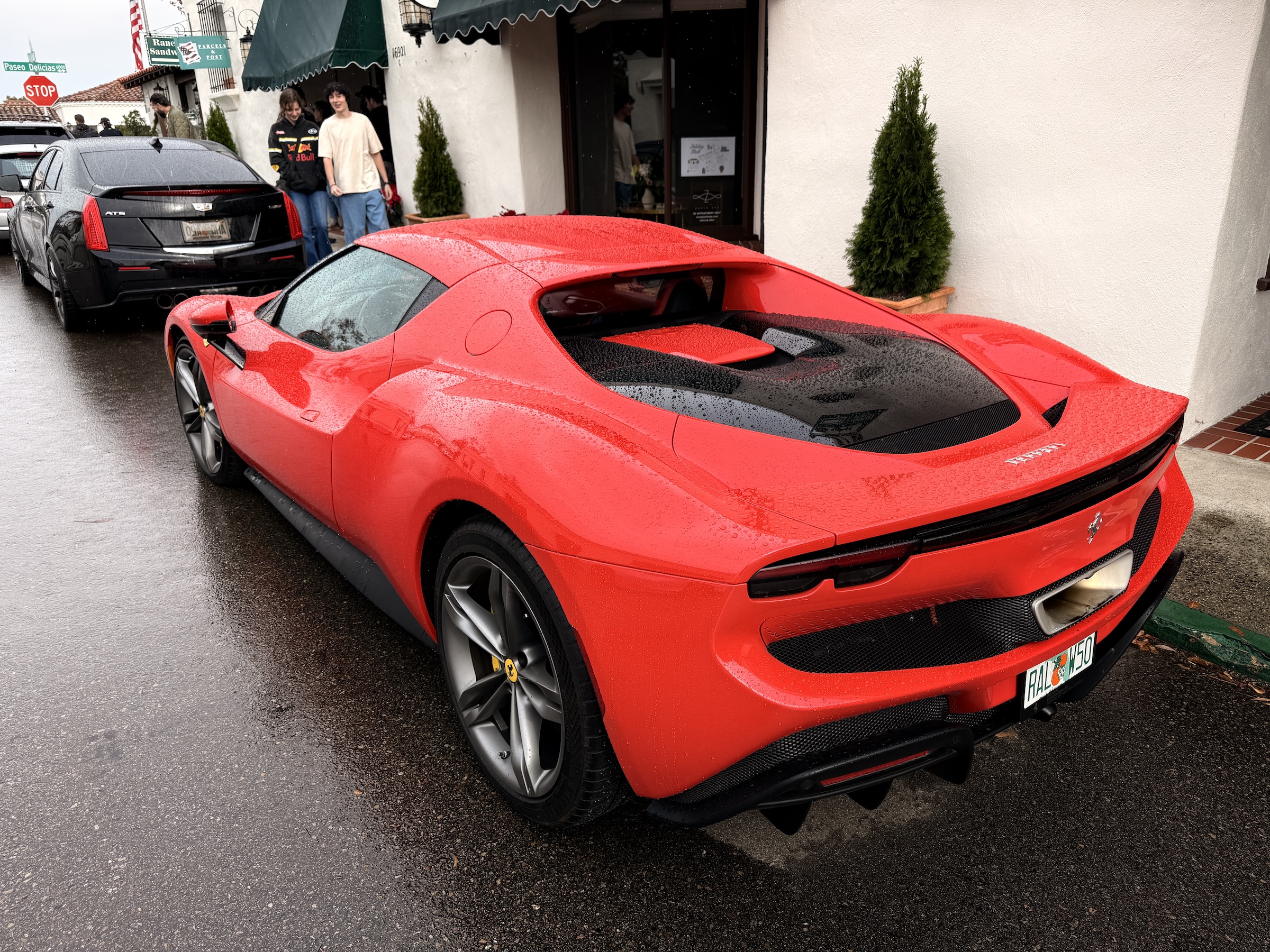
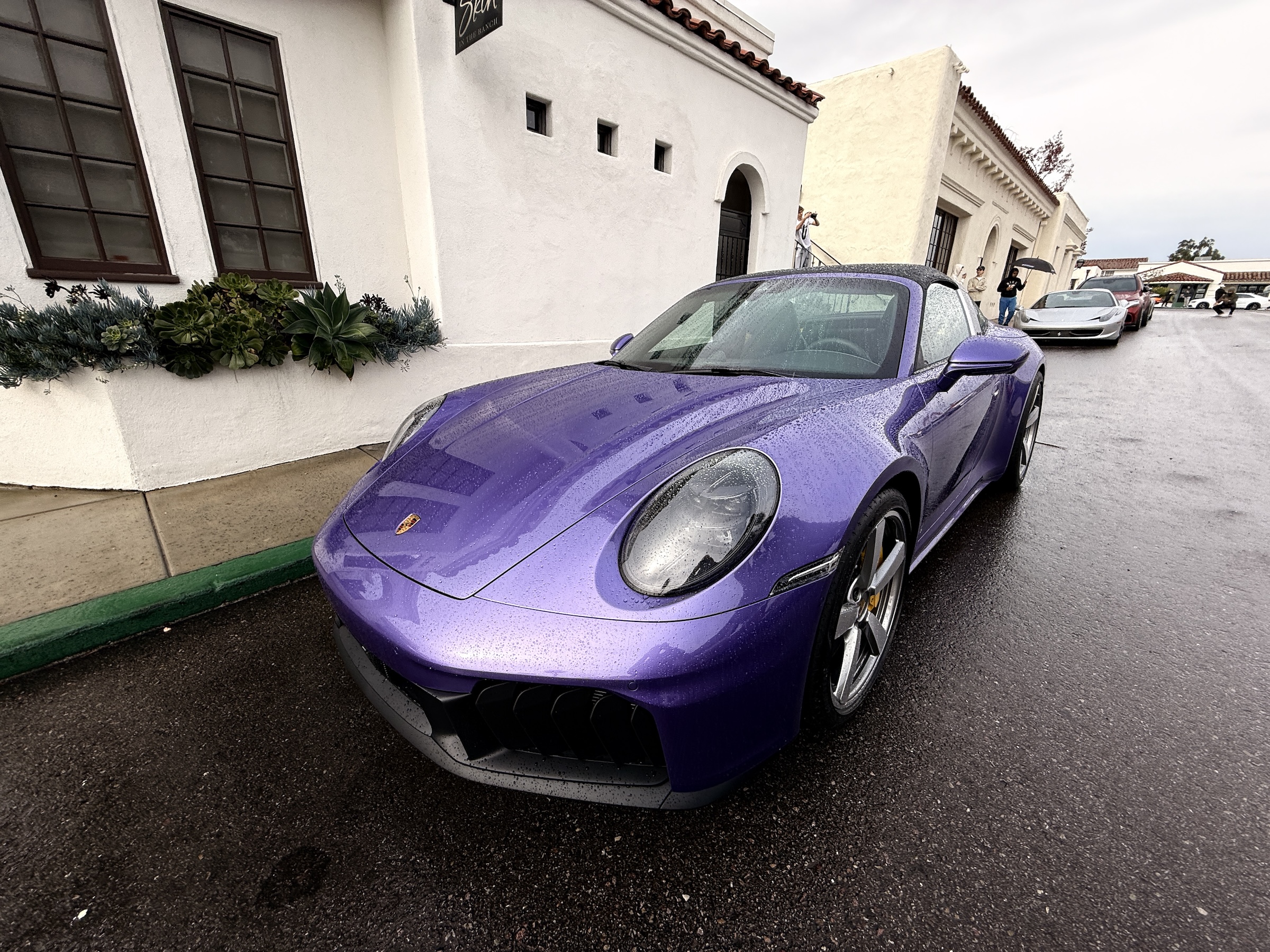
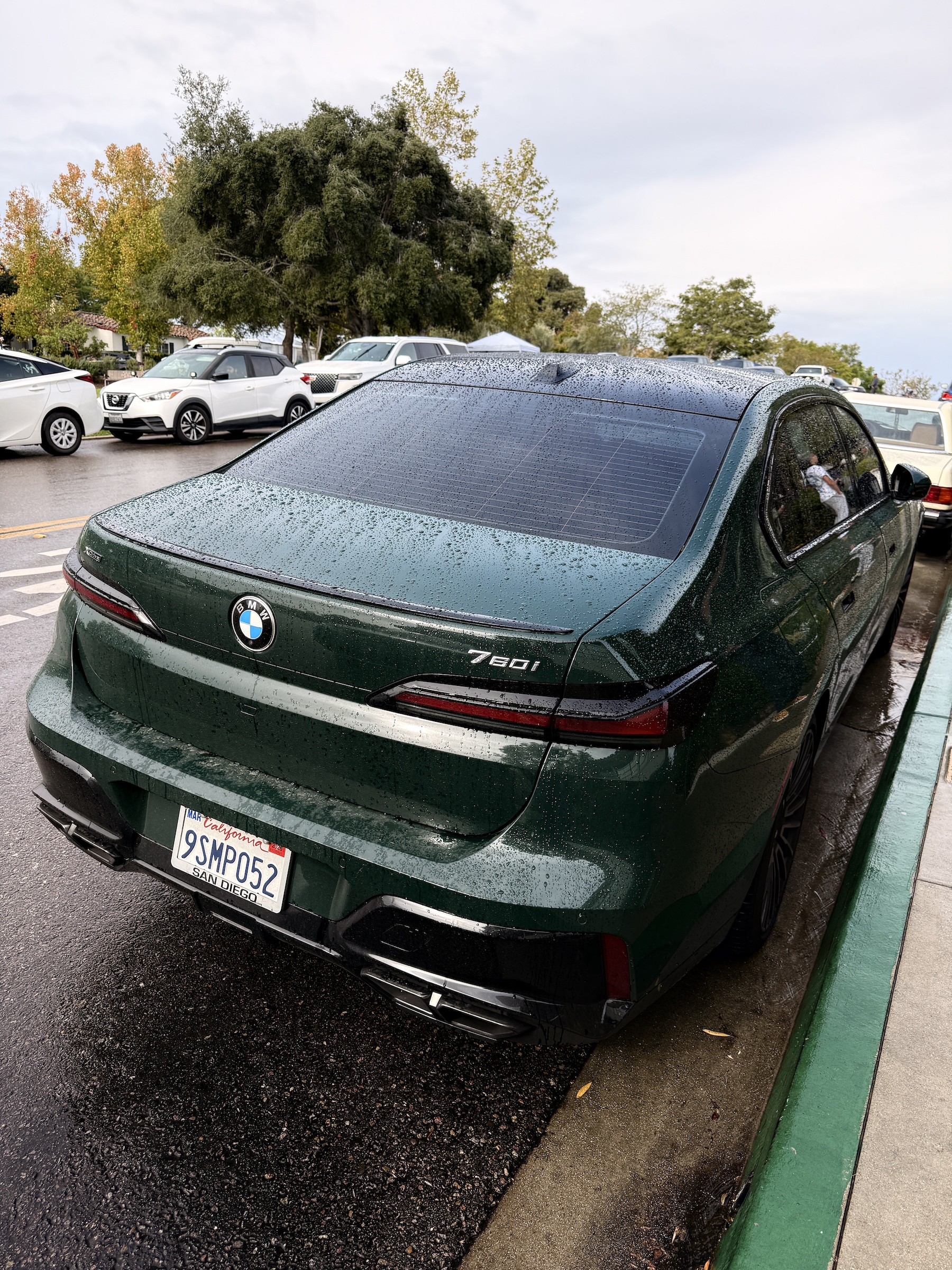
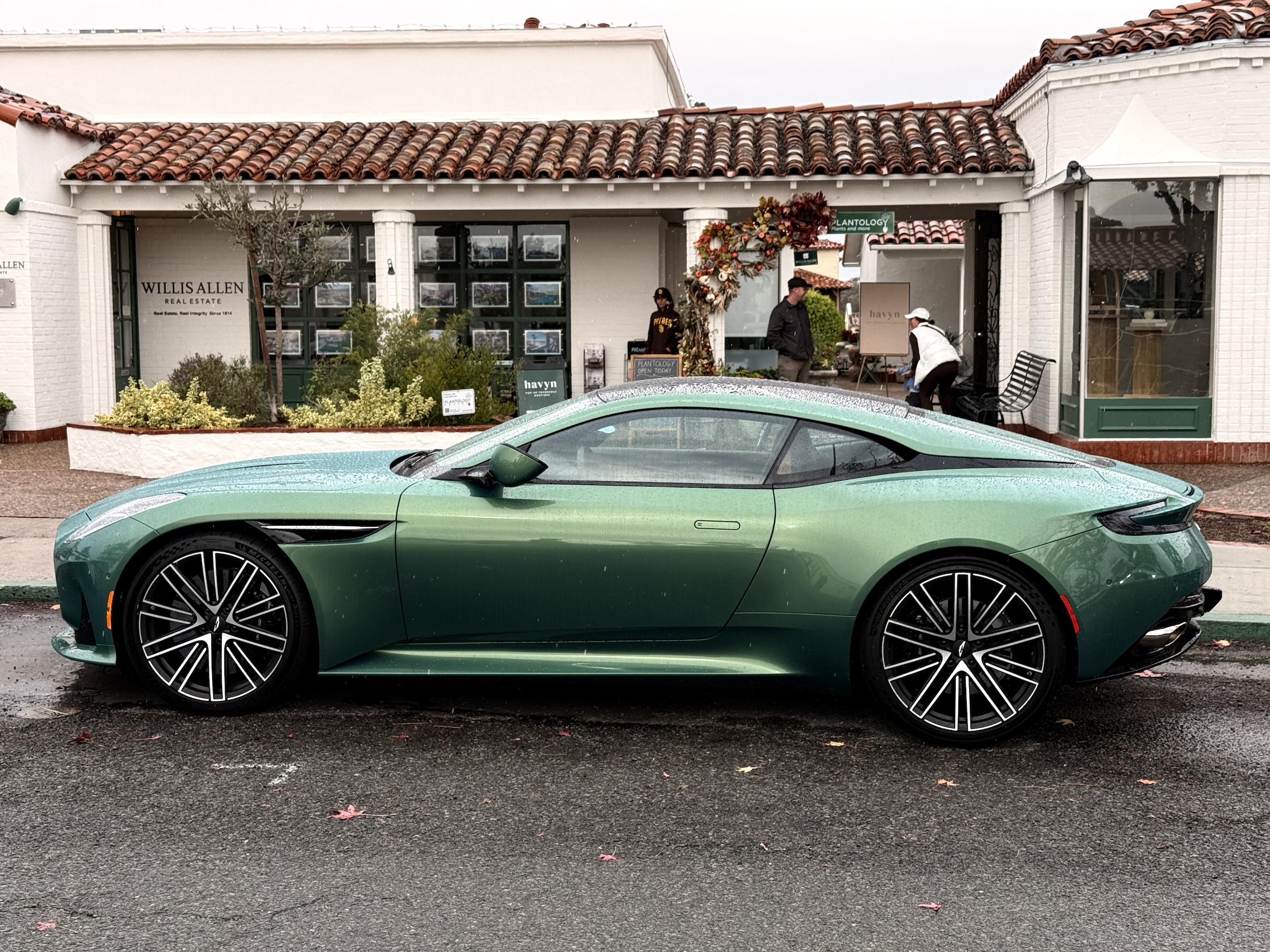
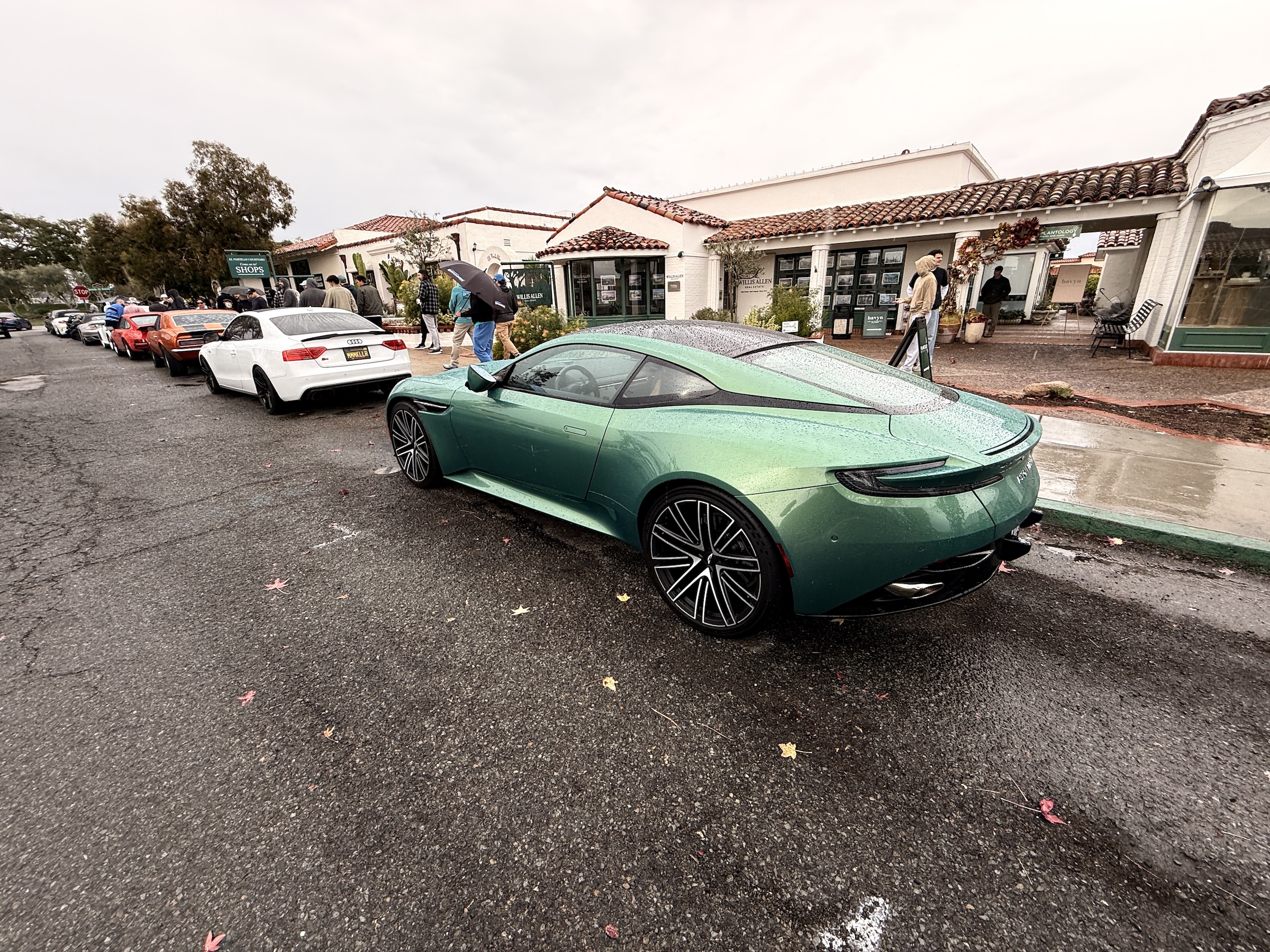
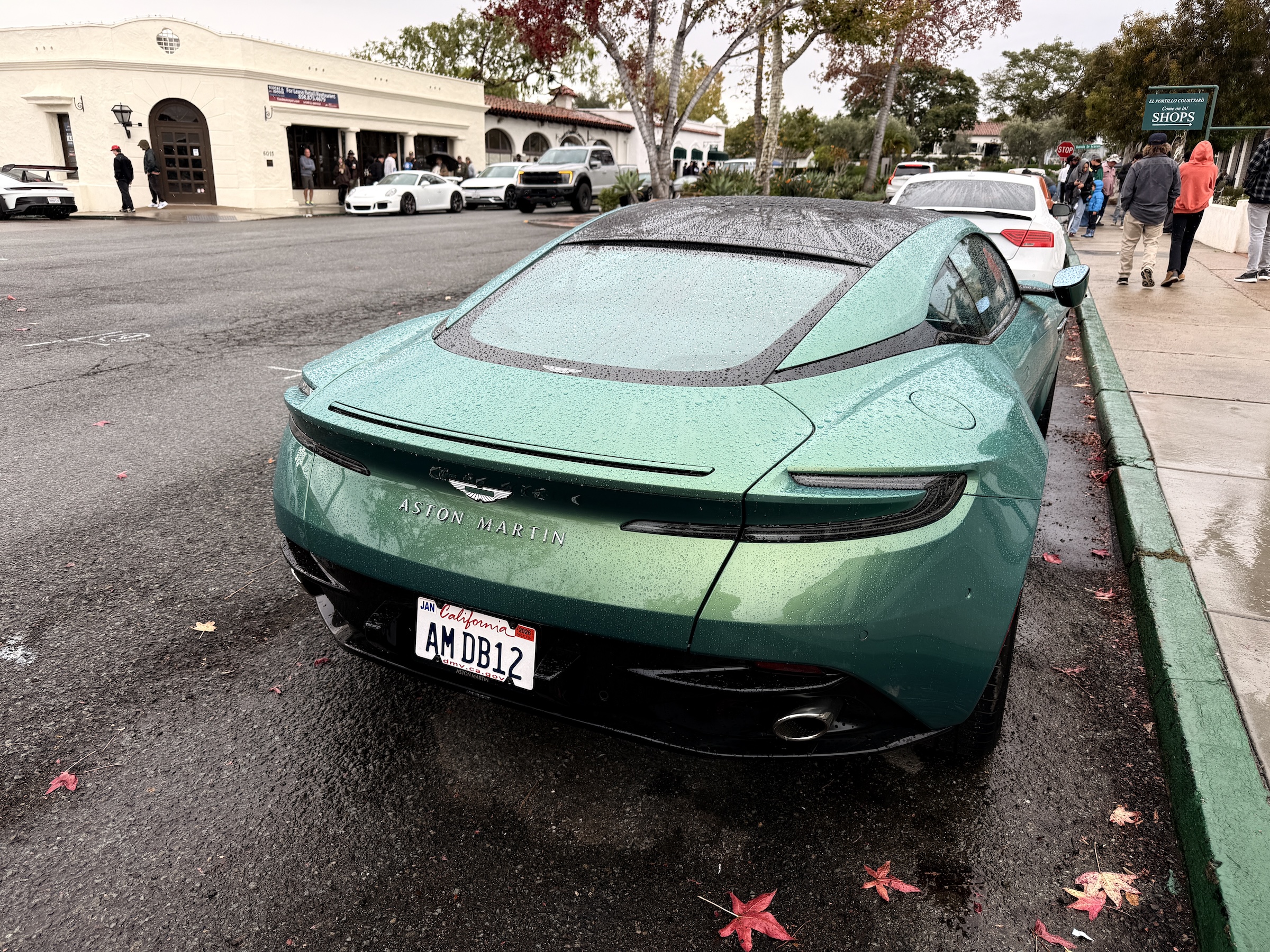
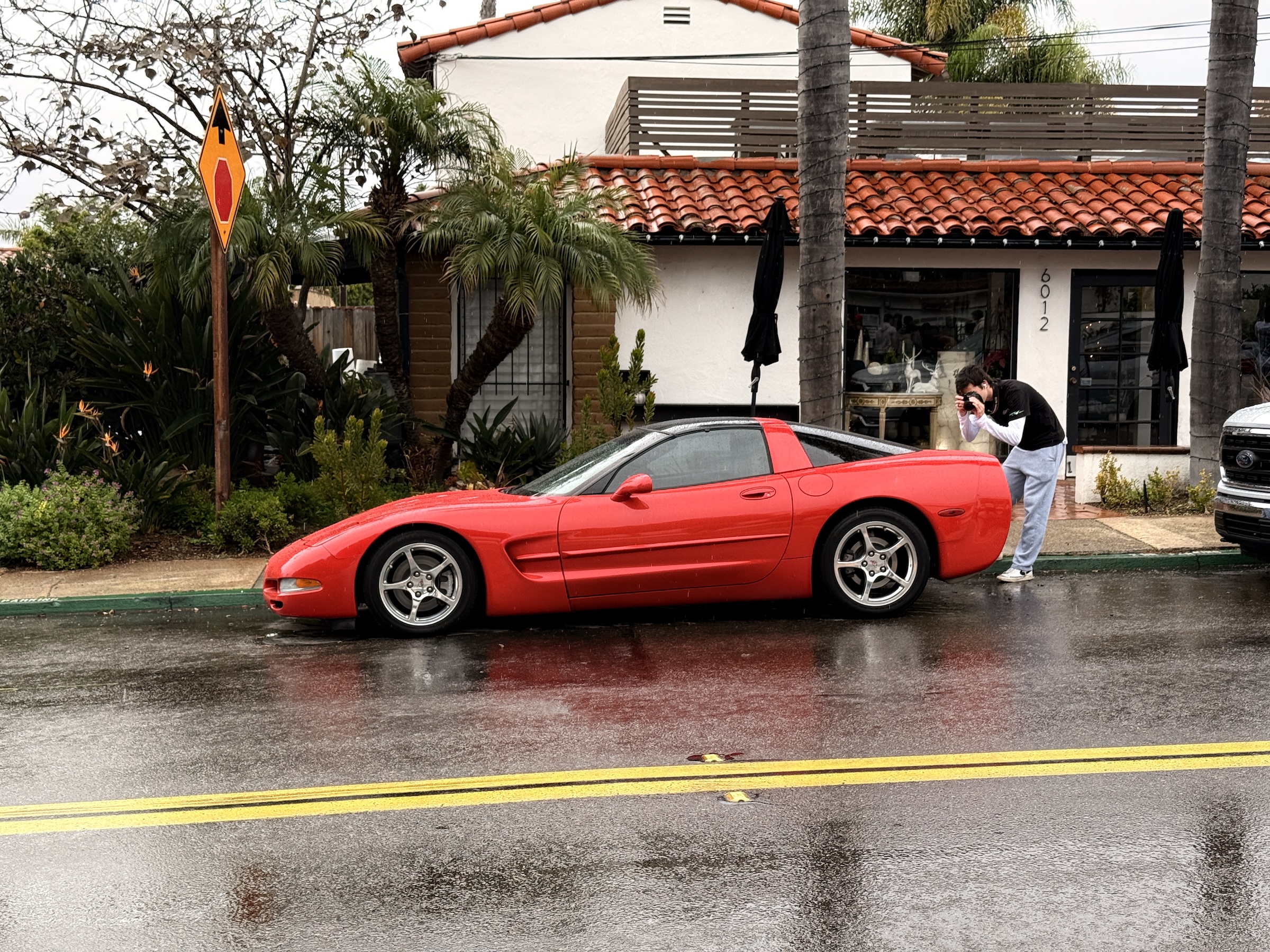
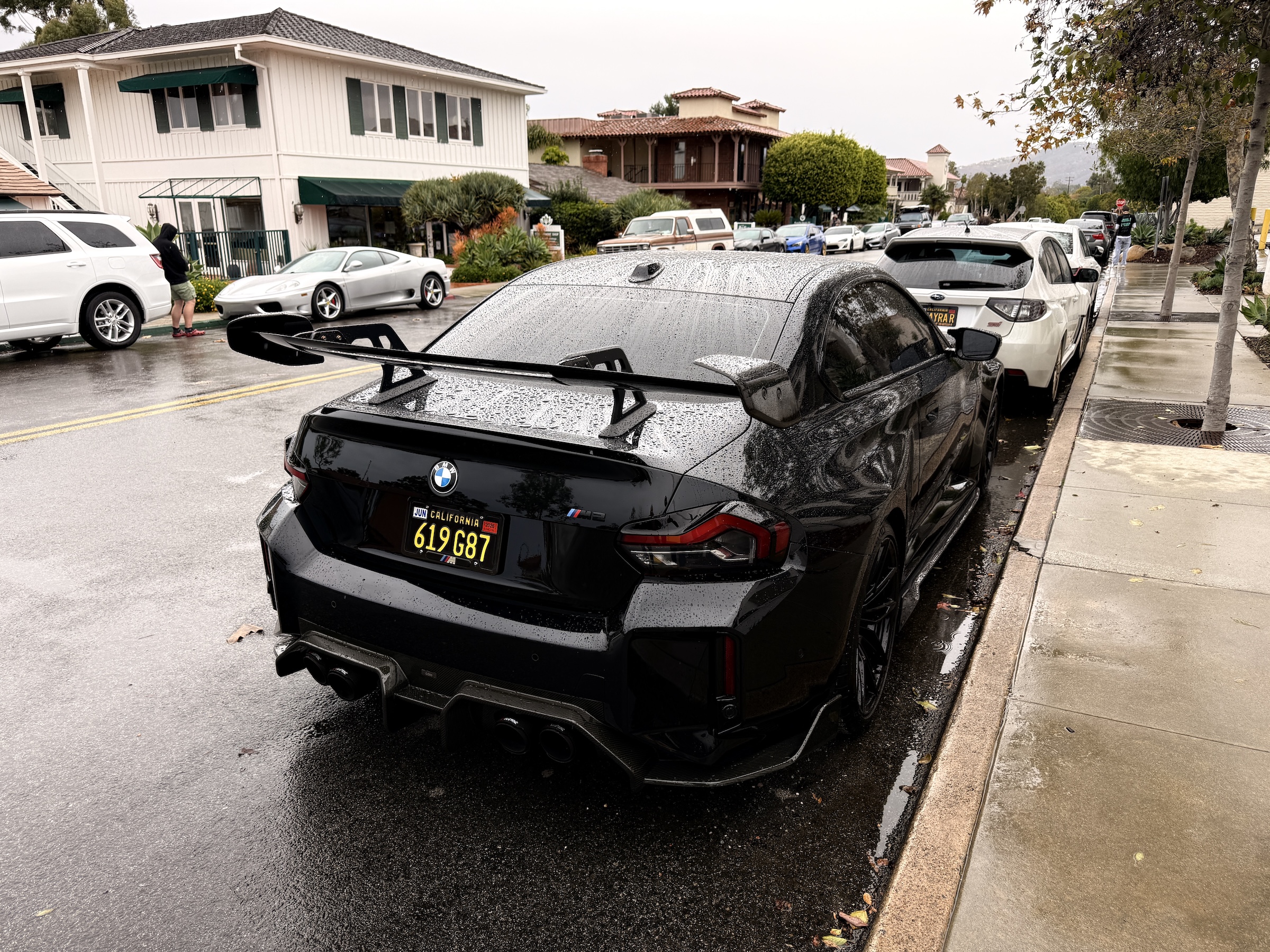
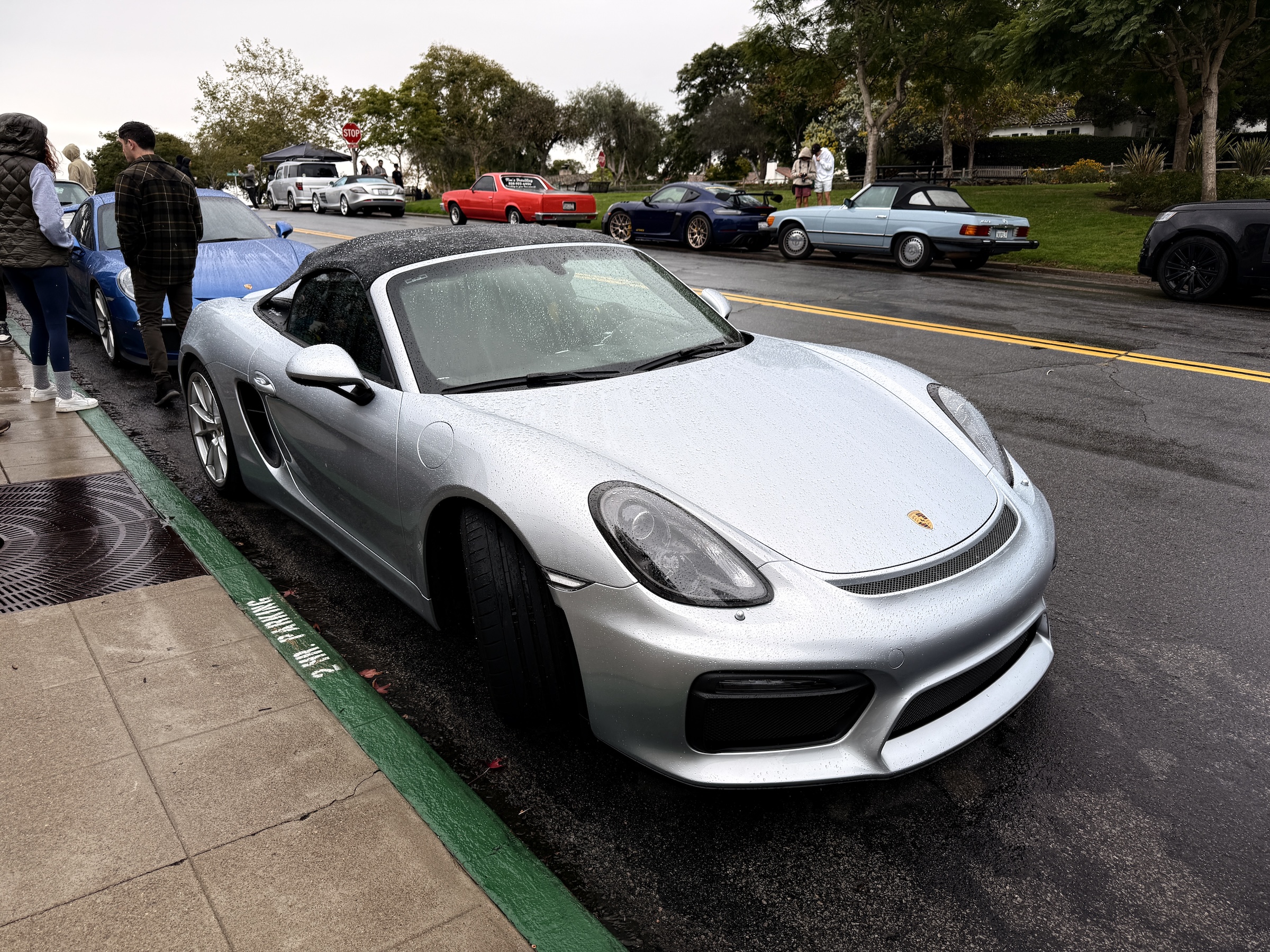
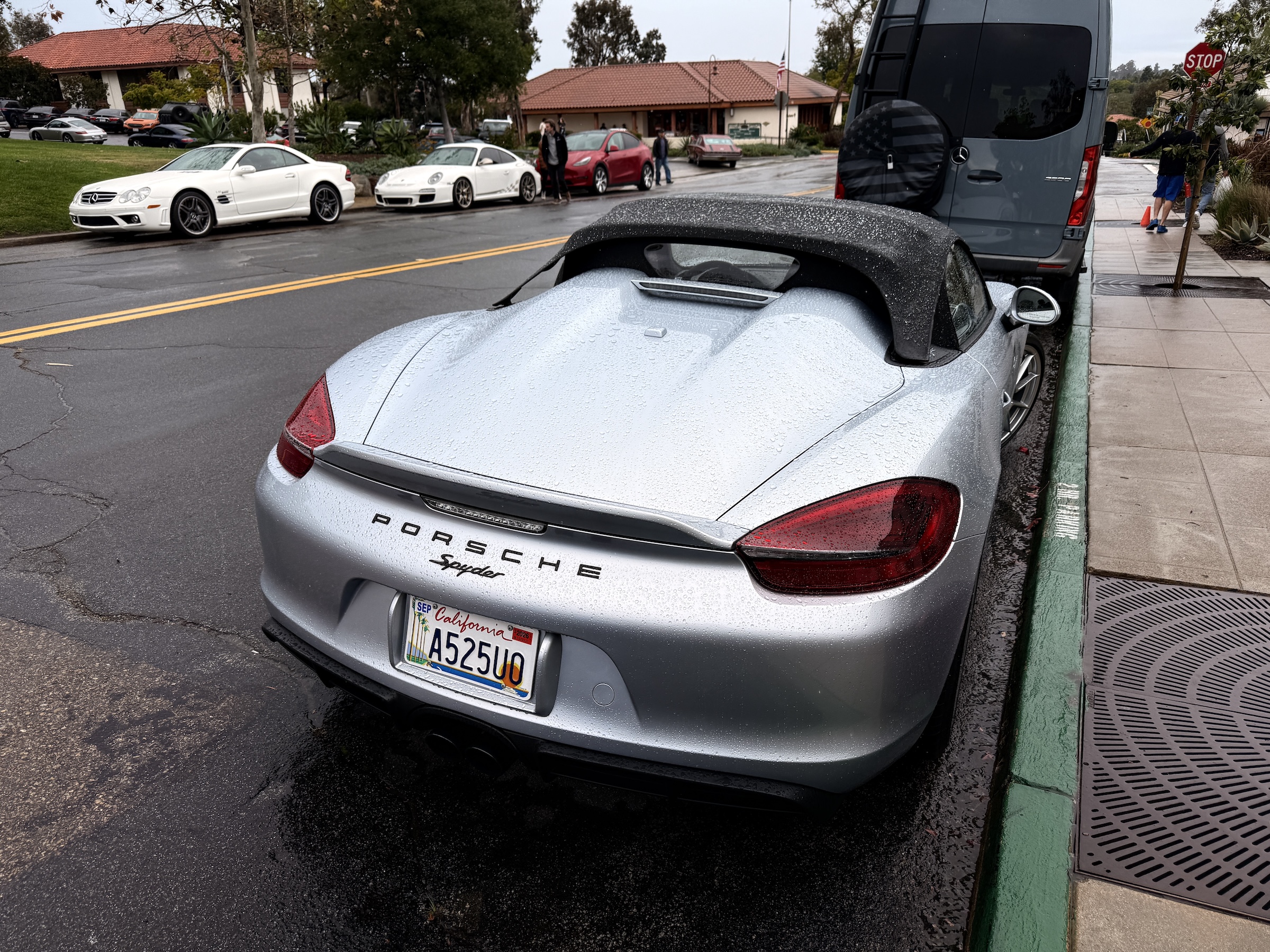
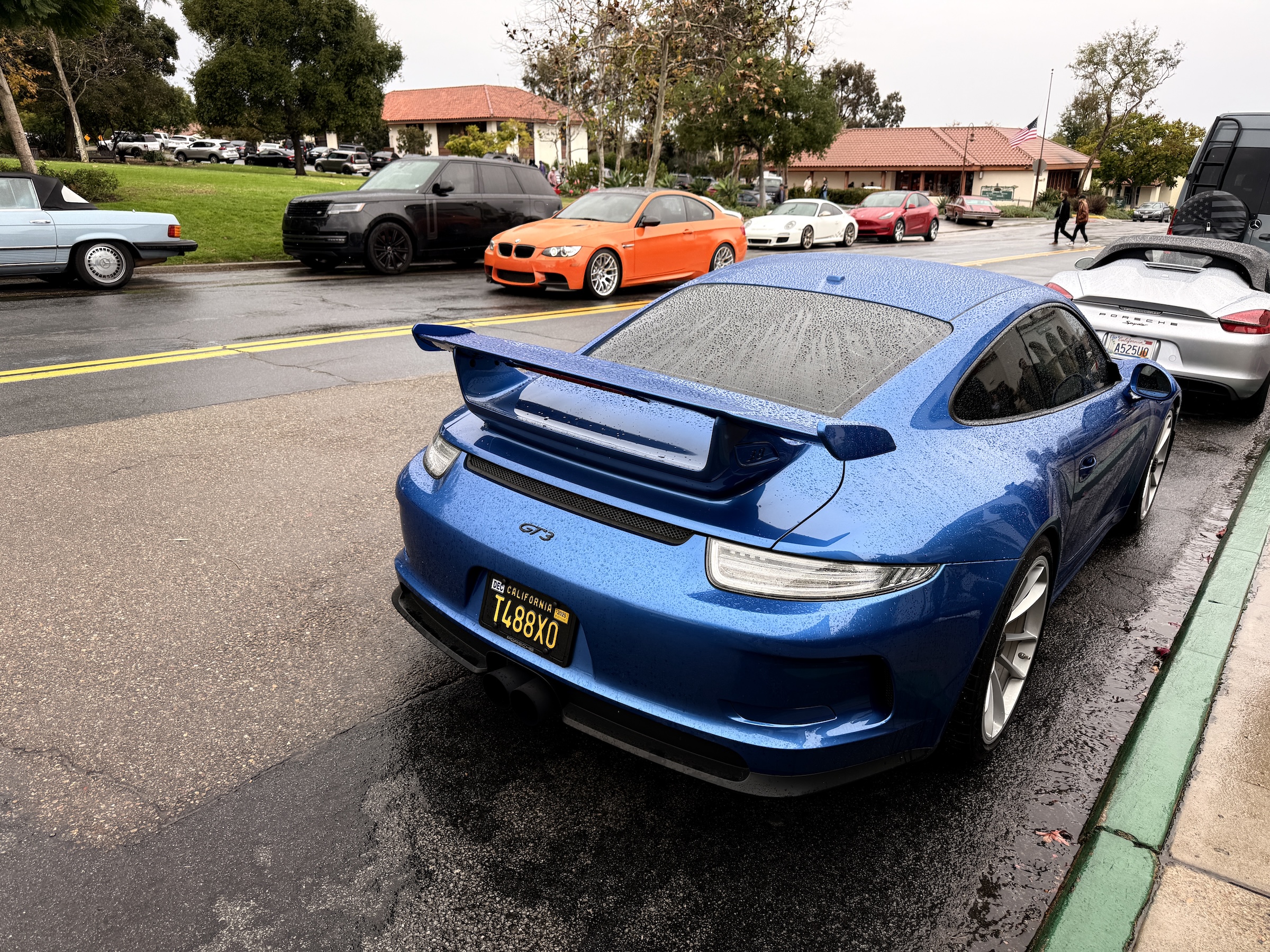
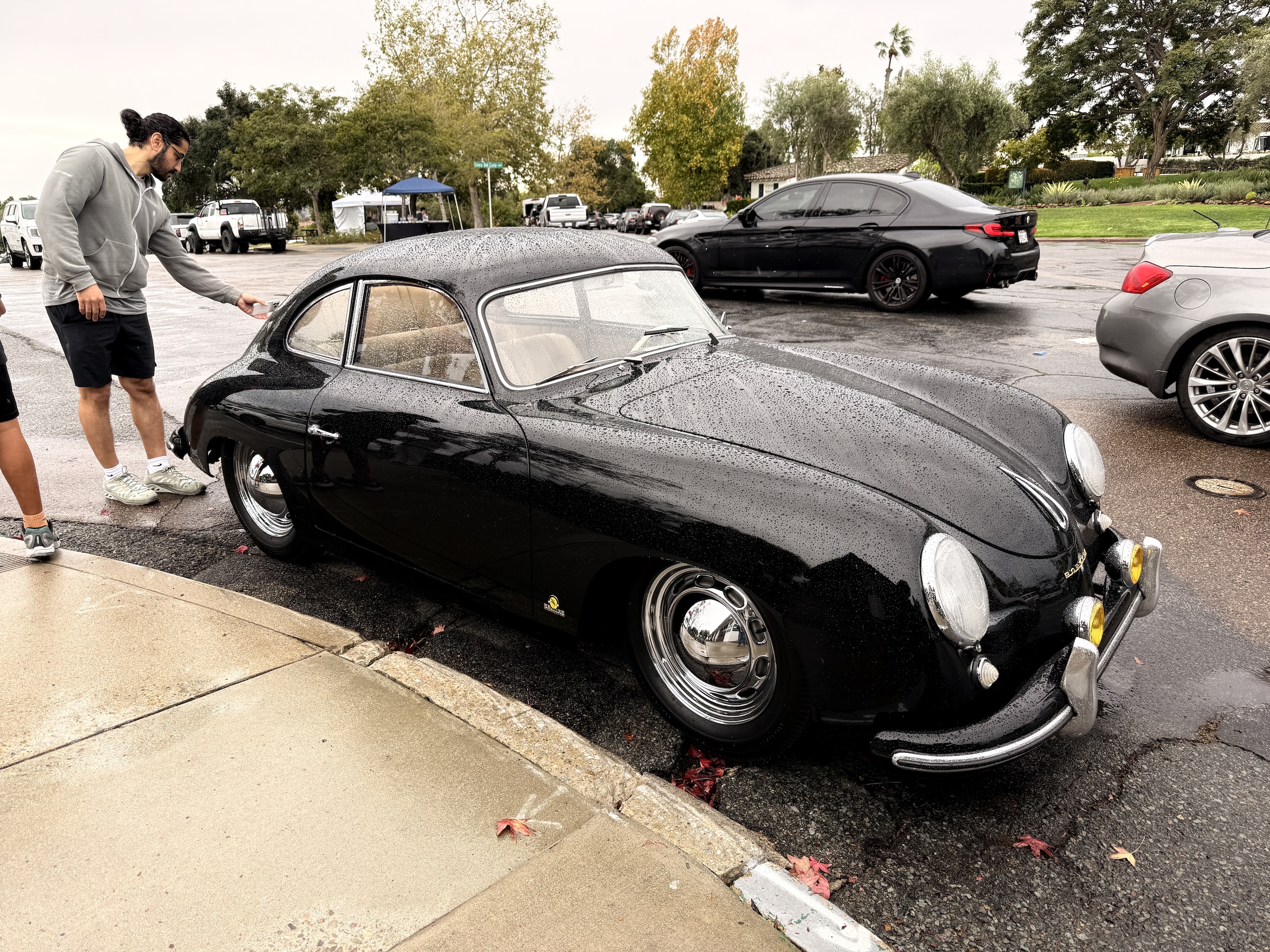
It was raining this morning, and we drove out to see the supercars and other classic cars that are parked in downtown Rancho Santa Fe on Paseo Delicias and Avenida de Acacias.
They are there every Saturday morning for the Rancho Santa Fe Cars and Coffee event, which runs from 8:00 AM to 11:00 AM.
The green Aston Martin Vantage (MSRP: $245,750) is my favorite, even though I am 99.999% sure will never own one.
Happy Friday.
I took a flight out to San Diego this morning to visit my brother and his family, and to catch some California sun.
Top to bottom:
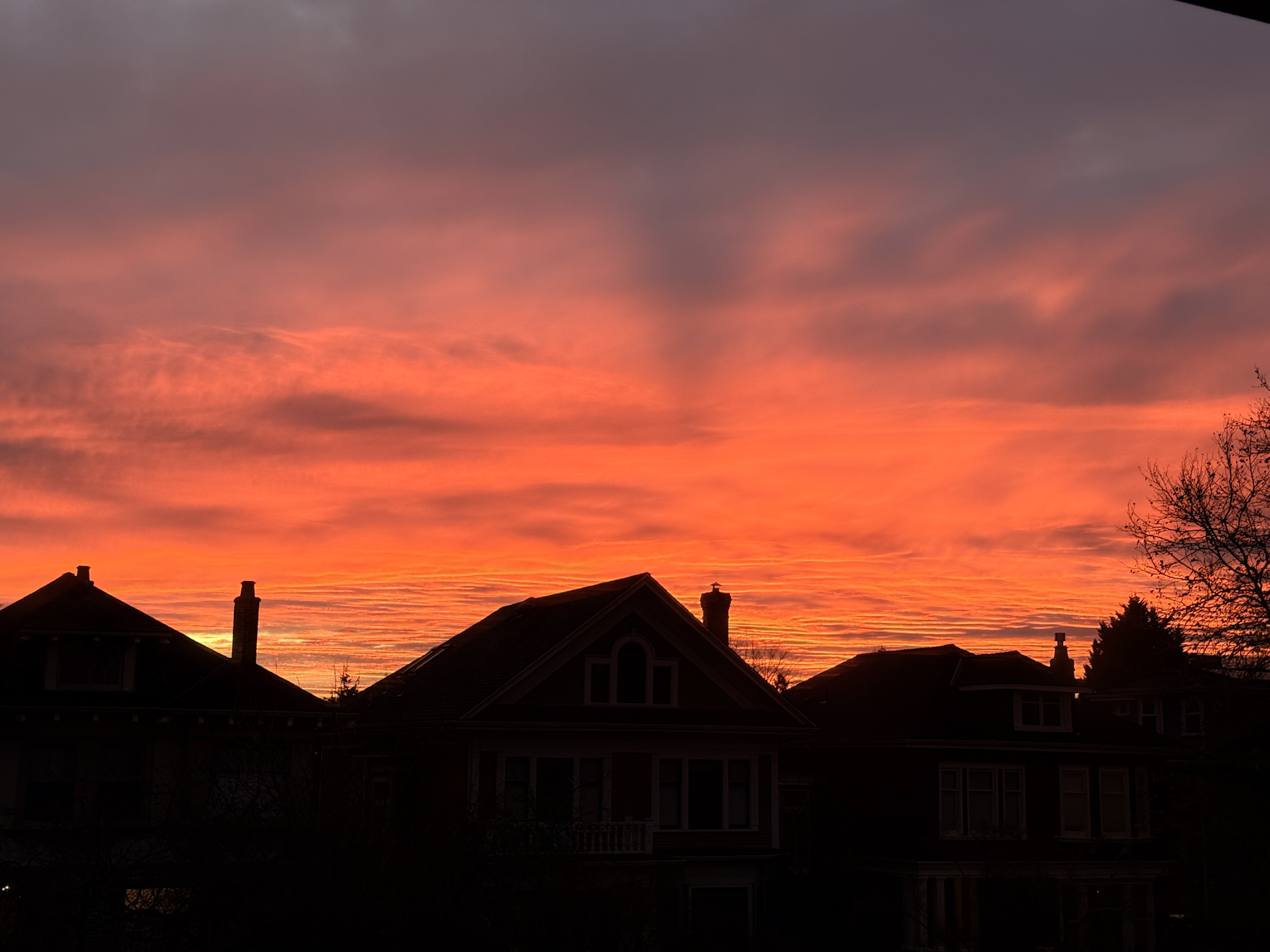
A gorgeous sunrise in Seattle;
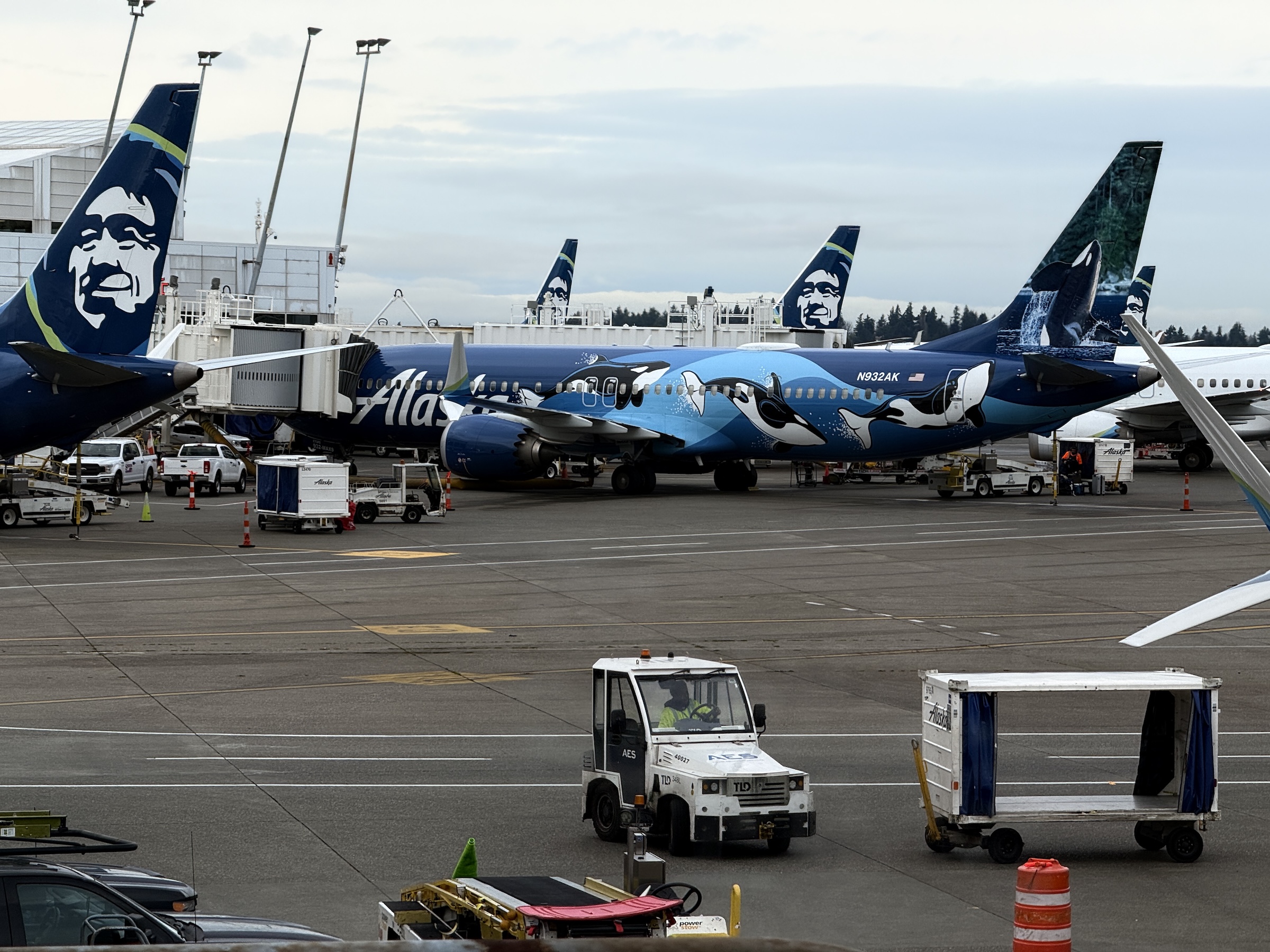
Alaska Airlines Boeing 737 MAX 9 with orca livery at Seattle-Tacoma airport;
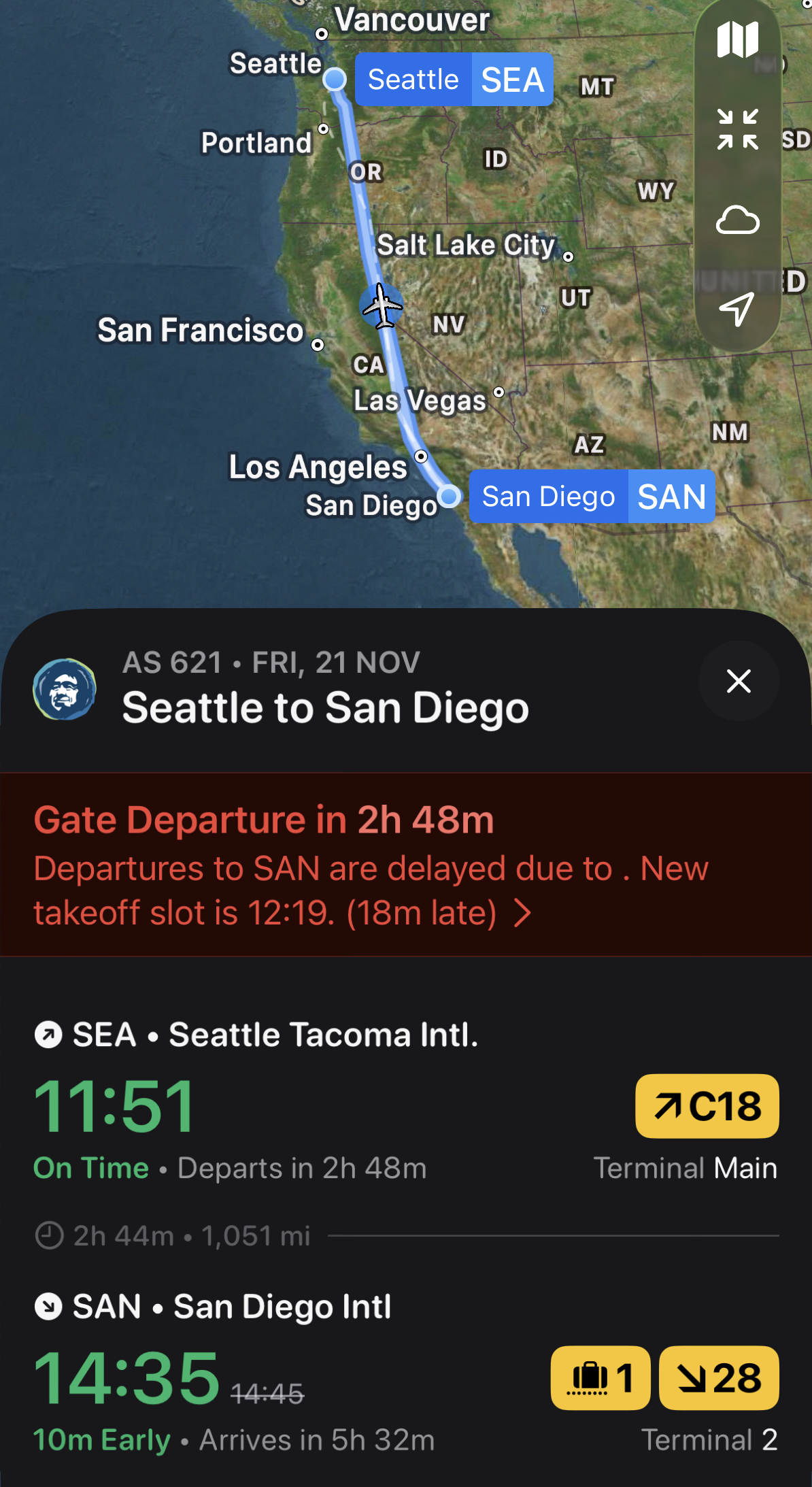
Screenshot from my Flighty app warning that we will have an on-time departure (pushback from the gate), but that there will be an 18 min delay in taking off (which was exactly what happened, but we still arrived 10 mins early);
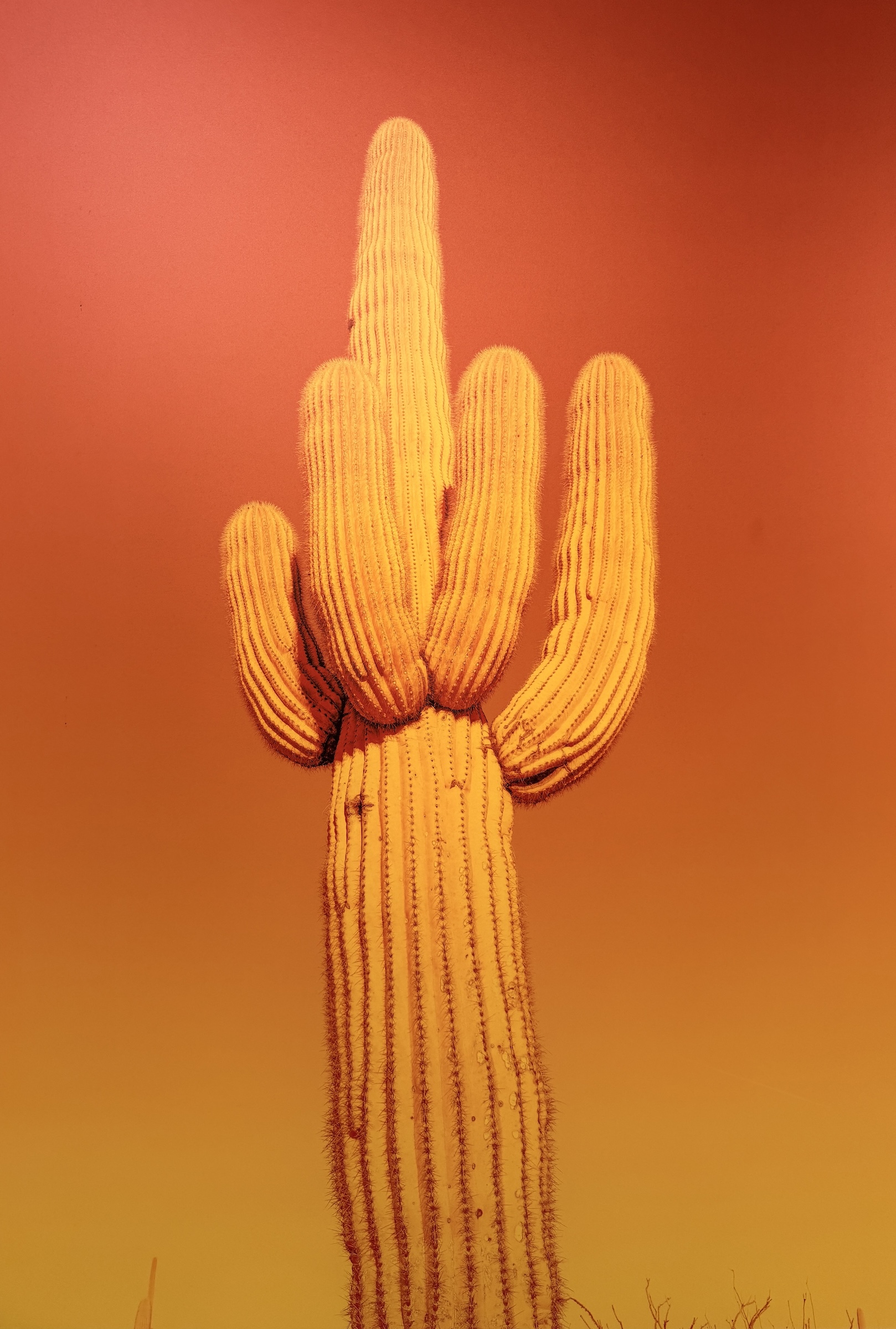
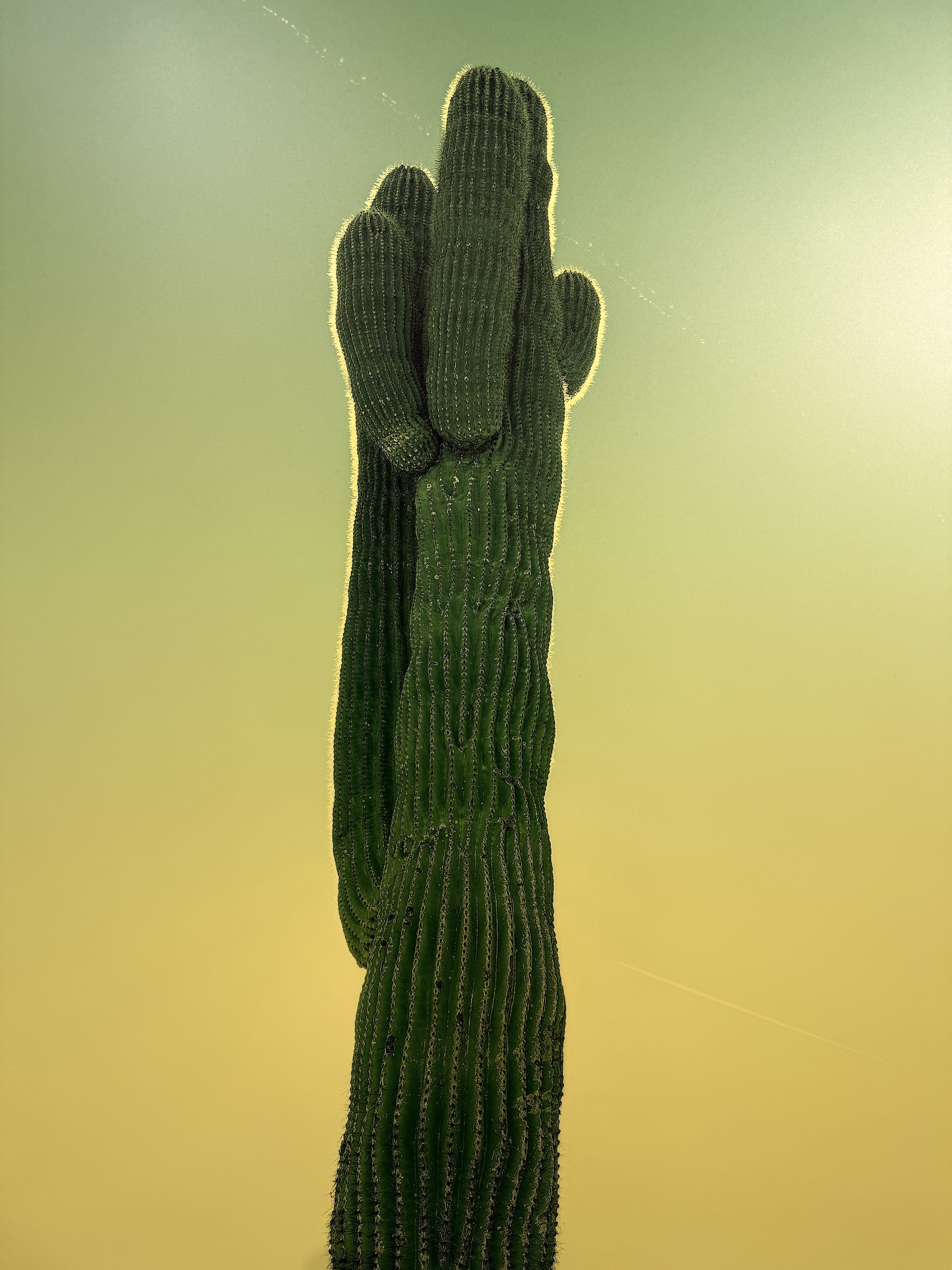
Beautiful gel photos of saguaros in the arrival concourse in San Diego airport (I forgot to take note of name of the photographer);
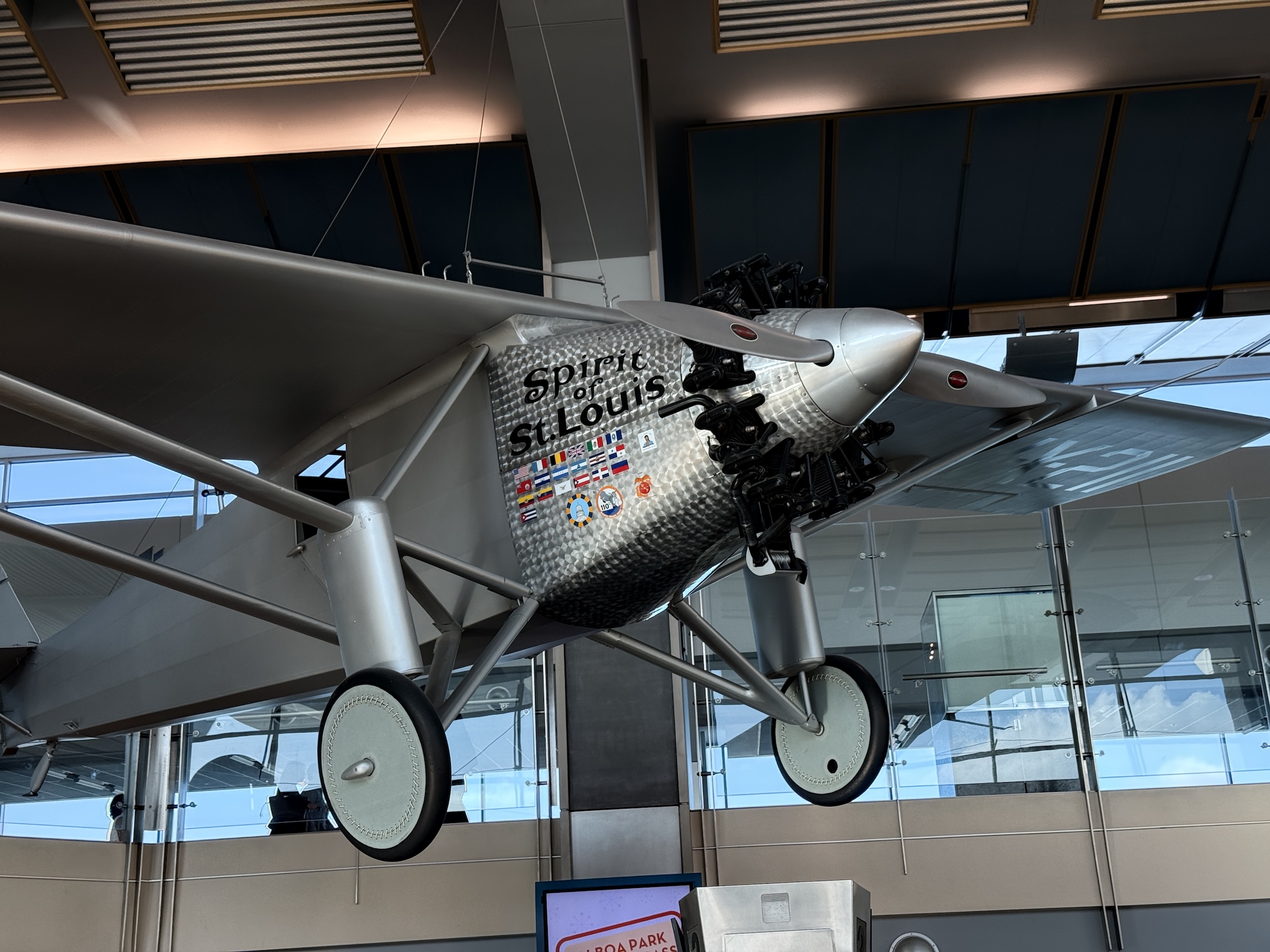
The Spirit of St Louis airplane is still in the baggage claim hall in San Diego airport’s Terminal 2.
Well he was Thailand based
She was an Air Force wife
He used to fly weekends
It was the easy life
But then it turned around
And he began to change
She didn’t wonder then
She didn’t think it strange
But then he got a call
He had to leave that night
He couldn’t say too much
But it would be alright
He didn’t need to pack
They’d meet the next night
He had a job to do
Flying to Cambodia
– Lyrics from the single ‘Cambodia’ by British singer Kim Wilde, released Nov. 2, 1981
The song “Cambodia” by Kim Wilde is about a woman whose pilot husband is sent on a mission to Cambodia and never returns, leaving her in a state of longing and unanswered questions. Written by her father, Marty Wilde, and her brother, Ricky Wilde, the song is a tragic love story about loss, separation, and the enduring pain of waiting for someone who is gone. The lyrics depict the woman’s emotional journey from hope to the realization that her partner is never coming back. [Google AI Overview]
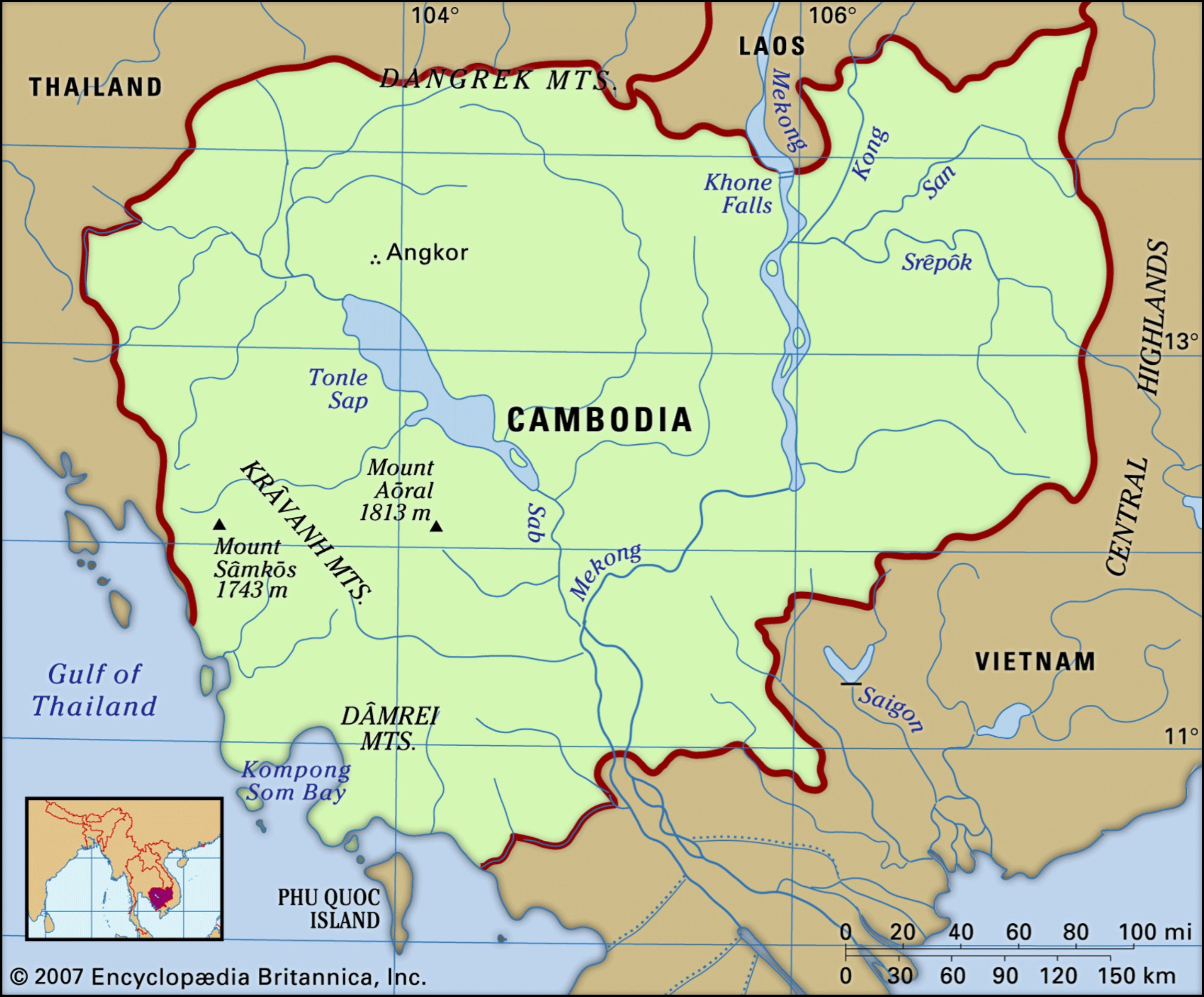
Cambodia is on the itinerary for my upcoming Princess cruise out of Singapore.
We will stop at the port by the city of Sihanoukville for only one night and one day, though.
I signed up for the excursion to Ream National Park with its mangrove forests, wildlife and pure stretches of white beach.
C A M B O D I A Capital: Phnom Penh Currency: Cambodian riel Official language: Khmer Population: 17.6 million Government: Unitary state, Parliamentary system, Constitutional monarchy, One-party state, Elective monarchy King: Norodom Sihamoni
Cambodia—officially the Kingdom of Cambodia— is somewhat larger than the U.S. state of Missouri. It is bordered to the west and northwest by Thailand, to the northeast by Laos, to the east and southeast by Vietnam, and to the southwest by the Gulf of Thailand. The Khmer language is one of the major tongues of the Mon-Khmer subfamily of the Austroasiatic language family and is spoken by nearly all people in Cambodia, including the Cham-Malay.
The people of Cambodia suffered under the Khmer Rouge, the radical communist movement that ruled Cambodia from 1975 to 1979 after winning power through a guerrilla war. The Khmer Rouge government under Pol Pot was responsible for the Cambodian genocide (1976-78), during which up to three million people were murdered.
Tourist-wise (‘Quick Facts’ from Google Maps): Cambodia has a landscape that spans low-lying plains, the Mekong Delta, mountains and Gulf of Thailand coastline. Phnom Penh, its capital, is home to the art deco Central Market, glittering Royal Palace and the National Museum’s historical and archaeological exhibits. In the country’s northwest are the ruins of Angkor Wat, a massive stone temple complex built during the Khmer Empire.
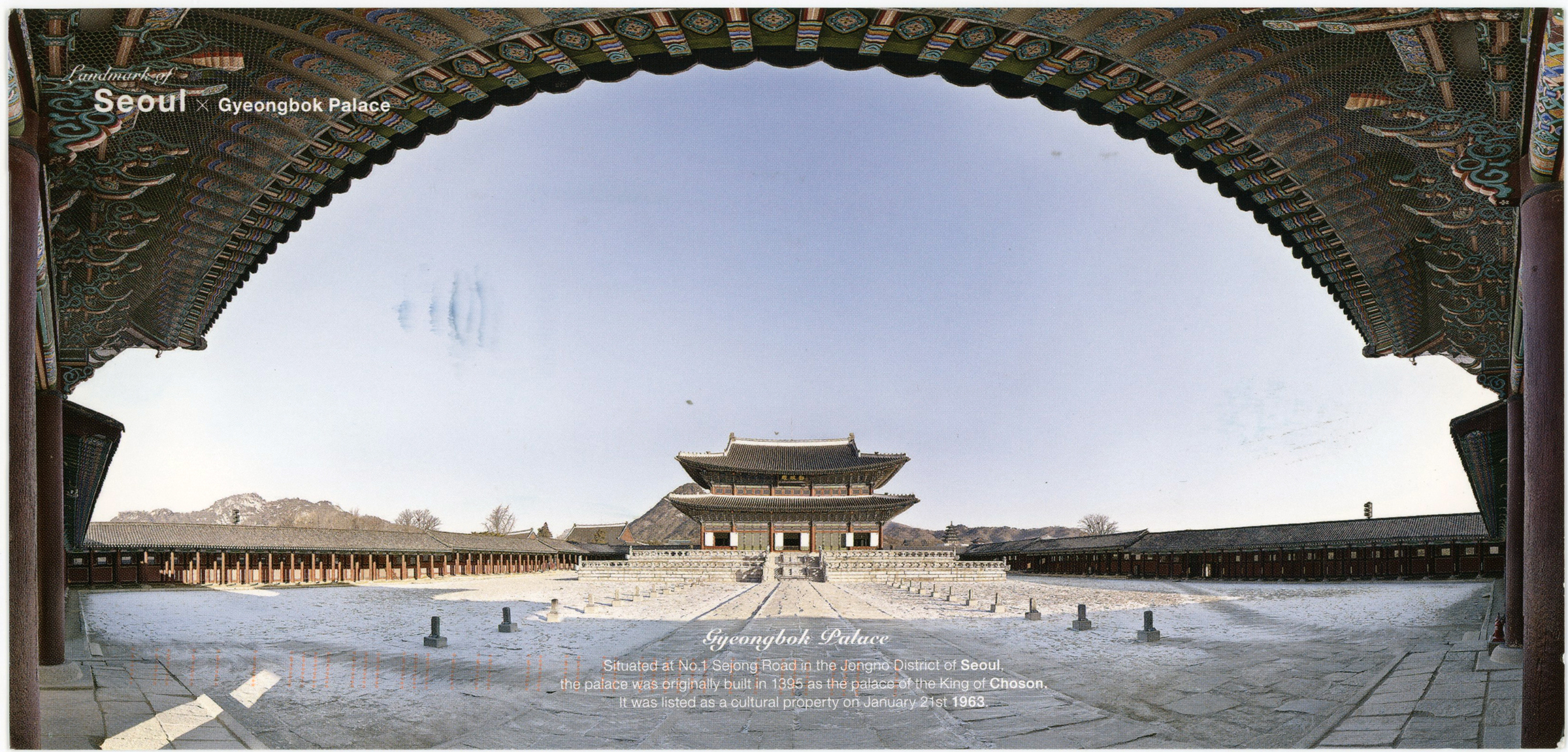
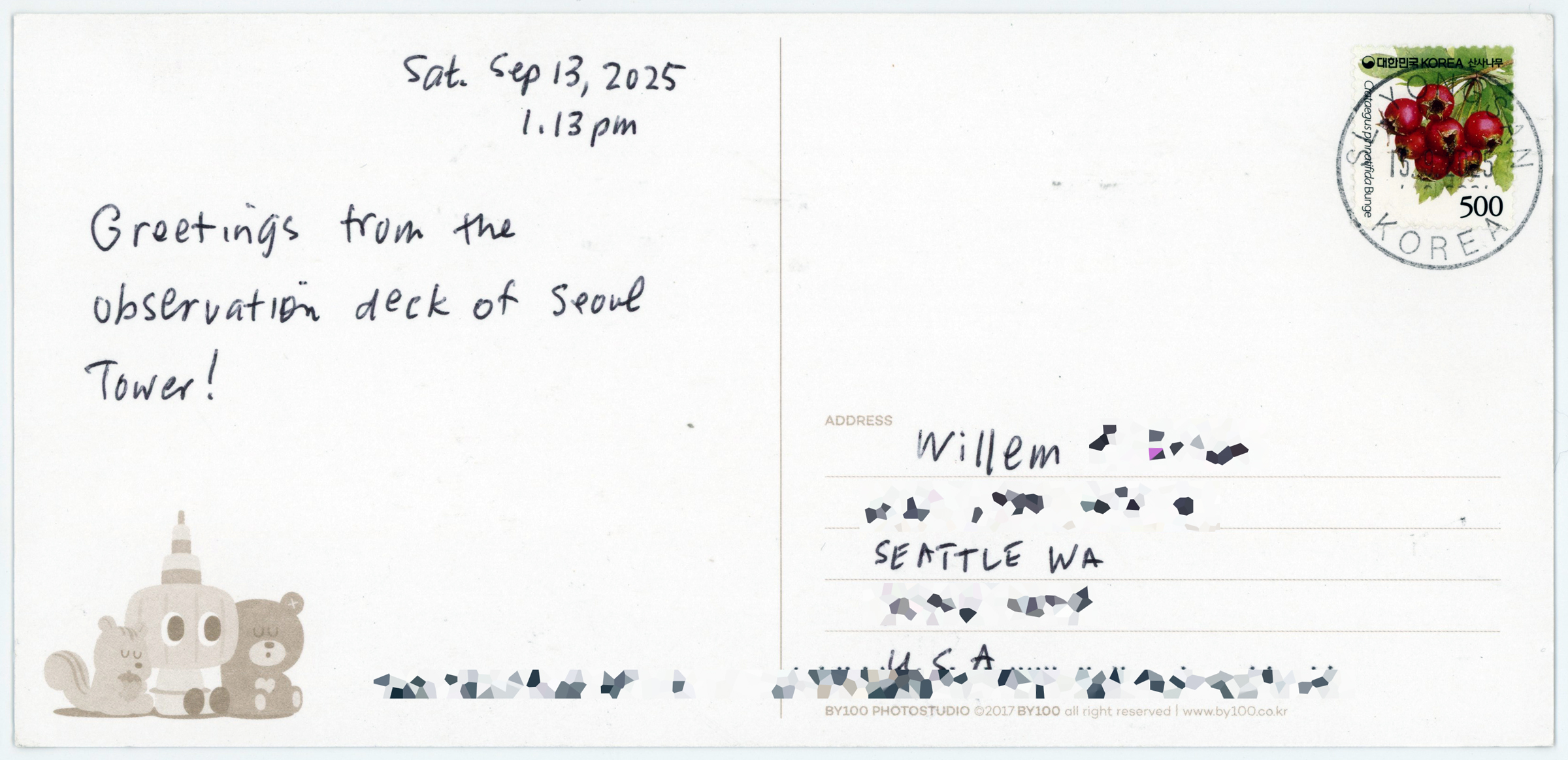
Hey! The postcard I had mailed to Seattle from the top of Seoul tower made it into my mailbox.
Gyeongbok Palace Situated at No. 1 Sejong Road in the Jongno District of Seoul, the palace was originally built in 1395 as the palace of the King of Choson. It was listed as a cultural property on Jan. 1, 1963.
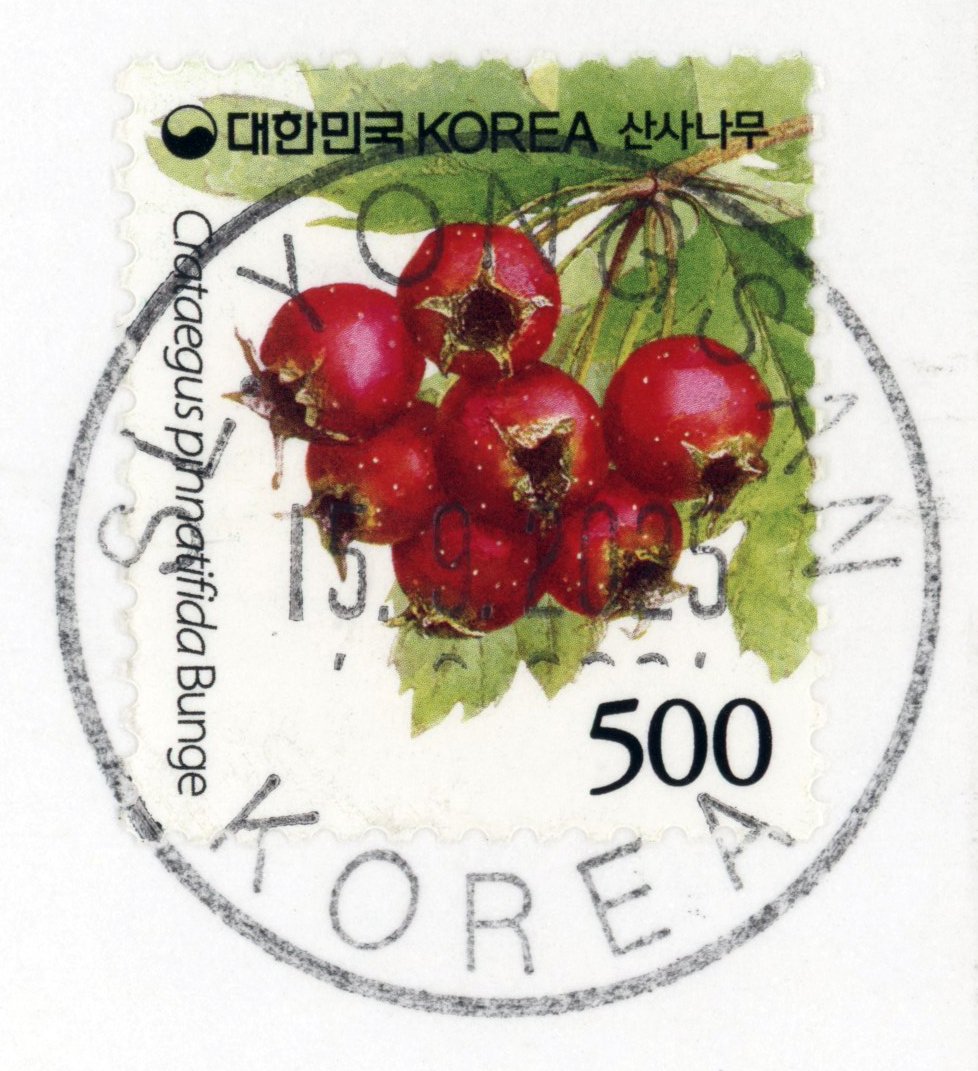
Mailed on Sat. Sept. 13, and processed on Mon. Sep. 15 at Seoul Yongsan Post Office, a stone’s throw from Seoul Tower.
2021 Republic of Korea Definitives Issued Dec. 17, 2021 Perf. 13½ |Design: Ryu Ji-Hyeong |Engraving: Korea Minting and Security Printing Corporation |Litho. |No watermark #3555 500₩ Multicolored |Fruit cluster of bunge (Crataegus pinnatifida) This tree is also called Chinese hawthorn and is known for its bright red fruit that is used in traditional East Asian medicine and foods (like candies and teas). 500₩ = US$ 0.36 [Source: stampworld.com]
I should have stayed on in Tokyo for another week so that I could catch some of the action at the Japan Open ATP 500 men’s tennis tournament there.
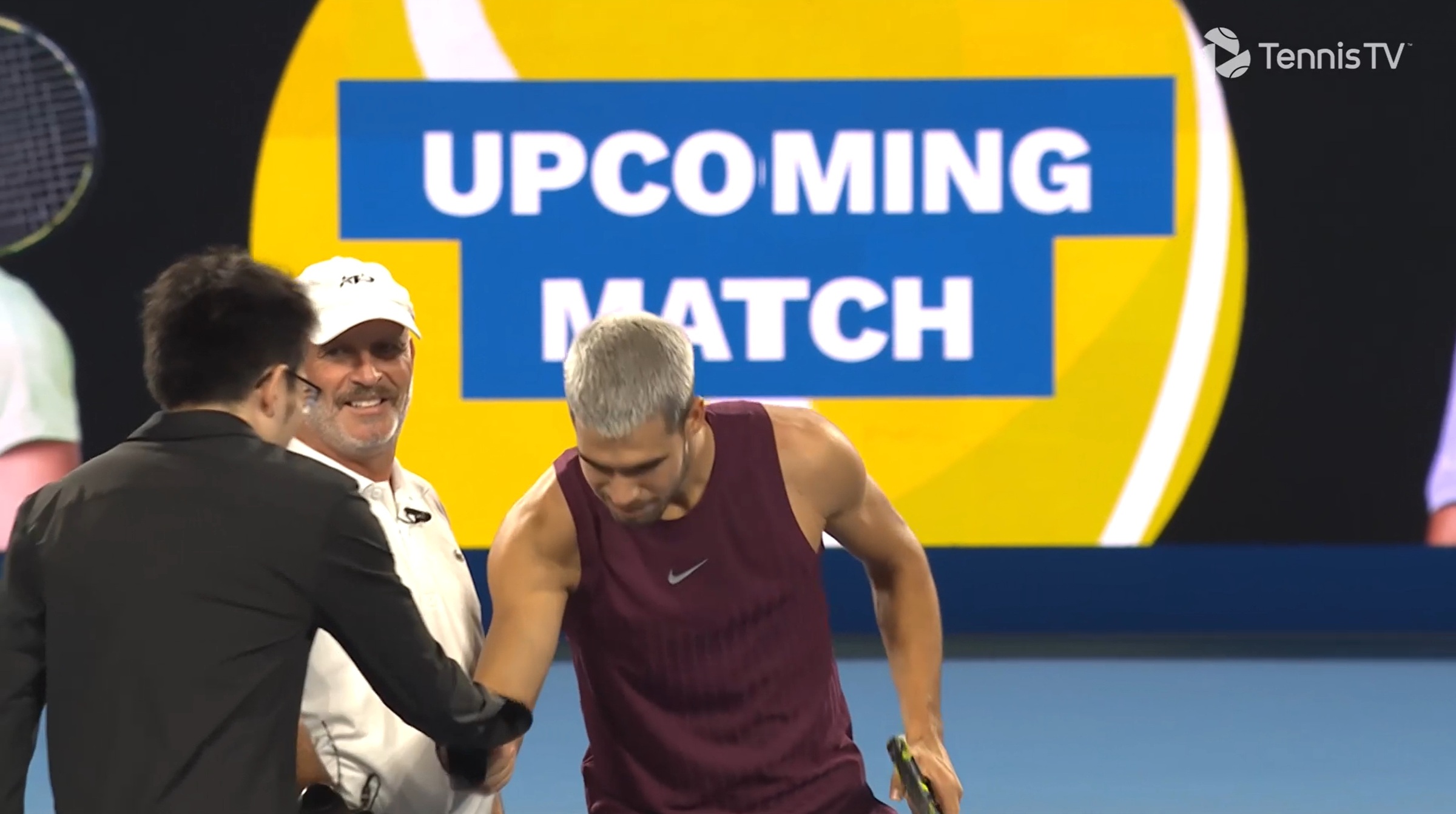
World No. 1 Carlos Alcaraz (🇪🇸, 22) made his debut in Japan there, today.
He scared everybody with an ankle injury in the first set of his match, but recovered to beat Argentinian Sebastian Baez (🇦🇷, 24) by 6-4, 6-2 in the second round.
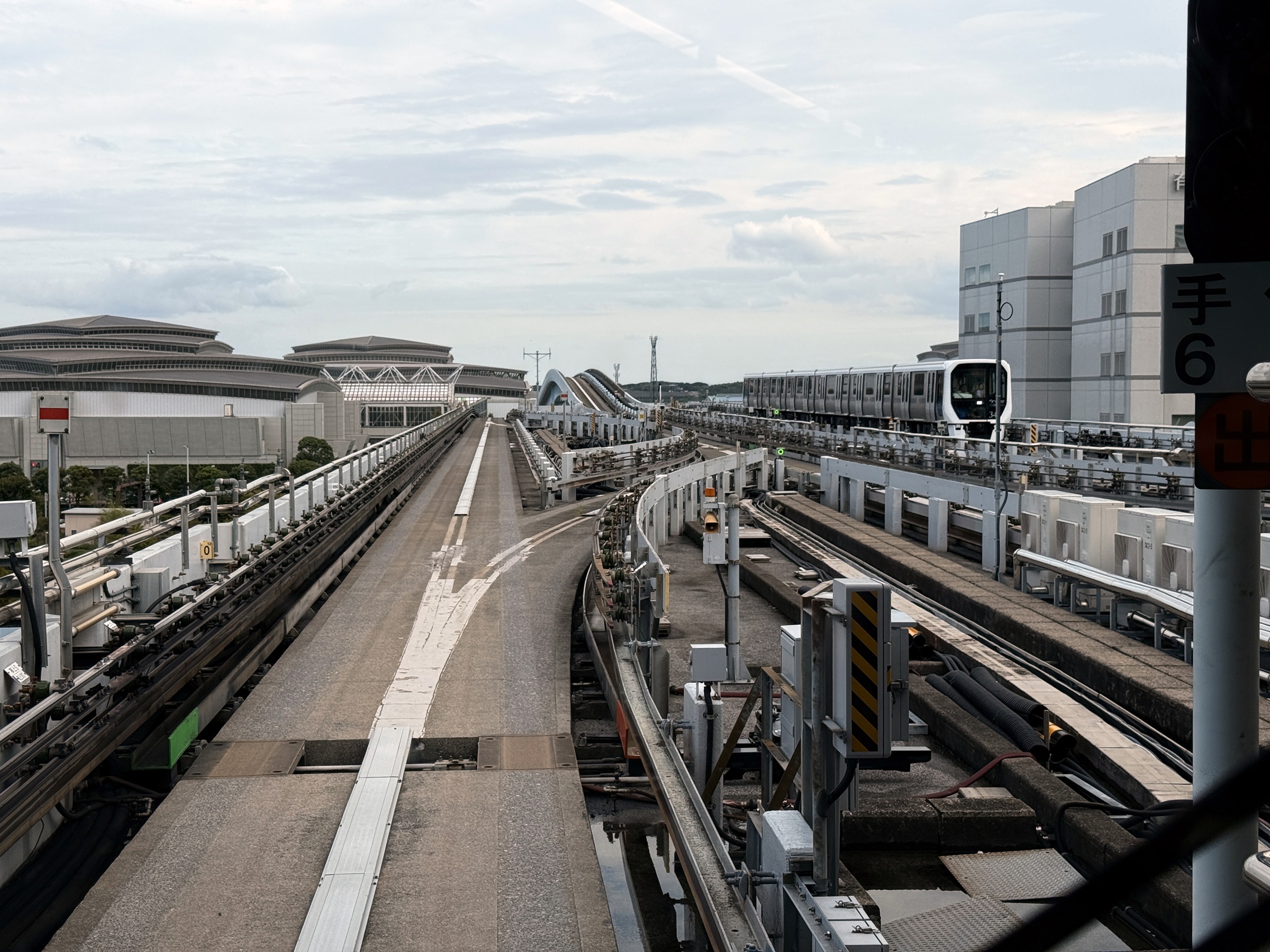
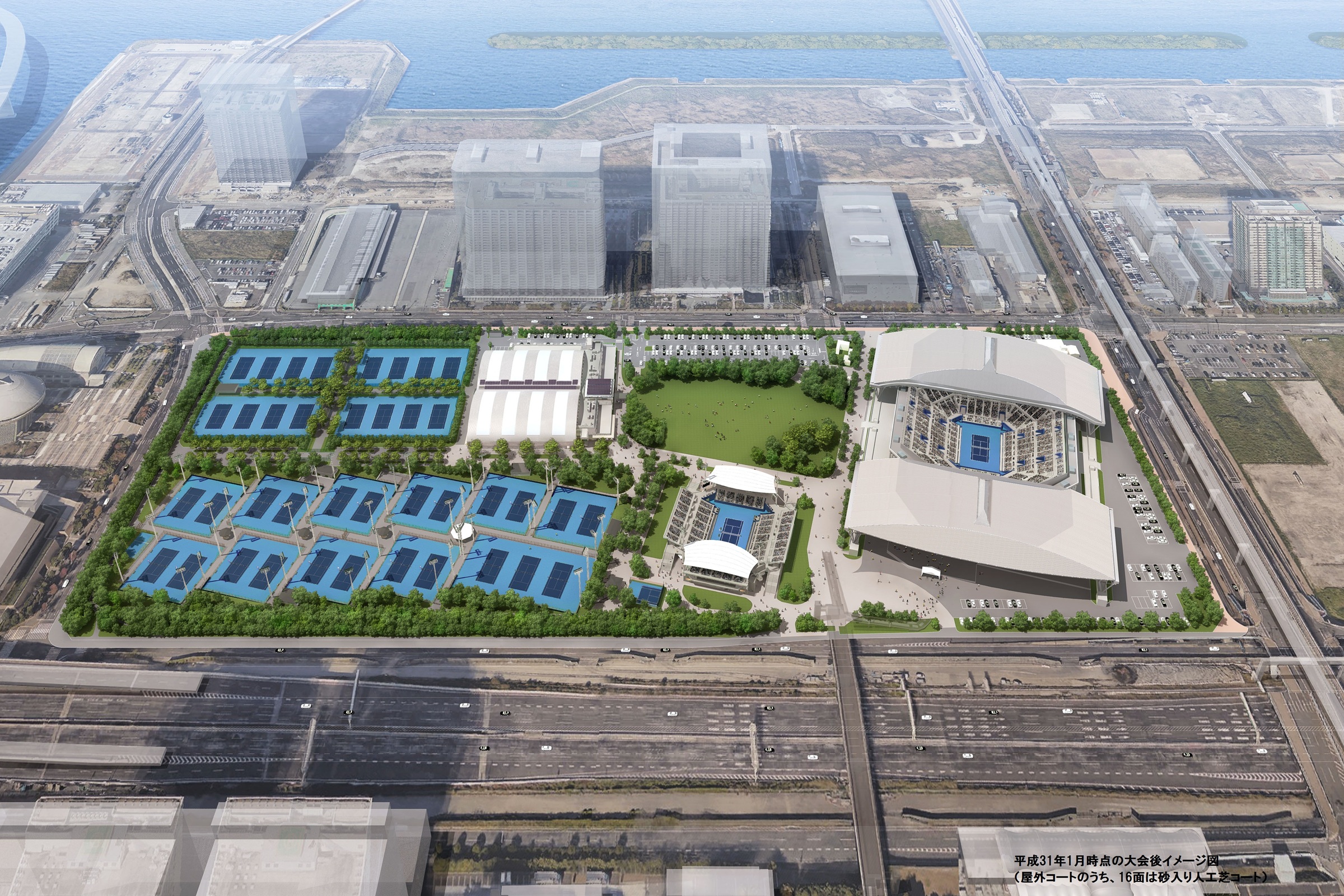
Here is my picture from last Friday on the elevated Yurikamome Line. The structures on the left of the track are in Ariake Tennis no Mori Park with its center court Ariake Coliseum.
The tennis park opened in 1983 with 32 hard courts. It was extensively renovated to serve as the tennis venue for the 2020 Summer Olympics and today houses a total of 49 tennis courts (33 hard courts and 16 artificial grass courts with sand infill). Look for the elevated Yurikamome Line on the left of the picture. The Ariake Tennis no Mori Park train station is towards the top right of the picture. [Graphic from Olympic and Paralympic Games TOKYO2020 website]Here’s Carlos at the start of his match against Sebastian Baez— his buzz cut from the US Open now grown out a little (and bleached silver, not blond, he says). Carlos is doing a Japanese bow as he greets the representative from Kinoshita Group (I couldn’t get his name). The man in the middle is the umpire of the match, Fergus Murphy from Dublin, Ireland. [Still from TennisTV coverage of the match]
It’s Friday night in Seattle.
The flight on All Nippon Airlines out to Seattle went without incident (8h 33m total travel time).
In Seattle I picked up my checked bag, and made a quick stop at the Global Entry kiosks for a facial recognition check. (The check takes 5 seconds flat.)
I even told the immigration officer I had brought back items to declare in my bags, but he waved me through.
Looking out the window as we are getting pushed back from the gate at Terminal 3 at Tokyo’s Haneda International airport. I am sitting in a Boeing 787 Dreamliner like the one in the picture.
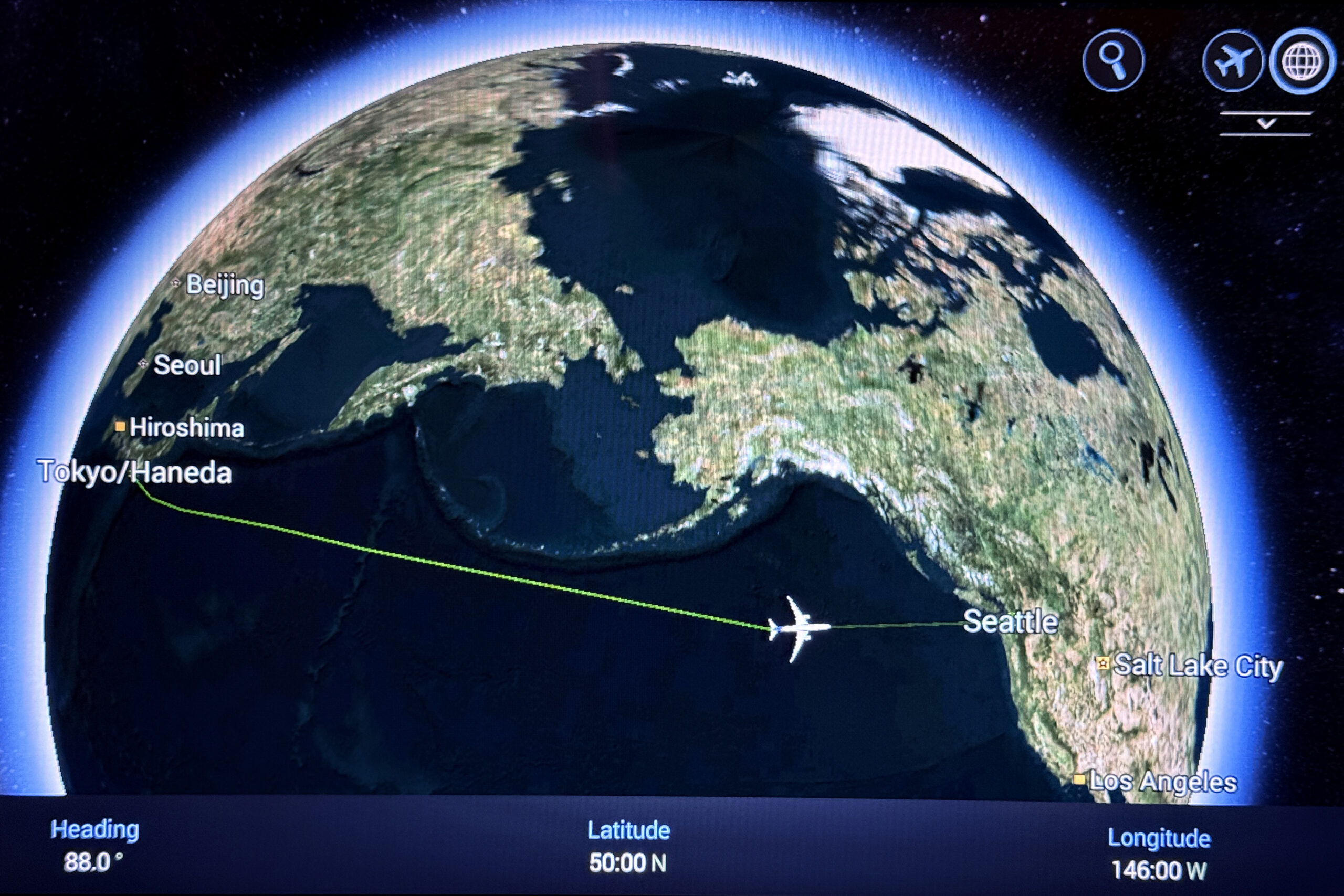
About two hours to go here, flying east across the Pacific Ocean and the International Dateline. I left Tokyo at 9 pm on Friday night, and arrived in Seattle at 2 pm on Friday afternoon ☺️ (Pacific Time Friday afternoon, of course).
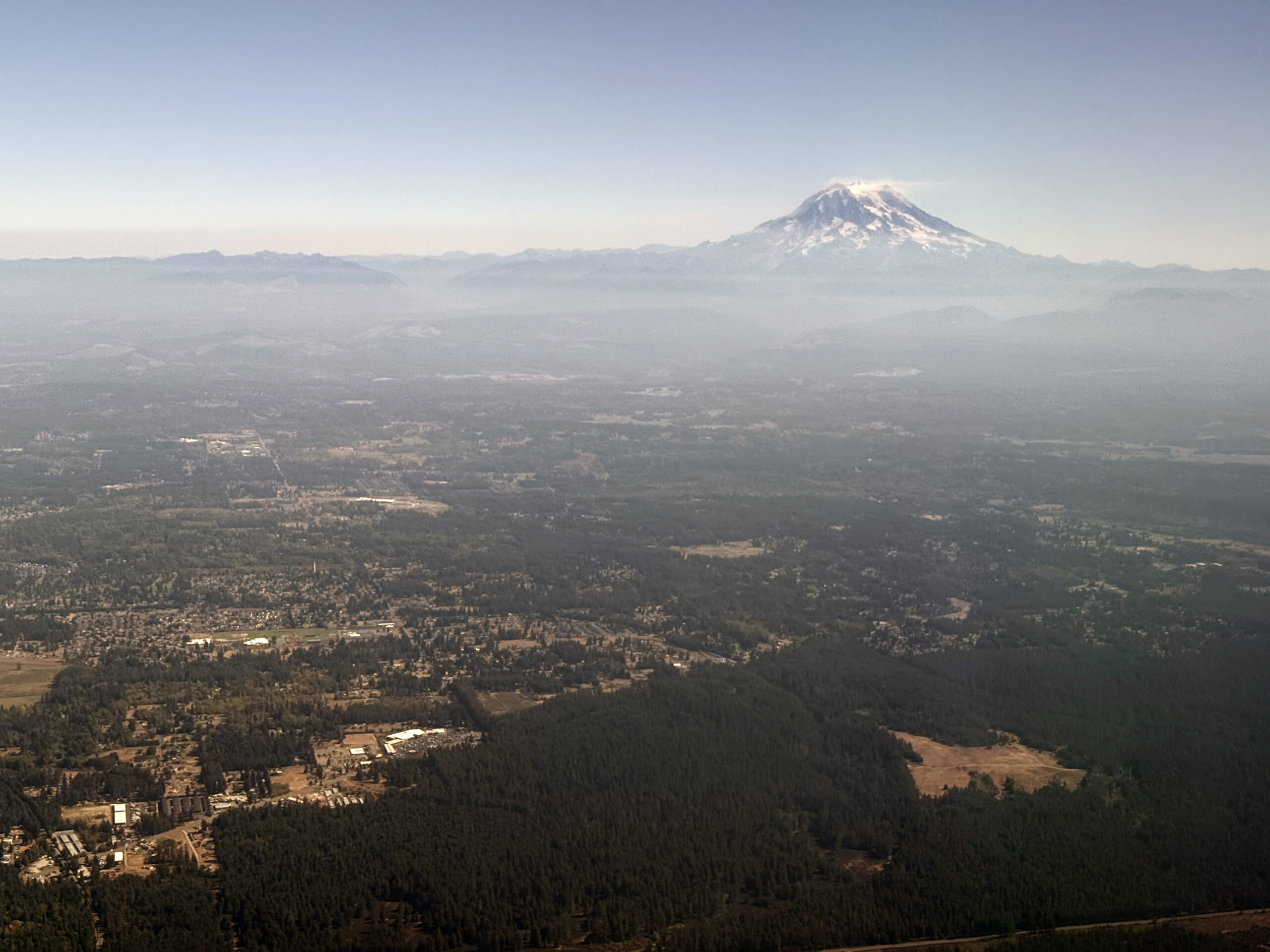
A clear day, albeit with wildfire smoke hanging in the still air. Majestic Mt Rainier seems to float above it all.
It’s Friday night in Tokyo and I am at the airport.
I had time today to squeeze in one more train ride, on the Yurikamome Line.
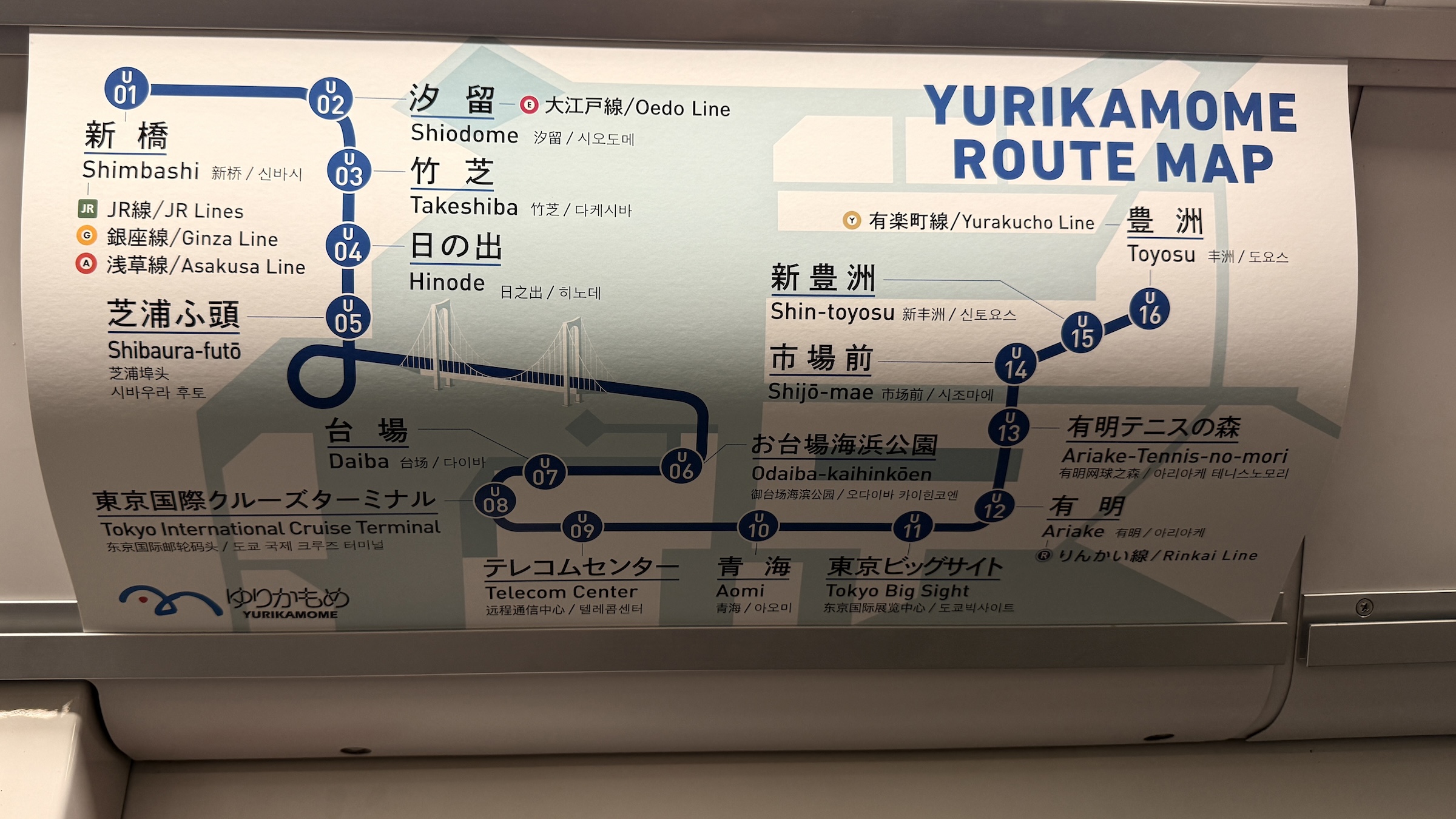
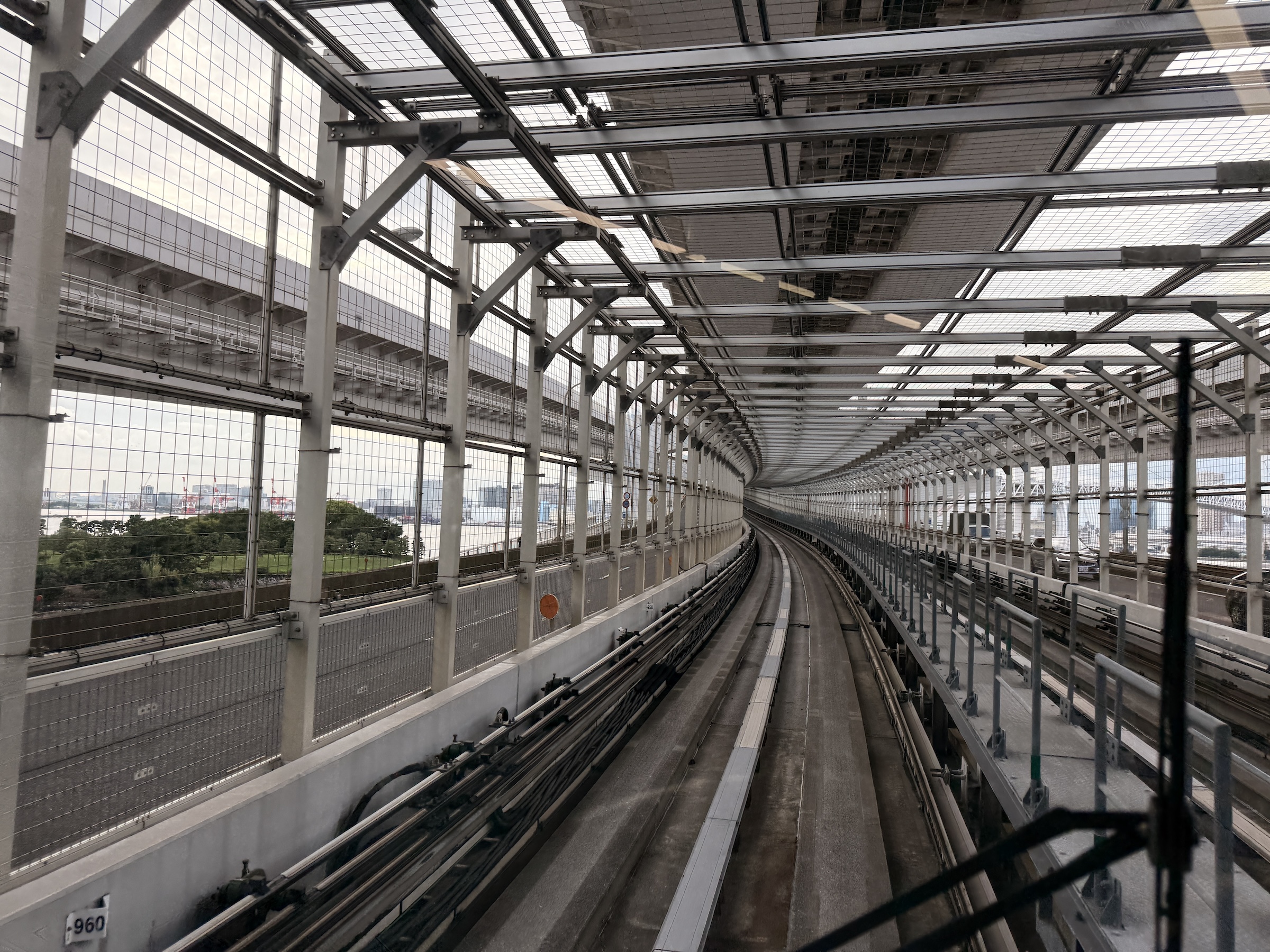
The train on this line runs on an elevated, fully automated track (so no driver) that connects Shimbashi Station to Toyosu Station via the popular Odaiba area.
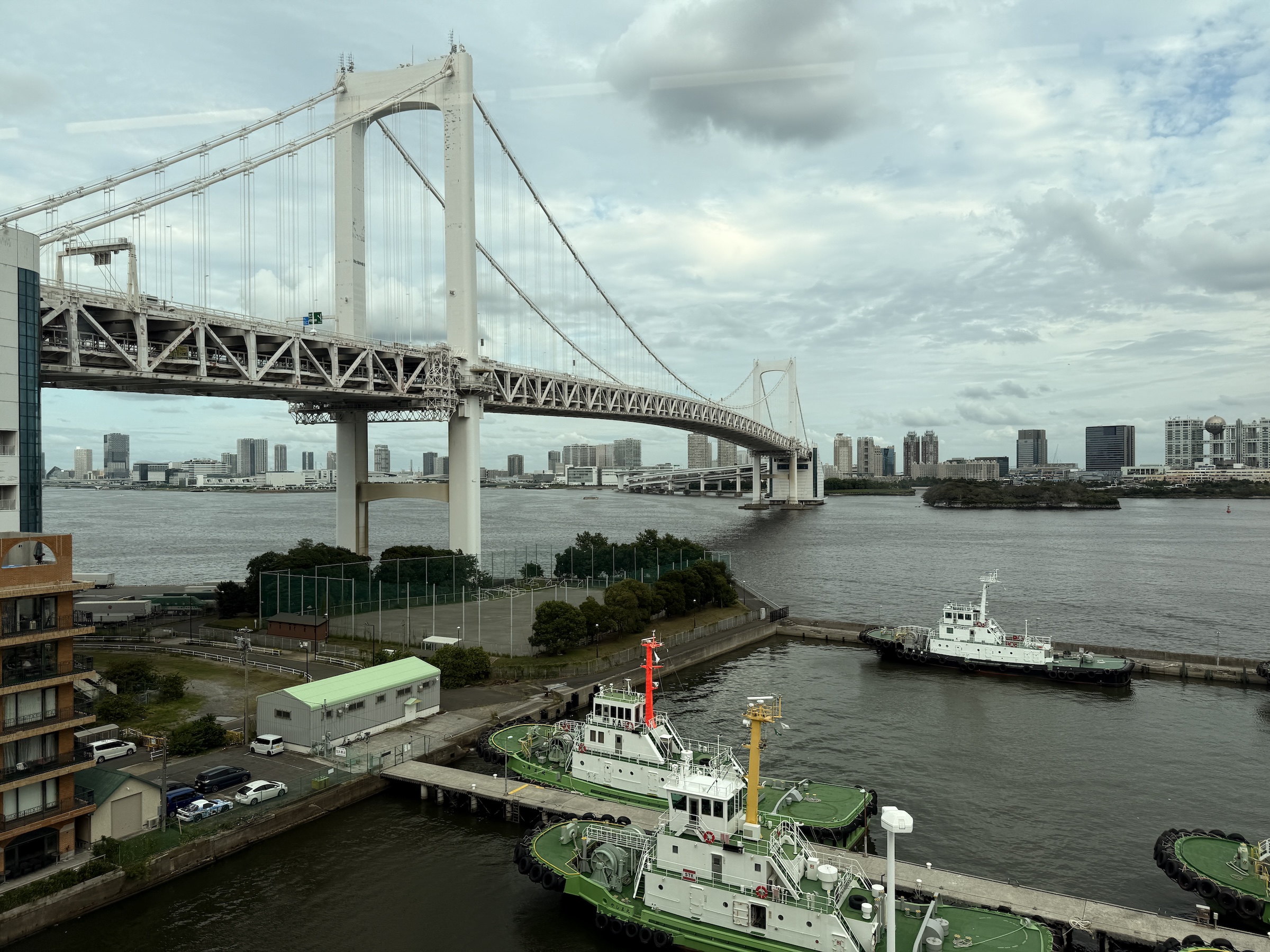
Here’s the Yurikamome route. The loop in the line is a ramp to get the train onto the Rainbow Bridge.
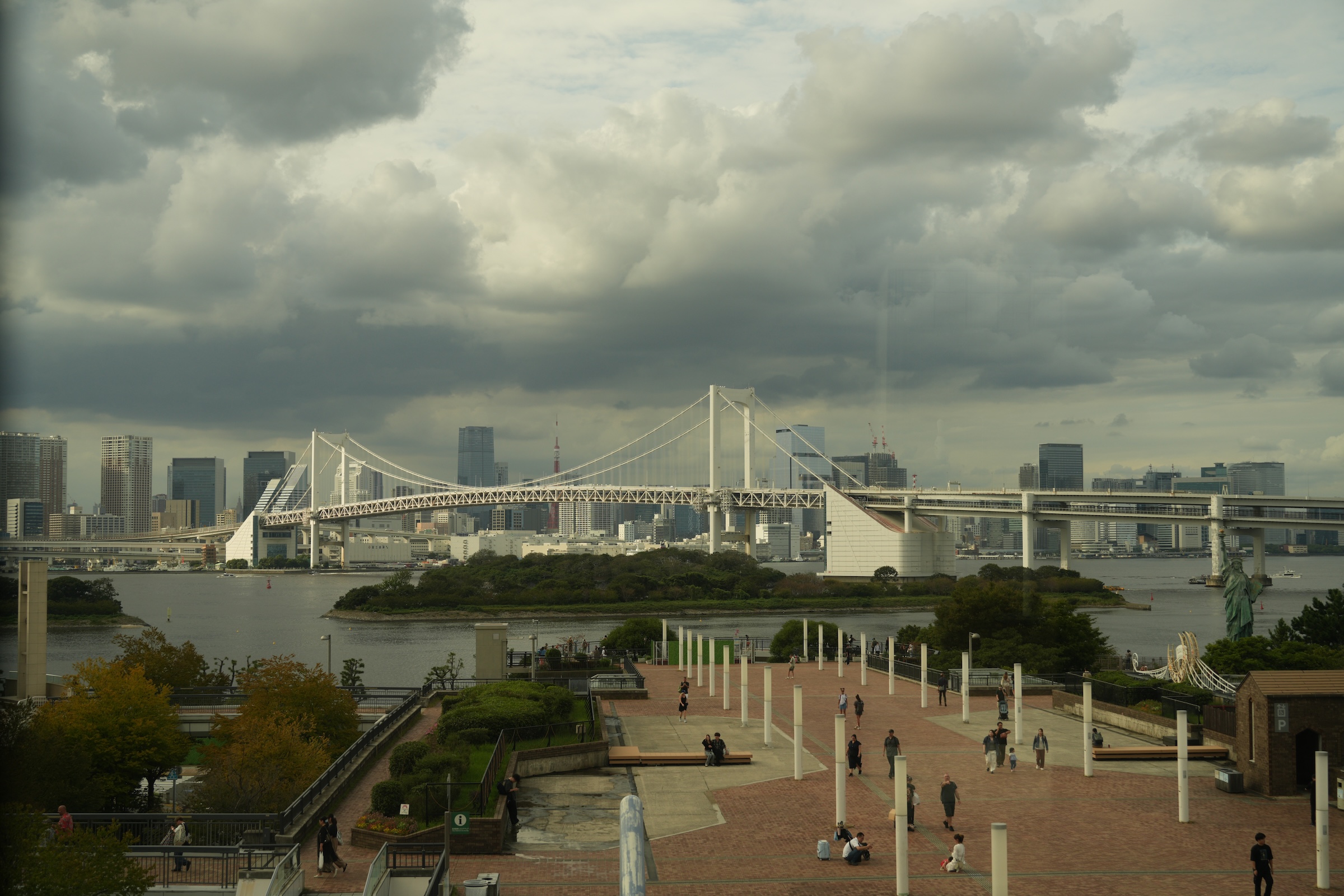
This is towards the end of the line on the way out, at Odaiba Marine Park, with a nice view of the Rainbow Bridge. In the distance is the top of Tokyo Tower and look what’s near the right frame of the picture: a mini Statue of Liberty.
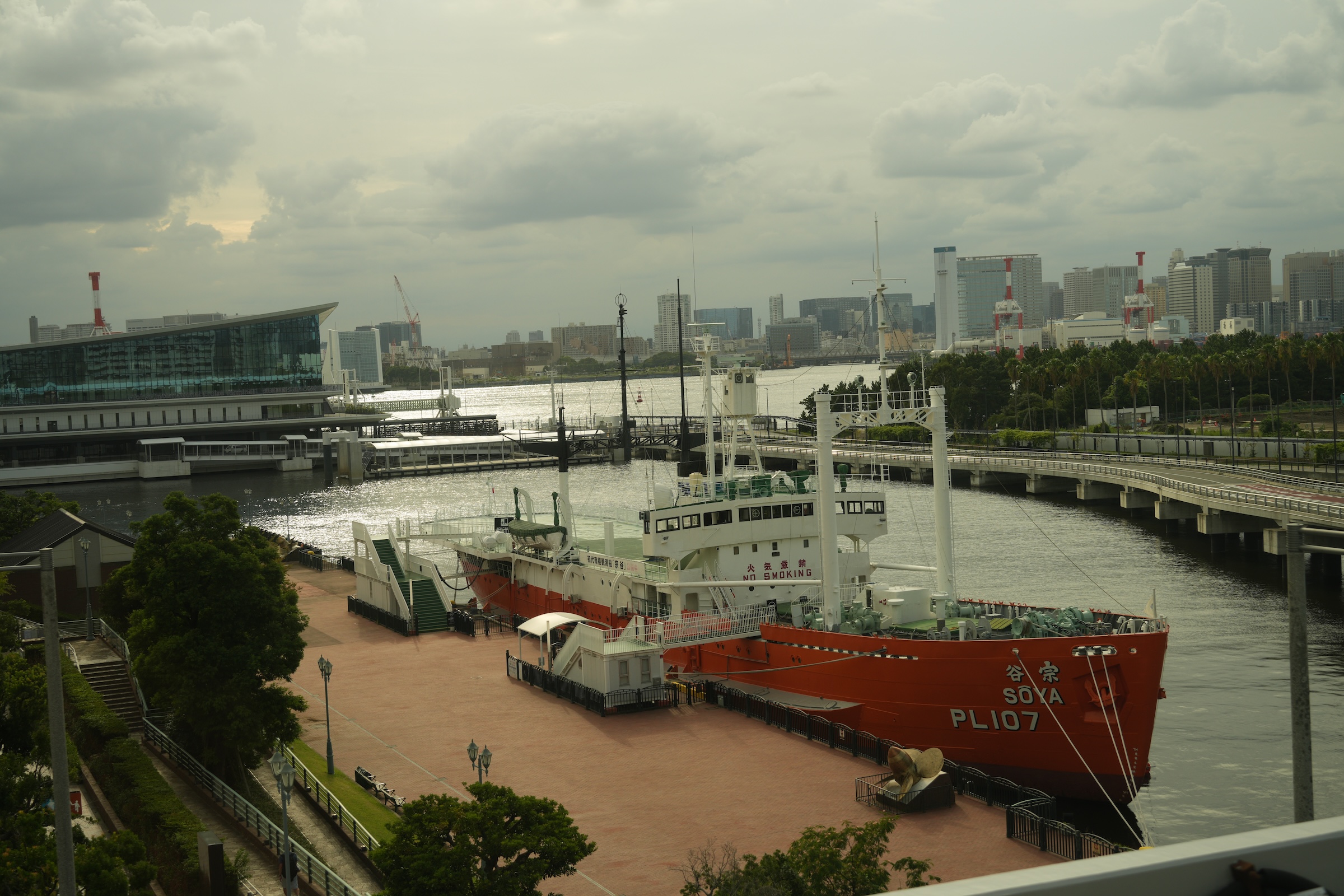
One station on the line is named Tokyo International Cruise Terminal. I did not spot any cruise ships, but the building on the left is the cruise ship terminal building.
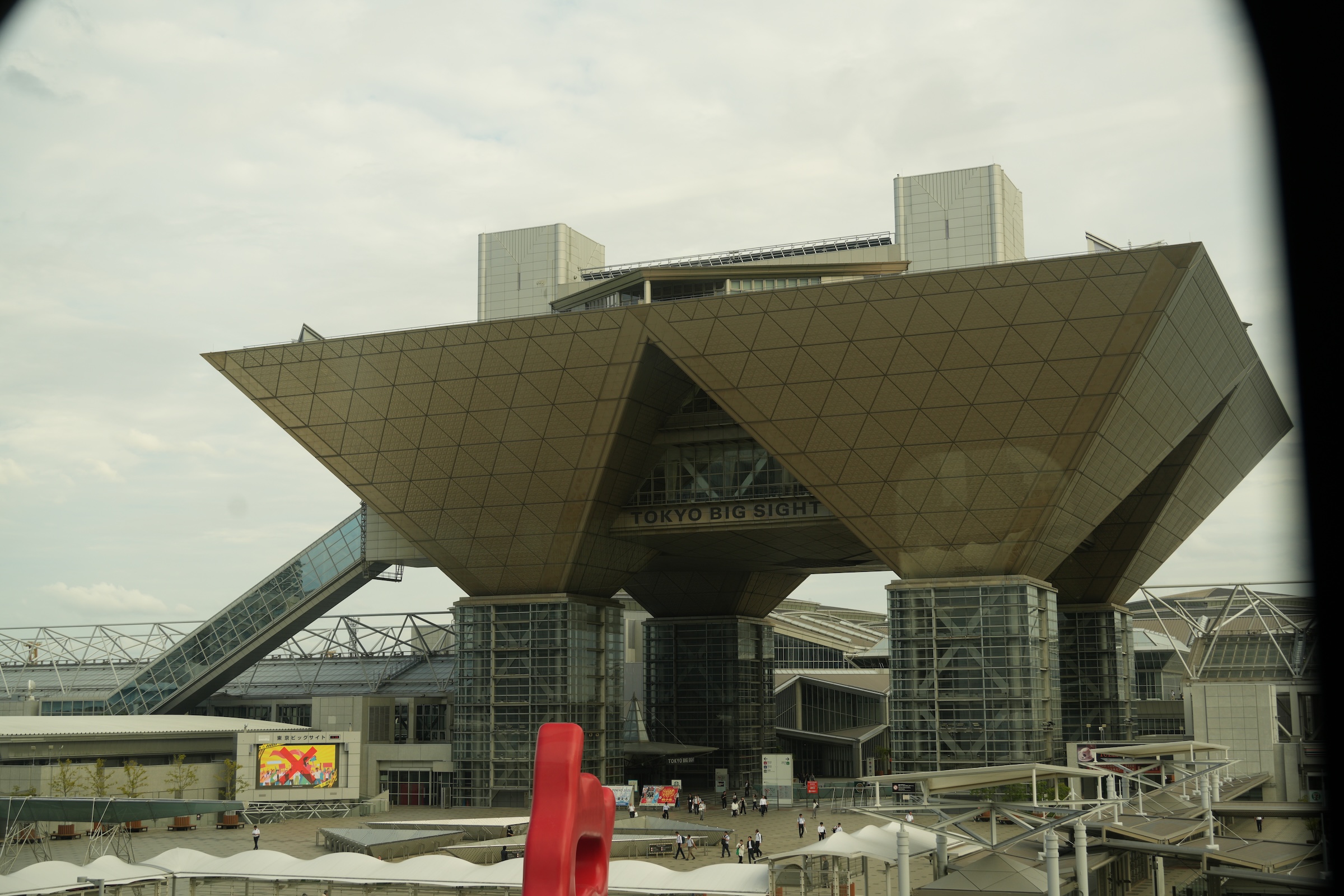
Here’s the Tokyo Big Sight International Exhibition Center. The red handle in the foreground is part of a giant wood saw stuck into the ground by the entrance.
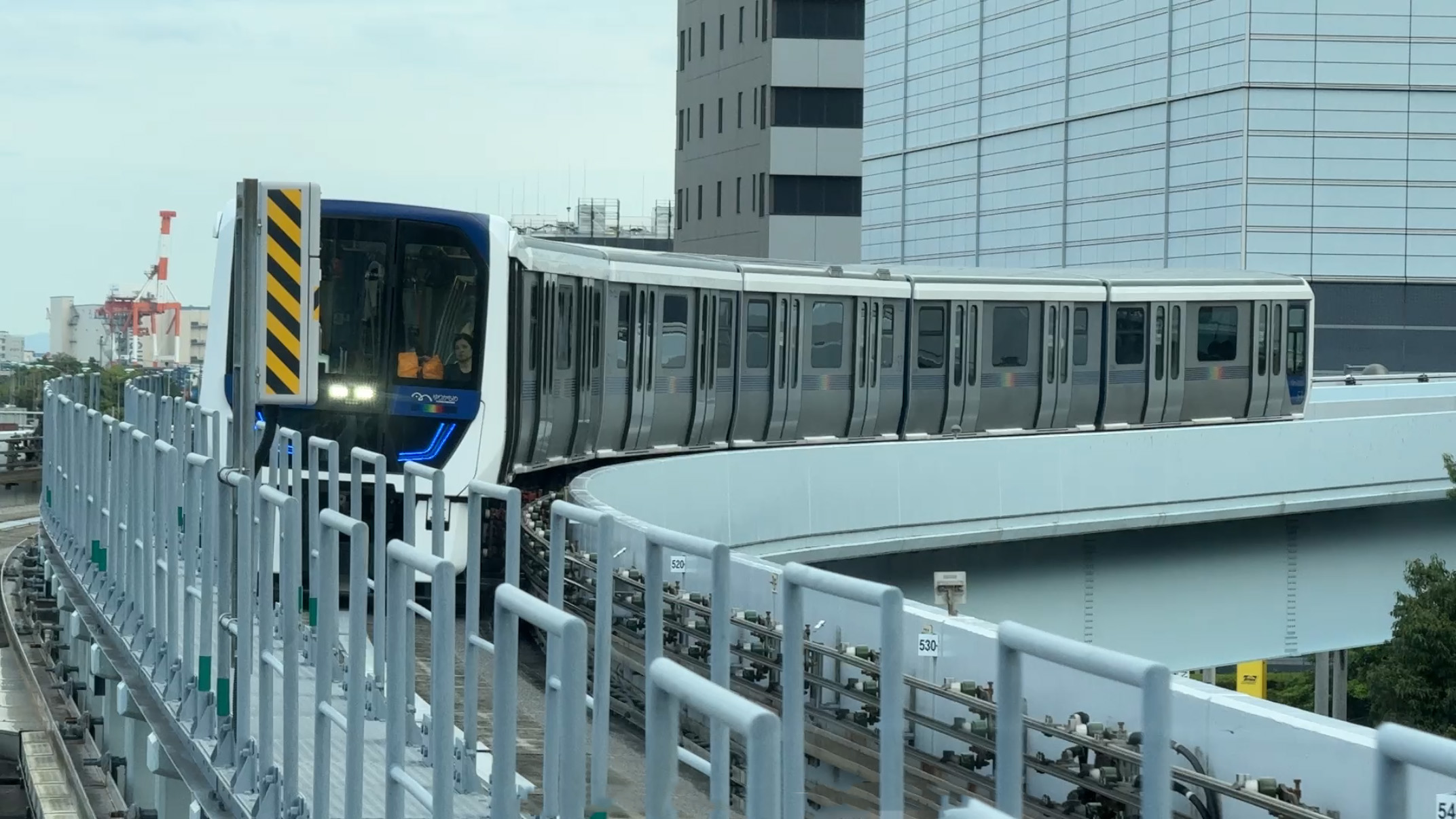
On the Rainbow Bridge. The train cars actually use rubber tires on the concrete guideway, providing an excellent grip for navigating the sharp curves and steep slopes on the track.
Another view of the Rainbow Bridge.
Here is what the train looks like. It has five cars.
In the morning, I ran out to Uniqlo in Ginza to change my size M shirts that I had bought Wednesday night, for size L. (The line at the fitting room was too long yesterday and I took a chance with the size M).
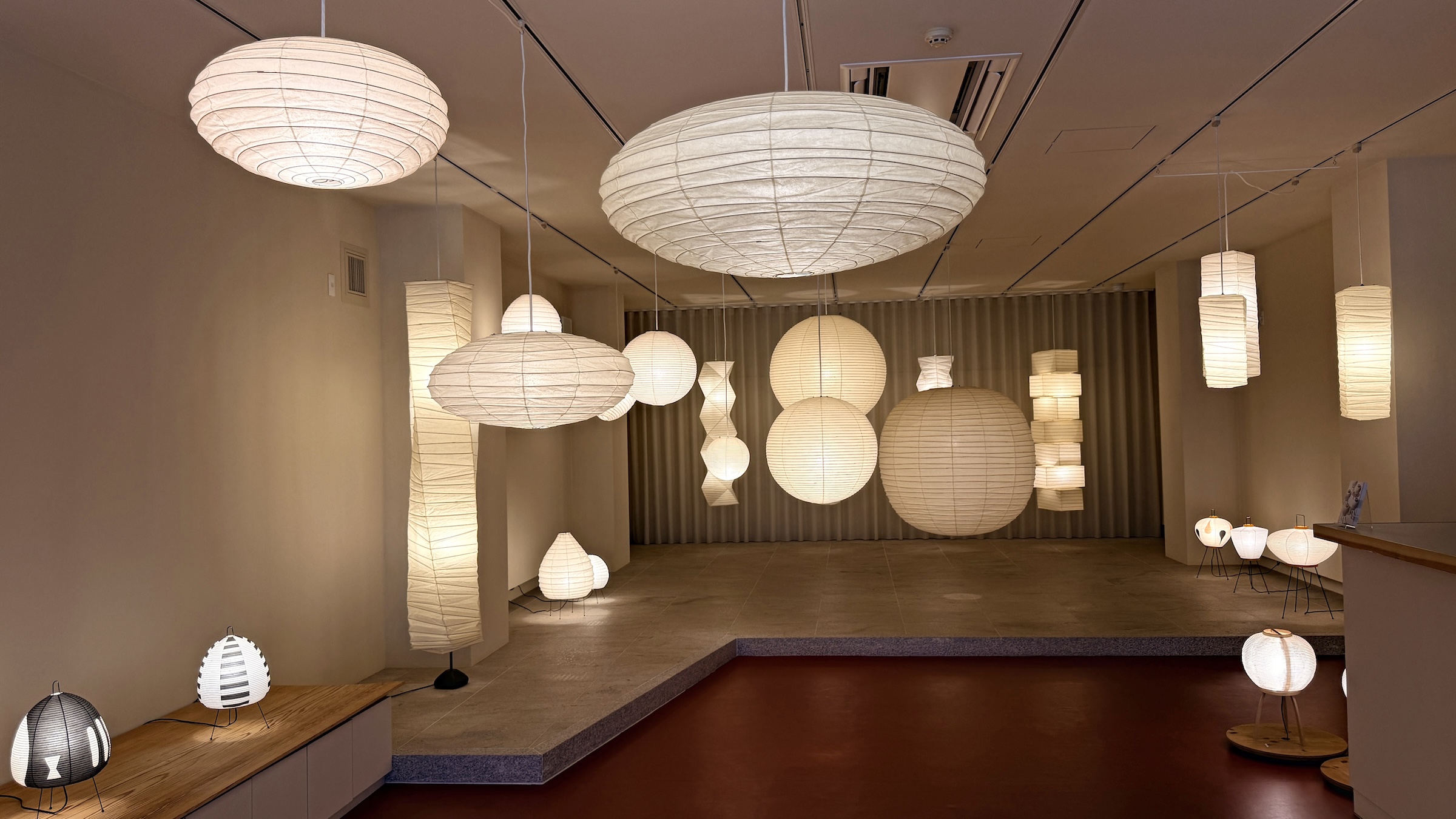
Then I went out to a gallery called Ozeki with beautiful Japanese lantern lamp shades that a YouTuber had recommended. I bought a little round one that is folded flat for packing into a suitcase. (At this point in any overseas trip it is always a question if all the stuff I had bought, would fit in my suitcases.)
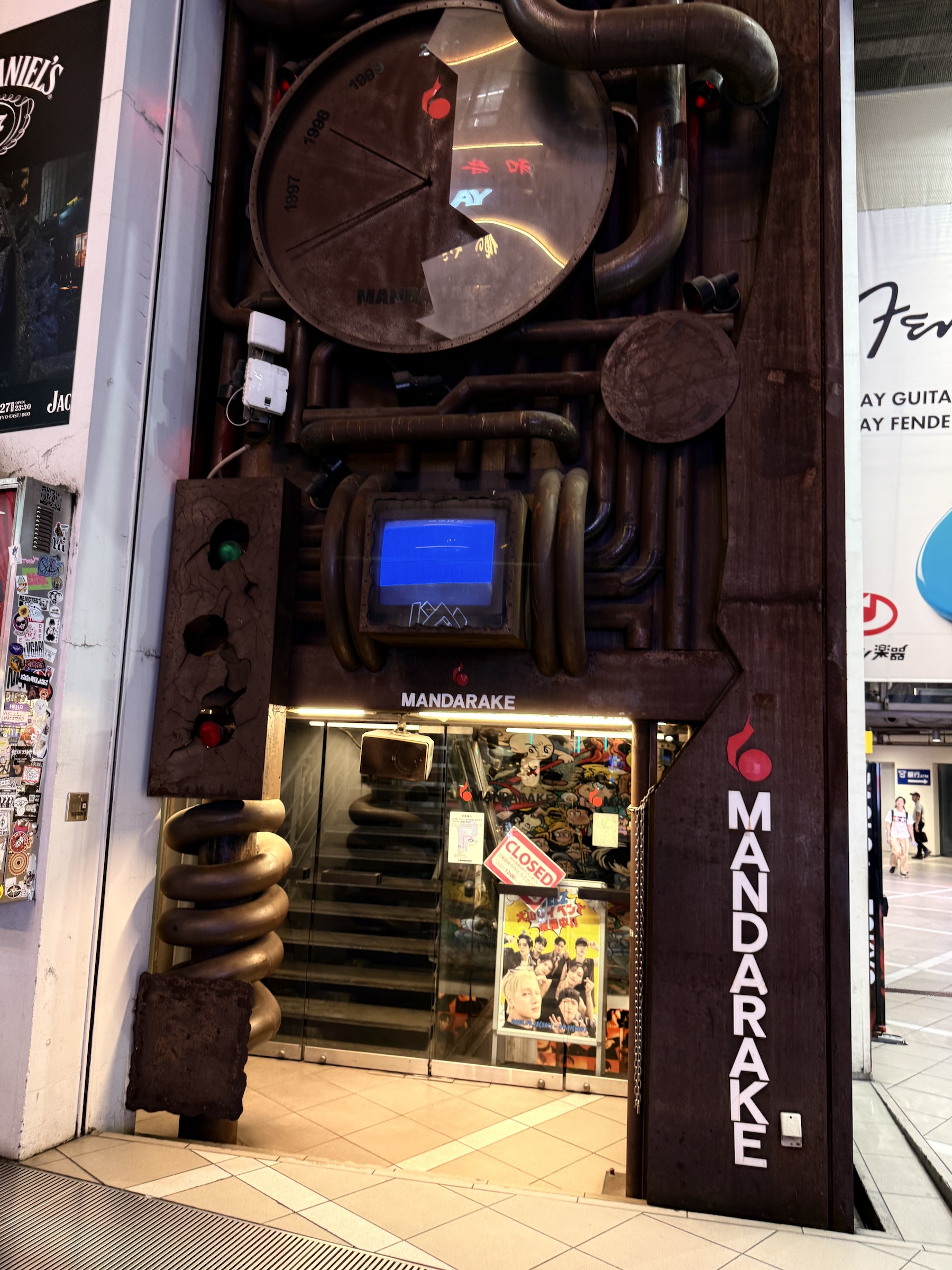
And for the evening I made a run out to the Mandarake store (books, cards, collectibles) in Shibyua. At 5.30 ish, it was almost too late. You don’t want to get crushed on the train by the commuters that go home.
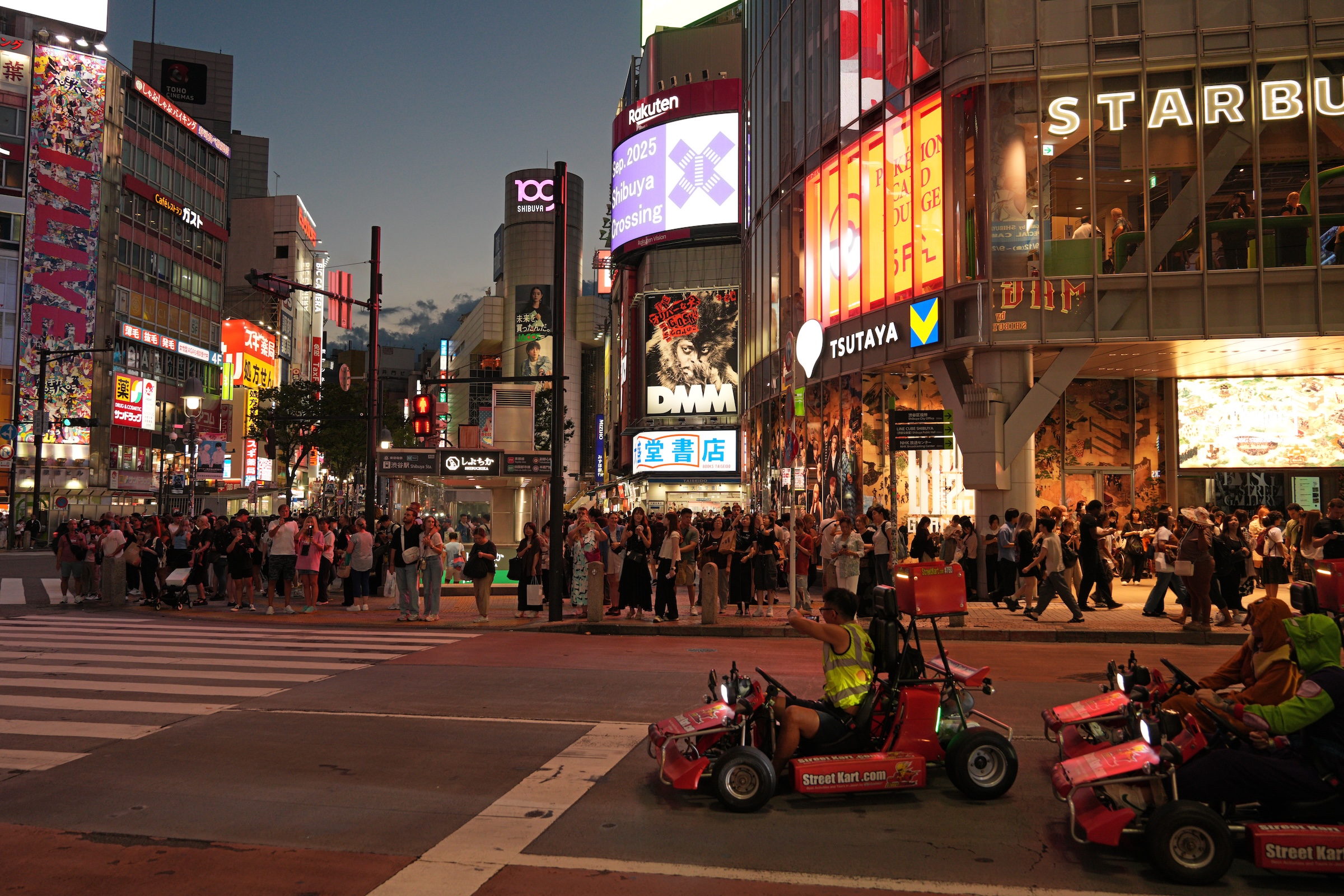
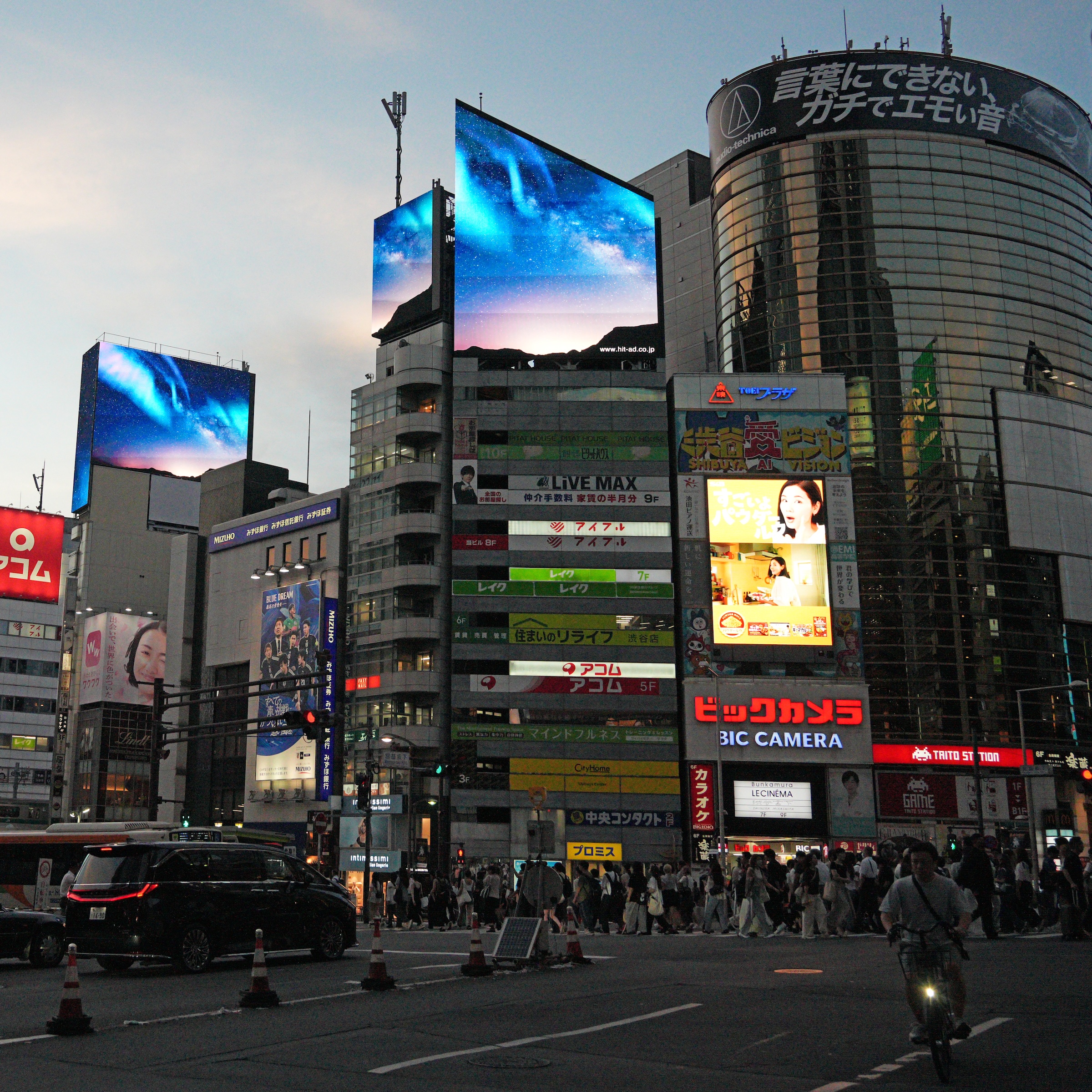
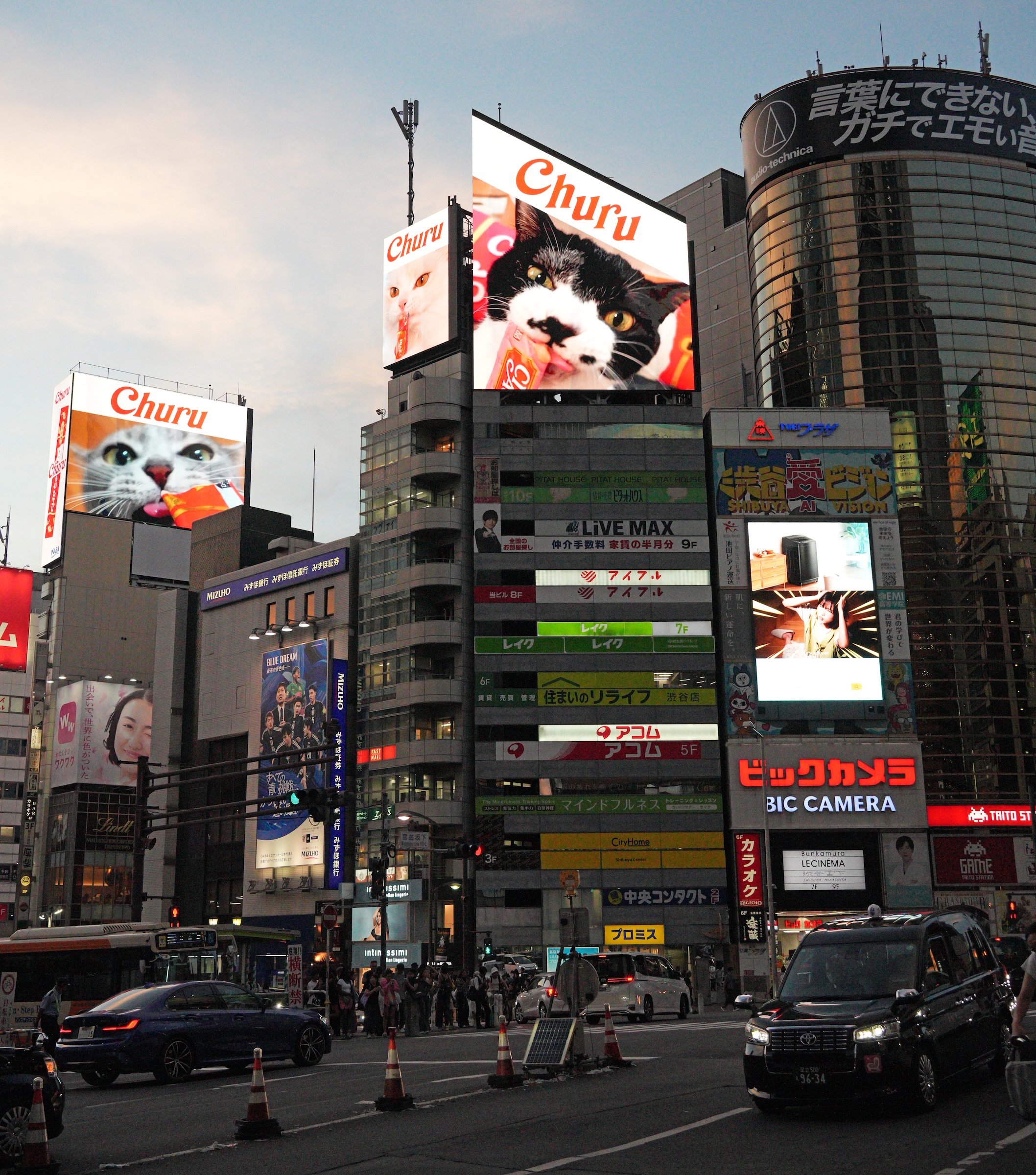
At Shibuya Scramble Crossing: lots of crazy people and definitely too many foreigners taking selfies and annoying the locals, I’m sure.
Get out of my way!
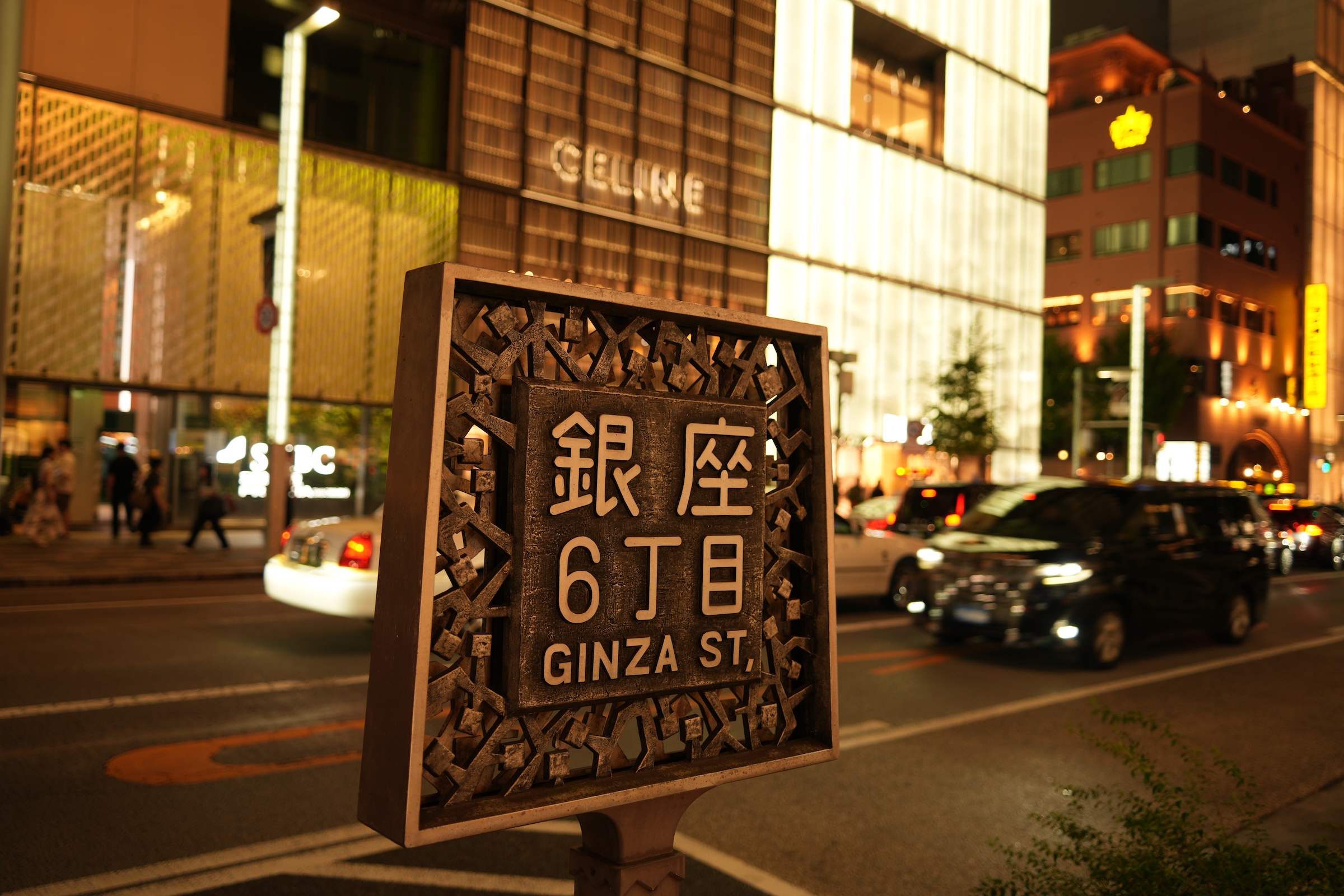
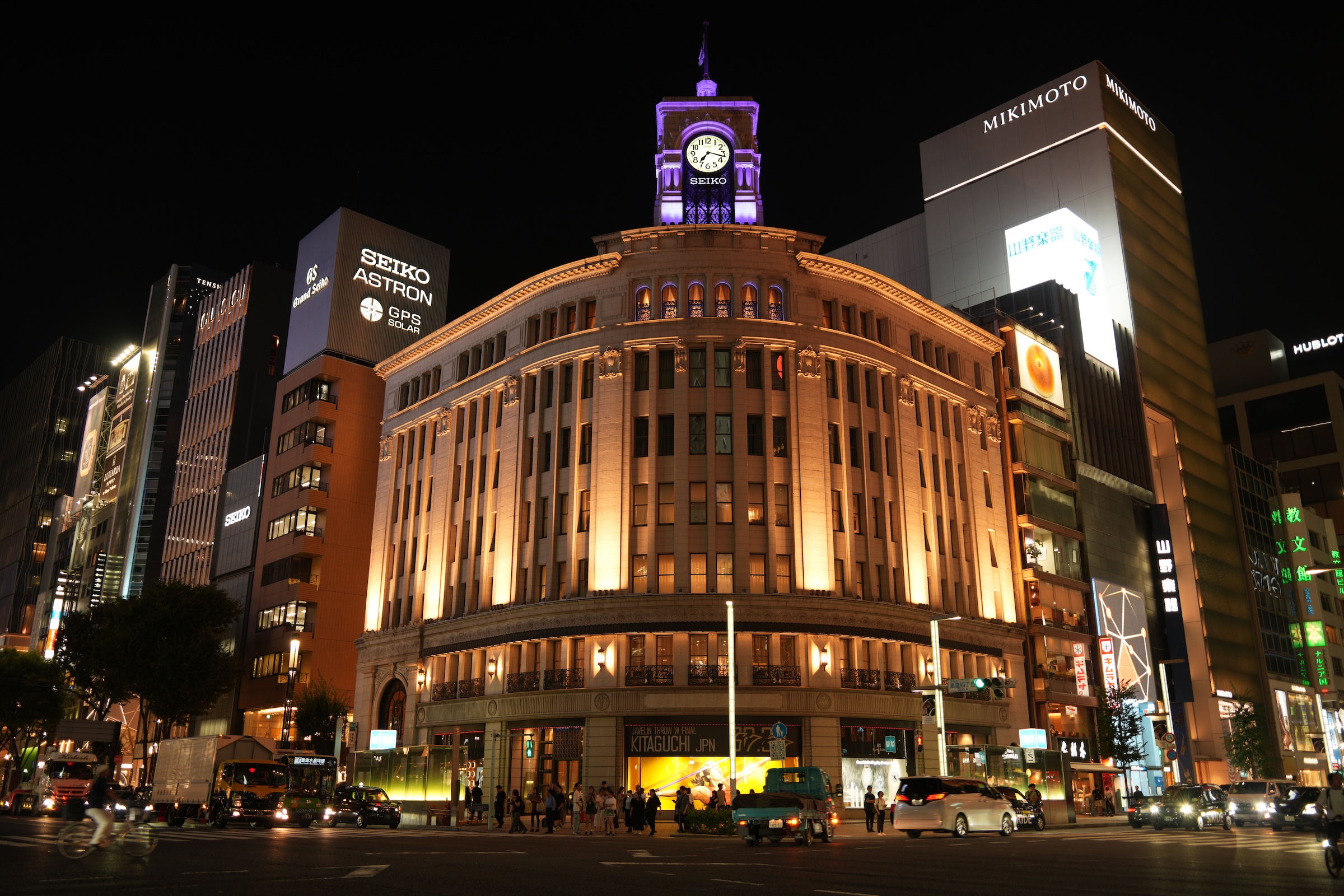
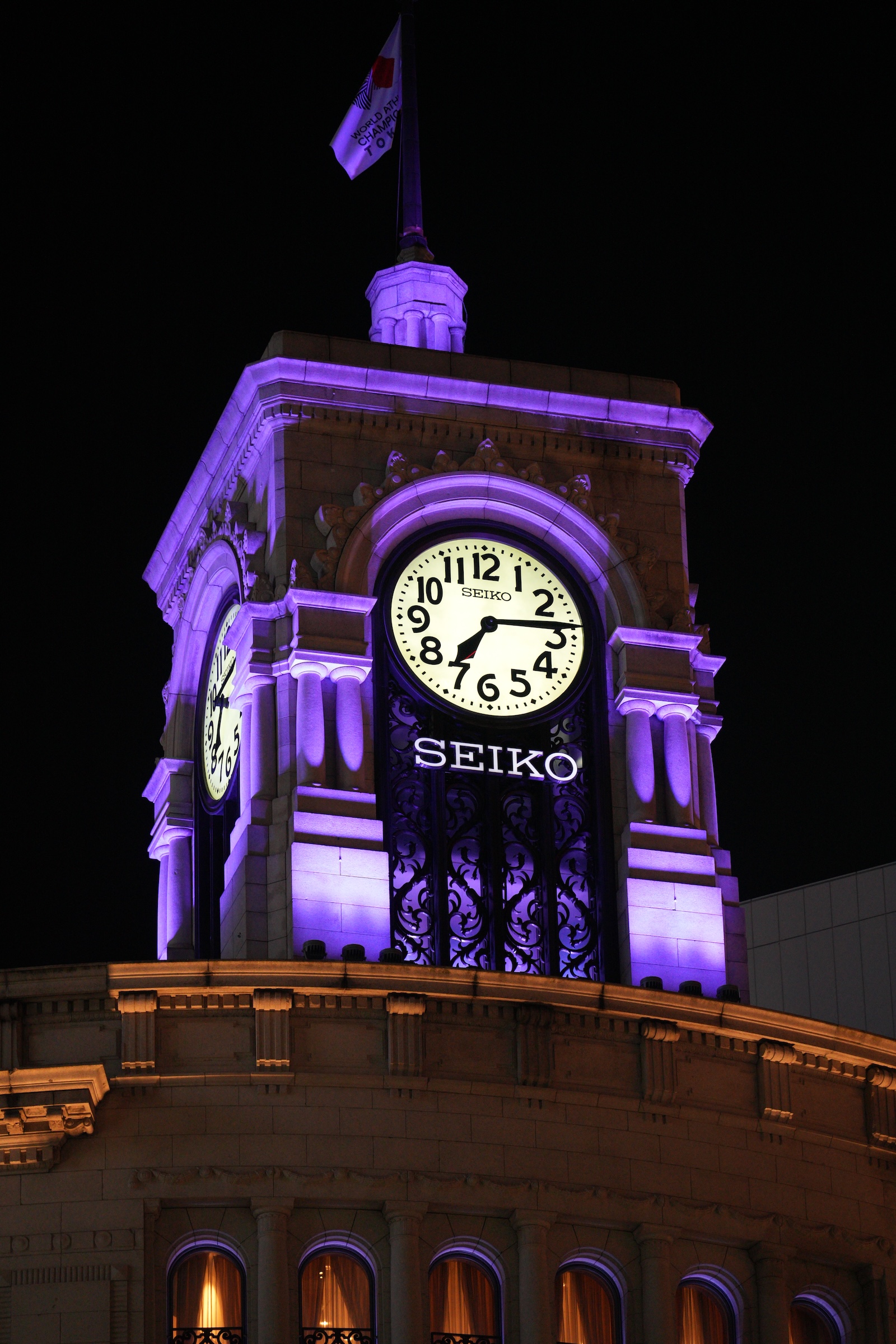
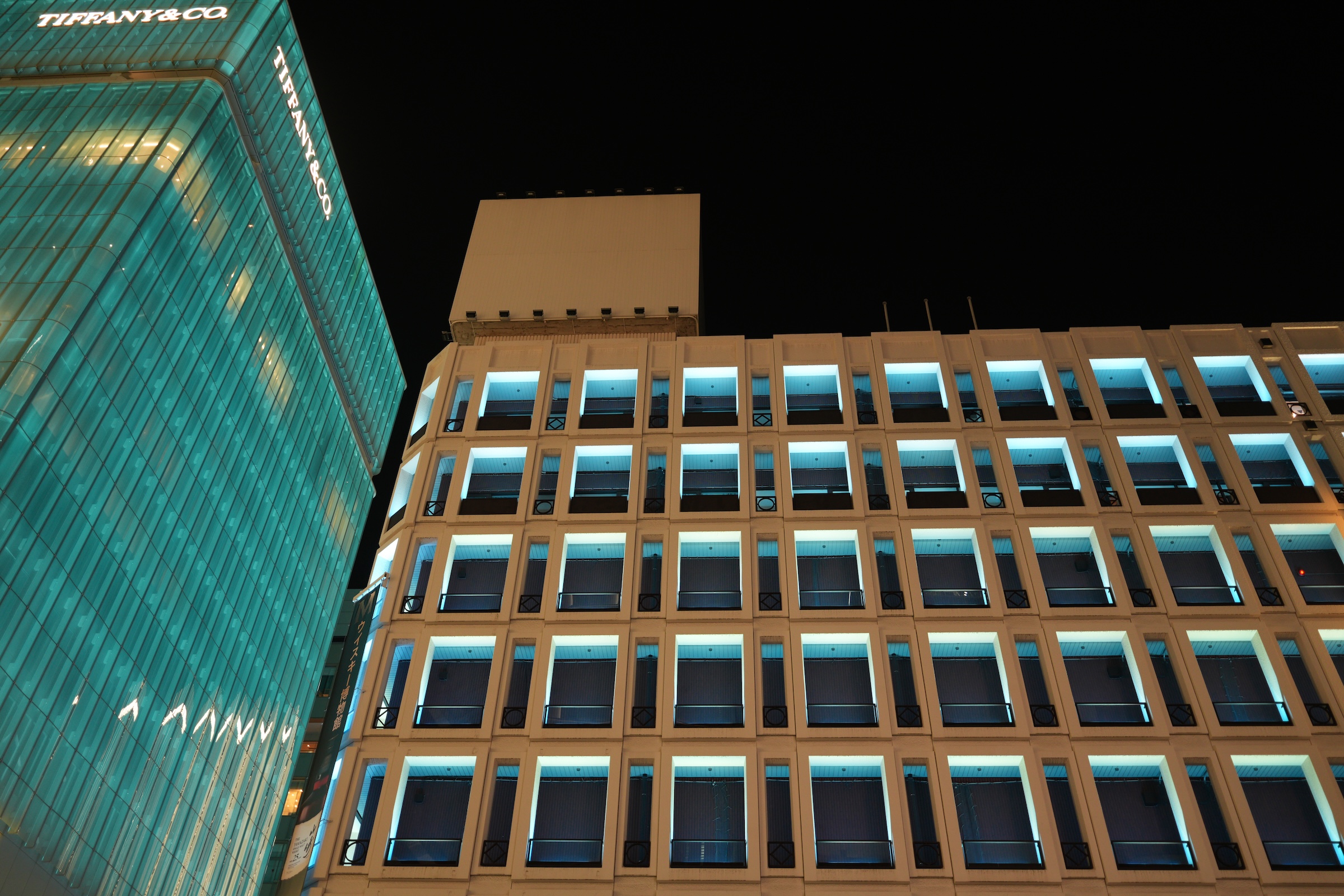
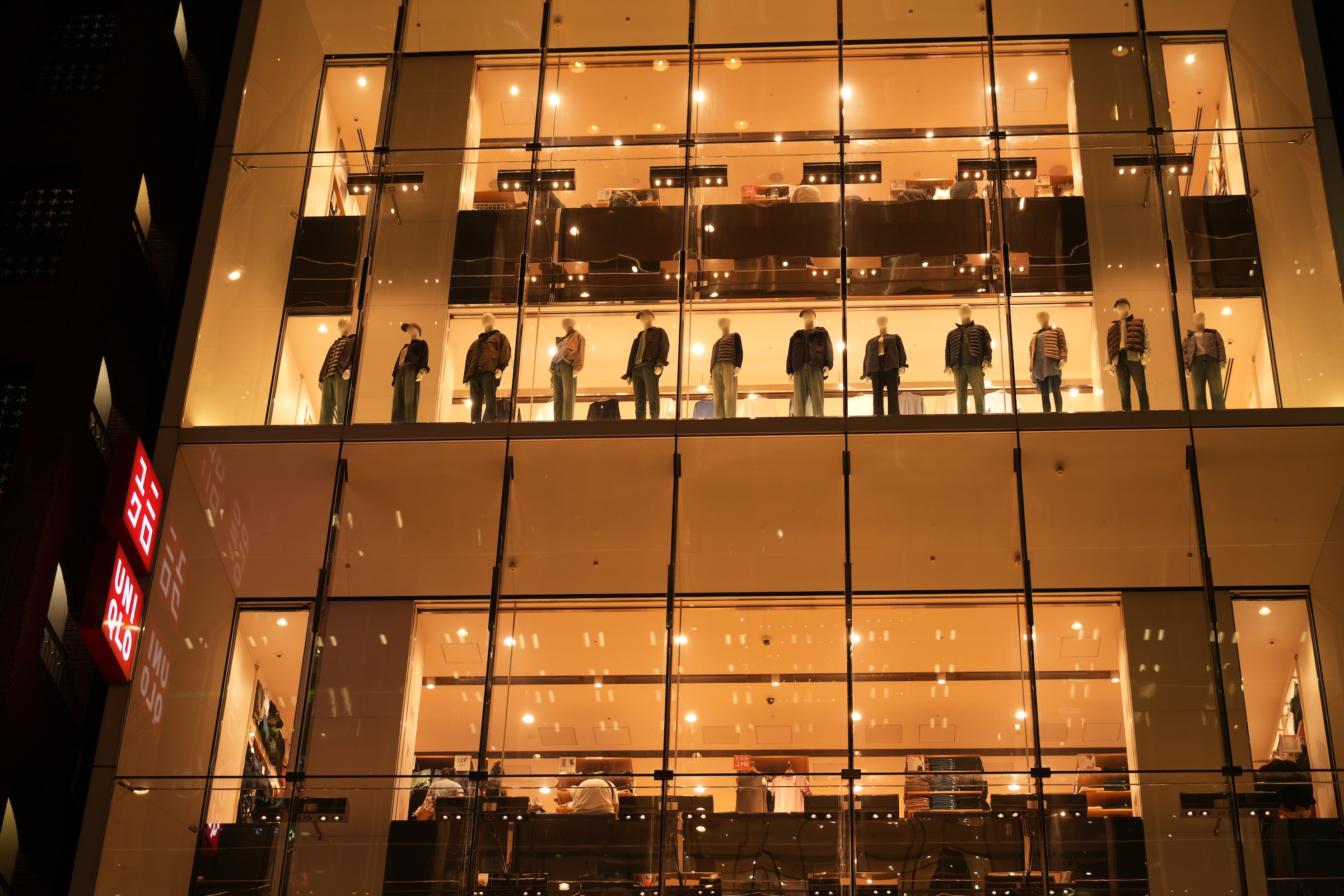
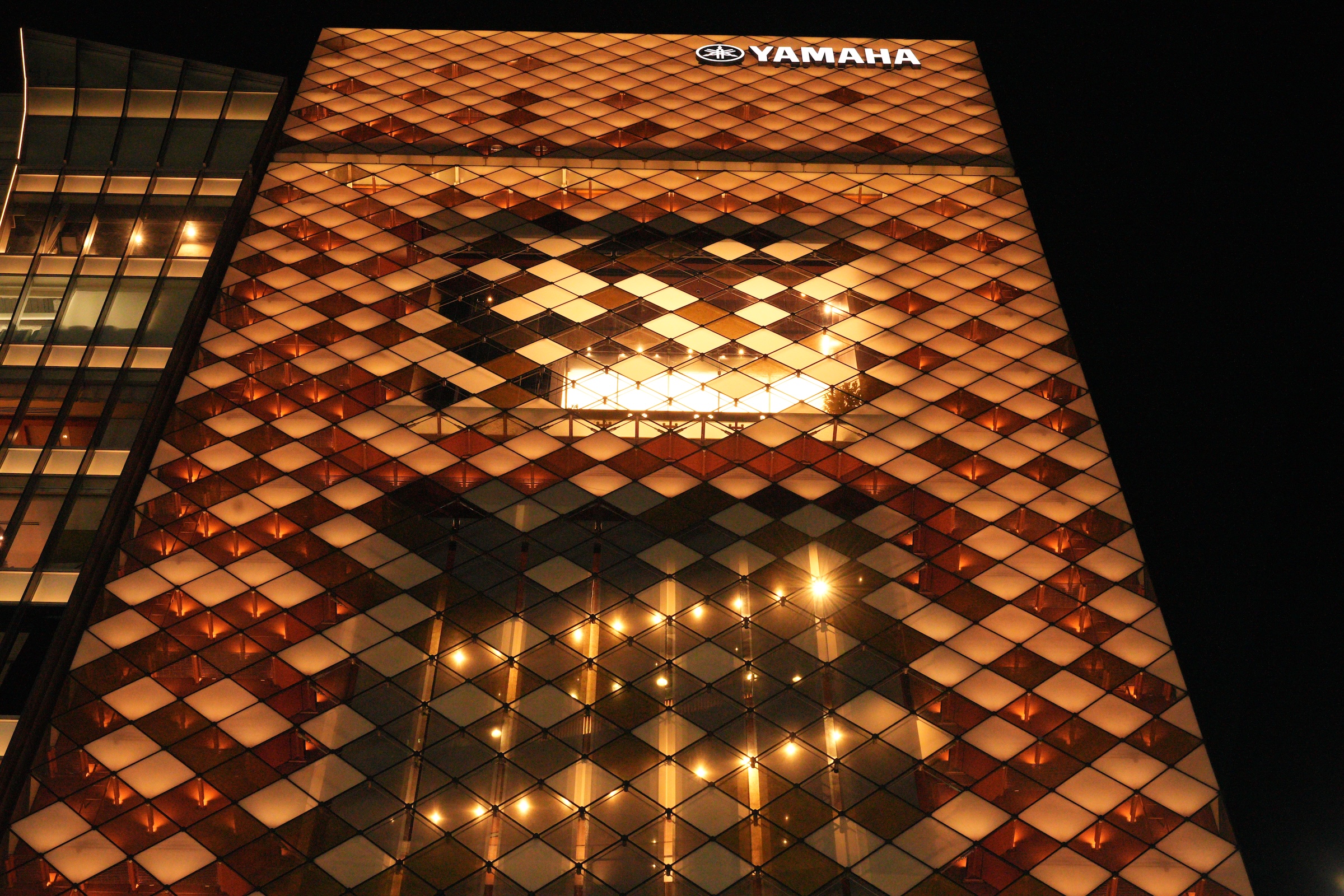
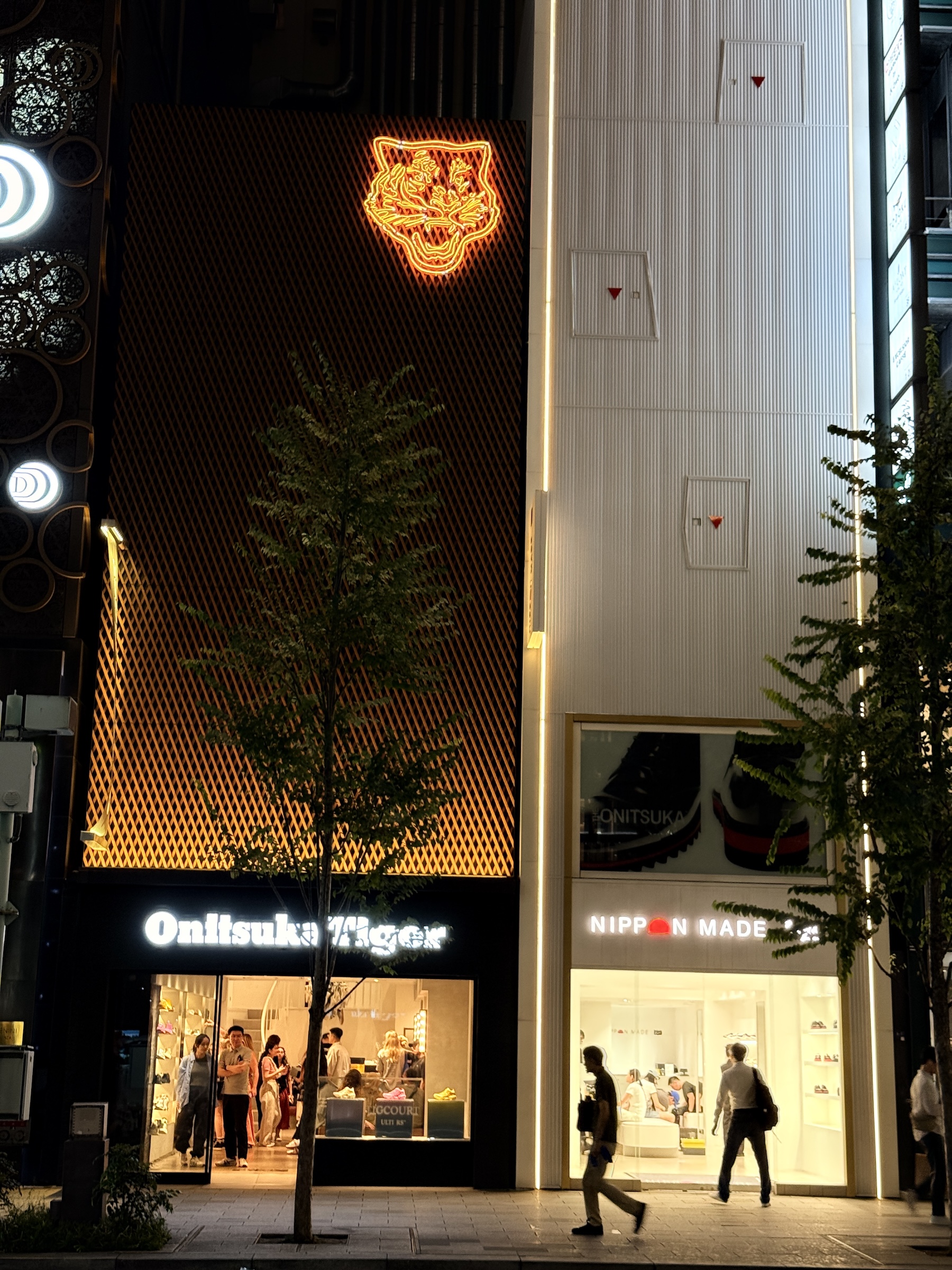
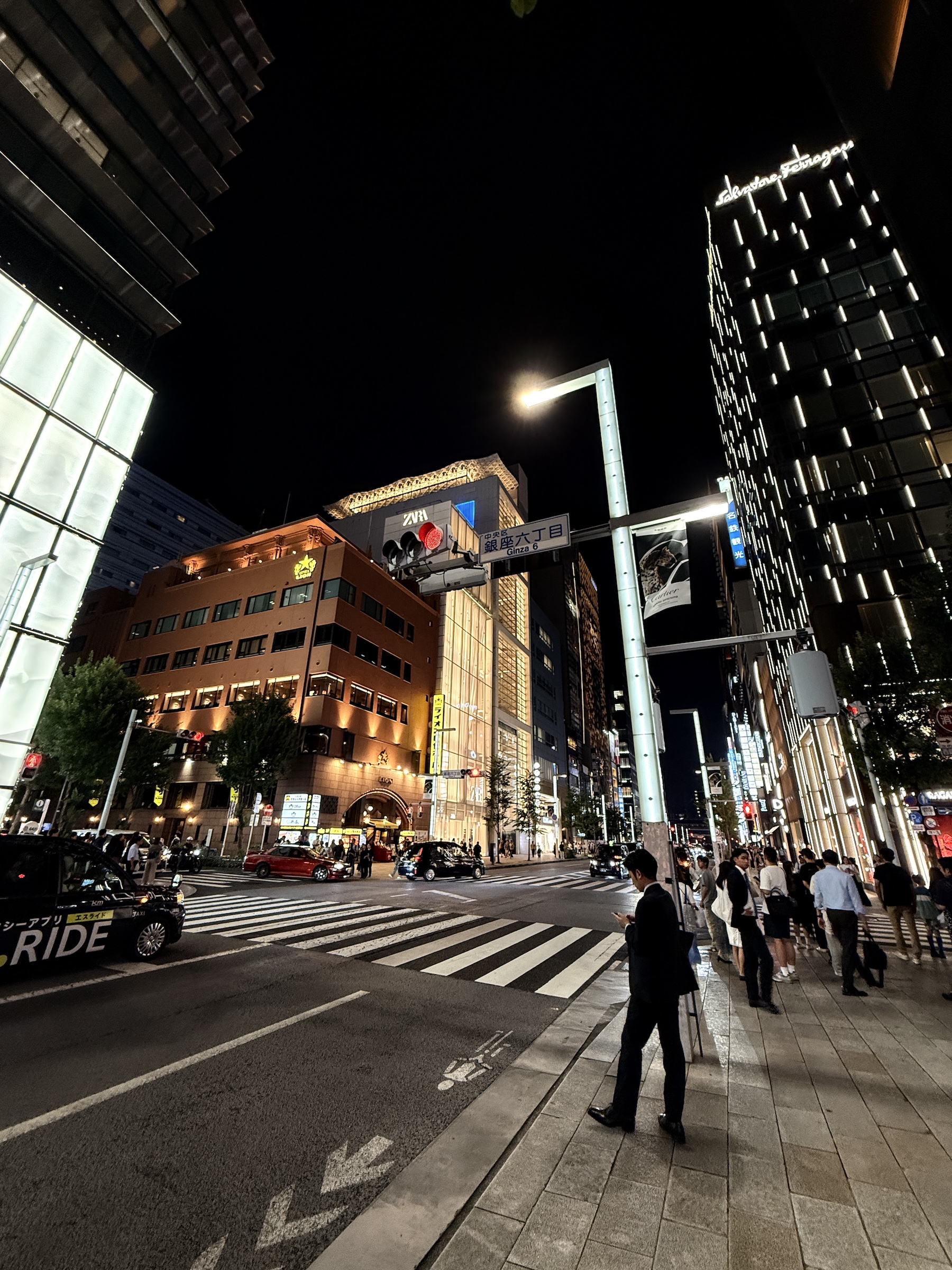
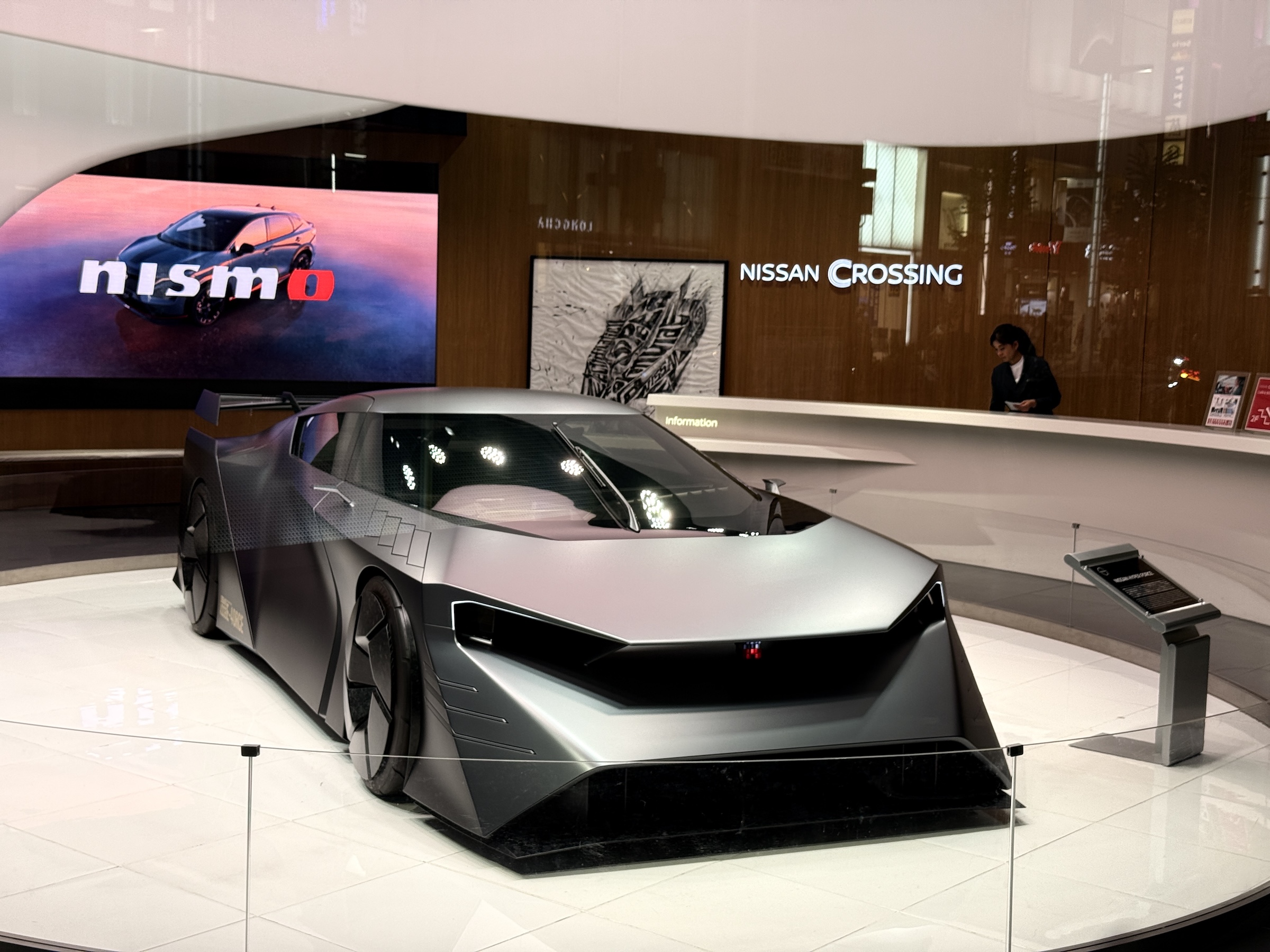
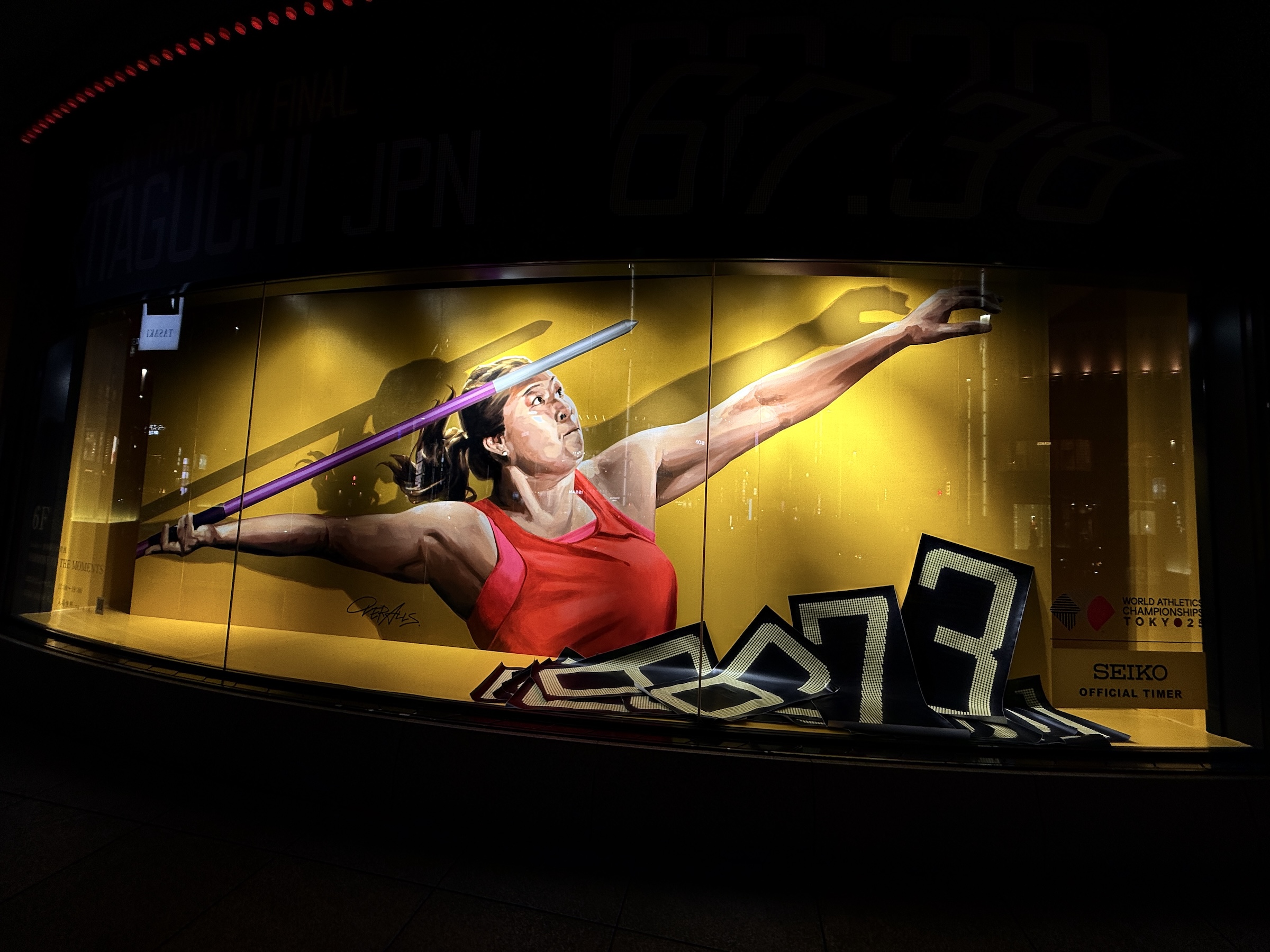
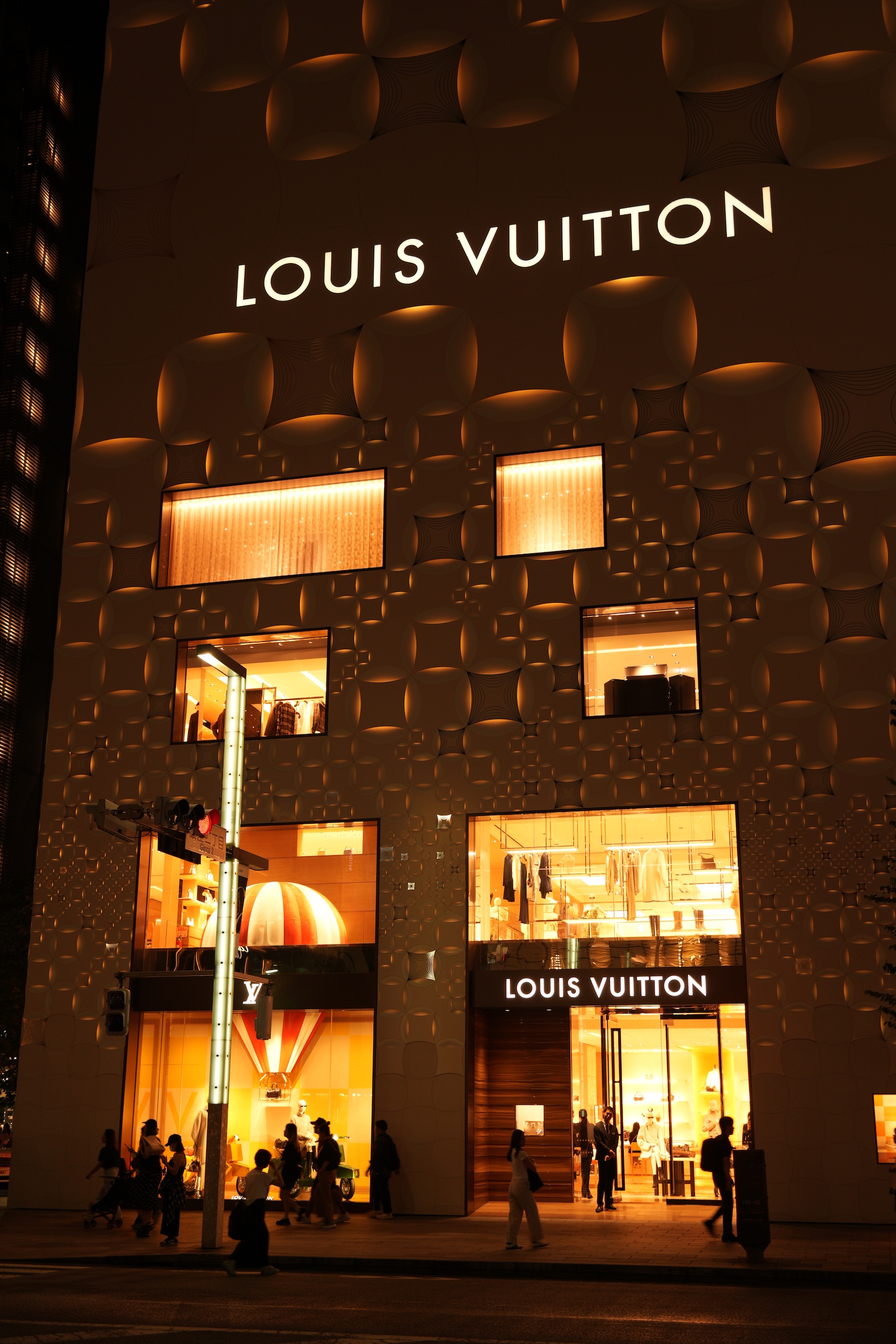
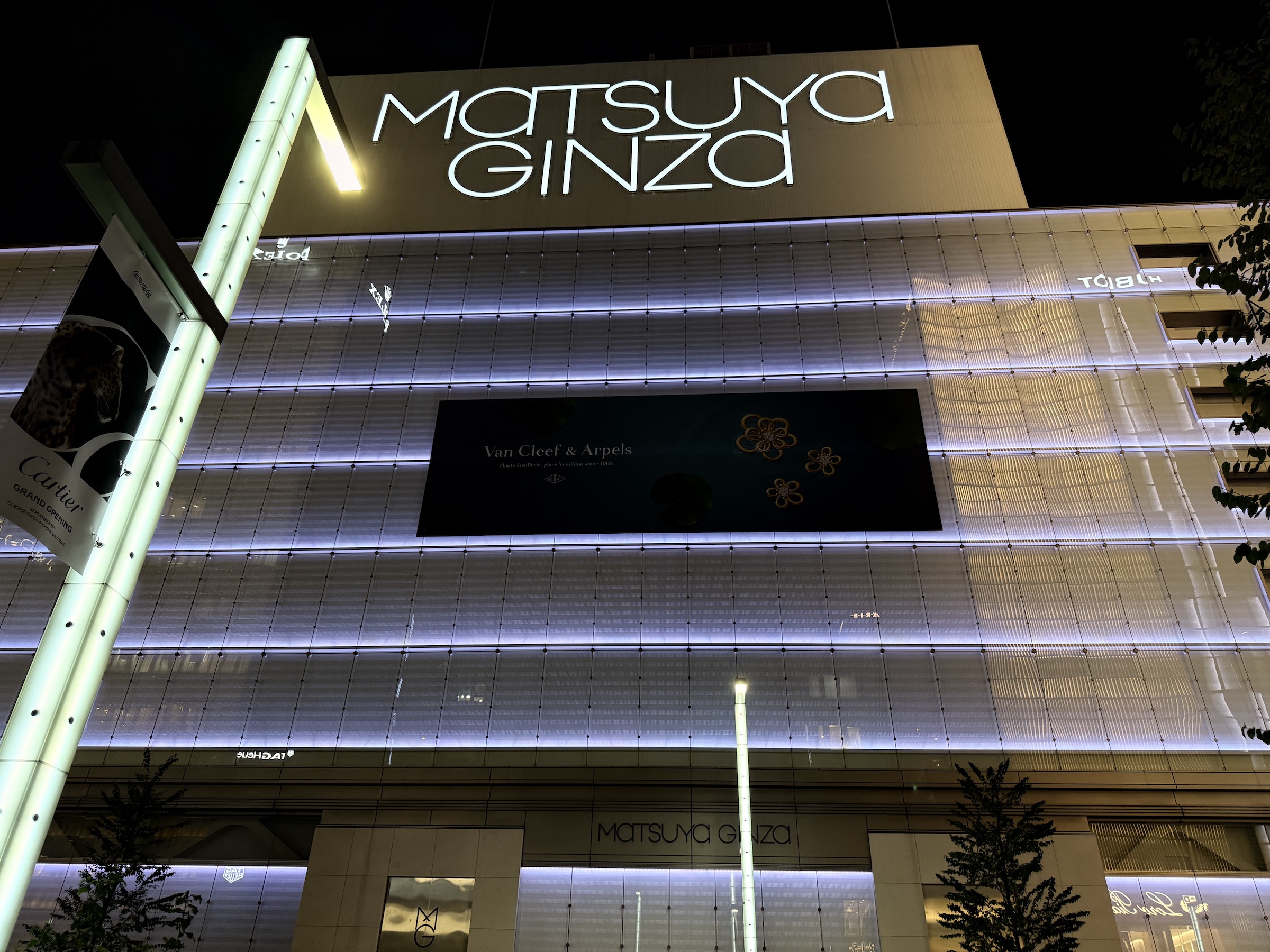
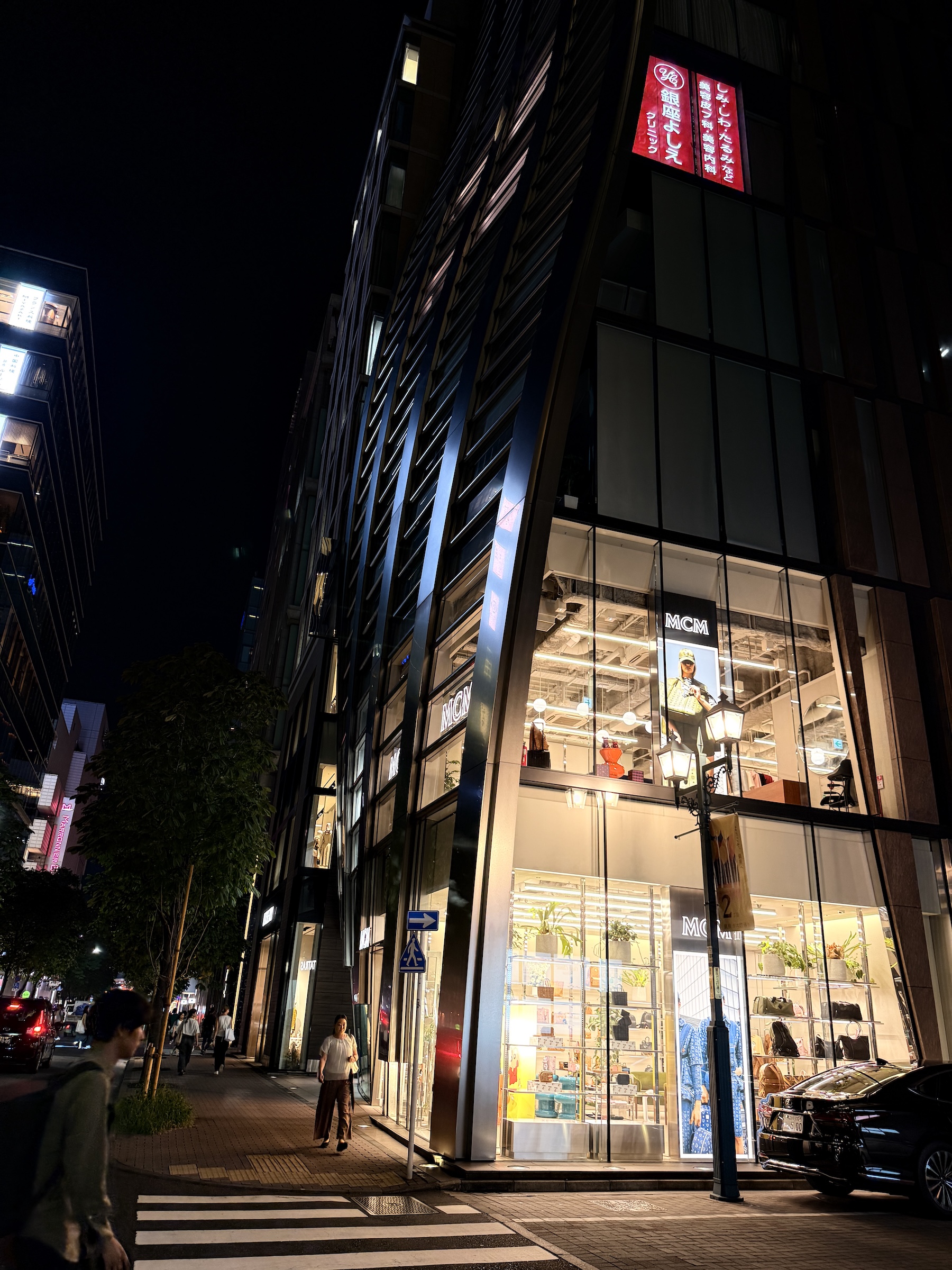
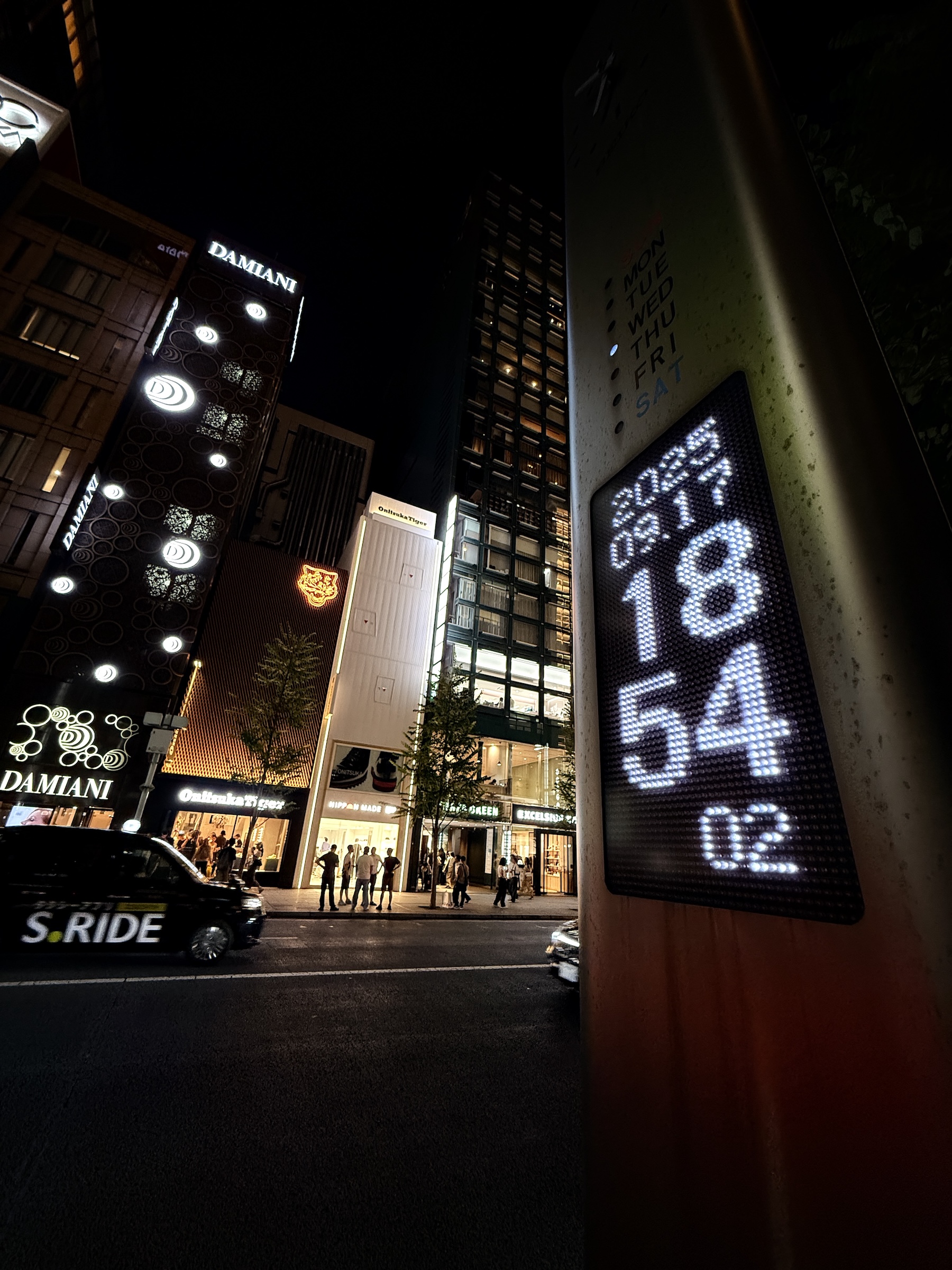
On Wednesday night I did my mandatory (mandatory for me) walk-about along the main street in Ginza, Tokyo’s luxury shopping district. The street is named Chuo-dori, which translates to ‘Central Street’.
The sign in the first picture says ‘Ginza Block 6’.
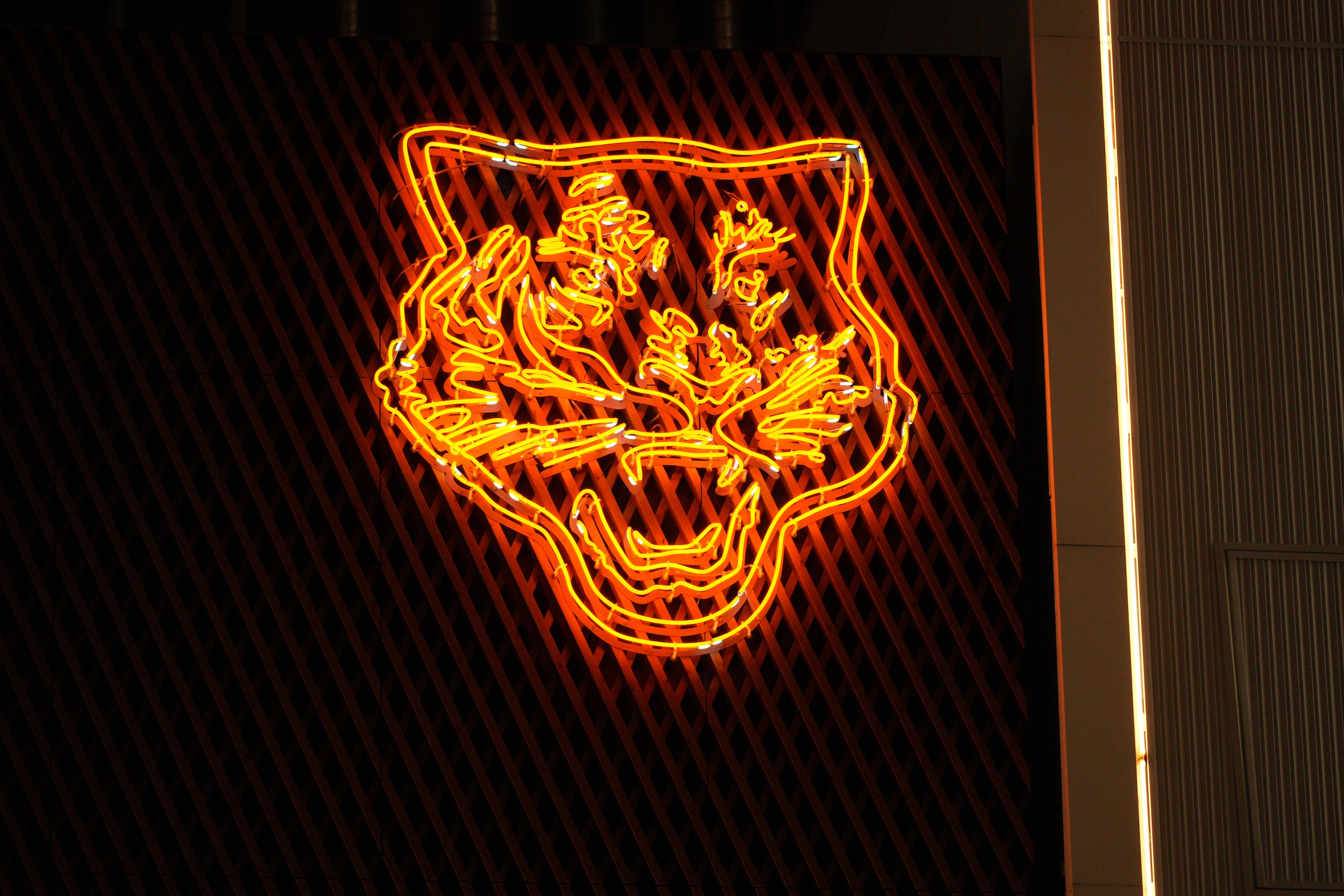
Stores on Chuo-dori close at 7 or at 8. The Onitsuka Tiger store (Japanese footwear maker) was filled with sneaker aficionados right until closing time. Look for the storefront with the cool tiger neon sign in the pictures below.