This Sunday, it will be 7 weeks since I had placed the order for my car.
The delivery timeframe is 7 to 10 weeks, so I hope it will not be long now.
Hopefully, everything is running smoothly on the Tesla assembly line in Fremont, California, without a major backlog of computer chips or other parts.
I am sure they use just-in-time manufacturing, also known as the Toyota Production System (TPS). Toyota pioneered and adopted the system in the 1970s. Its success relies on steady production, high-quality workmanship, no machine breakdowns, and reliable suppliers, though.
It takes about 4 days from raw materials (such as coiled aluminum plate for the body panels) to a fully assembled car.
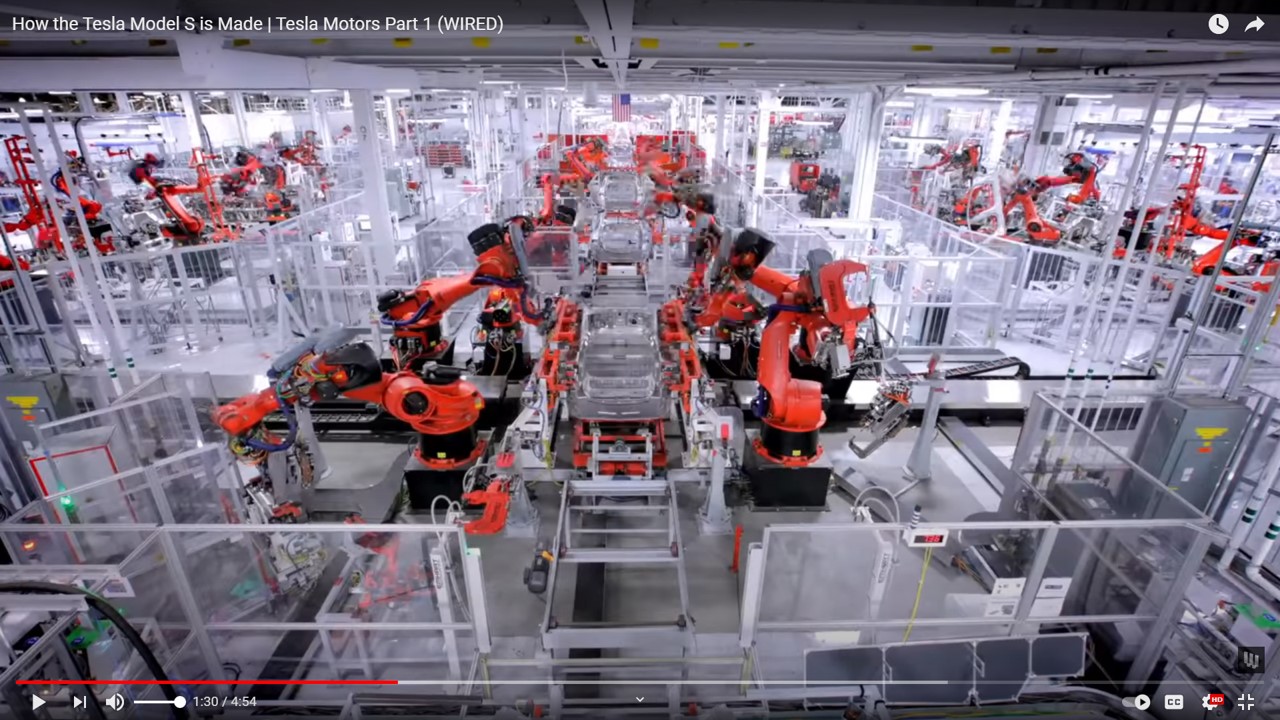
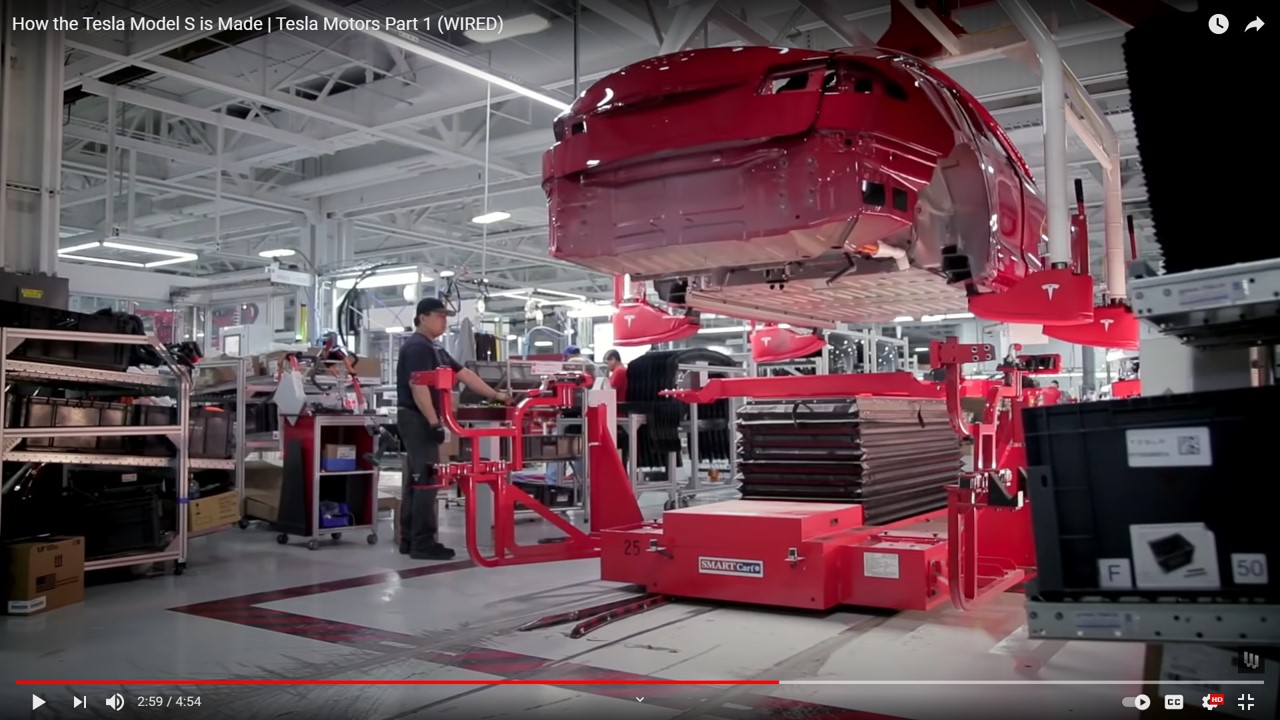
Giant robots on the factory floor in Fremont, assembling the aluminum panels to make the outer shell of Tesla Model S cars. Robots are extremely good at precision and repetitive tasks. Even so, some 10,000 humans work alongside them. Believe it or not, humans are still more intelligent than robots, and can do some tasks better, or offer suggestions for increasing efficiencies. [Still from YouTube video by WIRED magazine].After the shells had been painted, the car is assembled from the inside out, into the shell. Each car has its own cart that moves on a magnetic track for the assembly. This makes the ‘assembly line’ very flexible and nimble, and easy to switch from one Tesla model to another, with very little set-up time. [Still from a YouTube video by WIRED magazine].
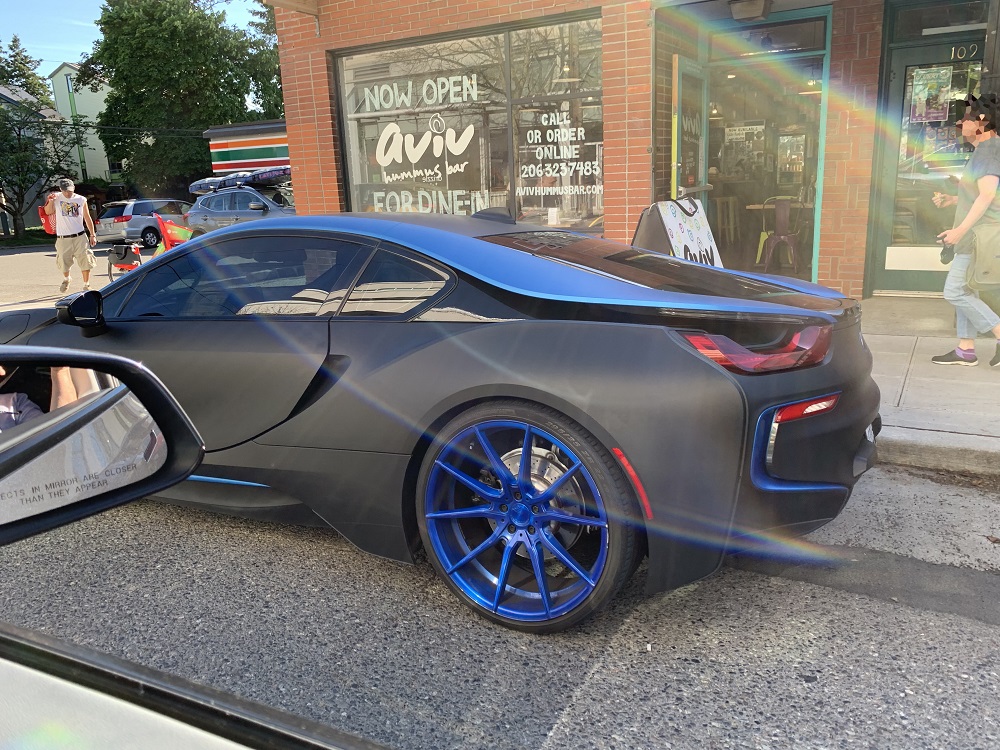
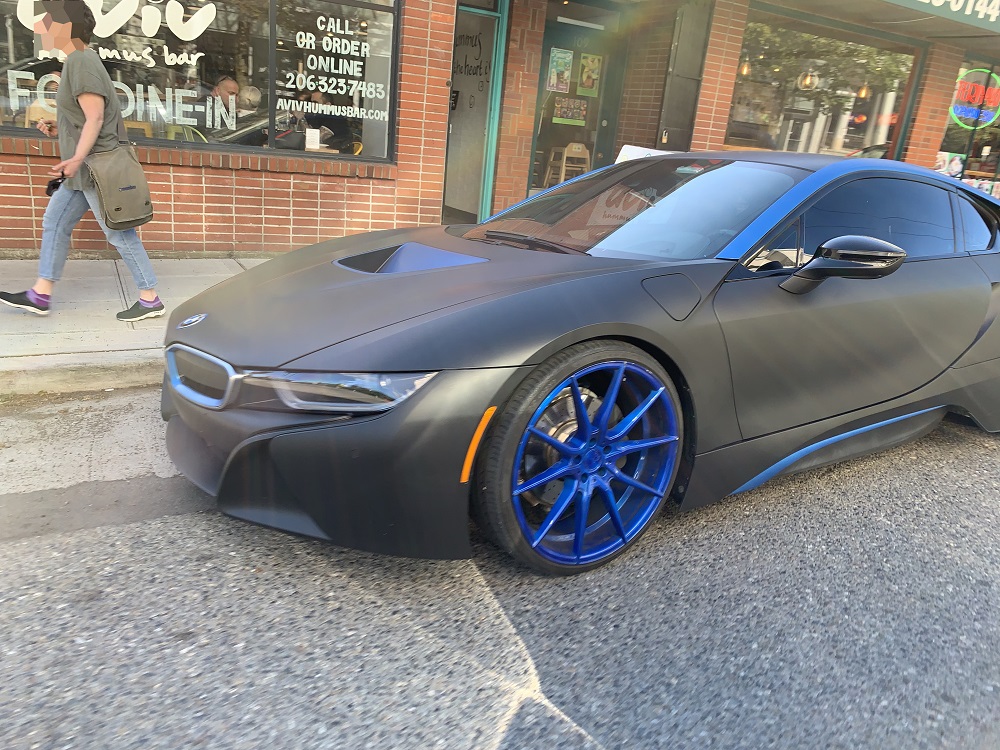
There was a BMW i8 parked on 15th Avenue today.
I might have caught a glimpse of this particular one before, when it was still all blue.
P.S. I was in the passenger seat of a Tesla Model Y as I took these drive-by pictures. 🙂
It’s hard to say what model year this $150,000 BMW i8 coupé is exactly, but it’s an older car. The protonic blue paint was available from 2014 to 2016. Looks like the owner had it wrapped in matt black, and also put on the striking blue wheels (but a blue that does not quite match the protonic blue). The car is a plug-in hybrid. It can be run on gasoline (rear-wheel drive) or electricity from its battery (front-wheel drive), or both.
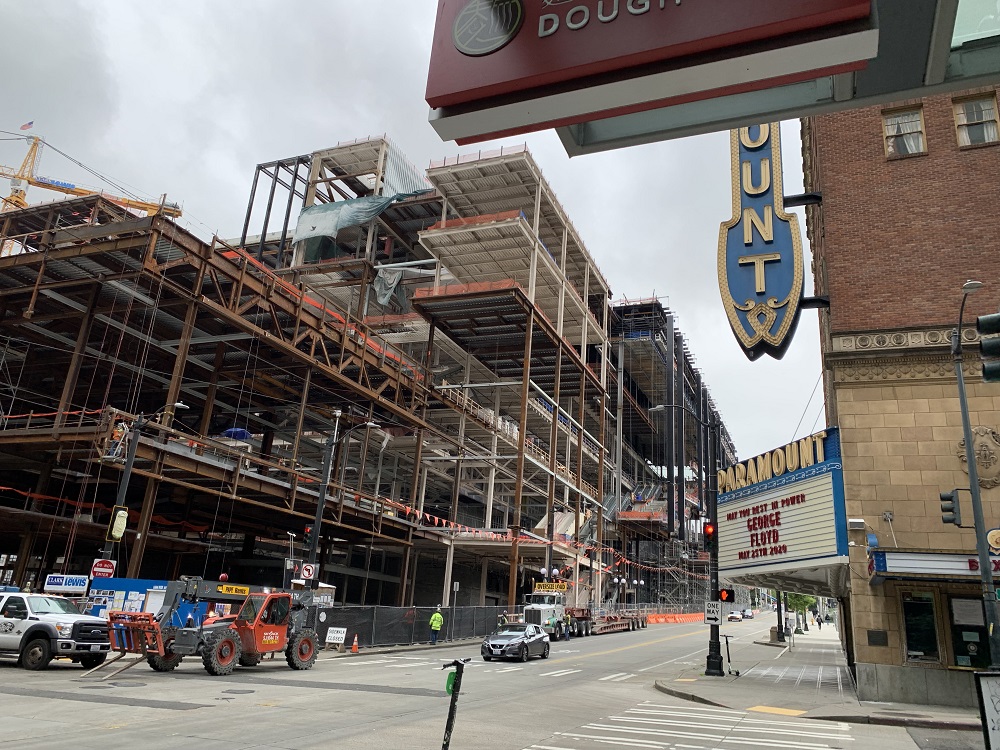
Four weeks had gone by, and this morning it was again time for my little rental car to go back to Hertz, on 8th Avenue in downtown Seattle.
The pictures are from my walk back, along Pine Street, and up to Capitol Hill.
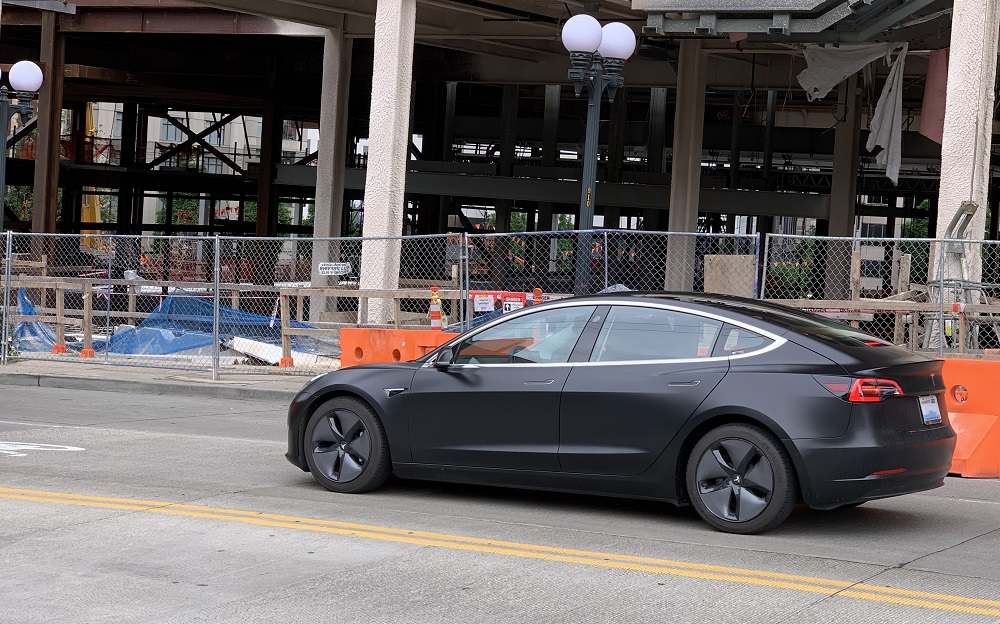
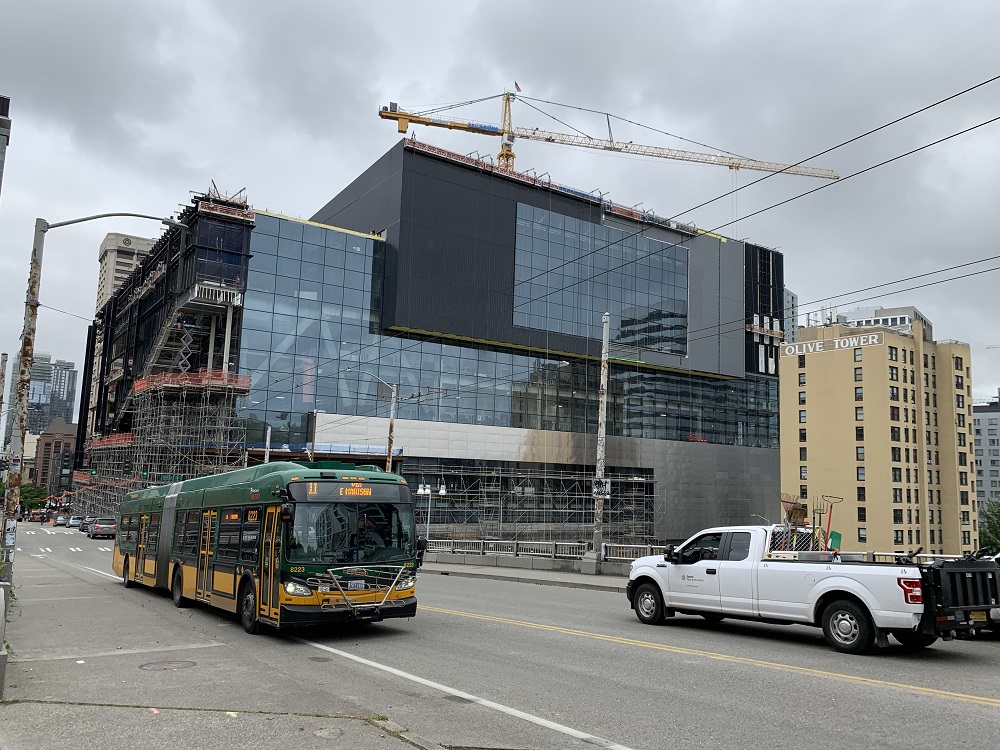
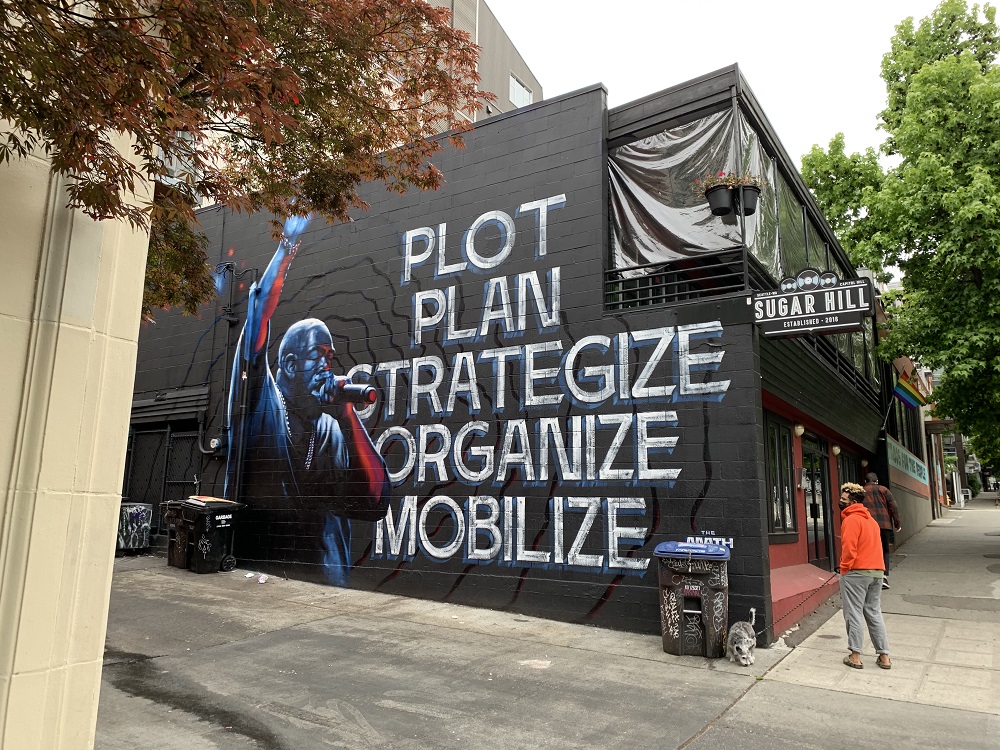
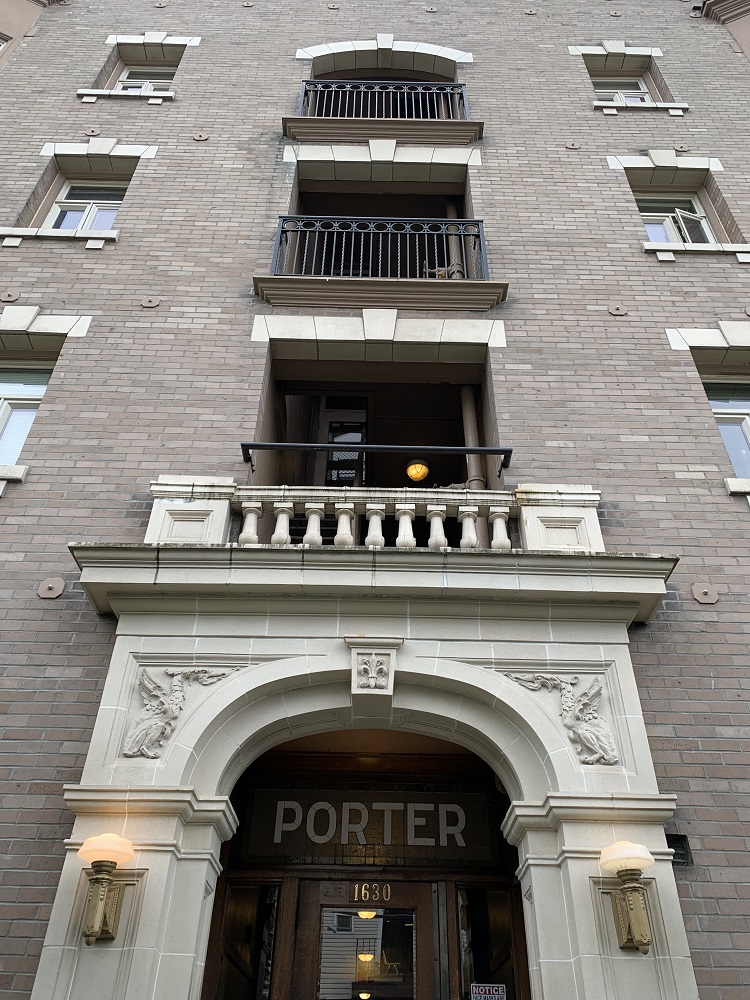
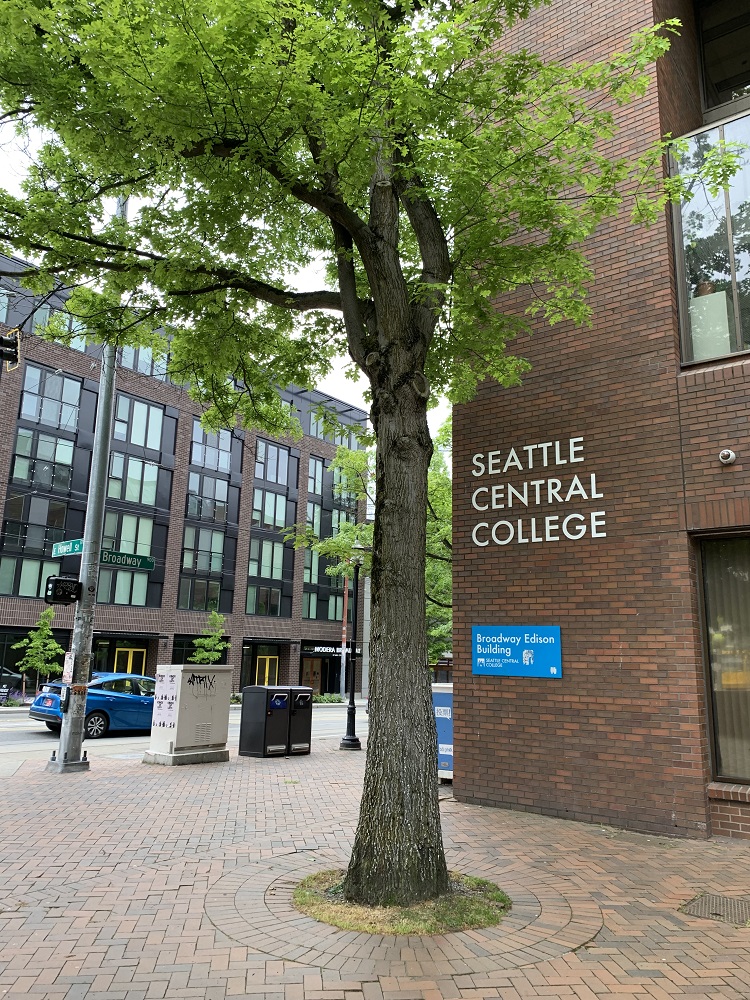
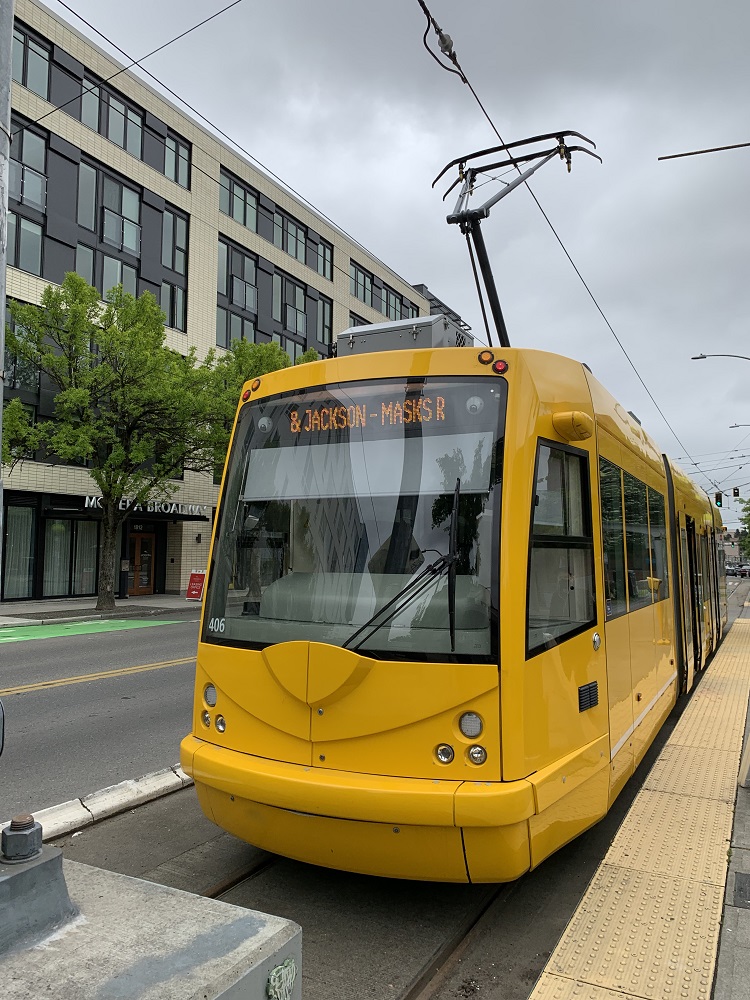
The construction of the Washington State Convention Center expansion can probably pick up its pace, now that the weather is better. Hopefully most of the workers have been vaccinated. The Paramount Theater bill board says ‘May you rest in power -George Floyd- May 25th 2020’.Today in ‘Model 3 spotting’: a matt black one. The matt black is not paint, but an after-market film wrapped onto the car (cost: about $5,000). This car has chrome trim on the door handles & windows. (Looks like the owner put some black on the door handles). The 2021 Model 3’s have ‘chrome delete’ trim (black trim, no chrome).The stainless steel cladding on the convention center extension’s east side is coming along. Hopefully, its shine will not be tarnished by the Pacific Northwest weather.There is new artwork on the Sugar Hill bar’s wall on East Pine Street: a Black Lives Matter organizer’s check list, of sorts. (Cute little doggie at the corner of the building).The Porter apartment building at 1630 Boylston Avenue was built in 1917. Its style is called ‘Vernacular’: architecture characterized by the use of local materials & knowledge, usually without the supervision of architects (source: Wikipedia). The brick building has an open center bay and terra cotta lintels on the main windows.The oak trees by Seattle Central College on Broadway have their new leaves. On the left, across the street, is 1812 Broadway, a new 7-story, 133-unit apartment building.A streetcar on the First Hill line, at the end-of-the-line stop called Broadway & Denny. These are Czech-made, model name Inekon121-Trio. This car has a battery, for ‘off-wire’ operation (a section of the First Hill line has no overhead electrical cables).
We are continuing the transition to Tesla Vision, our camera-based Autopilot system. Beginning with deliveries in May 2021, Model 3 and Model Y vehicles built for the North American market will no longer be equipped with radar. Instead, these will be the first Tesla vehicles to rely on camera vision and neural net processing to deliver Autopilot, Full-Self Driving and certain active safety features.
– Posted on Tesla.com
My Model 3 will come without forward-facing radar sensors, and will instead rely only on the input from the car’s eight cameras, for its autopilot, full-self driving and safety features.
It seems to me that this approach simplifies the input that Tesla’s proprietary artificial intelligence (AI) software has to process. Maybe the radar does not add anything significant, to what is already collected by the cameras. (Or worse: the radar and a camera provides conflicting input to the AI software).
I would think that under conditions with poor visibility, though: fog, or a rainstorm or a snowstorm, radar could be a great help. (If one cannot see, it’s time to pull over and stop driving, of course).
Thu 5/27: Consumer Reports pulled its “Top Pick” status for Tesla’s Model 3 and Y vehicles built after April 27, while the Insurance Institute for Highway Safety plans to remove the vehicles’ “Top Safety Pick Plus” designation.
The U.S. government’s National Highway Traffic Safety Administration is no longer giving the Models 3 and Y check marks on its website for having forward collision warning, automatic emergency braking, lane departure warning and emergency brake support. – reported by Tom Krisher from Associated Press.
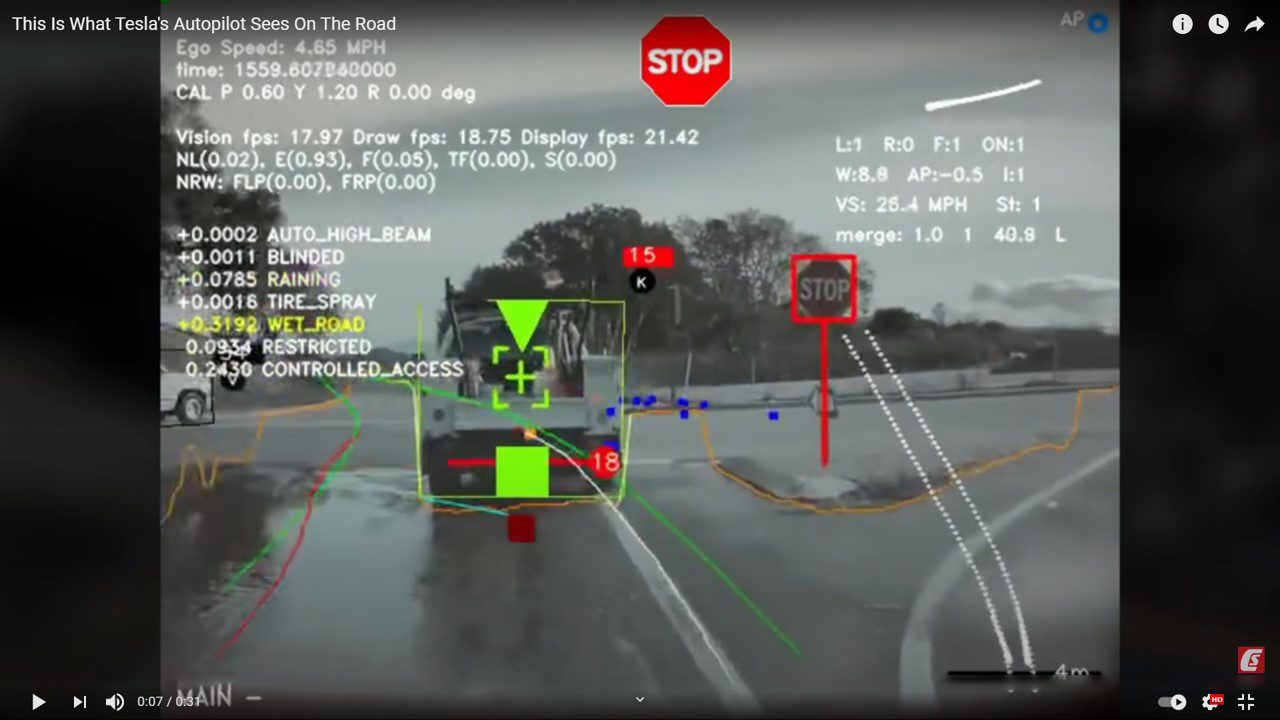
A still from a little clip of machine vision footage posted by Tesla in 2020. That time stamp number (top left) has an impossible 6 significant decimal digits, so down to a millionth of a second. That is surely for future use. Stop signs and red traffic lights are picked up very early, and then a stop line (the red line marked 18) is drawn on the road.
Ford is signaling that it thinks mass-market buyers are ready to trade their V-6 and V-8 engines for electric motors, and I think they are absolutely right.
– Eric Tingwell, Car And Driver, May 20 2021
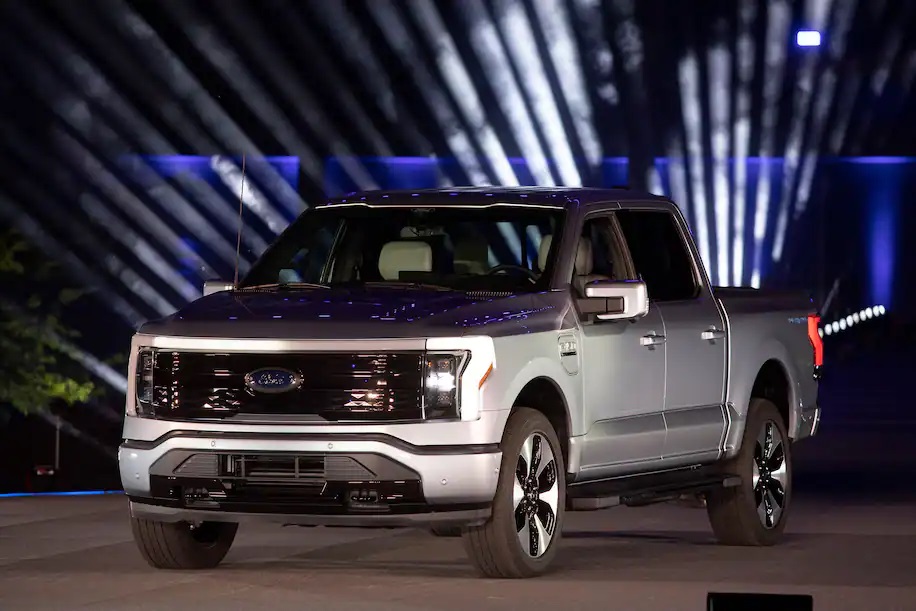
Yesterday, the Ford Motor Company unveiled the electric incarnation of their popular F-150 pickup truck*, the 2022 F-150 Lightning.
*What the iPhone is to Apple, the F-150 is to Ford. They sell 900,000 F-150 pick-up trucks every year.
The new, all-electric Ford F-150 Lightning performance pickup truck was unveiled at a livestream event at Ford headquarters in Dearborn, Michigan, on Wednesday. [Bill Pugliano/Getty Images]The F-150 Lightning can go from zero to 60 mph in 4.4 seconds. It can tow up to 10,000 pounds.
Ford says the battery can be used as a power source to power a house for up to three days, or say, to power electric tools at a work site. The standard-range battery is expected to be good for 230 miles on a full charge, and the extended-range battery for 300 miles. The base model will start at a very reasonable $40k or so, making it one of the least expensive full-size pickups on the market: gas or electric.
How many F-150 owners, or aspiring owners, will go for the F-150 Lightning? Time will tell. I hope they will sell lots and lots of Lightning.
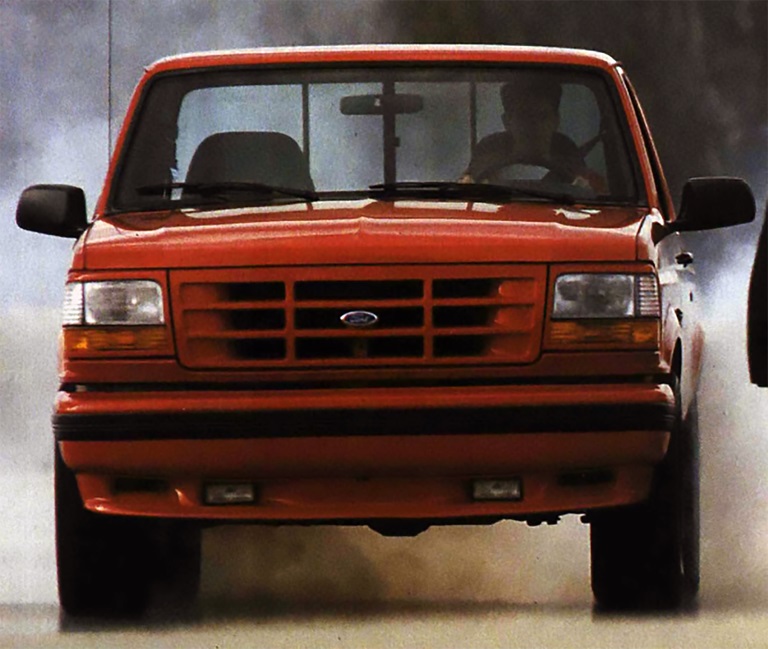
I did not know there had been a Ford F-150 Lightning in the 90’s: a sportier version of the F-150. This is a 1993 Ford F-150 Lightning [Aaron Kiley, Car and Driver Magazine]
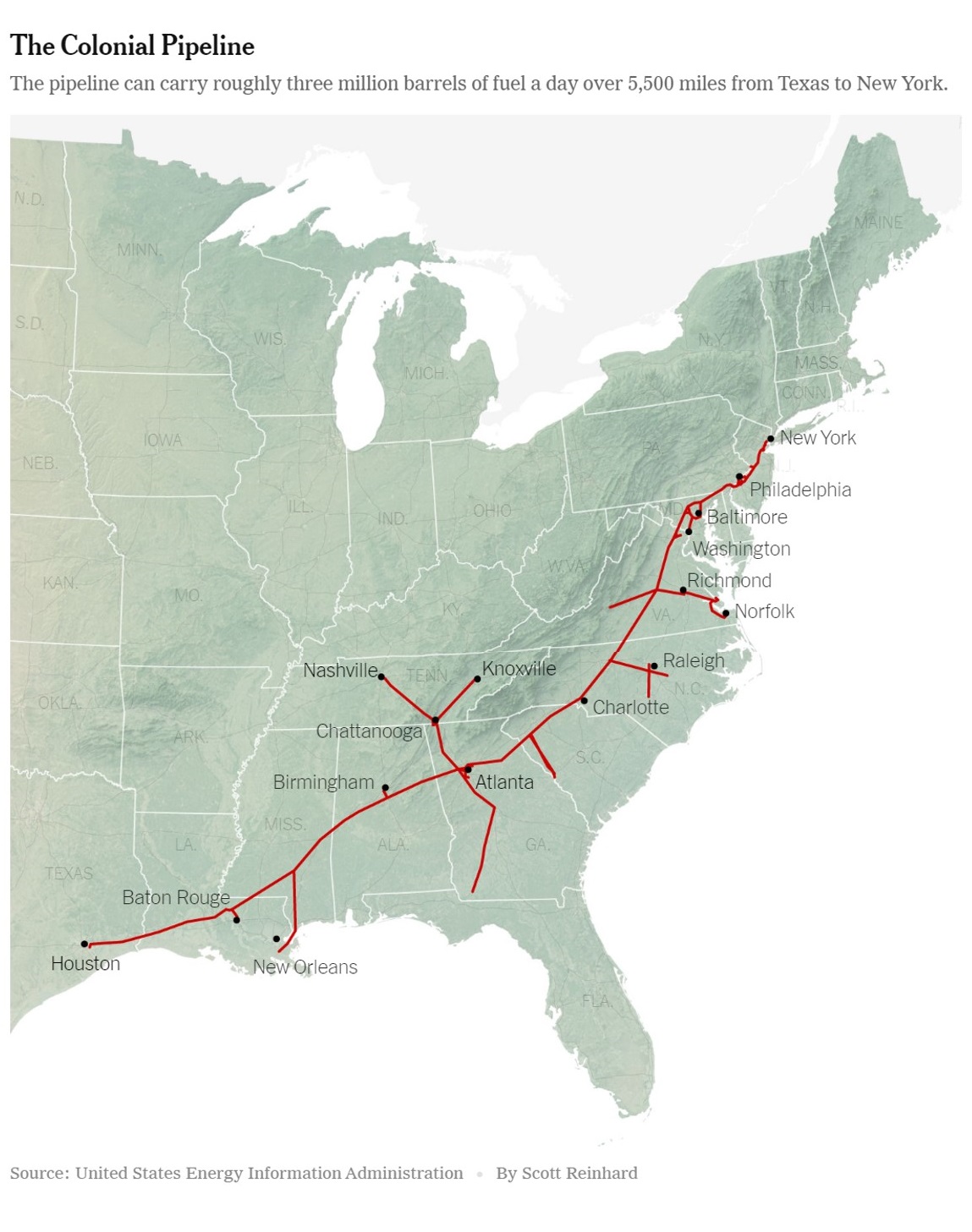
HOUSTON — Panicked drivers scrambled to fuel their vehicles across the Southeast on Tuesday, leaving thousands of stations without gasoline as a vital fuel pipeline remained largely shut down after a ransomware attack.
The disruption to the Colonial Pipeline, which stretches 5,500 miles from Texas to New Jersey, also left airlines vulnerable, with several saying they would send jet fuel to the region by air to ensure that service would not be disrupted.
-Clifford Krauss, Niraj Chokshi and David E. Sanger writing in the New York Times about panic buying of gasoline in the Southeast
If you are in the market for a new car, buy one that runs on electricity.
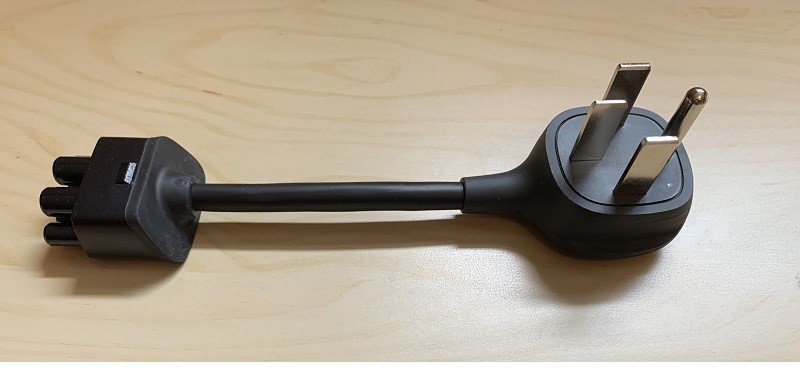
Here’s the 240-volt adapter for charging my Tesla’s car battery. (I had to buy it separately; it does not come with the car. Now all I need is the actual car with its battery, right?).
I will need a new electrical outlet, connected to a 240 V circuit, in my garage, similar to the one that I have in my basement for the clothes dryer. The standard 120 V outlet will actually do the job, charging the car. It will just charge a lot slower, up to 8 miles (of battery range) per hour vs. about 30 miles per hour for the 240 V outlet.
Think of electricity current (electrons) as water in a pipe, and voltage as the pressure that is applied to push the water through the pipeline. High voltage pushes more electric charge per second through the charging cable, and gets the battery charged quicker.
Just for fun, here’s a table with examples of electricity flow, current and voltage.
One ampere of current is one coulomb of charge moving past a given point per second. One coulomb is exactly 1/(1.602176634×10−19) elementary* charges.
Patience is a virtue.
– Origin unknown, possibly Cato the Elder in the 3rd or 4th century, or from the The Canterbury Tales, written during the 14th century.
Back from my test drive around Lake Union, at the Tesla dealership on Westlake Avenue.
Here’s a sneak preview of the electric car that I took for a test drive today.
I actually put an order in for one as well.
It’s a 2021 Tesla Model 3.
I picked the the long-range model (average of 353 mi on a full charge), with all-wheel drive, deep blue metallic color, standard 18’’ aerodynamic wheels, all-black interior — and steered clear of the ‘Full Self-Driving Capability’ option (that’s an extra $10,000).
I am going to have to be patient, though.
The delivery date is 7 to 11 weeks out.
It’s official: my Toyota Camry is going to be written off, and not be repaired.
I’ve told everyone I know for four years that my next car is an electric car, or no car at all*.
*Use Uber and the train or bus here in the city.
Since we’re still in a pandemic, and it would be so much more convenient to have a car, I am about to pull the trigger and put in my order for an electric car. (It’s from a company that is named after the last name of Serbian-American inventor, electrical engineer, mechanical engineer, and futurist Nikola Tesla).
Seattle City Light Superintendent Gordon Vickery with prototype electric car, 1973. The vehicle was a modified Gremlin powered by 24 rechargeable six-volt batteries. It could run for approximately 50 miles at highway speeds before needing to be recharged. [Item 181150, City Light Photographic Negatives (Record Series 1204-01), Seattle Municipal Archives].
‘The effort to move the giant ship was assisted by forces more powerful than any machine rushed to the scene: the moon and the tides’
– the New York Times
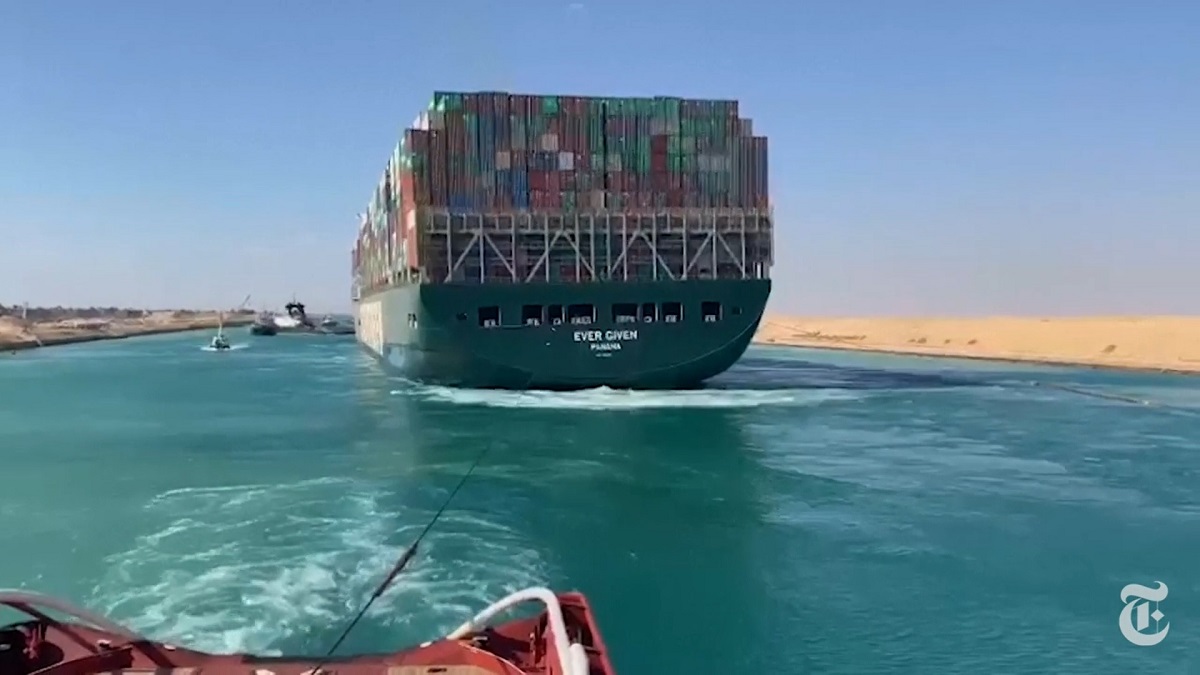
Word came on Monday morning that the Ever Given had been freed. It was towed to the Great Bitter Lake for a final inspection. The last thing authorities would want to happen, is for the ship to break down on the way to Port Said at the northern end of the Canal.
What a sight: the Ever Given in the middle of the Canal, getting towed to the Great Bitter Lake. [Still from a video by Associated Press, posted on the online New York Times]
“This is a very big ship. This is a very big problem.”
– Richard Meade, the editor in chief of Lloyd’s List, a maritime intelligence publication based in London.
So! that whale of a container ship is still stuck in the Canal.
The dozen or so tugboats and the dredgers have managed to move it by some 100ft, though.
The water level will raise by another 18 inches on Monday, and that might be all that is needed.
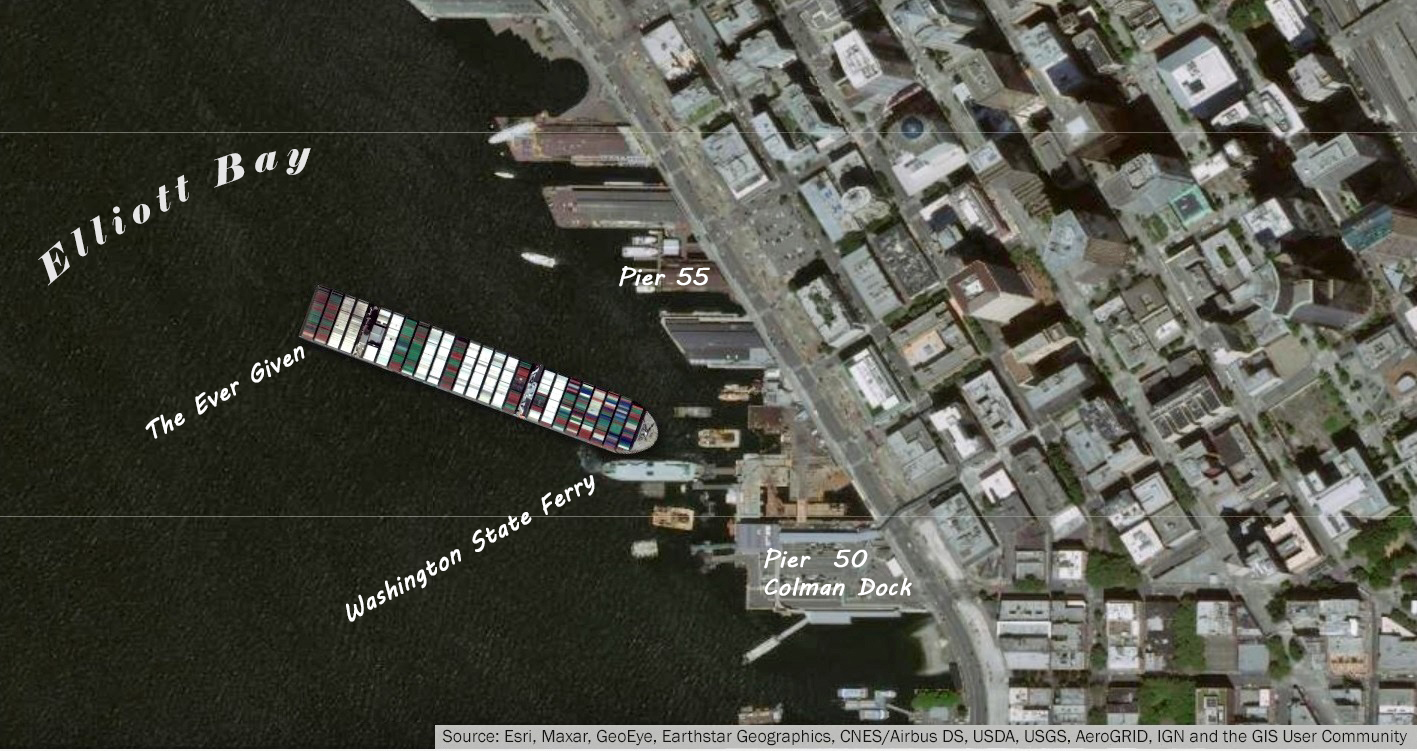
Here’s a depiction of what the Ever Given would look like from above, if it would ever make it to the Seattle Waterfront. (It’s hard to say what exact class of Washington State ferry is shown on the image, but let’s assume it’s a Jumbo class ferry such as the Walla Walla. The ferry would be of length 440′ & beam 87′. The Ever Given has a length of 1,312 ft and a beam of 193′. So if it’s 3x as long, 2x as wide, and 2x as high as the ferry, it’s a vessel that is 12 times larger than the ferry!) [Thanks to Garrett Dash Nelson @en_dash on Twitter for providing a tool to put the Ever Given anywhere on Earth]
Welp! I’m checking in on the Ever Given every morning (the ultra-large containership that ran aground in the Suez Canal on Tuesday). So far, it is not budging.
There is a full moon and a high tide on the way this weekend, though. That will lift the water level in the canal and may help to dislodge the Ever Given. (The Suez canal is not like the Panama canal, with its locks that elevate ships above sea level. The Suez has no locks — the Mediterranean Sea and the Red Sea’s Gulf of Suez have approximately the same water level).
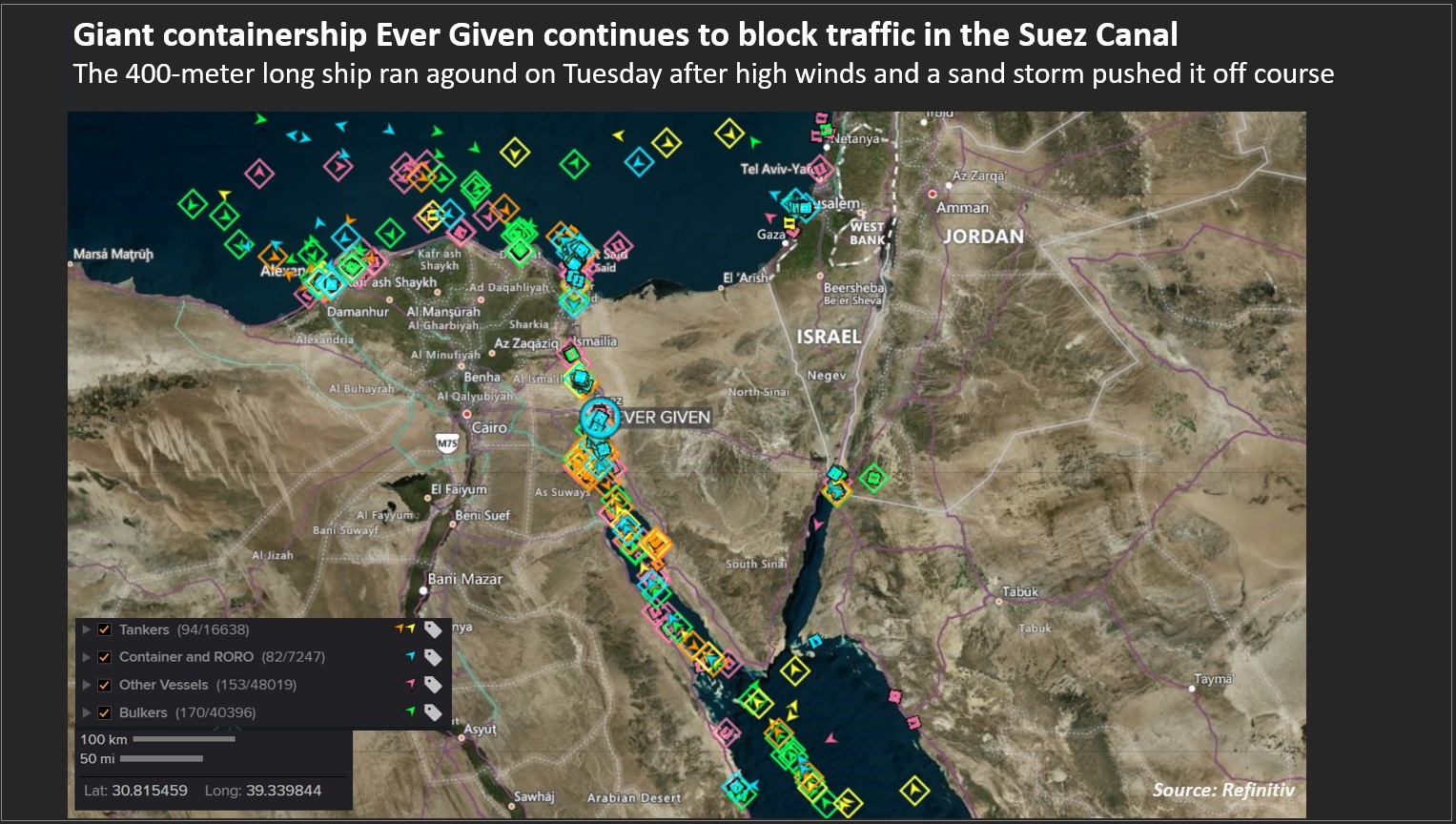
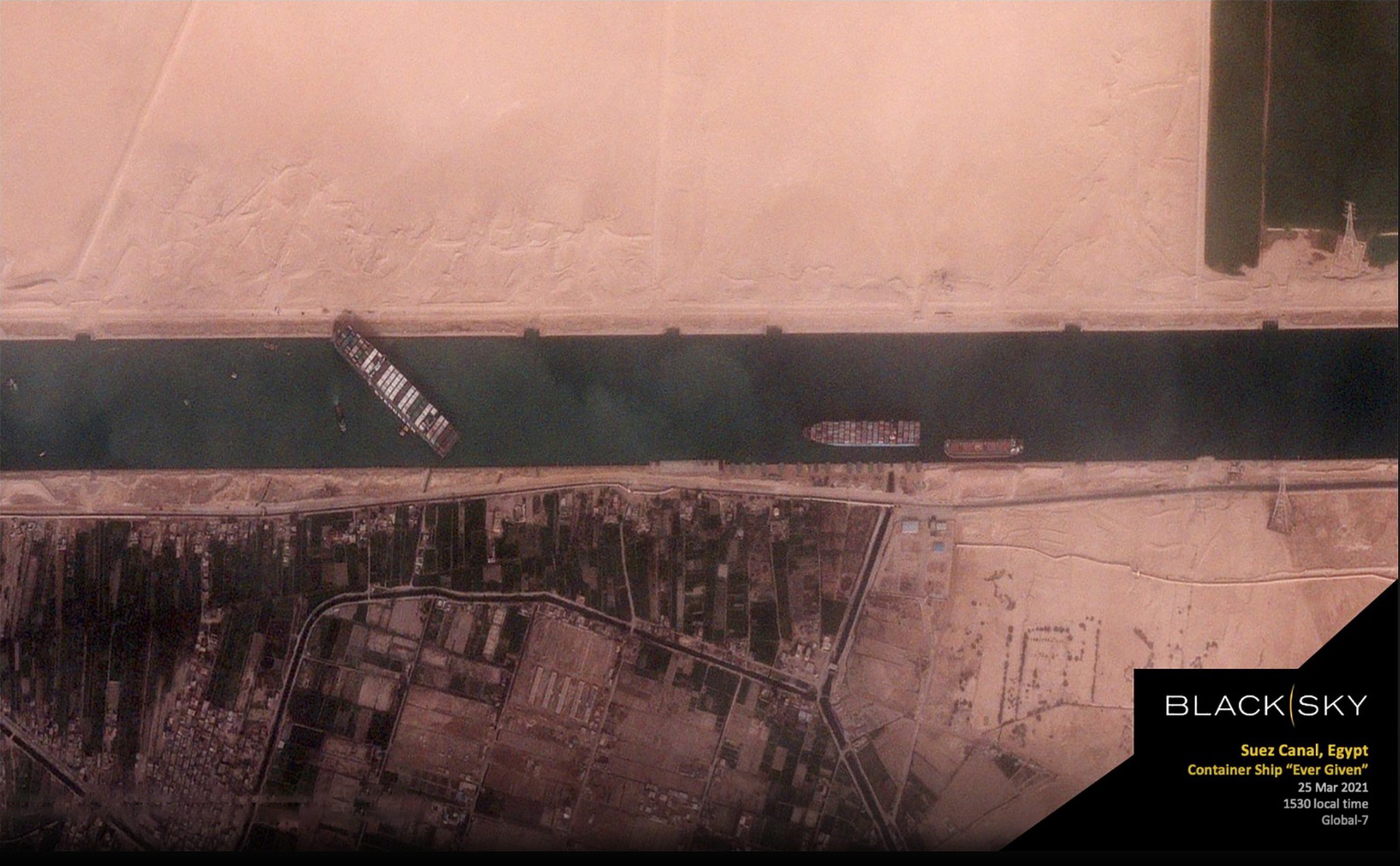
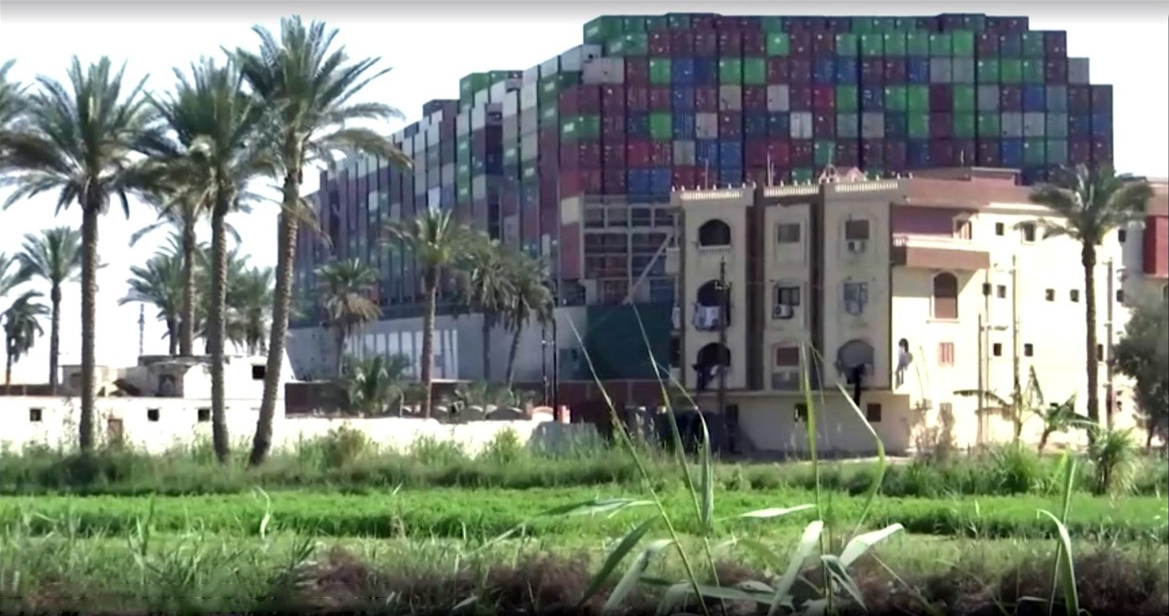
More than 150 ships are waiting to pass through the 120 mile canal. [Graphic by Refinitiv, a global provider of financial market data and infrastructure].Amazing detail in this satellite picture. The 400-meter, 224,000-tonne Ever Given container ship, leased by Taiwan’s Evergreen Marine Corp, blocks Egypt’s Suez Canal in a BlackSky satellite image taken at 15:30 local time March 25, 2021. [BlackSky/Handout via REUTERS]Stranded container ship Ever Given, one of the world’s largest container ships, is seen after it ran aground, in Suez Canal, Egypt March 25, 2021, in this still image taken from a video. [Reuters TV via REUTERS]
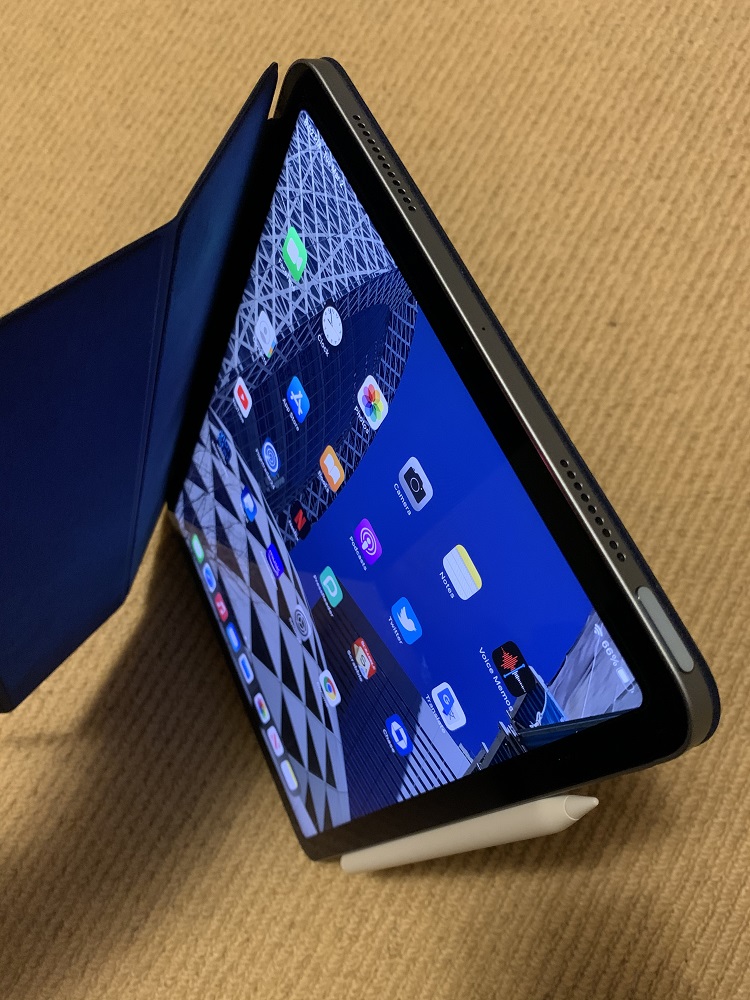
I have had my new iPad Air 4 for a few weeks now, and I like it. (Of course I like it). It is not a replacement for my Lenovo notebook computer (Windows), and so I do not have a little keyboard for it. The iPad holds my iTunes music collection, my photo albums, my Scrabble games and my newspapers & magazines from Pressreader. I did get the 2nd-generation Apple Pencil — to see what cool things I can do with it, more than anything else.
I’m still getting used to the harder edges that Apple has reintroduced to their iPhones and iPads of late. There is definitely no air in the Air (it feels heavy), and the edges hurt my fingers a little bit, after I have held it too long while I lie on my back in bed, watching Netflix. (I know. I should watch Netflix on the big TV screen downstairs, and not in bed).
I got the blue finish, which is really a bluish gray, and not really ‘Sky Blue’, as Apple calls it. The cover is Apple’s magnetic cover, the navy blue color. That thin light gray button on the corner has Touch ID integrated into it, and it is quick and reliable. (Psst. I want it for my iPhone, Apple! The face recognition function to unlock my iPhone Xs no longer works in public, now that we wear masks). The 2nd-gen. pencil now latches onto the iPad’s side, magnetically, to charge —a vast improvement from the 1st-gen. one that had to be stuck into the thunderbolt port at the bottom. (The Air 4 has a USB-C port and not a thunderbolt port).I’m not Vincent van Gogh, nor Andy Warhol, but it was fun to add some color to this self-portrait. I took the picture with the iPad’s camera inside the Notes app, and then embellished it with the Pencil.Here’s something else I’m trying with the pencil and its electronic ‘ink’: filling out the giant crossword puzzles from the Irish Daily Mail. It’s a very different experience than printing out the crossword on a large sheet of paper, and using a graphite pencil and eraser. Maybe I will get to like doing it on the iPad, and maybe not.
Congratulations to the hundreds of collaborators at NASA, for the successful landing of the Perseverance rover on Mars. The mission was eight years in the making.
[From CNN online] The path Perseverance will traverse on Mars is about 15 miles long, an ‘epic journey’ that will take years. What scientists could discover about Mars, though, is worth the journey. To accomplish its goals, Perseverance will drive a little less than 0.1 mile per hour, three times faster than previous rovers.
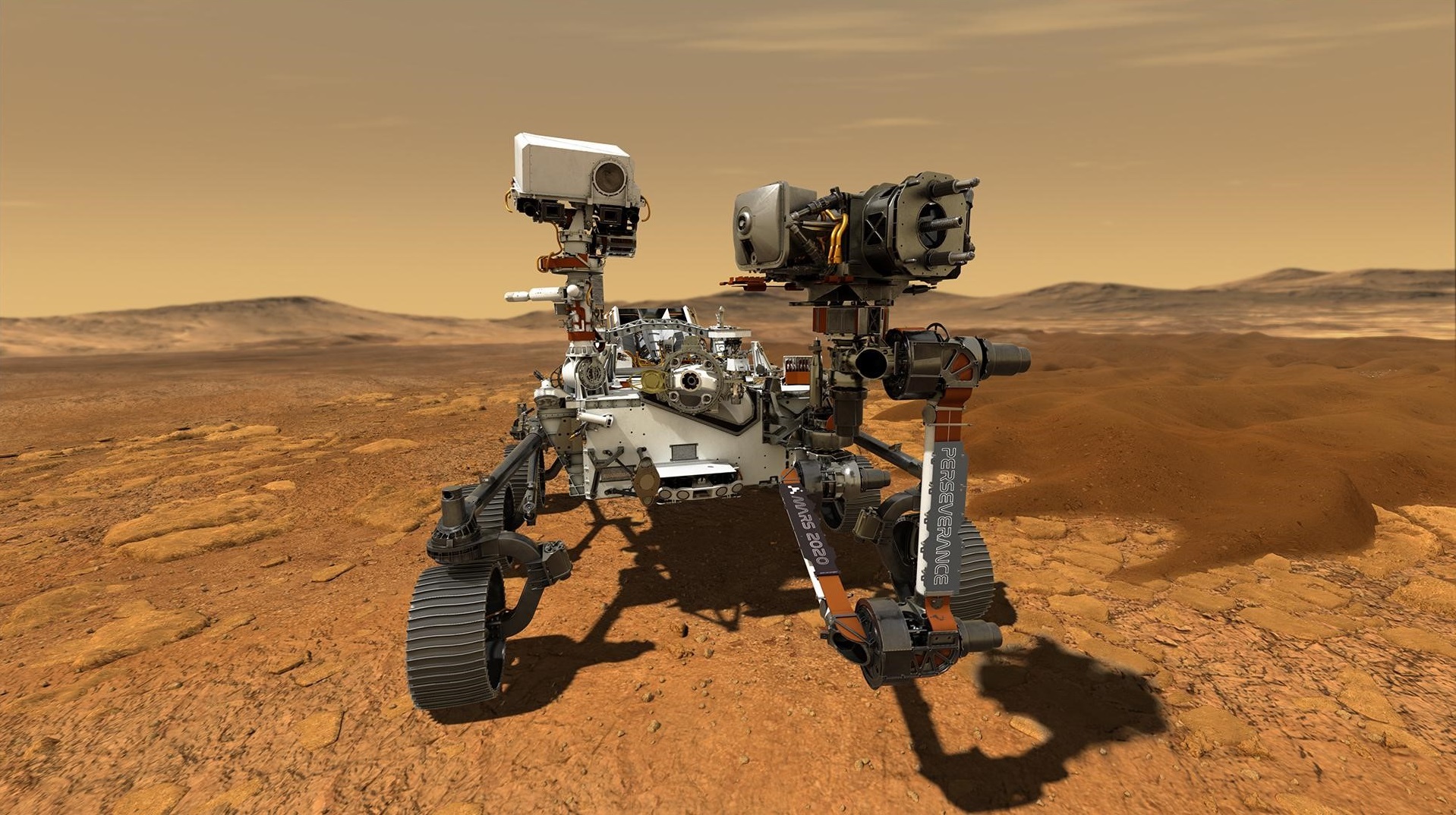
A rendering of the Perseverance rover on Mars, NASA’s fifth. The rover landed in Jezero* crater, thought to have once been flooded with water. The crater contains a fan-delta deposit rich in clays, and the rover will look for evidence of life that might have existed on Mars. The rover will collect information about Mars’ climate and geology, and collect soil and rock samples that will make it back to Earth by the 2030s. *Jezero means ‘lake’ in many Slavic languages. [Source of picture: NASA]
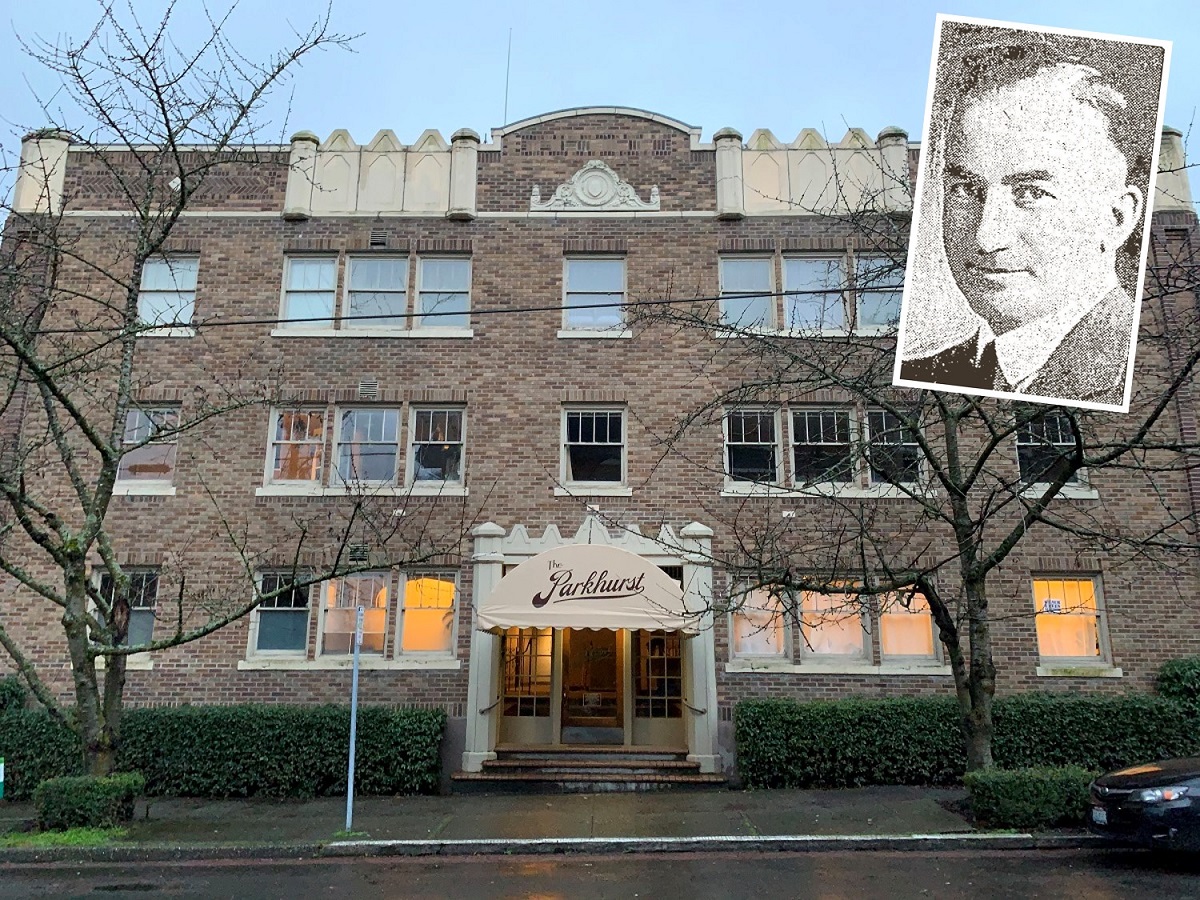
There were no cars in front of The Parkhurst apartment building on 14th Avenue, as I walked by, just before dark.
So I snapped a picture, to check up on its history at home.
Here is what I found.
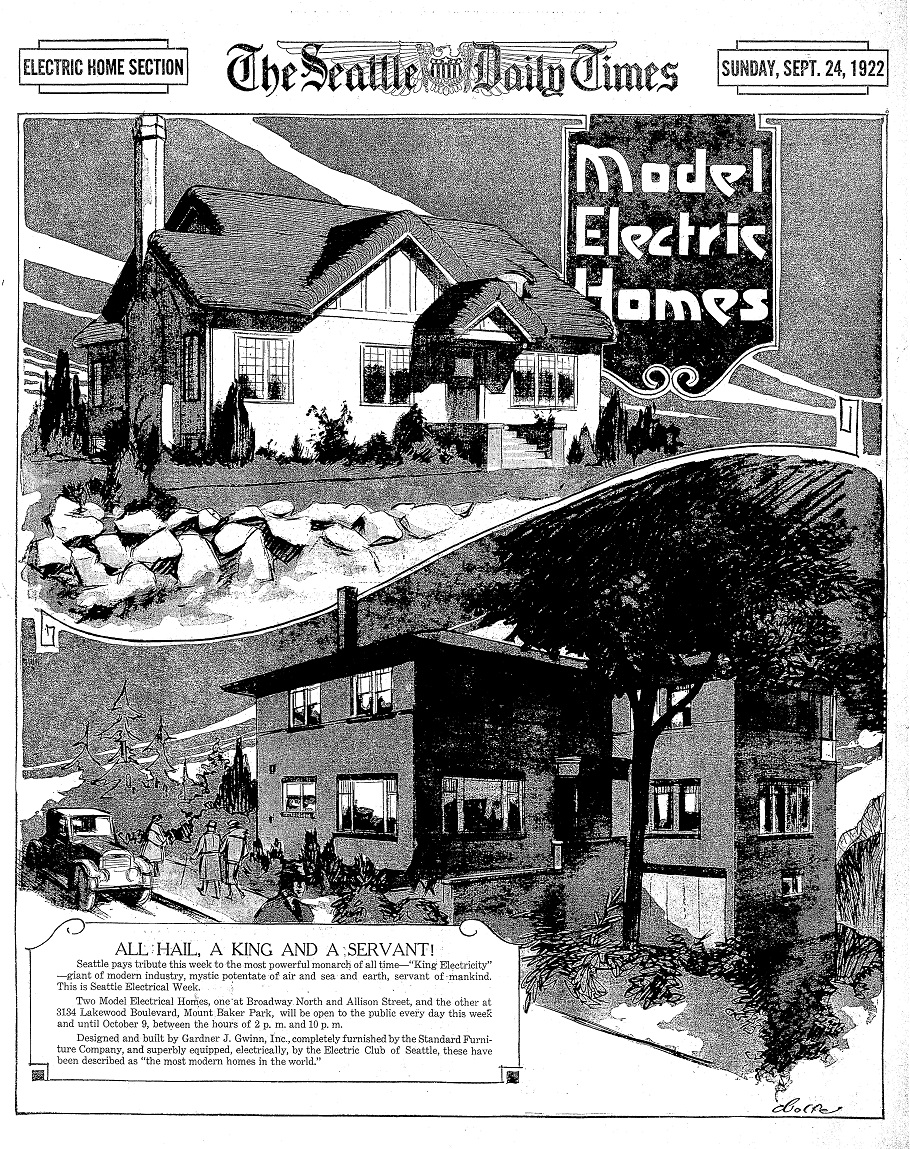
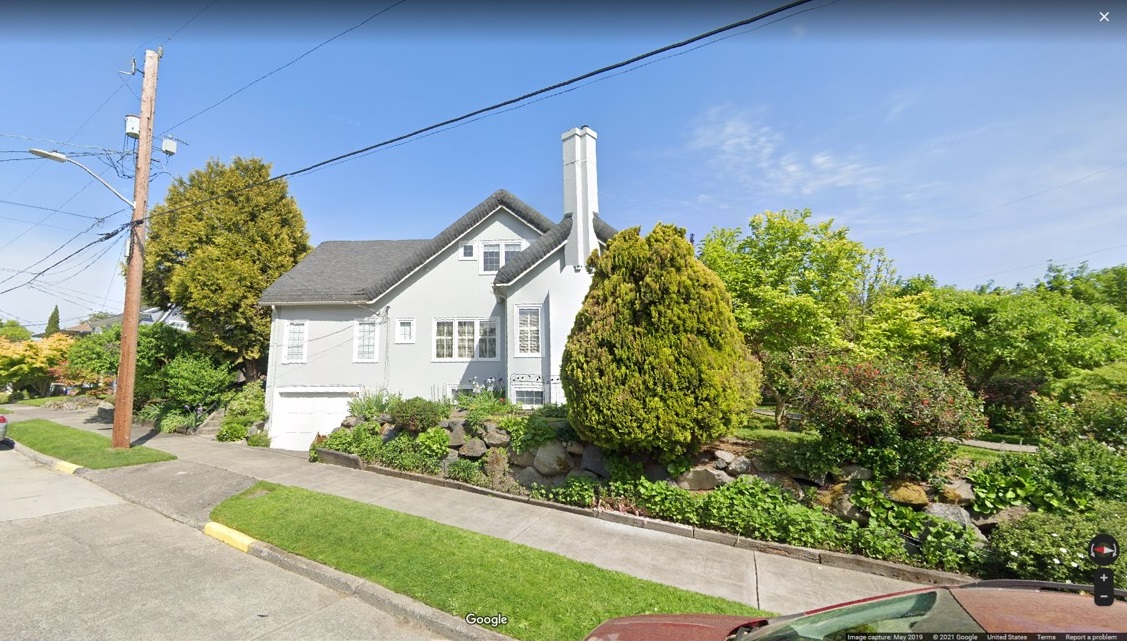
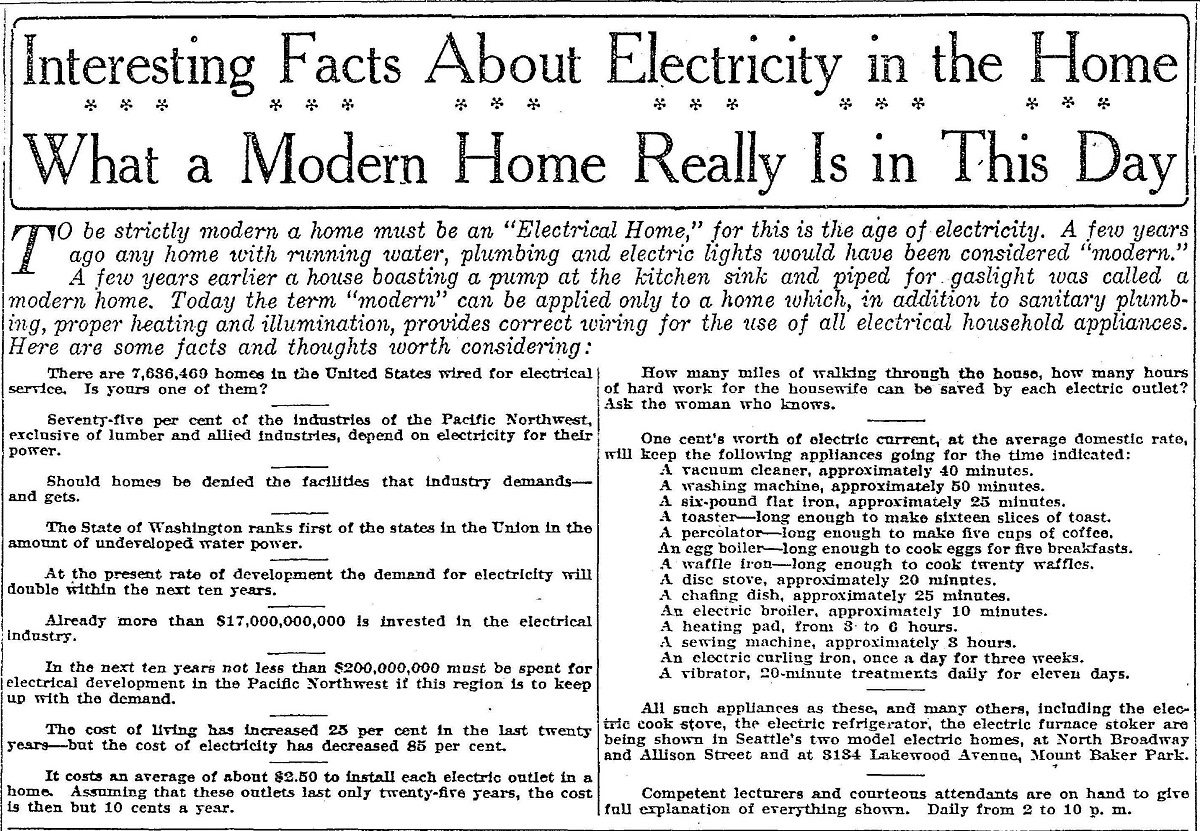
The Parkhurst apartment building on 14th Ave. It was built in 1929 by builder & developer Gardner J. Gwinn (inset picture). A native from Nova Scotia, Canada, he moved to Seattle in 1909 at the age of 21. At the time the Alaska-Yukon-Pacific Exhibition (a world’s fair) was underway (on the site now occupied by the University of Washington), and the city was booming.Gwinn was a prolific home builder, and was selected by the Electric Club of Seattle to promote and market ‘Electric Homes’. In the very beginning, homes were wired with only the basics for electric lighting. ‘Electric homes’ had electric outlets & more extensive wiring for electric appliances in the kitchen and elsewhere in the house. [From the Seattle Times Archives, Sept. 24, 1922].It’s 97 years later, but both of the homes pictured above in the 1924 Seattle Times, are still standing. This picture of the top one is from Google Streetview.From the same Seattle Times supplement from 1924, an article that promotes the ‘modern home’ that has electricity. Vacuum cleaner, washing machine, 6-pound flat iron, toaster, percolator, stove, sewing machine .. who could resist? The nationwide electrical grid was still under construction, though. In 1925, only about half of homes in the US had access to electricity at all.
Here’s another reason for me to go to Berlin again some time (first reason is the new Berlin Brandenburg Airport): the expansion of the U5 U-bahn* line that had started in 2010, is now complete.
*Short for Untergrundbahn, ‘underground railway’.
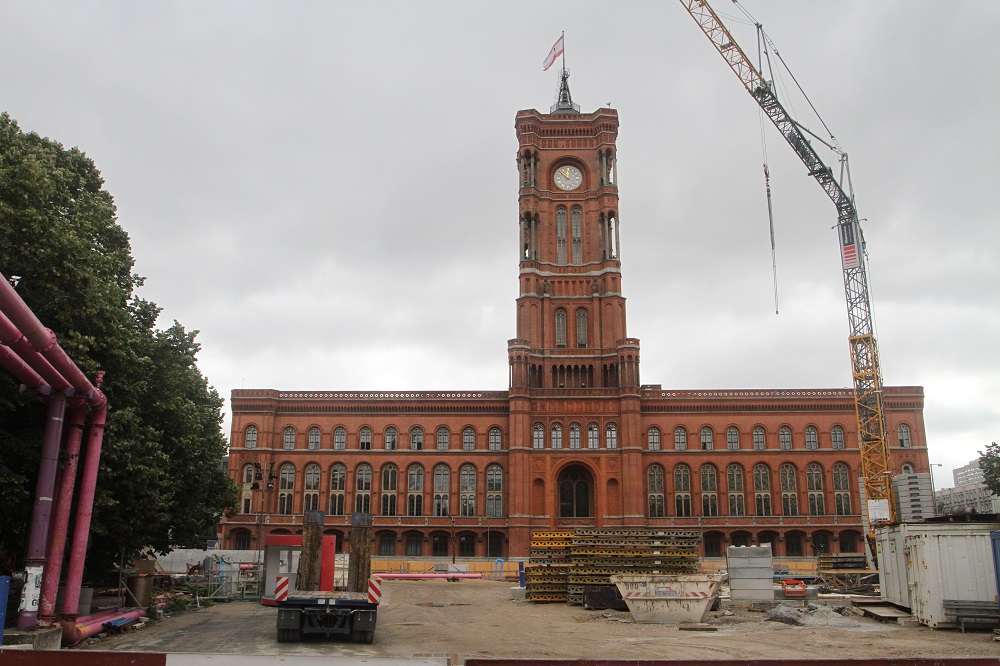
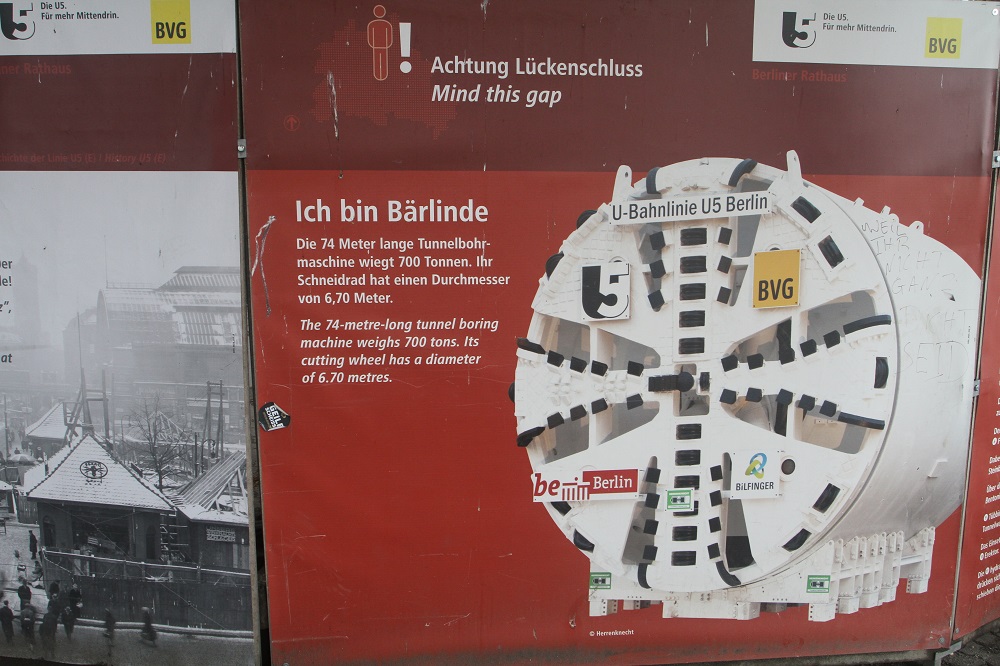
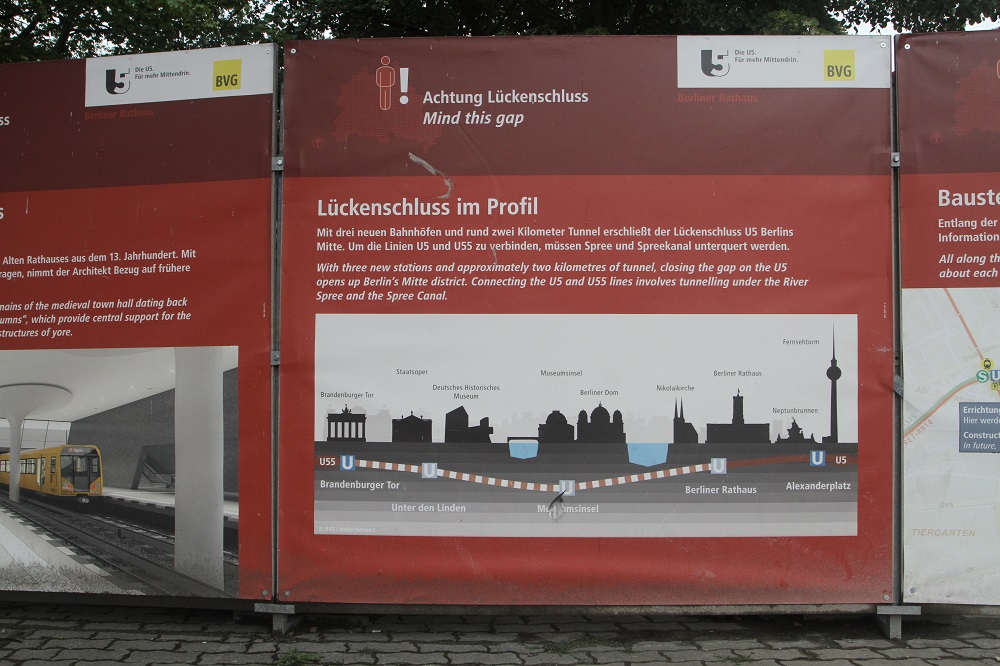
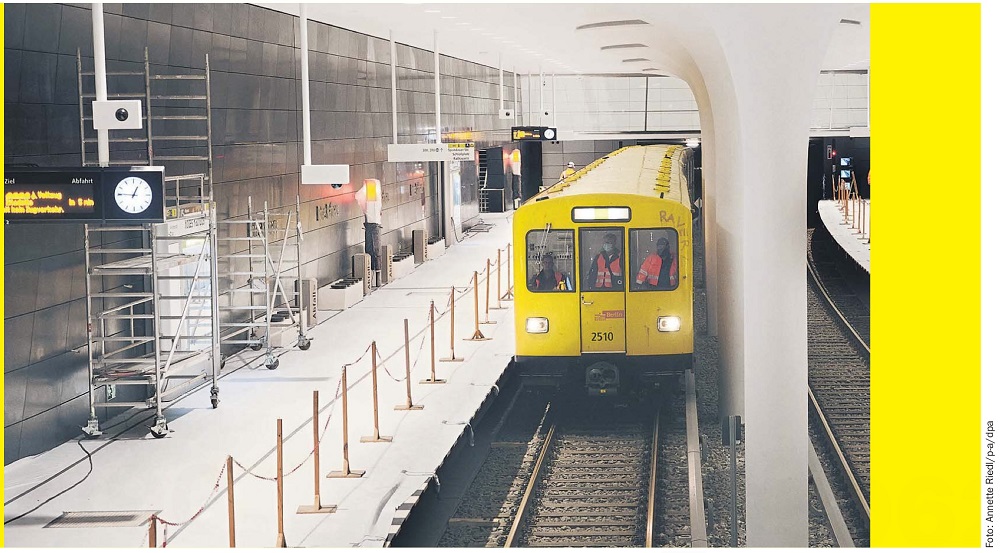
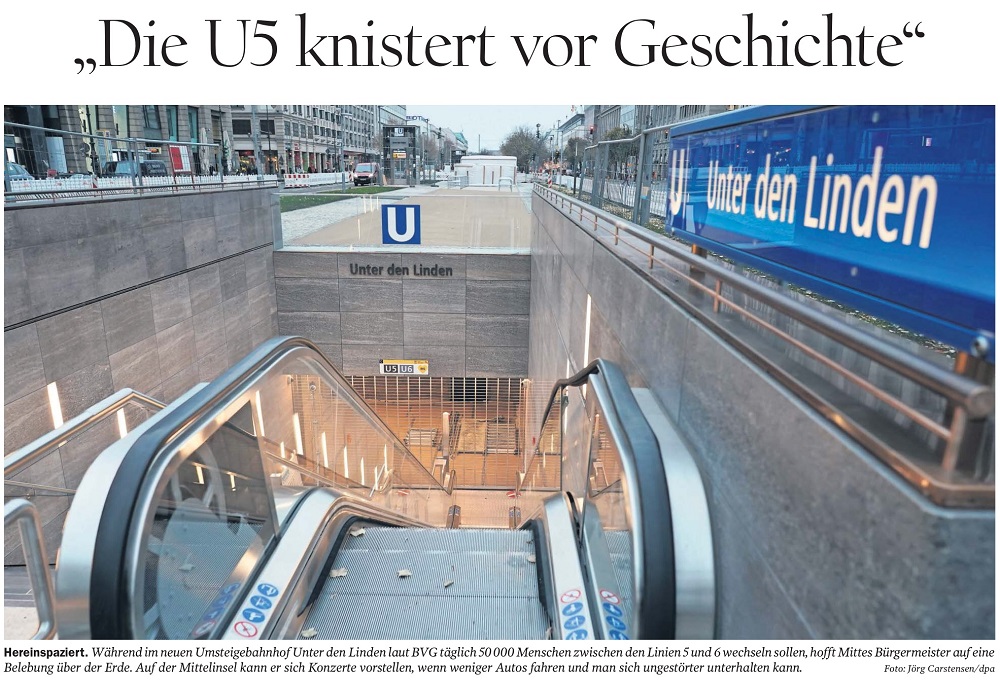
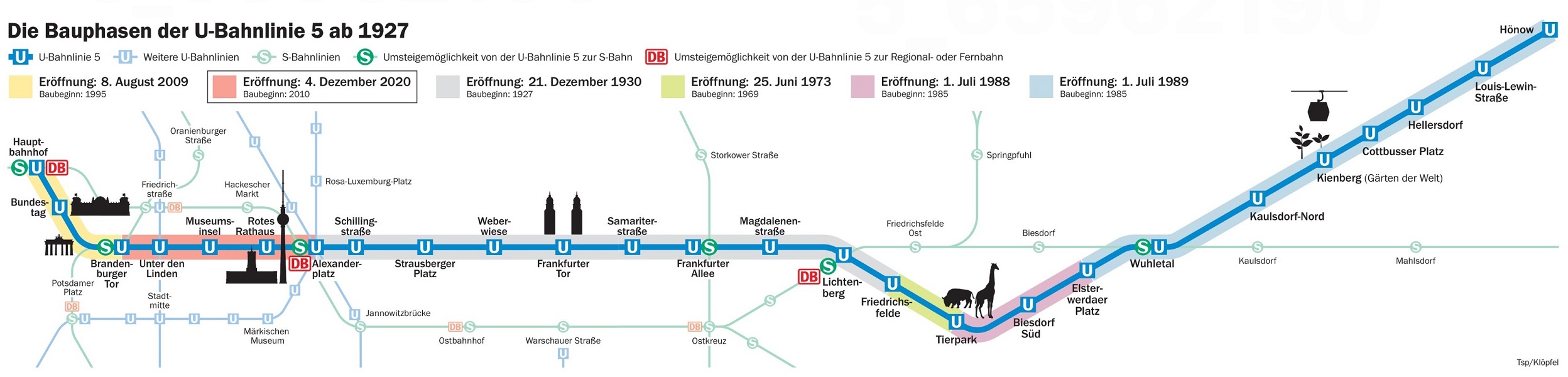
I took this picture of the Rotes Rathaus (‘red town hall’, opened in 1869) on Rathaus-straße near Alexanderplatz in 2015. Construction of the U-5 line extension and stations were already well underway.Here is the ‘Bärlinde’ tunnel boring machine they deployed. It is somewhat similar to the Bertha boring machine (dia. 57.5 ft/ 17.5 m) that was used in Seattle for the SR-99 tunnel, but this one is not nearly as big (dia. 22 ft/ 6.7 m).The new part of the U5 line dips down from the Brandenburg gate to the station called Museum Insel (museum island, an island in the Spree River), and then goes up again to Alexanderplatz.Inside the brand new Rotes Rathaus station on the U5 extension. [Picture credit: Der Tagesspiegel/ Annette Riegel]“The U-5 crackles with History” Come in! With 50,000 people that will be able to change between lines 5 and 6 in the new Unter Den Linden station, according to BVG, the city’s mayor hopes for a revitalization aboveground. He imagines concerts on Museum Island with fewer cars that are driven, and people can converse undisturbed.Here is the history of the U5 line that now stretches back almost a century, to 1927. [Graphic from Der Tagesspiegel]
Two items in the ‘Better Late Than Never’ category, in the fight against the pandemic, were in the news today.
1. Dr. Scott Atlas, Trump’s coronavirus adviser resigned. (His ‘expert advice’ appalled public health experts).
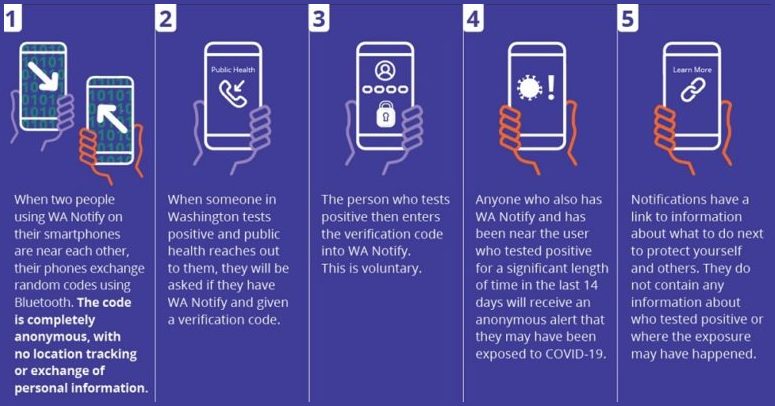
2. Washingtonians can finally activate or download the Coronavirus Exposure Notification app. (In Western Washington, the number of new daily cases jumped six-fold just from September to November). The diagram below shows how this works.
Here’s how the Exposure Notification smartphone app, developed by Apple & Google, works. (Technical question: Bluetooth signals work up to 30 ft/ 10 m away. Does that mean I will get a notification if I had been as much as 30 ft away from a person that had tested positive for COVID-19 the last 14 days? I guess so! The fourth panel does say it needs to be ‘a significant amount of time’ – 15 mins, I would guess – that the phones had been in close proximity). [Graphic from the Washington State Dept. of Health website]
‘A mesh network is a group of devices that act as a single Wi-Fi network; so there are multiple sources of Wi-Fi around your house, instead of just a single router. These additional Wi-Fi sources are called points or nodes’.
– definition from support.google.com
My Wi-Fi signal downstairs was too weak for my new smart TV, so I opted for a mesh network to get a better signal downstairs — instead of adding a Wi-Fi extender to my existing network. Per my limited understanding, Wi-Fi extenders repeat the signal and thereby slows down its speed. Many times extenders broadcast a new network name, which could be a hassle for a user moving around a lot in the space.
I went with Google Nest Wi-Fi. For a small apartment, one node will do, but for a bigger space two nodes or more can be used.
Once I had the issues with my old Wi-Fi-enabled modem-router resolved (aka throwing it out and replacing it altogether with just a simple cable modem!), the set-up of the Google Nest Wifi mesh network was straightforward.
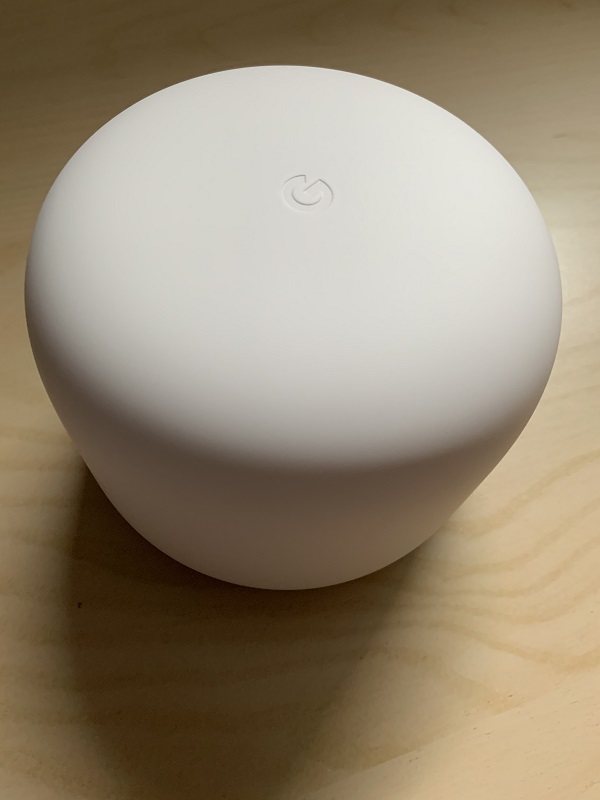
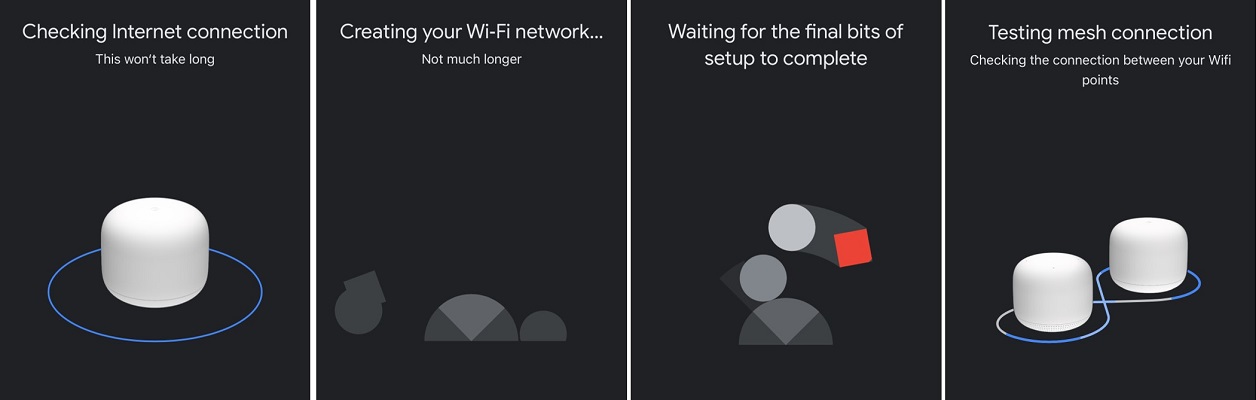
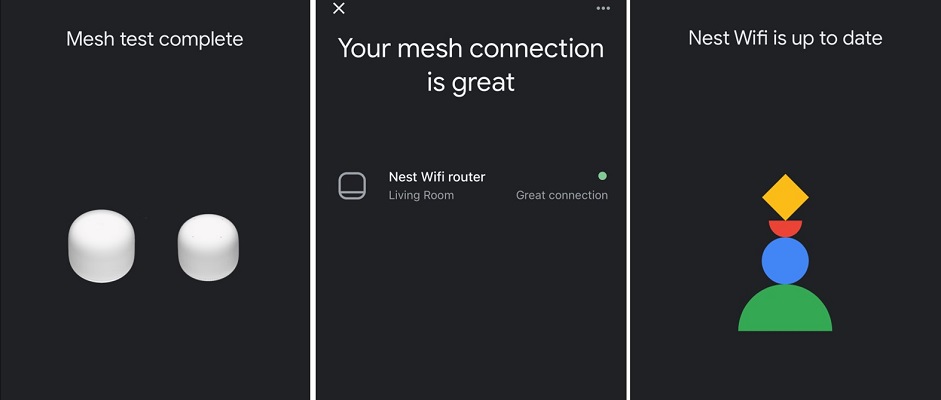
These little orbs (officially ‘Google Nest Wifi routers’) are the nodes in the mesh network. One of them is connected to the modem via an Ethernet cable (connector plugs are hidden on the bottom). All the other identical nodes are simply plugged in to a power outlet (not further apart than two rooms or so from any other). My node by the modem is upstairs in the study, with one more node downstairs in the living room.Here’s what the walkthrough on the Google Home app looks like.‘Your mesh connection is great’ .. music to the ears after the slog I had to replace the modem (50 mins on the phone with the ISP’s tech support only to conclude the old modem was not cutting it, and that I needed a new one!).
My Samsung TV was 10 years old, and at long last it was time to upgrade to a smart 4K* TV. I picked a Samsung again, and was planning to replace my 55″ screen with a similar size .. and then at the last minute in the store, opted for one with a 65″ screen.
I paid $1,899 in 2010 dollars for the old TV (that’s $2,264 in 2020 dollars). The new one was all of $529, practically given away for free. (Alright, so not completely free).
*Smart= the TV can connect to the internet and offer all kinds of online content from providers such as Netflix, Amazon Prime, YouTube and others.
4K= the screen resolution is 3840 x 2160; a fourfold increase over Full HD (1920×1080 pixels).
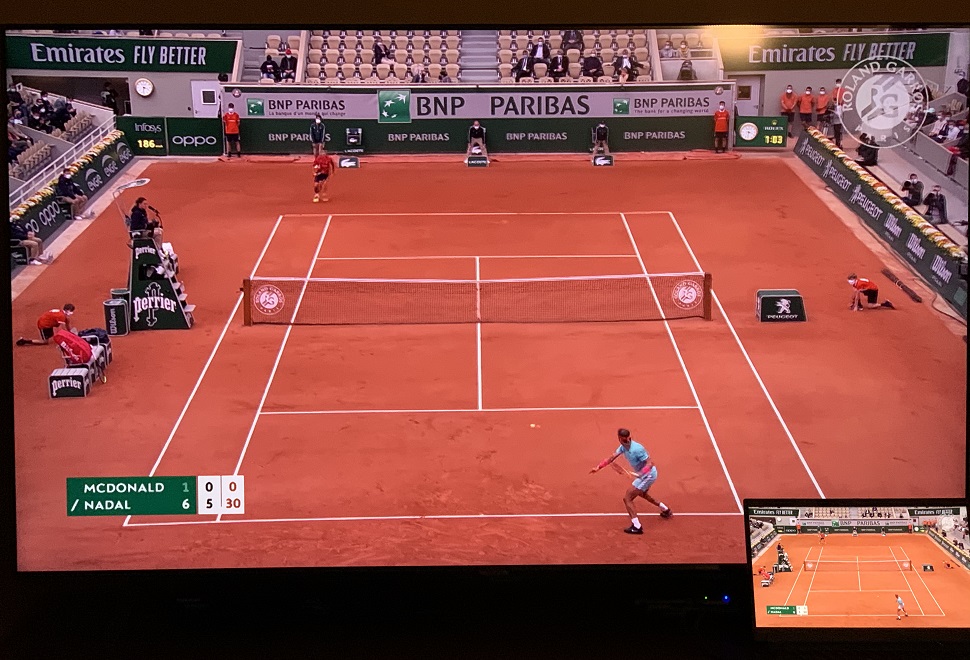
The 2020 French Open is underway in Paris. The silly American networks are VERY STINGY with their coverage. I should sign up for Tennis Channel’s content (it’s $100 per year). YouTube posts highlights of the matches every day. My wifi signal is poor in the corner of my living room where the TV is, so what I did here is connect my laptop computer to the TV with an HDMI cable to get the tennis on the big screen. I’m still trying to find out why the laptop can pick up the wifi signal OK but the TV cannot! Anyway, here is the King of Clay (Spaniard Rafael Nadal, 34 yrs, nearside in the turquoise and pink!) in the second round against American Mackenzie McDonald, 25). Nadal won easily, but it was a triumph for McDonald just to be able to play. He tore his hamstring tendon last year in May and could not walk for two months after the operation to mend it.
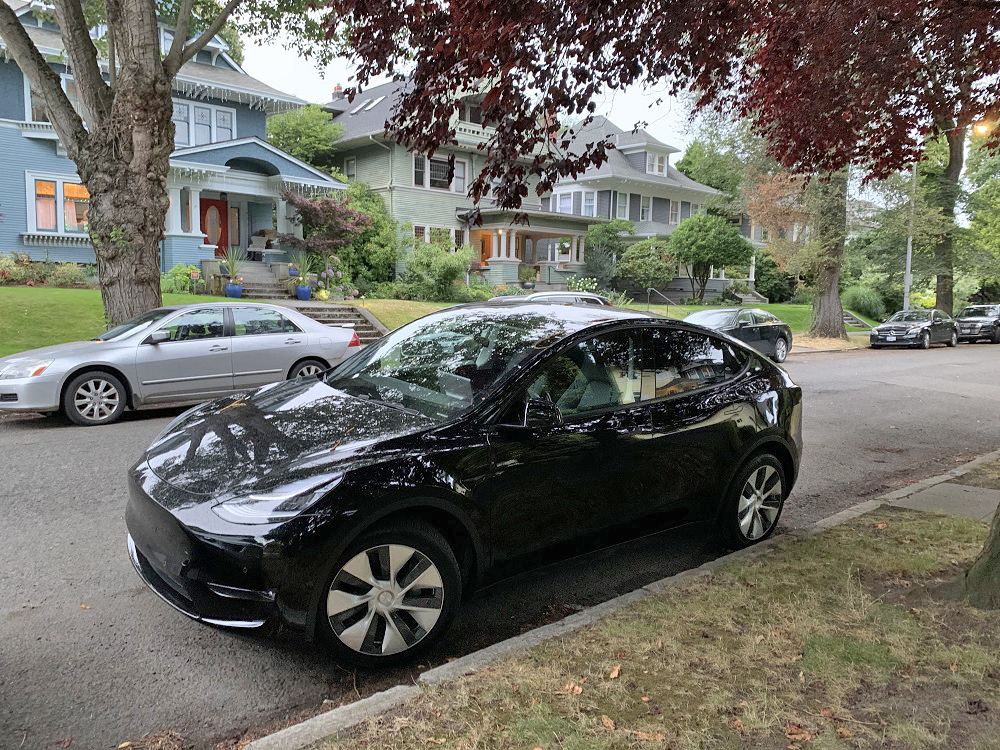
Here’s a black Tesla Model Y that I found here on 17th Ave. It has a range of 315 miles, and sports a very sleek look.
‘While the introduction of the Model Y wasn’t as groundbreaking as the hoopla around Models 3, S, and X, it’s clear it is going to be big. SUV and crossover sales continue to dwarf sedan sales in the United States, and the Model X is probably a bit too radical and expensive for most potential EV* buyers, so the Model Y appears to hit the sweet spot buyers are looking for: an EV with plenty of cargo space and a high sitting position’.
– From a review on caranddriver.com
*Electrical vehicle
Black is beautiful, but man! it shows dirt very quickly. If one gets the black paint, one should probably spring for the black wheels as well, instead of the silver.