The Tuesday & Thursday social tennis sessions for spring / summer at the lower Woodland Park tennis courts, has started.
I was the only one of the 12 in our group playing that wore a mask on the court, and it did not bother me one bit.
It’s impossible to consistently stay 6 feet away from your doubles partner, and we brush by the others as we change sides, or courts. Why be careless, now that I am so close to get my second shot of the vaccine?
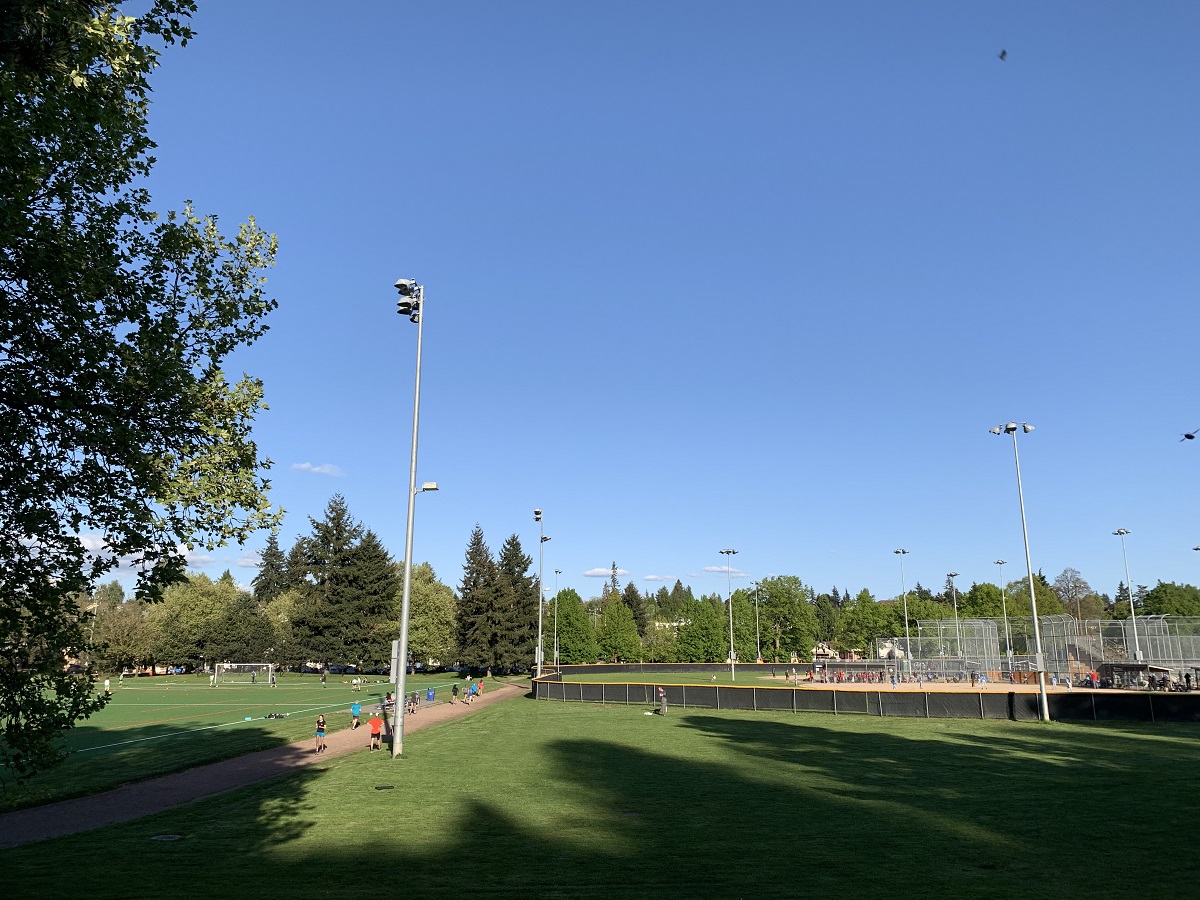
There was blue skies and a high of 61 °F (16 °C) this afternoon. This is lower Woodland Park by Green Lake in its namesake neighborhood, with the soccer field on the left, with a dirt track around it, and several little league baseball diamonds to the right. The tennis courts are behind me. The shadows are getting longer, but this is only 6.18 pm. Sunset is still more than two hours away, at 8.26 pm.
I found a great deal on a rental car for four weeks, and went down to Hertz on 8th Ave to go pick it up. I hope to get my new car early in June. These pictures are from my walk down to Hertz on Friday.
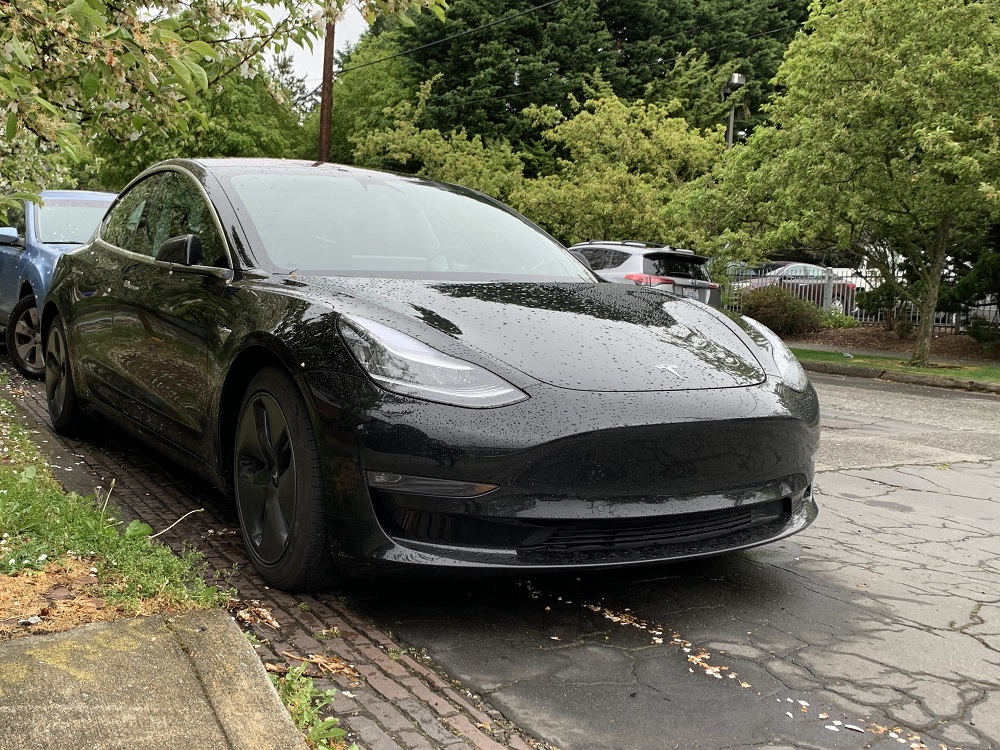
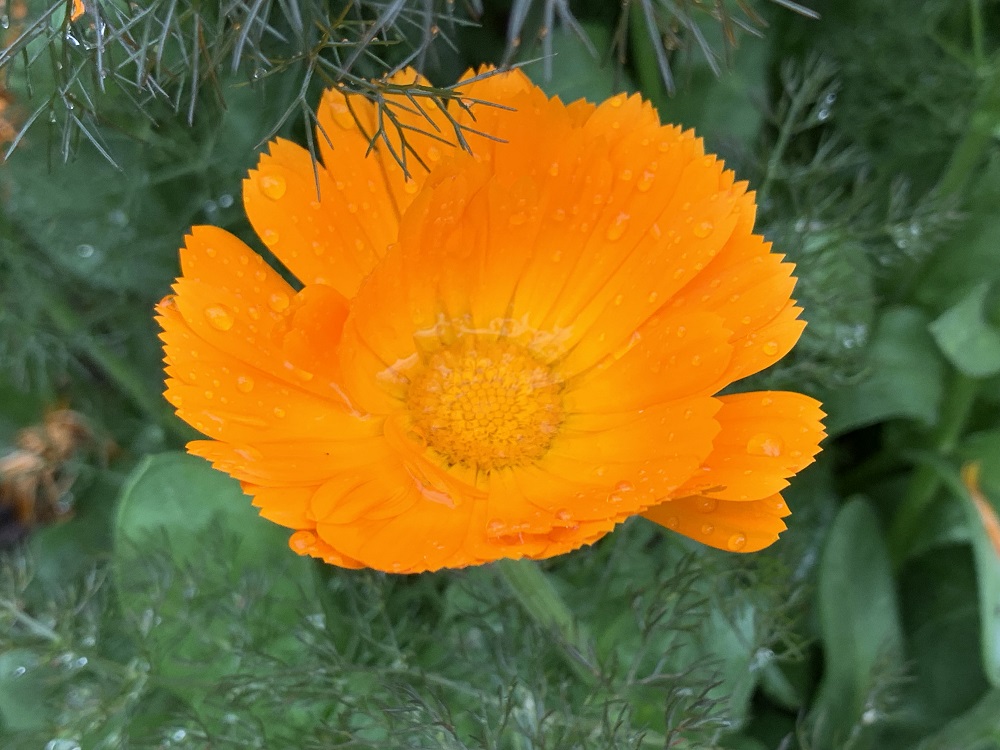
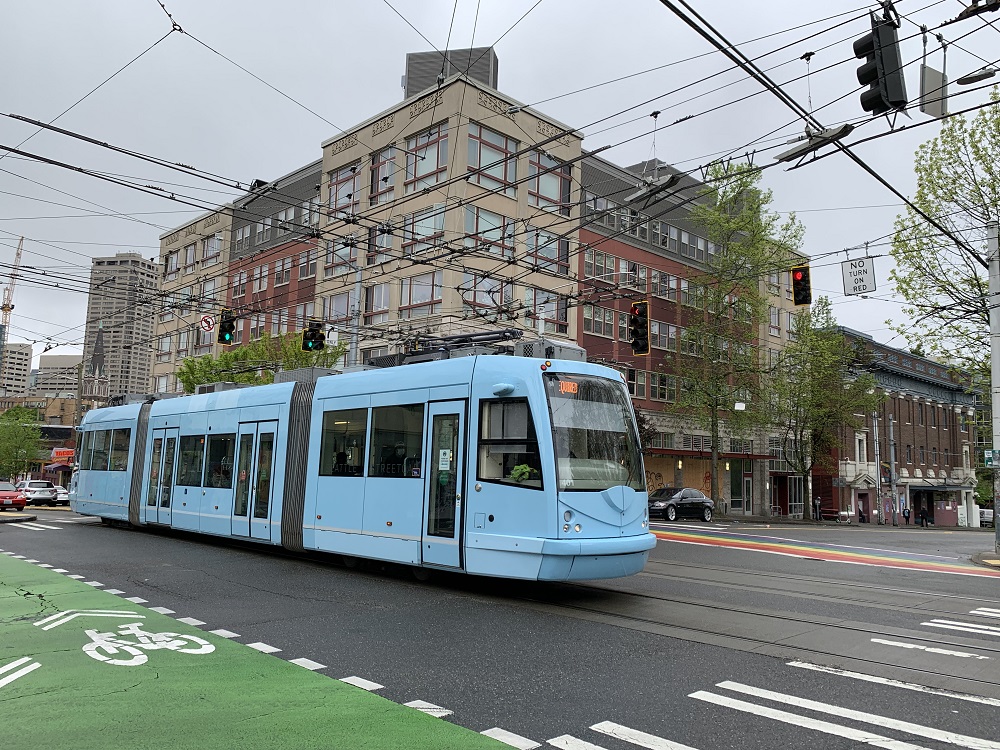
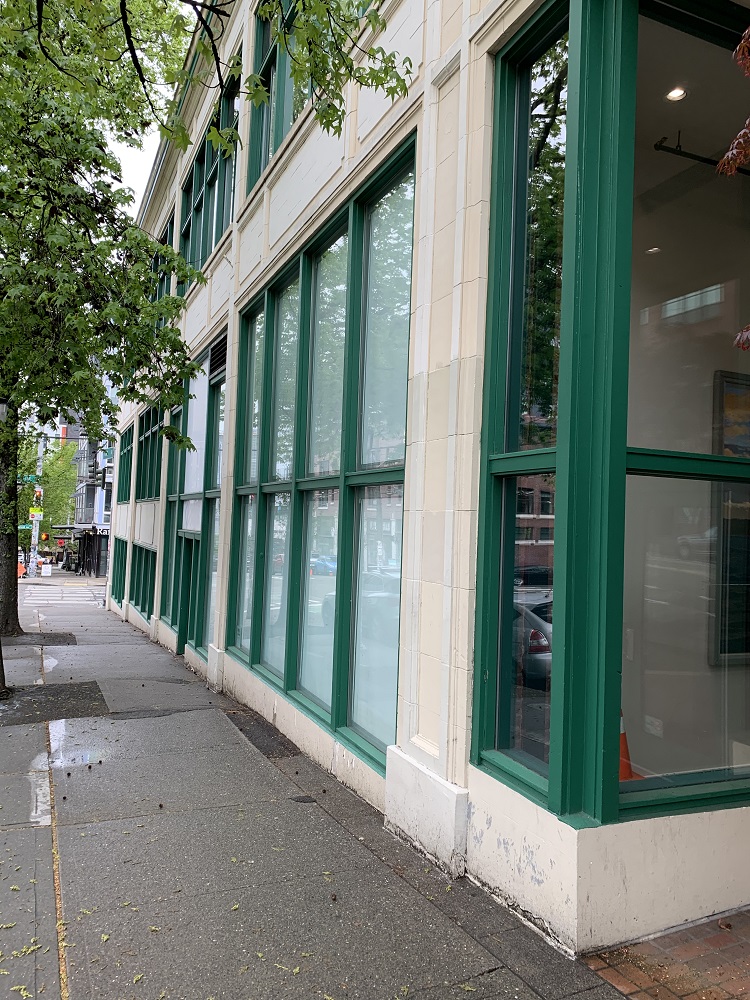
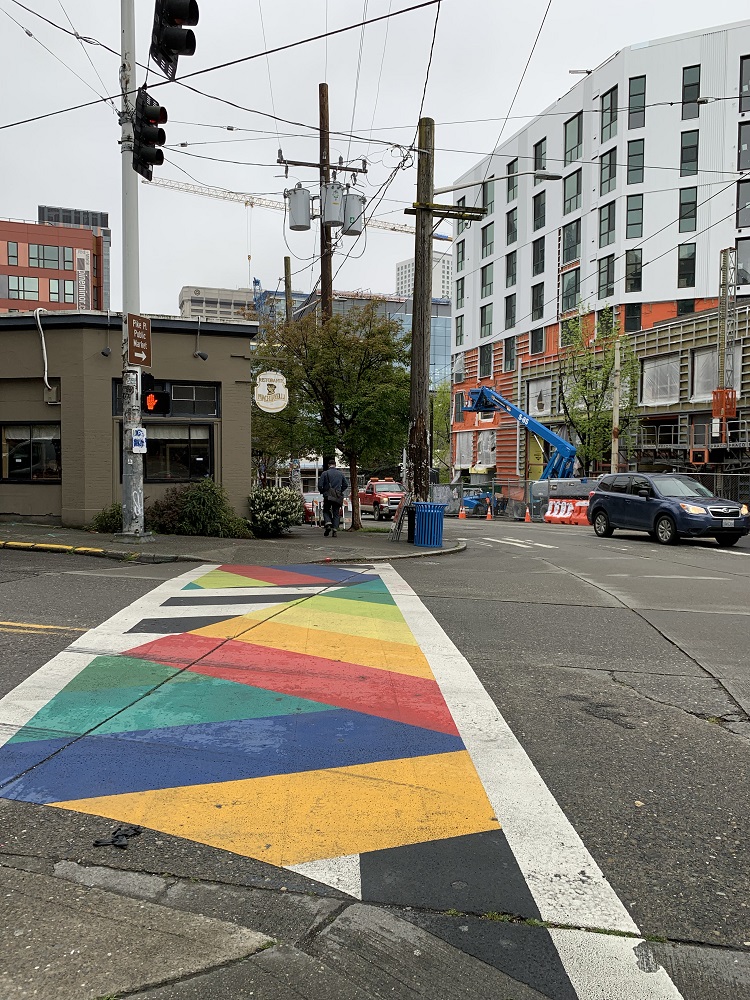
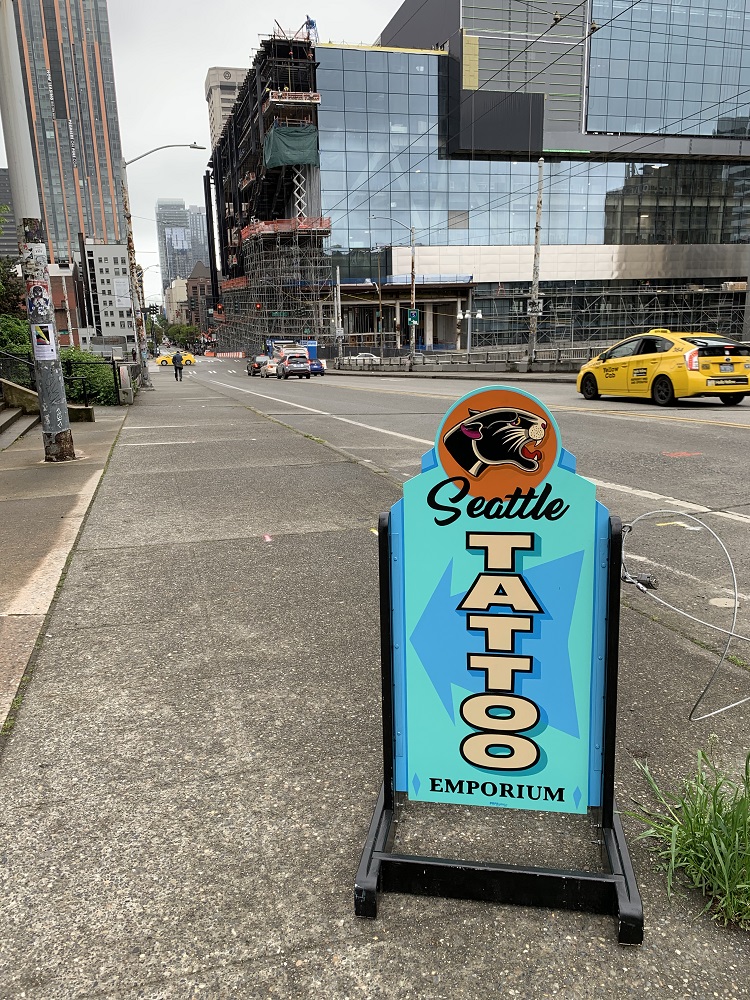
NOT my rental car! .. an all-black Tesla Model 3 parked on the street. Looks like a 2020 model, with the chrome door handles and trim. The 2021 model has ‘chrome delete’ trim (black door handles, black trim). This car has no front license plate, possibly because the owner feels it would spoil the car’s sleek look. Washington State law DOES REQUIRE a front plate, so the driver risks getting ticketed.The beautiful orange daisies are out, catching the little bit of rain that fell on the last day of April. This April turned out to be one of the driest ones on record: only 1.03 in (26 mm) whereas the average is 2.7 in (68 mm).Here comes the powder blue Seattle street car, plying the tracks along Broadway.Lots of green frames in the Pine Building at 400 East Pine. It was built in 1914 and renovated in 1985.The rain washed away the dirt on the crosswalk on the corner of Melrose & Pine St. The new construction on the right, at 1208 Pine St, is an 8-story, 71-unit apartment building with office and retail.Construction continues on the Washington State Convention Center expansion. The Seattle Tattoo Emporium is conveniently nearby, so attendees can swing by for a mountain lion tattoo, or any other that they might want!
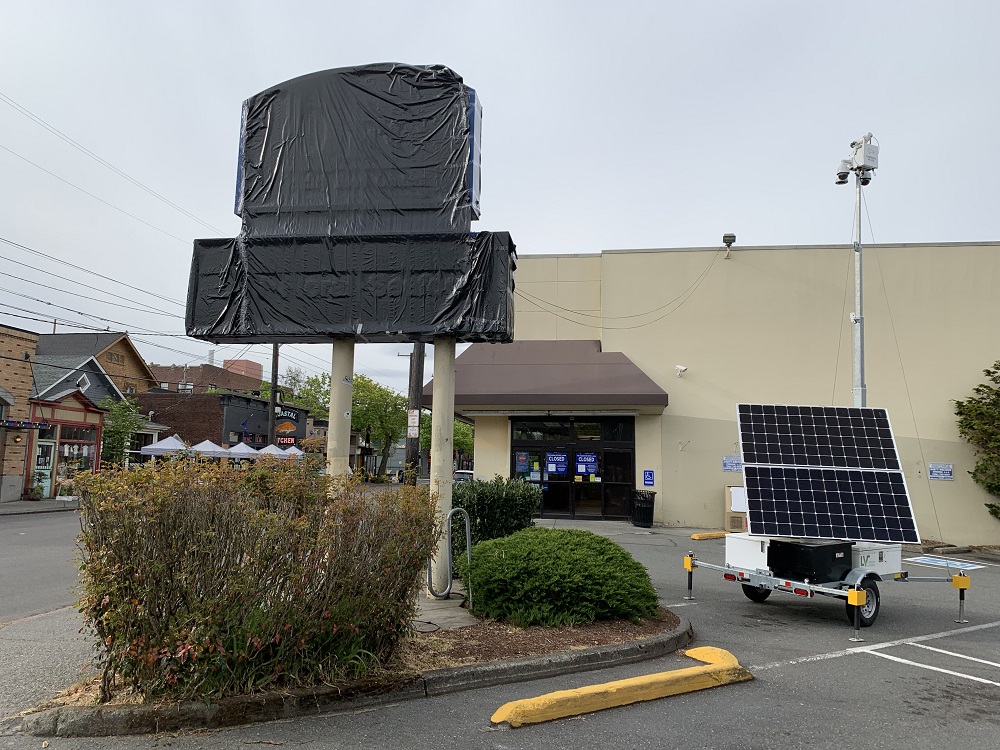
Here’s the QFC grocery store on 15th Ave, that had closed its doors for the last time on Saturday.
The store’s owners, the Kroger Co. based in Cincinnati, Ohio, says it was not profitable enough. The $4-per-hour hazard pay to grocery workers, mandated by the City of Seattle, ‘had forced their hand to close it’.
I like that little solar panel for the surveillance system in the parking lot. I should put four or five of those on my garage roof — to charge the battery of my up-and-coming electric car with.
I took my rental car back this morning. The plan is to go carless for a week or so, and then get another one. There is still a good number of weeks to go before I get my new car.
It was a pleasant day, and I could walk up, up along Pine Street to get to the other side of Interstate 5, and to Capitol Hill where my house is.
It’s about 30 mins of walking with no stopping, but I took my time, and took some pictures as I went.
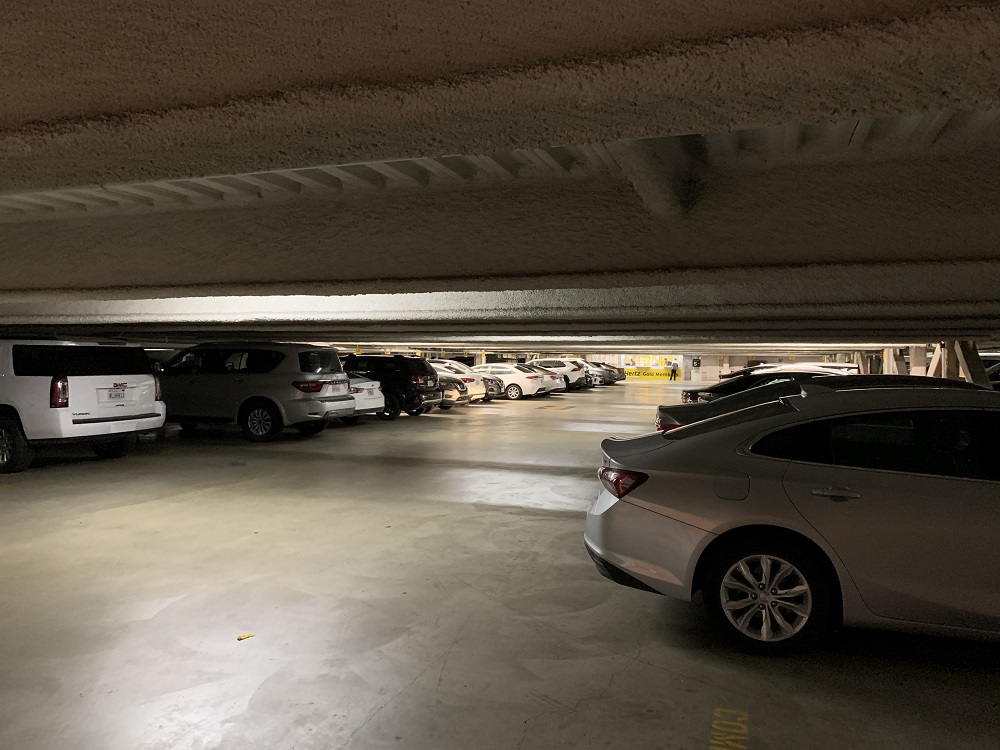
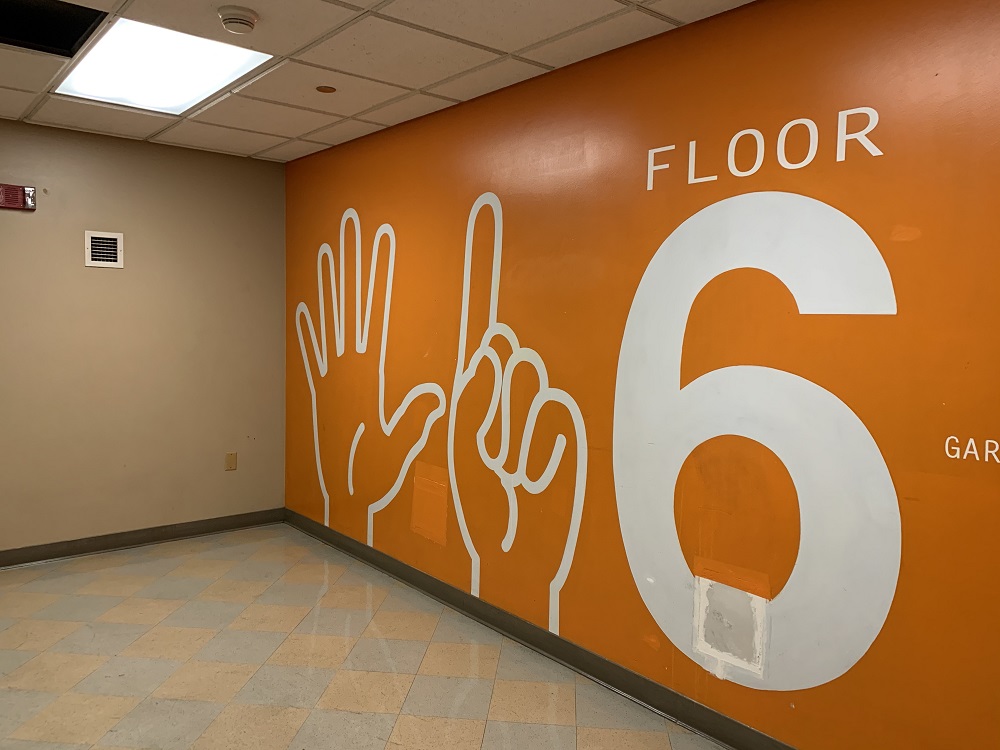
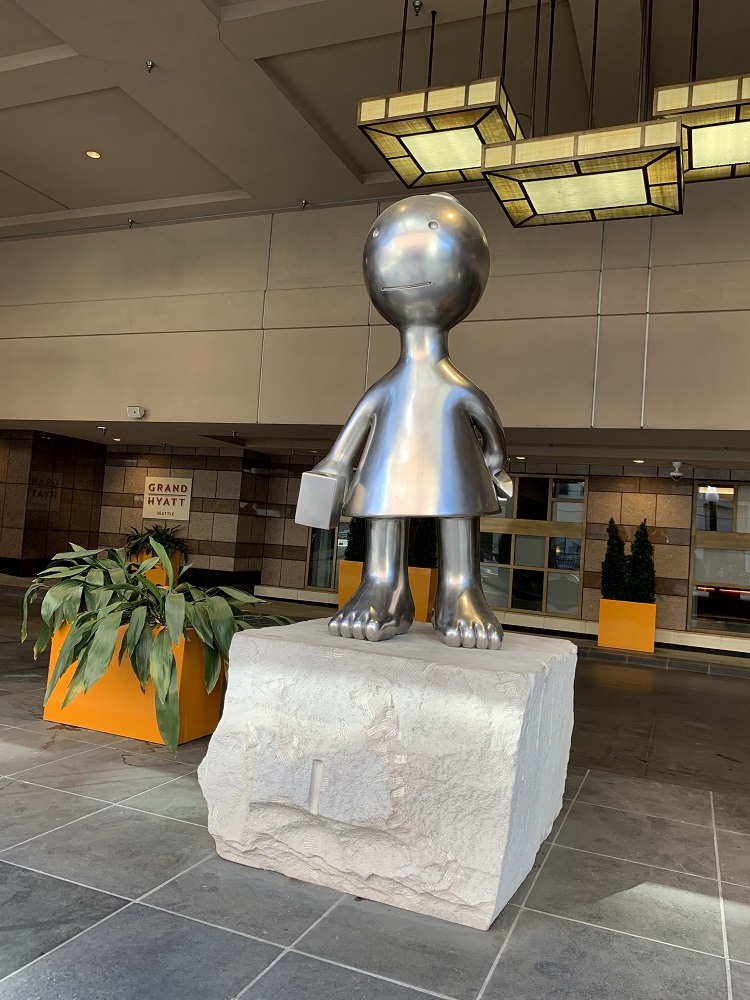
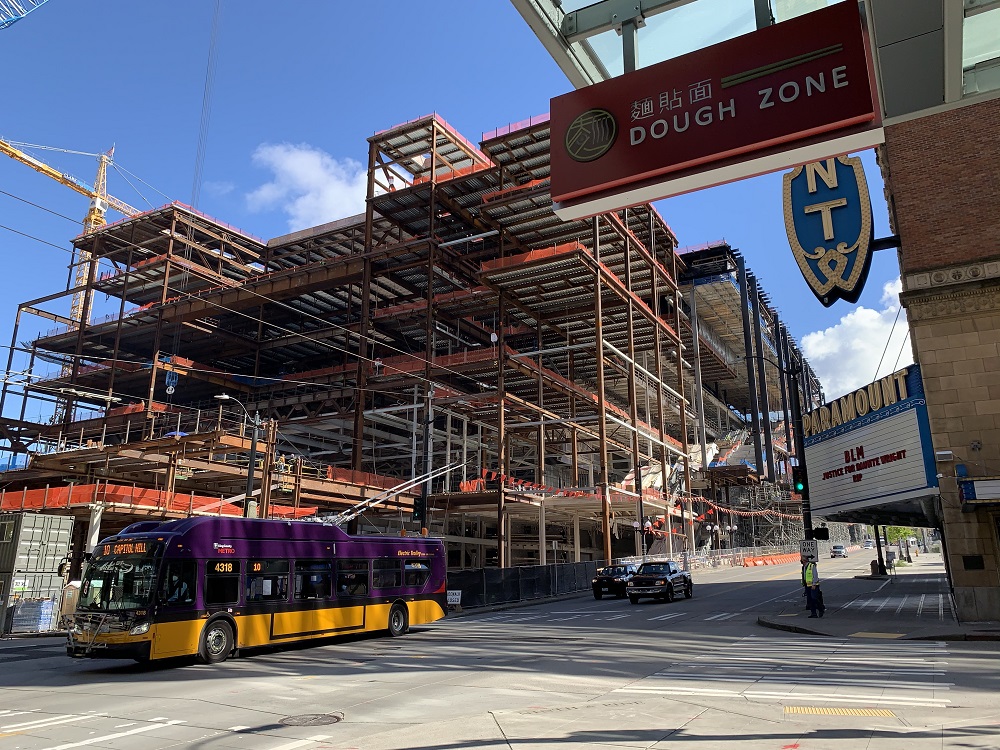
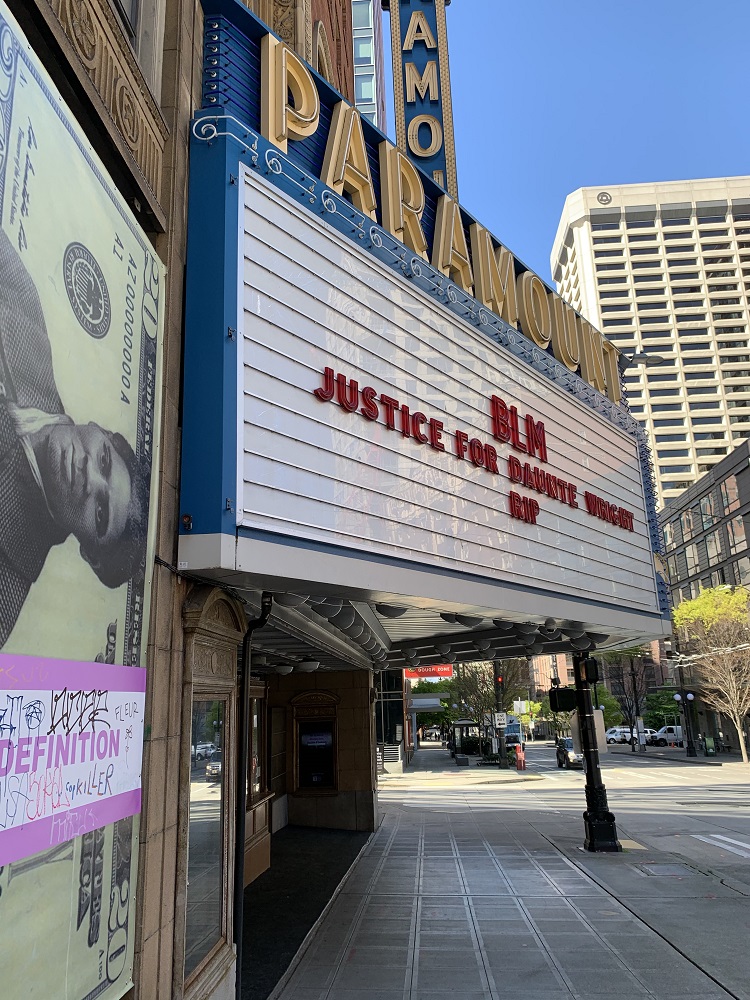
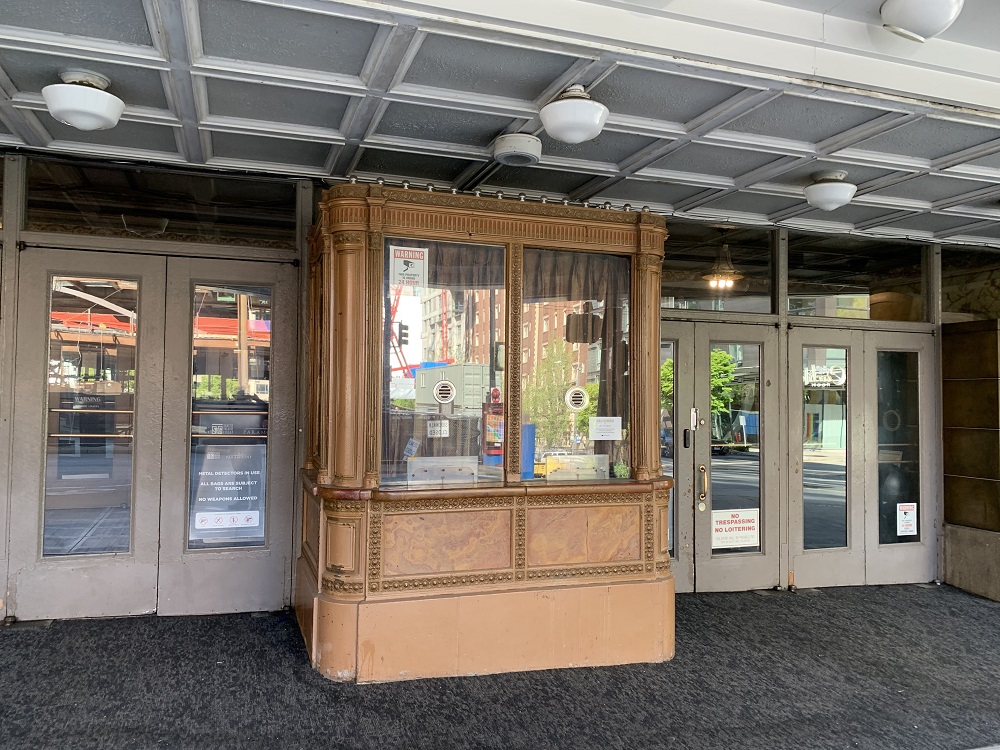
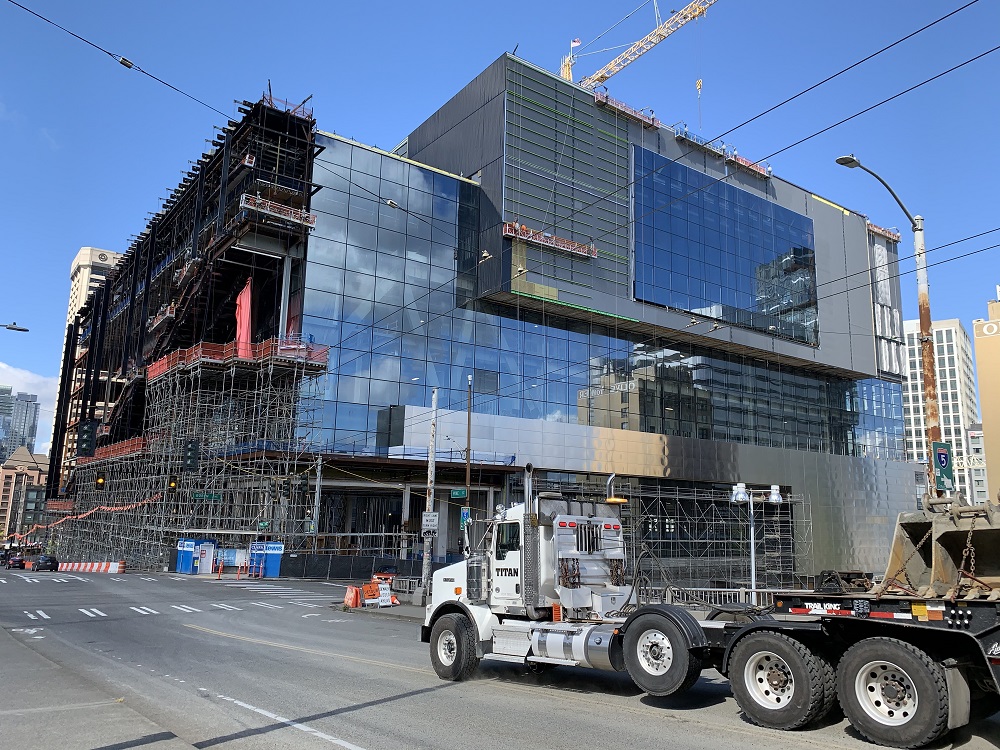
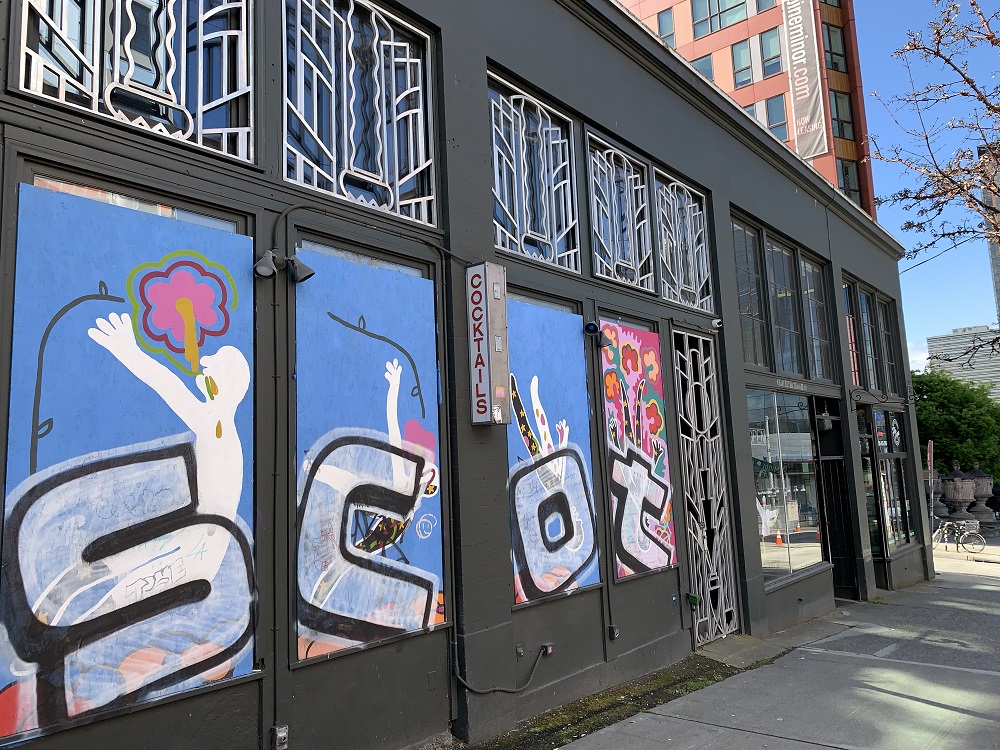
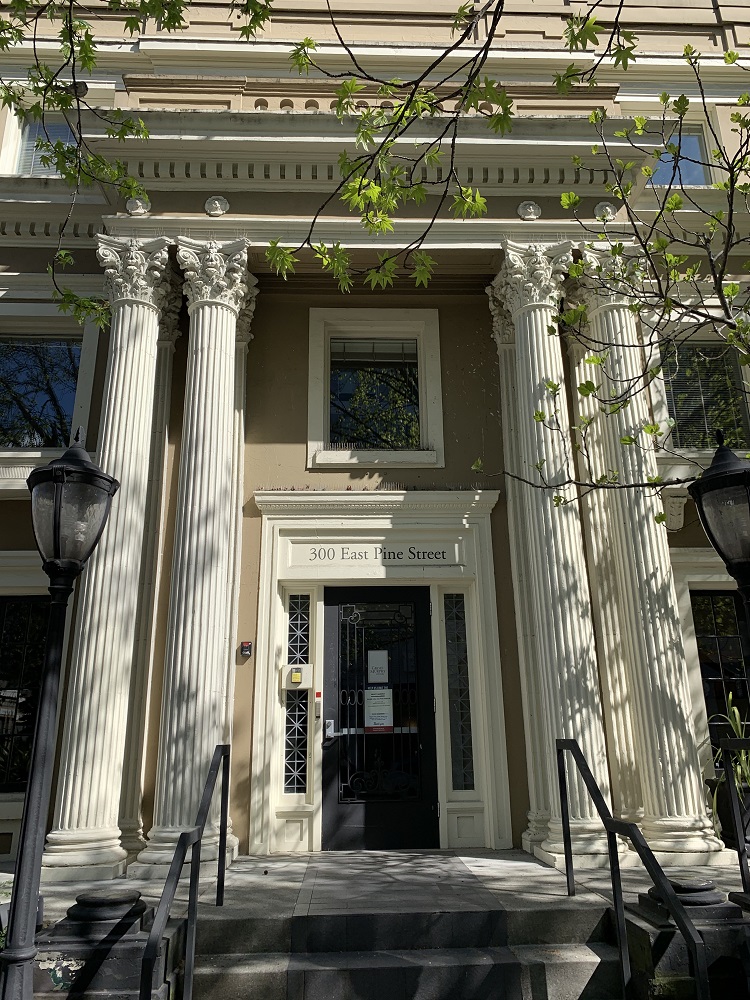
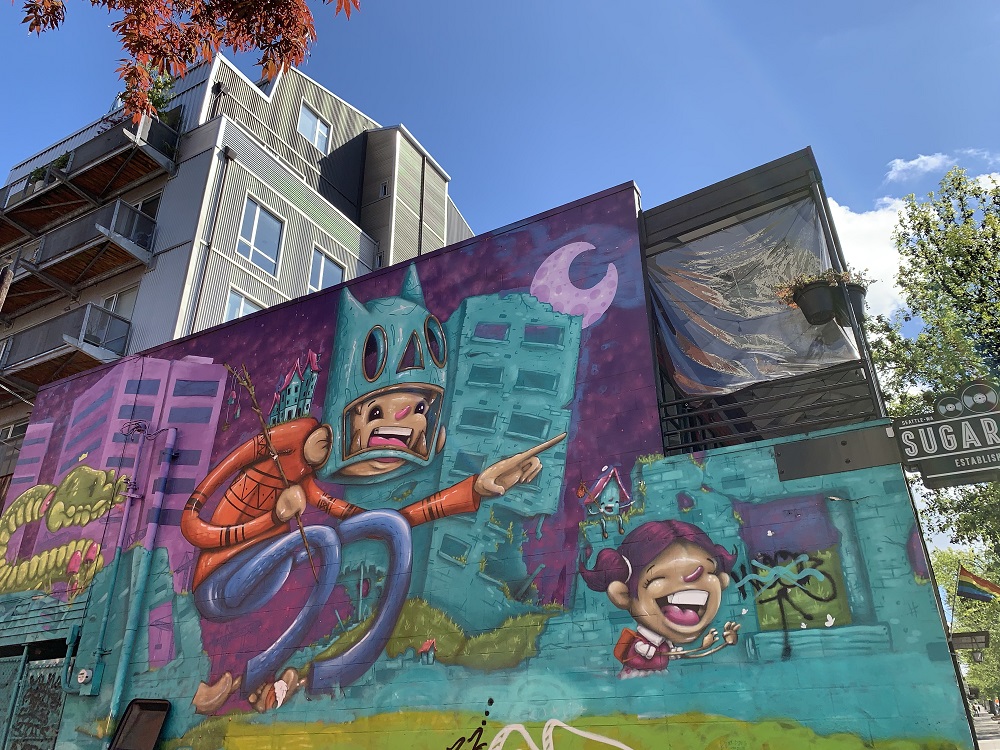
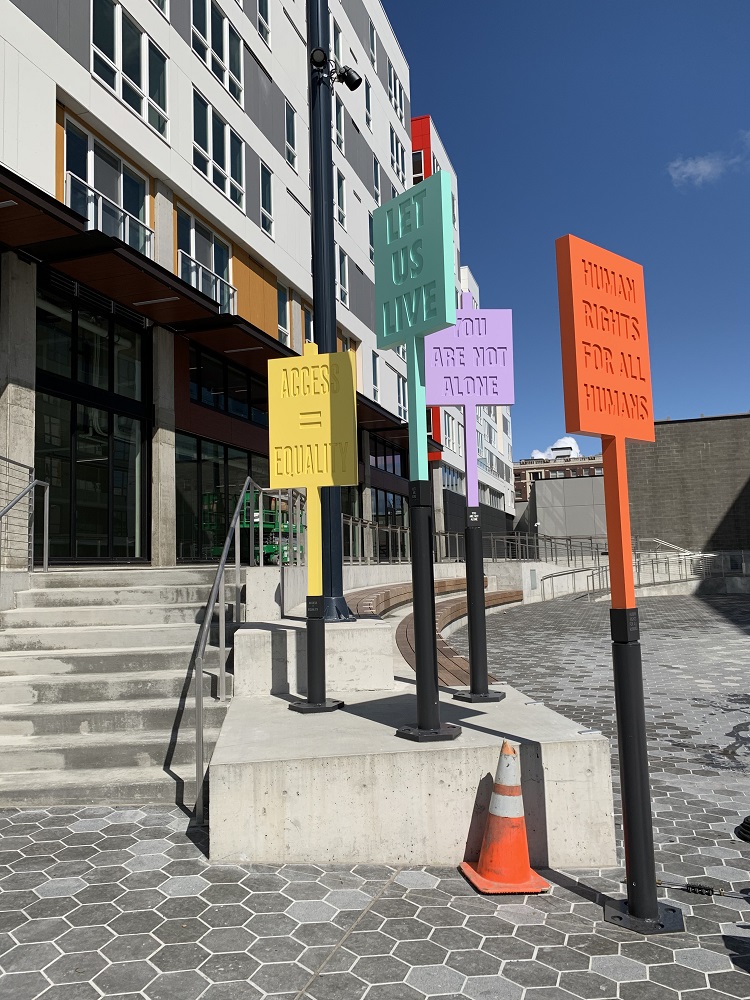
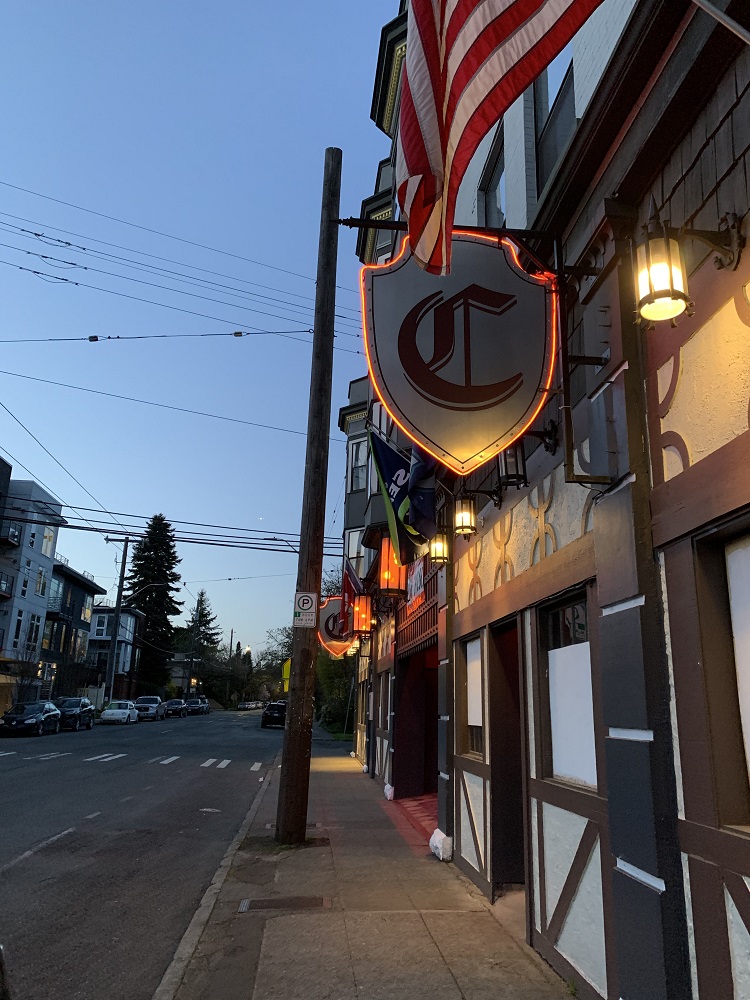
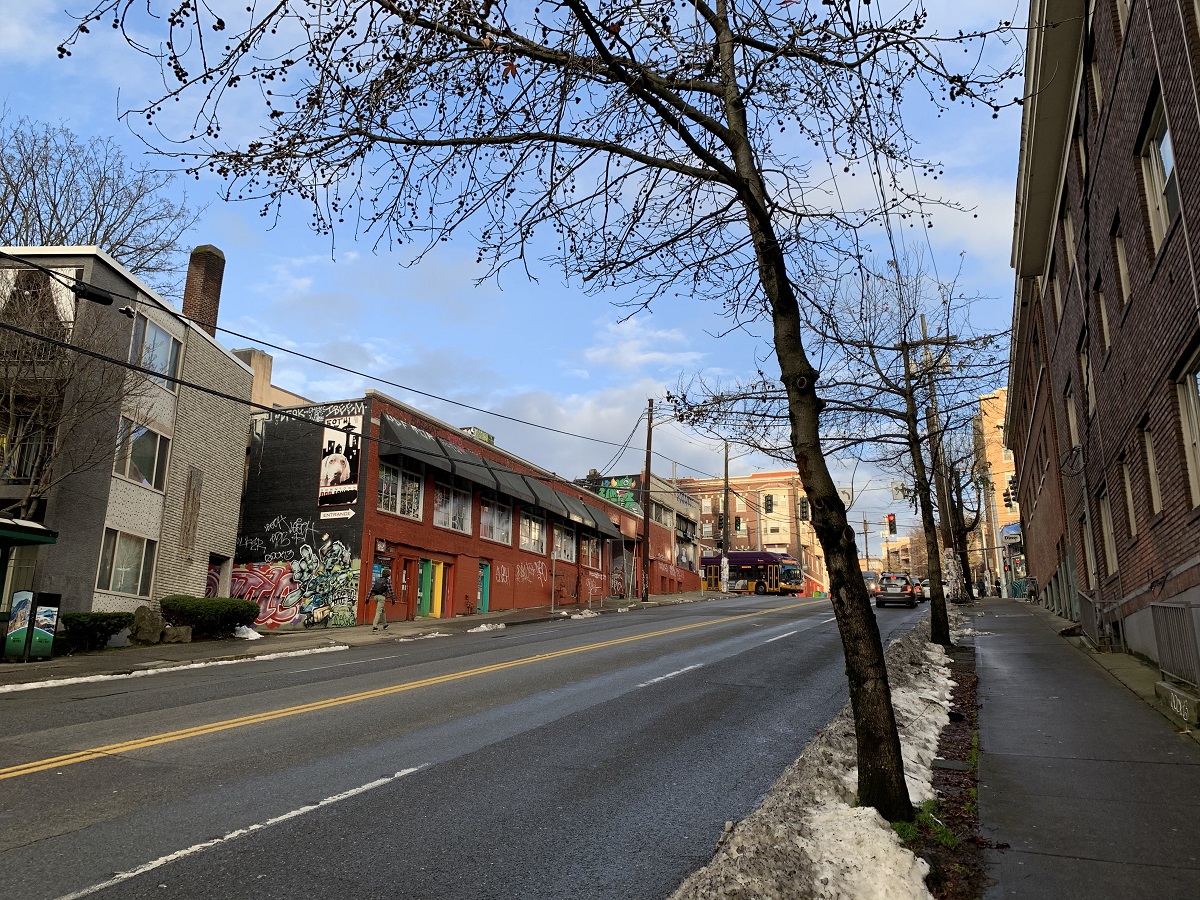
This is the Hertz rental car center on the 6th floor of a garage on 8th Ave in downtown. There’s the counter in the distance where I had dropped my car’s keys. These are basically all the cars they have; the five floors below are eerily empty. (Hard to know if all the floors had been filled with cars pre-pandemic, though). There’s definitely a shortage of rental cars right now, with people starting to travel again. In places like Hawaii, the fee for a small sedan is $195/ day. That is crazy, and 4 times or 5 times the ‘normal’ rate.I like the signage in the elevator lobby. I was tempted to stop at every floor to see what 1, 2, 3, 4 and 5 looked like, and what colors, then thought, no! just go all the way down.The upscale Grand Hyatt hotel on Pine Street is still closed. Many years ago, I had cocktails with friends in the lobby bar. One of them was from Houston, and he could not stop talking about his Continental Airlines frequent flyer miles. (Continental Airlines is no more. It merged with United Airlines in 2010).Corner of Pine St & 9th Ave, looking northeast. Dough Zone dumpling house Chinese restaurant on the right, Washington State Convention Center expansion construction zone on the left. That’s the No 10 bus from Capitol Hill, coming into downtown.The Paramount Theater is still shuttered as well, of course. ‘Justice for Daunte Wright’ says the sign, the 20-yr-old African-American man that was fatally shot on Apr. 11 by police officer Kimberly Potter during a traffic stop & attempted arrest for an outstanding arrest warrant, in Brooklyn Center, Minnesota. The US Treasury Department was “taking steps to resume efforts” to put the abolitionist Harriet Tubman on the $20 bill (left of the picture), but nothing new has been announced of late.Ticket booths at the main entrance of the Paramount Theater. The theater has 2,807 seats for the performing arts, and opened in March 1928 as the Seattle Theatre.Looking back at the Washington State Convention Center expansion, from the Pine Street overpass over Interstate 5. Maybe there is a little money left in the budget to also fix up that rusty lamp post on the far right.The Baltic Room nightclub & bar with its art deco ironwork is still boarded up, but not permanently closed, as far as I can tell.This space at 300 East Pine St houses attorney’s offices now, but some 15 years ago it was called The Chapel, a fancy wine & cocktail bar, filled with beautiful people on a Friday night, and a place for which one would dress up a little (in a city that had made grunge bands and grunge wear famous).The artwork on the alley side of the Sugar Hill eatery & bar at 400 East Pine has been there for a while, but is holding up. Sugar Hill bills itself as a ‘loungey, vinyl-fueled eatery/ bar for craft cocktails, Thai street food & late-night DJs’.I had left Pine St, and made my way to the new apartment buildings on Broadway by the Capitol Hill light rail station. This is the brand new plaza on the inside. I love the pastel colors of the art installation, with the brighter yellow & orange in there as well. I really hope it stays like this for a while: clean and graffiti-free.
From the National Weather Service Seattle @NWSSeattle on Twitter:
Average high temp. in Seattle, April 15-21, 2021: 75.7 °F (24.3 °C)
Normal average high temp in Seattle, July 11-17: 75.7 °F (24.3 °C)
Our little Indian summer has come to a close today (temperatures will drop back to the 60s tomorrow), which is a good thing.
It’s way too early on the calendar to have mid-70s highs.
Firefighters from the Washington State Dept. of Natural Resources have responded to 91 wildfires this last week.
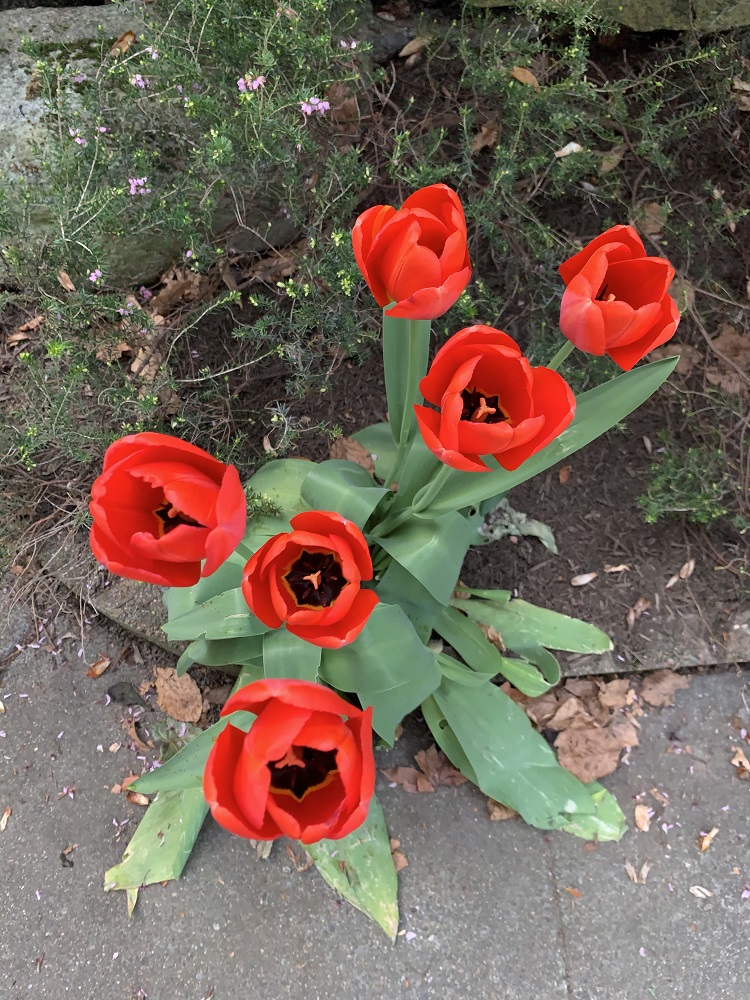
These red tulips seem to like the warm weather. Red tulips are given when love or romance is involved, much like red roses are. I found them on 17th Ave. here on Capitol Hill.
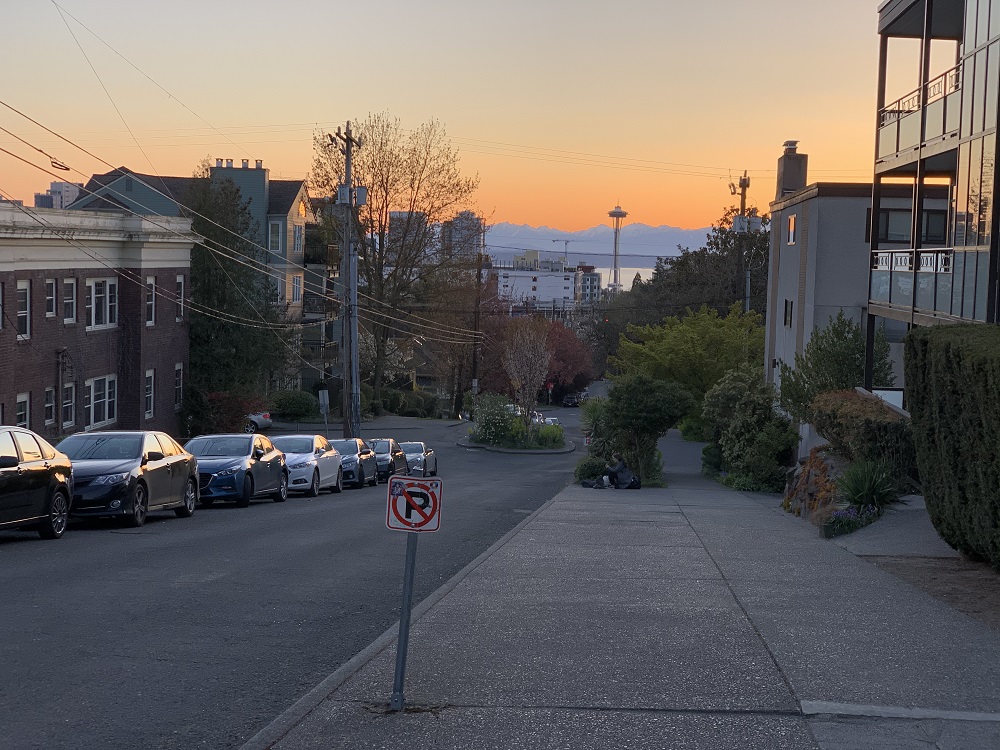
We had 75 °F (24 °C) in the city today, a record high for the day on the calendar. I made it out of the house just as the sun was setting at 8 pm for a walk around the block.
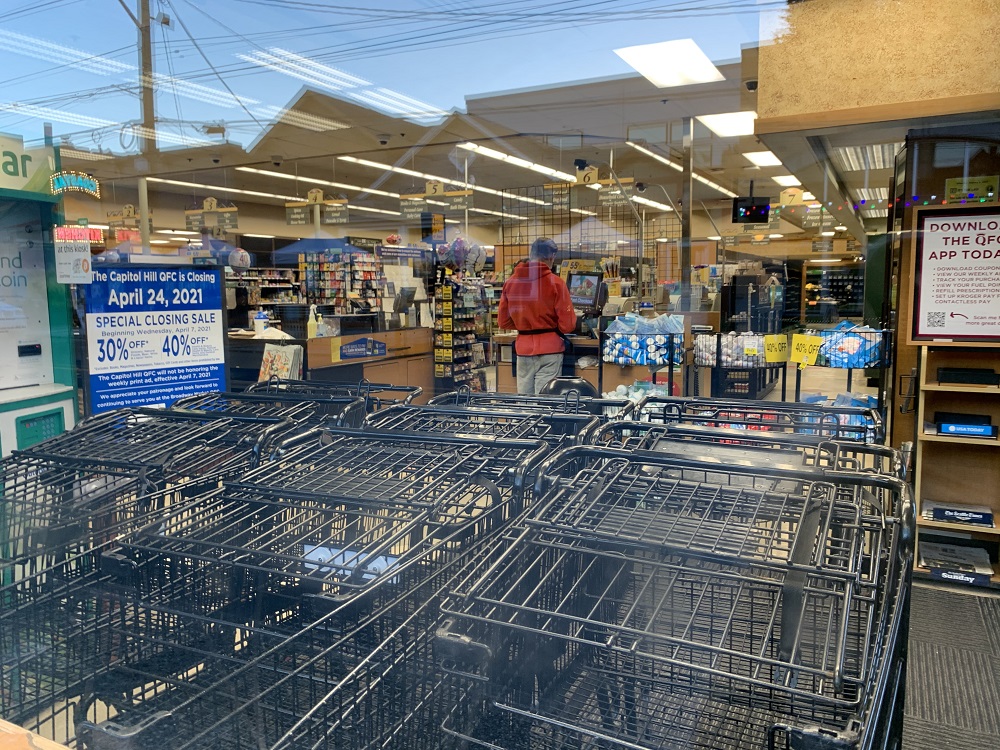
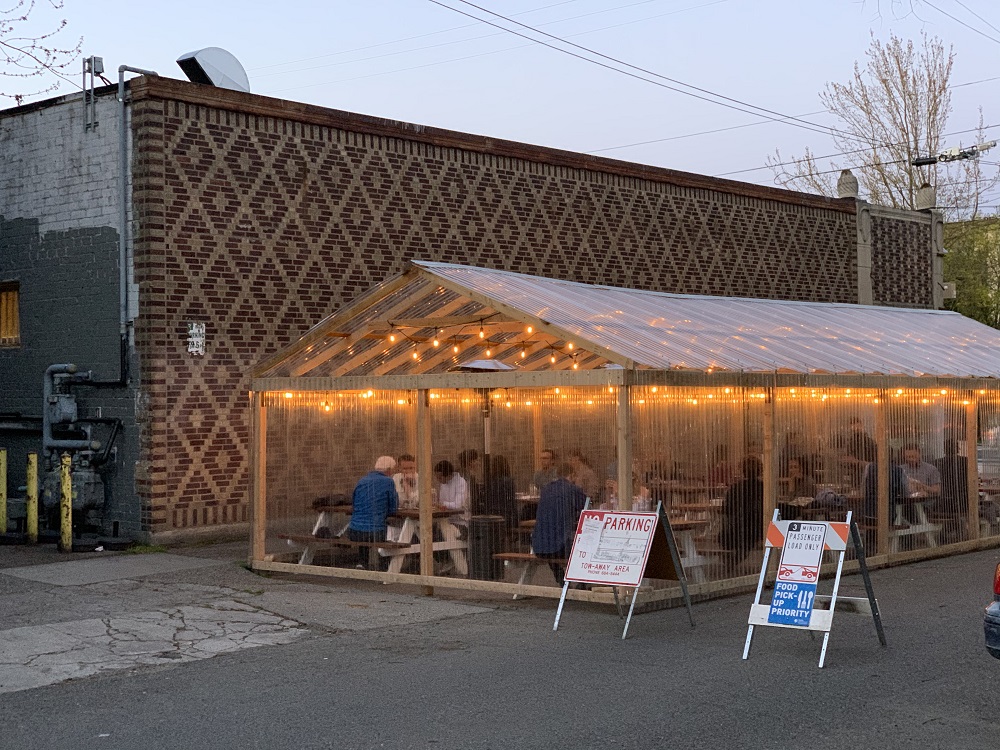
Here’s the view from 14th Ave & Thomas St, looking west towards the Space Needle with the sun below the peaks of the Olympic Mountains.We’re losing one of the neighborhood’s grocery stores on April 24: the QFC on 15th Ave. It is owned by Kroger Company in Cincinnati, Ohio. Kroger is the United States’ largest supermarket by revenue, and they cited the $4-per-hour hazard pay surcharge for grocery store workers (that the King County Council had enacted), as the reason to close the store. Capitalism at its finest?Nice to see that the outdoors space at the Rione XIII restaurant on 15th Ave has a number of customers. Here in King County indoor dining is now allowed at 50%. Three counties in Washington State were moved back to Phase 2 (25% for restaurants) just this week, due to their increase in Covid-19 case counts.
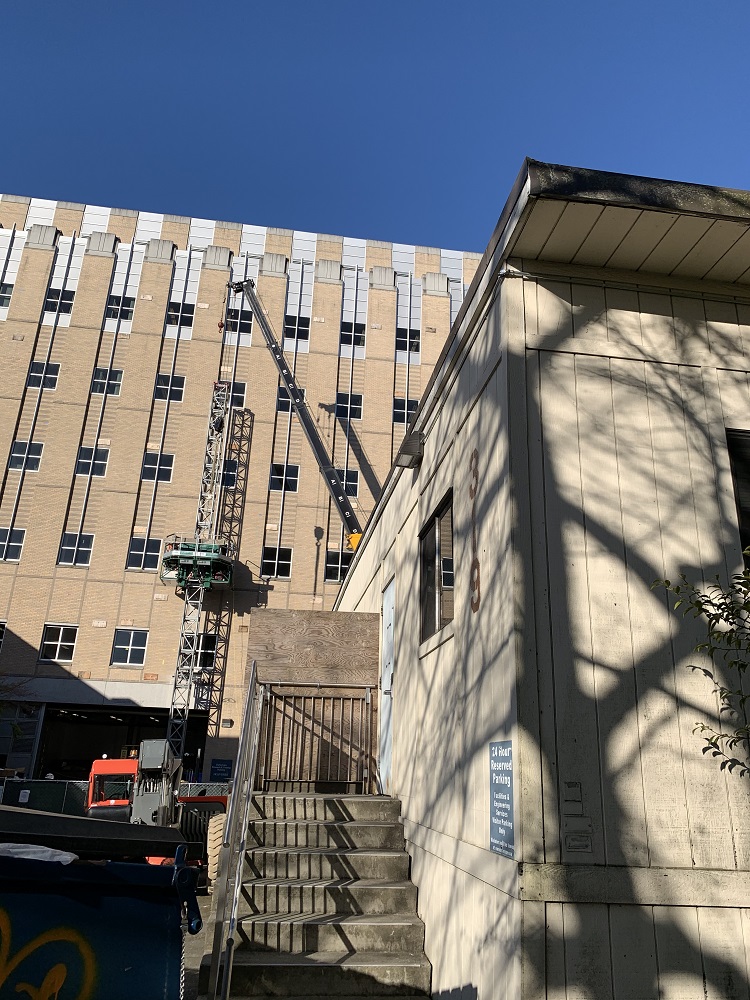
At 7.45 am, I joined the social-distanced line of a dozen of so, outside the nondescript little building at the back of Harborview Medical Center— thankful that I was wearing my padded jacket (47 °F/ 8 °C).
By 8.00 am I was in the door. Hey, you and I have the same birthday, said the young woman that checked me in. I filled out a form with a few questions, and then went to one of the 5 stations with a nurse, for my shot. (I got Pfizer-BioNTech’s vaccine, not Moderna’s).
Three weeks to tick by, and then I can get the second shot. It feels good to have the first one.
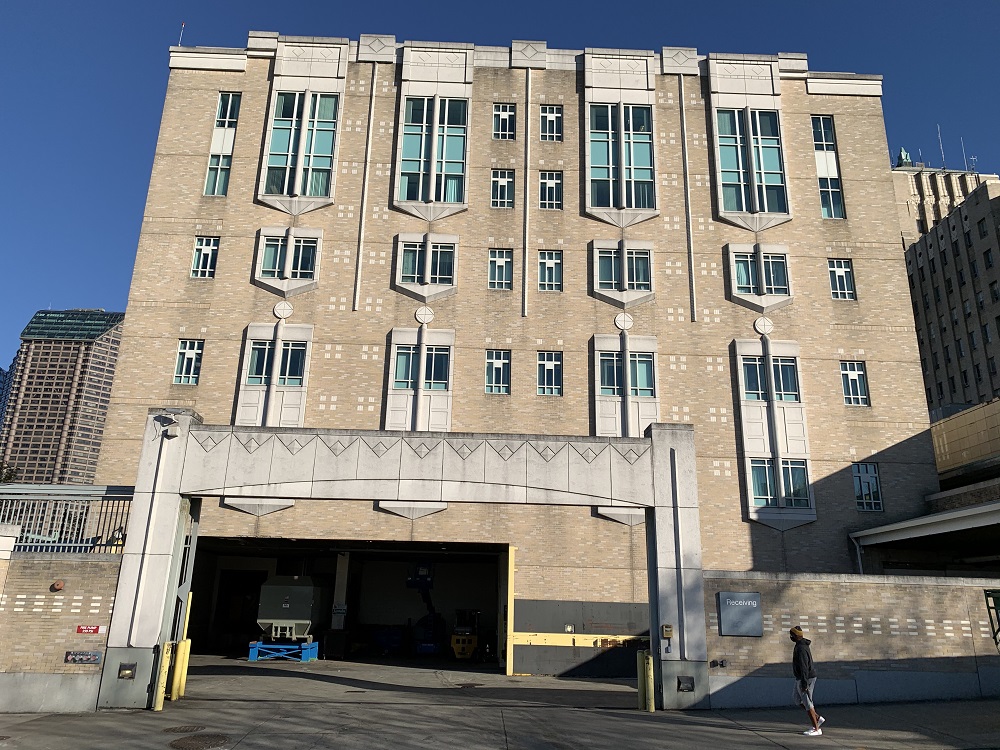
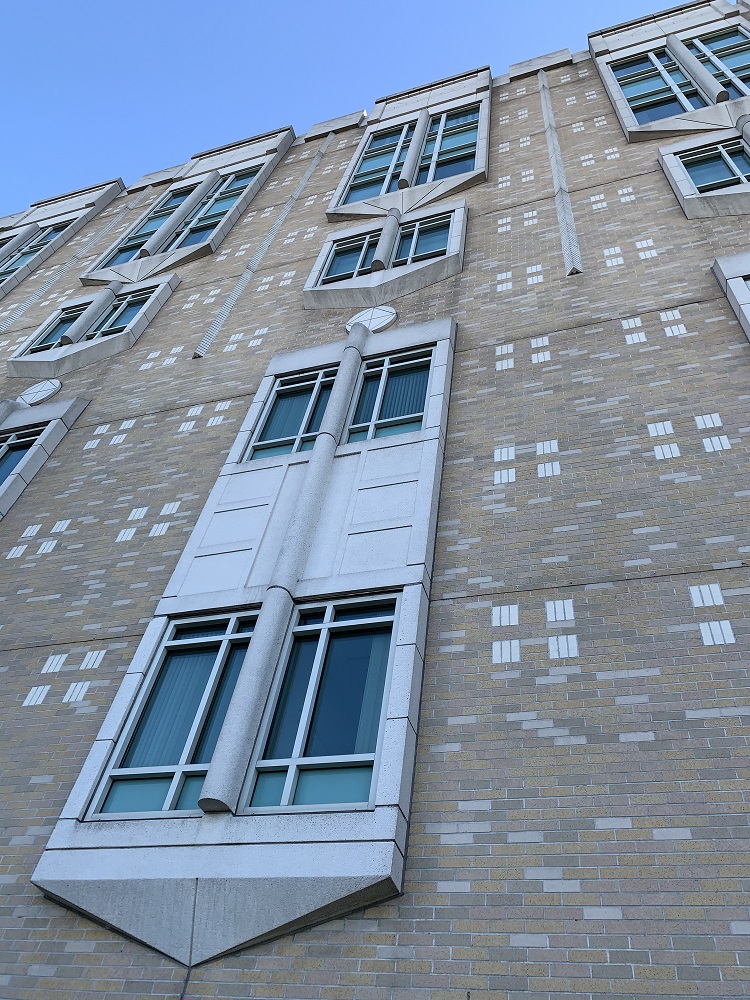
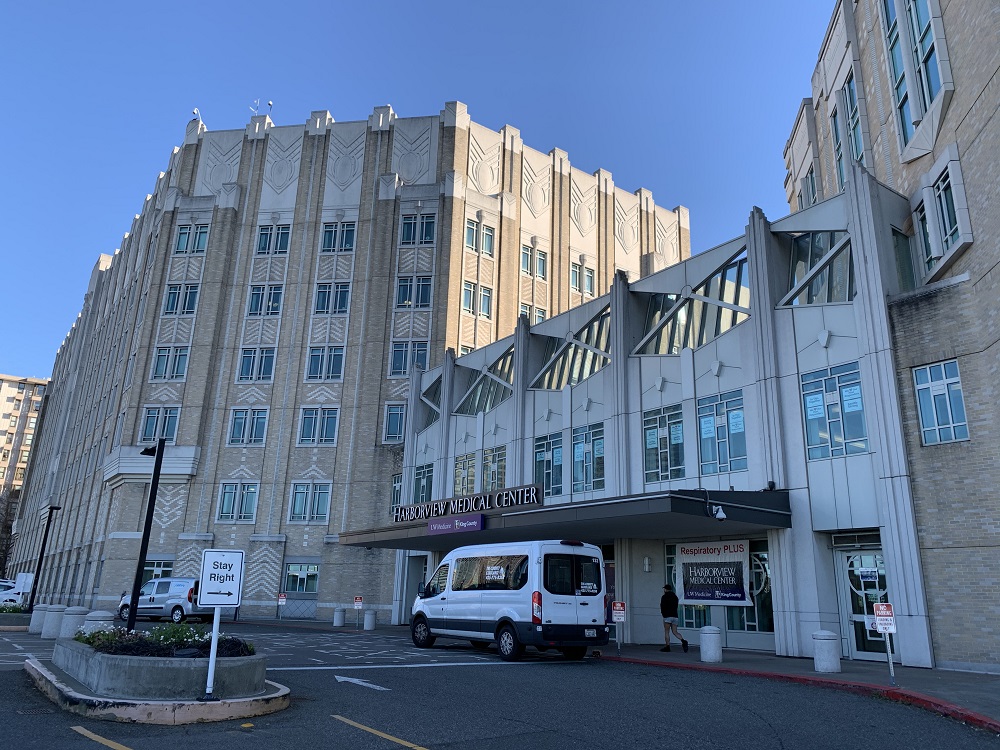
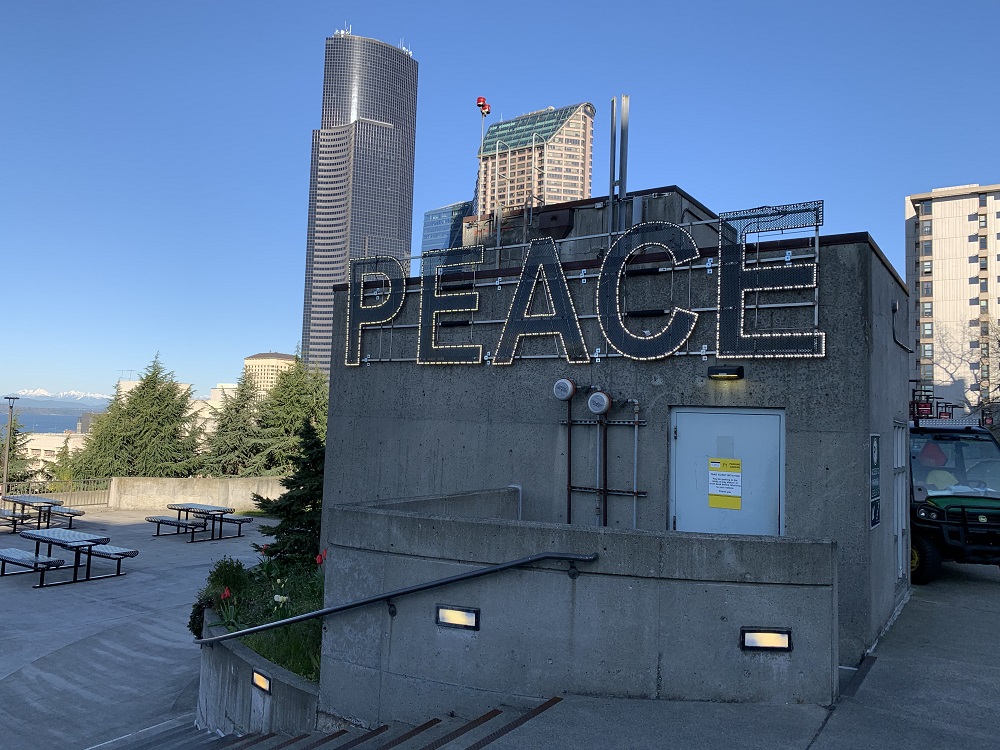
The Facilities & Engineering building on Terrace Ave (on the right) is where the Harborview hospital’s vaccination clinic is run out of. I had just exited down the stairs.One of the hospital’s delivery gates. I’m making my way back to the big parking garage overlooking I-% and downtown Seattle.I love the Art Deco detail on the buildings. The construction was completed around 1931.The entrance off Eighth Avenue. Harborview Medical Center is the only level 1 trauma center* for Washington State. *Capable of providing complete, life-saving care for the most seriously ill or injured patients, through rehabilitation.The roof of the parking garage off Eighth Avenue, across from the entrance to the hospital. Last year in November I thought the PEACE letters was for the holidays, but looks like it has became a permanent installation (and why not). That’s Columbia Center (cpl. 1985) and Seattle Municipal Tower (1990) in the back.
We had 59°F (15°C) here in the city today, and I took a stroll down to Pike and Pine.
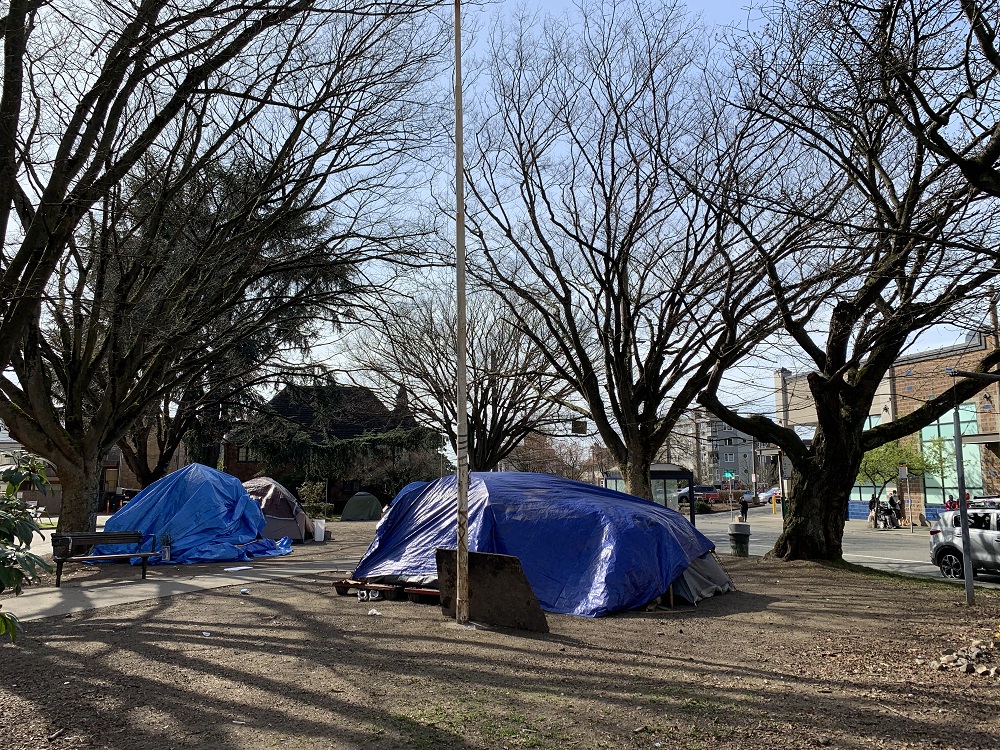
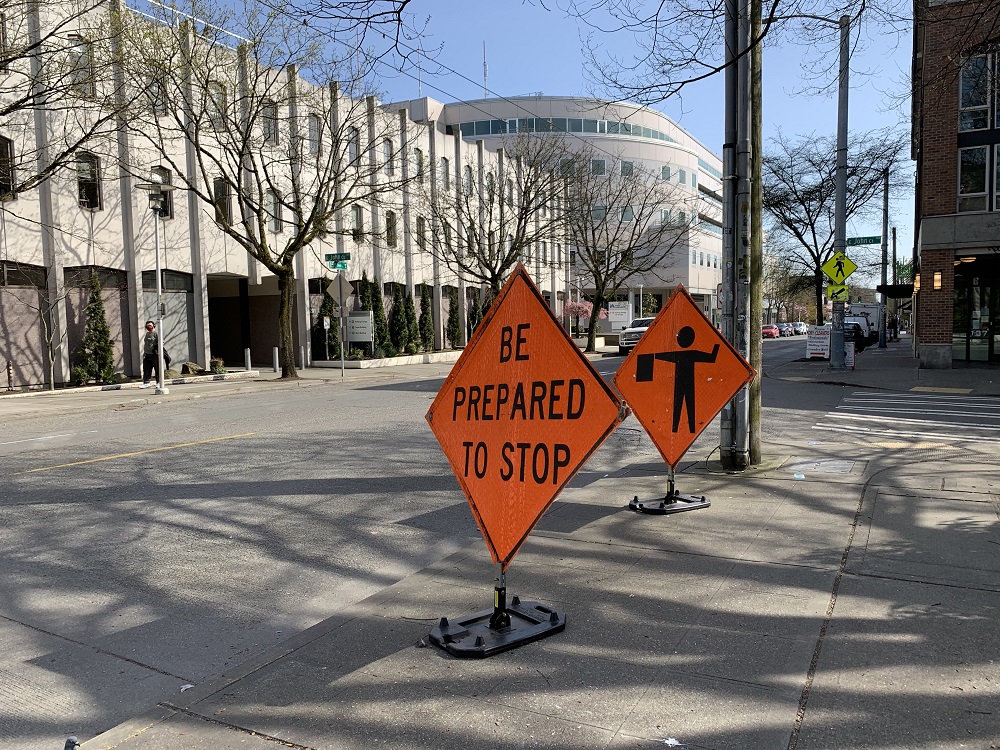
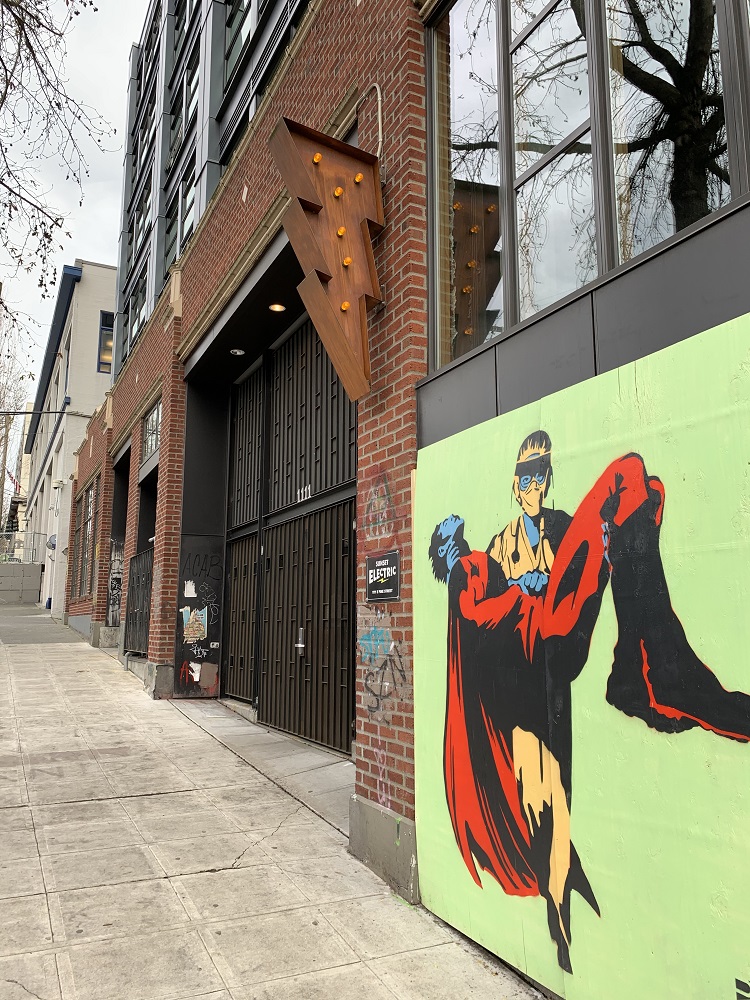
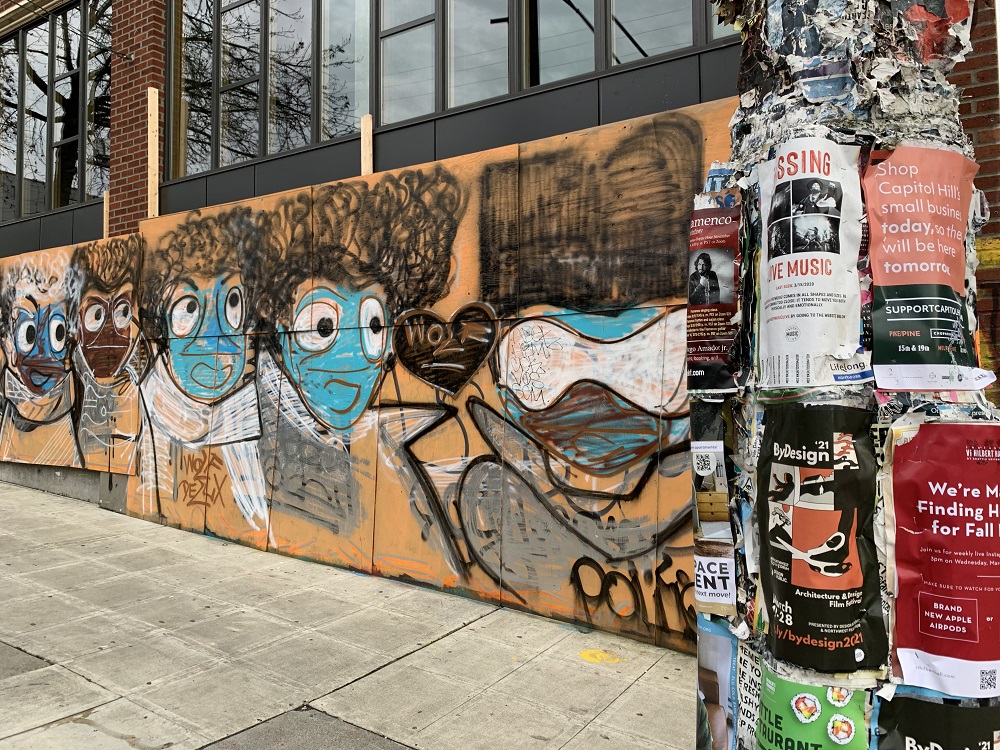
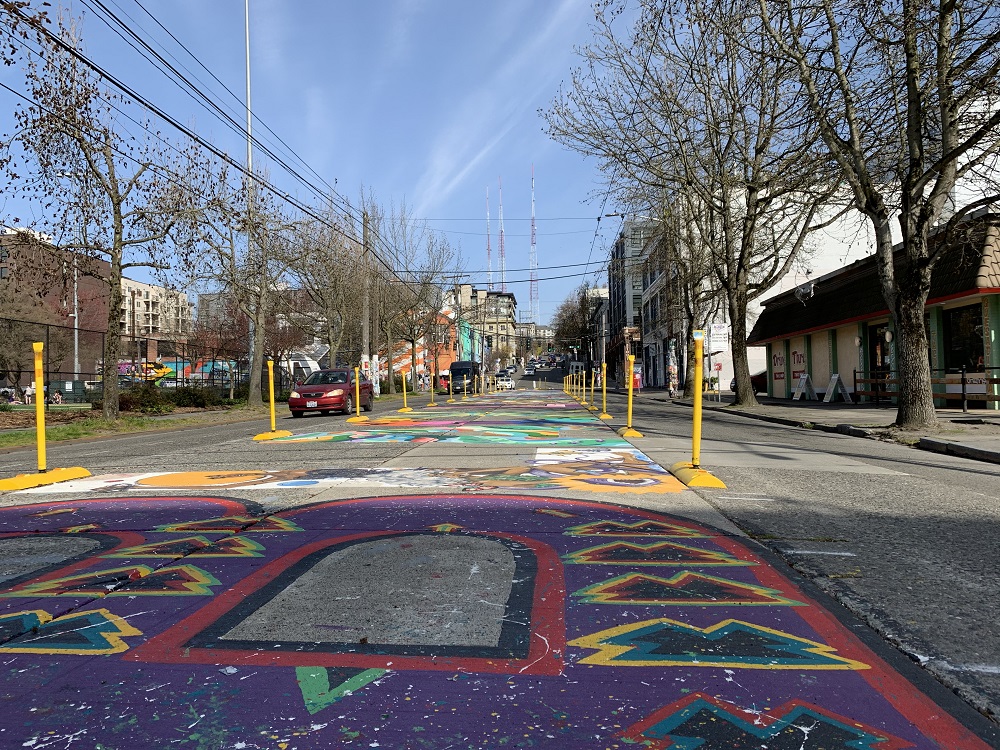
The little green space called Williams Park, by Safeway on 15th Ave, still have a few homeless campers. The little bit of grassiness there has taken a beating, but overall it is tidier and cleaner than it has been in months. The City of Seattle should find housing for these campers, though, and force them to move, if they have to. The city’s parks and green spaces cannot be used for homeless encampments.That’s the Kaiser Permanente Capitol Hill Campus on the left (medical center). ‘BE PREPARED TO STOP’ says the street sign: not something America is willing to do anymore, regarding the pandemic. Last night 38,000 baseball fans crowded into a stadium in Arlington, Texas, for the season-opener game there. Easter Weekend traveler numbers at many airports were up 3- or 4- or 5-fold from this time last year. Meanwhile, hospitals & clinics still report 65,000 new cases every day, and 700+ deaths.I like the lightning bolt by the entrance at Sunset Electric Apartments, and the ‘Healthcare Worker The Superhero’ artwork (I made up the title). On the left edge of the picture is the cement block barricade & fencing around the East Precinct police station. It is supposed to come down soon, but I suspect they are going to wait for a verdict in the George Floyd case. All hell is going to break loose (by way of street protests) here in Seattle again, if a ‘not guilty’ on all counts is found for the defendant Derek Chauvin.Towards the street corner the windows are still boarded up, but hopefully those will come down in the months to come, as well.The Black Lives Matter paintwork on East Pine Street made it through the winter months and still looks decent.
The Gonzaga Bulldogs lost in their bid to win the 2021 NCAA Men’s Basketball title, 70-86. Congrats to the Baylor Bears.
I could not watch the end of the game and went for a quick walk. This is 8.00 pm on 15th Ave & Mercer St (sunset is now at 7.45 pm). The Canterbury Ale House sports bar on my right is still closed, which is surprising. (Bars can be open, with restrictions). The Olympia Pizza House with its outside seating (behind me, not shown in the picture), was noisy and had a good attendance.
We got to 61 °F (16 °C) here in the city today.
Late afternoon I braved the rush-hour traffic on I-5, to get to West Seattle for a little doubles tennis.
It’s now optional to play with a mask — outside or indoors (at Amy Yee Tennis Center). I decided to keep mine on until I get vaccinated.
The governor announced today, that here in Washington State, from April 15th on, everyone 16 & older will qualify for the vaccine.
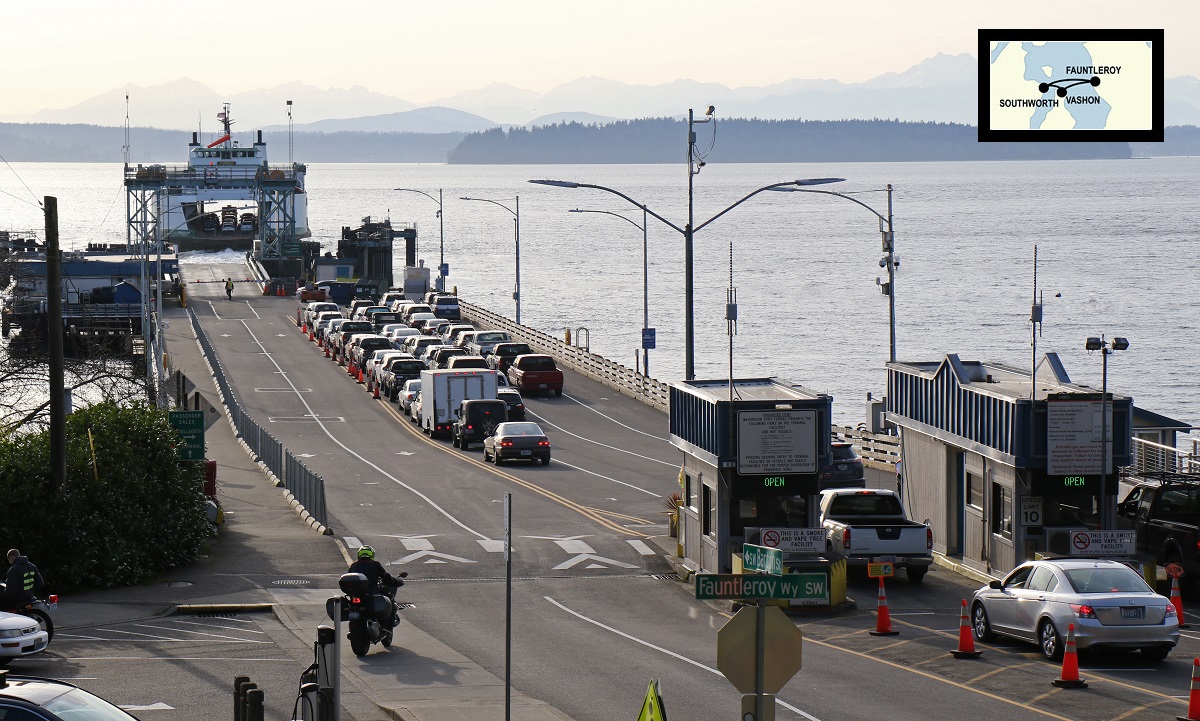
I had a little time on my hands before the tennis, and stopped at the Fauntleroy ferry terminal to check out the action there. Here is the 5.15 pm ferry (the Issaquah), just departing for Vashon Island.
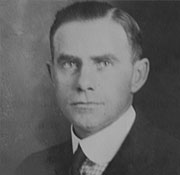
The Ellenbert Apartments building at 915 East Harrison St on Capitol Hill. It was built in 1928 in the the Jacobethan style, during the neighborhood’s pre-Depression apartment building boom.Architect Max A. Van House (1877-1966).
I have walked by the Ellenbert Apartments many times, on the way to Broadway market’s grocery store, and finally looked up its history today.
The architect is Max A. Van House, a Minnesota native (born in Moscow, MN). He spent time on Vashon Island as a youth, and picked up on-the-job experience by working for a variety of architectural firms, including a stint at one in Tacoma.
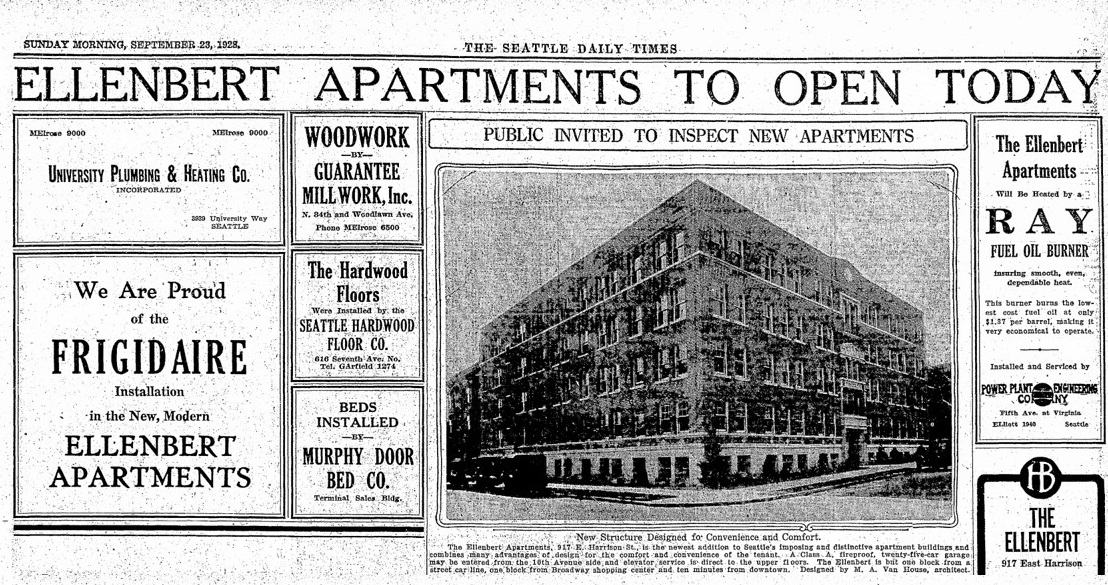
Invitation in the Seattle Times of Sept. 23, 1928 for viewing of the new Ellenbert apartments. Frigidaire refrigerators, hardwood floors, central heating by Ray fuel oil burner, Muralvox radio in every room. One block from the street car line. Downtown is 10 mins away. Sounds good to me!
From the Latin word corona, mid-16th century, meaning ‘wreath, crown’. Architecture: a circular chandelier in a church, or a part of a cornice having a broad vertical face. Astronomy: the rarefied gaseous envelope of the sun and other stars. Biology: the cup-shaped or trumpet-shaped outgrowth at the center of a daffodil or narcissus flower. Medical: coronavirus is any of a family (Coronaviridae) of large single-stranded RNA viruses that have a lipid envelope studded with club-shaped spike proteins. Physics: the glow around a conductor at high potential. Smoking: a long, straight-sided cigar.
It was only 45 °F (7 °C) for my late-afternoon stroll around the block today, but hey, now there is an hour more of sunshine.
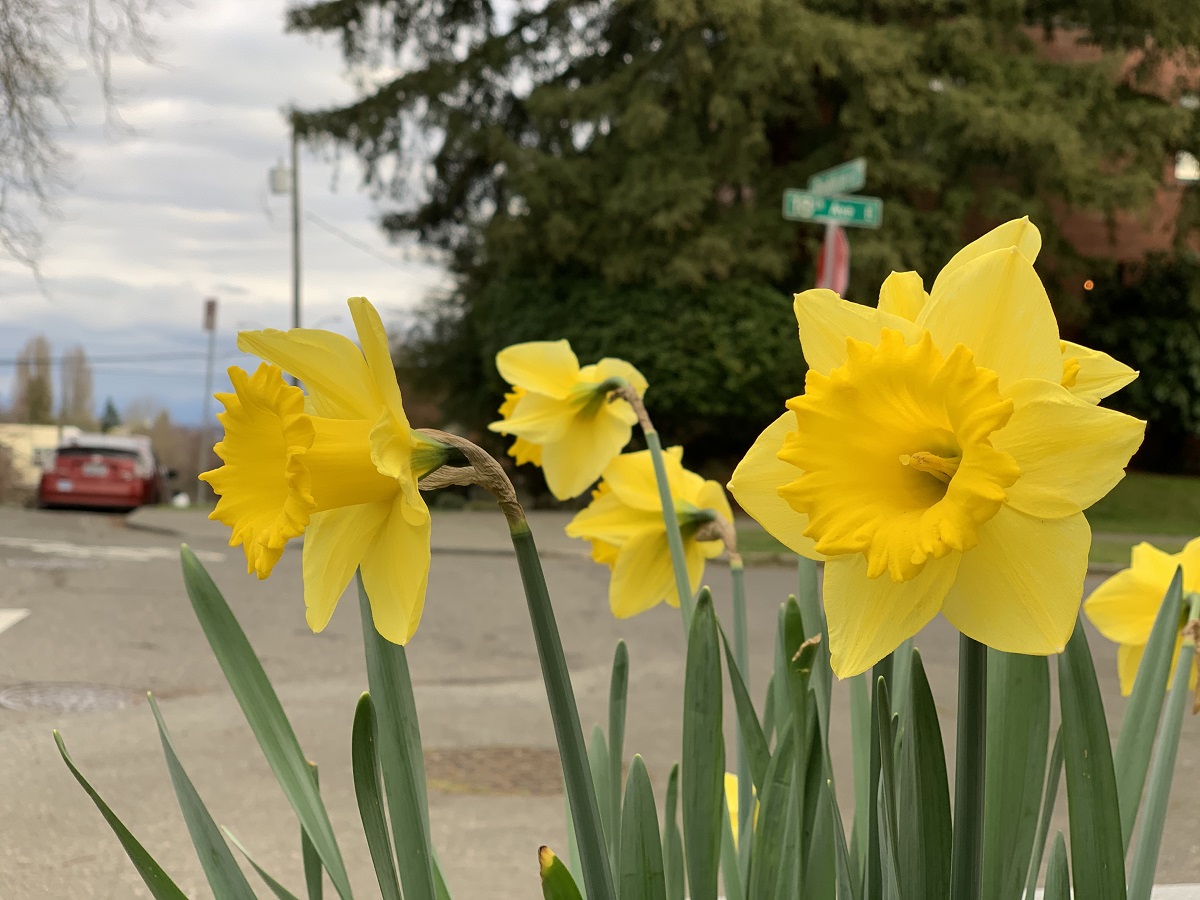
Daffodils (genus Narcissus) at the corner of 18th Avenue & Republican St. The cup-shaped structure at the center of the flower is called the corona. Yes, the term has come to have decidedly negative connotations, I guess. Maybe it’s best to just shrug it off. We even have apartment buildings in the city called Corona Apartments and Corona Lofts.
I went on a beer run today to track down some of my favorite German beer. (The grocery store was out of stock, and my own supplies were running dangerously low).
On the way back there was a break in the rain, and so I stopped at Denny Way and 5th Avenue to take a few pictures.
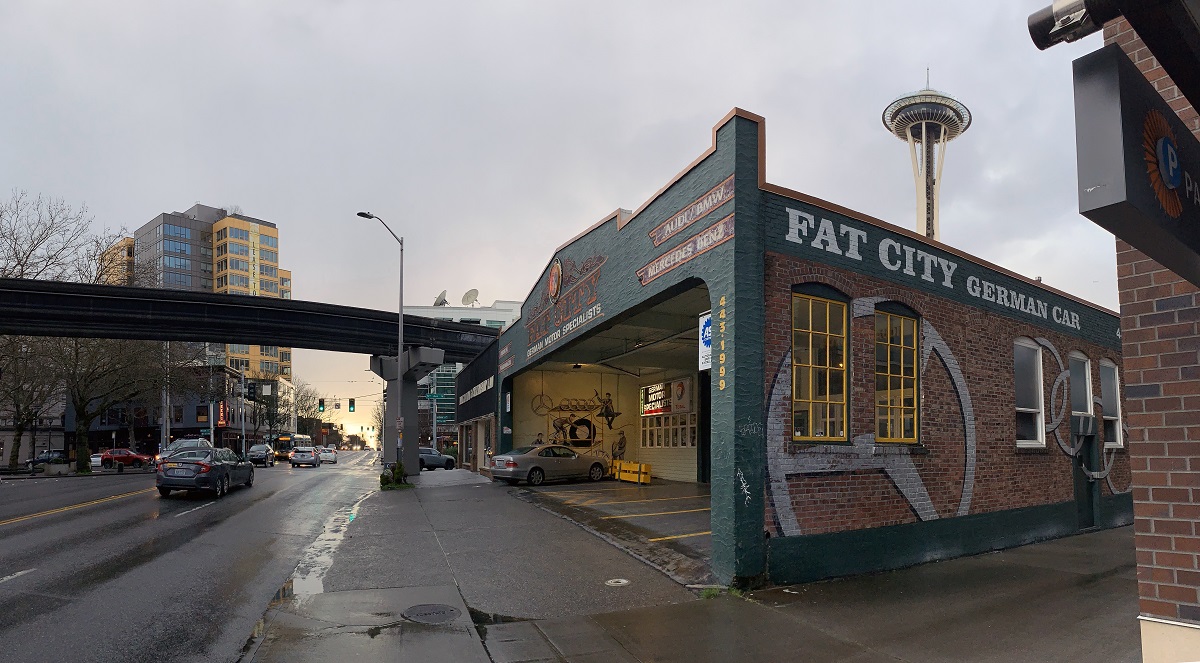
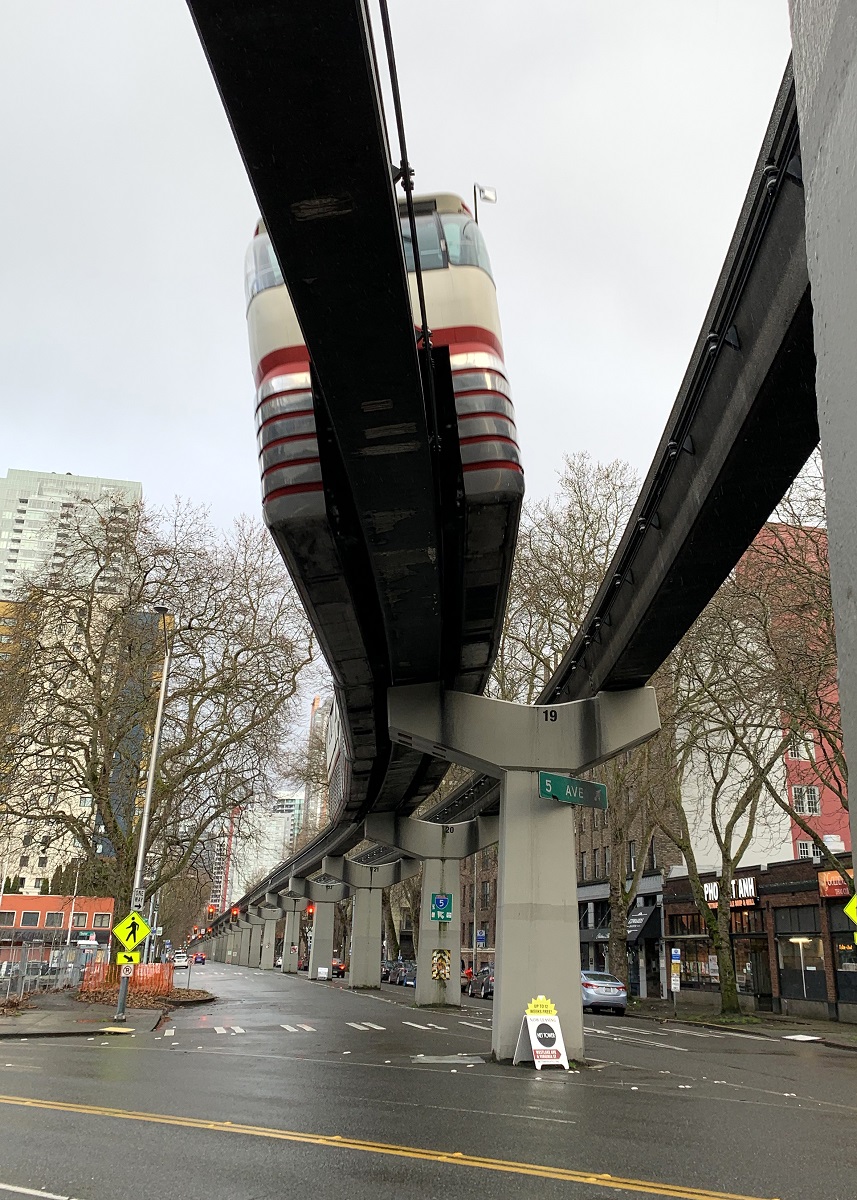
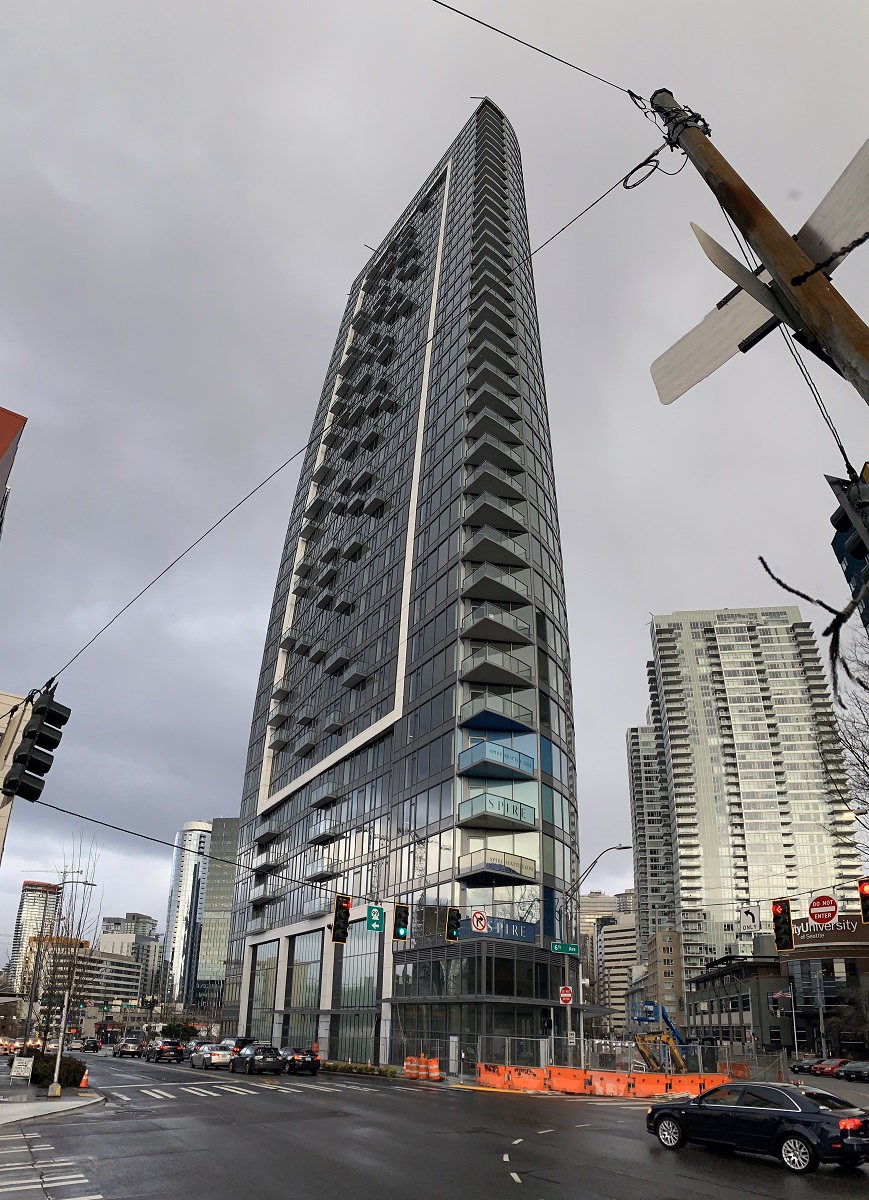
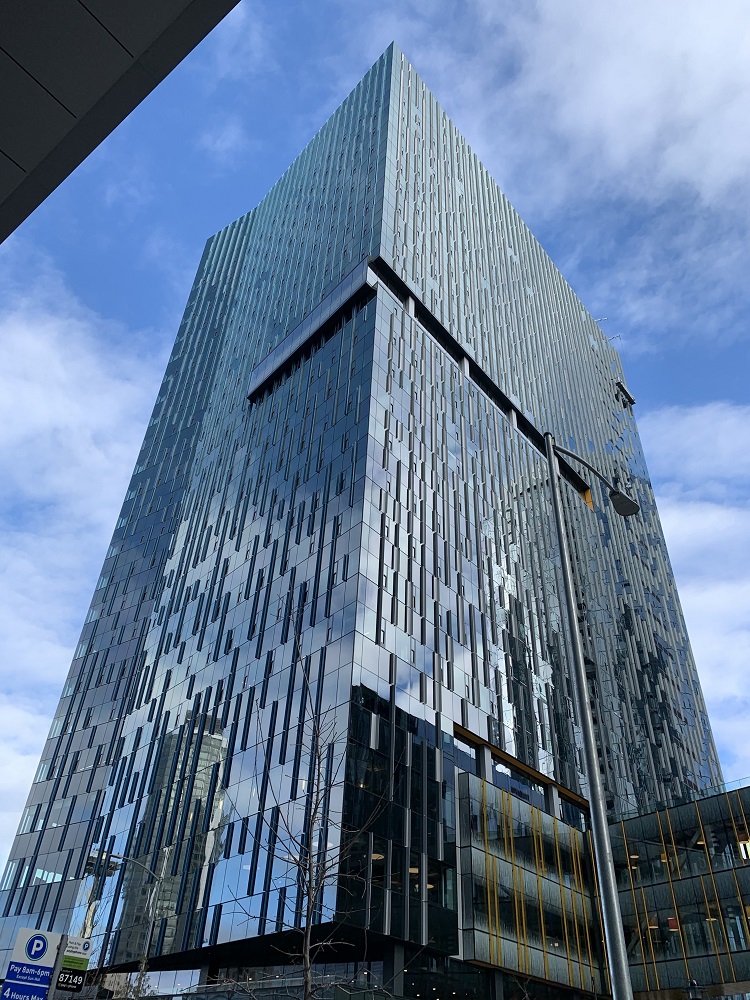
Nice to see that Fat City, the ‘German car clinic’ is still there, at Denny Way and 5th Avenue. (They’ve been there since 1972). The Space Needle is not far away (on the right).There goes the Seattle Center Monorail train, doing its 0.9 mile run from the Space Needle, and running along 5th Ave to Westlake Center in downtown.The new Seattle Spirecondominiums on Denny Way, officially at 600 Wall Street, has 41 storeys. (The building does not taper to the top; the vertical lines are just bent by the wide-angle panorama shot). The two light gray towers on the left are those of the Insignia Towers condominiums (also 41 storeys), completed in 2016.Here’s a little skyline of Amazon’s buildings, seen from the corner of Battery St & 6th Ave. The big square building with the ‘key slot’ in the middle is Amazon Nitro North, the black one in the back, to its right, Amazon re: Invent, and the tall rectangular towers on the right are Amazon Day 1 and Amazon Doppler behind it. There’s a whole lot of Amazon buildings downtown, and I don’t know the ones in the middle, such as that light blue one. I will have to find out, so that I can annotate my picture. The blue Porsche is a 911, I think. (I’m no Porsche expert).
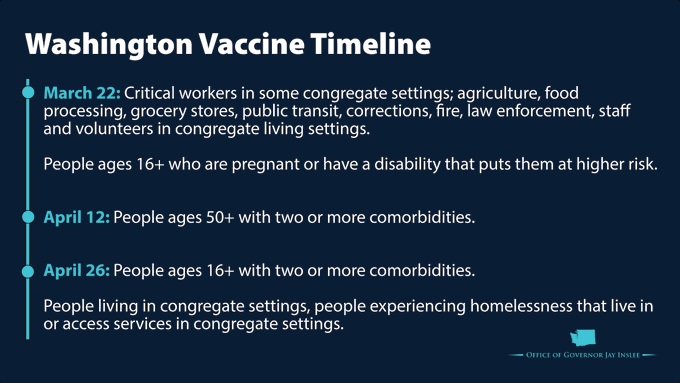
Washington State has published new dates and target groups that qualify for getting the vaccine. I’m not making the cut, yet.
President Biden has promised that there will be enough vaccine doses for all Americans by the end of May*. It takes a lot of logistics to get that vaccine injected into people, of course.
*For example, Merck and Johnson & Johnson will collaborate to ramp up vaccine production, with the help of the federal government.
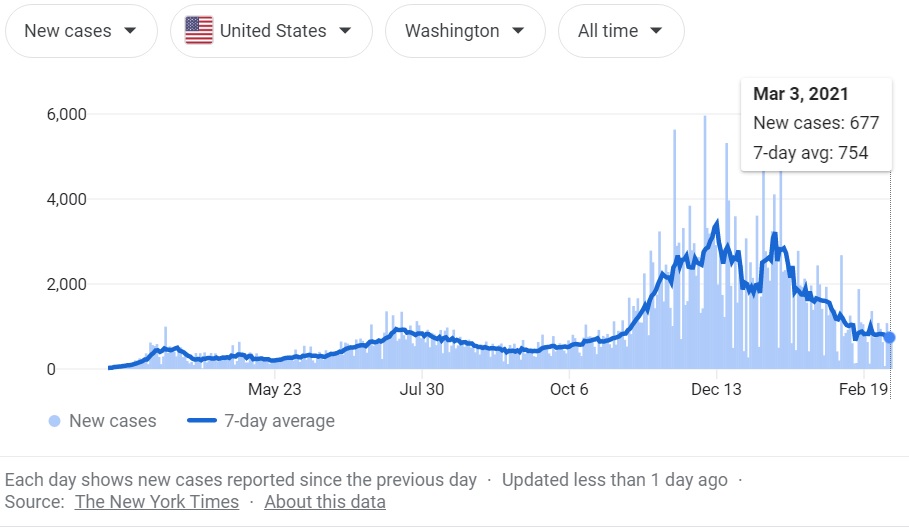
Descriptions of the groups that qualify next for the vaccine. I’m not sure how if or how it will be verified that a person has two or more comorbidities.And here is Washington State’s timeline for Covid-19 cases. We’re down to about 1/3 of the highs in December, but still double where we were in September of last year. The state has now crossed the 5,000 mark as far as recorded Covid-19 fatalities. A little bit of good news: so far, this is the mildest flu season in the 25 years that records have been kept. Of course, it kind of should be: people are wearing masks and not congregating in large numbers.
I saw only today (it had been announced in early February), that the gay bar called R Place will not be able to renew its lease at its 619 East Pine Street location, after 35 years there. Apparently it’s not due to the pandemic. The owner of the Pine Street building had died and the estate did not renew R Place’s lease.
The managers of R Place vowed to find a new location, but the loss of the four floors at the Pine Street location is a very big one for the LGBTQ community.
It feels similar to the loss of the beloved CC Seattle complex’s entertainment venue and bars, at the corner of Madison & 15th Avenue. (This was in Sept. 2010, to make way for the office building called the Bullitt Center).
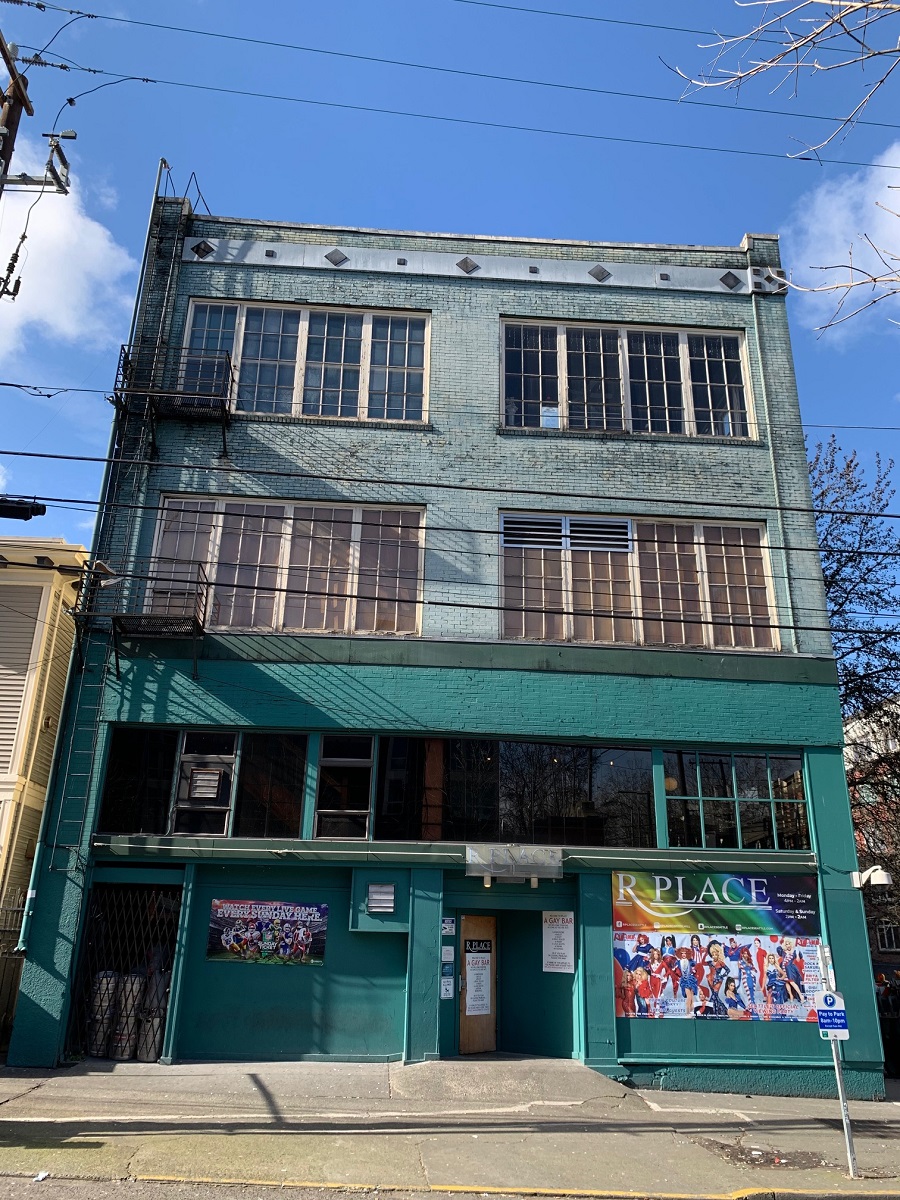
The R Place location at 619 East Pine St. I took this picture a year ago, in Feb. 2020. The building dates back to Capitol Hill’s auto row and is believed to have been a Ford Model T showroom, complete with a car elevator, the remnants of which can still be seen inside the four-story structure. The building must date back to say, 1911, or a little later. At that time, 31 of the city’s 41 car dealers were located on either East Pike Street or Broadway, joined by dozens of businesses catering to an entirely new class of consumers: motorists. [Information from ‘Pike/ Pine Auto Row’ by John Caldbick at https://www.historylink.org/]
There is a lot of snow on the slopes of Washington State’s mountains this year, in some places already 10% above normal.
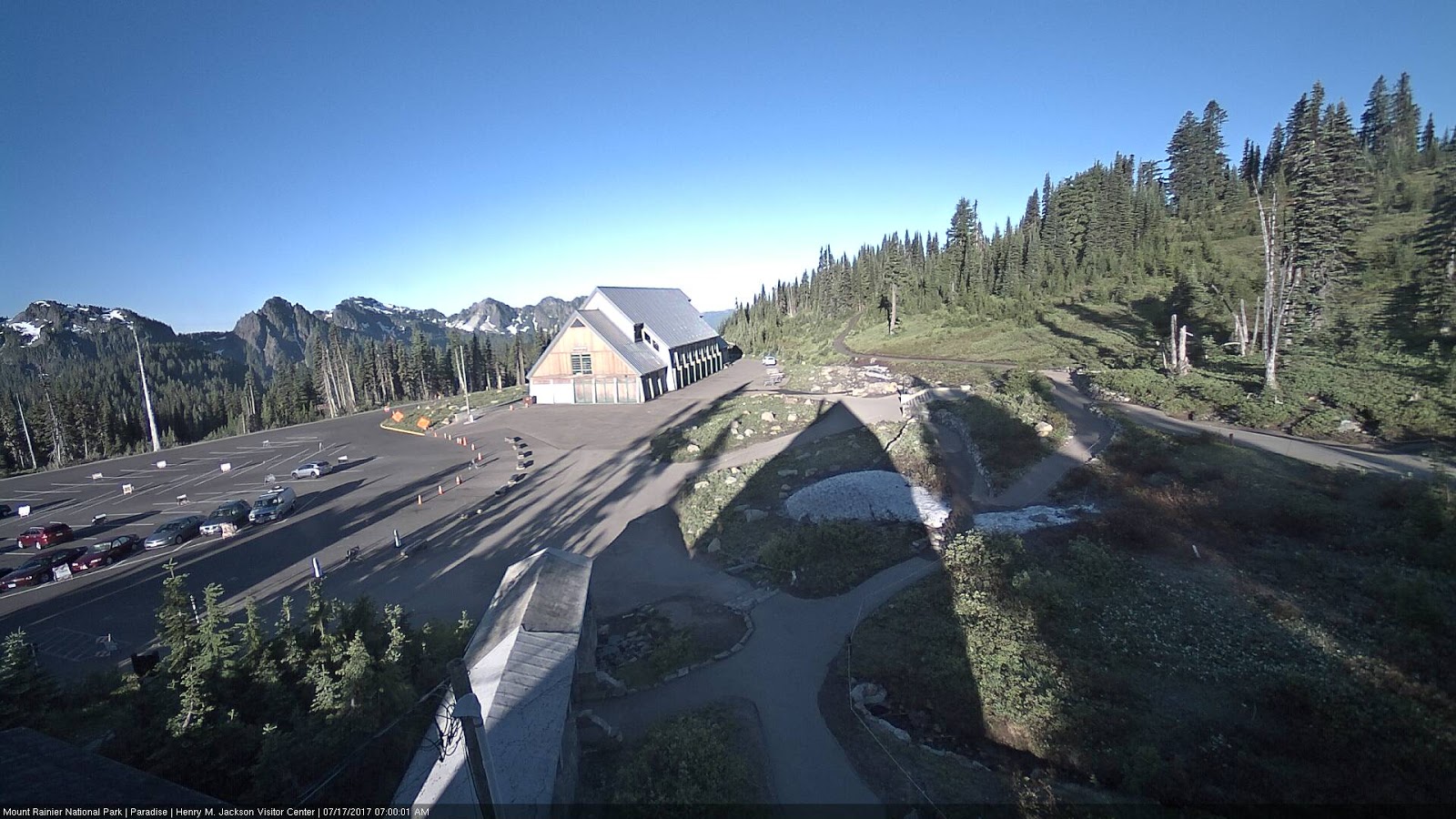
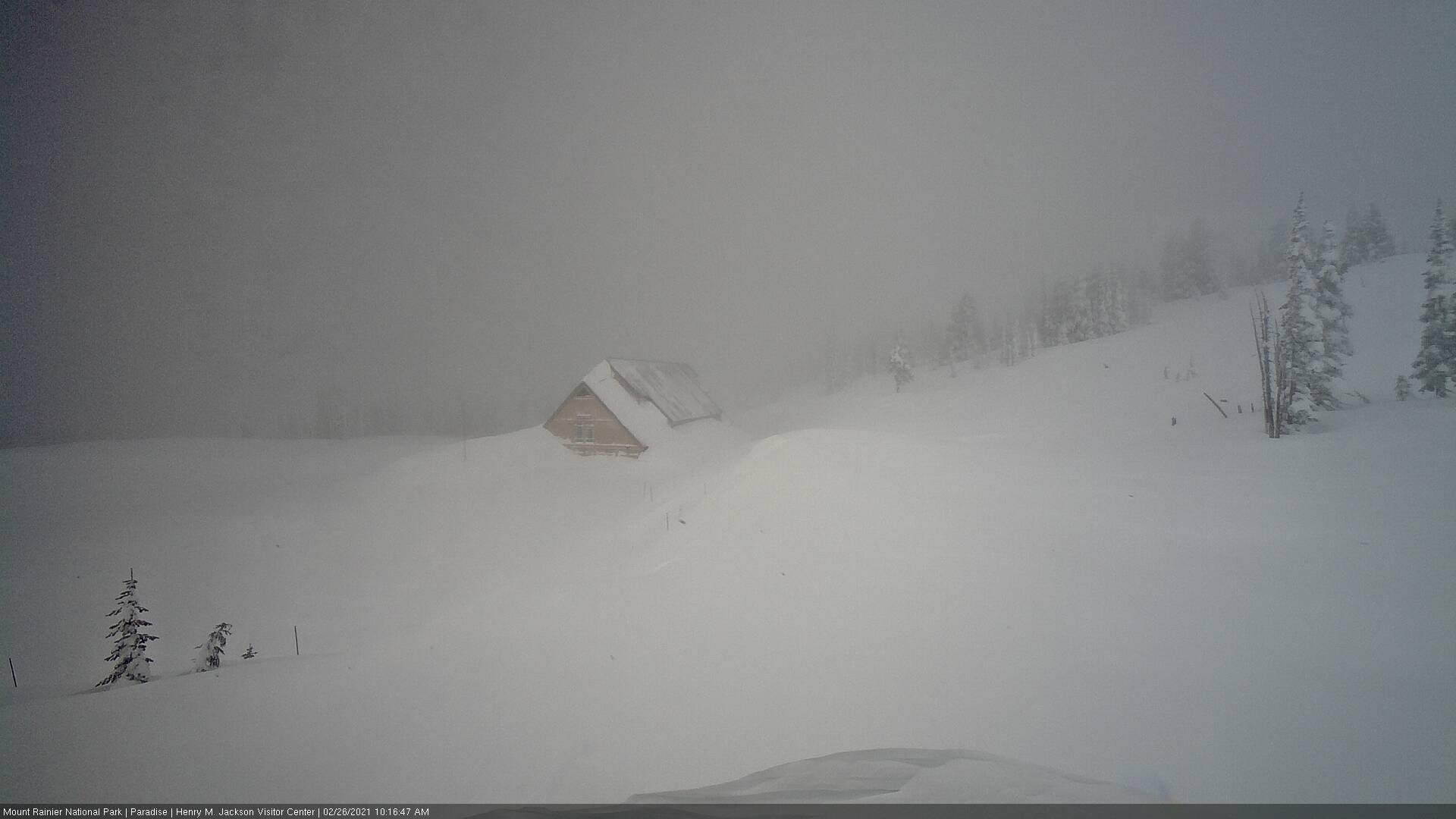
These pictures of the Paradise visitor center at Mt Rainier were posted on the Twitter account from the National Weather Service (Seattle) @NWSSeattle.
JULY This picture is dated Jul 17, 2017. It’s high summer, but late in the day with the long shadows, which is probably why there are not many cars in the parking lot.FEBRUARY This snapshot was recorded this morning, Feb 26, 2021. The US Dept. of Agriculture snow telemetry report says there is 16 feet (4.9 m) of snow on the ground there as of today, and that the air temp. has averaged 25°F (-4°C) the last few days.
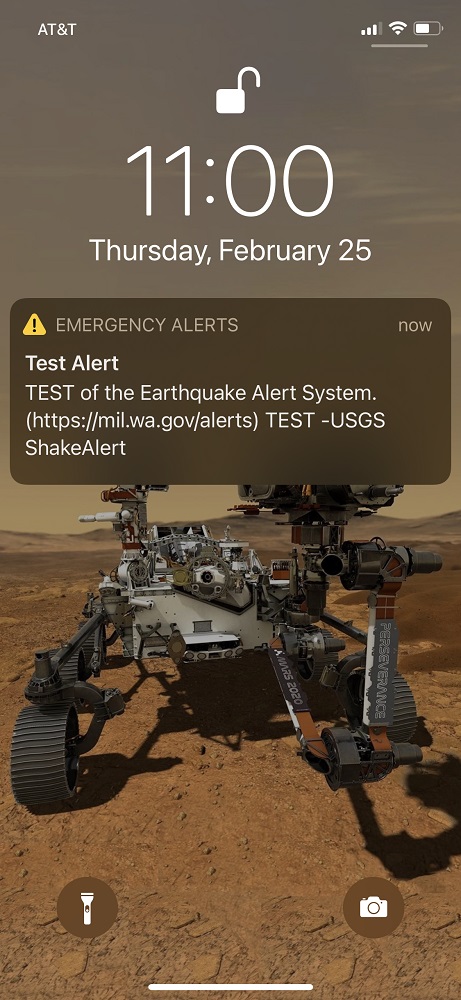
My phone got the test alert this morning. I expected it, but the sound still startled me.
On Sunday, it will be 20 years since the magnitude 6.8 Nisqually earthquake that occurred here in the Puget Sound basin, on Feb. 28, 2001.
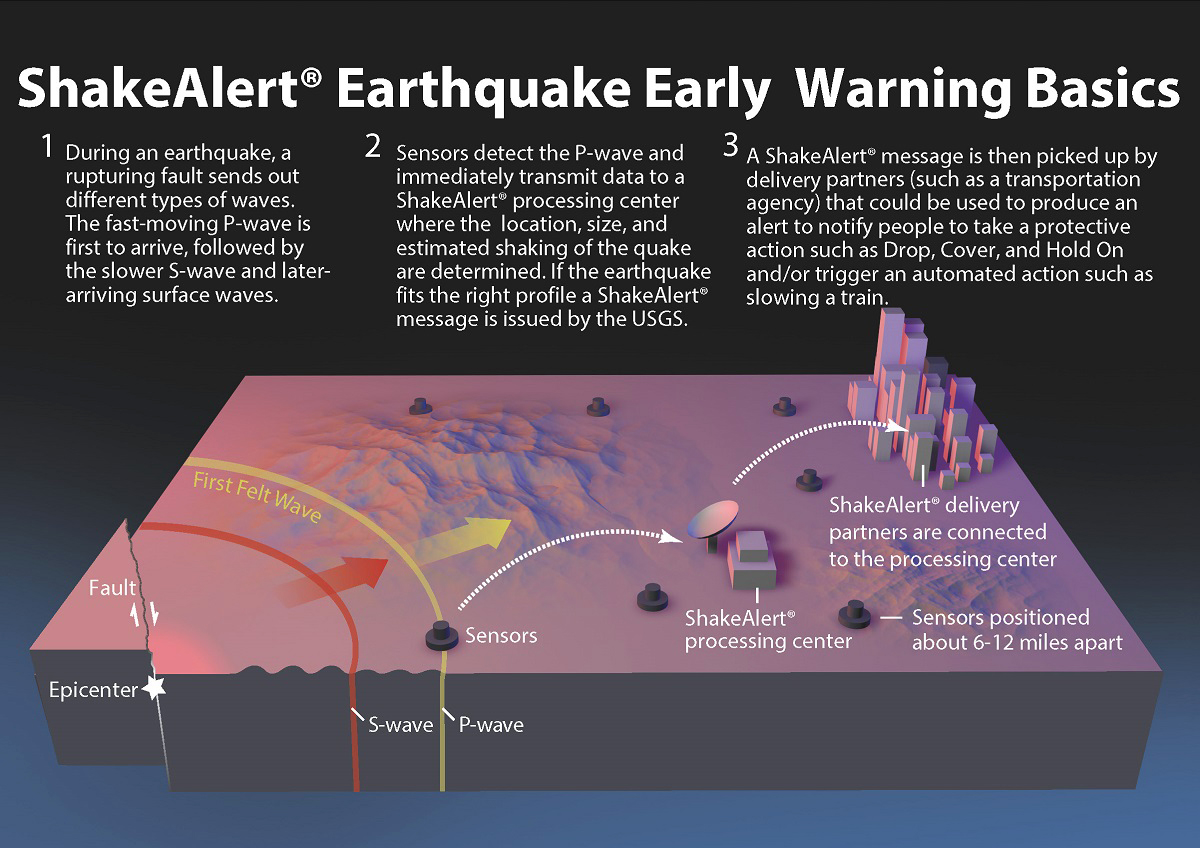
We’re soon getting a smartphone ‘shake alert’ system that will produce as much as a 30-sec. heads-up, that earthquake tremors are on the way (see diagram below). Thirty seconds or less — so this is not the time to panic and freeze.
My plan is to duck under my dining room table — or to run into the smallest room (the guest bathroom). The upstairs bathroom would be the plan for the second floor.
And if you’re driving?
US Geological Survey (USGS) recommends :
– Move your car as far out of traffic as possible.
– Do not stop on/ under a bridge or overpass or under trees, light posts, power lines, or signs.
– Stay inside your car until the shaking stops.
– When you resume driving, watch for breaks in the pavement, fallen rocks, and bumps in the road at bridge approaches.
Earthquake early warning systems like ShakeAlert® work because an alert can be transmitted almost instantaneously, whereas the shaking waves from the earthquake travel through the shallow layers of Earth at speeds of one to a few km/ sec (0.5 to 3 mi/ sec). When an earthquake occurs, both compressional (P) waves and transverse (S) waves radiate outward from the epicenter. The P wave, which travels fastest, trips sensors placed in the landscape, transmitting data to a ShakeAlert® processing center where the location, size, and estimated shaking of the earthquake are determined. If the earthquake fits the right profile a ShakeAlert® message is issued by the USGS. The message is picked up by ShakeAlert® partners (cell phone service providers) which could be used to produce an alert to notify people to take a protective action such as Drop, Cover, and Hold On and/or trigger an automated action. [Image created by Erin Burkett (USGS) and Jeff Goertzen (Orange County Register) and updated by Robert de Groot (USGS)].
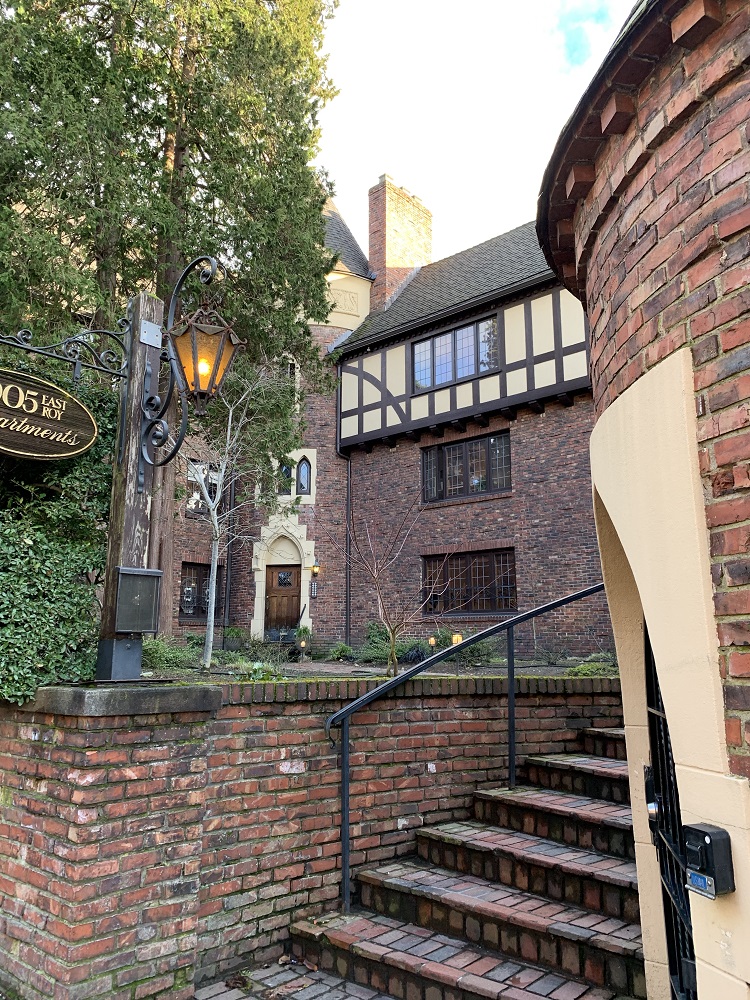
Here’s the apartment building called 1005 East Roy, here on Capitol Hill.
It was designed by Fred Anhalt (1896-1996), officially a developer and never an ‘architect’. Anhalt moved to Seattle from the Midwest in the early 1920s.
This apartment building was completed in 1930 (one of about 40 by him), and the first one in Seattle to feature an underground parking garage.
One of the ground floor residents has two Sphynx cats (the hairless ones). They sit in the window and check you out as you walk by.
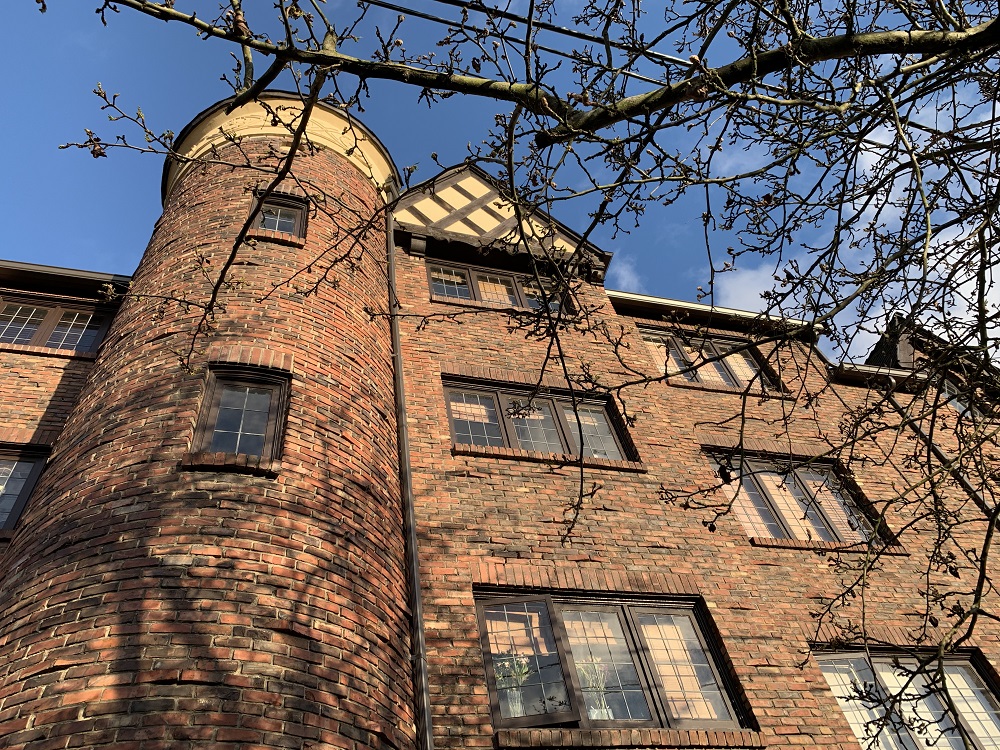
1005 East Roy has 25 unique apartments. Apartments.com lists an open one at $2,995 p.m. for 2 beds, 1 bath, 1,195 sq ft (yes, that’s expensive, on a par with similar-sized brand new apartments in the city).A view of the building from 10th Avenue. Anhalt’s buildings have been referred to as ‘Castles in Seattle’. They incorporate Tudor and Norman elements, such as turrets, stained-glass windows, and spiral staircases.
It was back to the dentist for me this morning, to have him replace a filling in one of my teeth (n.o.t. fun).
It’s still very quiet downtown, and I just parked on the street close the Amazon biospheres — only $1 for two hours.
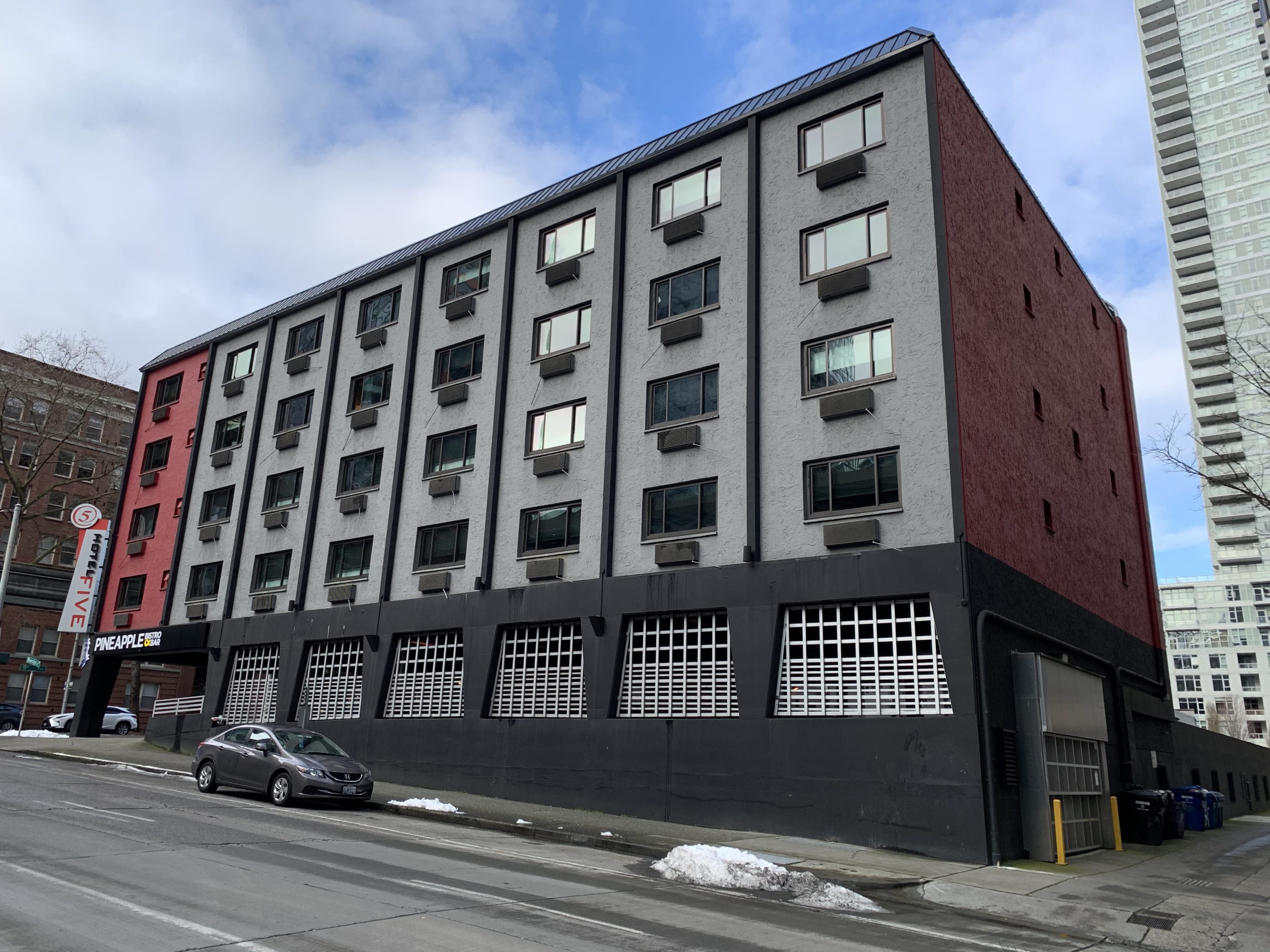
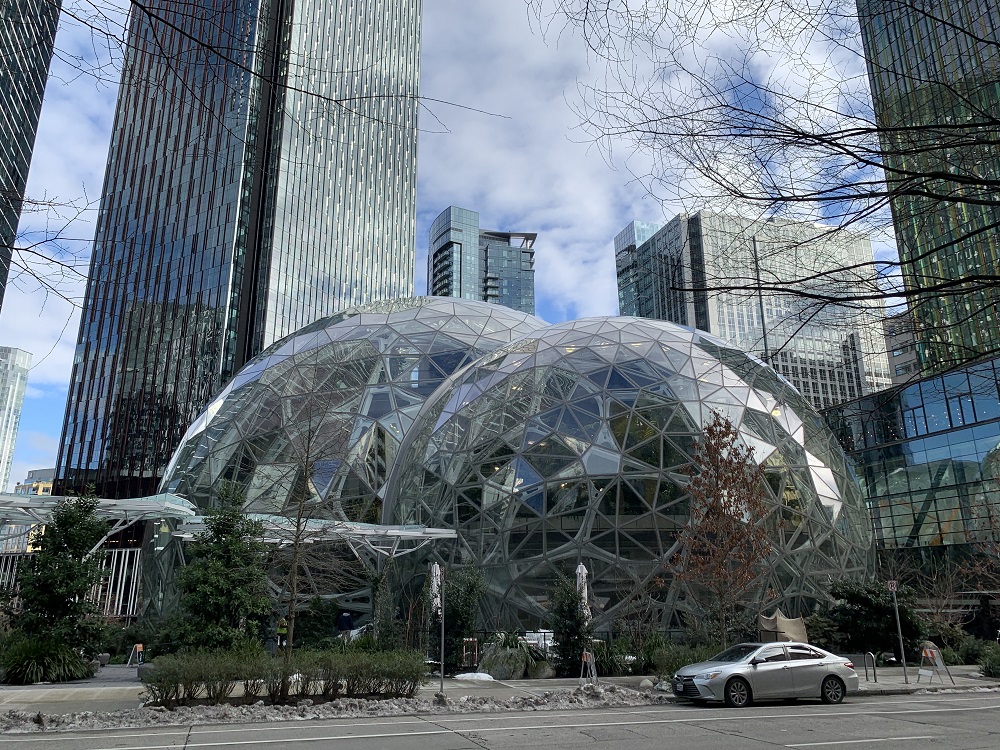
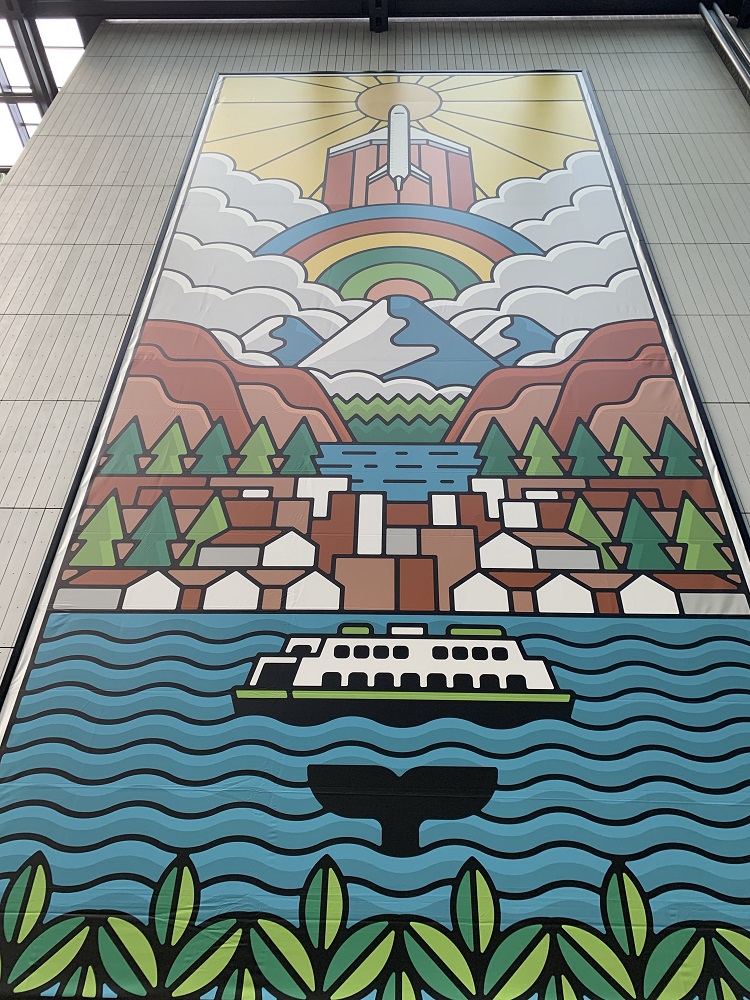
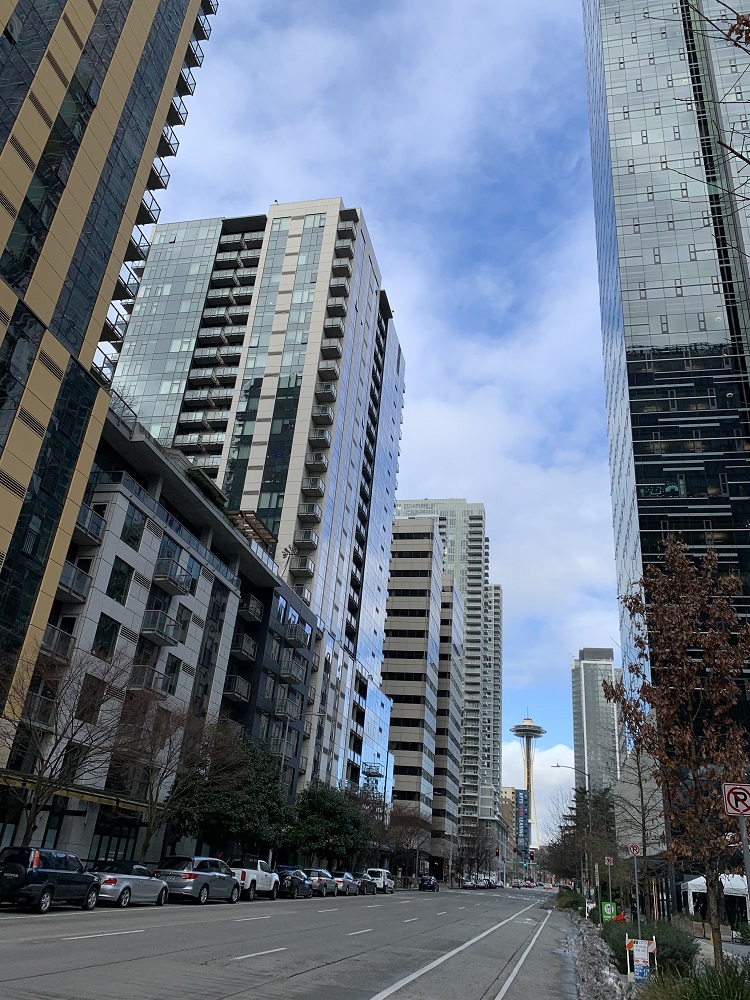
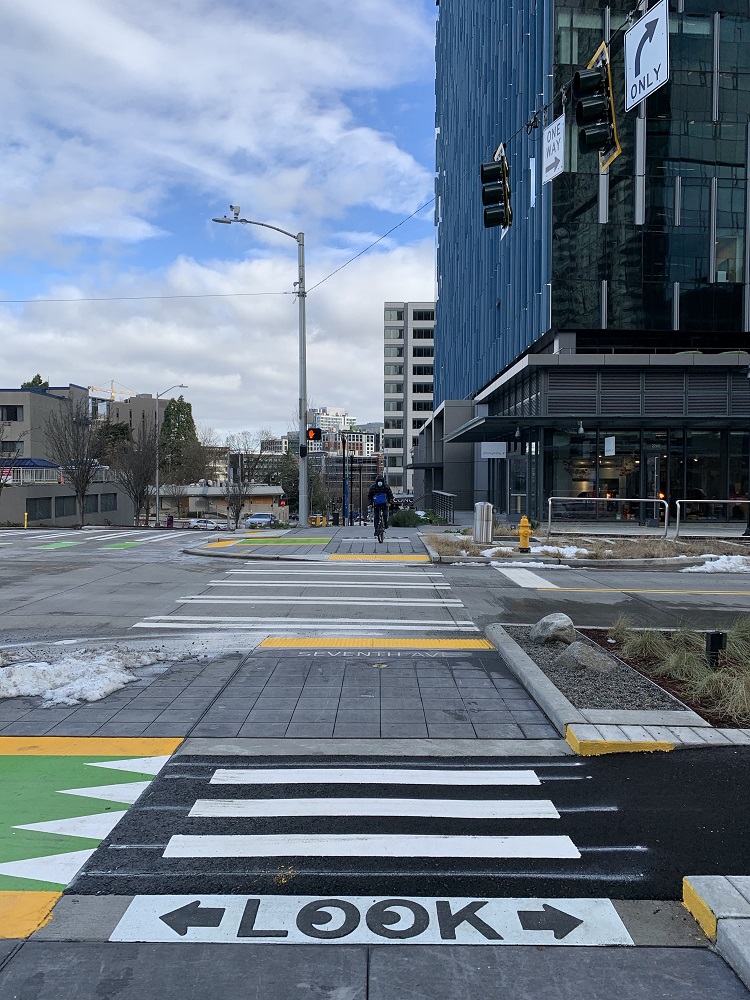
The cute Hotel 5 on 5th Avenue used to be an office building.The biospheres seen from 6th Avenue. I’m sure the greenery inside are flourishing in its controlled climate. On the very left edge of the picture is the Amazon Day 1 building, and on the left is the new Amazon re: Invent office tower. In the distance behind the spheres is the Cirrus apartment tower.I like the giant artwork displayed in the public walkway inside the Day 1 building. I did not get the name of the artist.Looking northwest along 6th Avenue, towards the Space Needle in the distance.This is the corner of 7th Ave & Bell St. A little bit of the new Amazon Nitro North building is visible towards the top right. Good to have that LOOK left and right sign for the new bicycle lane. (Look everywhere, for that matter. That cyclist straight ahead was heading towards me).The new 24-storey Amazon tower called Nitro North. The walkway at the bottom right goes to Nitro South (8 storeys). Hey, should have named them Nitro and Glycerin instead, joked someone on a discussion forum.
It was dry and warm enough (49 °F/ 9°C) this afternoon, for a nice walk down to Denny Way, to take my customary pictures from the Interstate 5 overpass.
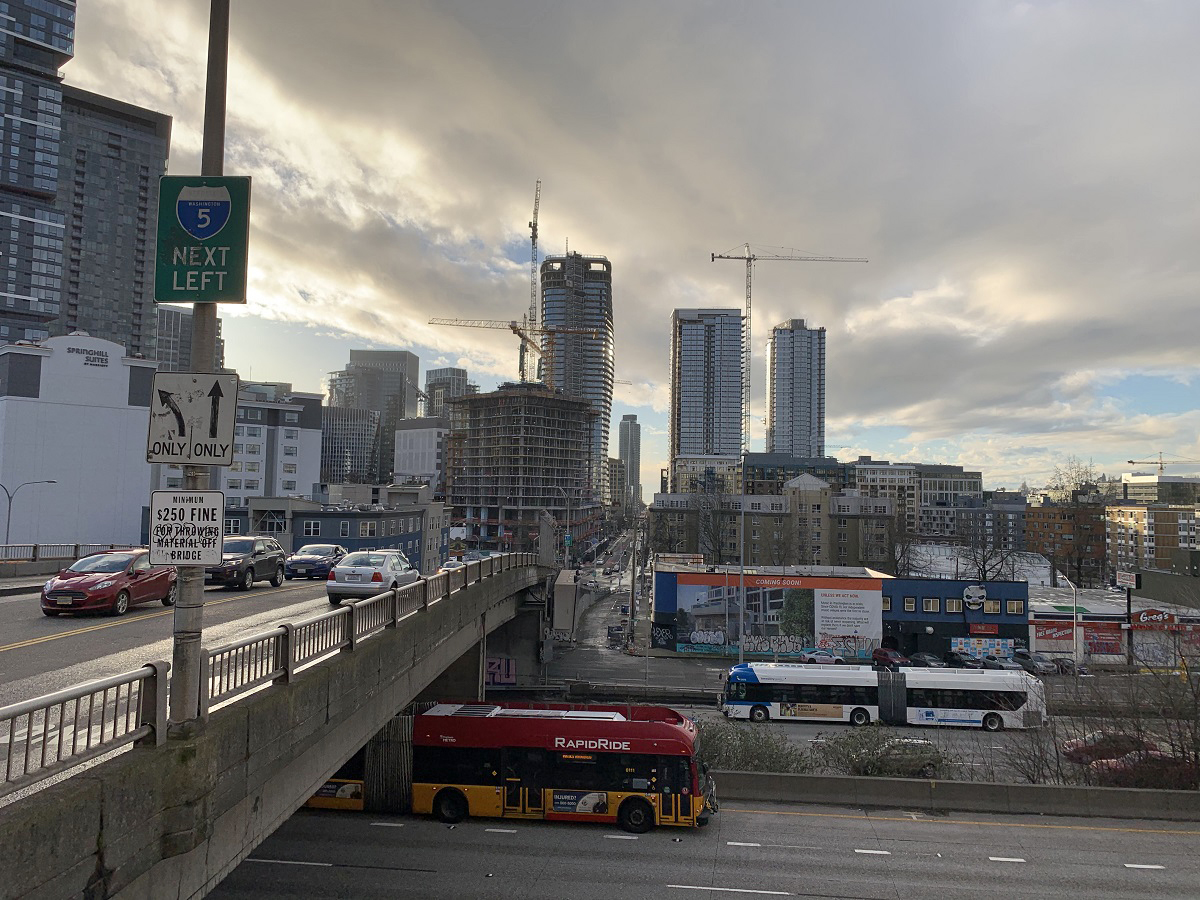
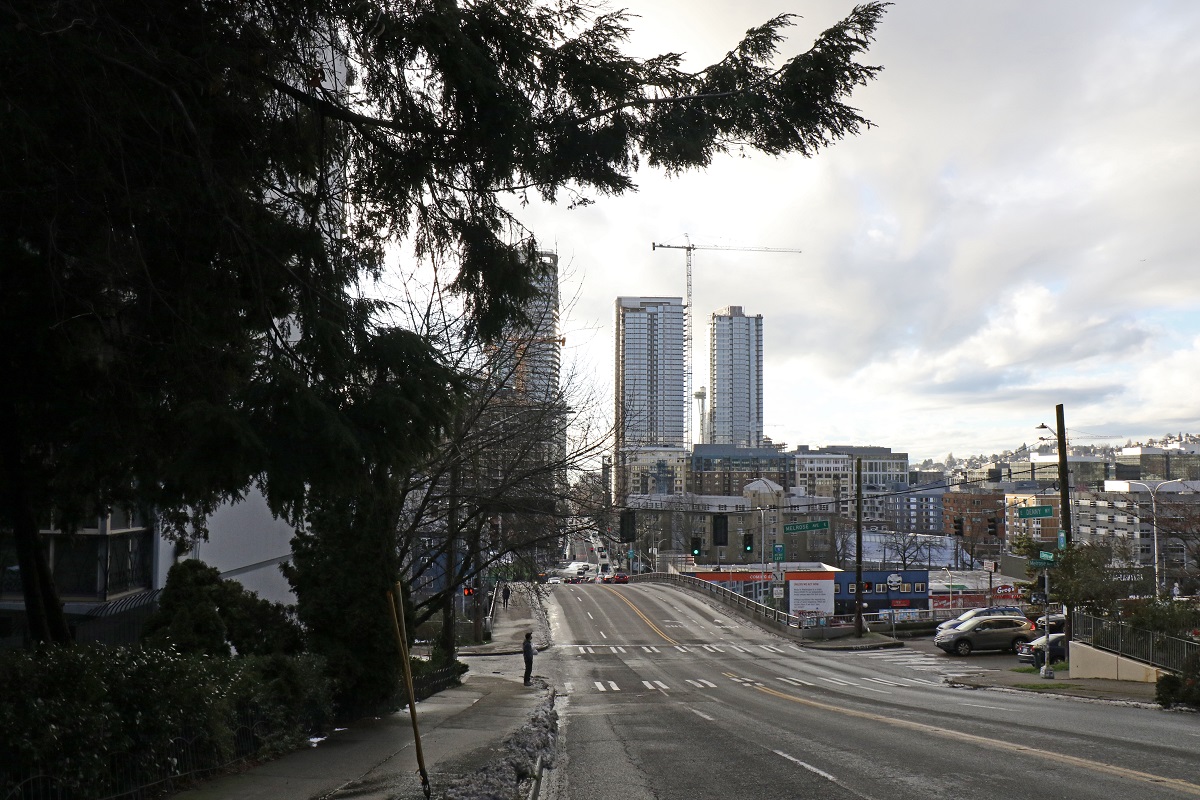
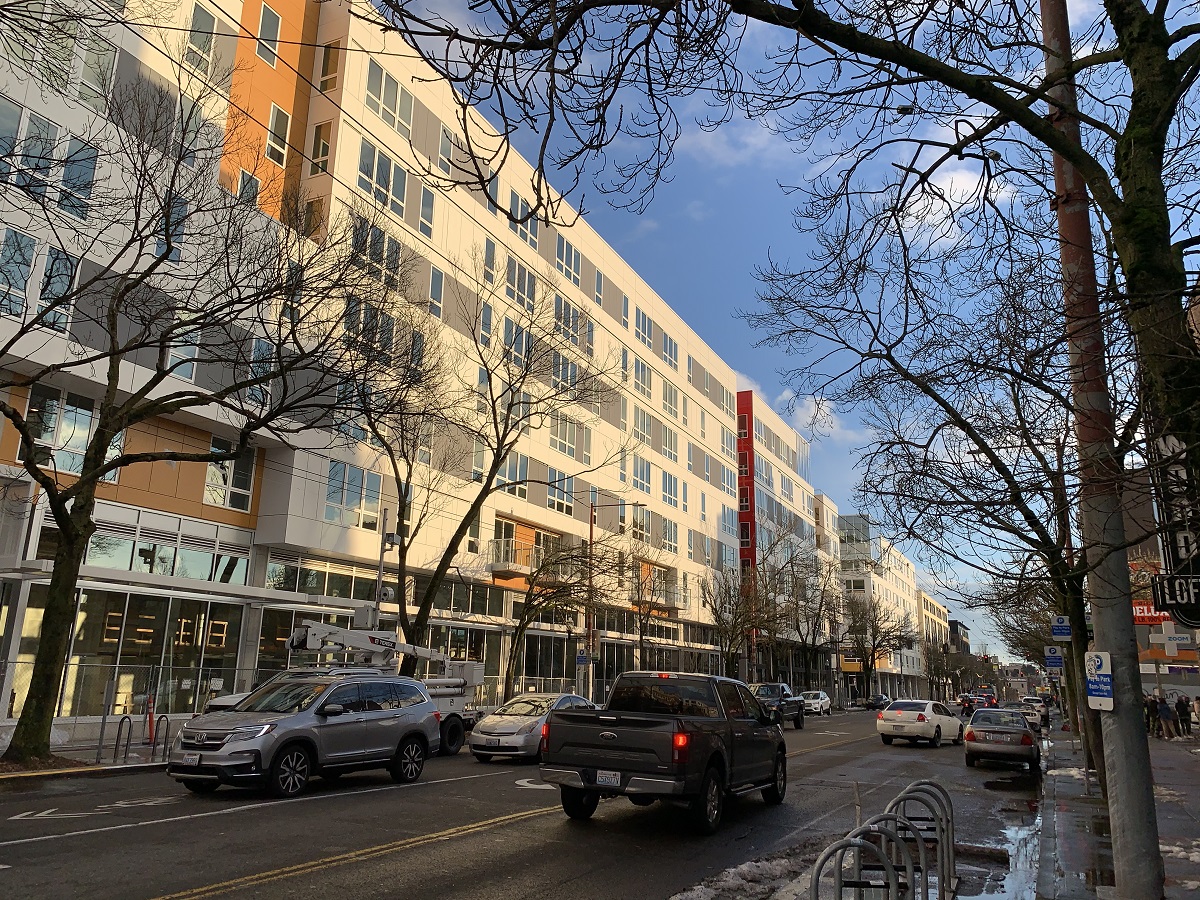
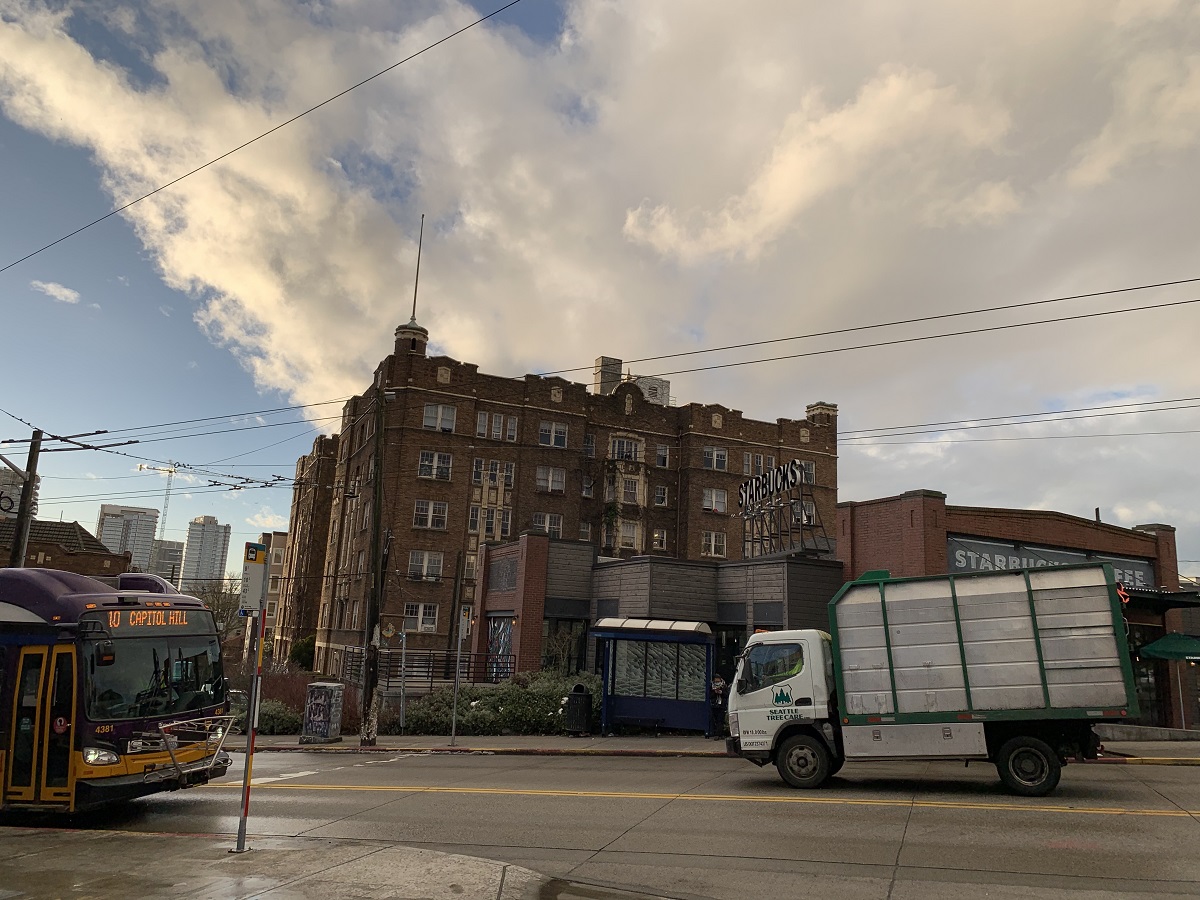
Looking west along the Denny Way overpass. The 1200 Stewart St apartment tower in front, just left of Denny Way, still has some 30 floors to go (of the 45). Behind it, the 2014 Fairview Ave apartment tower seems to be complete (42 floors). The twin towers (on the right) of the 1120 Denny Way apartments have topped out, and are just about complete on the outside. (Will these apartment towers be filled with work-from-home renters, that never go to a corporate office?) The blue & white bus is the Community Transit bus from Snohomish county to the north, and the red & yellow one is a Rapid Ride bus from King County.Now I’m walking up, east, along Denny Way. There’s the Space Needle between the two apartment towers of 1120 Denny Way. The No 8 bus is approaching, just barely visible in the distance. Normally I would hop on, but not today — and not for a while. No public transport for me, for now.Approaching the Denny Way & Olive Way intersection. No 8 bus turning onto Denny Way. A little snow on the sidewalk, still. The blue sky is a welcome sight.Here’s the Broadway & John St intersection with the new apartments at the Capitol Hill light rail station. Hey, I see ‘Oranje Blanje Blou’ I thought: Orange, white and blue, the colors of the old South African flag (in use from 1928 to 1994).Here is the No 10 bus on Olive Way. Starbucks is open, but sadly quiet. It would normally be packed with people just camping out there for the day, until it closed at midnight. Behind Starbucks is the 1924 Biltmore apartments.