My stay in Sapporo turned out to be too short, but hey: maybe there will be a next time and then I can do all the other things that I had wanted to.
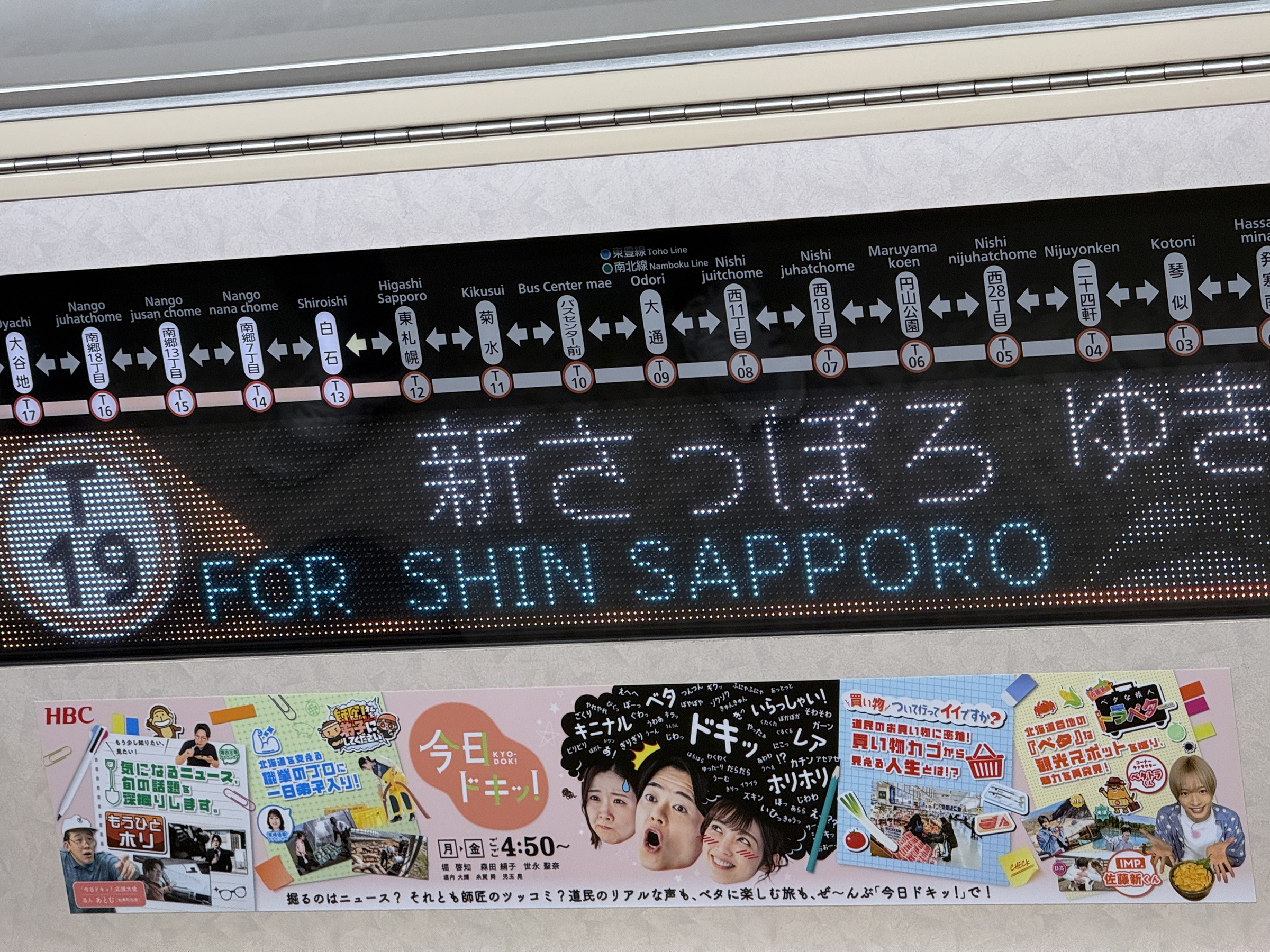
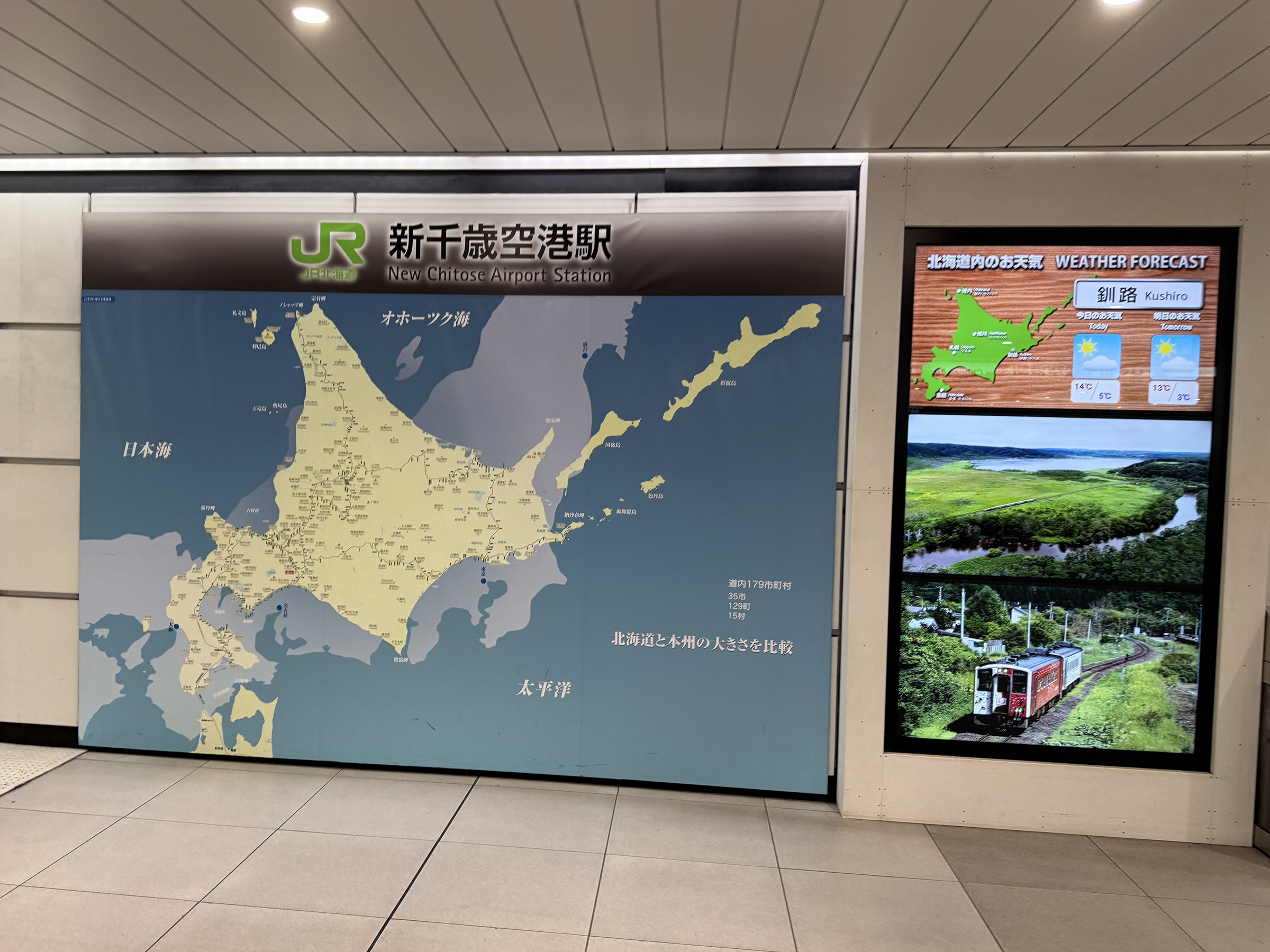
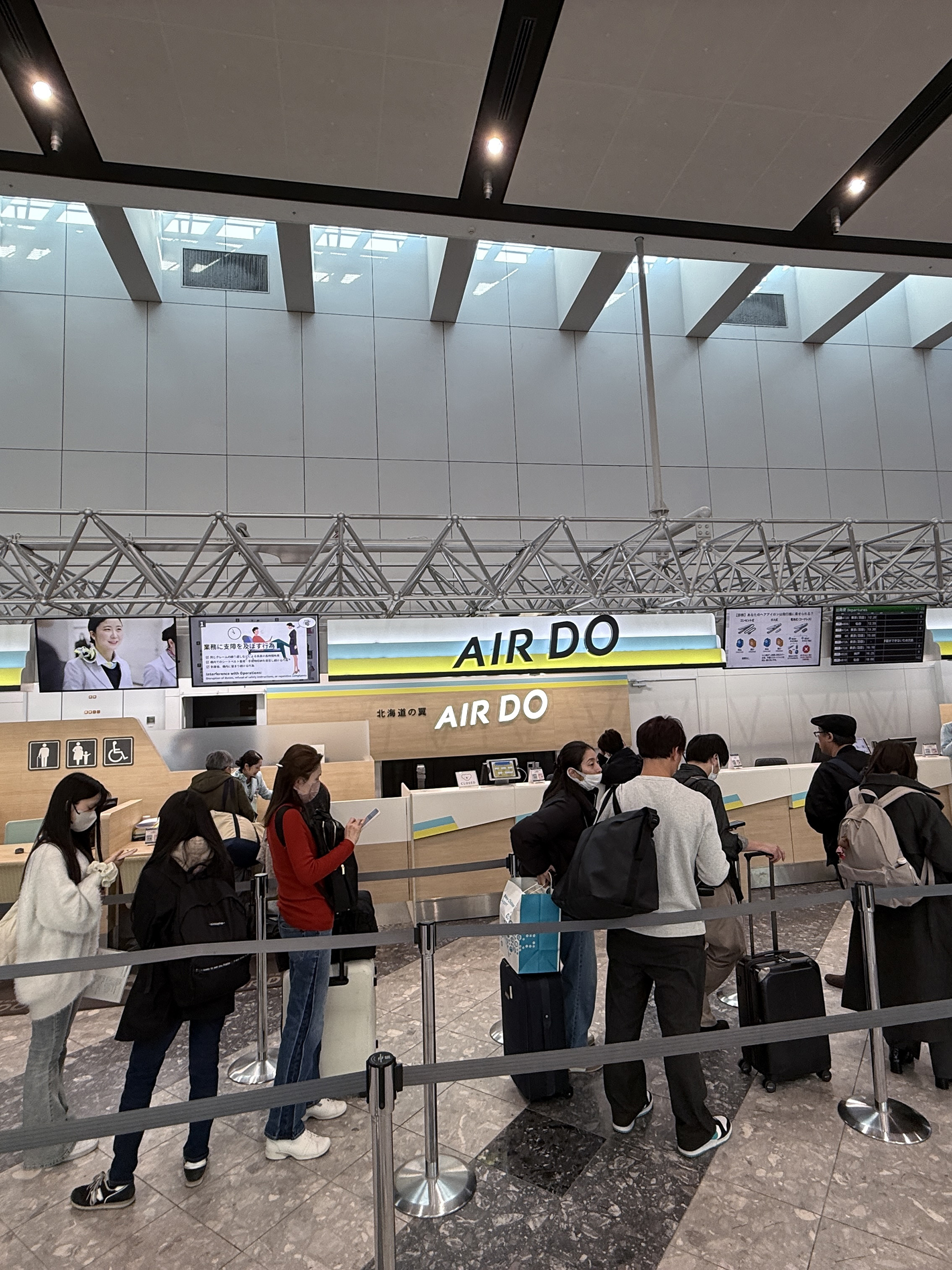
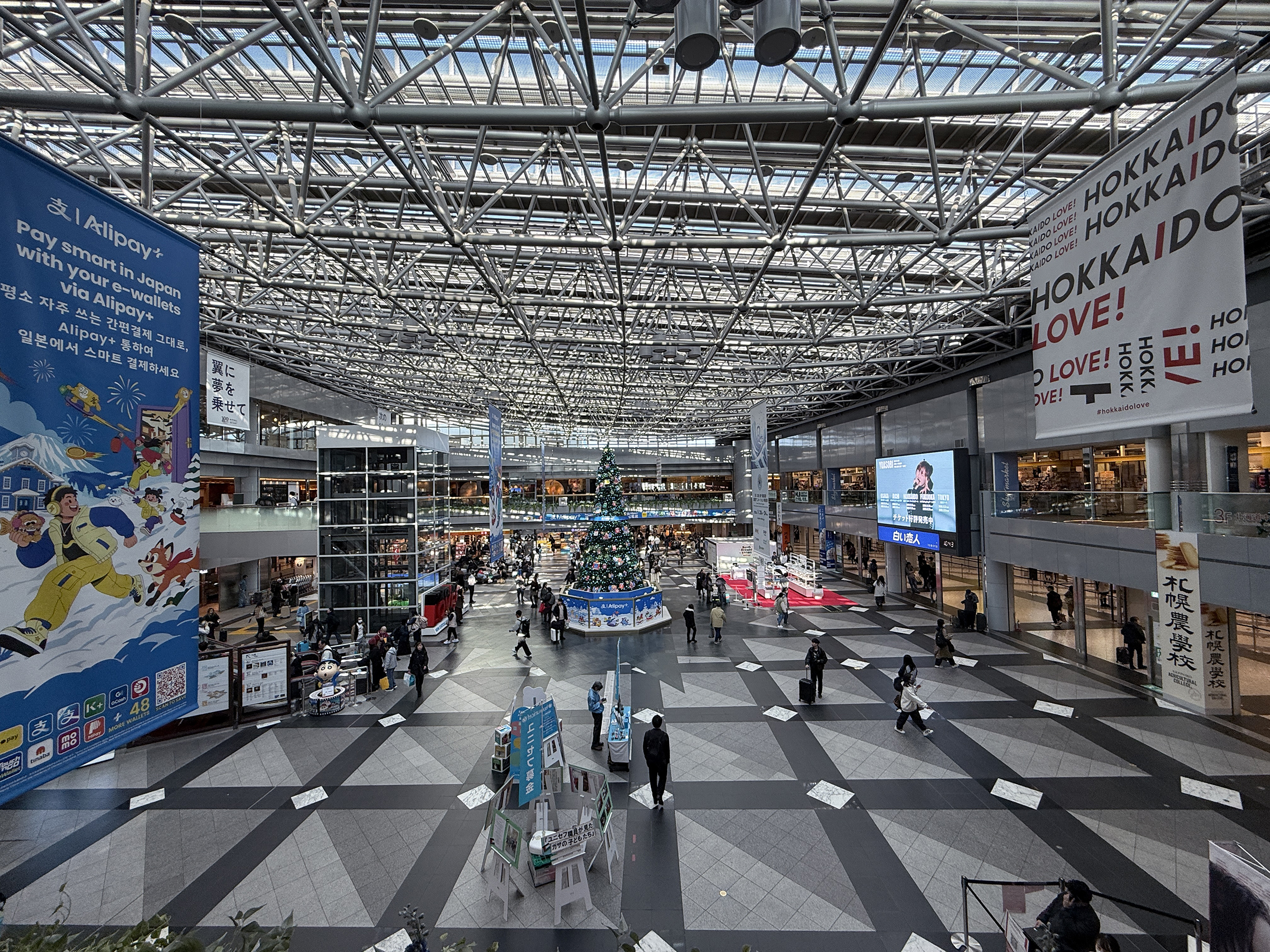
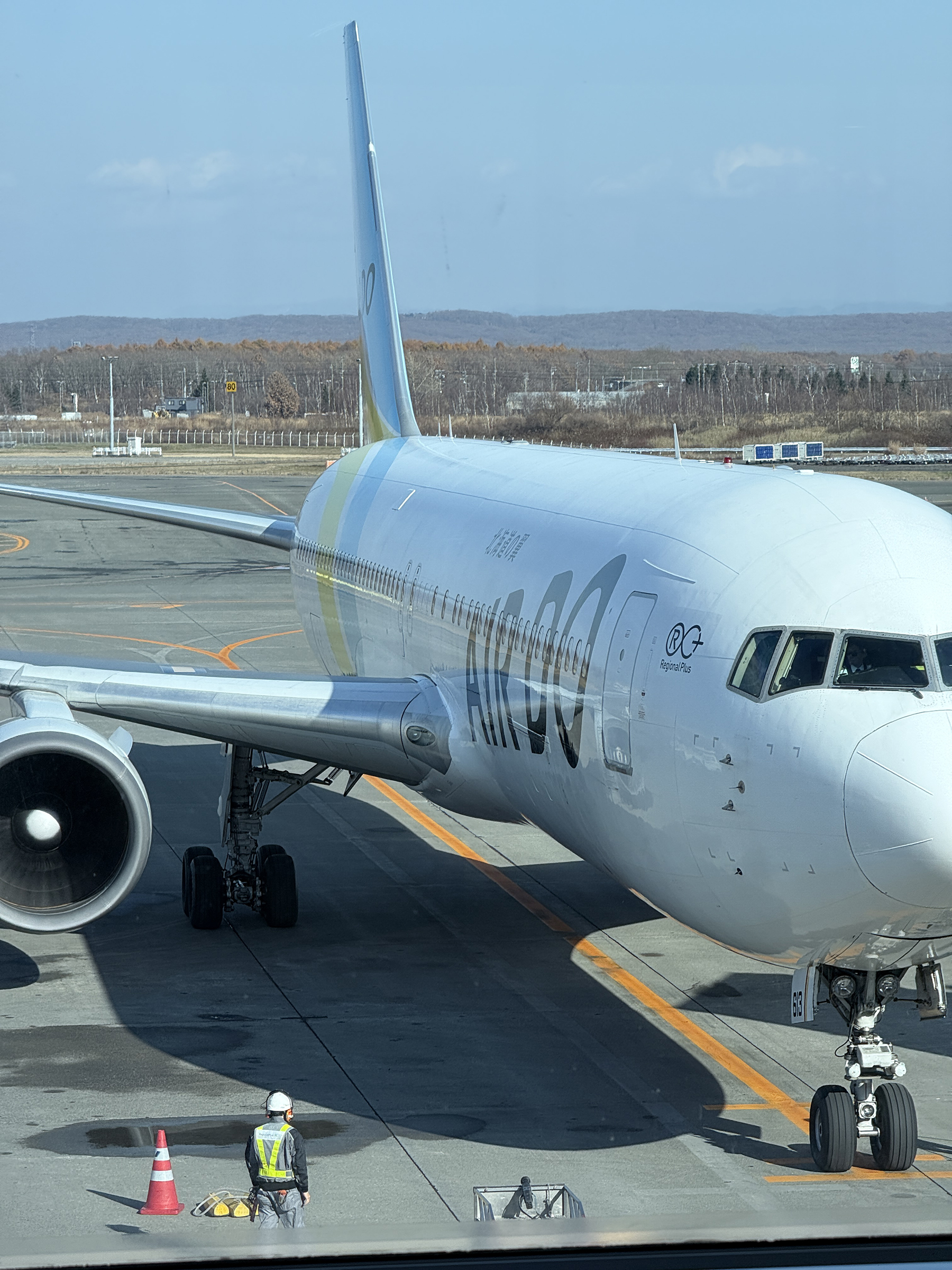
On Friday morning, as soon as the rush hour was over, I took the train out to New Chitose Airport (Shin-Chitose Kūkō)*. My flight to Tokyo was on AIR DO airlines.
*New, to distinguish it from the original Chitose Airport, which started as a military airfield in the 1920s and later handled joint civil-military flights starting in 1963. (The new airport was built right next to the old one.) The new passenger terminal opened in 1988, and the current main terminal opening in 1992.
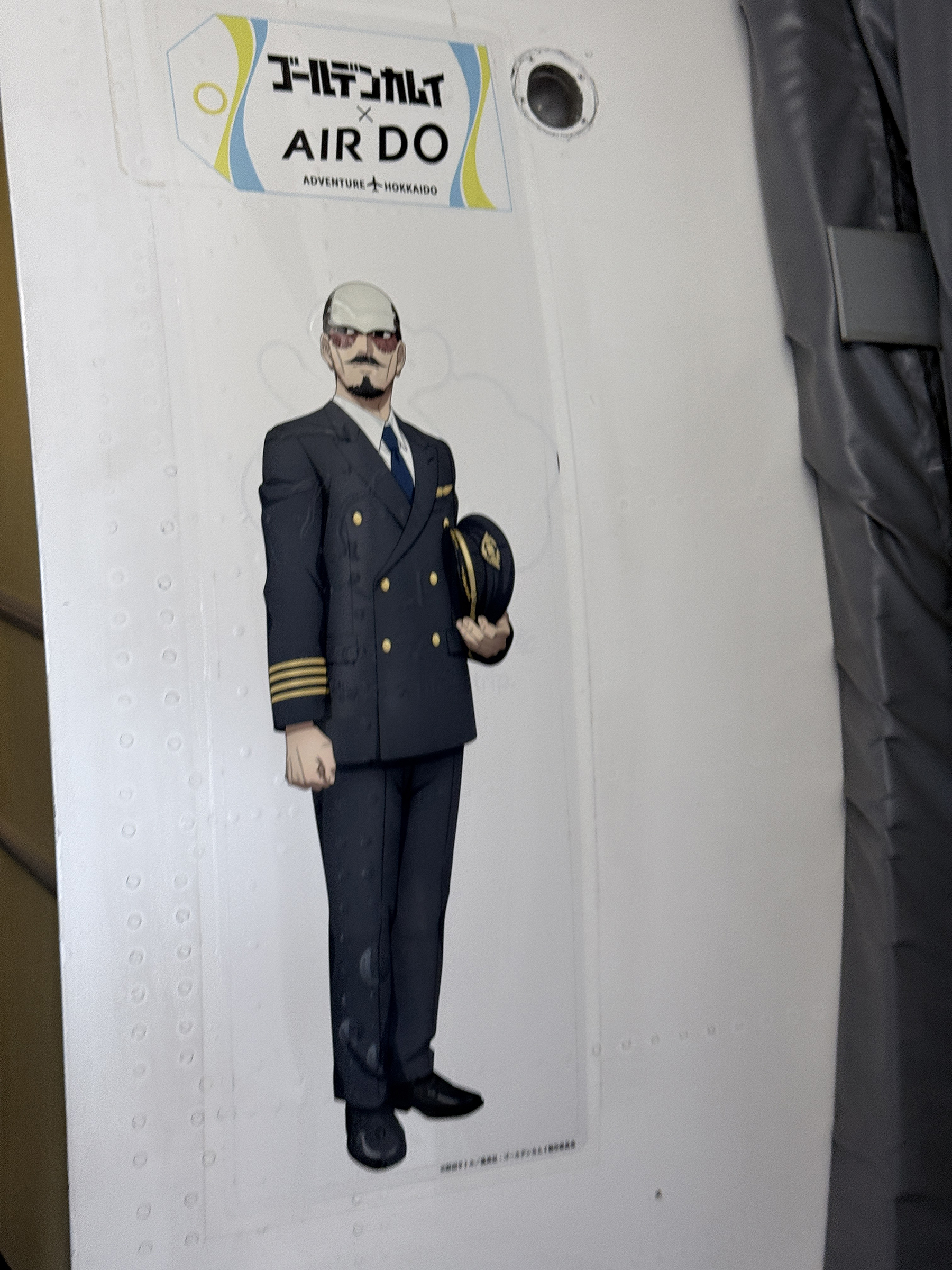
From Claude AI: The lettering at the top says Golden Kamuy × AIR DO, so this is a collaboration with the Golden Kamuy manga and anime.
This is Tokushirō Tsurumi (鶴見 篤四郎)— First Lieutenant (formerly Second Lieutenant) in the Imperial Japanese Army’s 7th Division. He is the primary antagonist of the Golden Kamuy manga and anime series, recognizable by a metal forehead plate (worn to protect a severe head injury from the Russo-Japanese War that exposed part of his brain), and slicked-back dark hair.
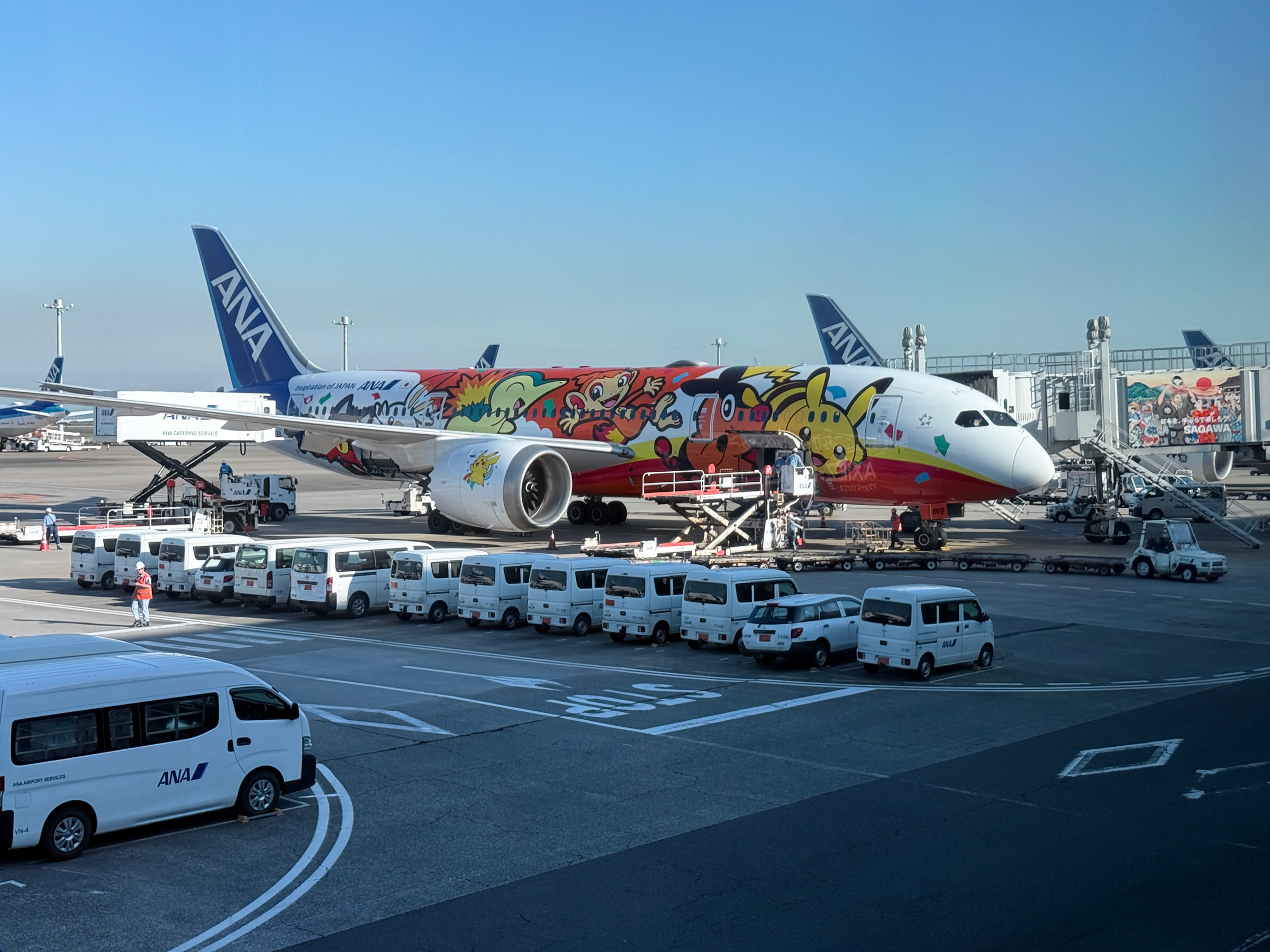
From Claude AI: This Boeing 787-8 Dreamliner is ANA’s Pokémon Jet Red. It is part of ANA’s celebration of Pokémon’s 30th anniversary. Pikachu with its lightning bolt tail (by the nose) appears alongside the Fire-type starter Pokémon from each generation of the core games. The right side shows Tepig, Chimchar, Cyndaquil, Scorbunny and Litten from nose to tail. There is also a hidden easter egg on the belly.
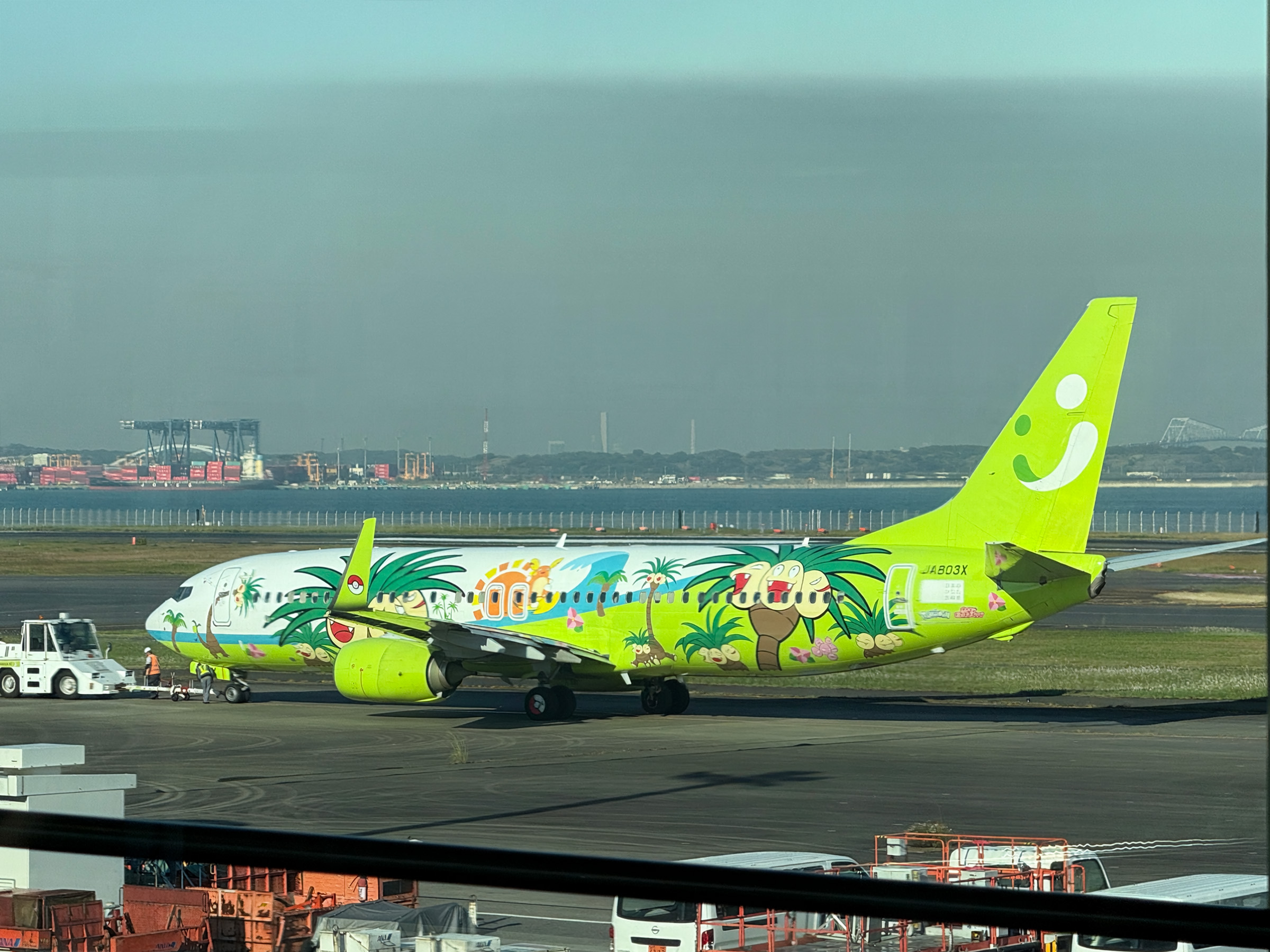
From Claude AI: This is a Solaseed Air aircraft (formerly Skynet Asia Airways). You can identify it by the lime-green tail with the white and green “smile” logo, which is the airline’s signature branding. This particular plane is a Boeing 737-800, registration JA803X, wearing a special Pokémon livery. The artwork features Alolan Exeggutor, the tall palm-tree Pokémon, along with tropical palms and ocean waves. It’s part of Solaseed’s series of Pokémon-themed jets, which fly mainly between Tokyo Haneda and Kyushu/Okinawa destinations.