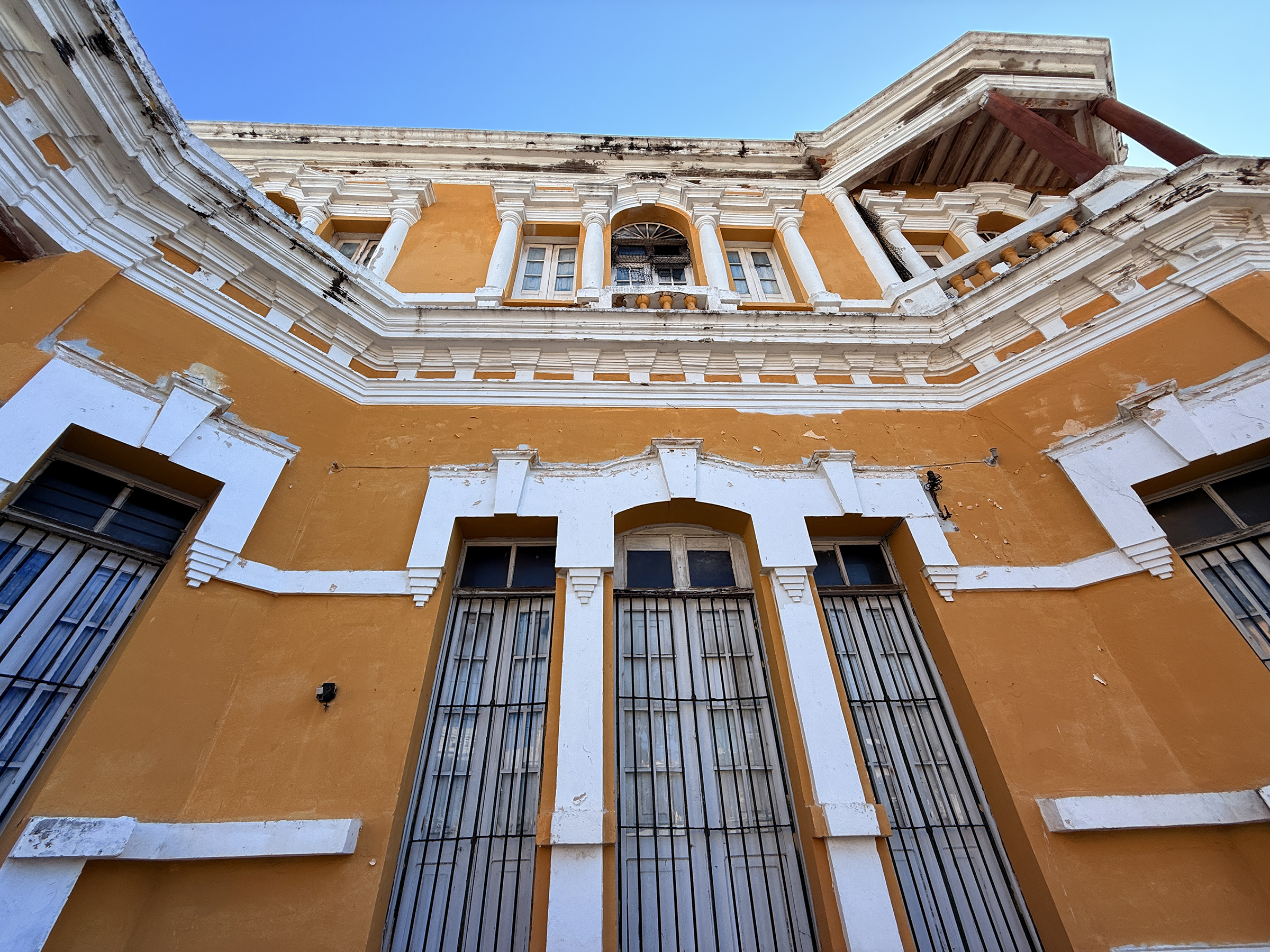
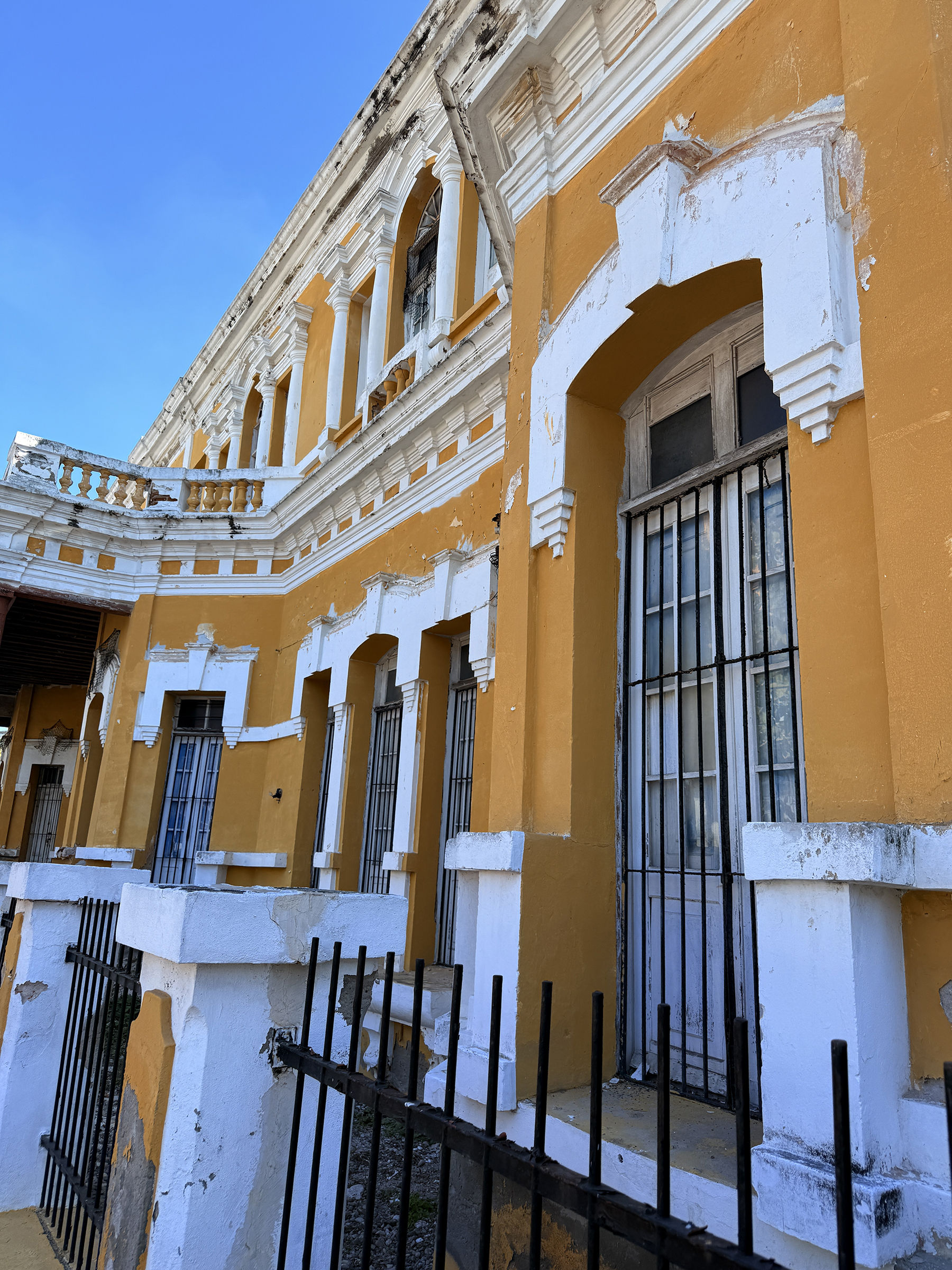
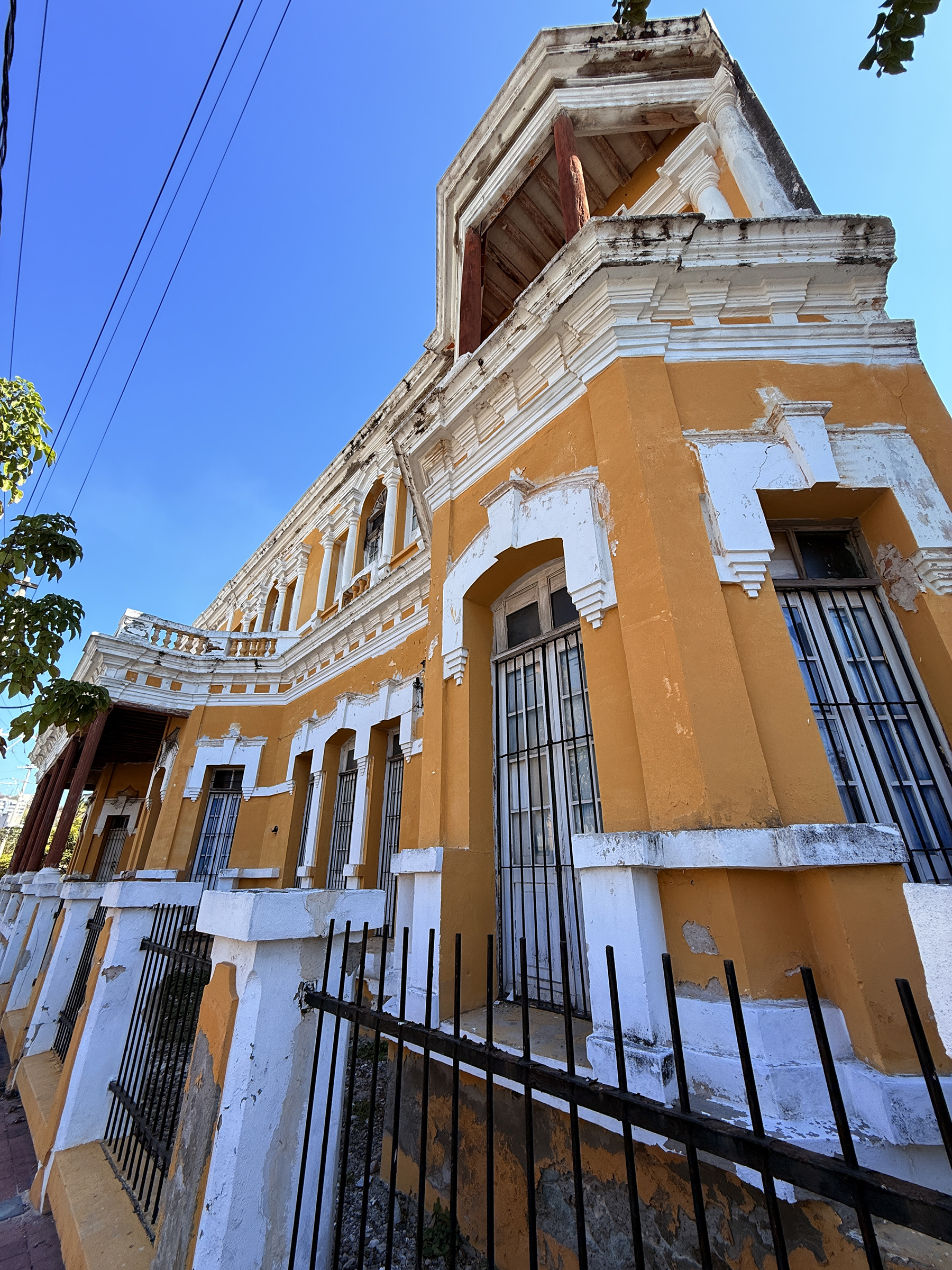
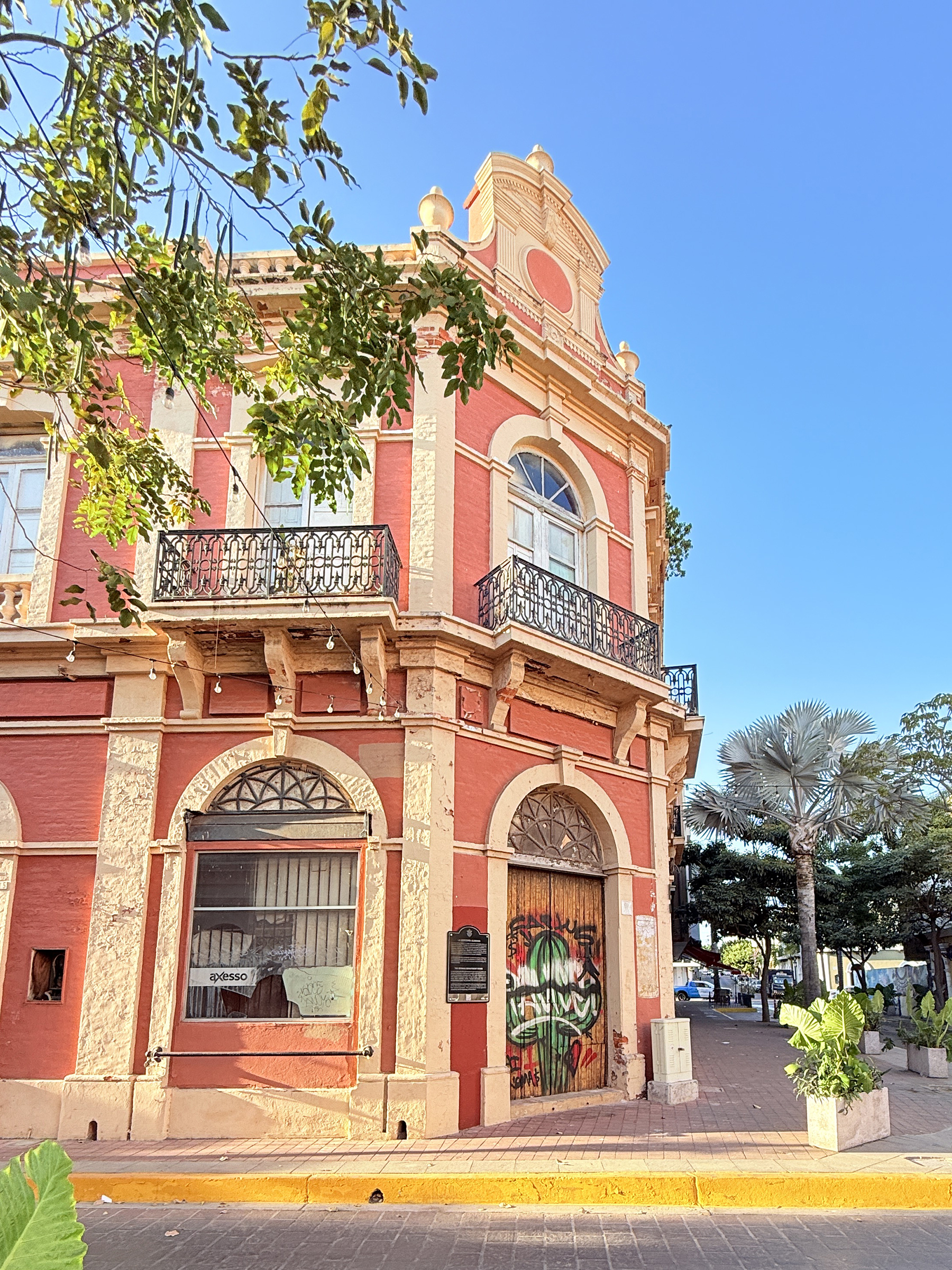
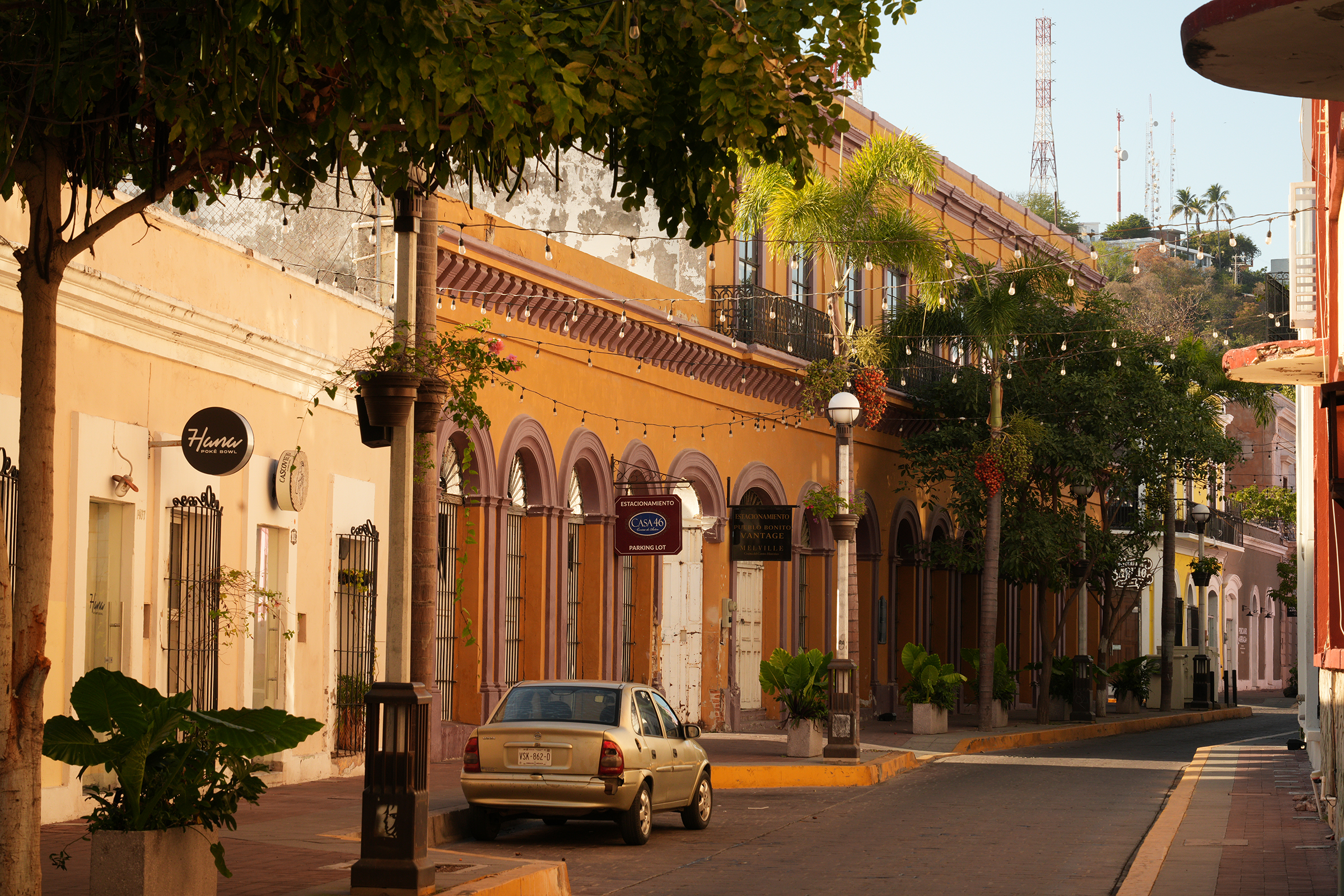
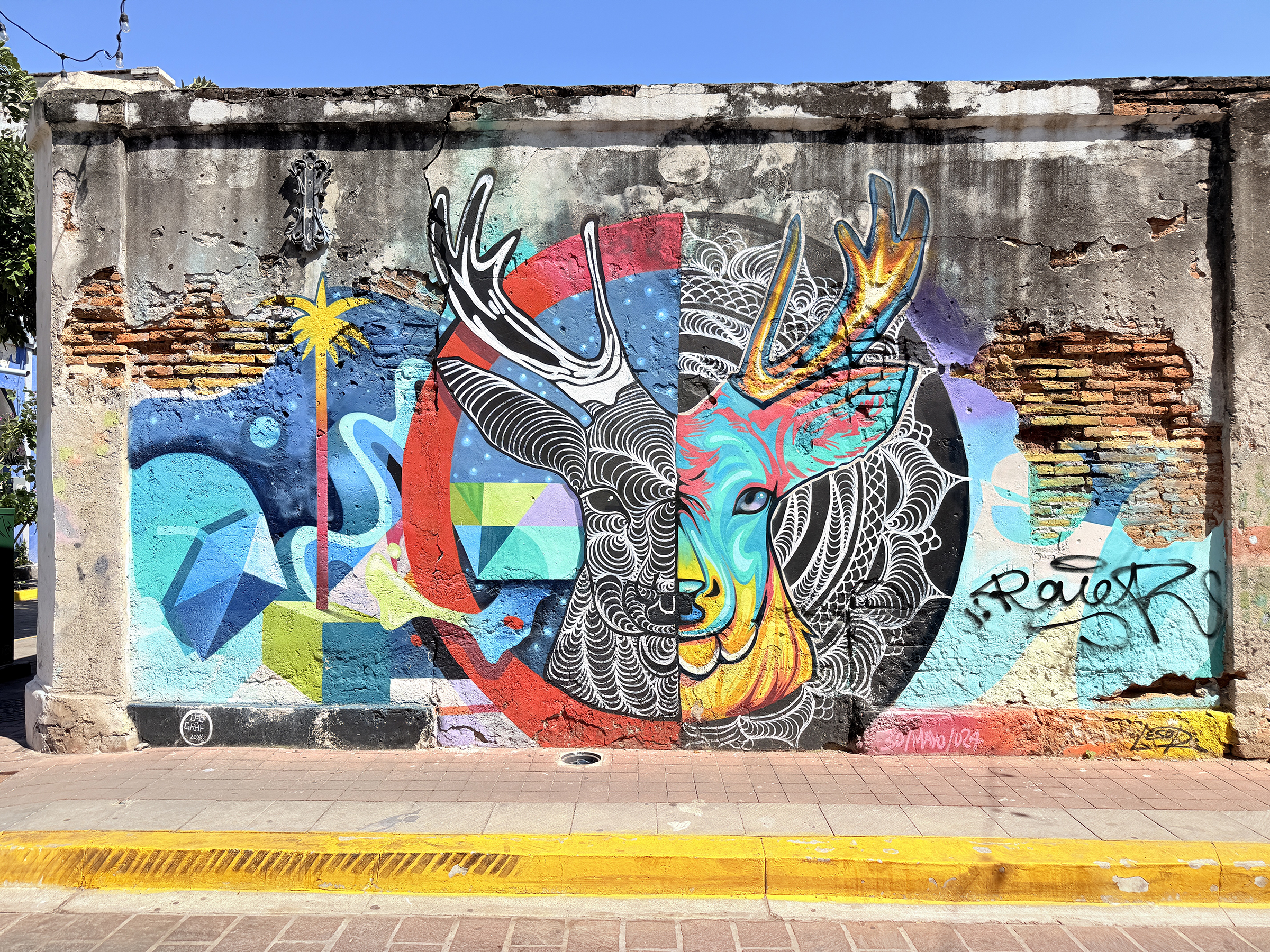
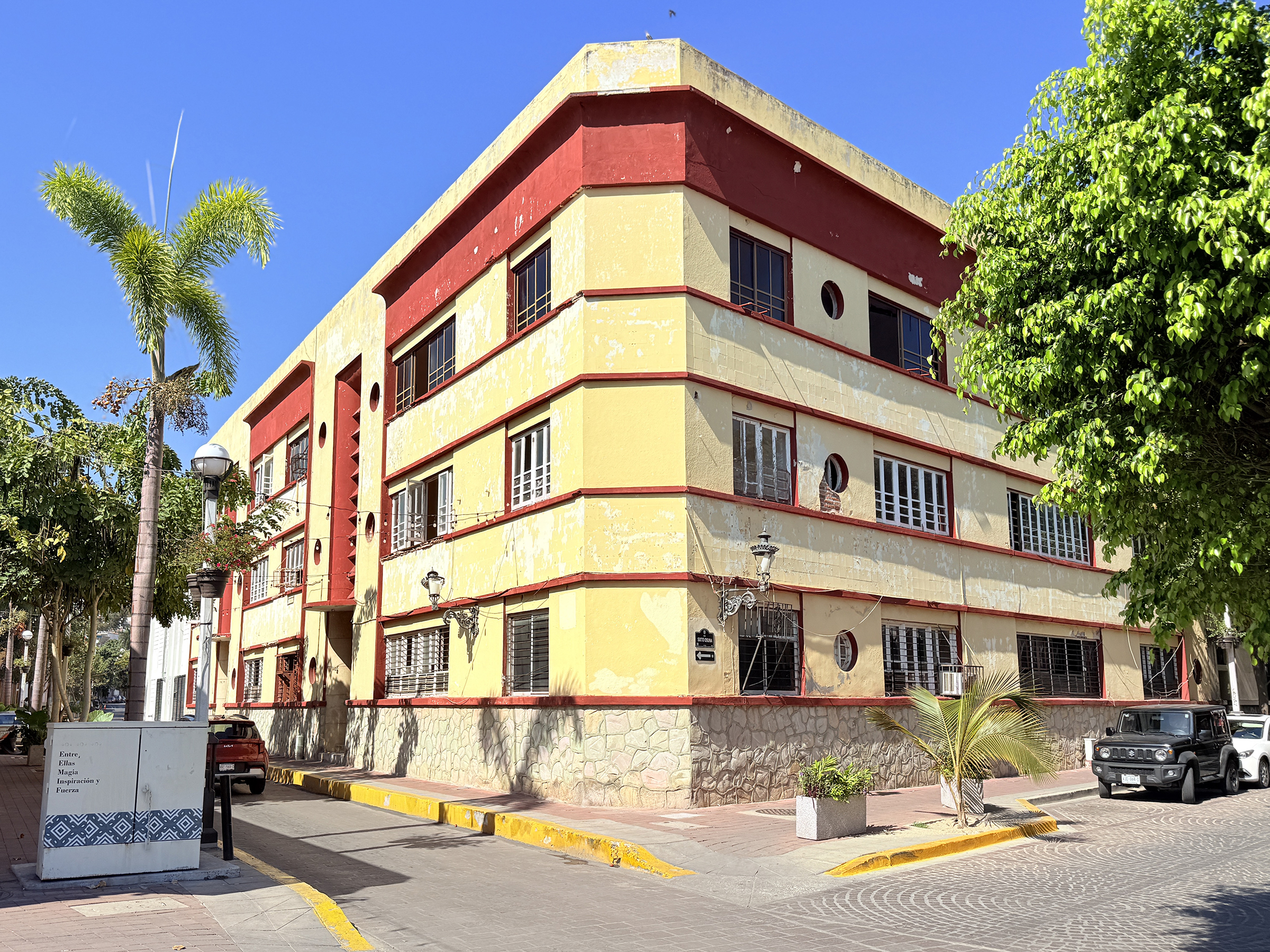
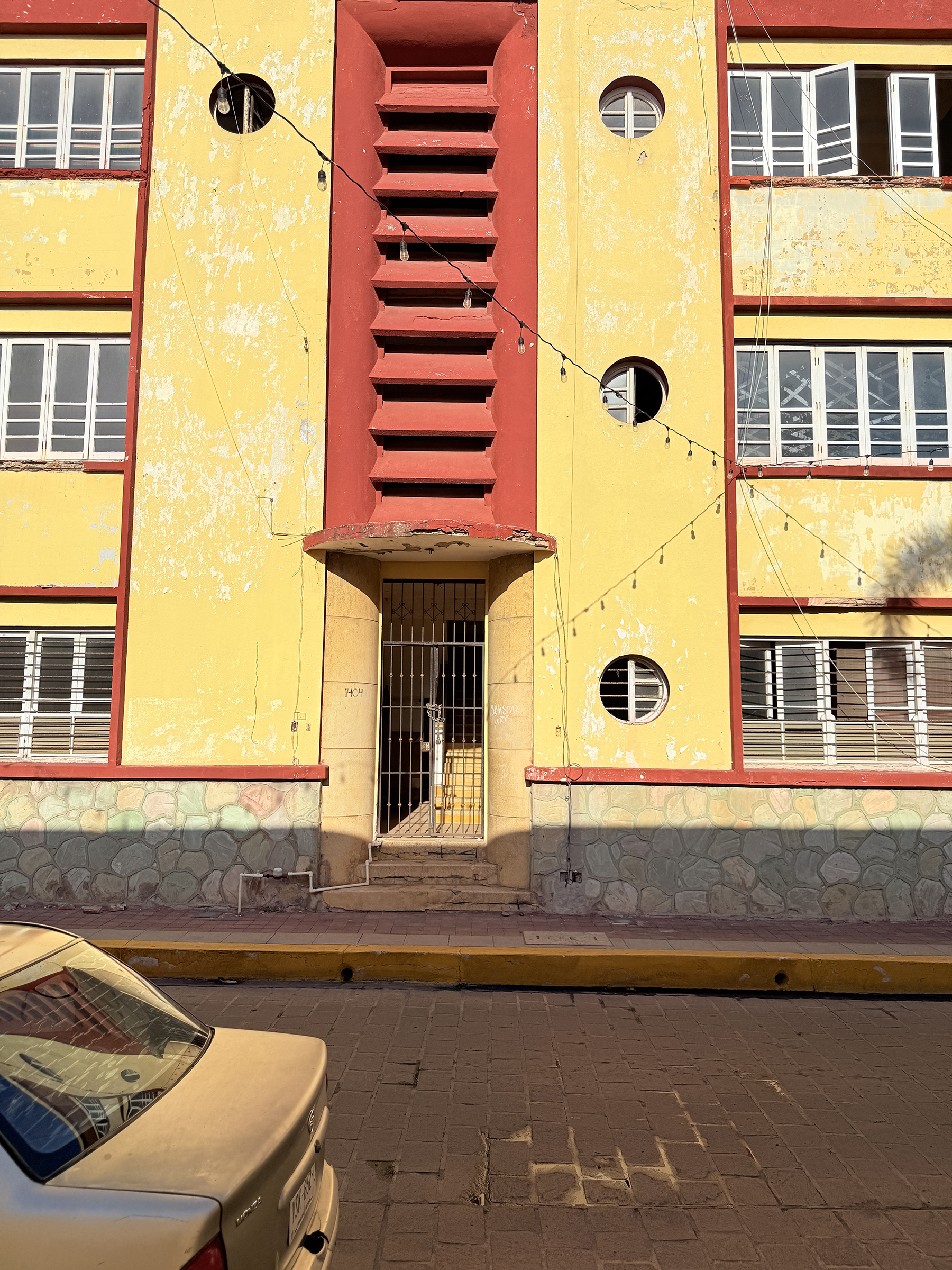
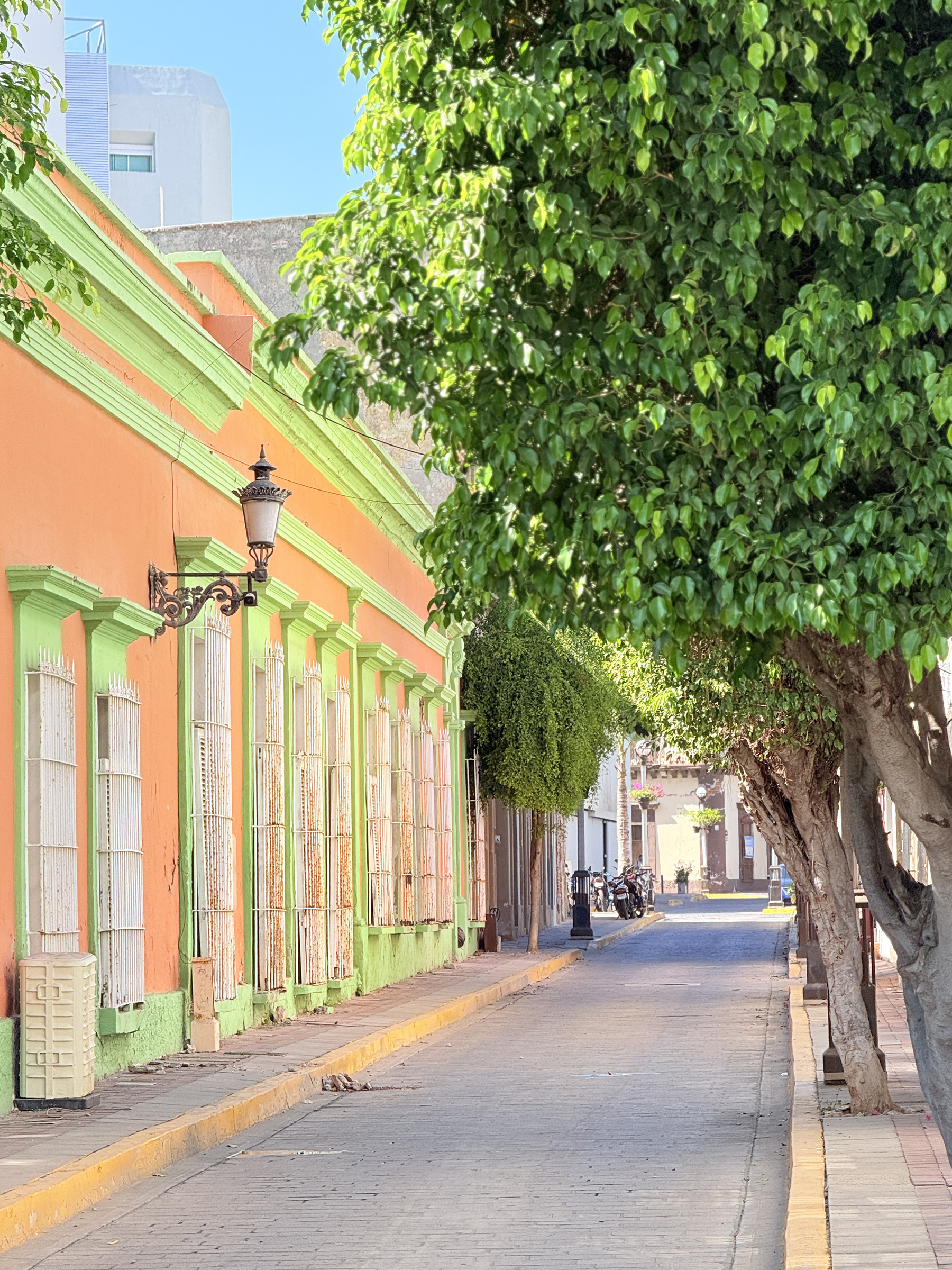
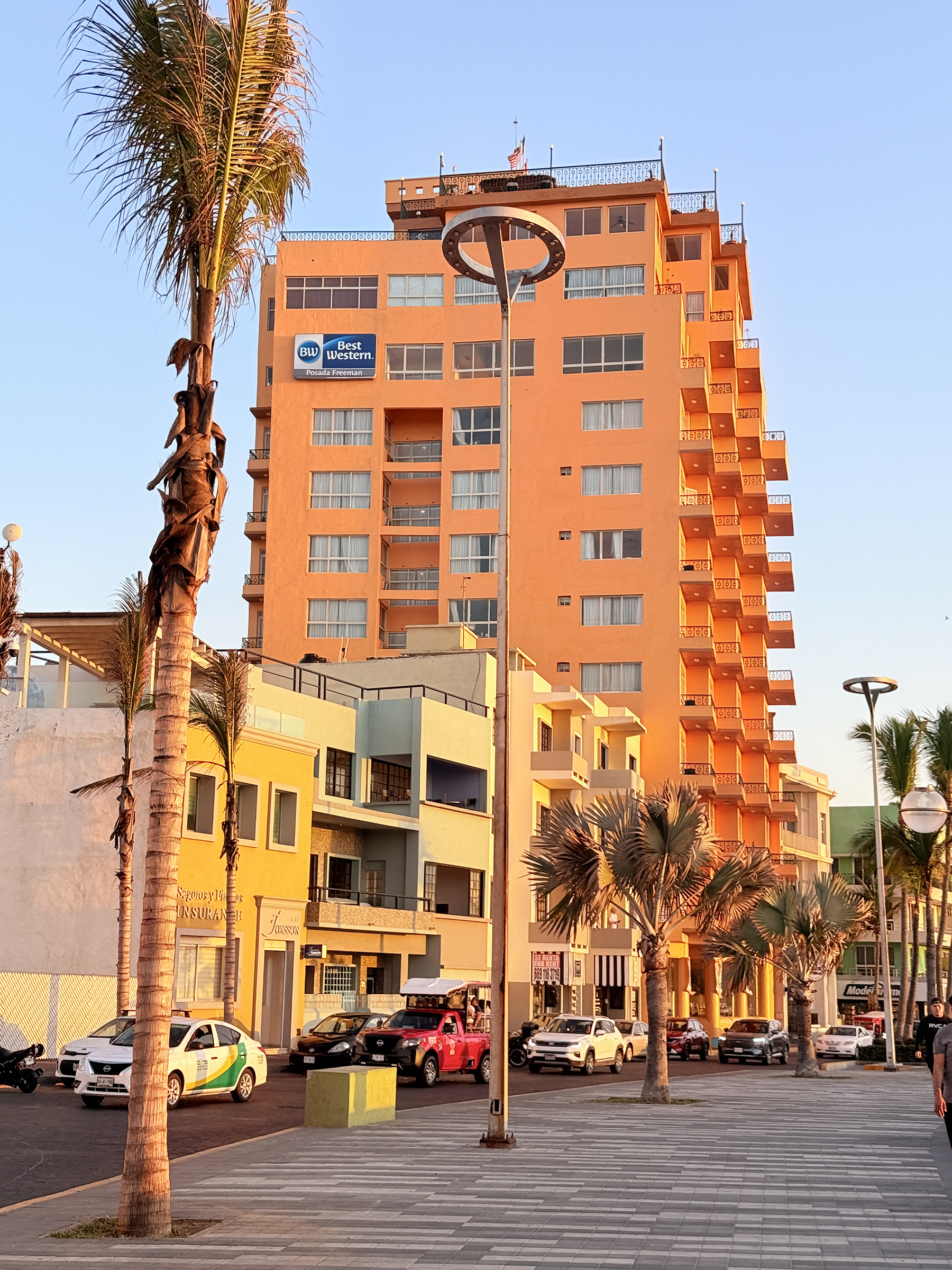
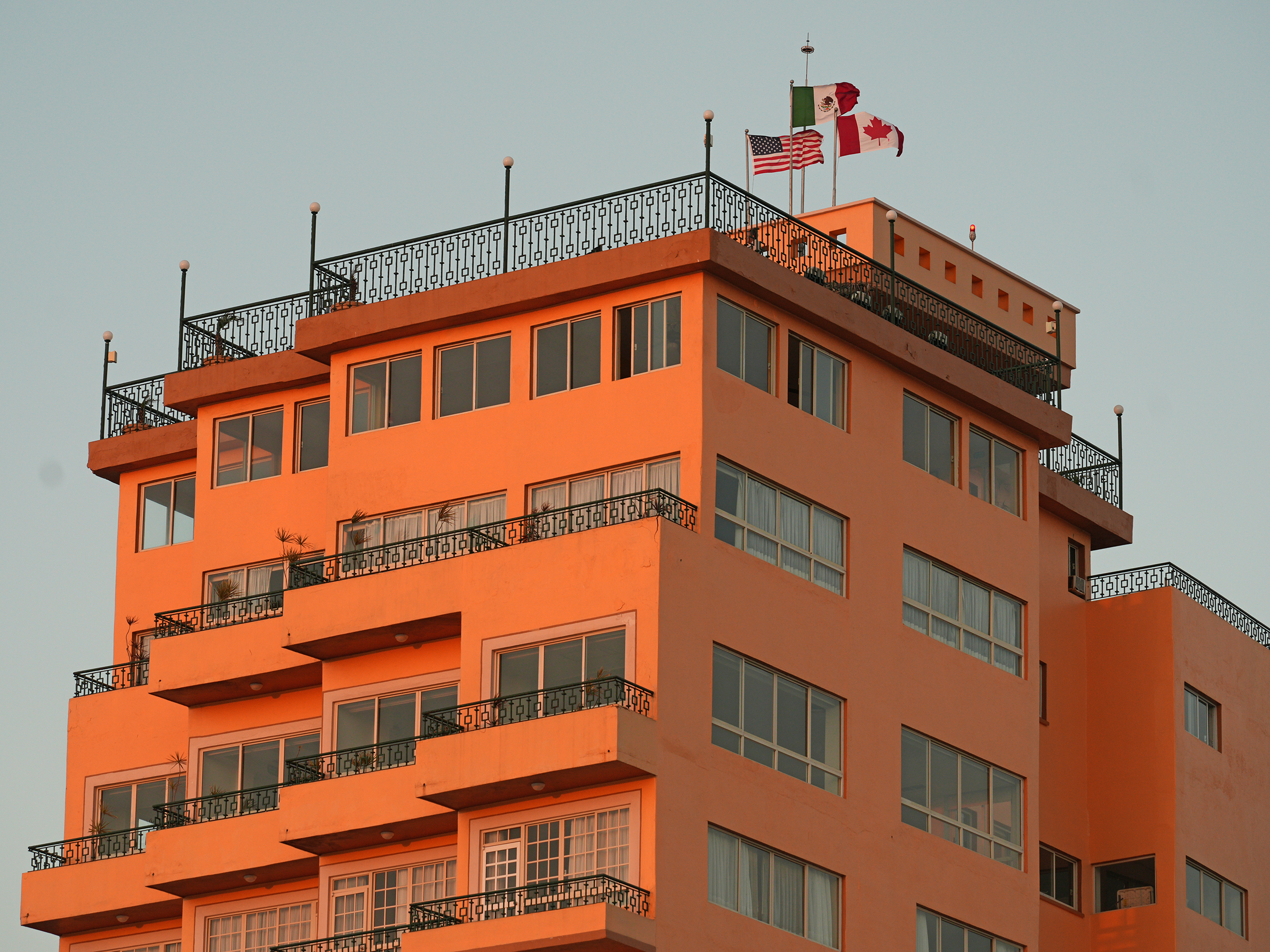
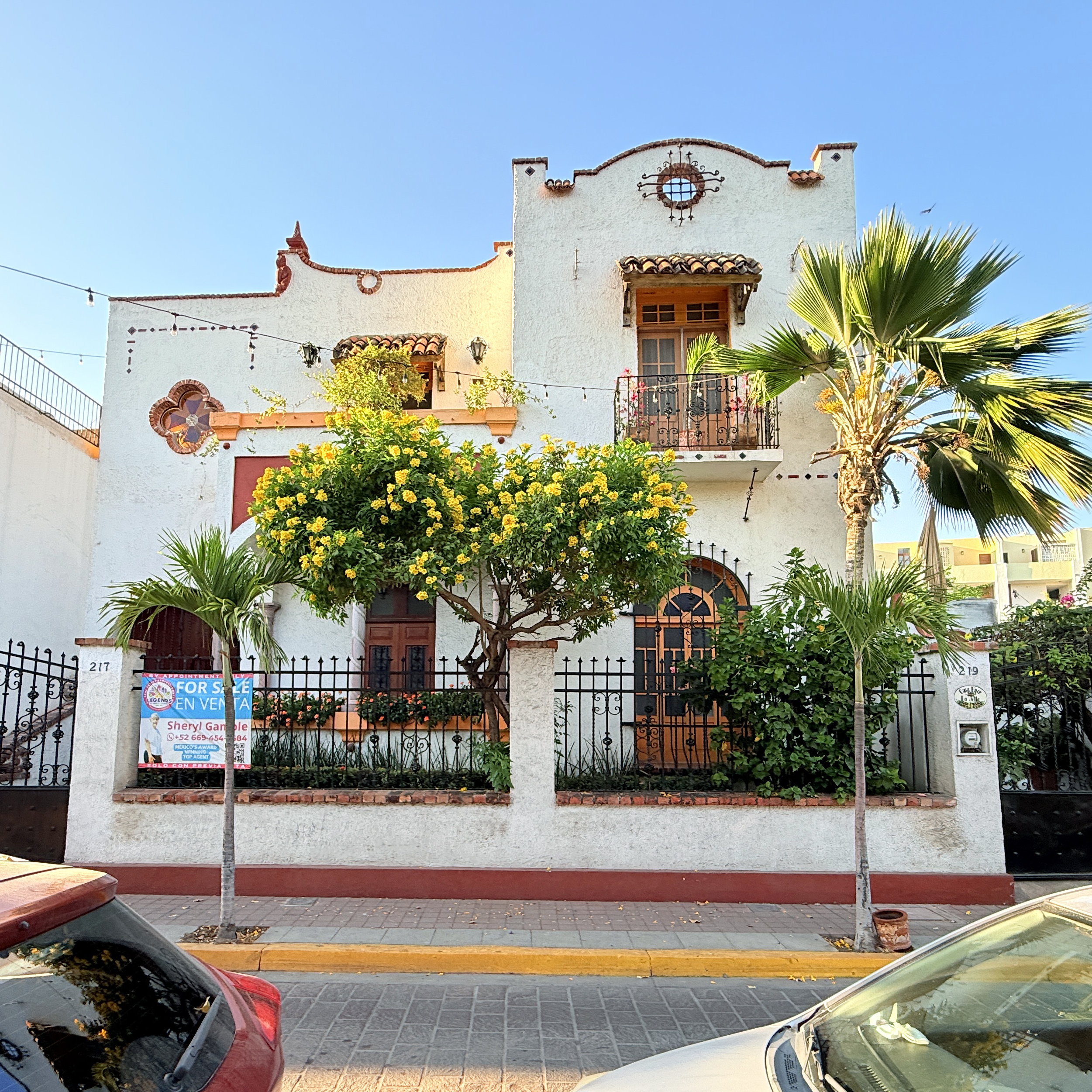
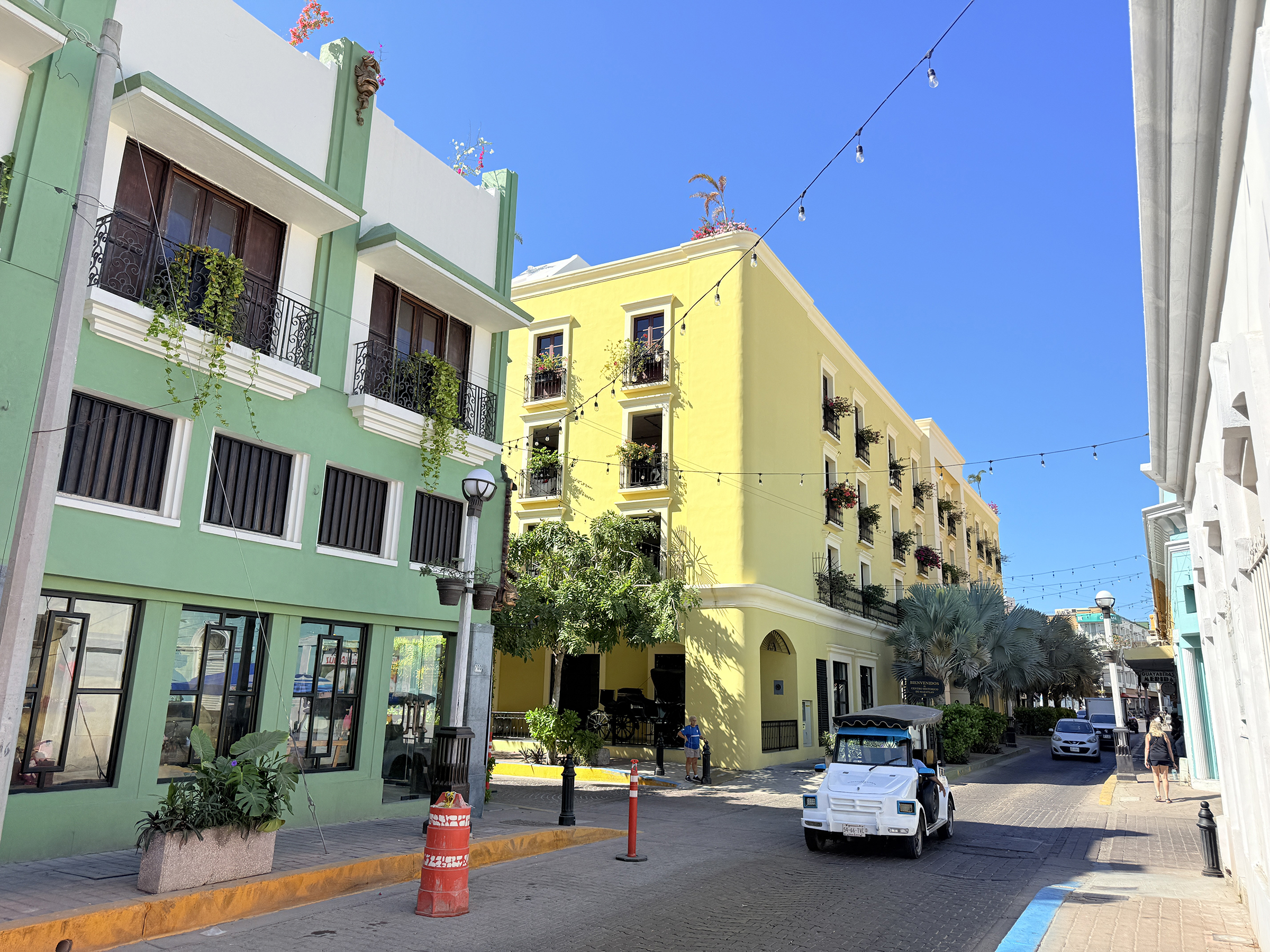
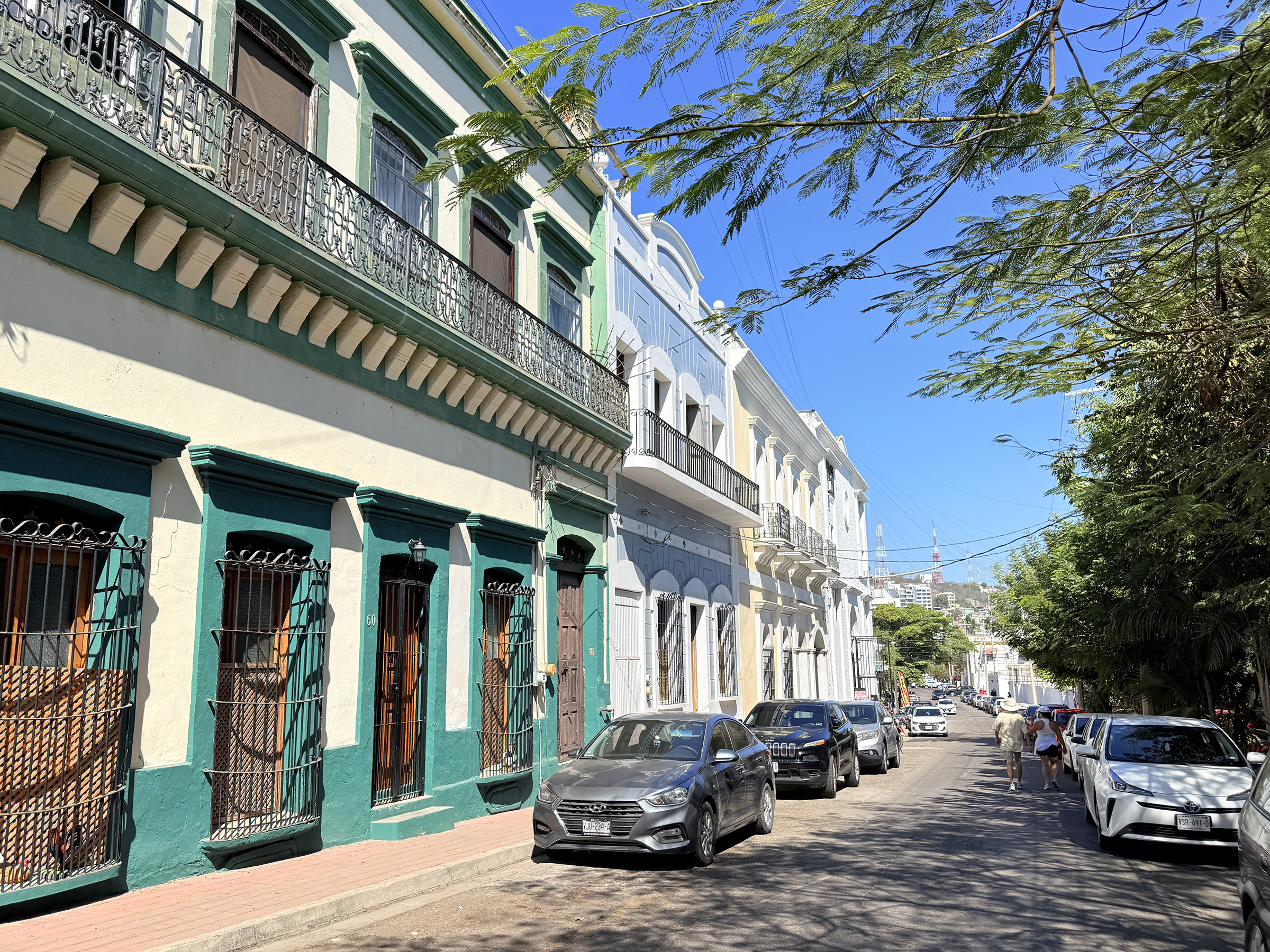
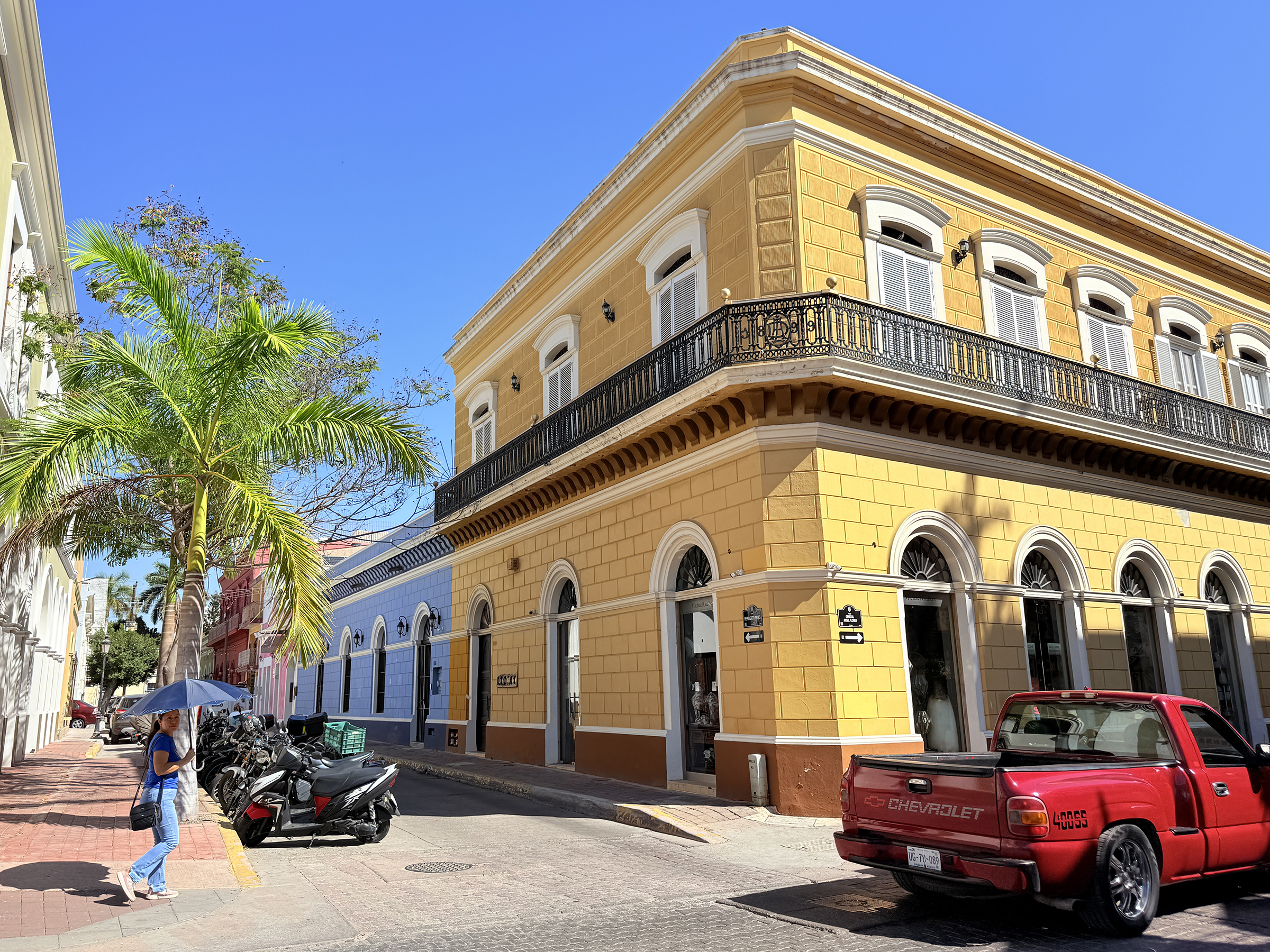
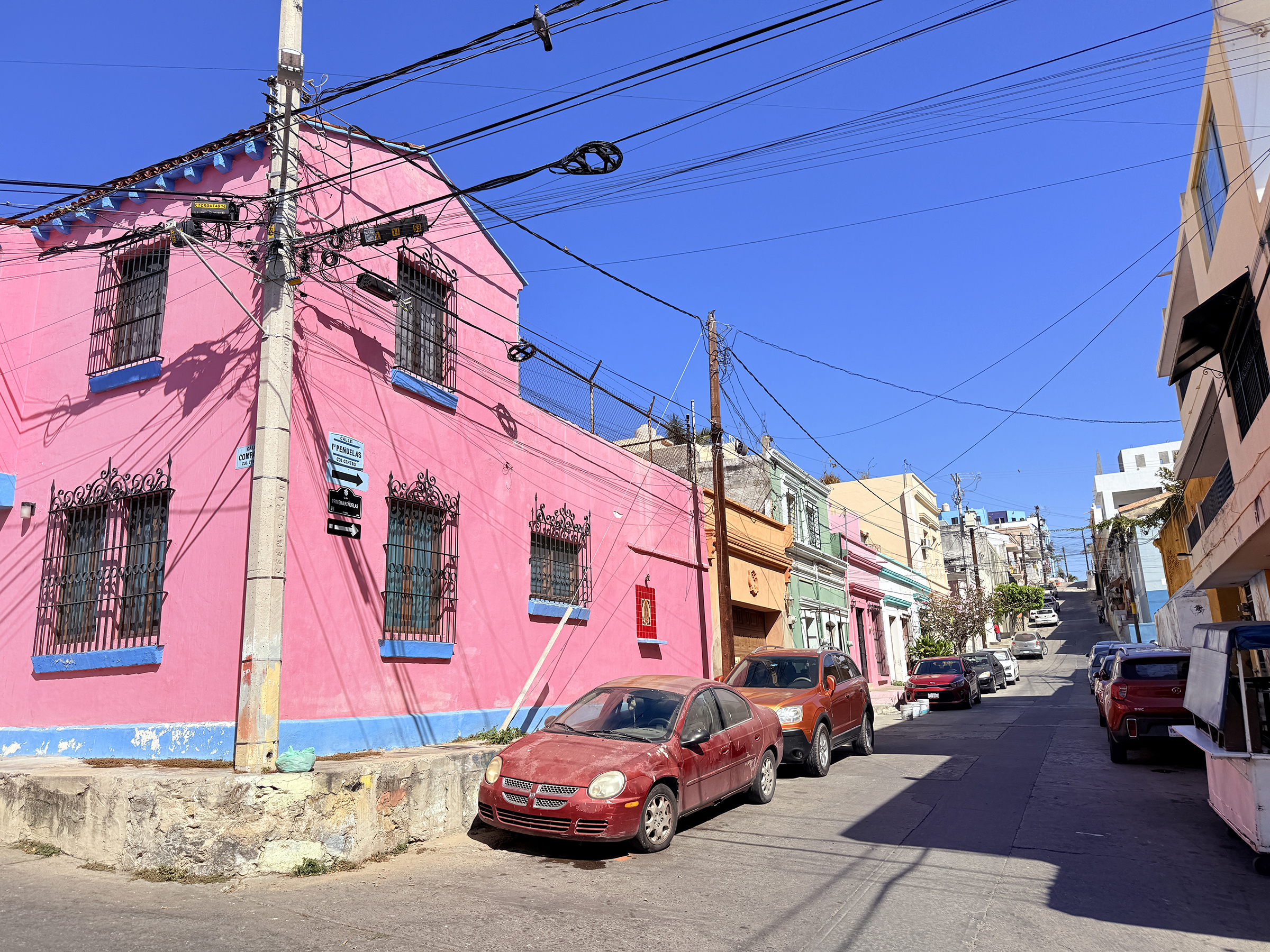
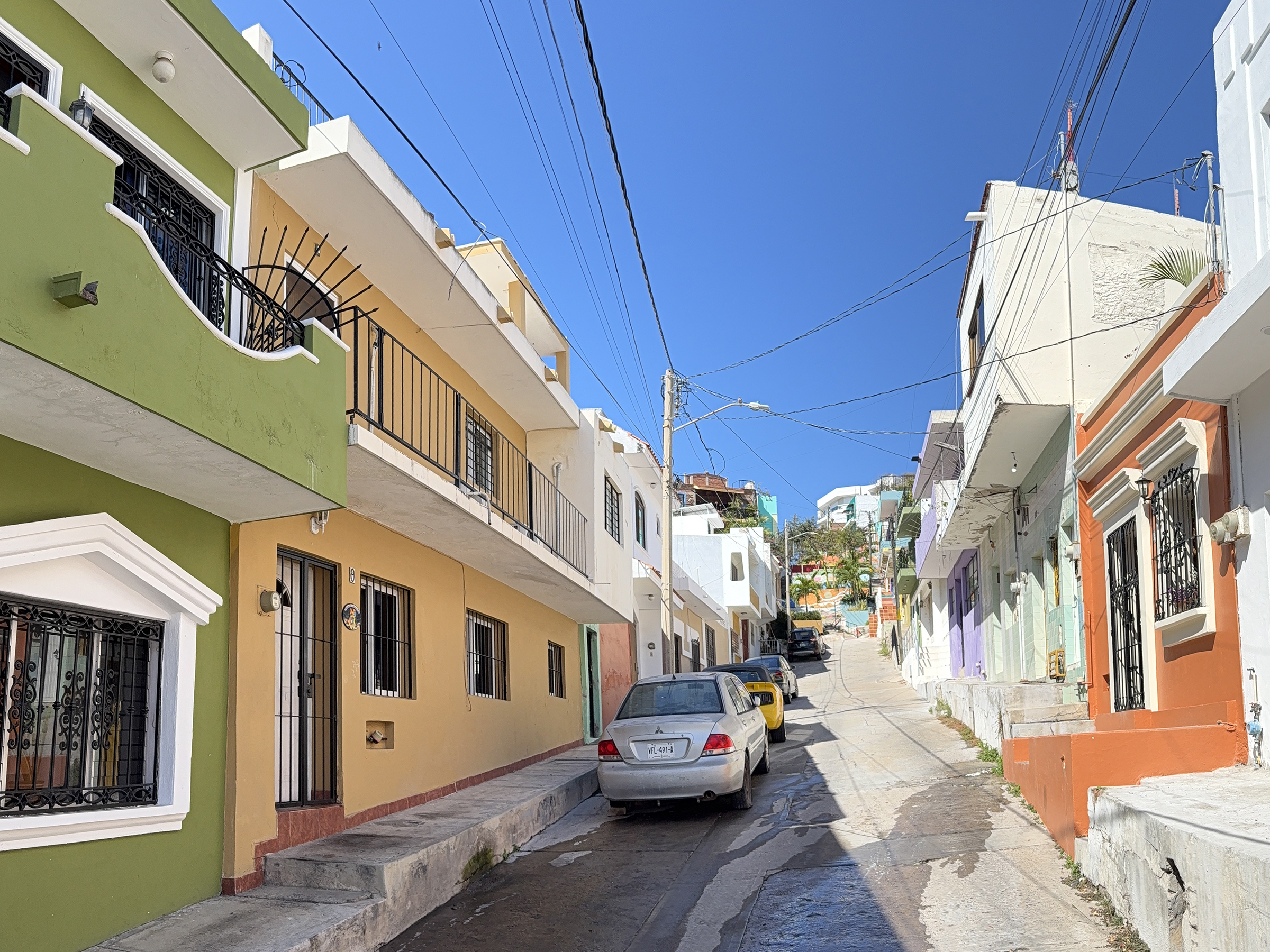
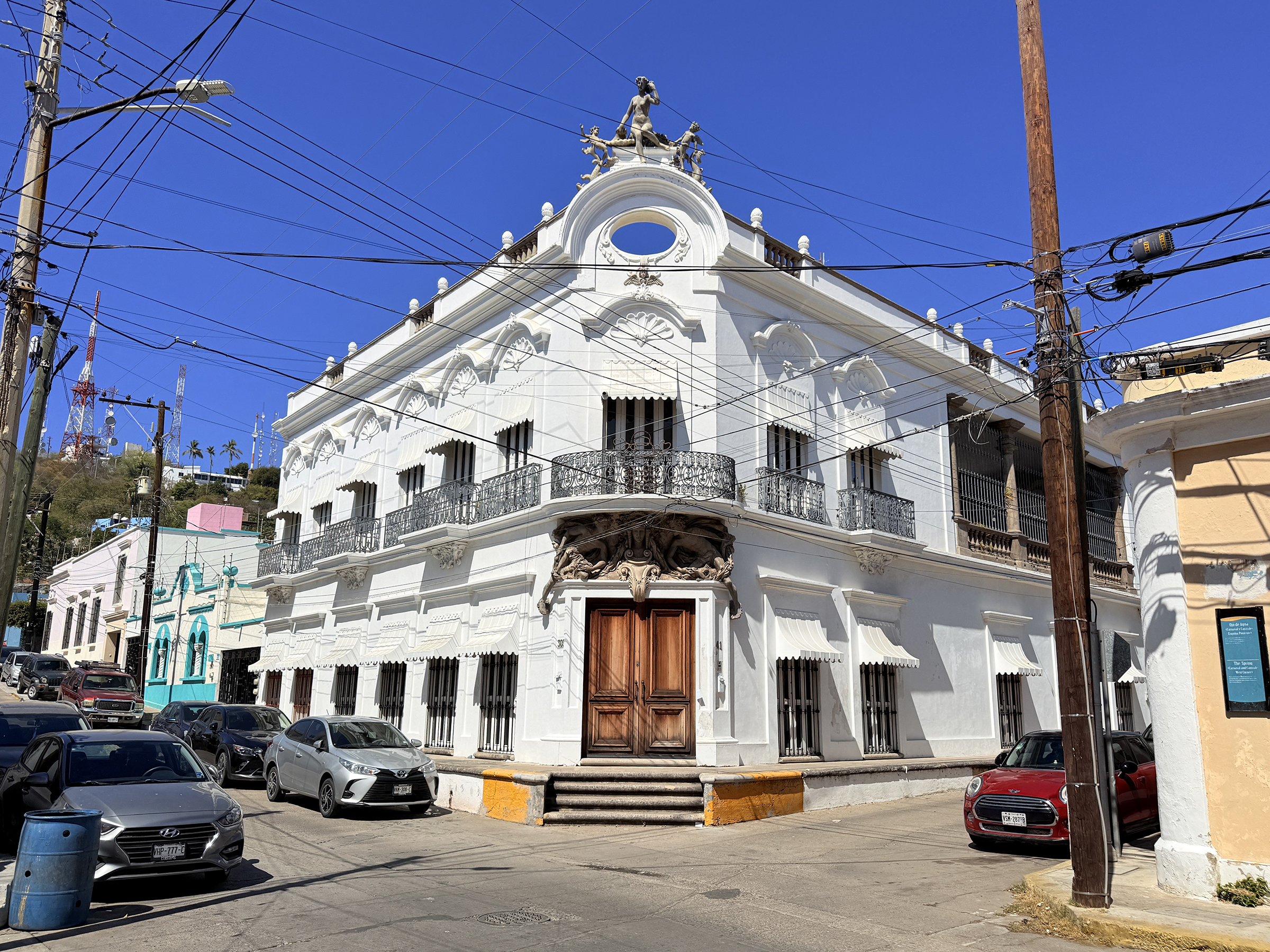
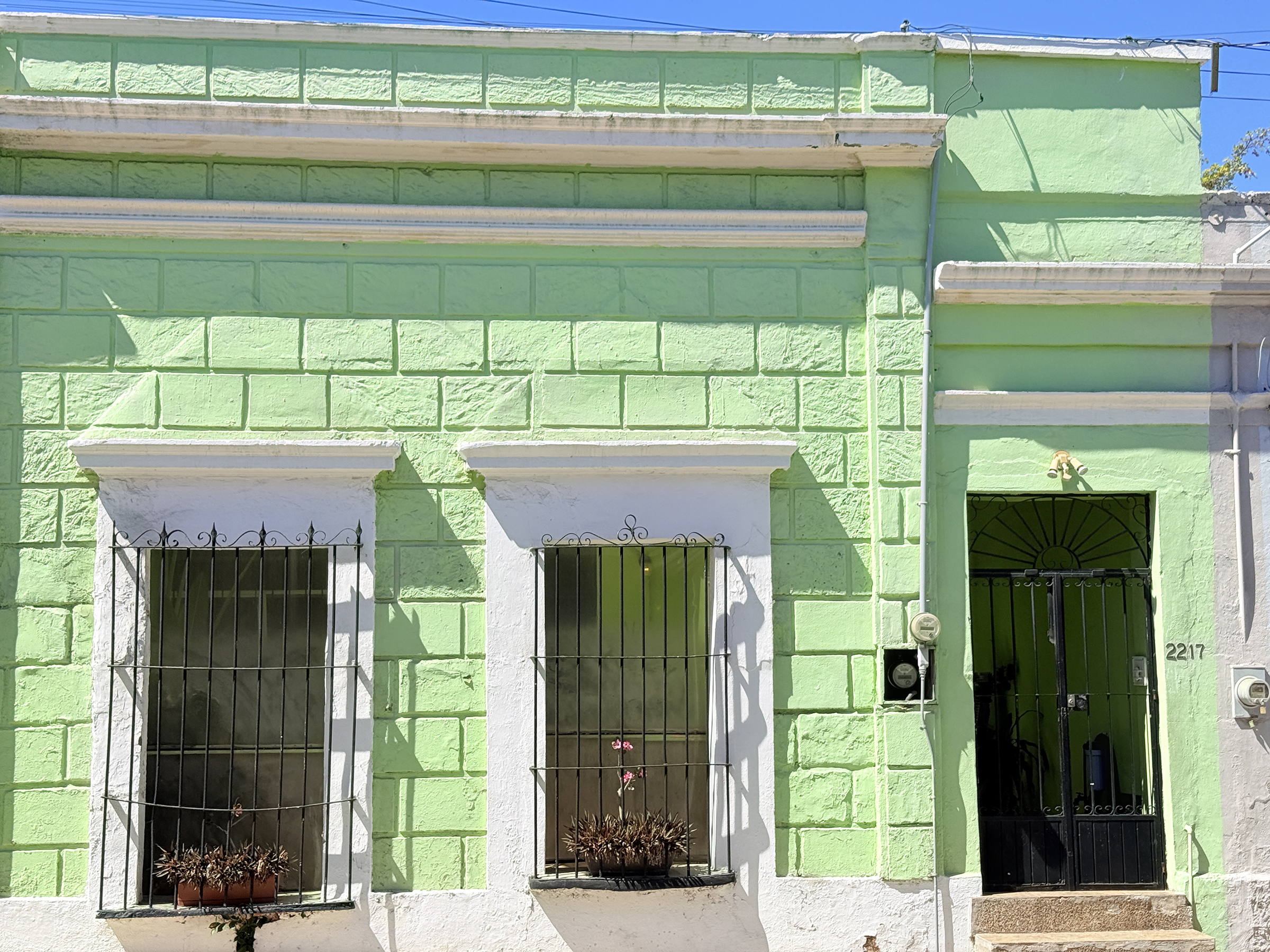
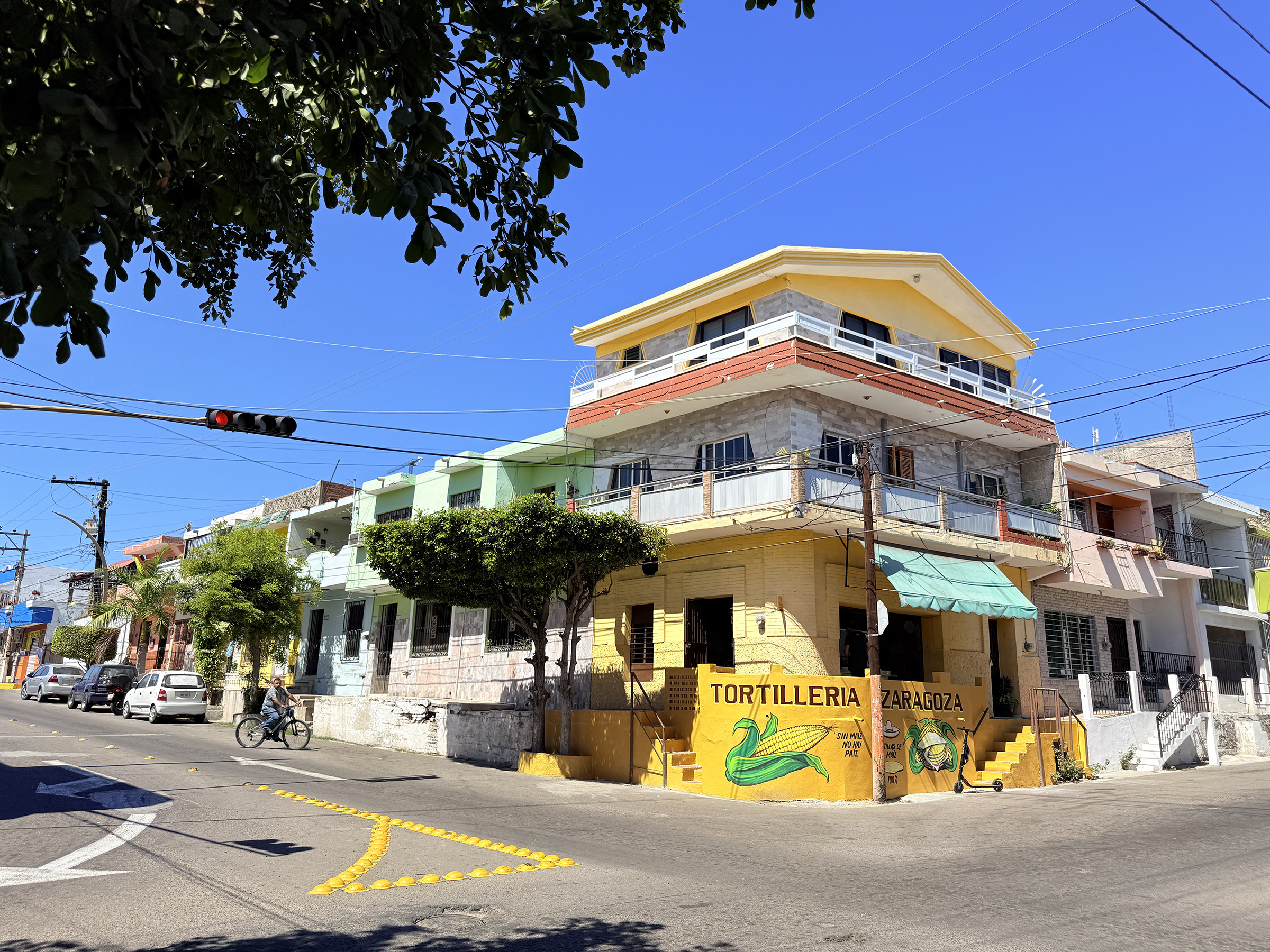
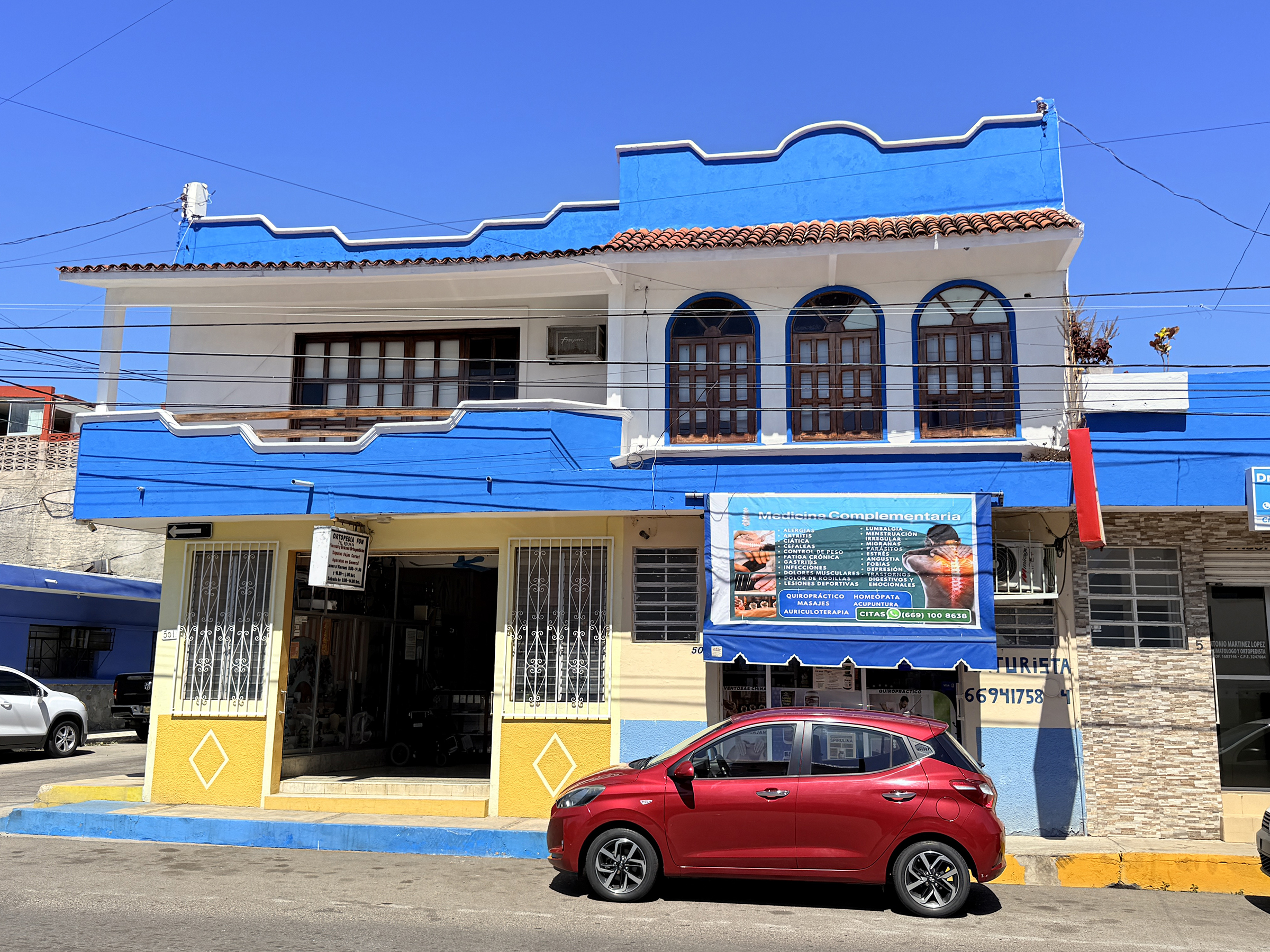
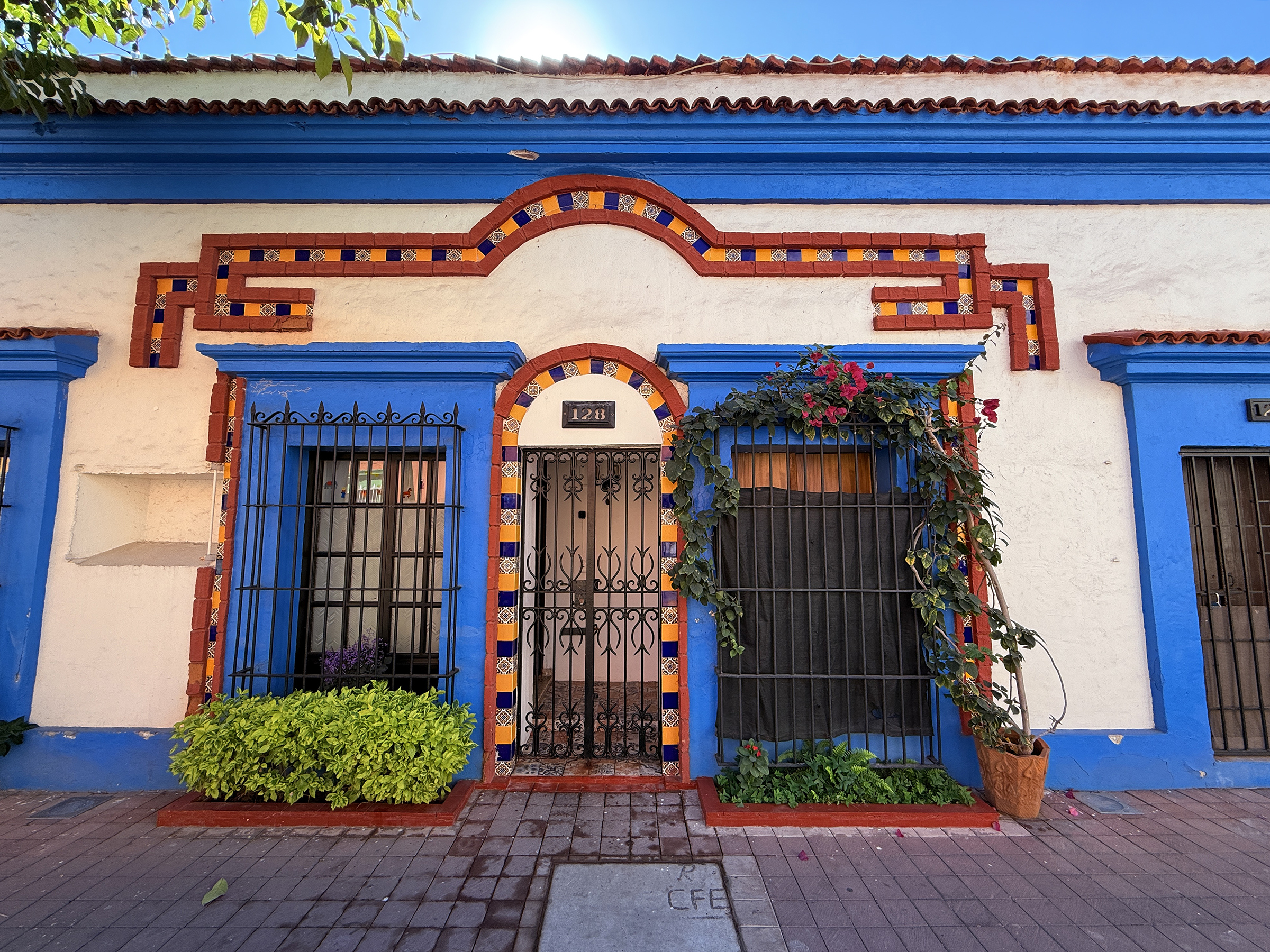
Here is a sample of beautiful architecture that had caught my eye the last few days as I walked around Centro de Mazatlán (the old center of Mazatlán).
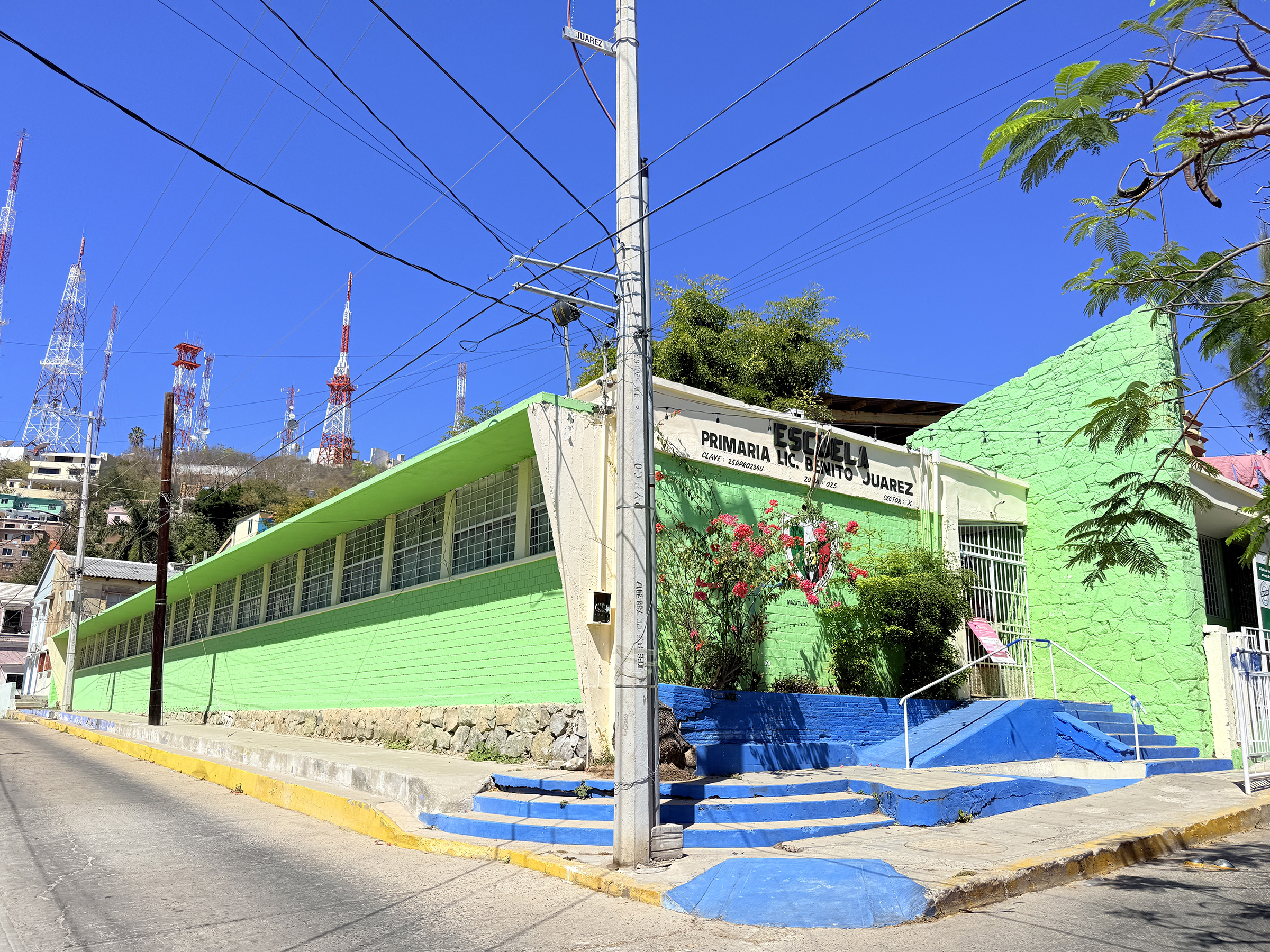
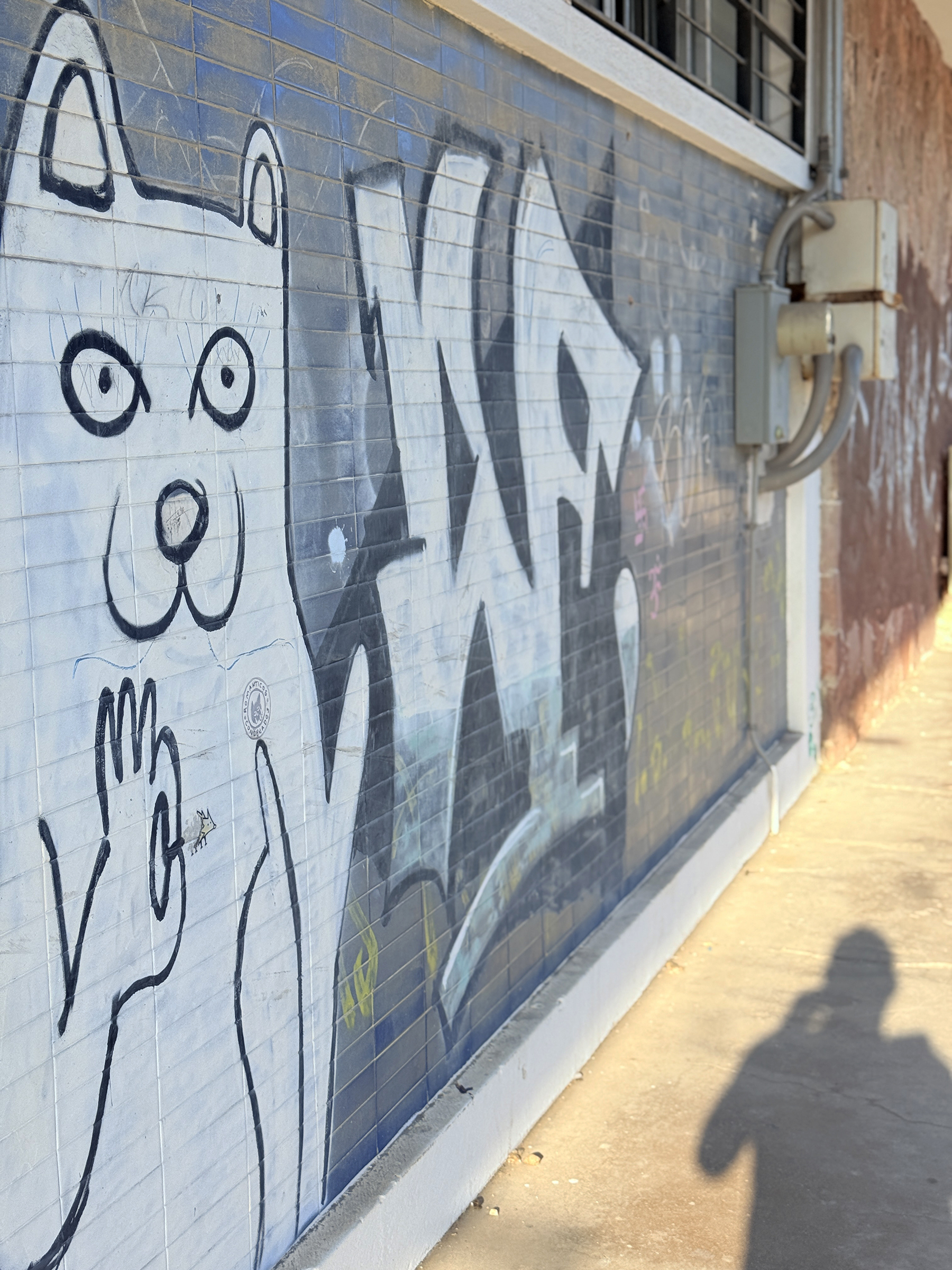
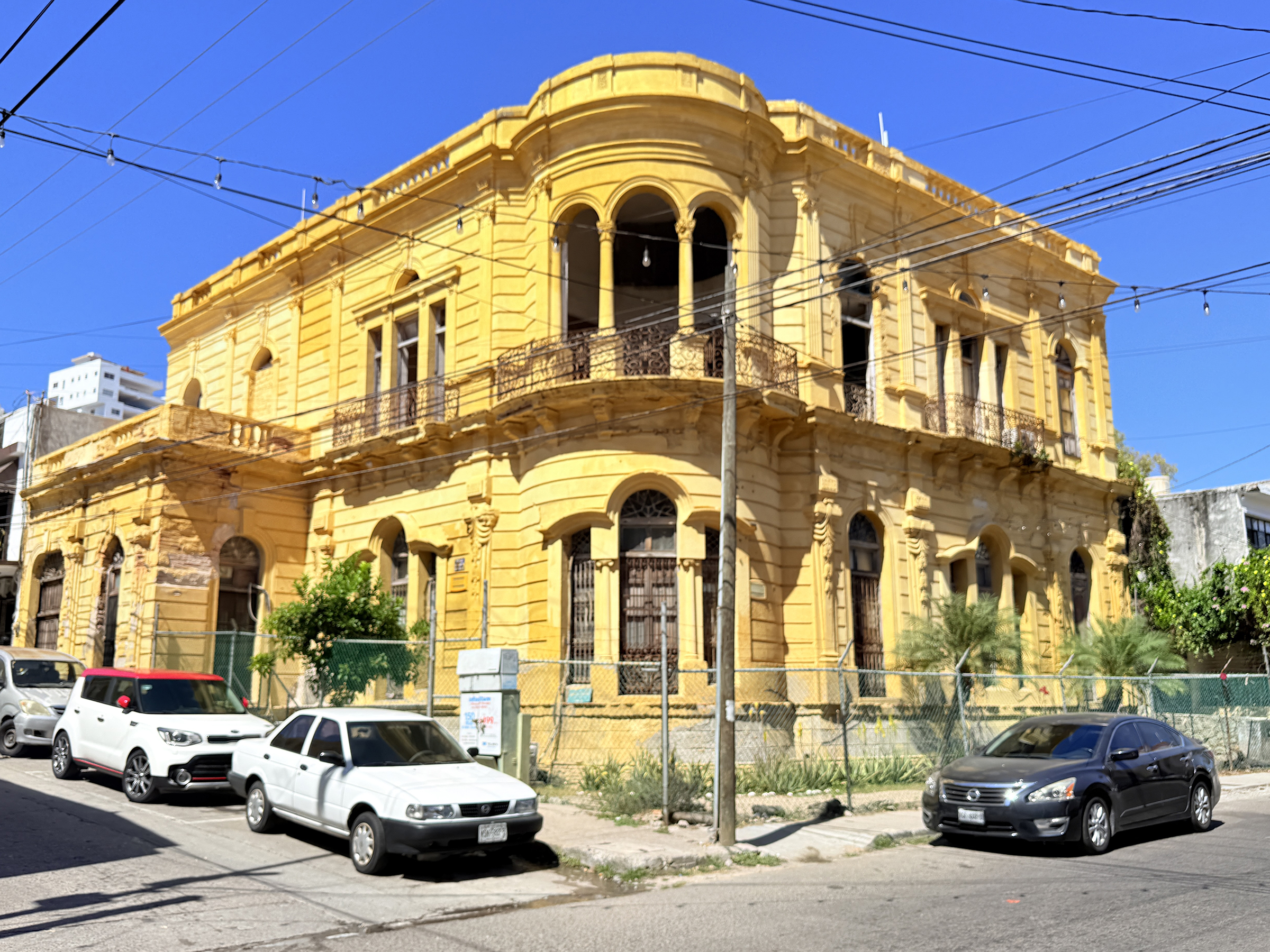
Casa Paredes Herrasti was designed by a young French architect and built in 1907 as a family home for Doña Francisca Rojas de Paredes, a direct descendant of Don Bonifacio Rojas who discovered the prosperous gold and silver mine of El Tajo in 1655. [Source: oceanblueworld.com]It need a a lot of restoration work..Founded in 1845 by the company Heymann Sucesores, in this building was the commercial house known as La Merceria Alemana. It operated as a store for luxury furnishments (pianos, porcelain from Dresden and Meissen, Baccarat and Bohemian crystal), until the beginning of World War II. The orange building opened as a commercial house in 1900 and is called La Casa Elorza. It exported products to Guatemala and Chile. The property functioned as a renowned high school at the end of the 20th century. A colorful mural. The deer is the primary symbol of Mazatlán, rooted in the Nahuatl* word mazatl (“deer”) and tlan (“place of”), translating to “Place of Deer”. *Nahuatl is a vibrant Indigenous language family with approximately 1.5 to 1.7 million speakers, primarily in central Mexico. As the historic language of the Aztec Empire, it remains the most spoken indigenous language in Mexico, known for its agglutinative structure, unique “tl” sound, and influence on English words like chocolate and coyote.The apartment building at 1402 Blvd Niños Héroes. ..The Hotel Freeman, built between 1945 and 1950 overlooking Olas Altas beach, was the first skyscraper in Mazatlán and northwestern Mexico. With 13 floors, it became an icon of modernity for its time. Its presence marked a turning point in the port’s urban landscape, playing a key role in the transformation of the historic center during the 20th century. Despite its innovative design, locals viewed its height with skepticism and often joked about its collapse. [Source: Alfredo Velazquez on Facebook]The flags of the U.S.A., Mexico and Canada are on the flagpoles on the top.Elementary school Benito Juárez on 20 Campana Street, serves children in grades 1-6. Benito Juárez was the 26th president of Mexico, from 1858 until his death in 1872.