
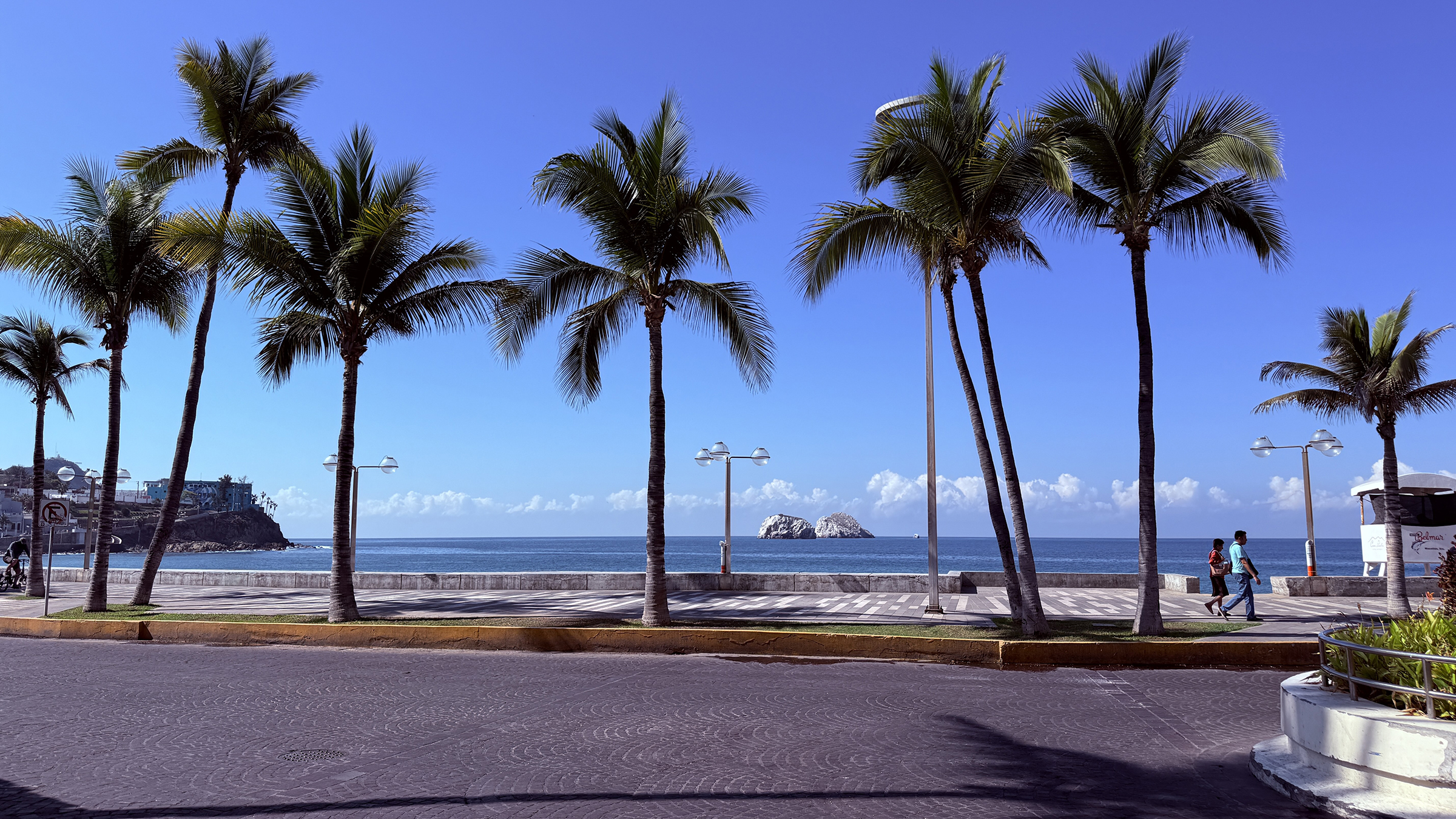
My time in Mazatlán was over on Friday morning 😢.
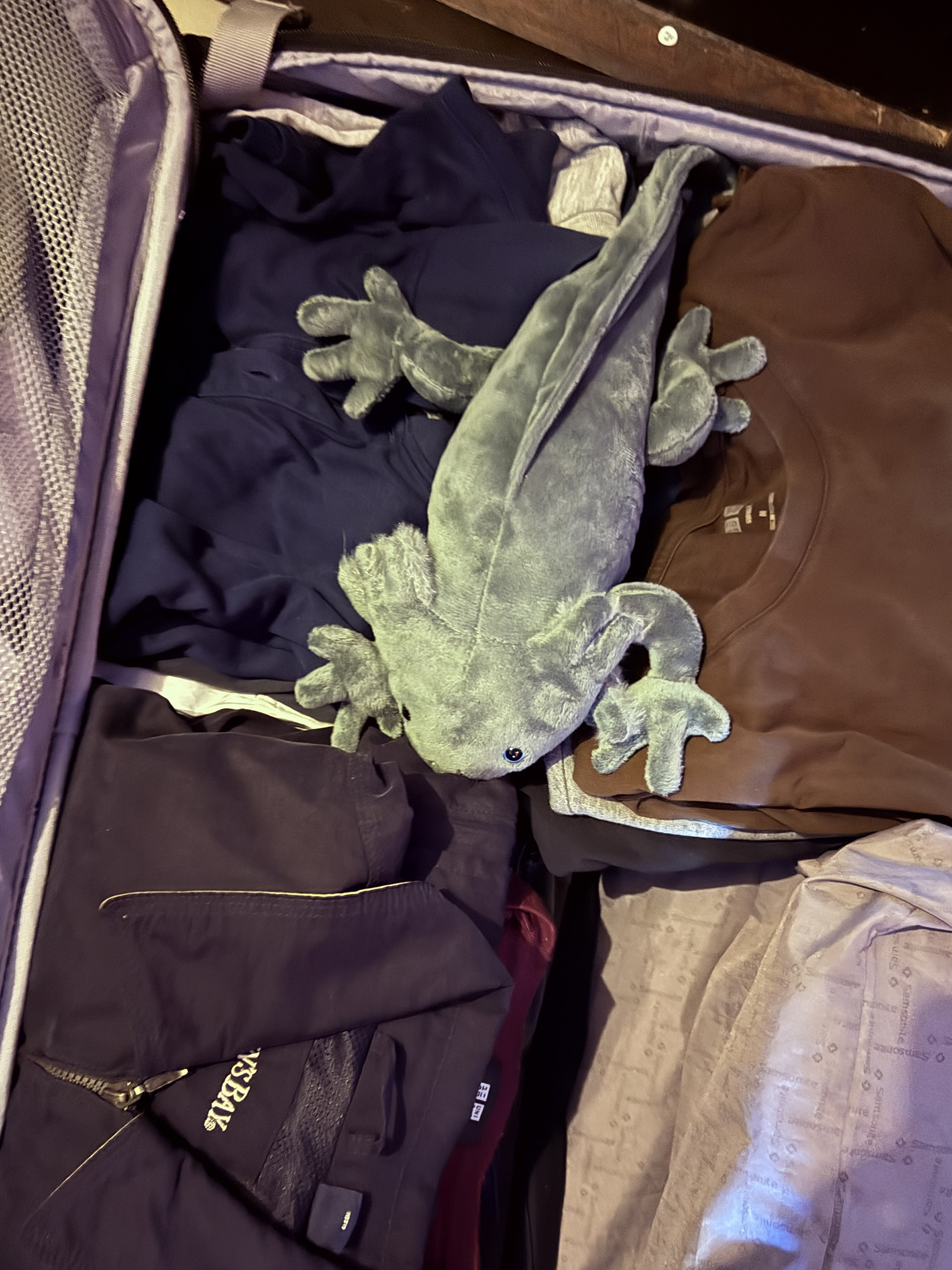
My stuffed axolotl from the Gran Acuario Mazatlán gift shop went into the suitcase with my clothes, and now I am at Mazatlán airport.
I will try to get a few airplane pictures before we board.
The axolotl (Ambystoma mexicanum) is a species of paedomorphic mole salamander. They mature into the terrestrial adult form without undergoing metamorphosis; the adults remain fully aquatic with obvious external gills. This trait, although somewhat unusual among the majority of amphibians, is not unique.
Axolotls originally inhabited a system of interconnected wetlands and lakes in the Mexican highlands. They were known to inhabit the smaller lakes of Xochimilco and Chalco, and are also presumed to have inhabited the larger lakes of Texcoco and Zumpango. These waterways were mostly drained by Spanish settlers after the conquest of the Aztec Empire, leading to the destruction of much of the axolotl’s natural habitat, which is now largely occupied by Mexico City. Despite this, they remained abundant enough to form part of the staple in the diet of native Mexica during the colonial era.
Today, due to continued urbanization in Mexico City, which causes water pollution in the remaining waterways, as well as the introduction of invasive species such as tilapia and carp, the axolotls are now near extinction. The species has been listed as critically endangered in the wild, with a decreasing population of around 50 to 1,000 adult individuals.
A large captive population of axolotls currently exists, though, with the specimens being used extensively in scientific research for their remarkable ability to regenerate parts of their body, including limbs, gills and parts of their eyes and brains.