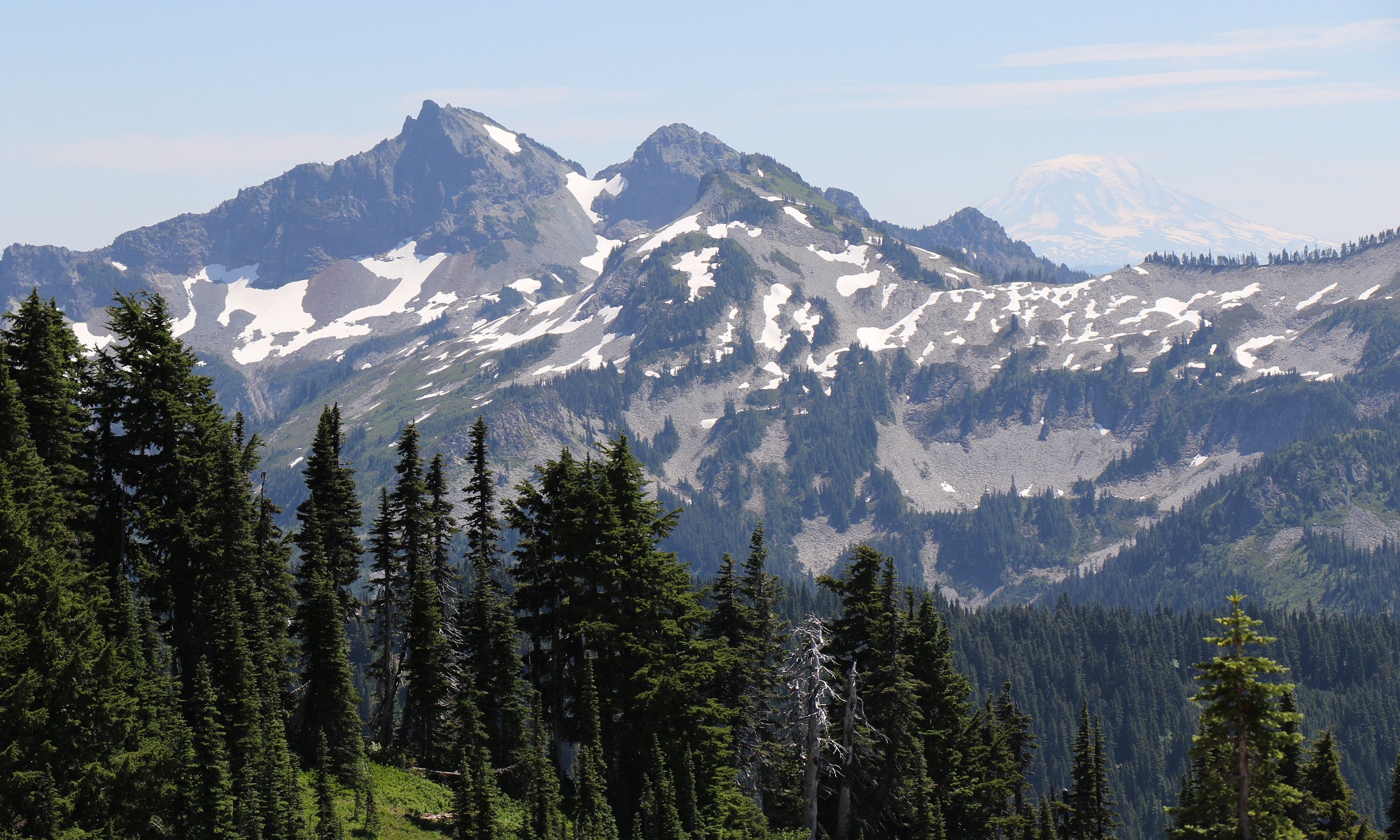
Three of us ran out to the Ballard locks* this morning.
Even though the salmon runs for the season are over (there were none to be seen in the windows by the fish ladder), there was still a lot of activity to look at.
*The Hiram M. Chittenden Locks, or Ballard Locks, is a complex of locks at the west end of Salmon Bay in Seattle, Washington’s Lake Washington Ship Canal, between the neighborhoods of Ballard to the north and Magnolia to the south.
[Source: Wikipedia]
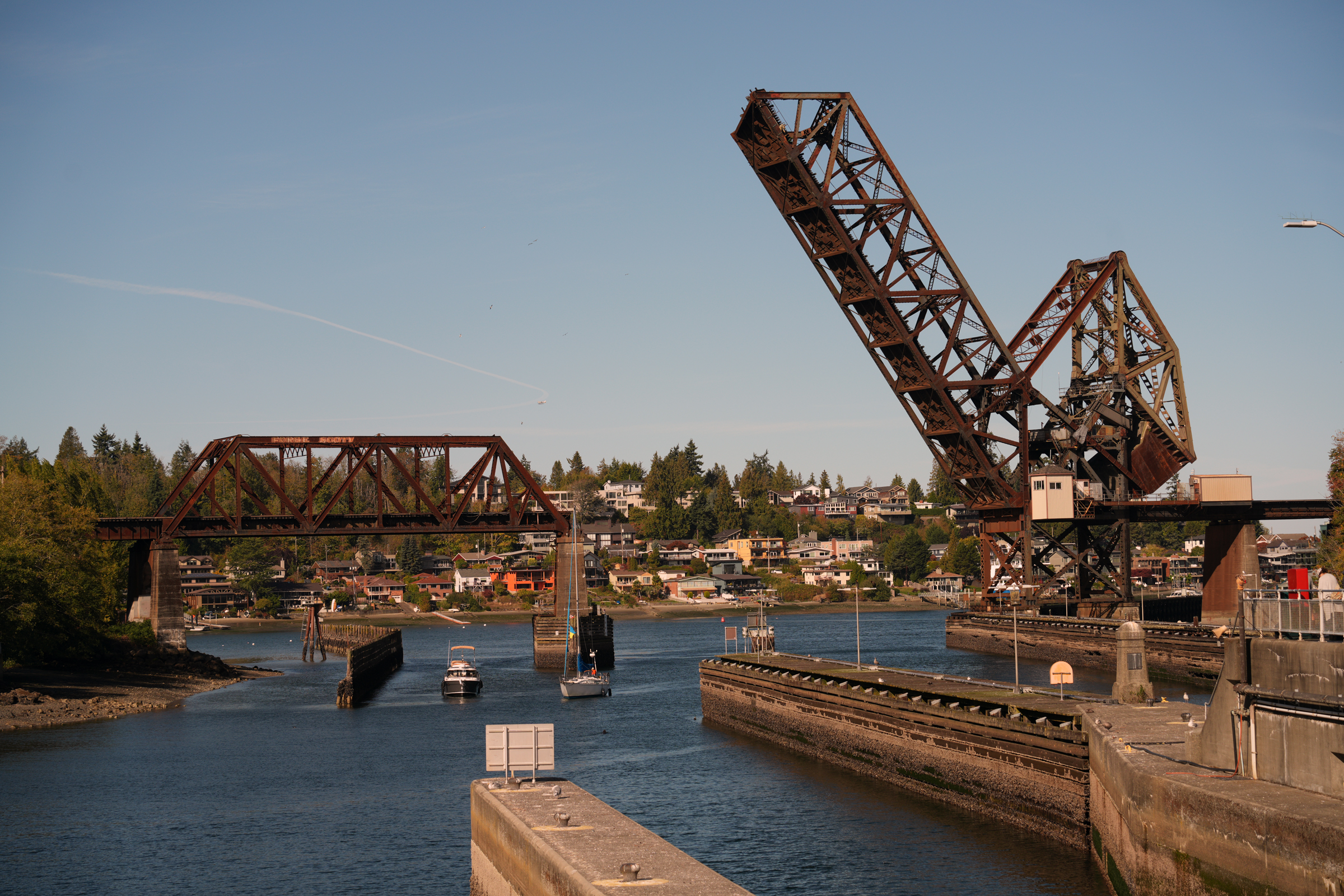
It looks like the Salmon Bay bridge (drawbridge) had to be opened just for the little sailboat with its tall mast! (in the middle of the picture). There are seagulls in the sky above the sailboat, and a speck that is a seaplane, as well.
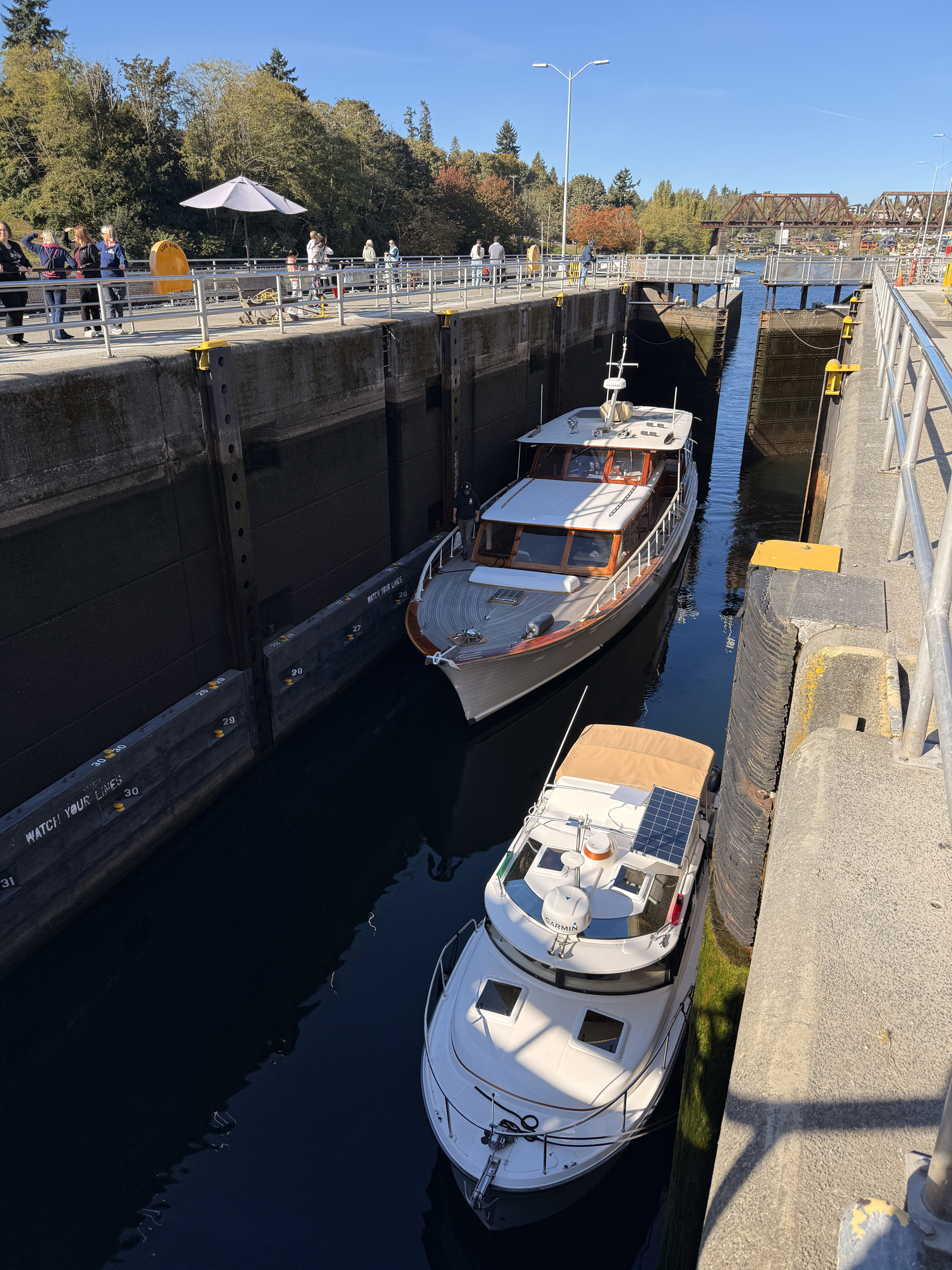
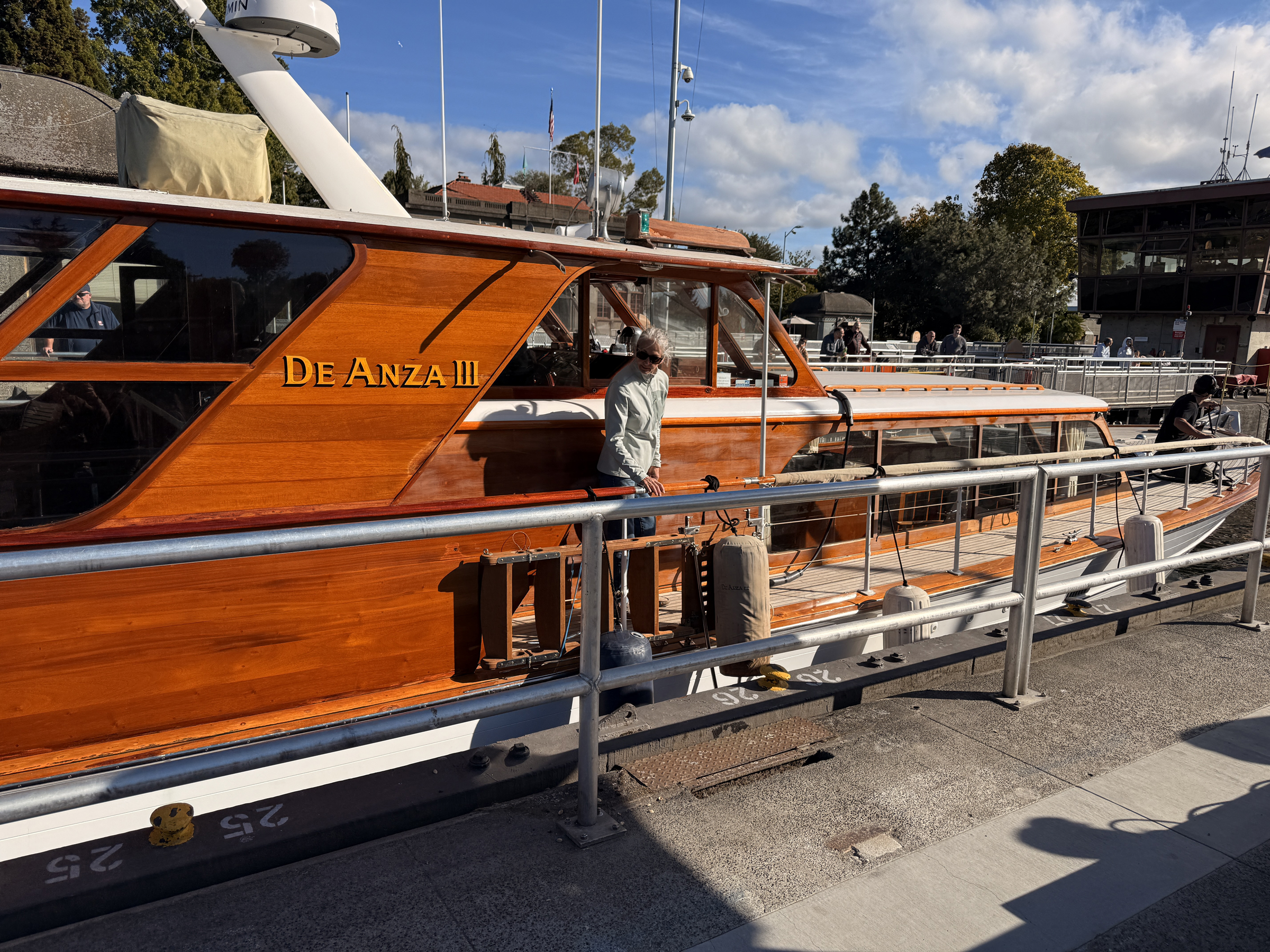
The gates are just closing behind the two vessels. We chatted briefly with the owners (an elderly couple) of the larger vessel at the back that goes by De Anza III.
She was built in 1958, and this was the first summer they owned her.
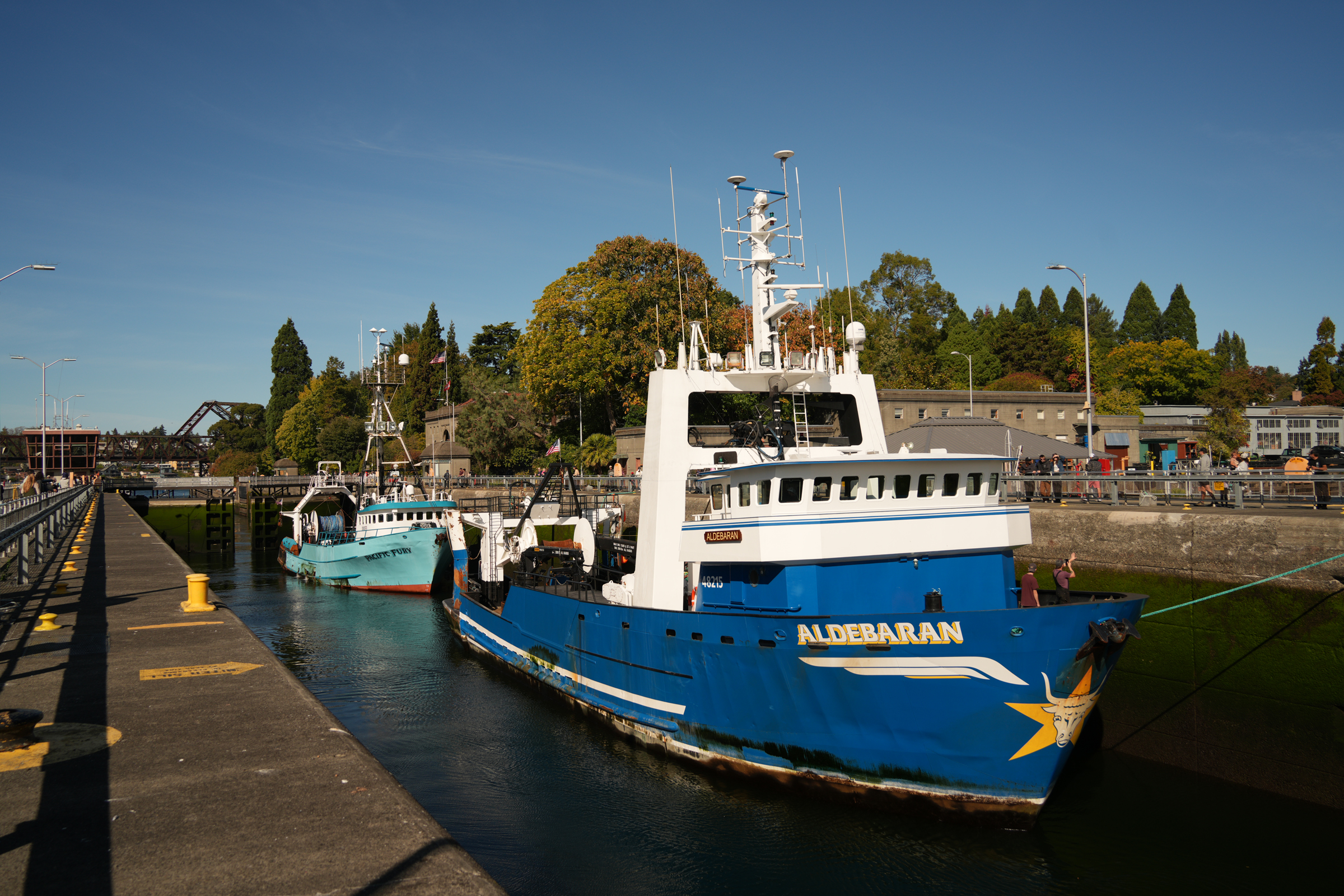
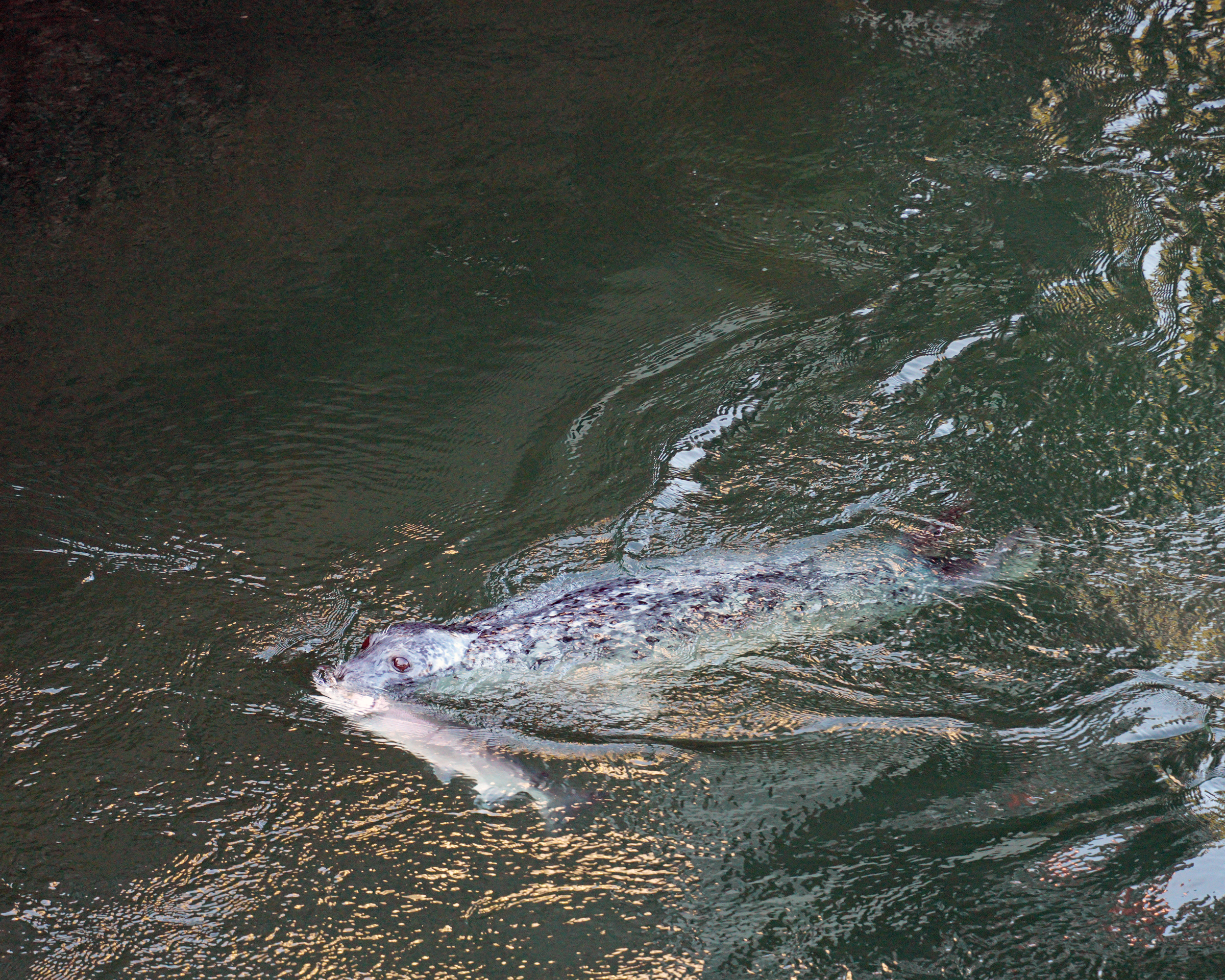
So even though the salmon runs for the season are over and done with, there are still a few of them in the water. I wonder if the fish are fatigued (from their swim upstream), and easy to catch.
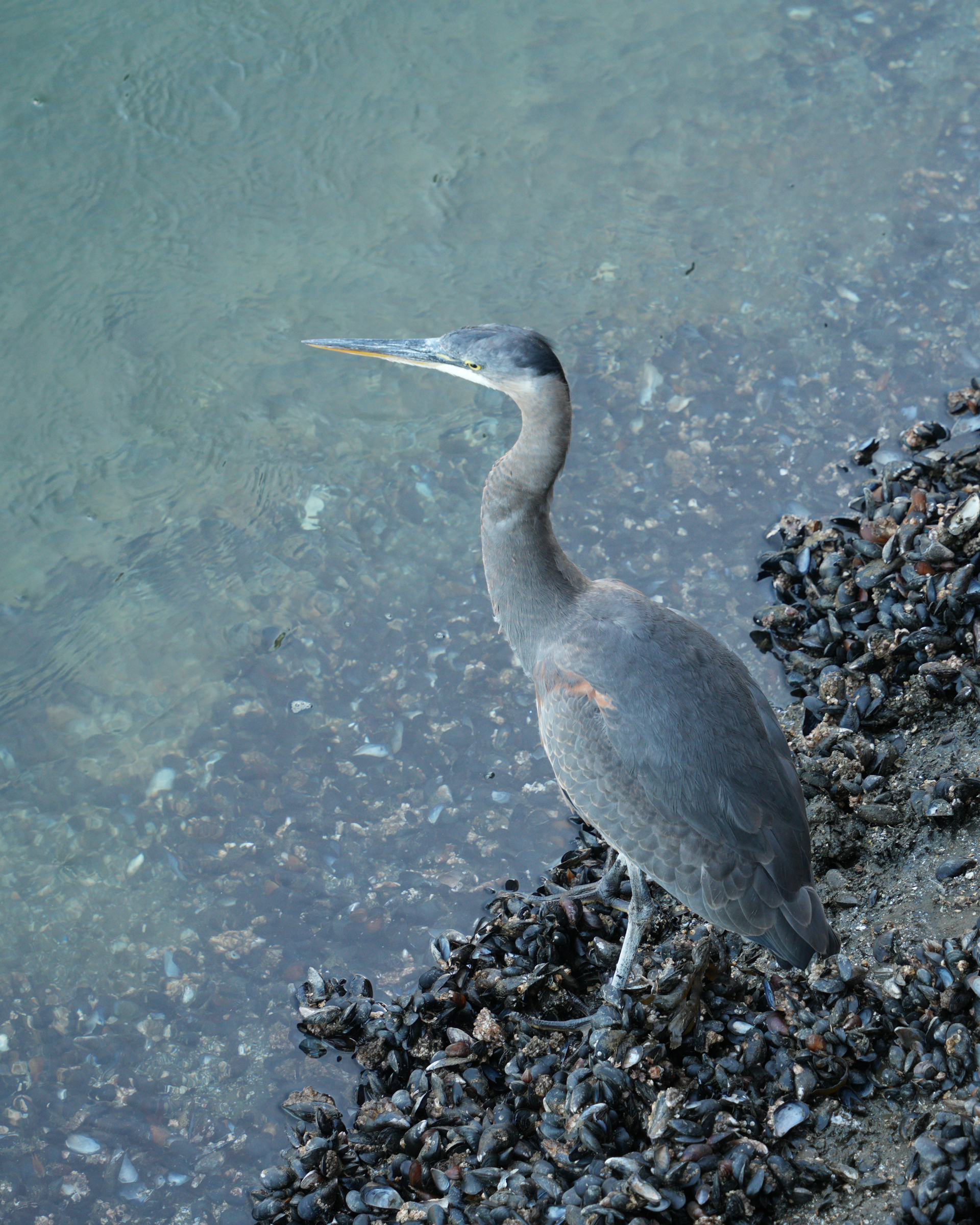
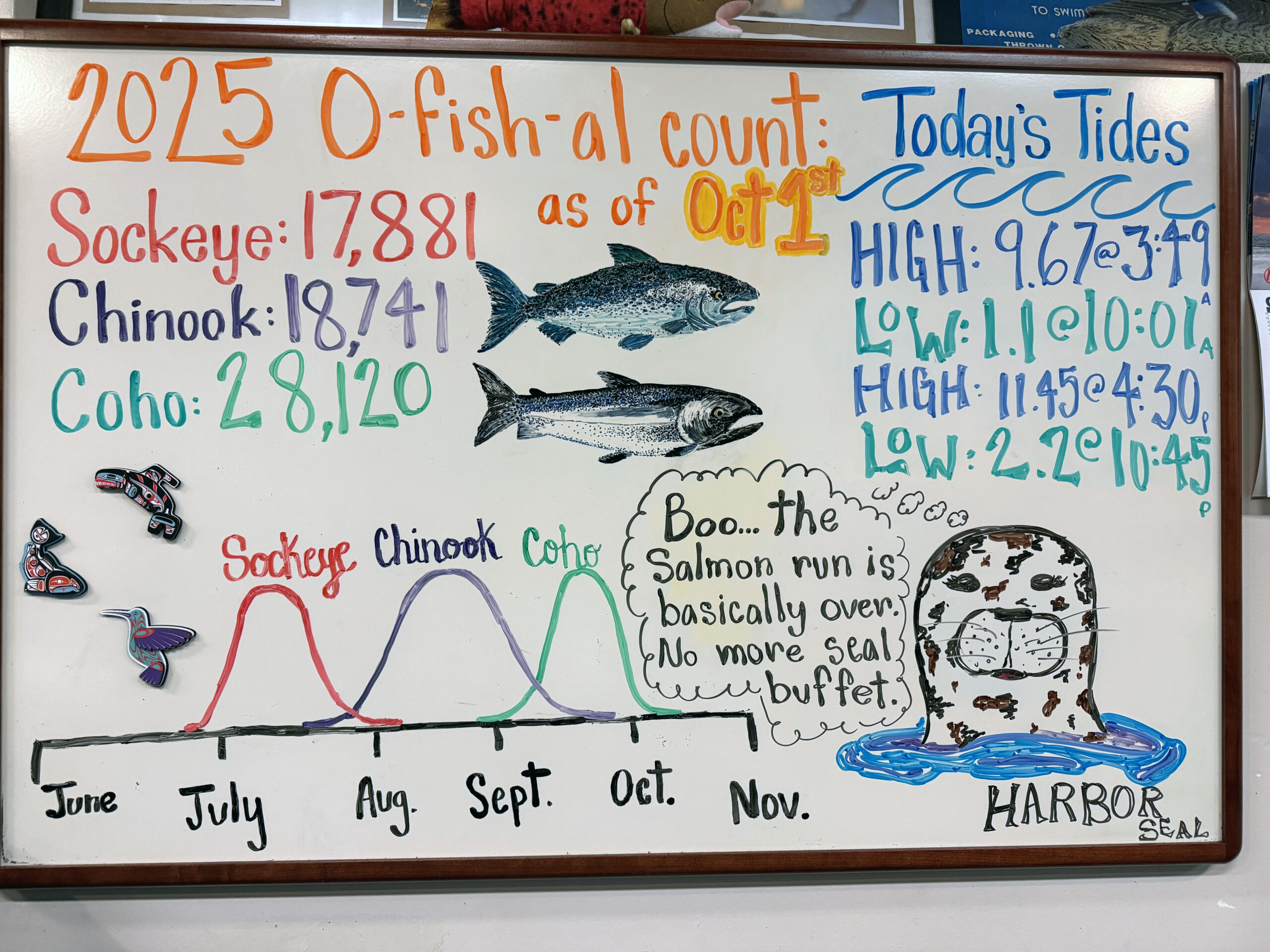
So there are distinct times for the peaks of the runs of the different species of salmon.
Q. And how do they count the fish?
A. Fish are counted at the Ballard Locks through daily visual counts by Washington Department of Fish and Wildlife (WDFW) and Muckleshoot Indian Tribe staff using the fish ladder itself. Fish are observed passing through the ladder during specific periods, and these visual counts are converted into daily and weekly totals to estimate the overall fish run for the year.
[Google AI Overview]