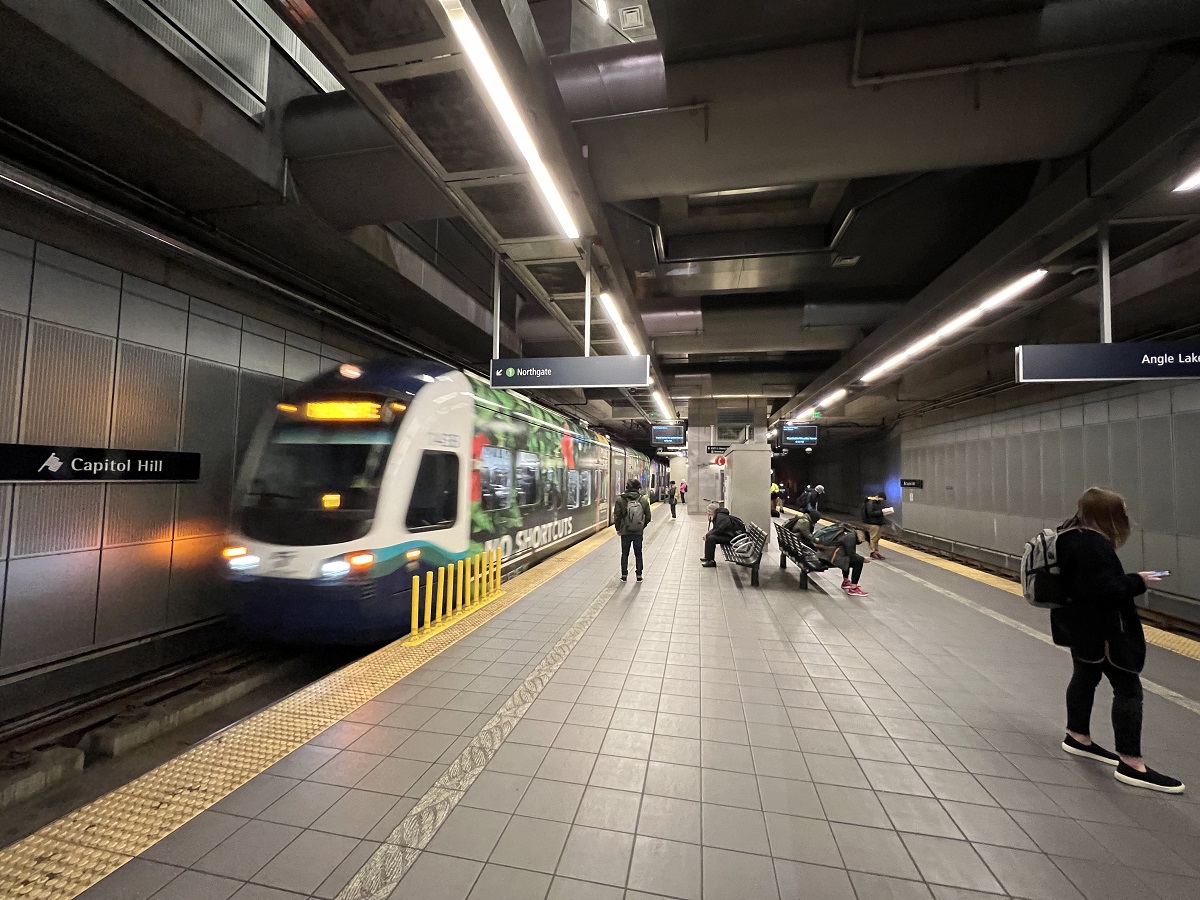
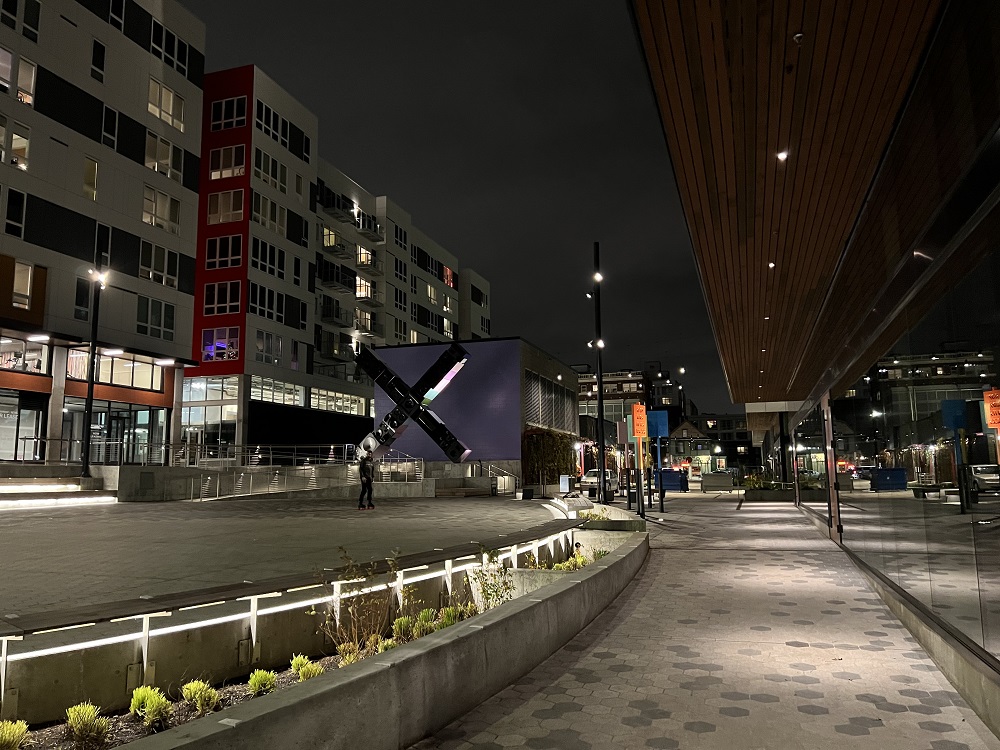
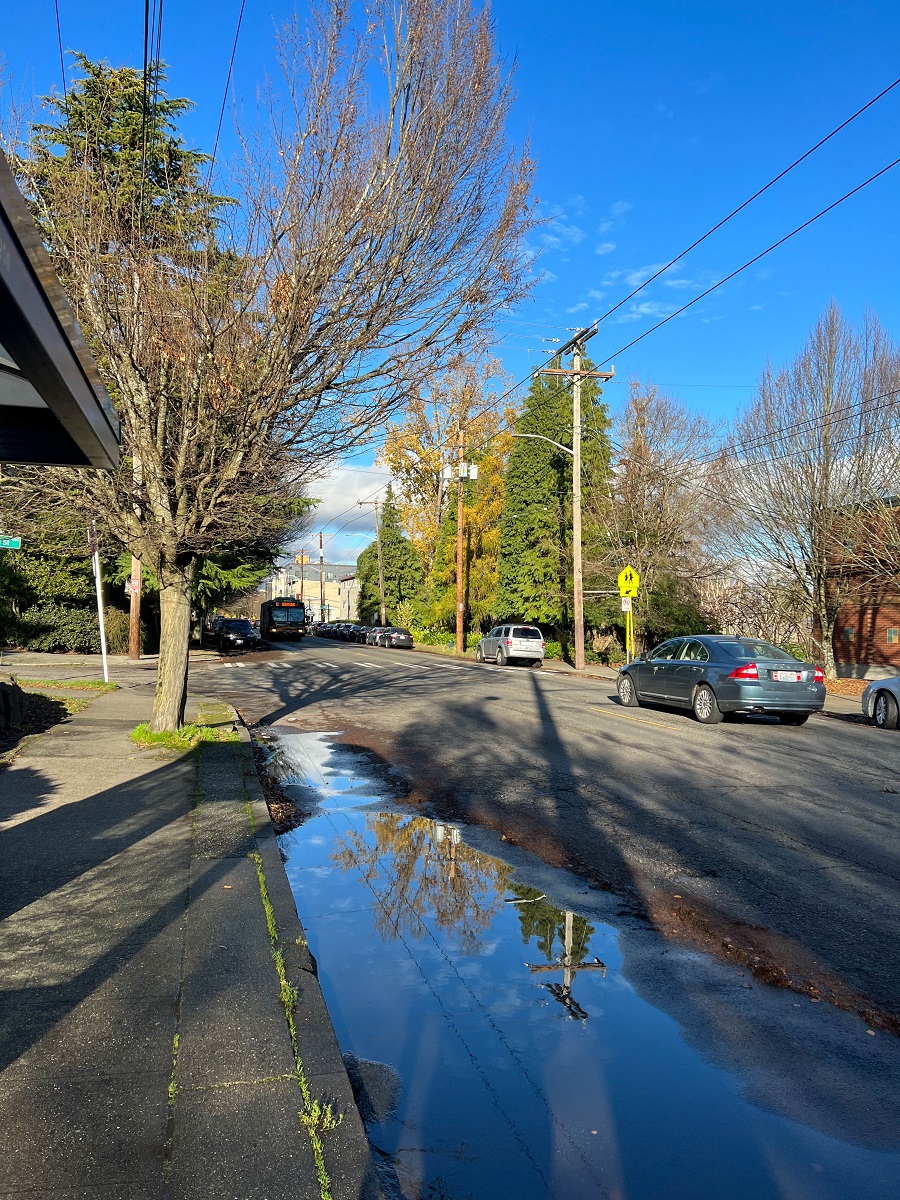
It was already dark when I walked down to the Capitol Hill light rail station tonight.
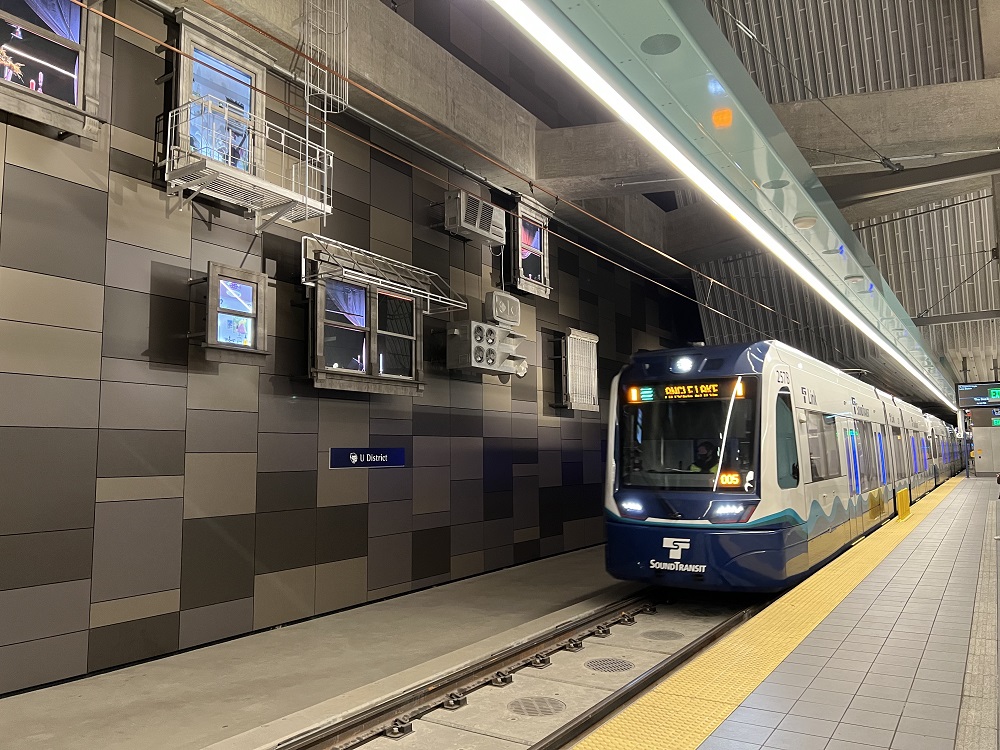
From there I took the train to the U District stop to the Neptune Company record store, just a hundred steps away from the train station exit.
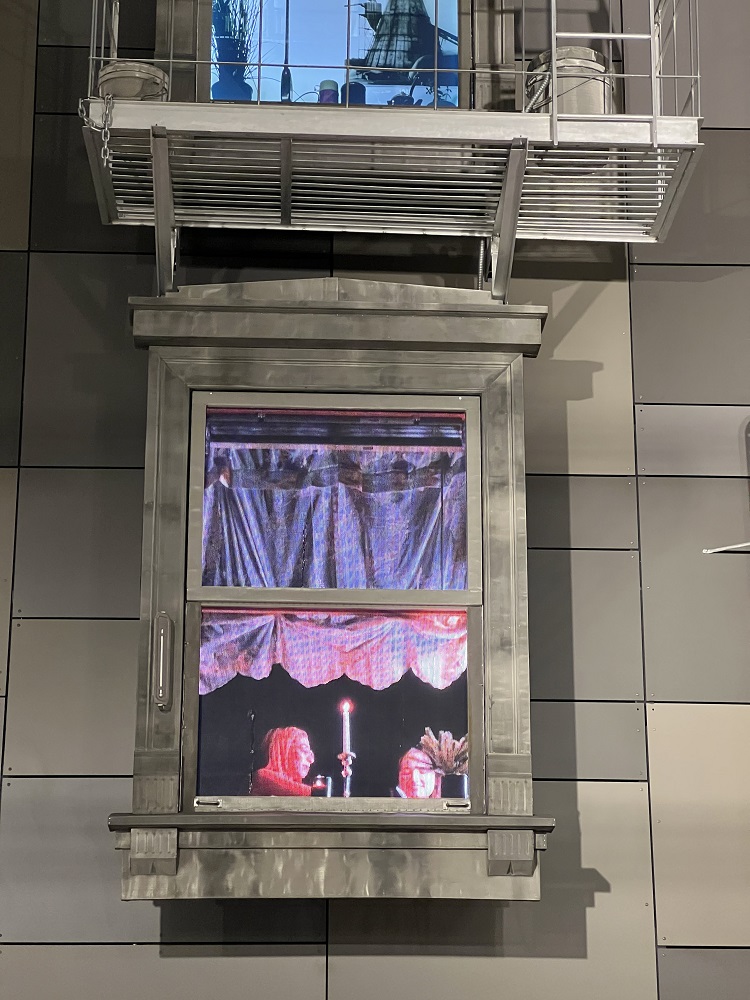
Top to bottom:
Northbound train at Capitol Hill station.
Southbound platform, U District Station.
Southbound train, U District station.
Capitol Hill station plaza.
It rained most of the day, but it cleared up as night fell.
I made a run down to the Space Needle to take a few pictures of the ‘Christmas tree’ on it.
I went up Queen Anne hill for a few pictures, as well.
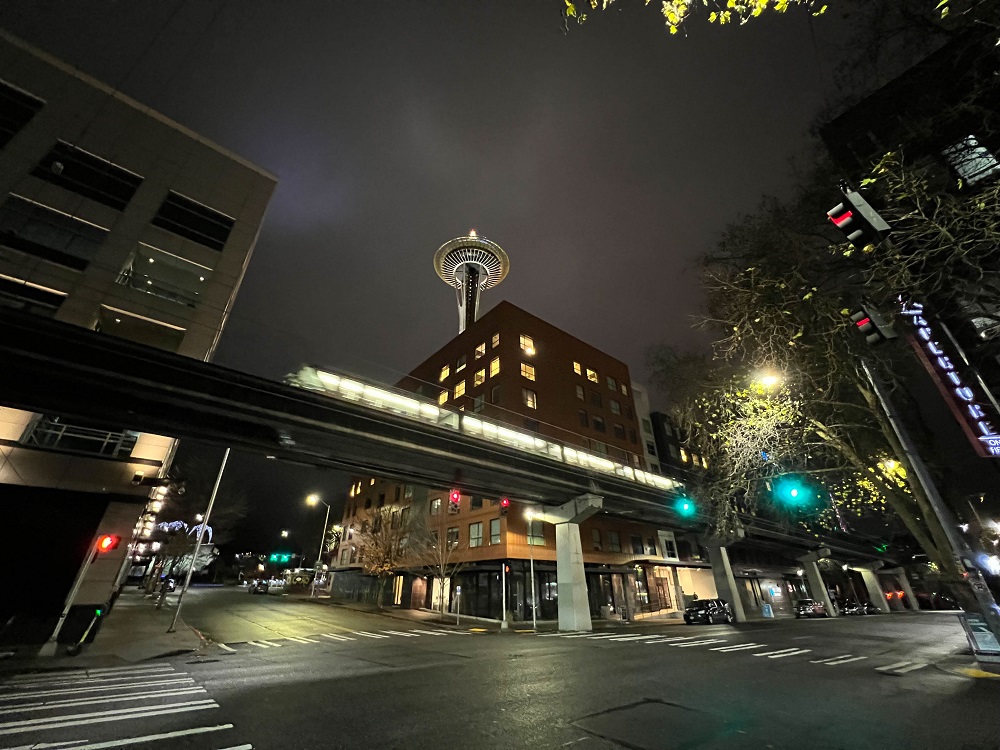
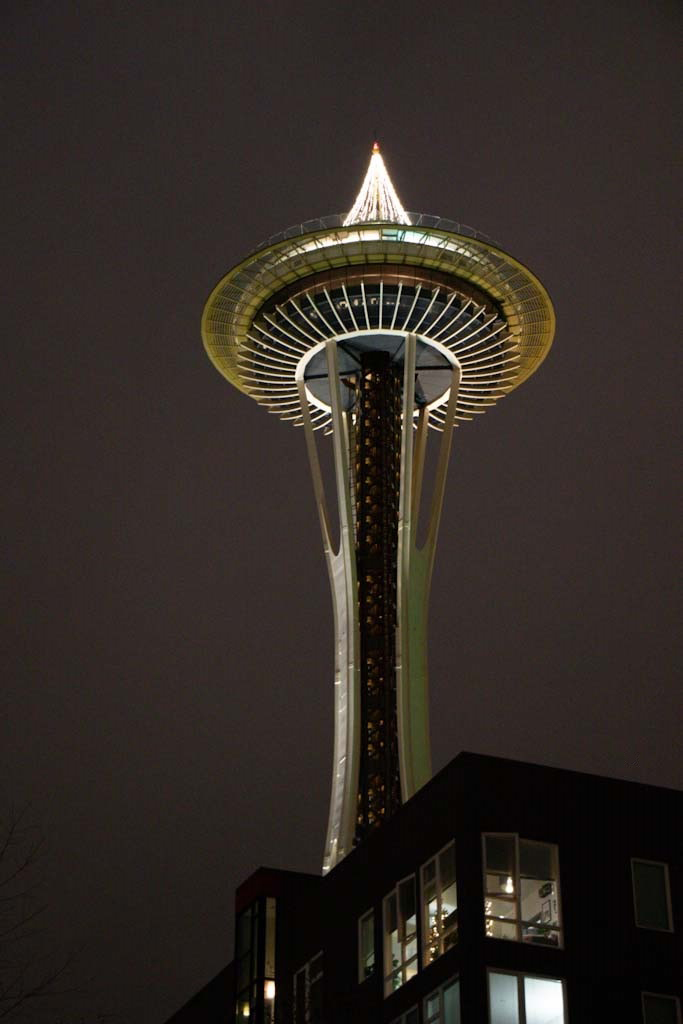
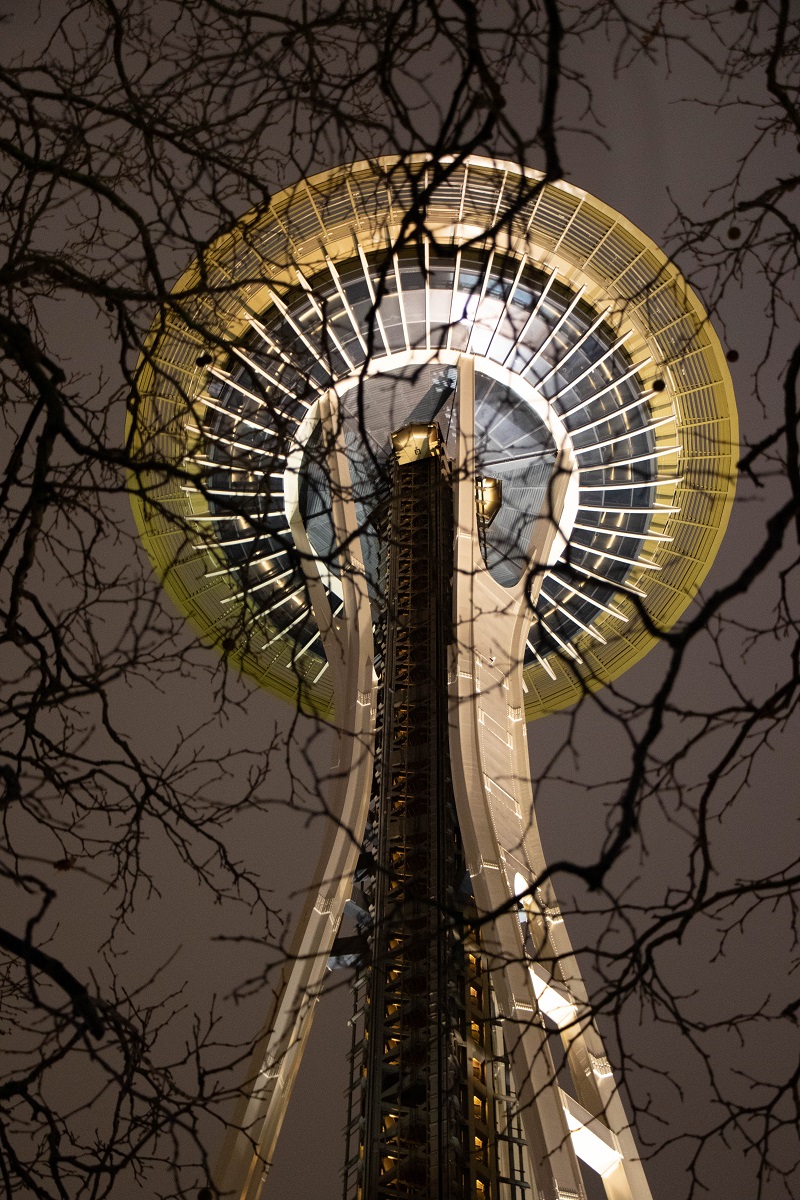
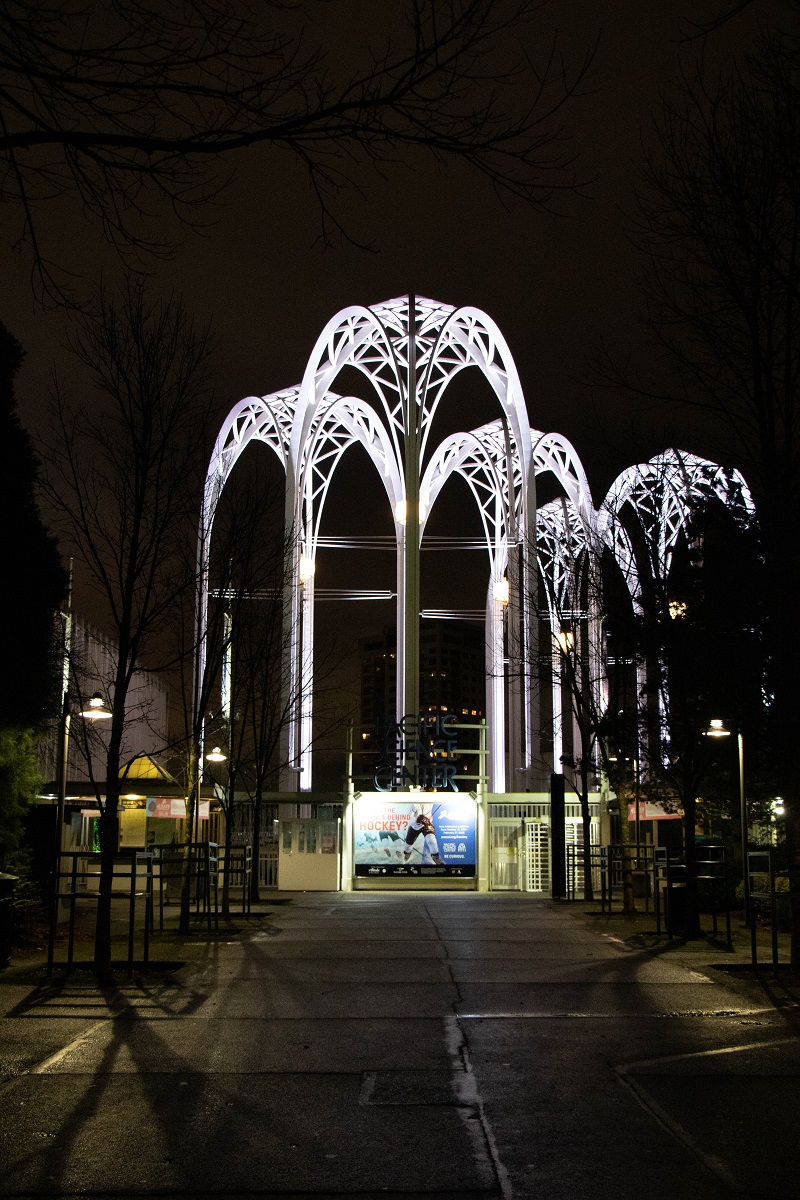
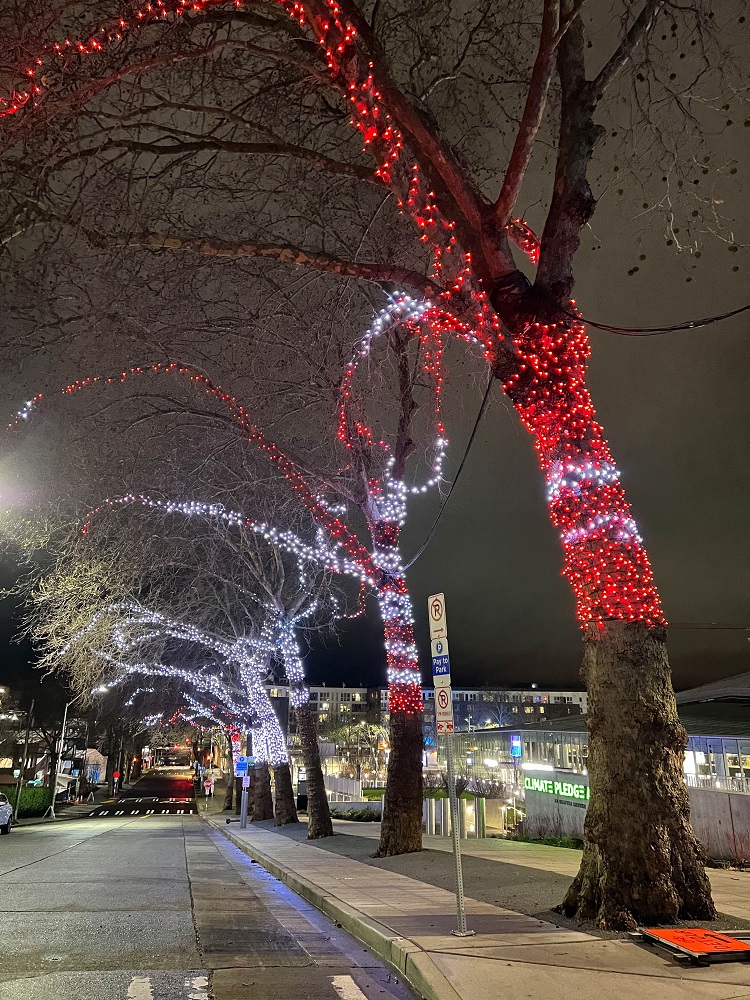
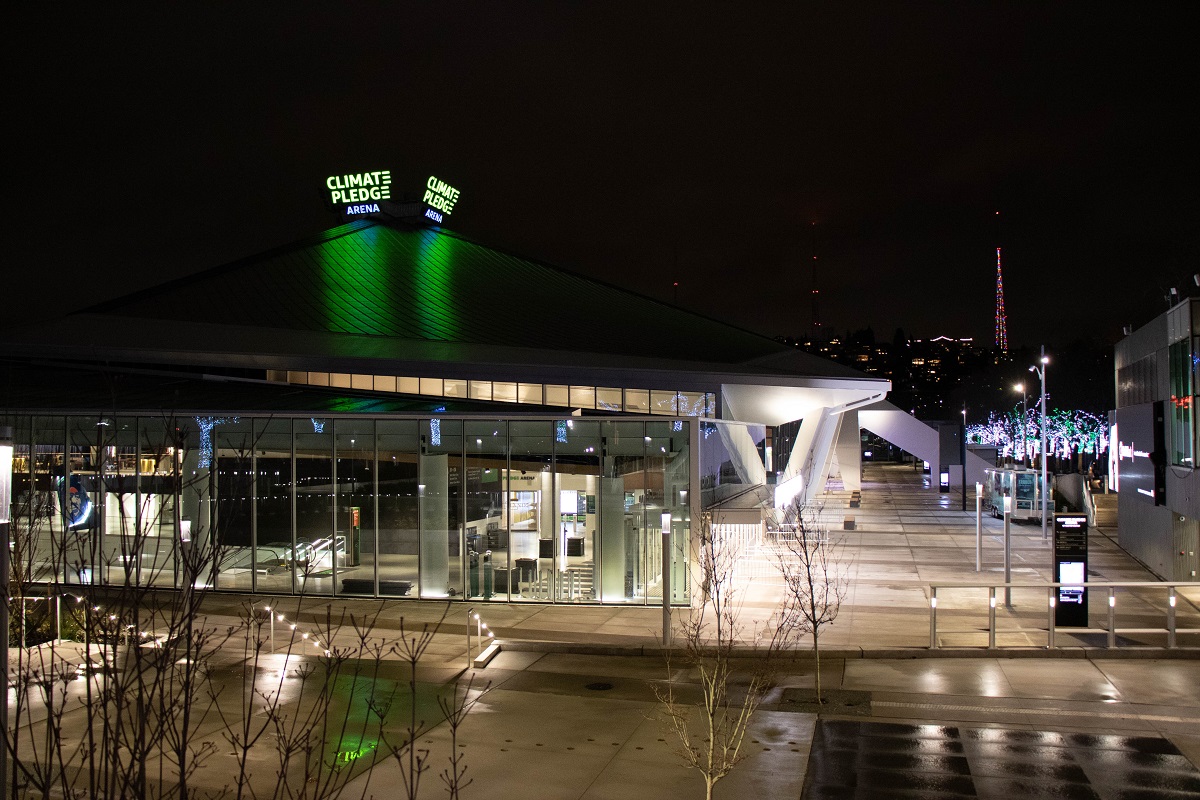
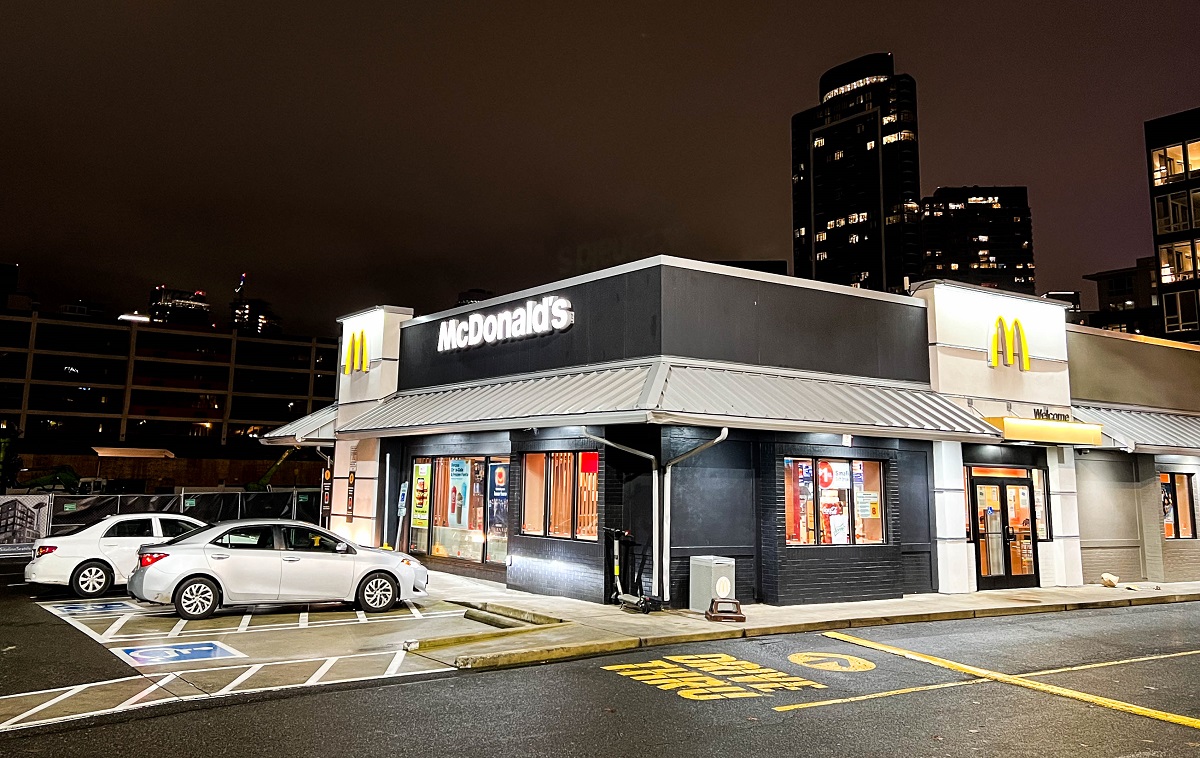
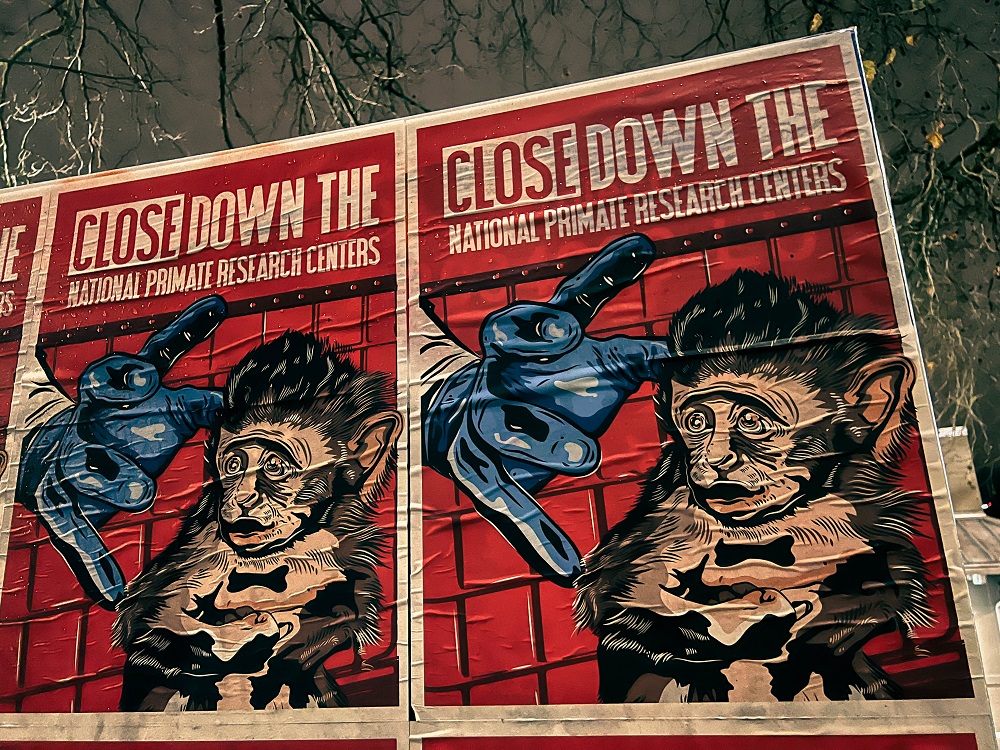
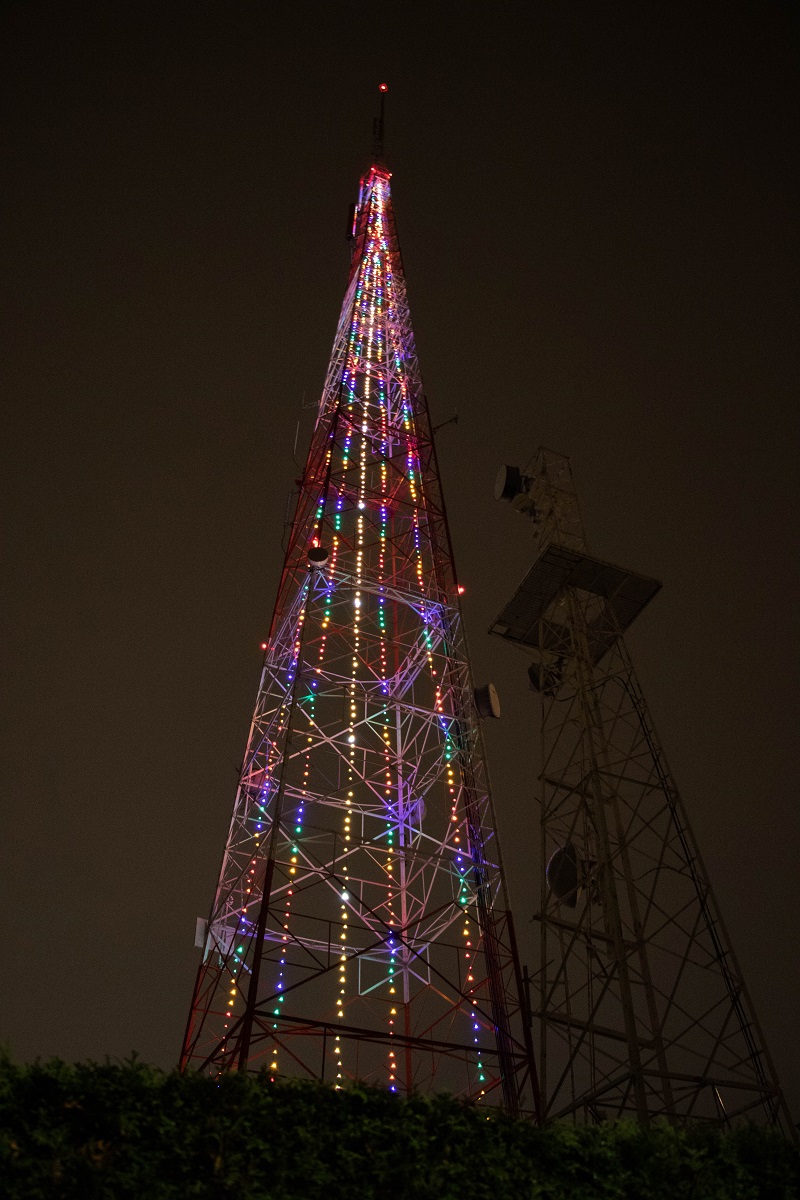
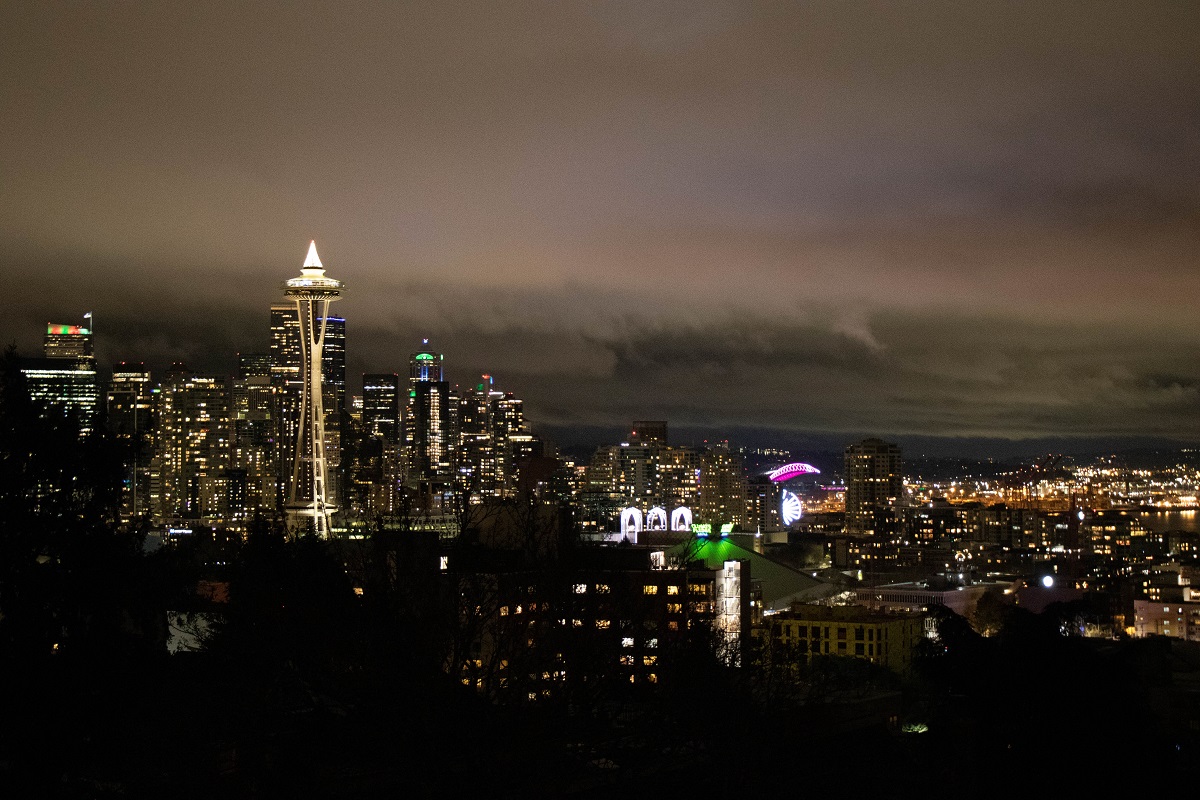
Here’s the monorail train at 5th Ave and John St, streaking towards Westlake Center. This is one of its last runs for the day. It stops running at 9 pm, I believe.The ‘Christmas Tree’ with its red aviation beacon is up on the Needle.A look from from below through the bare trees (grabbing at it with long bony fingers?) at Seattle Center. The golden elevator cage is all the way up, at the top.The arches at Pacific Science Center, nicely lit up in white.The trees on Thomas Street alongside Climate Pledge Arena are nicely dressed up in holiday lights. Many inside Seattle Center have been decorated as well.Climate Pledge Arena, of course. That radio tower in the distance with the colored lights and beacon on, is on Queen Anne hill. ‘Well, I will have to go and take a closer look at it’, I thought, and I did. (Picture is below).Making my way back to where I had parked my car. This 24-hour McDonalds is right by the Space Needle.Posters on the fence by the McDonalds. A blue gloved hand is about to grab the mortified monkey. National Primate Research Centers are a network of seven research programs in the United States funded by the National Institutes of Health to conduct biomedical research on primates. One of them is affiliated with the University of Washington here in Seattle. So should humans torture monkeys in the name of research? No, we should not, but we do. We should also not make weapons to kill each other with. We should also not destroy Earth.All right. Now I have navigated up Queen Anne hill, to the KING-TV Tower (decorated with its Christmas lights) that I had seen from Seattle Center. The first television broadcast in Pacific Northwest history was transmitted from this location on Nov. 25, 1948 as Channel 5 KRSC-TV (becoming KING-TV 8 months later). The station went on the air with a live high school football game on Thanksgiving Day between West Seattle High and Wenatchee at Memorial Stadium. This tower was constructed a few years later, in 1952, and stands 570 ft (174m) tall. The site itself is 430 ft (131 m) above sea level.My final stop was at Kerry Park in Queen Anne, a popular view point for taking in vistas of downtown Seattle and the ferries that come in from across the Sound. The green roof of Climate Pledge Arena is new, of course, and to its right is half of the Ferris wheel at the waterfront with the pink of T-Mobile Park, home of the Seattle Mariners baseball team. I’m using my Canon EOS 7D Mk II digital camera and zoom lens, and it’s doing OK. I would love a medium format DSLR to catch just a little more detail !
It has been a soggy, soggy rain season so far.
Since Oct. 1, some 15 in. of precipitation had been measured at Seattle-Tacoma Airport.
Average for this time of year is 9.37 in. and the record is 16.6 in.
The north of Washington State is under flood watch again. Mesoscale systems are intermediate in scale (areas up to several 100 miles/ km), smaller than synoptic scale systems but larger than microscale systems. Those time references are Zulu Time. 21Z = 1 pm Pacific Standard Time (PST); 06Z = 10 pm PST. Would it not be simpler if the entire world switched to Zulu Time? Zulu Time was called Greenwich Mean Time (GMT) before 1972: the time at the zero meridian in Greenwich, London. Today it is also called Coordinated Universal Time or Universal Time Coordinated (UTC). [Graphic from NOAA Weather Prediction Center]
Hopefully it turns out that Black Friday meant the purveyors of products-at-a-discount ended up in the black, and not that the B.1.1.529 variant (Omicron) had started a really bad turn in the pandemic. (We will know in about two weeks if this ‘variant of concern’ can evade the antibodies produced by the current vaccines*).
Angelique Coetzee, chairperson of the South African Medical Association, says in The Guardian newspaper: ‘It’s all speculation at this stage. It may be it’s highly transmissible, but so far the cases we are seeing are extremely mild’.
*From the New York Times: The B.1.1.529 variant has a “very unusual constellation of mutations,” with more than 30 mutations in the spike protein alone, Mr. de Oliveira (director of the KwaZulu-Natal Research and Innovation Sequencing Platform, in South Africa) said. The spike protein is the chief target of antibodies that the immune system produces to fight a coronavirus infection. So many mutations raised concerns that Omicron’s spike might be able to evade antibodies produced by either a previous infection or a vaccine.
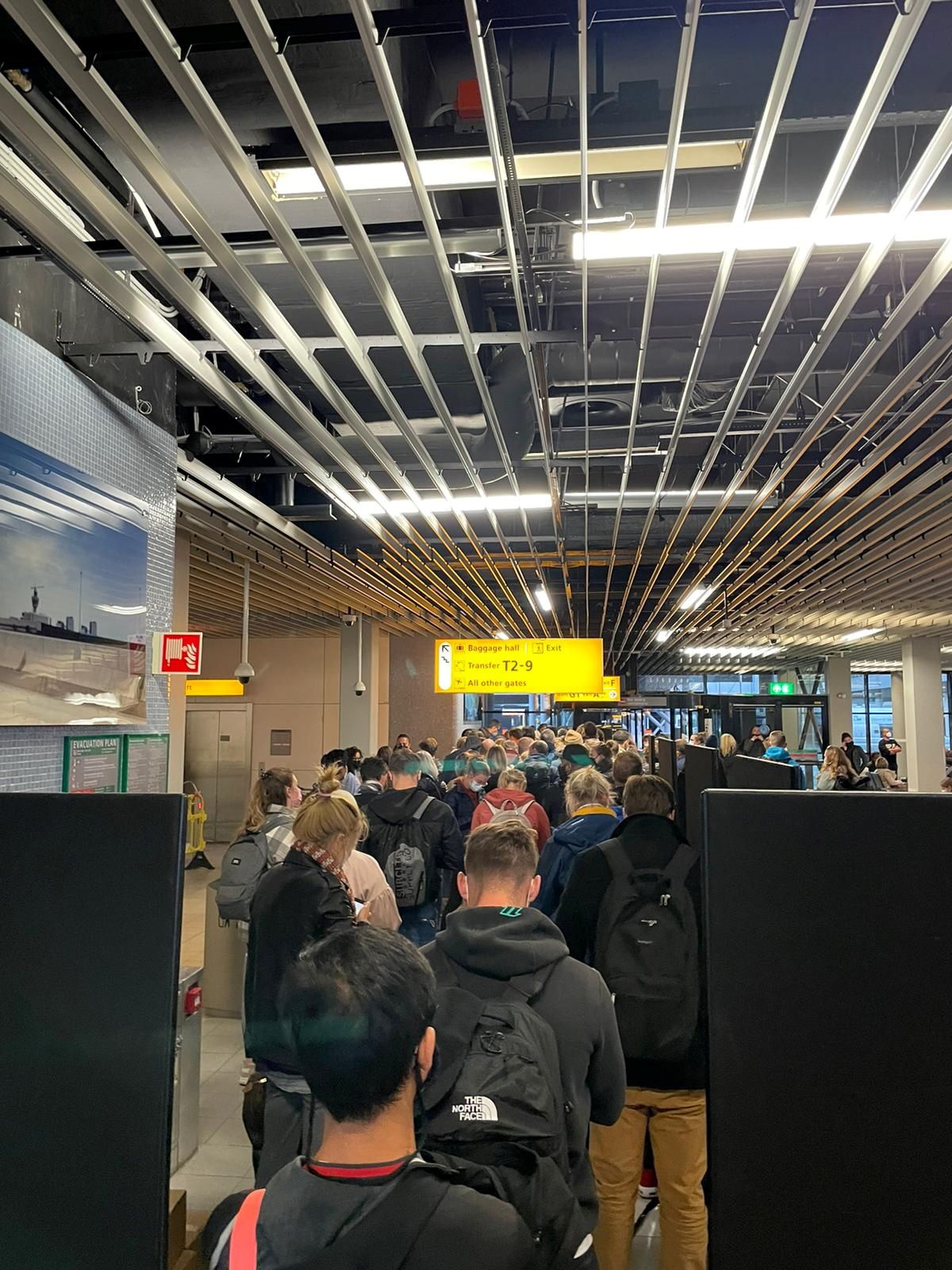
Passengers travelling from South Africa line up to be tested for Covid-19, tested after being held on the tarmac at Schiphol Airport, Netherlands for hours on November 26, 2021. About 600 passengers arrived on Friday on two KLM flights. After initial testing, Dutch authorities estimated that some 85 people may be infected. Those that test positive will have to quarantine in hotels near the airport, and their samples will be tested to see if it’s the omicron variant. Update Sat 11/27: Per the BBC, 61 of these 600 travelers tested positive for Covid-19. (Not yet known if any is the Omicron variant). 61 sounds like a lot to me. Surely almost all of these travelers have been vaccinated. Was the testing (in South Africa) three days before traveling not very reliable? Did the travelers get infected on the airplane? [Picture obtained from social media by REUTERS]
If you’re going, go to Tacoma today, boyo, I told myself this morning. Tomorrow will see bumper-to-bumper traffic on Interstate 5 for Thanksgiving (on Thursday).
And so off I went. I know of second-hand record stores on 6th Avenue, and mural artwork in the alleys there, and that’s where I stopped to spend a little time.
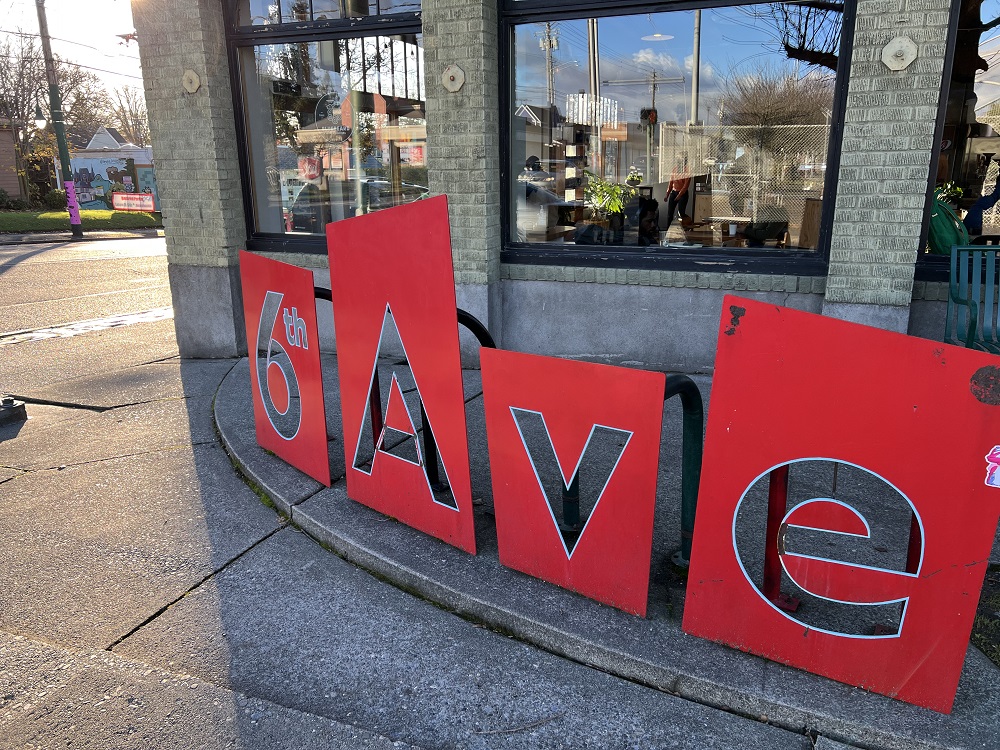
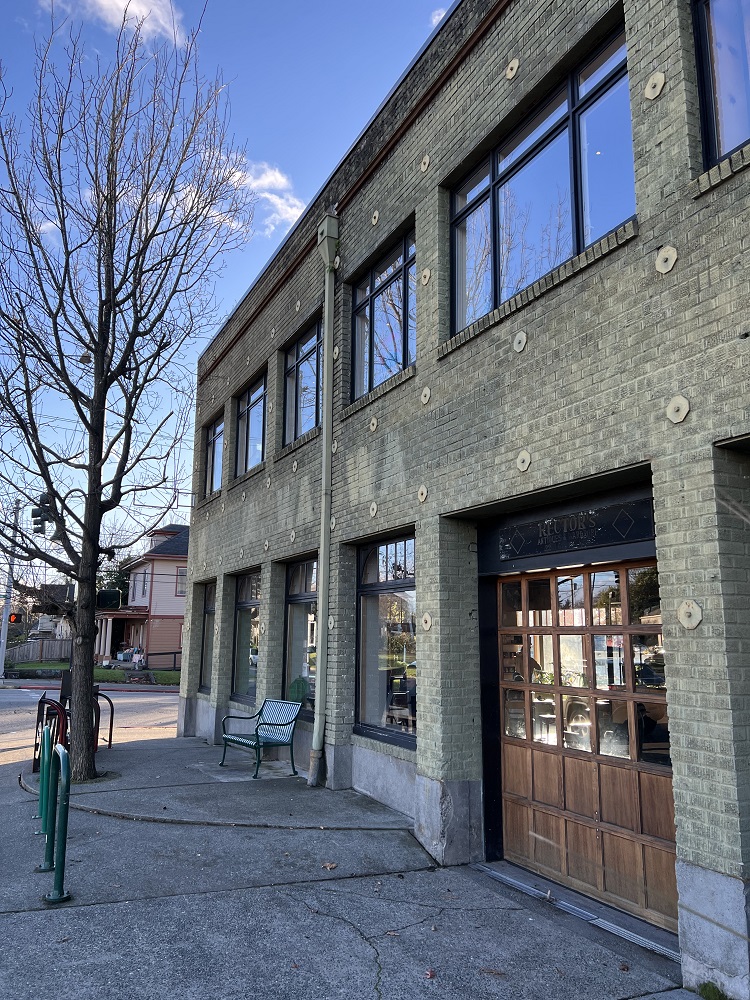
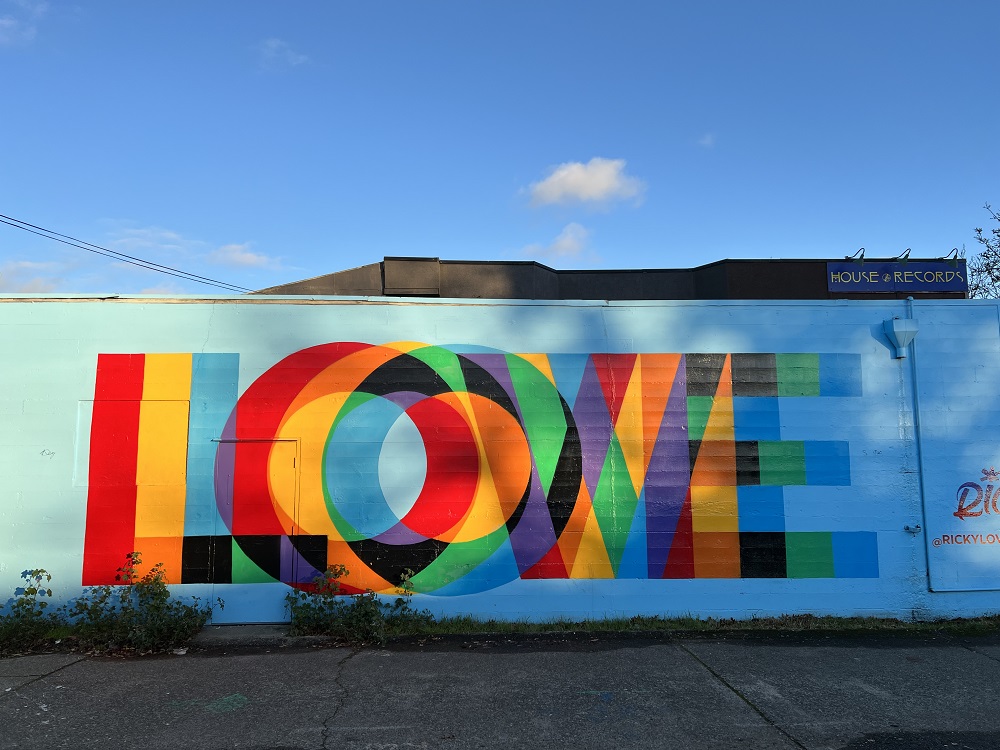
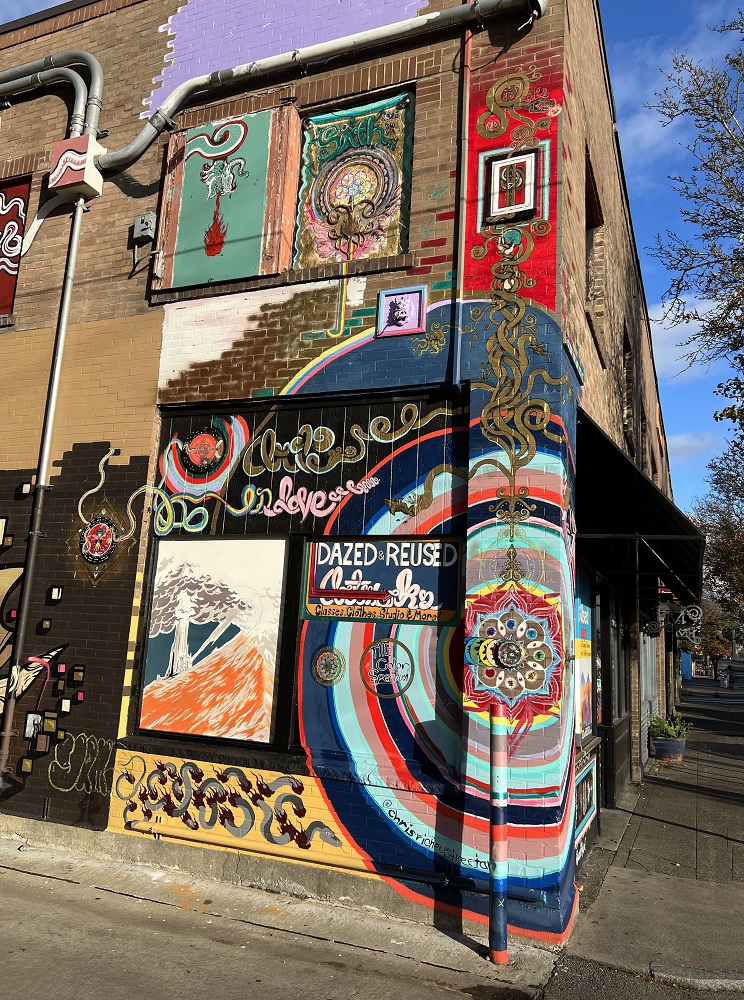
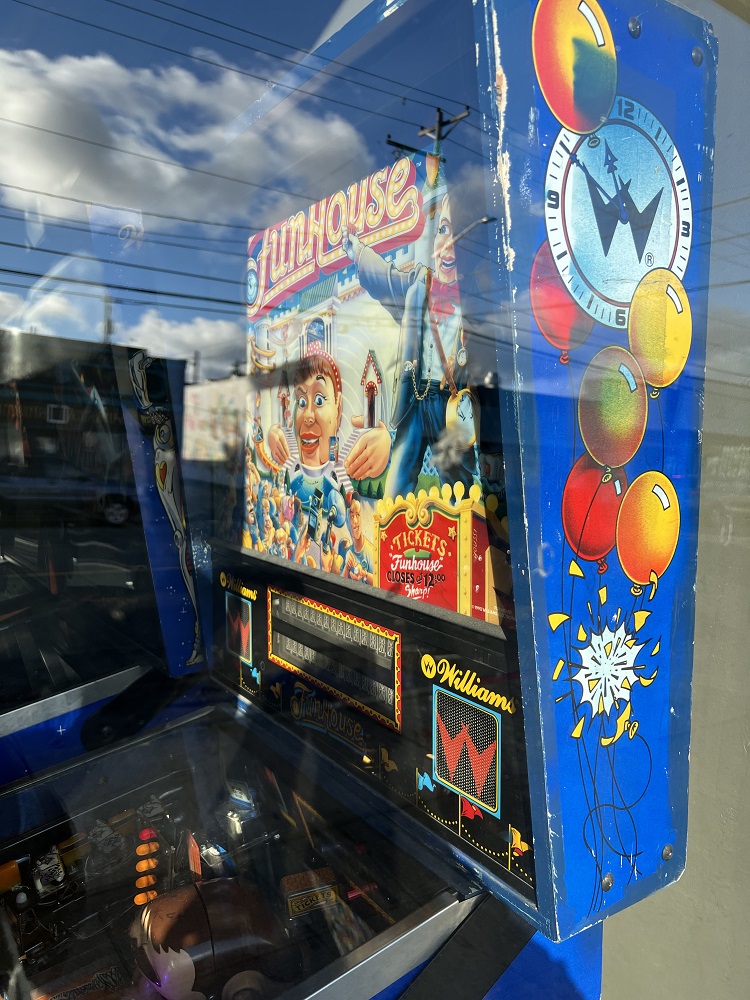
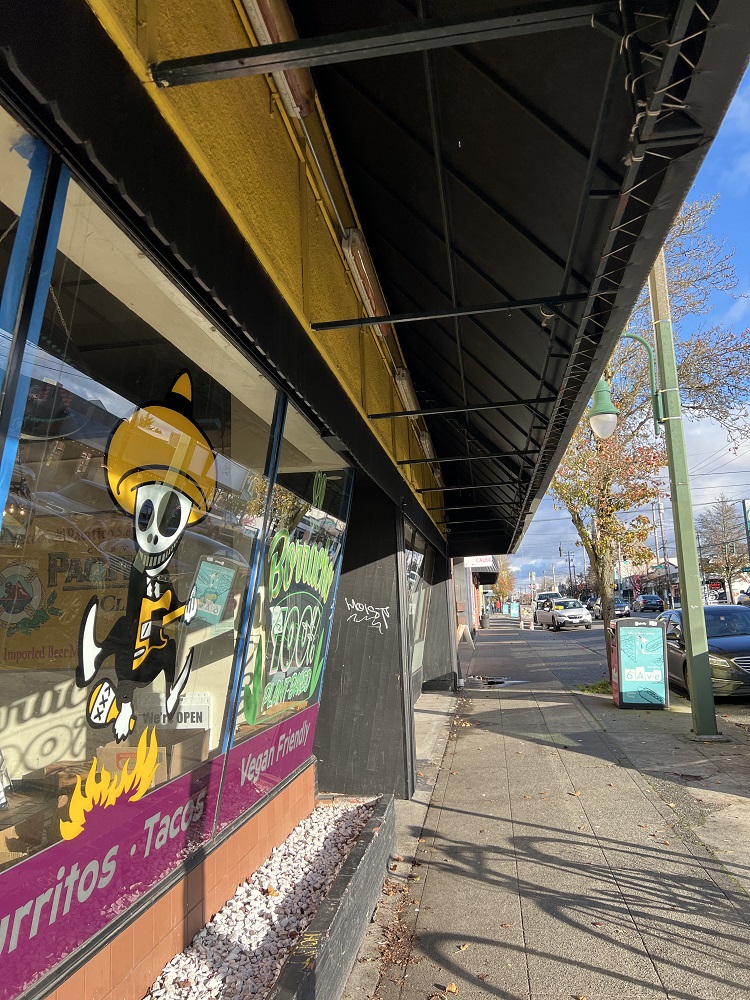
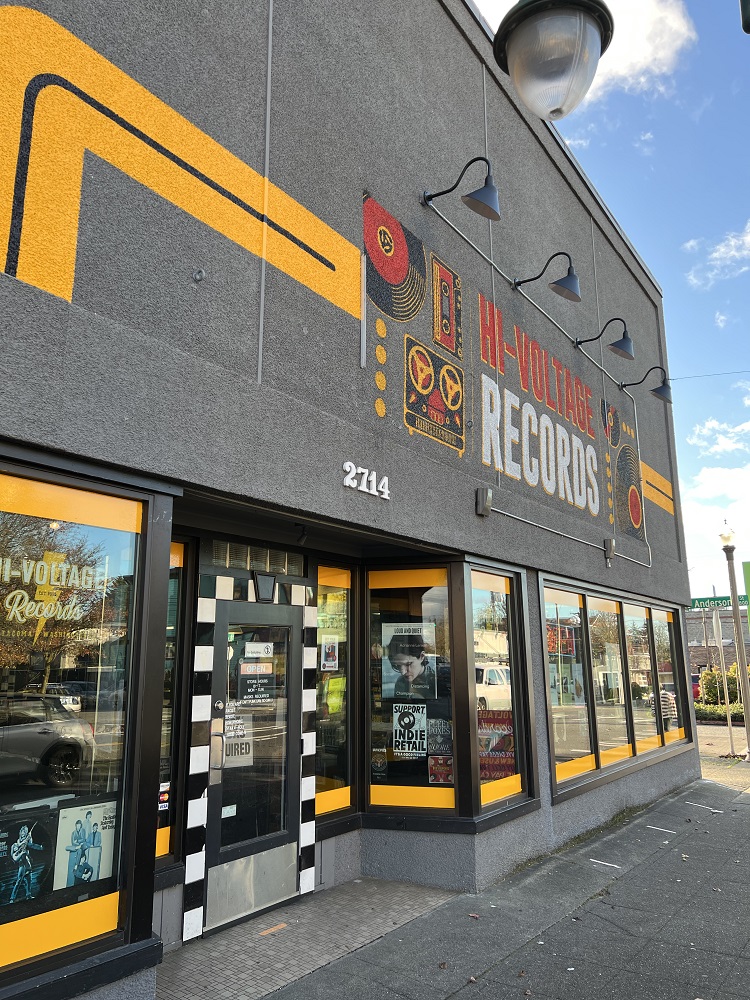
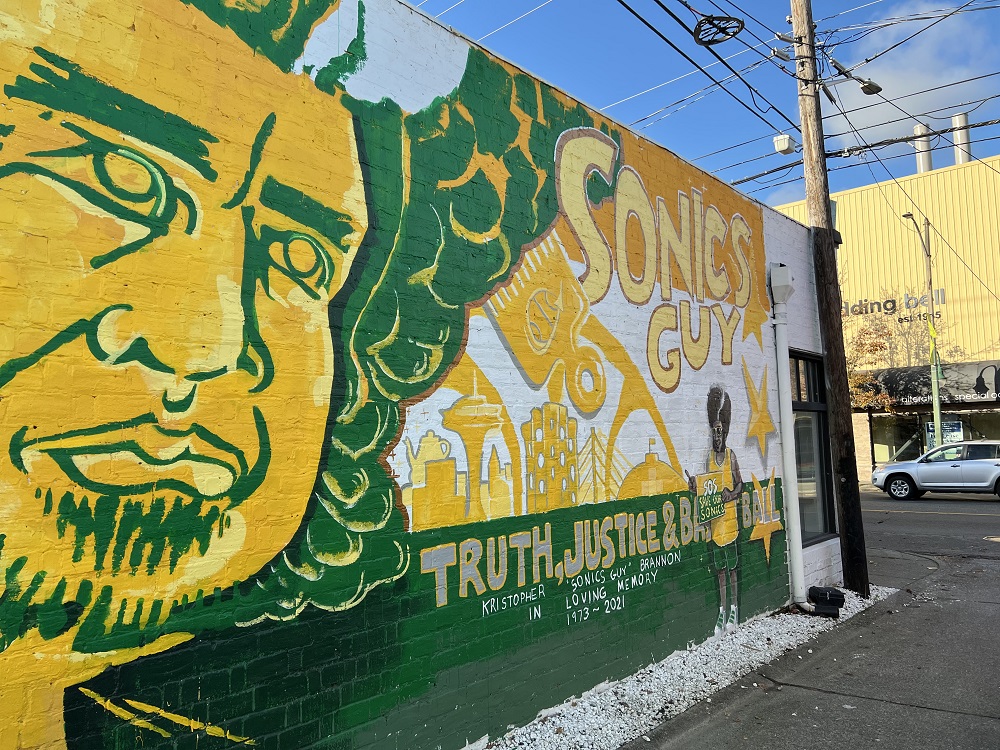
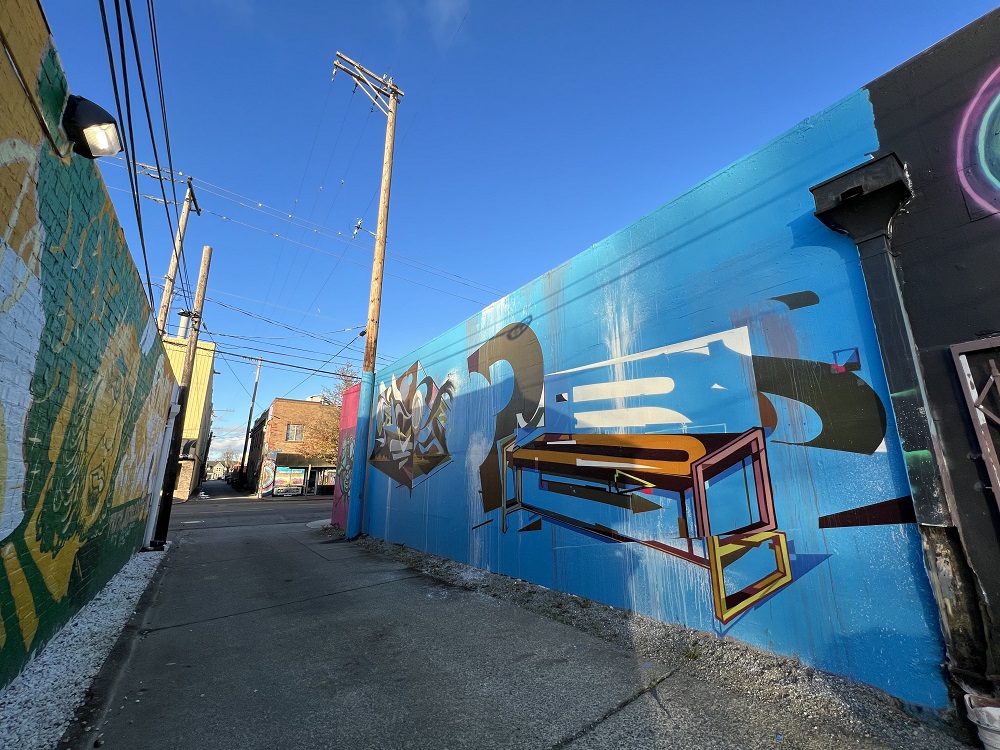
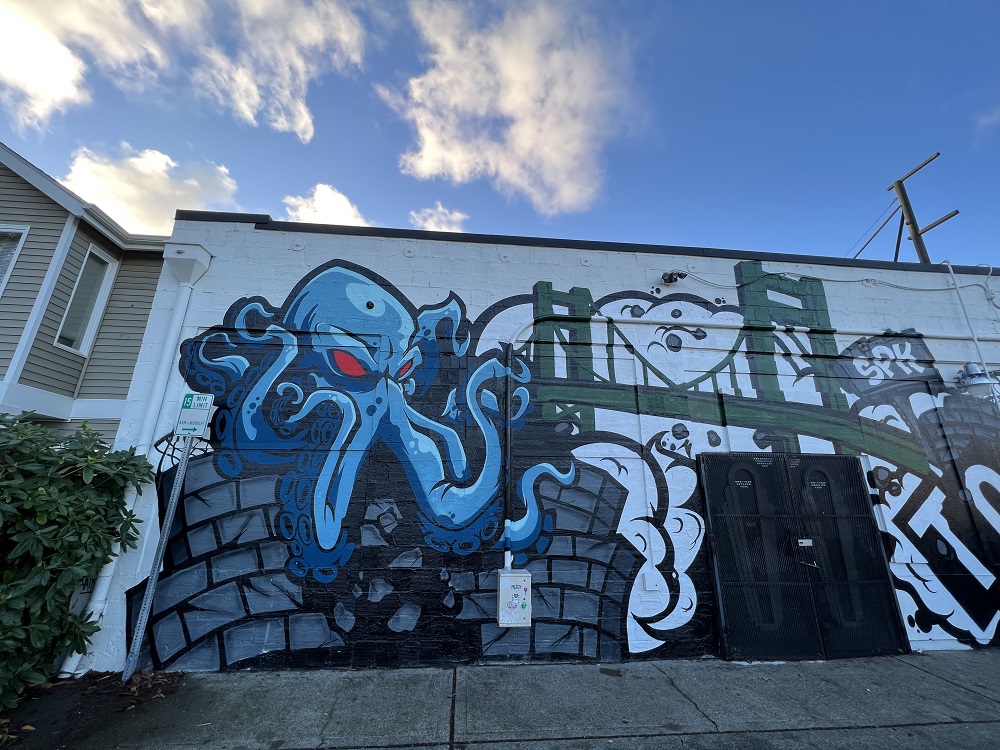
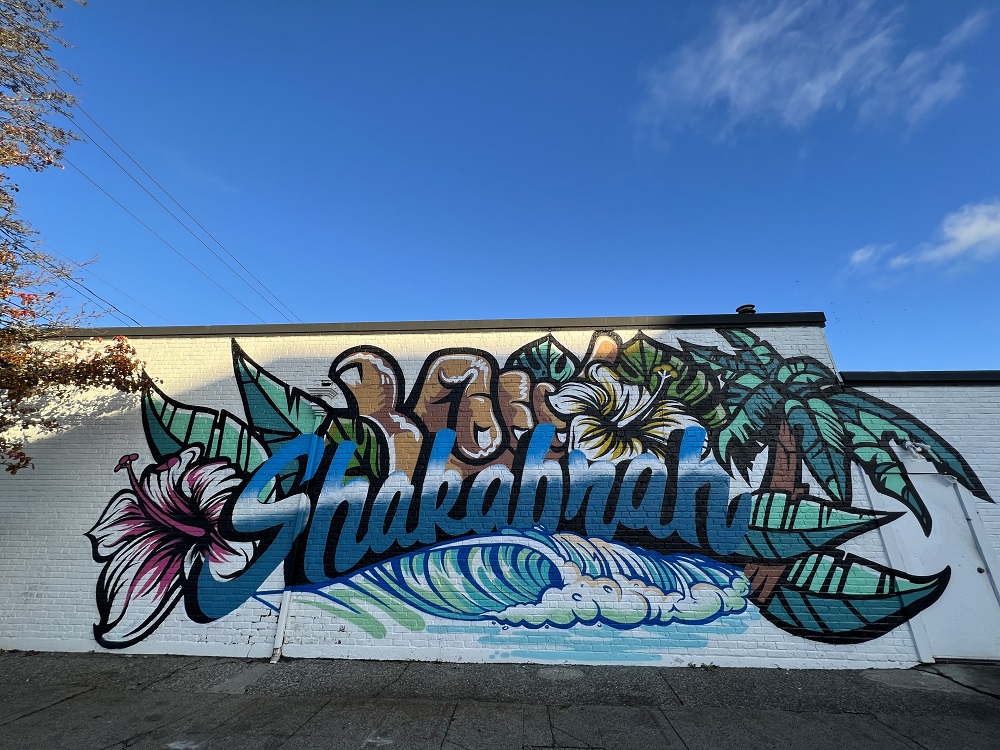
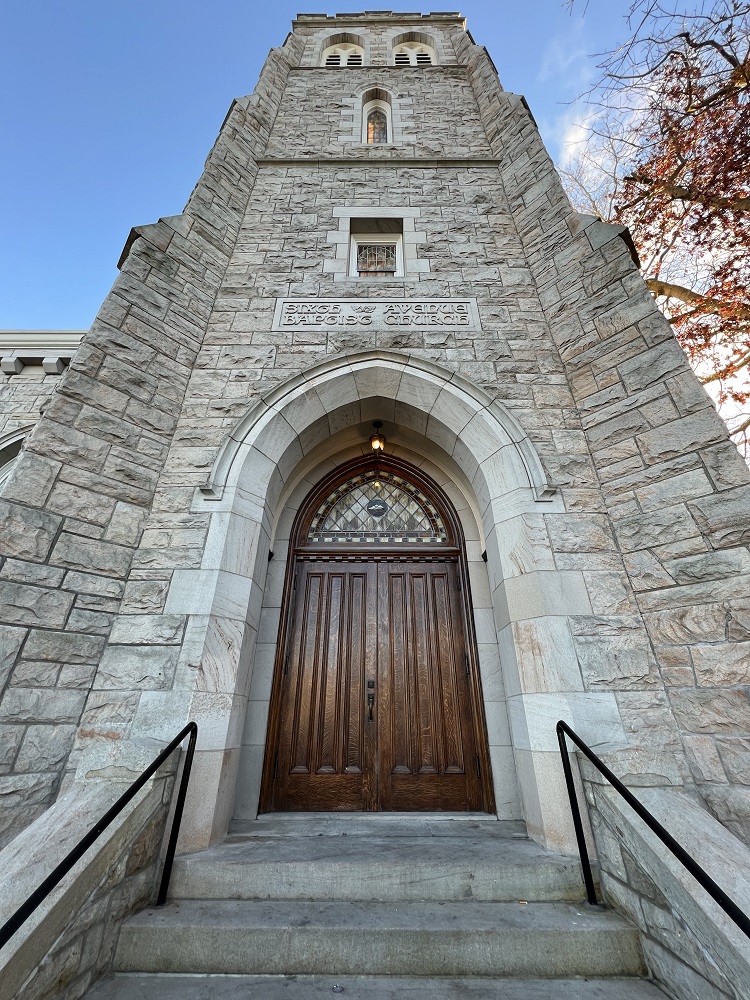
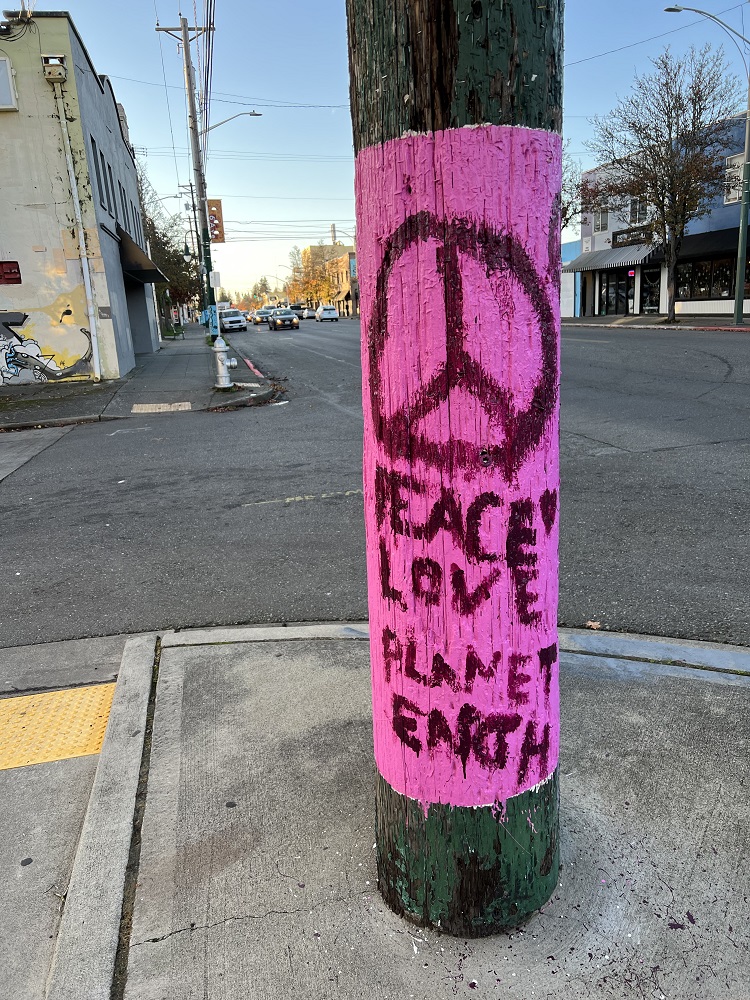
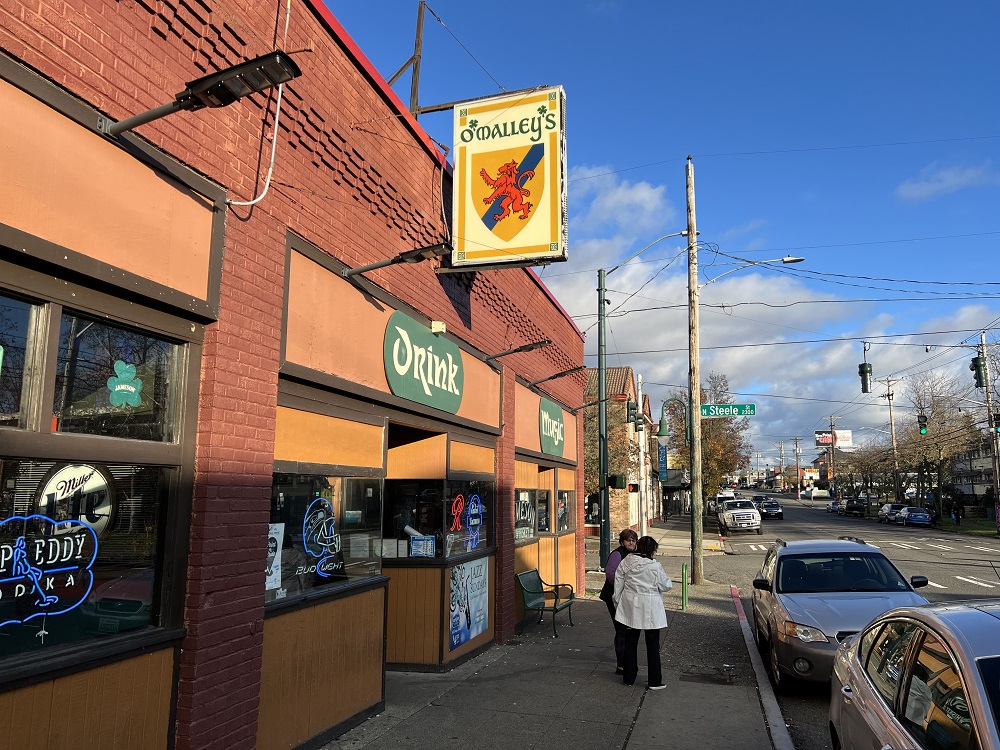
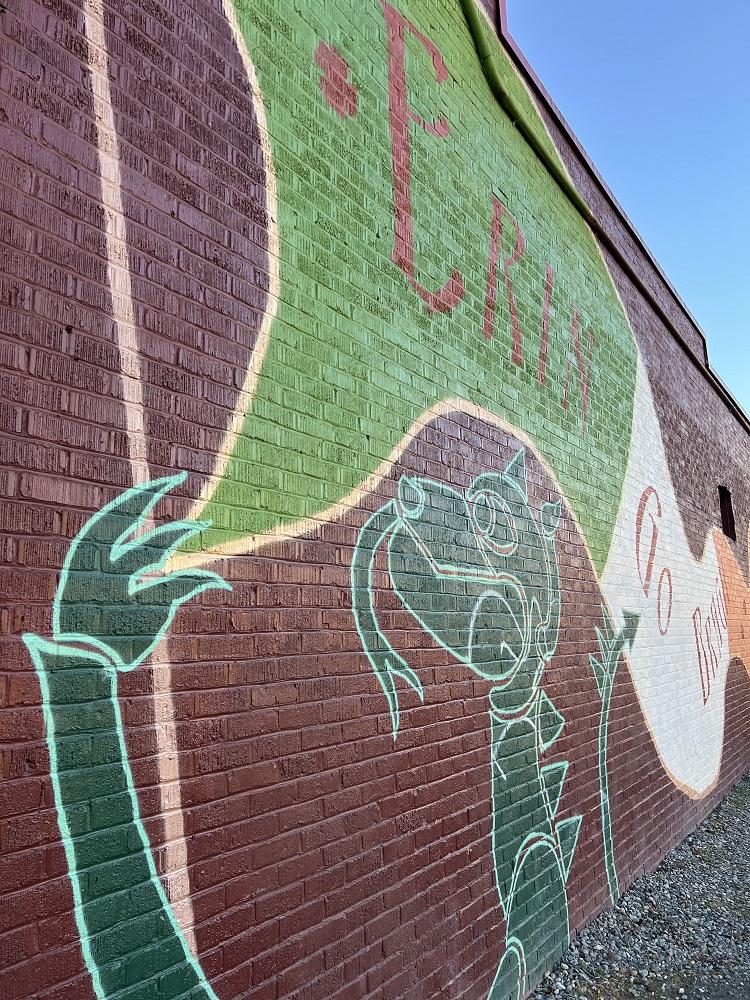
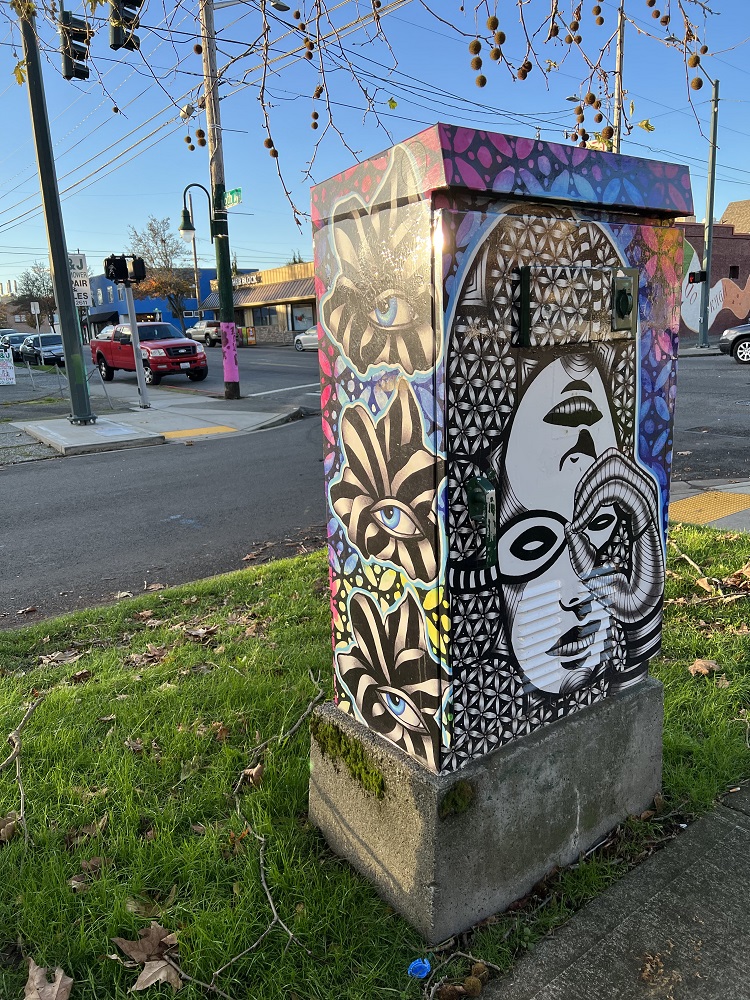
Sixth Avenue is in central Tacoma. This is the corner of 6th Ave & State Street.Bluebeard Coffee Roasters is right there, in this rehabbed building...A FunHouse pinball machine from 1990, by Williams Electronics. It stars a talking ventriloquist dummy named Rudy. The game is themed after the concept of an amusement park funhouse.This burrito/ taco eatery is not open, and is getting a make-over inside. This record shop is full of vinyl records, but they have a small selection of CDs as well. I bought CDs with Maria Callas and Ella Fitzgerald songs on. They are so cheap, it’s almost for free, I thought ($5 and $1).It’s been 13 years since the Seattle Super Sonics basketball team were sold and moved to Oklahoma City. Best I can tell, this mural is in honor of a guy that passed away recently and was a big Sonics fan.More art on the opposite wall. The wide-angle lens of my phone comes in handy for shots like these.Here’s the Seattle Kraken sea monster, mascot of the ice hockey team, emerging from the depths of Puget Sound, at the Tacoma-Narrows Bridge.Shakabrah is a casual breakfast spot around the corner with hearty egg dishes & pancakes, and burgers & sandwiches at lunch.The Baptist Church on 6th Avenue was constructed in1924 in the Gothic style with sandstone.Several utility poles have pink or green paint on to brighten them up.O’Malley’s Irish pub.Erin, Go Brah! says the artwork around the corner (Ireland Forever!).The eyes on the electric utility box are checking out the sun, sitting low and already well on its way back to the horizon at 3.30 pm (sunset is just an hour later).
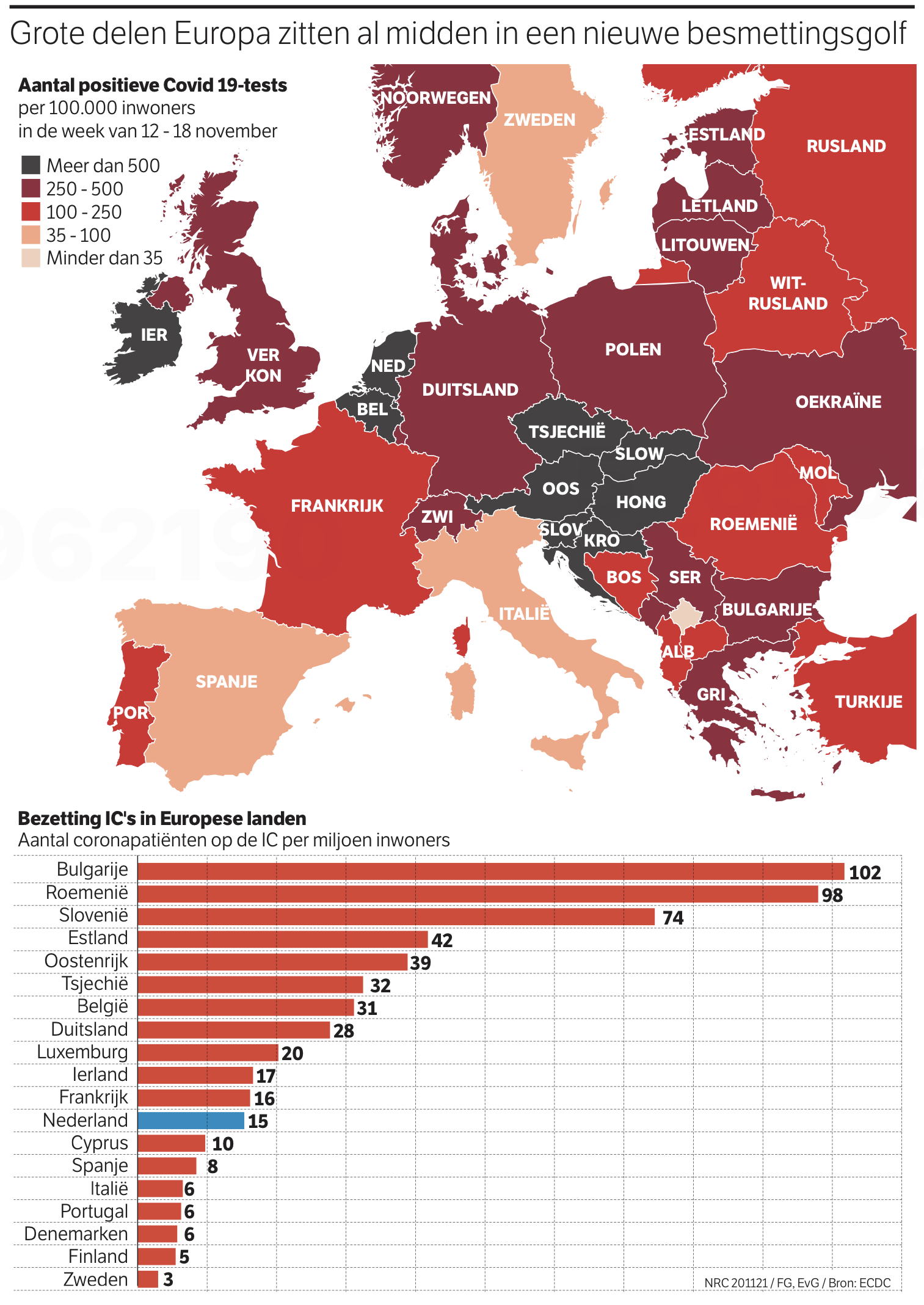
Several countries in Europe are in bad shape, in the grip of another spike of infections. Austria has started a 10-day national lockdown, which could be extended to 20.
A national vaccination rate of 60% —or even 70% —is just not cutting it. Too many people still refuse to get vaccinated. As someone noted wryly, many countries may have reached herd immunity: immunity from the truth.
‘Large Parts of Europe in Midst of New Wave of Infections’. Wow. The map shows the number of positive Covid-19 tests per 100,000 residents, per country. More than 500 new infections per 100,000 residents in one week, is not a number that I recall seeing that any state here in the USA came close to, not even at the peak of the previous wave. (The bar graph below shows patients in intensive care per million residents). [Infographic from Dutch publication NRC Handelsblad]
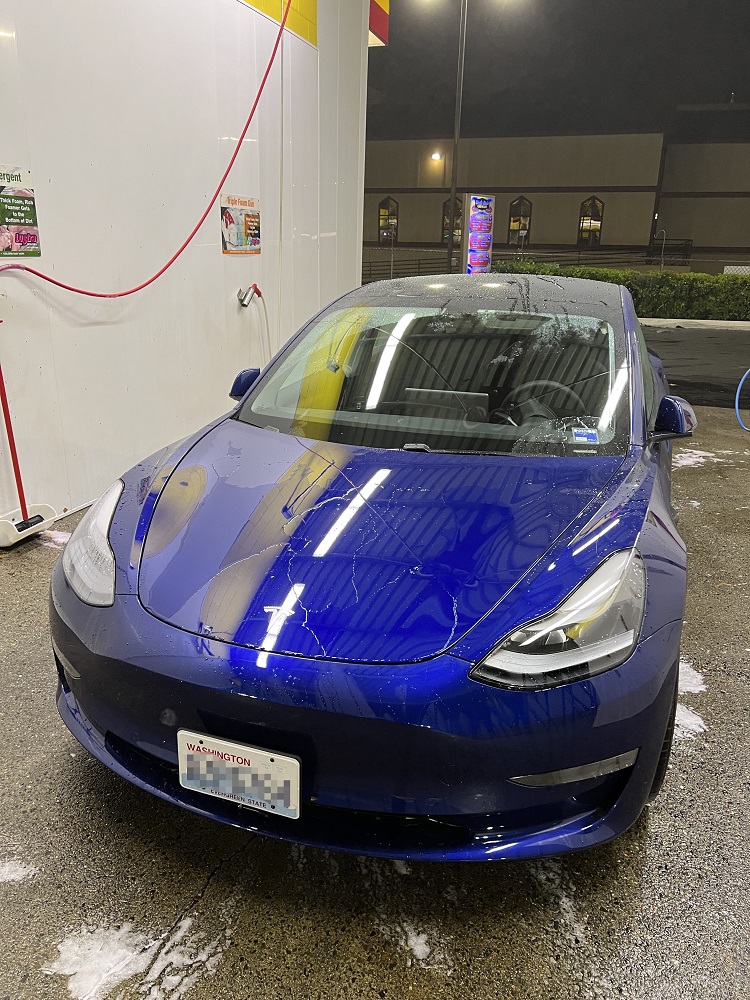
My car needed a wash, and off I went tonight, to Uncle Ike’s on 23rd Avenue. (Uncle Ike’s Car Wash, that is— not the Uncle Ike’s pot shop that is right next door).
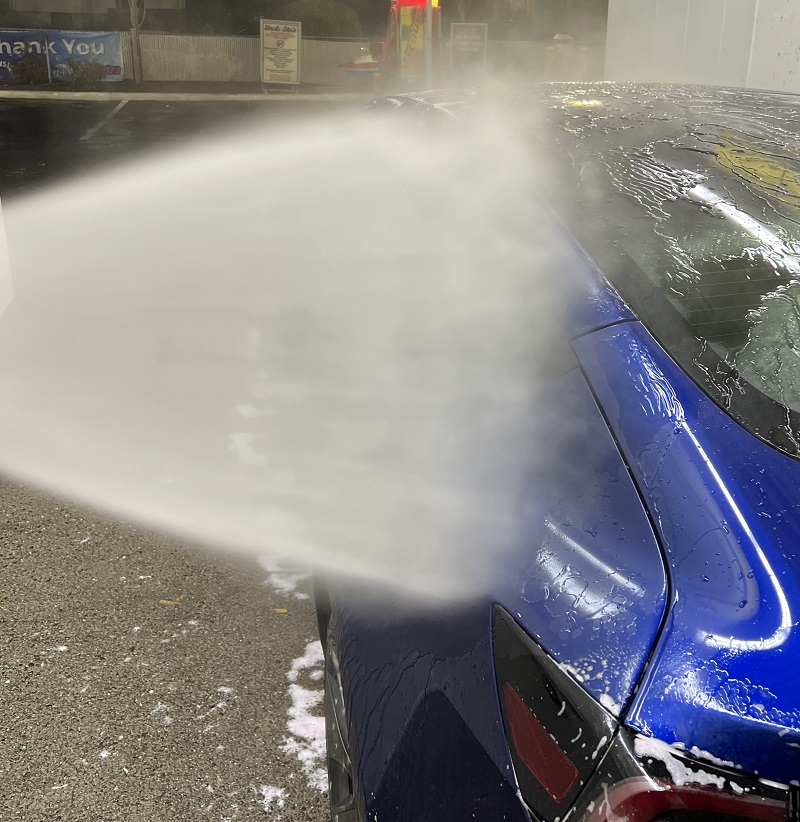
I do a pre-rinse, put soap on, wash the car & wheel caps by hand with a big mitt, and then rinse everything off.
I dry it all by hand. There is a new blow-dryer gun right there for use in the wash bay, and I might try that next time. Hopefully it won’t fry the paint. Yikes. That will be bad.
Time in the wash bay is money, though. I spent $12 on the wash cycle tonight, a little more than usual. I also forgot to put the car in wash mode before I started washing (it gets the windshield wipers out of the way).
Done with the wash & rinse. I’m about to hop in the car to take it to the vacuum bay, to dry it all off by hand*, outside, as well as inside the doors, the door linings, the trunk lid and the frunk lid, where a little water inevitably gets in. The drying takes a lot longer than the washing & rinsing! *With a set of drying cloths called ‘Dry Me A River’, that I had bought on Amazon.
The Norwegian Forest Cat (or Wegie as it’s often called) is a sweet, calm, and gentle feline who’s often shy around new people, but is known for being sociable and affectionate with those they know well. During World War II, the breed became nearly extinct.
I see tomorrow is National Absurdity Day.
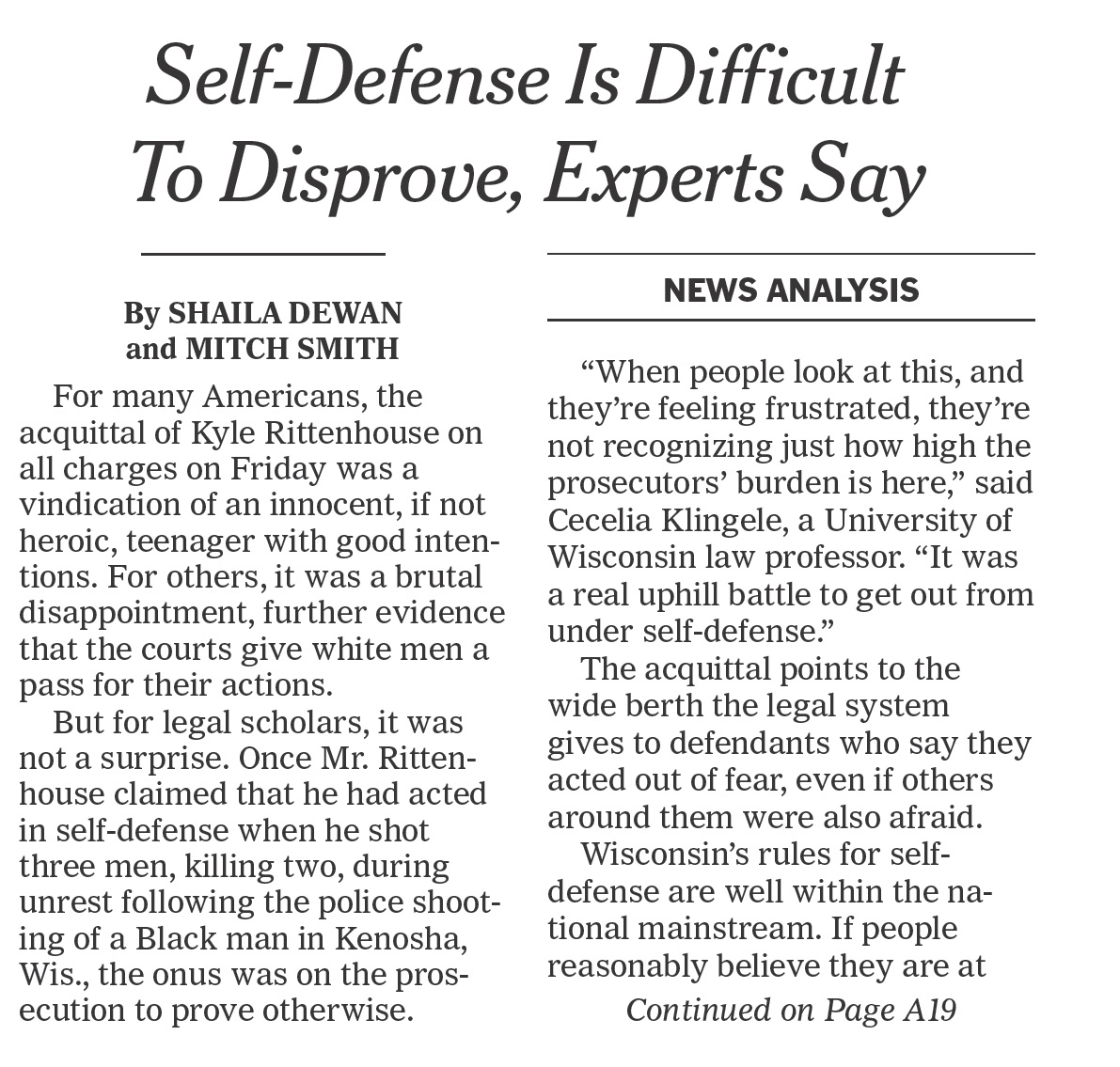
All right/ whatever .. but can anything that happens tomorrow be more absurd* than today’s Rittenhouse verdict?
*ab·surd
/əbˈsərd,əbˈzərd/ adjective
wildly unreasonable, illogical, or inappropriate.
“the allegations are patently absurd”
arousing amusement or derision; ridiculous.
The Rittenhouse trial was about the events in Kenosha, Wisconsin in August last year.
From Wikipedia:
On August 25, 2020, during the unrest in Kenosha, Wisconsin, after the police shooting of Jacob Blake, Kyle Rittenhouse, a 17-year-old from Antioch, Illinois, fatally shot two men and wounded another during three confrontations.
Rittenhouse had armed himself with an AR-15 style rifle and said he was in Kenosha to protect a car dealership from being vandalized and to provide medical aid.
Rittenhouse had been pursued by a group that included Kenosha resident Joseph Rosenbaum, who was unarmed.
After armed Racine resident Joshua Ziminski fired a shot into the air, Rittenhouse turned towards Rosenbaum, who lunged at him and tried to take his rifle.
Rittenhouse fired four times at Rosenbaum, killing him. Rittenhouse then ran down the street while being followed by a crowd of around a dozen people.
He tripped and fell to the ground after being hit in the head, then fired twice at a 39-year-old man who jump kicked him, his shots missing both times.
While Rittenhouse was still on the ground, Silver Lake resident Anthony M. Huber struck him in the shoulder with a skateboard and attempted to take his rifle.
Rittenhouse fired at Huber once, fatally striking him in the chest. When West Allis resident Gaige Grosskreutz approached Rittenhouse while pointing a Glock pistol at him, Rittenhouse shot him once in the right arm.
Public sentiment of the shootings was polarized and media coverage both polarized and politicized.
Rittenhouse was charged with two counts of homicide, one count of attempted homicide, two counts of reckless endangerment, one count of unlawful possession of a firearm, and one count of curfew violation. Judge Bruce Schroeder dismissed the unlawful possession charge and the curfew violation during the trial, which began in Kenosha on November 1, 2021. It ended on November 19 when the jury found him, by unanimous agreement, not guilty of all the remaining charges.
I see legal scholars are not surprised by the verdict. That does not make me feel better. A 17-year old illegally bought a legal (why? WHY?) AR-15 assault rifle. Brings it across the Illinois-Wisconsin state line to a volatile protest. Gets in trouble and kills two people with it. Innocent because he ‘defended’ himself? [From the New York Times online]
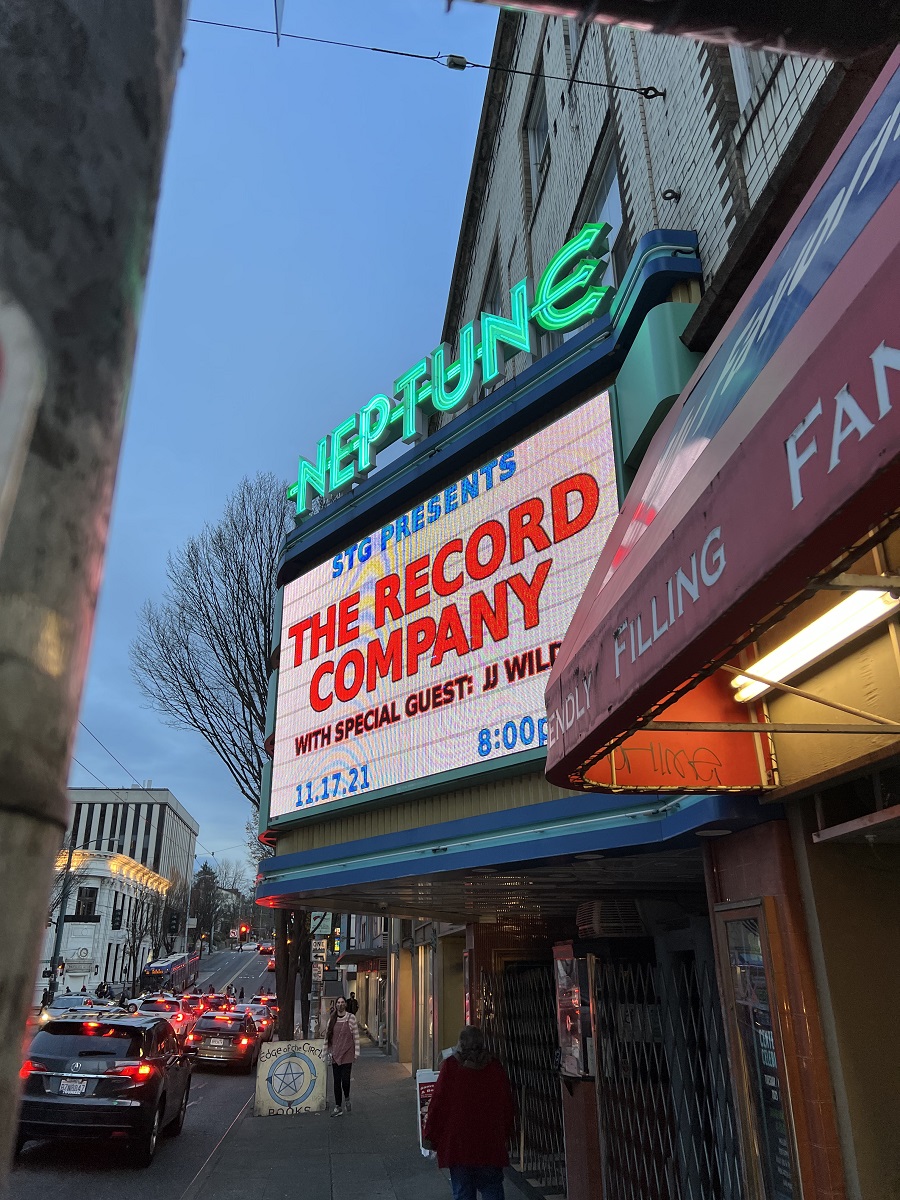
The Neptune theatre in U District is now officially 100 years old.
I took this picture last night as I made my way back to the light rail station around the corner.
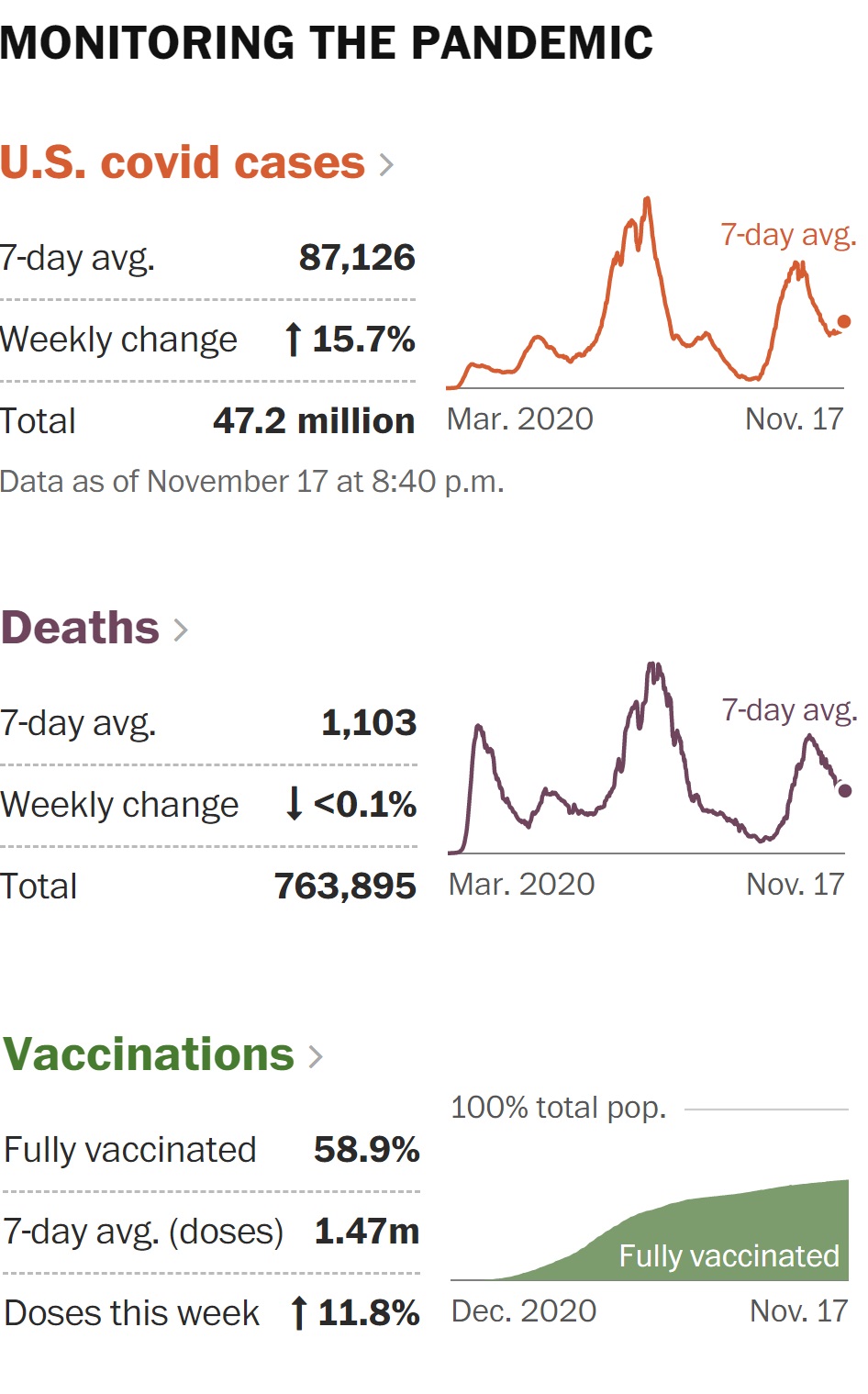
We still have 60 million unvaccinated Americans that qualify for the vaccine, which is free, and widely available.
The 7-day average for the number of new Covid-19 cases is 87,000 (16% up in one week). Dr. Fauci said today that it needs to be well under 10,000 per day, before one can declare that the pandemic is under control in the United States. Asked when that would be, he said it’s impossible to know.
Cases gave gone up in 12 states the last two weeks. (Washington State is one of them. Seattle and King County is doing better than most other counties in the state).
Infographic from the Washington Post. Yes, cases have come down from that latest peak, but have now stalled at a high plateau. I would not have thought that we would still have 1,100 deaths every day, at this point in the pandemic.
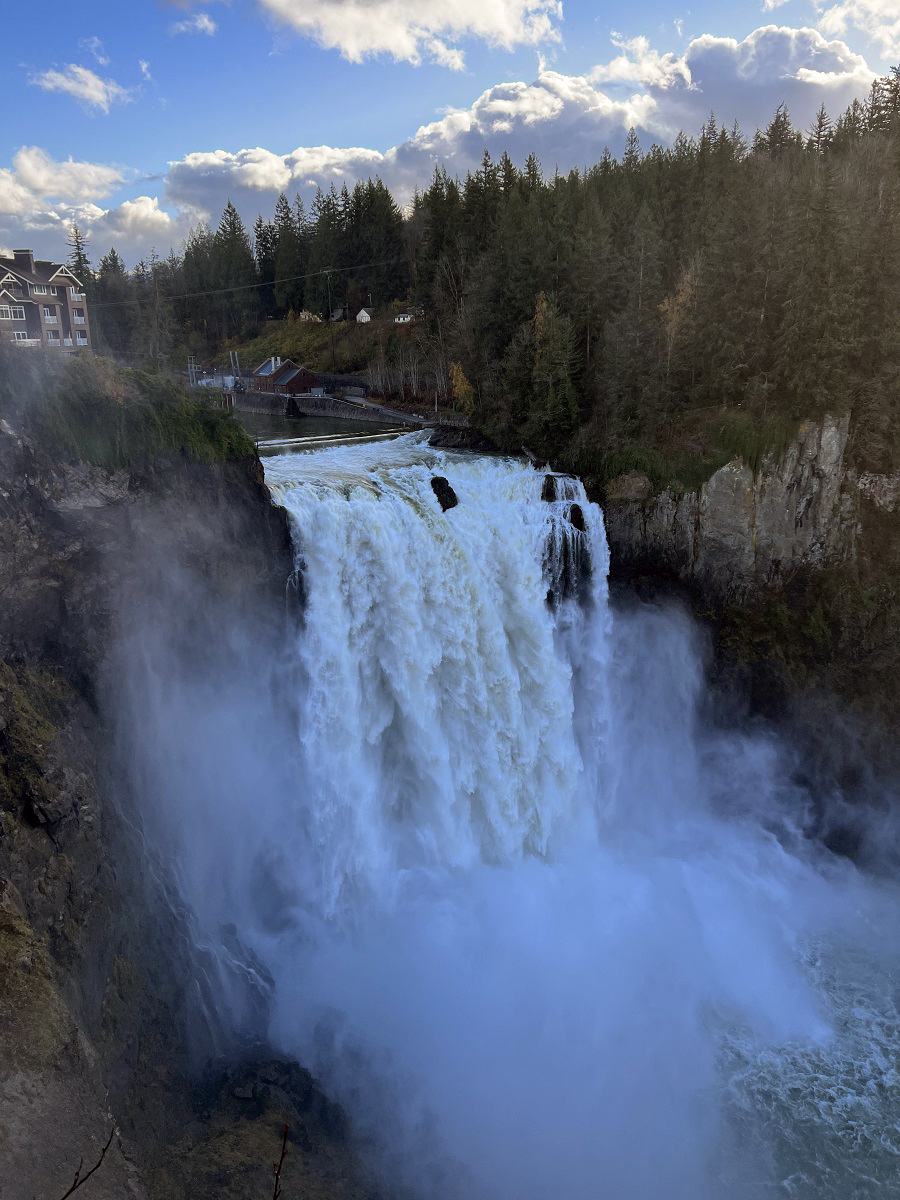
I drove out to Snoqualmie Falls today.
The falls are only some 30 miles east from Seattle as the crow flies, but a 40-minute drive.
Snoqualmie Falls has a 268-foot (82 m) drop, and is by far the most famous waterfall in Washington State. It draws a million visitors a year.
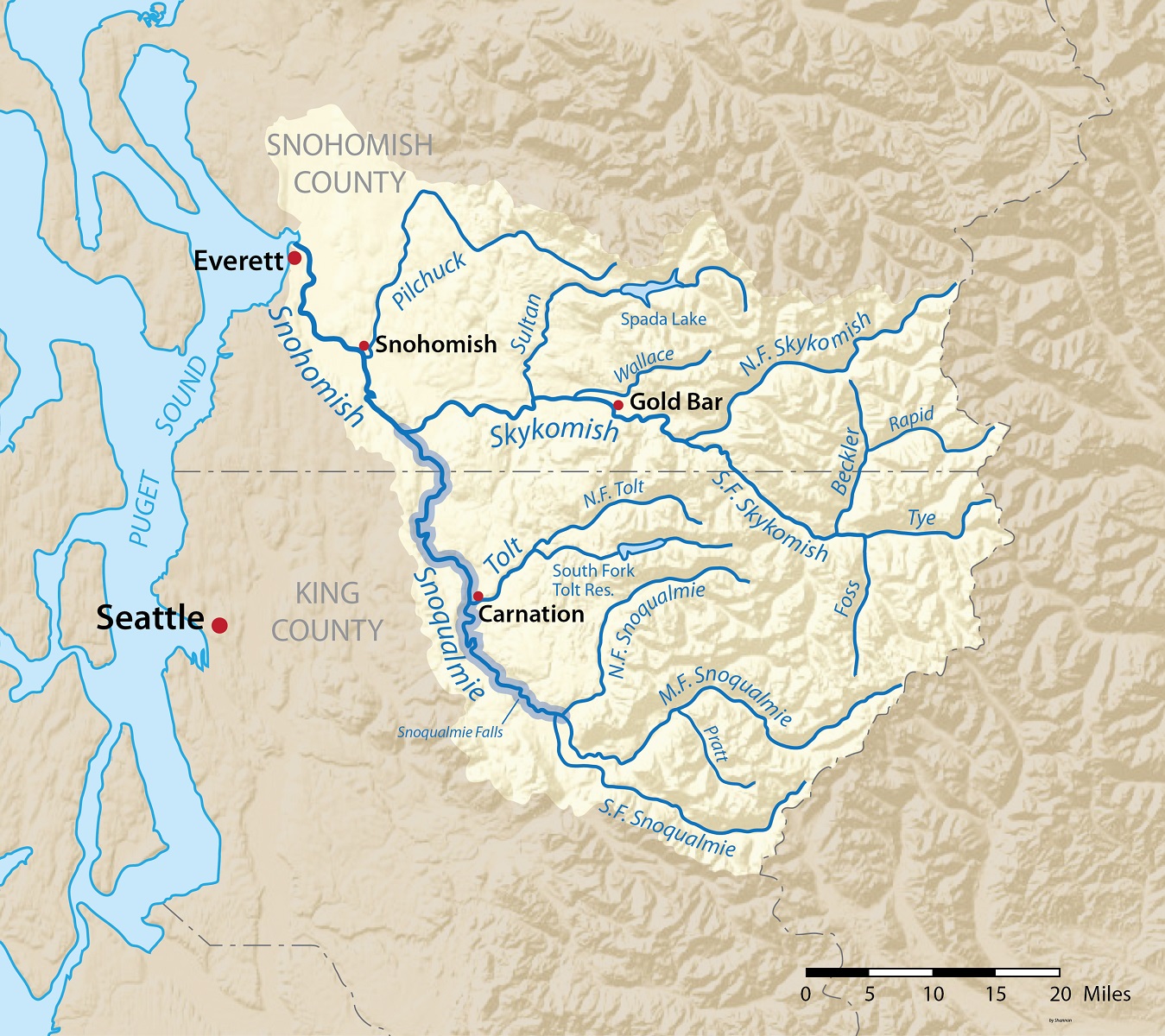
The Snoqualmie River is a 45-mile/72 km-long river in King County and Snohomish County in Washington State. The Snoqualmie River is part of the Snohomish Watershed, on the west side of the Cascades. The Snoqualmie runs into the Snohomish River, which empties into Puget Sound at Everett. [Map from Wikipedia, made using USGS National Map data]Snoqualmie Falls seen from the high view point farthest from the lodge. (There is a trail to the bank of the river down below for a different view, but a sign said that the trail is closed). That’s the Salish Lodge & Spa on the left, and parts of the Snoqualmie Falls Hydroelectric Plant are visible on the opposite bank (middle of the picture). [iPhone 13 Pro picture, standard lens]
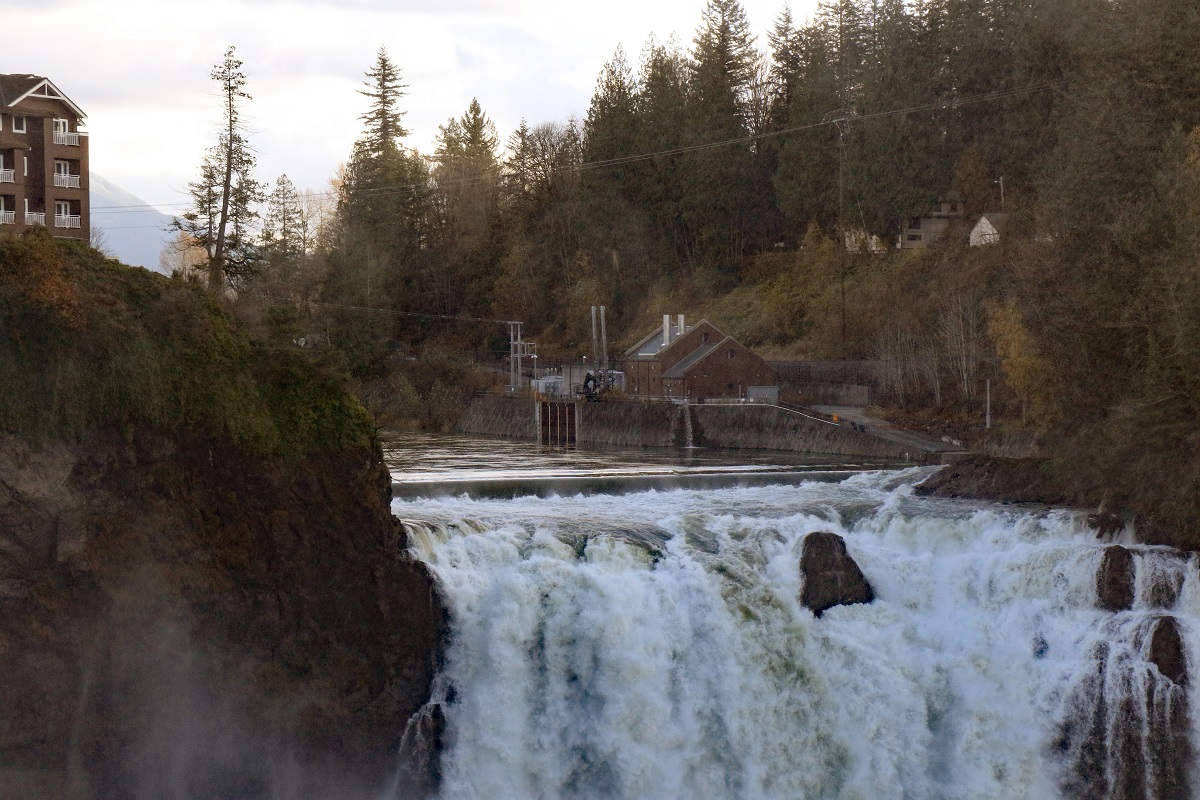
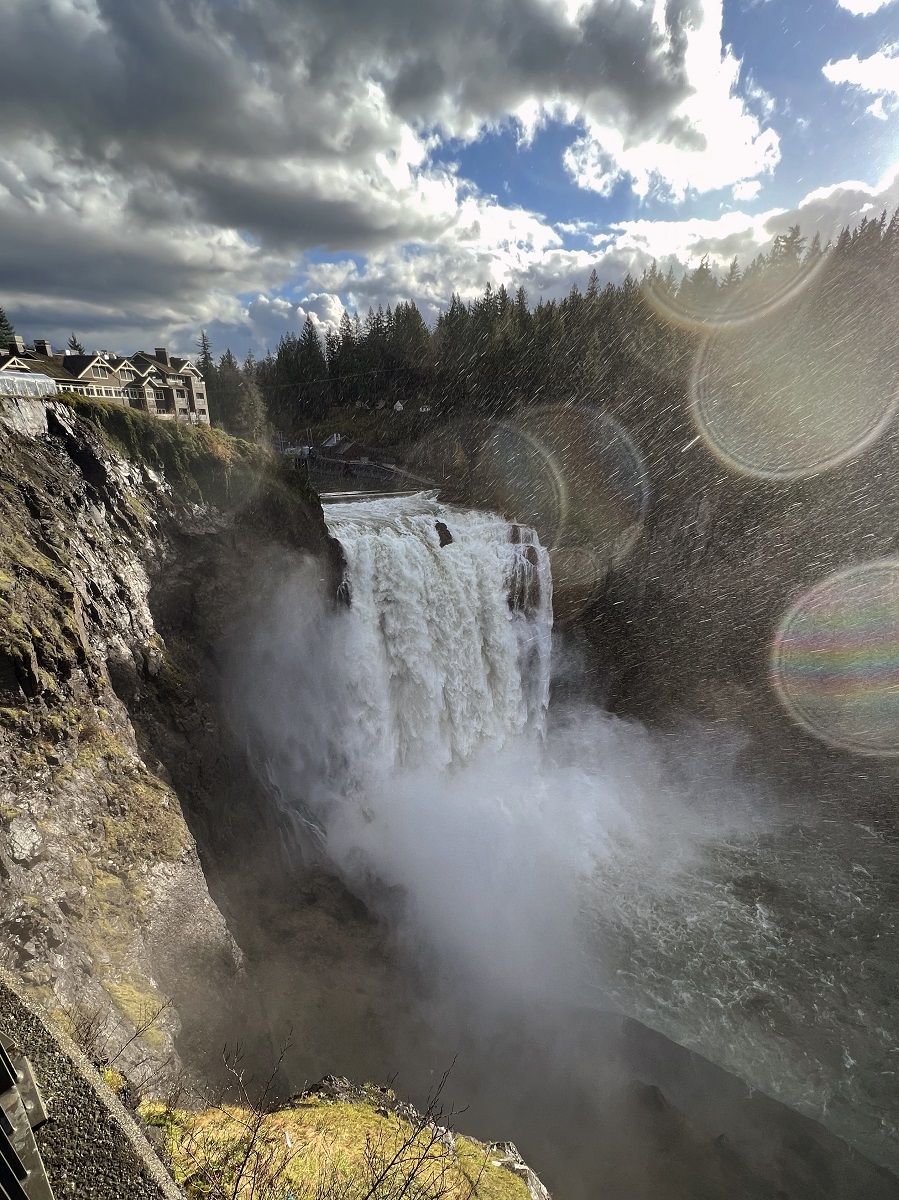
A closer look at the power plant. It consists of two power houses. Plant 1 is underground (installed capacity 13.7 MW) and was completed in 1899, and the picture shows Plant 2 (40.2 MW) which was completed in 1910, for a total installed capacity of 53.9 MW. [Canon EOS 7D Mk II, telephoto lens]Most of the pictures that I took were spoiled by the persistent mist and water droplets from the thundering falls down below. The large lens of my big digital camera kept getting fogged up and downright wet. My iPhone with its tiny lens openings worked better under these conditions. At this time of day (early afternoon) the sun sits in the wrong place for an evenly-lit picture, but hey, you work with what you have. The lens flares even have little rainbows in them. [iPhone 13 Pro, Wide-angle lens]
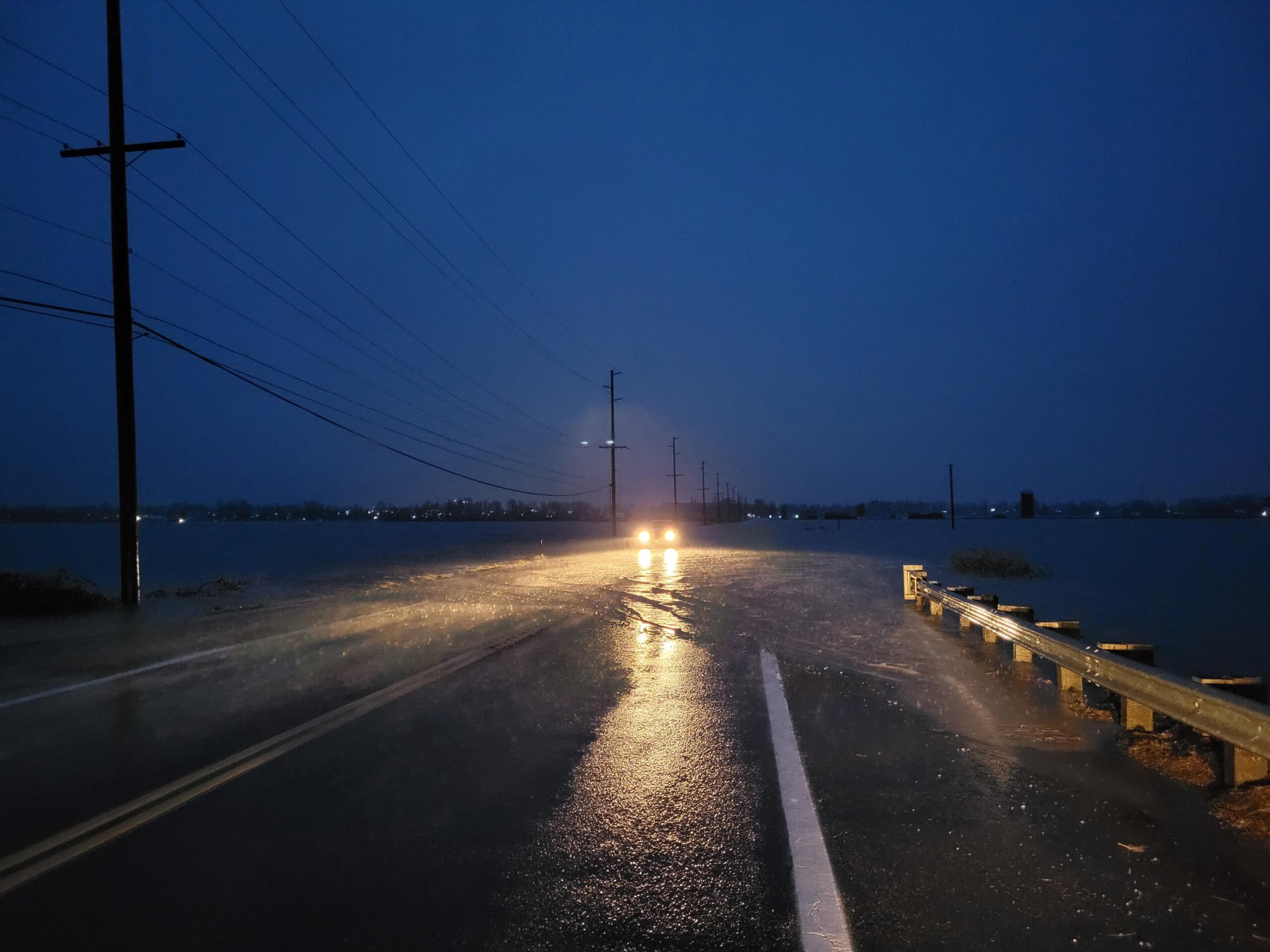
The heavy rains of the last few days has stopped, but there is extensive flooding in Whatcom County (in the far northwest, against the Canadian border).
Interstate 5 is also closed overnight near Bellingham due to a mudslide.
Untitled picture of Hannegan Road, between Bellingham and Lynden (posted on the website of KGMI News). Looking at Google maps, I believe that the water is from Tenmile Creek nearby, that is flooding.
P.S. I’m not sure where this motorist is coming from, but it’s very dangerous to drive into or through running water, and even more so in the dark.
The 97 points of the Glasgow Climate Pact (COP26) make heavy reading for a Sunday night, but I glanced through it. Man a.. and China and Russia did not even attend the conference.
The United States is at least serious again to make an effort, but as George Monbiot writes for The Guardian, it’s too late for incremental changes, and we need a critical minority to commit to the cause.
It works like this: ”There’s an aspect of human nature that is simultaneously terrible and hopeful: most people side with the status quo, whatever it may be. A critical threshold is reached when a certain proportion of the population change their views. Other people sense that the wind has changed, and tack around to catch it. There are plenty of tipping points in recent history: the remarkably swift reduction in smoking; the rapid shift, in nations such as the UK and Ireland, away from homophobia; the #MeToo movement, which, in a matter of weeks, greatly reduced the social tolerance of sexual abuse and everyday sexism. But where does the tipping point lie? Researchers whose work was published in Science in 2018 discovered that a critical threshold was passed when the size of a committed minority reached roughly 25% of the population. At this point, social conventions suddenly flip. Between 72% and 100% of the people in the experiments swung round, destroying apparently stable social norms. As the paper notes, a large body of work suggests that “the power of small groups comes not from their authority or wealth, but from their commitment to the cause”.
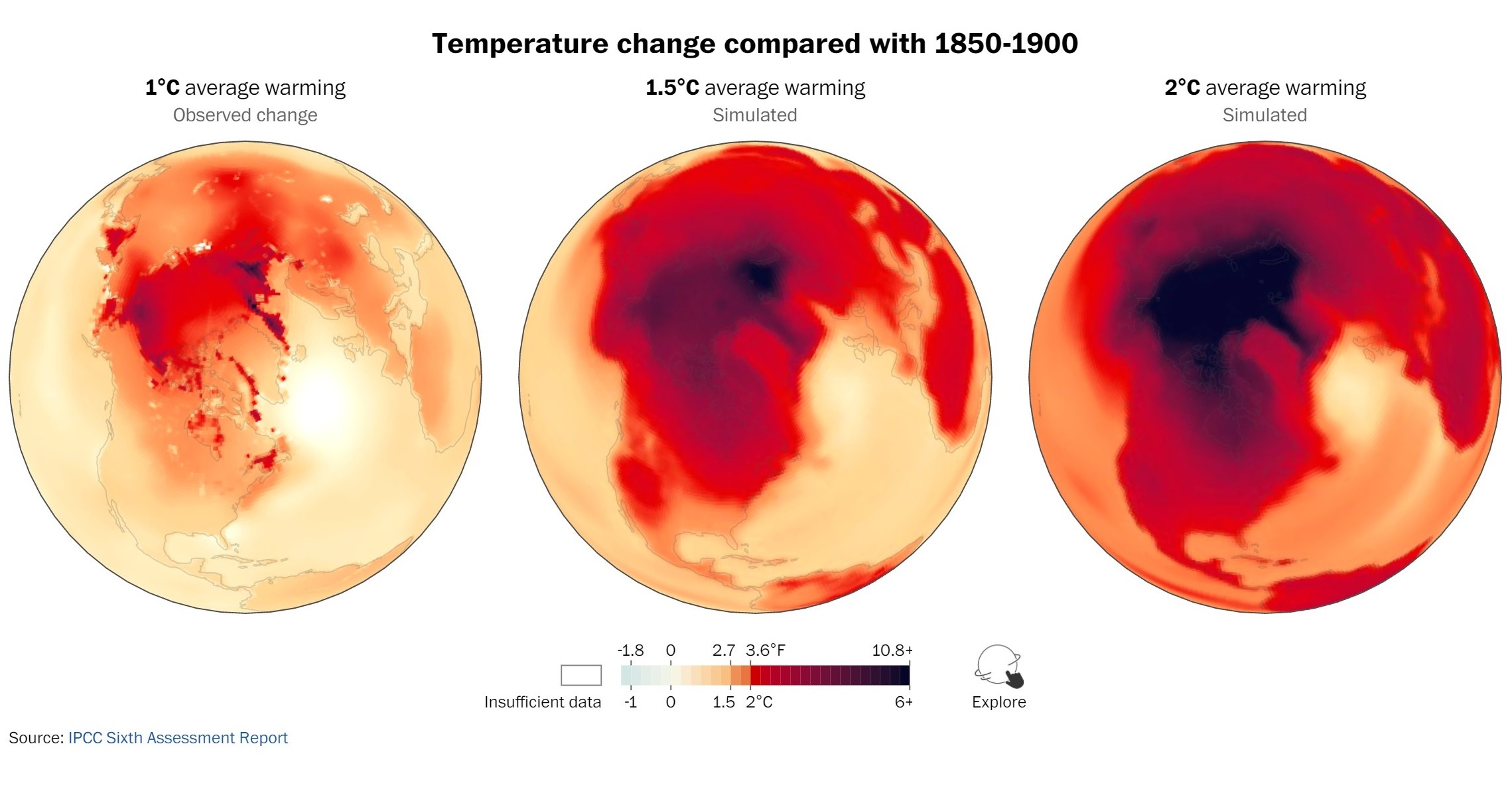
As far as the hard numbers go, here is a to-the-point summary written by Adam Taylor and Harry Taylor in the Washington Post: Where (temperature change) are we at now? A Washington Post analysis of multiple data sets has found that Earth has already warmed more than 1 degree Celsius on average over the past century. Some places may already have seen rises of 2 °C.
Where are we headed? In their latest report, the Intergovernmental Panel on Climate Change (IPCC) estimated that under the current scenario, the world would likely hit the 1.5 °C threshold by 2040. Under the most optimistic scenario presented in the report, global temperatures would reach 1.5 °C by the middle of the century and then drop back down as emissions were cut further, potentially avoiding some of the worst outcomes. Under the worst scenario envisaged by the IPCC, the best estimate was that the world will likely see a rise of 4.4 °C by the end of the century — with an extreme impact on life on Earth.
Human activity has warmed the climate by 1 °C (or maybe a little more) over the last century. Experts think it is here at then end of 2021, out of reach to limit further warming by the end of the century to 1.5 °C. These simulations show that even if humanity arrives at the year 2100 with warming limited to 2 °C, there will be places (the poles) that will see temperature rises of some 10 °C, with very dramatic and catastrophic impacts on Earth’s climate. [Infographic from the Washington Post]
It has been a soggy week.
The rain gauge at Sea-Tac airport has already logged more than 5 inches of rain for the month of November.
There is a 12-hour break in the rain right now, but more on the way for Saturday, Sunday and Monday.
Most of the rivers here are under a flood watch until Tuesday afternoon.
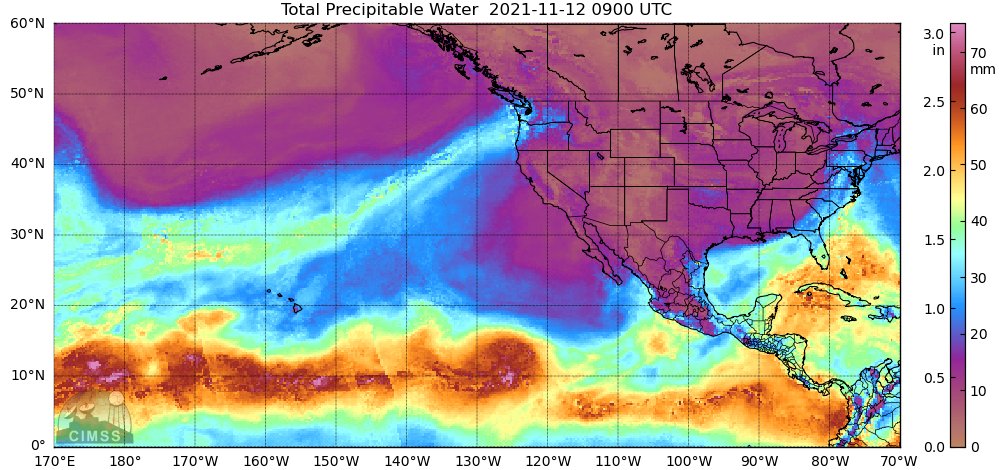
A plot of precipitable water* from overnight. (It’s a classic ‘Pineapple Express’: moisture builds up in the tropical Pacific around Hawaii (on the left, middle of the picture), and then stream towards, and wallop the Pacific Northwest). *Precipitable water is the depth of water in a column of the atmosphere, available for precipitation. Tropical air masses hold a lot of PW. [Text and graph posted by National Weather Service Seattle @NWSSeattle on Twitter]
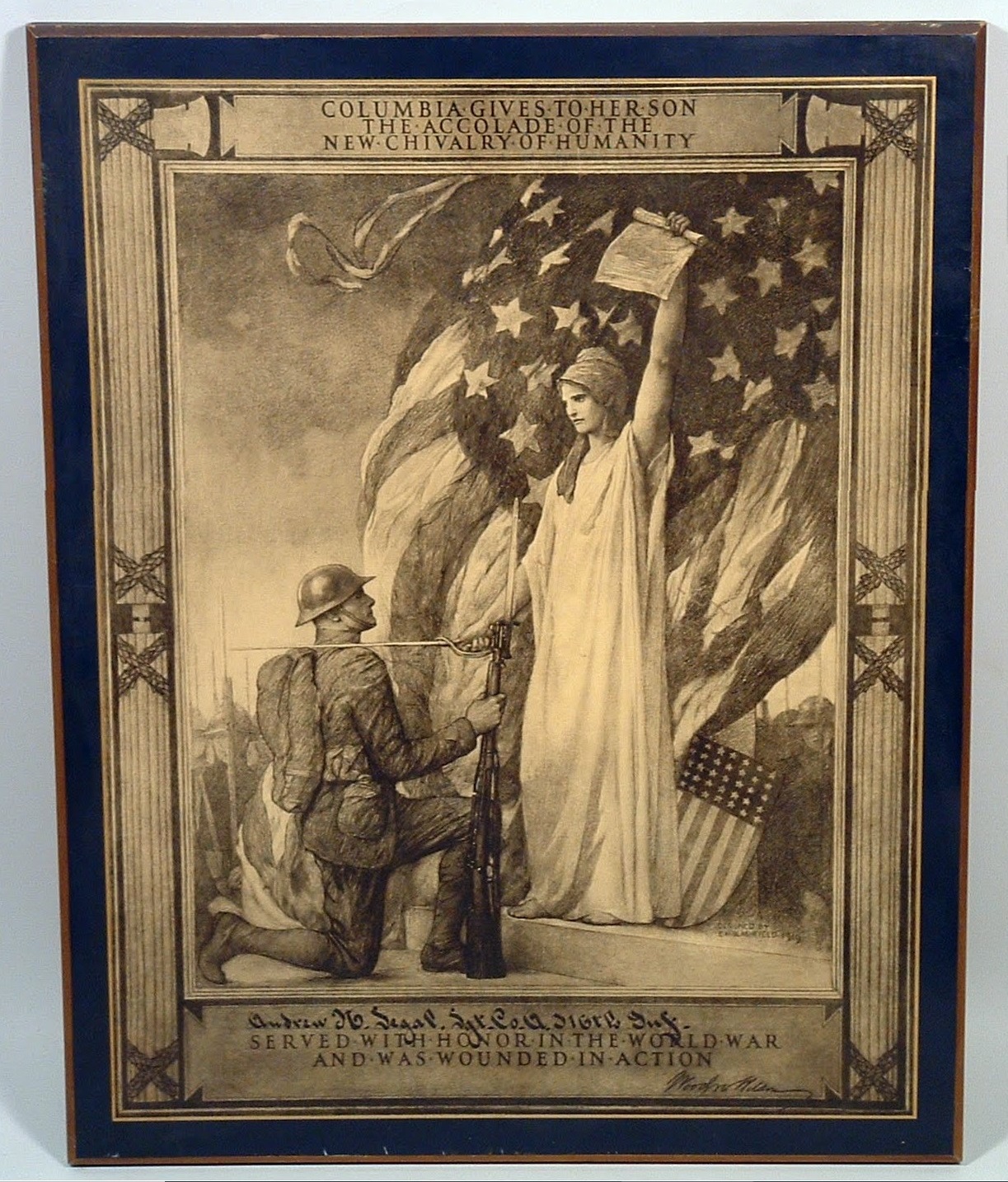
World War I commendation plaque awarded to wounded soldiers. Lady Columbia in front of the flag places a sword on shoulder of a kneeling soldier. Copies of this plaque were awarded to wounded and killed World War I soldiers. [Original is in the National Museum of American Jewish Military History, Washington DC, United States. Picture from Google Arts & Culture]
Above is the plaque awarded to Sgt. Andrew Segal.
At the top it reads “COLUMBIA GIVES TO HER SON THE ACCOLADE ON THE NEW CHIVALRY OF HUMANITY”.
The inscription below reads “Andrew N. Segal Sgt. Co. G 316th Inf. SERVED WITH HONOR IN THE WORLD WAR AND WAS WOUNDED IN ACTION”, with President Woodrow Wilson’s signature.
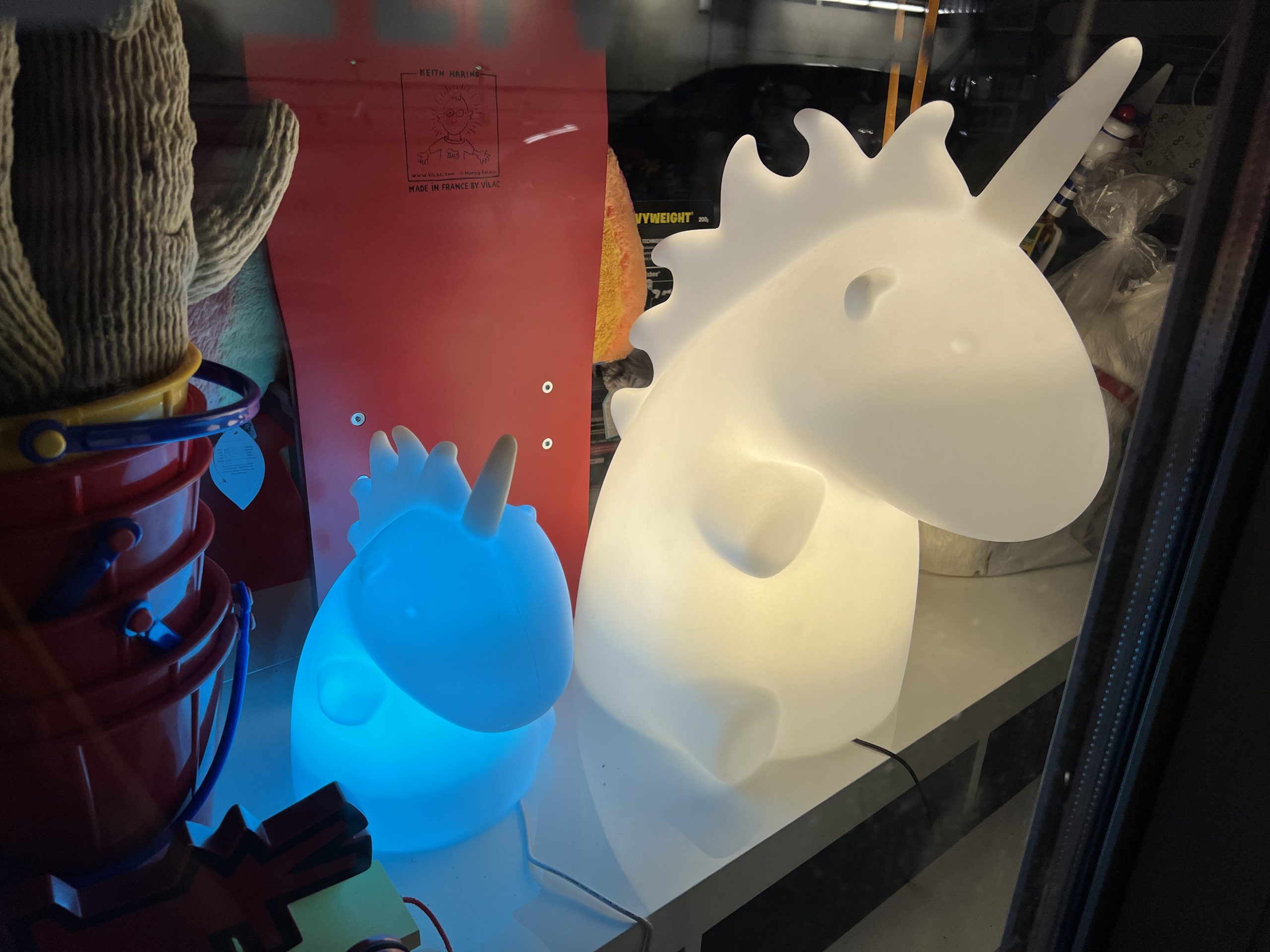
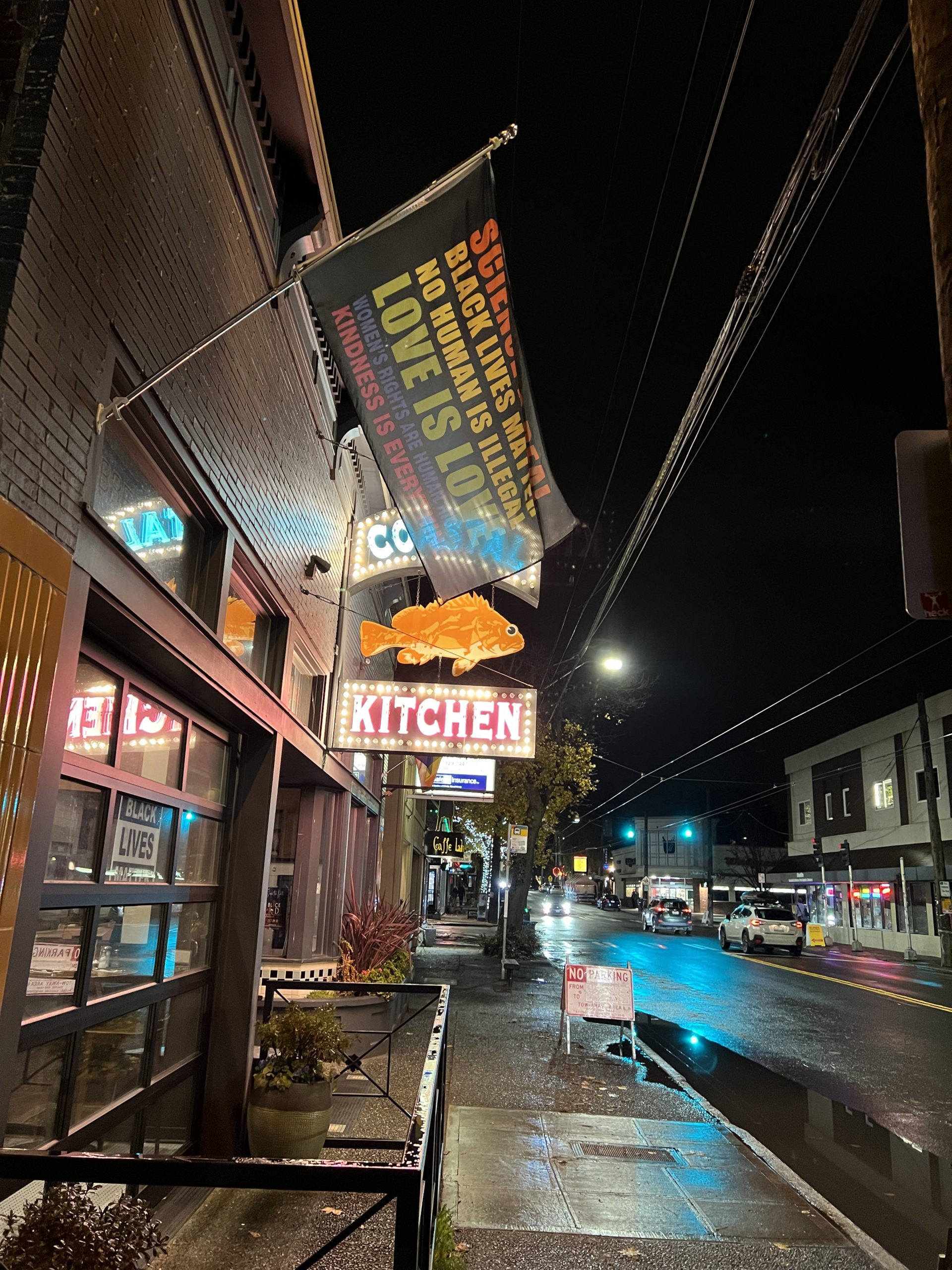
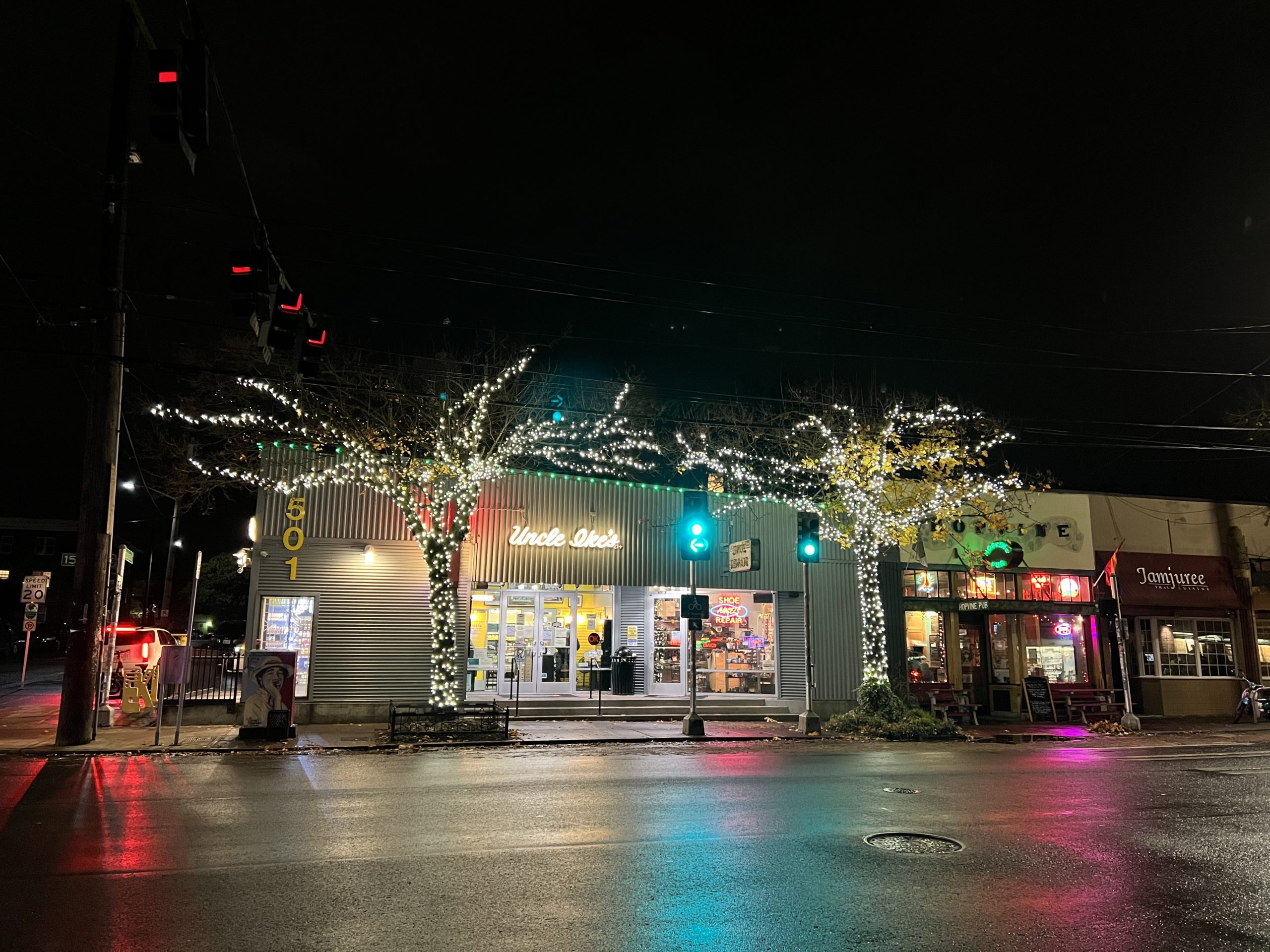
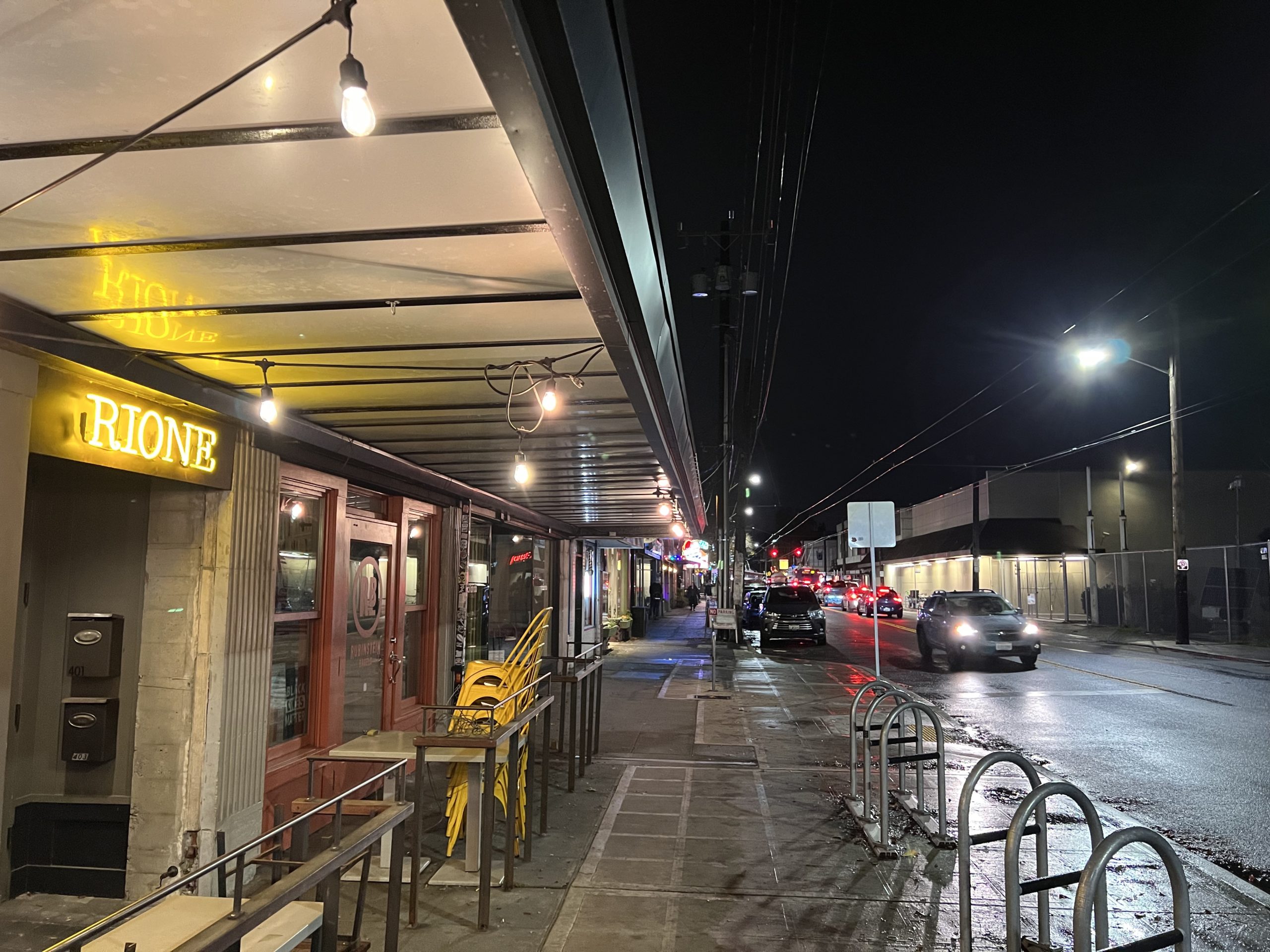
I took these pictures on 15th Avenue here on Capitol Hill tonight with my iPhone 13Pro. Perfectly lit and sharp night pictures are really hard to take with my big Canon EOS 7D Mk II DSLR camera— even when using its automatic program mode.
Here’s how Apple described what happens in ‘night mode’ when it debuted on iPhone11 (it’s a lot!): ‘Night mode comes on automatically when needed — say, in a candlelit restaurant. When you tap the shutter, the camera takes multiple images while optical image stabilization steadies the lens. Then the camera software goes to work. It aligns images to correct for movement. It discards the sections with too much blur and fuses sharper ones. It adjusts contrast so everything stays in balance. It fine‑tunes colors so they look natural. Then it intelligently de‑noises and enhances details to produce the final image. It all adds up to night shots that stand apart — with more detail, less noise, and an authentic sense of time and place’.