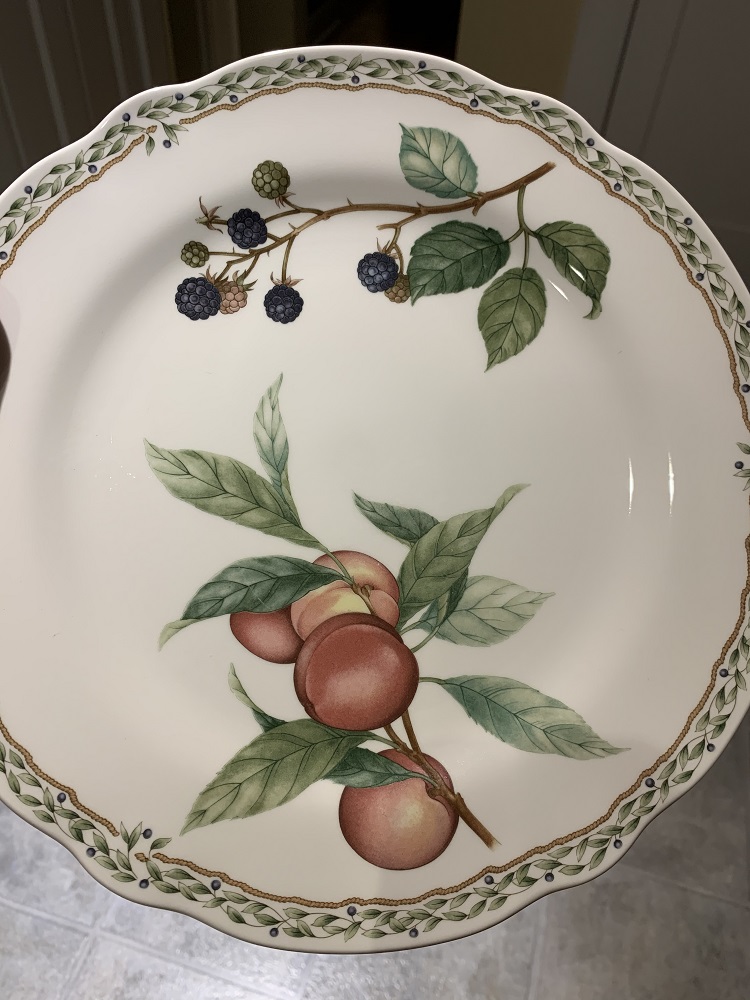
I broke one of my Noritake (Japanese porcelain) dinner plates last week in spectacular fashion: I made it explode on my gas cooktop with a loud bang!
(I accidentally turned on the gas burner underneath the plate for a few minutes).
Lucky for me, there were no flying pieces of porcelain, just the broken pieces on the cooktop to clean up.
This pattern is Royal Orchard by Noritake. Beautiful, not? Its production has stopped long ago (1989- 2002), but the Replacements.com warehouse in North Carolina still has these brand new ones in stock. Porcelain is said to be at the top of the list of heirlooms that millennials really do not want, and I am completely OK with that. That way there will be so much more left for me.
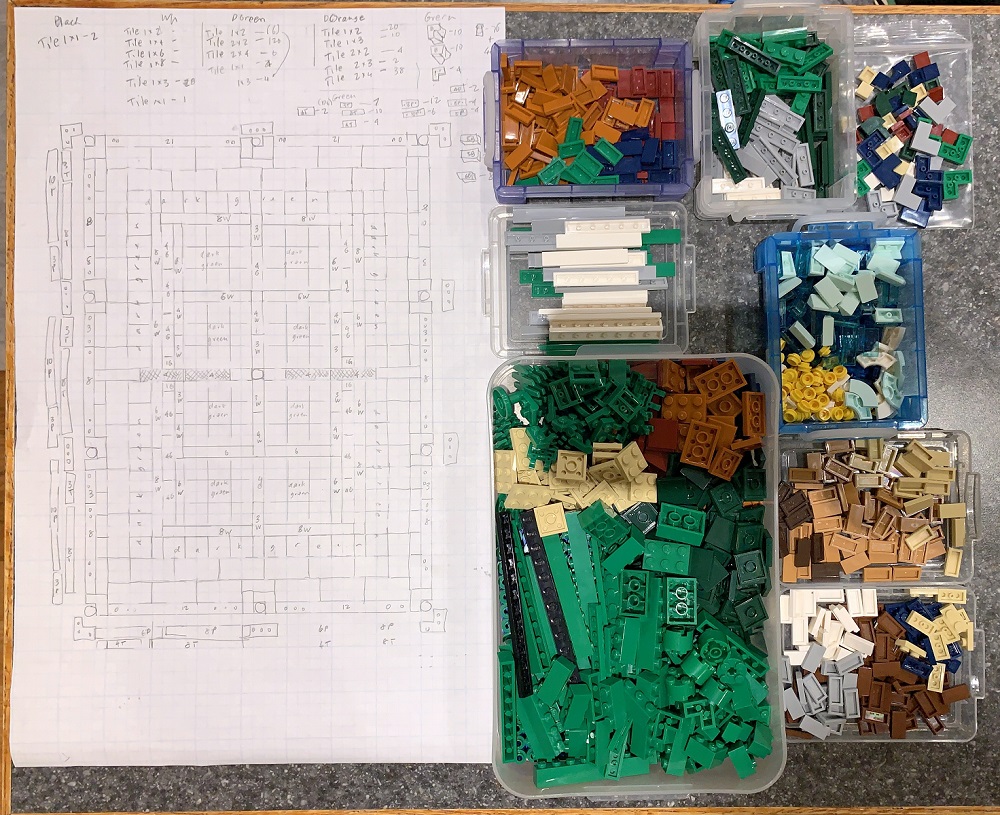
I’m still waiting for my LEGO bricks from overseas to complete my Doon Drive House, but that did not stop me from ordering one more batch of bricks.
This batch was from Wisconsin (a seller on the bricklink store), and arrived at my door today.
These are bricks for a swimming pool and a tennis court for the Doon Drive house, as well as paving for the driveway. I spent some time laying out the tennis court on gridded paper, so that I can order exactly what I need. (Search through the enormous database on bricklink.com, and pick the brick type, the color and the quantity. A lot of work, but not really: it’s part of the fun that goes into building a custom LEGO model).
Denis Hayes, who coordinated the first Earth Day 50 years ago, April 22, 1970, was a graduate student at Harvard at the time. These days he is president and C.E.O. of the Bullitt Foundation, wdenbis hayes hich funds environmental causes in Seattle. He is chairman emeritus of Earth Day 2020.
Hayes wrote in an essay in the Seattle Times, saying that ‘Covid-19 robbed us of Earth Day this year. So let’s make Election Day Earth Day.’ He wants his readers to participate in the ‘The Most Important Election of Your Lifetime’. ‘This November 3,’ he wrote, ‘vote for the Earth.’
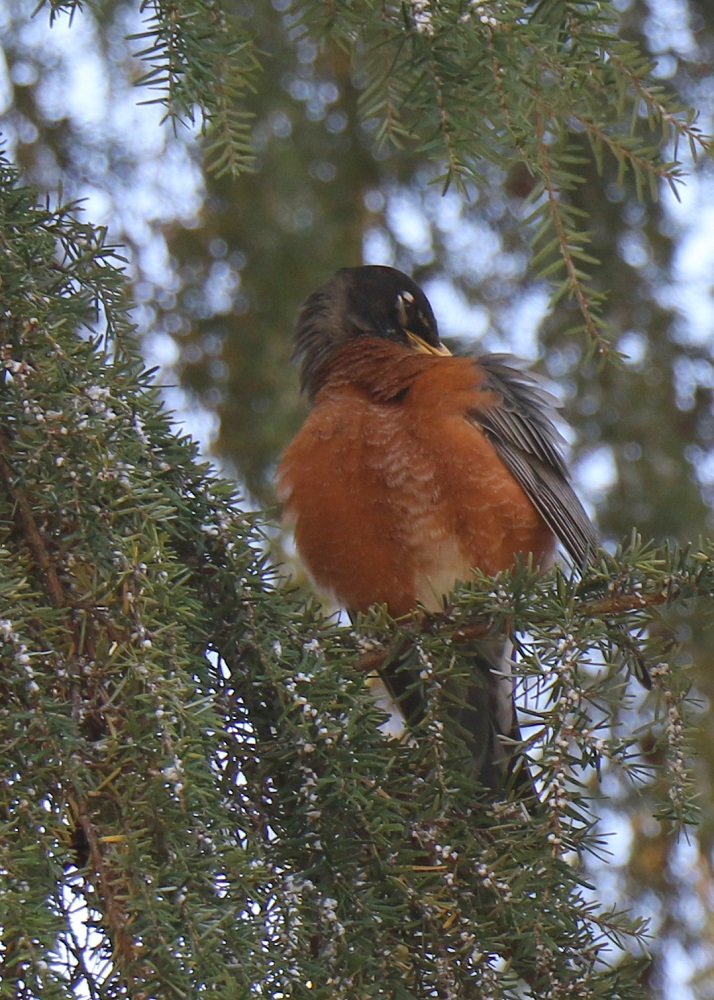
More robin pictures. I took these on Sunday, and the tree is the Douglas fir in my backyard.
I spotted two little rabbits here on 17th Ave tonight. Below is a picture of one of them.
Can rabbit populations grow exponentially, as well? Yes, sure can. A female rabbit can give birth to several litters in one year, with up to 12 baby rabbits per litter. Yikes.
The world is awash in oil, with the recent ‘demand destruction’ as the pundits call it. (The world still uses 75 million barrels a day, down from 100 million). Oil producers have not been able or willing to cut production, though. It takes a lot of money to close down an oil well, and even more to reopen it.
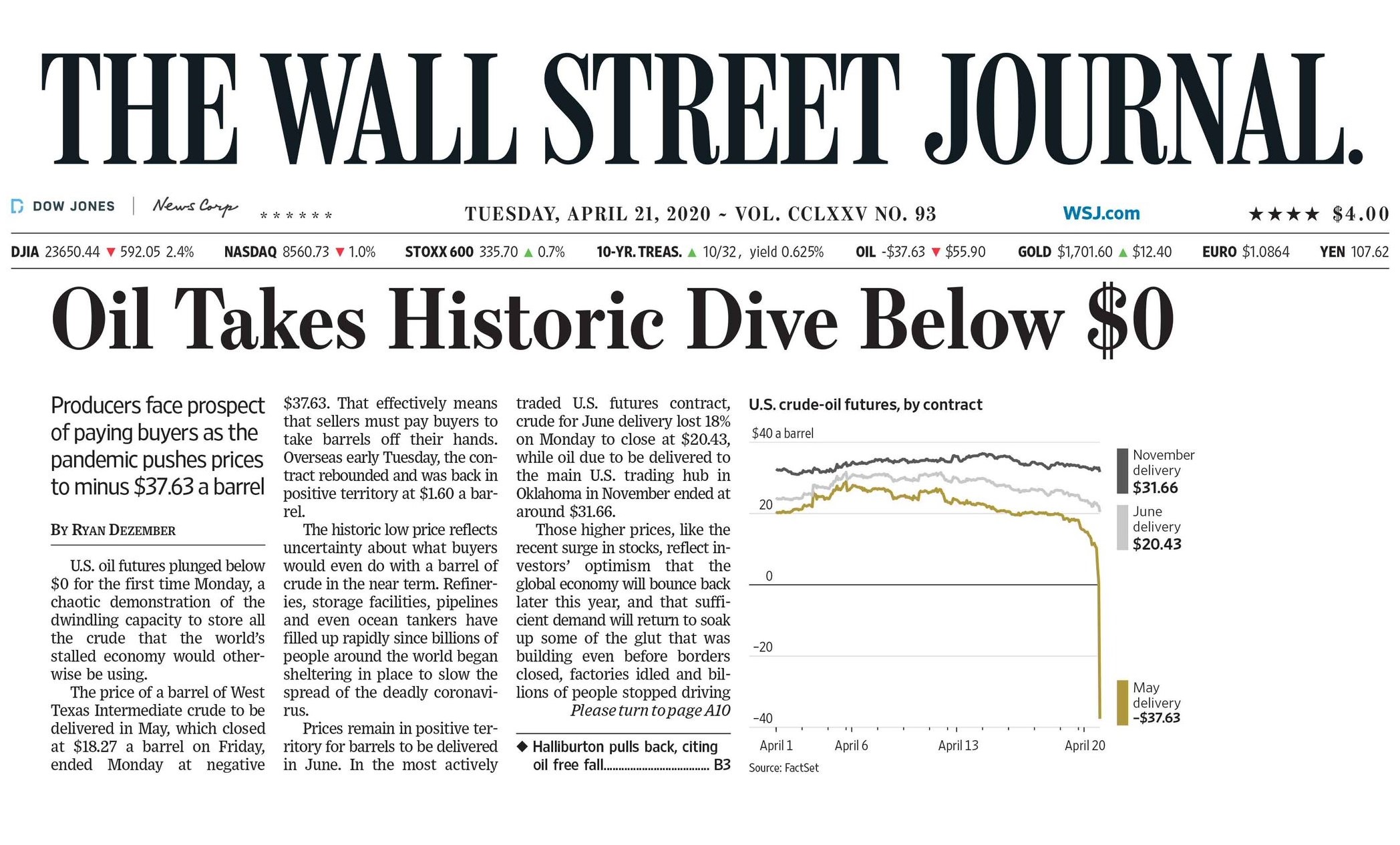
How’s this for an oil price: from $18.27 on Friday down to -$37.63 per barrel ! Yikes. Now all eyes turn to the June price. And is this an ominous sign for what still lies ahead for the world economy? [From the front page of the WSJ for Tuesday].A breaking point was reached today, though. I turn on the financial channel CNBC in the mornings, and this morning the May contracts dropped 90%, then down to a penny, back up a bit, and then it went negative and stayed there.This has never happened. How can the price of oil be negative? Well, there are hardly any more places left to store the stuff. So producers will now literally pay ‘buyers’ to take the gooey black stuff off their hands. There was talk today of filling up empty supertankers that may still remain, even though they have nowhere to go.
What’s going to happen is that a lot of oil producers in Texas are going to go bust. I’ll have to look, but I believe many of the tar sands producers and the frackers are long gone (they needed a price of $60 a barrel to stay afloat).
People filling up their car tanks, and airlines filling up airplanes with jet fuel, will continue to pay lower prices. It’s just that there is nowhere to go, really. The world has closed down.
An article in the New York Times by Donald G. McNeil Jr. paints a bleak picture, ‘a doleful future’, for the year or two ahead, for life in the times of the SARS-CoV-2 (corona) virus.
Yes, we have reached the peak of this first outbreak in New York City, and several other States, but right now we should test at least three times more people daily, to assess if a community is safe enough for people to come out of their homes. There are still not enough test kits available. (Trump and Pence seem to lie about this every day at the press briefings).
The experts agree that 12 to 18 months for a vaccine is optimistic. The ‘world record’ time for developing a vaccine, was for the one for mumps (4 years, start to finish in 1967). Check out the struggle for the polio vaccine before the success of Dr. Jonas Salk in 1955.
Once we have a vaccine, we will need 300 million doses — and 600 million if two shots are needed. We will probably have to rely on China to help manufacture those!
In the interim, it will be impossible to keep paying the economic cost of keeping people at home. There will be fits and starts, as the lockdowns get lifted, and reinstituted if too many people fall ill in certain communities. People that have become immune, may get special privileges (to work, to travel), and people that are not immune, may be discriminated against.
The article does end with an optimistic note: ‘In the periods after both wars, Dr. Mulder* noted, society and incomes became more equal. Funds created for veterans’ and widows’ pensions led to social safety nets, measures like the G.I. Bill and V.A. home loans were adopted, unions grew stronger, and tax benefits for the wealthy withered.
If a vaccine saves lives, many Americans may become less suspicious of conventional medicine and more accepting of science in general — including climate change, experts said.
The blue skies that have shone above American cities during this lockdown era could even become permanent’.
*Nicholas Mulder, an economic historian at Cornell University.
This looks like a scene from a dystopian future, a movie, but no, it’s real: a handful of commuters on the Staten Island Ferry. Passenger counts on the New York City subway is down by 93%. [Picture: Misha Friedman for The New York Times]
There was a little rain this morning — just a sprinkle.
This afternoon Mr Robin came by (American robin, Turdus migratorius). He sat still on the fence for just long enough so that I could snap him.
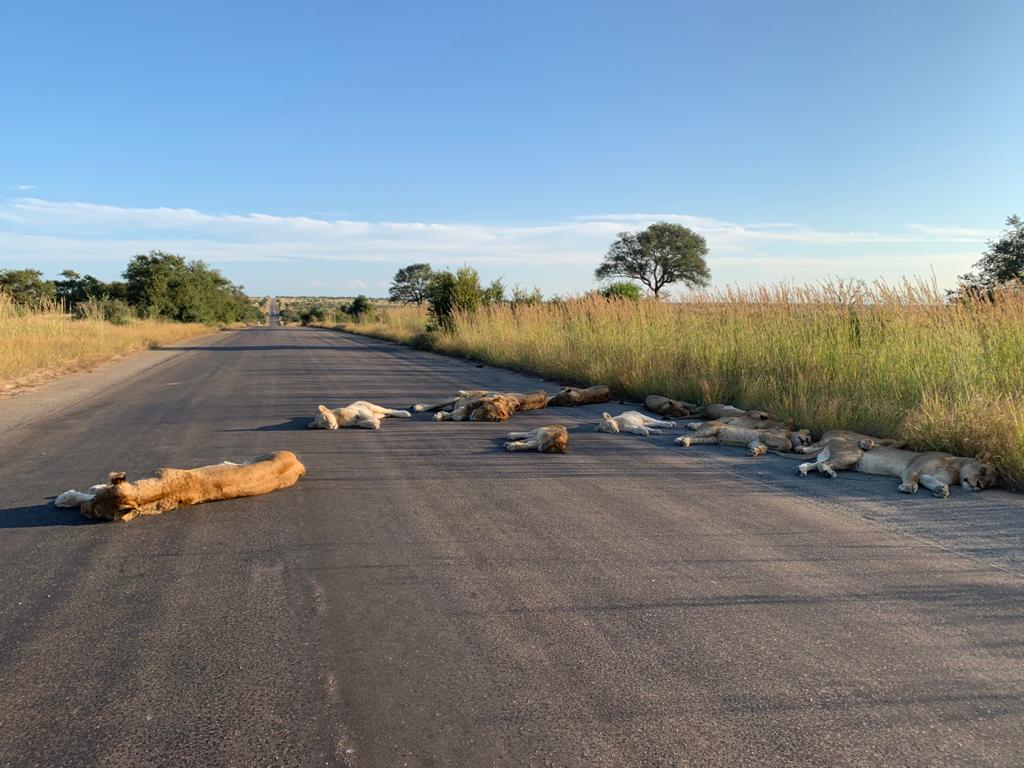
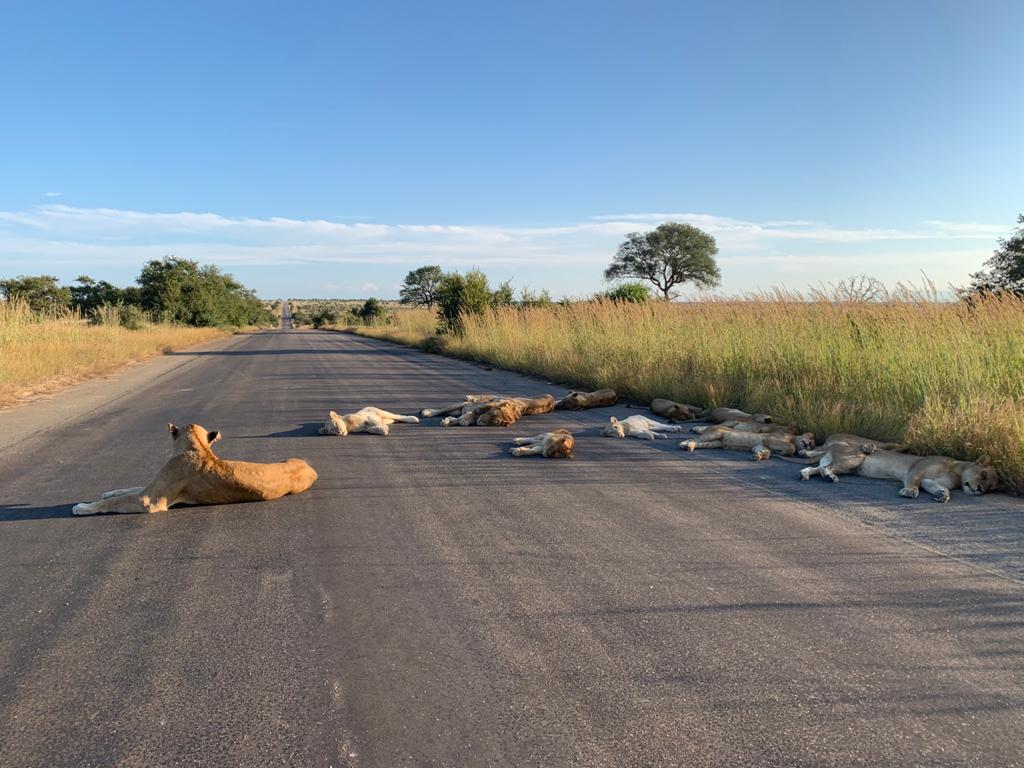
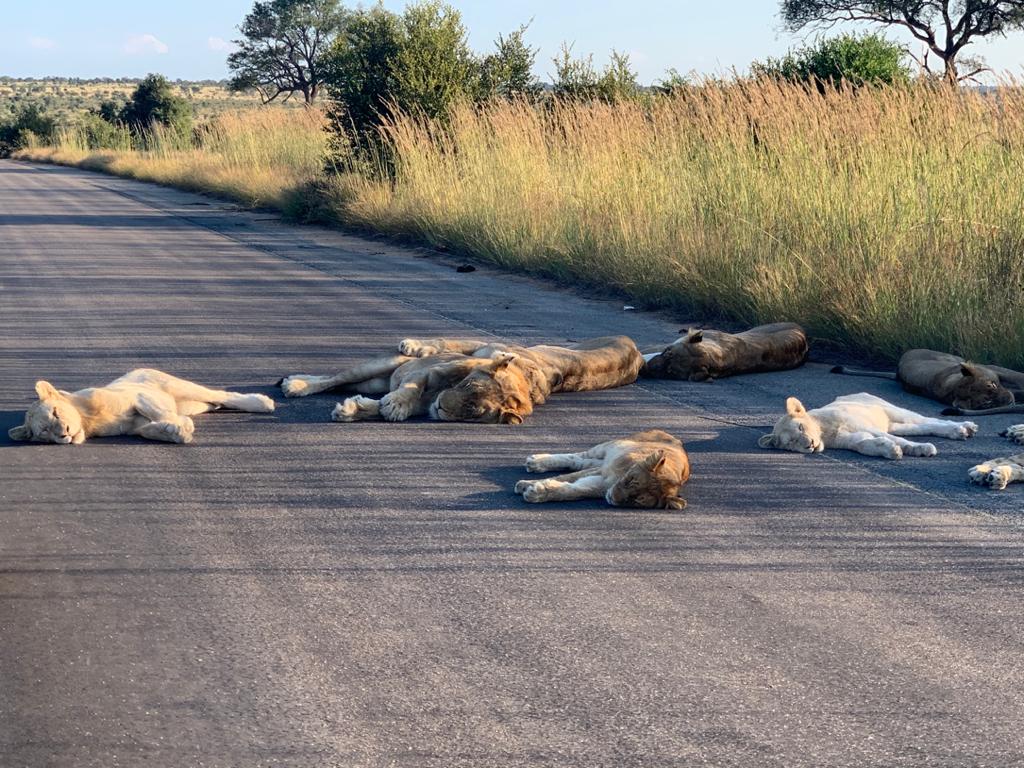
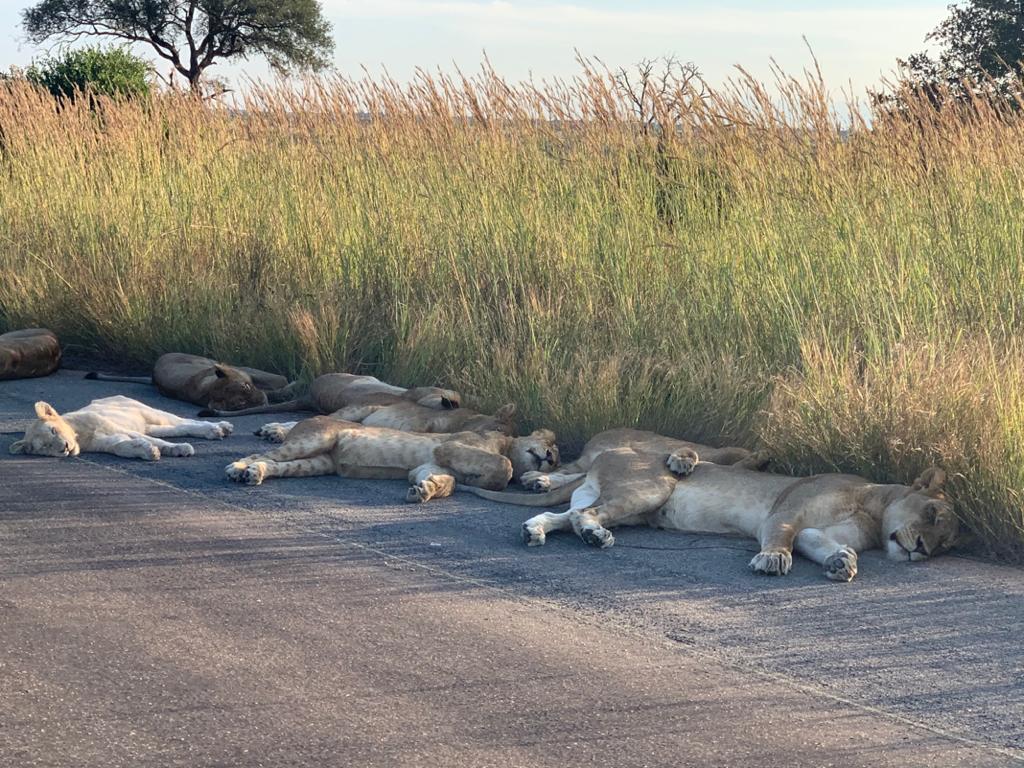
South Africa is under national lockdown orders, as is much of the world.
This pride of lions is enjoying the warmth of the quiet tar road just outside of Orpen Rest Camp. These ones are resident on neighboring Kempiana Contractual Park, and wandered over to Kruger National Park.
Pictures were taken by Section Ranger Richard Sowry, and tweeted from Kruger National Park@SANParksKNP.
We have had an unusual stretch of sunny days. The daytime high reached 70 °F (21 °C) today, a first for the year.
I don’t wear a mask when I go for a walk. Maybe I should, to get used to having the thing on my face!
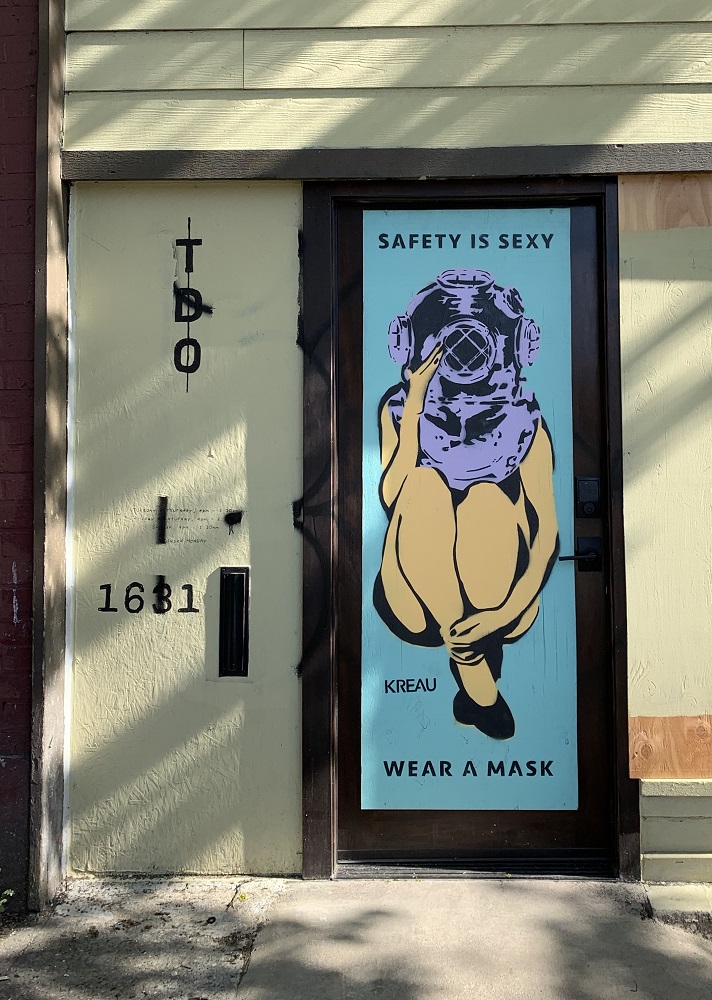
Artwork on East Olive Way. I love the old-fashioned diving helmet, and the colors that the artist had used.
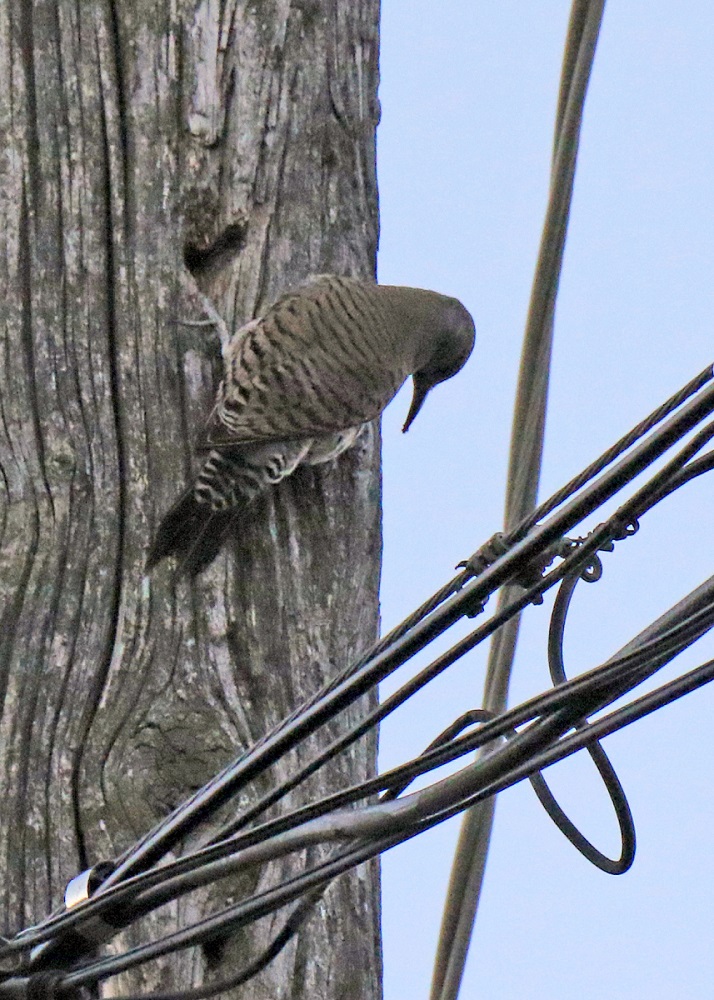
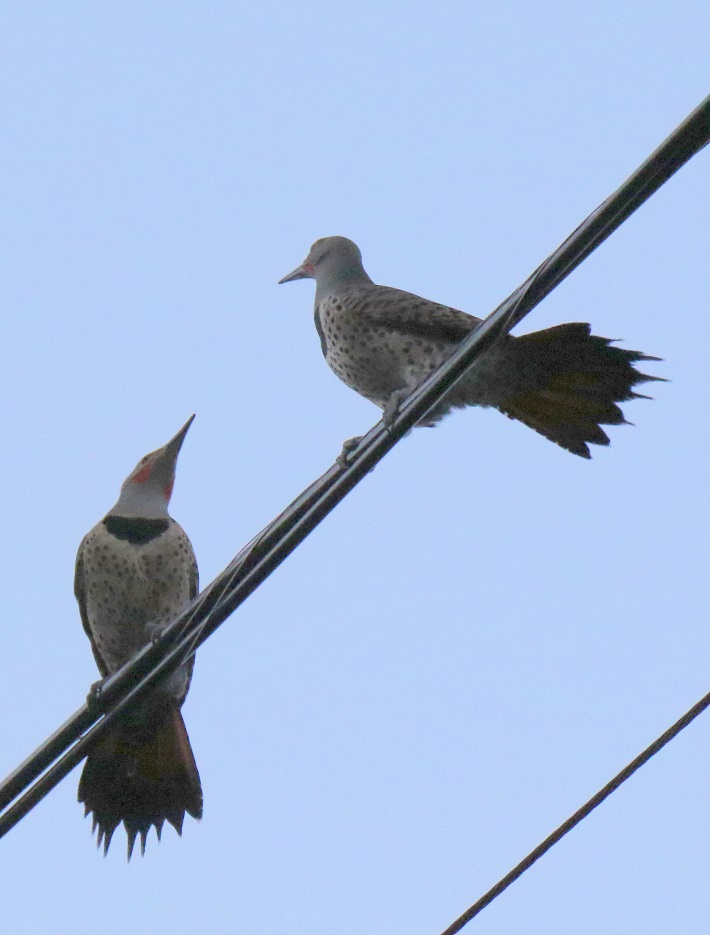
There were three woodpeckers (Northern flickers/ Colaptes auratus) in the alley, at the back of my house, at dusk tonight.
One was looking for bugs in the wooden utility pole — and found one.
Nearby on the overhead power lines, a male was courting a female. Be careful, I thought : don’t let the sparks fly between you two.
Stockholm is near the top of my list, for when we can travel again.
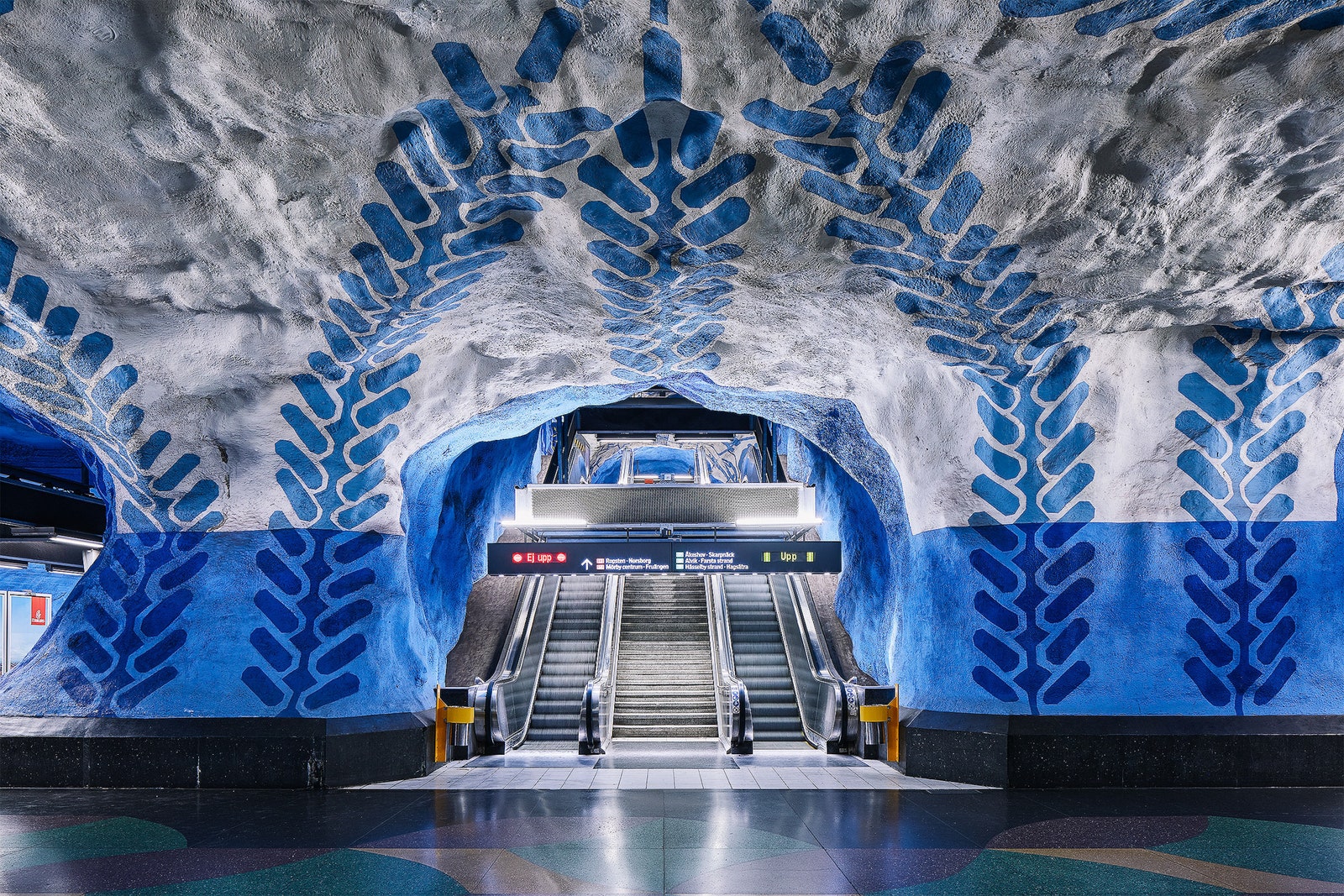
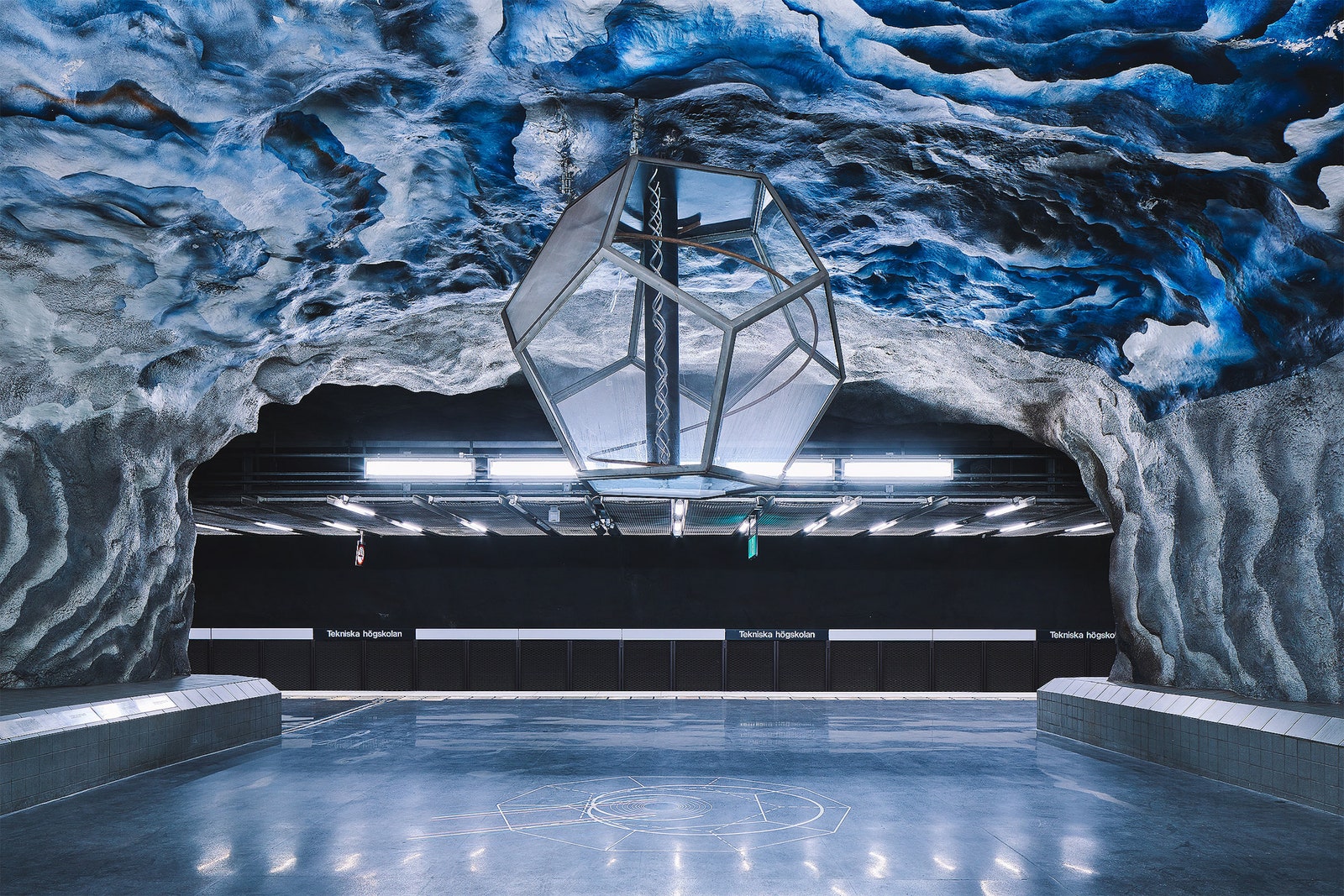
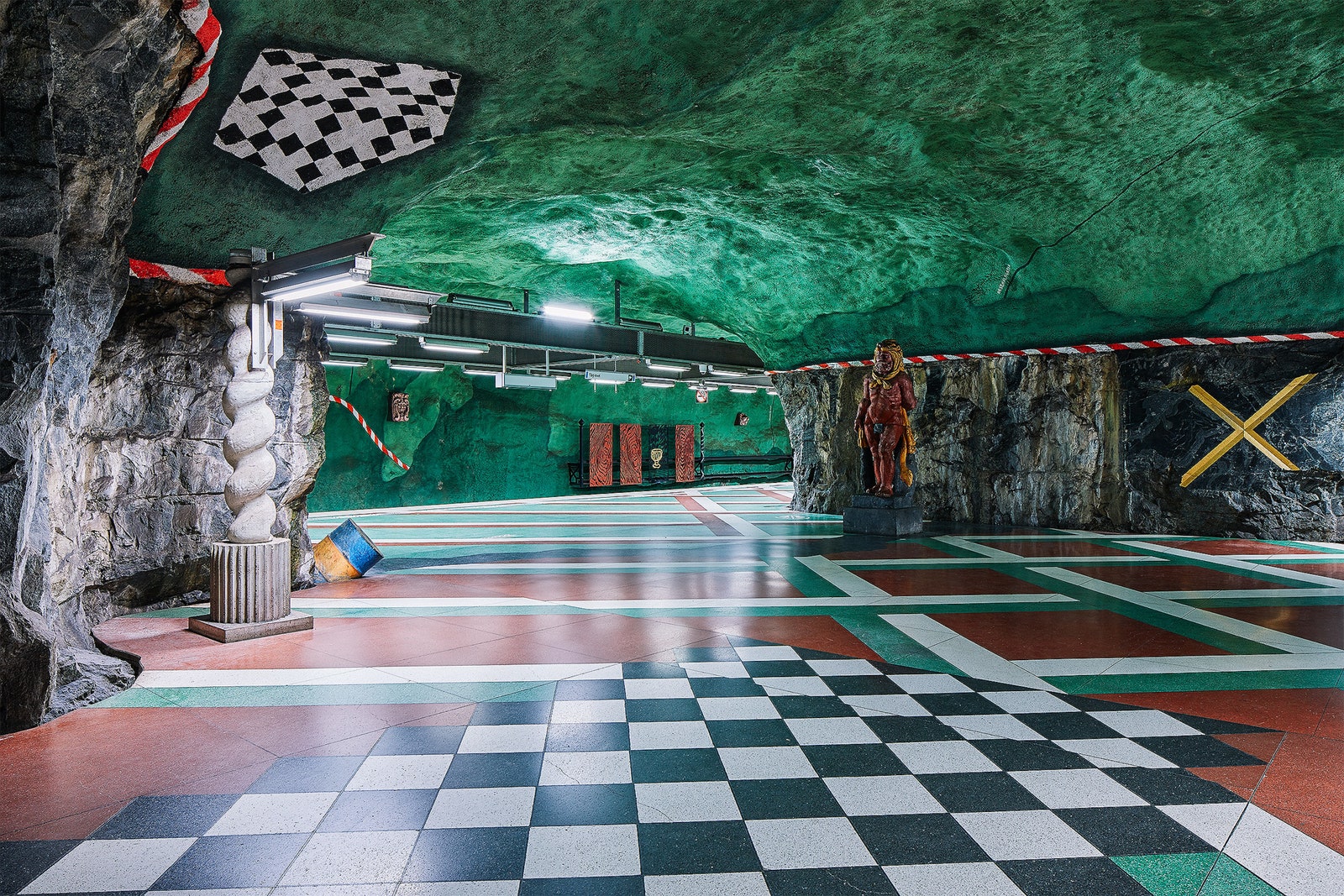
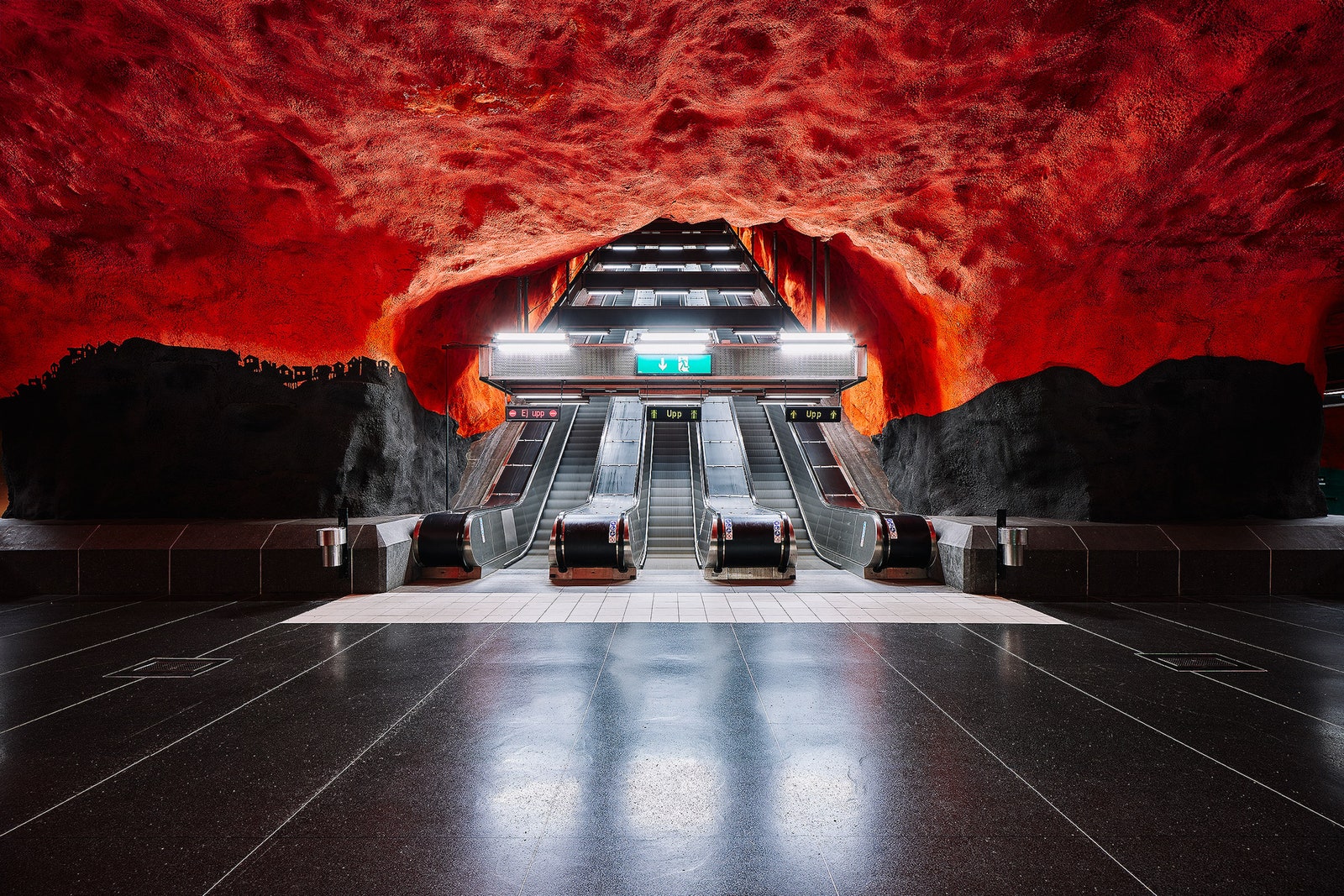
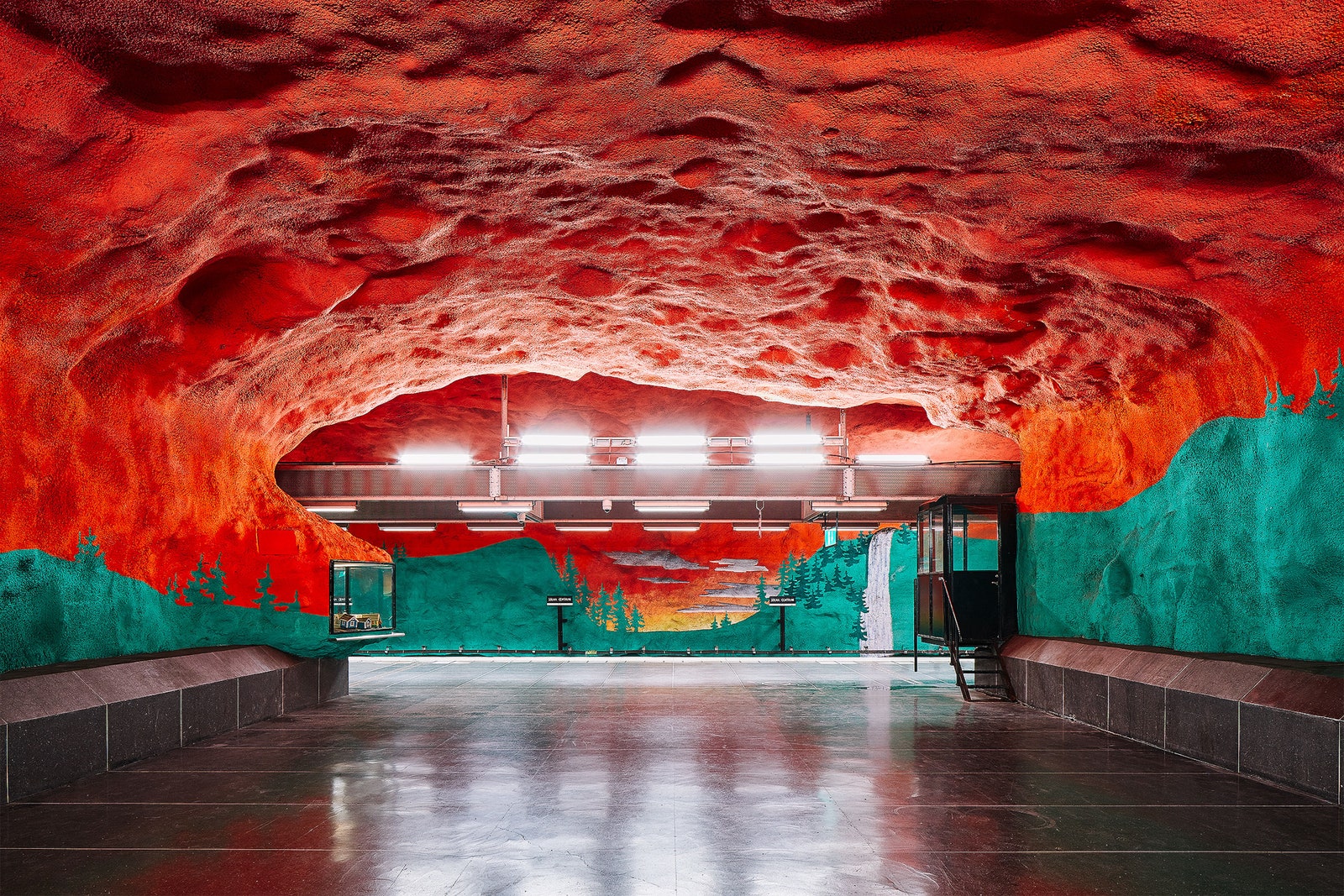
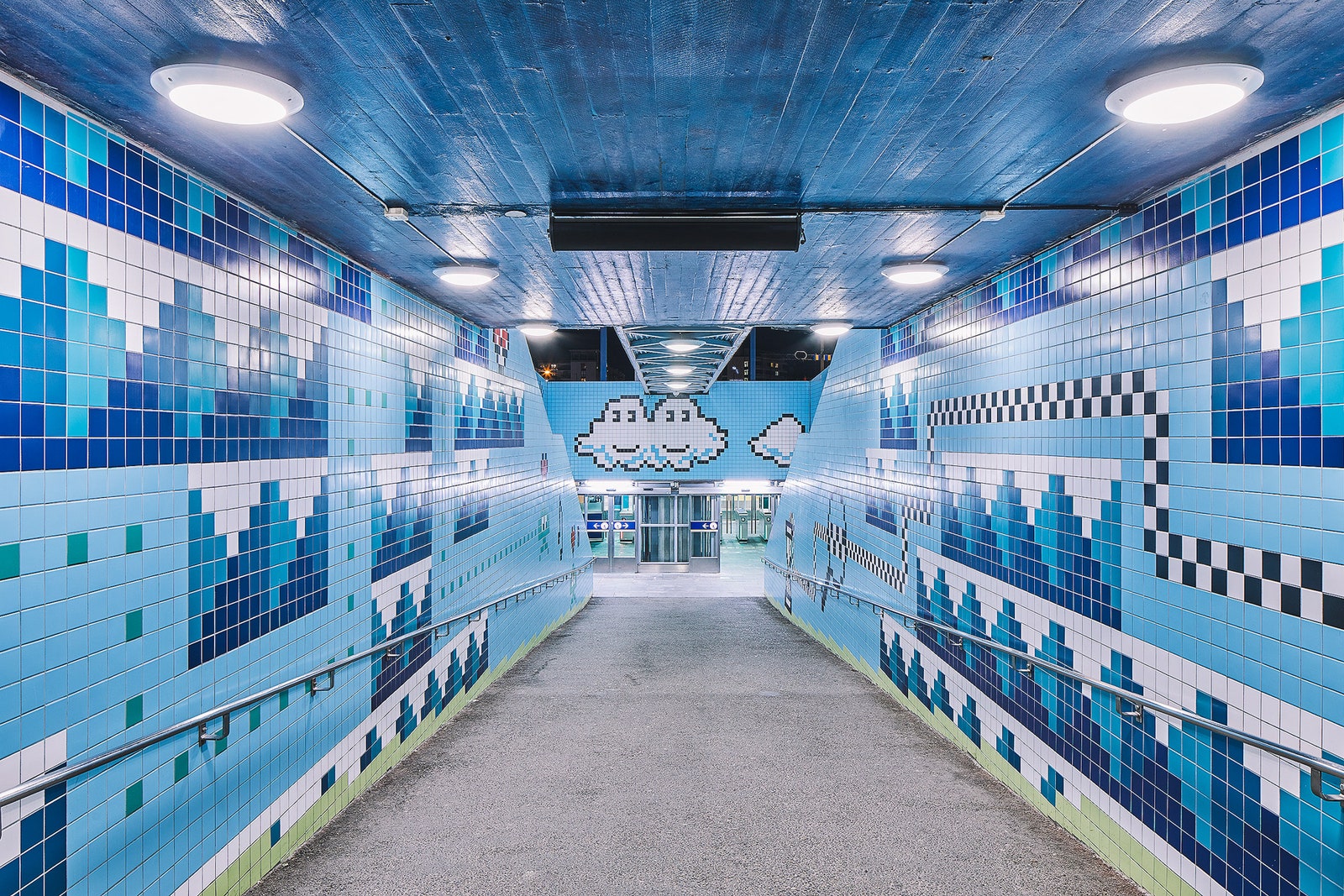
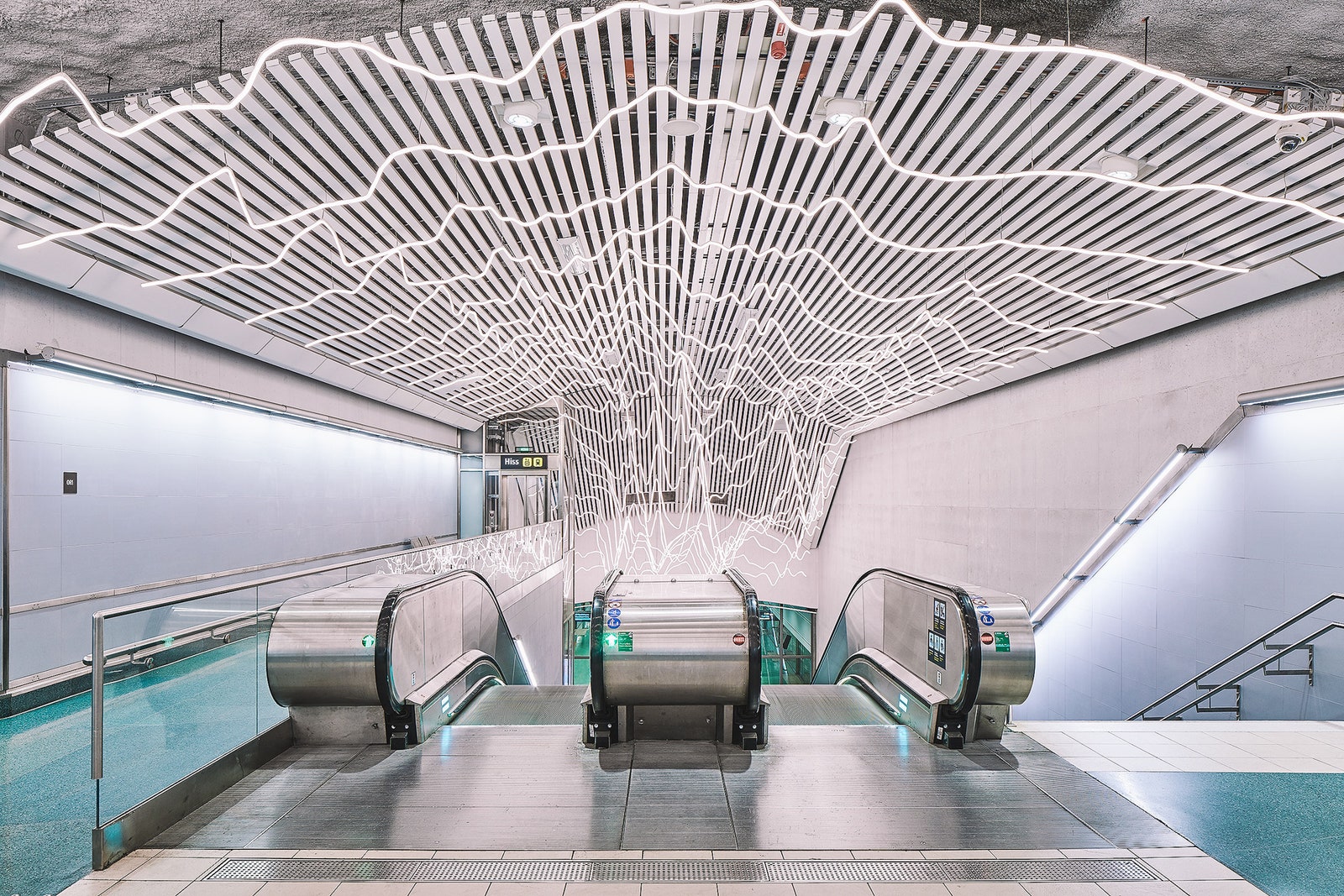
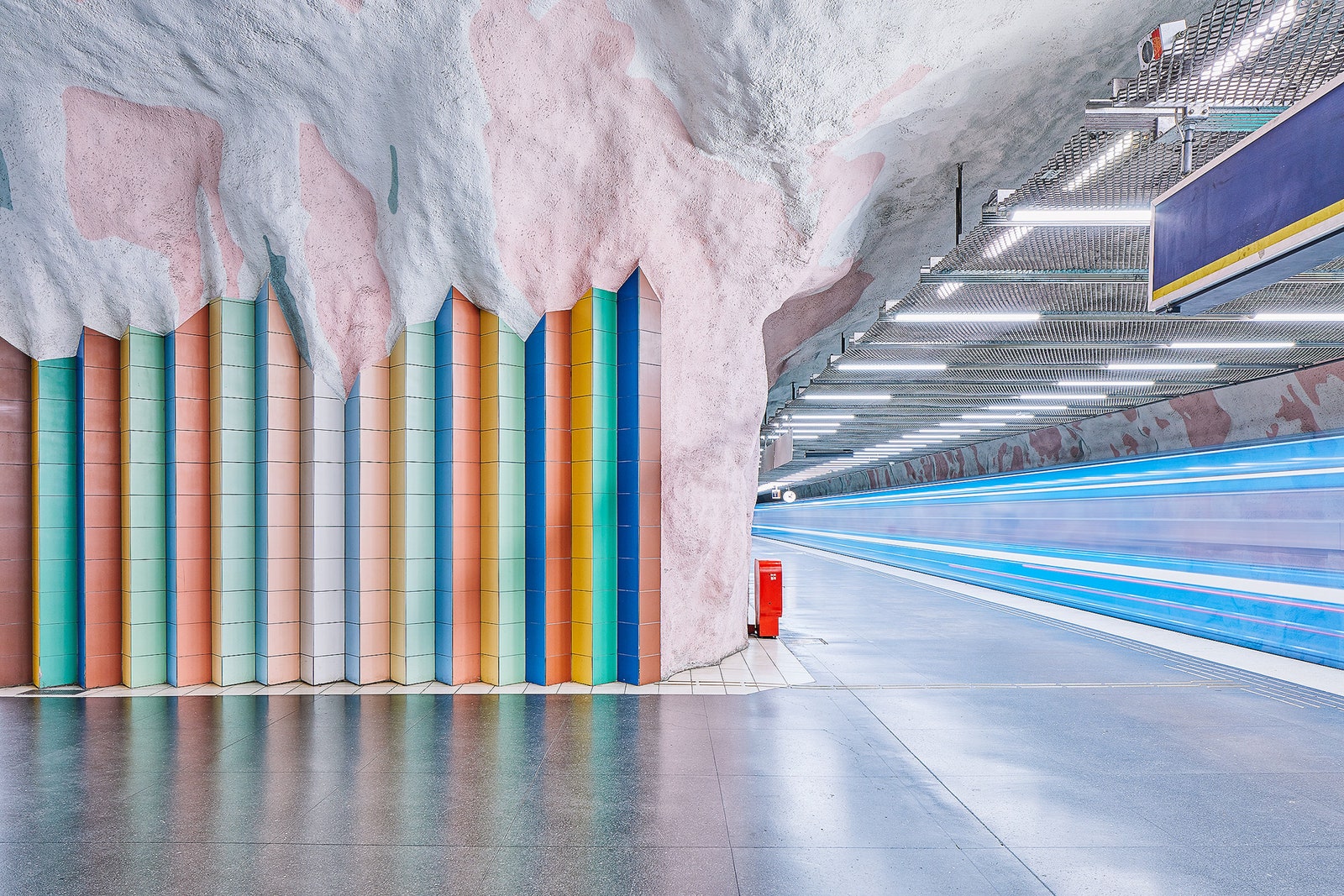
I want to go to the ABBA museum, and I want to stop at each and every one of the subway stations that David Alrath had photographed for Wired magazine. I copied the captions for the photos from the Wired article, as well.
As its name suggests, T-Centralen is the central stop in Stockholm’s metro system and connects its red, green, and blue lines. When it initially opened in 1957, the city had never seen anything like it. Its blue line platform (pictured) was designed in the early 1970s by artist Per Olof Ultvedt, who didn’t have to look much further than its name for inspiration. PHOTOGRAPH: DAVID ALTRATHThe Tekniska Högskolan station takes its name from the aboveground school, the Royal Institute of Technology. Artist Lennart Mörk paid it homage by decorating the walls with scientific imagery and themes, like Copernican heliocentrism and Newton’s third law of motion. PHOTOGRAPH: DAVID ALTRATHThe Solna Centrum station opened in 1975, in an era when the environmental movement was drawing attention around the world. Karl-Olov Björk and Anders Åberg’s mural is very much of its time—and this one. It’s a paean to nature, with the lower half depicting a forest and the upper half a red sunset. Sweden hosted the UN’s first conference on the environment in 1972. PHOTOGRAPH: DAVID ALTRATHThe Solna Centrum station opened in 1975, in an era when the environmental movement was drawing attention around the world. Karl-Olov Björk and Anders Åberg’s mural is very much of its time—and this one. It’s a paean to nature, with the lower half depicting a forest and the upper half a red sunset. Sweden hosted the UN’s first conference on the environment in 1972. PHOTOGRAPH: DAVID ALTRATHAfter Björk and Åberg finished their initial work at Solna Centrum Station, they felt like it was missing something. So they went back and painted in details, from a prop plane coasting the treetops to a musical bar depicting notes from Woody Guthrie’s song “Better World.” PHOTOGRAPH: DAVID ALTRATHInaugurated in 1977, the Kungsträdgården (“King’s Garden”) station takes its name from the baroque garden outside the 17th-century Makalös Palace, which burned down in 1825. Artist Ulrik Samuelson created a ghost garden studded with replicas of the statues that once belonged to the palace … and also, spiders. It’s the only place in Northern Europe where the Lessertia dentichelis species can be found. Creepy. PHOTOGRAPH: DAVID ALTRATHThorildsplan station was built in 1952, a couple decades before the invention of the 8-bit aesthetic that now adorns its walls. Lars Arrhenius created the tilework in 2008. The artist wanted to immerse passengers in a videogame version of the metro, with pixelated sidewalks, stairs, and elevators. PHOTOGRAPH: DAVID ALTRATHAs Stockholm extends the metro, artists continue decorating it. The Citybanan-Odenplan stop on the green line, opened in 2017, features work by 14 different artists, including David Svensson. His Life Line sculpture features more than 1,300 feet of LED lights zigzagging below the ceiling like lightning beneath the clouds. PHOTOGRAPH: DAVID ALTRATHAt a glance, the Mörby Centrum Station looks like an ice cave decorated by elves at the North Pole. But it’s also an optical illusion. When painting the tunnel, artists Gösta Wessel and Karin Ek placed a spotlight at one end of the room and painted the shadowy areas of the blasted rock wall gray, then repeated the process from the other end, this time painting the recesses pink. The room’s color changes depending on where you stand. PHOTOGRAPH: DAVID ALTRATH
Volunteer Park is closed for picnics and group gatherings, but it is still OK to walk through (while steering clear of others, of course).
It would be impossible for bugs and butterflies to miss the flaming orange tulips, by the Asian Art Museum.
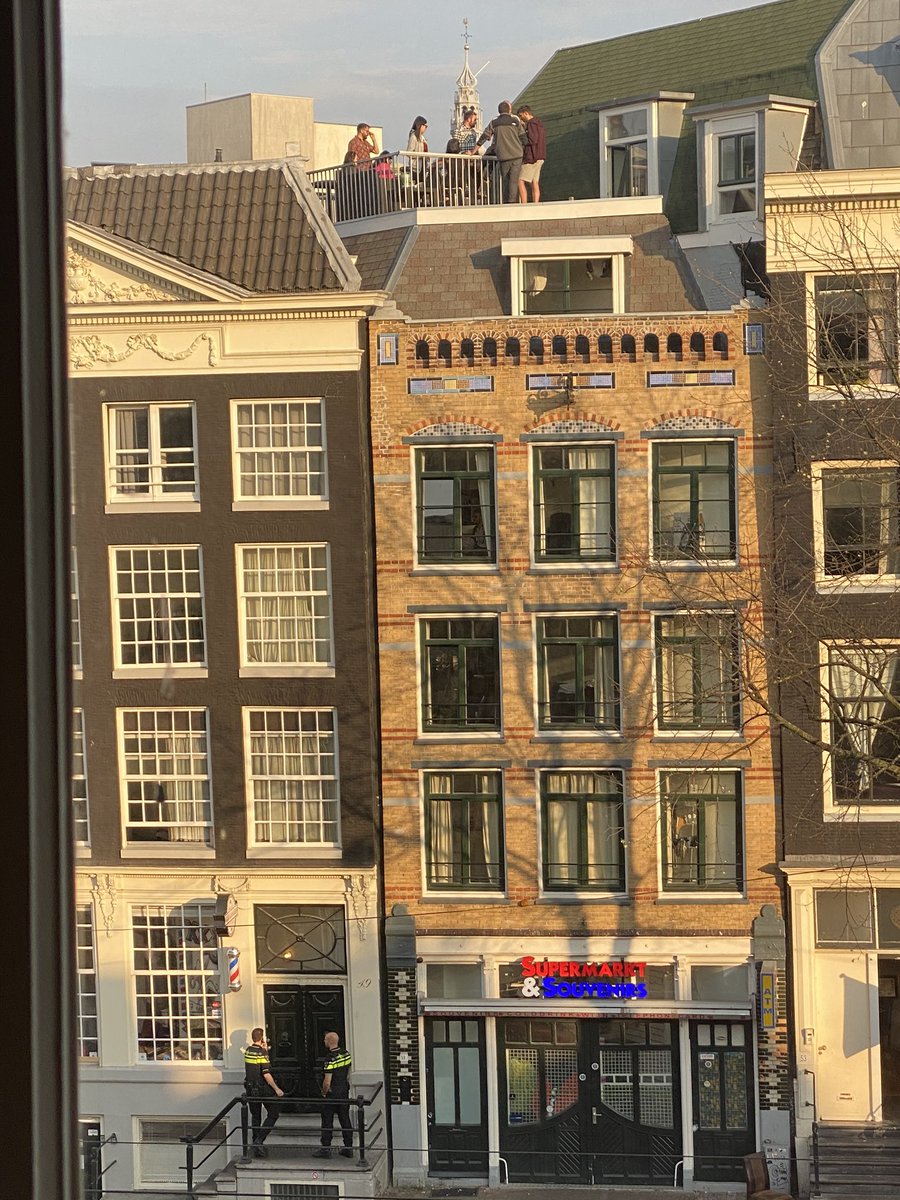
This is somewhere in Amsterdam on Sunday — a picture posted on Twitter by Maria@kalltvatten.
She points out in her tweet that she was the not the one that reported the rooftop party. She also noted that the police are at the right door (the rooftop is accessed from the building on the left).
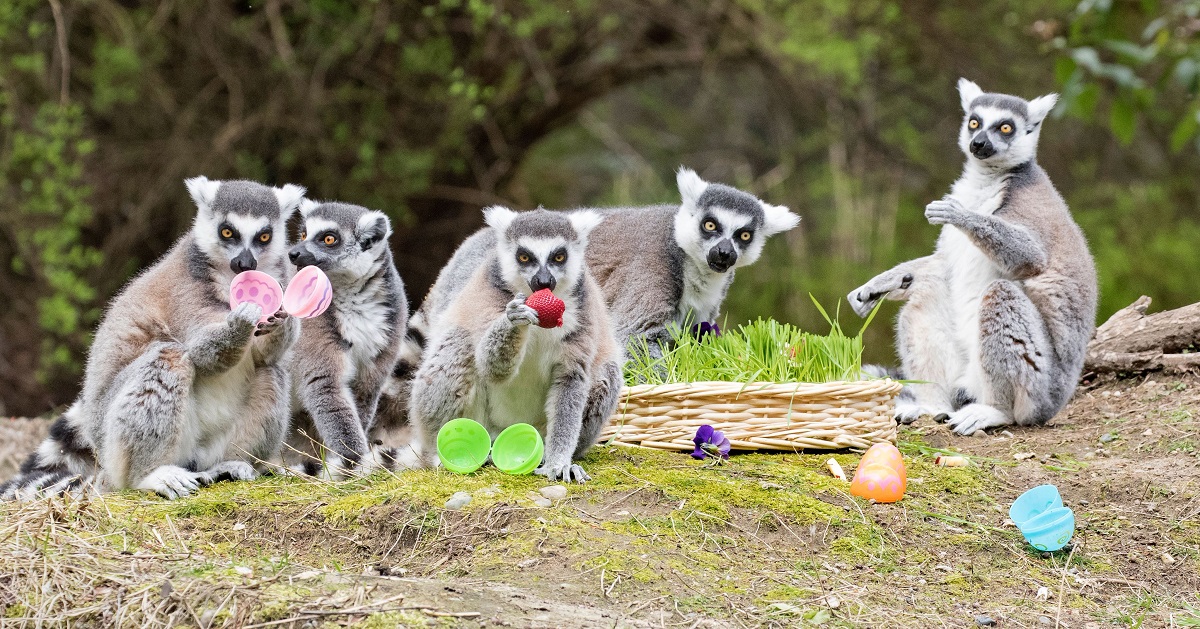
Here are the ring-tailed lemurs at the Woodland Park Zoo in Seattle, enjoying their Easter treats (strawberries .. and ‘Was that all?’ they seem to ask).
Lemurs are classified as neither monkeys, nor apes: they belong to a group called prosimian primates. Prosimians have moist noses, and rely on their sense of smell to determine what is safe to eat — and to distinguish between individuals in their social groups.
Ring-tailed lemurs (Lemur catta) at Woodland Park Zoo. Lemurs are native to Madagascar. [Picture by Woodland Park Zoo @woodlandparkzoo on Twitter].
Puzzles are reportedly selling better across the world than they do at Christmas time.
They are made by pasting images onto cardboard (images that evoke a sense of ‘coziness’ are always popular).
An elaborate cookie-cutter machine then applies 1,000 metric tonnes of pressure to cut the pieces.
The cutting tool for a 1,000-piece puzzle uses up to 230 feet of steel.
The edges of the tool dull eventually, and can be sharpened once before it has to be discarded.
[Information obtained from the New York Times].
Check out the amazing one-color puzzle below, though – from Japan.
The Japanese name for it translates to Pure White Hell Daio.
I have decided to improve my cryptic crossword skills, and so I printed out a few that I had found in online issues of The Irish Times.
I am not allowed to use Google too directly. (Shockingly, many of the clue phrases and their solutions can be found online).
I do use Google to look up synonyms, or the odd word or phrases that I do not understand.
Example: I think you need to be an Irishman or a Brit, to know that C of E stands for Church of England.
Check these clues out I that I have deciphered: Check these clues out I that I have deciphered: Across 11: Very cold water in precipice, going to and fro. Answer: ICE. i-c-e appears forwards and backwards (to and fro) in ‘precipice‘. Across 12: Roots in ground, twisting. Answer: TURNIPS. It’s a root vegetable, and turn= twisting. Across 15: Two companies with one hot drink. Answer: No, not Nestlé or hot chocolate, but COCOA. There are two ‘Co’s for Company in there.
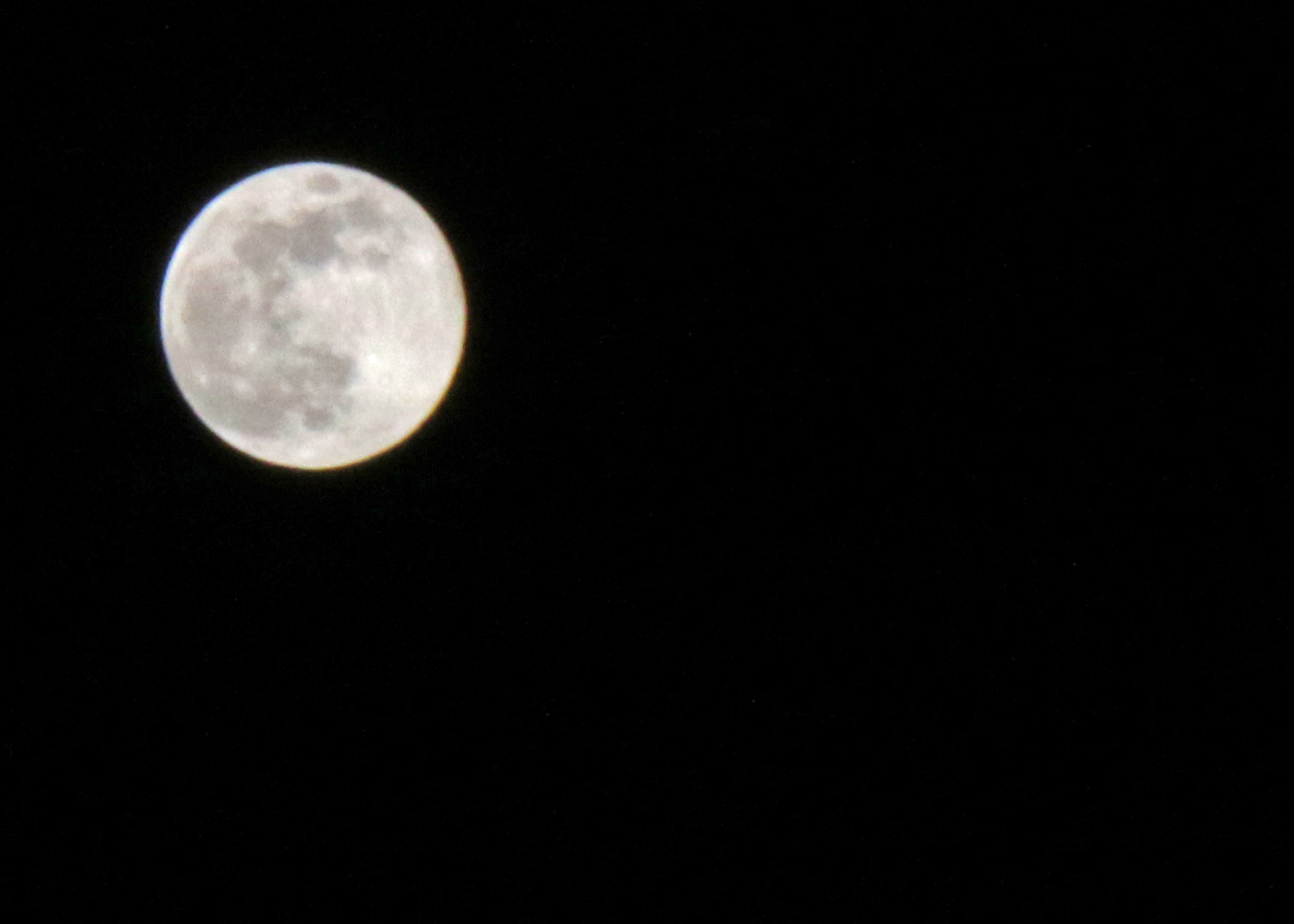
Here’s my blurry photo of the full moon. It’s the pink moon, and it’s a supermoon*.
*A full moon closer than usual to Earth, so it looks a little larger. It’s called pink, because of the bloom of ground phlox this time of year (a pink flower common in North America).
The full moon from my window tonight (shot at 135mm zoom on Canon EOS 7D). The big dark spot on the left edge in the middle is the Ocean of Storms, and there is a bright spot on the lower right that is a crater called Tycho. The crater is named after the Danish astronomer Tycho Brahe and is estimated to be 108 million years old (one of the younger ones on the moon!).
‘But we did something that’s been pretty amazing. We have 15 people [sick] in this massive country, and because of the fact that we went early. We went early; we could have had a lot more than that. We’re doing great. Our country is doing so great. We are so unified. We are so unified. The Republican Party has never ever been unified like it is now. There has never been a movement in the history of our country like we have now. Never been a movement’.
– trump, at a rally in South Carolina, Feb 28
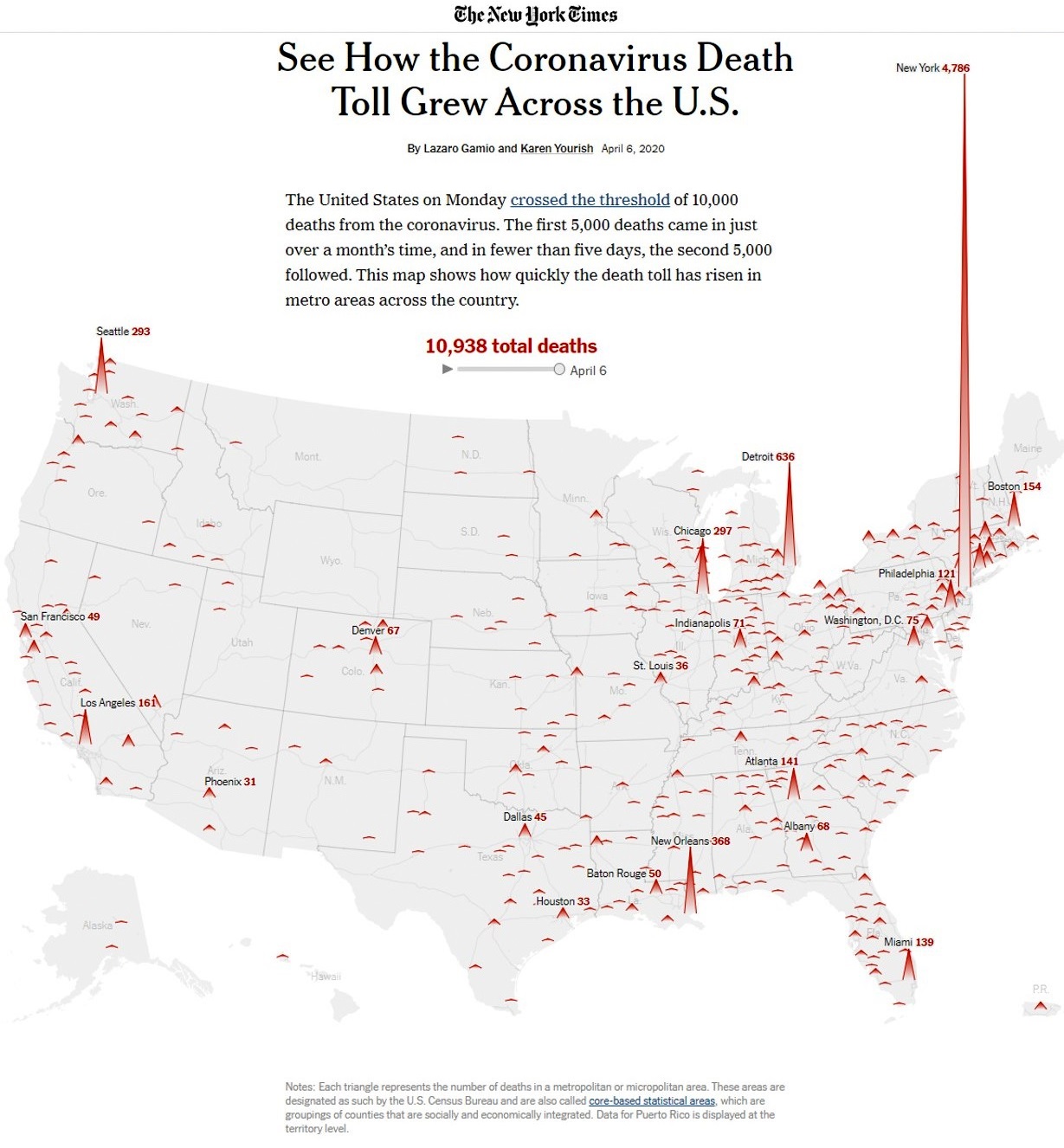
By late Monday night the number of deaths in the United States from the coronavirus approached 11,000. This number of reported deaths has doubled every 3 or 4 days since mid-March. At this rate, the 100,000 mark will be reached by the end of April.
There are signs in New York City that the peak of the epidemic there has been reached, though. Some models now predict a lower number than the estimated range of 100k- 240k total deaths in the USA by August range (80k or so).
From today’s New York Times: ‘The United States on Monday crossed the threshold of 10,000 deaths from the coronavirus. The first 5,000 deaths came in just over a month’s time, and in fewer than five days, the second 5,000 followed’.
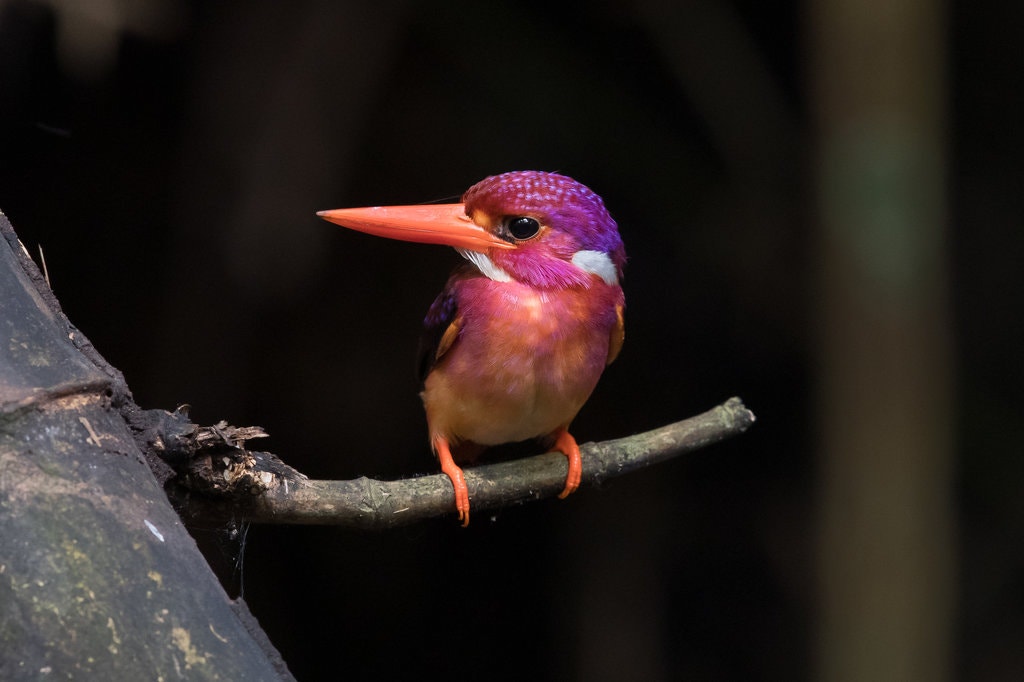
Check out this stunning picture of a mature South Philippine dwarf kingfisher, published in the New York Times. It was taken by Miguel David De Leon for the Robert S. Kennedy Bird Conservancy, in a forest in the Philippines.
The little birds are just about impossible to catch sitting still, and it took three years of patience and trying to get a picture of the bird.