Friday/ Jukani wildlife sanctuary 🦁

These pictures are from our visit to Jukani wildlife sanctuary this morning.
The encampments are reasonably large, and in almost all cases the animals are from zoos or from situations where they will no longer survive in the wild.
Animals in the pictures: Burchell’s zebra, springbok, lion, mountain lion, Siberian tiger, caracal, brown hyena.

Thursday 👺

Here is a selection of photos du jour.

There was no palm tree at this beach house that belonged to my family thirty years ago.  My dad sold it in 1996 and some time after that it was turned into a self-catering guest house.
The 6-story atrium inside the Beacon Isle hotel.
This is a western cattle egret (Bubulcus ibis).
A decorative mask from Ghana, for sale in the Global Village art store here in Plettenberg Bay for US $184.

Wednesday/ the Knysna waterfront ⚓

Knysna is a town on the Garden Route and 33 km (20 miles) west of Plettenberg Bay on the N2 national route.

The pirate ship on the Knysna waterfront offers a bar and snacks, and trips around the Knysna estuary up to The Heads and then back again for sunset.
There are many other kinds of watercraft in the marina, of course.
This is a view from a restaurant called Drydock Co towards the Knysna Heads: the headlands of two peninsulas that enclose and form the Knysna River Estuary.
This public art installation of bronze with a chromed finish is called “Zephyr”, and the artist is Stephan Raubenheimer.

Sunday/ to Plettenberg Bay 🐚

It’s a 6-hour drive to Plettenberg Bay. We opted for the N1 national route through the Huguenot Tunnel to Swellendam, from where we took the N2 to Plettenberg Bay.

I could only take pictures of the first half of the drive, while I was the  passenger and not the driver.  🤗

It’s a 6 hour drive from Cape Town to Plettenberg Bay.
Here is the entrance to the Huguenot Tunnel.
It is a toll road tunnel that runs through the Du Toitskloof Mountains, connecting Cape Town to the northern regions of the country.
The tunnel is 3.9 km (2.4 mi) long and it opened in March 1988.
The tunnel offers a route that is safer, faster (between 15 and 26 mins) and shorter (by 11 km/ 6.8 mi) than the old Du Toitskloof Pass over the mountain.
At the other side of the tunnel, there are beautiful scenes of the Du Toitskloof Mountains.
Soft cloud puffs and the jagged outcrops of the Du Toitskloof Mountains.
This is a railway station building in the town of Robertson.
The town of Ashton lies at the foot of the Langeberg mountain range.
This arch bridge is new (it opened in August 2021) and lies over the Cogmans Gorge River (Afr. Kogmanskloofrivier) in Ashton.
Here is Swellendam, the third oldest town in South Africa after Cape Town and Stellenbosch.
I found this hibiscus flower in Riversdale, as we made a stop to have some lunch.
This is the N2 national highway in the Riversdale area— even though it offers only one lane in each direction here.
We did not run into too much traffic going east, but we ran into lines of cars going in the opposite direction, heading back to Cape Town. The kids in school still have a week or two of summer recess, but maybe mom or dad will have to go back to work on Monday.
Lots of rolling hills and farmland in the Riversdale area.
We made it! We lost the blue skies and the sun along the way, but that’s OK. It’s just a rainy day in Plettenberg Bay and we will soon have the sun back.
This is the view from our Airbnb, of the Keurbooms Estuary and the beaches around Plettenberg Bay.

Saturday/ checking out 🏨

It’s time to leave the Cape Town area, and the Airbnb that I have been staying in. My friend and I are driving up the coast to Plettenberg Bay in the morning.

I have been staying in an apartment in one of these buildings by the Tyger Waterfront in Bellville. The complex is built around an old quarry that has been transformed into a 4-hectare man-made lake with a promenade around it.
A Cape wagtail (Afr. Kaapse kwikstertjie, Motacilla capensis) sits on a handrail.
And this fella is a rock hyrax (Afr. Kaapse dassie, Procavia capensis). They are small, plump and tail-less guinea-pig-like animals, about as large as a big rabbit.

Sunday/ in the dry dock 🚢

I stopped briefly at the Victoria & Alfred Waterfront today, to use one of the parking garages there.

This is the Robinson Dry Dock in the so-called Alfred Basin in the Waterfront, and it is the oldest operating dry dock of its kind in the world. It dates back to 1882. The foundation stone for the dock was laid by Prince Alfred, second son of Queen Victoria.  Named after Governor Sir Hercules Robinson, it was used to repair over 300 ships during World War II.

The Robinson Dry Dock is currently occupied by research vessel DR. FRIDTJOF NANSEN, sailing under the flag of Norway.
Ships are typically dry-docked every five years for a special survey, but may also be dry-docked for inspections, maintenance, and repairs, in between.

Saturday/ at the mall 🏪

There is a little Christmas market in the Tyger Valley Shopping Centre, still open for a final few days.
It’s good that it is indoors: day-time highs here were 35°C and 34°C (95°F and 93°F) on Wednesday and Thursday, and 30°C (86°F today).

The Christmas market on the lower level of the food court in the Tyger Valley Shopping Centre. The jumbotron screen (top left corner) showed what was happening in the first of two cricket tests between South Africa 🇿🇦 and Pakistan 🇵🇰.
And what happened today in the first of two cricket tests between South Africa and Pakistan that is underway in Centurion in Gauteng Province?
From espncricinfo.com:
“The first Test match at Centurion is tantalisingly poised after Pakistan took three wickets in nine overs to leave South Africa wobbling at 27 for 3, still 121 runs away from the 147-run target that seals a win, as well as a place in the 2023-25 World Test Championship [WTC] final.
After South Africa had bowled Pakistan out for 237, they needed a fairly comfortable 148 to secure victory, but an unerring spell of accurate medium-fast bowling from Mohammad Abbas and Khurram Shahzad was well rewarded. Aside from Aiden Markram, the South Africa batters were somewhat timid in their approach to the last few overs of the day, while Abbas and Shahzad targeted the pads. Abbas brought one to jag back in sharply into Tony de Zorzi for the first breakthrough.”
Update Sun 12/29 [From espncricinfo.com] “South Africa have qualified for the World Test Championship (WTC) final after beating Pakistan by two wickets in a high-drama encounter at SuperSport Park. Set a modest but challenging target of 148 to win, they were 99 for 8 just before lunch and it was left to Kagiso Rabada and Marco Jansen to score the remaining 51 runs in a tense ninth-wicket stand against a Pakistan attack with their tails up.”

Friday/ Pringle Bay beach 🏖️

Happy Friday, the last one for 2024!

These photos are from yesterday, from a little trip I made with my family to Pringle Bay.
Pringle Bay is a small, coastal village in the Overberg region of the Western Cape, in South Africa. It is situated at the foot of Hangklip, on the opposite side of False Bay from Cape Point. The town and surrounds are part of the Kogelberg Biosphere Reserve, a UNESCO Heritage Site. [Wikipedia]

The main beach at Pringle Bay has rocks and tide pools, and then a sandy stretch for heliophiles and bathers. The rocky outcrop in the distance on the left is Hangklip (Afr. “hanging rock”), 420 m tall (1,377 ft), marking the entrace to False Bay as one approaches Cape Town along the coast from the east.
Here is the main beach at Pringle Bay. We’re on the Indian Ocean side of Cape Town (only just), and here the beaches have warmer waters than on the Atlantic side: the effects of the warm Agulhas Current that comes down along Mozambique from Africa’s eastern coast.
Time for my nephew to deploy his drone (I don’t know the model name, but it’s a technological marvel; cost: about $800). It has very sophisticated navigation abilities and a super-high resolution 360° swiveling camera.
Off it goes, up, up to 1,000 m (3,280 ft)— at which point it is invisible to the naked eye.
We only saw something black with fins, maybe, from the beach out in the distance. The drone footage shows that the fins belong to the sea lions.
(Seals or sea lions? These are sea lions:  brown, bark loudly, “walk” on land using their large flippers and have visible ear flaps. Seals have small flippers, wriggle on their bellies on land, and lack visible ear flaps. – Source: noaa.gov).
The drone’s camera has a very high resolution and superzoom capabilities.
A viewpoint on the way back to Cape Town, showing the coastline and the fynbos* of the Kogelberg Biosphere Reserve.
*Fynbos: fine-leaved shrubland or heathland vegetation found in the Western and Eastern Cape provinces of South Africa.

Tuesday morning/ arrival into Cape Town ✈️

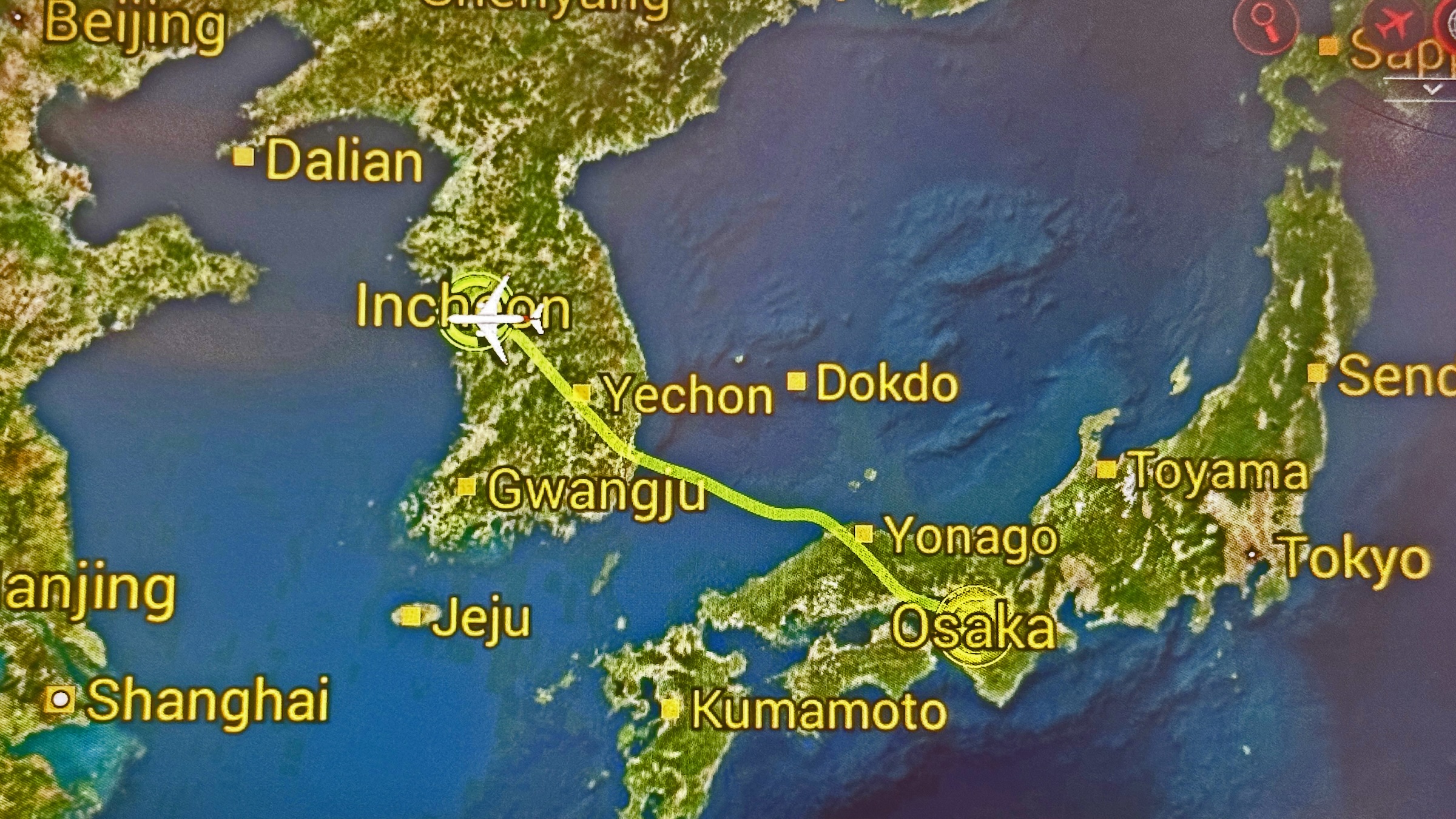
Here is our flight path south on Monday night and into Tuesday morning. We were directly over Tunis (capital of Tunisia) after crossing the Mediterranean Sea. Later on we were at 39,000 ft (the plane’s cruising altitude) over Kinshasa (Democratic Republic of the Congo) and Windhoek (Namibia).

We landed at Cape Town International at 7.30 am local time (it’s an Airbus A350-900) and were bused into the terminal.

The shark tank dive billboard 😱 is from the pedestrian underpass to the rental car companies at the airport.

Monday night/ to Munich, and south ✈️

A few weeks ago Lufthansa cancelled the direct Frankfurt to Cape Town flight I had reserved. They rebooked all of us on a short hop to Munich, to catch the Munich to Cape Town flight from there.

Pictures:
I ran into several more billboard pictures of “Venus” in Terminal A. Would you like to see all of them? (Of course you do. The “merivaglia” in the slogan “Open to merivaglia” is an Italian word that means “a wonder” or “beauty”).
That’s a Boeing 787-9 at the gate at Terminal A that took us to Munich. It’s a 45-minute flight due east.


Sunday/ in Frankfurt 🏙️

Here are a few pictures from today, as well as a few clippings from the Sunday newspapers.

This closed-for-traffic street across from the Hauptbahnhof station (main train station) is lined with restaurants from the Middle East and the Far East. Döner kebab is very popular in Frankfurt: a dish of Turkish origin made of meat cooked on a vertical rotisserie.
Inside the Hauptbahnhof. This train from regional operator Hessische Landesbahn GmbH (HLB) is a Bombardier Talent 2 model ET150 (a German manufacturer as far as I can tell, not the Bombardier that makes business jet airplanes). It is about to depart for Giessen, a 42-min trip to the north of Frankfurt.
Hello. A fluffy pup inside the food court at the Hauptbahnhof station.
My lunch from seafood franchise Noordsee. It’s Norwegian salmon. Very nice. An elderly woman took the seat across from mine.
“Ich spreche nur ein wenig Deutsch” (I speak only a little German), I said. It was a little noisy to carry on a conversation, anyway. As I got up, she pointed to my phone and said “Dein Handy” (your cell phone). Cute word— and appropriate— that handy thing called a “Handy” in German.
Paulaner from Munich also makes non-alcoholic beer now.  (Weissbier is a wheat beer: a top-fermented beer which is brewed with a large proportion of wheat relative to the amount of malted barley (from Wikepedia). I will have some more when I stop over in Munich on the way back from South Africa.
Back at the Flughafen train station, and across the street some nice dinosaurs on the sidewalk walls promote the Senckenberg Nature Museum in Frankfurt.
“A MOOSE COW HAS ESCAPED FROM SCHONFIELDE WILD PARK”
“WELL, ONE CAN SPOT THEM EASILY, BIG AS THEY ARE .. “
” .. BUT THEY CAN STILL BE ASTONISHINGLY DIFFICULT TO FIND”
[Cartoon by Naomi Feam for newspaper Tagesspiegel]
A loose translation of a few paragraphs in this piece titled “When trees and nerves are burning out/ How to survive Christmas nonetheless” reads like this:
Christmas can be a pretty stressful time. We have baked cookies, made the Christmas wreath, drunk mulled wine at overcrowded Christmas markets— and what now? Now the time has come. The extended family is about to arrive. Or: you find yourself in a crowded train traveling across the country and have to split your time between Christmas Eve and Christmas Holiday because your parents are separated. Grandma Inge wants to see you again, and Uncle Bert and his new girlfriend have invited you to dinner. Once you have managed all of that, New Years Eve follows. You should be totally festive here, as well— but now with sparklers and a glass of champagne in hand. And heaven forbid it’s not a great party! In short, December is a seemingly endless series of social, personal and societal expectations and gatherings that could send you straight into end-of-the-year burnout. How the hell is one supposed to survive all of that?
This cartoon refers to the chaos in the German coalition government. (Chancellor Olaf Scholz lost a confidence vote, deepening the political turbulence in Germany).
“Are these all returns? Rejected by the electorate? And what is inside yours?”
“Candidates for chancellor”.
[Cartoon by Stuttmann for Tagesspiegel newspaper]

Saturday/ the Christmas market 🎄

Hey, on this winter solstice day I made it to the Christmas market at Römerberg. It was cold and raining, though, and I did not stay very long.
(It did seem that the inclement weather increased the glühwein sales volumes!)

Pictures:
Entrance hall to Frankfurt Hauptbahnhof (main train station). There was a strong of police presence at the station. Hauptbahnhof station looked a little more ragged and rundown from the last time I saw it— especially the floors leading to the U4 & U5 subway lines’ platforms.
Poster for Messe Frankfurt (exhibition center) close by Hauptbahnhof station.
It’s two stops on the U5 subway line (turquoise train car) from Hauptbahnhof station to Römer/ Dom station to where the Christmas market is.  The U5 is getting a 2.7 km (1.7 mi) extension that will open in 2027.
Last picture: the S9 regional train (red train car) arriving to take me back from Hauptbahnhof station to Flughafen (airport) station where my hotel is, a 14-minute ride.

Friday/ to Frankfurt ✈️

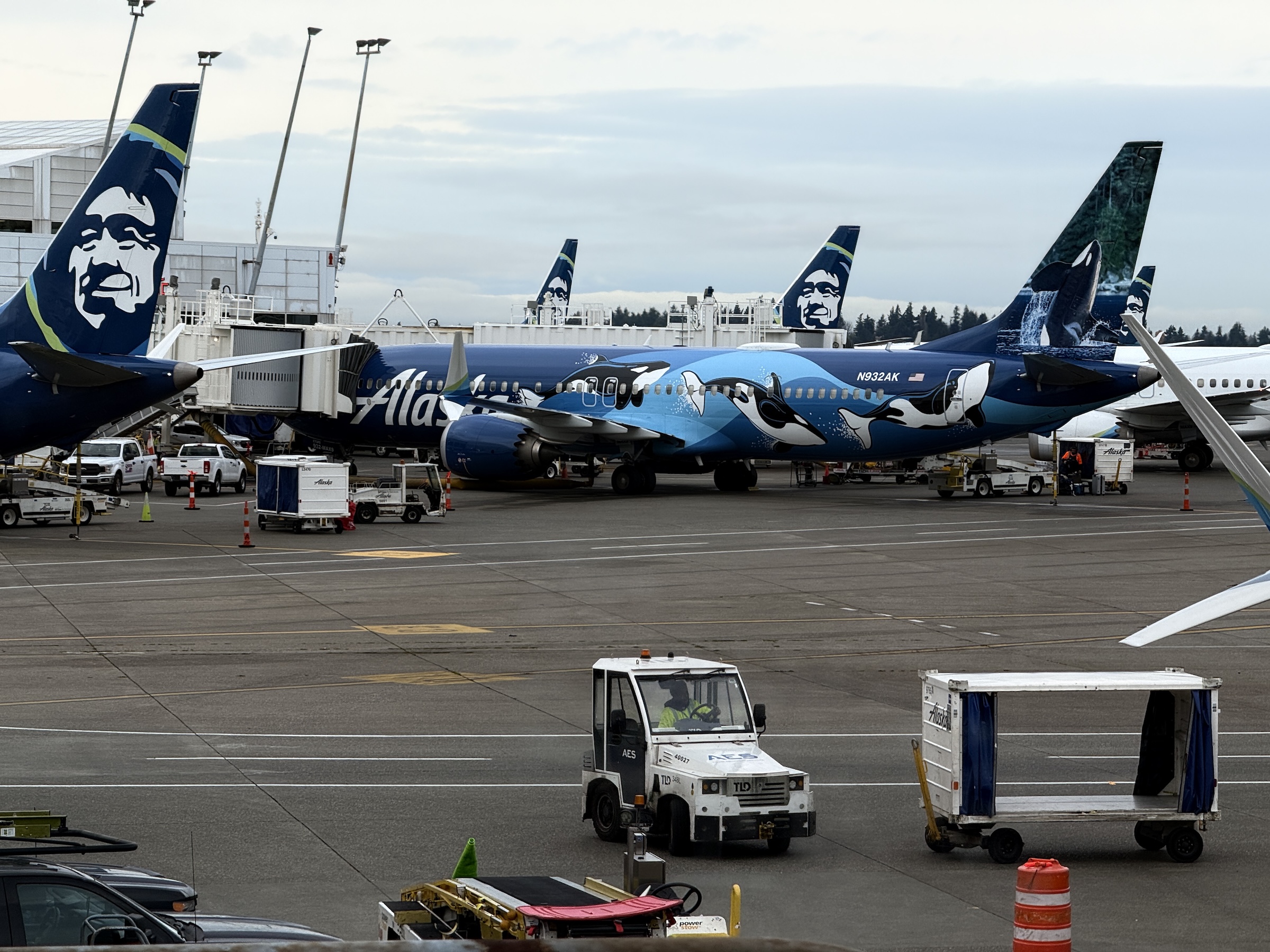
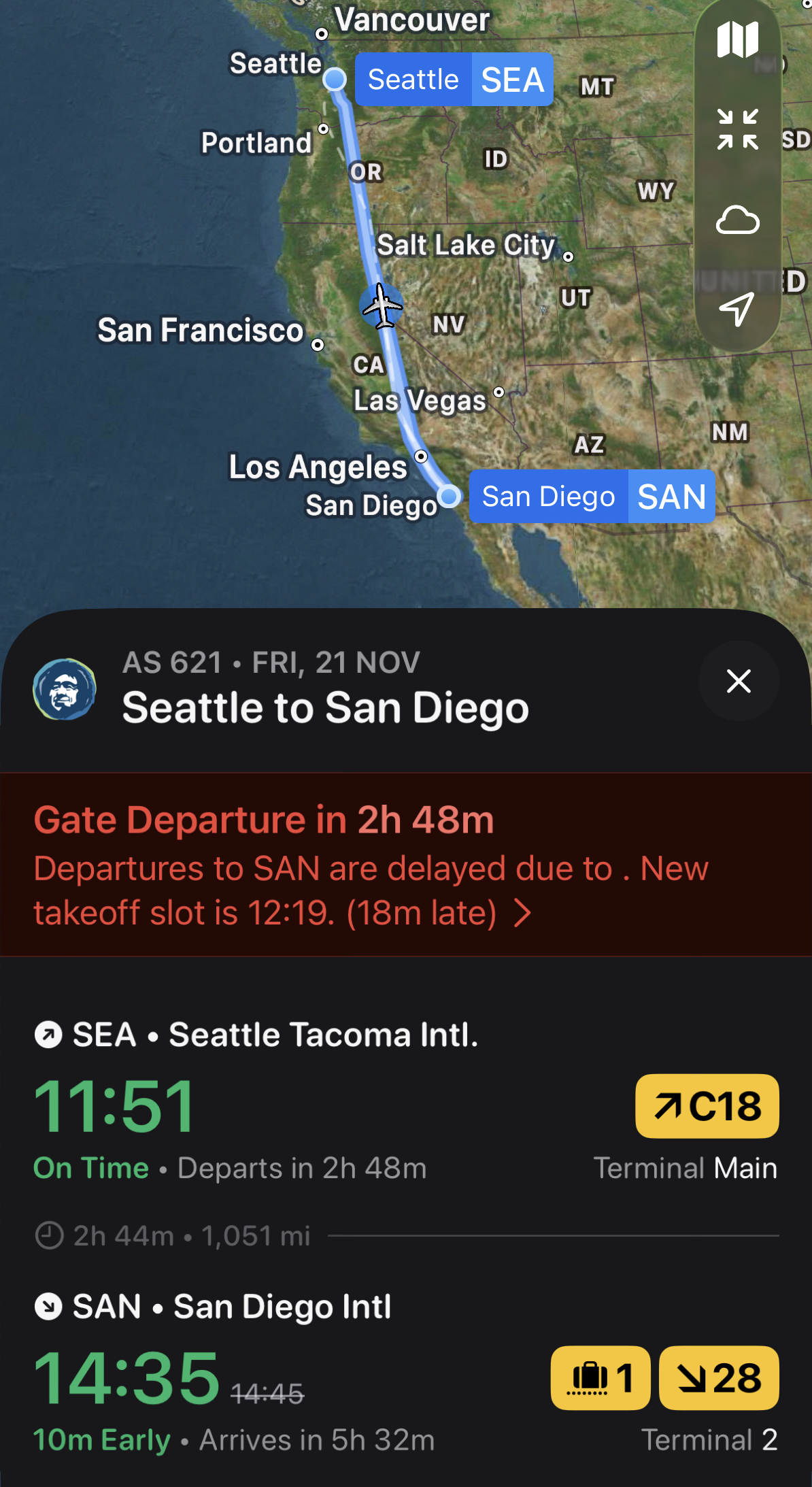
We took off from Seattle-Tacoma Airport’s South Terminal almost an hour after the scheduled departure time. (The inbound flight from Frankfurt was late). The flight went without incident, though— always a good thing— and we made up the lost hour on the way.

Still at the cruising altitude of 37,000 ft here, with about 2 hours of the 10h flight remaining. Our route took us over Nunap Isua (Cape Farewell), the southernmost point of Greenland.
Our Airbus A330-300 bird landed on the tarmac. I have just boarded the bus that would take us to the terminal. Frankfurt airport is enormous, and it was more than a 10-minute drive, where we joined a line of buses and waited for another 20 minutes or so before we could go inside the terminal.
A view from the bus. The bus drive makes for a mini drive-by tour of the airport. The striped livery is that of low-cost German airline Condor.
Inside the terminal now, making my way to the passport control and baggage claim. These travelers are headed to their connecting flights.
Recognize the woman on the Italian tourism billboard? She must be Venus from Sandro Botticelli’s famous painting called The Birth of Venus.
Frohe Weihnachten (Merry Christmas). A little while later I would learn of the terrible events in Magdeburg at the Christmas market there. A madman (50-year old Saudi Arabian doctor that had lived in Germany since 2006) drove into the crowd, killing five people and injuring some 200.

Thursday/ my bags are packed 🧳

My bags are packed for my trip to South Africa, with two-night stayover in Frankfurt, Germany.
That way I can check in on the Christmas market, at the historical Römerberg market square in Frankfort.

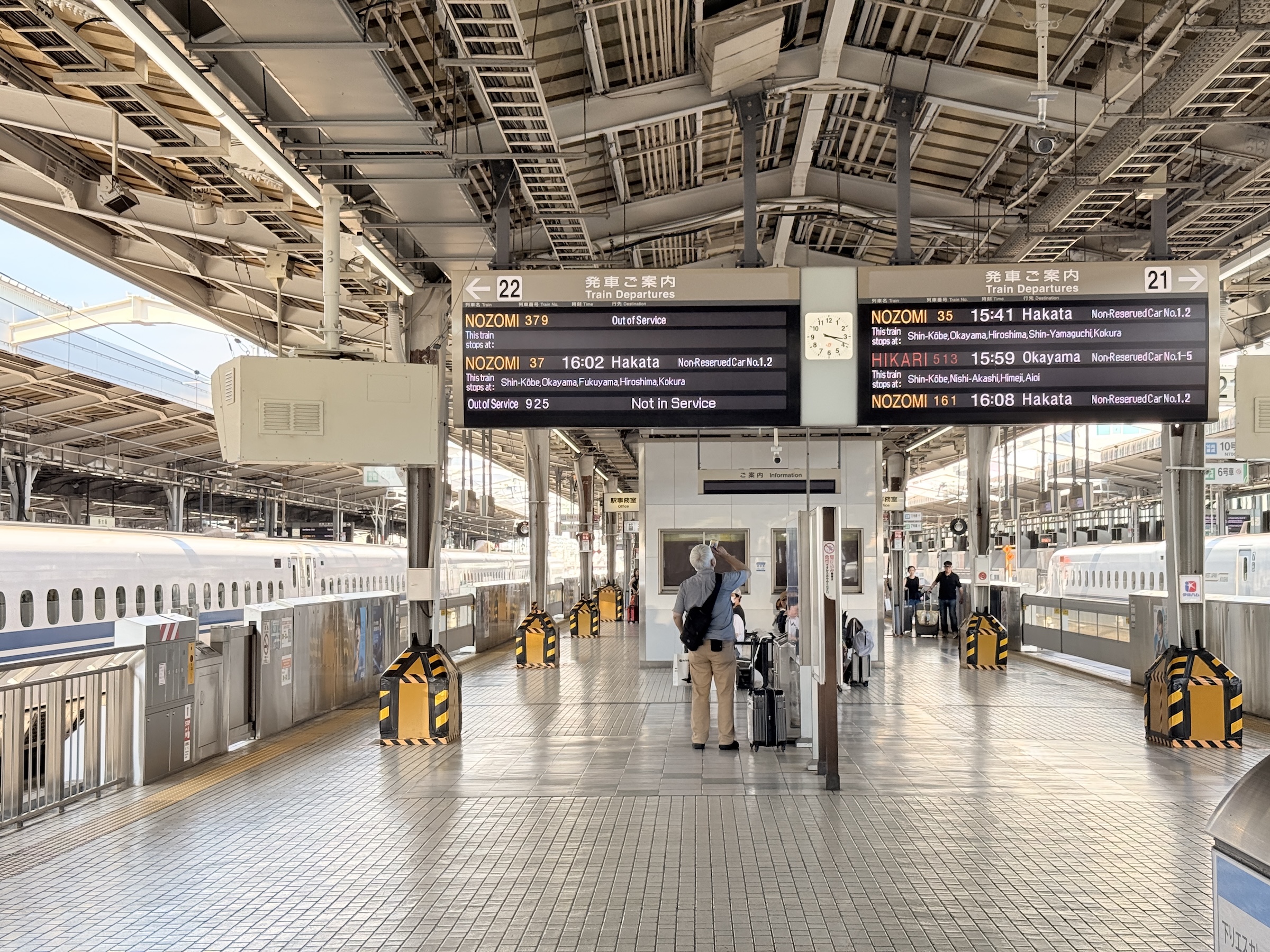
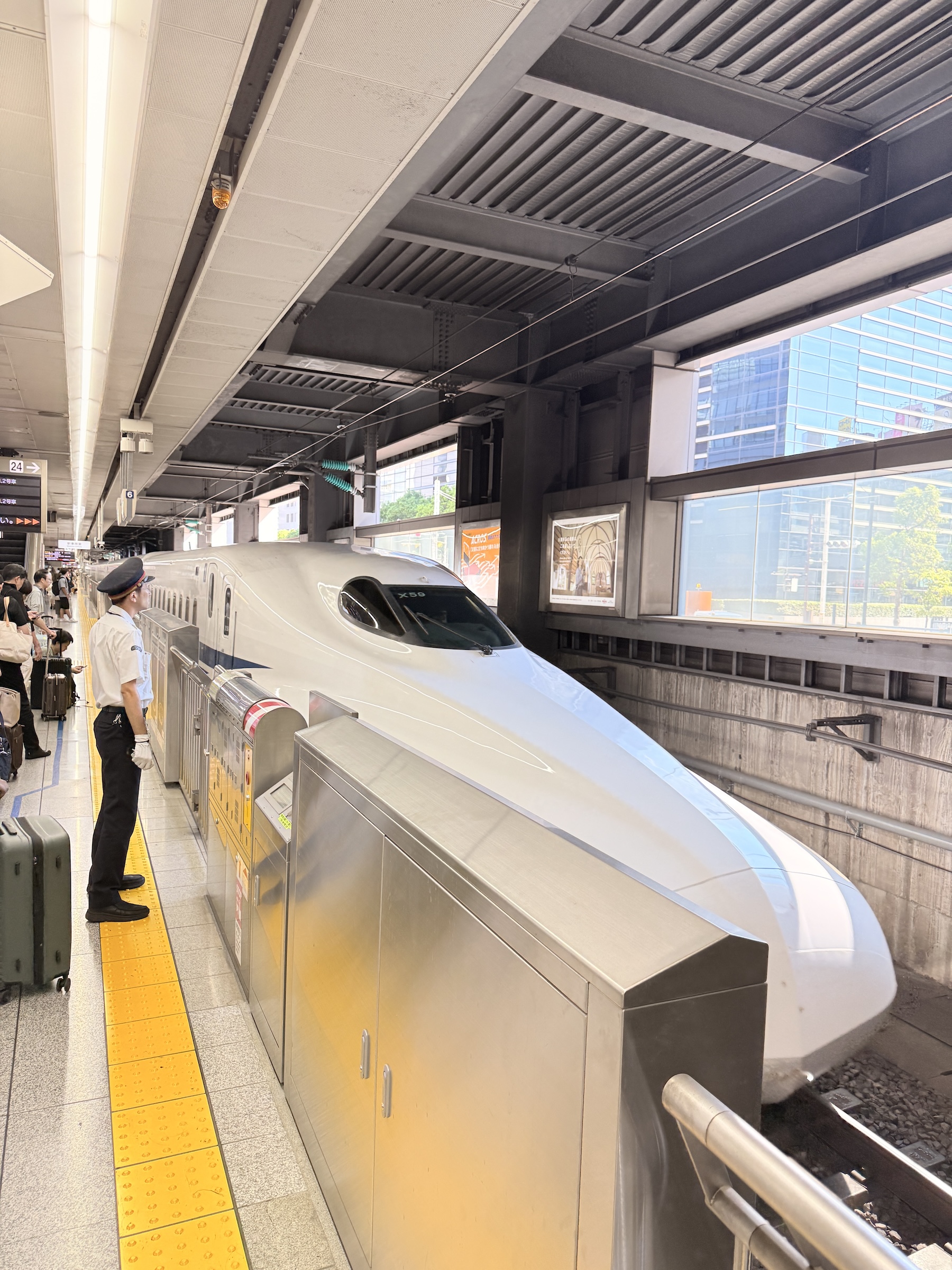
Ready to Go! says the friendly shinkansen (Japanese bullet train). My ‘junior’ wallet is a spare wallet, and it is stuffed with US dollars, Euros and South African rands. I should be able to use my credit card or debit card everywhere and I should not need the bills at all.
(I bought this wallet in Hong Kong in August 2011 at the Sogo department store. Just the day before, my leather wallet was stolen out of my backpack ON MY BACK, and while I was on the escalator in an upscale shopping mall. One pickpocket distracted me by ‘bumping’ into me, and at the same time, his accomplice must have zipped open the pocket in the backpack to steal the wallet. I believe they watched me withdraw cash from an ATM just ten minutes before, and saw me put the wallet in my backpack. By the time I could notify American Express, the thieves had already gone on a shopping spree and spent some $7,000 on luxury items. American Express immediately cancelled all the transactions on the card. Several lessons here, of course, and all well-known: keep out an eagle eye when drawing money from an ATM anywhere; don’t let strangers in get too close to you; don’t carry your wallet in an easily accessible place.)

Friday/ no mall, no travel .. lucky me 😁

I cannot remember when last I went shopping (in a mall) on Black Friday, and I have no intention to do that ever again.
I also count myself lucky when I don’t have to travel during crunch times such as Thanksgiving weekend.

The New York Times had a whole report today about the plots New Yorkers have to hatch to get themselves to one of their three area airports (it’s not easy with public transportation, and very expensive with Uber or a cab).
The article also mentioned this incident of three weeks ago, at La Guardia airport: a raccoon dangling on a wire from the ceiling at the Spirit Airlines Terminal. Oh man.
P.S. ‘LaGuardia of the Galaxy’ —the comment by ivejafro that garnered 10,100 likes— is a reference to the character ‘Rocket Raccoon’ from Marvel Comics and the movie franchise Guardians of the Galaxy 😆
[Screenshot of a cbsnews post on Instagram]

Tuesday/ going home 🛫

The time came to bid Beantown goodbye on Tuesday afternoon, and fly back to the Pacific Northwest.
There was a rainstorm with strong winds as we made our final approach into SeaTac Airport, which made for a rough landing, but once we started taxiing on the runway, everything was OK.

Pictures:
Looking up while waiting for my Uber driver on Main Street across from the MIT campus in Cambridge; in Uber car in the Ted Williams Tunnel again; at the gate at Boston Logan airport (dry and calm); arriving at the gate at Seattle-Tacoma airport (wet and stormy); restaurant PF Chang’s dragon at Seattle-Tacoma airport’s North Terminal.

Monday/ the MIT Museum 🧬

The MIT Museum, founded in 1971, is part of the Massachusetts Institute of Technology in Cambridge. It hosts collections of holography, technology-related artworks, artificial intelligence, architecture, robotics, maritime history, and the history of MIT.  [Source: Wikipedia]

The MIT Museum at the Gambrill Center (completed 2022) occupies the first three floors of the multipurpose building at 314 Main Street. The museum is designed to “turn MIT inside out” (according to MIT Museum Director John Durant), inviting the community at large to join the conversation and participate in the creation of research projects and solutions.
Kismet, an early social robot (built in 1997) from the MIT Artificial Intelligence. It had movable ears, eyebrows, eyelids and lips.
Endgame, a chess machine invented in 1950 by Claude Shannon after he published a groundbreaking paper called “Programming a Computer for Playing Chess”.
Atom model kit, circa 1943.
Medusa (1985), a computer-generated holographic stereogram by the MIT Spatial Imaging Group and the MIT Media Laboratory.
The famous Milk Drop Coronet (1957) photograph, made with pioneering high-speed flash photography.
Black Panther comic Jungle Action #12 featured the first Black superhero, and featured an MIT alumnus as fictional supervillain Erik Killmonger (bottom right).
A genetically engineered pink chicken. The real chicken has pinkish bones and pinkish muscles as well.
3D Models that explain hoe CRISPR technology works (used for gene splicing and editing).
A journal book from the museum store.

Sunday/ Boston architecture 🏙

Here are a few pictures of buildings and artifacts that caught my eye.

Here is a beautiful flatiron building at the junction of Pleasant Street and River Street in Cambridge with lots of copper on the outside (the green). It was built in 1899, and its most recent renovation was done in 2020 with the repair and replacement of some of the doors and windows, and updates to the wiring and plumbing inside.
This firehouse is just a few blocks down on River Street in Cambridge.
Engine Company No. 6 was established in 1852 as Pioneer Engine Company No. 6 and was located in a building on Pioneer Street in Ward 2, Kendall Square.
They moved into this building at 176 River Street in 1891 and has been there ever since.
I love old-fashioned hardware such as this walk signal push-button.
The First Baptist Church on River Street is undergoing a few renovations.
The church is a tall single-story brick structure, with sandstone trim and decorative detailing in terra cotta, and has Gothic Revival styling. It was constructed in 1881.
The Old State House, also known as the Old Provincial State House, was built in 1713. It was the seat of the Massachusetts General Court until 1798. It is the oldest surviving public building in the city.
The Park Street Congregational Church is on the corner of the Boston Common. The Boston Common is the oldest public park in the US.
The Massachusetts State House (built 1795-1798), also known as the New State House (to distinguish it from the Old Statehouse), as seen from the Boston Common. The building is the state capitol and seat of government for the Commonwealth of Massachusetts. 
That is gold foil on the dome, put on in 1997 at a cost of $300,000 (and previously done in 1969 for $36,000). Another $20.3 million renovation project has gotten underway just this year.
This is the tombstone of John Hancock in the Granary Burying Ground near the Boston Common.
Hancock was the first and third Governor of Massachusetts; in office between May 1787 and October 1793.
Central Station on the Red Line has benches decorated with colorful tiles.
I took pictures of all the little decorative tile inlays on the pillars across the tracks. I posted them all. 🤗
.
.
.
.
.
.
.
.
.
.
Macy’s department store in downtown Boston takes up the entire city block, the same way as the one in New York City does.
Unable to pay its bills after decades at the heart of Boston’s cultural life, the Boston Opera House closed its doors in 1991 and began physically deteriorating at an alarming rate. Now, however, after a lavish restoration in the early 2000s, the Opera House has a new vitality.
The Boston Opera House was completed in 1928 as a tribute to Benjamin Franklin Keith, a leading figure in vaudeville, so popular in the United States in the years before.
And here we are today— a collage of modern glass and steel facades, caught in the zoom lens of my phone’s camera.