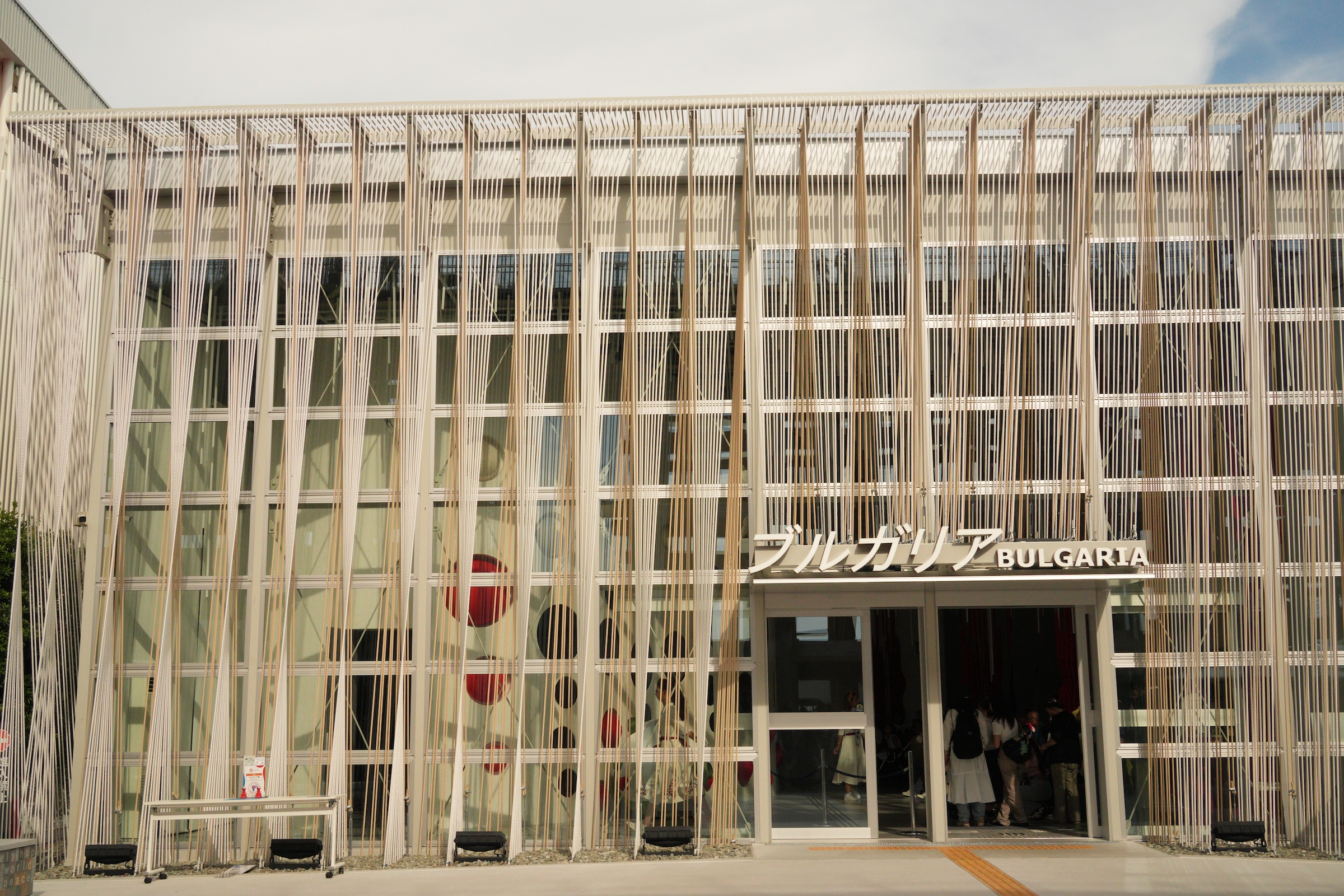
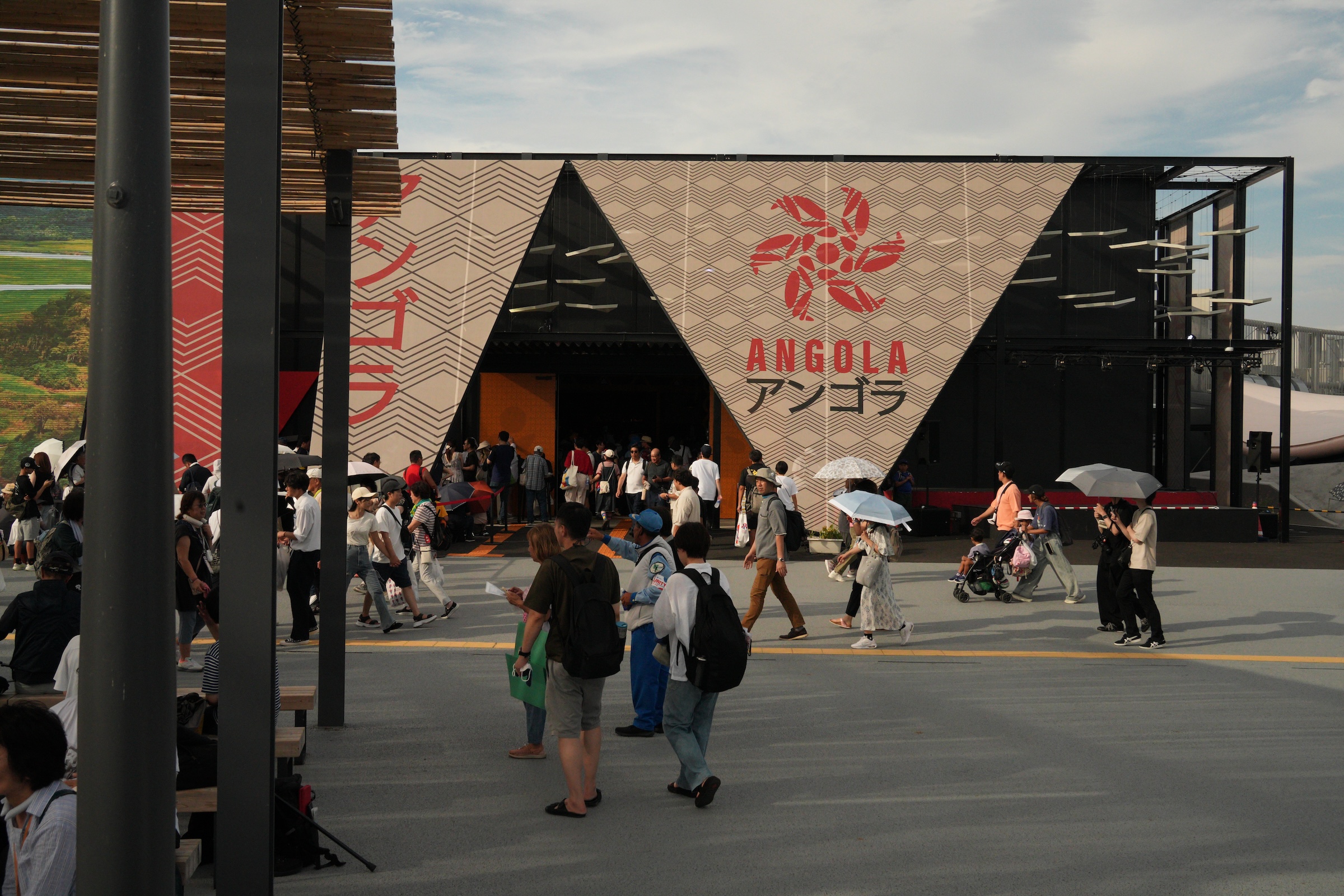
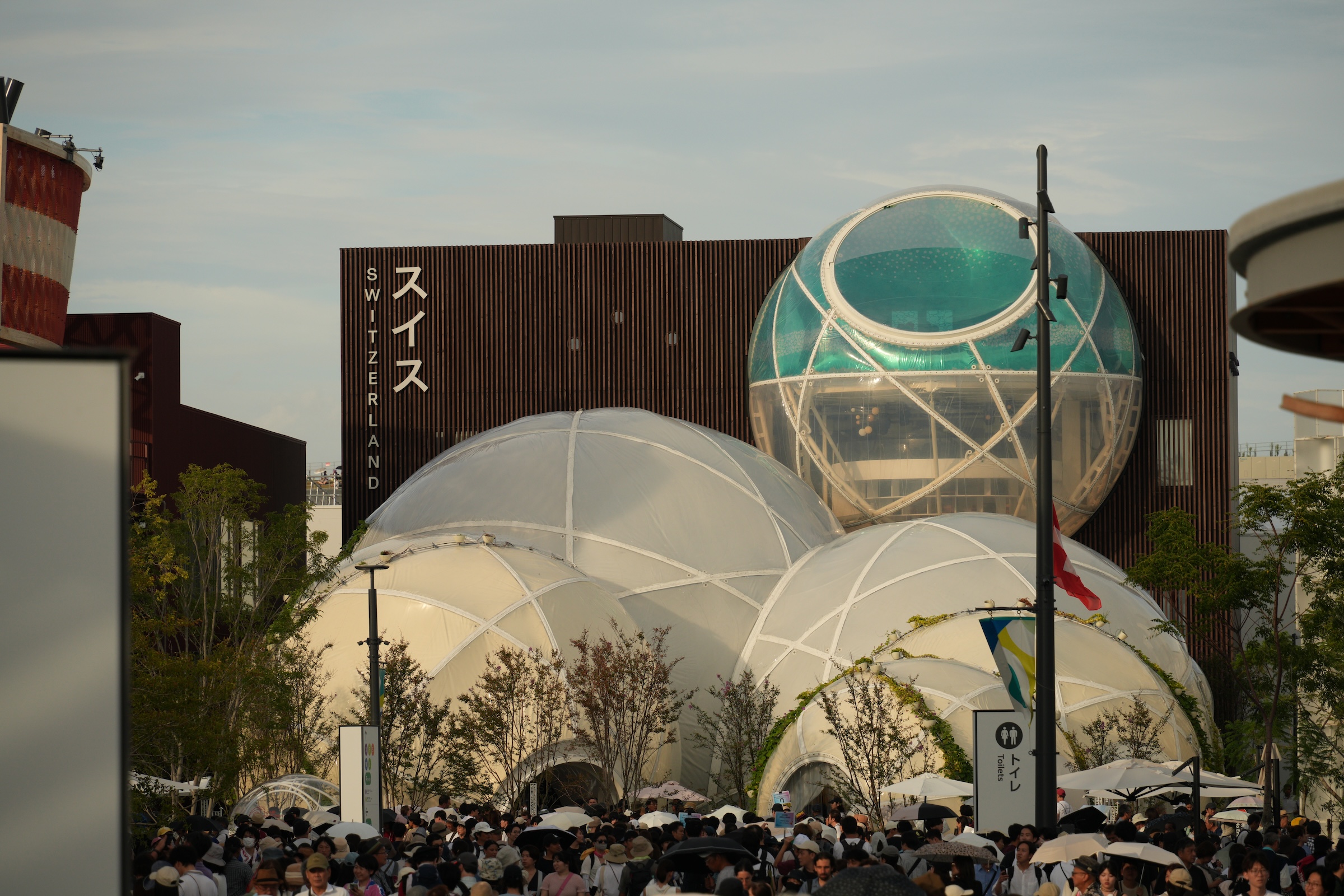
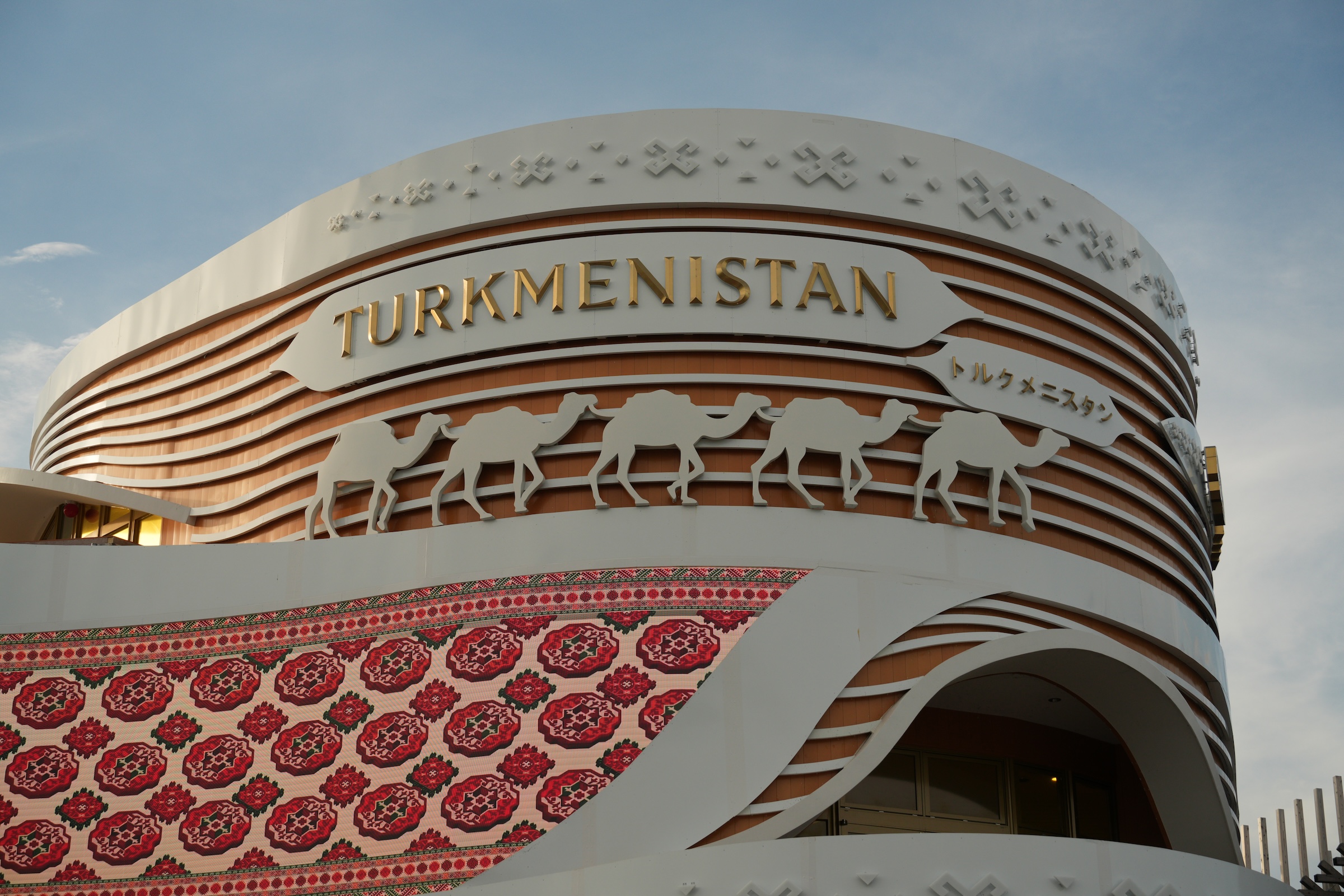
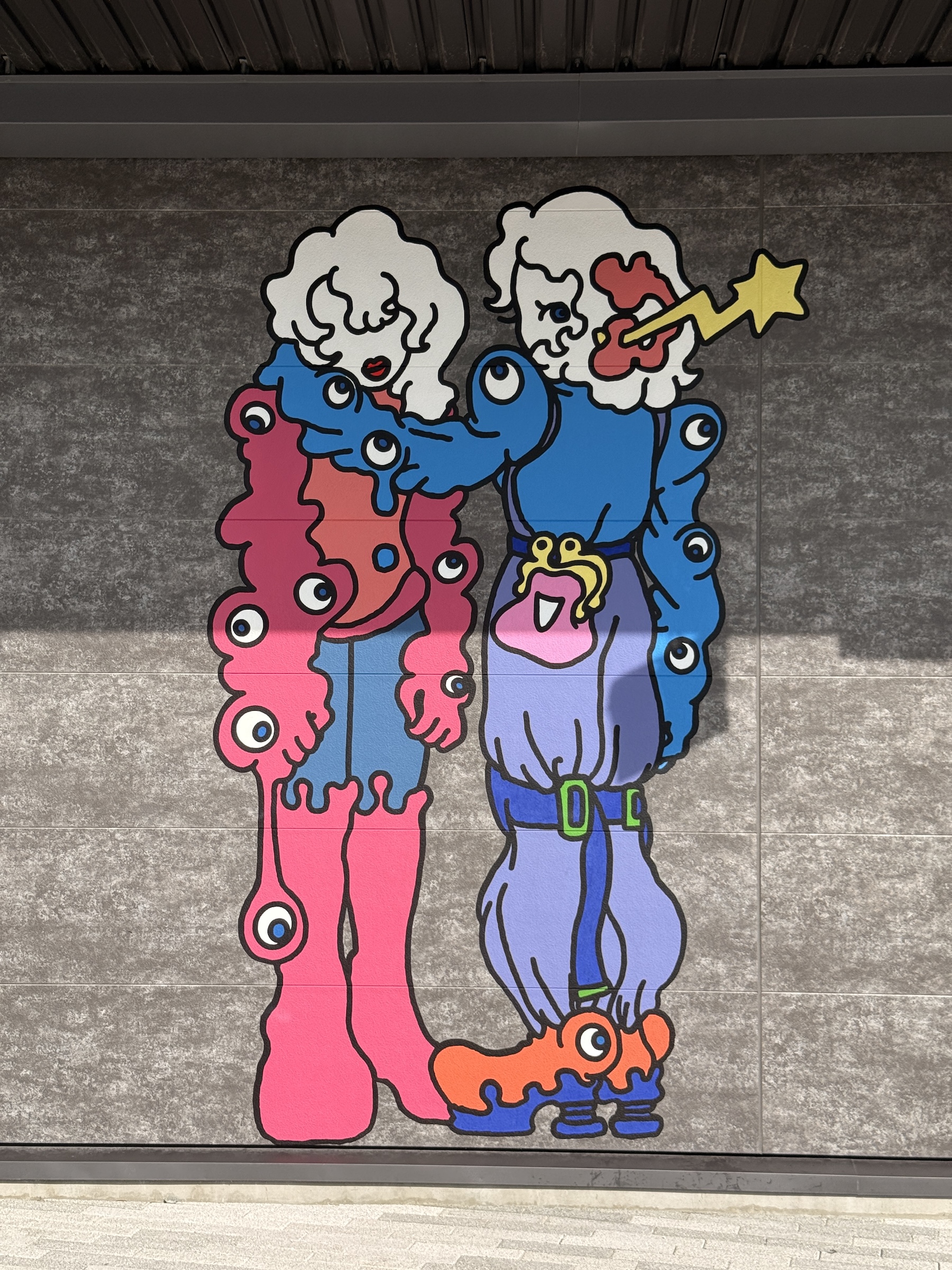
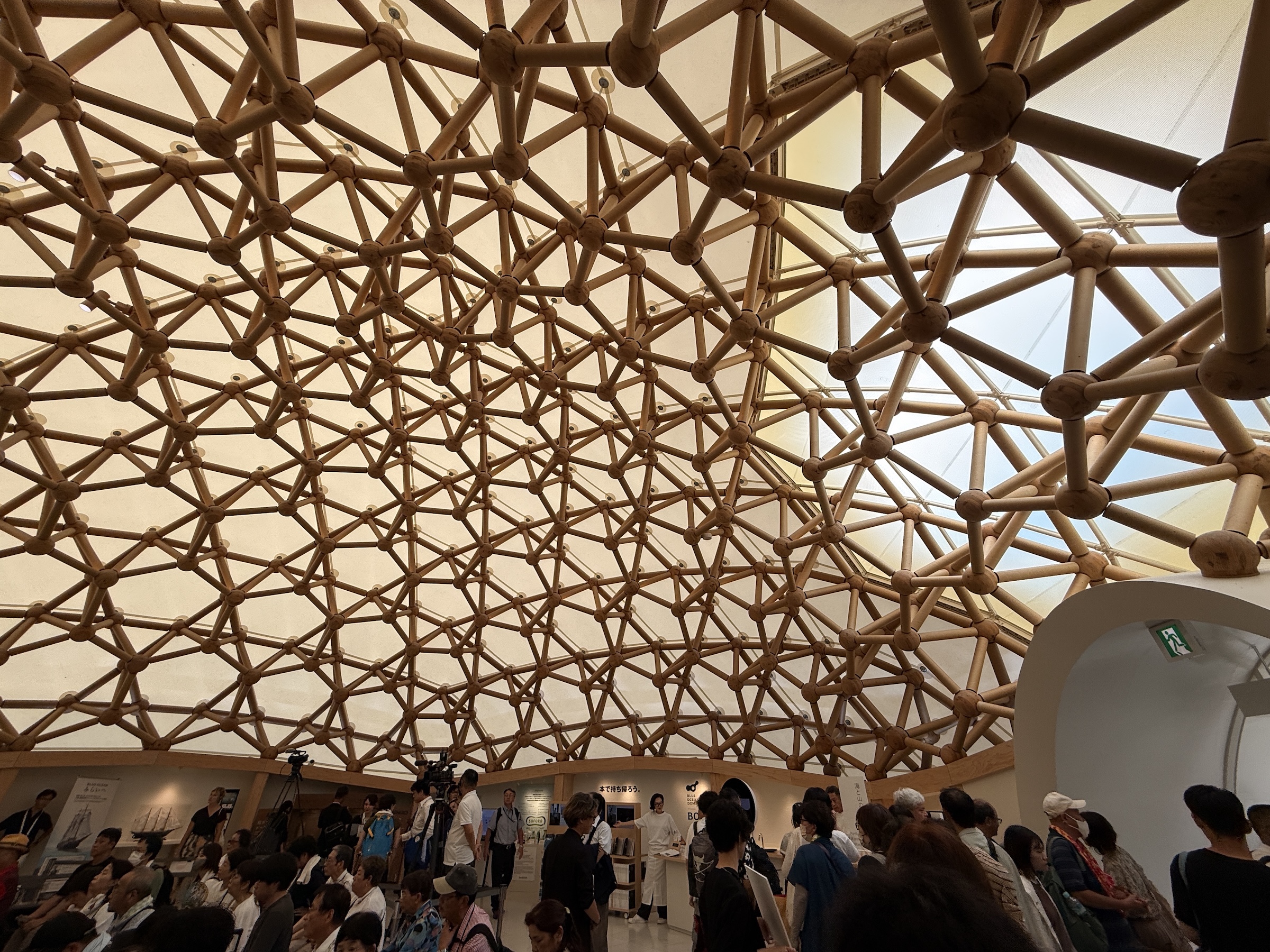
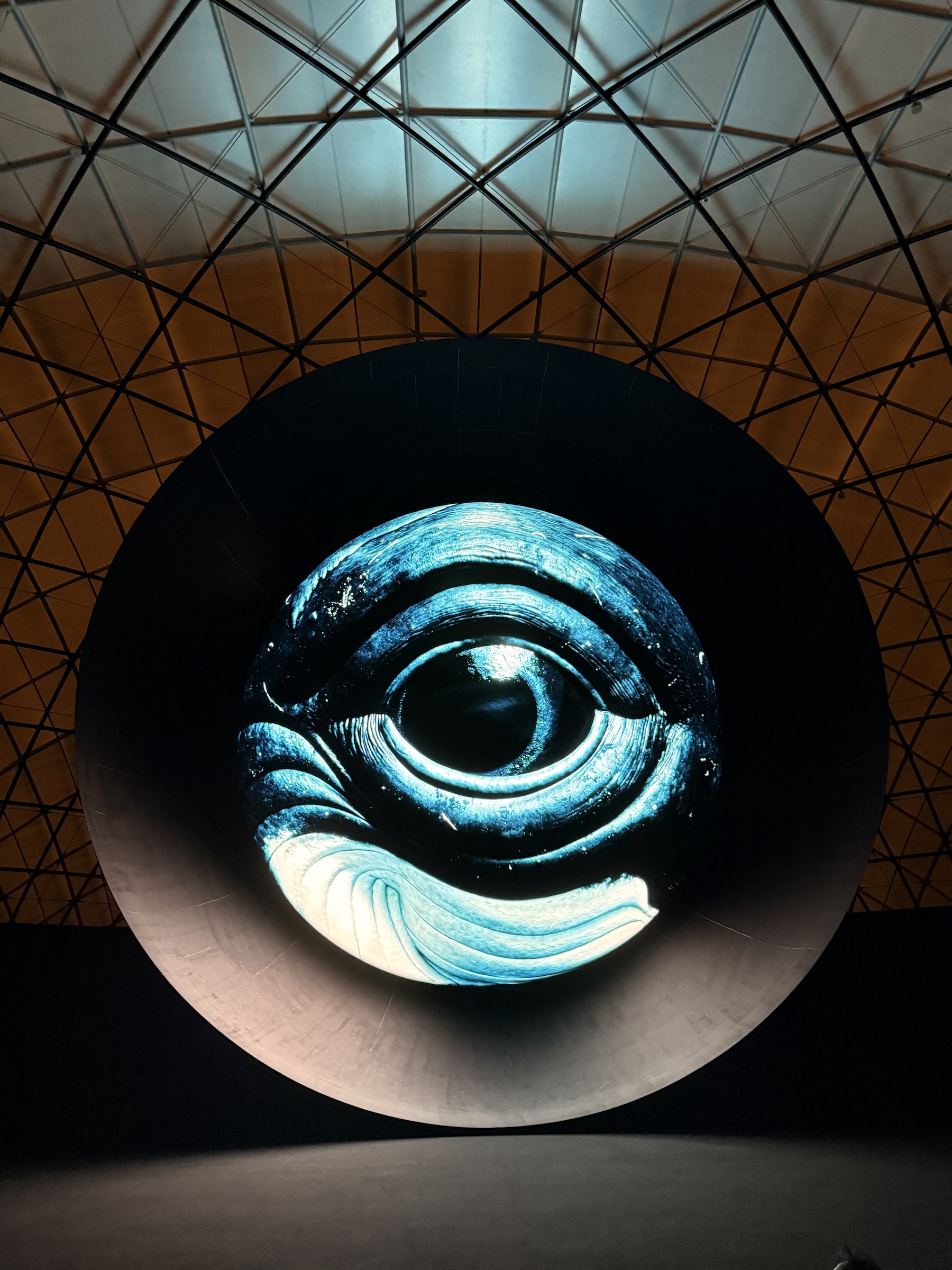
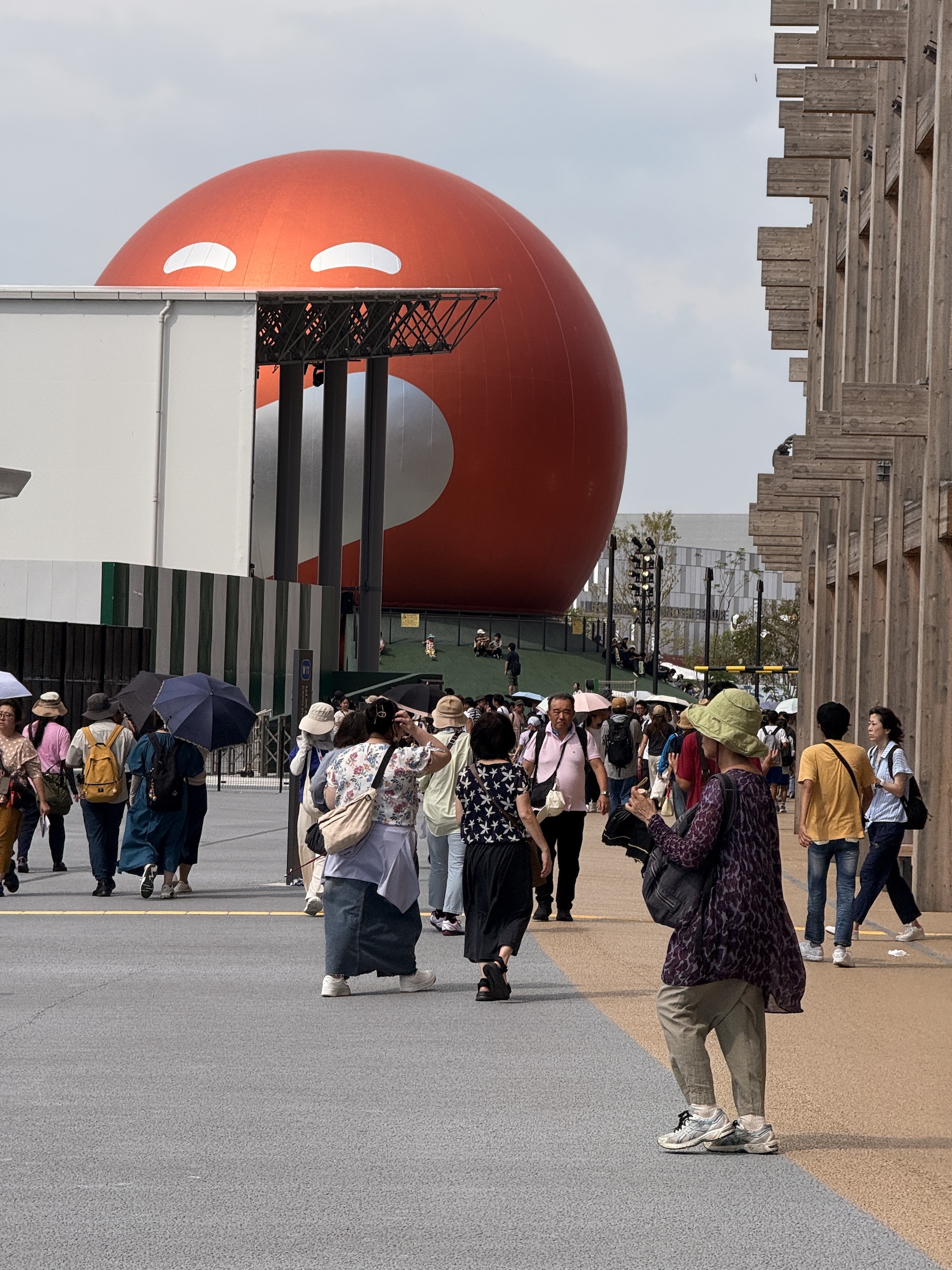
Saturday/ Seoul Tower 🚡

Seoul Tower is not far from my hotel.
I opted for the cable car to get me to the summit.
A parking lot at the summit can also be reached by bus or by car— or even by walking up all the way with a stairway called the Sam-soon Steps.
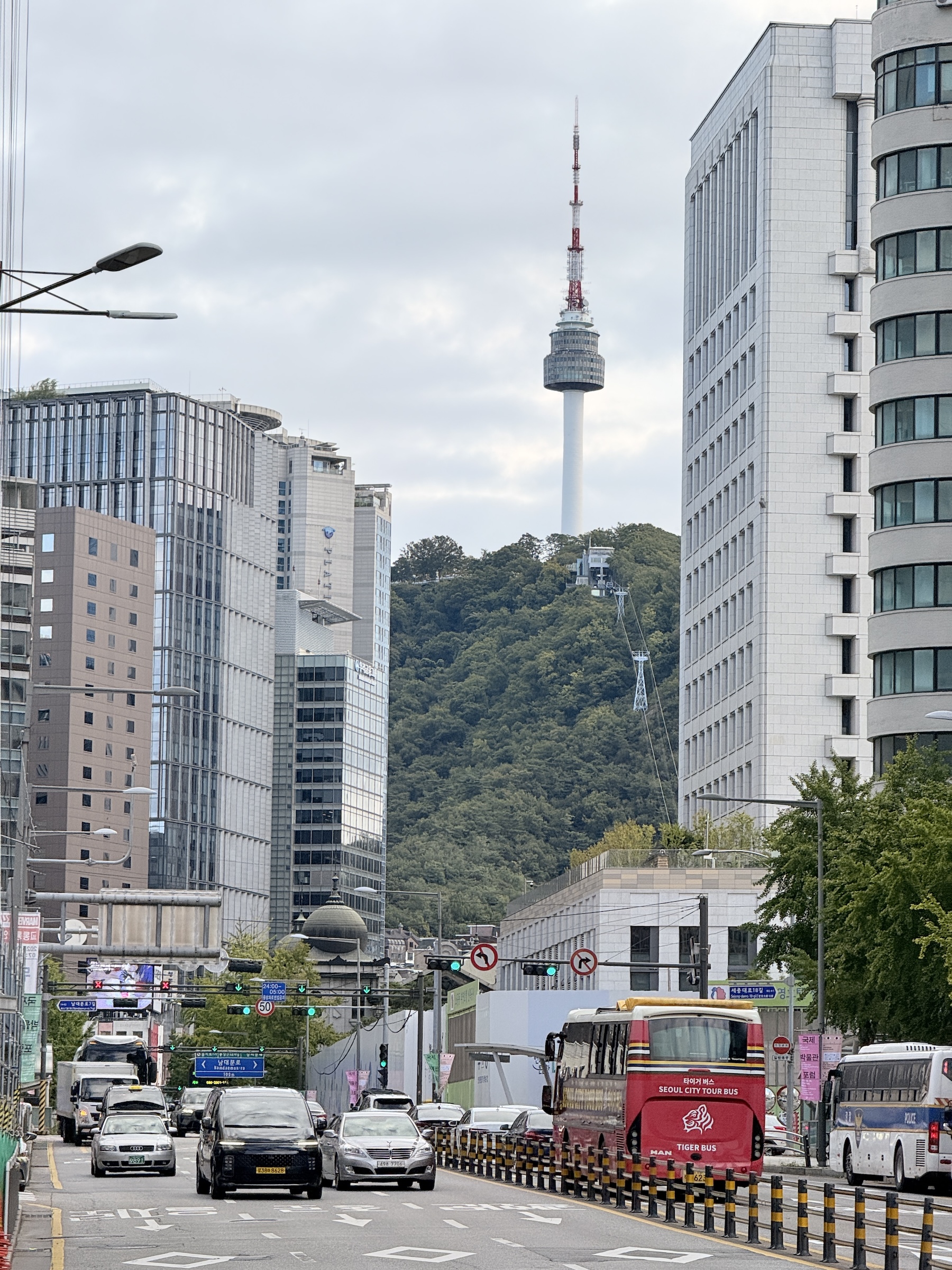
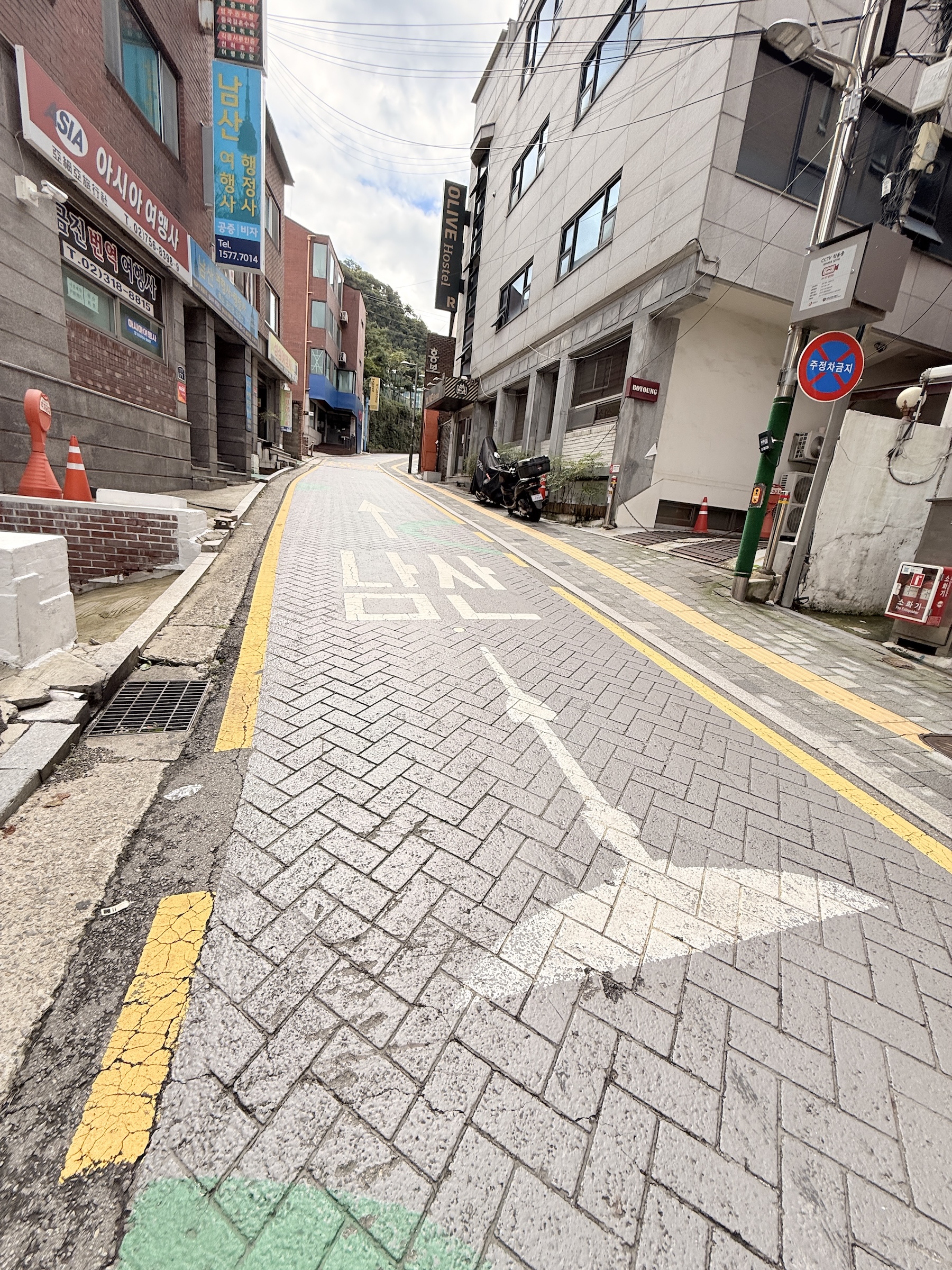
Looking towards Seoul Tower from the grounds of City Hall near my hotel.
This is a 5x telephoto lens picture, so the picture makes it appear closer than it really is.
Myeongdong Station on Line 4 of the subway gets one close to the cable car station, but there is still a steep 1/4 mile walk up the hillside, from the train station to the cable car station.
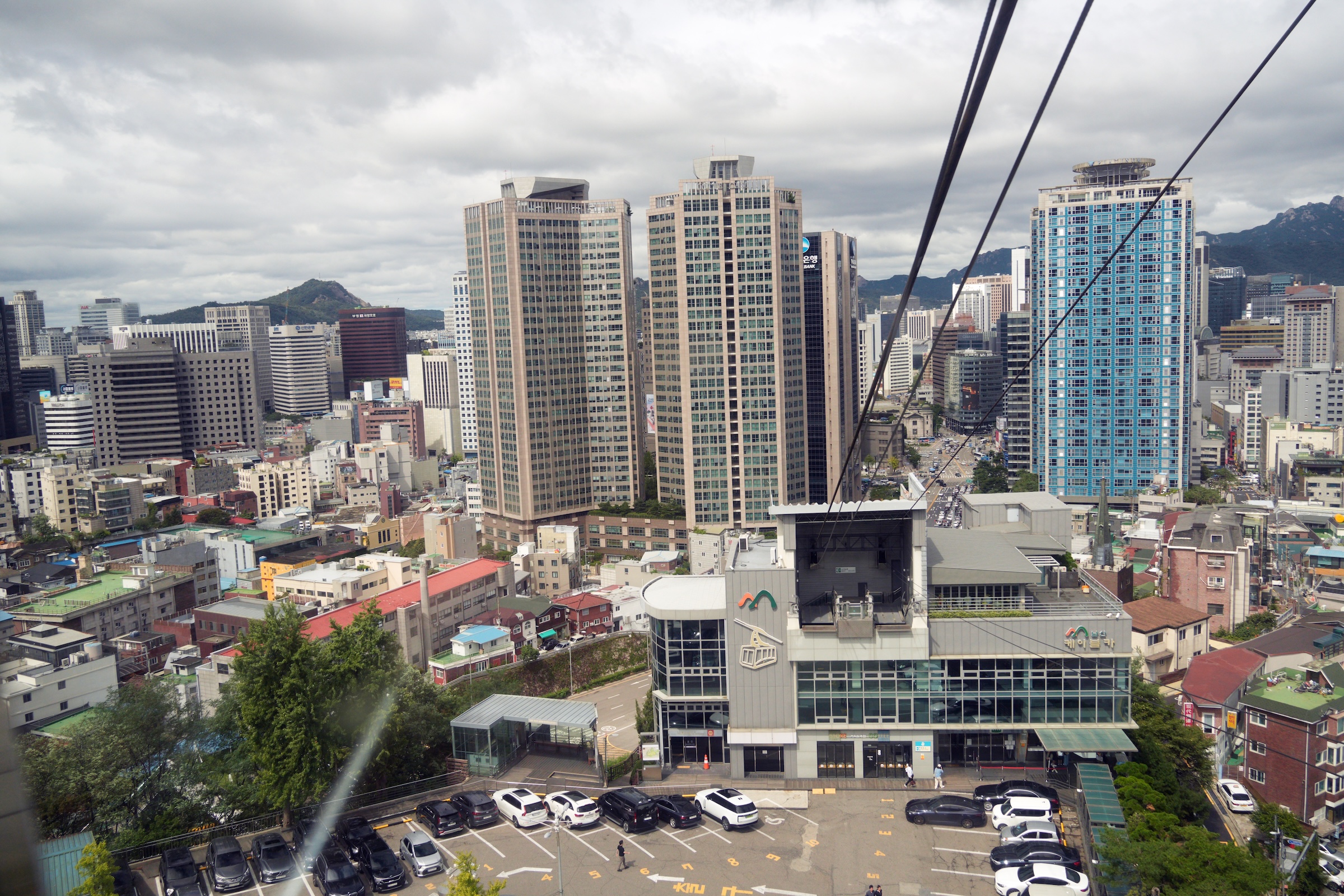
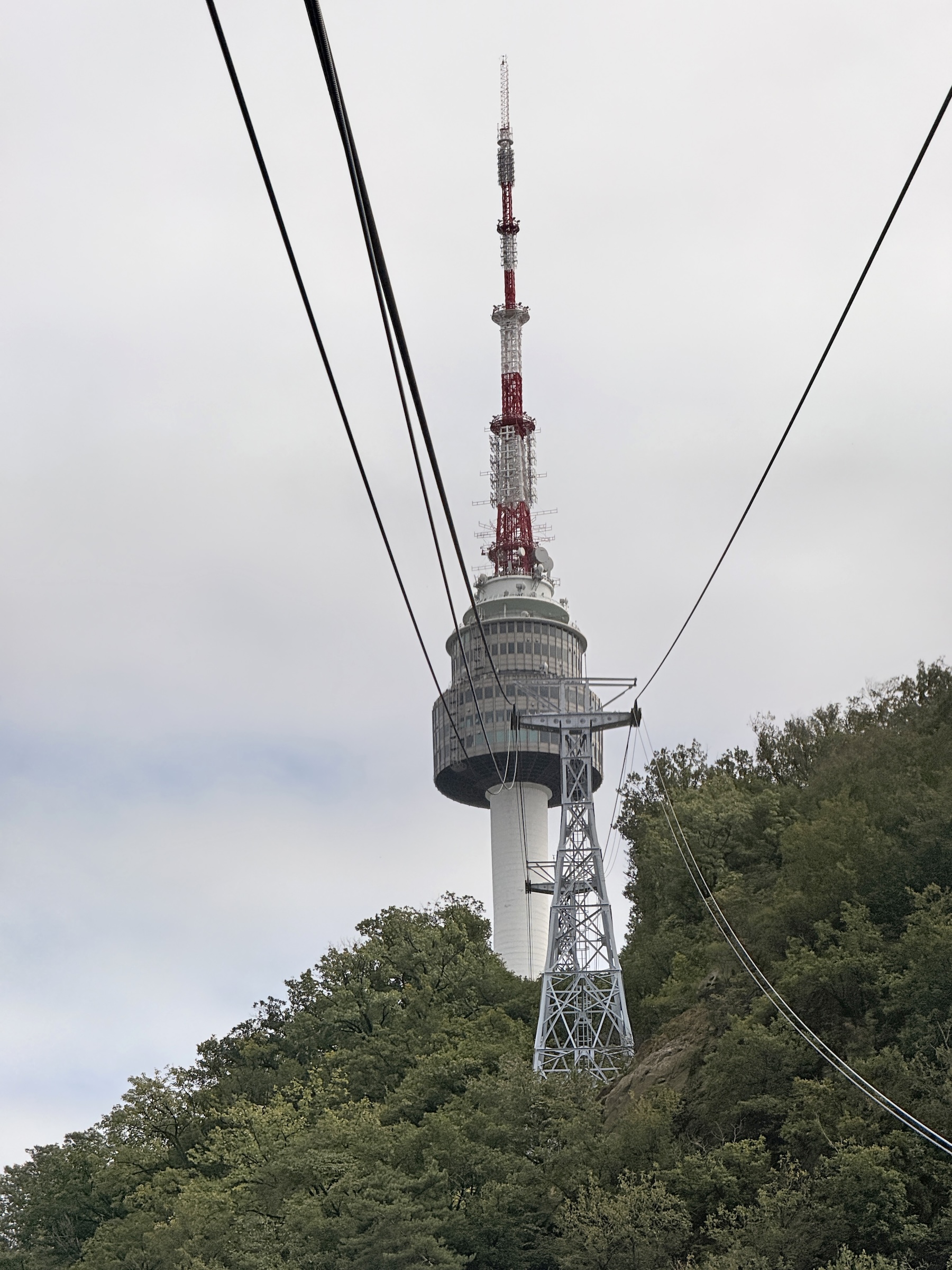
Here we go! In the cable car, and looking back at the cable car station.
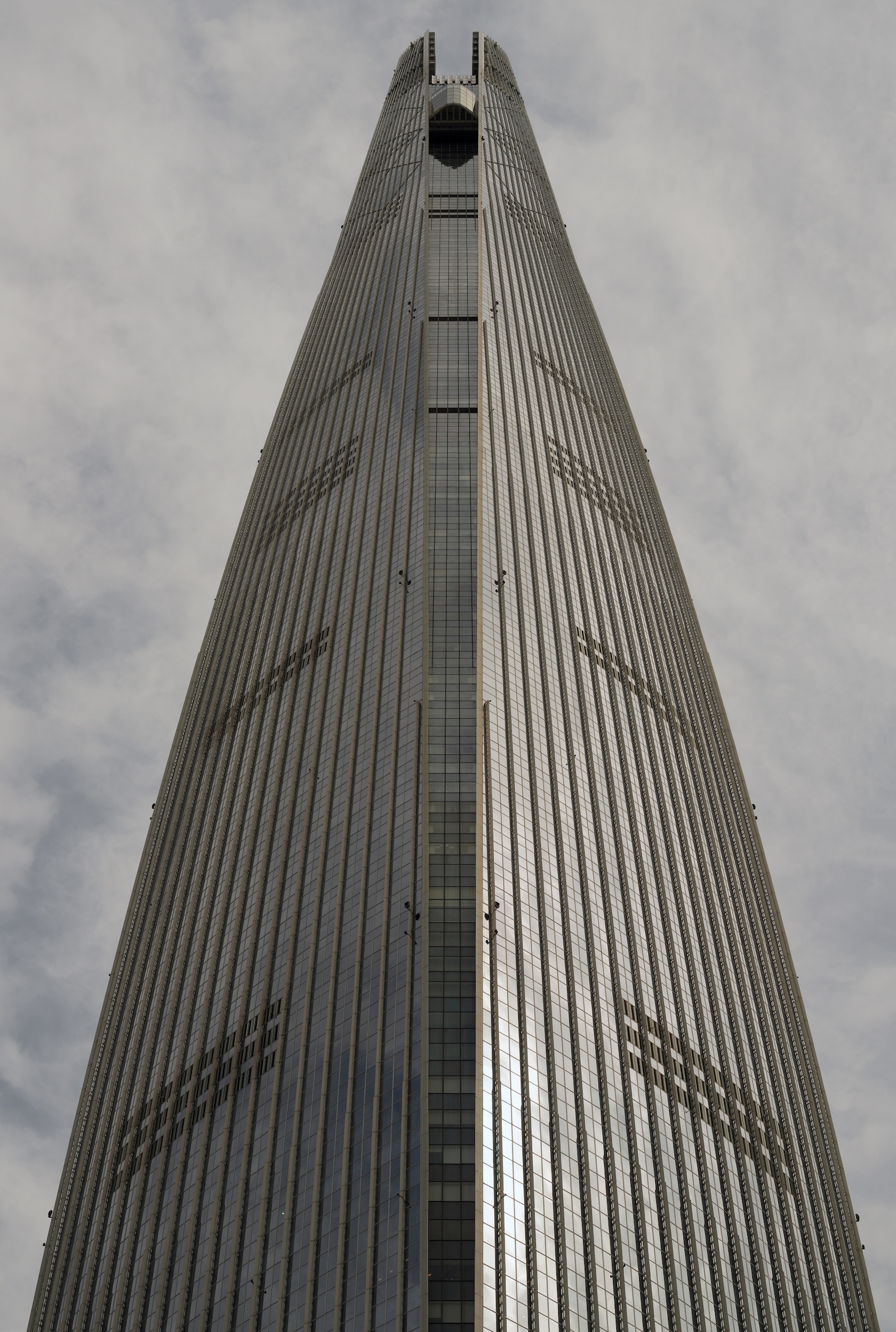
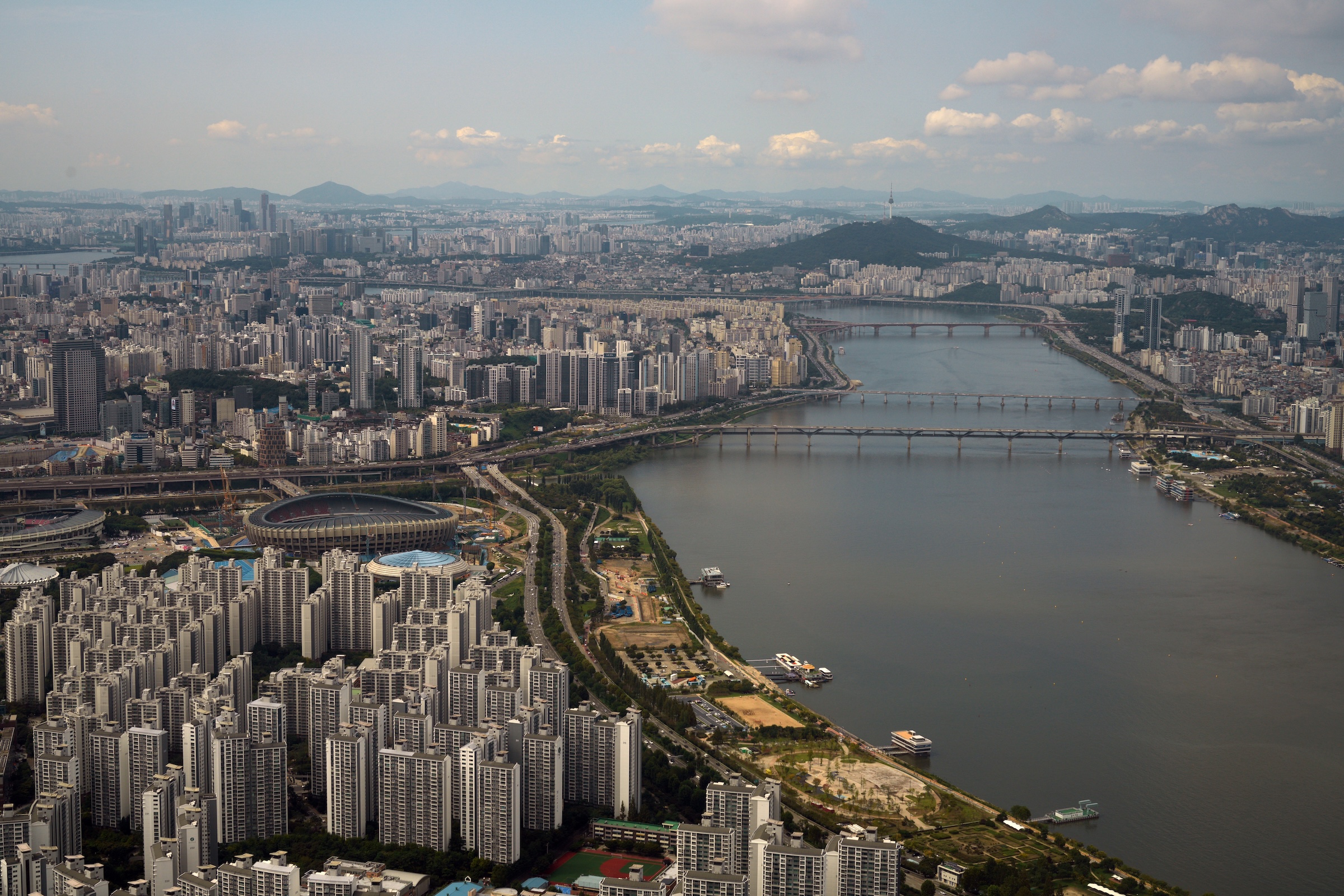
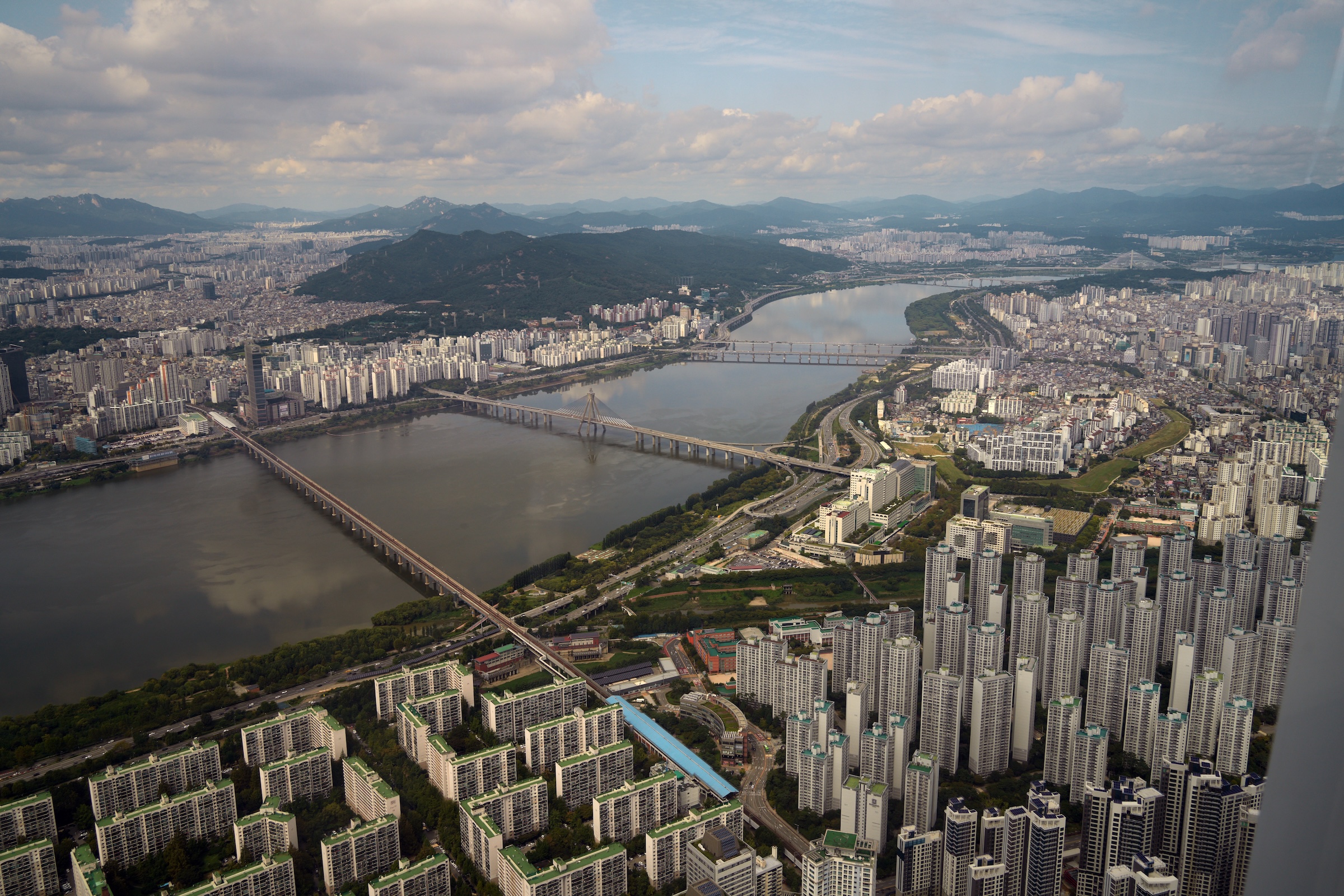
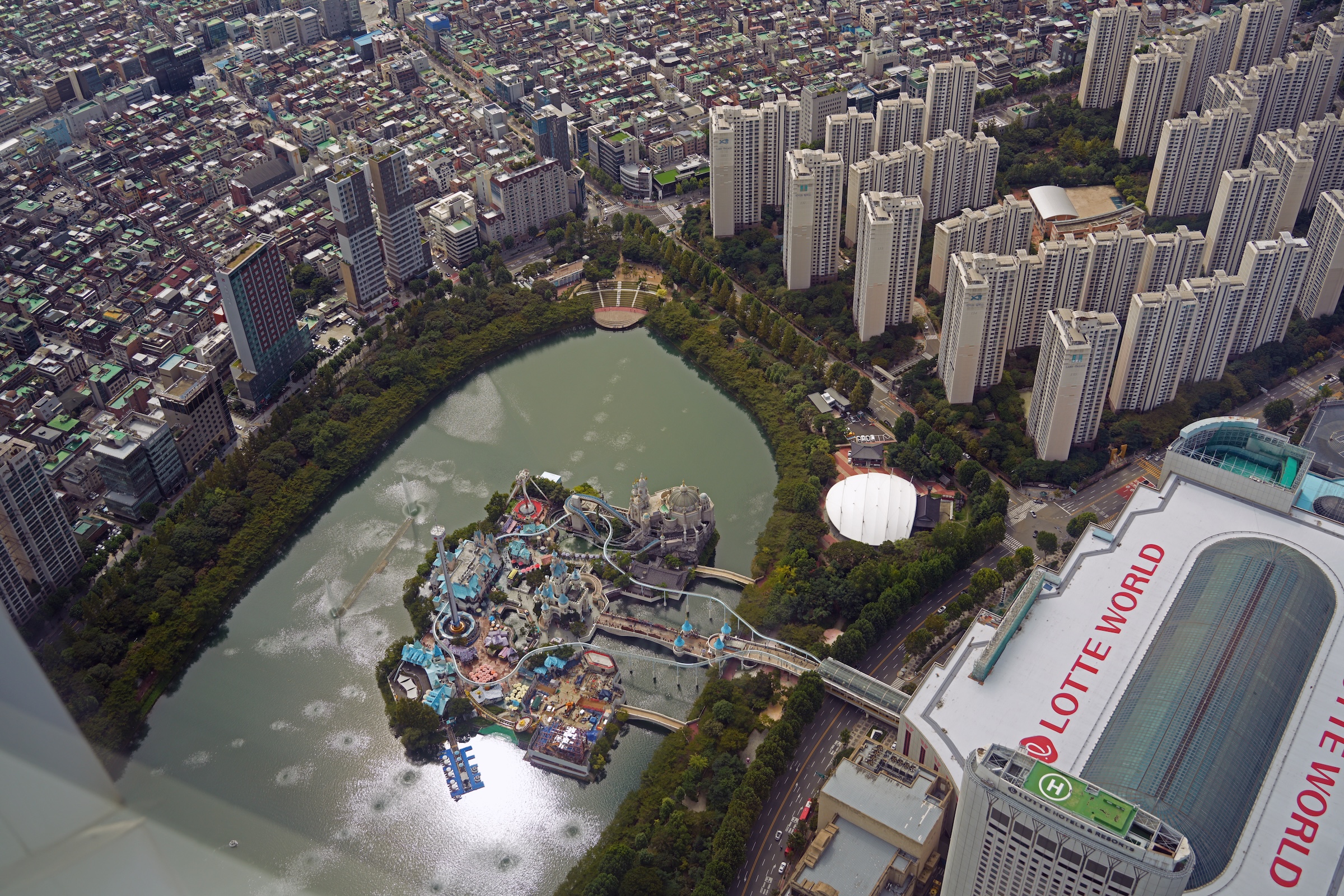
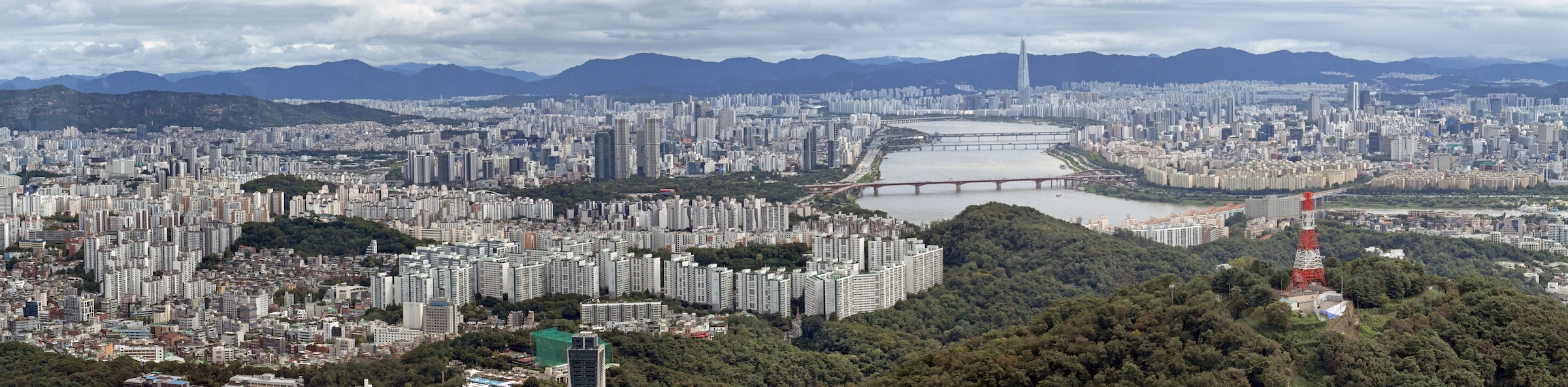
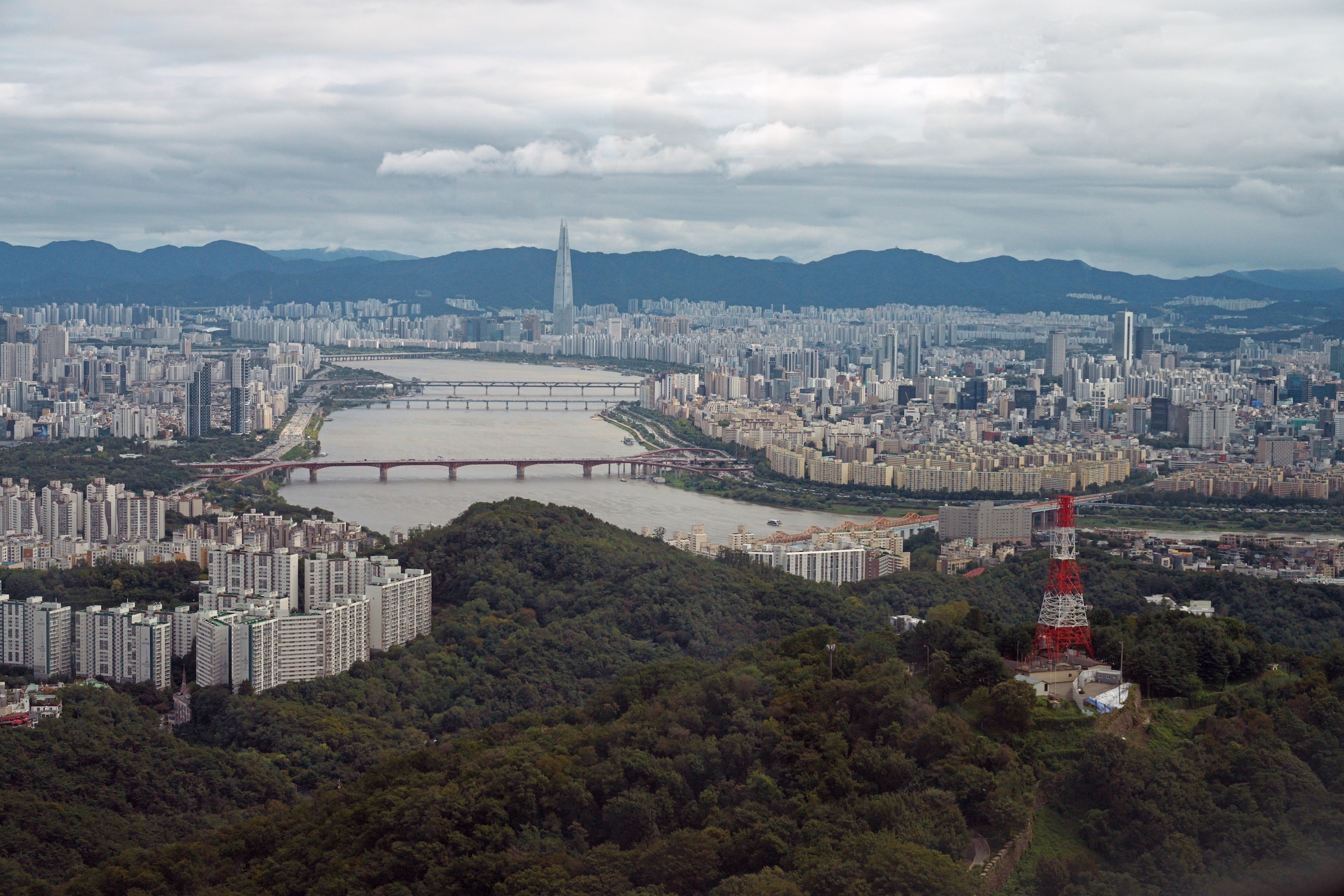
Look for Lotte World Tower in this panorama picture.
Lotte World Tower is located to the southeast of Seoul Tower. Seoul Tower is on Namsan Mountain, which is north of the Han River (in the picture), while Lotte World Tower is in Jamsil, which is on the south side of the river.
A closer look at the bridges over the Han River, and Lotte World Tower.
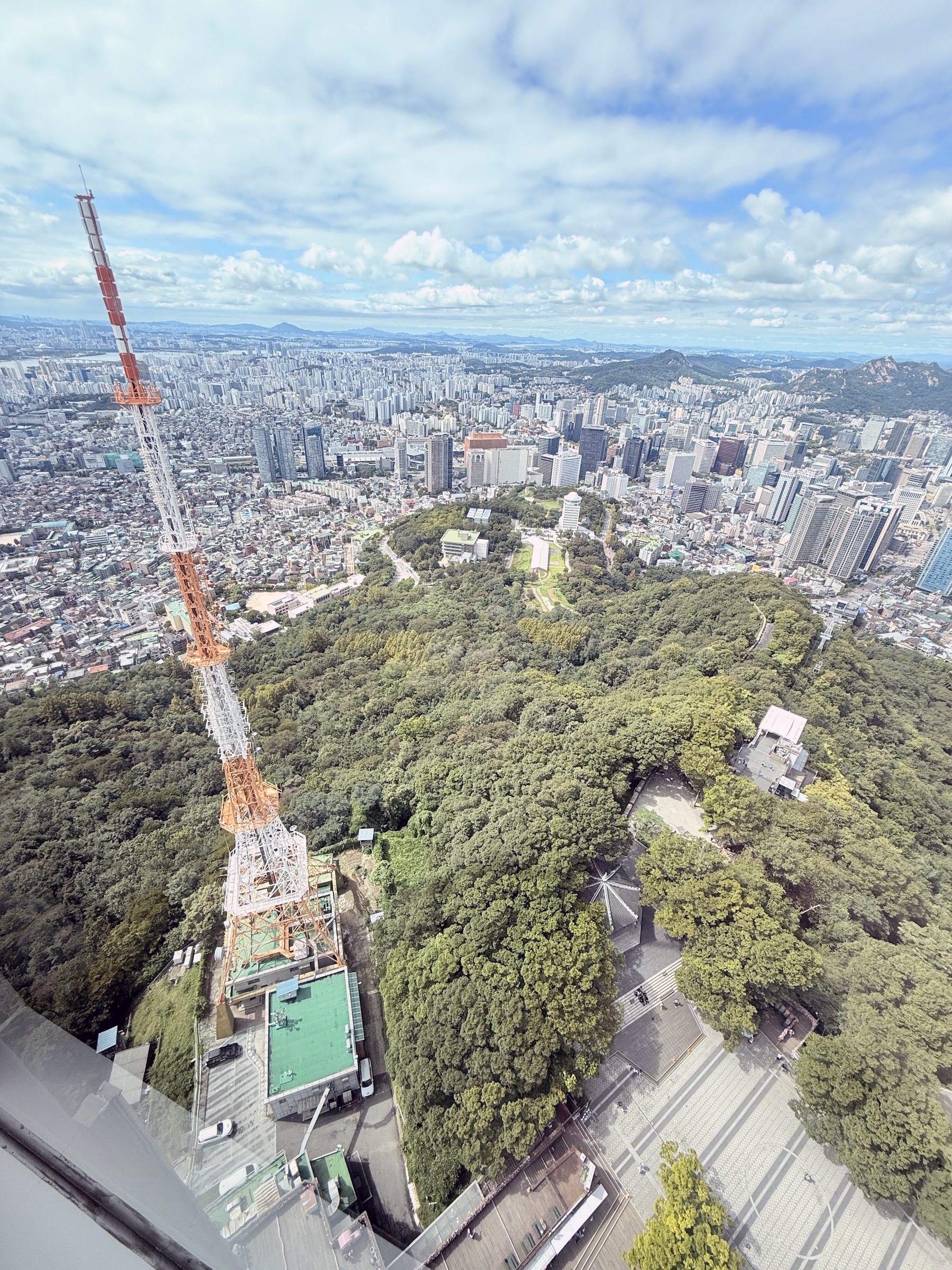
There is another smaller, independent lattice tower nearby Seoul Tower.
This a communications tower (can send and receive signals). The antenna on top of Seoul Tower is a broadcast antenna for TV and radio (transmission tower).
Look for the cable car stations at the bottom and at the summit, on the right side of the picture.
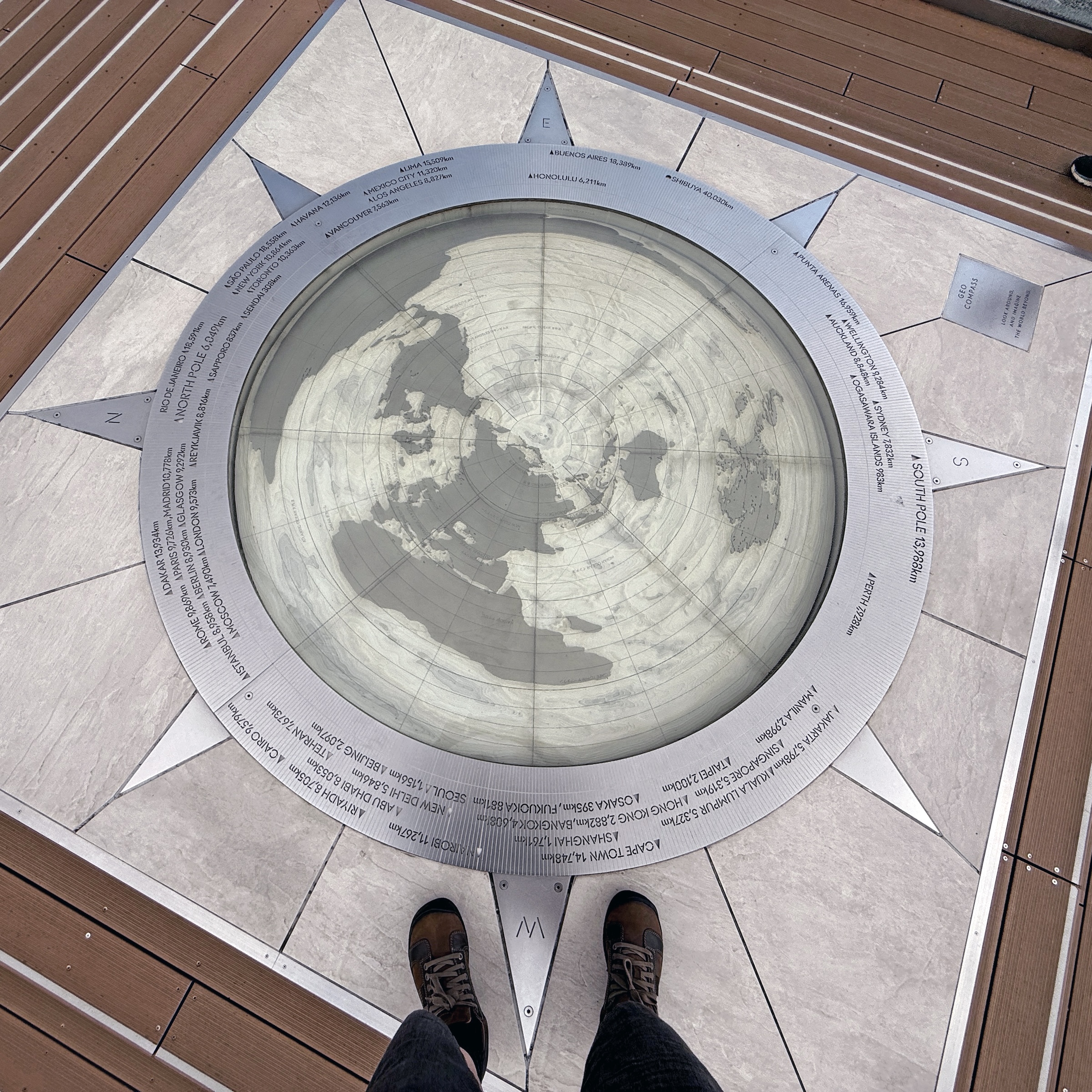
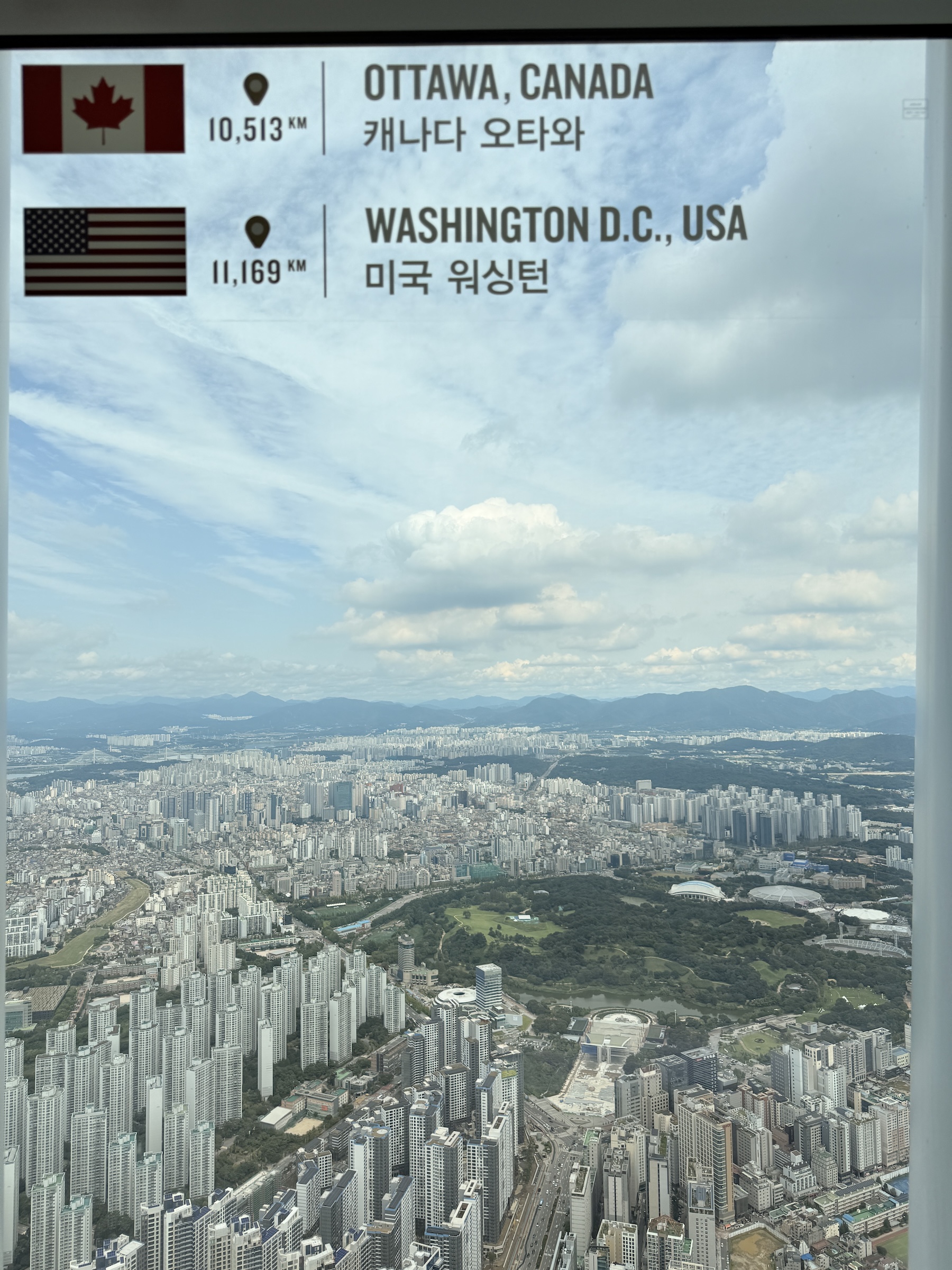
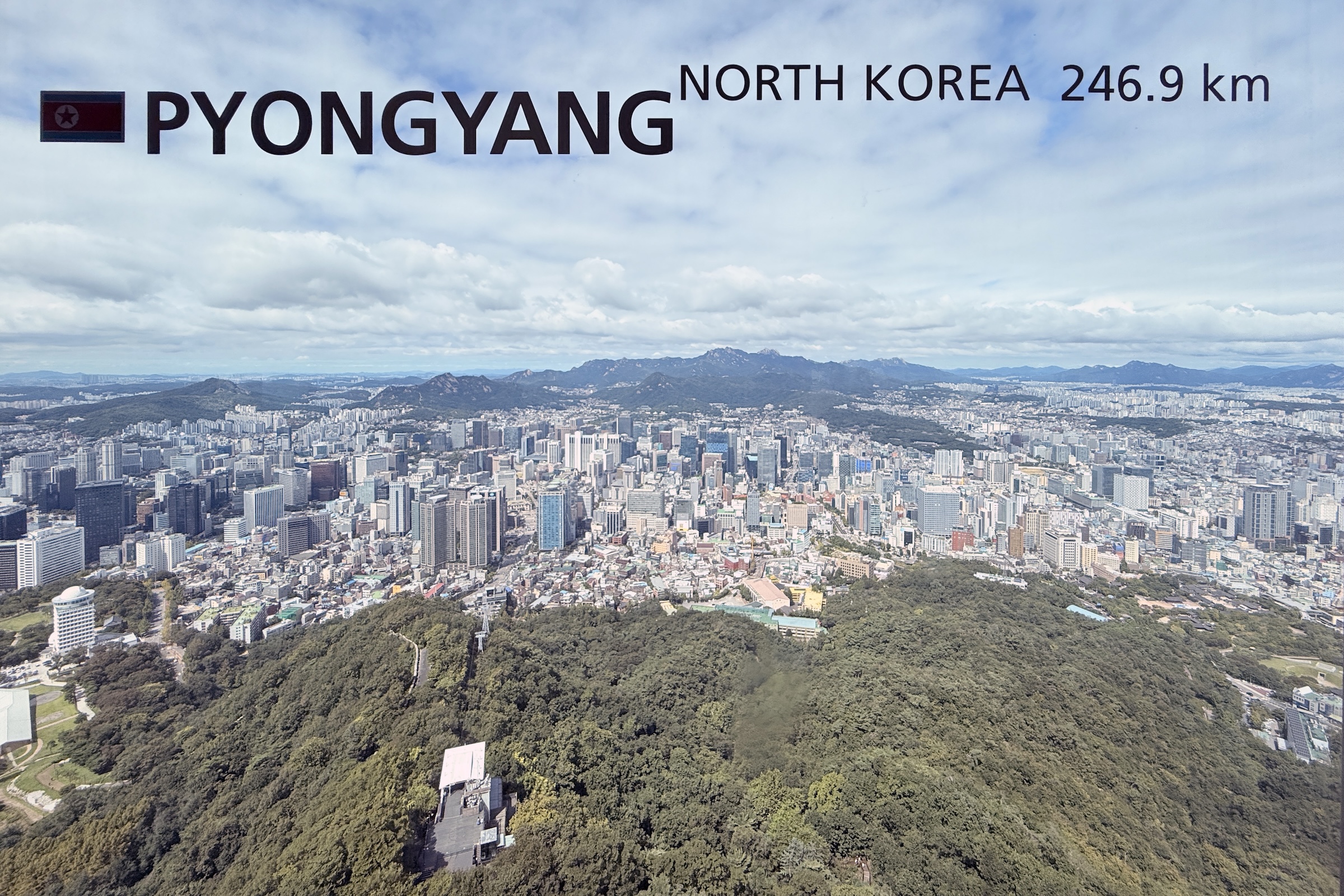
I like the markers in the windows with cities and distances. The border with North Korea is just some 30 miles from Seoul, and the capital Pyongyang only 153 miles as the crow flies.
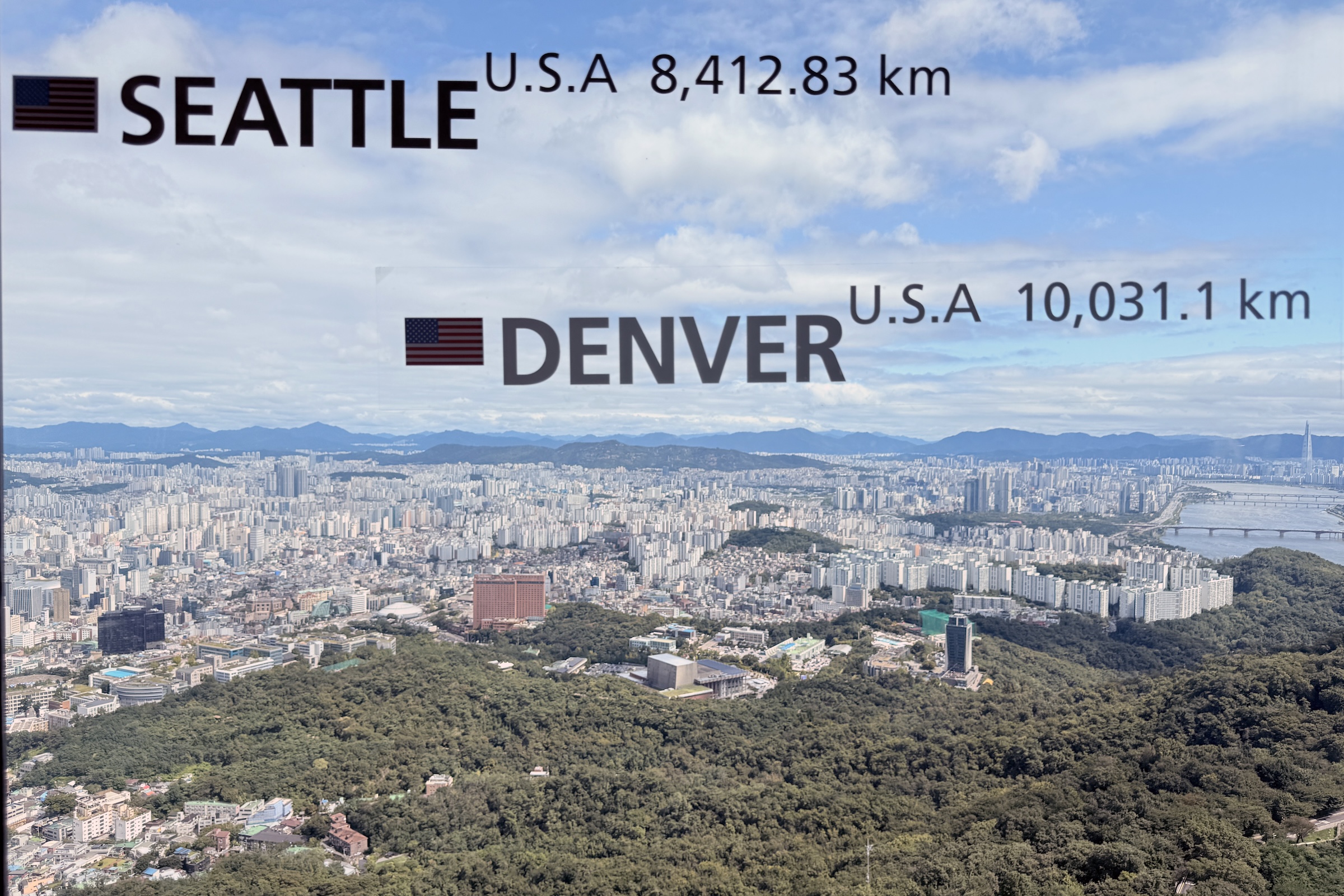
And Seattle is 5,227 miles away to the east, and on the other side of the Earth (kind of), in the Western Hemisphere.
Flying to the “other side of the world” is a theoretical concept, but a direct, non-stop flight across the Earth’s circumference would take approximately 20 hours in a commercial jet, though no such flight is possible with current commercial airliners.
[Source: Google AI]
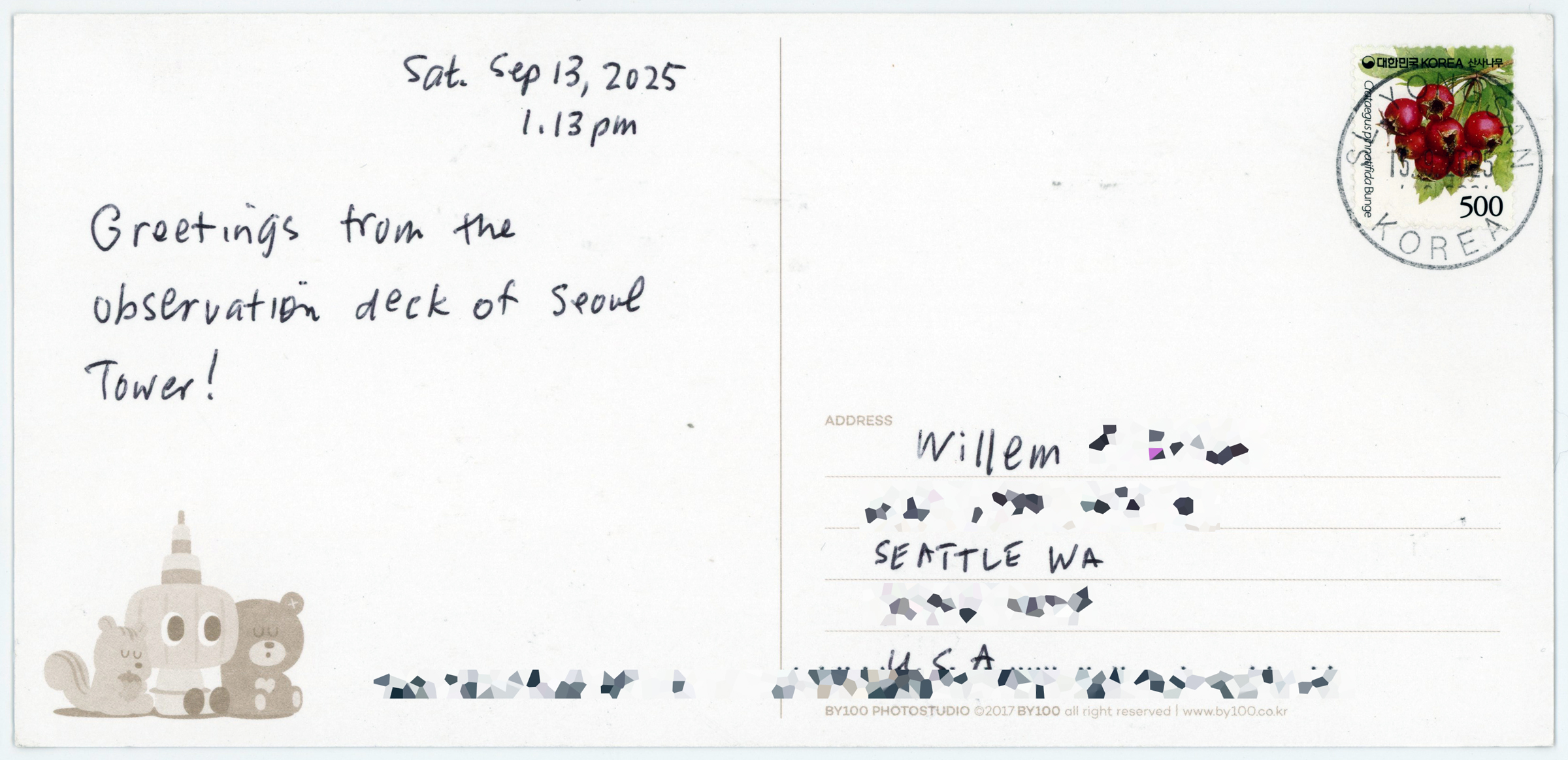
Now making our way back to the base station. I bought a commemorative coin at the top of the tower (because I like coins), and put a postcard with my name and address on, in the mailbox there. I will post a picture of it if it makes it to Seattle.

Friday/ around Seoul 🇰🇷

Happy Friday. (I know it has been an awful week for the national psyche in the United States).
Here in the Far East, it was the first day with milder temperatures for me (a high of 28°C/ 83°F in Seoul today).

I walked around the hotel here by Seoul’s City Hall for a bit this morning, and then went out to Dongdaemun Design Plaza (DDP) with the No 2 subway line.
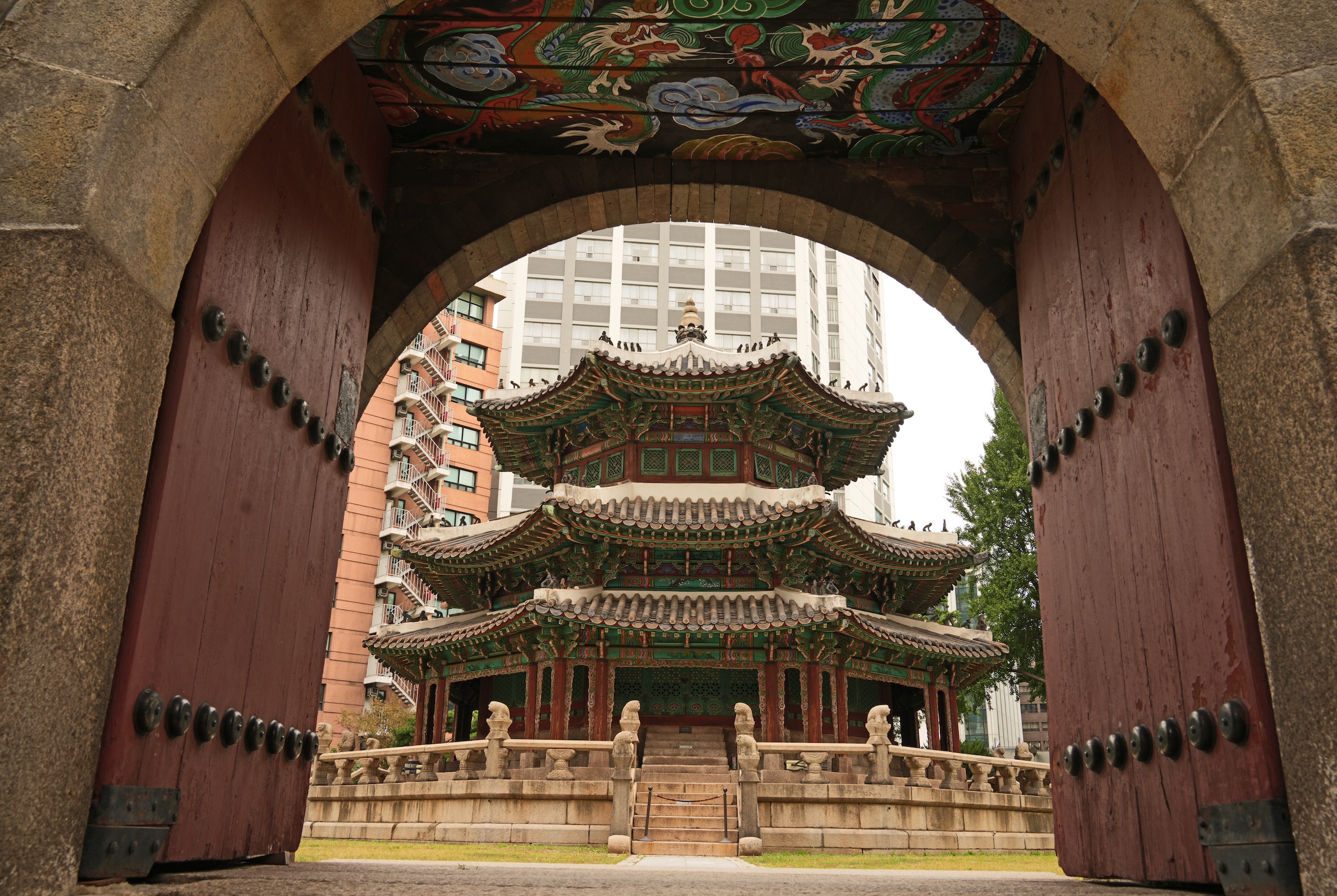
This green space is right by my hotel.
In it is the shrine called Hwangudan (황궁우 / 皇穹宇)— also known as the Wongudan Altar. It was constructed in 1897 by Emperor Gojong of the Korean Empire and renovated from 2015 to 2017.
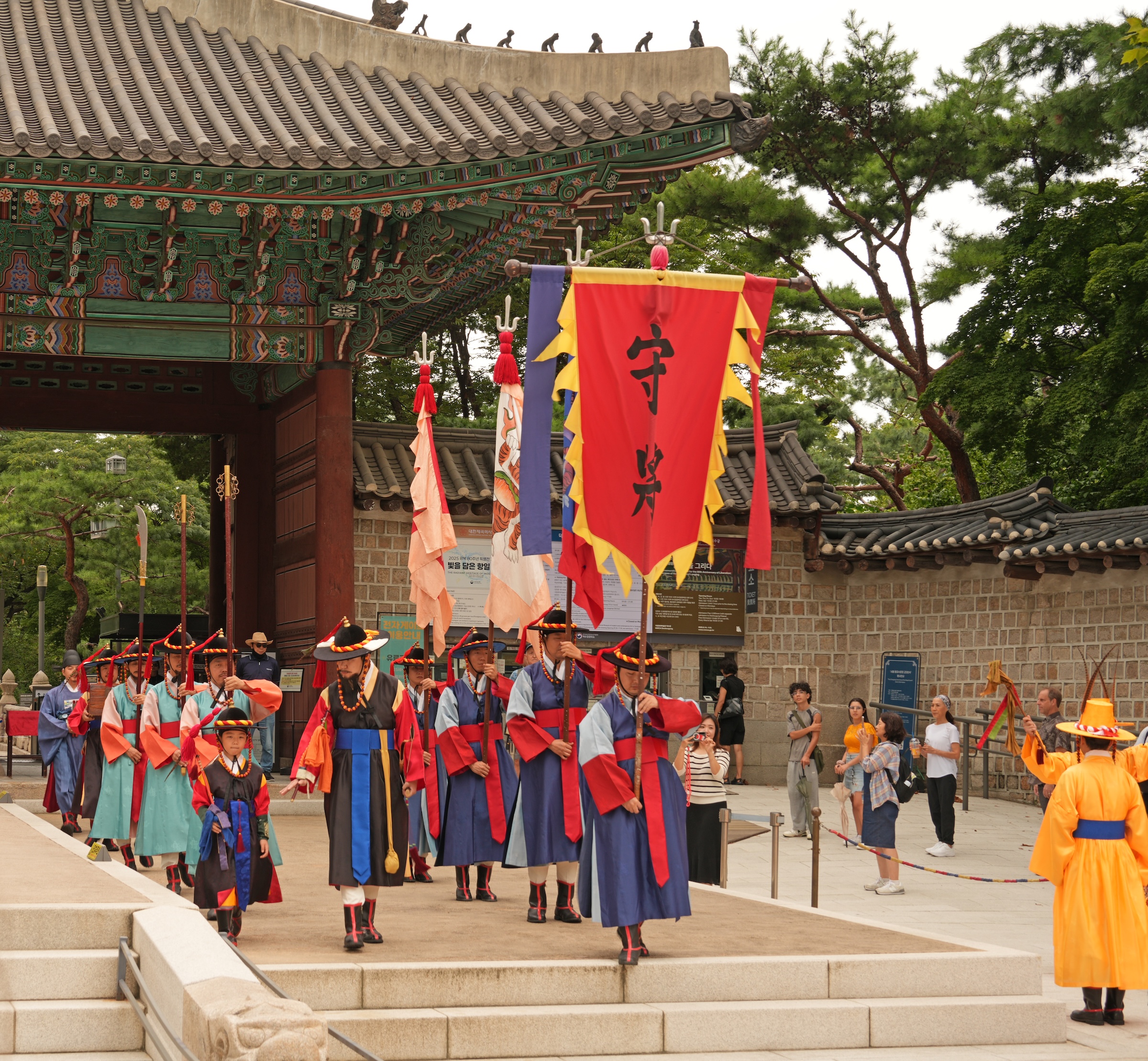
Not far away is Deoksugung Palace (the Royal Palace). The morning’s Royal Guard Ceremony was just finishing up as I arrived there.
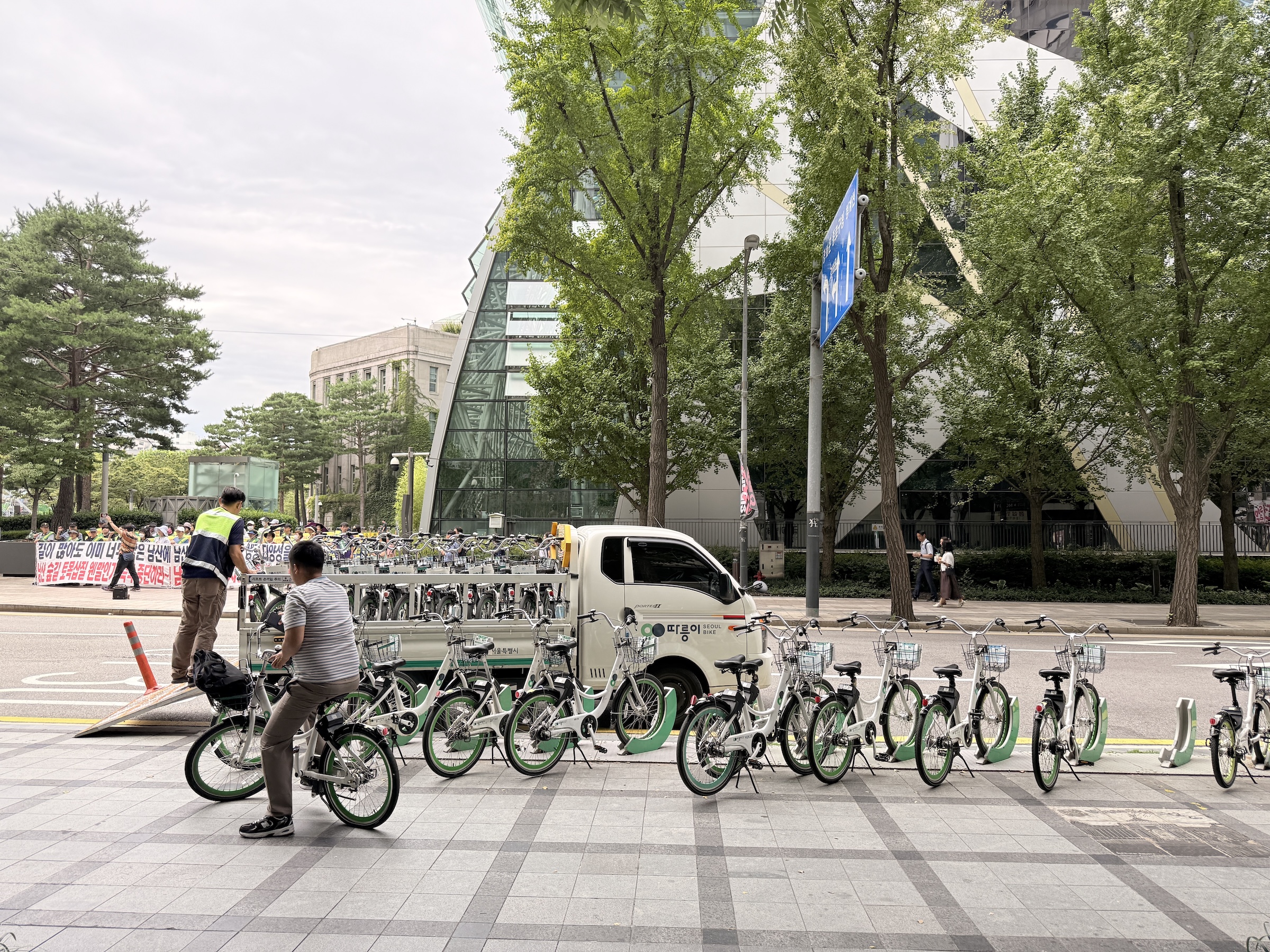
Lots going on by Seoul City Hall— workers at a company protesting about their working conditions or contracts, and Seoul Bike workers repleshiing the bike rack.
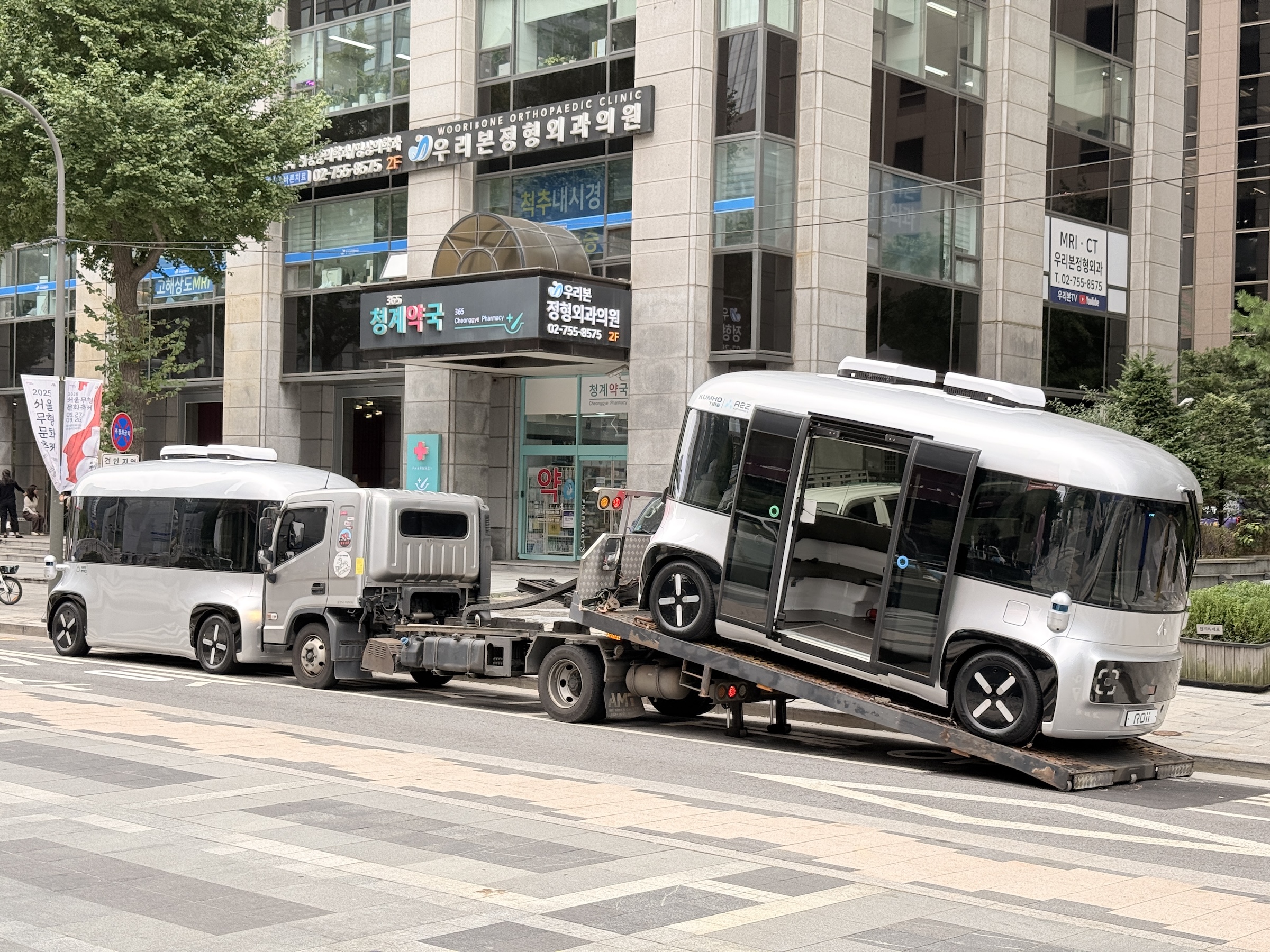
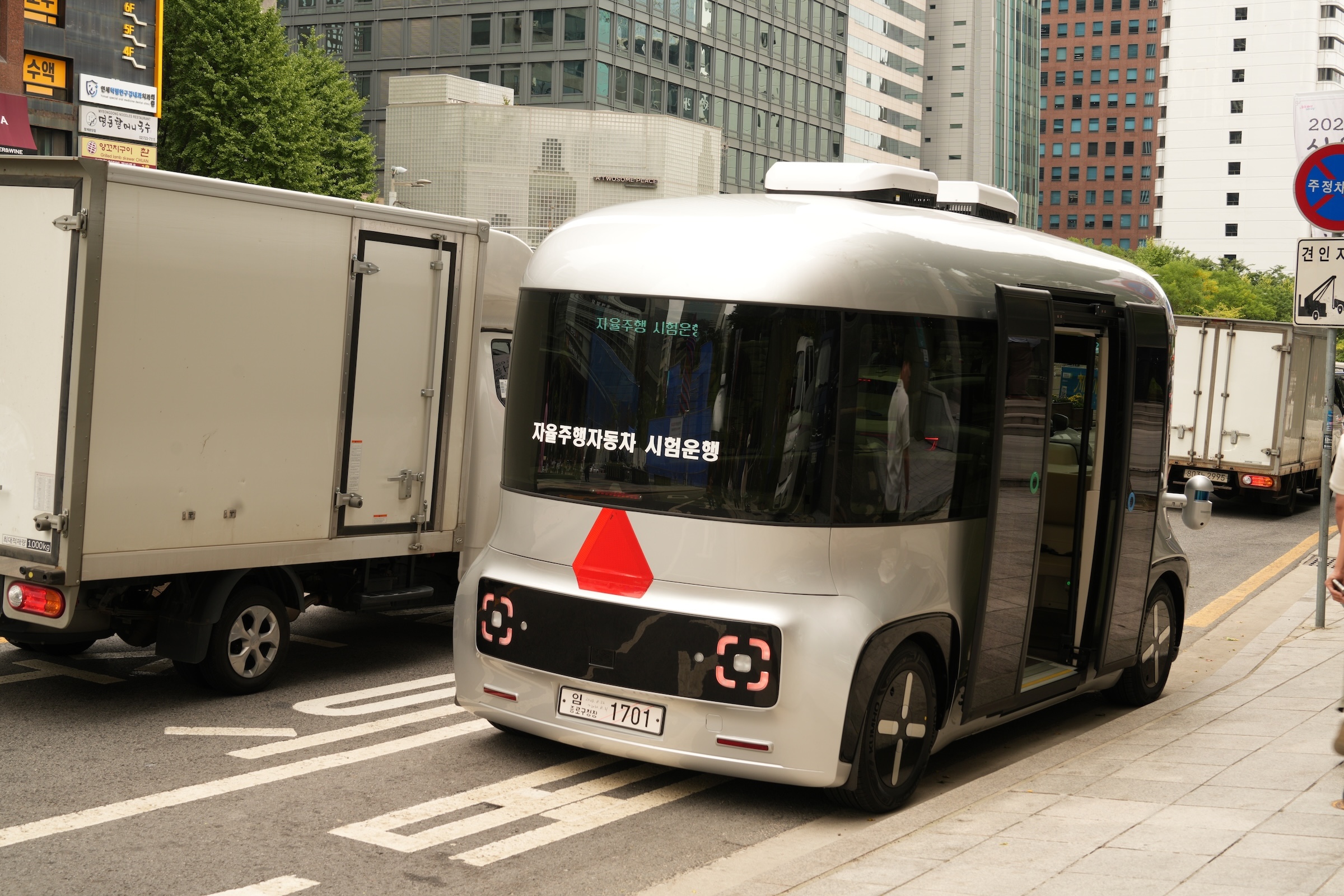
Korea’s first driverless autonomous shuttle will run along to the Cheonggyecheon Stream in downtown starting in late September, after test runs and safety checks.
A closer look. There is a U-shaped seating bench inside and a large screen.
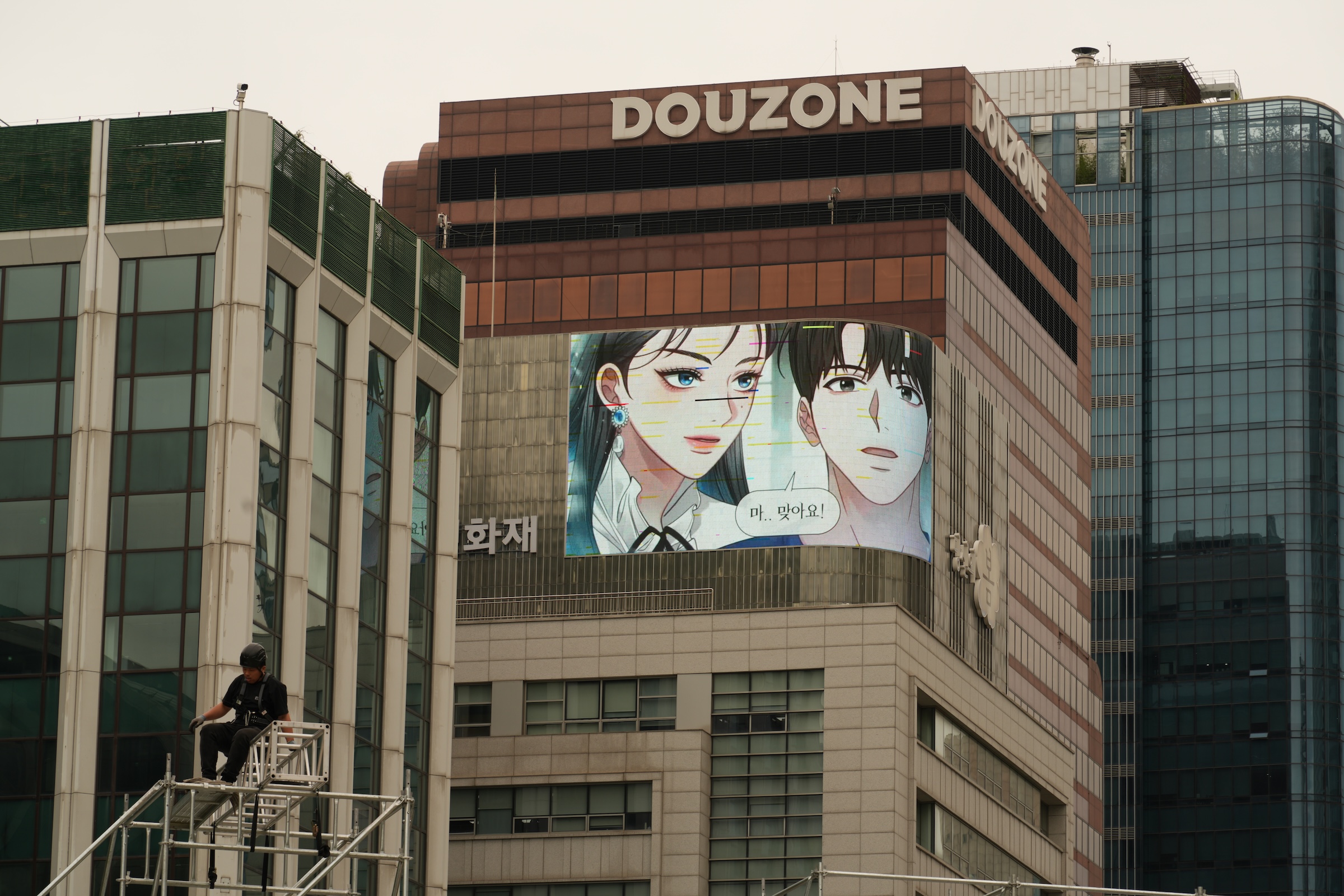
Korean manhwa on a large screen on a building.
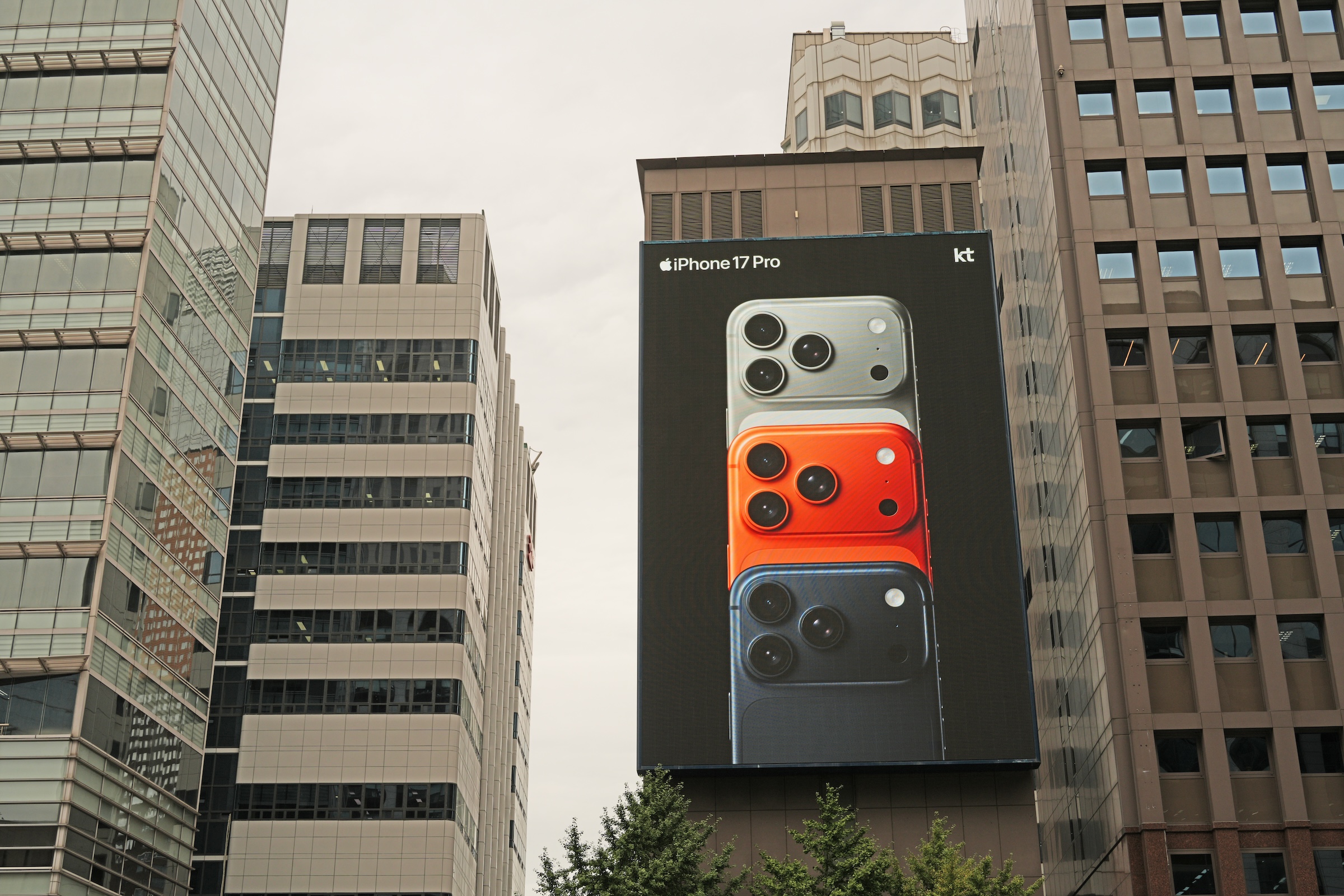
Yes, Apple had better advertise its new iPhone because this is Samsung’s home turf. (Samsung has 70% of the smartphone market here, Apple about 20%.)
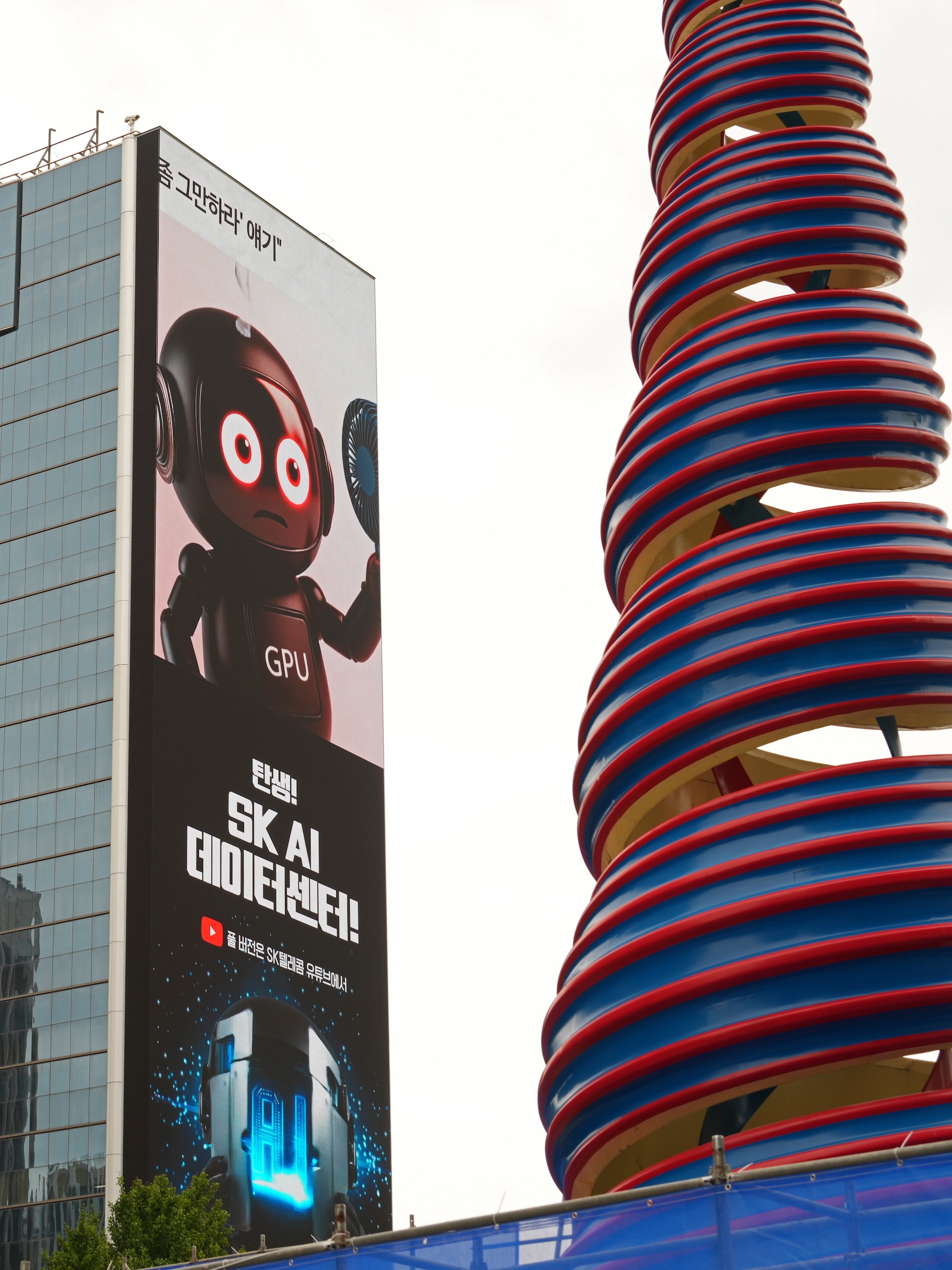
And is all that on the entire side of the building a screen? Sixteen stories tall about something AI? Why, yes. Why not?
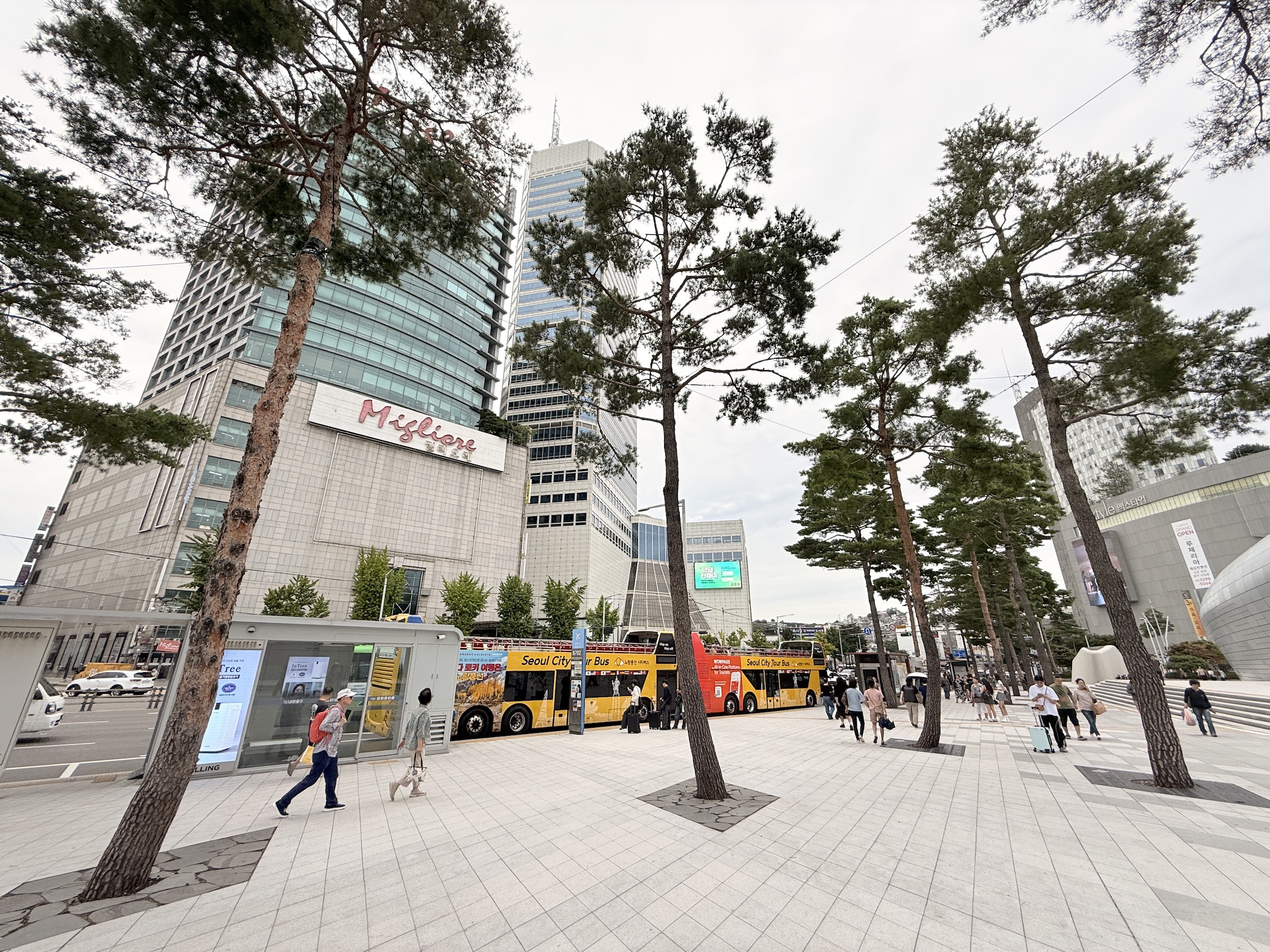
Seoul tour buses by Dongdaemun Design Plaza.
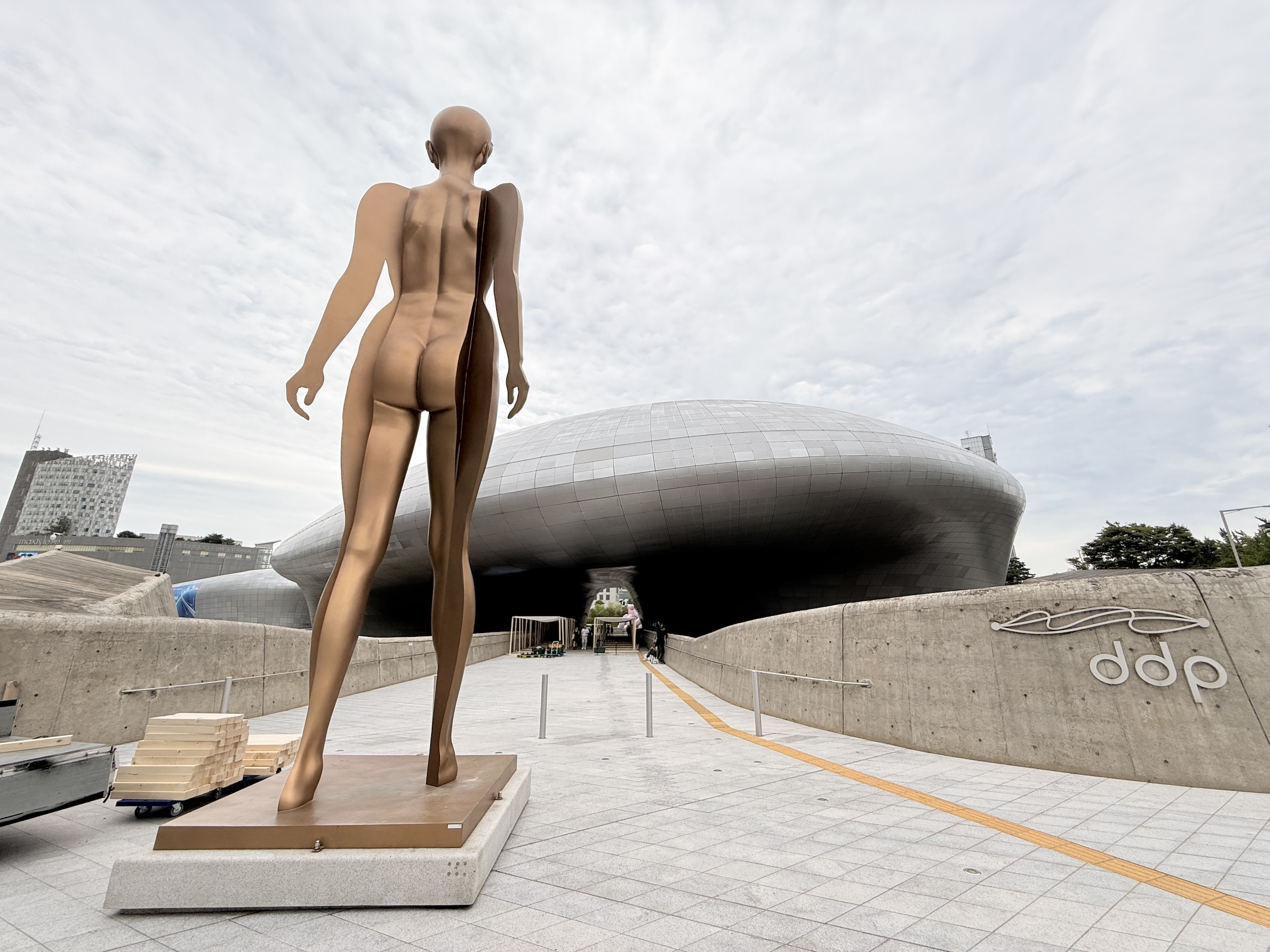
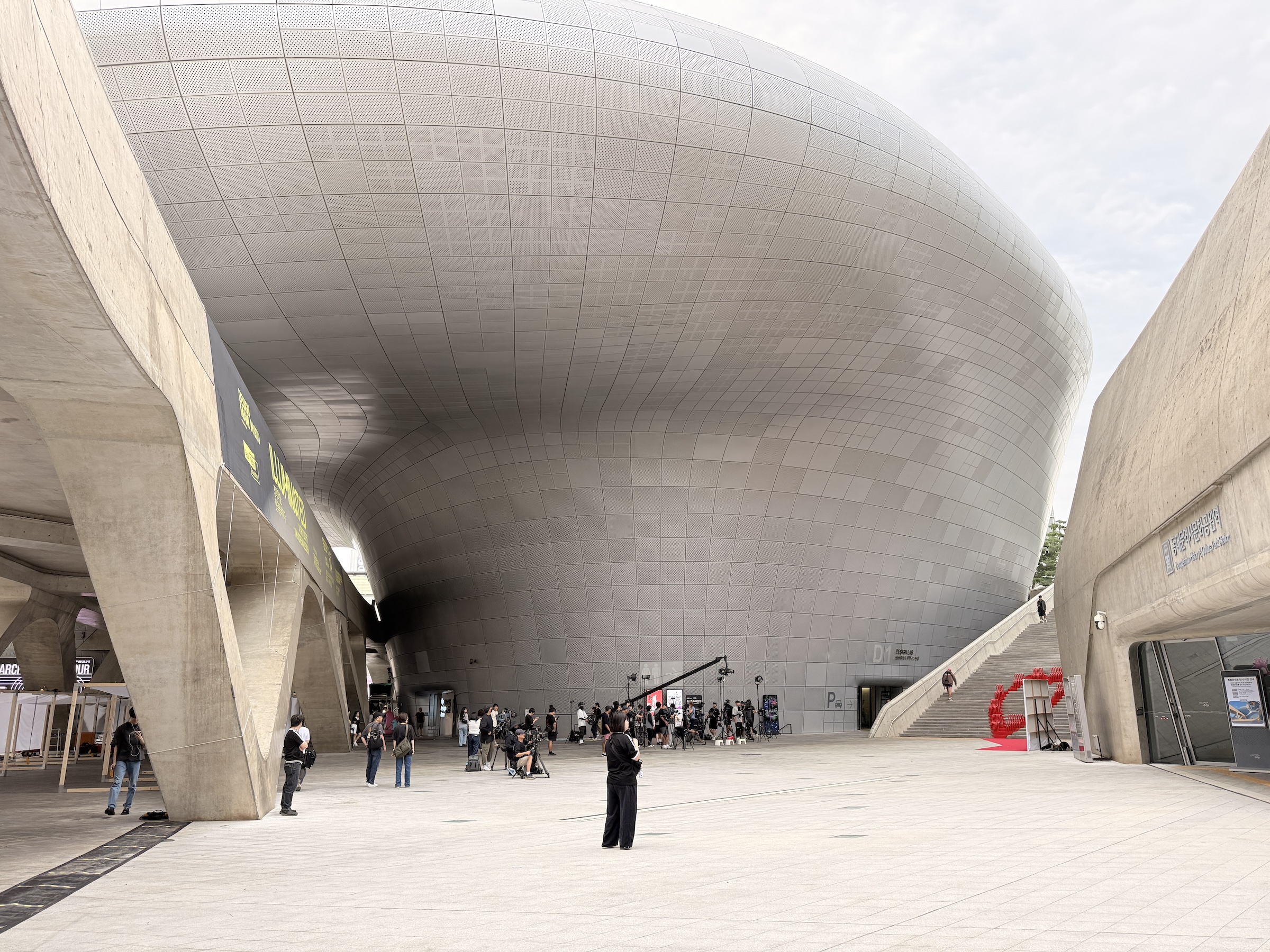
Dongdaemun Design Plaza (DDP) is a major urban development landmark in Seoul, designed by Zaha Hadid and Samoo, with a distinctively neofuturistic design characterized by the powerful, curving forms of elongated structures.
[Source: Trip Advisor/ Viator]
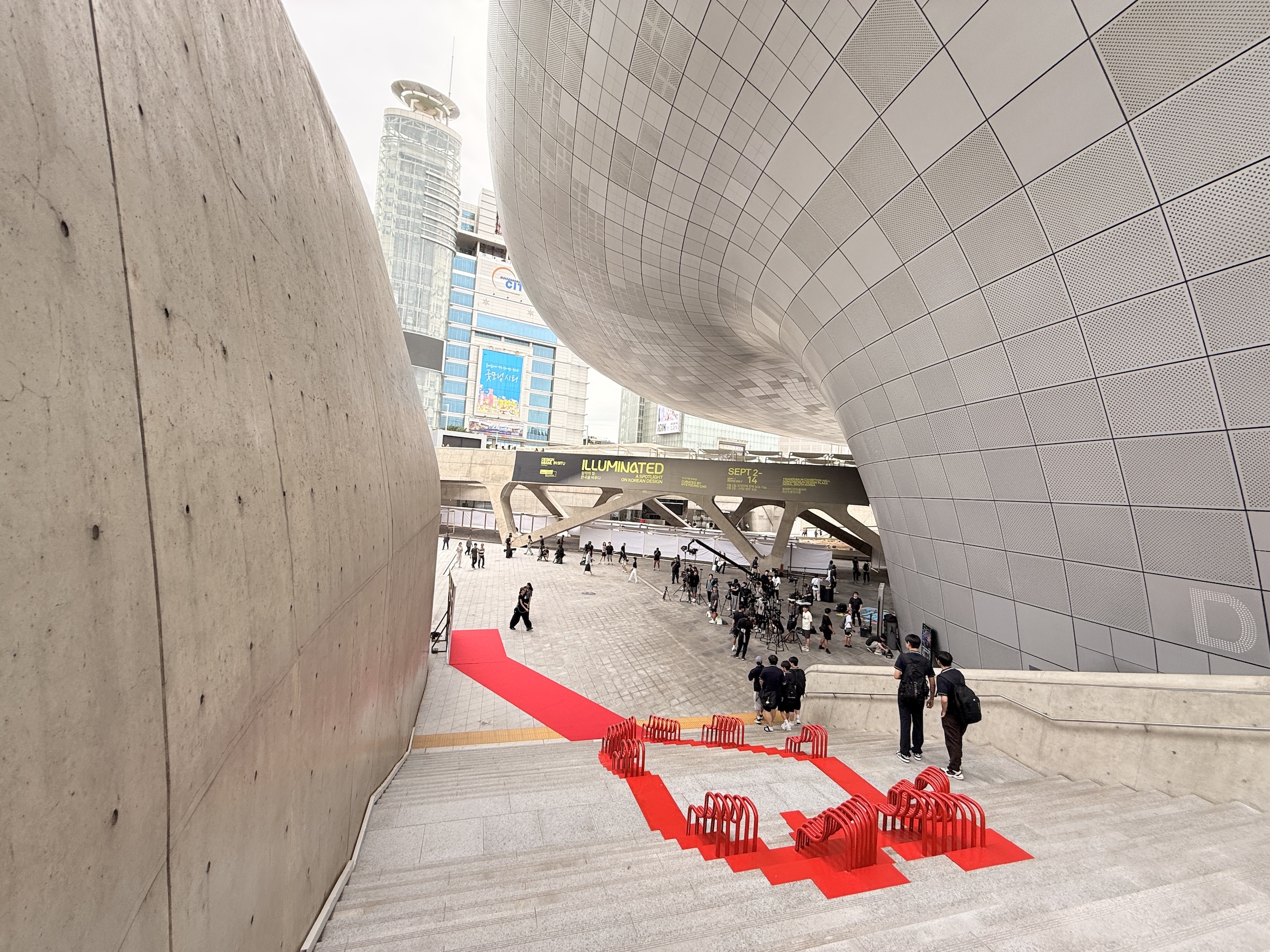
That’s a heart-shaped outline on the stairs for a charity event that was held in the space below.
The exit/ entrance to the Line 2 train station is on the right. A camera crew is recording a discussion and a performance.
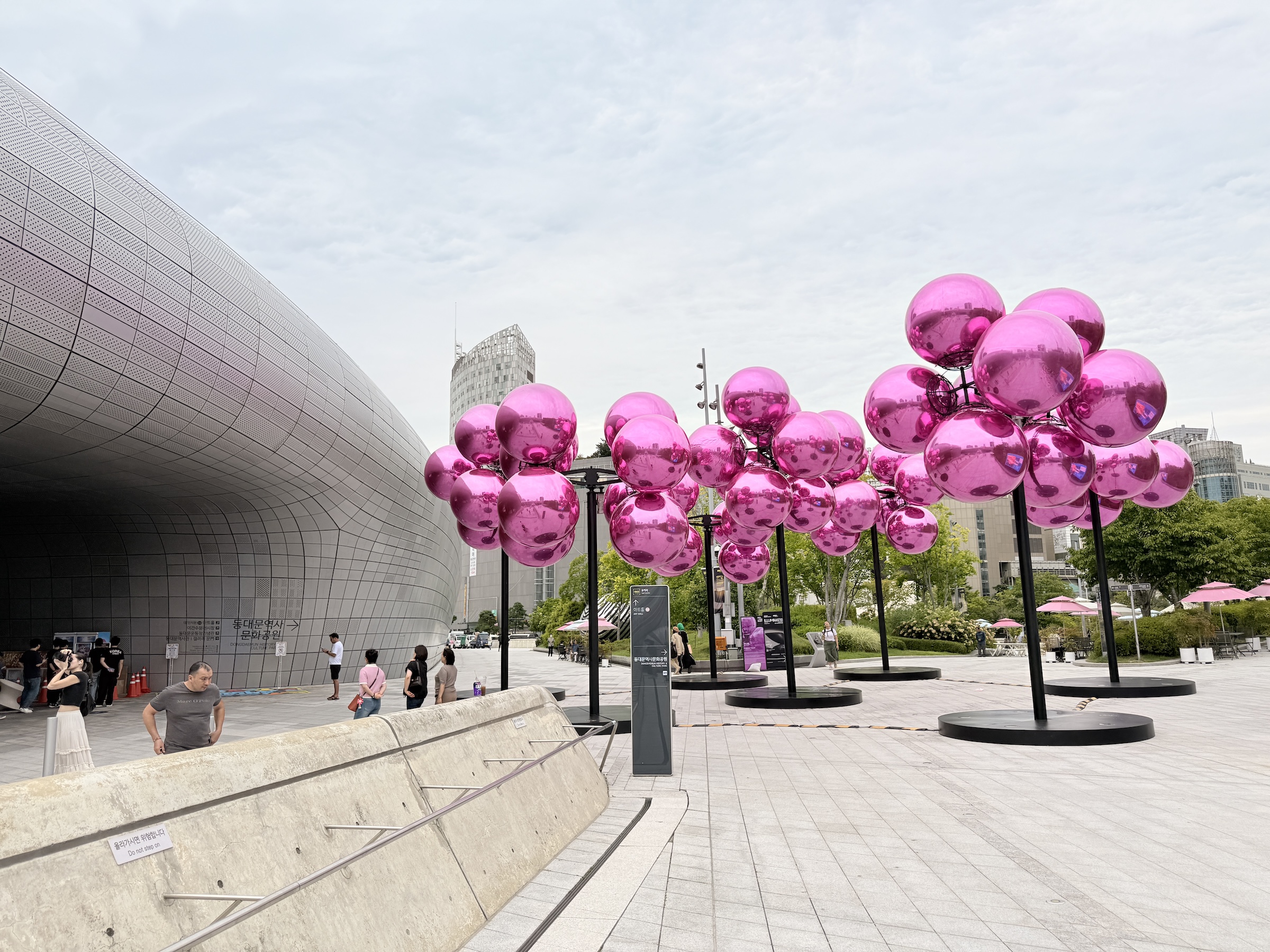
A few other public art installations are on display as well. I could not find the name of this one.
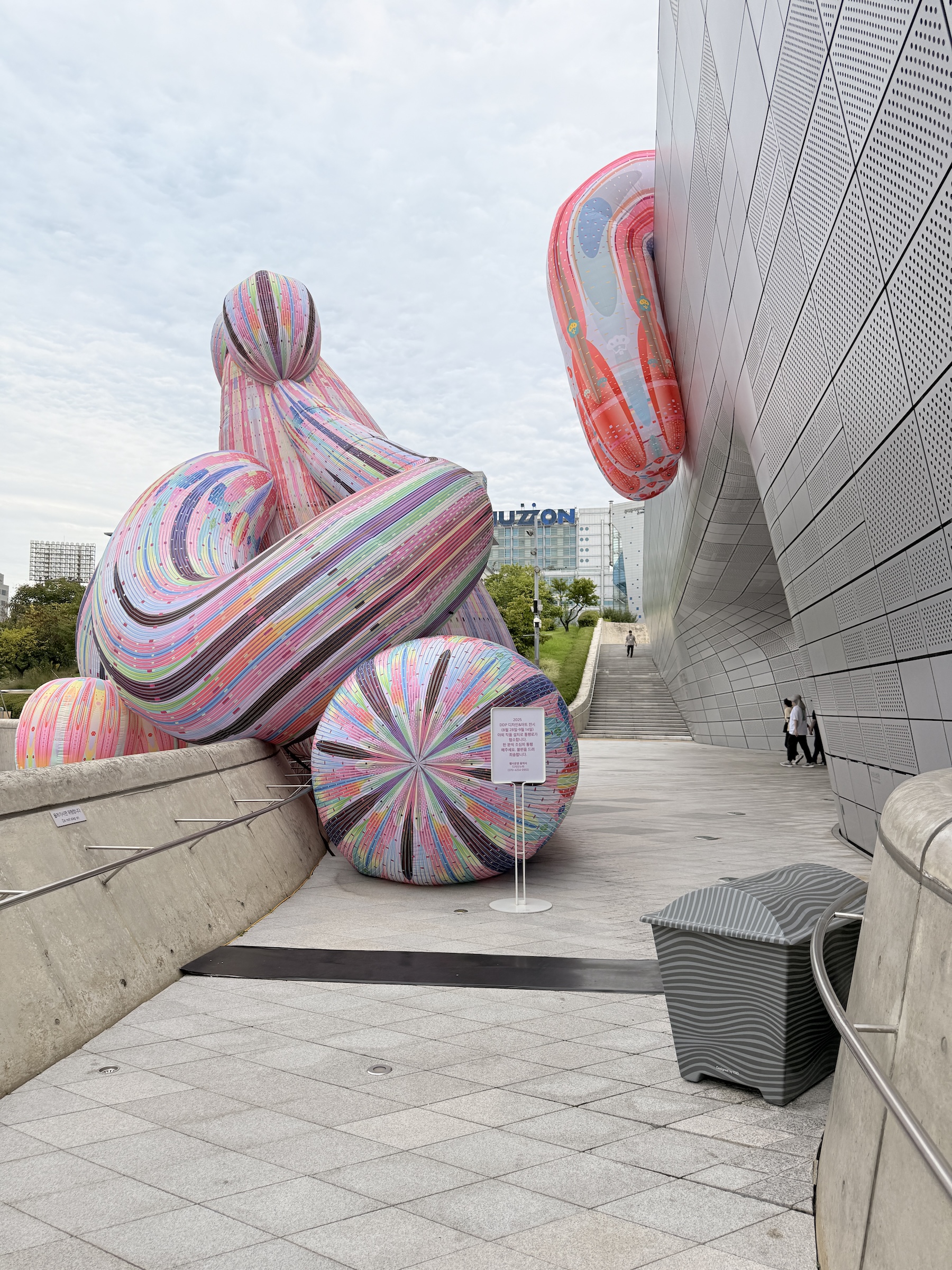
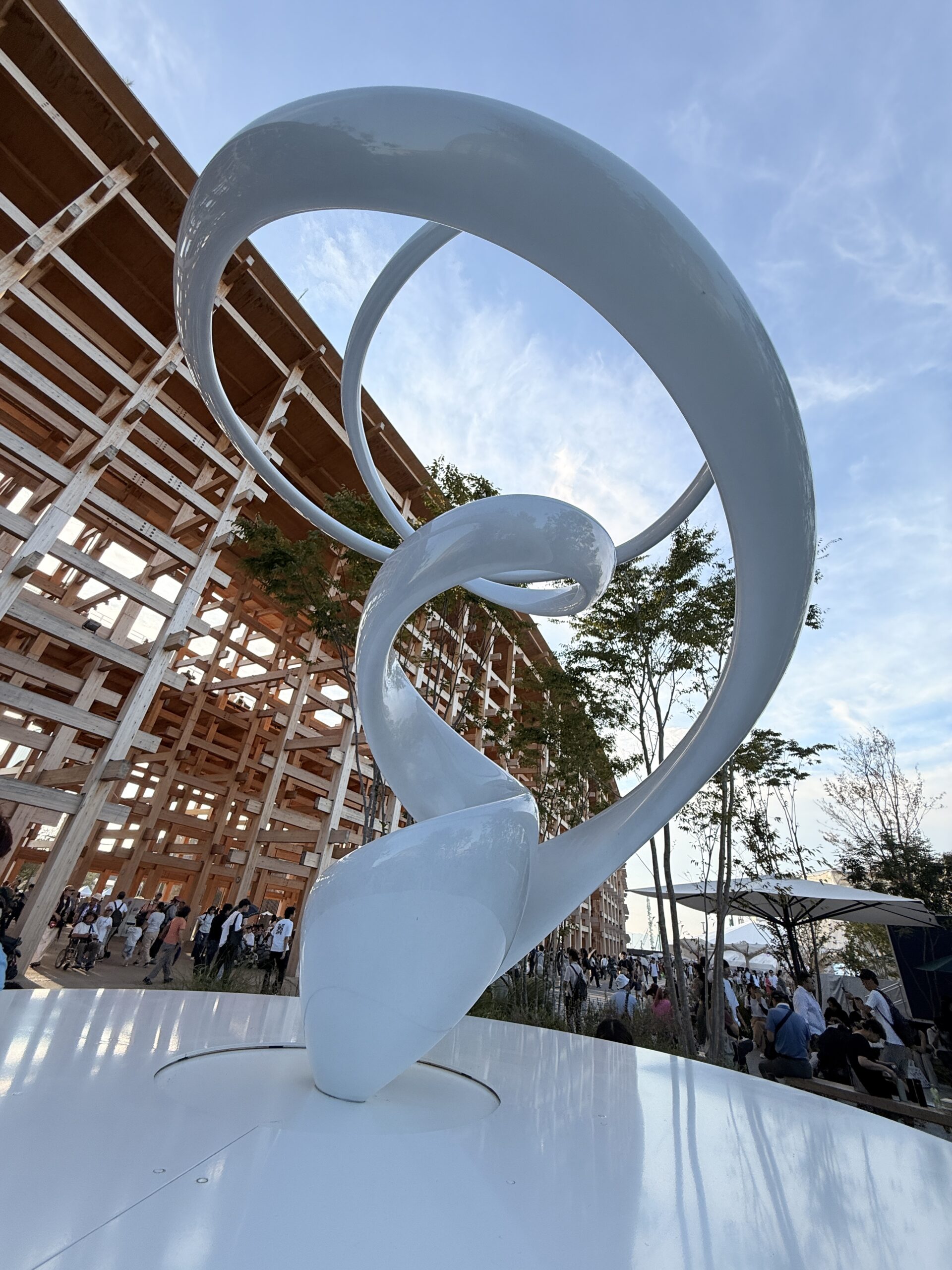
This one is called Molecular Cloud by French artist Vincent Leroy.
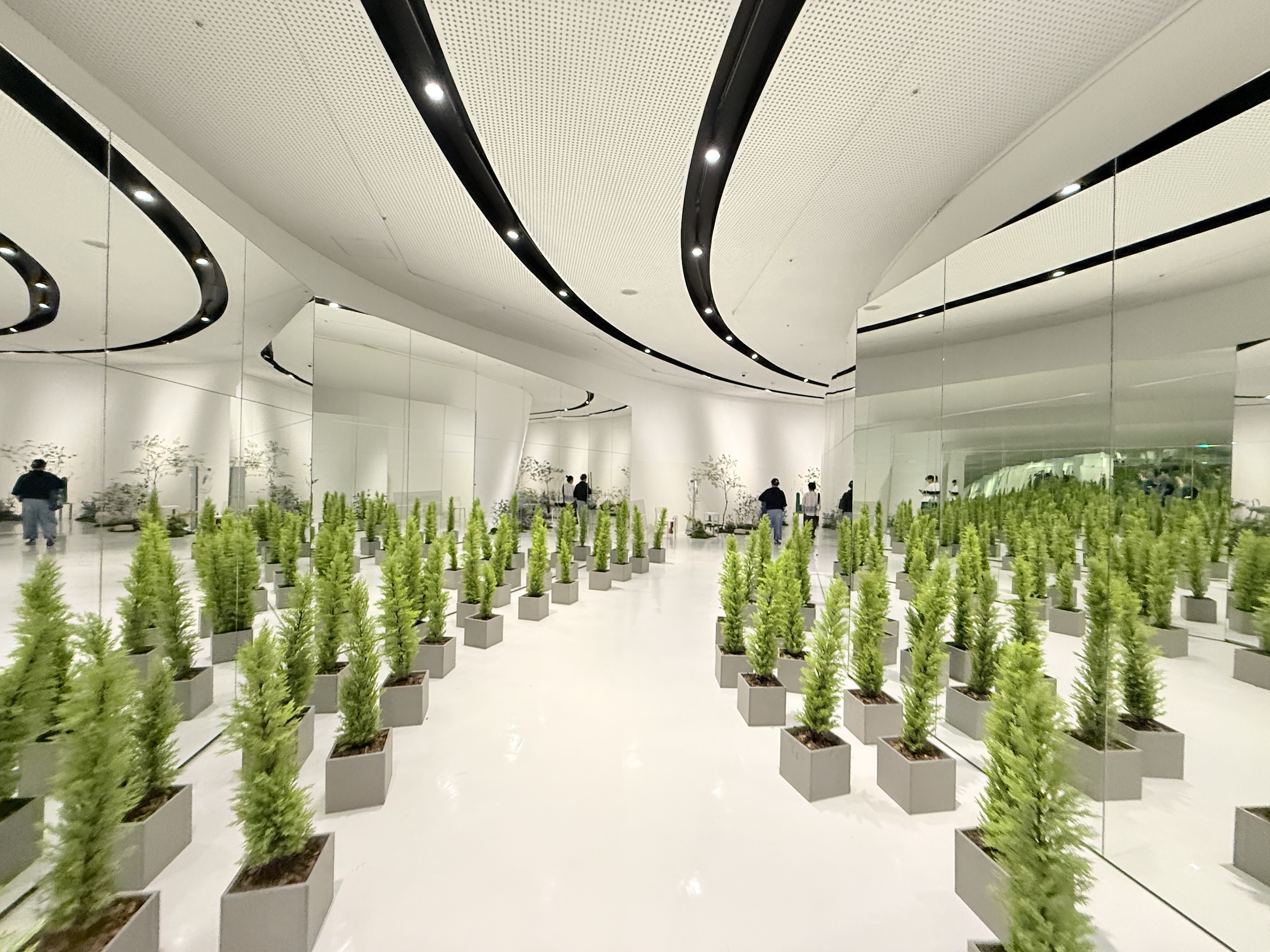
This is inside: an art garden filled with artwork. (The little trees are not real trees).

Thursday/ from Osaka to Seoul 🚆 ✈️

As it happens, both the departure and arrival airports for my flight today are located on man-made islands.

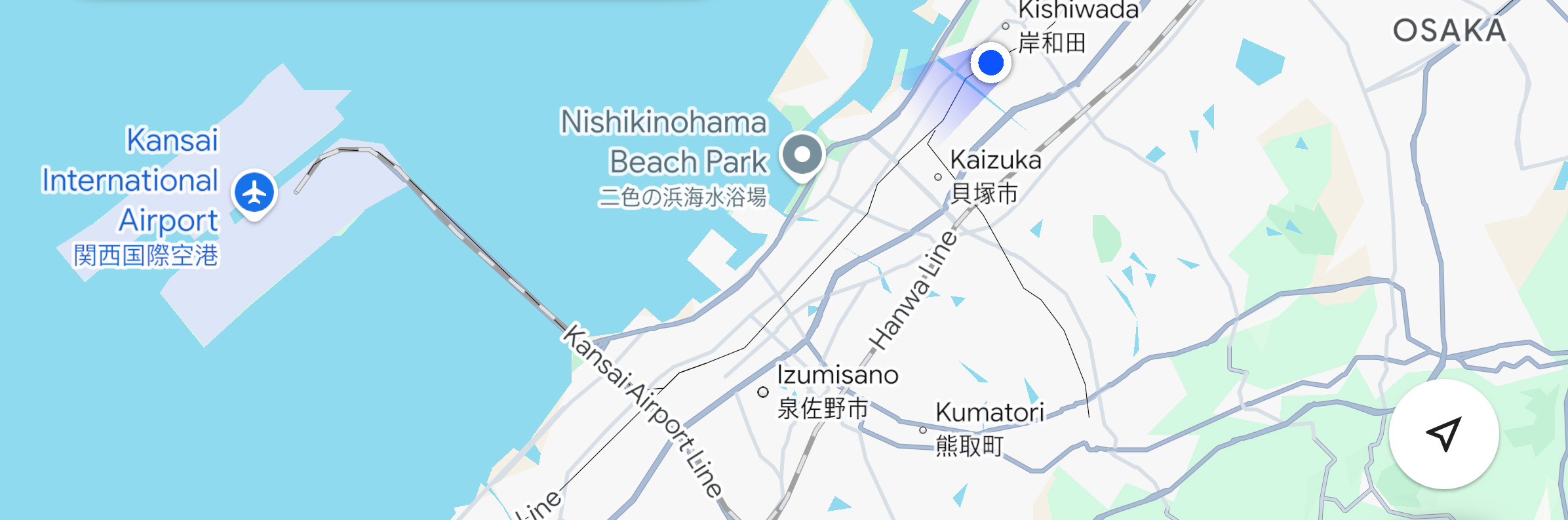
It took two train rides to get me to Osaka’s Kansai International airport (KIX), and after I had arrived at Seoul’s Incheon airport (ICN), two more trains to get me to my hotel in the city.
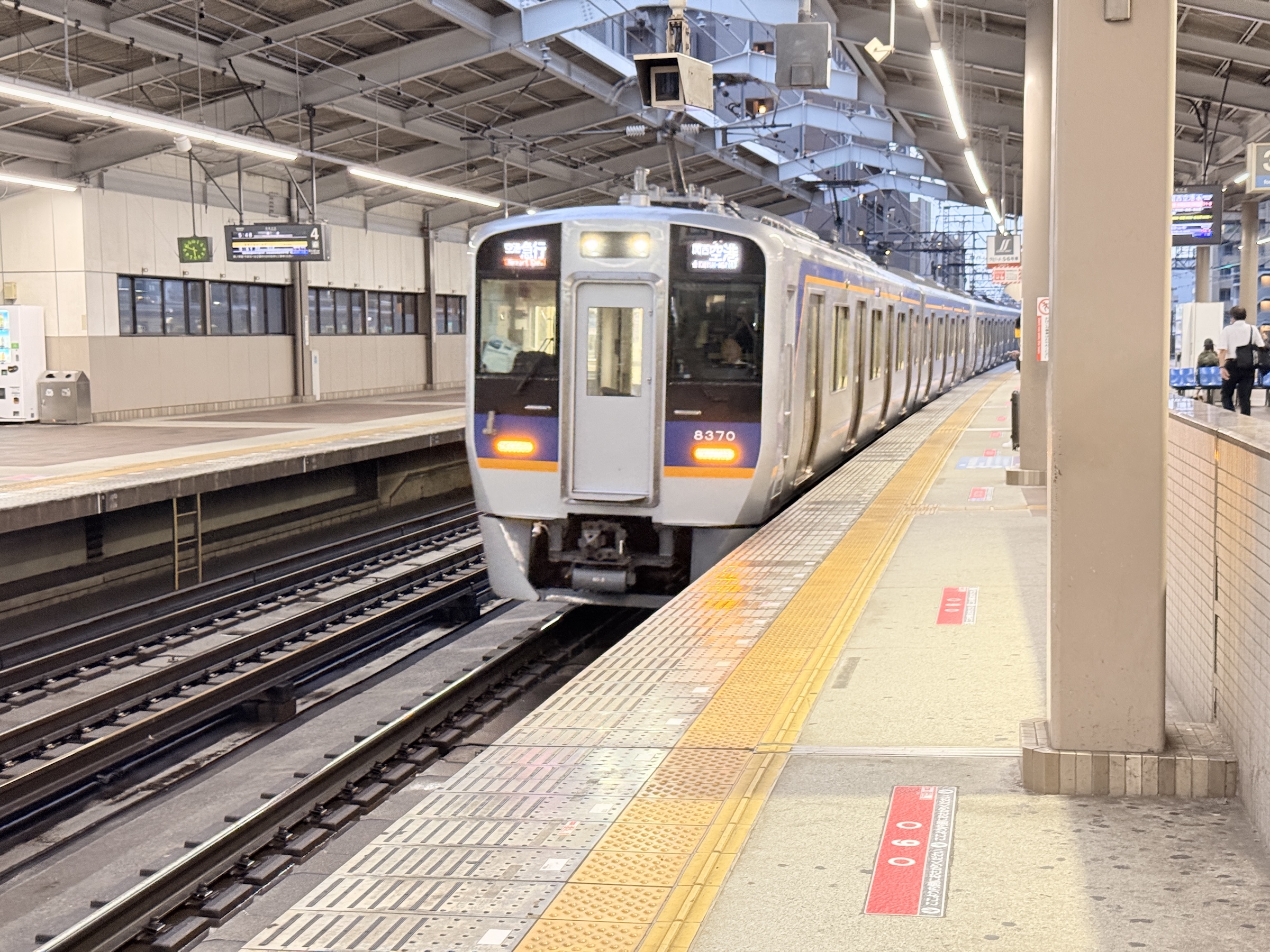
Early morning on the platform at Tengachaya Station, Osaka.
This is the train operated by Nankai Electric Railway (Nankai Den-tetsu), that ran us out on the Nankai Line to Kansai International airport.
Kansai International Airport sits out in Osaka Bay, and is connected to Osaka by a causeway that carries road and rail traffic.
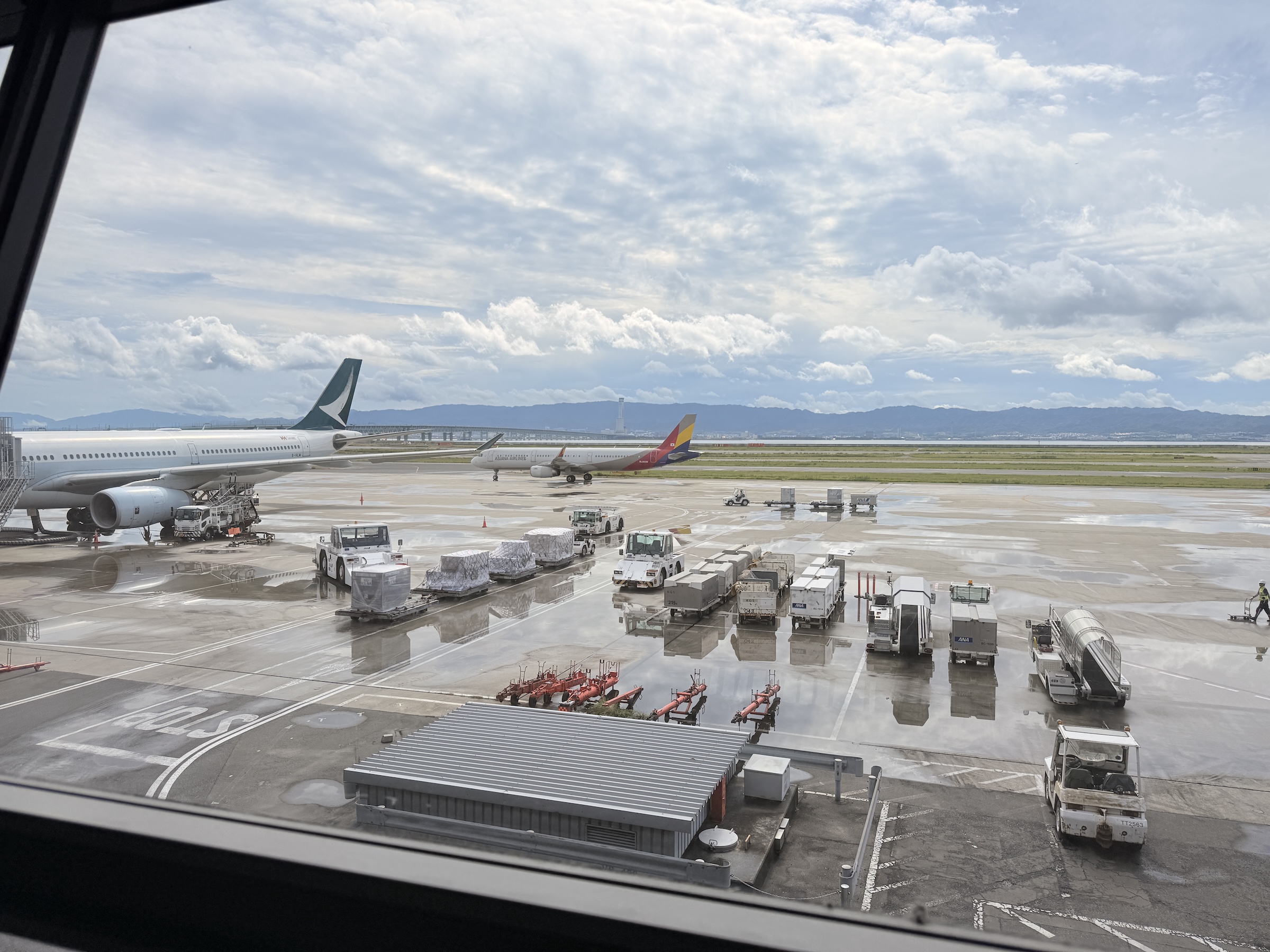
The view out the window at Kansai International Airport (KIX).
The airport is famous (infamous?) for sinking into the sea because its foundation was built on the soft, compressible clay in Osaka Bay, which could not fully support the immense weight of the artificial island.
Engineers have implemented ground improvement techniques like vertical sand drains to speed up the drainage of water from the clay and stabilize the ground, which reduced the sinking rate from over 19 inches per year to about 2.3 inches annually by 2023.
[Source: Google AI Overview]
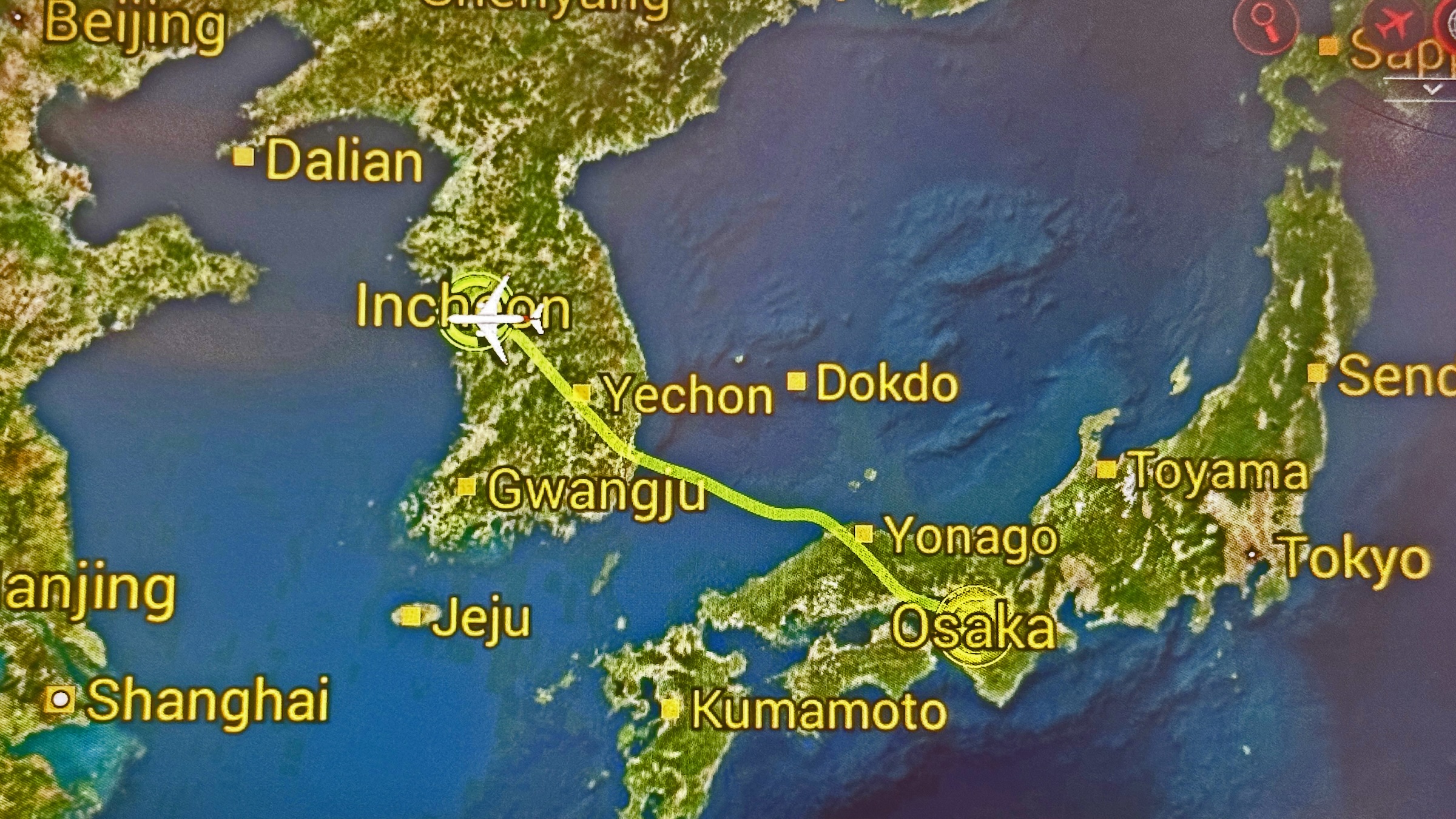
Here’s our flight path to Seoul’s Incheon International Airport, about 2 hours in duration.
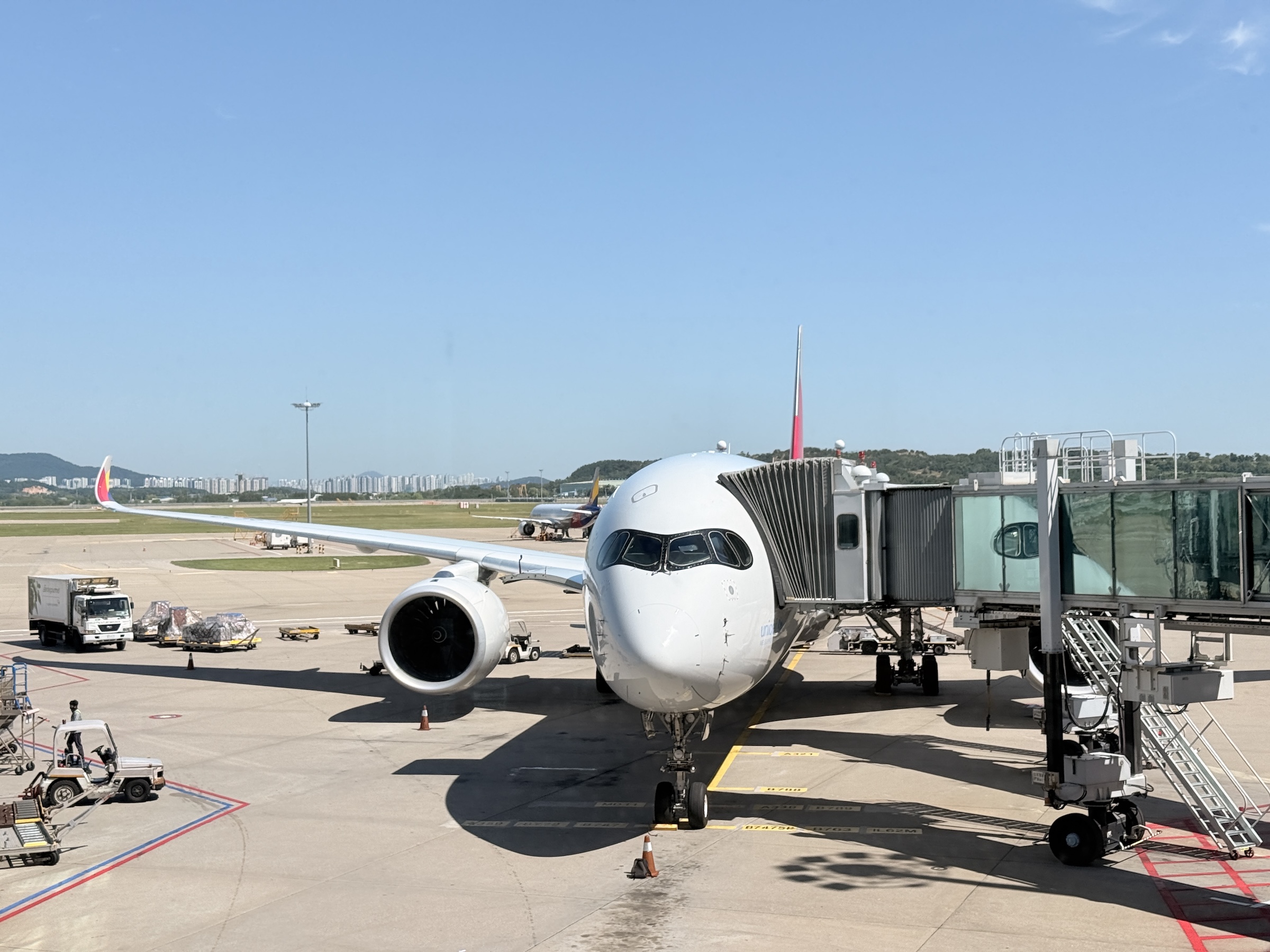
The Asiana Airlines Airbus A350-900 (twin-jet) that took us to Incheon International Airport, at the gate at Terminal 1.
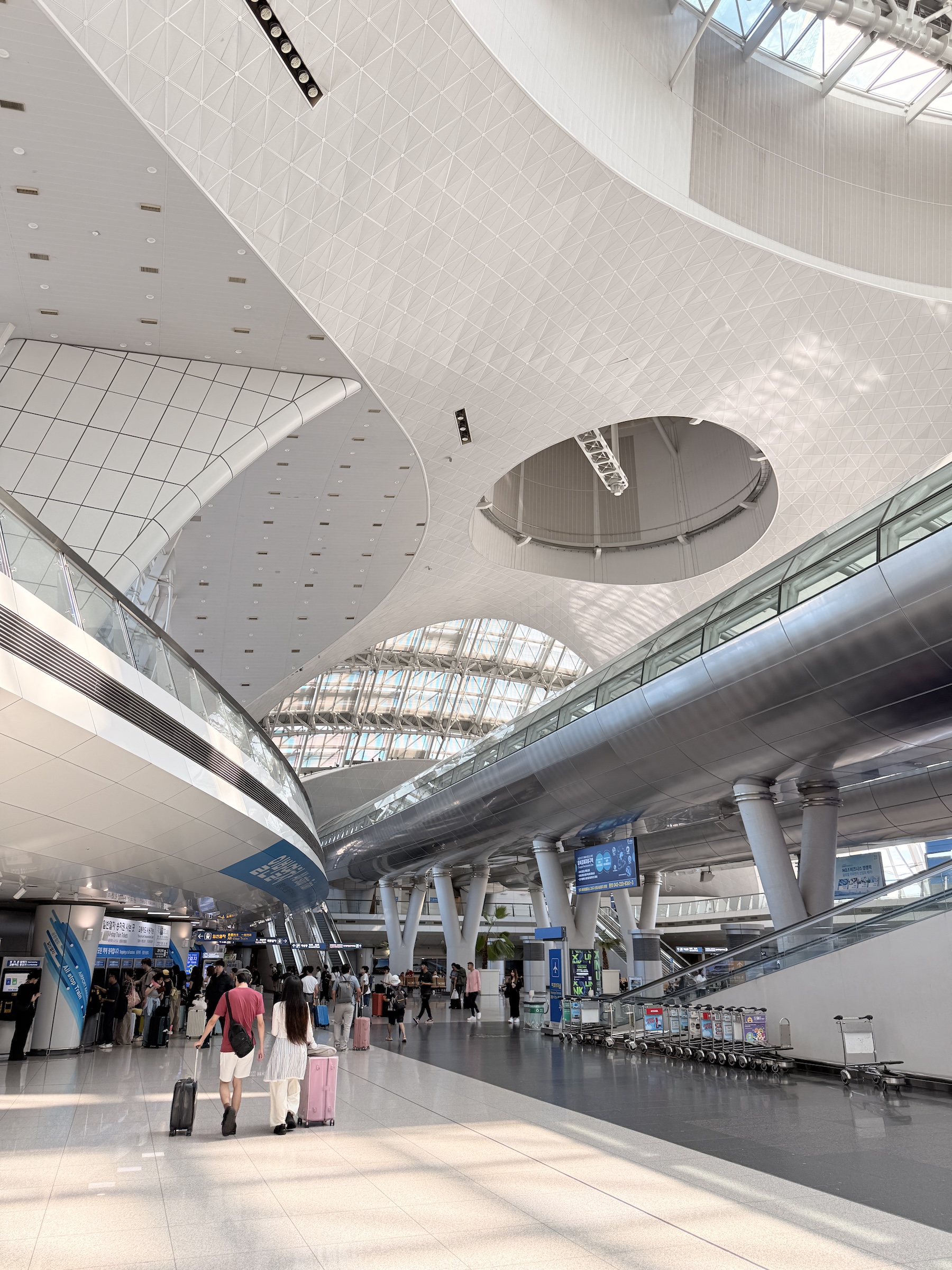
Inside Incheon International Airport’s lower level, with the ceiling that makes me think of a Star Trek spaceship. I’m making my way to the Airport Express train platform.
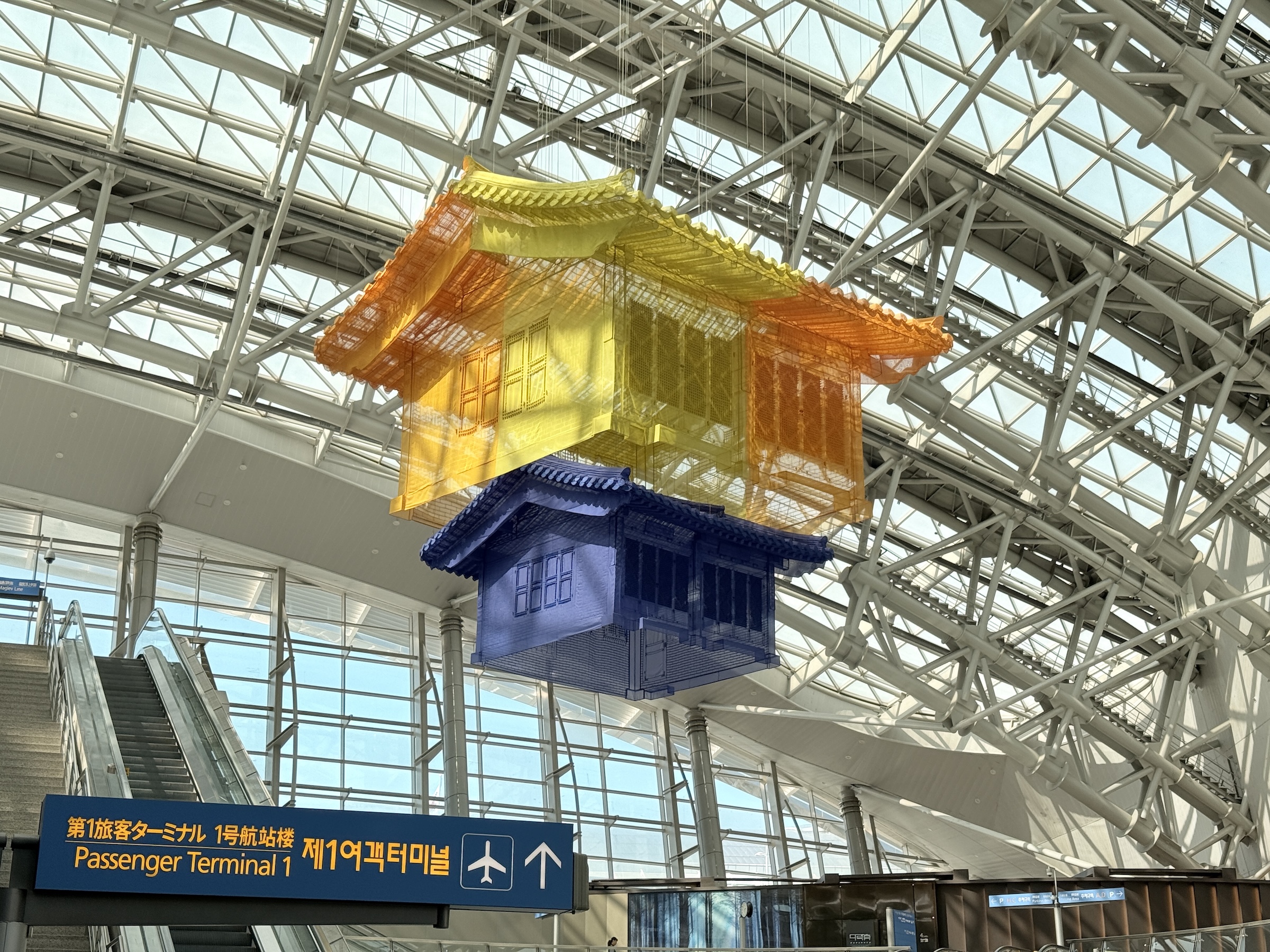
An art installation of stylized traditional Korean houses— known as “hanok” (한옥)—in the airport’s ceiling.
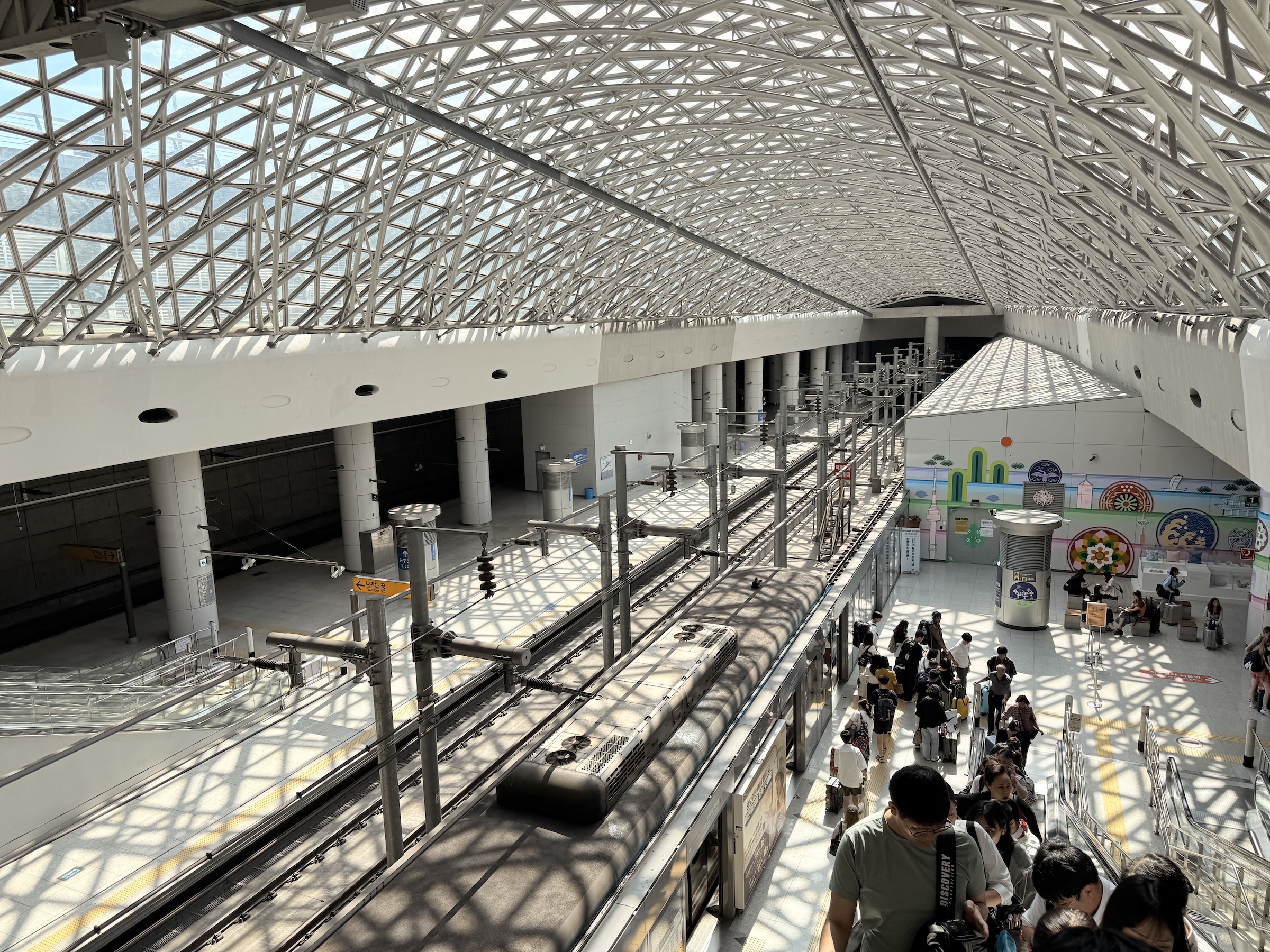
Here is the platform for the Airport Express train that runs from Incheon Airport to Seoul Station in the city, with no stops. There are ‘milk trains’ (All Stations trains) that depart from this platform as well.
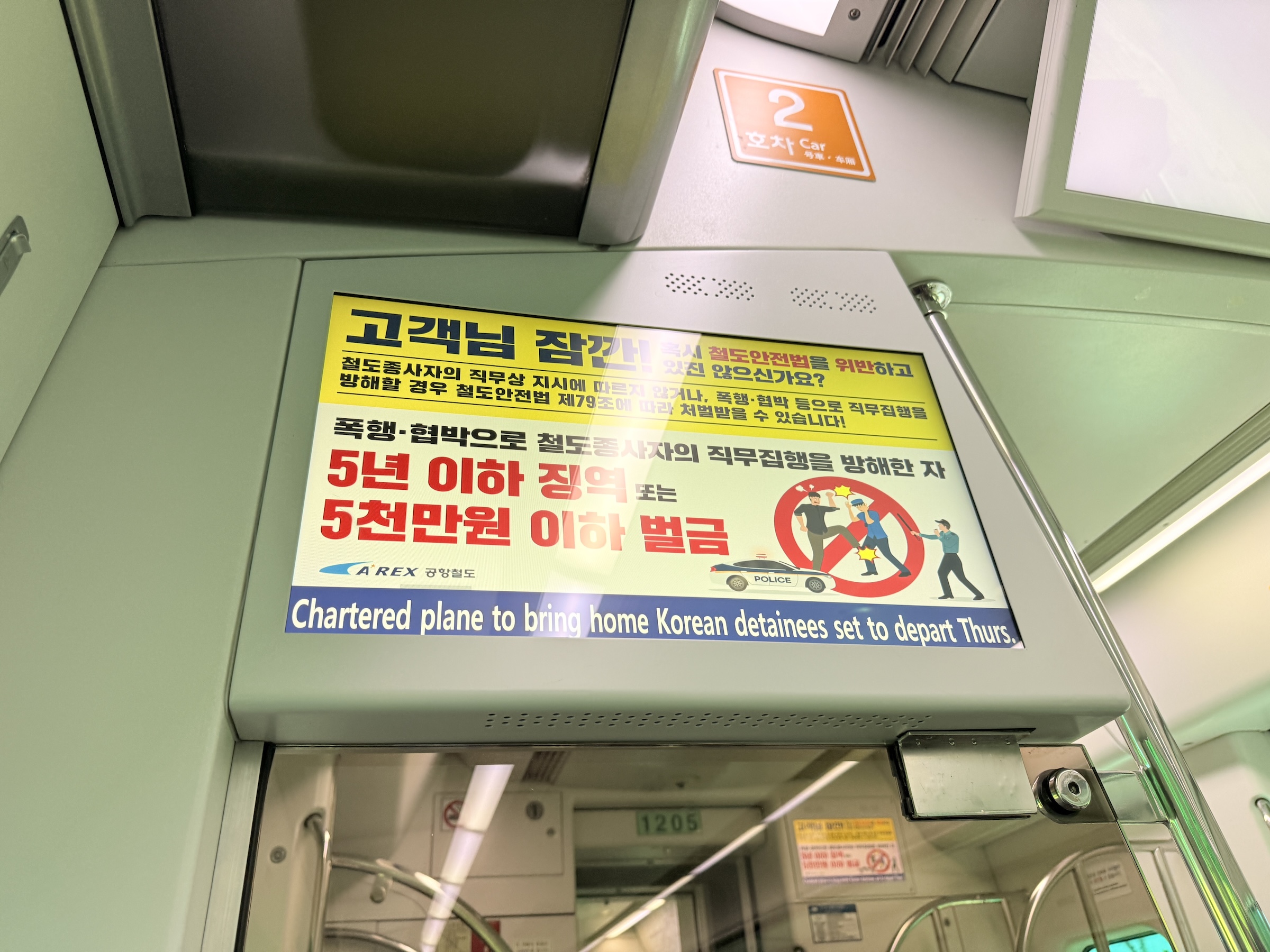
TV screen on the Airport Express train.
The debacle with the 300-some South Koreans detained in the immigration raid at Hyundai’s facility in Georgia is front page news here.
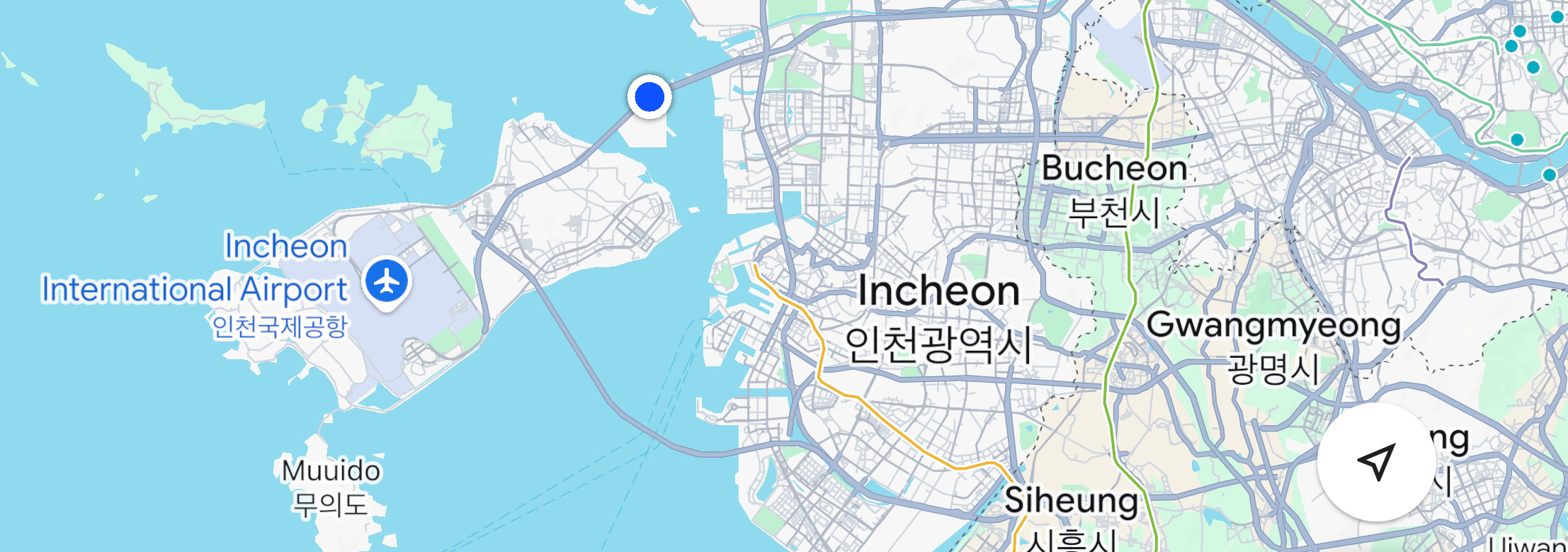
The route from Incheon International Airport to Seoul Station.
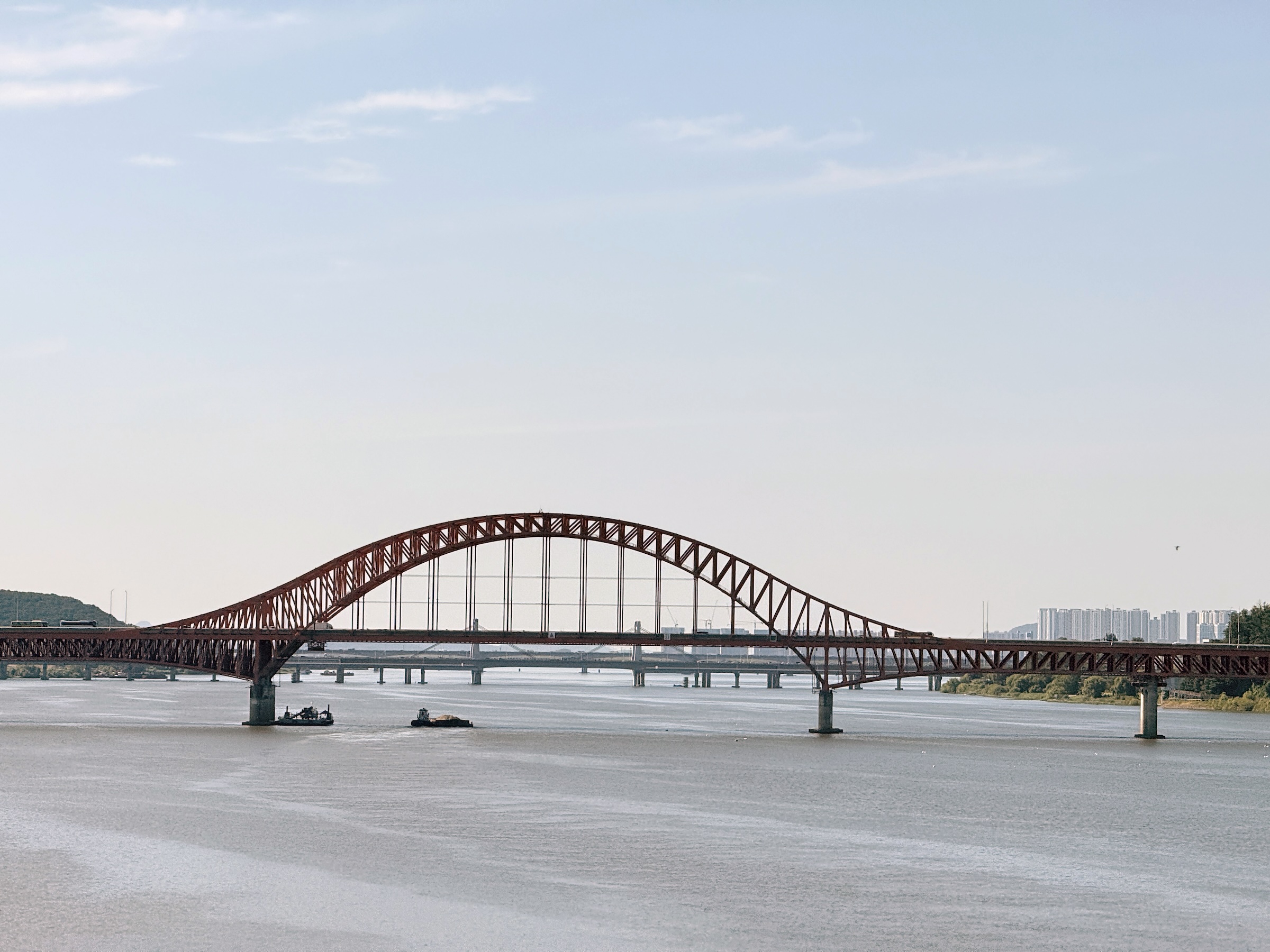
Here’s Banghwa Bridge (방화대교), seen from the Airport Express train.
It is a distinctive orange-colored arch bridge over the Han River.
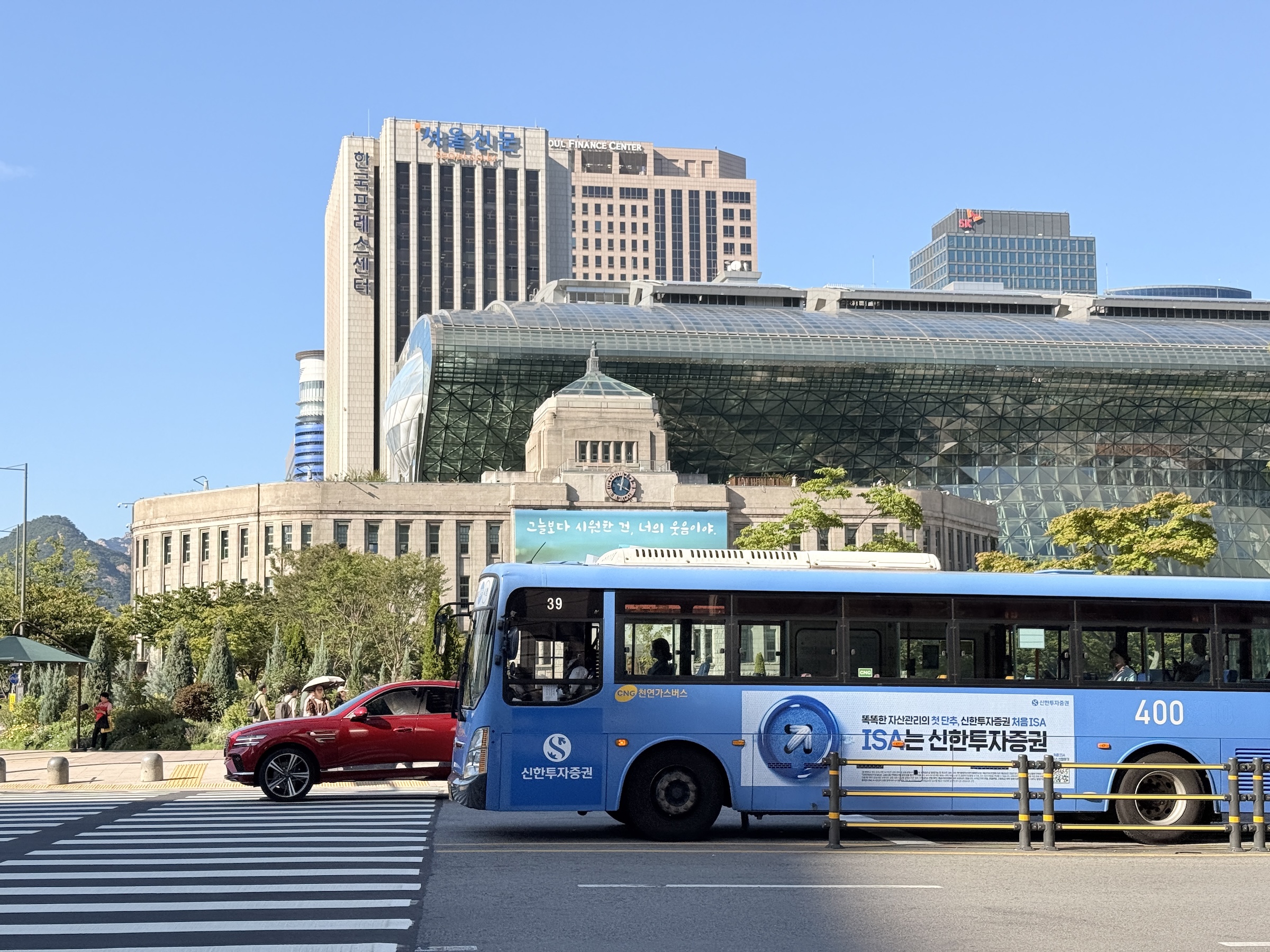
I had made it into Seoul Station, and took the local line just one stop to City Hall station. That’s City Hall, with a futuristic new (2012) extension behind it. I will take a few more pictures tomorrow.

Wednesday/ Abeno Harukas views 🏙️

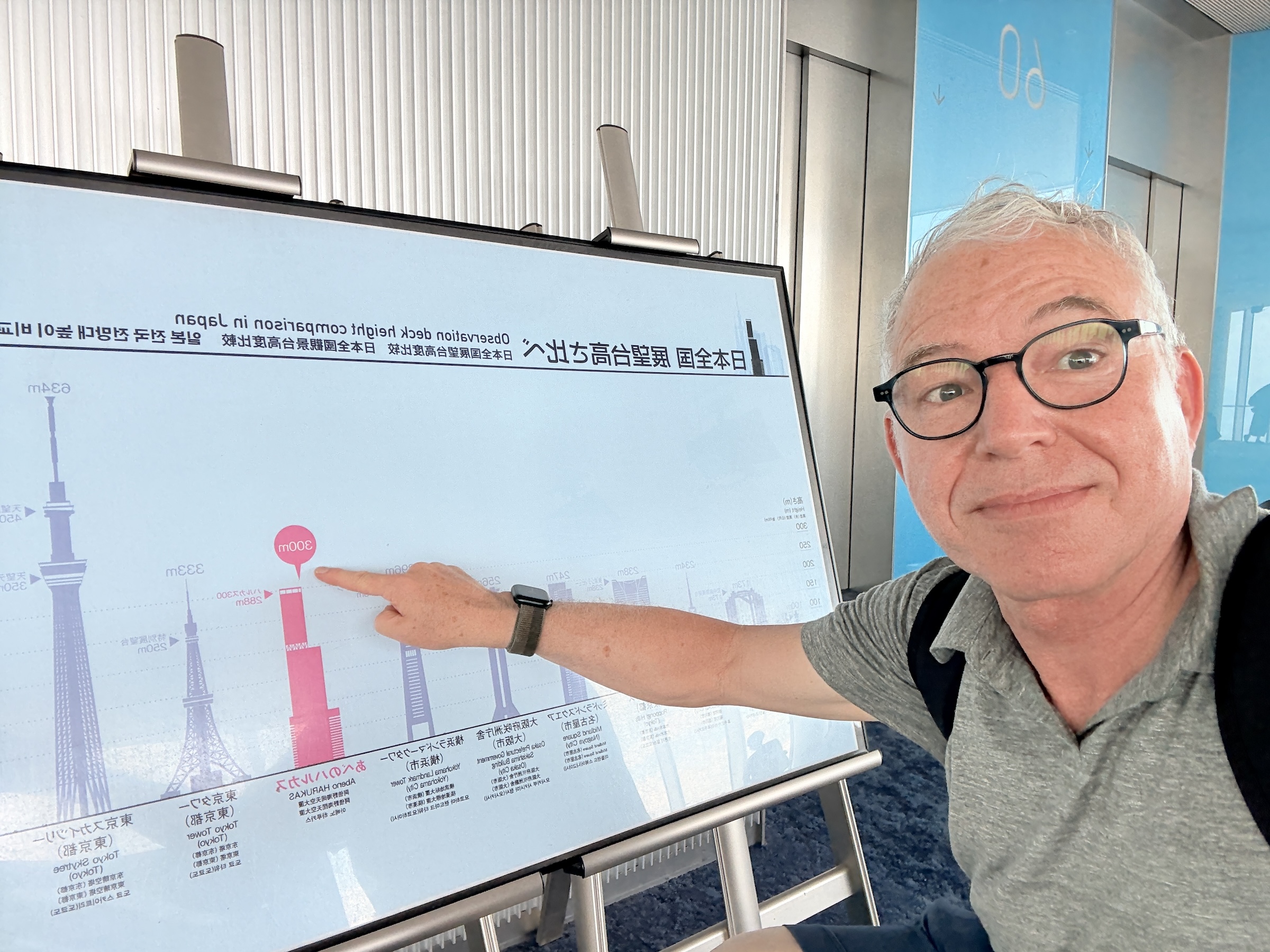
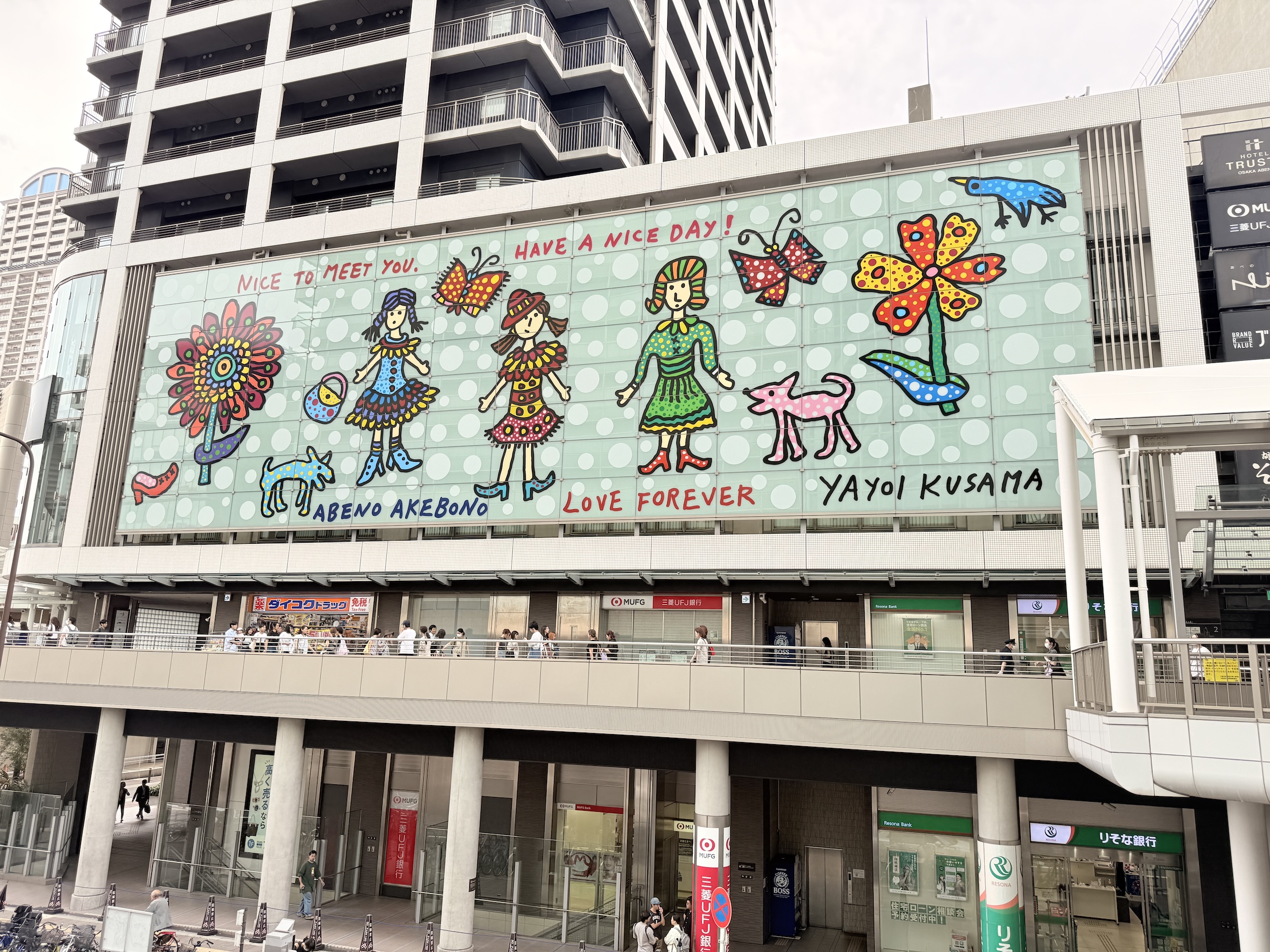
I set out this morning to take a ride on the streetcar that starts at Tennojiekimae Station. Just with dumb luck, I discovered upon arriving there that Osaka’s tallest building is right there, as well.
So I first went up to the observation deck on the 60th story of Abeno Harukas, and then took a short ride on the street car.

Today was my last full day in Osaka.
I am flying out to Seoul, Korea (two hours on Asiana Airlines), in the morning.
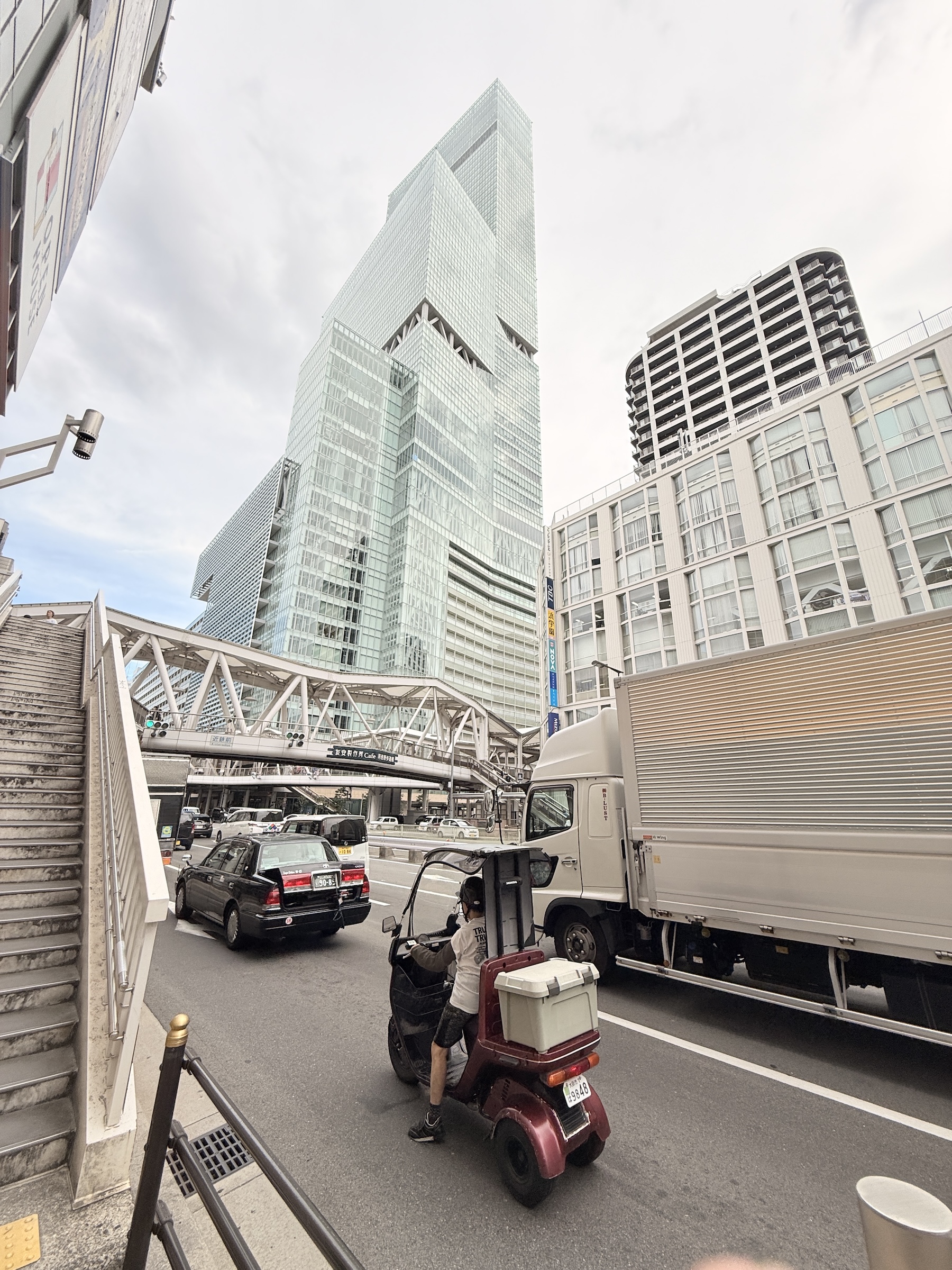
Here’s the Abeno Harukas complex, constructed in 1992. (“Harukas” is an old Japanese expression meaning “to brighten, to clear up.”). It was the tallest skyscraper in Japan from the completion of its observation deck in 2014, until 2023. (The Azabudai Hills Mori JP Tower in Tokyo has 5 more floors and is now Japans’s tallest building.)
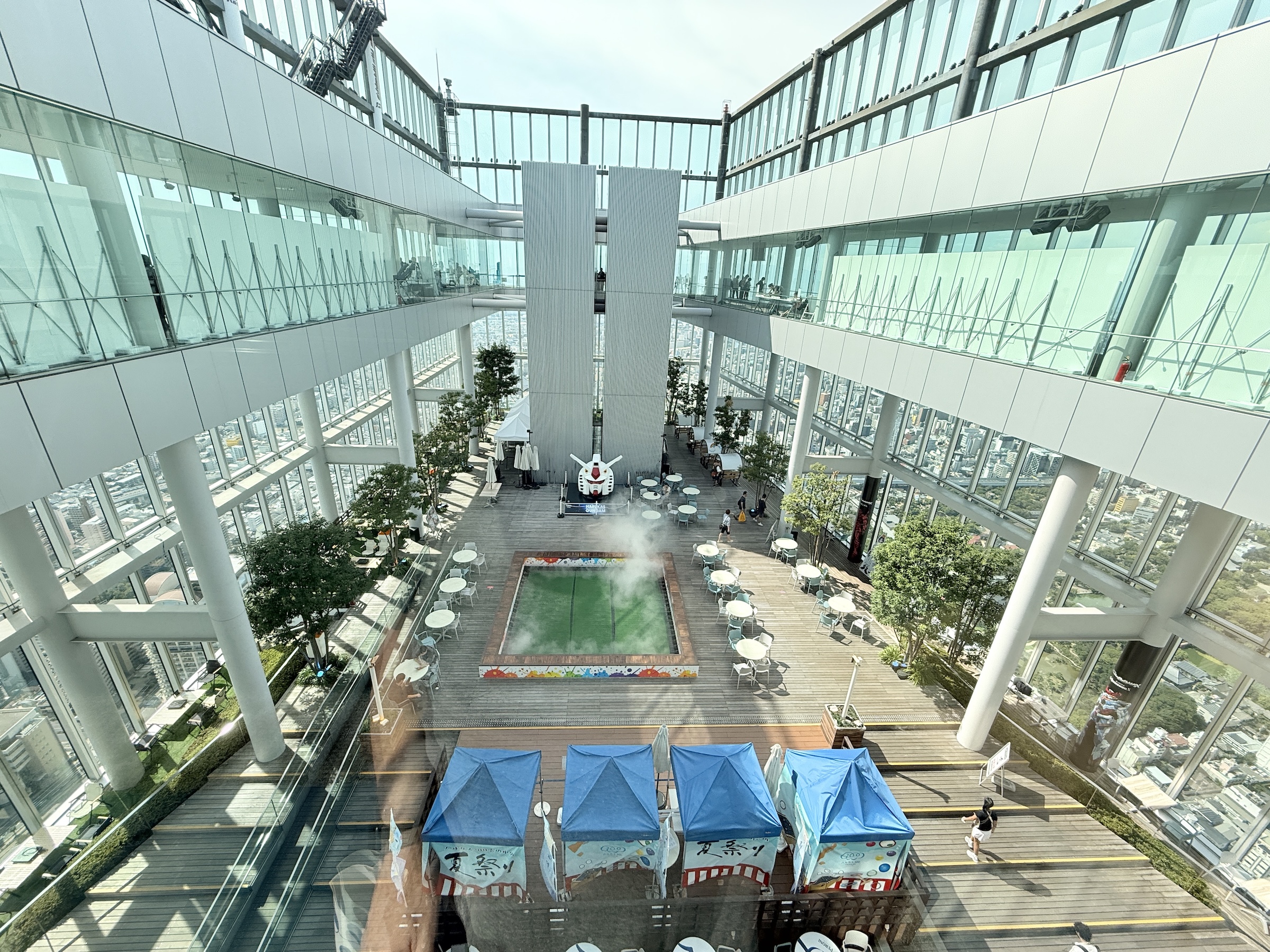
Abeno Harukas is an amazing building complex that boasts: the 58th-60th floor observatory; from the 38th-55th floors and 57th floor, the Osaka Marriott Miyako Hotel with restaurants; 17th and 18th floor offices; the 16th floor Abeno Harukas Museum and rooftop garden; 2nd basement to 14th floor, the Kintetsu Department Store; 1st basement and 1st floor: Osaka Abenobashi Train Station, and 4th and 3rd basements: parking lot. Wow!
I made it to the the 60th floor observatory, and this is an open air atrium consisting of the 58th to 60th floors.
There are taller towers than Abeno Harukas in Japan: Tokyo Tower and Skytree.
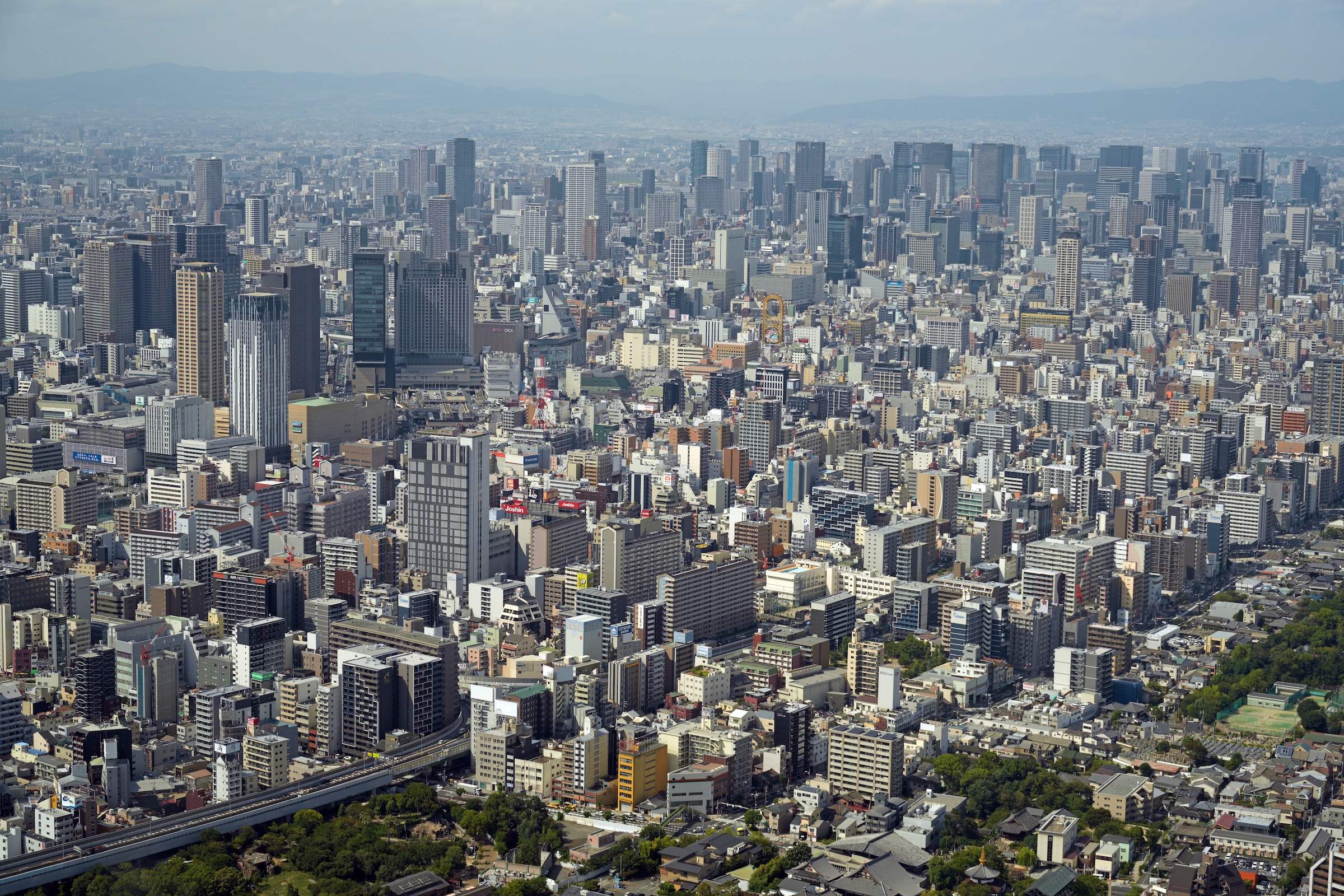
Here’s the view looking more or less north over the city of Osaka. The view was not too hazy, and the air quality index today was 44. Osaka castle lies out north as well, in a large green space, but was too far too see with the naked eye. 
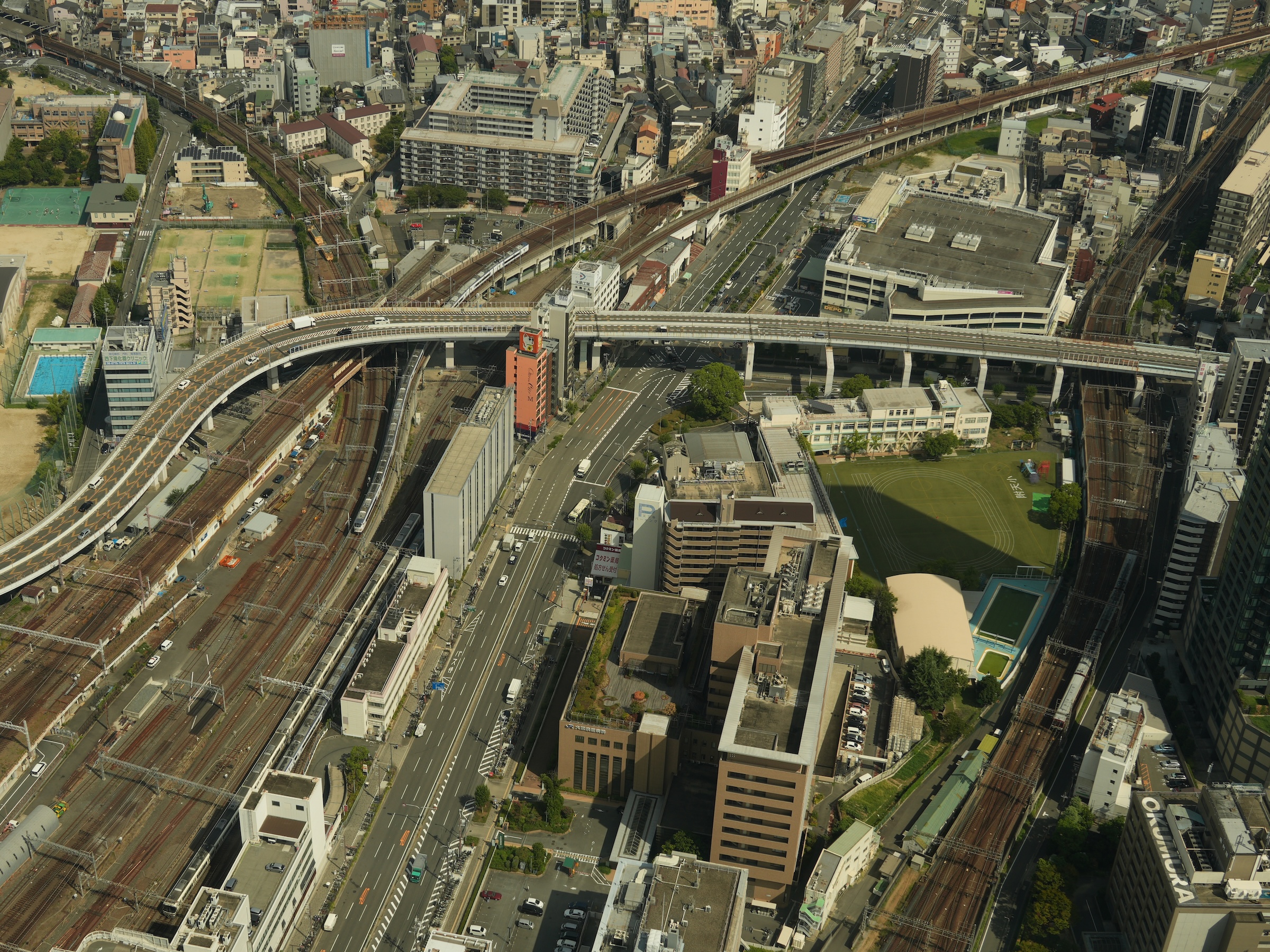
Looking at the ‘model trains’ that run on the tracks below. The track that runs out to the top left corner is the Osaka Loop Line. The one with the white train on it is the Yamatoji Line (大和路線, Yamatoji-sen), the common name of the western portion of the Kansai Main Line in Japan.
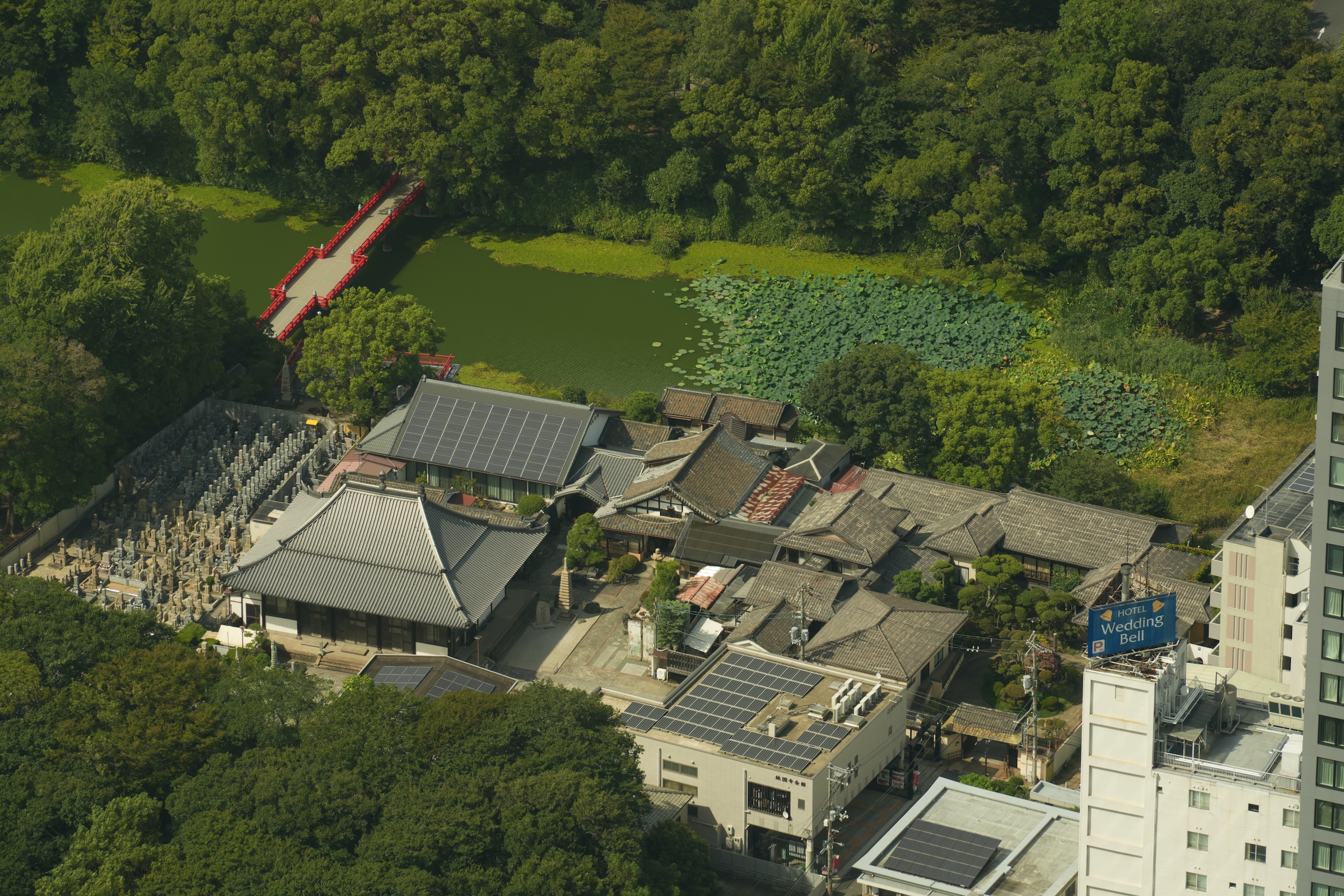
Here’s a bird’s eyeview of beautiful Keitakuen Garden. I would have loved to spend a little time there.
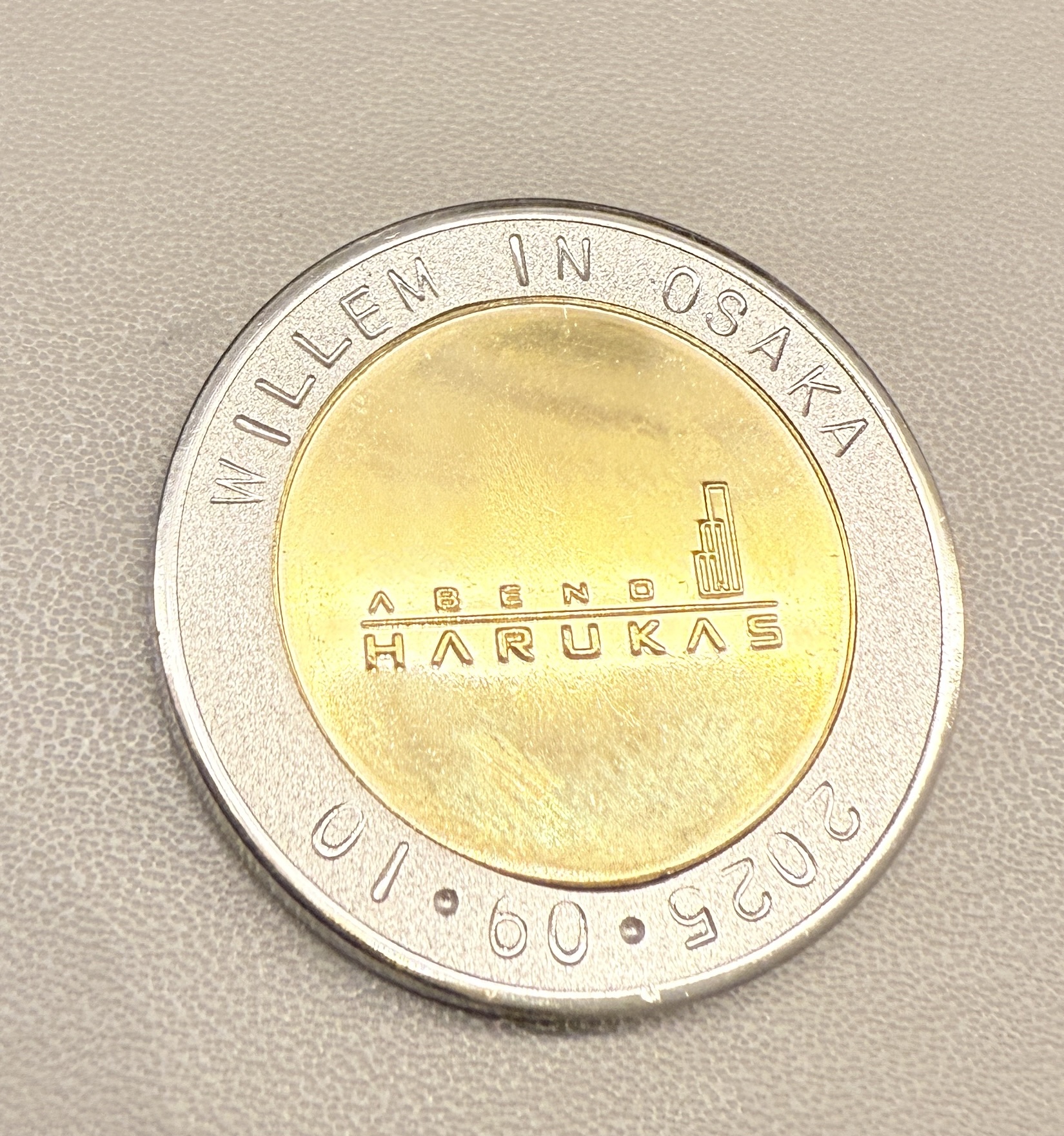
This commemorative coin from a vending machine in the observation deck was all of ¥600 (US$ 4.00). And you get a little show while the punching machine adds your free engraving on the edge of the coin. Nicely done!
All right, now I’m heading to Tennojiekimae Station for my short little street car ride.
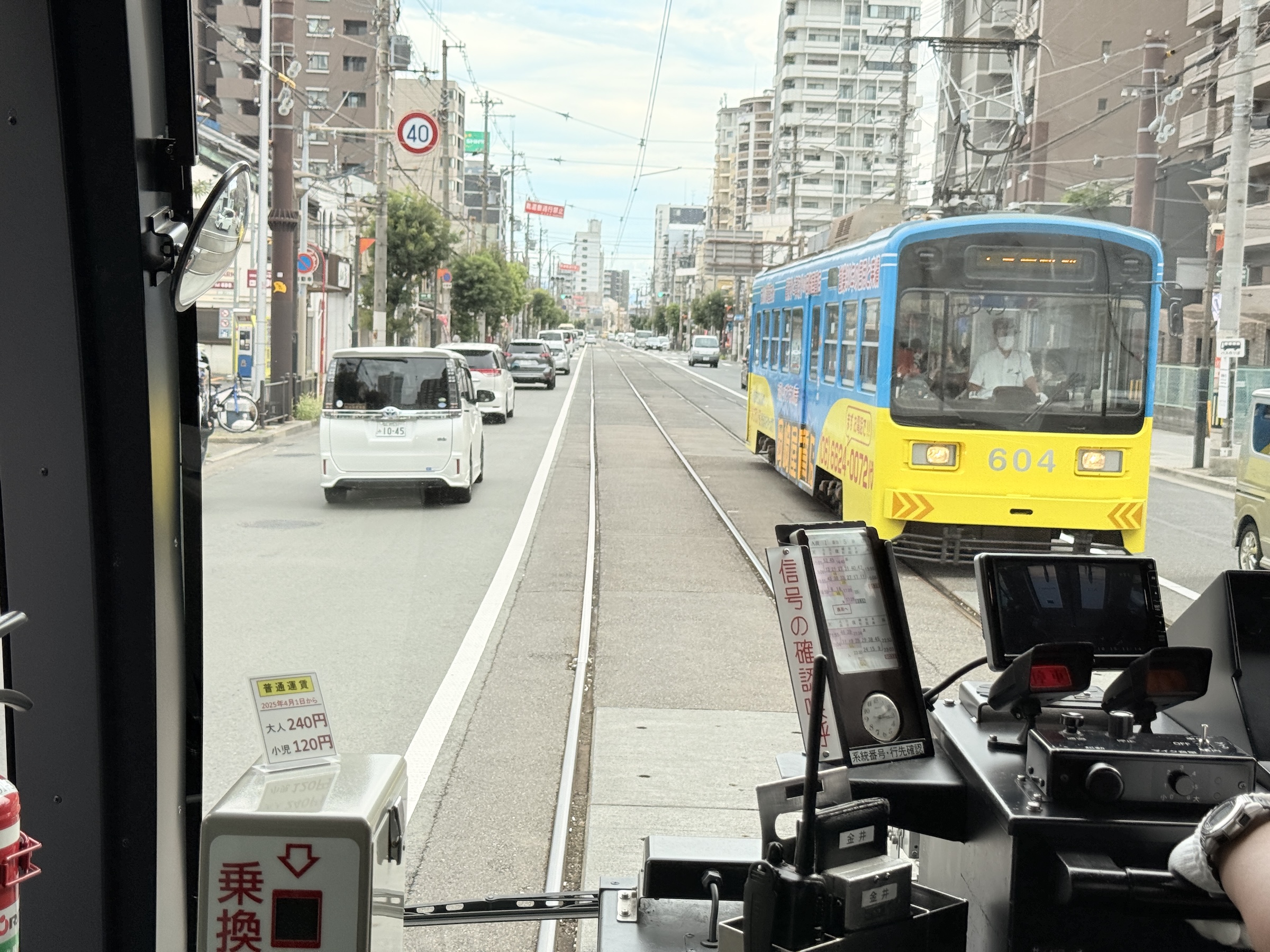
The street car is full, but I don’t mind standing up front. I have a great view of the track, and the street car that passes us by. The Hankai tram line itself began service in 1900, making it approximately 125 years old. 


Tuesday/ more Expo 2025 Osaka 🏯

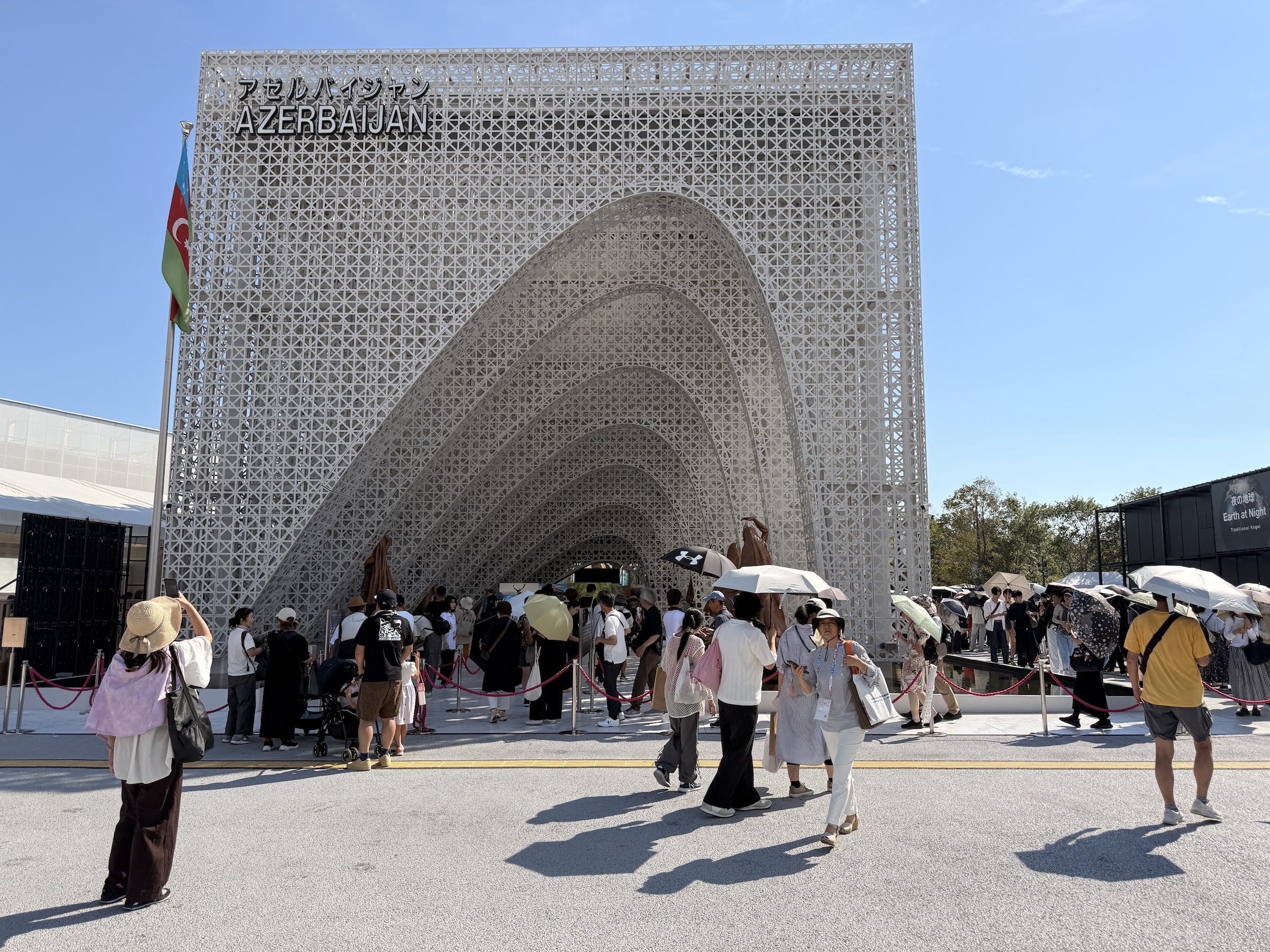
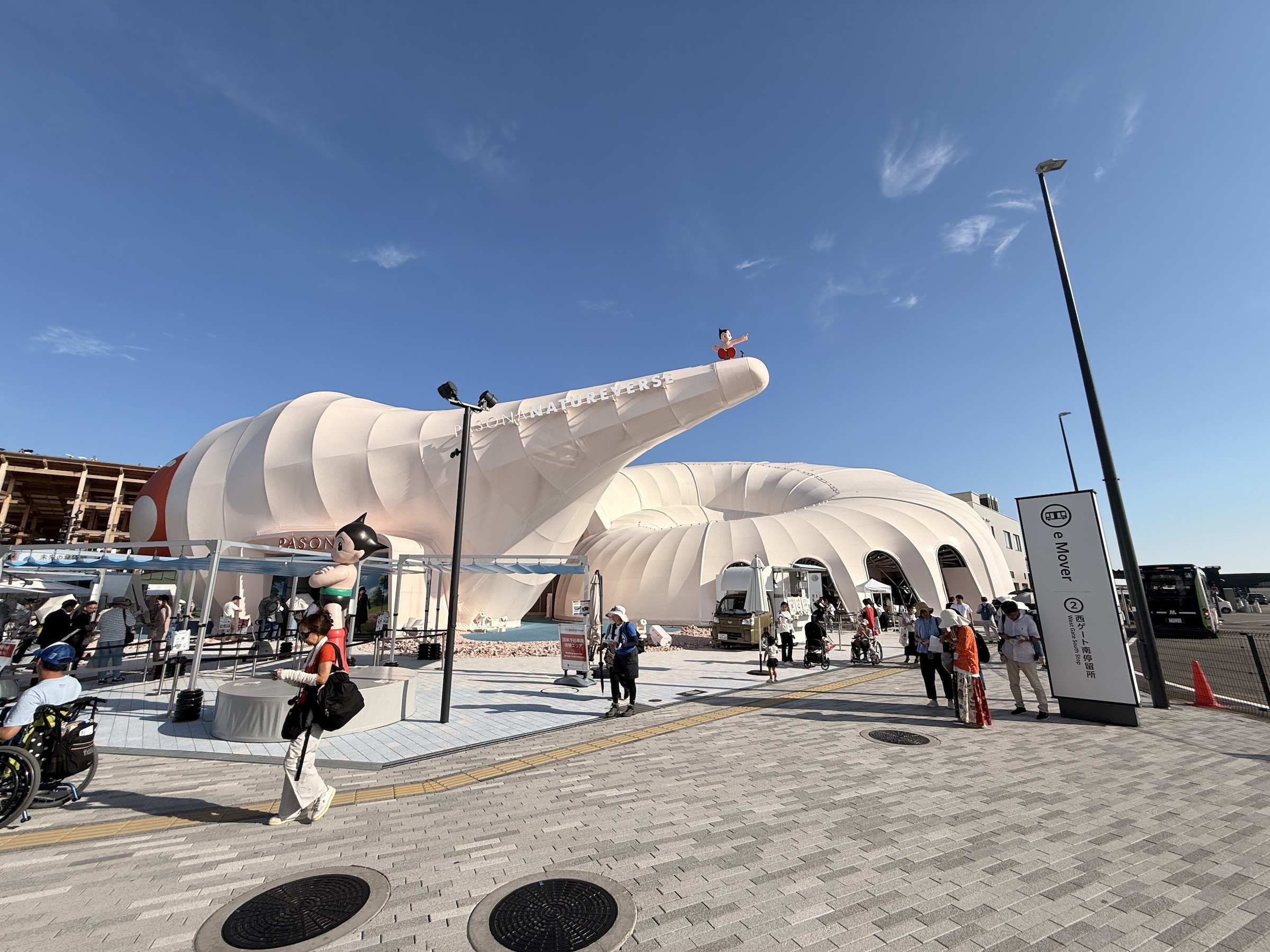
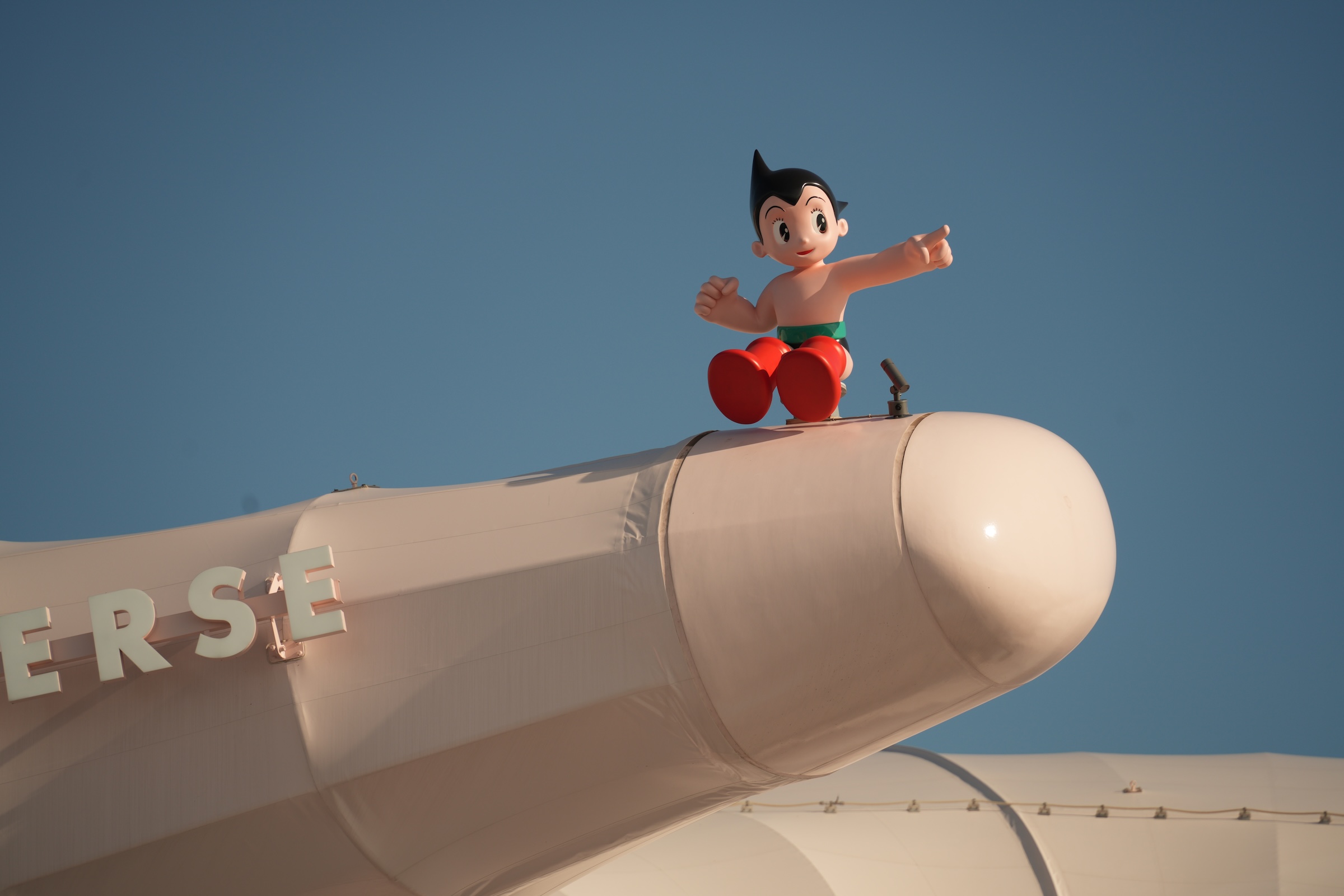
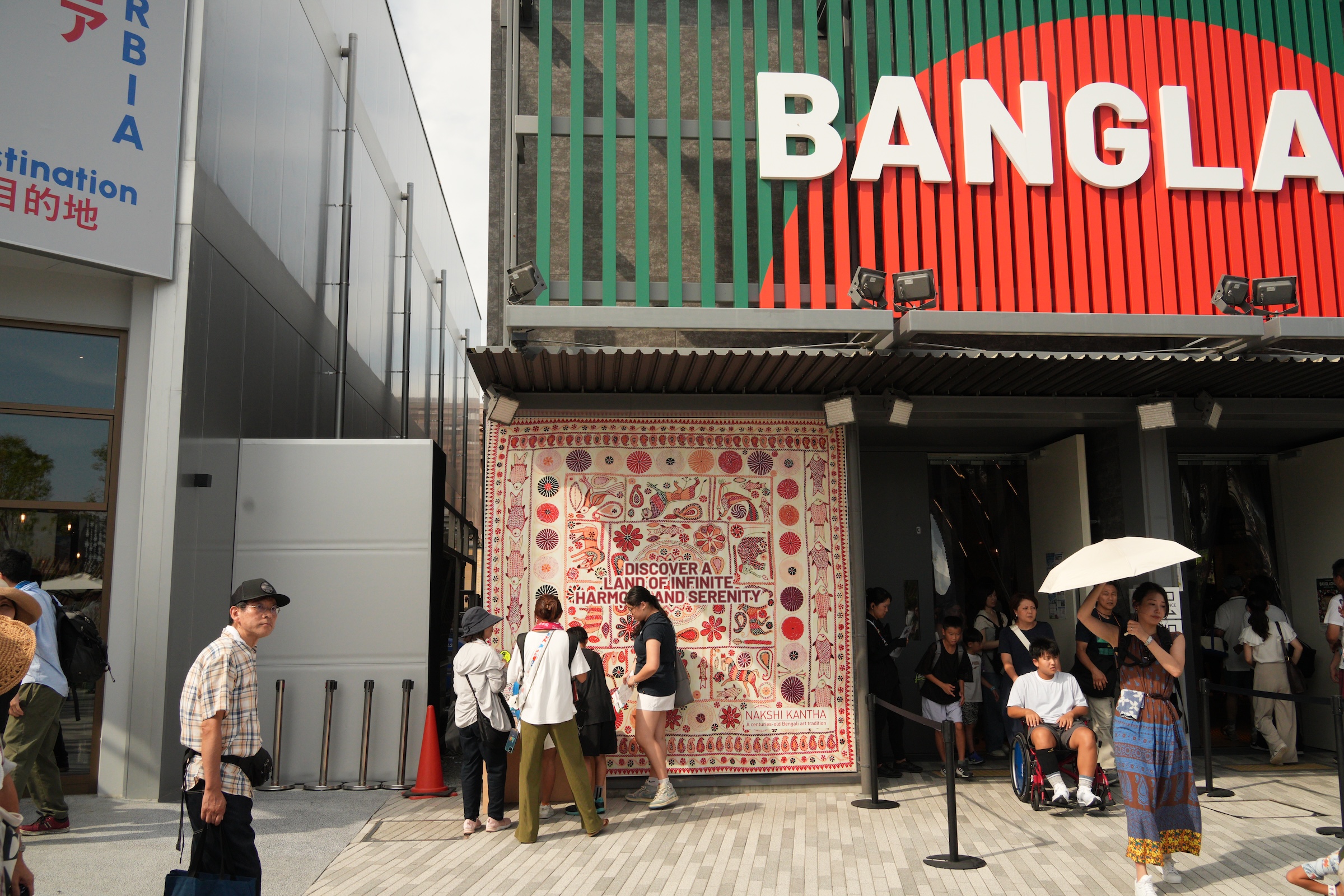
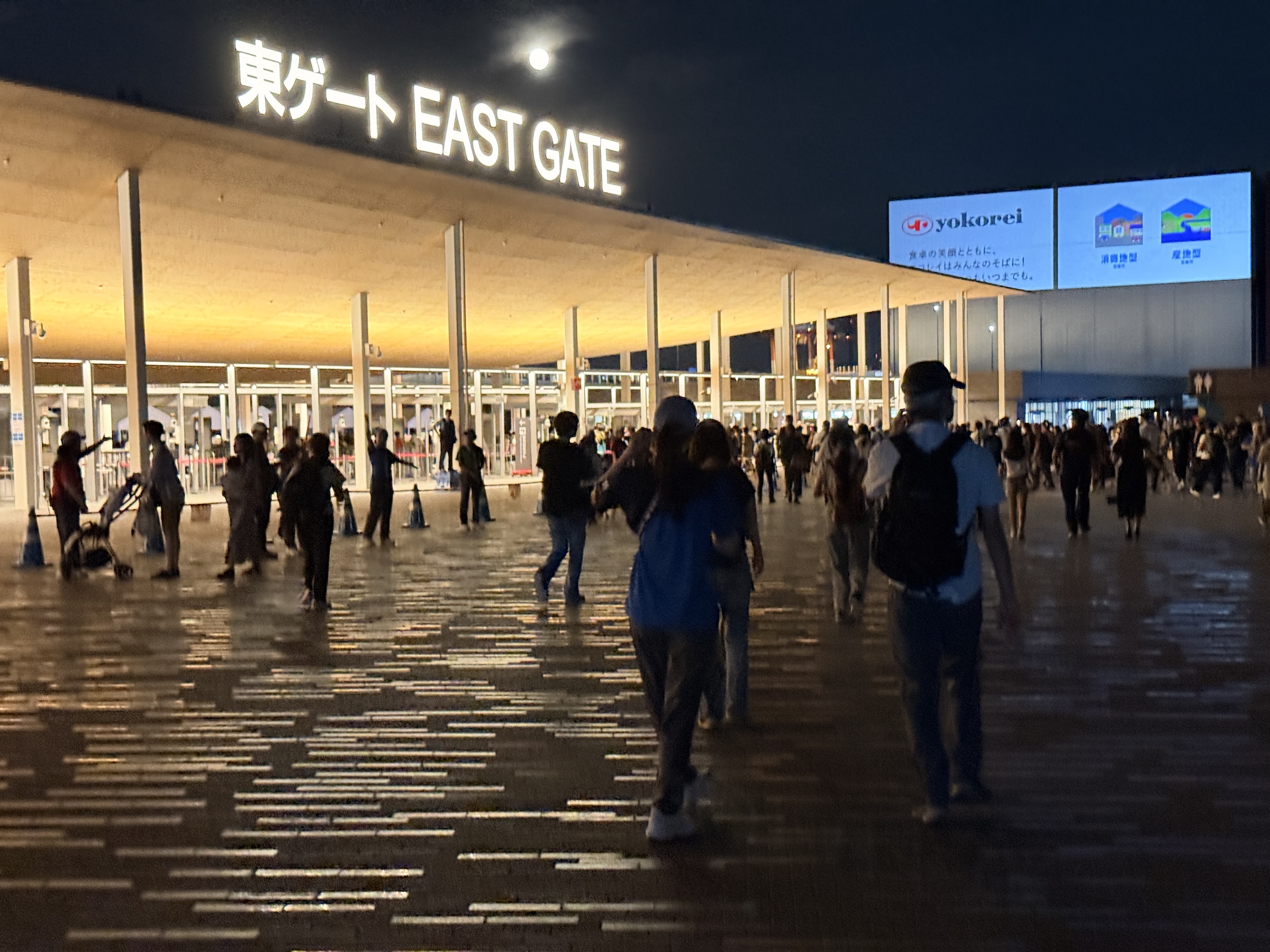
I walked over to the West Gate today (both days I had entered at the East Gate), where I found Astro Boy.

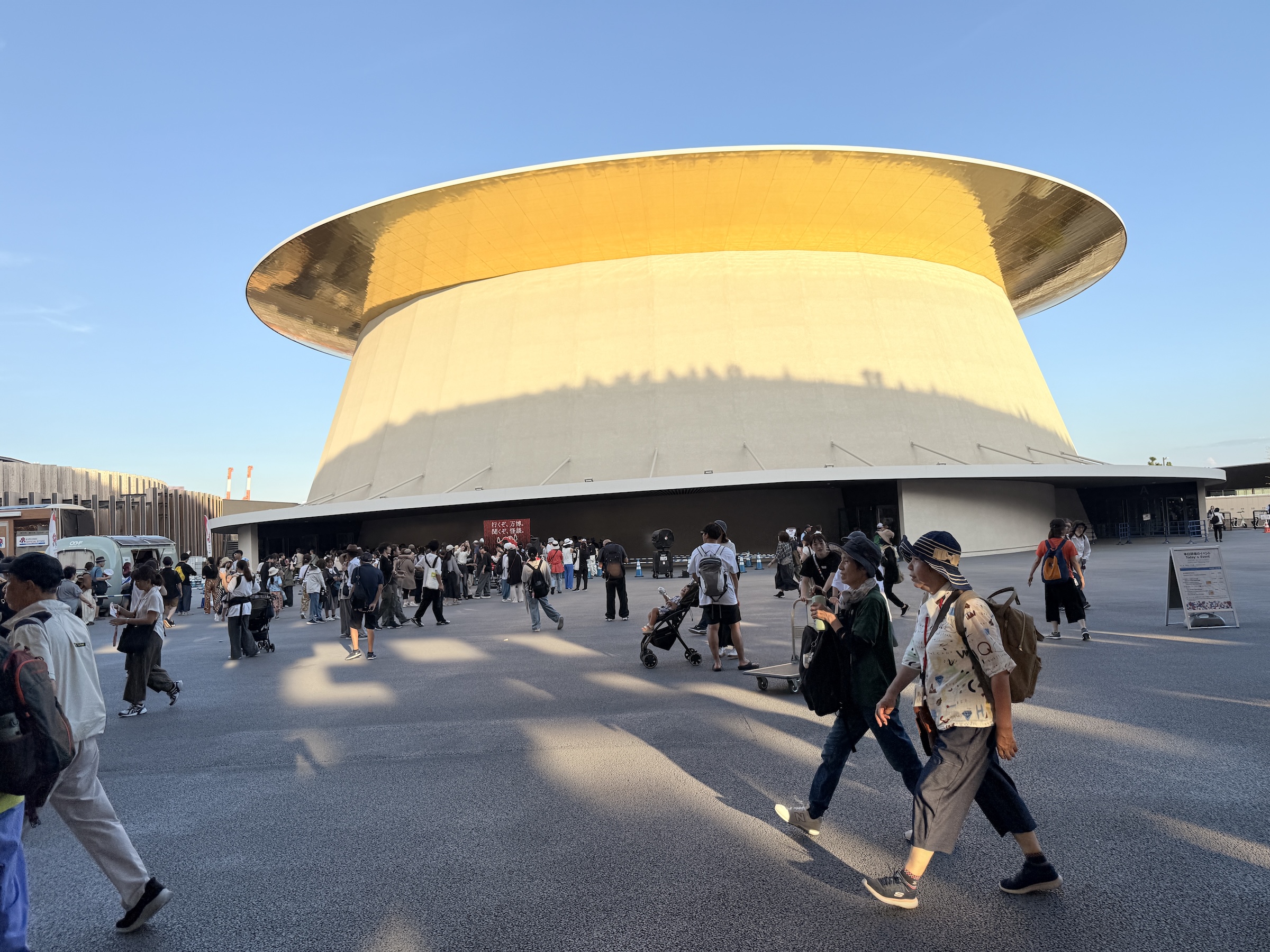
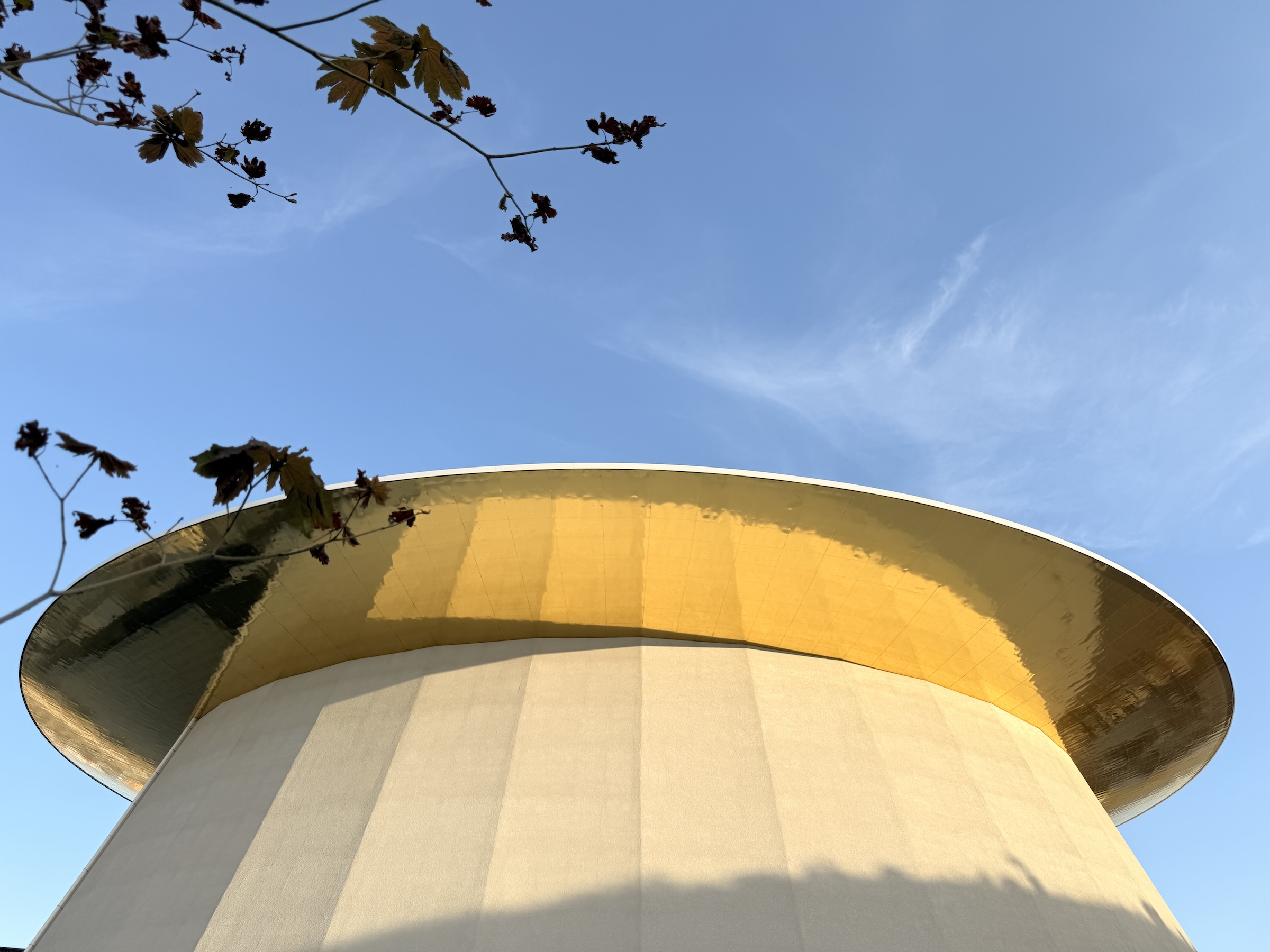
I also tracked down the Japan Pavilion with its beautiful ‘golden hat’ design. The Golden Surface of the Japan Pavilion was created by the designers Nikken Sekkei. They used an iridescent color shining technology— a technique that involves engraving microgrooves onto the surface, which interact with light to produce a dynamic, multi-colored sheen that changes with the viewing angle.

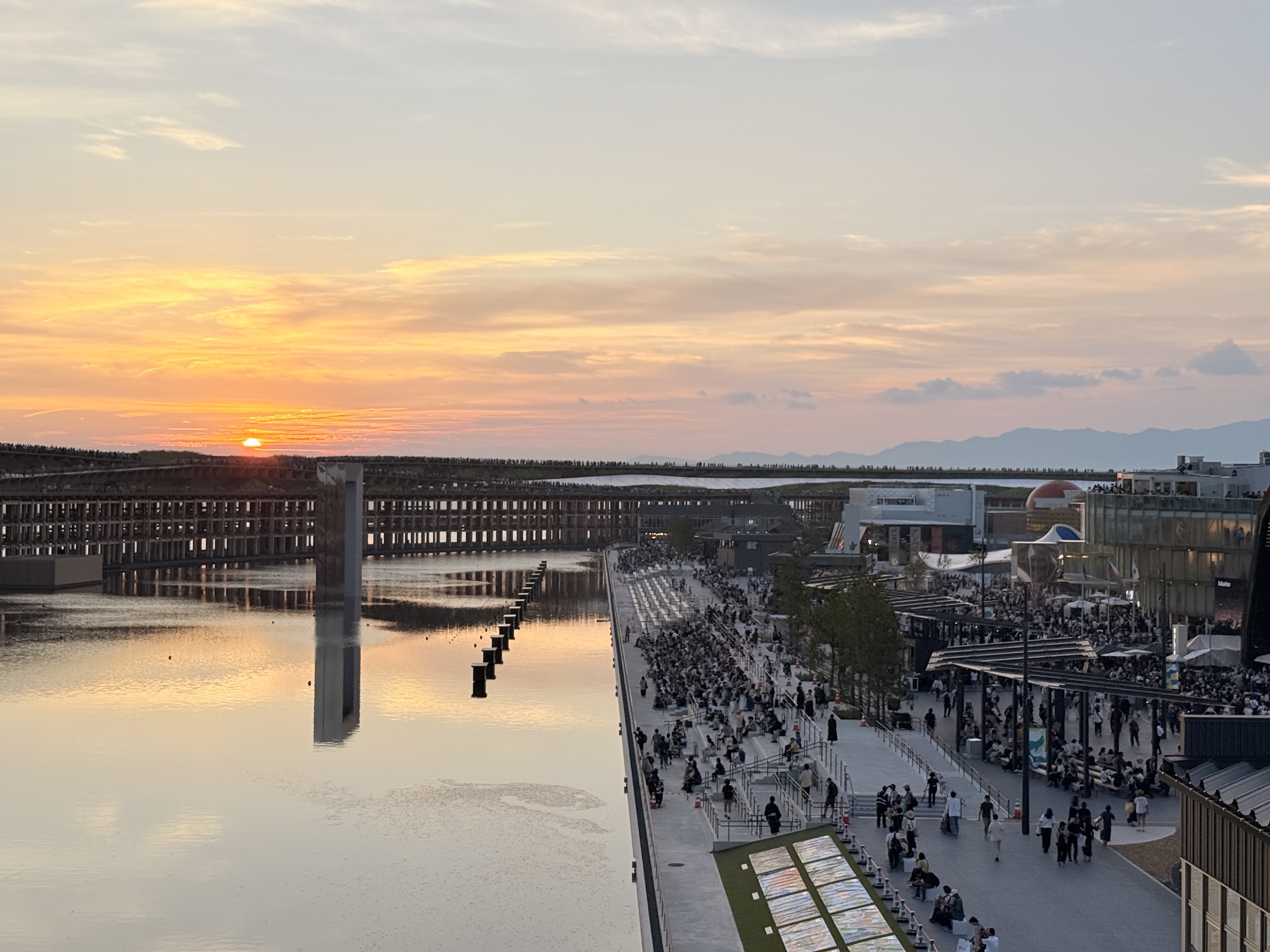
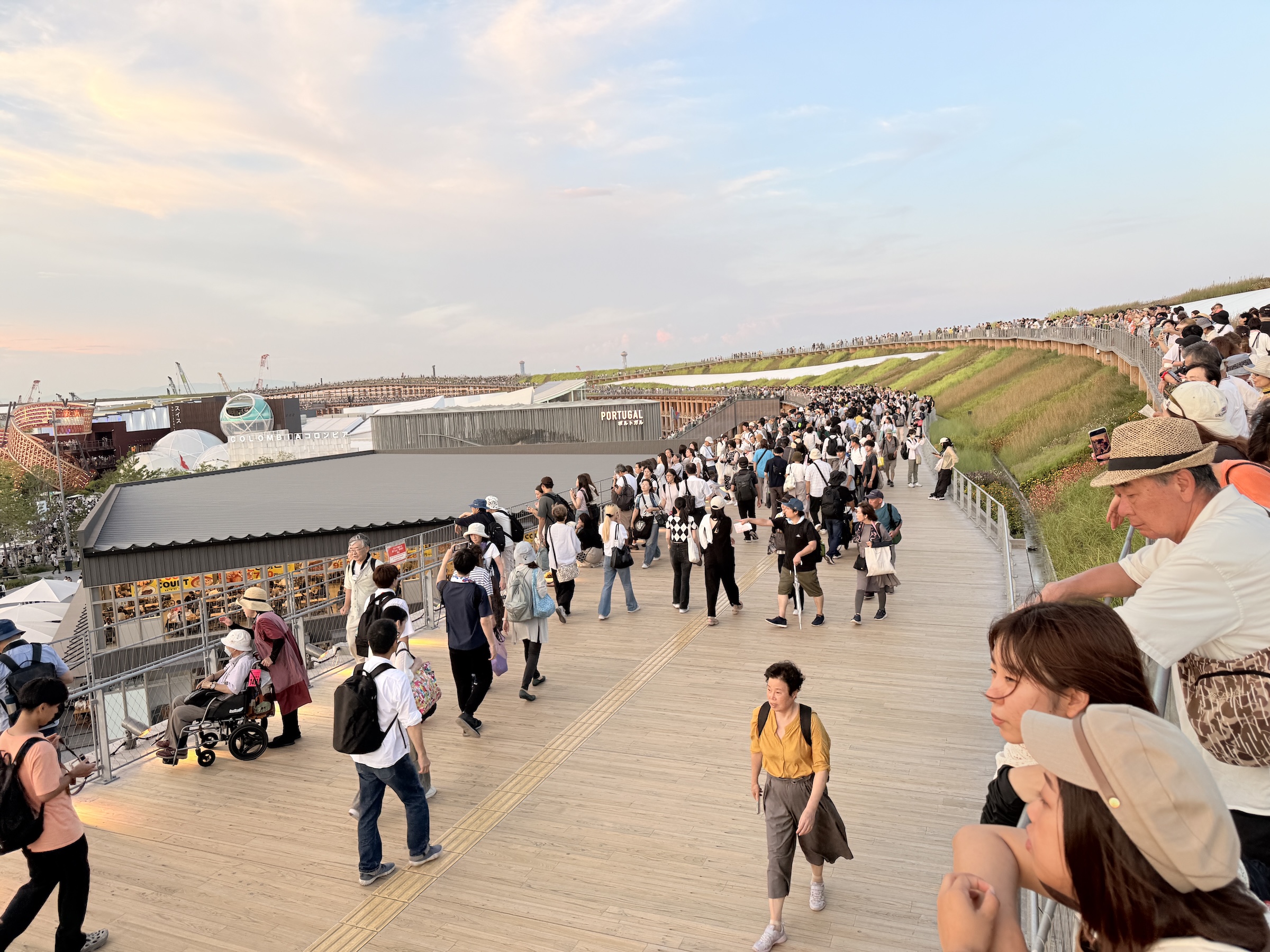
As the sun was setting, everyone went up to the Grand Ring, to watch the daylight end.
Monday/ at Expo 2025 Osaka 🤗

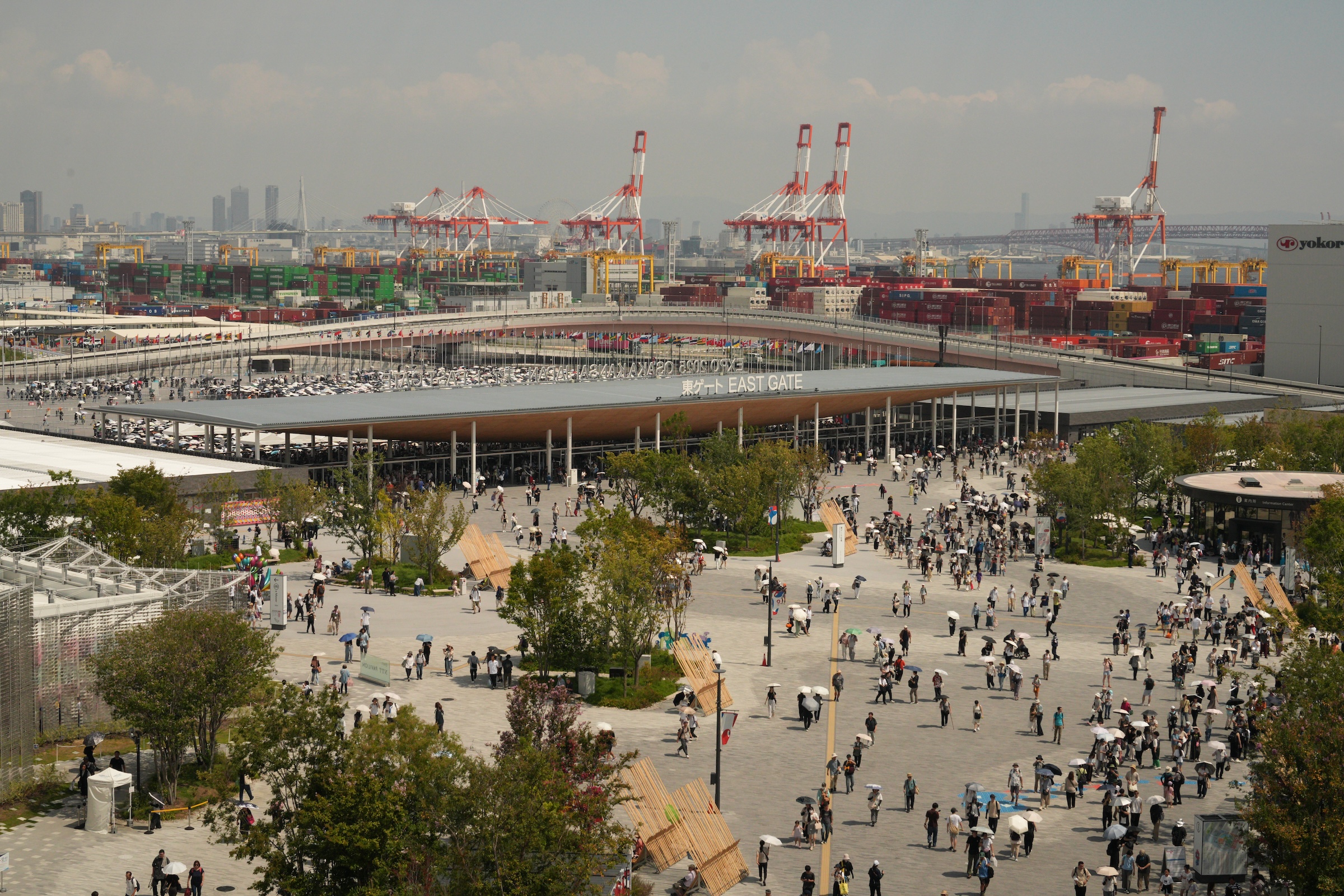
I made it to Expo 2025 Osaka!
It’s hot and it’s crowded with very, very long lines at most pavilions— the ones that allow you in without a reservation, that is.
Entrance to the top-rated pavilions are pre-allocated by a lottery system. I struck out despite diligently applying, as far out as three months before my visit today.

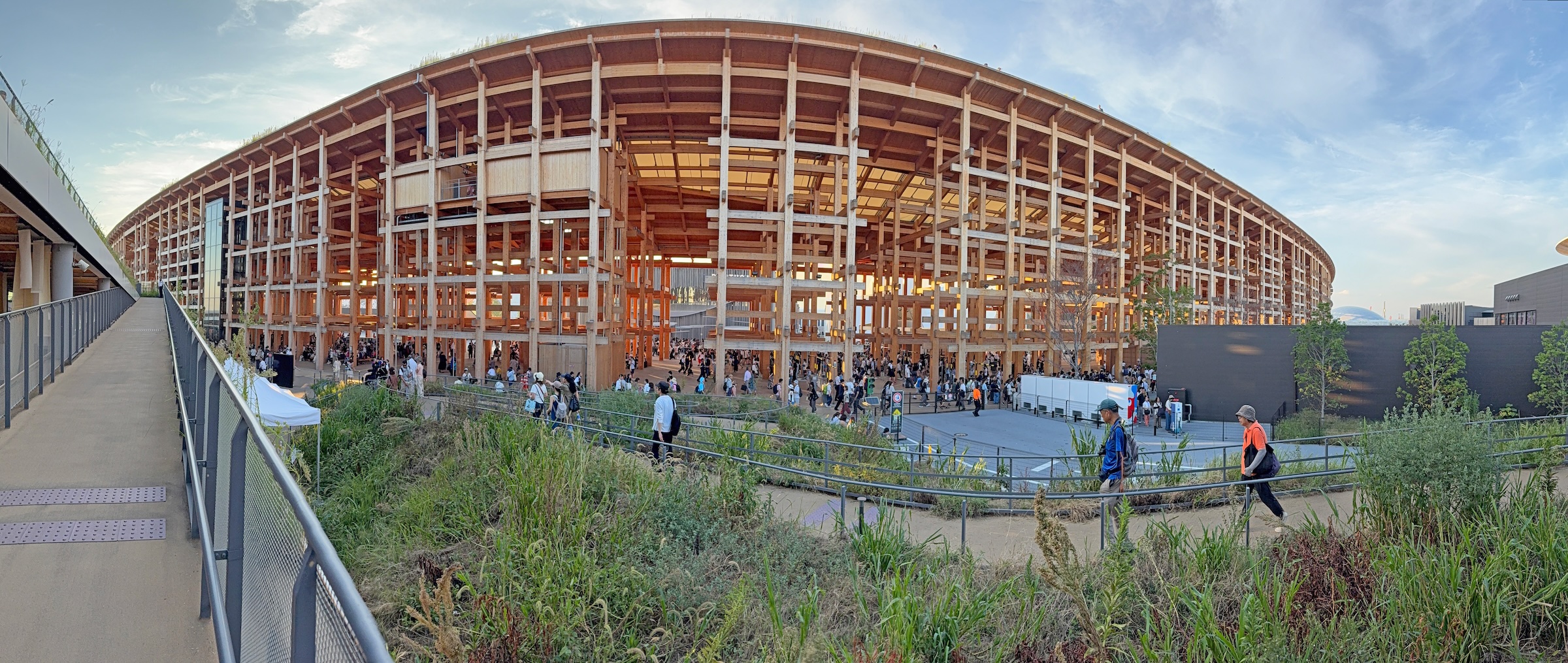
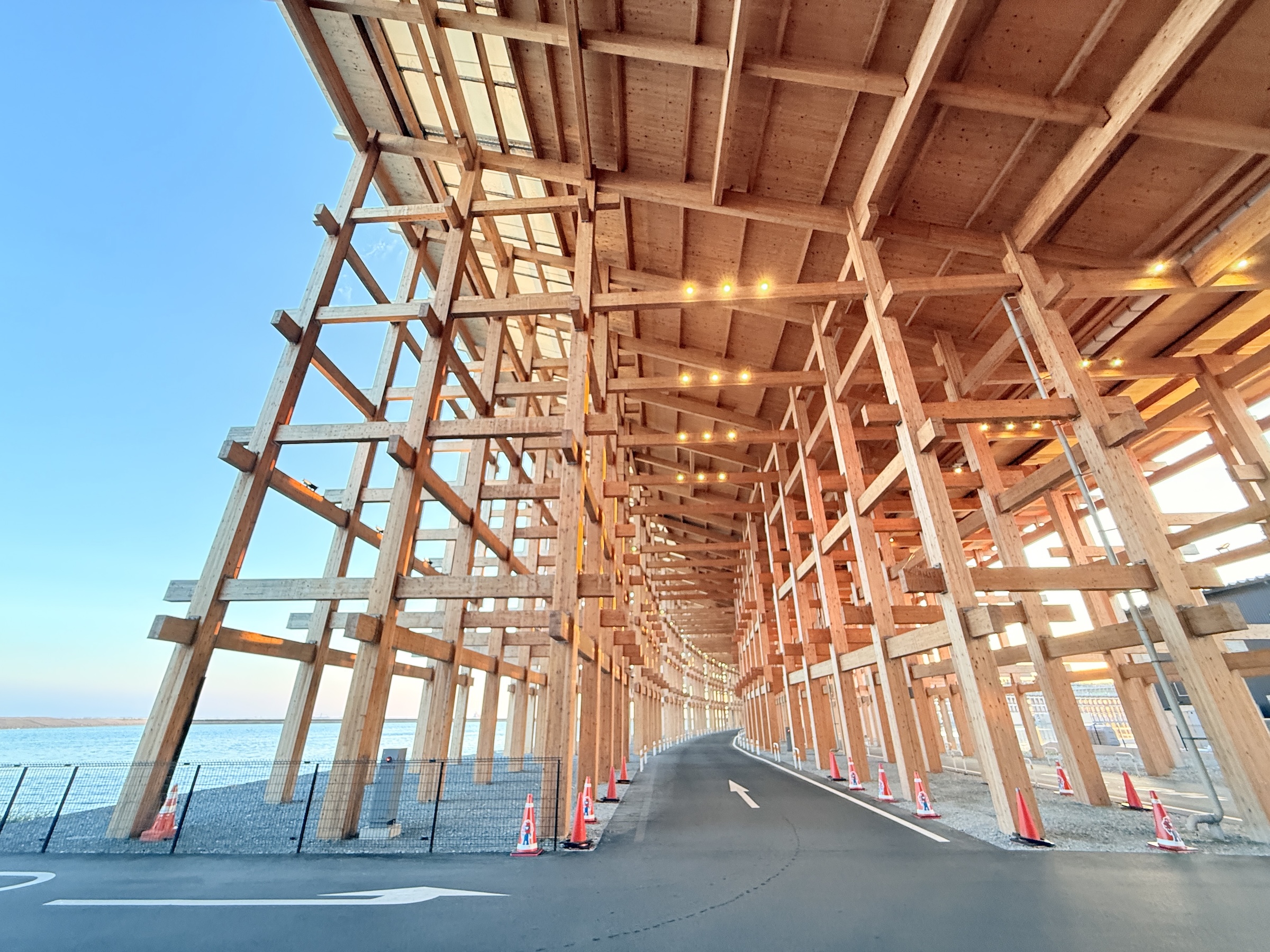
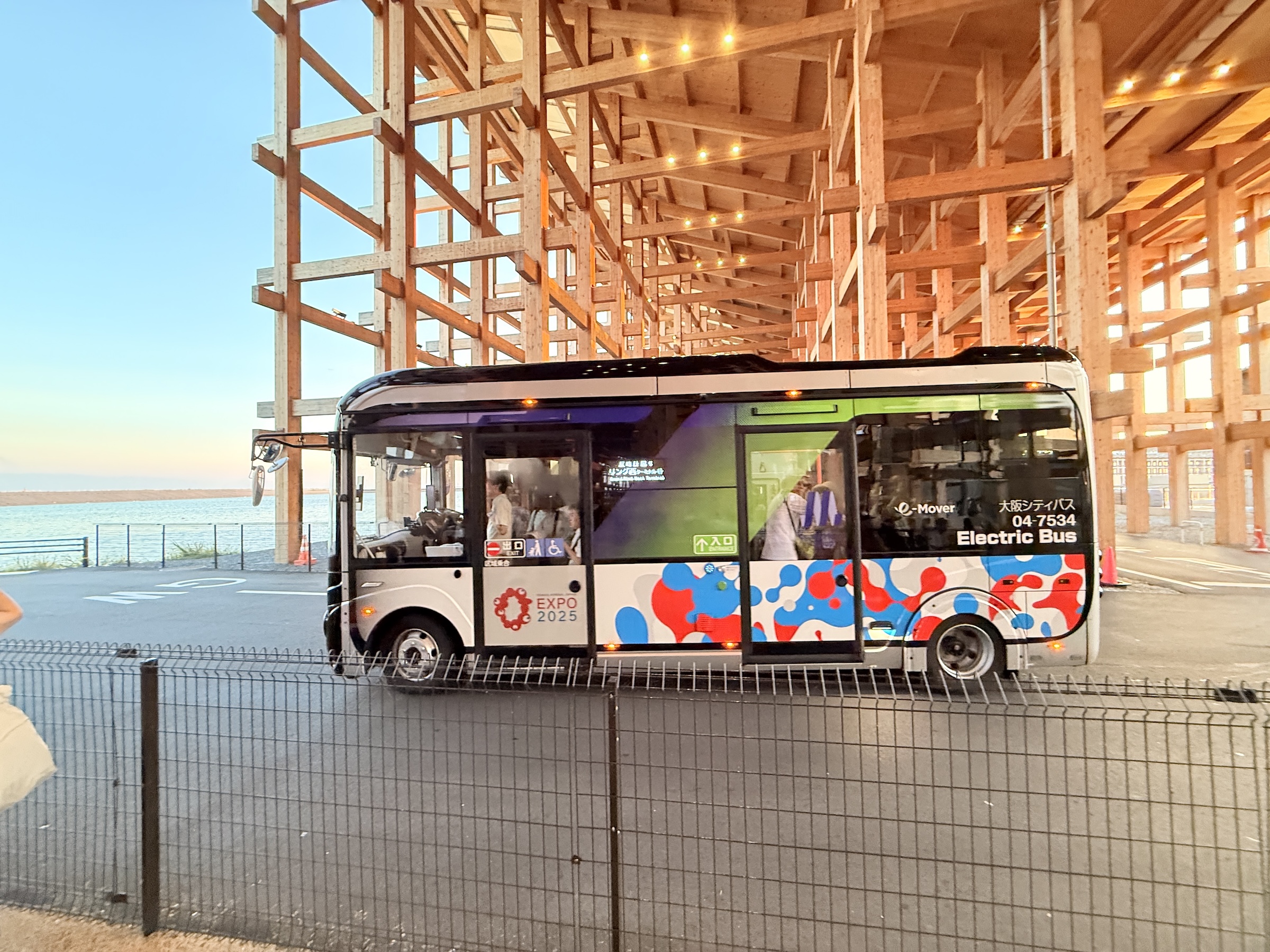
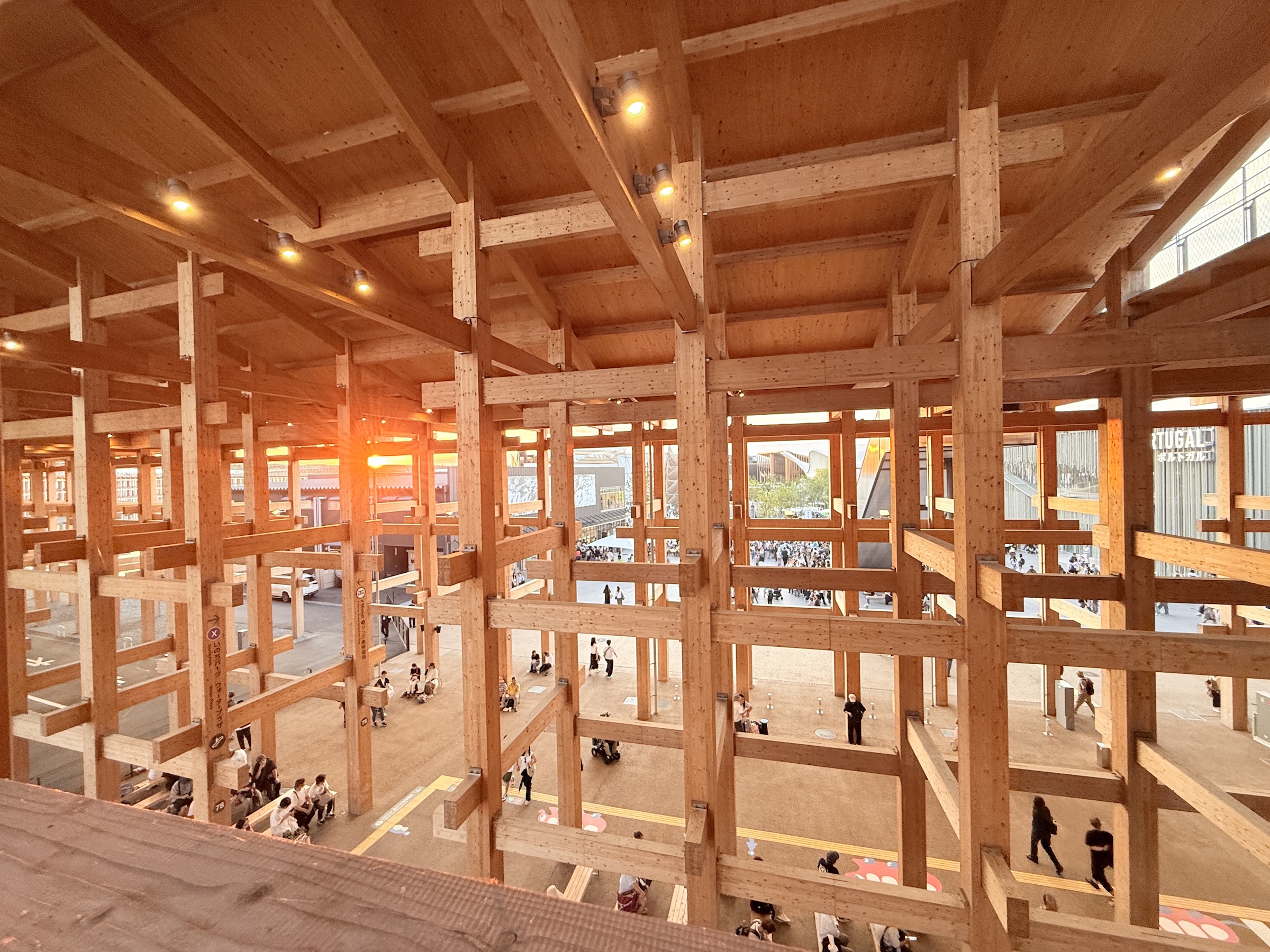
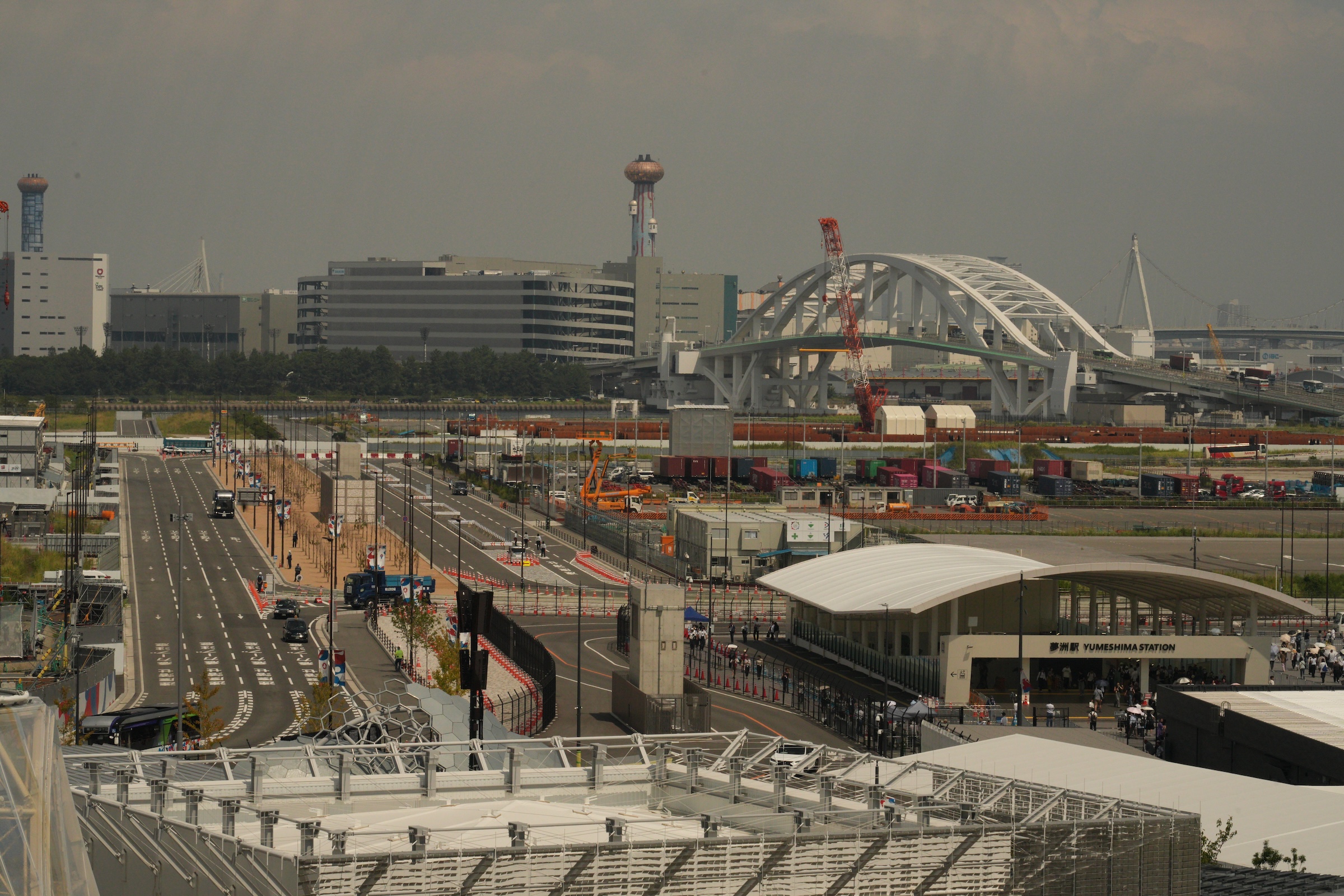
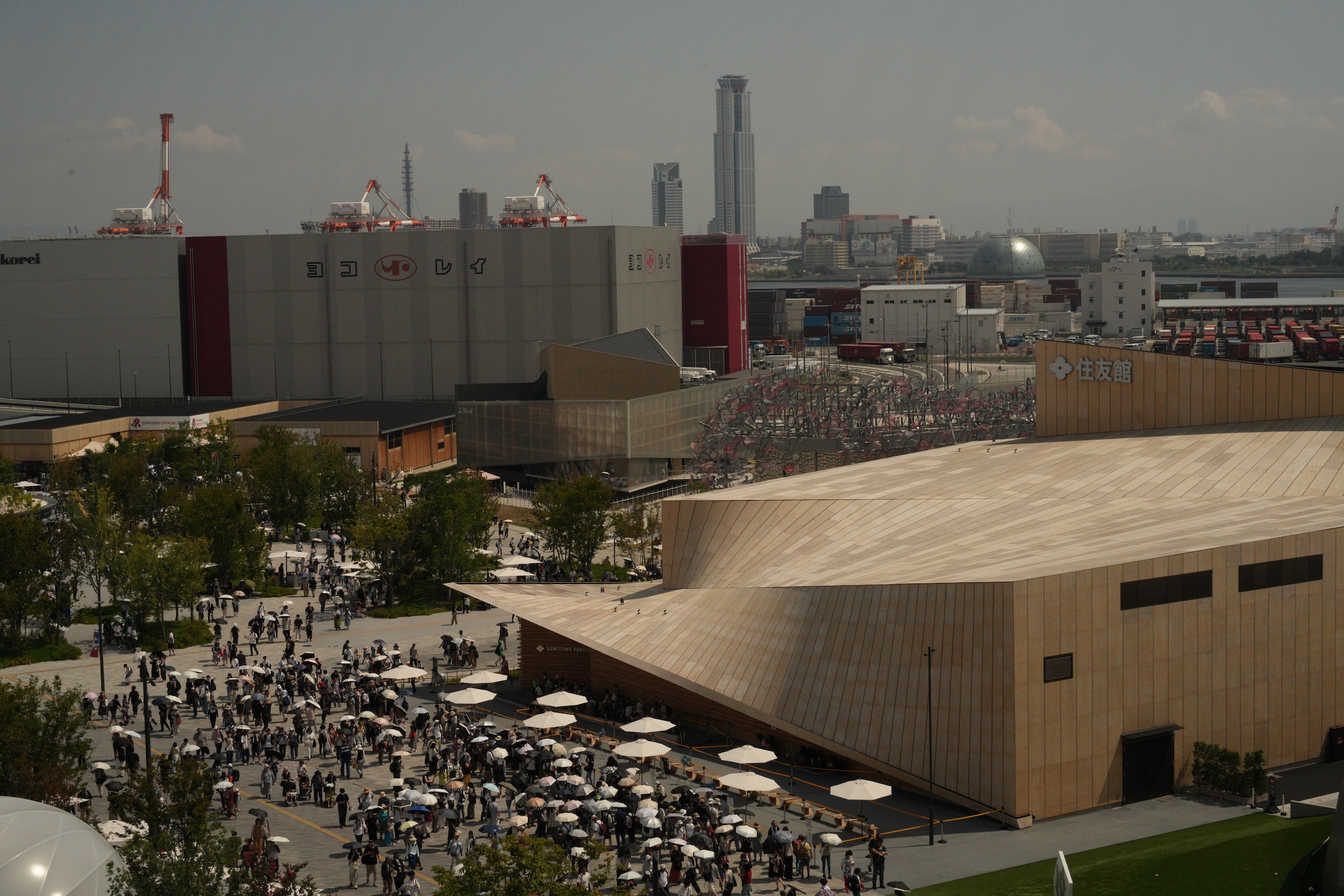
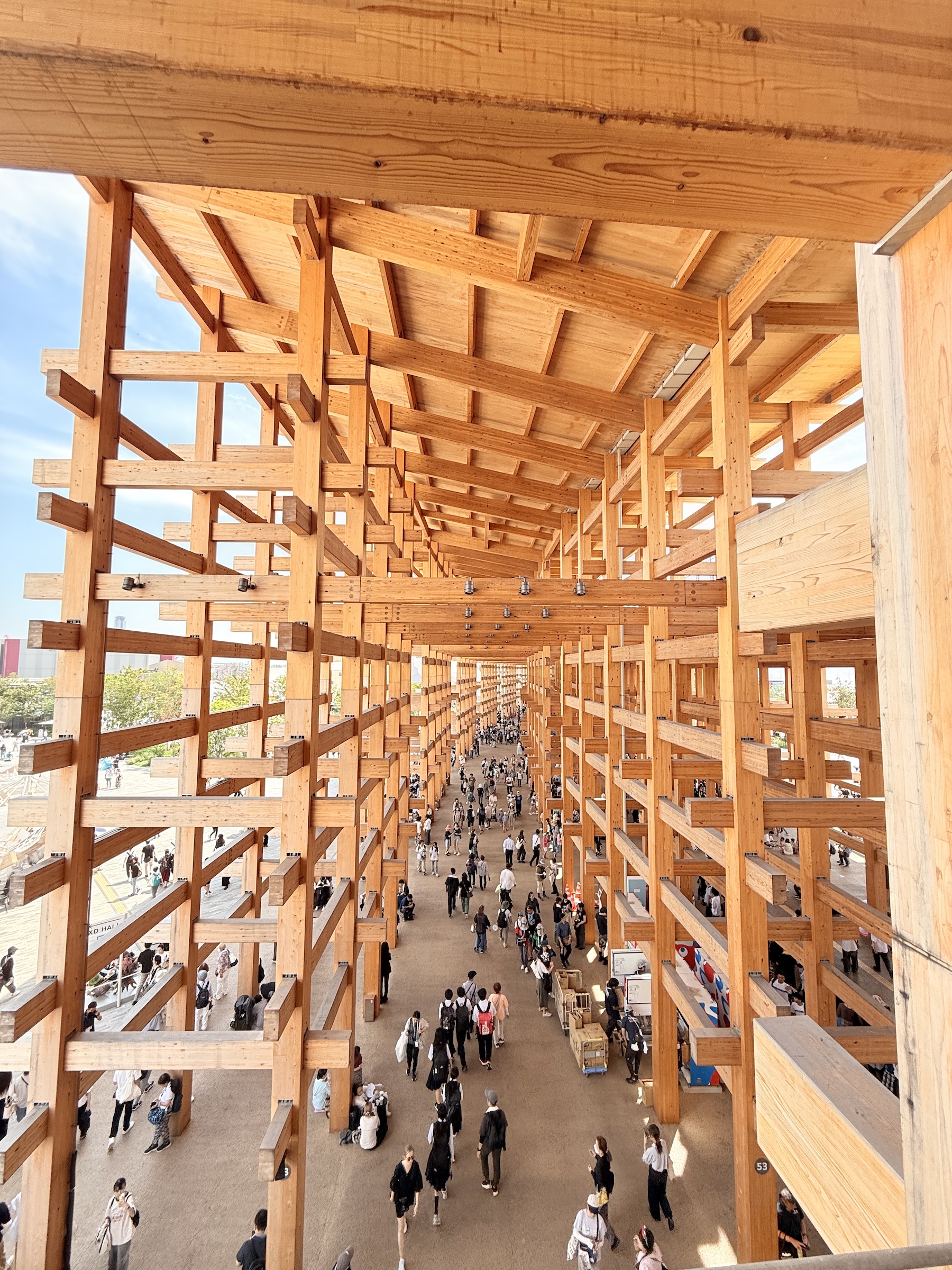
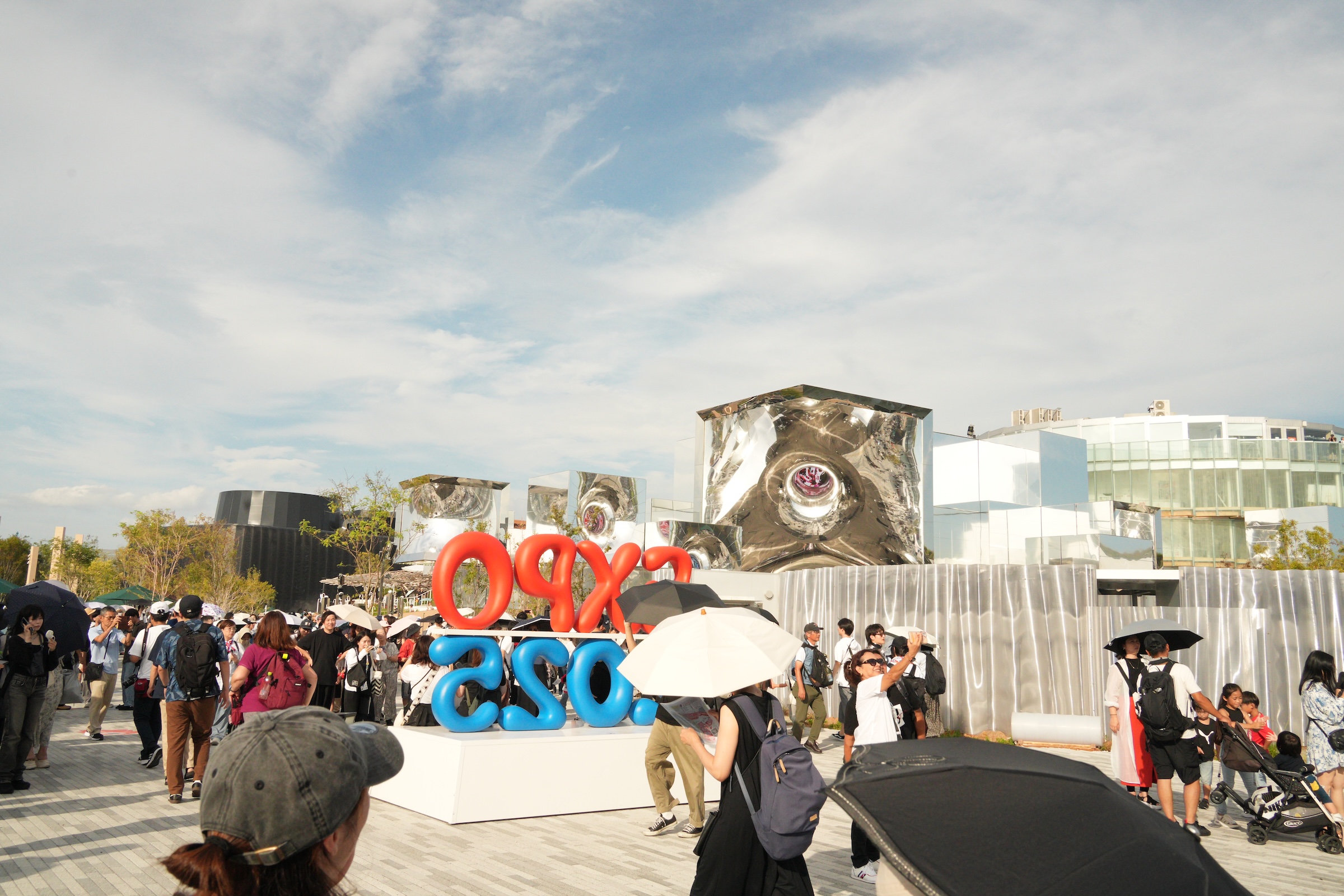
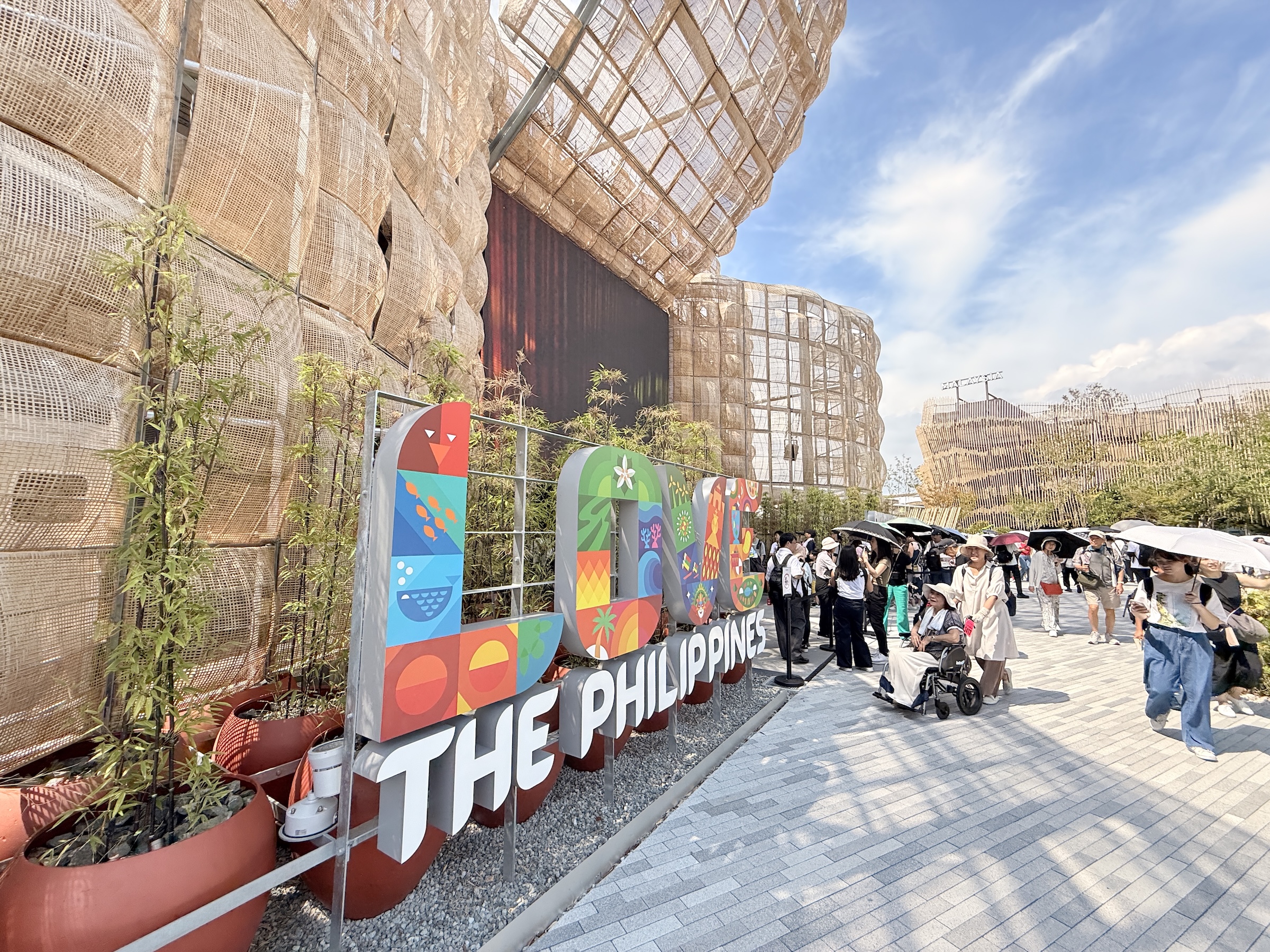
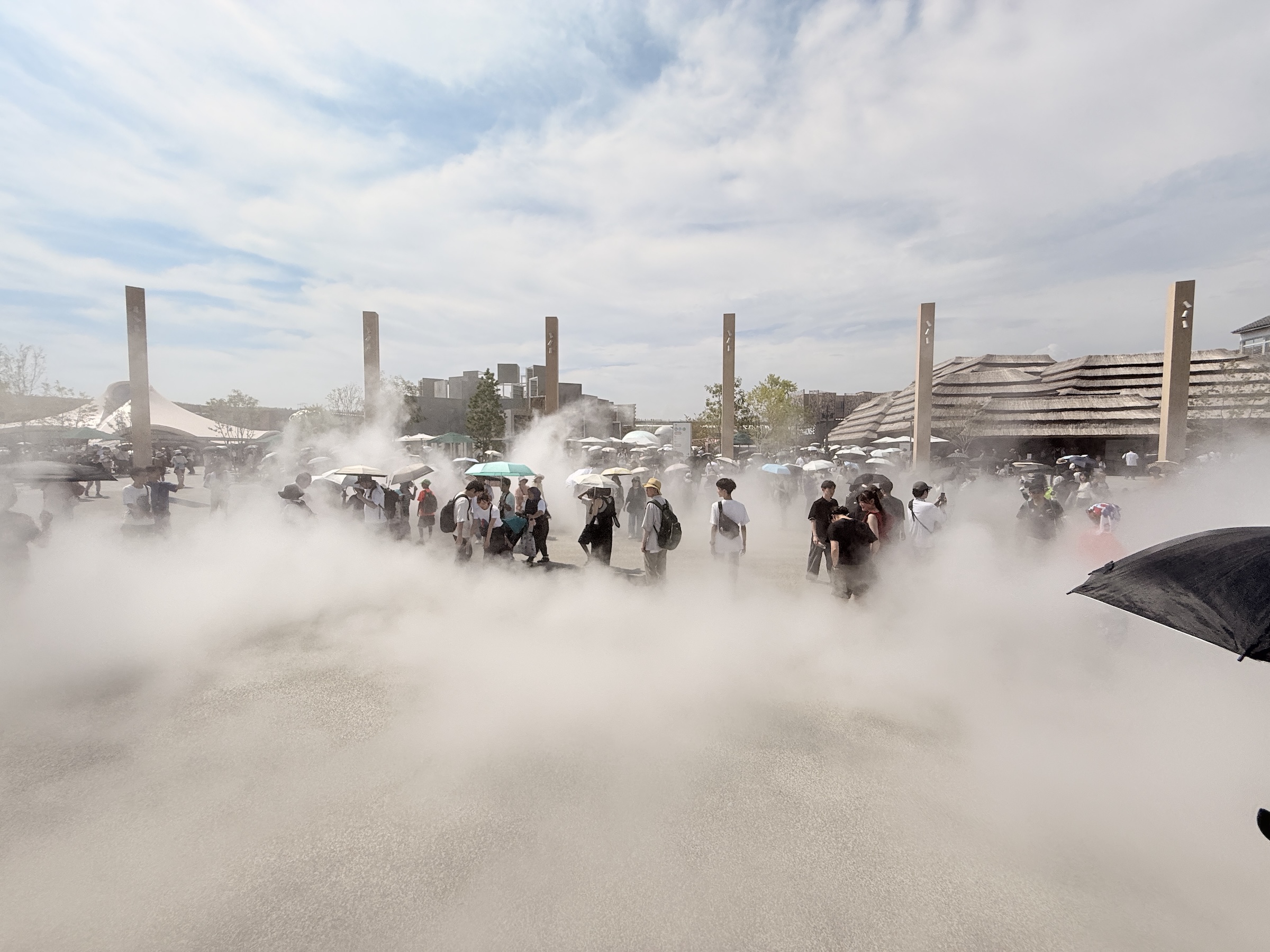
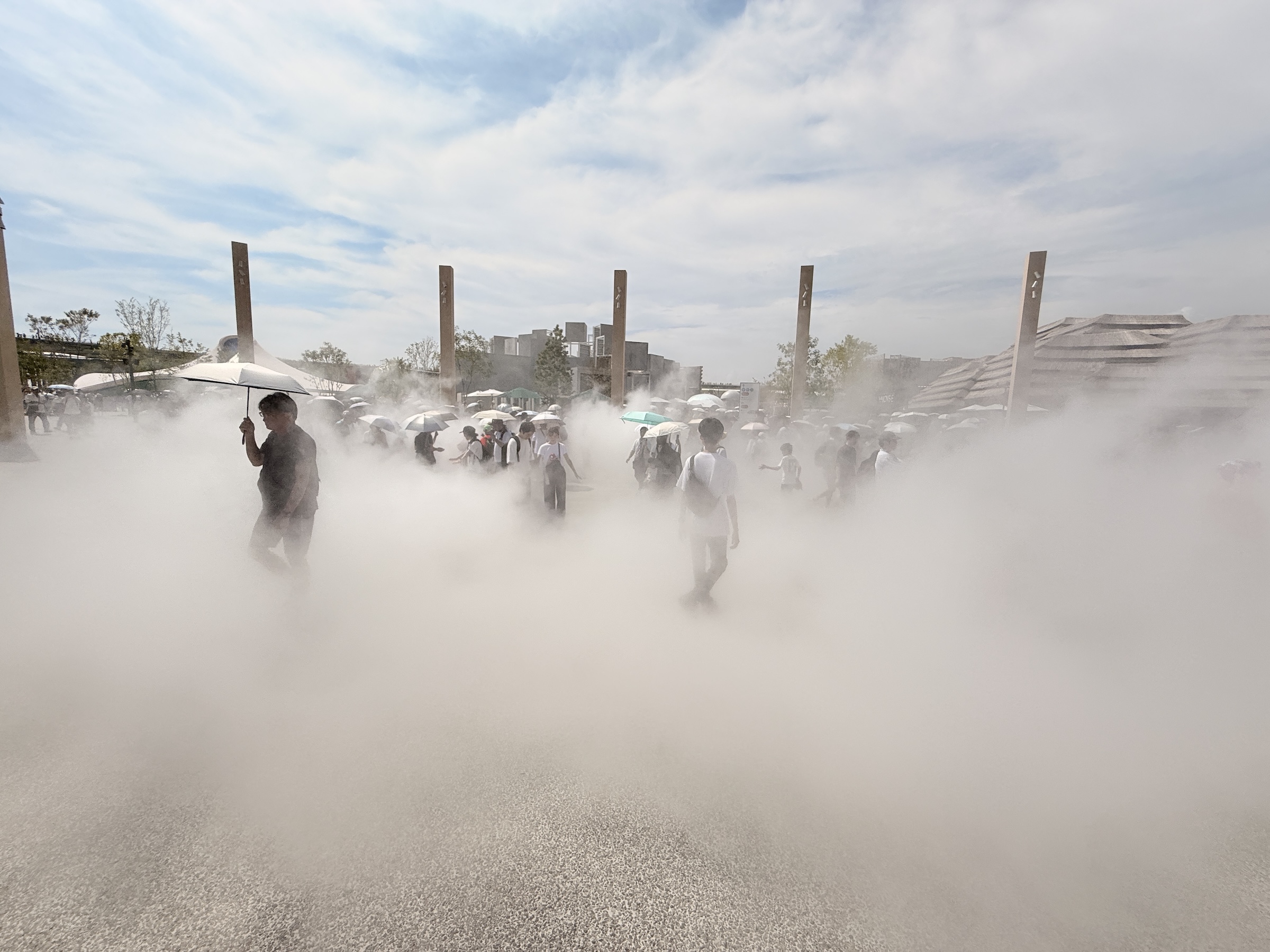
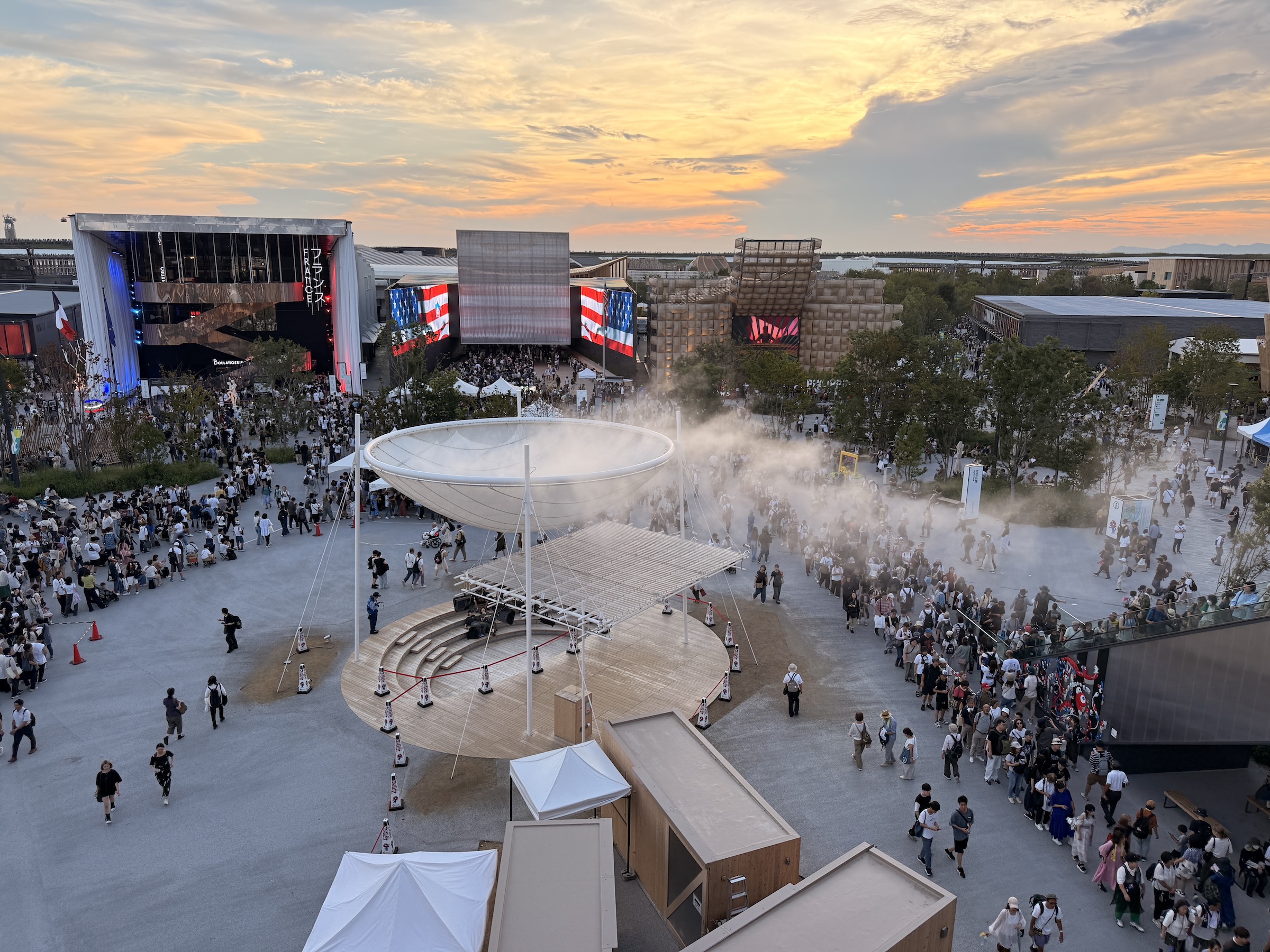
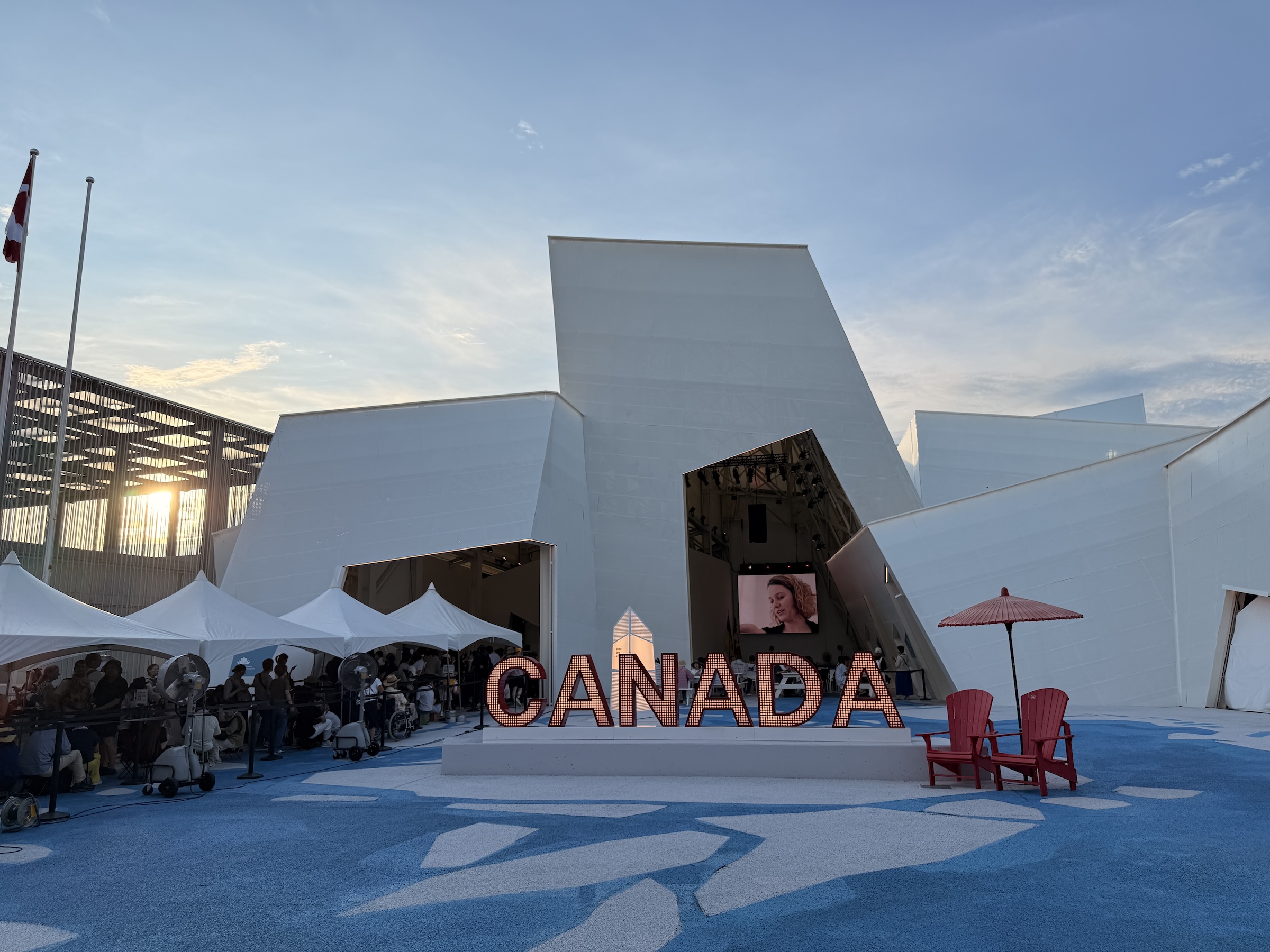
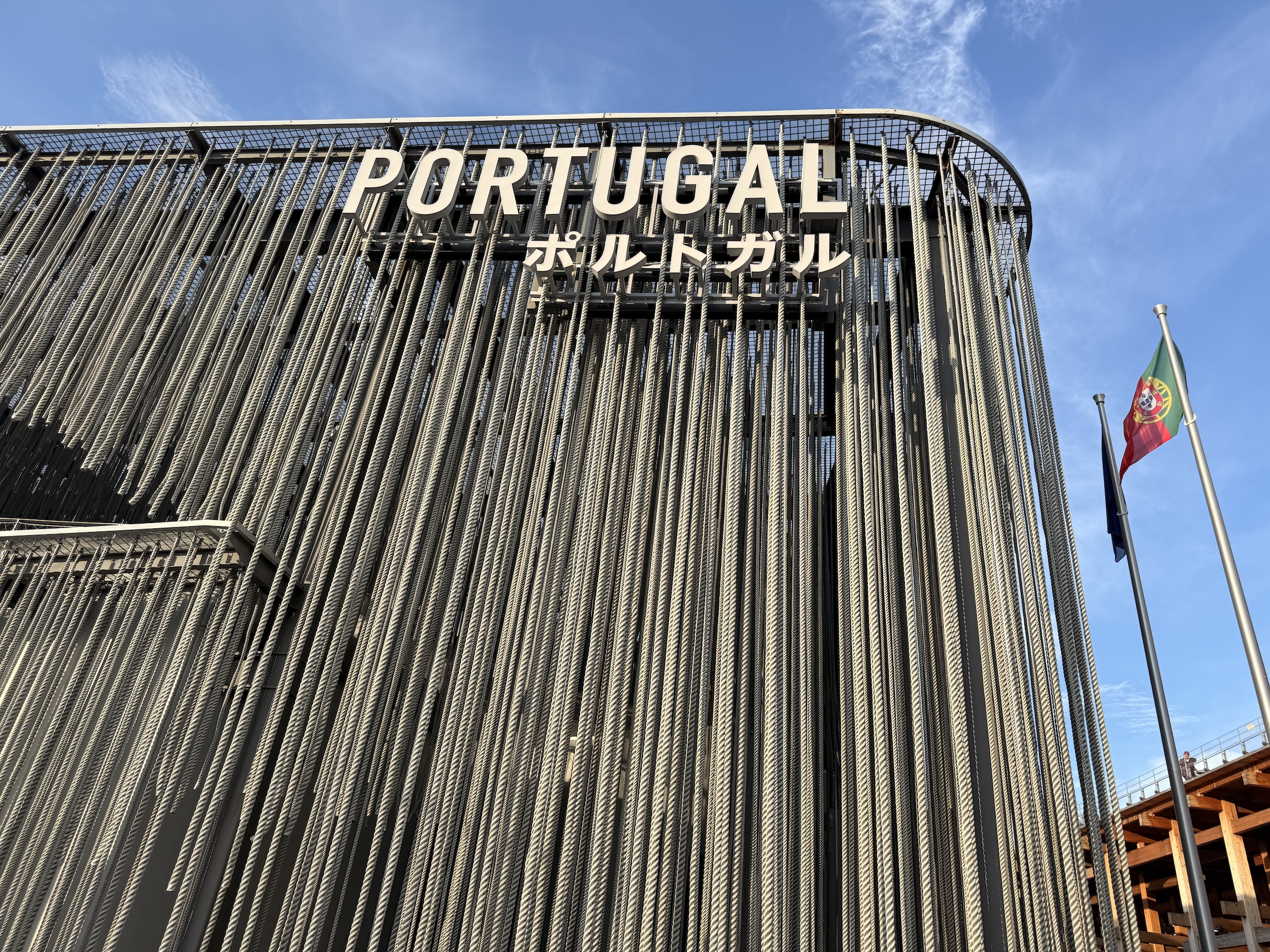
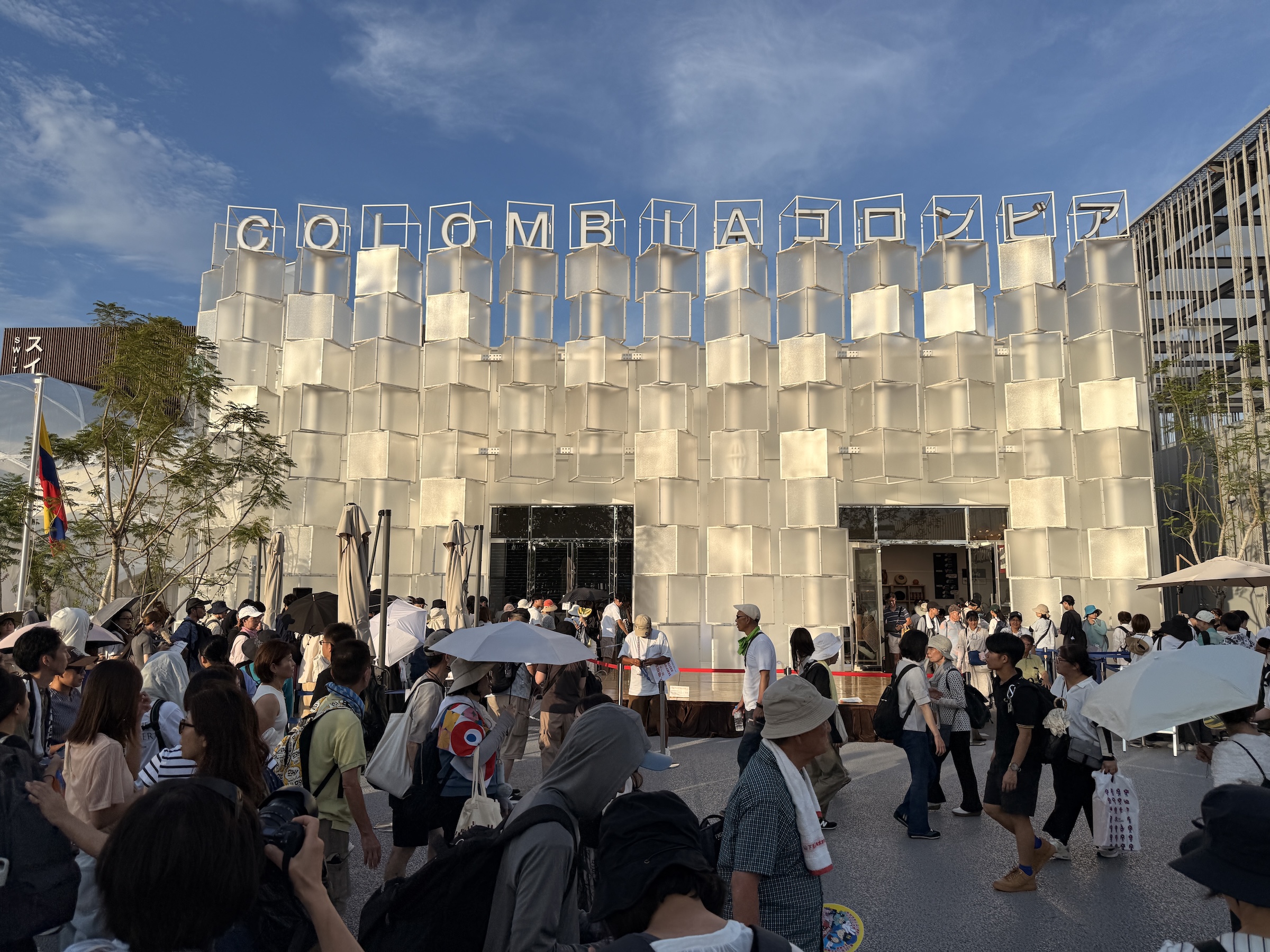
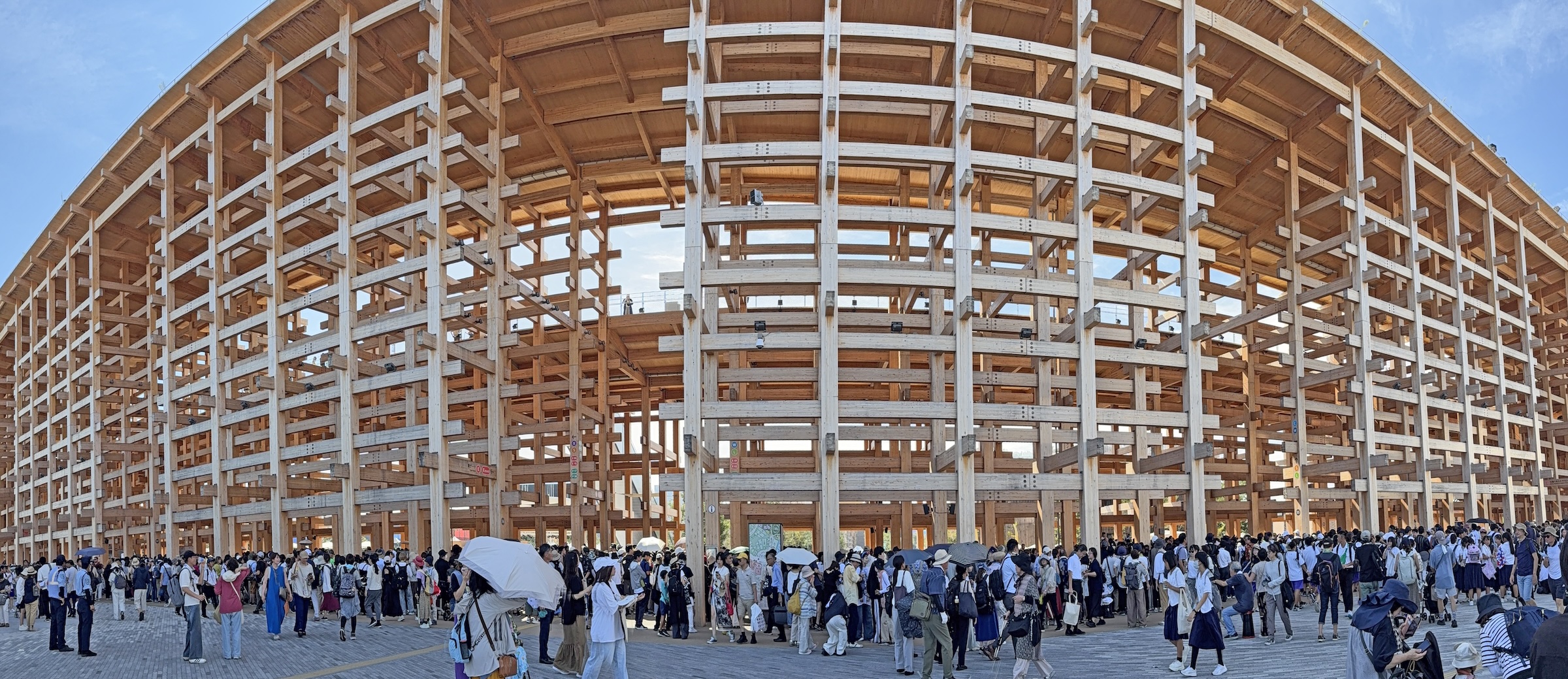
No matter, once you have made it into the entrance gate (with 180,000 others), you are in a world onto its own, inside the Grand Ring. The Ring is the world’s largest wooden structure, constructed on Yumeshima (夢洲), the artificial island located in Osaka Bay.

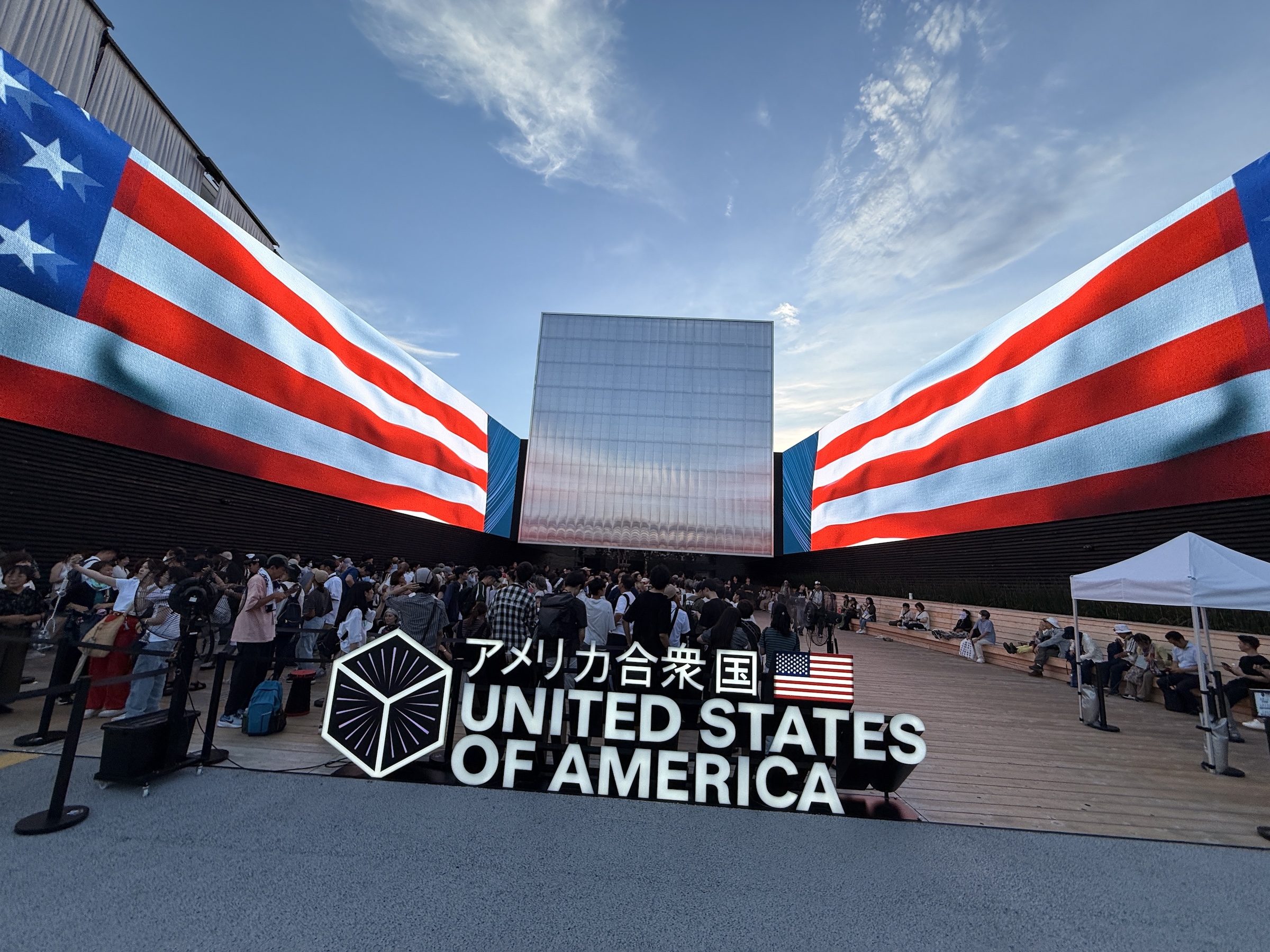
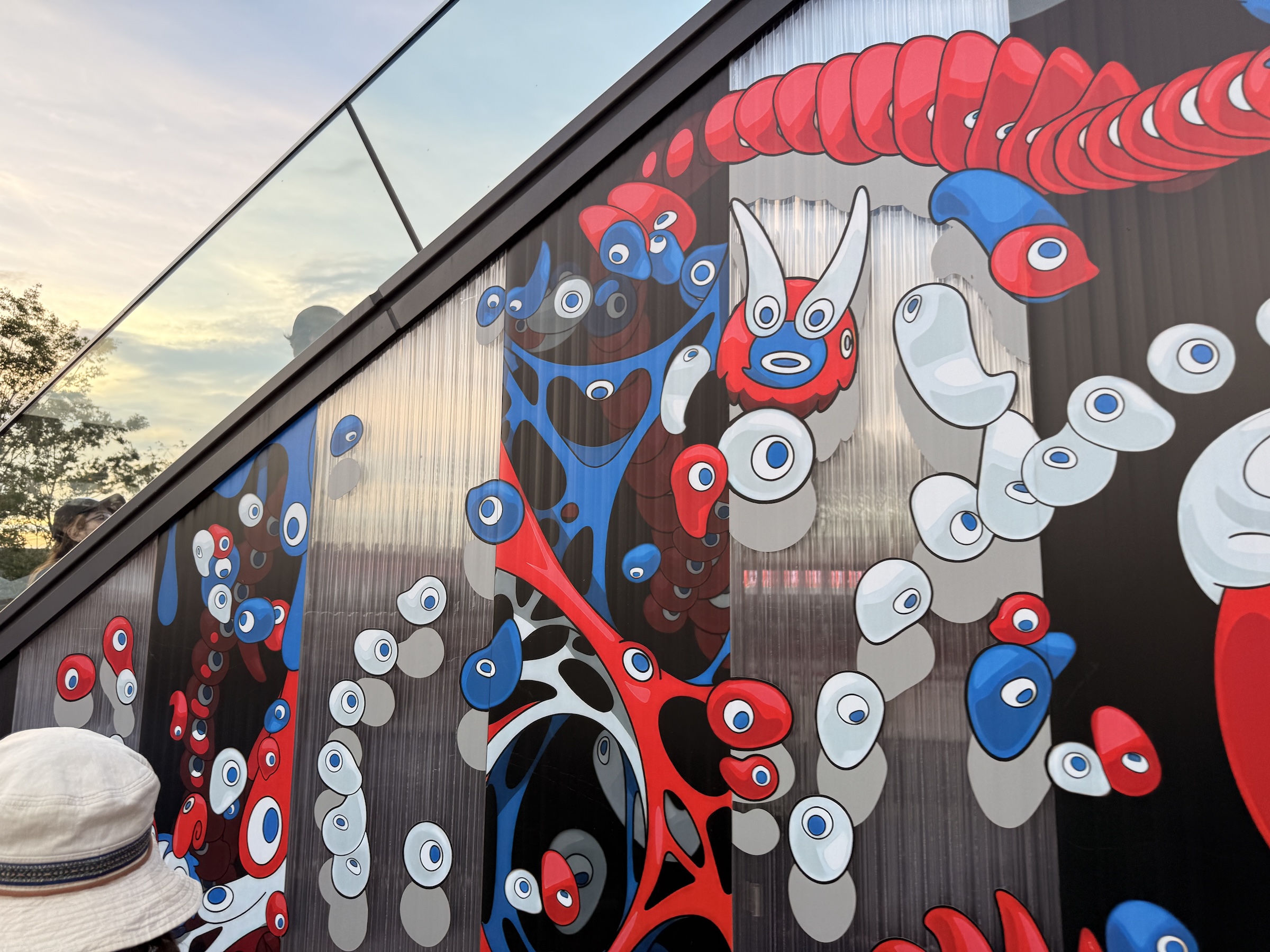
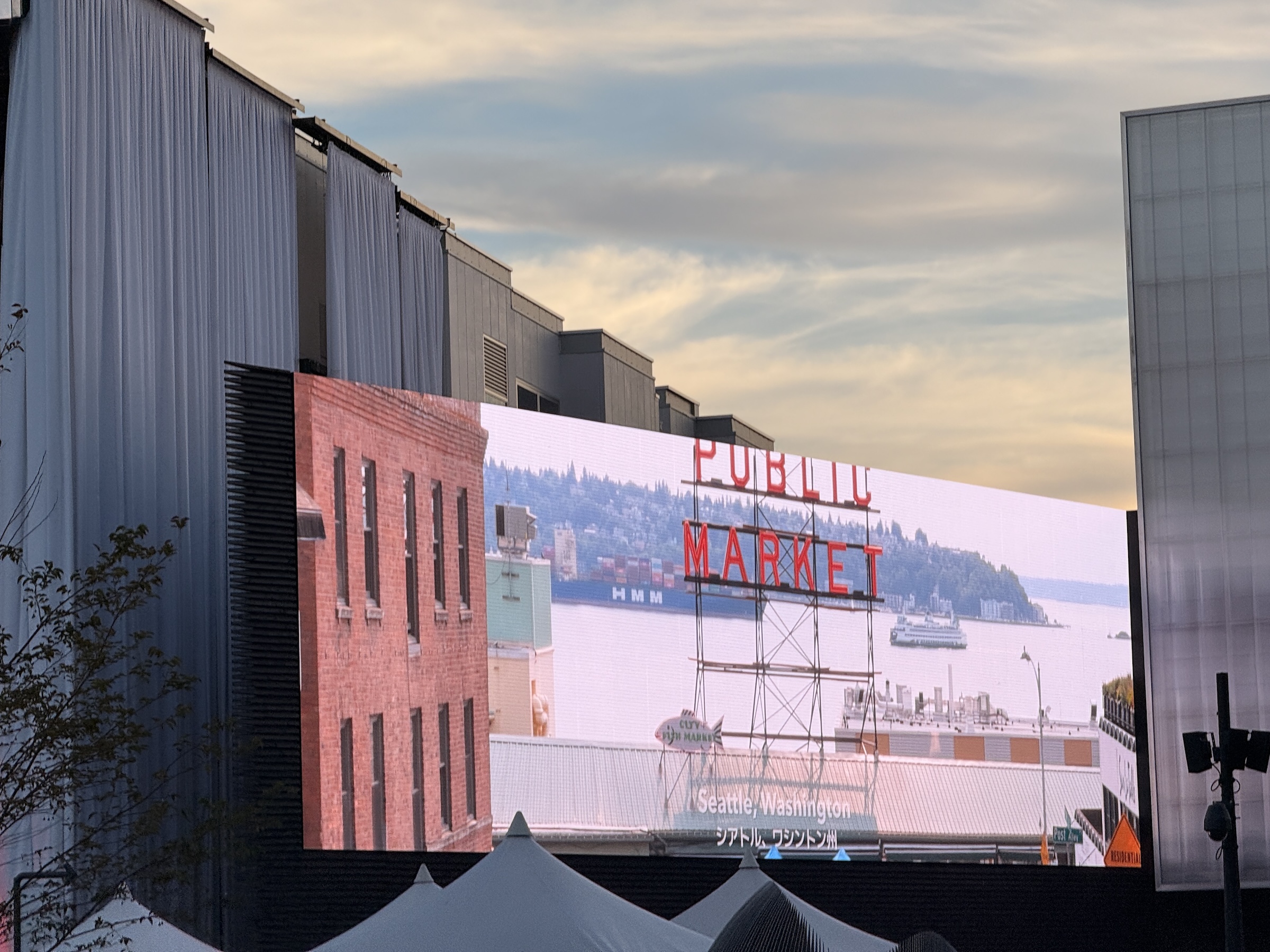
The USA pavilion is a structure designed by Trahan Architects with two triangular wings and a raised translucent cube flanking a central plaza. It features video imagery that features the Plains, the mountains and the cities in the US— and hey! Seattle’s Pike Place market made an appearance as well. 

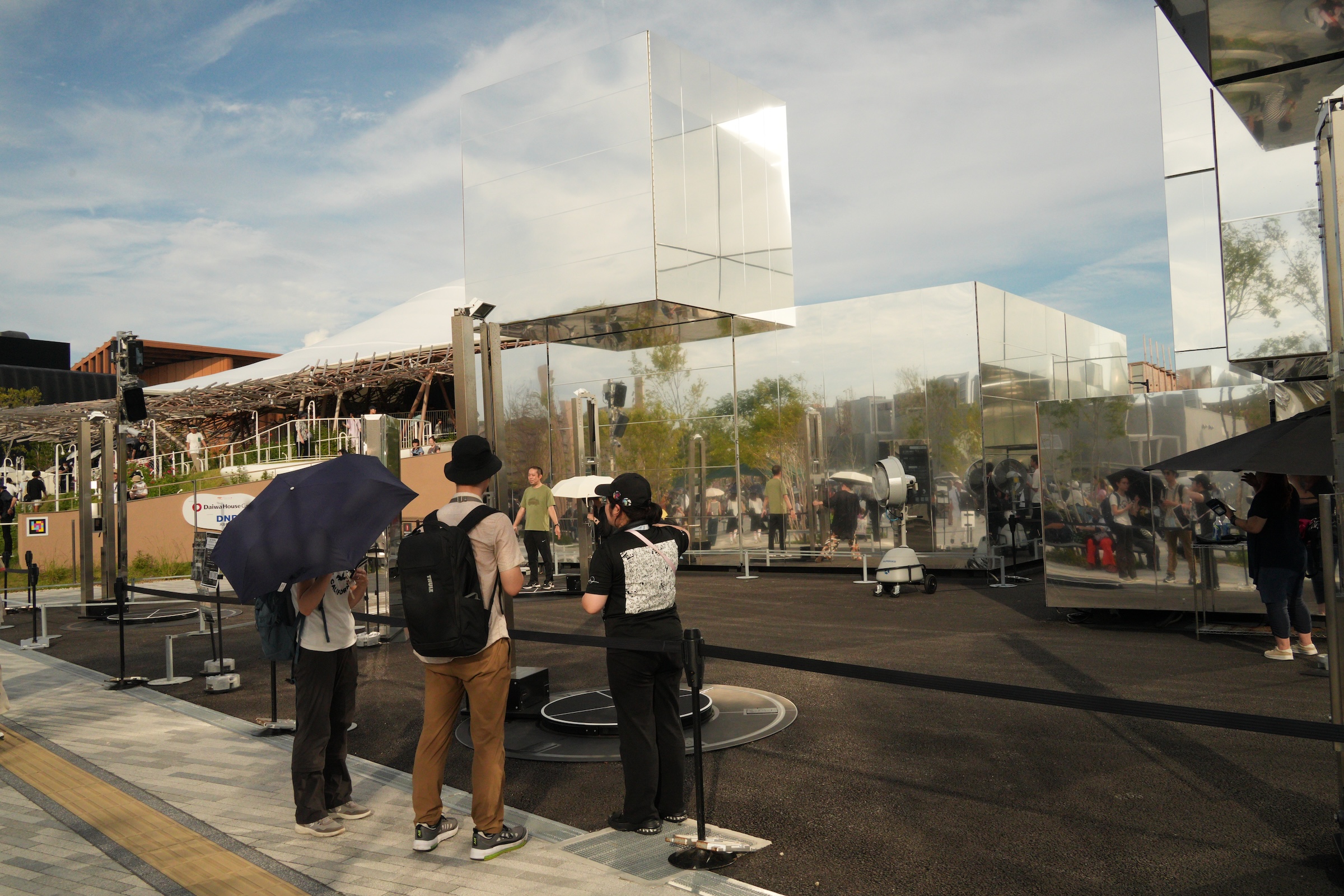
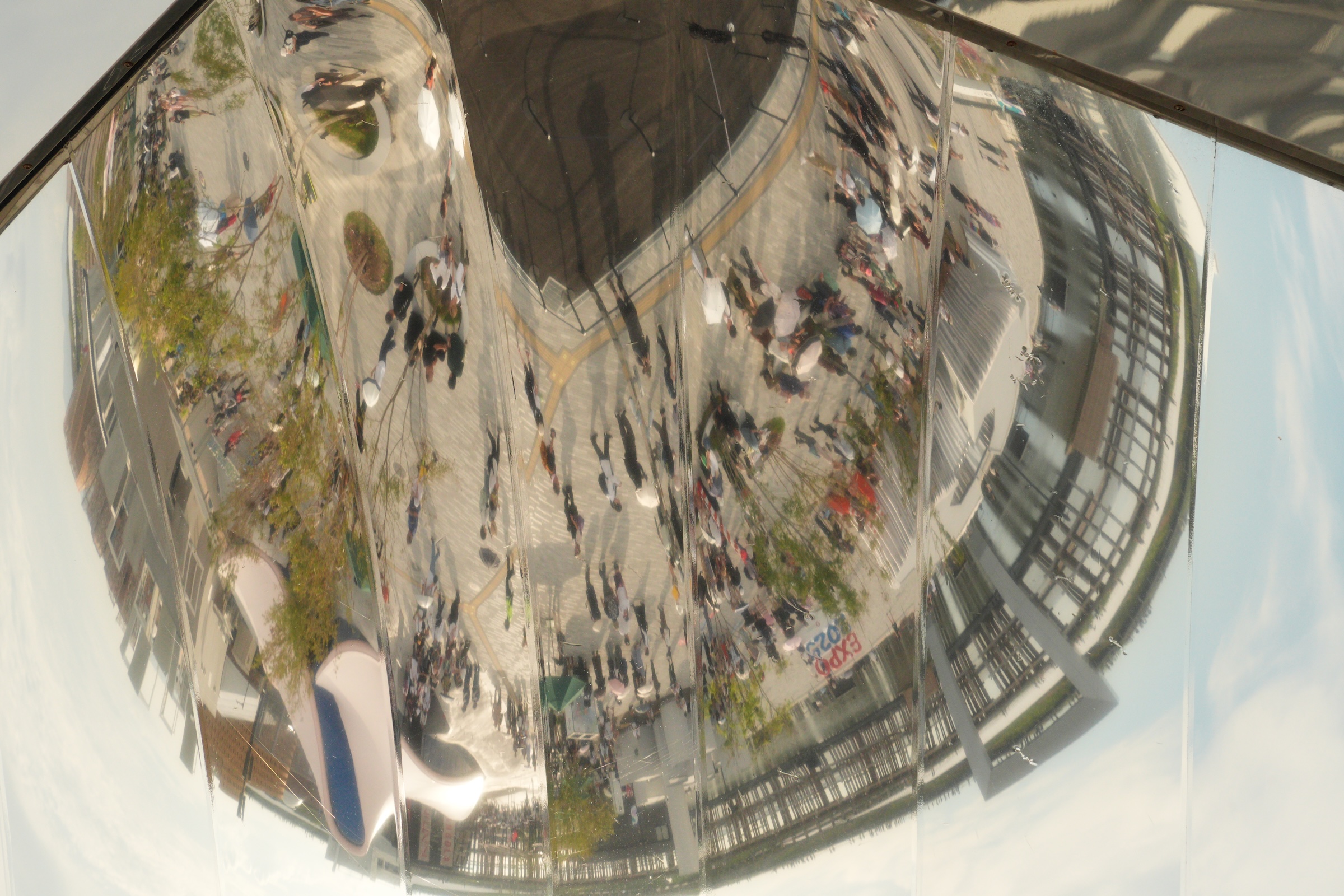
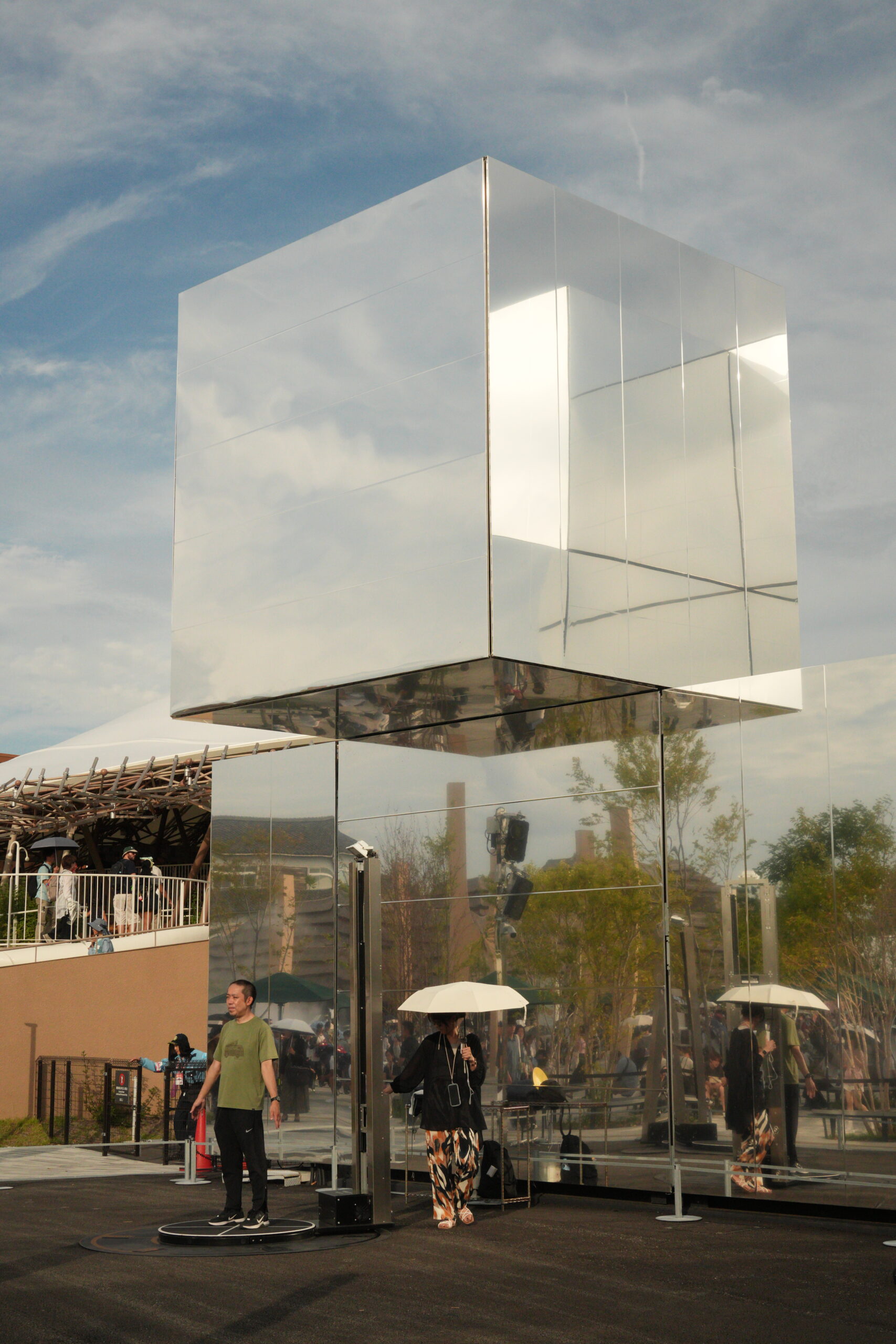
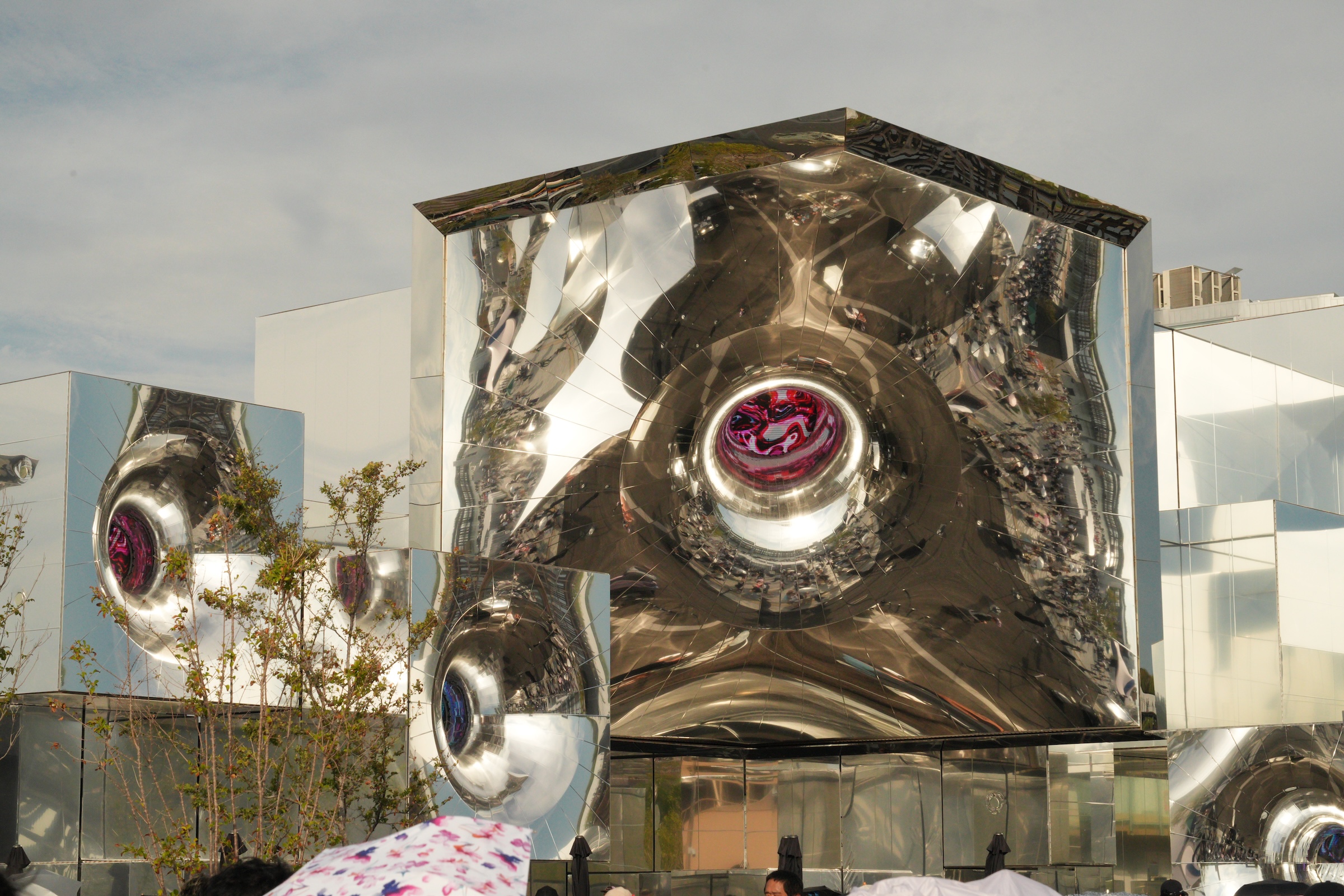
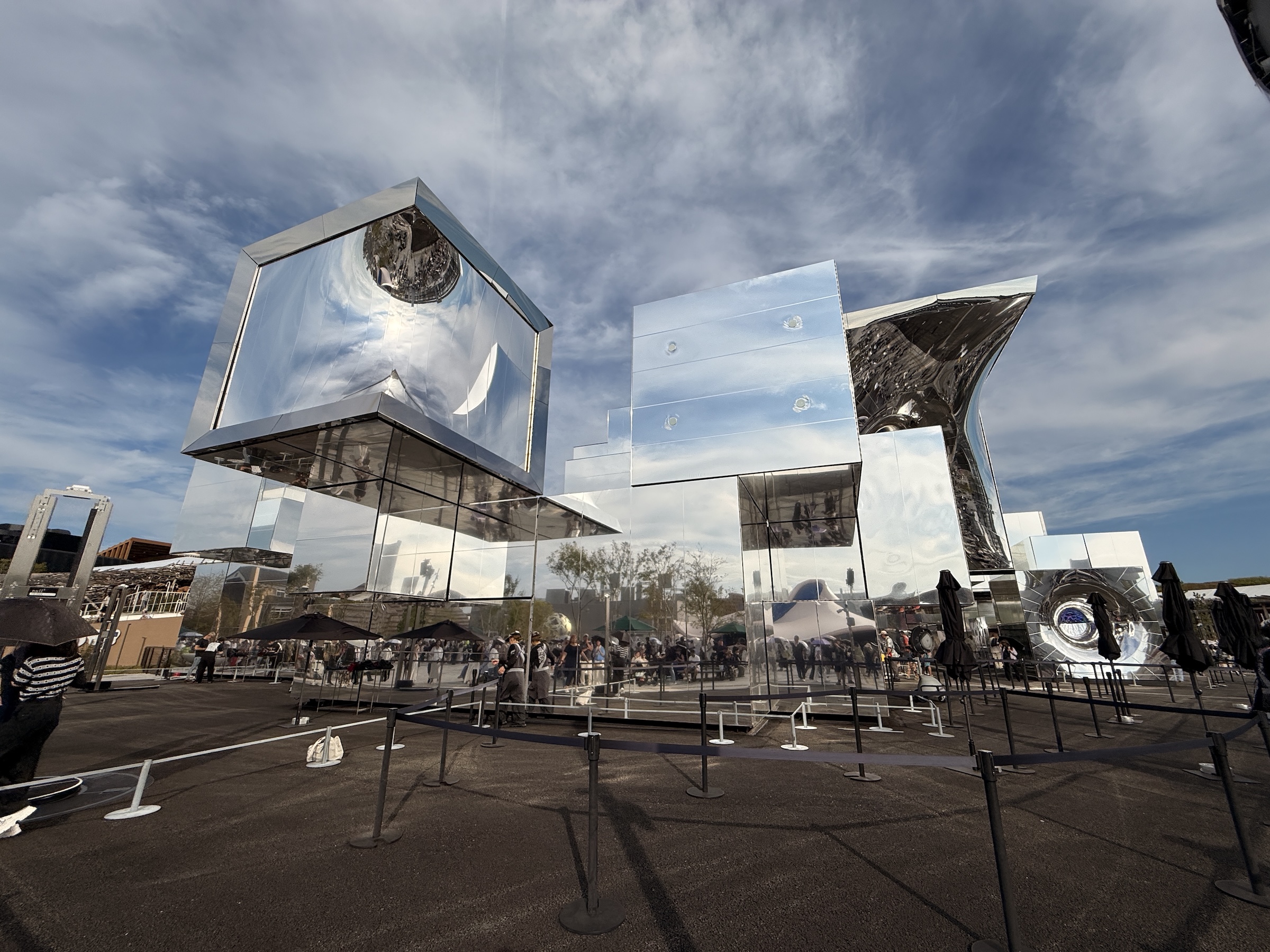
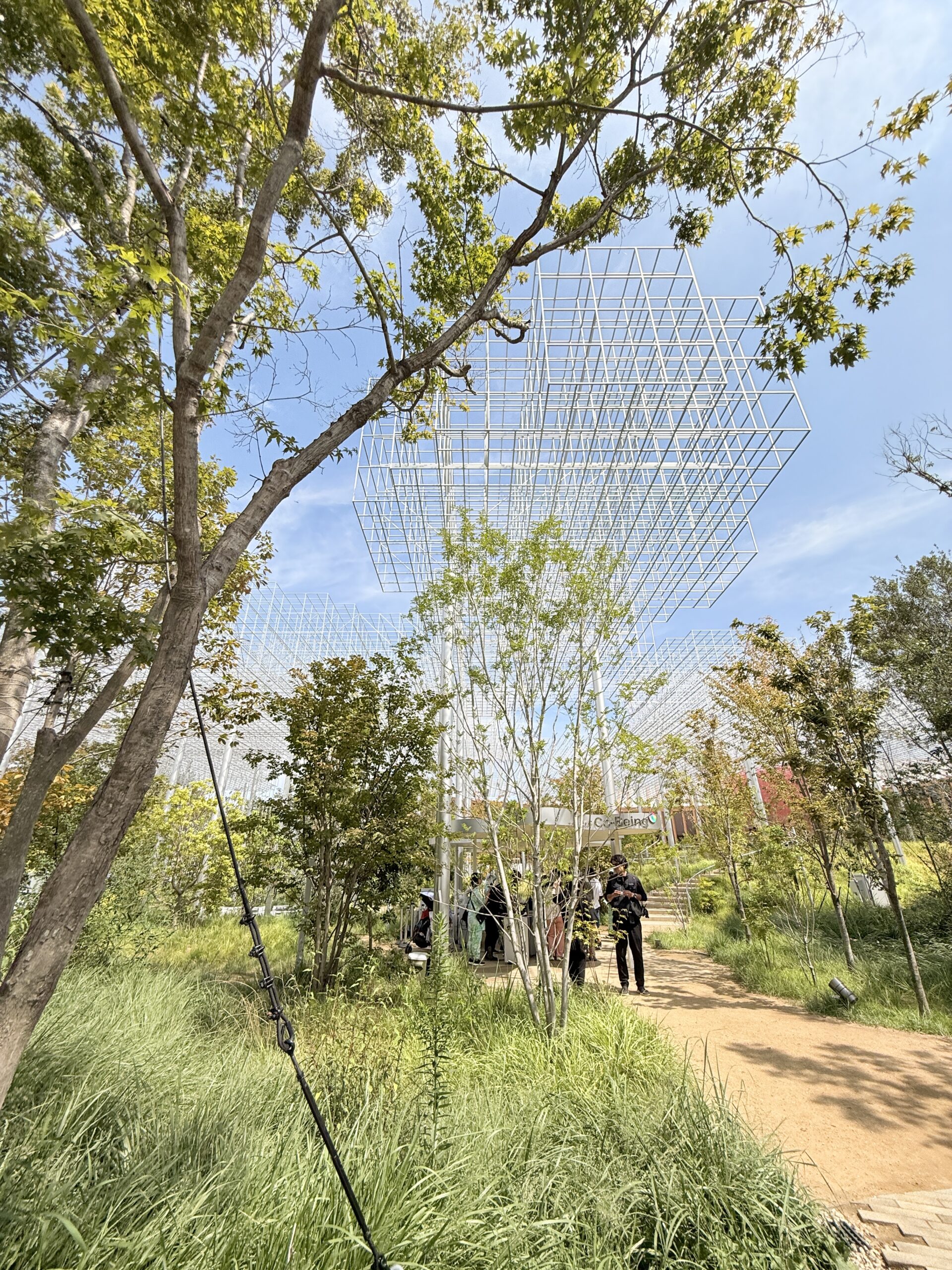
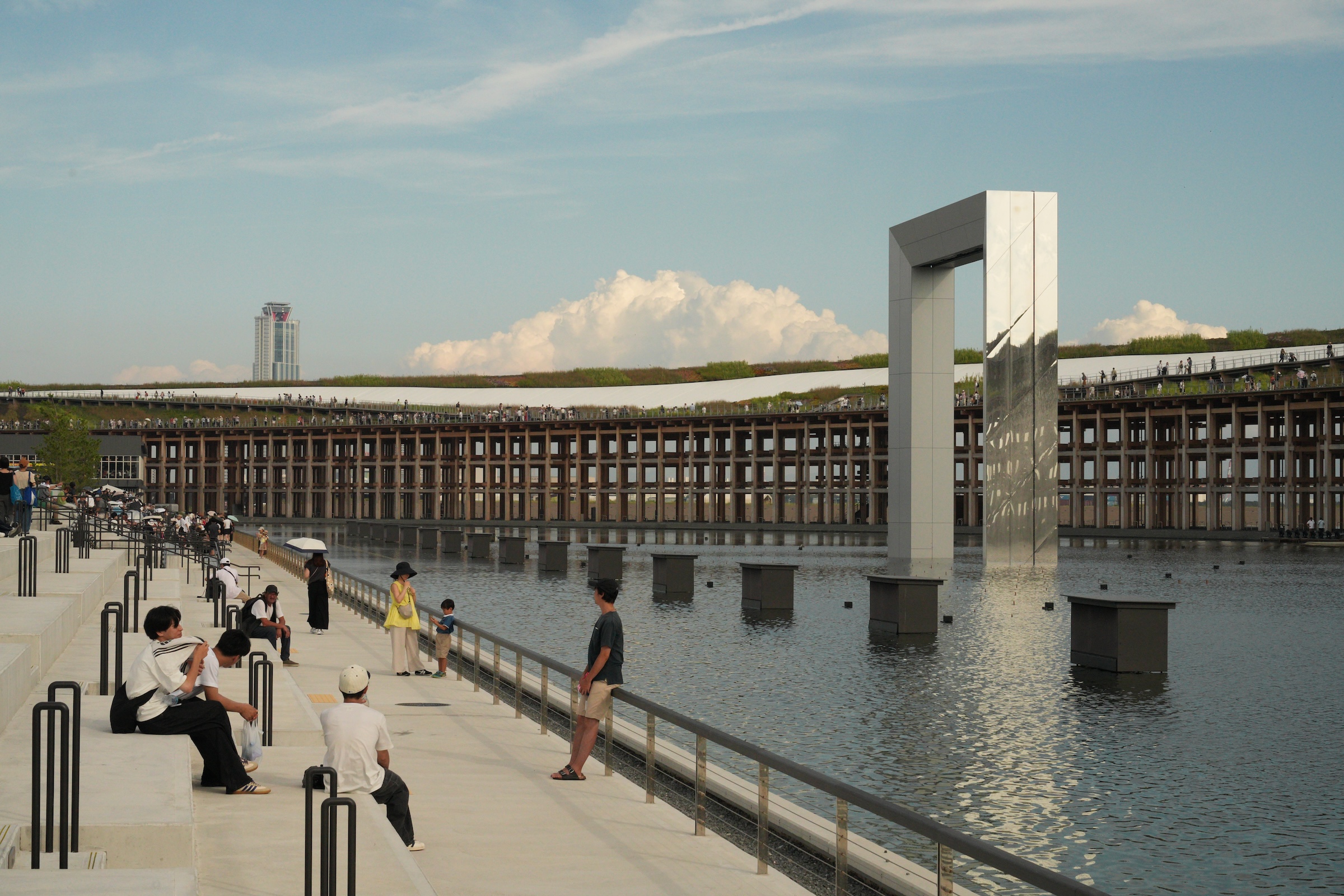
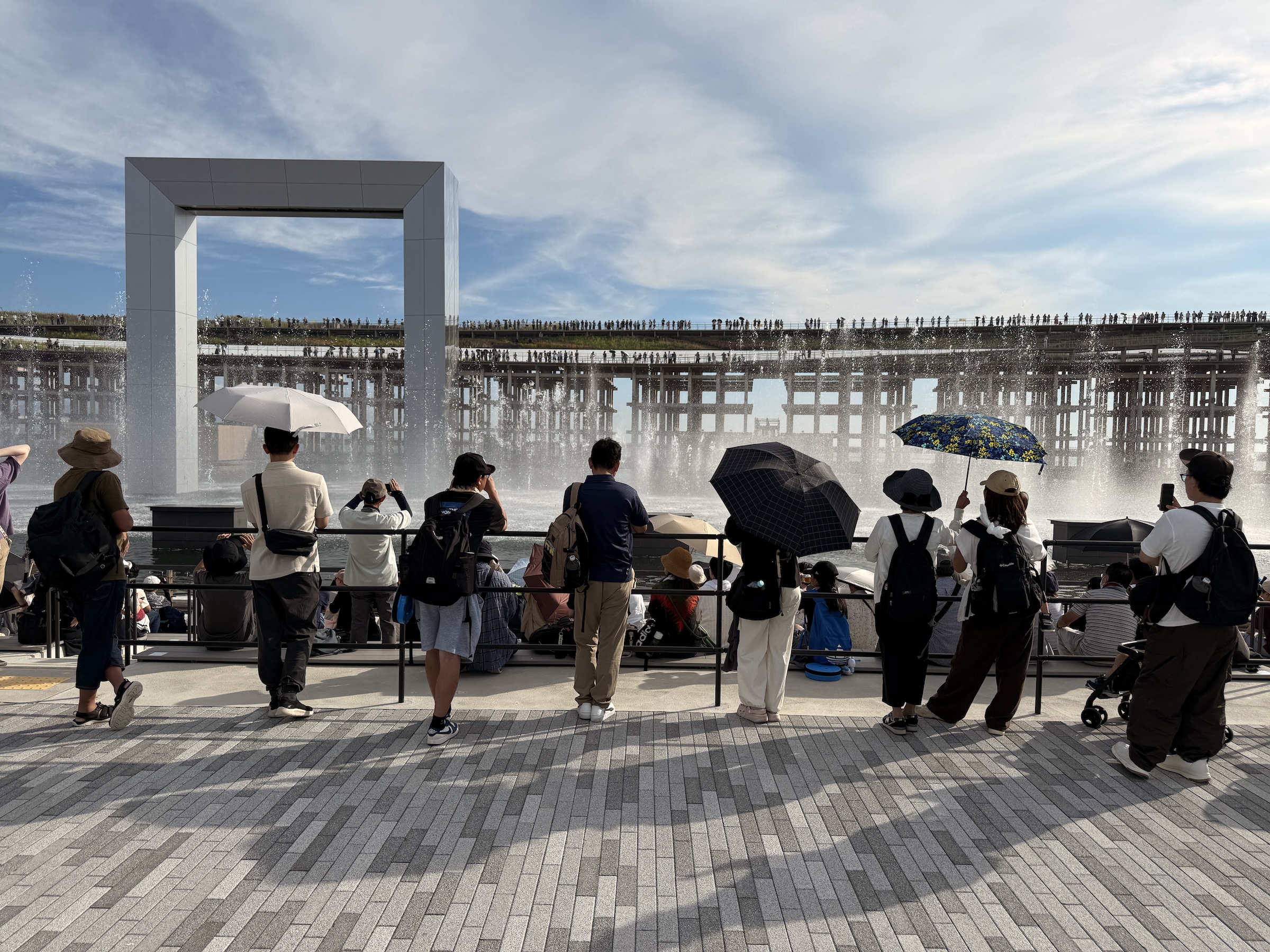
I was mesmerized by the installation of shiny cubes called null². The sun bounced off the surfaces, and a low sound was emitted from the structure.
Developed by Yoichi Ochiai, the pavilion’s structure is based on a cubic grid of voxels measuring 2 to 8 m (6 ft to 26 ft) wide. The facade is covered with a membrane that resembles a mirror.  [Source: Wikipedia]

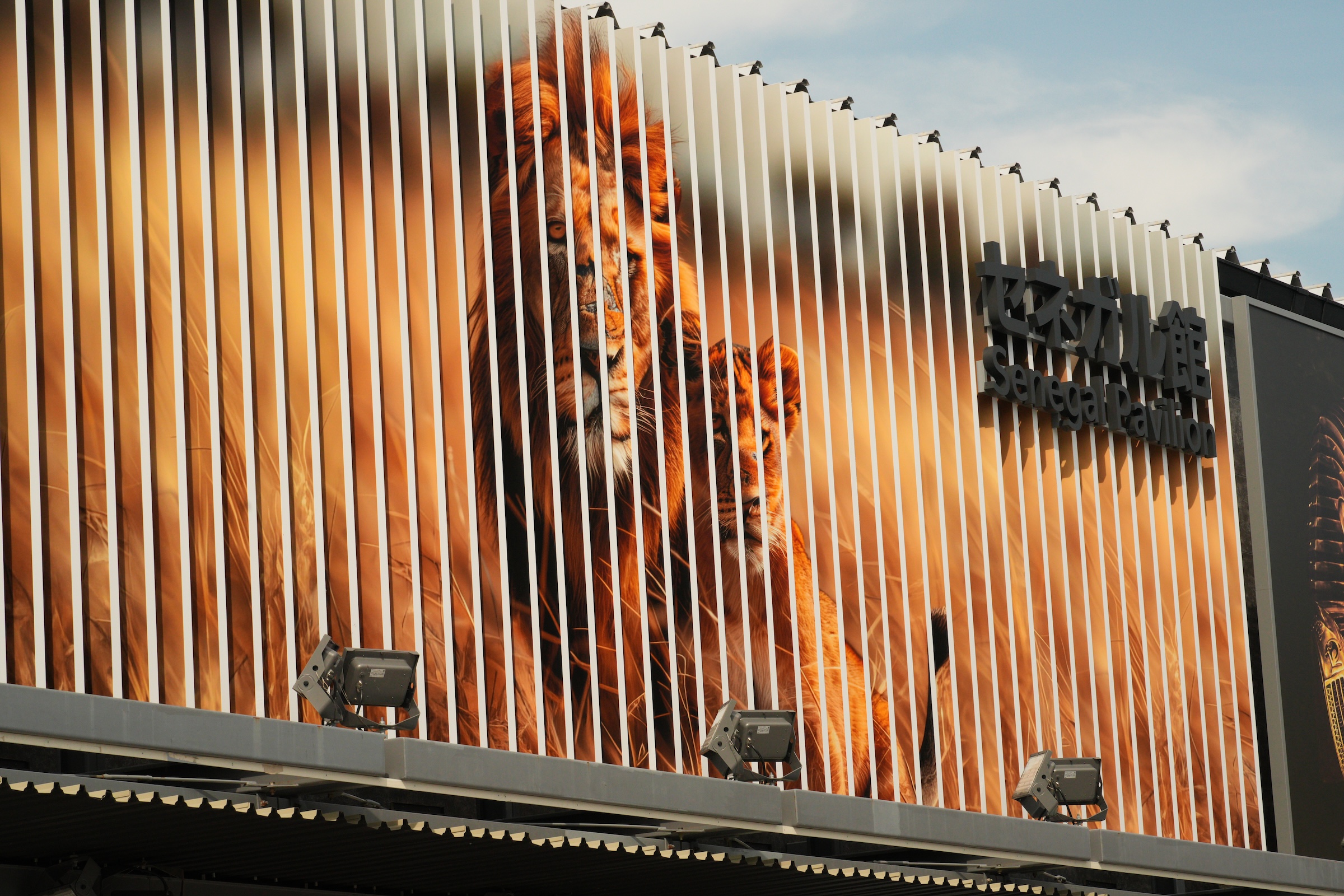
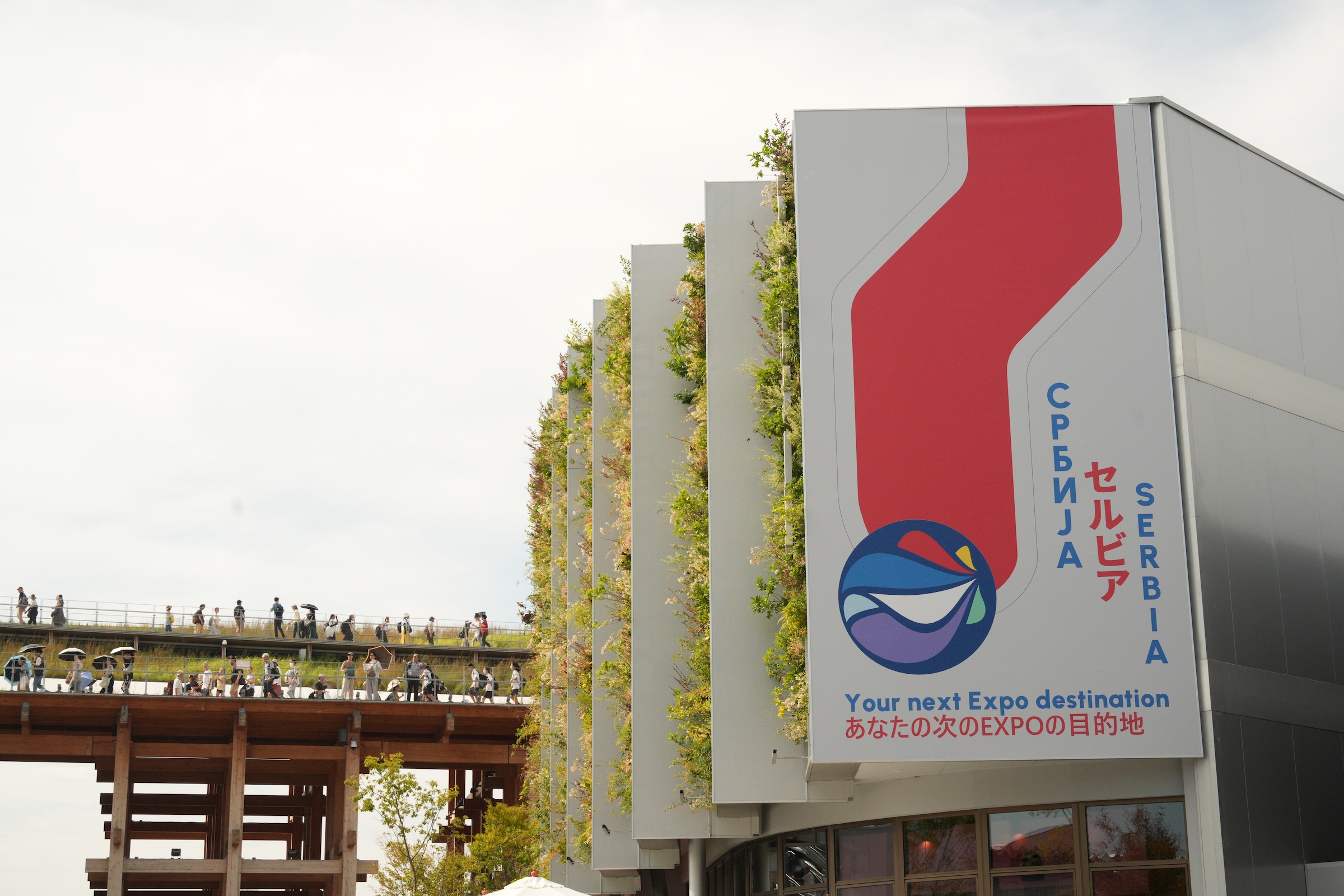
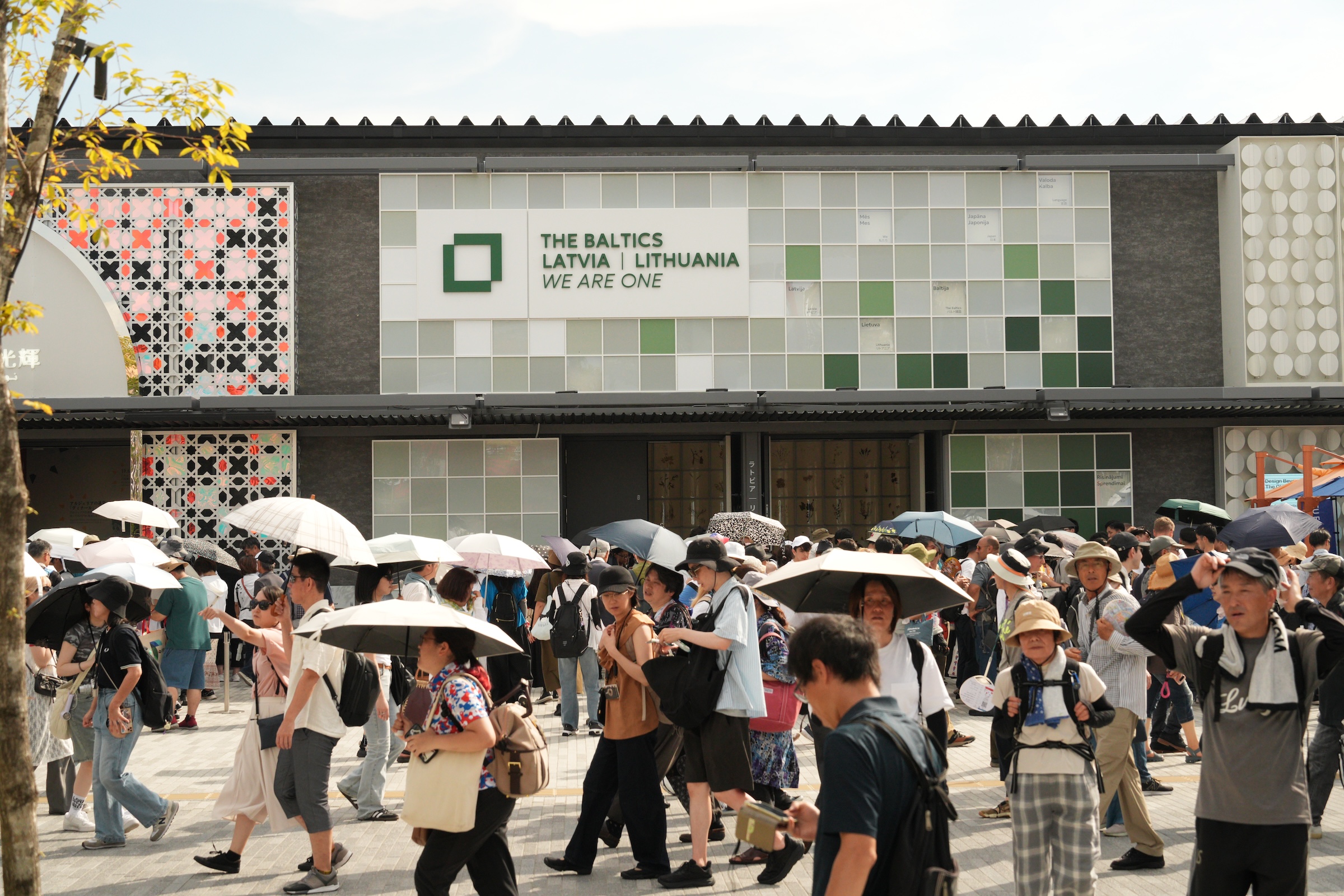
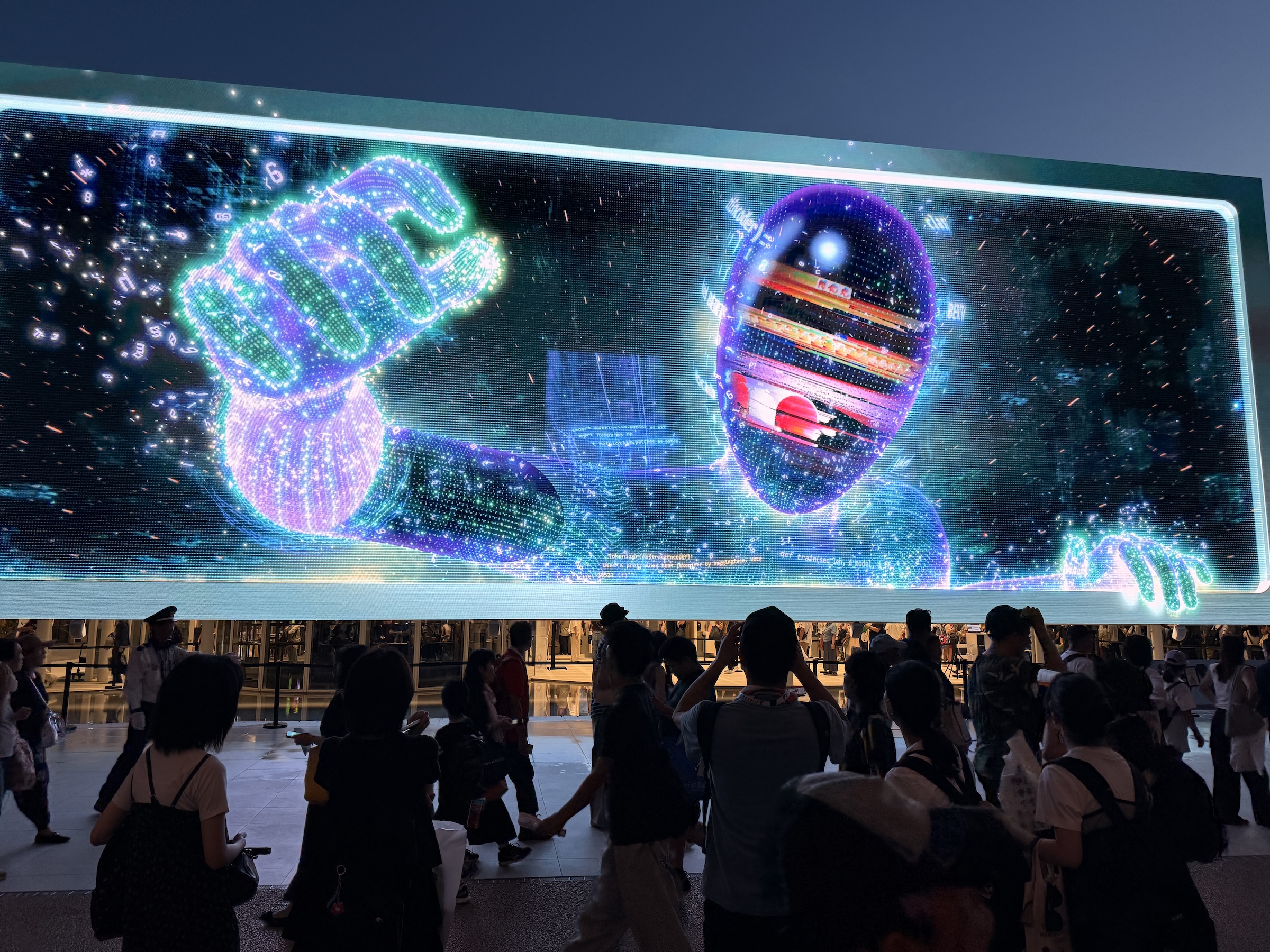
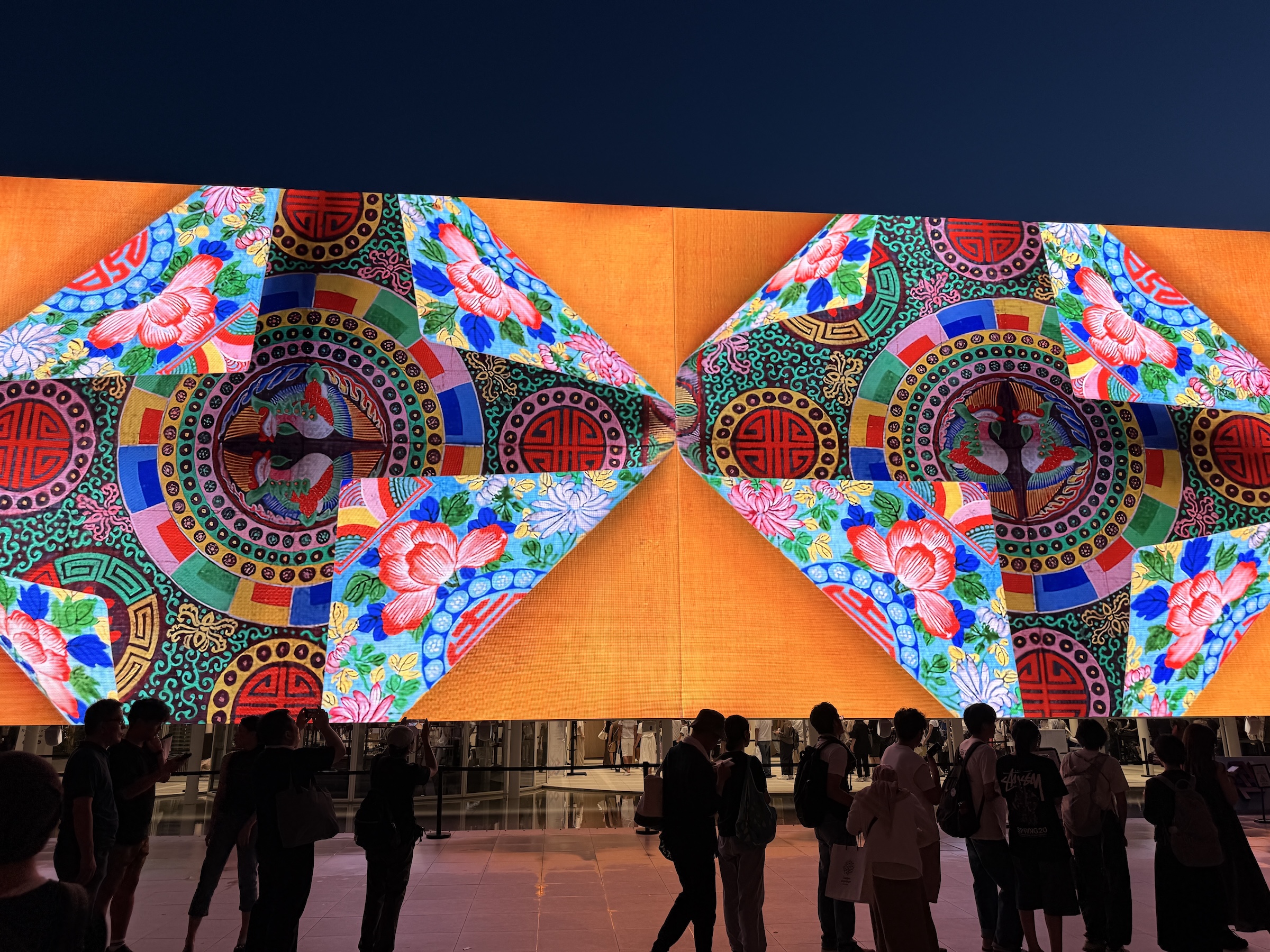
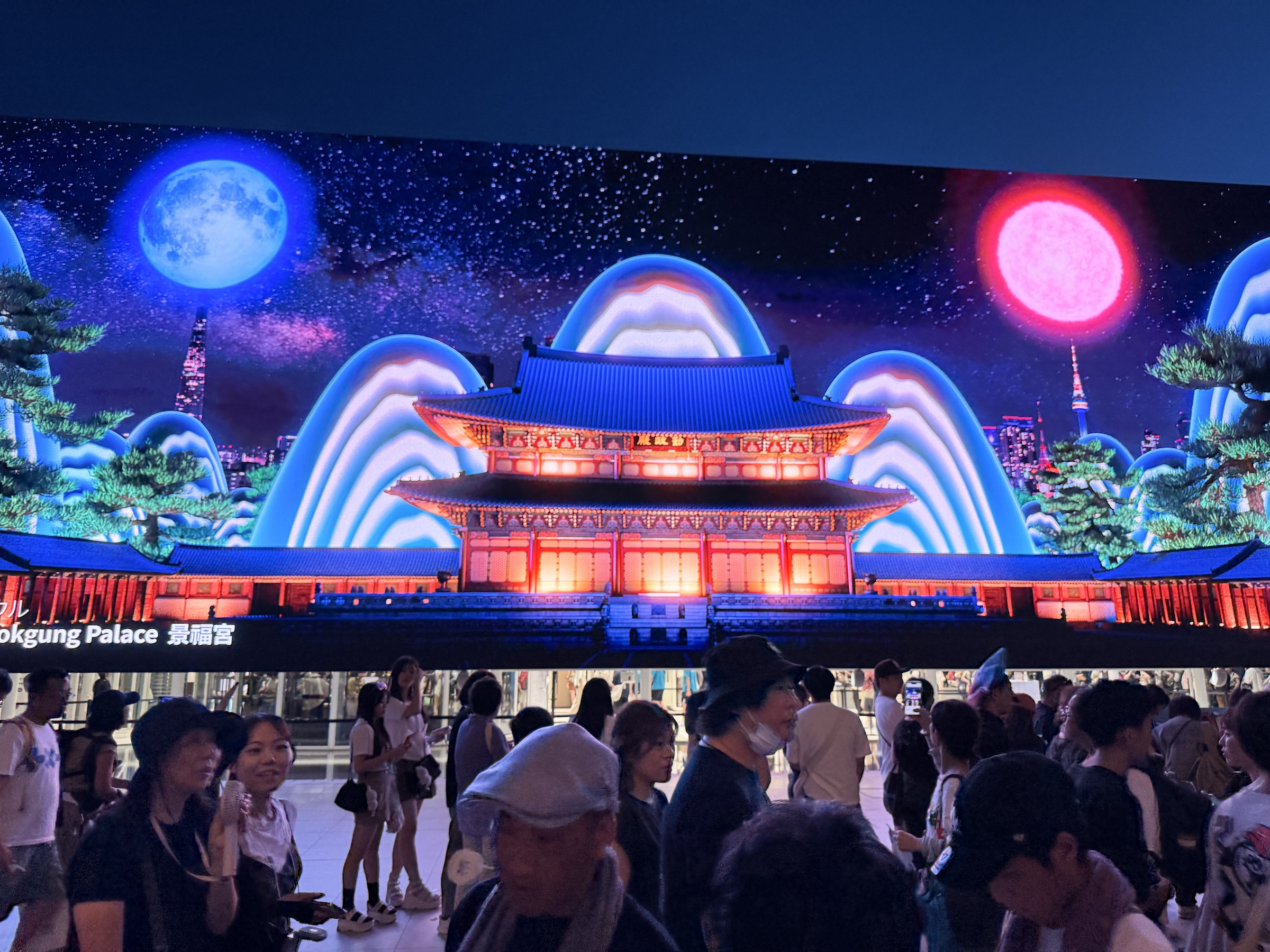
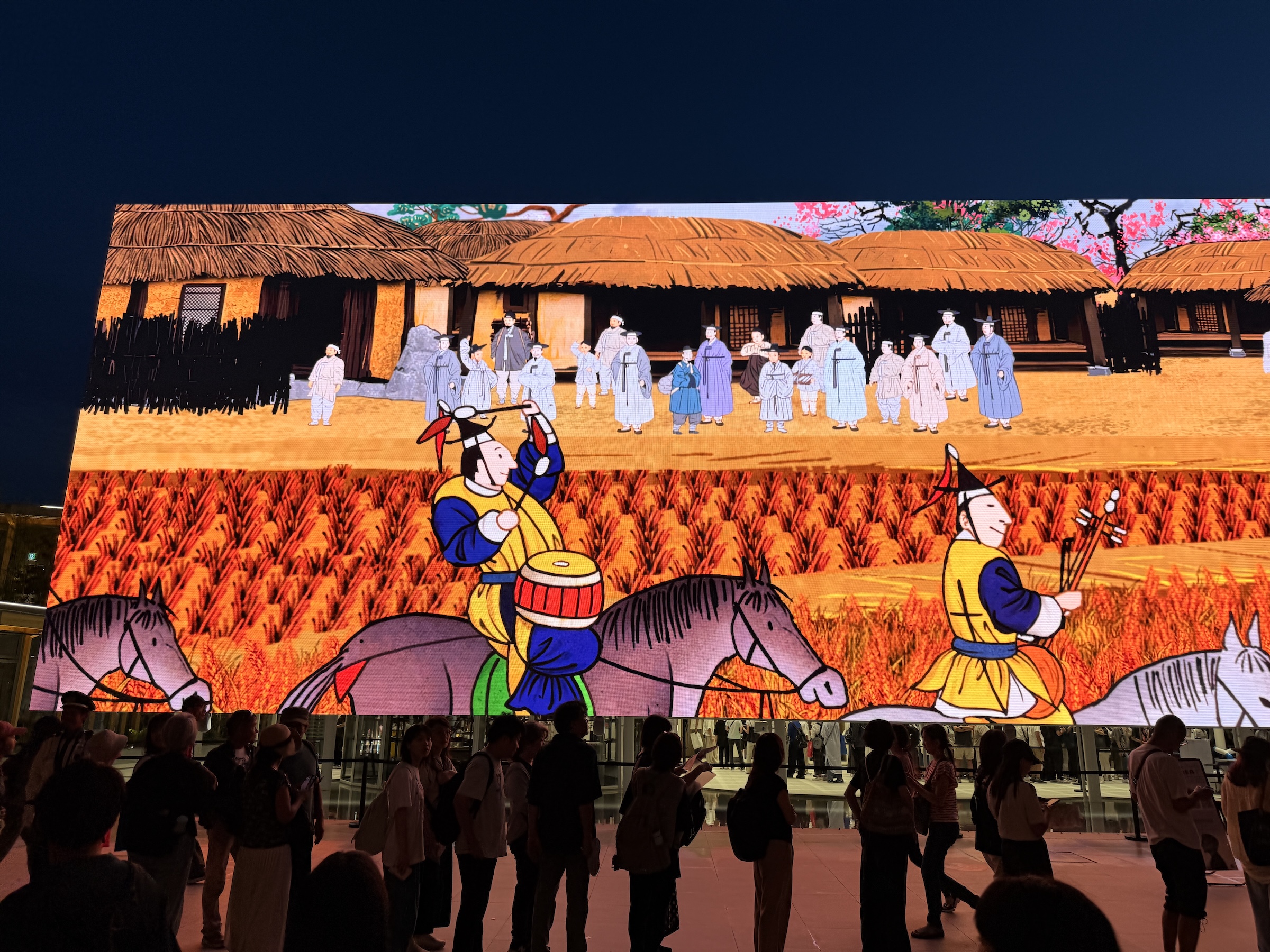
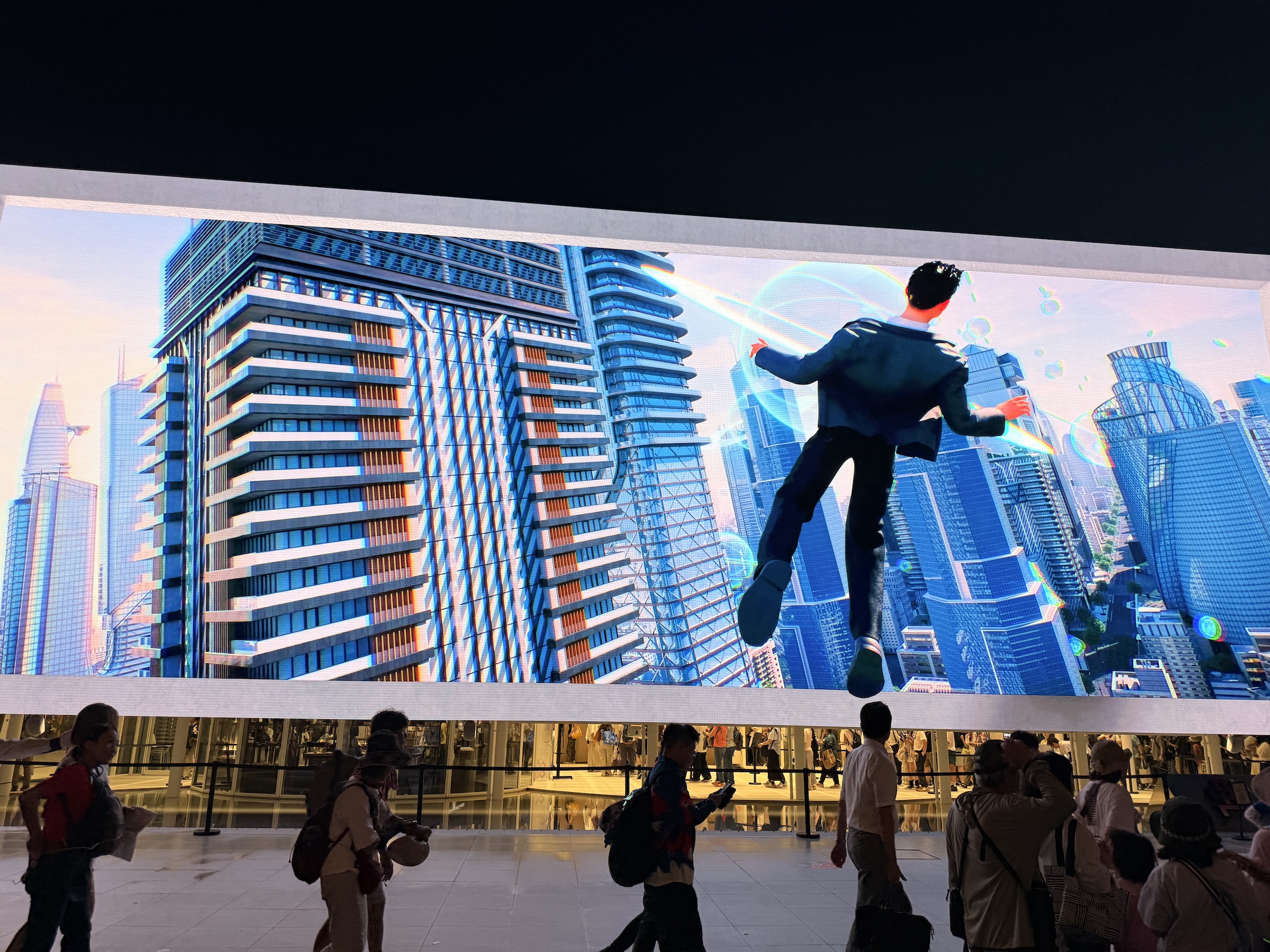
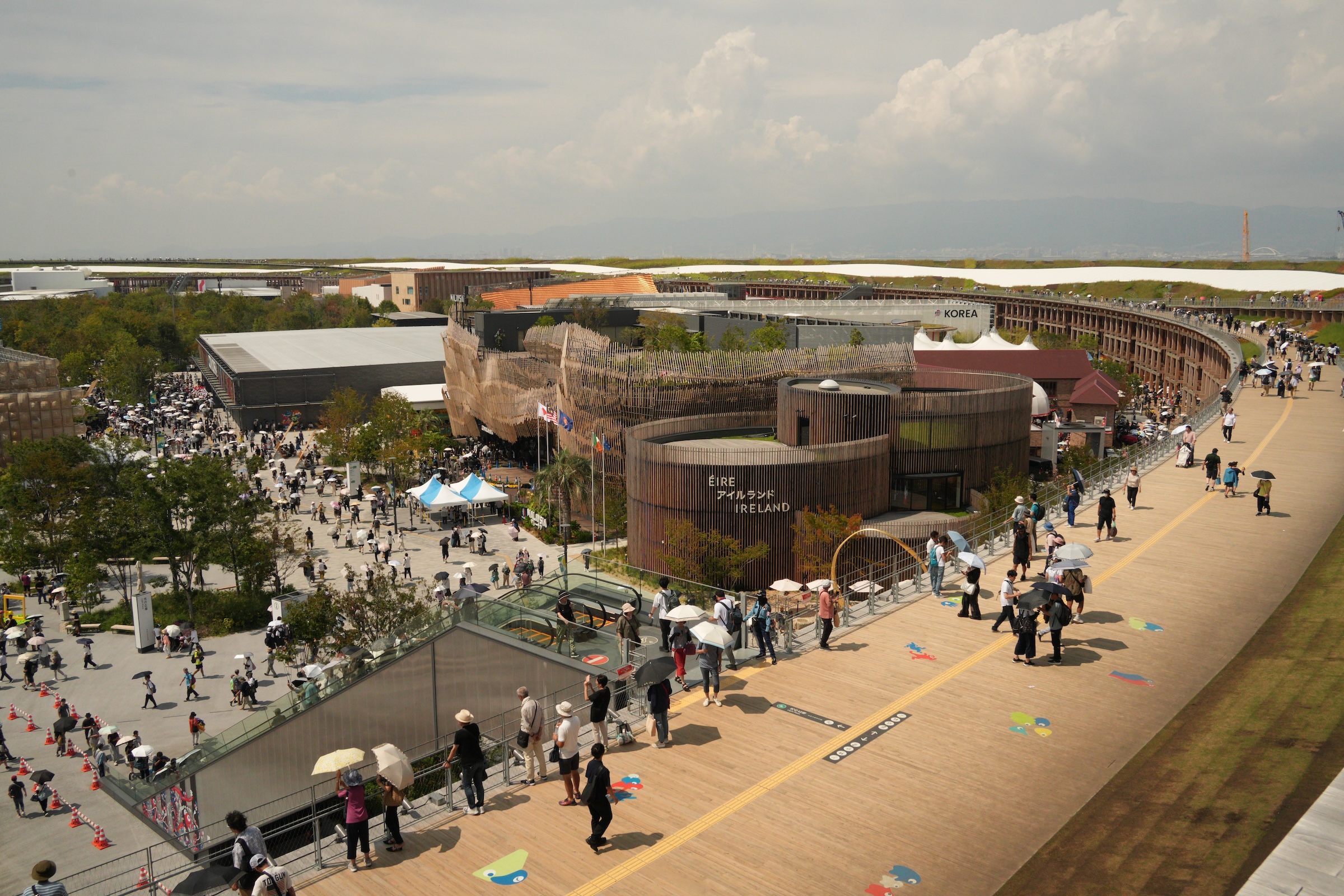
Look for a few images (towards the end) beamed out from the enormous high-resolution screen outside the Korea pavilion. The three-story pavilion has a high-resolution screen on its facade that is 27 m (89 ft) wide. The screen displays on a spectacular series of animated images and videos.

South Africa withdrew from Expo 2025 Osaka in late 2024 despite repeated invitations from the Japanese government, citing the country’s ‘financial constraints’. 
Sunday/ shinkansen to Osaka 🚅

All went well with my train ride to Osaka.
It is an amazing experience to travel at 175 mph (280 km/h) on the tracks, with the landscape flying by the window.

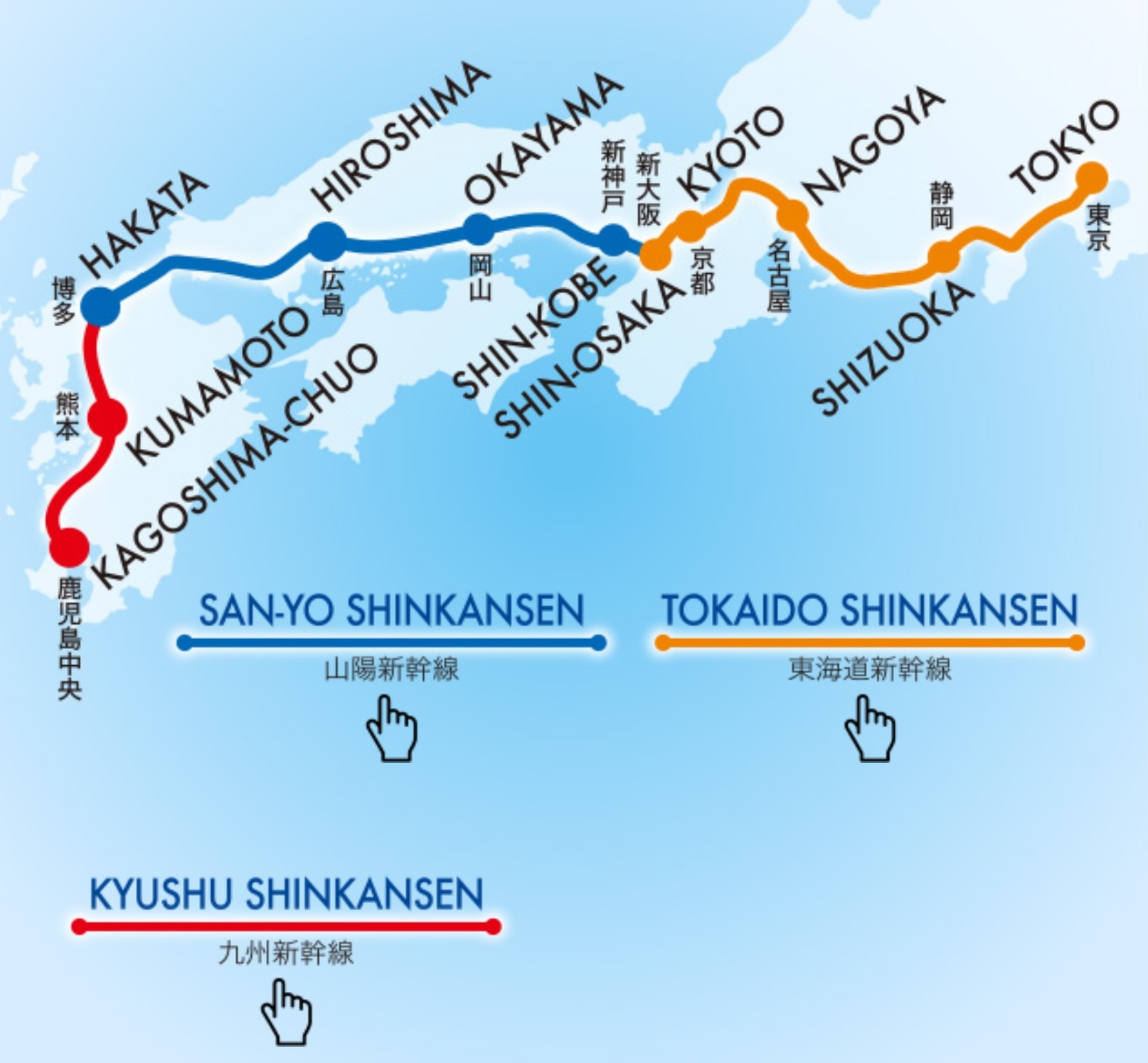
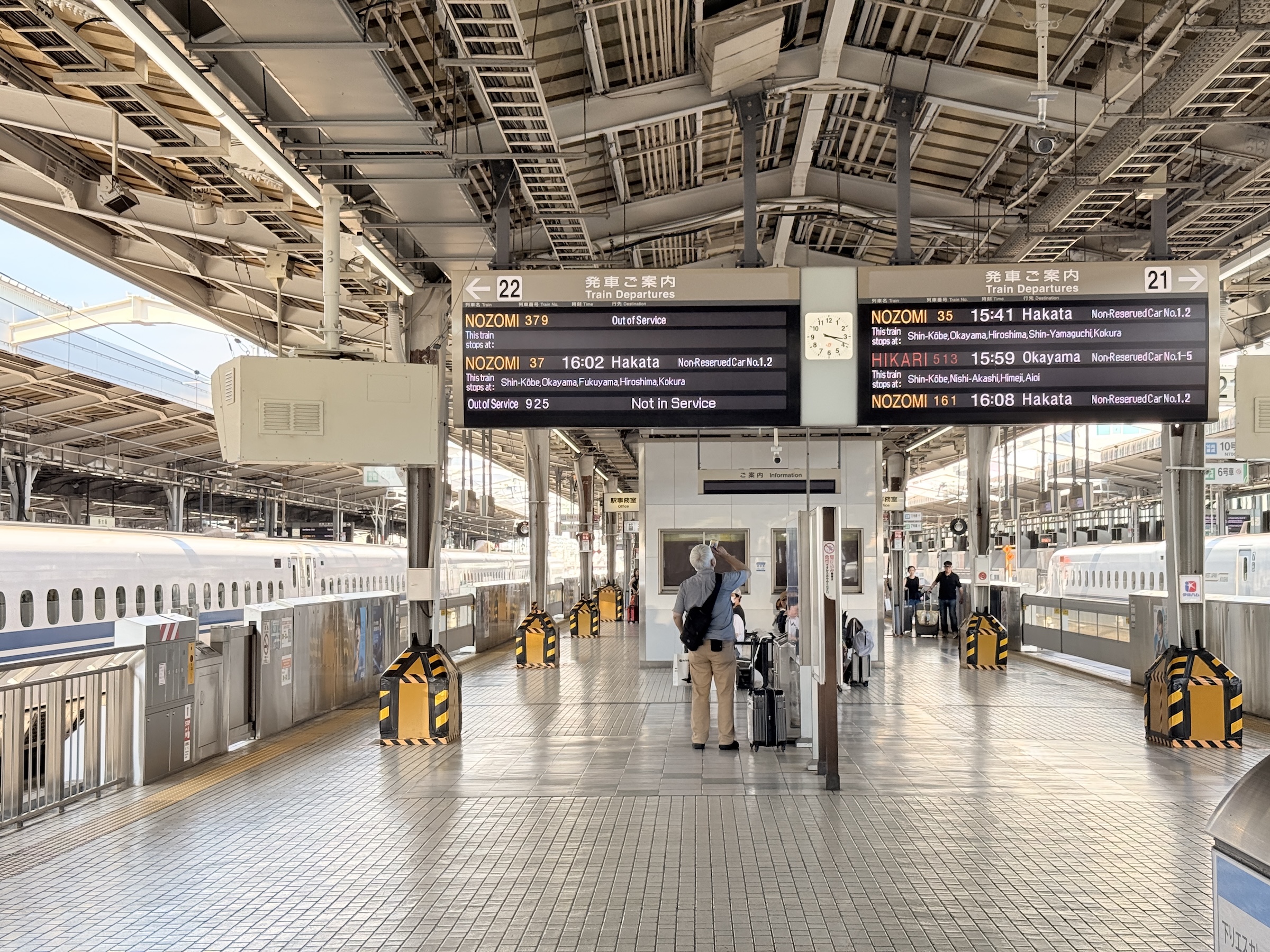
A handy map from the free wifi on the shinkansen. Those lines are just names for the shinkansen* between different cities. Nozomi shinkansen (the express train with the fewest stops) on the Tōkaidō Shinkansen line from Shinagawa to Osaka stop at Shin-Yokohama (where I was yesterday), Nagoya, and Kyoto before arriving at Shin-Osaka.
It was 2 hrs 20 mins from Shinagawa station to Shin-Osaka.
*Shinkansen (新幹線) in Japanese means ‘new trunk line’ or ‘new main line’, but this word is used to describe both the railway lines the trains run on and the trains themselves. In English, the trains are also known as the bullet train.
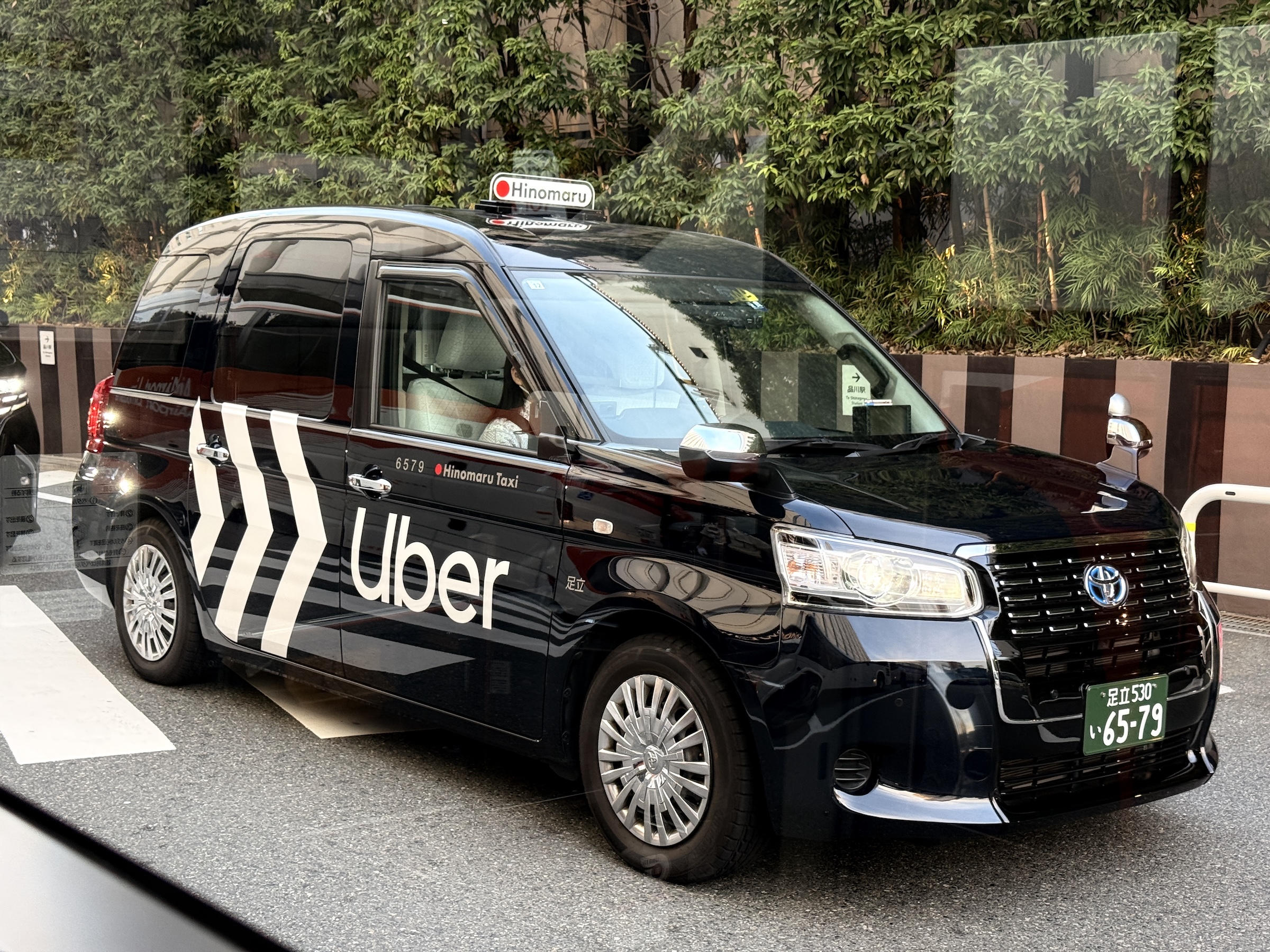
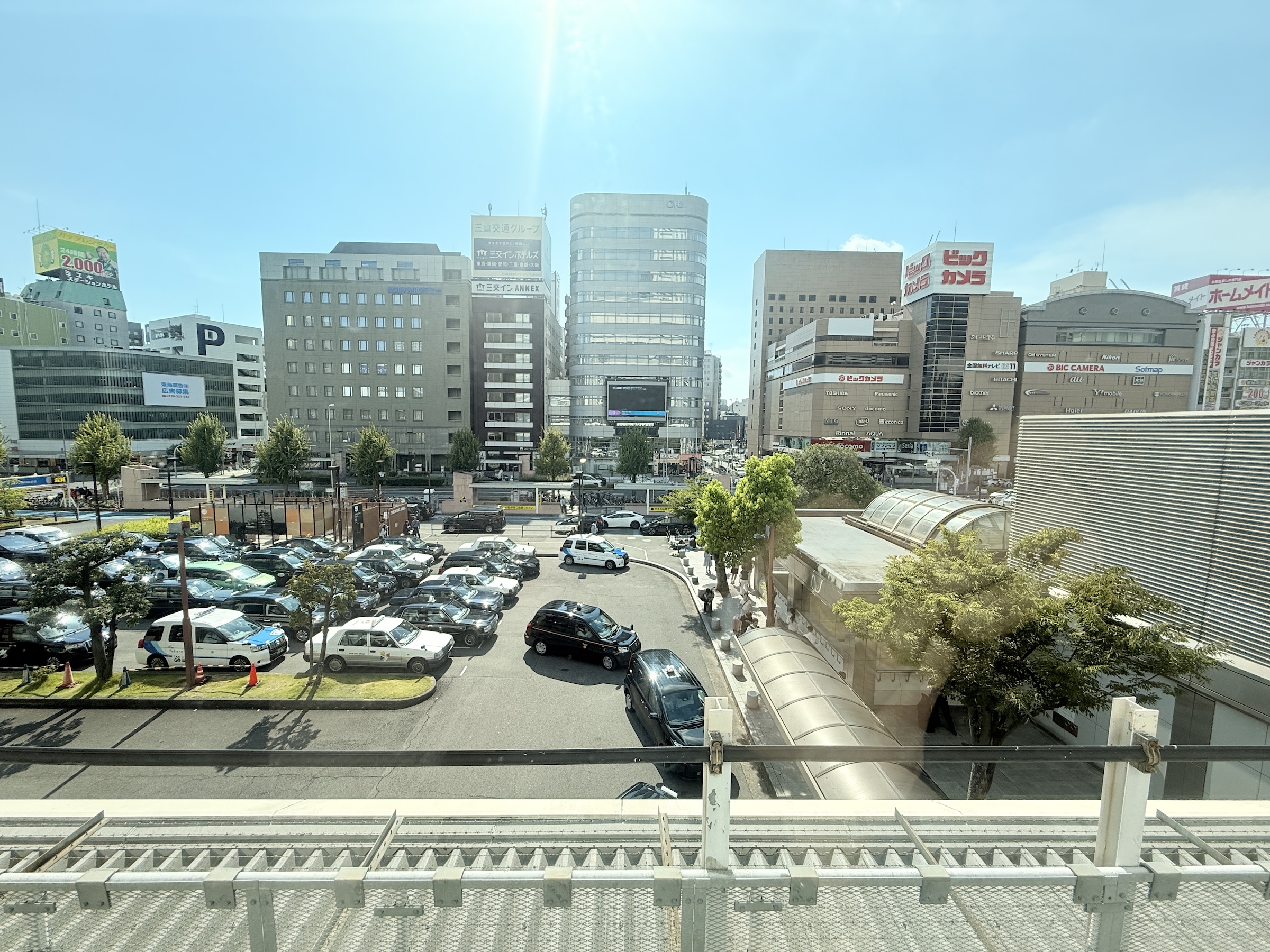
Taxis, six abreast, at the taxi stand at the Nagoya station. Uber is not big in Japan, but you do see Uber branded taxis. Go Taxi is the app of choice for ordering a ride share taxi in Japan.
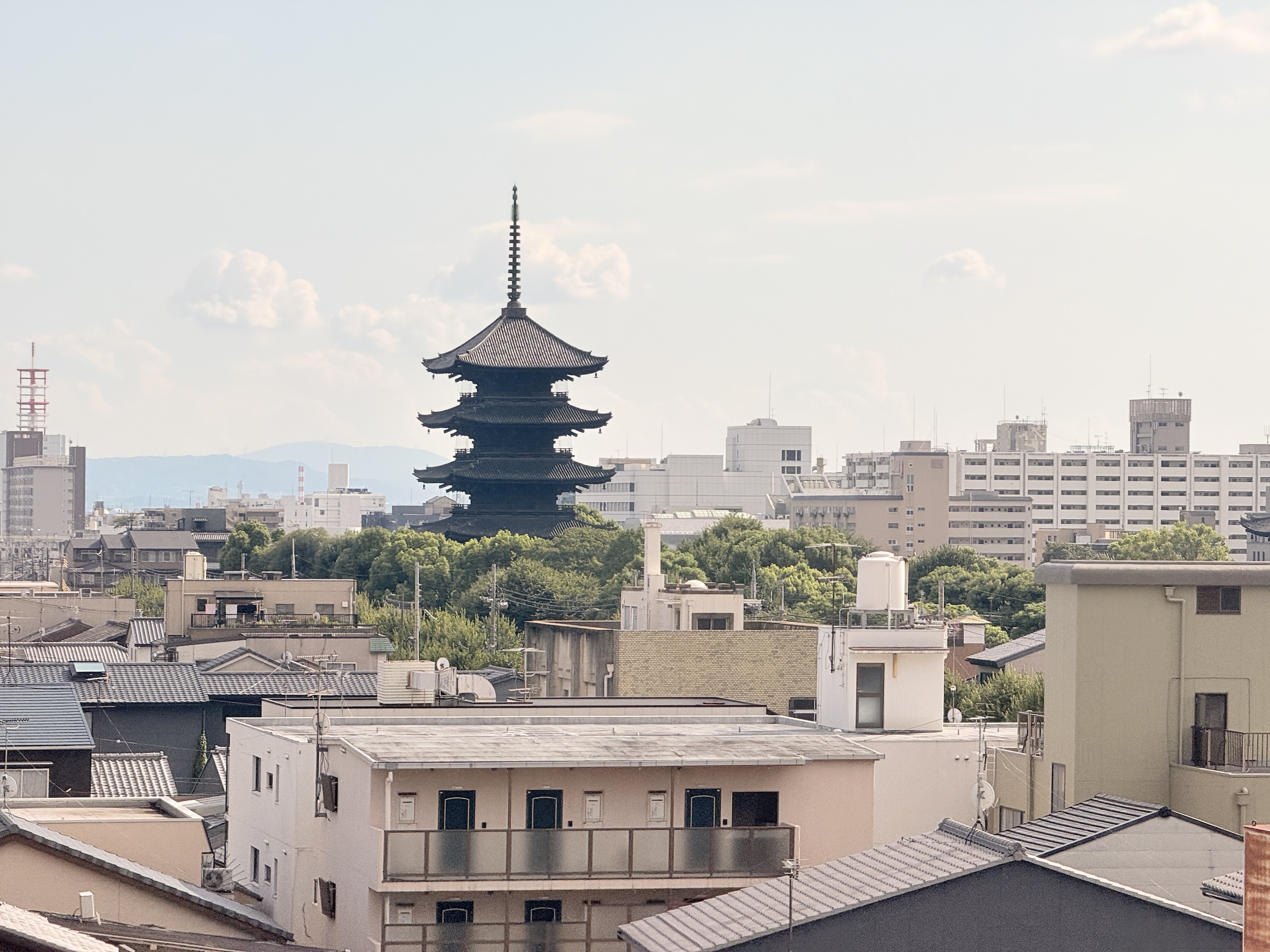
This is the 五重塔 (Gojū-no-tō) or Five-storied Pagoda at Tō-ji Temple in Koyoto.
It is known as the tallest wooden tower in Japan and I had a nice view of it from my train seat as we left the Kyoto station.
I have arrived at Shin-Osaka station. I’m just catching my breath and looking for the way to the taxi stand. There is a local train line to the hotel from here, but it’s way too warm outside to walk even four or five blocks with all my luggage in tow. I’m heading to the taxi stand.
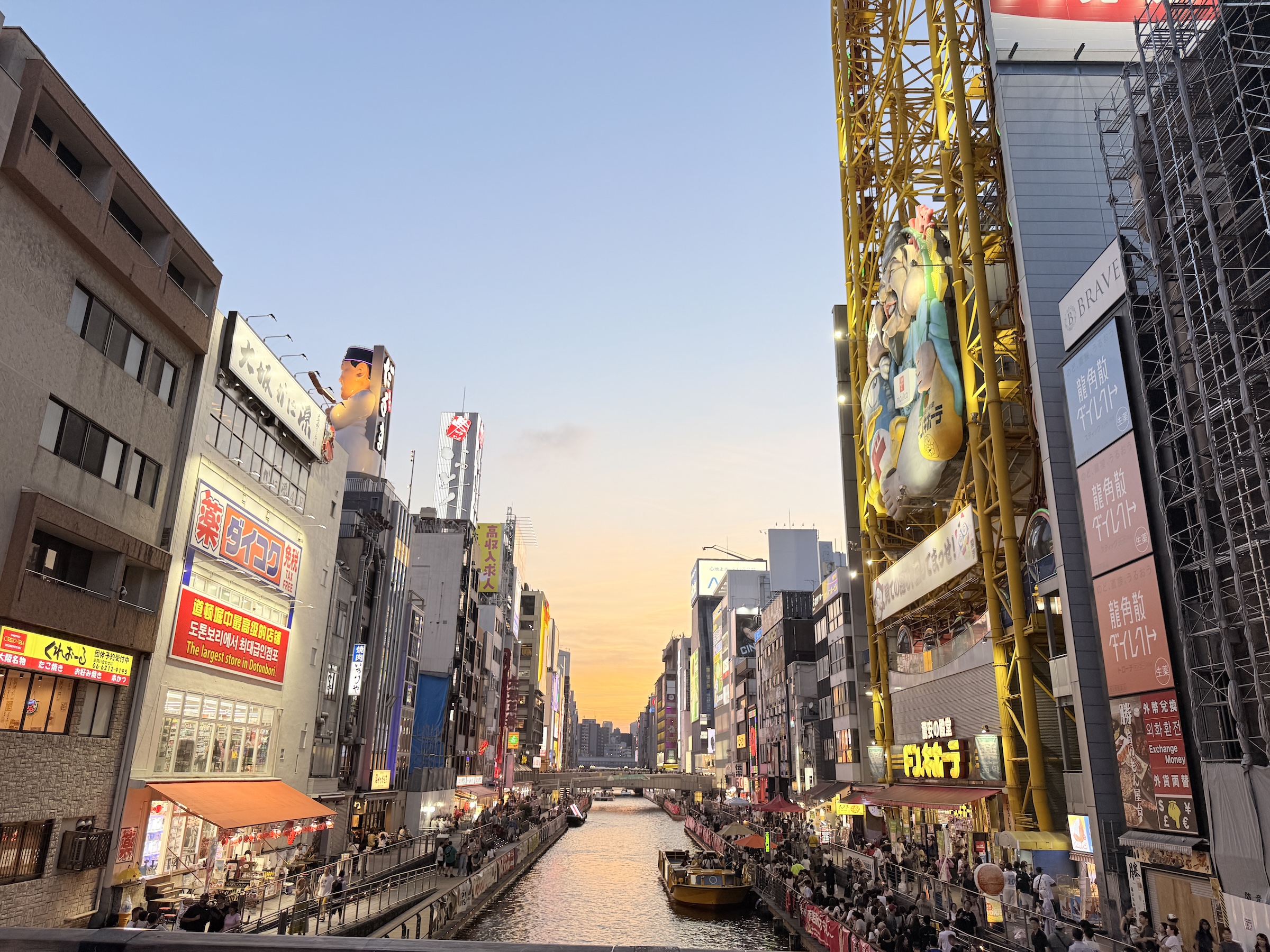
Looking towards the sunset at Dotonbori Bridge.
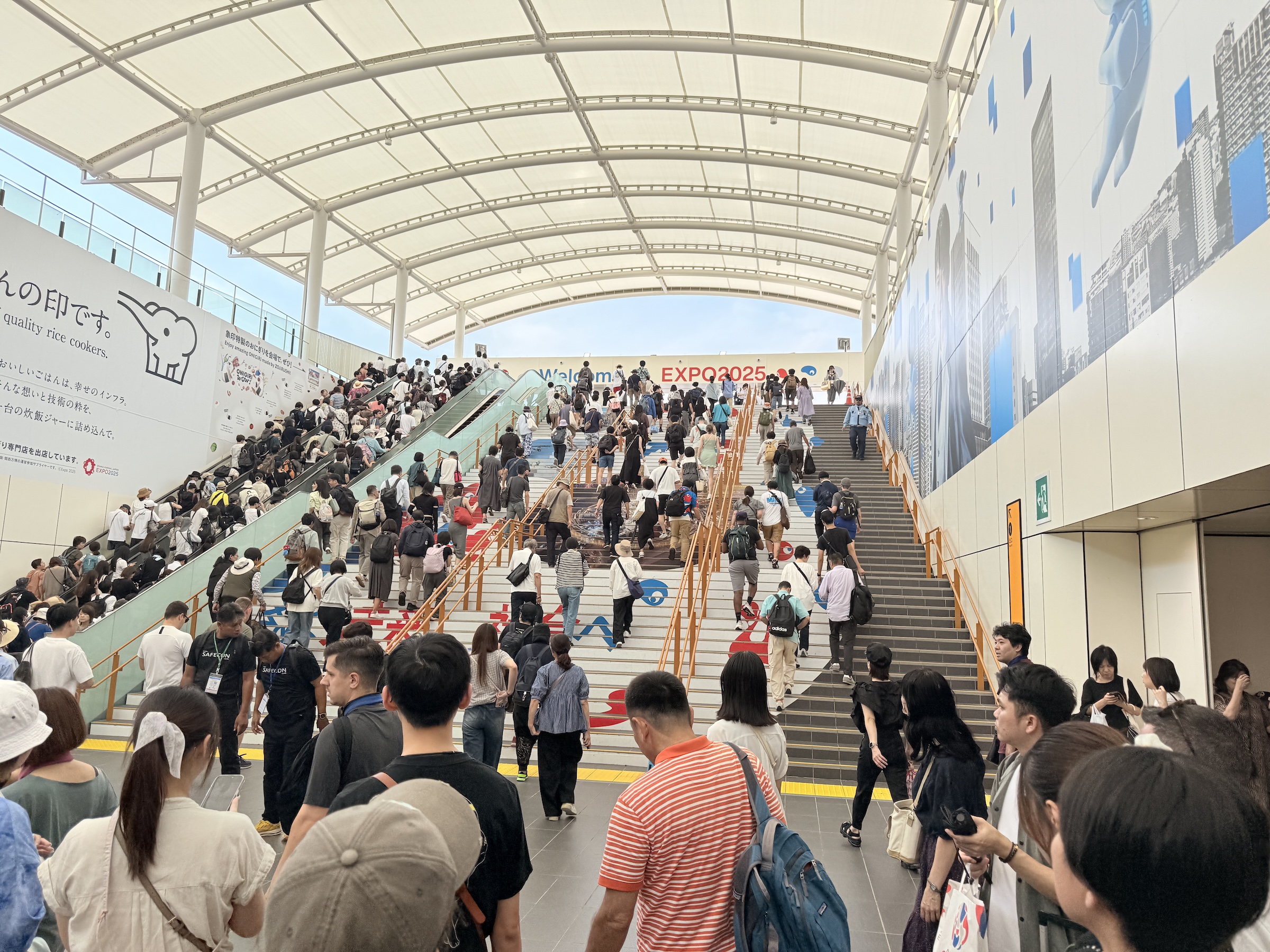
Earlier, I had checked into my hotel by the Chuo line (that runs to the 2025 Osaka Expo, where I will go to on Monday and Tuesday). The metro stations were swamped with people, and one can see that the metro had added all kinds of signage and directions for the train riders to the Expo to the stations, to try to better manage the congestion.
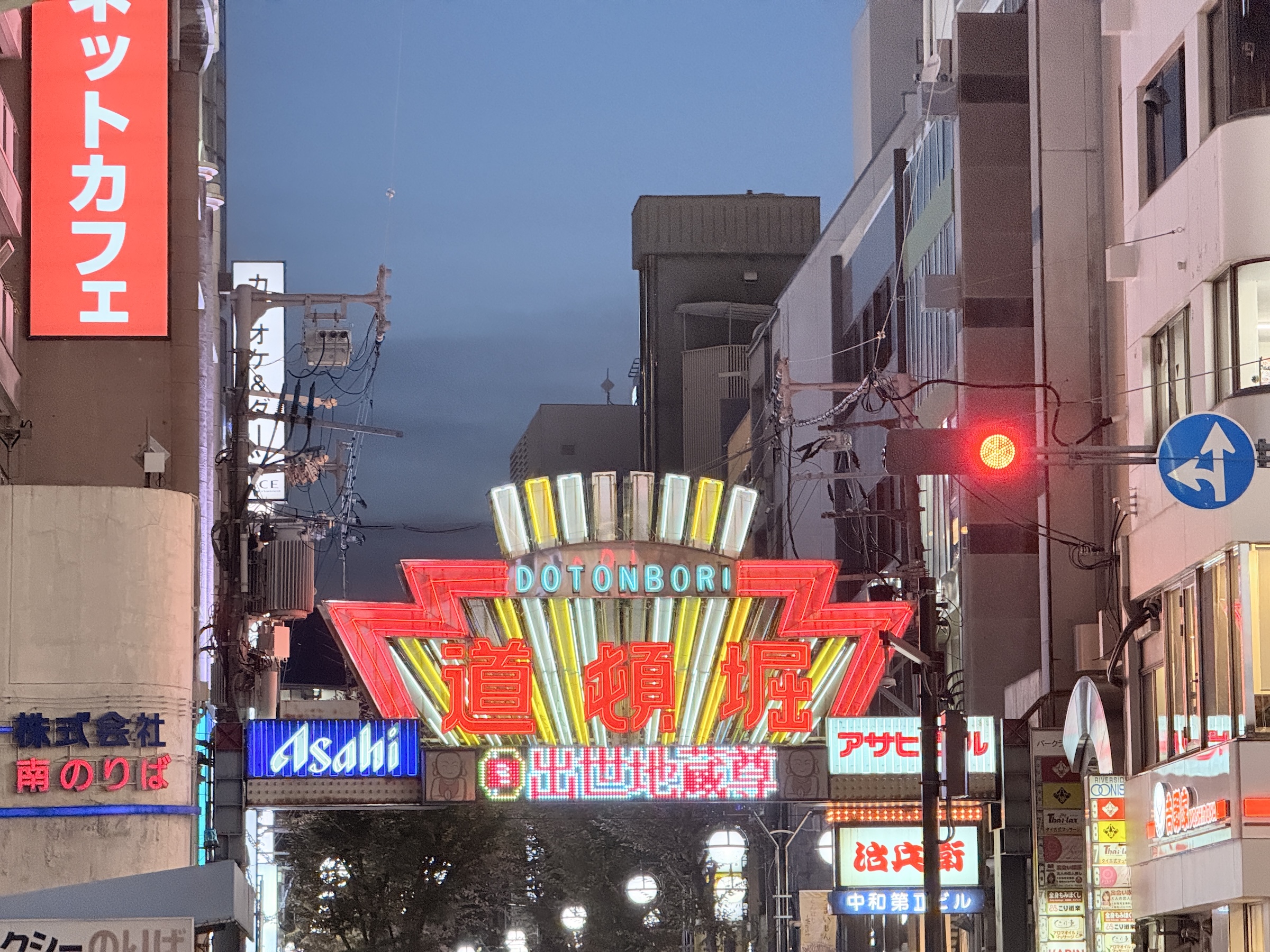
There is a nice old-fashioned neon sign at Dotonbori Bridge.
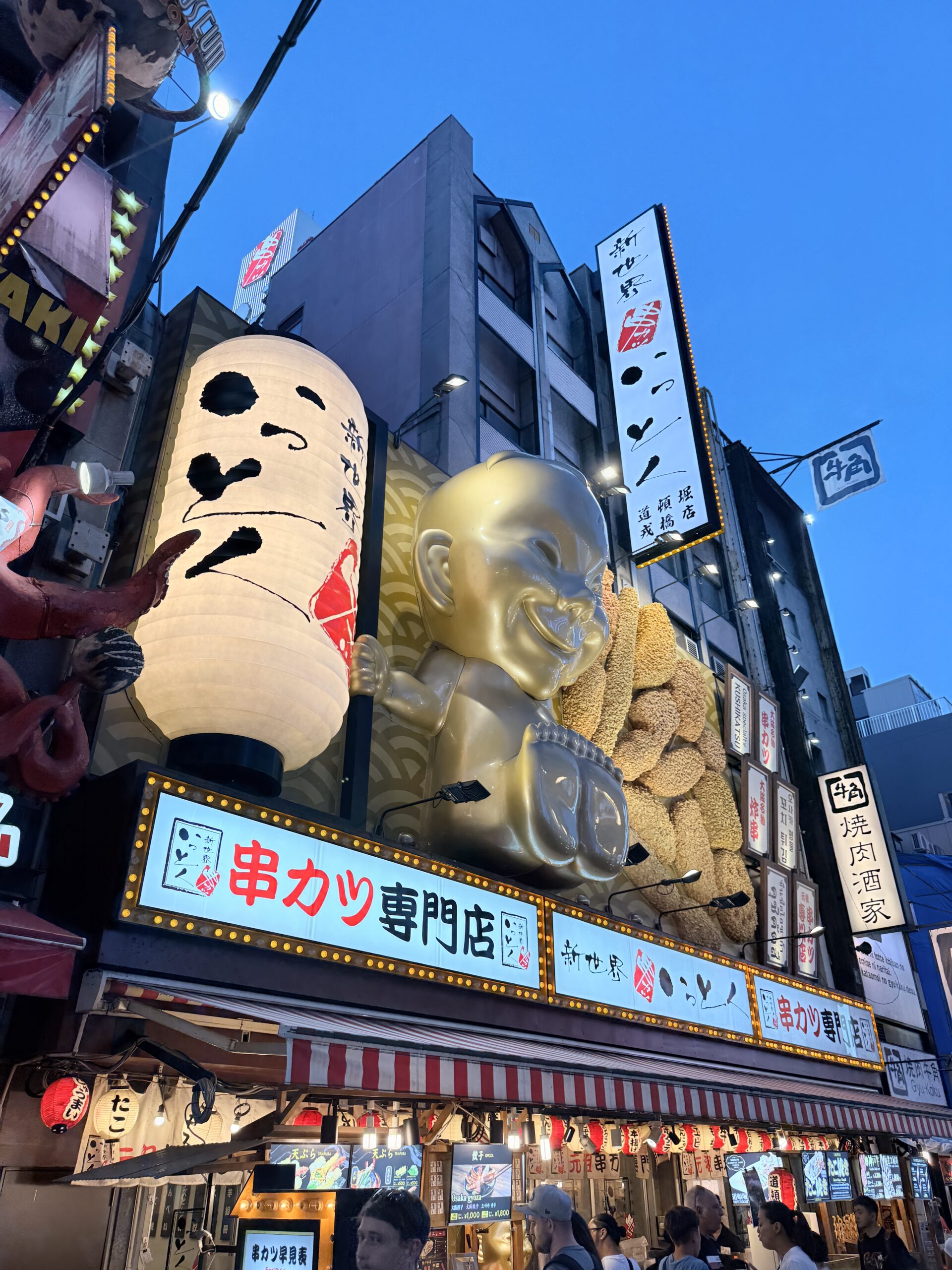
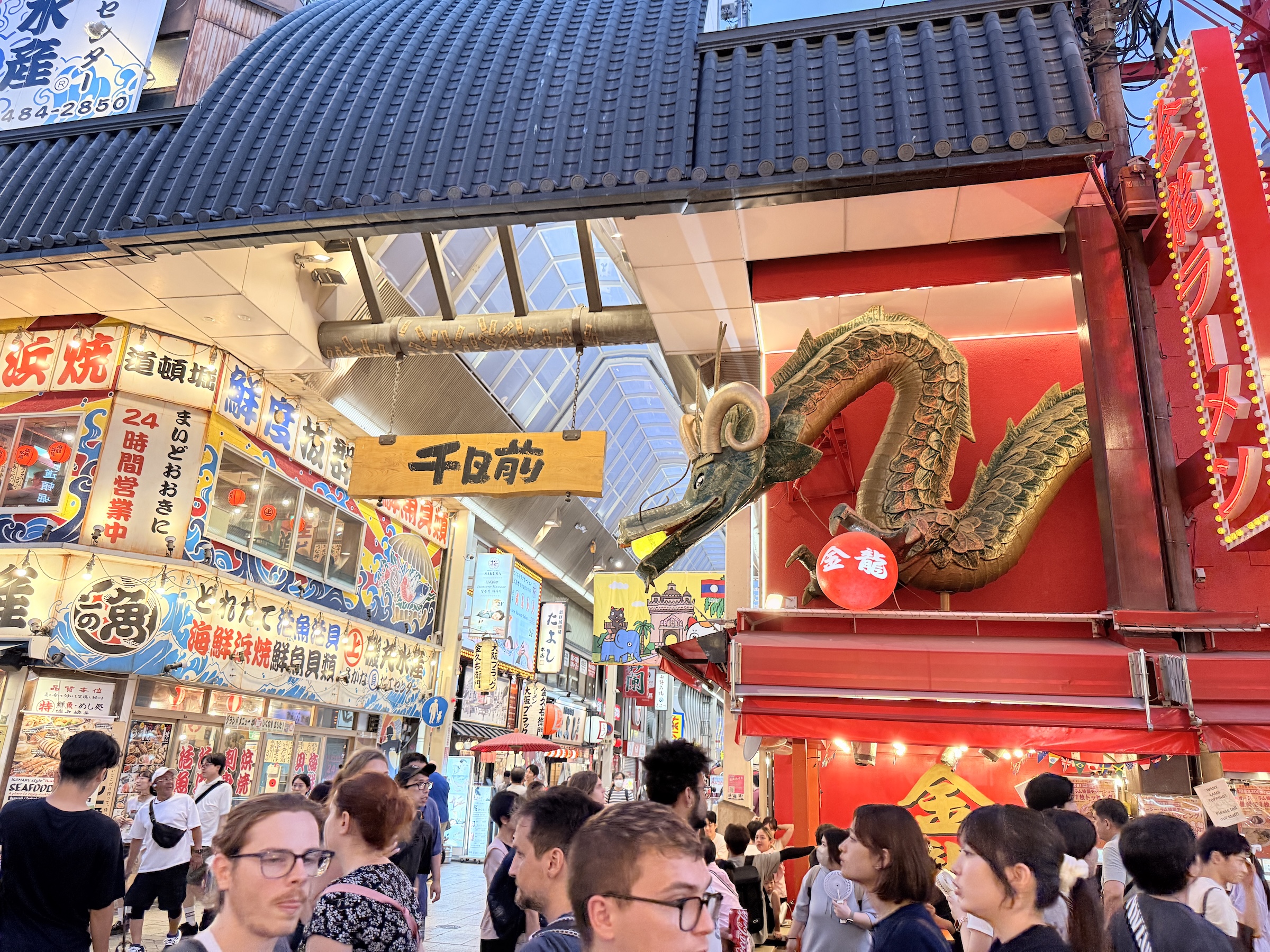
It doesn’t show too much in these pictures, but there were throngs of tourists in Dotonbori Street, the vibrant and busy thoroughfare in the heart of Osaka known for its neon signs, entertainment, and wide variety of eateries.
I love the dragon.
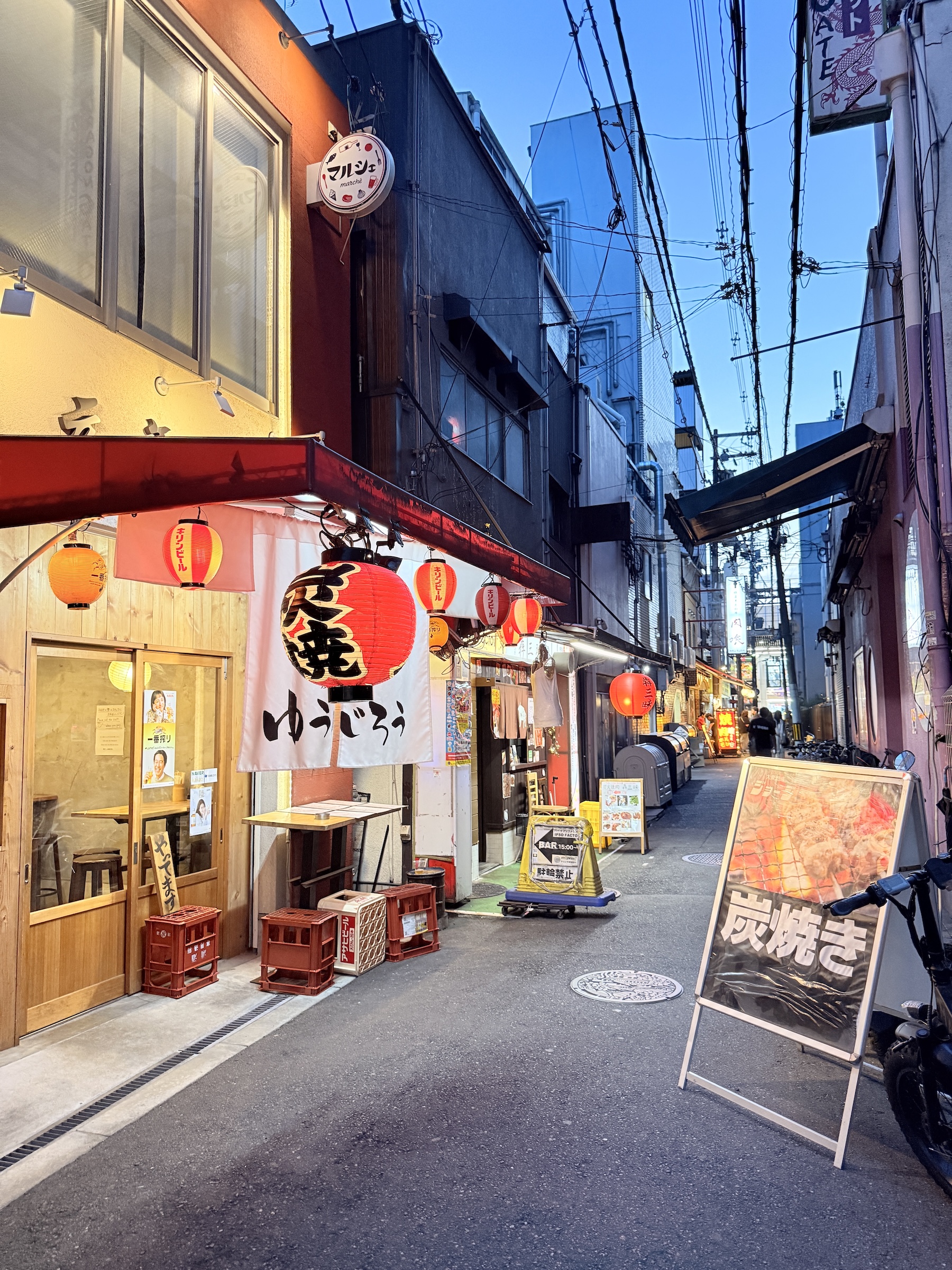
Off to the side, and just a block or two away, are quiet alleys that also have restaurants and izakayas (a type of informal Japanese pub that serves alcoholic drinks like sake and beer along with a variety of small snacks).

Saturday/ shinkansen to Yokohama 🚅

Yokohama is south of Tokyo, and one of the first Japanese ports that opened to foreign trade, in 1859.
I made a run there on Saturday morning on the Nozomi shinkansen out of Shinagawa station— a trial run of sorts, for my trip to Osaka on Sunday.
It’s 19 km (12 miles) and only 18 minutes from station to station. A trip by car would take about 40 minutes.

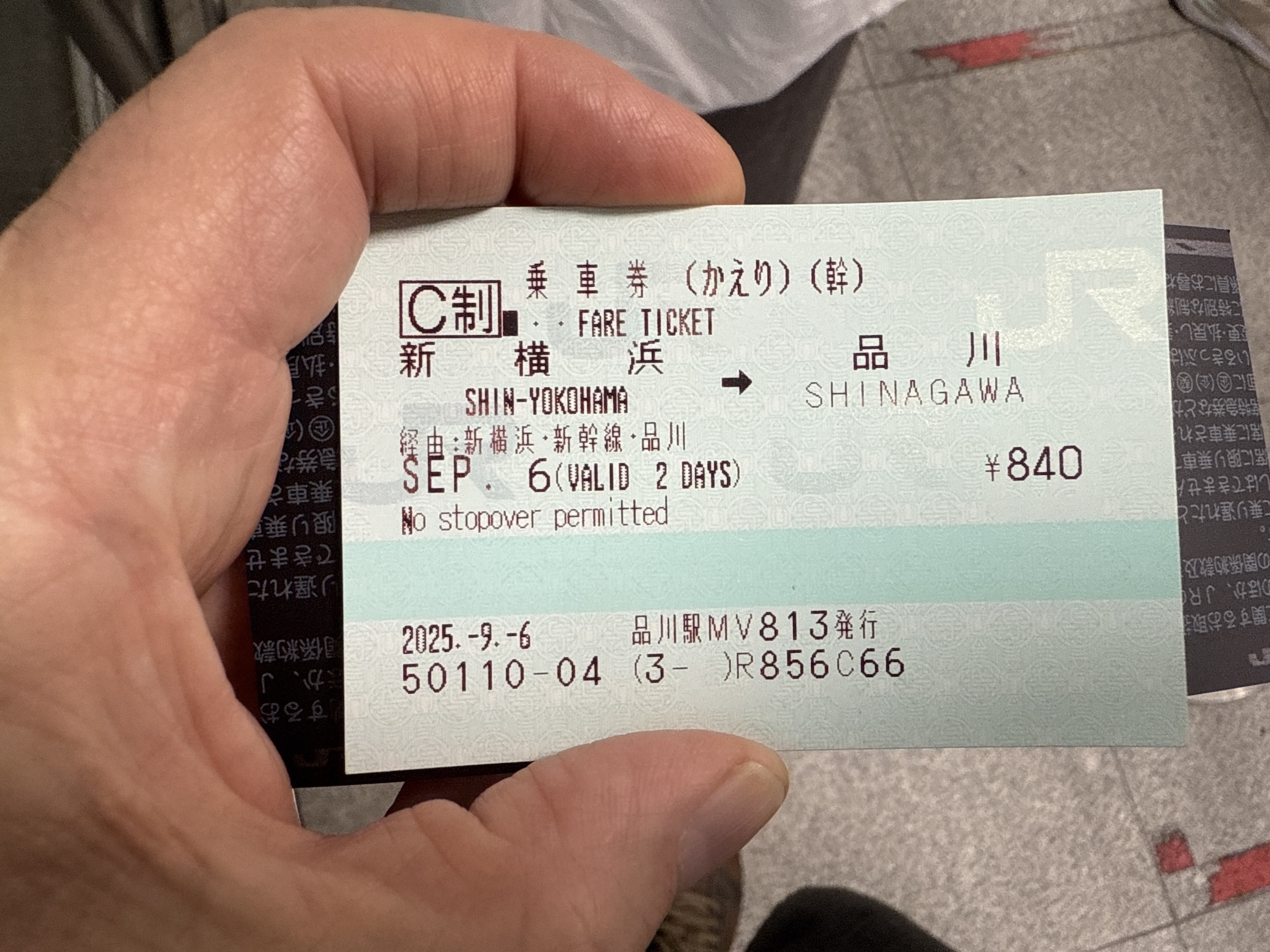
I bought my tickets at Shinagawa at the machine. (The online website does not accept my US credit card.) This is the return ticket portion, and it was very complicated to use. An attendant helped me buy a return ticket for a specific date, time and train, and then I had to put it on top of this one, and both into the slot at the ticket gate to make the gate open up for me. Yikes! Too complicated. 
I have an electronic ticket for Sunday’s run to Osaka (with a QR code), and that should work much better.
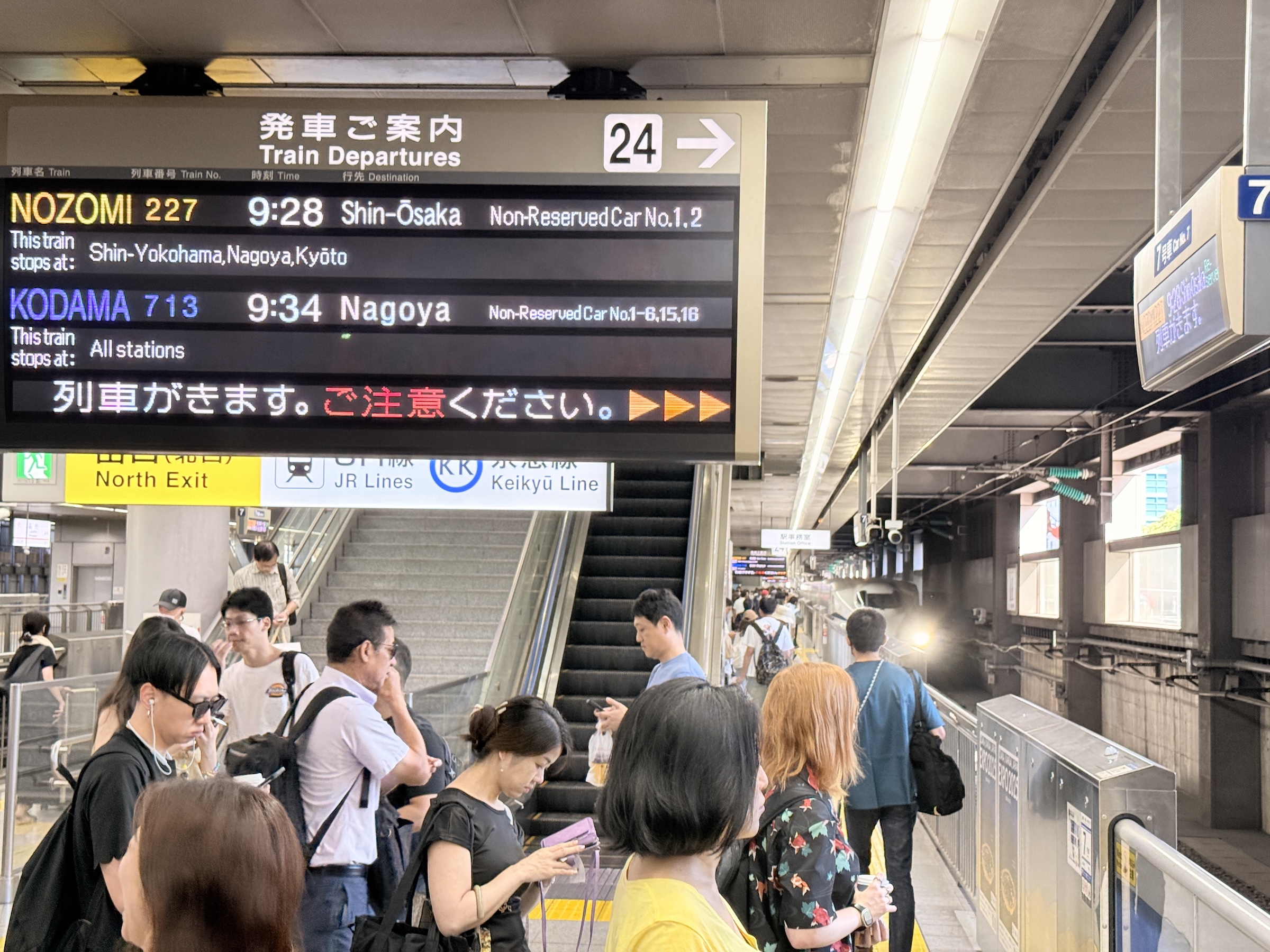
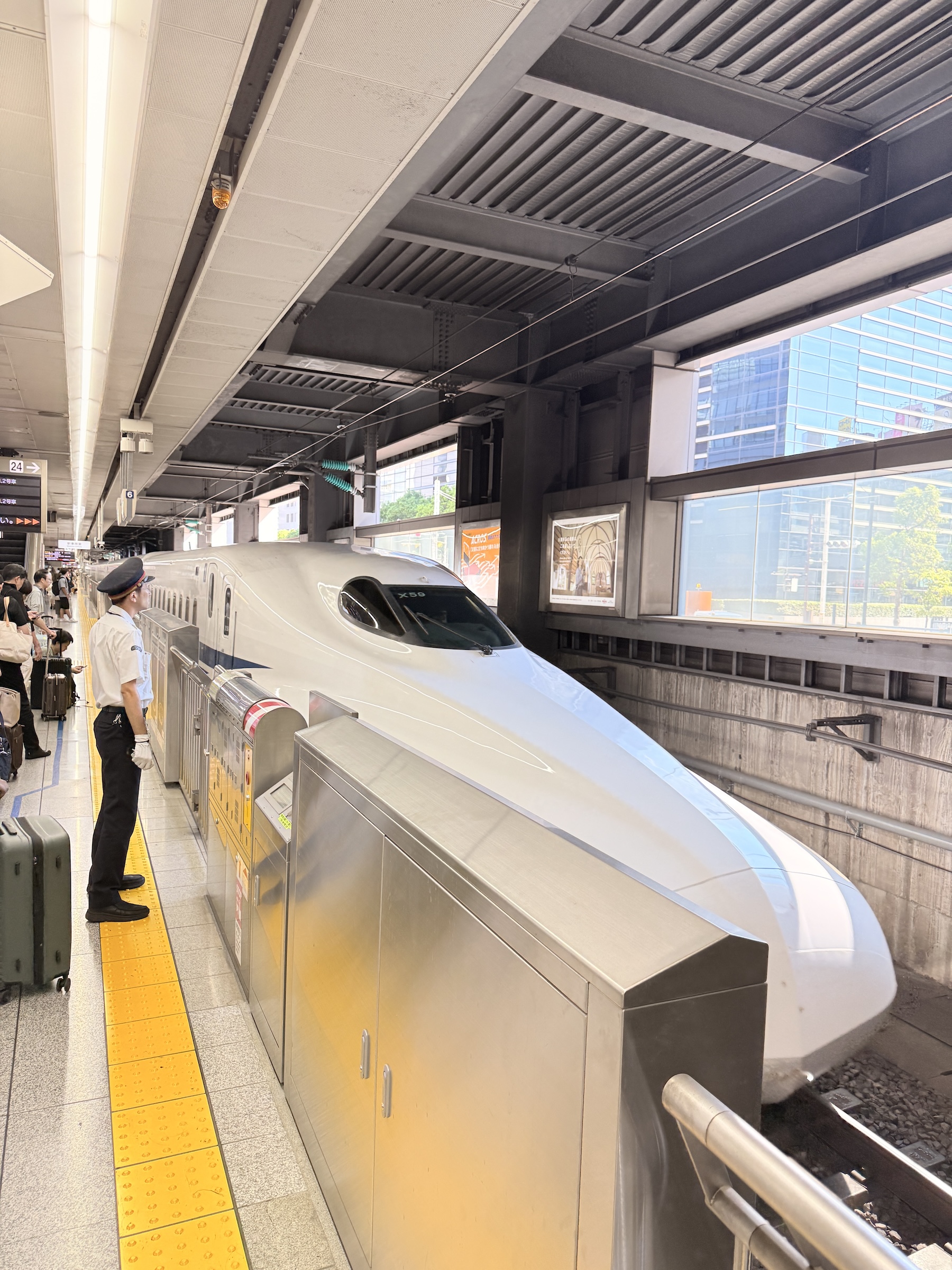
Incoming! Pay attention people, here comes the train.
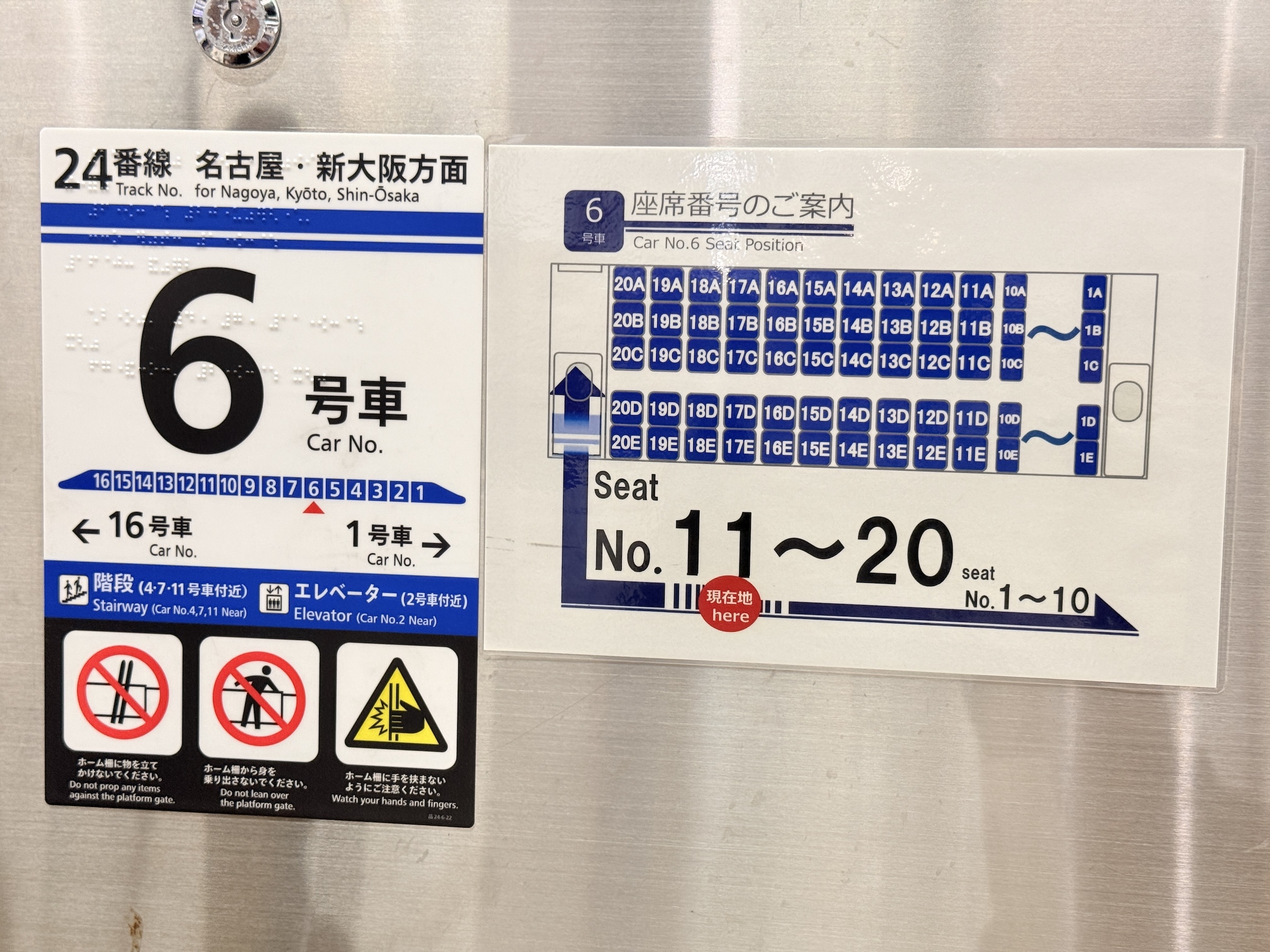
The train has 16 cars. I have a reserved seat* ticket, and I am at the gate for Car No 6. There’s the seat map as well, like the ones for an airplane when you pick your seat online. *The tickets for unreserved seats are cheaper, but you might get booted from your seat by a reserved seat ticket holder and then have to stand all the way.
Built for speed. The N700 series is a Japanese Shinkansen high-speed train with tilting capability developed jointly by Japan Rail Central and JR West, for use on the Tōkaidō and San’yō Shinkansen lines. It has been in operation since 2007.
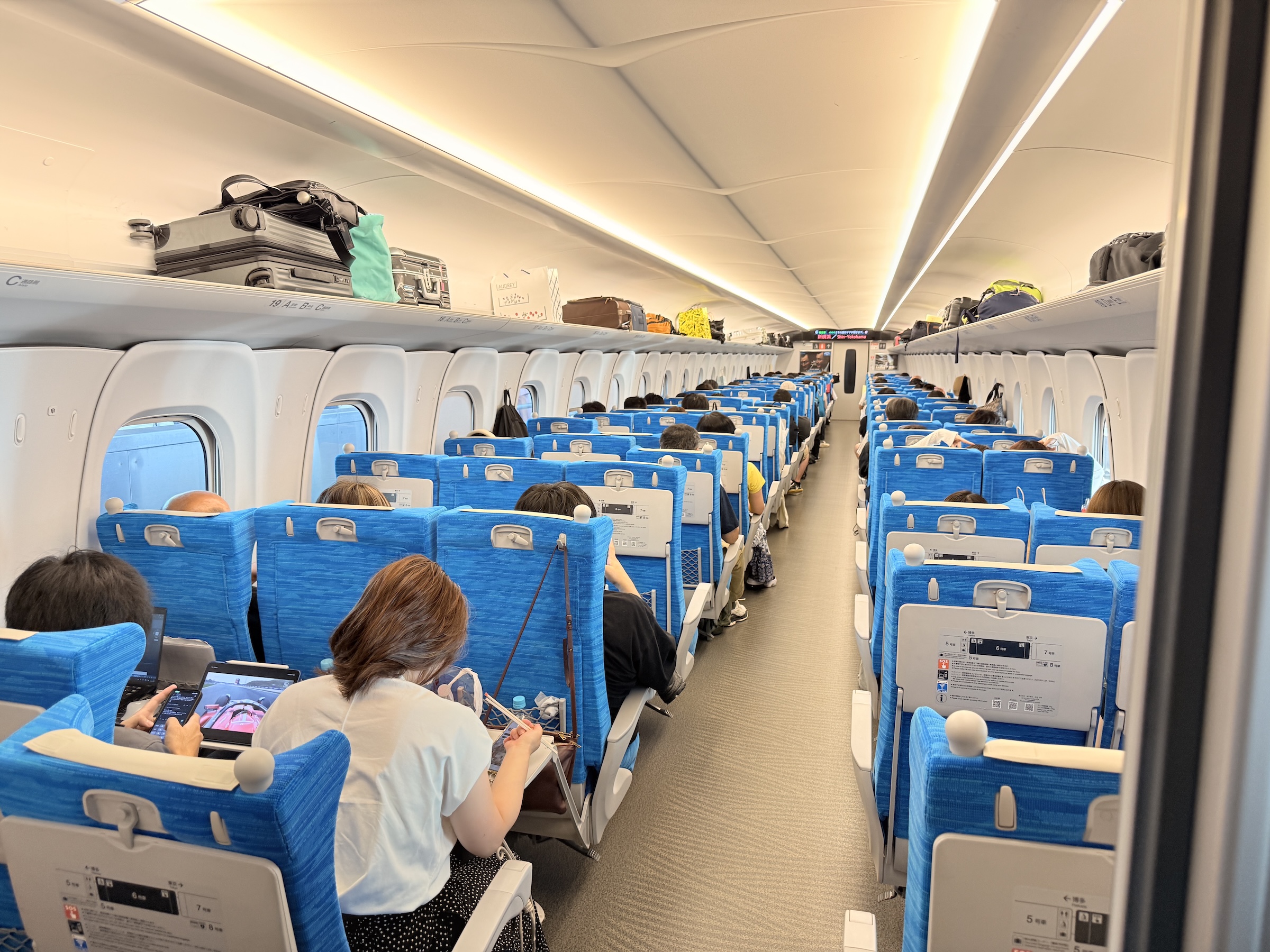
Inside it looks like an airplane. This car has ‘Ordinary’ seats. The ‘First Class’ seats are a little bigger.
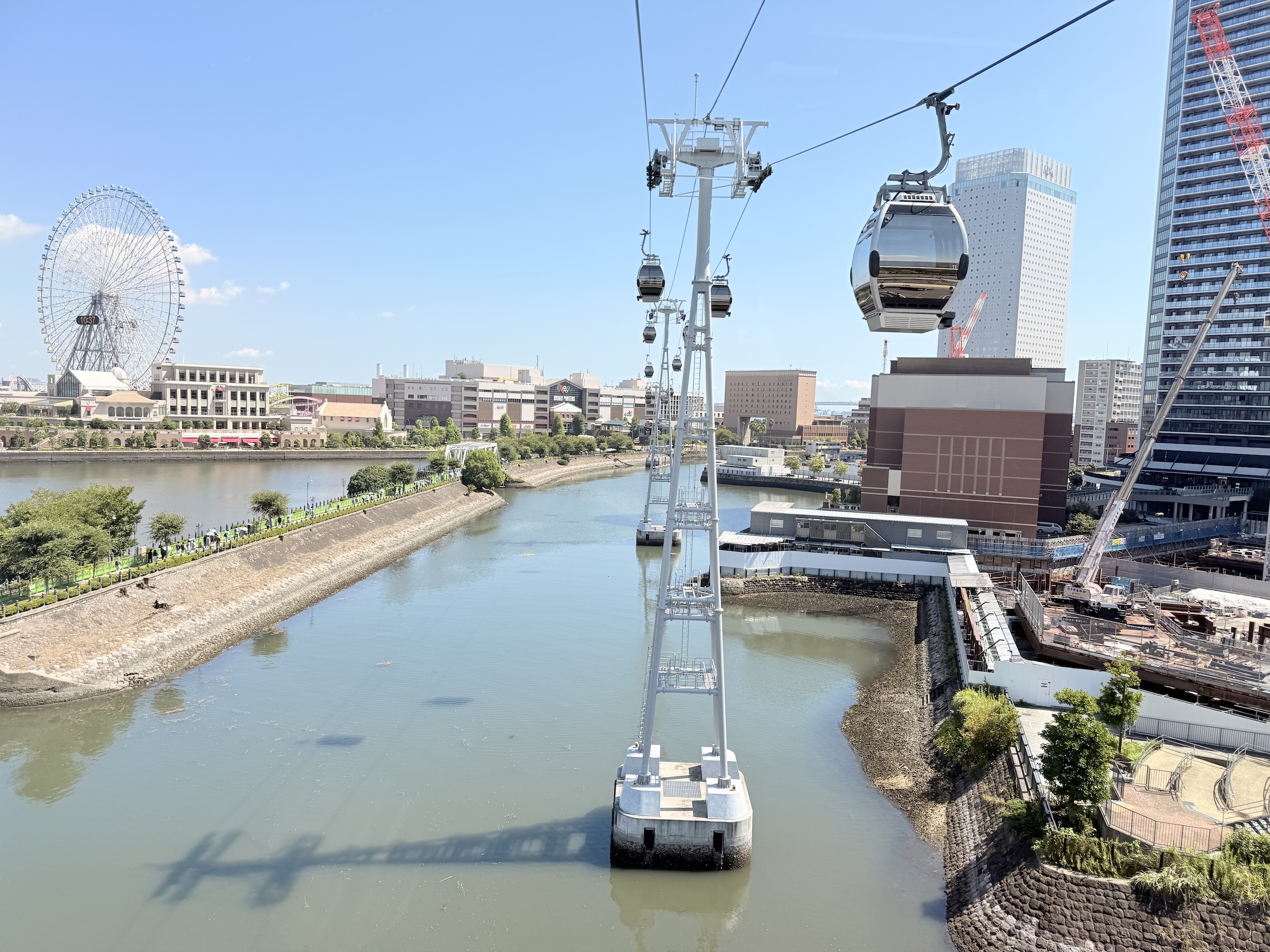
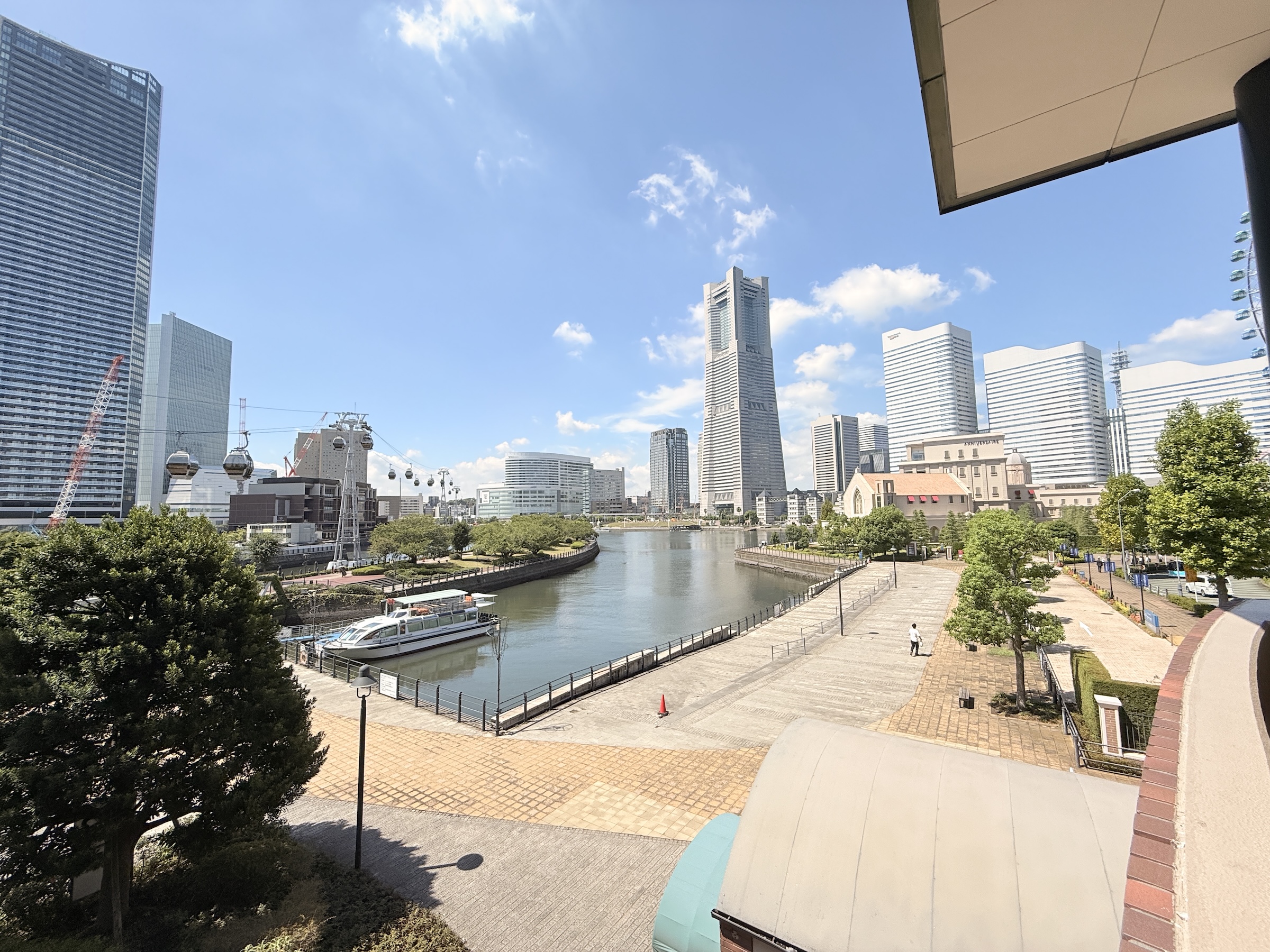
All right, we’re skipping ahead all the way to the Yokohama Air Cabin cableway. A lot has happened since I stepped out of the shinkansen at Shin-Yokohama station. I boarded the local Blue Line and went seven stops to Sakuragicho station, and then walked 5 minutes to where I could board the Air Cabin cableway.
This is the view from the end of the Air Cabin cableway, where there is a 6-story shopping mall complex called Yokohama World Porters. The tall square building is Yokohama Landmark Tower, which stands at 296 meters (971 feet) high. It was Japan’s tallest building from its completion in 1993 until 2014.
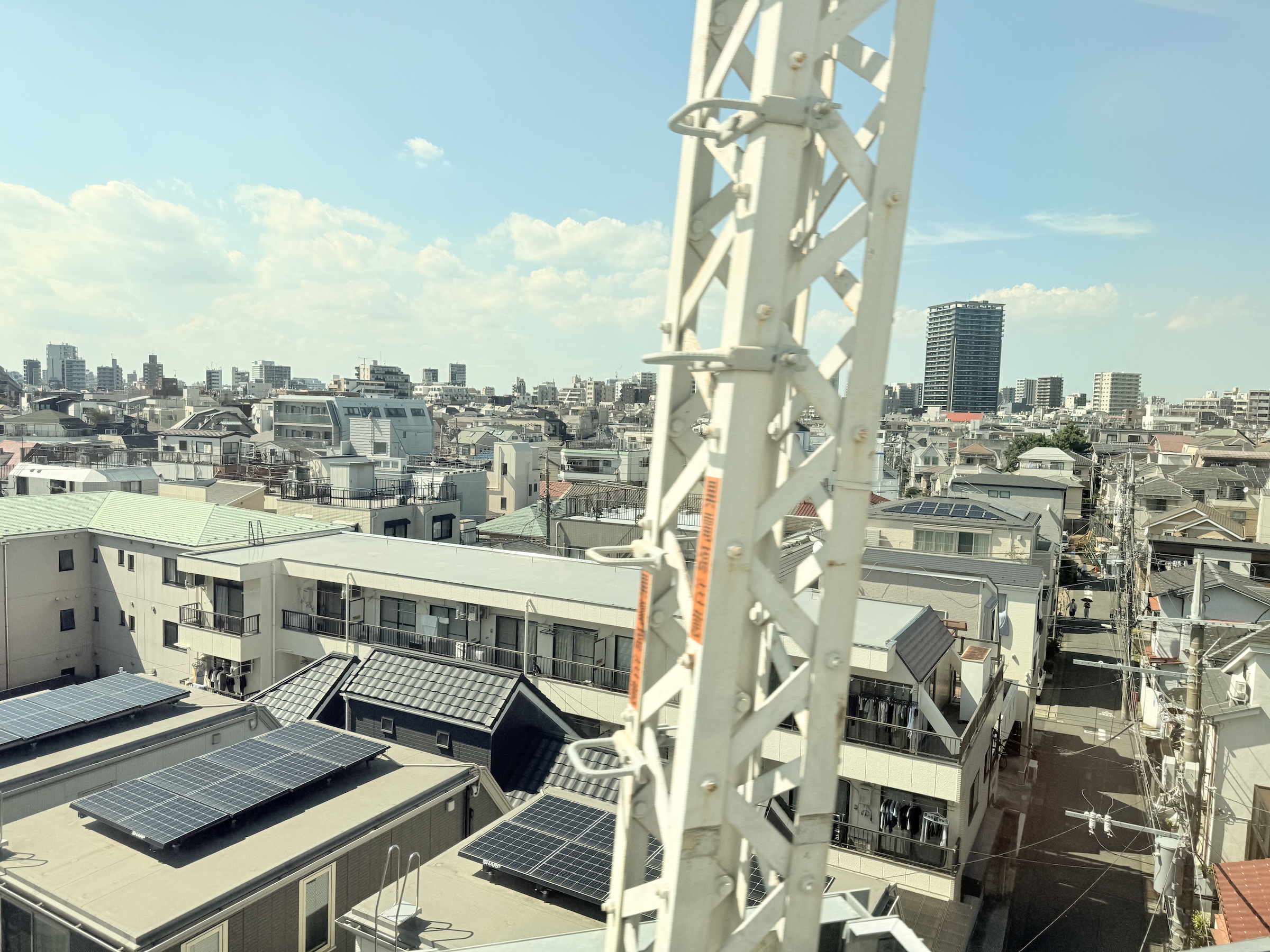
A look outside the shinkansen window, on my way back to Shinagawa. The rooftops and steel trusses and pylons flash by at high speed.

Friday/ Shinjuku 🚆

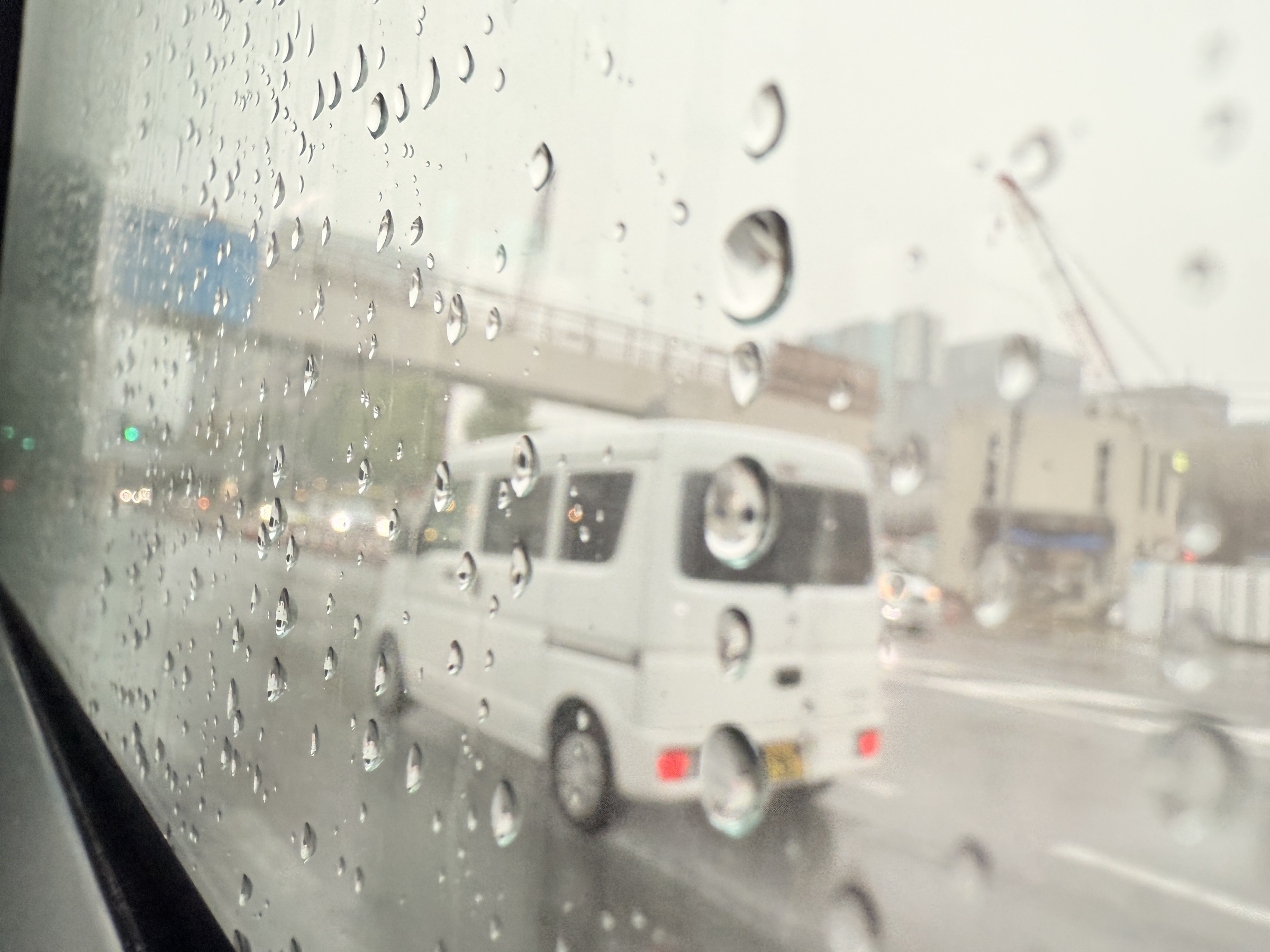
The rain was relentless on Friday here in Tokyo.
I ran out to Shinjuku train station in the morning and got lost inside the enormous station— before getting soaked in the torrential rain outside of it. 😱

Come early evening the rain was over, though, and I went back to see if I could navigate the station better, and to take a few photos.

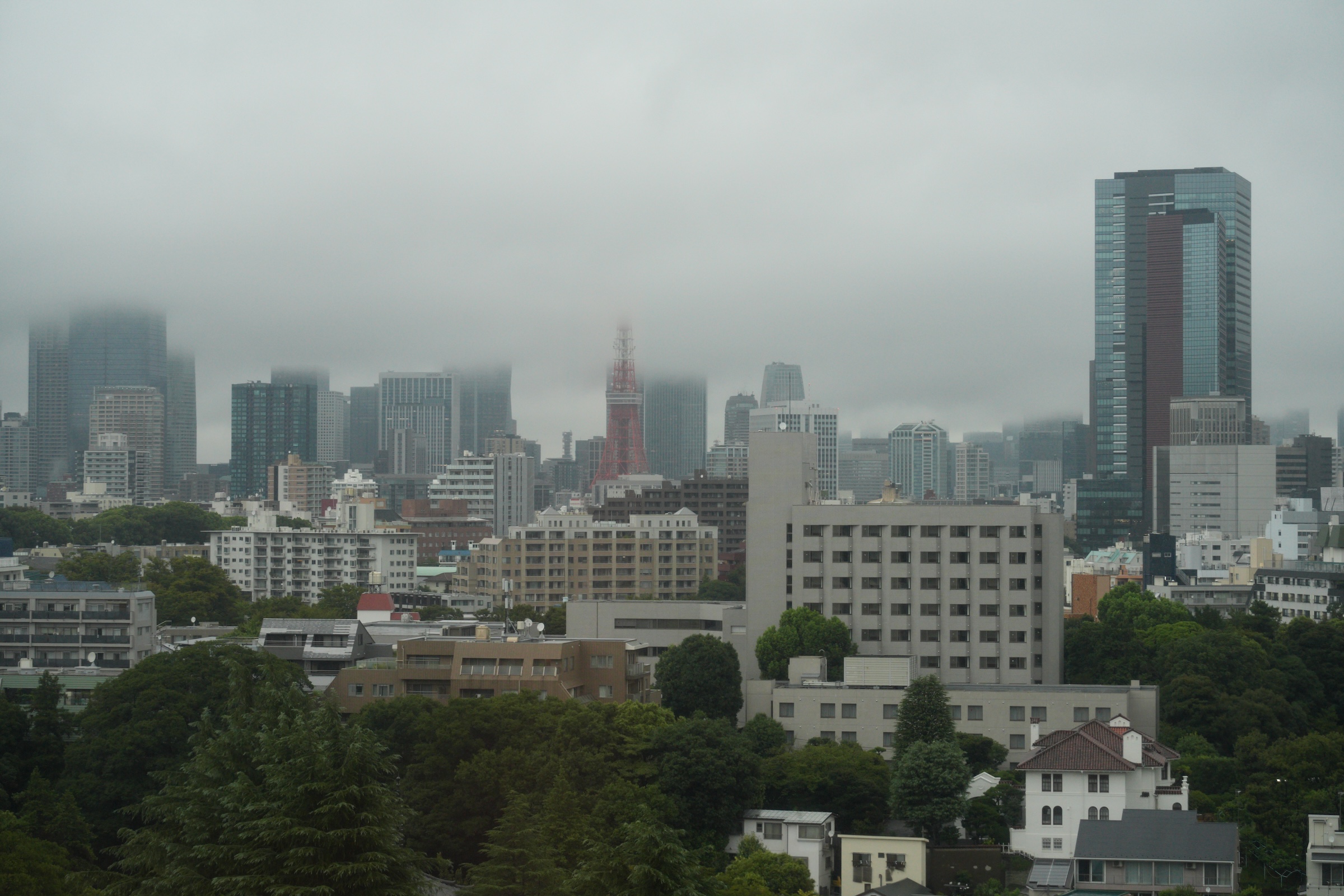
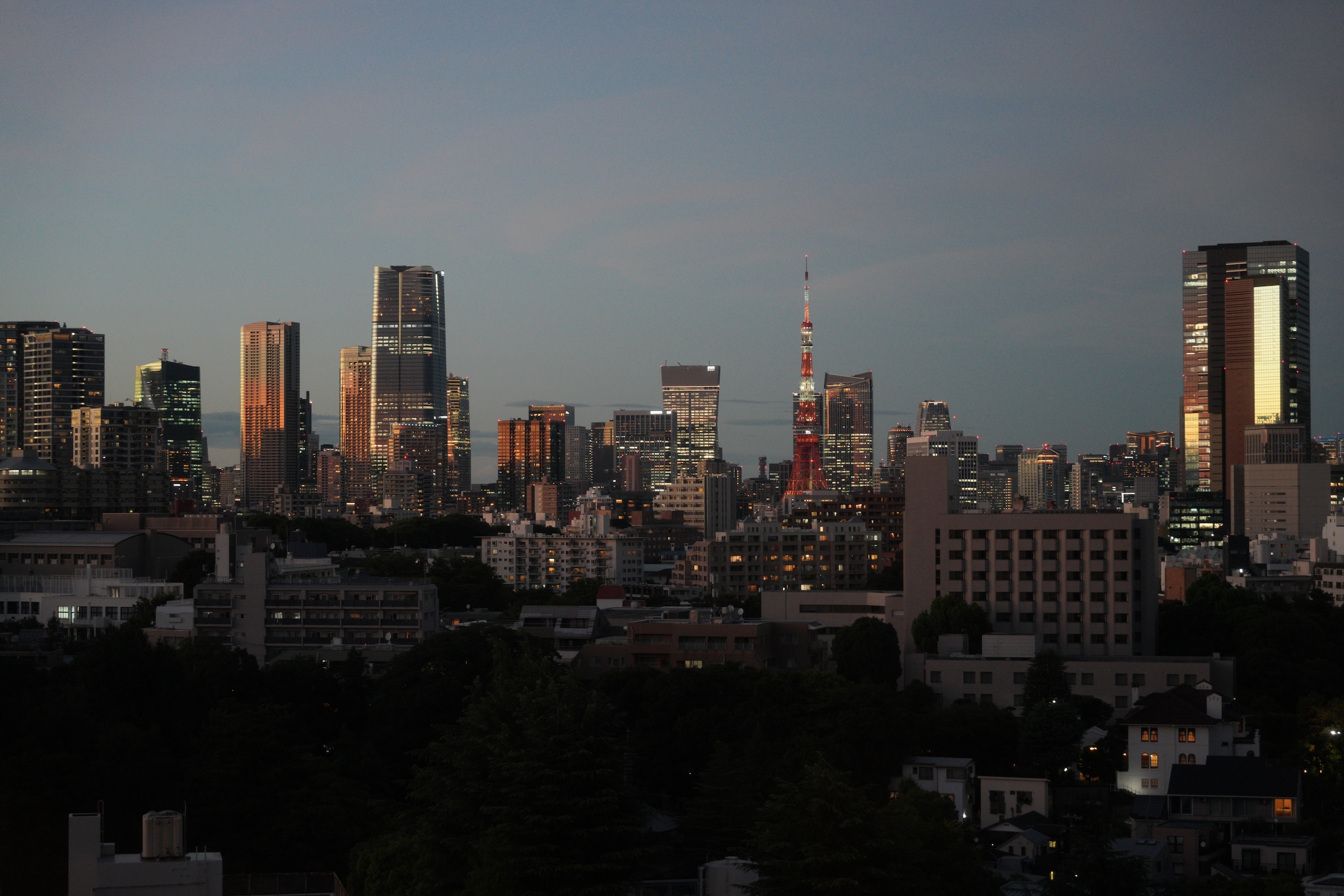
The view outside my hotel room in the morning. The top of Tokyo Tower is hidden in the low clouds.
Ooh! .. not looking good out here on the ground, I am thinking.
It is mid-morning and I am on the way to Shinagawa station on the hotel’s shuttle bus.
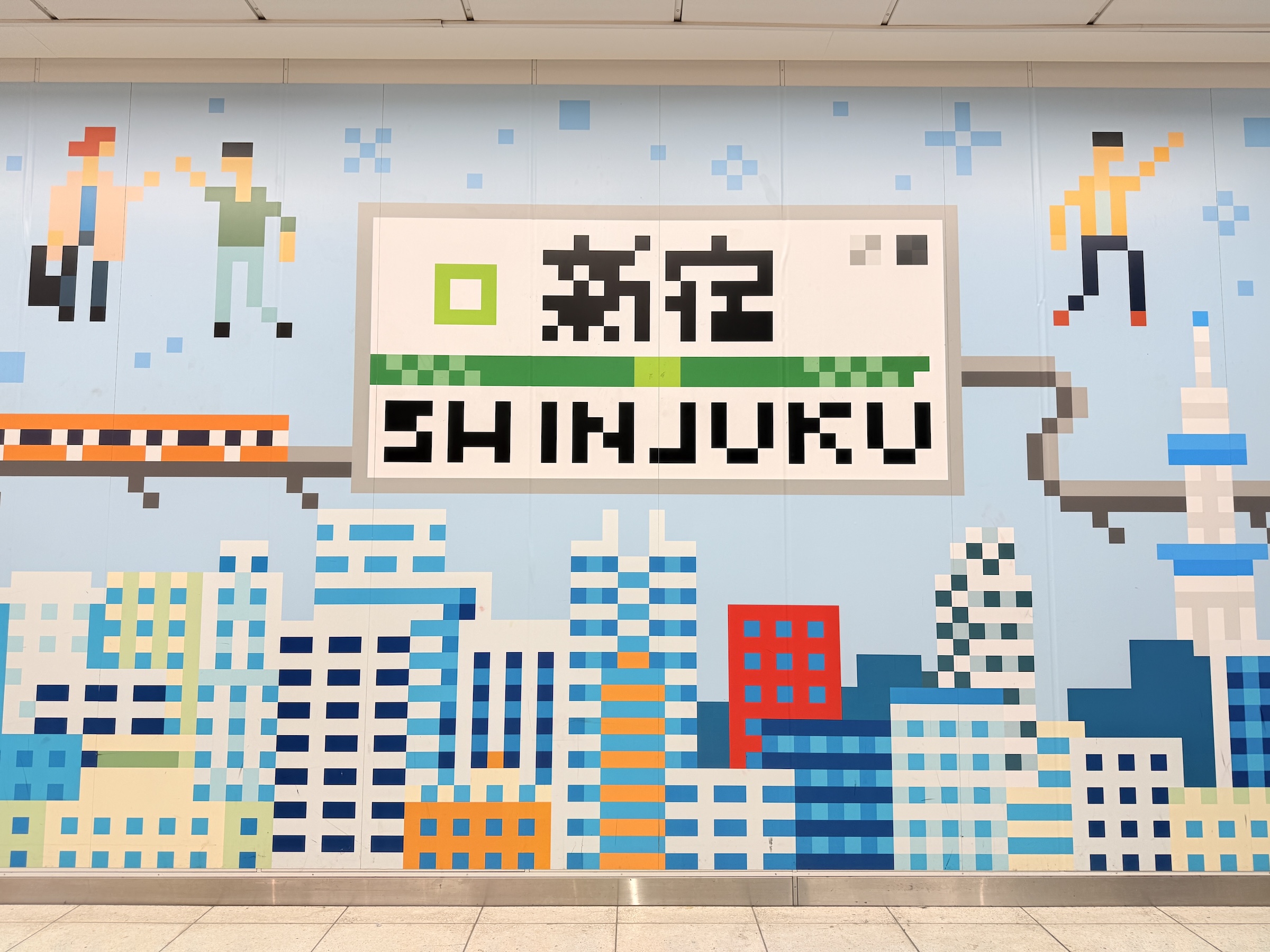
A colorful mural inside Shinjuku station.
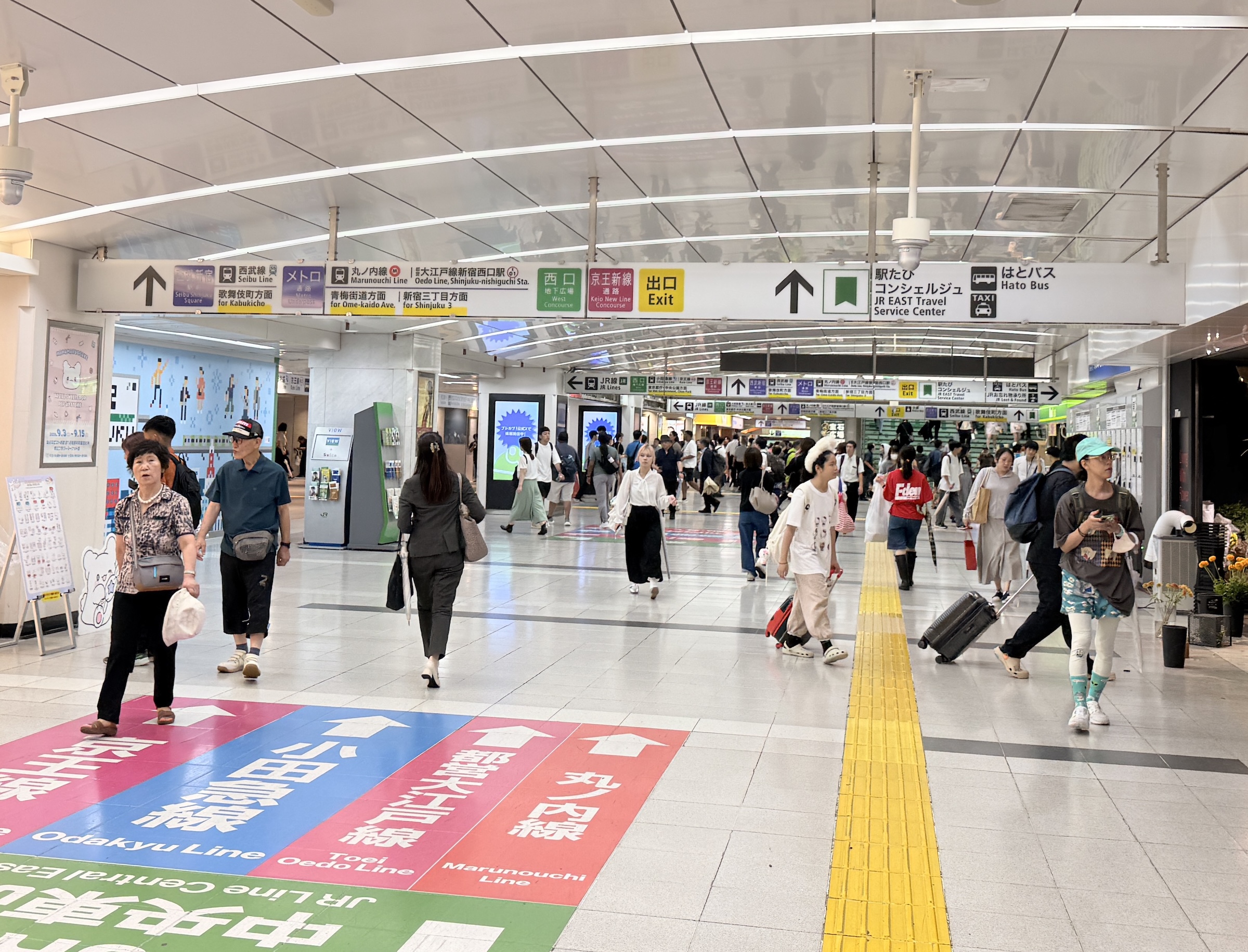
There is no lack of directions to the myriad train lines and exits in Shinjuku station, but Shinjuku Station has over 200 exits and many platforms of different shapes, spread out over a large area, along with department stores covering nearly all sides.
I tried to have Google Maps give me walking directions, and it worked— until it said ‘If there is no GPS signal, navigation may stop working’. Yes. No sh**.
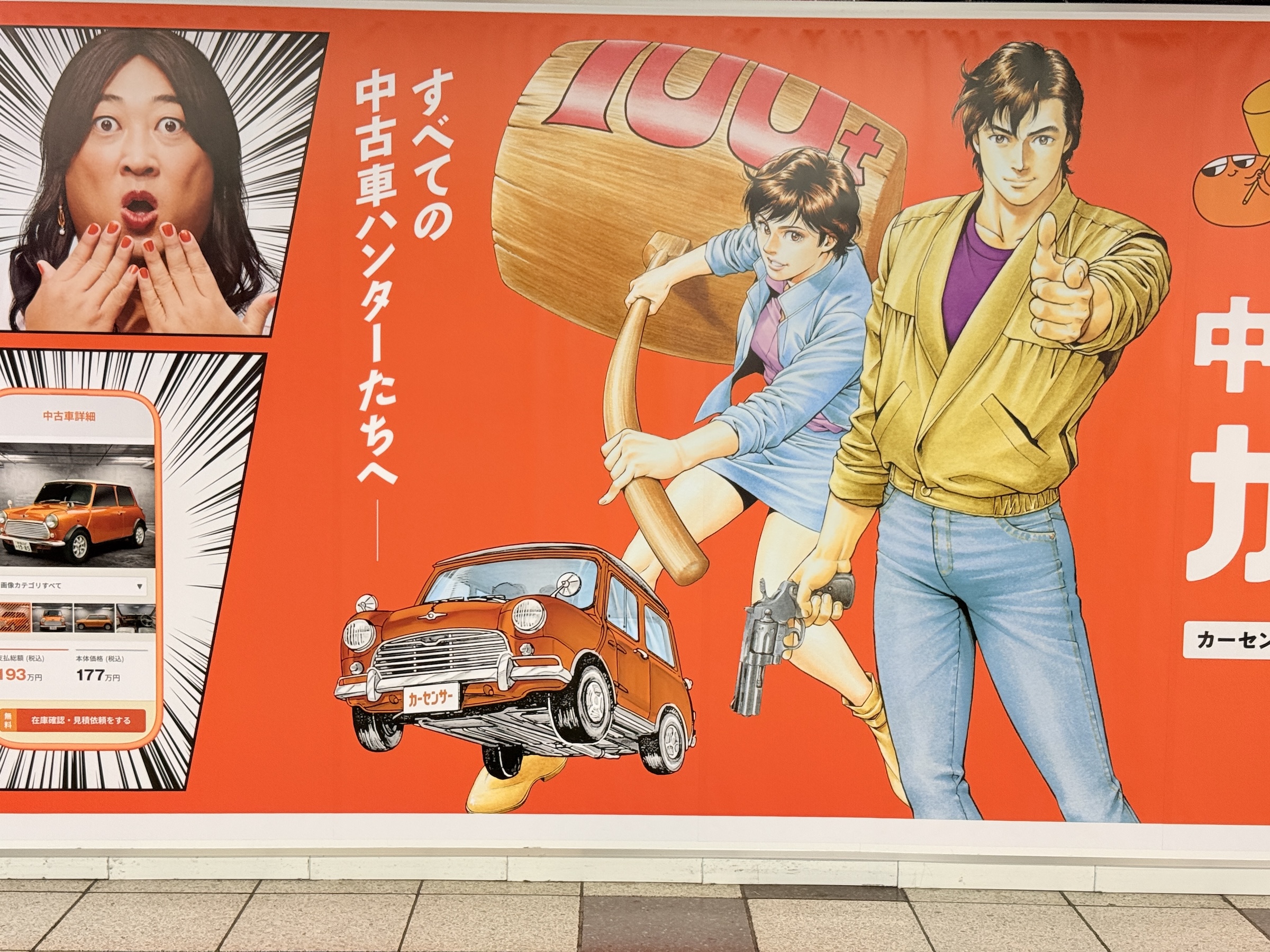
A mural inside Shinjuku.
Looking for a used car? Use the Car Sensor app.
The characters and manga style are from the iconic series City Hunter, which is being used here in a parody/comedic fashion to draw attention.
All right! By sunset (6.02 pm) the rain was gone, and now I’m going to run out to Shinjuku one more time.
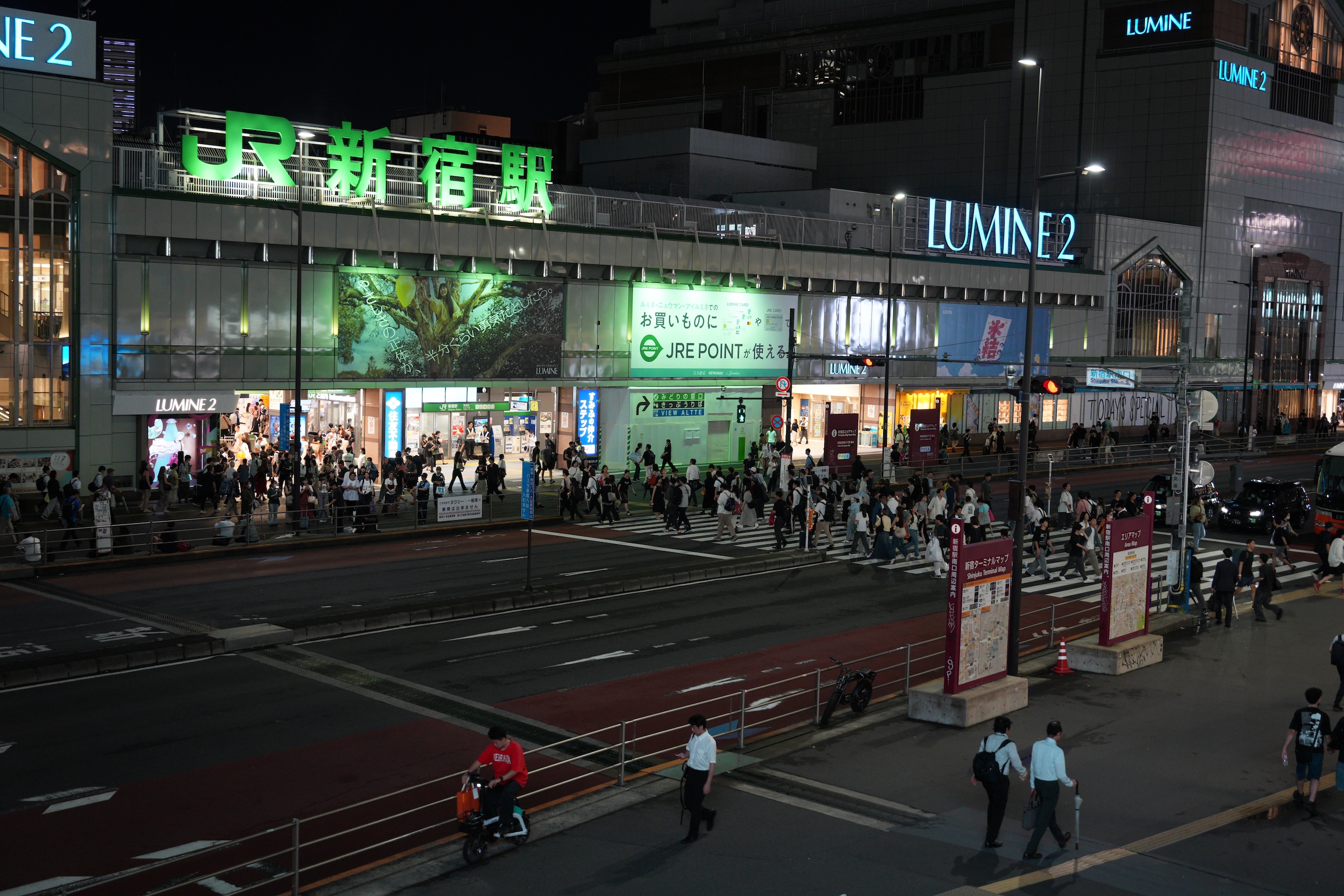
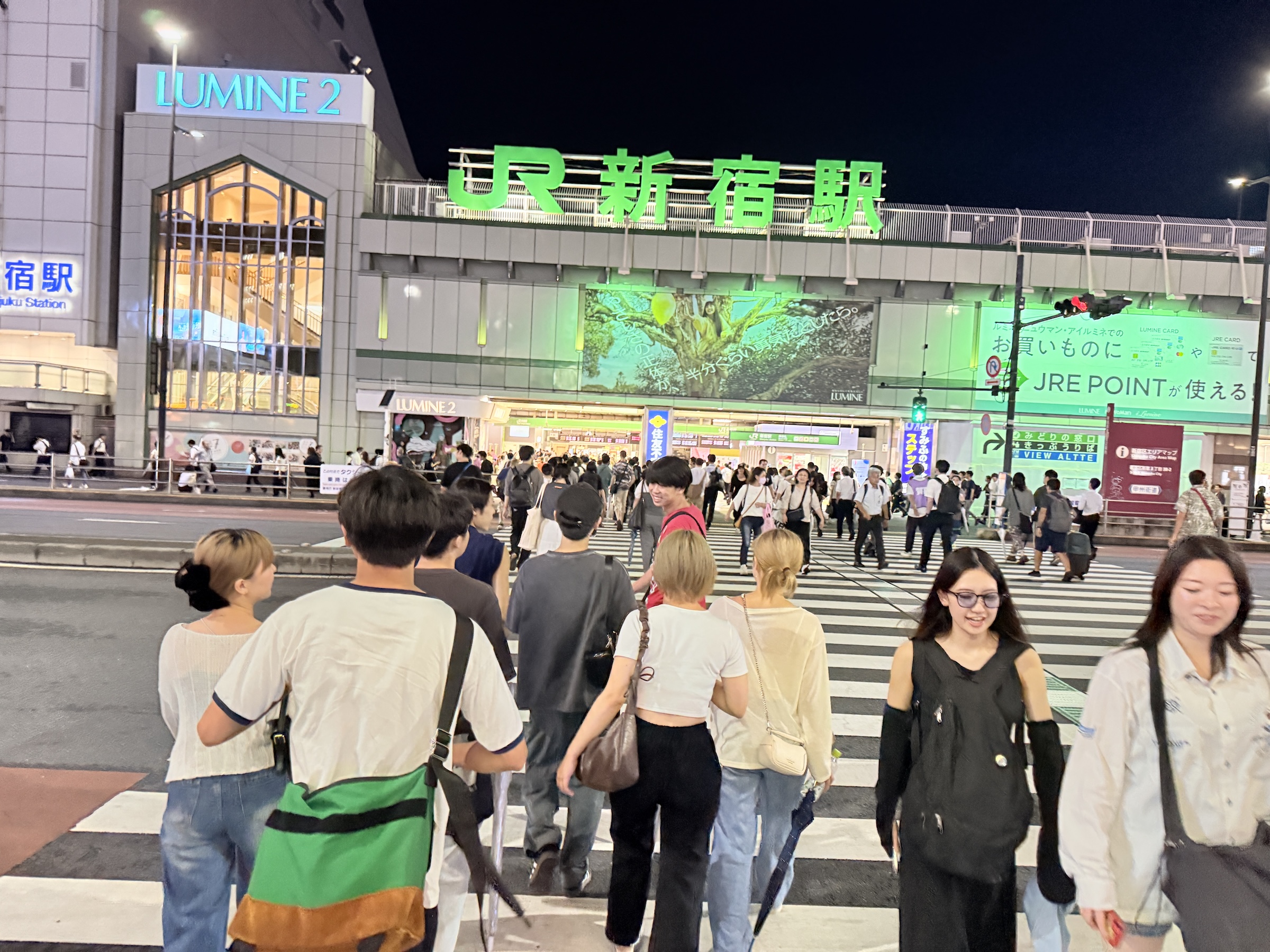
This is the exit I had looked for in vain this morning: the South East Entrance by the Lumine 2 store. I am on my way to Takashimaya Times Square nearby.
A street-level view of the pedestrian crossing at the South East Entrance.
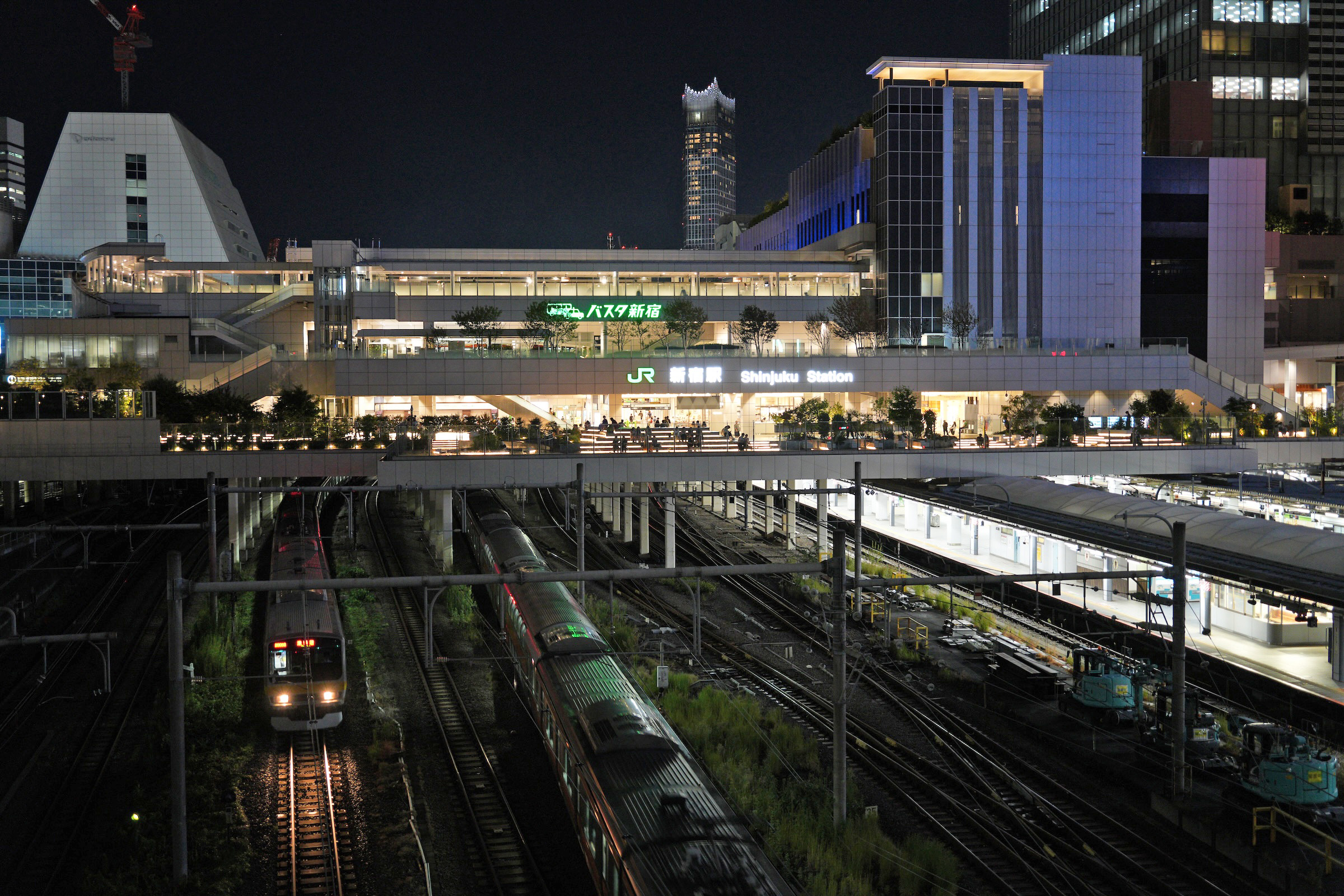
I walked several hundred yards now, further to the south, where there is an overlook of the railway lines going into the station.
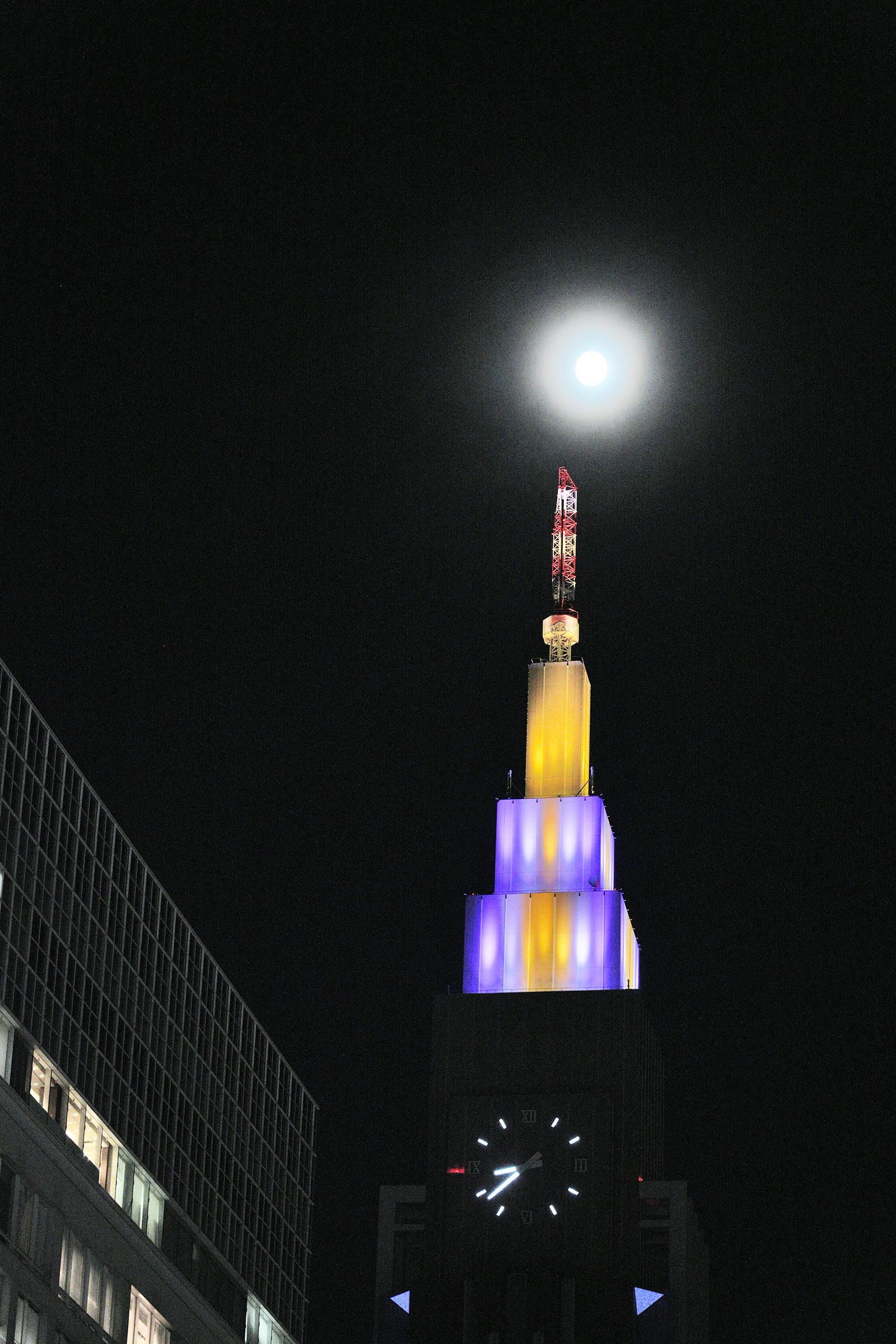
The clock tower located near Takashimaya Times Square is on the NTT Docomo Yoyogi Building. It’s just a day or two until September’s full moon.
I made it back to Shinagawa Station and now heading back to the hotel. No rain!
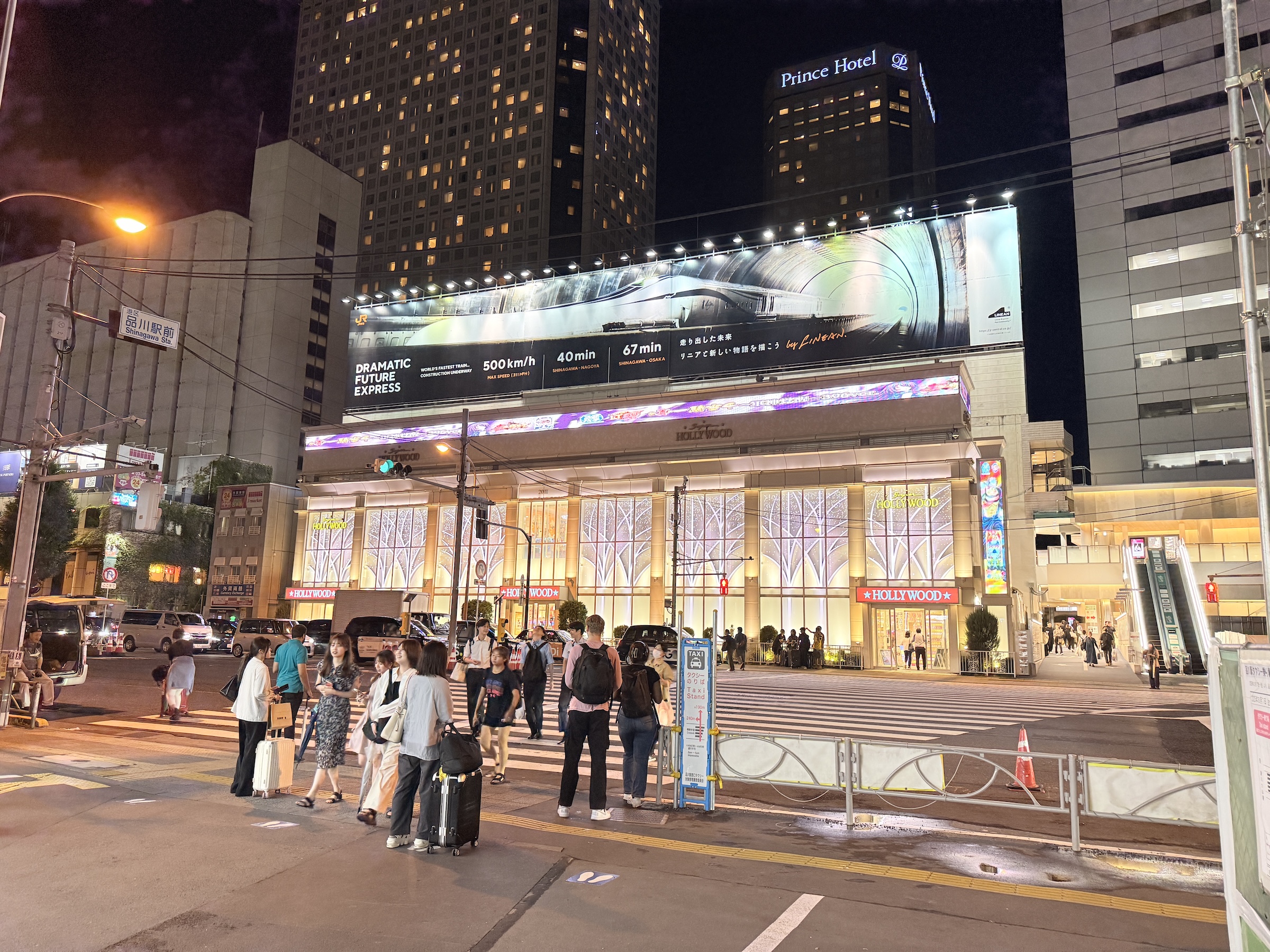
Check out the sleek billboard above the Hollywood pachinko parlor. It advertises an even sleeker, faster bullet train that is coming— able to fly at 500 km/h (311 mph) on the tracks.
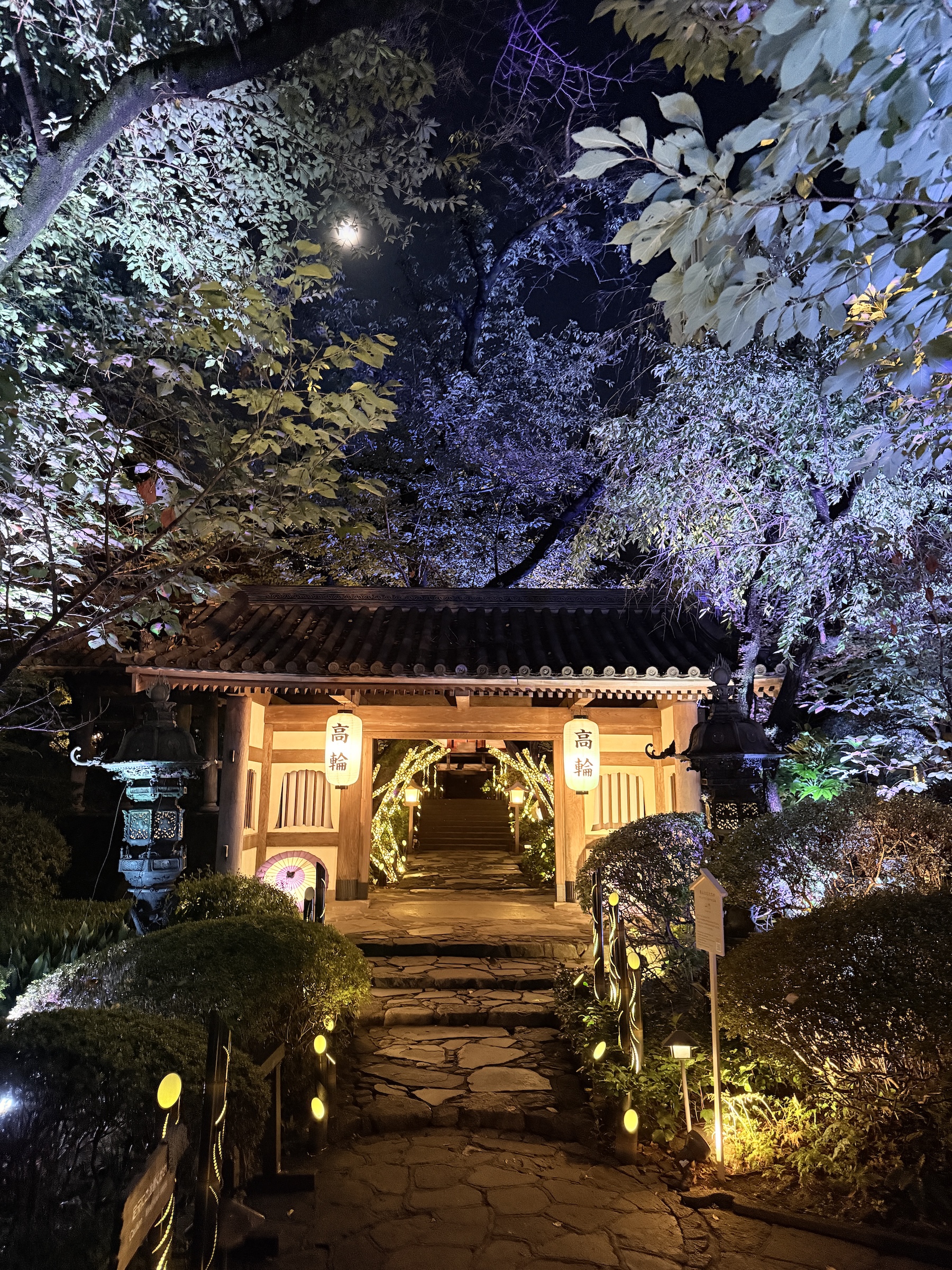
The almost-full moon over a gate in the Japanese garden on the hotel grounds.

Thursday/ Akihabara and Tokyo Station 🚆

There was drizzle on and off here in Tokyo on Thursday, at a damp 85°F (30 °C).
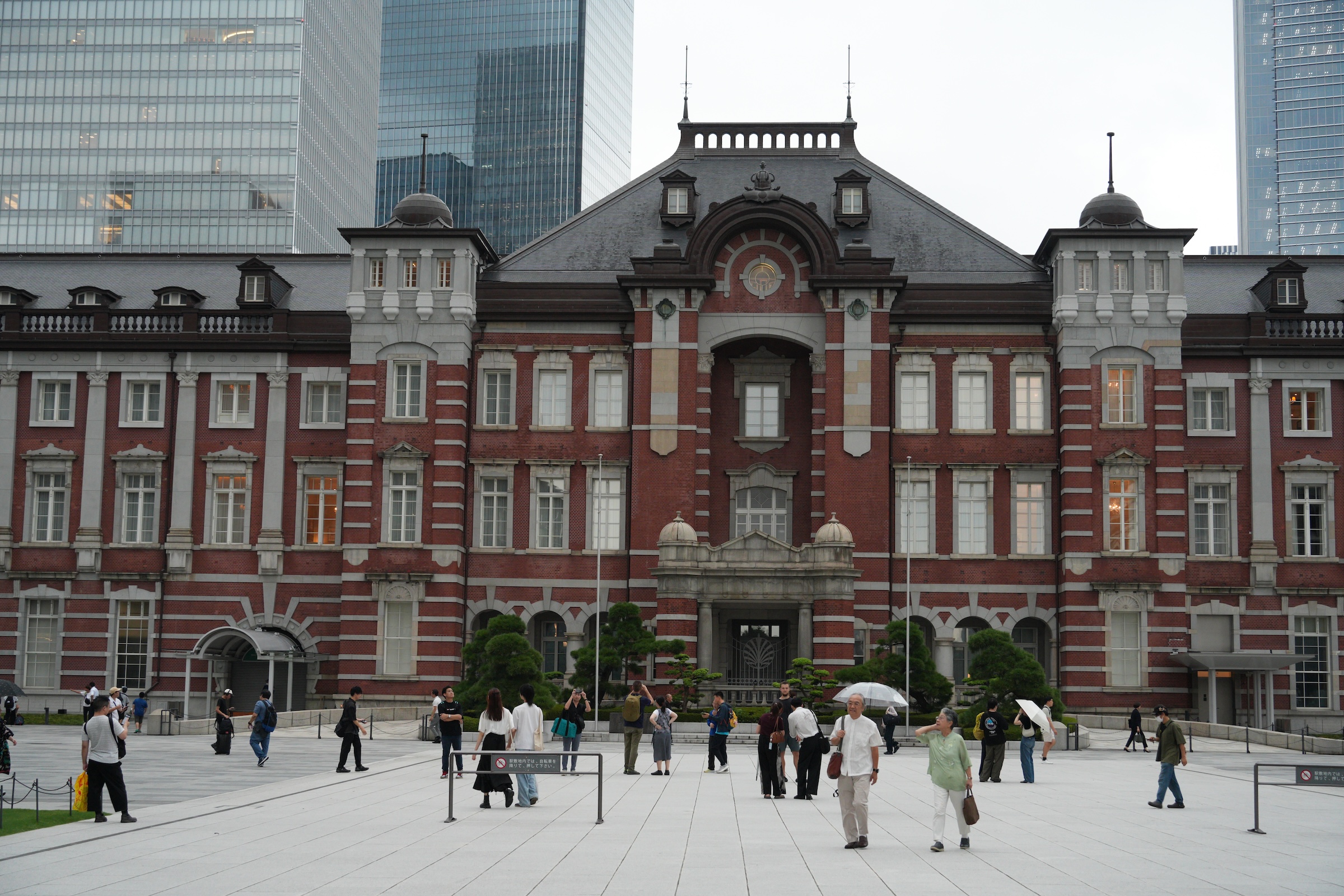
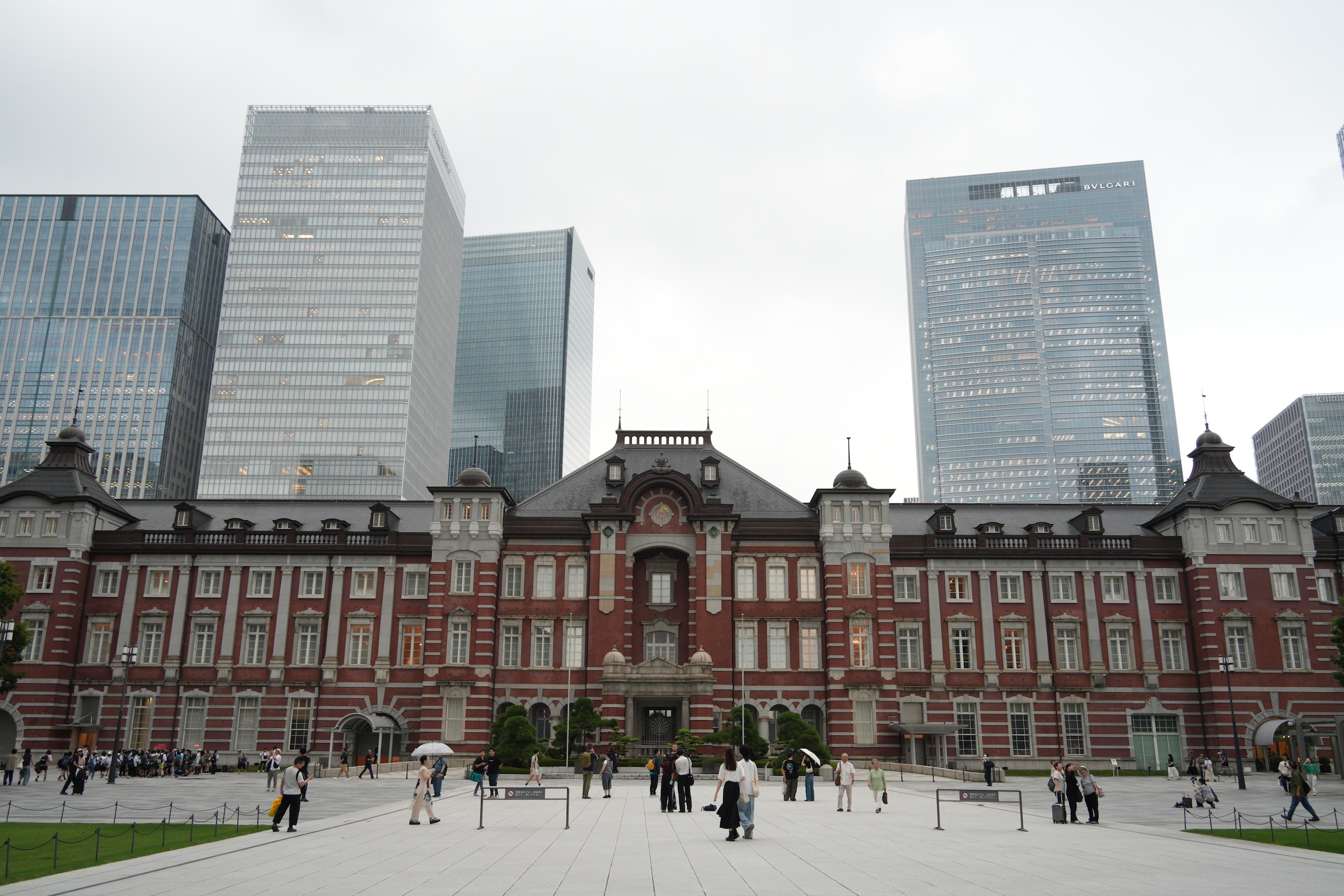
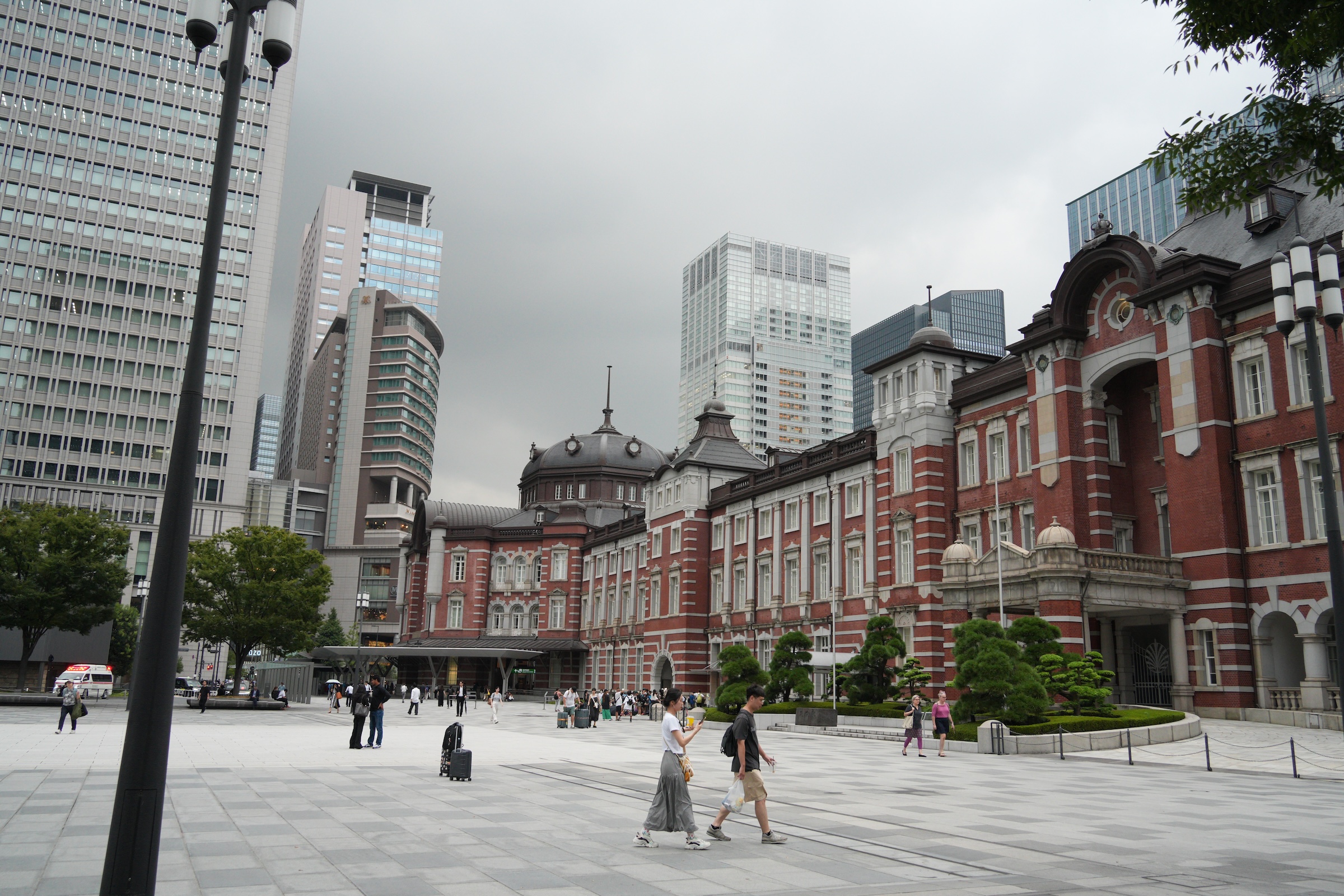
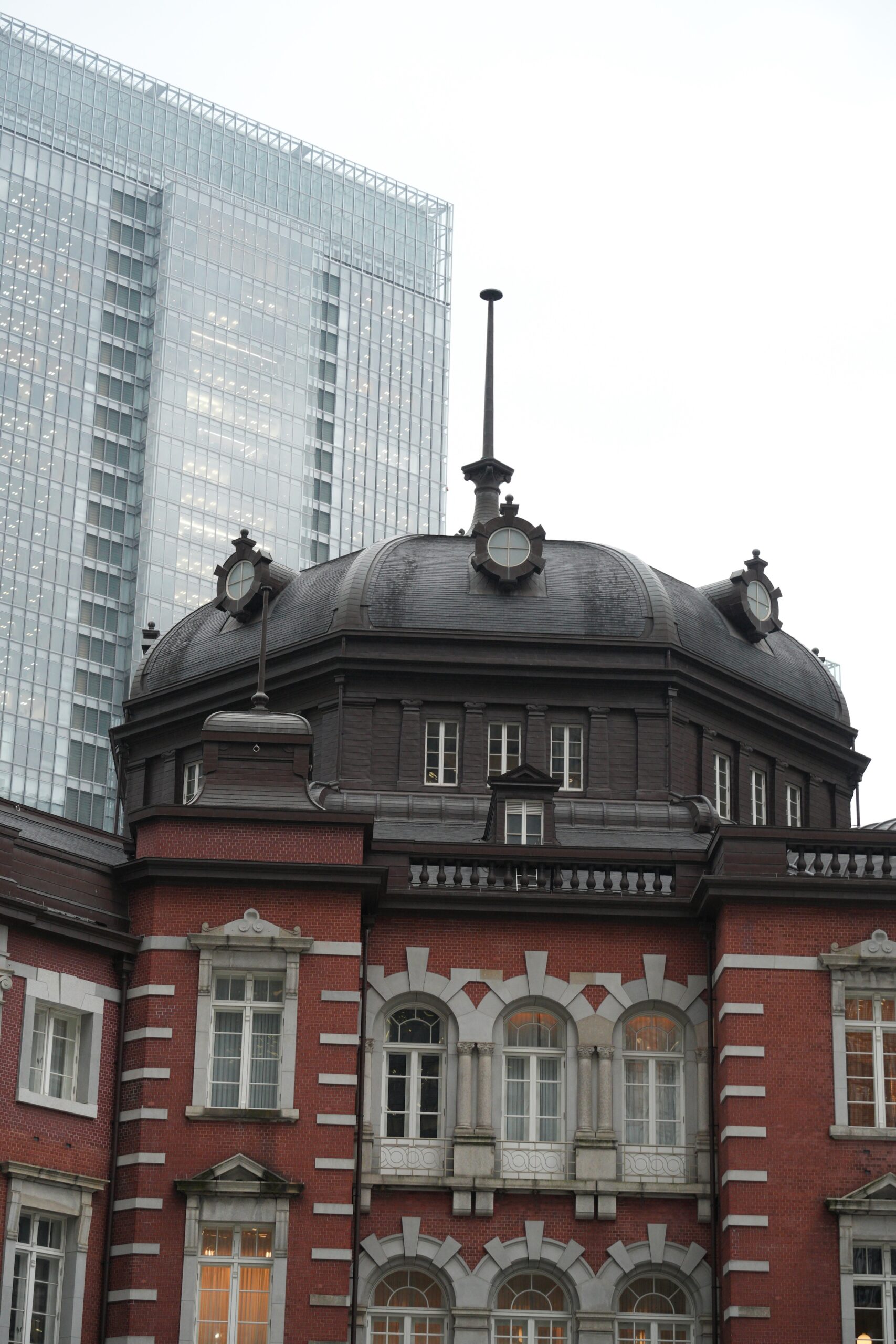
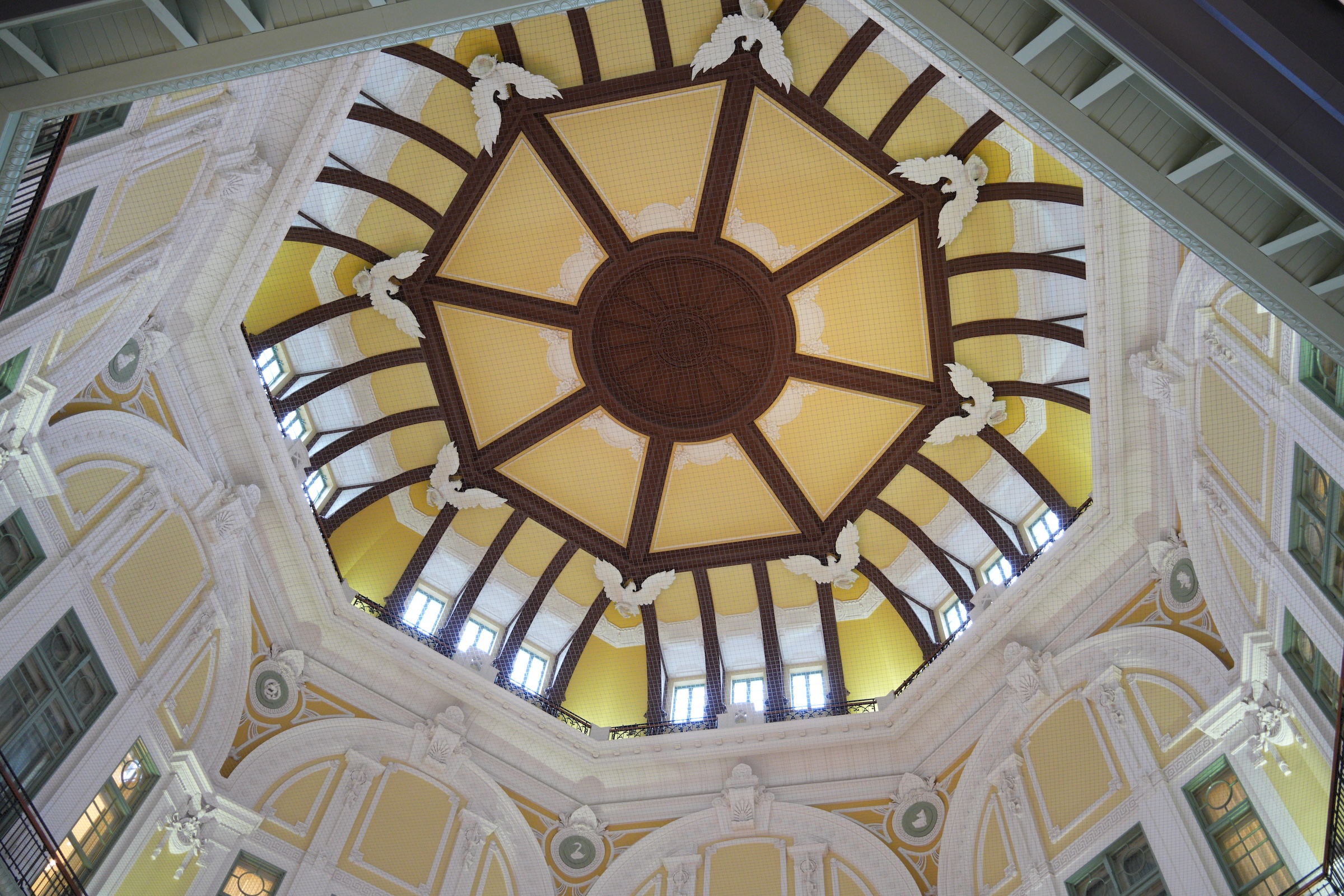
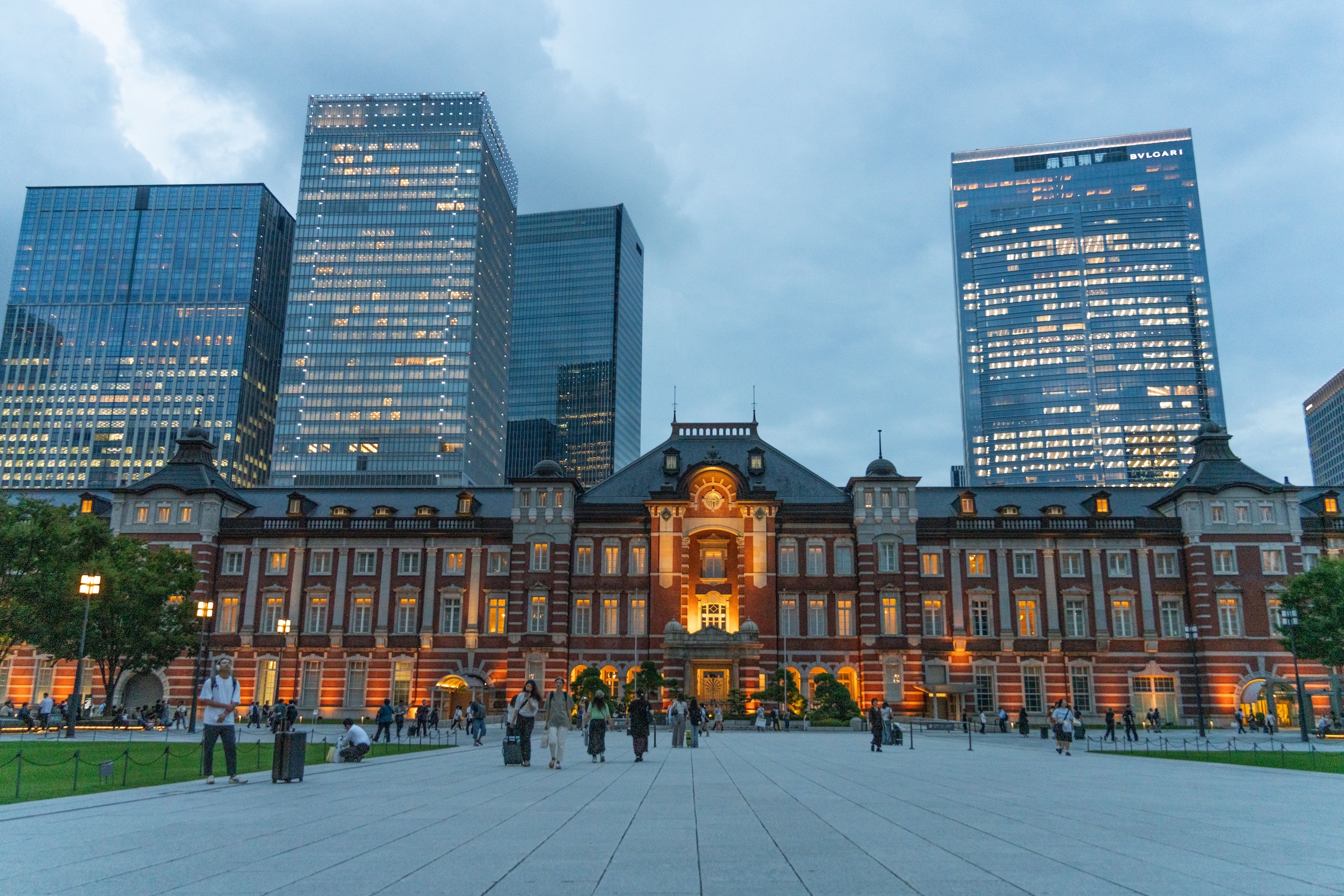
Outside, I could only take pictures here and there with my big camera, but managed to get a few of the iconic 1914 Tokyo Station building (extensively renovated and restored in 2012).
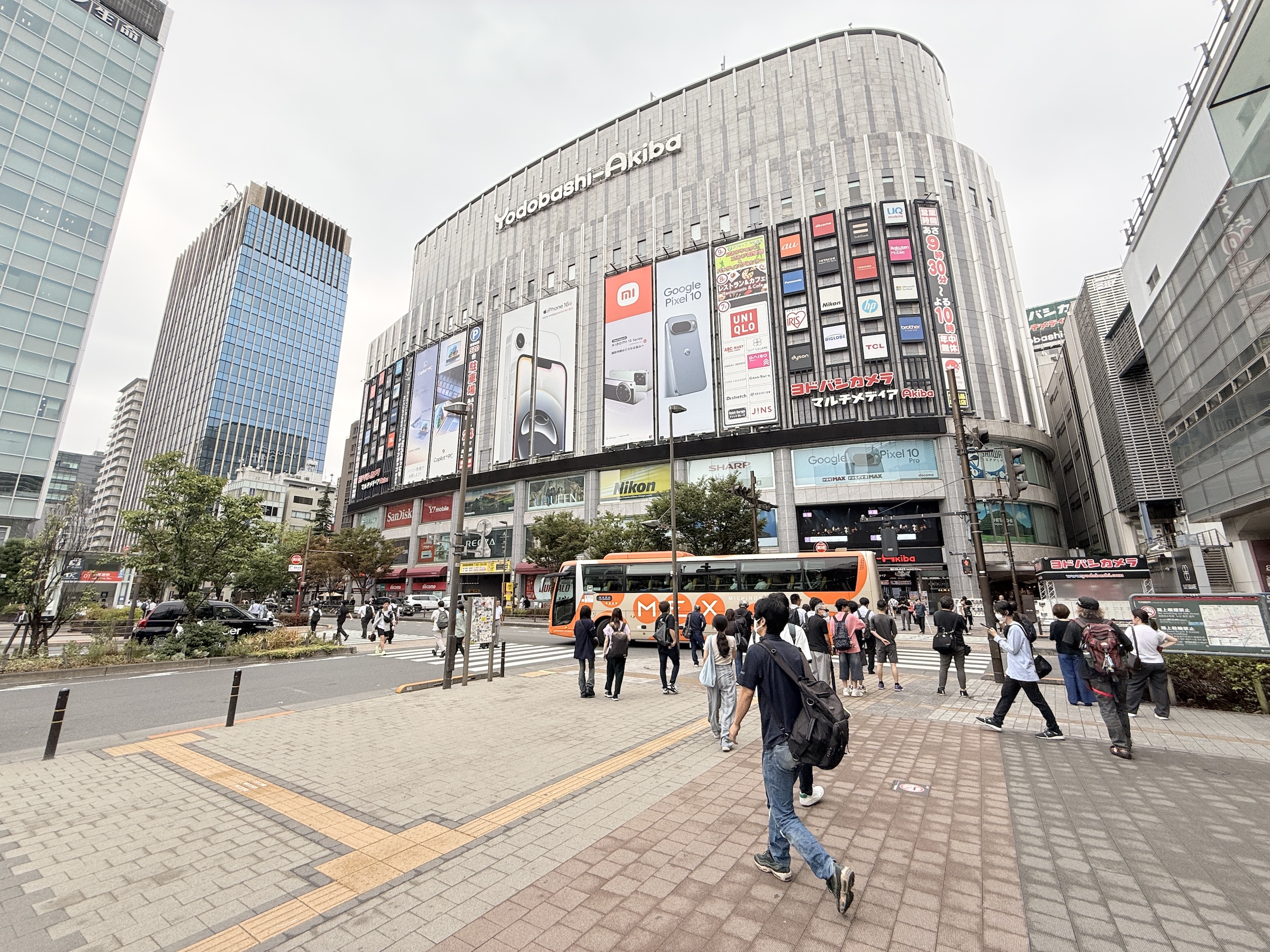
I also made my first run to the Yodobashi Akiba store in Akihabara.
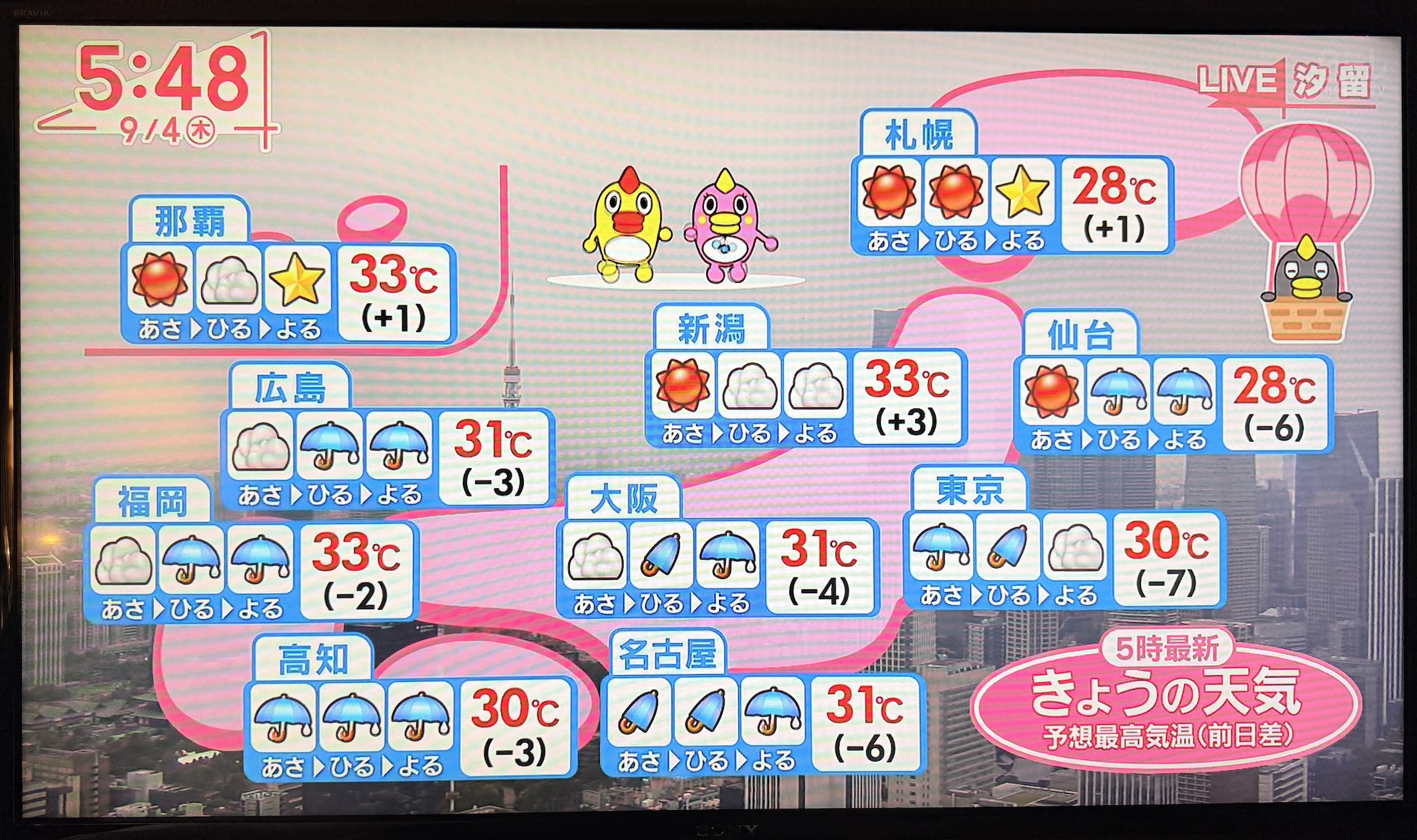
Nice infographic from the hotel room TV. The pink blobs are Japan’s main islands. That’s Tokyo in the bottom right corner, showing that the 30 °C is down 7°C from yesterday (85 °F , down from 99 °F). Yay! .. even though it still feels very warm and humid. (And are those little characters chickens?)
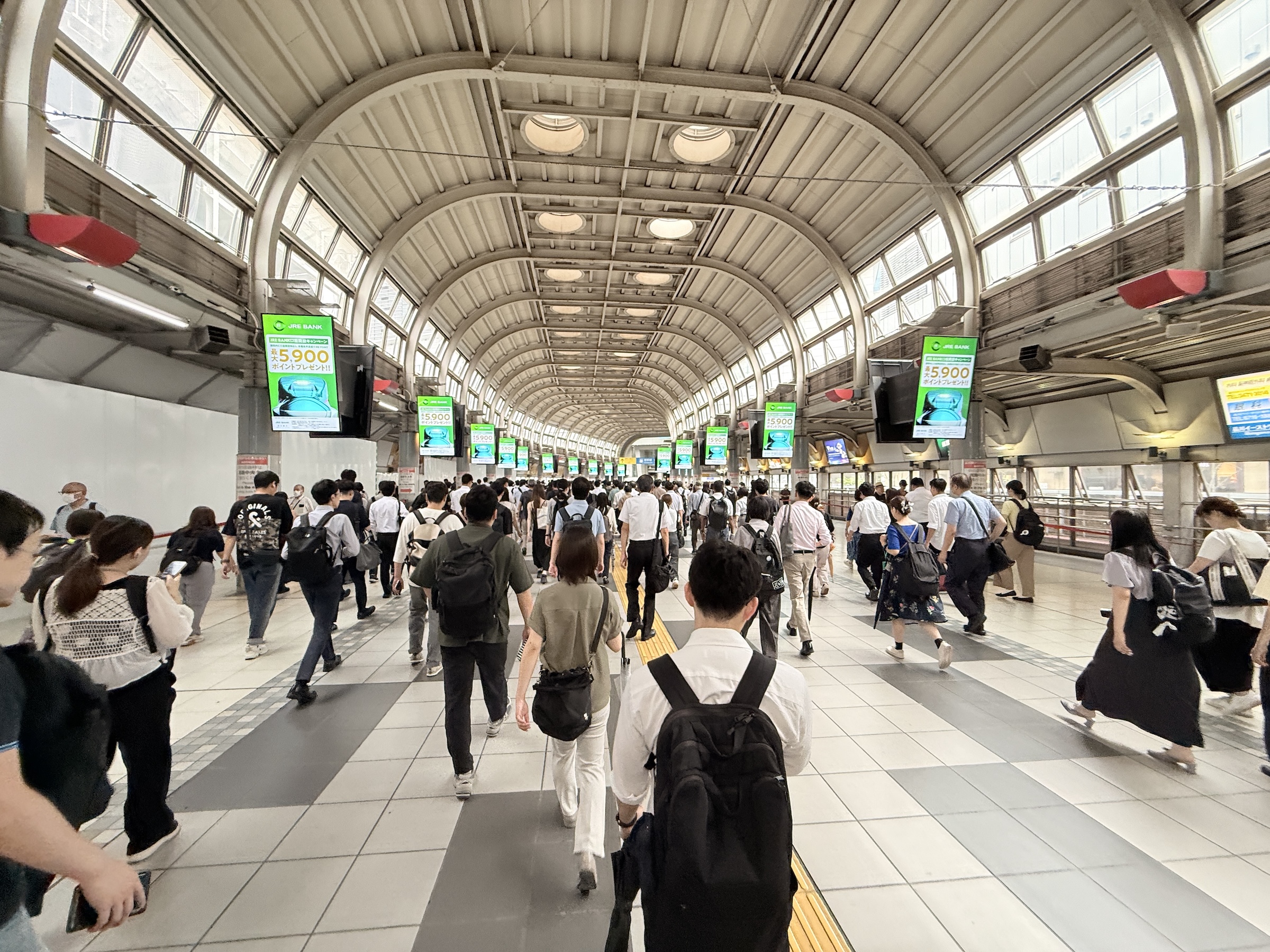
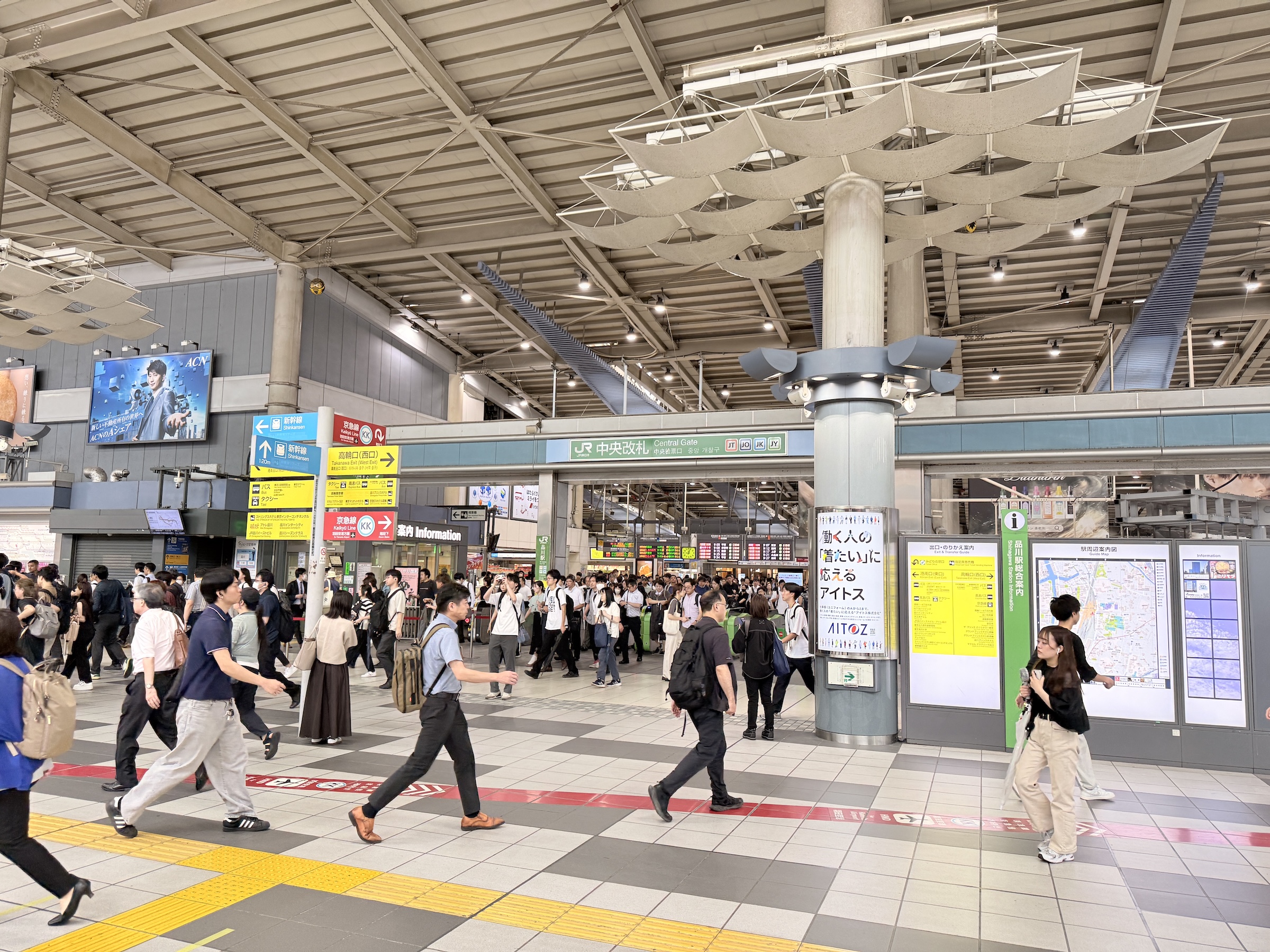
This is about 9.30 am and I caught the tail end of the morning rush hour into, and out of Shinagawa station.
Office workers and a few others (me) streaming out of Shinagawa station. Walk on the sides, if you are coming into the station, said the display screen.
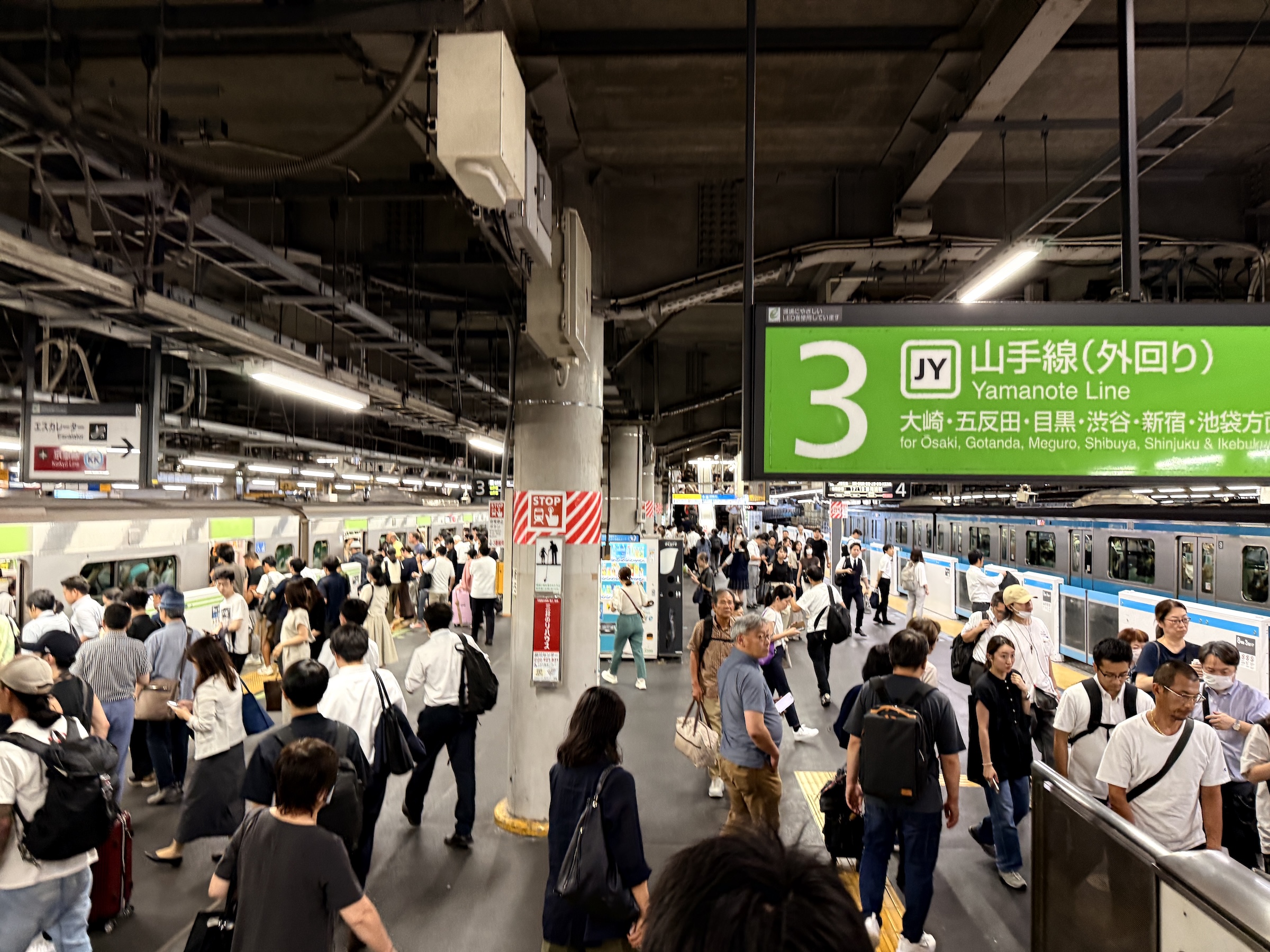
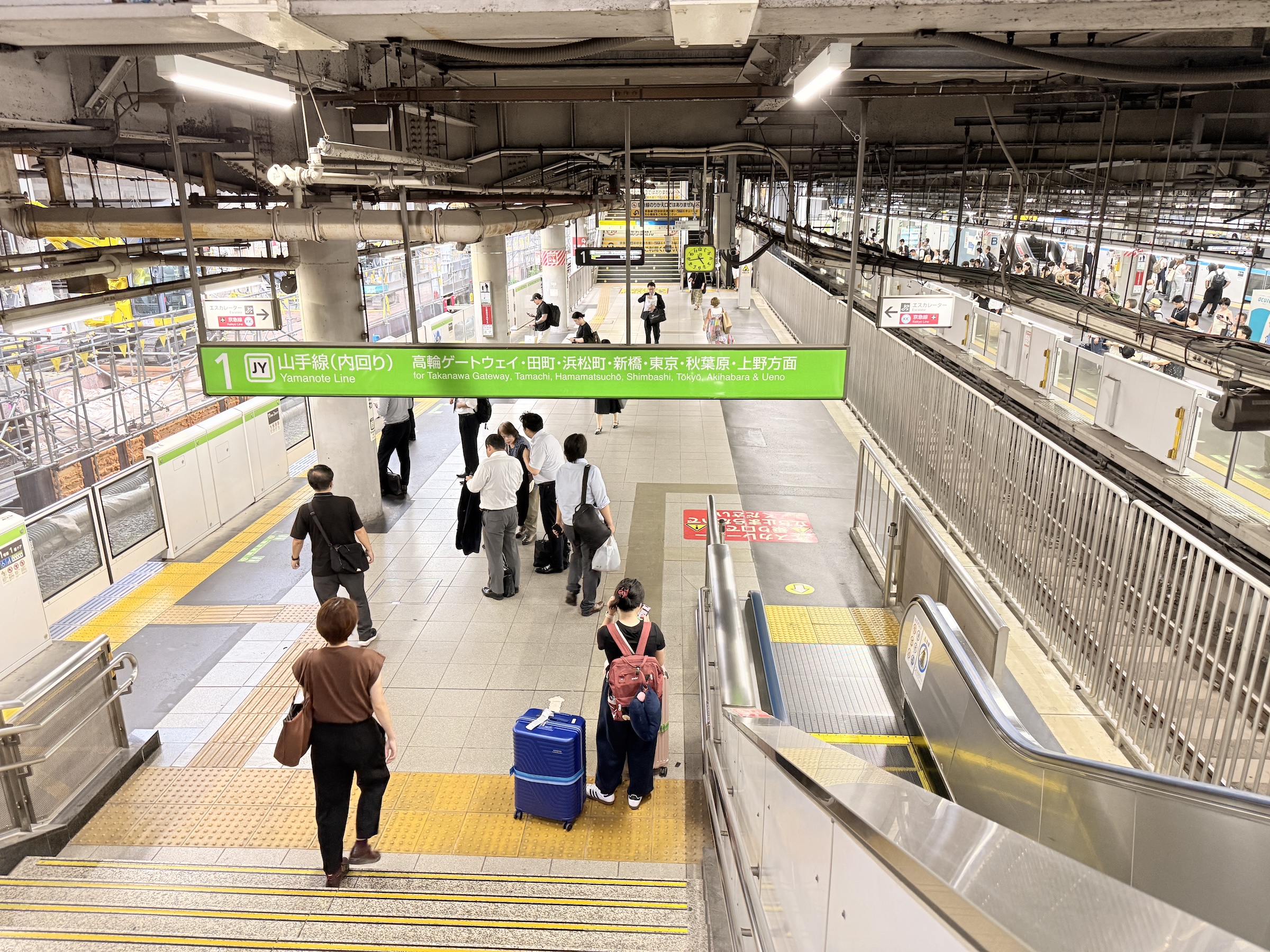
All right, now I’m heading down to the Yamanote Line— the loop line with Shinagawa station on it, near my hotel. This line has been in service for 140 years now (constructed 1885) and is used by some 4 million people every day. The train had left just a minute ago.
Hello, Yodobashi Akiba! It is by Akihabara station, 8 stops to the north of Shinagawa station.
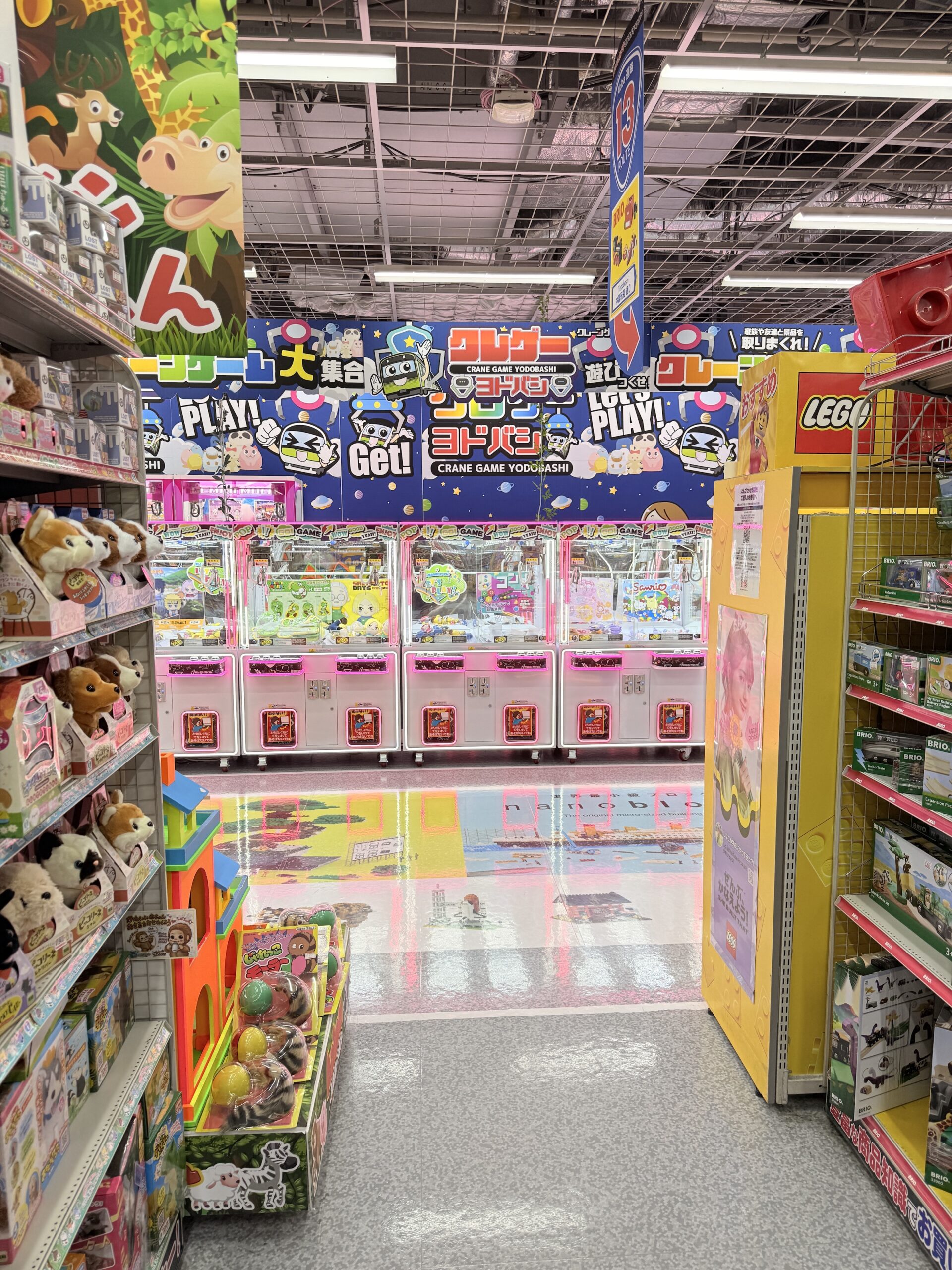
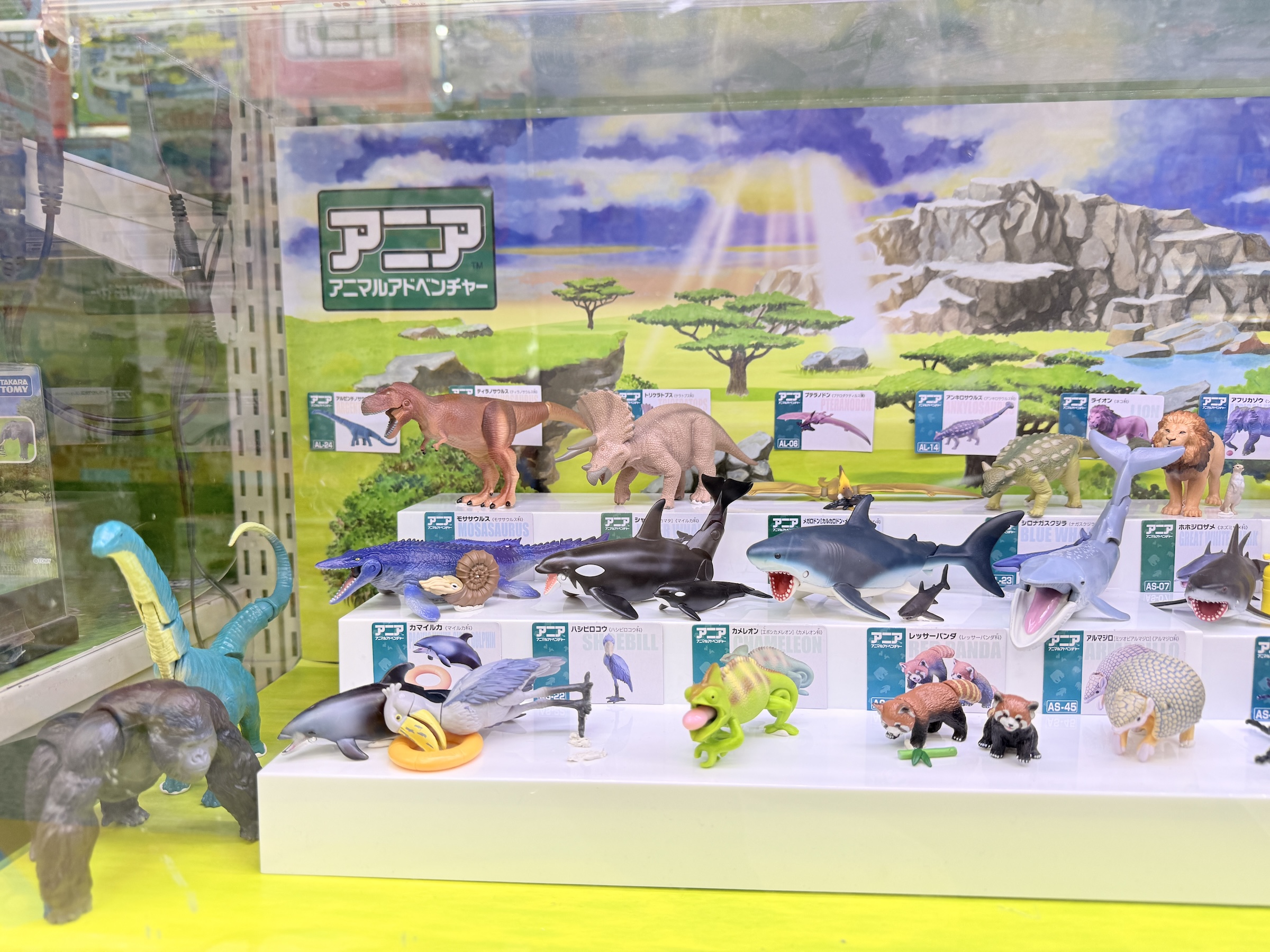
The toys for kids of all ages are on the 6th floor. The bank of pink claw machines was not there two years ago when I last visited.
In Japan, claw machines are most commonly called “UFO catchers” (ユーフォーキャッチャー) or “crane games” (クレーンゲーム). The term “UFO catcher” comes from the appearance of the claw mechanism, which resembles a UFO descending to capture a prize, a term popularized by Sega when they introduced the game in 1985.
[From Wikipedia]
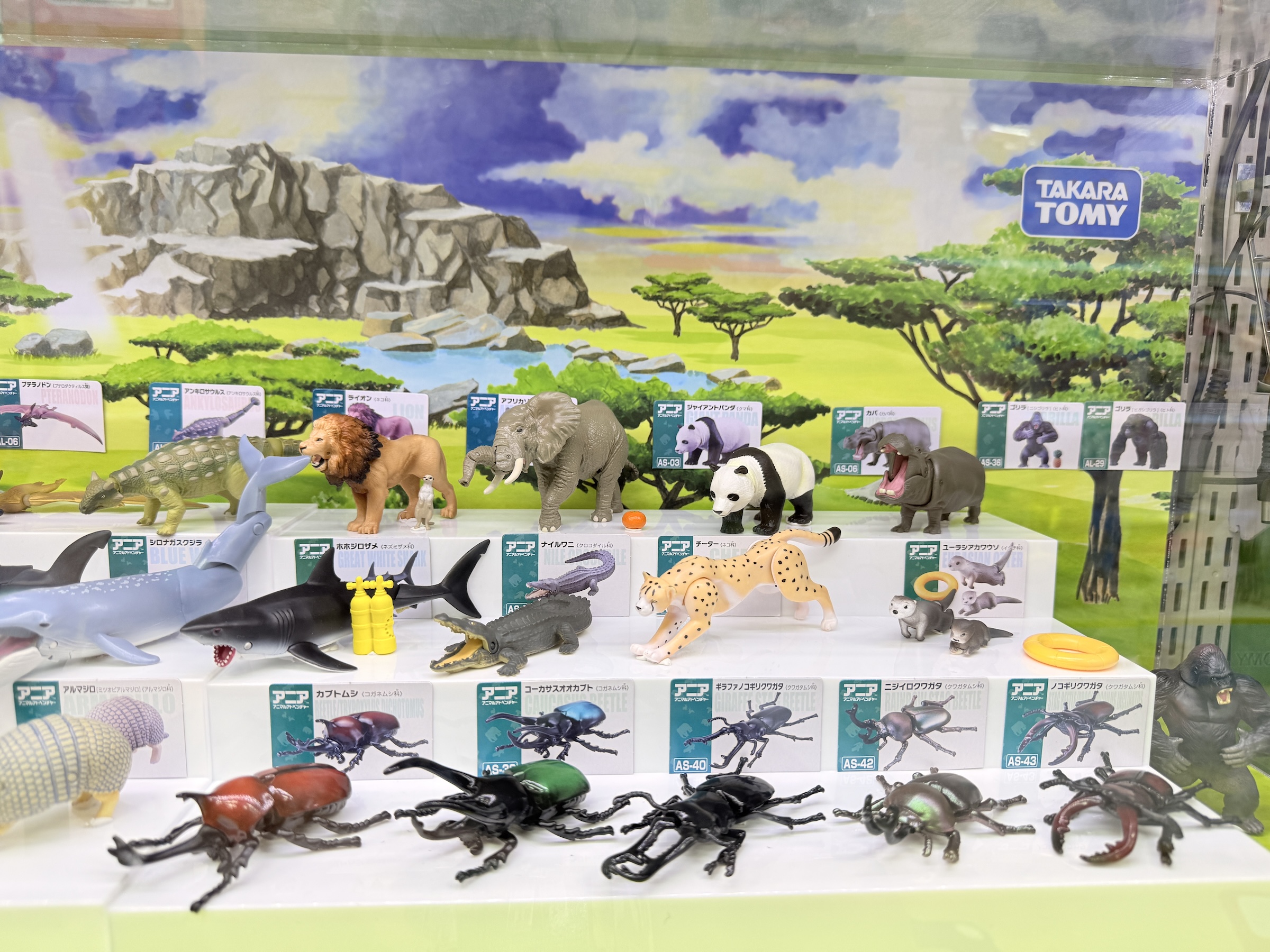
I bought a few of these Takara Tomy animal figures: the lion, the cheetah, a gorilla, a peacock, a shoebill stork.
Help! The shoebill stork fell down (is its bill too big and heavy?) and someone needs to come and fix the display case. The chameleon figure (bottom) has a movable tongue that can be pulled out and pushed back in. Nice. I now regret I did not get the chameleon, as well.
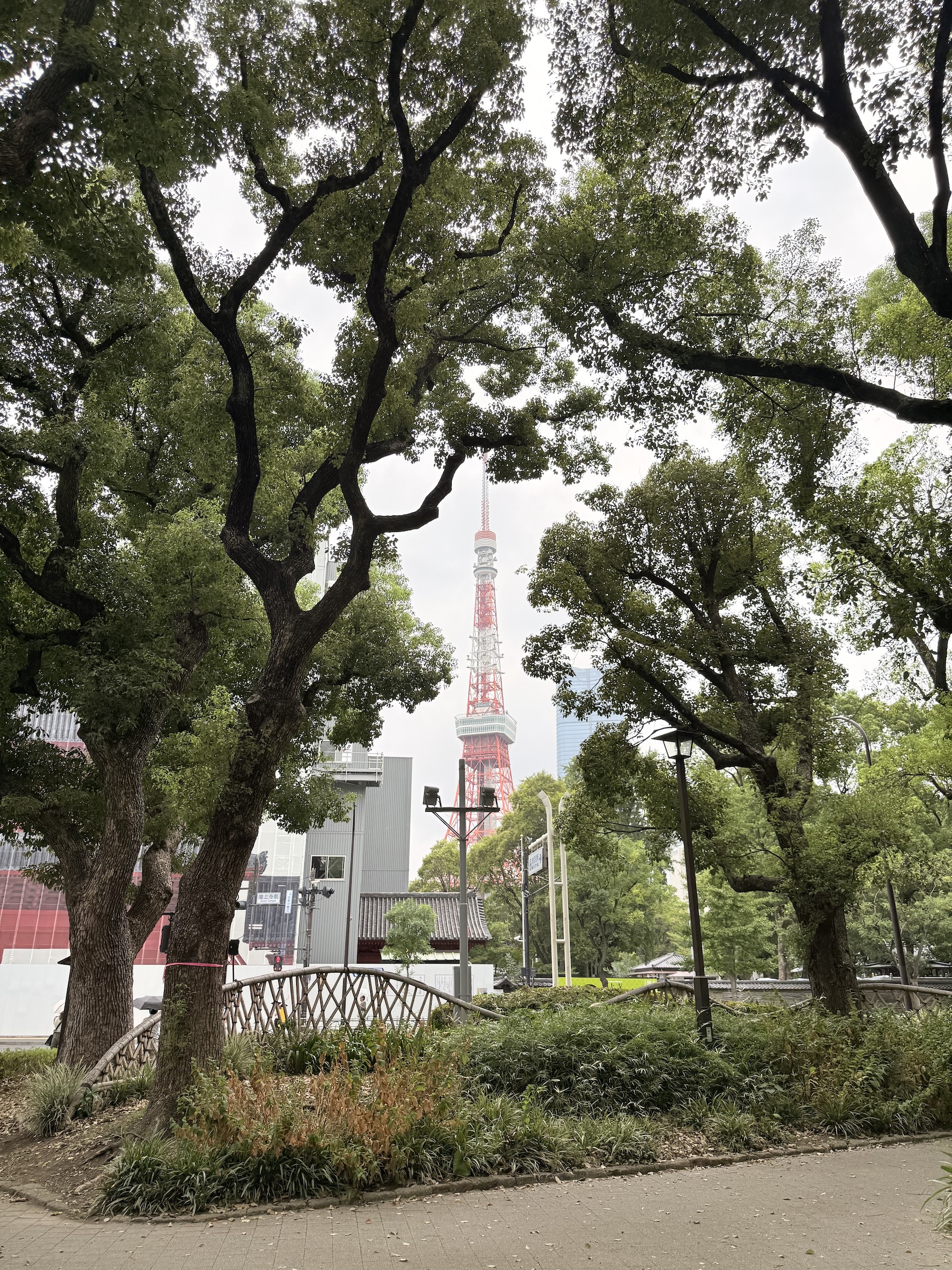
On the way back on the Yamanote line, I saw Tokyo Tower out of the train window by Hamamatsucho station. It seemed nearby and I stepped out and walked the five or six there— kind of regrettting it, because it started to drizzle. This green space near the Tower is called Shiba Park.
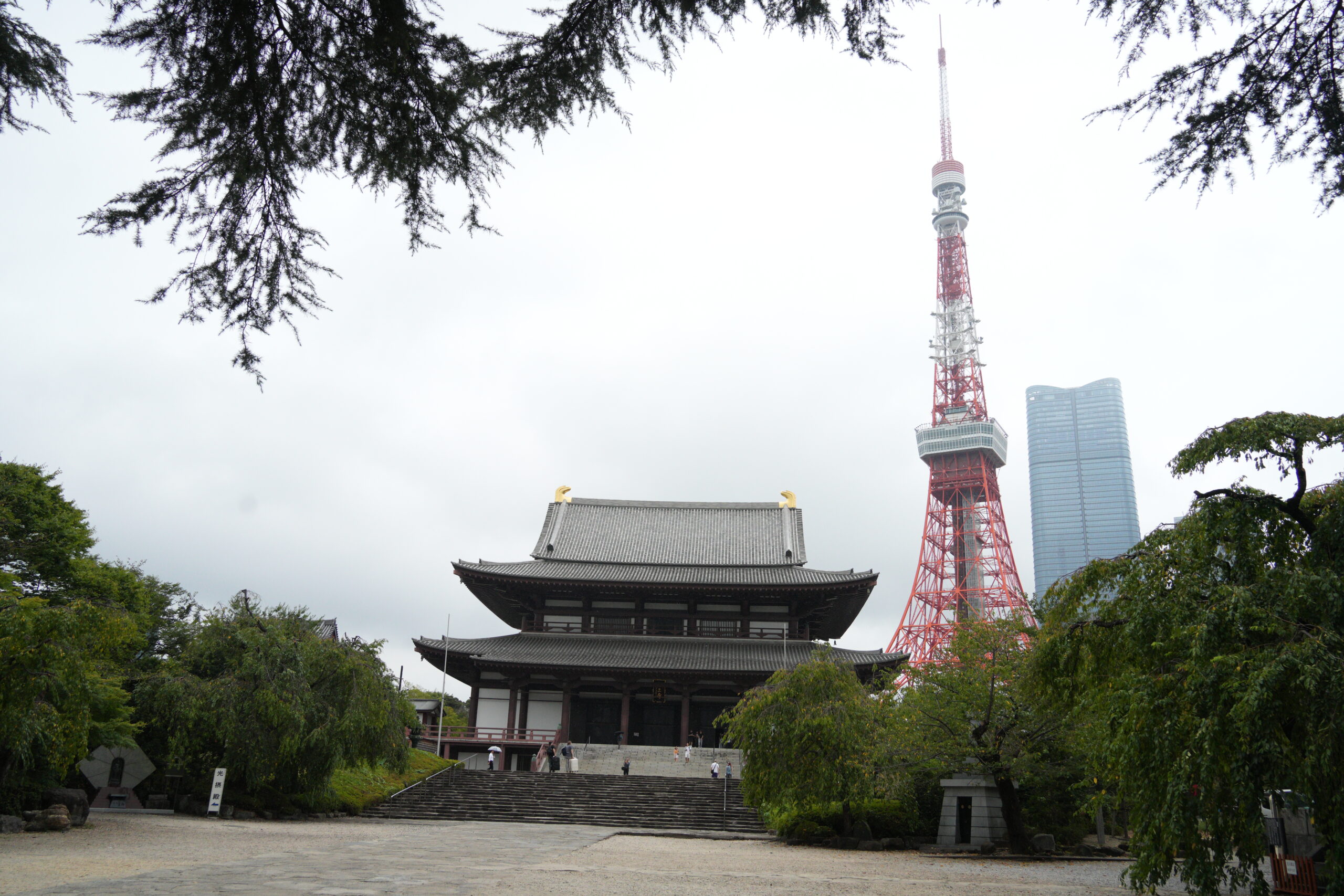
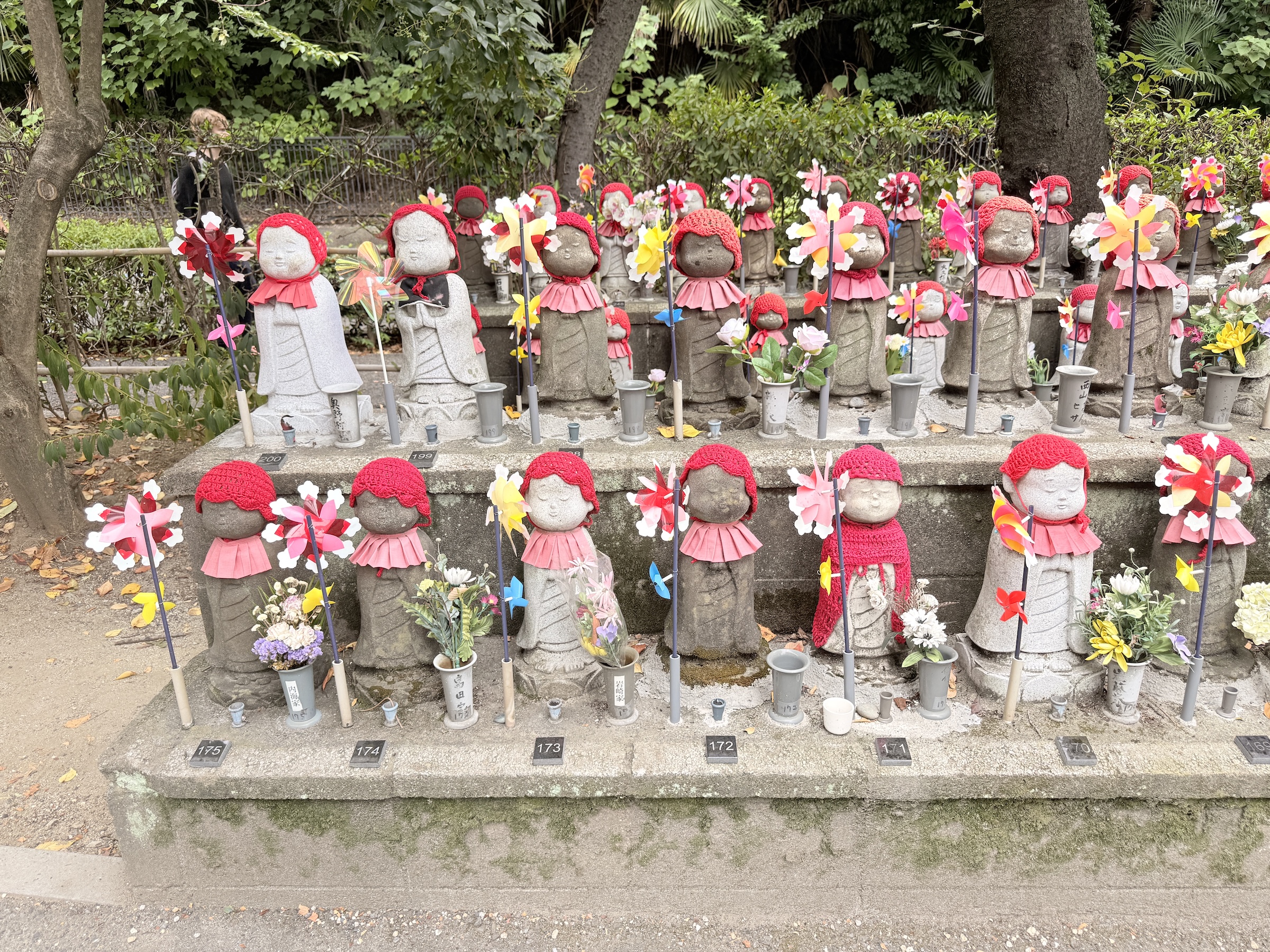
I’m standing under a Himalayan cedar, and that’s the Buddhist temple called Zojo-ji Temple.
From Wikipedia: At its peak the temple grounds had more than 120 buildings, but following the decline of Buddhism during the Meiji period (1868-1912), most of them burned down during the bombing of Tokyo in World War II. Reconstruction began after the war, with the Daiden (great hall) being rebuilt in 1974.
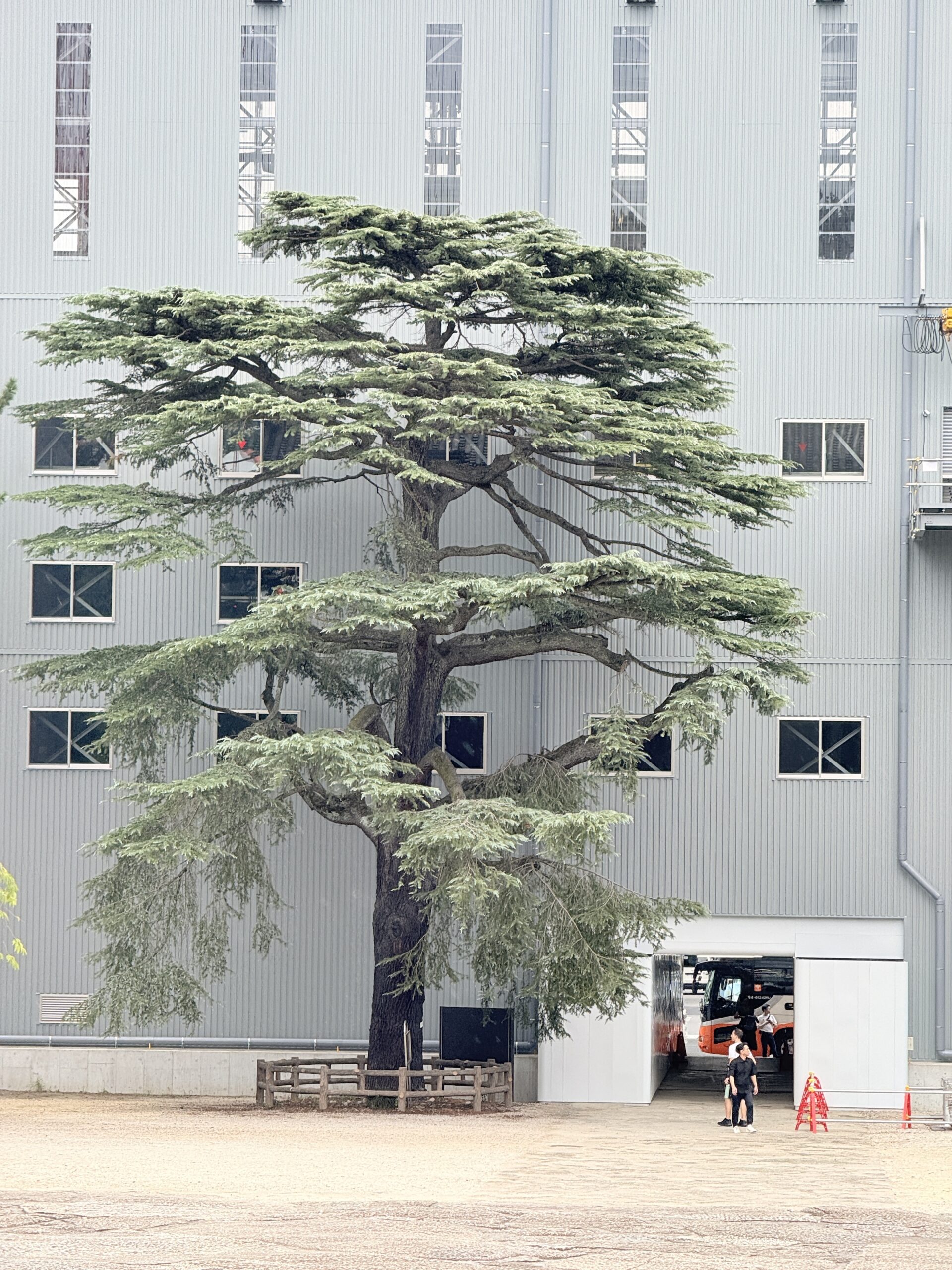
Here’s the Himalayan cedar. A plaque by the tree notes that General Grant (18th President of the United States) planted this tree when he visited Zojo-ji Temple as a guest in 1879 (that’s 146 years ago).  The main gate to the grounds is under renovation and enclosed in a sheet metal building behind the tree.
A cemetery by the temple, presumably with ashes from the deceased. The cemetery at Zojo-ji Temple holds the mausoleums of six Tokugawa shoguns* and their families, serving as the family temple for the Tokugawa clan.
*The shogun (short for Sei-i Taishōgun, 征夷大将軍) was the supreme military and political leader of Japan, ruling for nearly 700 years. The rule of the shoguns ended in 1868 with the Meiji Restoration, which was triggered by growing internal discontent and the disruptive arrival of Western powers.
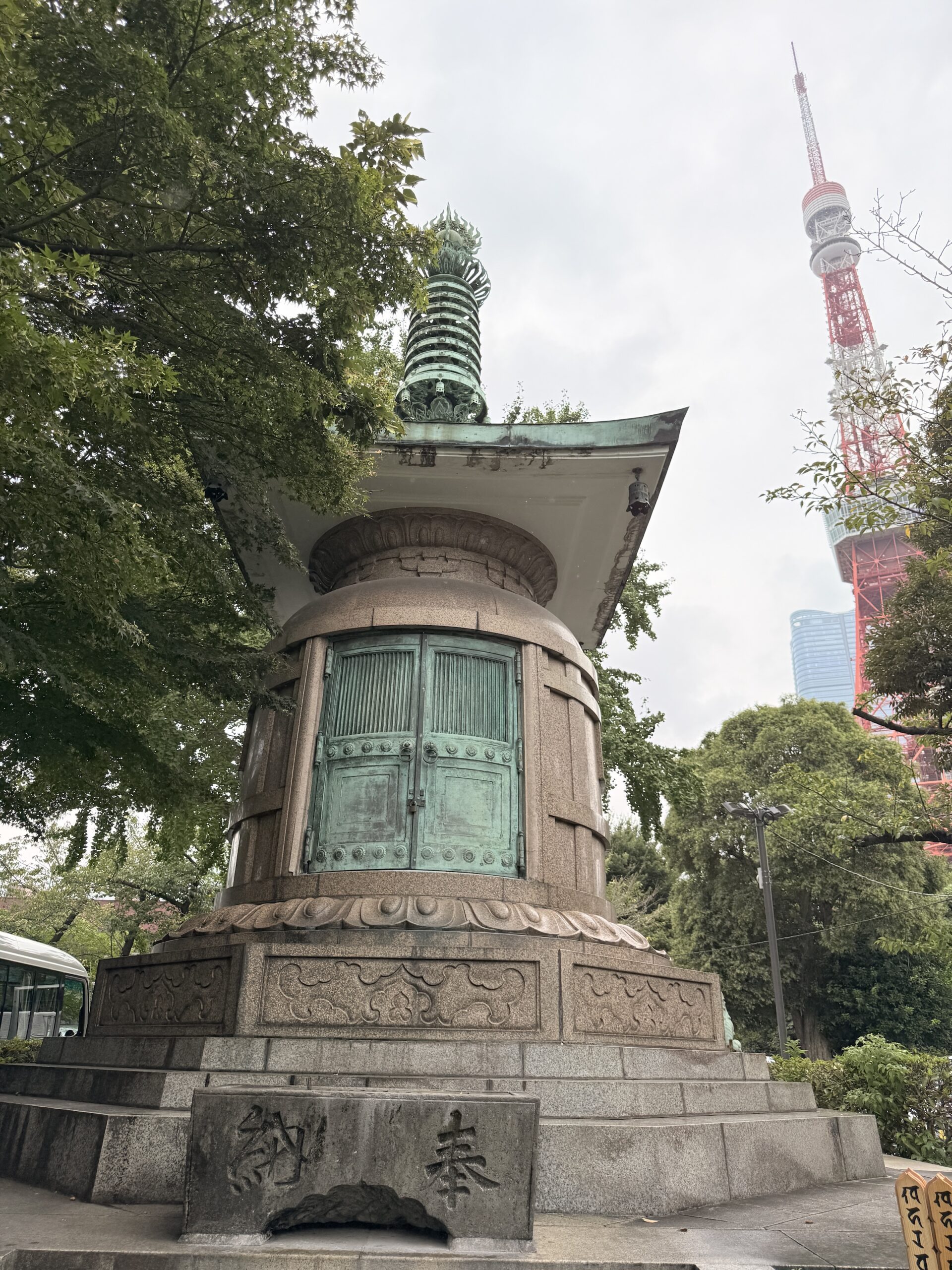
Dai-Nokotsudo, or Shariden, is where the bones of deceased are stored. It is made of stone and was created in 1933.
Here are several pictures of the Tokyo station building, taken late afternoon and early evening. Tokyo Station is surrounded by many modern glass and steel office towers.

Tuesday/ The Emerald 🏙️

I take my new camera with me now, every time I go for a walk.
I’m still learning to adjust the exposure and the auto-focus mode.
I also paired the camera with my iPhone (via Bluetooth) so that that the GPS coordinates of my location for each picture can be recorded in the camera on the metadata for the image.
There is a drawback, though: the camera’s battery runs down much more rapidly if it is connected to the phone all the time.
The camera actually has an airplane mode, but it’s a pain to switch it on and off multiple times while walking around.
Better to carry one or two spare batteries to pop into it when one runs out.
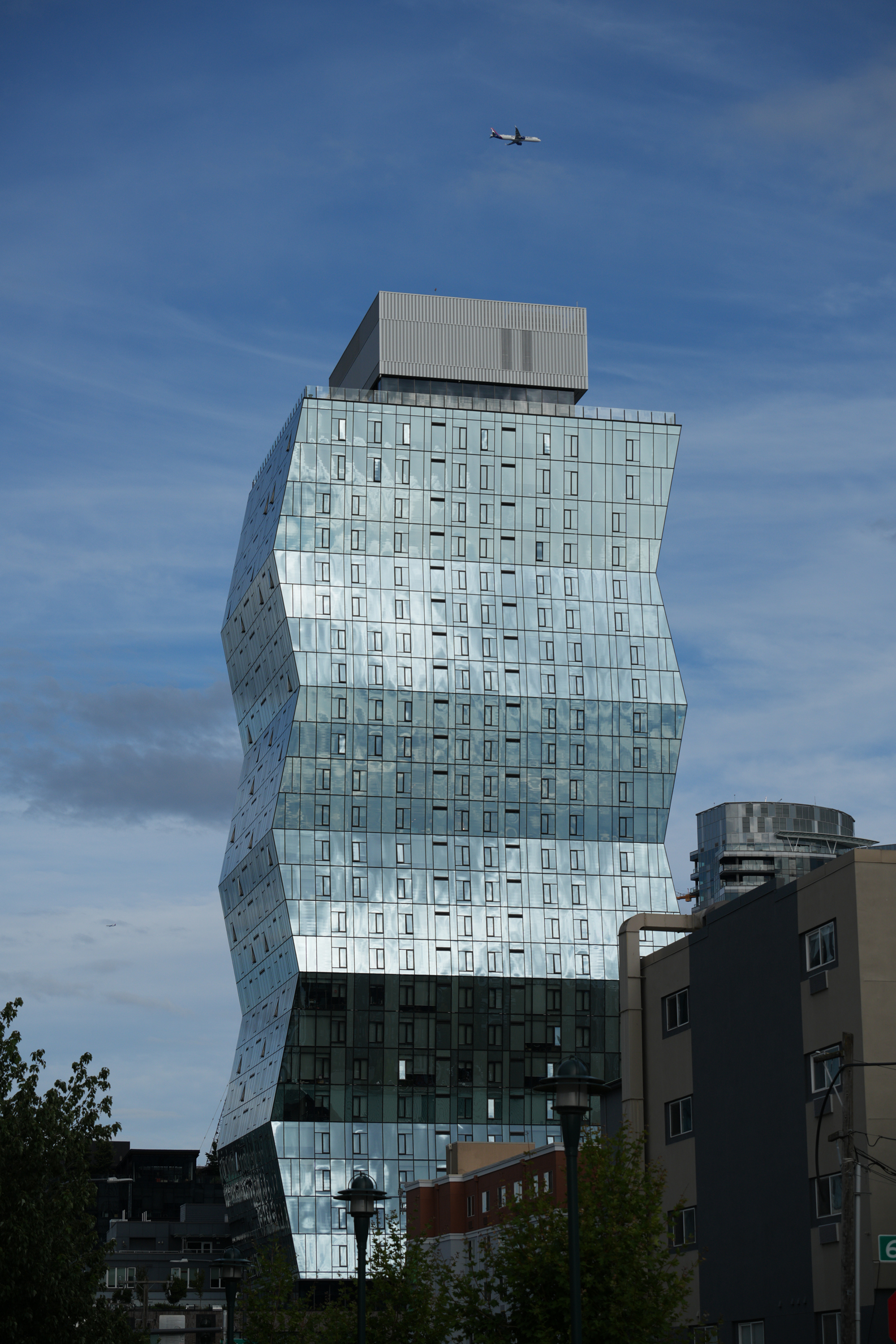
I took this picture on Sunday.
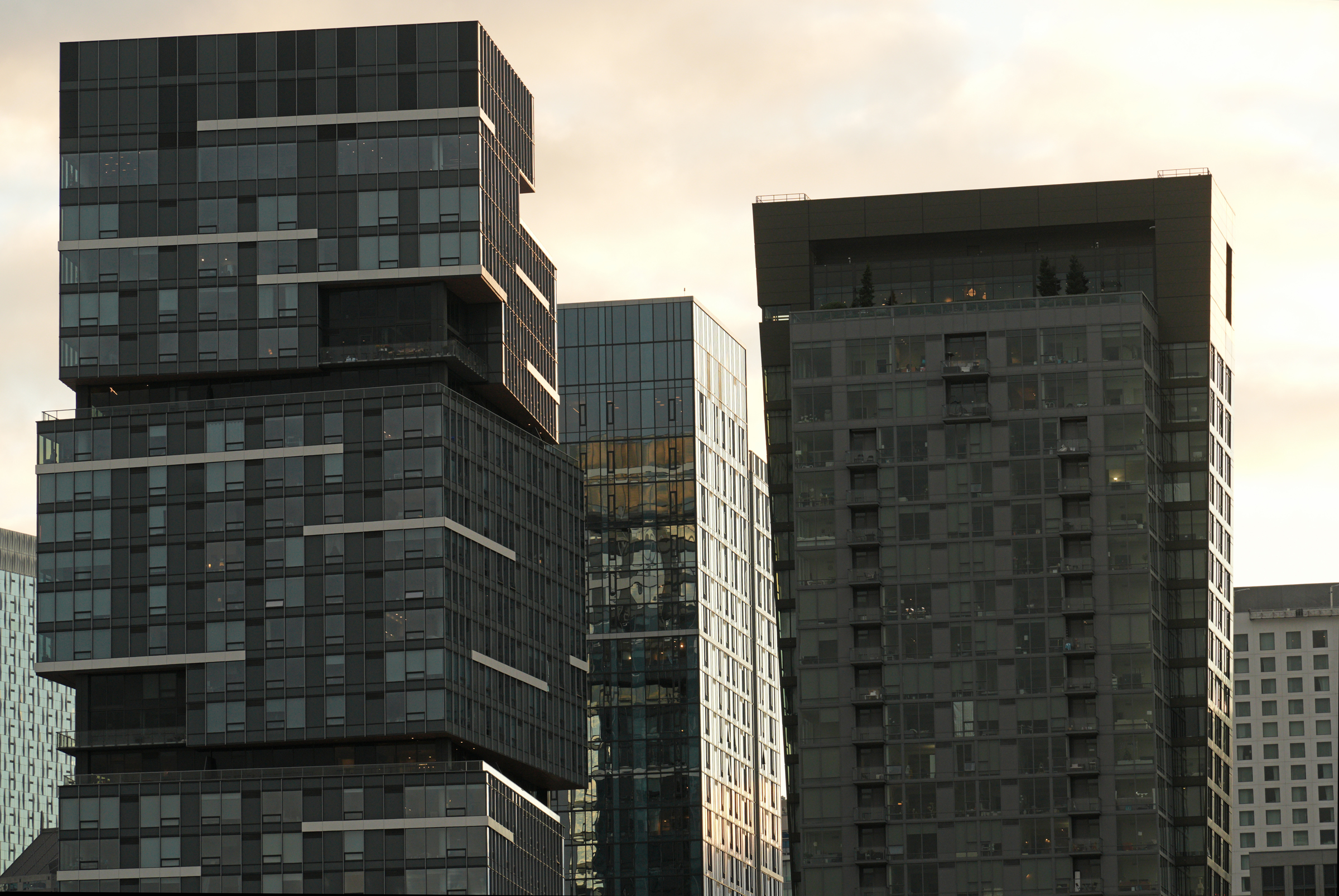
It is of The Emerald, a 40-story residential skyscraper located at 121 Stewart Street. Its distinctive glass façade and slightly twisting design makes it stand out in the Seattle skyline. It was completed in 2020.
(This picture is a downsized version, 25% of the size of the out-of-camera picture).
Shot with Sony α7CR w. Tamron 28-200mm F2.8-5.6 lens
f-stop: f/5.6 |Exposure time: 1/2000 s |ISO speed: ISO-250 |Focal length: 73 mm | Max aperture: 4 |Metering mode: Pattern
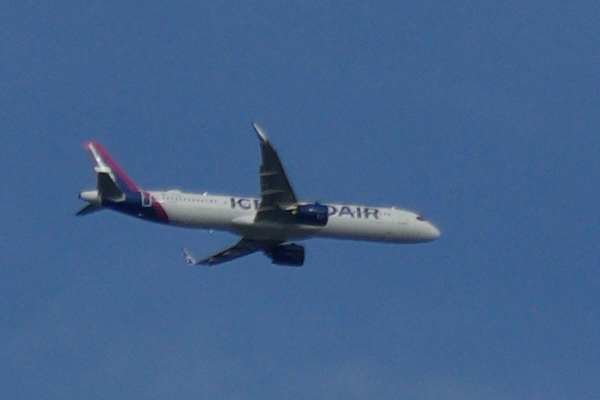
And what airline might the airplane belong to?
A 600×400 pixel crop of the airplane from the 6,336 x9,504 out-of-camera image reveals that it belongs to Iceland Air.

Sunday/ a very fine picture 🌇

I have a new camera, after eight years: a Sony α7CR.
It is a mirrorless, full-frame digital camera that takes 61-megapixel pictures— so it is able to capture stunning detail.

Shot with Sony α7CR w. Tamron 28-200mm F2.8-5.6 lens from the Melrose Ave E overlook towards South Lake Union
f-stop: f/5.6 |Exposure time: 1/320 s |ISO speed: ISO-250 |Focal length: 171 mm | Max aperture: 4.96875 |Metering mode: Spot
The 35 mm (35.7 x 23.8 mm) full frame Exmor R CMOS sensor captures 6,336 x 9,504 pixels (a 2:3 ratio).
In order to post all of the out-of-camera .jpg on this WordPress blog, I reduced it to 25% of its original size.
For right now, I have the camera set to ‘Program Auto’ mode.
So I just framed the image with my Tamron 28-200 mm zoom lens, and the camera picked the exposure and all the other settings.
Here is a 1,853 x 2,471 pixel crop out of the original 6,336 x 9,504 pixel out-of-camera picture, showing the very fine detail that was captured.
The same picture as above, but adjusted with Adobe Photoshop Elements to increase the brightness of the shadows by 35% (revealing the golden elevator car).

Sunday/ lots of sun ☀

It was a beautiful summer day here in the city (77°F/ 25°C).
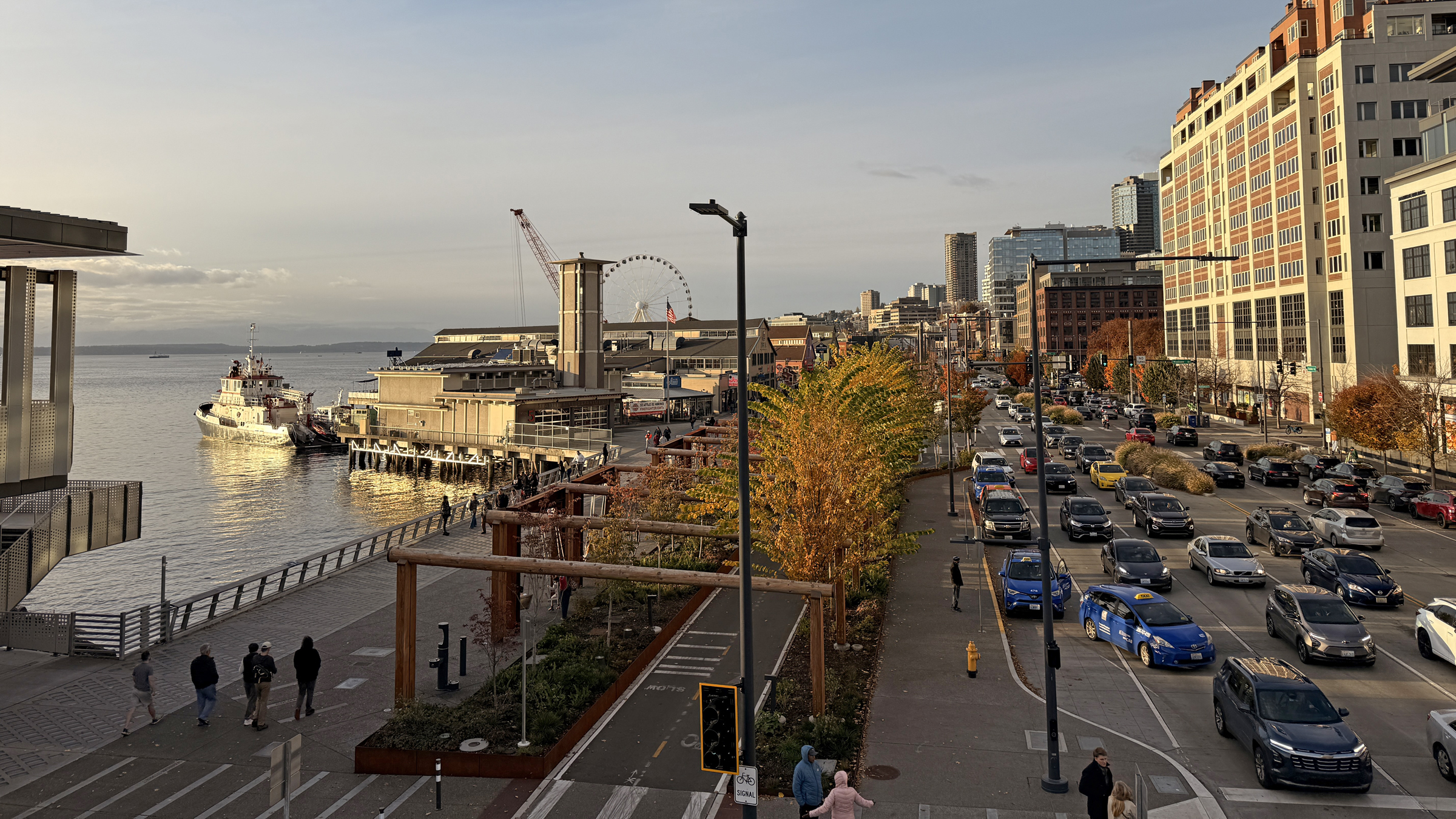
I went down to the waterfront to check out the newly renovated Pier 58 that had opened on Friday.

I took the No 12 bus to downtown and walked to Pike Place Market.
I am taking just a quick look here at the overlook towards the Ferris wheel and the aquarium before I head down to the waterfront promenade.
Incoming! Watch out little sail boat!
I did not hear the ferry blare its horn at it, so I suppose it was OK. If I read the ferry schedules right, this was the Kaleetan coming in from Bremerton.
Here is the new play park on Pier 58 with its octopus slide.
The Wings Over Washington theater (with its tilting seats to ‘fly’ over beautiful scenery and mountains) is still there, and popular this time of year with a line of people outside waiting their turn.
The display case at the entrance to the Miner’s Landing arcade with its carousel and video games inside.
Here’s the Pier 57 Historic Carousel inside the Miner’s Landing arcade.
One of several totem poles around the waterfront. This one is on Pier 57.
The Salish Sea Tours boat with its catamaran hull, just arriving back at Pier 57 from its cruise around Elliott Bay.
A display case inside Ye Olde Curiosity Shop on Pier 54. I love the alphabet book that the kids are looking at: L for Loon and M for Moose.
All done! Walking back with the pedestrian overpass over Alaskan Way to 1st Avenue to catch the G-line bus.

Thursday/ Paul McCartney on stamps ✉️

Funny— that these two stamps were on the envelope from Great Britain containing my Ebay stamps, yesterday.
Paul McCartney (83) announced yesterday that his “Got Back” concert tour later this year in the USA is a go.
(He’s not coming to Seattle).

Paul McCartney in the Studio
Issued May 28, 2021
Perf. 14 | Engraving: International Security Printers Ltd. | 2 stamps from a miniature sheet containing 4 stamps
4376 ENK 1st Class Mail | Black & white photo image | McCartney in the studio, 1970
4377 ENK 1st Class Mail | Black & white photo image | McCartney recording ‘RAM’ album, 1971
[Source: stampworld.com]
P.S. McCartney was 27 in 1970. That was also the year that The Beatles broke up.
From a Facebook page called ‘This Day in Music’: On 10th April 1970, 27 year-old Paul McCartney issued a press statement, announcing that The Beatles had split, (one week before the release of his solo album). McCartney said, “I have no future plans to record or appear with The Beatles again, or to write any music with John”. John Lennon, who had kept his much-earlier decision to leave The Beatles quiet for the sake of the others, was furious. When a reporter called Lennon to comment upon McCartney’s resignation, Lennon said, “Paul hasn’t left. I sacked him.”

Wednesday/ art nouveau from Paris 🇫🇷

My Ebay stamp dealer from Bishop’s Stortford (northeast of London) included this French postcard and stamp with my purchase.

It is of a cast iron balustrade plaque by French architect and designer Hector Guimard (1867 – 1942).
Look for the stylized ‘M’ at the bottom.
Guimard was a prominent practitioner of the art nouveau style.

French Decorative Art
Issued Jan. 22, 1994 (one of a set of four stamps)
Perf. 13¼ x 12¼ | Design: Jean Paul Véret-Lemarinier | Litho. | Engraving: ITVF Boulazac | No Watermark
2993 CMK 2.80Fr Multicolored | French Metro balustrade by Hector Guimard
[Source: stampworld.com]
__________
More about Guimard from Wikipedia:
Between 1890 and 1930, Guimard designed and built some fifty buildings, in addition to one hundred and forty-one subway entrances for Paris Metro, as well as numerous pieces of furniture and other decorative works.
However, in the 1910s art nouveau went out of fashion and by the 1960s most of his works had been demolished, and only two of his original Metro edicules were still in place.
The first day post office stamp, used on the front and back of the 1994 postcard, with art nouveau lettering.
It turned out I have a few pictures of this metro entrance designed by Guimard.
I took them while I was in Paris in Sept. 2008. 
This entrance is for Pasteur station on Line 6 and Line 12 of the Paris Métro, in the 15th arrondissement. It features several of the Guimard balustrade plaques and meticulously designed street lamps. Even the font (the lettering style) for the ‘Métropolitain’ sign, was Guimard’s invention.
[Shot with Canon EOS 20D f/14, 1/400s, ISO-1600, 36mm focal length]

Thursday/ an e-bike ride⚡🚲

Four amigos met at the Seattle waterfront this morning.
We rode our e-bikes along the bike trail to Elliott Bay marina where we met up with a fifth amigo for lunch.

I took the G-line bus along Madison Street to the waterfront. There goes my bus, actually, but it does not matter. It’s only 6 minutes between buses, so there is no need to even look at the schedule, or worry that you might miss your bus and wait a long time for the next one.
It’s a short walk from the 1st Avenue bus stop to Colman Dock, also called Pier 52, the primary ferry terminal in Seattle.
That’s the Kaleetan ferry, just leaving for Bainbridge Island. The Kaleetan went into service in early 1968 serving the Seattle-Bainbridge Island route. Over the years it has been upgraded and it has also served the Seattle-Bremerton route and the Anacortes-San Juan Islands route.

Our rendezvous point for starting the bike ride was Molly Moon Ice Cream up ahead.
I’m stopping for a moment to admire Buster Simpson’s public artwork called “Anthropomorphic Dolos*”. 
Dolosse* is a South African invention, first deployed in 1964 on the breakwater of East London, a South African port city.
* A dolos (plural: dolosse) is a wave-dissipating concrete block used in great numbers as a form of coastal management. It is a type of tetrapod. Weighing up to 8 tonnes (8.8 short tons), dolosse are used to build revetments for protection against the erosive force of waves from a body of water. [From Wikipedia]
We pedaled northbound along the Waterfront bike path and the North bike connection.
[Sources: Seattle Department of Transportation, Elliott Bay Connections, Seattle Office of the Waterfront and Civic Projects. Esri, Google, Chris Kaeser / The Seattle Times]

Look! No Alaskan Way Viaduct in sight. We’re on our way, on the bike path along Alaskan Way (originally Railroad Avenue, until 1936), and the major north-south street that runs along the Elliott Bay waterfront.
I don’t have my own e-bike, so I picked up a Lime bike for rent that was on the sidewalk near Molly Moon Ice Cream. ($1 to unlock plus 43 cents per minute).
Irises in the flower beds that line the promenade on the waterfront.
This is further up north along Alaskan Way, just past Pier 66 on the left. The construction work (of the overwalk and the aquarium extension) along Alaskan Way has been completed, but not all the paving work for the intersections and bike lanes.
A brief stop by Myrtle Edwards park with its 1.25-mile winding bike and pedestrian paths along Elliott Bay, offering beautiful views of the Olympics Mountains. There’s a Carnaval cruise ship in the distance at the Pier 91 cruise terminal. It was scheduled to depart at 3.30 pm for its ‘Alaska Inside Passage Glacier’ round trip.
We reached our destination: Maggie Bluffs restaurant with its outdoor patio with views of Elliot Bay Marina.

Monday/ downtown Seattle 🏢

I had lunch at the Washington Athletic Club in downtown today, and took these pictures.

The U.S. Bank Center building between 5th and 6th Avenue is 44 stories tall and opened in 1989.
I had worked inside it on occasion— once upon a time, and years ago now. The American Eagle clothing store that used to be in the domed structure on the corner is long gone.
There are still lots and lots of empty storefronts downtown.
This used to be the Nike store in downtown Seattle (formerly NikeTown), on 6th Ave and Pike St. It closed down permanently in January 2023.
A line of lavender taxi cabs at the entrance to the Sheraton Hotel. (So yes, they are still in business and have not been completely supplanted by Uber drivers).
Here is where I had my lunch, on the second floor.
It is open to Washington Athletic Club members only, and I was invited by a member of the club 🤗.
Done with lunch and now I am snapping a few more pictures on the way to the Seattle Library.
The Skinner building was built in 1926 and is listed on the National Register of Historic Places. I love the detail on the frames above the entrance.
A close-up view of Park Place building on 6th Avenue.
It is a 21-story office tower built in the 1970s and fully renovated by international architect and tenant Gensler in 2012. Is this an example of brutalist architecture*? I wondered.
*Brutalist architecture is a style known for its use of raw concrete, bold geometric forms, and functional design, often characterized by a rough, unadorned aesthetic.
The Crowne Plaza Seattle-Downtown on 6th Ave is a 34-story hotel that was built in 1980 and renovated in 2019.
That’s the Park Place building from the previous picture, in the reflection.
Looks like Seattle International Film Festival 2025 is about to start. That first frame on the film negative below is from the 2023 romance/drama movie Past Lives. (I have seen it and I liked it a lot).
Arrived at the Seattle Public Library‘s entrance on 5th Avenue, and I’m taking the obligatory shot (obligatory for me) of the diamond pattern of the outside frame.
Done in the library and waiting for the G-line bus. In the reflection is the 1928 building of what is today the nine-story Executive Hotel Pacific.
And here comes the G-line bus on Spring Street, to take me back up to Capitol Hill.

Sunday/ a new condominium tower 🏢

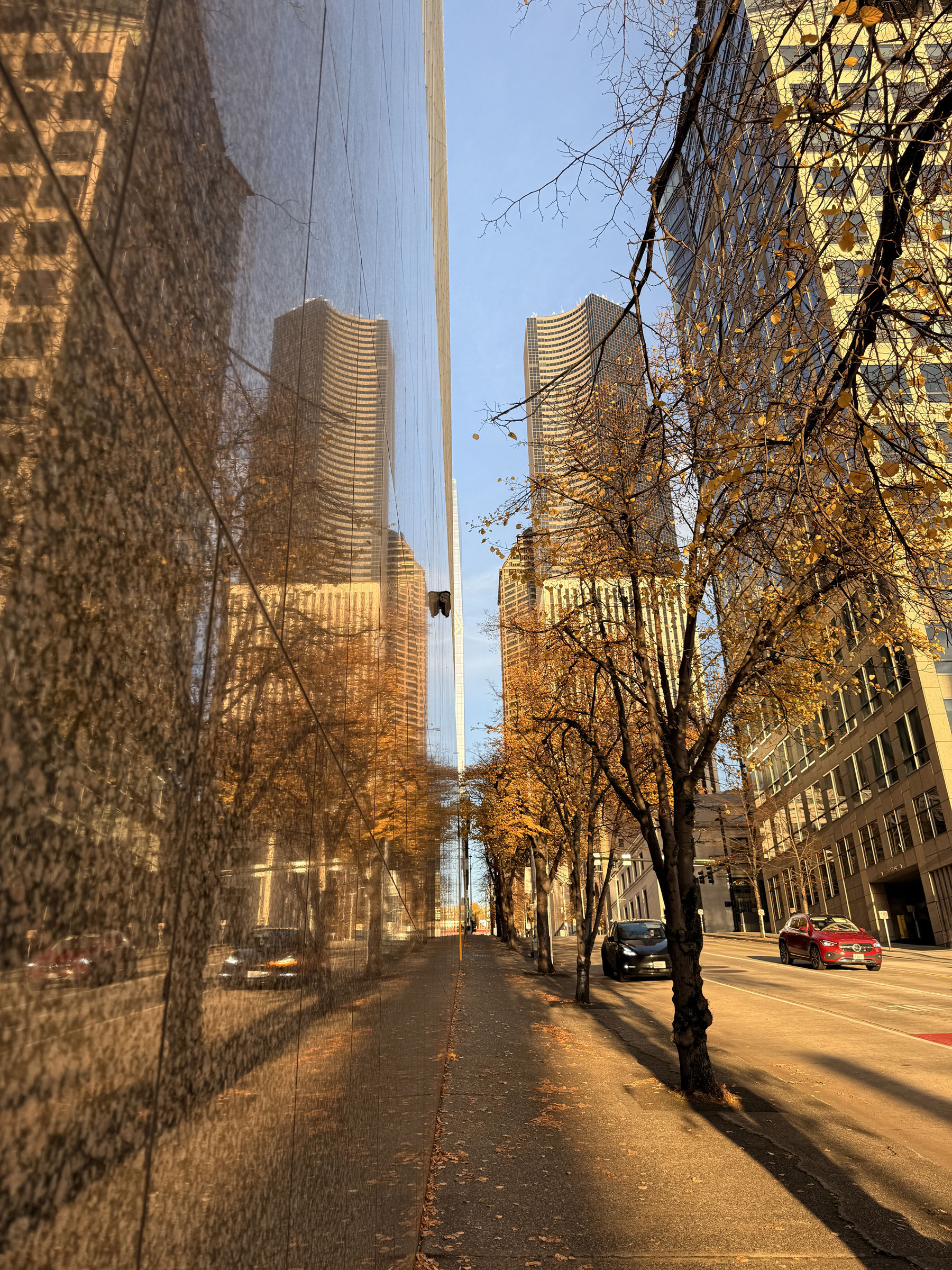
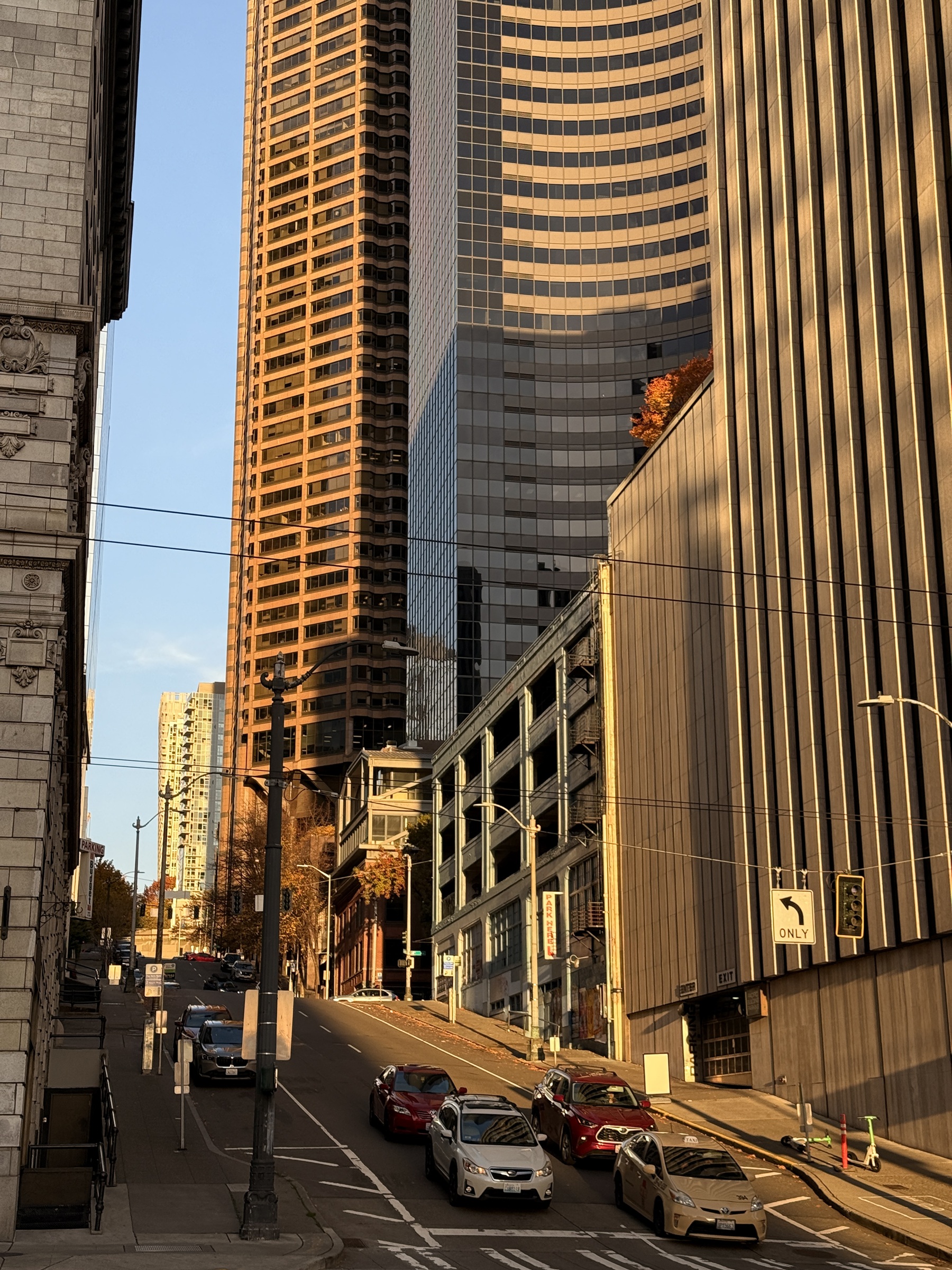
I walked around downtown’s Third Avenue this afternoon, and took a few pictures of the new First Light 48-story condominium complex at the edge of Belltown neighborhood. I had no access to go inside, but just look up “First Light Seattle” for glamorous pictures of the pool deck, and views of Puget Sound and the Space Needle.

It has 459 units that range from studios ($650k and up) to 3-bed, 3-bath penthouses ($3m and up).

This is Virginia Street, with 3rd Avenue at the traffic light.
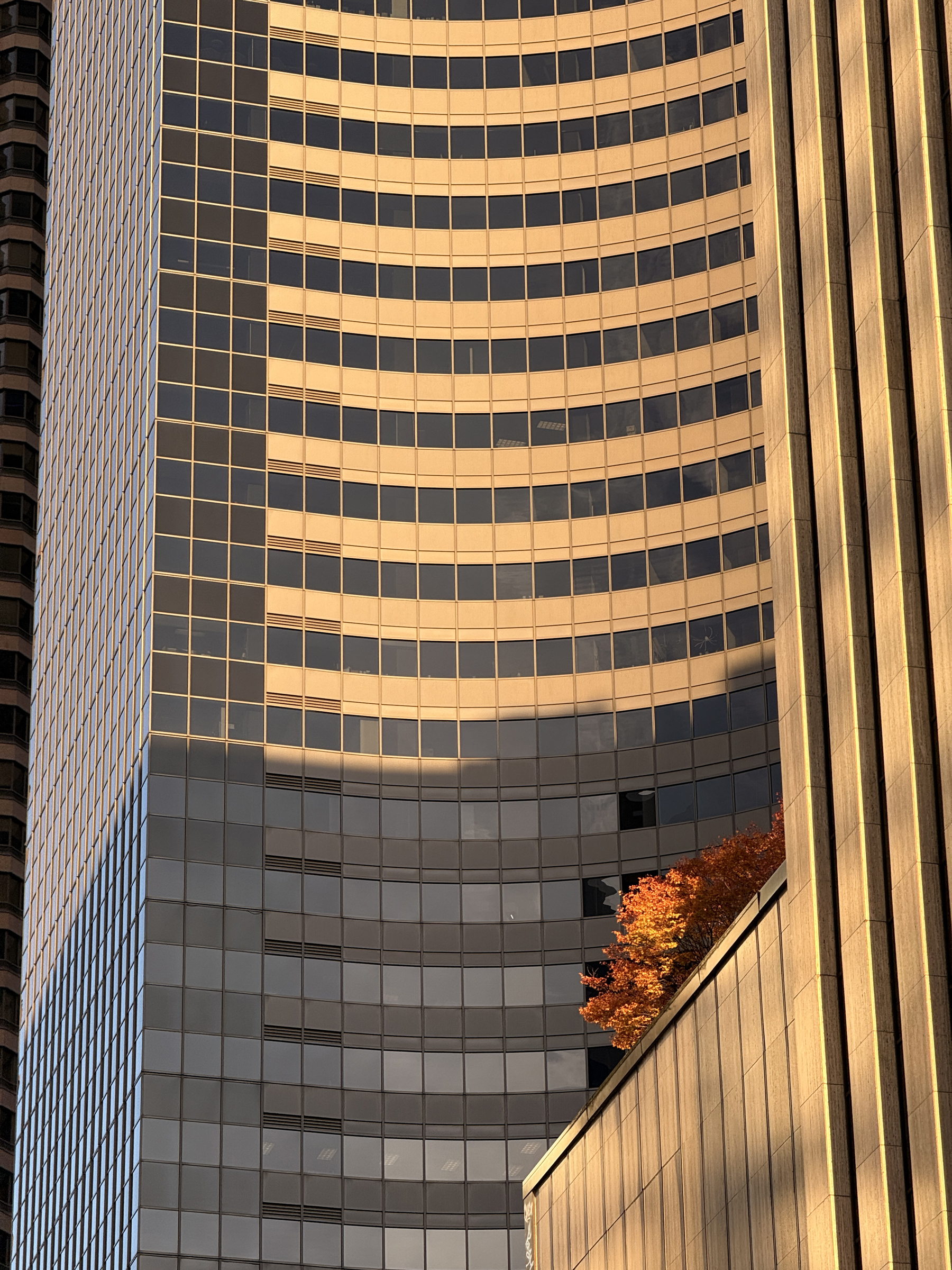
The First Light condo tower has 48 stories.
That cantilevered structure at the top is a deck with a swimming pool and a hot tub.
Third Avenue is on the route for several buses; also the C-Line Rapid Ride.
Great for the condo residents and their visitors to have bus stops right there, but one has to wonder how many will actually use it.
There is an 8-level parking garage with 373 parking spaces below the tower!
Looking up, standing on 3rd Avenue.
The City of Seattle has made great strides at keeping the downtown streets tidy and clean. There actually were cleaners out and about today with their three-wheel bikes fitted with large baskets with brooms and cleaning supplies.
The base floors of the building have these strands of cables fitted with disks of glass.
The First Light website says designer John Hogan’s “veil” of strung glass disks by the office floors diffuse the bland looks outside (parking garages and brick walls), and at the same time increases the privacy inside.
So yes: in the immediate vicinity of the First Light building (looking south down 3rd Avenue), the old parking garages and brick buildings do not offer a whole lot to look at.