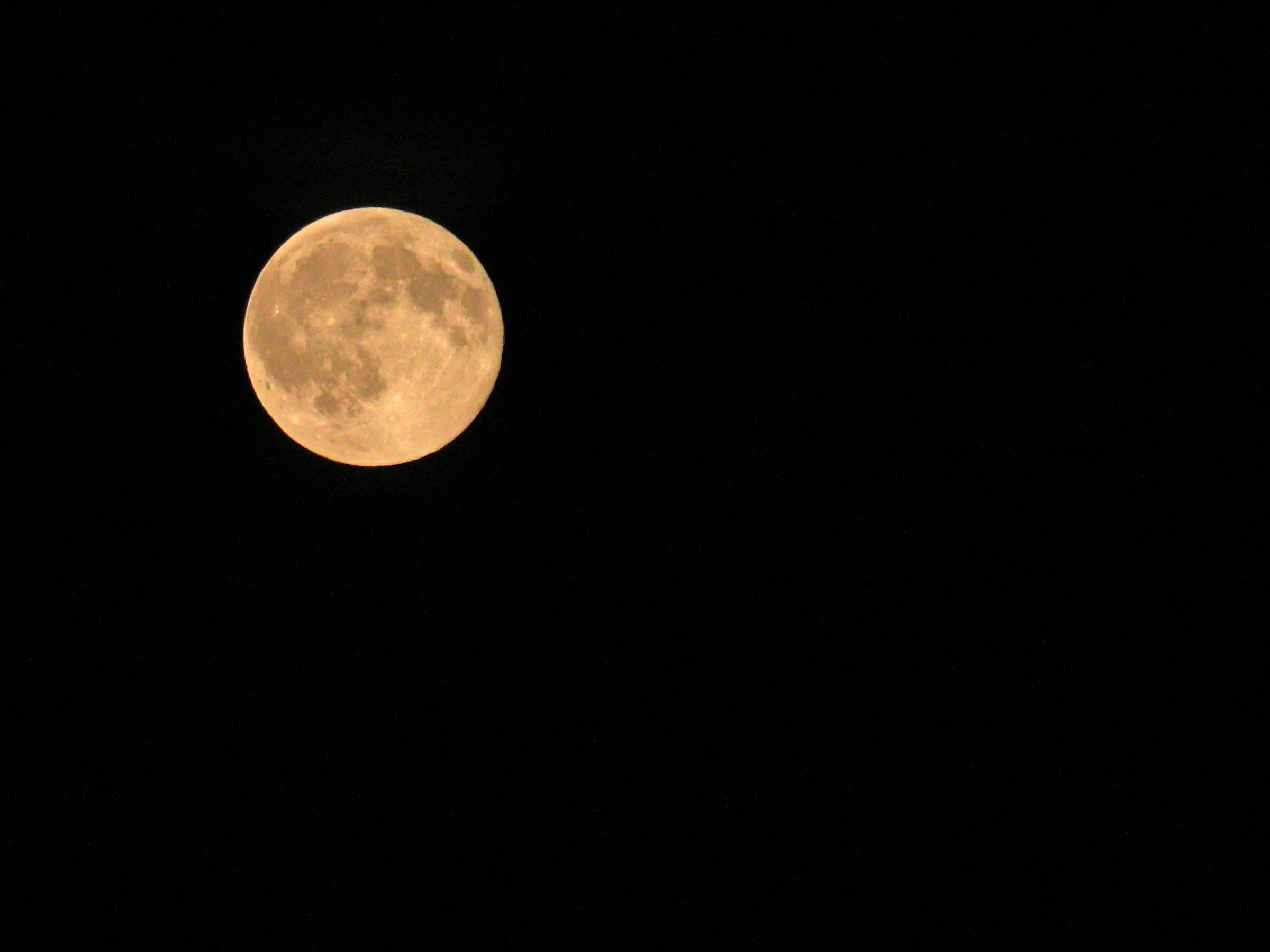
The harvest full moon is out tonight. (The harvest full moon is the full moon that happens closest to the start of autumn).
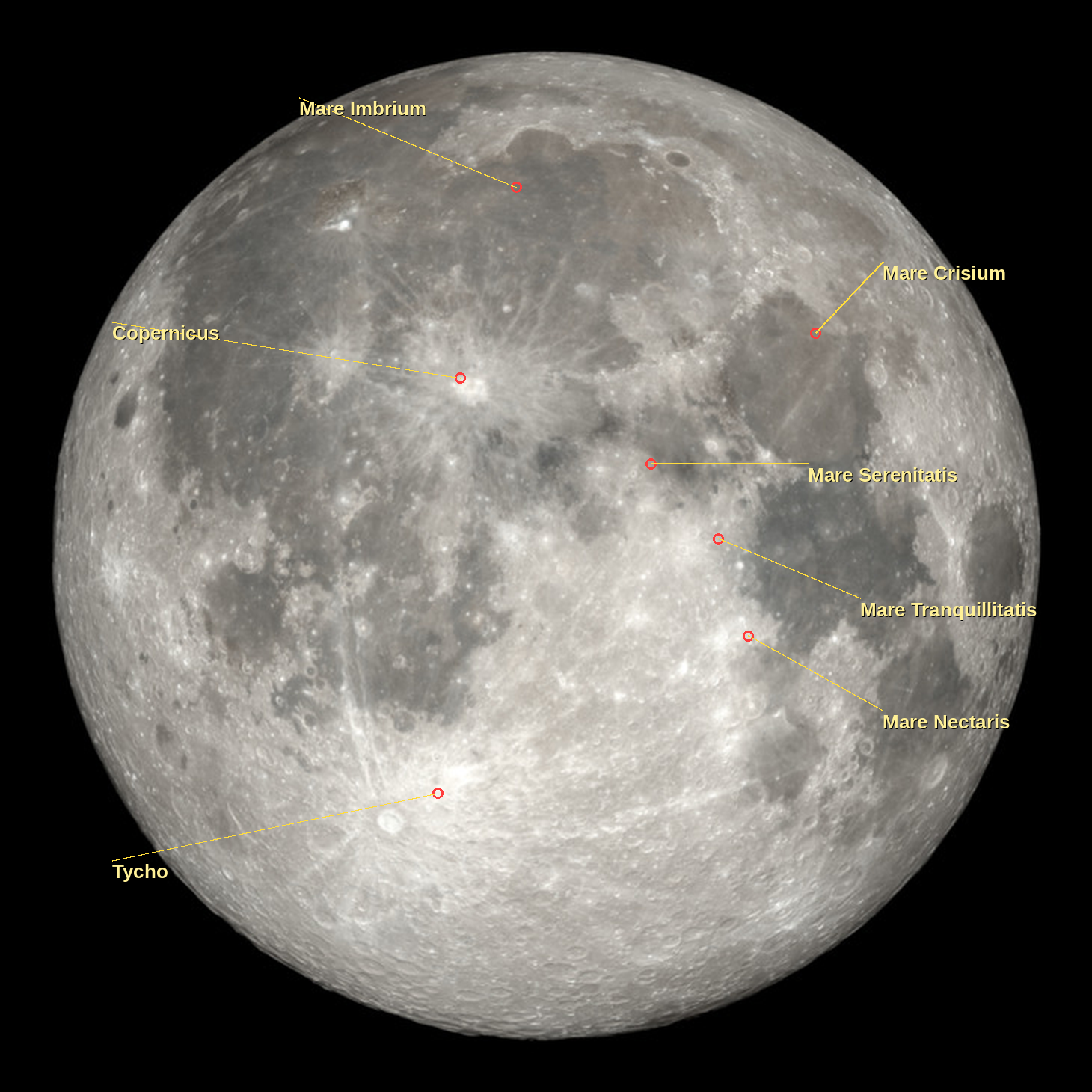
I gave the picture to Claude AI to look at and point out some of the craters and lunar maria (Latin for ‘seas’, but they are actually ancient solidified lava plains). Claude complained that the resolution of my picture was not good enough, so I went to NASA’s website for a better one.
The big crater you’re probably asking about:
the bright crater near the bottom of the disk, with rays streaking outward across a huge portion of the visible surface, is almost certainly Tycho.
It’s one of the Moon’s youngest large impact craters (about 108 million years old) and is famous precisely for that dramatic, far-reaching ray system — the rays you see radiating up toward the center of the disk are ejecta thrown out during the impact.
A few other features I can pick out:
Copernicus — the other prominent rayed crater, sitting in the upper-middle-left area of the disk, with its own (smaller but still bright) ray system.
Mare Crisium — the distinct, roughly oval dark patch isolated on the right side of the disk (it’s isolated from the other maria, which makes it easy to identify).
Mare Serenitatis and Mare Tranquillitatis — the connected grey/dark regions in the center-right, blending into each other (Tranquillitatis is home to the Apollo 11 landing site).
Mare Imbrium — the large dark region in the upper-center-left, one of the biggest impact basins on the Moon.
Mare Nectaris — the smaller dark patch below and right of Tranquillitatis, near the bottom-right region.