Tuesday/ Shibuya 🏙️

I took the Yamanote line to Shibuya station on Tuesday morning.
My reservation to visit the open air observation on top of the Shibuya Scramble Square Tower had rained out last week, so I wanted to give it another try.
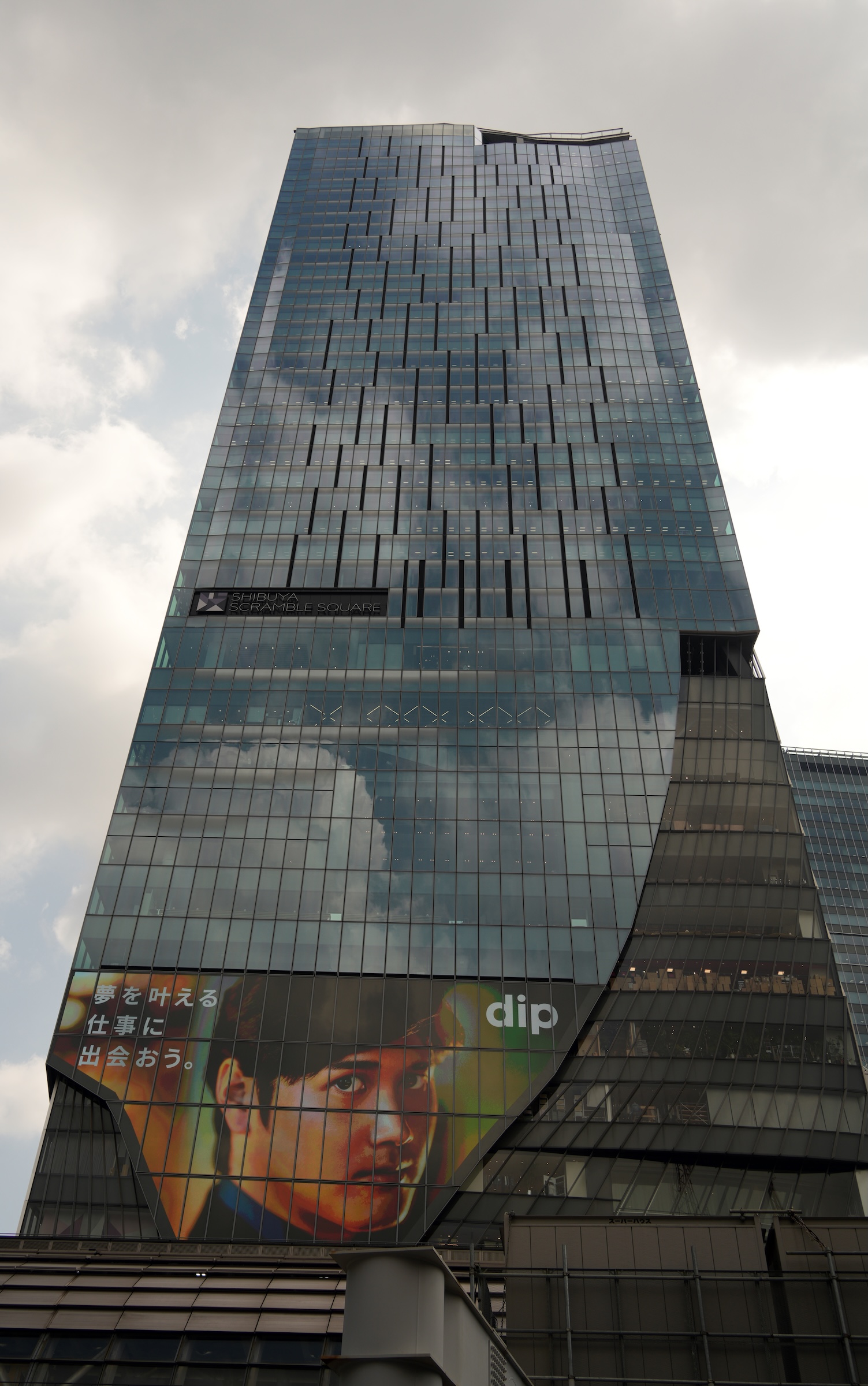
That’s the Shibuya Sky Deck, the observation deck on top of the Shibuya Scramble Square Tower (the deck takes up the entire top of the tower). 
The Tower is the tallest building in the Shibuya district of Tokyo and contains shops, offices, and event spaces in addition to the observation deck on its rooftop. The building and the observation deck opened in November 2019.
All of the windows on the four floors at the bottom form a giant display screen.
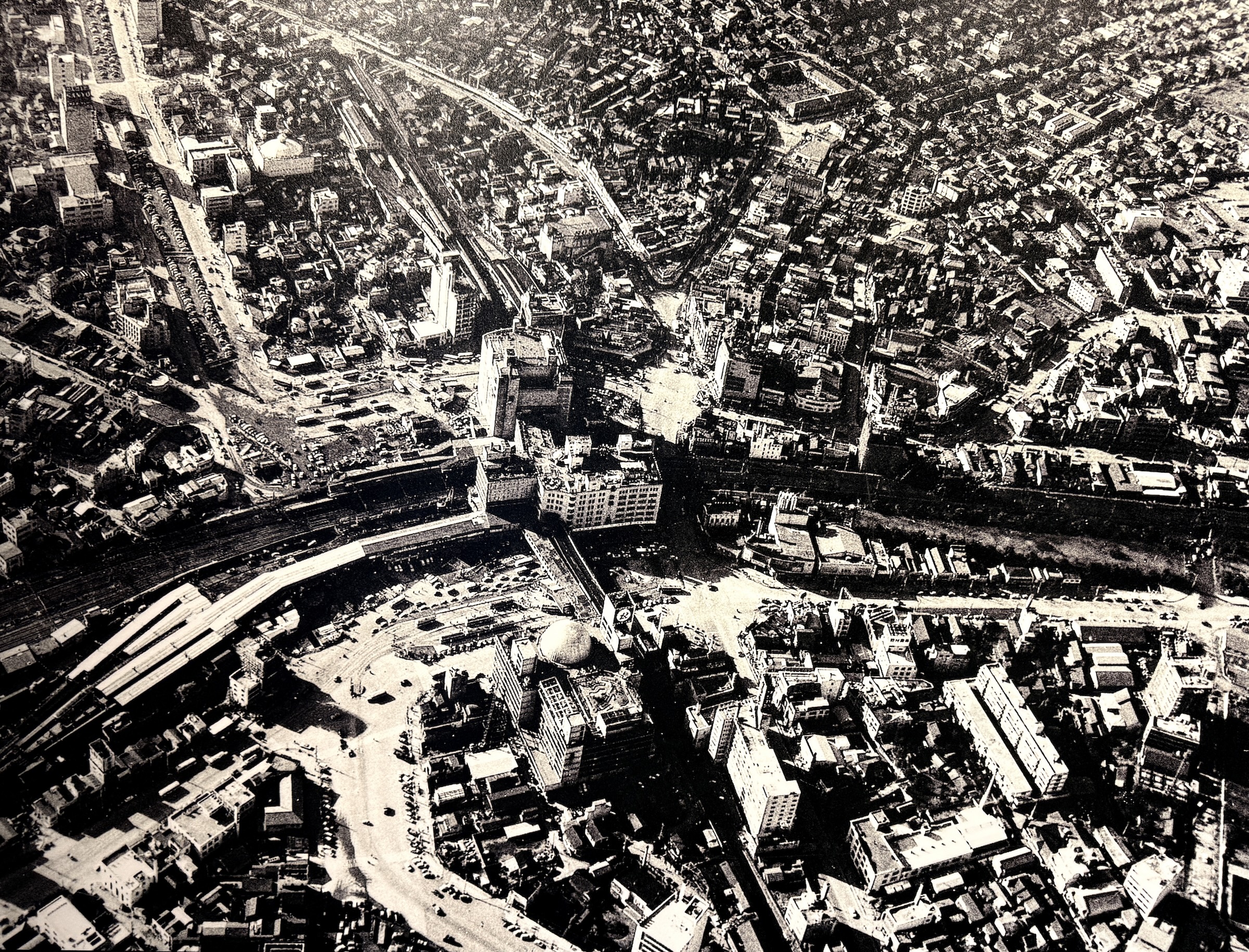
A photo from 1957 of Shibuya station that was in the lobby. The round dome in the foreground was part of a planetarium. It is still there but now part of a building called Shibuya Cultural Center.
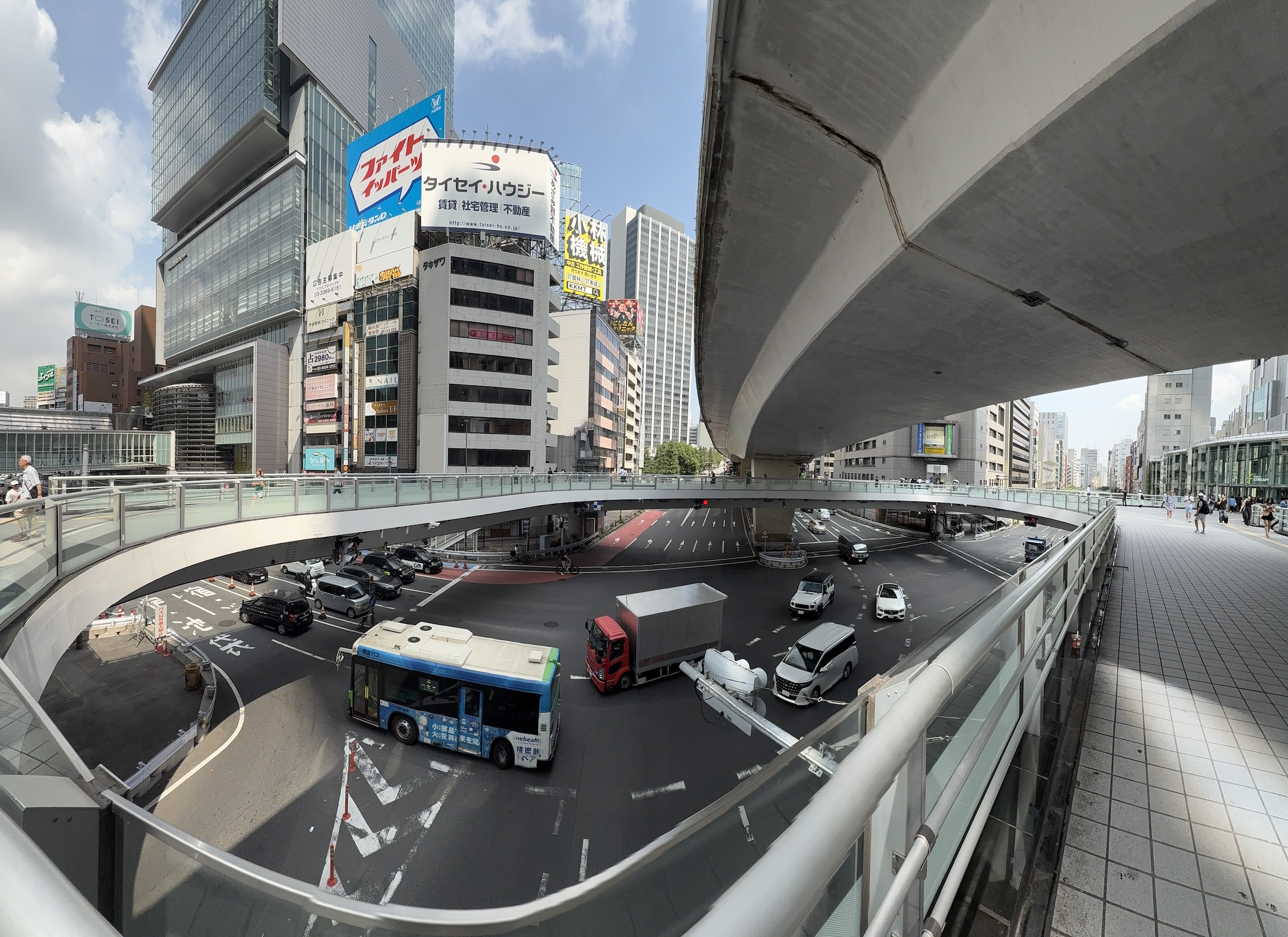
My attempt of a panorama view of the Shibuya Mark City Walkway, a free elevated pathway connecting to Shibuya Station and offering excellent views of the Shibuya Scramble Crossing. During rush hour, the streets and station is flooded with office workers, and a major new walkway connecting the east and west sides of Shibuya Station is under construction, scheduled to be completed around 2030.
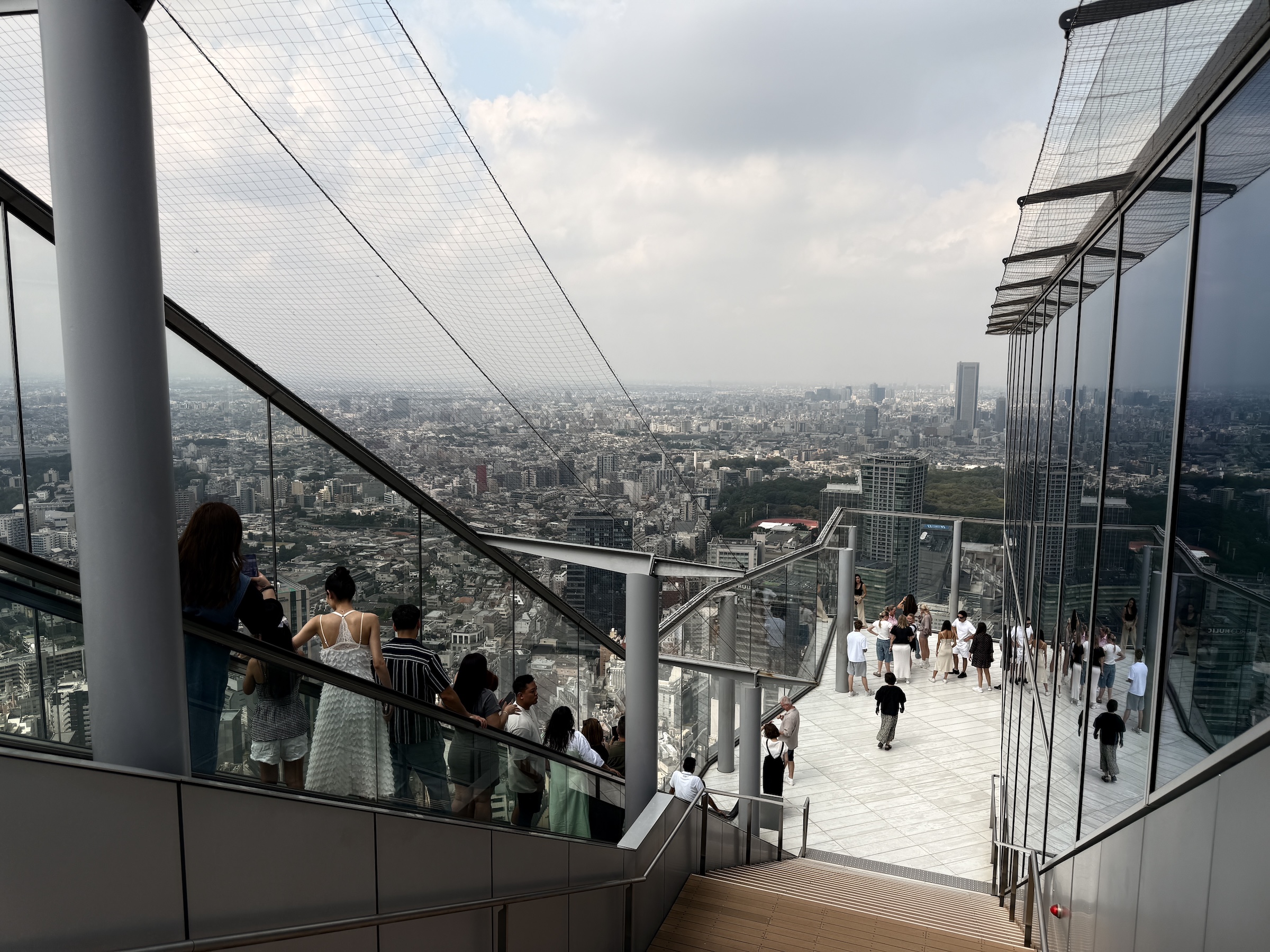
All right. Here is the Sky Deck, with its two levels.
It has a 10-ft high glass perimeter and netting. Even so, all backpacks, hats, loose items, have to be stowed in the locker room before you are allowed entry onto the deck. Cameras with straps (like mine) were OK. Yay.
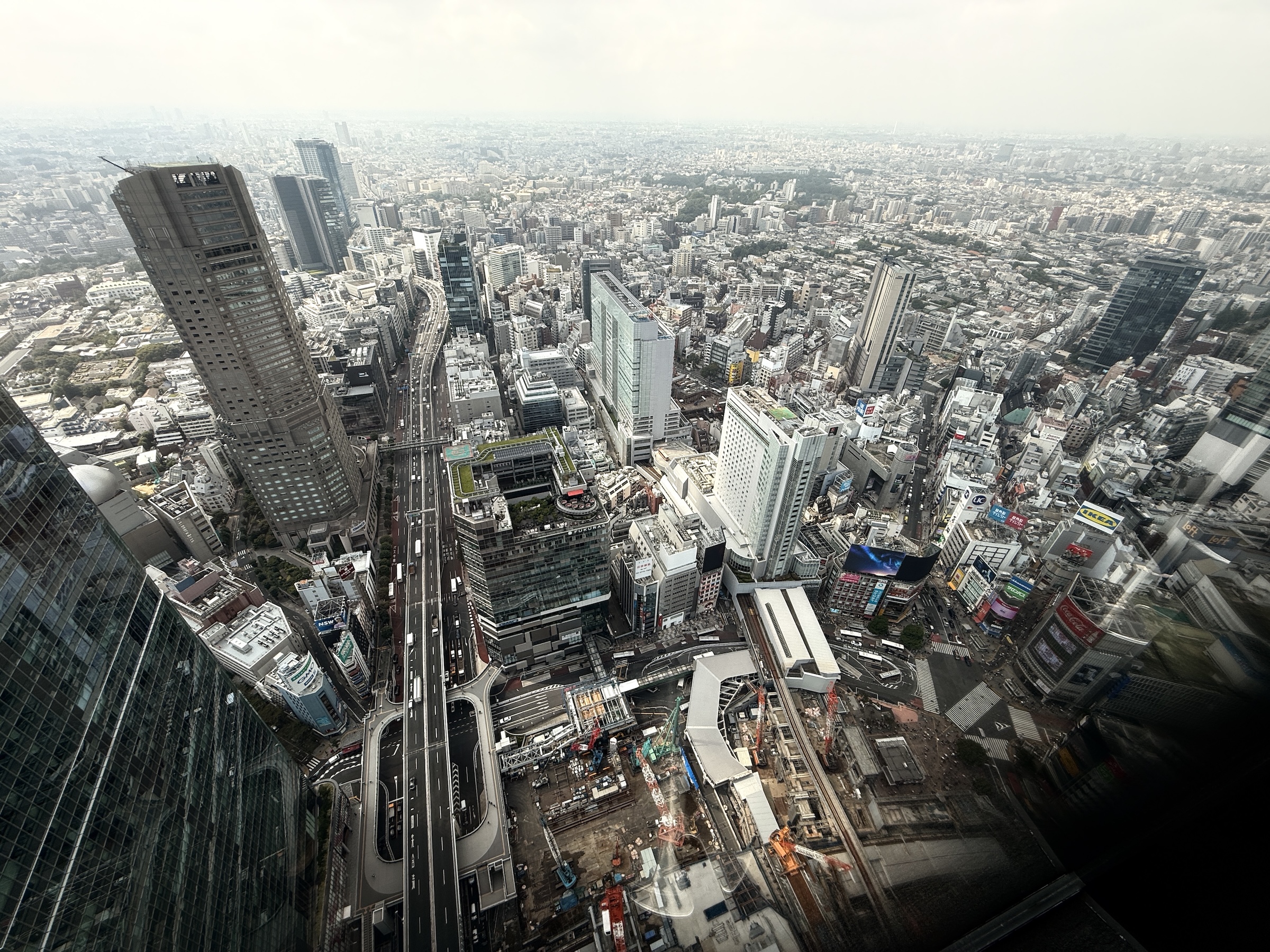
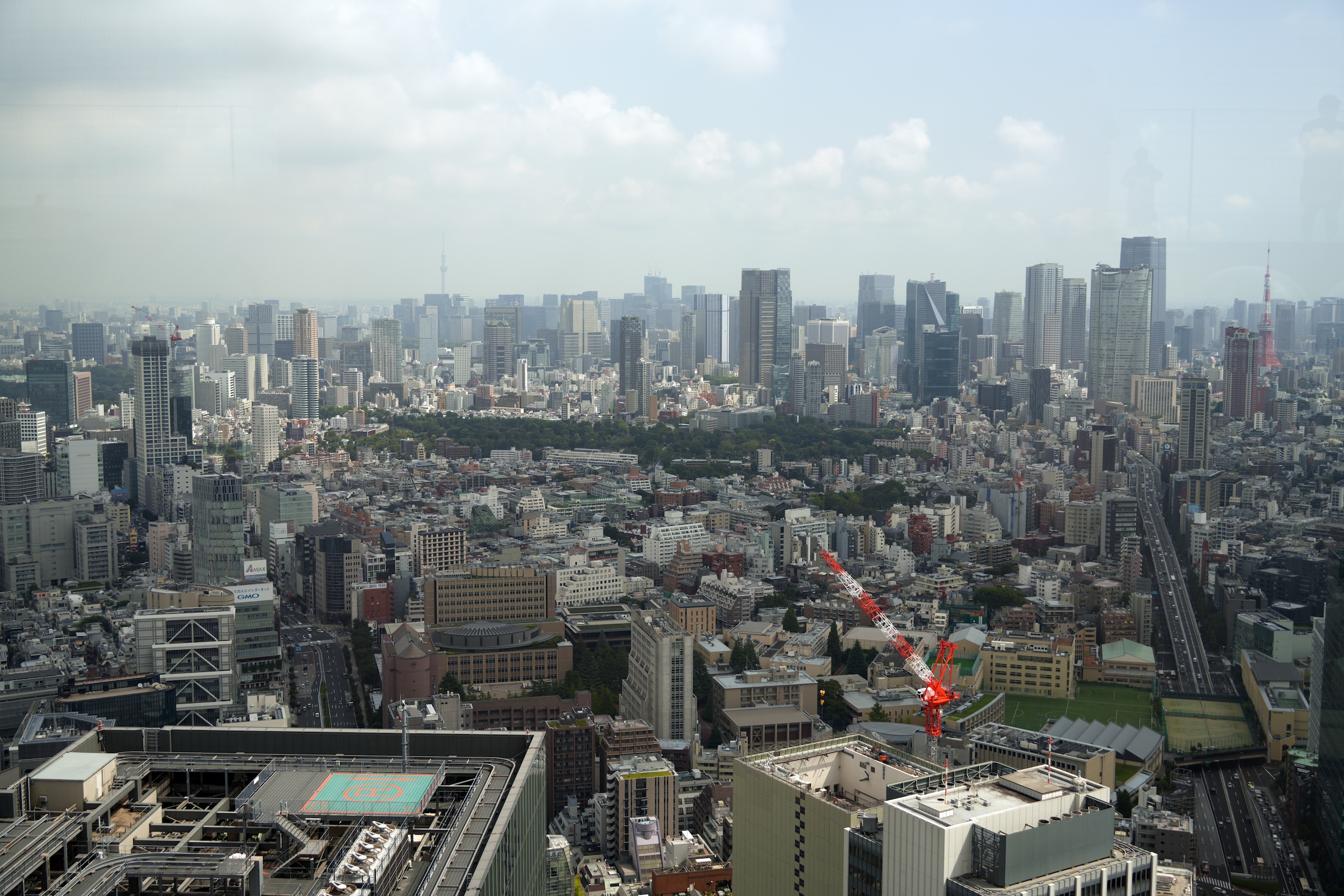
There is the elevated walkway on the bottom left.
The famous Shibuya Scramble Crossing that the building was named after (four sides with one diagonal) is at the bottom right.
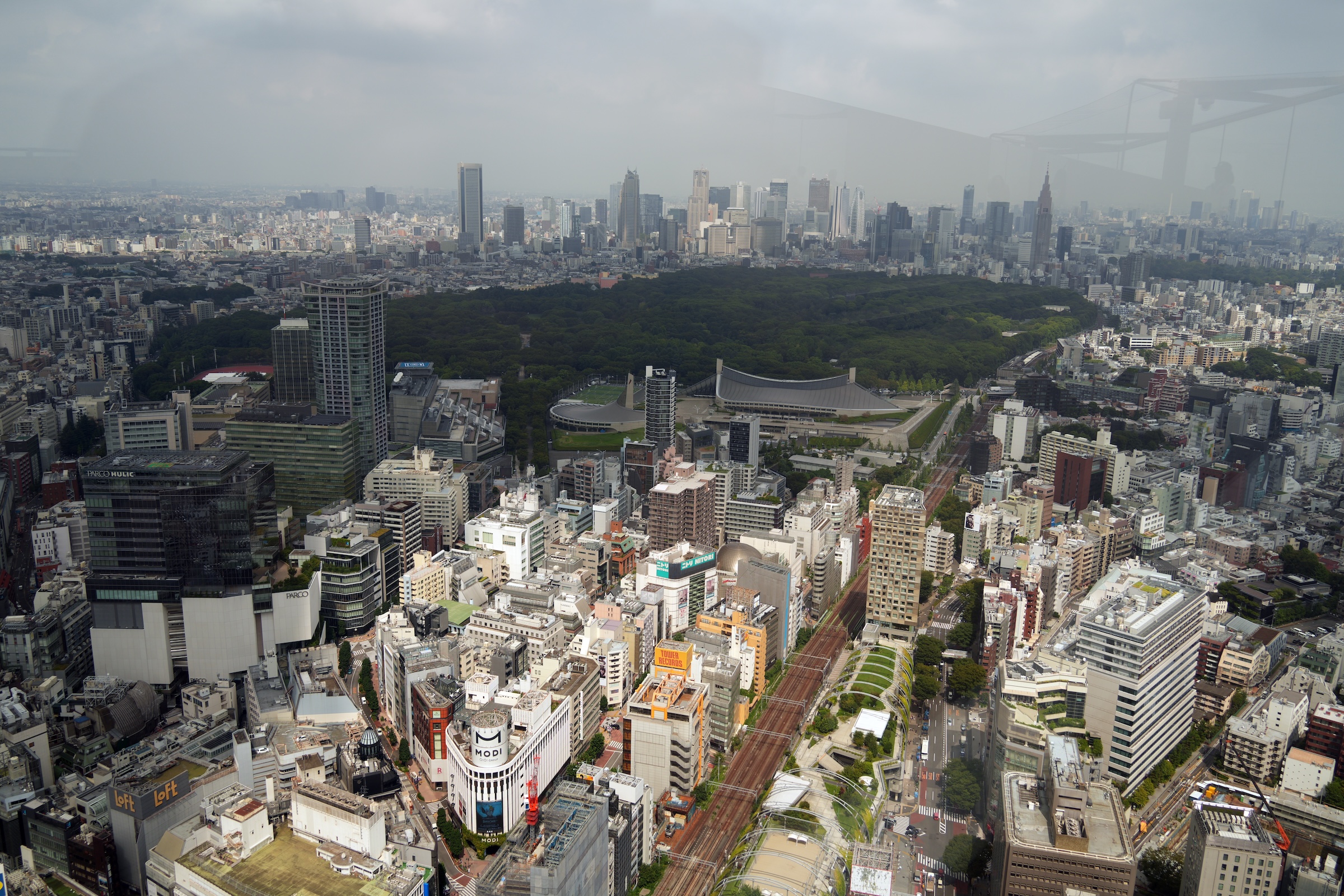
The structure with the black roof at the bottom of the green space is Yoyogi 1st National Gymnasium, built for the 1964 Summer Olympics.
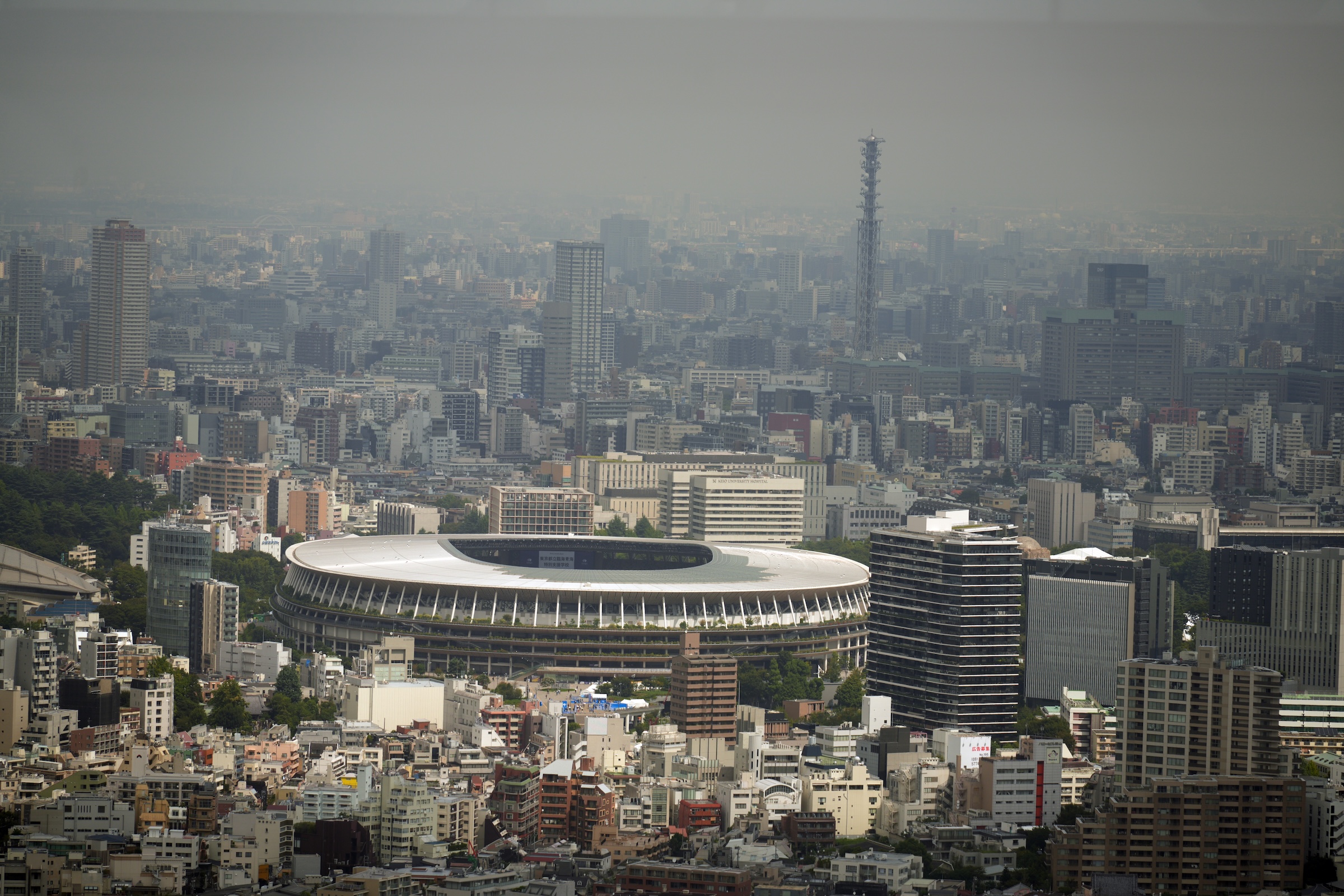
And here is a telephoto lens look at Japan National Stadium, built for the 2020 Summer Olympics (that took place in 2021 because of the COVID pandemic). The 2025 World Athletics Championships is taking place there this week.
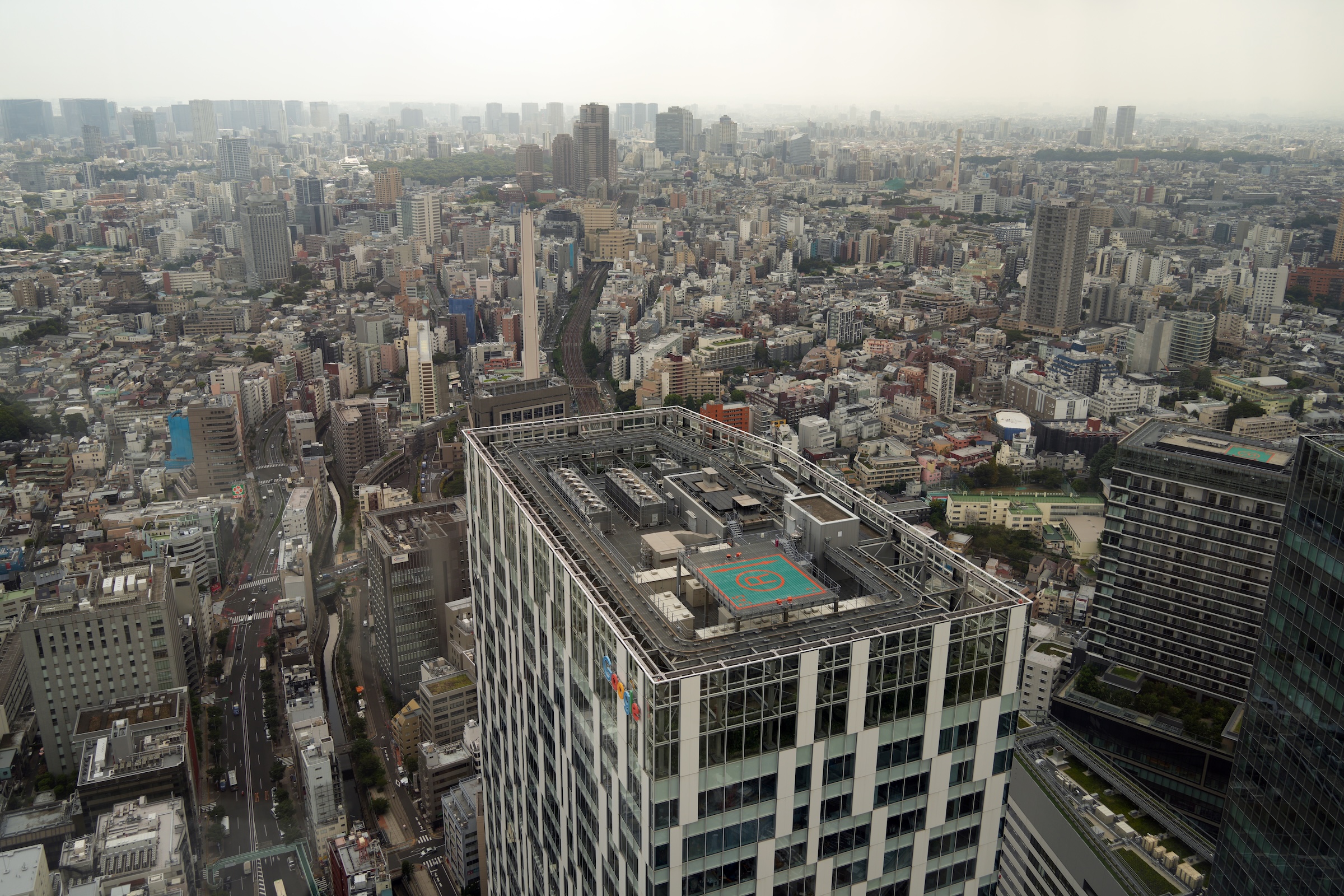
This is a Google office tower in the foreground. The subway trains are full of banners and posted ads about the new Google Cloud with AI.
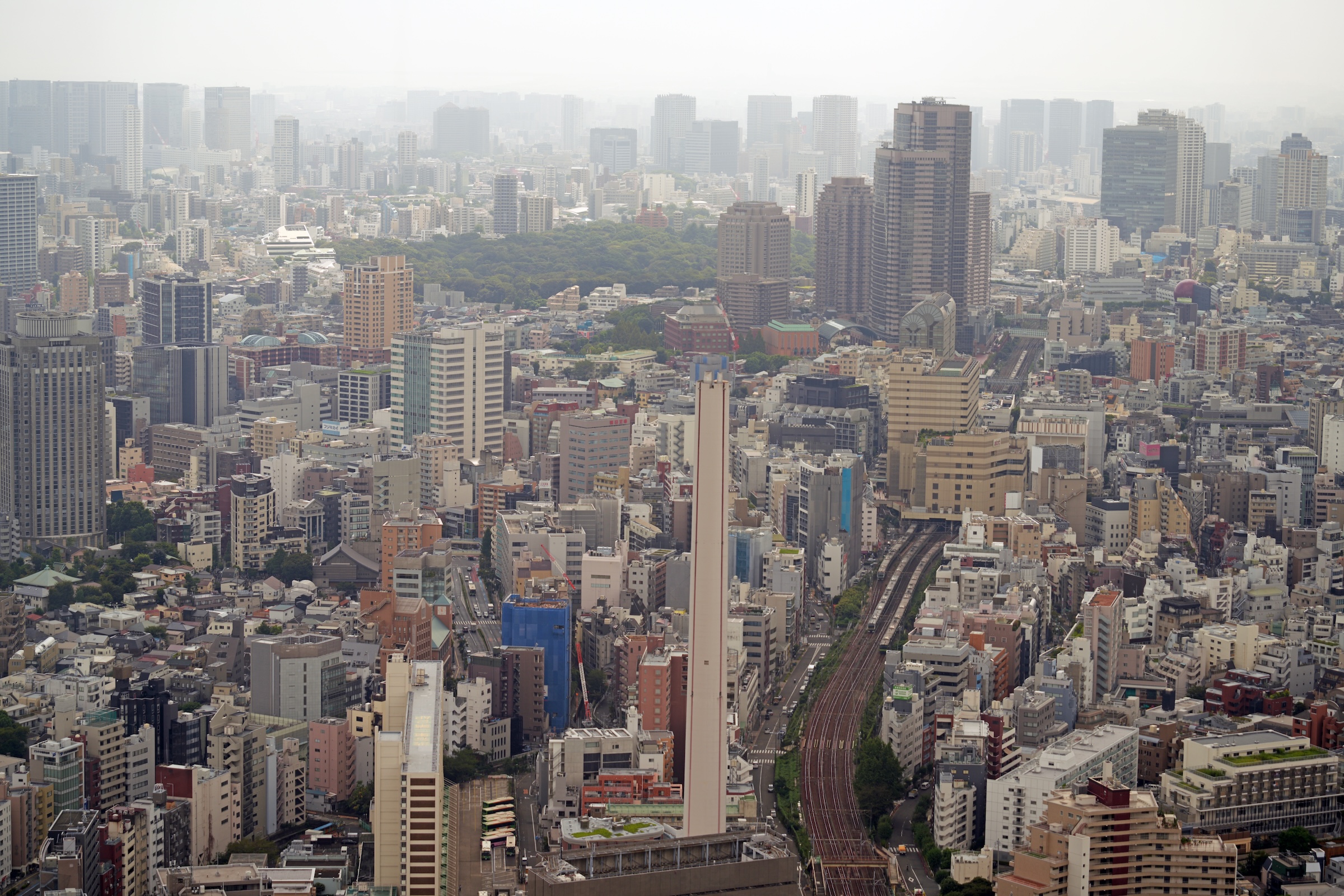
This very tall smokestack next to the Yamanote railway line belongs to the Shibuya Incineration Plant, and the trains to its right are by Ebisu train station south of Sibuya.
This view has both the SkyTree tower (gray, far away in the distance on the city skyline) and Tokyo Tower (far right, red and white lattice structure) in.
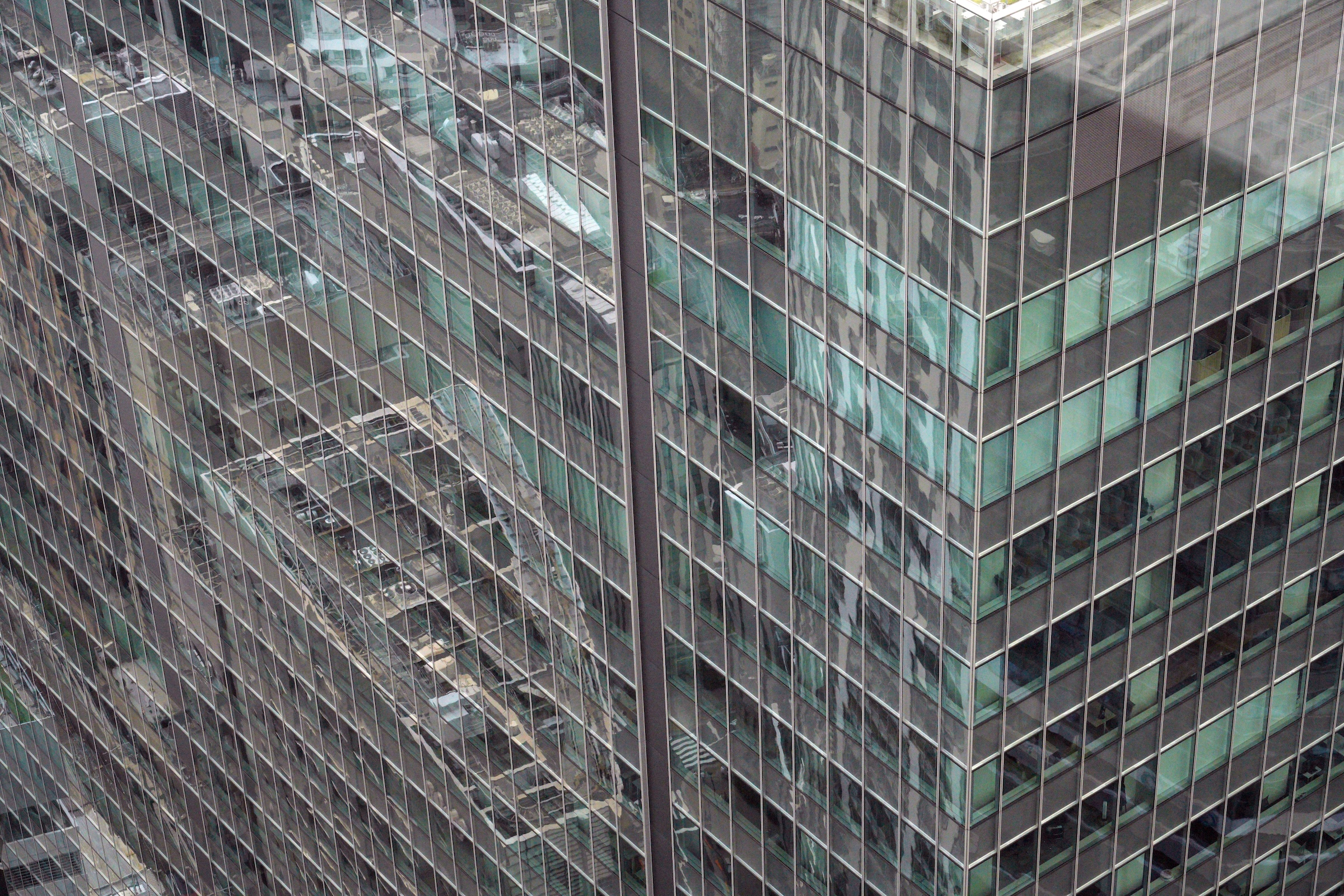
A mosaic of turquoise and gray tiles.
This is the Shibuya Hikarie ShinQs, a high-end, eight-level department store featuring fashion, housewares, dining and gourmet food hall on the ground floor.
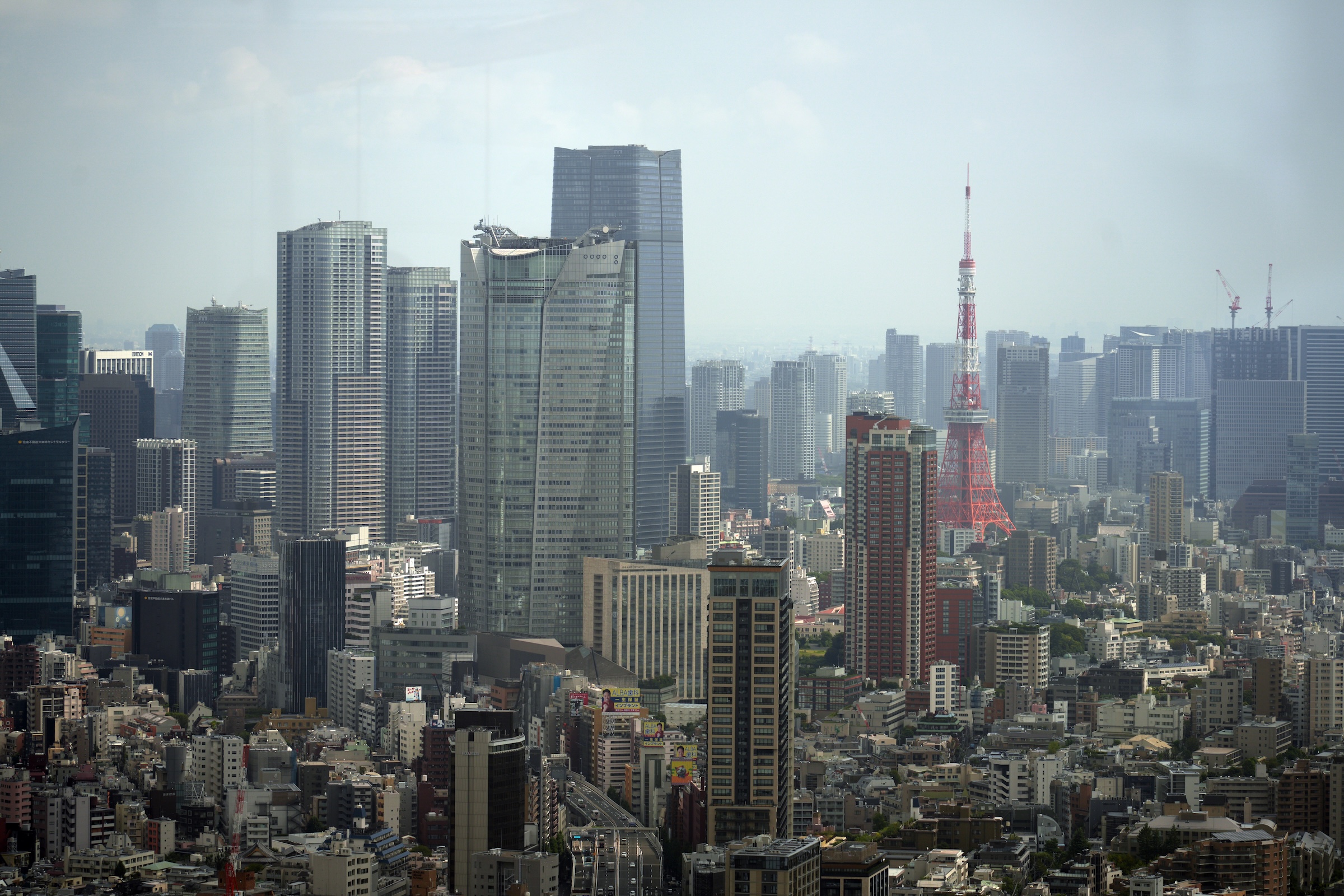
A closer look at Tokyo Tower.
To its left is Azabudai Hills (麻布台ヒルズ, Azabudai Hiruzu)— a complex of three skyscrapers from a major new mixed-use urban development completed in 2023. The complex features Japan’s tallest building, shops, restaurants, offices, and the teamLab Borderless digital art museum.
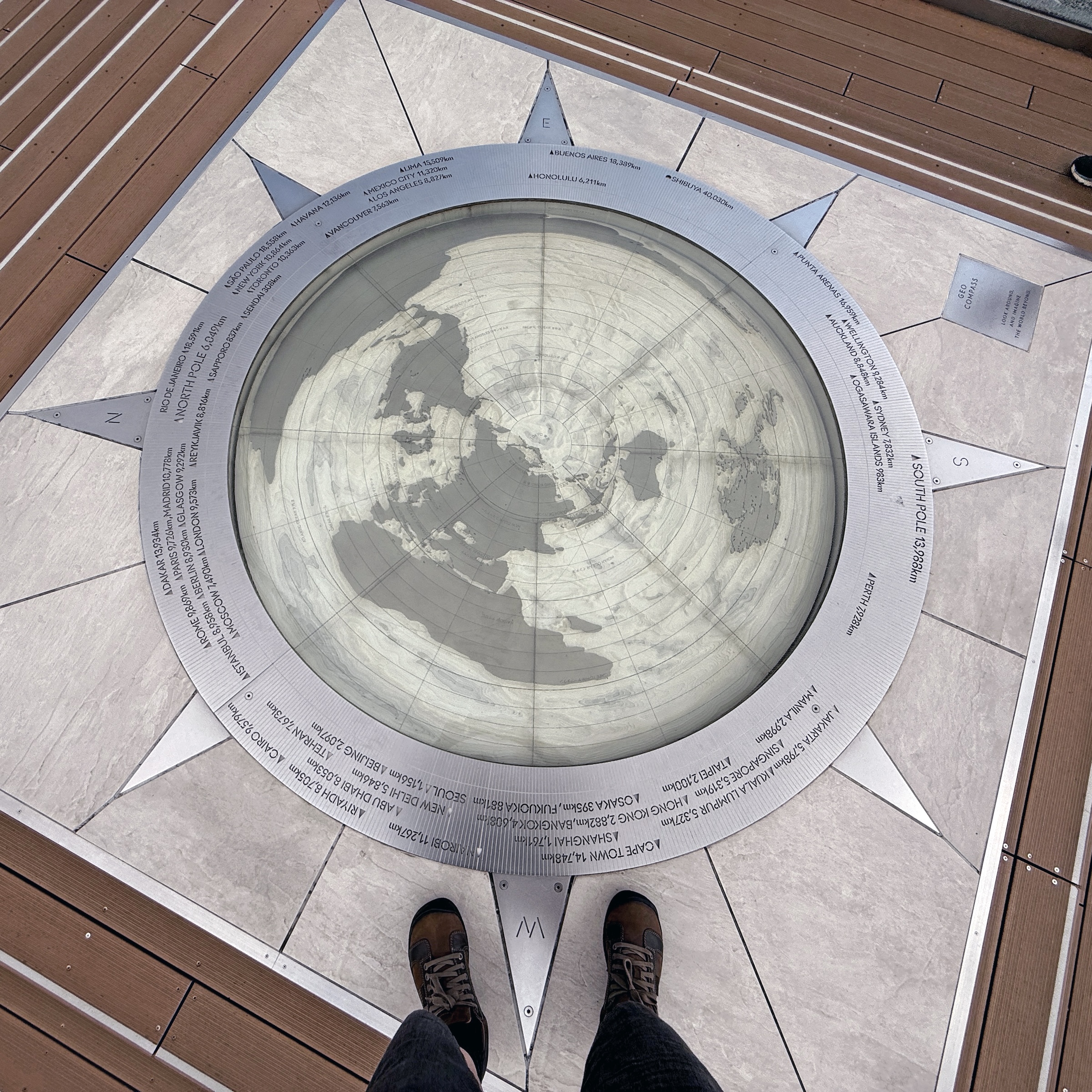
I am sure this map baffles many people that look at it.
It sits in the middle of the Sky Deck and uses an azimuthal equidistant projection to show how the world extends beyond the horizons seen from the deck. It’s possible to recognize the continent of Australia in there, but the blob at the bottom is actually Africa. 
Look for Vancouver at NW (7, 563 km/ 4,699 mi away), closest to where Seattle is.
I guess my question is: why does Shibuya show 40,030 km away (on the other side of Earth?). If Sapporo is 837 km to the North, should it not show 0 for Shibuya instead?

Leave a Reply

Your email address will not be published. Required fields are marked *