
I spend a lot of time scrolling through the listings of stamps and postcards online.
Here is a postcard with a photo from Tel Aviv, Israel (circa 1942) that I find very interesting.
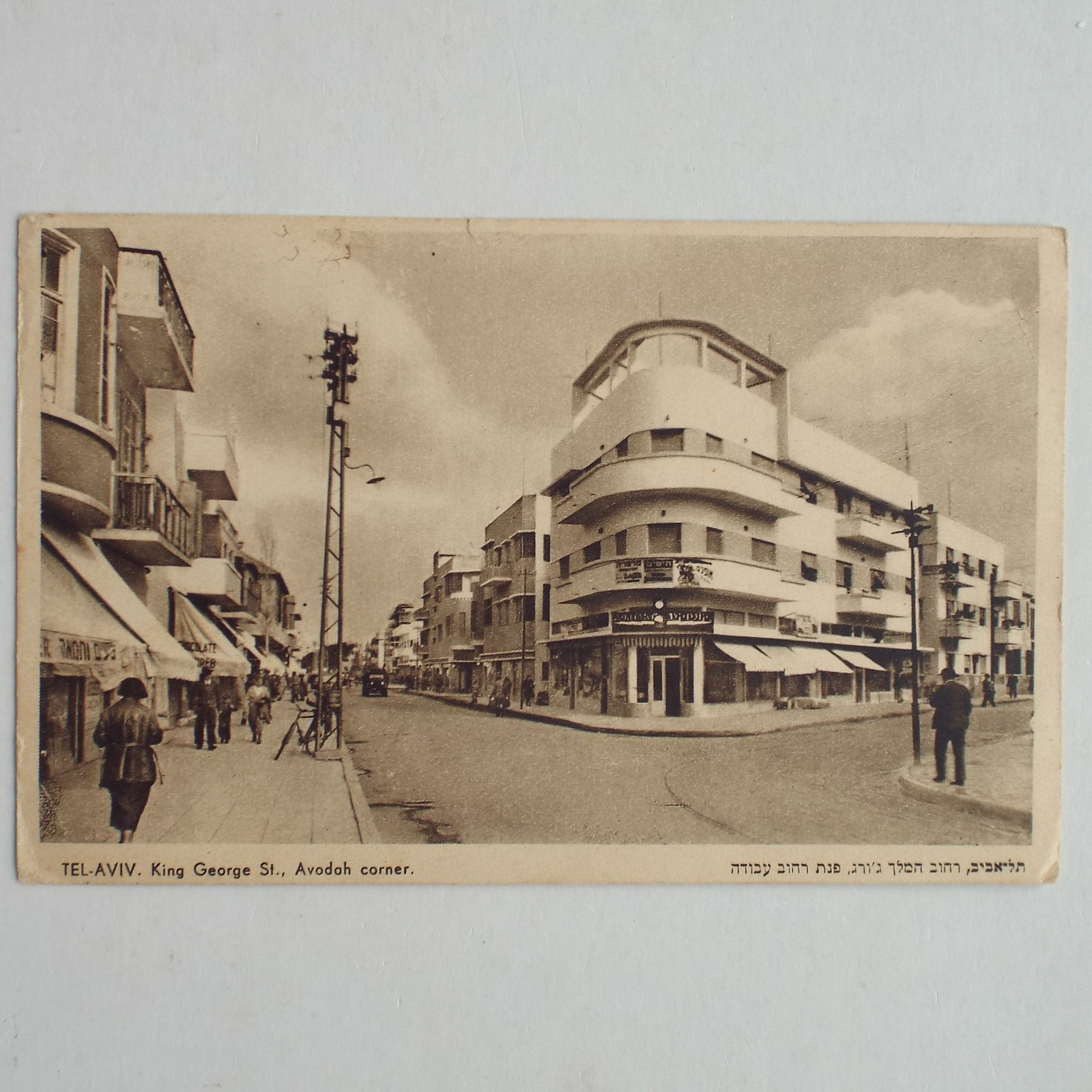
In 1942, Tel Aviv was part of Mandatory Palestine, a territory administered by the British under a League of Nations mandate from 1920 to 1948. During this period, Tel Aviv was a rapidly growing Jewish city adjacent to Jaffa. The entire region was known as Palestine, not as the state of Israel, until 1948.
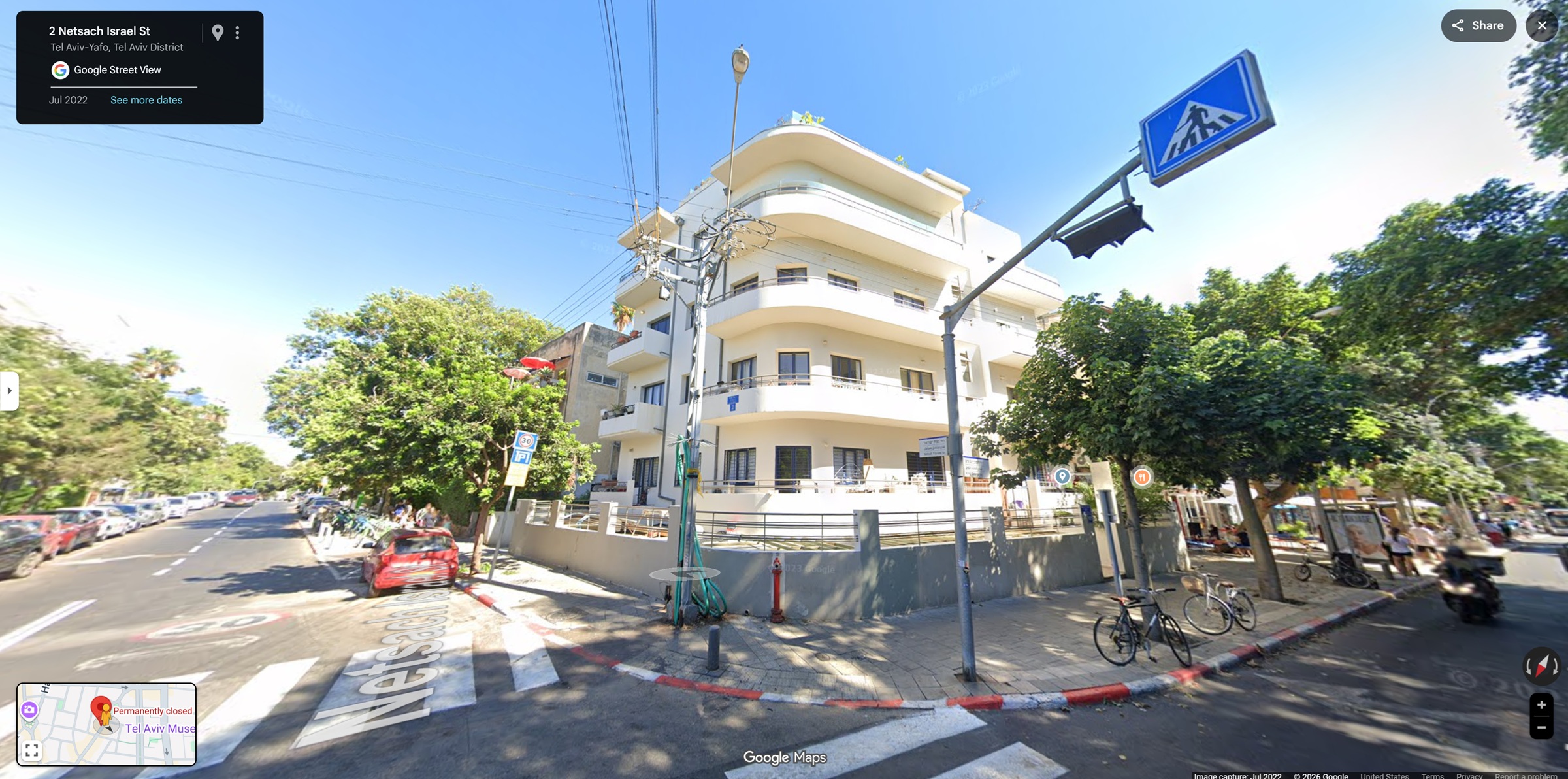
There are still Palestinians living in Tel Aviv, specifically in the municipality of Tel Aviv-Yafo, with most residing in Jaffa (Yaffo). Palestinians make up 4 to 5% of the city’s population. These are largely Palestinian citizens of Israel (or Arab-Israelis) who remained after 1948, rather than residents from the occupied West Bank or Gaza.
Palestinian citizens of Israel possess legal rights such as voting and holding office, but do not have the same, equal rights as Jewish citizens in practice or law. While holding citizenship, they face systemic inequalities, discrimination in housing, land access, and education, and are governed by laws privileging Jewish citizens, such as the controversial 2018 Nation-State Law. Palestinian citizens of Israel (Arab citizens of Israel) hold Israeli passports, which allow them to travel internationally and access the same rights as other Israeli citizens. Their rights are distinct from Palestinians in East Jerusalem, who are generally permanent residents without Israeli citizenship or passports.
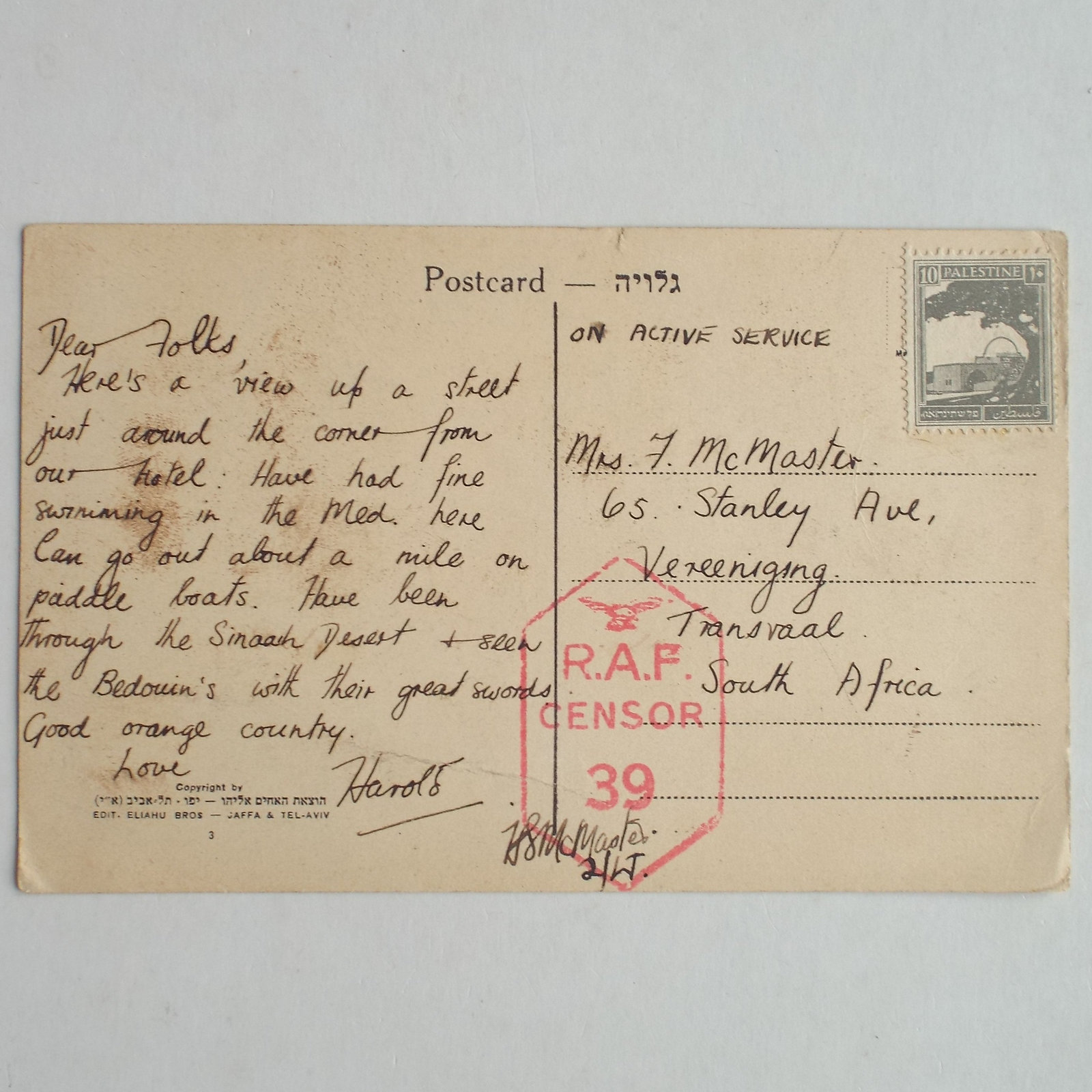
This stamp’s denomination is 10 mil, 10/1000ths of a Palestine pound (£P) which was pegged 1:1 to the British pound at the time. So one penny’s worth of postage was good for sending the postcard down to South Africa.
The number 39 is a unique identifier for the individual censor from the Royal Air Force or the specific censorship unit that examined and approved the message.
The sender was a Harold McMaster, on active duty in the British Army.
(The British Army controlled Palestine in 1942 as part of the British Mandate, which lasted from 1920 to 1948.)
It certainly seems that Mrs. McMaster that resided in Vereeniging, South Africa, was his mom, or at least a close family member.
At the time there were lots of South Africans of British descent, and of Jewish descent, residing in South Africa (and there still are, to this day).