It rained this morning, but it cleared up later, and warmed up to 12 °C (54°F), which was a welcome change from Friday night.
I walked around the Neumarkt area, and Rudolfplatz, and went into a few stores, seeing that most stores close down on Sunday, and Monday, for New Year’s Day. Here are some pictures from Friday night and Saturday.
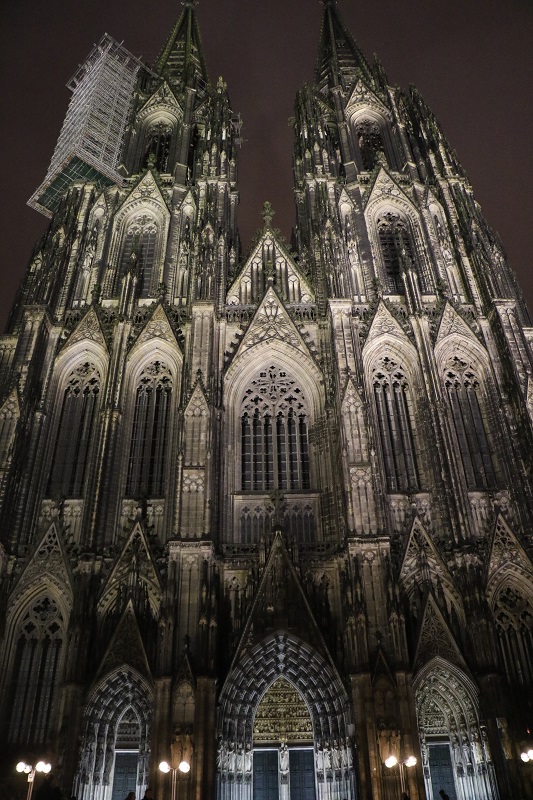
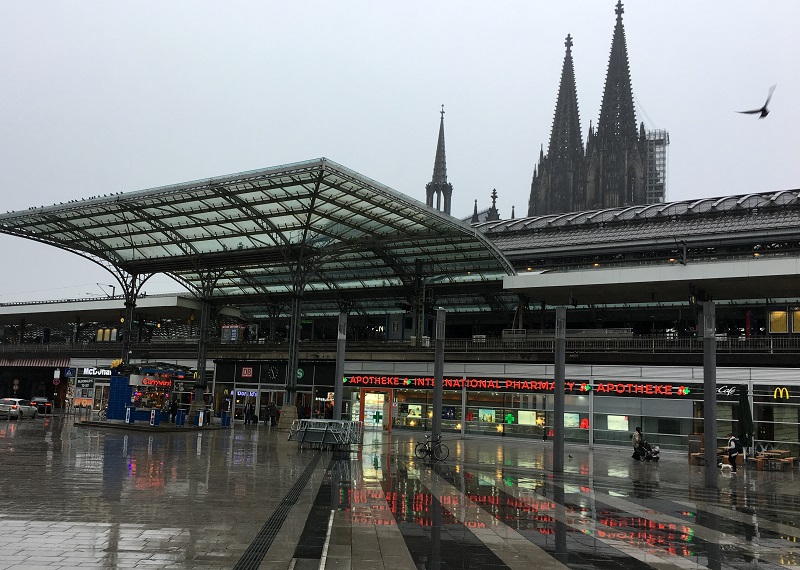
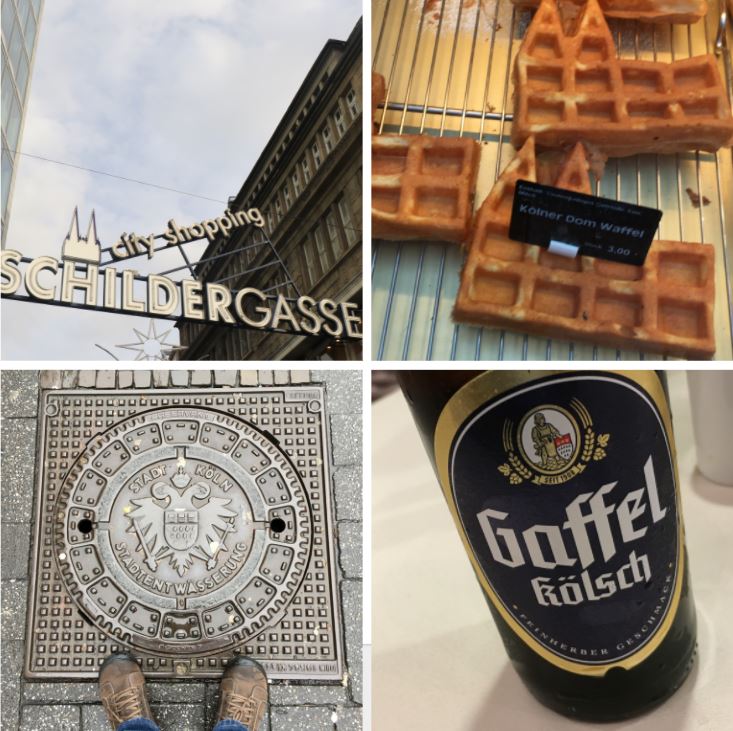
The awe-inspiring Kölner Dom (Cologne Cathedral) is right by the hauptbahnhof (main train station). Construction on this building started many centuries ago! – in 1248. It was the world’s tallest structure from 1880 to 1890, and is Germany’s most visited landmark. It suffered fourteen hits by aerial bombs during WWII – but did not collapse, and stood tall in an otherwise flattened city. The cathedral was declared a World Heritage site in 1996. I still have to go inside and take a few more daytime pictures.Here’s the hauptbahnhof (main train station), with the spires of the Kölner Dom behind it.Clockwise from Top Left: Schildergasse (Schilder alley) is near the Neumarkt station, and good for all kinds of shopping | Waffles in the shape of the Kölner Dom | Kölsch beer is brewed only around Cologne (it’s a light ale), and of course I had to have some | The coat of arms of Cologne on a man-hole cover. Those are two eagles, and the shield carries eleven black drops. Legend has it that they recall Cologne’s patron, Saint Ursula, a Britannic princess, and her legendary 11,000 virgin companions, who were martyred by Attila the Hun at Cologne for their Christian faith in 383.
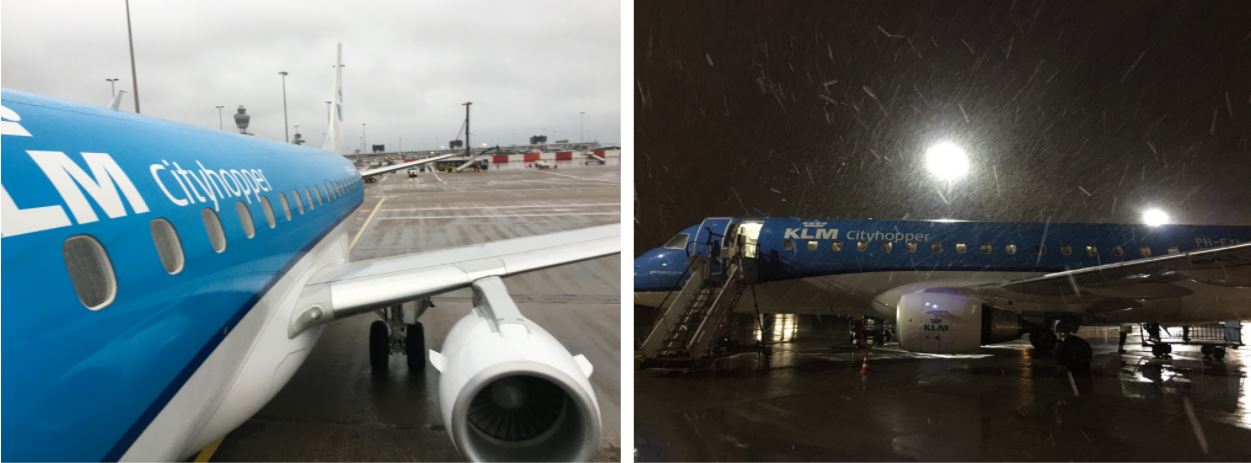
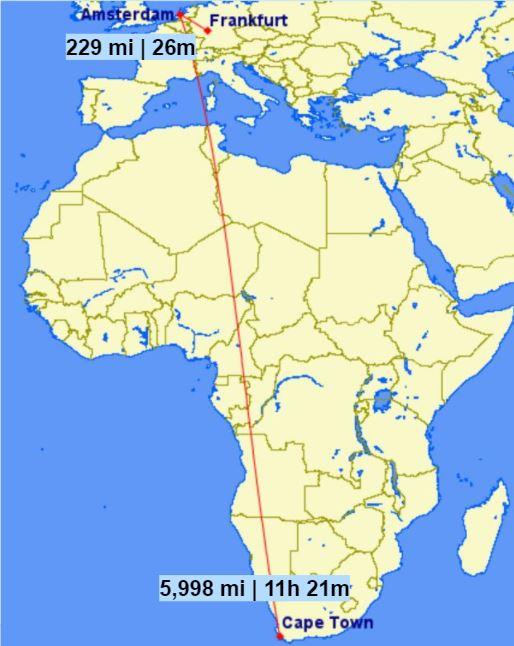
Hey! I made it into Cologne. It was snowing lightly as we landed in Frankfurt. The snow had started to stick to the tarmac, and the de-icing trucks were just fanning out to go clear any layers of snow or ice.
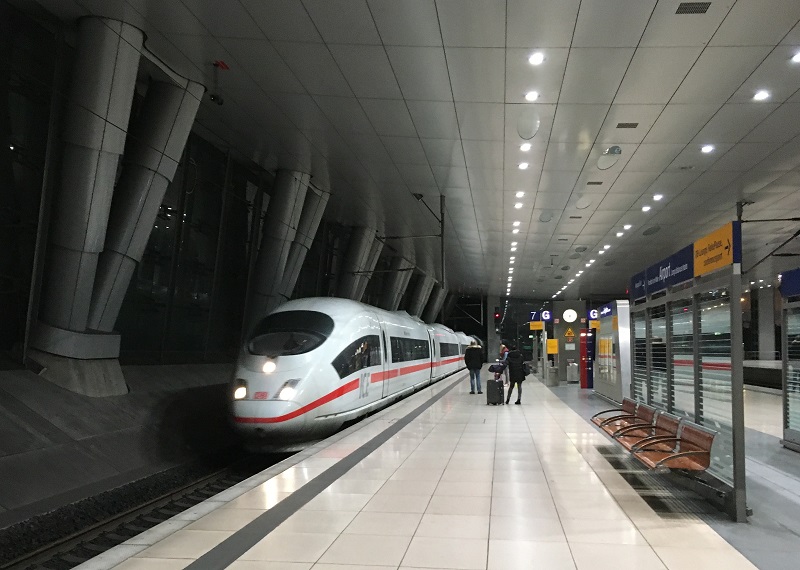
The intercity express train from Frankfurt to Cologne made short work of the 118 miles (190 km) from Frankfurt. The trip took only 50 minutes. These trains travel at speeds up to 186 mph (300 km/h)!
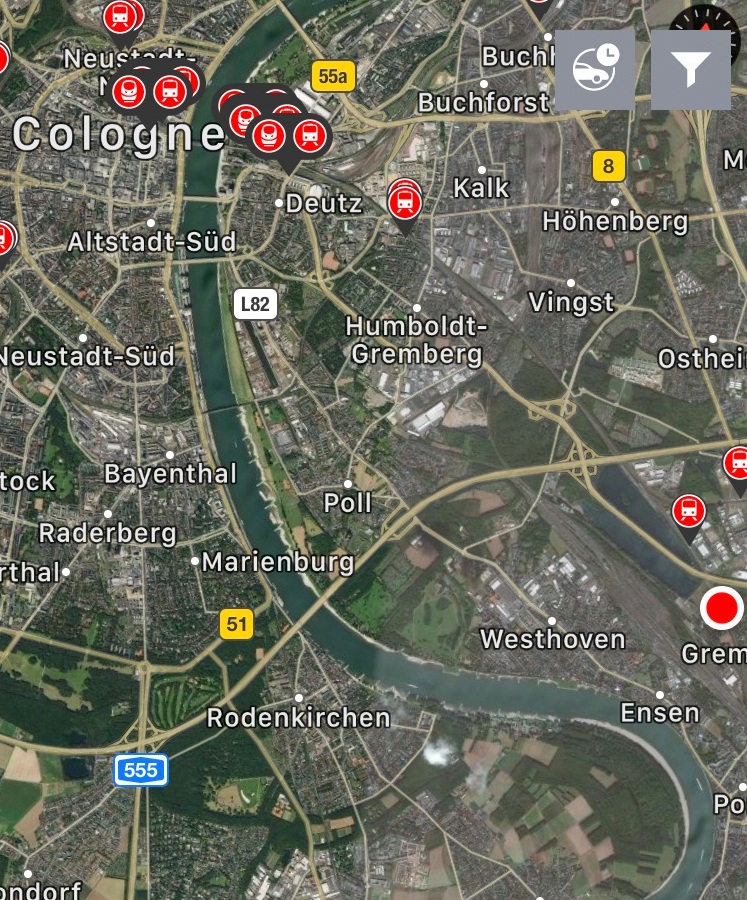
Left: The Embraer 190 ‘Cityhopper’ as we boarded in Amsterdam | Right: Arrival in Frankfurt with light snow (35 °F/ 2 °C).The Intercity Express train for Cologne, at Frankfurt airport’s ‘fernbahn’ (long-distance) station. It stops for only 3 minutes. You had better be ready to board! .. and stand at the right place on the platform! There is a diagram on the platform’s message board that shows the train car numbers, so that passengers can position themselves in the right place. Of course, if you mess up or run late, just board the train, and then walk through the train cars to find your car and your seat.This map is from Deutche Bahn’s app on my smart phone. There is wi-fi on the train (of course). I’m in the train (plain red dot on the bottom left; the other red dots are train stations). The thin gray line that the red dot sits on, is the track, and we are 5 minutes away from Cologne. (The river is the Rhine).
I arrived at Schiphol airport in Amsterdam. My layover is several hours, then a short hop to Frankfurt by air, from where I will take the train to Cologne.
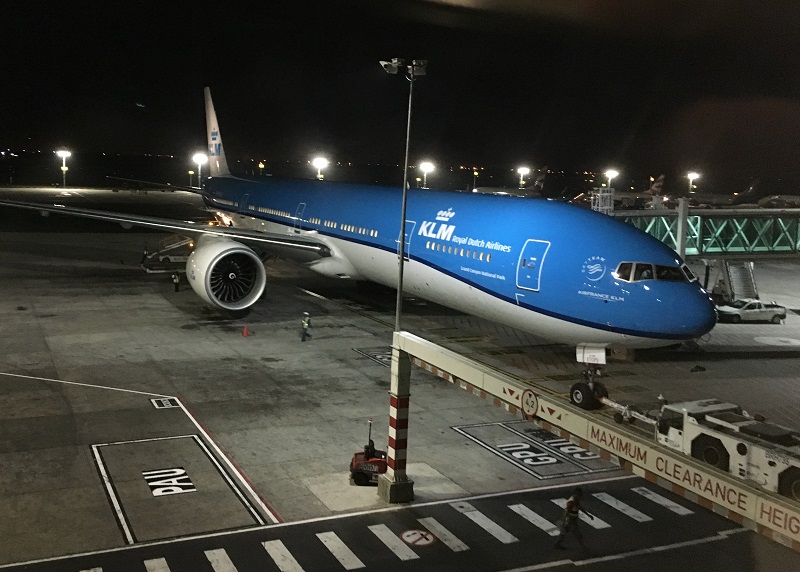
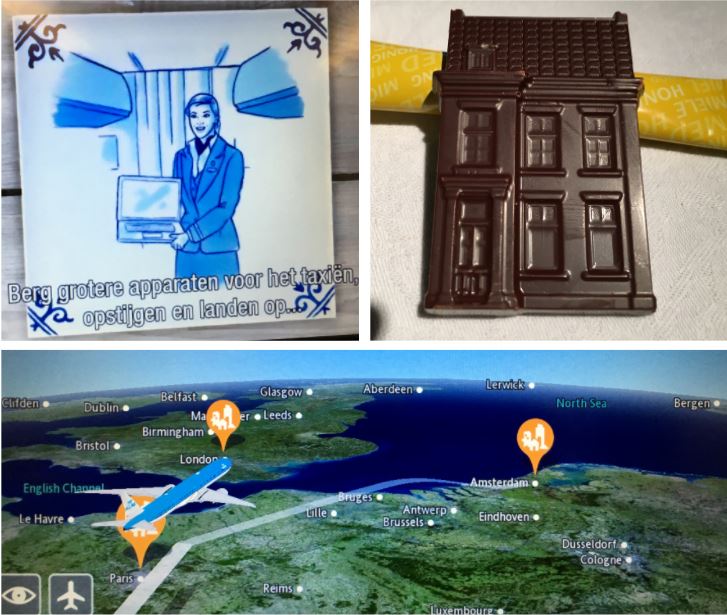
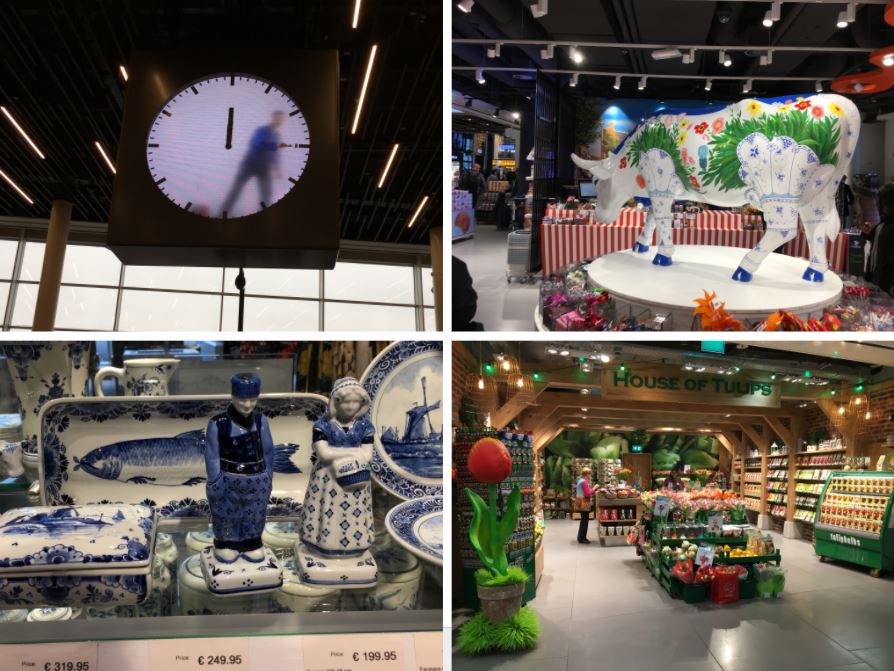
My magnificent flying machine, here at the gate at Cape Town International airport, was a Boeing 777. This airplane is named the Grand Canyon National Park (maybe KLM just kept the name that Boeing painted on it?).Top: The safety briefing video gave a nod to Royal Delft porcelain, with pictures in the cobalt blue and motifs in the corners | My little after dinner-chocolate as a 17th century Dutch house | Bottom: Approaching Amsterdam (shown by the flight simulator). I could almost have parachuted out to Cologne! – but then I guess I would not have my luggage. And the air is frigid this time of year.Scenes from the big public space called ‘Lounge 2’ at Schiphol aiport. Clockwise from top left: The lounge clock display has a ‘technician’ ‘inside’ behind the dial face, painting the minute hand of the clock every few minutes (it’s all computer imagery). | The cow is from the souvenir store. | I would have bought the beautiful Royal Delft porcelain farmer and his wife, but no, not for 200 Euros each. | I love the giant tulip at the House of Tulips store. Reminds me of the venus fly trap plant (named Audrey), in the 1986 movie Little Shop of Horrors.
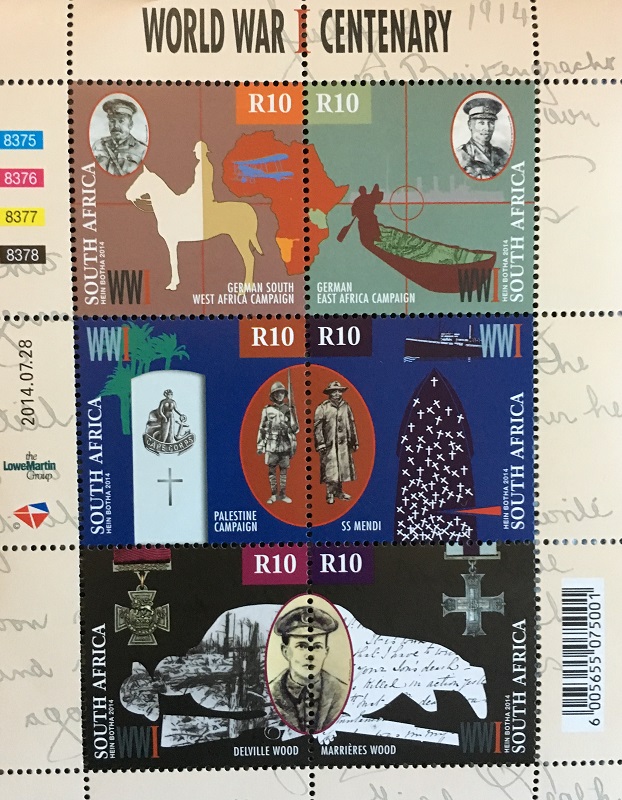
I shipped a package of books and red tea that I bought here, from myself to myself, in Seattle today. Books are so heavy, and I don’t put food in my baggage when I travel. The post office branch I visited did not have new 2017 stamps , and I settled for a panel of 2014 stamps that commemorated World War I.
The horrors, and the heroes of War: Top South African Generals Louis Botha and Jan Smuts at the top (Botha would die of flu in 1919, and Smuts became Prime Minister after the war). Middle There was even a campaign in Palestine, and the sinking of the SS Mendi in the British Channel made for a loss of 616 lives, most of them black South African soldiers. Bottom The battle of Battle of Delville Wood in France (against the Germans), and the German advance at Marrieres Wood also resulted in a lost of casualties, and heroic actions of the South Africans against overwhelming forces.
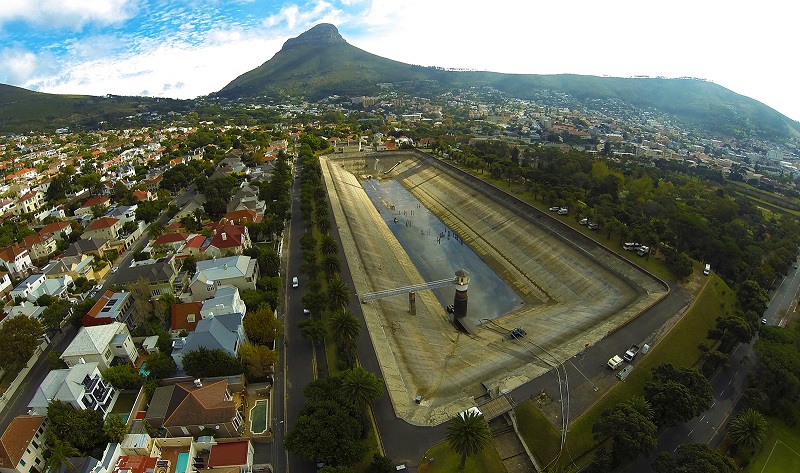
Picture of the Molteno reservoir taken in April 2014 with a drone by ‘AerialcamSA’. That’s Lion’s Head in the background. [Source: Wikipedia]‘Whoah! What’s that body of water?’ I thought as I drove by a reservoir in Oranjezicht on the slopes of Table Mountain today. ( I visited family that live close by).
Turned out it was the Molteno reservoir (or Molteno dam), one with a colorful history.
Construction was completed in 1880, but then the dam stood empty through two unusually dry winters. When the drought finally broke, the dam overflowed. The eastern wall broke and sent a tsunami of water down through the city, destroying houses and uprooting trees. Yikes!
Another catastrophe occurred in June 1900, when a famous hot air balloonist called Isidore Michaels got in trouble with the wind, jumped from his balloon basket with a parachute, but ended up in the middle of the dam and drowned, enmeshed in his parachute strings. The dam had to be drained to retrieve his body.
After that, the dam served the young city of Cape Town for many decades to come. It is still in service, supplying the city center with water, alongside several other dams in the Western Cape Water Supply System that were brought on-line.
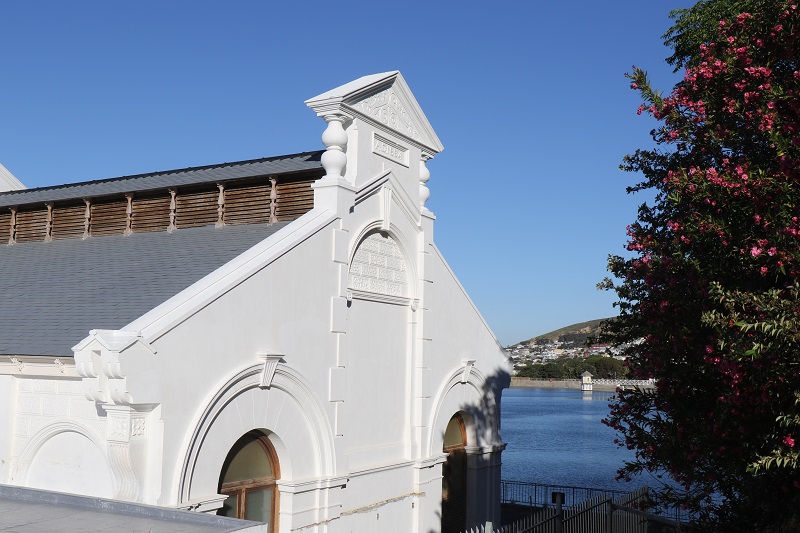
I took this picture today, with the Molteno reservoir in the background. The building (constructed 1894, says the date), housed the Graaff Electric Lighting Works, Cape Town’s first power plant. The city’s first electric lights were switched on in 1895.
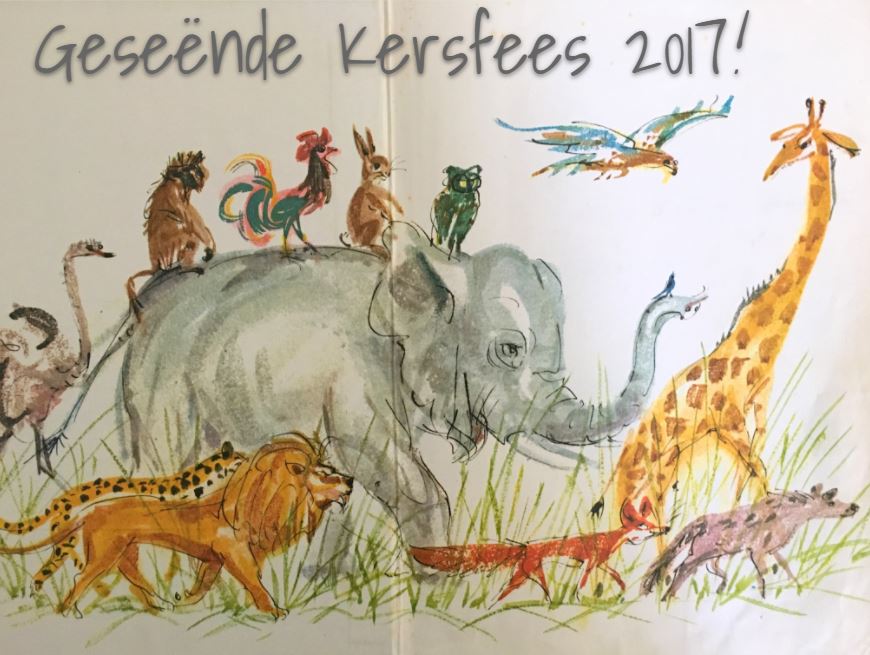
The drawing is from inside the cover of ‘Die Mooiste Afrikaanse Sprokies/ The Most Beautiful African Fairytales’, published in 1968 by Human & Rousseau.
P.S. It’s a white Christmas in Seattle, with an inch or two of snow falling overnight in the city. White Christmases are rare in Seattle, but in 2008 four inches of snow blanketed the city on Christmas Day.
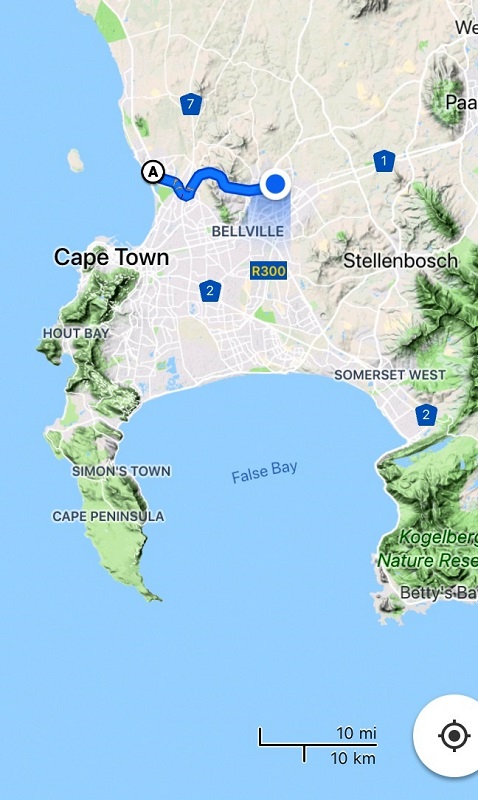
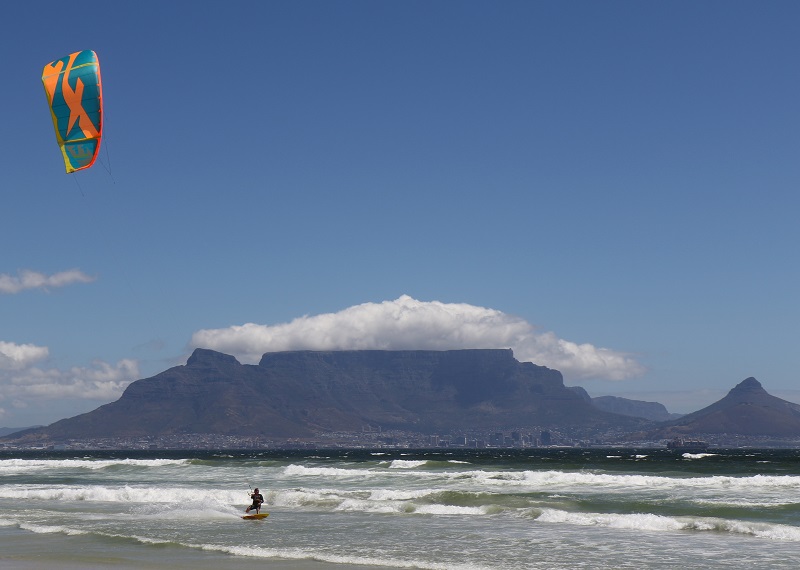
Bloubergstrand (‘Blue Mountain Beach’) is at A. It’s only a 13 mi drive from Durbanville where I stay.Kite surfer at Bloubergstrand today. He wears a harness to keep him connected to the kite, and steers it with a handle bar.
I took a short drive out this afternoon to Bloubergstrand (‘Blue Mountain Beach’). From there, one sees the iconic view of Table Mountain (looking blue in the distance).
It was windy again today, and a dozen or so kite surfers made good use of the wind.
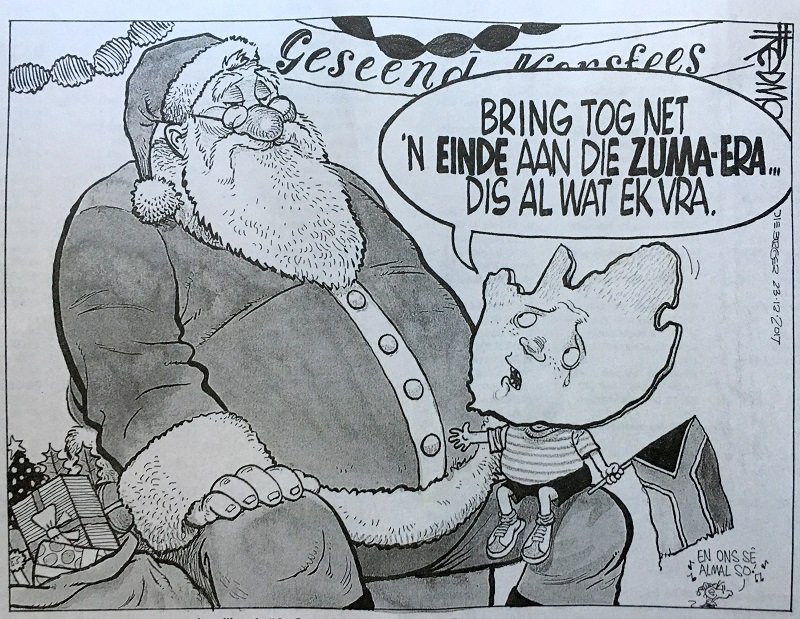
‘Bring an end to the Zuma era .. that is all I ask’, pleads a teary-eyed ‘South Africa’ in Santa’s lap, in this cartoon by Fred Mouton in Saturday’s newspaper Die Burger. (In the United States, a similar request from Santa would be to get President Trump impeached).
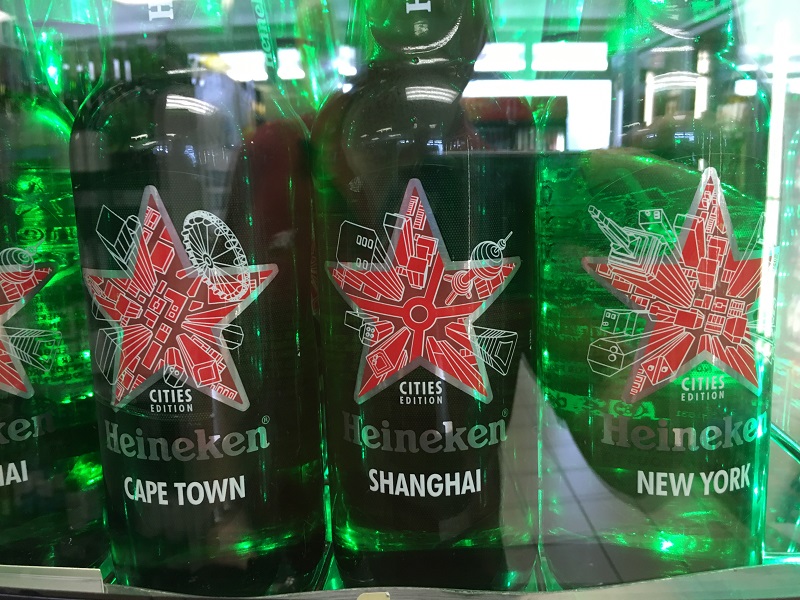
Here is what the latest edition of Heineken’s ‘Cities of the World’ campaign beer bottles look like. (They have been around since 2014). Heineken sells its beer in 192 countries, says its website.
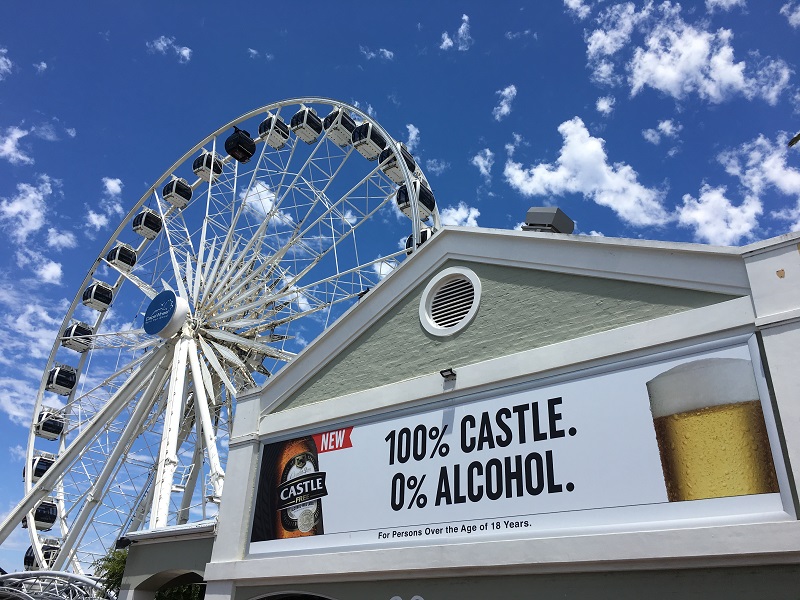
Let’s see – that’s One World Trade Center on the top left of the star for New York, and Shanghai World Financial Center (bottom right) and the Pearl Tower (top right) on the Shanghai bottle. Cape Town does not have much in the way of skyscrapers, so Heineken went with the Ferris wheel at the V&A Waterfront. The square building on the bottom right may be the (ugly) 1972 Thibault Square building. I don’t see the newer 2014 Portside Tower.Here’s the Ferris wheel at the V&A Waterfront. (I see even Castle Lager is now offering an alcohol-free version of its iconic beer, first brewed in 1895 in South Africa).
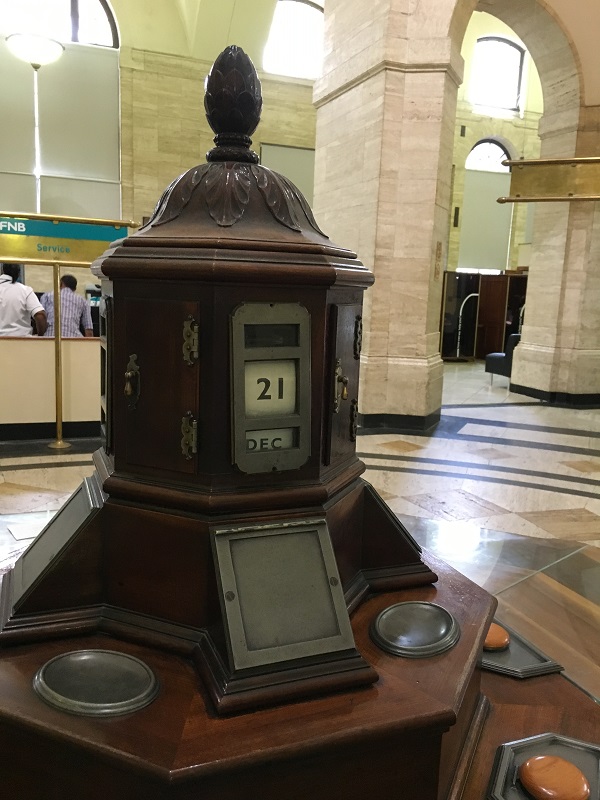
The circular desk in the main banking hall, under the dome, still used to indicate the date for those that fill out checks (fewer and fewer these days!) and other documentation.
I checked into the First National Bank building in Cape Town on Thursday, in a quest (unsuccessful so far) for a few new 2017 South African 5-rand coins.
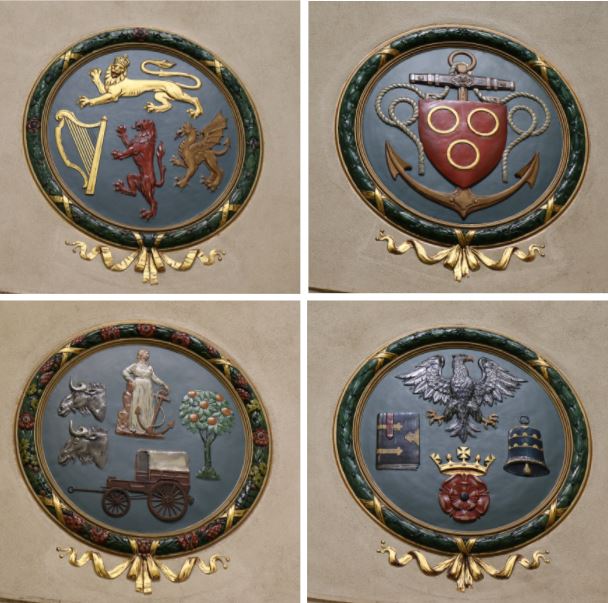
The building was designed by famed architect Sir Herbert Baker, and inside the banking hall’s dome there are four beautiful plaques.
There is a lot of history in the plaques, and I did some on-line research to find the full explanation for them.
Top Left: Symbols of Great Britain : Gold lion with a crown for England, Harp for Ireland, Red Lion for Scotland. Bottom Left: Symbols of the Union Of South Africa: Lady with Anchor for Cape Colony, Wildebeest for Natal Colony, Ox Wagon for Transvaal Colony, Orange Tree for Orange River Colony. Top Right: The arms of Van Riebeeck, a shield with three besants superimposed upon the anchor of Good Hope. Bottom Right: The signs of Lombard Street. Bell for 44 Lombard Street, Rose & Crown for 50 Lombard Street, Bible for 54 Lombard Street, Eagle for 56 Lombard Street. Dragon: Wales
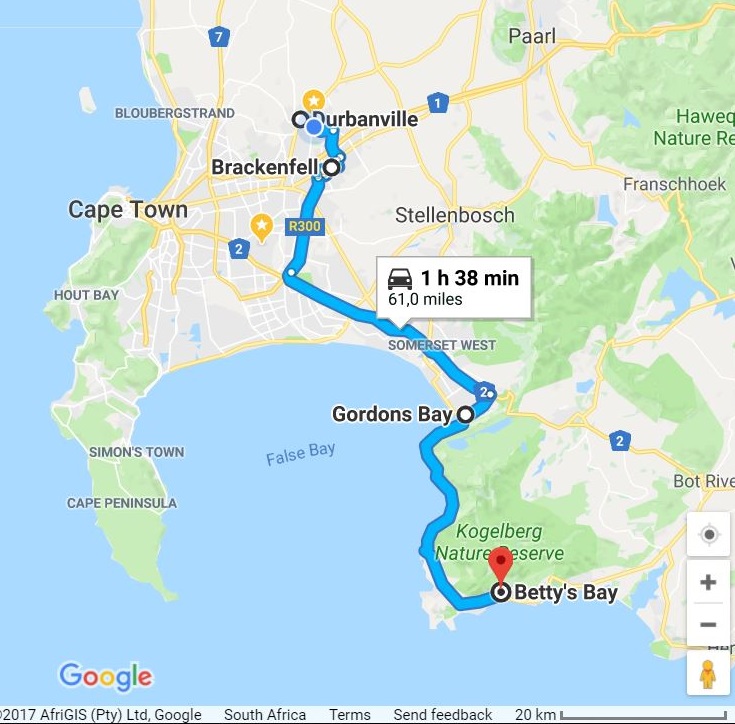
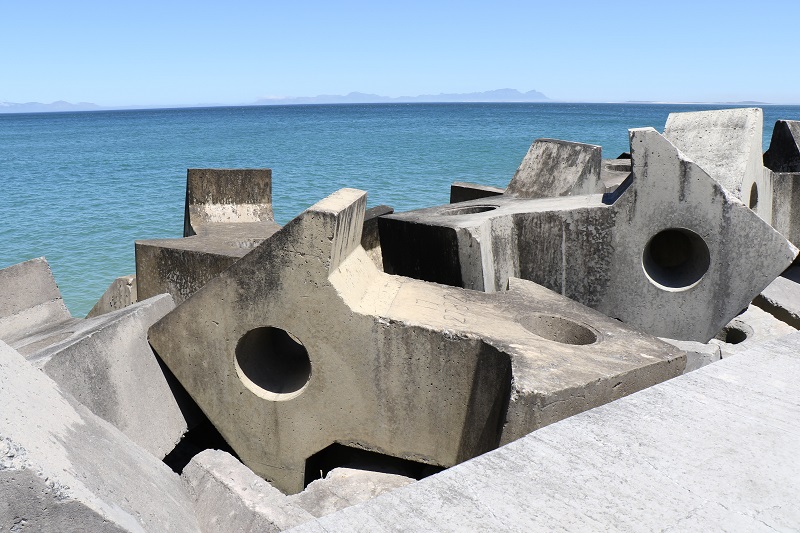
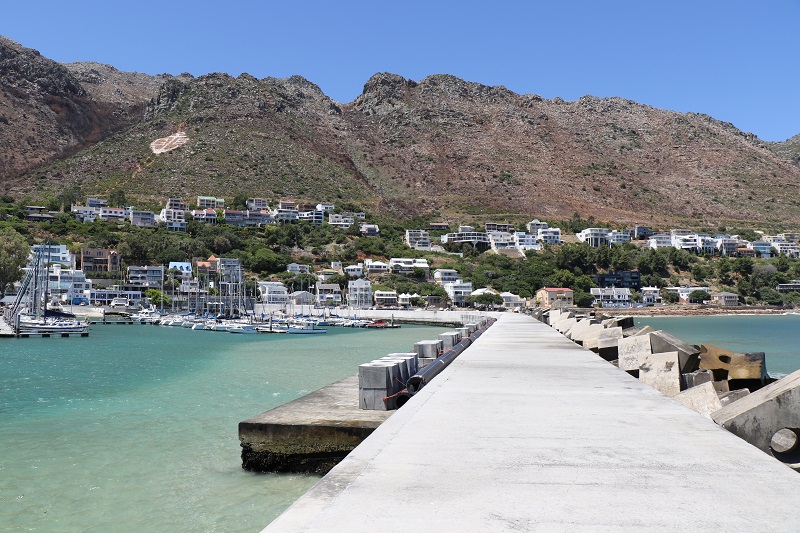
The drive down to Betty’s Bay from Durbanville is about an hour and 30 minutes.‘Dolosse’, invented in 1963 in South Africa, are concrete blocks in complex geometric shapes weighing up to 20 tons. They are used in large numbers to protect harbor walls from storms and the erosive force of ocean waves.Standing on the pier at the little harbor in Gordons Bay (on the left), and looking back. Look for the anchor and GB on the mountain. On the left of the pier are black pipeline segments for construction of a water desalination plant. On the right are ‘dolosse’, the interlocking cement breakwater structures. The little beach on the right is called Bikini Beach.
My friend Marlien and I drove to Gordons Bay and Betty’s Bay on Wednesday, all along the scenic coastline of False Bay. The South Easter* blew strongly at times, the way it usually does in December.
*Also called the Cape Doctor, since the wind blows away the smog accumulating in the Cape Town city bowl between the harbor and Table Mountain.
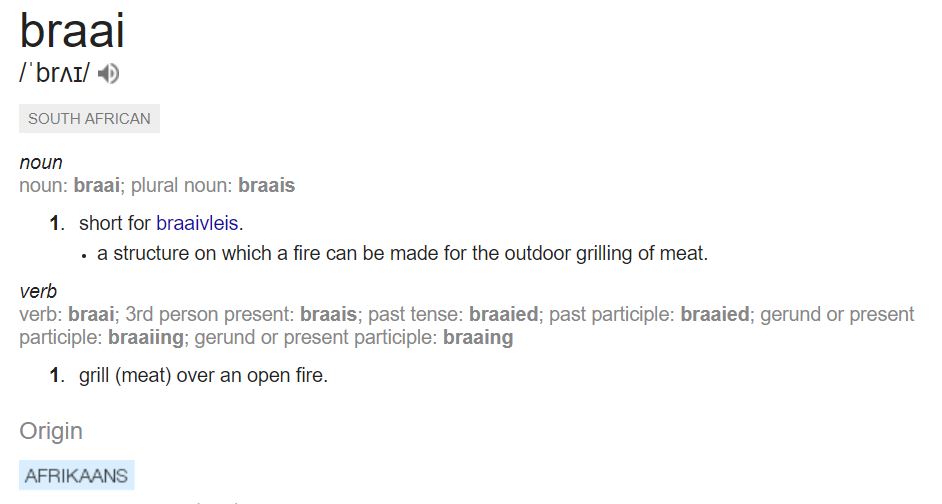
Braai means barbeque in South Africa, and can be used as a noun or a verb. I like to check out the offerings in the grocery store for braaiing.
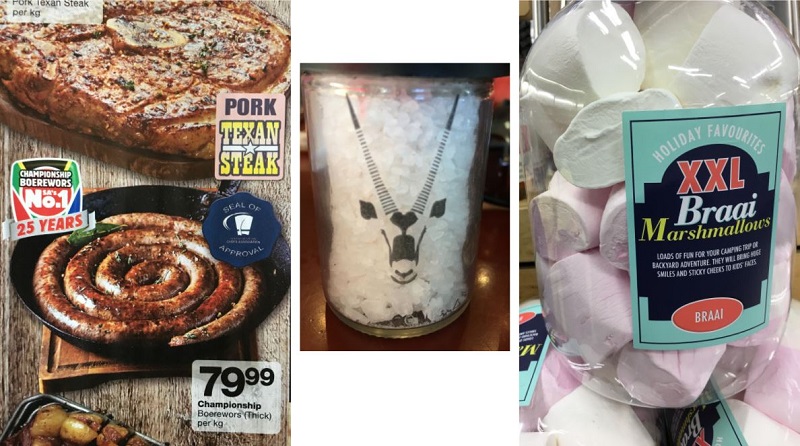
Pork ‘Texan steak’ style is a thick cut of pork with seasoning rubbed onto it, then grilled or fried in a pan; boerewors (US$2.85/ lb) is very popular for South African braais | Kalahari (brand name) salt features a gemsbok | the largest marshmallows I have ever seen, also for braaiing
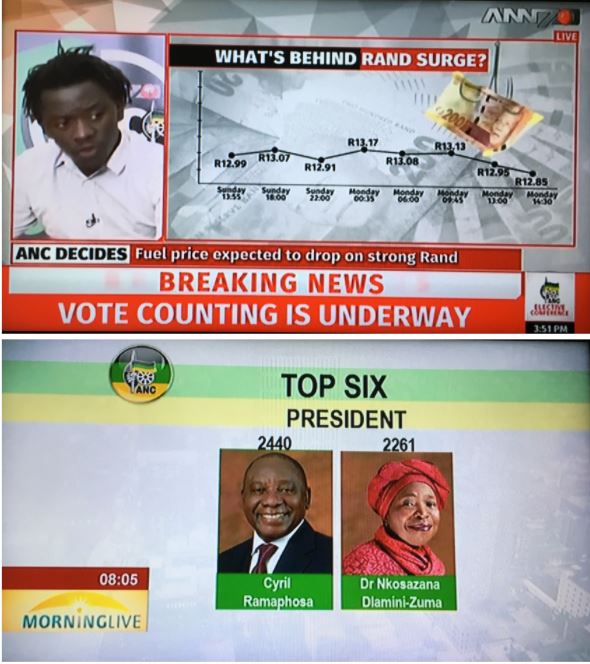
Top: The South African Rand’s exchange rate experienced a ‘Ramaphosa bump’ in the last week or two. The Rand strengthened to R12.56 to the dollar, but slipped to R12.78 early on Tuesday morning. Bottom: Top Six refers to the leadership of the ANC. Some analysts say Ramaphosa has his work cut out for him with some surprising and questionable candidates that got elected to the Top Six.
Early Monday evening, the results were in: Cyril Ramaphosa won the vote for ANC President, with 2440 votes to 2261. Hopefully this is a sign that the disastrous Zuma presidency and legacy will be coming to an end.
There was TV coverage all day, but none of the exhaustive and detailed analysis that come with elections on TV in the United States.
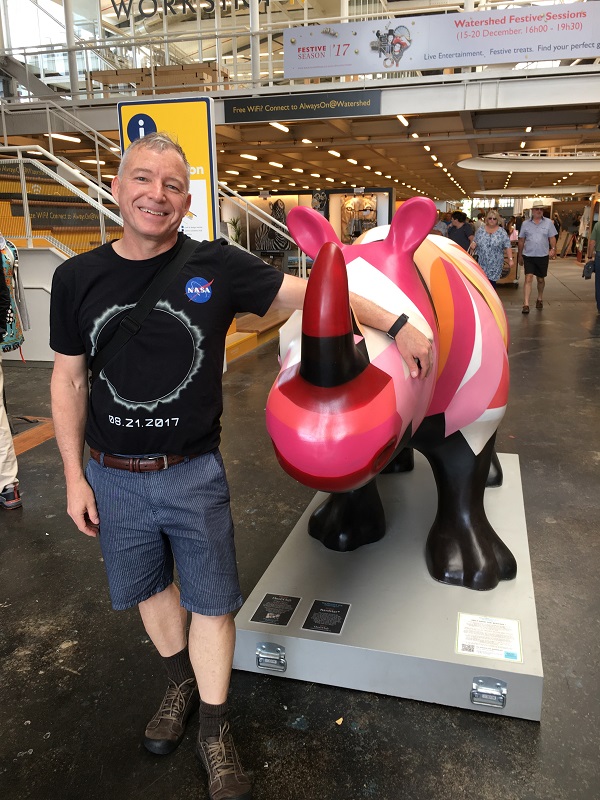
More artwork .. this rhino in The Watershed building in the V&A Waterfront is part of a public art exhibition campaign to save the rhinos. There are fewer than 5,500 black rhinos and 22,000 white rhinos left on the planet and poachers are still killing them at an alarming rate.
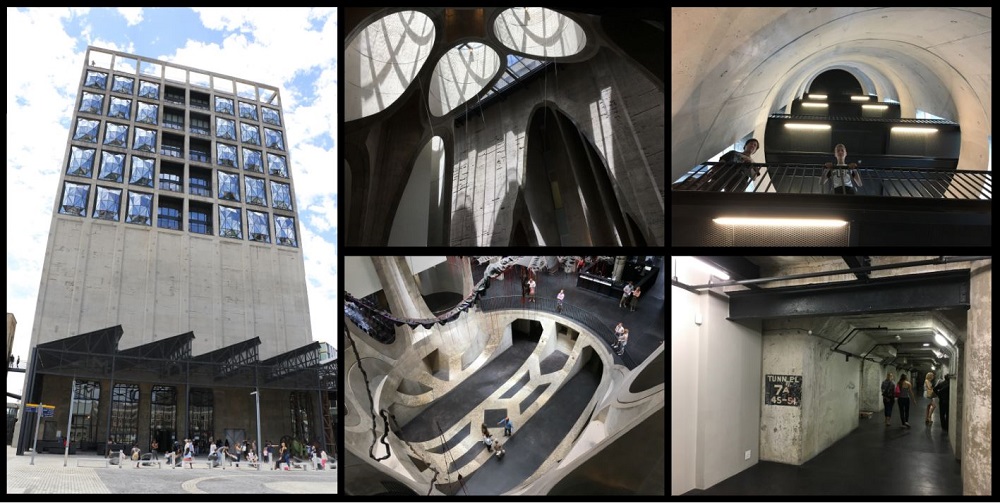
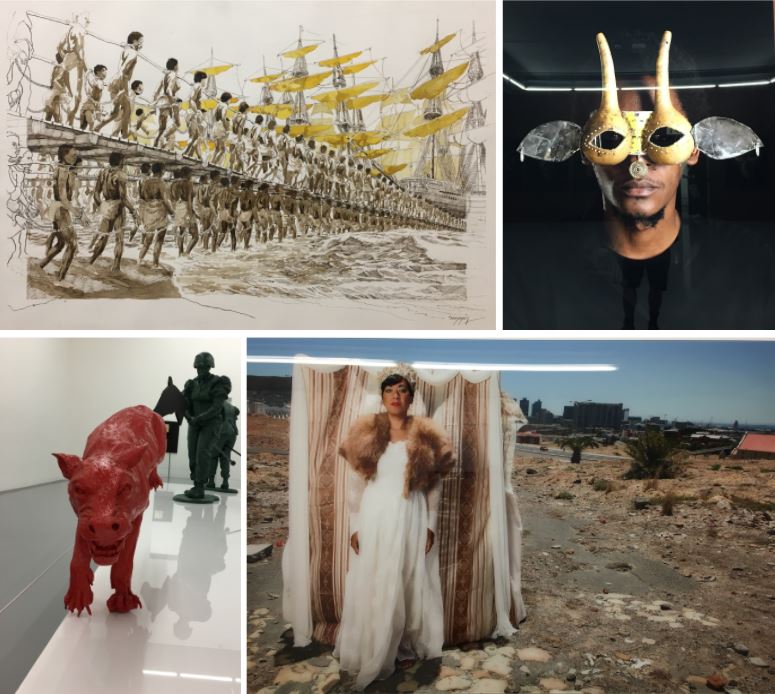
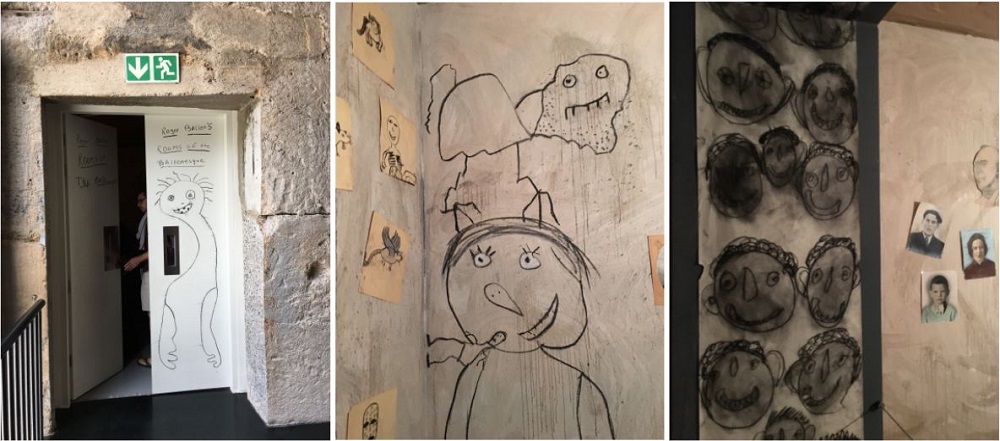
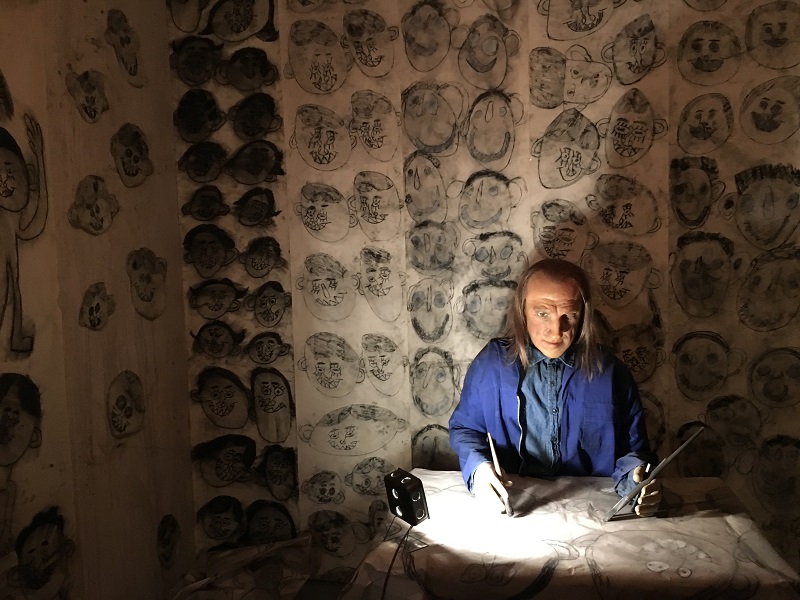
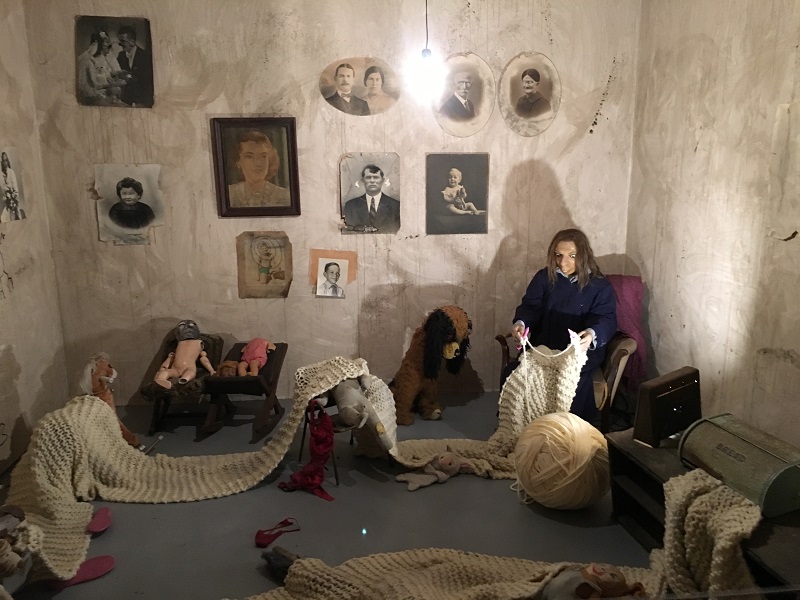
Clockwise from left: the front of the MOCAA building | open tops of grain silos on the inside, given new life as six-storey high skylights | looking up from floor 0, by the elevators | utility tunnels from the old grain silo | looking down to the main entrance hall.From top left, clockwise: Julien Sinzogan, born 1957, Benin: La jetée (The Jetty), 2010, colored ink and acrylic on paper | Cyrus Kabiru, born 1984, Kenya: KwaZulu Natal Elephant mask,2015, Pigmented ink print | Thania Peterson, born 1980, South Africa: Location 4, later District 6, 2015, Pigmented ink print | I recorded no notes for the red dog!This room was the highlight of the museum for me. Roger Ballen was born in New York in 1950 but for over 30 years he has lived and worked in South Africa. ‘Ballenesque’ is a retrospective of his work.From rogerballen.com: His strange and extreme works confront the viewer and challenge them to come with him on a journey into their own minds as he explores the deeper recesses of his own.Another Roger Ballen composition of strange and distorted figures and photographs.
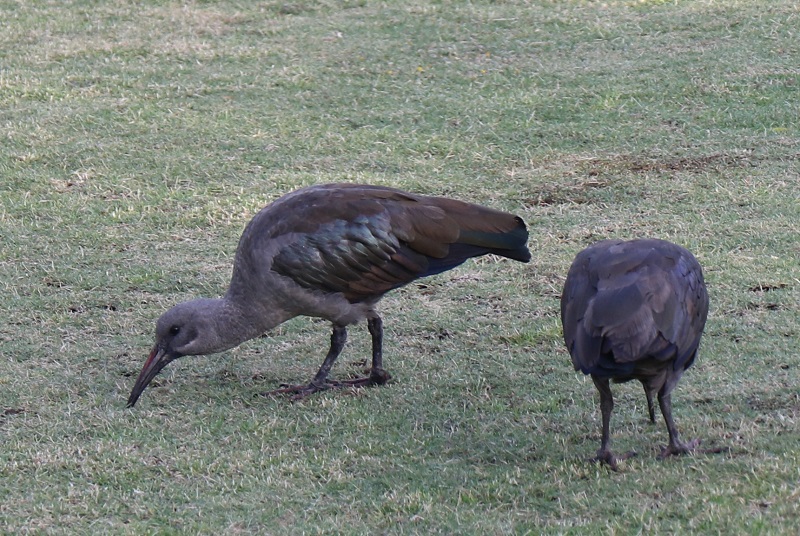
There is a big lawn at my guesthouse, and early in the morning a few hadada ibises are out foraging for worms. Amazingly, the lawn is still a little green in spite of the drought, and they have to work at it with their beaks, but they do find an earthworm or a bug now and then.
The 54th National Conference of the African National Congress (South Africa’s ruling political party) is set to start on Friday at an exhibition center near Johannesburg. The event is more or less the equivalent of the national party conventions we have in the United States before a presidential election. By Sunday, the ANC will have elected a new chairperson, and it is very likely that this person will become South Africa’s new president as an outcome of the 2019 national elections.
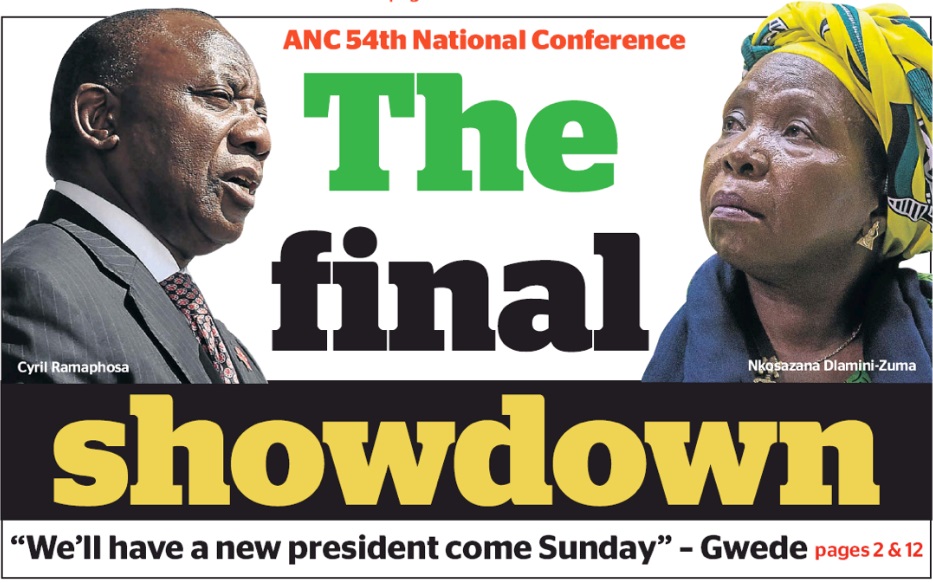
Even though Cyril Ramaphosa served as deputy president of South Africa under President Jacob Zuma since 2014, many (most?) South Africans hope that he will prevail over his rival Nkosazana Dlamini-Zuma, ex-wife of Jacob Zuma. It is time to pay serious attention to South Africa’s economic challenges and clean out the worst of the vast corruption and cronyism in the Zuma administration. Ramaphosa has tweeted that he wants to address infrastructure challenges, and wants to target a 5% growth rate for South Africa’s developing economy (currently at about 1% annual growth).
From the front page of the newspaper the Sowetan. There are high hopes that Cyril Ramaphosa (on the left) will vanquish ex-wife of President Jacob Zuma, Nkosazana Dlamini-Zuma, and reduce corruption and help rebuild the economy. Zuma’s presidency (he took office in 2009) has badly tarnished his own reputation, and that of his party, the ANC.
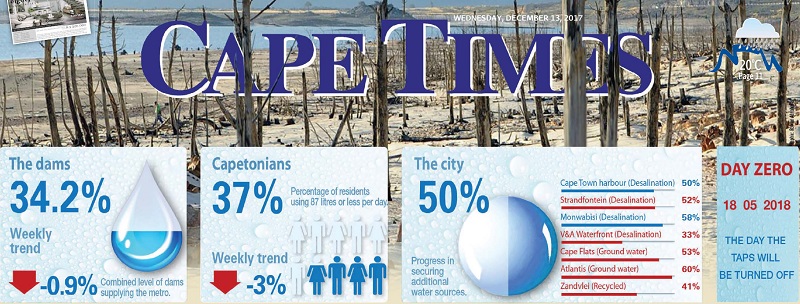
It drizzled a little bit today here in the far northern suburbs of Cape Town (68 °F/ 20°C). I am sure the precipitation did not add even a fraction of a percent to the water level in the dams here, though. At the current dam levels (34.2% full) and water usage, city officials estimate ‘day zero’ to be May 18, 2018. Day zero comes when dam levels have dropped to 13.5%. At that point there will be no more water coming out of faucets, and residents will have to collect water from some 200 collection sites around the city.
From today’s front page of the Cape Times newspaper. The City of Cape Town is working hard at procuring more water resources, but is behind schedule. Day zero is looming – estimated to be May 18, 2018.
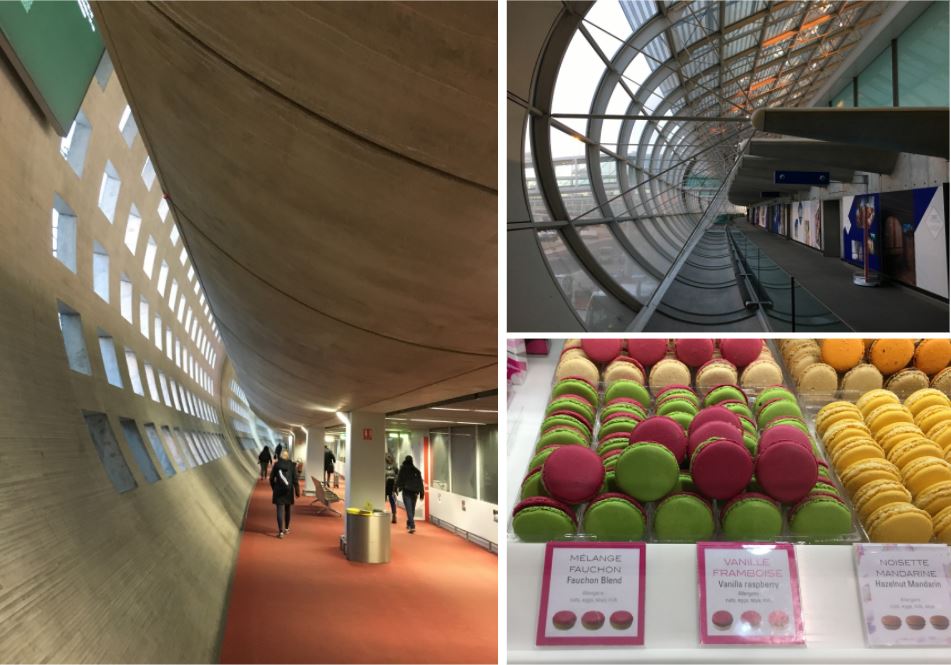
I arrived in Cape Town! The connection in Charles De Gaulle airport involved a long walk to the departure gate. I didn’t mind: good to get one’s circulation going after sitting in an airplane. And, I could check out some of the better insides of the departure terminal (which was not the case last time).
There are signs everywhere in Cape Town airport, and at the overnight hotel, that implore visitors to save water. ‘Every drop counts’. I will try to.
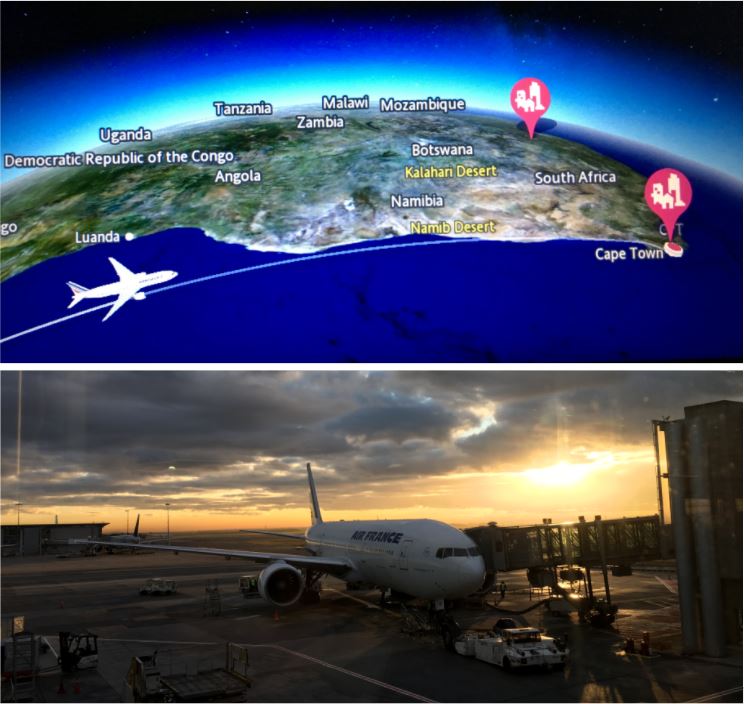
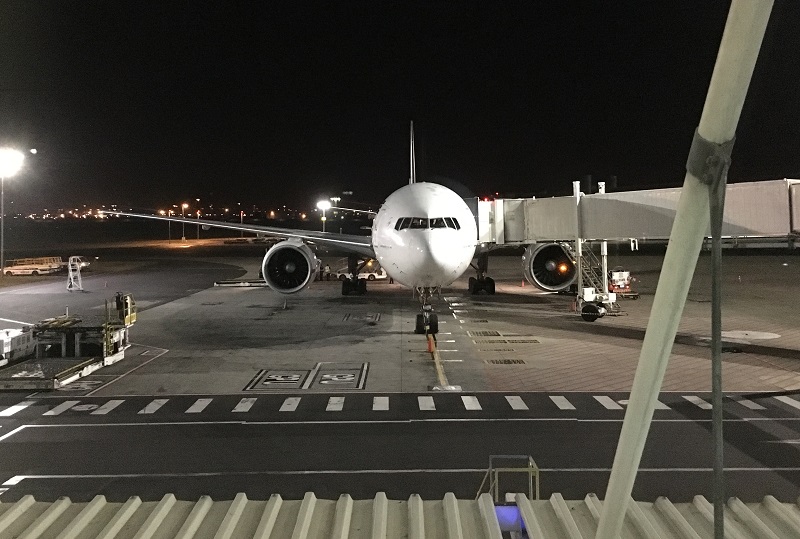
Sights inside Charles De Gaulle airport, on the way to the departure gate. Macaroons always make me think of French President Emmanuel Macron!Top: The flight tracker on the airplane showed us flying over Algiers (north Africa), but then bearing west and coming in over the sea towards Cape Town, skirting the coast of Angola and Namibia. Here we are about 5 hours away from arriving. (The other pink city blob is Johannesburg). Bottom: Our Boeing 777 at the gate at Charles De Gaulle.Here’s the Boeing 777 at the gate in Cape Town International Airport – almost 12 hours after departing Paris, and flying 9360 km (5,816 mi).