Our favorite Capitol Hill brewpub – the Elysian Brewery – will reopen on Monday after renovations that had taken more than four months. We were able to get in and get treated to a special pre-opening beer tasting event on Saturday. There is a lot to like about the changes they had made to the inside, and we had a lot of fun tasting the new beers on offer. Cheers!
Elysian Capitol Hill Brewery is on Pike and 13th Avenue.New tiling at the entrance.The main counter has giant black vintage lamp sconces said to have been found in Poland, with the rest of the interior in black and cozy wooden ceilings and beams.What it’s all about: the beer! We tasted beers called Space Fuzz, Snail Bone, Baby Bone and Glitter. This is a Snail Bone, brewed as an American IPA. The stuff is potent: 8.5% alc/ volume! The food menu did get a makeover as well, and we were told everything on the menu will be made from scratch.The area at the back features a few new fermentation vessels, allowing more types of beers to be brewed. Each new batch takes about two weeks in a vessel. The shuffleboard table is new, too.
Here’s a camellia flower from the bush in my front yard. They are so beautiful, these flowers .. but so messy when they turn brown and plop to the ground!
It’s been dry here for the Pacific Northwest, with the snowpack in the Olympic Mountains reported to be only about half of what it should be.
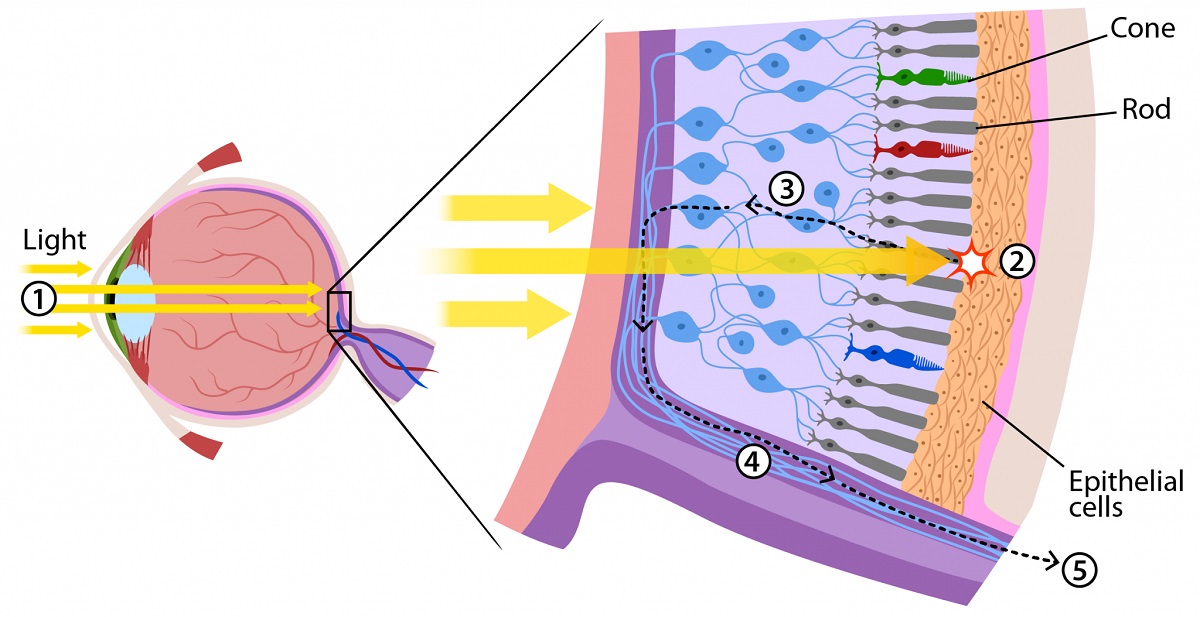
I was at the eye doctor today for my biannual check-up (all good). Since part of the test was a retina scan, I thought I’d refresh my knowledge of rods and cones in the retina. The human retina contains about 120 million rod cells, and 6 million cone cells. Check out the diagram below for a primer on how the retina works.
Biologists are still learning about all the cells and proteins and chemistry involved in vision. For example, in 2008 a team of Japanese researchers discovered a lightning-fast protein involved in the precise interactions between what is called the photoreceptor ribbon synapse and the bipolar dendrites. They promptly named the protein Pikachurin, after Pikachu, the lightning-fast Pokémon creature.
[Source: Arizona State University ‘Ask a Biologist’ https://askabiologist.asu.edu/rods-and-cones]. 1. Light moves through the lens of the eye to the back of the eye, which is the retina. Here, there are millions of rods and cones. 2. When light hits the discs in the outer segment of the rods and cones, the little bits of light (photons) activate the cells. Rods can be activated in low light, but cones require much brighter light (many more photons). Most of the light not absorbed by the rods or cones is absorbed by the epithelial cells behind them. The discs of rods hold rhodopsin and the discs of cones hold photopsin. Both of these photoreceptor proteins are special molecules that change shape when activated by light. This shape change allows the proteins to activate a second special protein molecule that then starts causing other changes involved in sending a visual signal. For the signal to be sent through the cell, charged molecules called ions are let in and out of the cell in an action potential. 3. When the signal reaches the inner end (left side) of the rods and cones, the signal is passed to sets of neural cells. 4. The signal moves through neural cells in the optic nerve. 5. The optic nerve will send this information to the brain, where separate signals can be processed so you see them as a complete image.
It was a gorgeous, sunny May Day today. A helicopter hovered overhead downtown all afternoon. It kept an eye on the Seattle May Day parade for workers’ rights and immigrants’ rights.
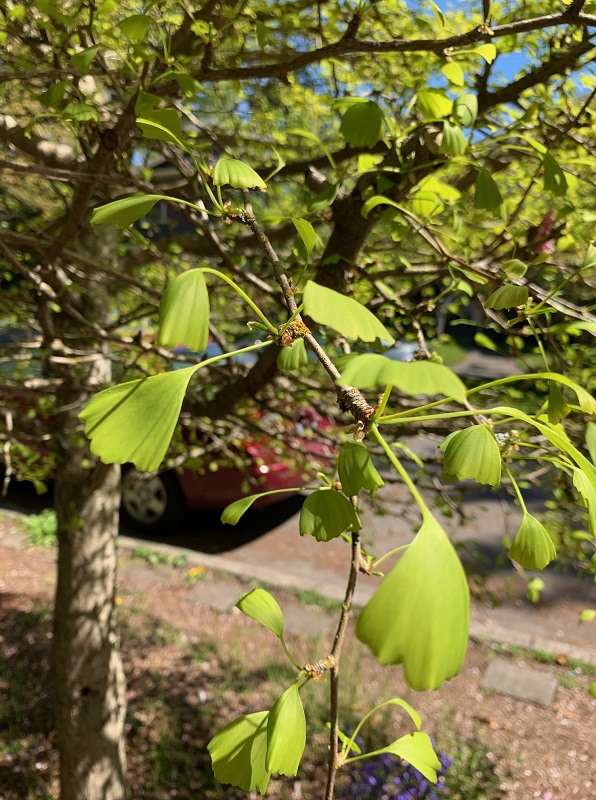
I walked by this young ginkgo tree here on 17th Ave today, and checked its new leaves coming out. Ginkgo tree remains have been found in fossils of 270 million years ago. Its leaves were eaten by dinosaurs such as the Supersaurus and the Lambeosaurus! Whoah! The tree has been cultivated since the earliest times by humans, and can live for a thousand years.
As I put the trash out for pick-up tonight, I saw a pair of woodpeckers in the back alley by my house. I’m sure they are the same ones that sometimes come and sit in the tall Douglas fir tree in my yard. I ran to get my camera for a few pictures.
This is the male of the woodpecker called a northern flicker (Colaptes auratus). The red whisker coloring is called ‘red-shafted’ and is the coloring of the birds out West here in the United States. The ones East have black whiskers with red on the nape of the neck.Here is the female. She pecked at the crack in the paving in the back alley, trying to unearth a bug or a worm that might be hiding there.
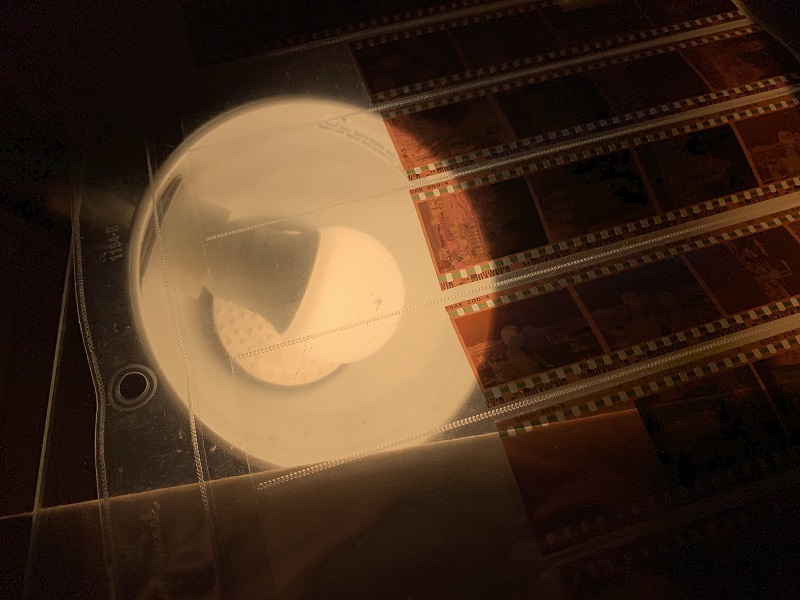
Necessity is the mother of invention, goes the saying, and I needed a light box to look at a shoe box full of old 35mm film negatives that I have. So I made a light box with a shoe box and a glass plate.
The other little problem: it is no longer possible to run down to the pharmacy on the corner, and get prints made in an hour from 35mm film*. Besides, one would want to have scans made directly from the film, instead of prints that would have to be scanned. It seems to me the options are to use an online service for film scanning, or to invest in a film scanner that will do the trick.
*Digital photography took over film some 15 years ago (in 2003, digital cameras outsold film cameras for the first time). So I’d have to ponder whether I want to buy a film scanner to bring some of these pictures back to life.
My shoe box light box. Hmm. How many of these are worth scanning or printing?, is what I am pondering. I see thedarkroom. com offers a service that runs $1 per frame for a Standard 1024×1536 (4.5 Mb) scan; $2 per frame for an Enhanced 2048×3072 (18.1 Mb) scan; $4 per frame for a Super 4492×6774 (87.1 Mb) scan. So I’d say if one is going to want any more than say, 100 frames scanned, a $200 scanner or even a more expensive $600 one, one might be worthwhile investing in.
It was sunny today, but it’s still not very warm (58°F/ 14°C). The grass is green, the leaves are out, and the blossoms are fading away, though.
This little squirrel came towards me as I stopped to take a picture of its white belly. Then as it approached me, I had to tell it no! no! go away! before it got the message and turned around. I wonder if people have been giving the little guy food (they shouldn’t).
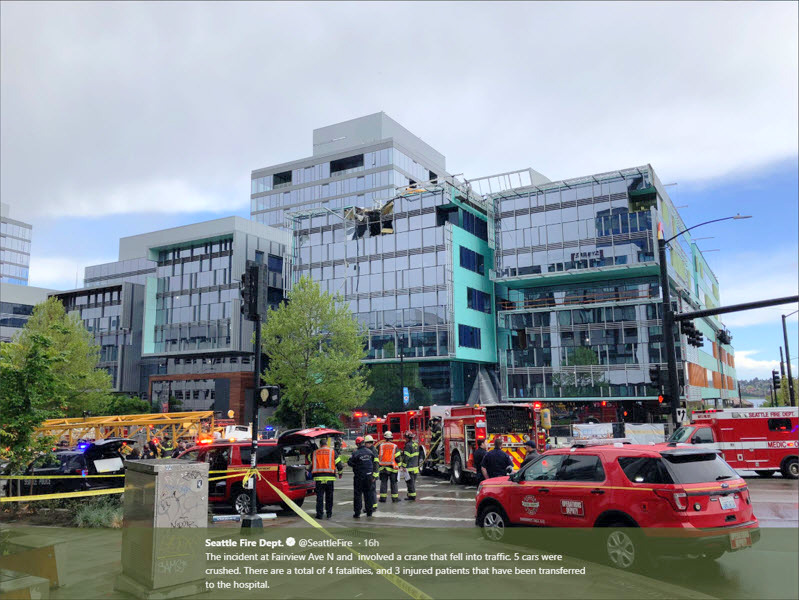
The large crane on the almost-completed Google office building in South Lake Union collapsed today, and fell onto cars in the street below.
Four people were killed: two were ironworkers working on the crane, and the other two were inside cars on the street below. Three more injured people were taken to the hospital and they will be OK.
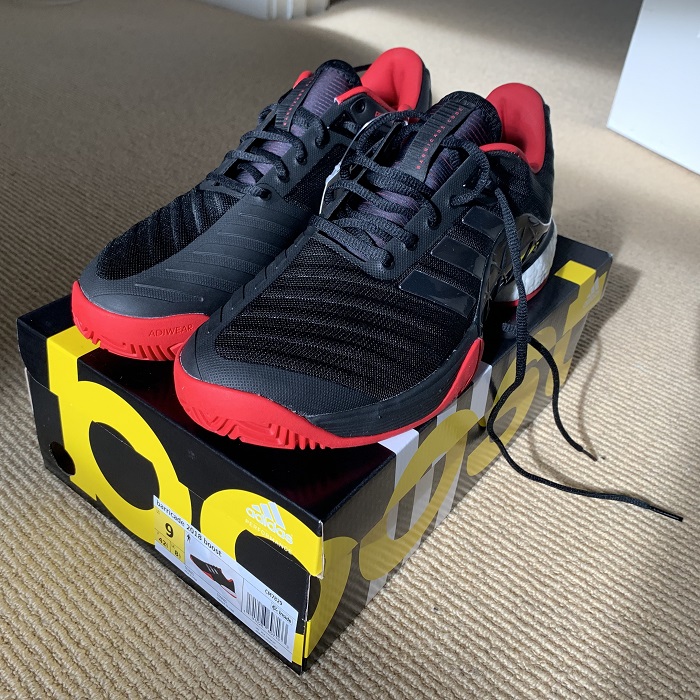
My new Adidas tennis shoes landed on the porch on Friday, shipped all the way from Sharonville, Ohio. (I’m going to play a little social tennis this summer). Sporting goods stores seem to carry very few tennis shoes nowadays. Running shoes and basketball shoes take up all the shelf space, instead.
I guess one can play some tennis in a pinch with any athletic shoe, but proper tennis shoes have a sturdy base, and support for the player’s forefoot and toes that get dragged across the tennis court.
The 2018 edition of the Adidas ‘barricade boost’ tennis shoe. Black and scarlet red is a first for me in a tennis shoe! Tennis shoe designs now change almost every year. So one never knows for sure if the new shoes will actually be better – or as good as – one’s old pair that had been a perfect fit.
It’s tulip season and the tulips are blooming up north in Skagit Valley here in Washington State, and also far away in the Netherlands.
I read in the Dutch newspaper that tulip tourists these days, tend to trample on the tulips, though — as they position themselves for the perfect selfie with a field of tulips as a backdrop. (Sigh).
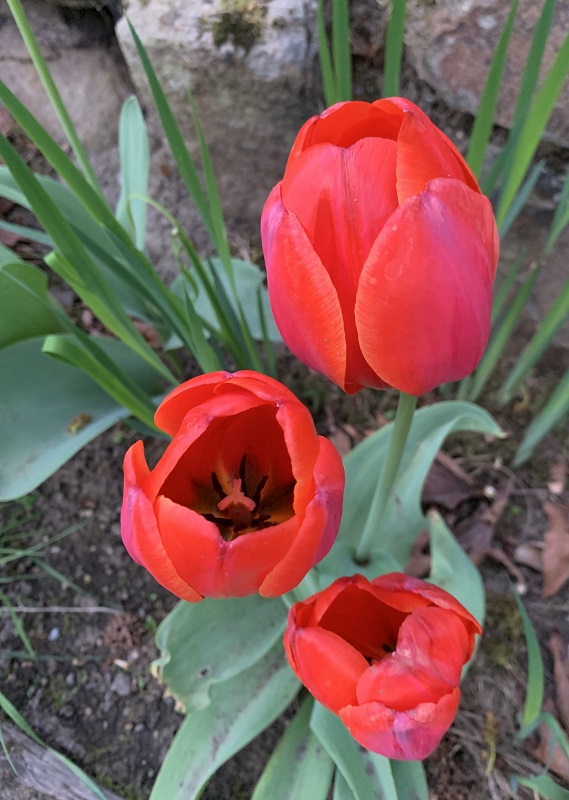
These pretty red tulips are right around the corner from my house. Tulips belong to the genus Tulipa. There are some 15 tulip species, and thousands of cultivated varieties. Ultimately, all tulips belong to the lily family of flowering plants, though: Liliaceae.
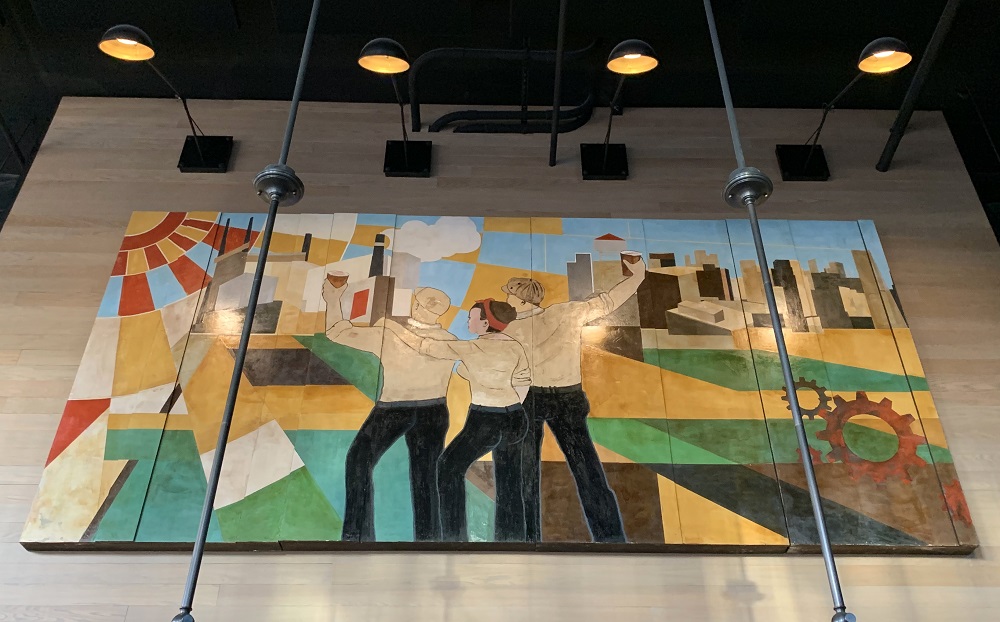
We were at a pub called Stout on 11th Avenue, for our beers tonight. I like the artwork behind the main counter. (It seems to me to have some communist propaganda poster undertones. Maybe if it had a slogan or a message, it would have said ‘Work hard, drink beer!’).
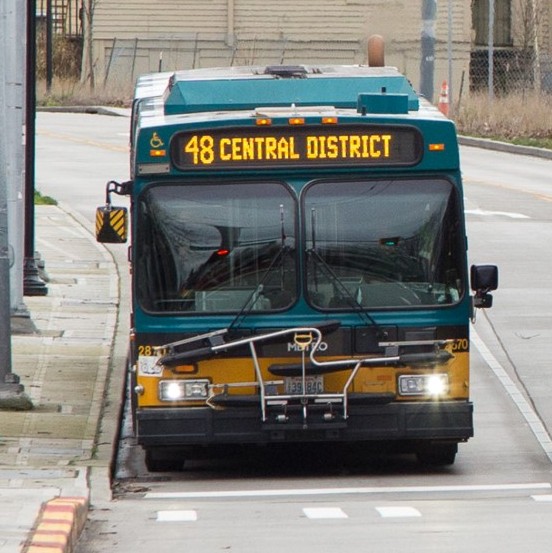
Stock photo of the No 48 bus, southbound. [Picture from www.seattle.gov].I was on the No 48 bus today, southbound and returning home from the University District. We were about to depart from a bus stop, when a blind man walked up at that moment, tapping with his white cane to find his way. (The bus stop serves several bus lines).
Oh man! I thought – is this your bus? How would you know this is your bus? .. and we’re going to leave you behind, if it is!
Just then, he produced a big rolodex out of his jacket that showed the digits 0 4 8 — a sign to arriving No 48 bus drivers, I’m sure. They would know to look for blind passengers, spot him, and assist him to get onto the bus. Luckily today, an alert bystander on the sidewalk saw what was happening, and knocked on the door to get the driver’s attention. Another person helped the him to get onto the bus. We were on our way, leaving no one behind. It made me very happy. It made my day.
NBC news reporter Gadi Schwartz making eyes at San Francisco for the mountains of plastic bottle waste that come out of the city every day.
Happy Earth Day, every one!
Humans are assaulting Mother Earth in many ways, and single-use plastics is a killer. It can take up to one thousand years to decompose in landfills. Or it ends up in the environment or the ocean, killing animals and fish.
So please: say no to plastic. If you absolutely must use a plastic bag or bottle, be sure to do your best to reuse and then recycle it.
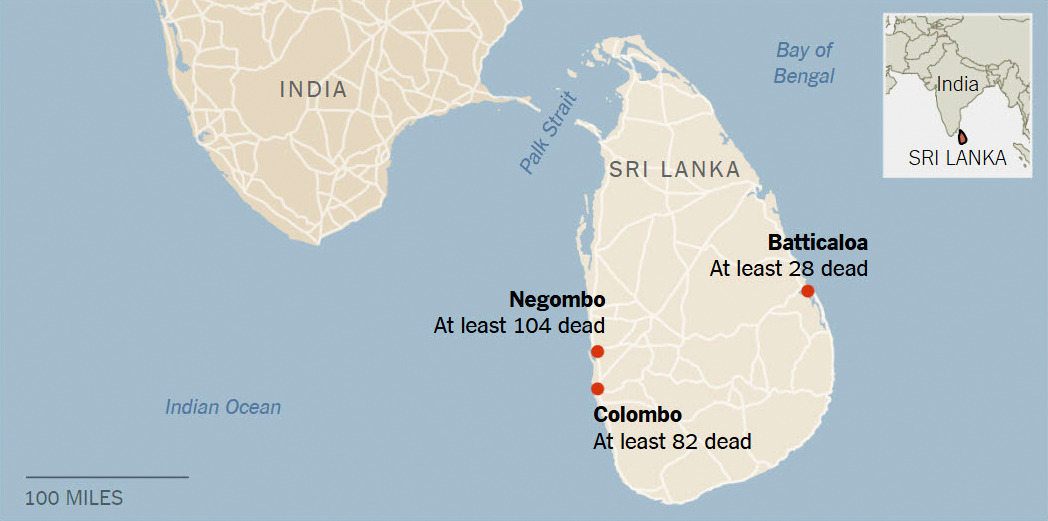
What a terrible Easter Sunday for Sri Lanka (pop. 21 million) – a relatively small, poor country, with tropical rainforests and tropical savannah, and mountain slopes that produce the cleanest tea in the world.
From the New York Times: ‘Sri Lanka endured a decades-long civil war that killed tens of thousands of civilians before it ended in 2009. Five years earlier, some 30,000 Sri Lankans had died in the Indian Ocean tsunami’.
The government shut down Facebook and WhatsApp afterwards (to prevent the spread of misinformation). So far no one has publicly claimed responsibility. It seems the attackers were mostly locals, but an international terrorist organization was probably behind all of it.
Source: New York Times. By ALLISON MCCANN, JULIE SHAVER, JIN WU and K.K. REBECCA LAI APRIL 21, 2019. Note: death toll was based on reported figures from local hospitals as of Monday 5:20 a.m. local time. Later on Monday the toll stood at 290 dead.
Wow! A shiny quarter, I thought, spotting a coin on the floor in the grocery store.
Oh! It’s not a quarter, I realized when I picked it up.
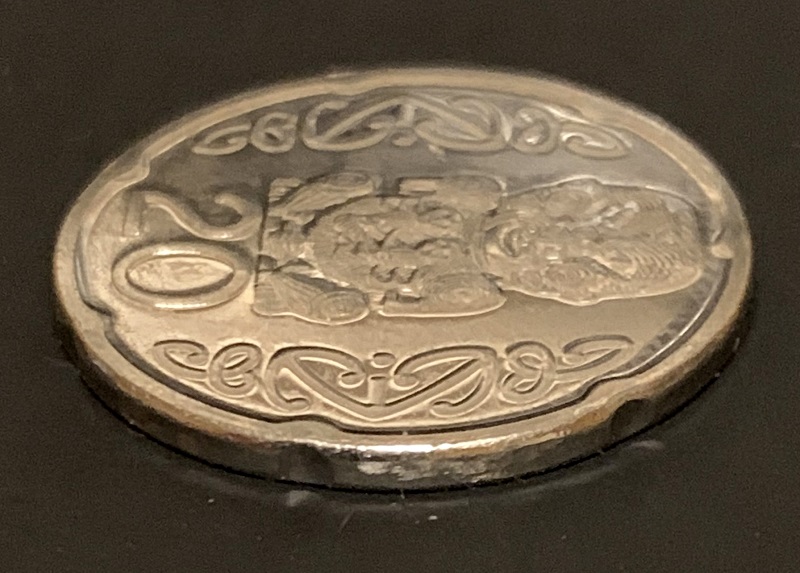
It was 20 cent coin, all the way across the globe from New Zealand.
This 20c New Zealand coin was first issued in 2006, and this is a Māori carving of Pukaki, an 18th-century chief of the Ngati Whakaue iwi (tribe). Those patterns are traditional koru kowhaiwhai patterns. (They remind me a little of Celtic patterns).The Queen is on the back of the coin (New Zealand is one of the 53 Commonwealth nations). The coin is made of nickel-plated steel. P.S. And the tiny letters IRB stands for Ian Rank-Broadley. In 1998 he redesigned the picture of Queen Elizabeth and many coins since have featured his work, and thus his signature initials.An unusual edge to these coins: Spanish flower milling. It has evenly spaced indents splitting it into seven sections.
Easter is late this year, but here it is. (It is also Passover).
In Western Christianity, Easter Sunday must always follow the first full moon after the spring equinox.
Here in Seattle there has been a drizzle all day.
We call it motreën in Afrikaans: a ‘moth rain’.
The redacted Mueller report is out, and .. it confirms what we already know, with more details. Trump stonewalled and ultimately refused to be interviewed by Mueller. Trump lied to the public. His campaign staff lied to Mueller. Mueller could not get to all the key evidence to prove obstruction of justice, and a conspiracy with the Russians. It was unavailable, encrypted or probably deleted or shredded (so much for the Presidential Records Act).
It’s now clear that Attorney-General Barr from the Dept of Justice is acting as Trump’s personal lawyer (he is not, and he should not).
It also looks as if the calculus of the Democrats to not call for impeachment until they know they will succeed in the Senate, is unchanged. Trump should be impeached, let’s just be clear about that – but maybe the Trumpkins (that used to be Republicans) deserve him as an albatross around their neck, all the way to the 2020 elections.
Here is a page from the Mueller Report (the blue highlight is mine) where it is explicitly pointed out that Congress can criminalize unacceptable conduct by the President (that would be Trump), because the US Constitution actually says so.And here is a page with lots of redactions. ‘Harm to Ongoing Matter’ is one type of redaction. The others are ‘Personal Privacy’, ‘Investigative Technique’ and ‘Grand Jury’ (ongoing grand jury investigations into related matters). It looks like Congress is going to have to subpoena the Dept of Justice to get the full report. Is AG William Barr committing obstruction of justice by not giving Congress the full report? The law is an ass and this is a mess.
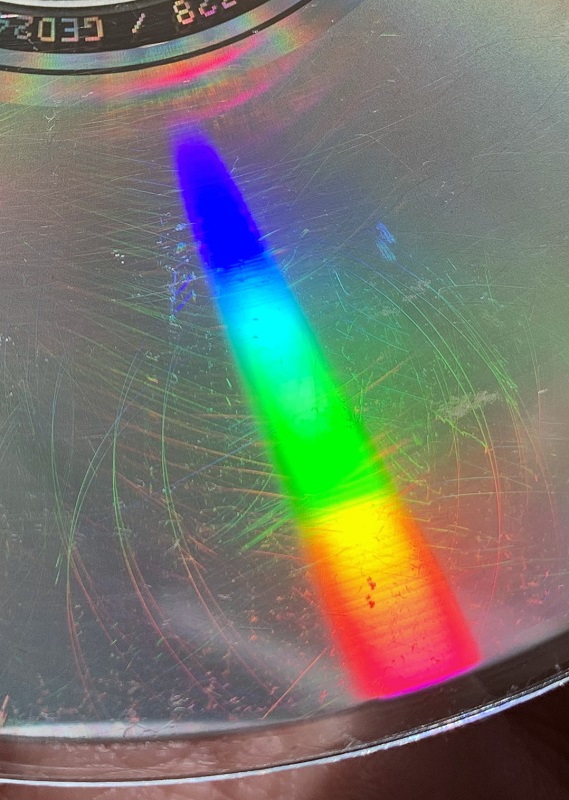
One can generate beautiful rainbow colors by reflecting sunlight off a CD’s silver surface. This CD in my collection has such awful scratches on, that some songs could not be read properly by my PC’s optical disk drive anymore. Man! WHAT did you do with it, to scratch it like this?, I wondered.
I remembered another unresolved issue with my iTunes music collection: the bitrate of the .mp3 version of the songs I had originally transferred into iTunes from CD, was as low as 160 kbps. This was oh, some ten years ago.
Nowadays, there is an ‘Apple Lossless’ option which will replicate the original CD in iTunes (bit rates of 900 kbps or more). The enormous storage capacity available on smartphones these days makes it possible to transfer and carry all of one’s CDs as-is in iTunes .. but is it worth it? The files would be up to 6 times larger than the original 160 kbps ones.
So my strategy is to upgrade only my very favorite CDs, say up to 30 out of the 300, that I now have in iTunes.
I make full use of the Seattle public libraries at my disposal, but I don’t always get to all the books that I had taken out, before they are due back.
There is a Japanese word for buying or acquiring books that go unread: tsundoku (Japanese: 積ん読). The word is composed from tsunde (to stack things), oku (to leave it for a while), and doku (to read).
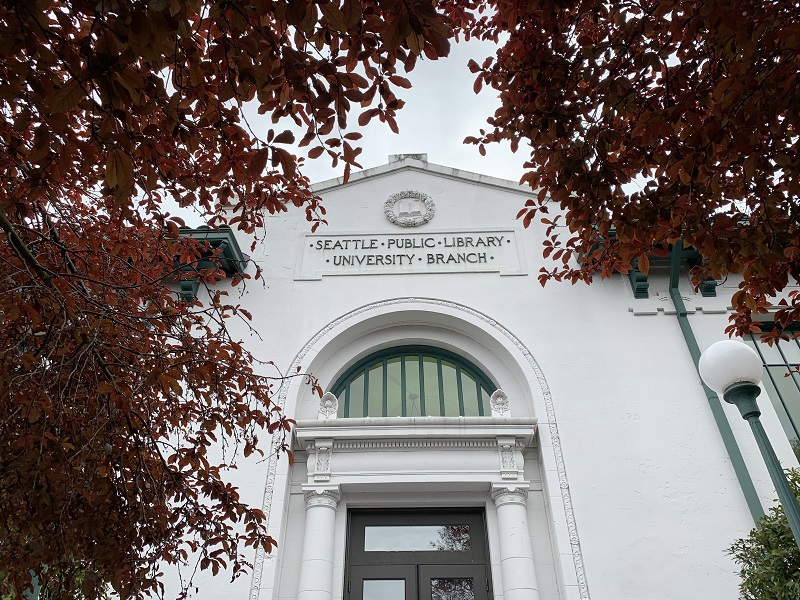
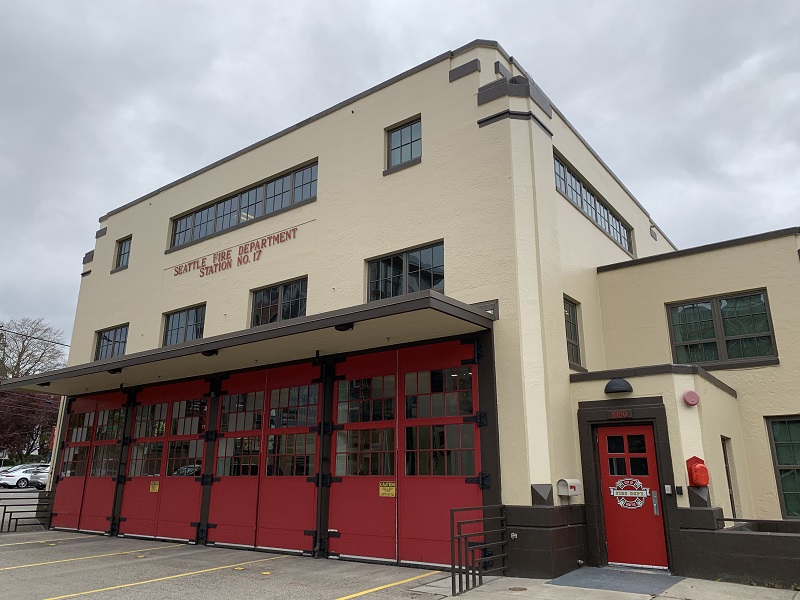
I went to the University branch of the Seattle Public Library today, on Roosevelt Avenue. It is actually one of the smaller branches, but one of the oldest. It opened its doors in 1910.And I had to snap the Seattle Fire Department Station No 17 across the street as well, 1. since it is a Seattle City landmark building (same as the University branch library), and 2. thinking of yesterday’s terrible fire in Paris. The fire station was constructed in 1930 (hence the Art Deco touches), but renovated extensively in 1987.
Heartbreaking to see Notre Dame cathedral stand in flames. This must be what the end of the world will look like.
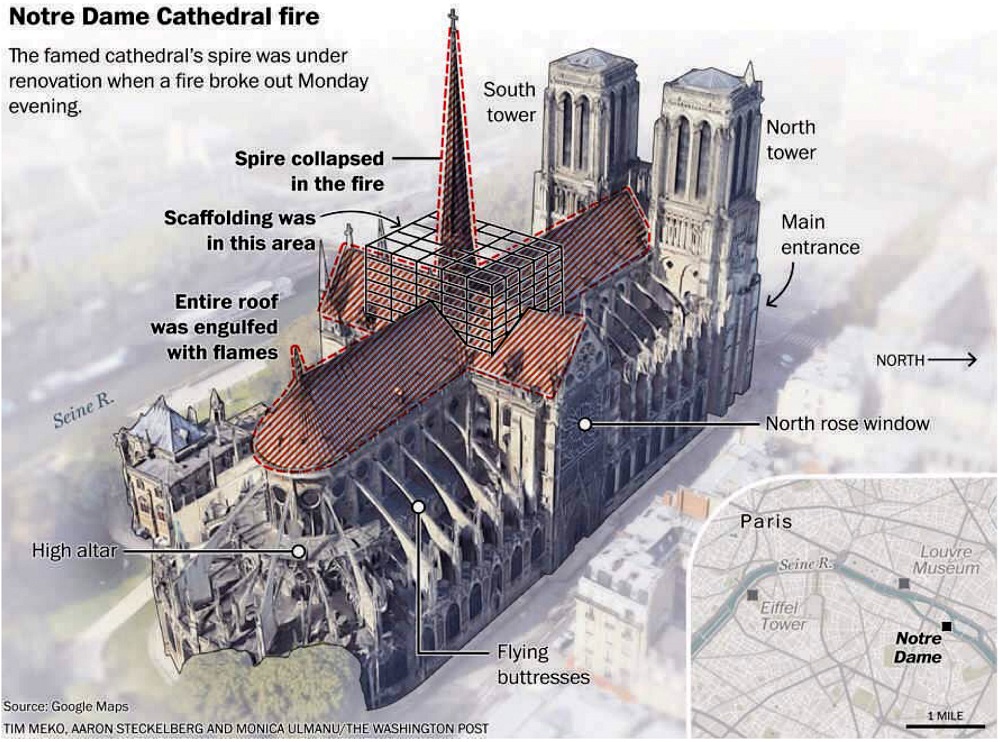
The Cathedral of Notre-Dame, was built in French Gothic Style and completed in 1345. One of the most iconic symbols of beauty and history in Paris – and the world – it was engulfed in flames on Monday, leading to the collapse of part of its spire. Credit: Francois Guillot/Agence France-Presse — Getty ImagesThe damage to Notre Dame cathedral. [Source: Google Maps, Tim Meko, Aaron Steckelberg & Monica Ulmanu, The Washington Post]