Sunday/ another weaver

This is the southern masked weaver.
I found it in the green space adjacent to my AirBnB aparment, today.
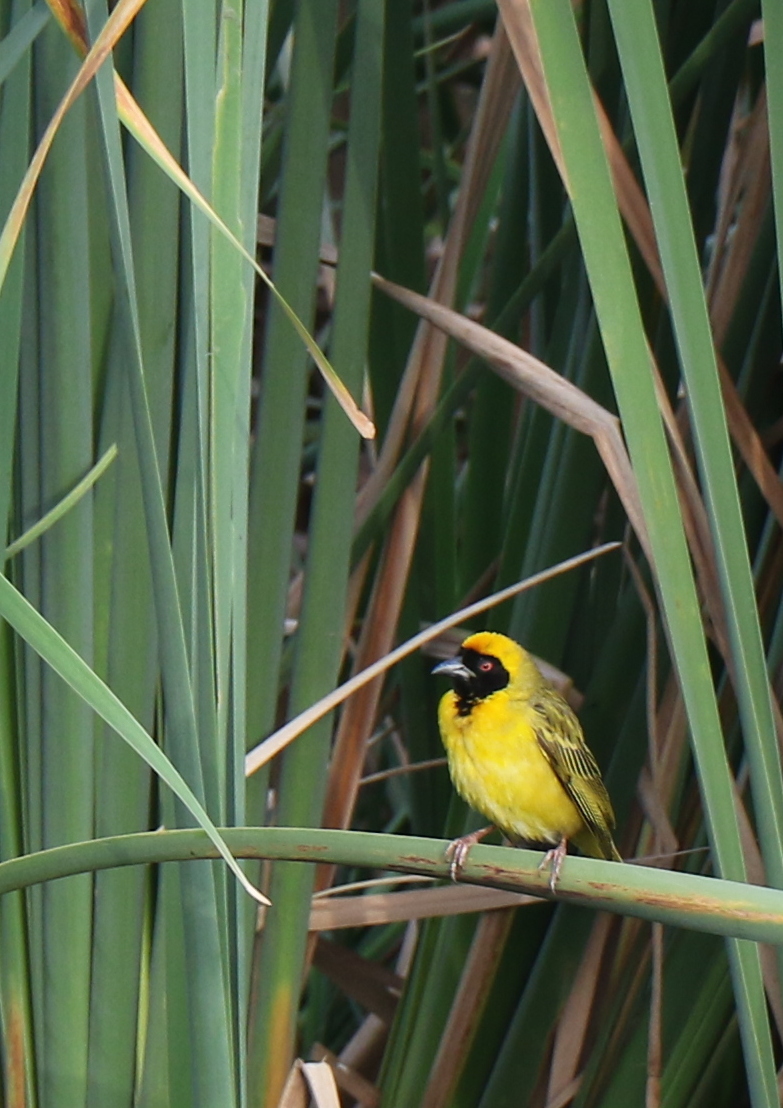
The southern masked weaver (Ploceus velatus) is common throughout southern Africa. It eats insects, seeds and nectar, and weaves its nest from reed, palm or grass.

Saturday/ book store treasure hunt

My friend and I went on a second-hand bookstore treasure hunt on Saturday.
I am looking for a few out-of-print Afrikaans books from my childhood.
It looks like I will have better luck scouring the offerings of  local online booksellers – but it is still fun to browse through the shelf inventory of second-hand booksellers!
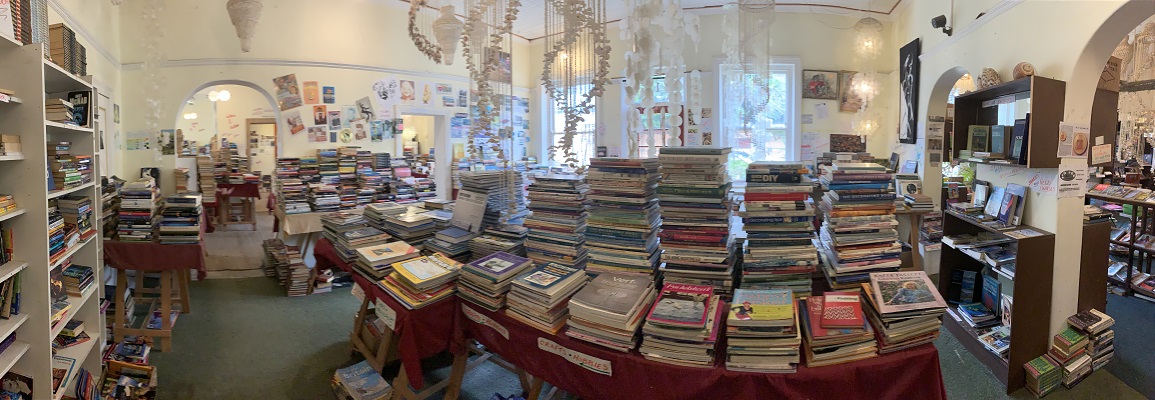
Here’s the inside of Bikini Beach Books in Gordon’s Bay. It has an unusual, somewhat unorganized, selection of local and international books and publications.
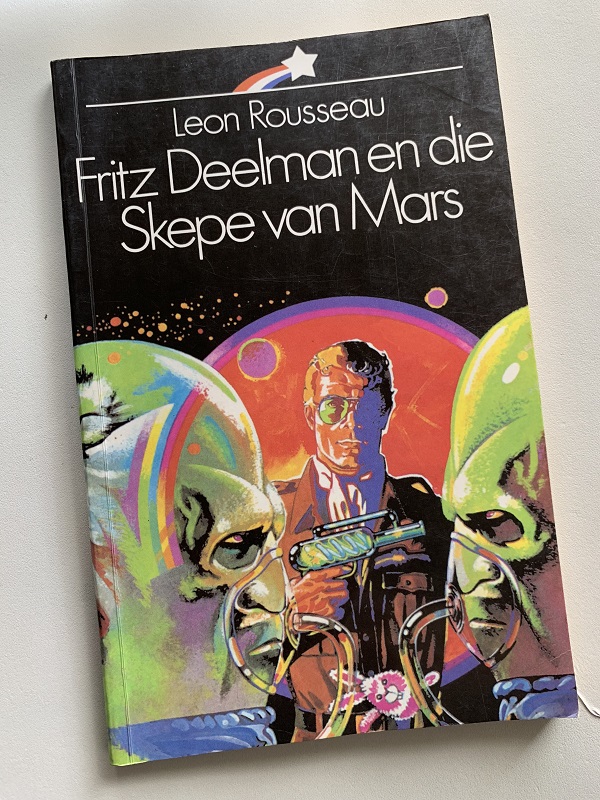
Here’s a prize book that my friend had bought online for me. I just love the artwork on the cover, as well. ‘Fritz Deelman and the Space Ships from Mars‘ by Leon Rousseau. The protagonist is a James Bond of sorts, an international agent working for the South African Special Forces. The book was published in 1957, so even before man first set foot on the moon.

Friday/ sunbirds and sugarbirds

I caught several beautiful birds on camera while roaming the gardens during my visit at Kirstenbosch.
The most striking ones were sunbirds and sugarbirds.
Sunbirds (family Nectariniidae) are not hummingbirds ⁠(family Trochilidae) — even though both have sharp, curved bills and iridescent feathers.
Hummingbirds are native to the Americas and are related to swifts.
Sunbirds are native to Africa, Asia and Australia and are related to swallows.
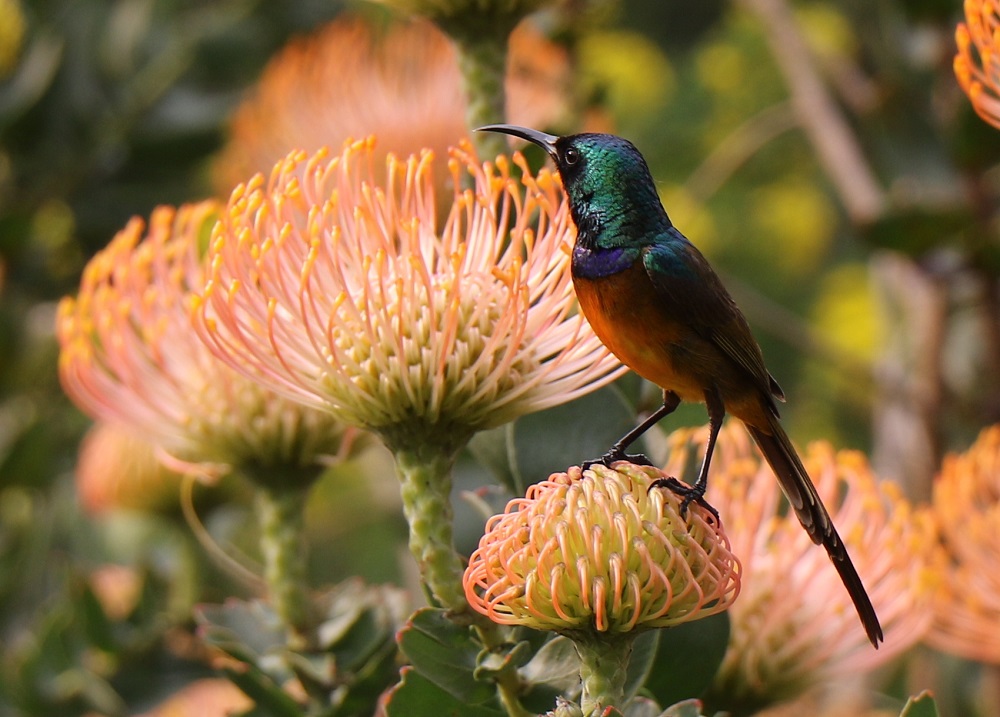
An orange-breasted sunbird (Anthobaphes violacea) on a pin-cushion protea. These birds are found only in fynbos. They love flowers such as tube-shaped heaths, pin cushion proteas, pagodas and cape honeysuckle.
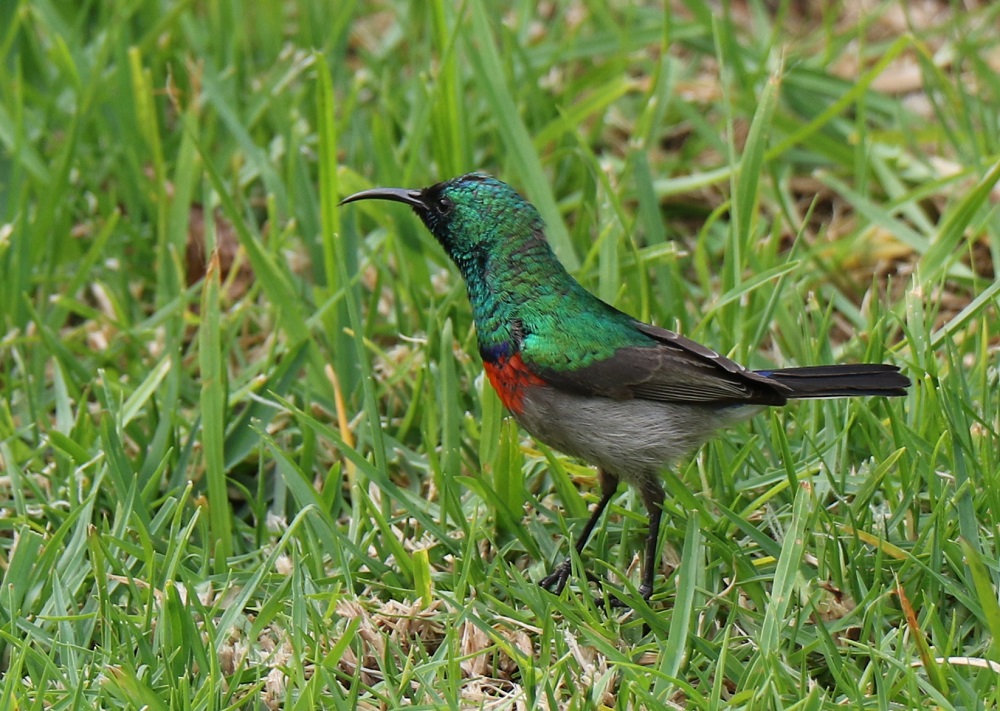
The male southern double-collared sunbird (Cinnyris chalybeus) has a brilliant red band across its chest, and a narrower metallic blue band below its green neck and head.
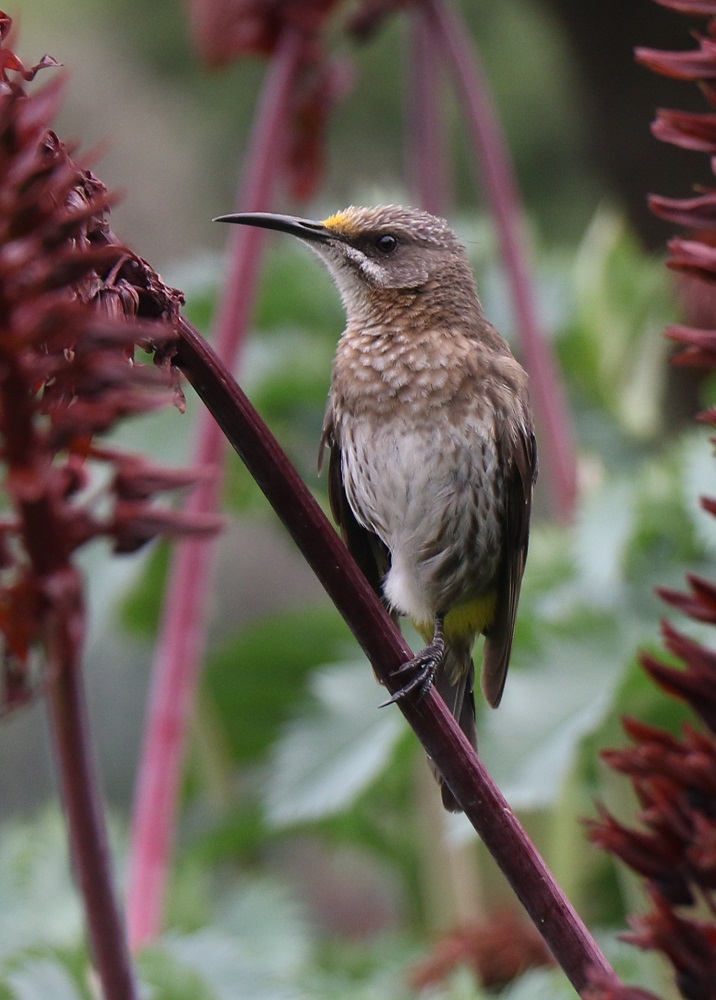
This is a female Cape sugarbird (Promerops cafer). Males have really long tail feathers. Their diet consists mainly of nectar, but also of small insects.
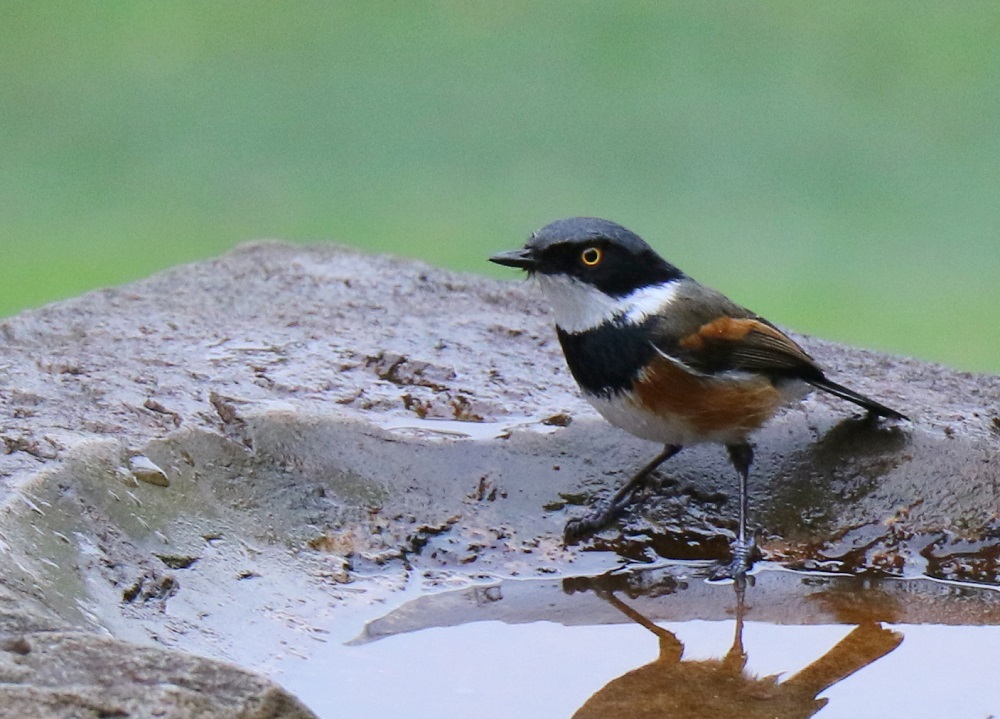
A male Cape batis (Batis capensis) with its striking eye-mask, white throat and black chest pattern, taking a bath at a water fountain. These are small but stout insect-eating birds.
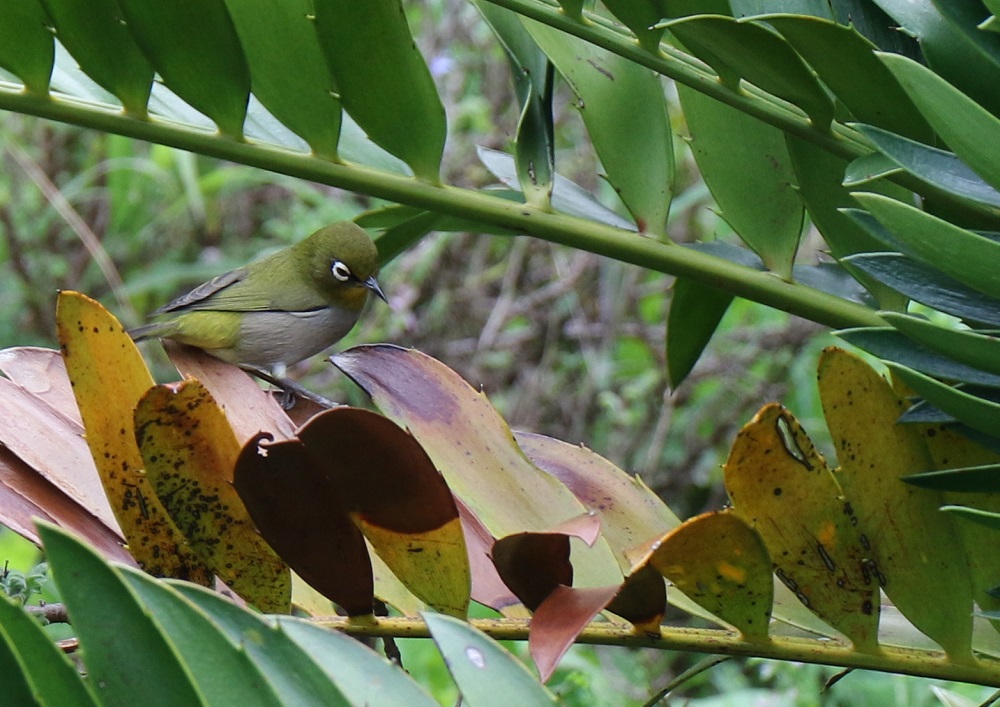
A Cape white-eye (Zosterops virens) in the cycad garden in Kirstenbosch. They eat insects, soft fleshy flowers, nectar, fruit and small grains.
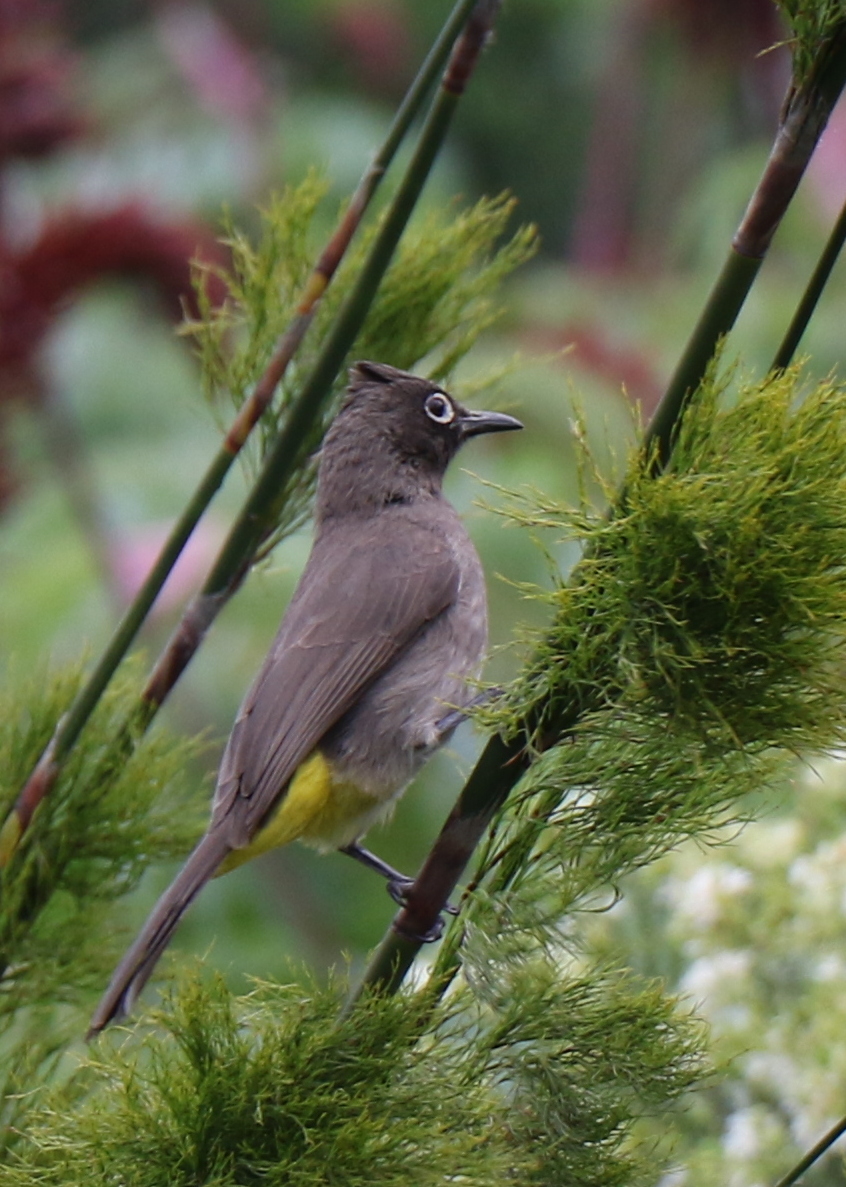
A Cape bulbul (Pycnonotus capensis, Afr. ‘Kaapse tiptol’). They are active and noisy, and tend to perch at the top of a bush.

Thursday/ koeksister

A koeksister is a traditional Cape Malay confectionery made of fried dough infused in syrup or honey.
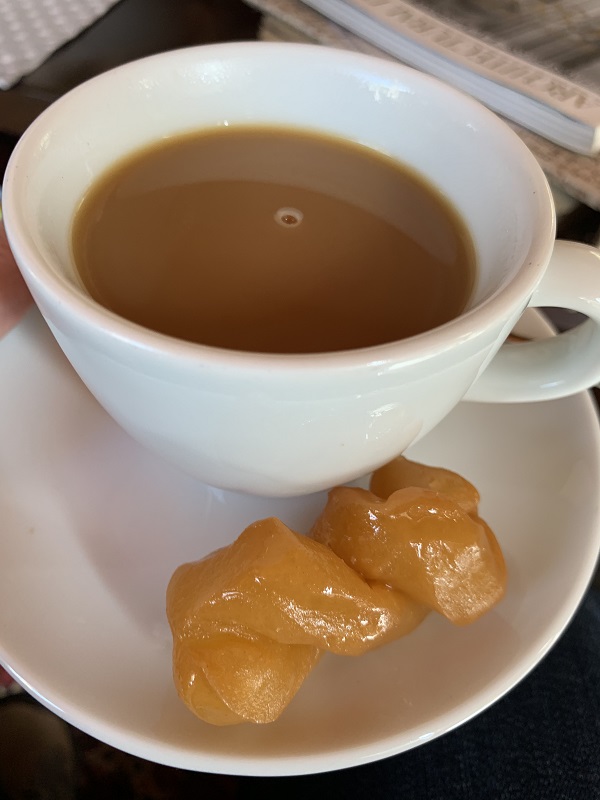
I no longer put sugar in my coffee .. but hey, nothing wrong to have a sweet koeksister with it when in South Africa. Koeksisters have a golden crunchy crust and liquid syrup centre, are very sticky and sweet, and taste like honey.

Wednesday/ here’s Kirstenbosch

It is spring in South Africa, and I just had to stop by Kirstenbosch: one of the world’s finest botanical gardens.
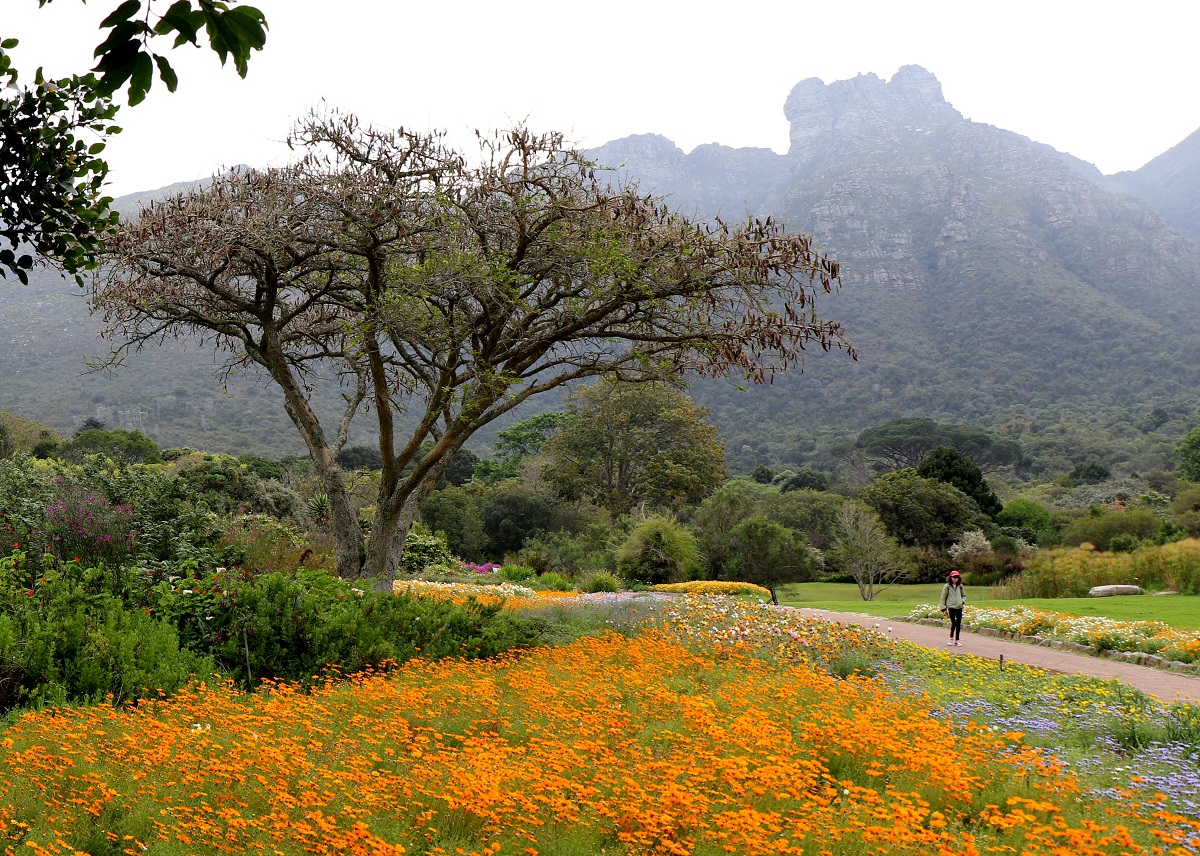
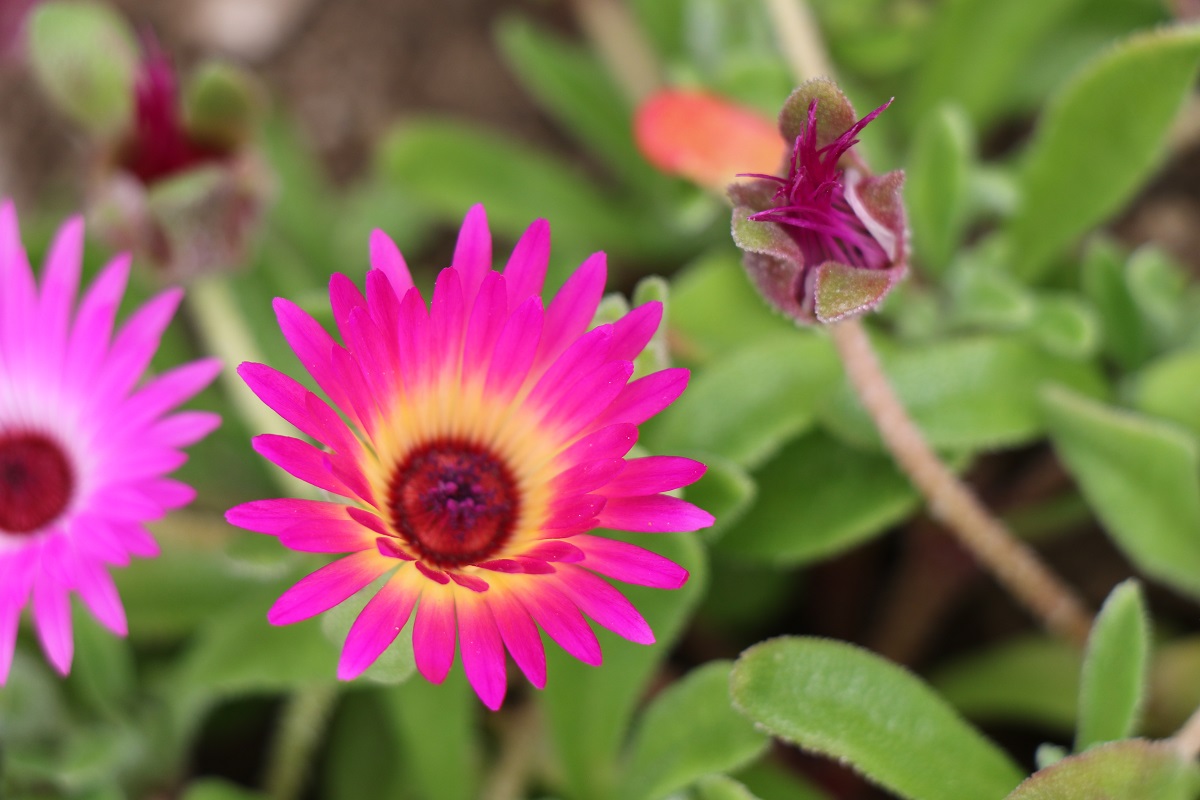
All kinds of Namaqualand daisies are in bloom in September and October in Kirstenbosch, on the southeastern slopes of Table Mountain.
These are Livingstone daisies (Cleretum bellidiforme), also called Bokbaaivygie (Afr.), a flowering plant in the family Aizoaceae, native to the Cape Peninsula in South Africa.
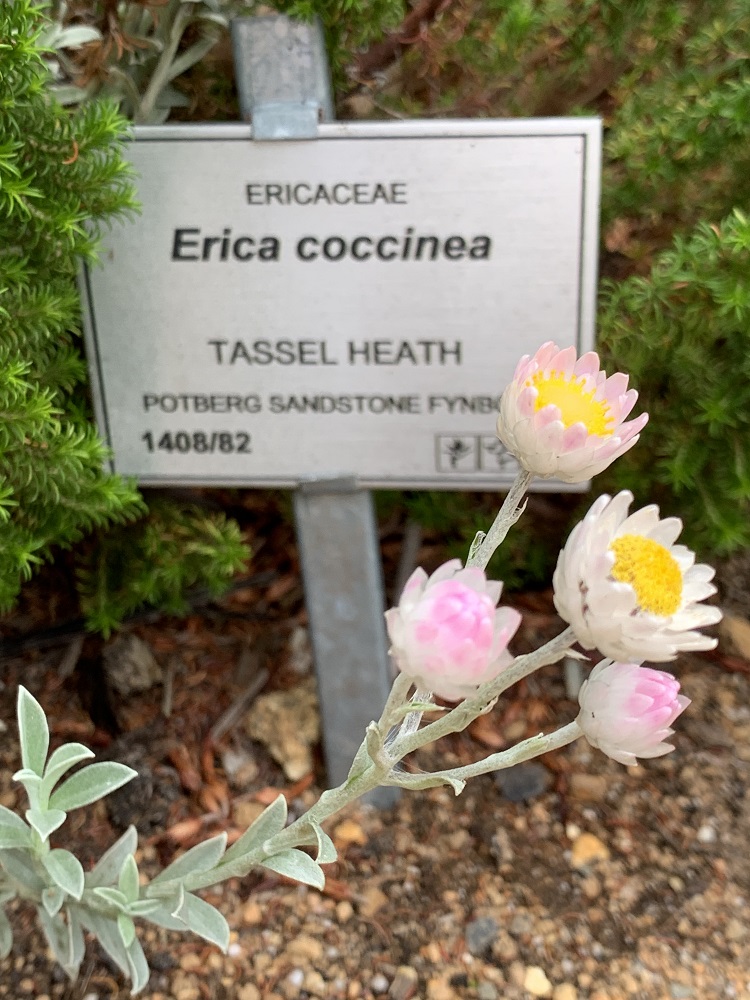
I love the soft pinks, whites and yellows of the tassel heath (Erica coccinea). It’s a type of fynbos native to Potberg north of Cape Town.
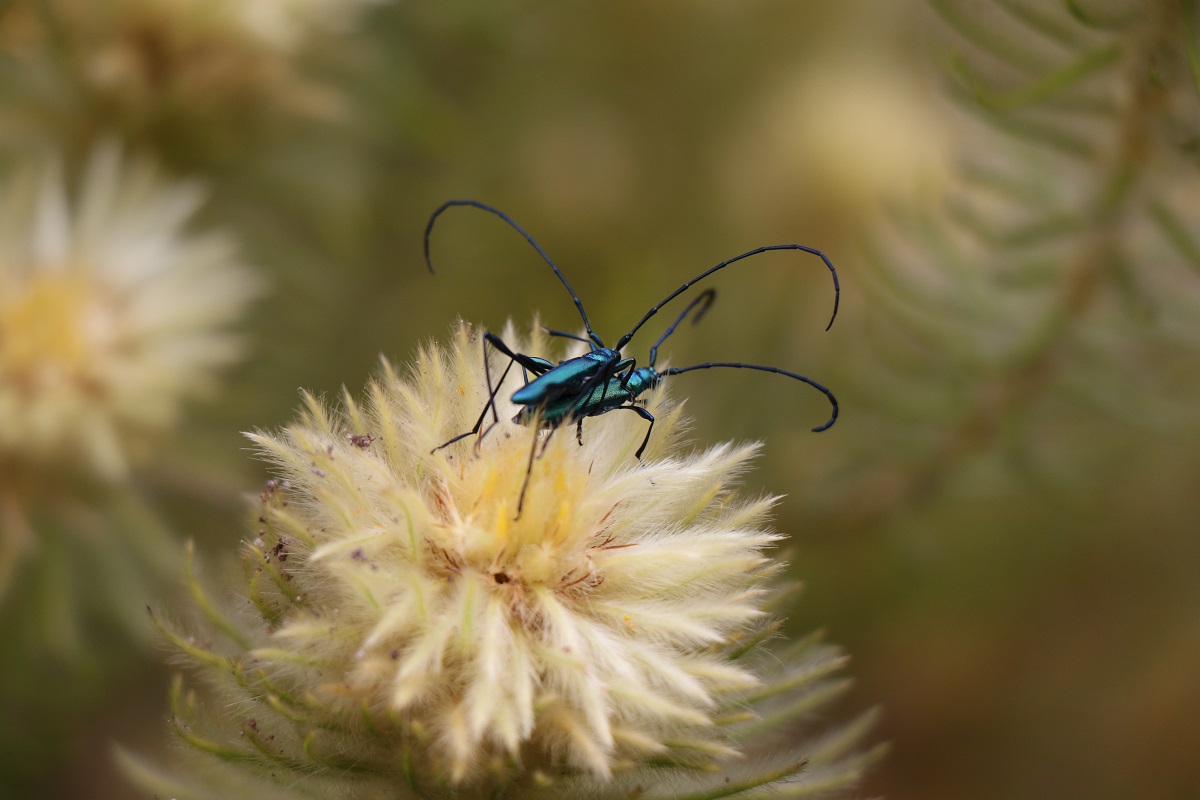
The bees and the birds do it .. and so do long-horned beetles!
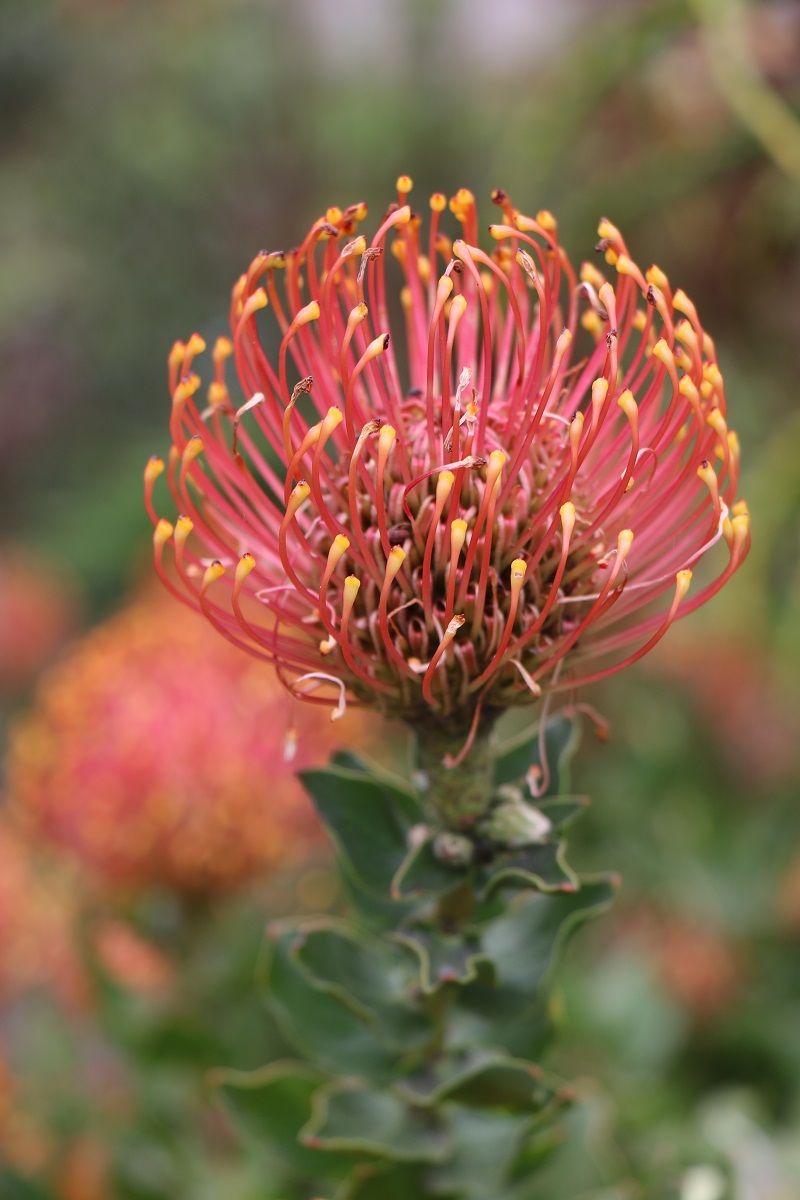
Pincushion protea (genus: Leucospermum), one of some 48 such species with the flowers in variations of oranges, reds and yellows. The plants are evergreen upright or creeping shrubs.
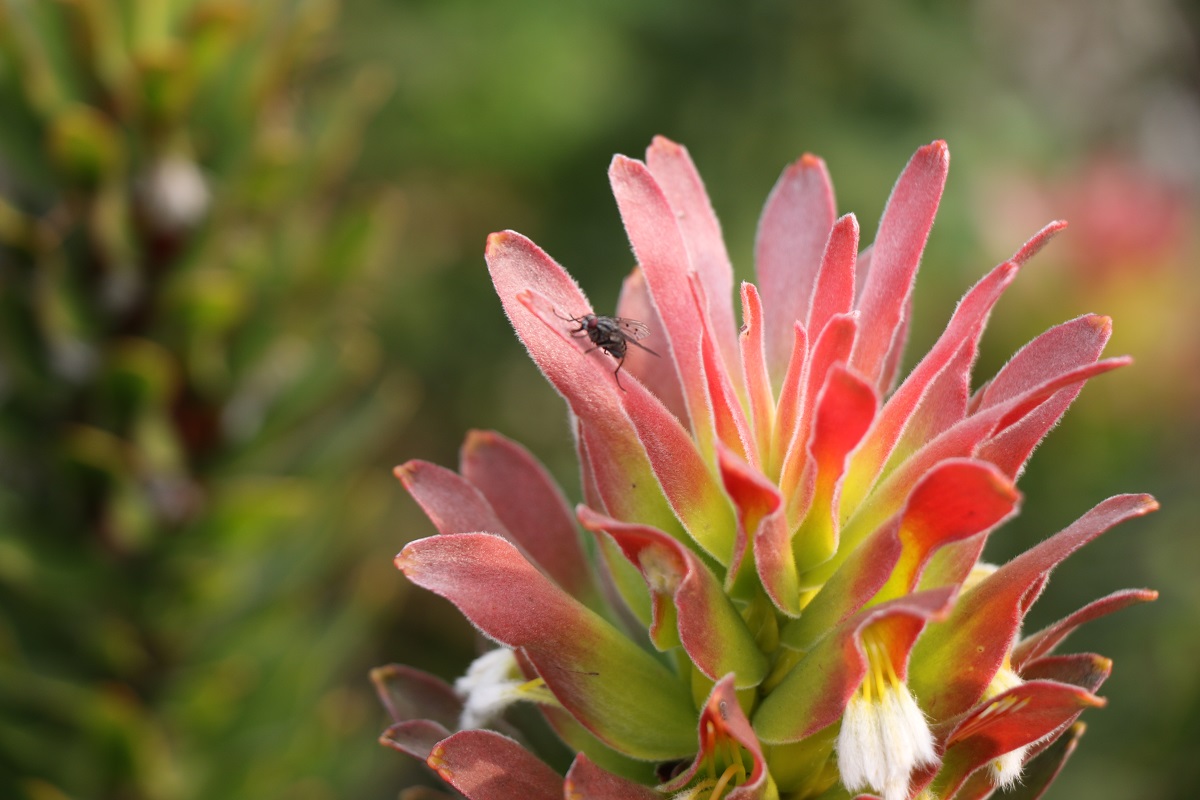
Here’s a red-eyed fly on a common pagoda (Mimetes cucullatus). This is a type of fynbos found on the Cape Peninsula.
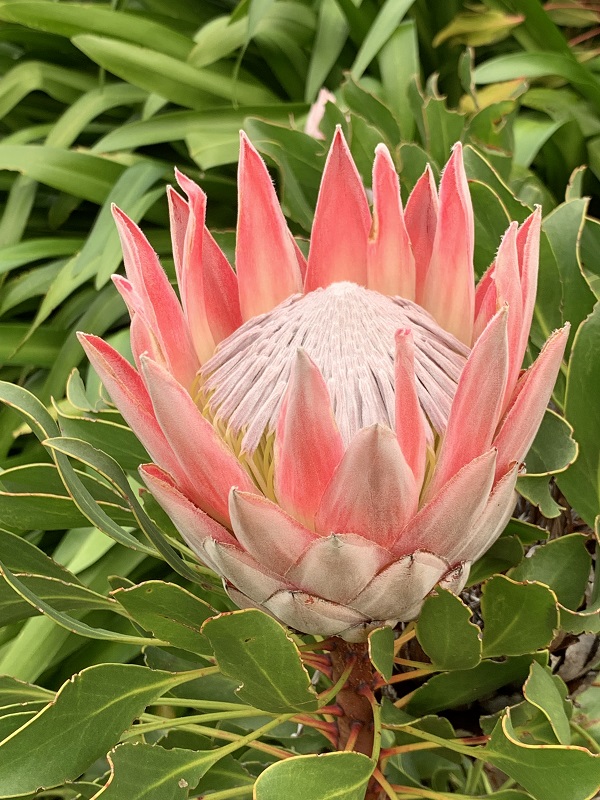
The king of all the proteas, the iconic and beautiful King Protea (Protea cynaroides). It has the largest flower head of all the proteas.
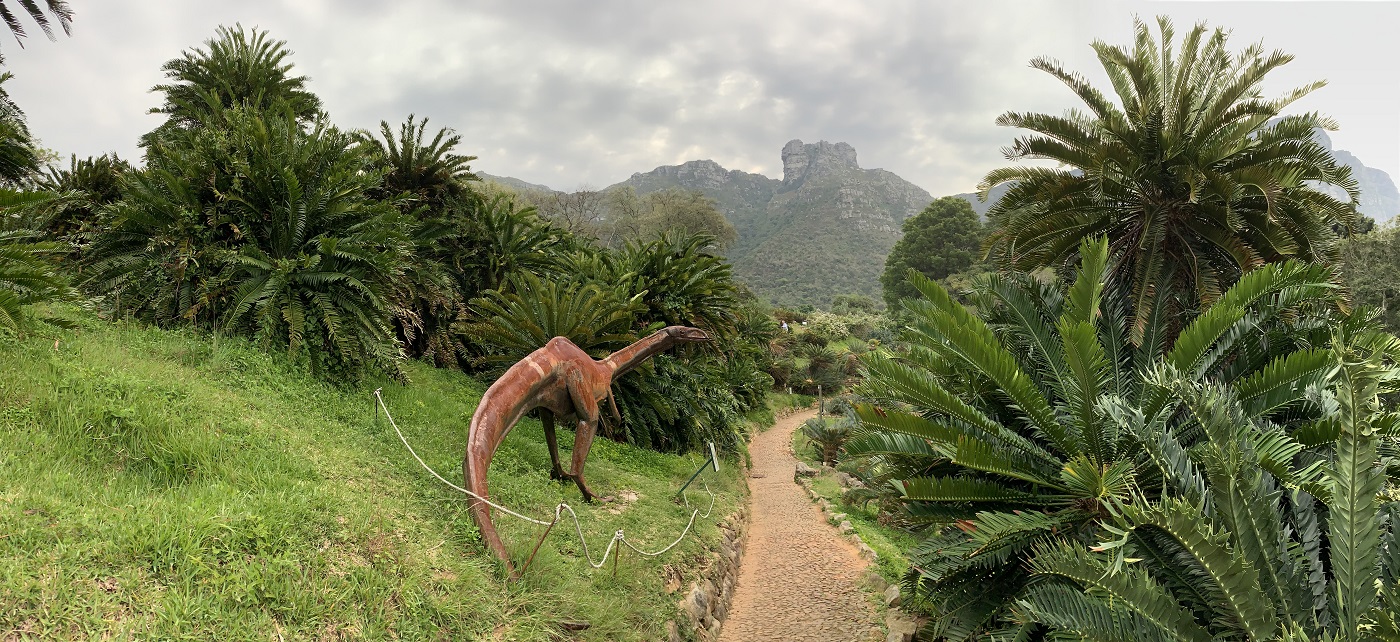
This could be a scene from 200 million years ago on the slopes of Table Mountain. Most of these plants are Eastern Cape Giant Cycads (Encephalartos altensteinii). The dinosaur is a model of Aardonyx celestae ‘Earth Claw’, fossils of which were discovered in 2005 in rock in South Africa. Aardonyx was 7 m (21 ft) long and 1.5 m (5 ft) tall at the hips.
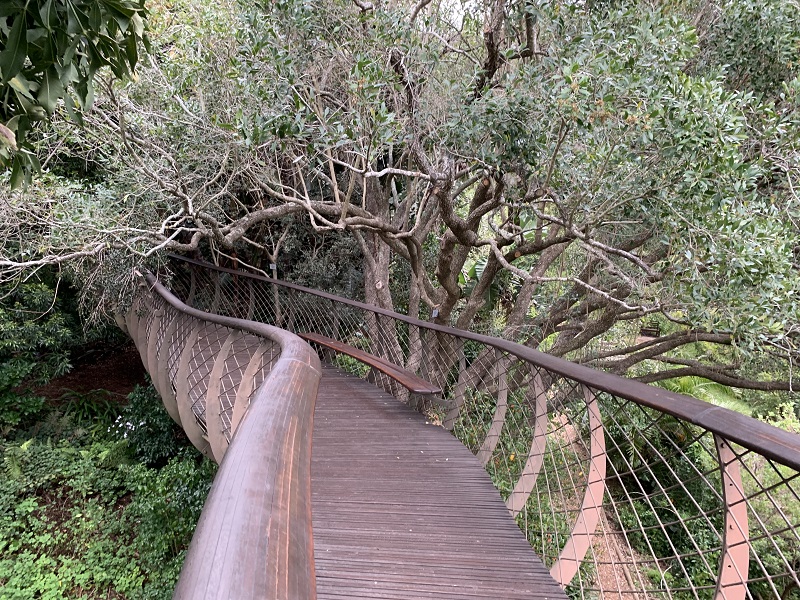
Here is the Tree Canopy Walkway, new-ish addition to Kirstenbosch (May 2014) of a curved steel and timber bridge that winds and dips its way through and over the trees of the Arboretum.
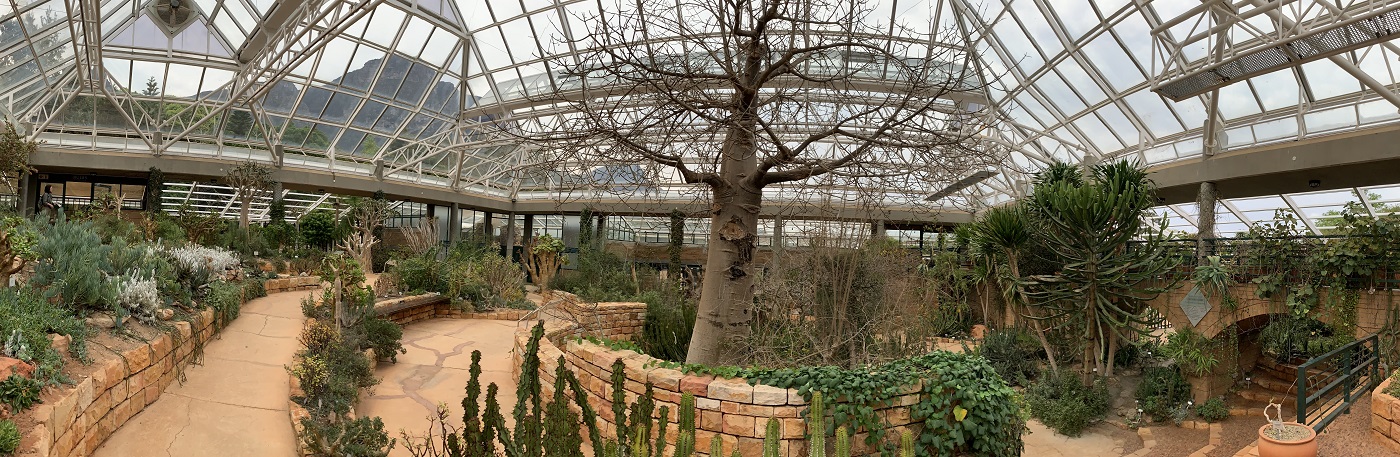
Here is the Conservatory by the main entrance to the gardens, with Africa’s southern-most boabab tree specimen.
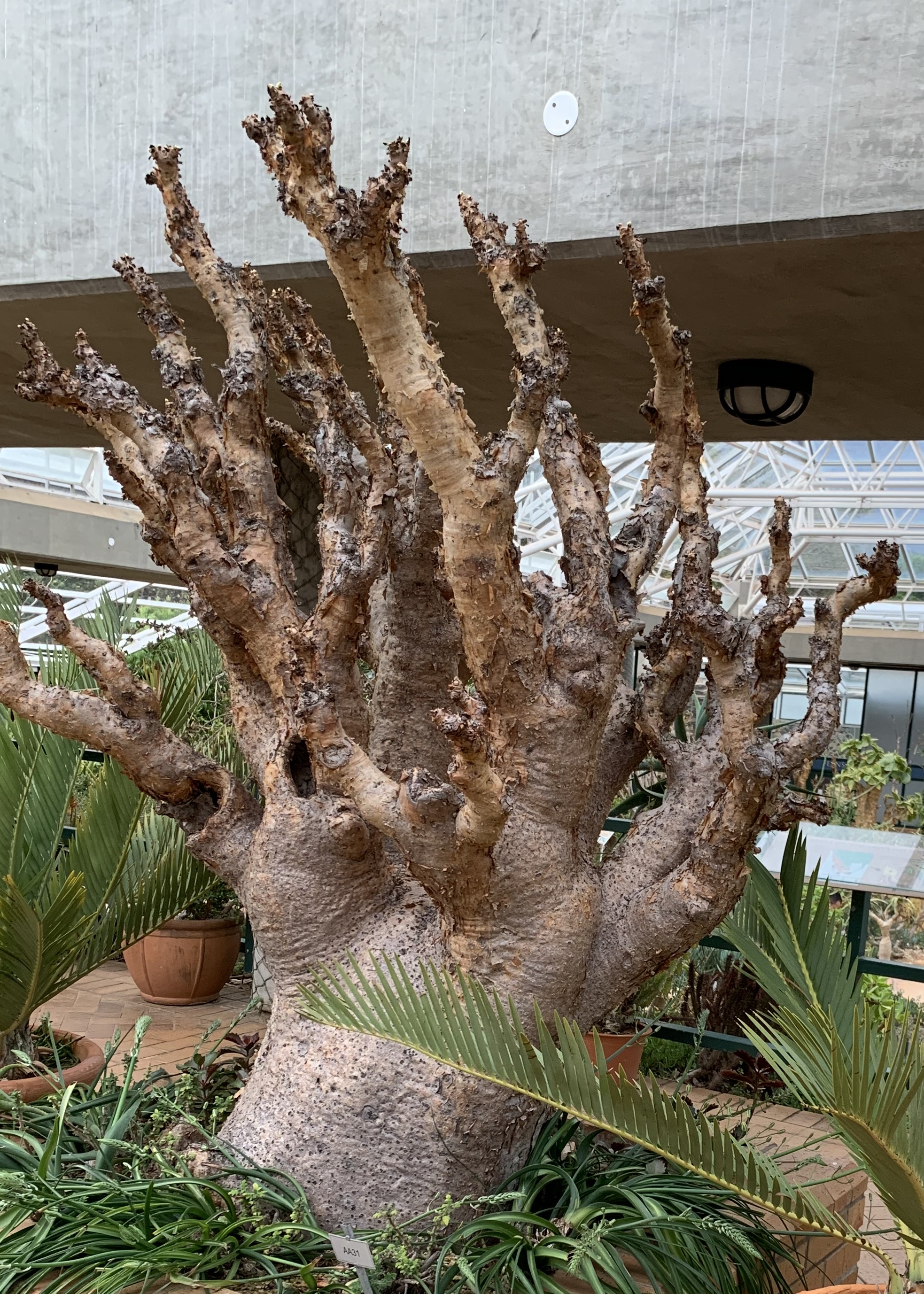
The Conservatory houses a large collection of Namibian desert plants. This one is a Kobas (Cyphostemma currorii).
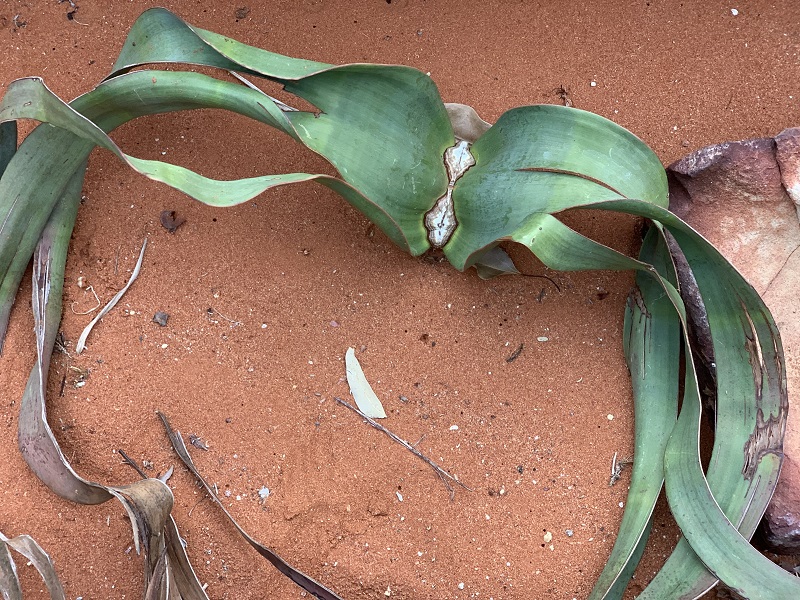
The curators have also gone to great lengths to cultivate a number of the weird and wonderful Welwitschia mirabilis desert plant. The enclosures are heated, as is the soil, so as to mimic desert conditions. Some specimens in the Namib desert are estimated to be 1,000 to 1,500 years old.
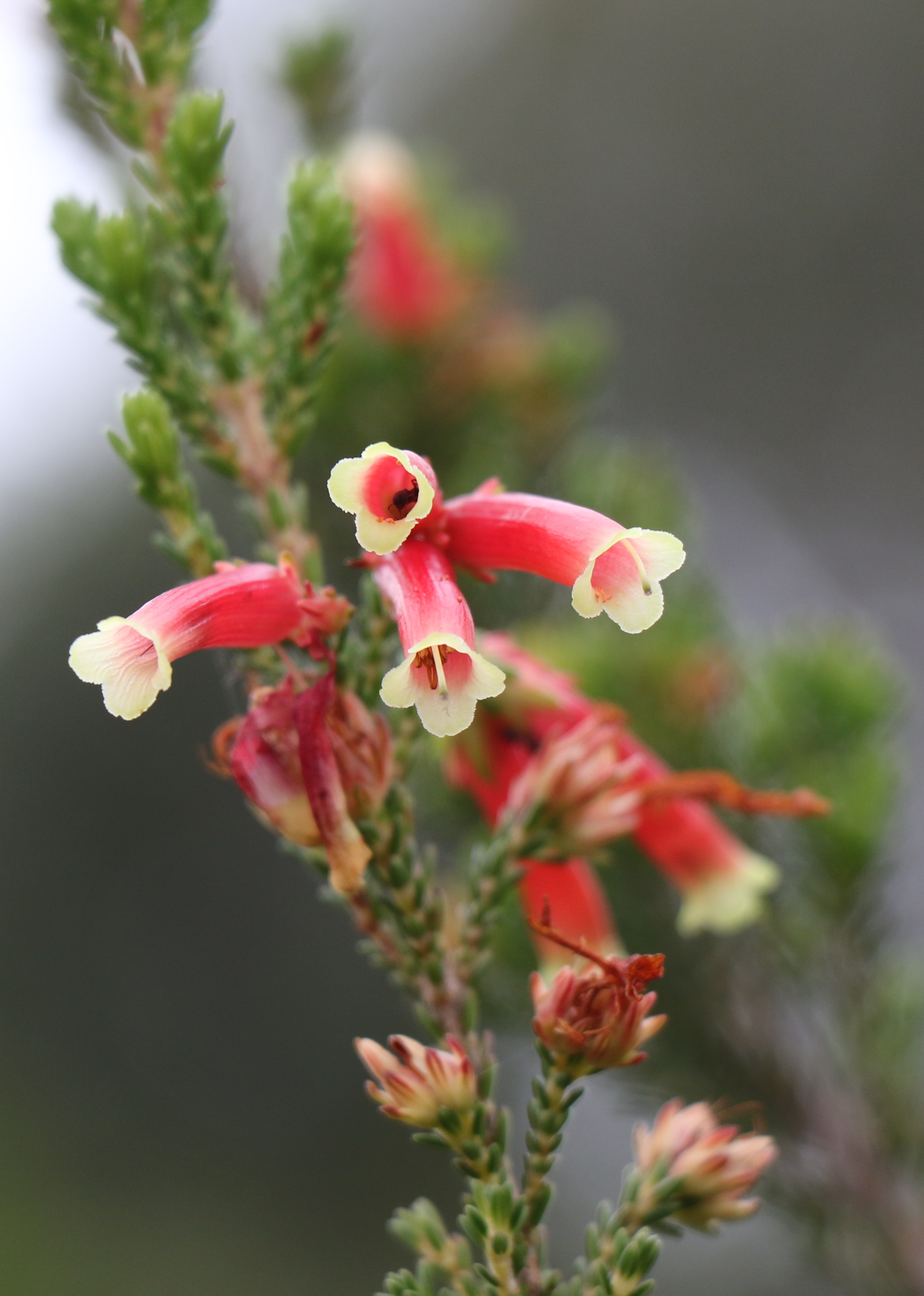
Heath (genus Erica) type fynbos vegetation. Fynbos (‘fine bush’) is a small belt of natural shrubland or heathland vegetation located in the Western Cape and Eastern Cape.

Tuesday/ more feathered friends

Here are some more feathered friends, spotted from my apartment’s balcony in the trees nearby.

The rosy-faced lovebird (Agapornis roseicollis), is a species of lovebird native to arid regions in southwestern Africa such as the Namib Desert. They are very social and constant chirpers, and like to congregate in small groups in the wild. The coloration can vary widely among populations, but plumage is identical in males and females.
A little lovebird kerfuffle on the tree branch? ‘Hey! Watch it!’ the middle one seems to say, while the one on the right is looking on.
Here’s the Cape weaver (Ploceus capensis) working on its nest. The nest makes it hard for predators (especially snakes) to get to the eggs or the chicks. Their diet consists mostly of flowers, small fruits and seeds.
The ring-necked dove (Streptopelia capicola) is also known as the Cape turtle dove or half-collared dove. Here’s one with its feather coat all fluffed up to ward off the chilly morning air.
And it seems a little later, that it felt it was OK to go back to ‘ops normal’ with its feather coat.

Monday/ the National Library of South Africa

I spent a little time in the Cape Town branch of the National Library of South Africa today.
I was hunting down some of my favorite childhood books and magazines copies, but it turned out to be harder than I thought it would be.
I had all the information handy, gleaned from their online catalog. The public is not allowed in that section of the library, though – so the librarian had to retrieve the books for me.
Alas, the book I wanted most, could not be found immediately.  They will let me know if they have it.
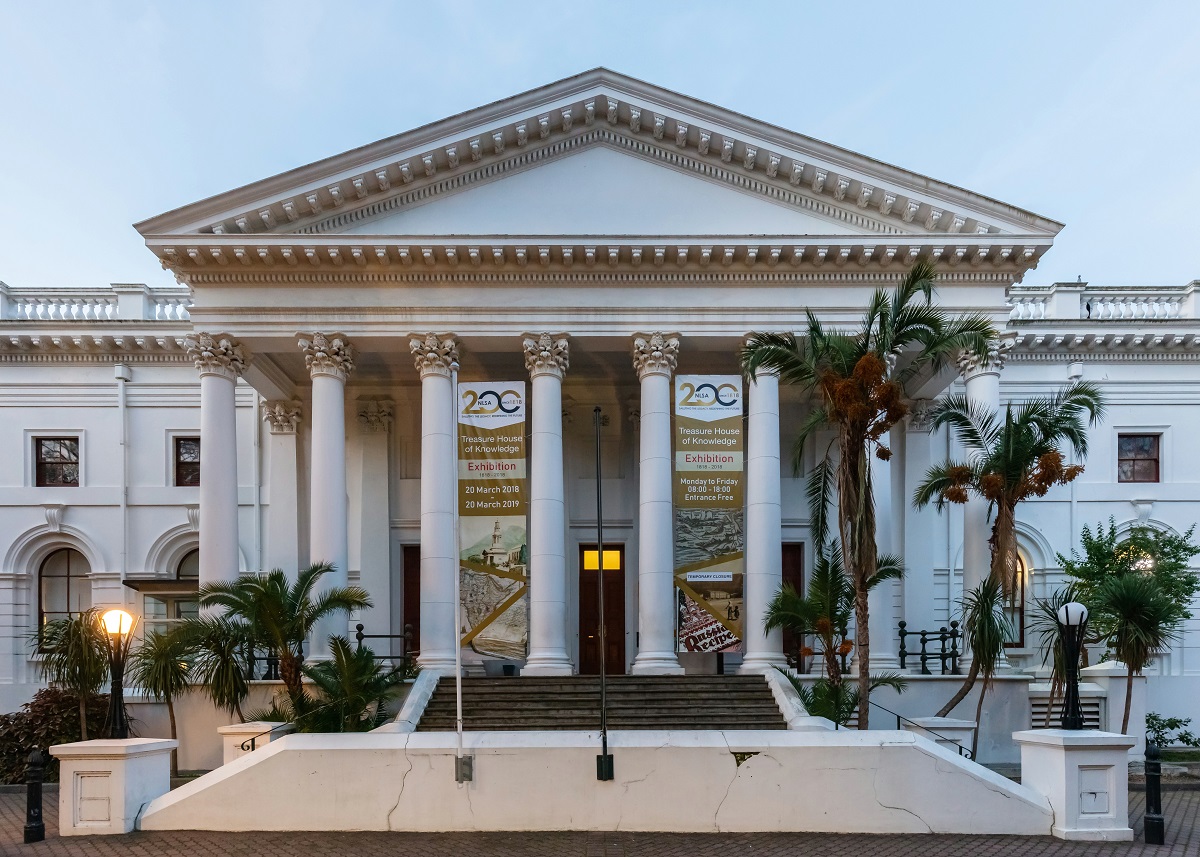
The neoclassical main building of the National Library of South Africa in Cape Town on Government Ave. Its design by W.H. Kohler is based on the Fitzwilliam Museum at the University of Cambridge. As it happens, the building was opened on this day, Sept. 16, in 1860 .. 159 years ago to the day. [Picture: Wikipedia]
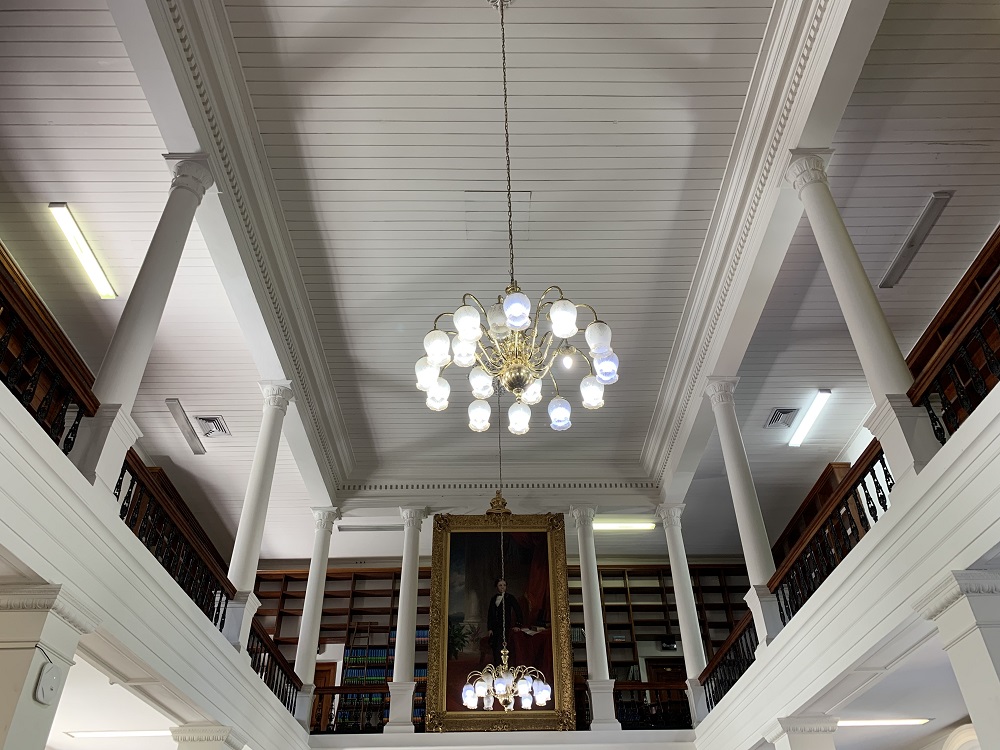
This is the hall inside the National Library’s main building on Government Ave.
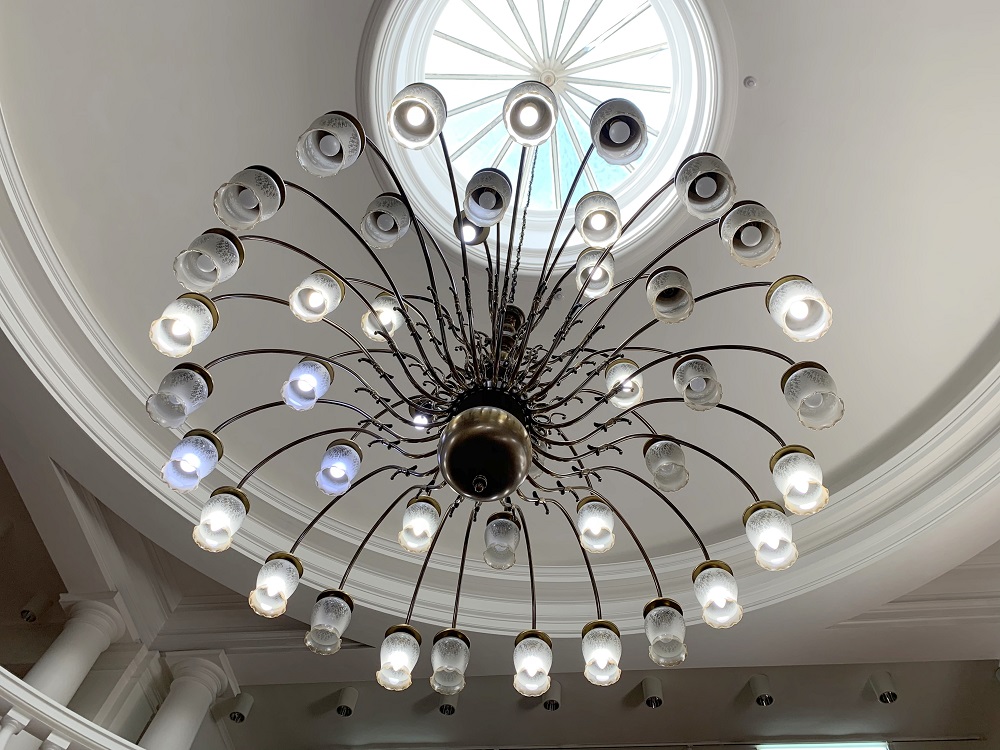
Detail of a chandelier in one of the reading rooms, with a beautiful round skylight. (Just getting to the point where someone is going to have to replace those dead light bulbs, right?)
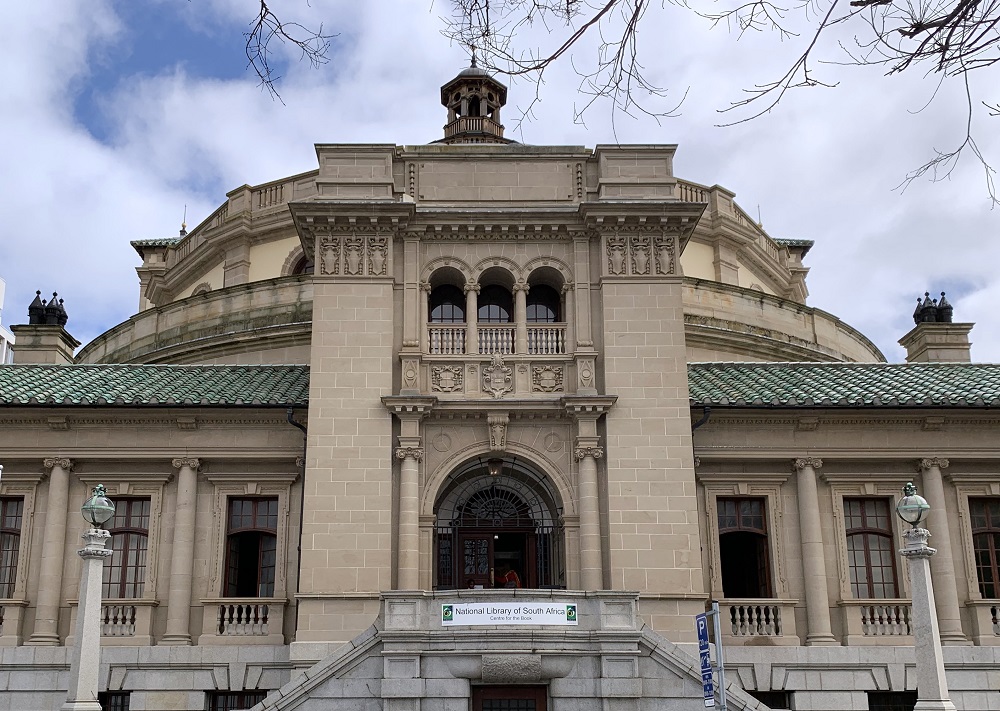
This is the Center for the Book Building at 62 Victoria Street. It was designed by British architects Hawke and McKinley in the Edwardian style, and completed in 1913.
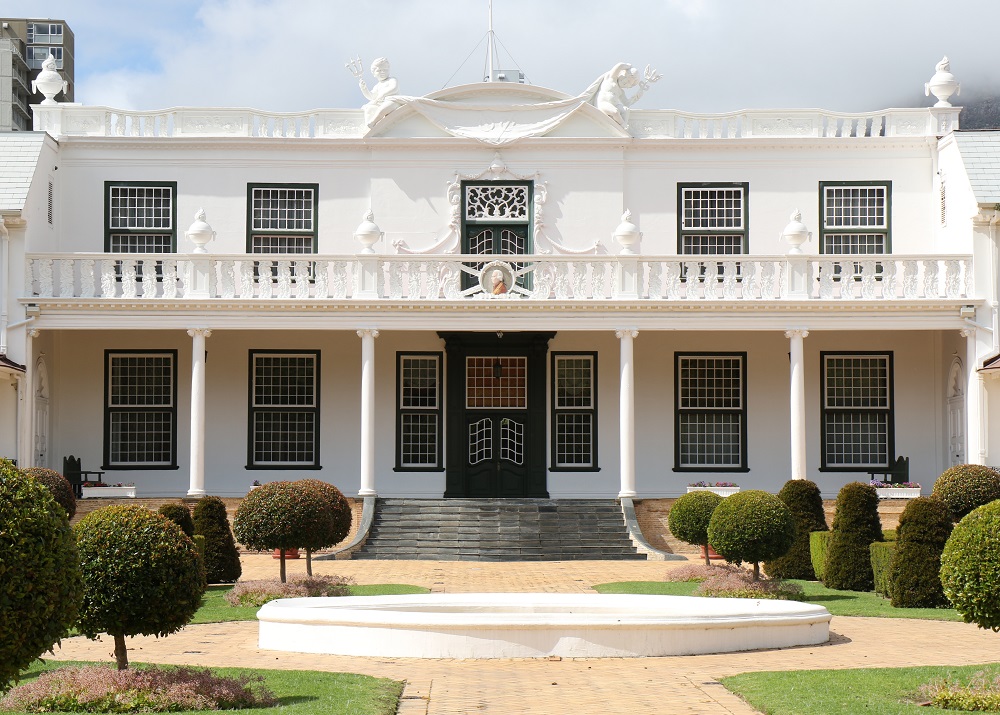
Just around the corner is De Tuynhuys (Garden House), completed in 1790 in the Cape Dutch style. Tuynhuis the Cape Town office of the Presidency of the Republic of South Africa.

Sunday/ Stellenbosch

I was in Stellenbosch today and took a few pictures (of course).
Here is a little bit of the town’s Cape Dutch Period origins and history, from a 2015 post.
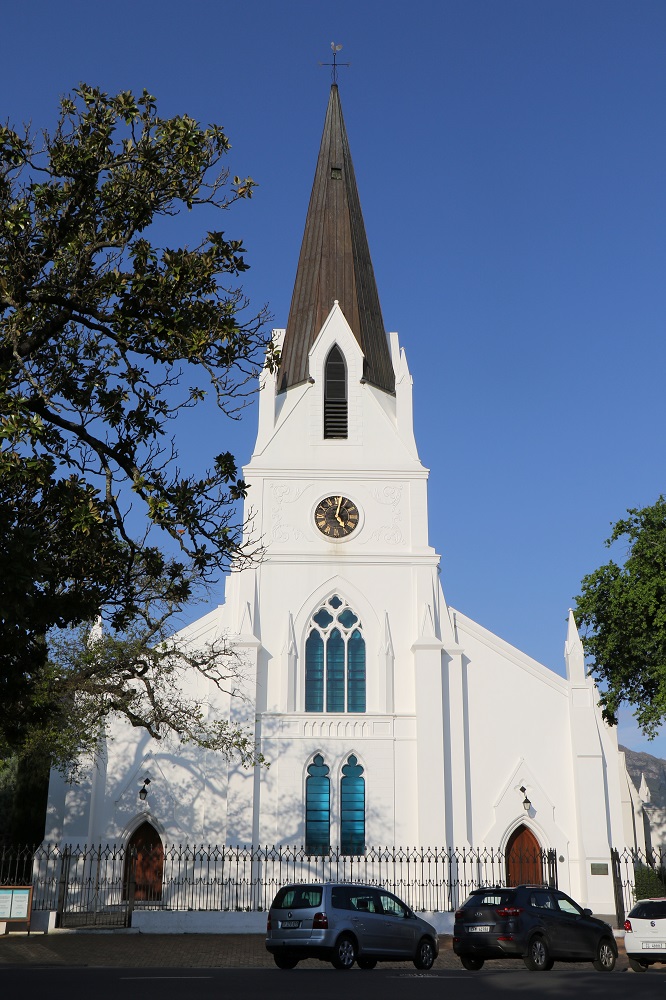
The bell was tolling at 5 o’clock while I was taking this picture of the Moederkerk building (‘Mother Church’), of the Dutch Reformed church. It has a Neo-Gothic Tower designed by Carl Otto Hager from Dresden in Germany. The building was completed in 1863.
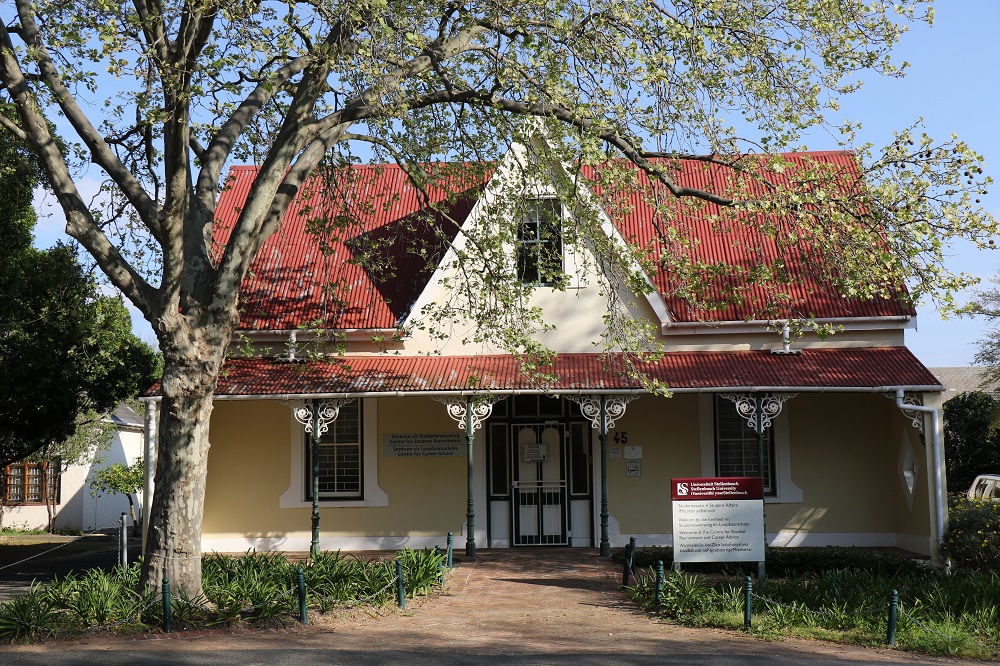
This is 43 Victoria Street, housing the offices of Student Career Services, and an appropriate address for a Victorian-style building. I could not find the year in which it was built, though.
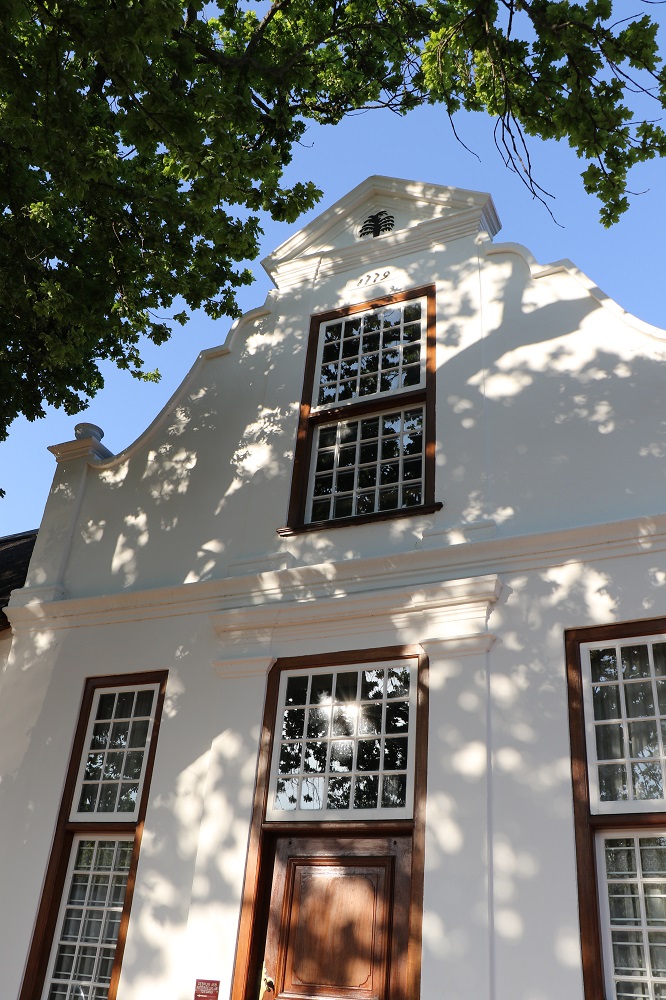
This building dates back to 1779 (inscribed below the triangular gable), when it was built by building contractor Philip Hartog as his own home. Currently it serves as the offices of the Mother Church nearby.
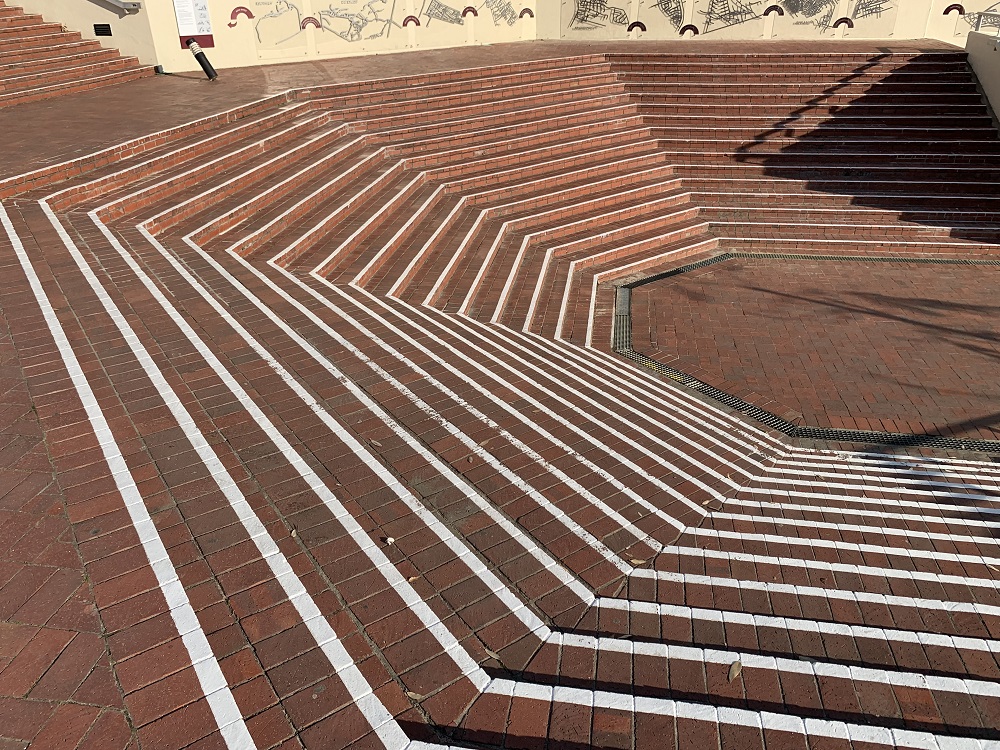
These steps are on JS Marais Square (Red Square’), leading down to the entrance to the subterranean library of the University of Stellenbosch.
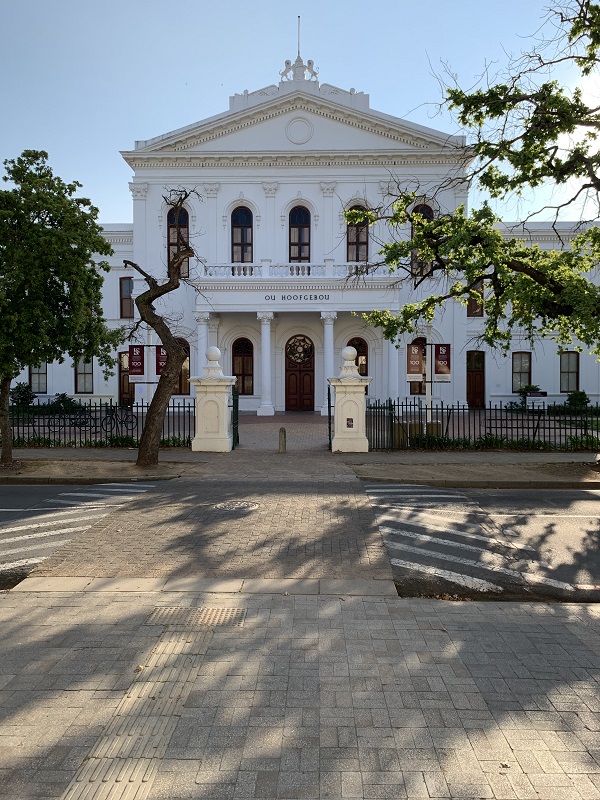
The Old Main Building of the University of Stellenbosch was also designed by architect Carl Otto Hager. The building was completed in 1886.
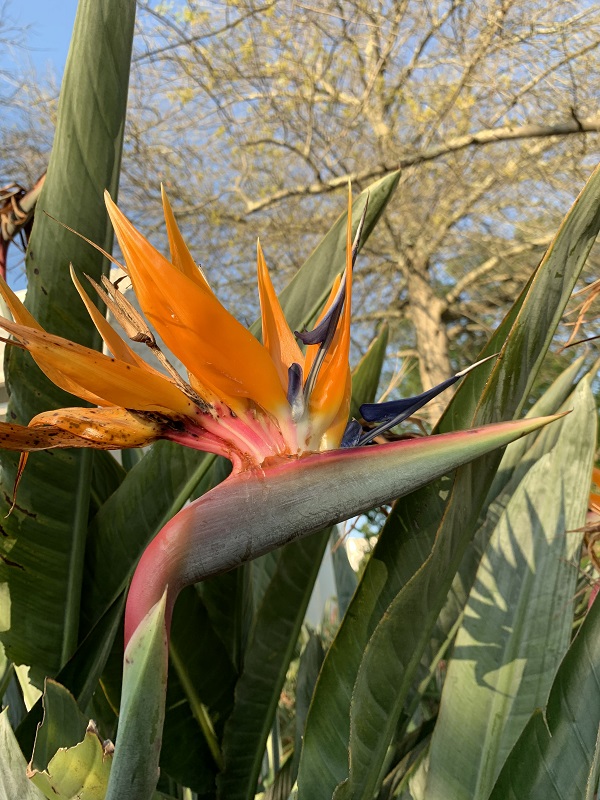
The campus of the University of Stellenbosch has plenty of Strelitzia (‘Bird of Paradise’) flowers. These are native to South Africa.

Saturday night

We had a nice view of Table Mountain at sunset, from where we were sitting in a restaurant in Plattekloof.
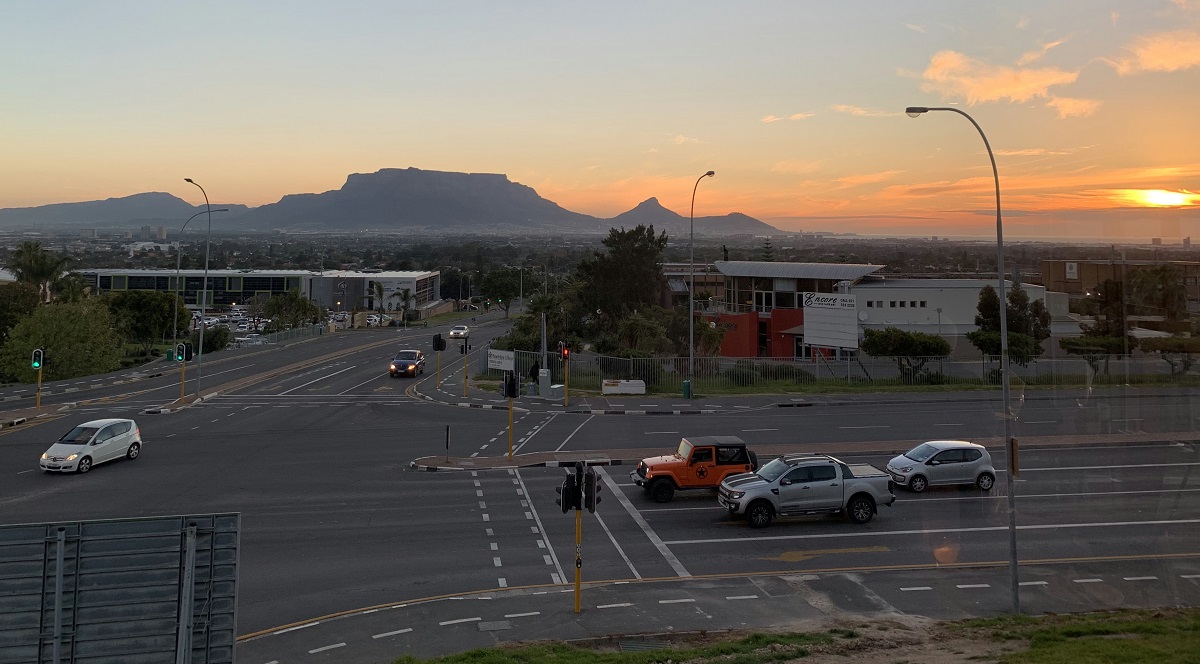
The view at sunset tonight, looking southwest from the corner of Olienhout Ave and Plattekloof Rd. From left to right in the distance: Table Mountain (1 085 m/ 3,560 ft), Lion’s Head (669 m/ 2,150 ft) and Signal Hill (350 m/ 1,150 ft).

Friday/ look! a mousebird

Here is a mousebird that I spotted in a tree across from my  second-floor Airbnb apartment.

Per Wikipedia: Mousebirds are slender greyish or brown birds with soft, hairlike body feathers. They are arboreal (live in trees) and scurry through the leaves like rodents, in search of berries, fruit and buds. This habit, and their legs, gave rise to the group’s English name. They have strong claws and reversible outer toes (pamprodactyl feet). They also have crests and stubby bills.

The mousebirds are Coliiformes (their order). They could be considered ‘living fossils’, as the 6 species existing today are merely the survivors of a lineage that was massively more diverse in the early Paleogene period (up to 23 million yrs ago) and Miocene period (up to 5 million years ago).
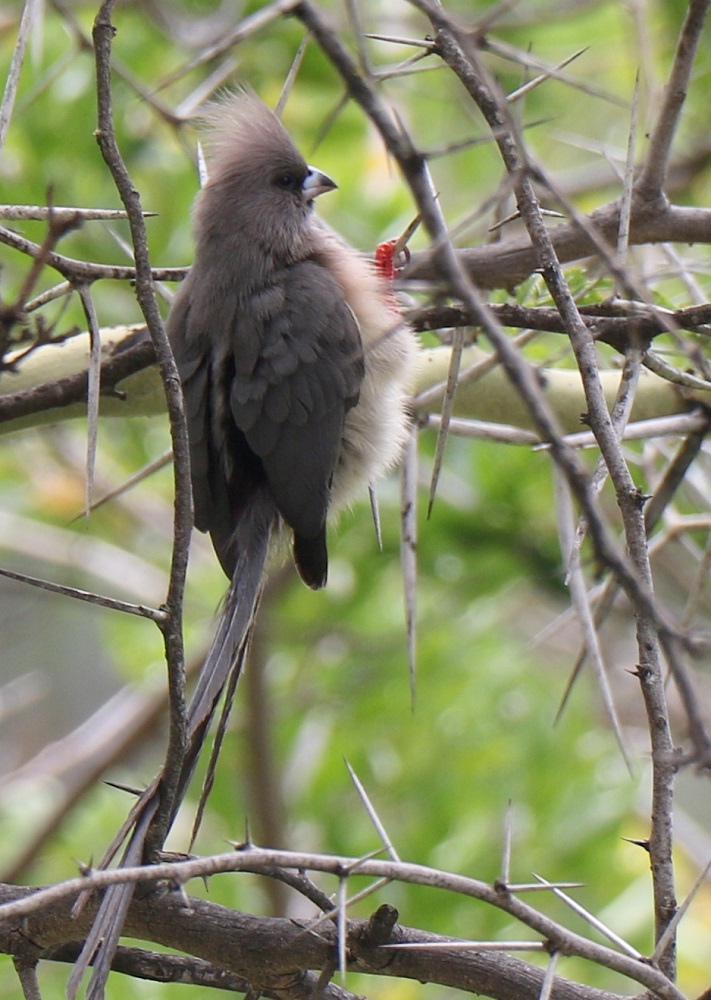
The White-backed Mousebird (Colius colius). Check out its long tail-feathers. This species prefers scrubby dry habitats, such as thornveld, fynbos scrub and semi-desert.

Thursday/ here comes Rugby World Cup 2019

There Rugby World Cup 2019 starts in a week on Fri Sept. 20 in Japan. It starts out with four pools (A B C and D) with five teams in each. The top two teams in each will go through to the final rounds.

Ireland is at the top of the world rankings, South Africa is #4, and the United States (yes, there is a team, actually), is a definite underdog at #13.  South Africa will play New Zealand in its first match; the USA will play England.

Do I want some Rugby World Cup cards? asked the lady at the grocery store check-out today. Um -yes, sure, was my response. Confession: I barely know any of the South African rugby players .. looks like the guy in the middle here is Tendai ‘The Beast’ Mtawarira (36), though. Some years ago the Seattle Seahawks (American football) had a running back called Marshawn ‘Beast Mode’ Lynch.

Wednesday/ arrival in Cape Town

I made it into Cape Town International airport at 10 pm local time (14°C / 57° F), got my rental car, and checked into the little road lodge hotel by the airport (think Motel 6).

I did not want my AirBnB landlady to wait up for me until late .. and it’s not a good idea to step off a plane, jet lagged, and drive late at night, anyway.
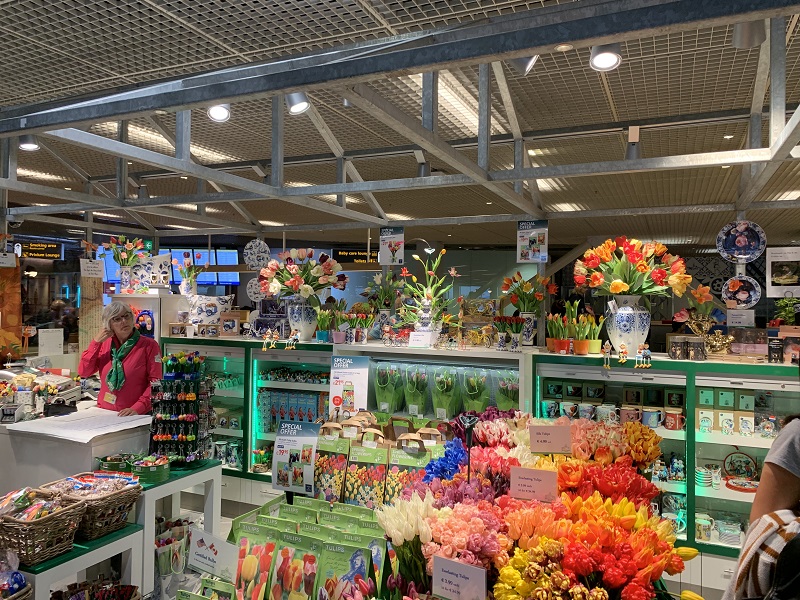
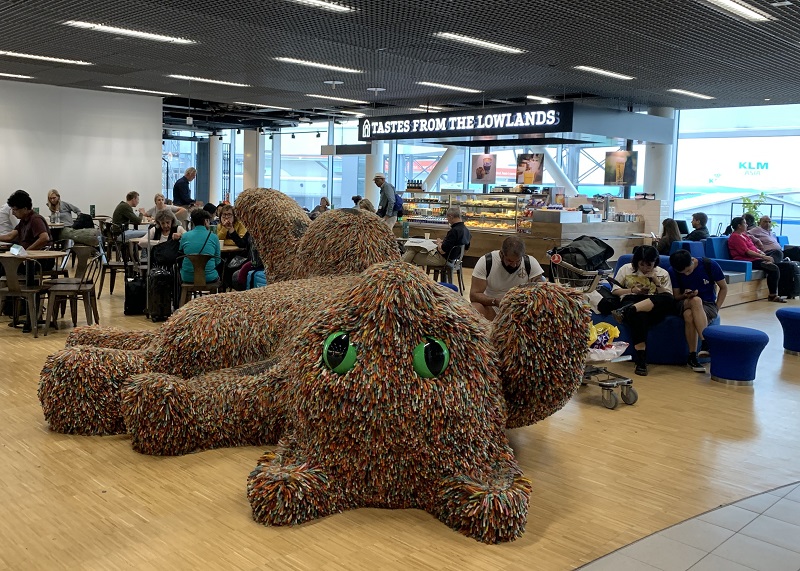
A tulip flower & bulb stand at Schiphol airport. Lovely to look at, but I’m sure it’s better suited for arriving passengers. Outbound international passengers would have to stop and declare these at customs.
This giant and playful kitty cat was in the terminal near my departure gate.
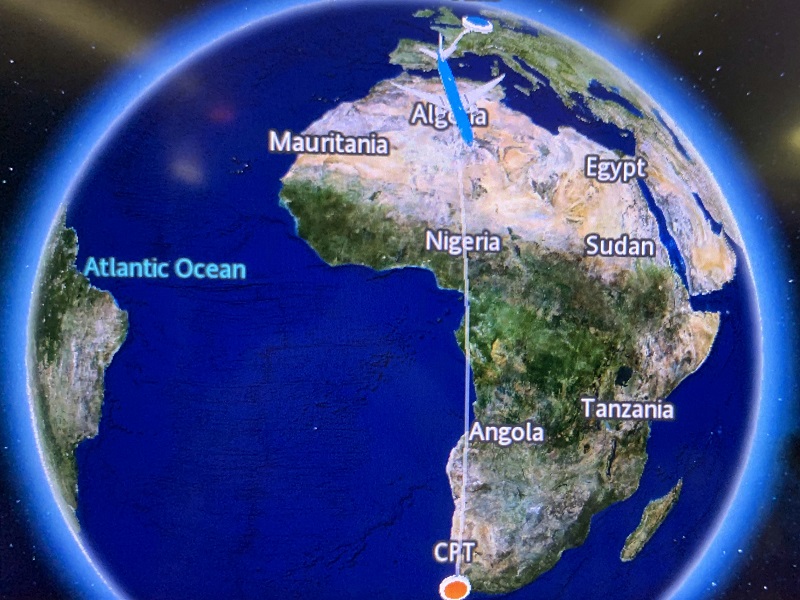
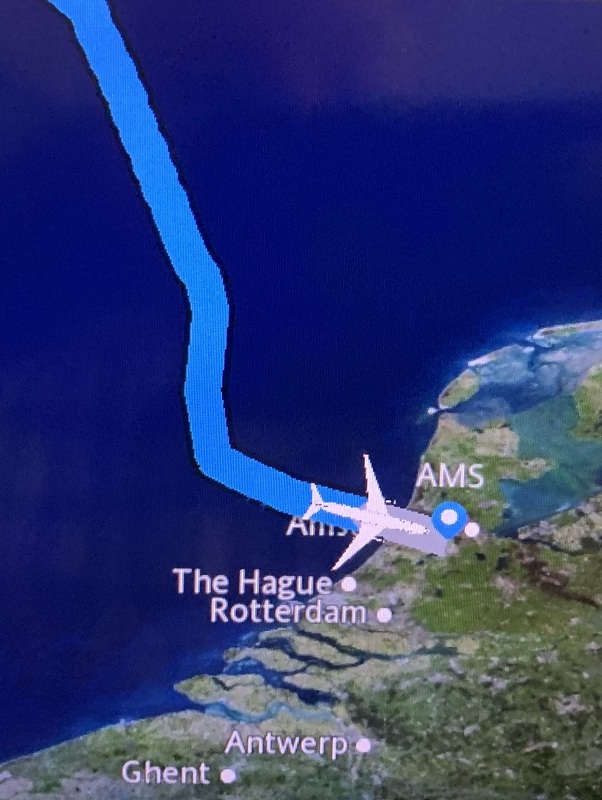
Here is our flight path across Africa from AMS to CPT, skirting the southwestern coastline of the continent. Travel time was about 11 hrs.
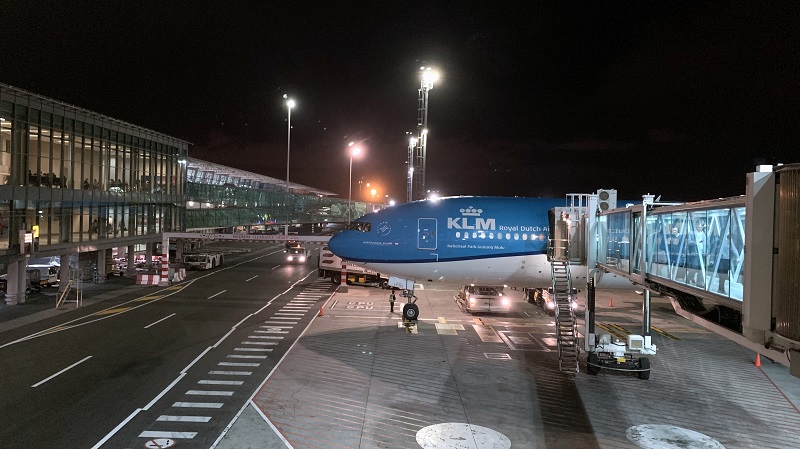
And here is our Boeing 777 ‘Nationaal Park Gunung Mulu’ at the gate at Cape Town International Airport. The airplane is still new, started service in 2016. Gunung Mulu National Park is a protected rainforest in Malaysian Borneo.

Tuesday/ arrival in Amsterdam

My flight arrived on time at Amsterdam’s Schiphol airport, at about 1 pm local time.
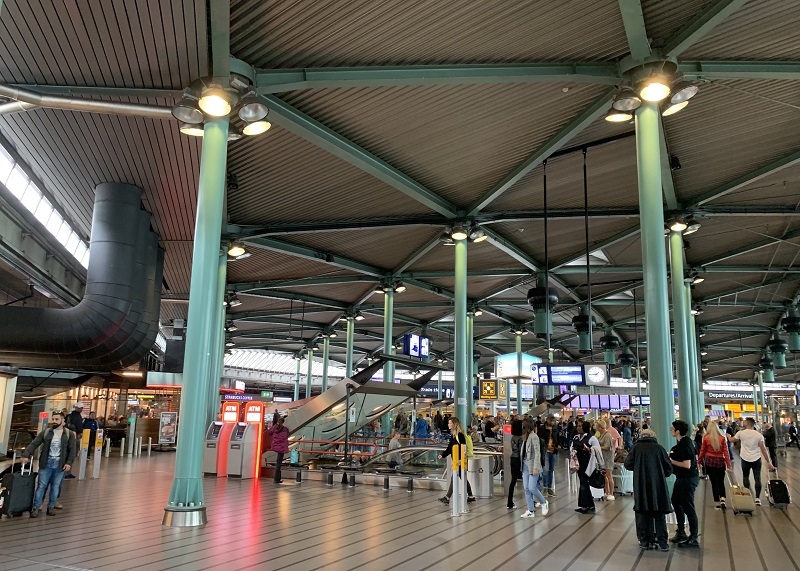
The main arrivals/ departure hall of Schiphol airport with its industrial look of exposed beams and ducting.
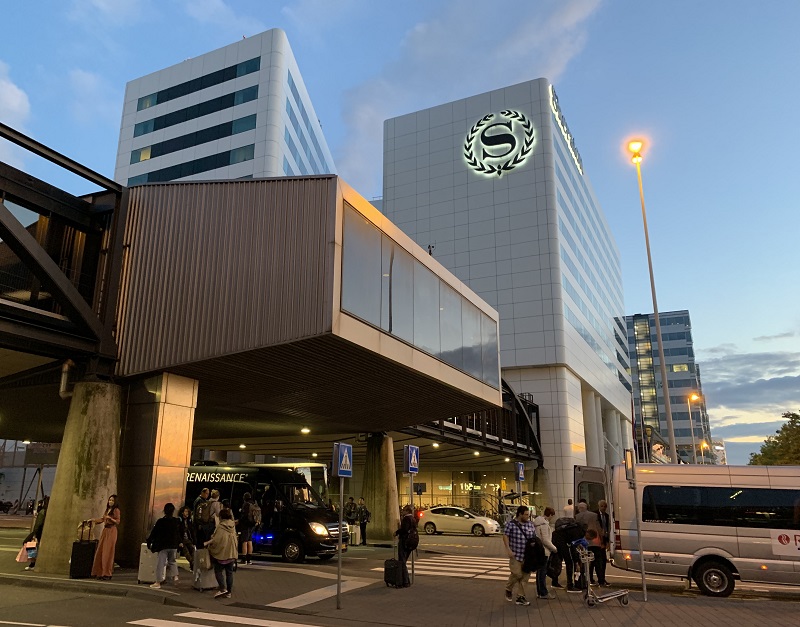
I had to call the hotel to find out where the hotel shuttle bus stops. (The little black bus in the middle of the picture). And then there is a little bit of waiting time, but hey, it’s free. Cannot beat free. A taxi would have been €25, said the shuttle driver, and UberX about €15.

There is no question as to what the best part of a long flight is:  when that little bell goes ding! and one gets to jump up from one’s seat, grab everything and march off the plane!


Monday/ at the airport

I made it to the airport. Both escalators at the light rail’s airport stop were out of service, so we all had to use the elevator to get downstairs – a little bit of a delay.

Delta flies out of South Terminal, which is still undergoing renovations.
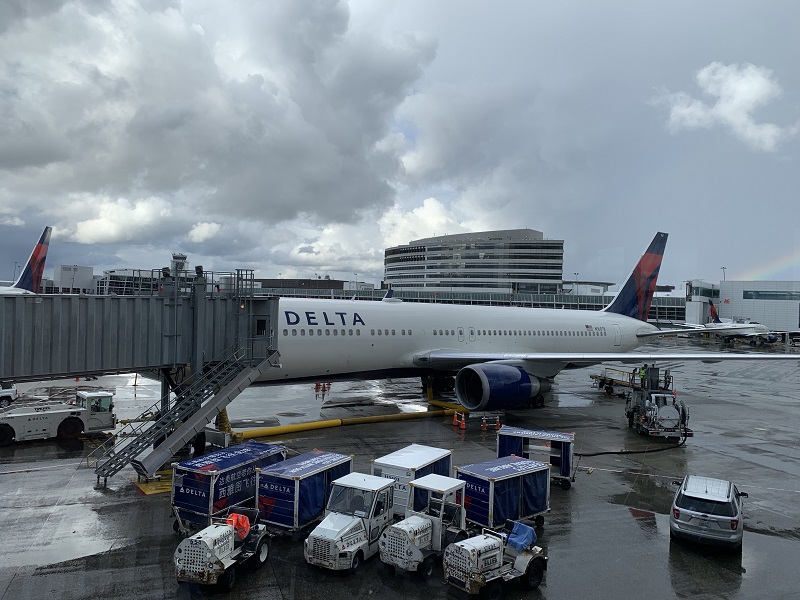
Here is the view from my gate at South Terminal.  Delta’s Boeing 767 bird in the front has an extended range and is shortly flying out to Beijing (11 hrs). My airplane looks similar, and is the one with the tail on the far left of the picture.
A billboard from Cathay Pacific at South Terminal. They now fly non-stop from Seattle to Hong Kong, and back, four times a week. It’s a 13 hr flight.


Sunday/ Amsterdam bound

My bags are packed for my trip to Amsterdam on Monday from Seattle.
I will stay in Amsterdam overnight on Tuesday night on my way to Cape Town, South Africa.
The flight to AMS is on a Delta Airlines Boeing 767-300.
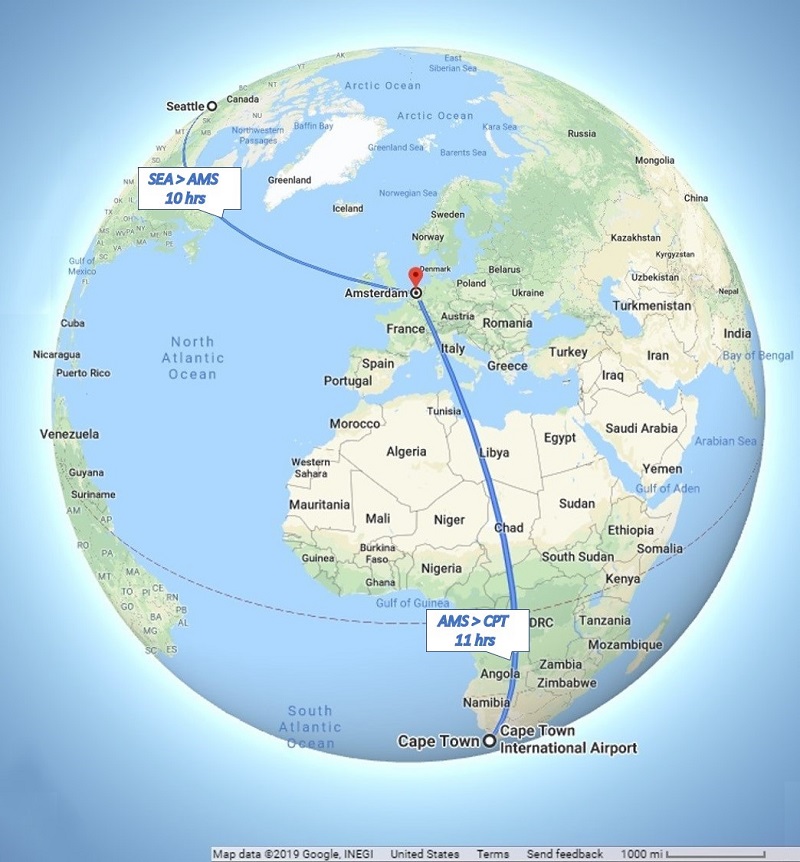
It will be 10 hrs to AMS on Monday night, and then 11 hrs on Wednesday to CPT. 

Saturday/ thunder and lightning

There was a big storm with thunder and spectacular lightning, that moved over the city on Saturday night. Some flights to Seattle-Tacoma airport had to be diverted to Vancouver.

These are iPhone pictures that I took from my friends’ house, of the city skyline, looking westward to Puget Sound.
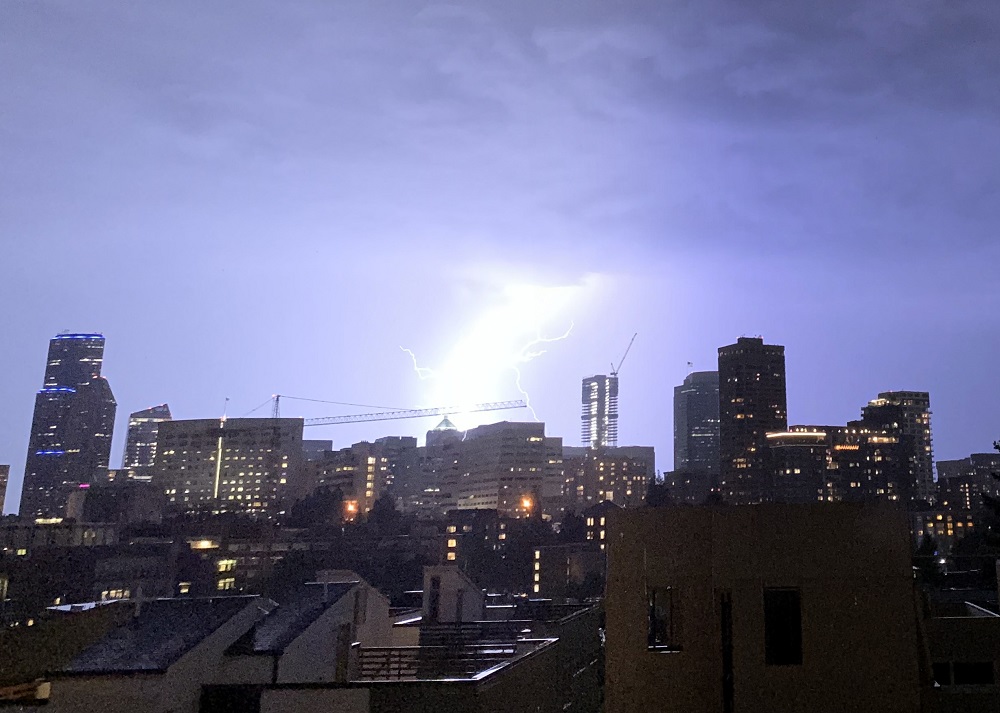
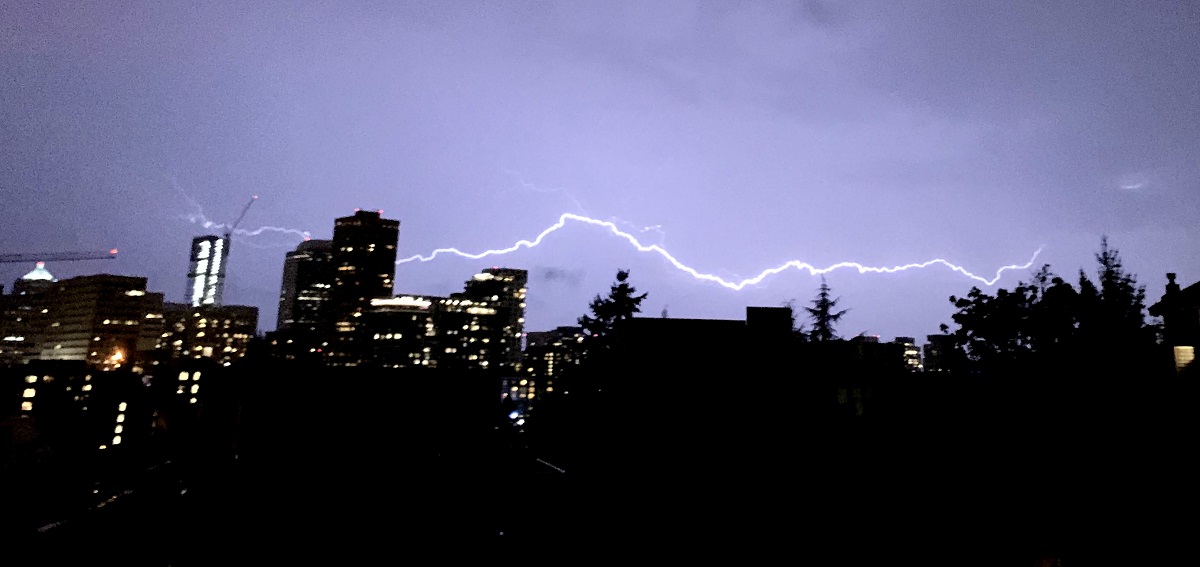
A compound lightning bolt behind the US Bank Center (pyramid top) building in the city skyline. On the far left is the Columbia Center (the city’s tallest) and to the right of the lightning bolt, the Rainier Square Tower building that is still under construction.
Here’s a longer cloud-to-cloud bolt that streaked across the skyline.
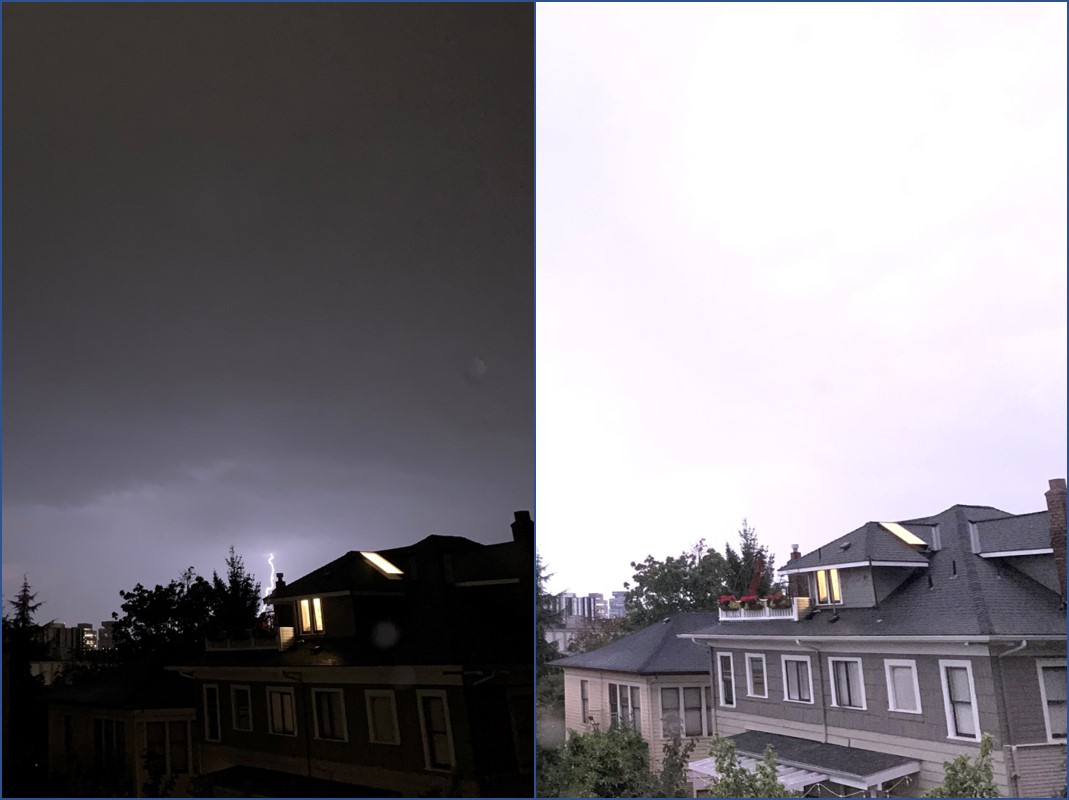
On the left, a lightning bolt in the distance. On the right is the exact same scene (some time later), lit up as bright as broad daylight, with the overhead lightning flashes.

Friday/ drive like a sloth .. or maybe not

School has started, and drivers (me*) have to look for those flashing lights that indicate school zone speed limits are in force: generally 20 mph instead of 30 or 35 mph.

*In April, moi got caught, whizzing by a 20 mph sign & flashing light, at the regularly allowed 35 mph. I did not see the sign or light until it was way too late! – honest. $234 fine, which I paid. Ouch.
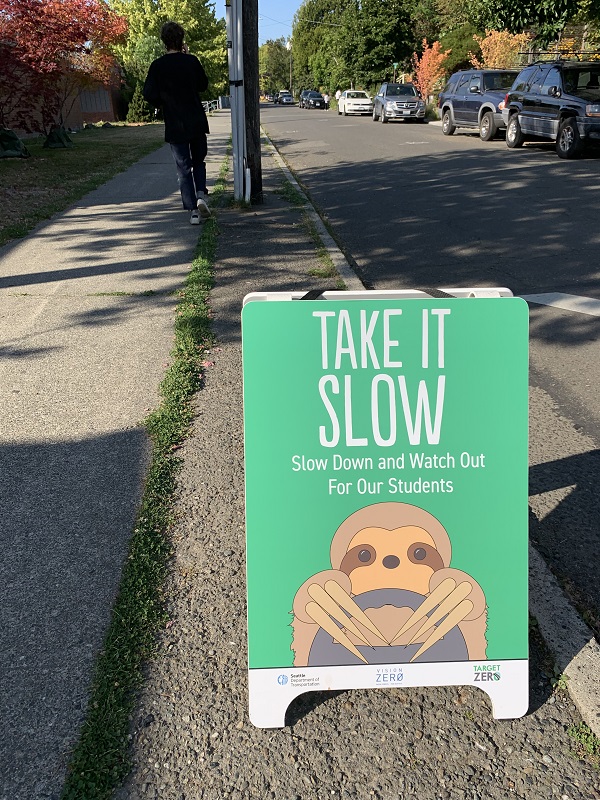
This sign was up by Meany Middle School today. Yes, slow down and take it slow, but definitely DO NOT go as slow as a sloth. The sloth is the world’s slowest mammal, and moves at a top speed of 0.15 mph.

Thursday/ under ‘surveillance’

There has been ‘suspicious’ activities going on at a house across the street from mine. There was a moving truck last week, and this week a staging truck was parked in front of it for three days.
So now I take a look every day out the window, to see if that classic white sign post with the ‘For Sale’ sign on the sidewalk, is up yet.
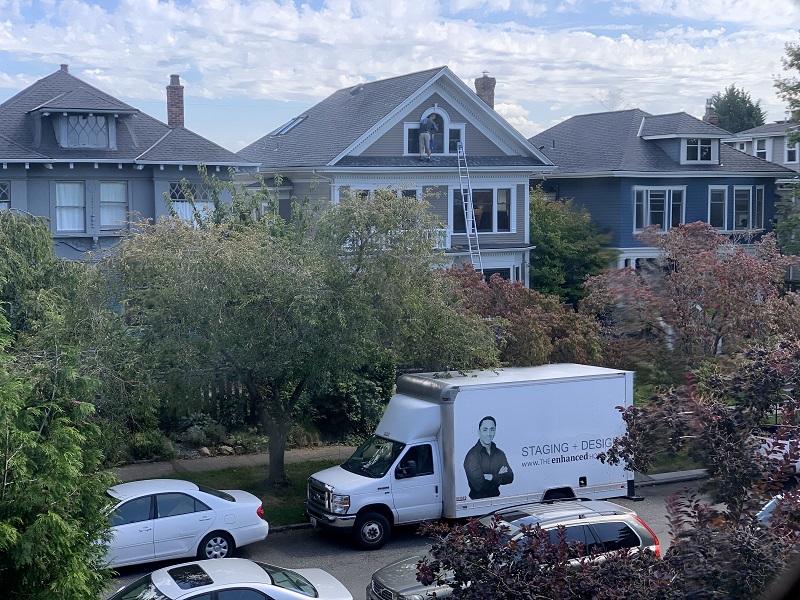
The house that I have ‘under surveillance’. It has been pressure washed outside, and a contractor is cleaning the windows. There’s the staging truck in front of it (picture from Tuesday). The house was built in 1902, and its online history says it was last sold in July of 1999: 20 years ago. The Seattle housing market is still very competitive, but much more balanced between buyers and sellers compared to just a year ago.

Wednesday

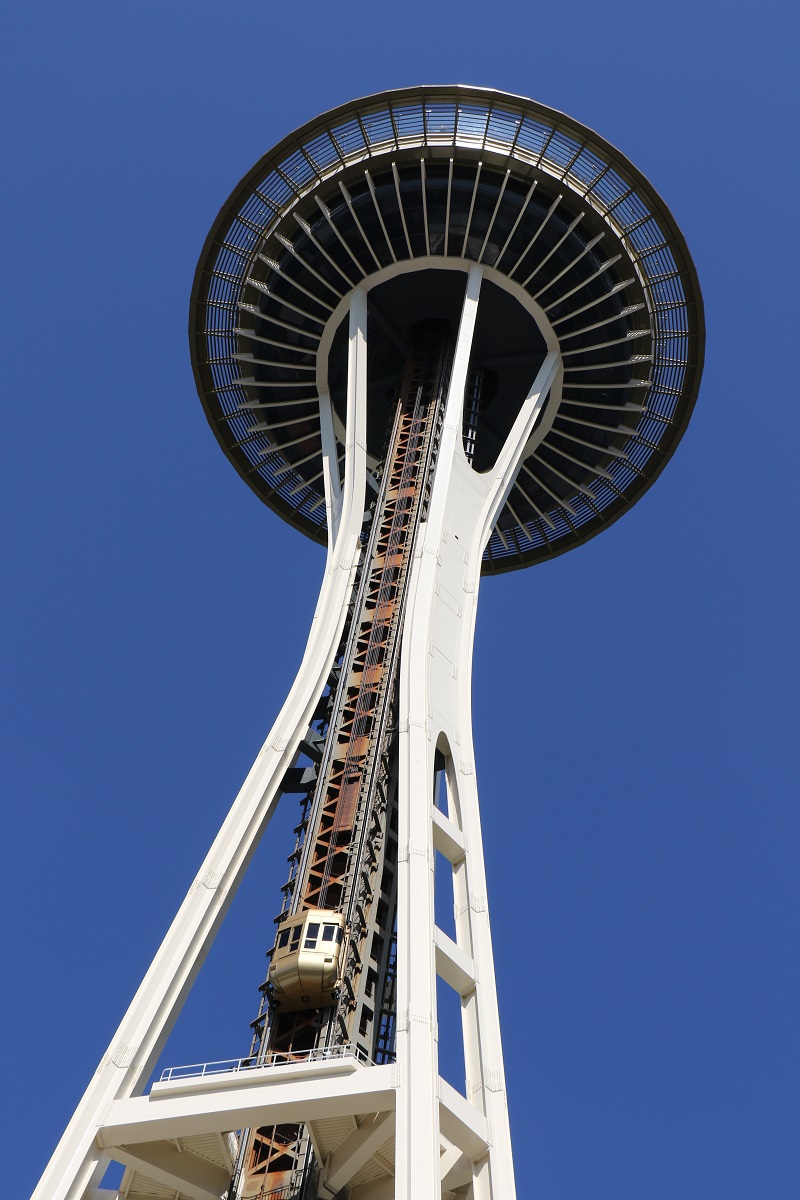
Here is the Space Needle, against a clear blue sky today.
It has now been open for a year since its 2017-18 renovation. I still have to go up to the viewing deck to check out the new glass floors that were put in.

If ever we have a hurricane here in Seattle ( ! ), the structure should be able to hold its own. It was built to withstand wind speeds of 200 mph (320 km/h), double the requirements in the building code of 1962.
Tuesday/ no deal, to Johnson’s no-deal Brexit

Stephen Castle writes from London, for the New York Times:
British lawmakers forced Johnson’s hand by voting by 328 to 301 to take control of Parliament away from the government and vote on legislation as soon as Wednesday that would block the prime minister from making good on his threat of a no-deal Brexit.

That prompted an angry response from the prime minister.
“I don’t want an election, the public don’t want an election, but if the House votes for this bill tomorrow, the public will have to choose who goes to Brussels on Oct. 17 to sort this out and take this country forward,” Mr. Johnson said, referring to the next European Union summit.


Comment from a Times reader. I agree 100%: easy to argue that representative democracy has run its course. Do members of the United States Congress think they can solve problems? They should not think so, because they cannot. (Affordable healthcare, mass shootings, climate change, broken immigration system, trillion dollar deficits, corrupting influence of money in politics, withdrawing the US from international treaties).  For all the so-called checks and balances built into the American democracy machinery: in 2016 it produced as President of the United States an incompetent, criminal, immoral monster called Trump. And now there is no opposition from the Republicans (the Trump party) for his monstrous policies. Time for a benevolent dictator instead?