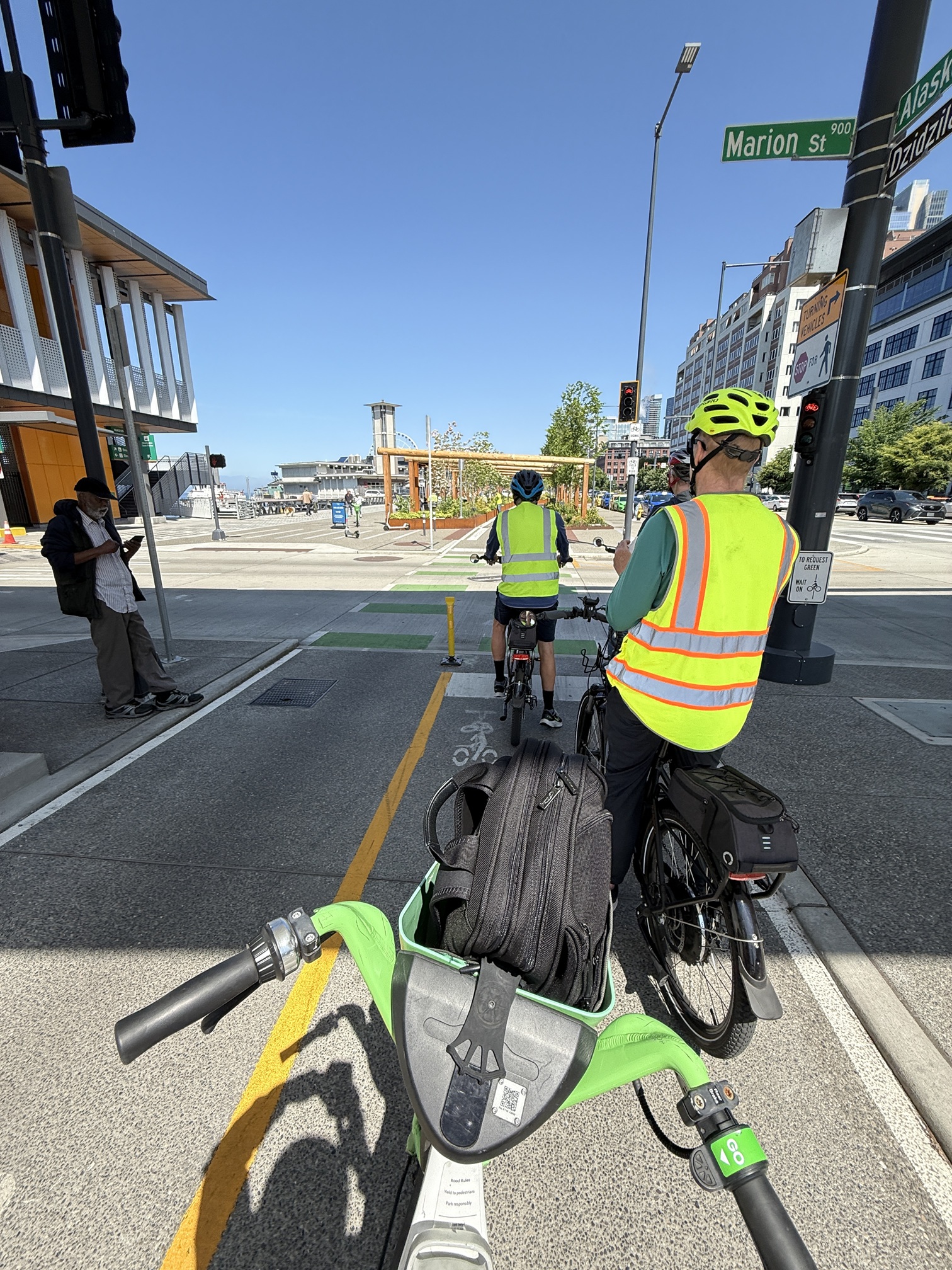
Four amigos met at the Seattle waterfront this morning.
We rode our e-bikes along the bike trail to Elliott Bay marina where we met up with a fifth amigo for lunch.
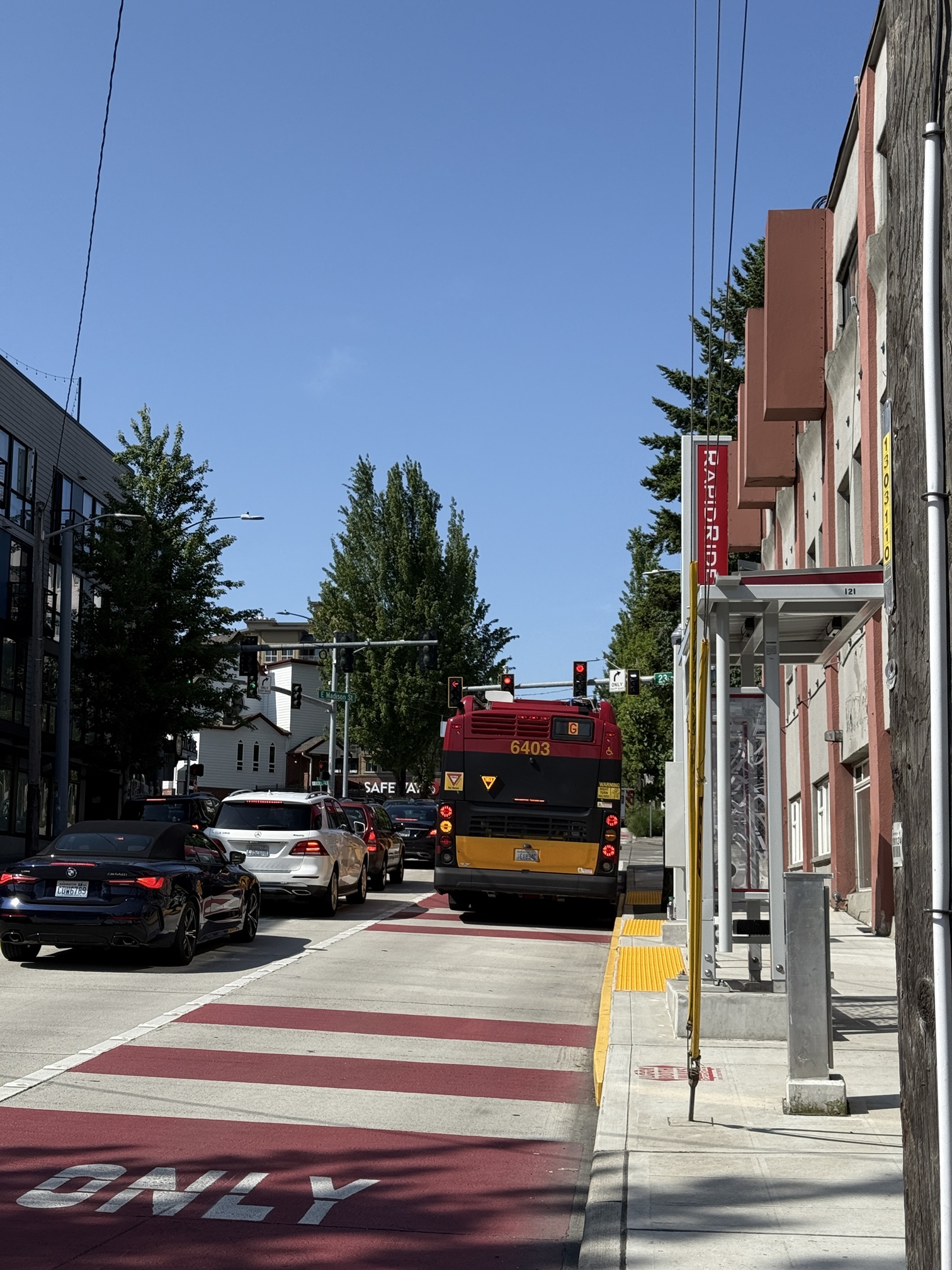
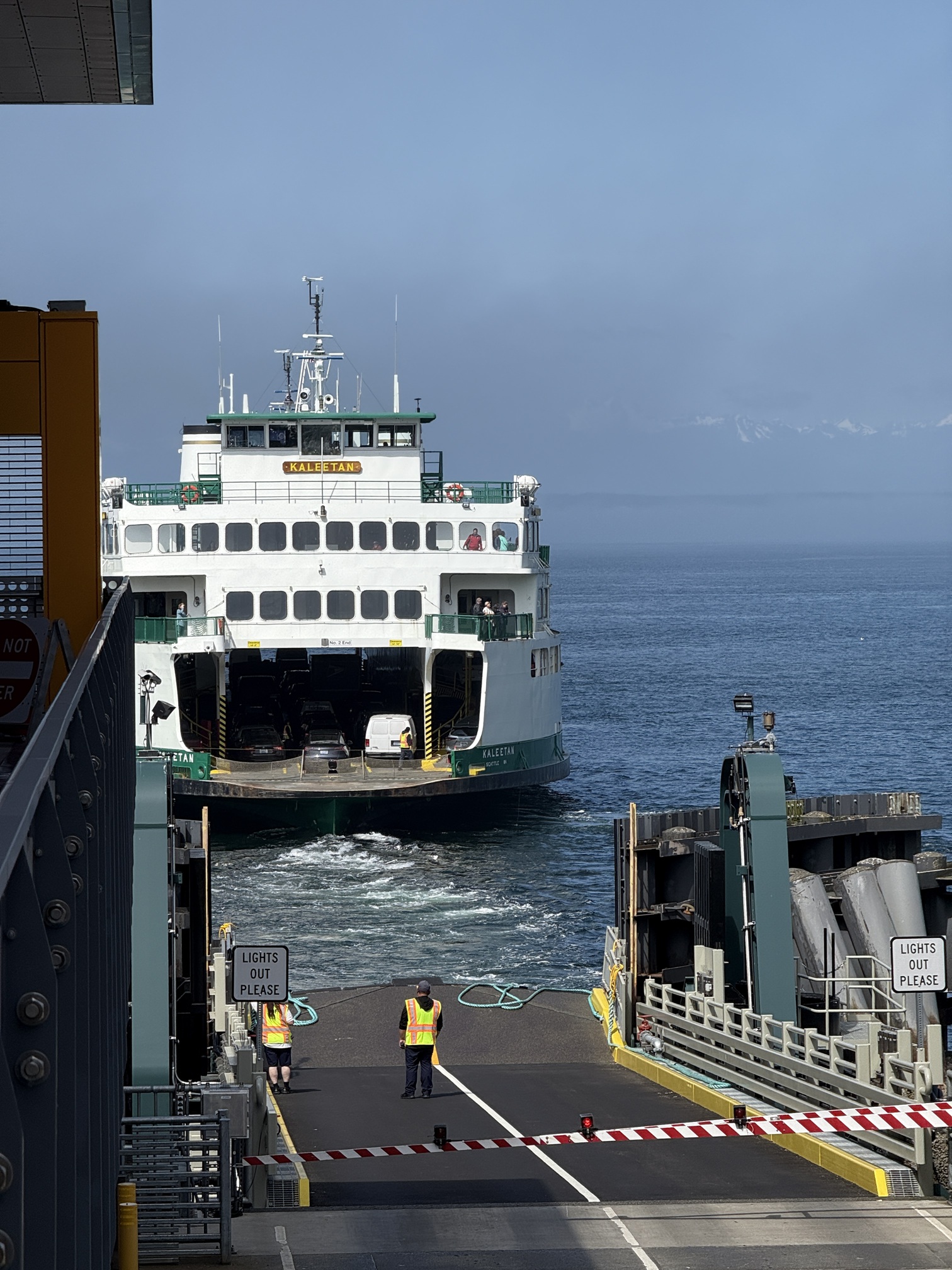
I took the G-line bus along Madison Street to the waterfront. There goes my bus, actually, but it does not matter. It’s only 6 minutes between buses, so there is no need to even look at the schedule, or worry that you might miss your bus and wait a long time for the next one.It’s a short walk from the 1st Avenue bus stop to Colman Dock, also called Pier 52, the primary ferry terminal in Seattle. That’s the Kaleetan ferry, just leaving for Bainbridge Island. The Kaleetan went into service in early 1968 serving the Seattle-Bainbridge Island route. Over the years it has been upgraded and it has also served the Seattle-Bremerton route and the Anacortes-San Juan Islands route.
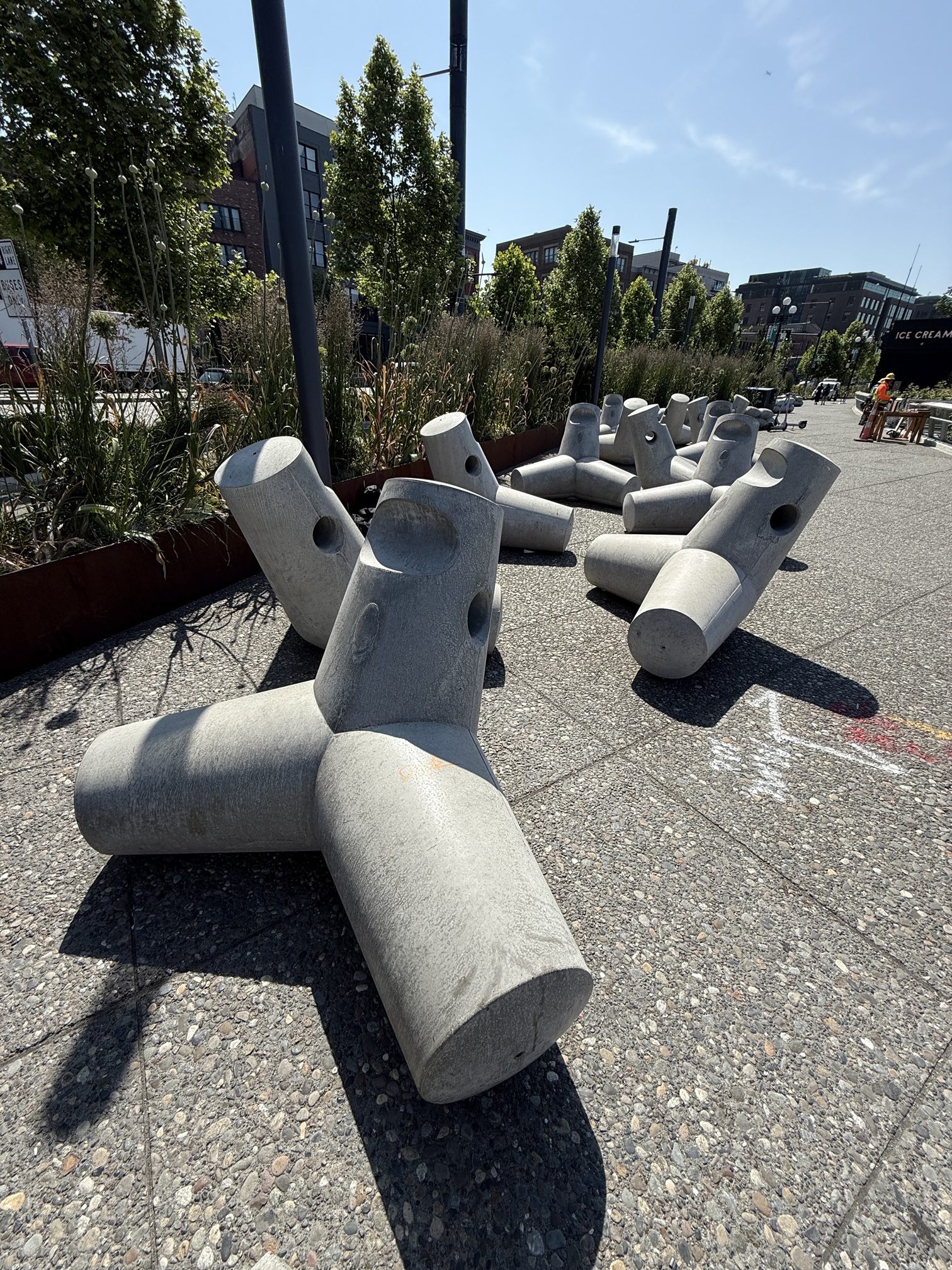
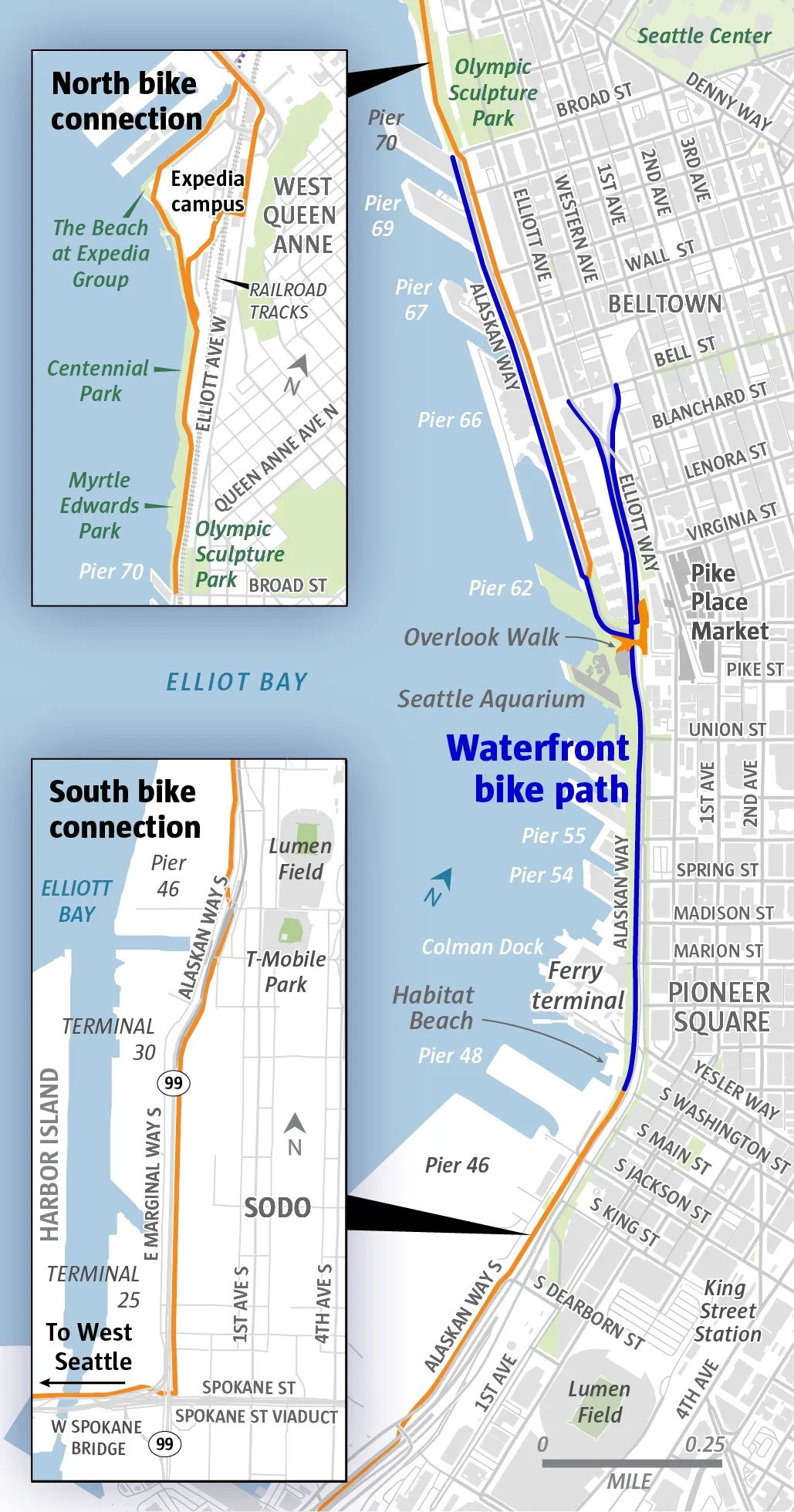
Our rendezvous point for starting the bike ride was Molly Moon Ice Cream up ahead. I’m stopping for a moment to admire Buster Simpson’s public artwork called “Anthropomorphic Dolos*”. Dolosse* is a South African invention, first deployed in 1964 on the breakwater of East London, a South African port city. * A dolos (plural: dolosse) is a wave-dissipating concrete block used in great numbers as a form of coastal management. It is a type of tetrapod. Weighing up to 8 tonnes (8.8 short tons), dolosse are used to build revetments for protection against the erosive force of waves from a body of water. [From Wikipedia]We pedaled northbound along the Waterfront bike path and the North bike connection. [Sources: Seattle Department of Transportation, Elliott Bay Connections, Seattle Office of the Waterfront and Civic Projects. Esri, Google, Chris Kaeser / The Seattle Times]
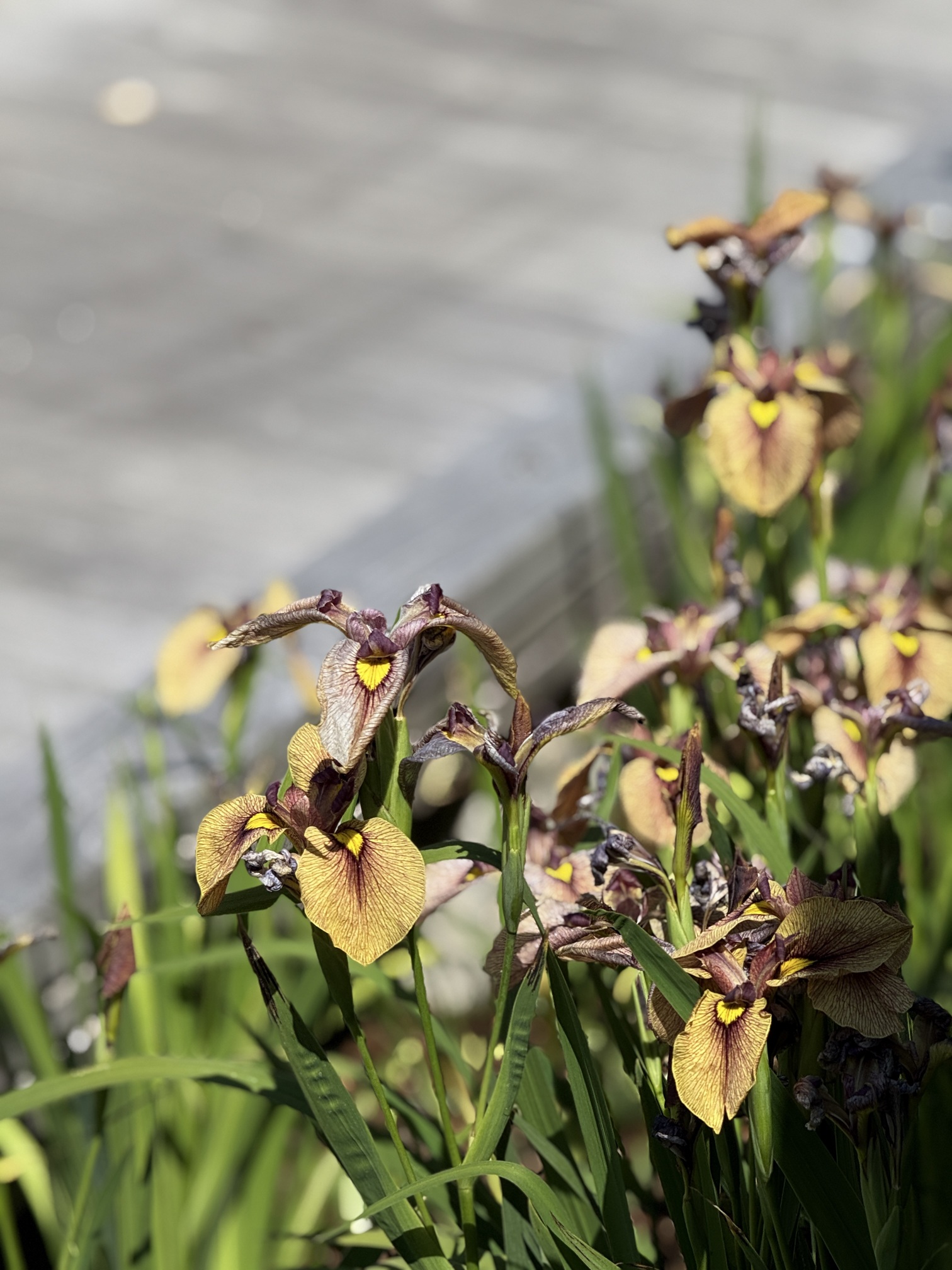
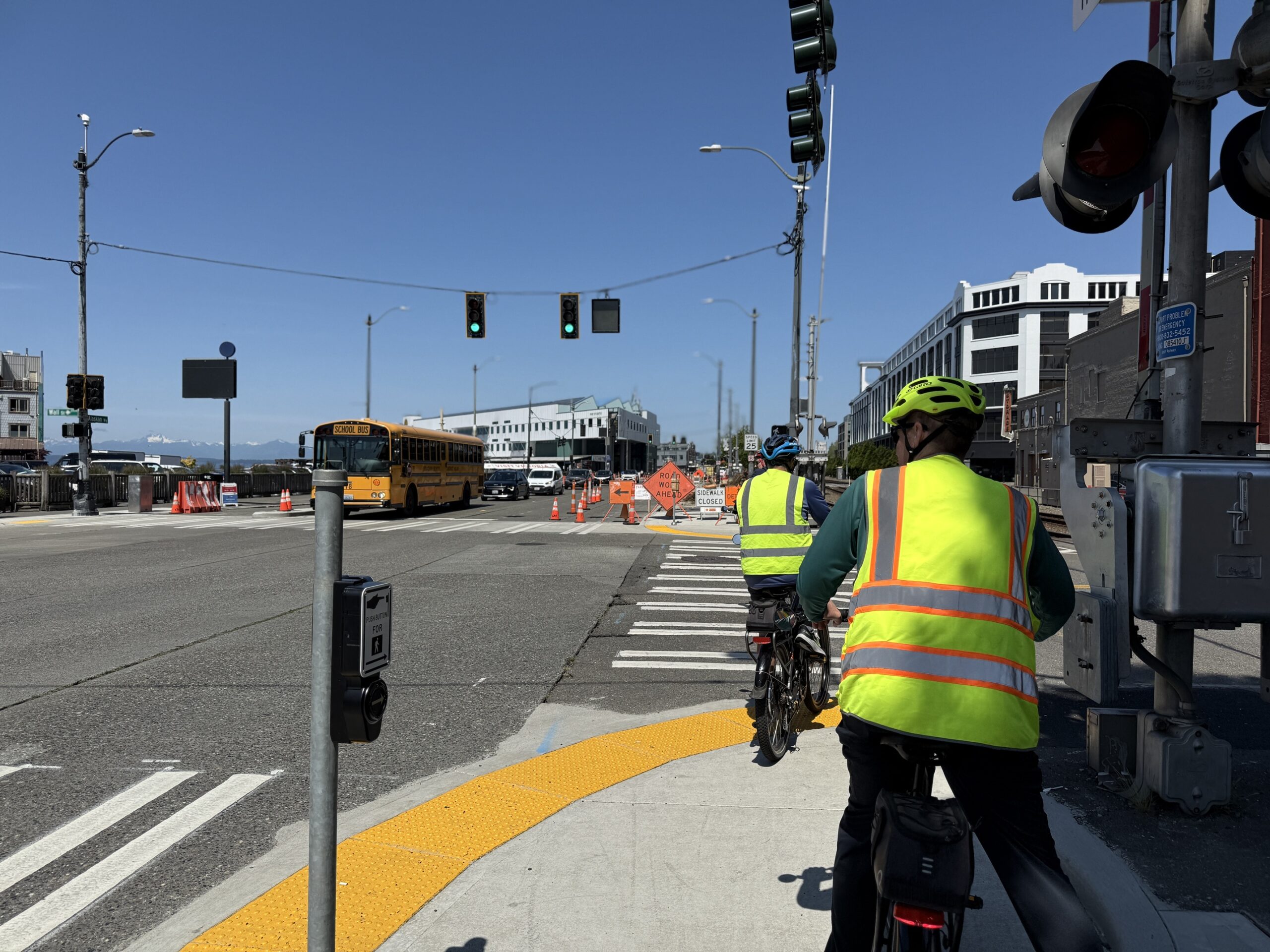
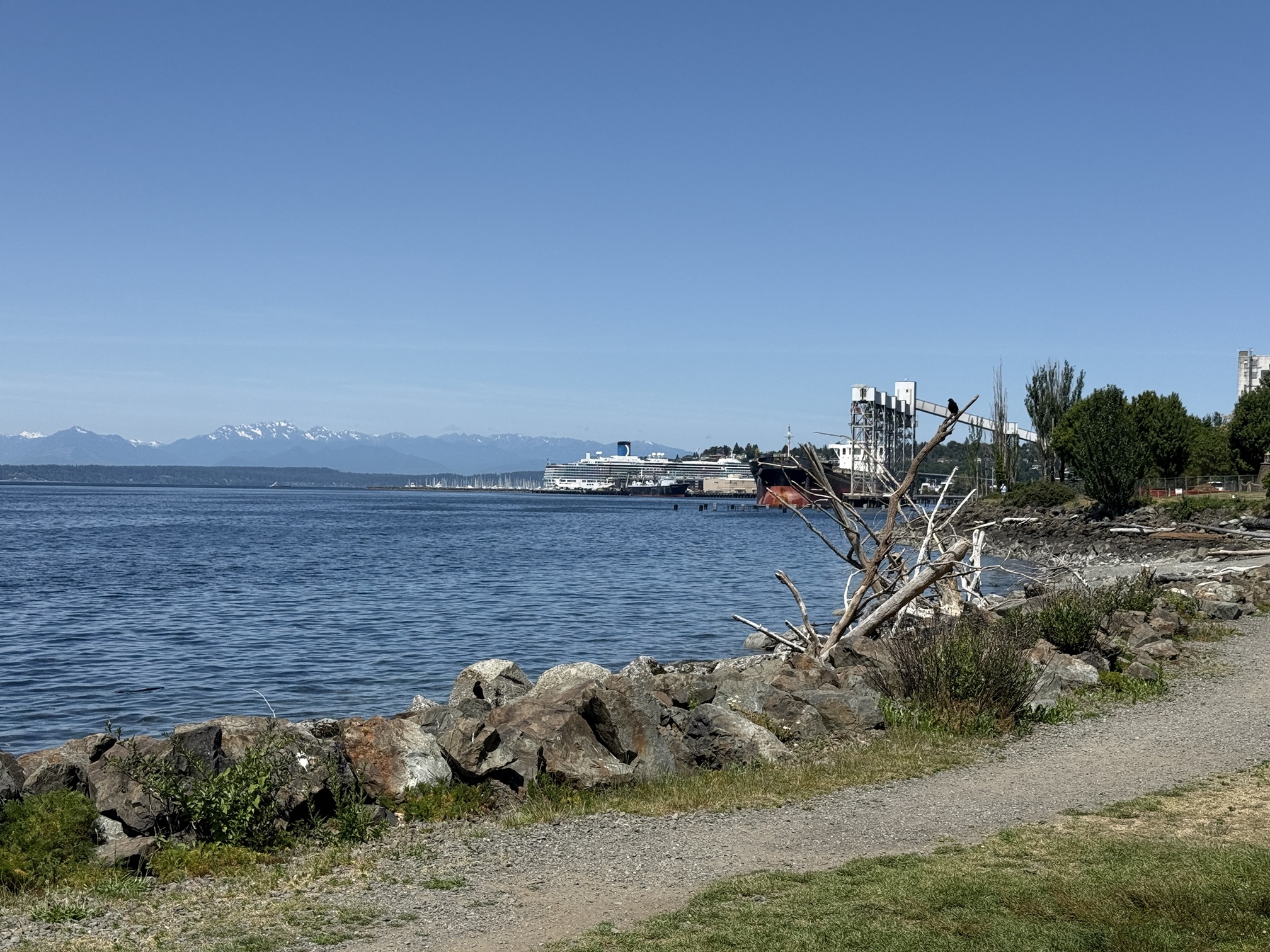
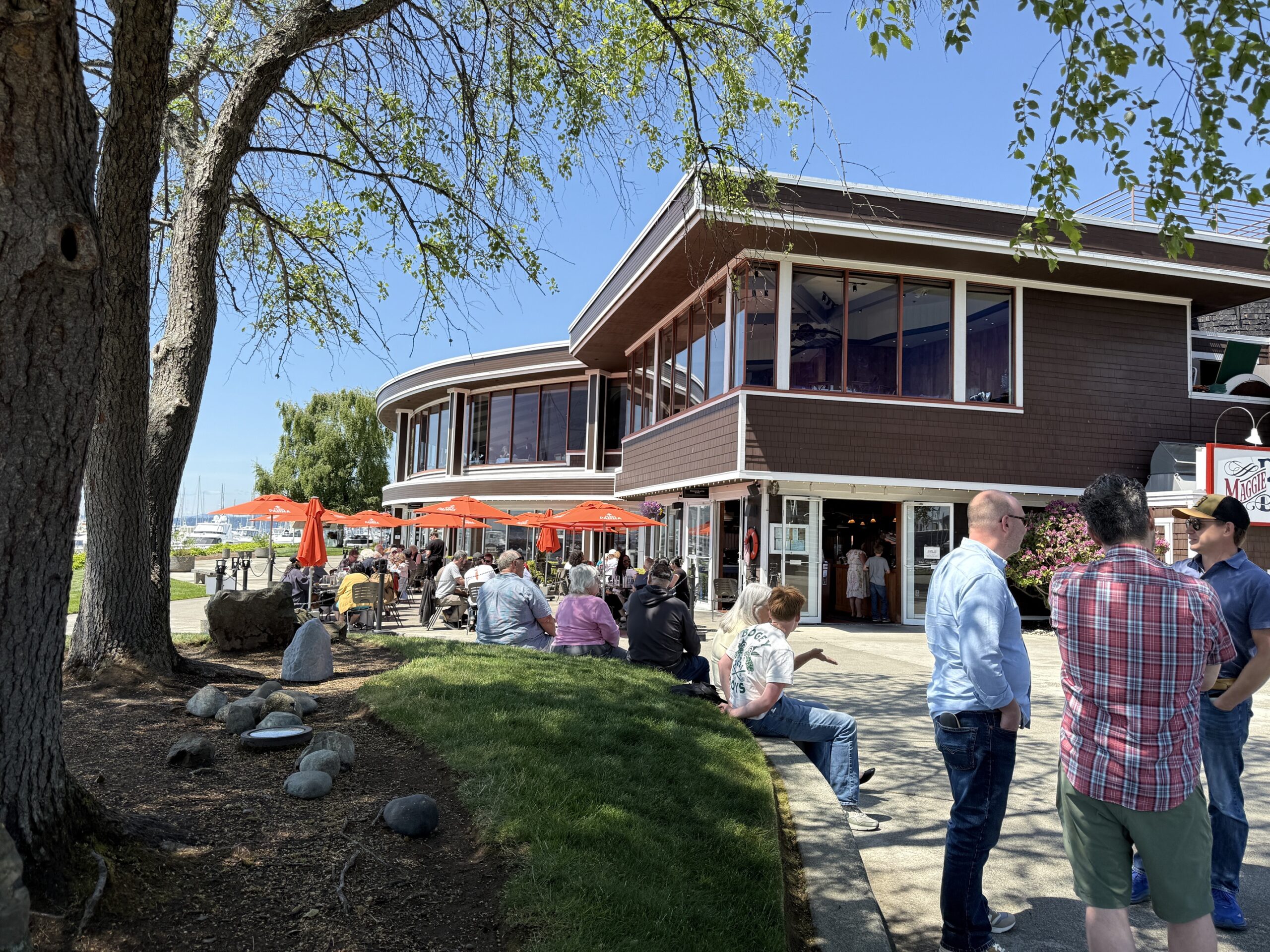
Look! No Alaskan Way Viaduct in sight. We’re on our way, on the bike path along Alaskan Way (originally Railroad Avenue, until 1936), and the major north-south street that runs along the Elliott Bay waterfront. I don’t have my own e-bike, so I picked up a Lime bike for rent that was on the sidewalk near Molly Moon Ice Cream. ($1 to unlock plus 43 cents per minute).Irises in the flower beds that line the promenade on the waterfront.This is further up north along Alaskan Way, just past Pier 66 on the left. The construction work (of the overwalk and the aquarium extension) along Alaskan Way has been completed, but not all the paving work for the intersections and bike lanes.A brief stop by Myrtle Edwards park with its 1.25-mile winding bike and pedestrian paths along Elliott Bay, offering beautiful views of the Olympics Mountains. There’s a Carnaval cruise ship in the distance at the Pier 91 cruise terminal. It was scheduled to depart at 3.30 pm for its ‘Alaska Inside Passage Glacier’ round trip.We reached our destination: Maggie Bluffs restaurant with its outdoor patio with views of Elliot Bay Marina.
My new Google Nest Learning Thermostat is installed, and it looks very stylish. I set it to display the temperatures in Celsius, for now.
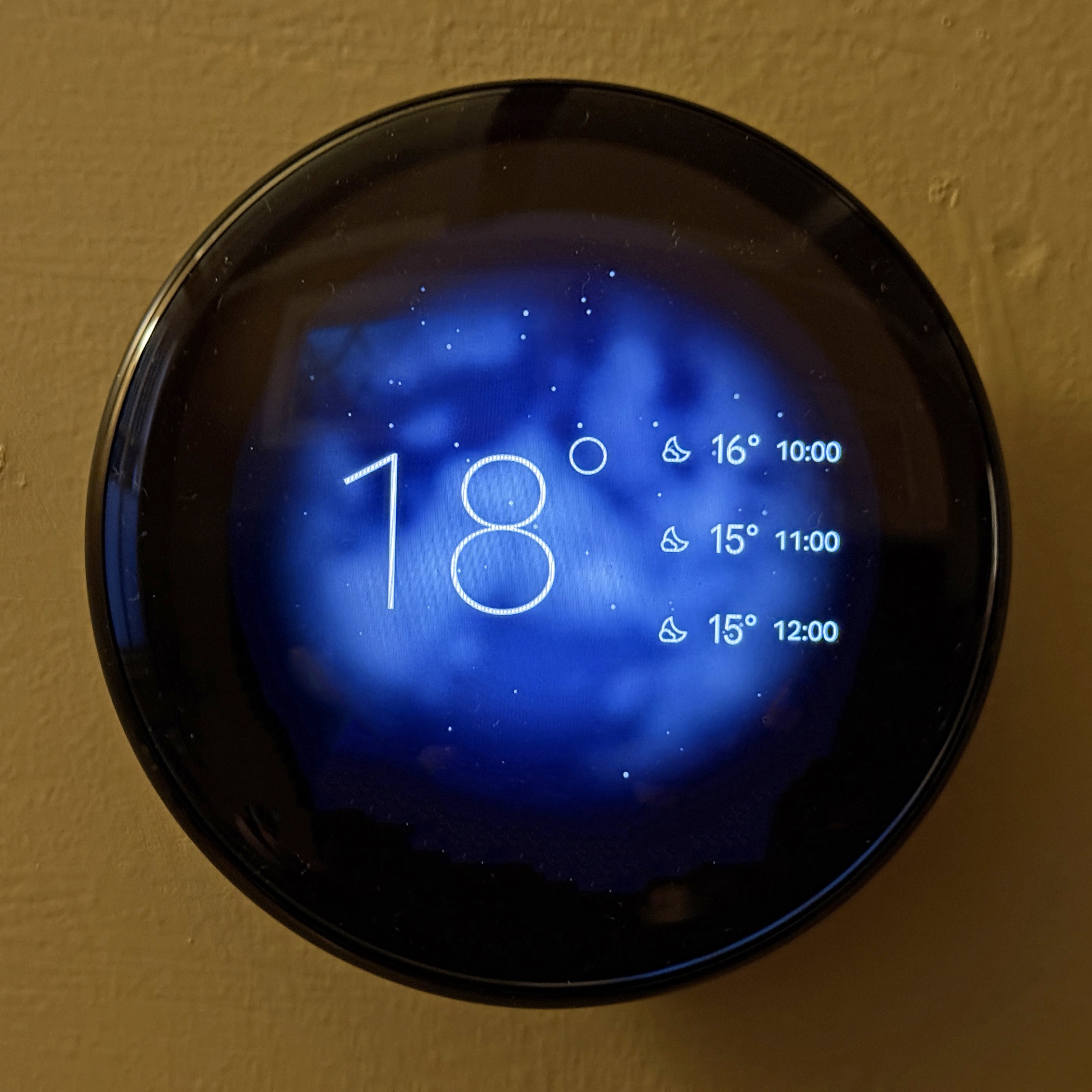
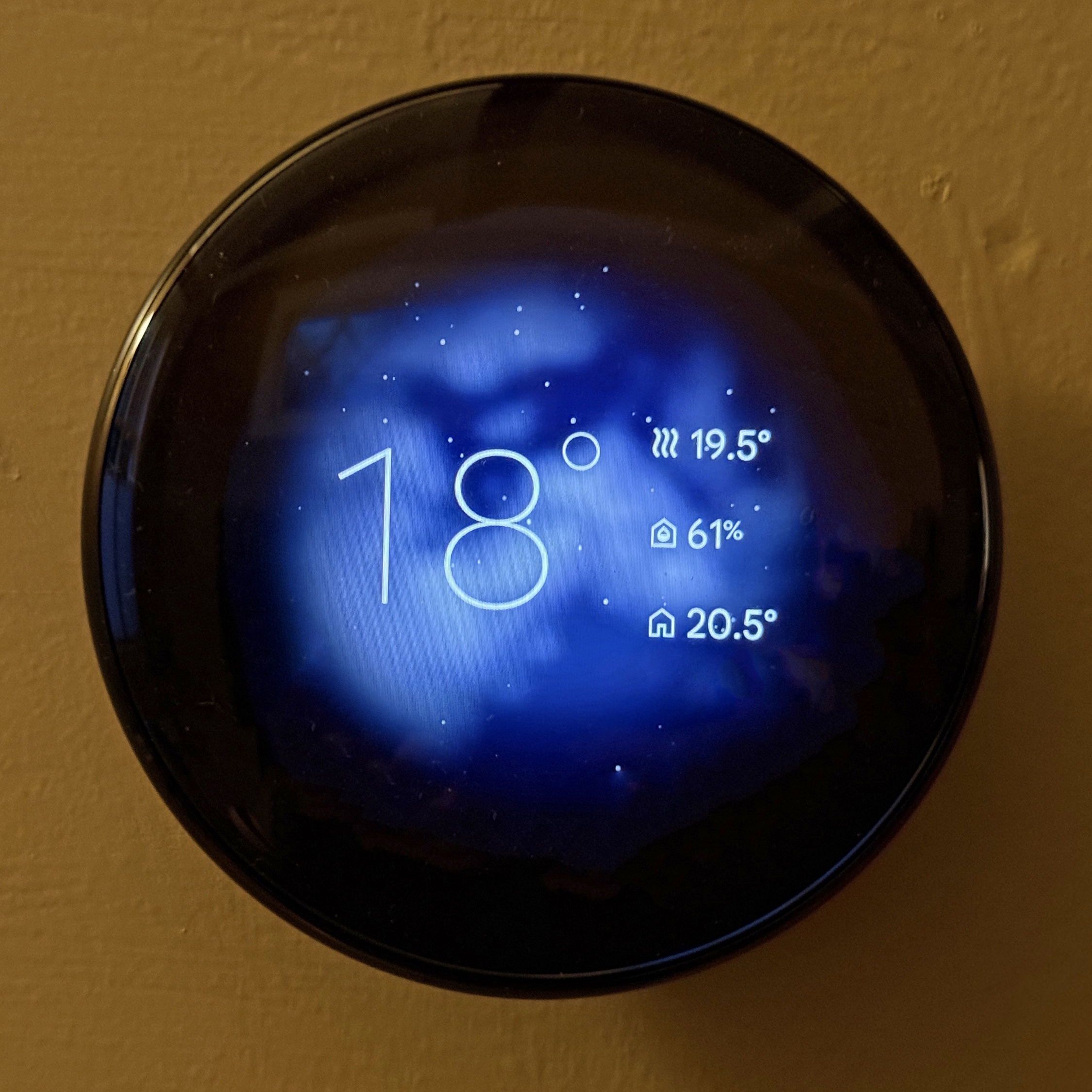
This is the current outside temperature (18 °C/ 64°F) with a look-ahead for the next three hours. It was cloudy today, and on the display the clouds drift slowly in the background. This picture was taken around 9.00 pm tonight. I’m going to see if I can change the time of 10:00 to 22:00, the 11:00 to 23:00, and 12 midnight to 24:00 or 0:00. The outside temperatures are obtained from a weather service (usually The Weather Channel or Weather Underground) and not from a thermometer outside my house.The display automatically switches to this one, with again the outside temperature in large digits. To the right it shows that the thermostat is set to maintain an inside temperature of 19.5 °C (67 °F). The humidity inside the house is 61%, and the temperature inside the house (upstairs) is 20.5 °C. The temperature from upstairs is transmitted to this thermostat from a wireless sensor in my bedroom that looks like a white pebble.
South Korea is in a vastly better place now that former President Yoon Suk Yeol has been replaced— the president that declared martial law during a televised address on 3 December 2024.
Here is Choe Sang-Hun reporting from Seoul for the New York Times:
If there is one characteristic that defines Lee Jae-myung, South Korea’s new president, it’s that he is a survivor.
He has survived criminal charges, a near-fatal stabbing attack and the martial law enacted by his fiercest enemy, former President Yoon Suk Yeol. Now he is taking on what may be his toughest test yet. He must lead a deeply divided nation through daunting challenges, both at home and abroad.
Mr. Lee, who won South Korea’s presidential election after his opponent conceded early Wednesday, takes office as one of the most powerful presidents that South Korea has elected in recent decades. Much of South Korea’s political power is concentrated in the presidency, and Mr. Lee will also wield considerable control over the National Assembly, where his Democratic Party holds a large majority of seats.
But long is the list of problems that Mr. Lee faces.
The political turmoil set off by Mr. Yoon’s short-lived declaration of martial law and his subsequent impeachment and removal has exposed a country deeply fractured between the left and right, between generations and between genders. South Korea is facing mounting pressure from its sole military ally, the United States, even as the nuclear threat from North Korea grows. President Trump has not only slapped South Korea’s export-driven economy with heavy tariffs but also demanded that it pay more to keep American troops on its soil.
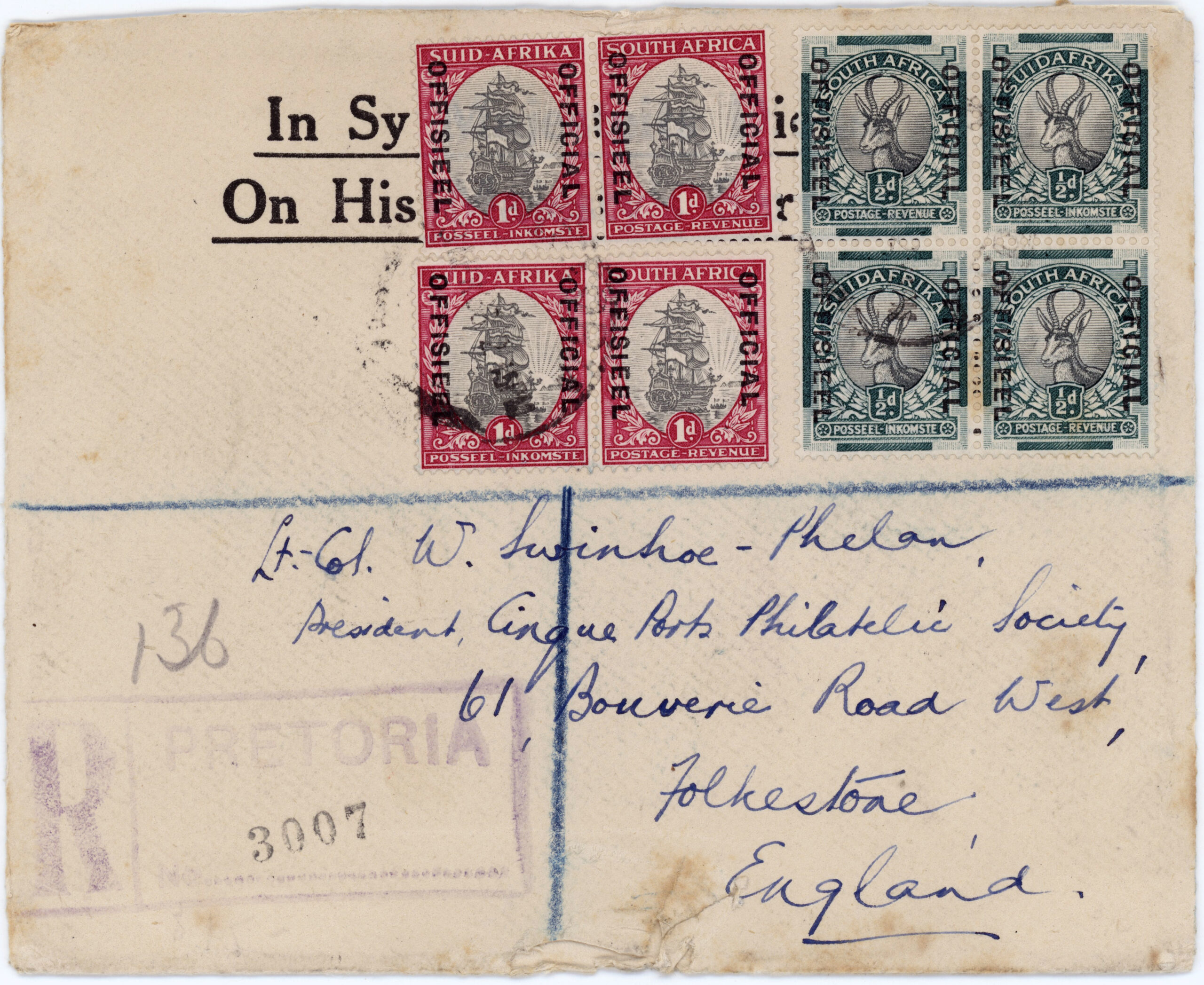
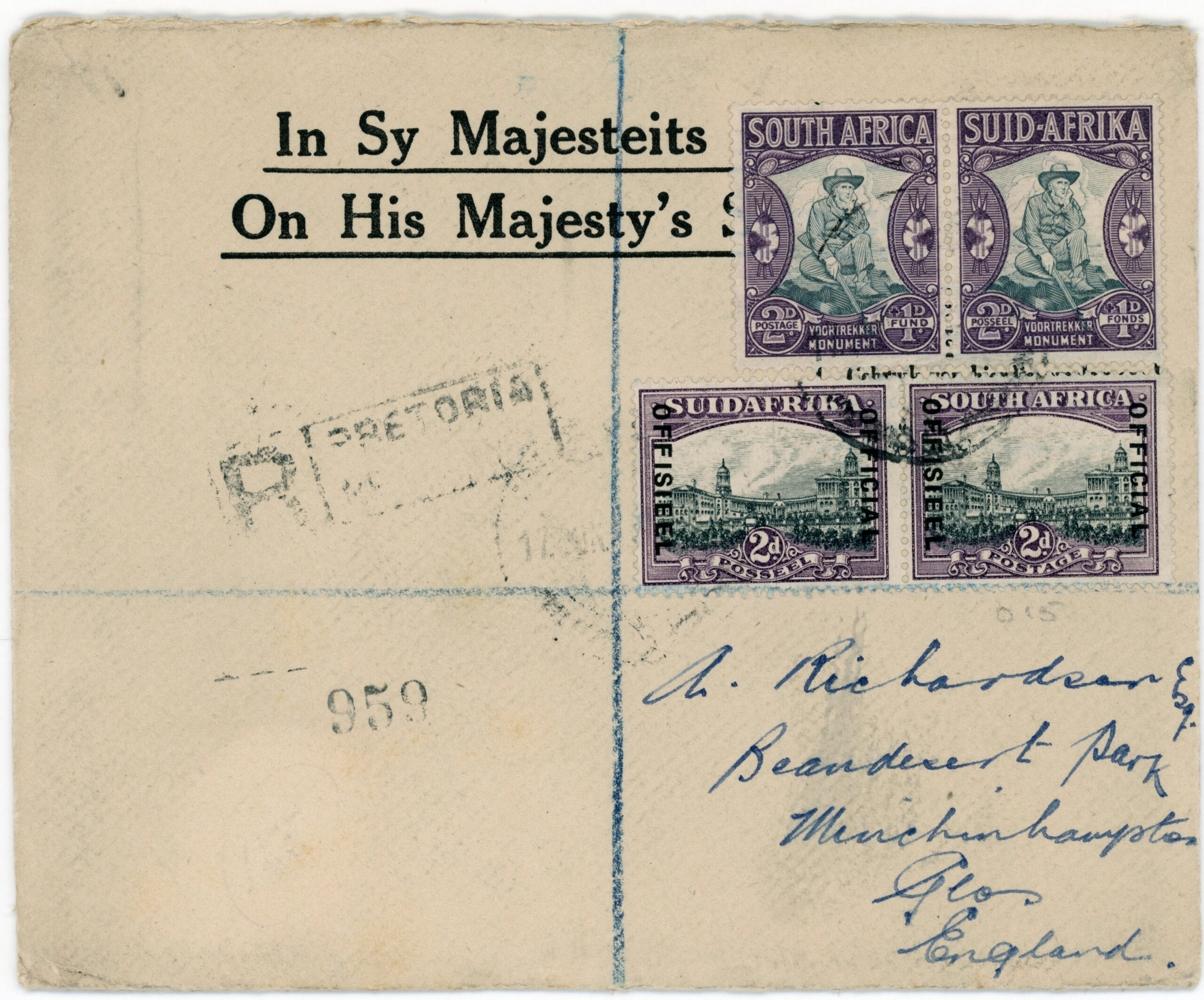
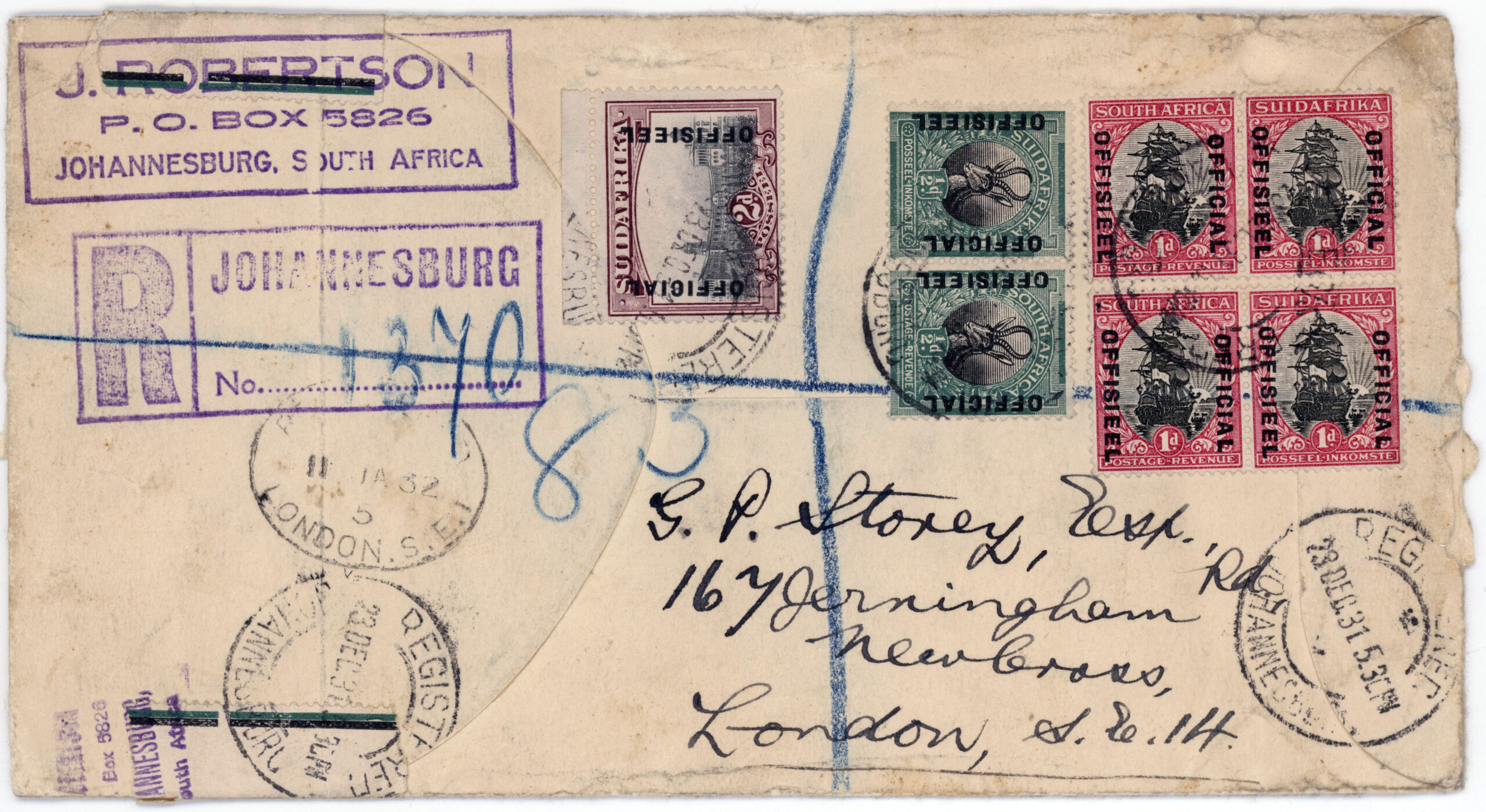
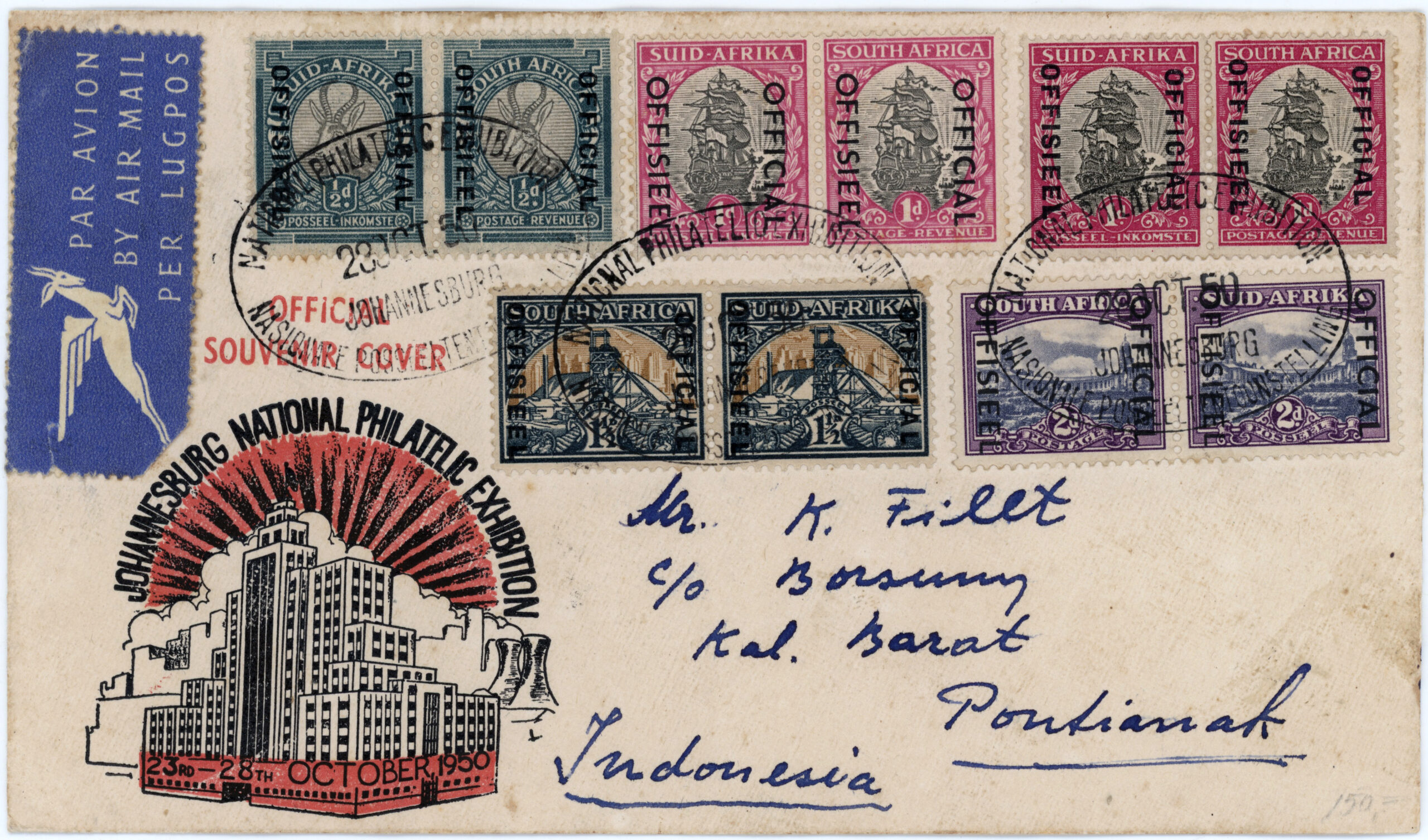
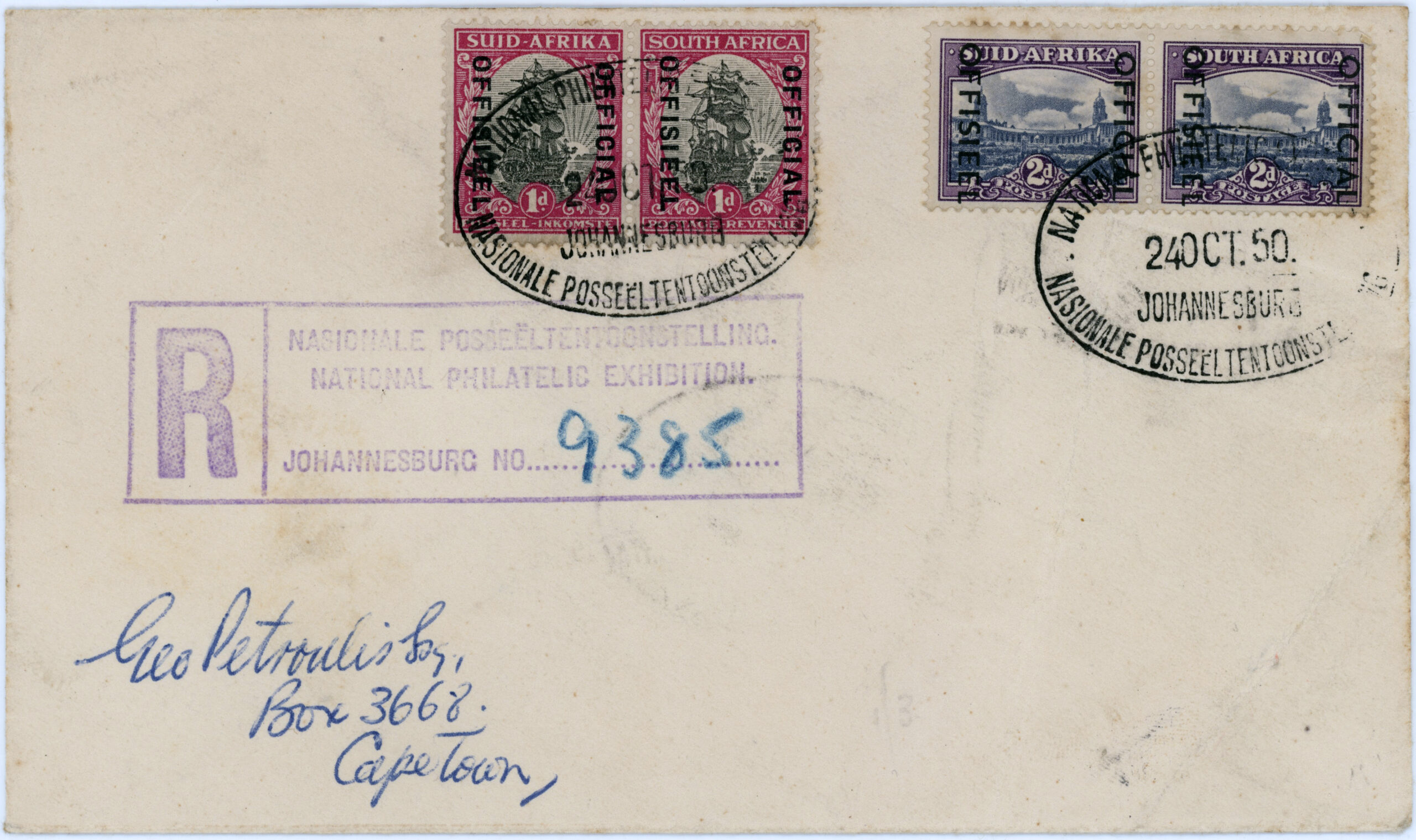
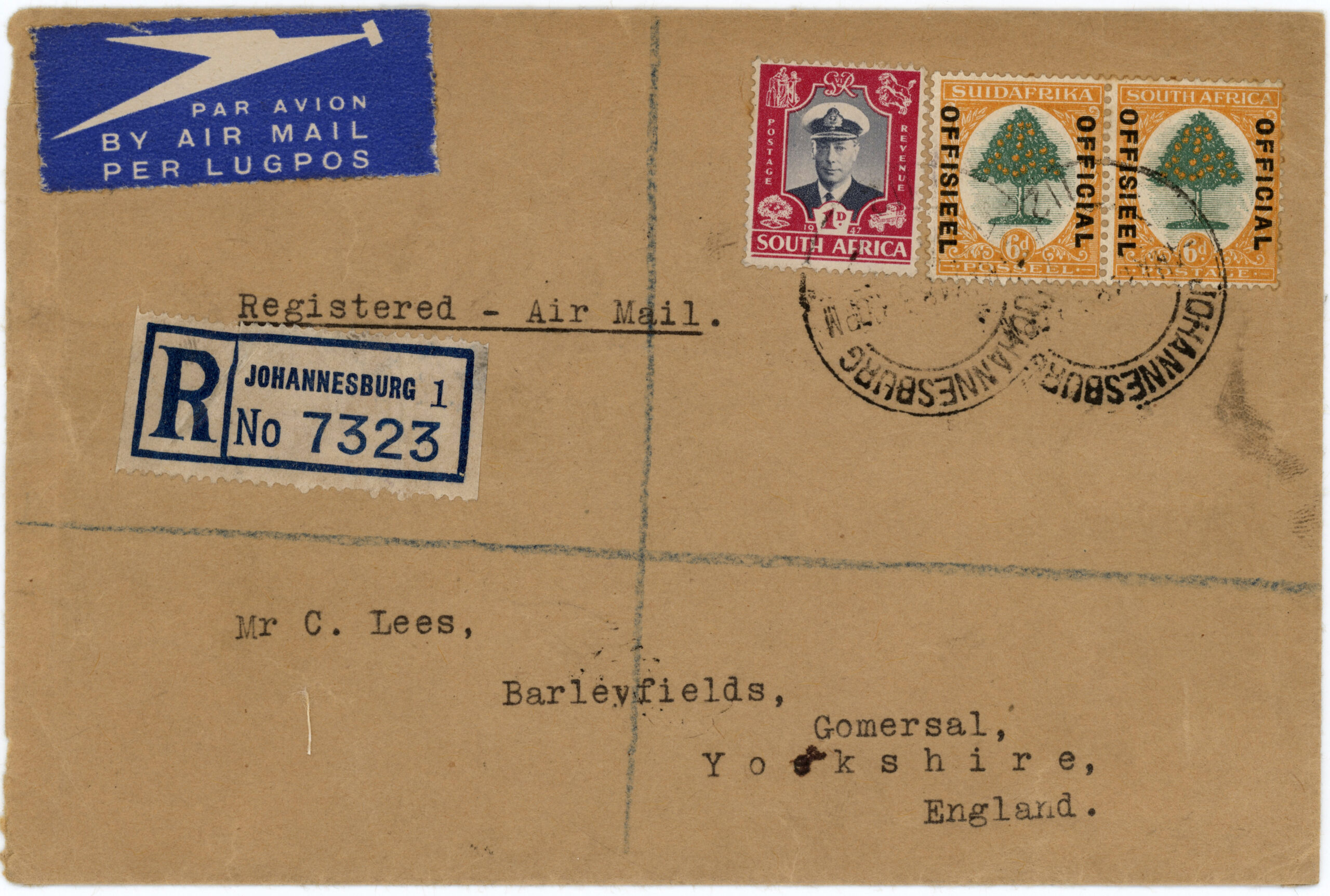
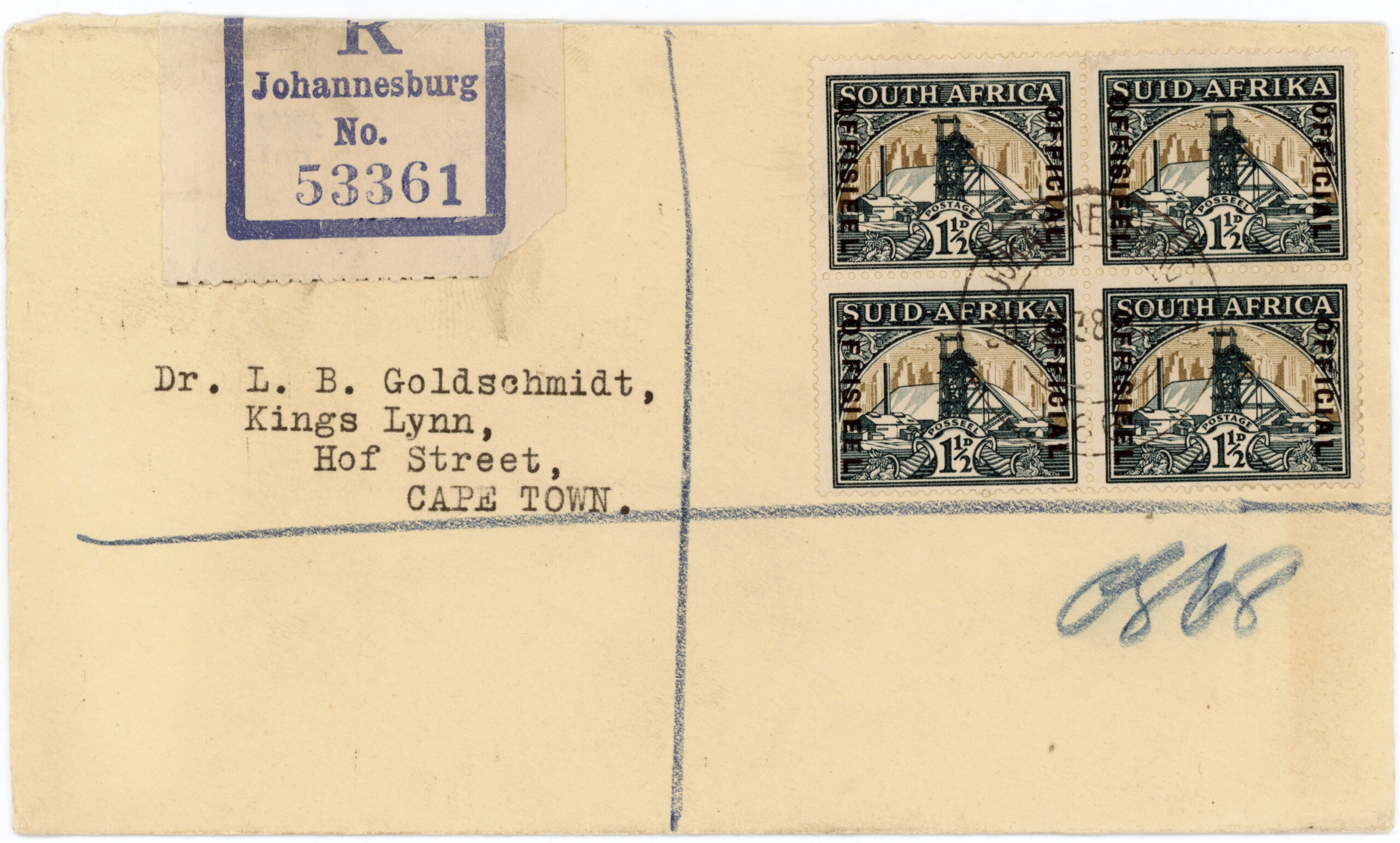
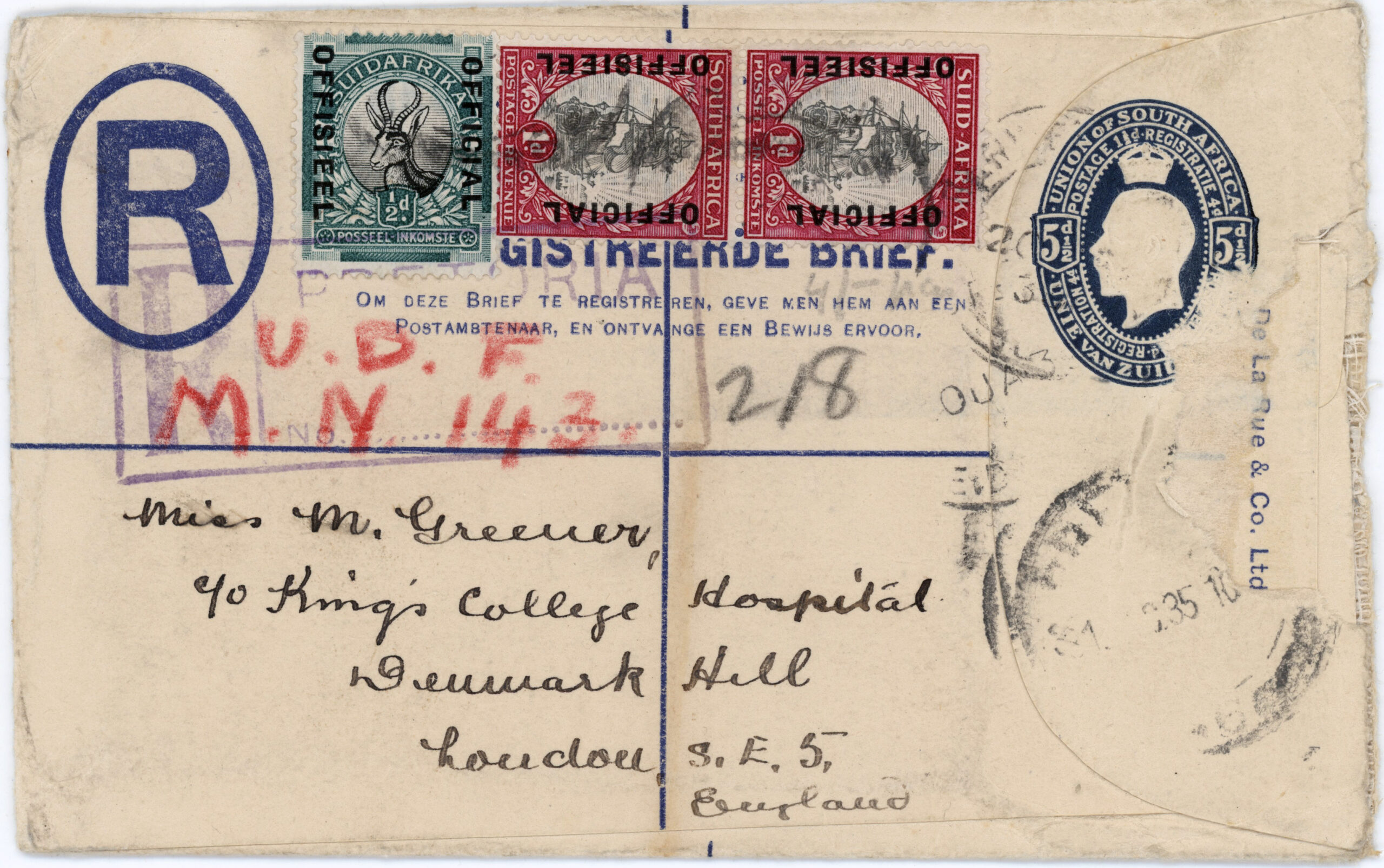
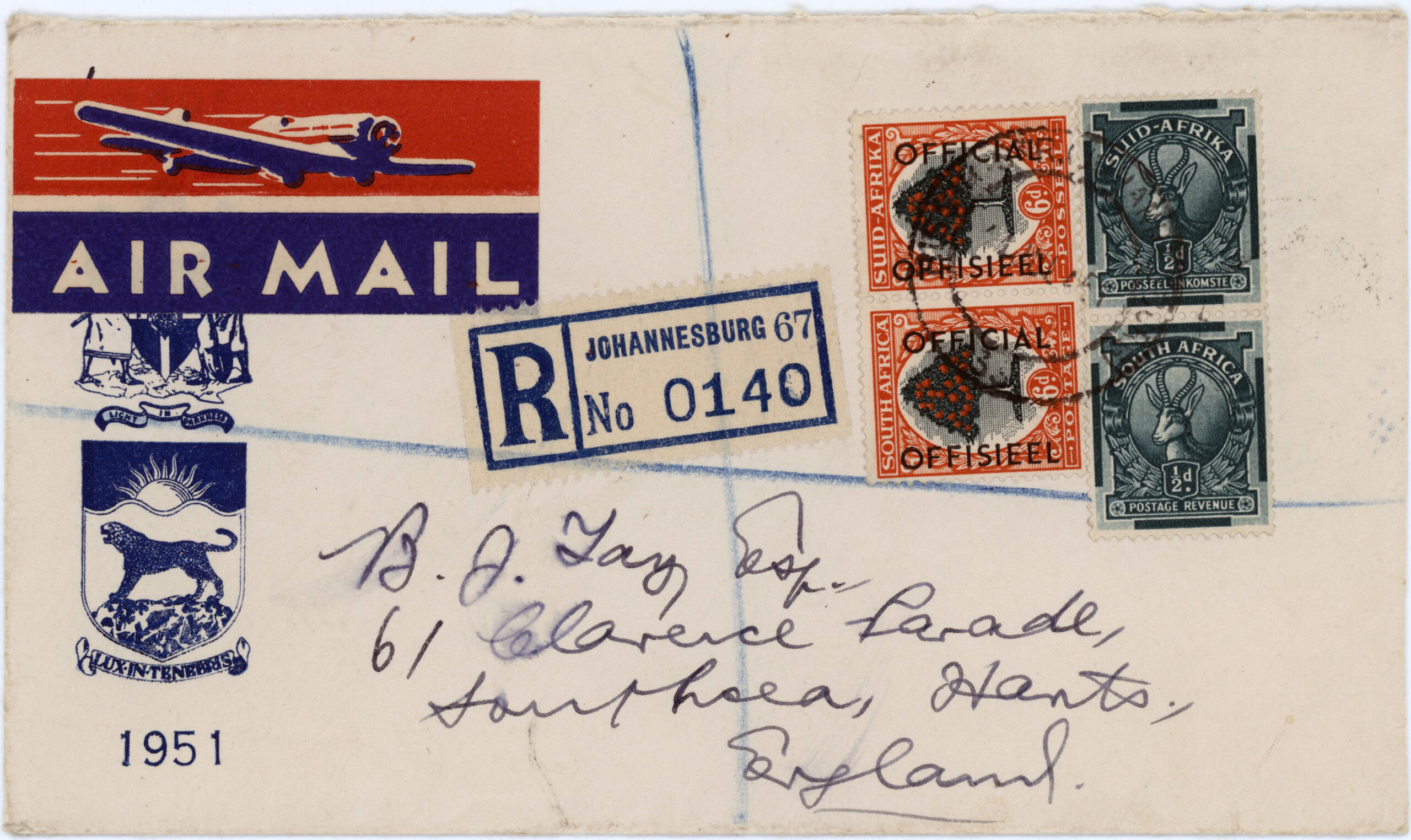
I found this set of envelopes on Ebay, and I “had” to buy it.
It has South African stamps with OFFICIAL overprints on that I was still missing in my collection.
I guess I will put the envelopes as is in my album.
My policy is not to remove stamps from an envelope with significant labels, postmarks, and markings.
Sent by registered mail from Pretoria, South Africa, to Folkestone, England. Folkestone is on the English Channel just to the south of Dover). A postmark on the back from the Folkstone post office is dated Apr. 27, 1936. The lettering at the top says ‘In Sy Majesteits Diens’ / ‘On His Majesty’s Service’. ‘His Majesty’ would be King Edward VIII, at the time king only since Jan. 1936. He would abdicate in December of that same year, to marry American divorcée Wallis Simpson. George VI then became the next king of England.Sent by registered mail from Pretoria, South Africa, to Minchinhampton, England. Minchinhampton is south of Gloucester in the Stroud District. A postmark on the back indicating the arrival date shows Jul. 10, 1933.Sent by registered mail from Johannesburg, South Africa, to New Cross in London, England (postcode district SE14) on Dec. 23, 1931. It looks like it arrived 19 days later on Jan. 11, 1932, just about the time it would take for a ship to sail from Cape Town to Southampton in the early 1930s. Official souvenir cover from the Johannesburg National Philatelic Exhibition. Sent on Oct. 28, 1950 to Indonesia. It looks like official stamps were offered for sale to collectors at the exhibition. (Stamps with the ‘Official’ overprint are designated to be used by government departments and agencies for official correspondence.)Another envelope, just a plain one, sent from the Johannesburg National Philatelic Exhibition. It was sent on Oct. 24, 1950 and just to Cape Town. The customized registered mail postmark mentioning the exhibition is unusual.Sent registered mail and airmail from Johannesburg to the town of Gomersal in West Yorkshire, England (southwest of Leeds). It was sent on May 4, 1948. The 1947 stamp on the left features King George VI. That uniform he is wearing looks like a navy uniform (he served in the Royal Navy as well as the Royal Air Force; was the first member of the British royal family to be certified as a fully qualified pilot).Sent in 1938 from Johannesburg to Cape Town by registered mail, with official stamps. I love this 1936 stamp that depicts the mine shaft machinery of a Johannesburg gold mine. Also on the stamp, the mine dump of excavated earth, and the skyscrapers of Johannesburg behind it.Envelope for registered mail, printed by De La Rue & Co. in London, England, with an embossed 5½ penny preprinted stamp on the flap (depicting King George V) and official stamps added. The letter was sent to King’s College Hospital in London SE5 in August 1935. The hospital was established in 1909, and is a major teaching hospital and major trauma center today. It is referred to locally and by staff simply as “King’s” or abbreviated internally to “KCH”.Registered letter with official stamps and very nice air mail label, sent from Johannesburg, South Africa, to an address in Southsea (literally on the English Channel, in Portsmouth) on Jul. 14, 1951. The coat of arms with the leopard on the rock and motto “Lux in Tenebris” (“Light in Darkness’) is that of Nyasaland— a British protectorate, later part of the Federation of Rhodesia and Nyasaland, and now the country of Malawi.
Here’s June, and the 9.00 pm sunsets of 2025 have arrived here in Seattle.
So even if one is quite late making supper or dinner, there is still plenty of time for an after-dinner stroll.
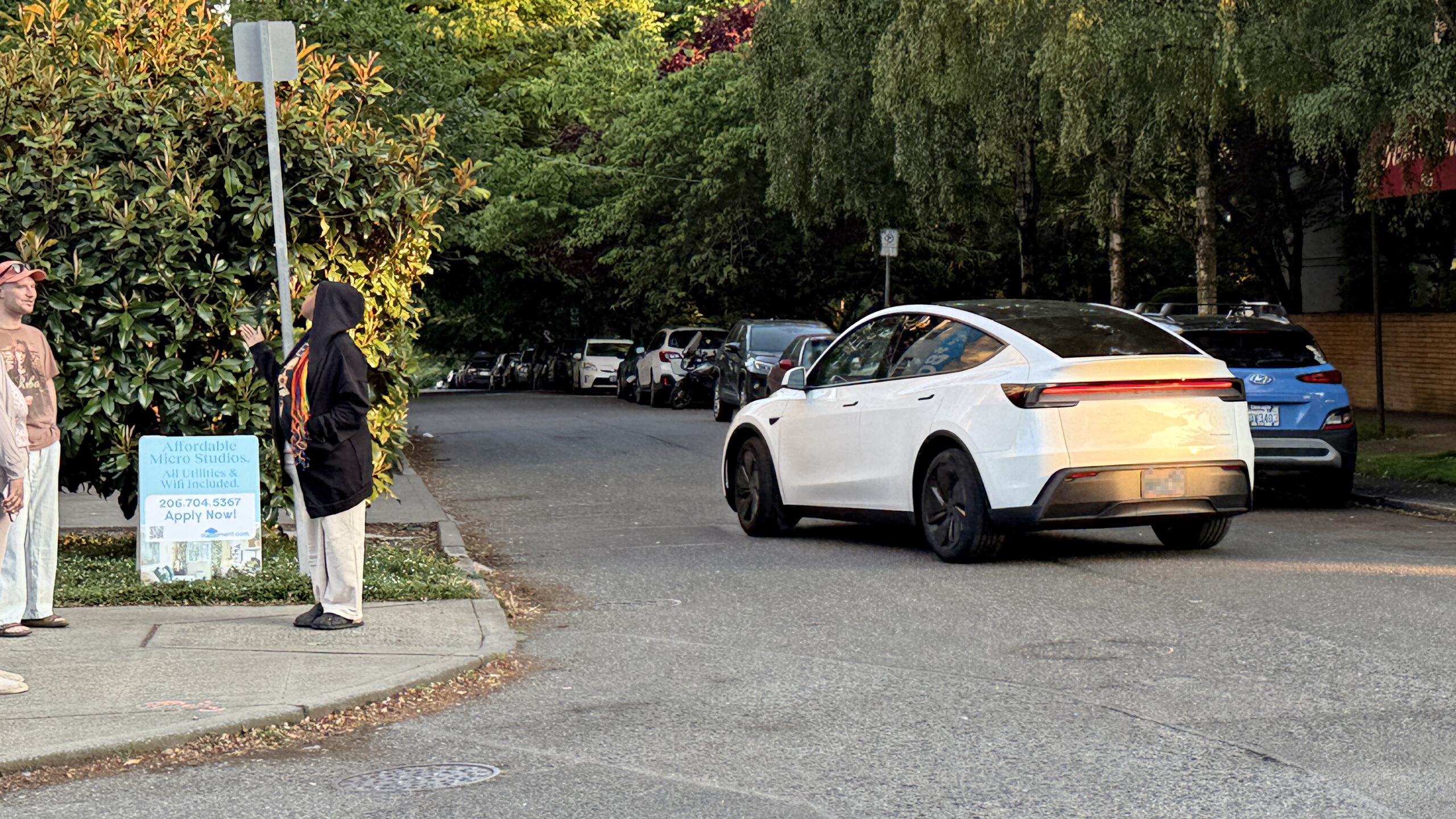
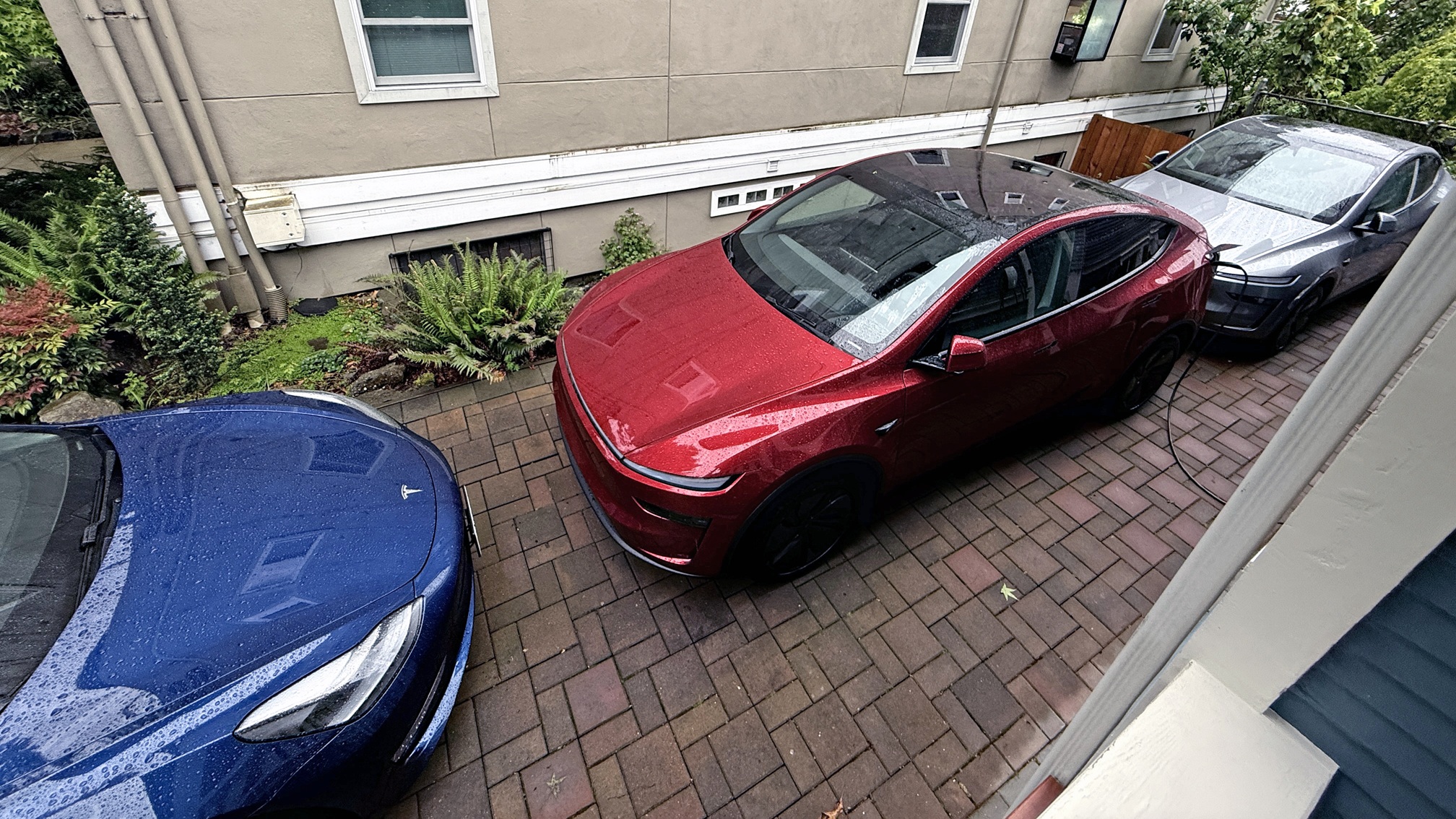
A brand-new pearl white Model Y that I had spotted tonight. The driver was looking for parking and as he got out I walked up and said ‘I love your car’. Yes, it’s already the fourth Tesla his family had bought, he said. He had a Model 3 that he gave to his son, which has since been replaced with a new Model 3. This Model Y is a replacement for his old Model Y. And does your new car have Full Self Driving (Supervised) enabled? I asked. No, the one free month of FSD for the new car has expired, and right now it’s a little too expensive for him to purchase, he said. (It’s $99/ month to subscribe or $8,000 to purchase outright).
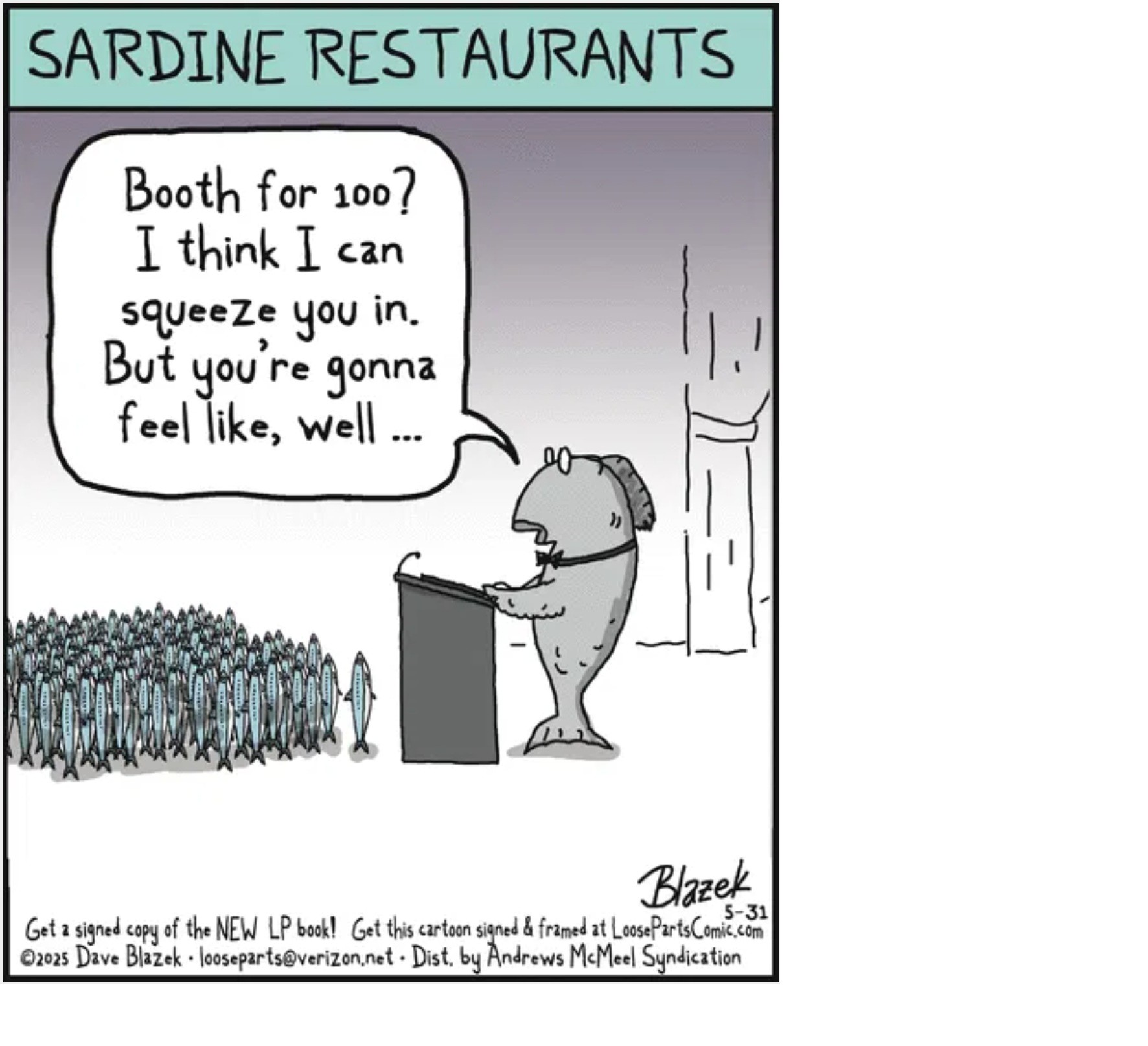
And what do sardines eat, actually?
Sardines are primarily planktivores, meaning they feed on small organisms in the water column.
Their diet includes— Phytoplankton:
Microscopic plant-like organisms, such as diatoms and dinoflagellates; Zooplankton:
Small animal-like organisms, such as copepods, crustacean larvae, and small fish eggs; Dead organic matter: They may also consume debris and waste products found in the water.
Sardines are filter feeders, using their gills to strain food from the water.
Happy Friday.
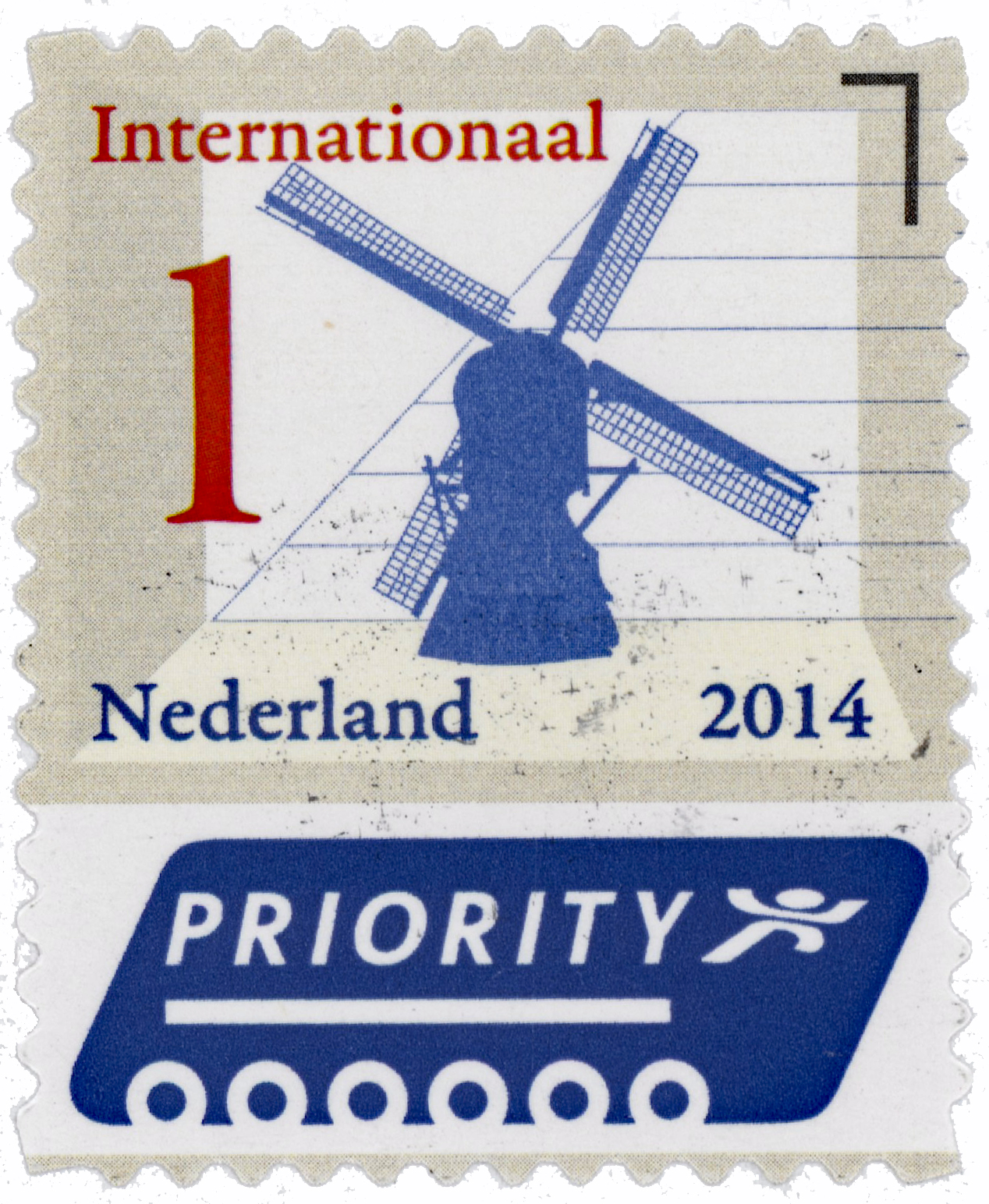
There was a single letter in my mailbox from the Netherlands today, with four South African stamps inside (An Ebay purchase).
Here’s the stamp from the envelope.
Dutch Icons Issued Jan. 2, 2014 Serpentine Die Cut Perf. 11¼ | Self-adhesive | Design: Joachim Baan & Fleur | Issued in booklet panes of 5 | Litho. | Engraving: Walsall Security Printers Ltd. | No Watermark 1461 A664 1,05€ Red, blue, dark blue, black & beige | Dutch windmill [Sources: stampworld.com, Scott 2018 Standard Postage Stamp Catalogue, Vol. 5]
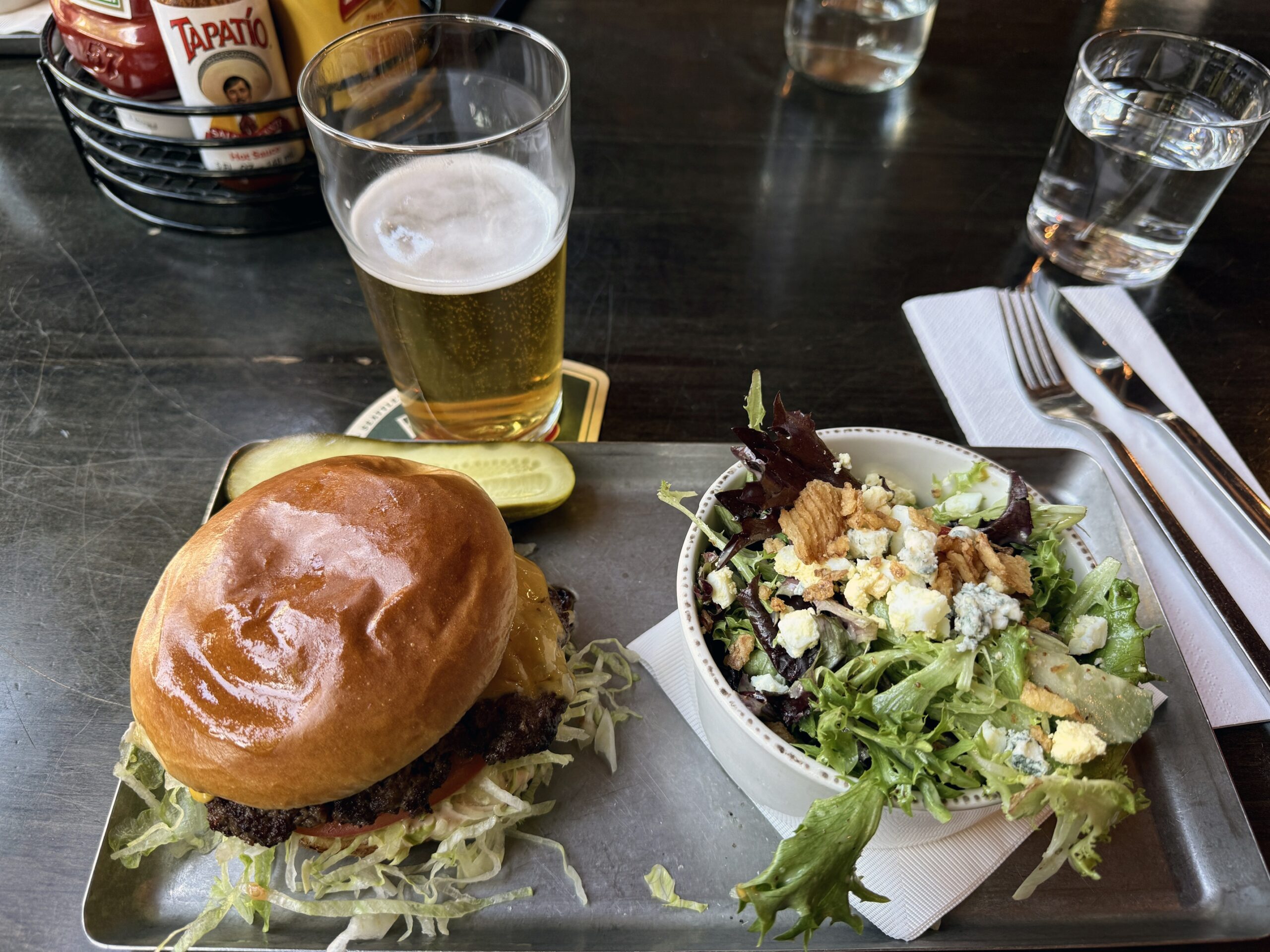
Three amigos had beers and burgers at Elysian Capitol Hill Brewery tonight.
My beer is called ‘Little Guy’— a light American lager weighing in at 4.7% ABV. The burger is a ‘smash burger’— a beef burger with cheese and the usual trimmings of tomato, lettuce and pickles. The salad is pretty fancy but simply called their ‘house salad’.
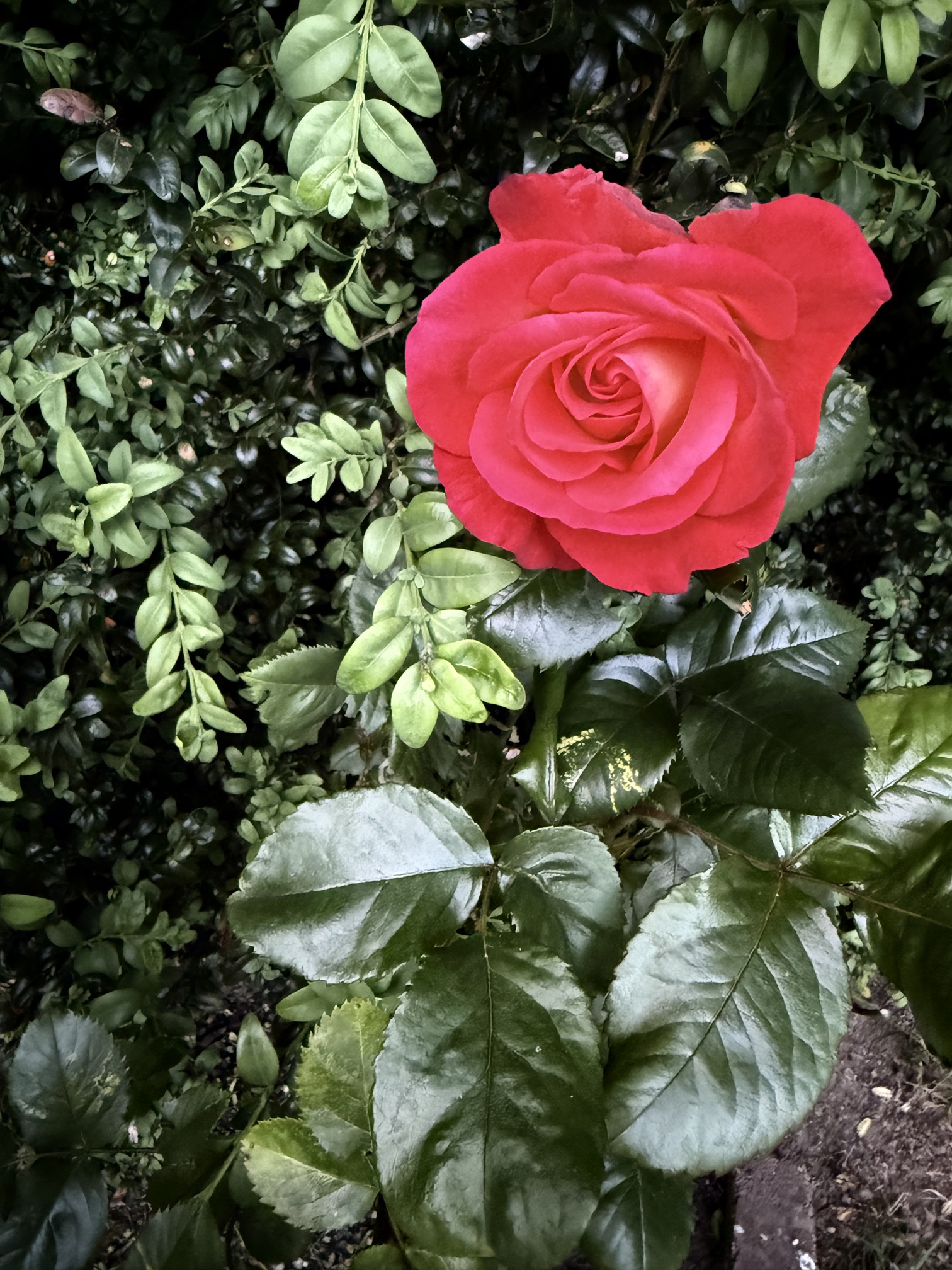
The rose is from the little rose bush in my front garden.
From Google Search Labs | AI Overview:
Roses have a long history, with the earliest evidence suggesting their existence dating back 35 million years. Fossil evidence indicates roses were present in North America as early as the Late Eocene period (38 to 33.9 million years ago).
However, their cultivation in gardens, particularly in China, began roughly 5,000 years ago. Confucius, the Chinese philosopher, wrote about roses being grown in imperial gardens about 2,525 years ago.
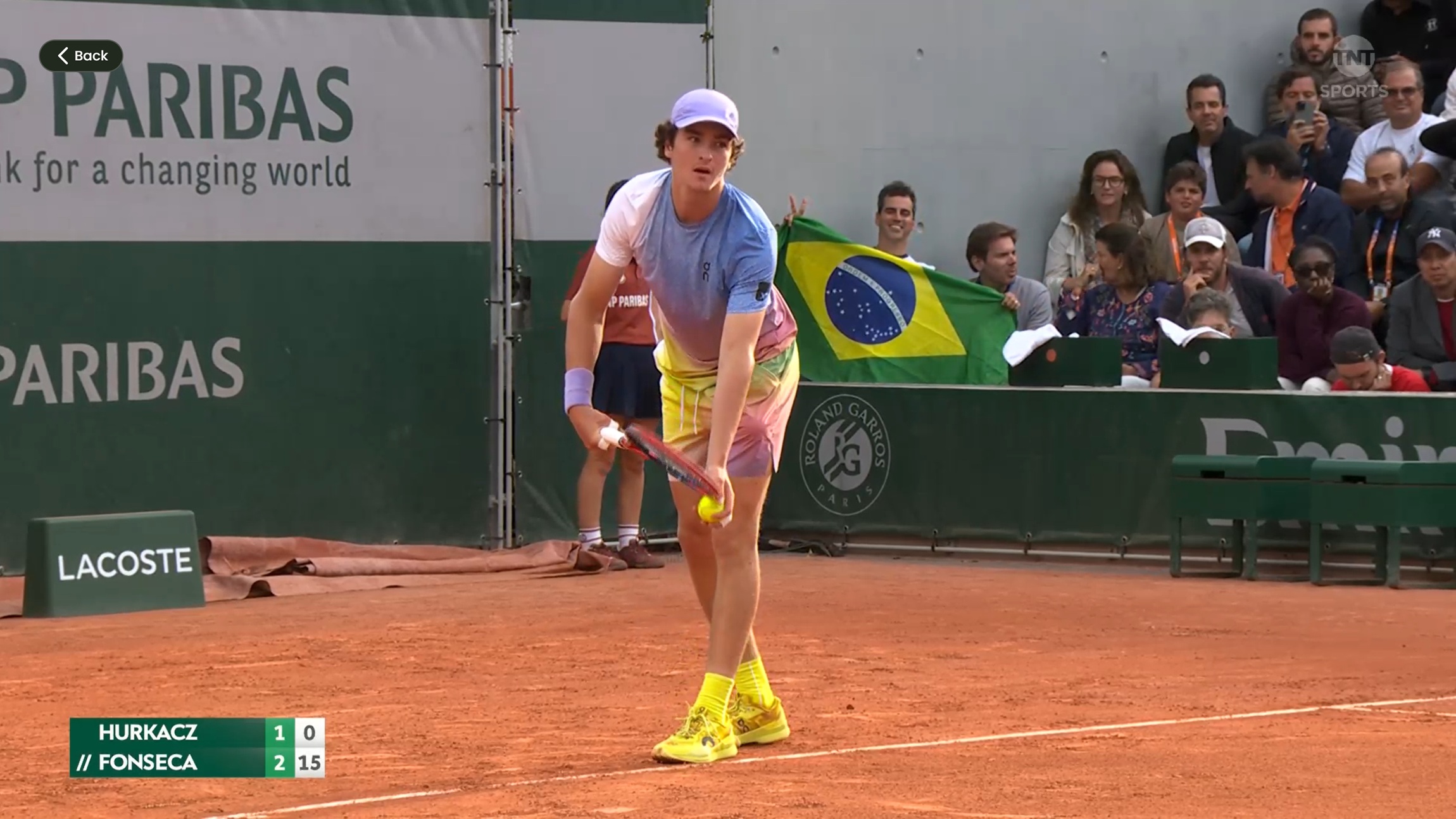
The year’s toughest tennis tournament* is underway: the last of the clay court season, the French Open at the Stade Roland Garros in Paris.
There is a sensational new youngster on the men’s tennis scene (no, not Carlos Alcaraz)—João Fonseca from Brazil, all of 18 years old.
*It’s a Grand Slam tournament, so the 128-person draw requires the champion to win 7 times. The matches are best of 5 sets (best of 3 in non-Slam tournaments), and the clay makes the ball slower and bounce higher, so the rallies are longer.
Fonseca (18, 🇧🇷) played against Hubert Hurkacz (28, 🇵🇱) in the first round today. Here he is serving, already a break up (fan with the Brazilian flag to his right). Fonseca won in straight sets, 6-2, 6-4, 6-2, against a formidable opponent, and by retrieving shots wide, wi-i-ide out left, or right, and the dropshots up front as well. He plays with the confidence and maturity of someone 10 years older, and whips the ball on his forearm with a lethal, loose, arm and shoulder.
The match was put on Court No 7, a side court. (Why?) So there was standing room only for the rabid fans, plus a line that snaked around the corner for those that still hoped to get in before the end of the match, to share in the excitement. After the match had ended, people started leaving, but others still made their way in, just to take a look. [Still from TNT cable TV channel broadcast]
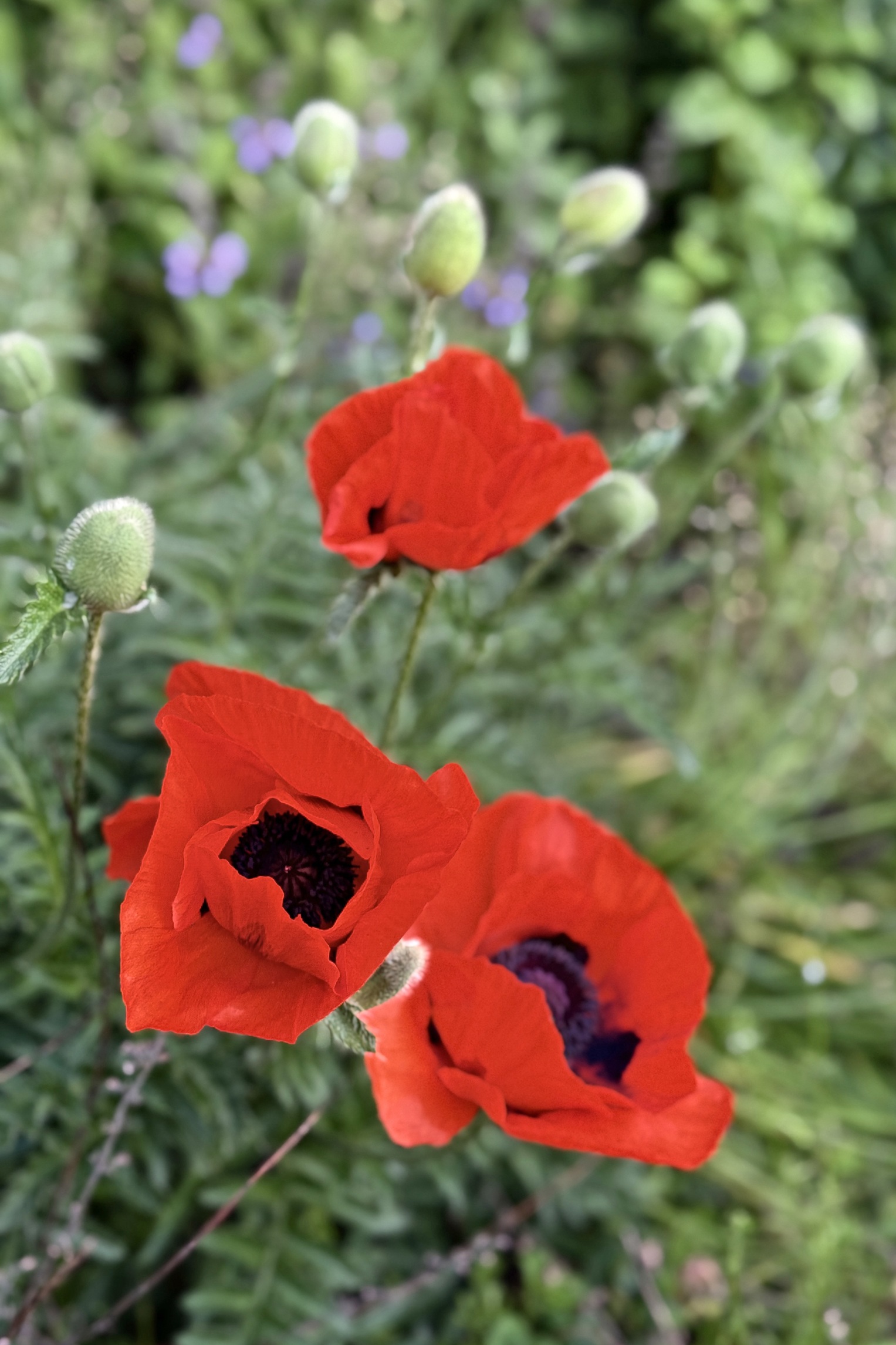
It’s the last Monday of May, and Memorial Day in the United States— the day for honoring and mourning the U.S. military personnel who died while serving in the United States Armed Forces.
Red poppies from a garden in the Capitol Hill neighborhood in Seattle. The red poppy is a nationally recognized symbol, worn to honor and remember all those who have served.
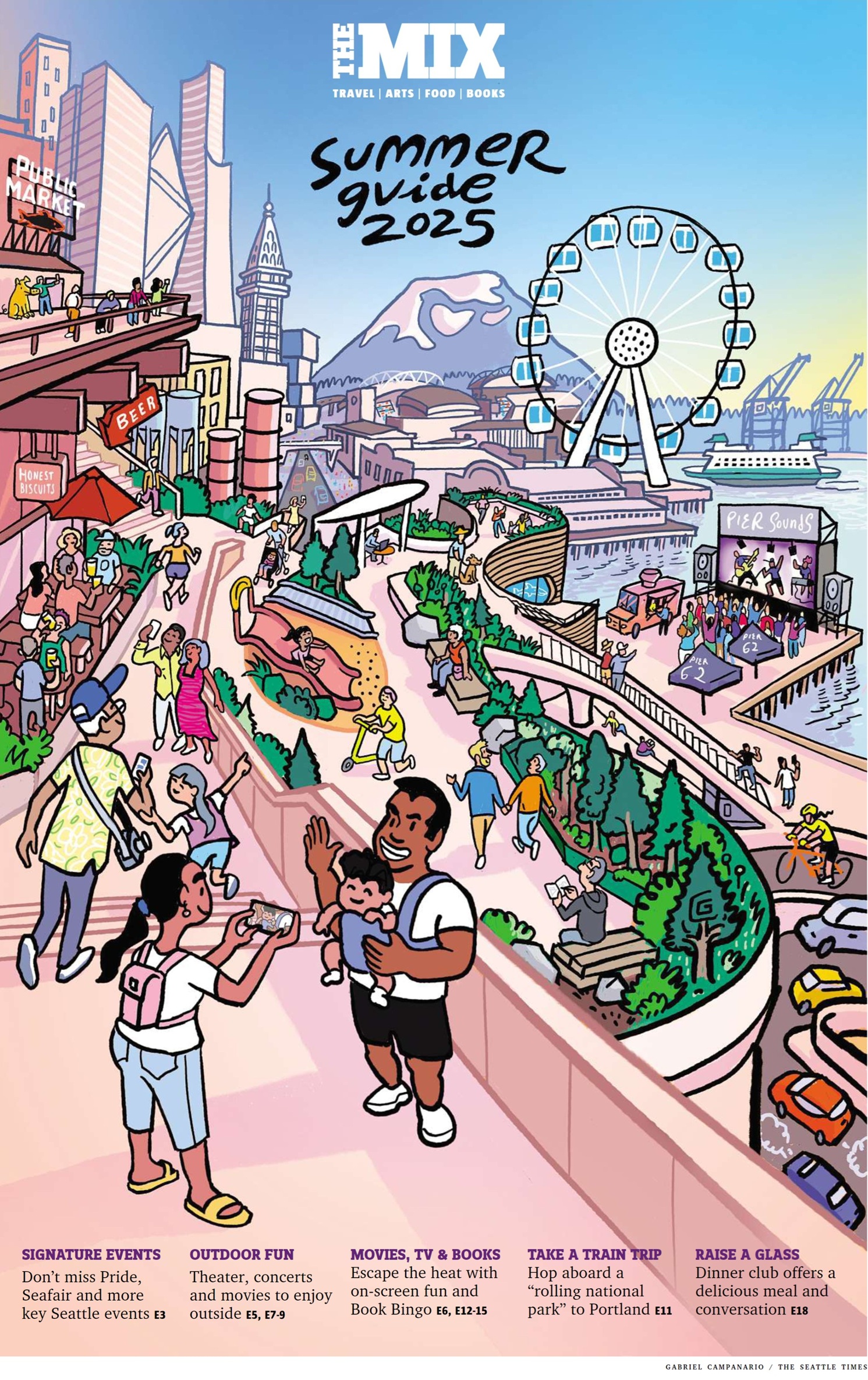
I like Gabriel Campanario’s artwork, published in today’s Seattle Times.
There is a lot of activity— and all kinds of people— on the Overlook Walk that links downtown Seattle, the Pike Place Market, and the newly revitalized Waterfront Park.
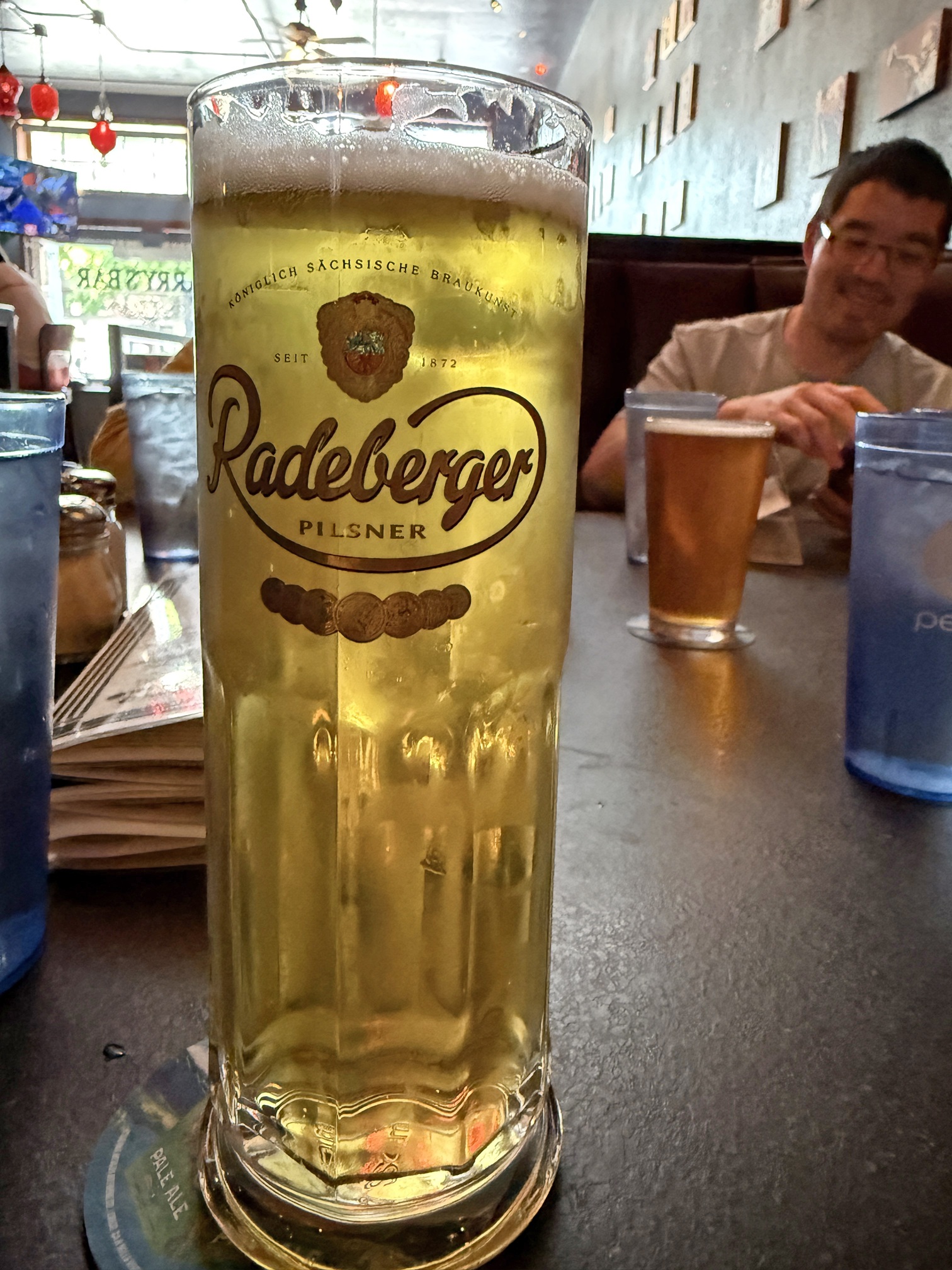
Five amigos had beers and pizza at the Olympia Pizza & Spaghetti House III here on Capitol Hill tonight.
My beer is a Radeberger pilsner— served in a branded imperial pint glass (568 ml).
“Königlich sächsische braukunst seit 1872” translates to “Royal Saxon brewing since 1872”.
Happy Friday.
It’s the start of Memorial Day weekend here in the US, the unofficial start of summer.
The weather here in Seattle will be pleasant (72°F /22°C on Saturday), and the ferries plying Puget Sound will be packed.
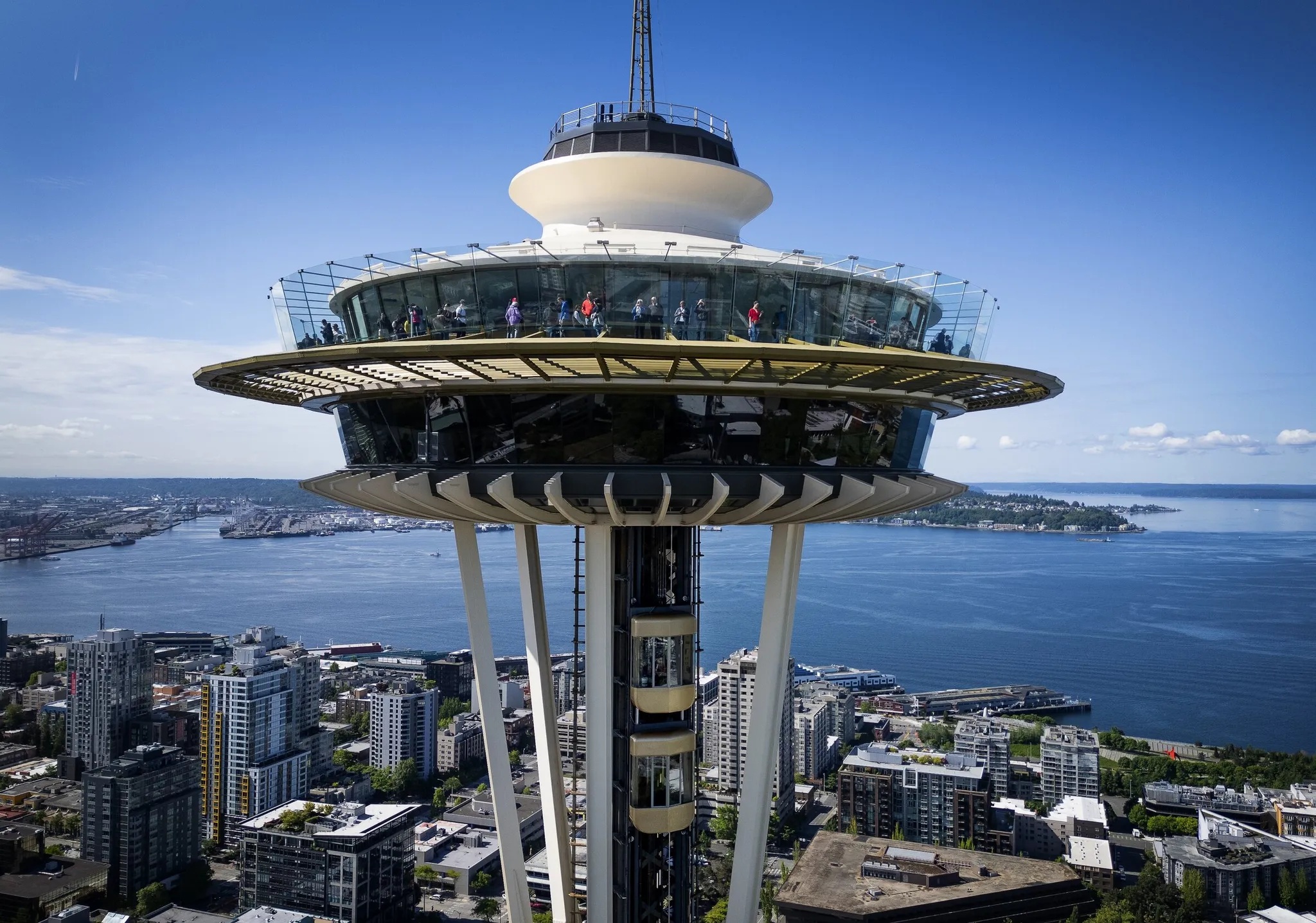
The Space Needle’s new all-glass, double-deck outdoor elevator is seen on the move Thursday before opening to the public Friday. This first replacement elevator is on the north side of the Needle and will open to passengers on two floors at once. [Picture by Ken Lambert / The Seattle Times, caption from Seattle Times]
Here’s a cartoon from Friday’s South African daily newspaper Die Burger (‘The Citizen’).
South African President Cyril Ramaphosa to Trump: ‘Would you mind if one of my caddies tried?’ (The caddies are Ernie Els and Retief Goosen— professional South African golfers who were part of the delegation to the White House. ) The sidebar comment in the corner is: ‘It looks as if Cyril stayed out of the rough’.
AGOA stands for the African Growth and Opportunity Act agreement, signed in 2000, which allowed tariff-free exports to the United States for 32 African countries. On April 2, Trump had slapped a 31 % reciprocal tariff on South Africa (now on the 90-day pause). The USA’s universal 10 % tariff on overseas goods remains in place, also for South Africa. From aljazeera.com: While the two countries did not confirm a trade agreement at Wednesday’s meeting, Ramaphosa told reporters afterwards that the discussion was “a great success”. He added that he presented a framework for a trade deal to Trump, and the two agreed to continue having discussions to figure out the specifics of this deal.
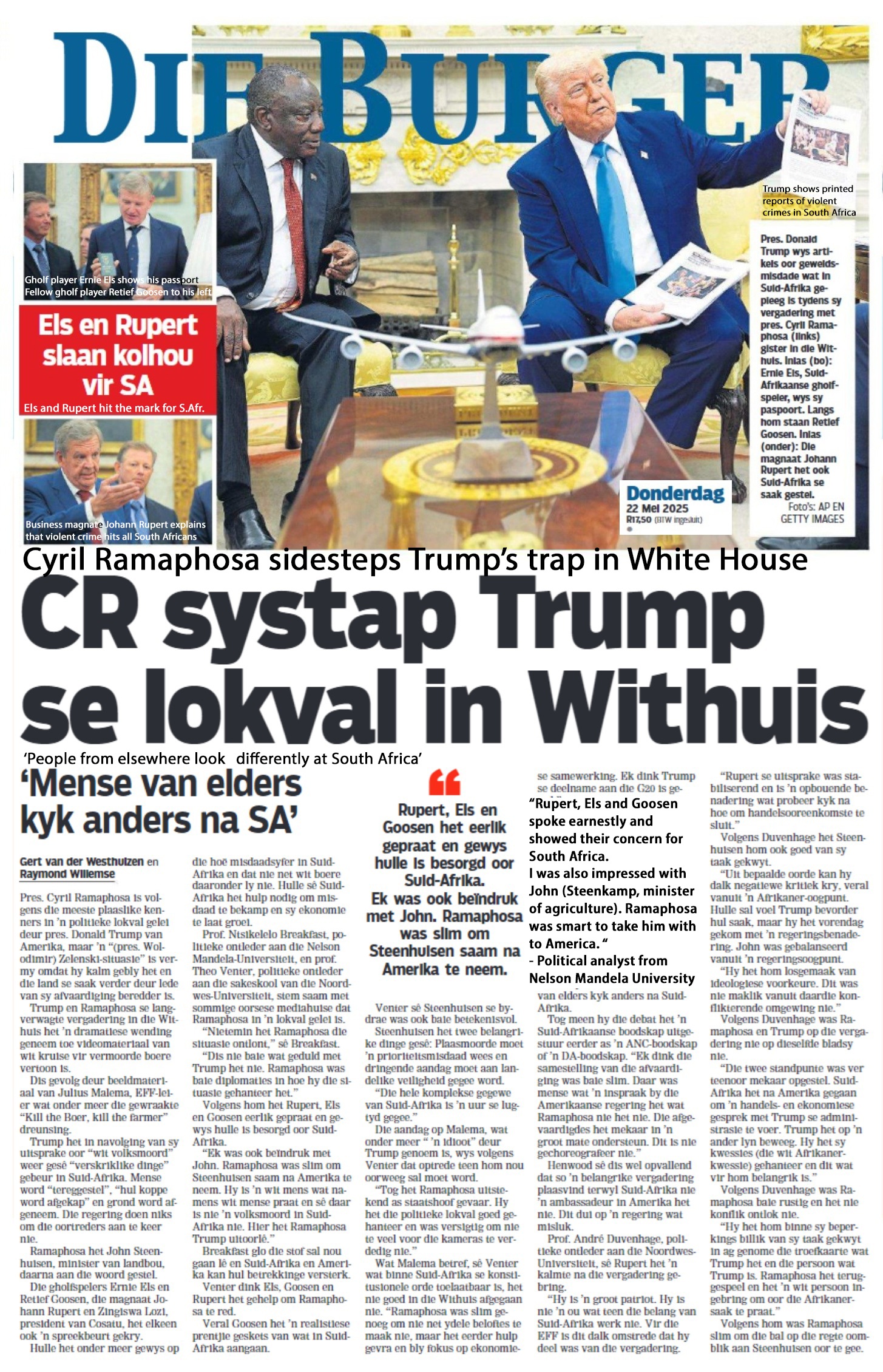
South African daily newspaper ‘Die Burger’ (‘The Citizen’) reporting about the meeting in the White House between the South African delegation, led by President Cyril Ramaphosa. I added in some translations for the Afrikaans. This newspaper, and the BBC’s reporting, says that Ramaphosa ‘survived’ the attacks against him by not fighting it too vociferously, and by staying calm and by making a joke about offering a plane to the US. P.S. Trump formally (openly, brazenly) accepted the $400 million dollar jet gifted to him from Qatar today*. Does that make it official that he is the most corrupt president in America’s history— or was he that already, long before this? *The Foreign Emoluments Clause (Article I, Section 9, Clause 8) states: “No Title of Nobility shall be granted by the United States: And no Person holding any Office of Profit or Trust under them, shall, without the Consent of the Congress, accept of any present, Emolument, Office, or Title, of any kind whatever, from any King, Prince, or foreign State.”
Here are the other South Africans that came with South African President Cyril Ramaphosa to the White House today.
John Steenhuisen: South Africa’s Minister of Agriculture, who clarified political affiliations of individuals featured in a video presented by President Trump. Ernie Els (nickname “The Big Easy”) and Retief Goosen: Professional South African golfers who were part of the delegation and contributed to the discussion during the meeting. Johann Rupert: A prominent South African businessman who emphasized the broader issue of violence affecting all South Africans and proposed technological solutions to improve safety. Zingiswa Losi: A trade union leader who stressed that crime in South Africa affects all demographic groups, not just whites.
Here’s Erica L. Green and Zolan Kanno-Youngs writing for the New York Times: The encounter in some ways echoed the February visit to the Oval Office by President Volodymyr Zelensky of Ukraine. Mr. Trump and Vice President JD Vance berated Mr. Zelensky in front of TV cameras, cutting short a visit meant to coordinate a plan for peace.
The meeting with Mr. Ramaphosa on Wednesday was also striking because of the ways in which Mr. Trump dismissed attempts to push back on his fringe claims by those who knew most about them.
Mr. Trump scowled and dismissed Mr. Ramaphosa and his delegates during the meeting, including a Black woman who tried to explain that brutal crimes happen to Black people in the country as well.
By contrast, Mr. Trump joked around and listened attentively as Mr. Els, Mr. Goosen and Johann Rupert, a white South African billionaire, said crime was prevalent across the board in the nation, not just against white farmers.
Mr. Ramaphosa entered the meeting seemingly optimistic about maintaining a cordial conversation with Mr. Trump. He offered olive branches to Mr. Trump, including a book about golf. He complimented Mr. Trump’s décor in the Oval Office.
He even tried to joke with the president, who had become irate when a reporter asked him about a free plane from the Qatari government.
“I am sorry I don’t have a plane to give you,” Mr. Ramaphosa said to Mr. Trump.
“I wish you did,” Mr. Trump replied. “I’d take it. If your country offered the U.S. Air Force a plane, I would take it.”
Mr. Trump seemed more intent on relaying the talking points from leaders of Afrikaner lobbying groups, who have traveled to the United States repeatedly over the years to gather support for their claims of persecution. When one of those groups met with Mr. Trump’s top aides this year, the White House identified them as “civil rights leaders.”
These stamps were on the envelope that landed in my mailbox today, mailed from the suburb of Northwood to the northwest of London.
(The Trump tariffs do not seem to affect my purchases of stamps on Ebay from overseas vendors. These are just envelopes with stamps in, though. I’m not sure what will happen if I order new albums and pages from overseas that come in a proper package).
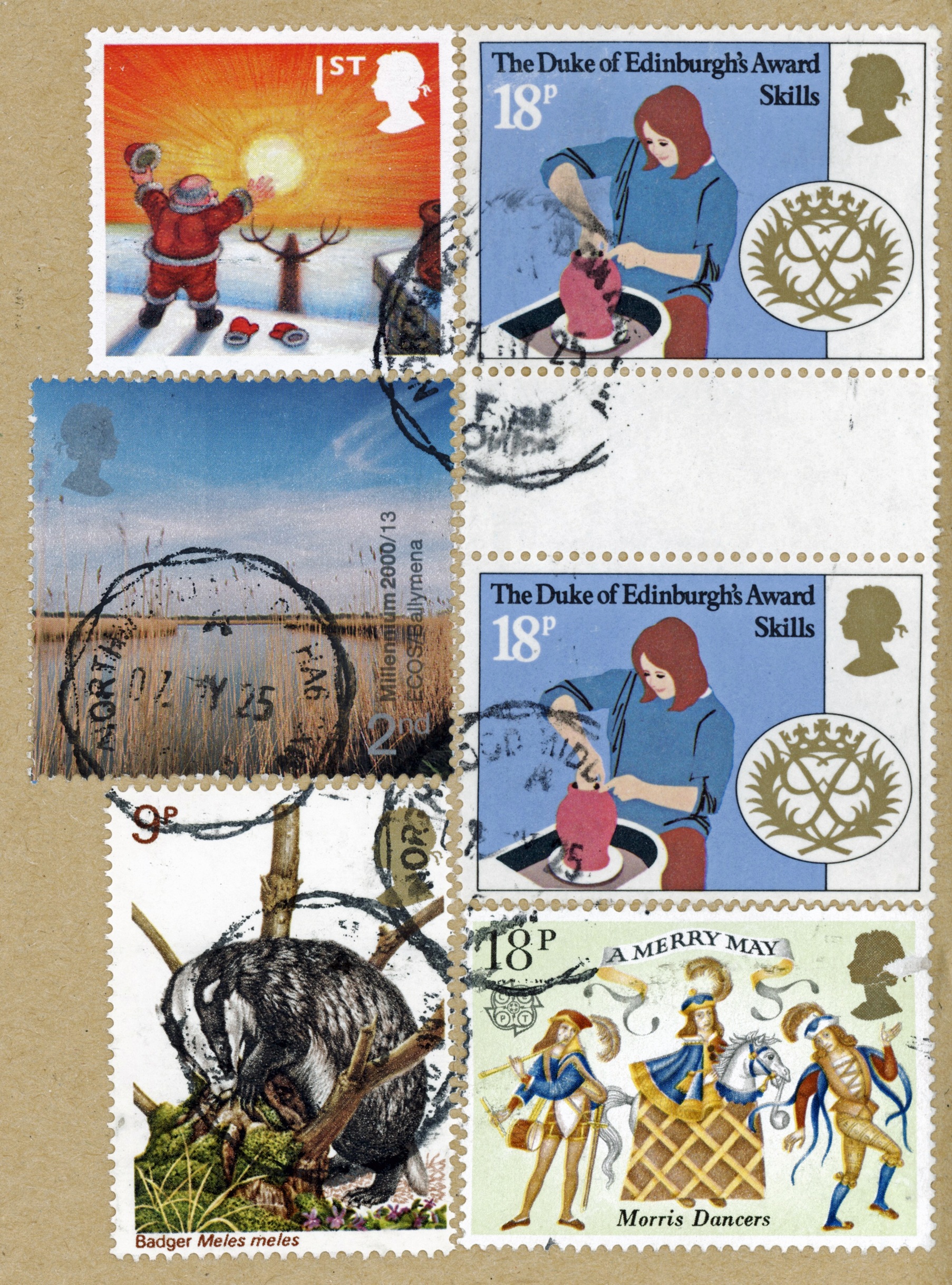
Clockwise: Merry Christmas Issued Nov. 2, 2004 Perf. 14½x14 | Design: Raymond Briggs | Engraving: De La Rue | No Watermark 2238 BPD1 1st Class | Multicolored | Santa with red suit looking at sunset 25th Anniversary of Duke of Edinburgh Award Scheme Issued Aug. 12, 1981 Perf. 14 | Pair of stamps with gutter | Design: P. Sharland | Phosphorized paper | Litho. | No Watermark 1163 638 18p Greenish yellow, magenta, pale new blue, black, cobalt & gold | Woman at pottery wheel (“Skills”) Folklore Issued Feb. 6, 1981 Perf. 15×14 | Design: F. Wegner | Phosphorized paper | Litho. | No Watermark 1144 620 18p Dull ultramarine, lemon, lake-brown, bright green, black & gold | Morris dancers ‘A Merry May’ British Wildlife Issued Oct. 5, 1977 Perf. 14×15 | Design: P. Oxenham | ‘All-over’ phosphor | Litho. | No Watermark 1043 522 9p Reddish-brown, grey-black, pale lemon, bright turquoise-blue, bright magenta & gold | Badger (Meles meles) Millennium Stamps— Life and Earth Issued Apr. 4, 2000 Perf. 14¼x14½ | Design: Post office artists | Engraving: De La Rue | No Watermark 1837 BBX 2nd Class | Multicolored | Ecos Nature Park, Ballymena, Northern Ireland [Sources: Stanley Gibbons Stamp Catalogue Part 1 Volume 1 British Commonwealth 1998, stampword.com]
Congrats to Carlos Alcaraz (22, 🇪🇸), winning the Italian Open today, against his old nemesis and world No. 1 Jannik Sinner (23, 🇮🇹).
The score was 7-6 (7-5), 6-1.
Here’s Matthew Futterman writing for The Athletic: In one sense, this was one of the most predictable outcomes of the season. Sinner entered the tournament coming off a three-month anti-doping ban. Alcaraz, the Roland Garros champion who grew up on the red clay of Spain, had won the Monte Carlo Masters, reached the final in Barcelona, and then taken the Madrid Open off to nurse an injury. He came to Rome ready and rested, while Sinner arrived understandably not match tough enough to live with the player with whom he has split the last five Grand Slams.
Still, over the past 10 days, Sinner had played some of the most scintillating tennis of his life in front of an Italian crowd that wrapped him in their arms and powered him to a frightening level. He met the newly elected Pope Leo XIV one day. The next, he played what was statistically the best match of this season and the last on the ATP Tour, in annihilating Casper Ruud 6-0, 6-1.
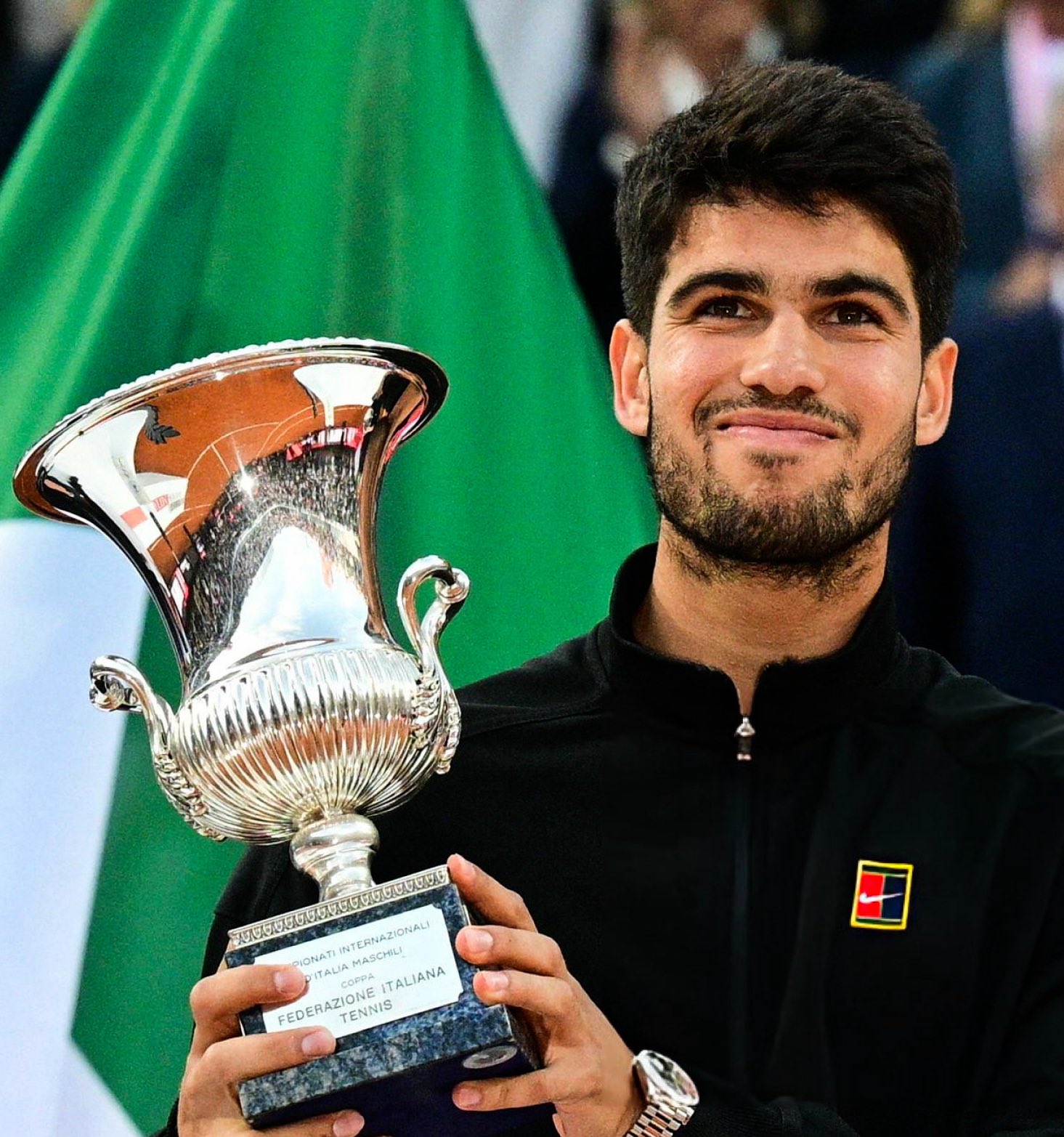
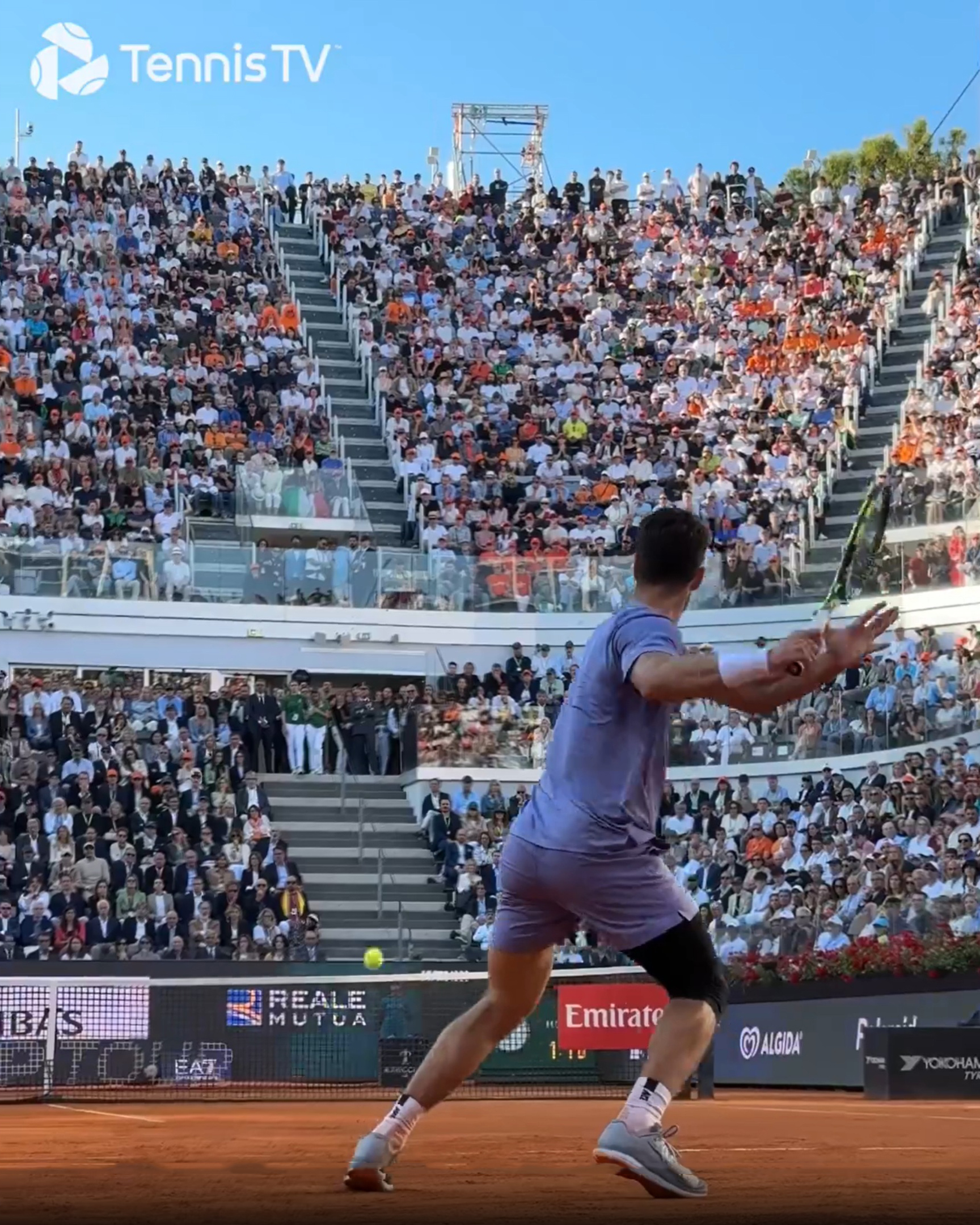
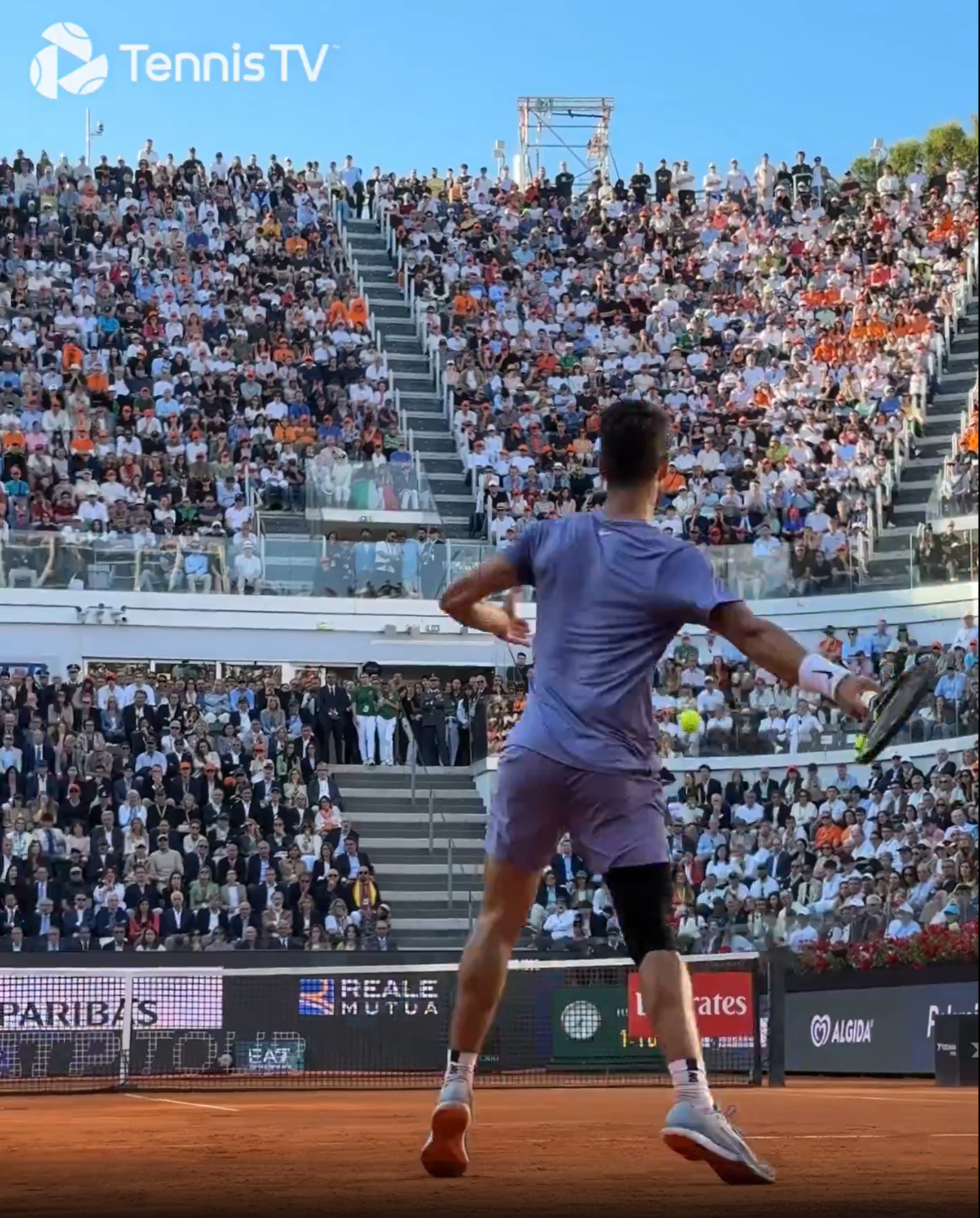
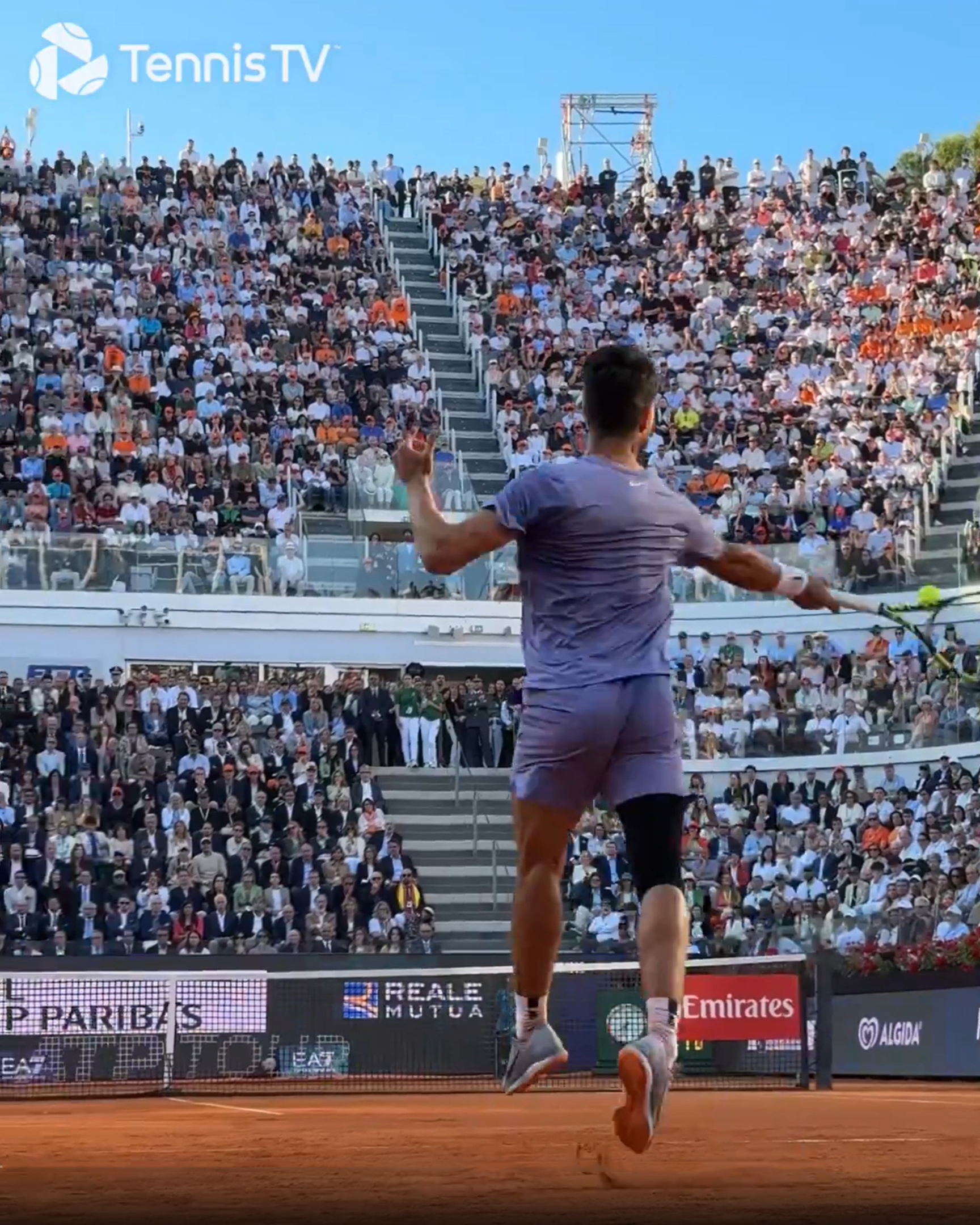
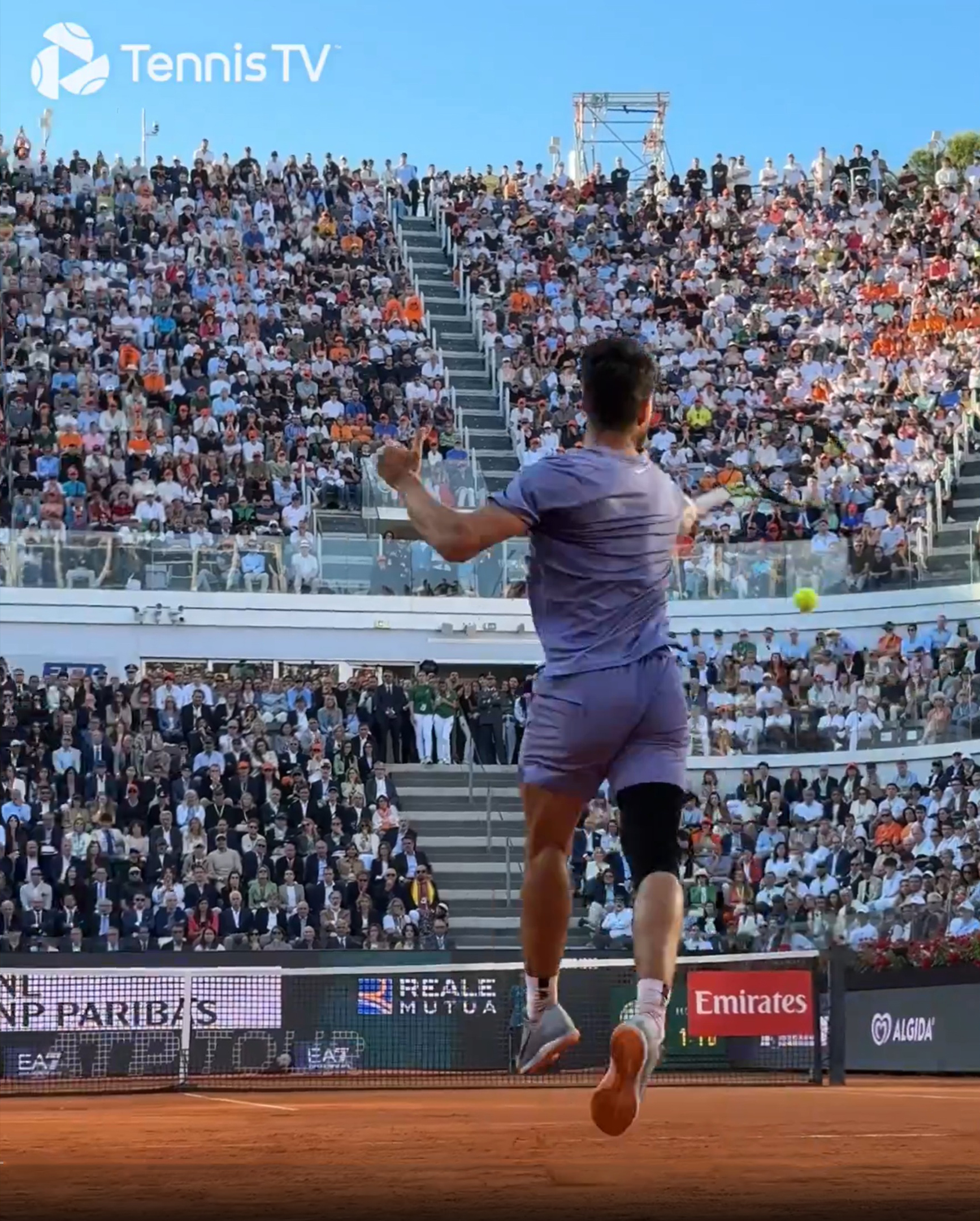
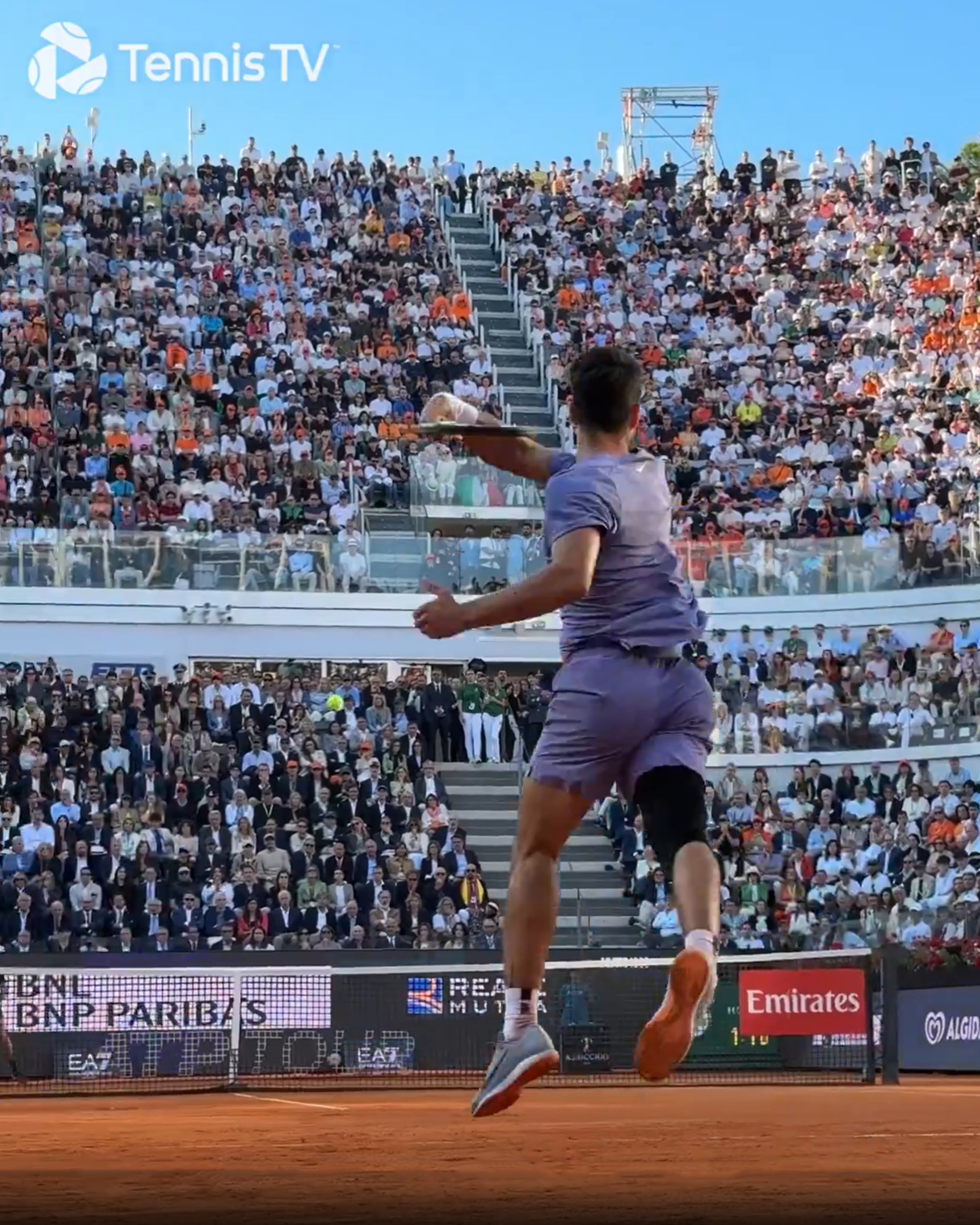
The Italian Open champion with his trophy. [Posted on X @alcarchive]Here’s a few stills of the Alcaraz forehand. (The comments below are all mine, and I hope I describe the Alcaraz forehand more or less accurately.) Alcaraz uses a semi-western grip, which is a popular grip on both the men’s and women’s tours— but one which I was not taught as a junior tennis player. We used the “greet the tennis racket” grip (the continental grip), which is a fundamental grip also used for serves, volleys, and overheads. [All stills made from a video clip by the TennisTV streaming channel]
It’s all in the timing, split-split-second timing. This is not golf with a stationary ball. That ball comes in at 80 mph, sometimes, and Carlos is in position, and now whipping his arm around, and rotating his upper body.The racquet head meets the ball way out in front of his body, and this picture makes it look as if the strings are vertical or even angled up a little bit .... but no— a rotation in the wrist and jumping up from the clay enables him to brush the racquet face completely over the ball, giving it a fierce topspin.The ball is flying back. The completion and follow-through of the whip shows that the side of the racquet head that hit the ball is now facing completely down.