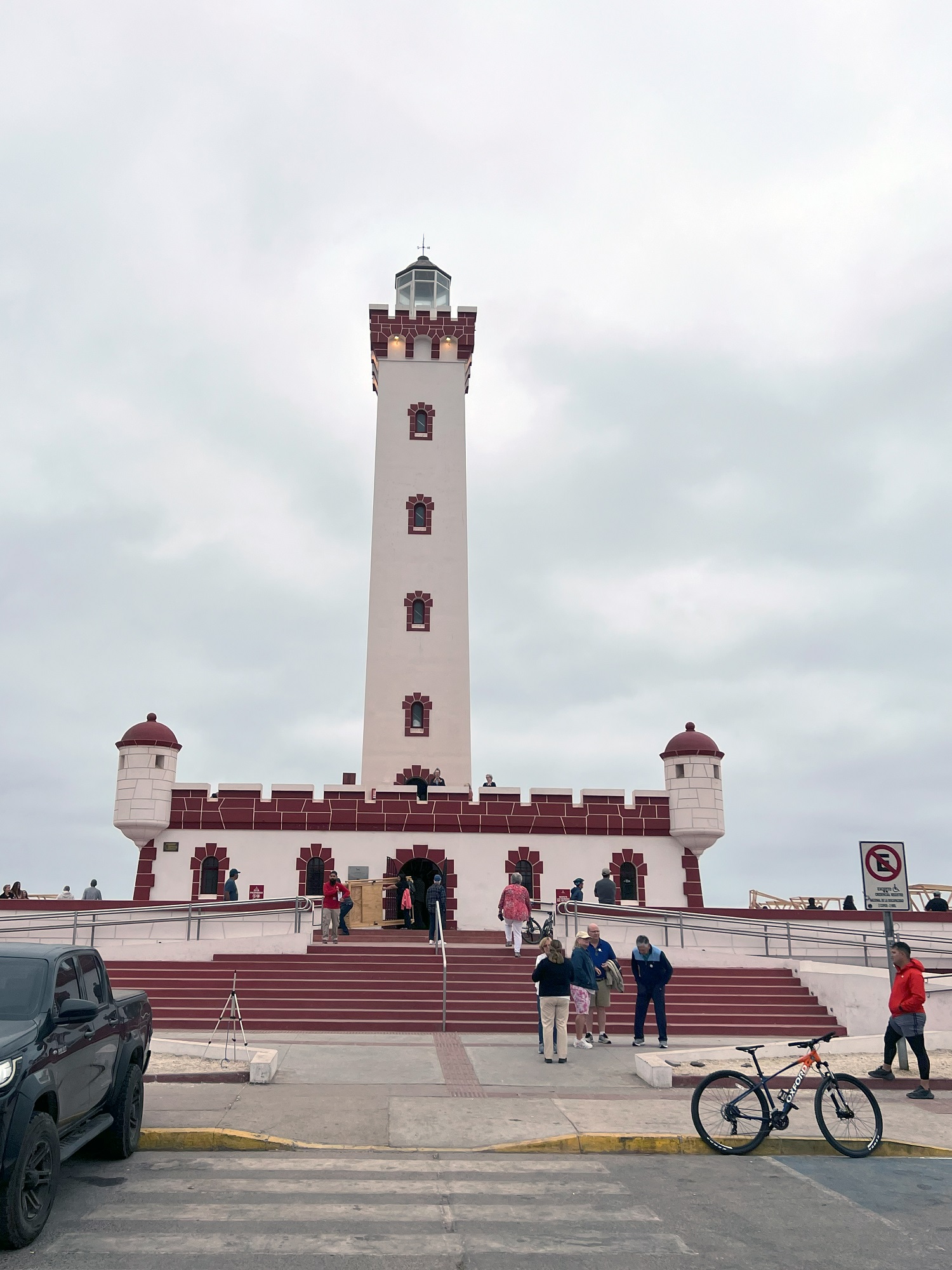
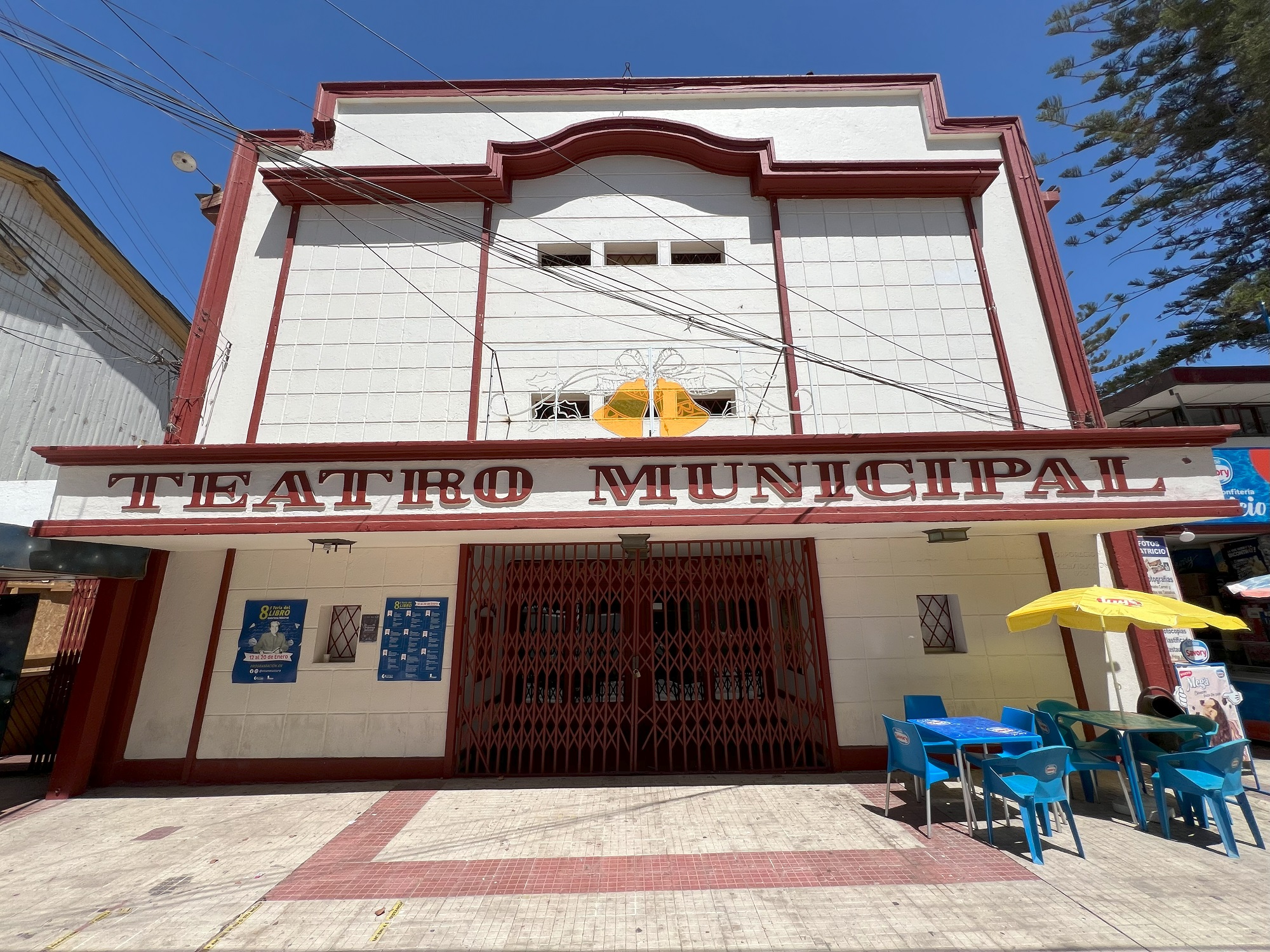
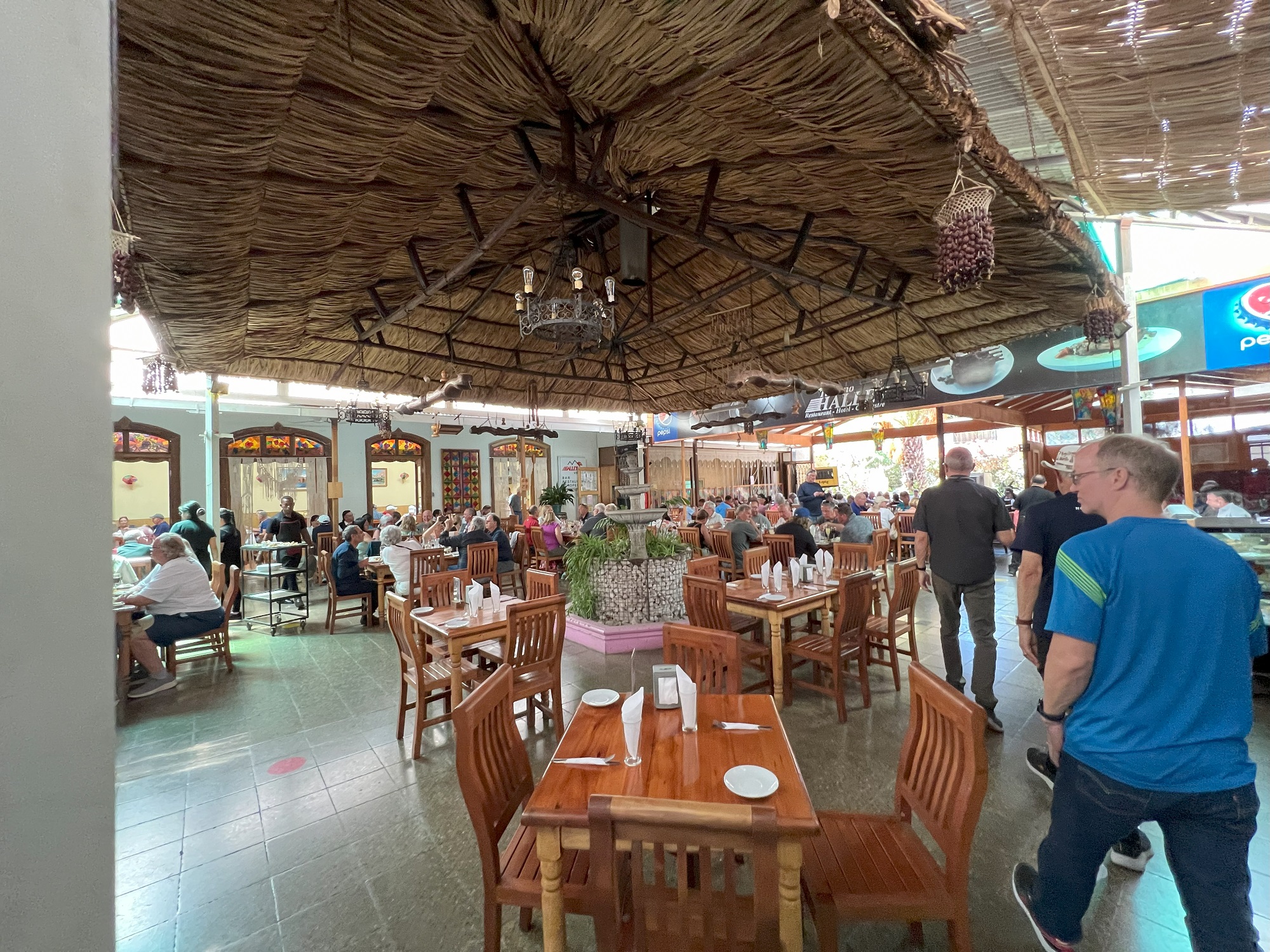
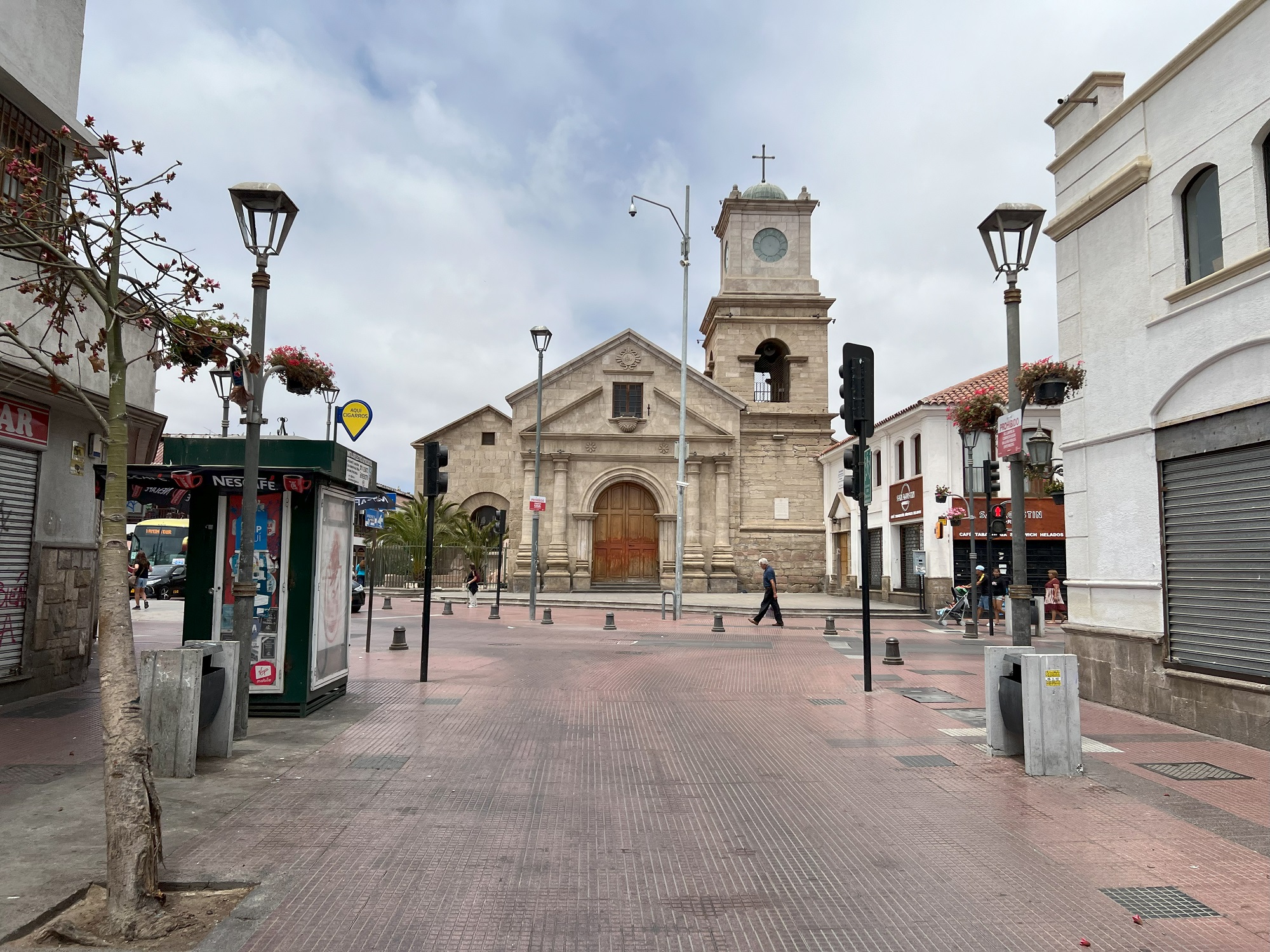
We arrived at the port city of Coquimbo this morning.
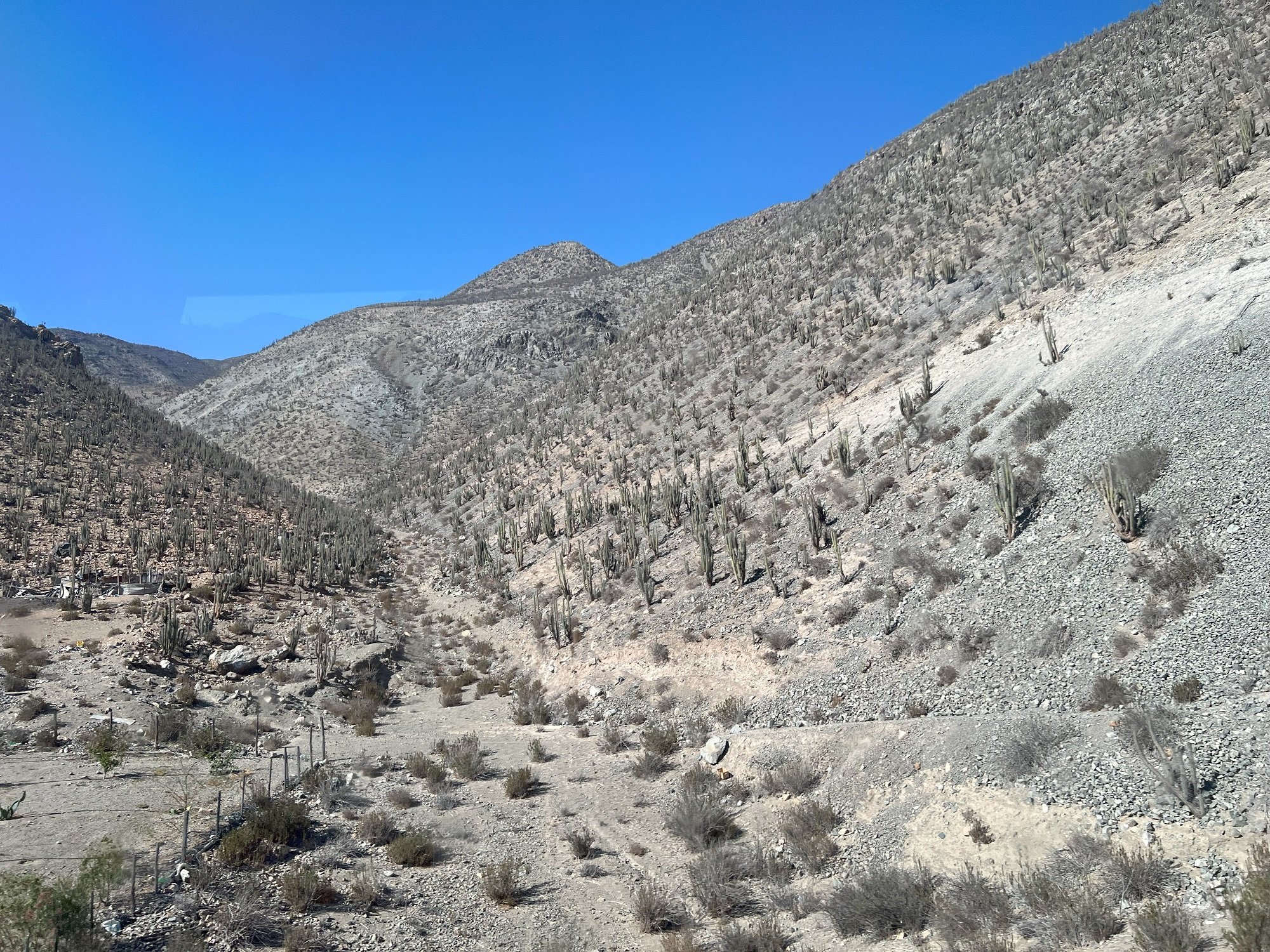
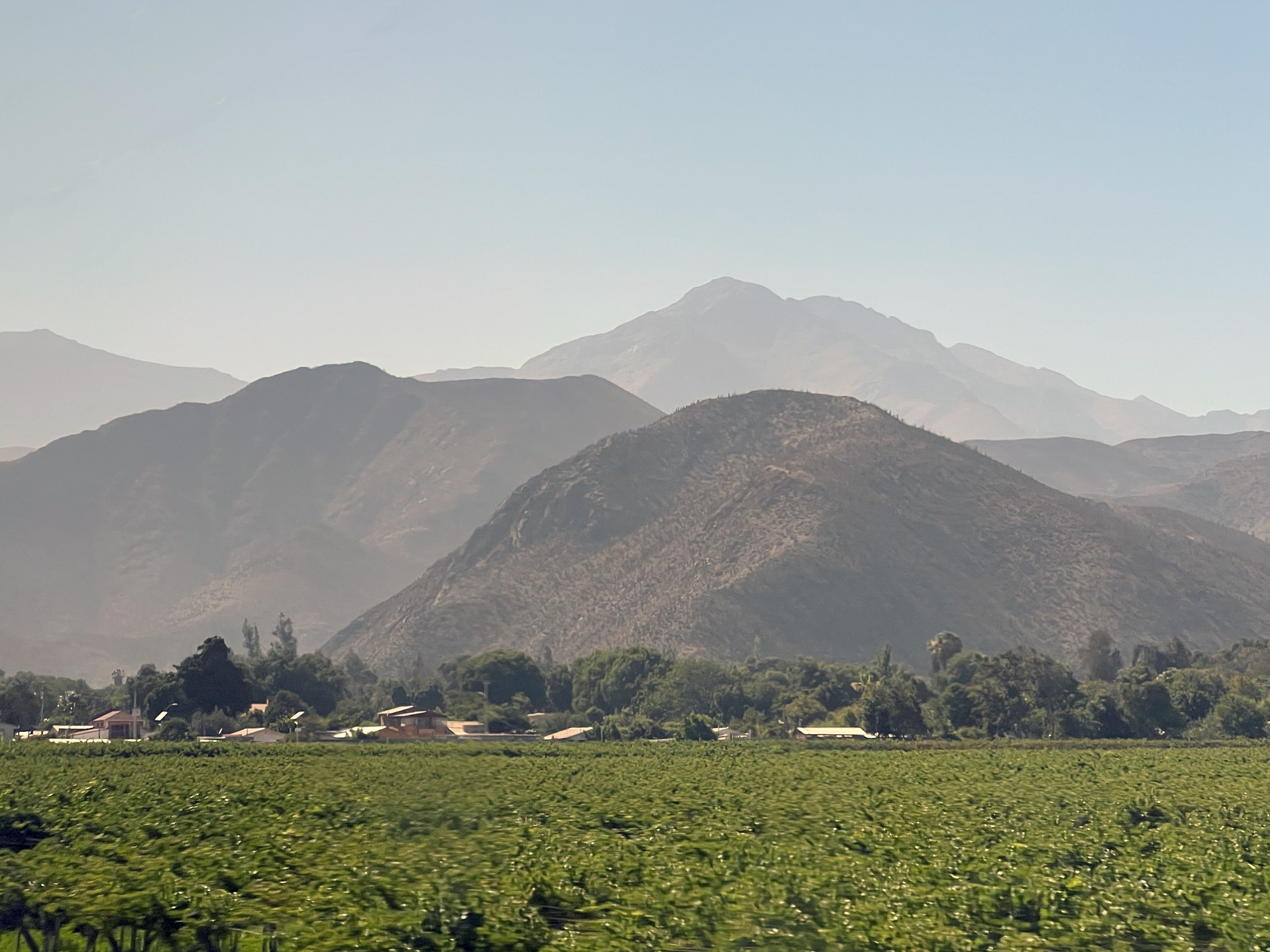
Our excursion today was a bus ride along the shoreline into the neighboring town of La Serena, followed by a drive inland to the commune of Vicuña (pop. 25,000).
a weblog of whereabouts & interests, since 2010
We arrived at the port city of Coquimbo this morning.
Our excursion today was a bus ride along the shoreline into the neighboring town of La Serena, followed by a drive inland to the commune of Vicuña (pop. 25,000).
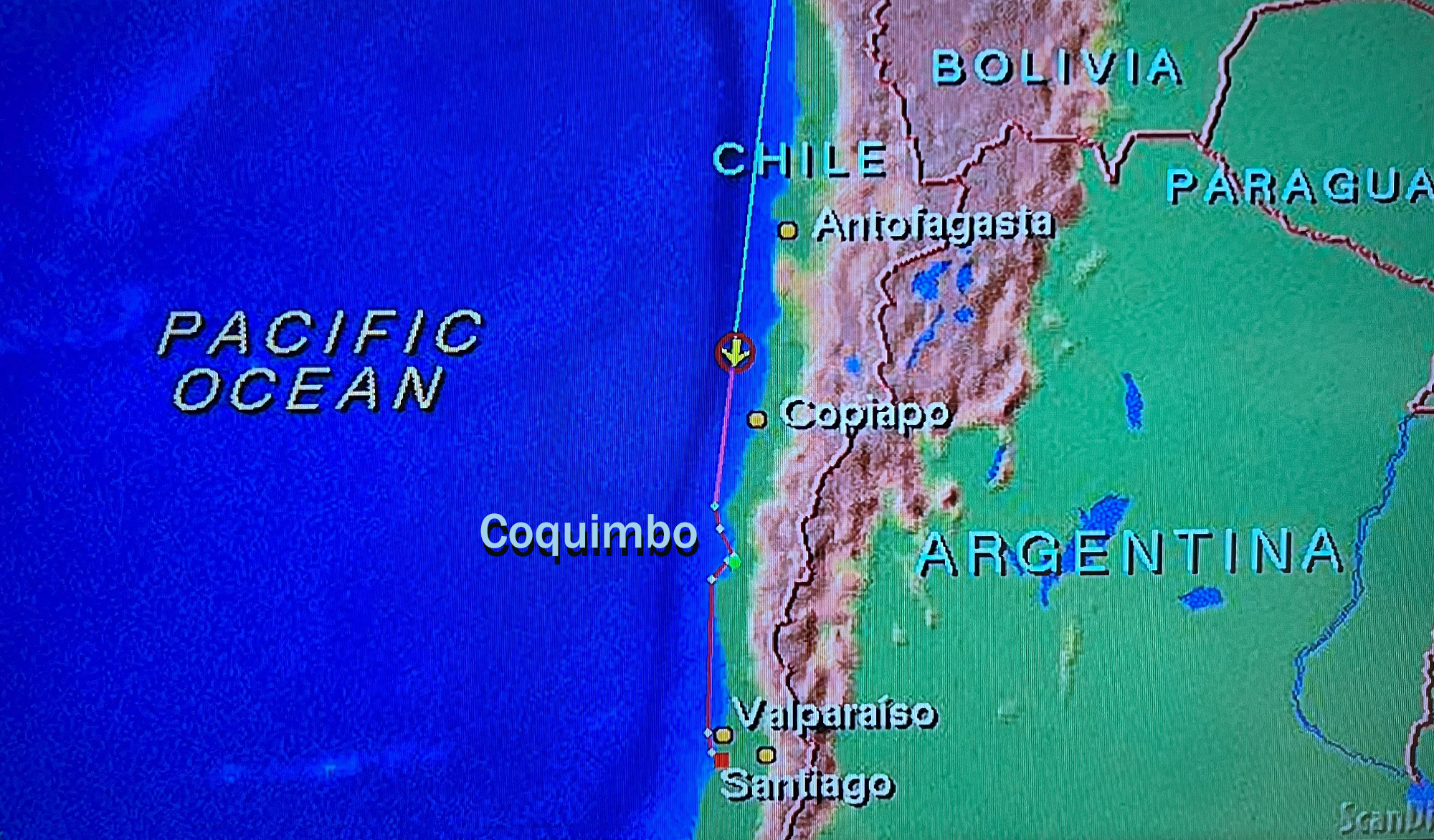
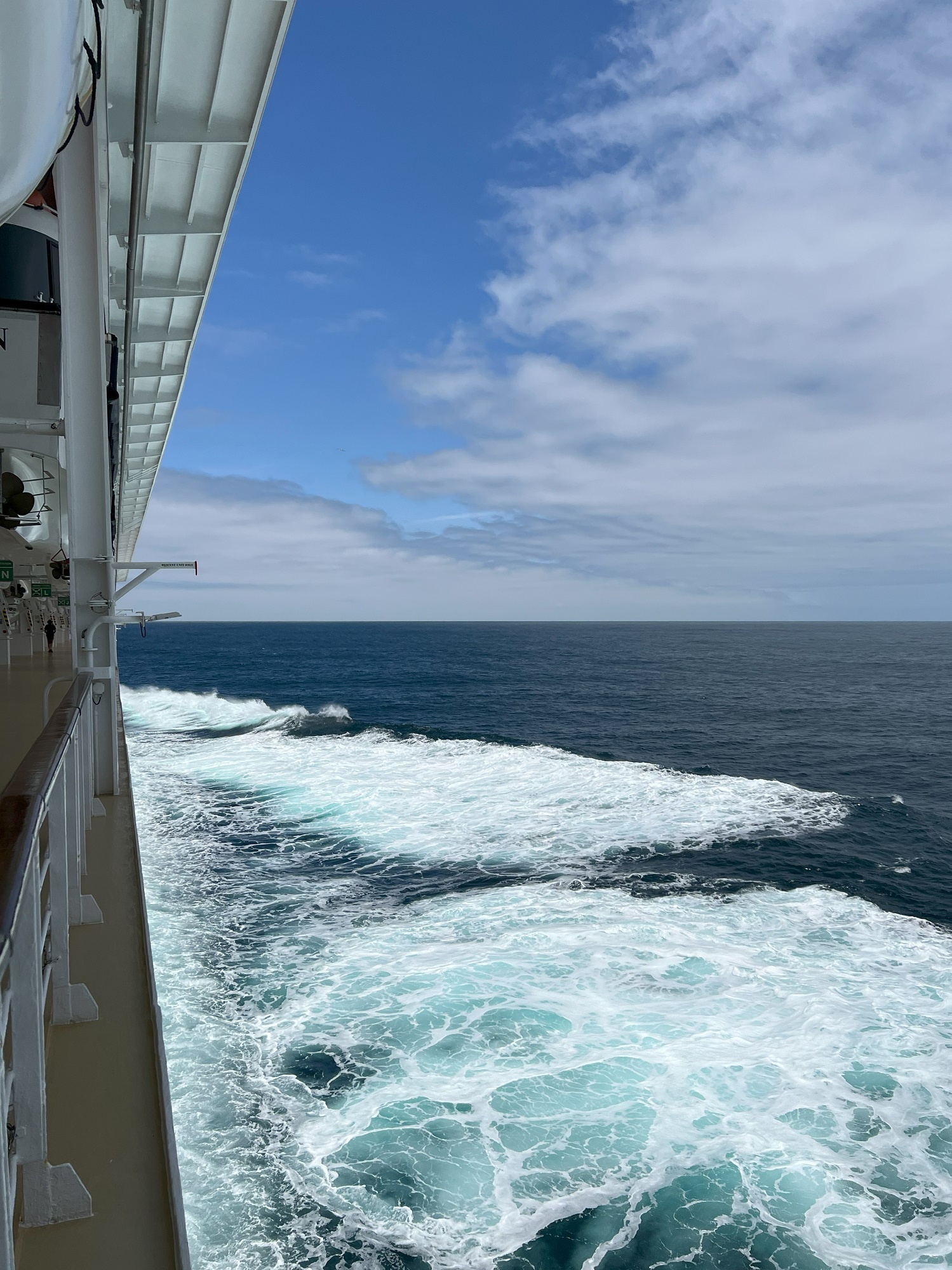
Norwegian Sun is making her way down south along the Chilean coast, and we crossed the Tropic of Capricorn* today.
*The Tropic of Capricorn lies 23° 26′ 22″ (23.4394°) south of the Equator and marks the most southerly latitude at which the sun can appear directly overhead at noon.
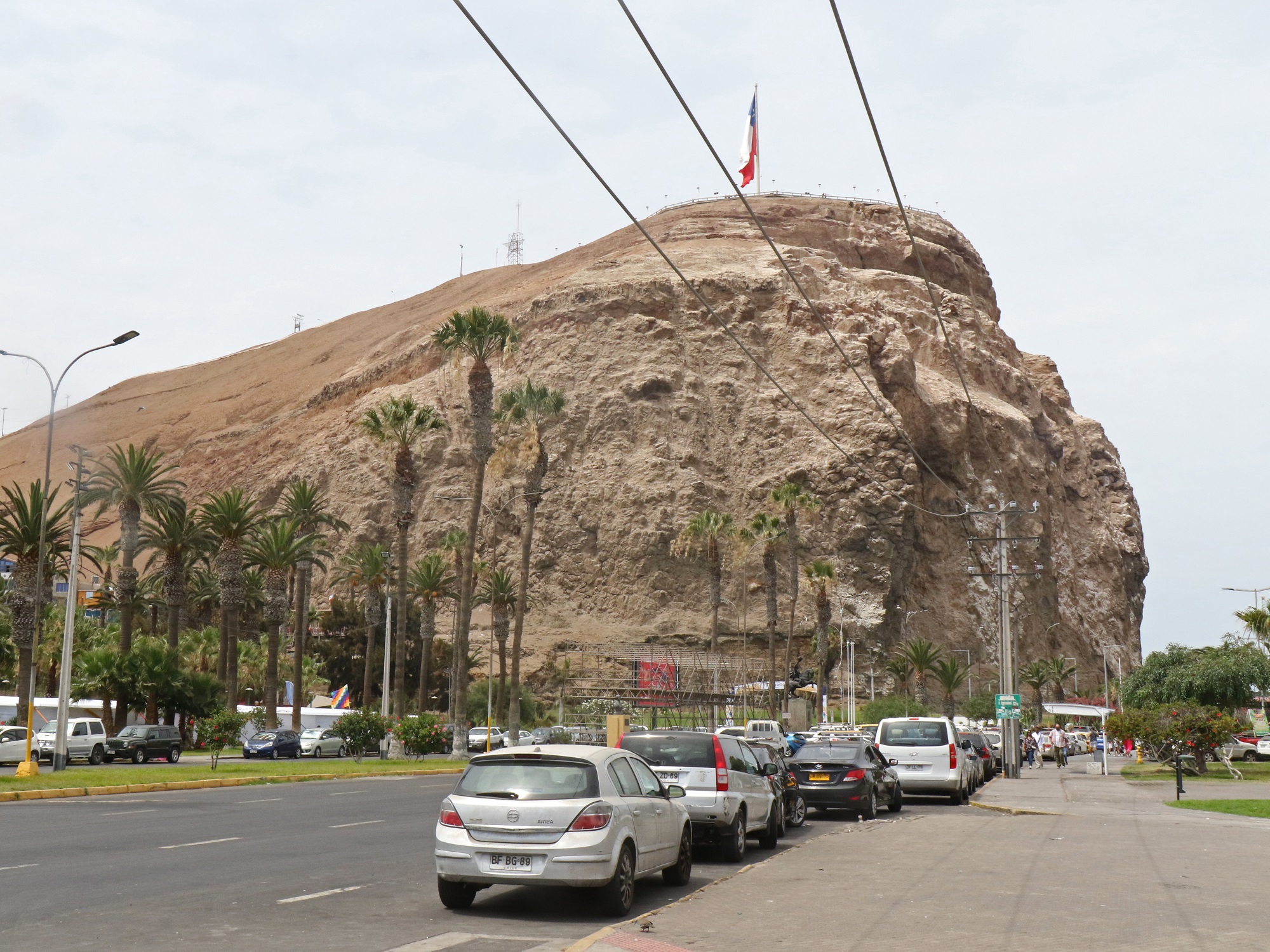
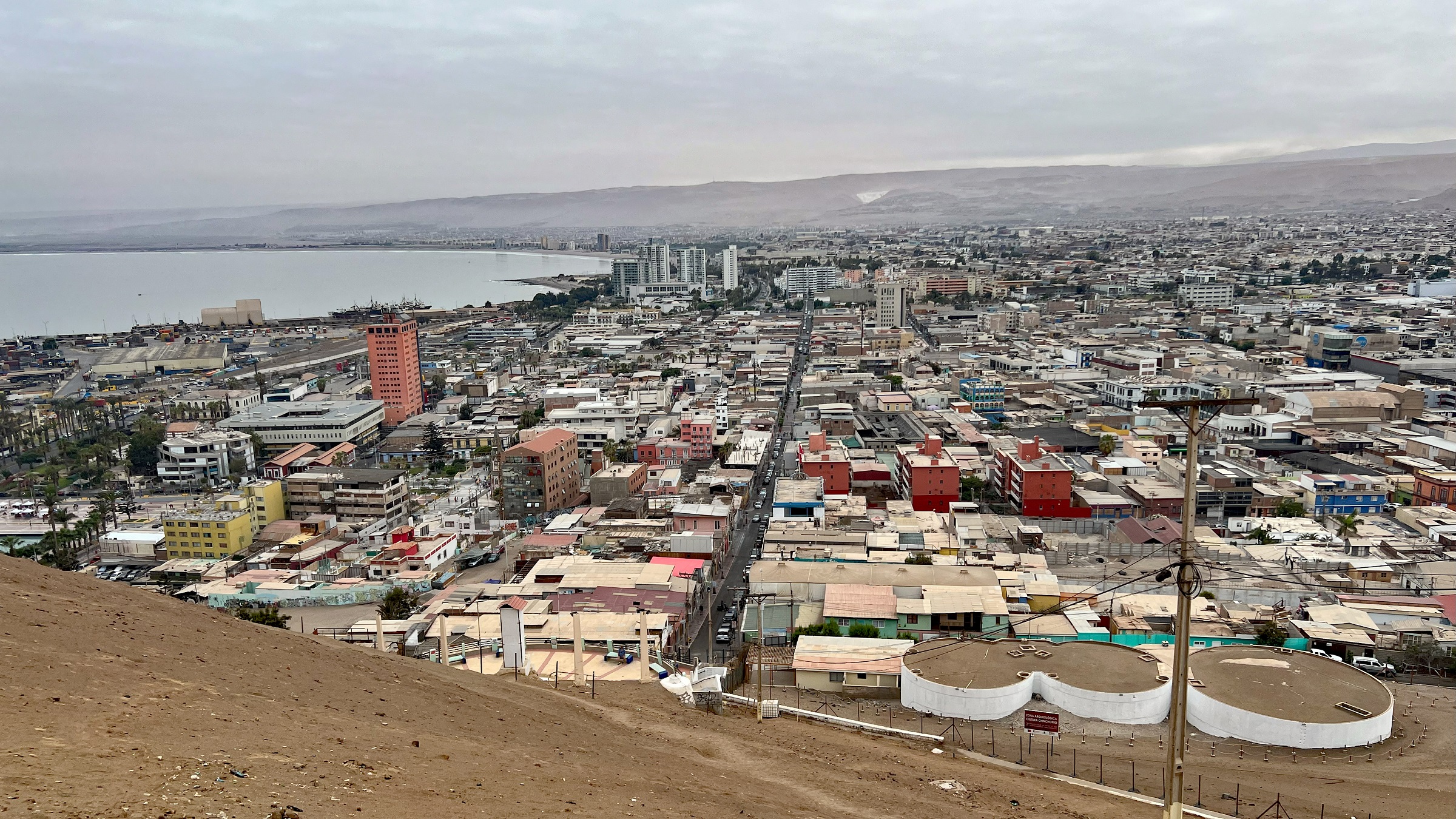
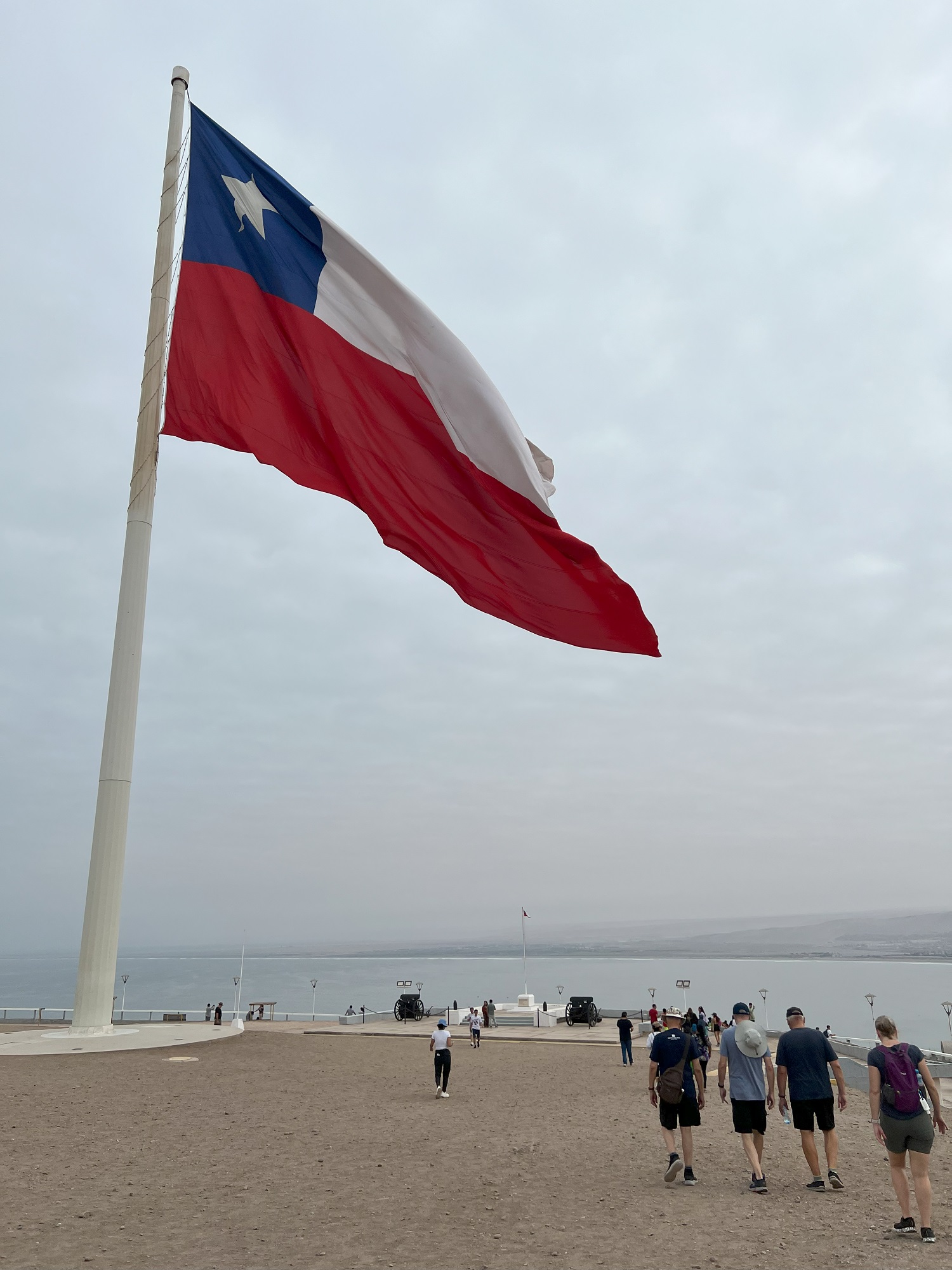
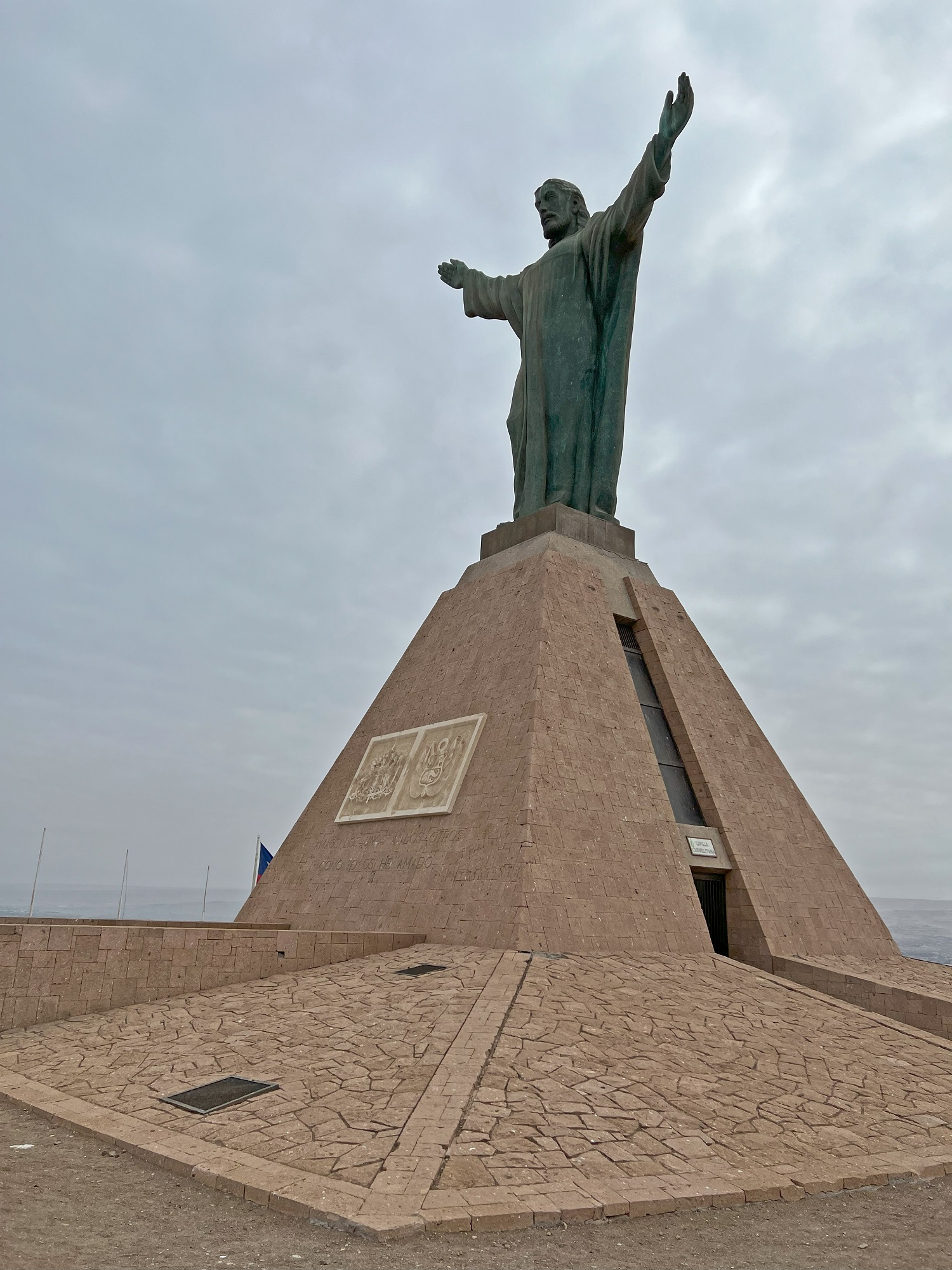
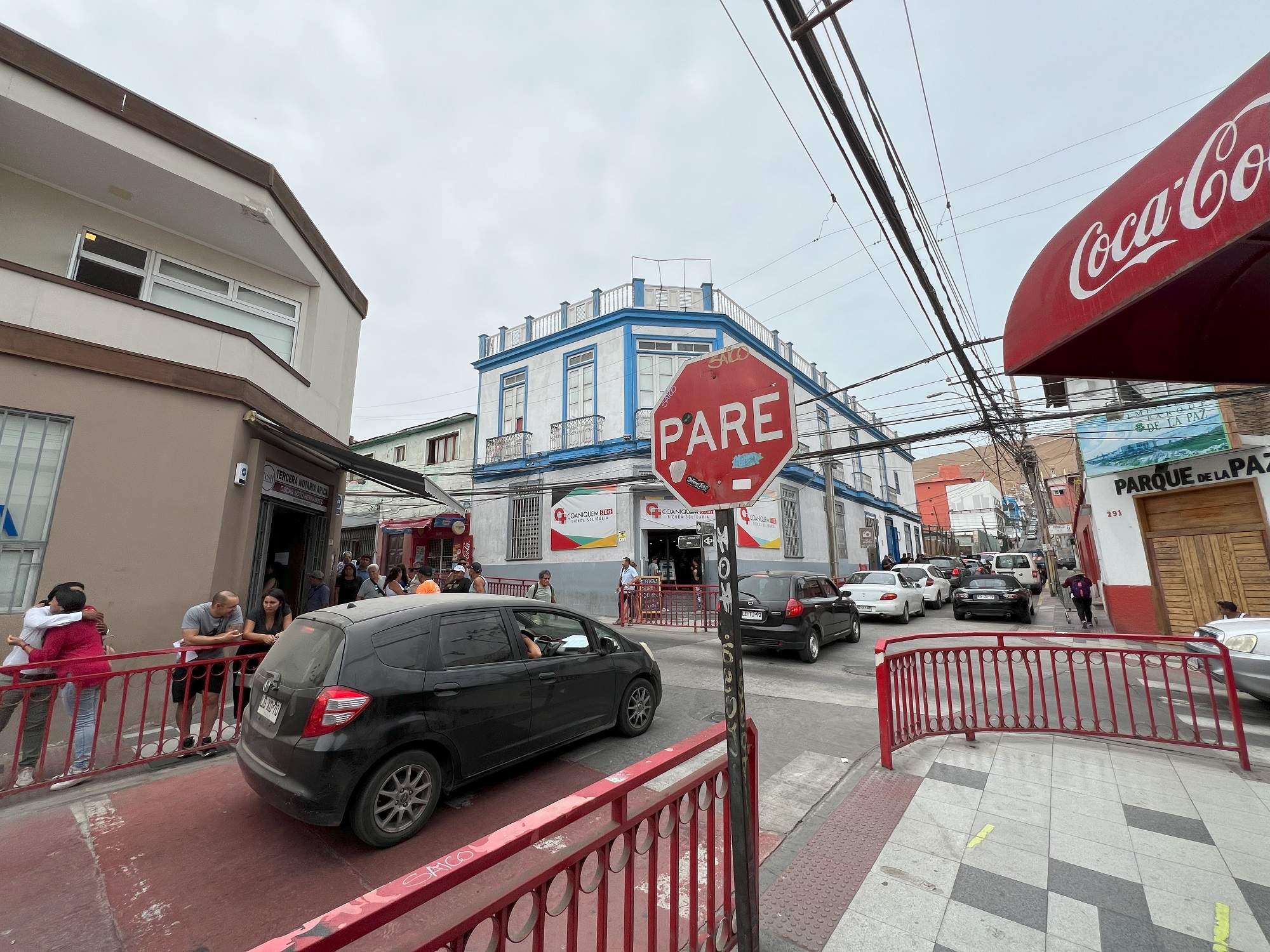
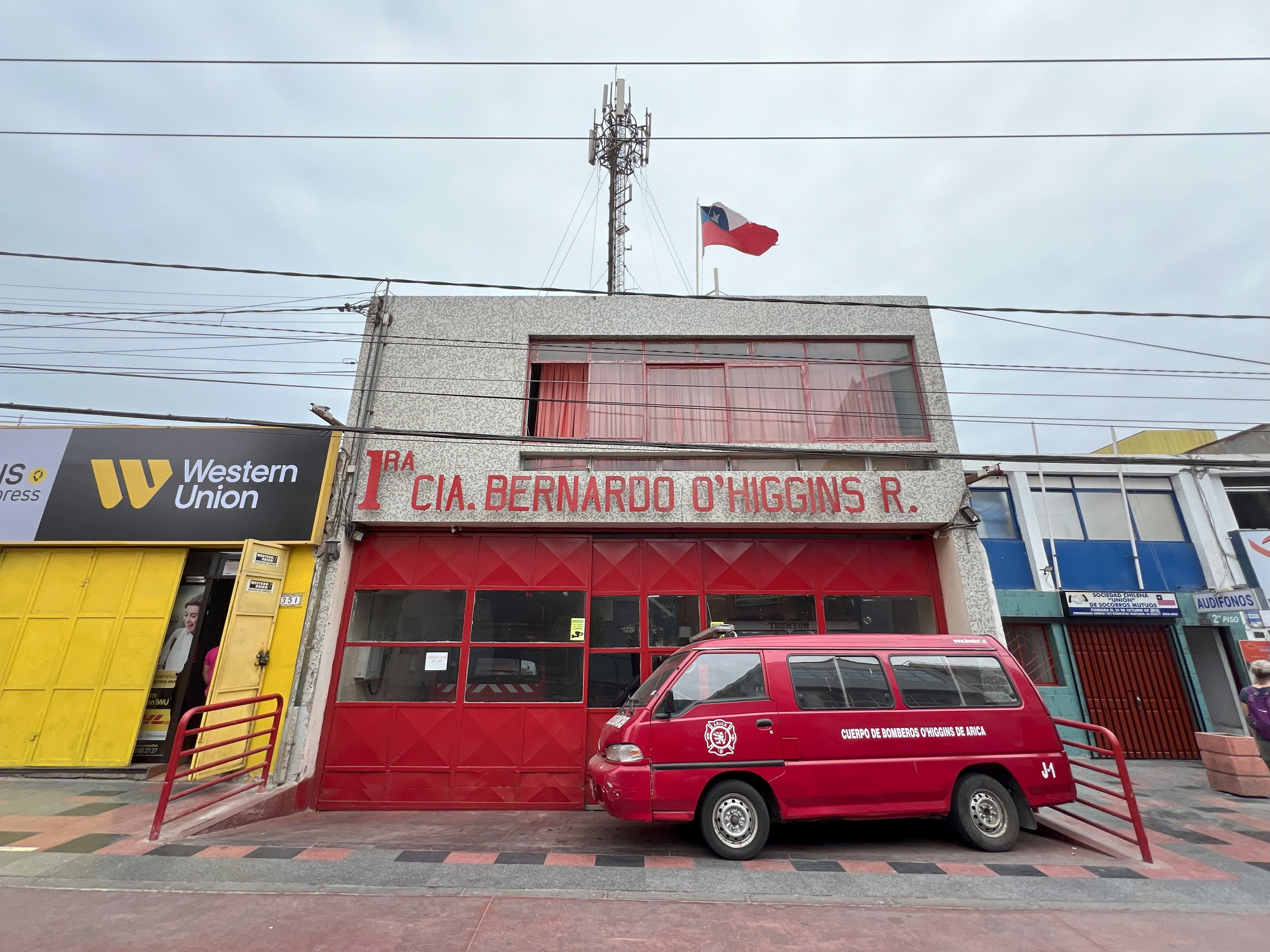
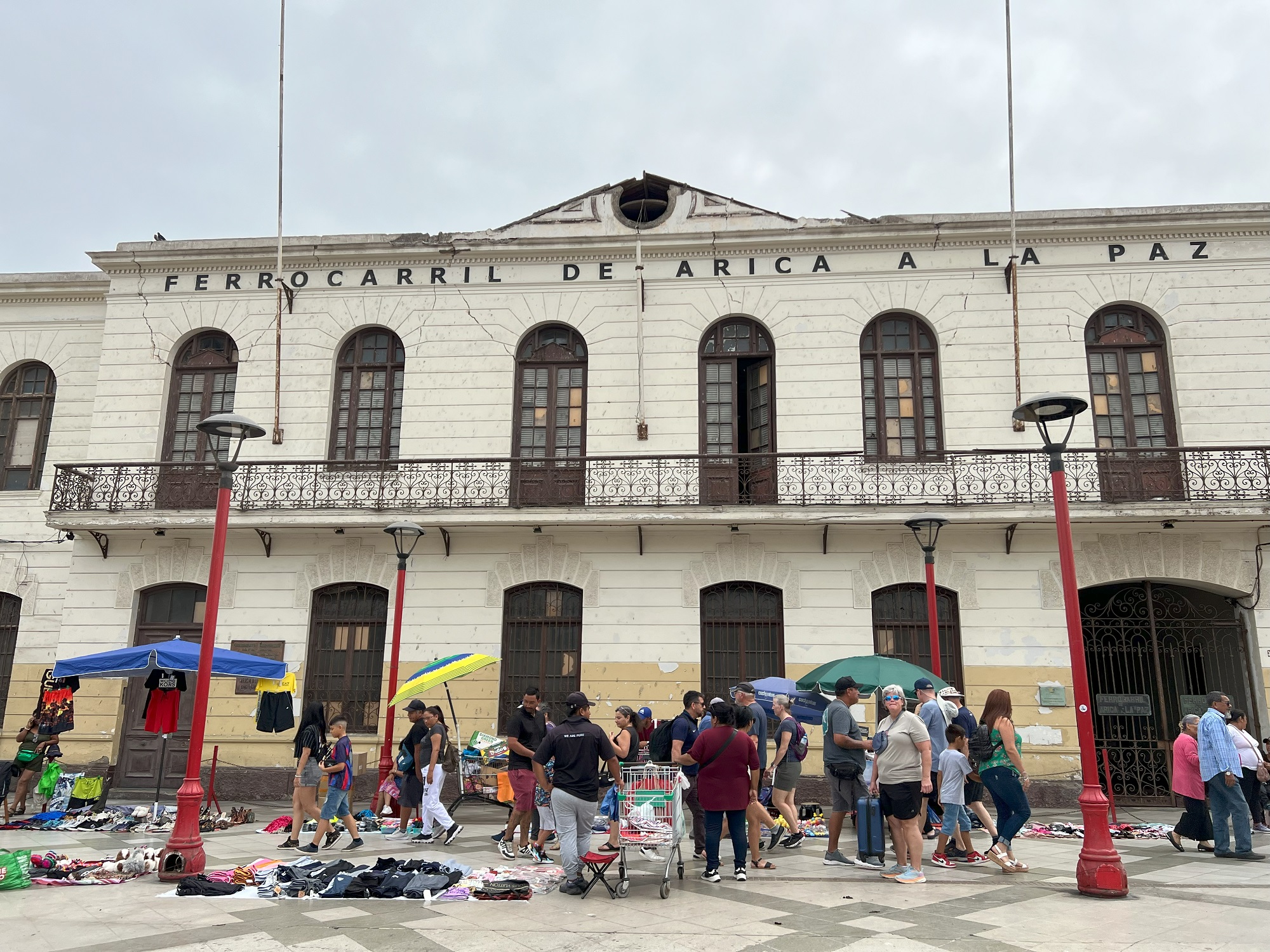
Our self-directed excursion into Arica this morning took us up the steep path to the top of the hill called Morro Arrica.
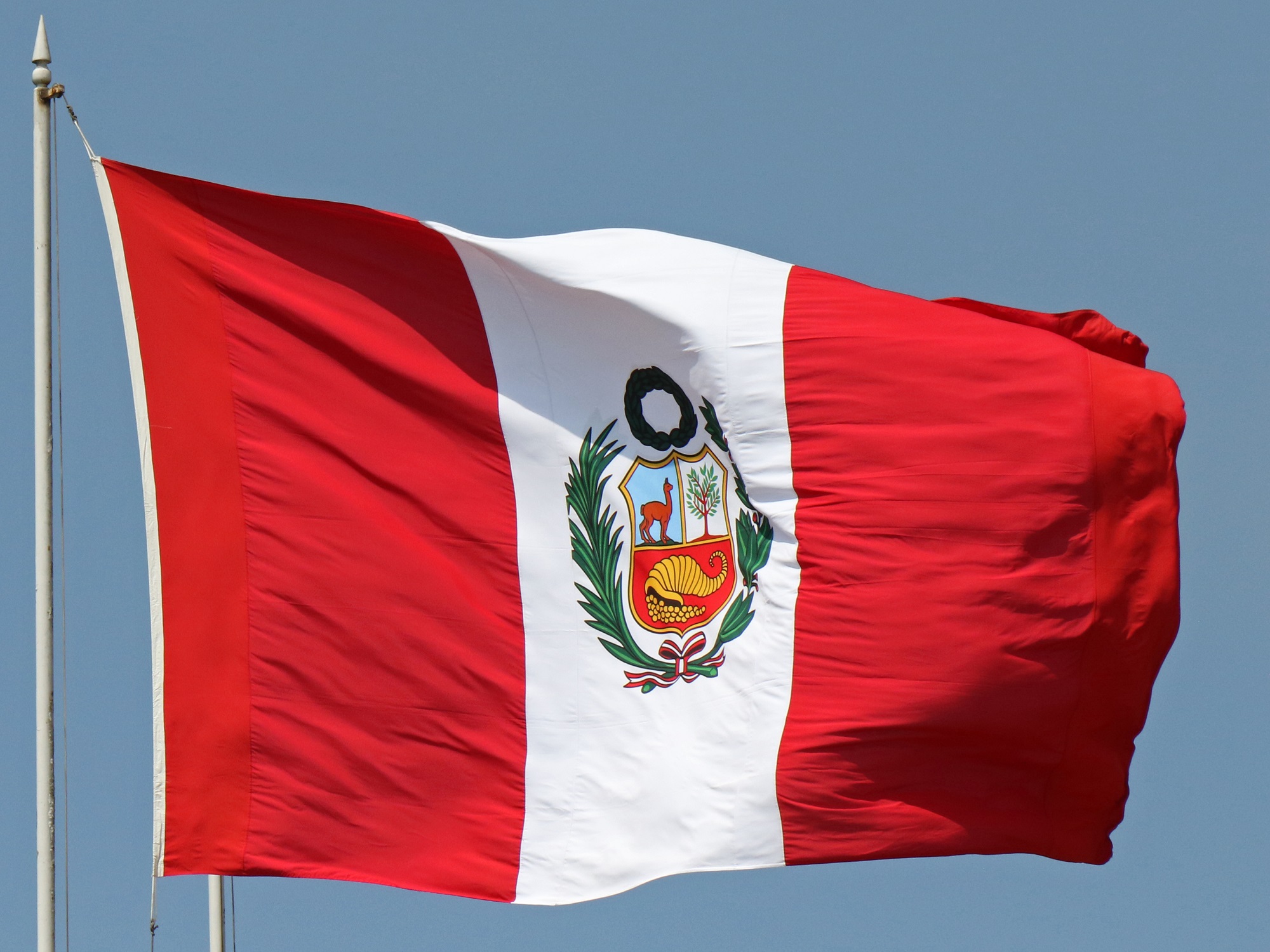
At the top there is an enormous Chilean flag, a museum and a statue called Christ of the Peace (a reference to the Treaty of Lima in 1929 that settled lingering territorial disputes between Peru and Chile).
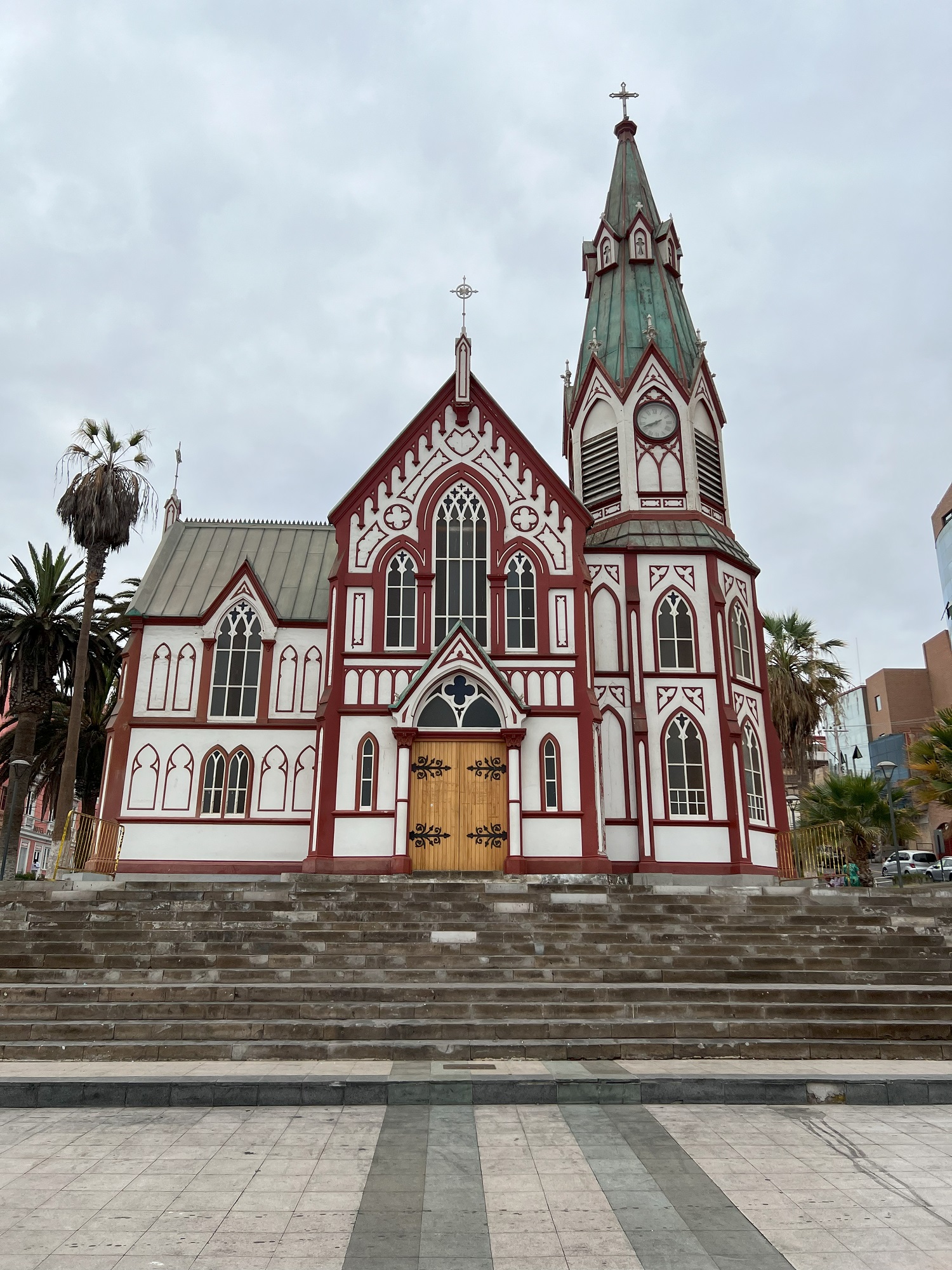
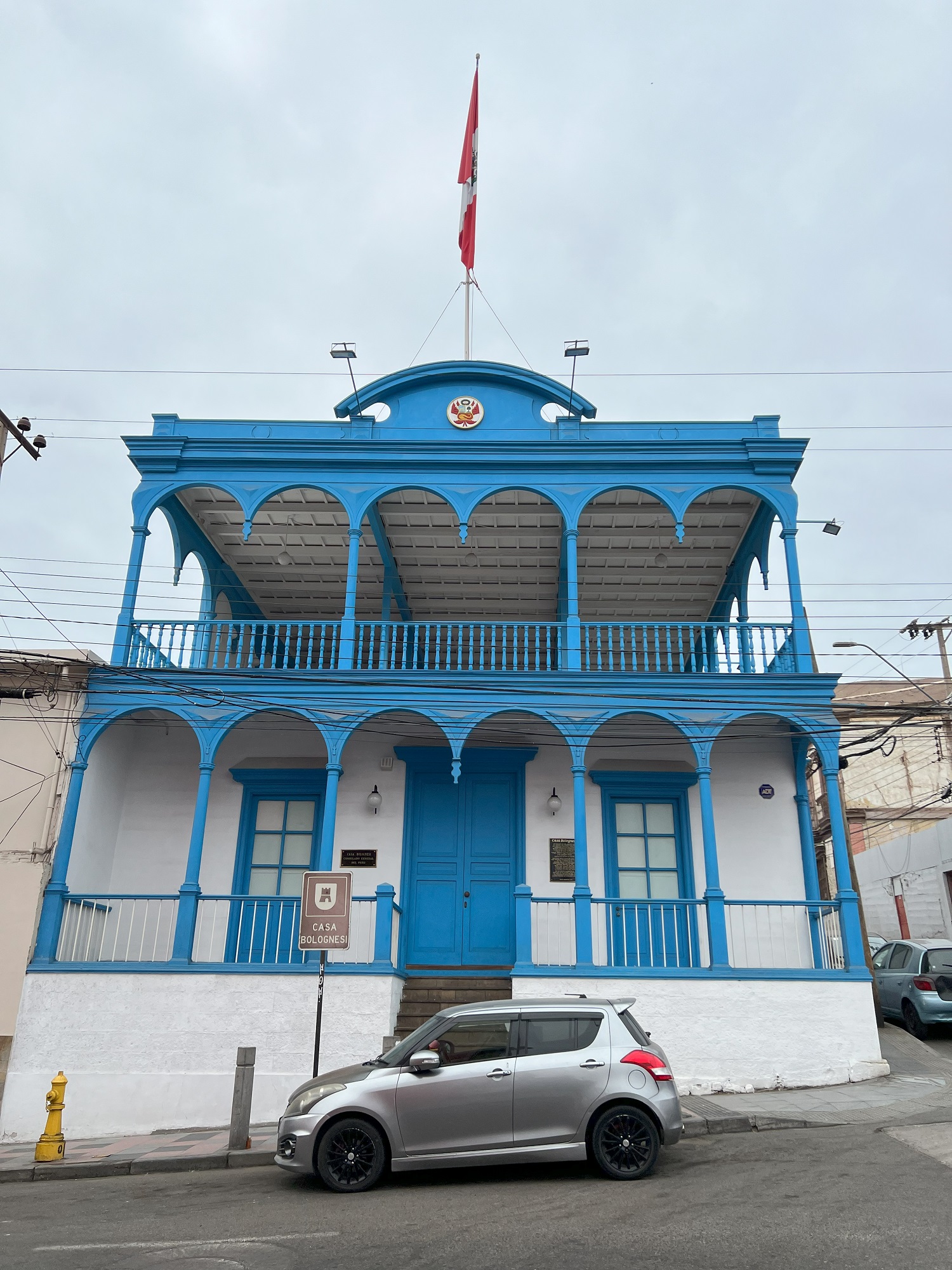
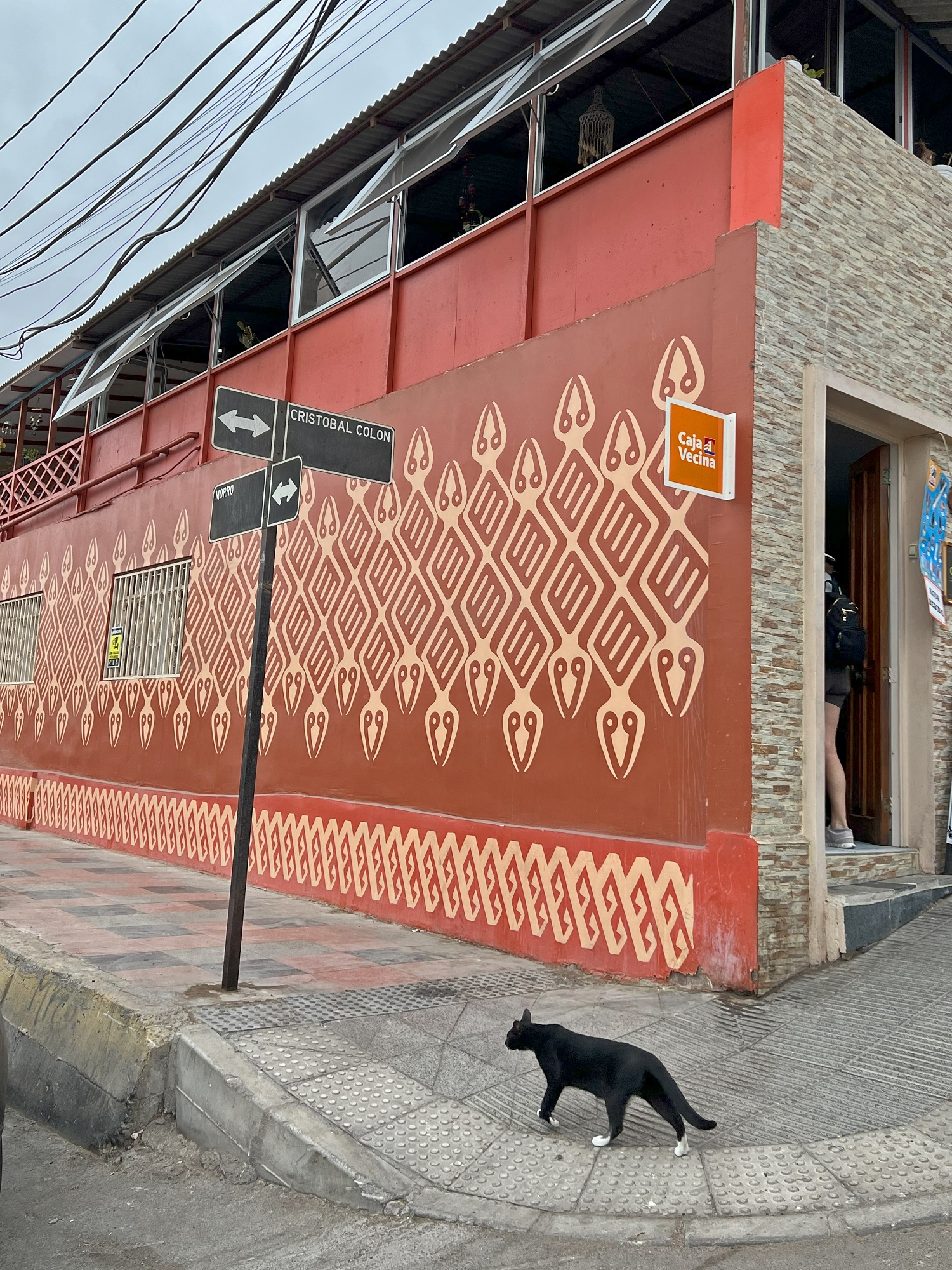
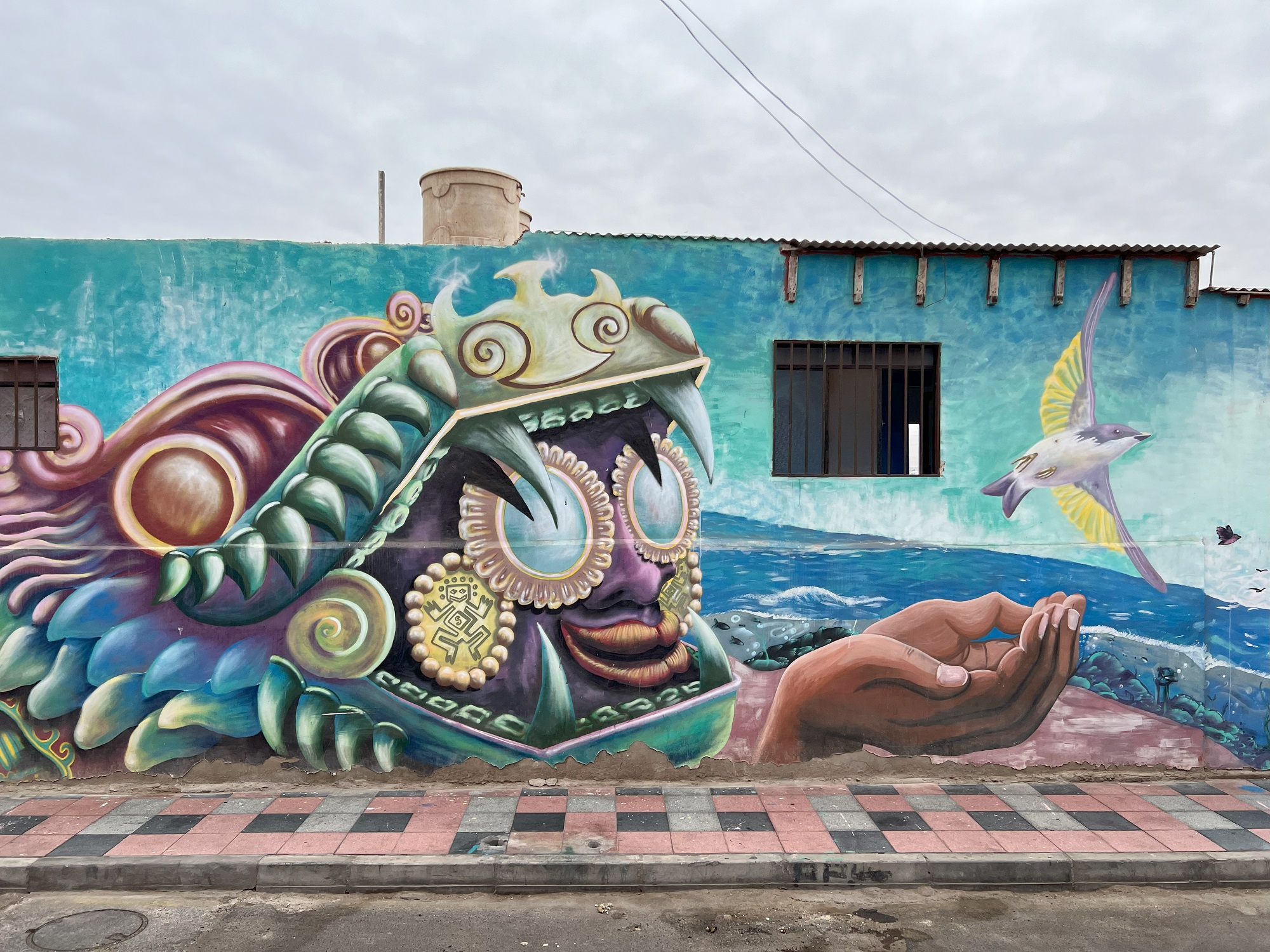
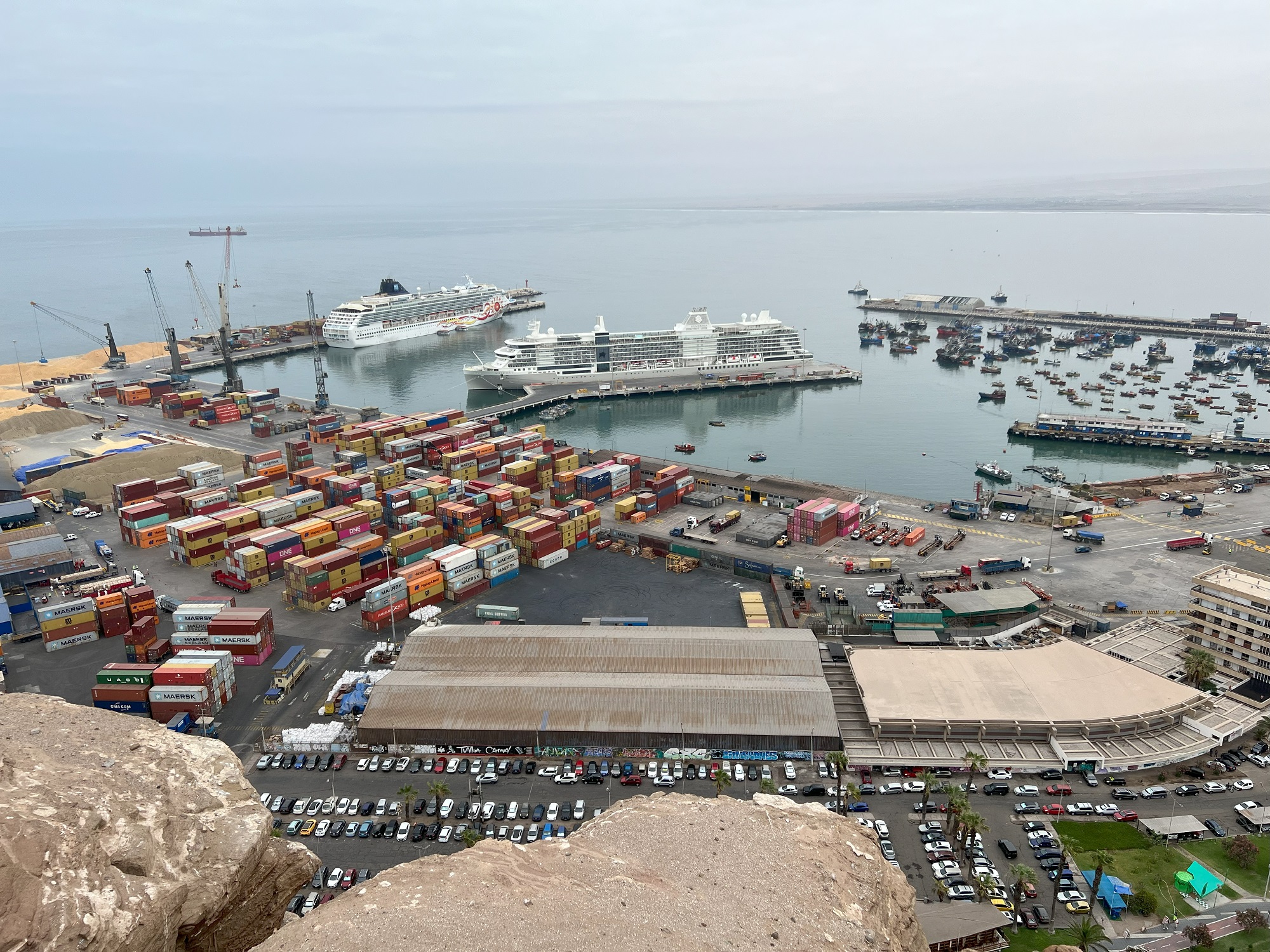
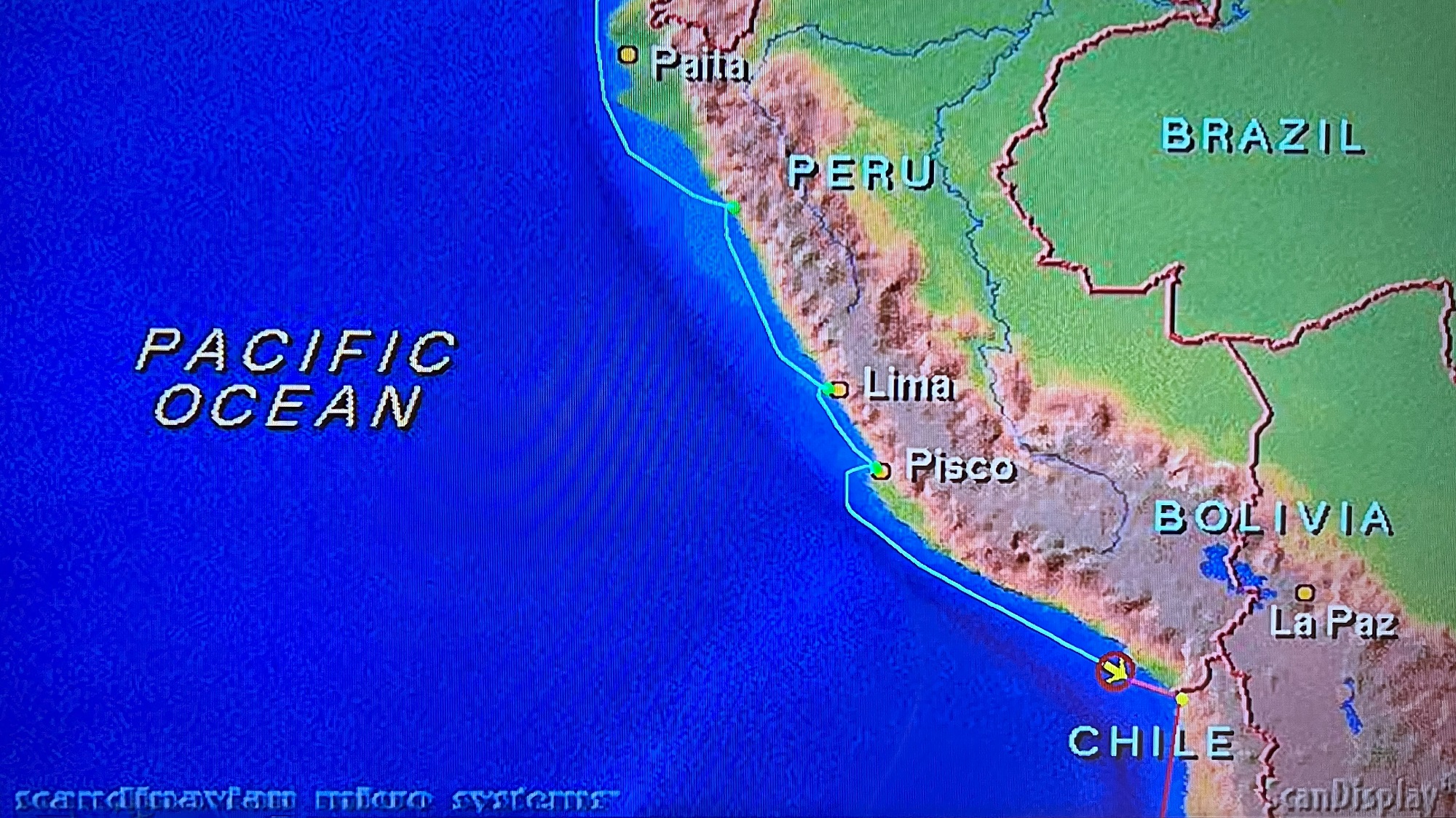
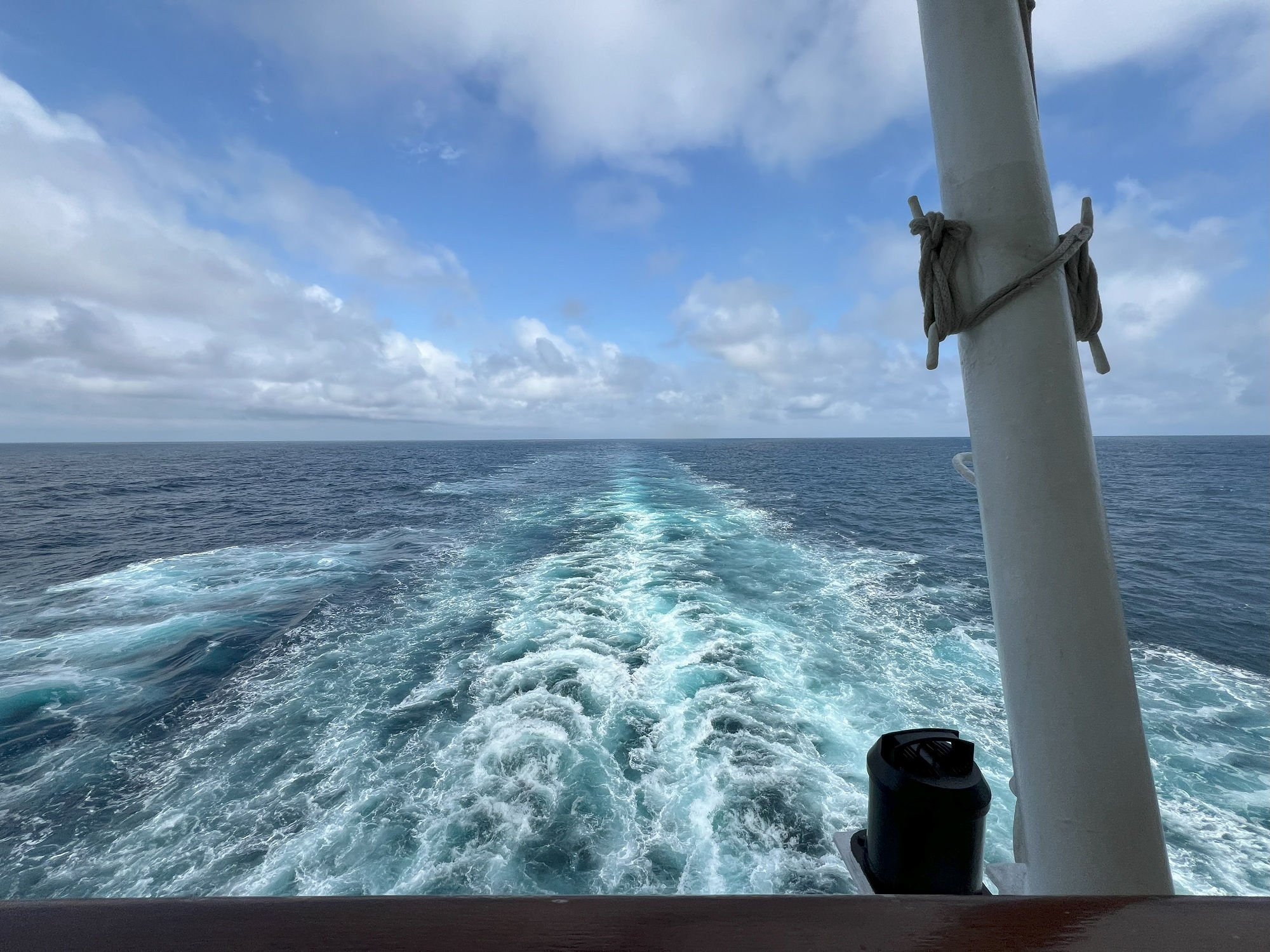
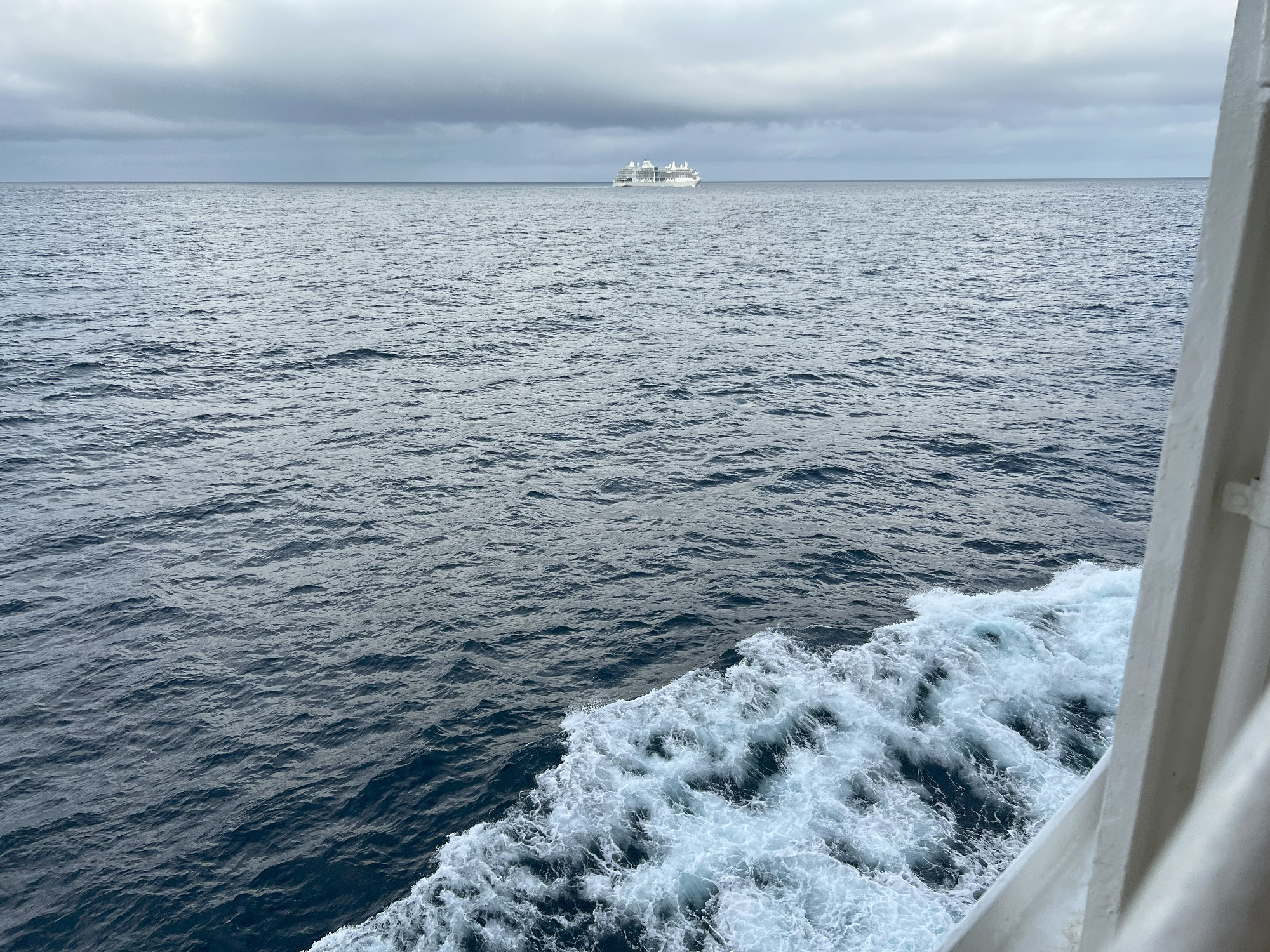
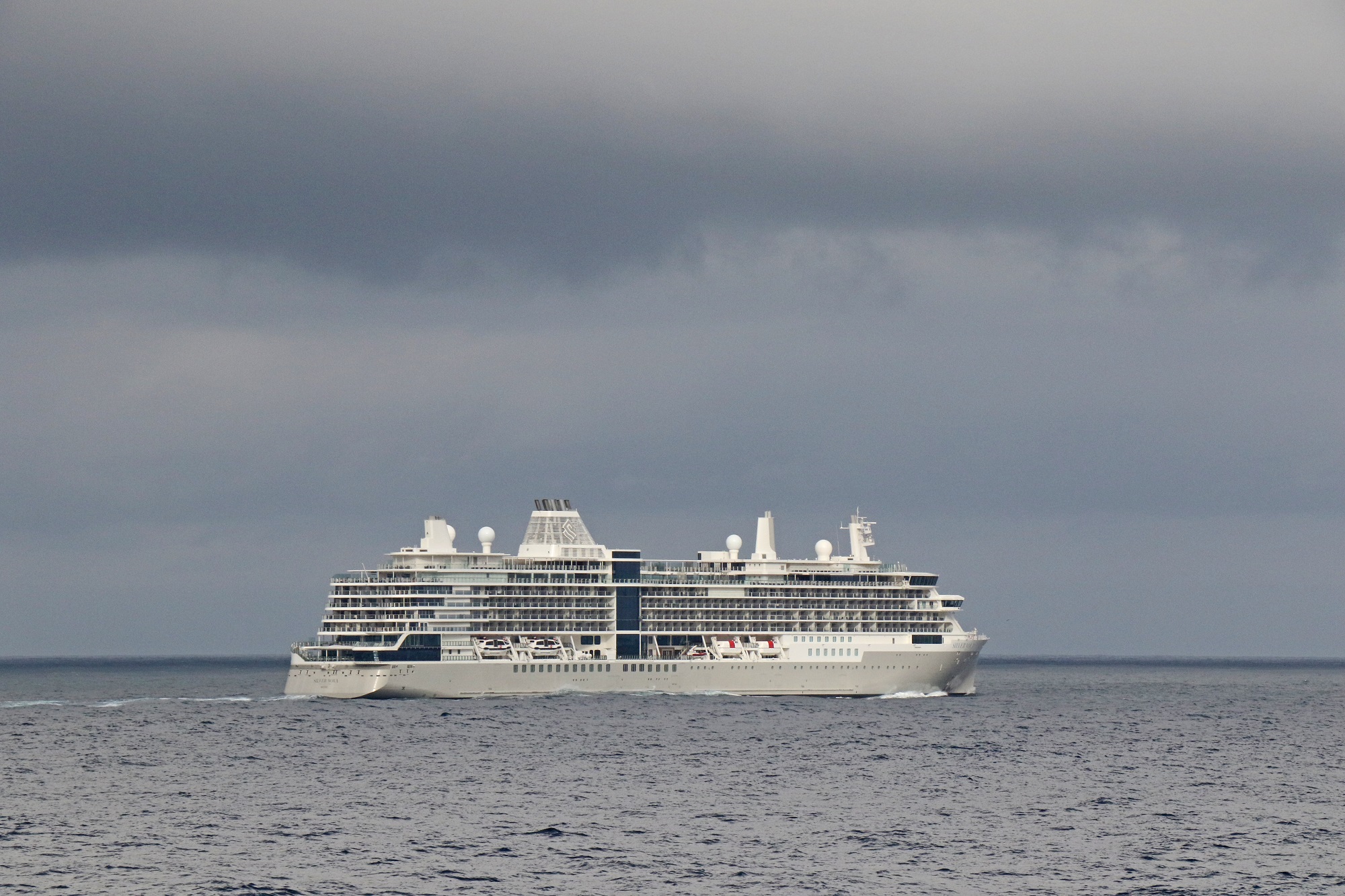
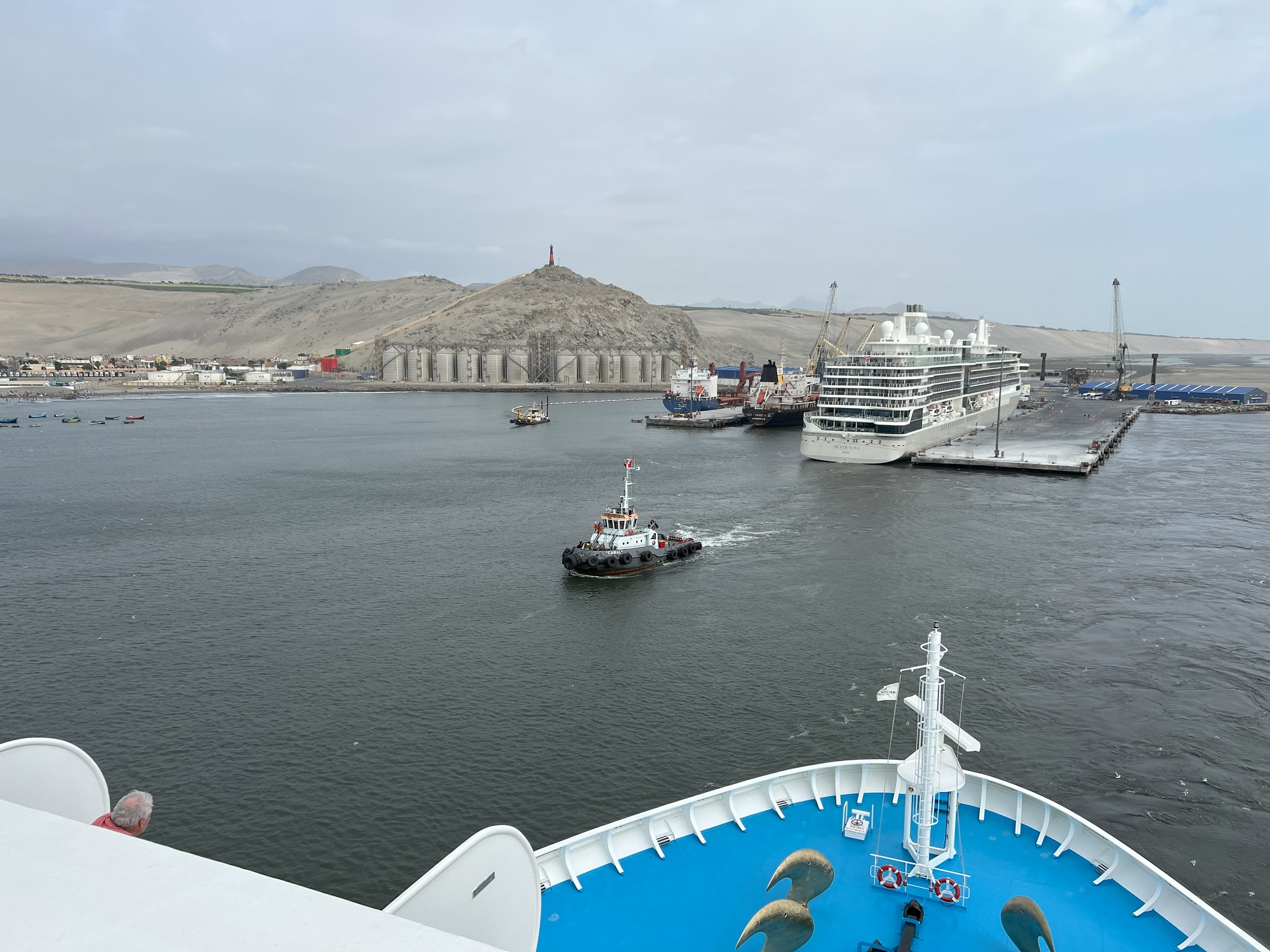
The Norwegian Sun continued her journey along the Peruvian coast towards Chile today. That’s the Silver Nova from the Silversea luxury cruise line out at sea with us.
We should reach Arica— just south of the border with Peru— early in the morning.
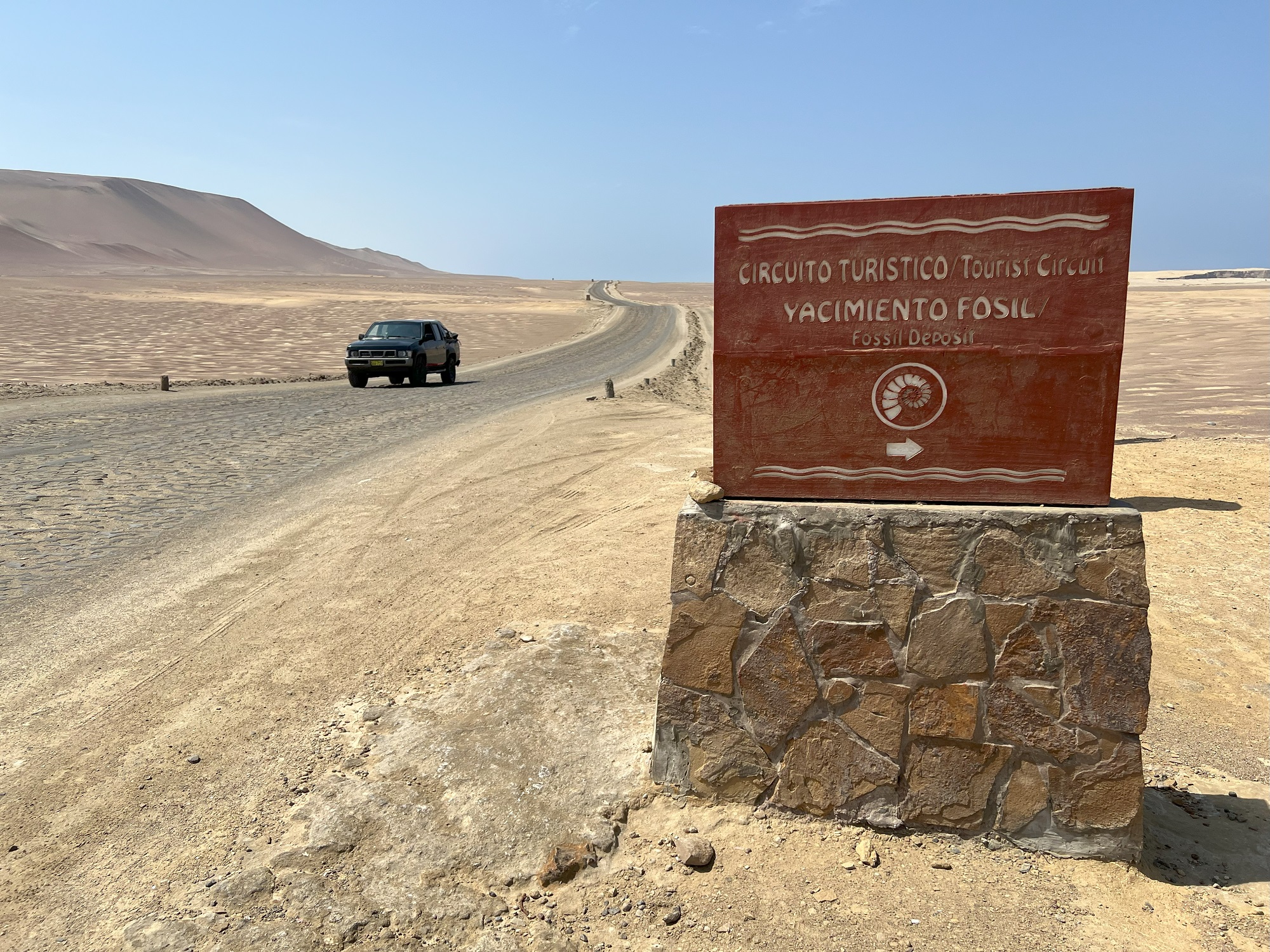
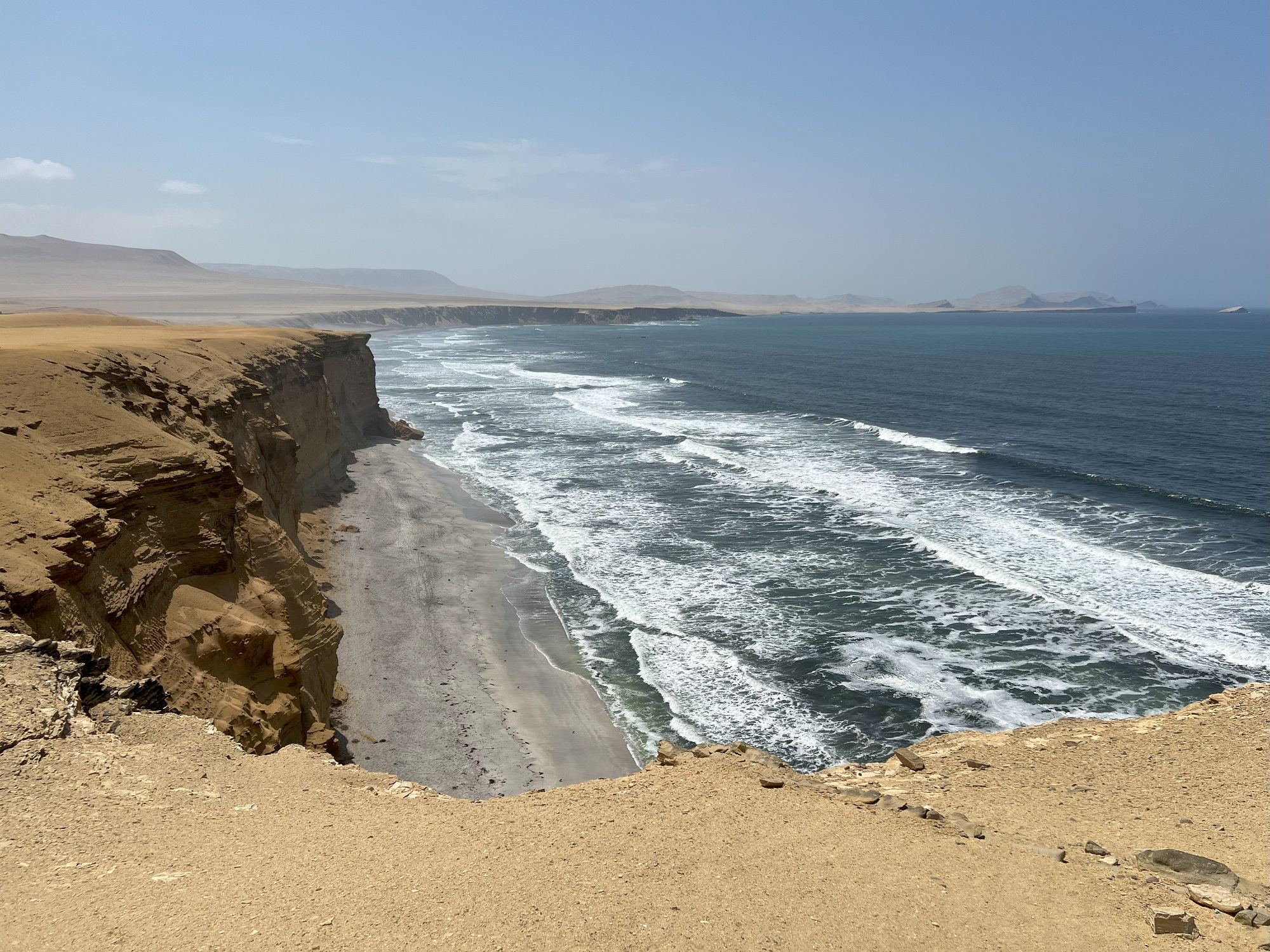
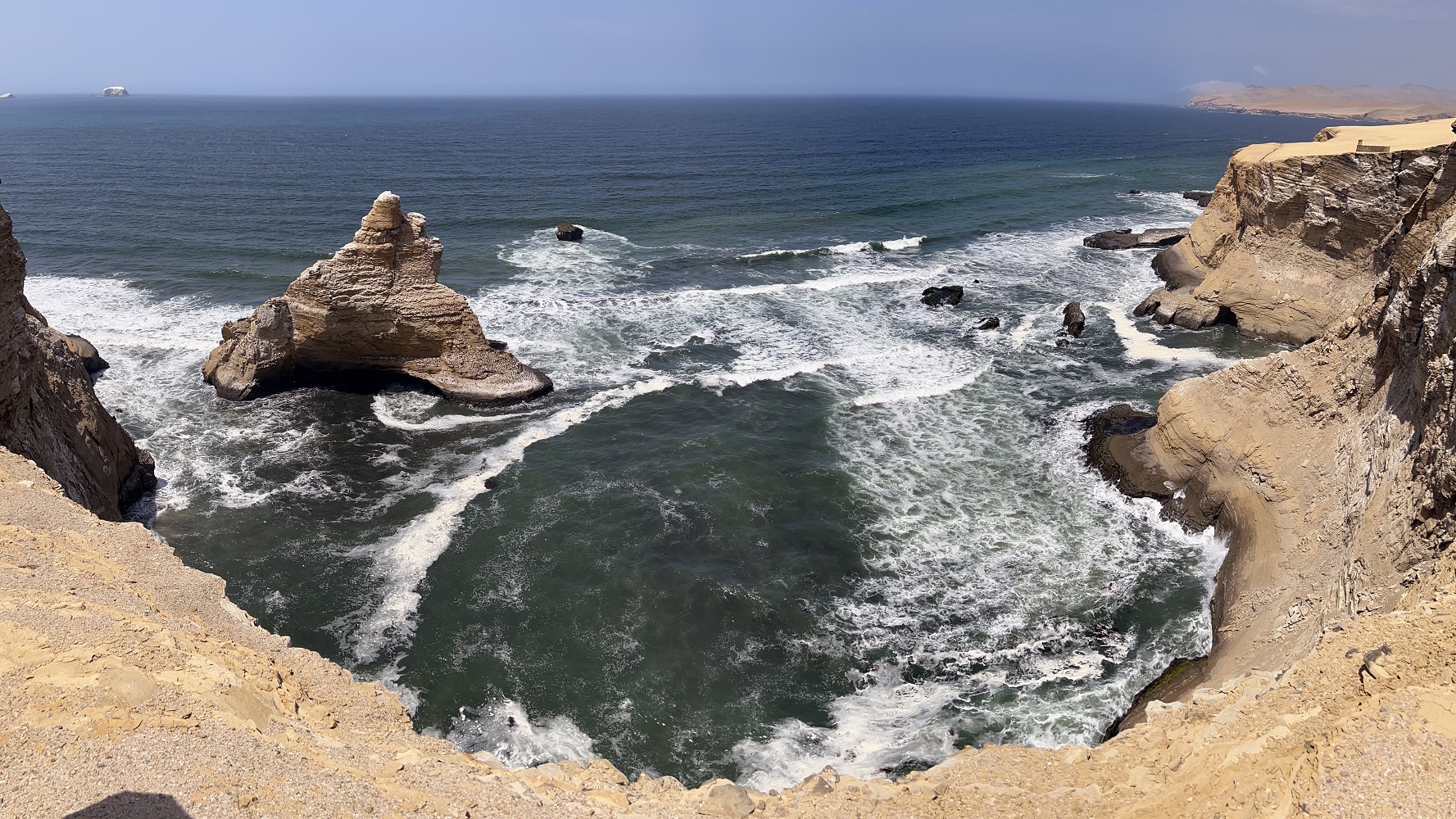
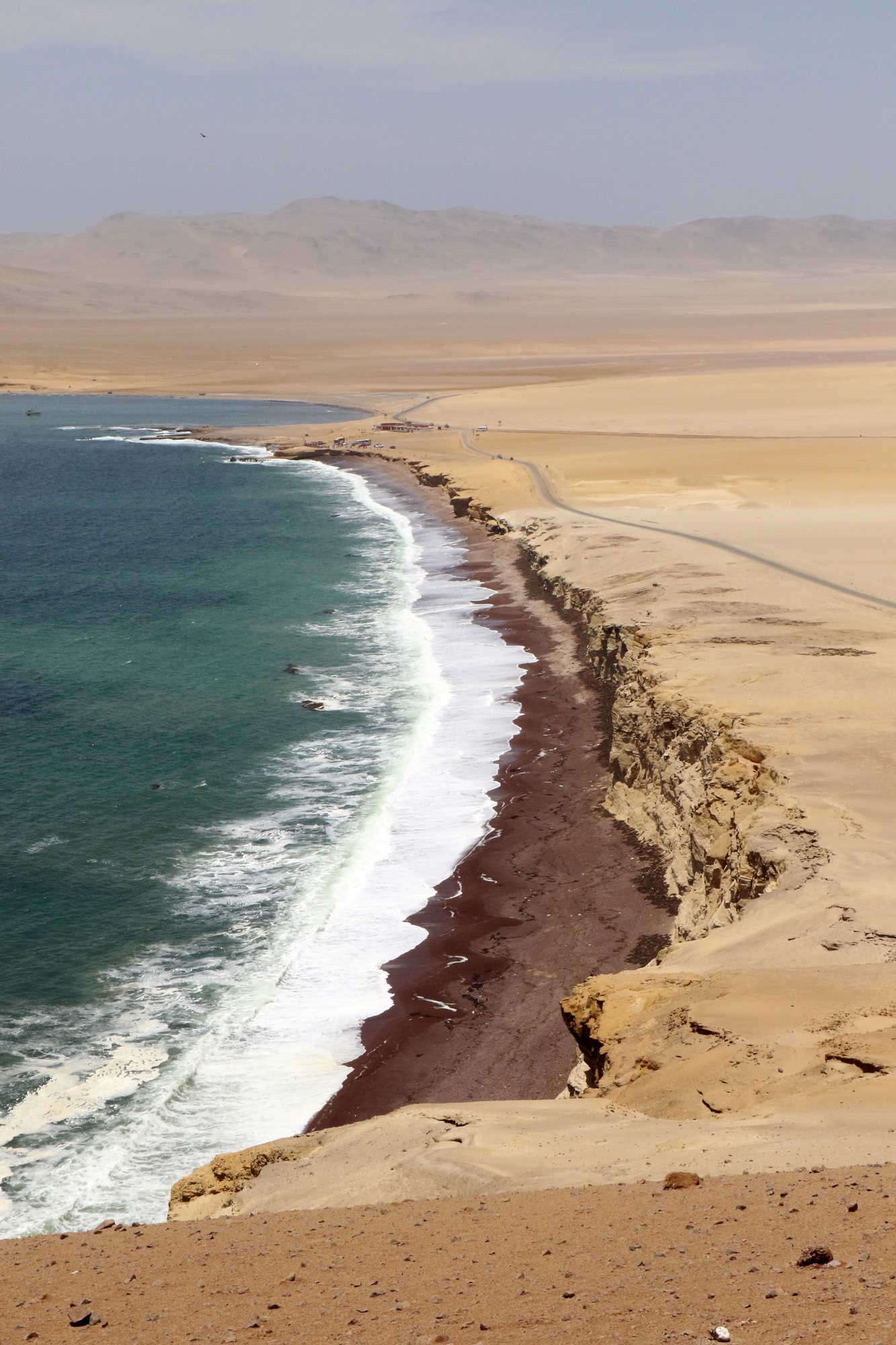
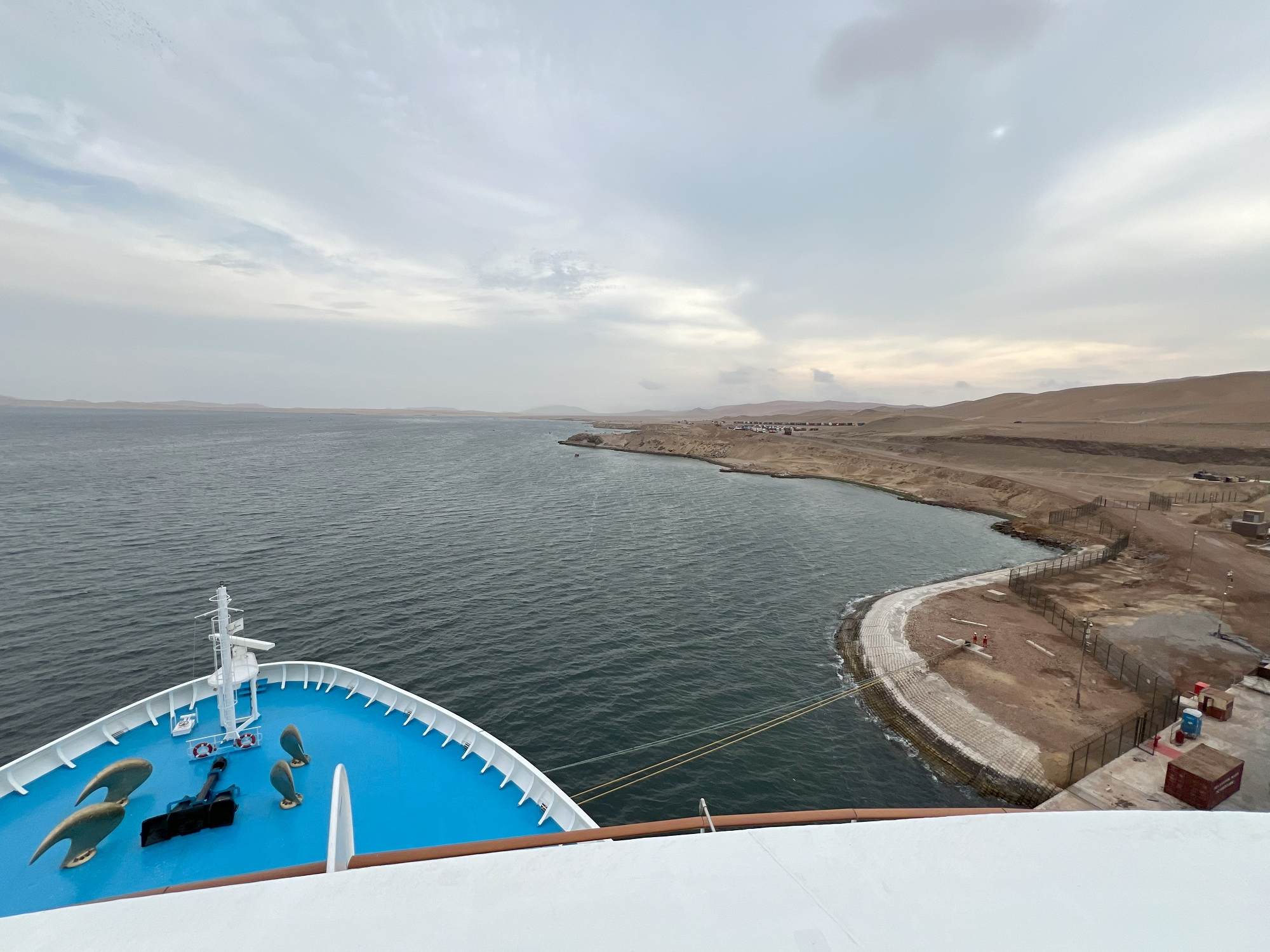
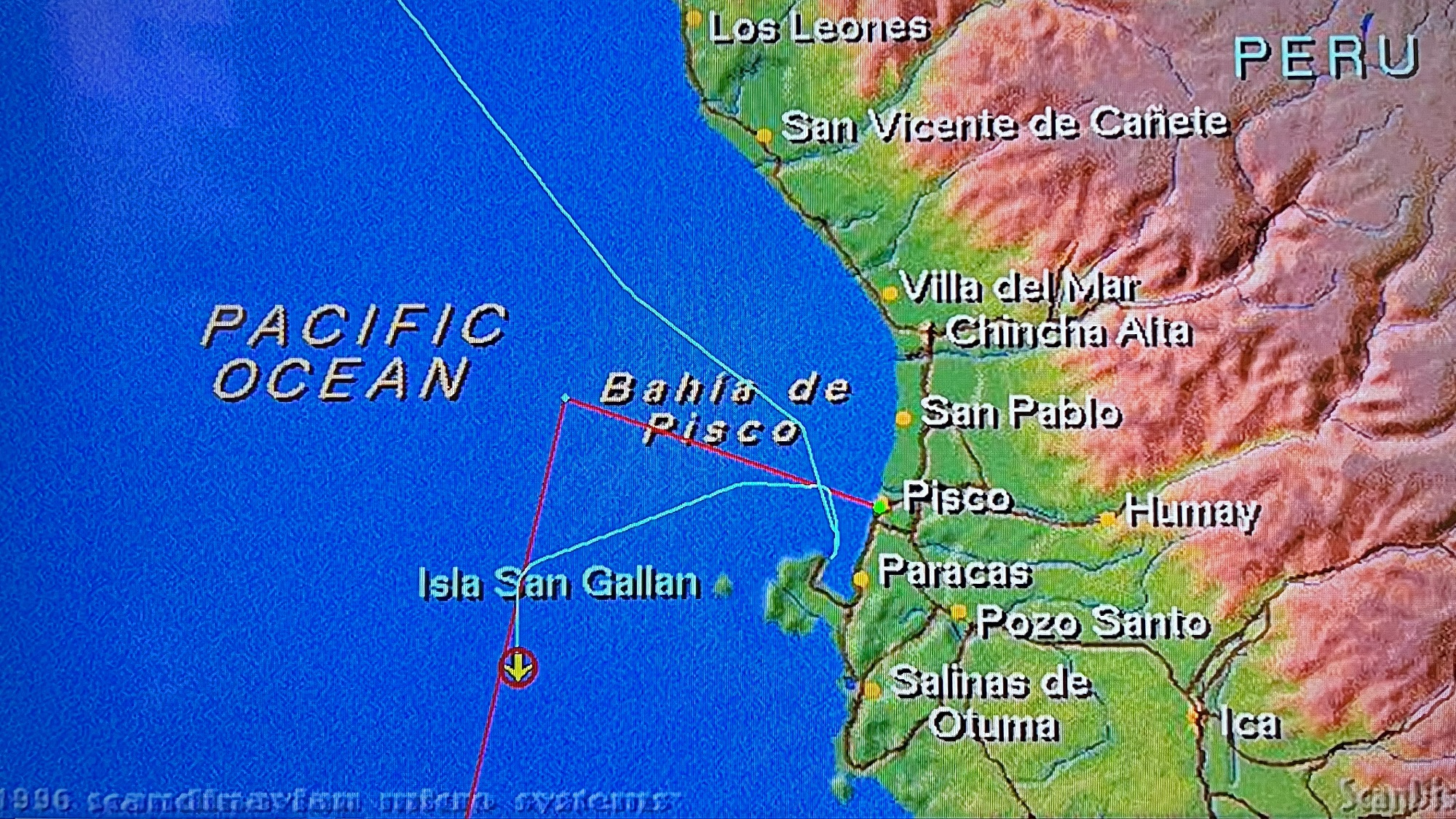
We arrived at the cruise terminal on the Paracas peninsula near Pisco this morning at 7 am.
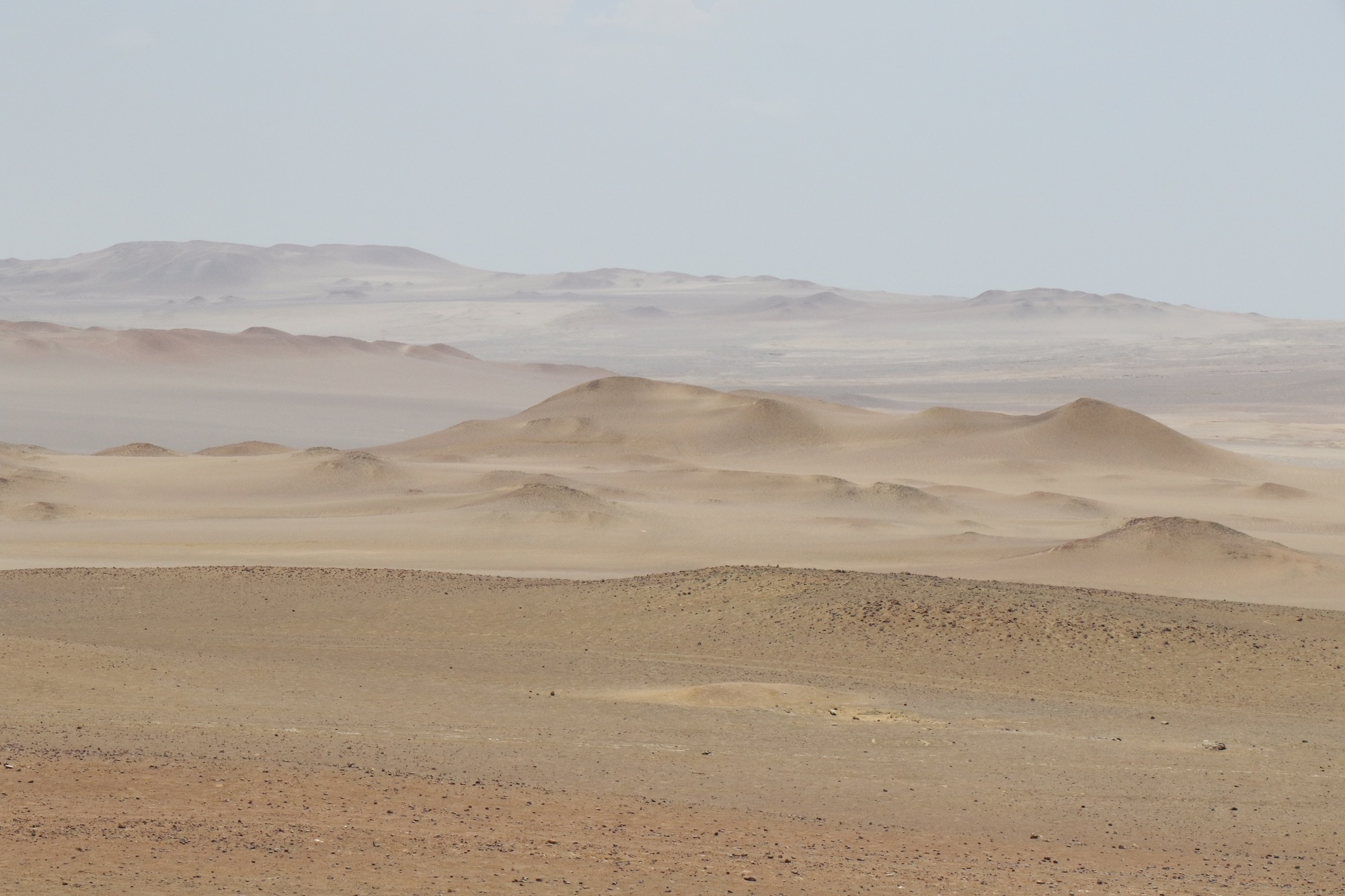
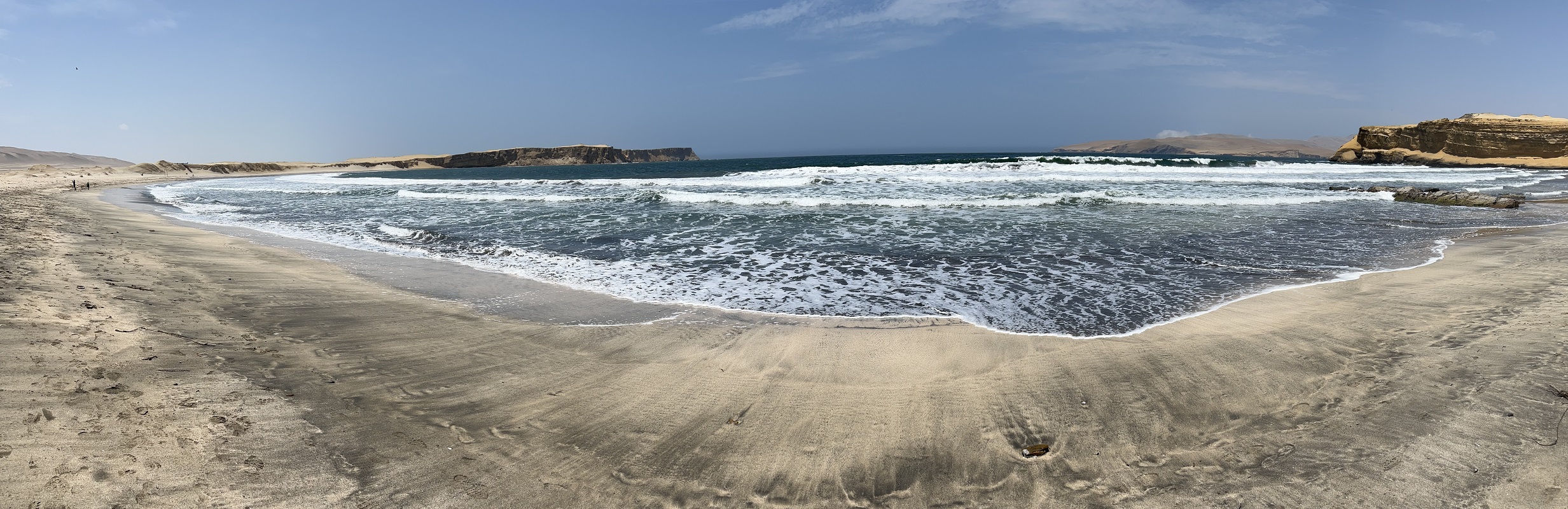
Our excursion was to nearby Paracas National Reserve, an area with protected desert and marine ecosystems.
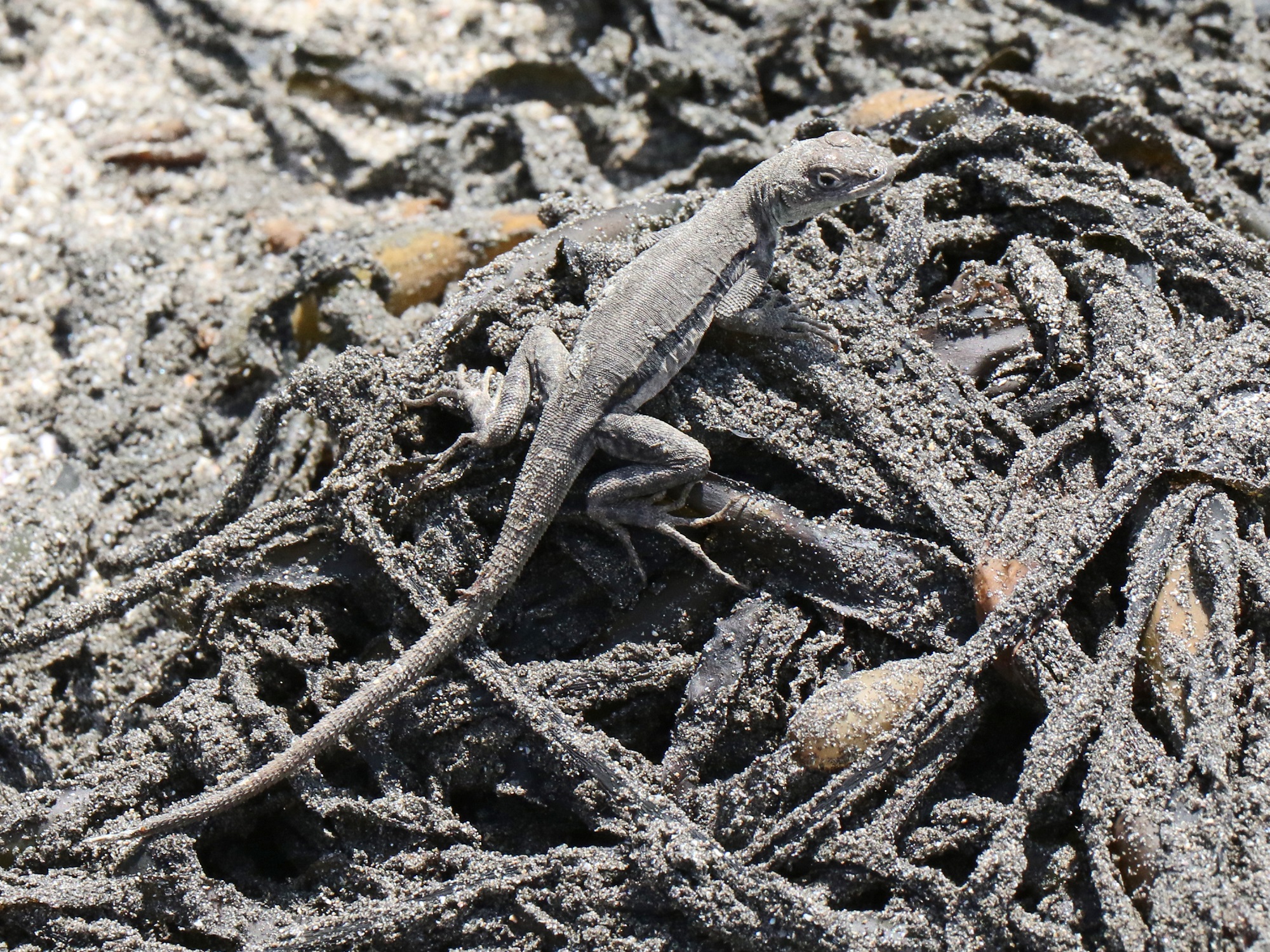
Most of the area is a moonscape with no vegetation.
It is really part of the Atacama Desert— the driest nonpolar desert in the world.

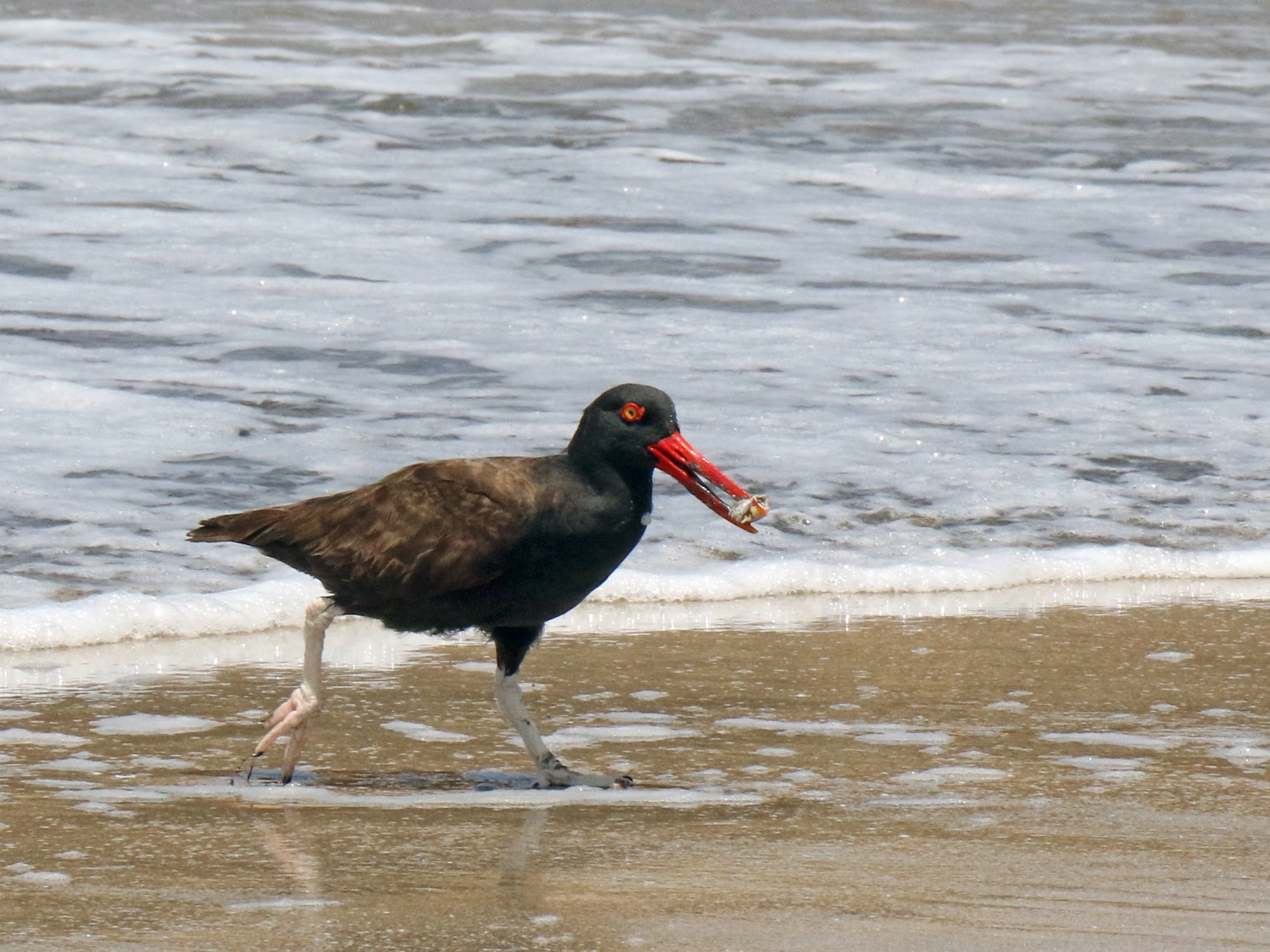
I caught this one digging a little crab out of the sand at the edge of the surf.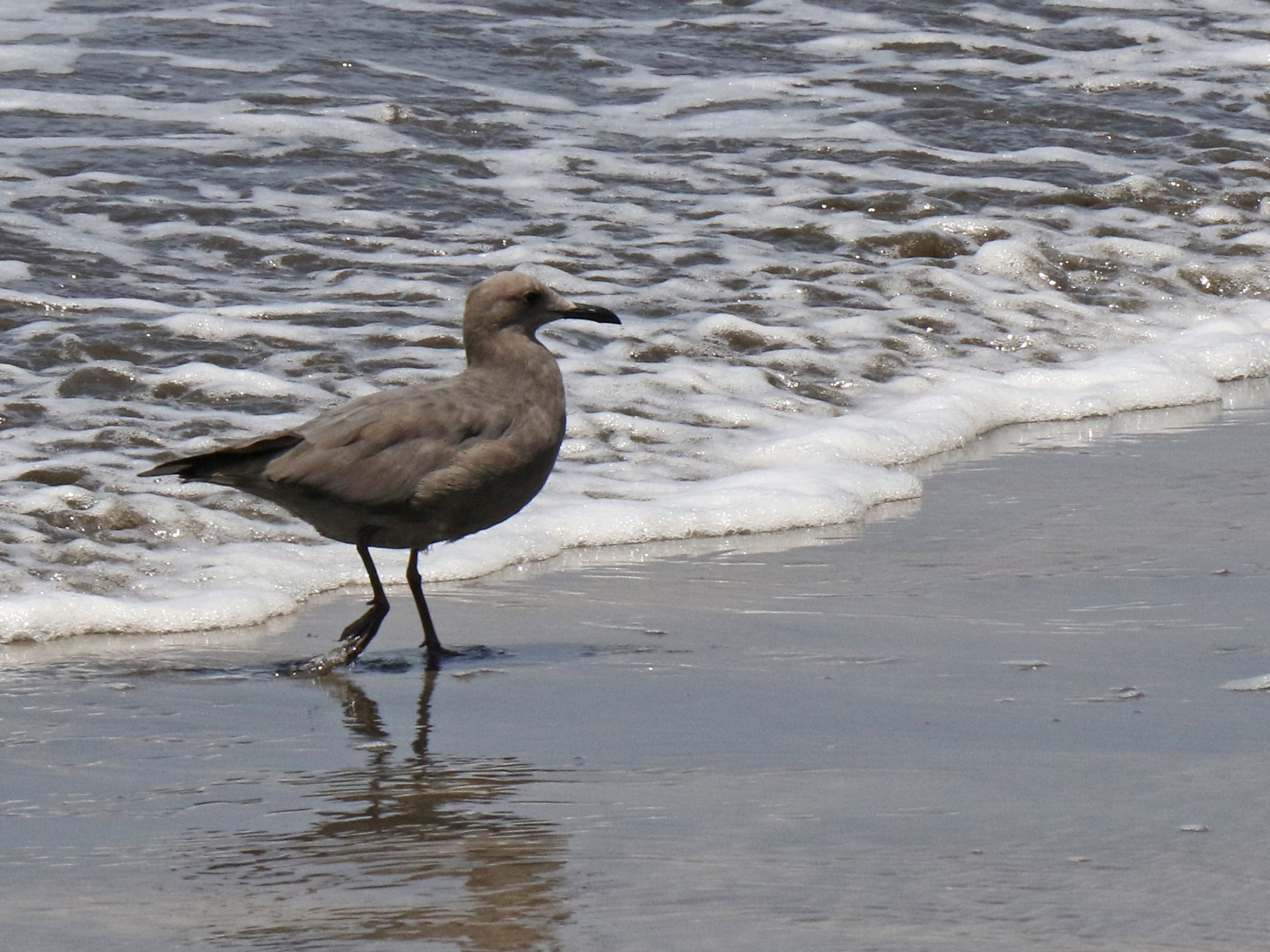
[Wikipedia]
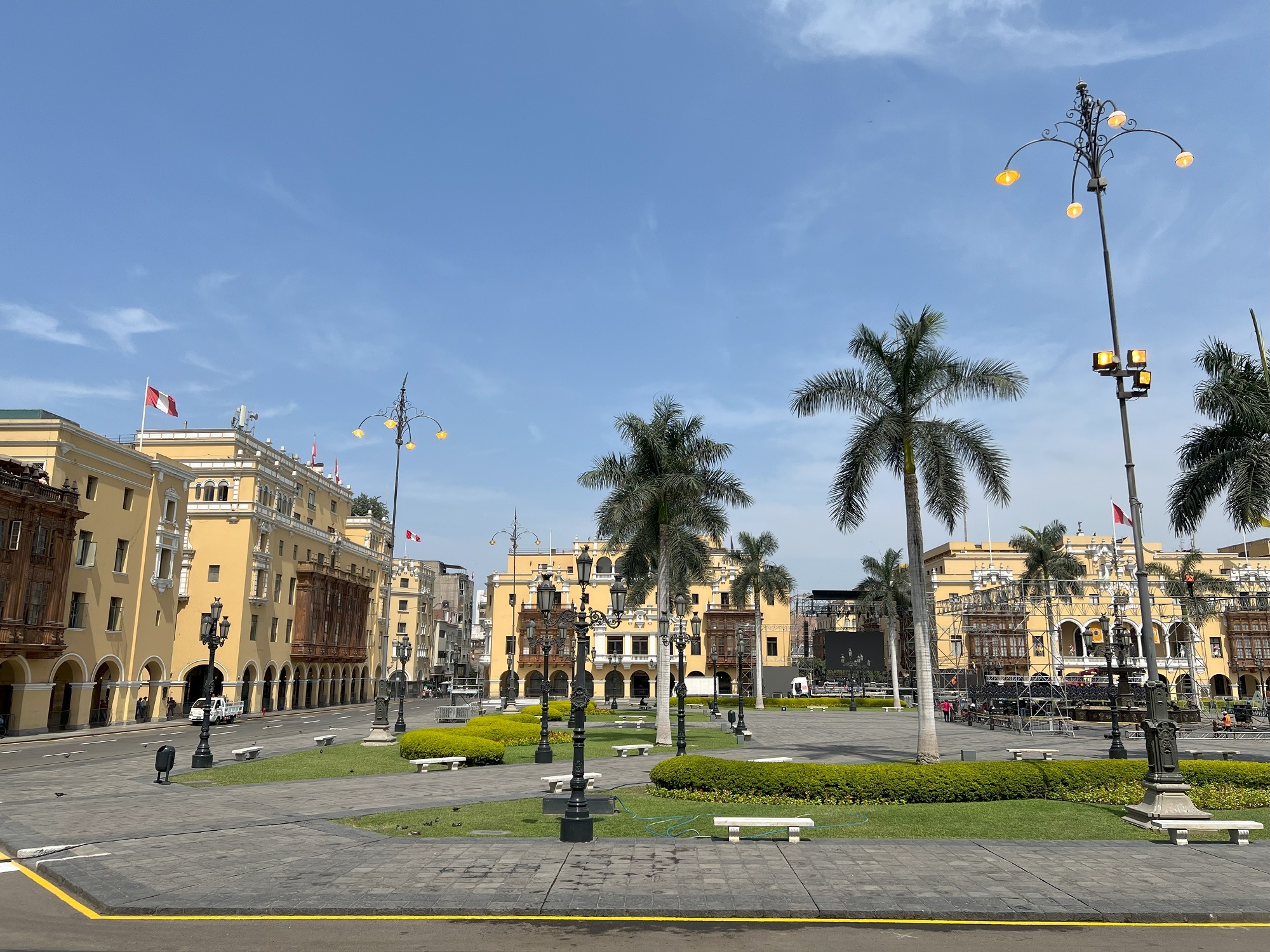
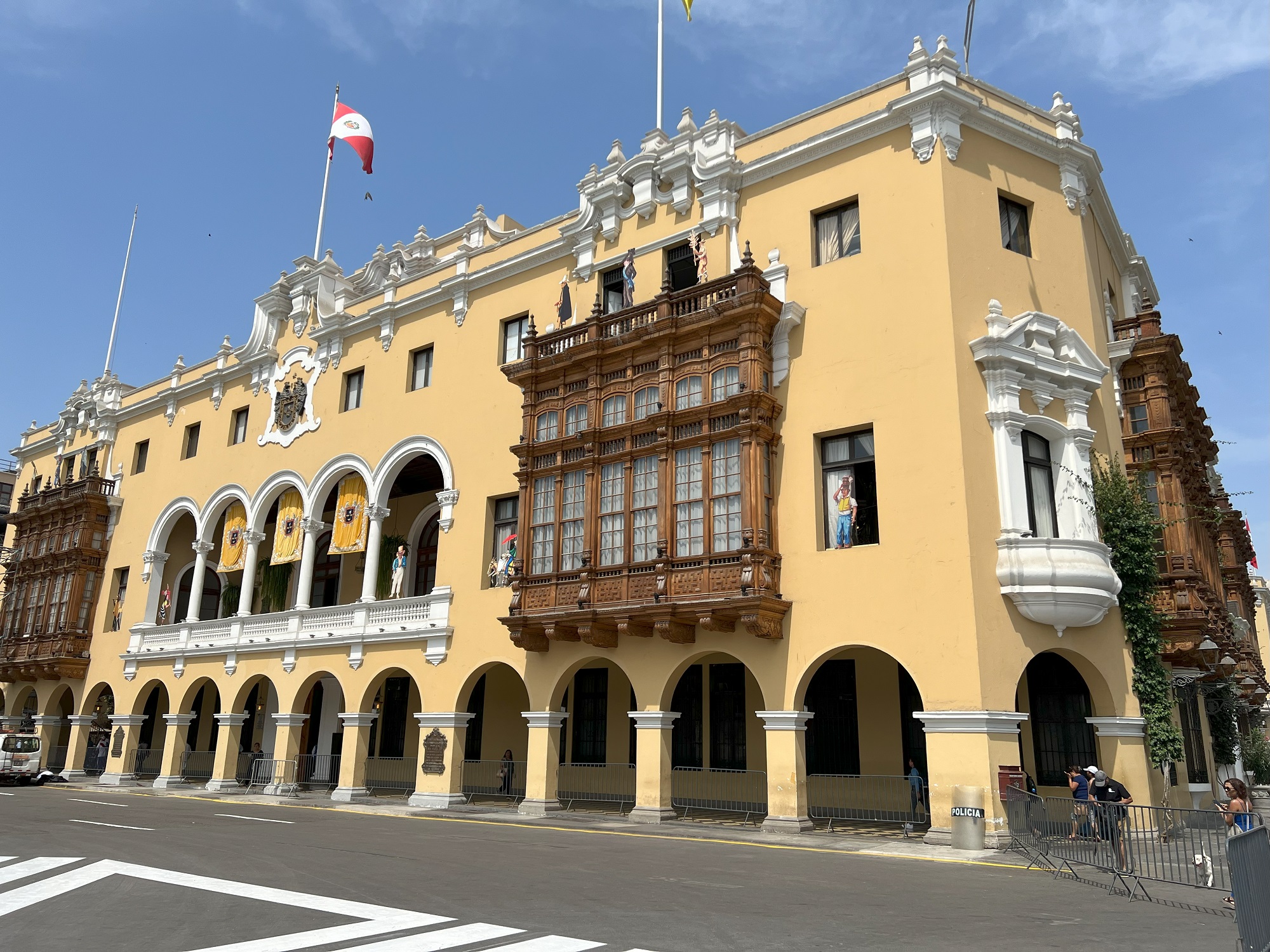
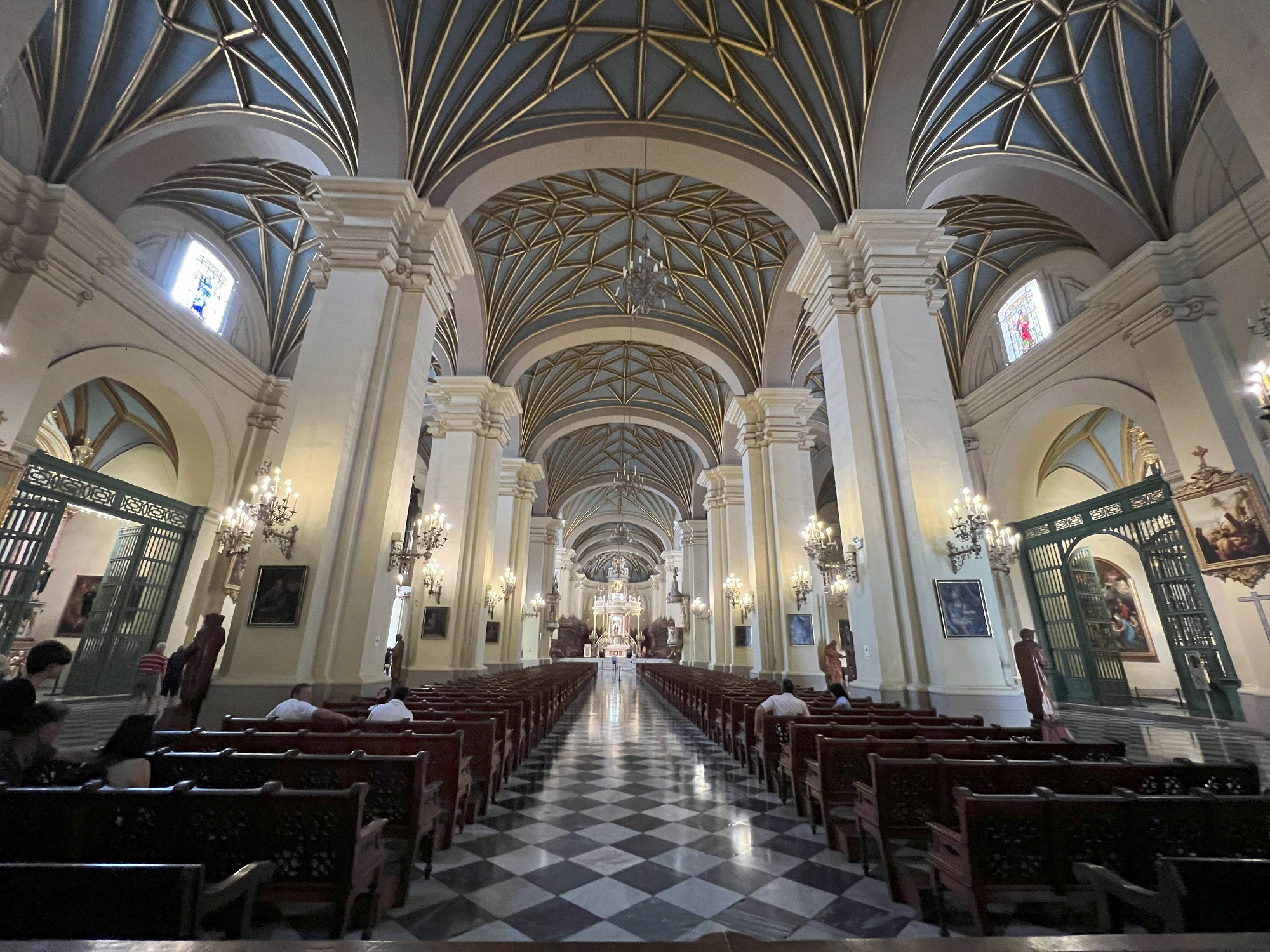
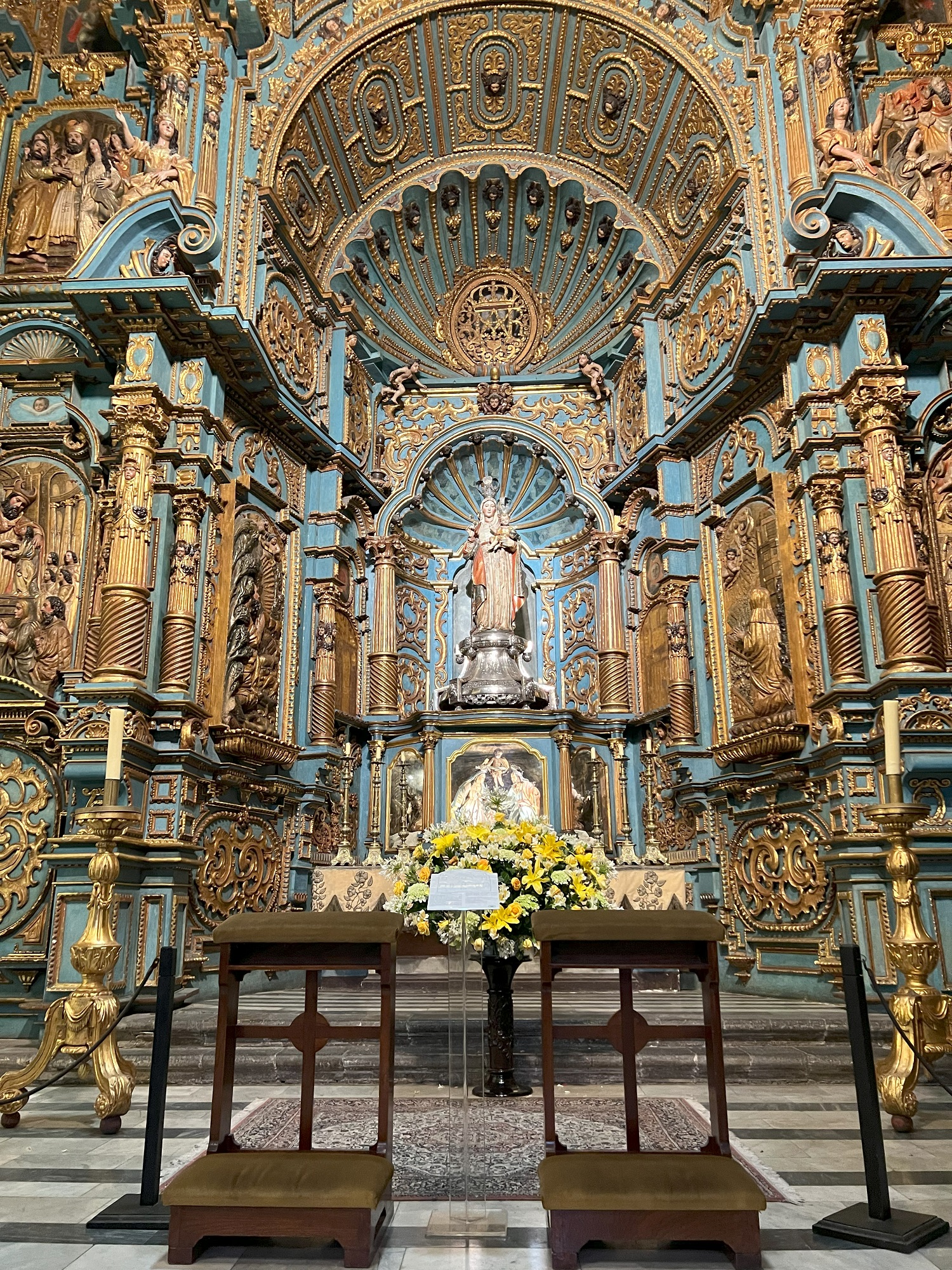
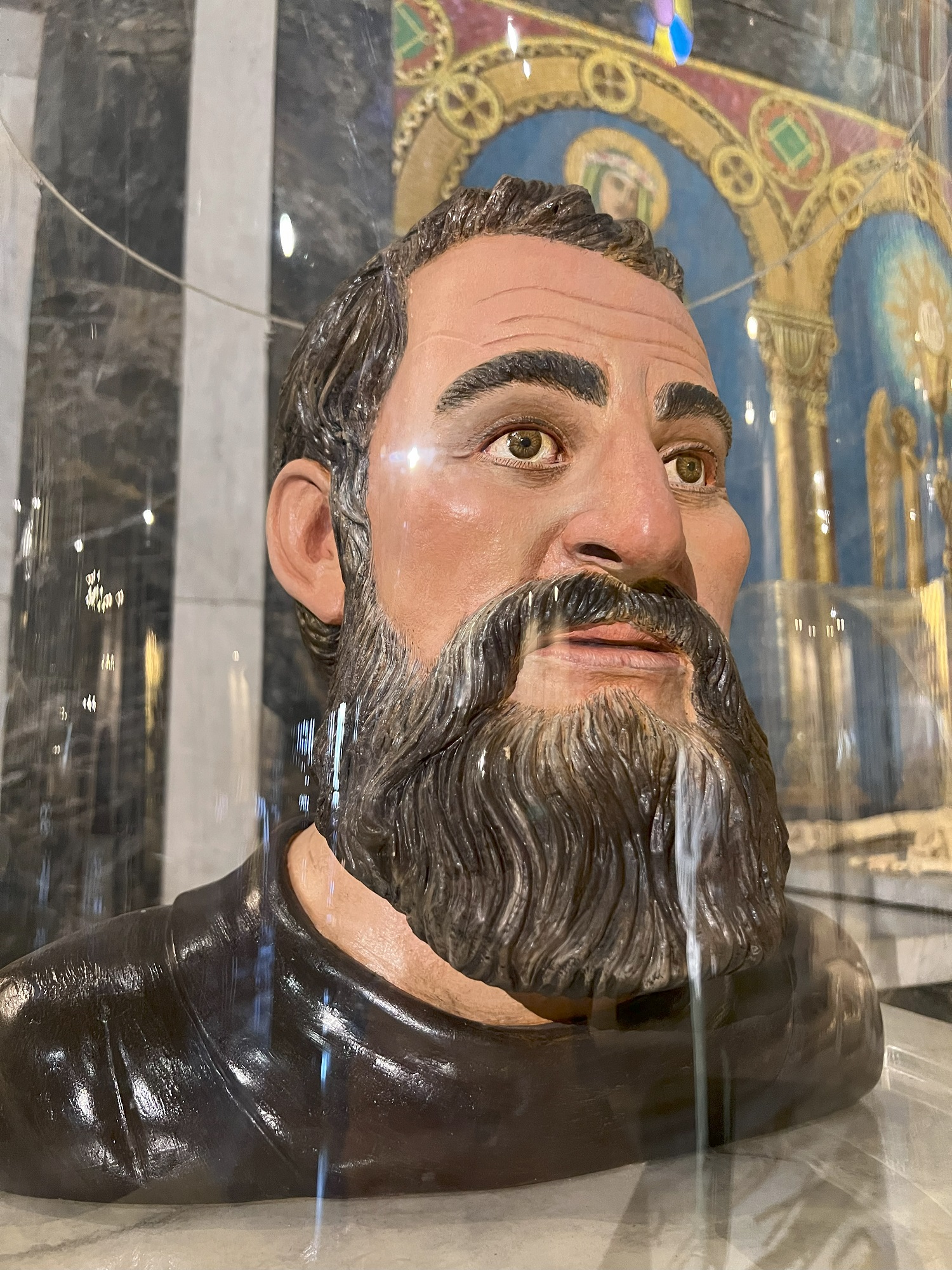
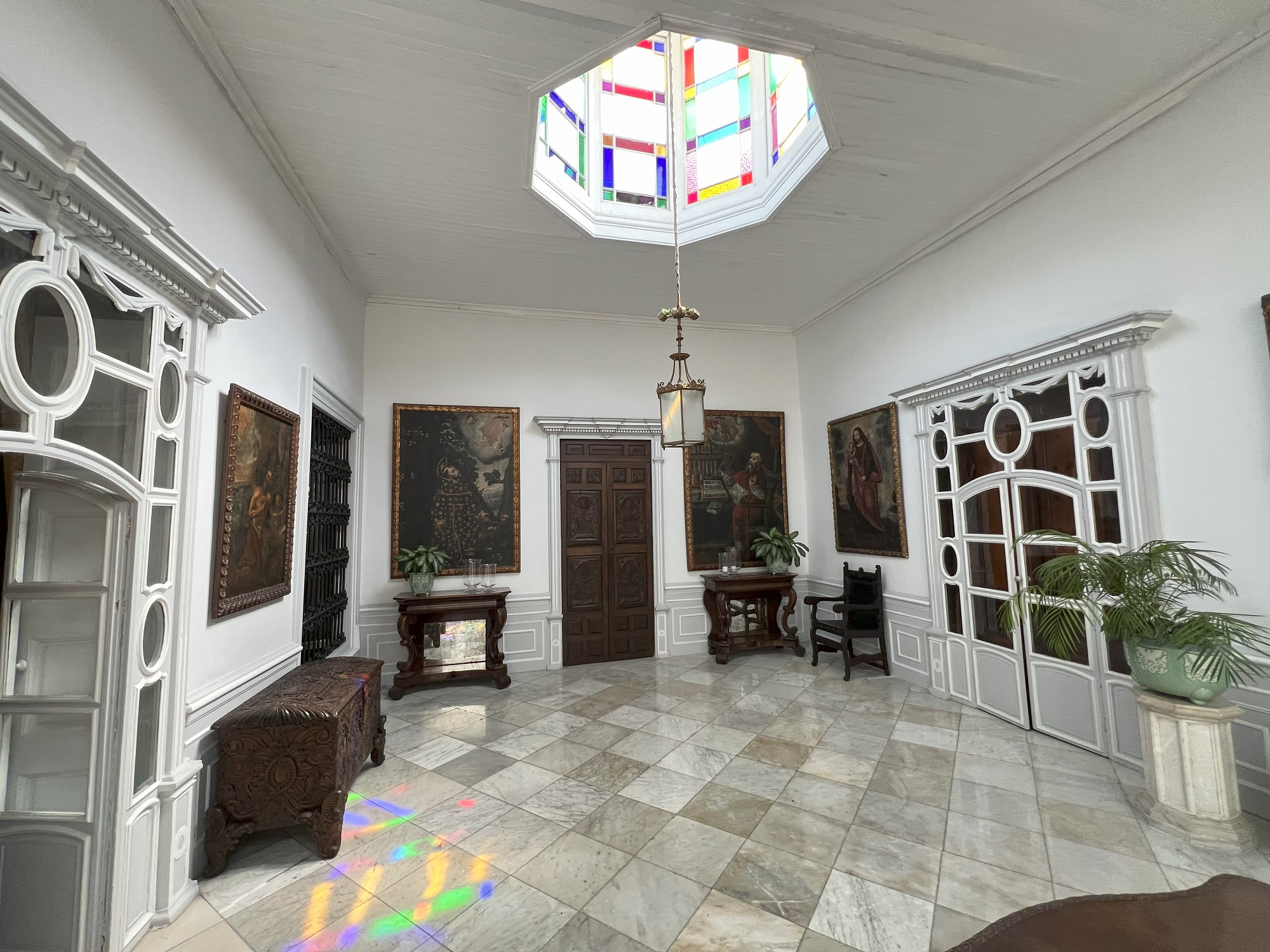
Today’s excursion into Lima took us to Lima Main Square (Plaza de Armas) with the Lima Cathedral just adjacent to it.
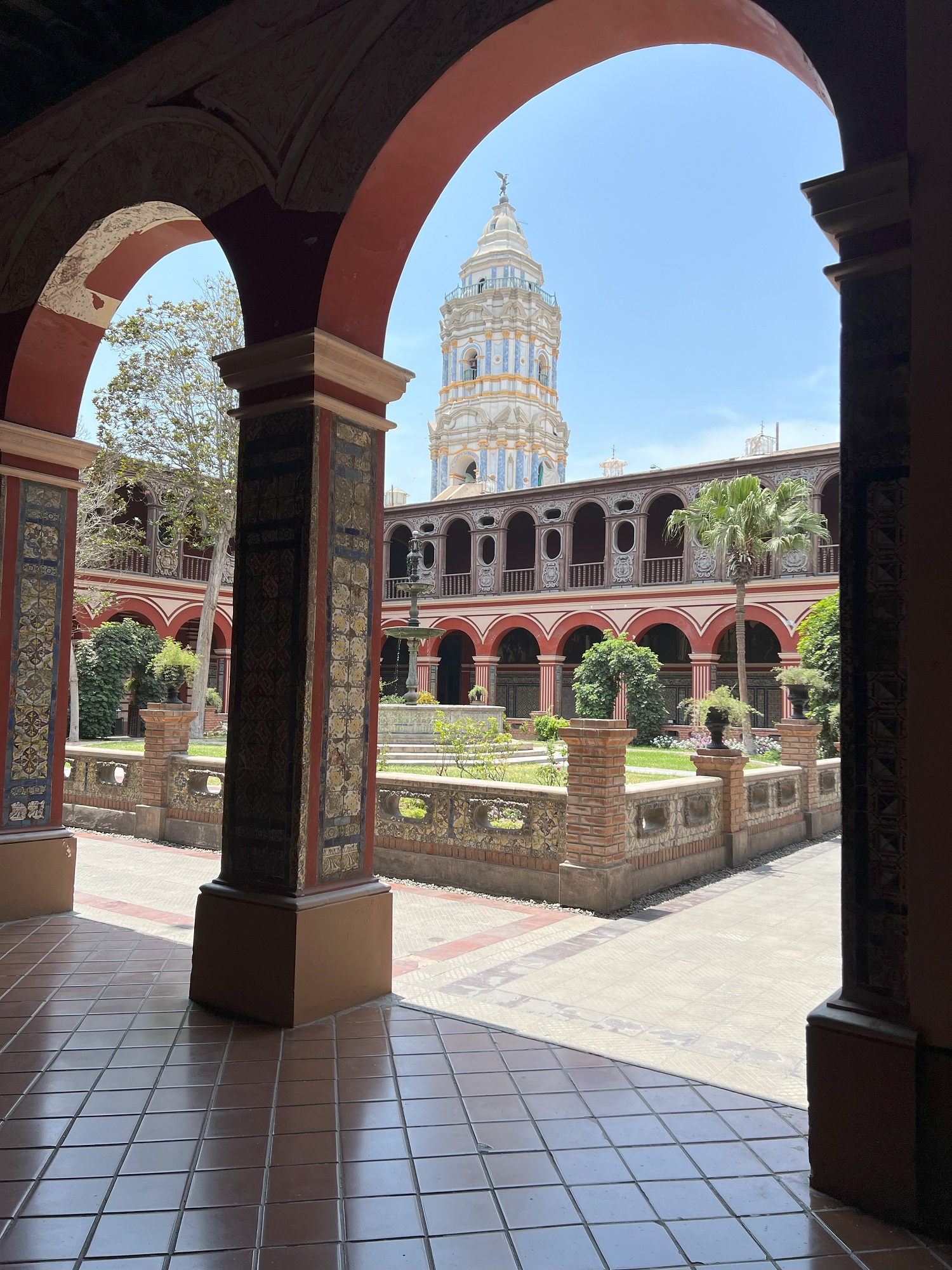
We also stopped by the Basilica and Convent of Santo Domingo.
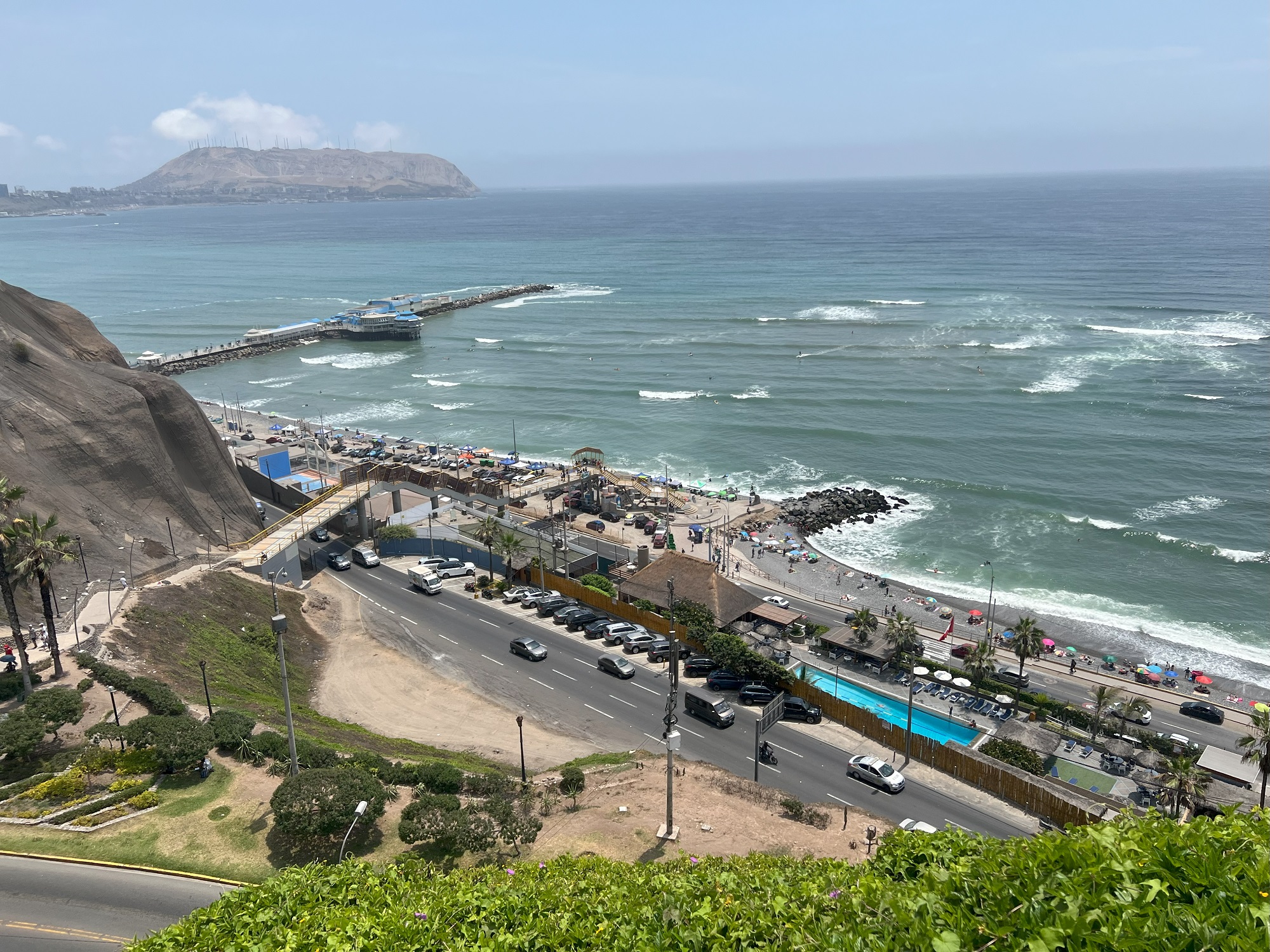
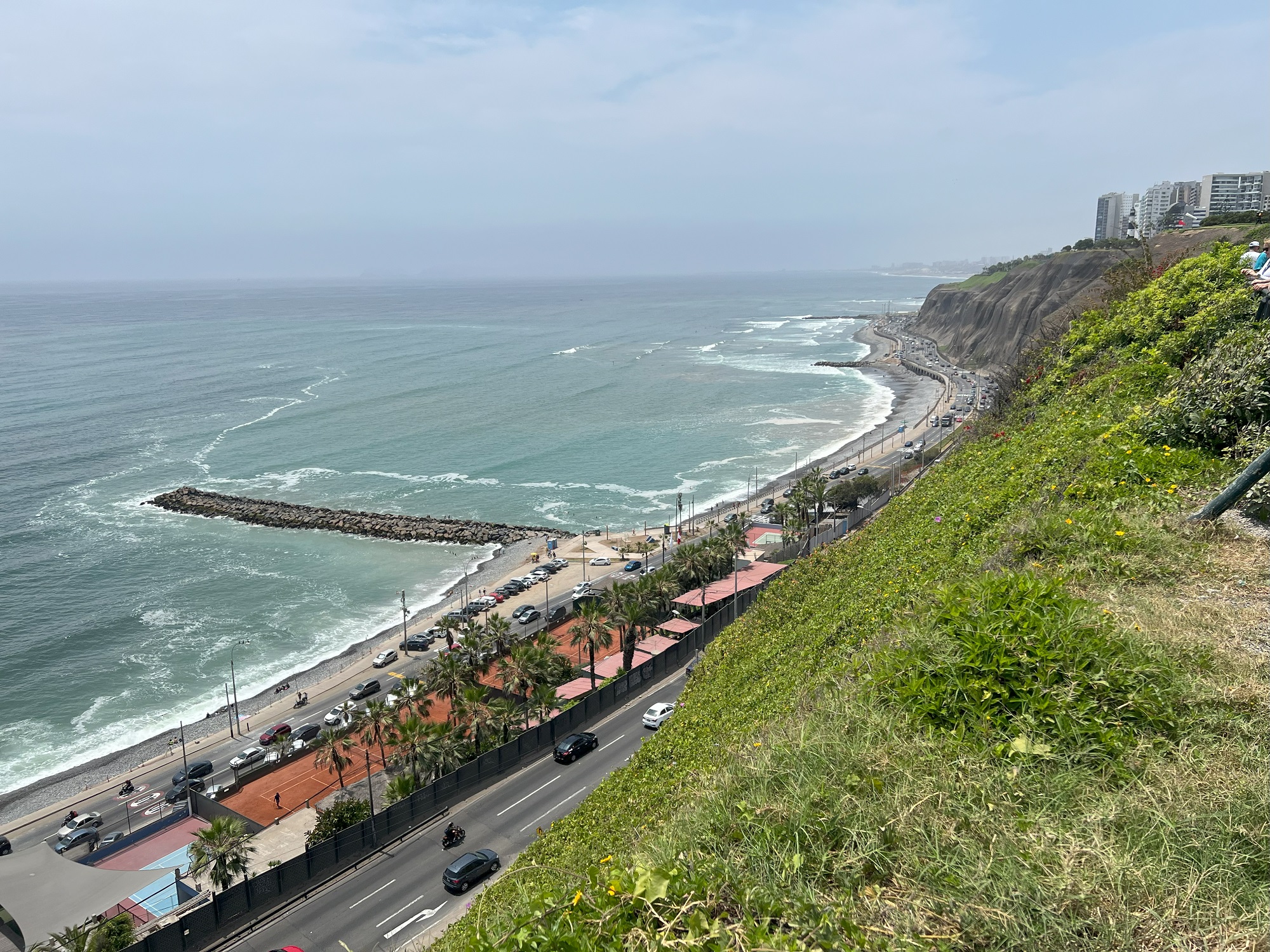
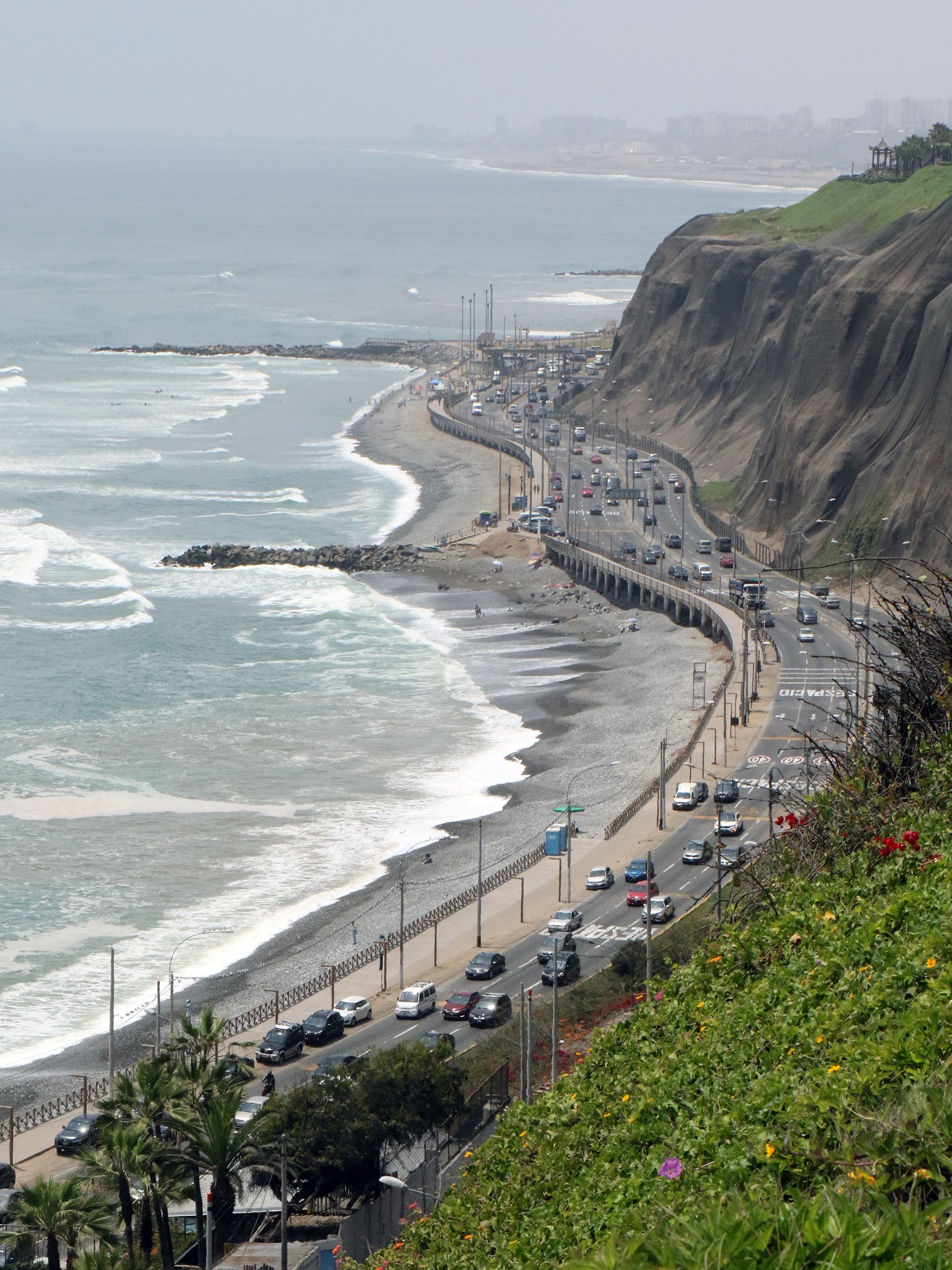
On the way back to Callao and the cruise terminal, we stopped at the Parque Domodossola in Miraflores for a look at the Pacific Ocean and the playas (beaches) below.
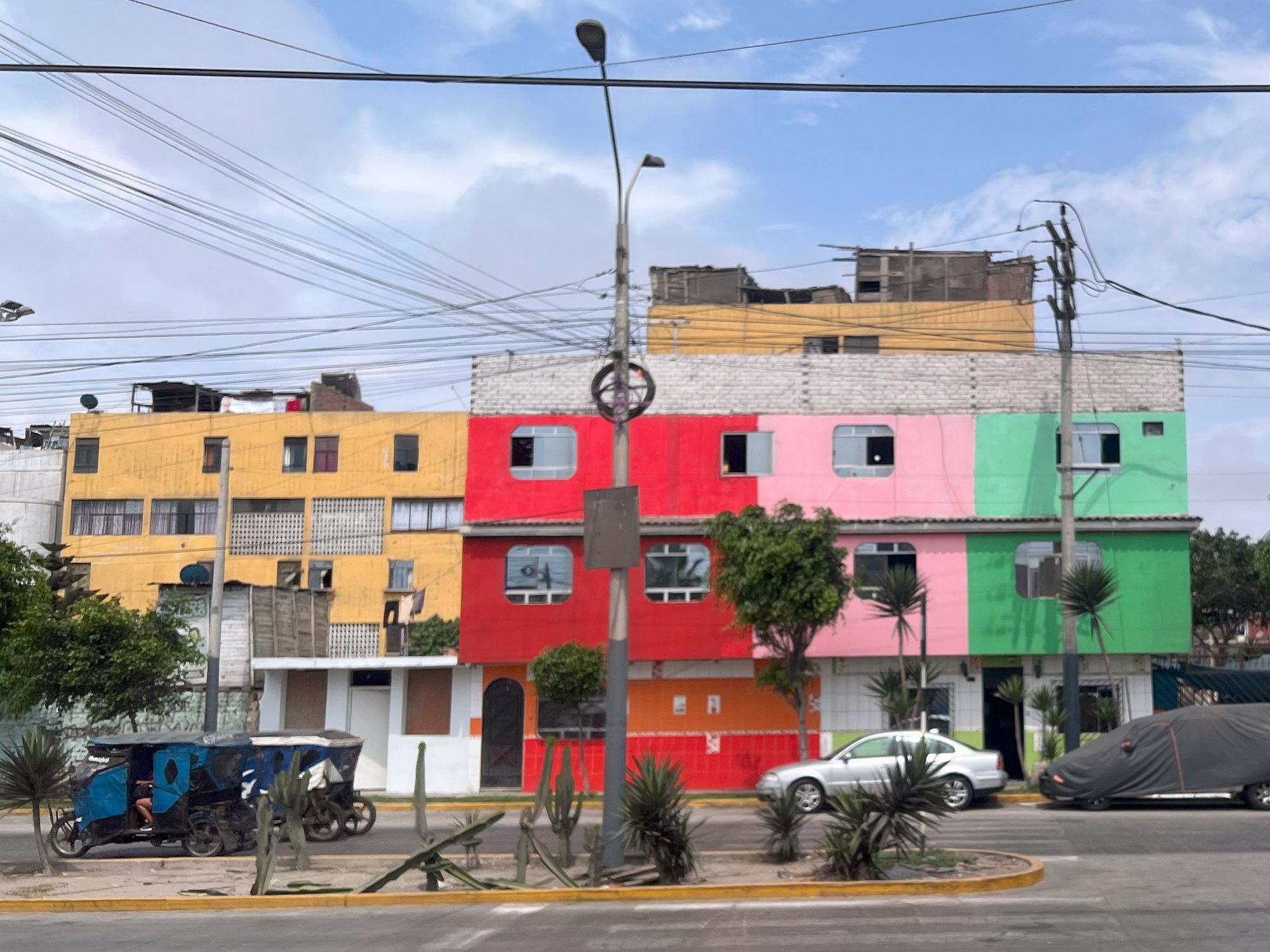
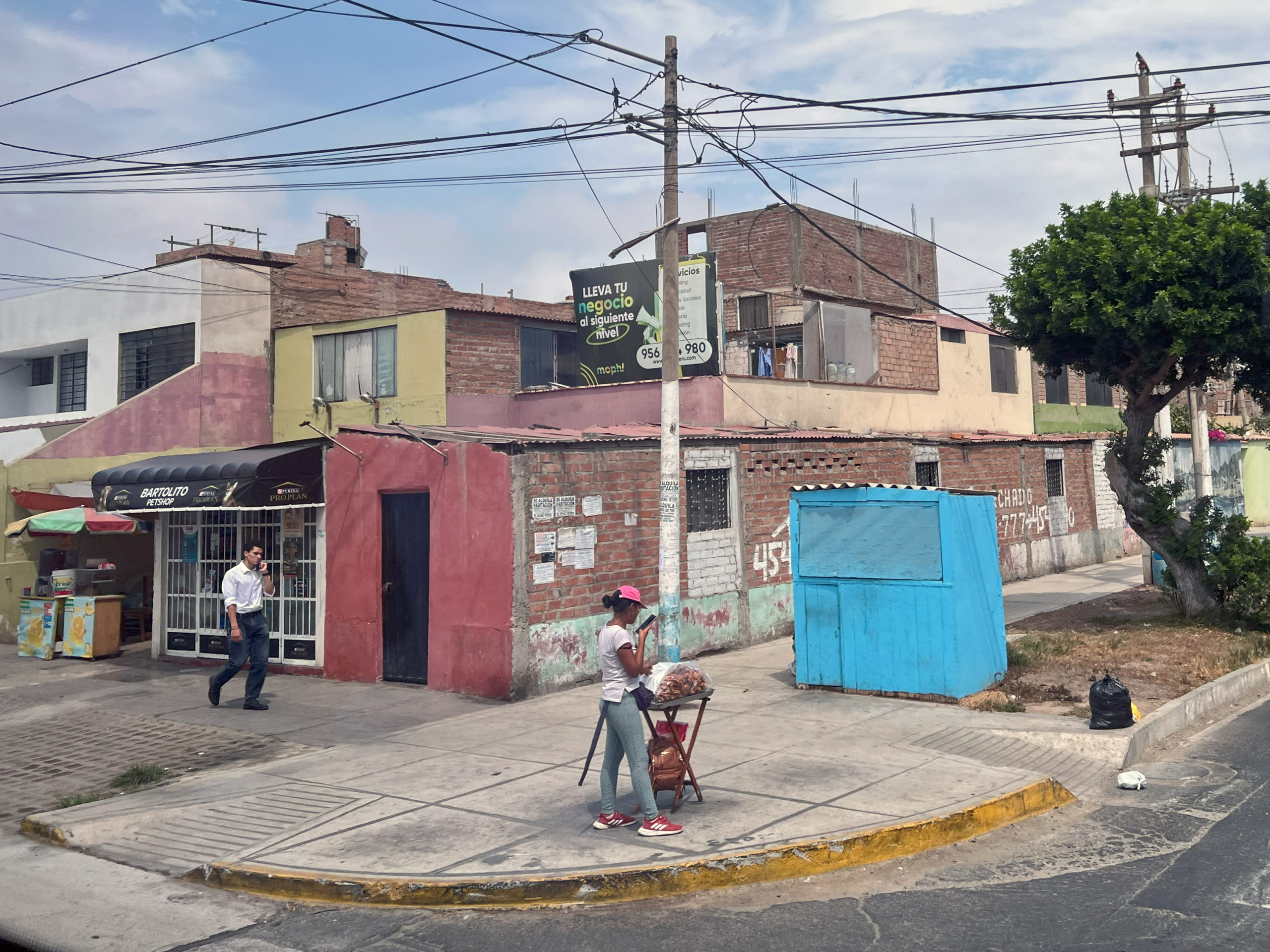
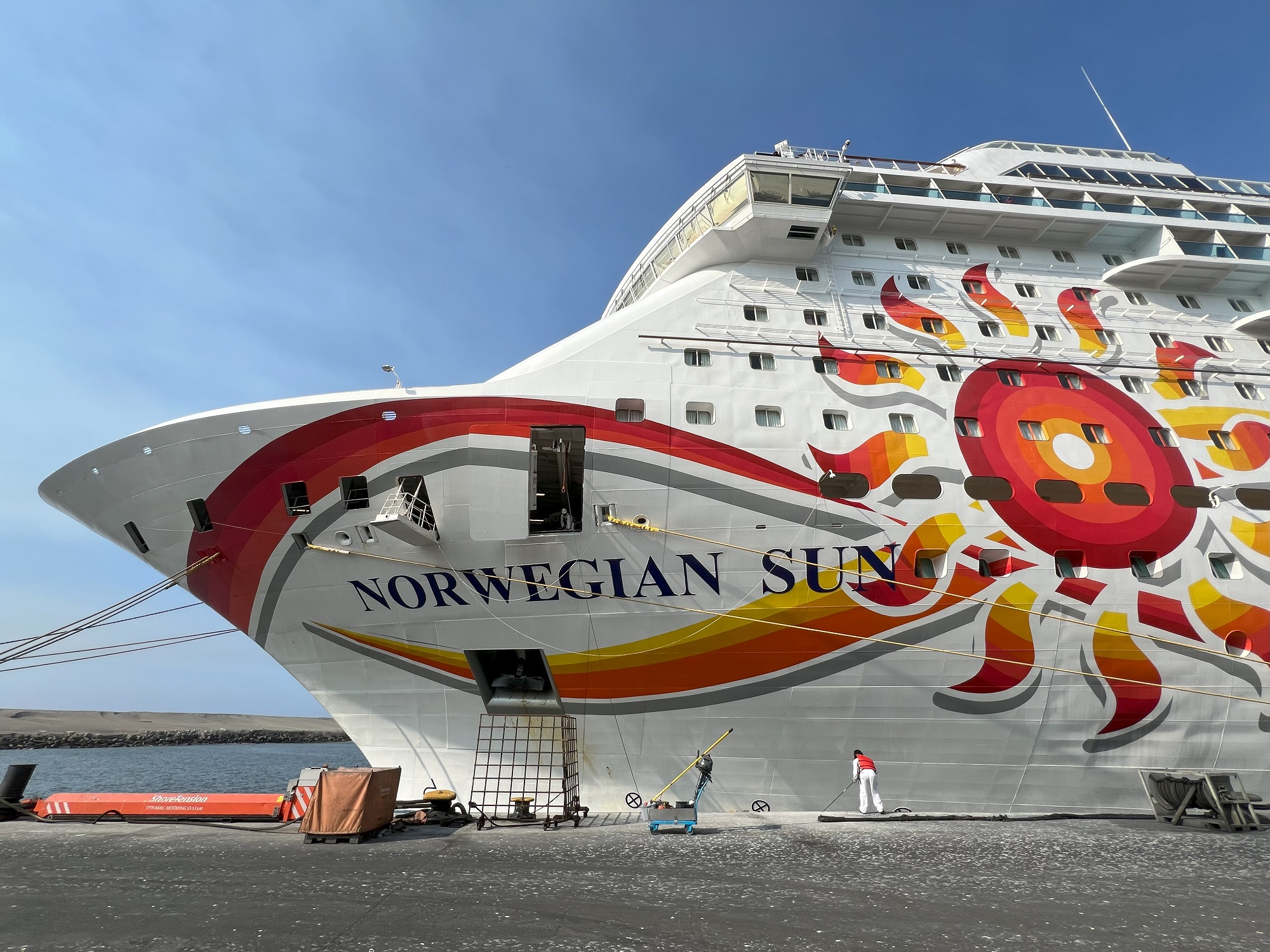
The Norwegian Sun made it into the port town of Salaverry at seven this morning (first picture).
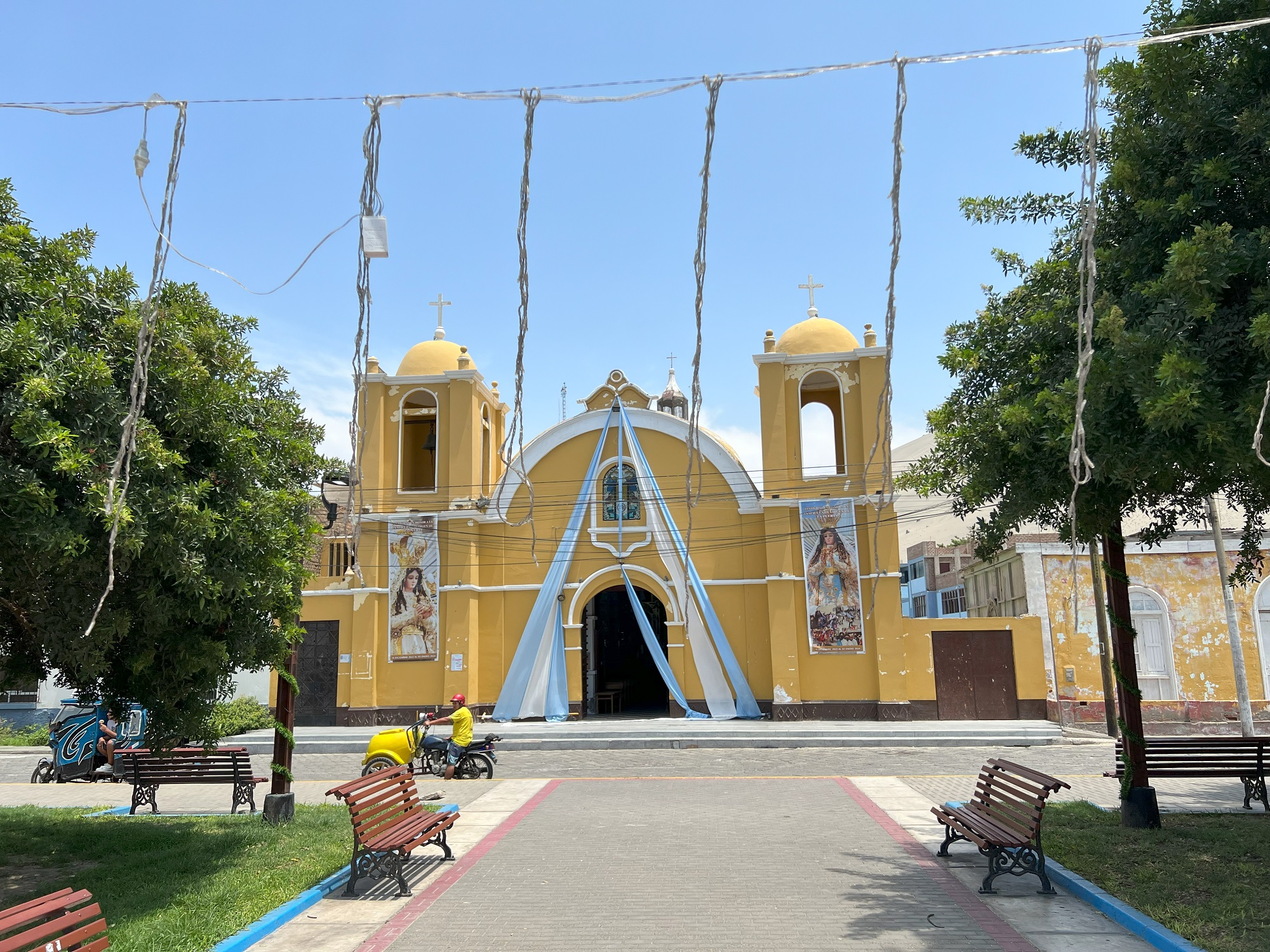
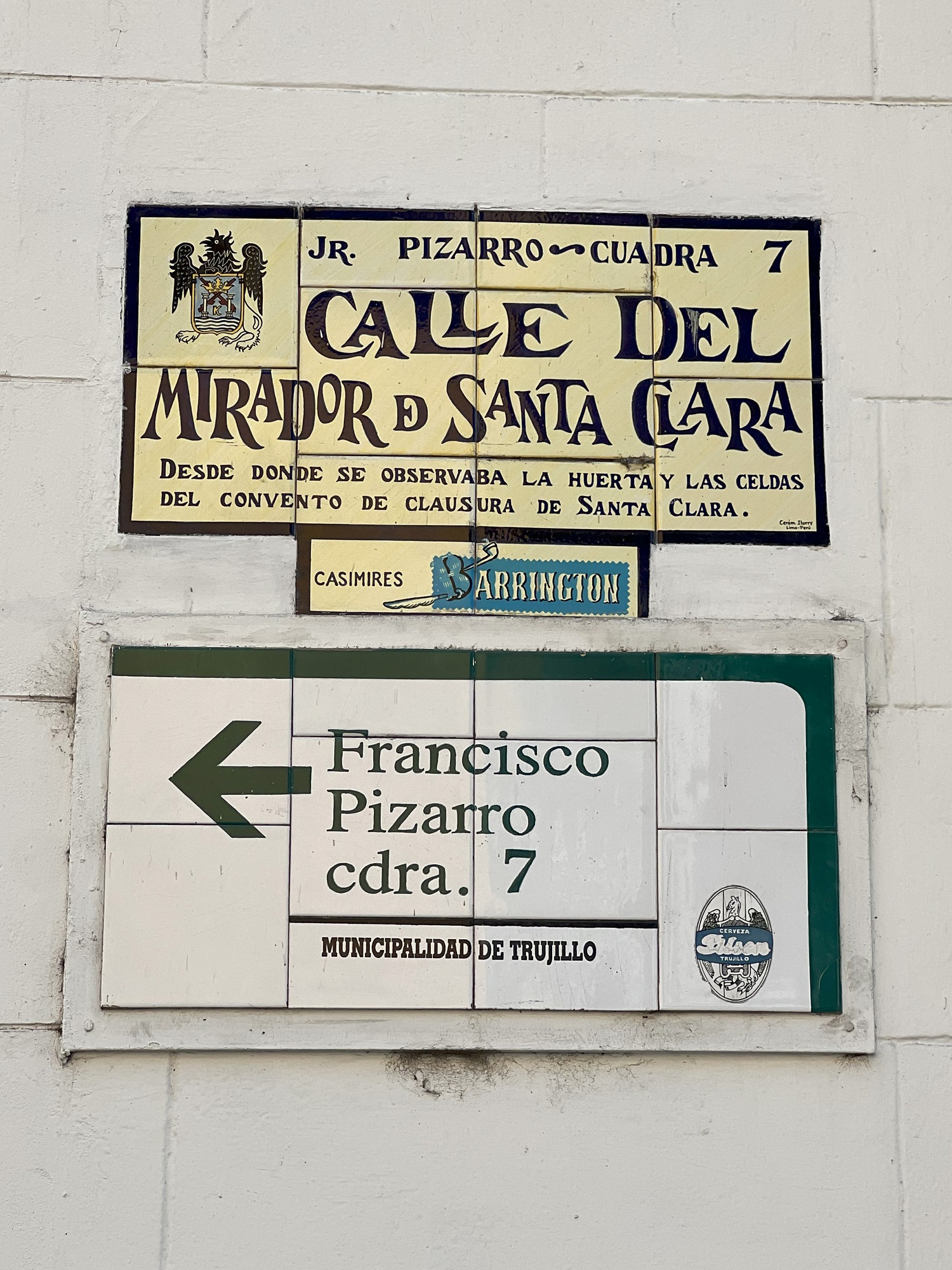
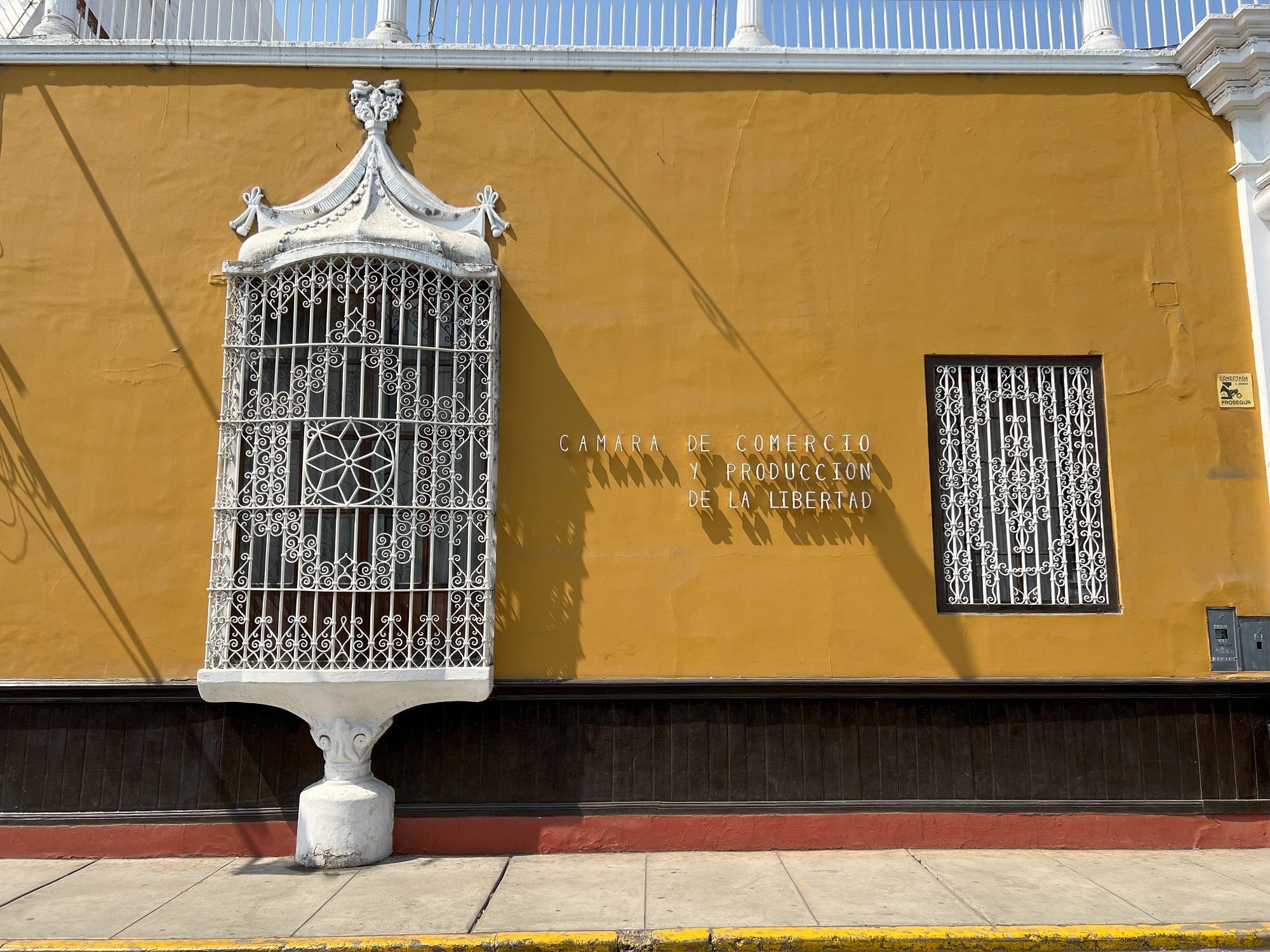
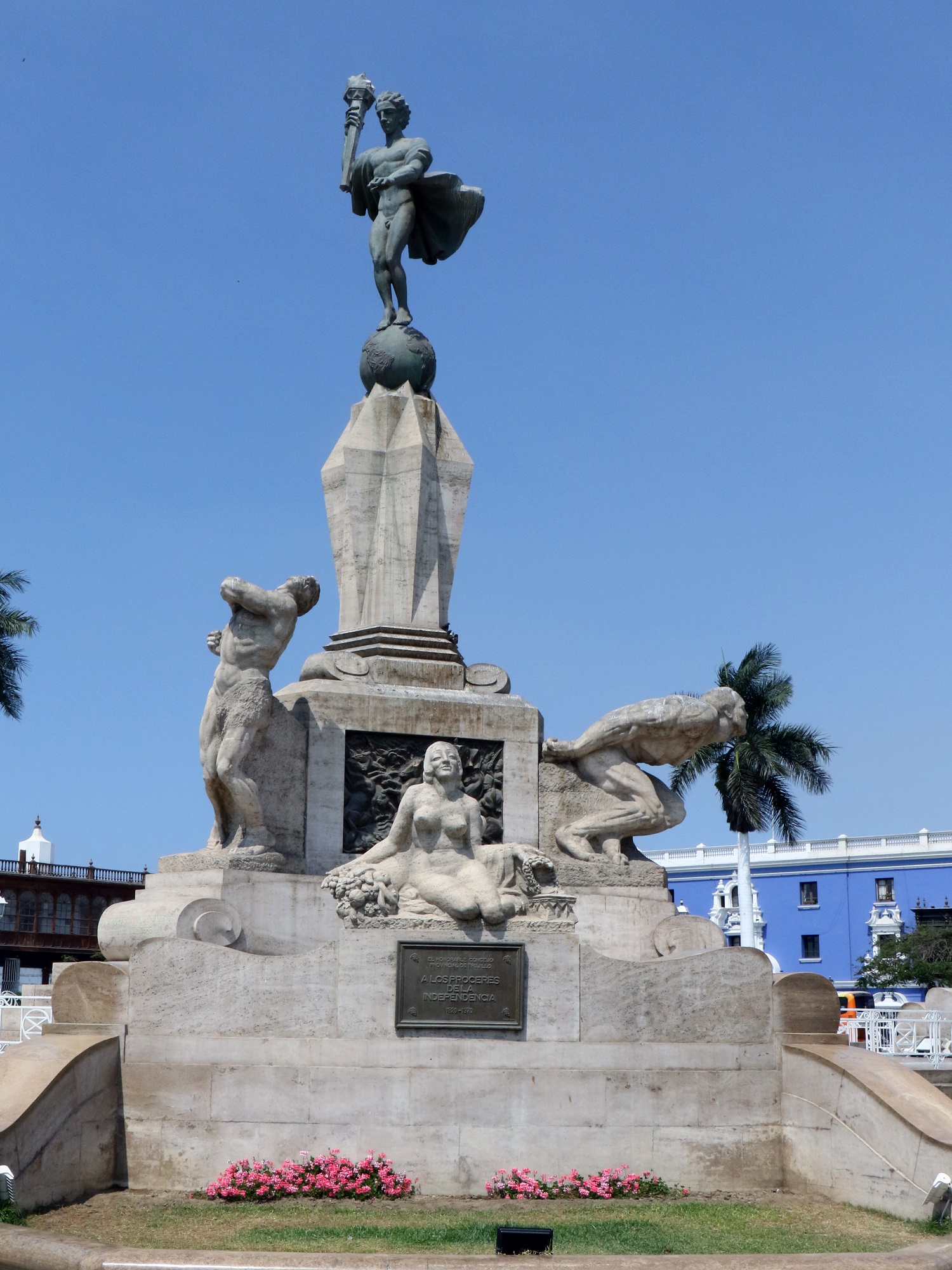
There was a shuttle bus out to the main plaza in Salaverry (third picture), and from there my party of three were left to our own devices to find transport to the city of Trujillo (pop. about 1 million).
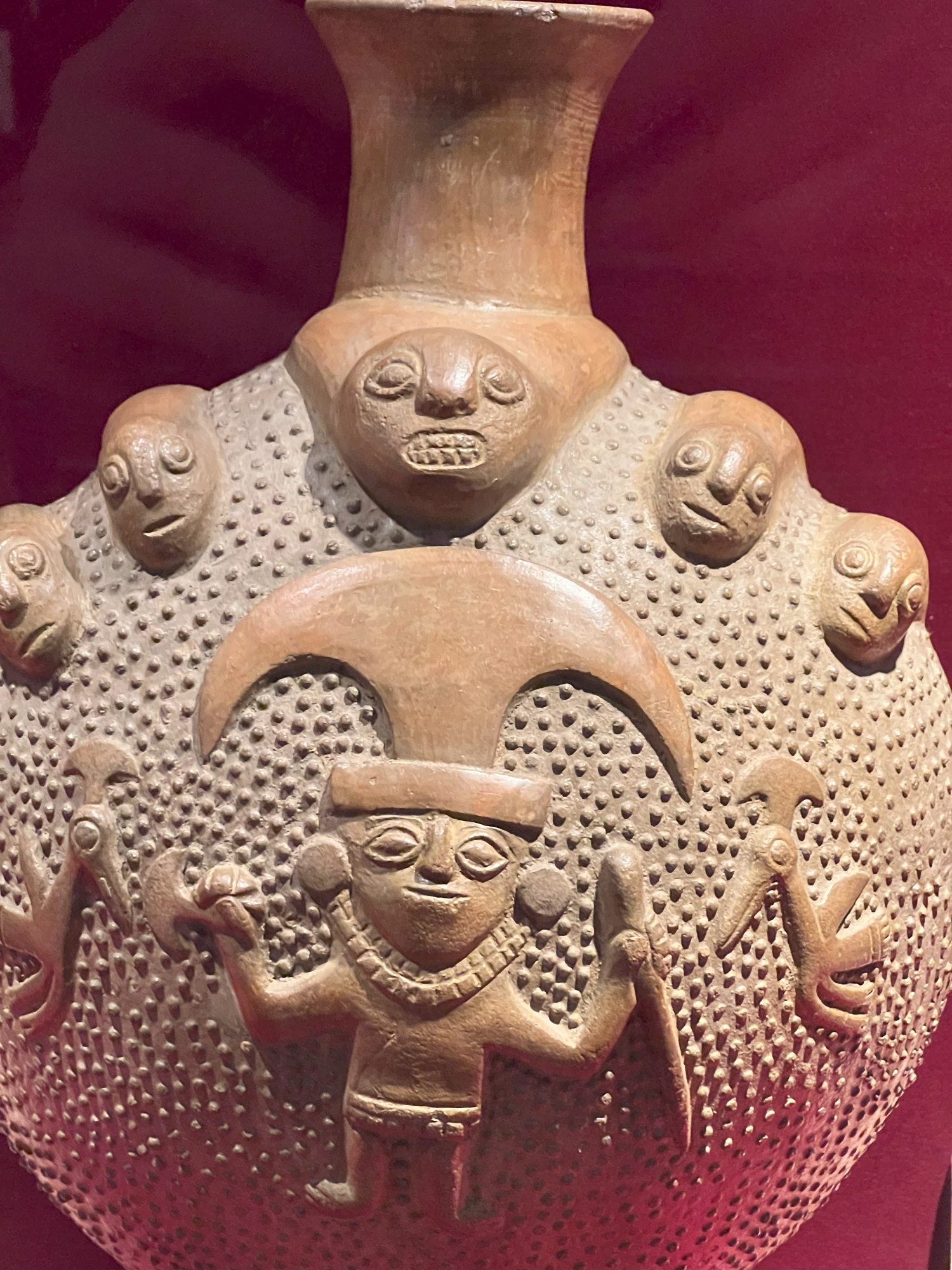
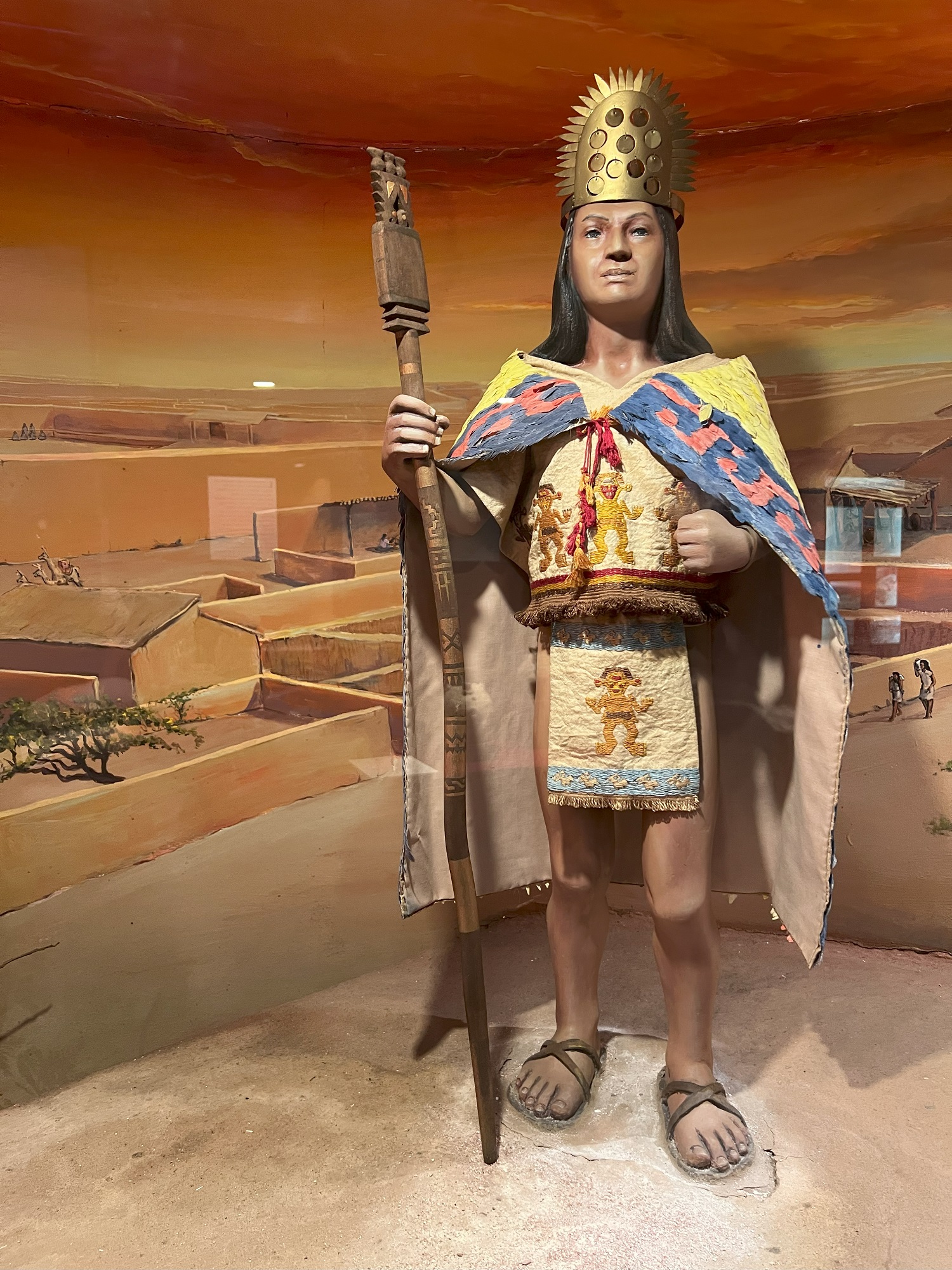
This whole area nearby is the site of the great prehistoric Moche and Chimu cultures before the Inca conquest and subsequent expansion.
We solicited a taxi for the 25-minute drive into Trujillo and all went well until we paid the driver in US dollars. Best we could tell that he was not happy with the quality of the $20 and two $5 dollar bills. The US dollars have to be changed into Peruvian Sol by moneychangers for him. Anyway, we gave him the newest dollar bills we had, and that solved the problem.
We used Uber to get back. That was cheaper and worked a lot better: no exchange of paper money needed.
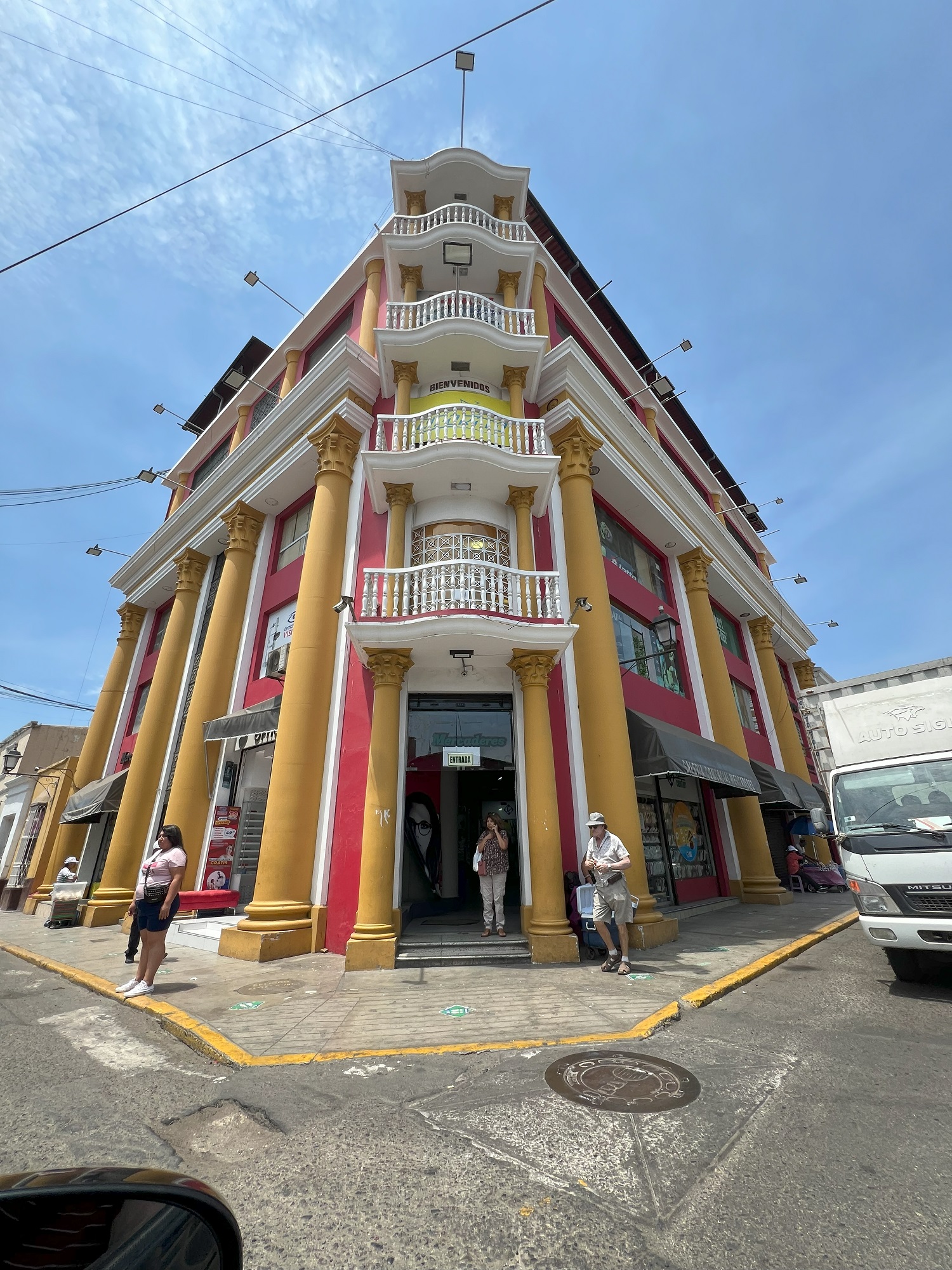
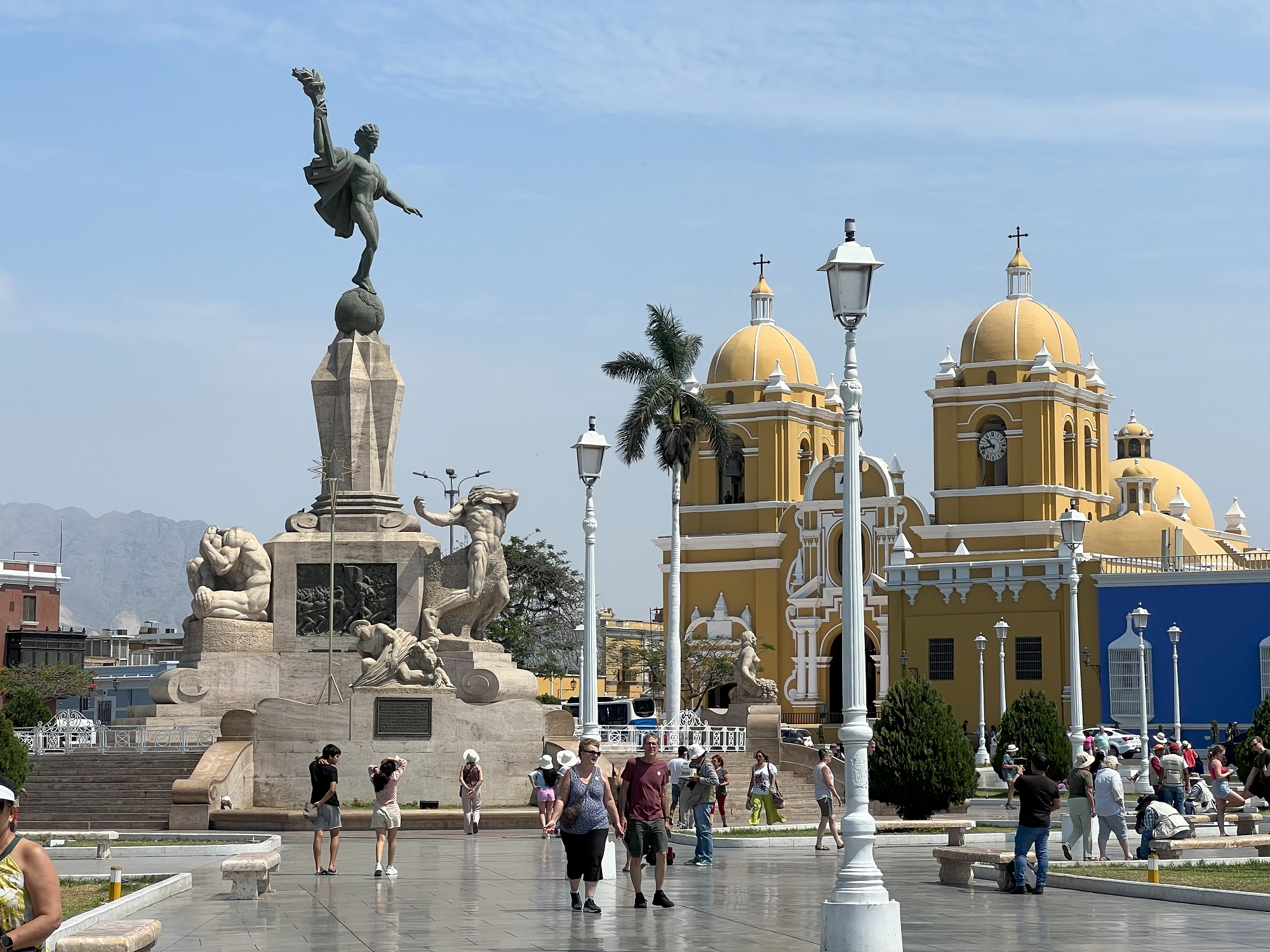
Look for the Plaza de Armas of Trujillo in the pictures below, with the Freedom Monument and the Cathedral of Trujillo nearby.
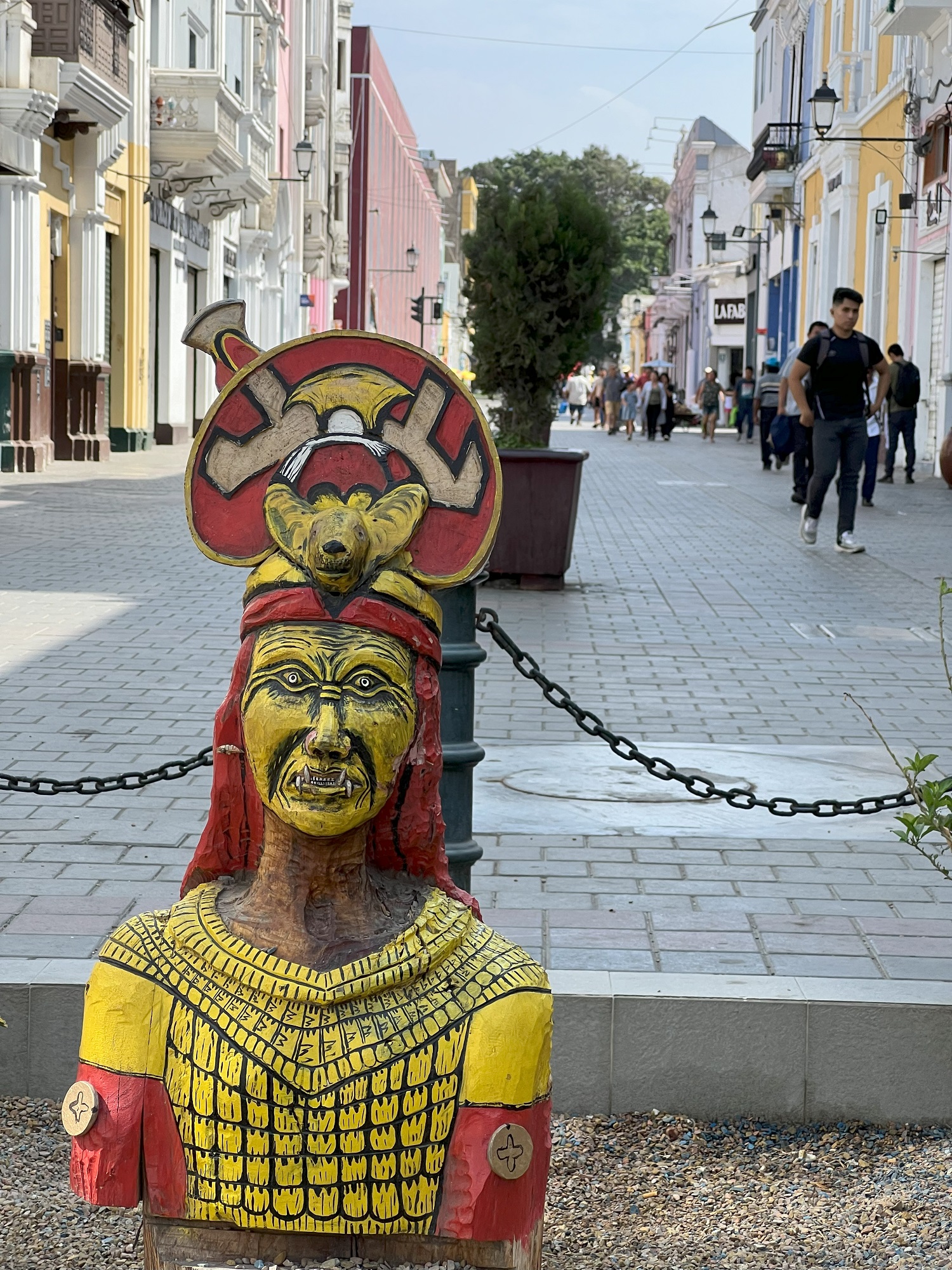
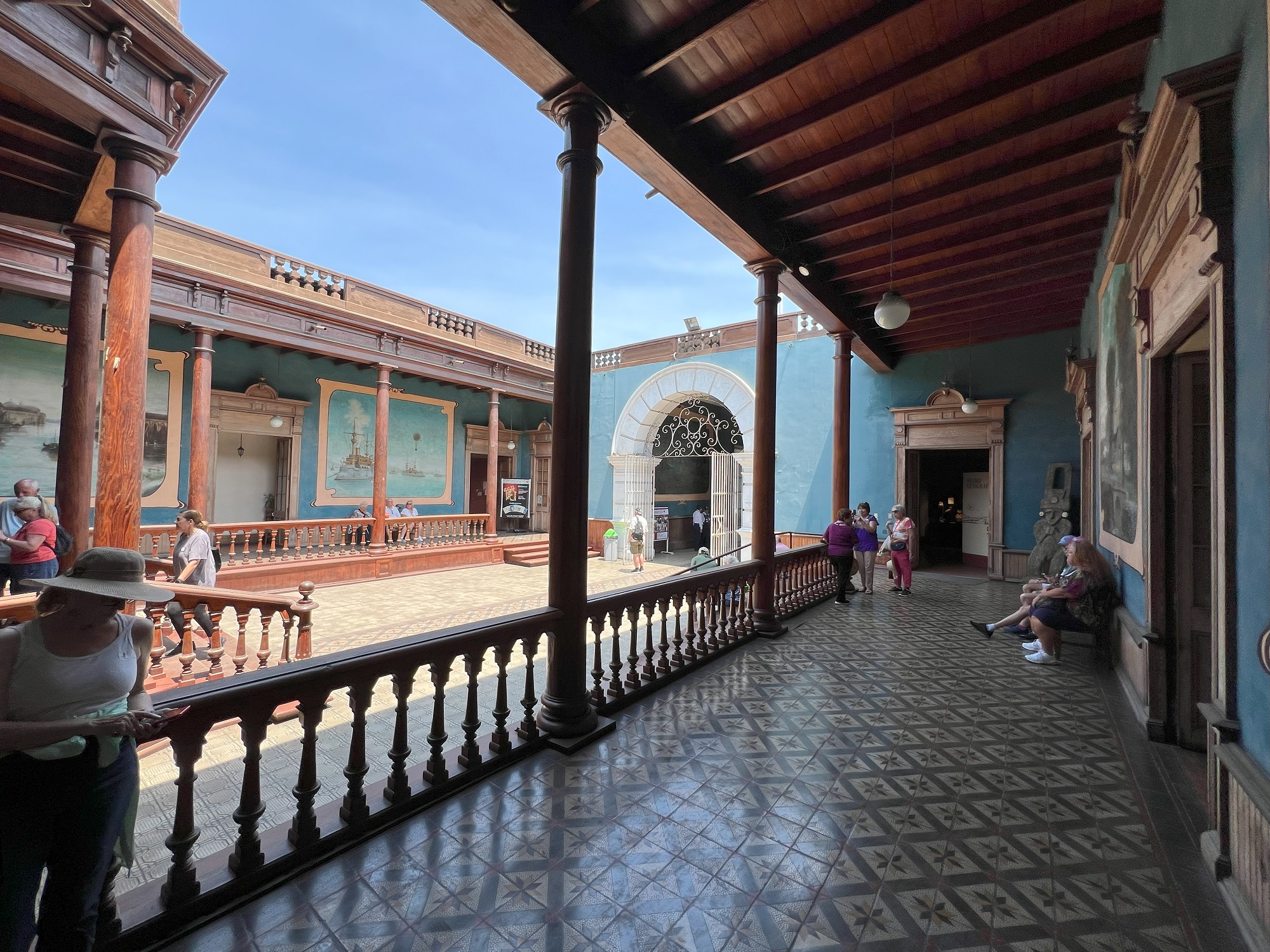
The beautiful building of UNT Archeology Museum and pictures of just a few of the displays inside, follow after that.

We spotted the coast of Peru this morning.
The Norwegian Sun is on course to arrive at the port town of Salaverry early in the morning, after three days at sea.
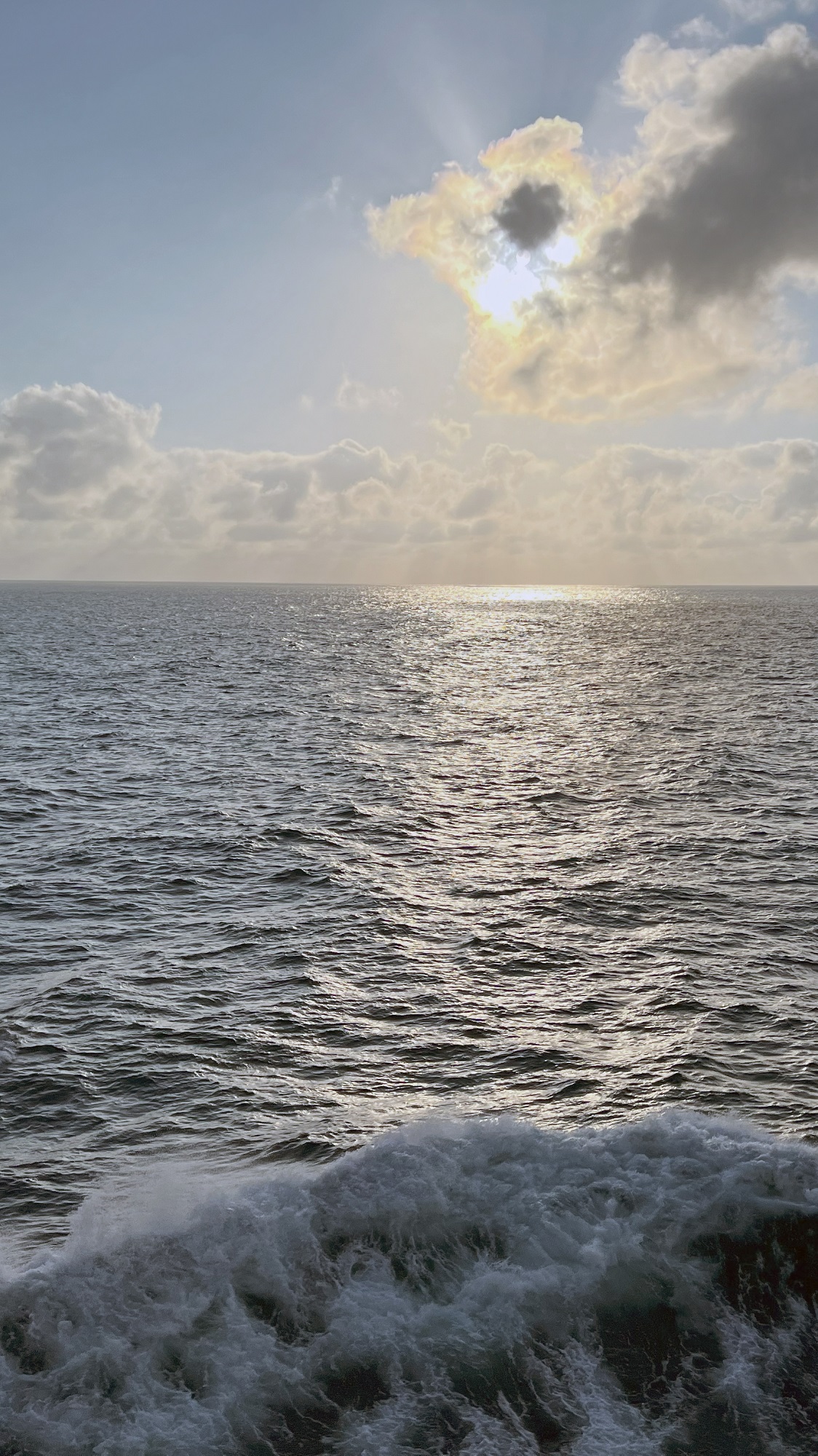
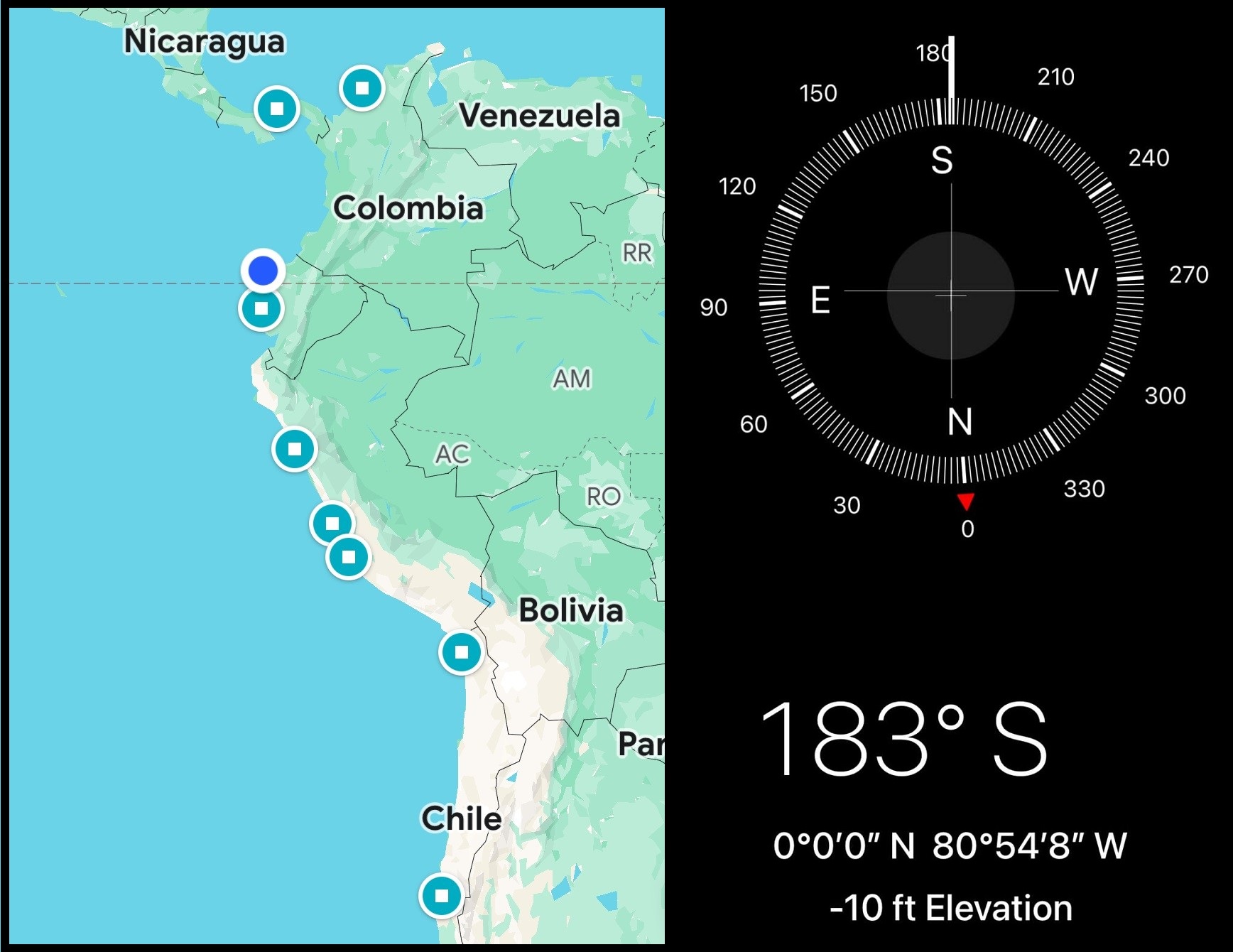
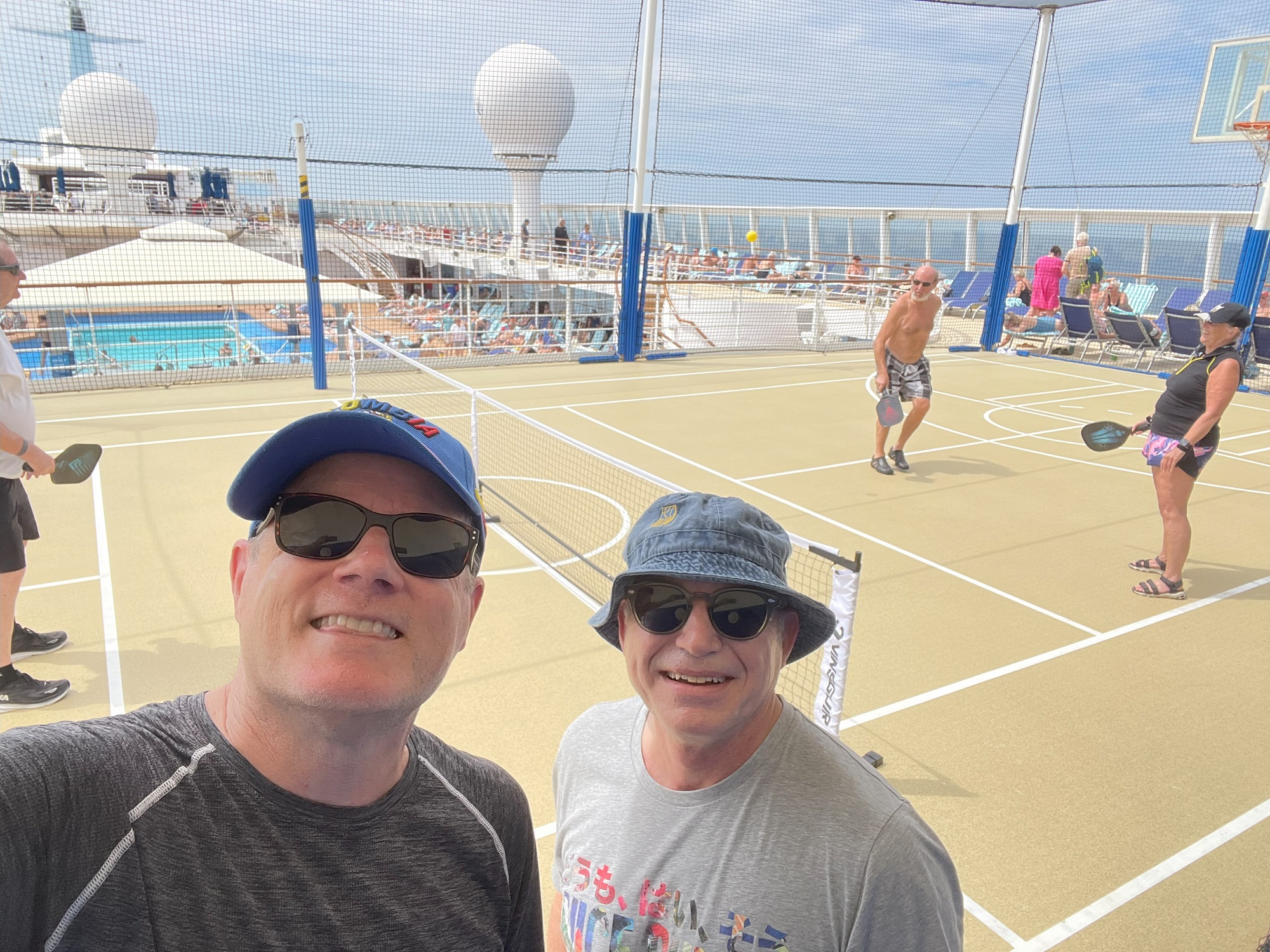
We were sailing just about due south, as we crossed the equator at noon today, close to Manta on the coast of Ecuador.
The captain made an announcement, and sounded the horn of the ship.
Violence erupted across Ecuador this week after a well-known gang leader disappeared from prison. Explosions, looting, gunfire and burning vehicles were reported, and there were uprisings in several prisons. In the largest city, Guayaquil, gunmen stormed a TV studio during a live broadcast on Tuesday.
President Daniel Noboa declared a 60-day state of emergency, imposing a nationwide curfew and authorizing the military to patrol the streets and take control of prisons. Mr. Noboa also deployed thousands of police officers and military personnel to search for the gang leader, Adolfo Macías.
– from the New York Times
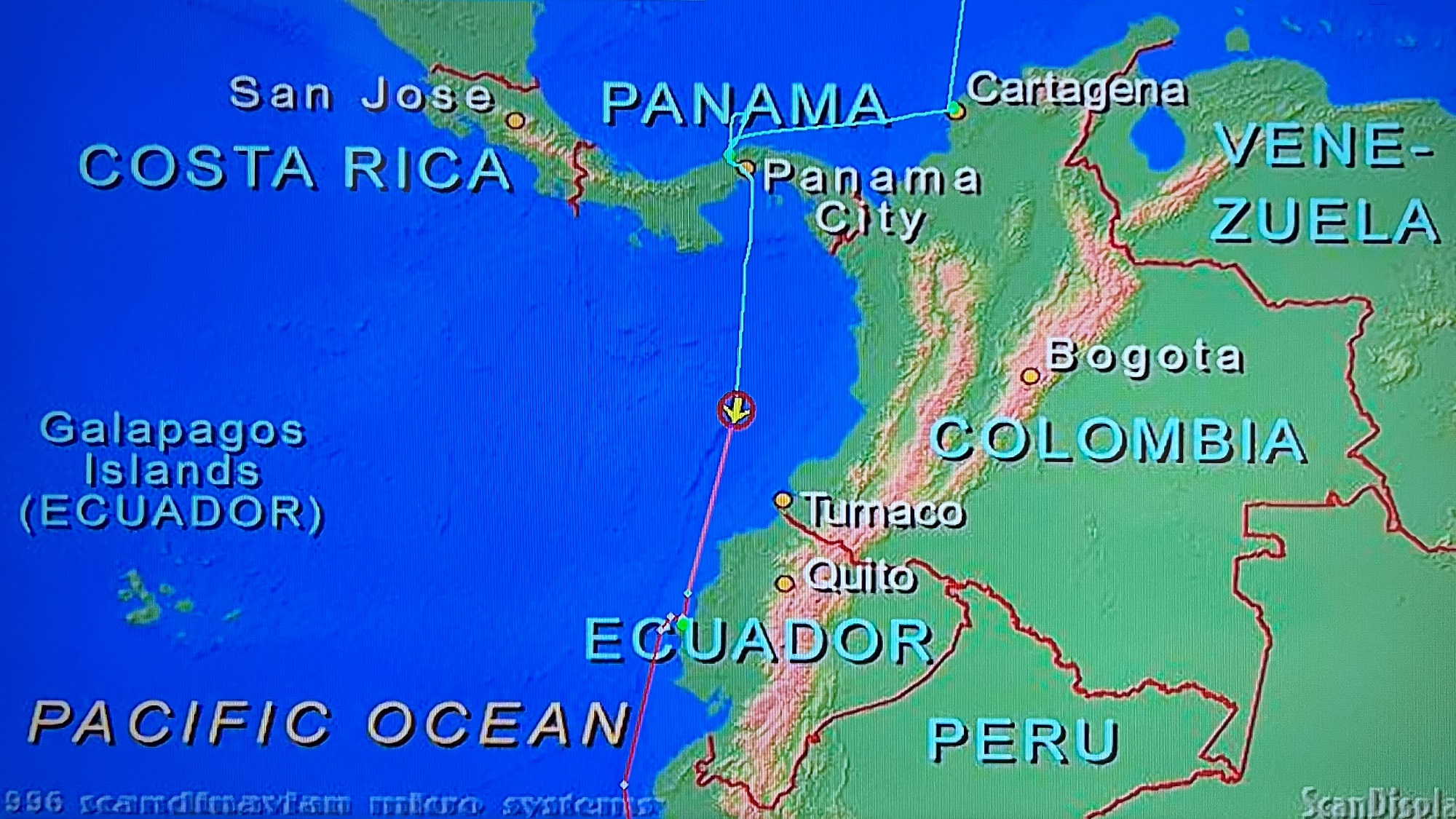
We were going to stay over for one night in the port city of Manta, Ecuador, but due to the violence and political uncertainty in the country, the Norwegian Sun will now pass it by.
This means that today was the first one of three at-sea days in a row.
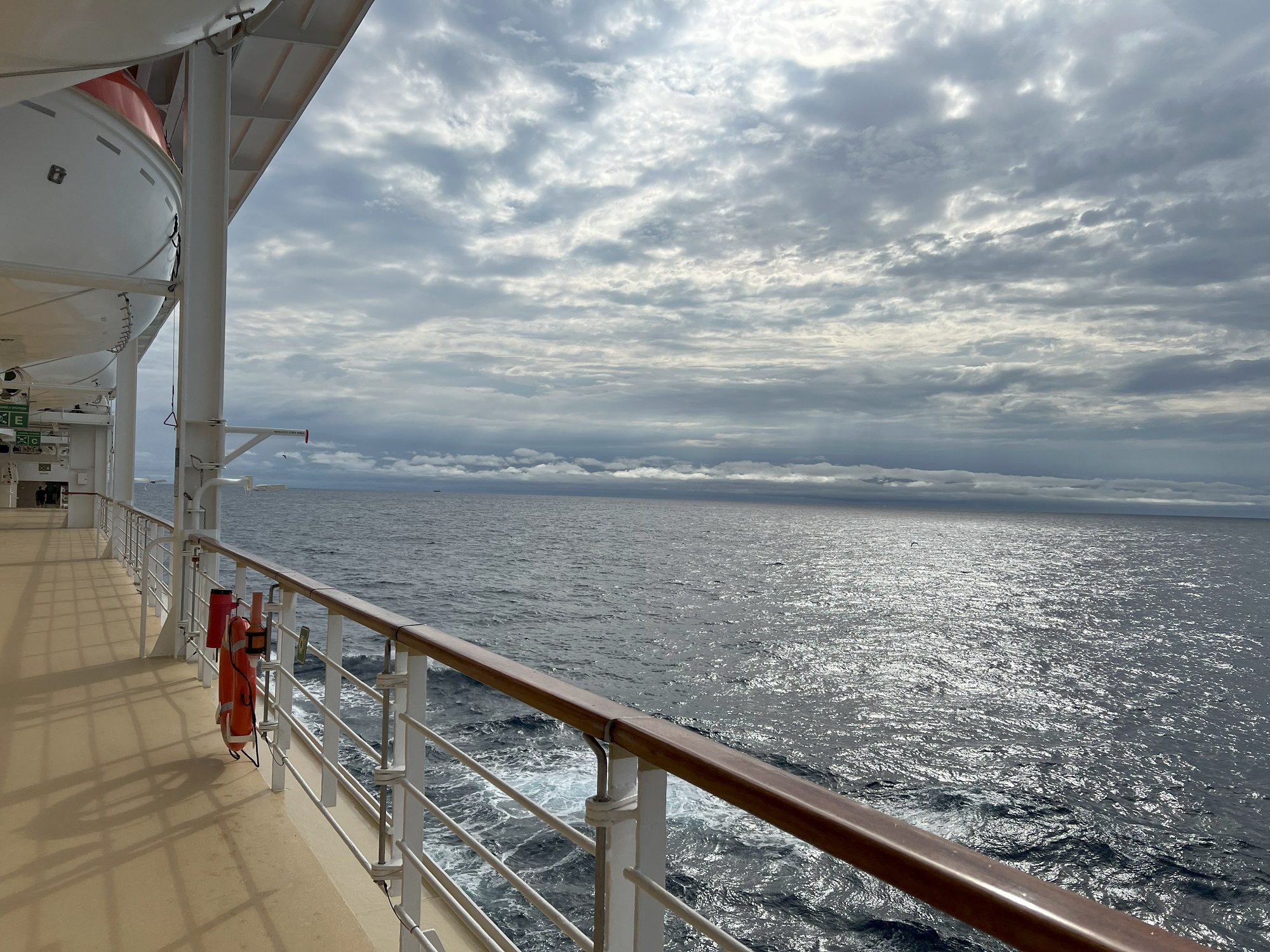
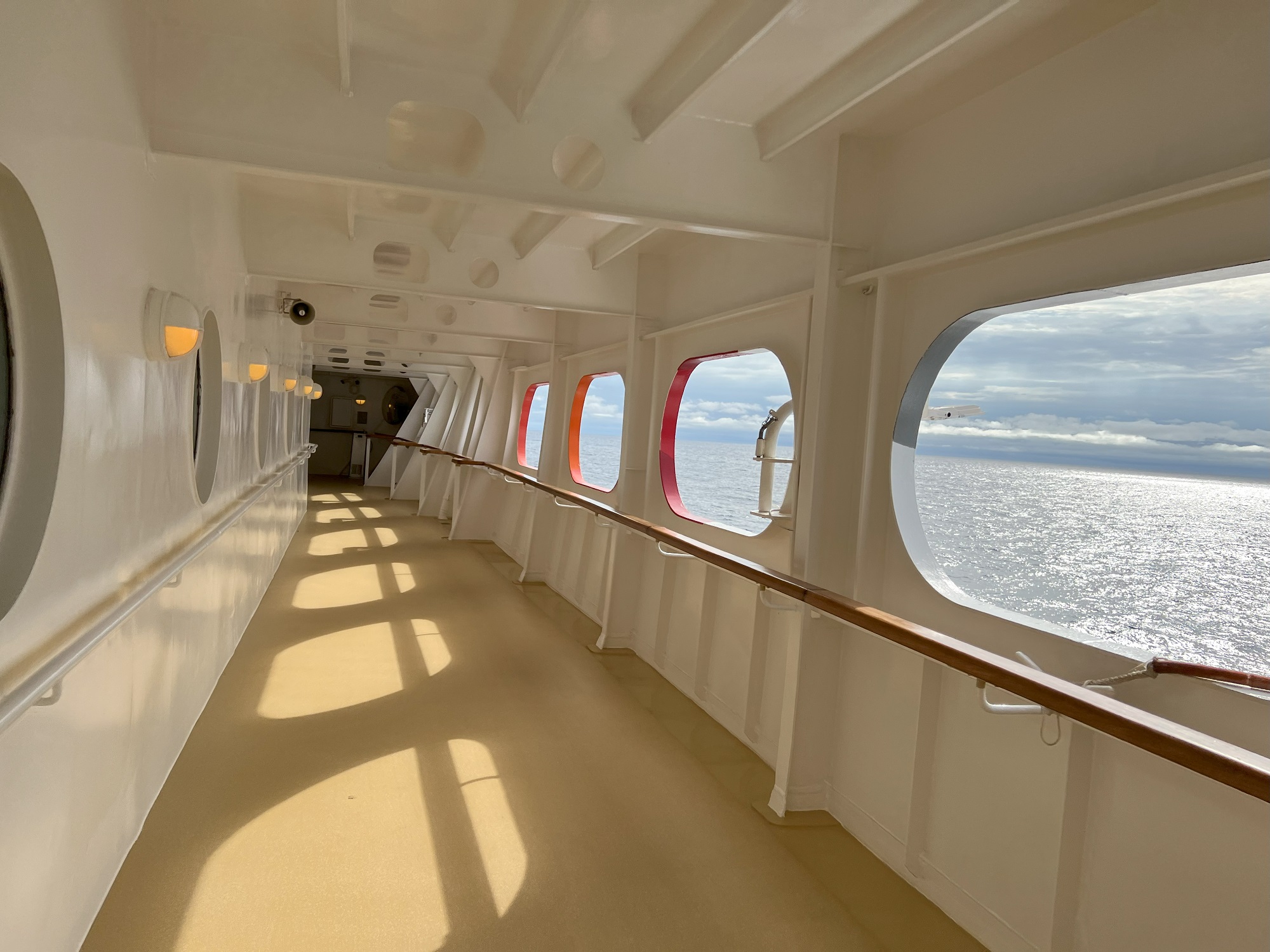
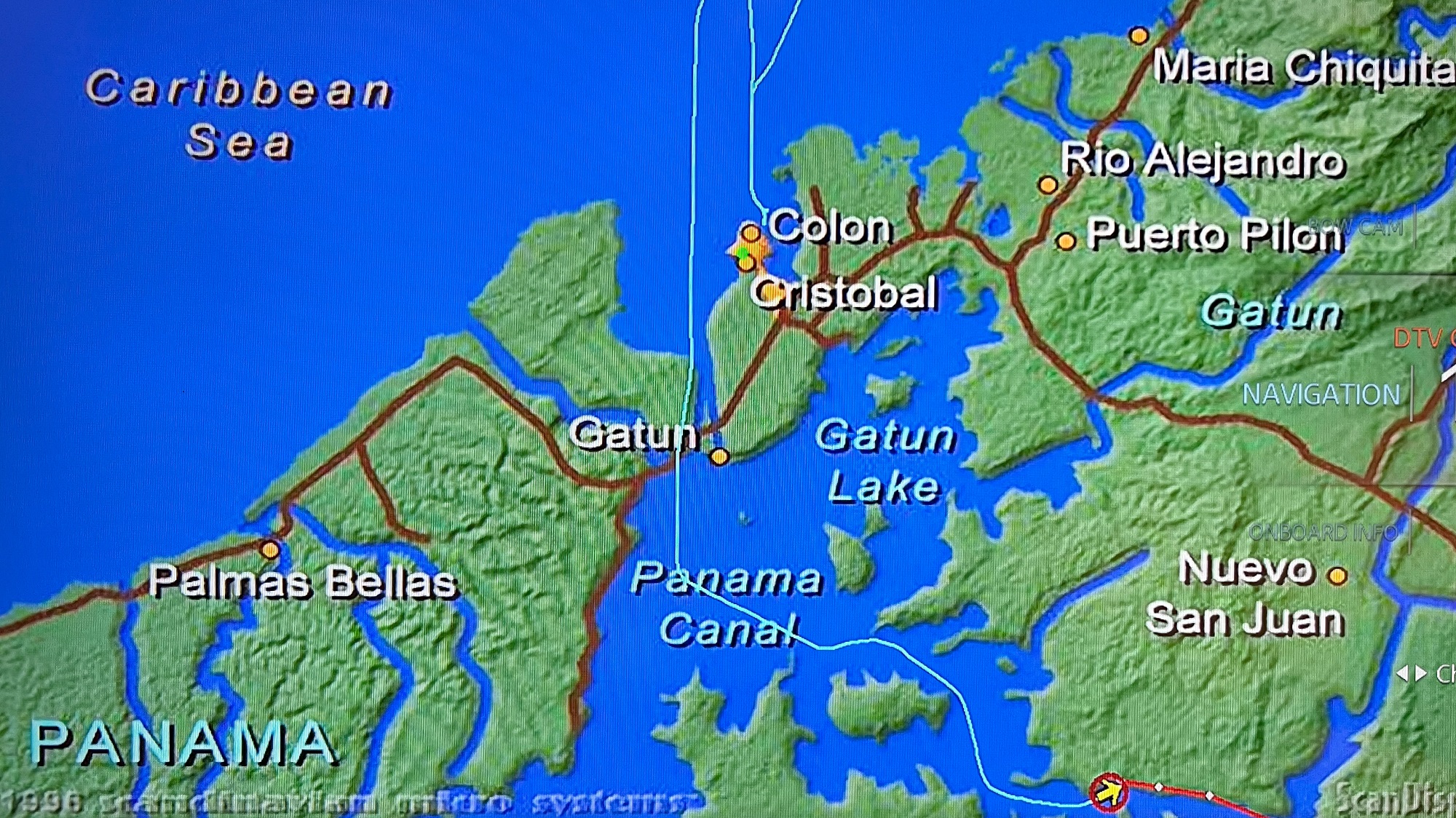
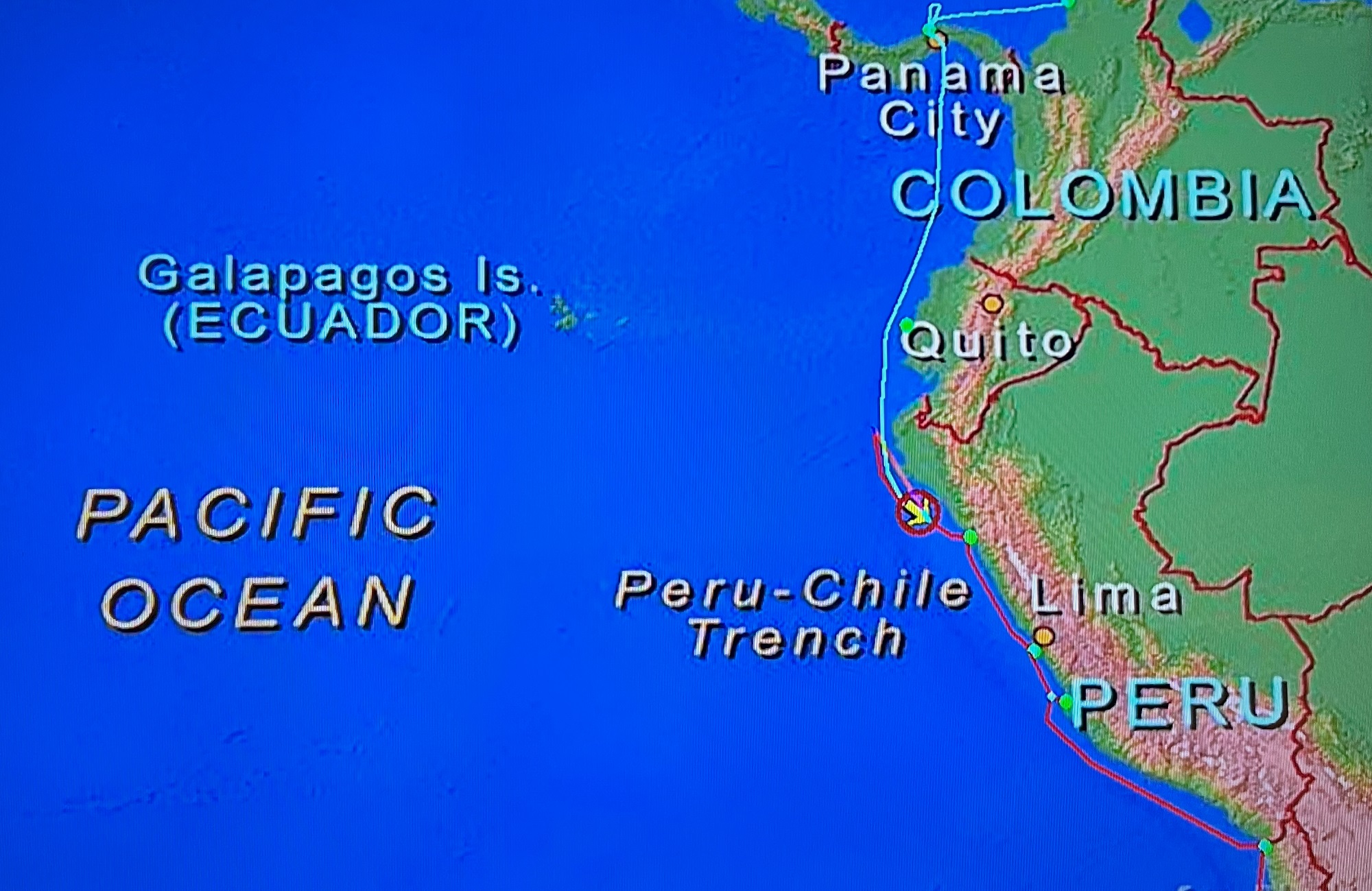
[Image: The ship’s navigation TV channel]
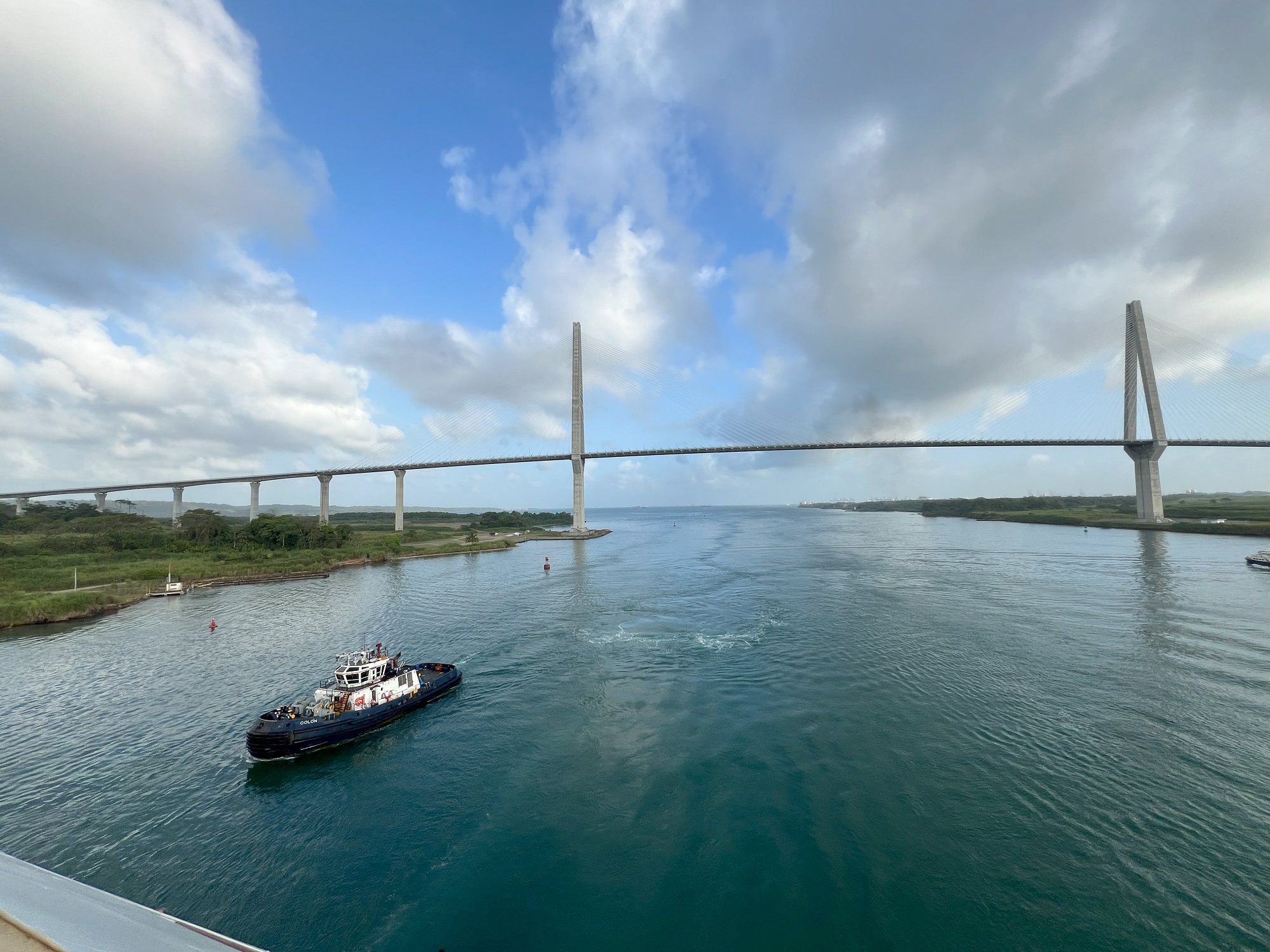
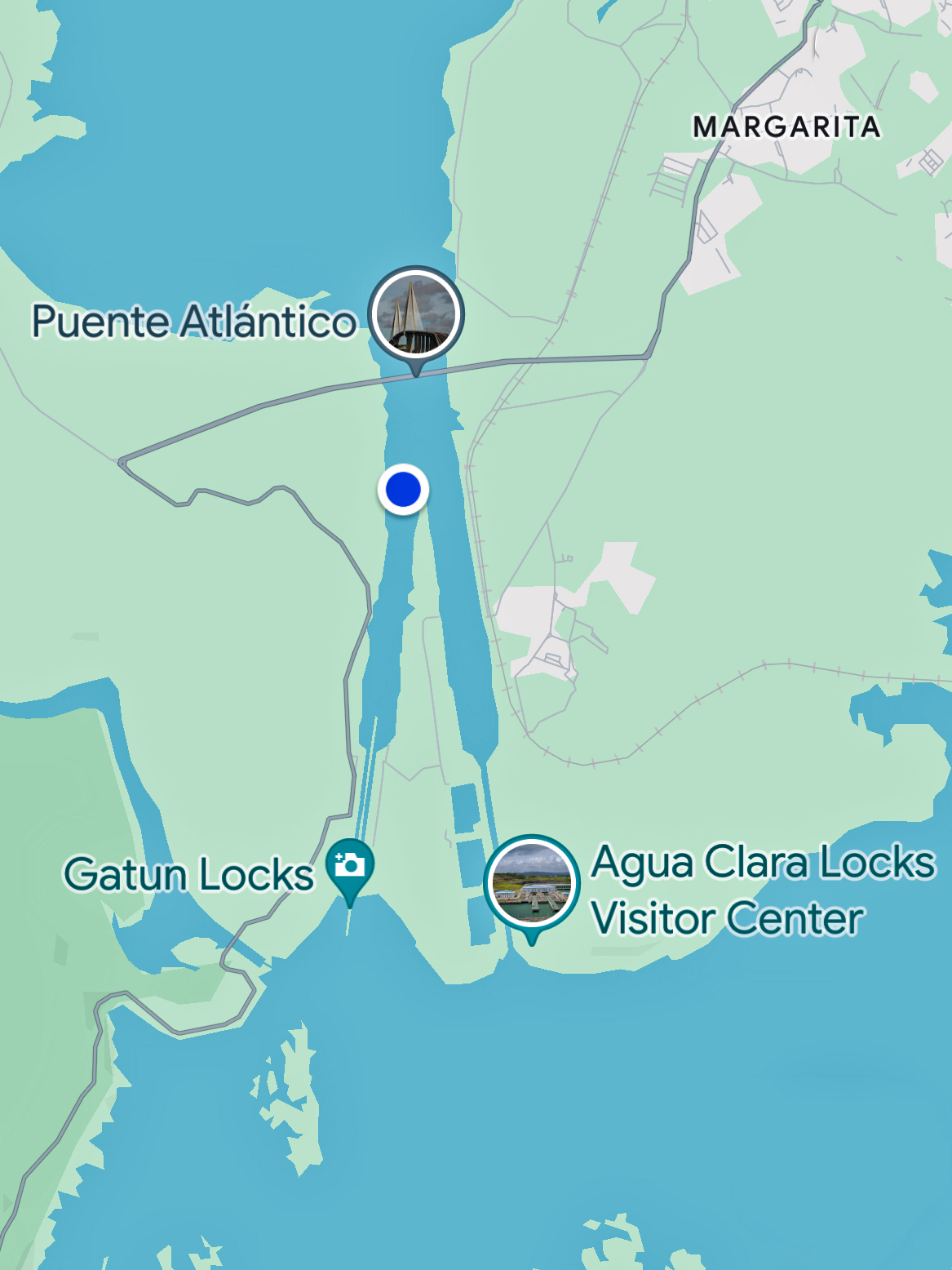
First up to admire was the Atlantic Bridge (Puente Atlántico), the new 15,092 ft (4,600 m) suspension bridge completed in 2019.
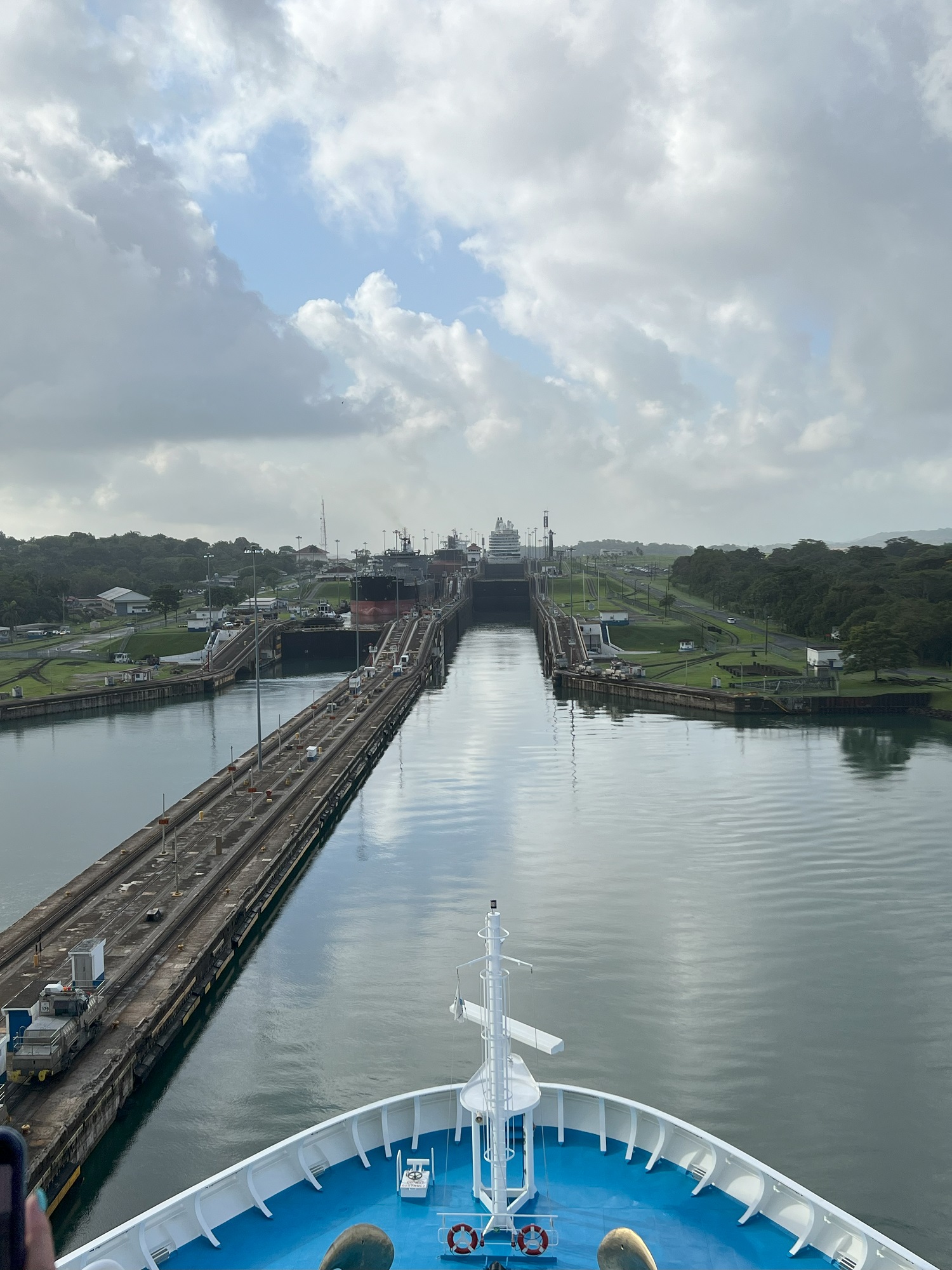
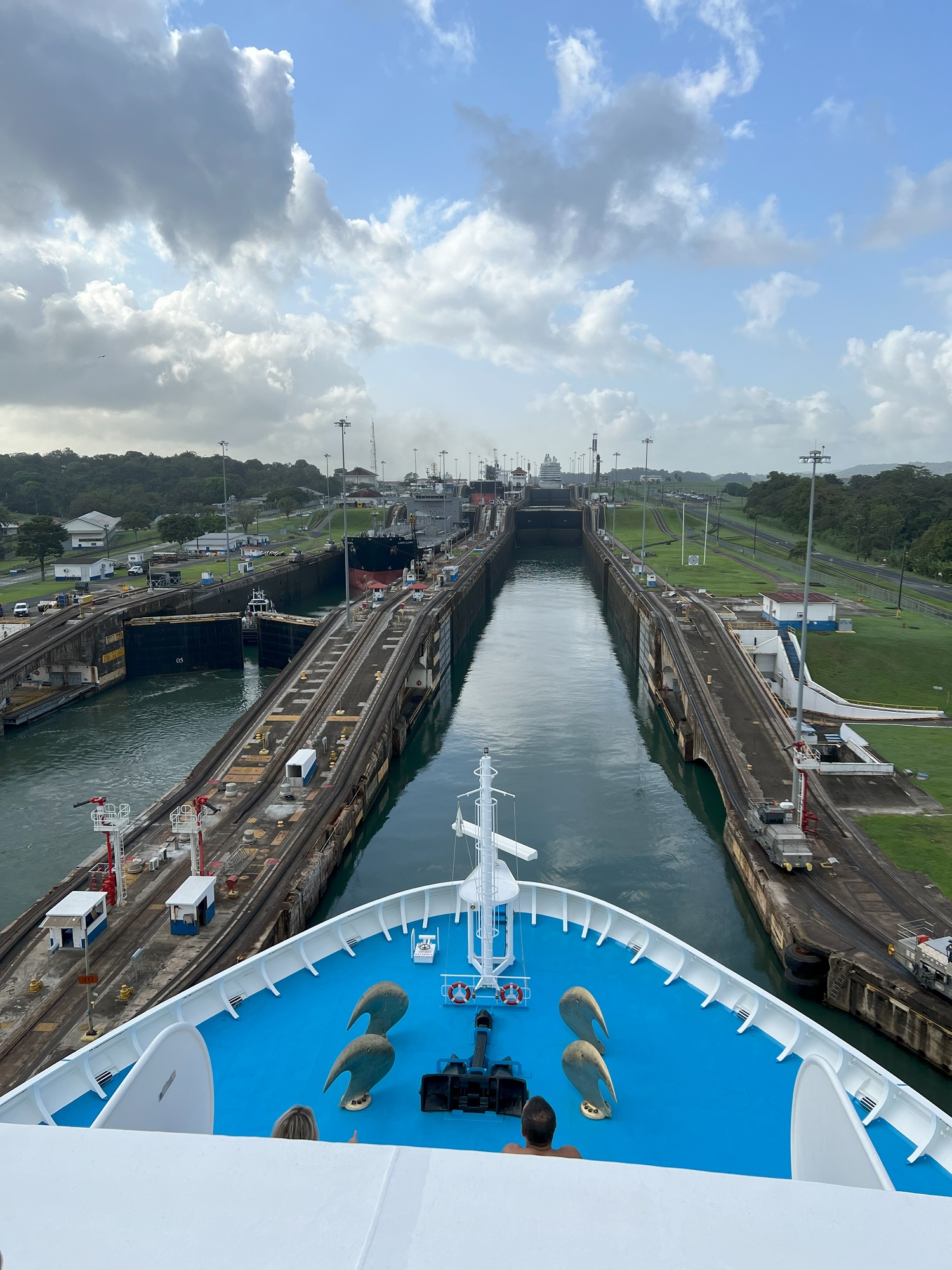
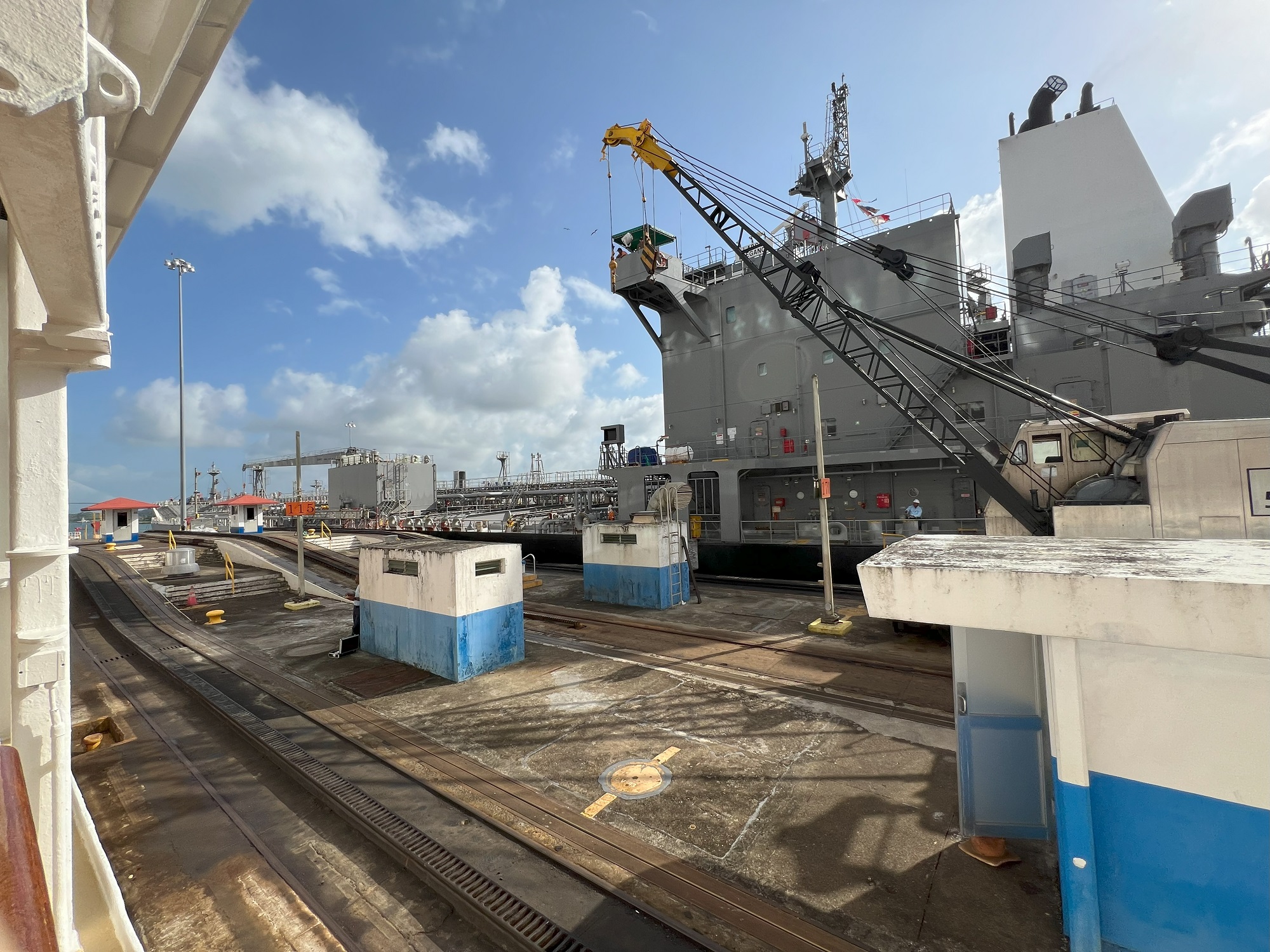
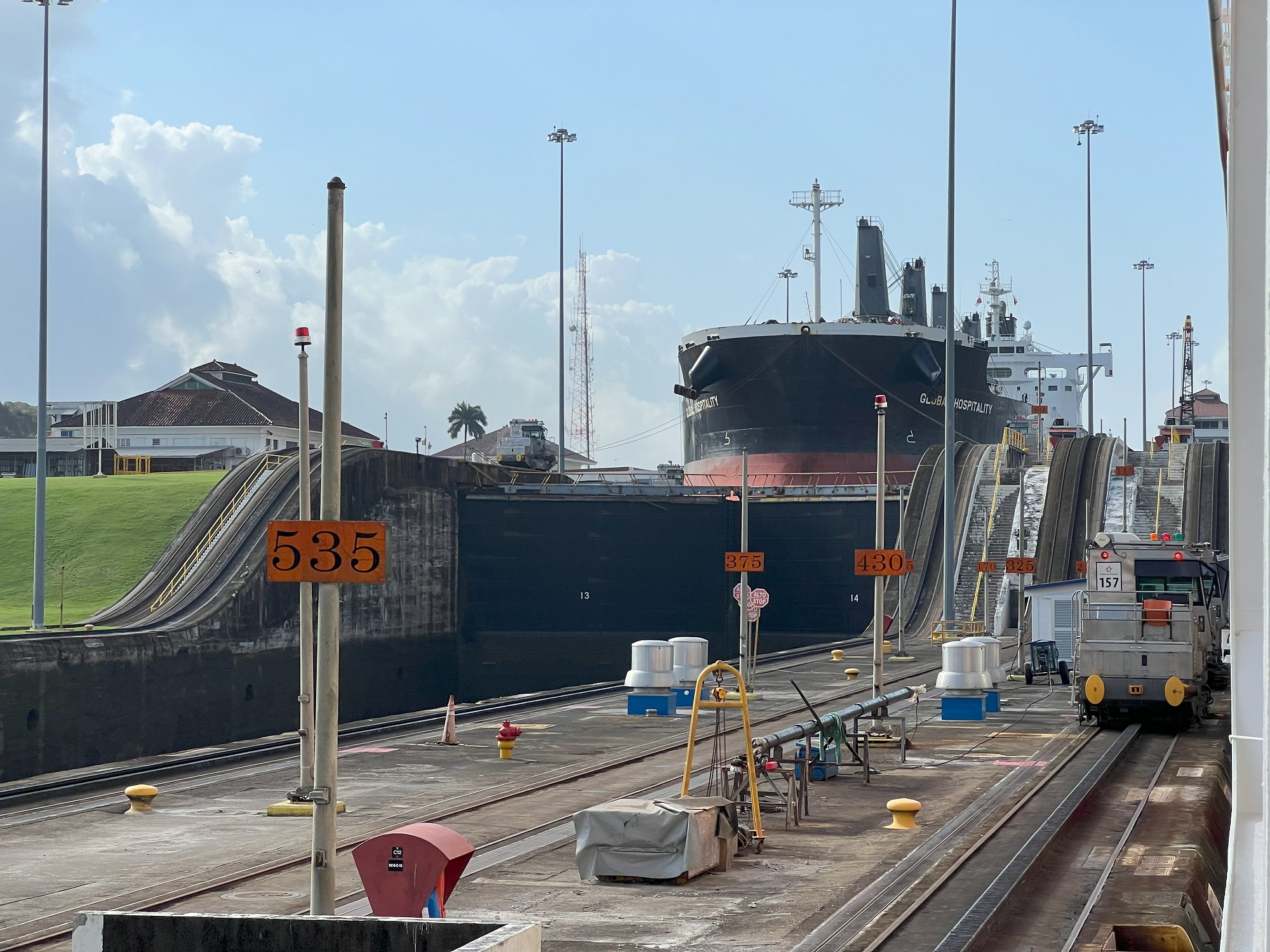
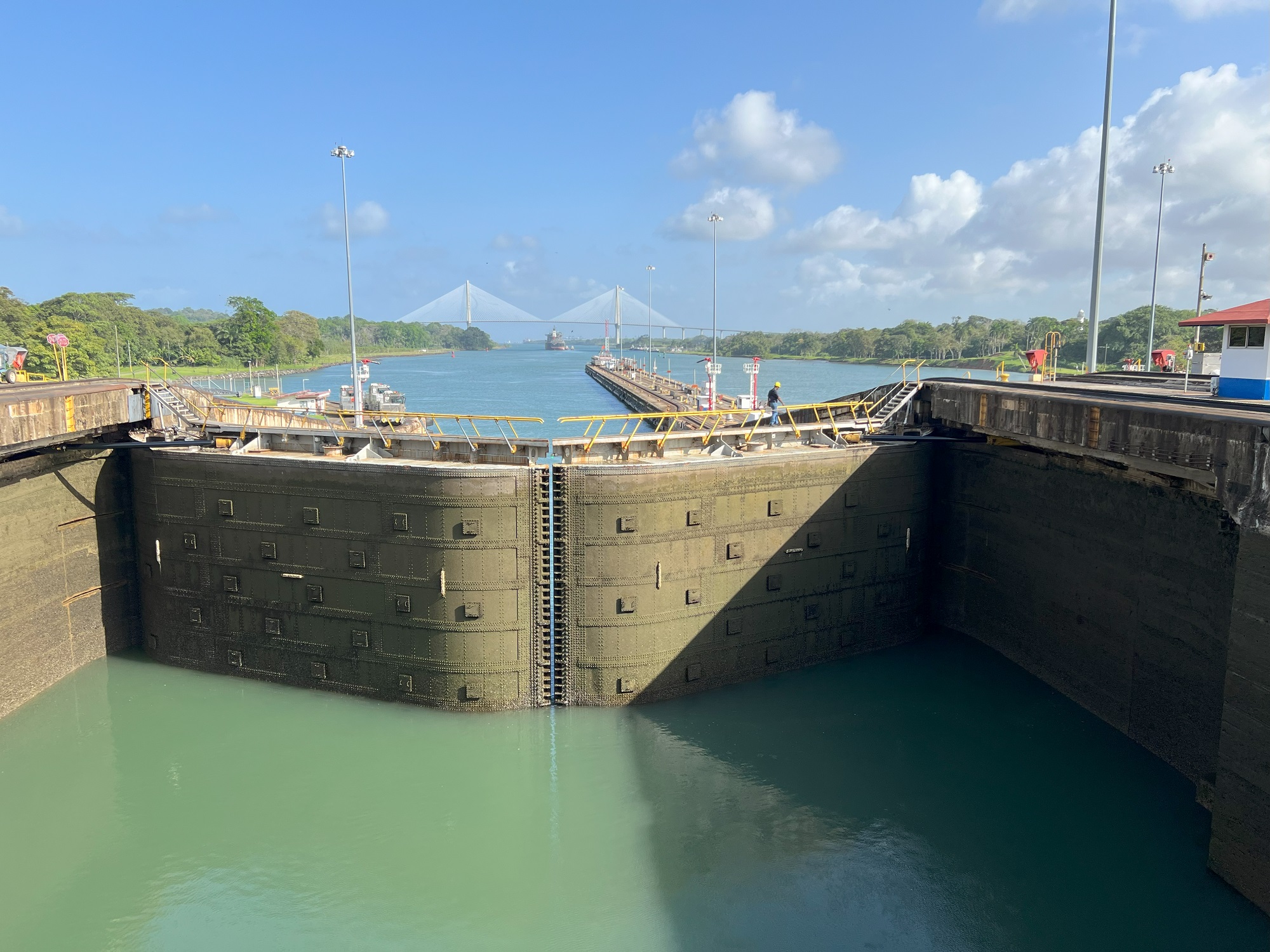
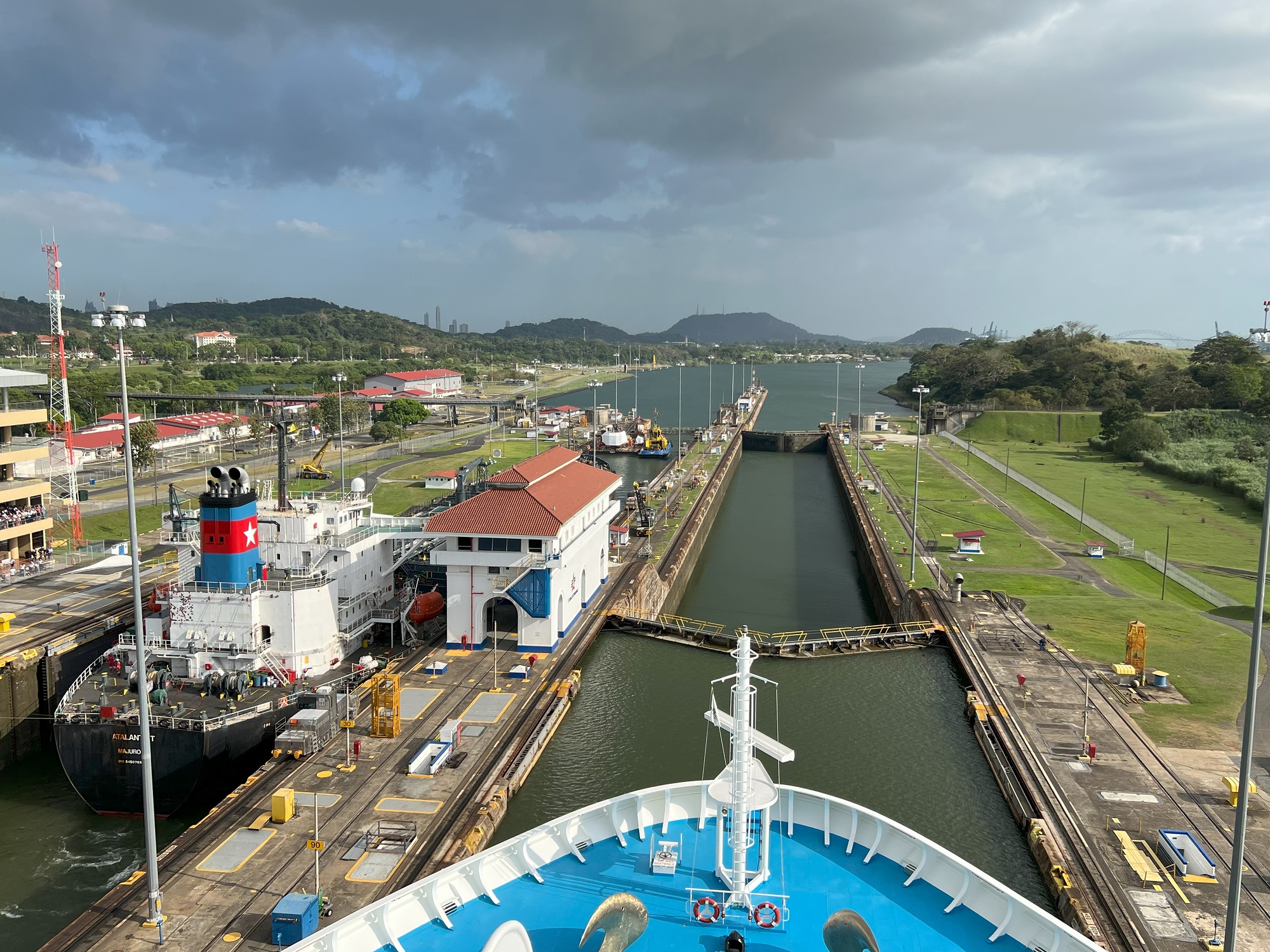
Then we entered the Gatun Locks.
This sequence of three locks opened in 1914, is the largest of the locks in the Panama Canal and lift ships up 85 ft (25.9 m) to the level of the sprawling Gatun Lake.
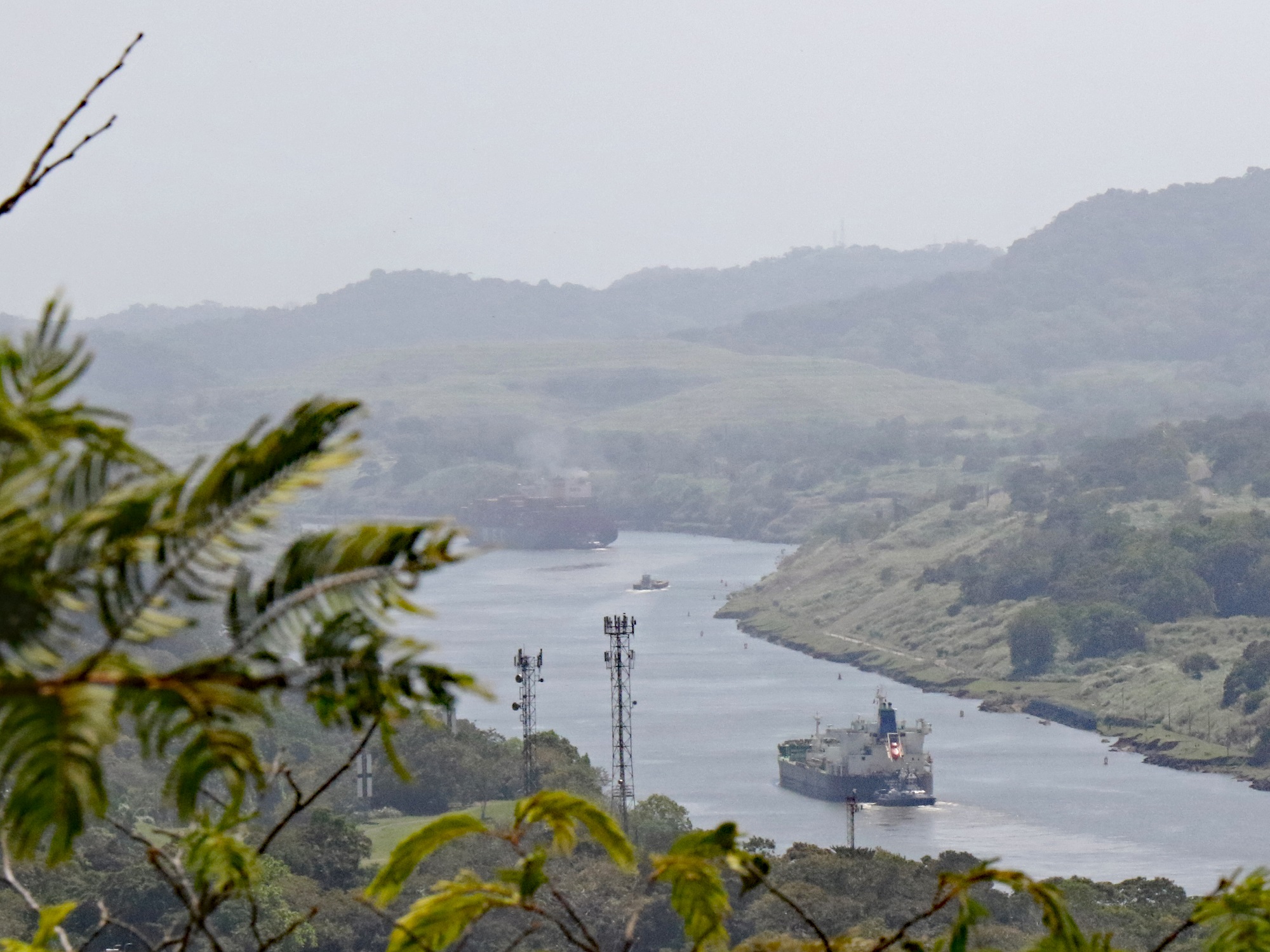
The man-made Gatun Lake lies between the two sets of locks that lifts and lowers vessels, and therefore allows passage to the Pacific Ocean or the Atlantic Ocean.
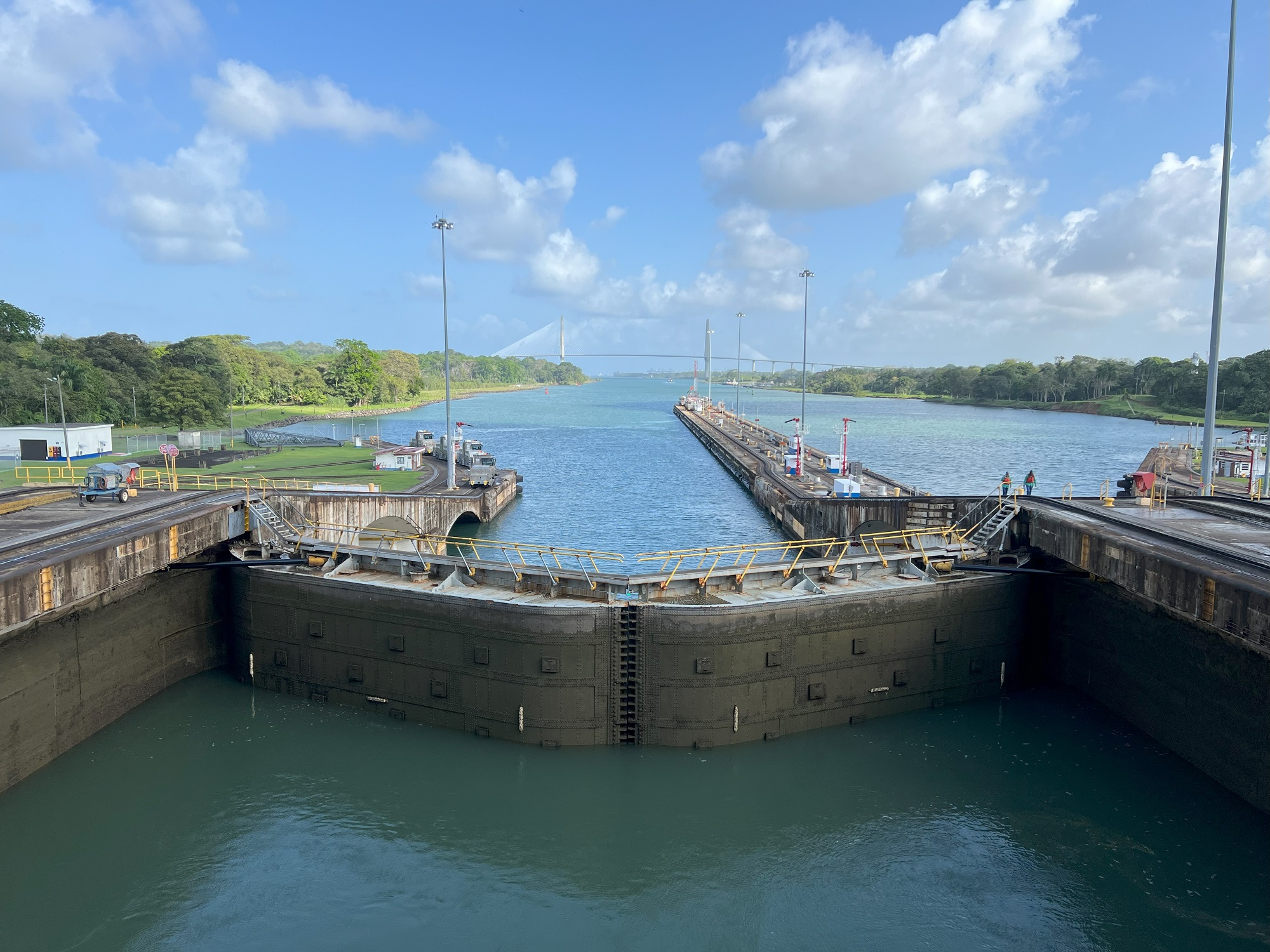
After crossing Gatun Lake, we passed under the Centennial Bridge (Puente Centenario). This bridge opened in 2004 and spans 3,451 ft (1,052 m).
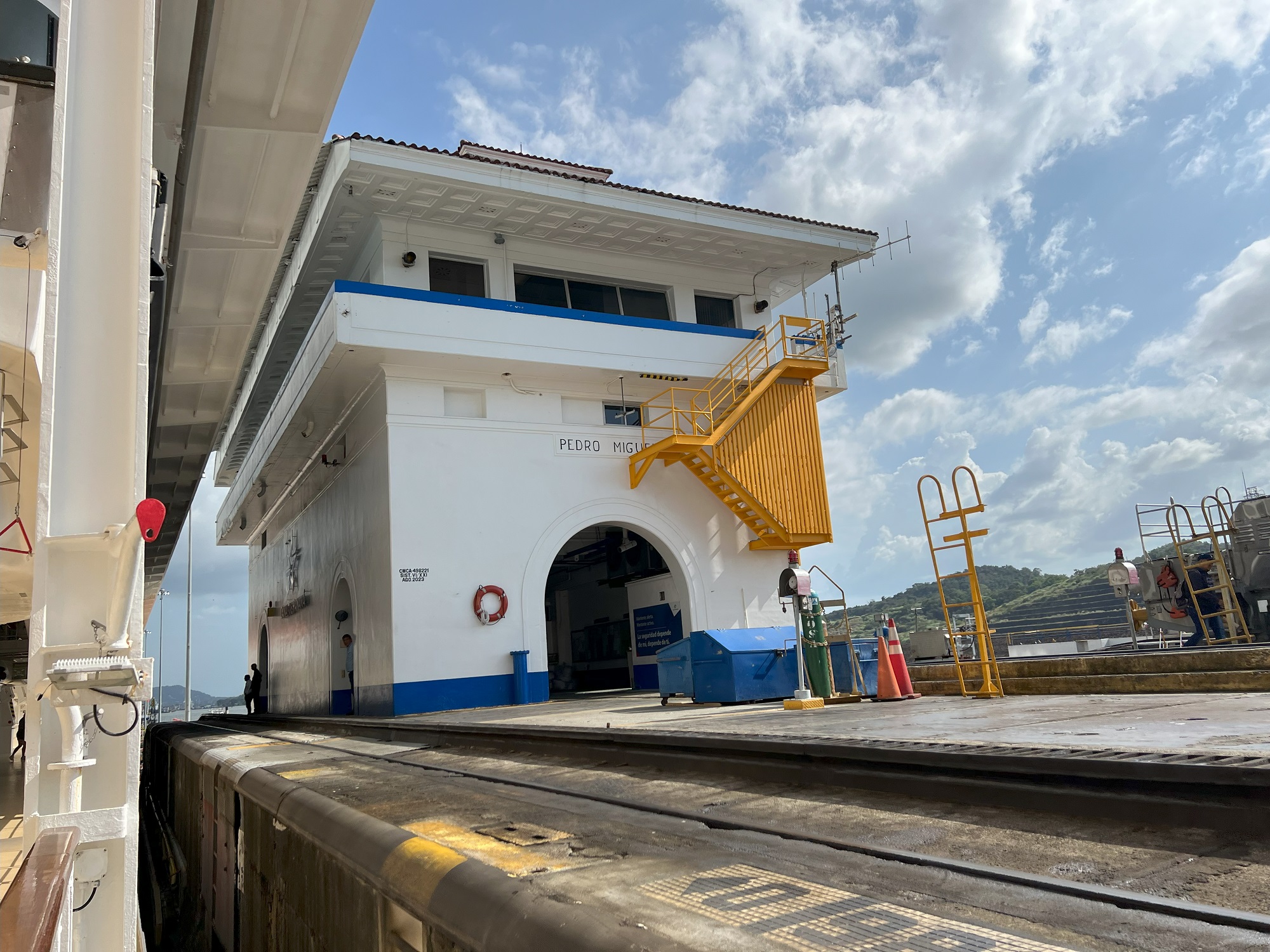
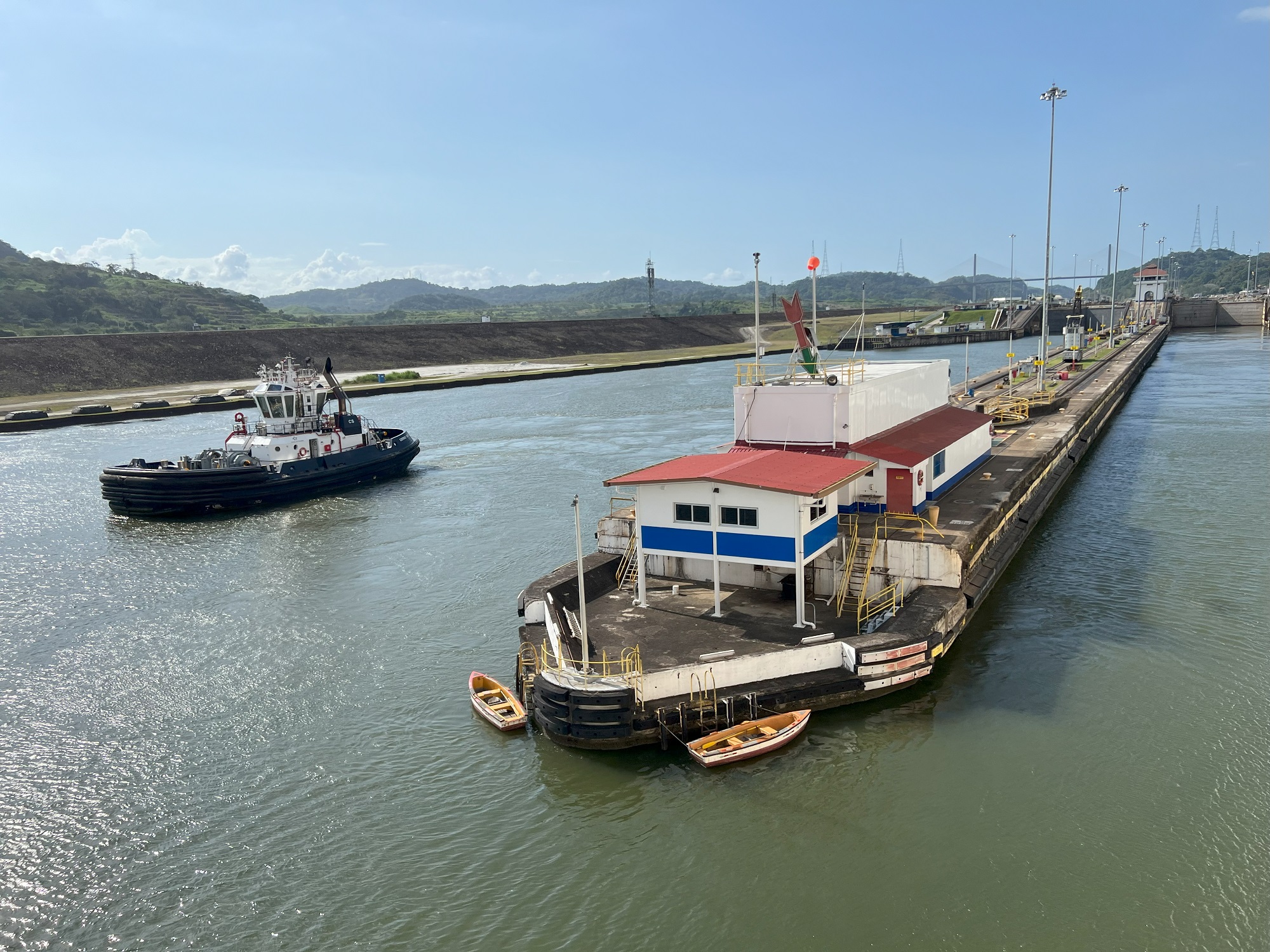
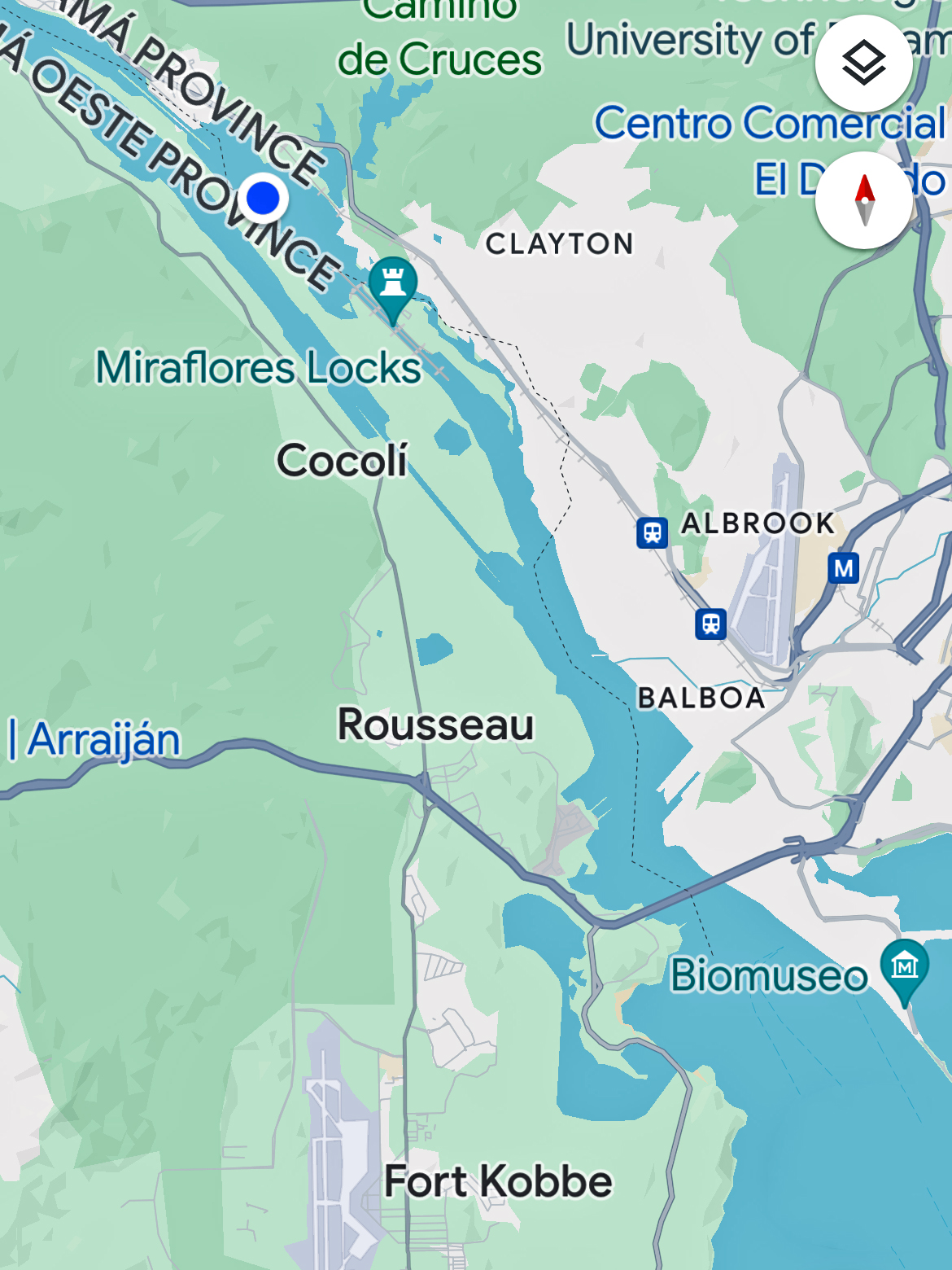
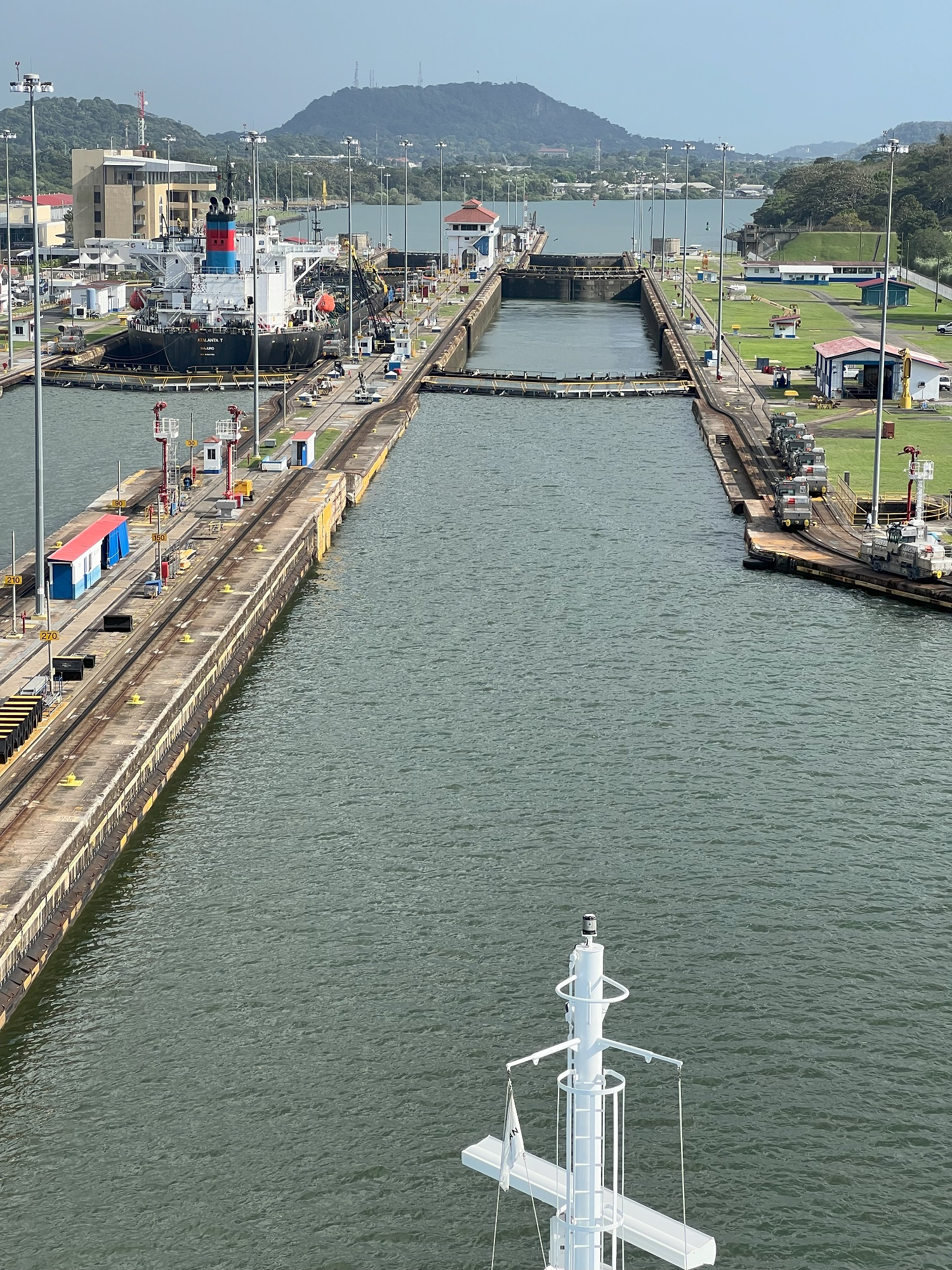
Soon after that it was time to enter the Pedro Miguel Locks and the Miraflores Locks. These locks lowered the Norwegian Sun to the level of the Atlantic Ocean— the ocean that used to be a continent away from the Pacific, and not a mere 51 miles (82 km).
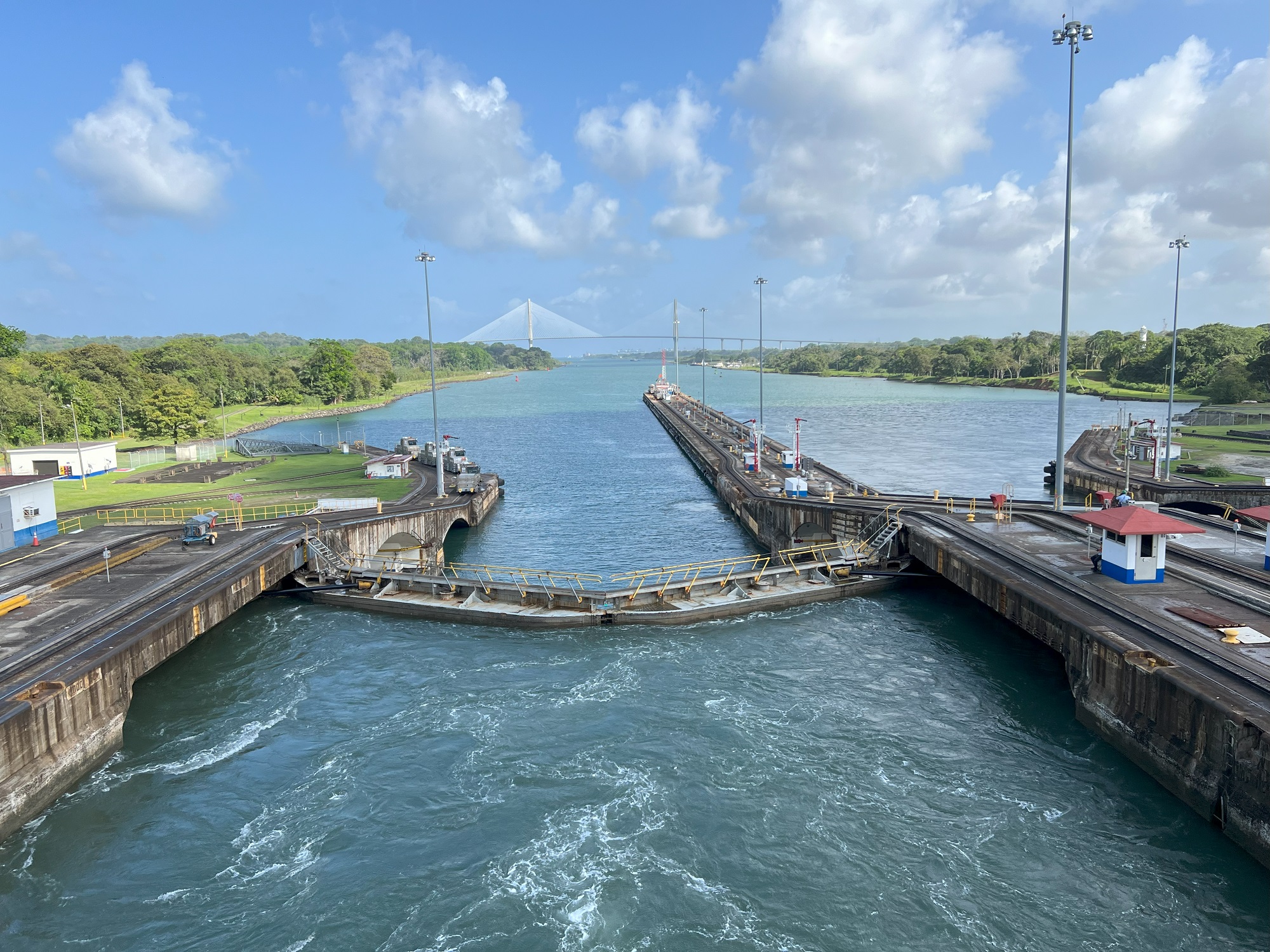
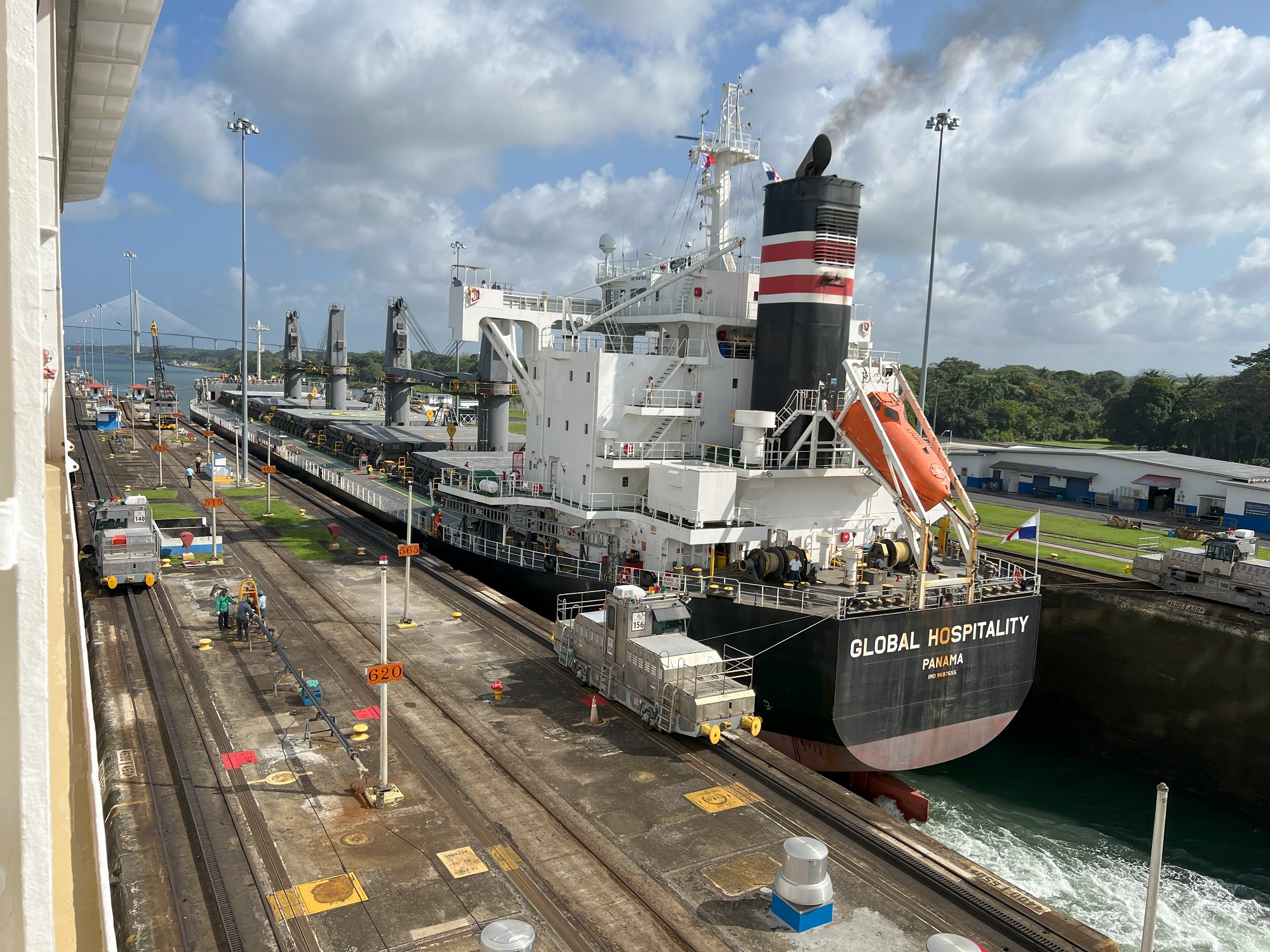
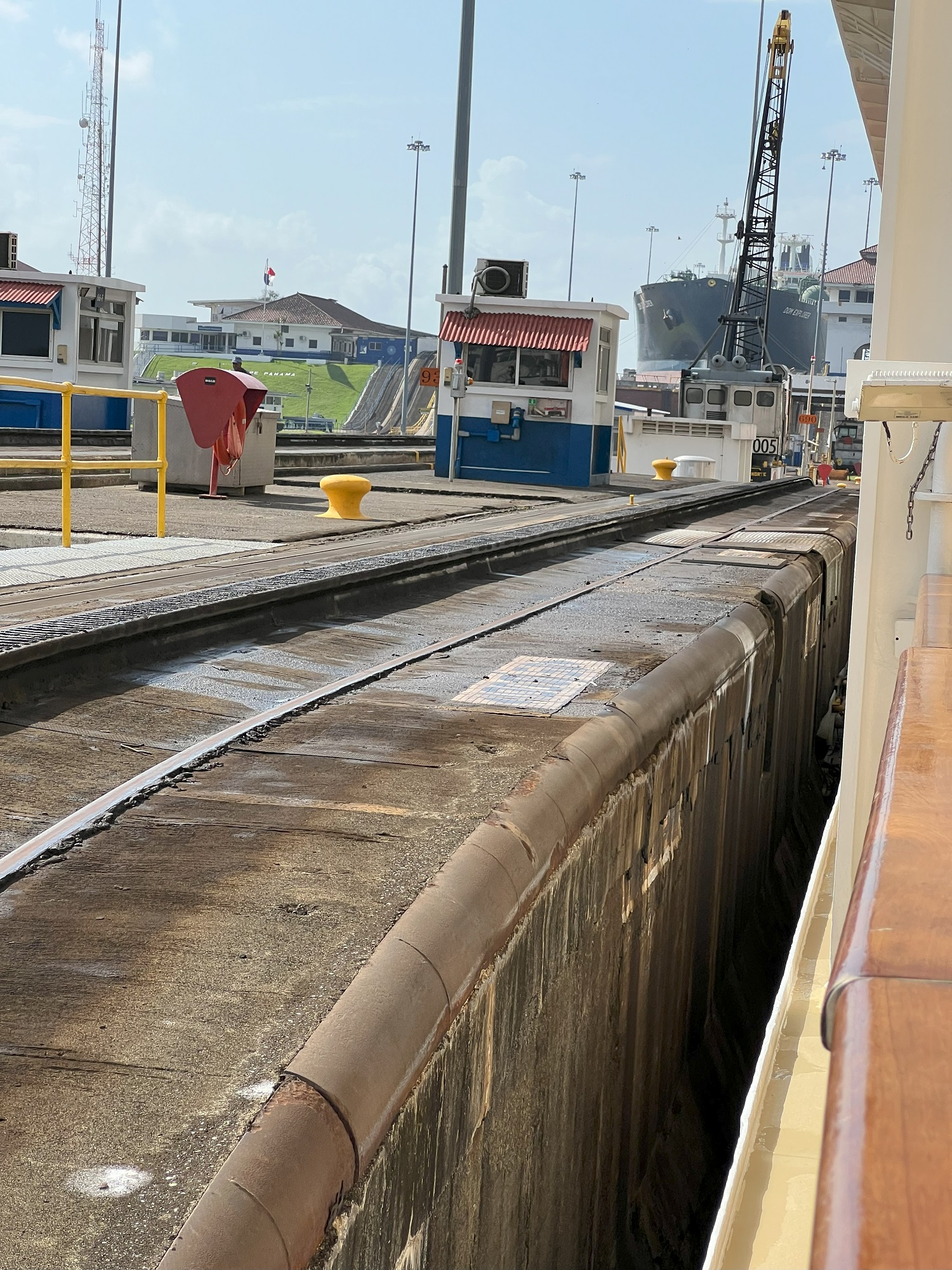
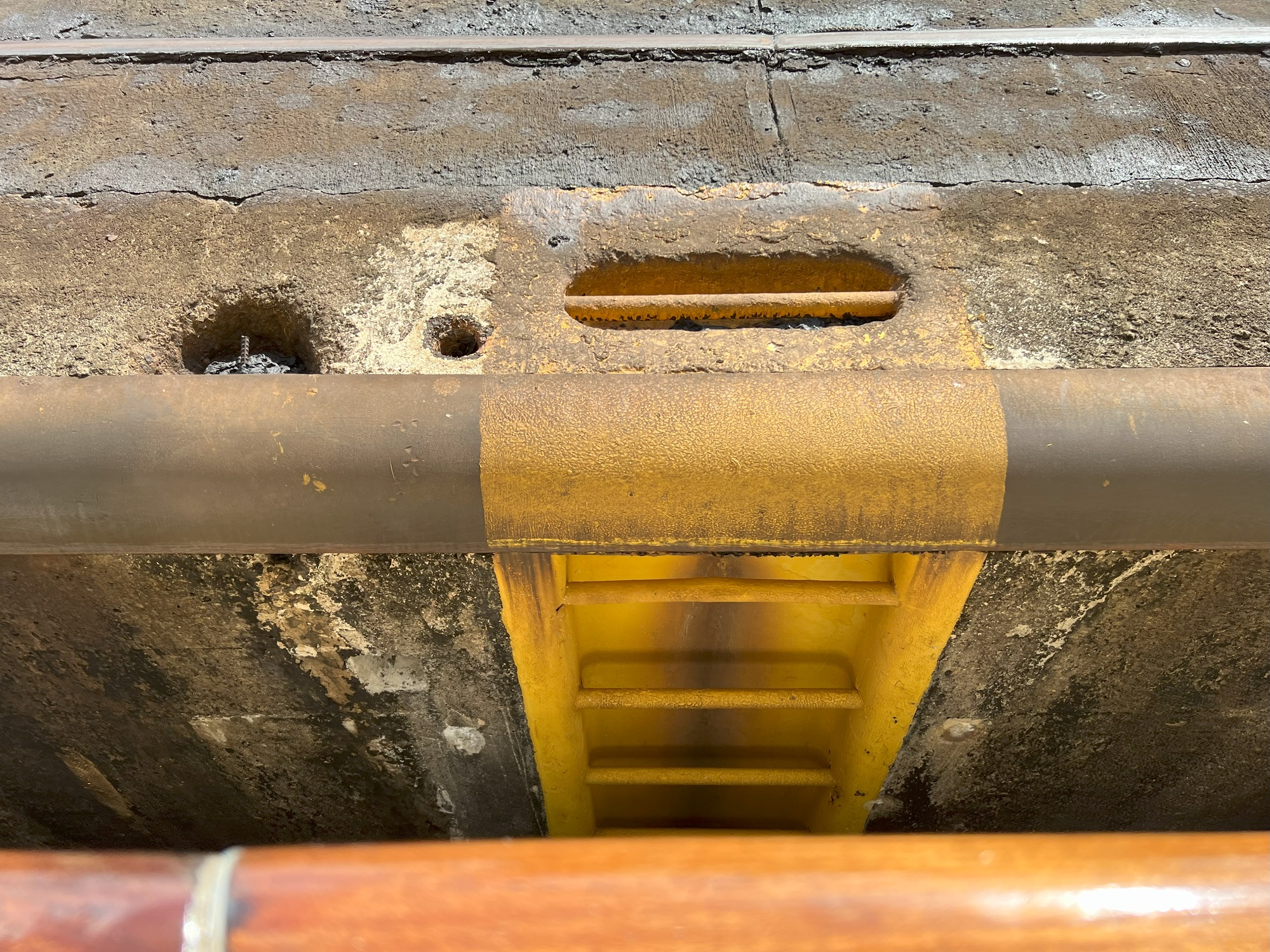
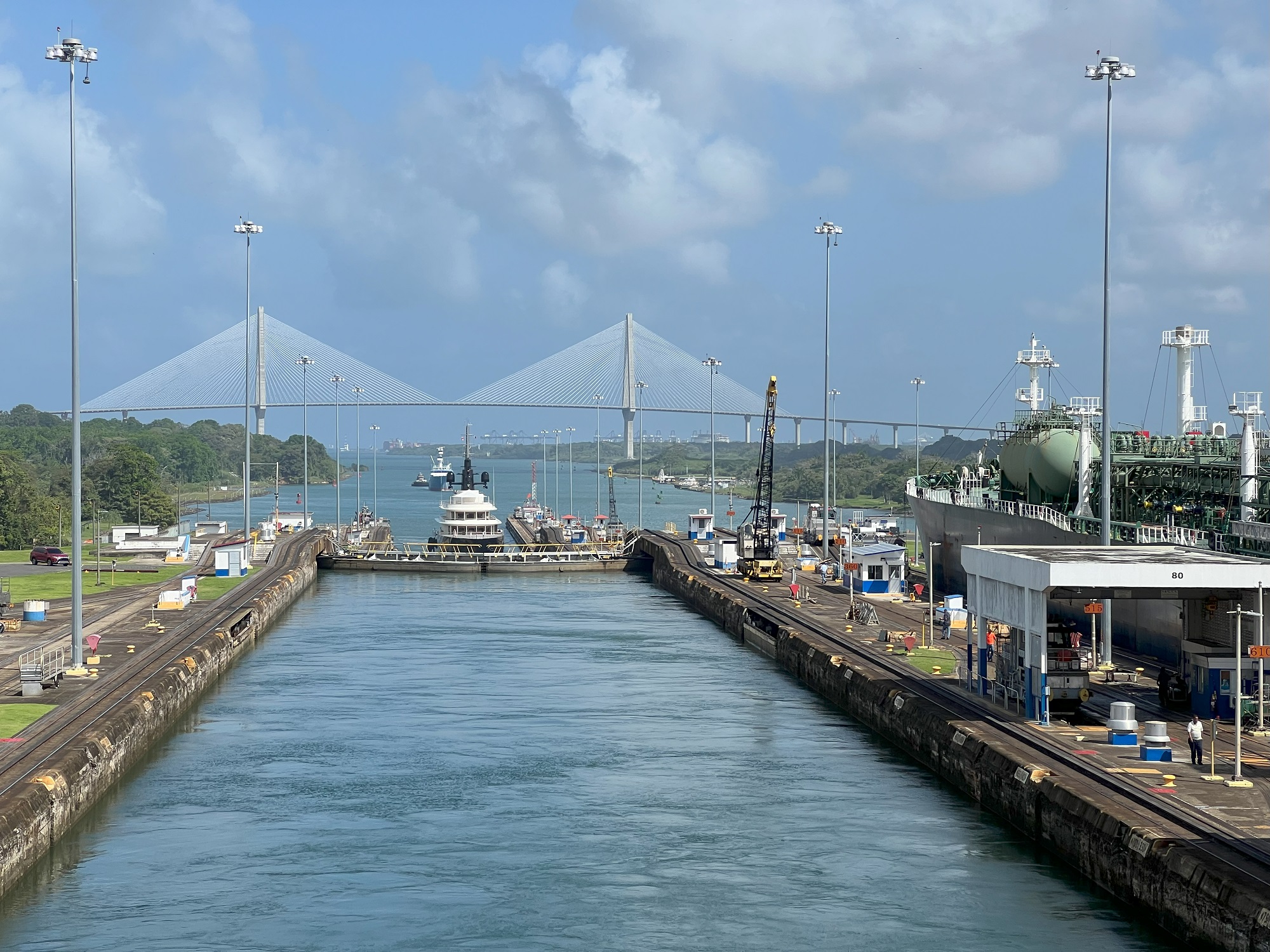
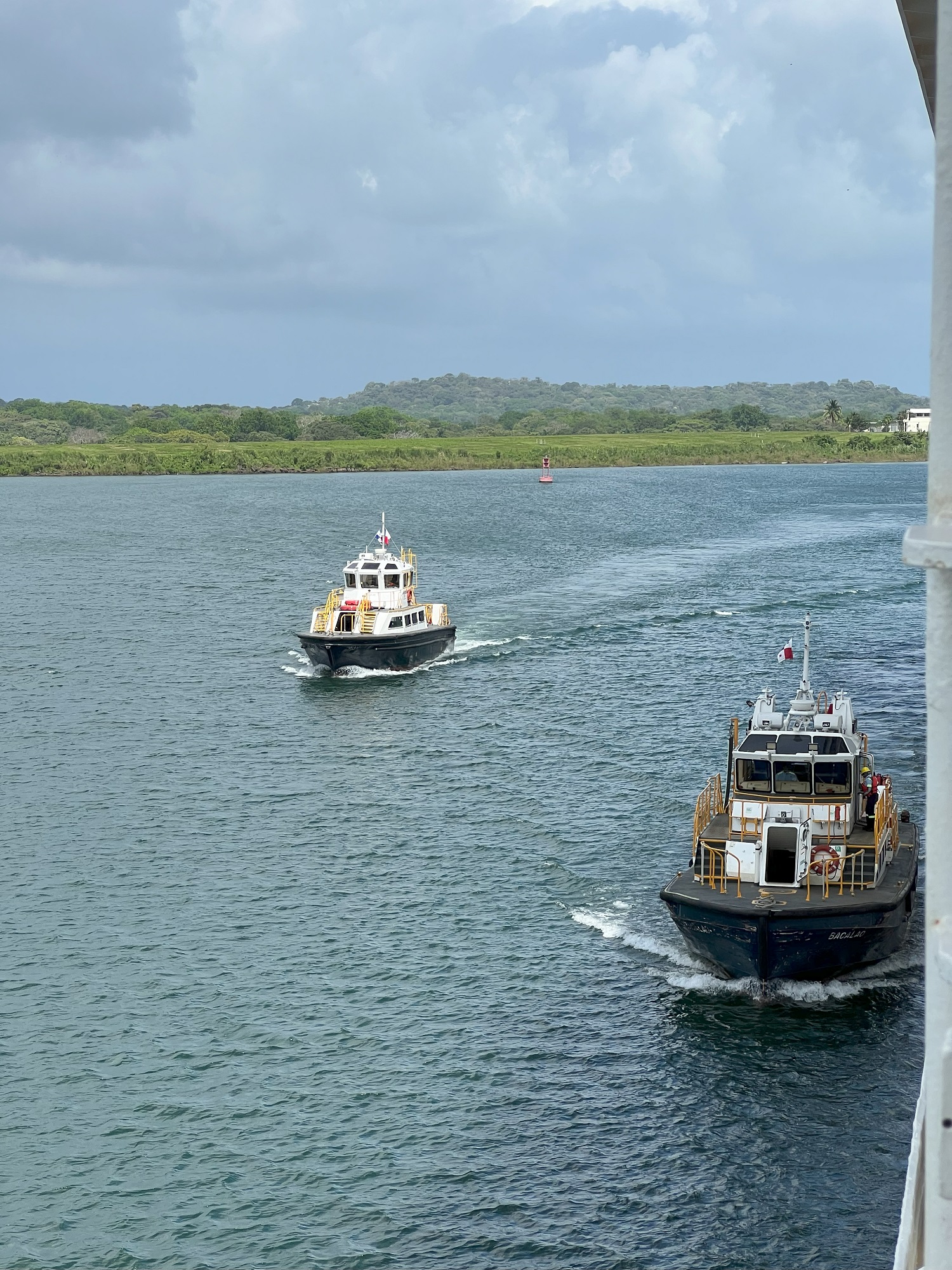
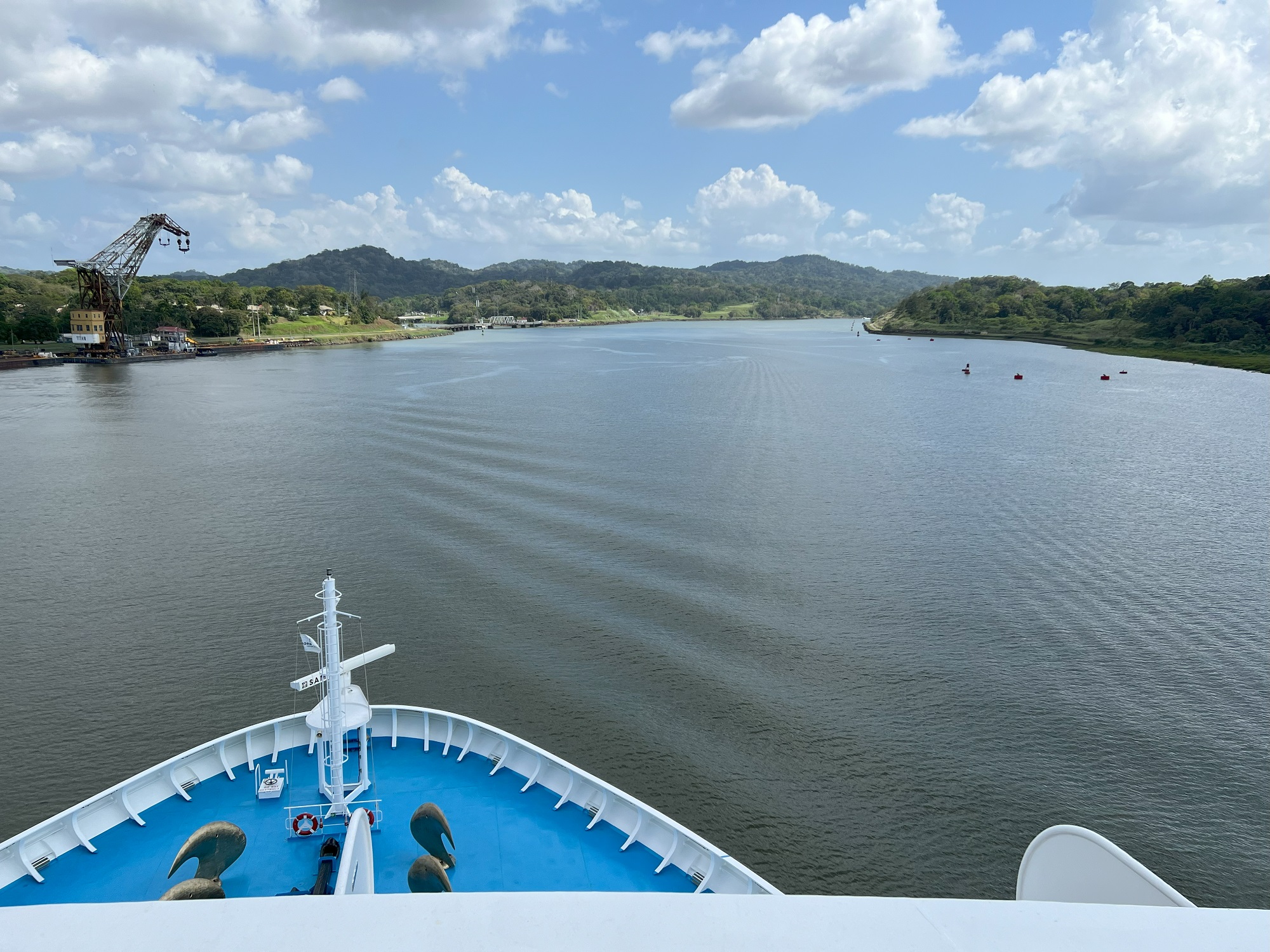
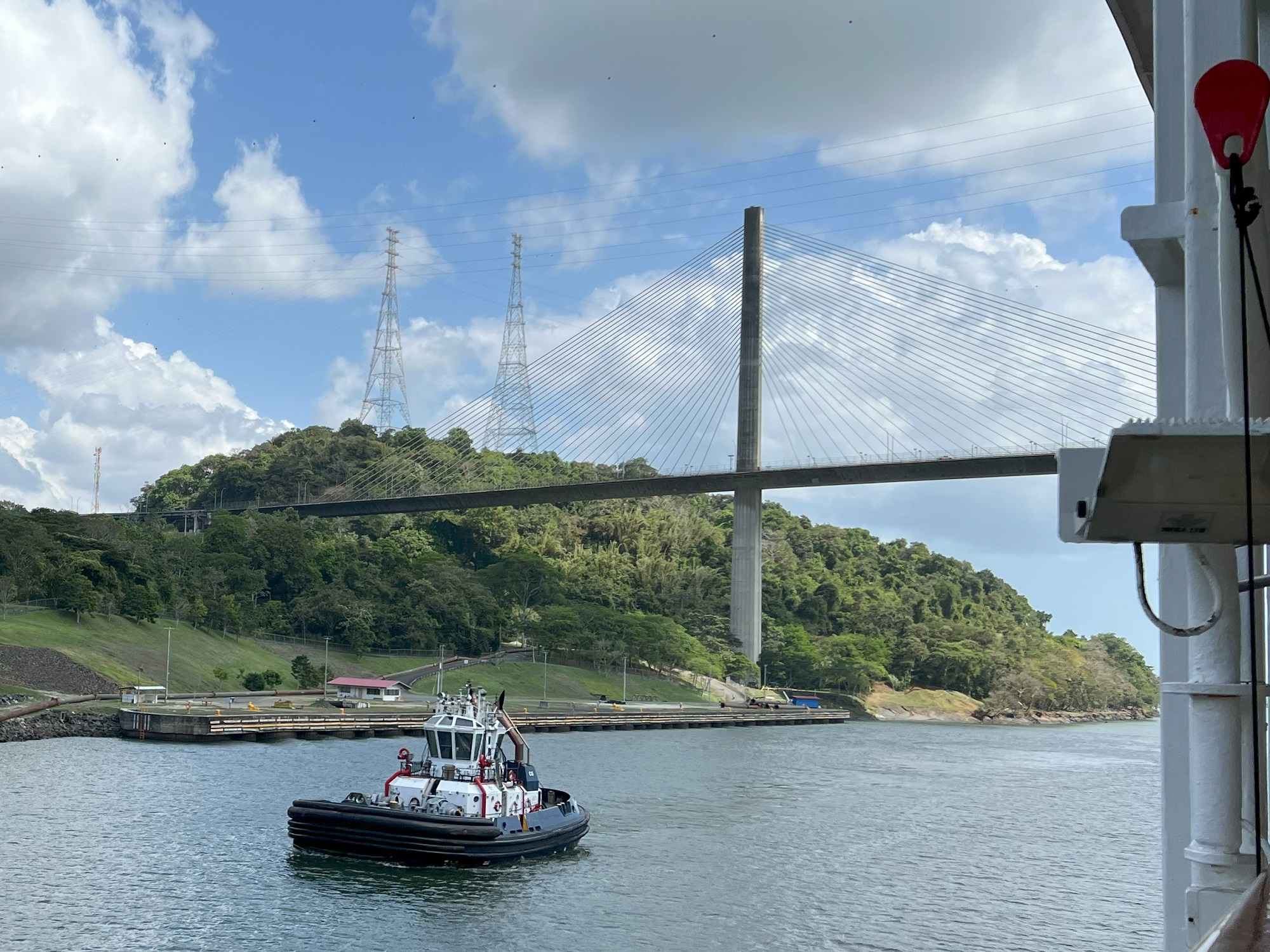
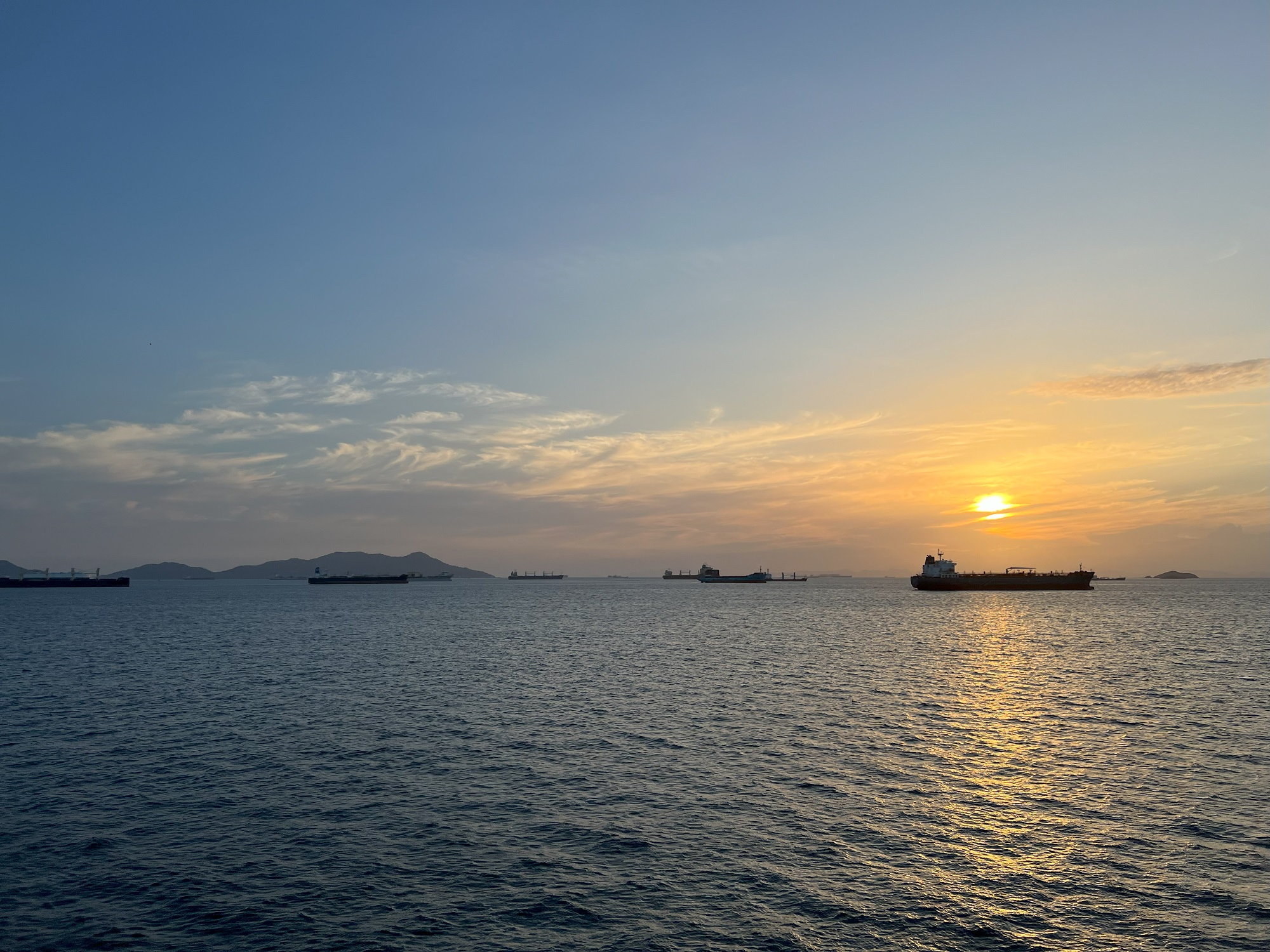
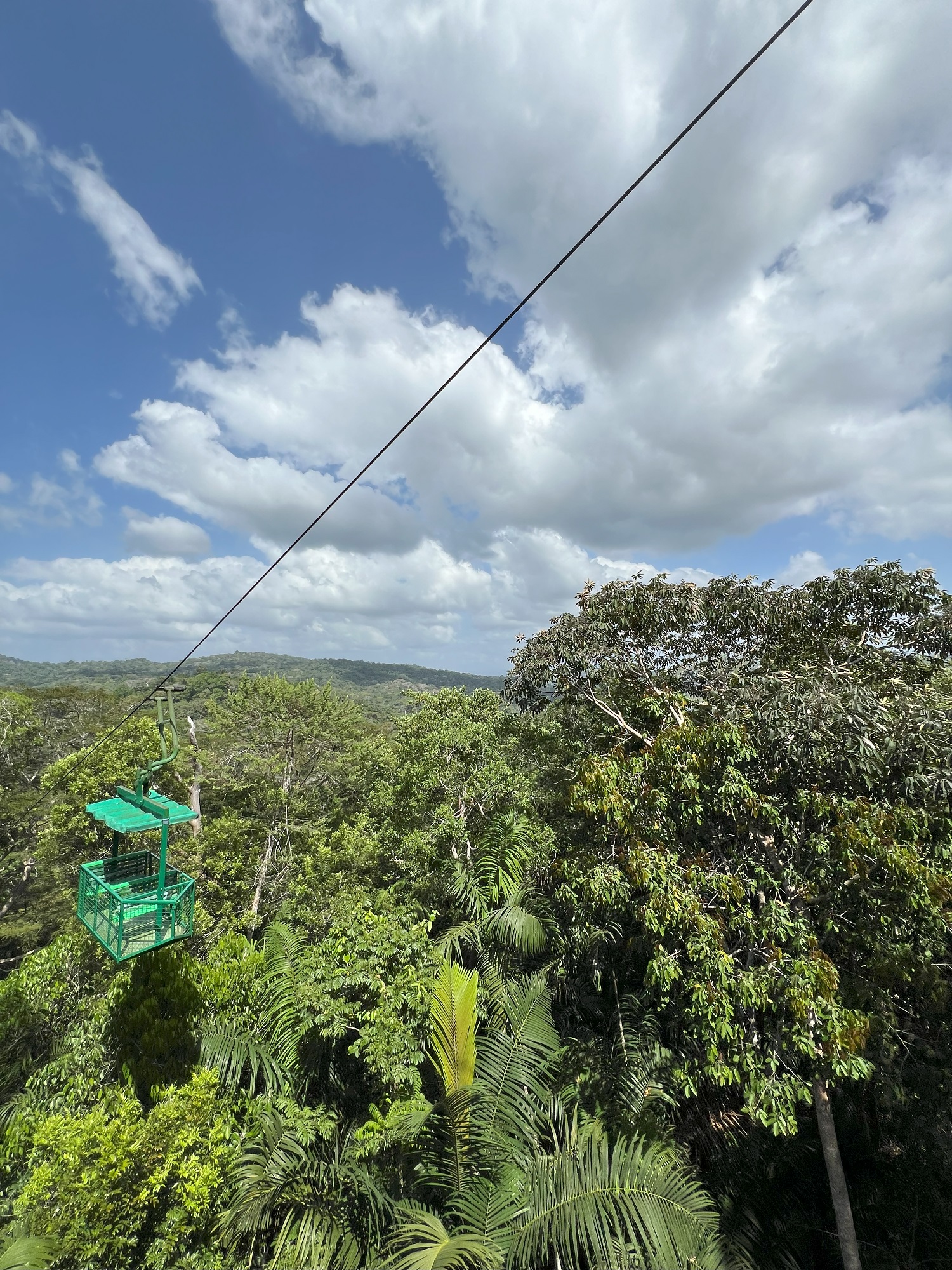
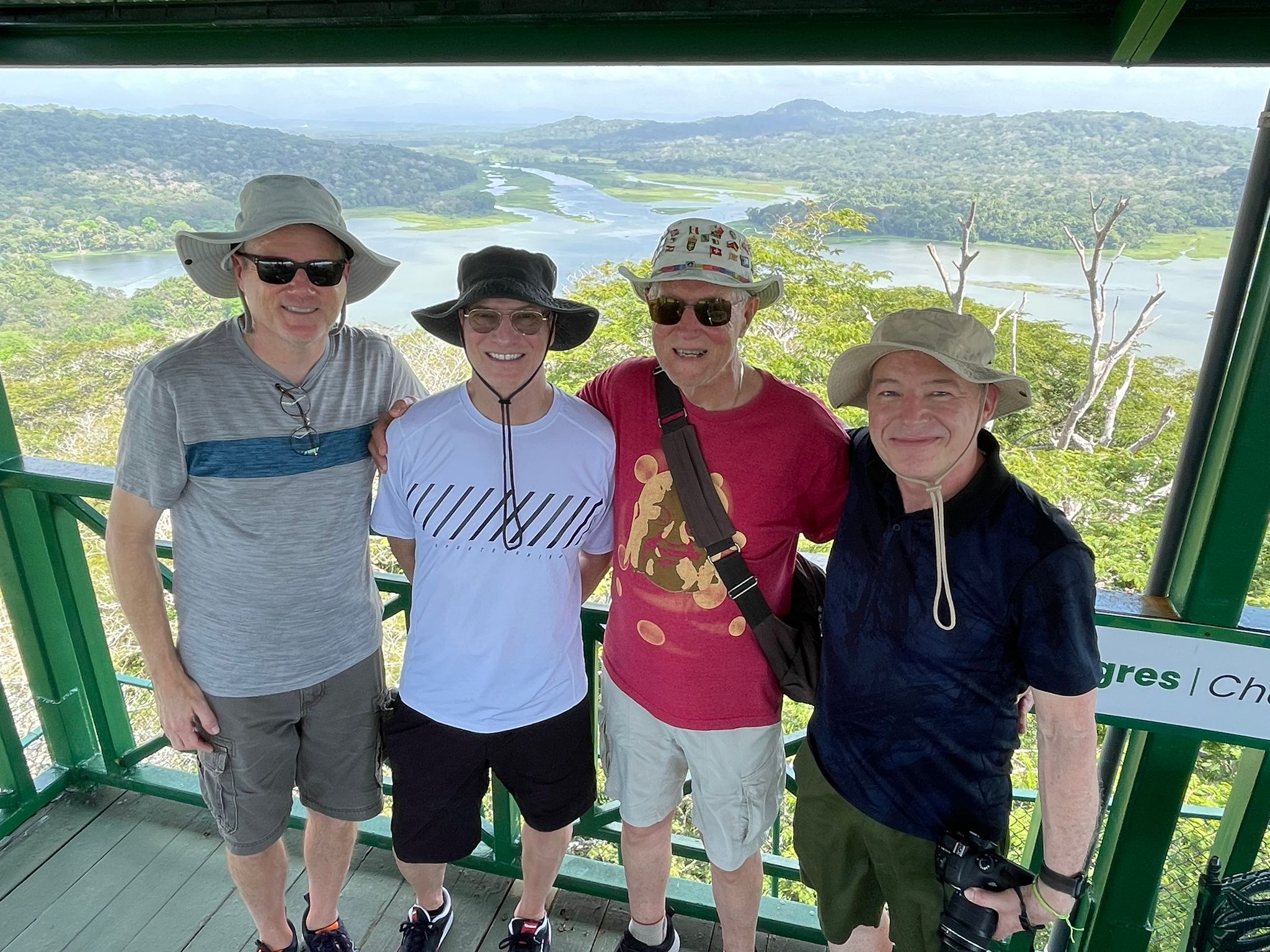
After breakfast, we went on our excursion for the day: an aerial tramway tour through the Gamboan forest canopy.
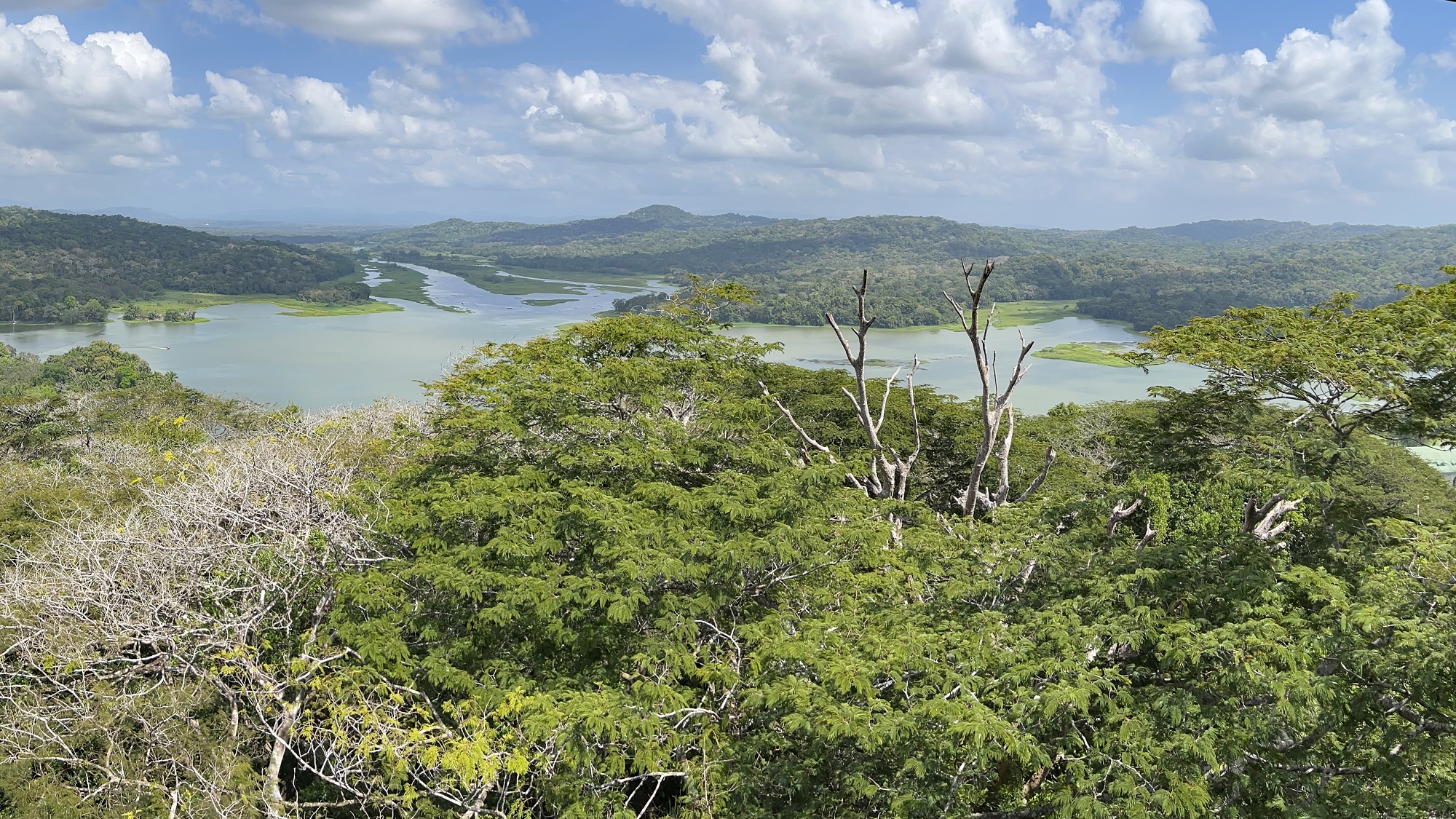
At the top of the tramway― called Cerro Pelado― there is an observation tower with panoramic views of Soberania National Park, the Chagres River and the Panama Canal.
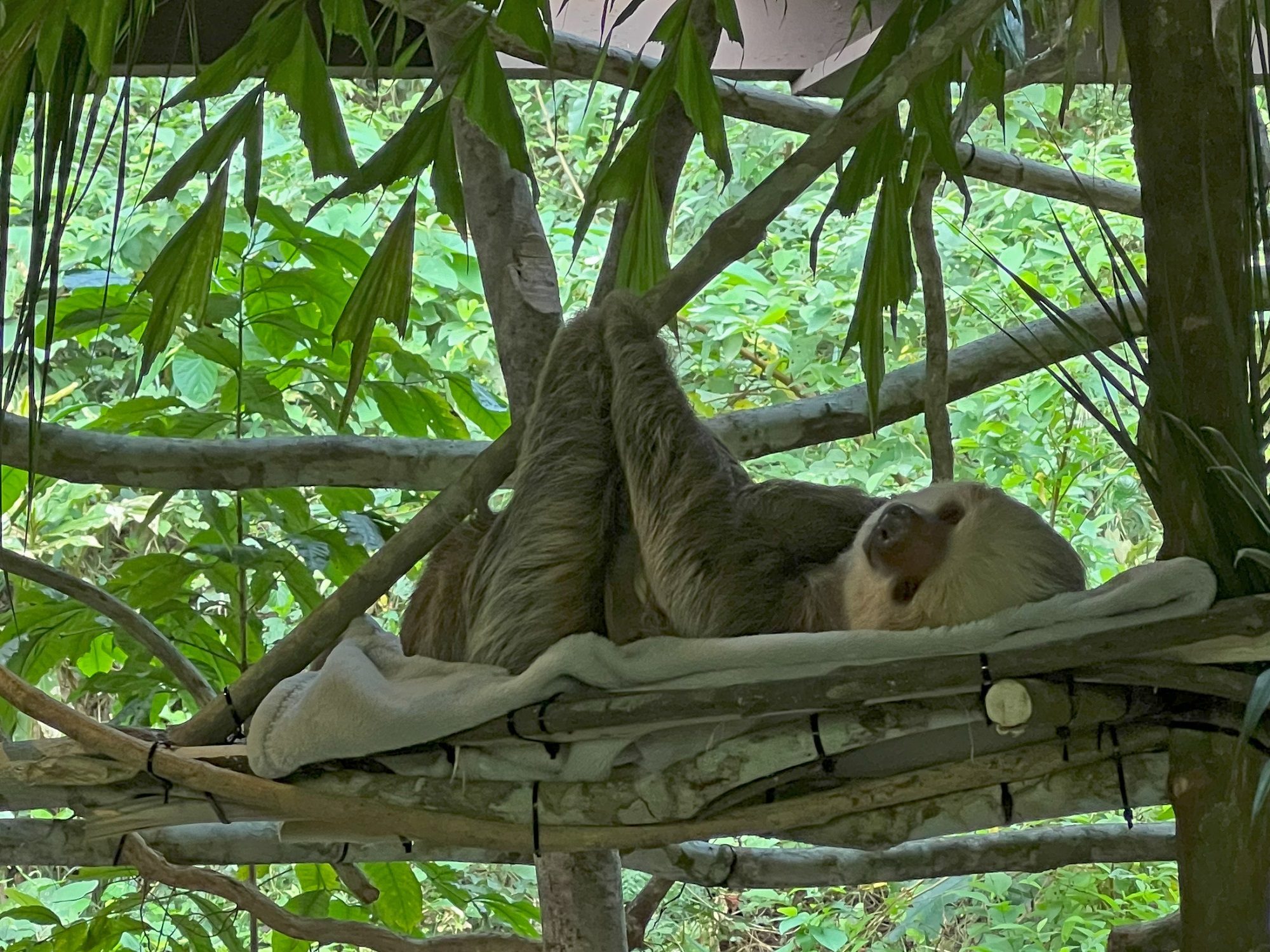
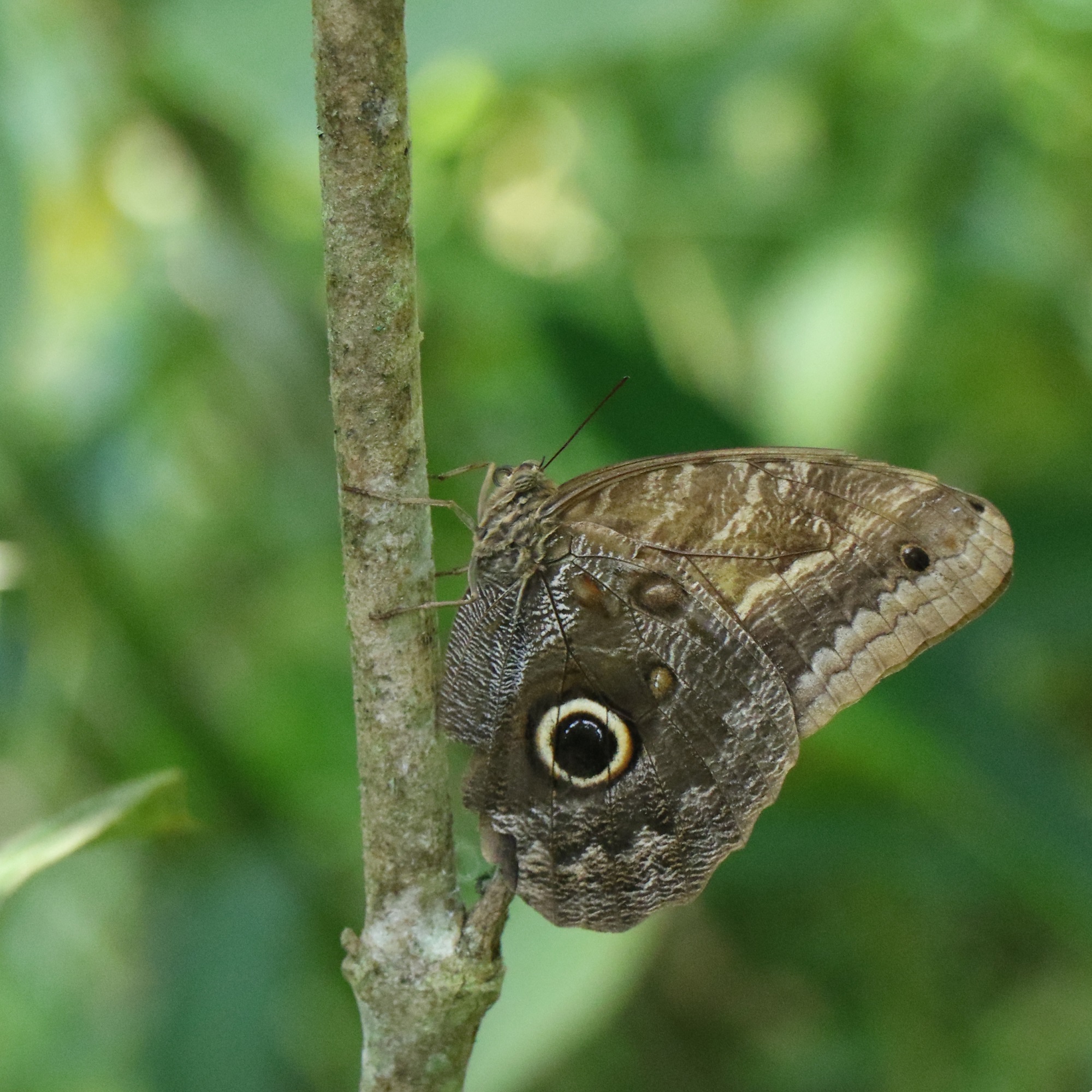
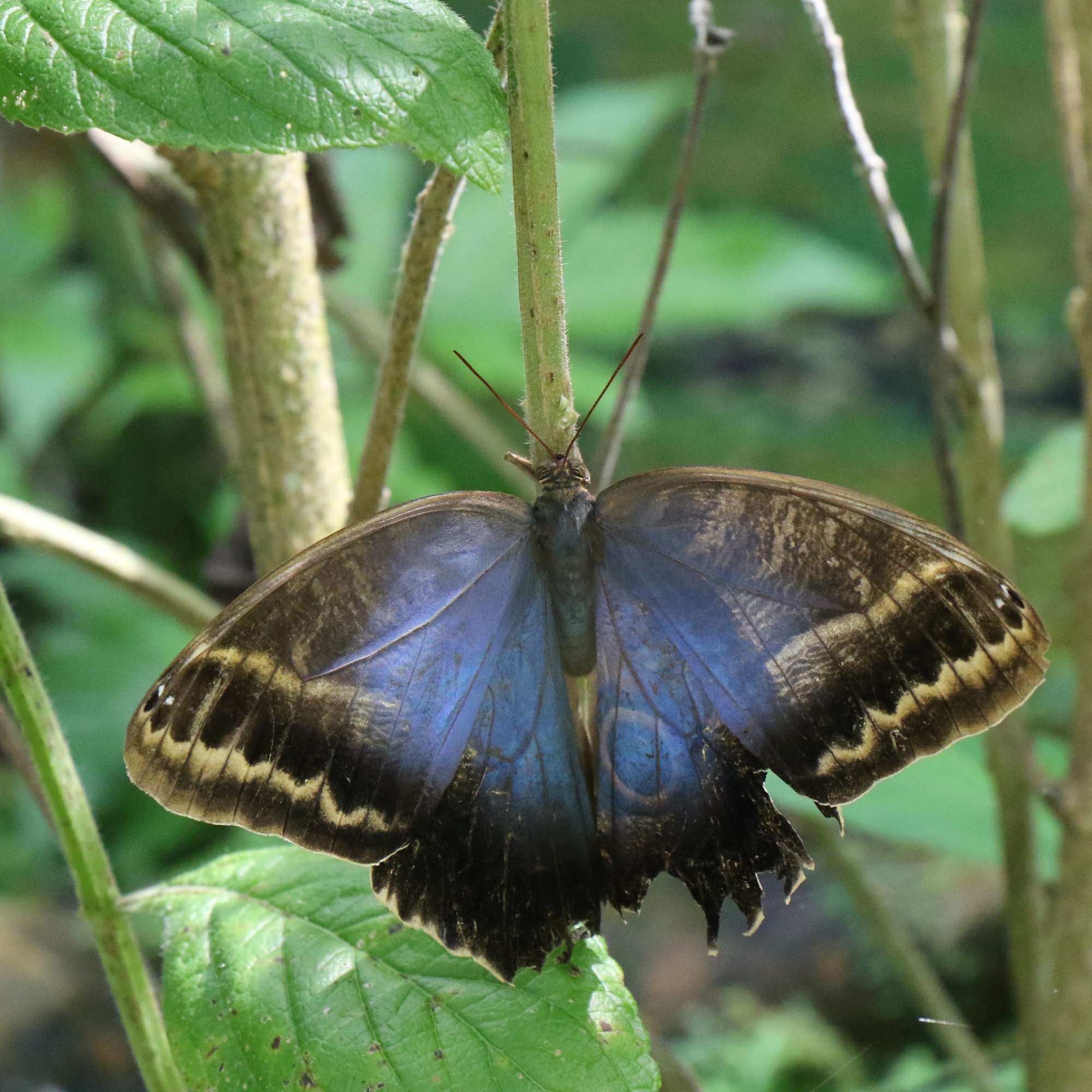
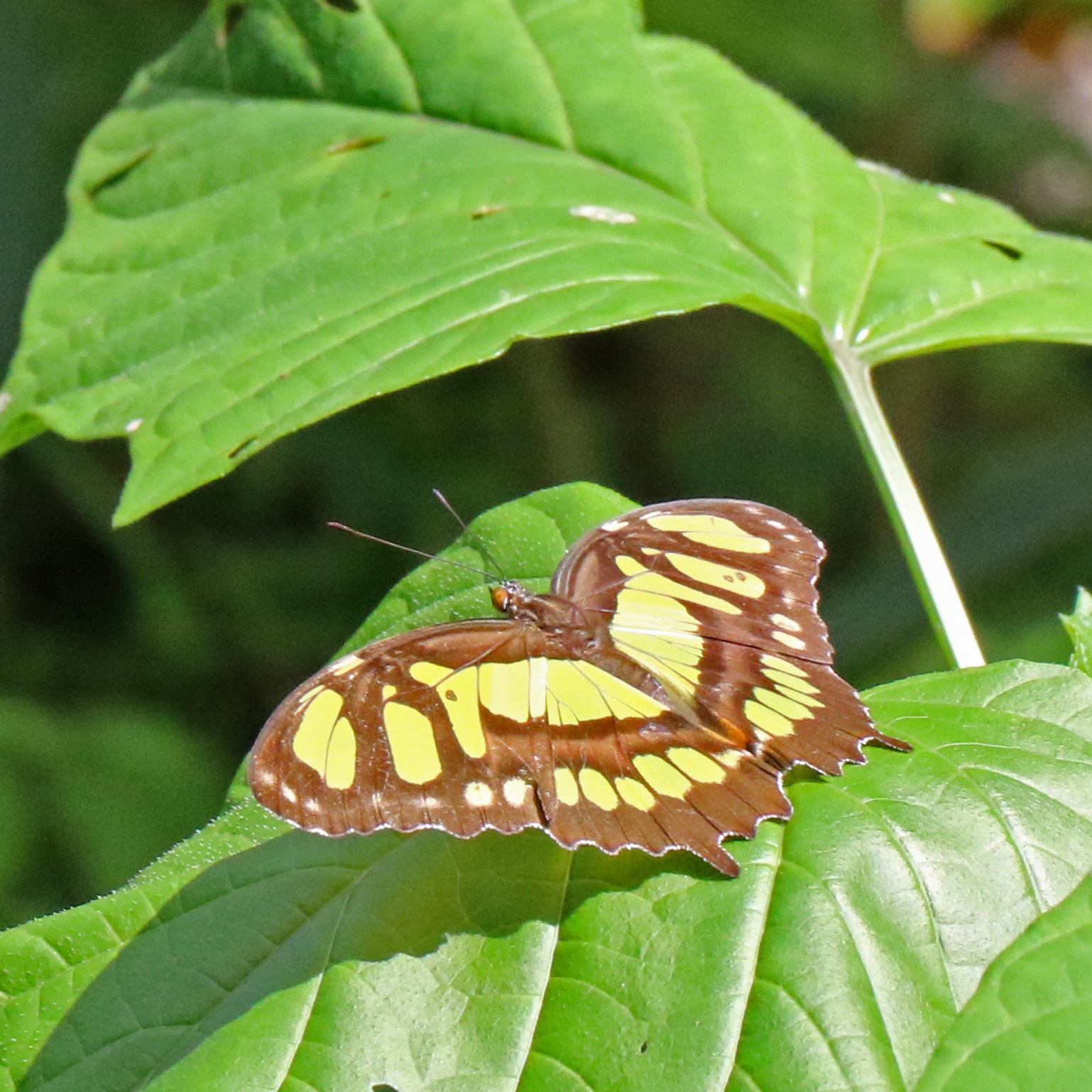
Our tour included stops at a sloth sanctuary, an orchid house and a butterfly enclosure.
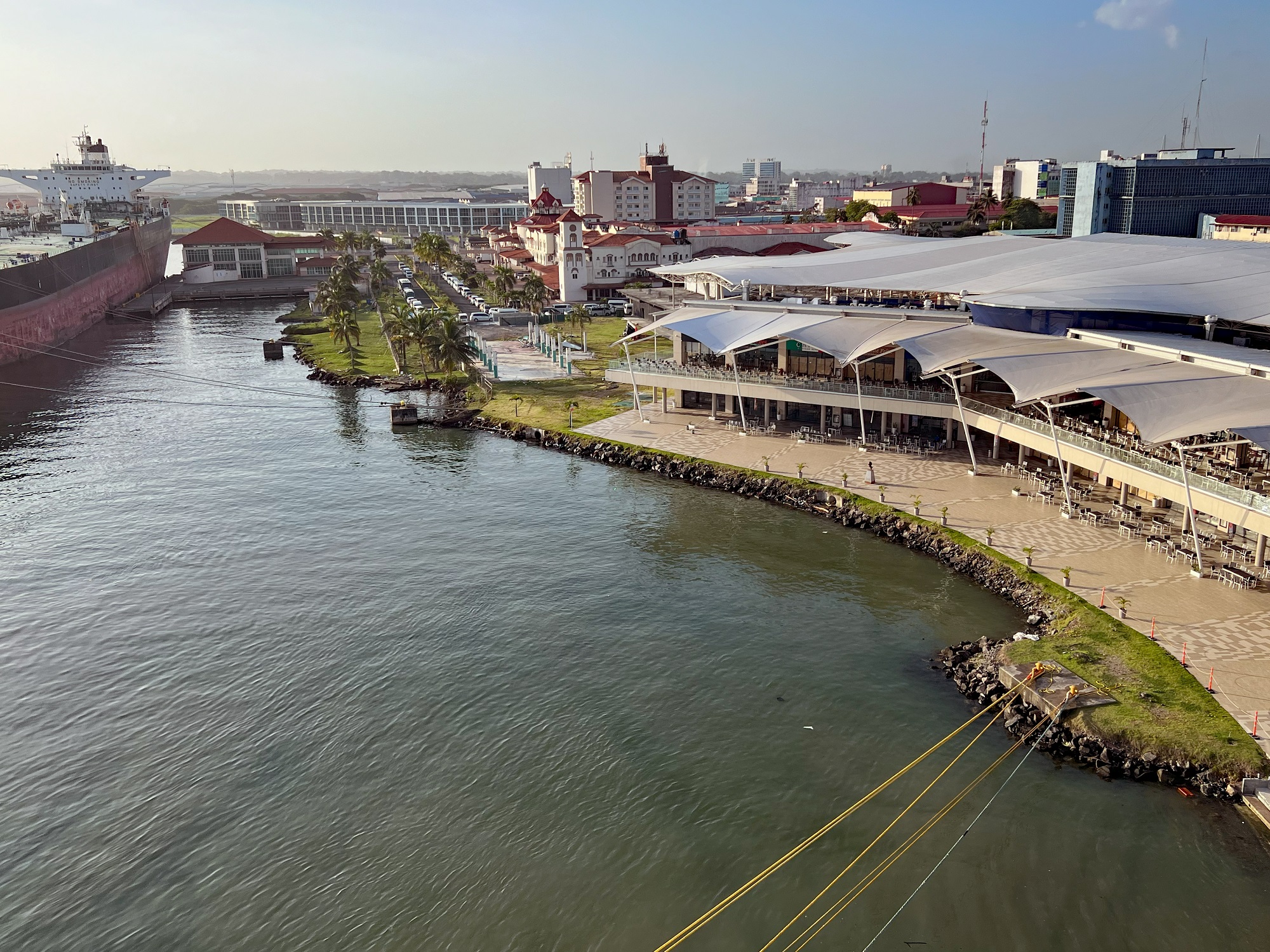
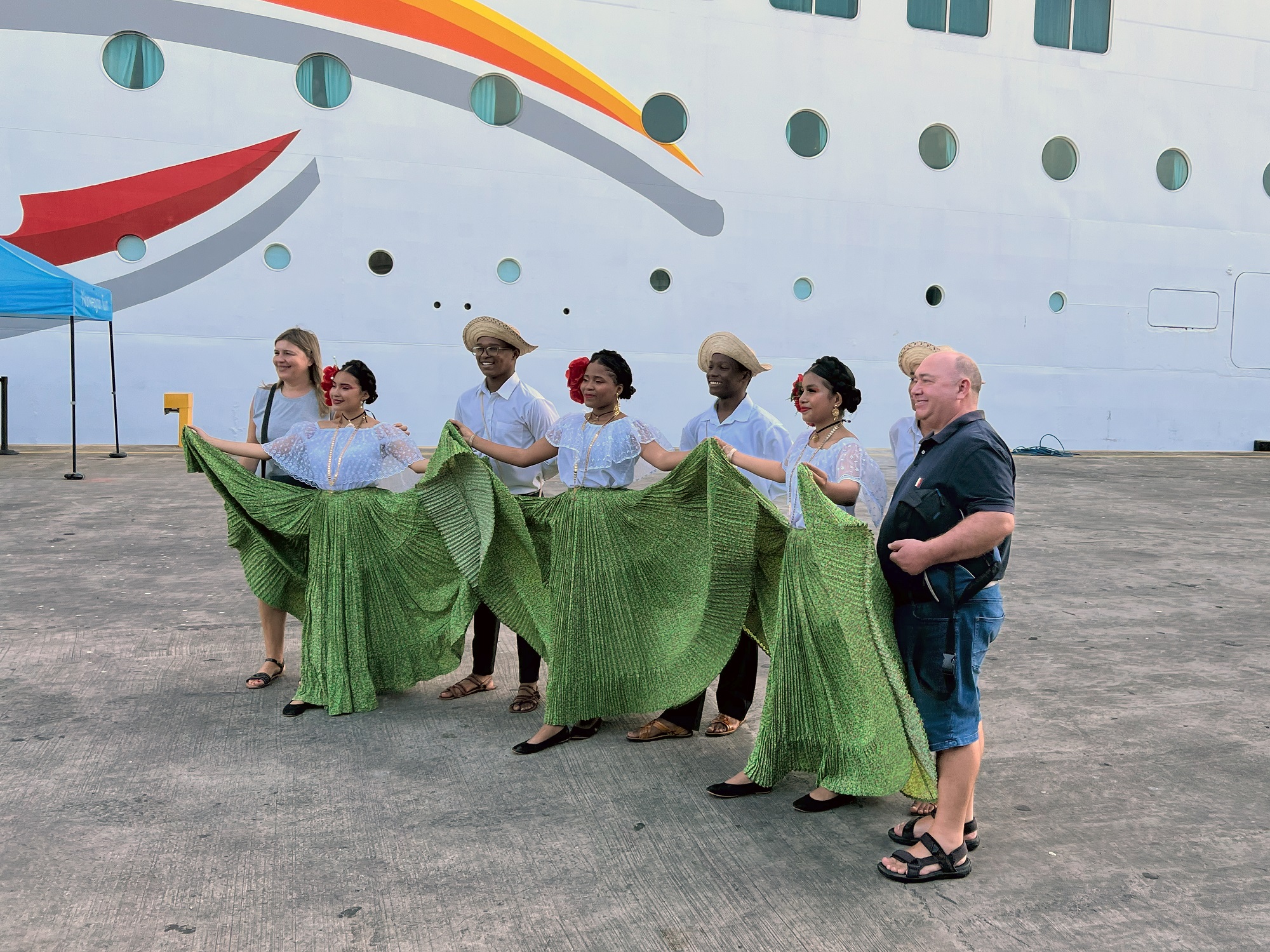
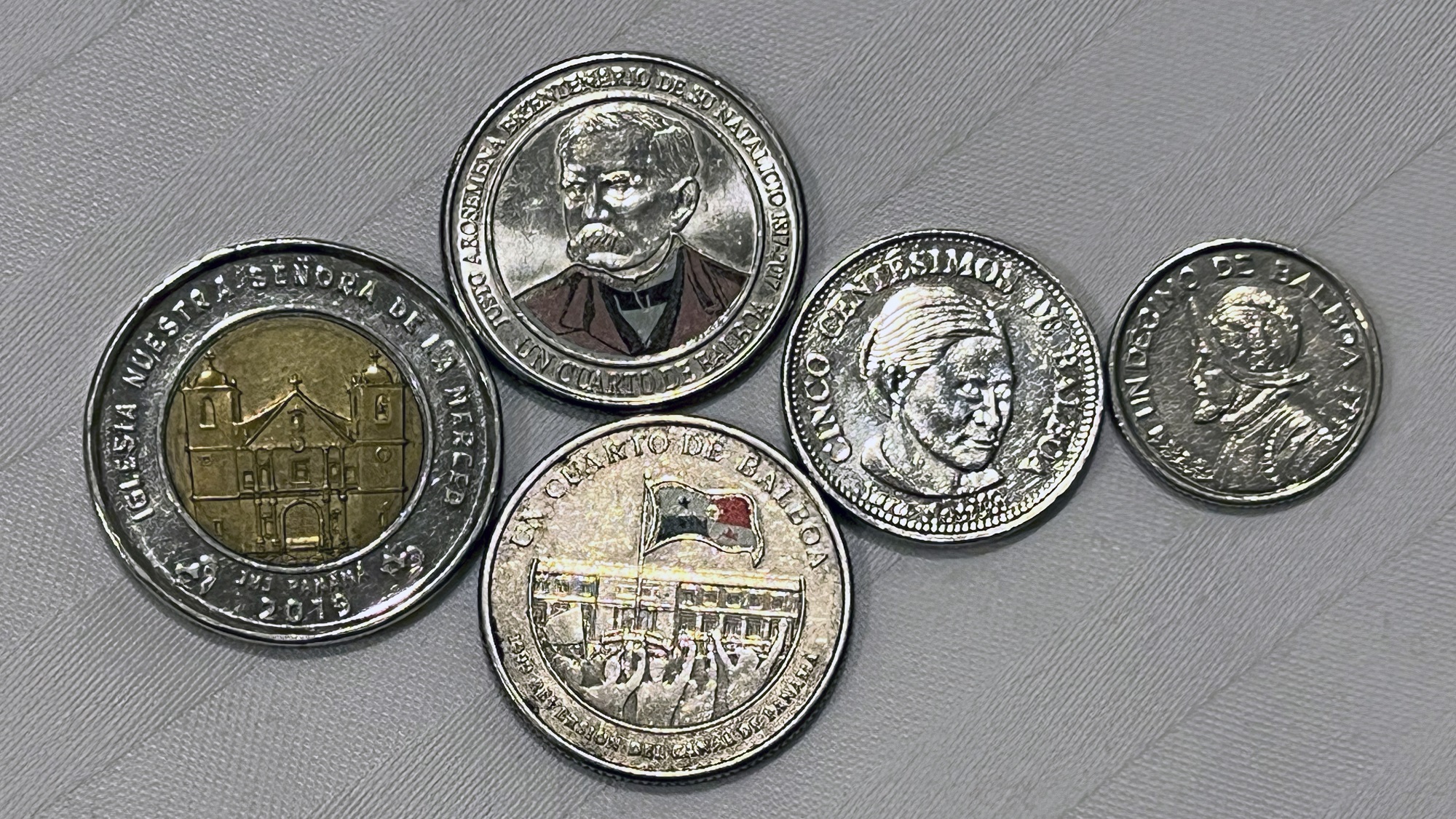
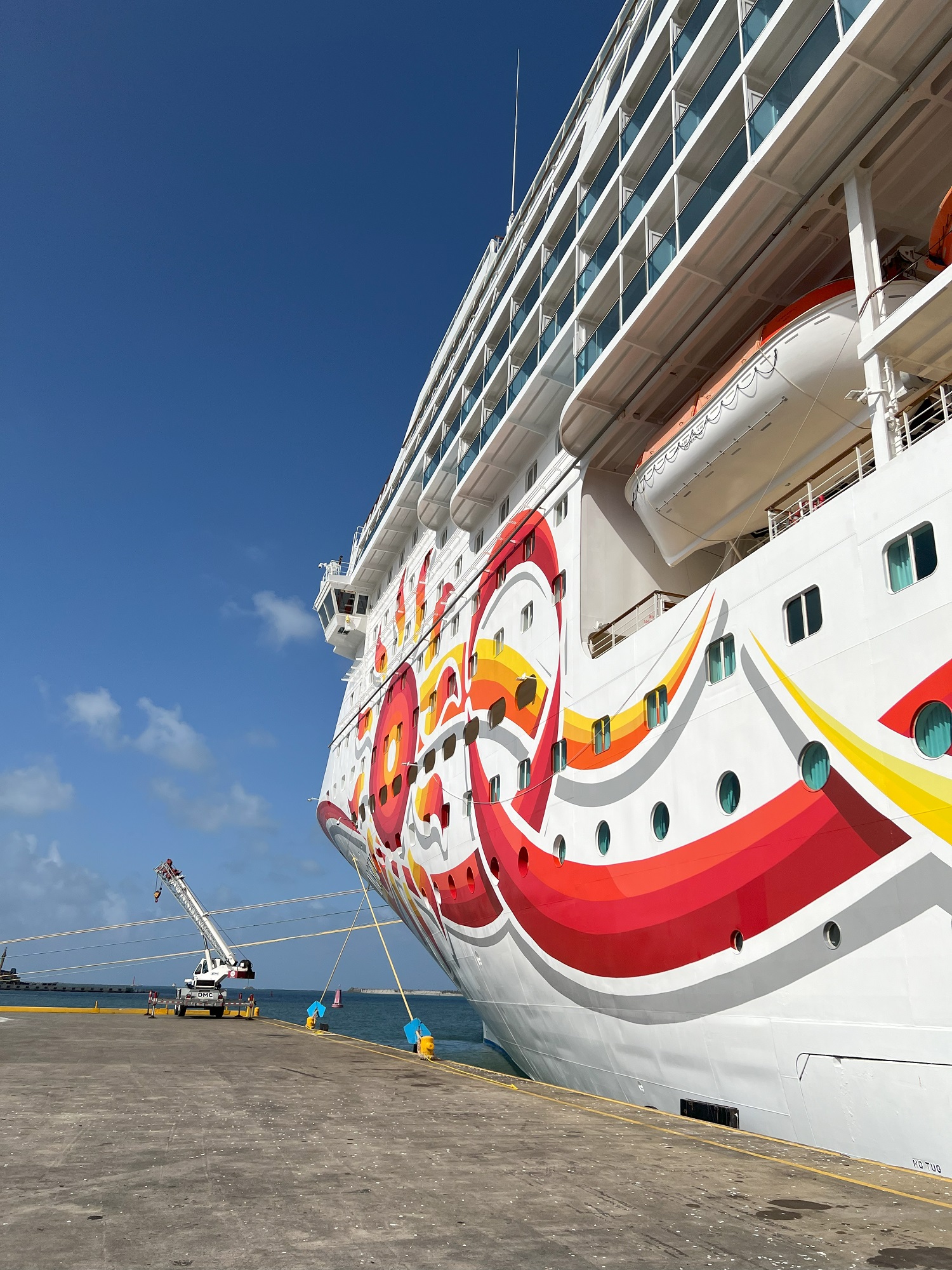
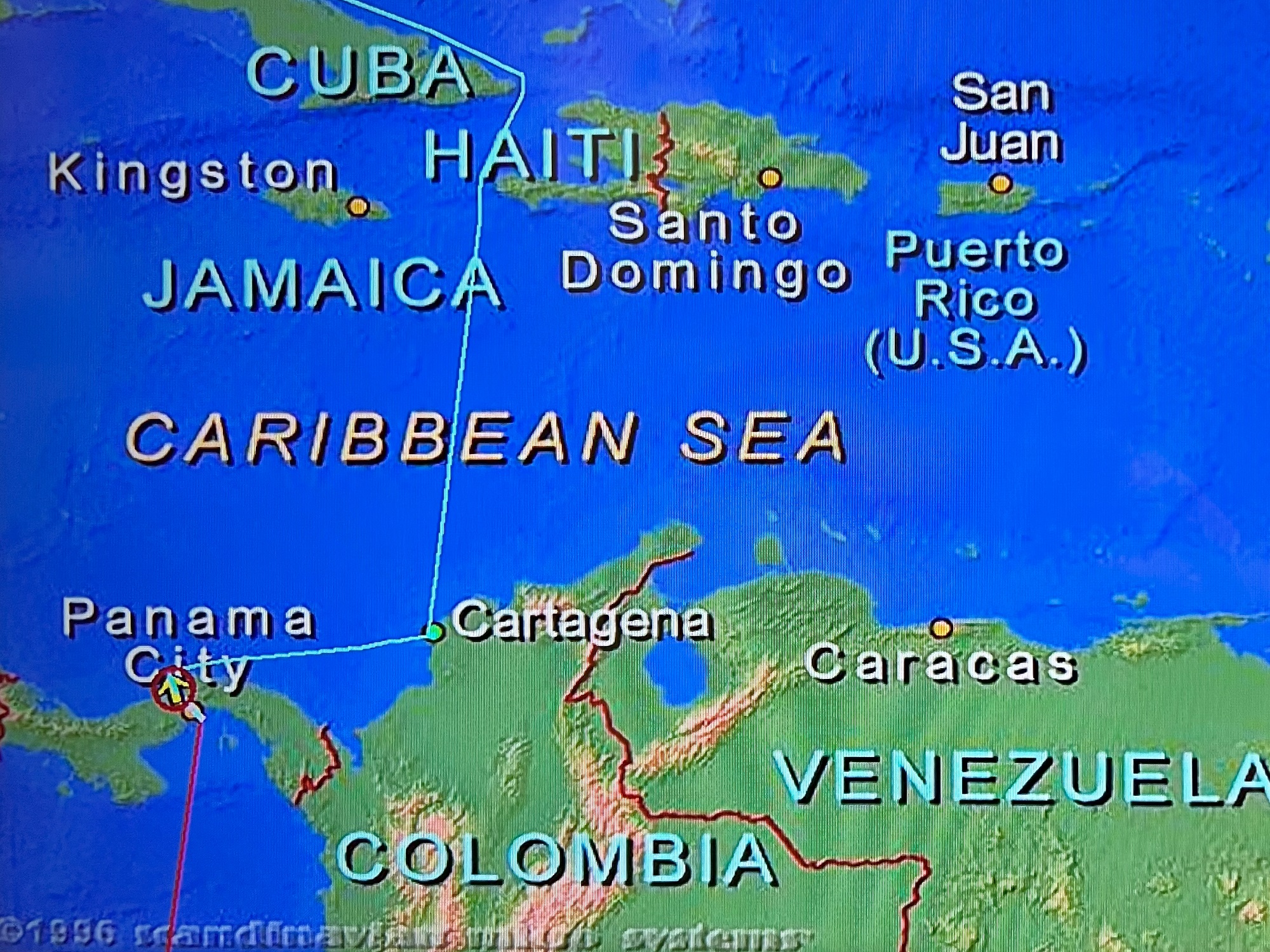
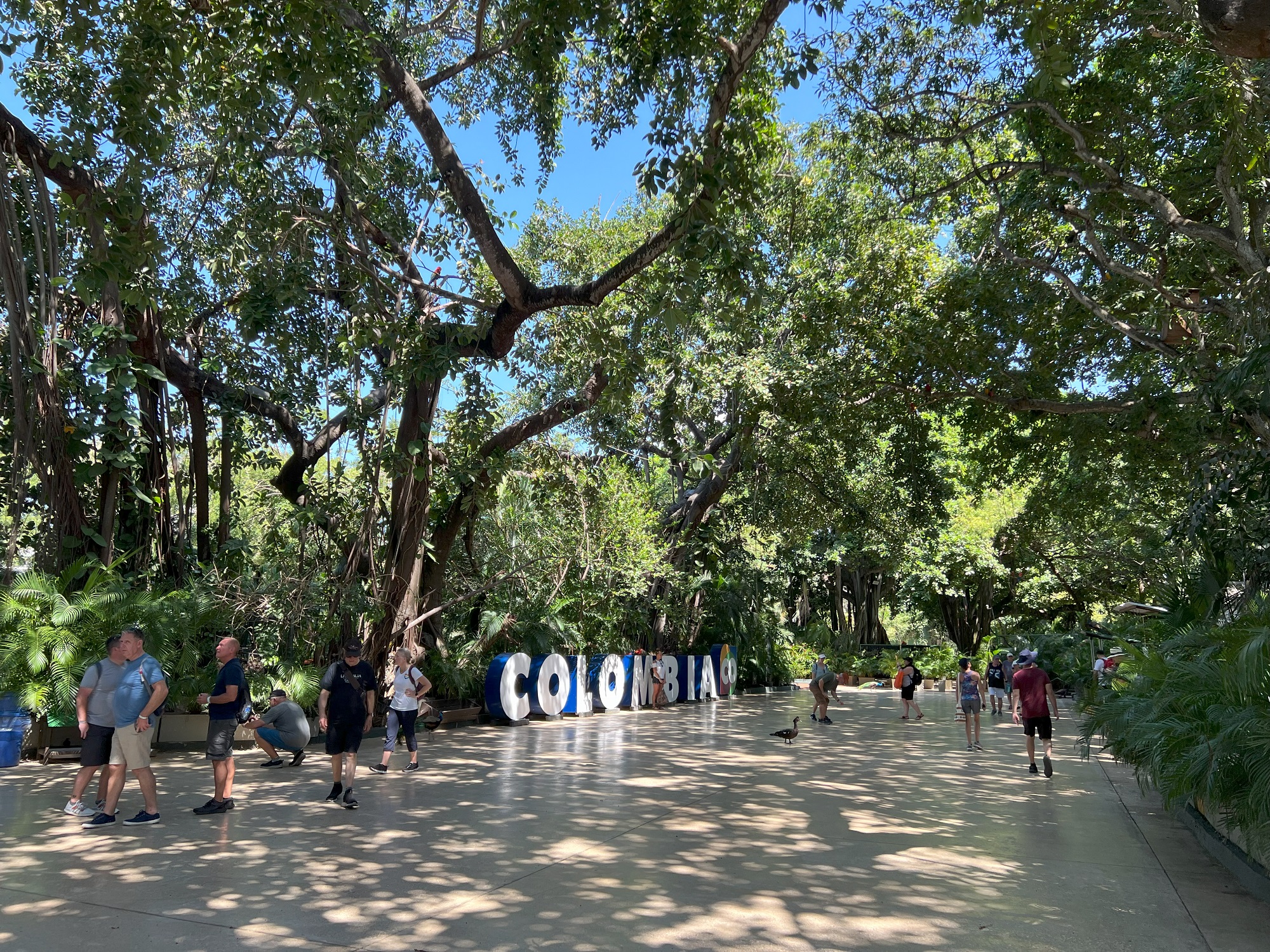
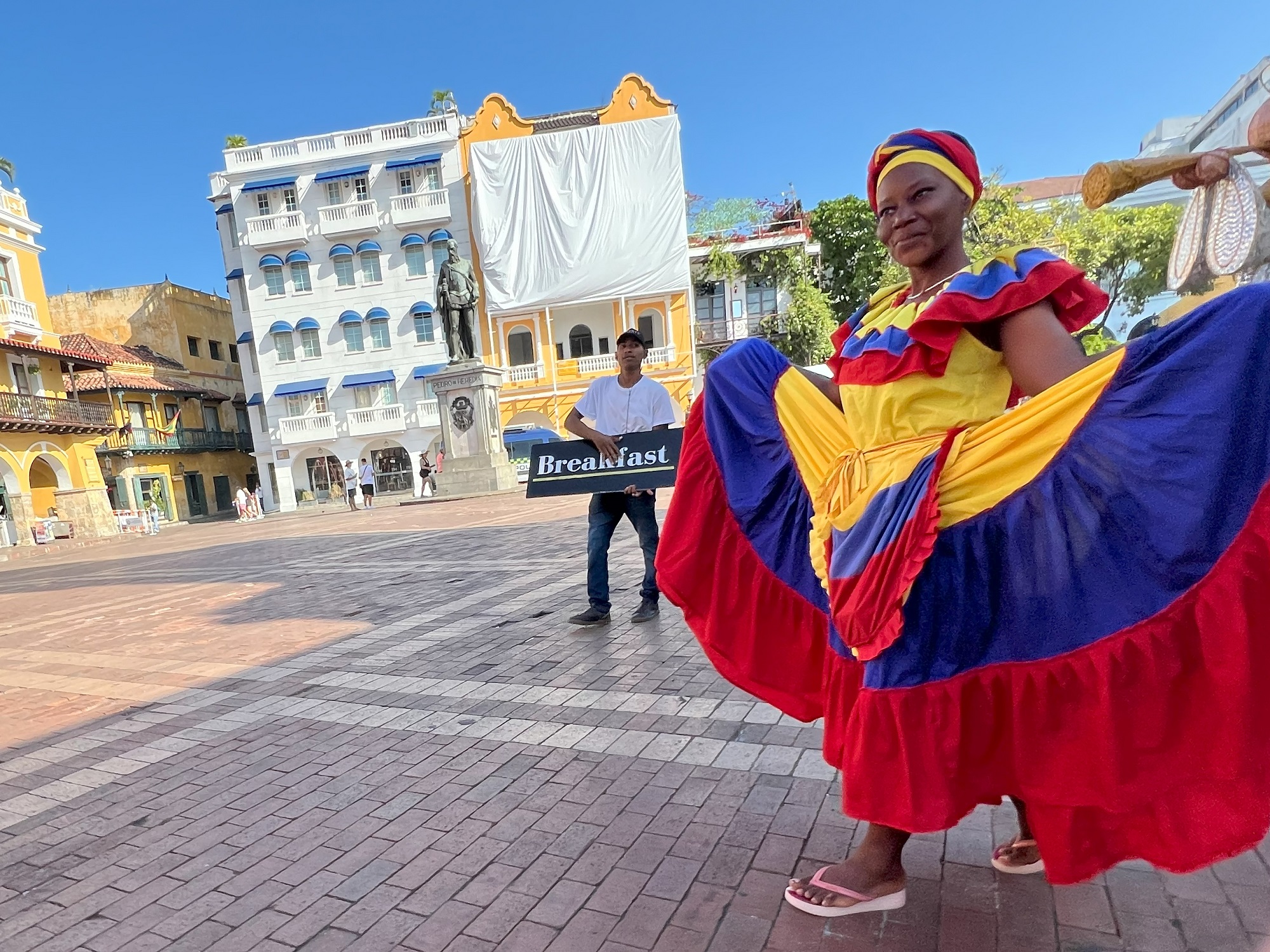
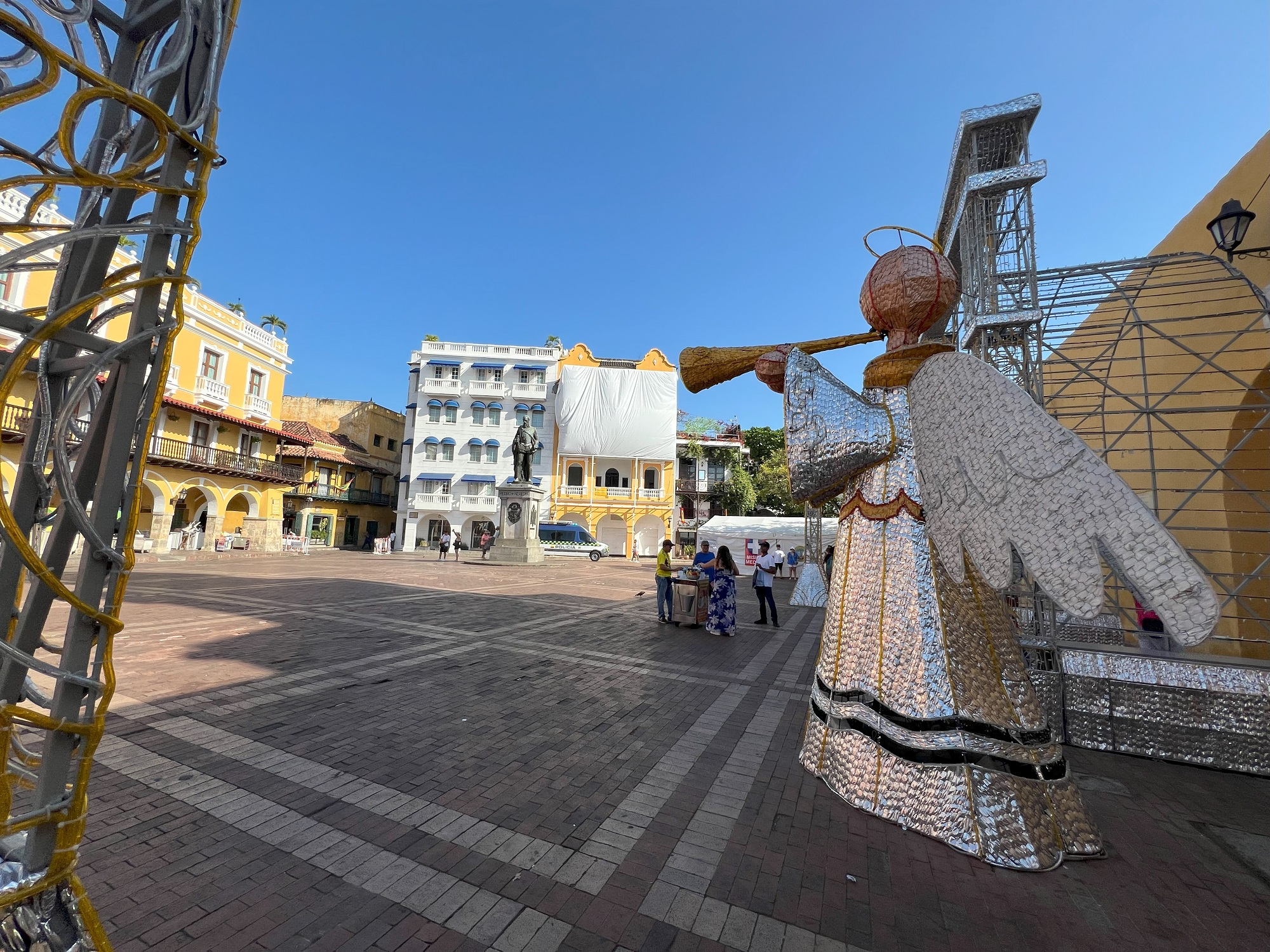
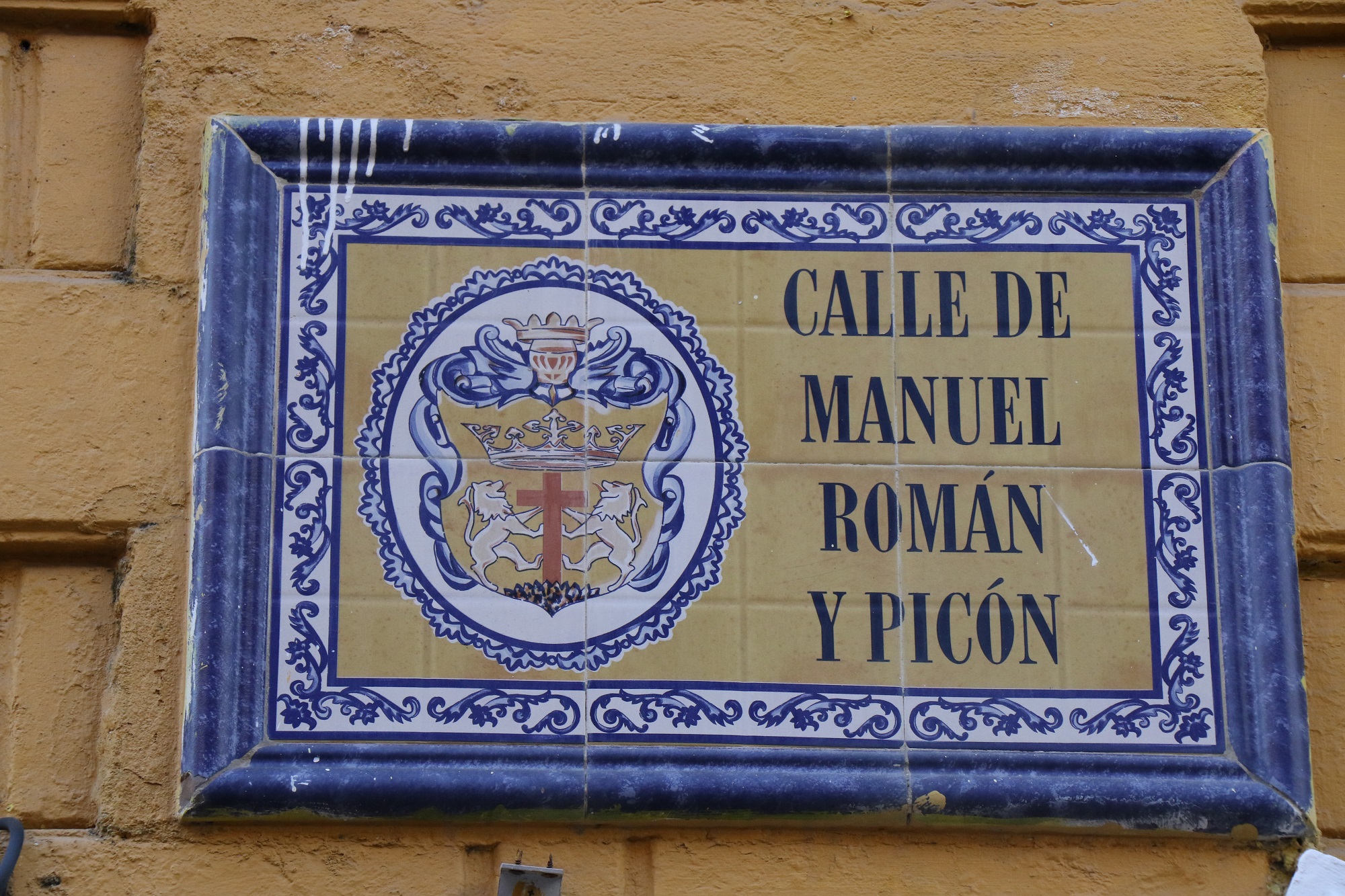
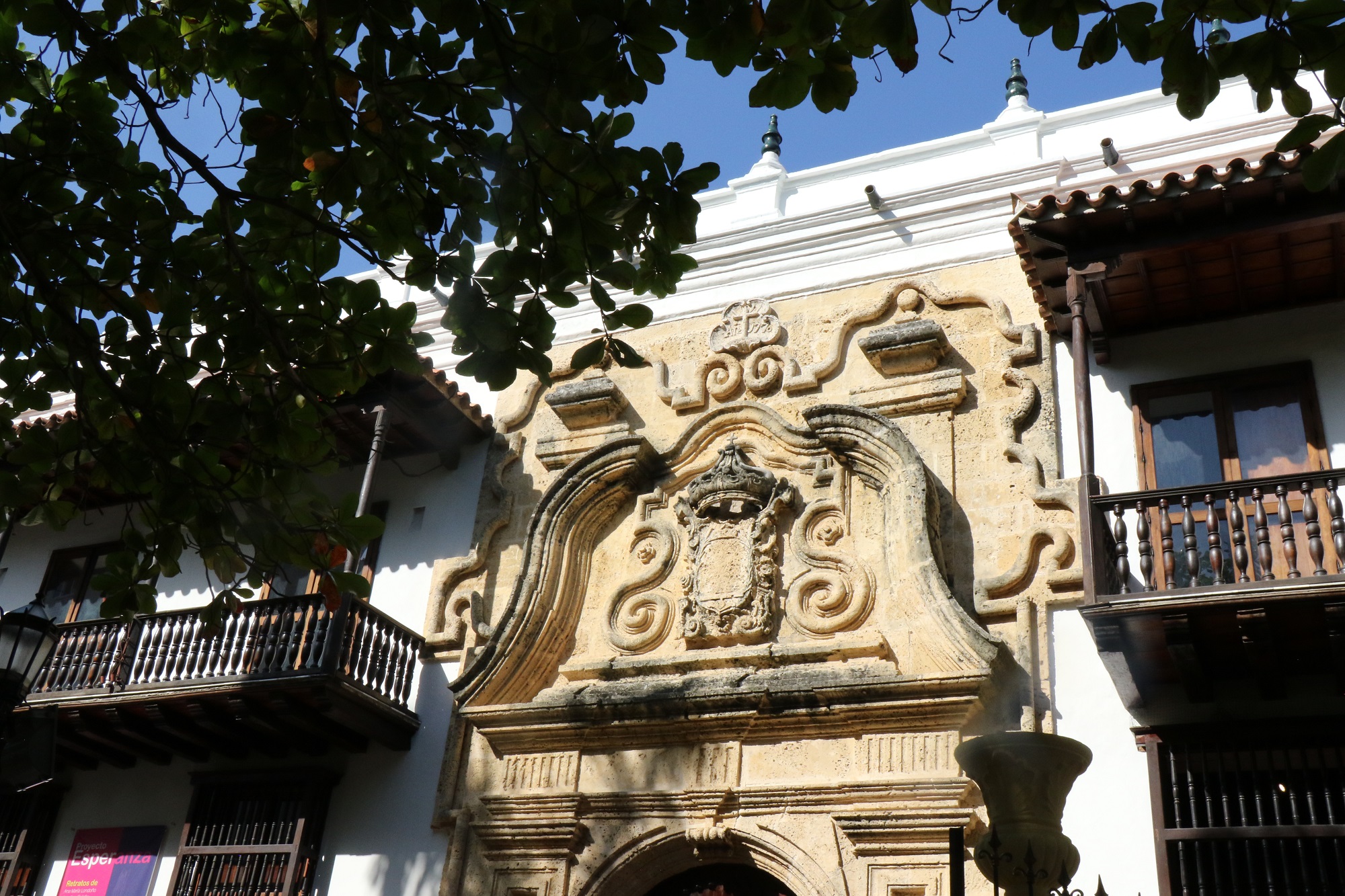
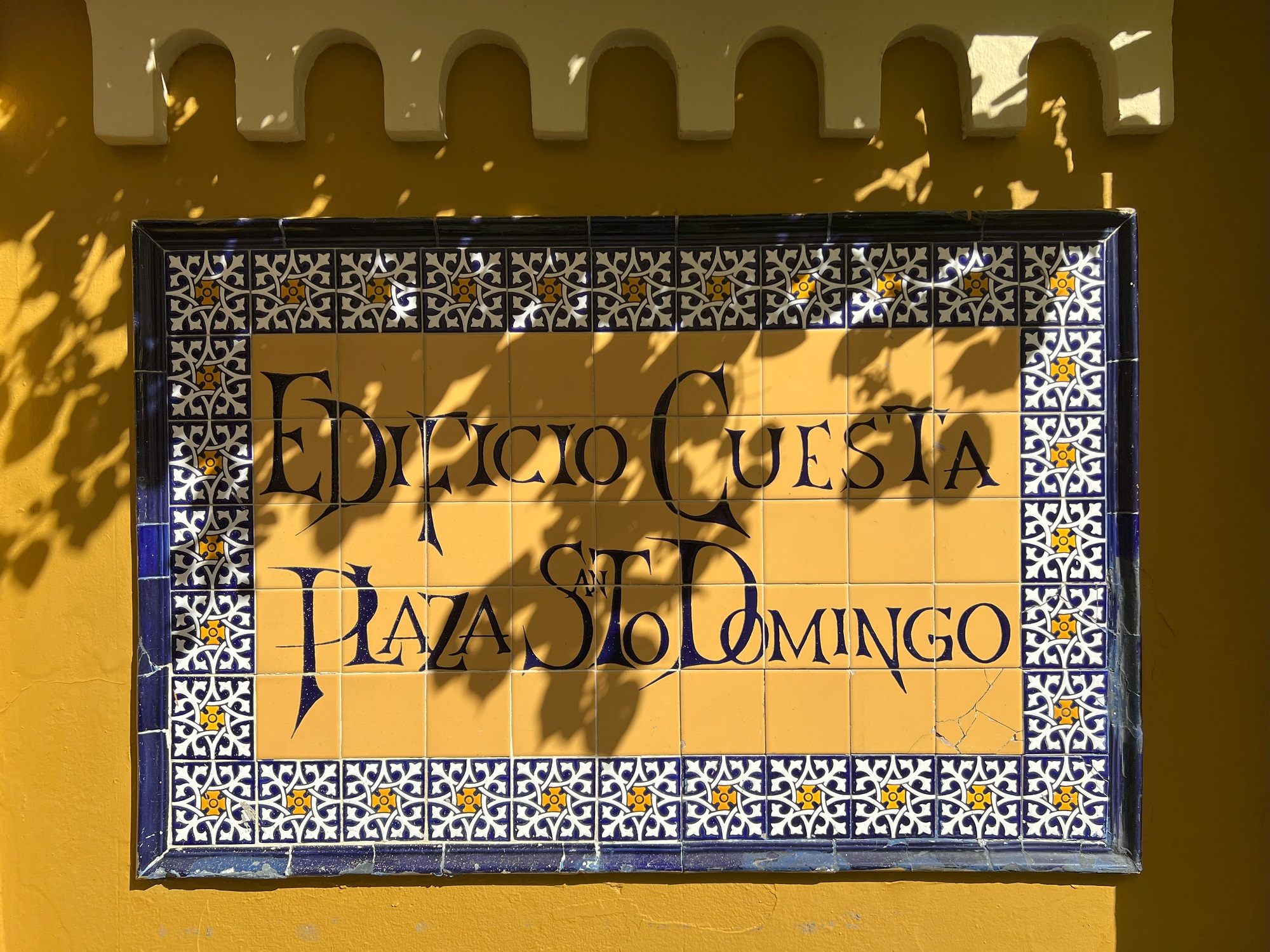
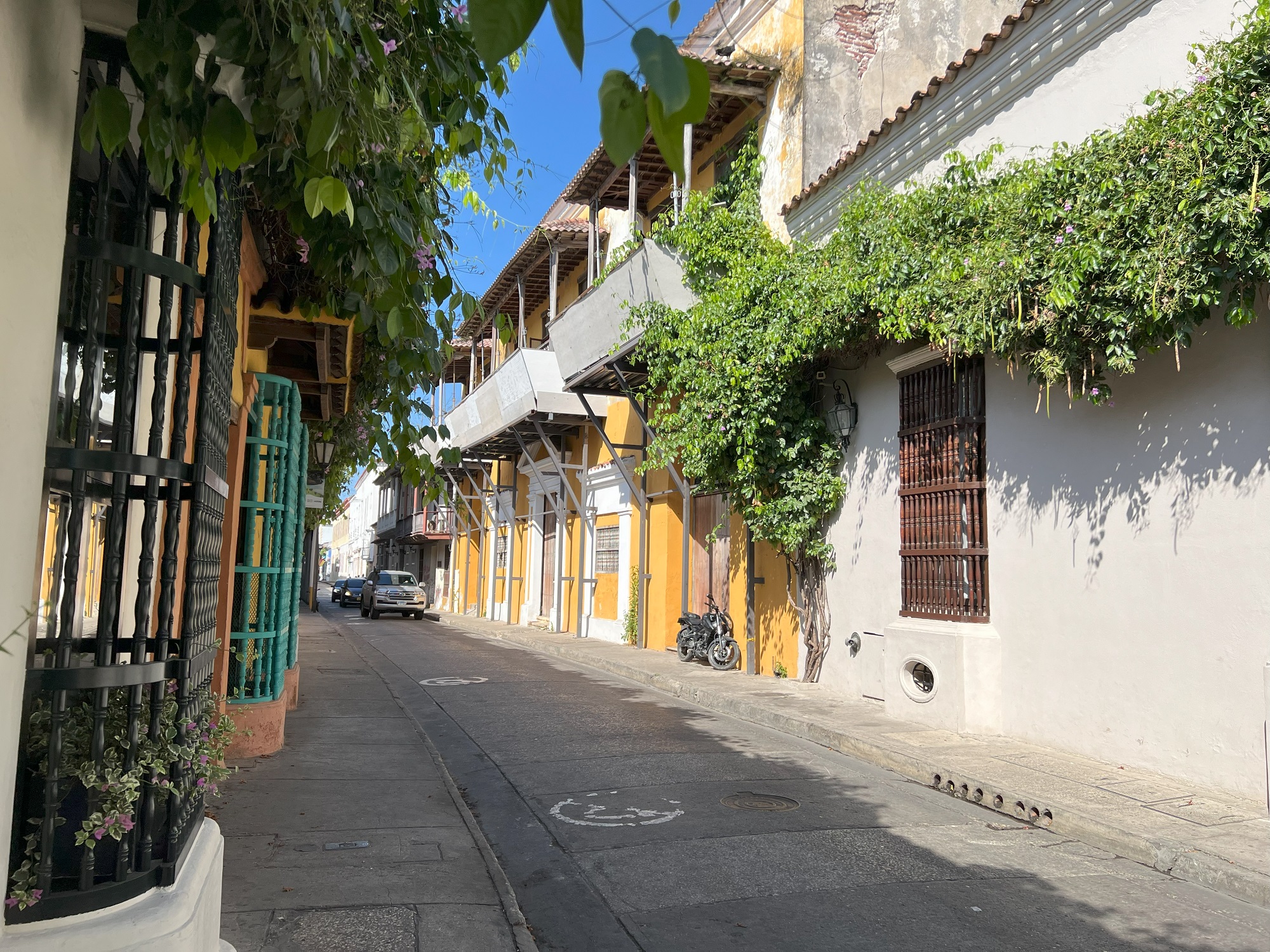
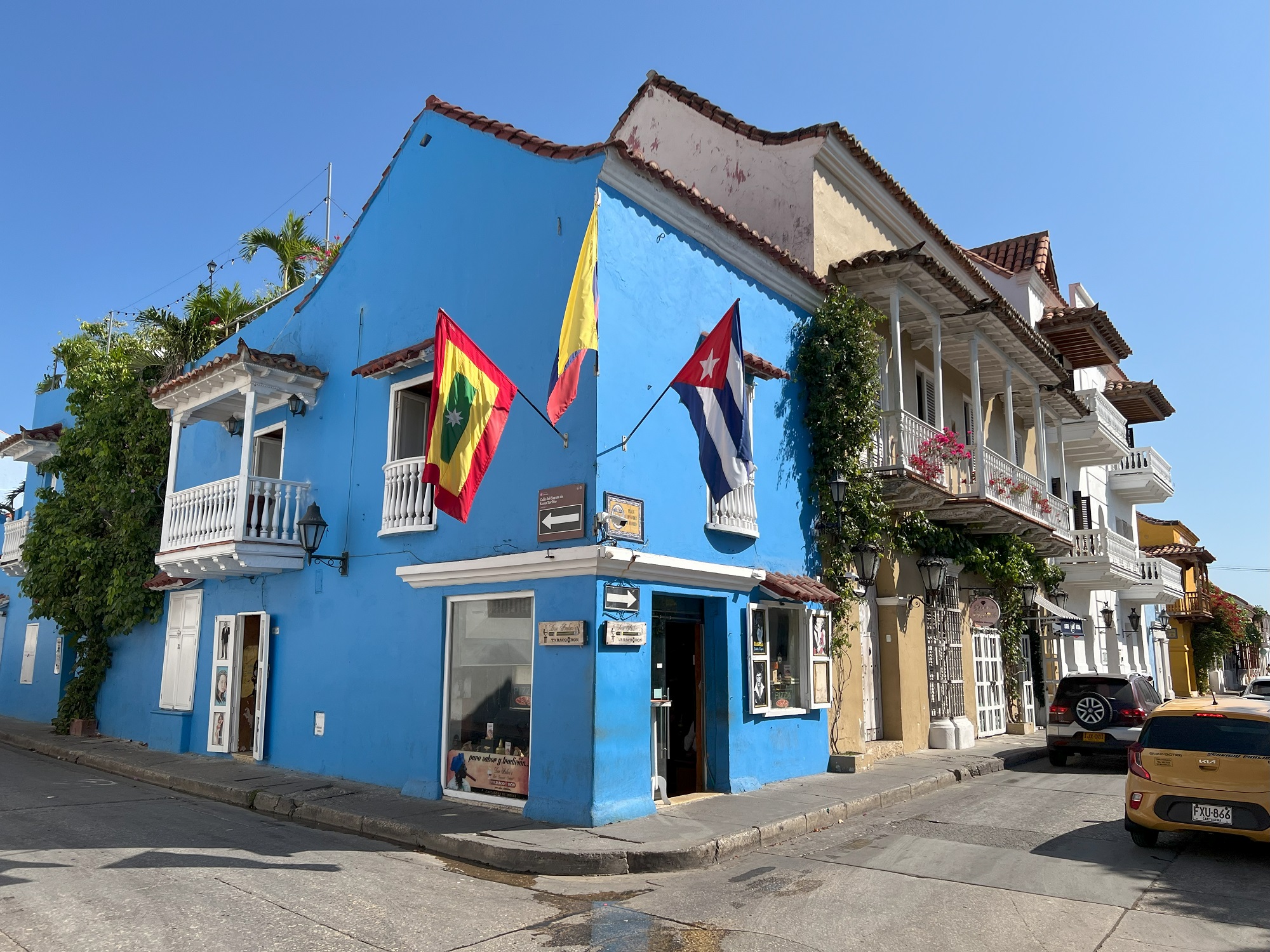
Cartagena (pop. 914,500 in 2020) is a port city on Colombia’s Caribbean coast. By the sea is the walled Old Town, founded in the 16th century, with squares, cobblestone streets and colorful colonial buildings. With a tropical climate, the city is also a popular beach destination.
– Google
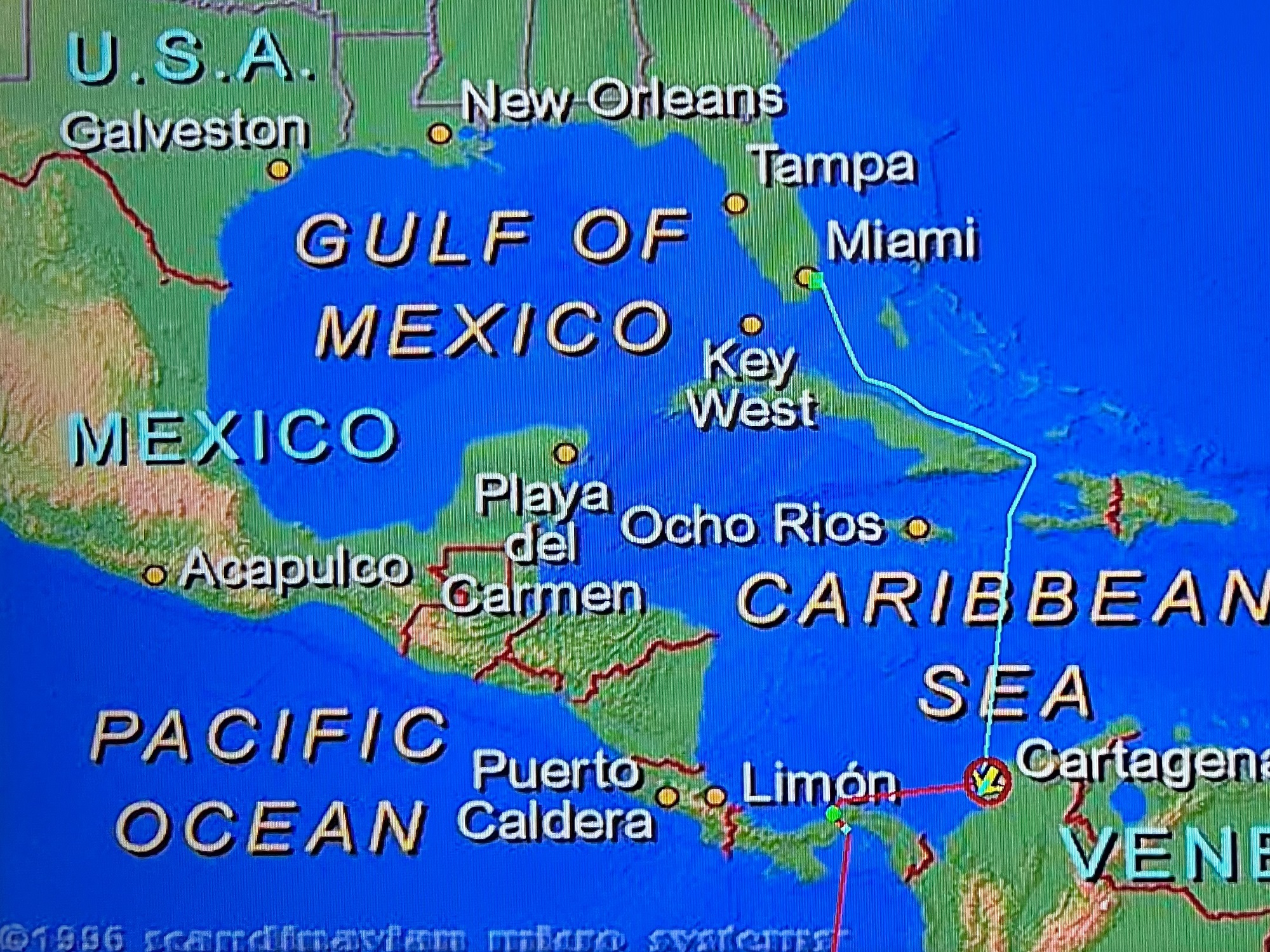
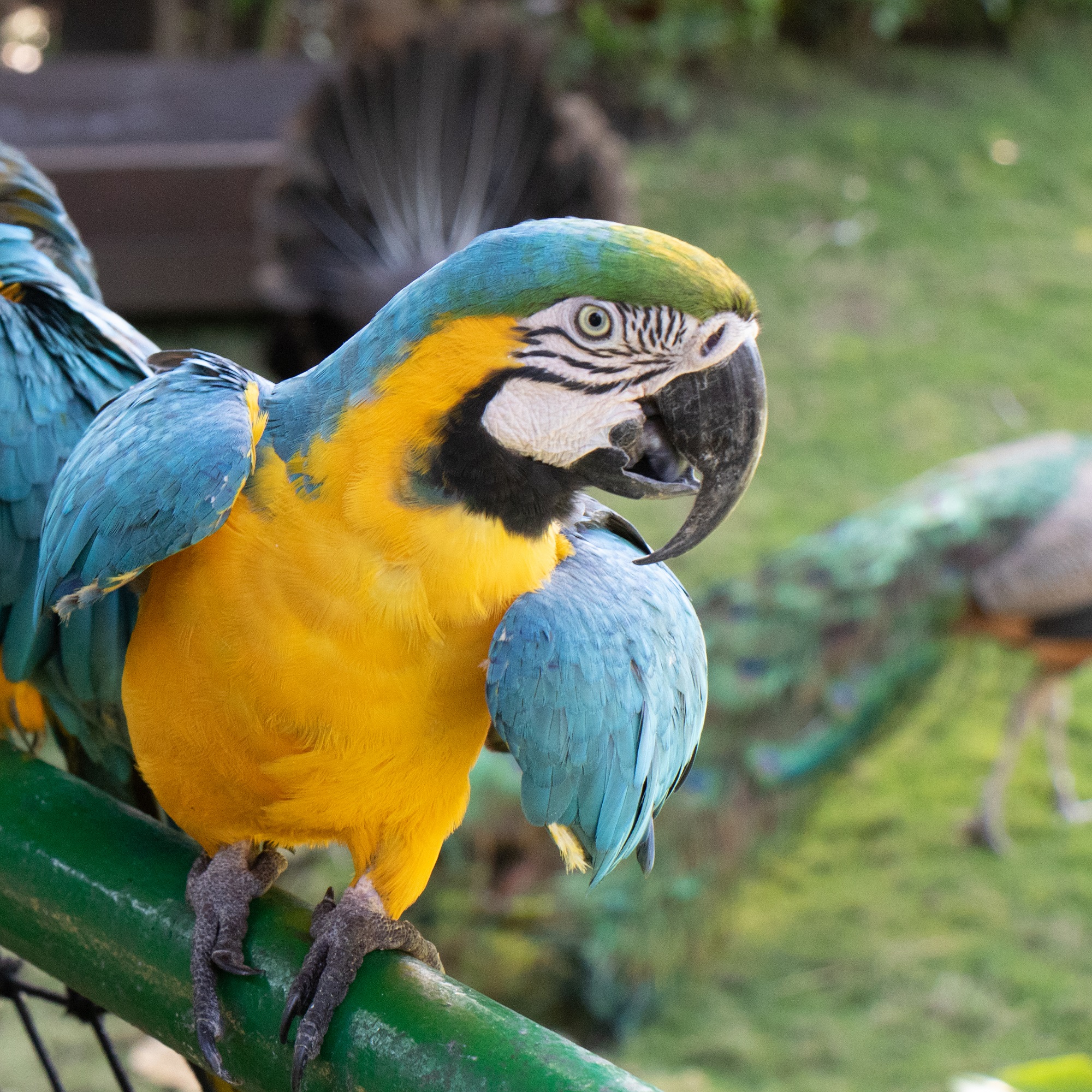
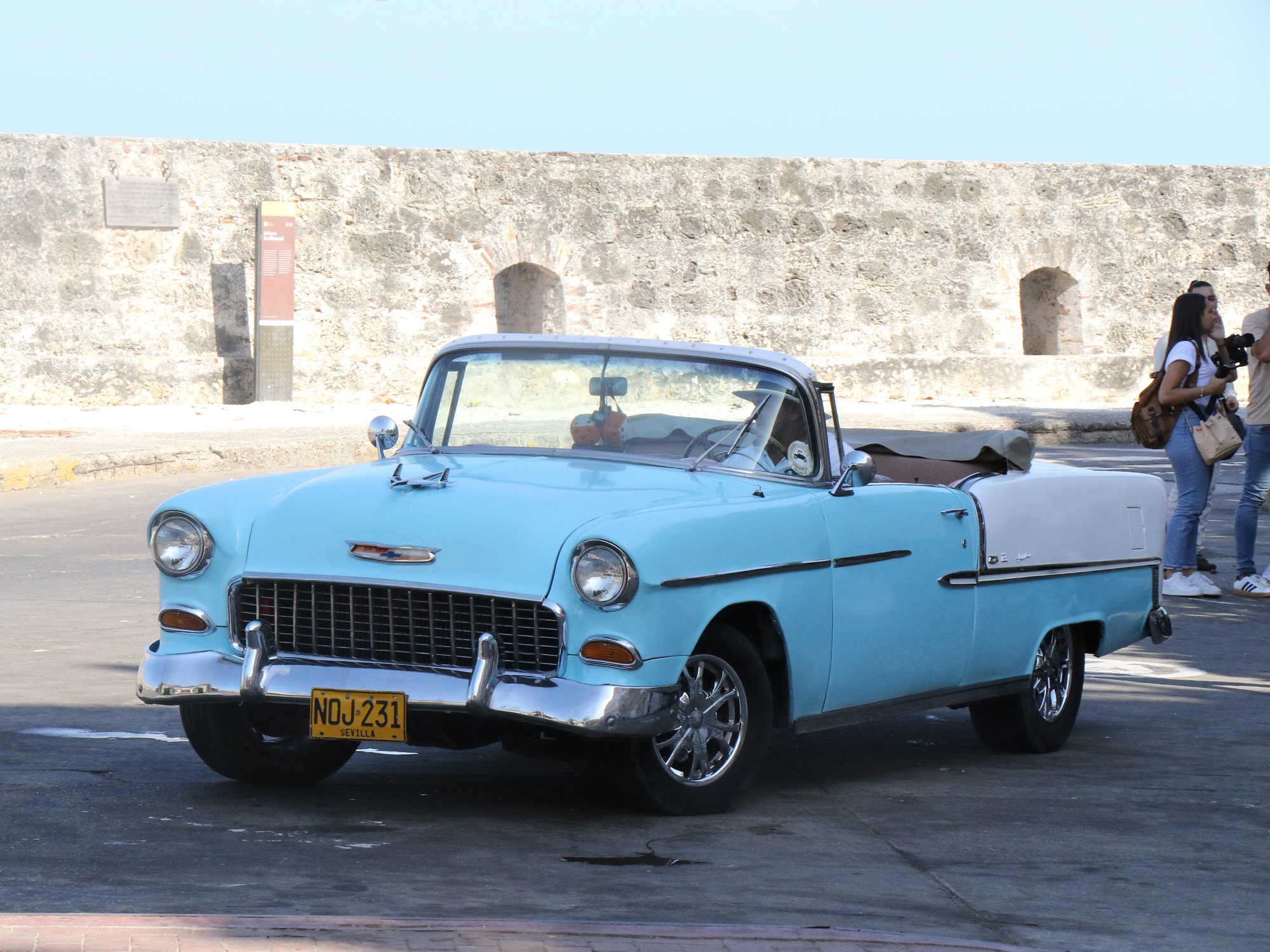
We spent some three hours in the Old Town of Cartagena this morning, and came away with a good impression.
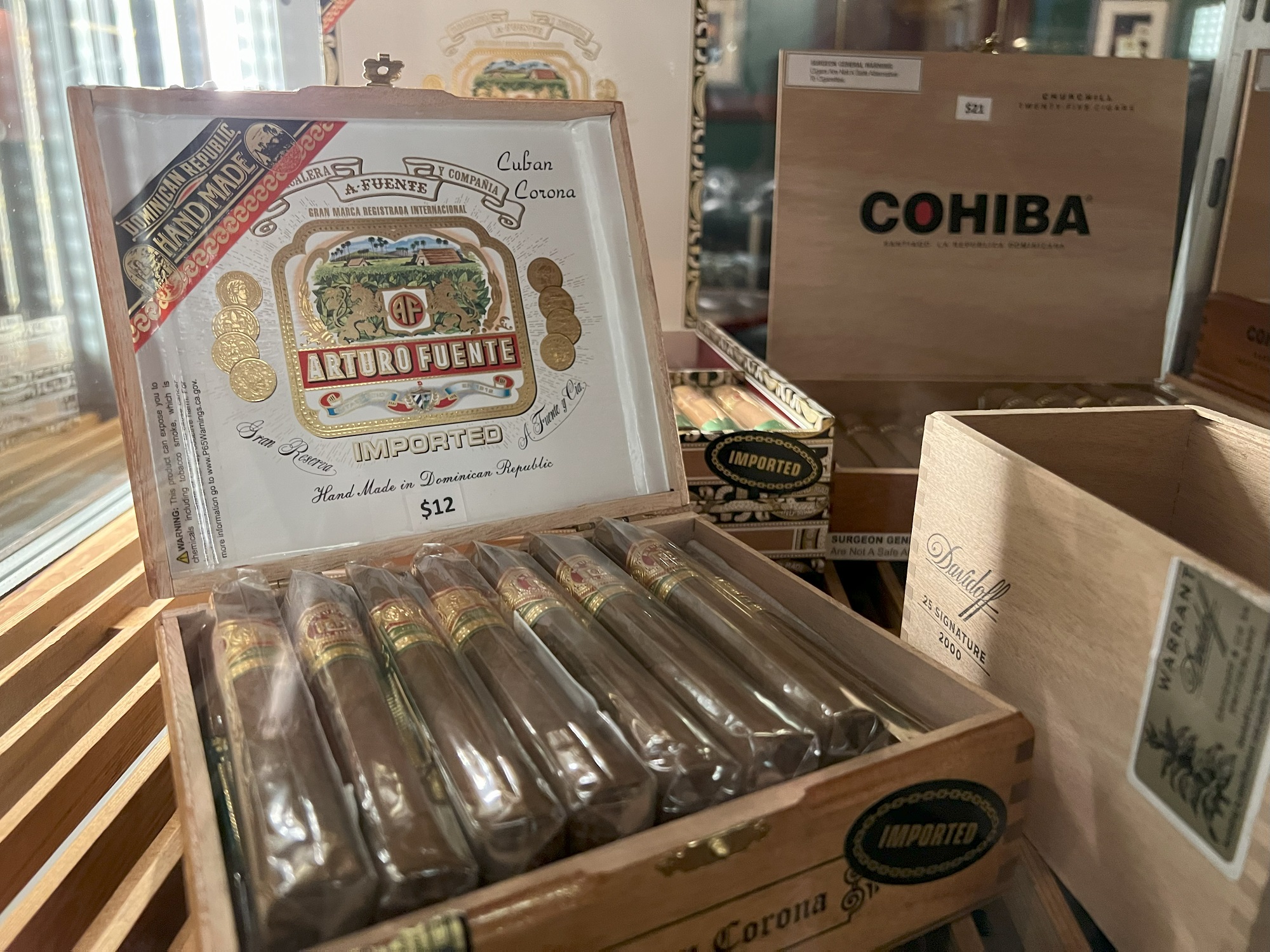
Just be prepared to say no gracias many times, to the street vendors selling t-shirts, hats, bottled water and soda, souvenirs and cubanos (cigars).
The day temperature rose rapidly through the morning, and it was already 90 °F (32 °C) when our taxi driver met us to take us back to the ship.
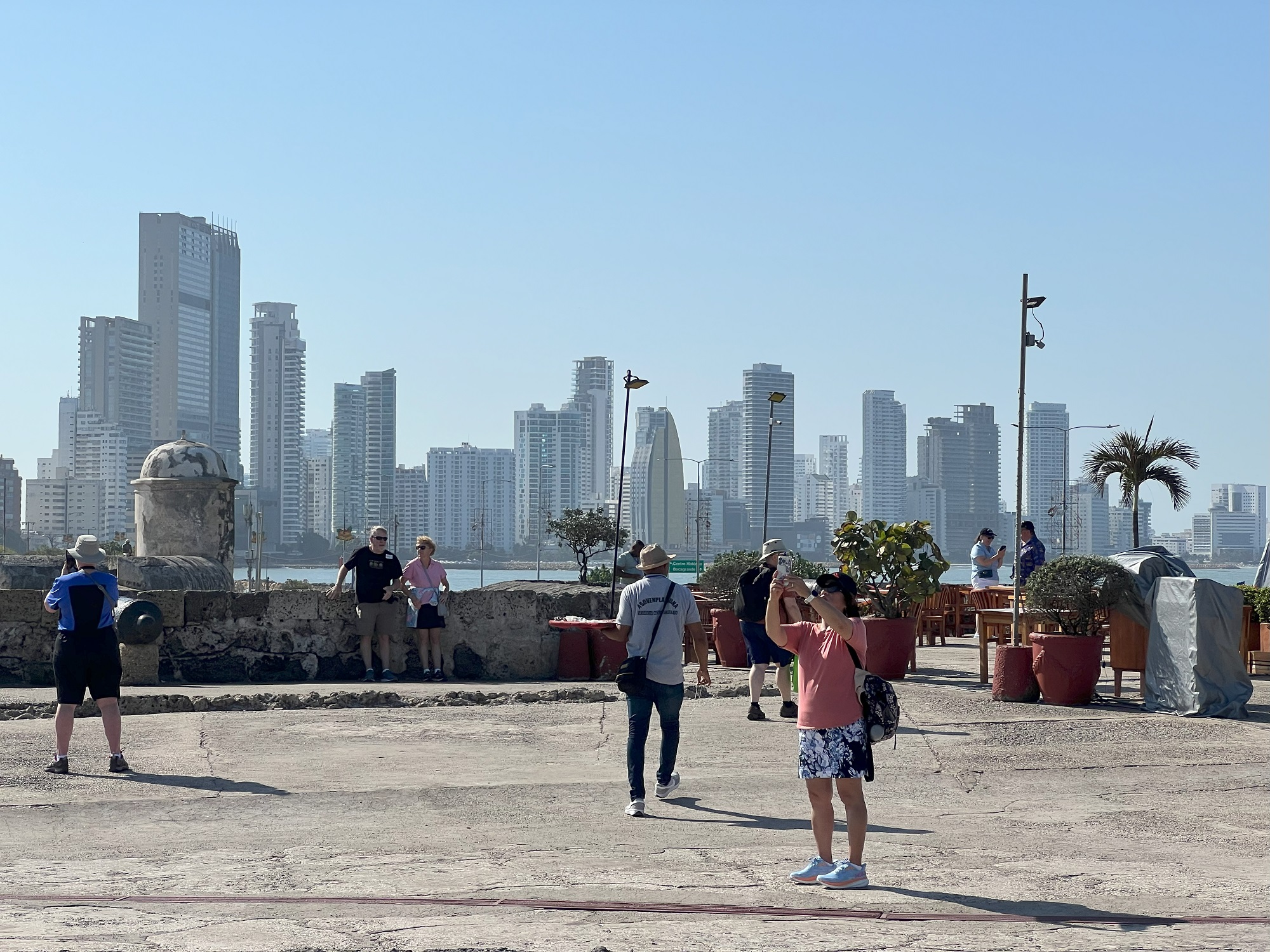

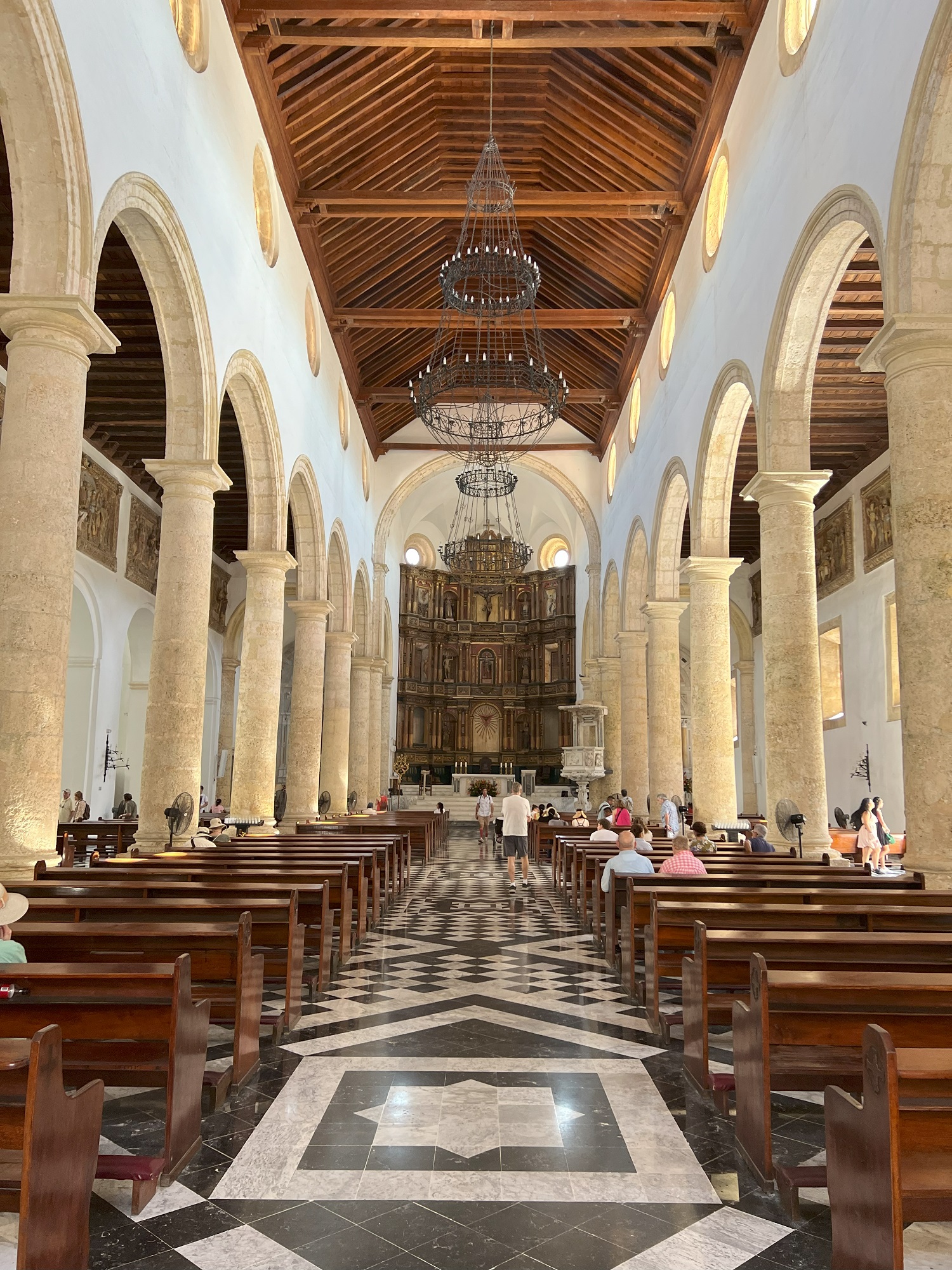
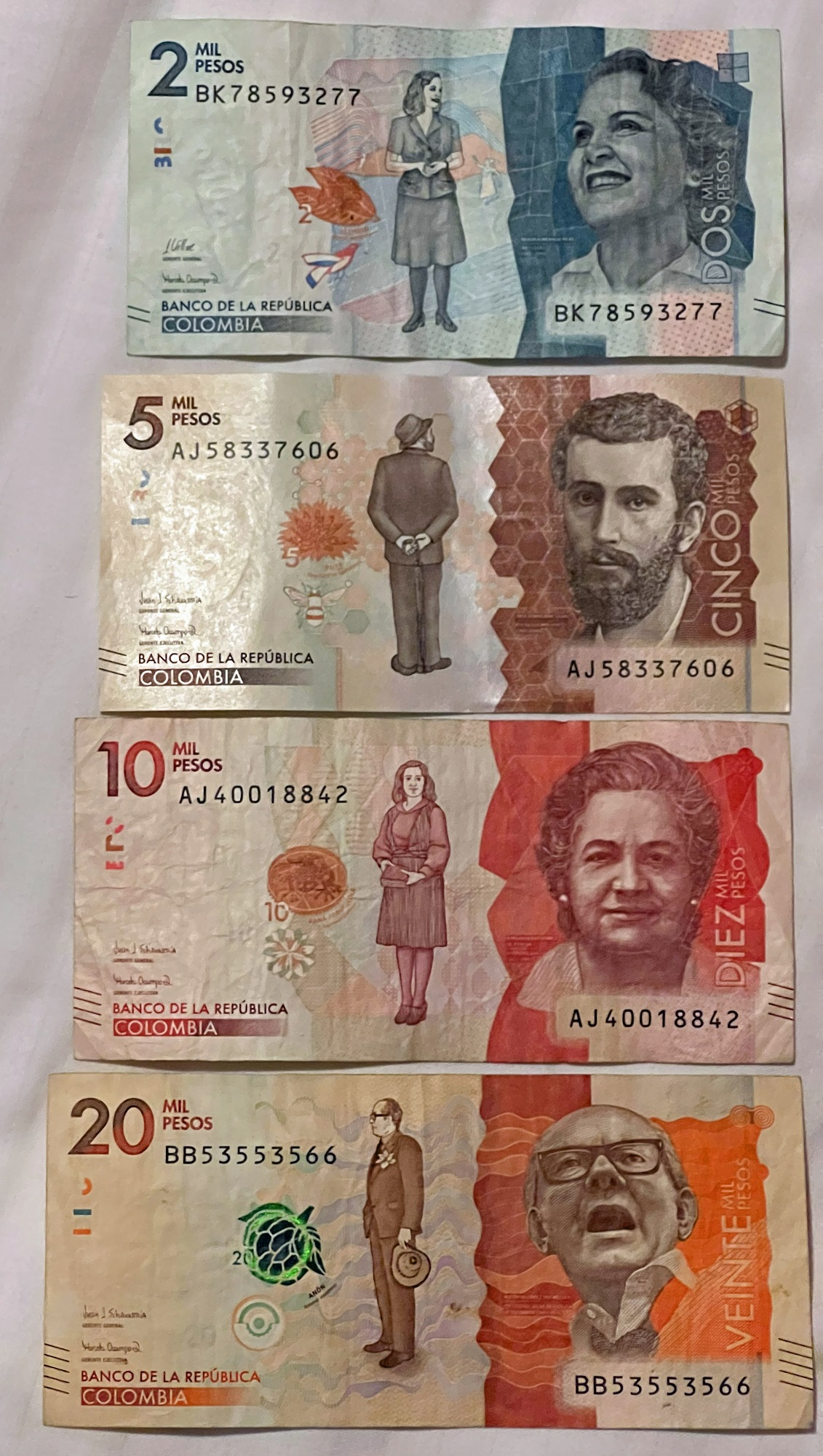
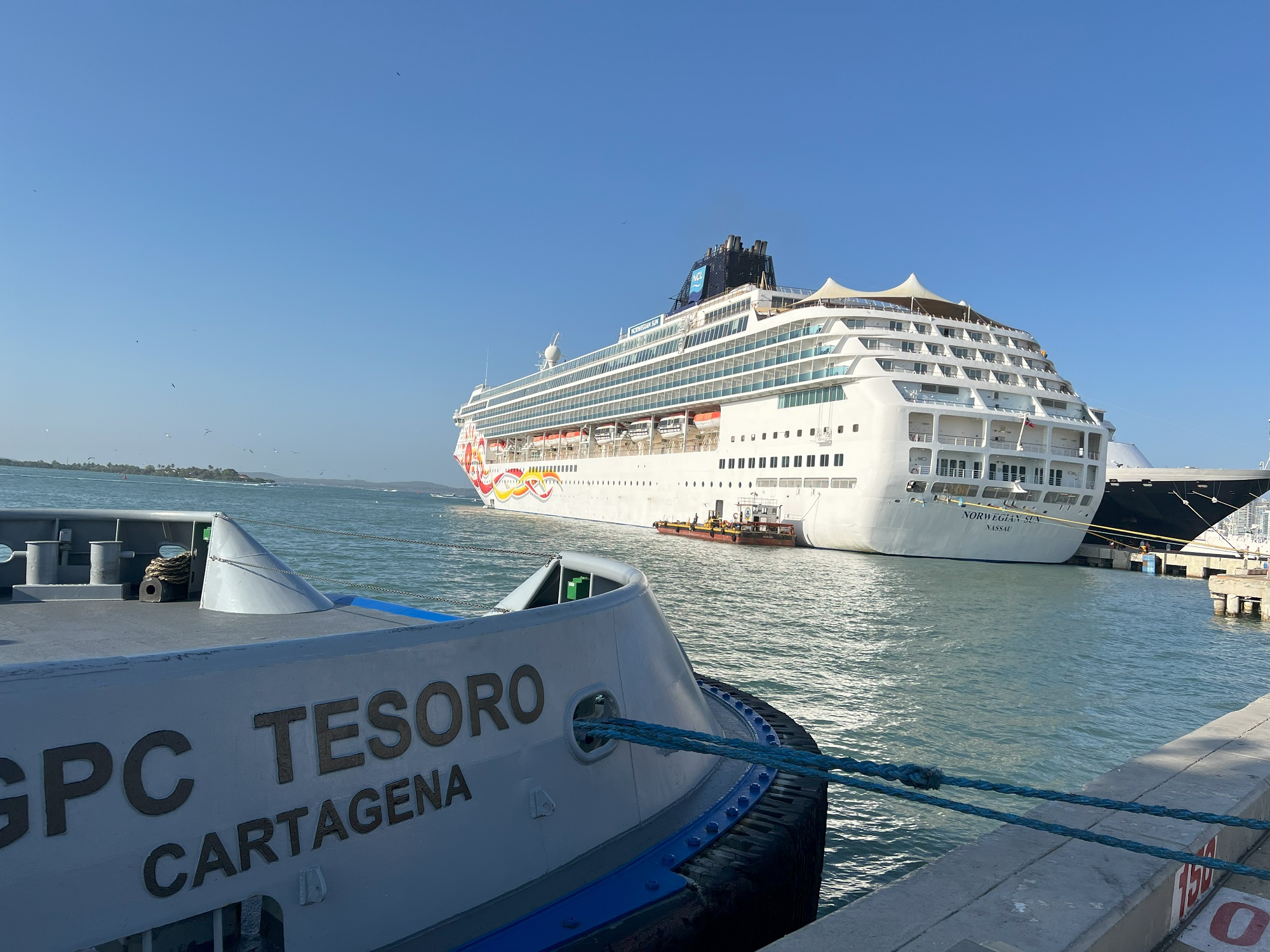
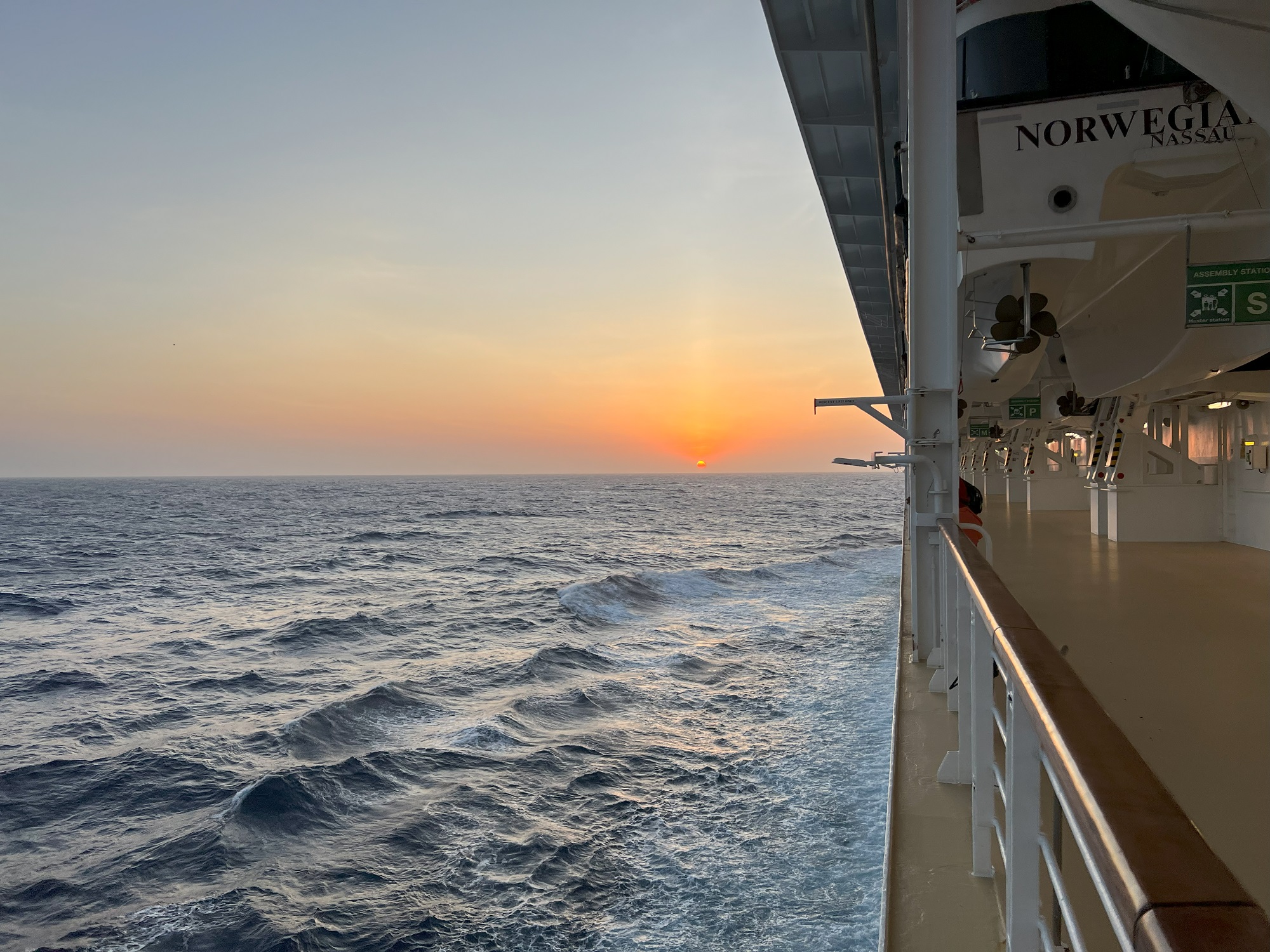
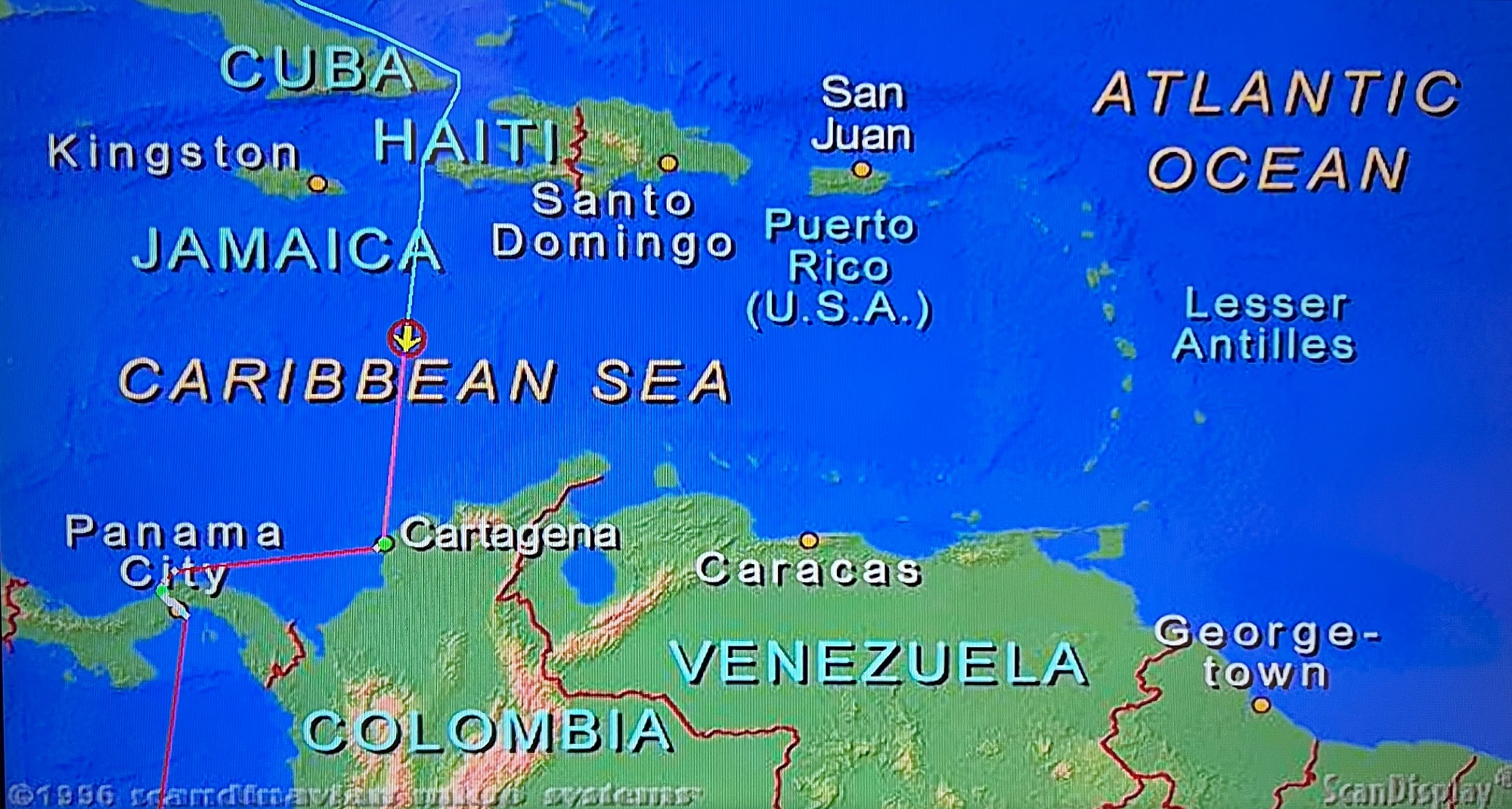
We are still at sea, approaching Cartagena on the Caribbean Sea coast in Columbia.
It was mostly sunny today, but very breezy on the top deck— due to a 35-knot wind from the west.
A two-foot wave of water in the big swimming pool sloshed forward and backward. (The pool had a net on, closed to all of the sunseekers. A smaller pool behind it was still open).
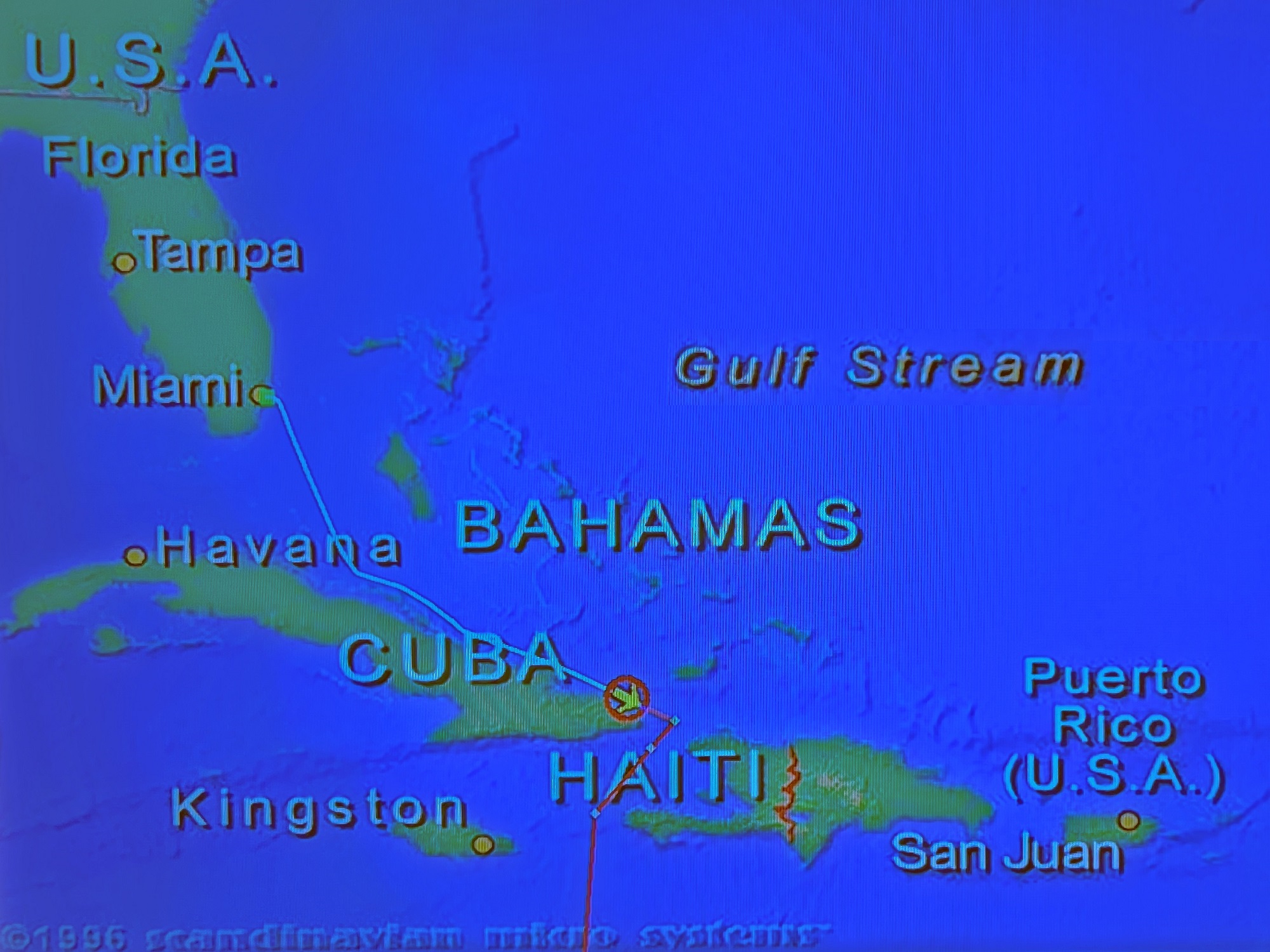
We were barely an hour or two out of Miami (after our departure at 6 pm on Friday night), when the captain announced that one of the passengers had fallen gravely ill, and that the best option was to return to port to disembark the patient for the medical care that she needed.
After that, Friday night and all of Saturday seemed to go without any major incident.
Pictures:
The view from atop the bow of the ship on Deck 12, while backing out of the channel alongside Dodge Island, leaving the Norwegian Sky in the distance (and the fancy Royal Caribbean cruise terminal building on the left edge of the picture);
Another view from Deck 12, of the last of the condo towers before we reached the open seas;
The starboard view from the promenade deck;
The view from the promenade deck and the stern of the ship;
Sunset, around 5.30 pm (picture courtesy one of my fellow shipmates).
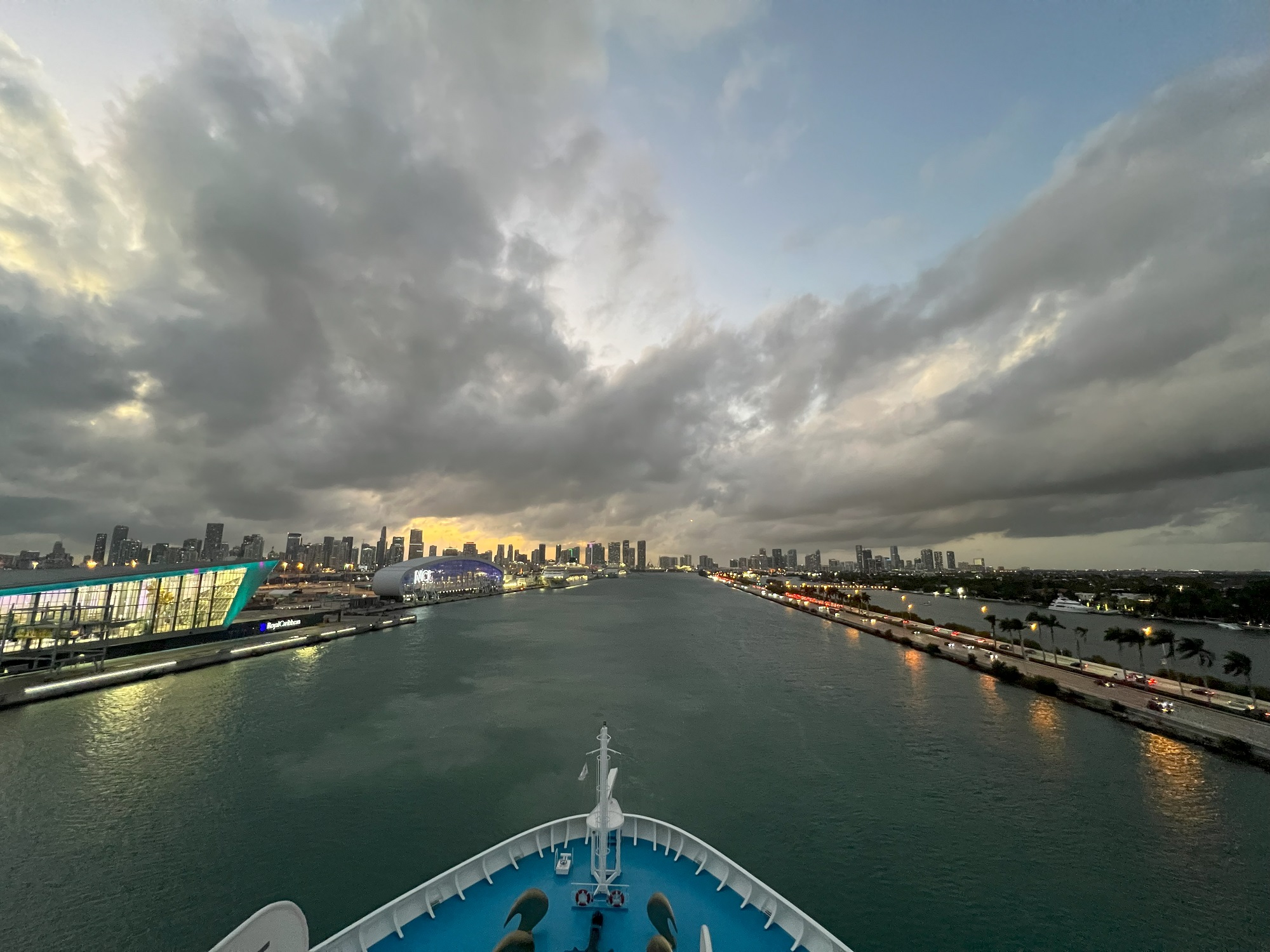
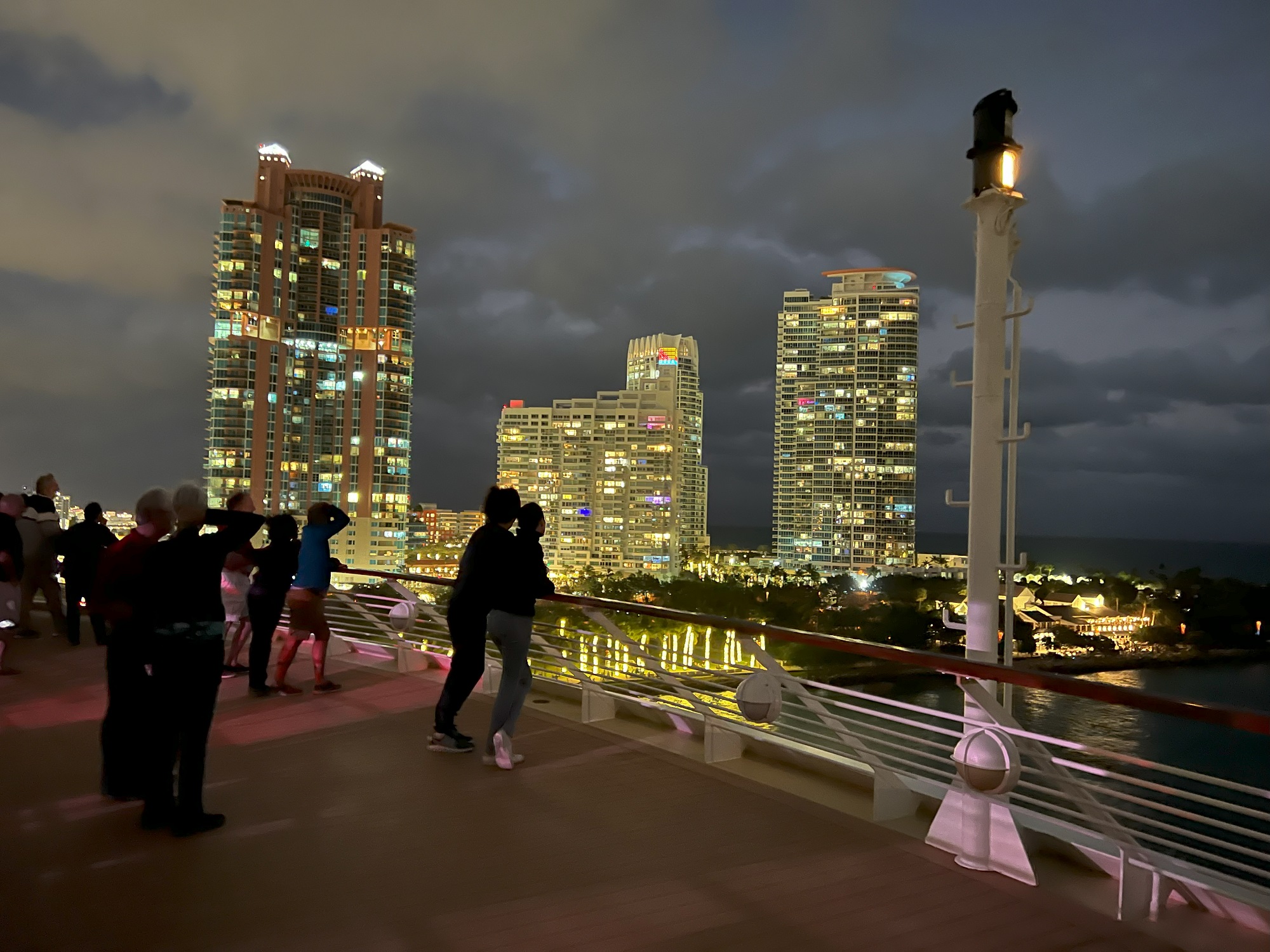
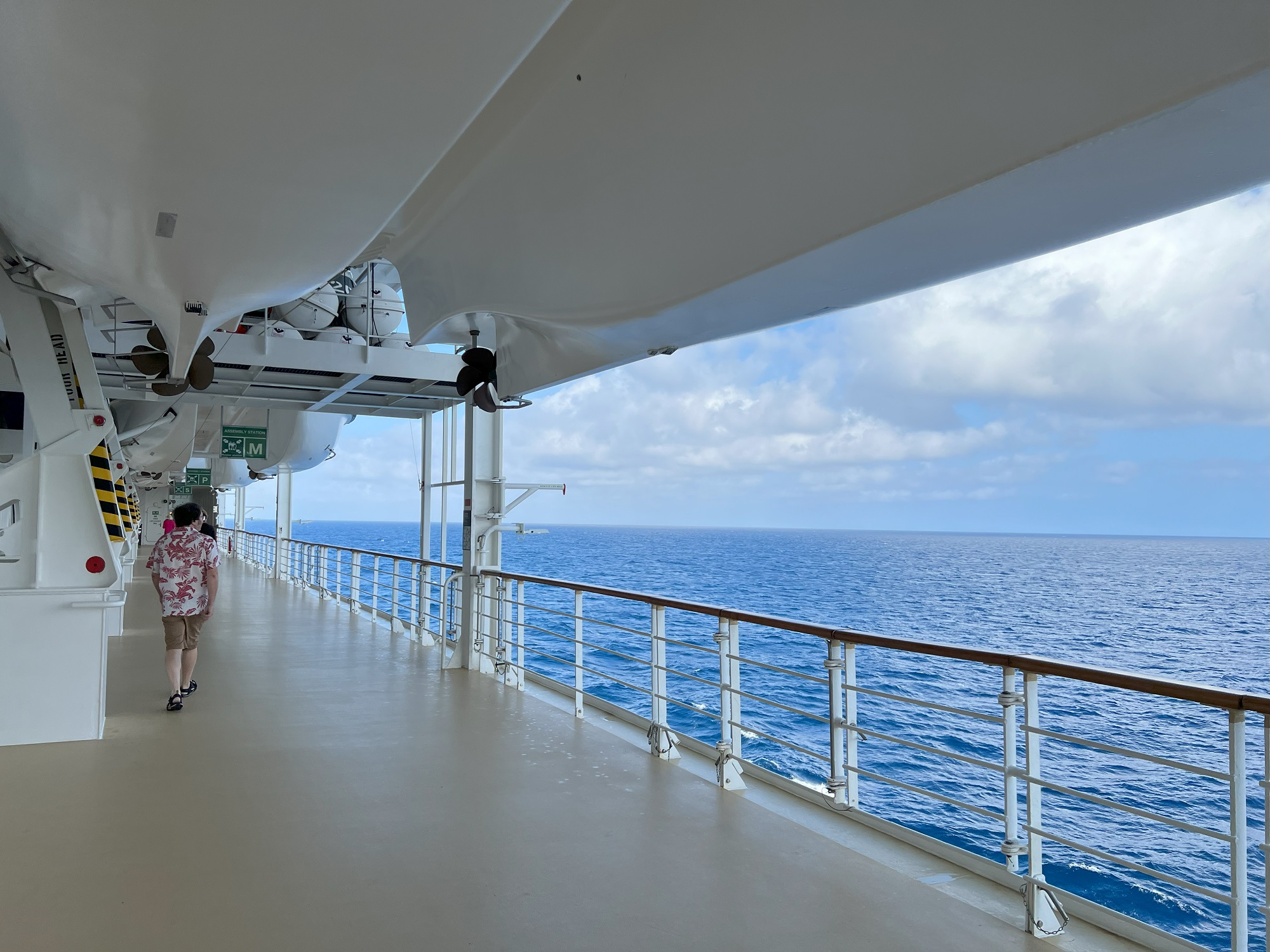
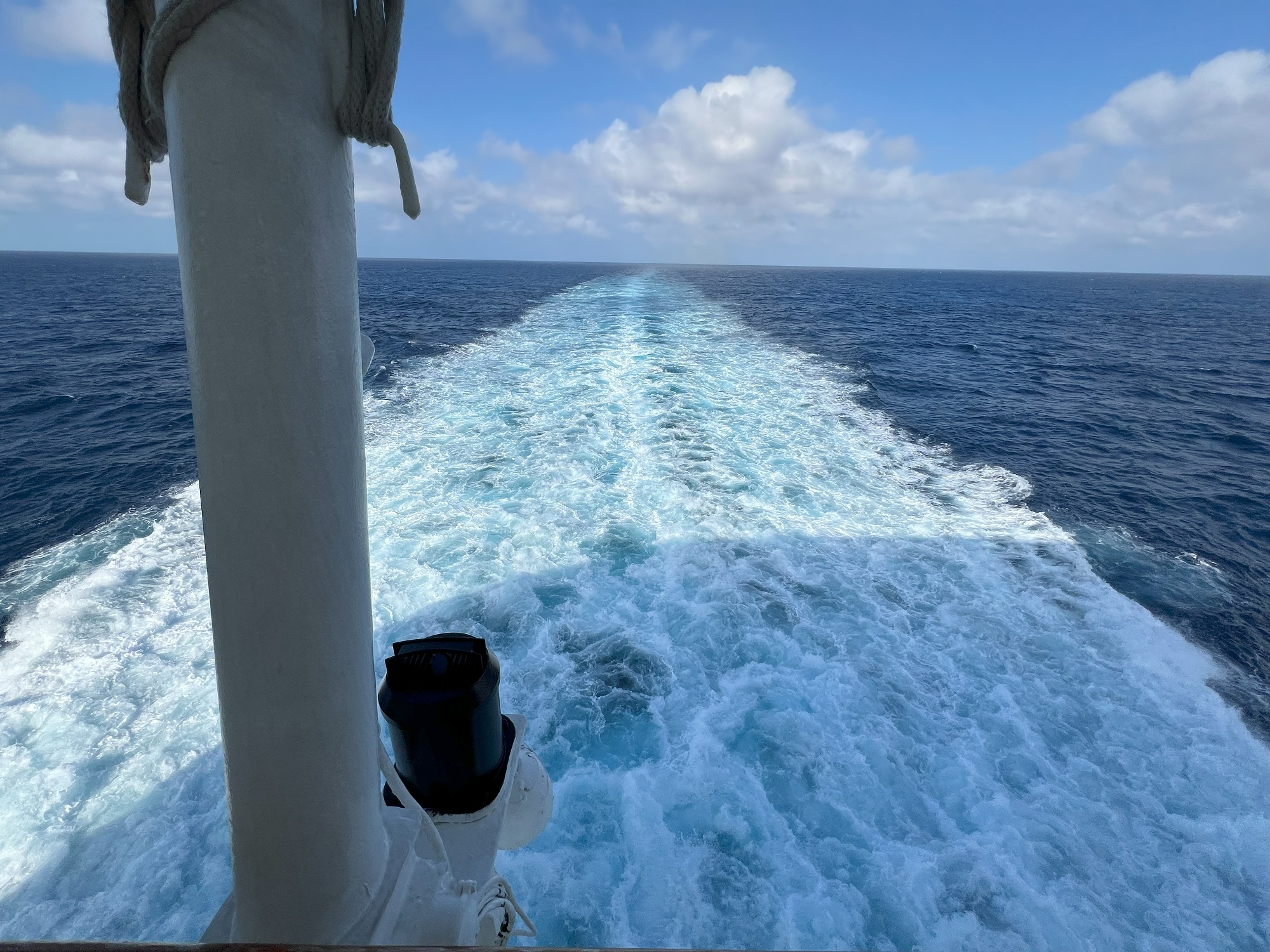
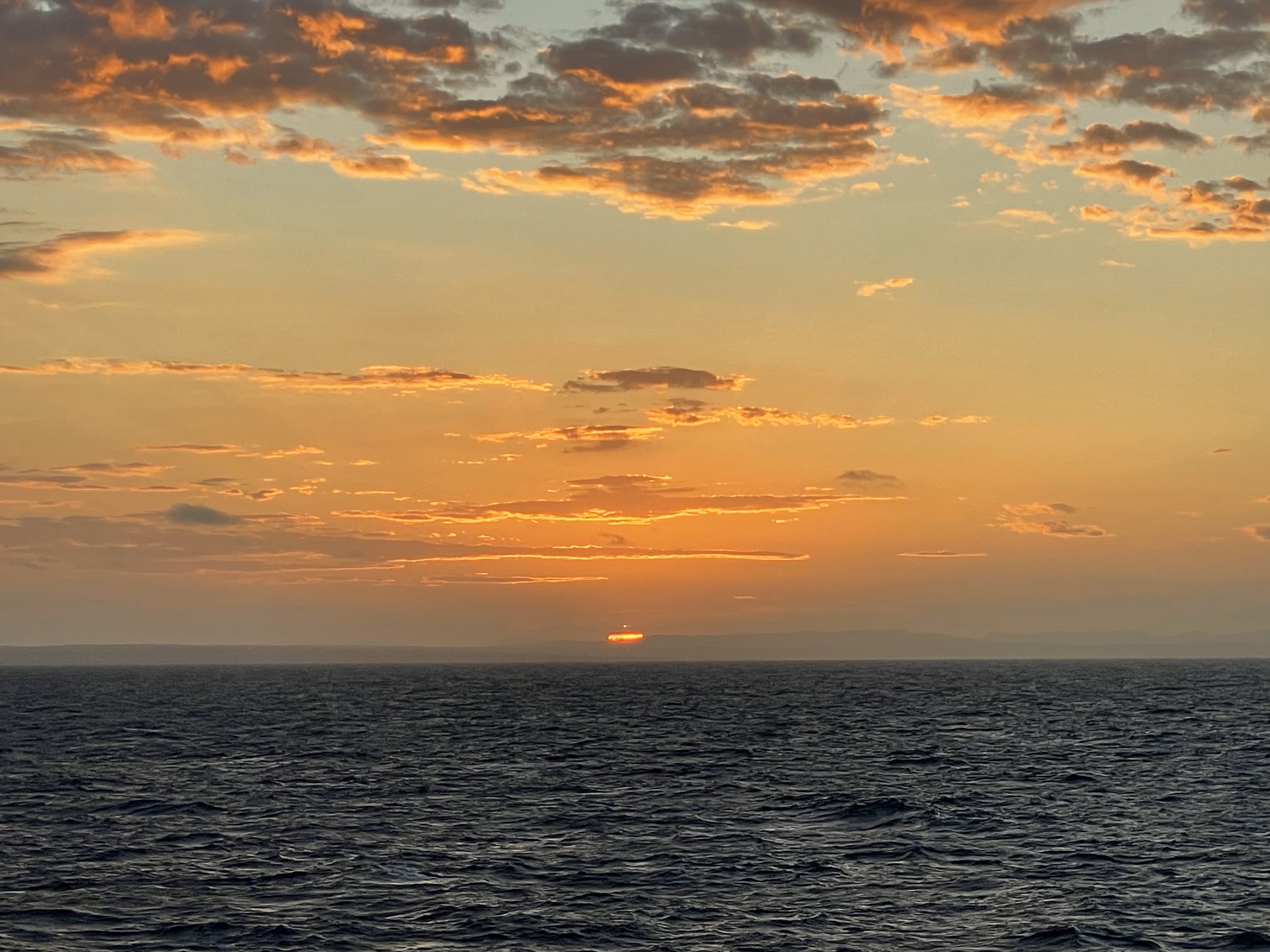
We stepped on board the Norwegian Sun at the cruise terminal on Dodge Island here in Miami at around 11.30 am, and will set sail at 5.30 pm.

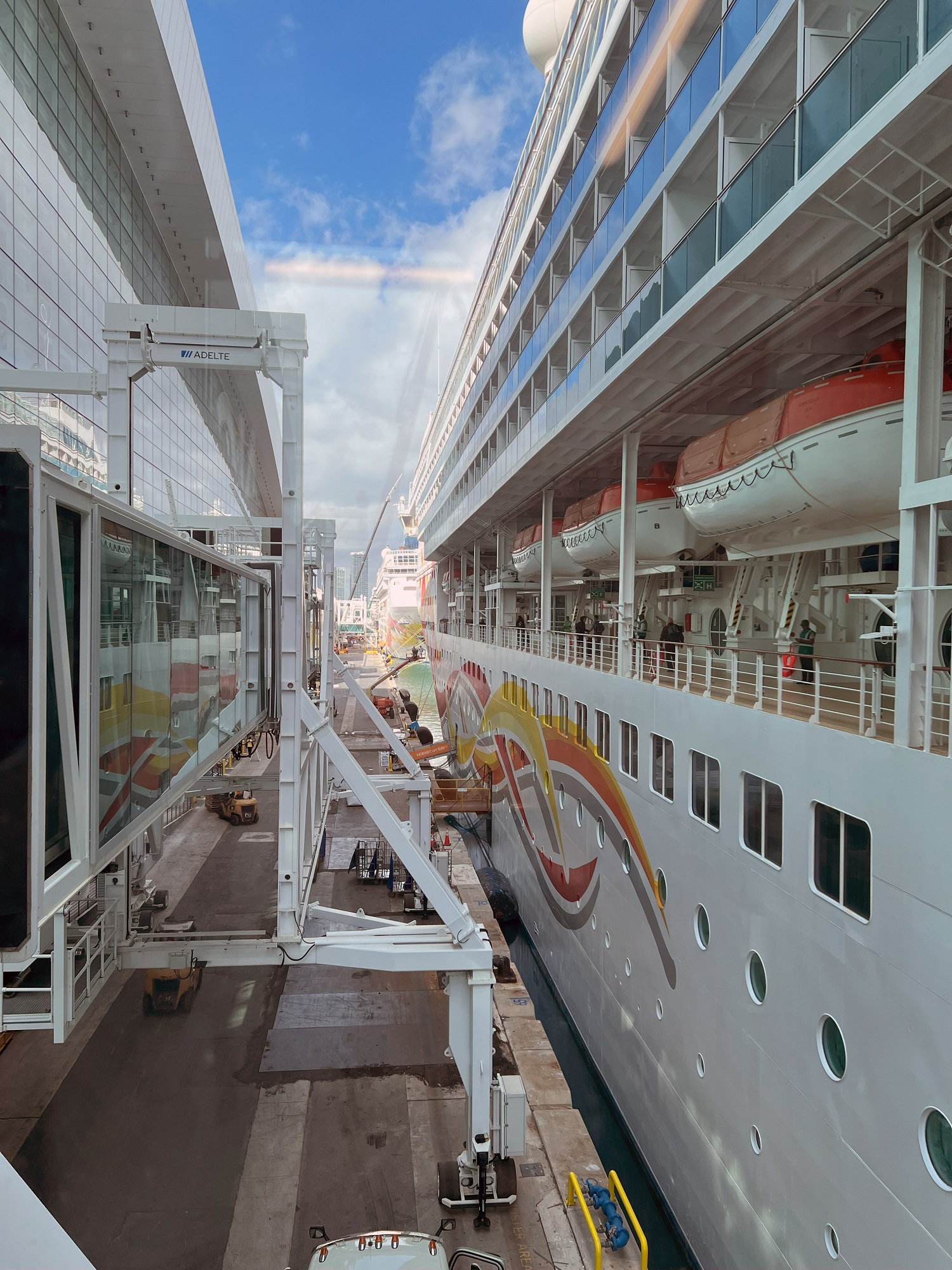
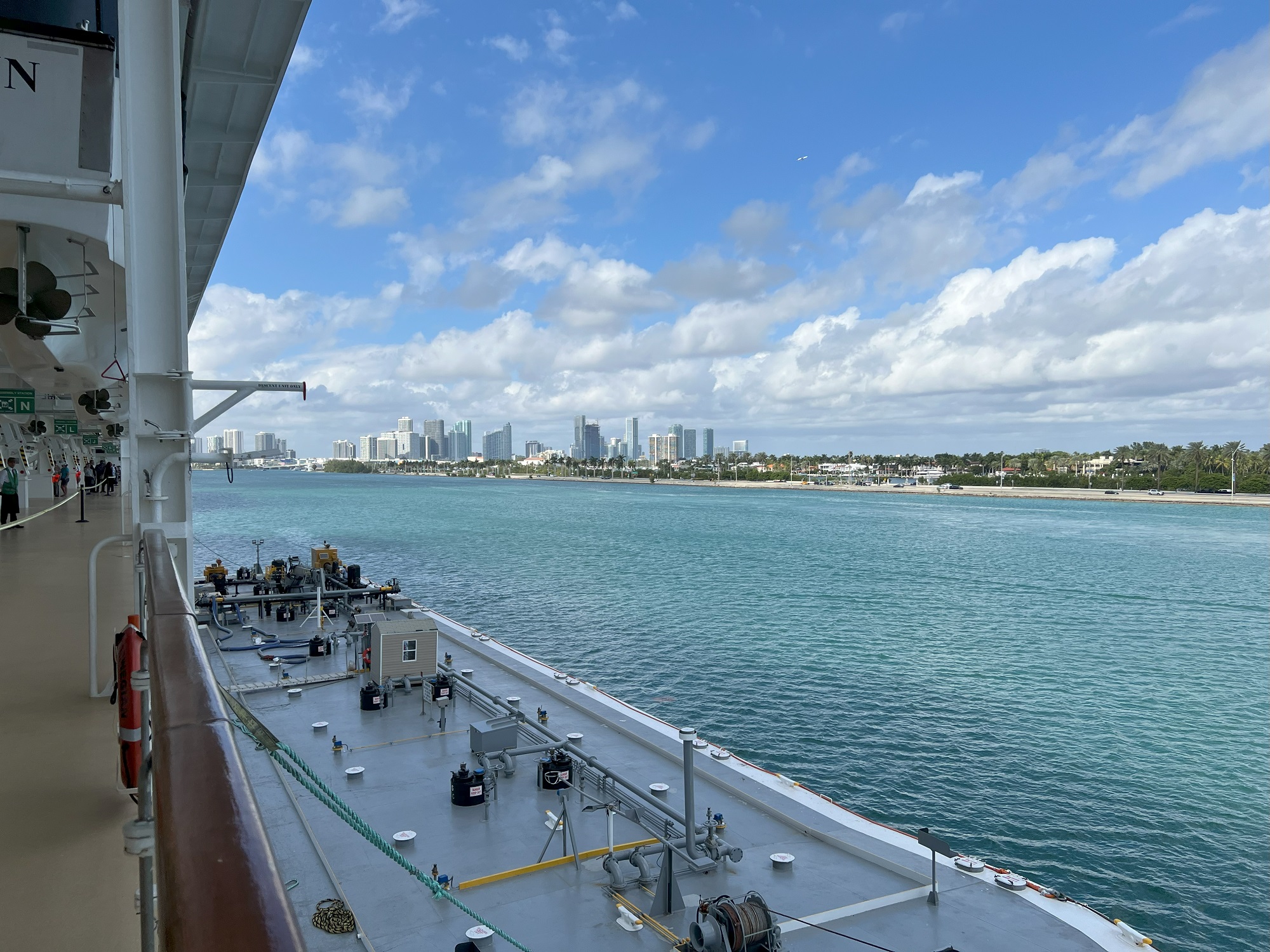
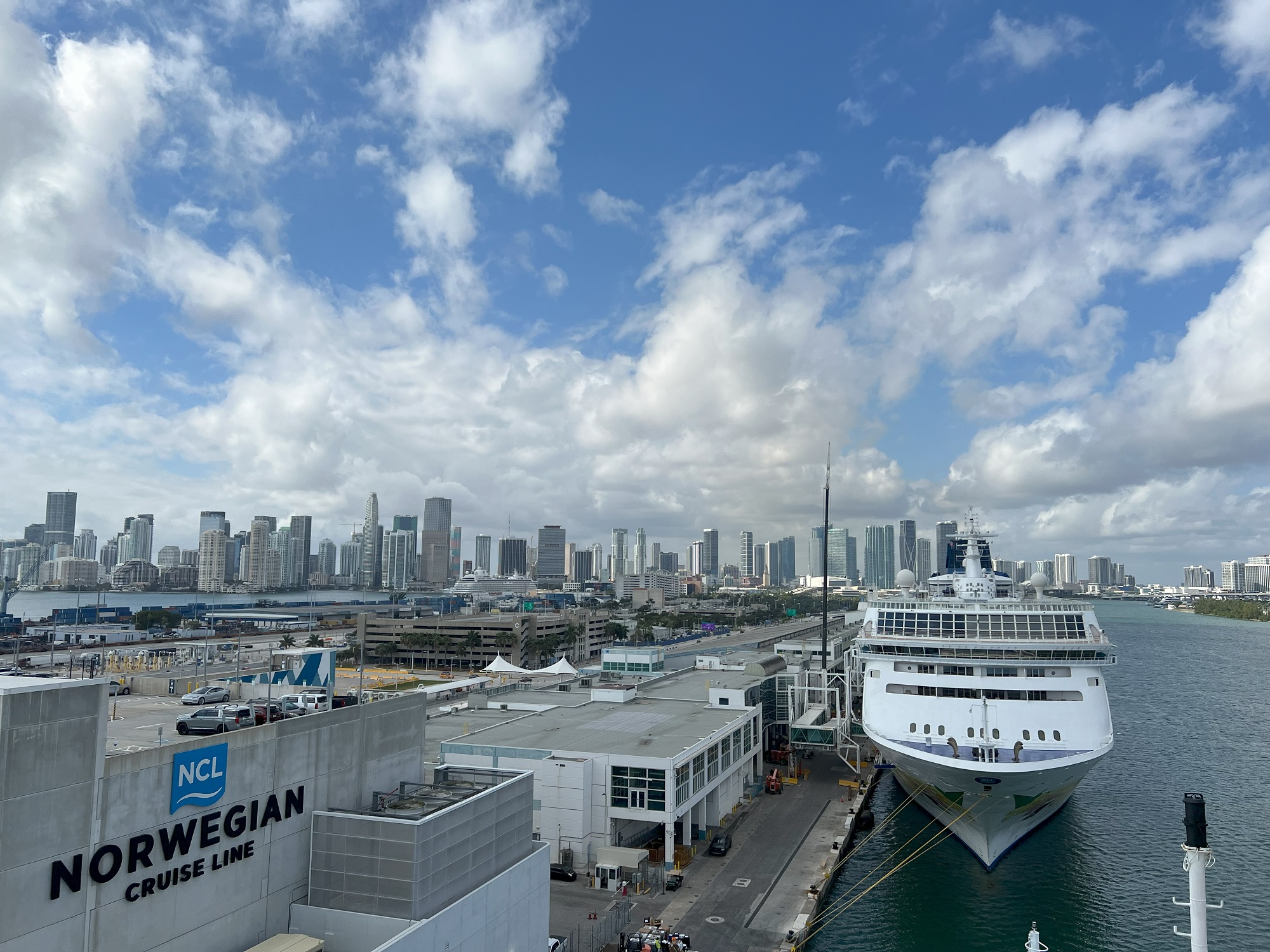
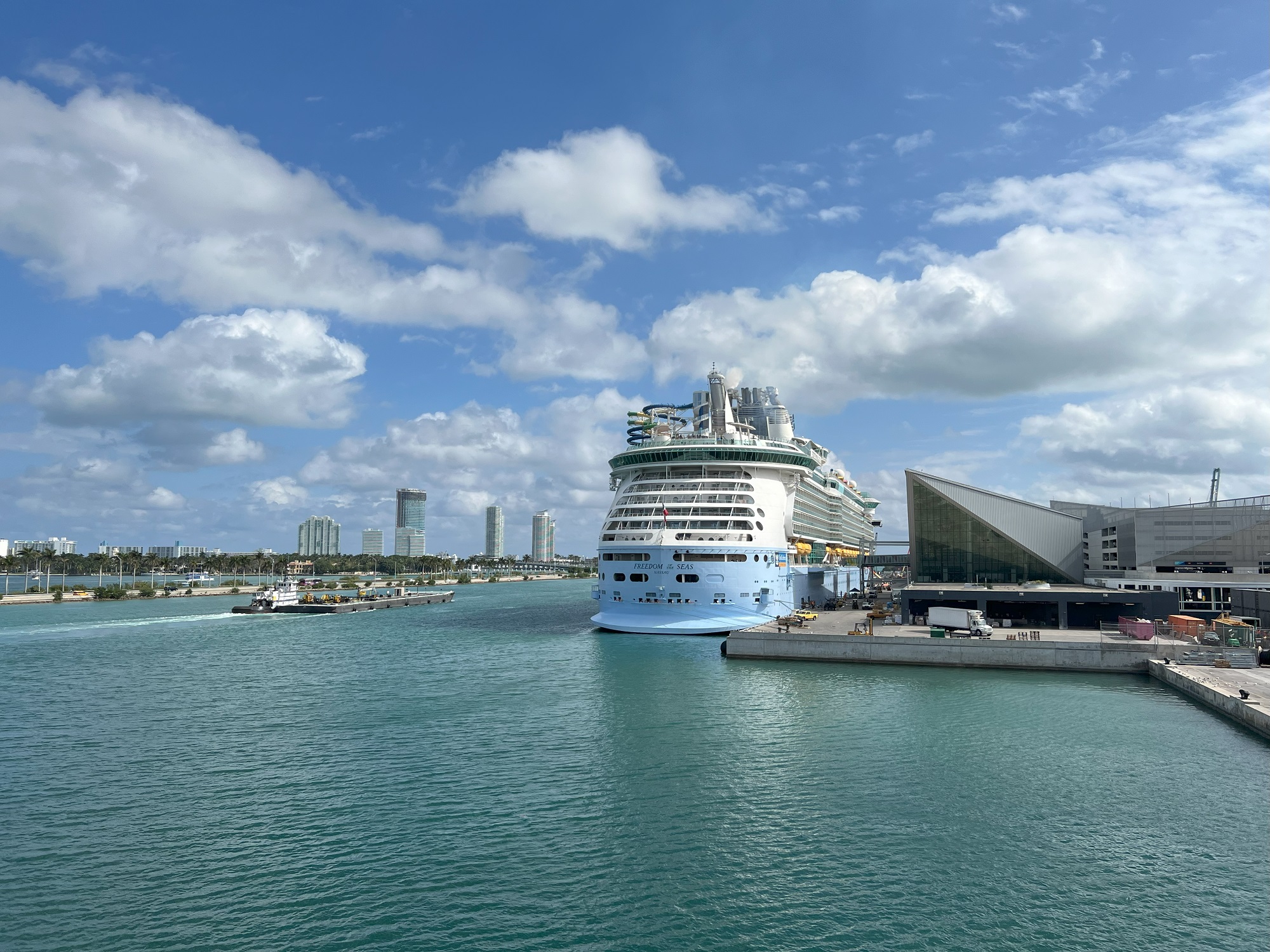
We made the 5-hour flight into Miami International Airport.
Our scheduled departure from Seattle at 7.19 am was delayed by almost an hour, due to issues with loading the bags onto the plane.
After that it was smooth sailing*.
(*Flying, the sailing will start tomorrow).
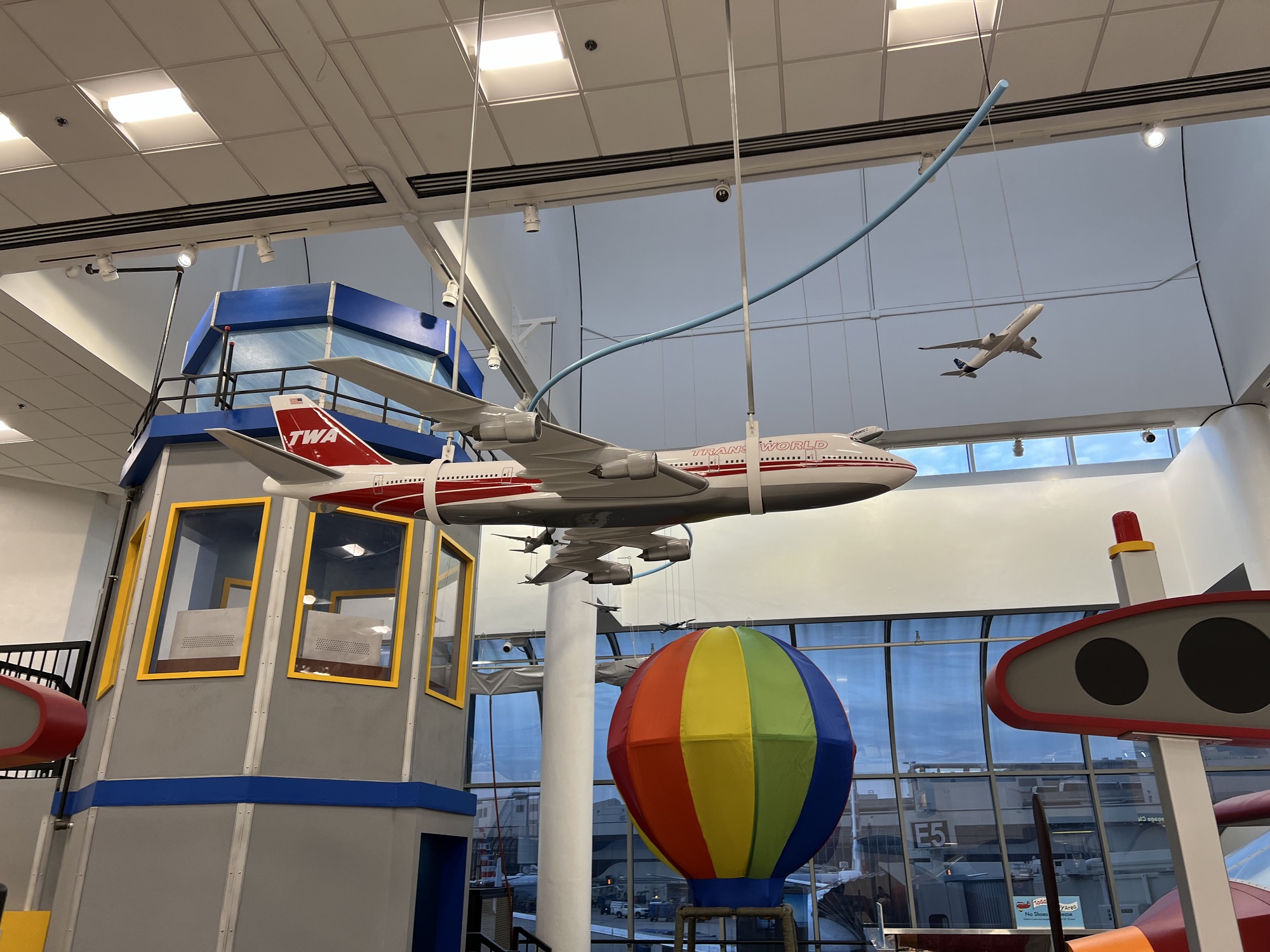
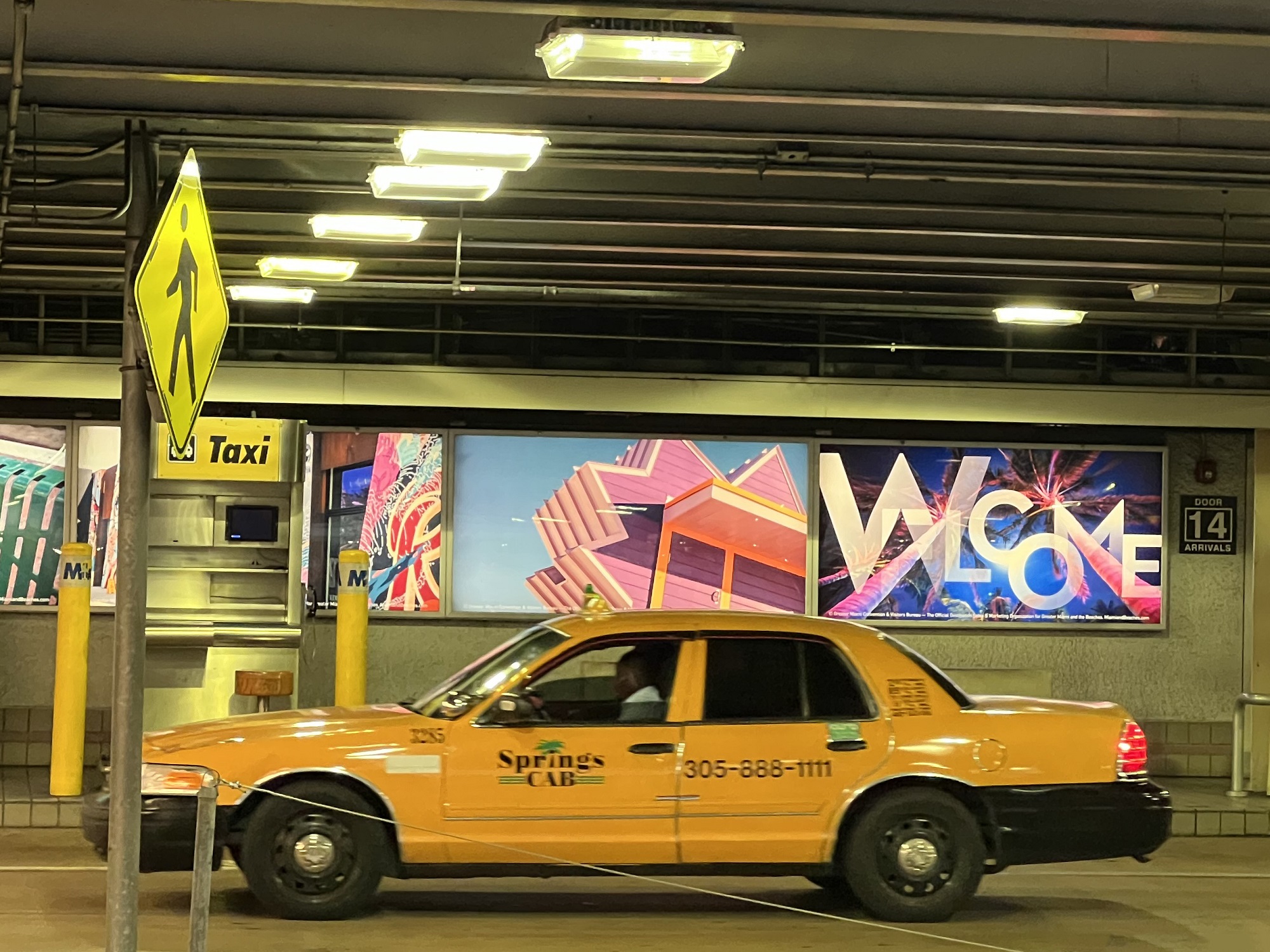
My compadres and I are flying out to Miami in the morning, so that we can board the Norwegian Sun to set sail with us on Friday.
She will be heading to South America through the Panama Canal, and I will try to post about our whereabouts every day, of course. There will be wi-fi on the ship, but I suspect it is not going to be super-snappy and solid.
I could see my breath today (low 40s, about 5 °C outside)— a tad too cold for a long walk.
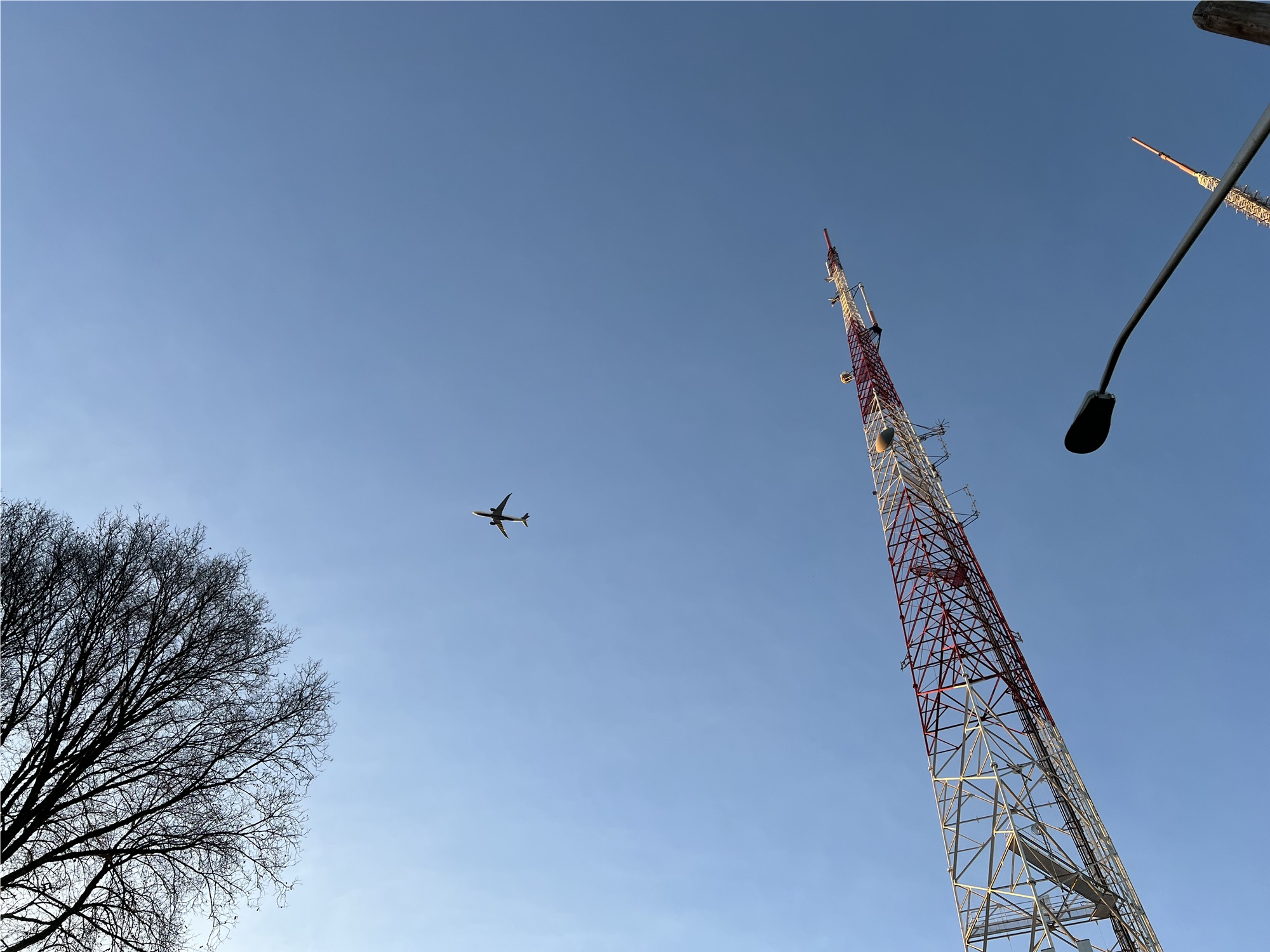
Wednesday was clear and quiet, but there was rain on Thursday morning in Seaside as we packed up and headed home to Seattle.
Pictures:
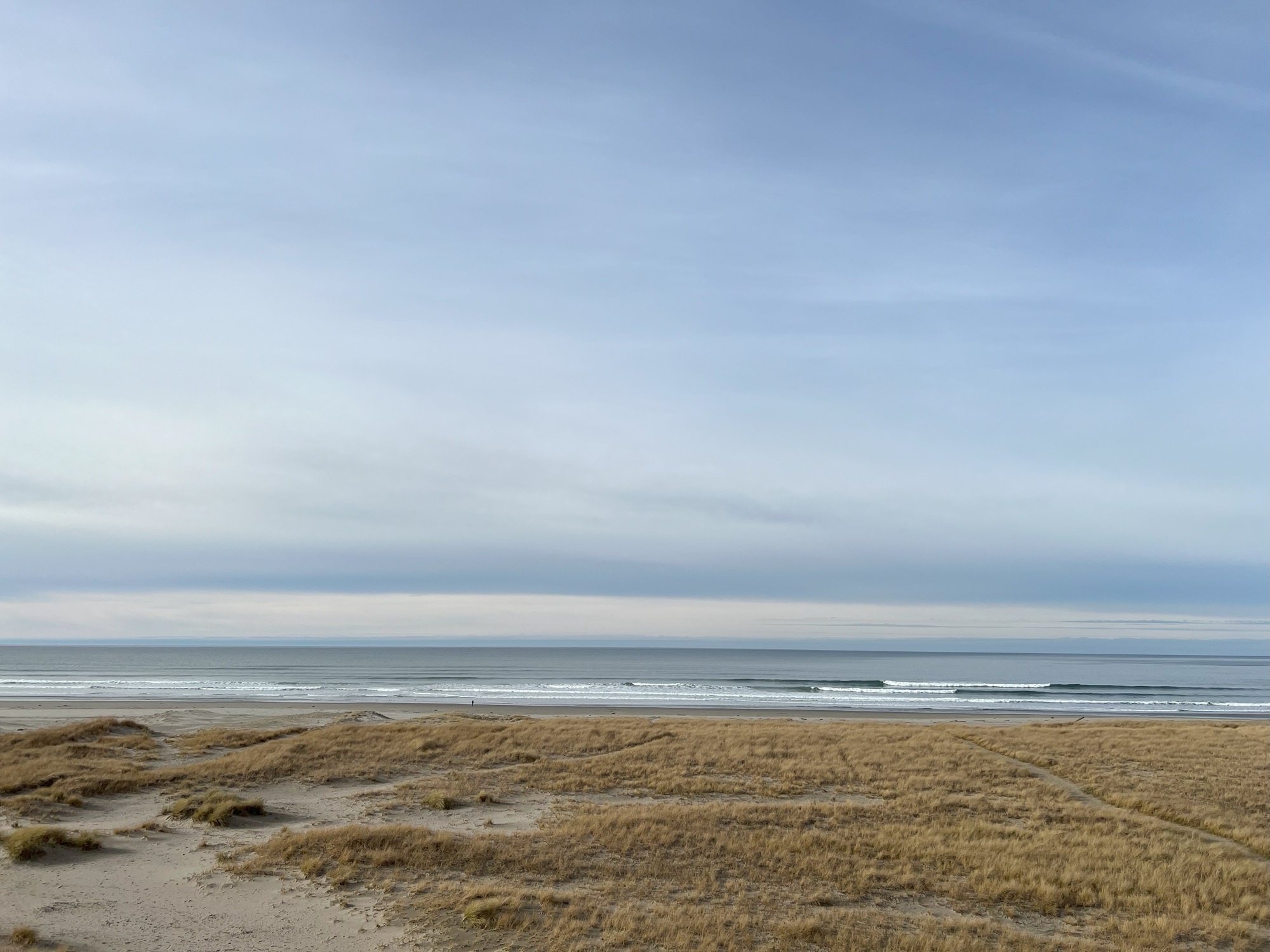
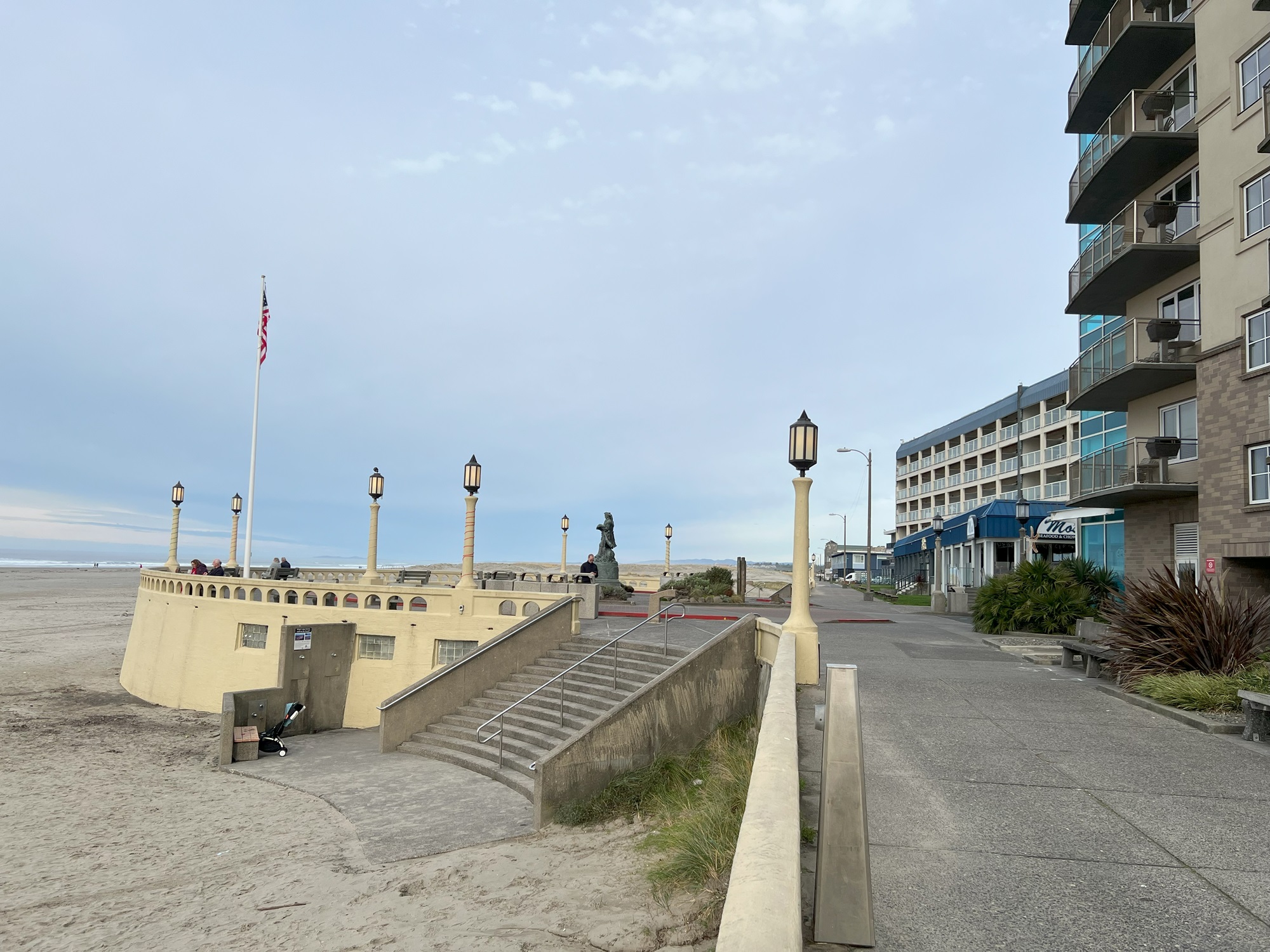
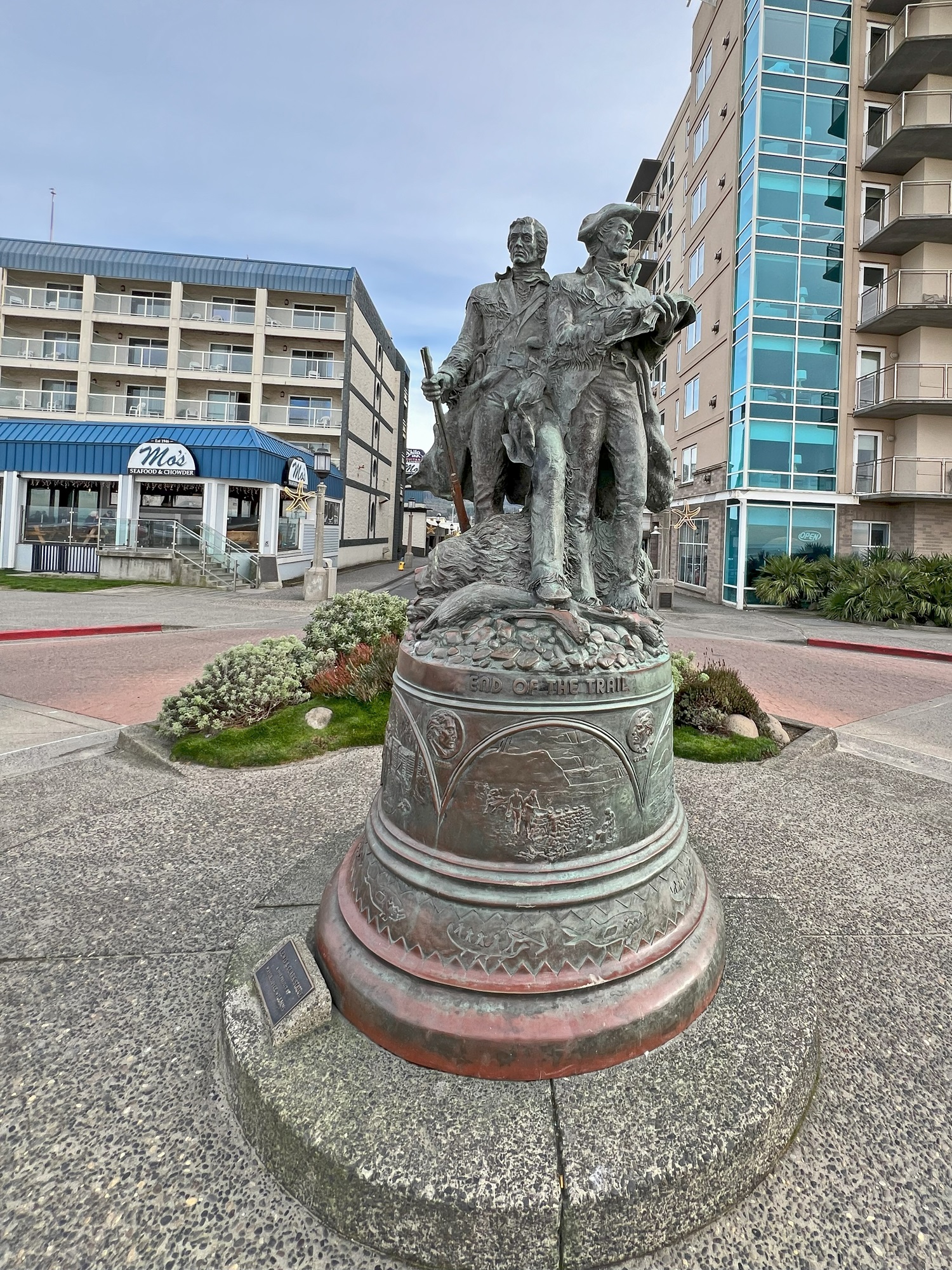
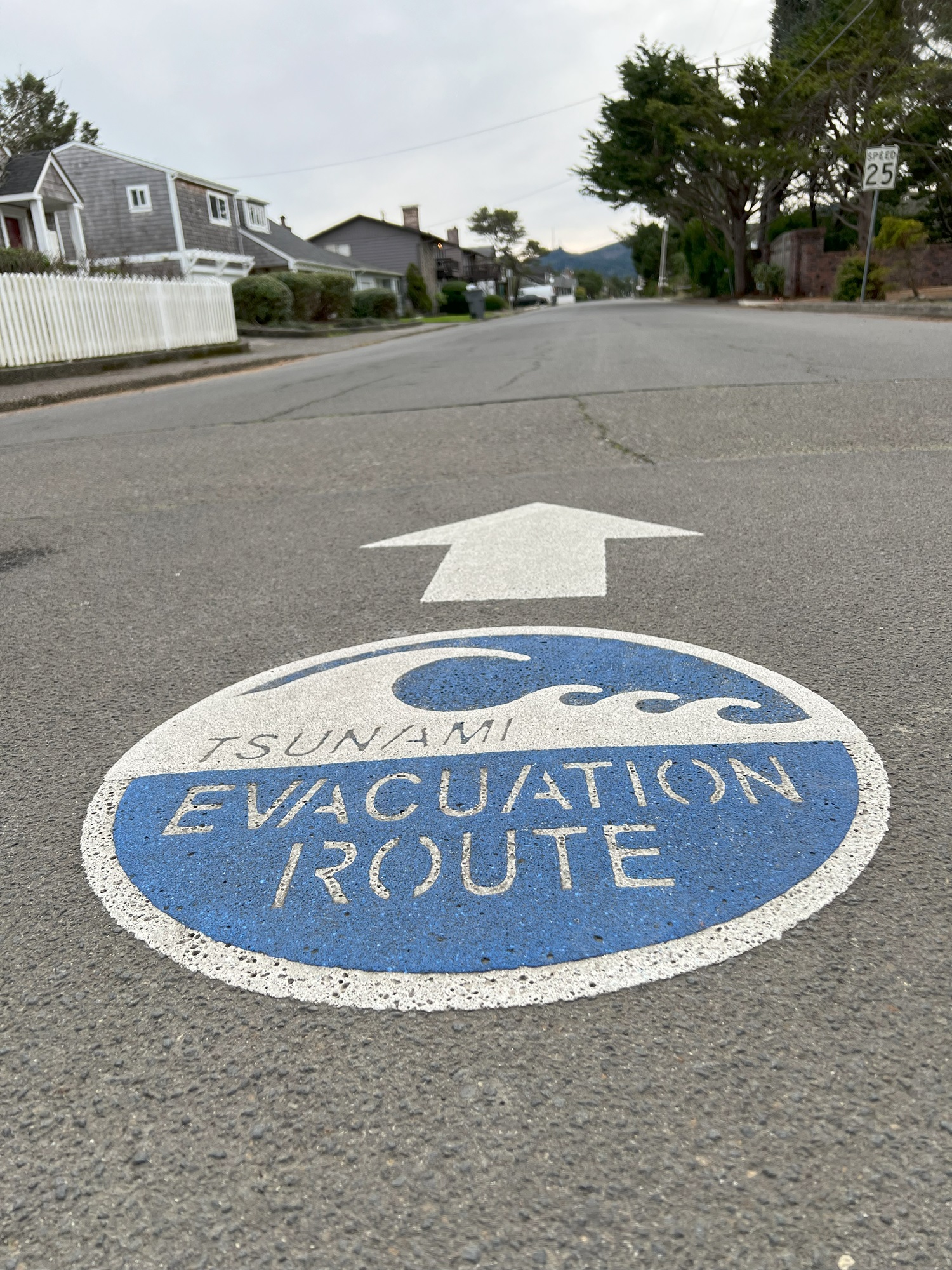
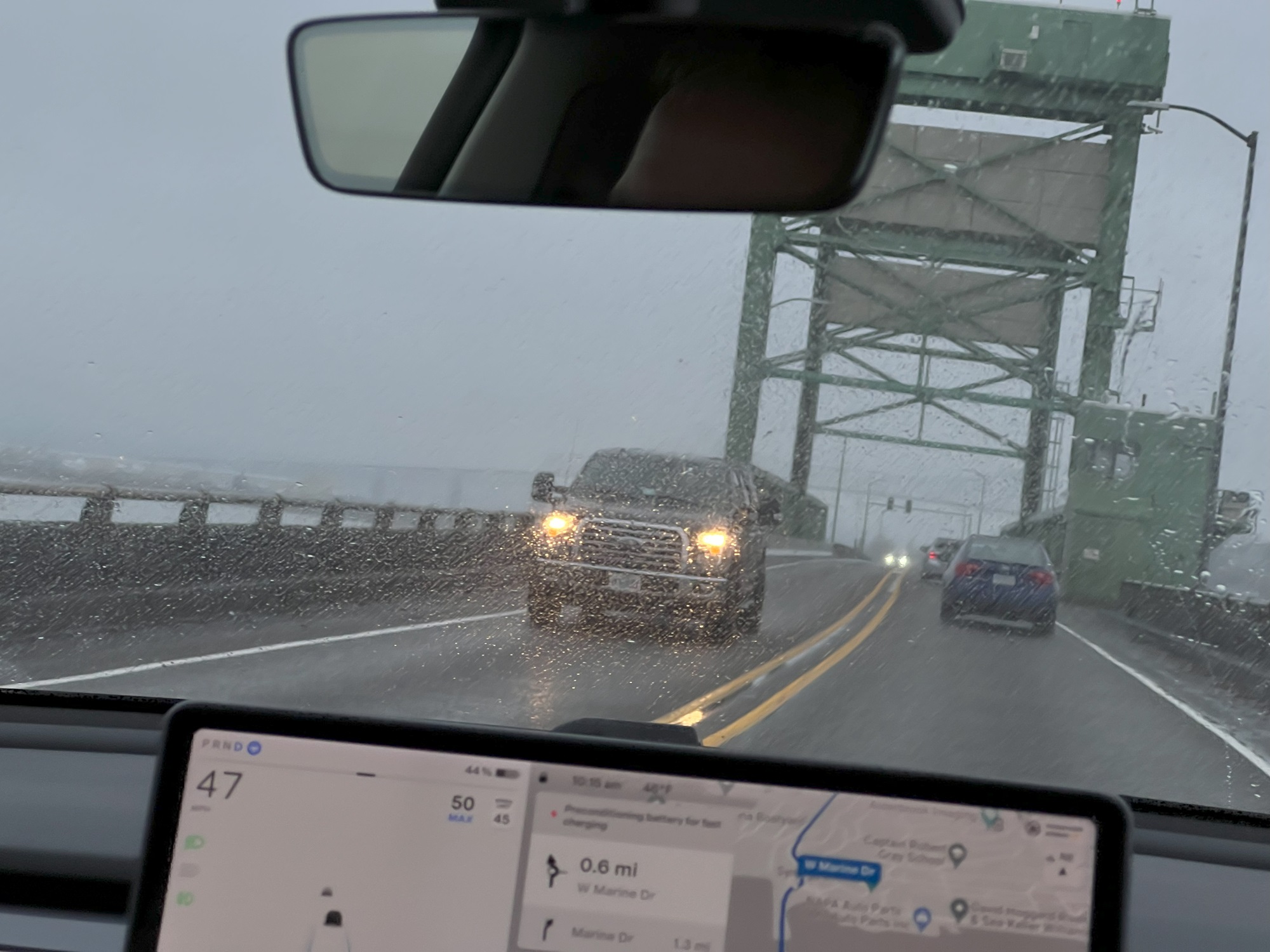
Seaside beach around noon on Wednesday | The historic Seaside Promenade is 1½ miles long and was dedicated in 1921 | Monument for Lewis and Clark, whose expedition had started in St Louis, MO, in May 1804, and ended at Fort Clatsop in Sept. 1806, nearby Seaside, to its north | A marker for an evacuation route (Seaside is only at 23′ elevation and vulnerable to tsunamis) | Approaching the drawbridge on US-101 going over Youngs River