Happy Friday.
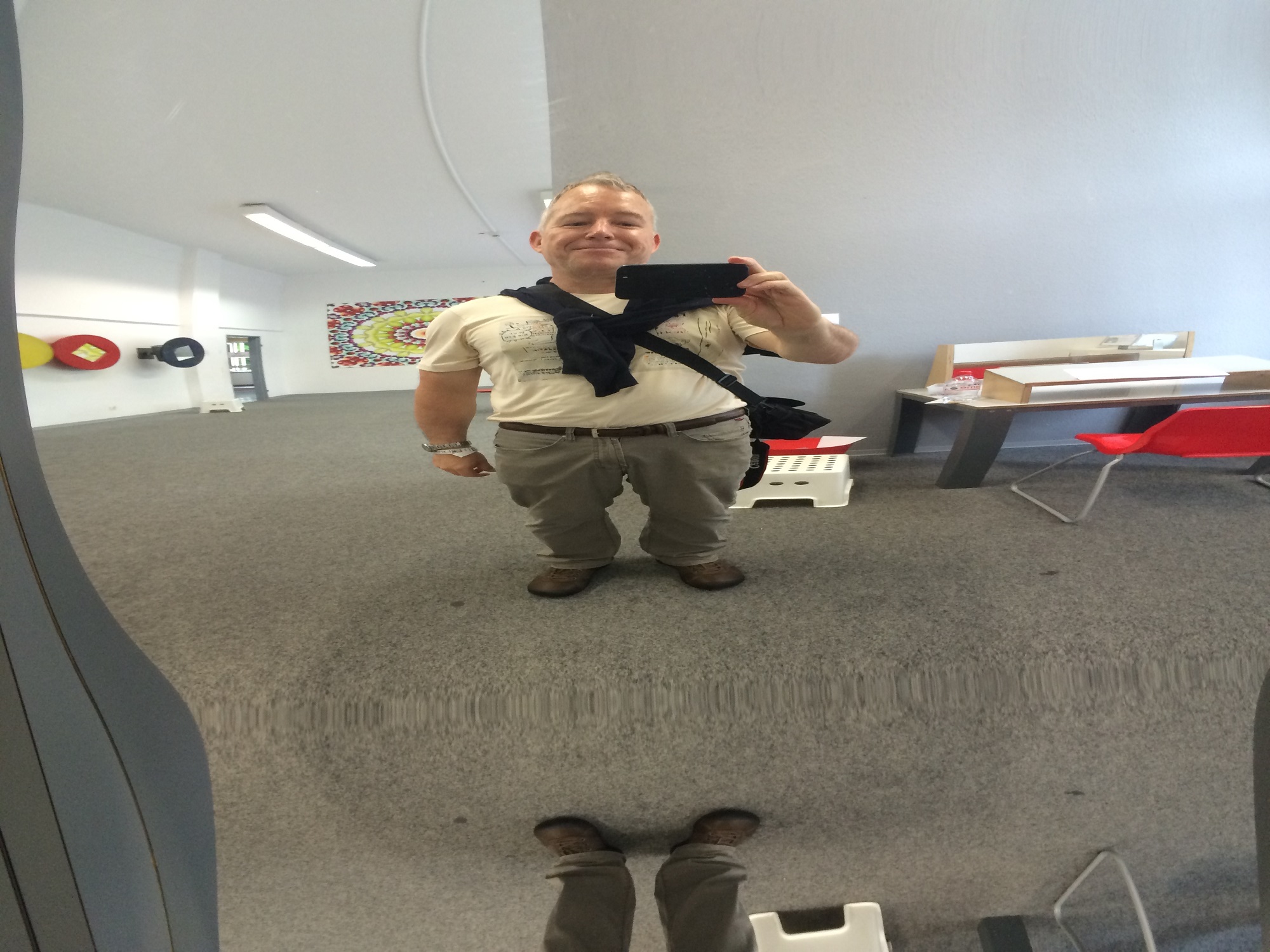
I took this ‘funhouse mirror’ picture 8 years ago (Aug 16, 2015) at the EXPERIMINTA Science Center in Frankfurt, Germany.
a weblog of whereabouts & interests, since 2010
Happy Friday.
I took this ‘funhouse mirror’ picture 8 years ago (Aug 16, 2015) at the EXPERIMINTA Science Center in Frankfurt, Germany.
I found this feline at the West Exit of Shinjuku Station in Tokyo during my recent visit there (stills from a giant video screen).


 The entrance to the Studio Alta building right next door is one of world’s famous rendezvous points.
Some 3.6 million people pass through Shinjuku Station every single day.

Our flight out of Tokyo made it in to Vancouver on time, and it was a breeze to clear passport control.
‘Welcome to the United States’ said the sign— even though I was clearly still in Canada. (I guess the departure area can be seen as a consular area belonging to the United States. Americans bound for the USA with a connection in Canada, clear passport control and customs in Canada).
For the flight to Seattle, our airplane was running 1½ hours behind schedule, but we got in a little after 7 pm Pacific Time.
Home, sweet home.
Happy Friday.
I ran out to Ginza district one more time, to take a few night pictures. The schools are out for the summer break here in Tokyo, and the train stations were even more crowded than they had been all week.
It was already past 8 pm, but the trains were still full of salarymen* in their white shirts and black pants, making their way home.
*A salaryman (サラリーマン, sararīman) is a salaried worker. In Japanese popular culture, this is embodied by a white-collar worker who shows overriding loyalty and commitment to the corporation where he works [Wikipedia]
Pictures:
The Seiko clock tower on the Wako specialty store, a famous Ginza landmark;
Mitsukoshi Ginza department store kitty corner from the Wako building, with the Matsuya Ginza store a little further down;
Uniqlo’s flagship store in Tokyo, on all seven floors (a Japanese casual wear designer, manufacturer and retailer).


We did a quickie return trip today on the shinkansen from Shinagawa Station to Shin-Yokohama Station, and back.
It took all of 11 minutes to get there.
It would easily take twice that amount of time with the regular train— or by car.
This is the Nozomi N700— the ‘New 700’ series that had gradually replaced the 300, 500 and 700 series sets.
(The N700S entered service in 2020 with plans to eventually replace all N700-series trains).
This train is operated with 8 cars per train set, and it has a maximum speed of 300 km/h (186 mph). The N700 also accelerates more quickly than the older 700 series trains, with a maximum acceleration rate of 2.6 km/h/s.
That means it could attain its top speed of 300 km/h in just under two minutes.


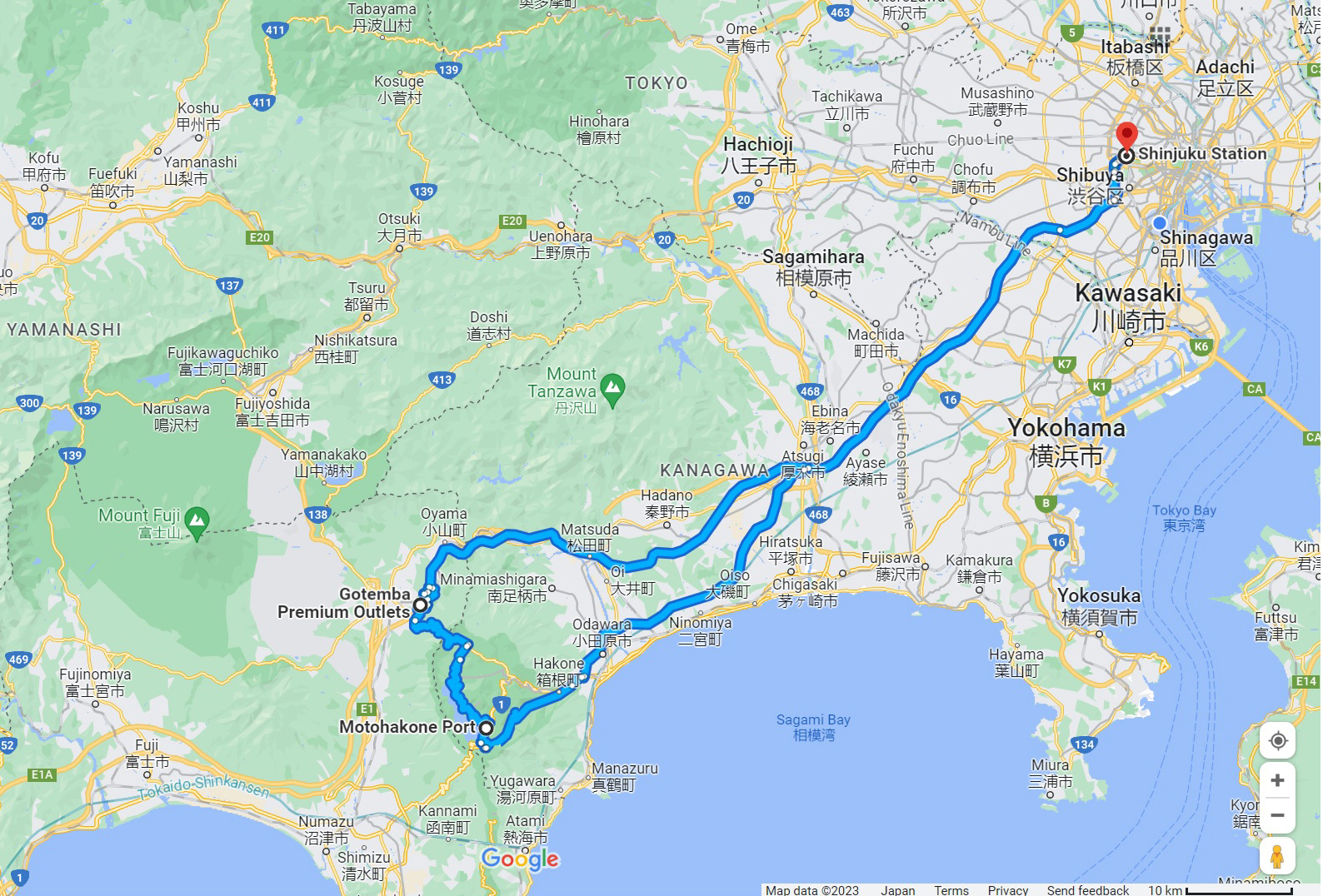
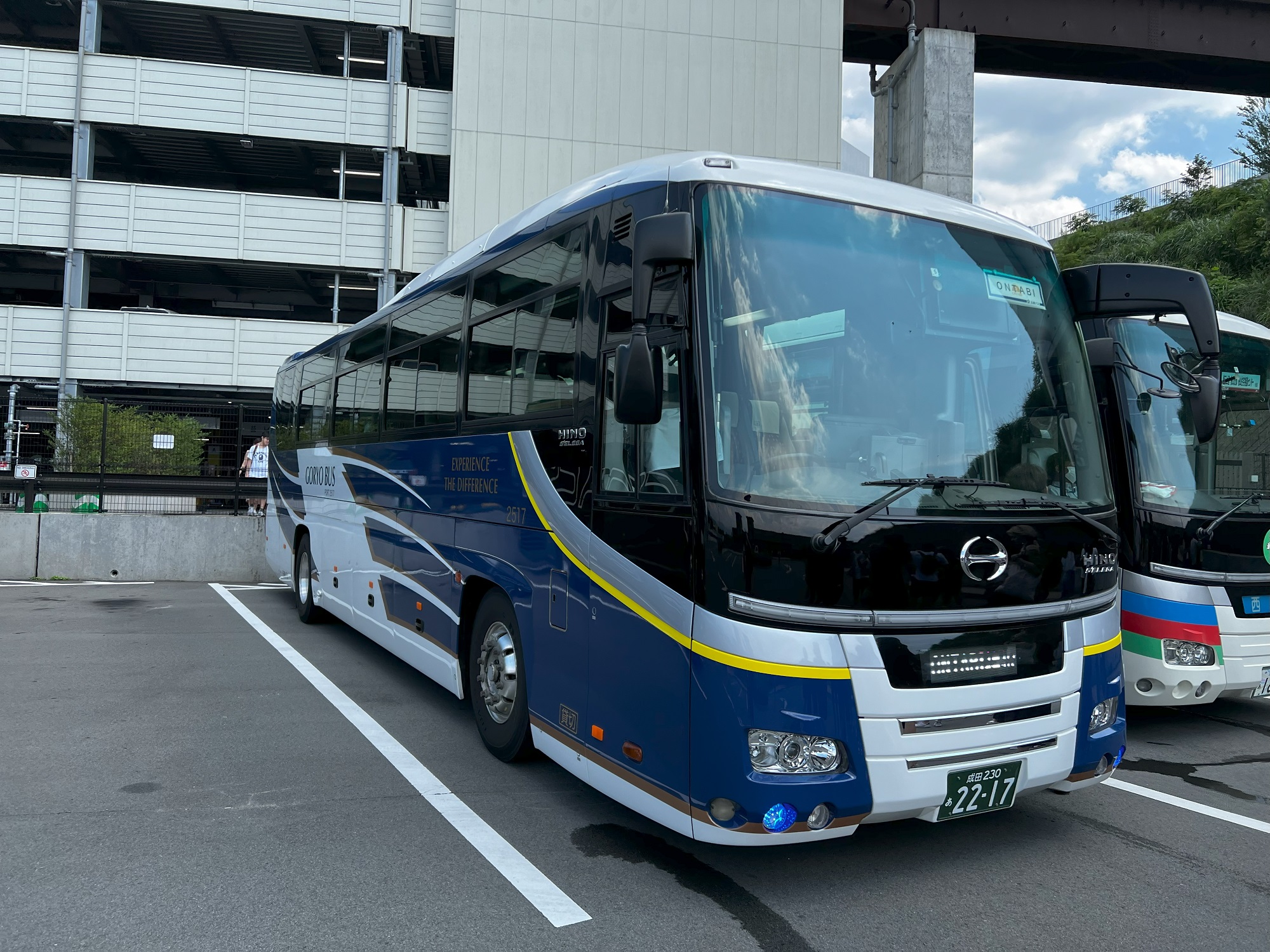
Here are pictures of our round trip bus tour to Mount Hakone and Lake Ashi in Kanagawa prefecture.
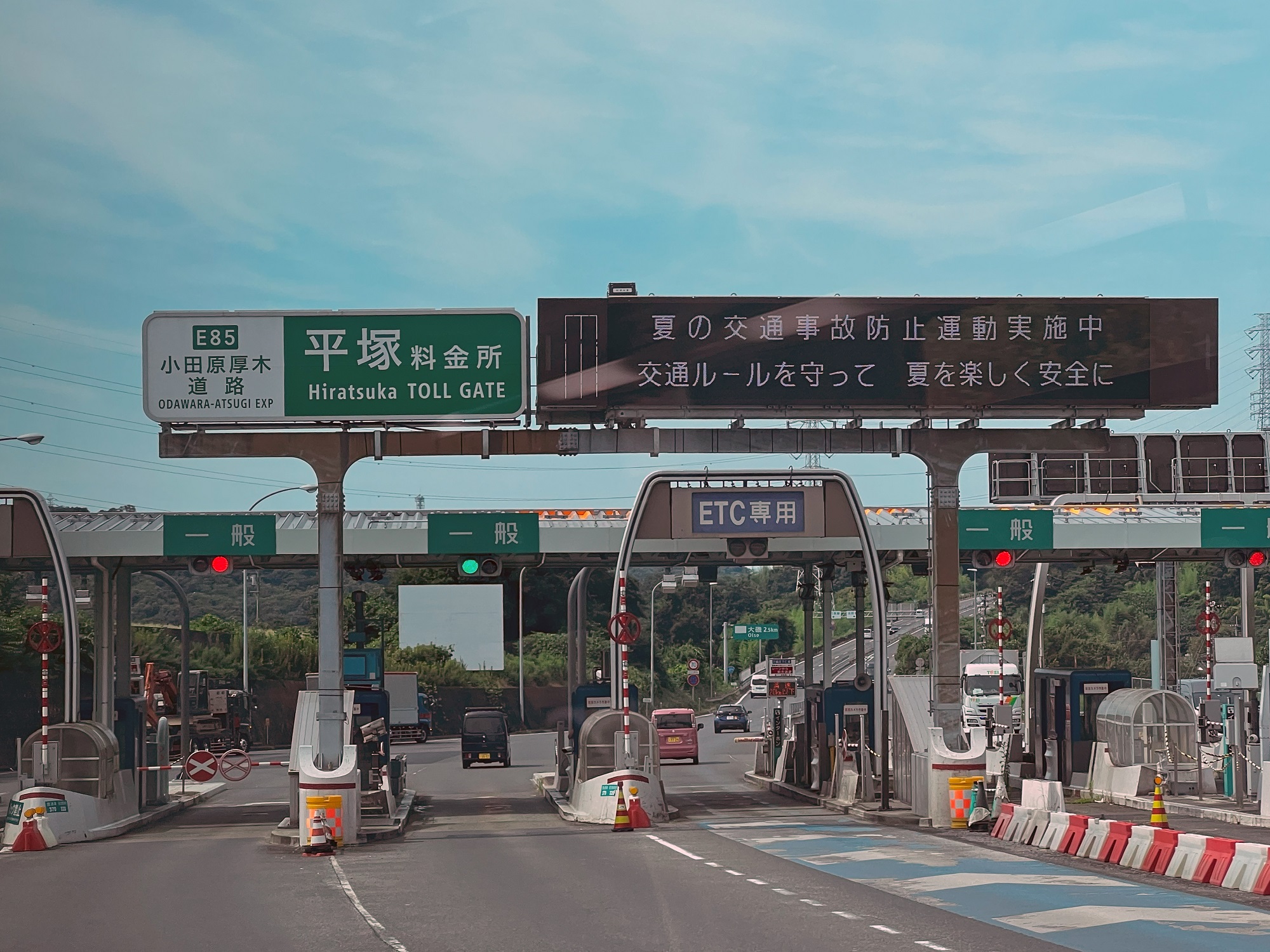
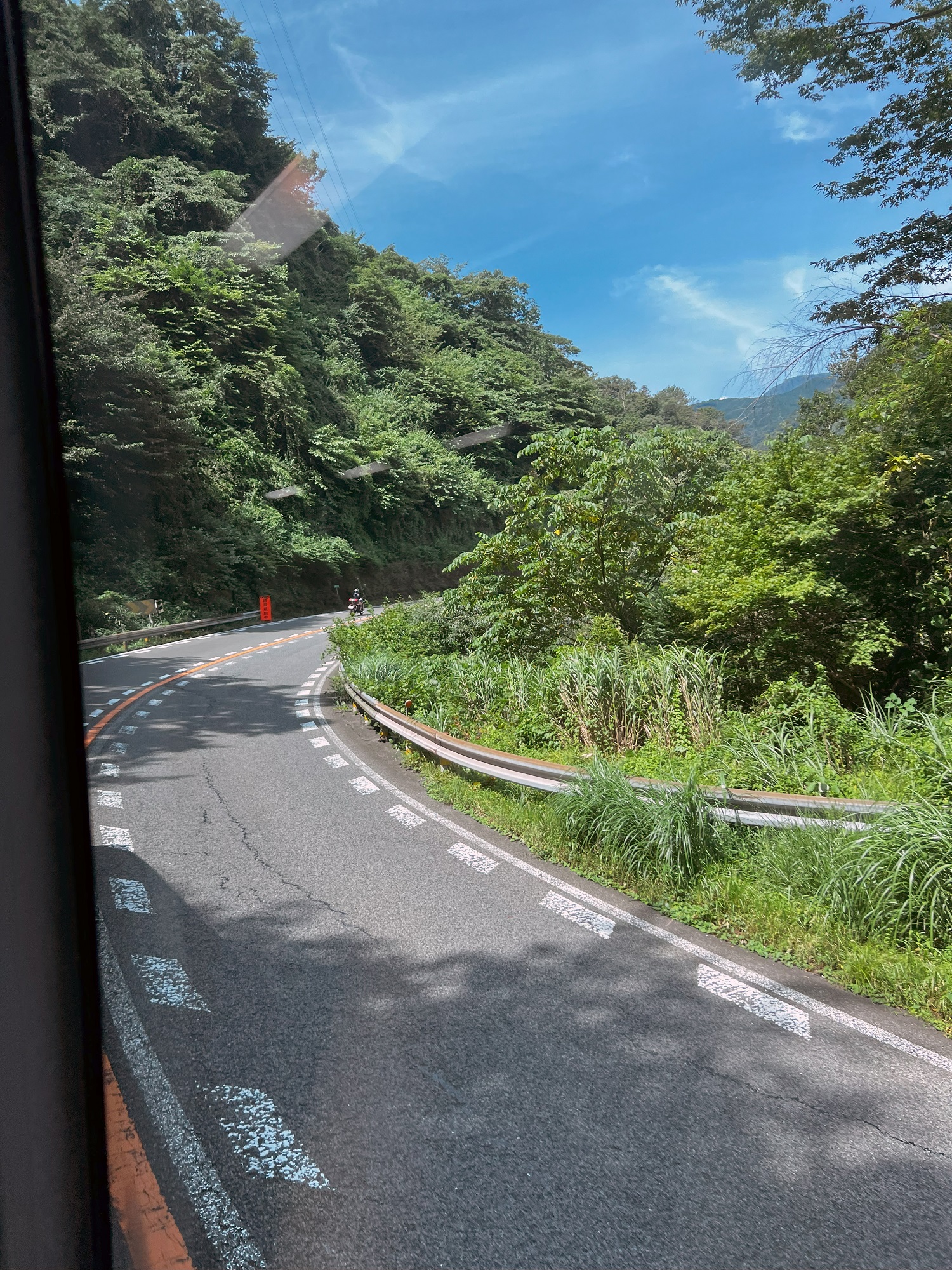
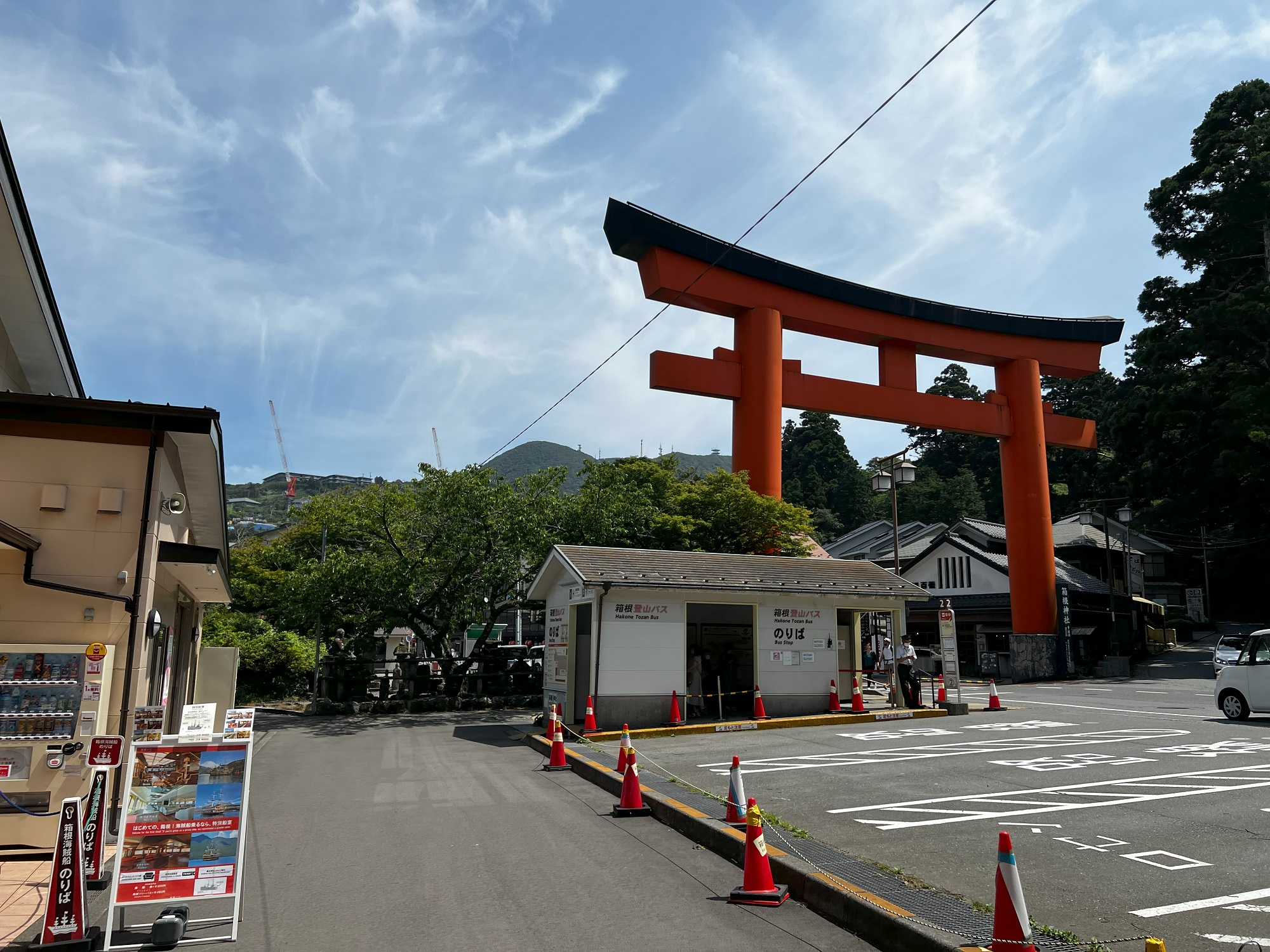

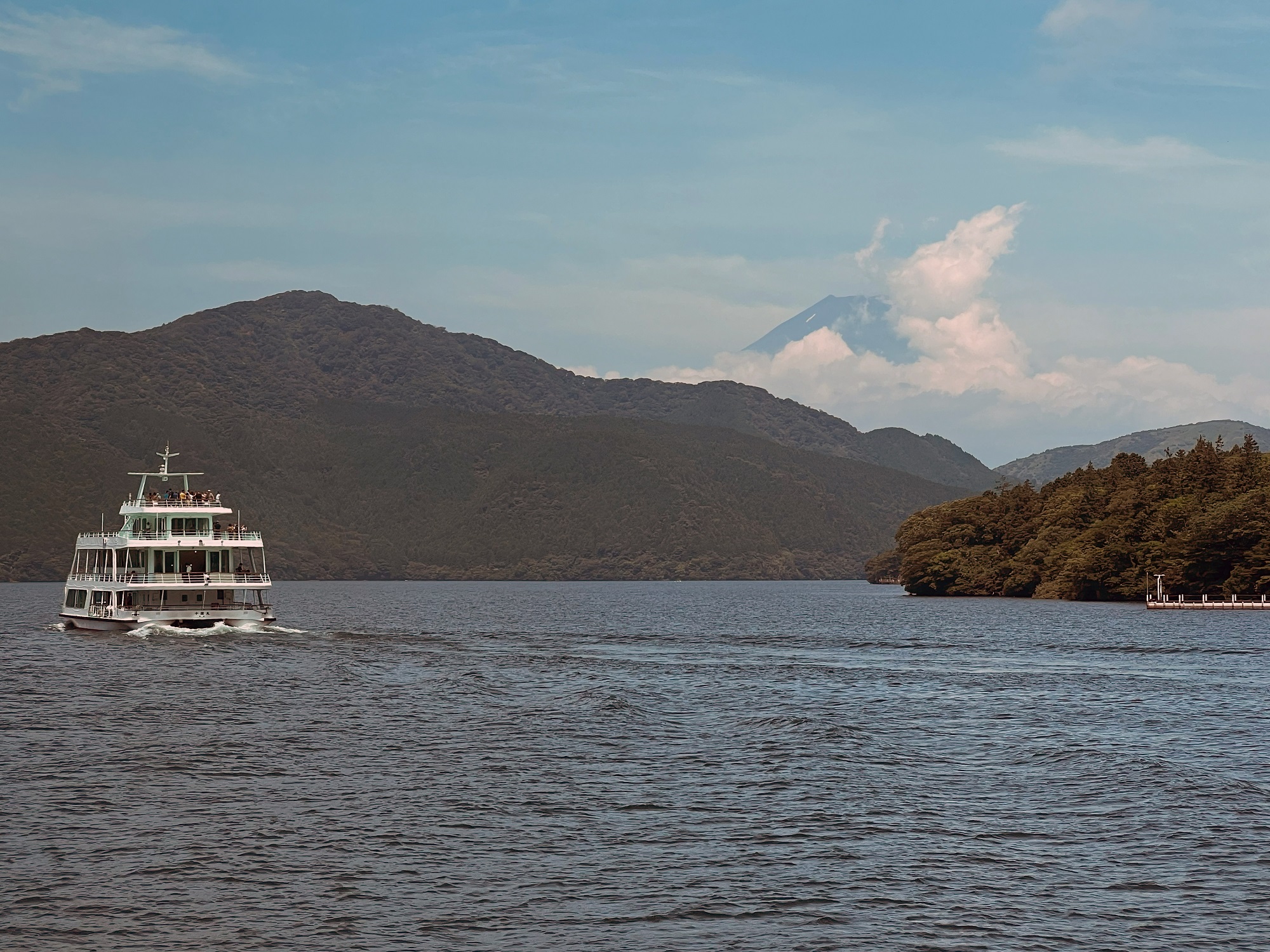
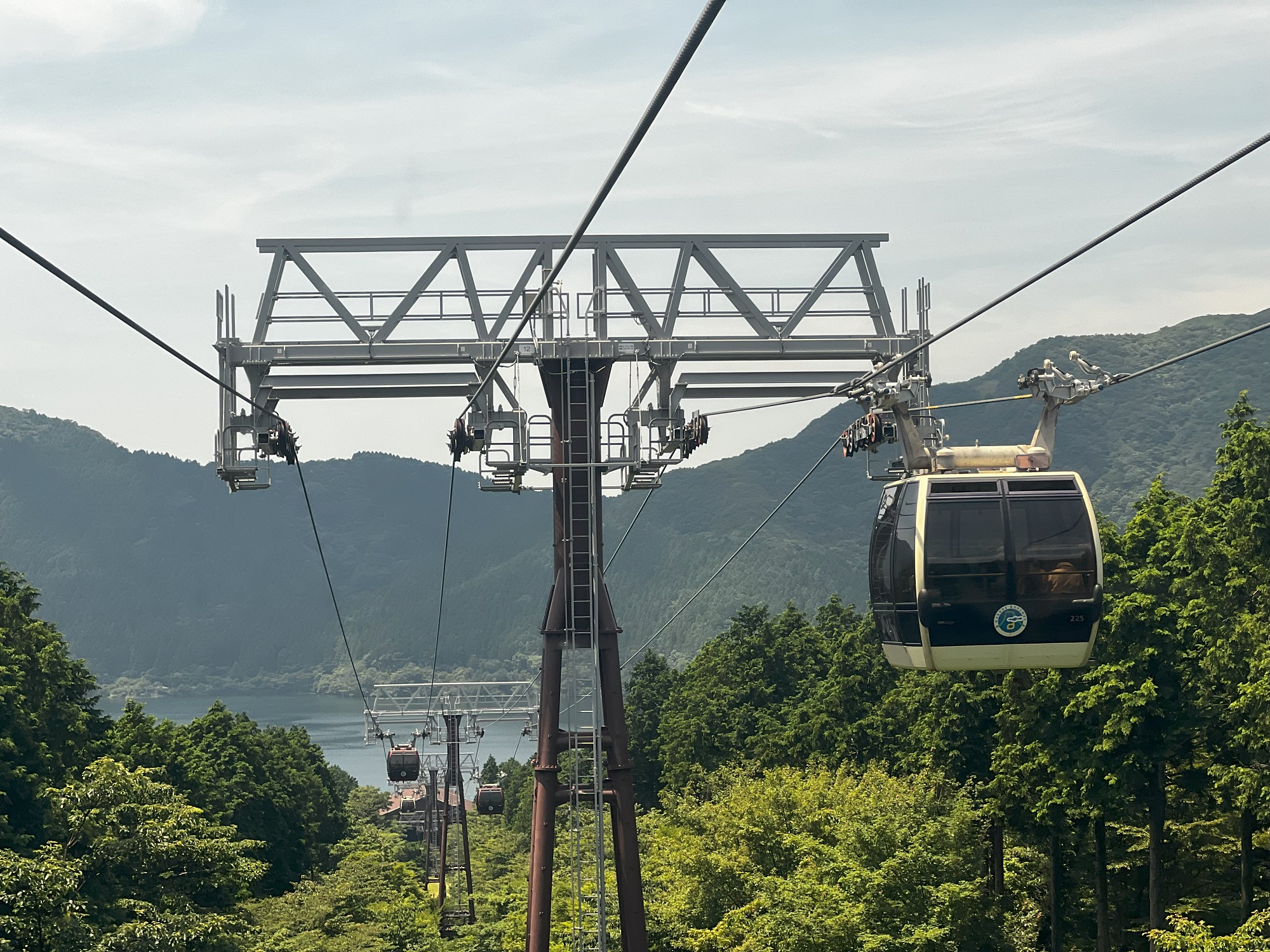
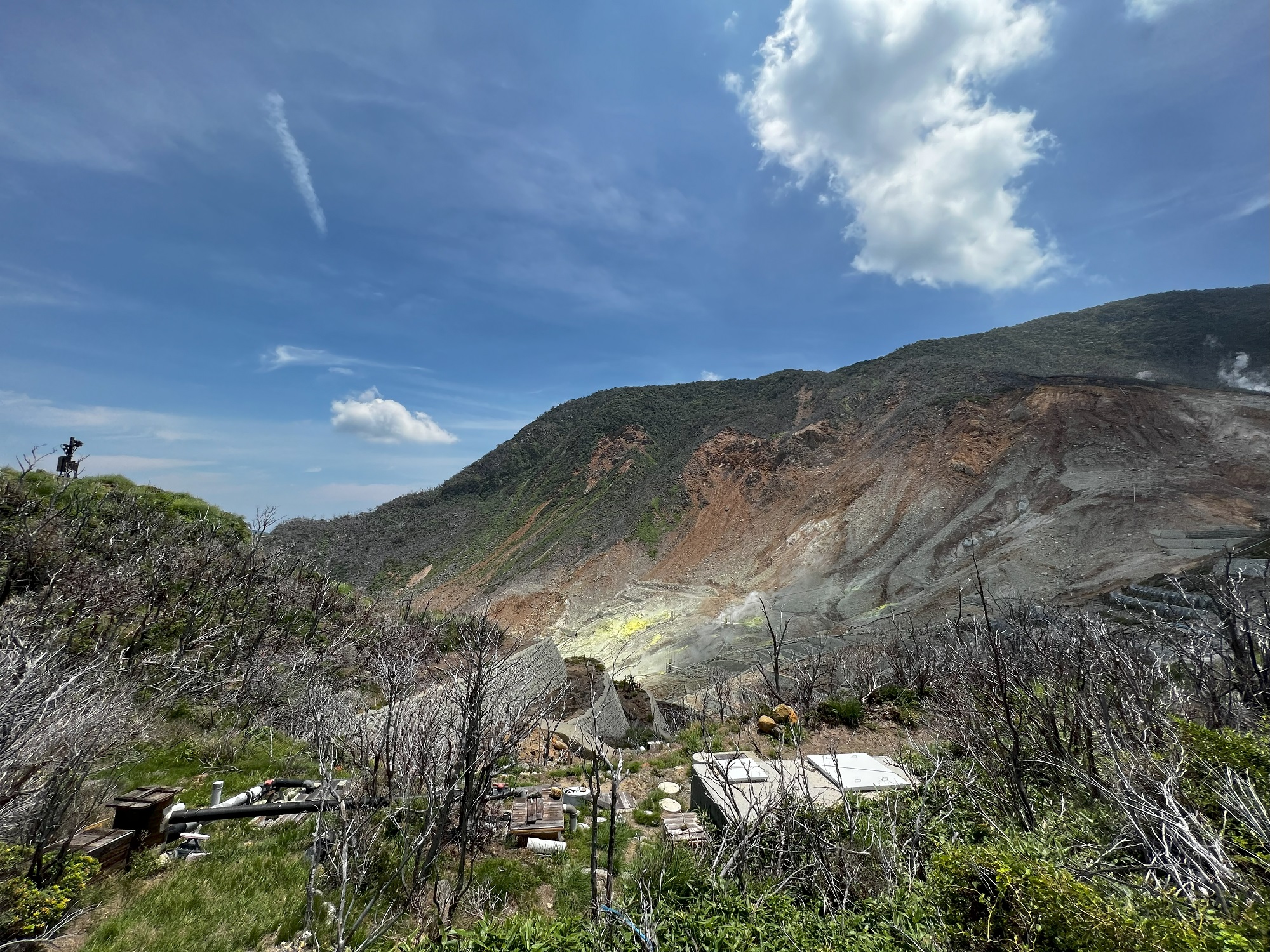
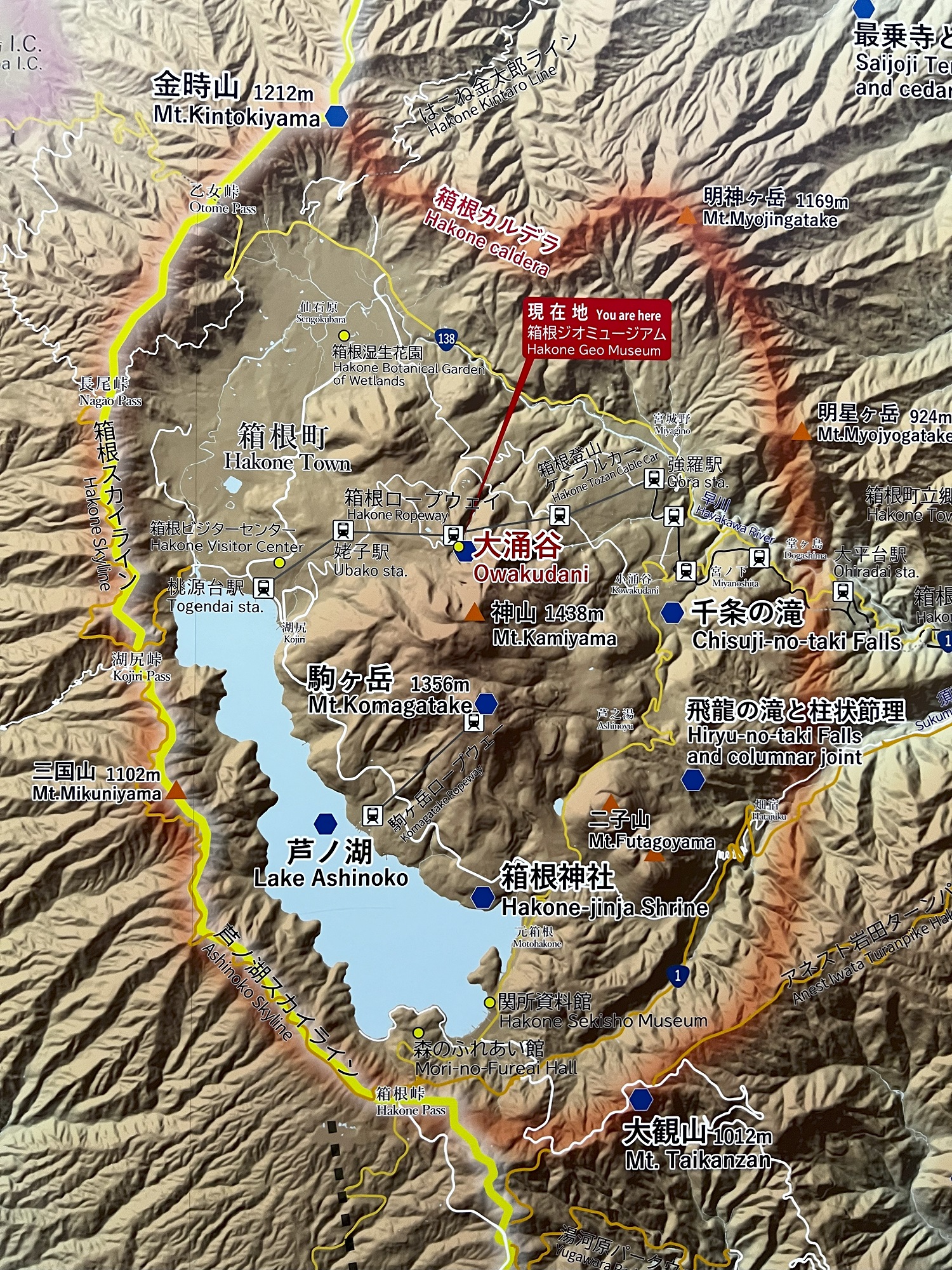
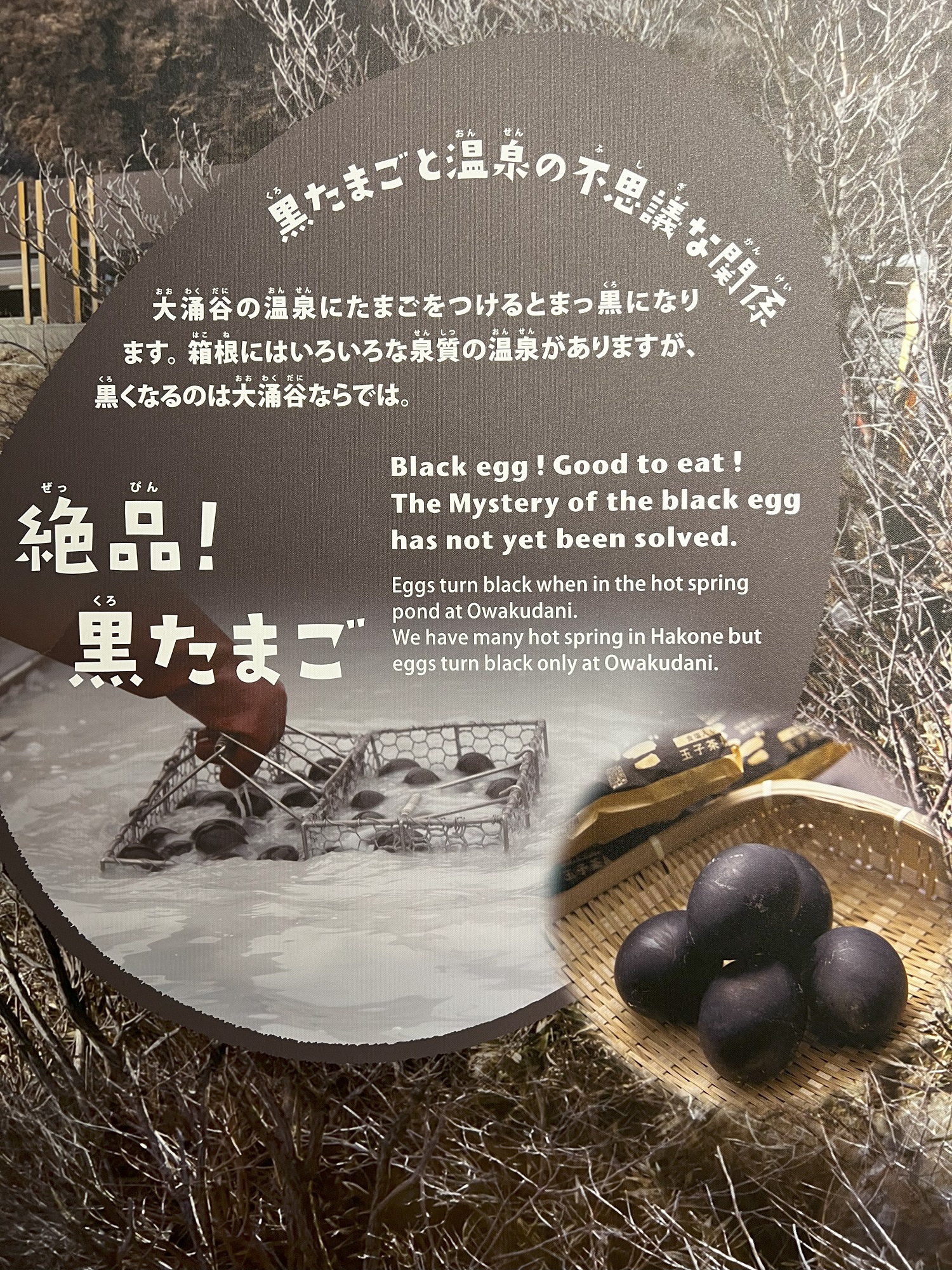
It was another 36°C (97°F) here in Tokyo, and we ducked into a department store every block or two as we walked around the streets of Ginza— Tokyo’s famous up-market shopping, dining and entertainment district.
Pictures:
Ginza subway station’s fancy decor gives a hint of what’s to come above-ground;
Stylish dressers and parasols, at the Koban (police box) station in Ginza;
Architecture along Matsuya-dori (street);
A misting station offering a little respite from the heat;
Cupid looking to make mischief, at the Vacheron Constantin watch store;
Fancy window display.


We made a run back to the Uniqlo store in Akihabara to return & exchange clothing items for larger sizes there.
Behind the RECOfan record store nearby, there is a mini-mall of display cases filled with figurines for serious collectors.
Some items run into several thousands of yen (several hundreds of dollars).
The first picture is a reminder to passengers not to go onto the tracks to retrieve items that may have been dropped there. Well, these days there are safety barriers and doors in place (see the edge of the picture) that would prevent passengers— young and old— from dropping items onto the tracks in the first place.


We had dinner tonight at a restaurant near Tokyo Skytree.
We were a party of five: I, my brother and sister-in-law, and two of their acquaintances from South Africa.
After failing to find a ramen place that Google maps reported to be nearby (but it was not there), we settled on an American-style restaurant called Sizzlers.

The Marunouchi Line runs in a U-shape between Ogikubo Station in Suginami and Ikebukuro Station in Toshima.
I took it from beautiful Tokyo station (first two pictures) to Shinjuku station today. (Got to love the graphic posters that warn of the dangers of trying to board a departing train).


I checked in at the Yodobashi Camera store in Akihabara today.
(No, I have not bought a new camera yet).
The store is a giant department store for all things technology, office, home appliances, home decor, toys & games, entertainment, and even more.


We had 36°C (97 °F) here in Tokyo today.
I put urban survival gear in my backpack (water bottle, towel, wide-brimmed hat, sunglasses) and made a run out to Shinjuku on the famous Yamanote Line after the morning rush hour on the subway trains was over.
My flight into Vancouver and the connecting flight to Tokyo went without incident.
It is muggy in Tokyo and by late evening it was still 82 °F (28 °C) with poor air quality, to boot.
Pictures:
Boarding the Bombardier Q400 turboprop that took us to Vancouver; Interesting mudflats and scenery below just before the descent (that’s the turboprop casing and exhaust in the picture);
Indigenous artwork at Vancouver airport (I didn’t make a note of the artist);
Air Canada jet amid lots of containers at Vancouver airport;
Boeing 787 from All Nippon Airlines at the gate at Tokyo’s Haneda International Airport.


I am at the airport, and I made it through check-in at the long TSA Precheck line at checkpoint 4.
The airport is swamped with travelers. Even though the line is long, it’s still very nice to not have to take out anything out of one’s bag.

My bags are packed. I’m heading out to Tokyo tomorrow— a hop on the Air Canada turboprop Bombardier Q400 to Vancouver and then to Tokyo on All Nippon Airlines.
The weather forecast for my arrival on Tuesday is intimidating for a Seattleite used to gentler summer temperatures and weather: 99 °F (37 °C) with high humidity and a thunderstorm advisory.

These pictures are all from inside the National Neon Sign Museum in the former Elks Building in the heart of The Dalles downtown historic district.
The museum narrates the evolution of the electric sign, from pre-electric and gold leaf signage to the invention and widespread use of neon signs.
It houses one of the largest collections of neon storefront signs in the world.
Yes, neon signage has been in decline the last few decades, but many cities are now concerned with preserving and restoring their antique neon signs.
Fun fact— Argon is much more versatile than neon for creating colors, and some 75% of ‘neon’ signs actually has argon in the tubes and not neon. ‘Neon’ is the name that stuck for all signs that use either neon or argon.
Pictures:
That’s David Benko himself in one of the pictures, telling us about the history of neon signs. He established the museum in 2018, and is the curator— with a lifelong passion for collecting neon signs.
The museum has displays that show inventors and their experimentation with electricity in the 1700s and 1800s, the discovery of the noble gases argon (1894) and neon (1898) and a model of the patent for the first neon sign tubes that were created in 1910 by French engineer and inventor Georges Claude (the third picture).
By the end of the Roaring ’20s, most American cities were electrified. Illuminated streets and storefronts lured people into the streets at night time. The commercialization of neon signs took off in the 1930s after the Great Depression.


We drove back to Seattle via Interstate 5 on Thursday, and stopped at two superchargers on the way: the one at Hood River and the one at Chehalis.
Interstate 84 out of The Dalles runs through the Columbia River Gorge National Scenic area, offering beautiful views of the cliffs and forests along the river.


Three amigos in two Teslas drove down to The Dalles in Oregon on Wednesday.
(Two more amigos were in The Dalles already).
We made stops at Snoqualmie Pass, in Ellensburg, and at the Tesla supercharger station in Yakima.


Here are scenes from my visit to Hood Canal on Kitsap Peninsula with friends. We drove out there on Sunday via Gig Harbor and the Tacoma-Narrows Bridge, and took the Kingston-Edmonds ferry back on Monday morning.
Photos: Tacoma-Narrows Bridge; Hood Canal kayakers; meadow buttercups; Sunday’s sunset over the very north-end of Hood Canal; the Olympic Mountains on the Olympic Peninsula, seen across a low tide level in Hood Canal; brown squirrel; bald eagle taking flight; on the Marine Vessel (ferry) Puyallup after leaving the Kingston ferry terminal; spotting the Kitsap Fast Ferry— with downtown Seattle towers and antennas in the distance, and against the backdrop of Mount Rainier capped with a lenticular cloud.


Here is a PSA* targeted at the drivers that park their cars illegally on the shoulder of the access road to Seattle-Tacoma airport.
(They wait there for arriving passengers that they are going to pick up, deeming it too much of a hassle to use the cell phone parking lot).
Well— you can stretch your legs in the cell phone parking lot, and it is actually a lot closer to the airport than that shoulder on the access road (by up to one whole mile).
Please use the cell phone parking lot.
*Public Service Announcement
