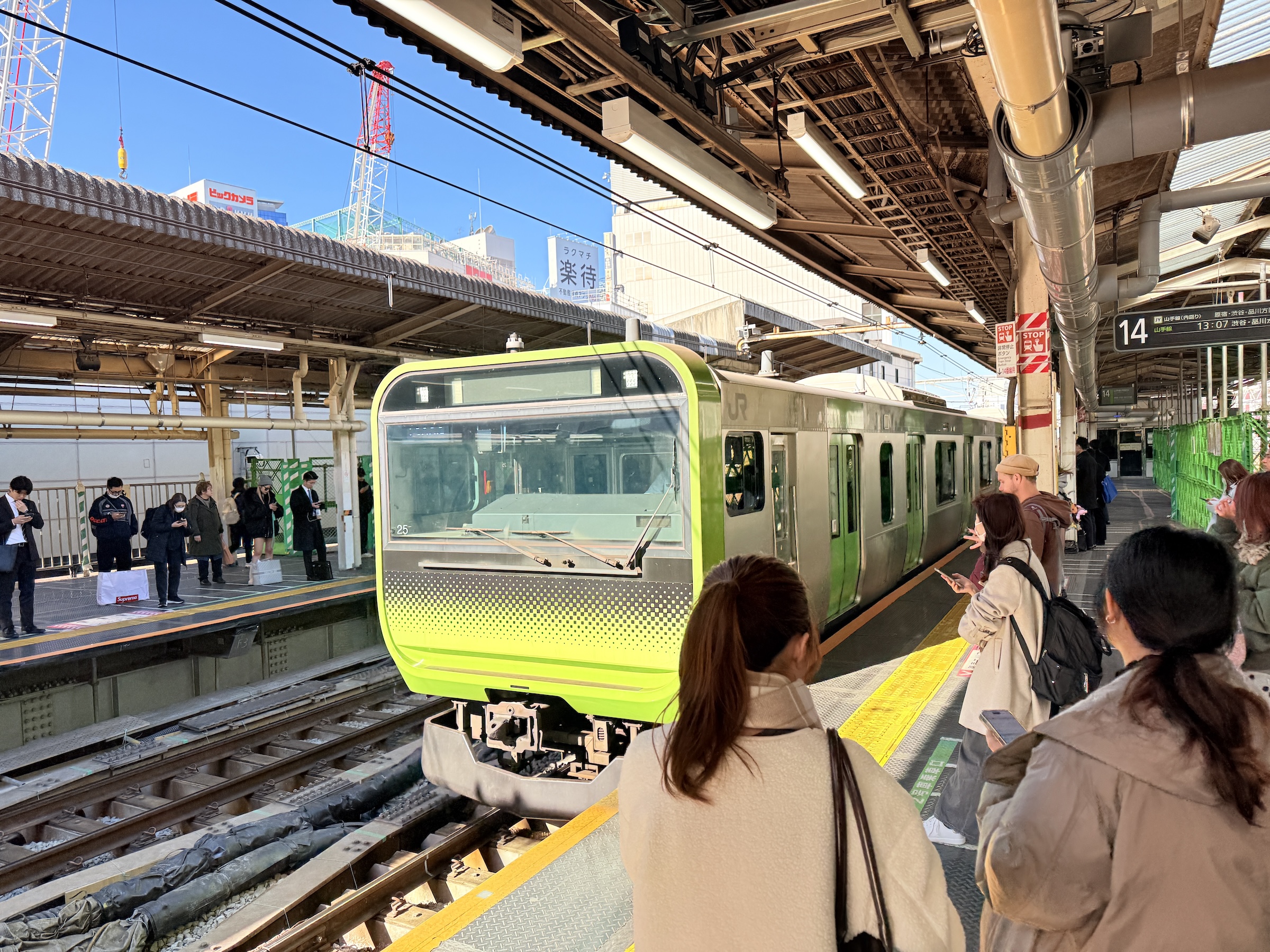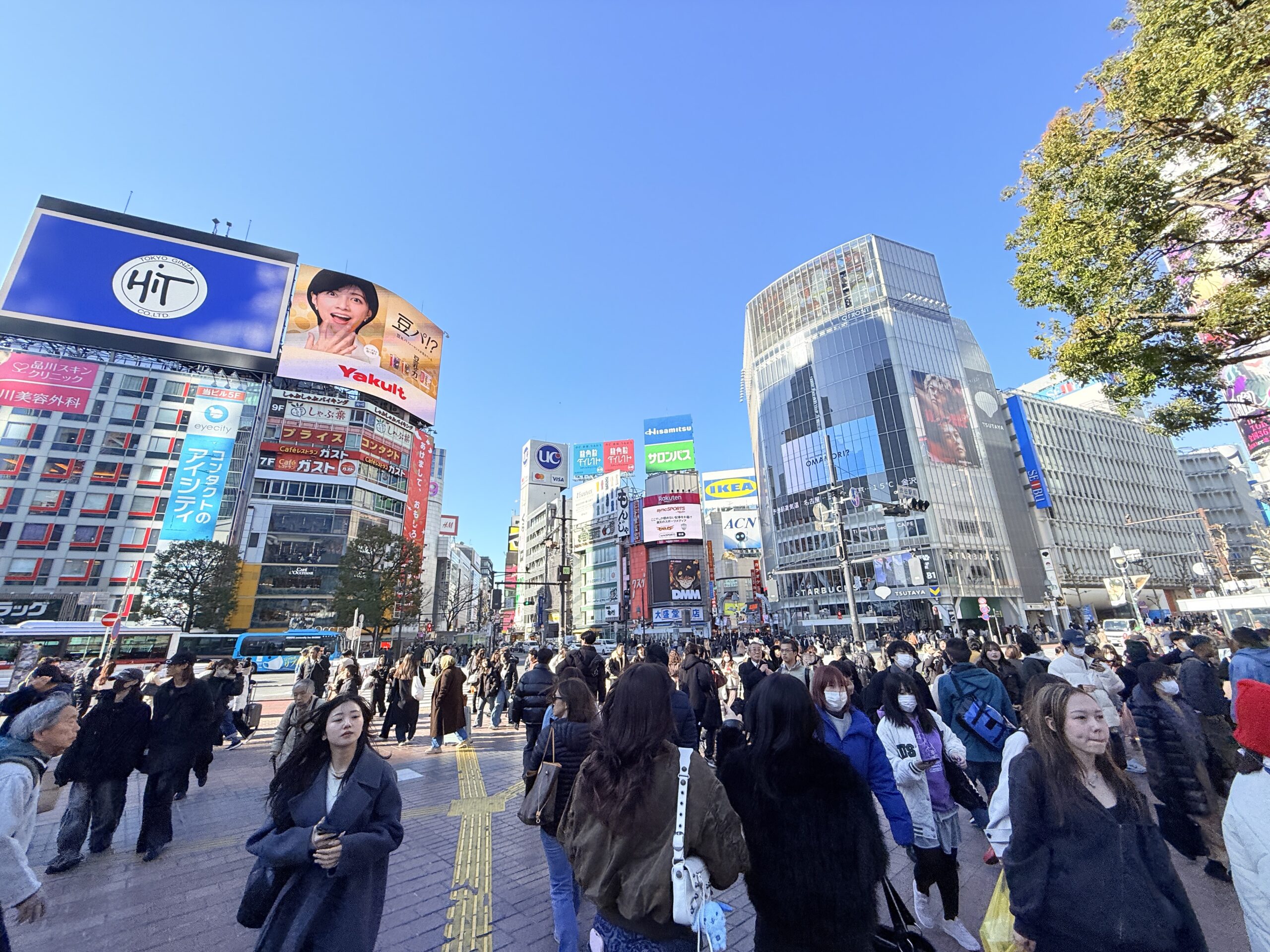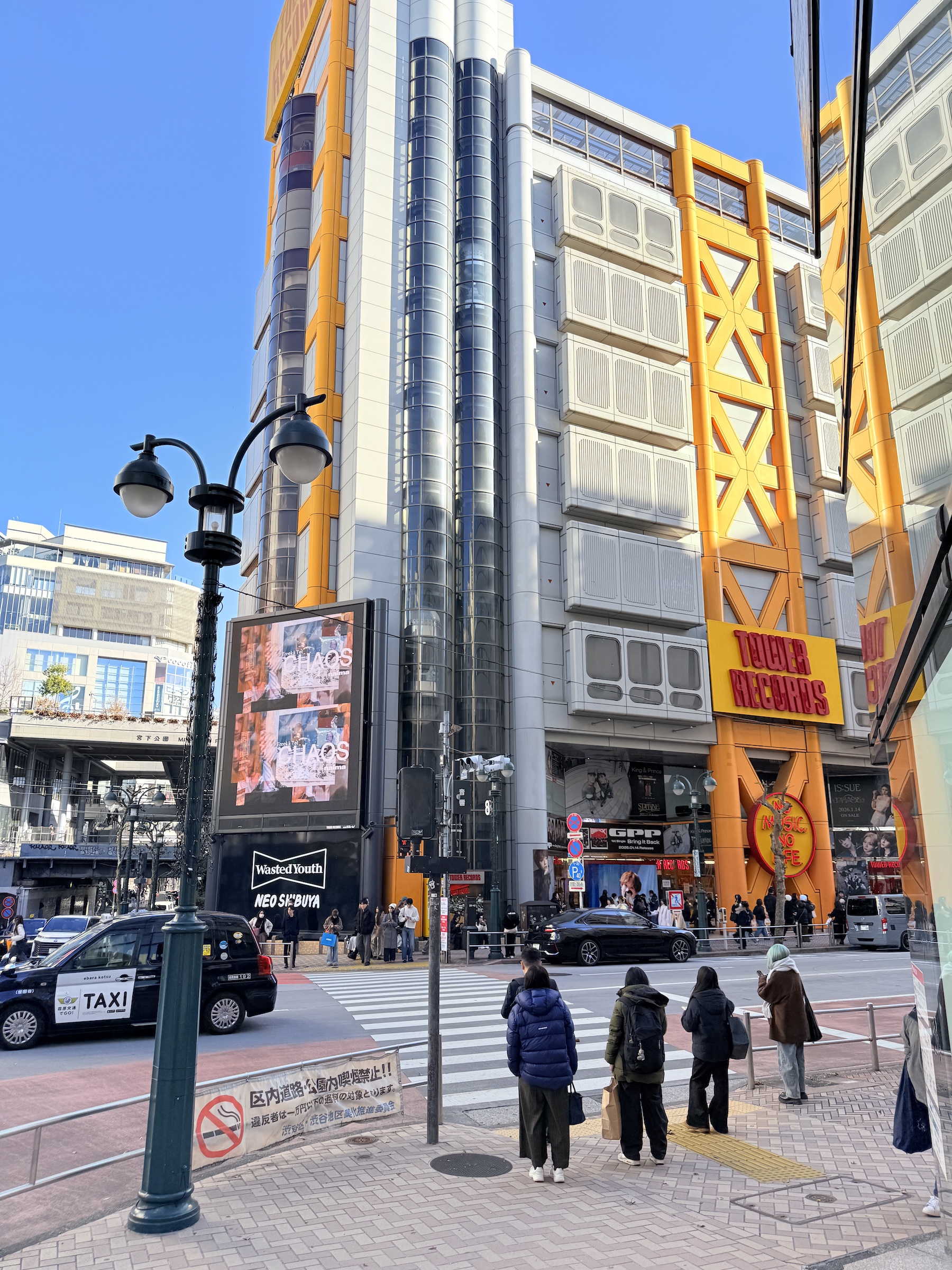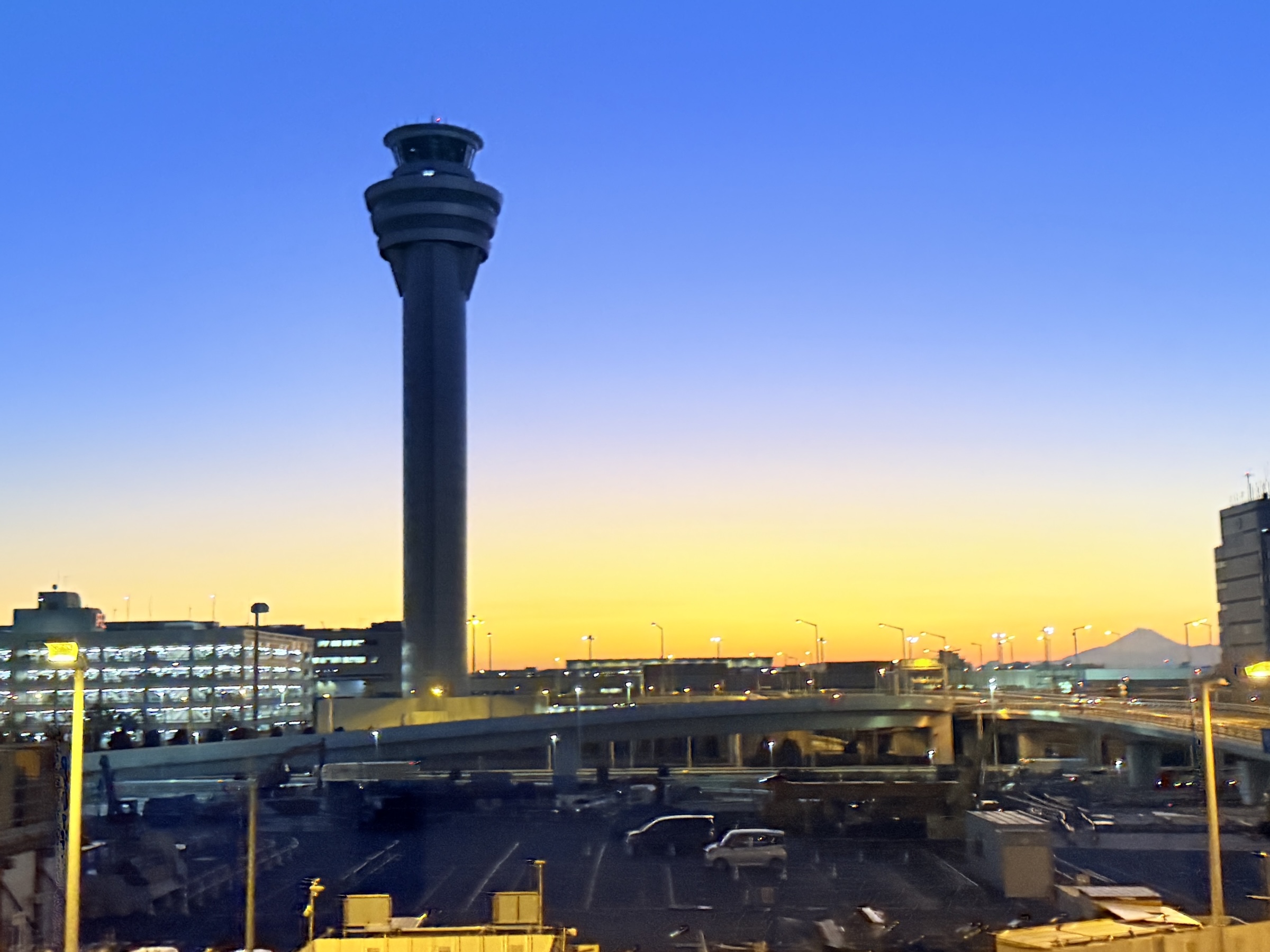
Wednesday/ leaving the California sun ☀

It was time to go home today, and I took a flight on Alaska Airlines from Palm Springs airport to Seattle.

Pictures:
The (somewhat unusual) courtyard inside the secure area at Palm Springs airport;
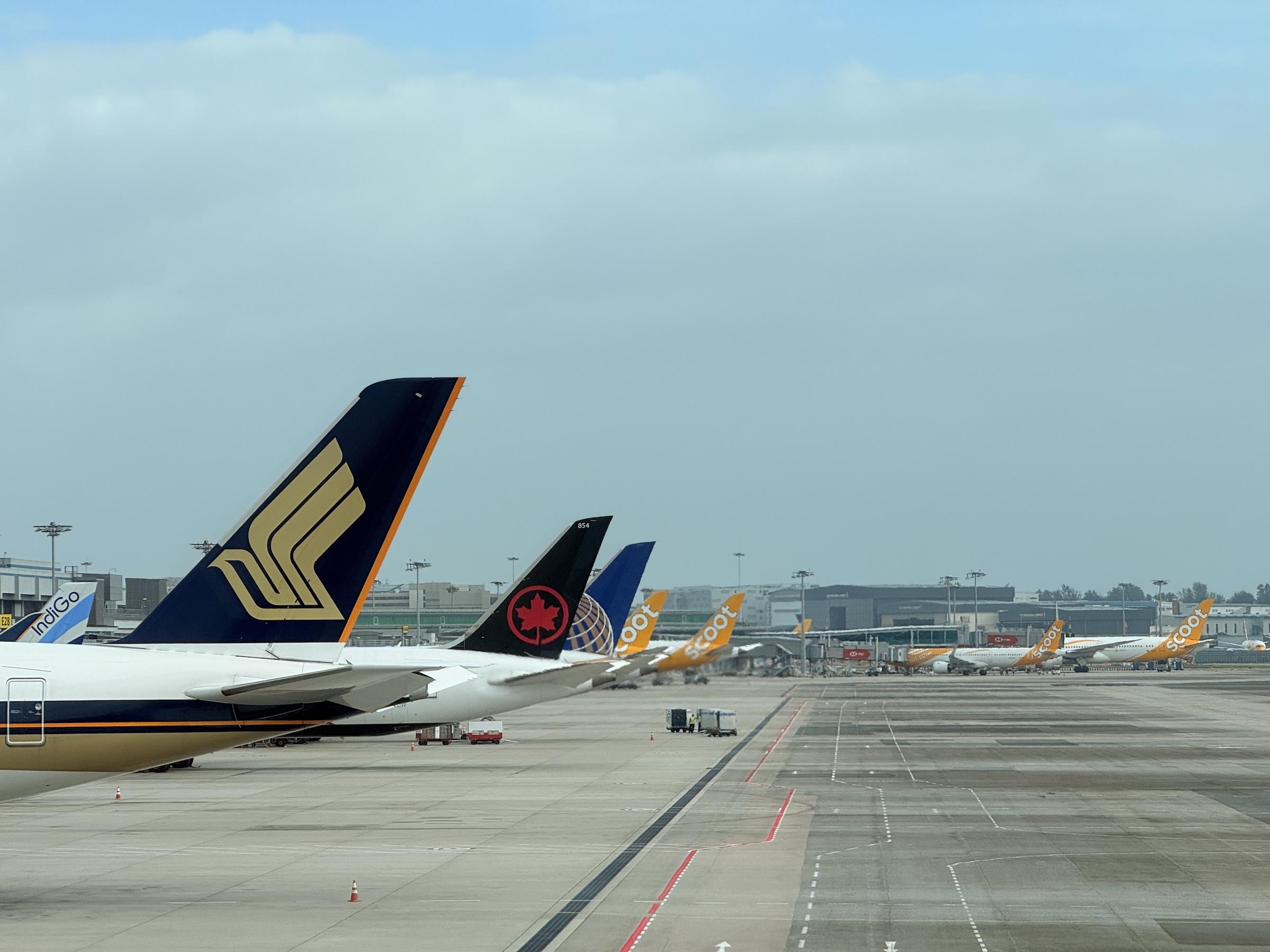
Allegiant Air getting ready to fly out to Bellingham airport in Washington State;
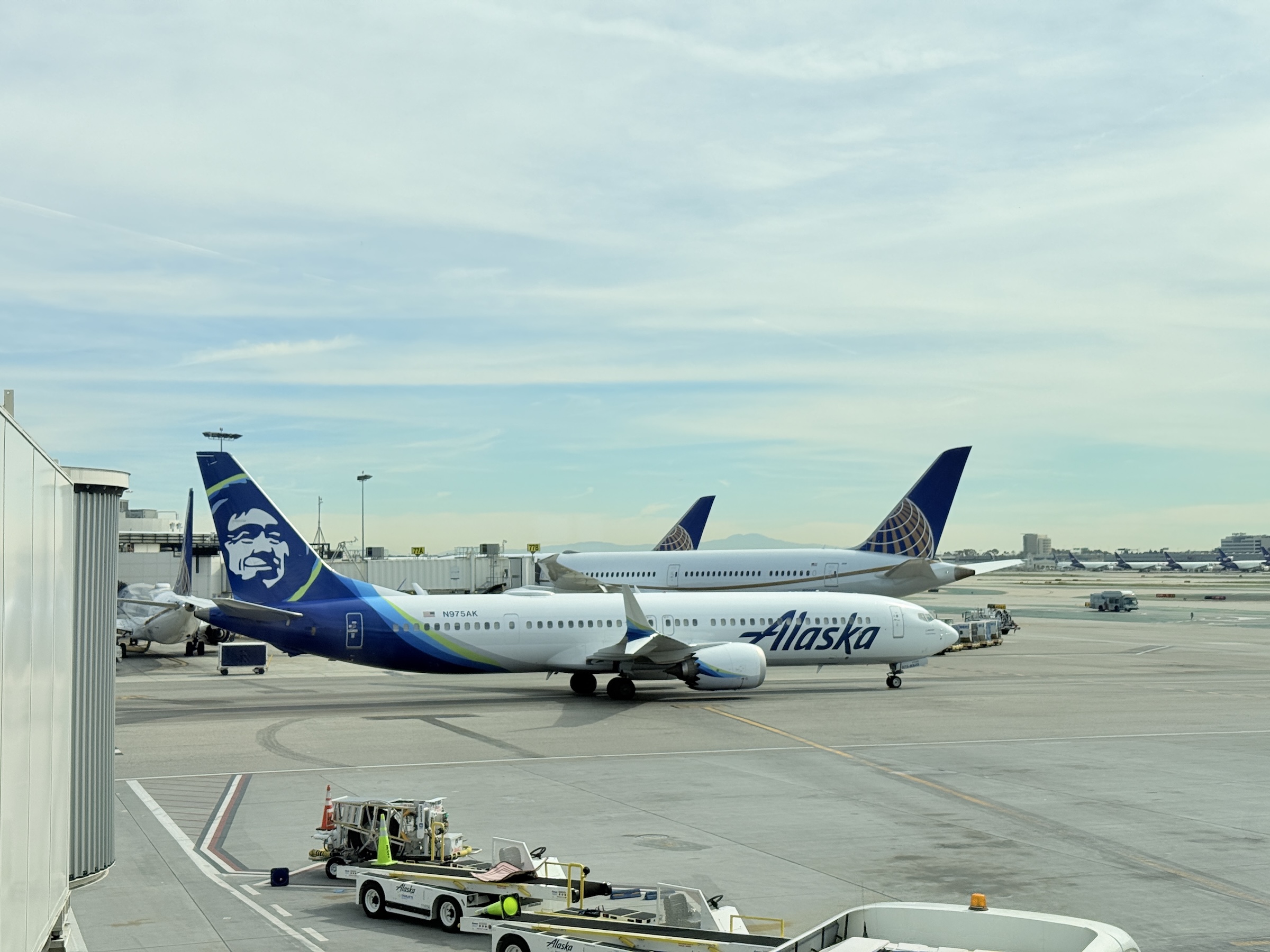
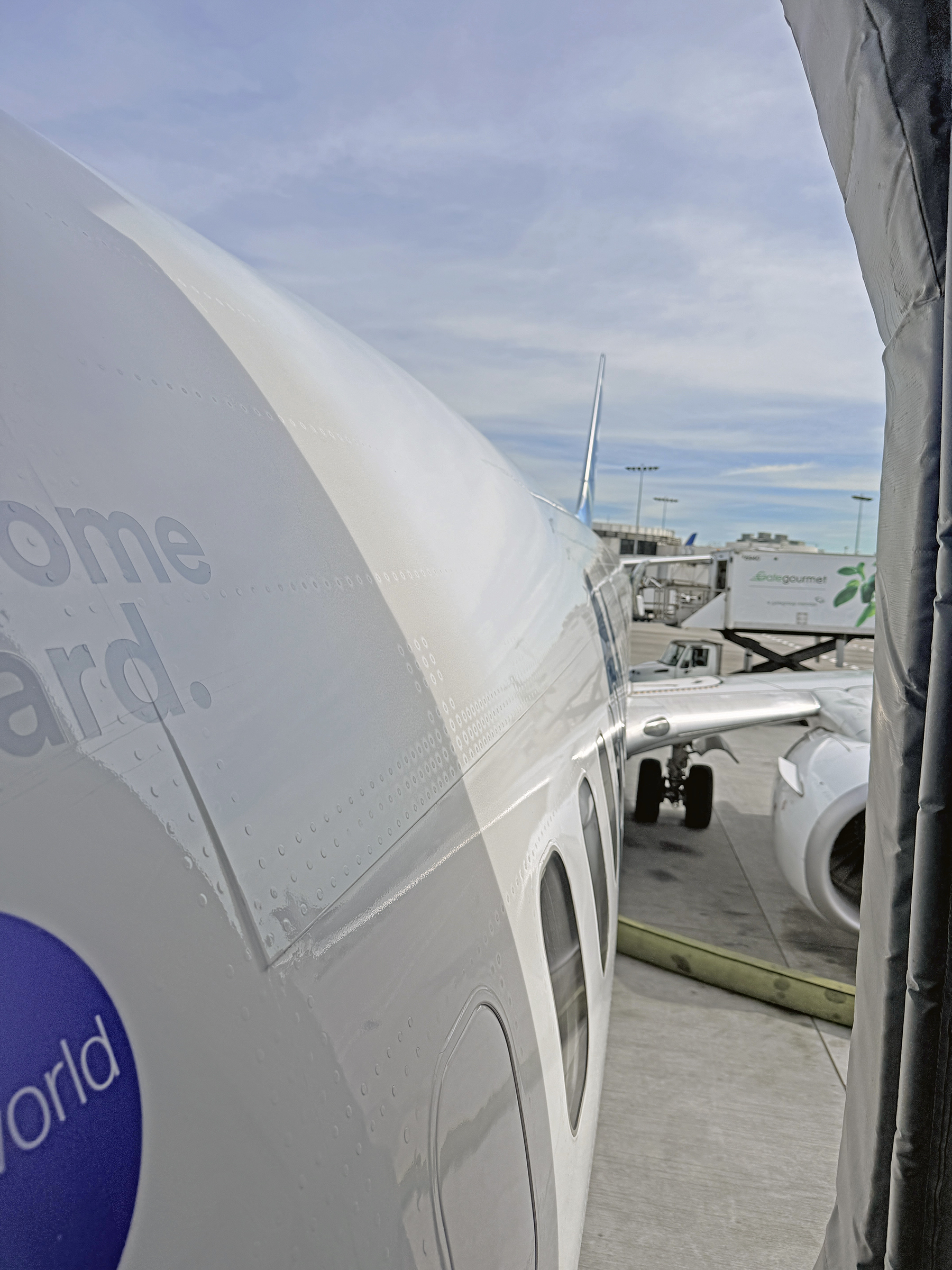
Stepping on board my own flight— a Boeing 737-900 (twin-jet) from Alaska Airlines;
The Flighty app replaced the airplane with a flying turkey— a nod to Thanksgiving, of course;
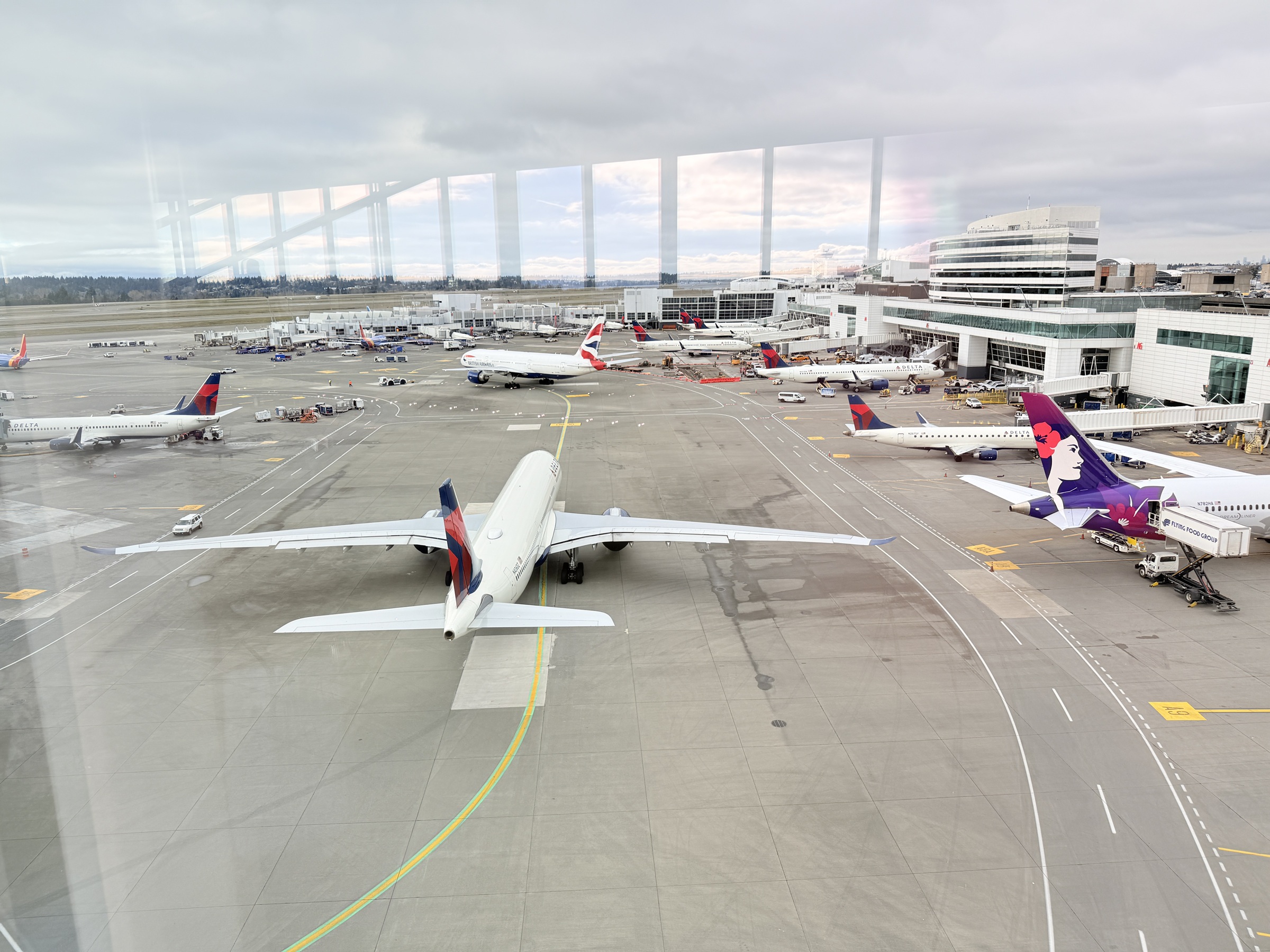
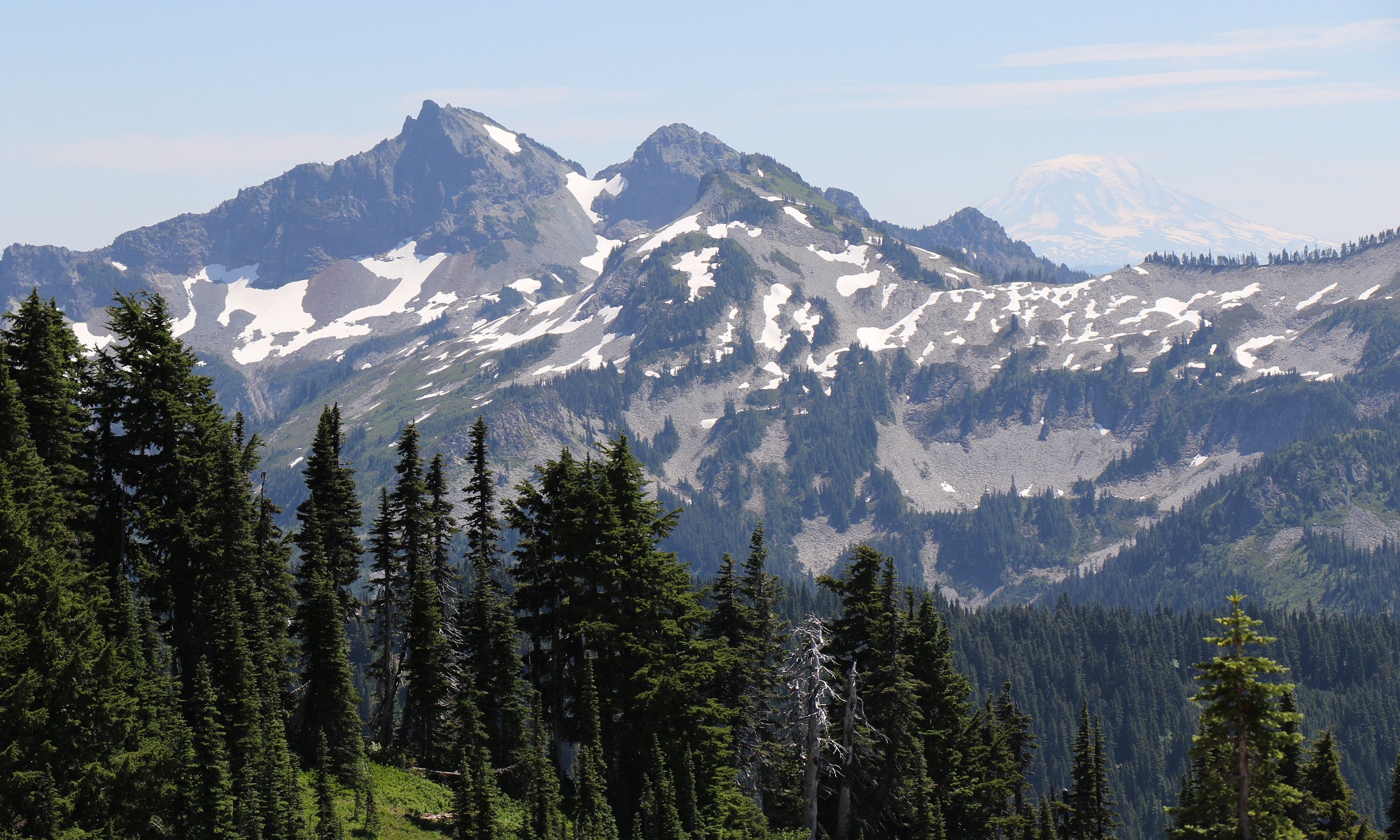
Arrived at Seattle, got my checked bag, walked the half-mile to the light rail station, and here comes the train (look for the Mountain that is out, through one of the glass panes);
Utility poles and power cables on the way;
Views of the stations called SODO, Pioneer Square, Symphony and Westlake.

Monday/ from Solana Beach to Palm Springs ⛰️

I took the scenic route from Solana Beach to Palm Springs today, driving across the Santa Rosa and San Jacinto mountains.
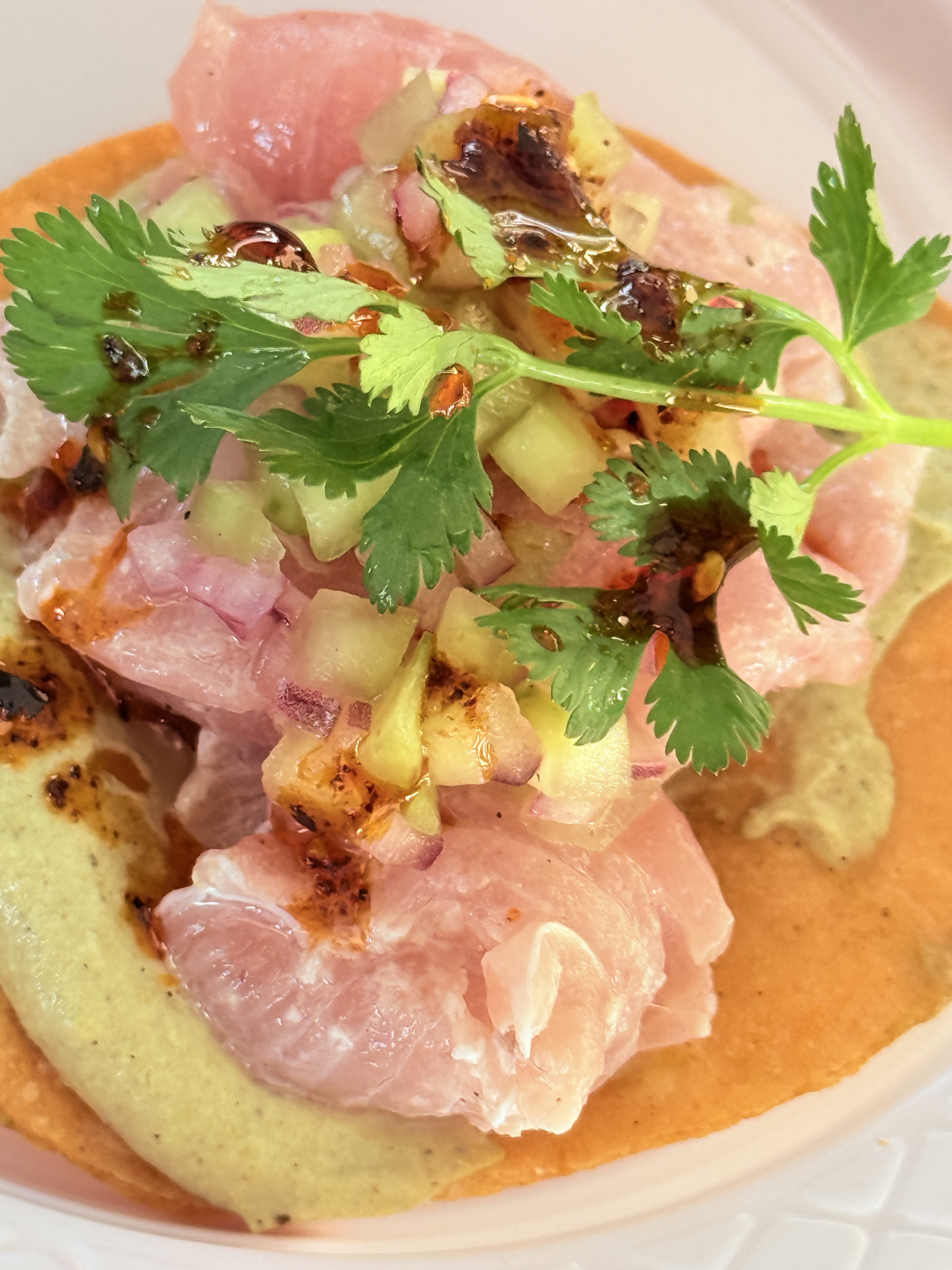
The first few pictures are from a turnout point a few miles after Ribbonwood (elevation 4,397′) on Highway 74.
The last ones were taken from the Coachella Valley Vista Point on Highway 74, with Palm Desert visible down below in the valley.

Sunday/ lunch and a concert 🎻

Three of us had a lovely lunch at Mister A’s restaurant in downtown San Diego. The restaurant is on the 12th floor of the Manchester Financial Building and offers great views of downtown, the Coronado Bridge and even the runways at San Diego International airport.

After lunch* we made our way down 5th Avenue to Jacobs Music Center to attend a live performance by the San Diego Symphony of the music that was composed for the animated movie Flow (released 2024).

*Mine was a king salmon ‘Wellington’ (shown below).


Saturday/ supercars in Rancho Santa Fe 🚘

It was raining this morning, and we drove out to see the supercars and other classic cars that are parked in downtown Rancho Santa Fe on Paseo Delicias and Avenida de Acacias.

They are there every Saturday morning for the Rancho Santa Fe Cars and Coffee event, which runs from 8:00 AM to 11:00 AM.

The green Aston Martin Vantage (MSRP: $245,750) is my favorite, even though I am 99.999% sure will never own one.

Friday/ a flight to San Diego ✈️

Happy Friday.
I took a flight out to San Diego this morning to visit my brother and his family, and to catch some California sun.

Top to bottom:
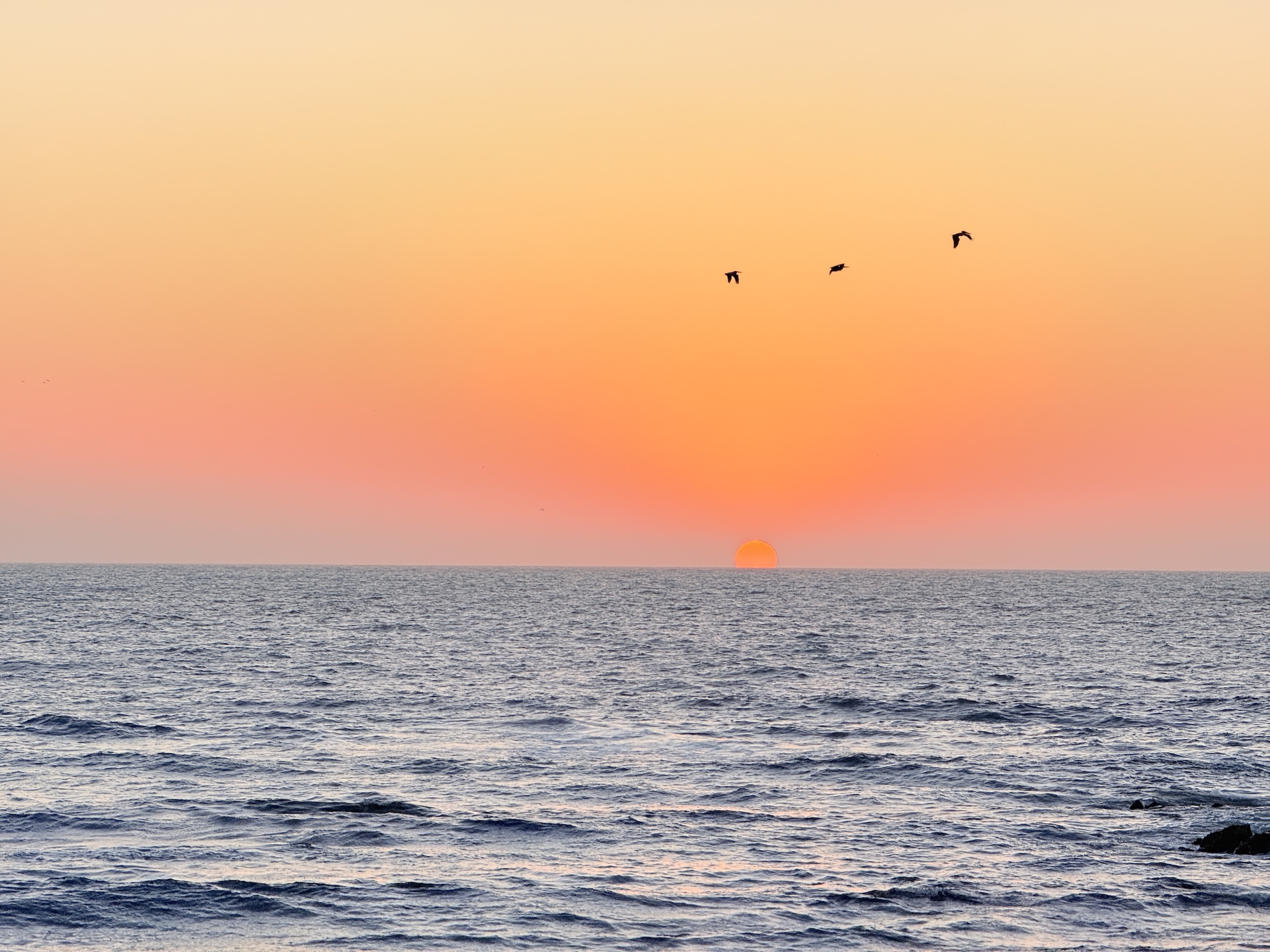
A gorgeous sunrise in Seattle;
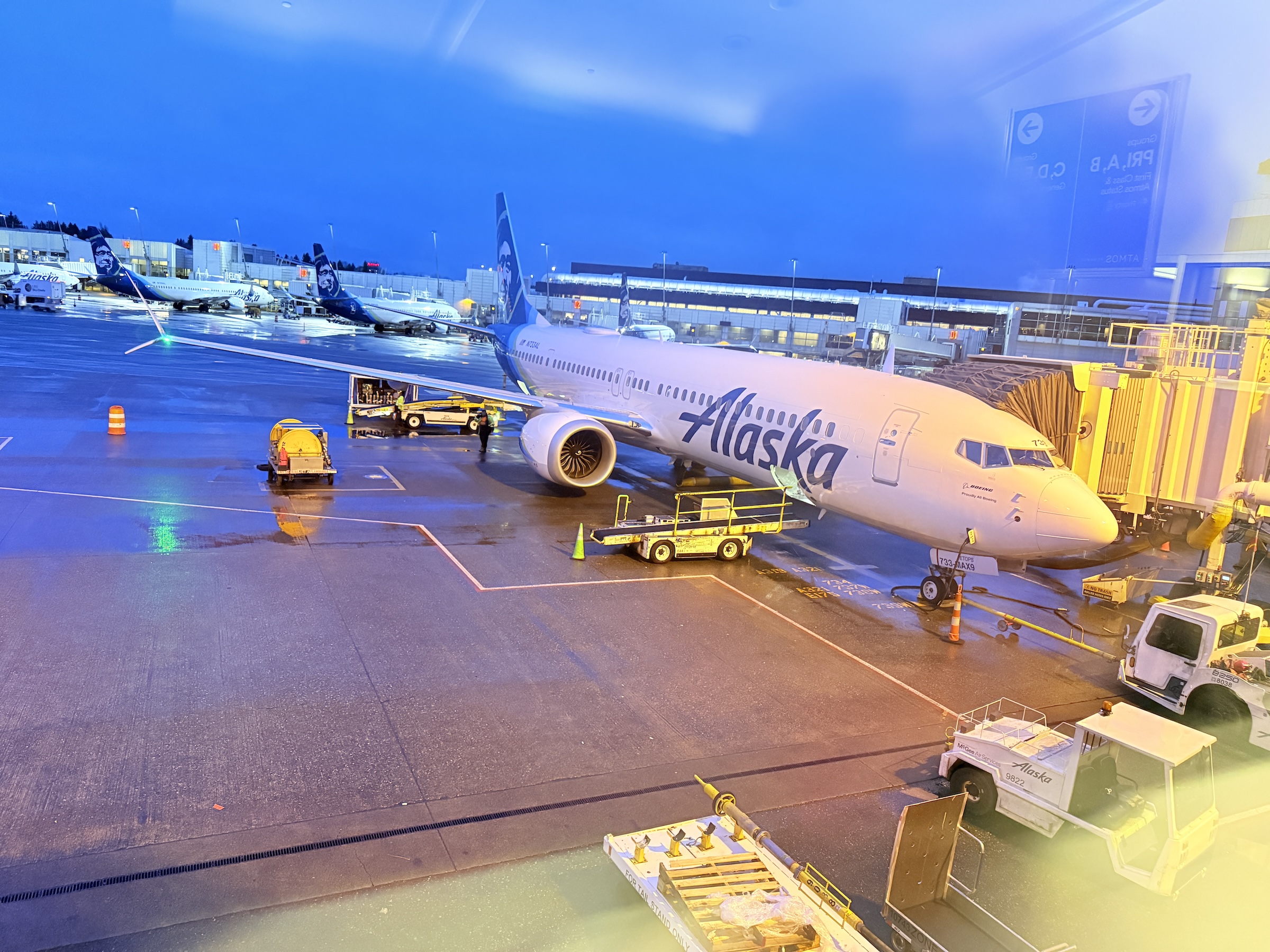
Alaska Airlines Boeing 737 MAX 9 with orca livery at Seattle-Tacoma airport;
Screenshot from my Flighty app warning that we will have an on-time departure (pushback from the gate), but that there will be an 18 min delay in taking off (which was exactly what happened, but we still arrived 10 mins early);
Beautiful gel photos of saguaros in the arrival concourse in San Diego airport (I forgot to take note of name of the photographer);
The Spirit of St Louis airplane is still in the baggage claim hall in San Diego airport’s Terminal 2.

Monday/ Cambodia 🇰🇭

Well he was Thailand based
She was an Air Force wife
He used to fly weekends
It was the easy life
But then it turned around
And he began to change
She didn’t wonder then
She didn’t think it strange
But then he got a call
He had to leave that night
He couldn’t say too much
But it would be alright
He didn’t need to pack
They’d meet the next night
He had a job to do
Flying to Cambodia
– Lyrics from the single ‘Cambodia’ by British singer Kim Wilde, released Nov. 2, 1981

The song “Cambodia” by Kim Wilde is about a woman whose pilot husband is sent on a mission to Cambodia and never returns, leaving her in a state of longing and unanswered questions. Written by her father, Marty Wilde, and her brother, Ricky Wilde, the song is a tragic love story about loss, separation, and the enduring pain of waiting for someone who is gone. The lyrics depict the woman’s emotional journey from hope to the realization that her partner is never coming back. [Google AI Overview]

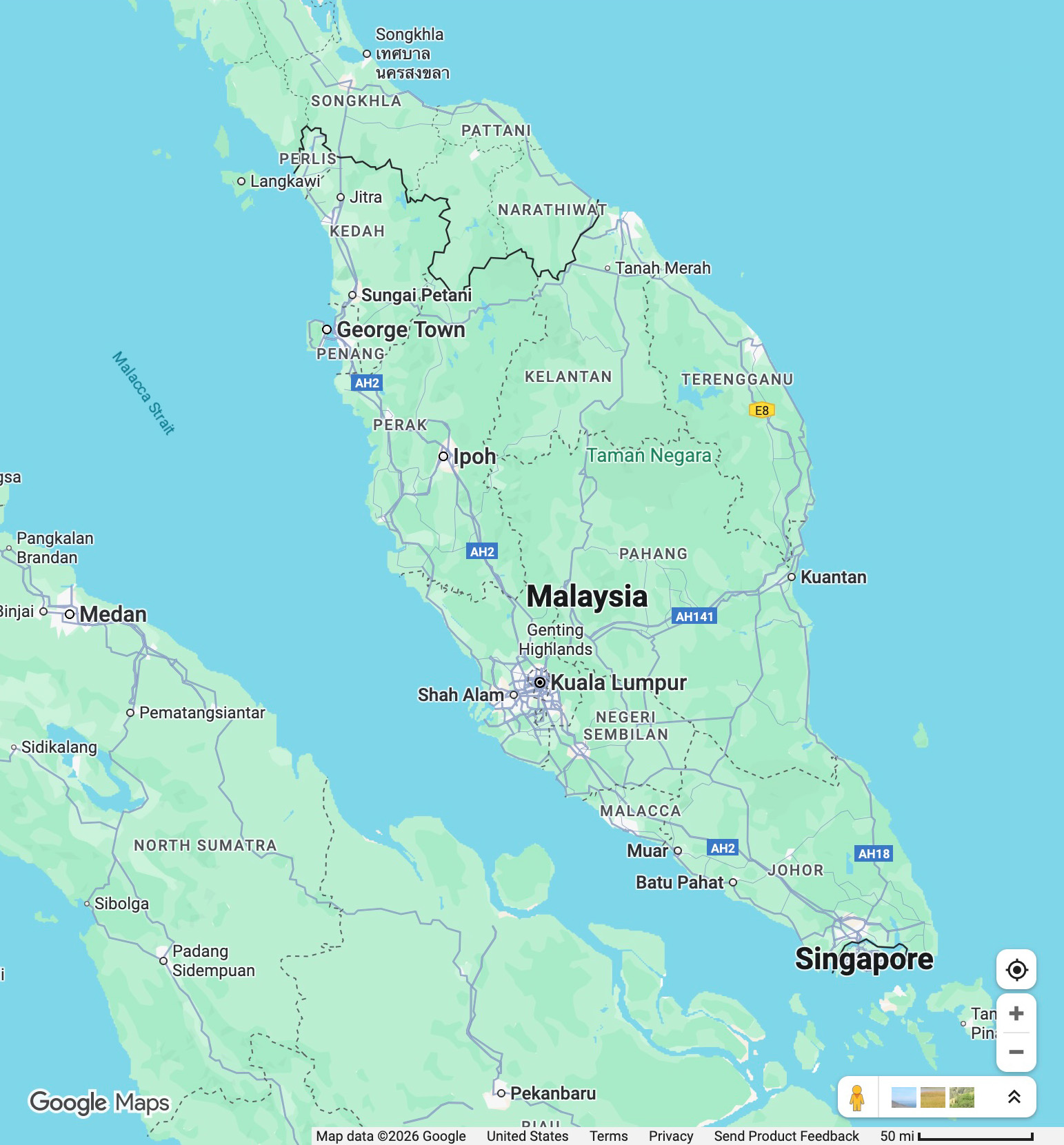
Cambodia is on the itinerary for my upcoming Princess cruise out of Singapore.

We will stop at the port by the city of Sihanoukville for only one night and one day, though.
I signed up for the excursion to Ream National Park with its mangrove forests, wildlife and pure stretches of white beach.

C A M B O D I A
Capital: Phnom Penh
Currency: Cambodian riel
Official language: Khmer
Population: 17.6 million
Government: Unitary state, Parliamentary system, Constitutional monarchy, One-party state, Elective monarchy
King: Norodom Sihamoni

Cambodiaofficially the Kingdom of Cambodia— is somewhat larger than the U.S. state of Missouri. It is bordered to the west and northwest by Thailand, to the northeast by Laos, to the east and southeast by Vietnam, and to the southwest by the Gulf of Thailand. The Khmer language is one of the major tongues of the Mon-Khmer subfamily of the Austroasiatic language family and is spoken by nearly all people in Cambodia, including the Cham-Malay.

The people of Cambodia suffered under the Khmer Rouge, the radical communist movement that ruled Cambodia from 1975 to 1979 after winning power through a guerrilla war. The Khmer Rouge government under Pol Pot was responsible for the Cambodian genocide (1976-78), during which up to three million people were murdered.

Tourist-wise (‘Quick Facts’ from Google Maps):
Cambodia has a landscape that spans low-lying plains, the Mekong Delta, mountains and Gulf of Thailand coastline. Phnom Penh, its capital, is home to the art deco Central Market, glittering Royal Palace and the National Museum’s historical and archaeological exhibits. In the country’s northwest are the ruins of Angkor Wat, a massive stone temple complex built during the Khmer Empire.
Monday/ postcard from Seoul 🇰🇷

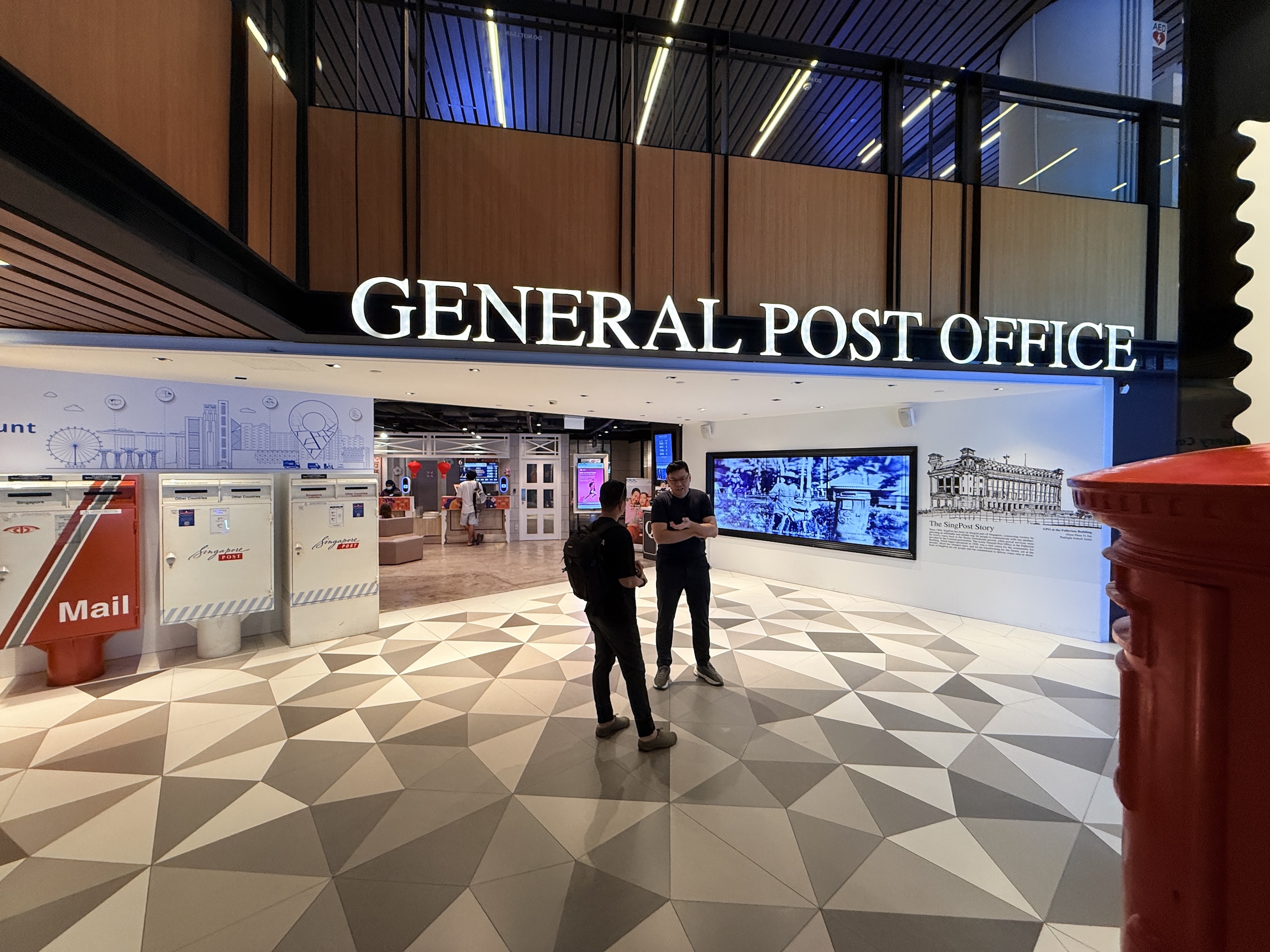
Hey! The postcard I had mailed to Seattle from the top of Seoul tower made it into my mailbox.

Gyeongbok Palace
Situated at No. 1 Sejong Road in the Jongno District of Seoul, the palace was originally built in 1395 as the palace of the King of Choson. It was listed as a cultural property on Jan. 1, 1963.
Mailed on Sat. Sept. 13, and processed on Mon. Sep. 15 at Seoul Yongsan Post Office, a stone’s throw from Seoul Tower.
2021 Republic of Korea Definitives
Issued Dec. 17, 2021
Perf. 13½ |Design: Ryu Ji-Hyeong |Engraving: Korea Minting and Security Printing Corporation |Litho. |No watermark
#3555 500₩ Multicolored |Fruit cluster of bunge (Crataegus pinnatifida)
This tree is also called Chinese hawthorn and is known for its bright red fruit that is used in traditional East Asian medicine and foods (like candies and teas).
500₩ = US$ 0.36
[Source: stampworld.com]

Thursday/ at the Japan Open 🇯🇵🎾

I should have stayed on in Tokyo for another week so that I could catch some of the action at the Japan Open ATP 500 men’s tennis tournament there.

World No. 1 Carlos Alcaraz (🇪🇸, 22) made his debut in Japan there, today.
He scared everybody with an ankle injury in the first set of his match, but recovered to beat Argentinian Sebastian Baez (🇦🇷, 24) by 6-4, 6-2 in the second round.

Here is my picture from last Friday on the elevated Yurikamome Line.
The structures on the left of the track are in Ariake Tennis no Mori Park with its center court Ariake Coliseum.

The tennis park opened in 1983 with 32 hard courts. It was extensively renovated to serve as the tennis venue for the 2020 Summer Olympics and today houses a total of 49 tennis courts (33 hard courts and 16 artificial grass courts with sand infill).
Look for the elevated Yurikamome Line on the left of the picture. The Ariake Tennis no Mori Park train station is towards the top right of the picture. 
[Graphic from Olympic and Paralympic Games TOKYO2020 website]
Here’s Carlos at the start of his match against Sebastian Baez— his buzz cut from the US Open now grown out a little (and bleached silver, not blond, he says).
Carlos is doing a Japanese bow as he greets the representative from Kinoshita Group (I couldn’t get his name). The man in the middle is the umpire of the match, Fergus Murphy from Dublin, Ireland.
[Still from TennisTV coverage of the match]

Friday night/ arrival in Seattle ⛰️

It’s Friday night in Seattle.
The flight on All Nippon Airlines out to Seattle went without incident (8h 33m total travel time).
In Seattle I picked up my checked bag, and made a quick stop at the Global Entry kiosks for a facial recognition check. (The check takes 5 seconds flat.)
I even told the immigration officer I had brought back items to declare in my bags, but he waved me through.

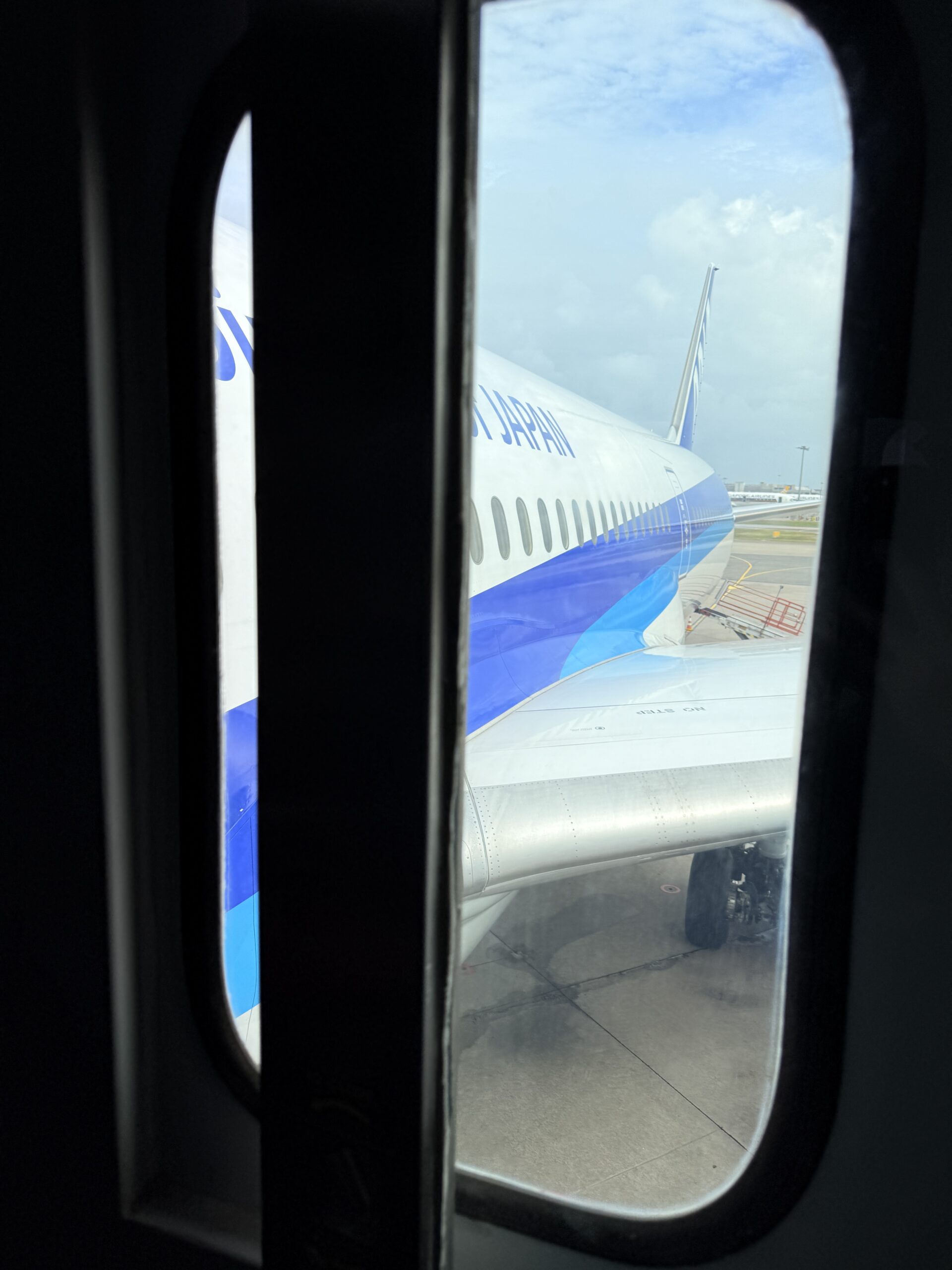
Looking out the window as we are getting pushed back from the gate at Terminal 3 at Tokyo’s Haneda International airport. I am sitting in a Boeing 787 Dreamliner like the one in the picture.
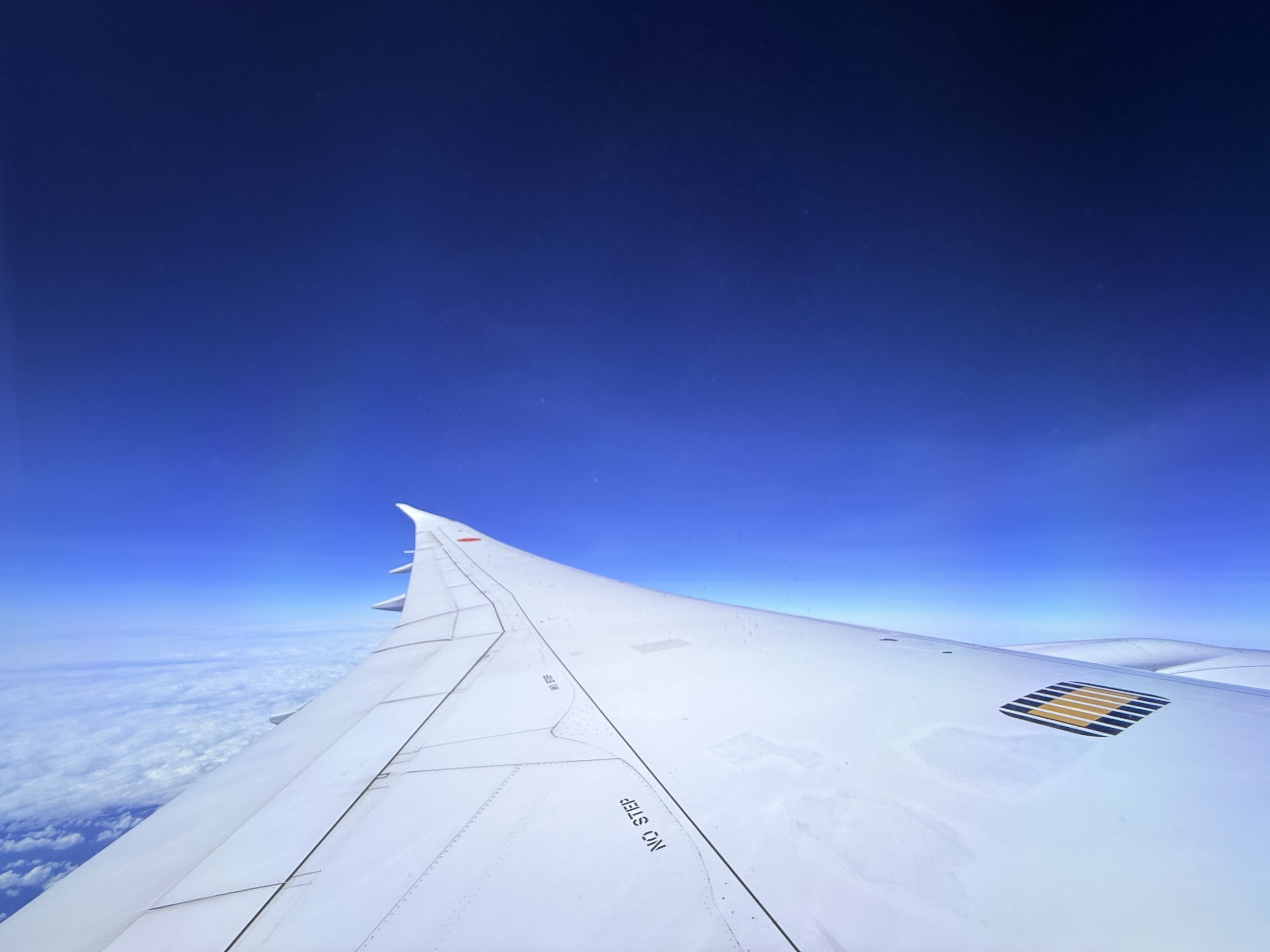
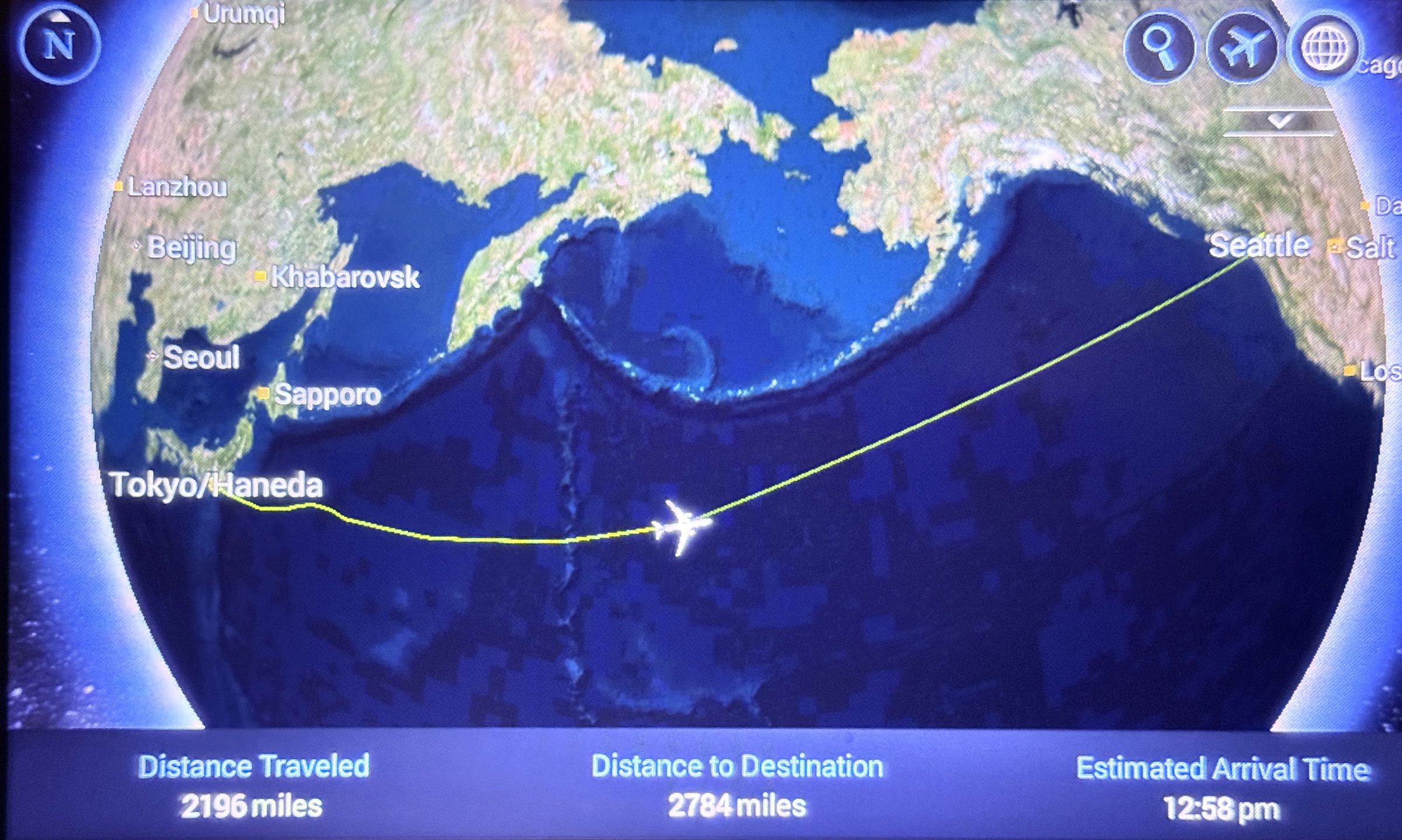
About two hours to go here, flying east across the Pacific Ocean and the International Dateline. I left Tokyo at 9 pm on Friday night, and arrived in Seattle at 2 pm on Friday afternoon ☺️ (Pacific Time Friday afternoon, of course).
A clear day, albeit with wildfire smoke hanging in the still air.
Majestic Mt Rainier seems to float above it all.

Friday/ the Yurikamome Line 🚆

It’s Friday night in Tokyo and I am at the airport.
I had time today to squeeze in one more train ride, on the Yurikamome Line.
The train on this line runs on an elevated, fully automated track (so no driver) that connects Shimbashi Station to Toyosu Station via the popular Odaiba area.

Here’s the Yurikamome route. The loop in the line is a ramp to get the train onto the Rainbow Bridge.
This is towards the end of the line on the way out, at Odaiba Marine Park, with a nice view of the Rainbow Bridge. In the distance is the top of Tokyo Tower and look what’s near the right frame of the picture: a mini Statue of Liberty.
One station on the line is named Tokyo International Cruise Terminal. I did not spot any cruise ships, but the building on the left is the cruise ship terminal building.
Here’s the Tokyo Big Sight International Exhibition Center. The red handle in the foreground is part of a giant wood saw stuck into the ground by the entrance.
On the Rainbow Bridge. The train cars actually use rubber tires on the concrete guideway, providing an excellent grip for navigating the sharp curves and steep slopes on the track.
Another view of the Rainbow Bridge.
Here is what the train looks like. It has five cars.

Thursday/ Shibuya at night 🌃

Thursday was my last full day here in Tokyo.

In the morning, I ran out to Uniqlo in Ginza to change my size M shirts that I had bought Wednesday night, for size L. (The line at the fitting room was too long yesterday and I took a chance with the size M).

Then I went out to a gallery called Ozeki with beautiful Japanese lantern lamp shades that a YouTuber had recommended. I bought a little round one that is folded flat for packing into a suitcase. (At this point in any overseas trip it is always a question if all the stuff I had bought, would fit in my suitcases.)

And for the evening I made a run out to the Mandarake store (books, cards, collectibles) in Shibyua. At 5.30 ish, it was almost too late. You don’t want to get crushed on the train by the commuters that go home.
At Shibuya Scramble Crossing: lots of crazy people and definitely too many foreigners taking selfies and annoying the locals, I’m sure.
Get out of my way!

Wednesday/ Ginza district 🪭

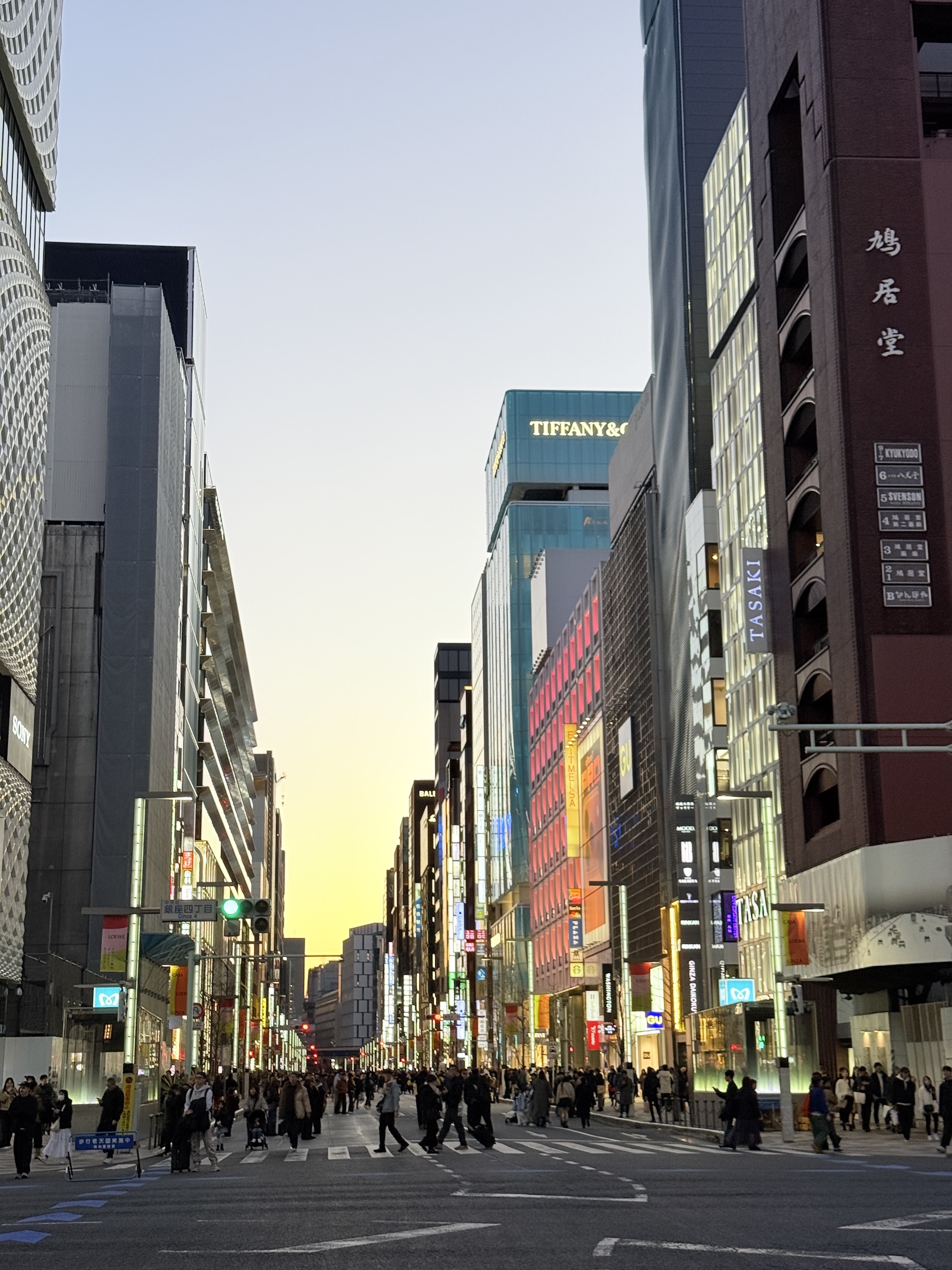
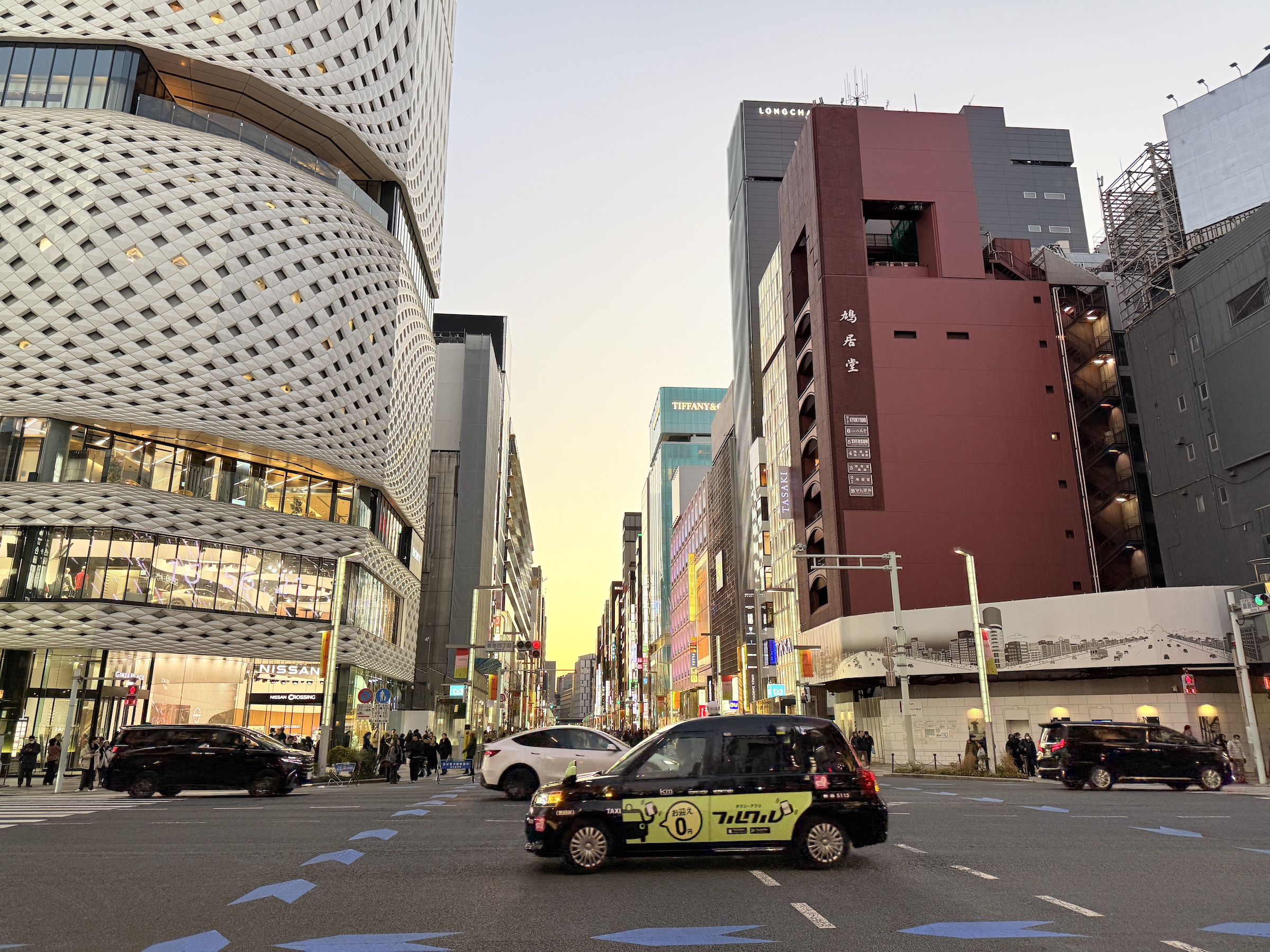
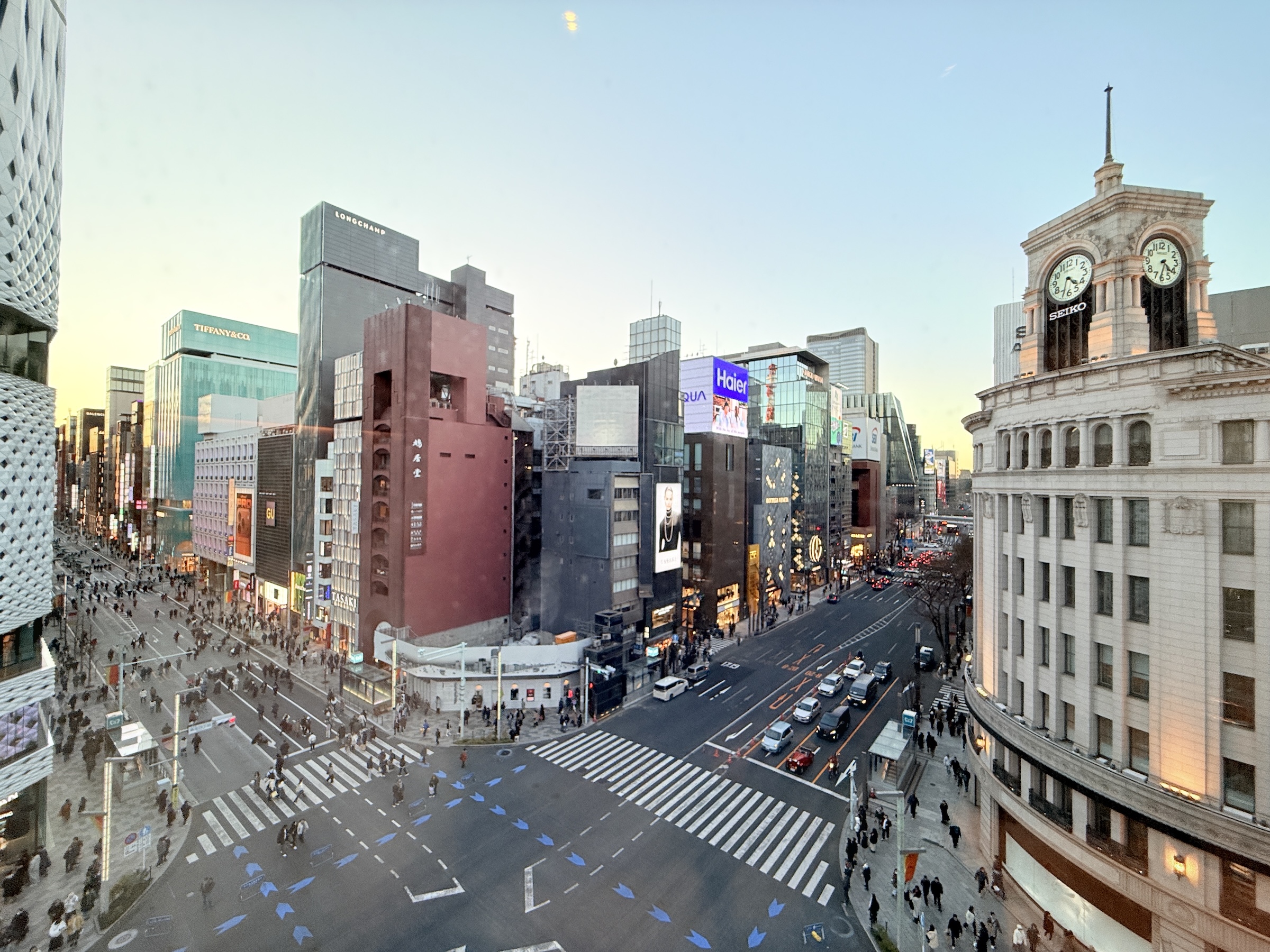
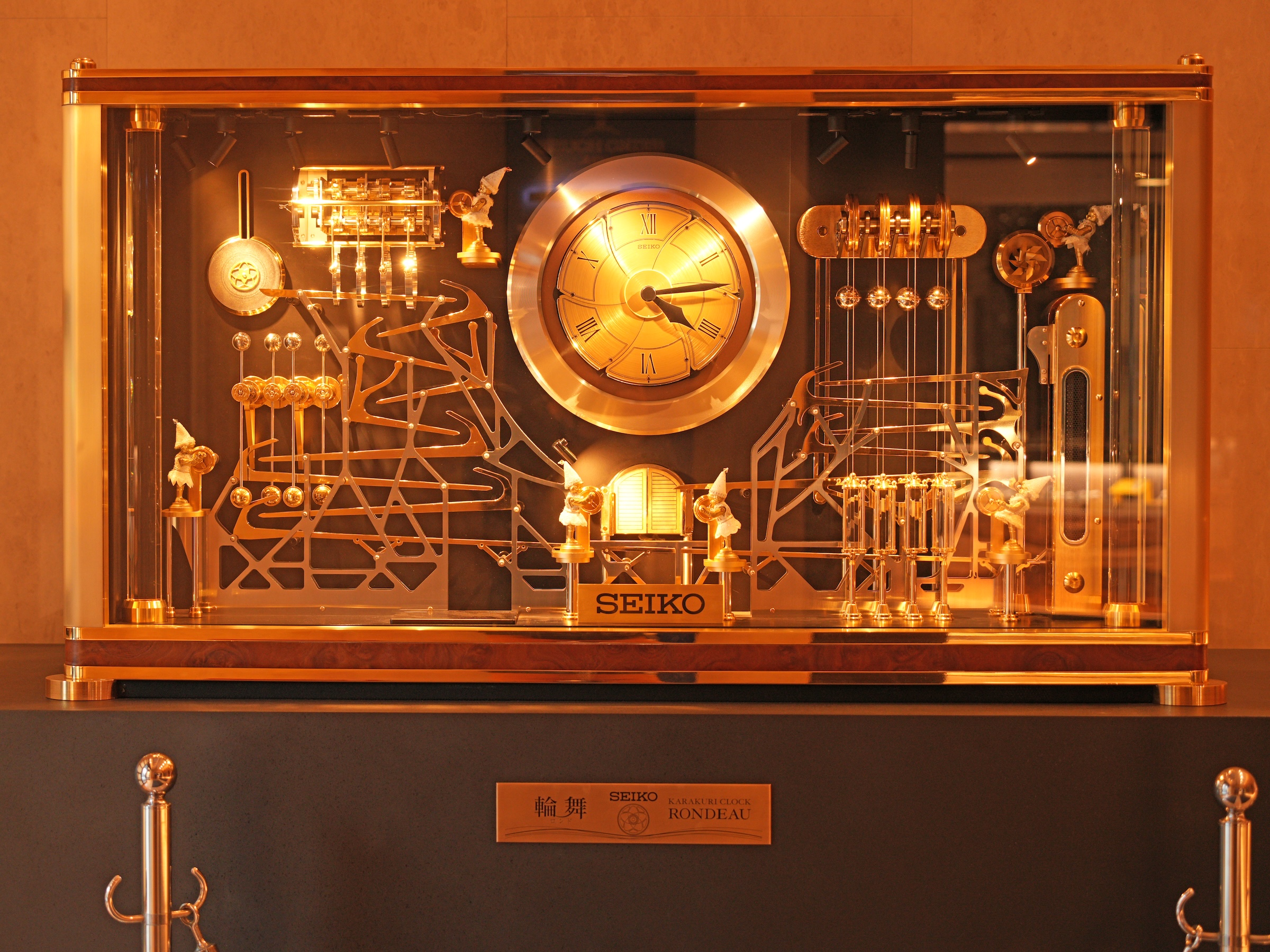
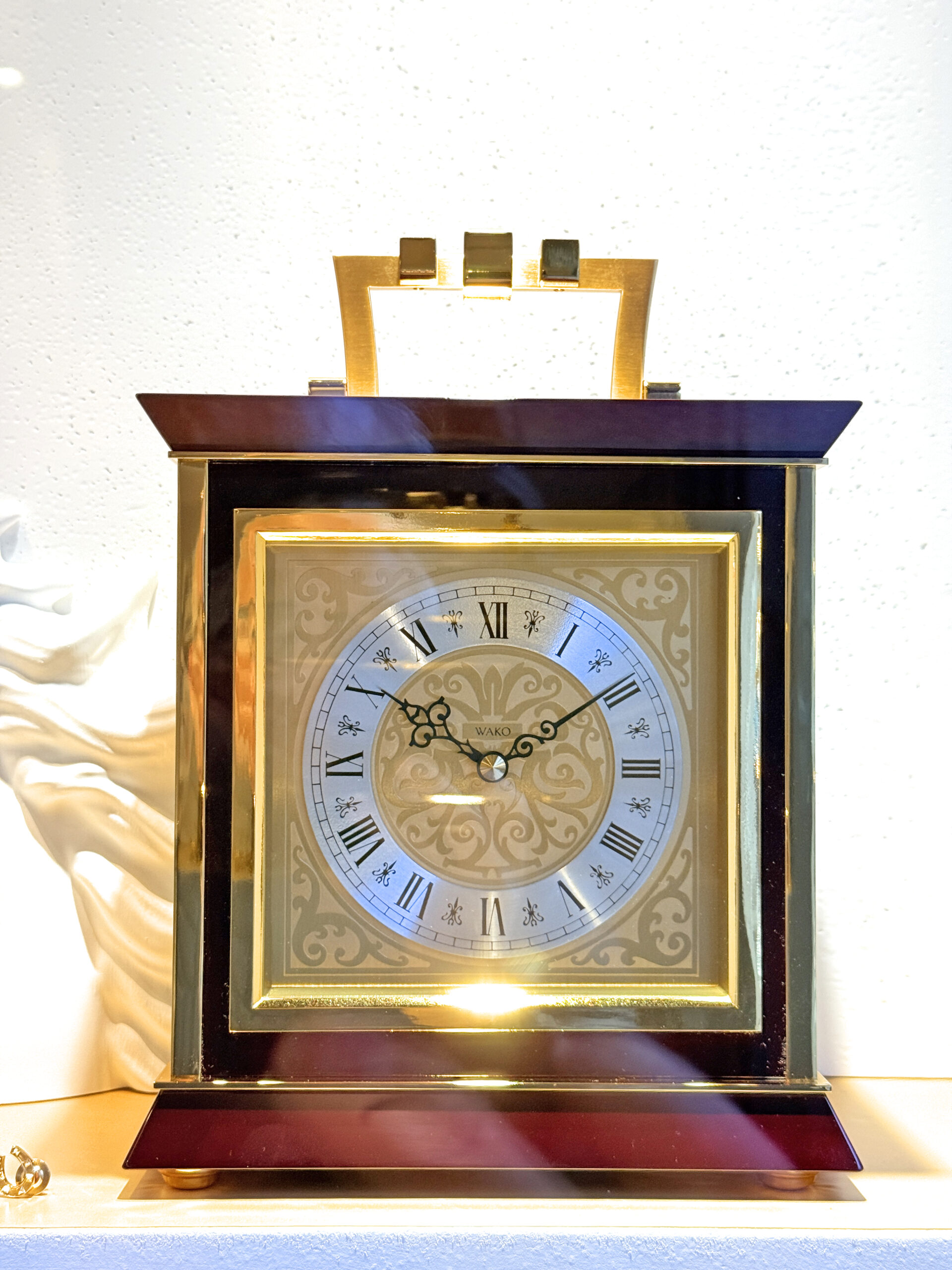
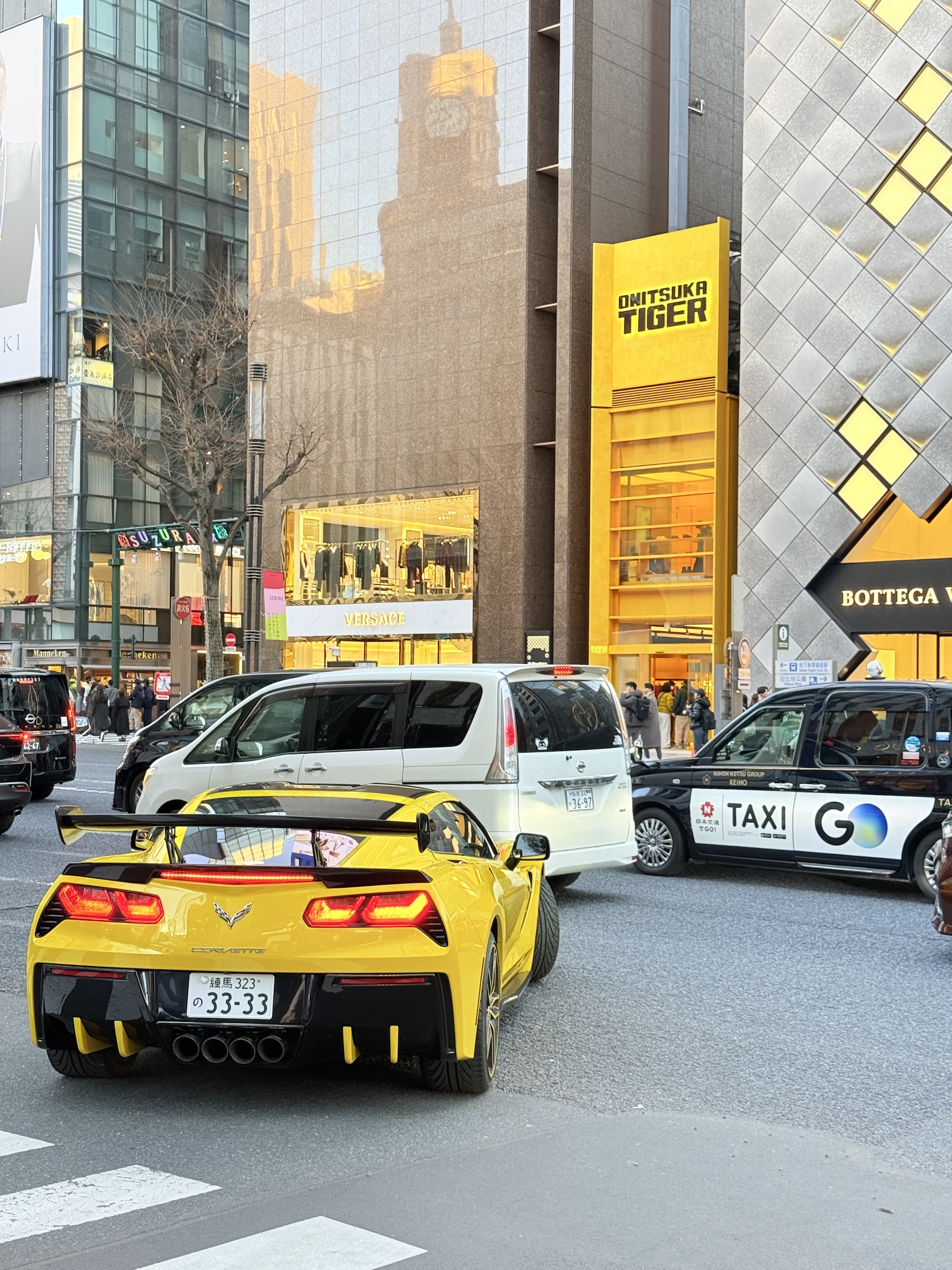
On Wednesday night I did my mandatory (mandatory for me) walk-about along the main street in Ginza, Tokyo’s luxury shopping district. The street is named Chuo-dori, which translates to ‘Central Street’.
The sign in the first picture says ‘Ginza Block 6’.

Stores on Chuo-dori close at 7 or at 8. The Onitsuka Tiger store (Japanese footwear maker) was filled with sneaker aficionados right until closing time. Look for the storefront with the cool tiger neon sign in the pictures below.

Monday/ back to Tokyo 🗼

I was out of the bed in my hotel in Seoul shortly after 4 am this morning.
I had to take the first train of the day (5.28 am) on Line 1, from City Hall Station to Seoul Station.

At Seoul Station, I took the 6 am Airport Express train into Incheon International Airport.
(Cost: US$9, with a free bottle of mineral water from Jeju Island thrown in. For me, it’s not really about the cost, though. I just think taking the train is a lot more interesting than taking a taxi.)

The flight out to Tokyo’s far-away Narita Airport was slightly delayed, but went without incident.

At Incheon International Airport’s Terminal 1.
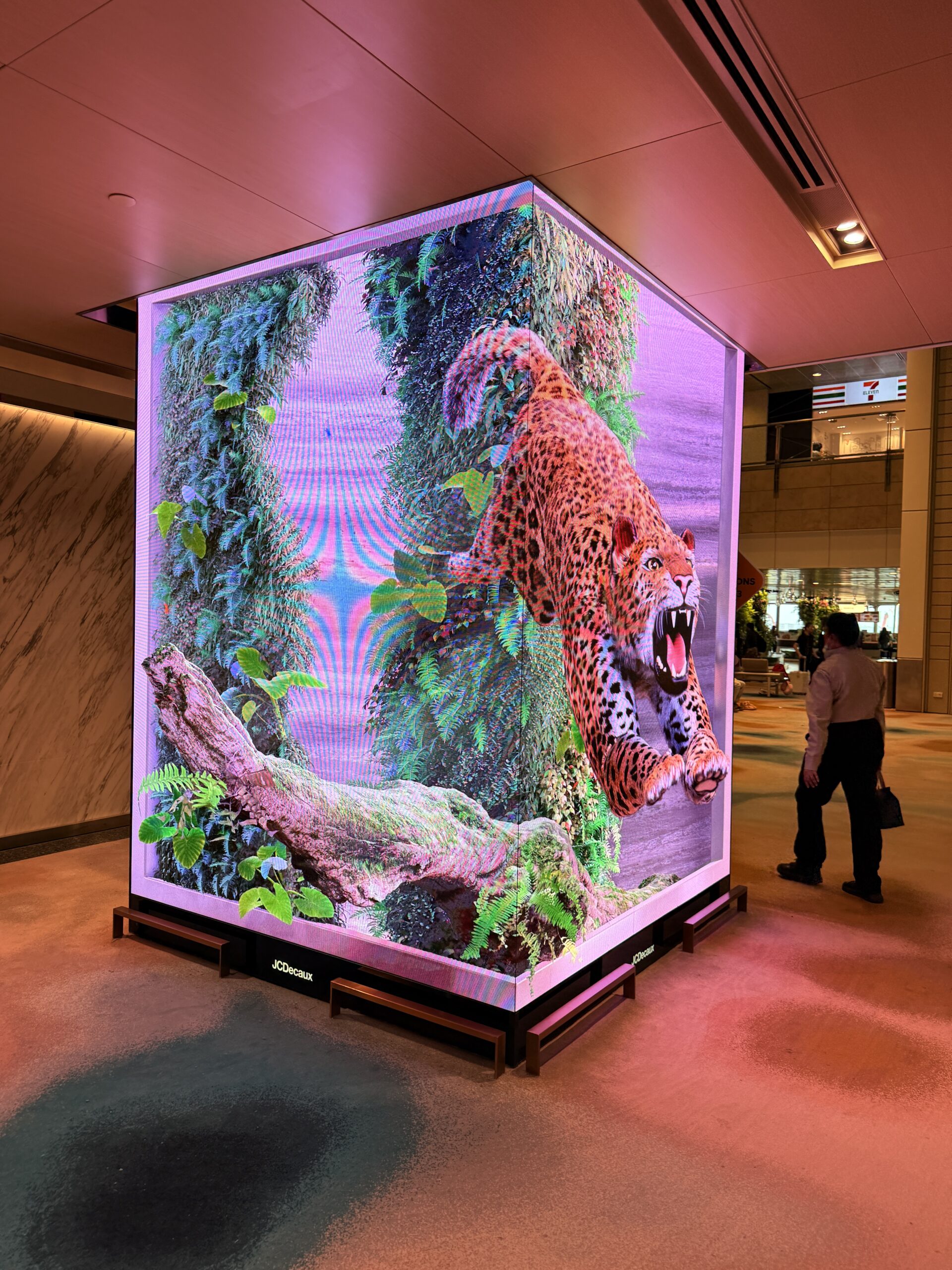
On the large screen there was an animation of “The Sleeping Gypsy” (1897) painting by the French Naïve artist Henri Rousseau. (The lion sniffs at the sleeping woman in the painting).
A welcome bit of color added to the beiges at the gates at Incheon International Airport.
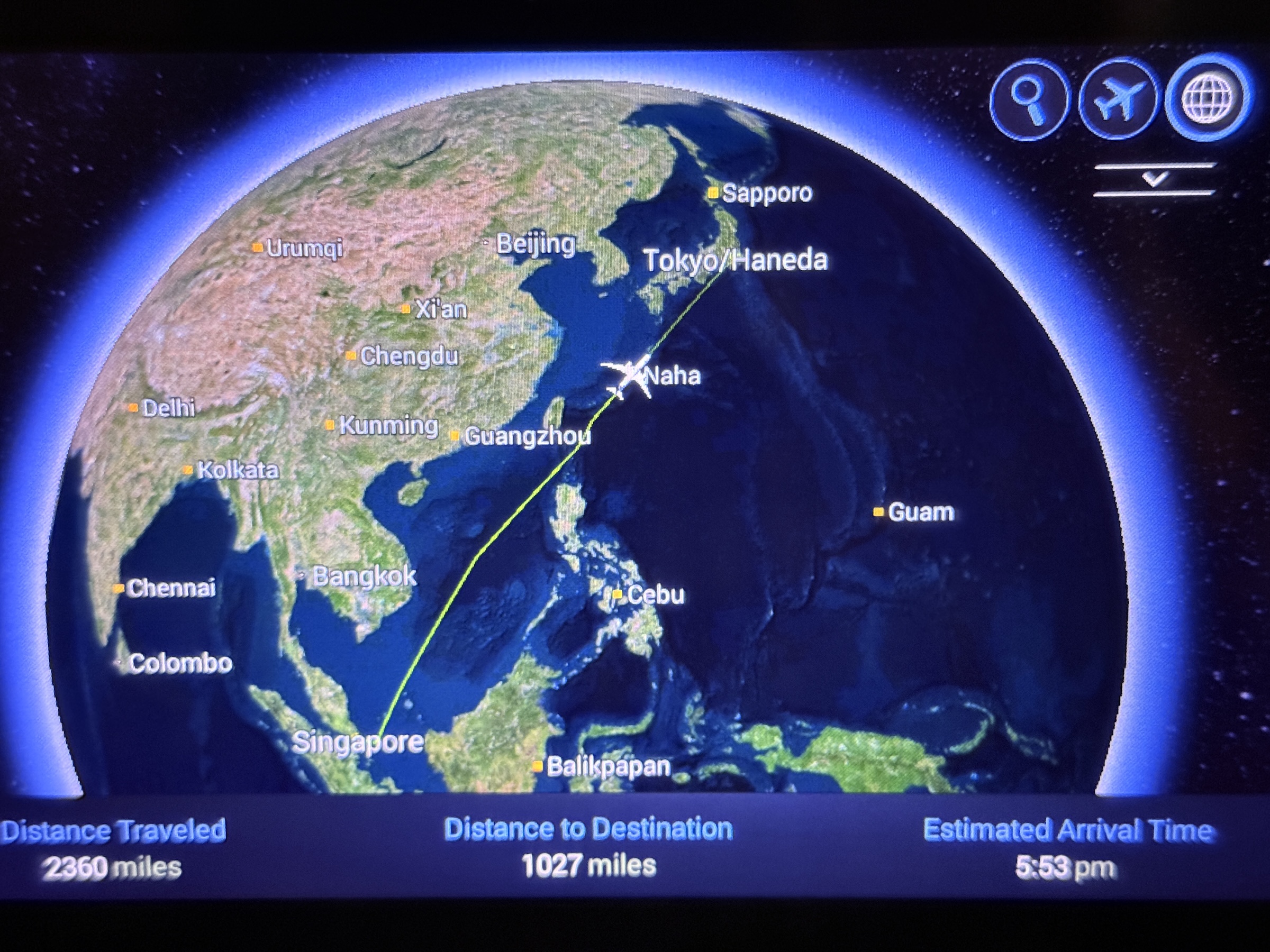
We flew east for 2 hours across the East Sea to get to Tokyo.
The flight route makes it seem as if the pilot was asleep and said Oops! I better turn south to get to Tokyo.
Here’s the Asiana Airlines Airbus A380-800 (quad-jet, A388) at the gate at Narita Airport. I had a seat on the aisle at the back and on the upper deck.
On the Narita Express train, and on our way to Shinagawa Station where my hotel is.
I bought my ticket (13.14 pm departure) for the Narita Express at the ticket counter with only 8 minutes to go until departure time. I know the way to the platform, so I could do that. The next train is 30 minutes later, and I did not want to wait.
A nice scene from the countryside.
I had just stepped off the Narita Express train at Shinagawa station, this is a quick picture as it departed. Looks like the driver has a nice view of the track from the top of the train. The E259 series (E259系) is a DC electric multiple unit (EMU) train type operated by East Japan Railway Company (JR East) in Japan since October 2009.
This train has the new livery which was introduced in 2023.

Sunday/ Lotte World Tower 🌐

I could not very well go up Seoul Tower, and leave Lotto World Tower out, right?

So off I went today to Lotto World Tower, even though it was a 40 minute train ride out there.

There is an express double-car elevator that whisks the humans inside up to the 117th floor* in one minute flat. I felt a little vertigo, and my ears popped on the way up. There no view to the outside, just display screens on the sides and ceiling of the car.

*The Seoul Sky observation deck in the Lotte World Tower spans seven floors, from floors 117 to 123.

Here is the scene that greets you as you emerge from the exit at Jamsil station on Line 2 of the Seoul metro.
I can only get the top of the Tower in when I stand close to it, of course. That little platform in the middle at the top is a sky deck.
There is a luxury shopping mall at the base of the Tower, with the tower visible through the skylight. That’s the elevator shaft of the shopping mall on the right.
All right! Now we can look out at the world from 120 floors up. Here is the Han River, and Seoul Tower on Namsan Mountain in the distance.
Looking southwest here. The skyline in the distance is 40 km away (24 miles), and it is of the city of Ansan, South Korea.
A great view of the bridges that span the Han River.
This green space is Olympic Park.
It opened on May 28, 1986. Built at a cost of US$200 million, it was built to host the 1986 Asian Games and the 1988 Summer Olympics.
Down below is the theme park and recreation complex called Lotte World, sometimes called the ‘Korean Disneyland’.
Phalanxes of apartment buildings. Yes— no way to house almost 10 million residents in your city by building single family homes on plots of land.
Looking down from the 123rd floor into one of the atriums with a photo spot and a scenic view of the Han River.
There is a little skybridge at the top of the Tower. I did not sign up for it!

Saturday/ Seoul Tower 🚡

Seoul Tower is not far from my hotel.
I opted for the cable car to get me to the summit.
A parking lot at the summit can also be reached by bus or by car— or even by walking up all the way with a stairway called the Sam-soon Steps.

Looking towards Seoul Tower from the grounds of City Hall near my hotel.
This is a 5x telephoto lens picture, so the picture makes it appear closer than it really is.
Myeongdong Station on Line 4 of the subway gets one close to the cable car station, but there is still a steep 1/4 mile walk up the hillside, from the train station to the cable car station.
Here we go! In the cable car, and looking back at the cable car station.
Look for Lotte World Tower in this panorama picture.
Lotte World Tower is located to the southeast of Seoul Tower. Seoul Tower is on Namsan Mountain, which is north of the Han River (in the picture), while Lotte World Tower is in Jamsil, which is on the south side of the river.
A closer look at the bridges over the Han River, and Lotte World Tower.
There is another smaller, independent lattice tower nearby Seoul Tower.
This a communications tower (can send and receive signals). The antenna on top of Seoul Tower is a broadcast antenna for TV and radio (transmission tower).
Look for the cable car stations at the bottom and at the summit, on the right side of the picture.
I like the markers in the windows with cities and distances. The border with North Korea is just some 30 miles from Seoul, and the capital Pyongyang only 153 miles as the crow flies.
And Seattle is 5,227 miles away to the east, and on the other side of the Earth (kind of), in the Western Hemisphere.
Flying to the “other side of the world” is a theoretical concept, but a direct, non-stop flight across the Earth’s circumference would take approximately 20 hours in a commercial jet, though no such flight is possible with current commercial airliners.
[Source: Google AI]
Now making our way back to the base station. I bought a commemorative coin at the top of the tower (because I like coins), and put a postcard with my name and address on, in the mailbox there. I will post a picture of it if it makes it to Seattle.

Friday/ around Seoul 🇰🇷

Happy Friday. (I know it has been an awful week for the national psyche in the United States).
Here in the Far East, it was the first day with milder temperatures for me (a high of 28°C/ 83°F in Seoul today).

I walked around the hotel here by Seoul’s City Hall for a bit this morning, and then went out to Dongdaemun Design Plaza (DDP) with the No 2 subway line.

This green space is right by my hotel.
In it is the shrine called Hwangudan (황궁우 / 皇穹宇)— also known as the Wongudan Altar. It was constructed in 1897 by Emperor Gojong of the Korean Empire and renovated from 2015 to 2017.
Not far away is Deoksugung Palace (the Royal Palace). The morning’s Royal Guard Ceremony was just finishing up as I arrived there.
Lots going on by Seoul City Hall— workers at a company protesting about their working conditions or contracts, and Seoul Bike workers repleshiing the bike rack.
Korea’s first driverless autonomous shuttle will run along to the Cheonggyecheon Stream in downtown starting in late September, after test runs and safety checks.
A closer look. There is a U-shaped seating bench inside and a large screen.
Korean manhwa on a large screen on a building.
Yes, Apple had better advertise its new iPhone because this is Samsung’s home turf. (Samsung has 70% of the smartphone market here, Apple about 20%.)
And is all that on the entire side of the building a screen? Sixteen stories tall about something AI? Why, yes. Why not?
Seoul tour buses by Dongdaemun Design Plaza.
Dongdaemun Design Plaza (DDP) is a major urban development landmark in Seoul, designed by Zaha Hadid and Samoo, with a distinctively neofuturistic design characterized by the powerful, curving forms of elongated structures.
[Source: Trip Advisor/ Viator]
That’s a heart-shaped outline on the stairs for a charity event that was held in the space below.
The exit/ entrance to the Line 2 train station is on the right. A camera crew is recording a discussion and a performance.
A few other public art installations are on display as well. I could not find the name of this one.
This one is called Molecular Cloud by French artist Vincent Leroy.
This is inside: an art garden filled with artwork. (The little trees are not real trees).

Thursday/ from Osaka to Seoul 🚆 ✈️

As it happens, both the departure and arrival airports for my flight today are located on man-made islands.

It took two train rides to get me to Osaka’s Kansai International airport (KIX), and after I had arrived at Seoul’s Incheon airport (ICN), two more trains to get me to my hotel in the city.

Early morning on the platform at Tengachaya Station, Osaka.
This is the train operated by Nankai Electric Railway (Nankai Den-tetsu), that ran us out on the Nankai Line to Kansai International airport.
Kansai International Airport sits out in Osaka Bay, and is connected to Osaka by a causeway that carries road and rail traffic.
The view out the window at Kansai International Airport (KIX).
The airport is famous (infamous?) for sinking into the sea because its foundation was built on the soft, compressible clay in Osaka Bay, which could not fully support the immense weight of the artificial island.
Engineers have implemented ground improvement techniques like vertical sand drains to speed up the drainage of water from the clay and stabilize the ground, which reduced the sinking rate from over 19 inches per year to about 2.3 inches annually by 2023.
[Source: Google AI Overview]
Here’s our flight path to Seoul’s Incheon International Airport, about 2 hours in duration.
The Asiana Airlines Airbus A350-900 (twin-jet) that took us to Incheon International Airport, at the gate at Terminal 1.
Inside Incheon International Airport’s lower level, with the ceiling that makes me think of a Star Trek spaceship. I’m making my way to the Airport Express train platform.
An art installation of stylized traditional Korean houses— known as “hanok” (한옥)—in the airport’s ceiling.
Here is the platform for the Airport Express train that runs from Incheon Airport to Seoul Station in the city, with no stops. There are ‘milk trains’ (All Stations trains) that depart from this platform as well.
TV screen on the Airport Express train.
The debacle with the 300-some South Koreans detained in the immigration raid at Hyundai’s facility in Georgia is front page news here.
The route from Incheon International Airport to Seoul Station.
Here’s Banghwa Bridge (방화대교), seen from the Airport Express train.
It is a distinctive orange-colored arch bridge over the Han River.
I had made it into Seoul Station, and took the local line just one stop to City Hall station. That’s City Hall, with a futuristic new (2012) extension behind it. I will take a few more pictures tomorrow.

Wednesday/ Abeno Harukas views 🏙️

I set out this morning to take a ride on the streetcar that starts at Tennojiekimae Station. Just with dumb luck, I discovered upon arriving there that Osaka’s tallest building is right there, as well.
So I first went up to the observation deck on the 60th story of Abeno Harukas, and then took a short ride on the street car.

Today was my last full day in Osaka.
I am flying out to Seoul, Korea (two hours on Asiana Airlines), in the morning.

Here’s the Abeno Harukas complex, constructed in 1992. (“Harukas” is an old Japanese expression meaning “to brighten, to clear up.”). It was the tallest skyscraper in Japan from the completion of its observation deck in 2014, until 2023. (The Azabudai Hills Mori JP Tower in Tokyo has 5 more floors and is now Japans’s tallest building.)
Abeno Harukas is an amazing building complex that boasts: the 58th-60th floor observatory; from the 38th-55th floors and 57th floor, the Osaka Marriott Miyako Hotel with restaurants; 17th and 18th floor offices; the 16th floor Abeno Harukas Museum and rooftop garden; 2nd basement to 14th floor, the Kintetsu Department Store; 1st basement and 1st floor: Osaka Abenobashi Train Station, and 4th and 3rd basements: parking lot. Wow!
I made it to the the 60th floor observatory, and this is an open air atrium consisting of the 58th to 60th floors.
There are taller towers than Abeno Harukas in Japan: Tokyo Tower and Skytree.
Here’s the view looking more or less north over the city of Osaka. The view was not too hazy, and the air quality index today was 44. Osaka castle lies out north as well, in a large green space, but was too far too see with the naked eye. 
Looking at the ‘model trains’ that run on the tracks below. The track that runs out to the top left corner is the Osaka Loop Line. The one with the white train on it is the Yamatoji Line (大和路線, Yamatoji-sen), the common name of the western portion of the Kansai Main Line in Japan.
Here’s a bird’s eyeview of beautiful Keitakuen Garden. I would have loved to spend a little time there.
This commemorative coin from a vending machine in the observation deck was all of ¥600 (US$ 4.00). And you get a little show while the punching machine adds your free engraving on the edge of the coin. Nicely done!
All right, now I’m heading to Tennojiekimae Station for my short little street car ride.
The street car is full, but I don’t mind standing up front. I have a great view of the track, and the street car that passes us by. The Hankai tram line itself began service in 1900, making it approximately 125 years old. 


Tuesday/ more Expo 2025 Osaka 🏯

I walked over to the West Gate today (both days I had entered at the East Gate), where I found Astro Boy.

I also tracked down the Japan Pavilion with its beautiful ‘golden hat’ design. The Golden Surface of the Japan Pavilion was created by the designers Nikken Sekkei. They used an iridescent color shining technology— a technique that involves engraving microgrooves onto the surface, which interact with light to produce a dynamic, multi-colored sheen that changes with the viewing angle.

As the sun was setting, everyone went up to the Grand Ring, to watch the daylight end.

Monday/ at Expo 2025 Osaka 🤗

I made it to Expo 2025 Osaka!
It’s hot and it’s crowded with very, very long lines at most pavilions— the ones that allow you in without a reservation, that is.
Entrance to the top-rated pavilions are pre-allocated by a lottery system. I struck out despite diligently applying, as far out as three months before my visit today.

No matter, once you have made it into the entrance gate (with 180,000 others), you are in a world onto its own, inside the Grand Ring. The Ring is the world’s largest wooden structure, constructed on Yumeshima (夢洲), the artificial island located in Osaka Bay.

The USA pavilion is a structure designed by Trahan Architects with two triangular wings and a raised translucent cube flanking a central plaza. It features video imagery that features the Plains, the mountains and the cities in the US— and hey! Seattle’s Pike Place market made an appearance as well. 

I was mesmerized by the installation of shiny cubes called null². The sun bounced off the surfaces, and a low sound was emitted from the structure.
Developed by Yoichi Ochiai, the pavilion’s structure is based on a cubic grid of voxels measuring 2 to 8 m (6 ft to 26 ft) wide. The facade is covered with a membrane that resembles a mirror.  [Source: Wikipedia]

Look for a few images (towards the end) beamed out from the enormous high-resolution screen outside the Korea pavilion. The three-story pavilion has a high-resolution screen on its facade that is 27 m (89 ft) wide. The screen displays on a spectacular series of animated images and videos.

South Africa withdrew from Expo 2025 Osaka in late 2024 despite repeated invitations from the Japanese government, citing the country’s ‘financial constraints’.