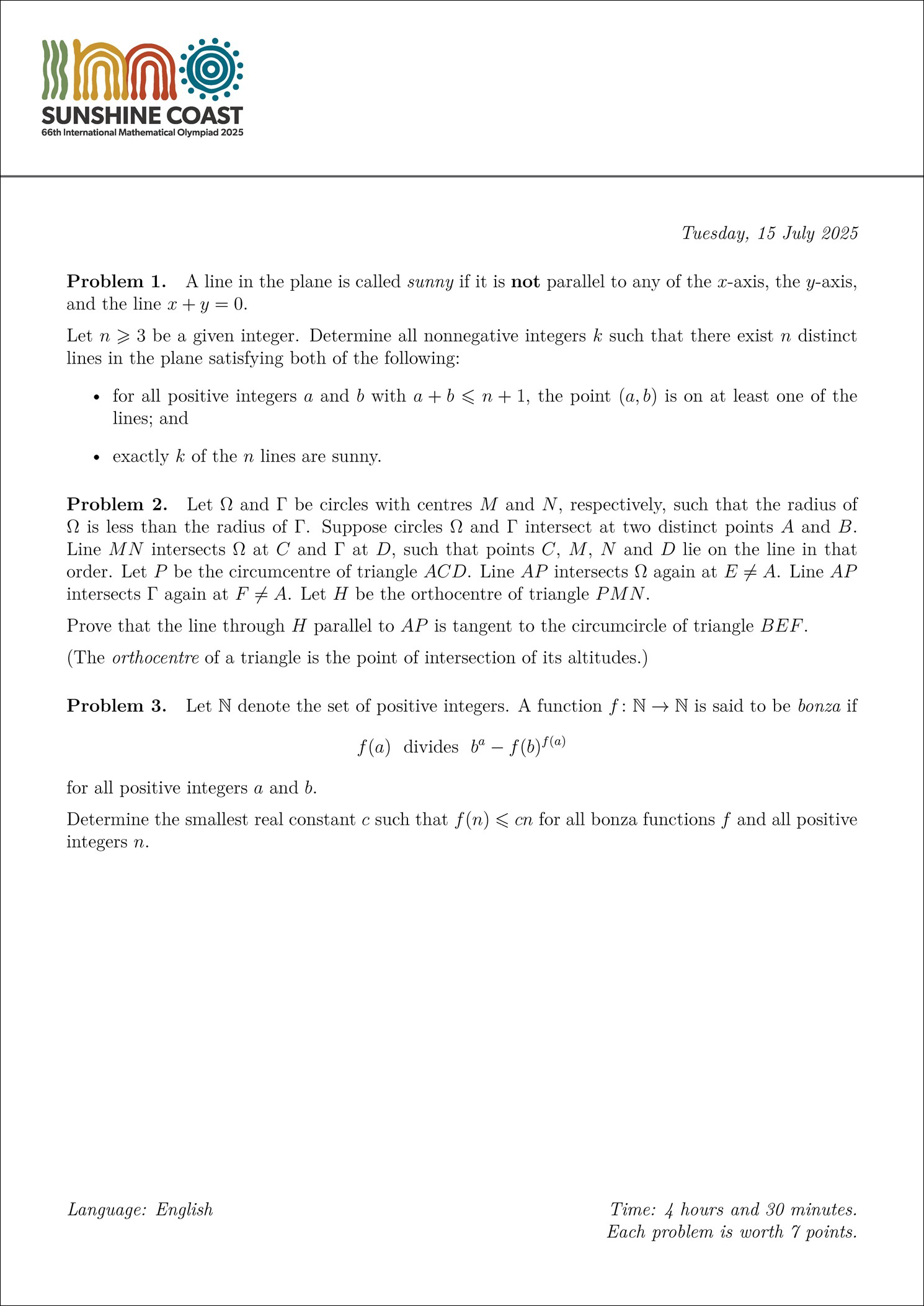
Cade Metz reports from San Francisco for the New York Times: An artificial intelligence system built by Google DeepMind, the tech giant’s primary artificial intelligence lab, has achieved “gold medal” status in the annual International Mathematical Olympiad, a premier math competition for high school students.
It was the first time a machine — which solved five of the six problems at the 2025 competition, held in Australia this month — reached that level of success, Google said in a blog post on Monday.
Google said Deep Think had spent the same amount of time with the I.M.O. as human participants did: 4½ hours. But the company declined to say how much money, processing power or electricity had been used to complete the test.
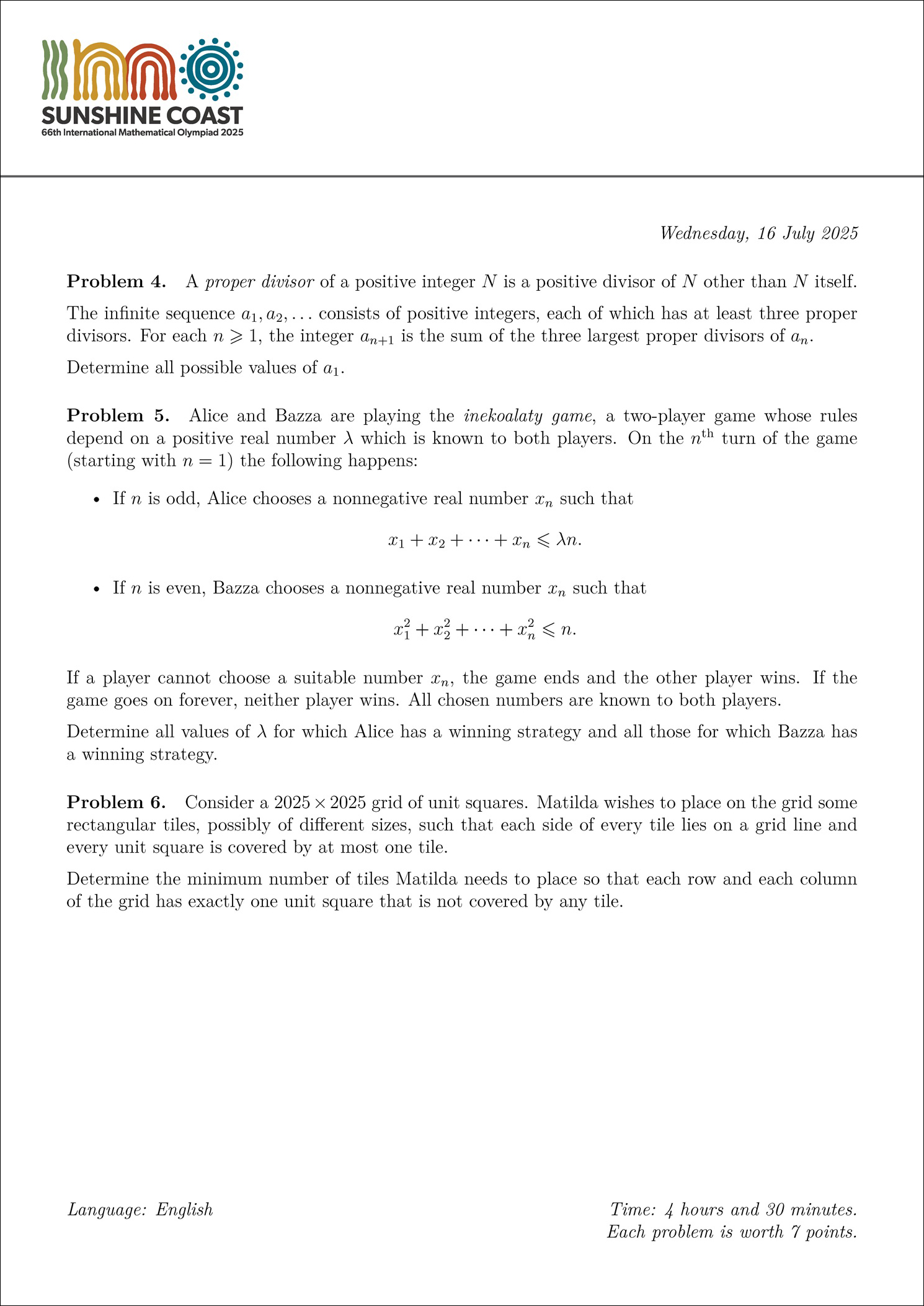
I looked up the problems online, and here they are.
Oof. Should I give it a go, and put in two sessions of 4½ hours each?
I think I’d better not. I might damage my self-esteem. 😆
As part of the ever-expanding scope of my collection of South African stamps, I have started to collect revenue stamps of the South African colonies.
(Before the establishment of the Union of South Africa in 1910, South Africa consisted of four British colonies: the Cape Colony, Natal, Transvaal, and the Orange Free State.)
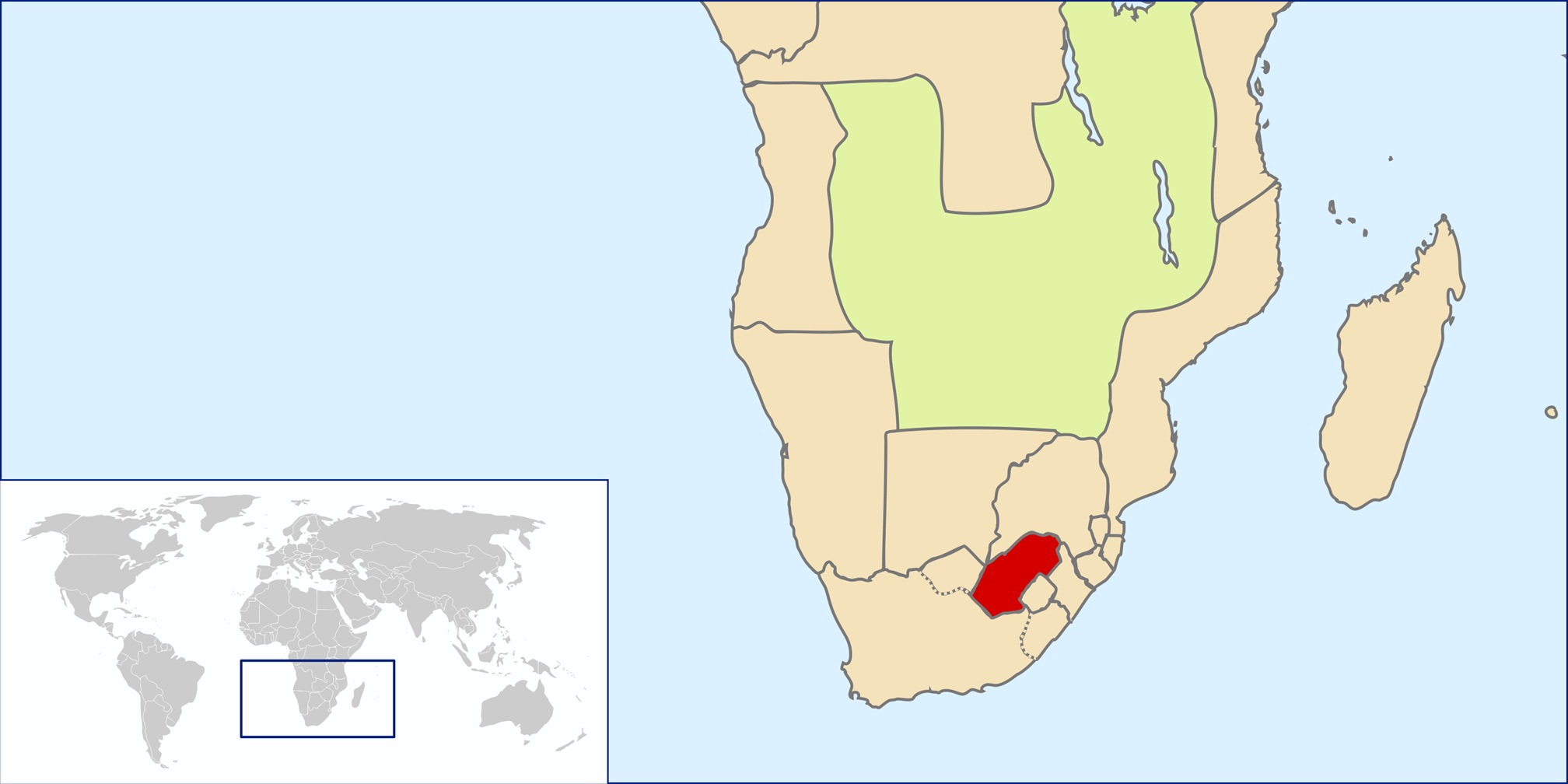
Location of the Orange Free State c. 1890 [Source: Wikipedia]From 1854 to 1902, the Orange Free State was an independent Boer-ruled sovereign republic under British suzerainty* in Southern Africa during the second half of the 19th century. It ceased to exist after it was defeated and surrendered itself to the British Empire at the end of the Second Boer War in 1902. It is one of the three historical precursors to the present-day Free State province in South Africa.
*A suzerain is a person, state or polity who has supremacy and dominant influence over the foreign policy and economic relations of another subordinate party or polity, but allows internal autonomy to that subordinate.
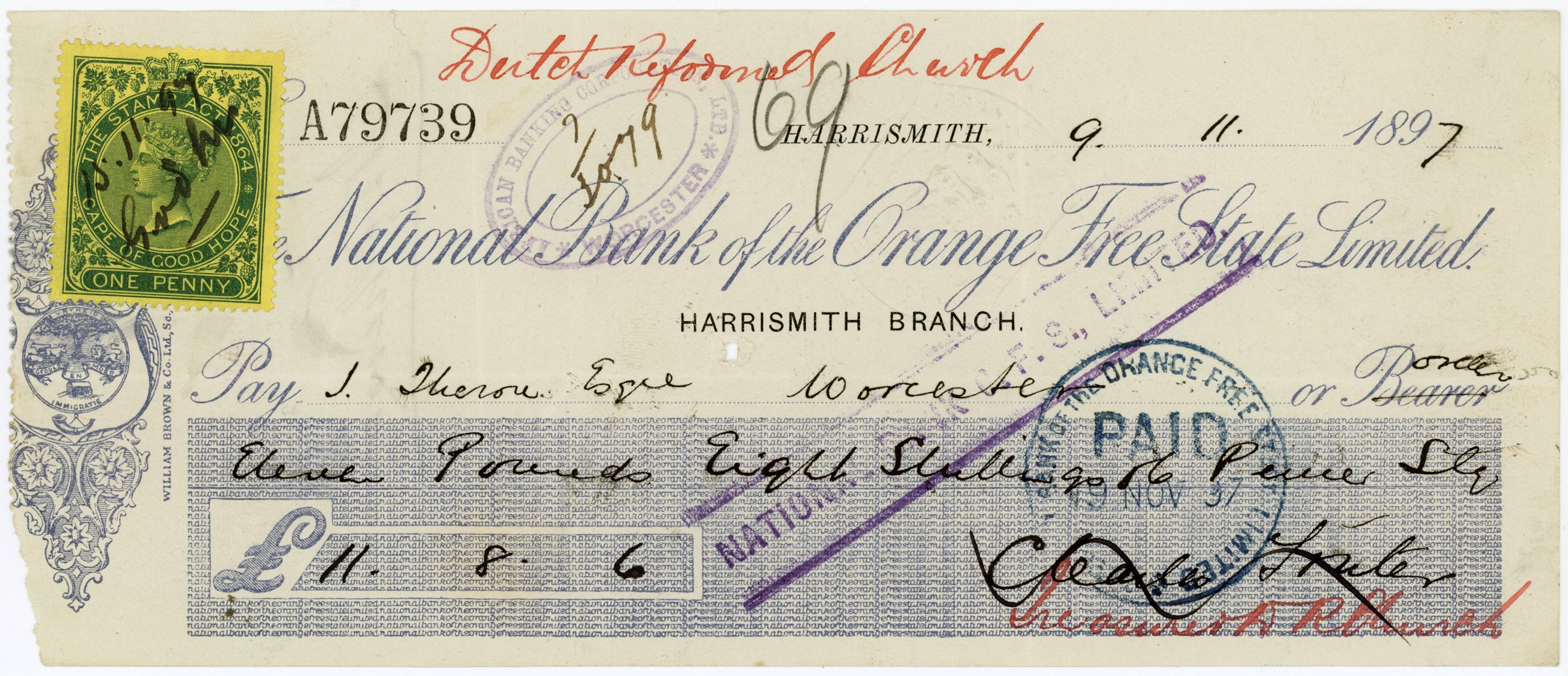
This yellow revenue stamp with green ink from the Cape Colony is affixed to a checque (using the queen’s English— Queen Victoria) that was issued in 1897 by the Harrismith branch of the National Bank of the Orange Free State.
The Revenue Stamp First issued in 1865 by the Cape Colony | Perf. 14 |Rotogravure One penny (1d) | green on yellow paper| Queen Victoria’s profile in classical style* surrounded by grapevine and vine leaves in the corners, symbolizing the Cape Colony’s viticulture | Crown at the top, denoting British authority *Queen Victoria of the United Kingdom of Great Britain and Ireland, queen from 1837 until her death in January 1901.
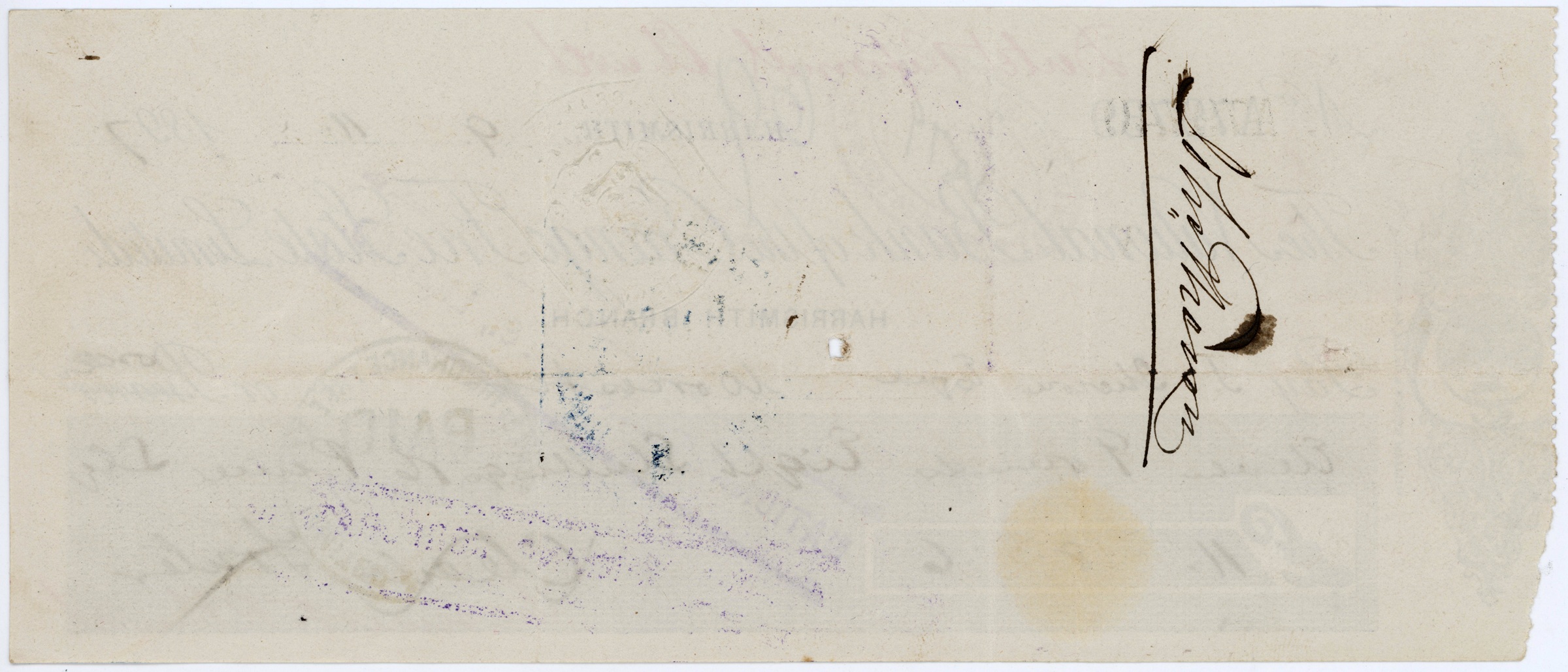
The Cheque Written by the treasurer (Charles Truter) of the Dutch Reformed Church on Nov. 9, 1897 to Esquire J. Theron. (Esquire here is the title of a young nobleman). The cheque is from the Harrismith branch of the National Bank of the Orange Free State, written for an amount of 11 Orange Free State pounds*, 8 shillings, 6 pennies. *Like the South African pound, it was divided into 20 shillings, and a shilling into 12 pennies. On the far left of the check is the coat of arms of the Orange Free State. The cheque was printed by William Brown & Co. of Old Broad Street in London. Security features at the time included the fine print at the bottom of the check, and so-called fugitive printing, that would use ink that would change, fade, or disappear under specific conditions, if it was tampered with. The revenue stamp was affixed to the cheque on Nov. 15. The check was stamped ‘Paid’ on Nov. 19. It seems Esquire Theron had the amount of the check paid into his account at the African Banking Corporation Ltd. in the town of Worcester in the Cape Colony. A hole was punched in the check to also indicate it has been cashed.
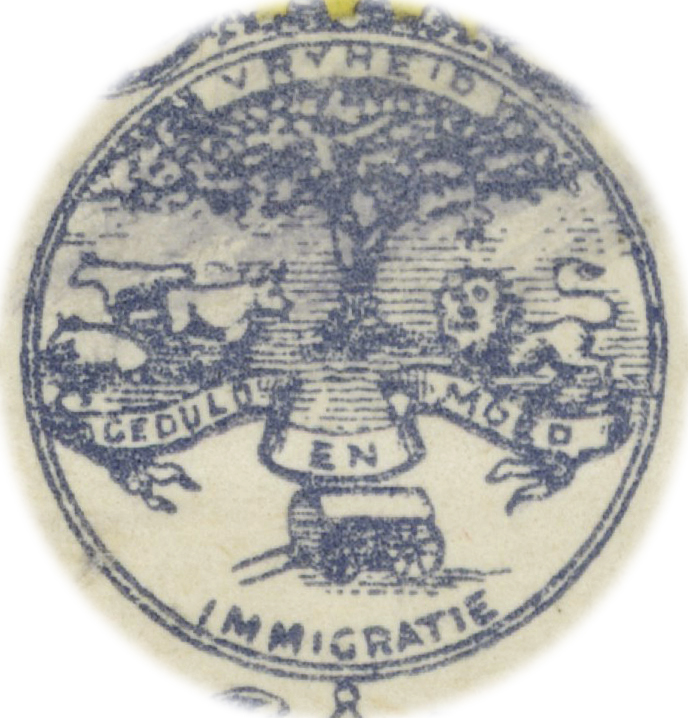
The signature of Esq. J. Theron on the back of the checque.Let’s take a closer look at the coat of arms of the Orange Free State printed on the far left of the check. VRYHEID (freedom) at the top, and GEDULD EN MOED (patience and courage) on the ribbon. IMMIGRATIE (immigration) at the bottom, presumably a call to Europeans, or settlers from other South African colonies to emigrate to the Orange Free State colony. The livestock look like cattle (the OFS coat if arms image on Wikipedia shows sheep). The lion on the right must mean ‘courage’, right? The ox wagon signifies the trek that the pioneers made from the Cape Colony to escape British rule, to establish their own independent Orange Free State republic.
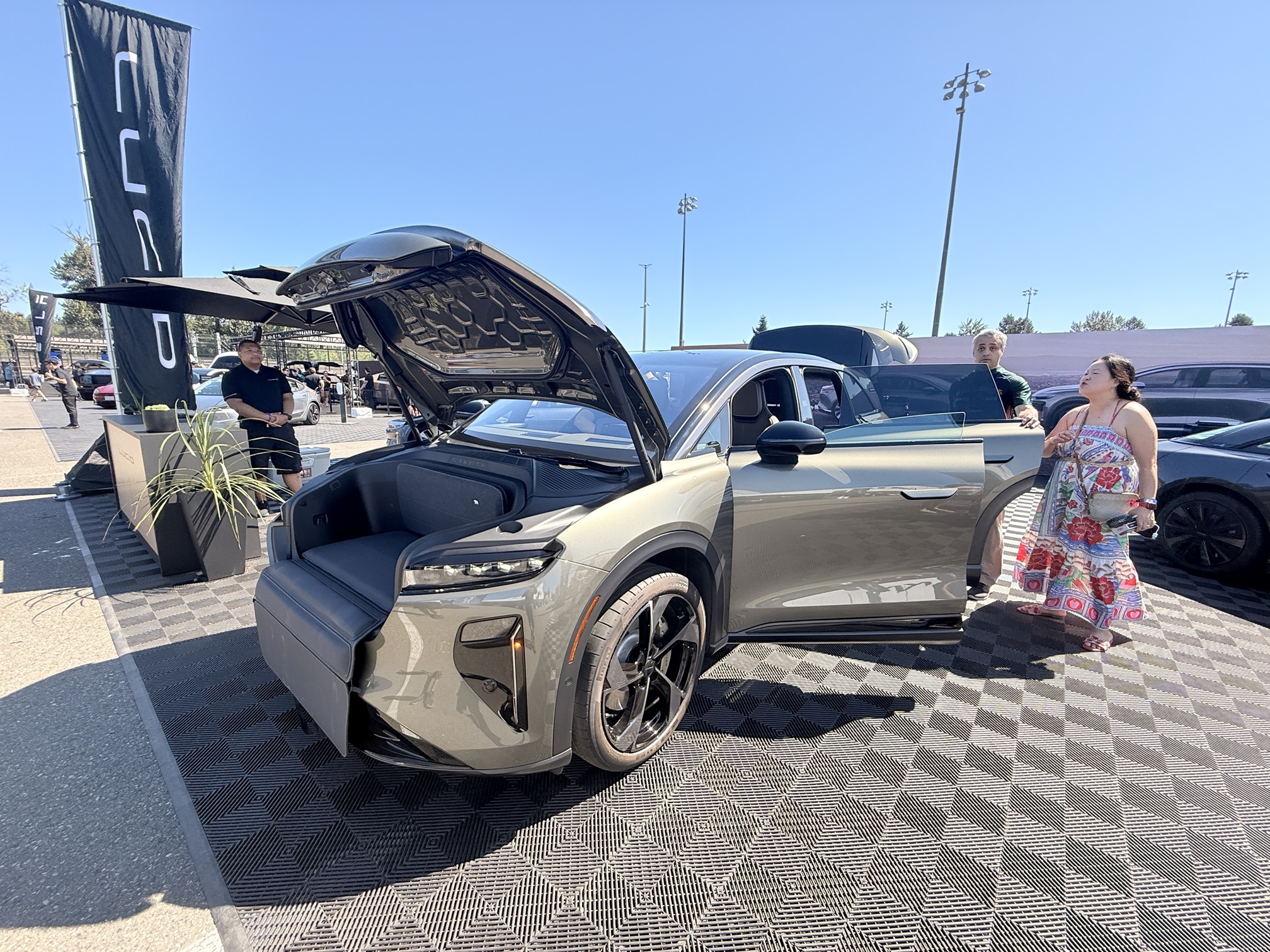
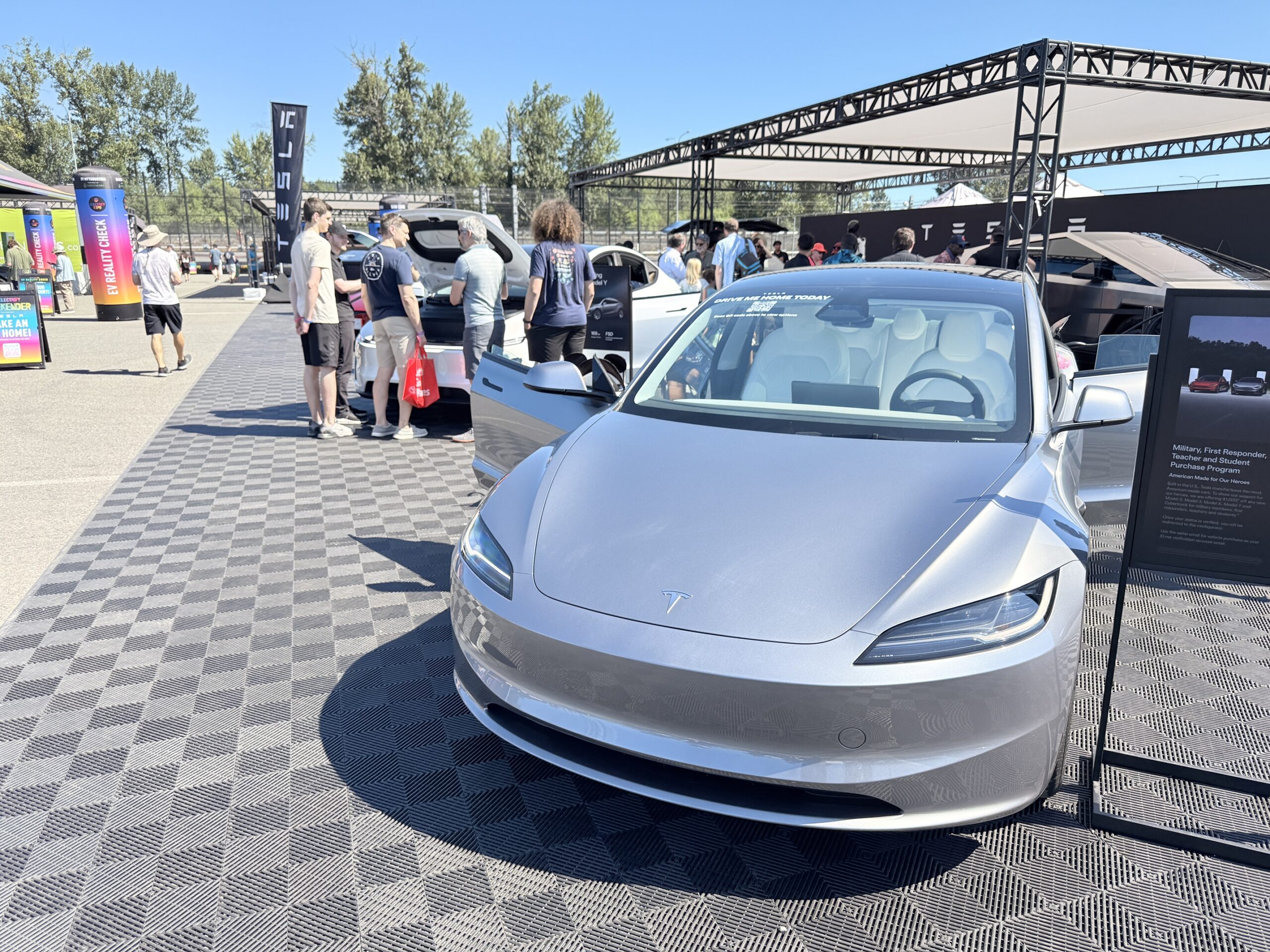
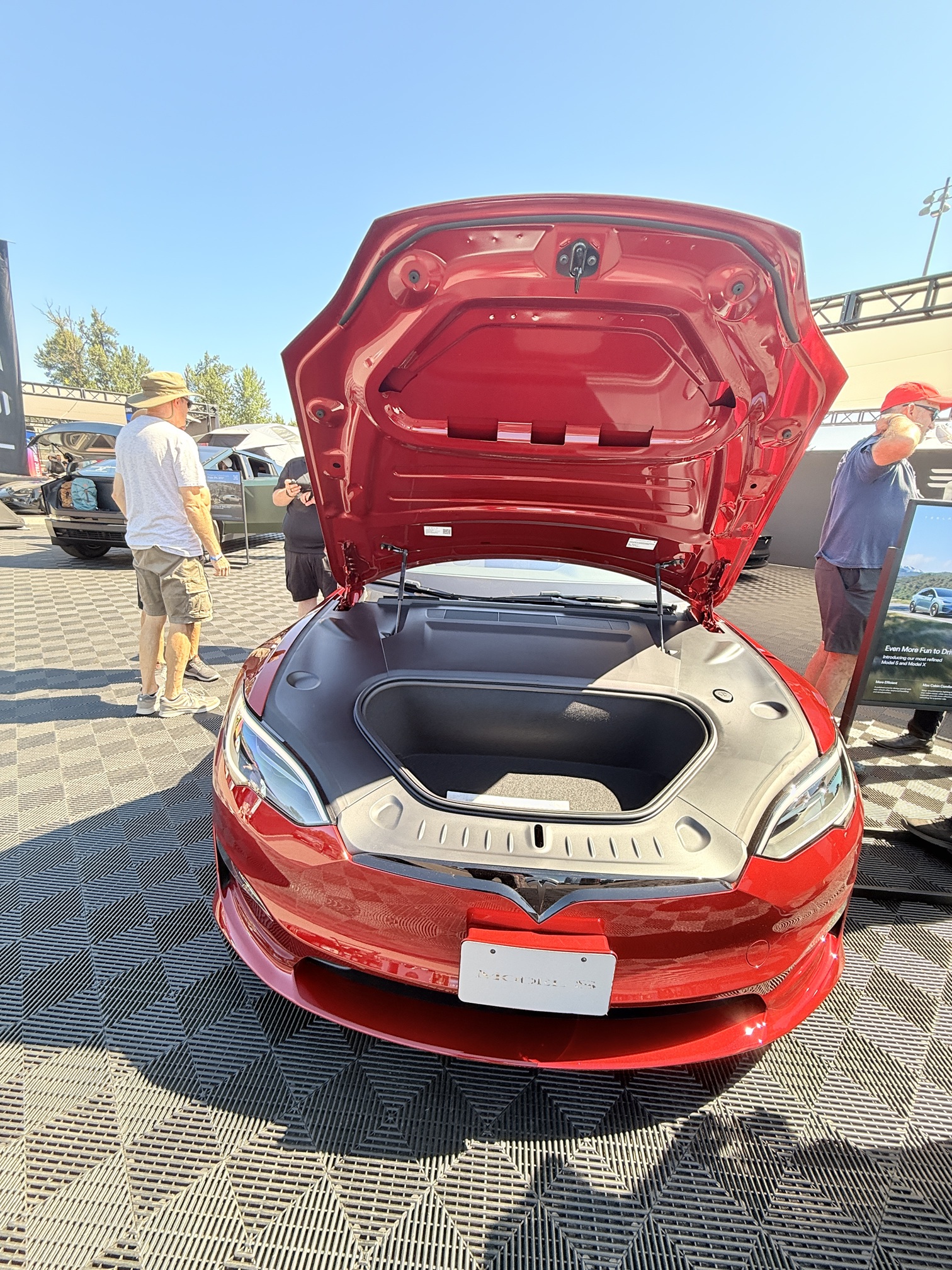
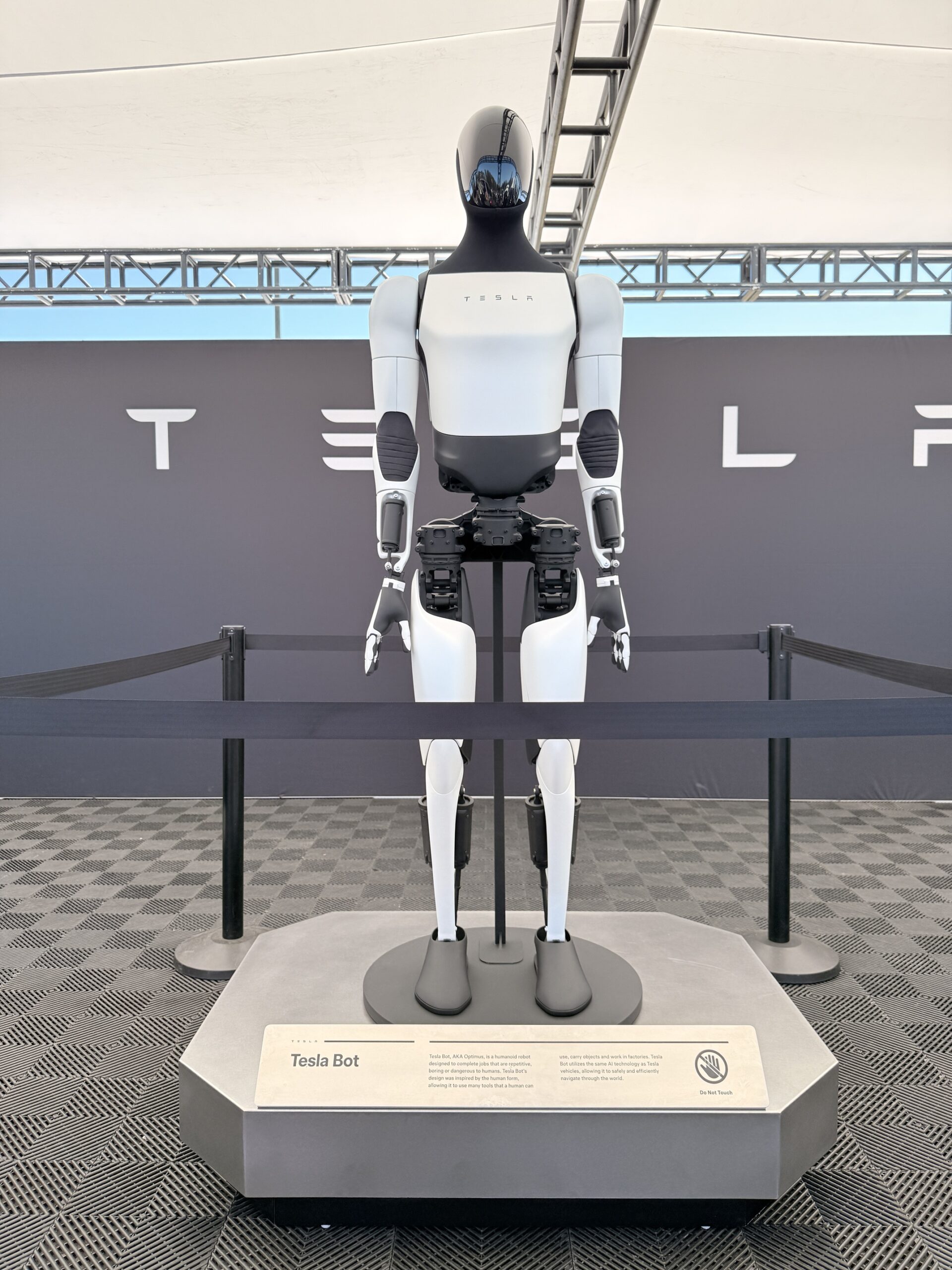
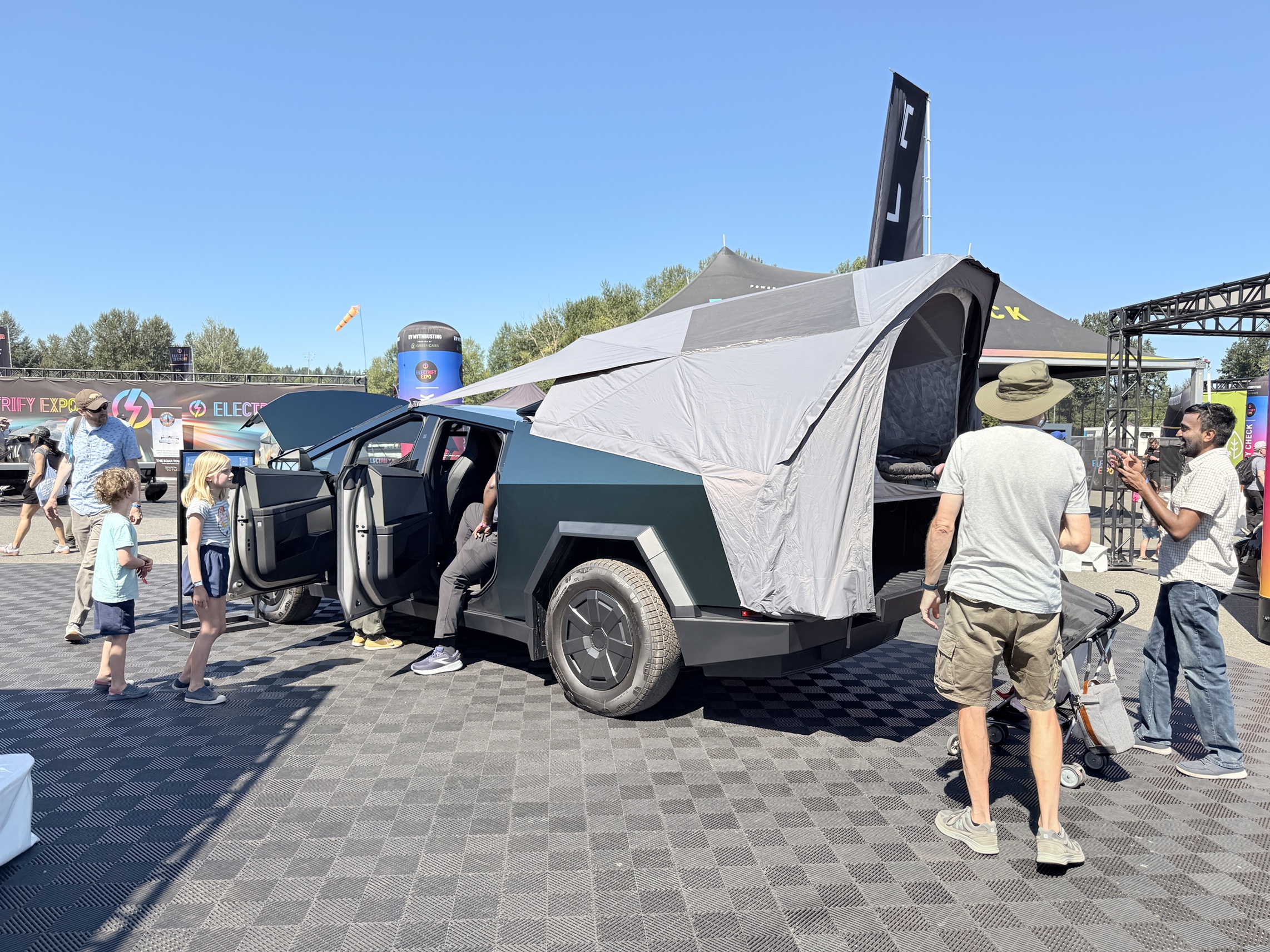
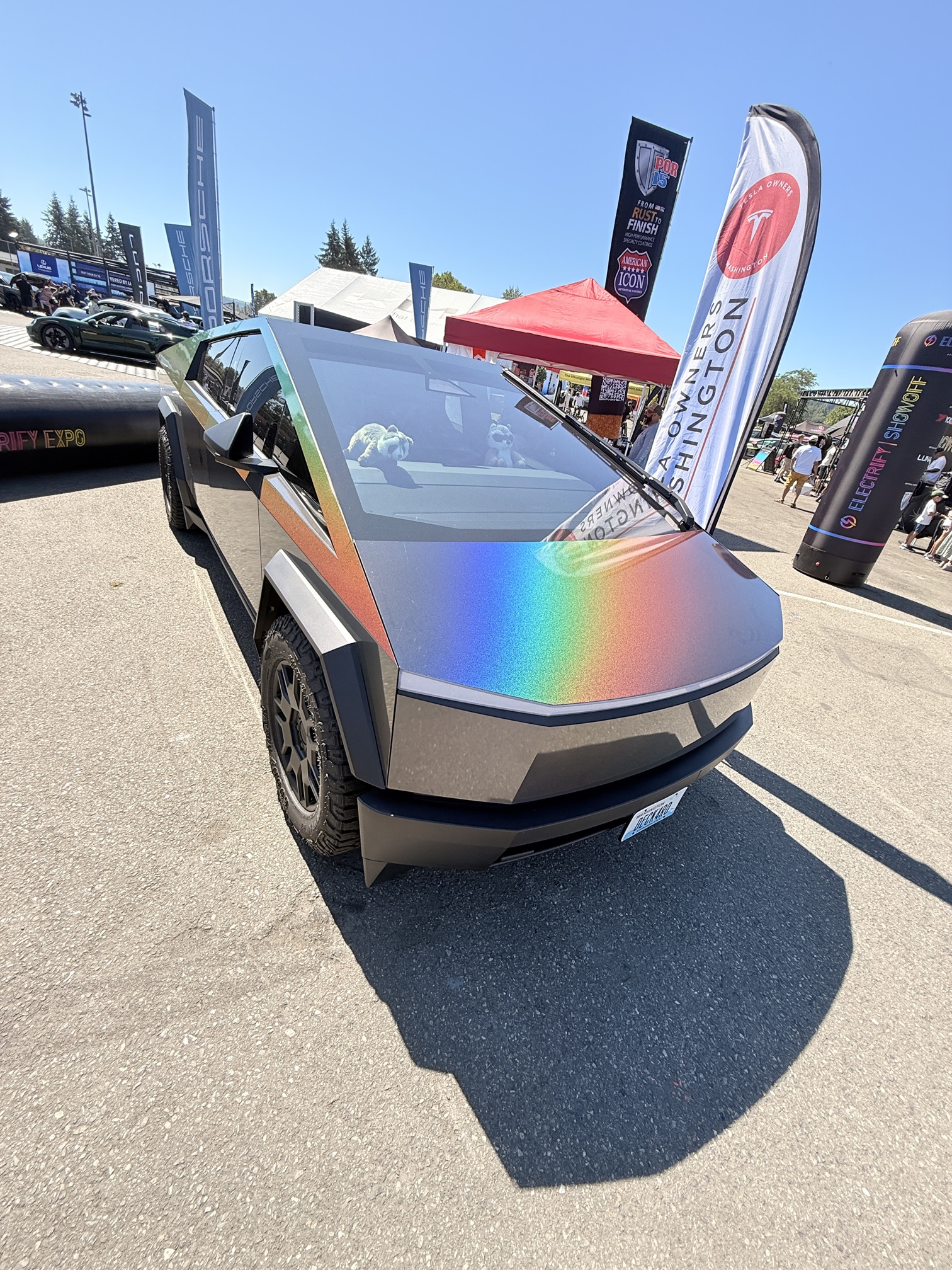
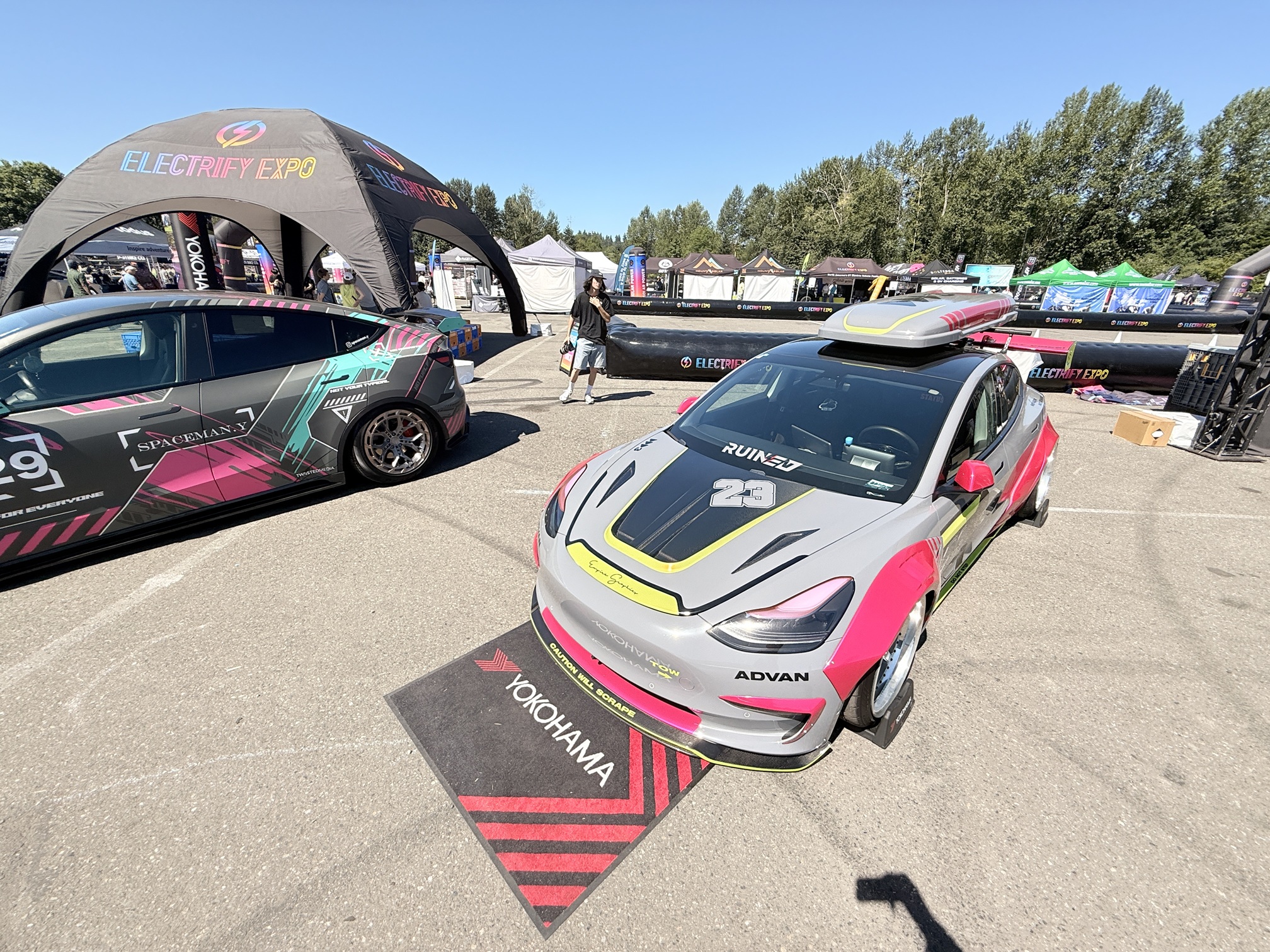
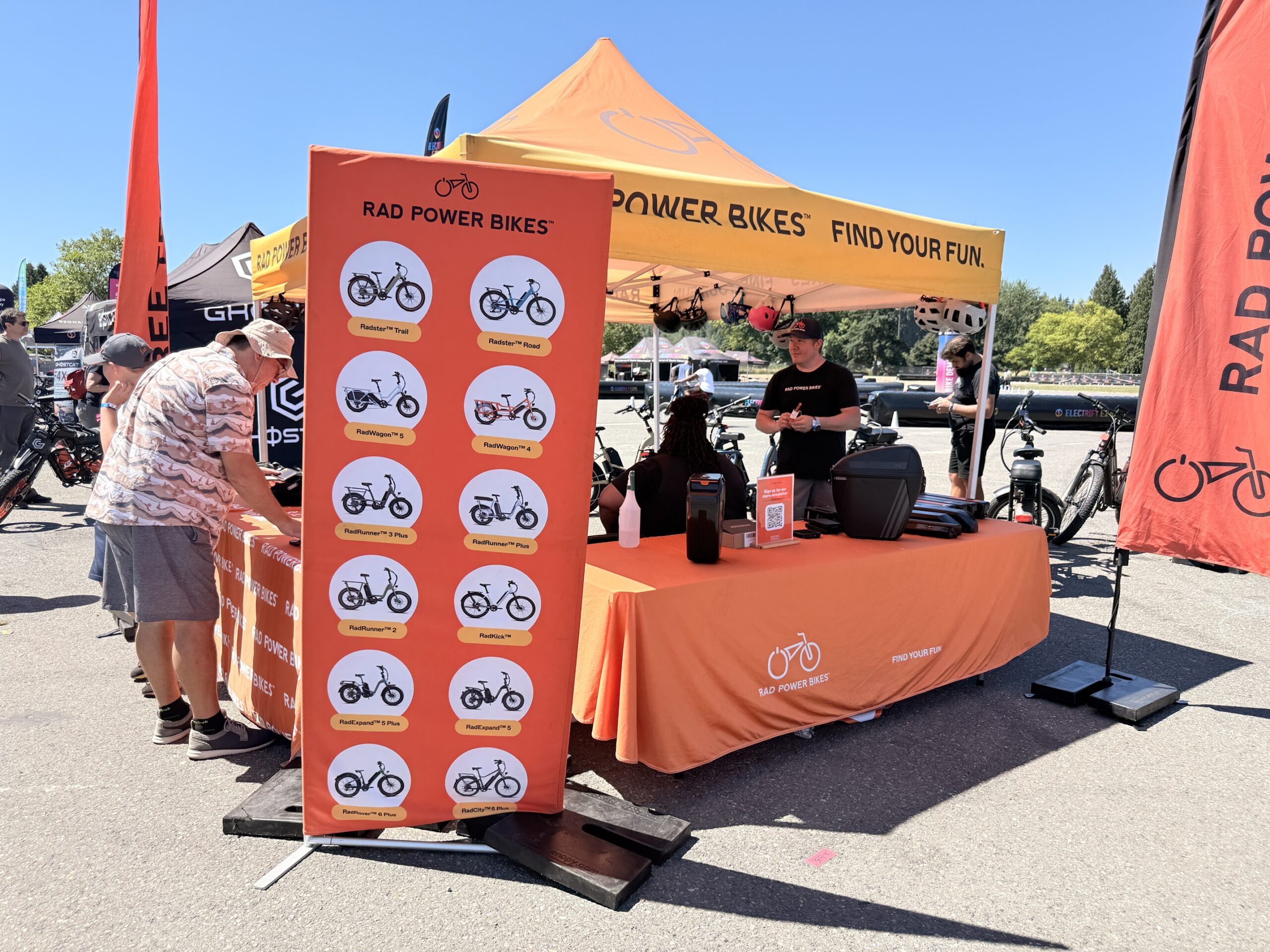
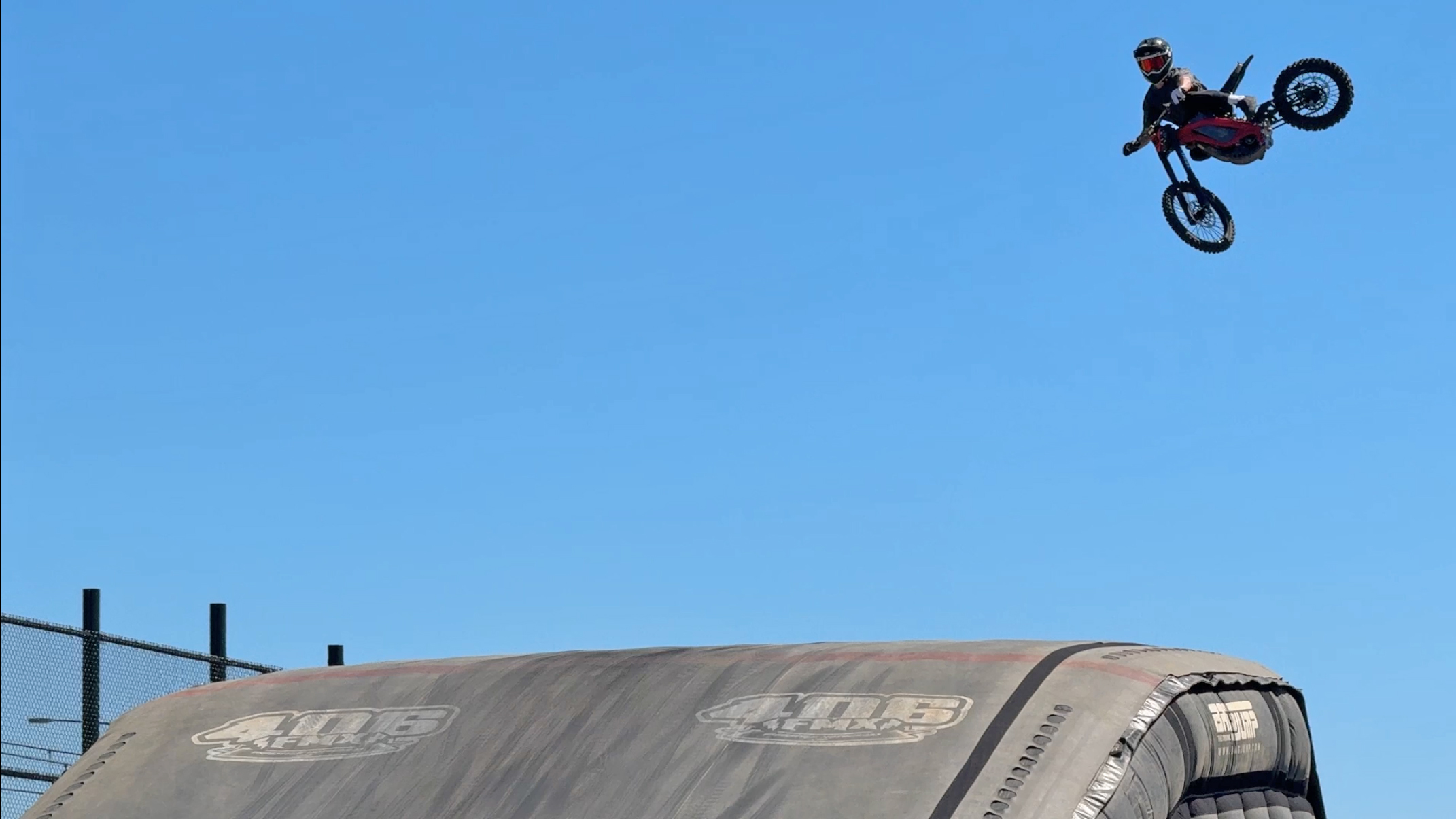
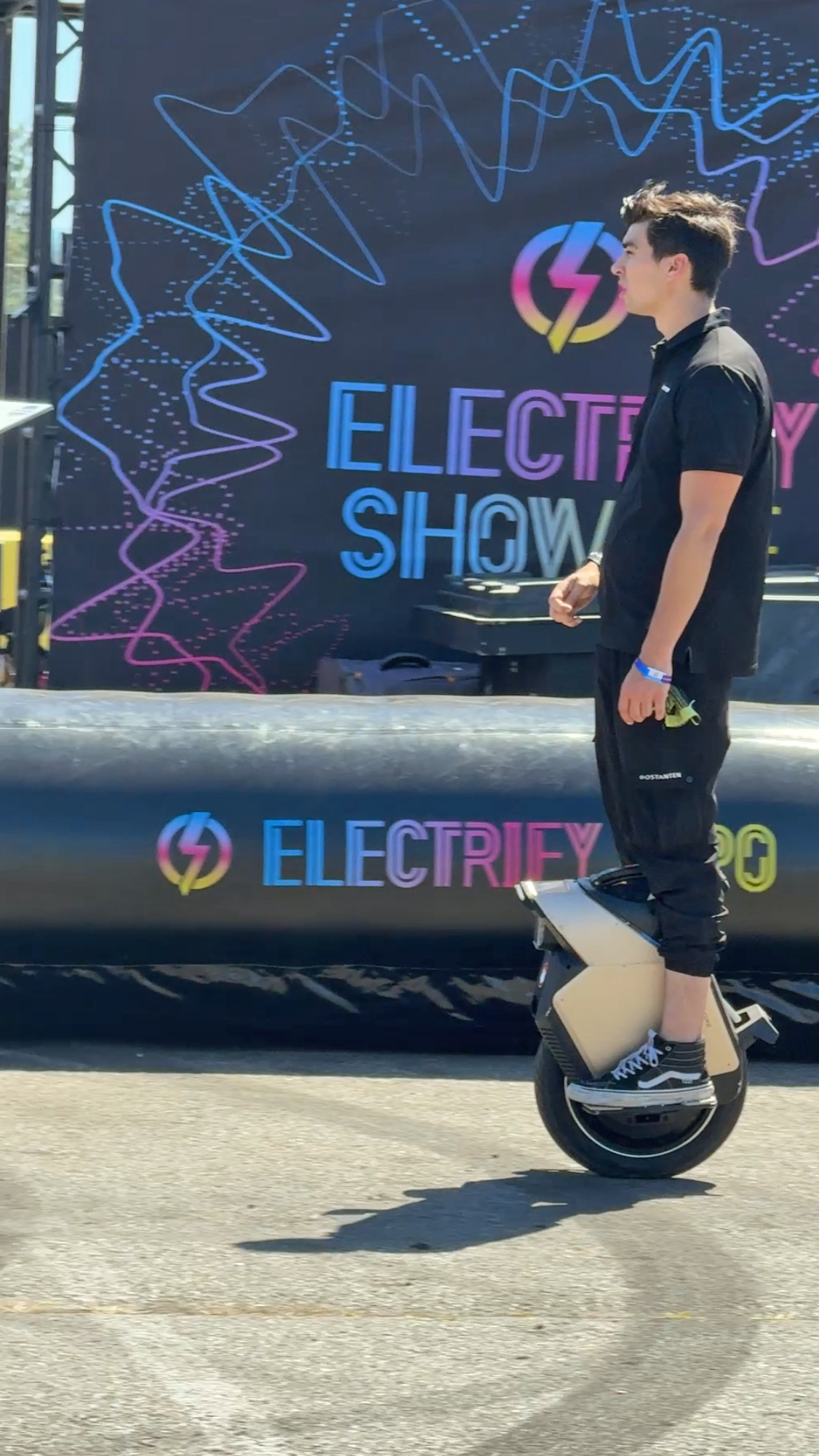
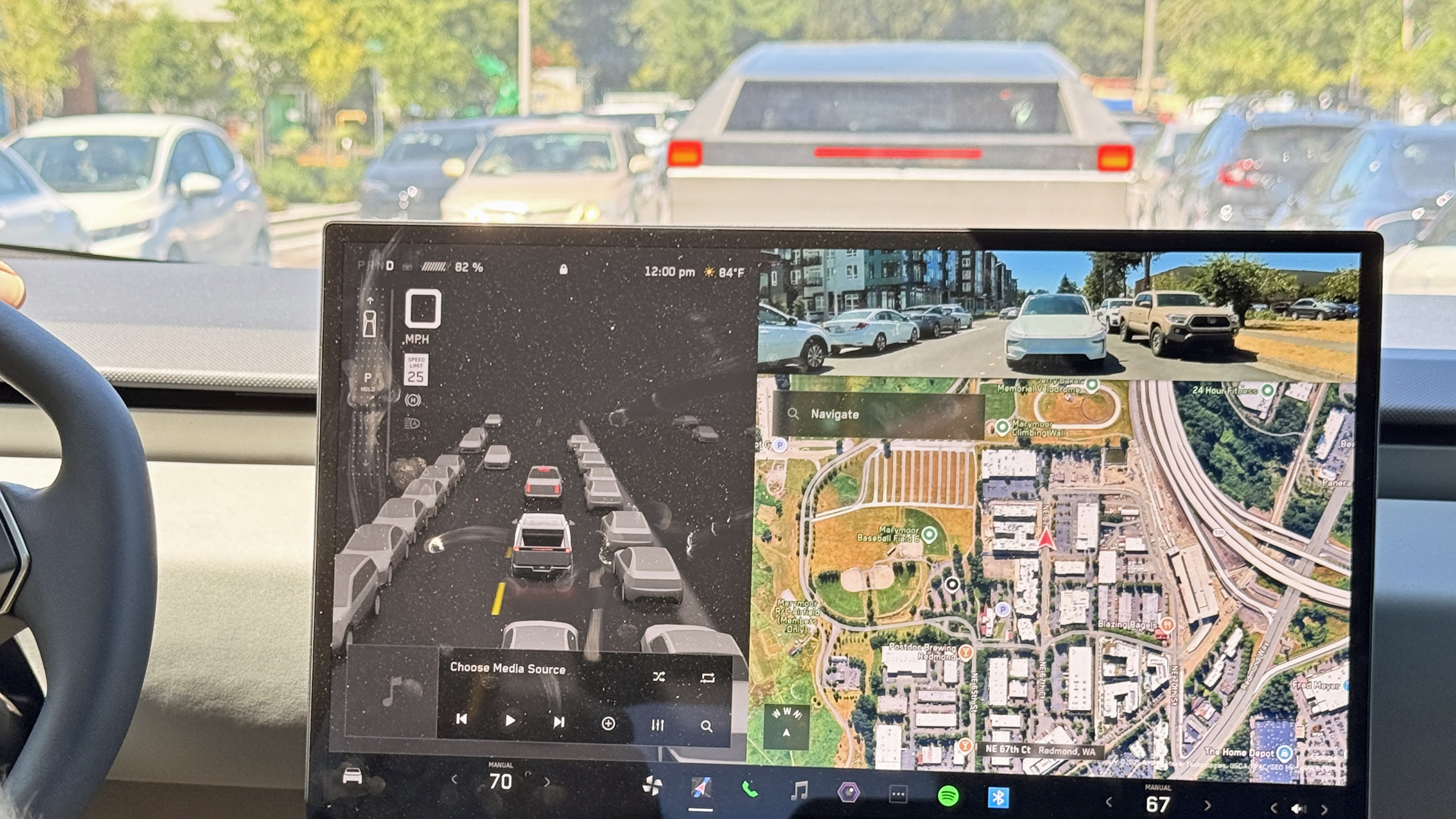
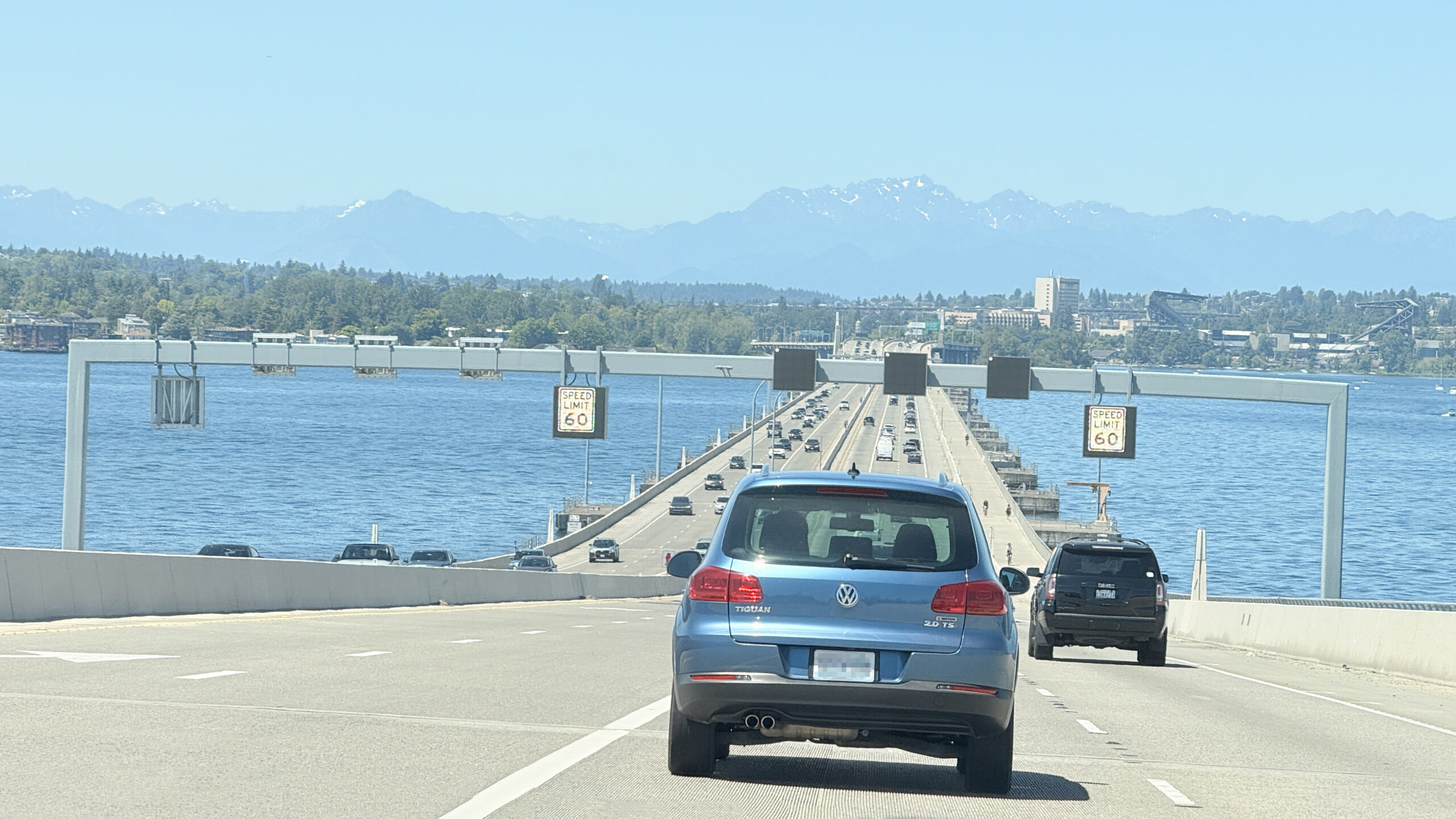
Three amigos ran out to Marymoor Park by Redmond this morning— the site for the Electrify Expo Seattle 2025.
The all-electric 2025 Lucid Gravity SUV has a starting price of $79,900 for the Touring model and $94,900 for the Grand Touring model, according to Lucid Motors. The Touring model is expected to be available for order in late 2025. [Source: Google Search Labs | AI Overview]2025 Tesla Model 3 in Quicksilver, with white seats.2025 Tesla Model S in Red*. This is the newest Model S, now with a front bumper camera as part of their hardware refresh. *Or maybe it is the Red Multi-Coat: a premium version of the standard Red, offering a more vibrant and lustrous appearance.The Tesla Bot. (Google Search Labs | AI Overview: No, the full-sized Tesla Optimus humanoid robot is not yet for sale to the general public. While Tesla is developing Optimus, it is currently focused on internal production for use in its own factories, with external sales planned for 2026.)A Cybertruck fitted with an after-market camping add-on (mostly providing additional sleeping space). That’s a metallic green wrap on the truck (all Cybertrucks are offered with a raw, stainless steel exterior).A different kind of metallic wrap on a Cybertruck, with a rainbow reflection in the bright sunlight. (The high in Seattle was 87°F/ 30.5 °C today).These Teslas are dressed up in sporty, race car attire, but now starting to show their age/ The new ‘Highland’ Model 3 has been available since early 2024.Several other electrified means of transportation were on display as well. The well-known Seattle power bike maker Rad Power Bikes is showing off its latest line-up of power bikes (bike with electric motor to assist the rider’s pedaling, and a battery that provides the power).Look Ma! I’m flying through the air. A young rider demonstrates gravity-defying freestyle stunts that he can do with his electrified moto-cross bike. (There is a steep up-ramp on the other side that gets him into the air).A staffer from the booth with electric unicycles (EUCs) showing how it’s done. (It’s much harder than he makes it look). These unicycles are self-balancing personal transporters with a single wheel. Riders control their speed and direction by shifting their weight and using built-in sensors.I’m in the back seat of a Cybertruck, and we’re just doing a little circuit laid out around Marymoor Park. The center console is a little dusty. There is a Cybertruck ahead of us. A white Tesla (at the top right of the display) is behind us: the view provided by the rear-facing camera on the tailgate. The rearview mirror cannot really be used when the rear glass of the truck is covered.All done, and we’re heading back to Seattle across the SR-520 floating bridge (that floats on Lake Washington). There is not a lot of snow on the Olympic Mountains this time of year.
Happy Friday.
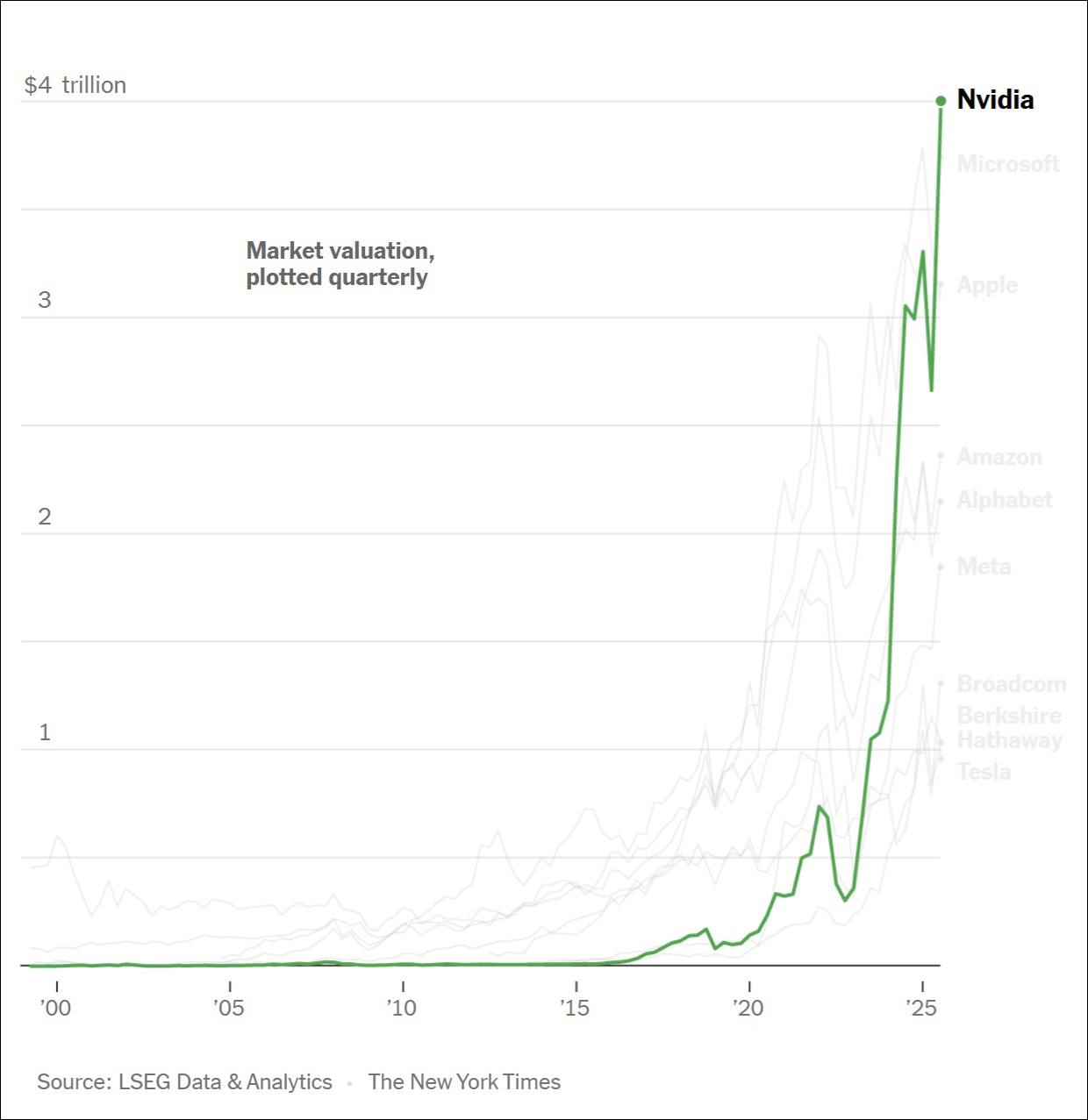
The stock markets in the US closed the week out with the world’s first four trillion dollar company: Nvidia (NVDA), listed on the NASDAQ stock exchange.
Here’s Tripp Mickle reporting for the New York Times from San Francisco: Nvidia spent three decades building a business worth $1 trillion. It spent two years turning itself into a $4 trillion company. On Thursday, the world’s leading provider of computer chips for artificial intelligence became the first public company worth $4 trillion, after its stock ended the day trading just above $164 a share. It achieved the milestone before an array of better-known tech heavyweights, including Apple and Microsoft. Nvidia’s rise is among the fastest in Wall Street history, and a testament to investors’ belief that artificial intelligence will deliver an economic transformation that rivals the Industrial Revolution’s.
From Tripp Mickle’s report for NYT: Apple and Microsoft, the market’s two largest companies in recent years, have led the way toward the $3 trillion mark. But Nvidia’s rise is unprecedented. In two years, it went from being valued at $1 trillion to becoming the first company with a market capitalization of $4 trillion. … Early this year, its shares fell 17 percent and it lost $600 billion in market value on a single day after the Chinese company DeepSeek claimed it could train a cutting-edge A.I. system with a tiny fraction of the Nvidia chips U.S. companies were using. Investors’ fears proved to be overblown, and Nvidia recovered. But the breakthrough showed the volatility that comes with being an A.I. bellwether. [Graphic by Karl Russell and Blacki Migliozzi/ NYT]
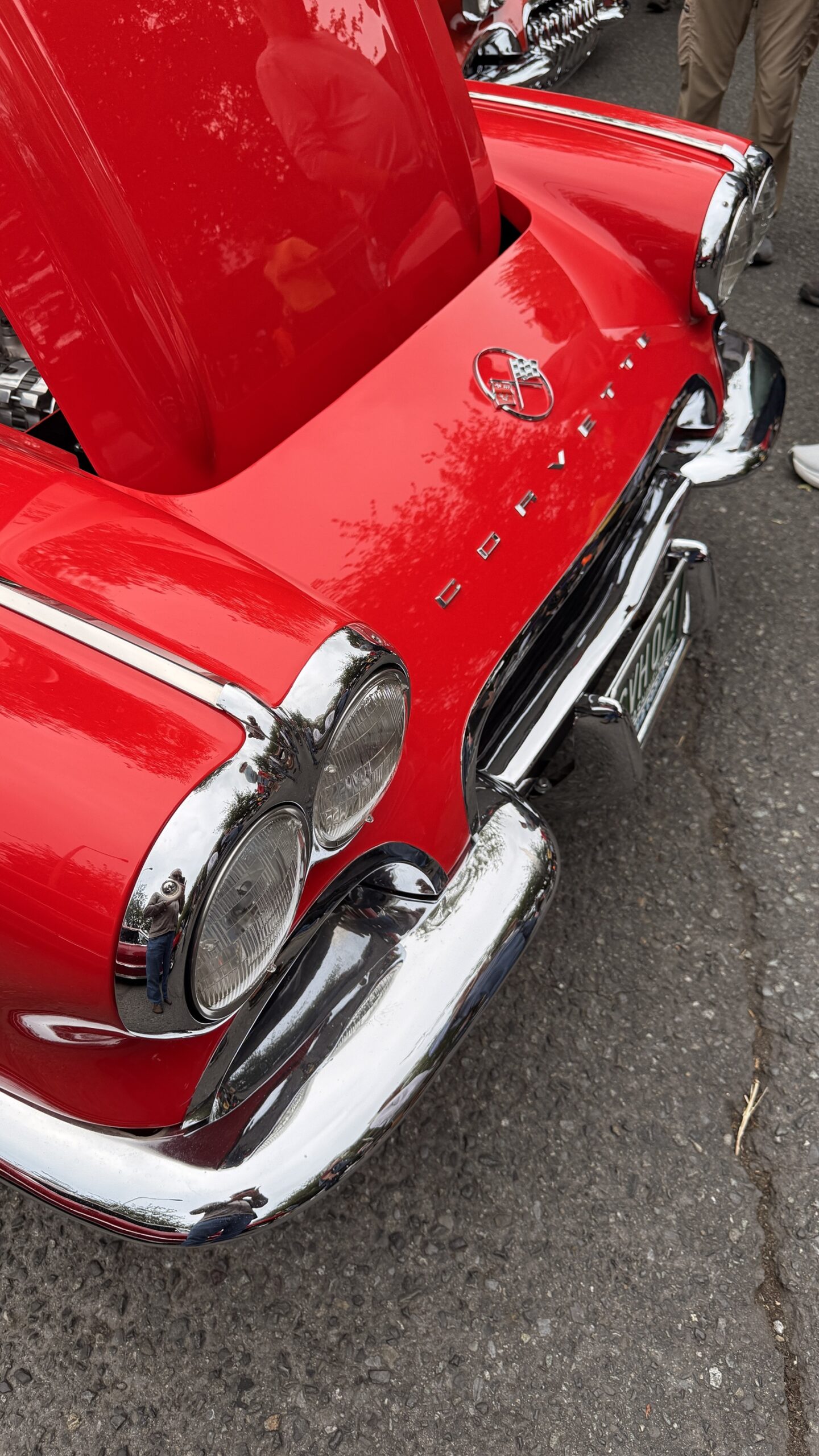
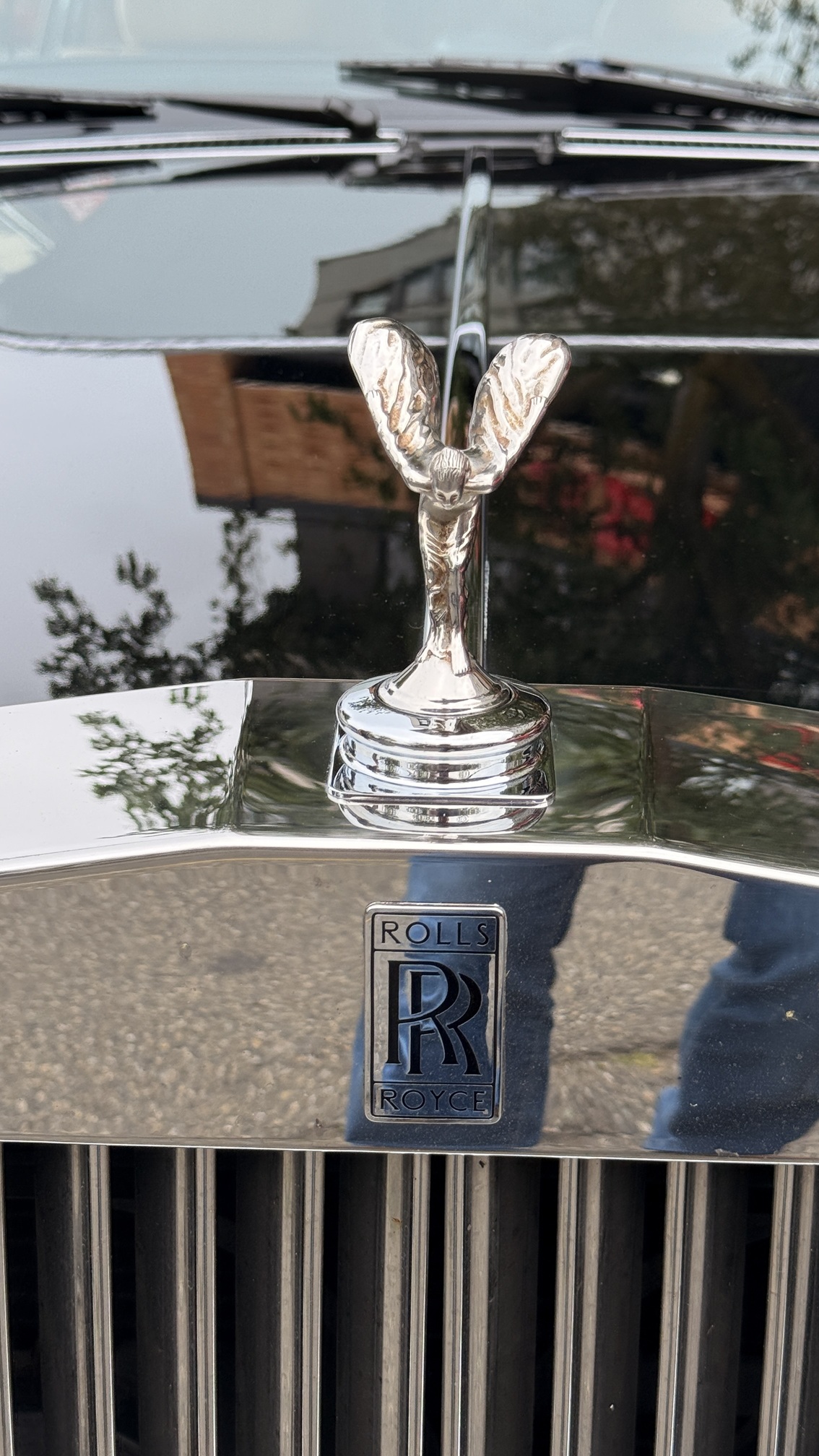
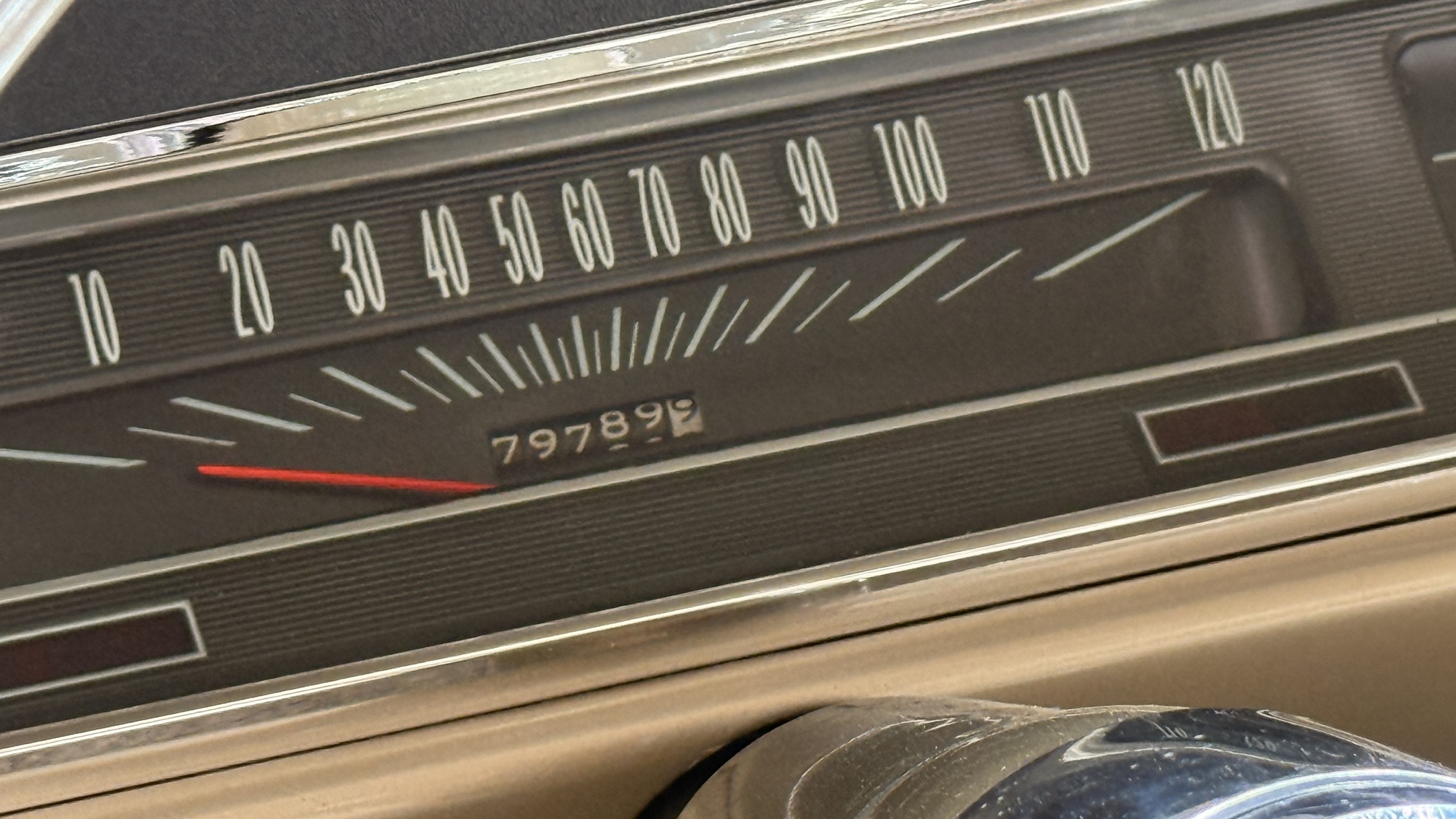
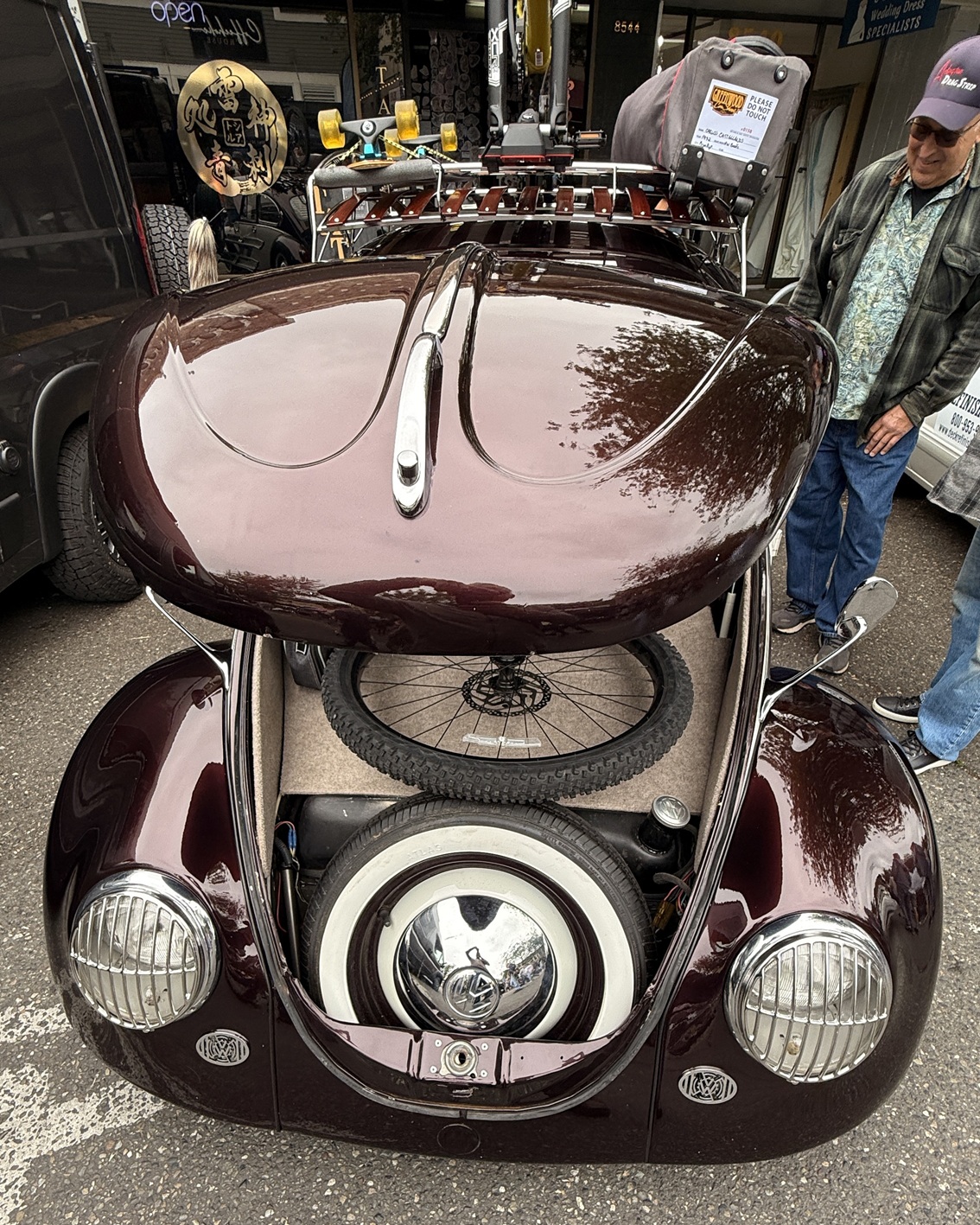
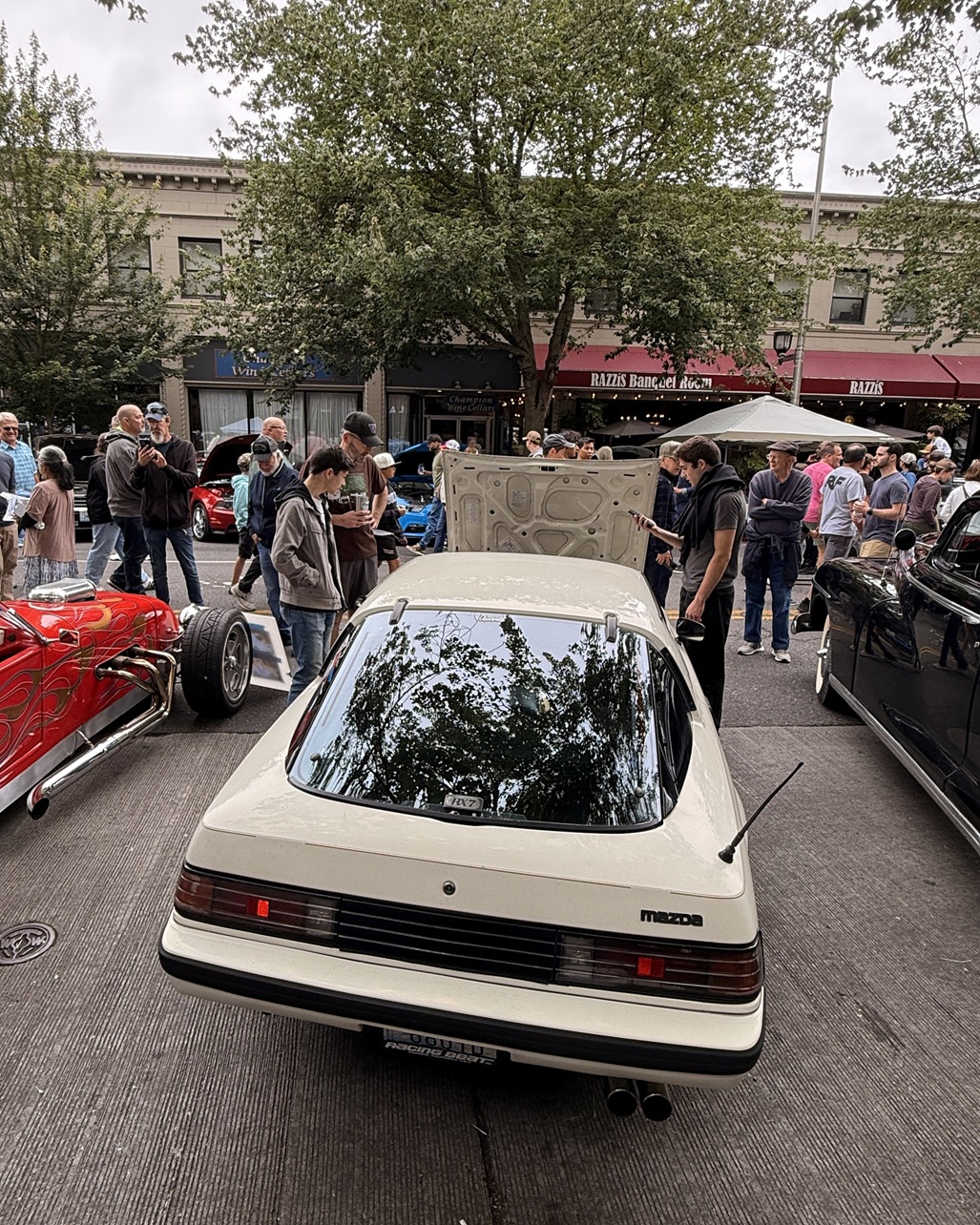
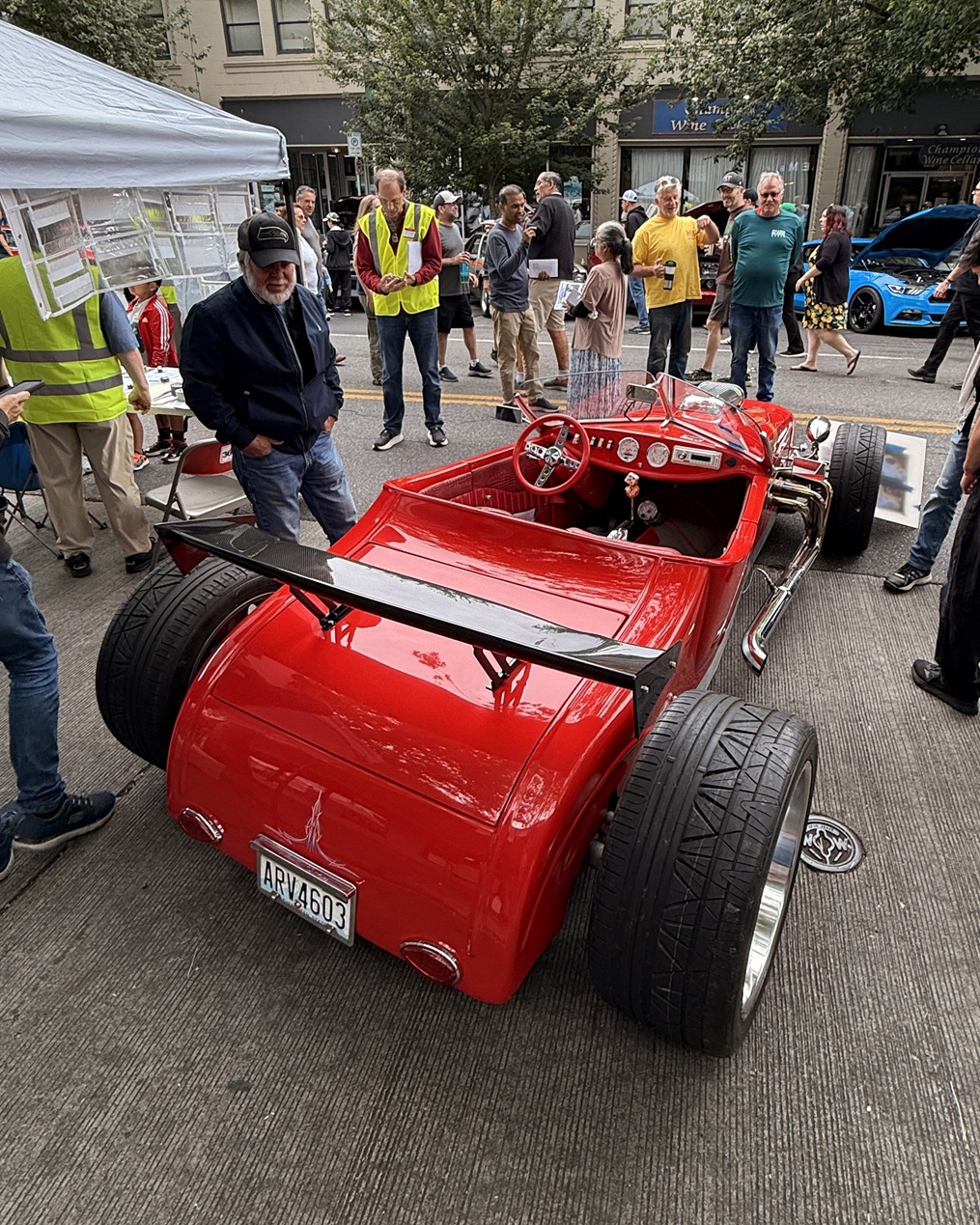
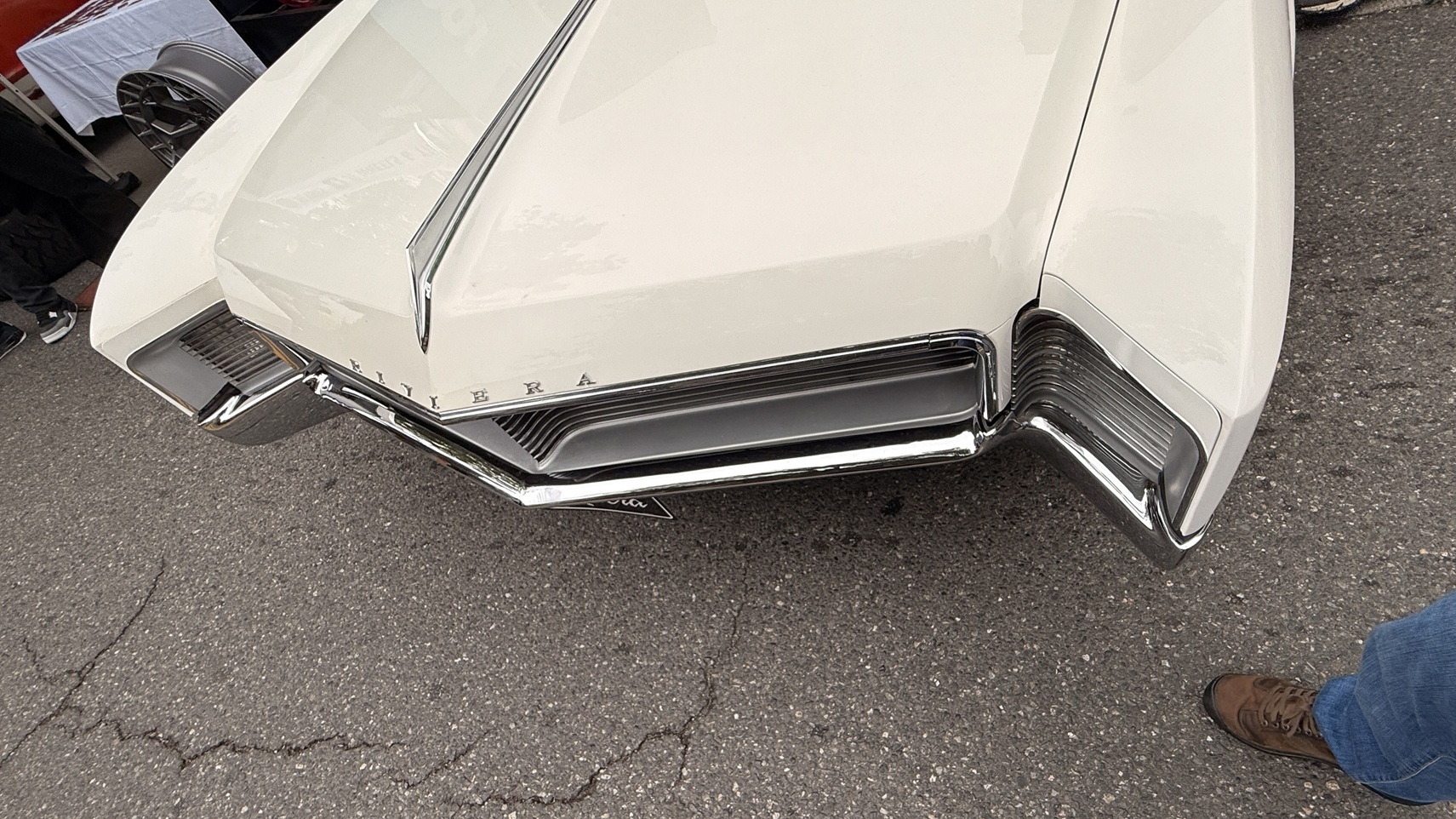
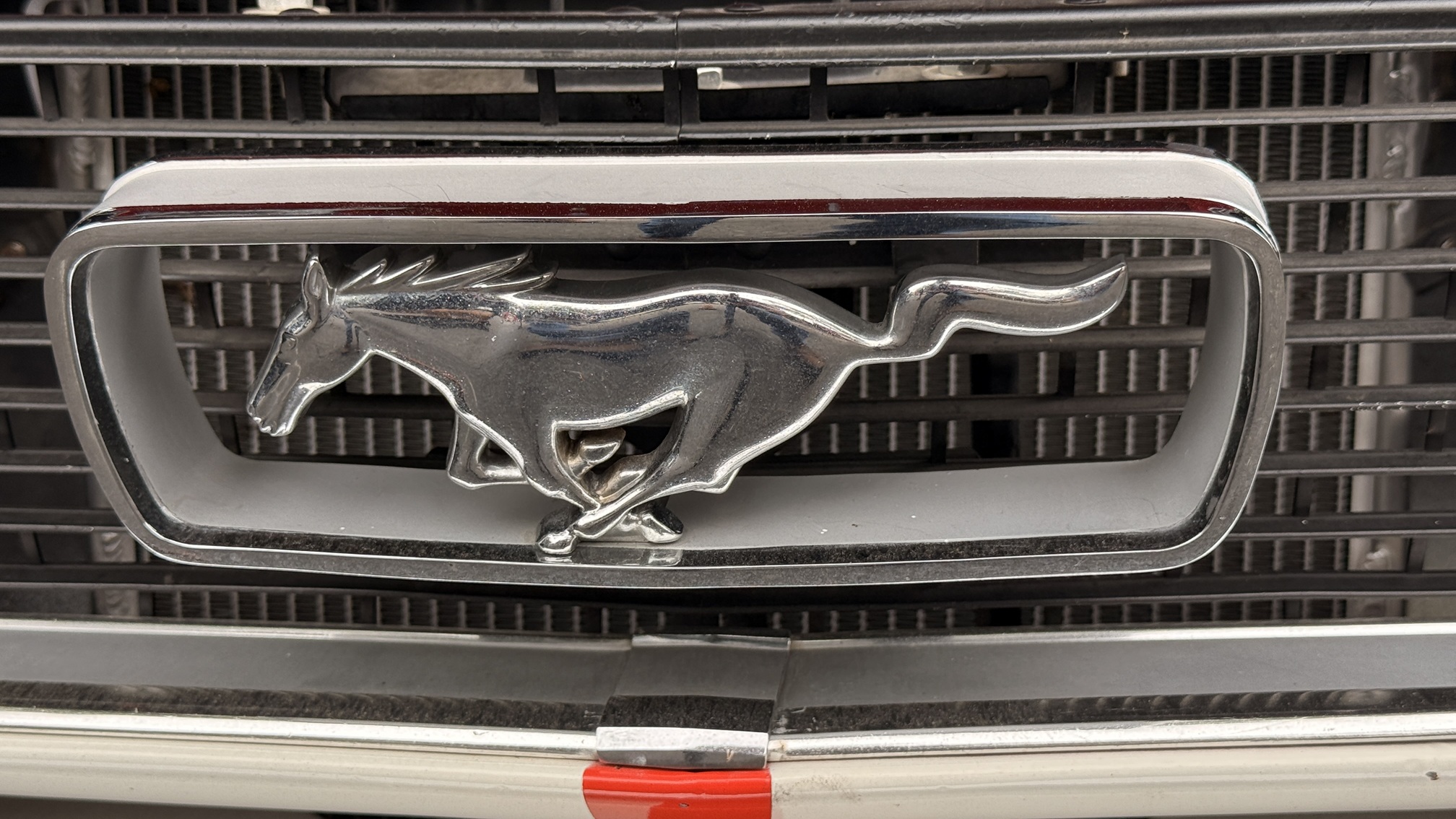
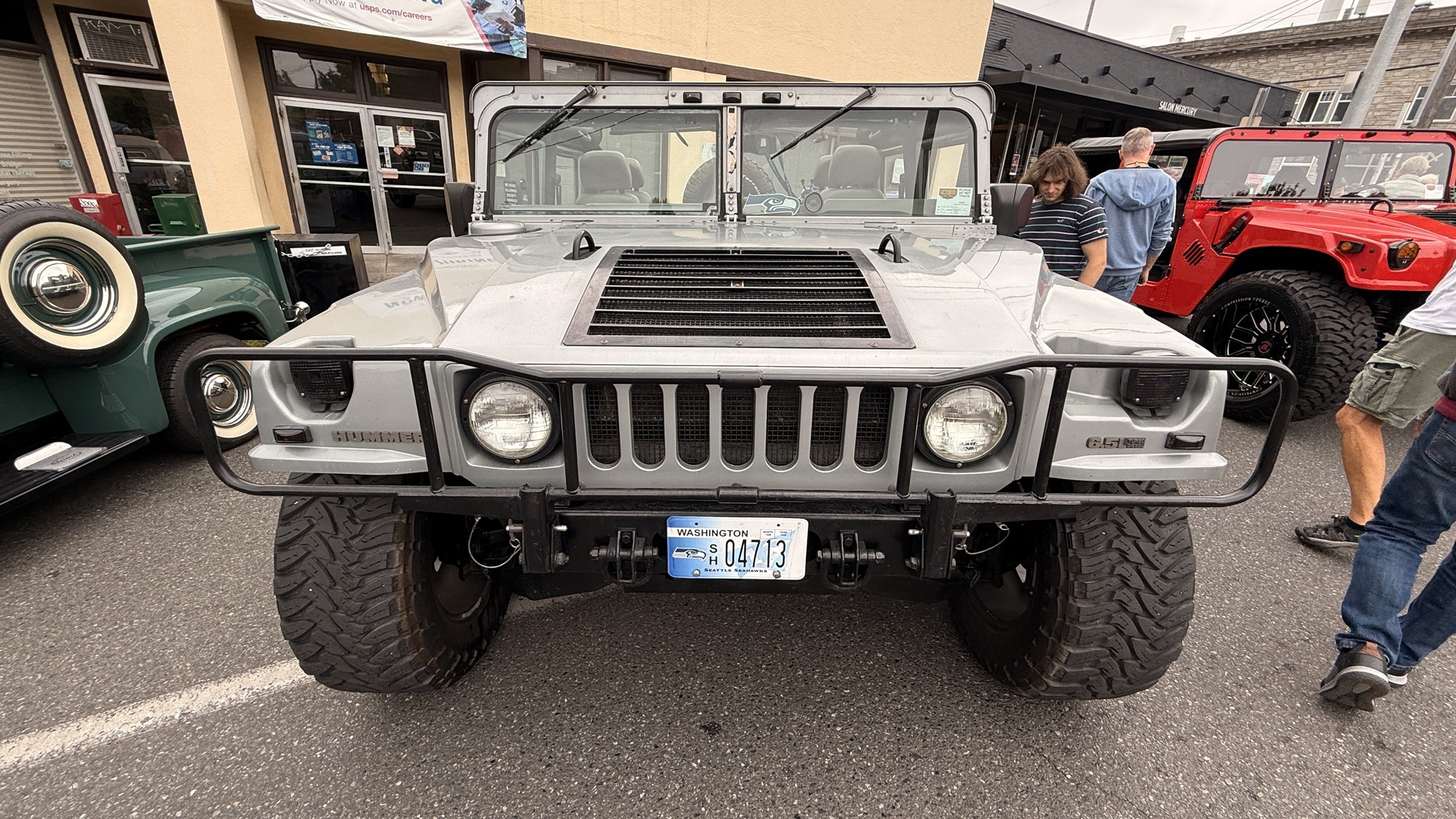
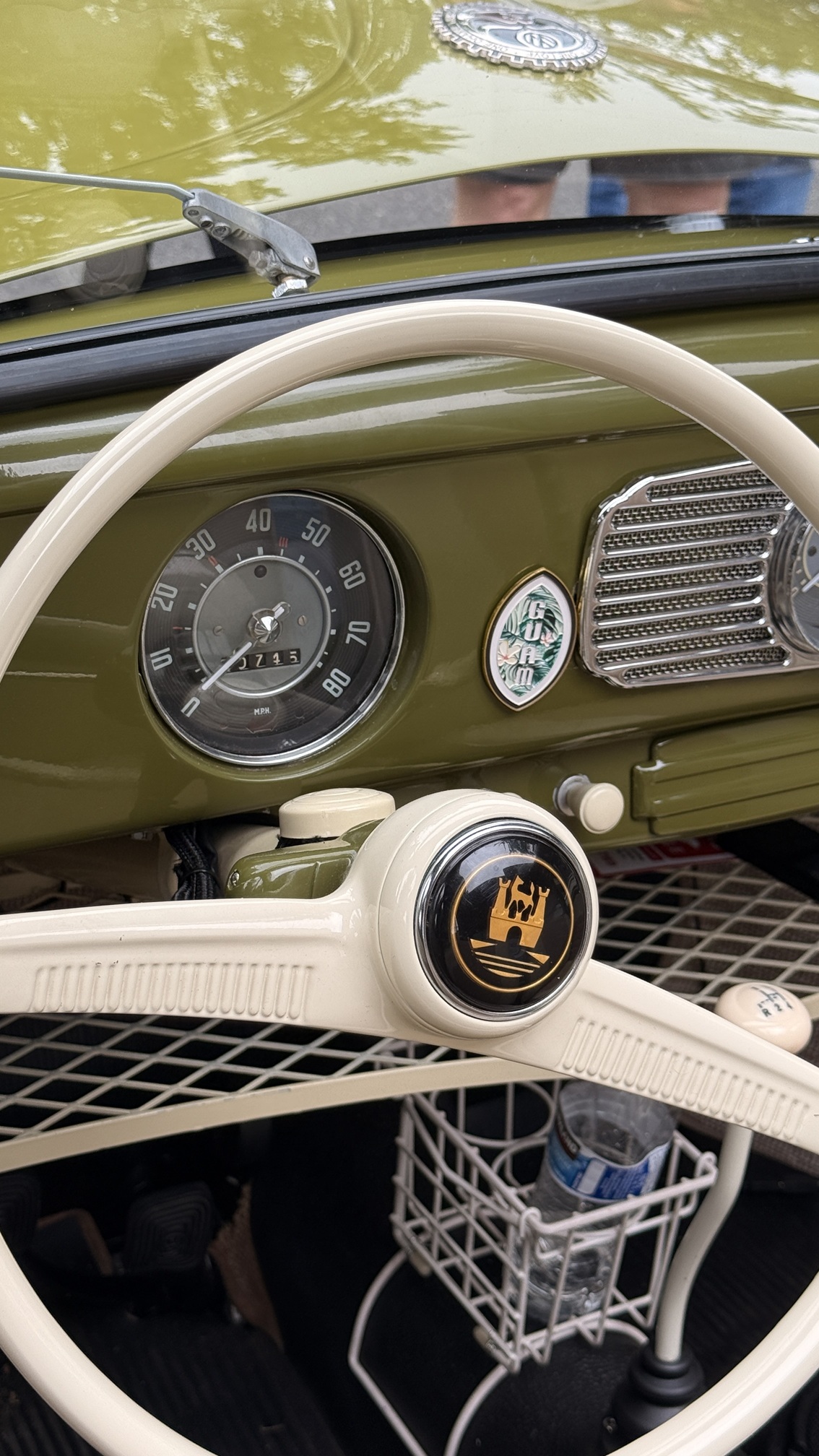
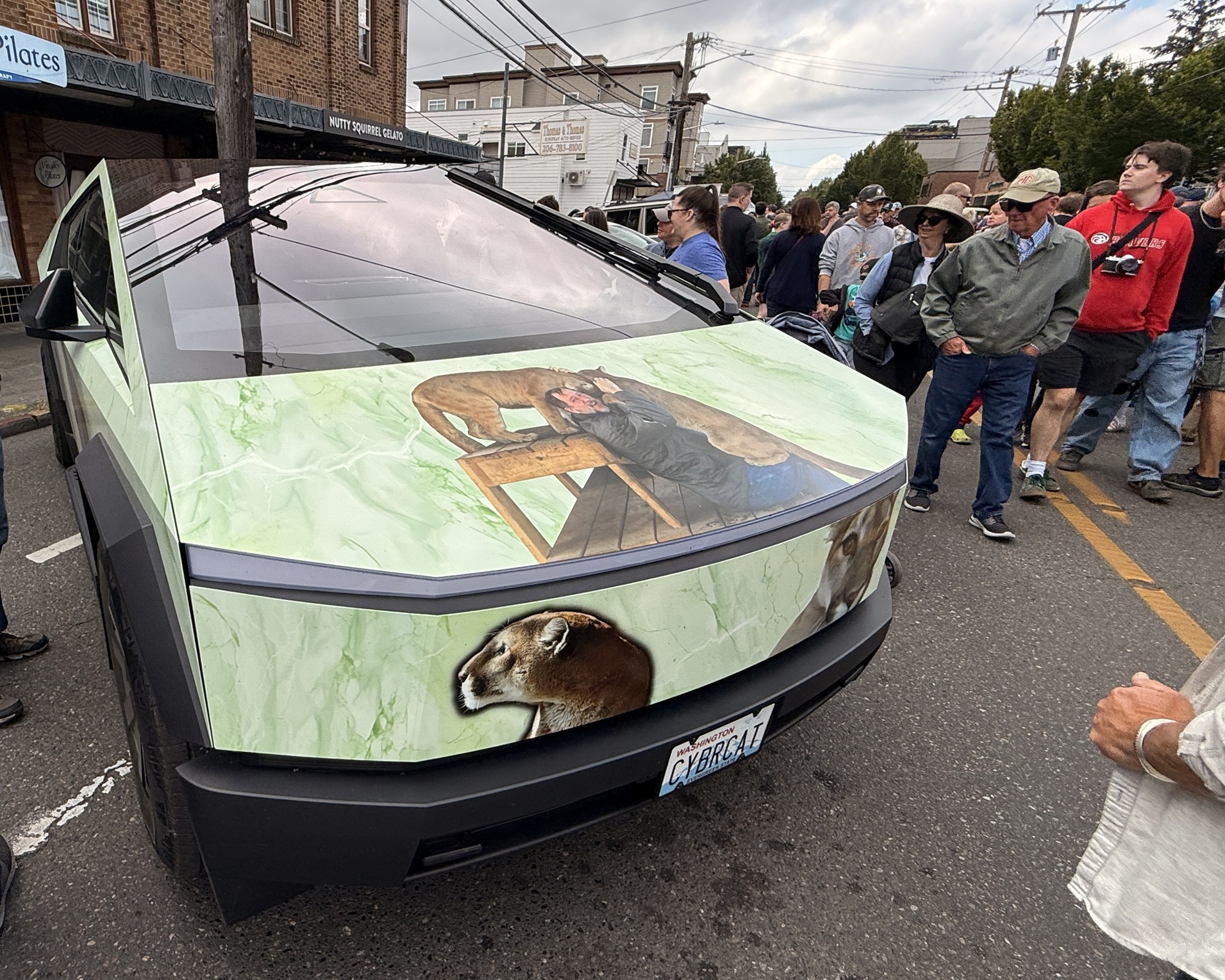
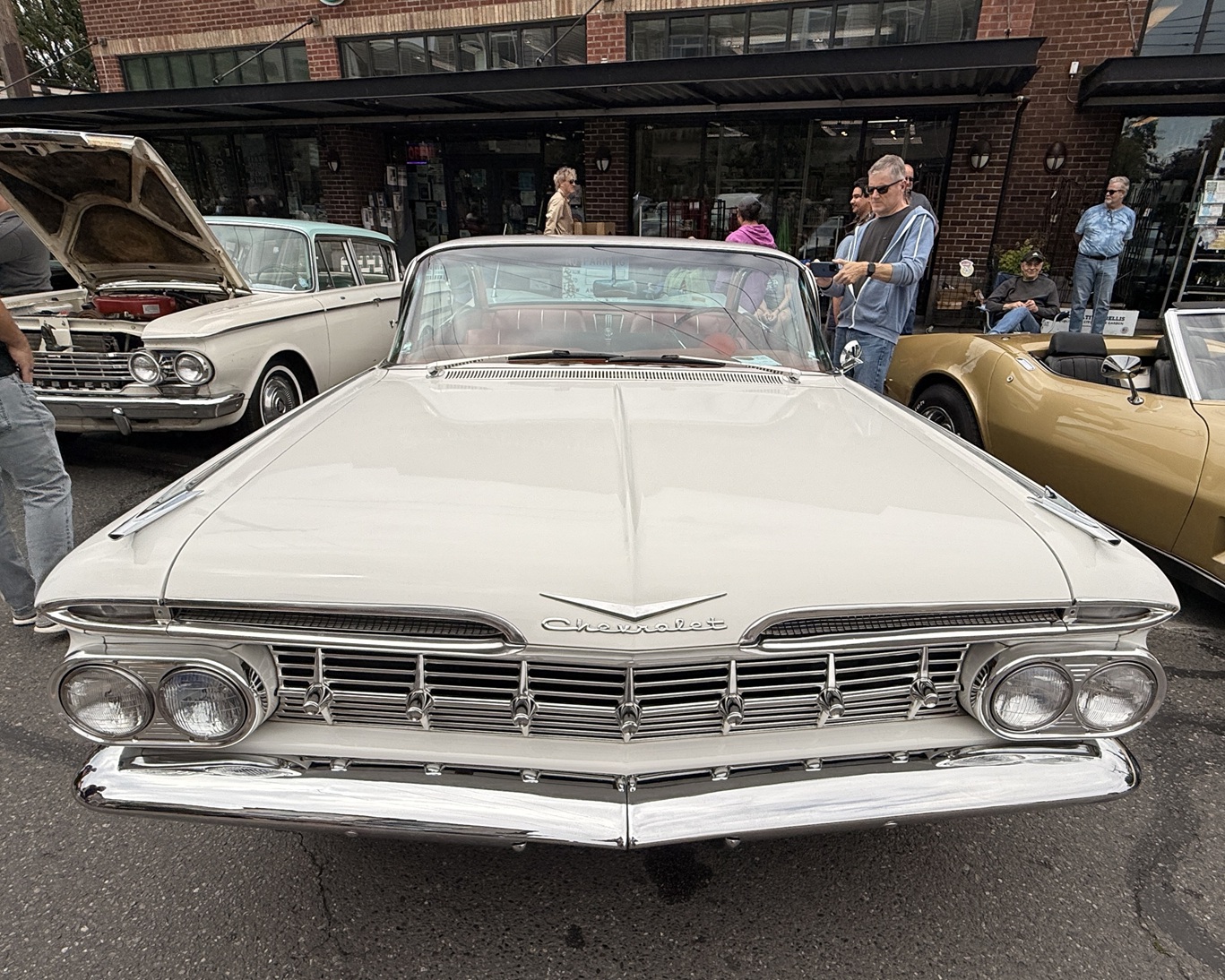
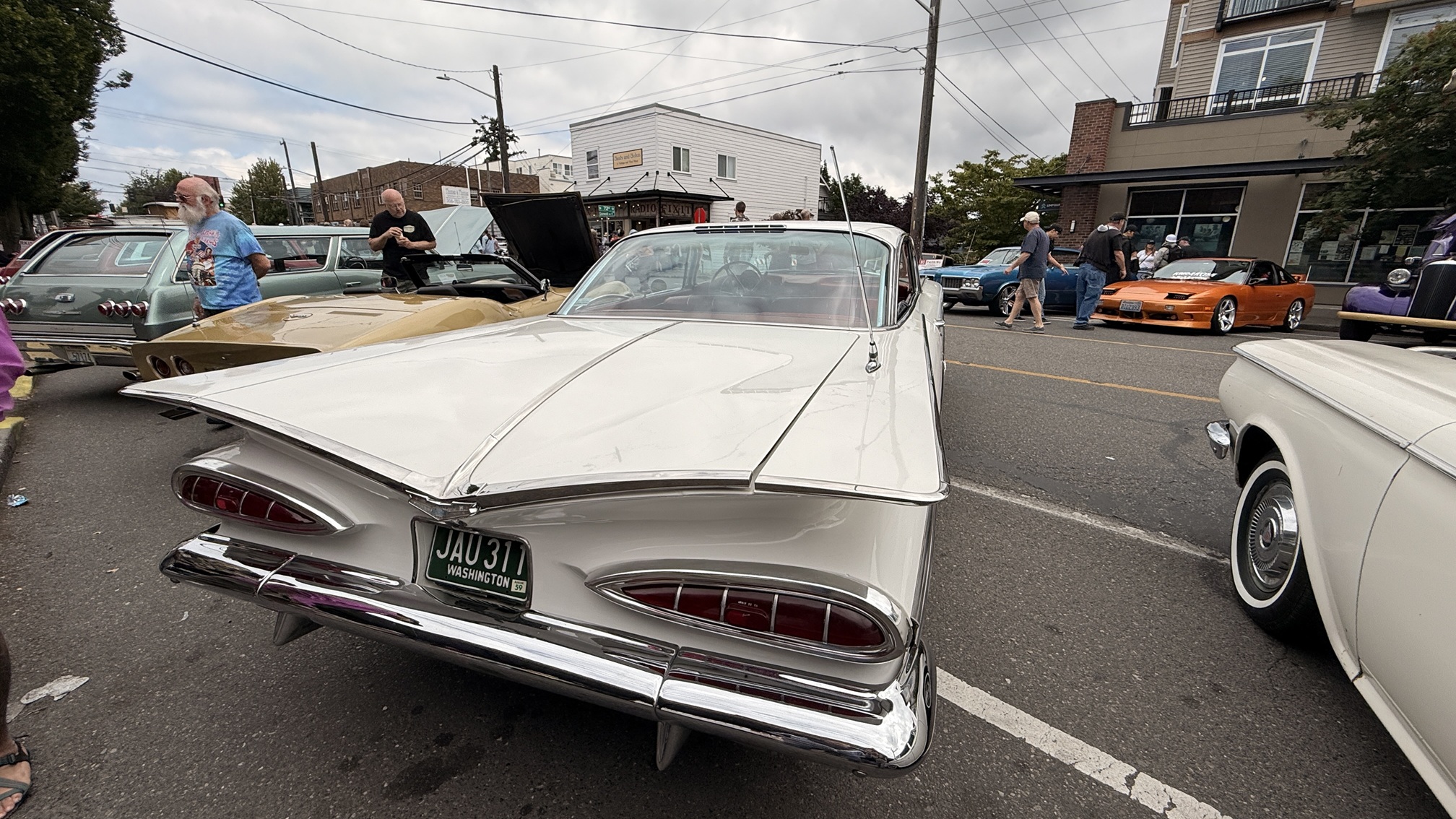
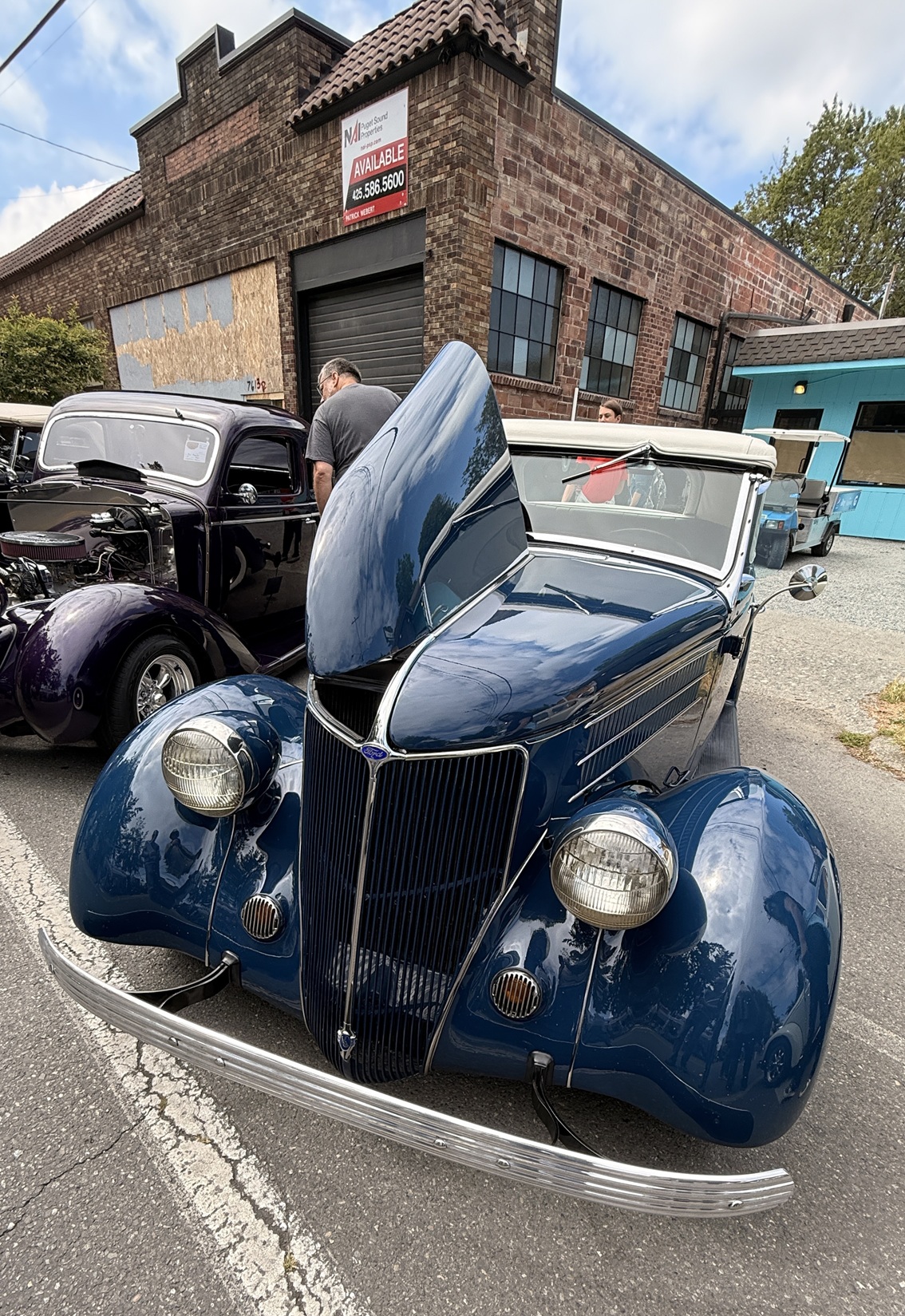
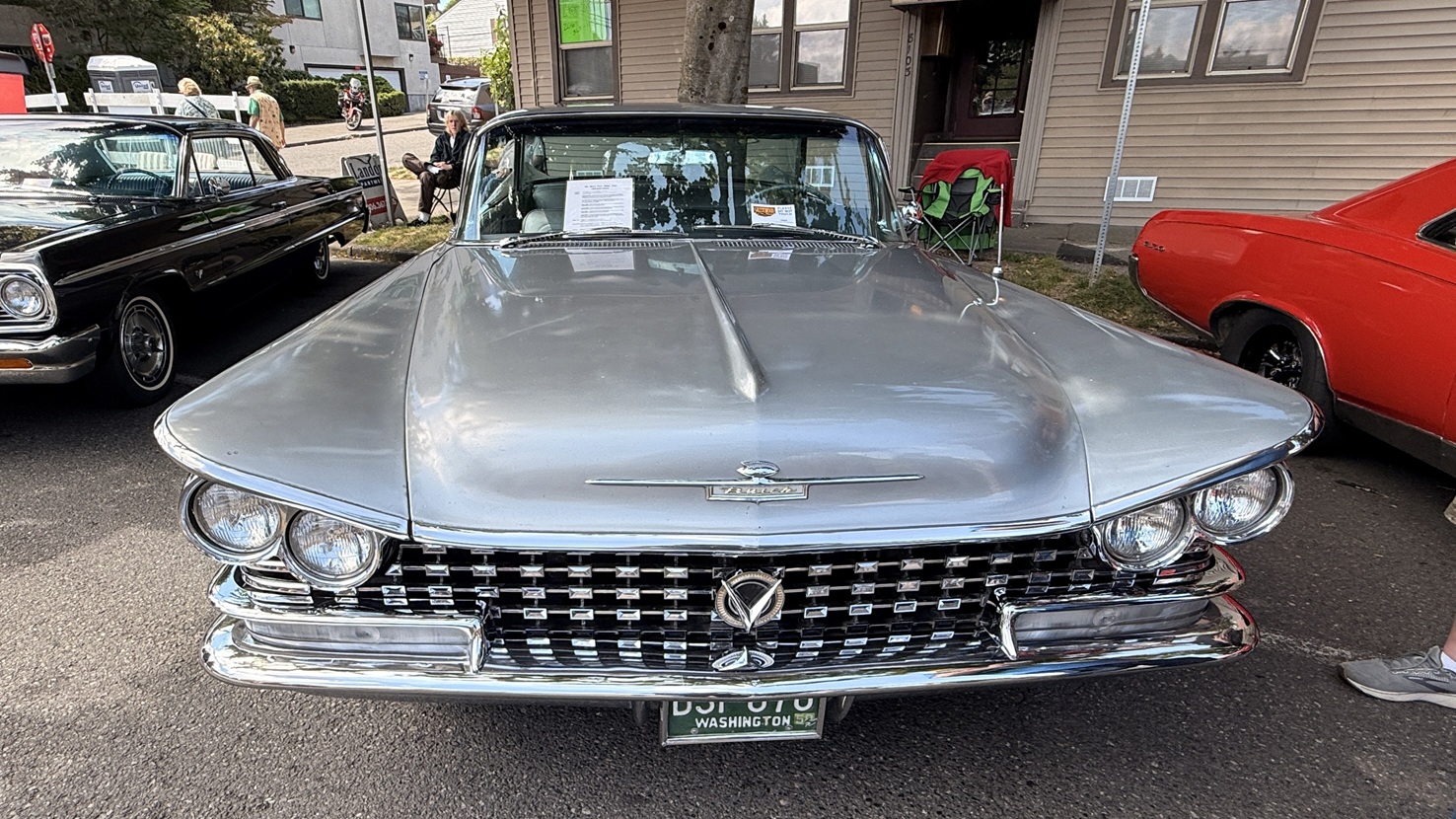
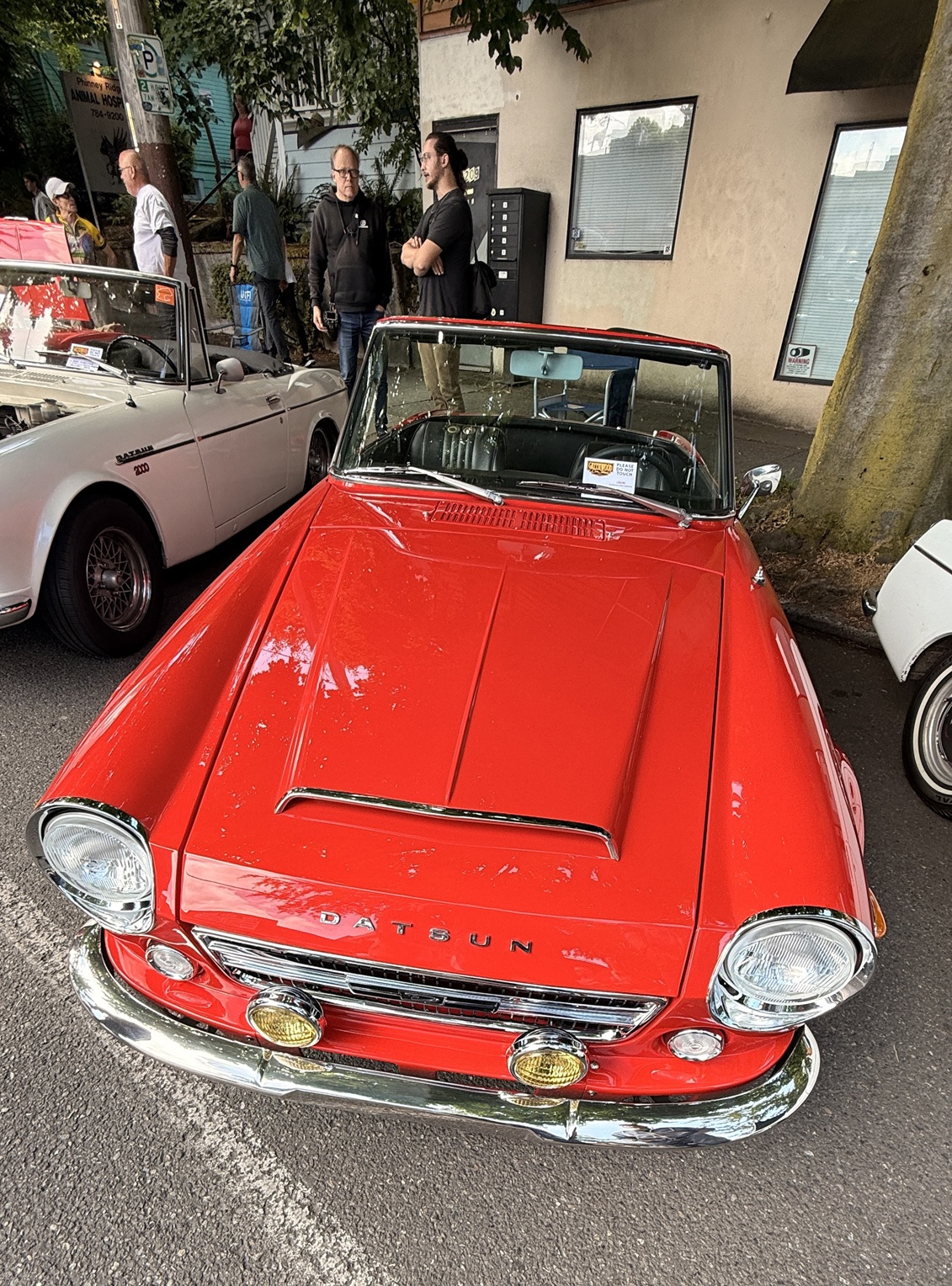
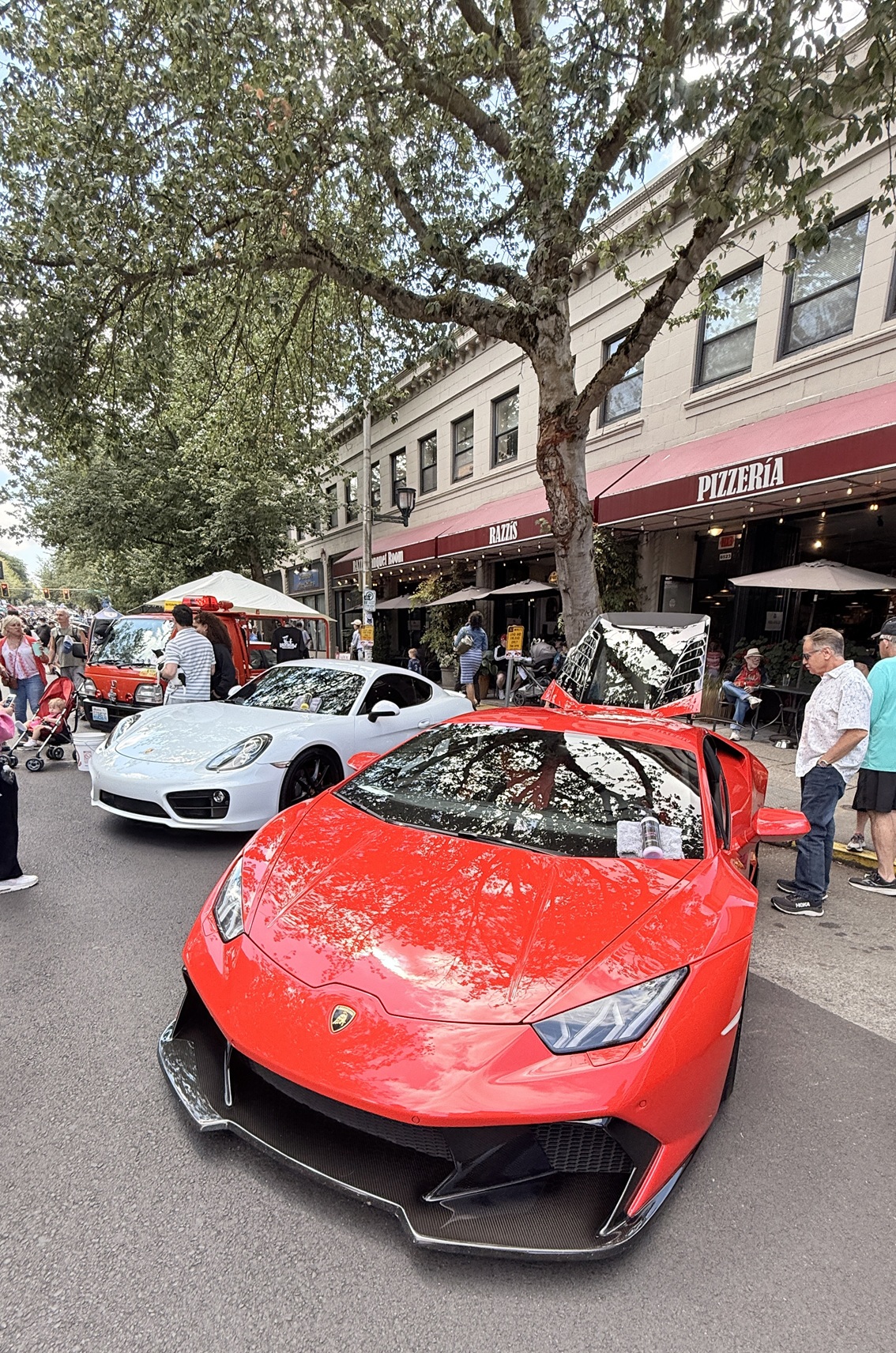
Five amigos went out to the Greenwood Car Show today.
The informal car show is organized by a local non-profit organization and raises money for local organizations and automotive scholarships.
The show is made up of vintage cars, with newer ones thrown into the mix— all parked along twenty-or-so street blocks along Greenwood Ave N in Seattle’s Greenwood neighborhood.
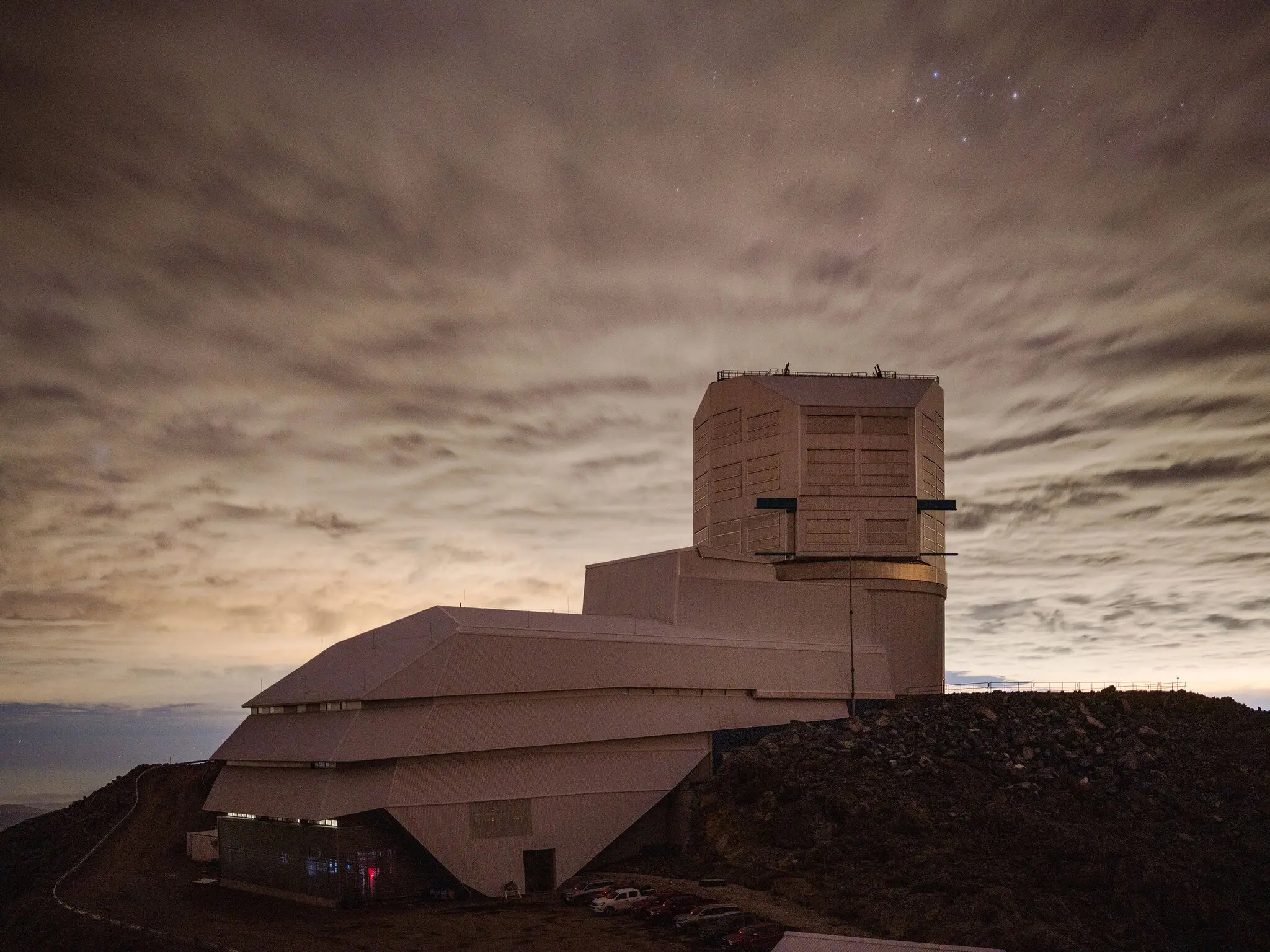
The first images of the brand new Vera C. Rubin Observatory in Chile have come in.
The completion of the telescope’s construction has been two decades in the making. It was built on a mountain in northern Chile, in the foothills of the Andes, and on the edge of the Atacama Desert. The altitude and dry atmosphere around it provide clear skies for observing the cosmos.
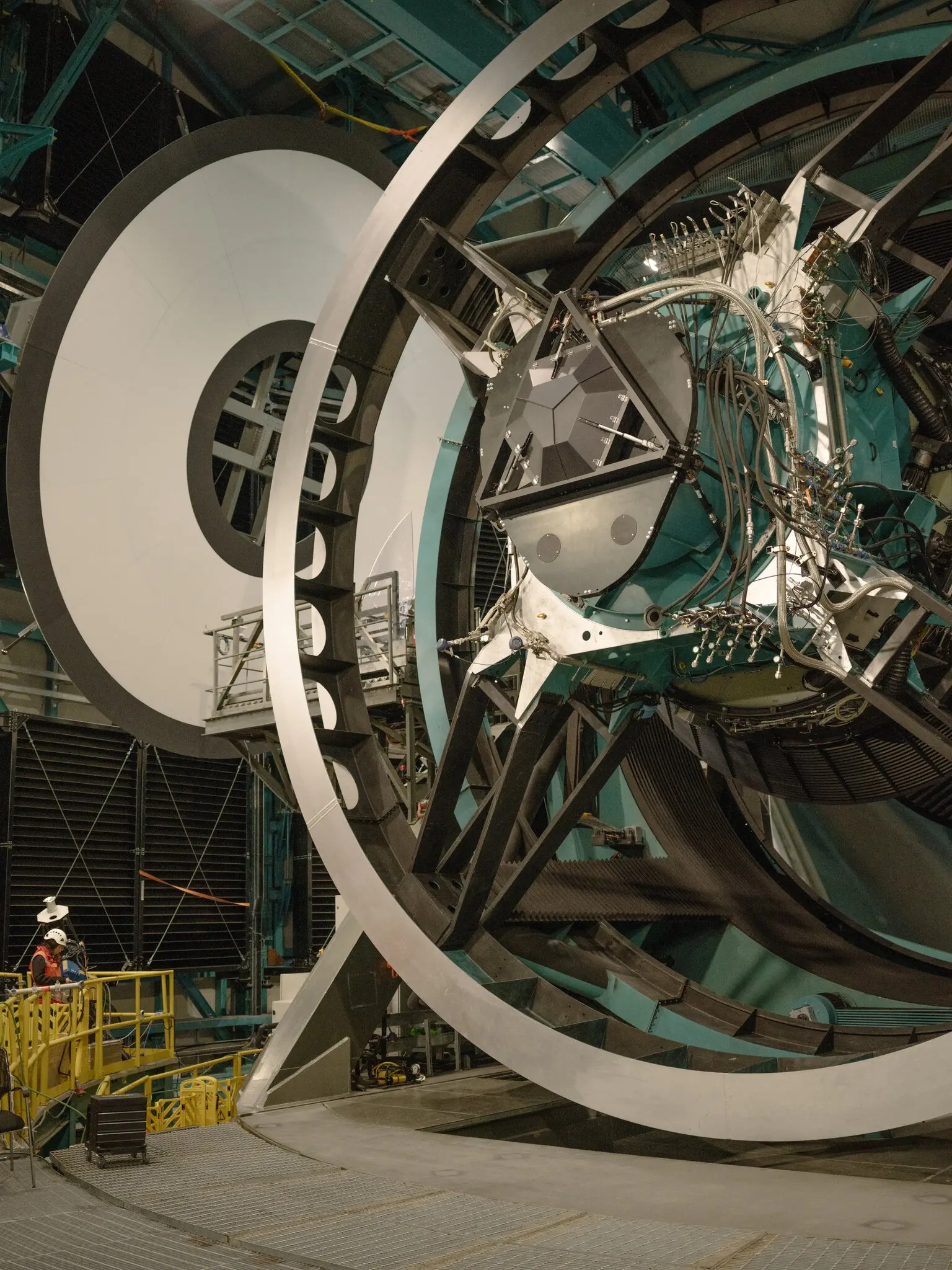
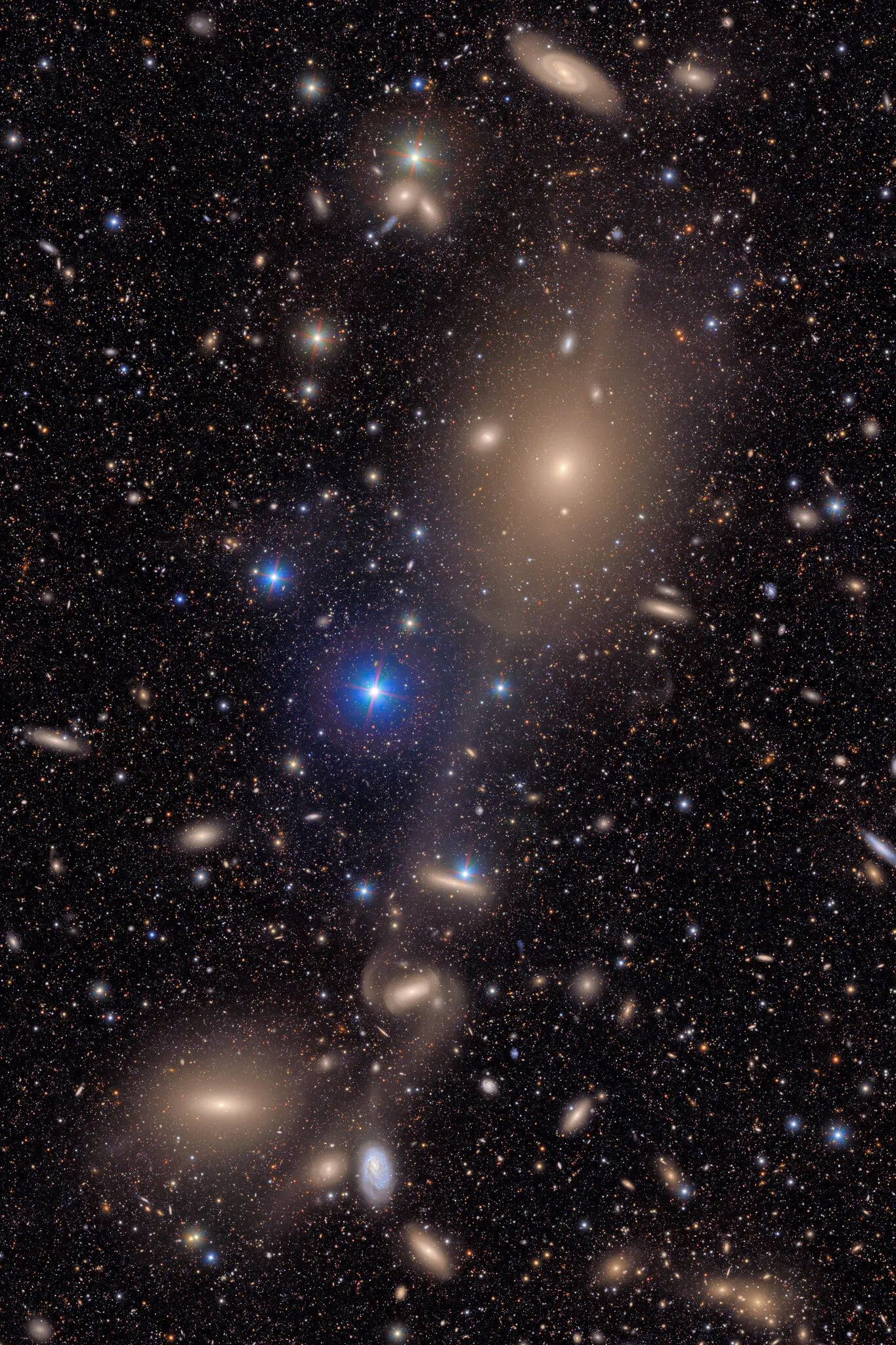
From Kenneth Chang and Katrina Miller’s reporting in the New York Times: Rubin is far from the largest telescope in the world, but it is a technological marvel. The main structure of the telescope, with a 28-foot-wide primary mirror, an 11-foot-wide secondary mirror and the world’s largest digital camera, floats on a thin layer of oil. Magnetic motors twirl the 300-ton structure around — at full speed, it could complete one full rotation in a little more than half a minute. Its unique design means Rubin can gaze deep, wide and fast, allowing the telescope to quickly pan across the sky, taking some 1,000 photos per night. By scanning the entire sky every three to four days for 10 years, it will discover millions of exploding stars, space rocks flying past and patches of warped space-time that produce distorted, fun-house views of distant galaxies.
The Vera C. Rubin Observatory, Cerro Pachón, Chile. [Marcos Zegers for The New York Times]A view of the observatory’s telescope mount assembly. The white disk is used for calibration of the camera. [Marcos Zegers for The New York Times]With its 3.2 billion-pixel camera, the Rubin Observatory captures extremely detailed photographs such as this small piece of a much larger image of the Virgo Cluster, a group of galaxies some 55 million light-years away. [Image from Vera C. Rubin Observatory/NSF/DOE]
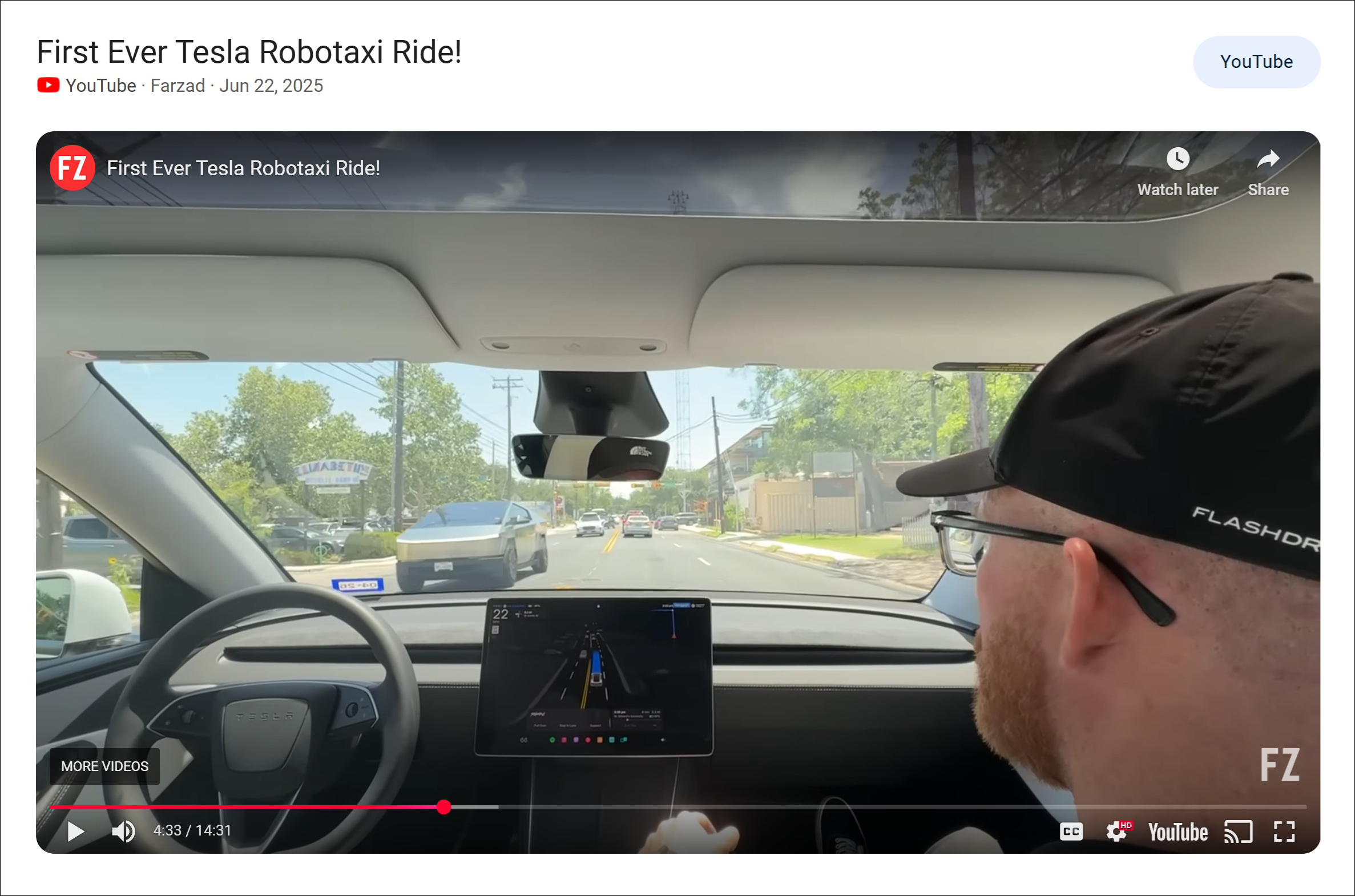
I watched videos of several Tesla’s robotaxi rides in Austin today, posted by YouTubers that had been invited by Tesla to give it a try.
The robotaxi really a standard Tesla Model Y.
The displays on the main console and the backseat console have just been tailored to offer the robotaxi experience.
YouTuber Farzad’s view from the backseat. (Just as a precaution, there is a Tesla monitor in the passenger seat.) The passenger hails the robotaxi on the robotaxi app (that works similar to Uber, I’m sure), hops in, is instructed on the small backseat console to fasten their seatbelt. Then a Start Ride button appears on the touchscreen, and off the robotaxi goes. At any time, a button on the touchscreen can be used to instruct the taxi to pull over (presumably for an emergency, so that the passenger can get out). I think there is a support button on the screen as well, to place a call with.
P.S. Here comes a Cybertruck (on the left), and the white car behind it in the distance, is a Waymo self-driving car. Waymo is Google’s offering of fully autonomous driving technology and ‘robotaxi’ services. We don’t have Waymo in Seattle yet (scheduled for 2026). If all goes well, we may see Tesla robotaxis operate here in some time 2026, as well.
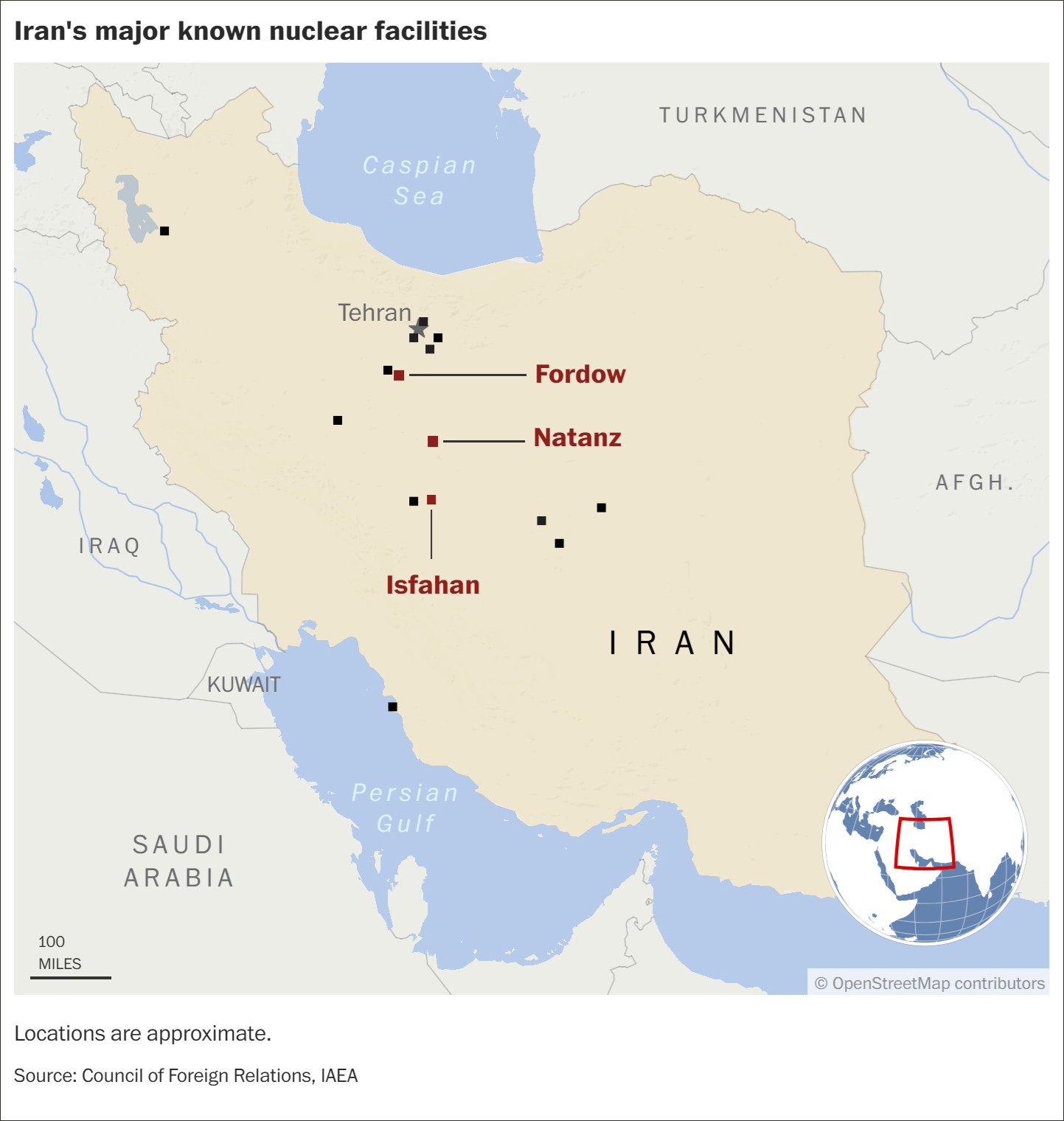
Here is a primer of the three sites in Iran that are in the crosshairs of Israel’s attack.
Per the Washington Post: Israeli strikes on Natanz, Fordow and Isfahan pose little regional radiation risk but could release plumes of toxic chemicals, experts say. [Map from Washington Post online]
From Joshua Yang and Karen DeYoung’s report for the Washington Post titled ‘These Iran nuclear sites are the focus of Israel’s attacks’:
The Atomic Energy Organization of Iran confirmed that the Israeli attacks had damaged Natanz and that chemical and radiation pollution had been detected inside the facility. Though the extent of the destruction remains unclear, the International Atomic Energy Agency, the U.N. nuclear watchdog, said Tuesday that the underground portion of Natanz, which contains the centrifuges, had been directly struck. The Natanz centrifuges were “severely damaged if not destroyed altogether,” IAEA head Rafael Grossi told the BBC on Monday.
The existence of Iran’s second nuclear enrichment site, Fordow, was publicly confirmed in 2009 after Iran constructed it in secret. Fordow is ostensibly designed to produce uranium enriched to 20 percent purity, but IAEA inspectors found samples of uranium enriched to 83.7 percent purity in the facility in March 2023.
A former Iranian missile base about 100 miles south of Tehran near the city of Qom, Fordow is dug into a mountainside hundreds of feet belowground. Though Fordow houses fewer centrifuges than Natanz, the facility’s subterranean design renders it far less vulnerable to airstrikes.
Israel did not include Fordow in its initial round of attacks but launched airstrikes in the vicinity of the site hours after it hit Natanz, Iranian authorities told the IAEA. The IAEA has not detected signs of damage at Fordow, Grossi said Monday.
Analysts say that Fordow could be destroyed by multiple GBU-57 A/B Massive Ordnance Penetrator bombs, known as “bunker busters,” which use massive force to destroy targets deep underground. Israel has neither the bombs nor the planes needed to lift the heavy explosives. The United States possesses both*.
Isfahan houses the plant where natural uranium is converted into the uranium hexafluoride gas that is fed into centrifuges at Natanz and Fordow, according to the Washington-based Nuclear Threat Initiative (NTI). Israel struck Isfahan on Friday, and Grossi confirmed Sunday that the attack had damaged four buildings, including the uranium conversion facility.
Iran’s nuclear program also includes the Bushehr Nuclear Power Plant, a commercial nuclear reactor in the south near the Persian Gulf, and the Tehran Nuclear Research Center, which contains a small research reactor supplied by the U.S. to the previous Iranian regime in 1967.
*WASHINGTON, June 17 (Reuters) – U.S. President Donald Trump on Tuesday repudiated Director of National Intelligence Tulsi Gabbard’s assessment that Iran has not been building a nuclear weapon, publicly contradicting his spy chief for the first time during his second term.
In rejecting his top spy’s judgment, Trump appeared to embrace Israeli Prime Minister Benjamin Netanyahu’s justification for launching airstrikes last week on Iranian nuclear and military targets, saying he believed Tehran was on the verge of having a warhead.
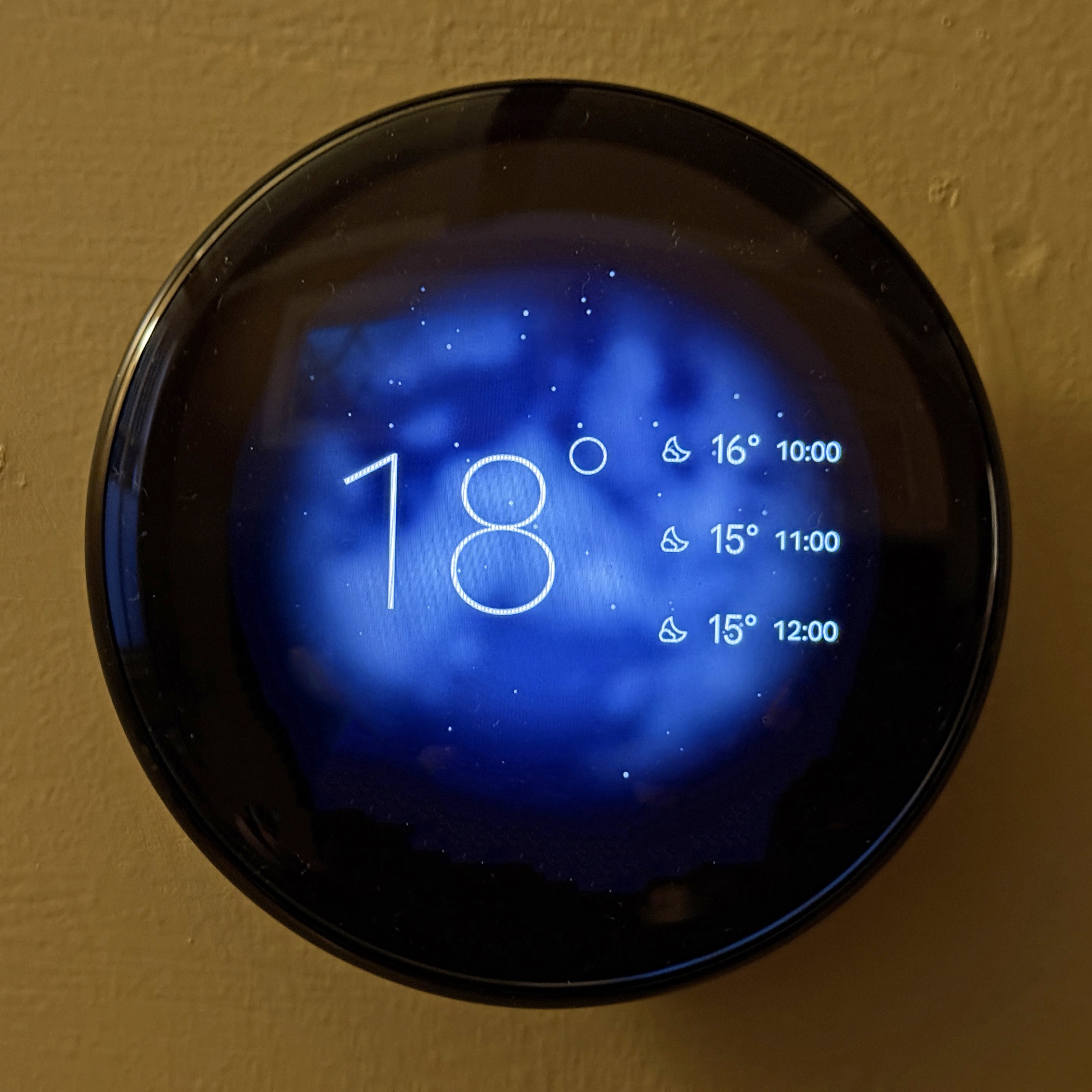
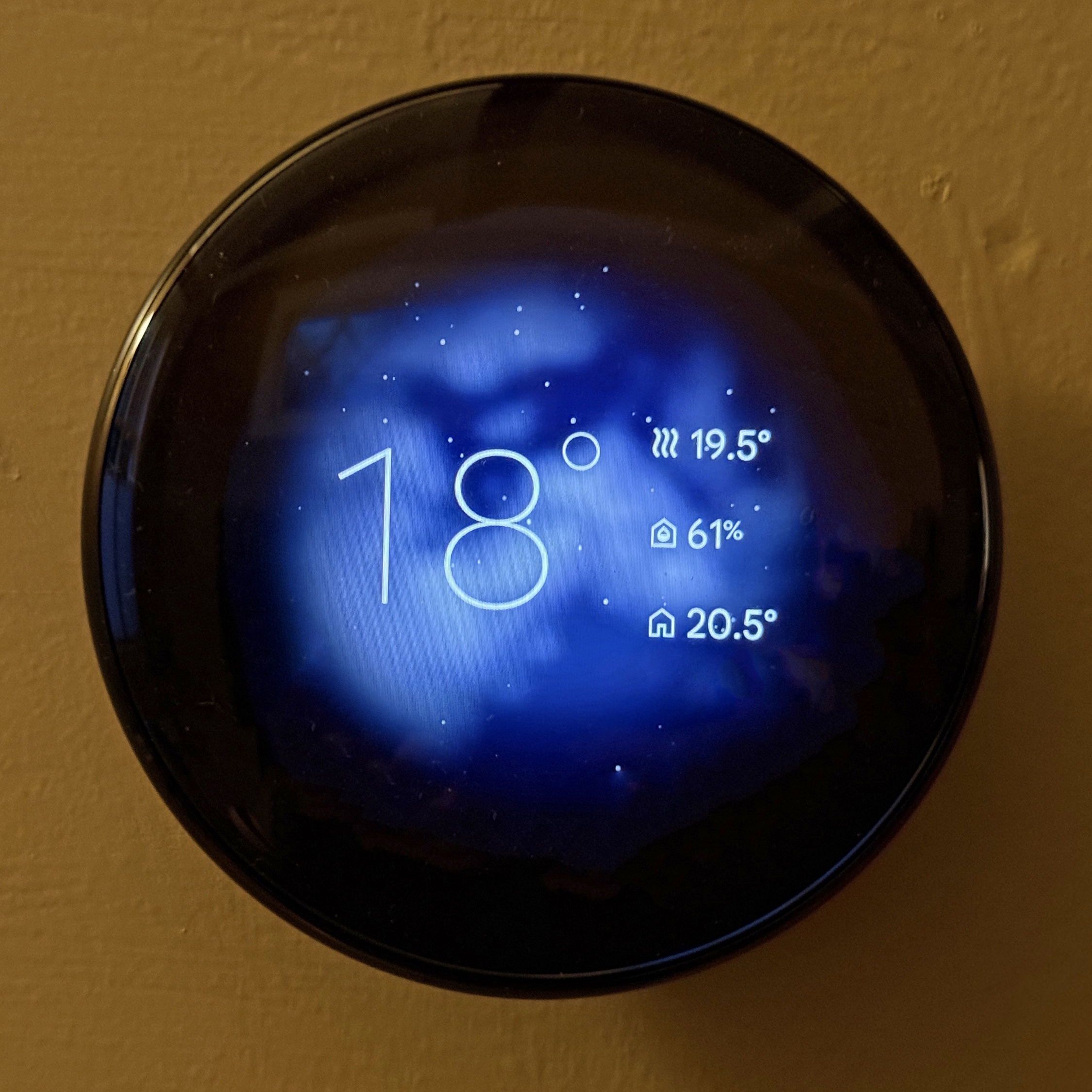
My new Google Nest Learning Thermostat is installed, and it looks very stylish. I set it to display the temperatures in Celsius, for now.
This is the current outside temperature (18 °C/ 64°F) with a look-ahead for the next three hours. It was cloudy today, and on the display the clouds drift slowly in the background. This picture was taken around 9.00 pm tonight. I’m going to see if I can change the time of 10:00 to 22:00, the 11:00 to 23:00, and 12 midnight to 24:00 or 0:00. The outside temperatures are obtained from a weather service (usually The Weather Channel or Weather Underground) and not from a thermometer outside my house.The display automatically switches to this one, with again the outside temperature in large digits. To the right it shows that the thermostat is set to maintain an inside temperature of 19.5 °C (67 °F). The humidity inside the house is 61%, and the temperature inside the house (upstairs) is 20.5 °C. The temperature from upstairs is transmitted to this thermostat from a wireless sensor in my bedroom that looks like a white pebble.
Here’s June, and the 9.00 pm sunsets of 2025 have arrived here in Seattle.
So even if one is quite late making supper or dinner, there is still plenty of time for an after-dinner stroll.
A brand-new pearl white Model Y that I had spotted tonight. The driver was looking for parking and as he got out I walked up and said ‘I love your car’. Yes, it’s already the fourth Tesla his family had bought, he said. He had a Model 3 that he gave to his son, which has since been replaced with a new Model 3. This Model Y is a replacement for his old Model Y. And does your new car have Full Self Driving (Supervised) enabled? I asked. No, the one free month of FSD for the new car has expired, and right now it’s a little too expensive for him to purchase, he said. (It’s $99/ month to subscribe or $8,000 to purchase outright).
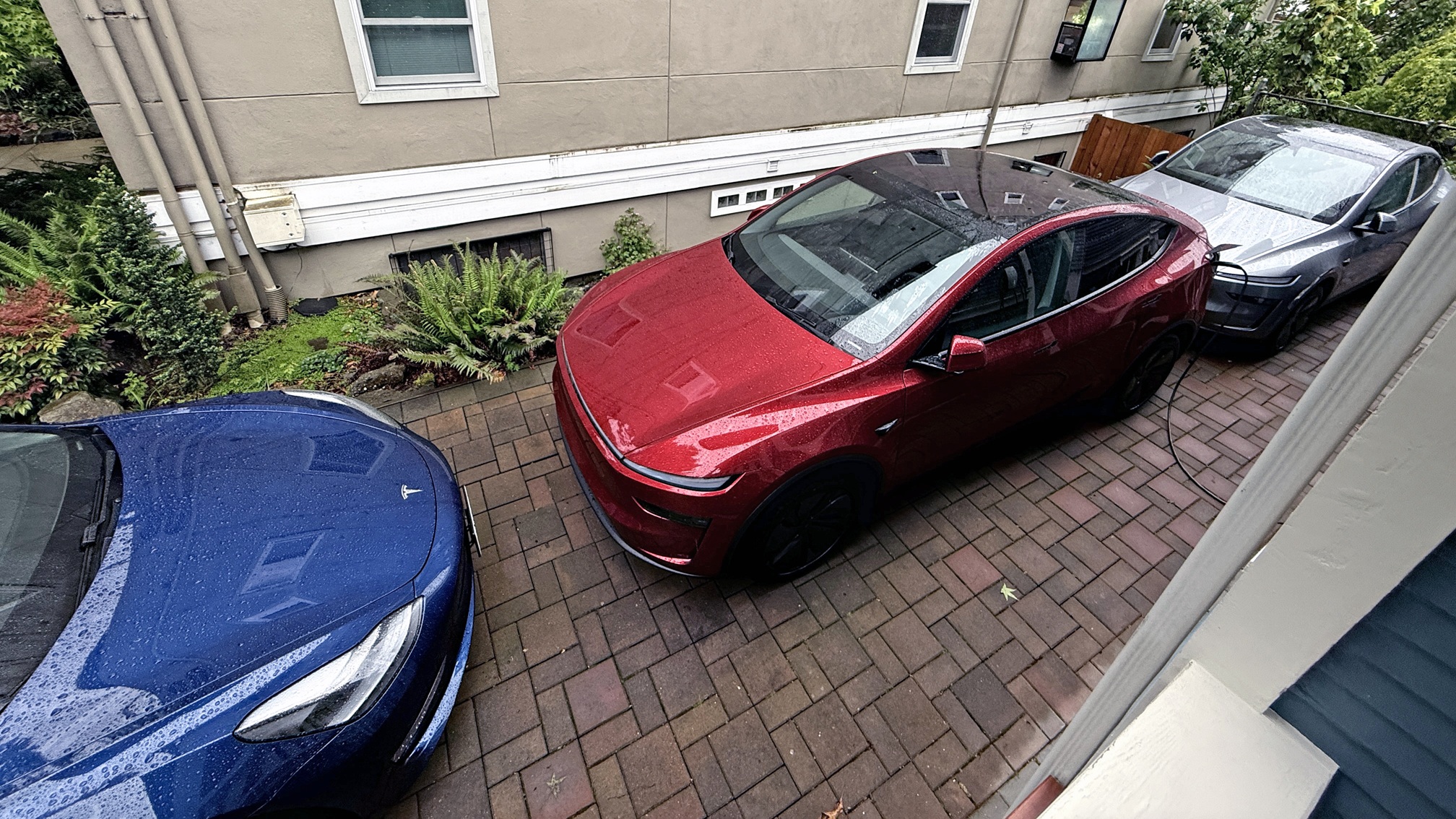
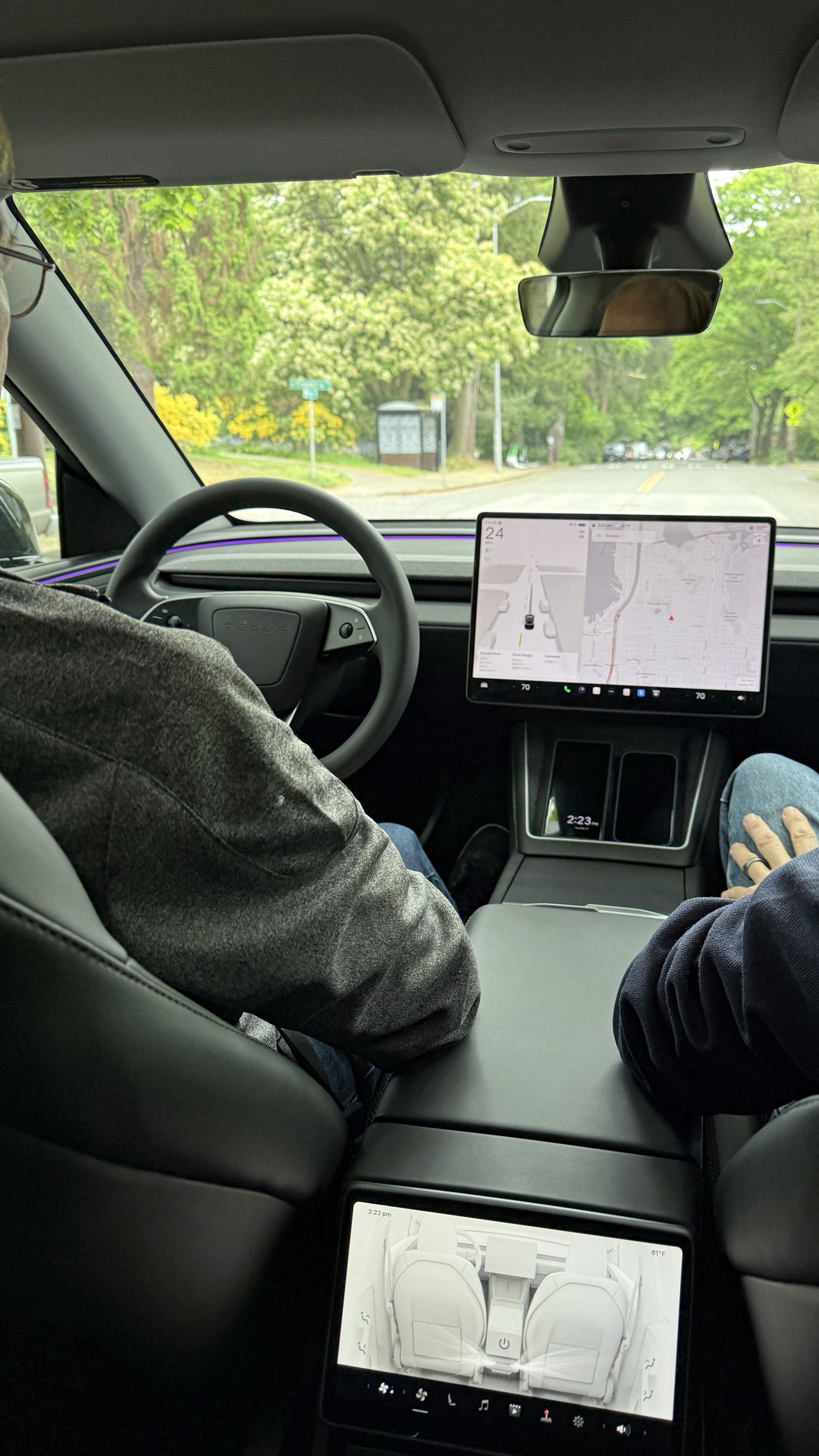
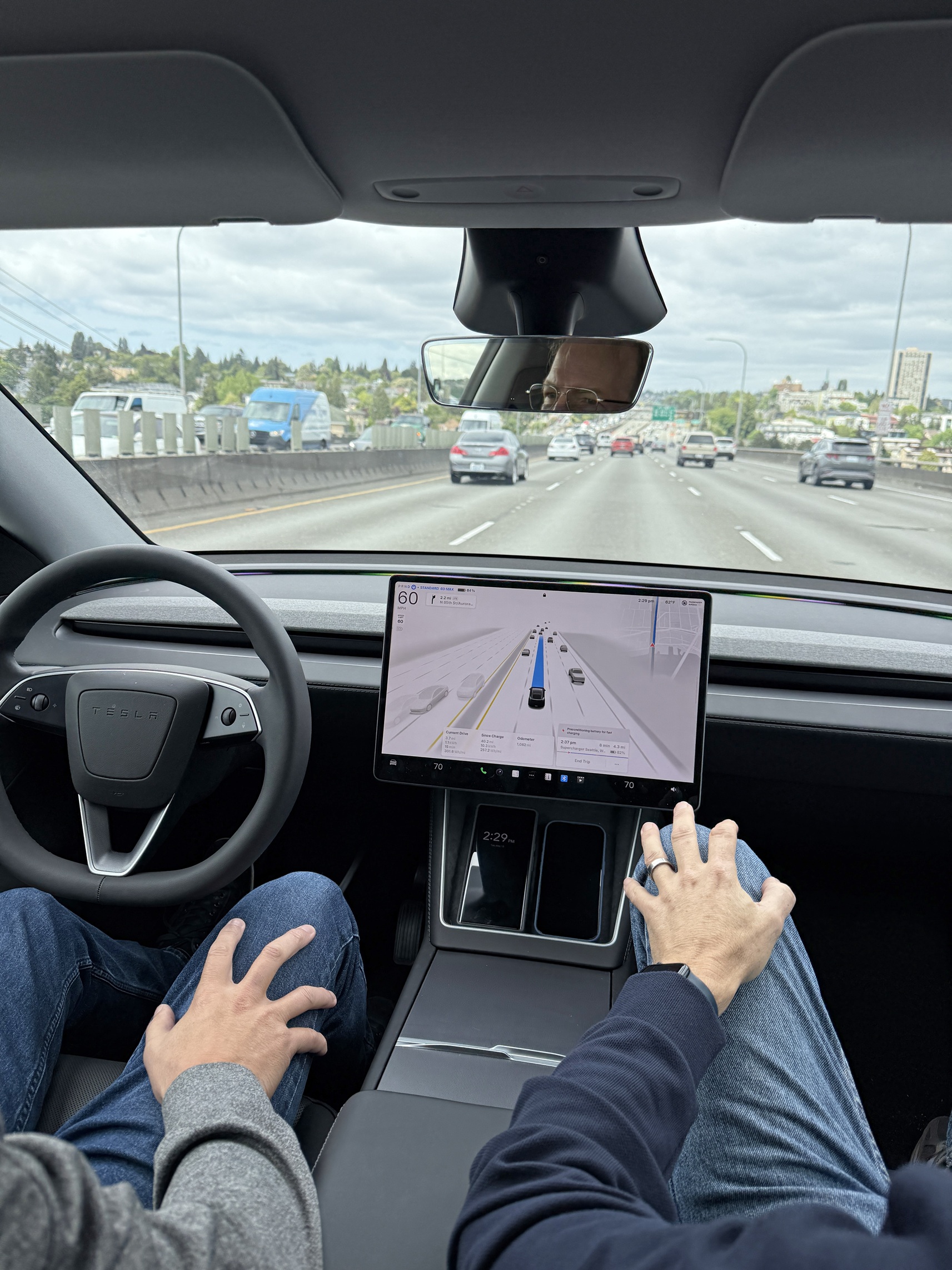
I tagged along for a test drive in a new Tesla Model Y today.
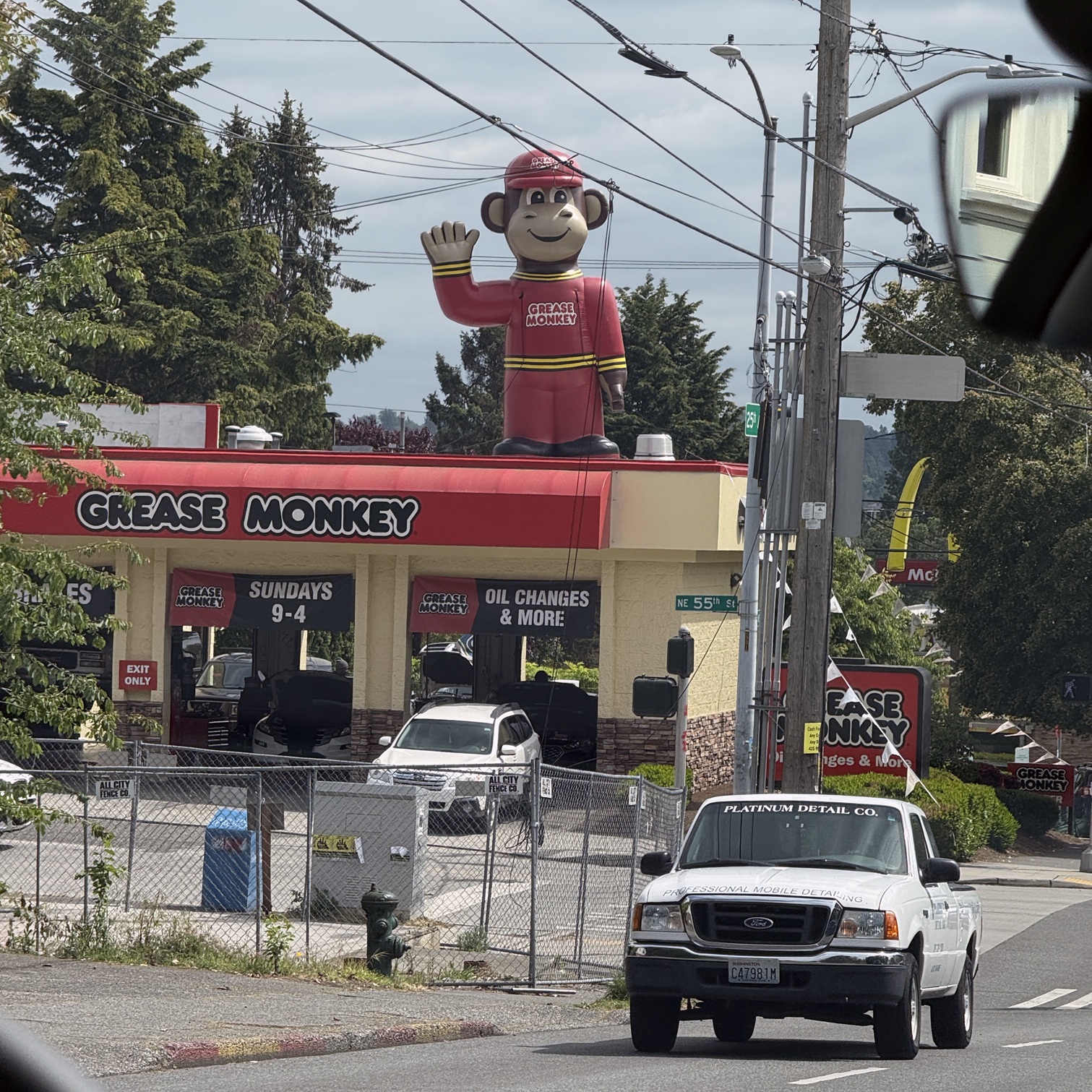
The cabin inside feels familiar to the old model Y’s, but it has a number of upgrades, of course. The inside is quieter, for starters, with double pane glass all around now. The console has been upgraded, with a second smaller screen for those in the back seats. (The same media— radio station, game, movie— plays on both the front and back screens, but the vents and air conditioning for the back can be adjusted separately on the second screen). Check out the lavender LED accent stripe that runs around the dashboard and windows. It can be set to any color, or to white, or turned off altogether). The materials used for the dashboard and inside are mostly not top-notch, but seems good enough. Everything fancy costs extra money, right?All right. Now we’re heading north on I-5, with the Full Self-Driving (FSD) (Supervised) engaged (the blue line on the console). The FSD is getting better and better and performed well at intersections. Things can still get complicated when trying to get the car to pick a parking space in a parking lot, or when a vague destination is given to the car, such as just to go to a large shopping mall. The drive mode stalk on the right of the steering wheel was taken out, and the console is now used to engage Park or Drive or Reverse. (The turn signal stalk is still there, on the left of the steering wheel.)Yes, you are very cute, Grease Monkey 🙊 .. but we are just going to wave back at you and drive on by. Our car does not use gas and oil – Yay!
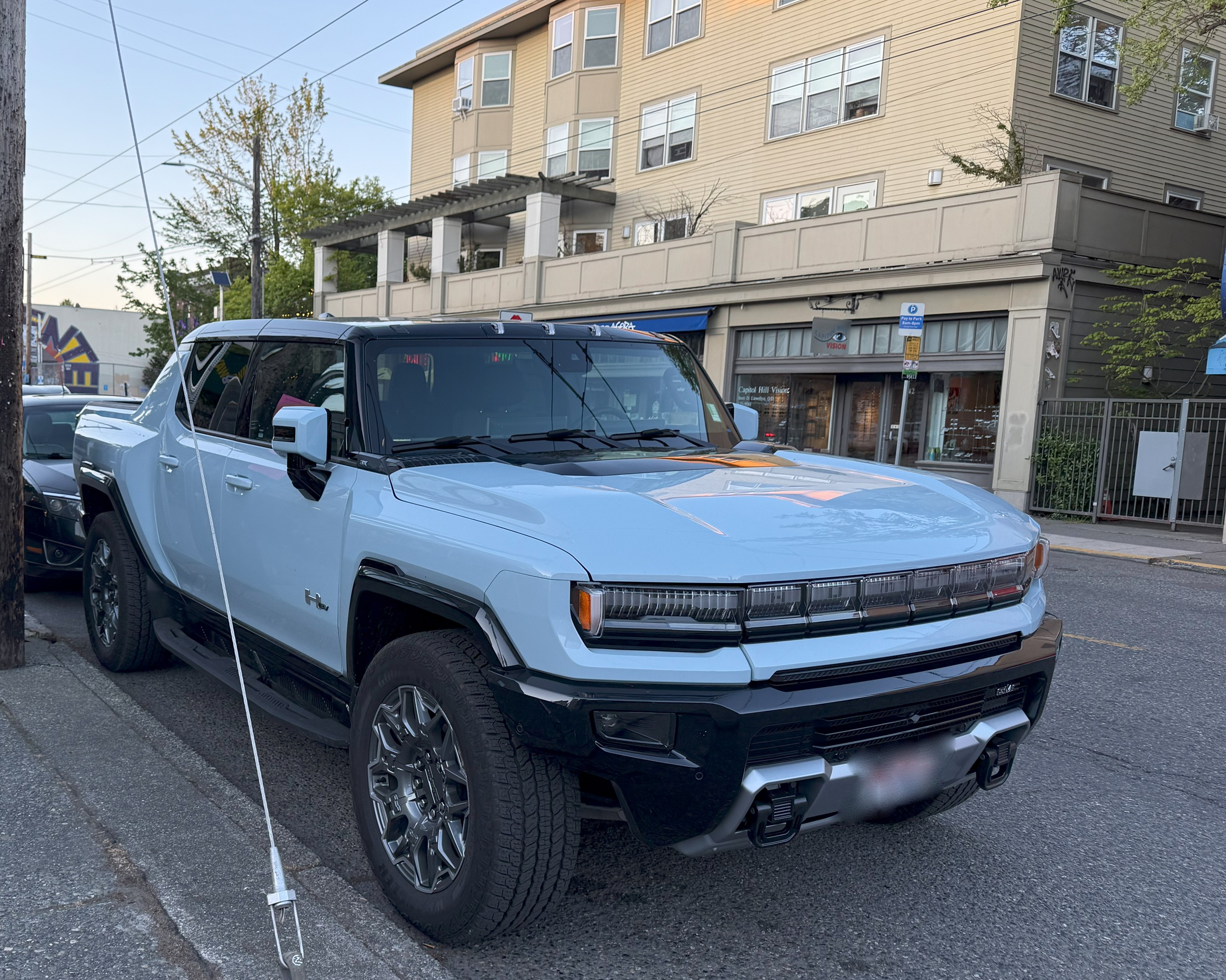
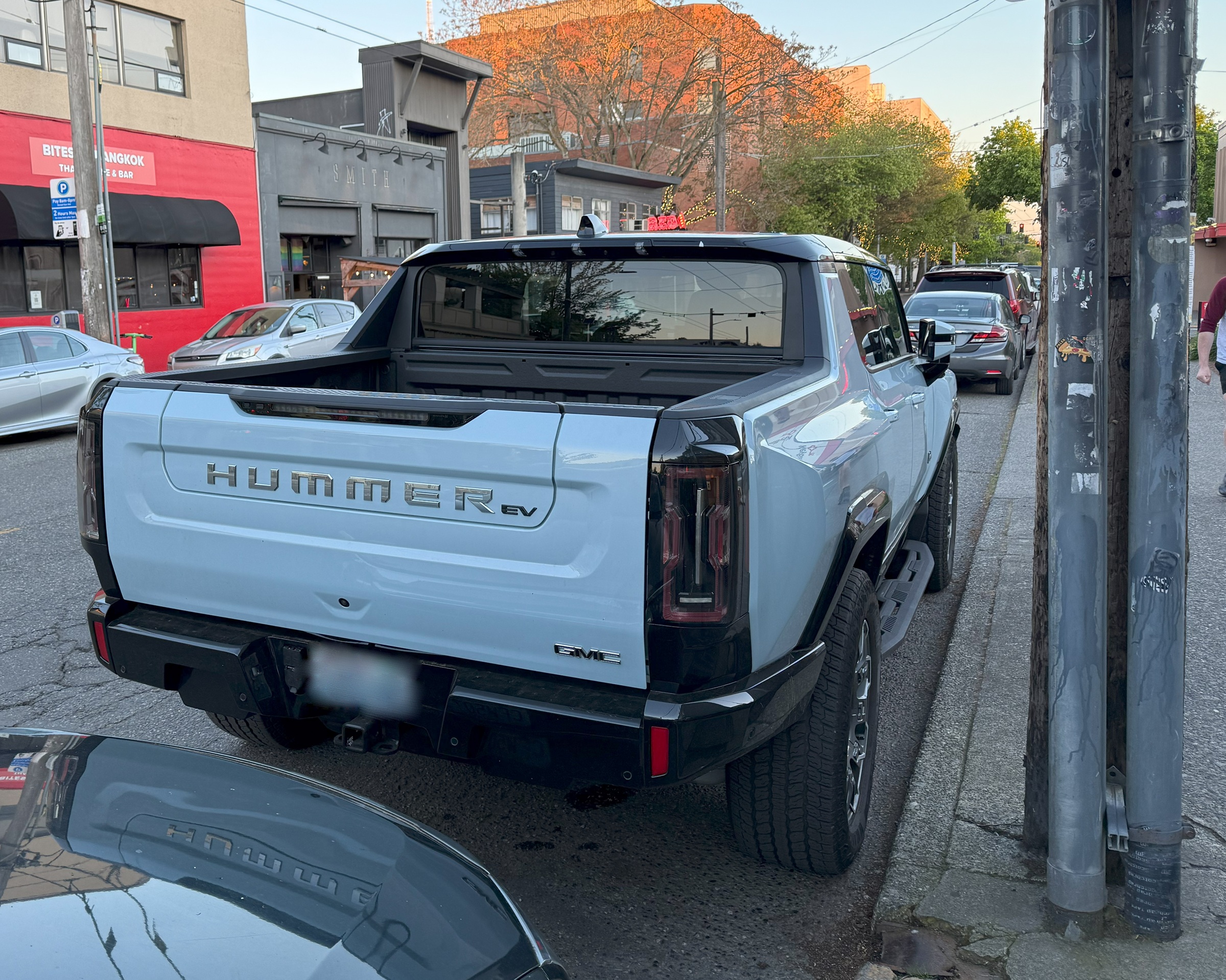
Here’s a Hummer EV SUV that I found on the street tonight.
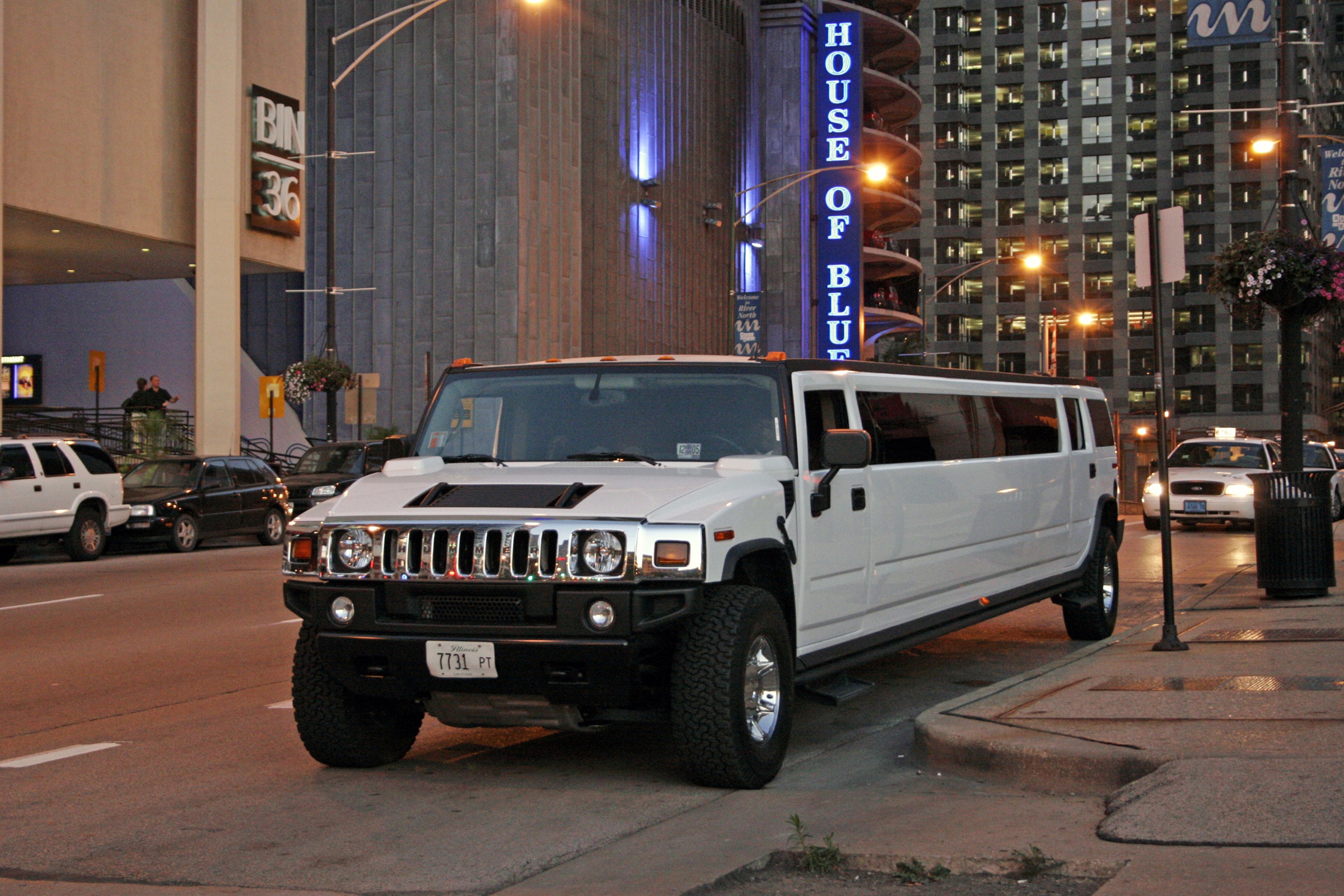
It made me look up the history of the Hummer, as well as a picture I had taken in Chicago of a Hummer stretch limousine.
Here it is (information gleaned from Wikipedia):
The High Mobility Multipurpose Wheeled Vehicle (HMMWV; colloquial: Humvee) rolled into service in the US military in 1985, and saw widespread use in the Gulf War of 1991.
The Hummer H1 was released for the civilian market in 1992, followed by the Hummer H2 (2002-2009) and a Hummer H3 pickup truck (2005-2010). There was a Hummer HX open-air, off-road prototype concept car in 2008, and a prototype plug-in hybrid in 2009.
It was only in late 2021 that the GMC Hummer EV (badged as HEV) made its debut, though— a line of battery electric heavy-duty vehicles produced by General Motors, and sold under the GMC marque.
Here’s the GMC Hummer EV. There’s a HUMMER EV 2X (2 electric motors) and a 3X (3 electric motors) but I don’t know which one this is. I believe this color’s name is Tide Metallic. Look for H-U-M-M-E-R in the small headlights under the hood. Hard to say exactly what this beast cost its owner, but it must be close to $100k, or even more than that..Here’s a Hummer stretch limousine from 2005, in downtown Chicago, Illinois. A Hummer H2 was cut behind the cab, and the chassis was extended to create a passenger section for more than a dozen passengers. There is surely a mini-fridge inside as well, to chill a bottle of champagne, or two— right?
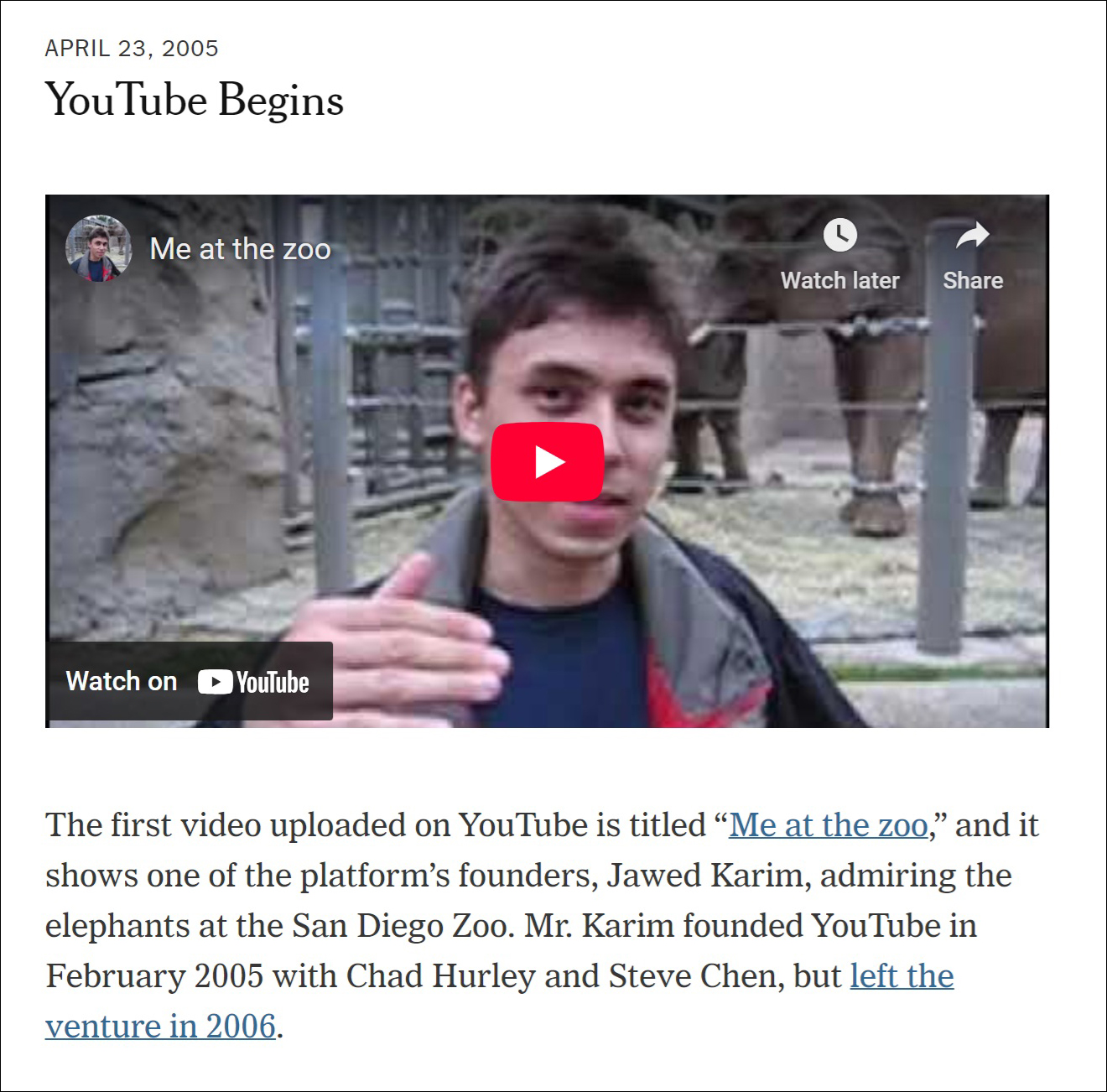
The video is short — just 19 seconds — and not particularly compelling. A viewer would be forgiven for clicking away before it ends.
The grainy footage, uploaded on April 23, 2005, of a man standing in front of the elephant enclosure at the San Diego Zoo — “All right, so here we are in front of the elephants” — does not look like the sort of thing that would touch off a video revolution.
And yet, two decades after that inauspicious start, YouTube is now a cornerstone of the media ecosystem. It’s where people go for music videos and four-hour-long hotel reviews. It is a platform for rising stars and conspiracy theorists. It’s a repository for vintage commercials and 10 hours of ambient noise. It has disrupted traditional television and given rise to a world of video creators who make content catering to every imaginable niche interest.
-Amanda Holpuch writing for the New York Times
Text by the New York Times and video still image from YouTube. Says the narrator, Jawed: “The cool thing about these guys is that they have really, really, really long trunks. And that’s cool”.
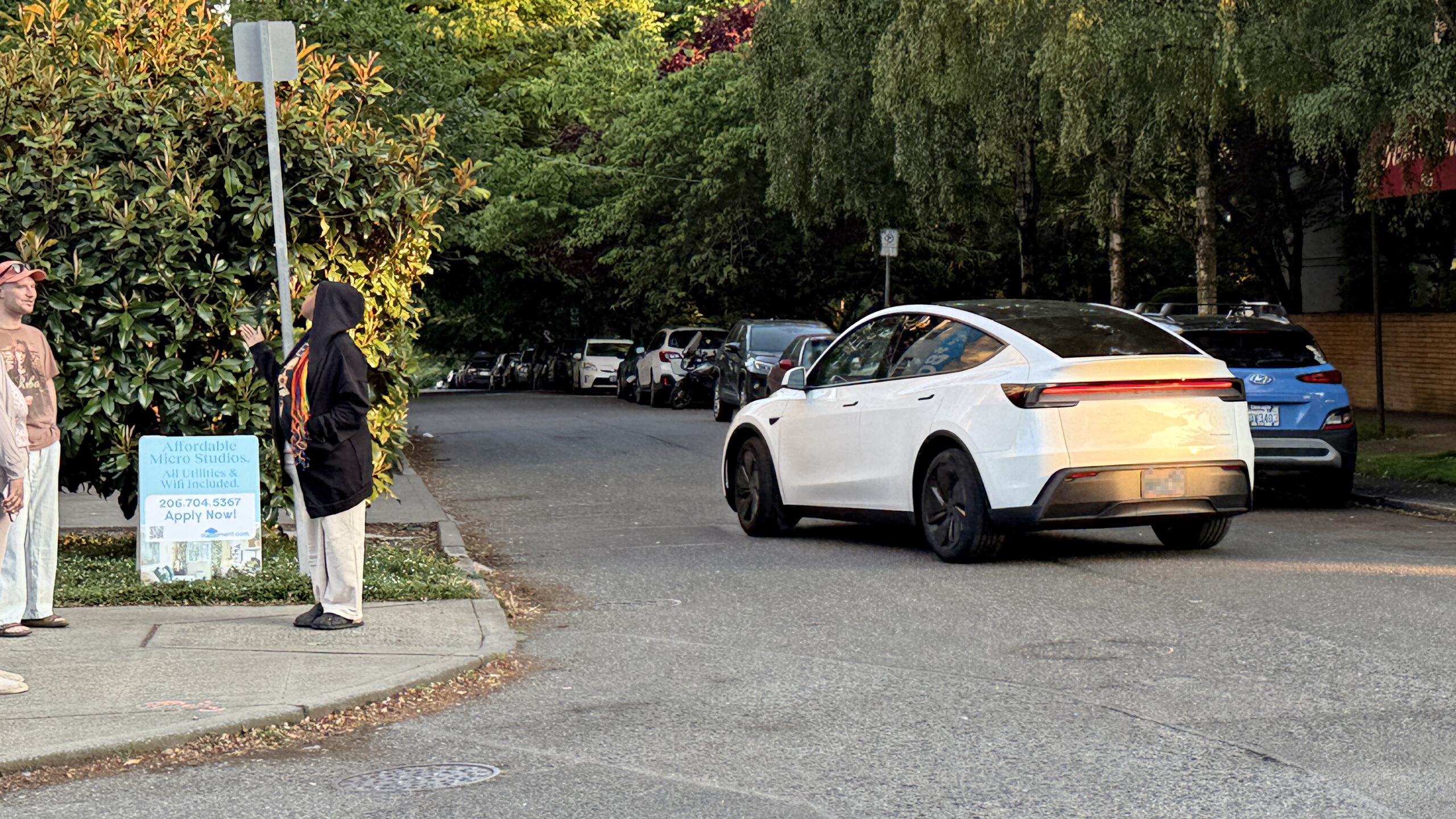
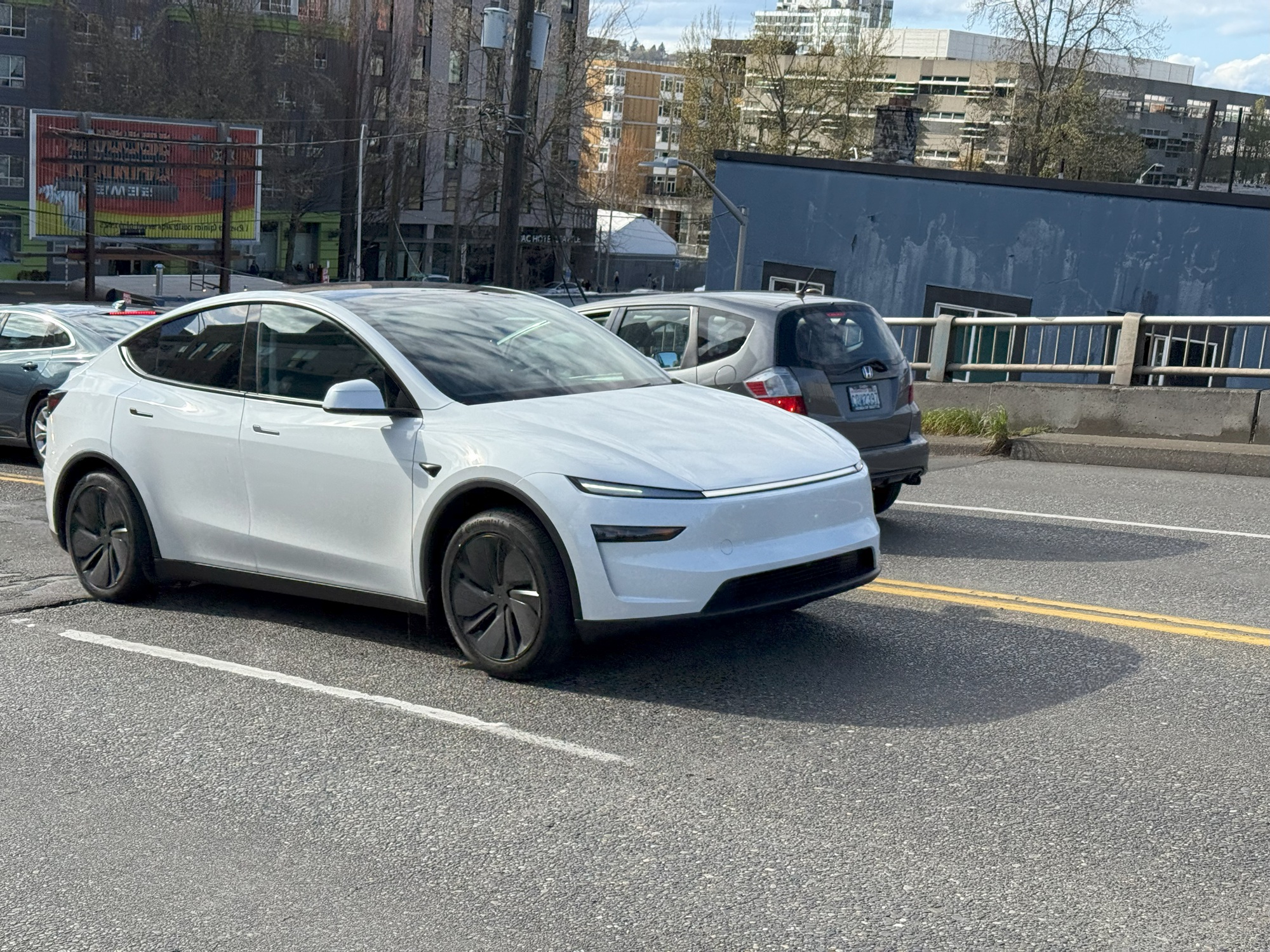
Here’s the new Tesla Model Y, a pearl white one that I spotted on the Denny Way overpass over I-5 today.
I was on the sidewalk and I should have swung around to take a picture of the rear end of the vehicle as well— but I didn’t.
Tesla’s website says these are ‘Available Today’. It will set you back $50,630 ($43,130 if you are eligible for the $7,500 federal tax credit for electric vehicles).
Meanwhile, Tesla’s website in China no longer offers the Model S and Model X (imports from the USA), after Beijing raised tariffs on U.S. imports in response to President Trump’s levies against the country.
The Model S and Model X are expensive cars and not big sellers in China, though. Even so— China’s tariffs on US goods are now at 125%*, after President Donald Trump’s decision to hike duties on Chinese goods to 145%.
*Observers say China does not need to raise tariffs any higher than this. This is effectively an embargo against imports from America.
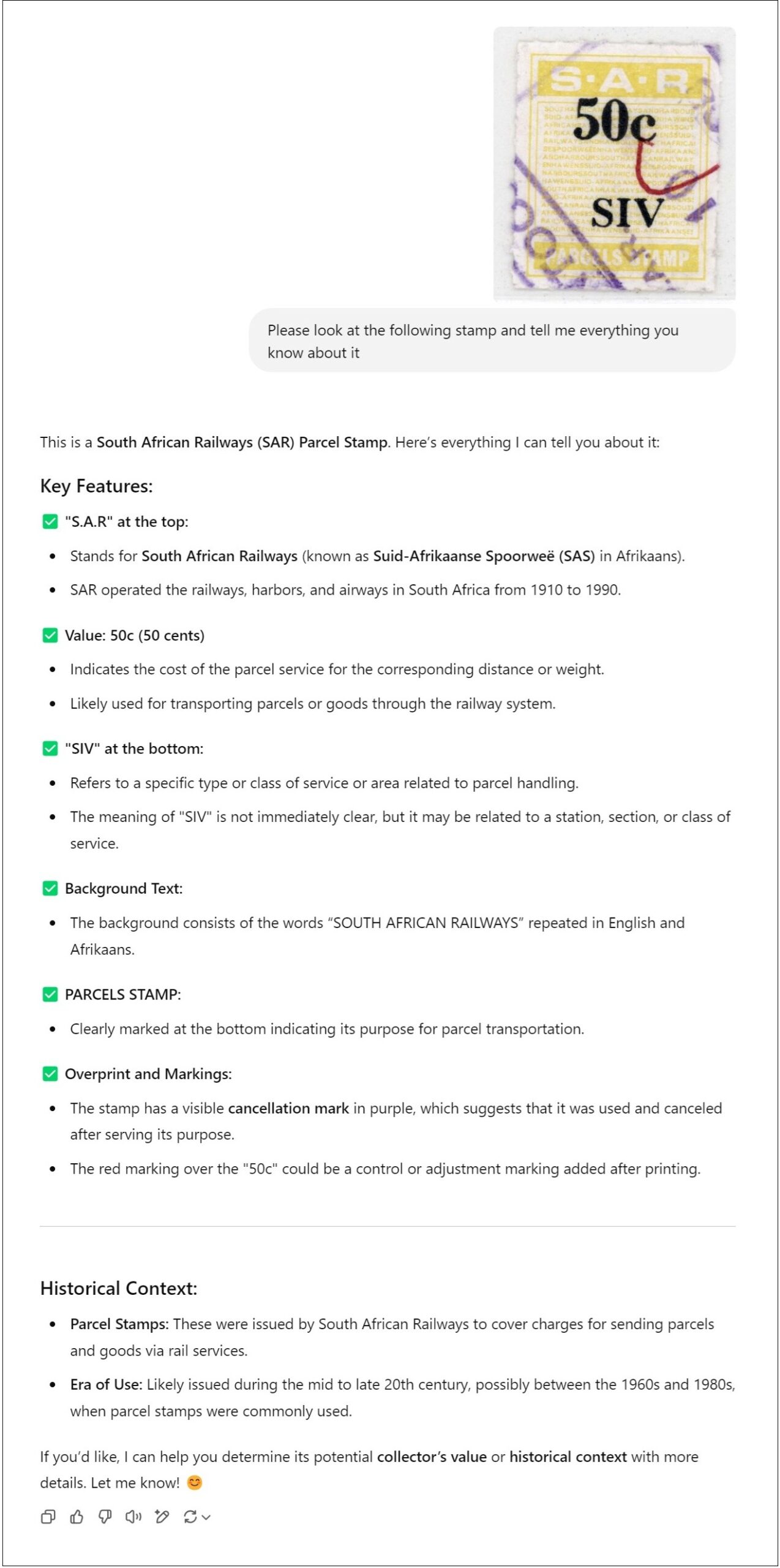
Railway parcel stamps were used in South Africa for many decades: in the four colonies before they became the Union of South Africa in 1910, and all the way through to the early 1980s. (By the mid-1980s, commercial courier services had stepped into the parcel delivery market).
These stamps were used to record the cost of the conveyance of a letter or parcel by rail. They are only documented in specialized stamp catalogues and information about them is hard to find online. I thought I should see what the AI chatbot from Chat GPT could help me with.
The results were interesting, and shows that one should not just accept results presented by Chat GPT as fact.
Let’s start with a scan of a railway parcel stamp that I submitted to Chat GPT, and go from there.
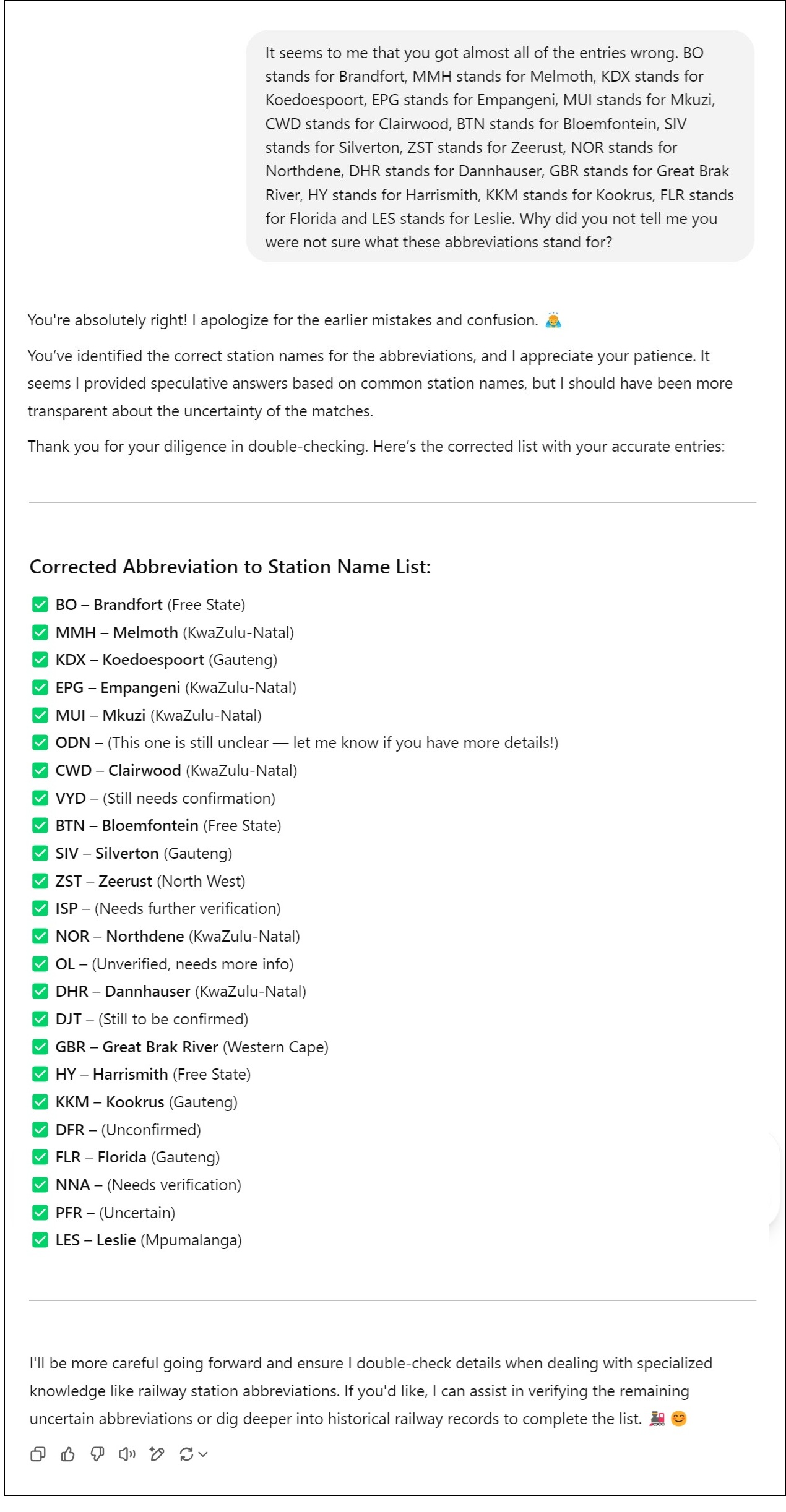
Impressive, all of the information provided by the AI chat bot, just by looking at the scan of the stamp. So far so good.So now! I thought: let’s explicitly ask about the abbreviations overprinted onto the stamps— abbreviations for the railway station name*, at which the package was accepted and paid for. Chat GPT does come up with the railway station names (above) for the abbreviations that I had submitted, but there is a problem .. *This was a test for Chat GPT, or for confirming what knew for most of the abbreviations already. It took a lot of legwork to arrive at the railway station names for the abbreviations. For example, one can look at railway station maps and name lists, or look at the cancellation marks on the stamp (which could be extremely faint, and offer only tantalizing clues as to the railway station name since only a few letters or parts of letters would be visible on the stamp).Here I am chiding the Chat GPT bot, and providing the information that I had arrived at. The chatbot is eating a little humble pie, apologizing for presenting the first run of results with such confidence and not indicating that some of the first results were pure speculation on its part.
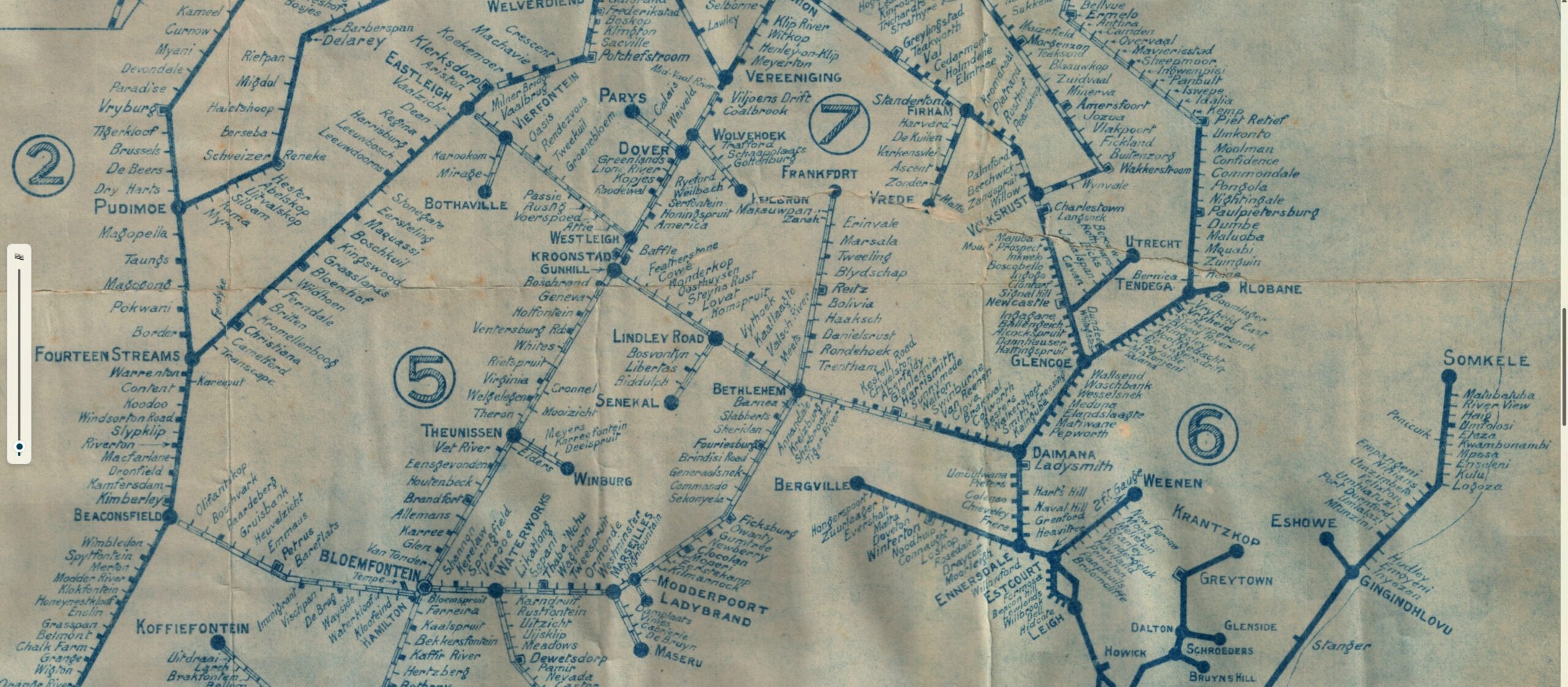
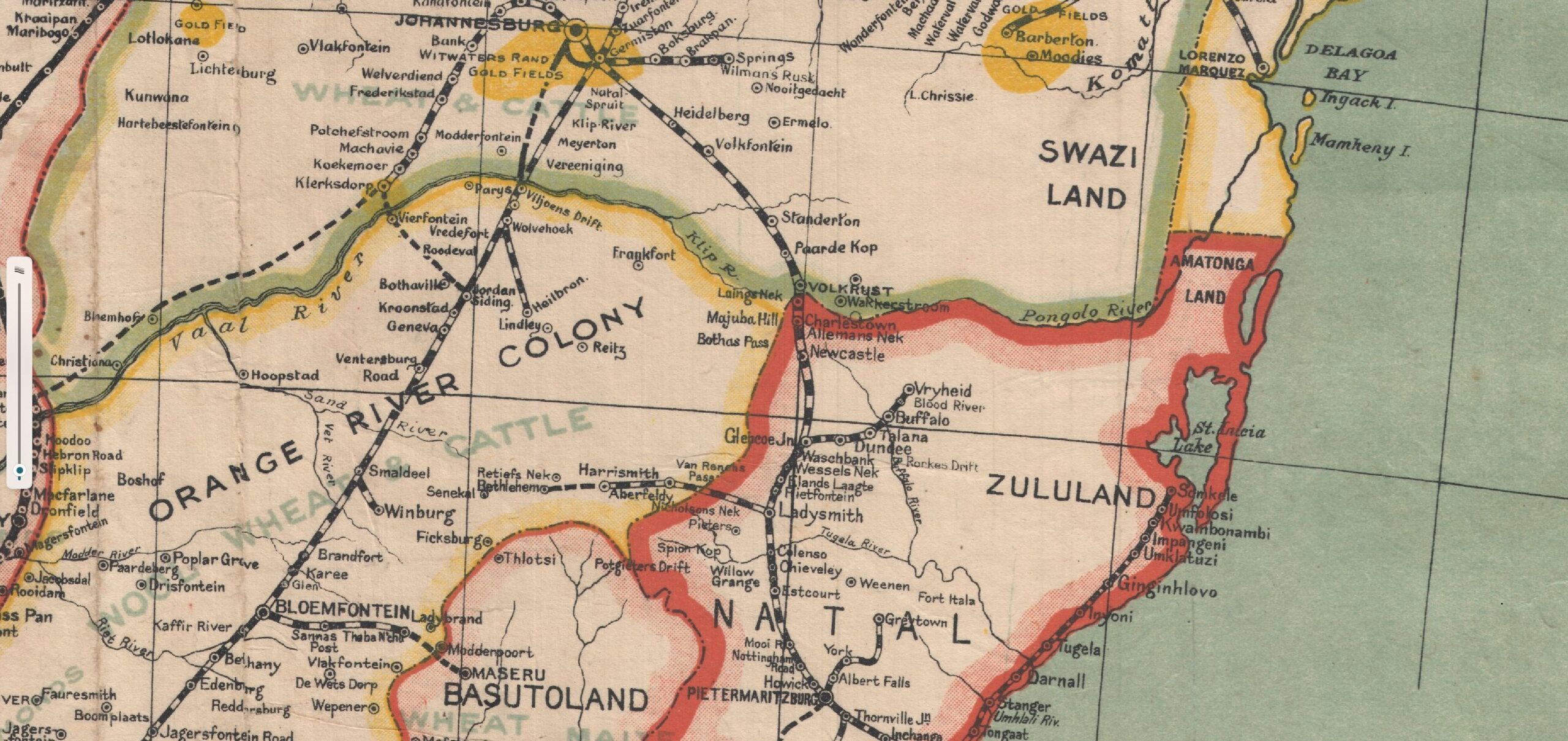
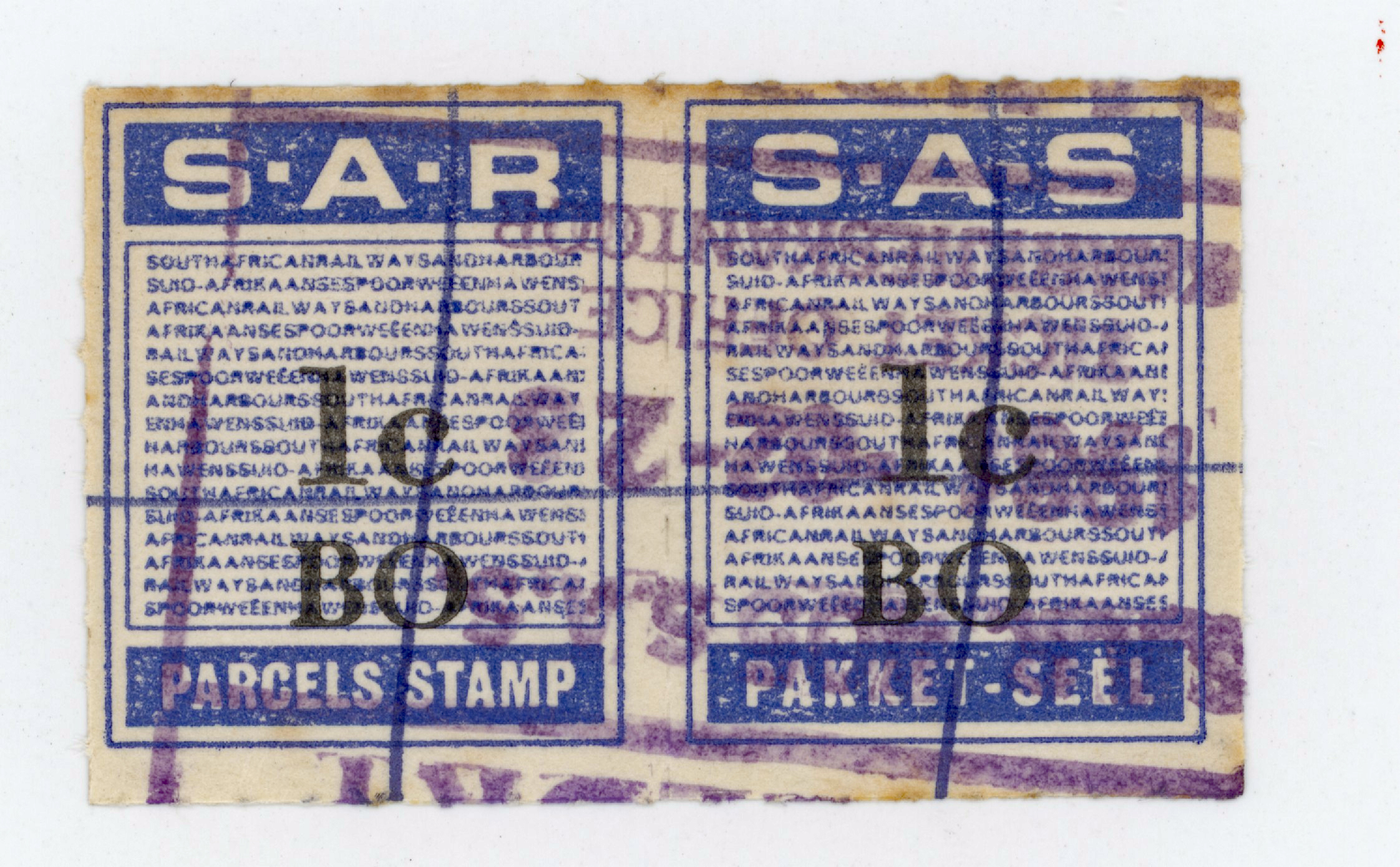
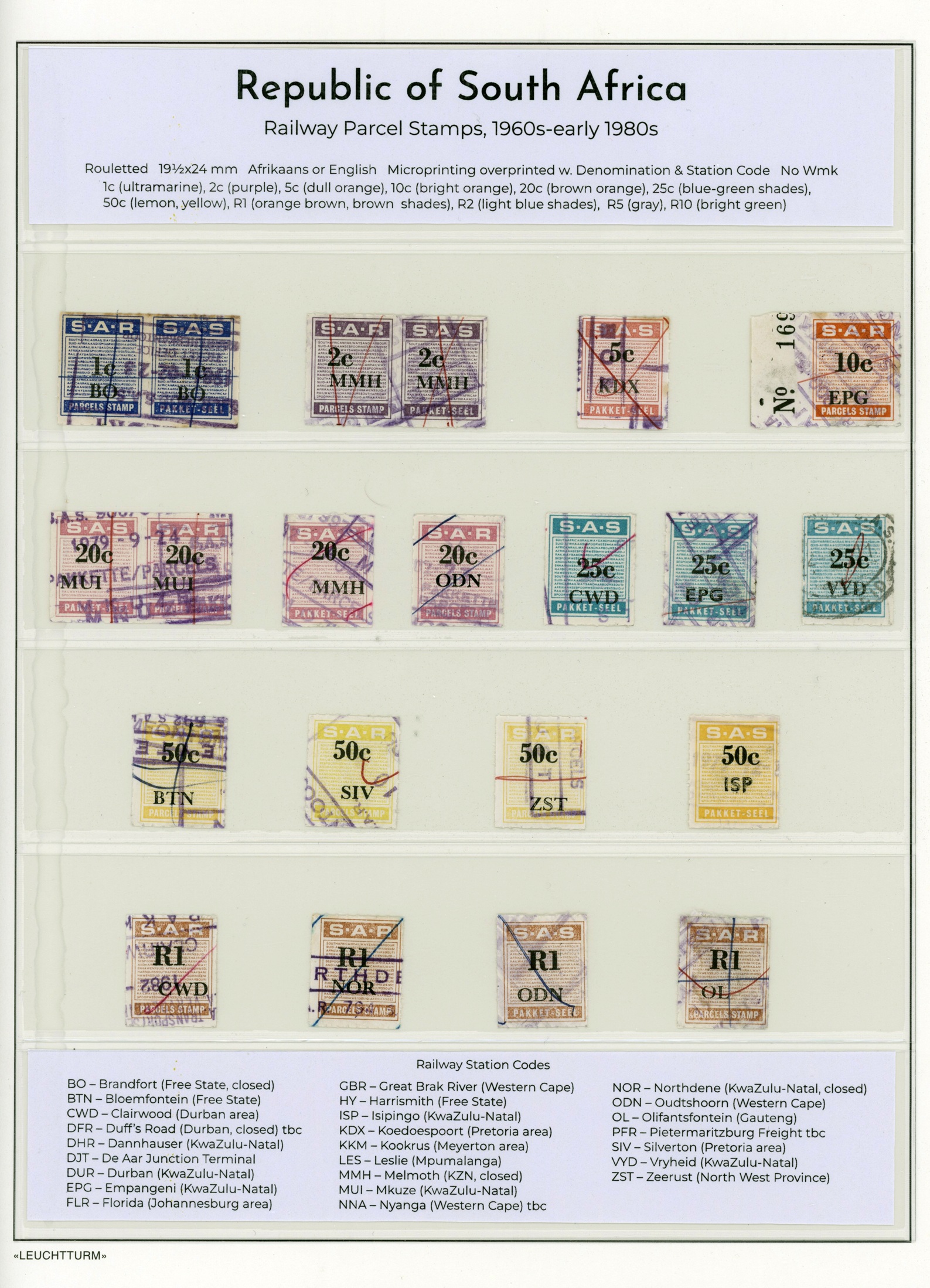
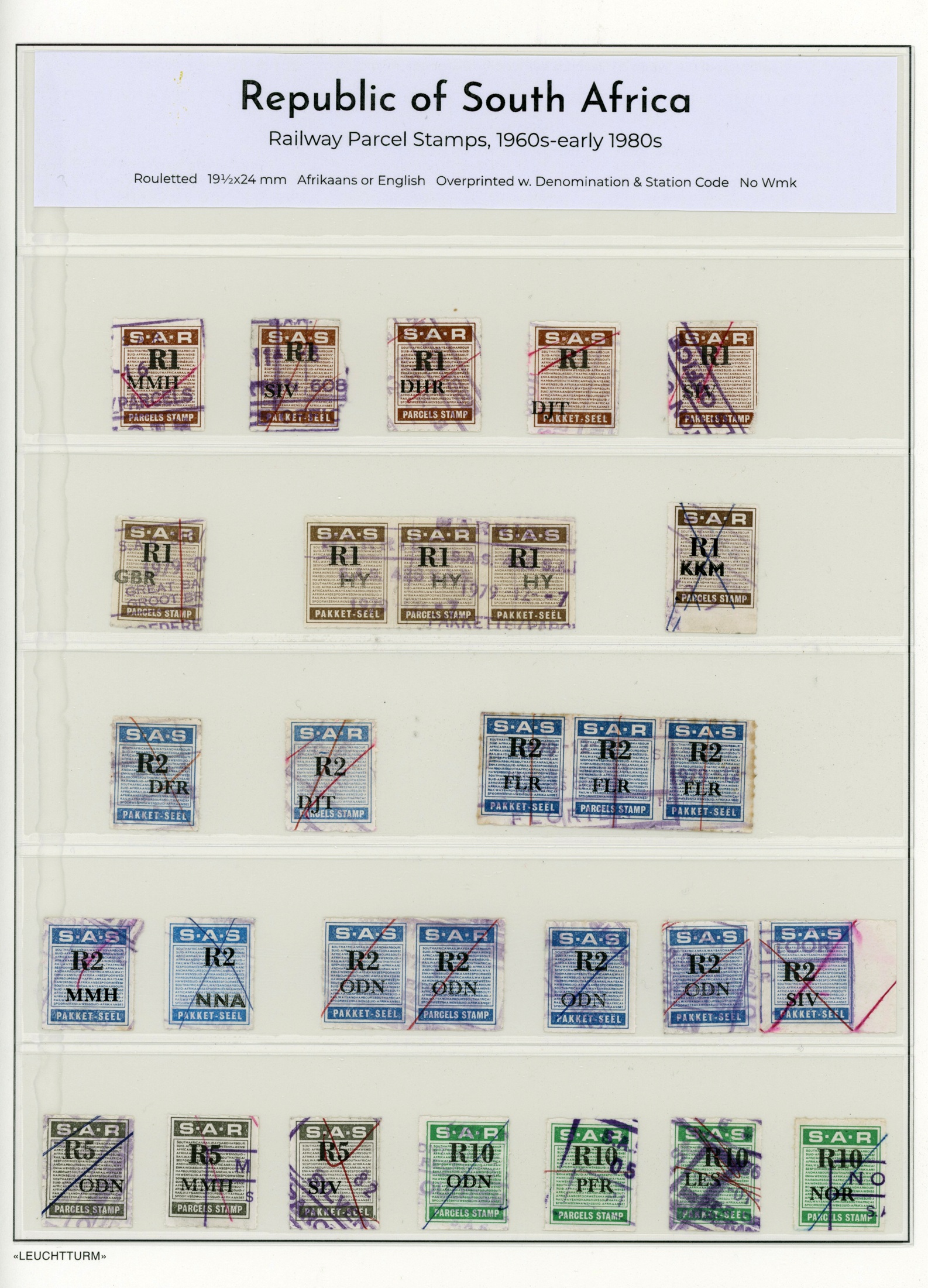
I also attempted to have Chat GPT read and list all the station names from this high-resolution scan of a 1900s hand-drawn map of railway lines and station names, but it could not do it. (Said the text was too small and not legible).Part of another map of the railway station infrastructure in South Africa (in the 1920s).Even modern maps and diagrams of the South African railway network are hard to come by, but I did find schematics like these. The problem is that many of the smaller railway stations from the 1970s and 1980s had been closed down, and do not even appear on these newer maps.This is a railway parcel stamp with the abbreviation BO that took me several hours to decipher. The key is the upside down cancellation in purple ink, offering clues to the railway station name at the very edges of the stamp. I am sure the letters stand for BRANDFORT, a railway station for a tiny little town in the Free State. The train station is no longer in use.Here is my collection of South African railway parcel stamps, so far.
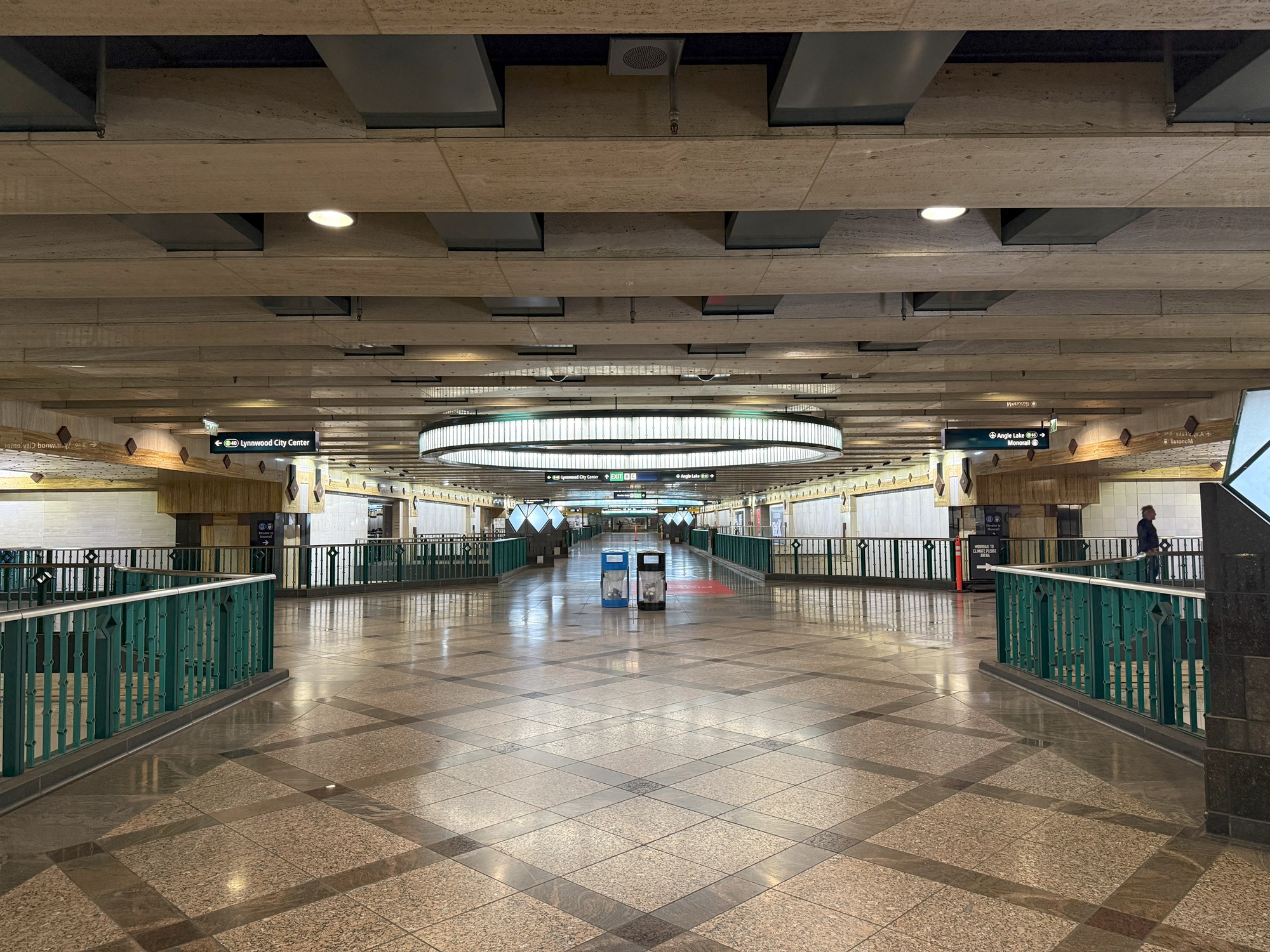
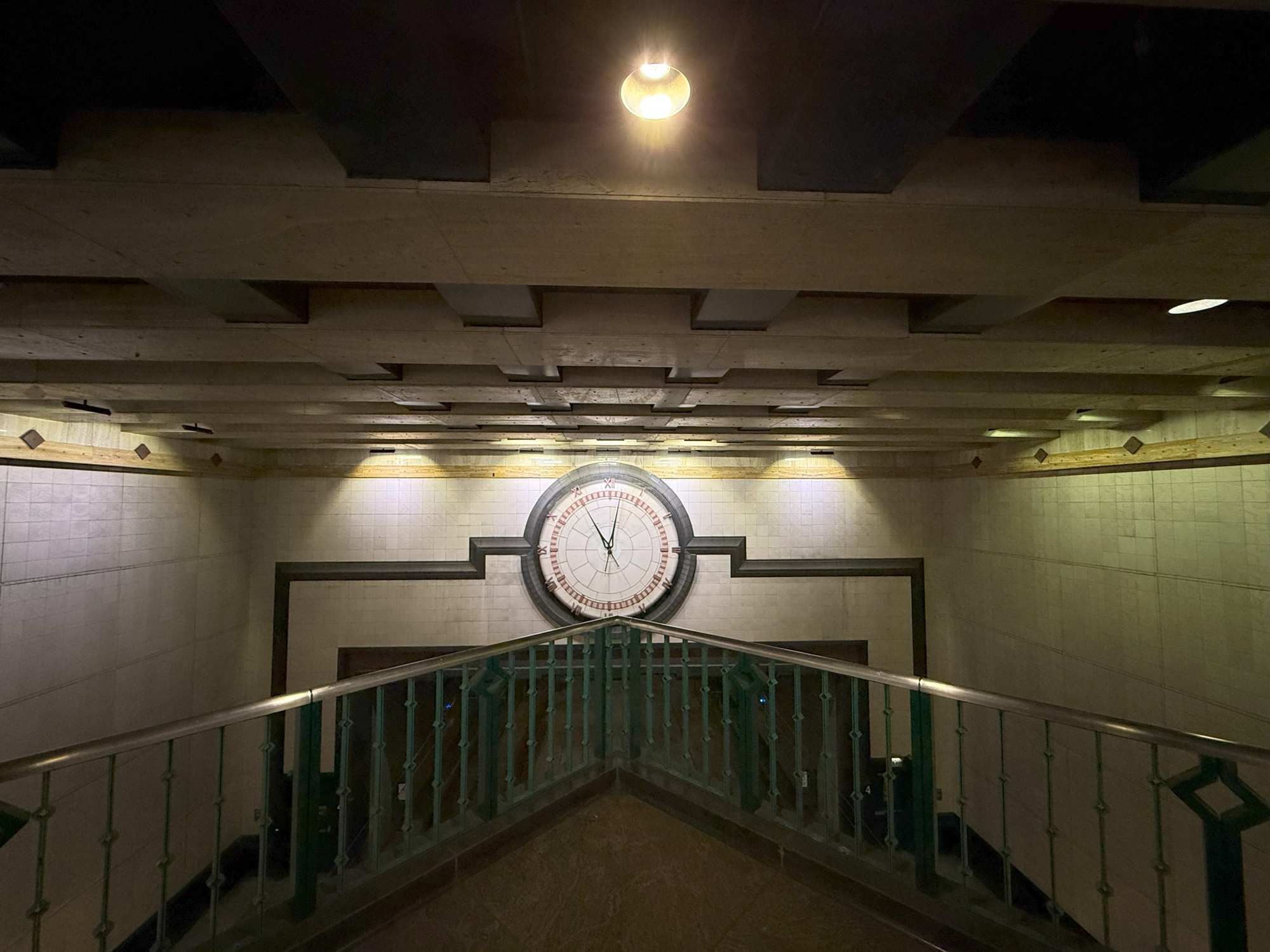
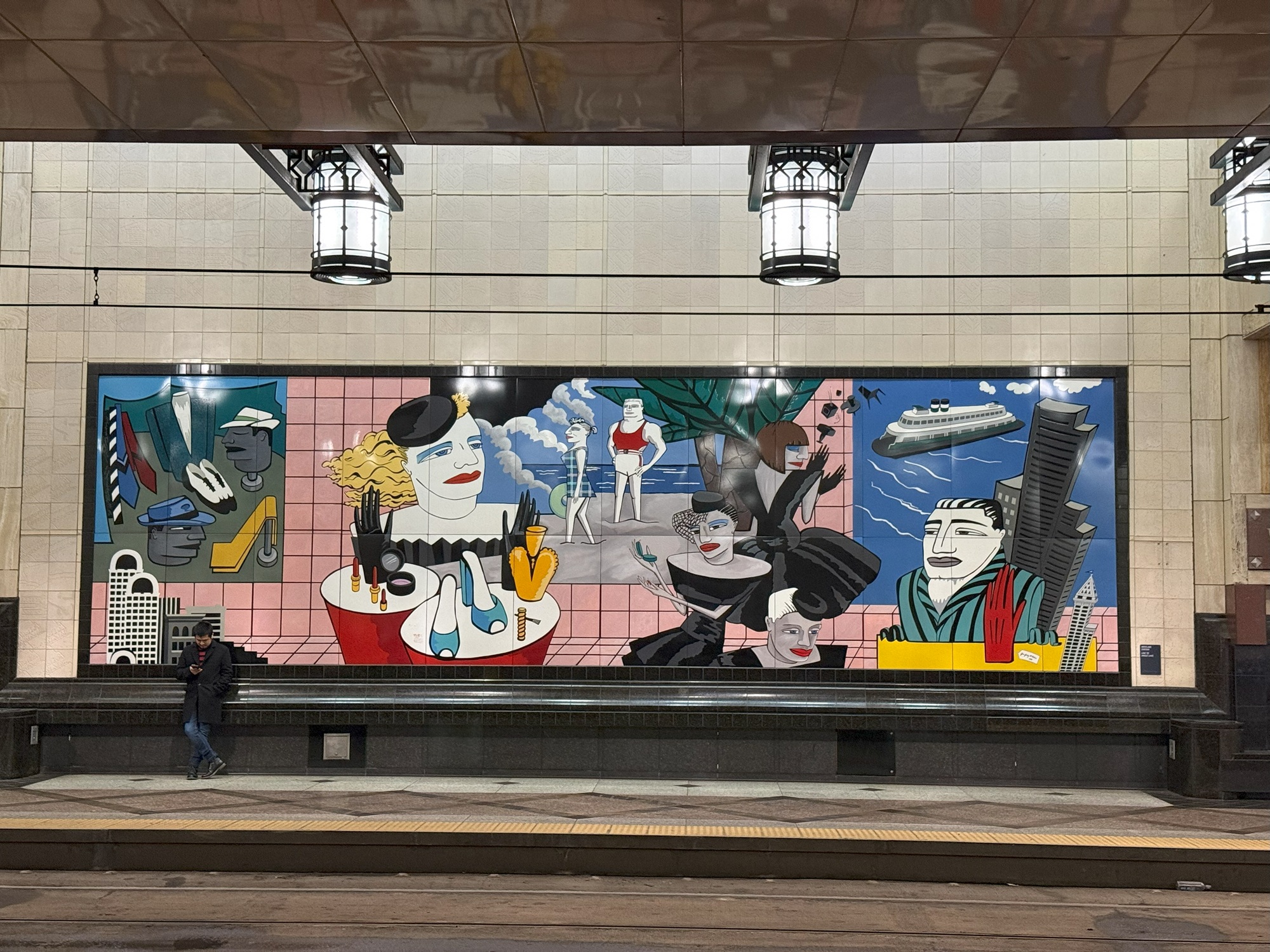
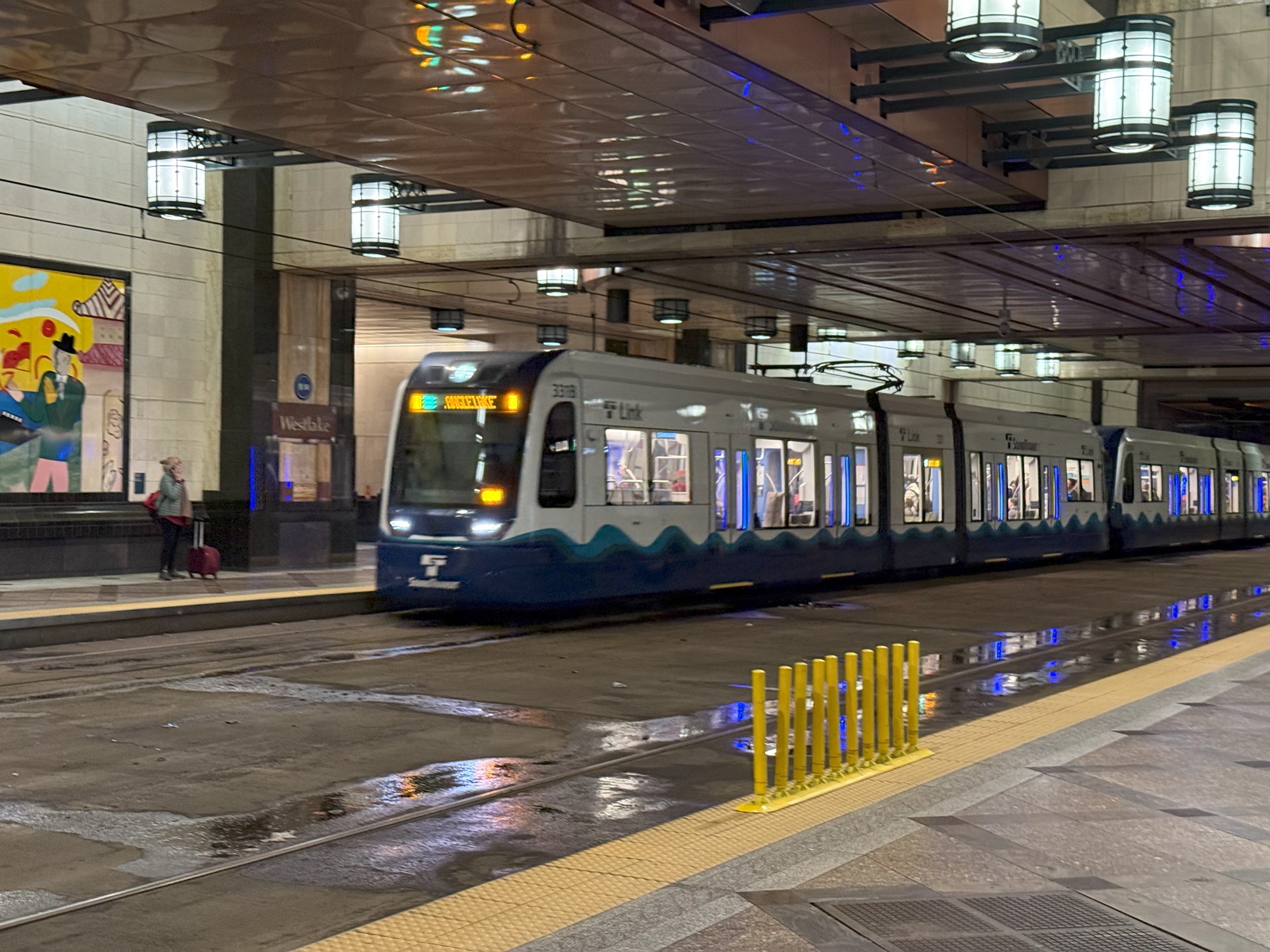
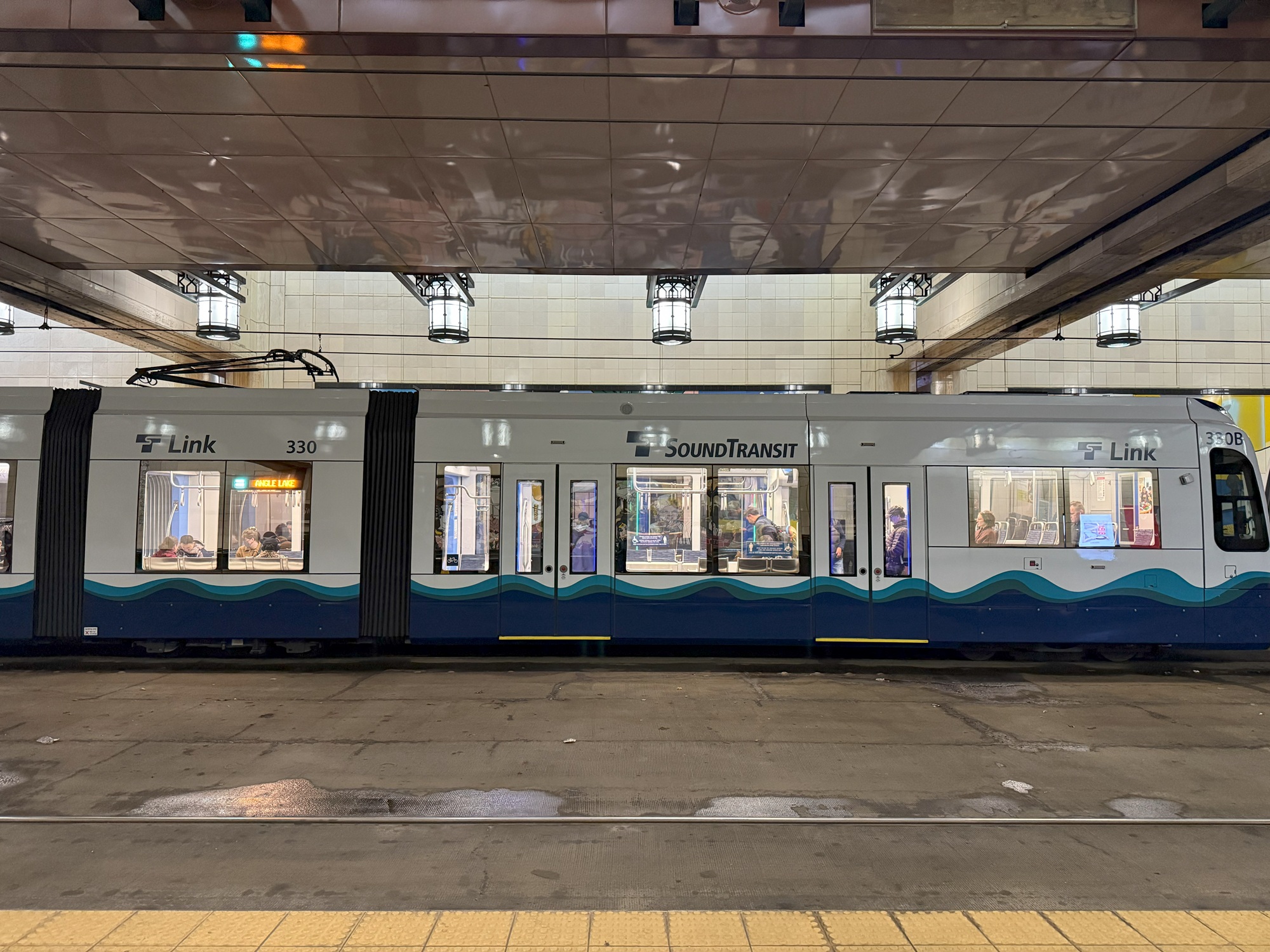
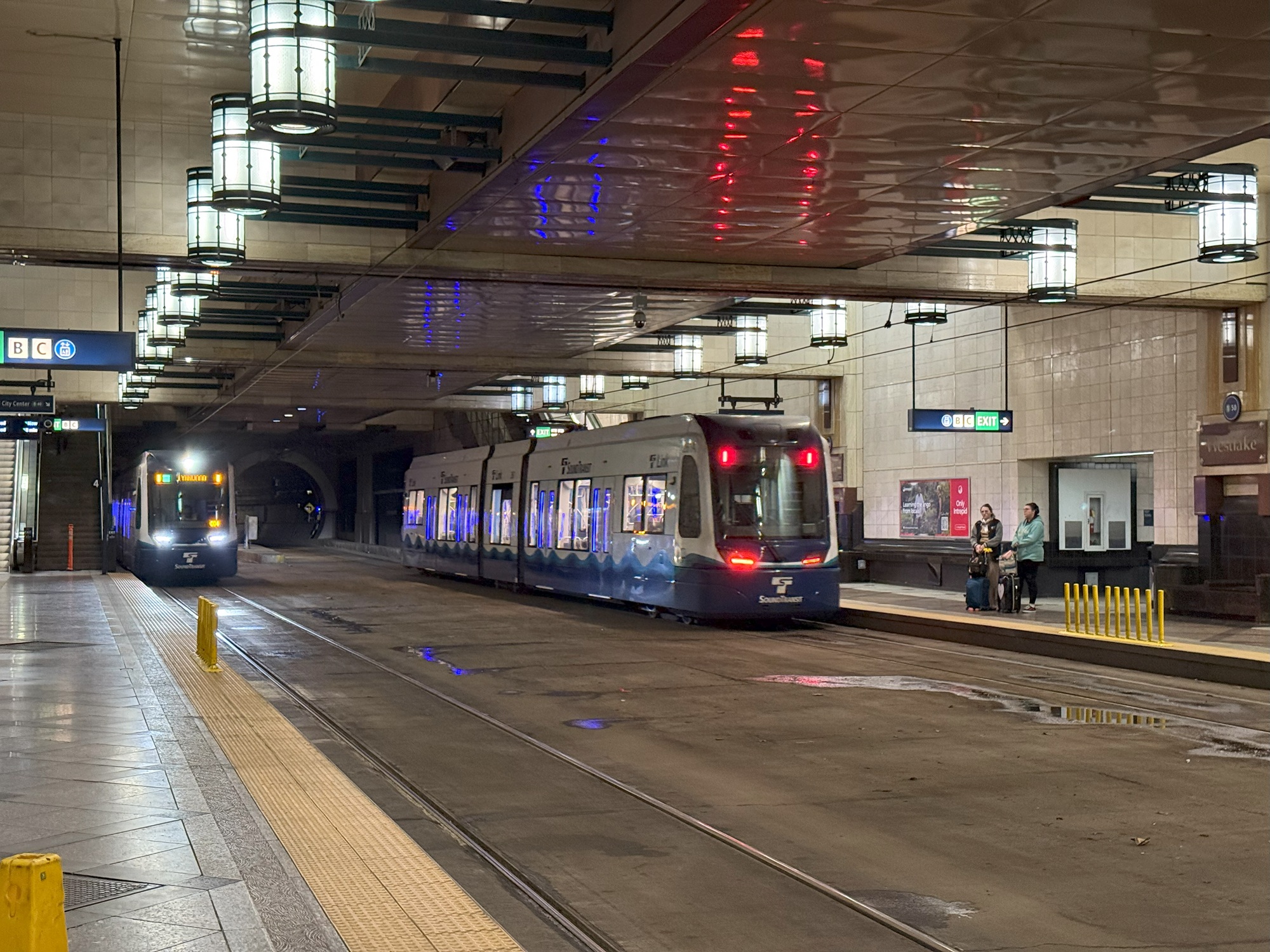
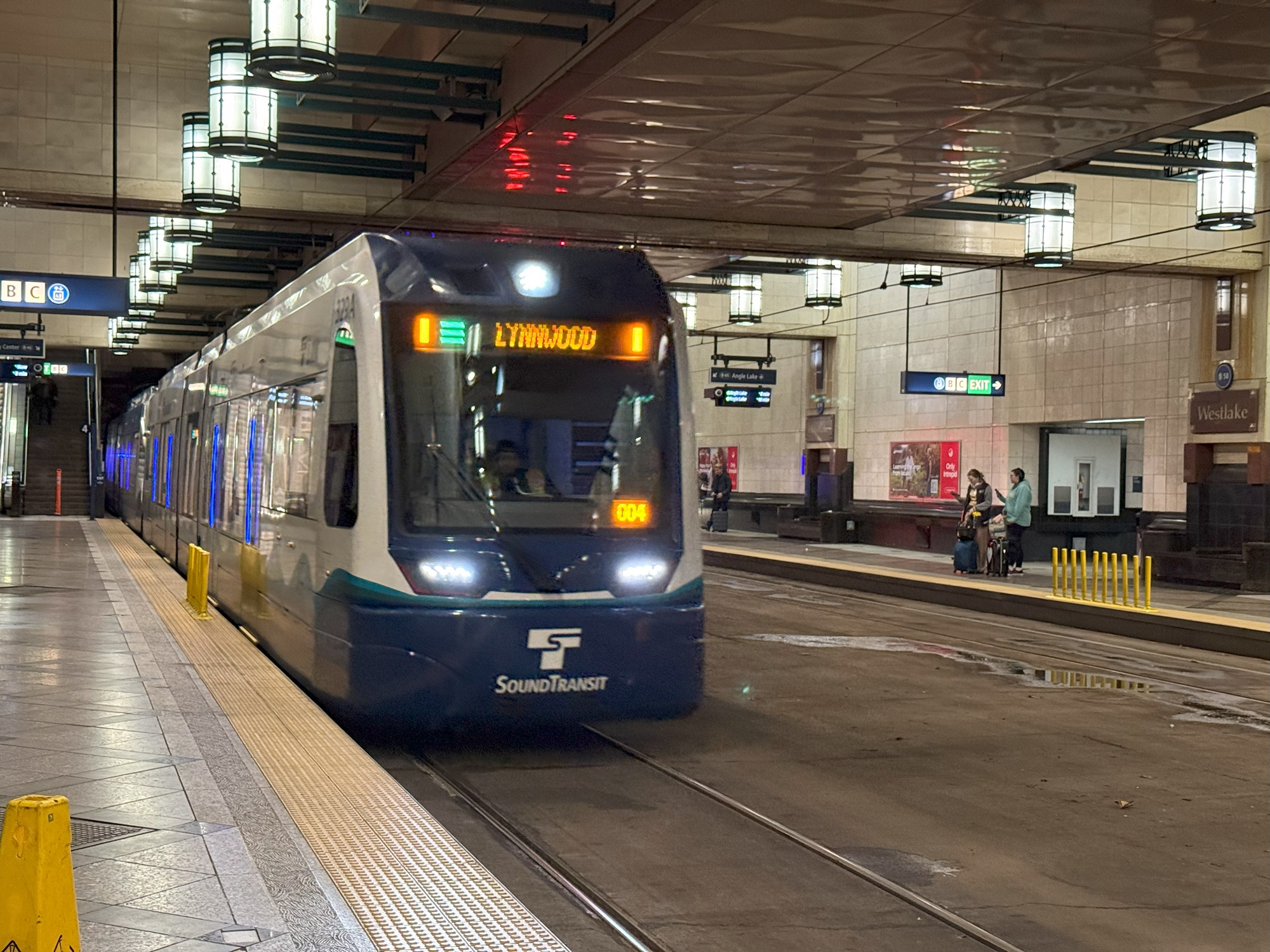
Here are a few (very ordinary) pictures of Westlake station in downtown Seattle.
I was waiting for the northbound train bound for Capitol Hill.
The southbound train bound for the airport and Angle Lake arrived first.
Then just a few minutes later, another single southbound train car arrived.
It stopped, but it seemed that passengers were not allowed to board.
Then as that car departed, my northbound train was just arriving.
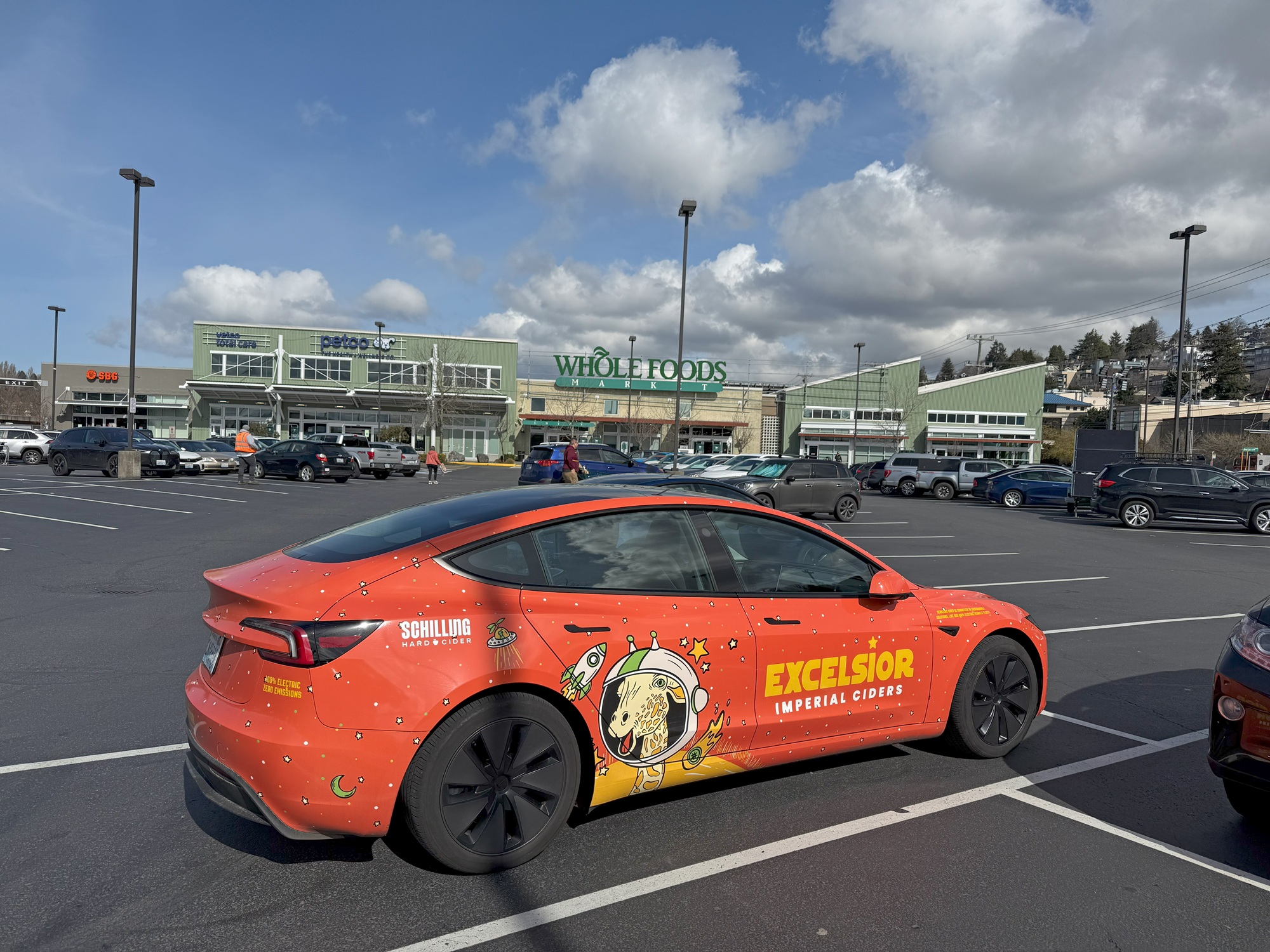
Here’s a tangerine Tesla Model 3 from the Whole Foods parking lot. I love the giraffe in the space helmet.
100% ELECTRIC, ZERO EMISSIONS, says the lettering on the back of the car.
This is a 2024/ 2025 Tesla Model 3— an upgrade to the original Model 3, and which has been available for a little over a year now. There is a new Model Y as well, codename ‘Juniper’, for which deliveries are imminent (available March 2025, says Tesla’s website). Cybertrucks are still a very rare sight here on the streets as well.
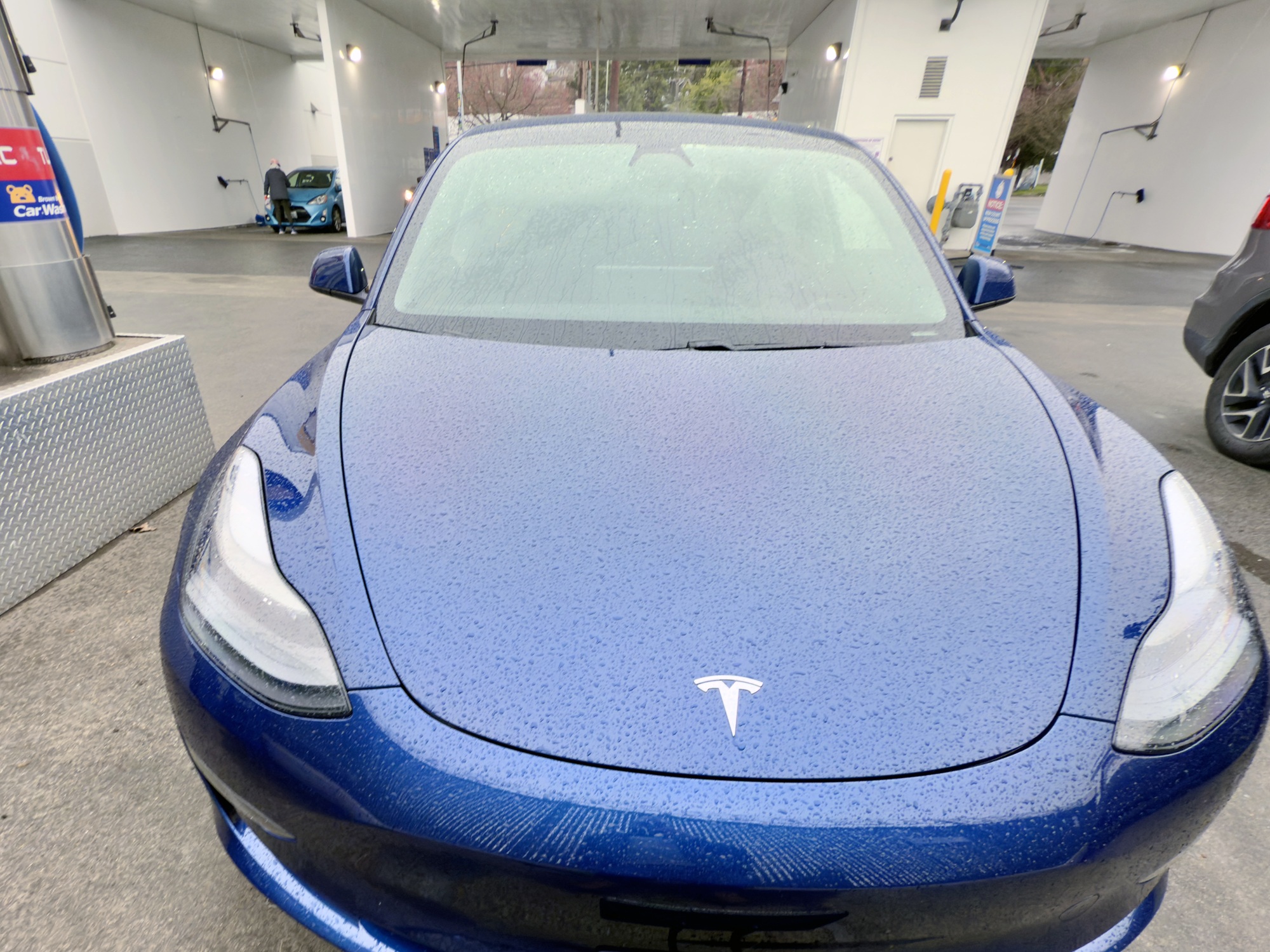
It was time to take my nifty blue car to the Brown Bear carwash today.
I bought the car in 2021, but now, in 2025, I see that some people like to call my car a swasticar.
(Why? On Jan. 20, while speaking at a rally celebrating U.S. president Donald Trump’s second inauguration, Tesla CEO Elon Musk twice made a salute interpreted by some as a Nazi or the fascist Roman salute.
As a result, flyers in San Francisco, and memes on X— by the so-called Tesla Takedown movement— now refer to Teslas as swasticars.)
Not a welcome situation for Tesla owners. Really not welcome at all— and as I was driving to the car wash, I told myself to just flatly ignore anyone yelling at me, or showing me a middle finger.
At Brown Bear Carwash off Leary Way in Seattle’s Fremont neighborhood. The wash went without a hitch, and nobody yelled at me. I had just dried the carwash droplets from the car though, when it started raining. No sweat. Not a problem.