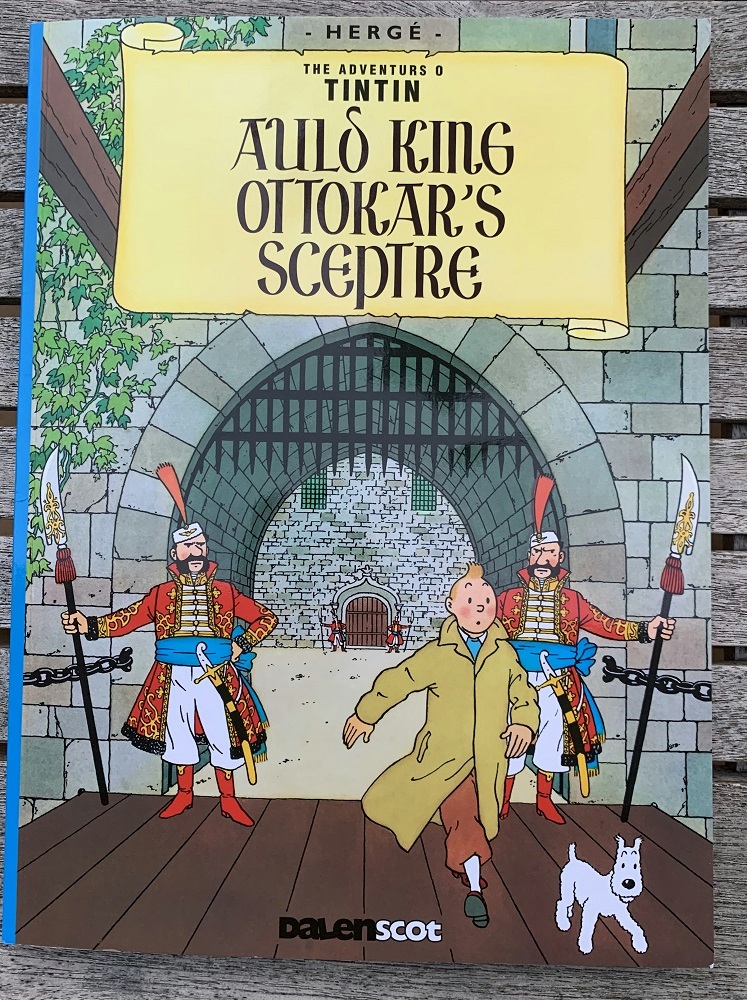
Some of the Adventures of Tintin tales have now been translated into Scots*.
So of course, I had to add one of these books to my collection.
I ordered it on AbeBooks.com.
*Scots is spoken in Scotland and parts of Ulster in Ireland. It is sometimes called Lowland Scots to distinguish it from Scottish Gaelic, the Goidelic Celtic language that was historically restricted to most of the Highlands, the Hebrides and Galloway after the 16th century. [Source: Wikipedia]
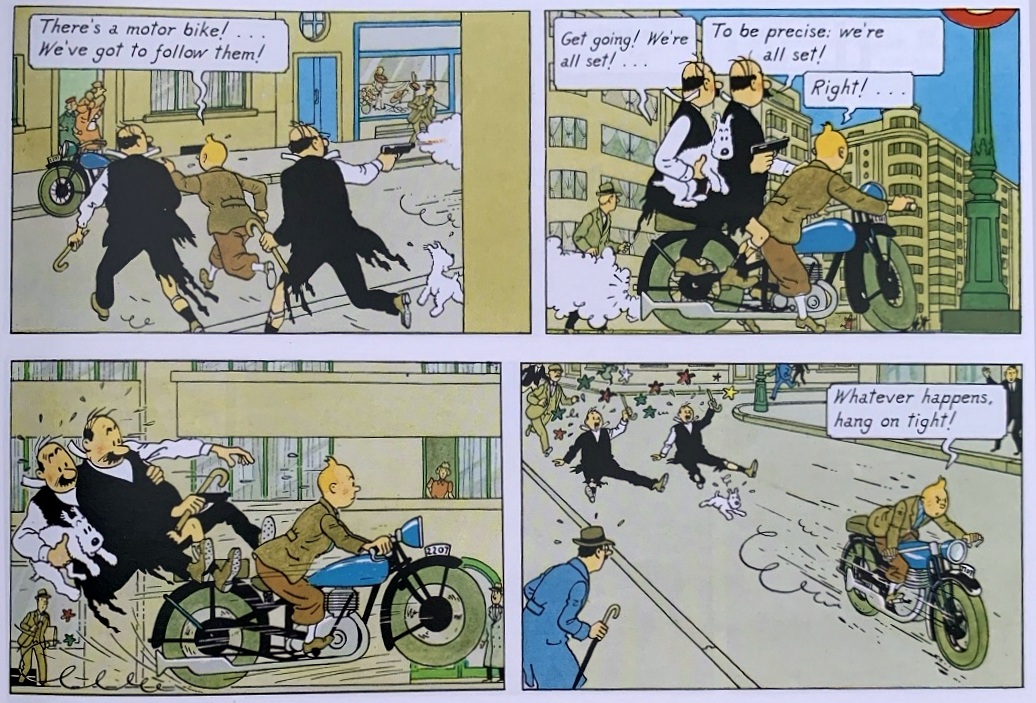
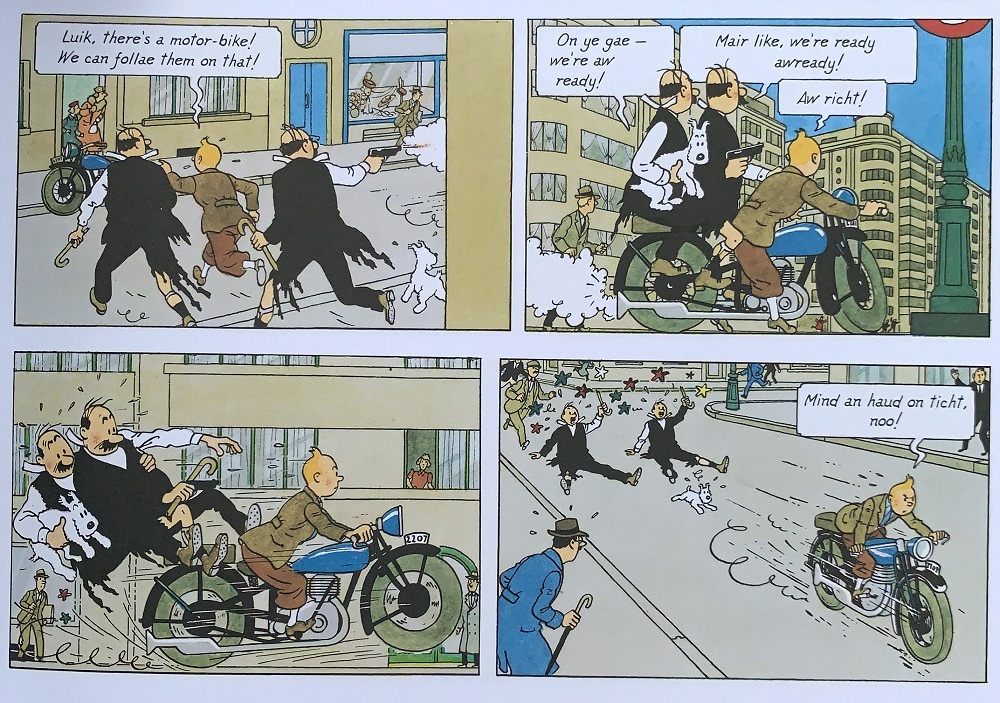
The 2019 translation into Scots is titled ‘Auld King Ottokar’s Sceptre‘ (Old King Ottokar’s Sceptre), just to distinguish the title of the book from the English translation, I suspect. The King Ottokar’s Sceptre adventure is the 8th in the series. It was published in French in 1939, and first translated into English in 1958.Alright, here’s a panel from ‘King Ottokar’s Sceptre’ (English). Tintin has the bungling detectives Thomson & Thompson on the back of the bike, one of them holding his dog Snowy. (The text is in Herge’s handwritten font, now digitized and called Remi).Now look at the 2019 Scots translation: still quite understandable, right? It helps that it is written only, so the English reader does not ‘hear’ the Scottish accent. It is also an illustration that even in languages as close as English & Scots, differences and nuances emerge in the the two translated versions. The detectives are called Nesbit & Nisbet in the Scottish translation, and Snowy is Tarry.
It was a fine day here in the city: eighty (27°C) and sunny.
My English-French illustrated dictionary has landed on my porch.
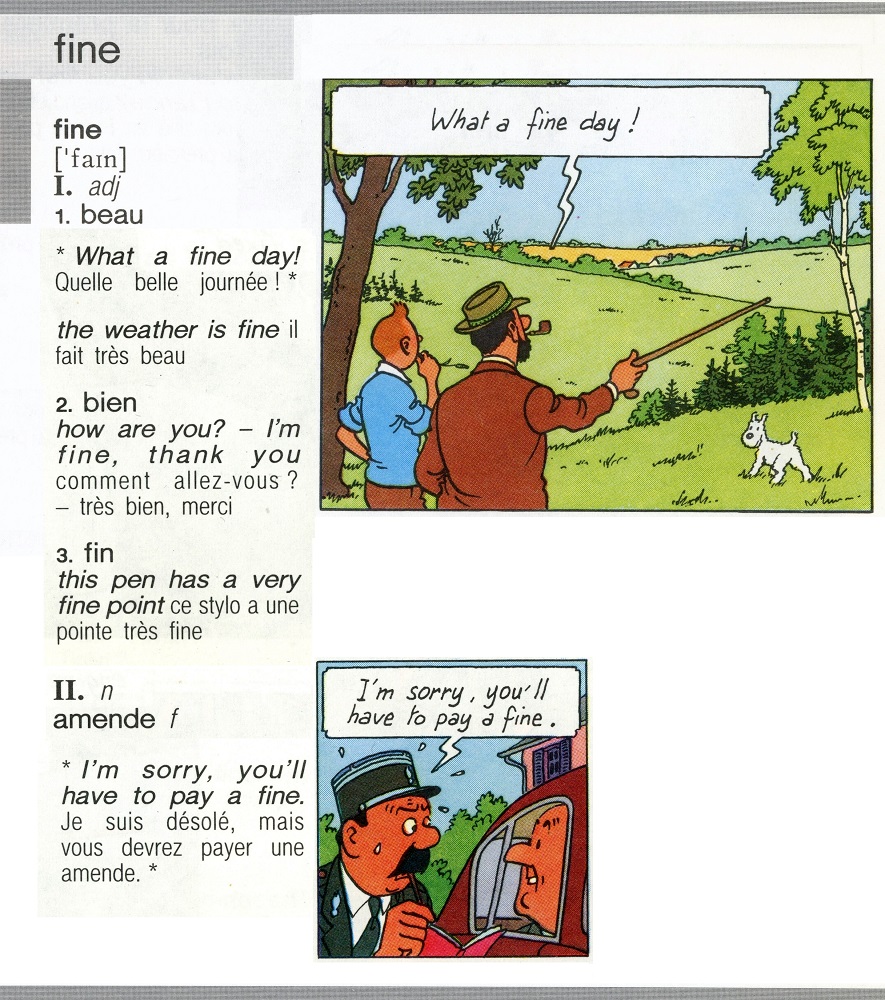
It is illustrated with panels from Belgian cartoonist Hergé’s Tintin characters, which is why I had to have it, of course.
From Harrap’s Tintin Illustrated Dictionary, published 1989. The panels are from ‘The Castafiore Emerald’ (first appearance in newspapers: 1961-1962). The top panel has Tintin, Captain Haddock, and Snowy (French name: Milou). The traffic officer is apologizing to the Milanese opera diva Bianca Castafiore, for daring to write her a ticket for a fine.
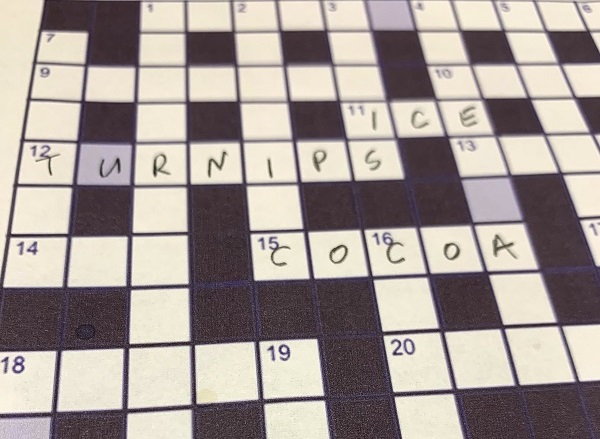
I have decided to improve my cryptic crossword skills, and so I printed out a few that I had found in online issues of The Irish Times.
I am not allowed to use Google too directly. (Shockingly, many of the clue phrases and their solutions can be found online).
I do use Google to look up synonyms, or the odd word or phrases that I do not understand.
Example: I think you need to be an Irishman or a Brit, to know that C of E stands for Church of England.
Check these clues out I that I have deciphered: Check these clues out I that I have deciphered: Across 11: Very cold water in precipice, going to and fro. Answer: ICE. i-c-e appears forwards and backwards (to and fro) in ‘precipice‘. Across 12: Roots in ground, twisting. Answer: TURNIPS. It’s a root vegetable, and turn= twisting. Across 15: Two companies with one hot drink. Answer: No, not Nestlé or hot chocolate, but COCOA. There are two ‘Co’s for Company in there.
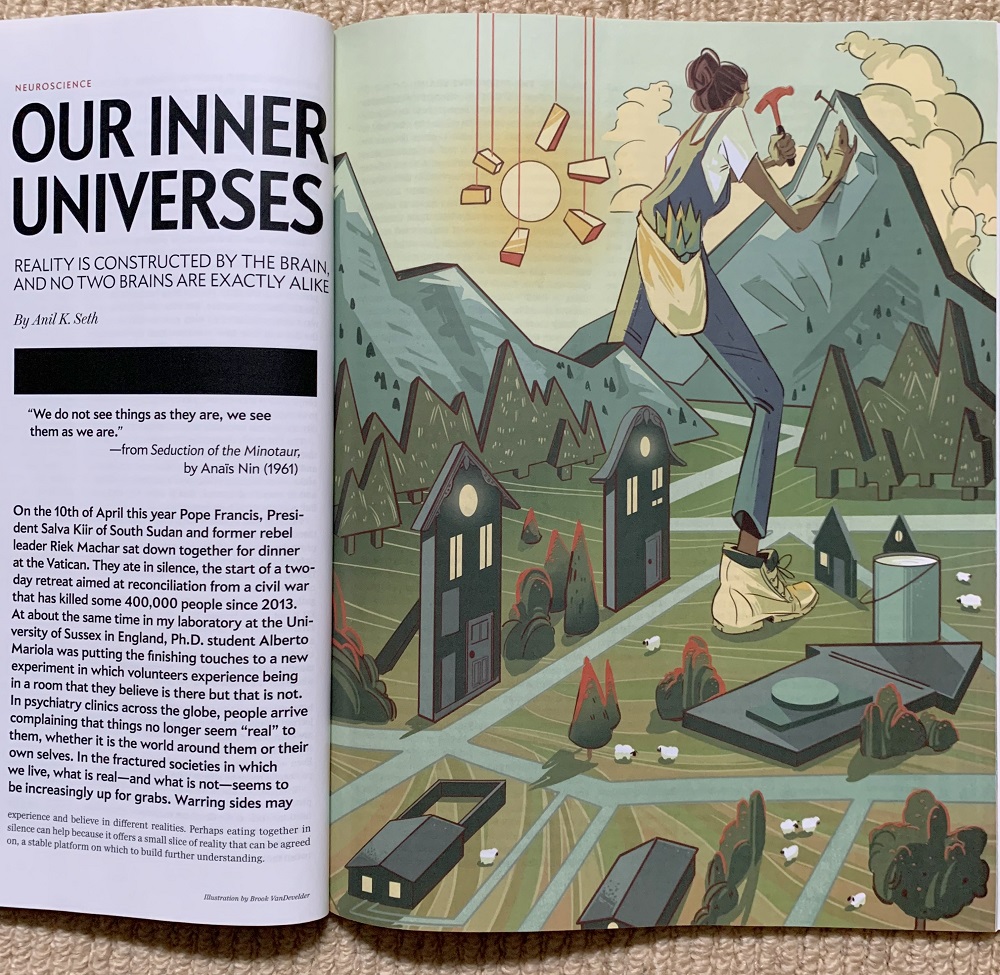
‘We do not see things as they are, we see them as we are’.
– from Seduction of the Minotaur, by Anais Nin (1961)
The entire Sept. issue of Scientific American is dedicated to the topic on the front page in bold letters: Truth, Lies & Uncertainty: Searching for Reality in Unreal Times. The articles are heavy on science and general philosophies about what is real and what is virtual. For example: to this day, philosophers cannot agree on whether mathematical objects (say, the number ‘7’) exist, or are pure fictions.
A summary of the article by Prof. Anil K. Seth that goes with the picture below, goes like this:
‘The reality we perceive is not a direct reflection of the external objective world. Instead it is the product of the brain’s predictions about the causes of incoming sensory signals. The property of realness that accompanies our perceptions may serve to guide our behavior so that we respond appropriately to the sources of sensory signals’.
So throw in Presidents that lie every day, greedy corporations with profit incentives, and worldwide social media networks — and holy cow: it’s more important than ever before to try to verify if something uncertain or new that we come across, is ‘true’.
Our realities are constructed by our brains, and no two brains are exactly alike.
I spent the day running down the interesting architecture sights around central station, and the Aker Brygge (Aker docks), a little further along the waterfront.
I also checked into some stores and some bookstores.
I have so far come up empty handed, as far as finding Tintin books in Norwegian, to add to my collection.
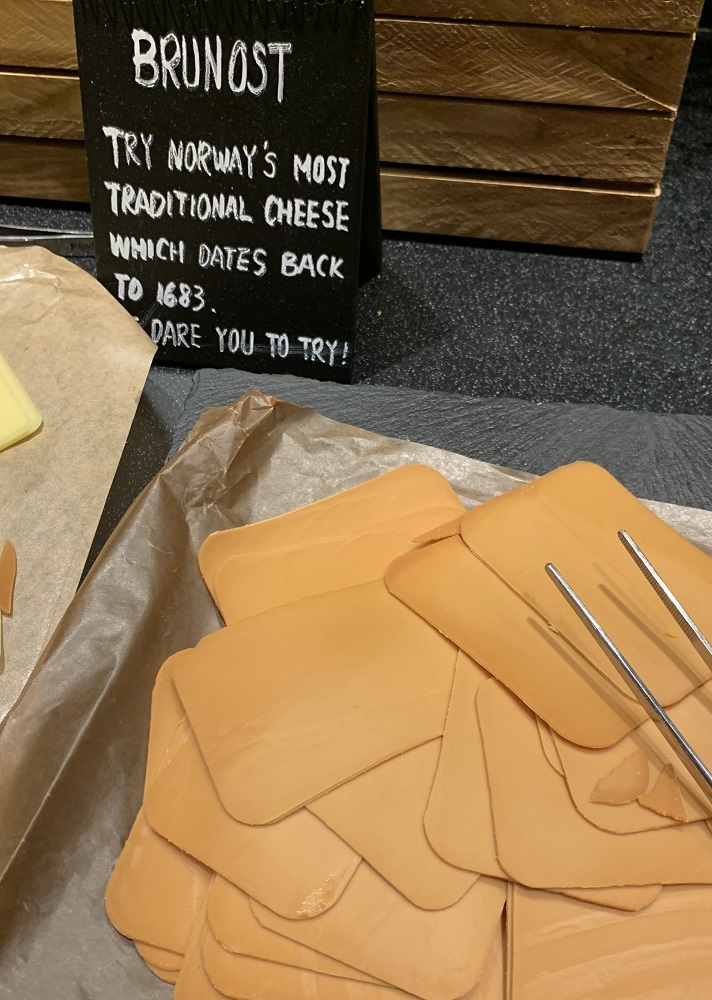
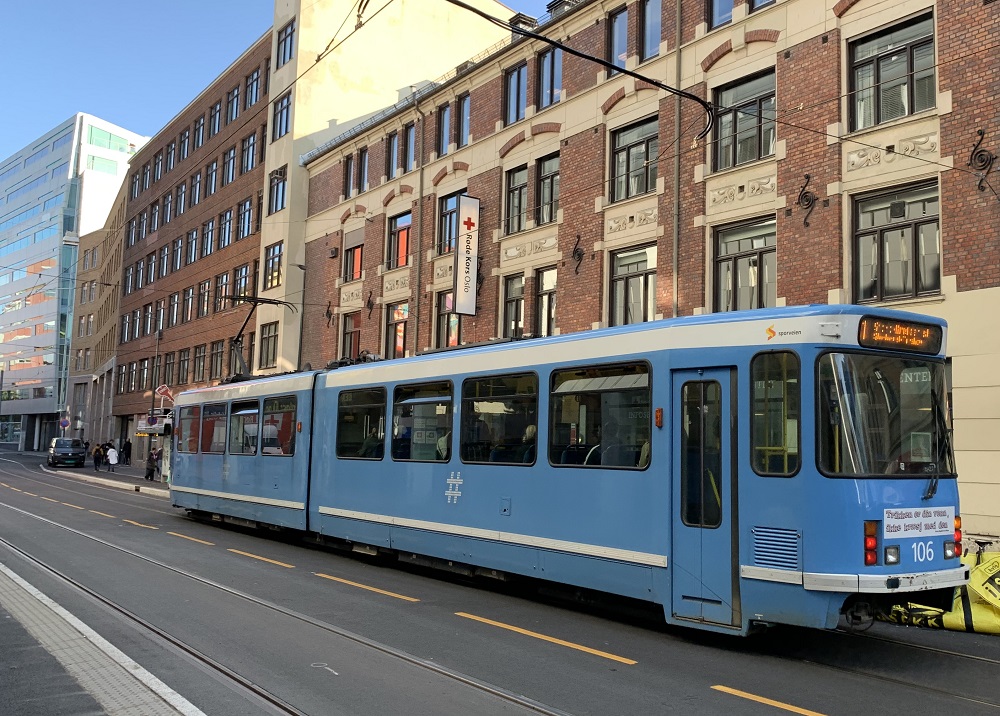
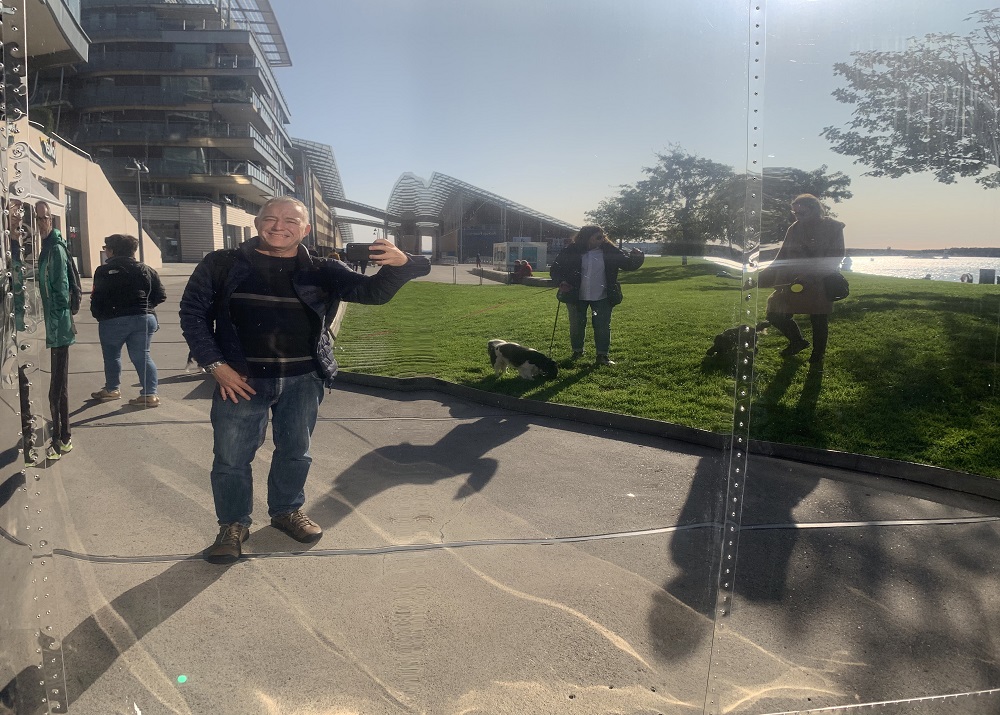
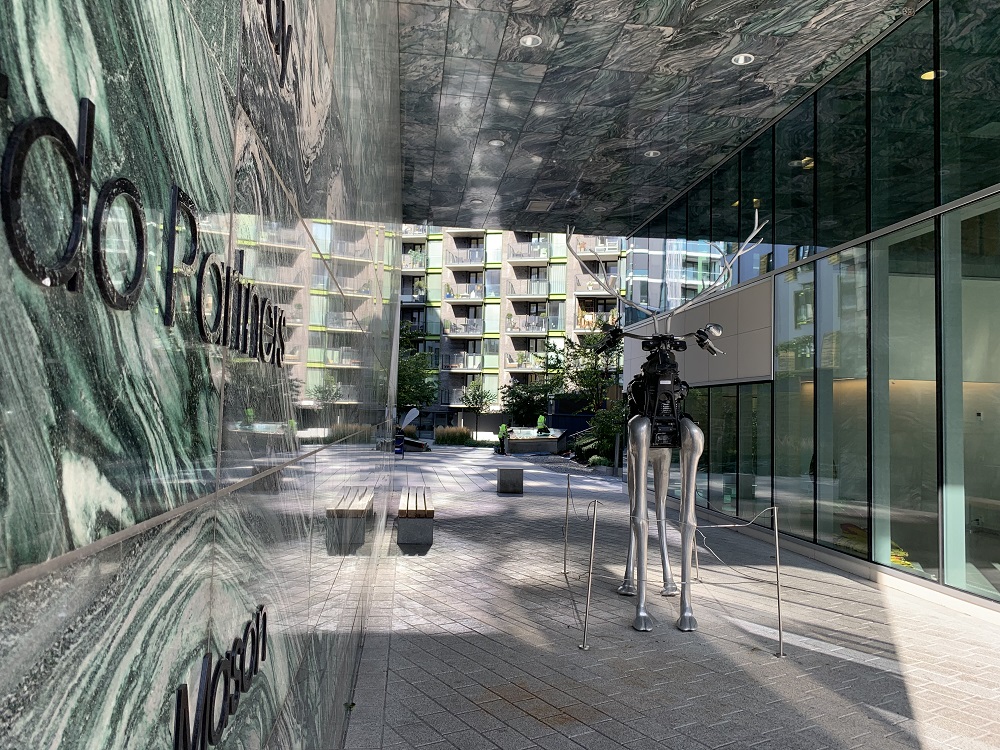
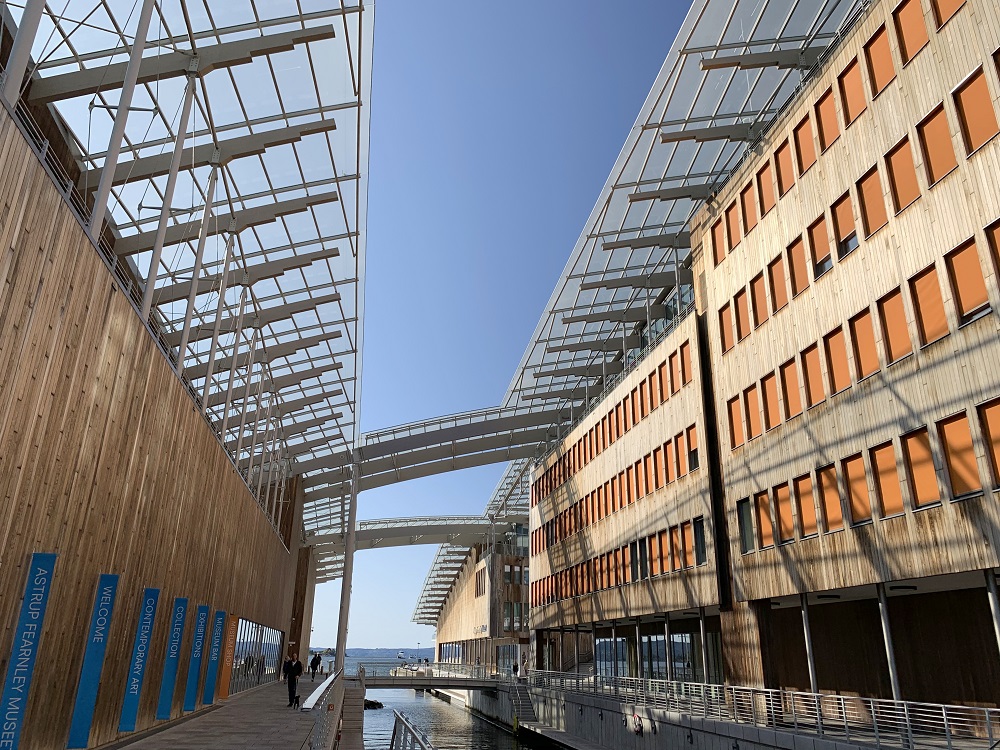
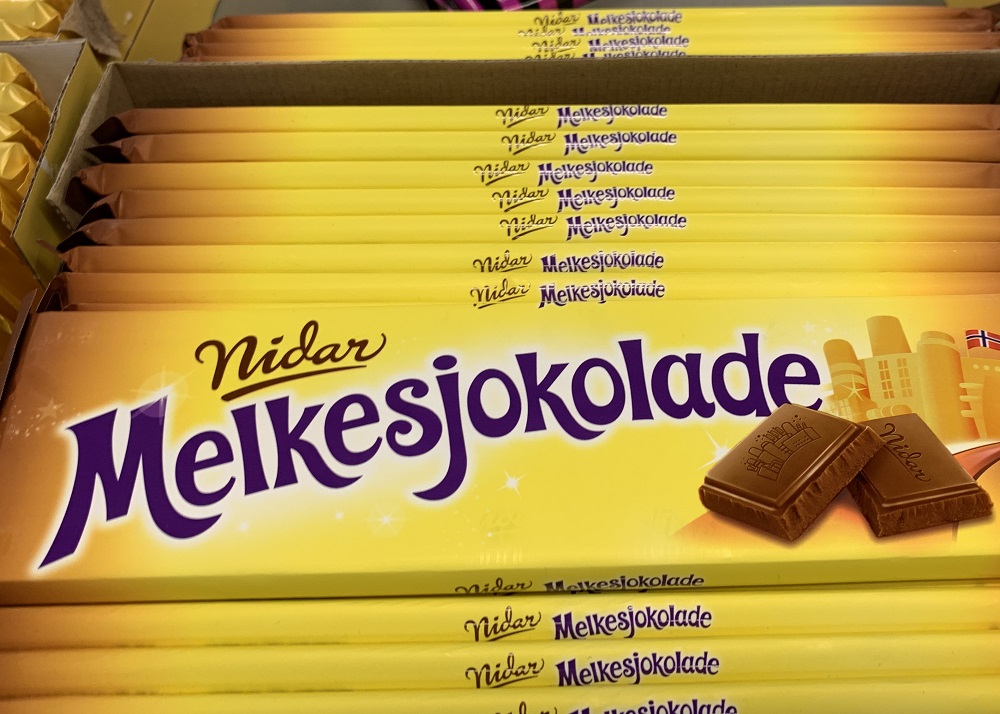
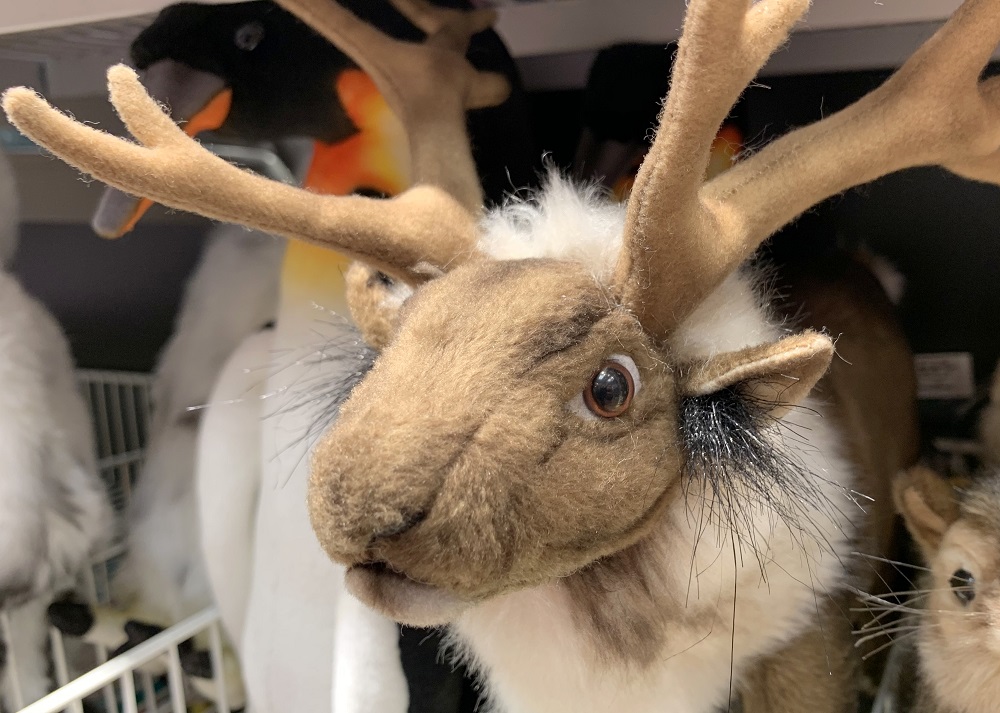
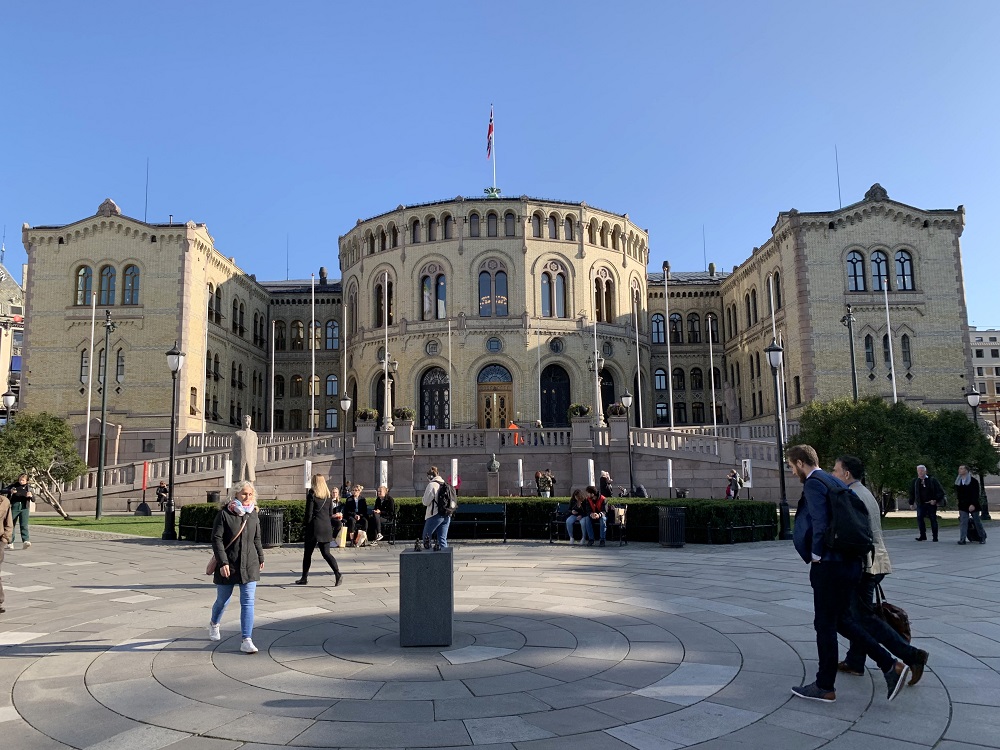
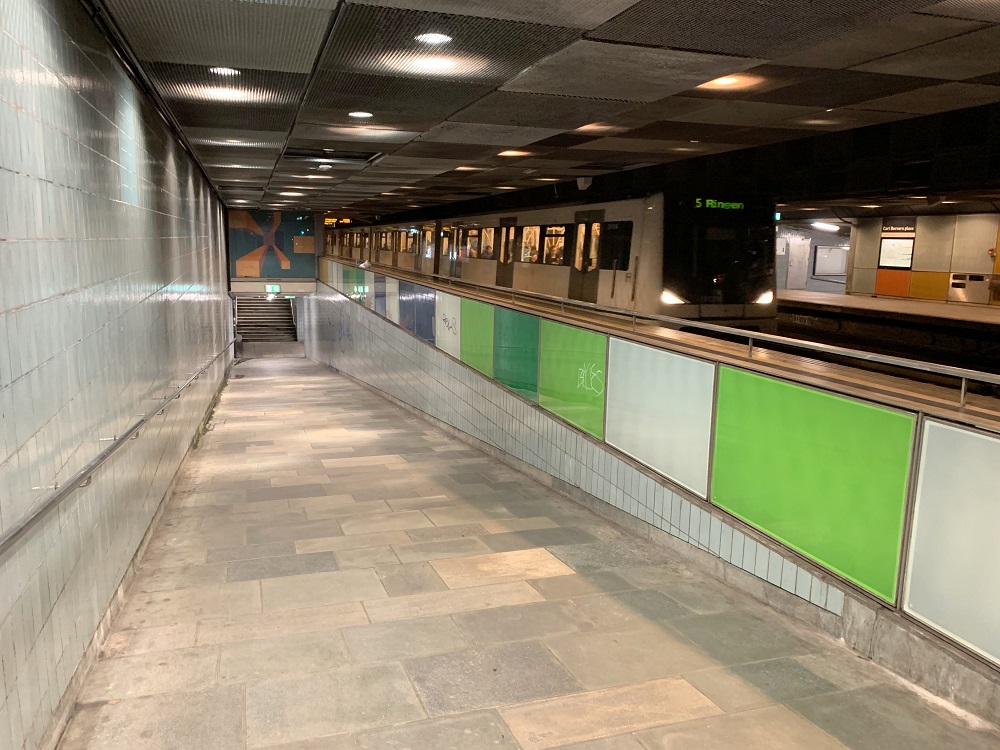
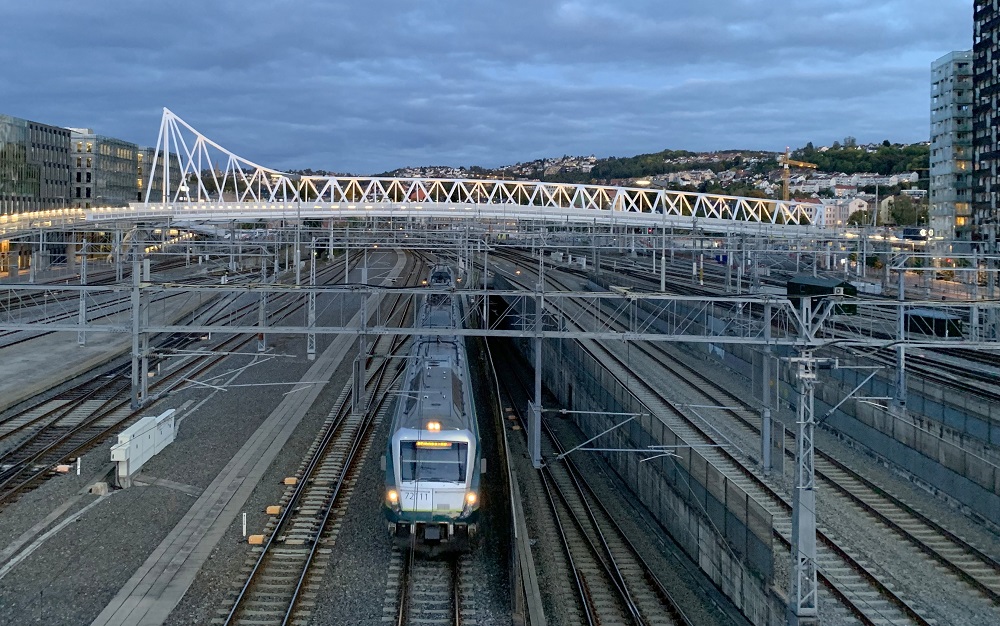
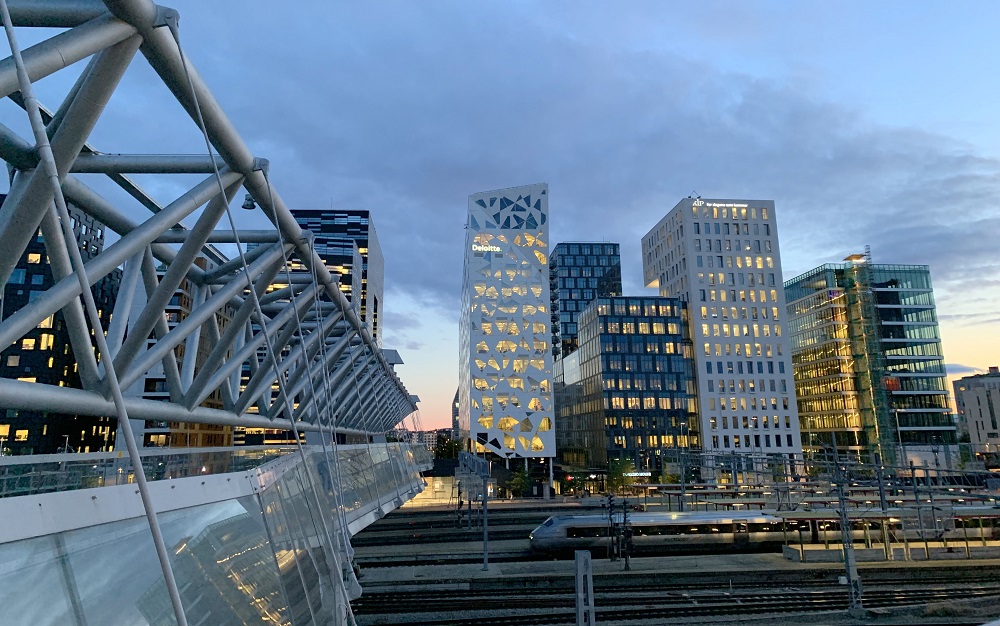
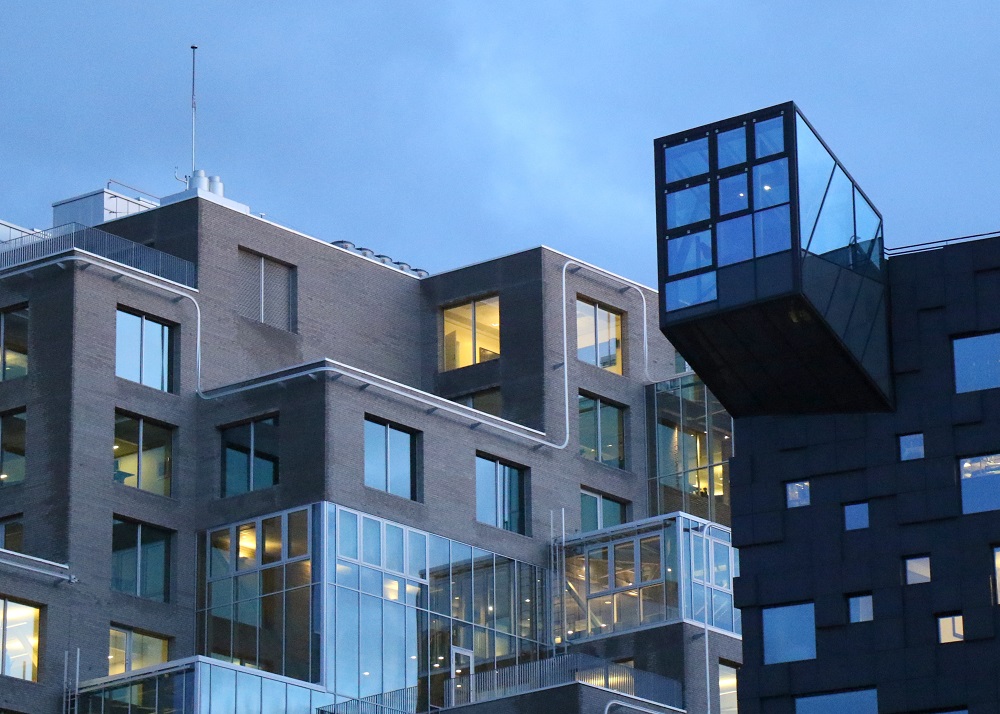
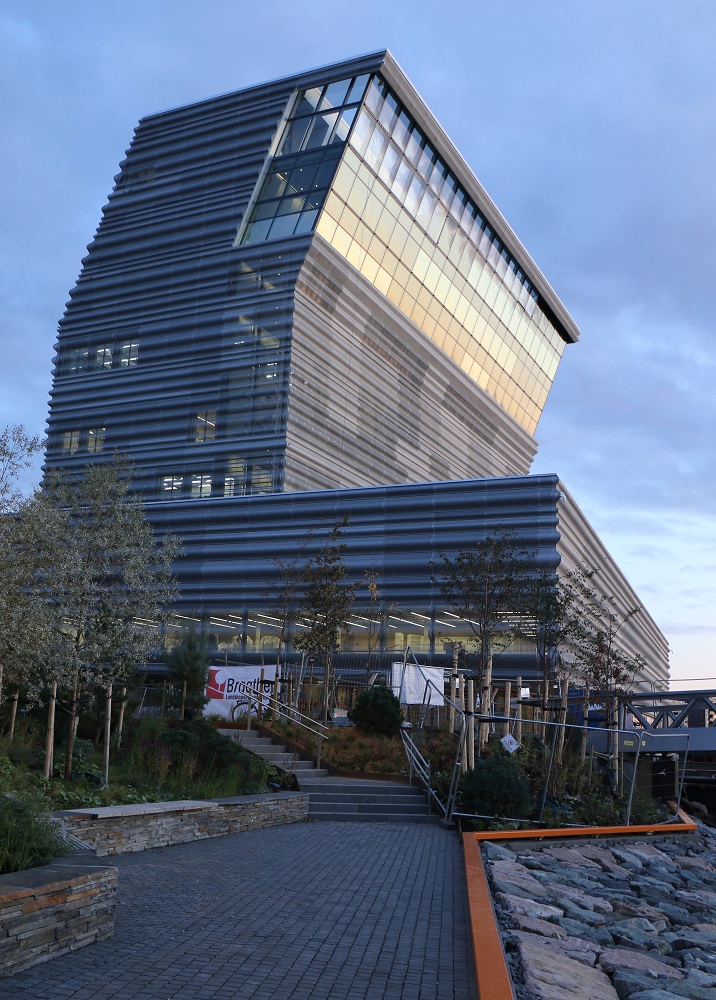
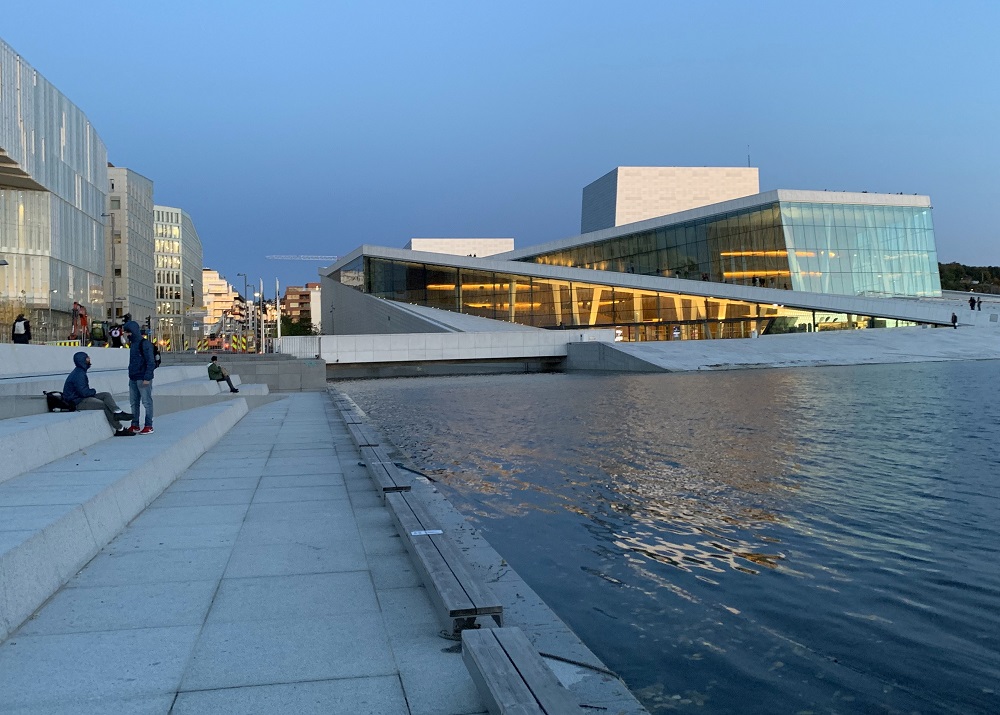
Brunost cheese on display at breakfast here in the hotel. It’s a cheese made with whey, milk, and/or cream .. and it is very tasty.Here’s the type of tram that gets one around central Oslo. Lots of buses available as well.A selfie with the help of a food truck’s polished surface . I’m on my way the Astrup Fearnley Museum, the structure in the distance.Find the mechanical reindeer in the picture! Polished marble and glass in the modern office and apartments around Aker Brygge.Here’s the Astrup Fearnley Museet, a museum of modern art. It’s been here awhile (since 1993), and was designed by Italian architect Renzo Piano.Melkesjokolade .. hmm, yes, a very large slab of milk chocolate, and spelled almost identically to the way it is in Afrikaans: melksjokolade.And a stuffed reindeer.The Stortingsbygningen (Storting building) in central Oslo. It is the seat of the Storting, the parliament of Norway. It was designed by the Swedish architect Emil Victor Langlet and taken into use in 1866.Here’s the regional train called the T-bane (so no U-bahn in Oslo!), coming into Carl Berners Plass station (Carl Berner plaza station).I’m standing on the Akrobaten pedestrian bridge close to Central Station, and watching the trains come in. That’s the Nordenga road bridge in the distance. It opened in 2011.To my left is the Akrobaten pedestrian bridge that I am standing on. The buildings on the other side of the tracks are called the Barcode buildings: twelve narrow high-rise buildings of different heights and widths.Just a closer view of the glass, brick and steel of another one of the Barcode buildings.Here is the new building for the (Edvard) Munch Museum, scheduled to open in spring 2020. The Munch museum collection, that includes the famous ‘The Scream’, is currently located in Toyen. (Is the building craning its neck to take a closer look at the water?).The Oslo Opera House, at the head of the Oslofjord (but just a stone’s throw from Central Station, actually). It opened in 2008, and is the home of the Norwegian National Opera and Ballet, and the national opera theatre in Norway.
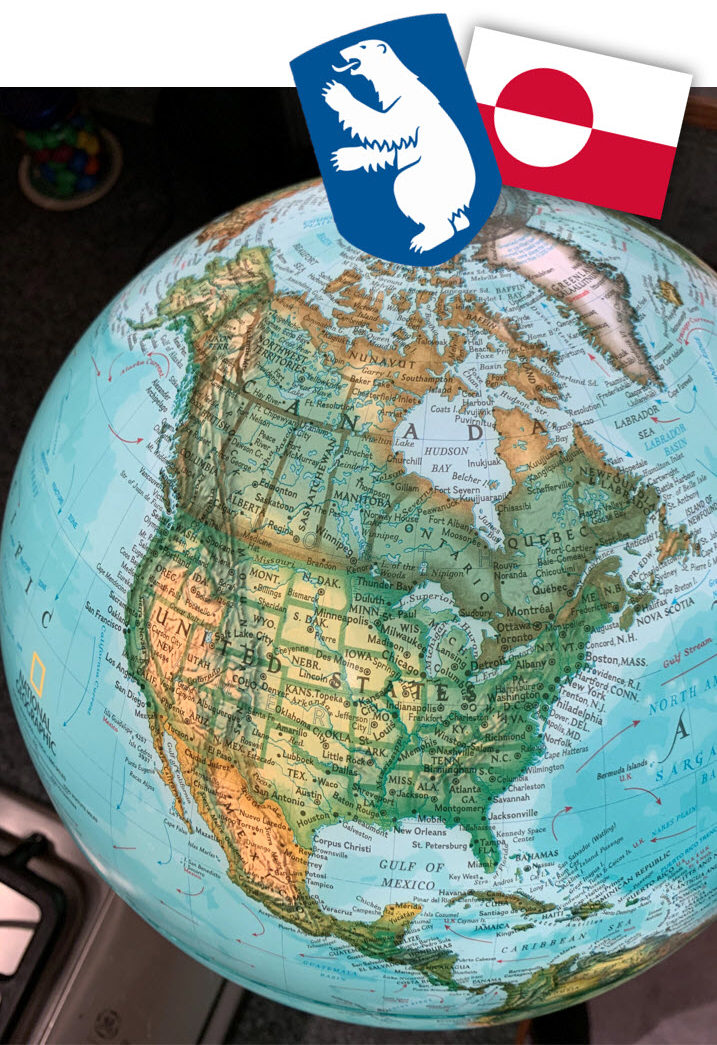
I just had to check out Greenland again on my Earth globe (with the stupid and completely unnecessary flap created around it, and all — by You-Know-Who in the White House).
Greenland is the world’s largest island and is a semi-autonomous country of the Kingdom of Denmark. It has been politically and culturally associated with Europe for more than a millennium.
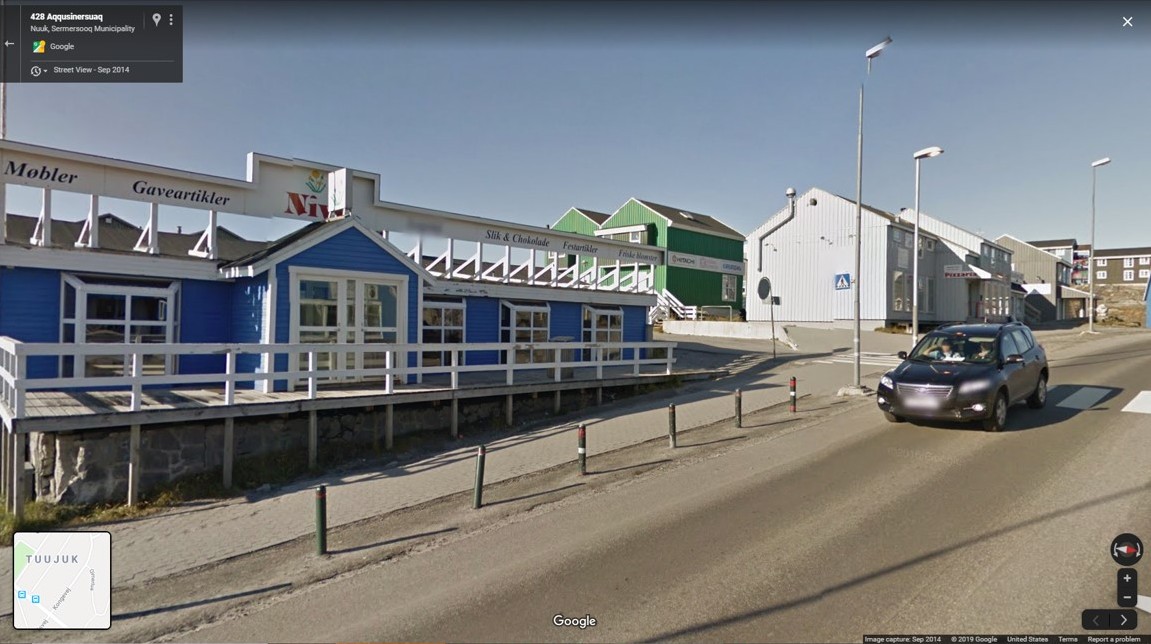
Greenland sits almost due north of the United States. It has some 56,000 inhabitants, 1/4 of which live in the capital, Nuuk. Ethnicity of its people: 88% Greenlandic Inuit (including Inuit-Danish mixed); 12% Danes and other Europeans. Insets: Coat-of-arms (a polar bear) and national flag.It’s fun to use Google Streetview to do virtual tours of Greenland. In a few places they mounted the Streetview camera on a boat and recorded some views. This one in the bay by Narsaq.Here is a little store in the capital Nuuk. Let’s see what the Danish translate into: Møbler: furniture, gaveartikler: gifts, slik & chokolade: sweets & candy, festartikler: party items, friske blomster: fresh flowers... and a little Danish design flair for a new apartment building. Very nice.
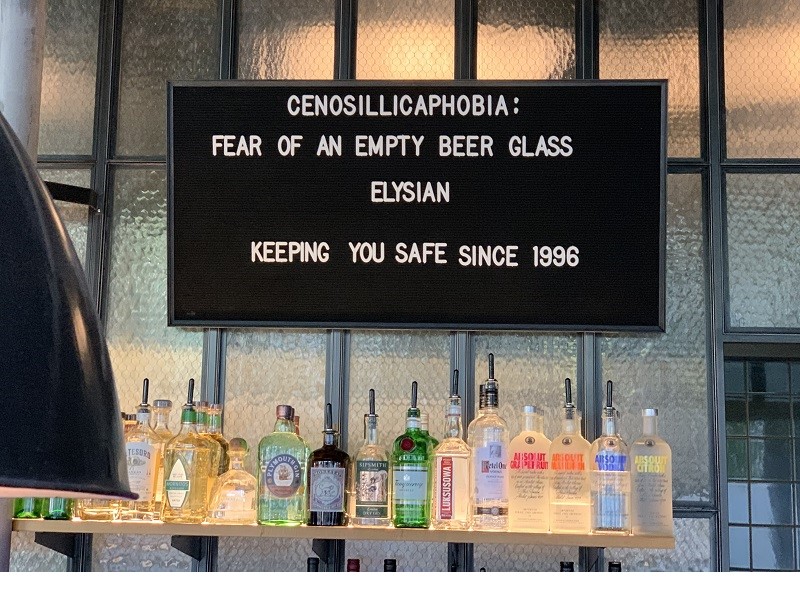
Hmm.. is that a legitimate word: cenosillicaphobia? I wondered, as I looked at the letter board sign behind the bar counter in the Elysian Capitol Hill Brewery tonight.
Well, kind of. It looks like it was invented some 10 years ago. It is listed by Urban Dictionary, but not by Merriam-Webster (the gold standard for online dictionaries).
Ceno means empty, such as in cenotaph (a tomb or a monument erected in honor of a person, or group of persons, whose remains are elsewhere), sillica would be the glass and phobia (of course), the irrational fear.
No reason to suffer from cenosillicaphobia when the bartender is right there, though – unless you have had several too many, already.
I make full use of the Seattle public libraries at my disposal, but I don’t always get to all the books that I had taken out, before they are due back.
There is a Japanese word for buying or acquiring books that go unread: tsundoku (Japanese: 積ん読). The word is composed from tsunde (to stack things), oku (to leave it for a while), and doku (to read).
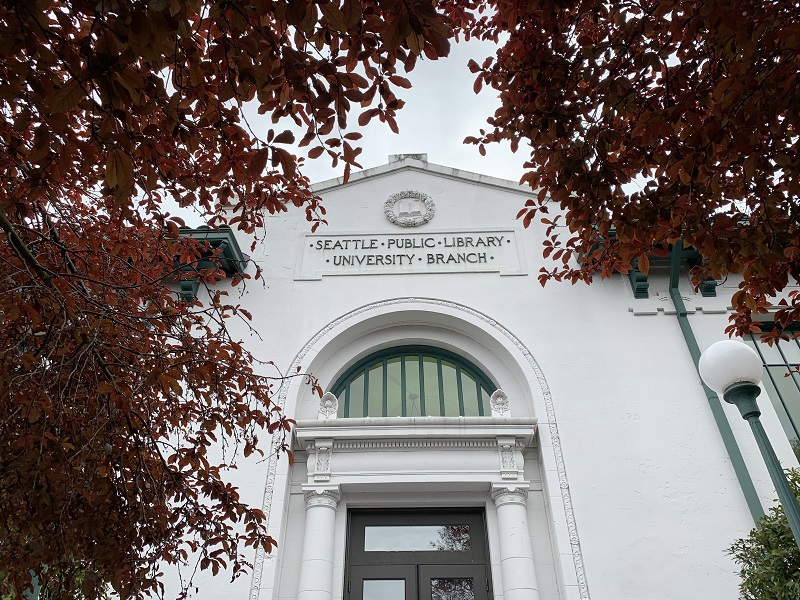
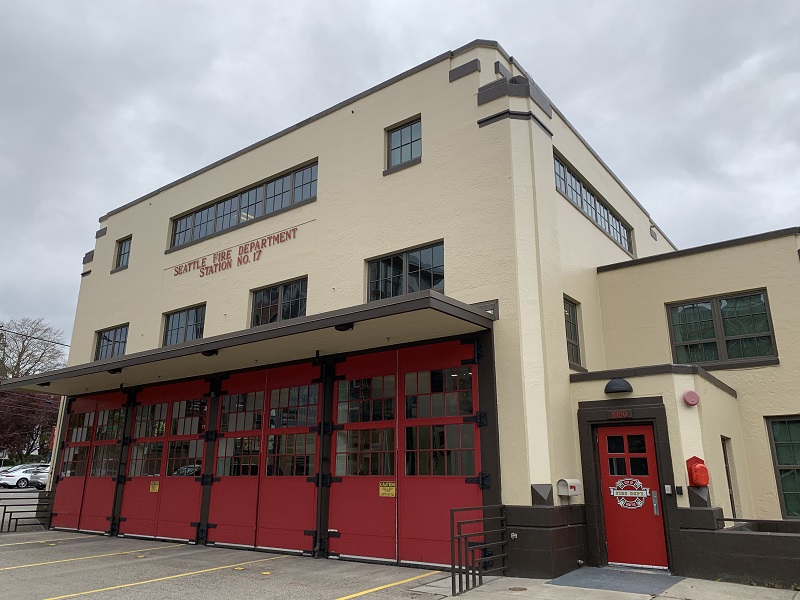
I went to the University branch of the Seattle Public Library today, on Roosevelt Avenue. It is actually one of the smaller branches, but one of the oldest. It opened its doors in 1910.And I had to snap the Seattle Fire Department Station No 17 across the street as well, 1. since it is a Seattle City landmark building (same as the University branch library), and 2. thinking of yesterday’s terrible fire in Paris. The fire station was constructed in 1930 (hence the Art Deco touches), but renovated extensively in 1987.
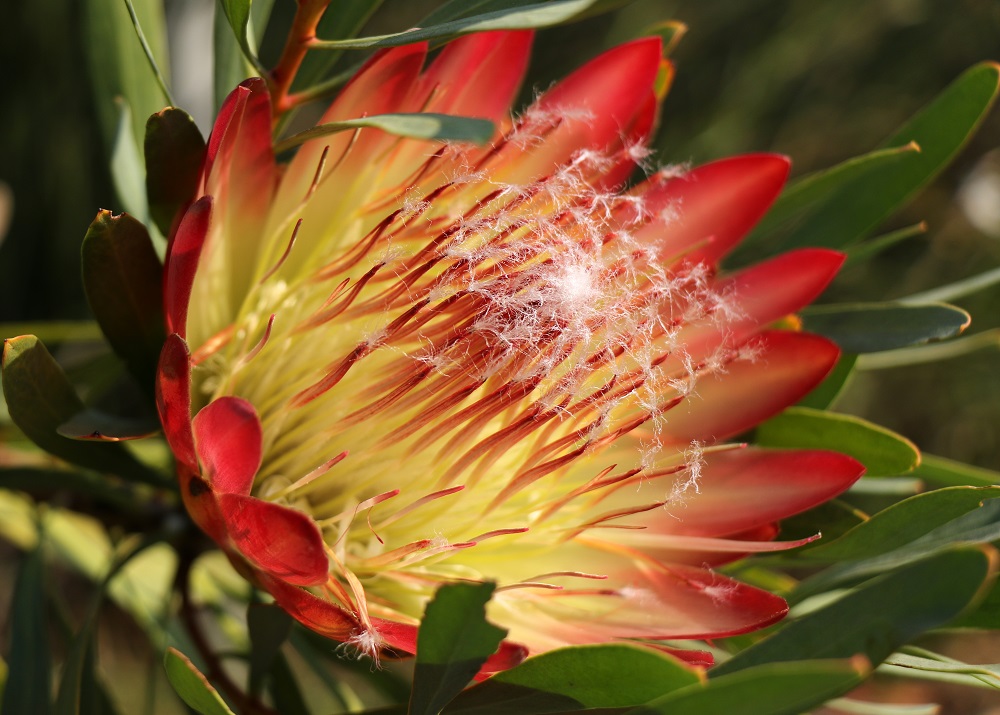
The sugarbush is from the protea family. The ‘flowers’ are actually flower heads with a collection of true flowers in the center, surrounded by bracts (modified leaves). In days gone by, the nectar used to be collected and cooked into a syrup.
A famous Afrikaans folk dance song goes like this: Suikerbossie ek wil jou hê (Sugarbush I want you so) Suikerbossie ek wil jou hê (Sugarbush I want you so) Suikerbossie ek wil jou hê (Sugarbush I want you so) Wat sal jou mama daarvan sê (What will your mama say of that)
Dan loop ons so onder deur die maan (Then we walk under the moon) Dan loop ons so onder deur die maan (Then we walk under the moon) Dan loop ons so onder deur die maan (Then we walk under the moon) Ek en my suikerbossie saam (My sugarbush and I together)
I found this beautiful sugarbush (Protea repens) flower in the Stellenbosch Botanical Garden today.
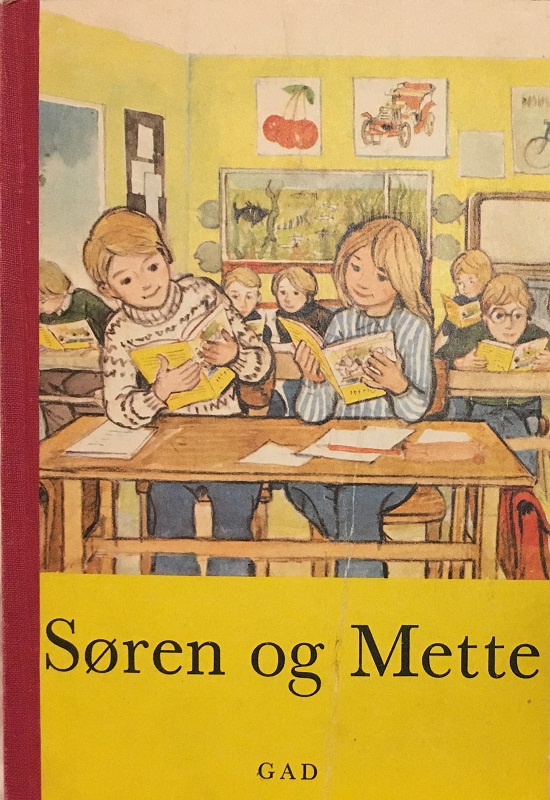
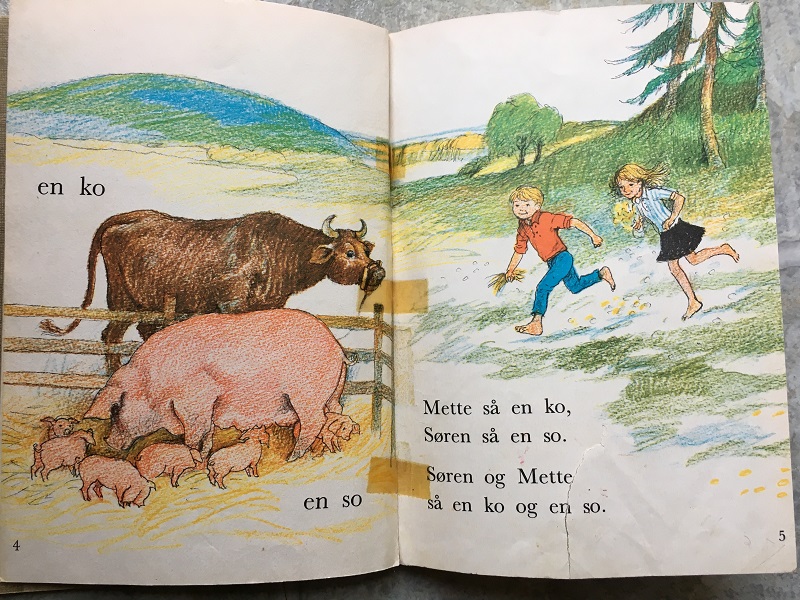
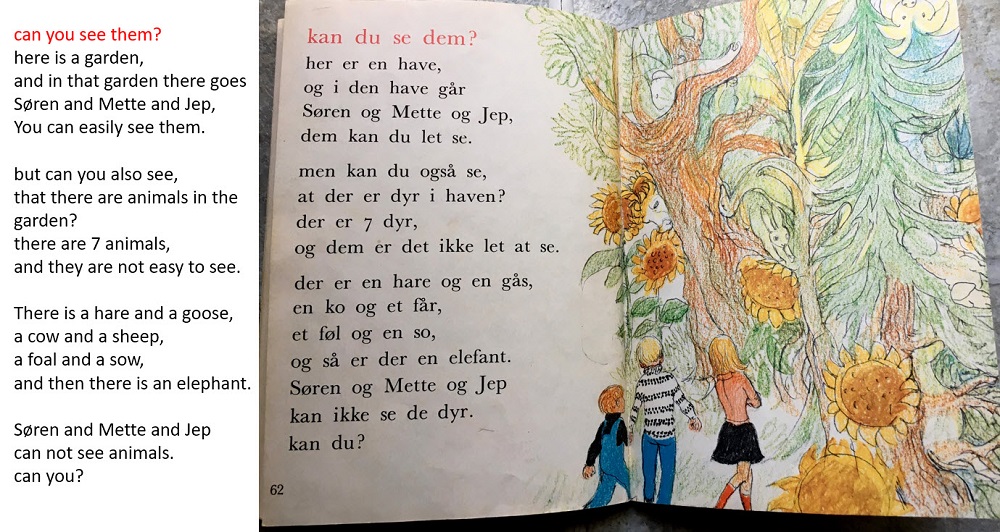
.. no, not a pastry that you can eat – the kind you can read. I got this little first-grade reader book at a second-hand bookstore for a few dollars. For now, I don’t intend to learn Danish. I just like the o with the streg (ø) and the a with the overring (å). So foreign.
‘Søren and Mette’ was first published in 1954. The authors were teacher Knud Hermansen and psychologist Ejvind Jensen. The artist was Kirsten Jensenius. An updated version of the book is still in use today.
Hey! I can read Danish (a picture really is worth a thousand words). A cow. A sow. Mette sees a cow. Søren sees a sow. Søren and Mette see a cow and a sow.This is at the end of the book, so a little (a lot) tougher to make out, so check out the translation at the left .. and look for the seven animals hiding in the forest!
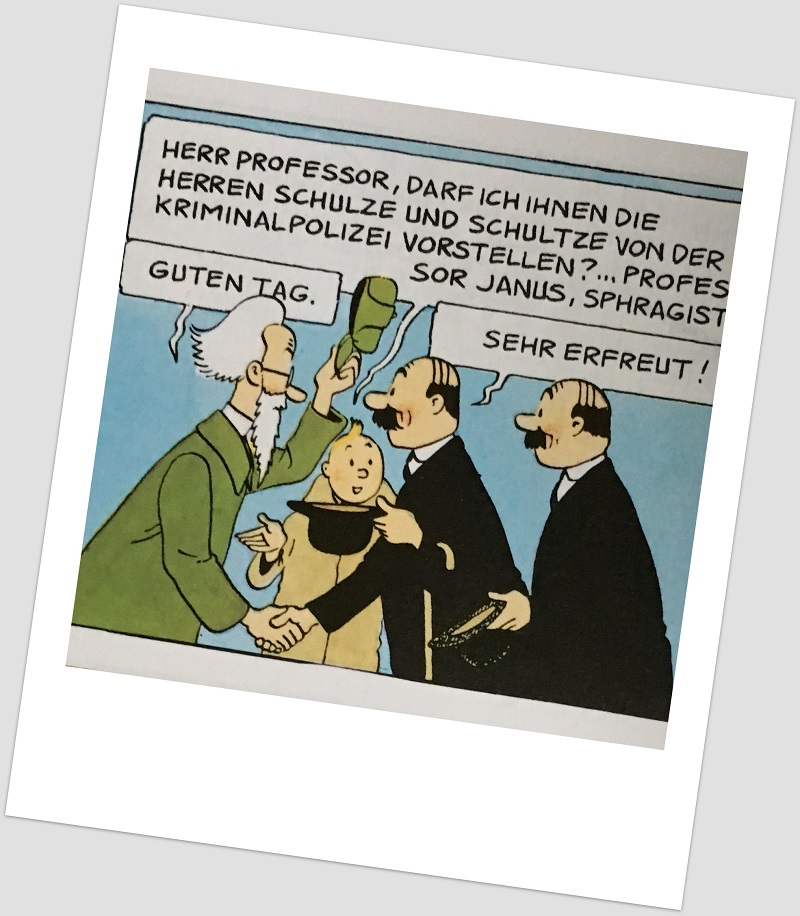
Tintin: ‘Professor, may I introduce to you the gentlemen Schulze and Schultze from the police crime unit? Professor Janus, sphragist’ Professor: ‘Good day’. Schulze: ‘Very delighted’. (A spraghist is a person that studies document seals).
I have a few German ‘Adventures of Tintin’ books in my collection, and I can start to read those with a better understanding as well.
The two bungling detectives (Schulze & Schultze in the German translation), first appeared in King Ottokar’s Scepter. Check out the table for their names in the other translations.
My only beef with the German translation is that the text is in ALL CAPS – which means YELLING in today’s rules for text formats. I would have much preferred it to be Mixed Case. Carlson Comics, please take note of that for the next update to the German translation!
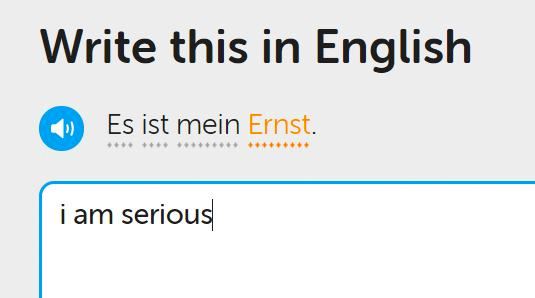
Duolingo rated this answer as correct. As a short phrase it’s the best we can do in English, even though ‘I am serious’ expresses a broad attitude and does not say that it is a specific thing that is taken seriously. A better translation would have been ‘It is something that I take seriously’.
I am working my way through a large set of German language lessons in duolingo. (It is a website and an app. I find the desktop/ website better to use, since it is easier to type in the answers to the lessons that way).
Every now and then, I get a German phrase that is remarkably easy to translate directly into my native Germanic language of Afrikaans, but impossible to translate directly into English. (And I love it – it’s what fascinates me about languages).
Here’s one : German: Es ist mein Ernst. Afrikaans : Dit is my erns. English: It is my [Hmm. What word to use here? Cannot say ‘It is my serious/ It is my earnest’. Need a noun forsome thing/ some issuethat is taken seriously].
This morning a blanket of fog enveloped the whole area; it is amazing how warm and stuffy it got from just one week ago when we were sitting here in the office building shivering from the cold. The marble floors and door thresholds – and even windows – in the building ‘sweat’ – all the moisture condensing on it. It’s bad to have slippery marble floors, so the office management had to put non-slip mats in the lobbies and hallways. Yesterday a few of us walked up to the reservoir close to the office building here where we work.
But hey! it’s Friday and I have a weekend in Hong Kong to look forward to. The Marriott Courtyard hotel room waiting for me there will be a get away and a little lap of luxury, and I am going to snooze in that king-size bed with the six pillows.
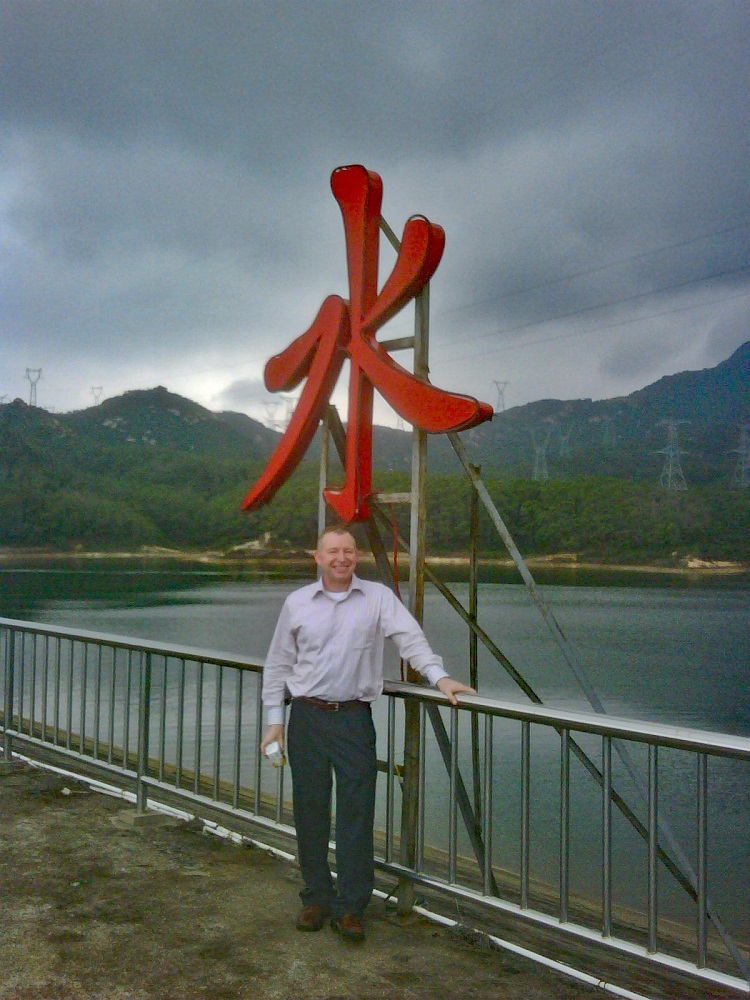
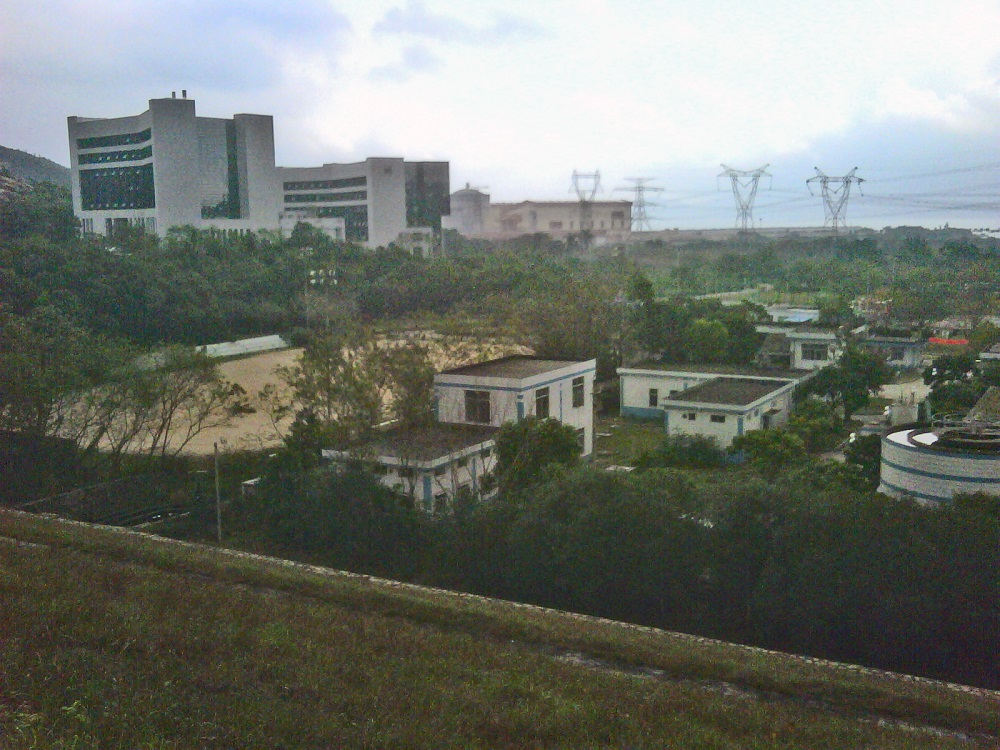
A little reservoir on the hillside, near the Daya Bay nuclear power plant complex. The character behind me translates to .. water, of course! 水 shui = water / river / liquid / beverage / additional charges or income / (of clothes) classifier for number of washes.The offices where I work are in the gray & black office building on the left. The Daya Bay nuclear power station is visible in the distance behind it.
Two pictures from around the apartment complex here in Dameisha.
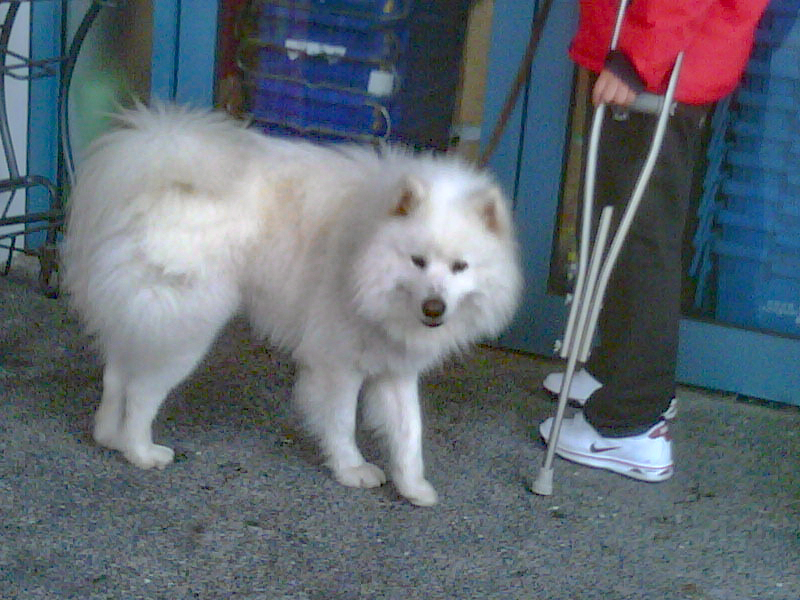
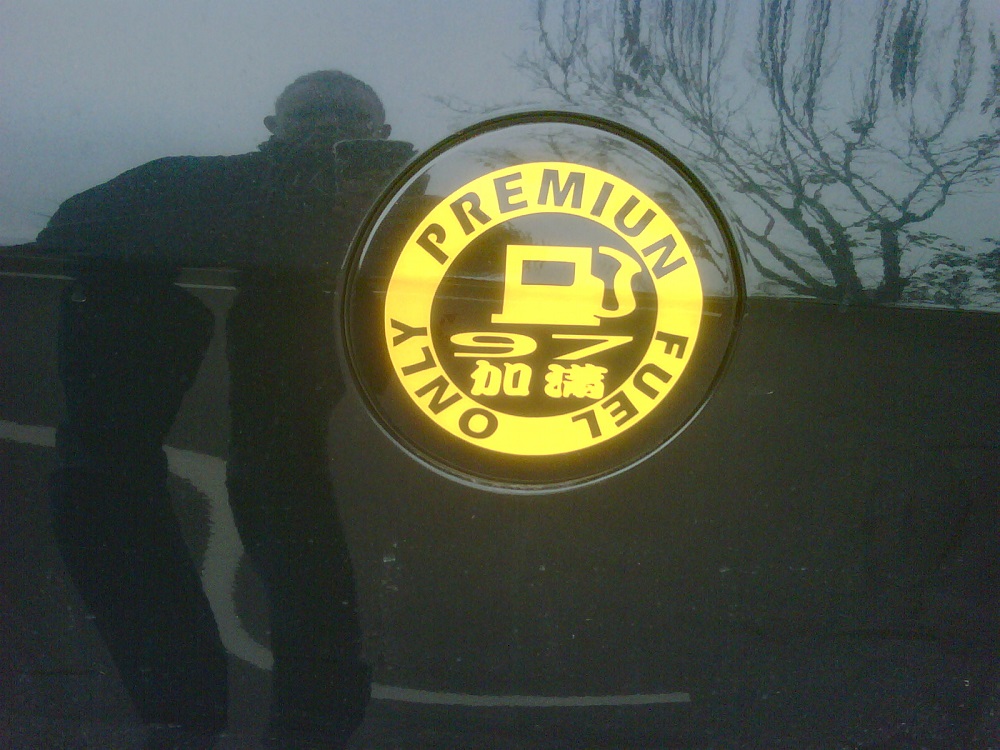
A beautiful dog outside the little grocery store here at the complex. It looks like a samoyed. The breed takes its name from the Samoyedic peoples of Siberia. These nomadic reindeer herders bred the fluffy white dogs to help with herding. [From Wikipedia]Gasoline tank gap on a car here. (Little typo there with ‘premium’). The two Chinese characters below the 97 says 加 满 ‘Fill up with premium’.
Another day of work session facilitating for me – half of it in Chinese with me waiting patiently for the Daya Bay team animatedly discuss some design issue before them. Then I get a translation from the team lead or my Chinese colleagues, and depending on my answer back they settle down or debate it a little further : ).
It’s tough for me, and tough for them : some are seeing SAP for the first time – in English – and they are not familiar with the terms or the processes. It is packaged software, offering some setup choices, but not total freedom to redesign it. So sometimes I really have to shrug and say: ‘We just cannot change it in such a fundamental way. That’s not the way the Germans designed it’.
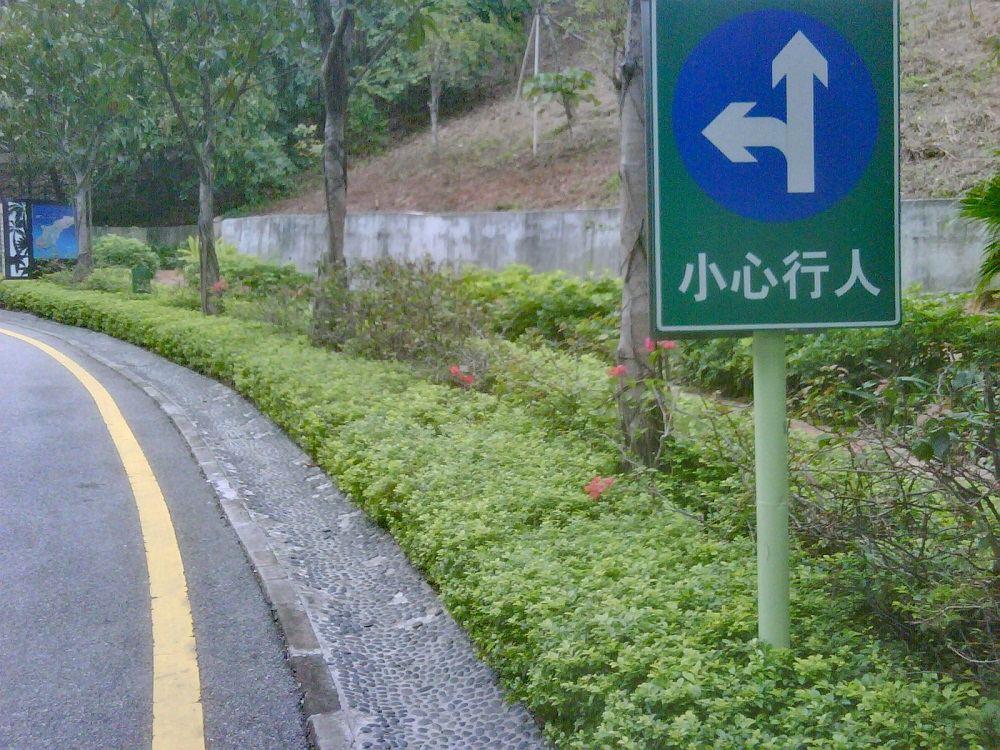
Back at the apartments after a long day. The view from the shuttle bus. The sign says 小心行人 xiǎo xīn xíng rén which translates to ‘be careful for pedestrians‘ (watch out for pedestrians).
It was a long Monday at work – Mondays always seem long! but at least I can post these pictures from yesterday’s visit to the Outside China Town (OCT) theme park. Disneyland or Six Flags it is not – but there is a spectacular and steep aerial tramway up the mountainside to provide panoramic views of Dameisha, the beach and the bay down below.
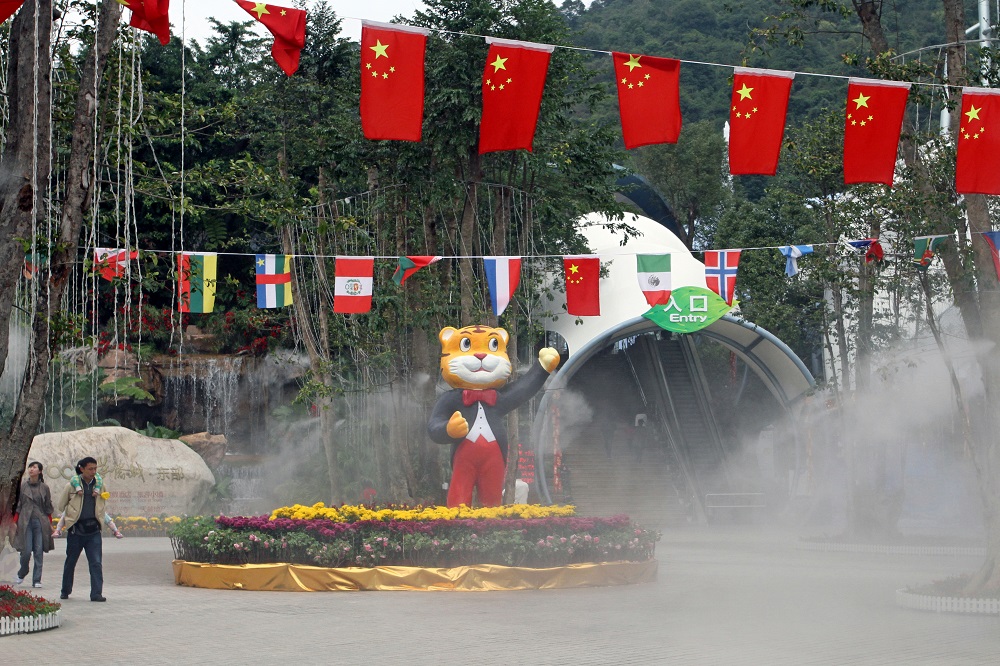
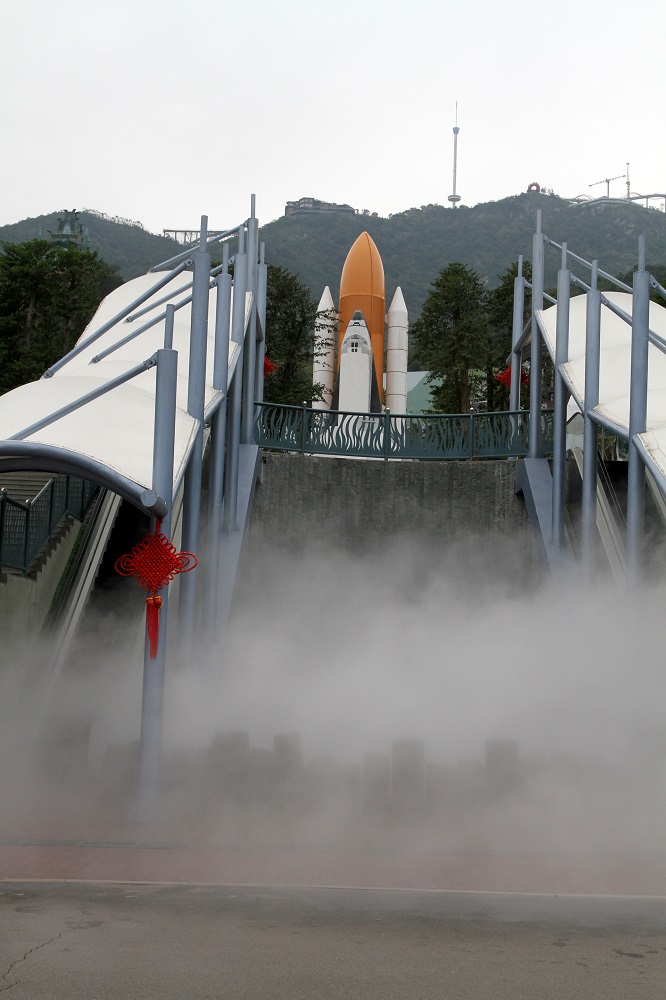
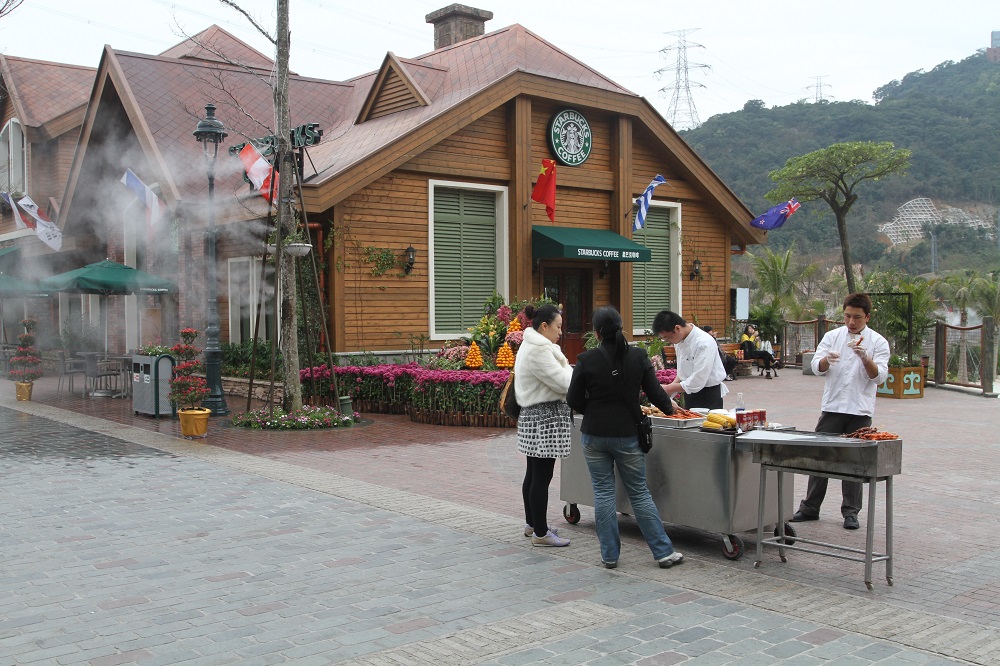
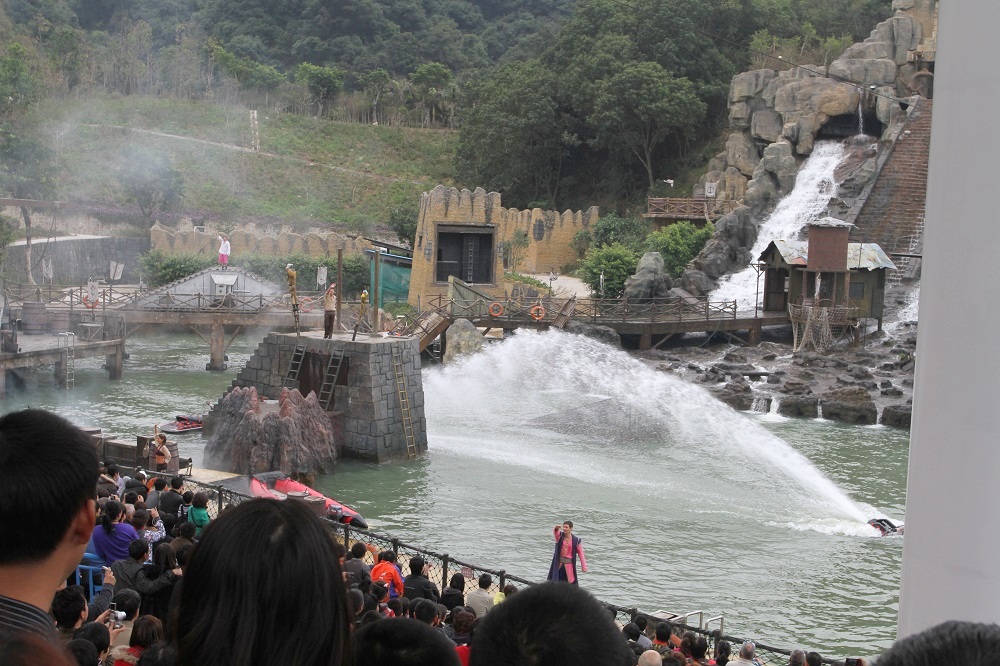
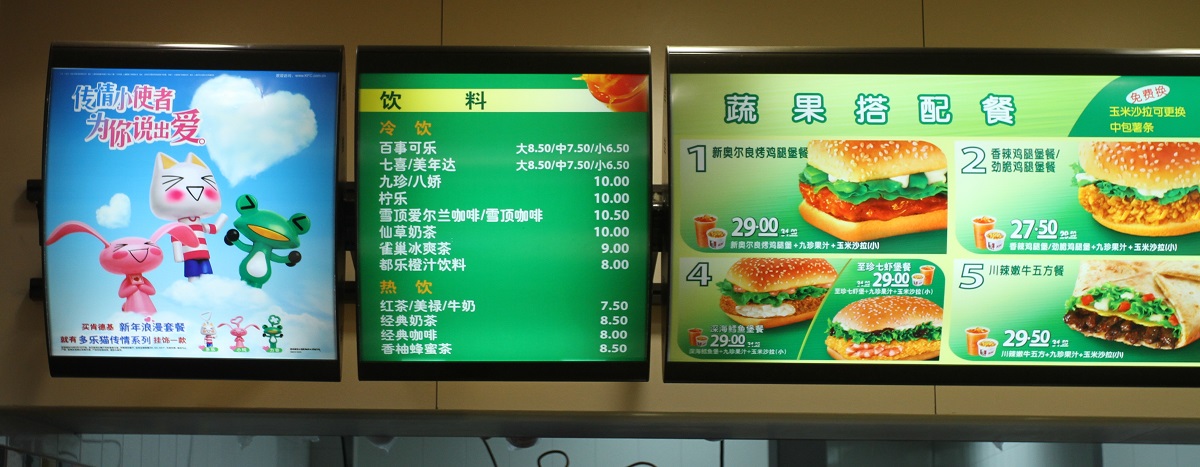
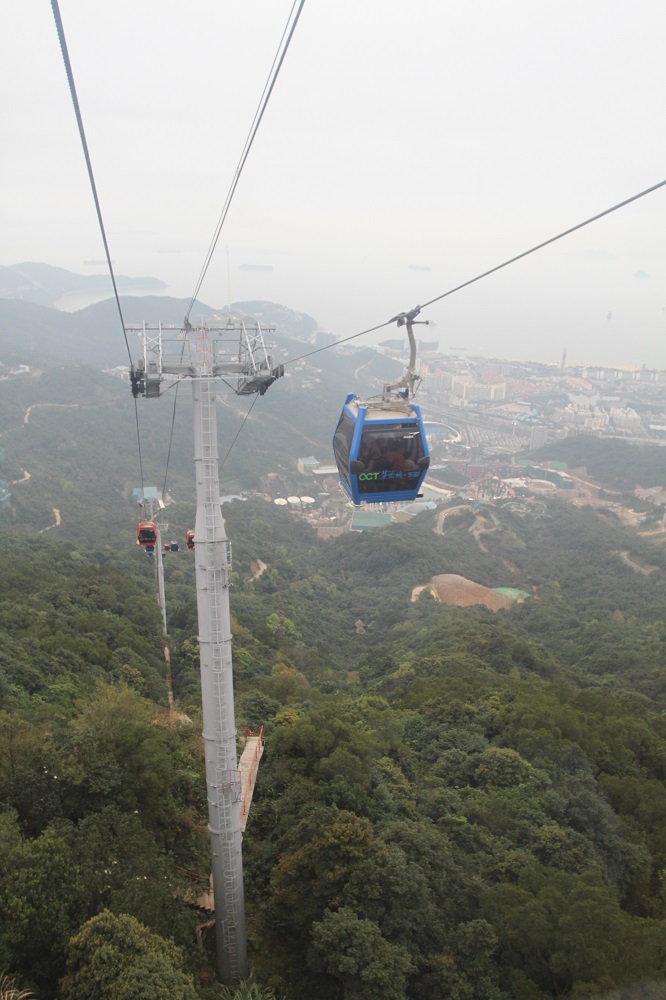
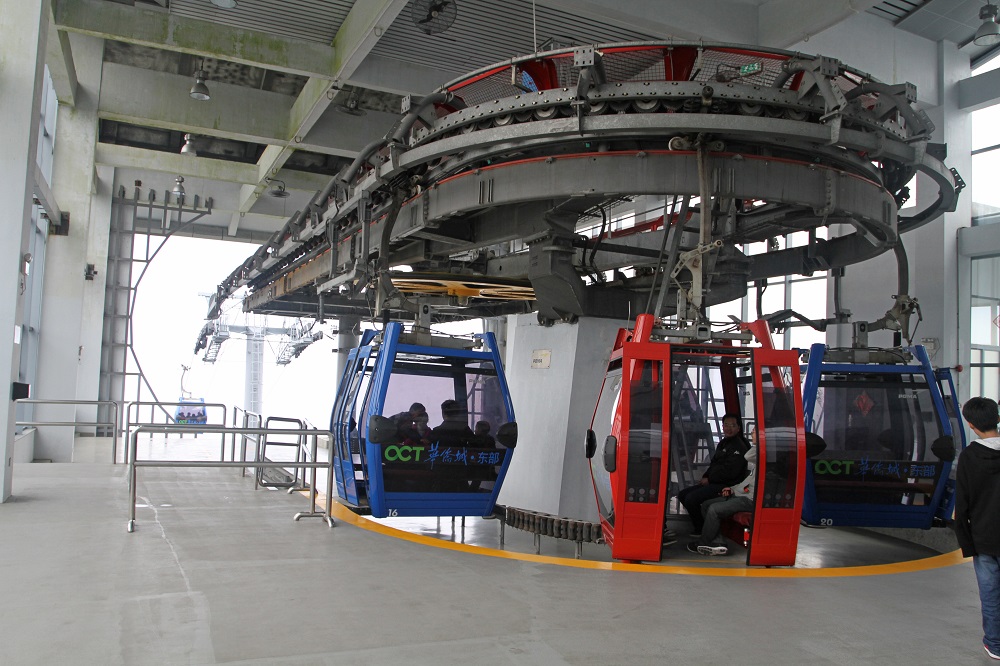
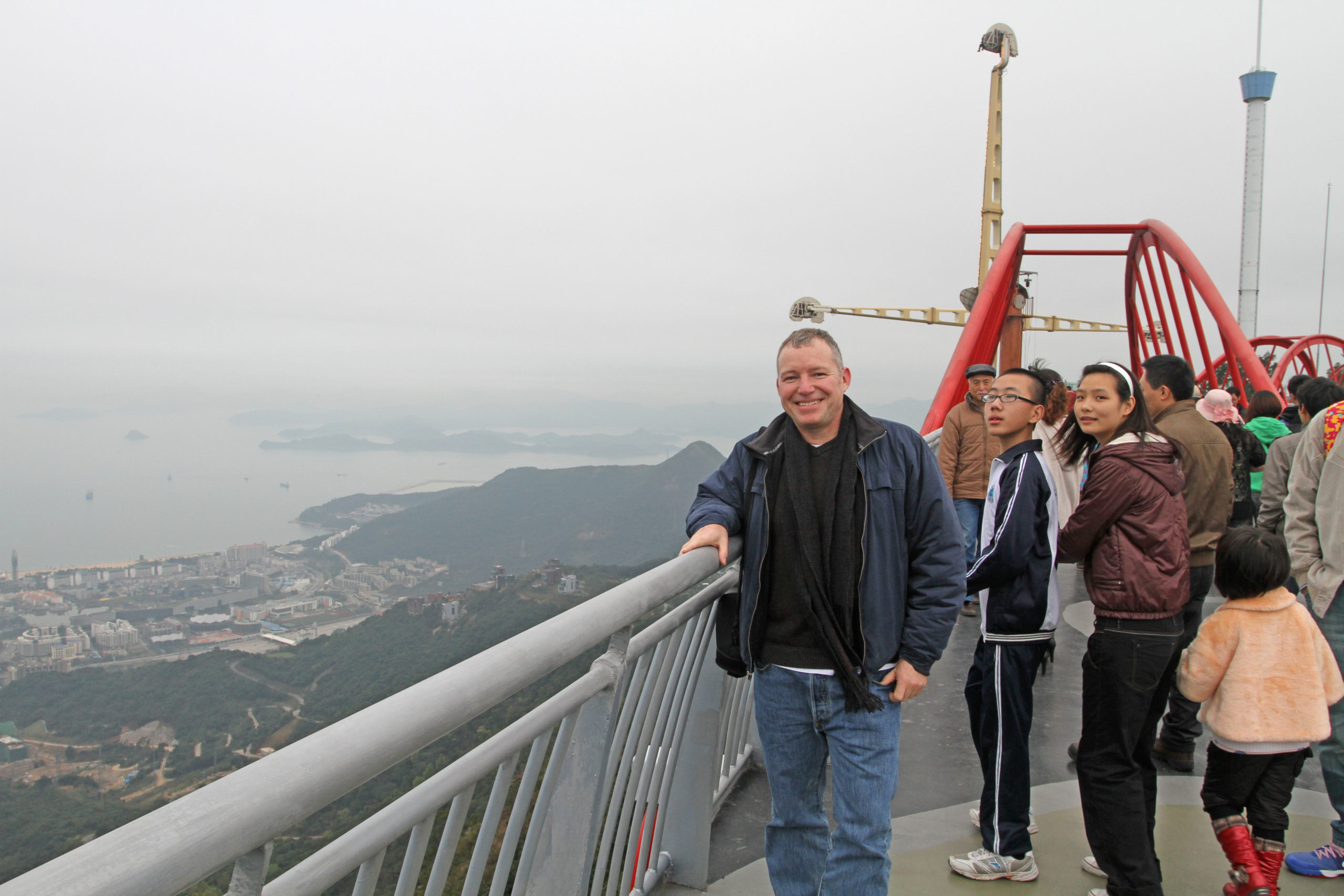
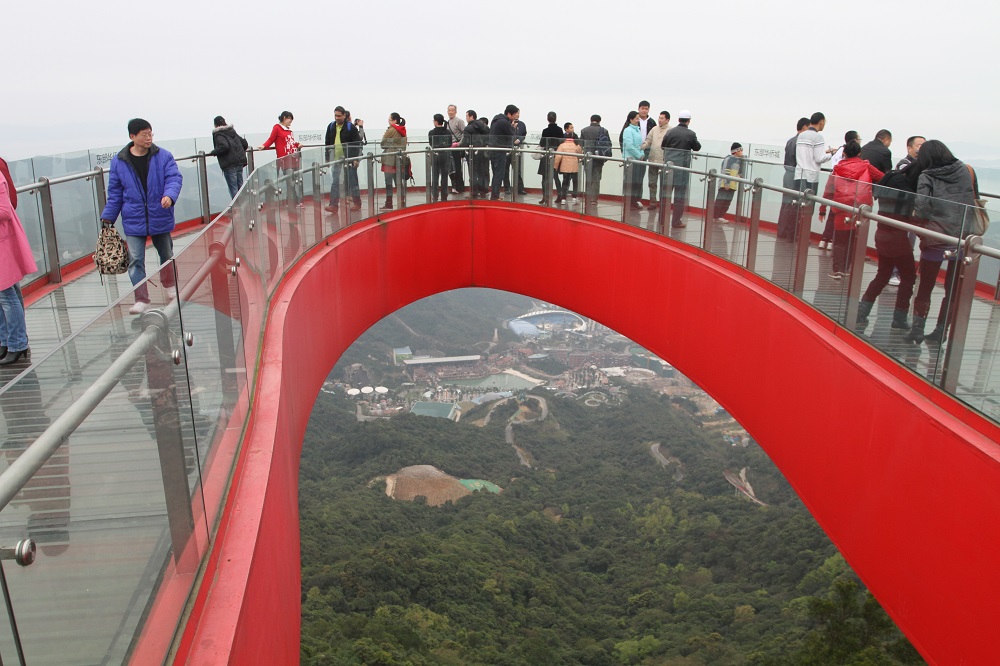
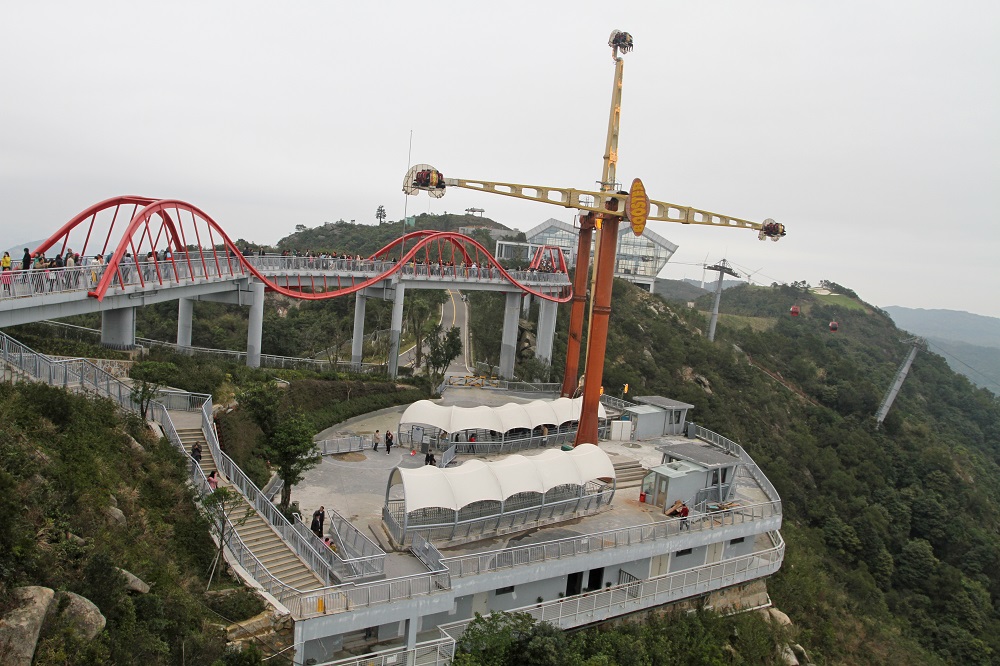
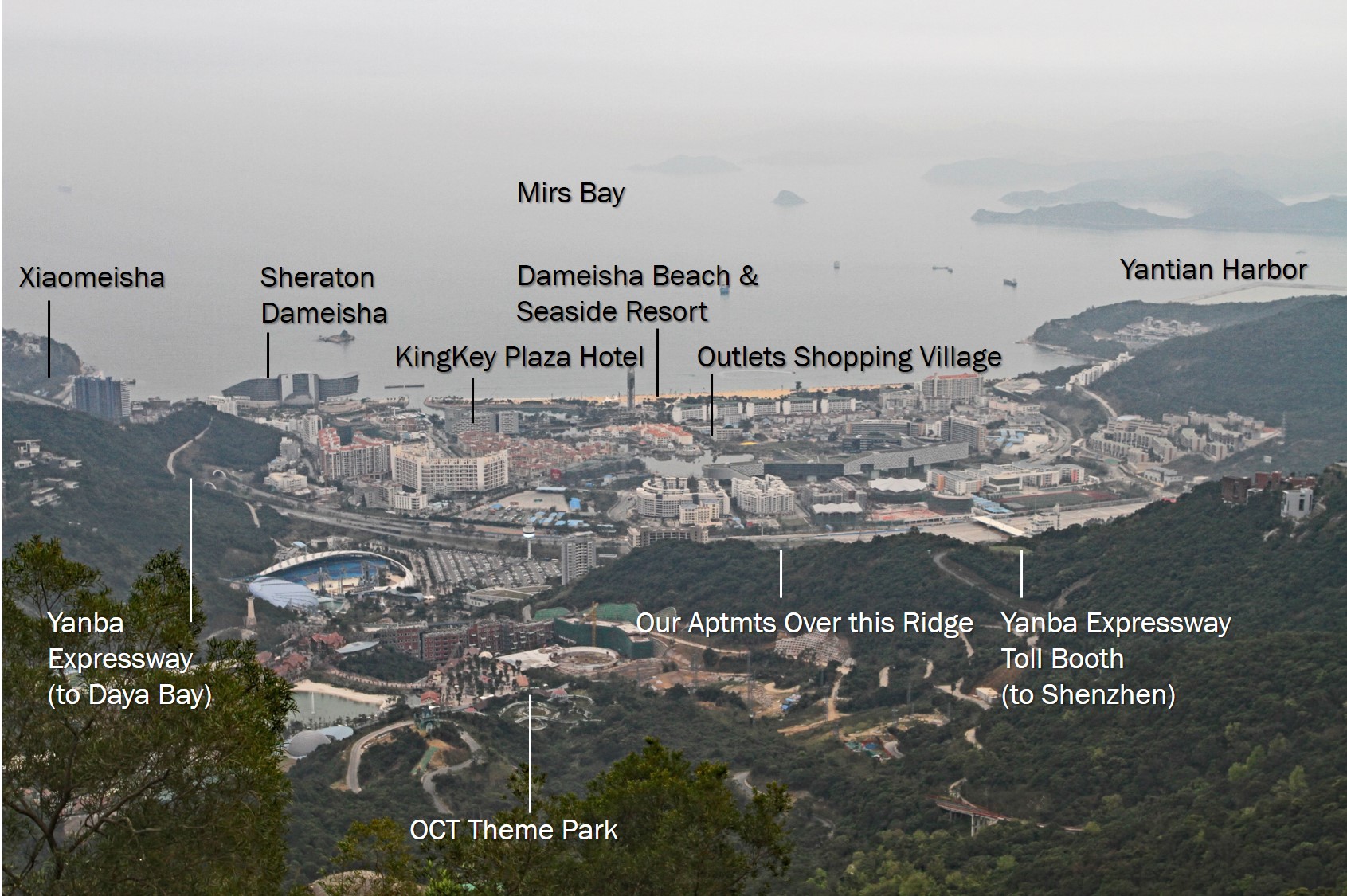
The parking lot for OCT theme park. We see the tower with the wrap-around screen every night from the Yanba Expressway when we came in from work with the shuttle bus.The entrance: a nod to the Year of the Tiger, and the first of five or six escalators that takes one up the mountainside.A misty pond on the way up to the space shuttle display on one of the levels.Trinkets and refreshments are for sale everywhere, of course.Here’s the Starbucks, with a food vendor in the foreground. If the Starbucks was a little easier to get to, and not inside OCT, I would have visited it every day.The water spray is kicked up by a jet ski, and we did not stay long enough to see what other entertainment was offered in this show.1Here’s the aerial tramway, taking us to the top of the mountain ridge. Those pylons are really tall! That’s Dameisha beach on the right and Mirs Bay in the distance.The arrival point at the top of the tramway. The little tramway cars take only 6 people, at most.Posing for the obligatory photograph at the overlook. This is looking more or less west, with the coastline continuing on towards Shenzhen and Hong Kong.Here’s the skywalk with its glass floor. Yikes. With these things, one has to trust that the civil engineers had double checked their design calculations, and that the builders had followed all the specifications without cutting corners.Looking down at a new ride that is under construction, on the edge of the cliff. I’m too old for these kinds of heart-stopping experiences, so it’s a no for me, thank you very much.Another Chinese only menu to decipher. The pictures are super helpful for the helpless (us), of course. The green section has the cold drinks (such as snow top coffee and iced tea) and hot drinks (black tea, green tea, milk tea, classic coffee).Here is the view from the top, with some main areas and buildings of interest. Dameisha is really ‘big’ Meisha (‘da’ is big) and Xiaomeisha is ‘little’ Meisha (‘xiao’ means small or little).
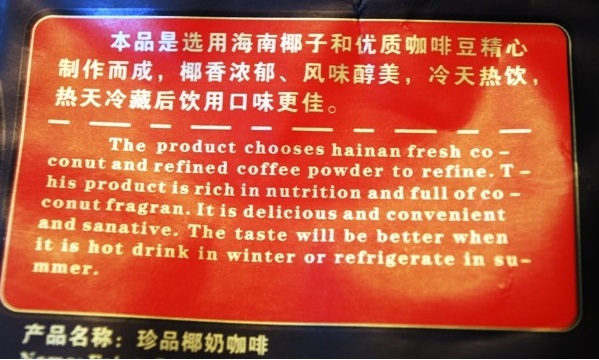
Here’s the cute translation into English, from the back of the coconut coffee bag. (Would have posted it yesterday, but had to wait until I got home so that I could take a high-resolution picture). Note the creative breaks in the words T-his (wow) and su-mmer, and – the taste will be better when it is hot drink in winter. Gotcha! :).
Friday, and a rough week it was, with long work days. It’s the last day of the new year’s week, and hopefully the firecrackers at night will now draw to a close. It wasn’t really all that bad, though.
Here is a little Mandarin lesson from our colleague: how to write and say ‘Happy New Year’.
This is 新年好 xīn nián hǎo: ‘new year good’ (informal, for friends, family). There is also 新年快乐 xīn nián kuài lè: ‘new year happiness’ (formal, for strangers).
新 new, recent, fresh, modern
年 year; new-years; person’s age
好 good / well / proper / good to / easy to / very / so / (suffix indicating completion or readiness)
It was cold in the office yesterday. The new building’s heat pump was not working for some reason. Back at the apartment in Dameisha at night, we still hear a barrage of fire-cracker pops and fireworks go off, as the week-long celebration of the Lunar New Year continues. It is cold in the apartment as well. Our $12 space heaters from Shenzhen’s Walmart are not quite up to the task of warming up the entire apartment, of course.
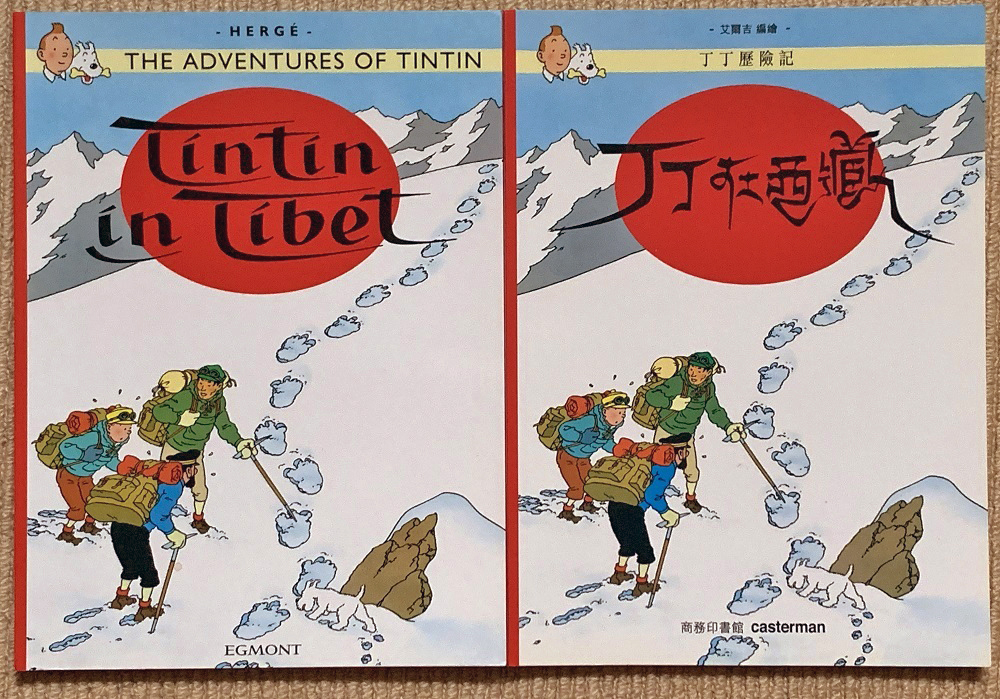
Anyway, sticking to the theme of cold: below are the snowy cover pages of the English & Chinese versions of ‘Tintin in Tibet’. Tintin translates to Ding Ding in Chinese.
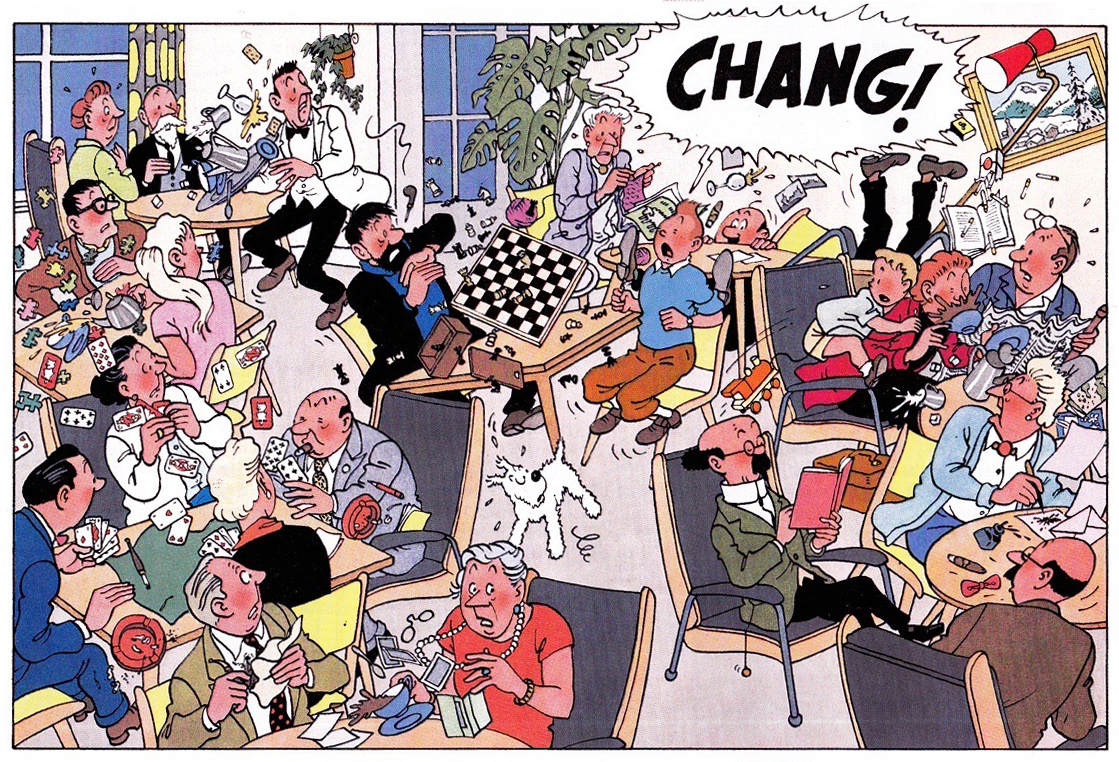
I bought the English ‘Tintin in Tibet’ at Pollux bookstore in Central District. Then I used it to shop around for its Chinese translation, which I found at Joint Publishing bookstore on Queen Victoria Rd.A panel from the Tintin in Tibet story. Tintin was dreaming about his missing friend Chang, and woke up with a fright. Everything goes flying, but Professor Calculus (in the green jacket reading a book), is unperturbed. 🙂
[From Wikipedia] The Adventures of Tintin (Les Aventures de Tintin) is a series of comic strips created by the Belgian artist Georges Rémi (1907–1983), who wrote under the pen name of Hergé. Tintin in Tibet is the twentieth book in the series. It is said to have been Hergé’s favorite of the Tintin series (previously The Secret of the Unicorn), and was written during a personally difficult time in his life, as he was divorcing from his first wife. The story is unlike any previous Tintin books, before or since: there is a small number of characters and no enemies, villains, spies or gangsters. This adventure revolves around a rescue mission of Tintin’s Chinese friend Chang Chong-Chen.
It is also unusually emotional for a Tintin story: moments of strong emotion for the characters include Tintin’s enduring belief in Chang’s survival, the discovery of the teddy bear in the snow, Haddock’s attempting to sacrifice himself to save Tintin, Tharkey’s return, Tintin’s discovery of Chang, and the yeti losing his only friend. Indeed Tintin is seen to cry when he believes Chang’s fate, something he is only seen to do three times throughout the entire series (the other occurrences being in The Blue Lotus and Flight 714).
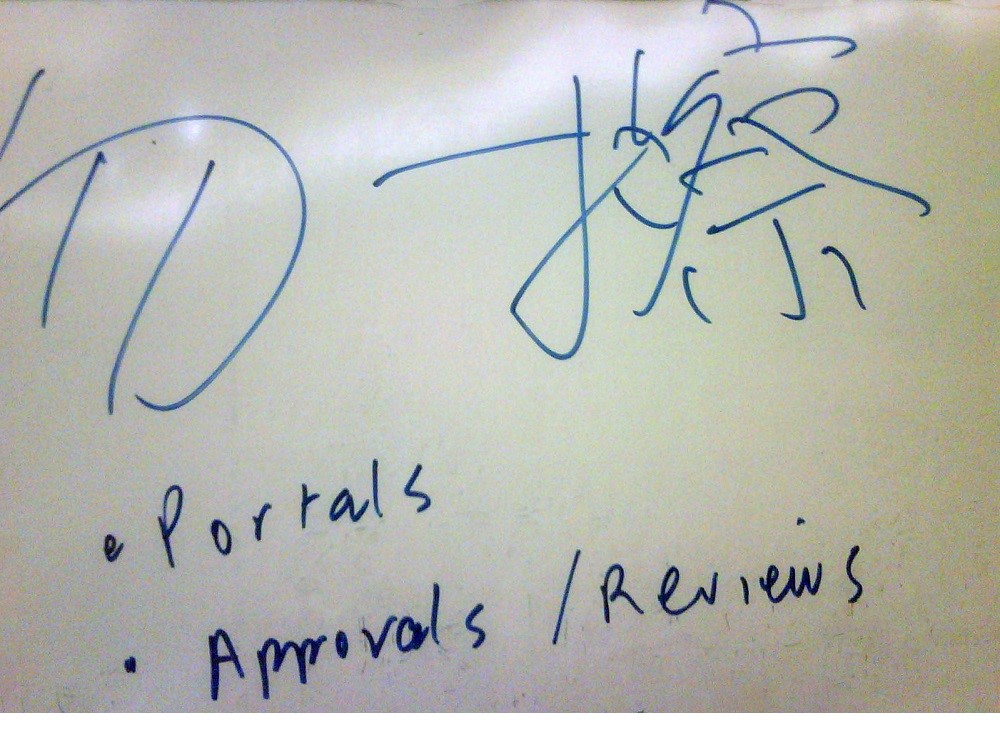
So check this out .. I wrote ‘Do not Erase’ on the whiteboard, and then my Chinese colleague wrote it in Chinese next to it, for good measure. That second one is a 17-stroke character! Wow. So as the amateur very limited-time student of Chinese I had become, just had to go look up the characters on my translator .. and voila!
And this sign says ‘Good Luck’ .. which I hope I will have a little of for my trip this weekend to Hong Kong. I see the New Year’s Parade was back in January, so I missed that, but even so there should be an exciting vibe there this weekend. I need it, since I am a little homesick, and that after just one week out here this trip.