Monday/ different by a hair 📏

I updated this page in my stamp album today.
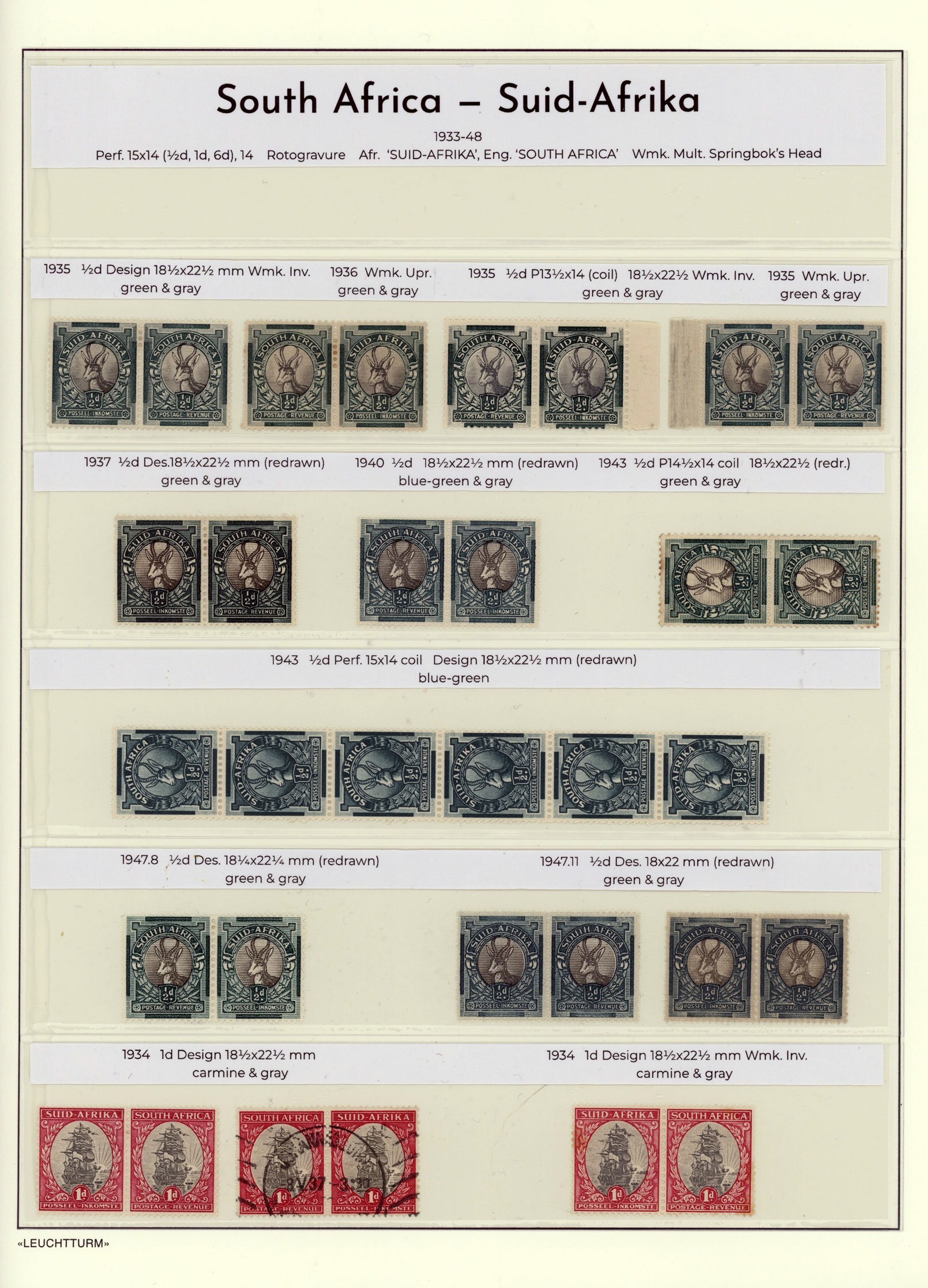
I added a new line of  ½ penny springbok stamps, from 1947.
Only a very finely calibrated ruler will show the ¼ mm size difference between the printed designs of the stamps issued in 1937 (18½x22½ mm), in August 1947 (18¼x22¼ mm) issue and in November 1947 (18×22 mm).

A quarter mm is only one one-hundredth of an inch! 

The postal authorities tried to squeeze in a little more white space between the stamps in the 1947 printings, for the perforation machine.

I added in one more line with ½ penny springbok stamps, and pushed the red 1d Dromedaris* ones onto the next page.  

*The “Drommedaris” was a Dutch ‘jaght’, a type of sailing vessel, built in 1645. It was operated by the Dutch East India Company (VOC) from 1645 to 1661. The Drommedaris played a significant role in the establishment of a halfway stop for VOC ships on the trade route between Europe and the East Indies.
Ultimately, the Drommedaris’s voyages to Table Bay led to the establishment of a crucial trading post and settlement at the Cape of Good Hope, in what would become the Mother City— the city of Cape Town, South Africa.

Friday/ another week, done 📆

It was beautiful outside today (68°F/ 20°C).
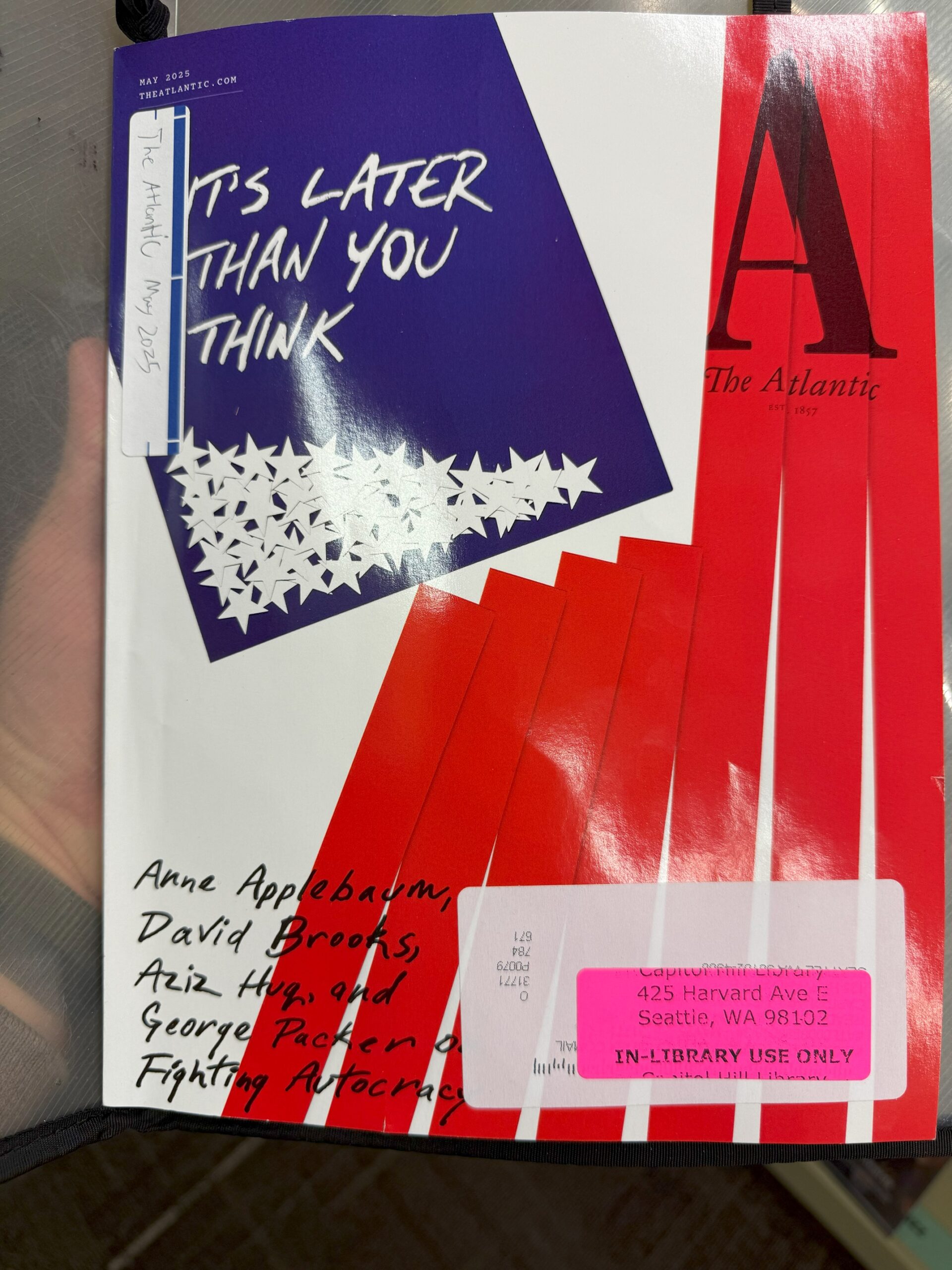
I walked down to Capitol Hill library to return two books, where I found the latest issue of The Atlantic on the magazine rack, with some unsettling writing inside (see below).

In the upside-down place we find ourselves with the Trump administration, it’s almost a positive that his 42%-or-so approval rating after 100 days in office is the lowest of any modern US president.

P.S. The US stock market held up surprisingly well this week, and April’s jobs report showed a gain of 177,000 jobs, exceeding expectations. Unemployment remains steady at 4.2%, and average hourly earnings rose modestly.

Here are the headlines and taglines from inside:
I Should Have Seen This Coming
When I joined the conservative movement in the 1980s, there were two types of people: those who cared earnestly about ideas, and those who wanted only to shock the left. The reactionary fringe has won.
DAVID BROOKS
—-
The Hollow Men
It takes a special talent to betray an entire worldview without missing a beat.
GEORGE PACKER
—-
America’s Future Is Hungary
MAGA conservatives love Viktor Orbán. But he’s left his country corrupt, stagnant, and impoverished.
ANNE APPLEBAUM
—-
Watching the Rise of a Dual State
For most people, the courts will continue to operate as usual—until they don’t.
AZIZ HUQ

Thursday/ May Day protests 🪧

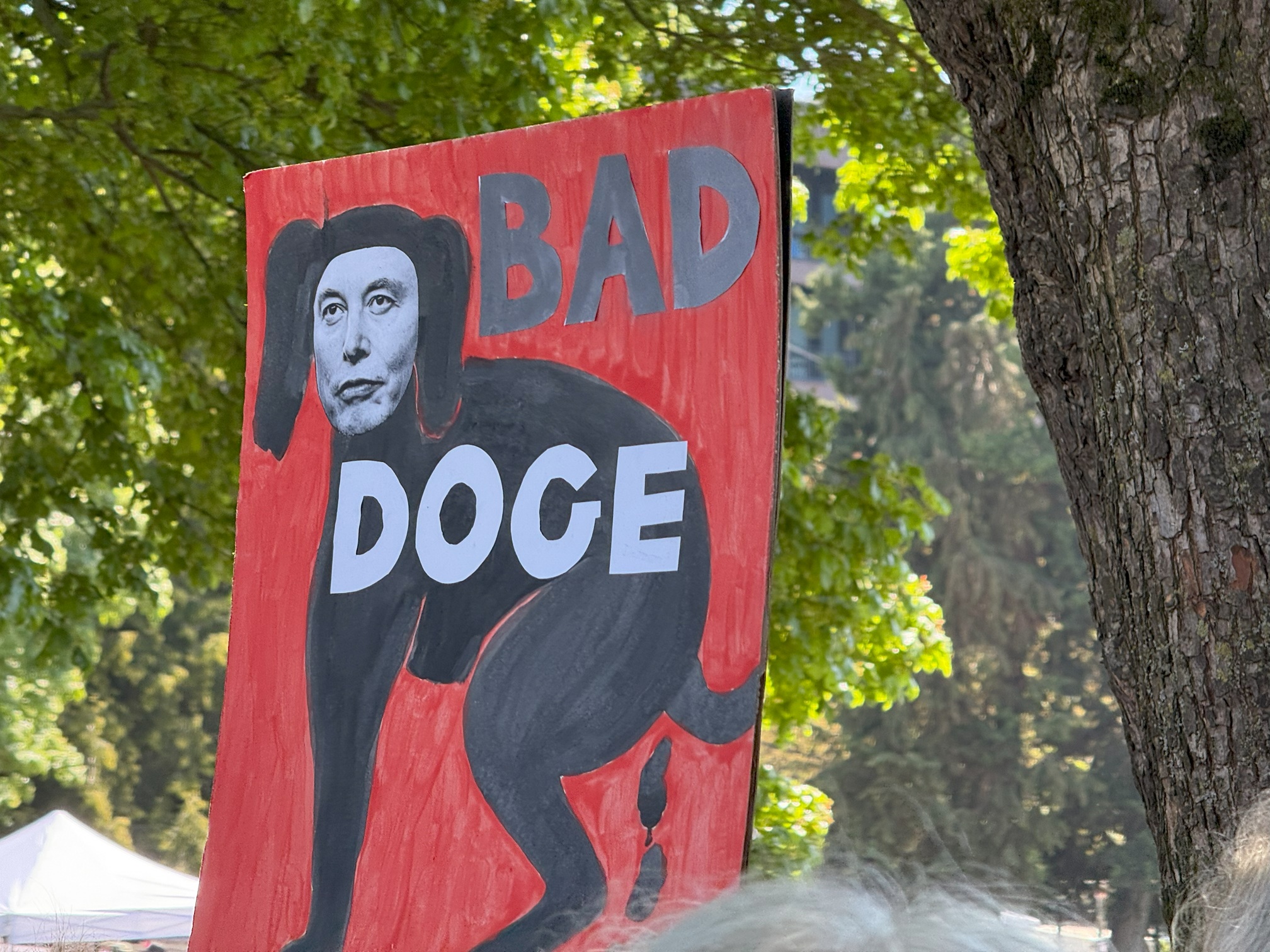
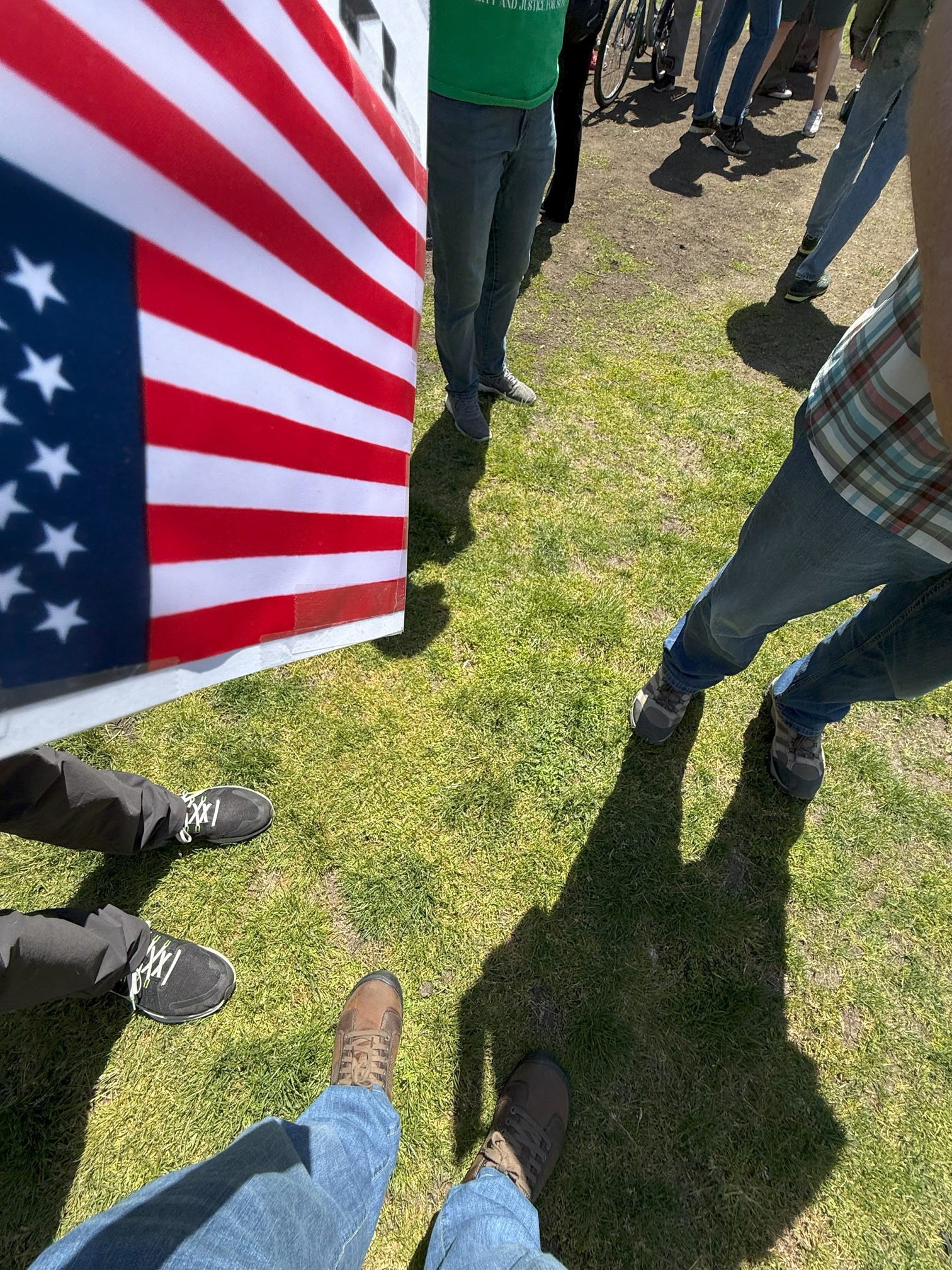
Three of us went down to Cal Anderson Park at noon, to protest in support of workers’ rights, and those of immigrants. (A panoply of other protestations were depicted on the posters that people had made). We joined the march to downtown that started at 2 pm.
The crowd that marched was not huge— reportedly somewhat over 1,000 people— and the protesters spanned two to three blocks as they walked.

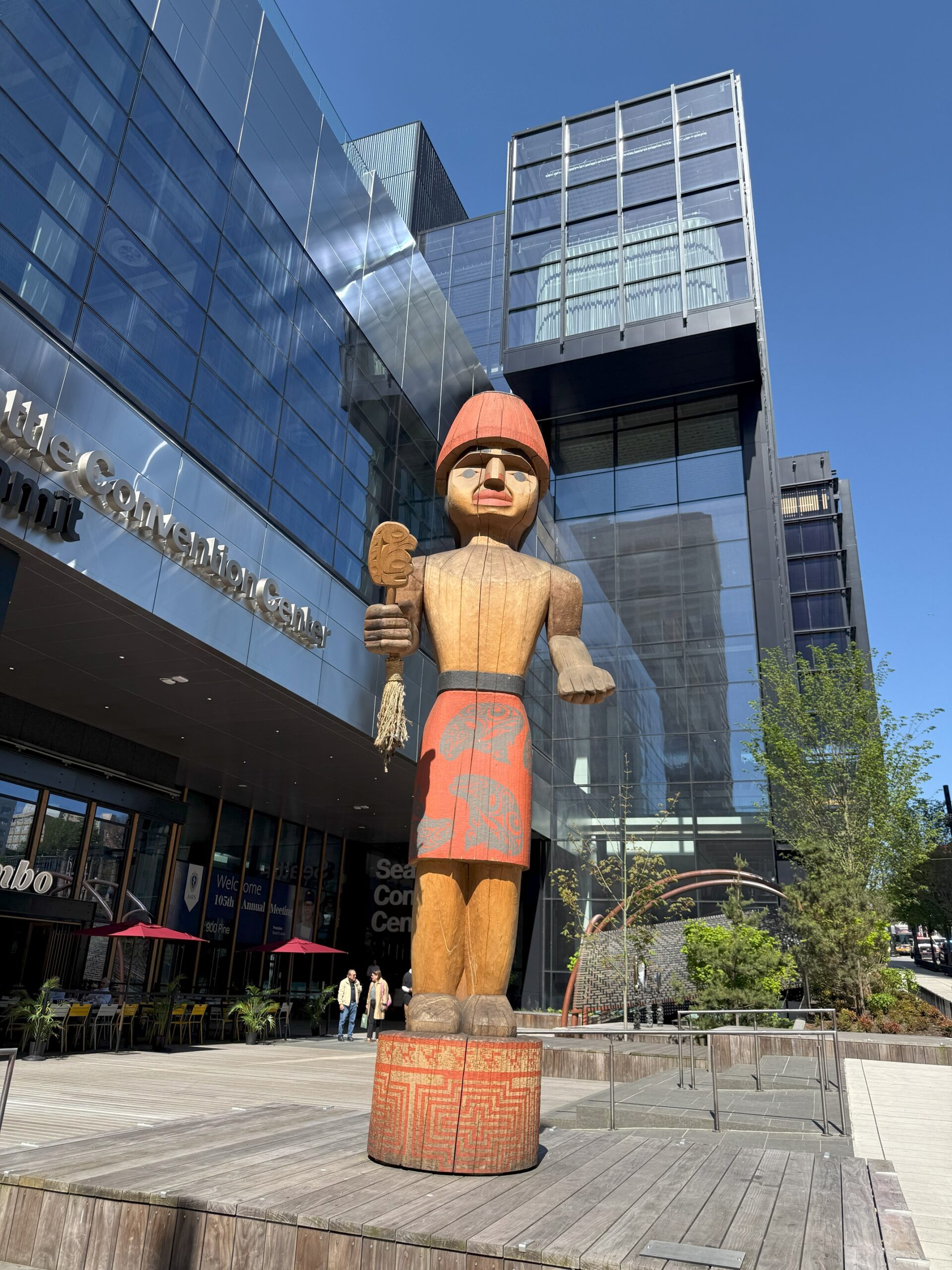
We stepped out of the march by the Seattle Convention Center to look at the crowd and the rest of the protest signs. The marchers went further on down Pike Street, and turned on First Avenue to reach the Henry M. Jackson Federal Building.

Monday/ Canada’s election 🍁

Congratulations to Prime Minister Mark Carney and to the people of Canada with their election results.

Headlines from the Washington Post, with a pictures from Reuters.

P.S. There was this post on Truth Social (read: anti-truth, anti-social) from the President of the United States this morning. Illuminating. Hallucinating.

Good luck to the Great people of Canada. Elect the man who has the strength and wisdom to cut your taxes in half, increase your military power, for free, to the highest level in the World, have your Car, Steel, Aluminum, Lumber, Energy, and all other businesses, QUADRUPLE in size, WITH ZERO TARIFFS OR TAXES, if Canada becomes the cherished 51st. State of the United States of America.
No more artificially drawn line from many years ago. Look how beautiful this land mass would be. Free access with NO BORDER.
ALL POSITIVES WITH NO NEGATIVES. IT WAS MEANT TO BE!
America can no longer subsidize Canada with the Hundreds of Billions of Dollars a year that we have been spending in the past. It makes no sense unless Canada is a State!

Saturday/ stamps from Namibia 🇳🇦

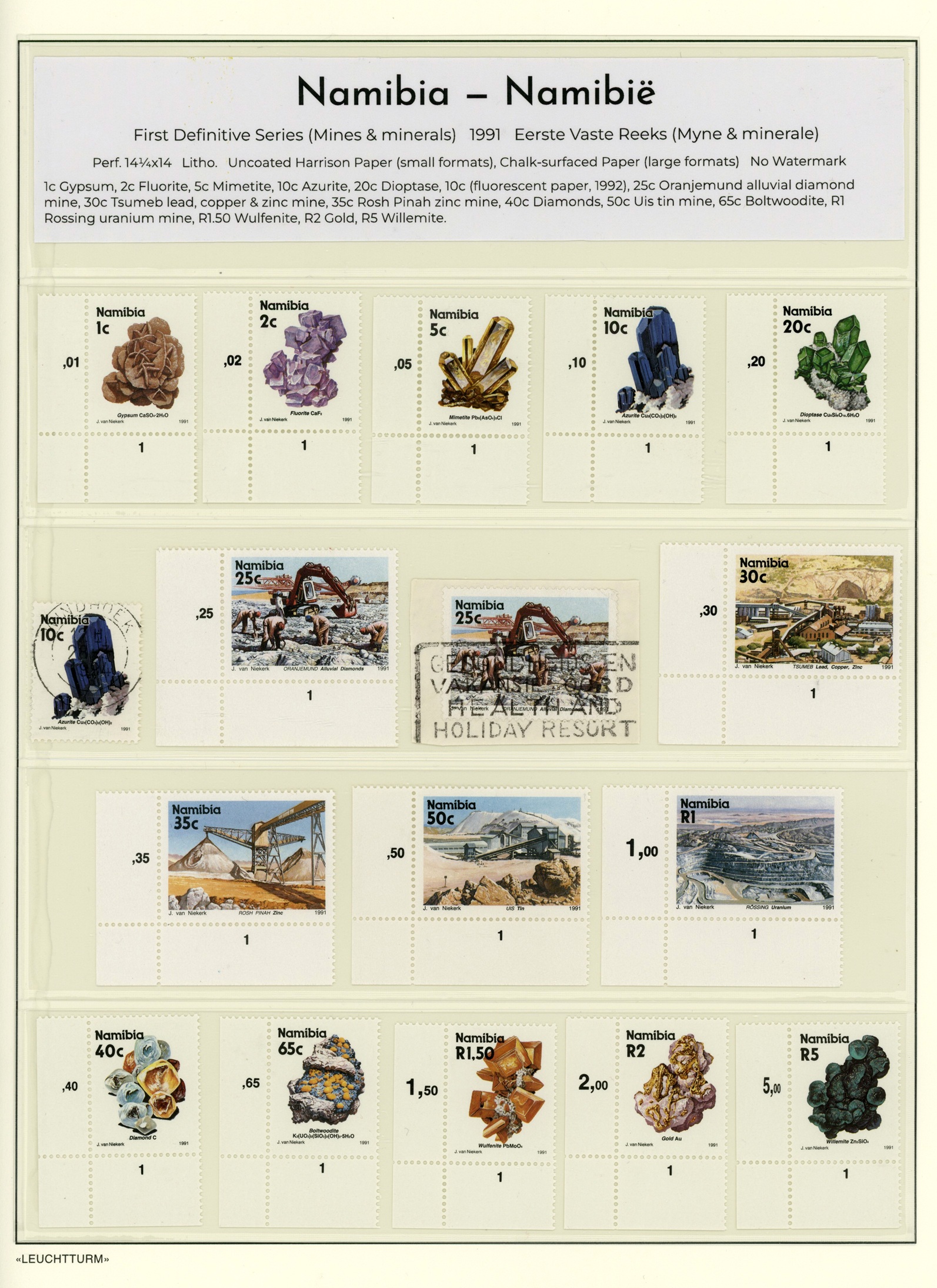
I touched up my stamp album pages for Namibia today, and noticed that there is a mineral on the R5 stamp named after me*: Willemite.

*Actually, it is named after King William I of the Netherlands 😁.
Willemite is a silicate mineral (Zn2SiO4), discovered in 1829 in the Belgian Vieille-Montagne mine. Mineralogist Armand Lévy was shown samples by a student at the university where he was teaching, and he named it after William I. It is occasionally spelled villemite.
[From Wikpedia]

These stamps were issued in 1991 and 1992, and are still denominated in South African rand. The Namibian dollar (NAD) was introduced in 1993, replacing the country’s use of the South African rand (ZAR). South African rand is still widely accepted in Namibia, though.
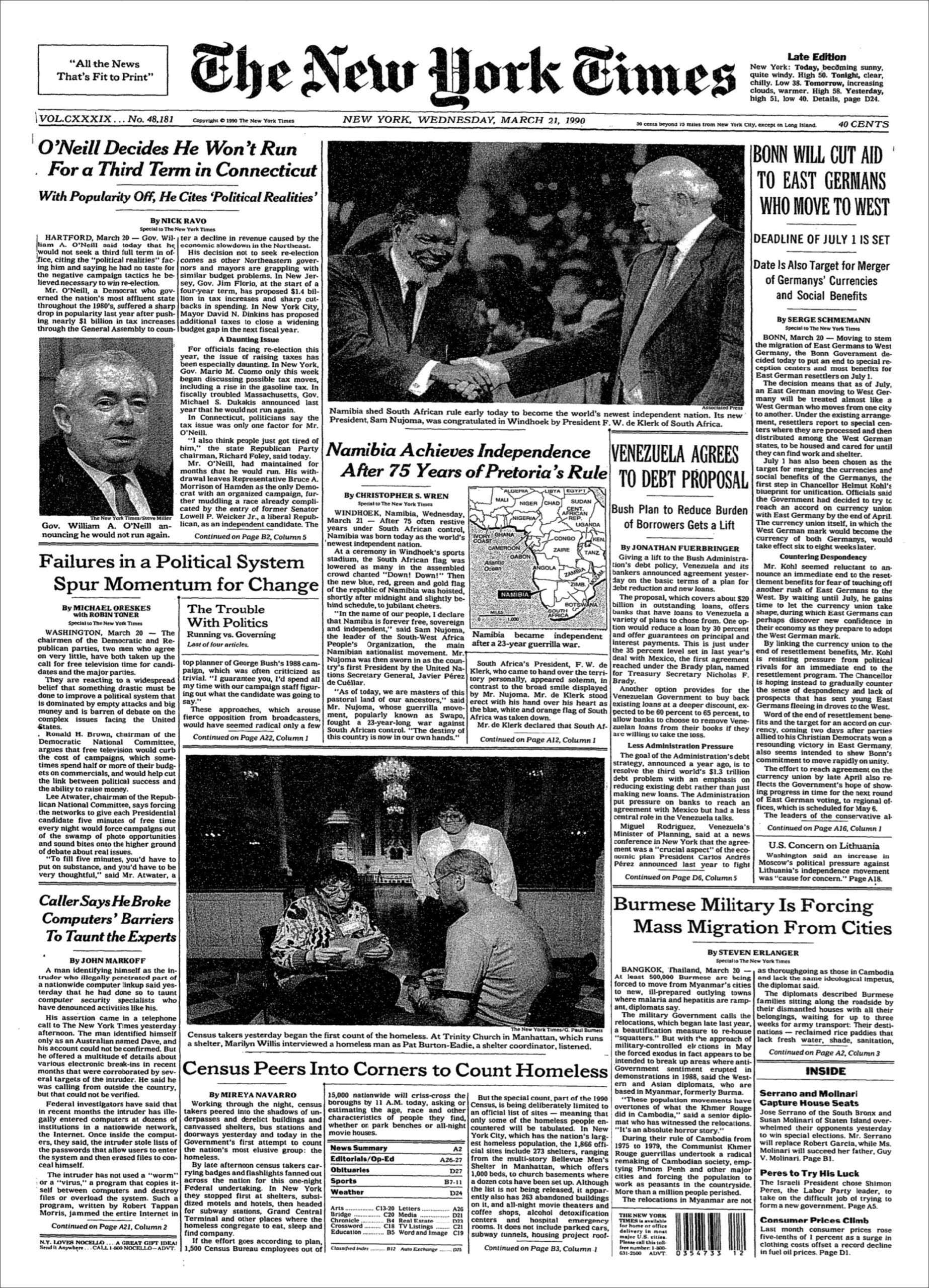
On Mar. 21, 1990, the territory called South West Africa became independent from South Africa, and a new country called Namibia was established. Here is the front page of the New York Times reporting on it.

Friday/ a book on railway stamps 🤗

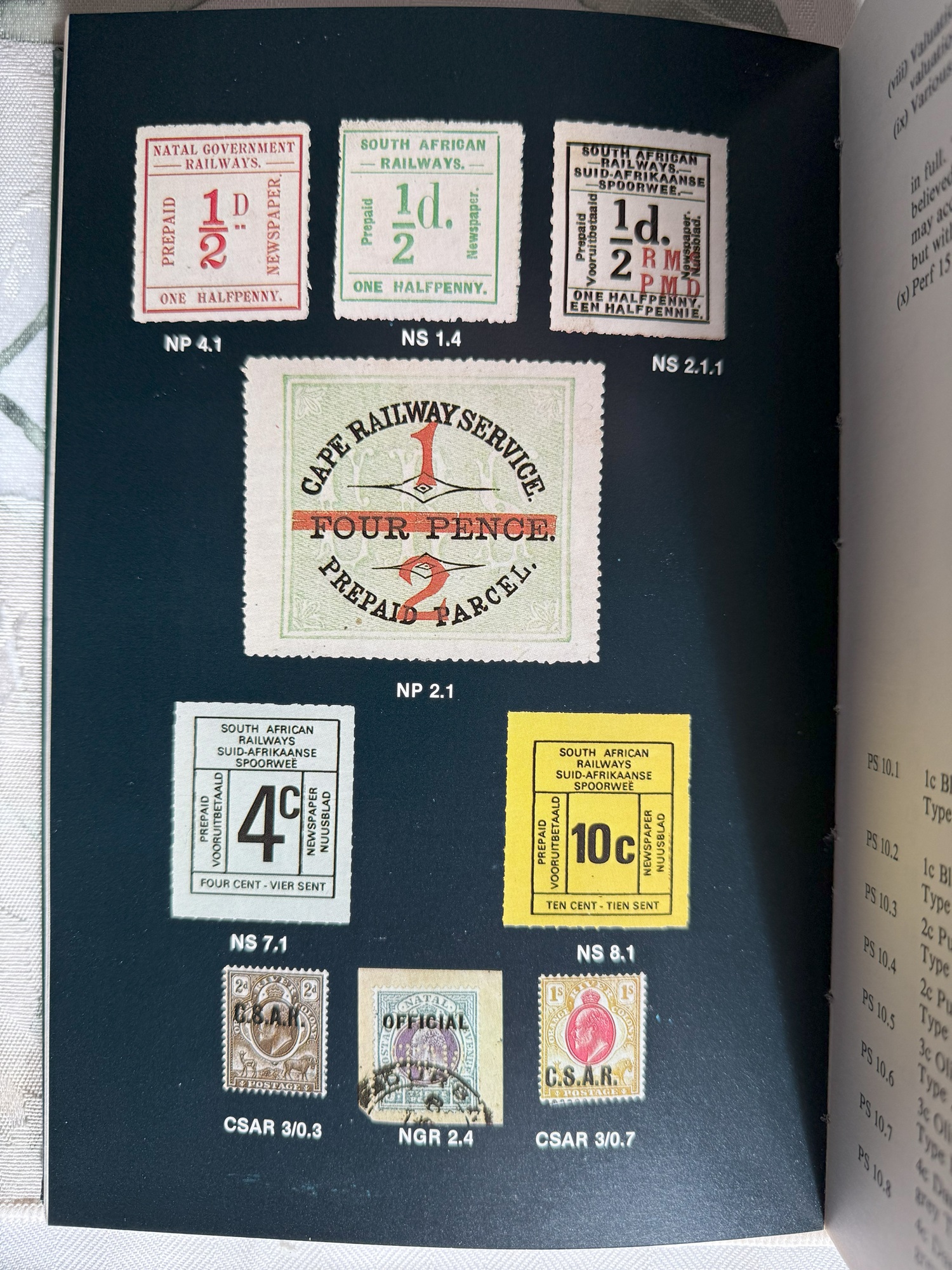
Although stamps for railway parcels and newspapers have been in use in this country for over a century, they have received scant attention from philatelists.
— From the preface to the book ‘Railway Stamps of South Africa’, published by The Philatelic Federation of Southern Africa in 1985.


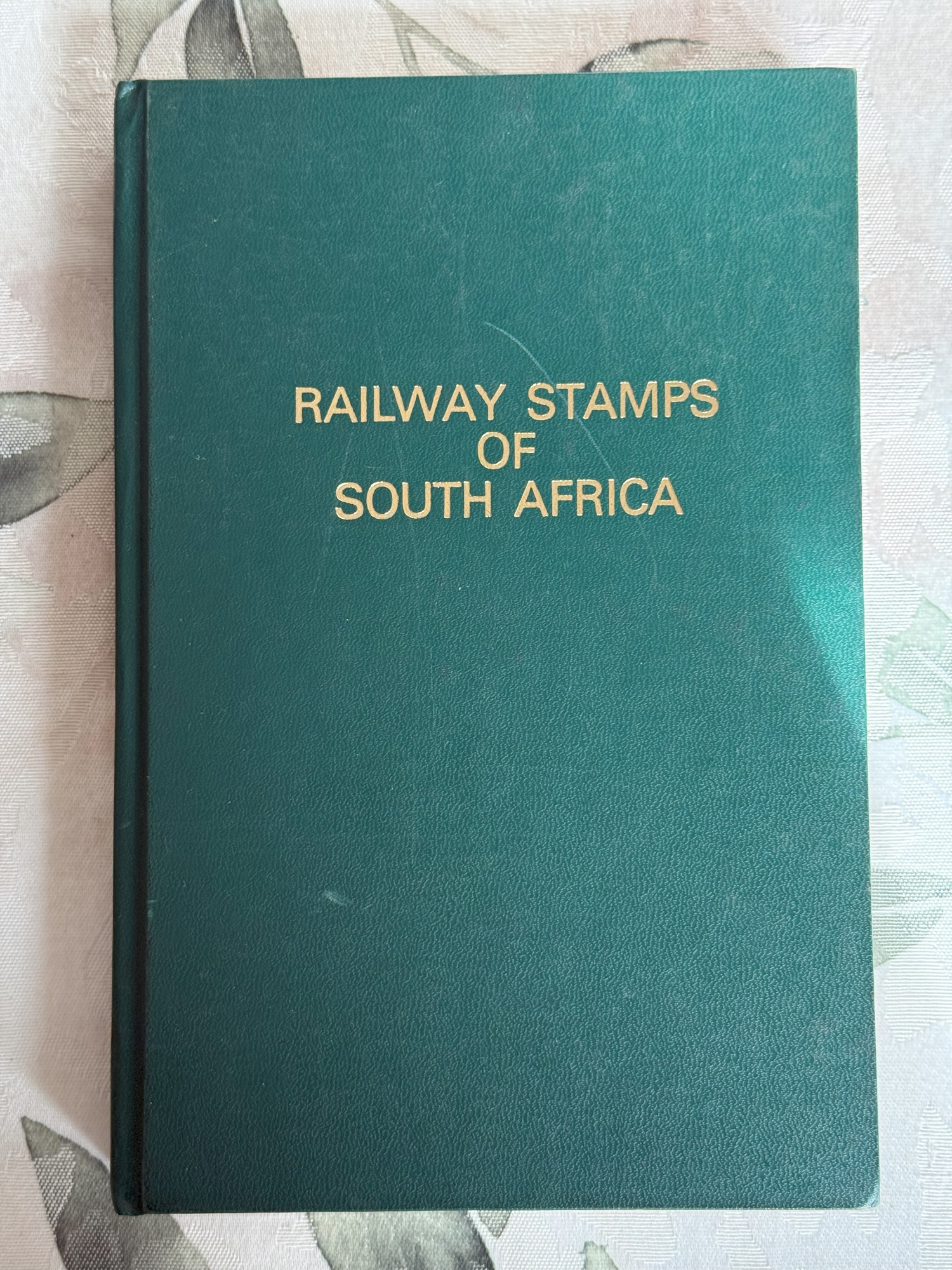
My spectacular* book about South Africa’s railway stamps arrived today (from South Africa, of course).

*Spectacular, because almost none of the information in it is available online, nor in any of the standard stamp catalogues.

Railway Stamps of South Africa (1985) by H.S. Hagen and S.P. Naylor.
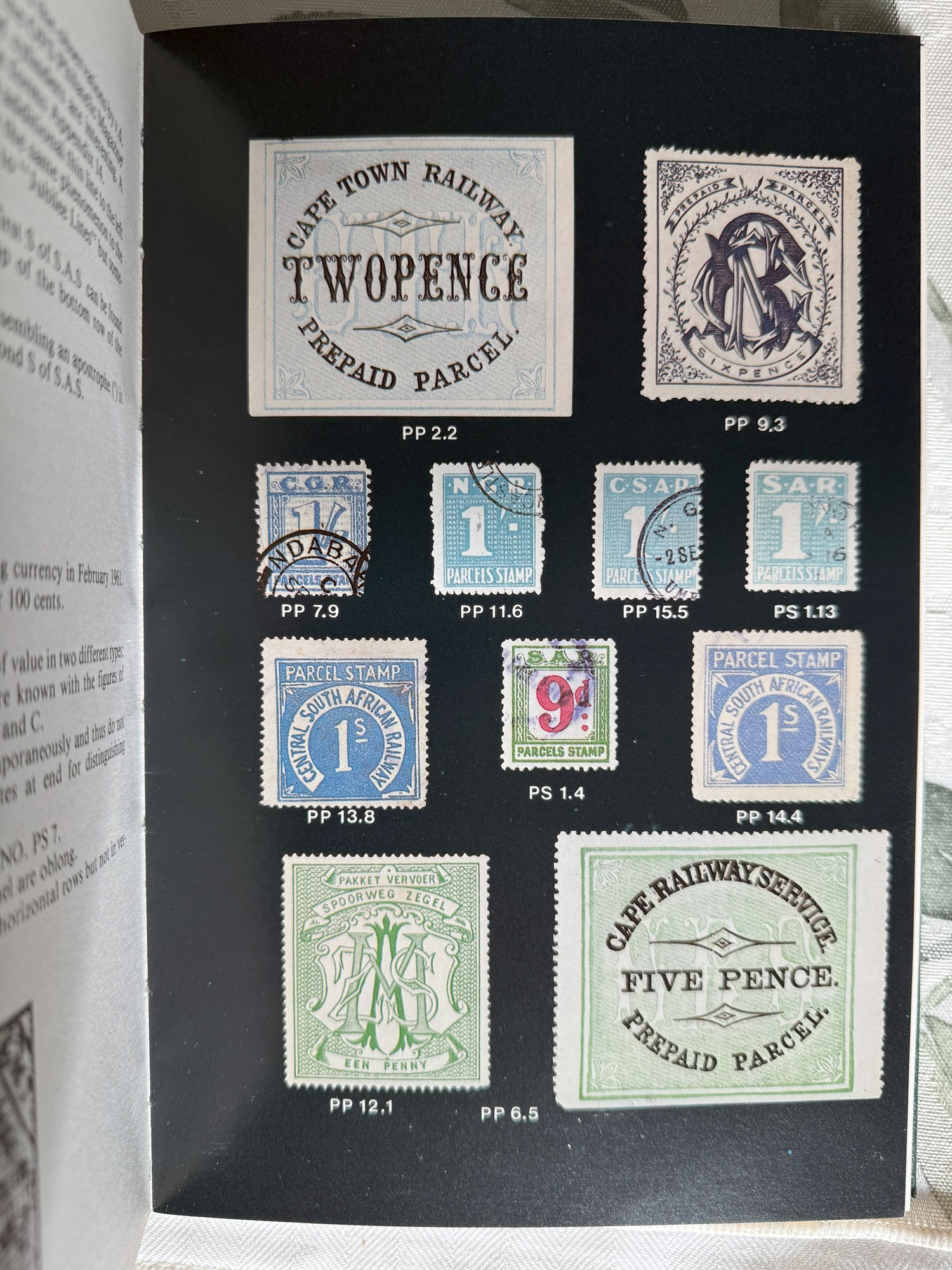
The first of the railway stamps in South Africa were issued in 1880 (those at the top).
The Central South African Railways (CSAR) was (from 1902 to 1910) the operator of public railways in the Transvaal Colony and Orange River Colony.
At unification of the four colonies into the Union of South Africa in 1910, the unified rail network was named and operated as South African Railways.
The ‘Zuid-Afrikaansche Spoorweg Maatskappij’ (South African Railway Company) was established in 1887. The company was based in Amsterdam and Pretoria, and operated in the Zuid-Afrikaansche Republiek (South African Republic) during the late 19th century.
Abbreviations on the stamps:
C.T.R.—Cape Town Railways;
N.G.R.—Natal Government Railways;
C.G.R.—Cape Government Railways;
S.A.R.—South African Railways;
Z.A.S.M.—Zuid-Afrikaansche Spoorweg Maatskappij.
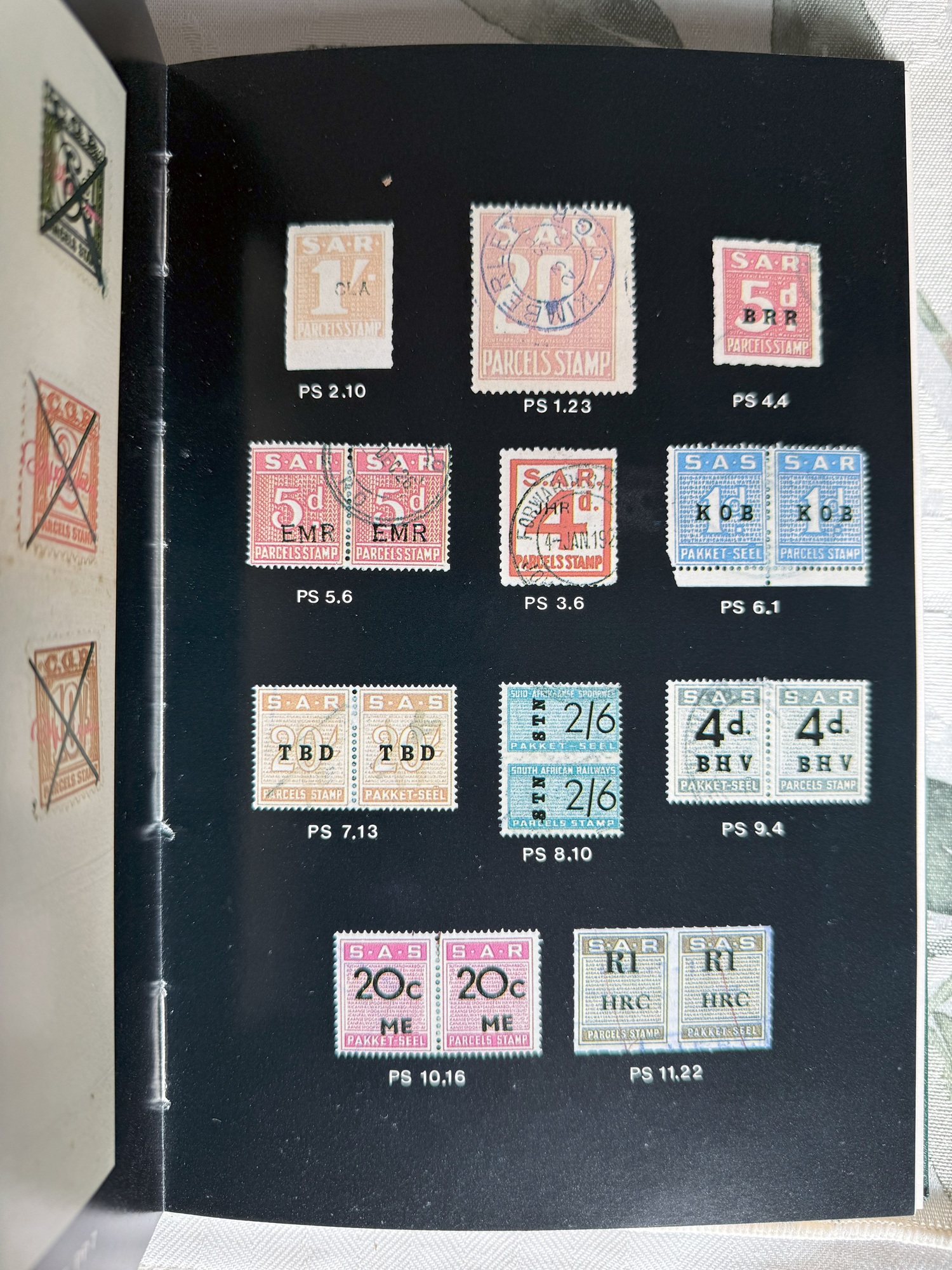
At the top: more stamps for South African Railways (S.A.R.), denoted in South African pennies, shillings and pounds and used until 1961.
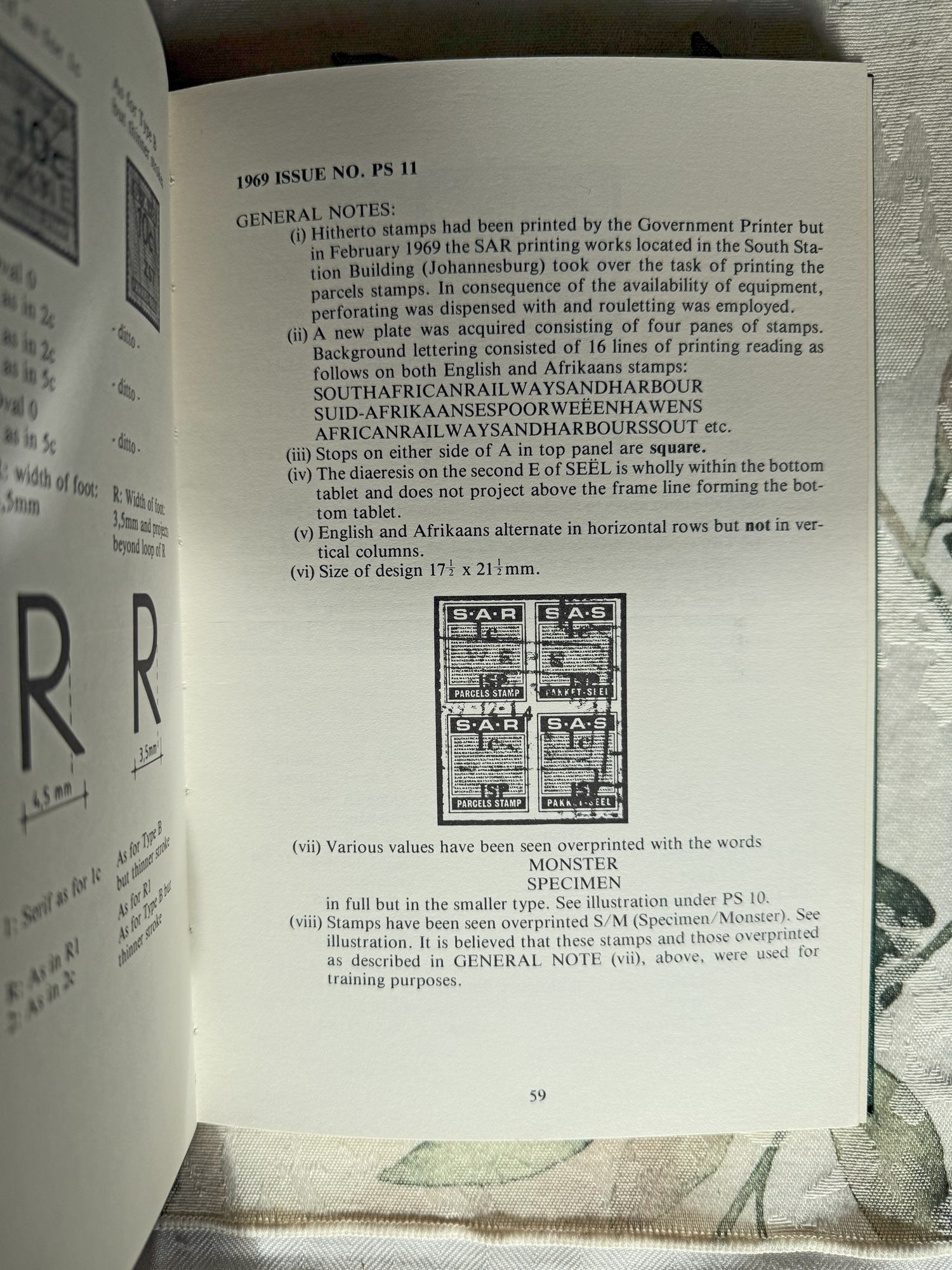
The first bilingual stamp sheets were printed in 1929 with alternate Afrikaans stamps (S.A.S. for Suid-Afrikaanse Spoorweë) and English stamps (S.A.R.). 
Middle of the page: the pair of bright turquoise stamps are “bantam” stamps: half-sized stamps printed during World War II, when paper supplies were limited.
Bottom row: In Feb. 1961, the South African rand was introduced as currency (one hundred cents to a rand). The denominations on the post-1961 stamps were no longer part of the main design of the stamp, but overprinted in black ink.
.
.
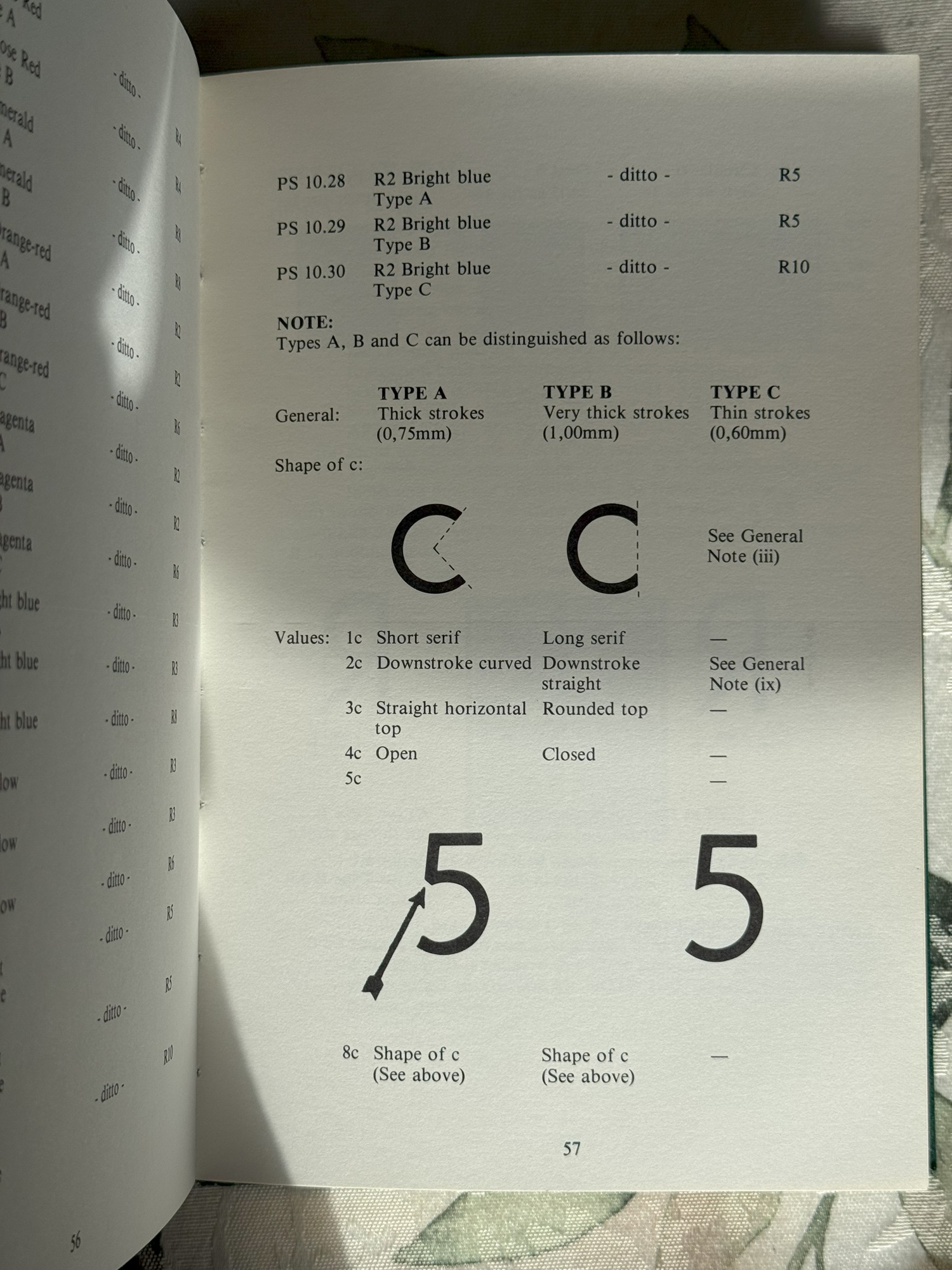
An explanation of some of the finer differences in the fonts used for the overprints on some of the stamps.
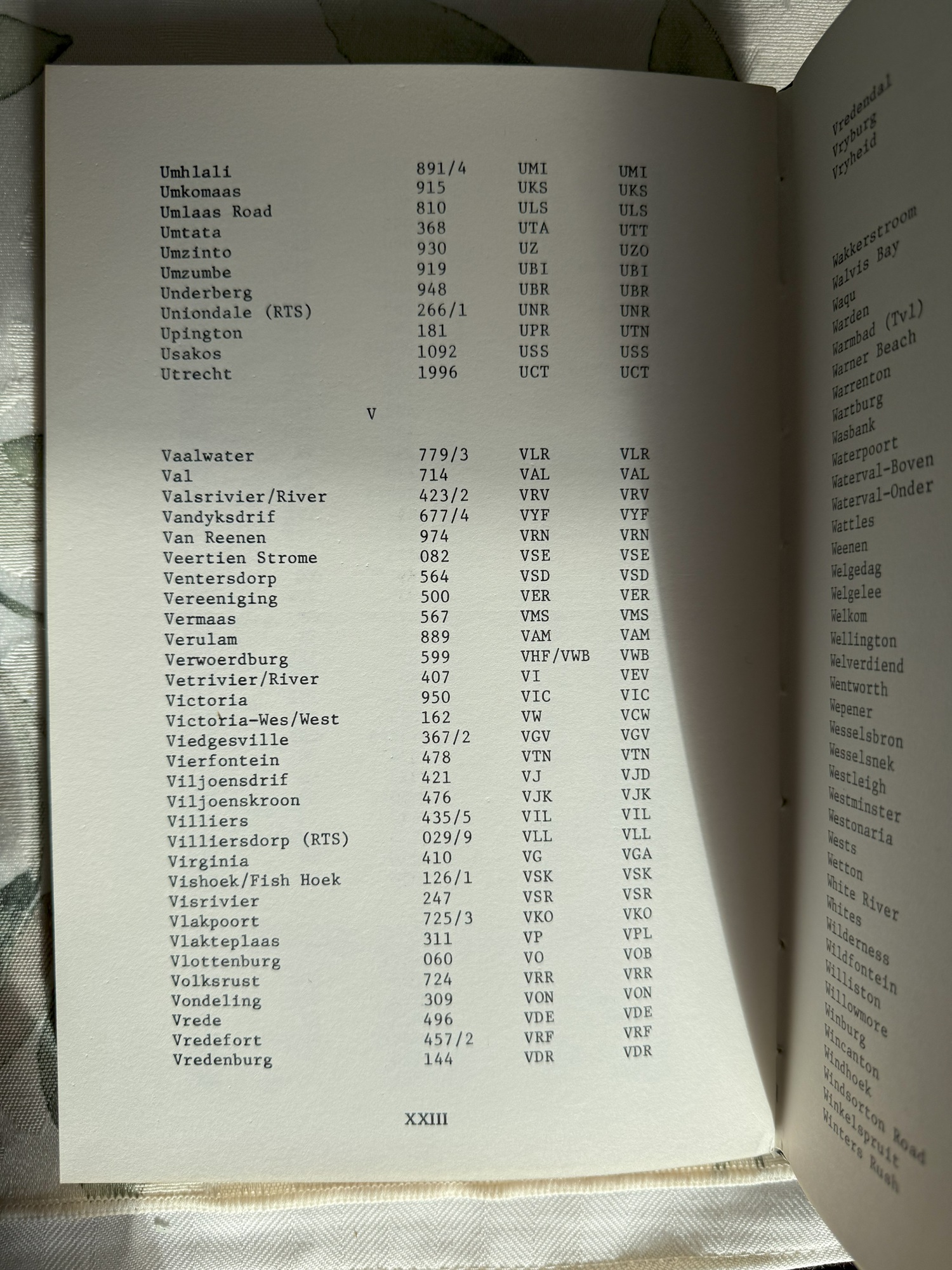
At the back of the book: an index of abbreviations for the railway station names.
Sweet! No more blood, sweat and tears for me to figure out the station names for the abbreviations printed on the stamps.

Wednesday/ tennis in Marrakech 🎾

The clay court season (April to June) in men’s tennis has started with ATP 250 tournaments (smaller tournaments) this week in Houston, Texas, in Bucharest, Romania, and in Marrakech, Morocco.

Here is Nuno Borges (28, 🇵🇹) being interviewed after beating the Belgian Raphaël Collignon (23, 🇧🇪) in a closely fought match on the red clay in Marrakech. It ended in a third set tie-break in which Borges iced out Collignon 7-0, though.

Afterwards the announcer addressed the remaining spectators in French.
A bit of history [from Wikipedia]: The French conquest of Morocco began with the French Republic occupying the city of Oujda on 29 March 1907. The French launched campaigns against the Sultanate of Morocco which culminated in the signing of the Treaty of Fes and establishment of the French Protectorate in Morocco on 30 March 1912.

There is a 1977 song by Mike Batt, The Ride to Agadir, from the album Schizophonia, about the Rif War— an armed conflict fought from 1921 to 1926 between Spain (joined by France in 1924) and the Berber (Amazigh) tribes of the mountainous Rif region of northern Morocco.
I must have played The Ride to Agadir a hundred times or more, while driving in my car in the late 80s and early 90s.

Lyrics: The Ride to Agadir

We rode in the morning
Casablanca to the west
On the Atlas mountain foothills leading down to Marrakesh
For Mohammed and Morocco
We had taken up our guns
For the ashes of our fathers and the children of our sons

In the dry winds of summer
We were sharpening the blades
We were riding to act upon the promise we had made
With the fist and the dagger
With the rifle and the lance
We will suffer no intrusion from the infidels of France

We could wait no more
In the burning sands on the ride to Agadir
Like the dogs of war
For the future of this land on the ride to Agadir

Though they were waiting
And they were fifty to our ten
They were easily outnumbered by a smaller force of men
As the darkness was falling
They were soon to realize
We were going to relieve them of their godforsaken lives

We could wait no more
In the burning sands on the ride to Agadir
Like the dogs of war
For the future of this land on the ride to Agadir

We rode in the morning
Casablanca to the west
On the Atlas mountain foothills leading down to Marrakesh
For Mohammed and Morocco
We had taken up our guns
For the ashes of our fathers and the children of our sons
Sunday/ more revenue stamps 🪙

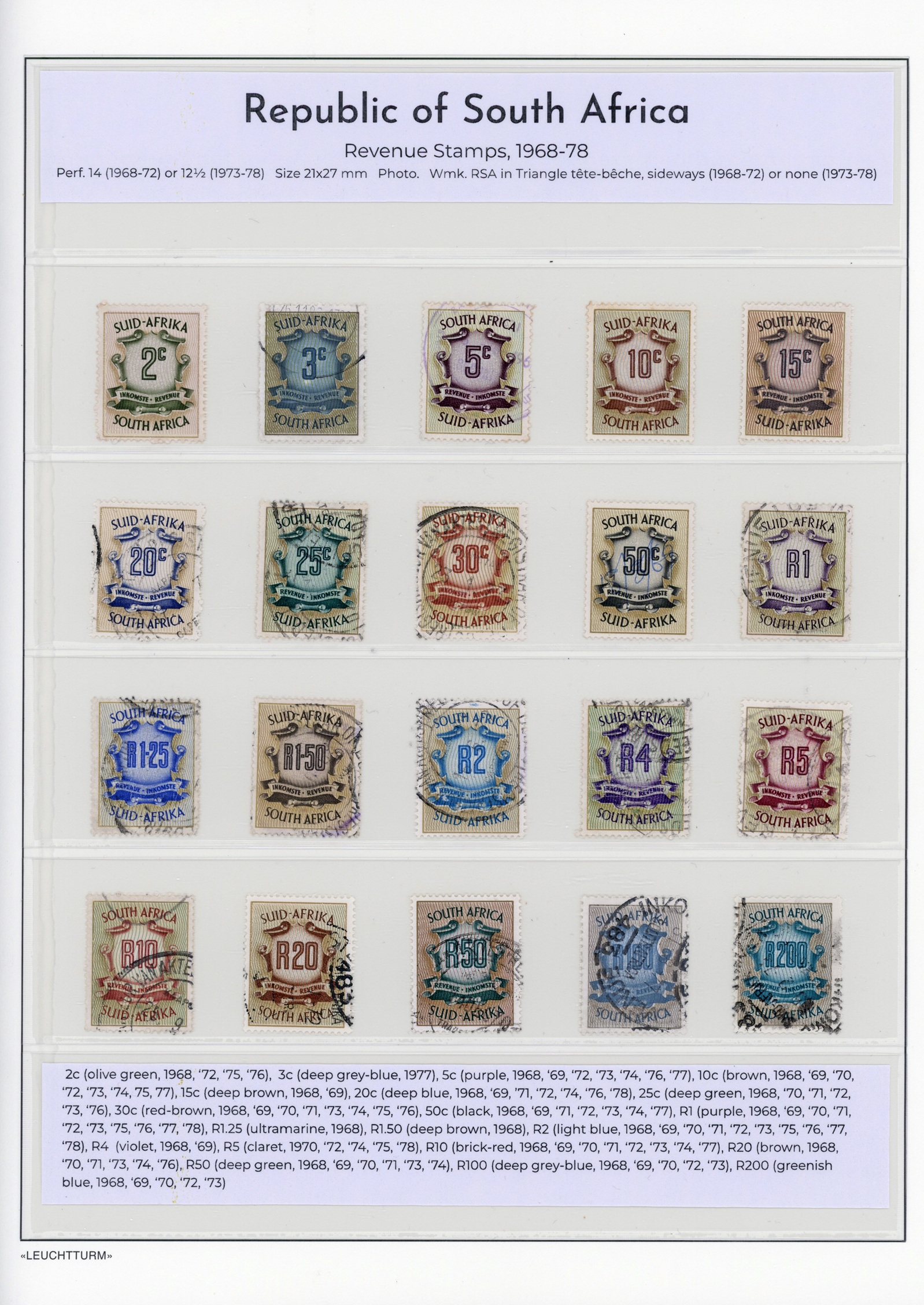
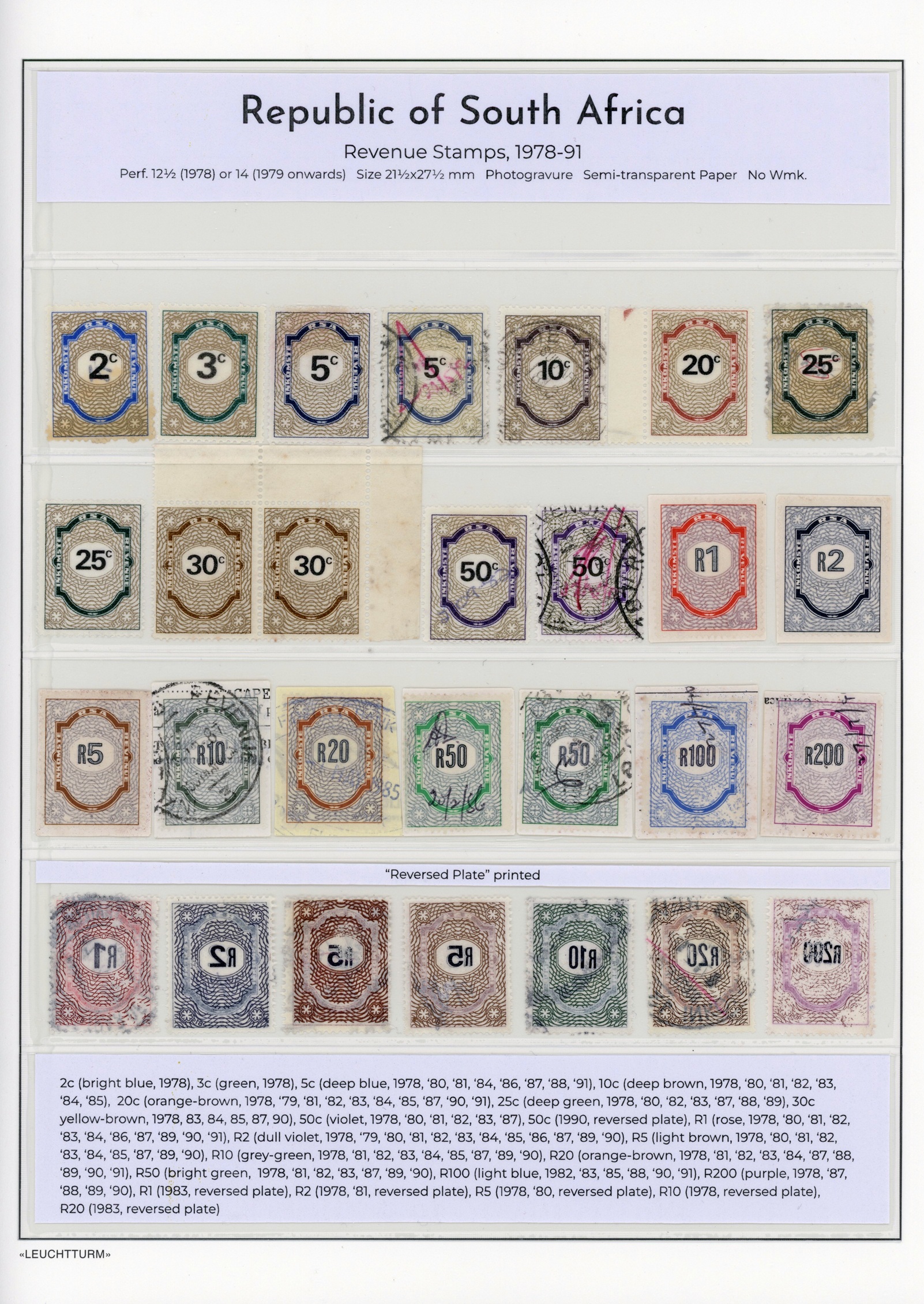
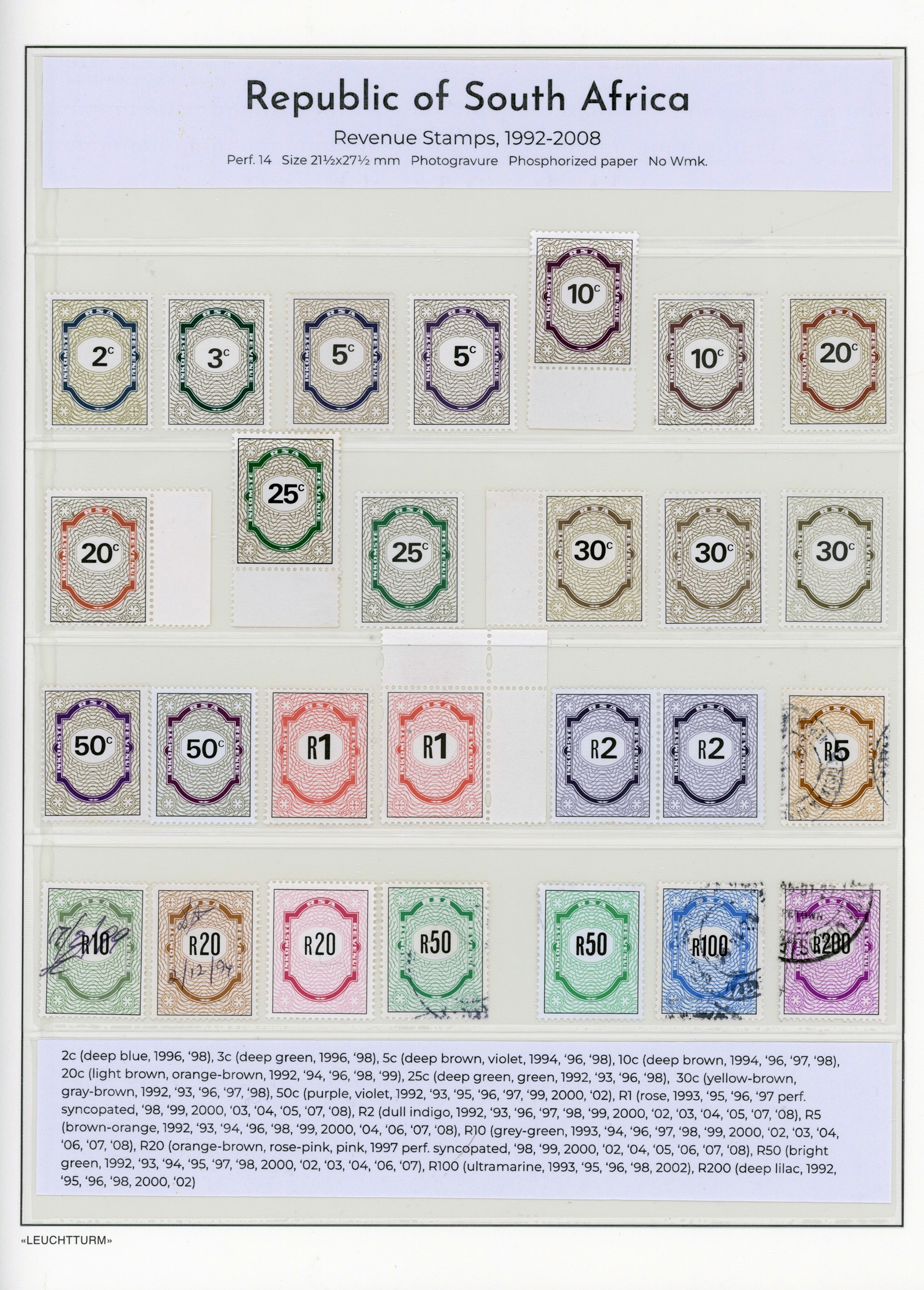
Here are the three sets of South African revenue stamps that followed on to the two sets that I had posted about earlier in March.

The last of South Africa’s revenue stamps were issued in 2008.
The use of revenue stamps on contracts and other legal documents was discontinued in March of 2009.

Tuesday/ revenue stamps 💷

Revenue stamps are stamps used to designate collected taxes and fees. They are issued by governments, national and local, and by official bodies of various kinds. They take many forms and may be gummed and ungummed, perforated or imperforate, printed or embossed, and of any size.
[From Wikipedia]


A little background first:
South Africa was officially the Union of South Africa until May 31, 1961, when it gained independence from the United Kingdom and became the Republic of South Africa. The currency system for the Union of South Africa was changed a few months prior, on Feb. 14, 1961.
On this day, the South African pound was replaced by the rand at a rate of one £SA = two Rand.

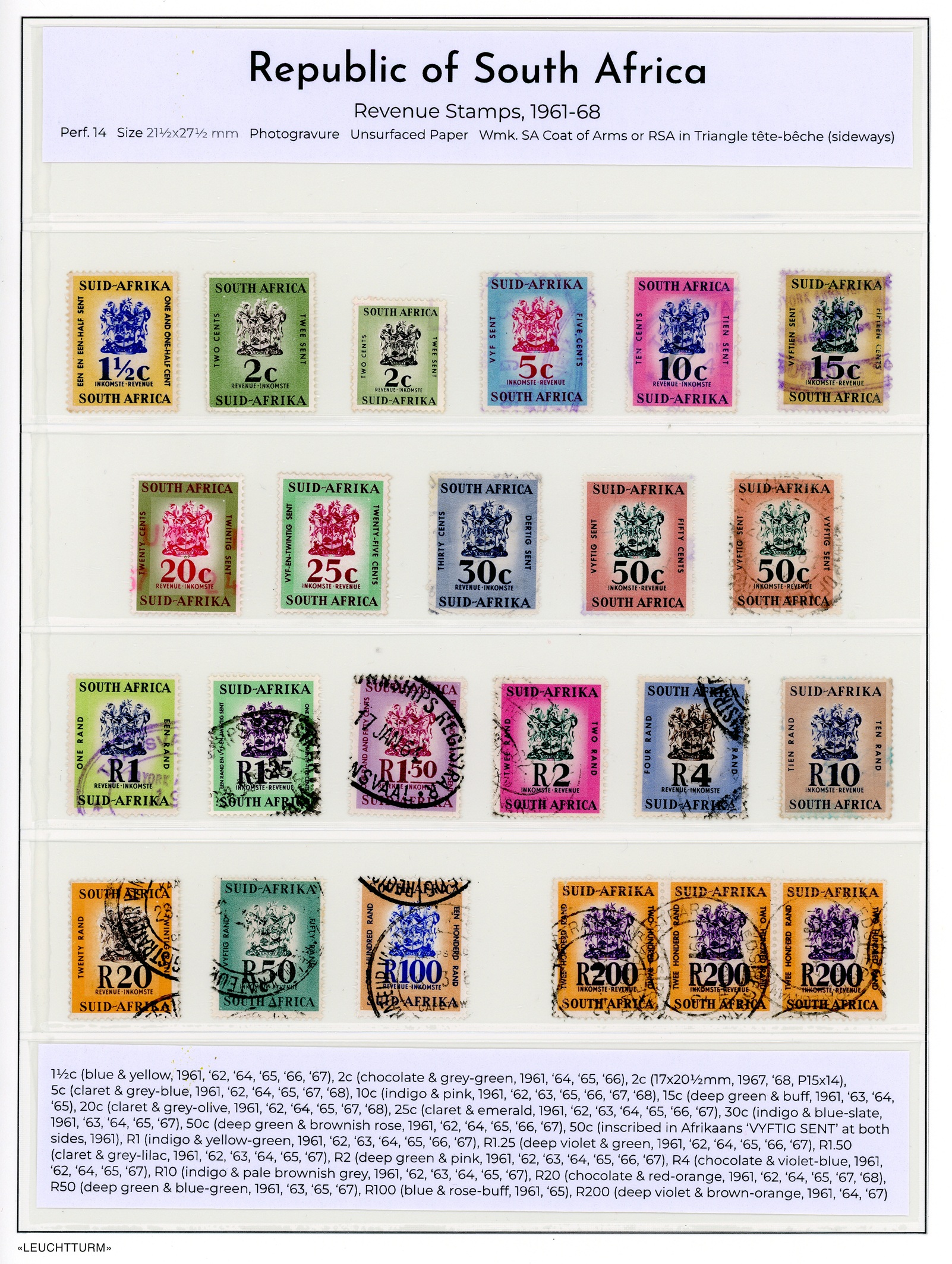
My sets of revenue stamps from South Africa for the periods 1954-60 (when it was still the Union of South Africa) and 1961-68 (the Republic of South Africa) are almost complete.
(Several other sets of revenue stamps were issued, but South Africa stopped using revenue stamps altogether in 2009).

Revenue stamps are similar to the postage stamps issued in South Africa during this time: printed on watermarked and gummed paper sheets, perforated and with increasing denominations in the set.
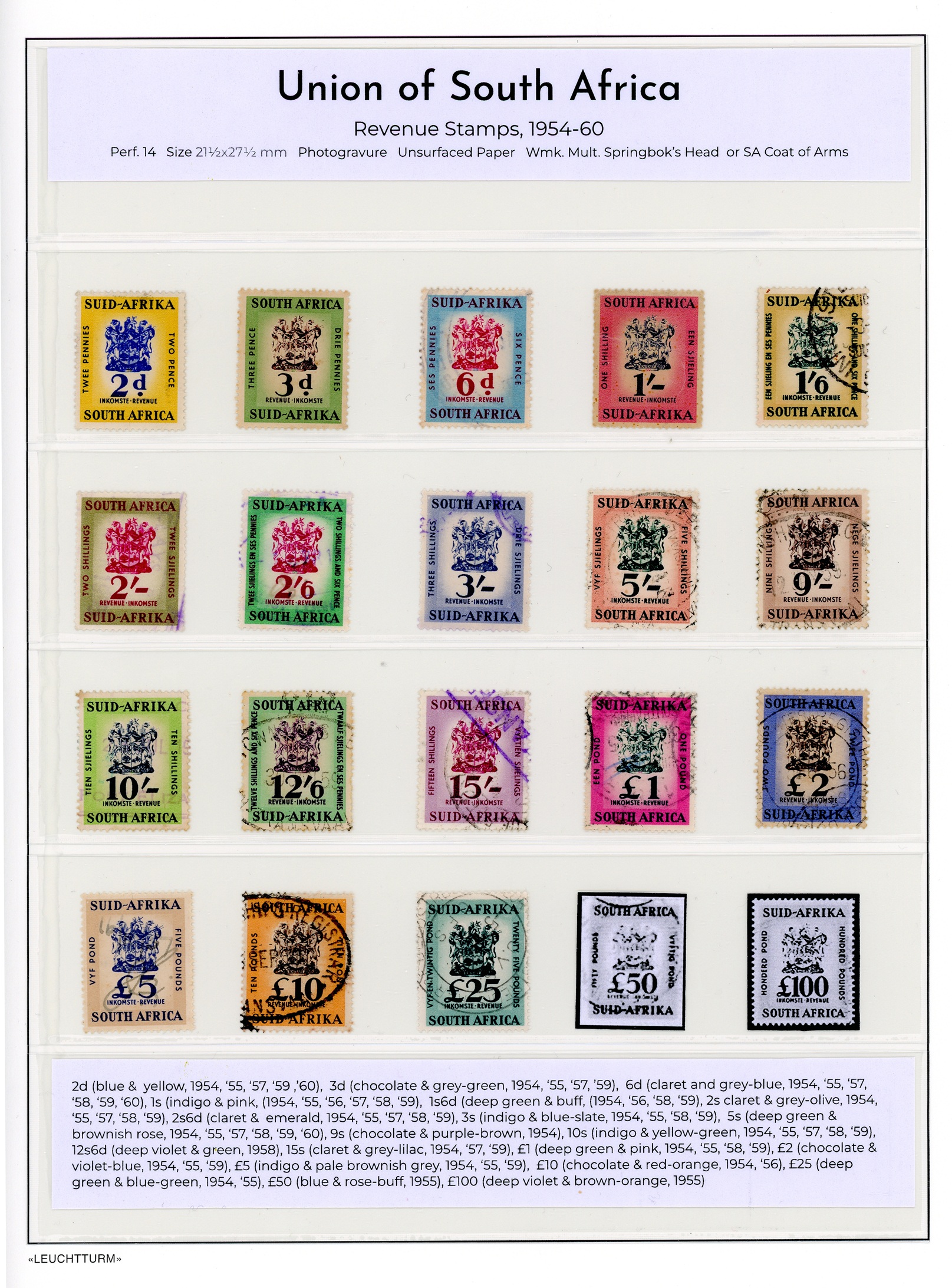
A big difference:
the highest denomination for a postage stamp issued for the time was
10 shillings (1954-60) or
R1 (1961-68),
while the highest denomination of a revenue stamp issued for the same period was
£100 (1954-60)— 200 times more, or
R200 (1961-68)— also 200 times more !

Revenue stamps with denominations in pennies (d), shillings (‘-) and pounds (£).
A reminder: in the old British currency system (and in South Africa’s), there were 12 pennies to a shilling, and 20 shillings to a pound.
Strange, I thought at first, that there is a R1.25, R1.50 and R4 denomination in this series and not say, a R5.
Then I realized they are conversions of the penny, shilling and SA pound denominations from the 1954-60 set of revenue stamps into Rand:
R 1.25 for 12 shillings 6 pence,
R 1.50 for 15 shillings,
R2 for 1 pound, and
R4 for 2 pounds.
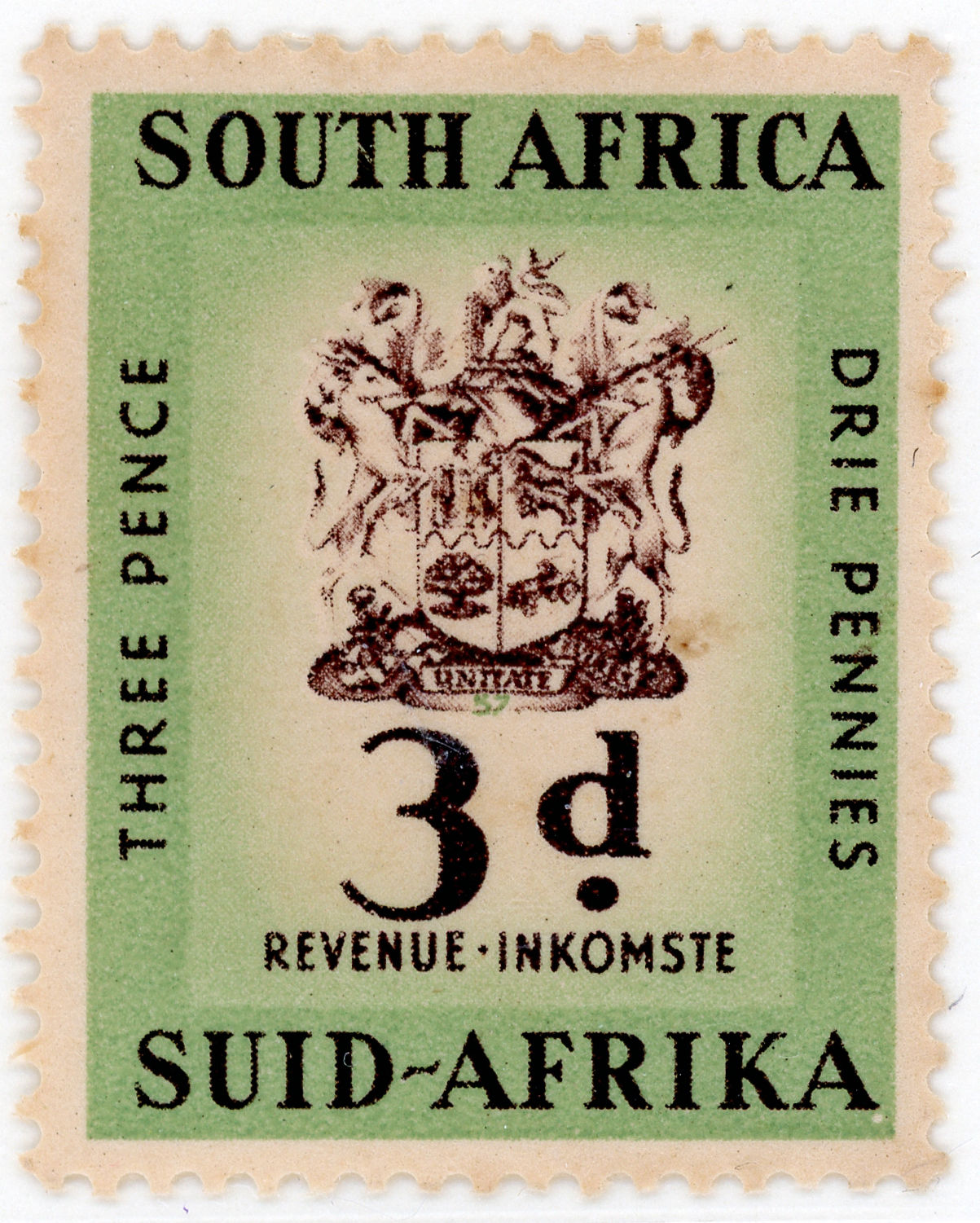
Let’s put the 3 penny revenue stamp from the Union of South Africa under the magnifying glass. There is the coat of arms of the Union of South Africa, with symbols for the four colonies (Cape Colony, Natal Colony, and the Boer republics of the Transvaal Colony and Orange River Colony) represented on the badge in the center.
At the bottom is the Latin phrase EX UNITATE VIRES, formerly used as the national motto of South Africa. It was originally translated as “Union is Strength” but was later revised in 1961 to mean “Unity is Strength”.
Finally, right below the UNITATE is a tiny 57 printed in green, the year of issue of this particular stamp (1957).

Monday/ perfins 📌

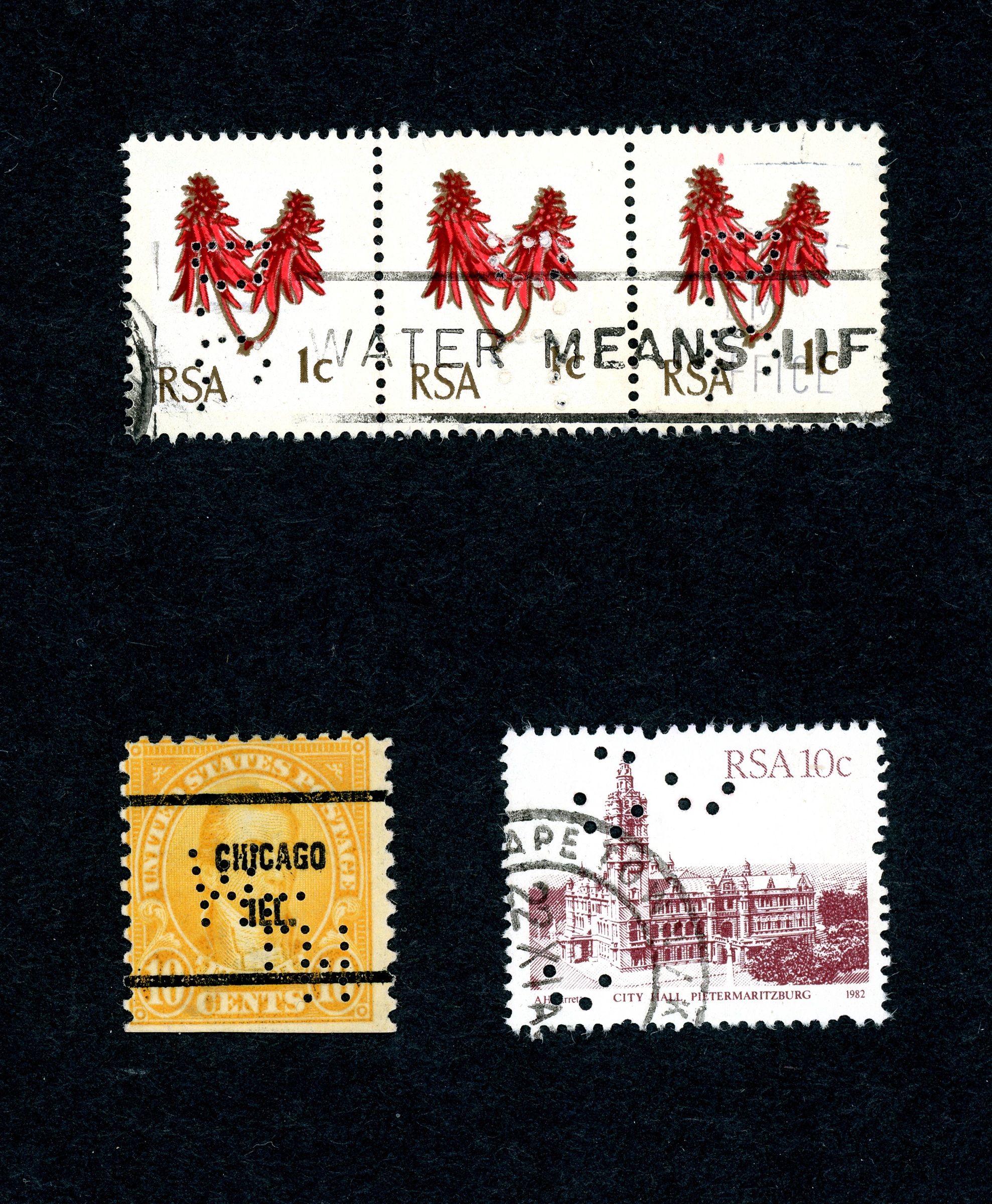
A perfin is a stamp that has a name or initials perforated into it.
The word “perfin” is short for “perforated initials” or “perforated insignia”.
Perfins are used to prevent theft and control how the stamp is used for mail.
How are perfins created?
Individuals, organizations, or government agencies add perfins to stamps after the production process.
The holes are punched into the stamp’s design to create a pattern.
Source: Google Search Labs/ AI Overview

These are the only perfins I have found so far (among the thousands of stamps I have amassed for my collection and for my philatelic ‘research’ 🤗 ).
The U.S. stamp bottom left is also pre-cancelled. Pre-cancelled stamps were used for mass-mailings, making it unnecessary for the post office to cancel them, and expediting their processing.

1961 First Definitive Issue (New Design), South Africa
Issued Jan. 20, 1969
Perf. 13½x14 |Phosphor frame |Wmk. RSA tête-bêche
SACC282 |1c |Rose-red & sepia |Coral Tree Flowers (Erythina lysistemon)
Perfin initials “D.C.”

1982 Fourth Definitive Issue (Architecture), South Africa
Issued Jul. 15, 1982
Perf. 14 |Design: A.H. Barrett |Engraving: Arthur Howard Barrett |Litho. |Phosphorized paper |No Wmk
SACC524 |10c |Carmine brown |Pietermaritzburg Town Hall
Perfin insignia “C C C” (or possibly “V V V”)

1923 United States of America (U.S. Presidents and prominent Americans)
Issued Jan. 15, 1923
Perf. 11×10½ |No Wmk
Scott 562 A165|10c |Orange |James Monroe (5th U.S. President)
Perfin insignia “WFH”
Pre-cancelled “Chicago IL” 
[Sources: stampworld, South African Colour Catalogue 2023-25, Scott 2003 Standard Postage Stamp Catalogue Vol. 1]

Wednesday/ Danish stamps, the last 🇩🇰

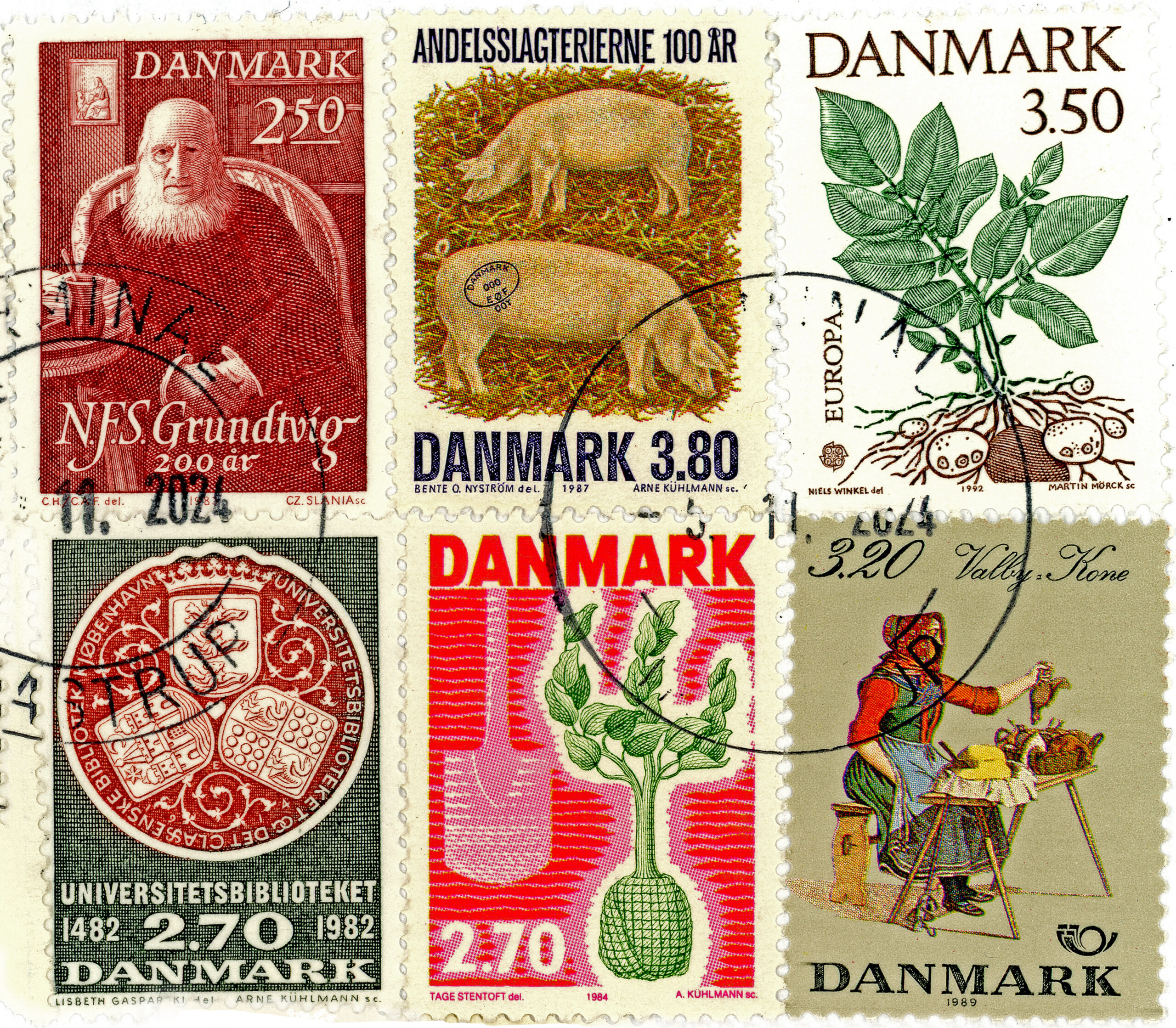
Here is the final installment of the batch of Danish stamps on my envelope!

Clockwise:
1983 The 200th Anniversary of the Birth of Poet N.F.S. Grundtvig
Issued Nov. 3, 1983
Perf. 12¾ | Design: Jane Muus | Issued in sheets of 50 | Engraving: Czeslaw Slania | No watermark
747 A232 2.5Kr Brown red | N.F.S. Grundtvig, Poet

1987 The 100th Anniversary of the Danish Cooperative Bacon Factories
Issued Jun. 18, 1987
Perf. 12¾ | Design: Bente Olesen Nystrom | Issued in sheets of 50 | Engraving: Arne Kühlmann | No watermark
841 A289 3.80Kr Multicolored | Domesticated pigs (Sus scrofa domesticus)

1992 EUROPA Stamps – The 500th Anniversary of the Discovery of America
Issued May 7, 1992
Perf. 12¾ | Design: Niels Winkel | Issued in sheets of 50 | Litho. & Engr. | Engraving: Martin Mörch | No watermark
959 A342 3.50Kr Brown & green | Potato plant* (Solanum tuberosum)
*I’m not 100% sure why the potato is significant to this anniversary. The first permanent potato patches on US soil were established in 1719 near Londonderry, New Hampshire by Scotch-Irish immigrants. 

1989 Nordic Cooperation Issue
Issued Apr. 20, 1989
Perf. 12¾ | Design: Birgit Forchhammer | Issued in sheets of 50 | Litho. & Engr. | Engraving: Arne Kühlmann | No Watermark
868 A312 3.20Kr Multicolored | Woman from Valby

1984 “Plant a Tree” Campaign
Issued Jan. 26, 1984
Perf. 12¾ | Design: Tage Stentoft | Issued in sheets of 50 | Litho. & Engr.|Engraving: Arne Kühlmann | No Watermark
749 A234 2.70Kr Red & green | Shovel and sapling

1982 The 500th Anniversary of the University Library
Issued Nov. 4, 1982
Perf. 12¾ | Design: Lisbeth Gasparski | Issued in sheets of 50 |Engraving: Arne Kühlmann | No Watermark
731 A221 2.70Kr Multicolored | Library Seal
[Sources: stampworld.com, Scott 2012 Standard Postage Stamp Catalogue, Vol. 2]

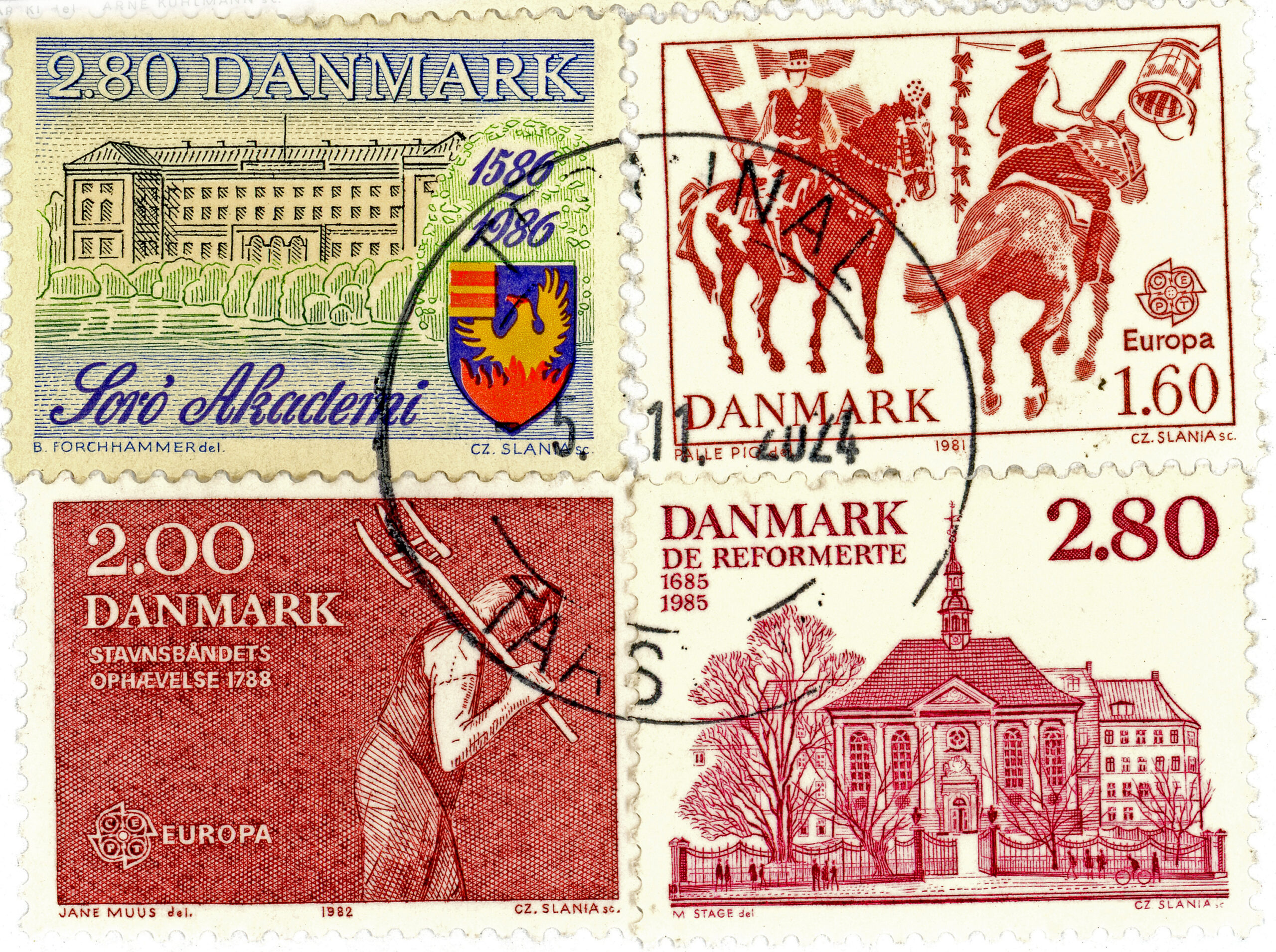
Clockwise:
1986 The 400th Anniversary of the Foundation of the Sorø Academy
Issued Apr. 28, 1986
Perf. 12¾ | Design: Birgit Forchammer | Issued in sheets of 50 | Litho. & Engr. |Engraving: Czeslaw Slania | No Watermark
816 A269 2.80Kr Multicolored | Sorø Academy and Heraldry

1981 EUROPA Stamps – Folklore
Issued May 4, 1981
Perf. 12¾ | Design: Palle Pio | Issued in sheets of 50 | Litho. & Engr. |Engraving: Czeslaw Slania | No Watermark
680 A208 1.60Kr Brown red | Tilting at a Barrel on Shrovetide

1985 The 300th Anniversary of the German and French Reform Church in Denmark
Issued Jan. 24, 1985
Perf. 12¾ | Design: Mads Stage | Issued in sheets of 50 | Litho. & Engr. |Engraving: Czeslaw Slania | No Watermark
769 A249 2.80Kr Magenta | Reformed Church (Reformert Kirke) in Copenhagen

1982 EUROPA Stamps – Historic Events
Issued May 3, 1982
Perf. 12¾ | Design: Jane Muus | Issued in sheets of 50 |Engraving: Czeslaw Slania | No Watermark
723 A215 2.00Kr Magenta | Abolition of Adcsription*
*Adscription means the state of being added, bound, or annexed.
[Sources: stampworld.com, Scott 2012 Standard Postage Stamp Catalogue, Vol. 2]

Tuesday/ more stamps from Denmark 🇩🇰

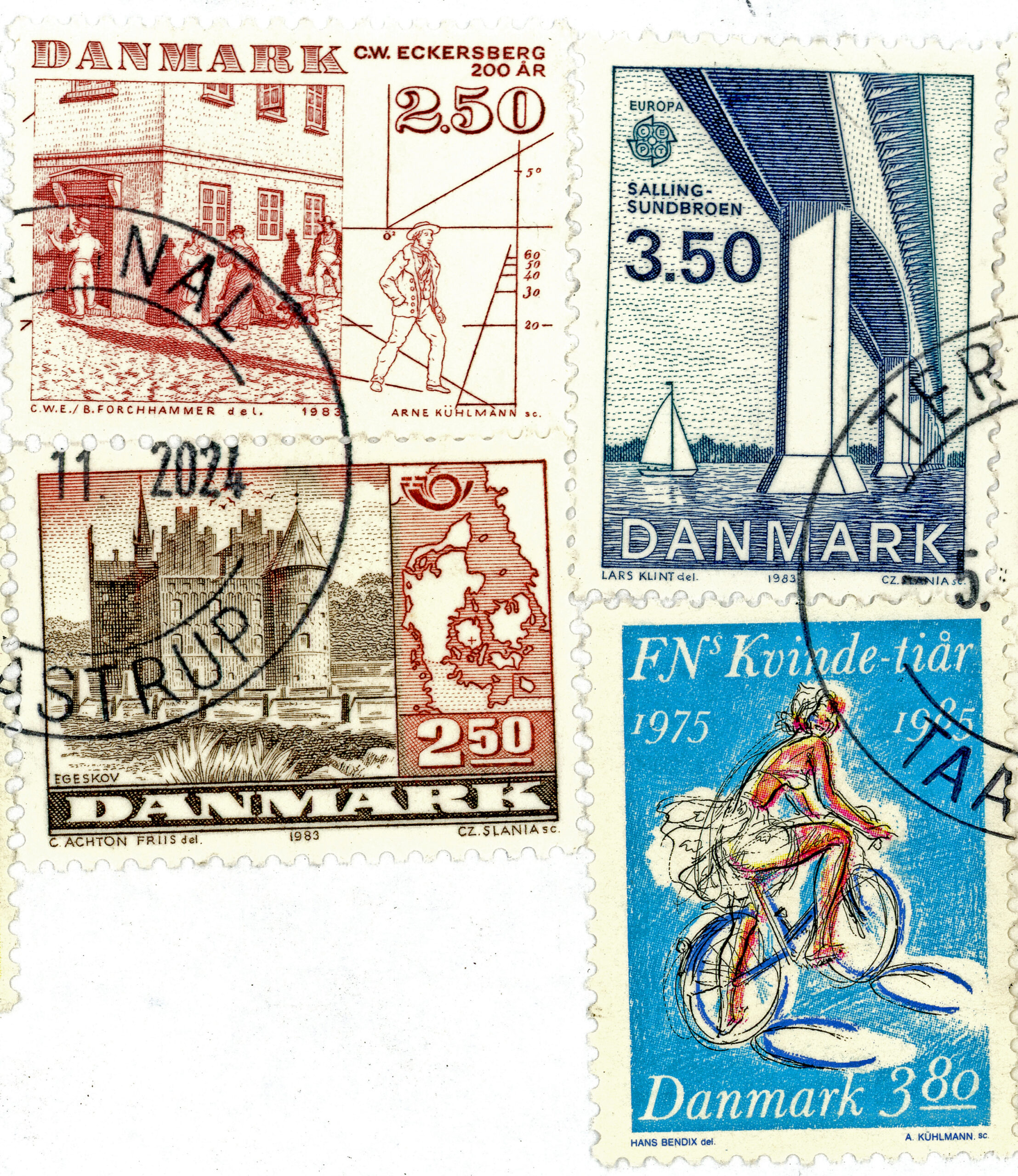
Clockwise:
1983 The 200th Anniversary of the Birth of Painter C.W. Eckersberg
Issued Nov. 3, 1983
Perf. 12¾ | Design: Birgit Forchhammer | Issued in sheets of 50 | Engraving: Arne Kühlmann | No Watermark
748 A233 2.50Kr Brown red | Street scene by C.W. Eckersberg

1983 EUROPA Stamps – Inventions
Issued May 5, 1983
Perf. 12¾ | Design: Lars Klint | Issued in sheets of 50 | Engraving: Czeslaw Slania | No Watermark
739 A227 3.50Kr Blue/ greenish blue | Proposal for Øresund Bridge, across Øresund strait to Sweden (the Sound)*
*Ideas for a fixed link across the Øresund strait were advanced as early as the first decade of the 20th century. Almost a century later,  a cable-stayed bridge was finally constructed (from 1995-1999), opening in Jul. 2000.

1985 United Nations Decade for Women
Issued Jun. 27, 1985
Perf. 12¾ | Design: Hans Bendix | Issued in sheets of 50 | Lithography & Engraving |Engraving: Arne Kühlmann | No Watermark
779 A257 3.80Kr Multicolored | Cyclist

1983 Nordic Cooperation Issue
Issued Mar. 24, 1983
Perf. 12¾ | Design: C. Achton Friis | Issued in sheets of 50 |Engraving: Czeslaw Slania | No Watermark
735 A225 2.50Kr Brown & red | Egeskov Castle (opened 1554), Kværndrup, Denmark
[Sources: stampworld.com, Scott 2012 Standard Postage Stamp Catalogue, Vol. 2]

Monday/ stamps from Denmark 🇩🇰

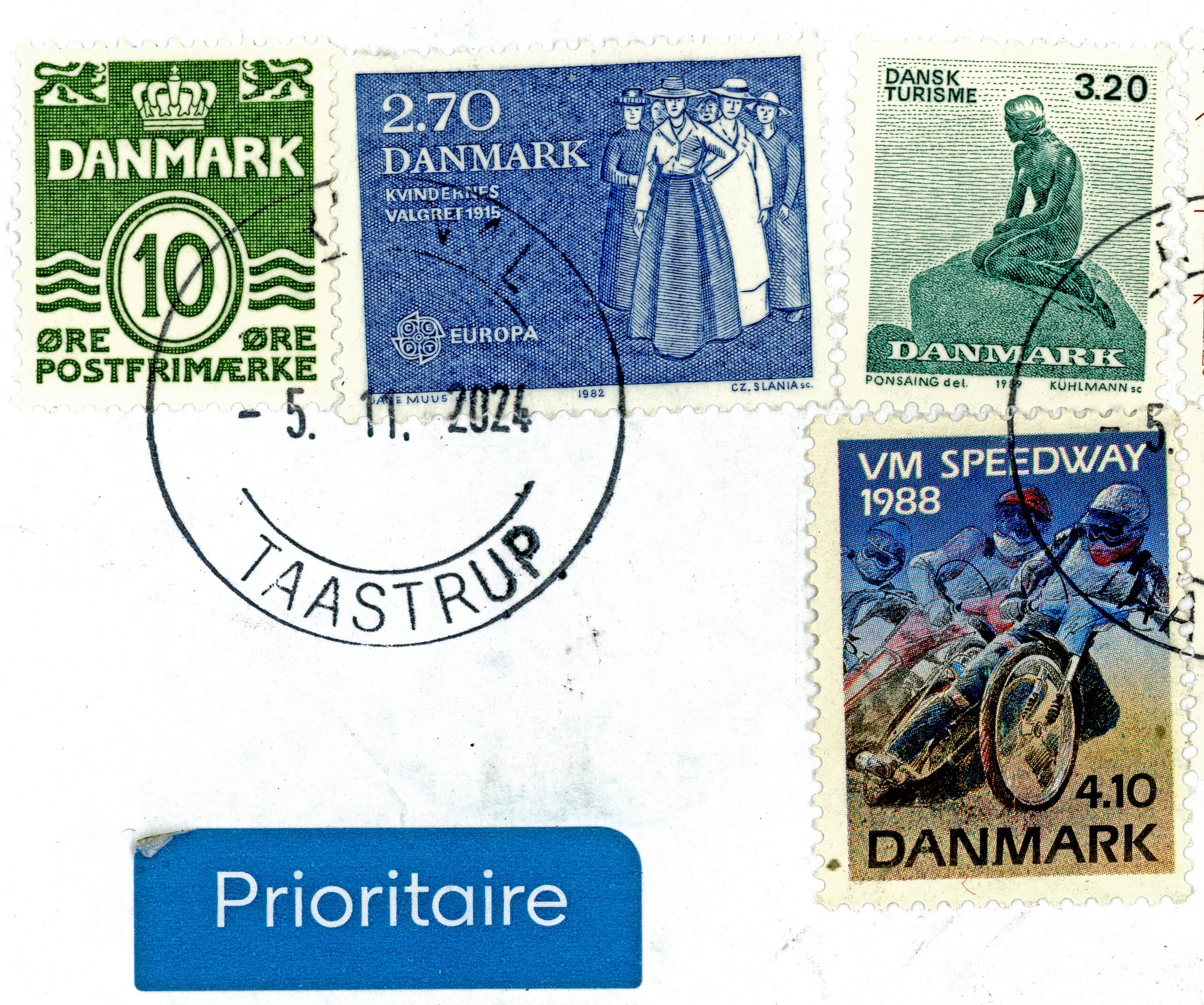
The Ebay seller in Denmark that mailed my latest acquisition of South African stamps, pasted a whole mini-collection of Danish stamps on the envelope.

Here are the first ones.
I will post more tomorrow.

Clockwise:
1950 Wavy Lines Stamp (Redesigned)
Issued Sep. 21, 1950
Perf. 12¾ | Design: Johannes Britze & Julius Møller | Issued in sheets of 100 | Engraving: H. H. Thiele, Copenhagen | No Watermark
318 A32 10 Øre Green | Redesign of the original 1905 stamps*
*These “Wavy Lines” stamps are the oldest stamp series in Denmark still in production, and second oldest in the world after Norway’s “Post Horn” stamps.
History of the Wavy Lines stamp
A public competition was held in 1902 to find a new stamp design that was simple to understand and easy to print.
Architect Julius Therchilsen came up with the winning design.
Most of the elements in his design were derived from the Danish coat of arms: the lions, crown and hearts. Three broken wavy lines on the stamp represent the three main waterways in Denmark.
Printing of the new stamps began in 1905 by H.H Thieles bogtrykkeri in Copenhagen with the 2, 3 and 4 øre stamps. These were made using the letterpress method. The stamps were very popular and were reissued over the years in increasing values and varying colours, to keep up with inflation.
Source: stamps.mybalconyjungle.com

1982 EUROPA Stamps – Historic Events
Issued May 3, 1982
Perf. 12¾ | Design: Jane Muus | Issued in sheets of 50 | Engraving: Czeslaw Slania | No watermark
724 A215 2.7Kr Blue | Women’s Suffrage 1915*
*Women in Denmark gained the right to vote on 5 June 1915.

1989 Tourism Industry
Issued Feb. 16, 1989
Perf. 12¾ | Design: Ponsaing | Issued in sheets of 100 | Engraving: Arne Kühlmann | No watermark
865 A309 3.20Kr Dark green | The Little Mermaid, sculpture by Edvard Eriksen

1988 Individual Speedway World Motorcycle Championship in Denmark
Issued Jun. 16, 1988
Perf. 12¾ | Design: Jørn Fabricius | Issued in sheets of 50 | Lithography | No watermark
856 A302 4.10Kr Multicolored | Motorcyclists at Vojens Speedway Center
[Sources: stampworld.com, Scott 2012 Standard Postage Stamp Catalogue, Vol. 2]

Thursday/ Oh Canada 🍁

These stamps from Canada were on an envelope that had arrived from an Ebay seller.

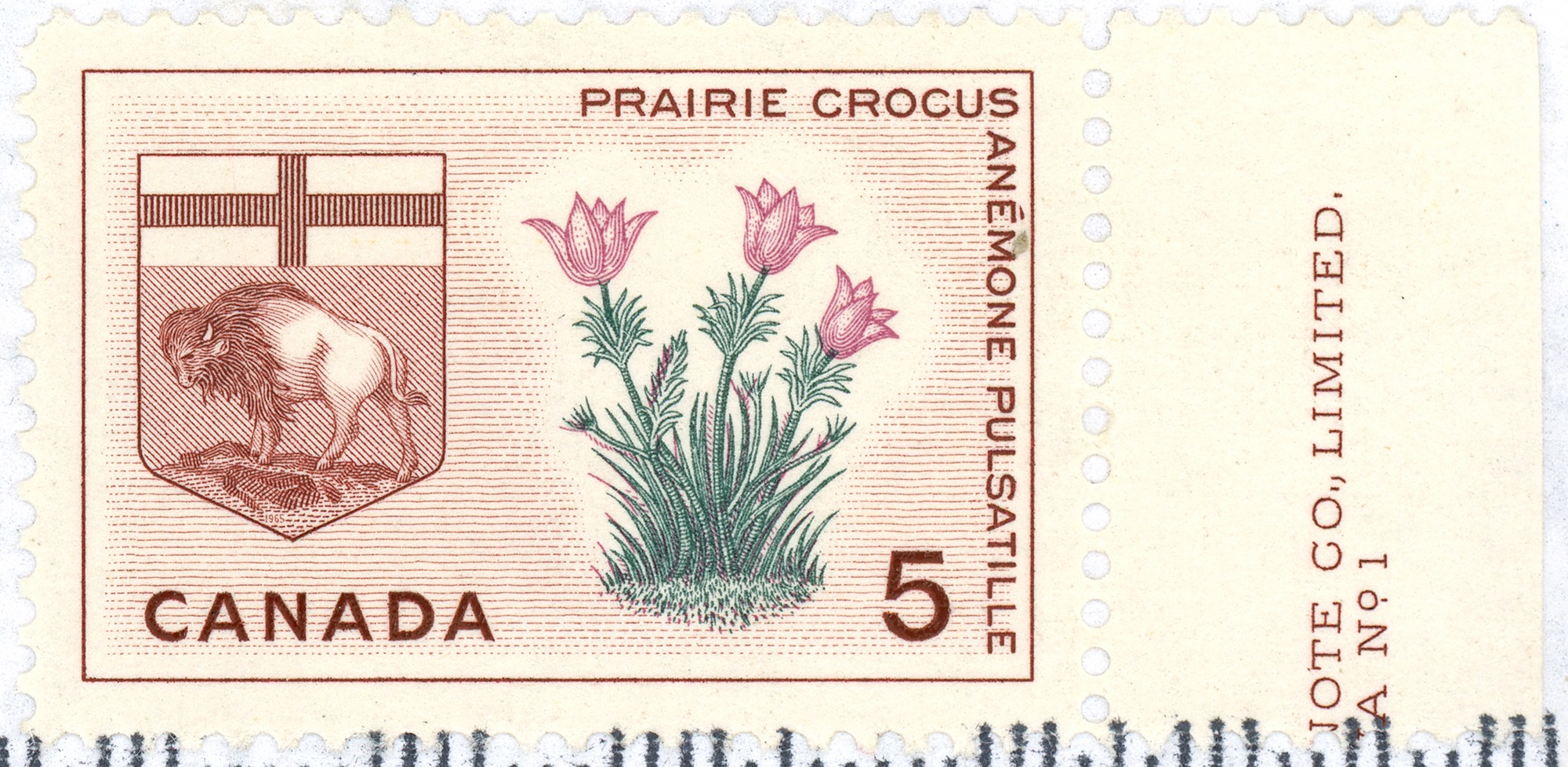
Provincial Emblems
Issued Apr. 28, 1965
Perf. 12 | Recess printing | No watermark
981 441 5c Red-brown, deep bluish-green and mauve | Prairie Crocus and Arms of Manitoba
[Source: 1997 Stanley Gibbons Stamp Catalogue, Part 1 British Commonwealth, stampworld.com]
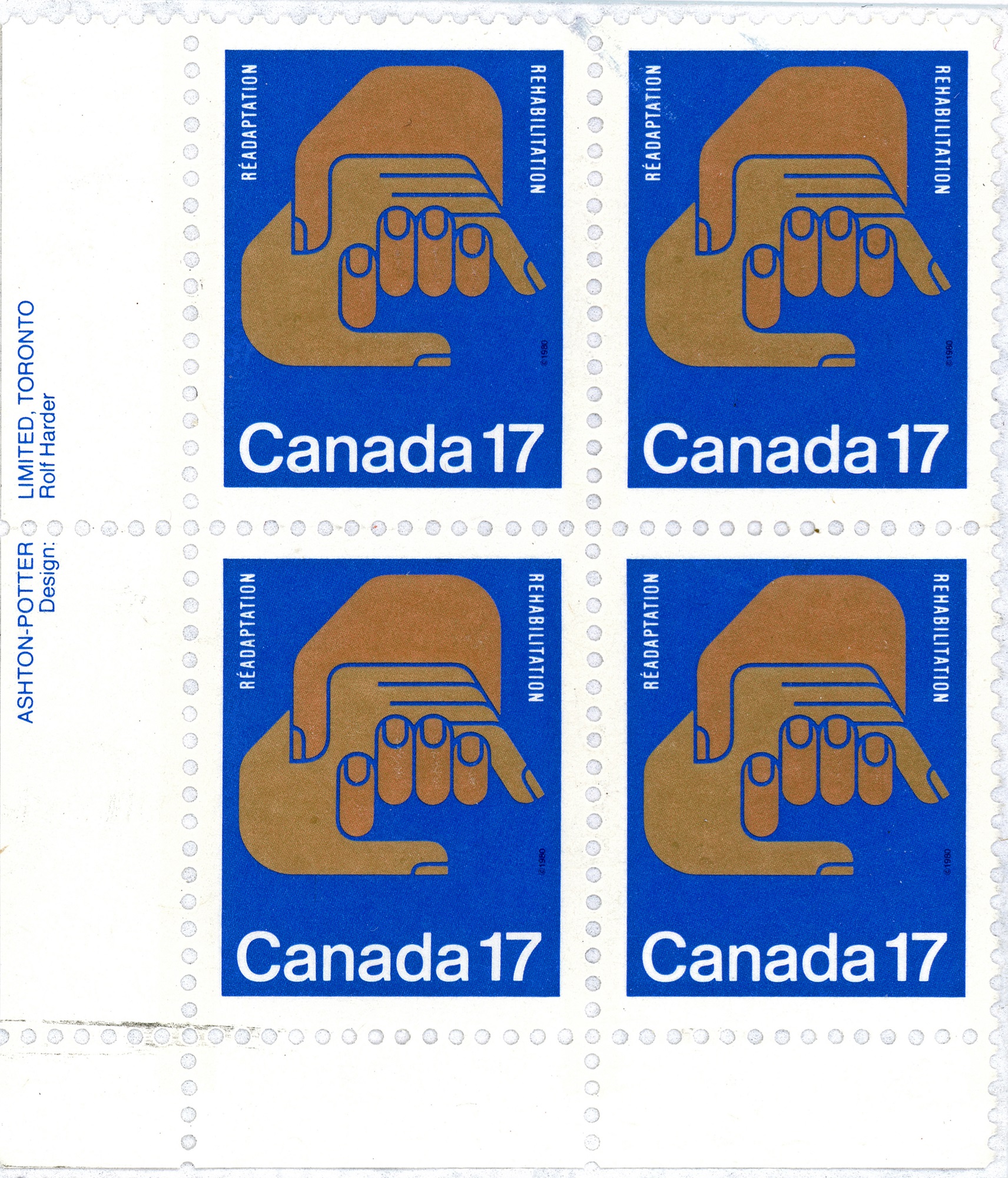
Rehabilitation
Issued May 29, 1980
Perf. 12½ | Litho printing by Ashton Potter | No watermark
979 440 17c Gold and ultramarine | “Helping hand”
[Source: 1997 Stanley Gibbons Stamp Catalogue, Part 1 British Commonwealth, stampworld.com]
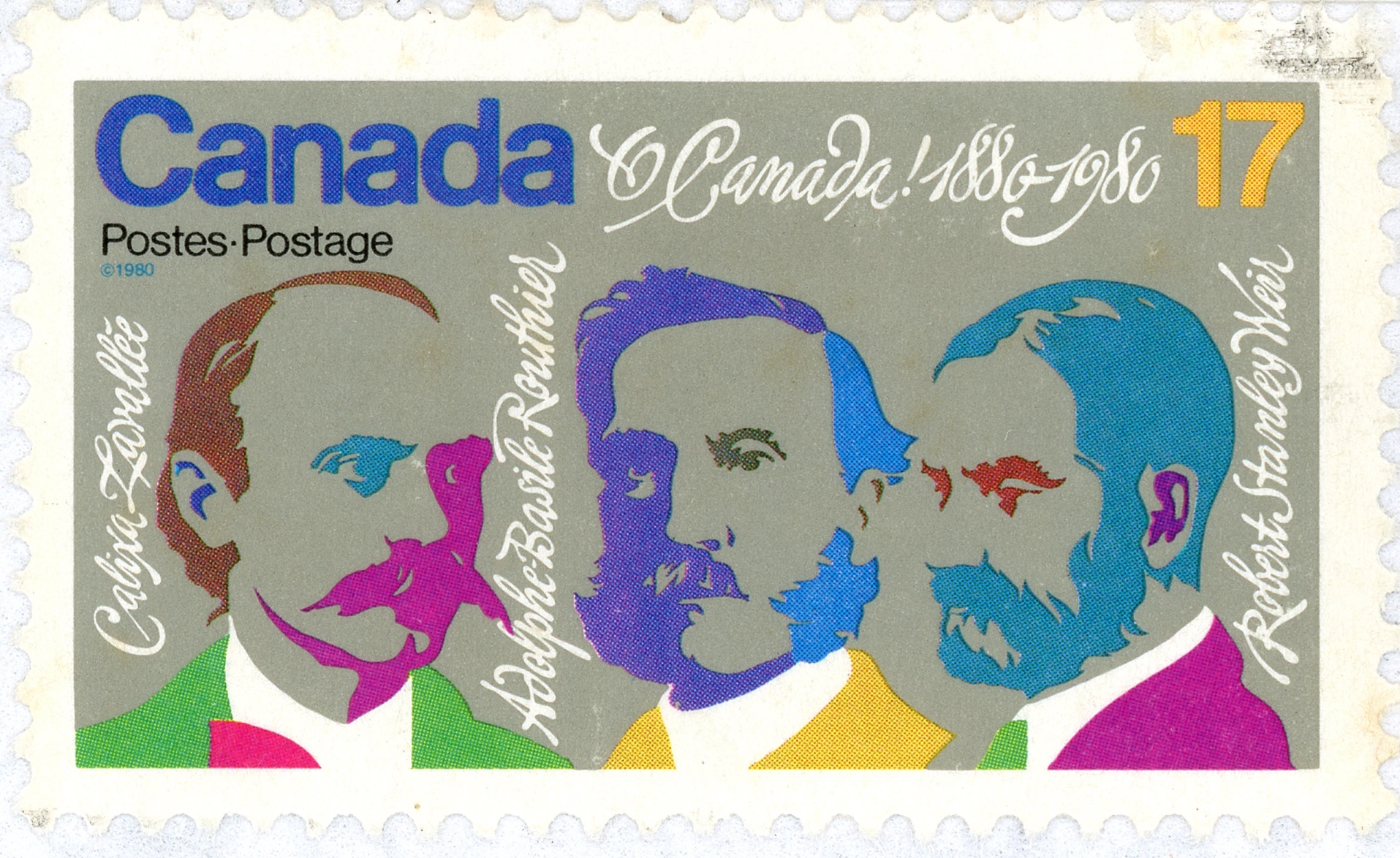
Centenary of “Oh Canada” (national song)
Issued Jun. 6, 1980
Perf. 12½ | Litho printing by Ashton Potter | No watermark
981 441 17c Multicolored | Calixa Lavallee (Composer), Adolphe-Basile Routhier (Original Writer) and Robert Stanley Weir (writer of English Version)
[Source: 1997 Stanley Gibbons Stamp Catalogue, Part 1 British Commonwealth, stampworld.com]
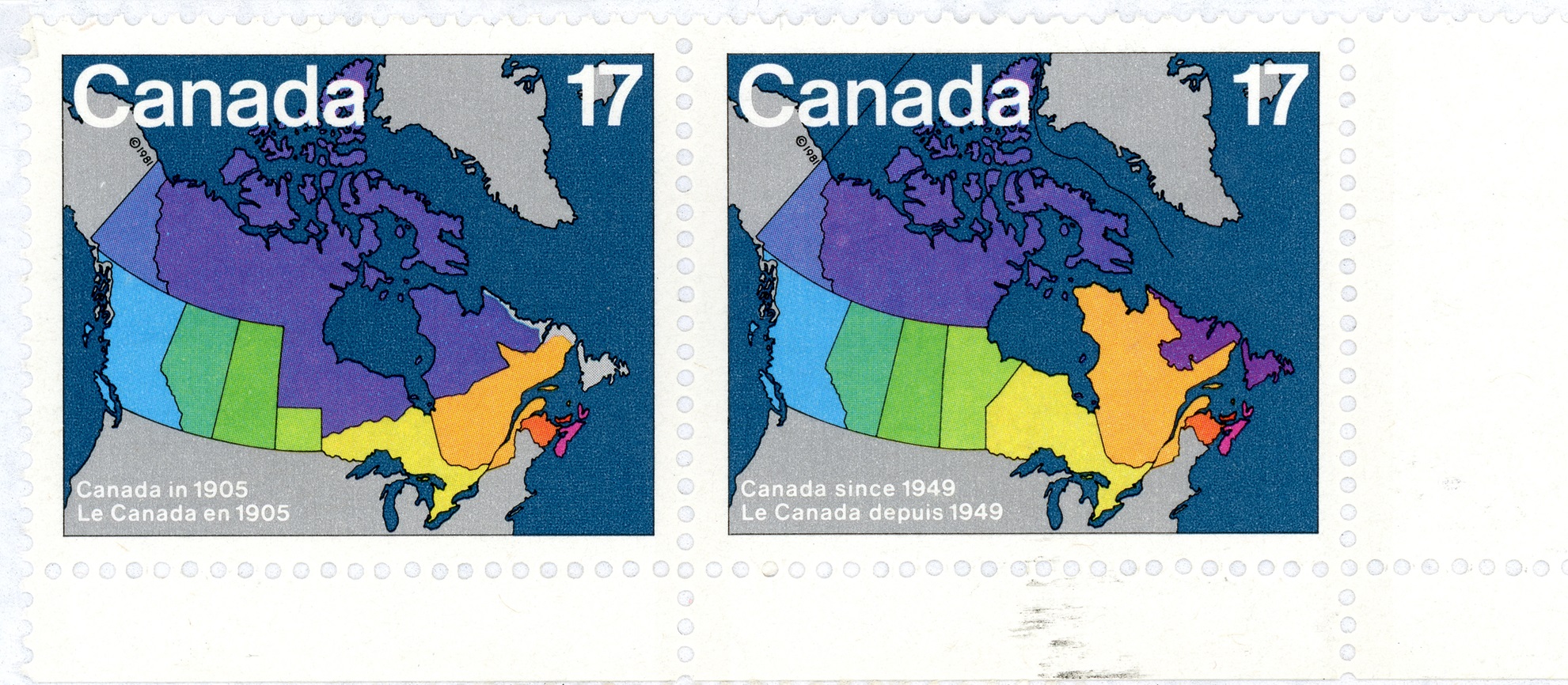
Canada Day (Maps showing Evolution of Canada from Confederation to Present Day) Issued Jun. 30, 1981
Perf. 13×12½ | Se-tenant pair, part of a strip of four | Raymond Bellemare Engraving: British American Bank Note Company, Ottawa | No watermark
1015 454 17c Multicolored | Canada in 1905
1015 454 17c Multicolored | Canada since 1949
[Source: 1997 Stanley Gibbons Stamp Catalogue, Part 1 British Commonwealth, stampworld.com]
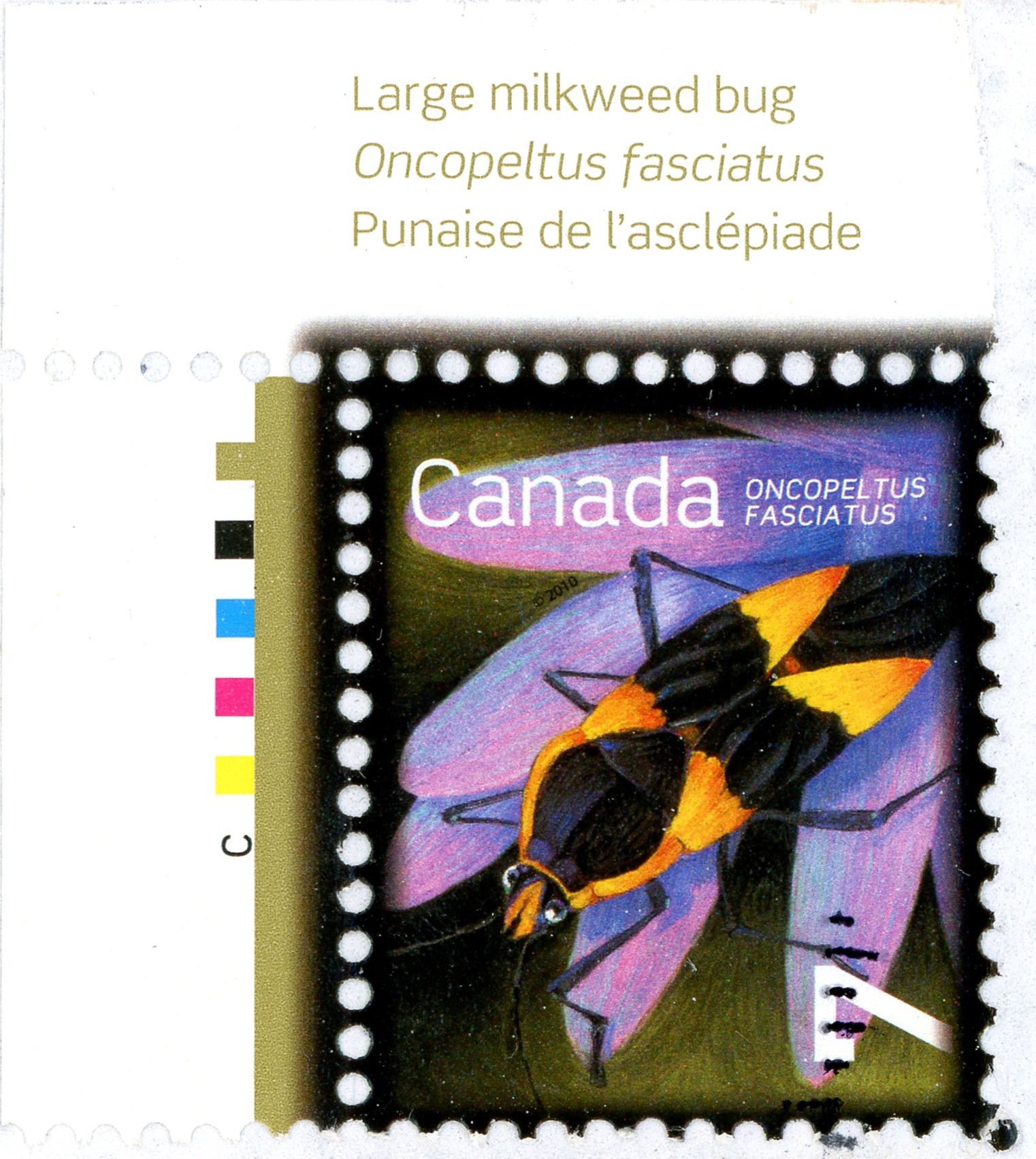
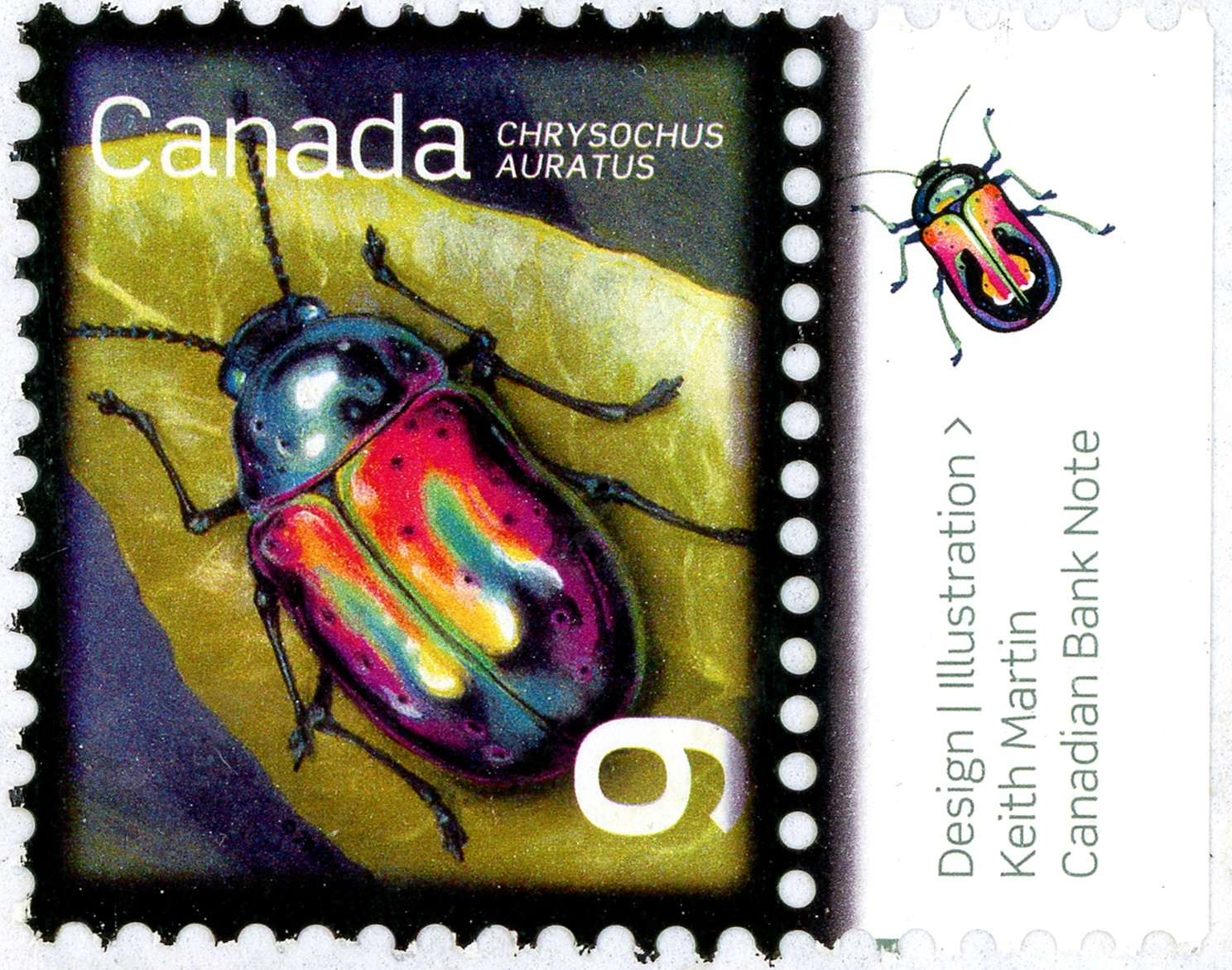
Beneficial Insects
Issued Oct. 19, 2010
Perf. 13×13¼ | Issued in souvenir sheet of 5 |Keith Martin Engraving: Cie canadienne des billets de banque | No watermark
2623 7c Multicolored | Large Milkweed bug (Oncopeltus fasciatus)
2625 9c Multicolored | Dogbane Beetle (Chrysocus auratus)
[Source: stampworld.com]

Saturday/ on the Harvard campus 🎓

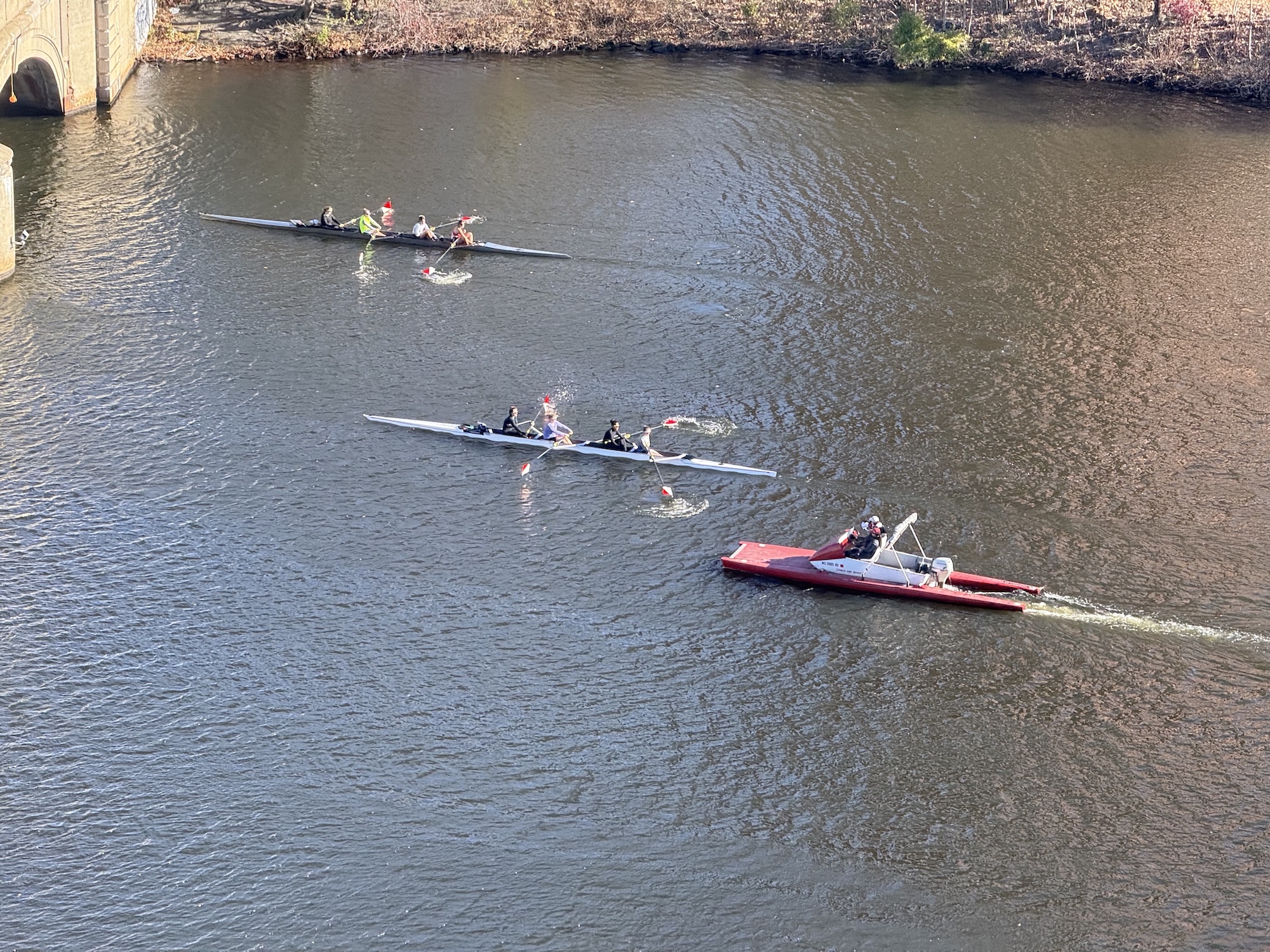
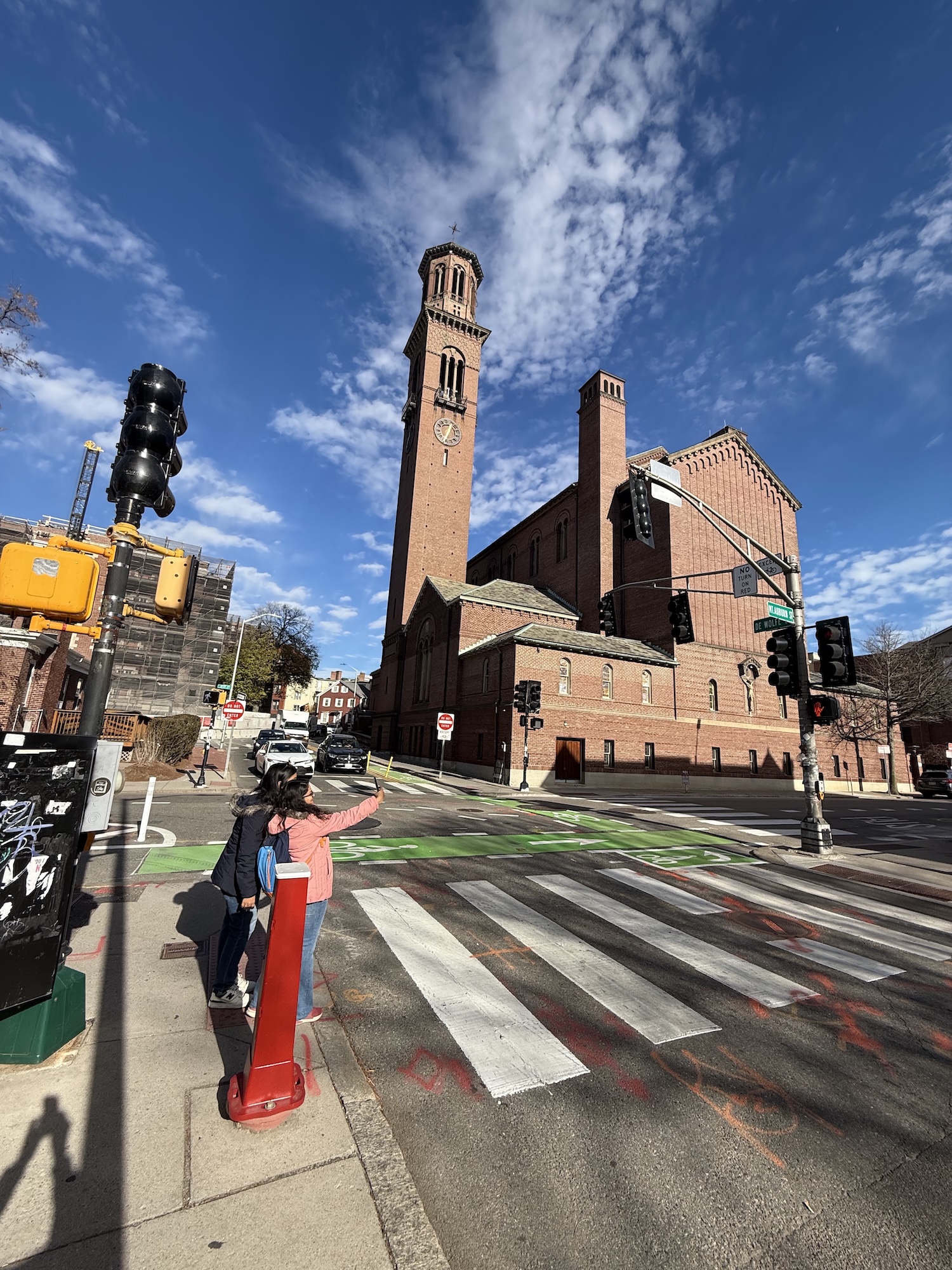
Here are a few pictures from in and around Harvard Square and Harvard’s campus.

Rowers on the Charles River running through Cambridge.
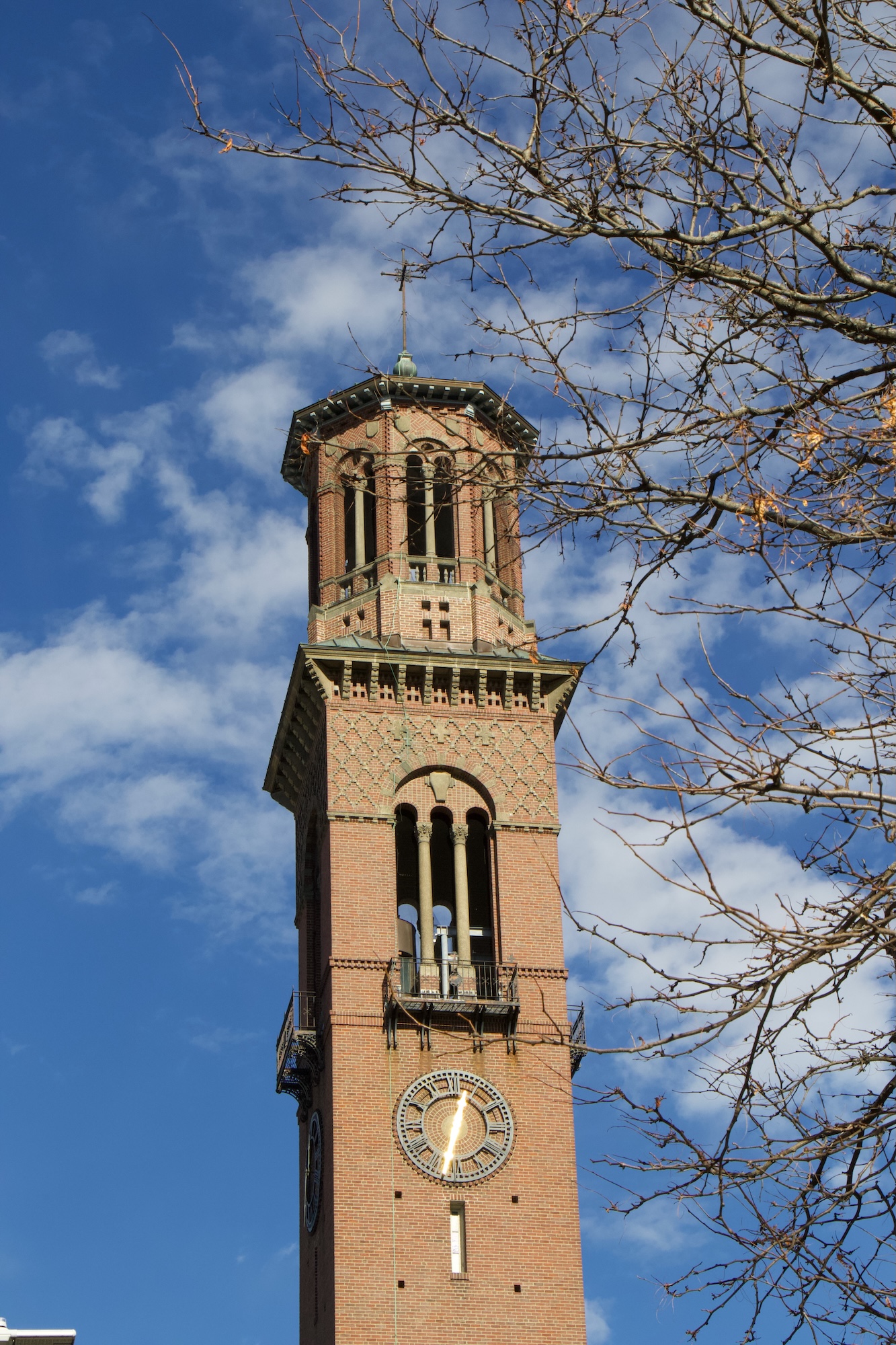
Saint Paul’s Parish church, with its distinctive bell tower, is a Catholic church on Mt Auburn St in Cambridge.
A closer look at the bell tower of Saint Paul’s Parish.
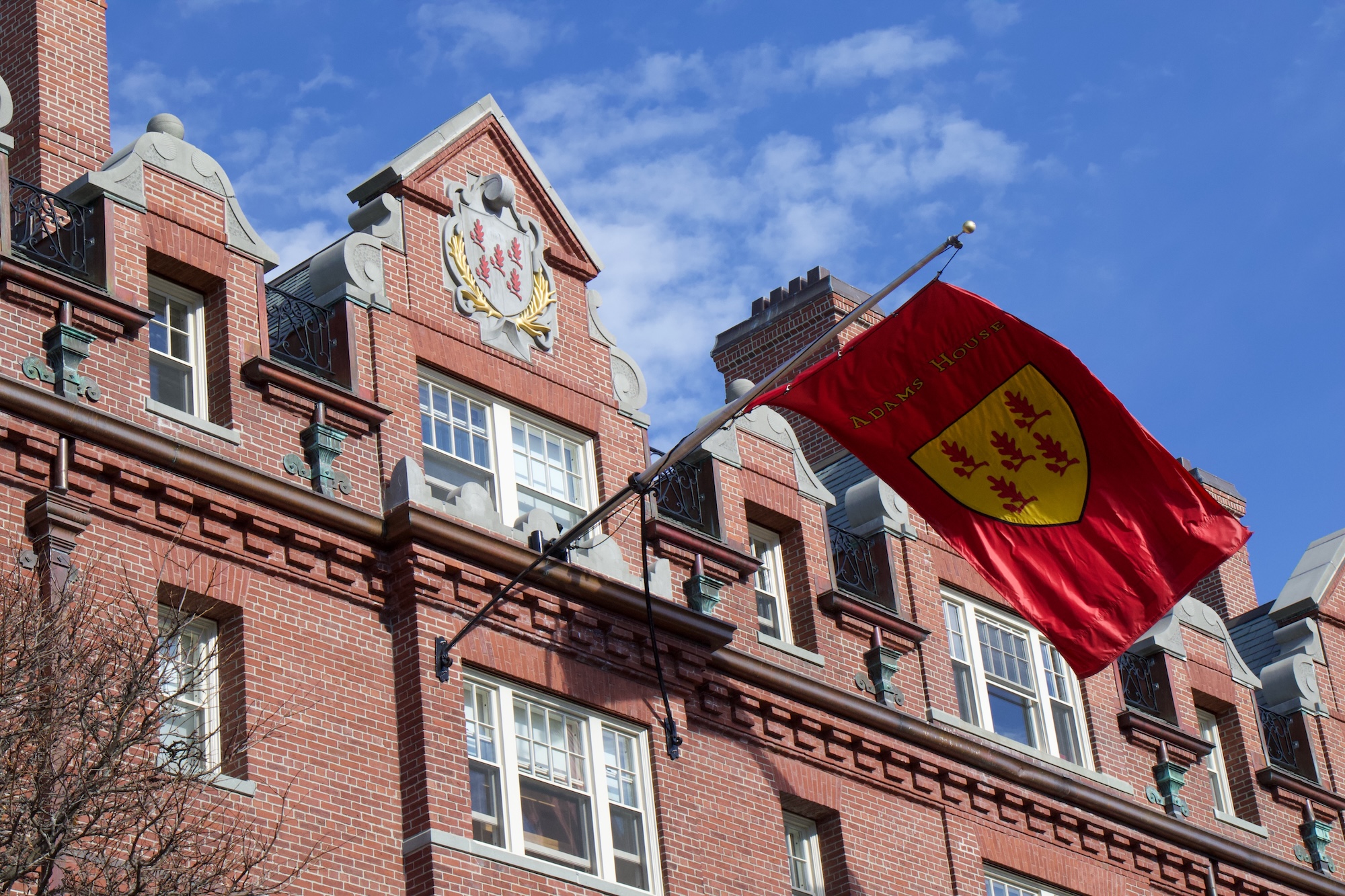
Adams House, one of twelve undergraduate residential Houses at Harvard University.
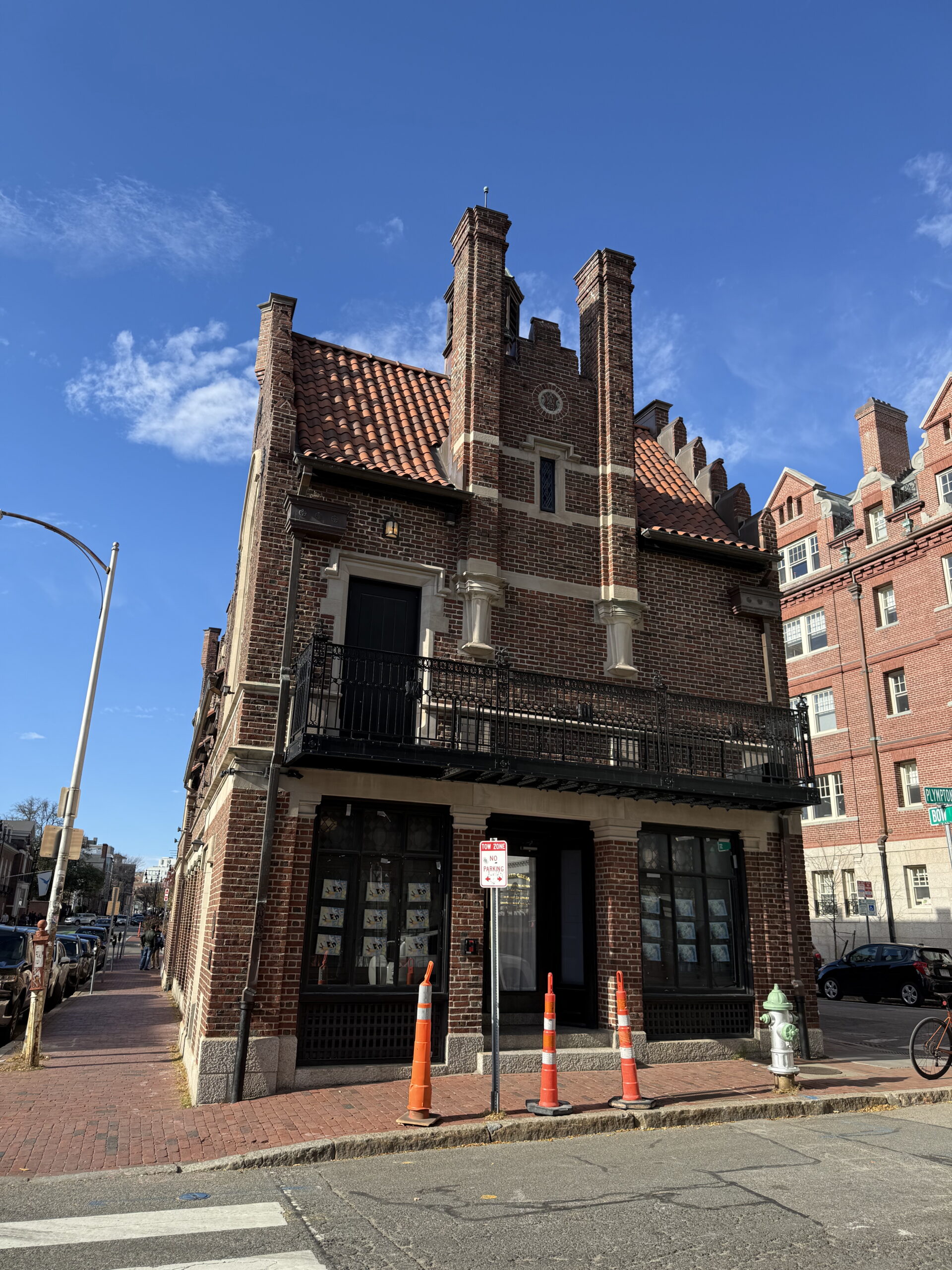
The Harvard Lampoon Building (sometimes referred to as the Lampoon Castle), designed by Edmund M. Wheelwright and built in 1909 in the Mock Flemish style.
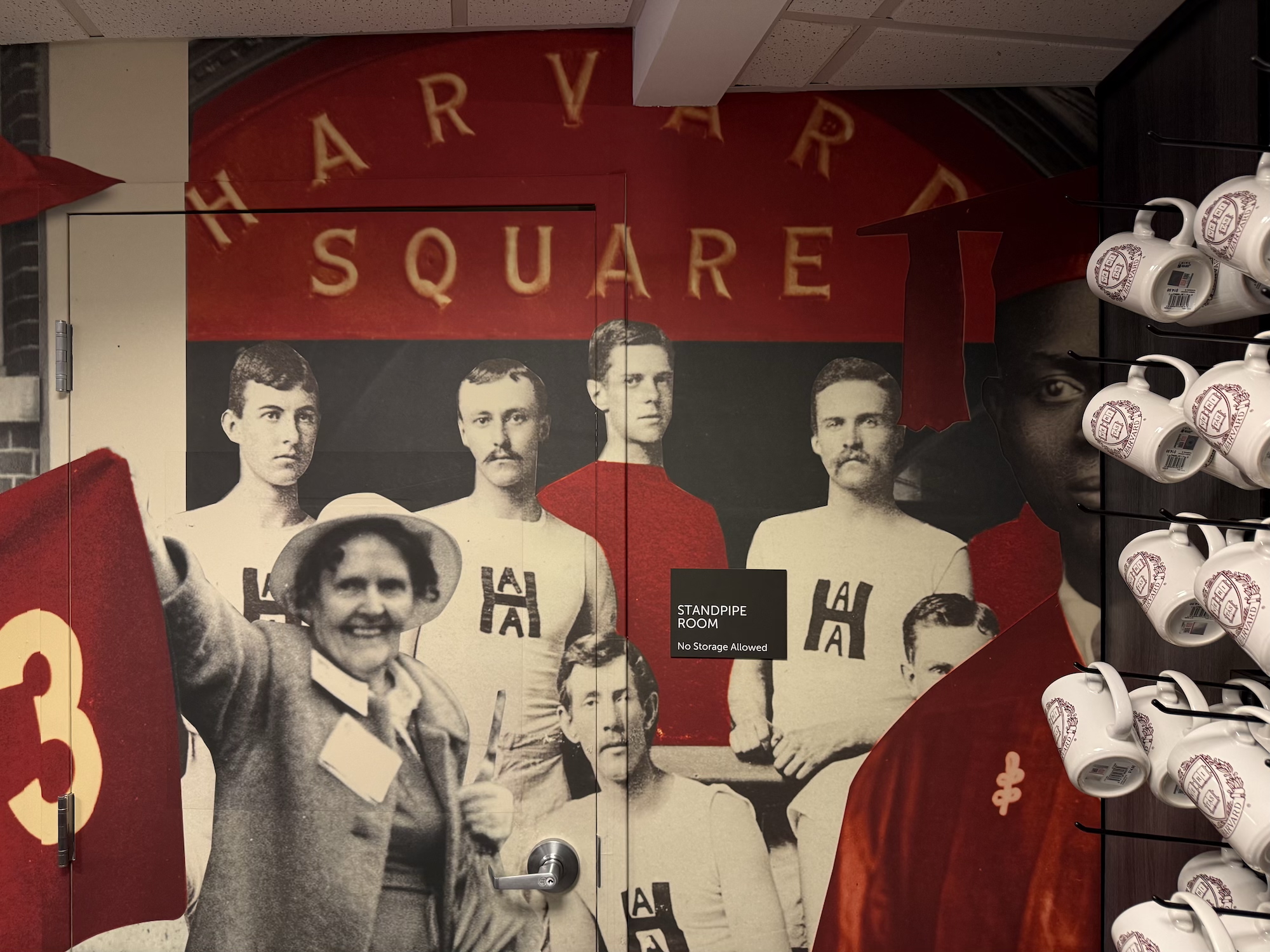
Inside the Harvard Coop store, a bookshop founded in 1882, offering textbooks plus branded Harvard and MIT clothing.

Monday/ Veterans Day 🎖️

Happy Veterans Day to all military veterans of the United States Armed Forces.

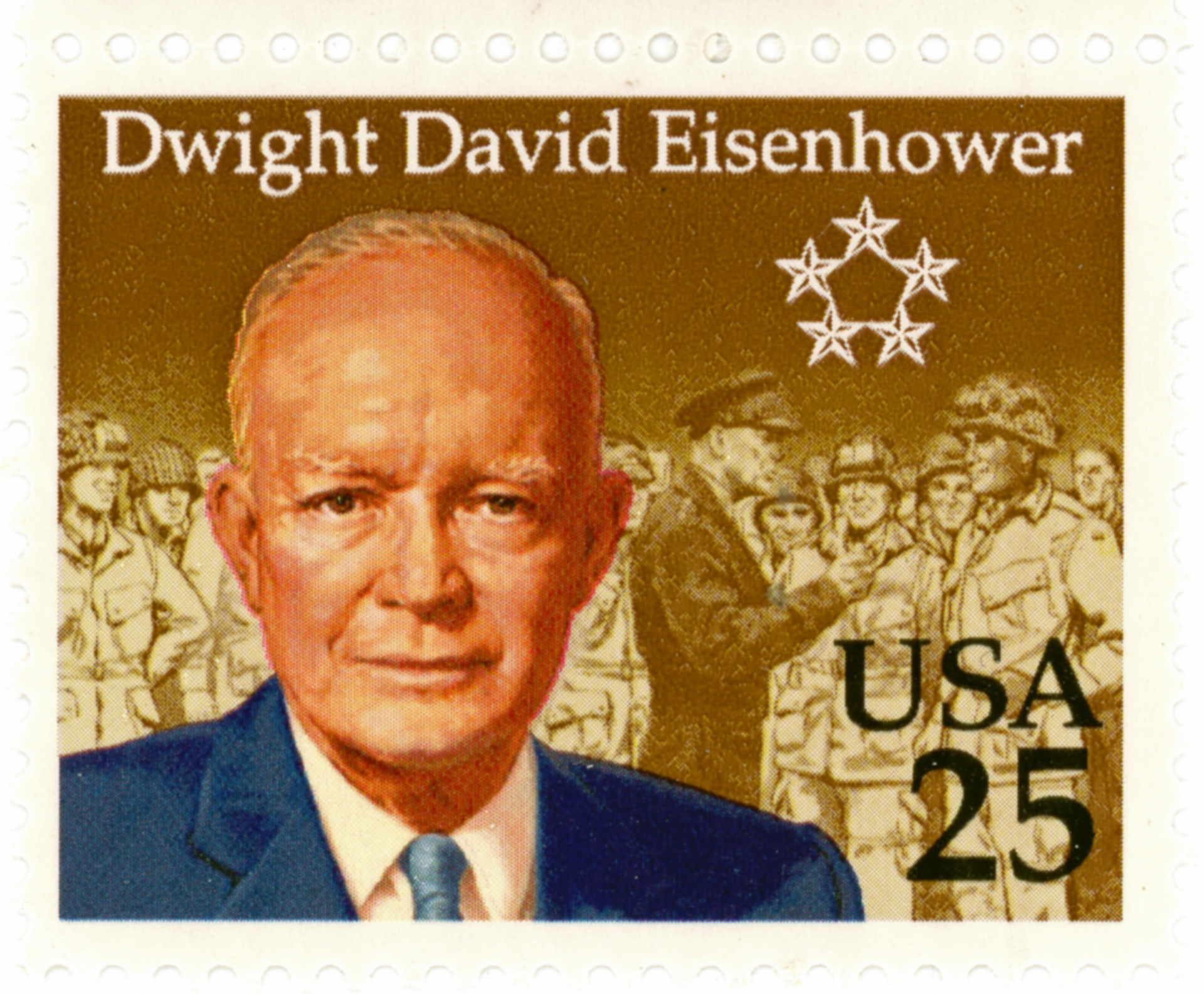
U.S. #2513   1990 25¢ Dwight D. Eisenhower
Issue Date: October 13, 1990
City: Abilene, KS
Quantity: 142,692,000
Printed By: American Bank Note Company
Printing Method: Photogravure
Perforations: 11
Color: Multicolored
Dwight D. Eisenhower’s official presidential portrait is featured on this stamp honoring the 100th anniversary of his birth.
The background pictures him overseeing his troops in his capacity as five-star general.
A circlet of five stars distinguishes that title.
[Source: mysticstamp.com]

Saturday/ unity makes strength 🪙

It was November of 1899 in colonial Africa— in what is called South Africa today.
The Second Boer War had already started, on October 11.

The British government had rejected an ultimatum issued by the Boer republics of the Transvaal and Orange Free State.
The republics had demanded the withdrawal of British troops from their borders, primarily due to growing tensions caused by the discovery of gold in the Transvaal (Johannesburg today) and the influx of British “Uitlander” (foreigner) miners who were denied political rights by the Boer government.

The mint, where the republics produced gold coins for 1899, soon learned that the Kruger Pound dies for the 1899 coins were intercepted by the British in then-Lourenzo Marques in Mozambique (Maputo, today).

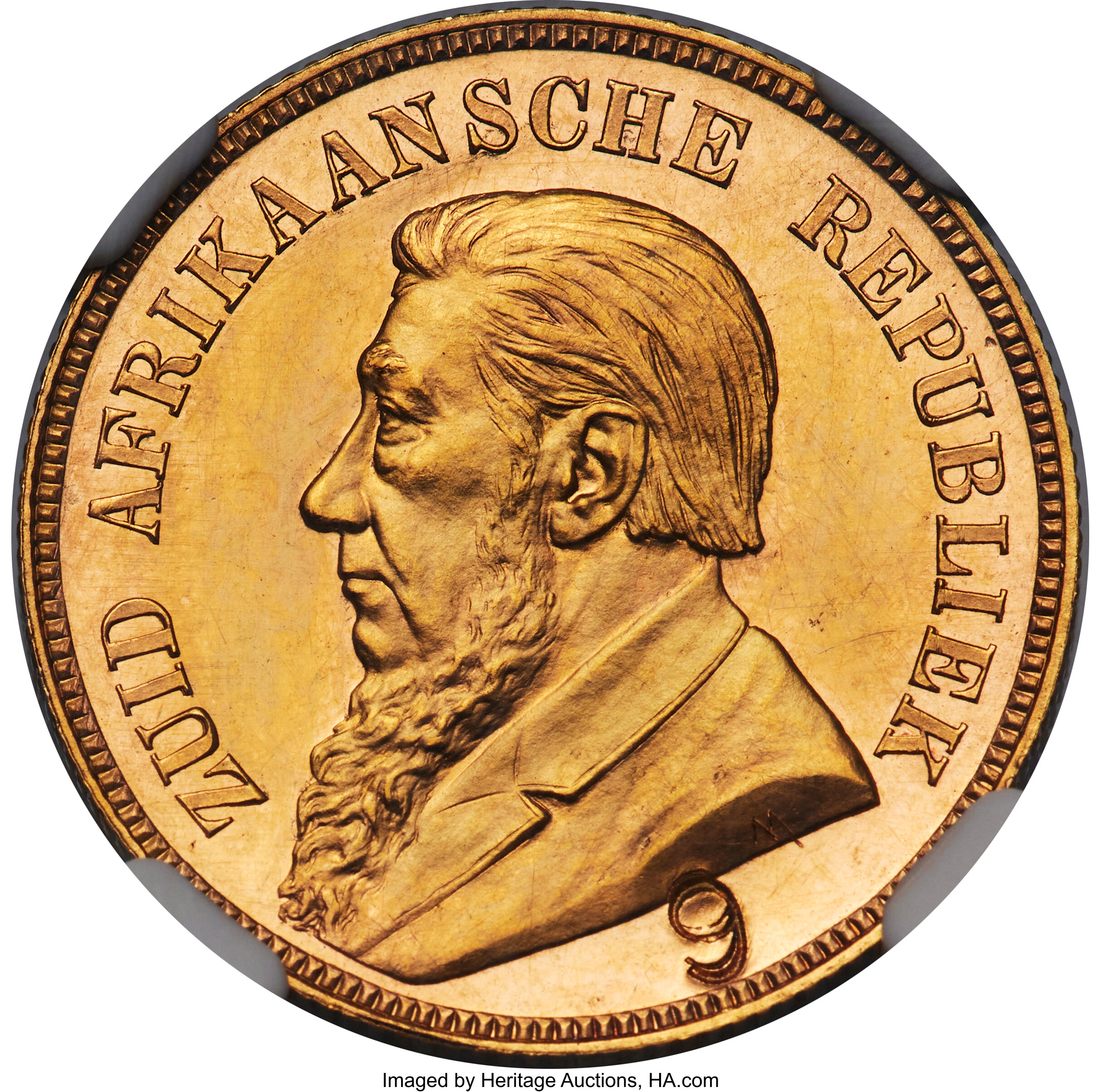
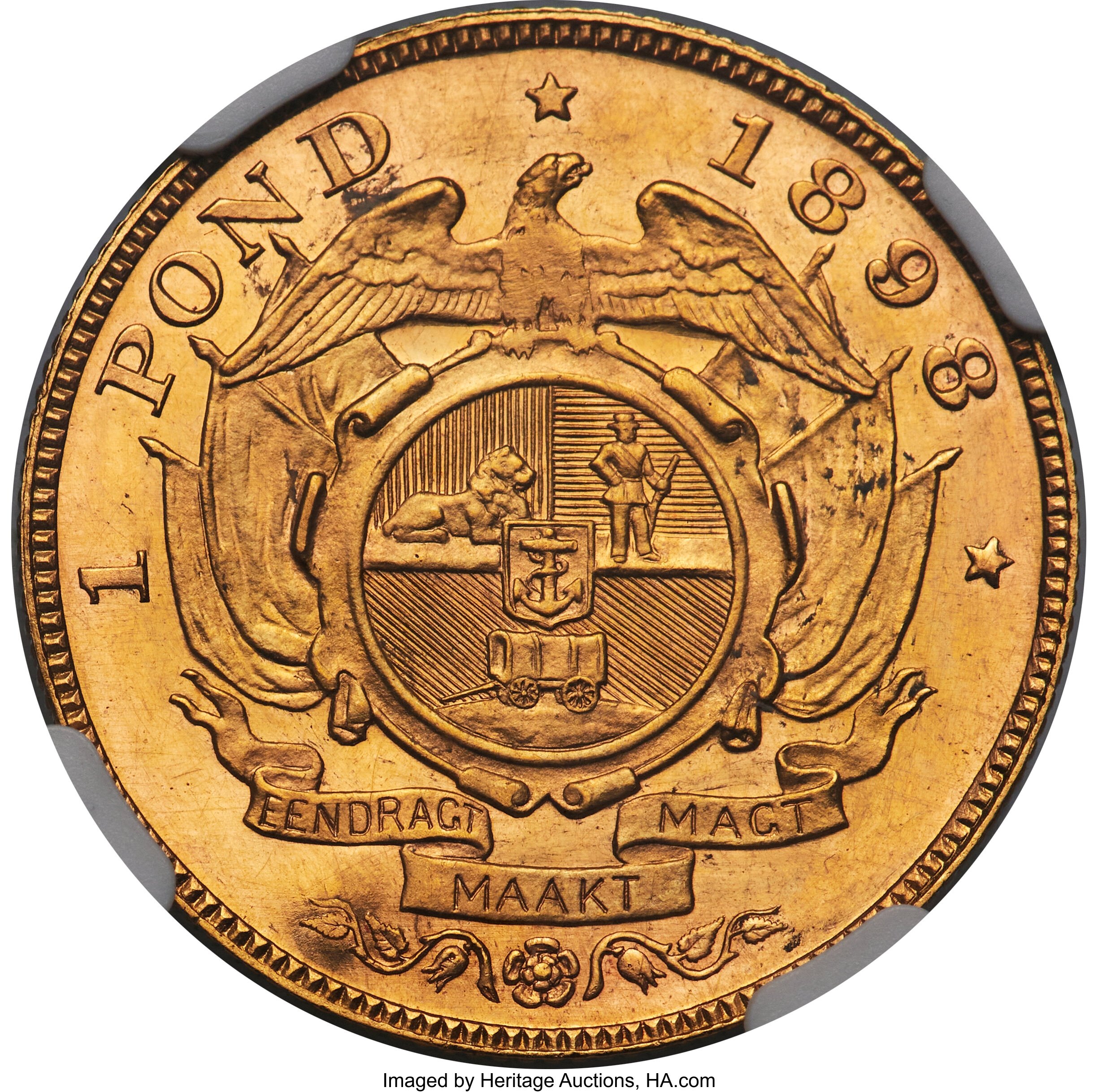
On the 2nd day of November 1899 at 10.30am, a single figure 9 was stamped at the bottom of the President’s bust on an 1898 coin, slightly overlapping the design. The coin is known today as ‘the single nine counterstamp’ or simply the ‘Single 9’, and is South Africa’s only one-of-a-kind coin.

This description from Heritage Auctions.com (the coin goes up for auction on Jan 13, 2025 in New York City):
Republic gold “9” Pond 1898 MS63 Prooflike NGC, Pretoria mint, KM-Unl., Hern-ZP6.
The indisputable ‘unicorn coin’ in the entire South African series, the “Single 9 Overstamp” 1898 Pond remains unchallenged in its exclusive solitude. A distinct variant of the 130-piece “99” Pond issue, the “Single 9” Pond reportedly changed hands in a private sale in 2010, for a value documented as “multi-million Rand” by Hern. Other industry sources detail a more precise figure of ZAR 20,000,000, which was the equivalent of US$ 2,700,000 at the average 2010 exchange rate. Possibly selected as the candidate for the overstamping for its gleaming ‘Prooflike’ appearance, this rarified treasure has been the prime target of South African experts for over a century.
Translation: ‘Zuid-Afrikaansche Republiek’ is ‘South African Republic’ (an area north of the Vaal River and south of the Limpopo River and not to be confused with ‘Republic of South Africa’, which is all of modern-day South Africa and which came about only in May 1961, after the Union of South Africa gained its independence from Great Britain).
The figure on the coin is President Paul Kruger, the leading figure in the movement to restore the South African Republic’s independence, culminating in the Boers’ victory in the First Boer War of 1880–1881. Kruger served until 1883 as a member of an executive triumvirate, then was elected President of the South African Republic.
The gold price as of November 01, 2024 is $2,736.42 per ounce, a record high*.
*In absolute dollar terms. When adjusted for inflation, the early 1980s is still the peak for gold, at some $3,200 per ounce in inflation-adjusted dollars.
Translation: ‘Eendragt Maakt Mag’ means ‘Unity makes strength’.

Wednesday/ mail from Maryland 🇺🇸

There was mail from Maryland in my mailbox today.
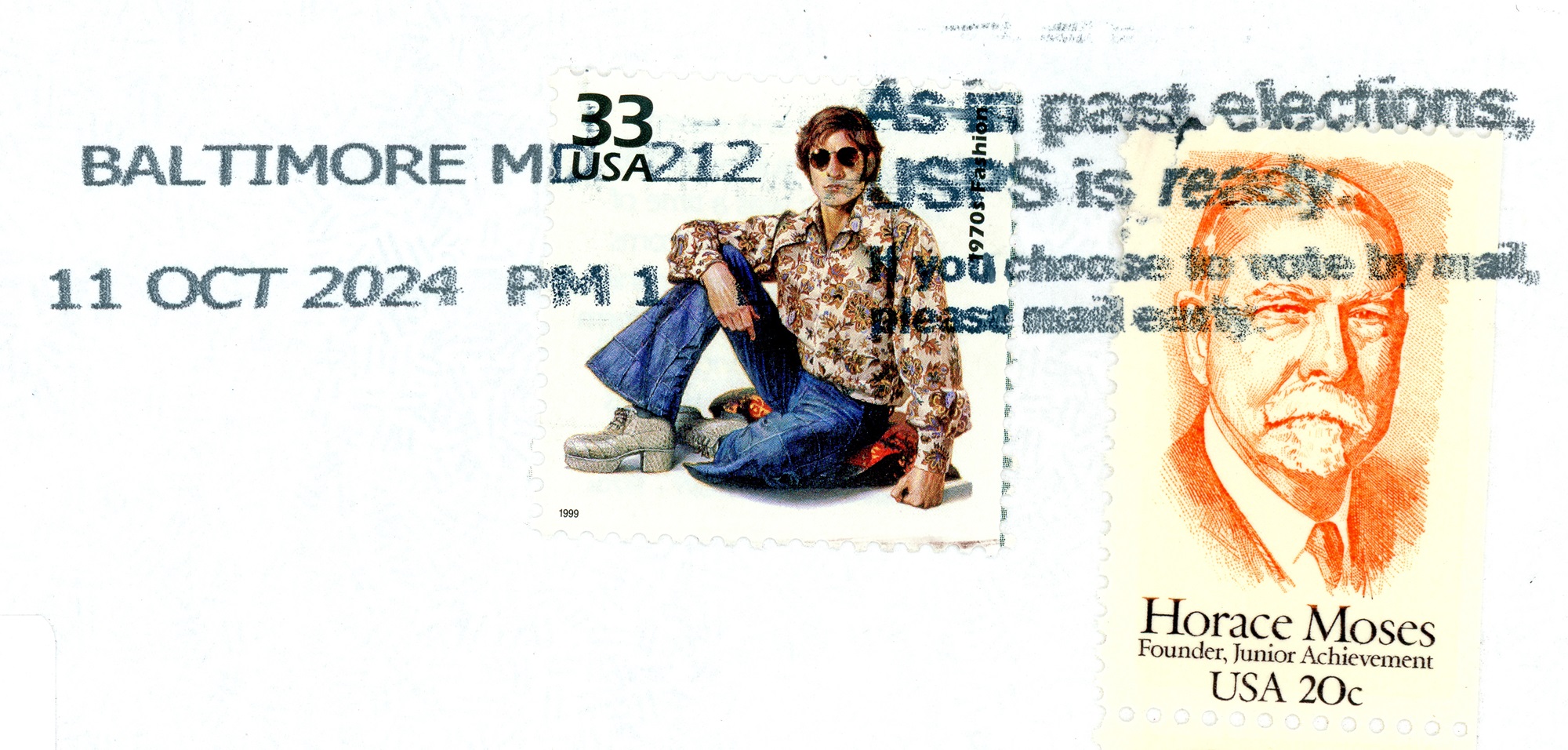
The cancellation says that ‘As in past elections, the USPS is ready. If you choose to vote by mail, please mail early.’
(Early voting has started in some states, and here in Washington State we will get our mail-in ballots by Friday, or by early next week).

Let’s check out the stamps.

1999 Celebrate the Century, 1970s – Bicentennial, Watergate, and Earth Day
Issued Nov. 18, 1999
Perf. 11½| Offset, Intaglio printing | Wmk. None
No 3321| 33c| Multi-colored | 1970s Fashion

1984 Horace Moses
Issued Aug. 6, 1984
Perf. 11 |Engraved printing (combination press) |Wmk. None
No 1845| 20c| Orange & dark brown | Junior Achievement founder, Horace Moses
[Sources: stampworld.com, mysticstamp.com]