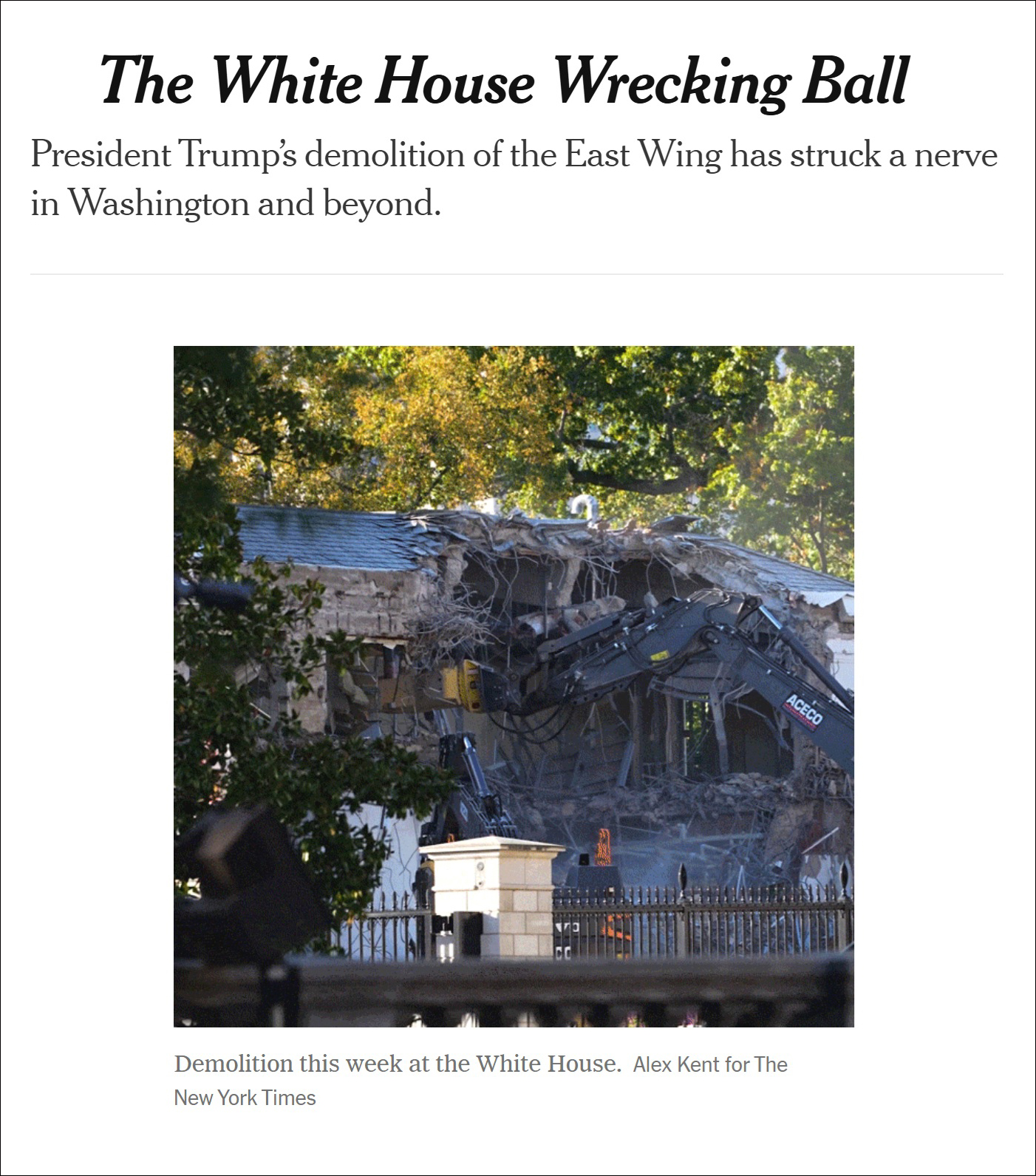
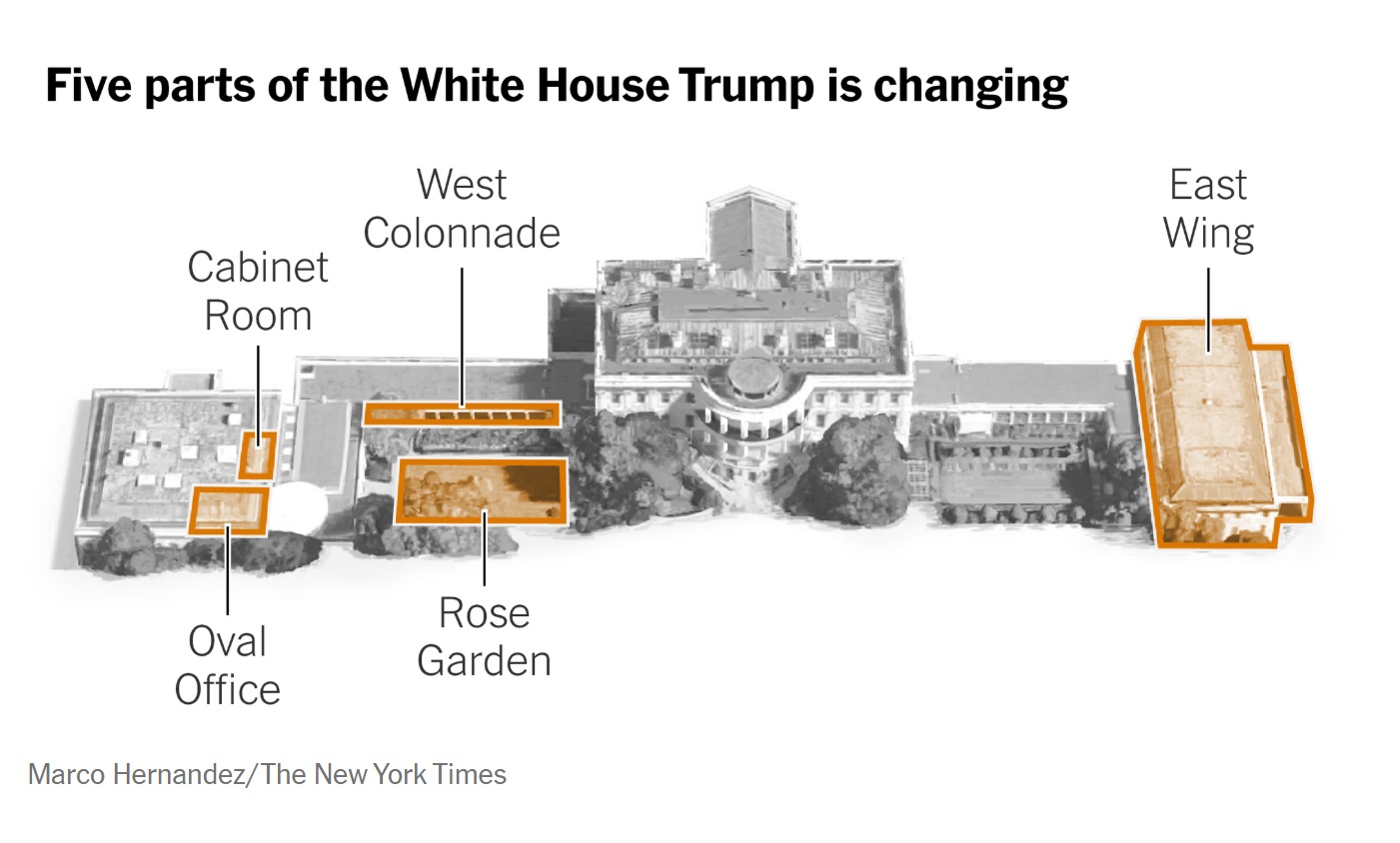
Jess Bidgood writes for the New York Times, referring to the destruction of the East Wing of the White House:
It wasn’t so long ago that Trump was promising his plan to build a 90,000-square-foot ballroom on the grounds “won’t interfere with the current building.” In fact, my colleague Luke Broadwater reported today that the entire wing, which is historically the domain of the first lady, will be razed in the project.
Images of the demolition, which began on Monday as a precursor to the construction of a $200 million ballroom, have rocketed around the globe, swiftly becoming political fodder and a perfect Rorschach test for a deeply polarizing presidency.
Jess Bidgood writing for the New York Times: Trump, ever the developer, has certainly spent a lot of time building things at the White House. He paved over the lawn in the Rose Garden to create a patio. He has added gold filigree to the Oval Office and ornate chandeliers to the Cabinet Room, remaking the White House with an indelible imprint of Mar-a-Lago maximalism that is all but certain to outlast his presidency.
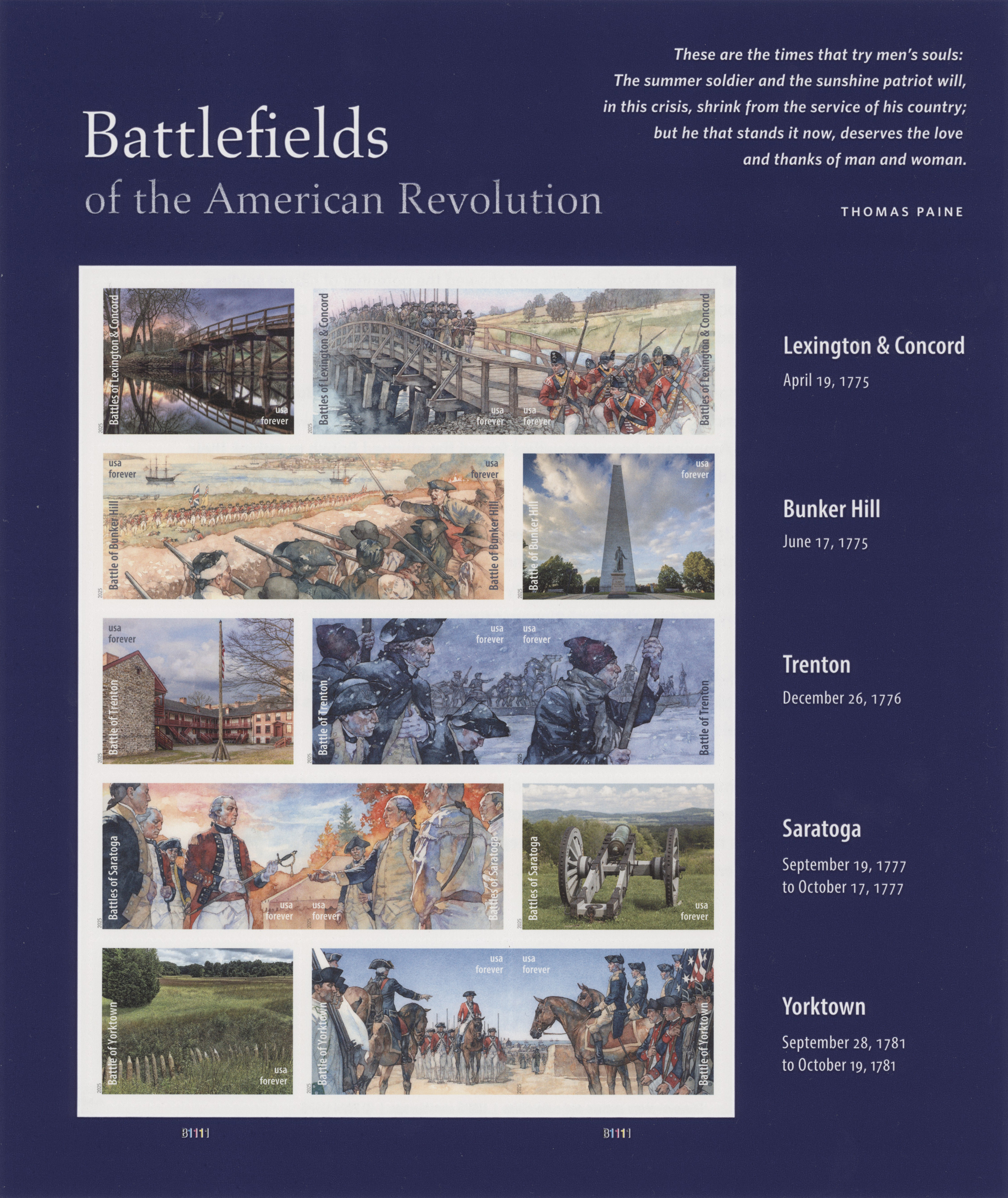
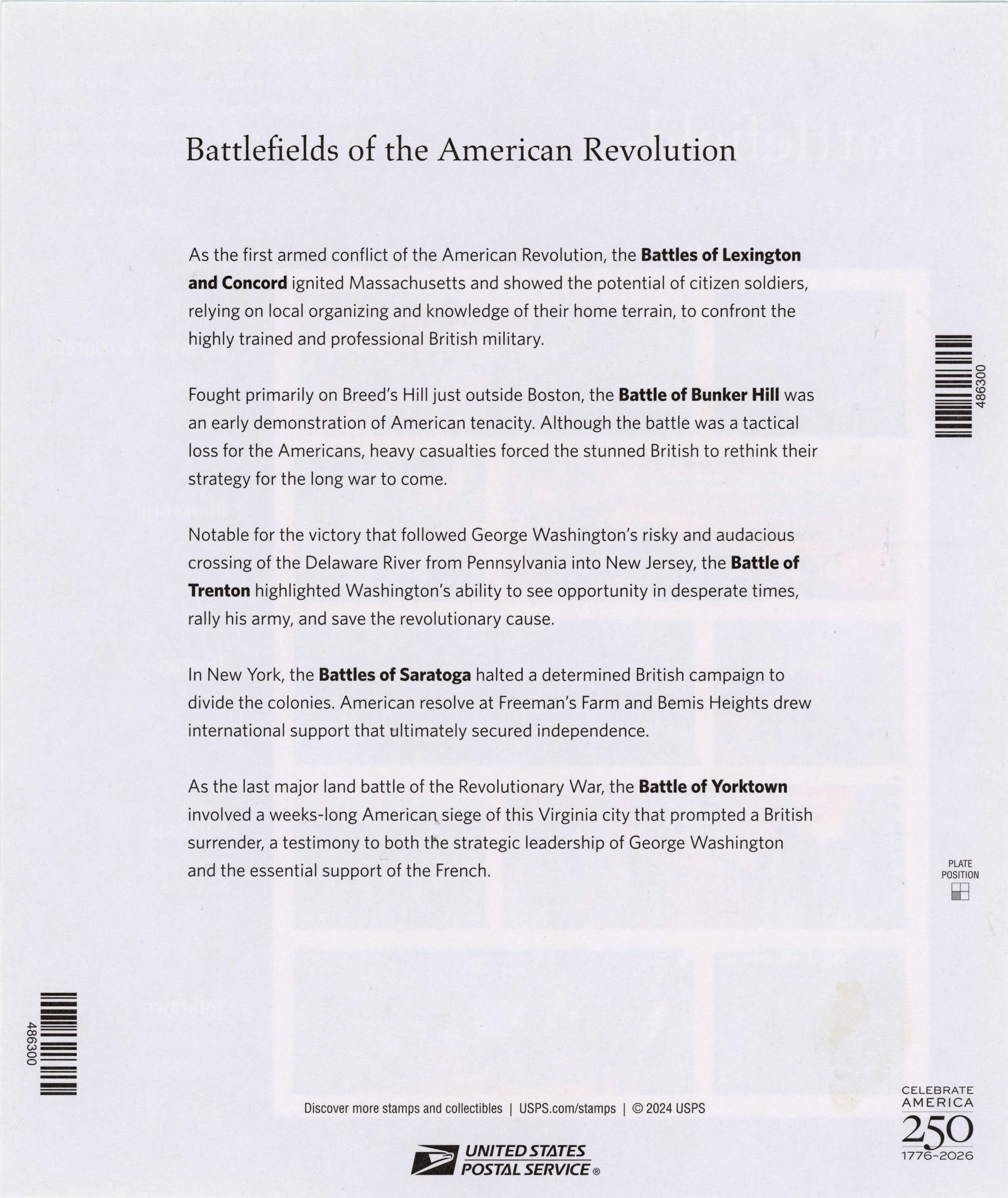
I got these ‘USA forever’ stamps on Friday.
It never costs me just one stamp when I take something to the post office, because I always buy a whole sheet of stamps! 🤗
From Wikipedia:
The American Revolutionary War (April 19, 1775 – September 3, 1783), also known as the Revolutionary War or American War of Independence, was the armed conflict that comprised the final eight years of the broader American Revolution, in which American Patriot forces organized as the Continental Army and commanded by George Washington defeated the British Army. The conflict was fought in North America, the Caribbean, and the Atlantic Ocean. The war’s outcome seemed uncertain for most of the war. But Washington and the Continental Army’s decisive victory in the Siege of Yorktown in 1781 led King George III and the Kingdom of Great Britain to negotiate an end to the war in the Treaty of Paris two years later, in 1783, in which the British monarchy acknowledged the independence of the Thirteen Colonies, leading to the establishment of the United States as an independent and sovereign nation.
Battlefields of the American Revolution (1775-1783) Issued Apr. 16, 2025 Perf. 11 serpentine die-cut |Self-adhesive |Design: Derry Noyes (from watercolor paintings by Greg Harlin) |Sheet size: 15 stamps |First-Class Mail® ‘FOREVER’ stamps (75c) | Engraving: Banknote Corporation of America | No watermark [Source: stampworld.com]
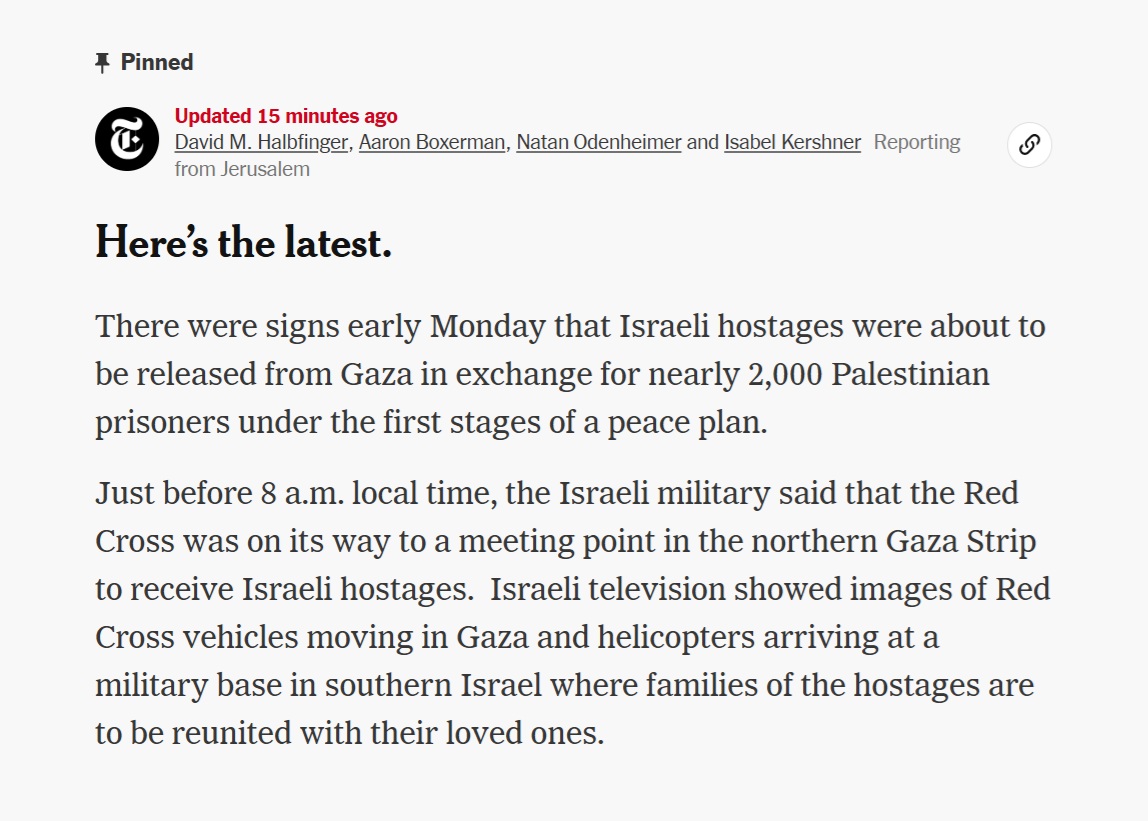
By Jodi Rudoren reporting for the New York Times, Monday morning NY time
I am the former Jerusalem bureau chief.
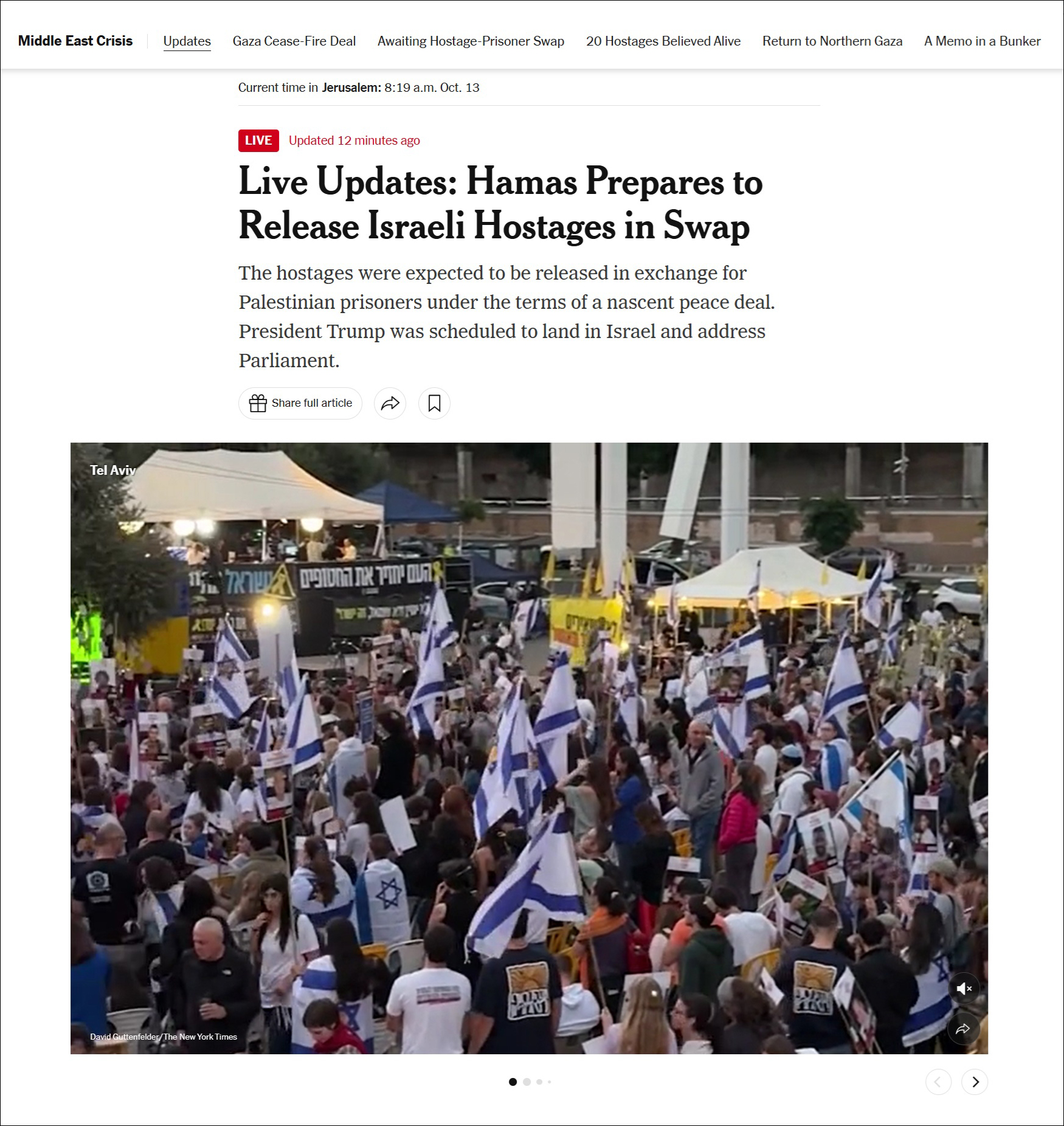
They’re free. Two years — 737 days, to be exact — after the Hamas terror attack that set off the war in Gaza, the last 20 living Israeli hostages left Gaza this morning. In exchange, nearly 2,000 Palestinian prisoners and detainees are being let go; the first buses filled with them just started arriving in the West Bank city of Ramallah.
The releases are part of the first phase of a cease-fire deal that took hold Friday. A triumphant President Trump, the force behind the deal, flew in Air Force One over jubilant crowds in Tel Aviv’s Hostages Square and timed the plane’s touchdown to coincide exactly with the first hostages’ arrival in Israel. He is about to address Israel’s Parliament and then will head to a summit of world leaders in Egypt, where the agreement was negotiated.
It’s Monday morning in Gaza. The release of the hostages (and Palestinian prisoners) is imminent, it seems.
May the war and the destruction and the famine and the killing of civilians stop now.
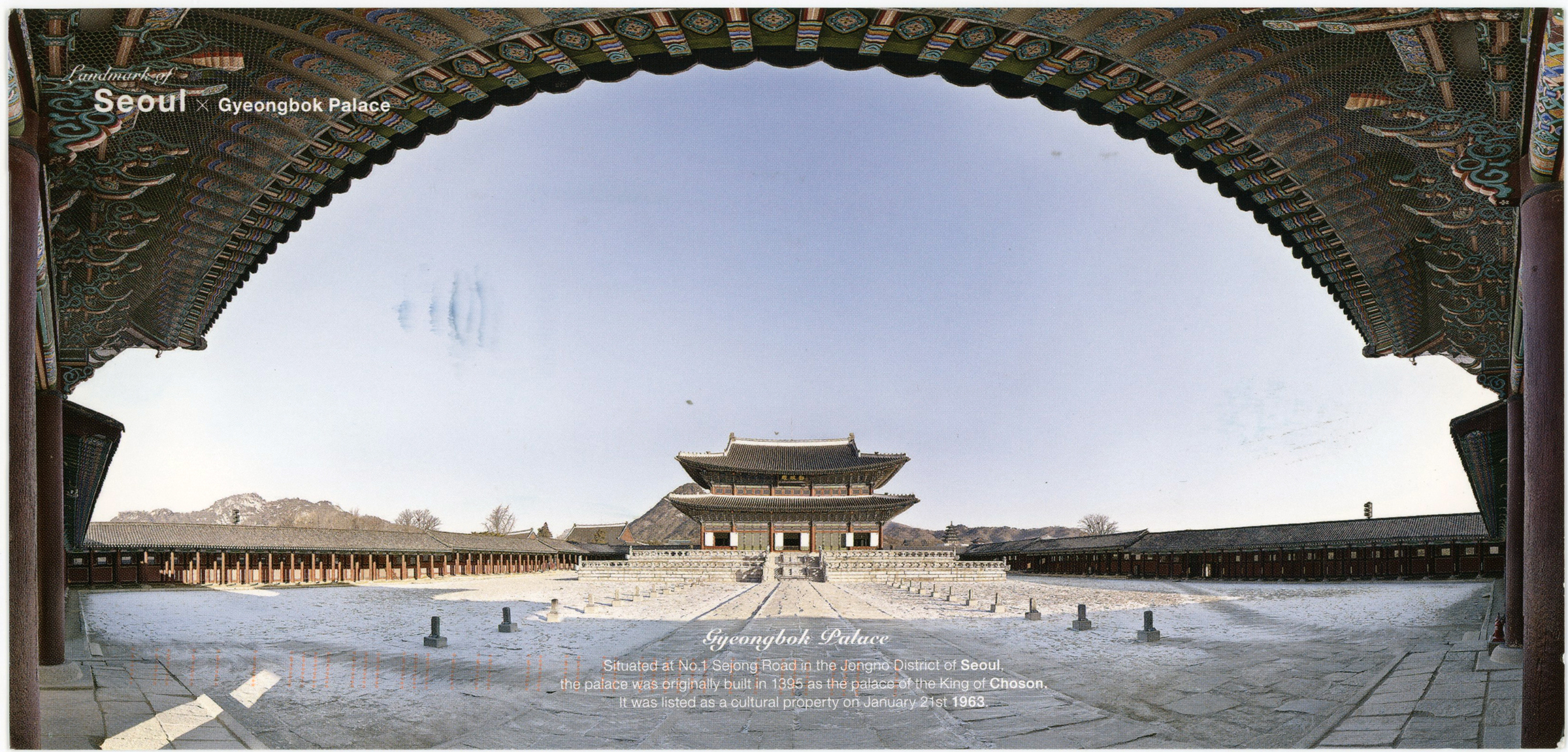
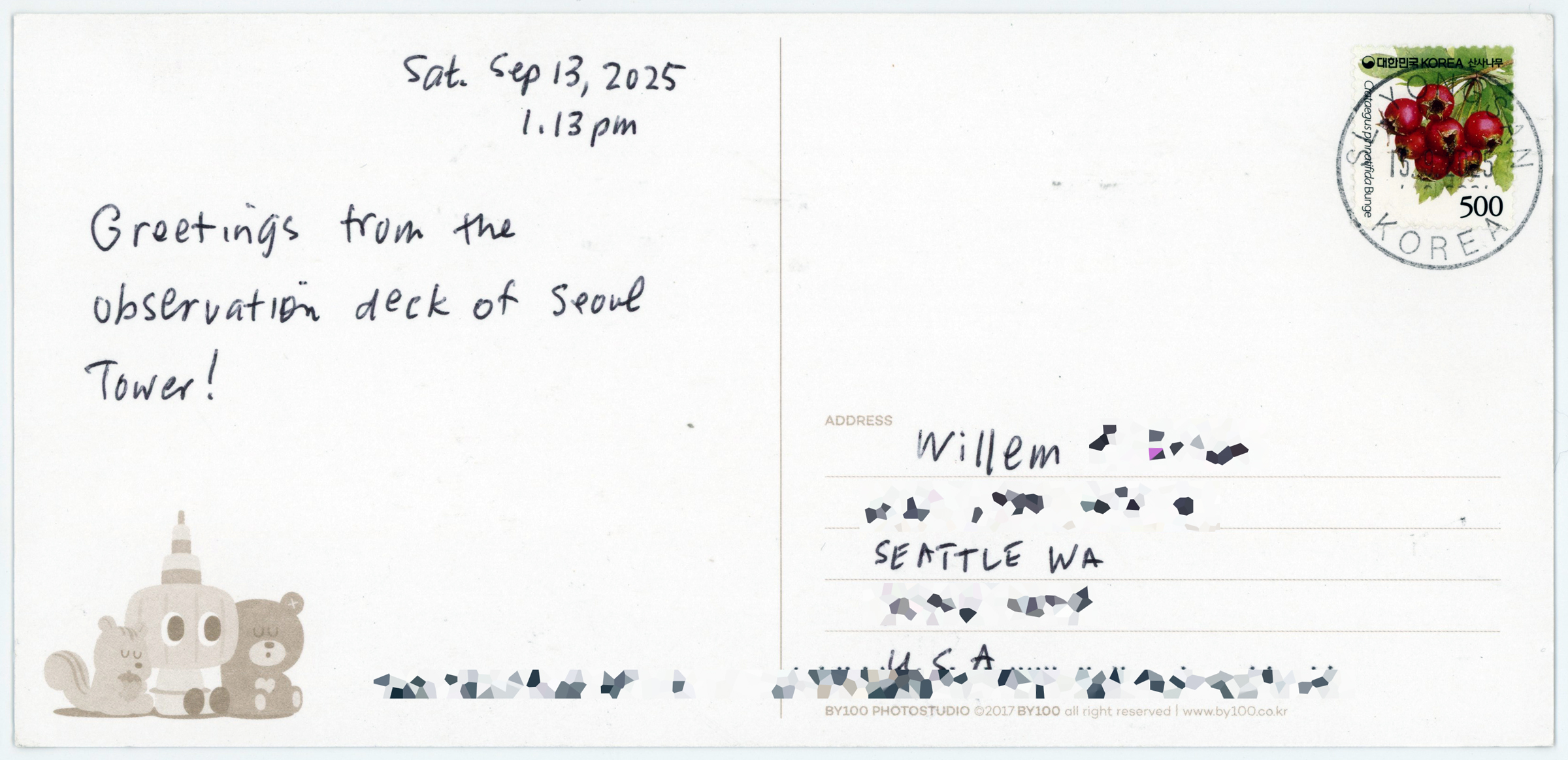
Hey! The postcard I had mailed to Seattle from the top of Seoul tower made it into my mailbox.
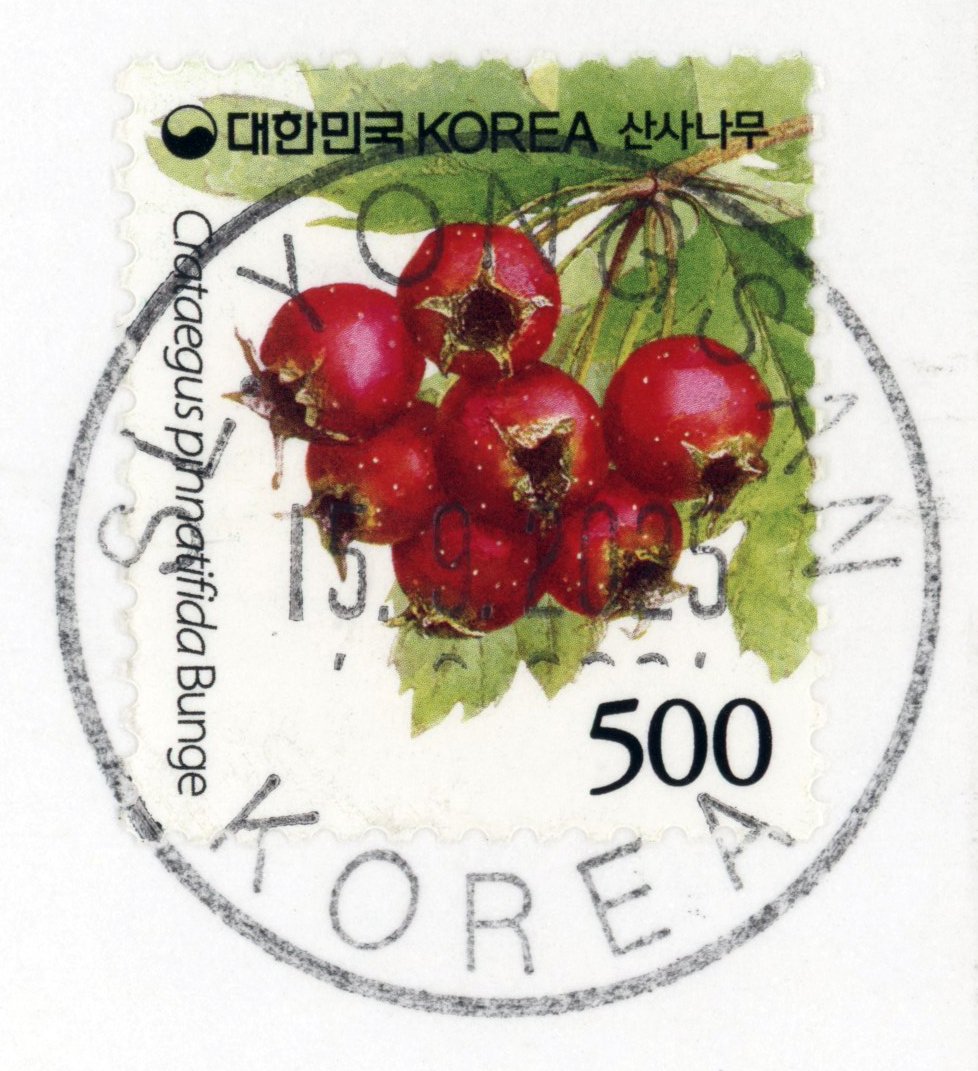
Gyeongbok Palace Situated at No. 1 Sejong Road in the Jongno District of Seoul, the palace was originally built in 1395 as the palace of the King of Choson. It was listed as a cultural property on Jan. 1, 1963.Mailed on Sat. Sept. 13, and processed on Mon. Sep. 15 at Seoul Yongsan Post Office, a stone’s throw from Seoul Tower.2021 Republic of Korea Definitives Issued Dec. 17, 2021 Perf. 13½ |Design: Ryu Ji-Hyeong |Engraving: Korea Minting and Security Printing Corporation |Litho. |No watermark #3555 500₩ Multicolored |Fruit cluster of bunge (Crataegus pinnatifida) This tree is also called Chinese hawthorn and is known for its bright red fruit that is used in traditional East Asian medicine and foods (like candies and teas). 500₩ = US$ 0.36 [Source: stampworld.com]
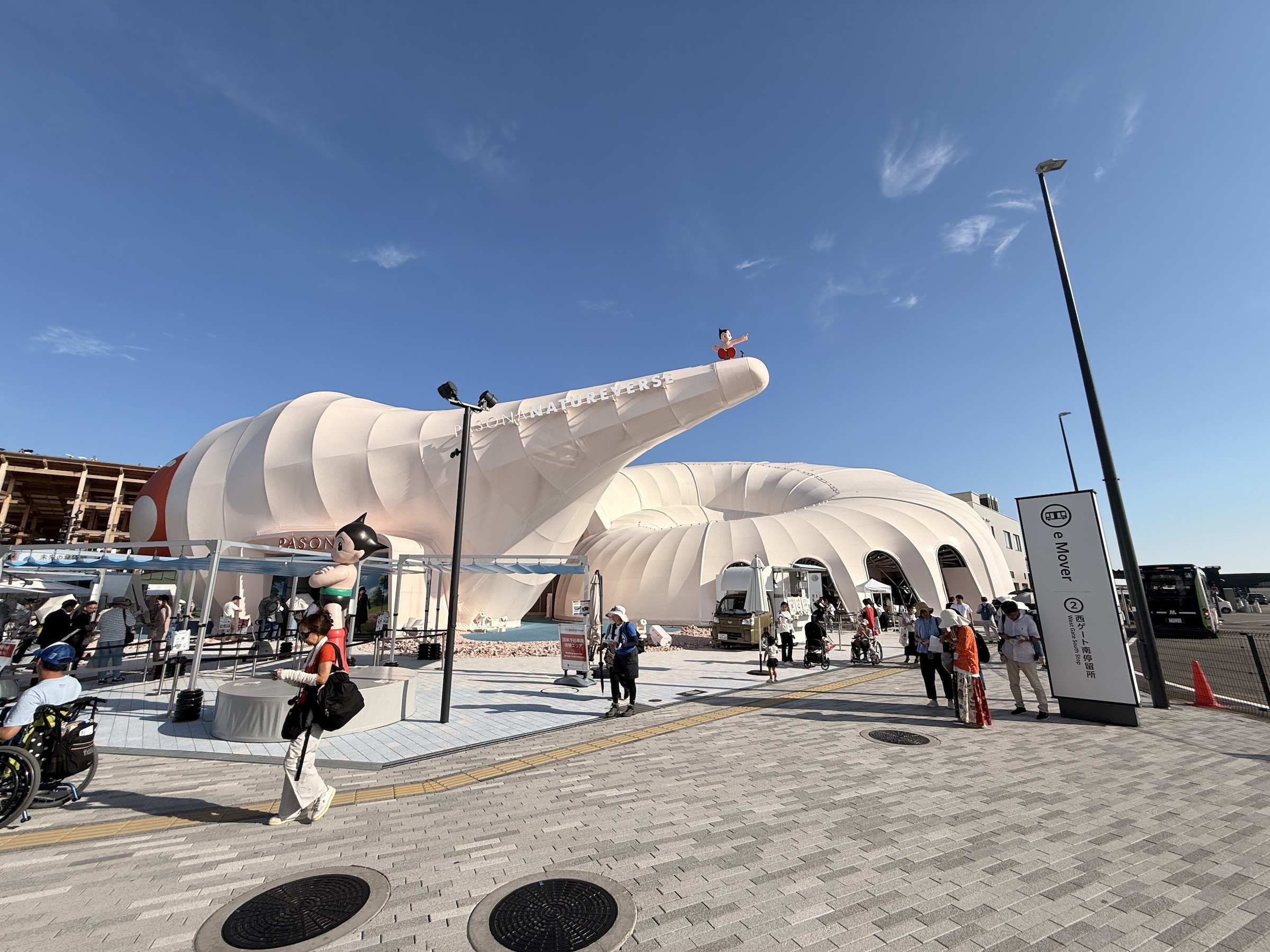
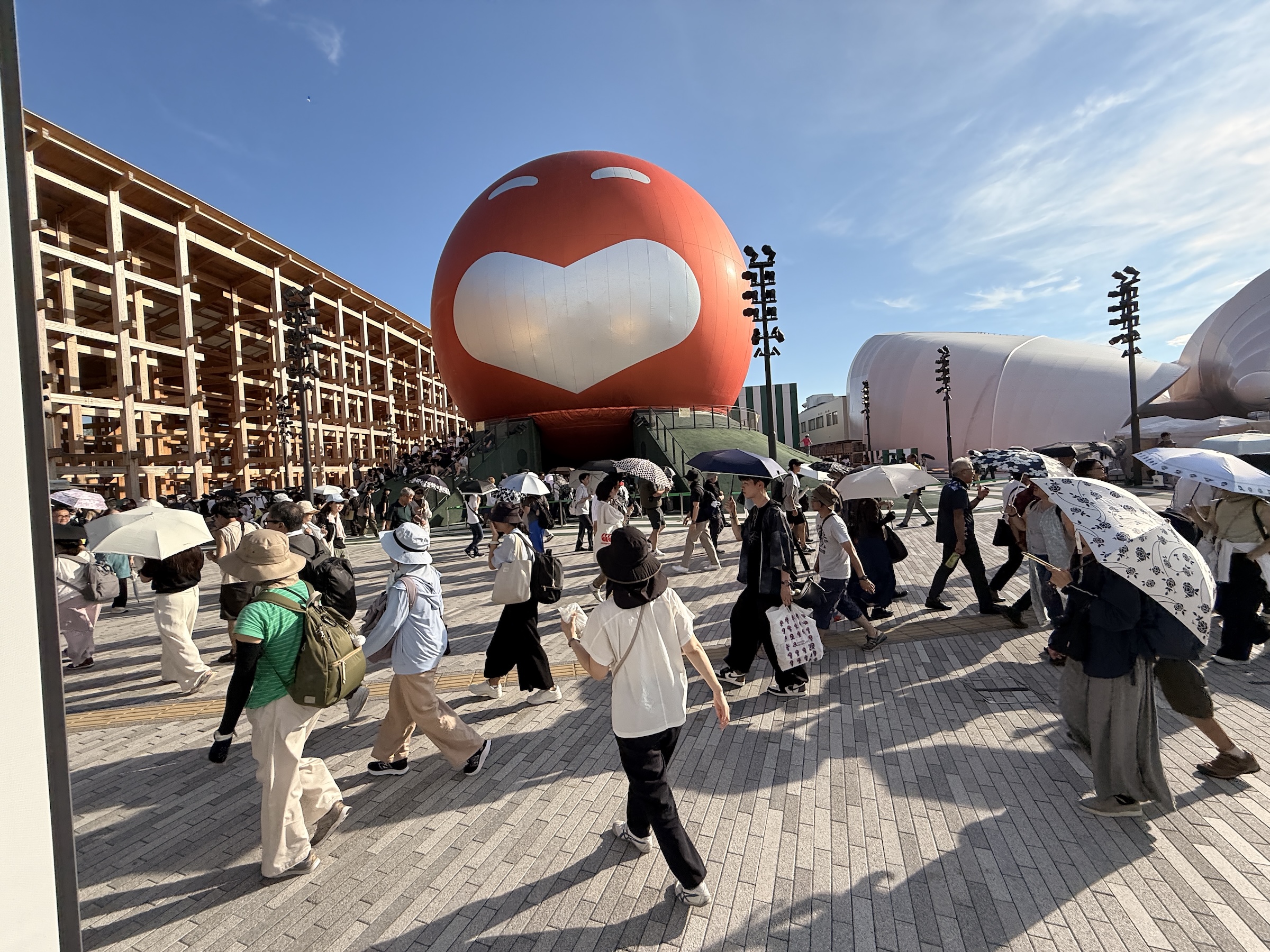
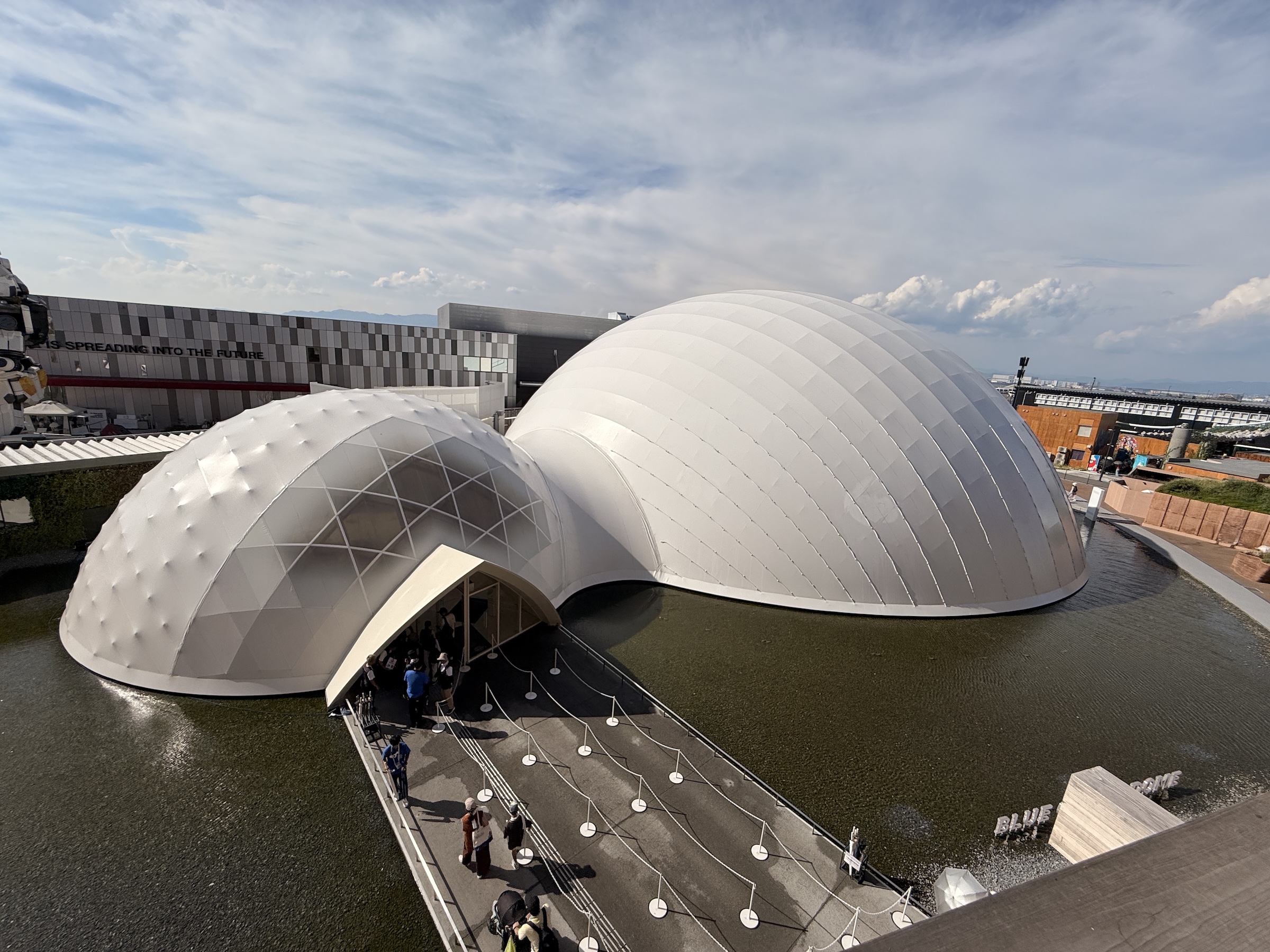
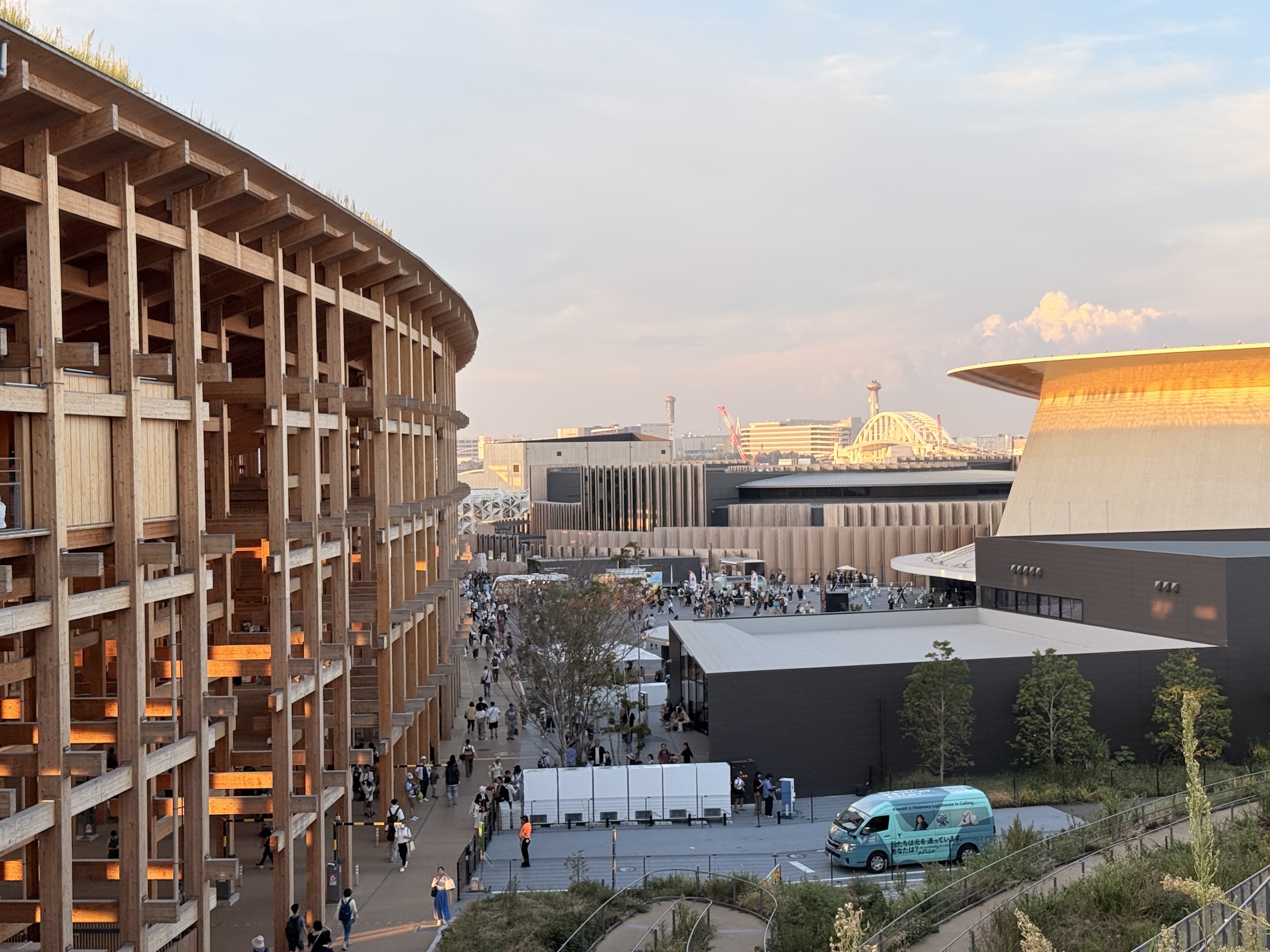
I walked over to the West Gate today (both days I had entered at the East Gate), where I found Astro Boy.
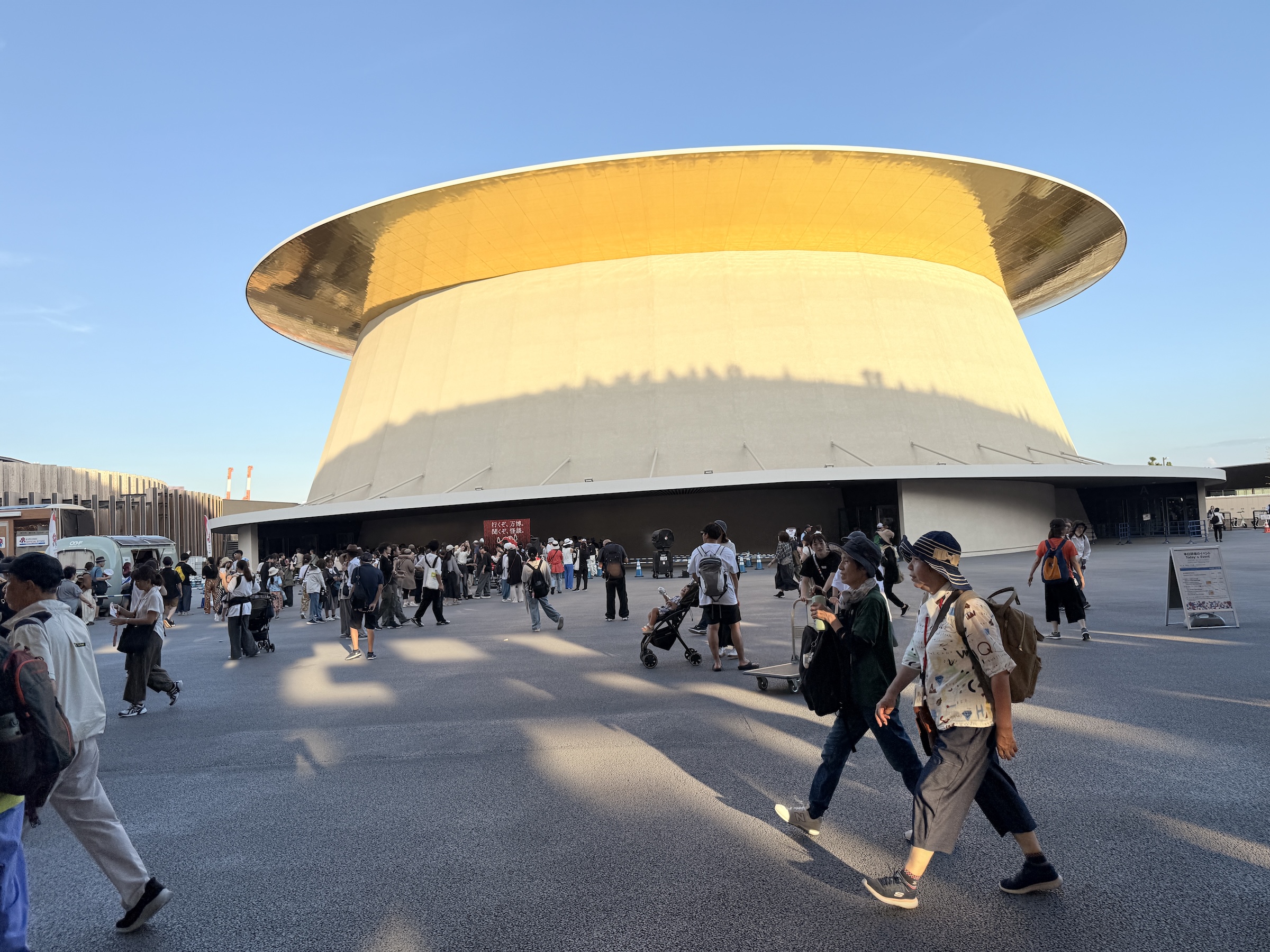
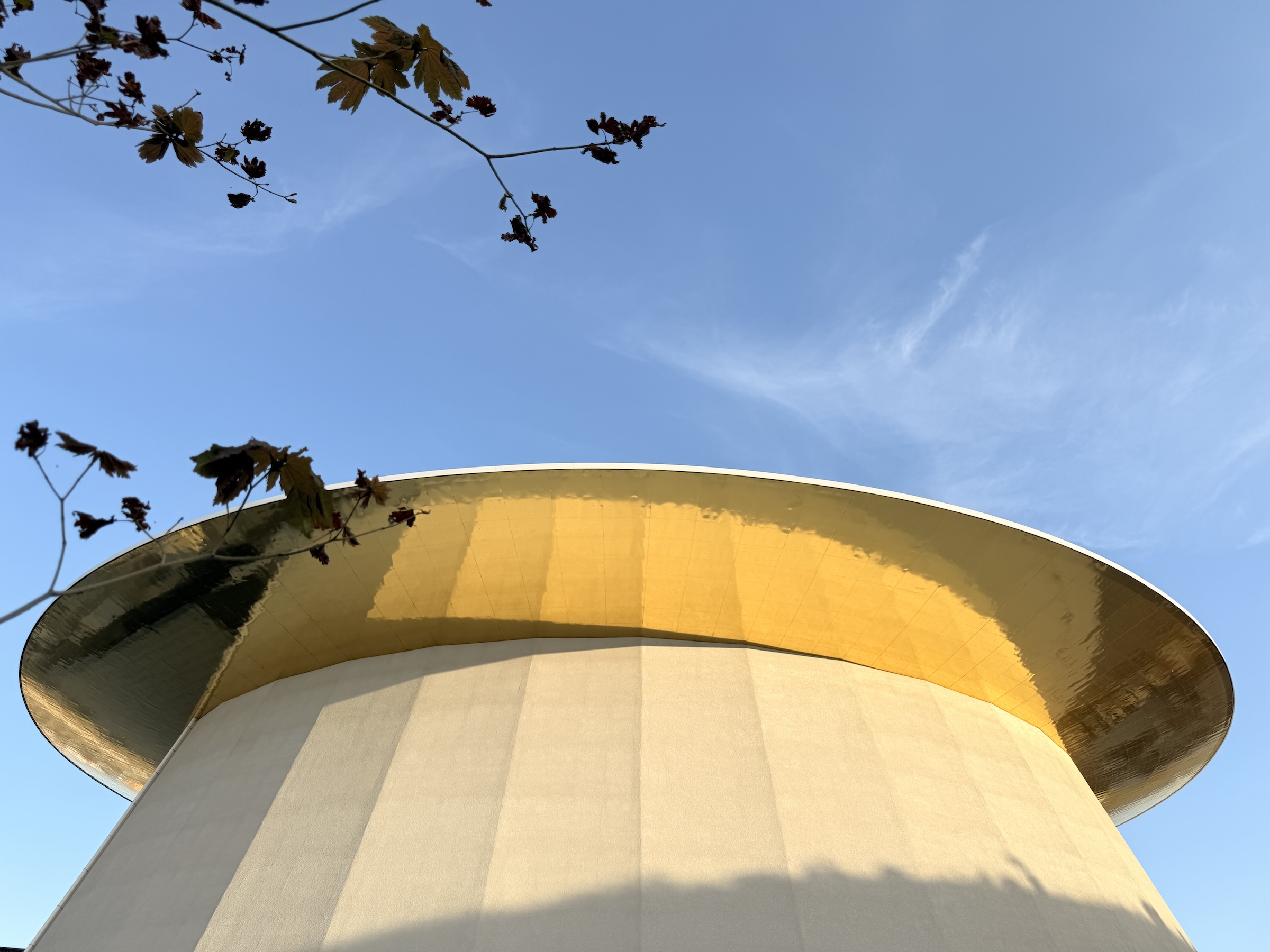
I also tracked down the Japan Pavilion with its beautiful ‘golden hat’ design. The Golden Surface of the Japan Pavilion was created by the designers Nikken Sekkei. They used an iridescent color shining technology— a technique that involves engraving microgrooves onto the surface, which interact with light to produce a dynamic, multi-colored sheen that changes with the viewing angle.
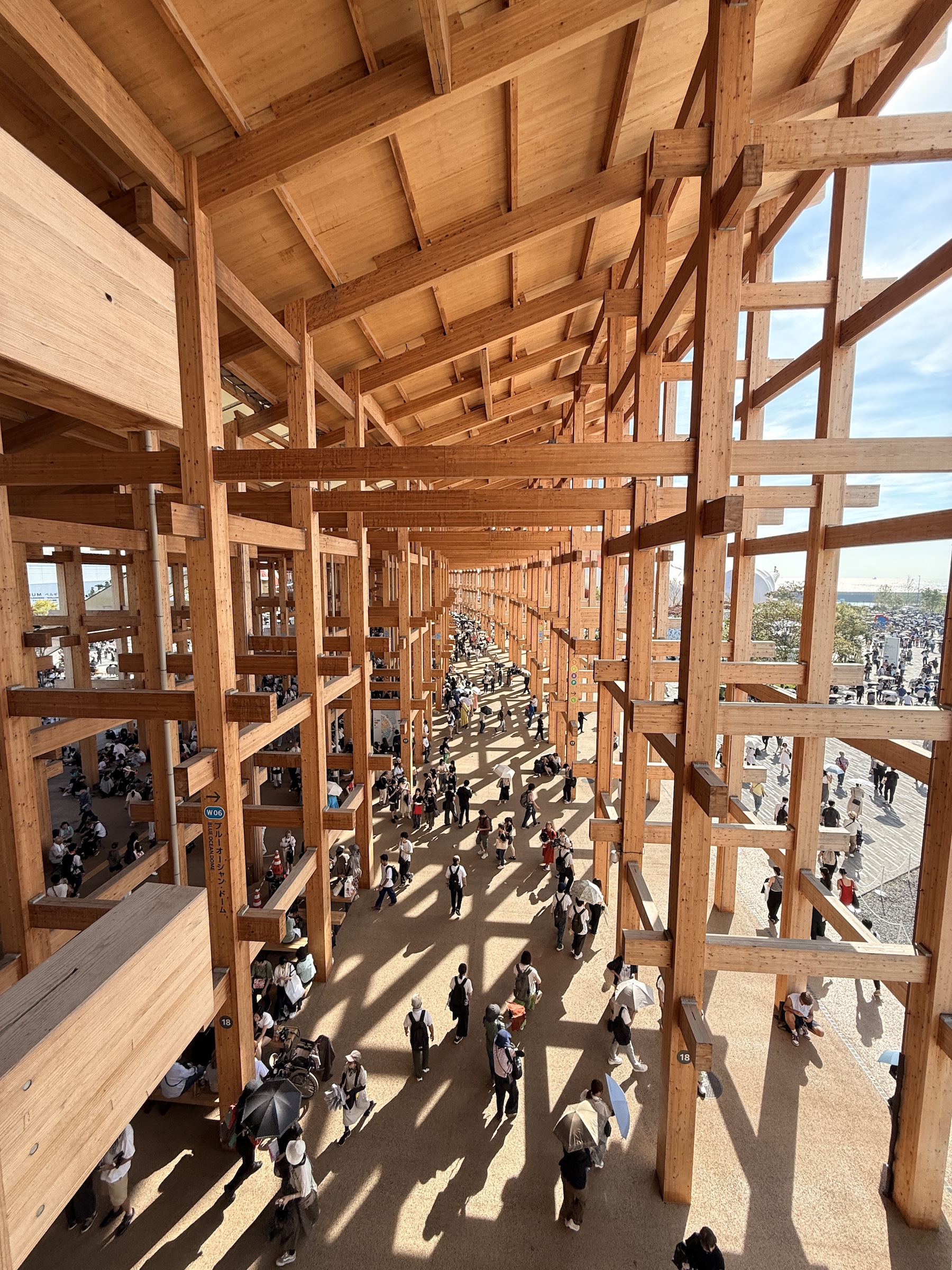
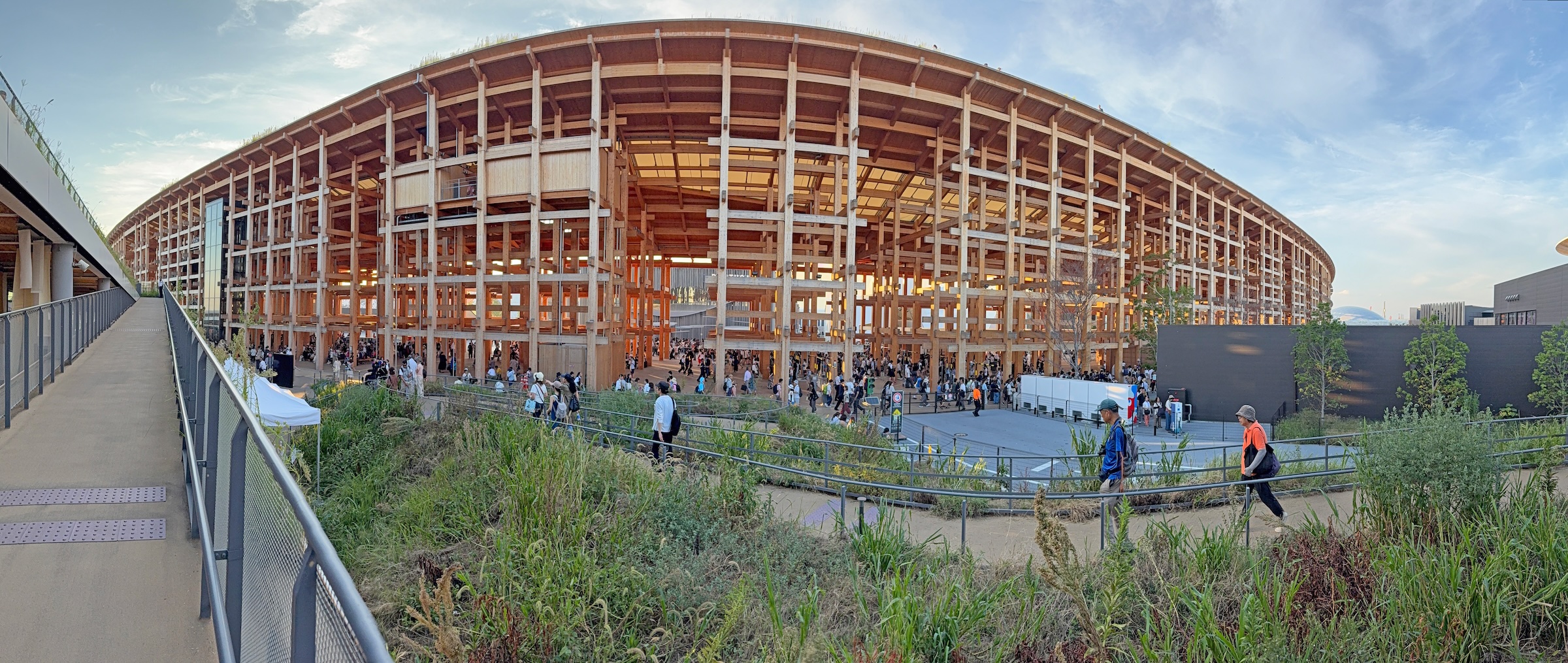
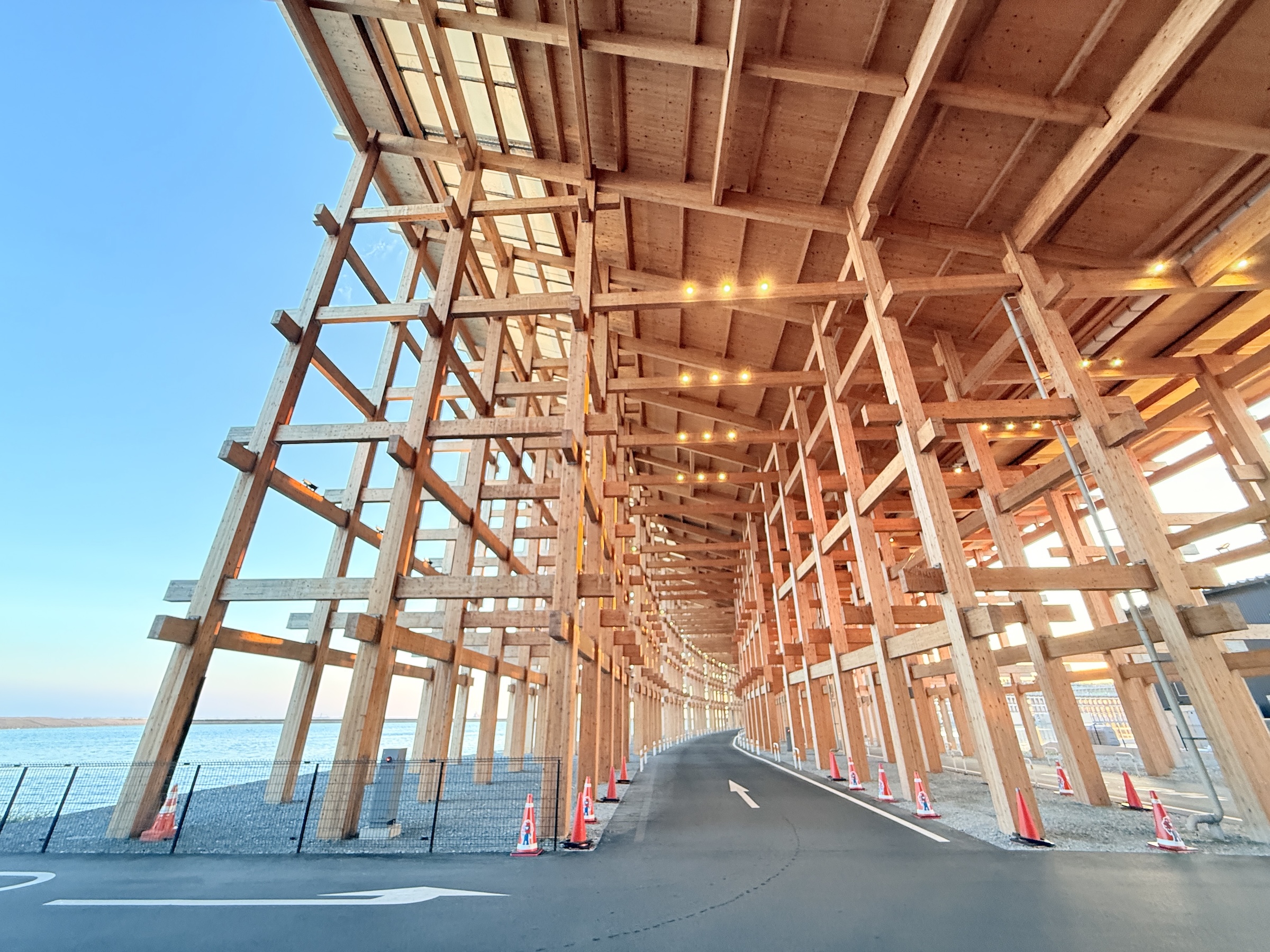
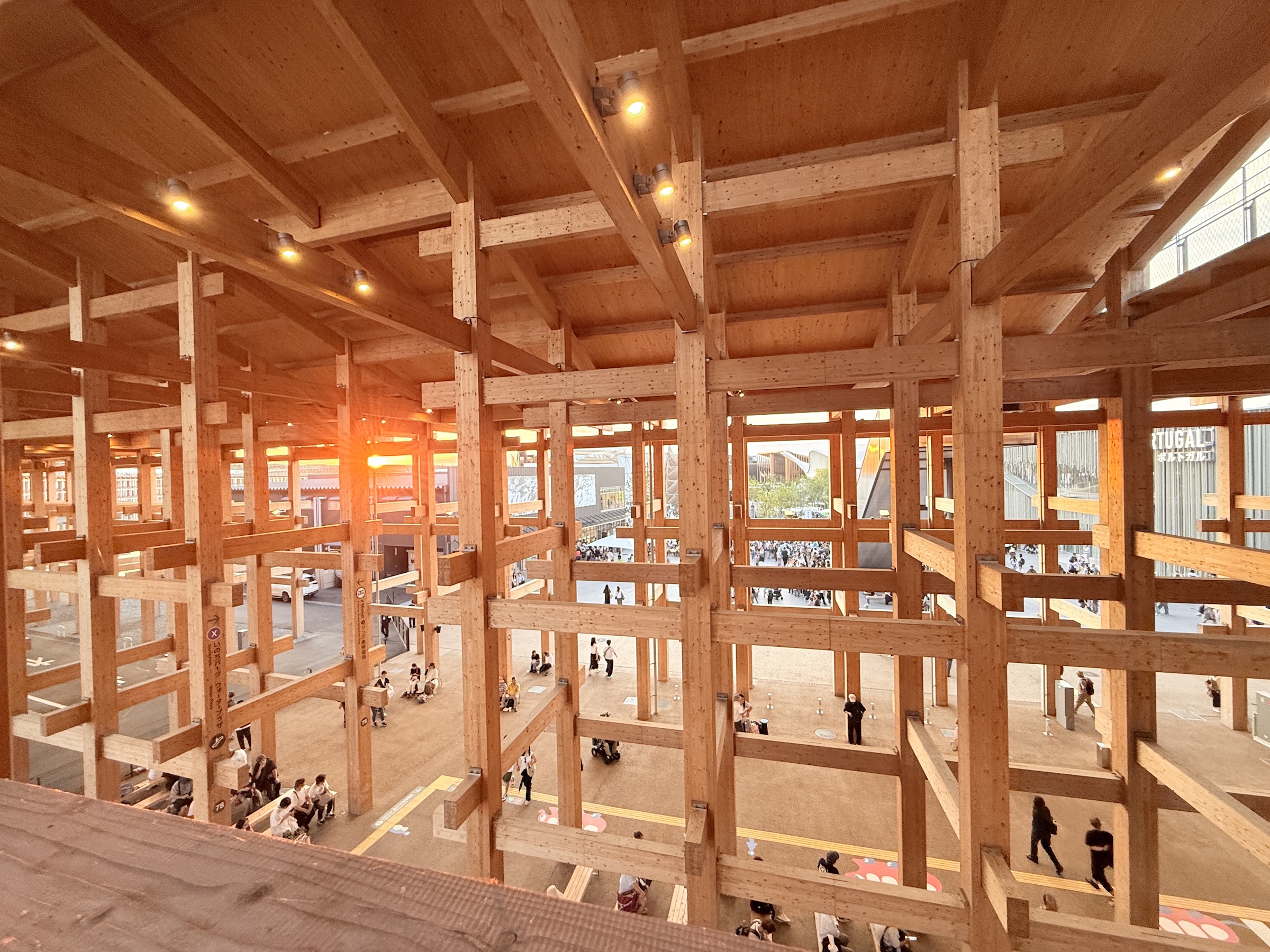
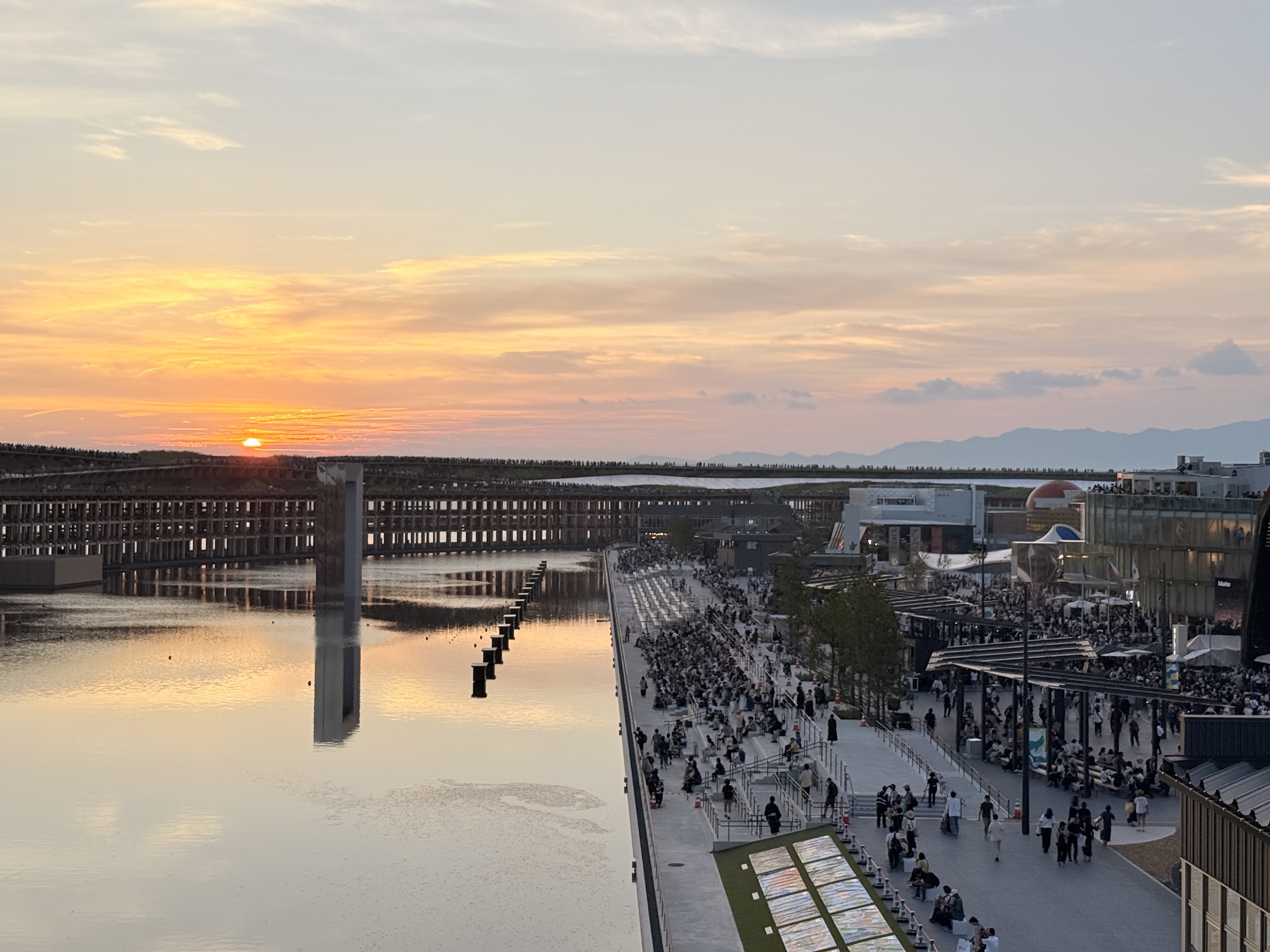
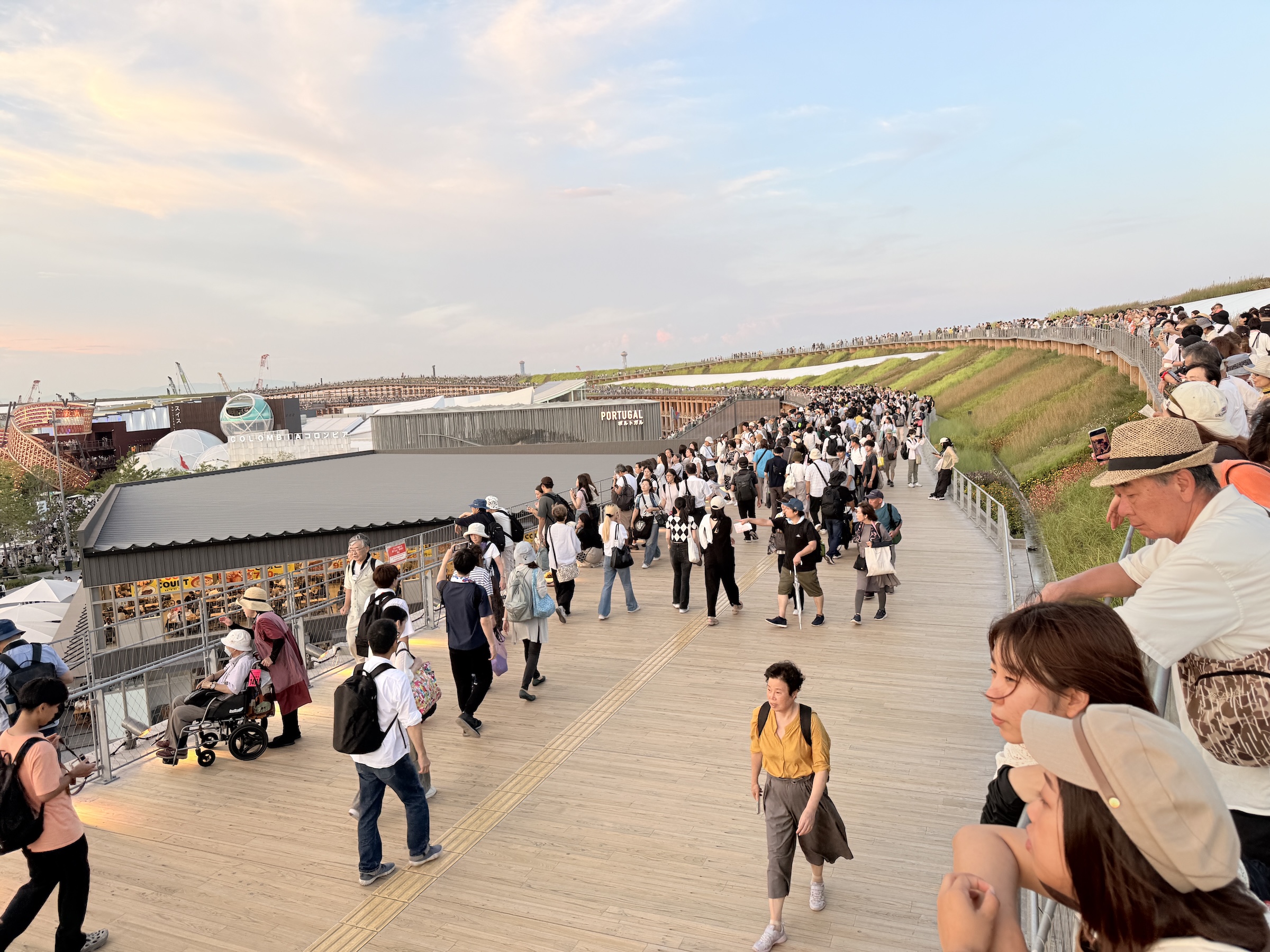
As the sun was setting, everyone went up to the Grand Ring, to watch the daylight end.
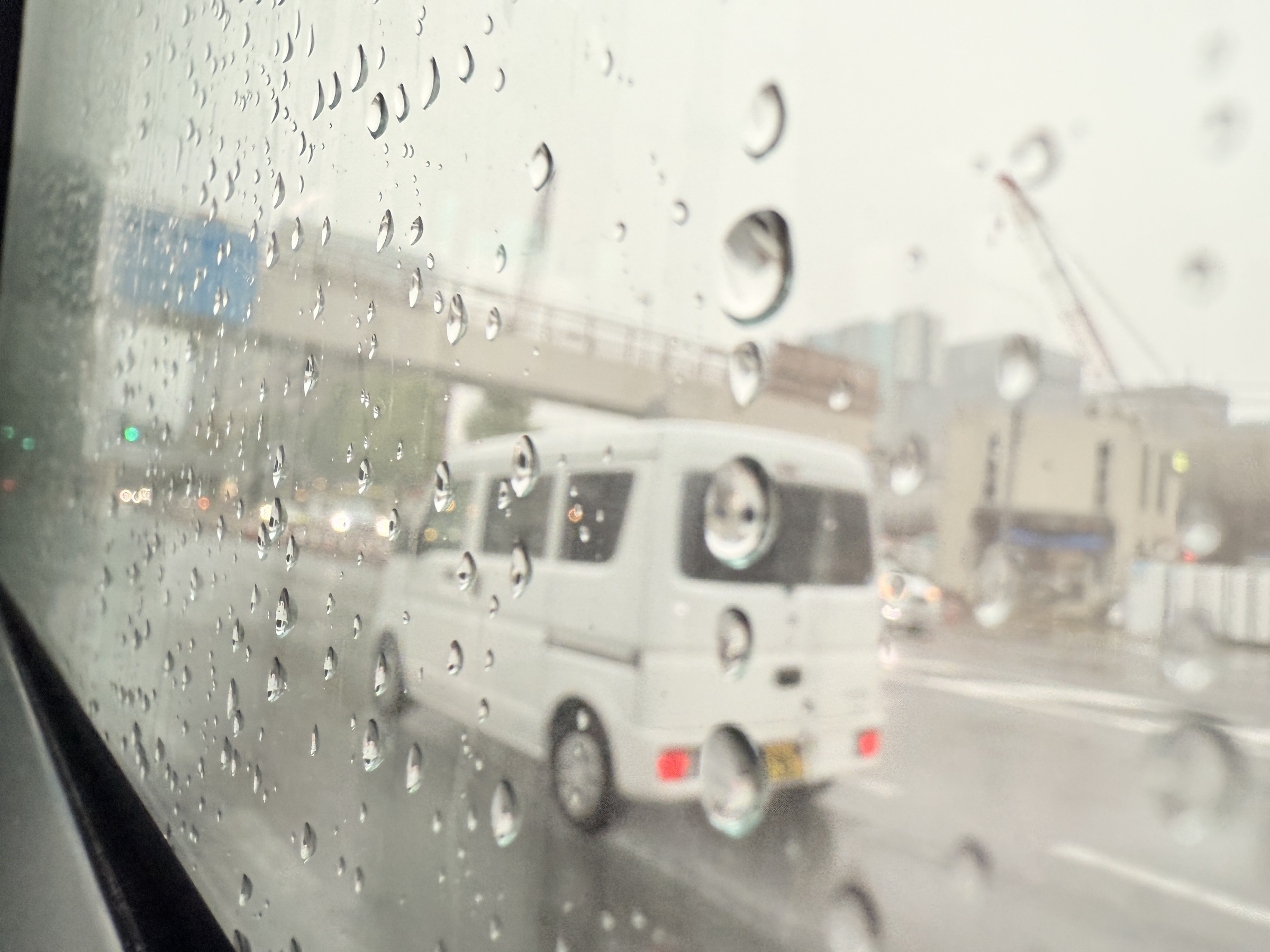
The rain was relentless on Friday here in Tokyo.
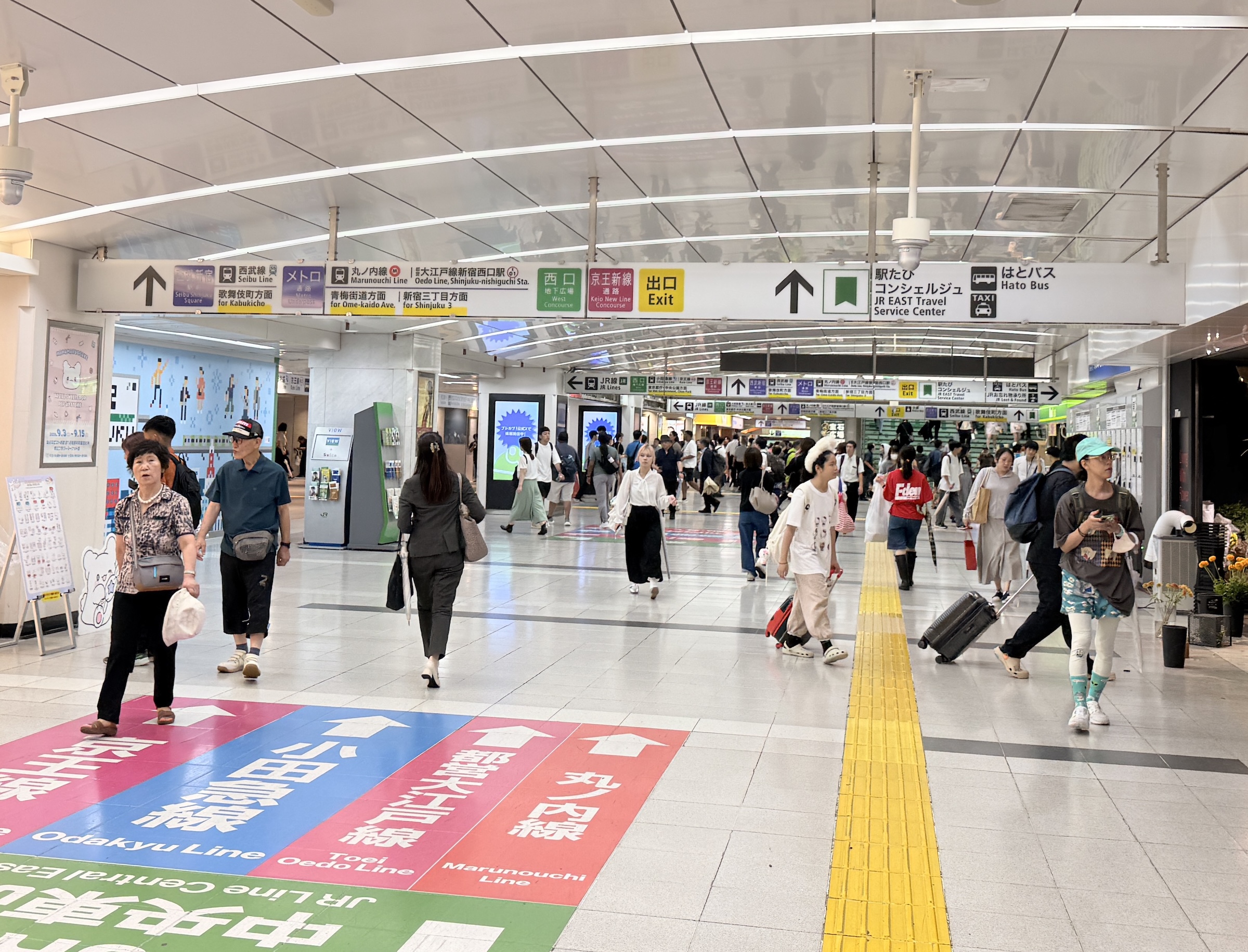
I ran out to Shinjuku train station in the morning and got lost inside the enormous station— before getting soaked in the torrential rain outside of it. 😱
Come early evening the rain was over, though, and I went back to see if I could navigate the station better, and to take a few photos.
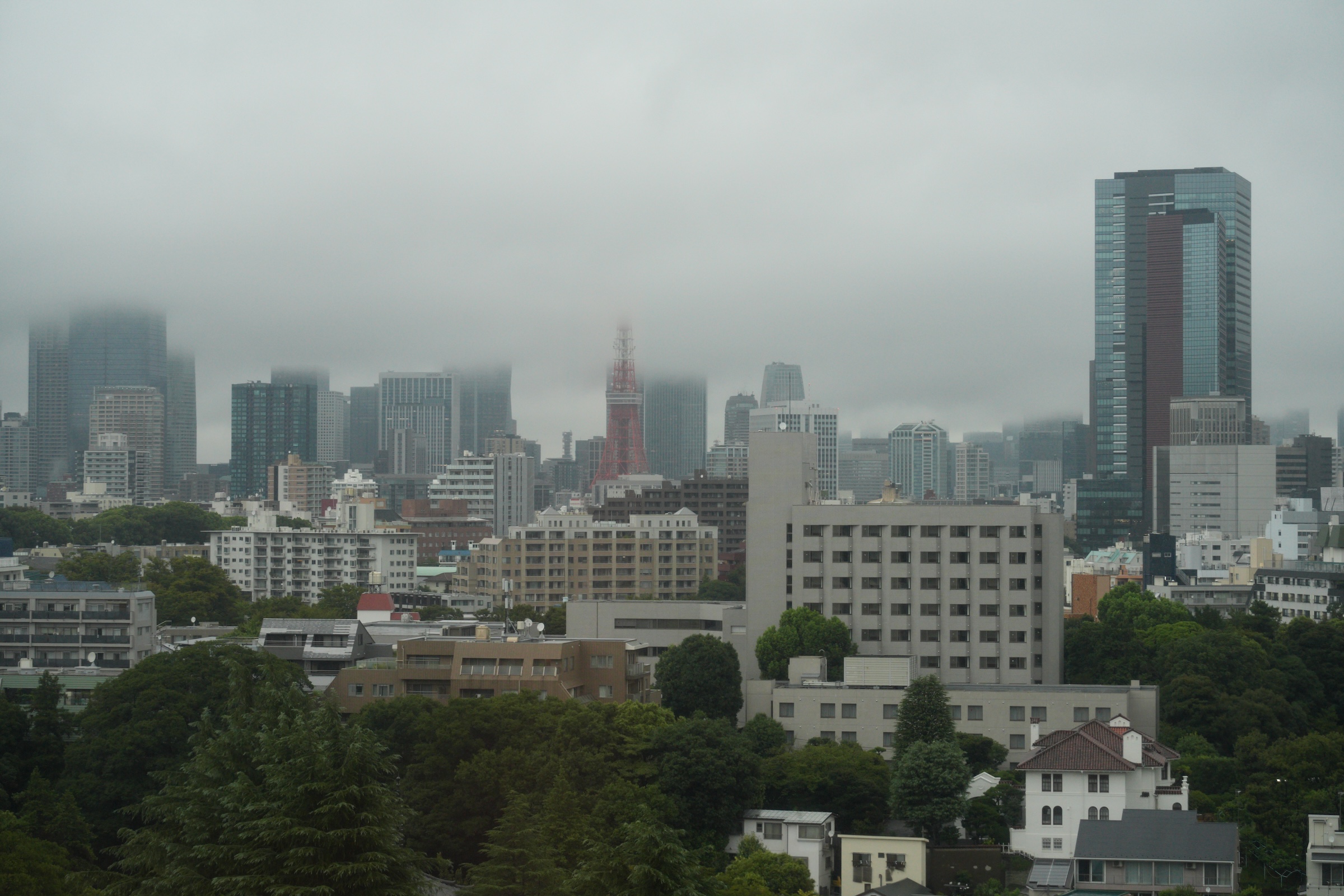
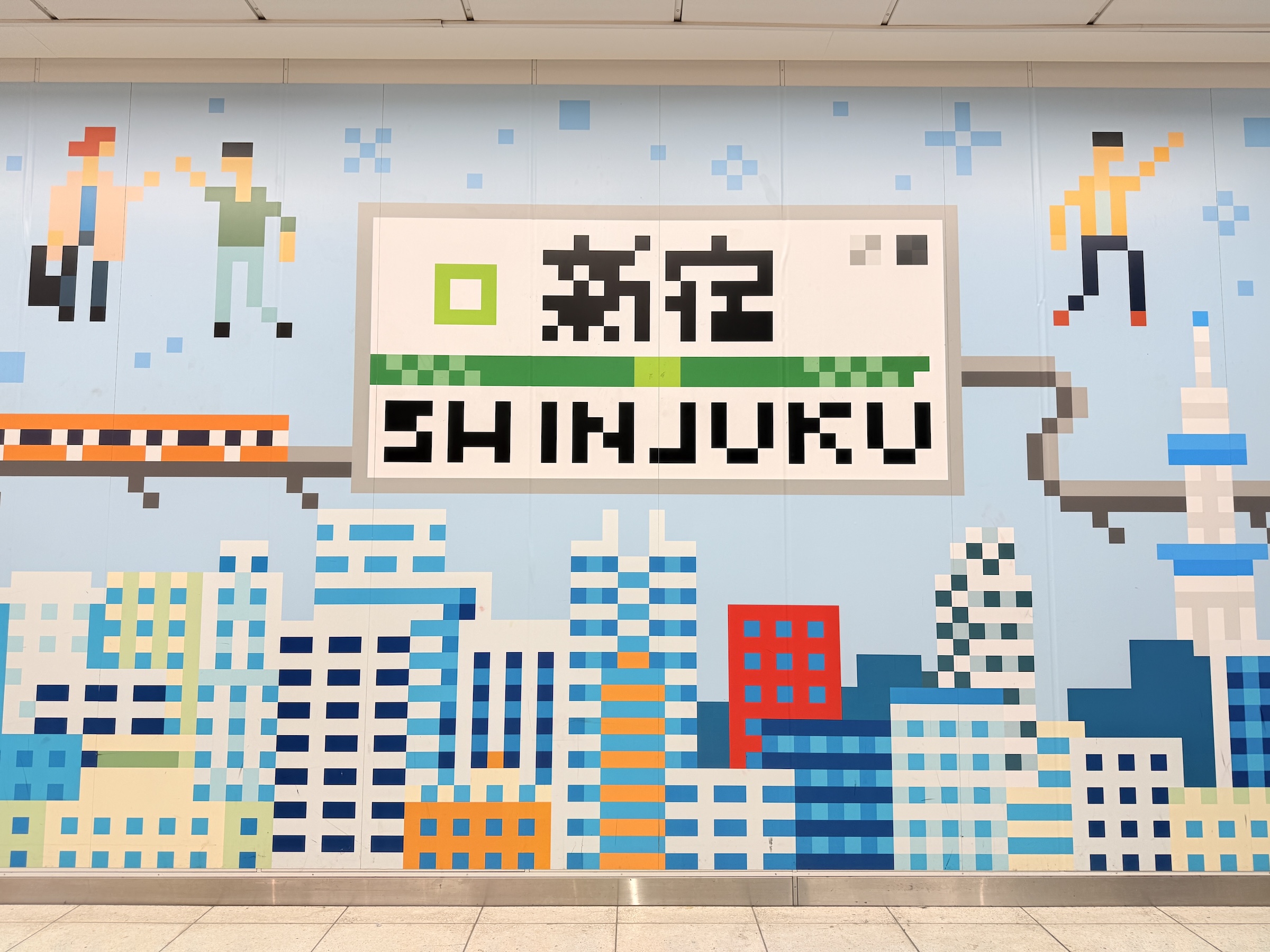
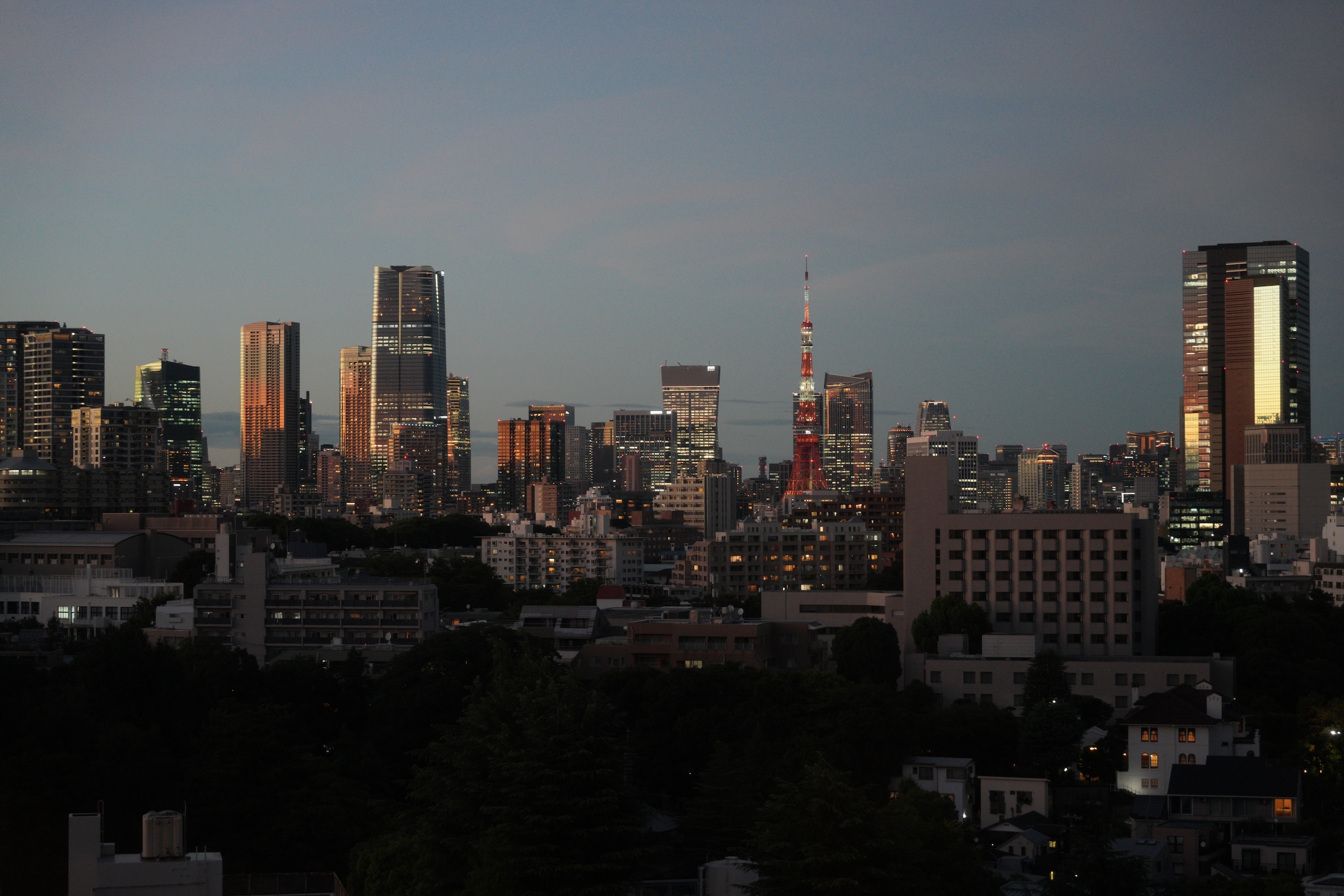
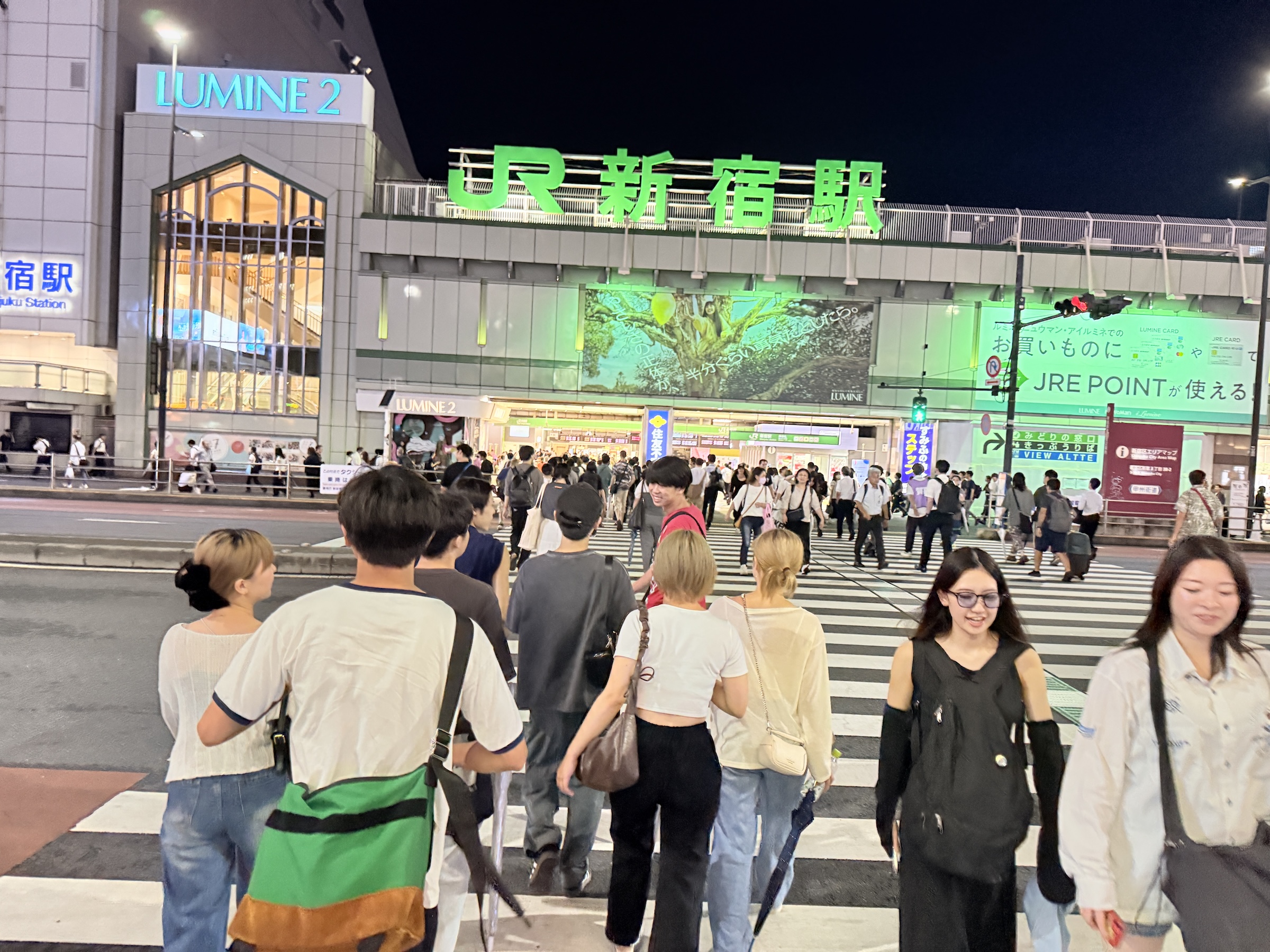
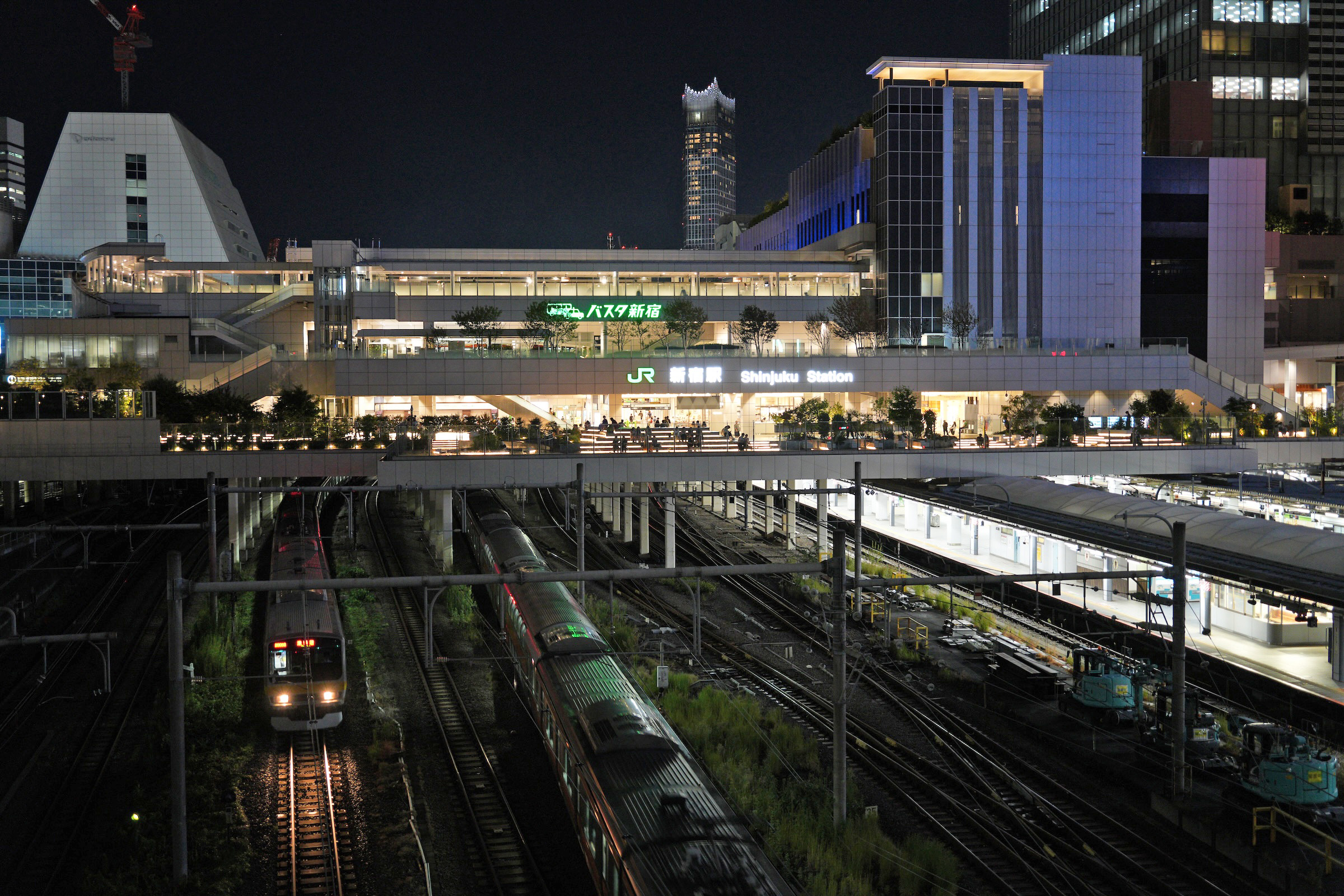
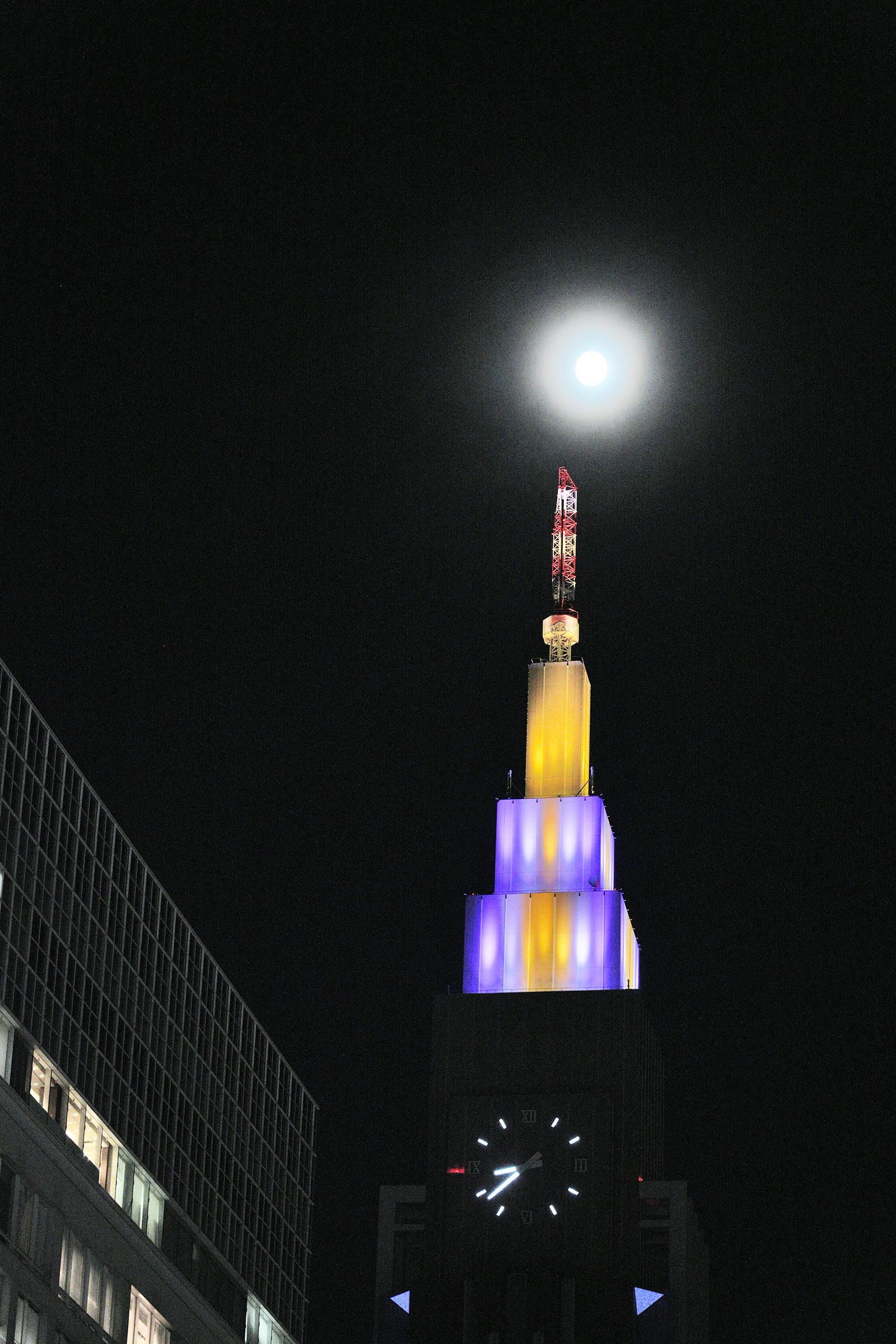
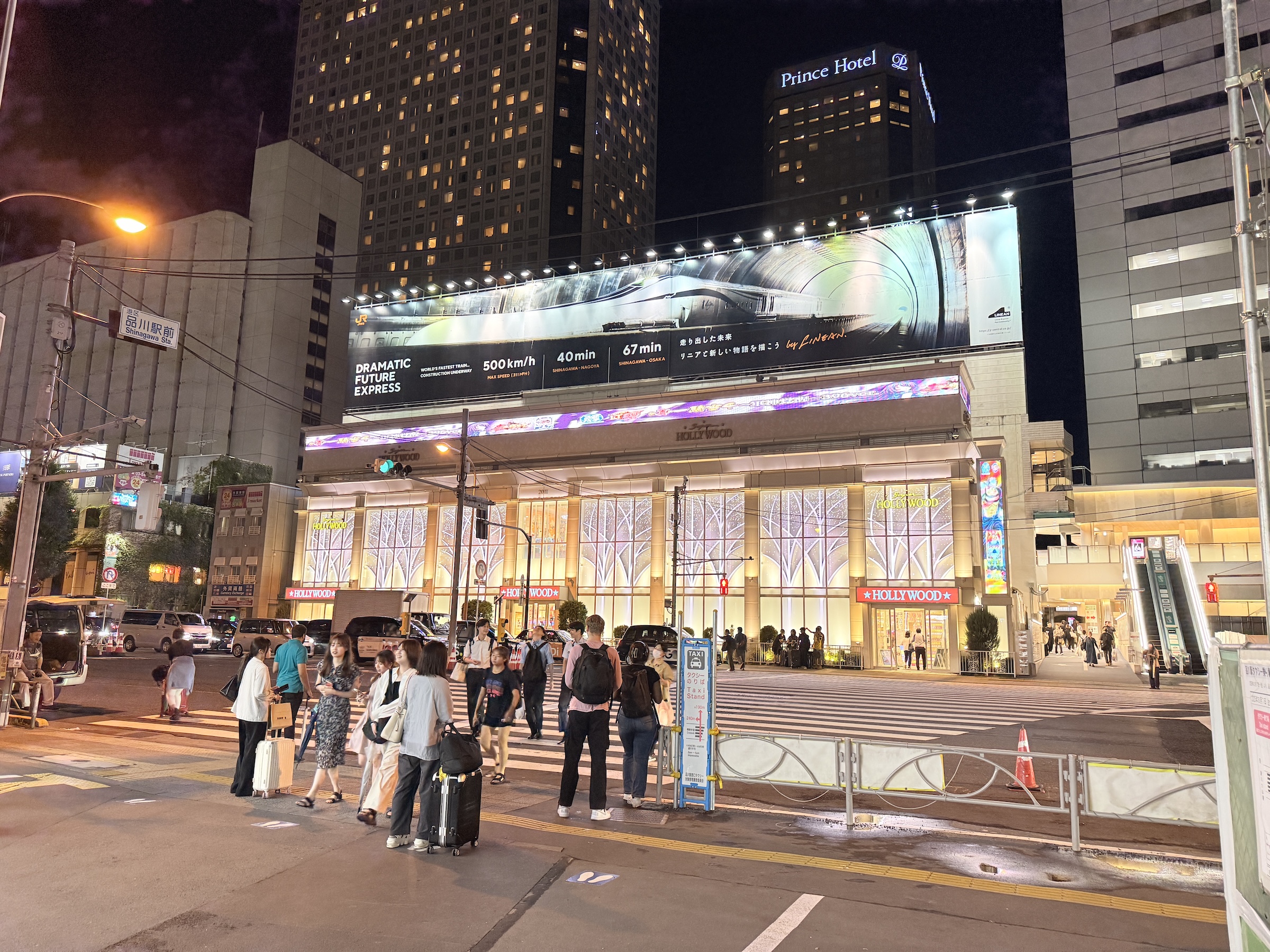
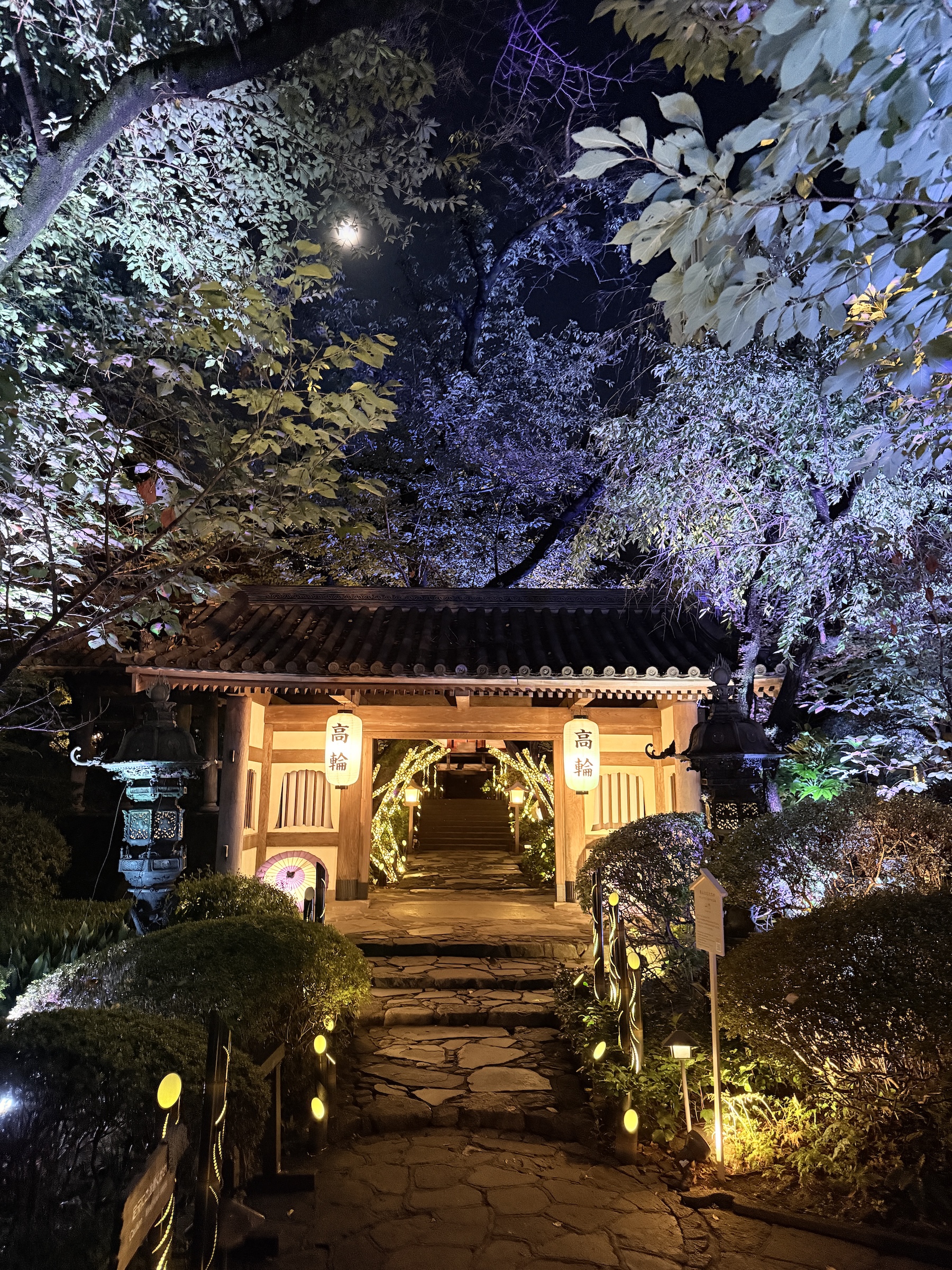
The view outside my hotel room in the morning. The top of Tokyo Tower is hidden in the low clouds.Ooh! .. not looking good out here on the ground, I am thinking. It is mid-morning and I am on the way to Shinagawa station on the hotel’s shuttle bus.A colorful mural inside Shinjuku station.There is no lack of directions to the myriad train lines and exits in Shinjuku station, but Shinjuku Station has over 200 exits and many platforms of different shapes, spread out over a large area, along with department stores covering nearly all sides. I tried to have Google Maps give me walking directions, and it worked— until it said ‘If there is no GPS signal, navigation may stop working’. Yes. No sh**.A mural inside Shinjuku. Looking for a used car? Use the Car Sensor app. The characters and manga style are from the iconic series City Hunter, which is being used here in a parody/comedic fashion to draw attention.All right! By sunset (6.02 pm) the rain was gone, and now I’m going to run out to Shinjuku one more time.This is the exit I had looked for in vain this morning: the South East Entrance by the Lumine 2 store. I am on my way to Takashimaya Times Square nearby.A street-level view of the pedestrian crossing at the South East Entrance.I walked several hundred yards now, further to the south, where there is an overlook of the railway lines going into the station.The clock tower located near Takashimaya Times Square is on the NTT Docomo Yoyogi Building. It’s just a day or two until September’s full moon.I made it back to Shinagawa Station and now heading back to the hotel. No rain! Check out the sleek billboard above the Hollywood pachinko parlor. It advertises an even sleeker, faster bullet train that is coming— able to fly at 500 km/h (311 mph) on the tracks.The almost-full moon over a gate in the Japanese garden on the hotel grounds.
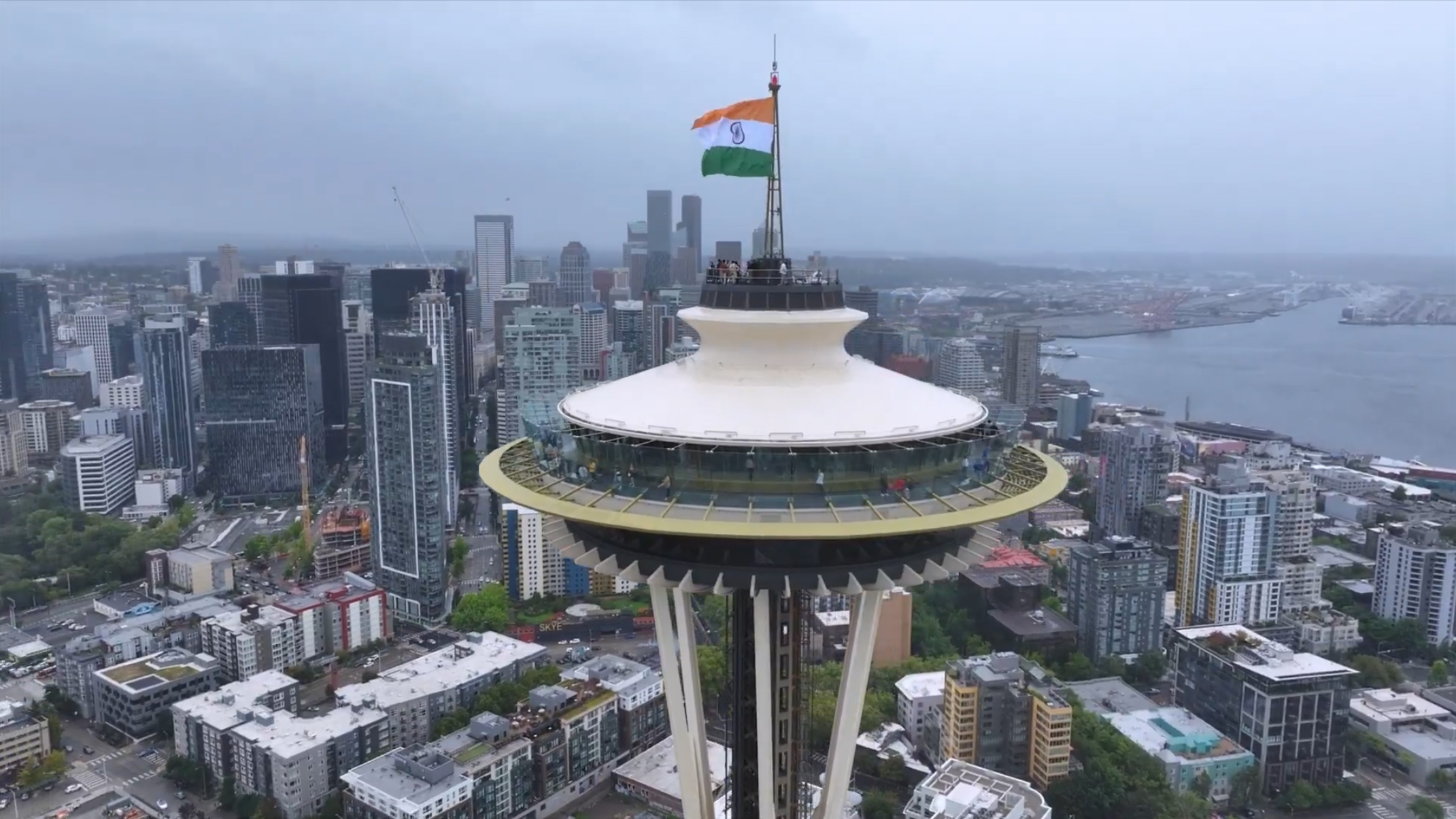
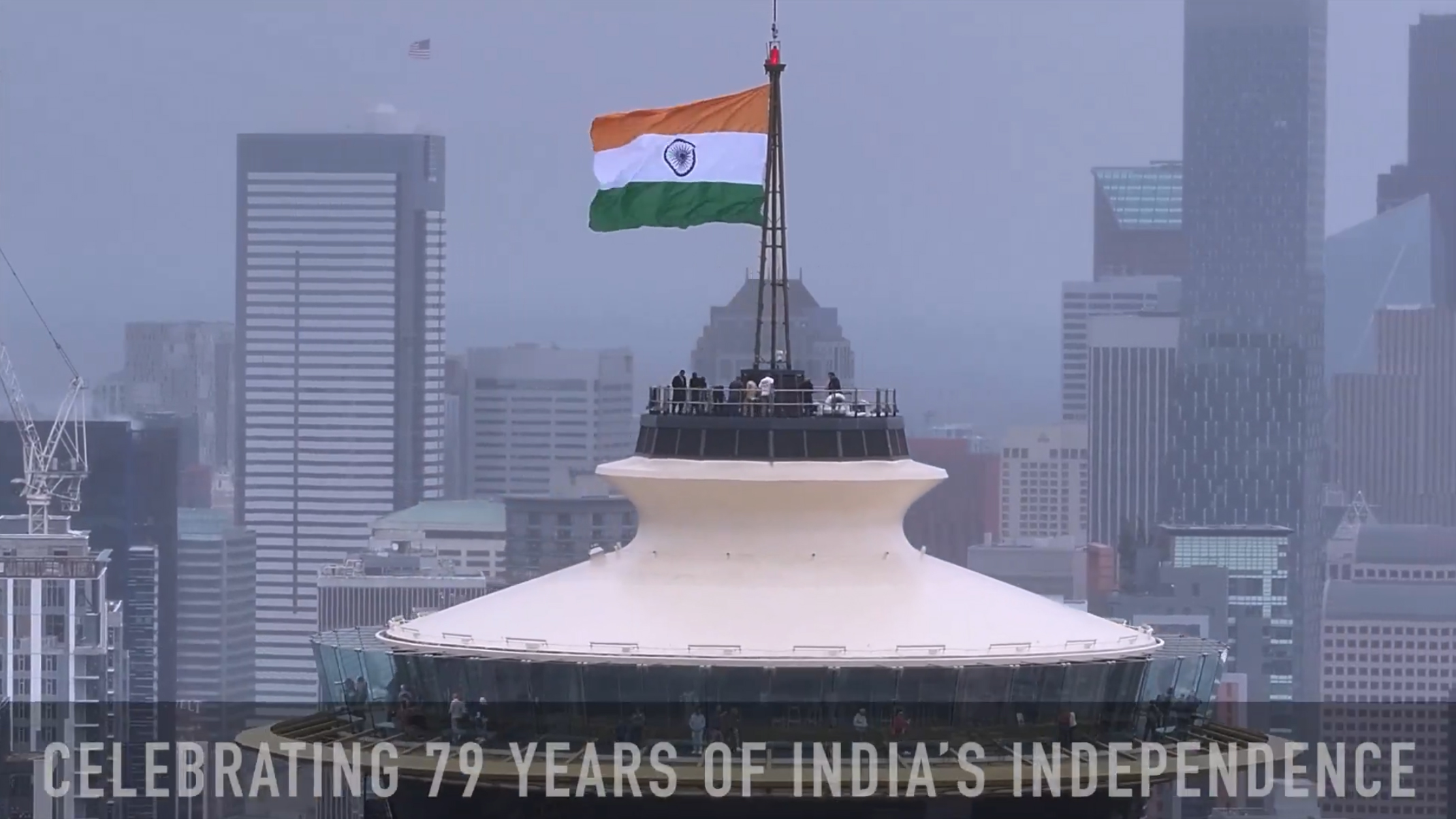
India’s flag was hoisted up on top of the Space Needle for the first time on Friday.
It is a nod to India’s Independence Day, celebrated annually on August 15 as a public holiday.
The day commemorates the nation’s independence from the United Kingdom on August 15, 1947.
Approximately 83,000 King County residents were born in India, constituting 14% of the foreign-born population. China closely follows at approximately 80,000 residents, and the list continues with Vietnam securing the fourth position, the Philippines at fifth, South Korea at sixth, and Taiwan ranking ninth. [Northwest Asian Weekly, Dec. 11, 2023][Stills from a video posted @IndiainSeattle on X]
The Alaska Purchase was the purchase of Alaska from the Russian Empire by the United States for a sum of $7.2 million in 1867.
The purchase of Alaska marked the end of Russian efforts to expand trade and settlements to the Pacific coast of North America, and became an important step in the United States’ rise as a great power in the Asia-Pacific region. -Office of the Historian (.gov) and Wikipedia
Happy Friday. It is wet here in Seattle with drizzly rain that started last night and continued on and off all day.
With Trump and Putin’s meeting in Anchorage today, I was reminded that Alaska was bought from the Russian Empire (in 1867).
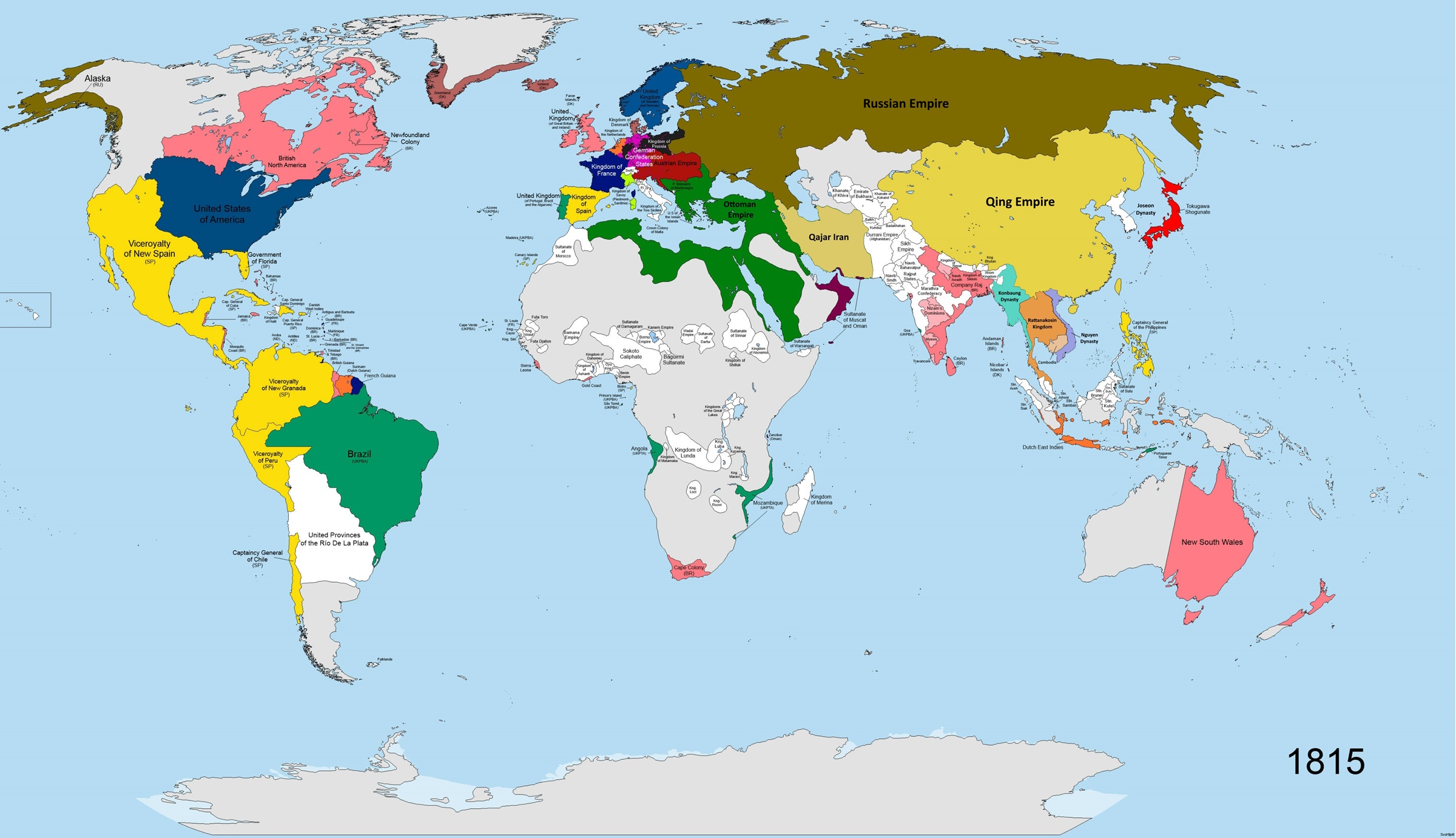
Here is a map from 1815 that showed the empires of the world at that time .. and why it was said ‘the sun never sets on the British Empire’.
Full resolution of this map online at ‘Wikimedia Commons World Map 1815’. The saying “The sun never sets on the British Empire” refers to the vast geographical reach and global dominance of the British Empire at its peak. It means that at any given moment, the sun would be shining on at least one part of the British Empire’s territories around the world. This was due to the empire’s extensive colonies and possessions across multiple continents and time zones. – Google AI Overview
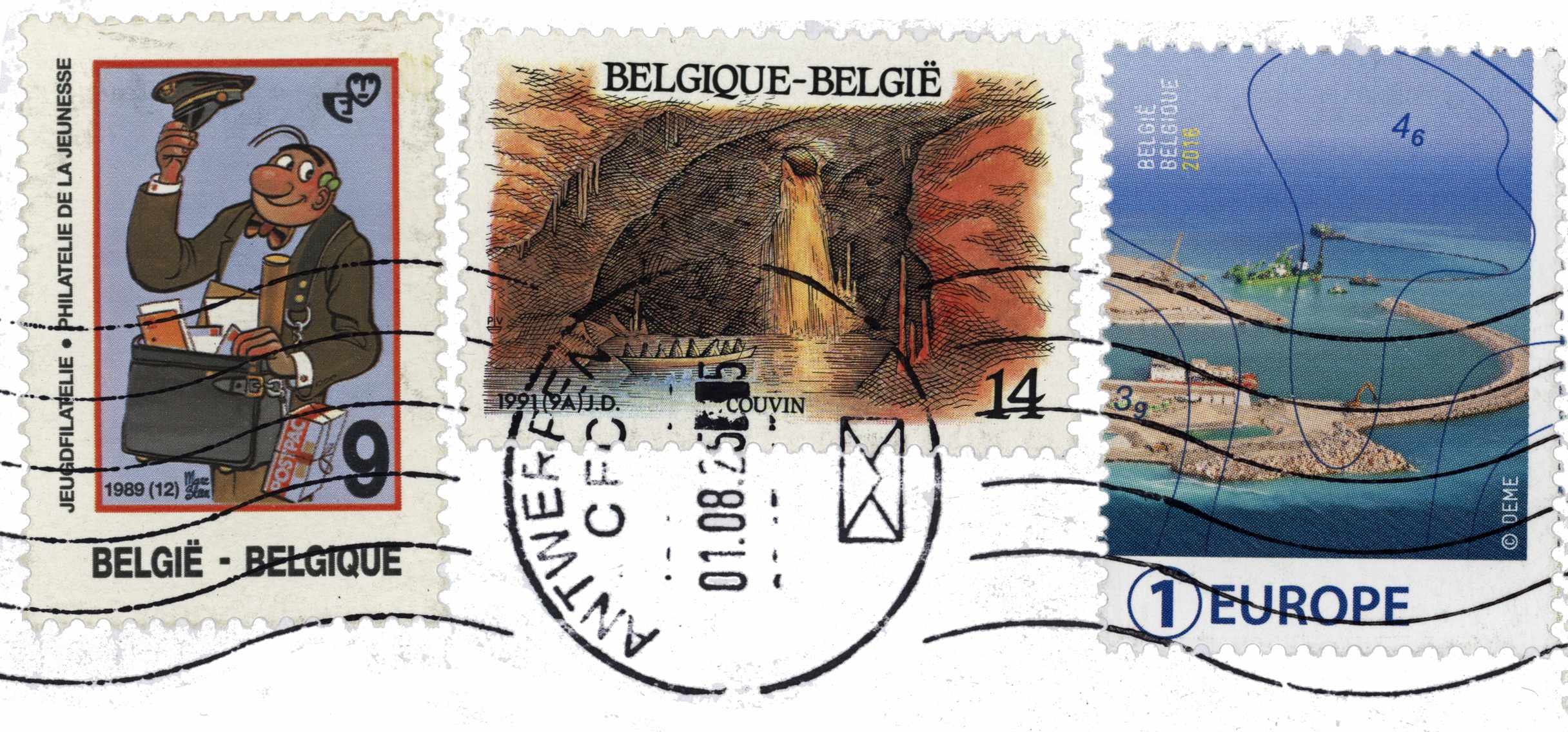
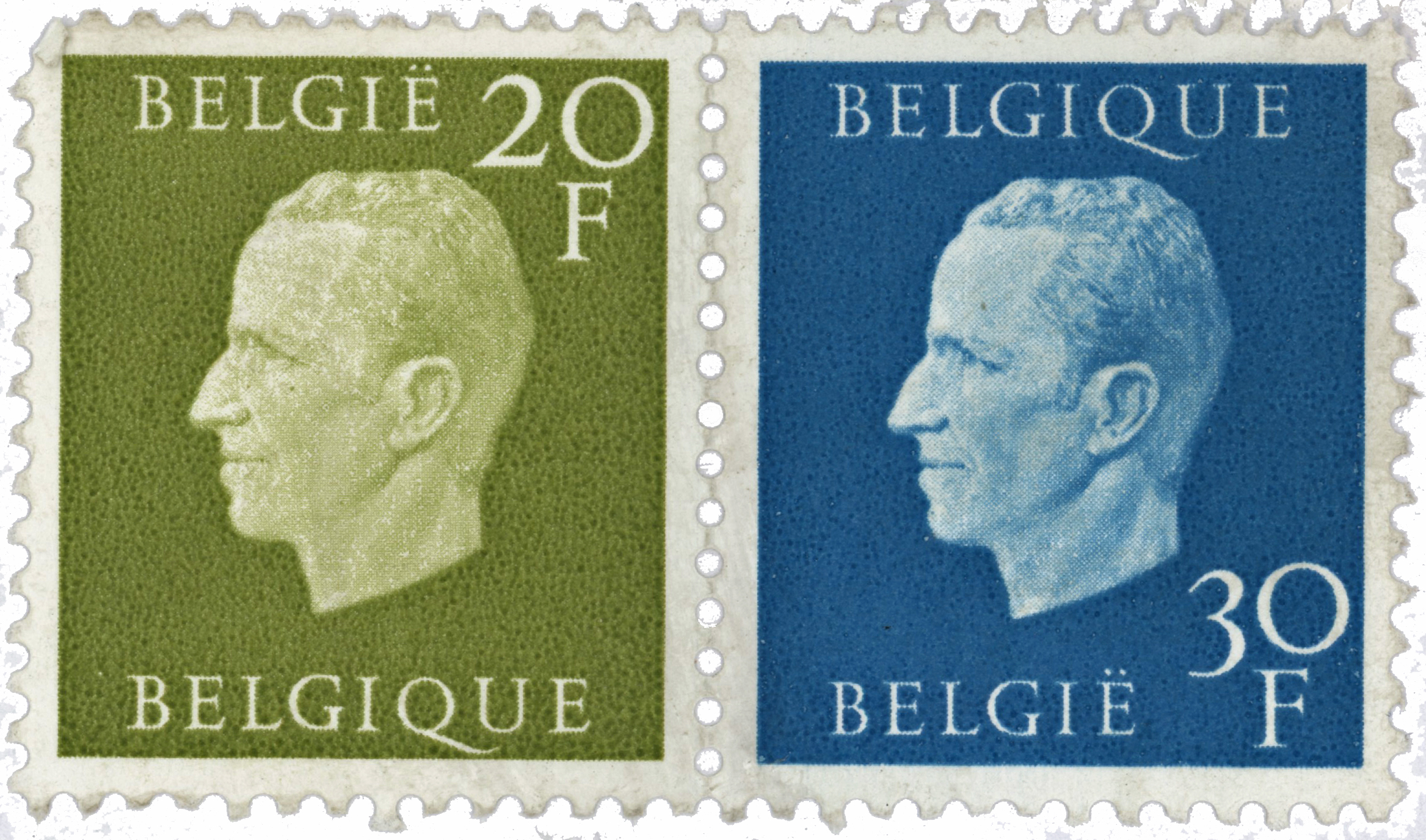
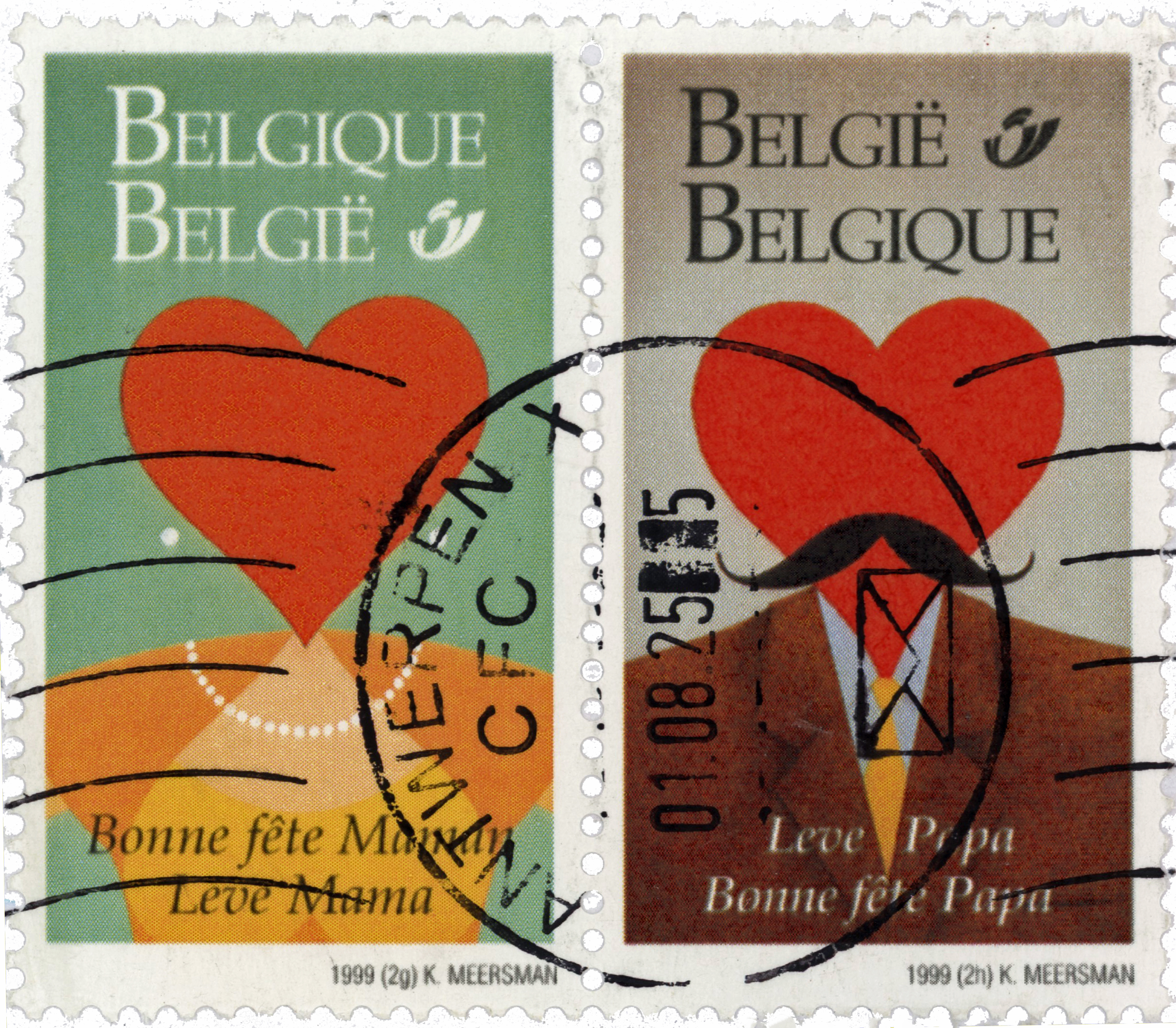
There were several stamps from Belgium on the outside envelope from my Ebay vendor in Antwerp, and I looked them up in the Scott stamp catalogue.
P.S. —The stamps that I buy on Ebay from overseas still come through without getting a tariff slapped on them. The de minimis exemption* for goods purchased from overseas suppliers will end soon, though.
*Historically, the US has had a de minimis exemption that allowed goods valued below a certain amount (currently $800, subject to change) to enter duty-free. However, the US eliminated the de minimis exemption for products from China and Hong Kong on May 2, 2025, and plans to eliminate it for all countries on August 29, 2025.
– Google AI Overview
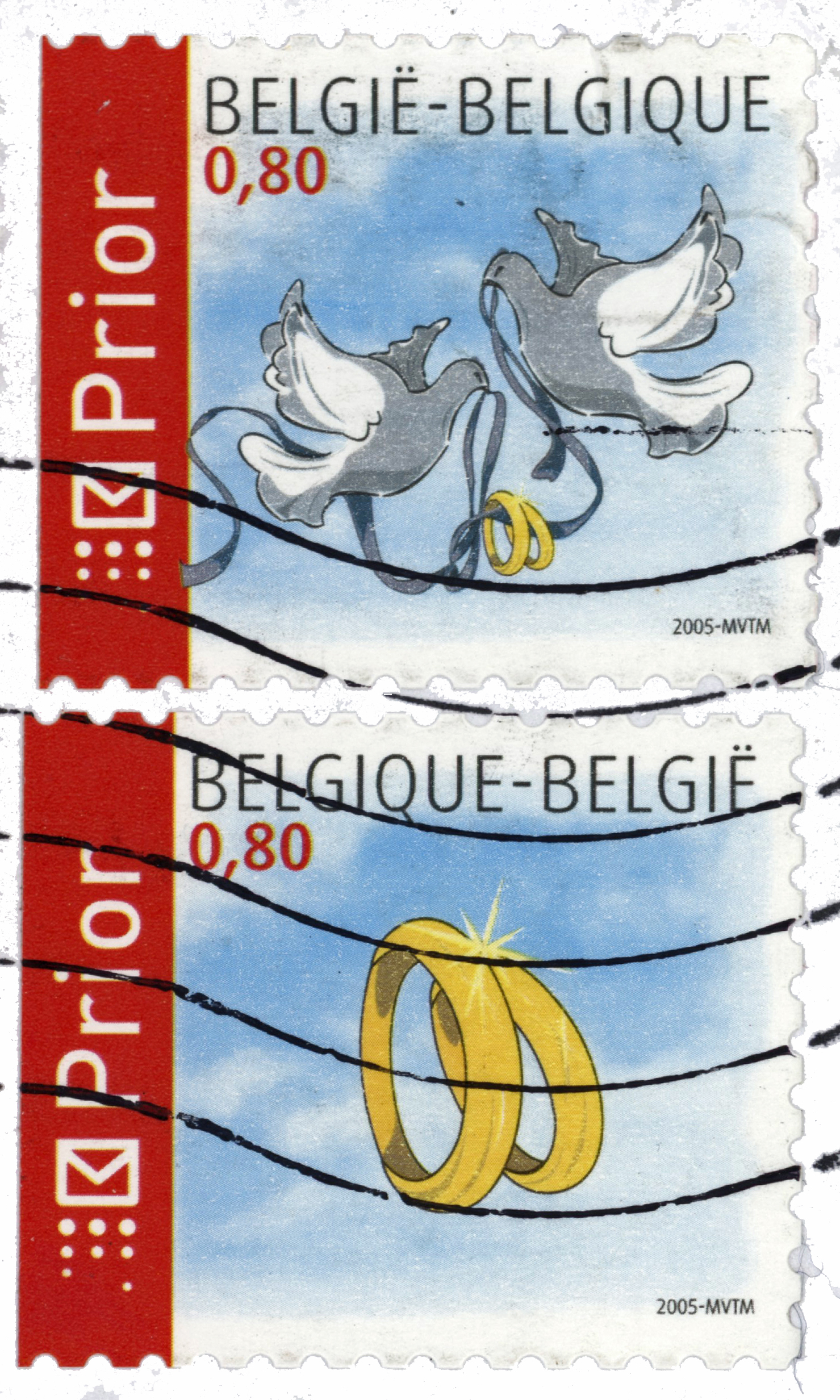
1989 Belgium: Young Philatelists Issued Oct 9, 1989 Perf. 11½ |Photogravure |No watermark #1328 A575 9Fr Multicolored |Mr. Nibbs *”The Adventures of Nibbs” is a Belgian cartoon series that was also adapted into a Brussels cartoon mural by the cartoonist Marc Sleen. 1991 Belgium: Tourism Issued Jun. 17, 1991 Perf. 11½ |Design: Jacques Doppée & Paul Deweerdt |Photogravure & Engr. |Engraving: Patricia Vouez & Guillaume Broux |No watermark #1406 A603 14Fr Multicolored |Neptune’s Grotto, Couvin 2016 Belgium: Qualifying Education (from minisheet of 5) Issued Mar. 14, 2016 Perf. 12 |Design: Bart Van Leuven & Wim Vandersleyen |Litho. |No watermark #2791a A1370 1.00€ Multicolored |Dredge near island, Abu Dhabi [Sources: stampworld.com, Scott 2018 Standard Postage Stamp Catalogue, Vol. 1]1976 The 25th Anniversary of King Baudouin’s Regency Issued Jun. 26, 1976 Perf. 11½ |Design: Anton Luyckx |Photo. |No watermark Se-tenant pair from mini-sheet #952a A374 20Fr Yellow-green |King Baudouin, in profile #952b A374 30Fr Prussian blue |King Baudouin, in profile [Sources: stampworld.com, Scott 2018 Standard Postage Stamp Catalogue, Vol. 1]1999 Belgium: Greeting Stamps Issued Jan. 23, 1999 Perf. 11¾ |Design: Karl Meersman |Photogravure & Engr. |Engraving: De Schutter |No watermark #1722 A738 17Fr Multicolored |Heart-shaped head on woman ‘Happy birthday Mama/ Long live Mama’ #1723 A738 17Fr Multicolored |Heart-shaped head on man ‘Long live Papa/ Happy birthday Papa’ [Sources: stampworld.com, Scott 2018 Standard Postage Stamp Catalogue, Vol. 1]2005 Belgium: Greeting Stamps Issued May 9, 2005 Perf. 9 ¼ on 2 or 3 sides |Booklet panes of 10 |Design: Myriam Voz & Thierry Martin |Photogravure |Engraving: Offset |Self-adhesive |No watermark #2095 A915 0.80€ Multicolored |Doves and wedding rings #2096 A916 0.80€ Multicolored |Wedding rings [Sources: stampworld.com, Scott 2018 Standard Postage Stamp Catalogue, Vol. 1]
World Lion Day is celebrated annually on August 10th.
It’s a day dedicated to raising awareness about the challenges lions face in the wild and supporting their conservation. The day was founded in 2013 by Derek and Beverly Joubert to highlight the declining lion populations and the threats they face, such as habitat loss and poaching.
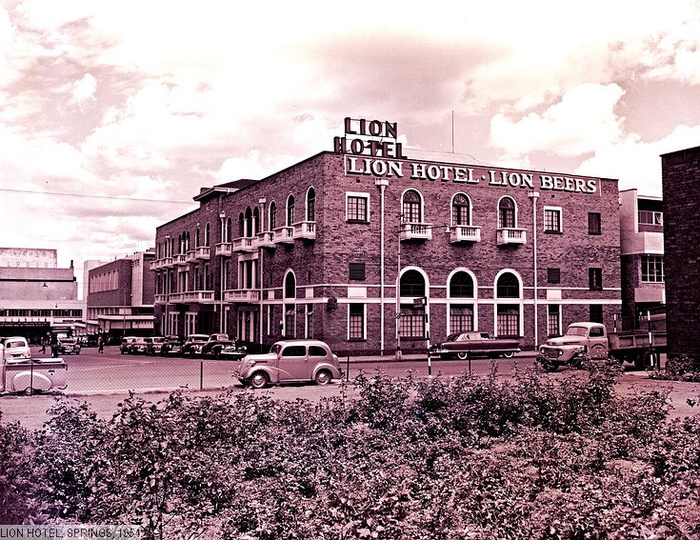
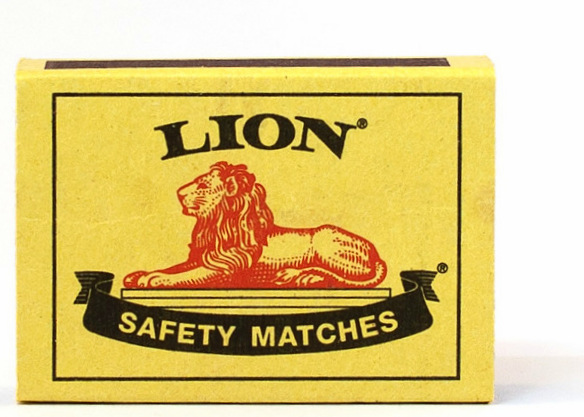
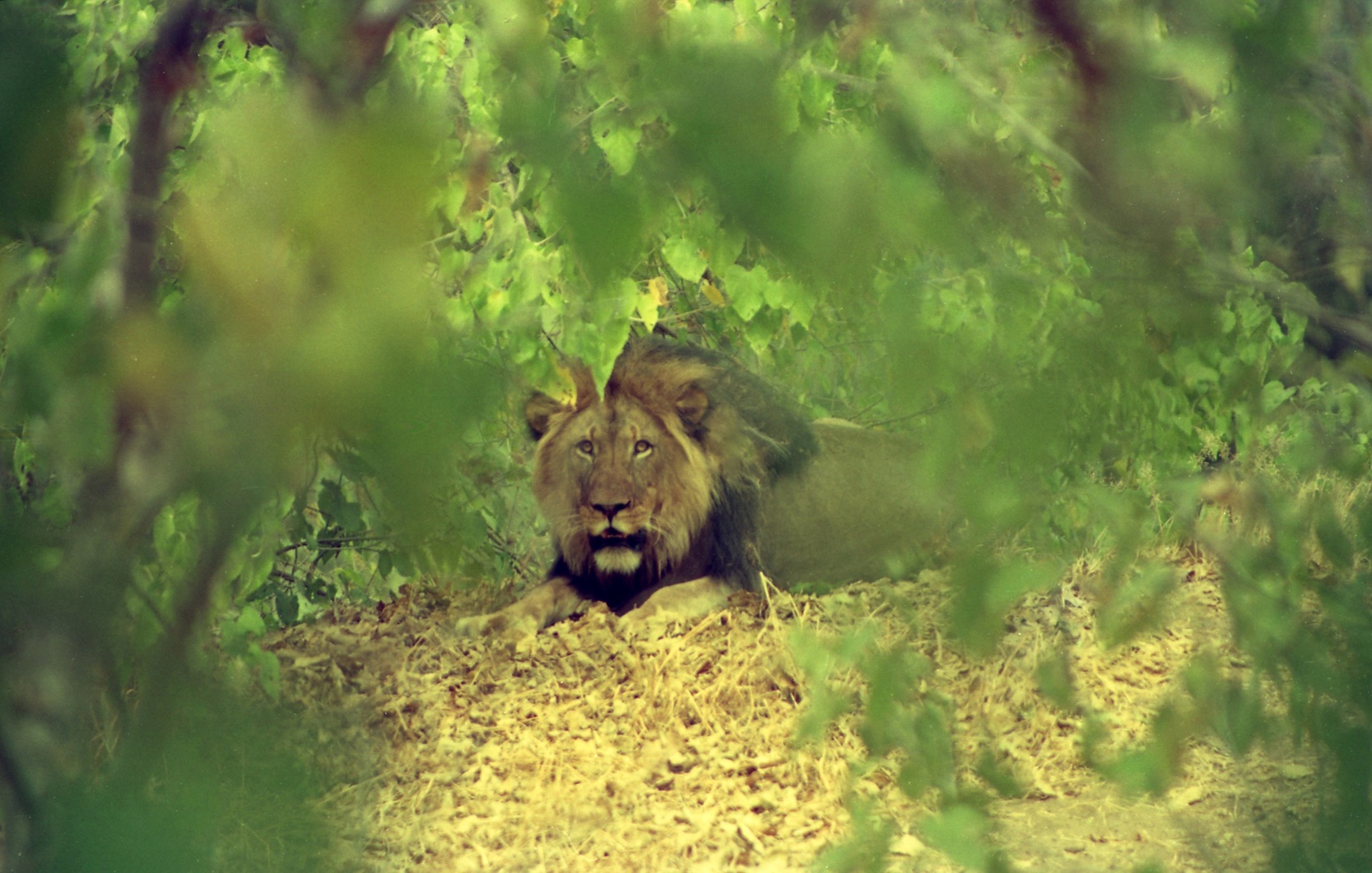
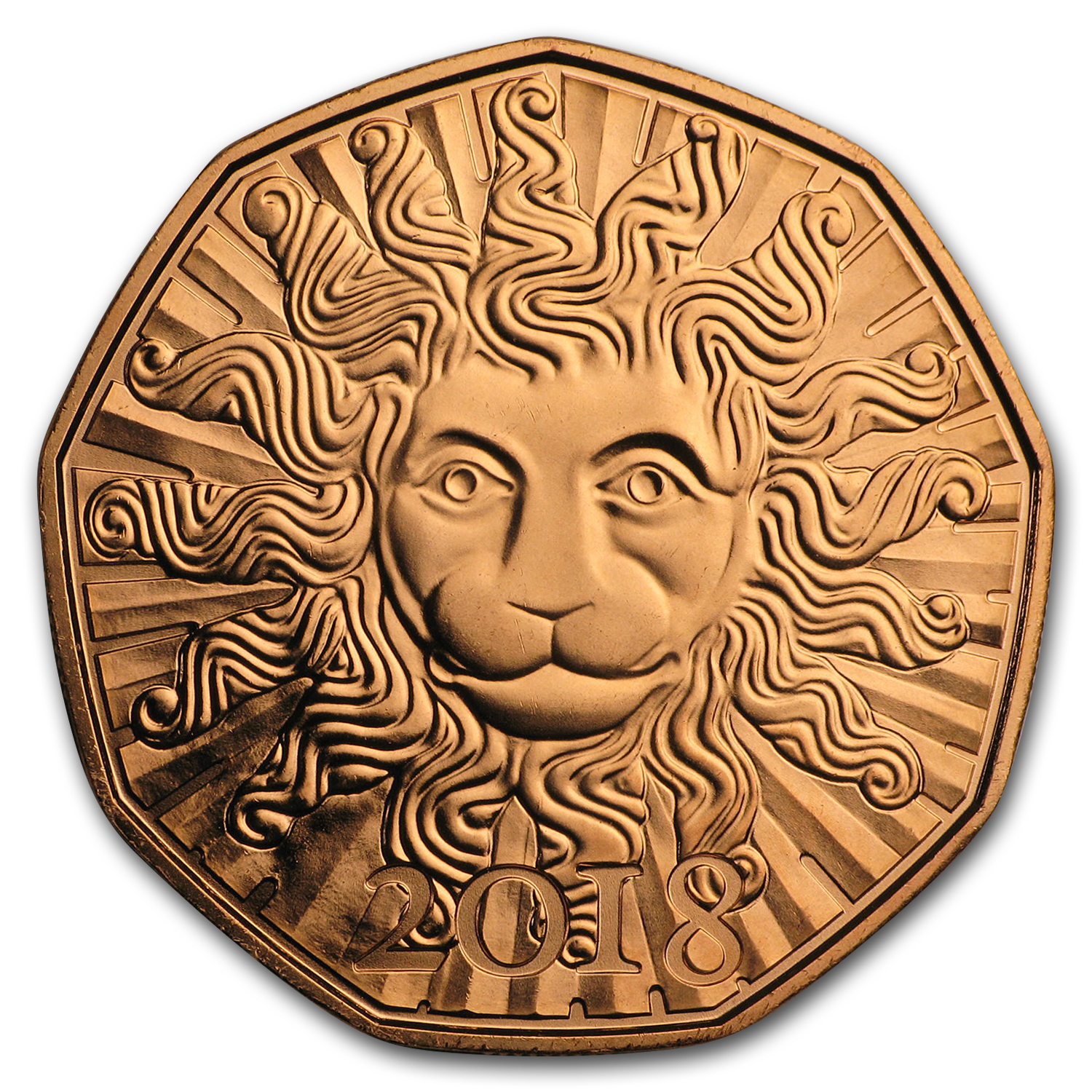
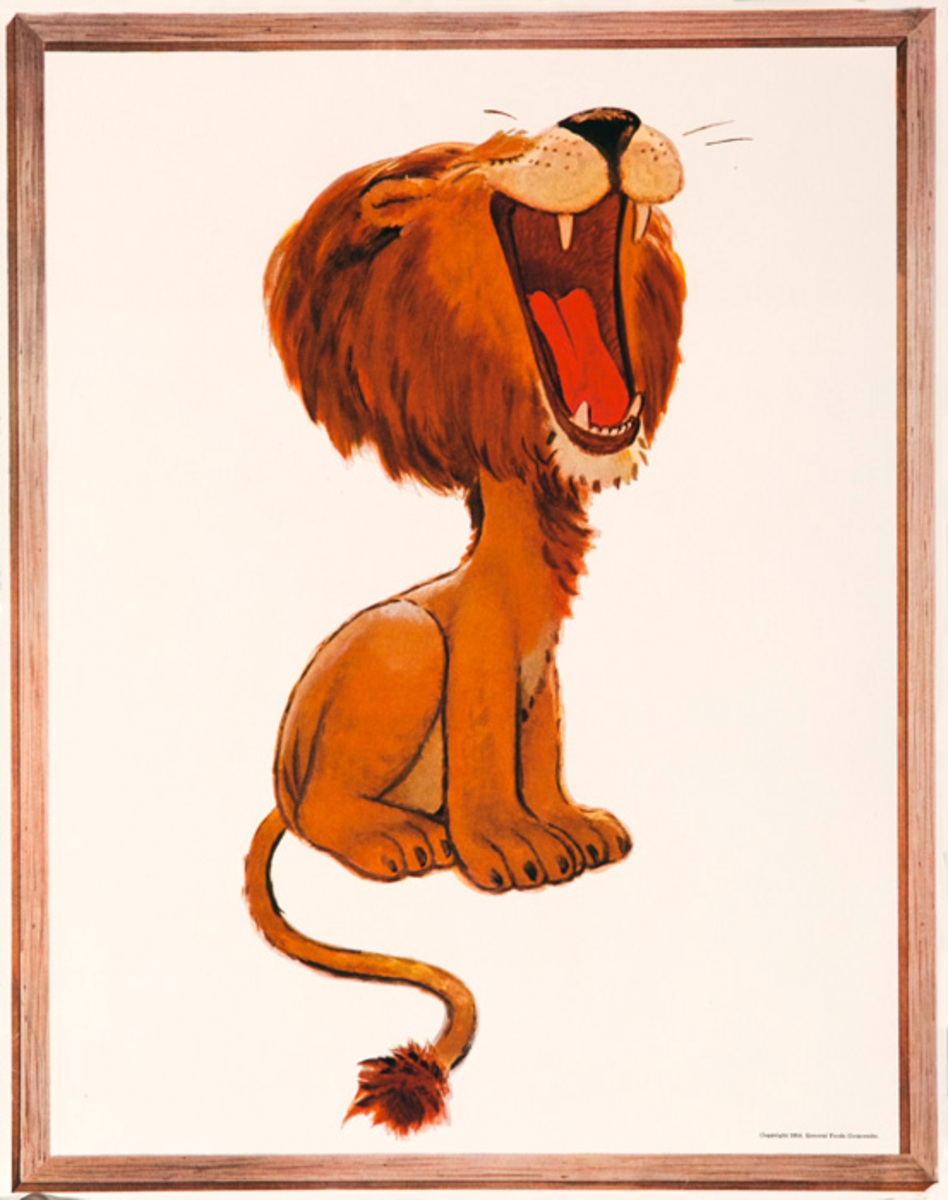
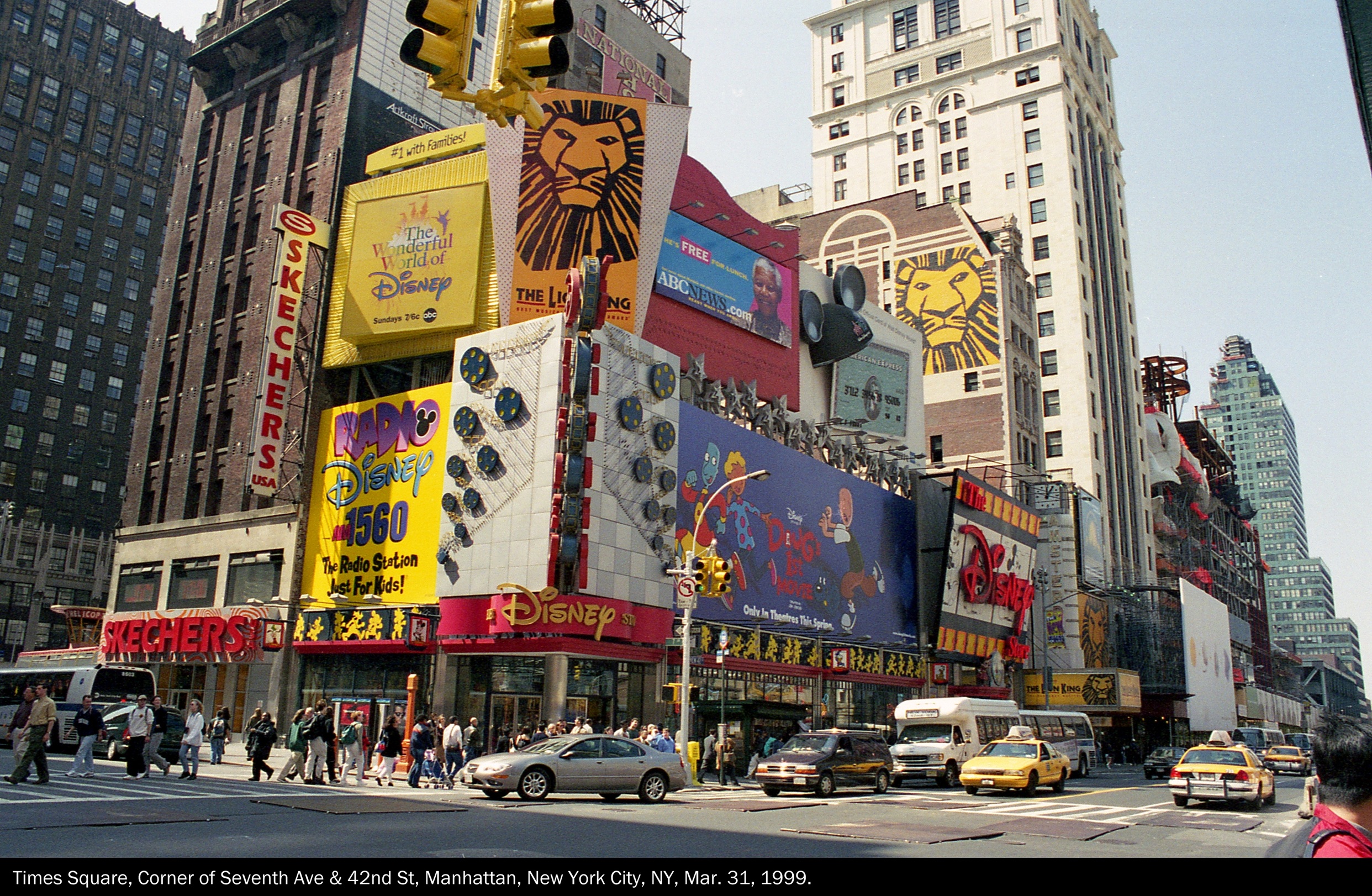
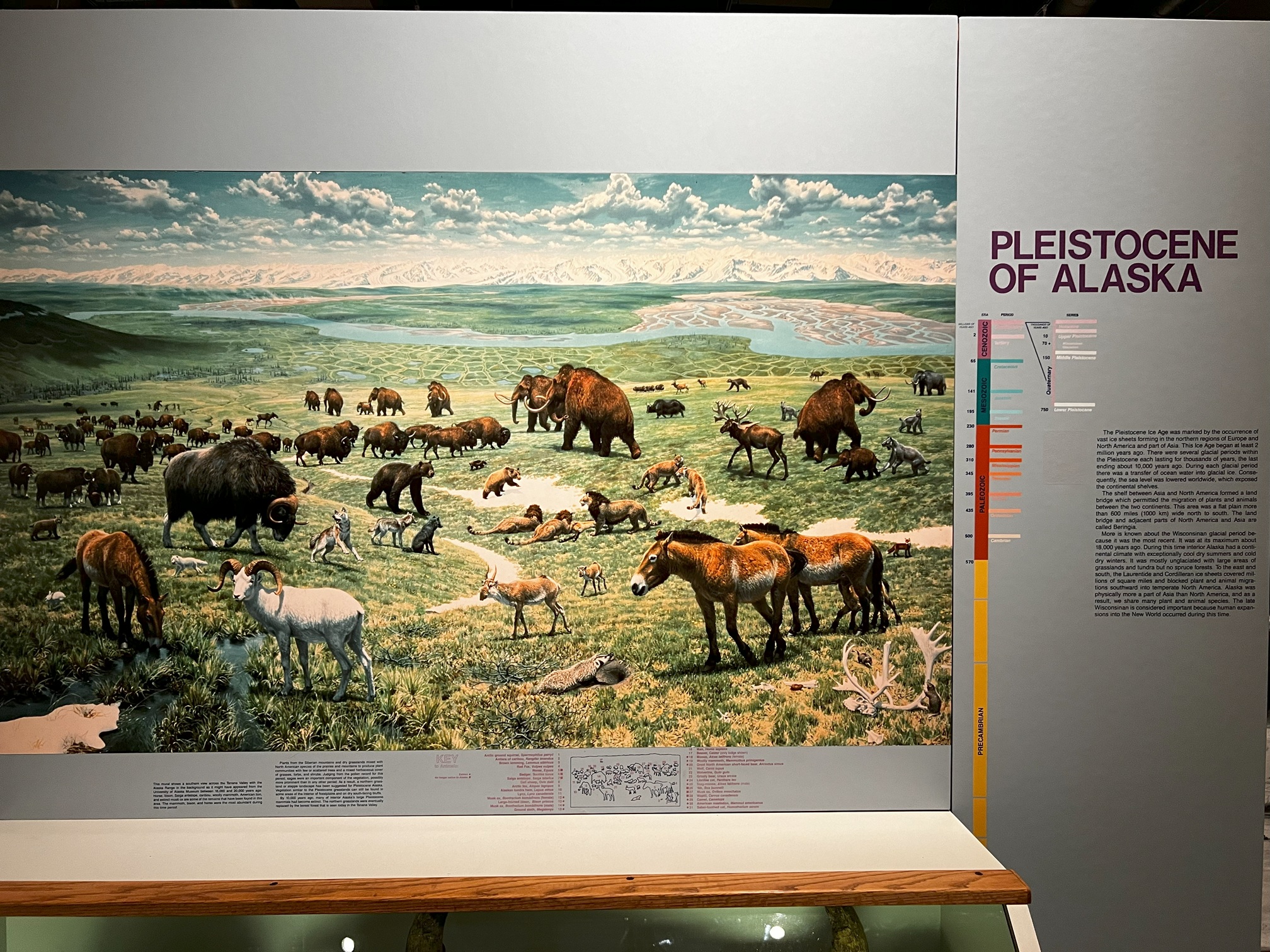
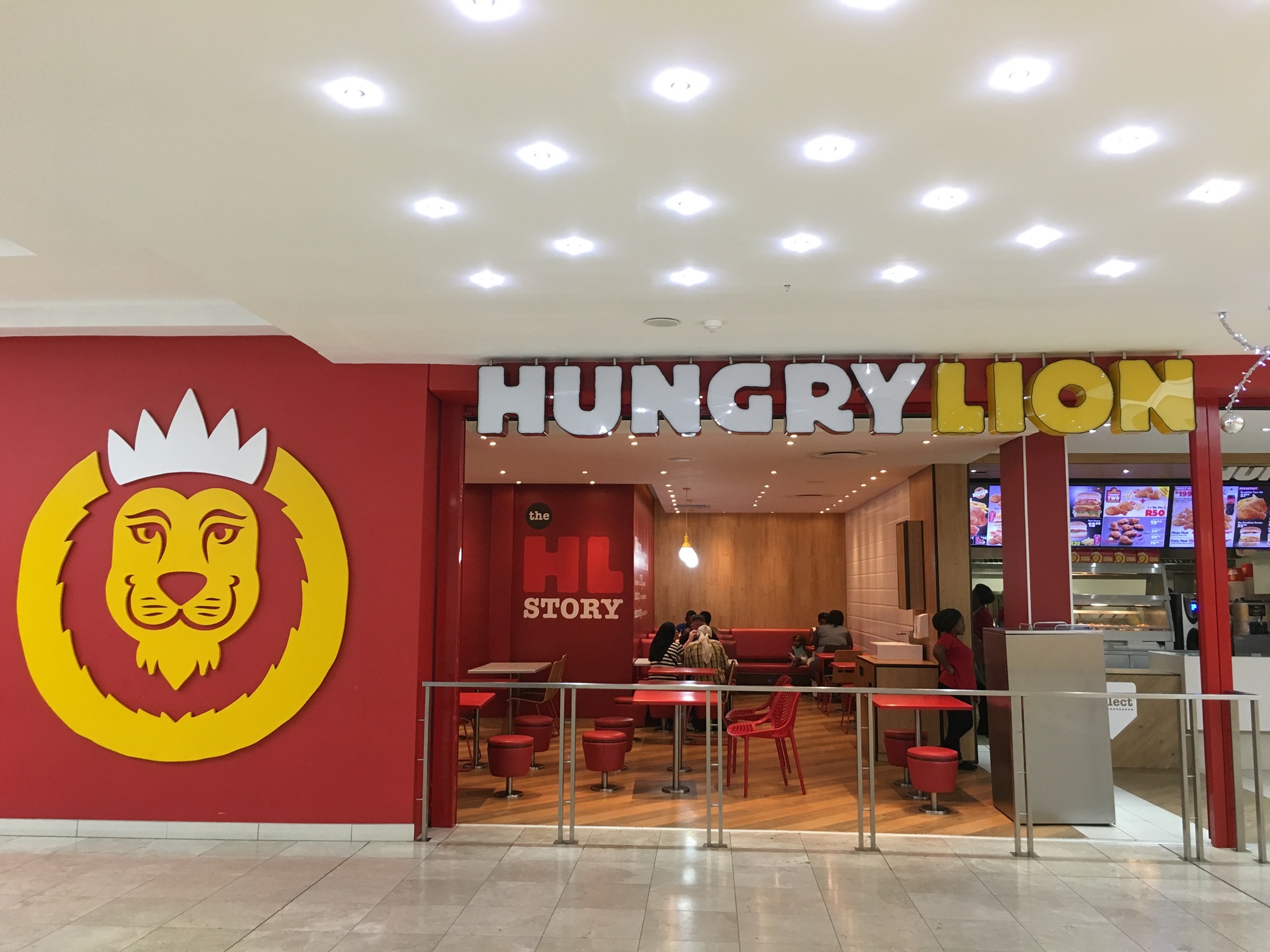
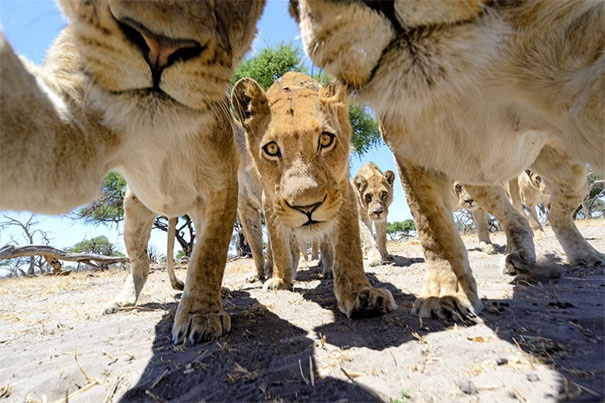
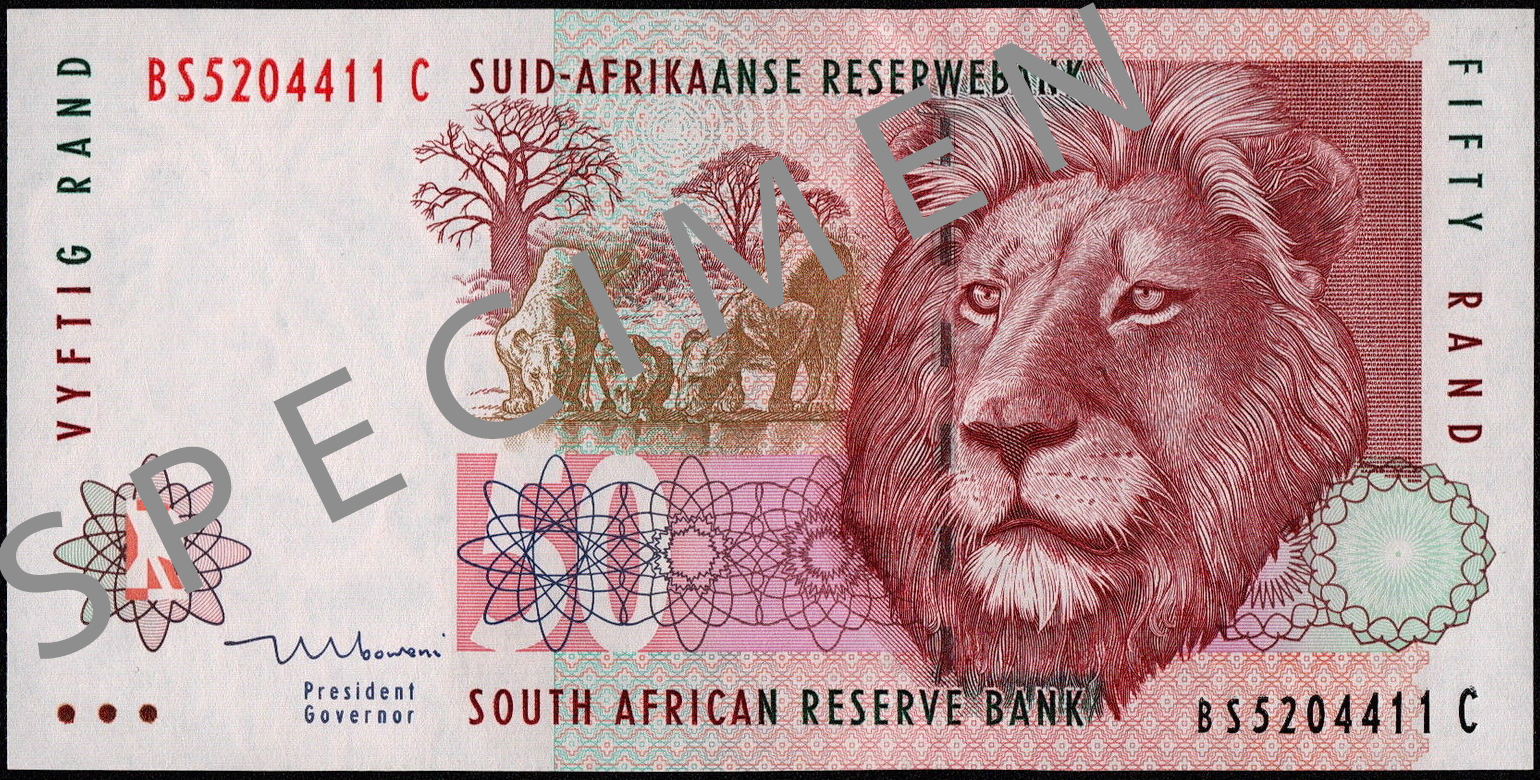
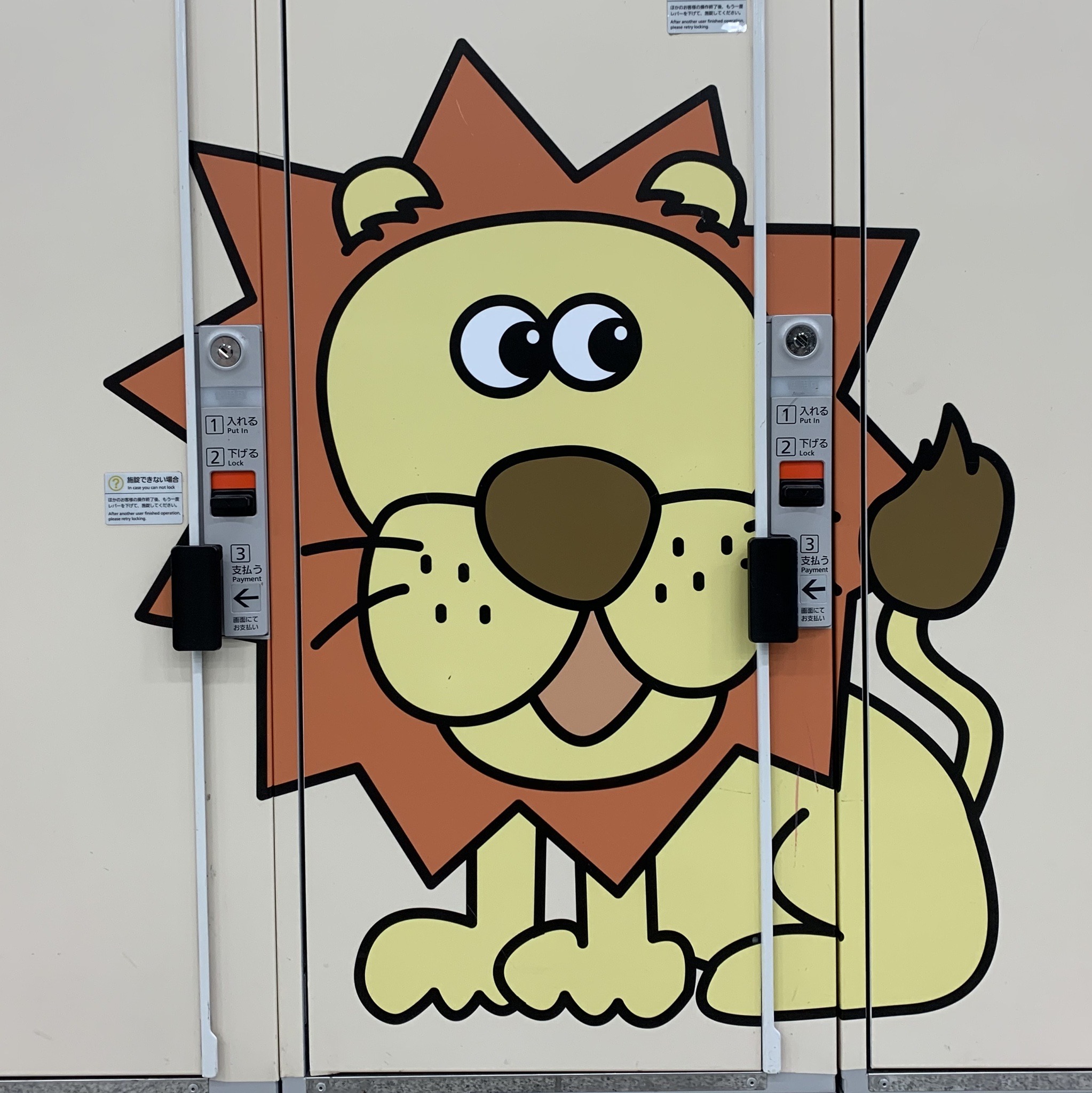
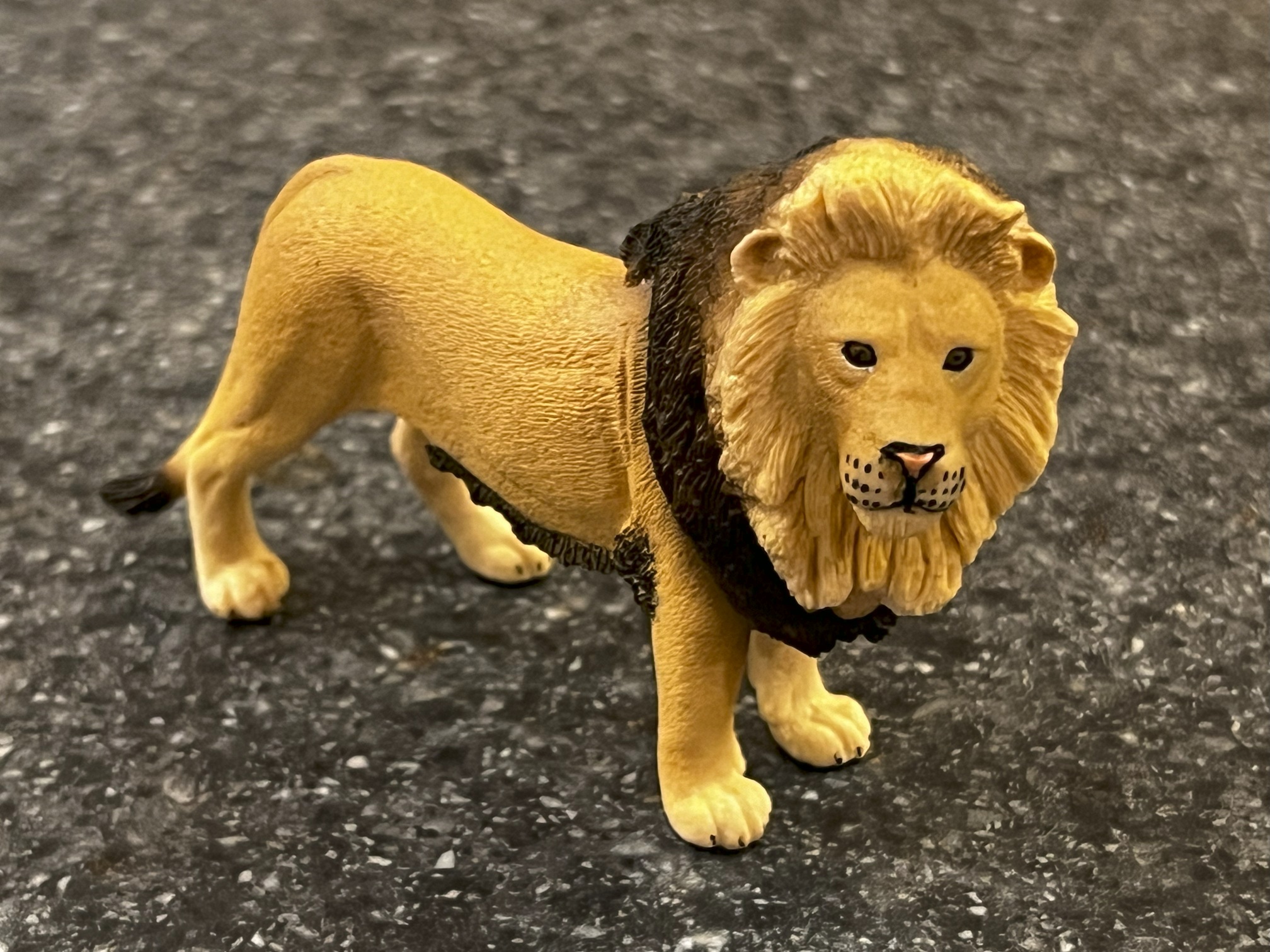
The Lion Hotel in the city of Springs in South Africa, advertising Lion Beer, circa 1954. Lion Beer would later become Lion Lager. Lion Lager is a popular choice for various gatherings and social events to this day. It’s often enjoyed during braais (South African barbecues), sports matches, and family celebrations.Lion safety matches. There was a time in the ’50’s in South Africa when an entire little box of 50 matches could be bought for one penny.I had been to Botswana with my family for more than a dozen times by 1993, and even by then had never seen a lion in the wild from up close there. When we were there in July 1993, though, one of the locals came to tell us of a lion that they had spotted nearby. Seven or eight of us piled into an open-top Jeep ( ! ), and I took this picture through the mopane leaves with a telephoto lens.2018 Austria Copper €5 New Year’s ‘A Lion in Winter’ coin.Artwork by David Pollack, used in Jell-o’s campaign of printed ads in LIFE magazine and others in the 1950s. The lion and a plate of Jell-O appeared in the ads, with the words “When I’m eating Jell-O, I wish I were a lion .. because then I could roar for more of my favorite dessert! (Jell-O, of course!)”I took this picture in New York City in 1999.The Pleistocene Epoch, often referred to as the Ice Age, in Alaska, as with the rest of the world, extended from approximately 2.6 million years ago to 11,700 years ago. Look at the center of the picture for the lions that once roamed in North America. The North American lion, also known as the American lion, became extinct around 10,000 years ago along with several other large mammals. [Picture taken inside University of Alaska Museum of the North, Fairbanks in 2023]A ‘Hungry Lion’ fast food franchise in Stellenbosch, South Africa, in 2017.A pride of lionesses inspect a remote controlled camera buggy. I believe the photographer is Chris McLennan and that the pictures were taken in 2019. I’m sure it is in Africa, but I don’t have the specific location.On a South African bank note from 1992: lionesses at the water hole, and a regal stare from the king of the beasts.Luggage locker in Tokyo Station, Japan.Lion figurine (model #17107) by toymaker Schleich.
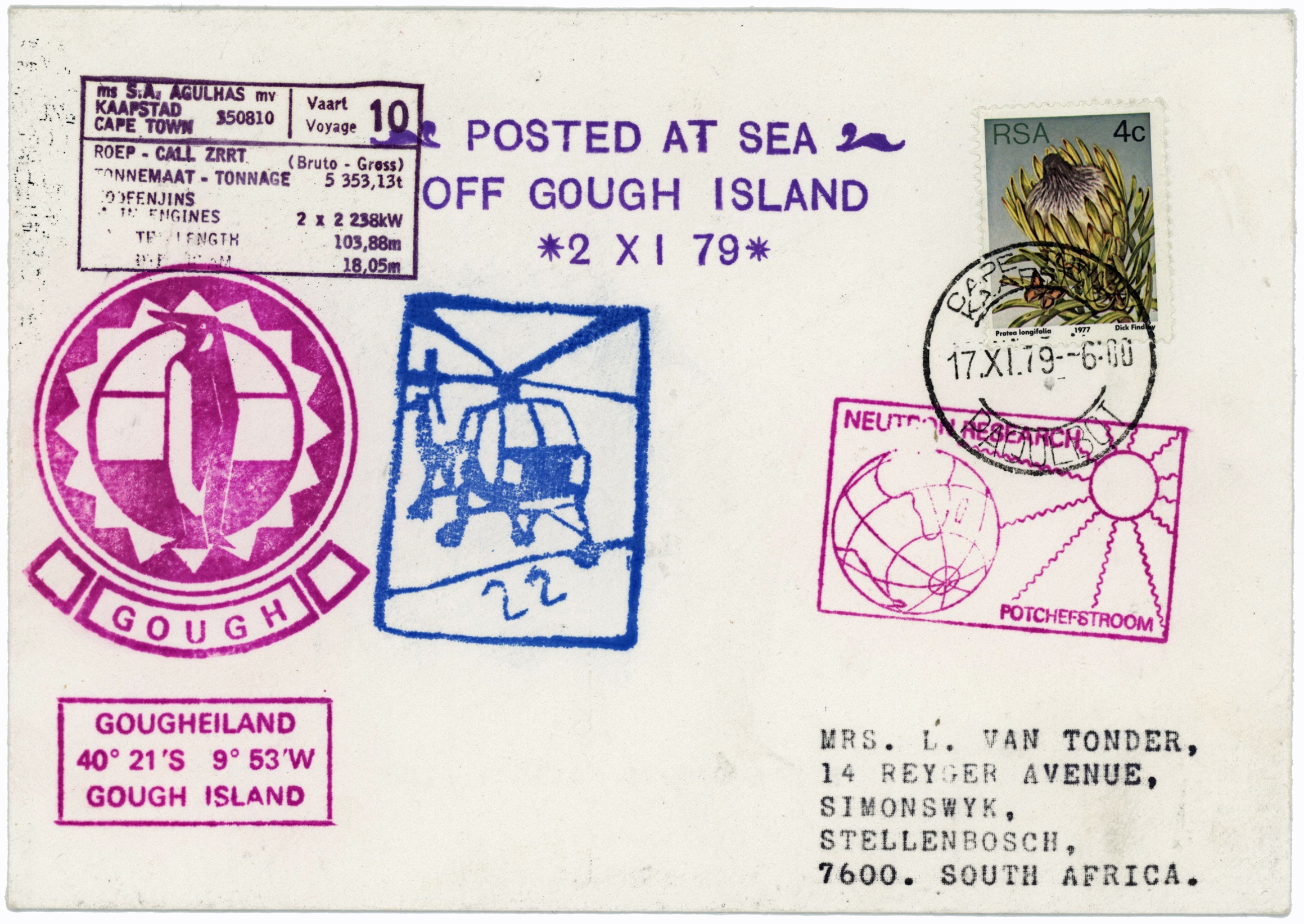
Check out this cool 1979 envelope.
It was mailed paquebot off Gough Island, with all kinds of outrageous postmarks on the envelope.
Paquebot cancellations on postage stamps indicate that the mail was posted on a ship at sea and canceled at the ship’s next port of call. The term paquebot is French for “packet boat” (steam ship, steam vessel) and signifies that the mail was handled according to international regulations for mail posted on vessels. These cancellations are distinct from regular postmarks and are often sought after by collectors.
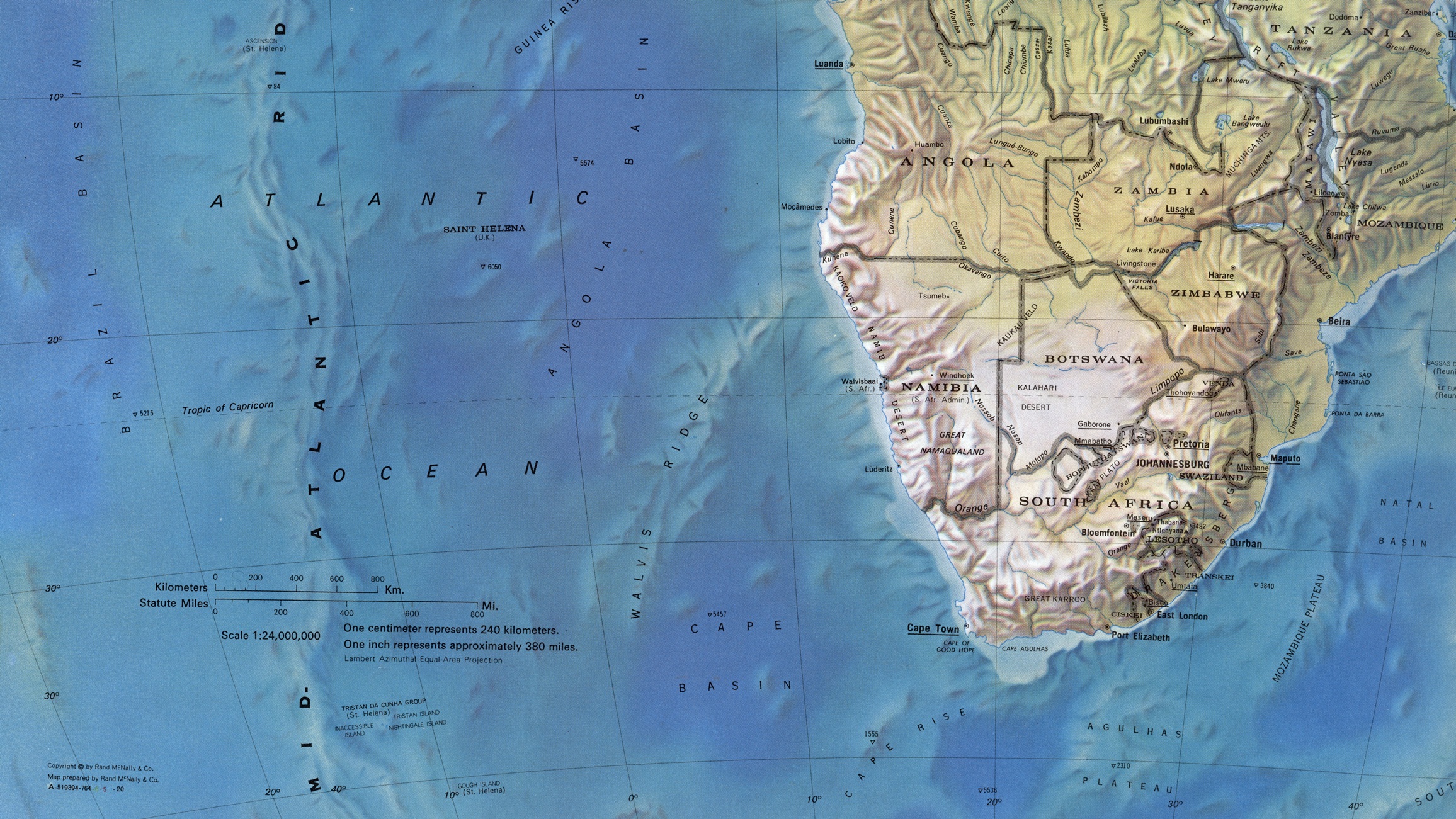
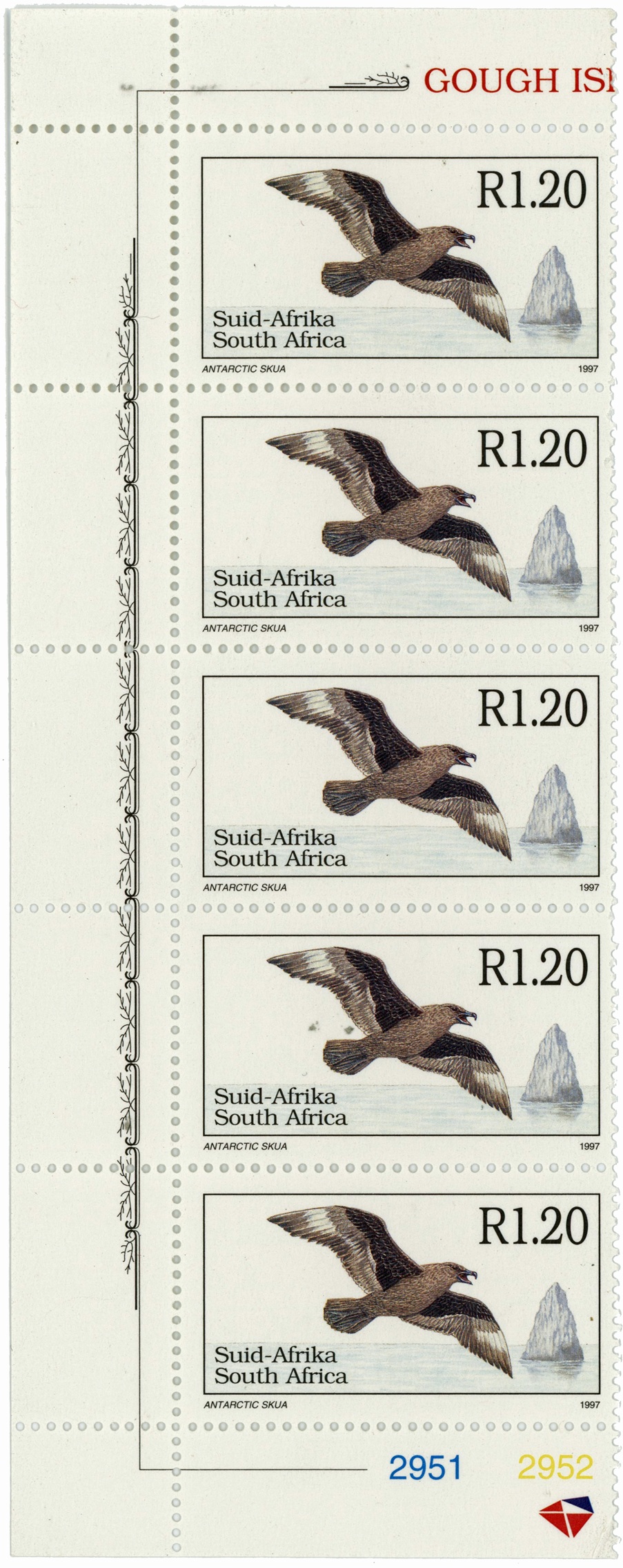
Postmarks and stamp on envelope— S.A. Agulhas is a South African ice-strengthened training ship and former polar research vessel. She was built by Mitsubishi Heavy Industries in Shimonoseki, Japan, in 1978. S.A. Agulhas retired from Antarctic service in April 2012 when the replacement vessel, S. A. Agulhas II, was commissioned. She was transferred to the South African Maritime Safety Authority as a training ship. Mailed paquebot off Gough Island on Nov. 2, 1979. Penguin and Gough Island coordinates. Gough Island is home to northern rockhopper penguins (Eudyptes moseleyi). Neutron research postmark from University of Potchefstroom in South Africa. The main scientific station on Gough Island is a South African weather station, which has been in operation since 1956. The Physics department at Potch University studied cosmic rays. Cosmic rays are primarily composed of high-energy particles, with about 90% being protons (hydrogen nuclei). Neutrons are secondary particles that are knocked out of atoms in the earth’s atmosphere. The blue helicopter postmark is most likely a commemorative or mission-specific cachet used on mail handled during the 1979 Gough Island expedition. The 22 might refer to a flight number or a team identification. The Cape Town postmark of Nov. 17, 1979 likely marks the arrival of the vessel there, at which time it was dispatched to the street address in Stellenbosch. The 4c stamp is from South Africa’s Third Definitive Series Issued May 27, 1977 |4c Protea longifolia |Perf. 12½ |Photogravure |Fluorescent paper |No watermarkLook at the bottom of this map for Gough Island. The island is also known historically as Gonçalo Álvares, and is a rugged volcanic island (area 35 mi²) in the South Atlantic Ocean. It is a dependency of the Tristan da Cunha island group and part of the British overseas territory of Saint Helena, Ascension and Tristan da Cunha. Nobody lives on Gough Island except for the workers of a weather station, which is usually six people. The South African National Antarctic Programme has maintained the island with British permission since 1956. [From Wikipedia] [Map in Lambert azimuthal equal-area projection by Rand McNally and published in 1984 in an atlas by Encyclopdia Britannica]One of these stamps would have fitted the envelope perfectly. Unfortunately, it would be 18 more years after 1979 before these stamps featuring the Antarctic skua would be issued.
South Africa Sixth Definitive Series (Endangered Fauna, Redrawn) Issued Aug. 27, 1997 |R1.20 Antarctic skua (additional value to series first issued in 1993) |Perf. 14×14¼ |Lithography |Coated paper |No Watermark
As part of the ever-expanding scope of my collection of South African stamps, I have started to collect revenue stamps of the South African colonies.
(Before the establishment of the Union of South Africa in 1910, South Africa consisted of four British colonies: the Cape Colony, Natal, Transvaal, and the Orange Free State.)
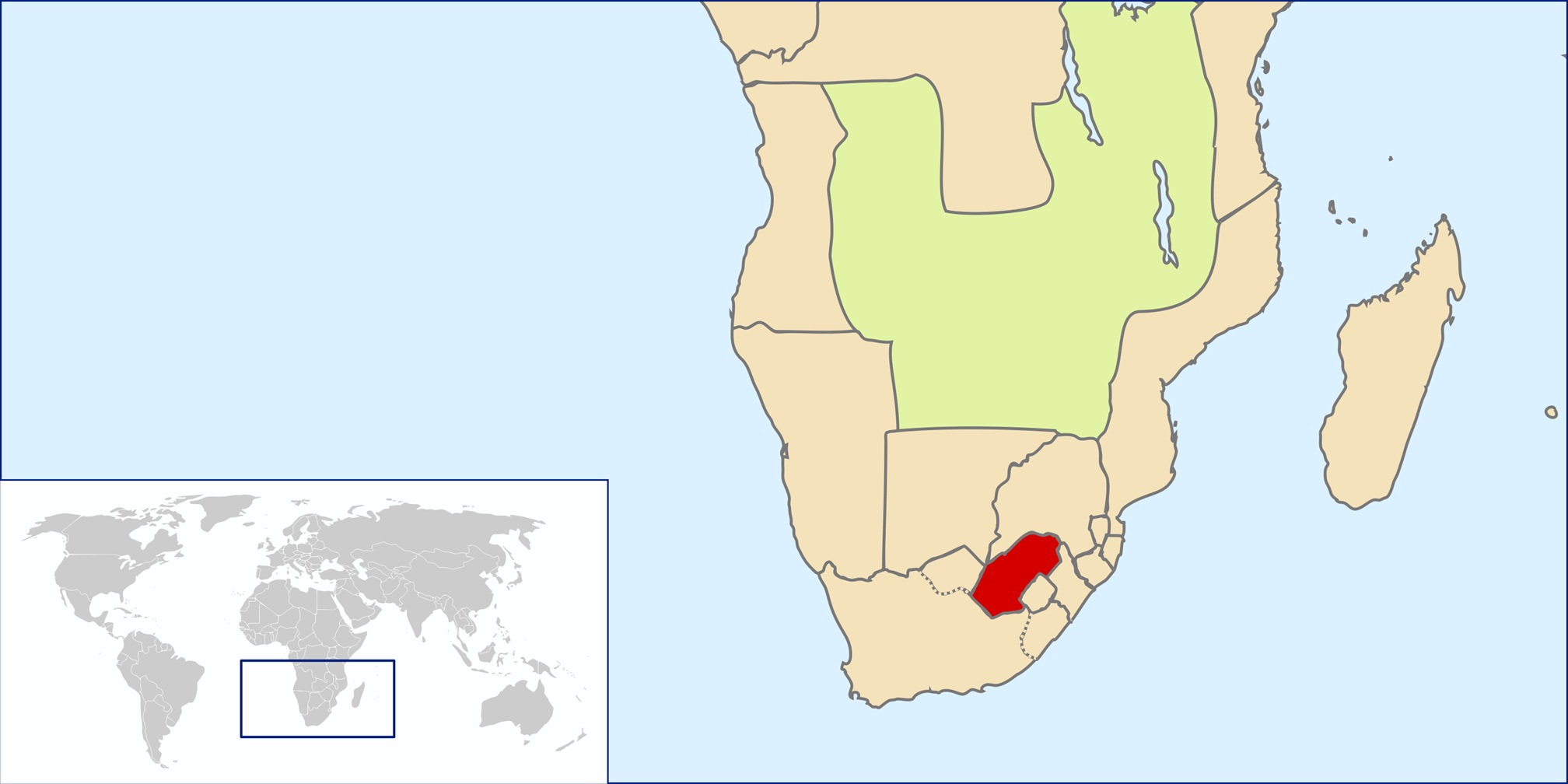
Location of the Orange Free State c. 1890 [Source: Wikipedia]From 1854 to 1902, the Orange Free State was an independent Boer-ruled sovereign republic under British suzerainty* in Southern Africa during the second half of the 19th century. It ceased to exist after it was defeated and surrendered itself to the British Empire at the end of the Second Boer War in 1902. It is one of the three historical precursors to the present-day Free State province in South Africa.
*A suzerain is a person, state or polity who has supremacy and dominant influence over the foreign policy and economic relations of another subordinate party or polity, but allows internal autonomy to that subordinate.
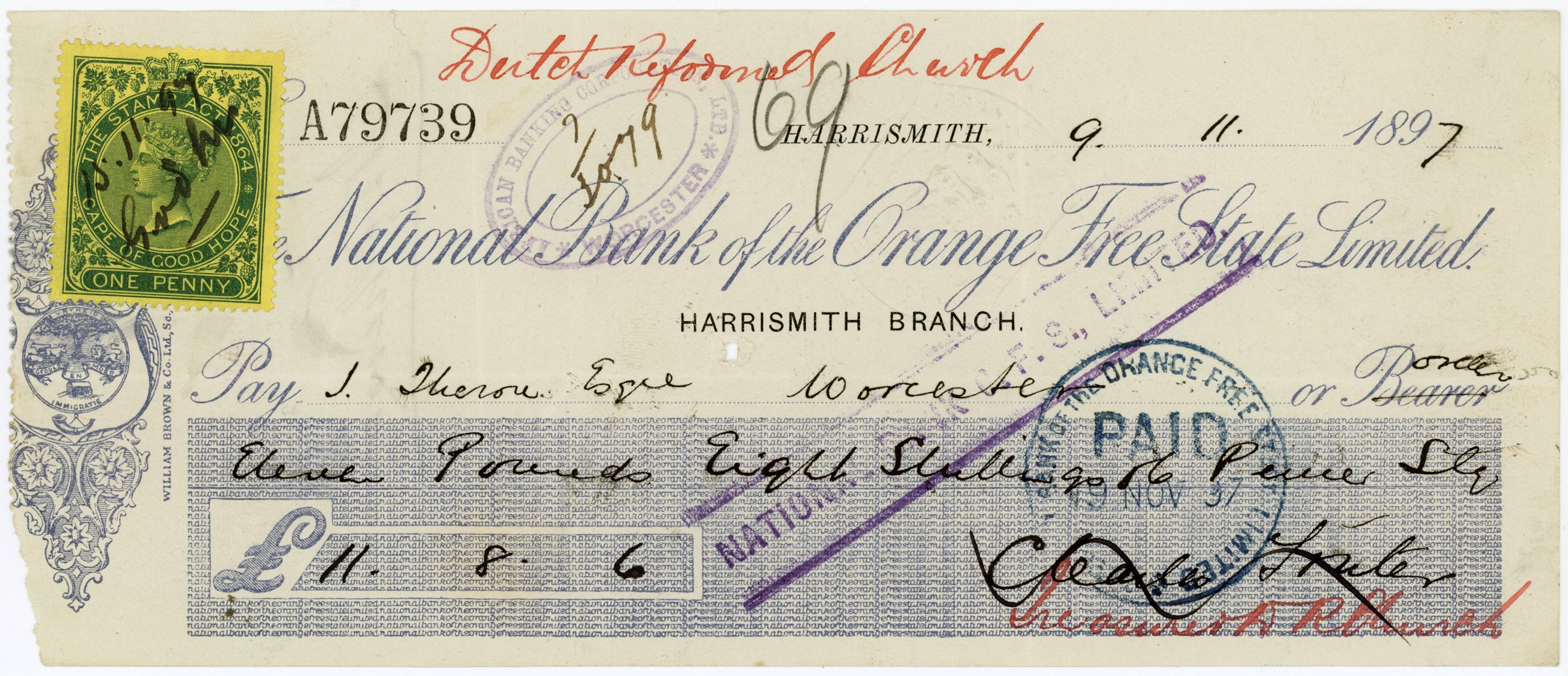
This yellow revenue stamp with green ink from the Cape Colony is affixed to a checque (using the queen’s English— Queen Victoria) that was issued in 1897 by the Harrismith branch of the National Bank of the Orange Free State.
The Revenue Stamp First issued in 1865 by the Cape Colony | Perf. 14 |Rotogravure One penny (1d) | green on yellow paper| Queen Victoria’s profile in classical style* surrounded by grapevine and vine leaves in the corners, symbolizing the Cape Colony’s viticulture | Crown at the top, denoting British authority *Queen Victoria of the United Kingdom of Great Britain and Ireland, queen from 1837 until her death in January 1901.
The Cheque Written by the treasurer (Charles Truter) of the Dutch Reformed Church on Nov. 9, 1897 to Esquire J. Theron. (Esquire here is the title of a young nobleman). The cheque is from the Harrismith branch of the National Bank of the Orange Free State, written for an amount of 11 Orange Free State pounds*, 8 shillings, 6 pennies. *Like the South African pound, it was divided into 20 shillings, and a shilling into 12 pennies. On the far left of the check is the coat of arms of the Orange Free State. The cheque was printed by William Brown & Co. of Old Broad Street in London. Security features at the time included the fine print at the bottom of the check, and so-called fugitive printing, that would use ink that would change, fade, or disappear under specific conditions, if it was tampered with. The revenue stamp was affixed to the cheque on Nov. 15. The check was stamped ‘Paid’ on Nov. 19. It seems Esquire Theron had the amount of the check paid into his account at the African Banking Corporation Ltd. in the town of Worcester in the Cape Colony. A hole was punched in the check to also indicate it has been cashed.
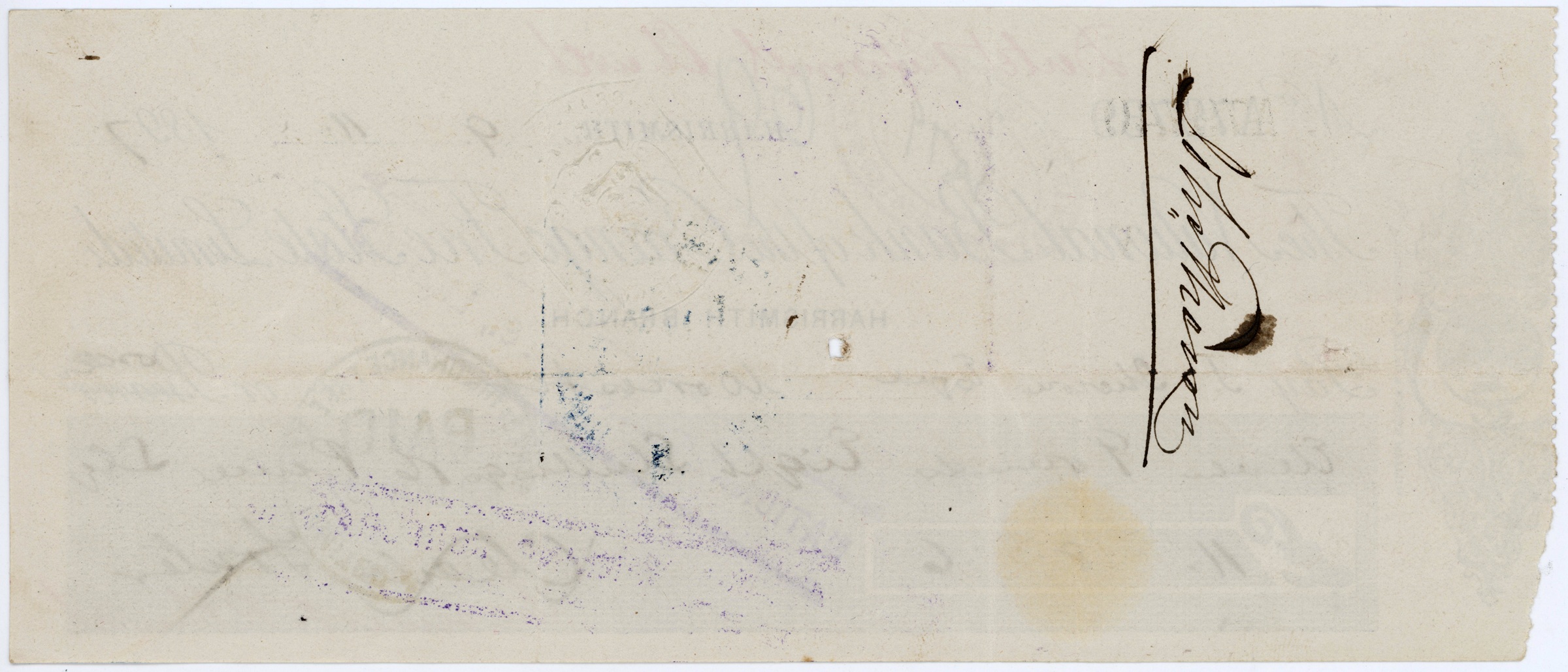
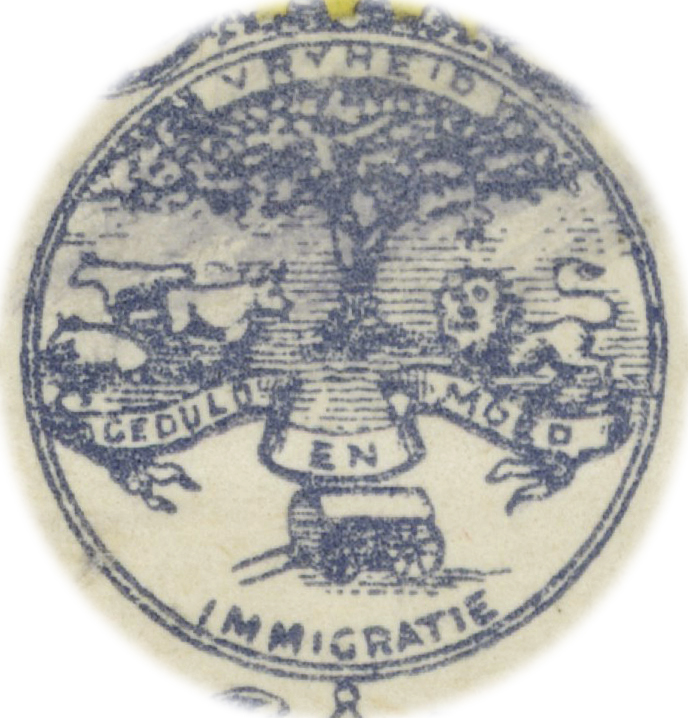
The signature of Esq. J. Theron on the back of the checque.Let’s take a closer look at the coat of arms of the Orange Free State printed on the far left of the check. VRYHEID (freedom) at the top, and GEDULD EN MOED (patience and courage) on the ribbon. IMMIGRATIE (immigration) at the bottom, presumably a call to Europeans, or settlers from other South African colonies to emigrate to the Orange Free State colony. The livestock look like cattle (the OFS coat if arms image on Wikipedia shows sheep). The lion on the right must mean ‘courage’, right? The ox wagon signifies the trek that the pioneers made from the Cape Colony to escape British rule, to establish their own independent Orange Free State republic.
Happy Friday.
It is Nelson Mandela International Day— the annual international day in honor of Nelson Mandela, celebrated each year on 18 July, his birthday.
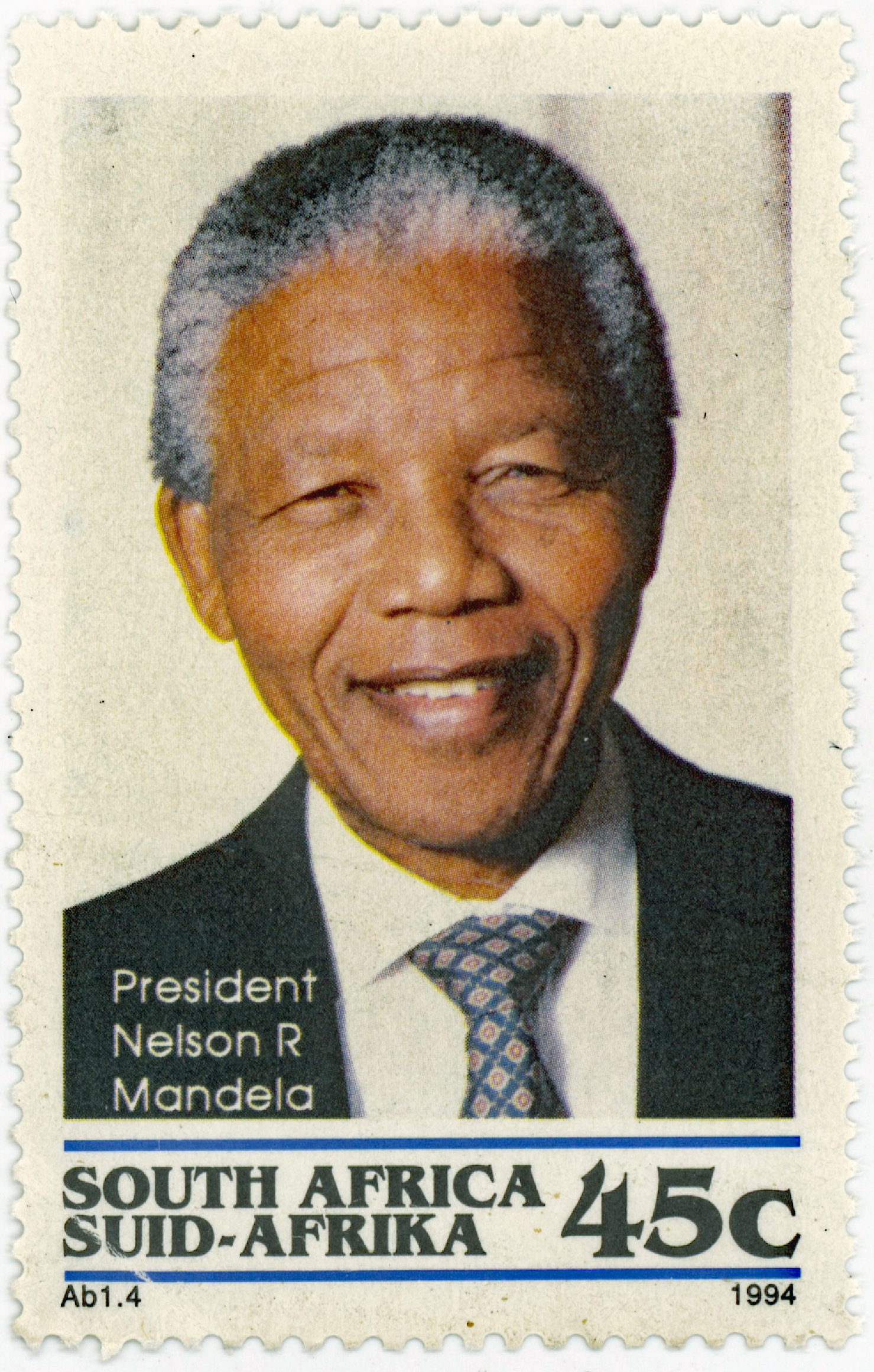
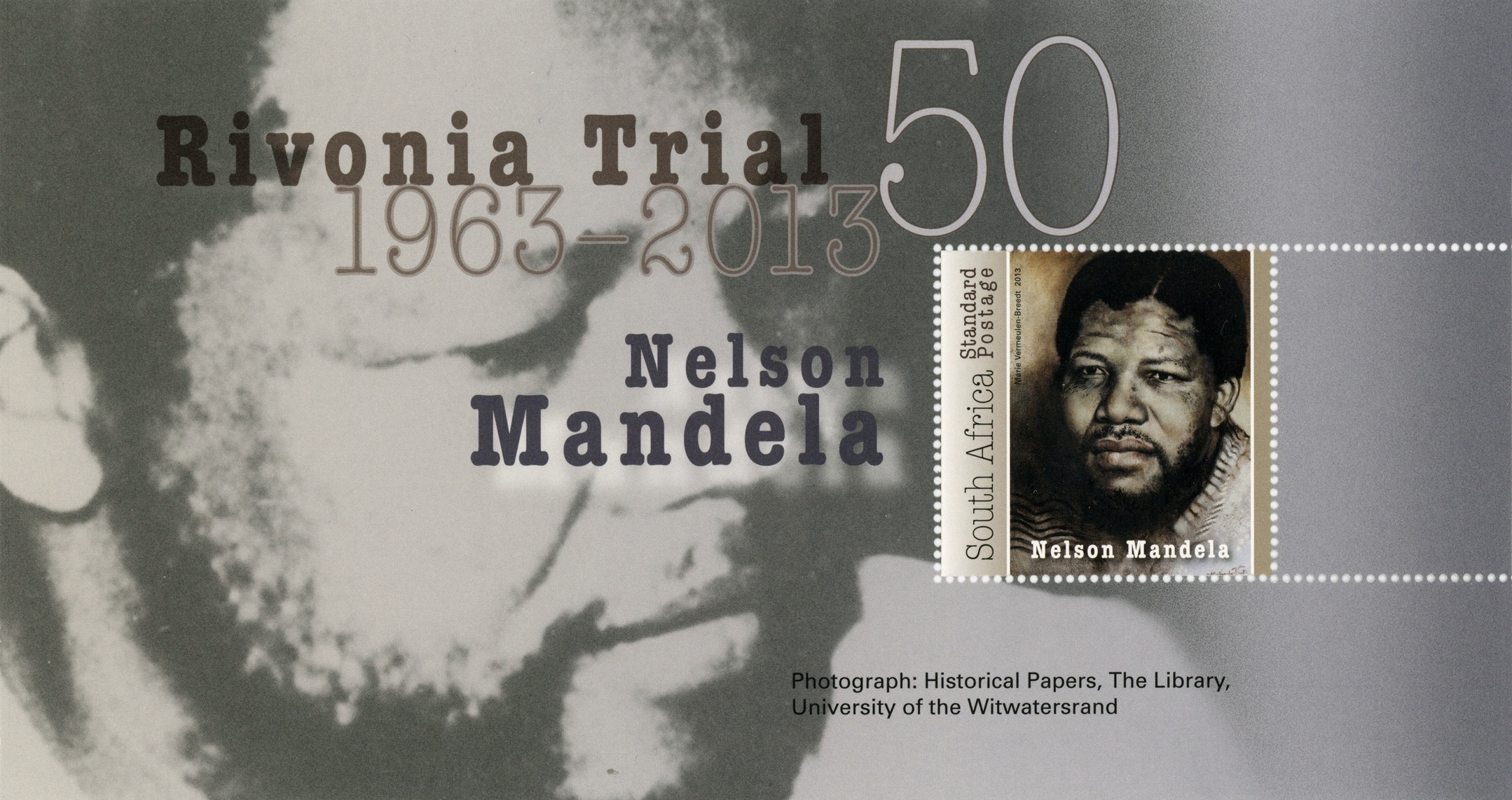
Inauguration of President Nelson Mandela (May 10, 1994) Issued May 10, 1994 Perf. 14½x14 | Des. Liza van der Wal | Litho. | No Watermark 882 A293 45c | Photo image of Mandela [Source: 2021 Scott Standard Postage Stamp Catalogue, Vol. 6A]50th Anniversary of the Rivonia Trial Issued Nov 26, 2013 Perf. 14¾x14½ | Des. Marie Vermeulen‑Breedt | Litho. | 12 Booklet panes of Rivionia trial defendants with 1 stamp each | No Watermark 1510 A547 Standard Postage (R2.80) | Photo image of Mandela as defendant at Rivonia Trial [Source: 2021 Scott Standard Postage Stamp Catalogue, Vol. 6A] P.S. From Wikipedia: The Rivonia Trial was a trial that took place in apartheid-era South Africa between 9 October 1963 and 12 June 1964, after a group of anti-apartheid activists were arrested on Liliesleaf Farm in Rivonia. The farm had been the secret location for meetings of uMkhonto we Sizwe (MK), the newly-formed armed wing of the African National Congress. Speaking in the dock of the court on 20 April 1964 during the trial, Mandela said: During my lifetime I have dedicated myself to this struggle of the African people. I have fought against white domination, and I have fought against black domination. I have cherished the ideal of a democratic and free society in which all persons live together in harmony and with equal opportunities. It is an ideal which I hope to live for and to achieve. But if needs be, it is an ideal for which I am prepared to die.
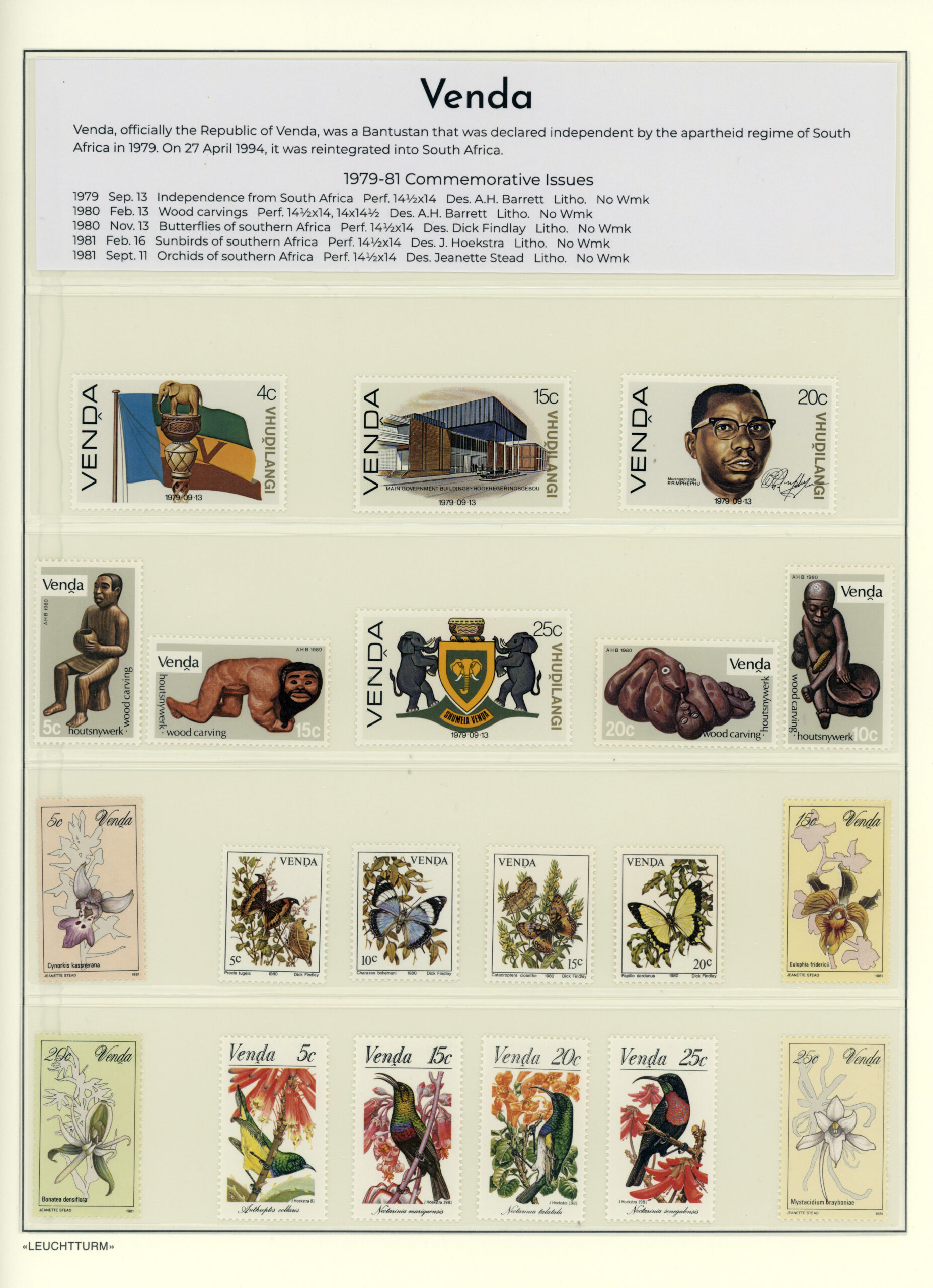
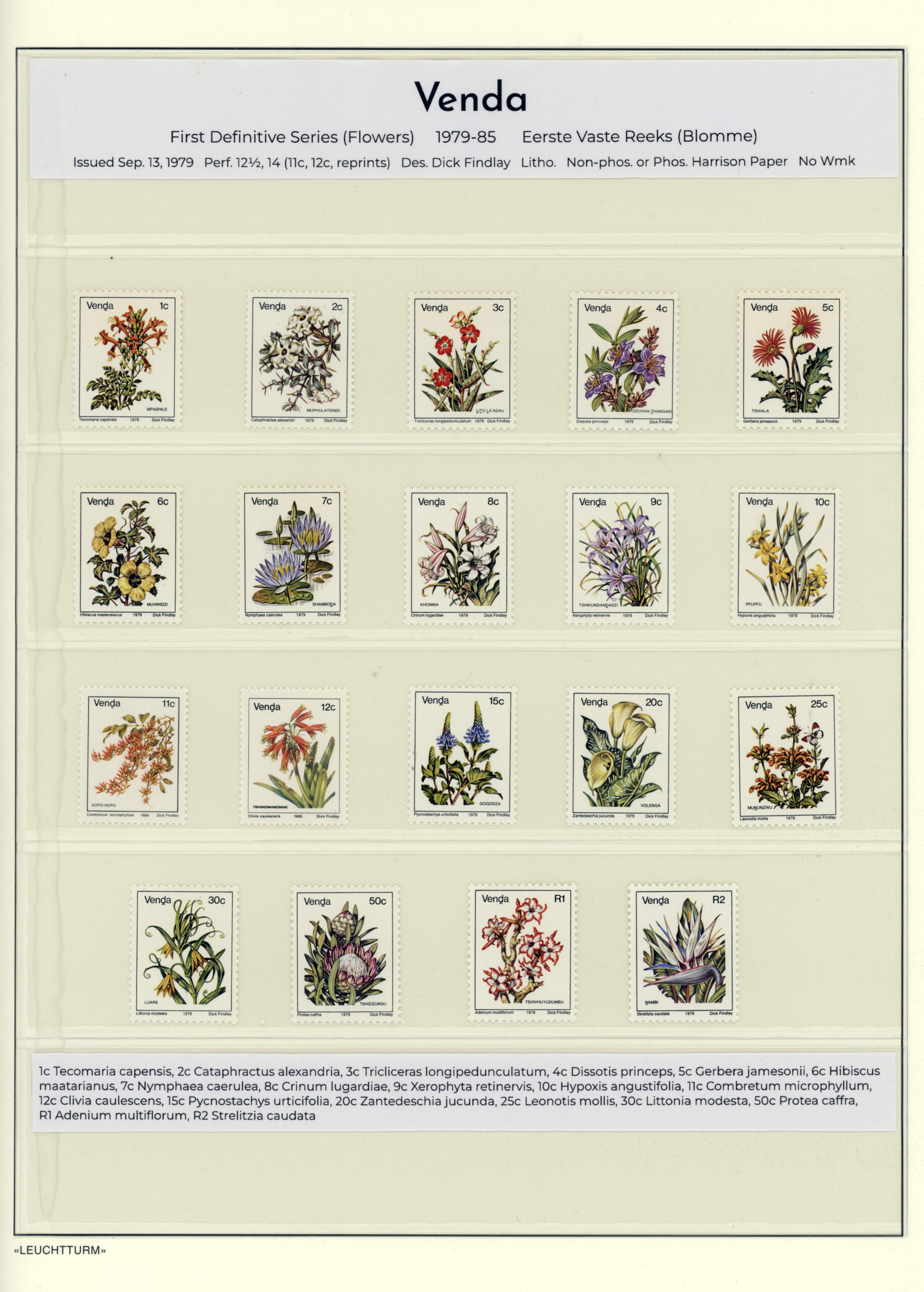
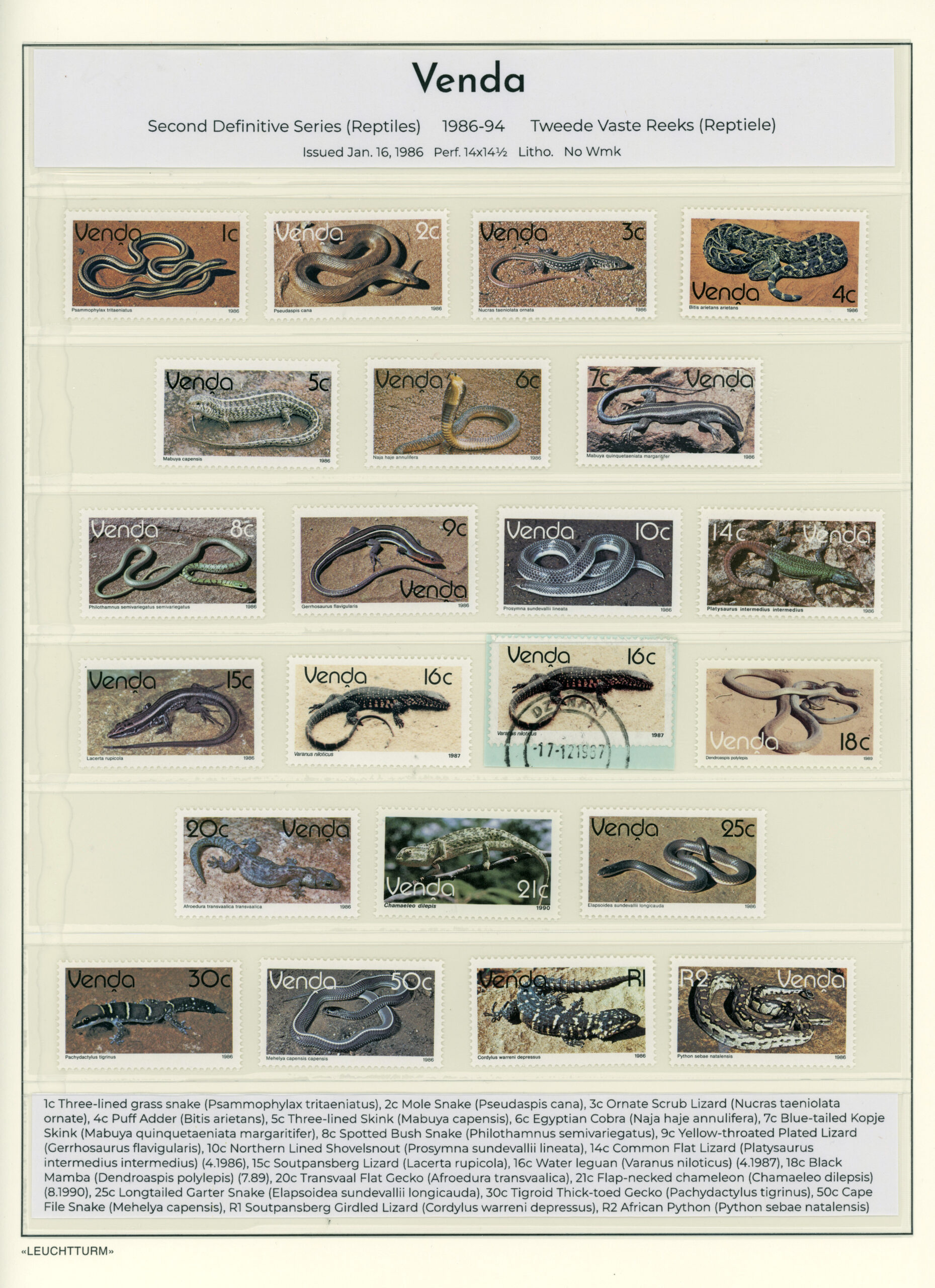
The stamps of last of the four South African homelands that issued stamps, made it into my album: those of Venda. (A sample below).
South African President Cyril Ramaphosa’s parents were of the Venda ethnicity. The Venda people reside primarily in the Limpopo province of South Africa, near the border with Zimbabwe. They have a rich and distinctive culture, including a unique language called Tshivenda or LuVenda (I see it is simply called ‘Venda’ on Google Translate).
Venda, officially the Republic of Venda, was a Bantustan that was declared independent by the apartheid regime of South Africa in 1979. (In the far north of South Africa on the map). On 27 April 1994, independent Venda ceased to exist as it was reintegrated into South Africa to became part of modern-day Limpopo Province. Venda’s stamps were still valid for postage, though— the 16c stamp below on the last page has a 1997 cancellation.
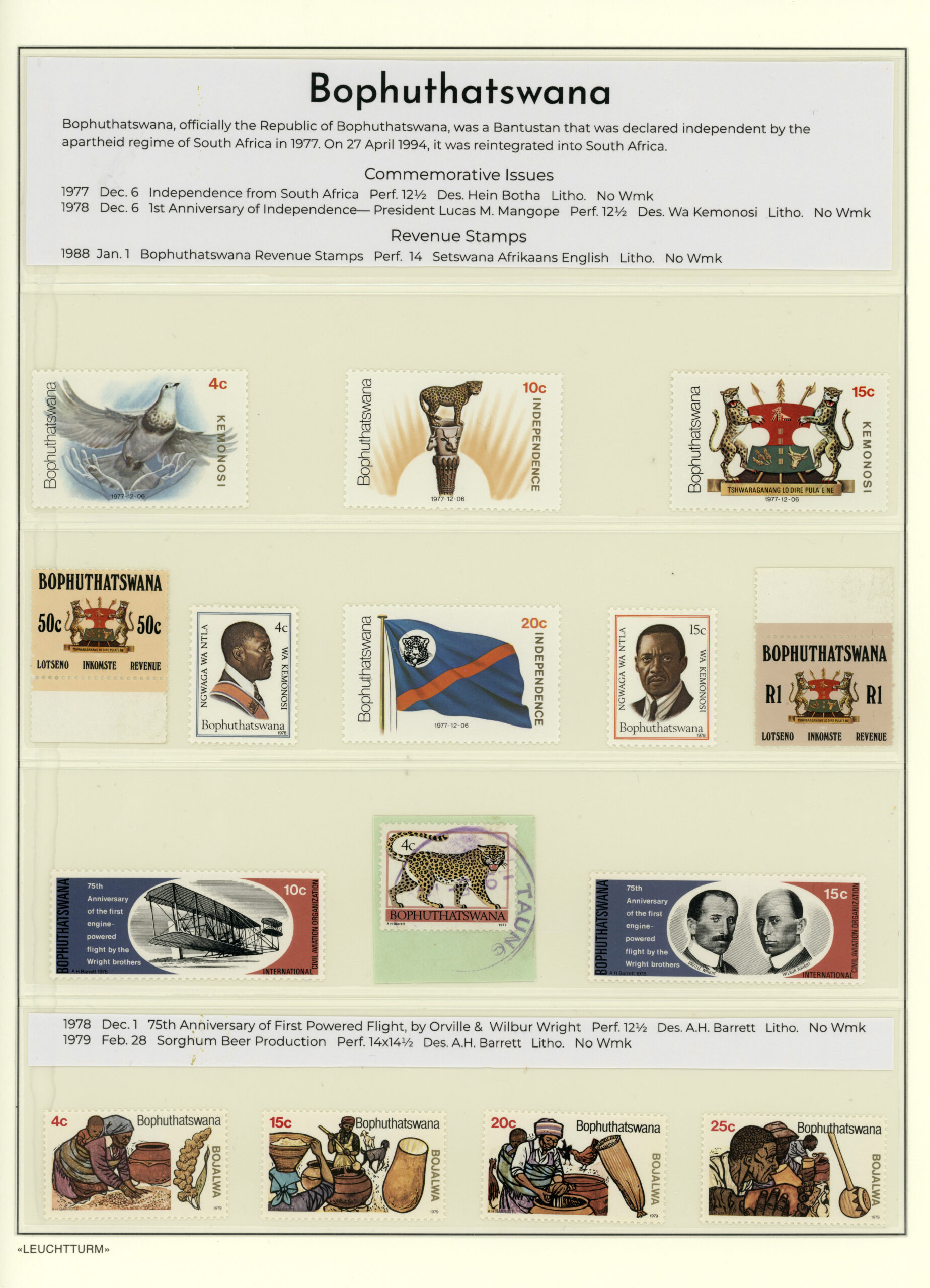
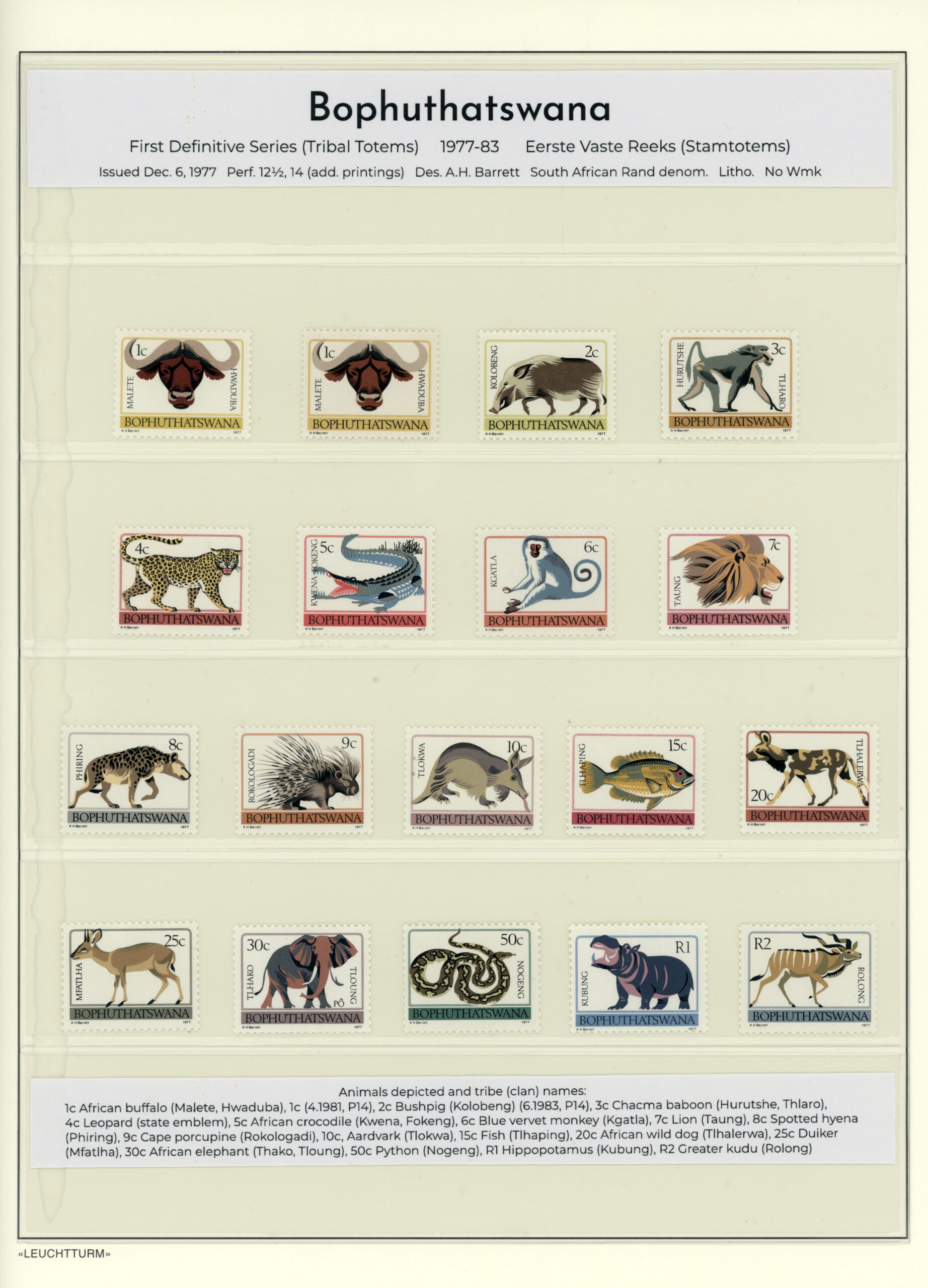
My set of Bophuthatswana stamps are in the stamp album.
Below are the first two pages of stamps, including the colorful set of first definitives that feature stylized African animals as totems for Bophuthatswana clans.
Bophuthatswana was a homeland in South Africa that gained nominal independence in 1977.
Its citizens suffered a number of political crises during its existence (see below).
By 1994 the homelands experiment was over, and Bophuthatswana was reincorporated into South Africa along with all the other homelands.
• Self-government 1 June 1972
• Nominal Independence 6 December 1977
• Coup d’état 10 February 1988
• Coup attempt 1990
• 1994 Bophuthatswana crisis
• Dissolution 27 April 1994
Bophuthatswana (lit. ’gathering of the Tswana people’), officially the Republic of Bophuthatswana (Tswana: Repaboleki ya Bophuthatswana; Afrikaans: Republiek van Bophuthatswana), and colloquially referred to as ‘Bop’ was a Bantustan (also known as “Homeland”, an area set aside for members of a specific ethnicity) that was declared (nominally) independent by the apartheid regime of South Africa in 1977. However, like the other Bantustans of Ciskei, Transkei and Venda, its independence was not recognized by any country other than South Africa. [Source: Wikipedia]
I have expanded my South African stamp collection to include the four Bantustans (homelands) that had issued postage stamps from 1976 to 1994. Technically these are not stamps from South Africa.
Although these stamps were denominated in South African Rand, they were not valid for mail that was sent from outside the homelands.
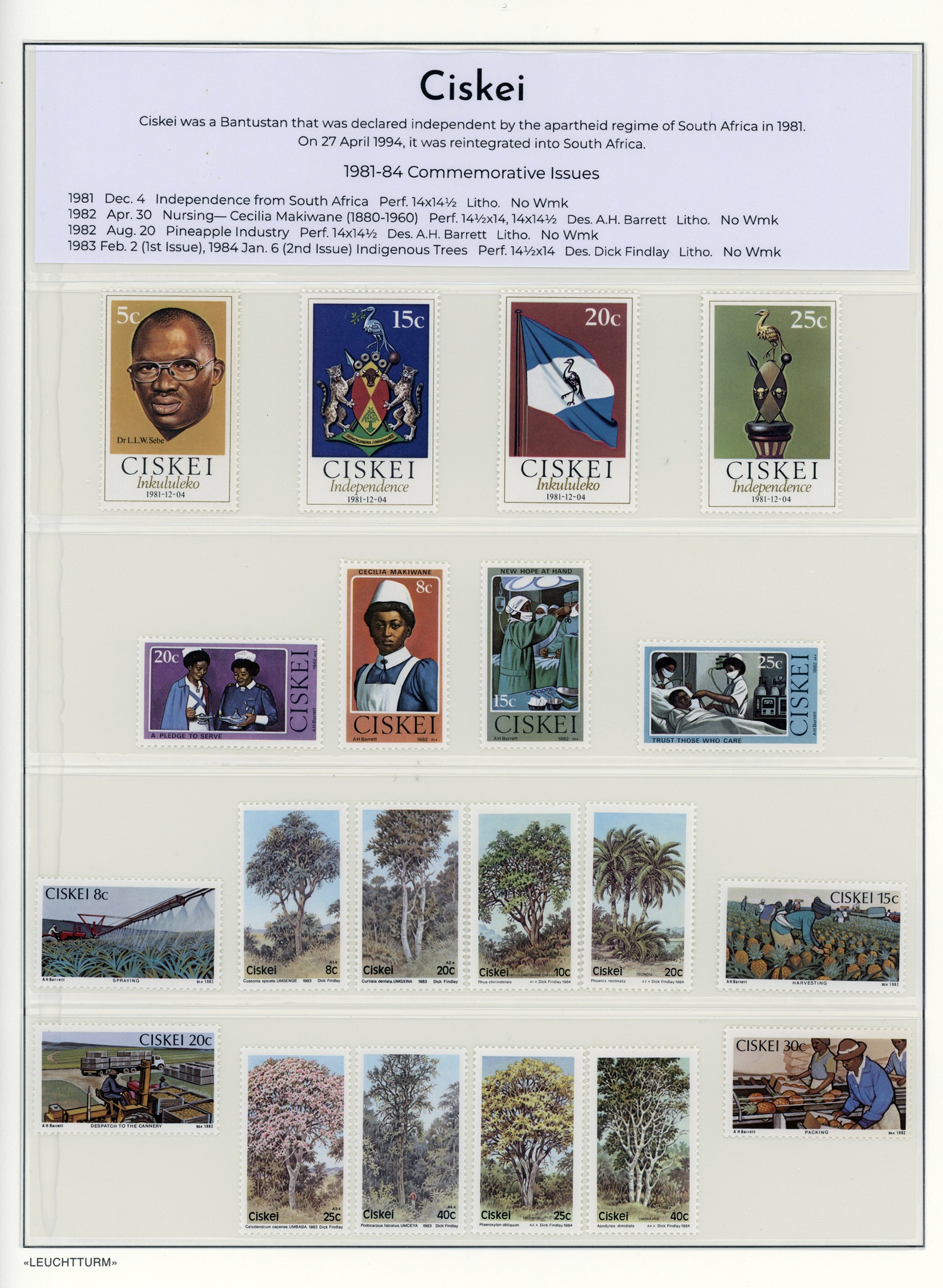
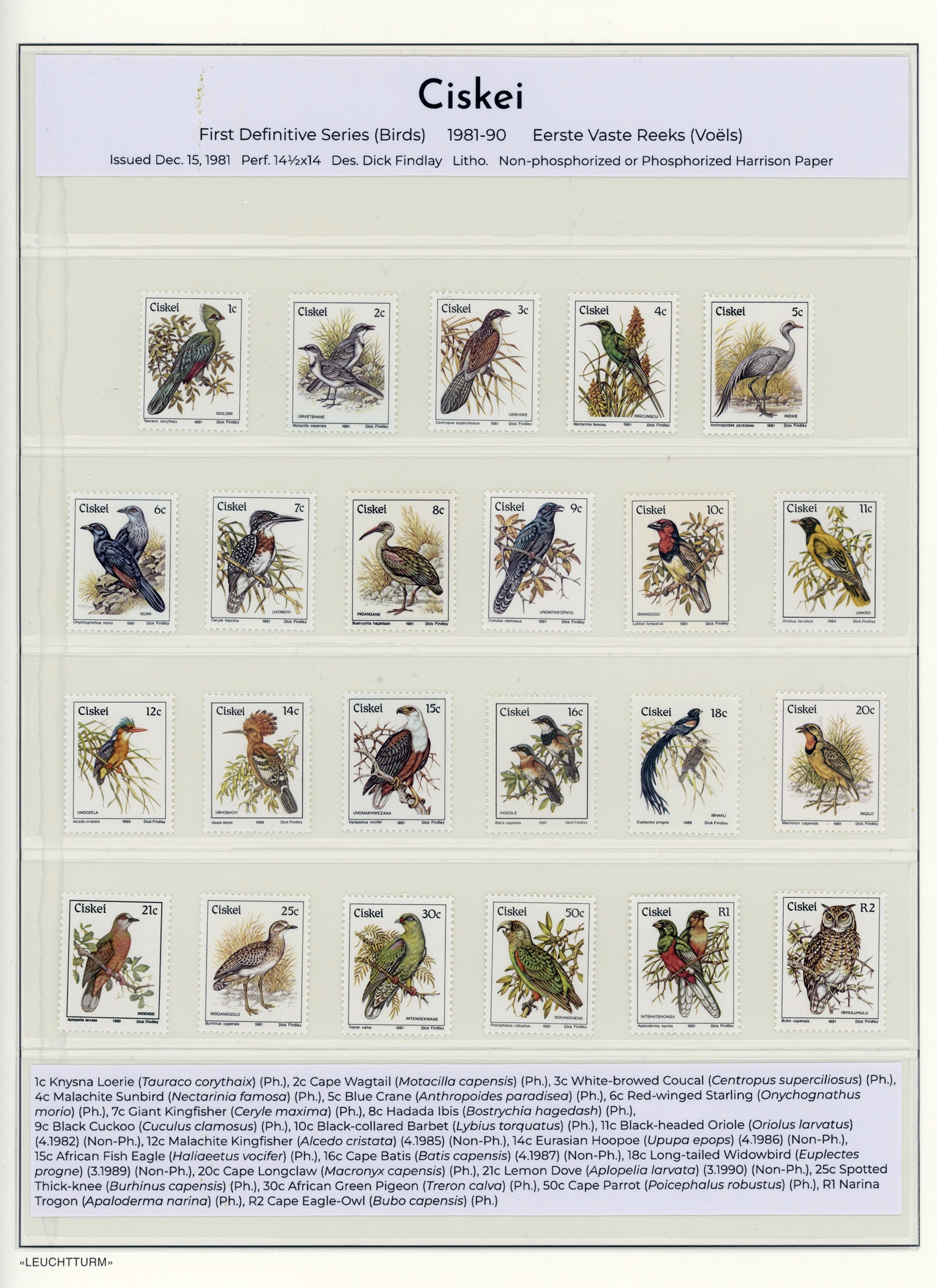
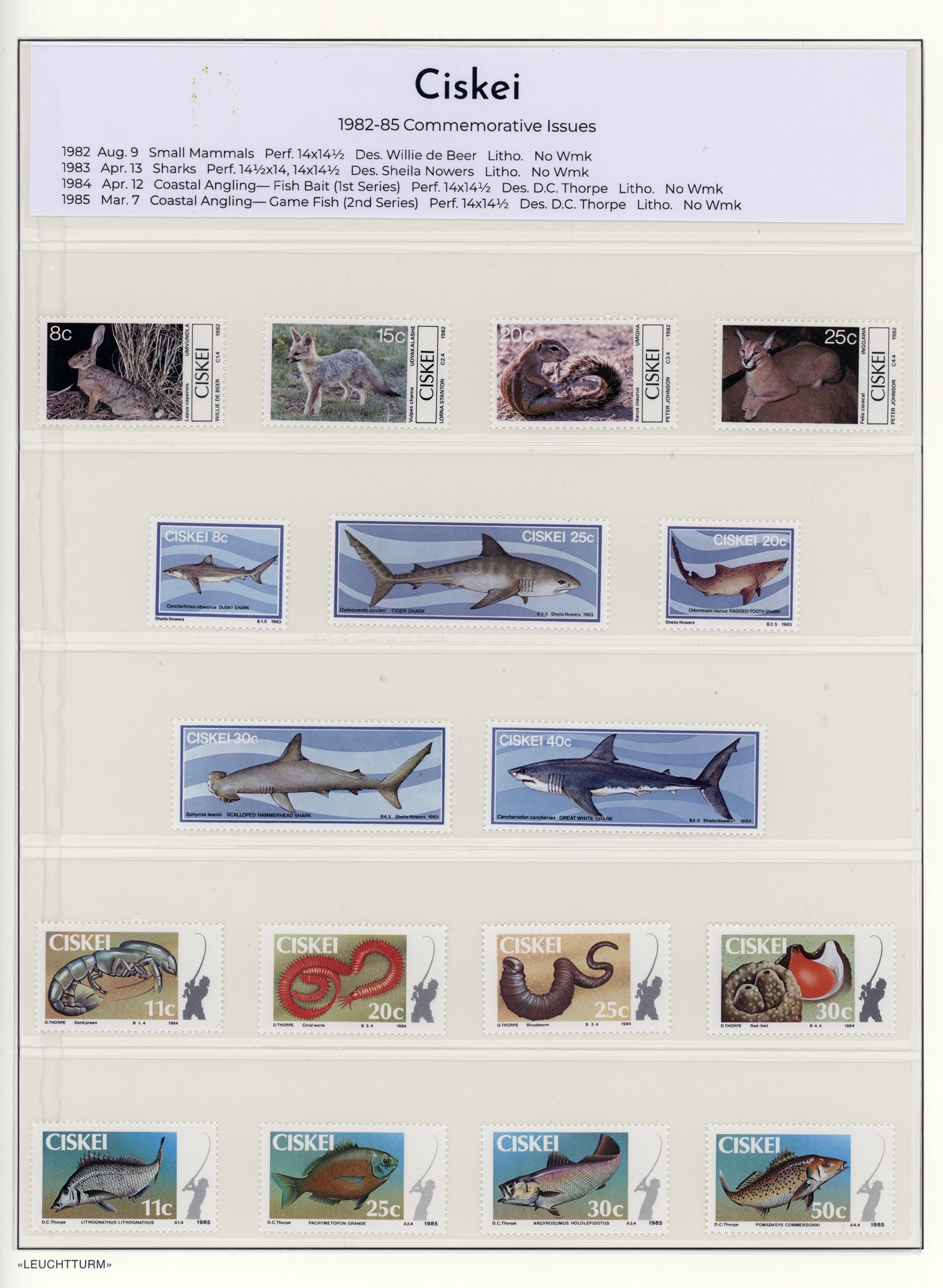
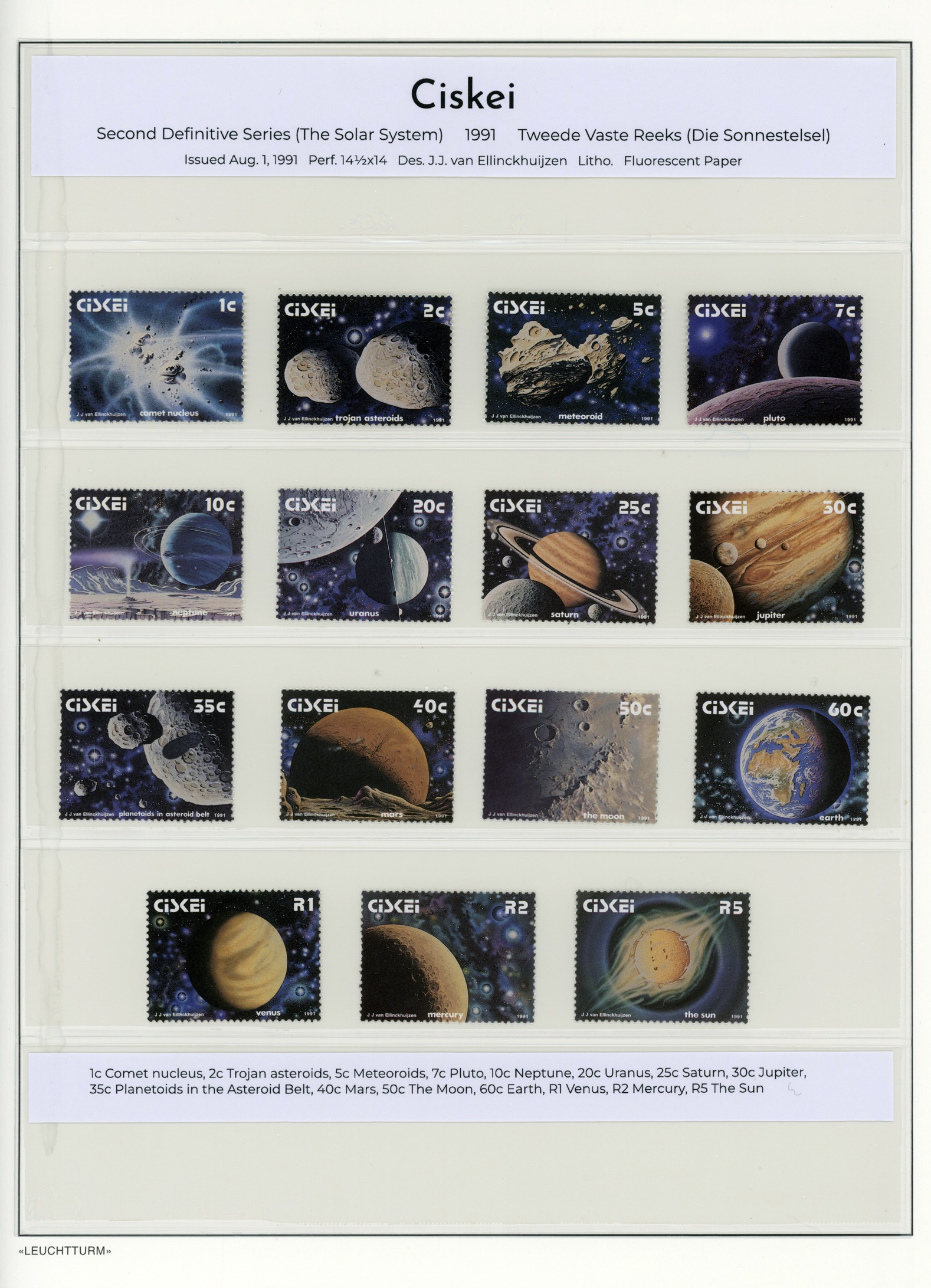
Below is a sampler of pages from my collection for Ciskei.
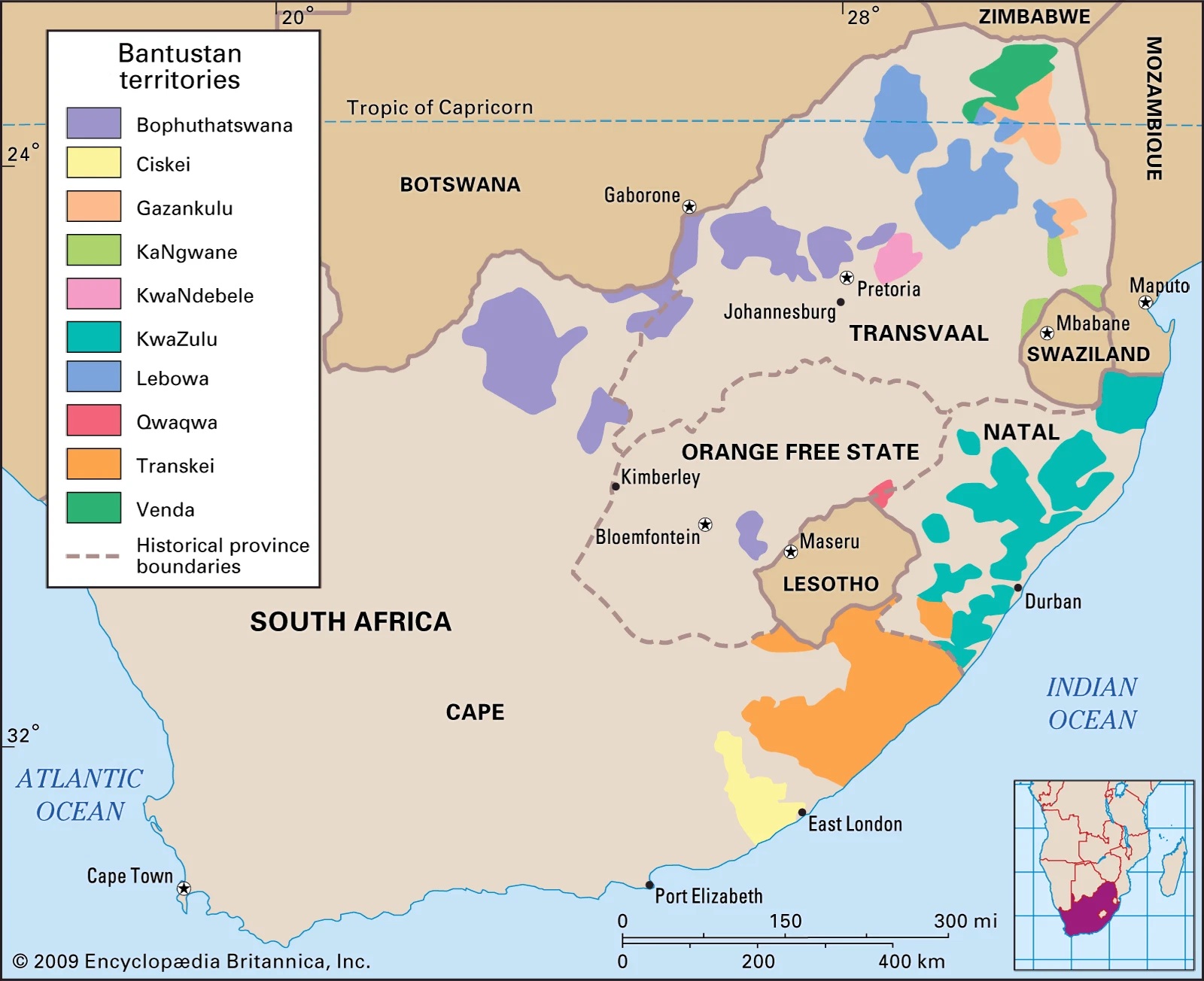
First, a little history. This is what South Africa looked like before the first democratic election of 1994. The four main provinces were established in 1910, and the Bantustans (homelands) were established by the South African apartheid government. After the 1994 election, the Bantustans ceased to exist, and were reincorporated into South Africa. Nine new provinces were established: Eastern Cape, Free State, Gauteng, KwaZulu-Natal, Limpopo, Mpumalanga, Northern Cape, North West, and Western Cape.
[More from Wikipedia: Bantustan]- A Bantustan (also known as a Bantu homeland, a black homeland, a black state or simply known as a homeland) was a territory that the National Party administration of the Union of South Africa (1910–1961) and later the Republic of South Africa (1961–1994) set aside for black inhabitants of South Africa and South West Africa (now Namibia), as a part of its policy of apartheid. The government of South Africa declared that four of the South African Bantustans were independent—Transkei, Bophuthatswana, Venda, and Ciskei (the so-called “TBVC States”), but this declaration was never recognized by anti-apartheid forces in South Africa or by any international government. Other Bantustans (like KwaZulu, Lebowa, and QwaQwa) were assigned “autonomy” but never granted “independence”.
U.S. warplanes strike three Iranian nuclear sites in sweeping attack
The bombing is a major escalation by President Donald Trump, tethering the United States to a conflict with no clear end in sight.
While the U.S. and Iran have fought deadly proxy battles for nearly a half-century in Lebanon, Yemen, the Strait of Hormuz and elsewhere, Trump’s action was the first significant U.S. military strike on Iranian soil since the 1979 overthrow of the U.S.-backed Shah of Iran, Mohammad Reza Pahlavi.
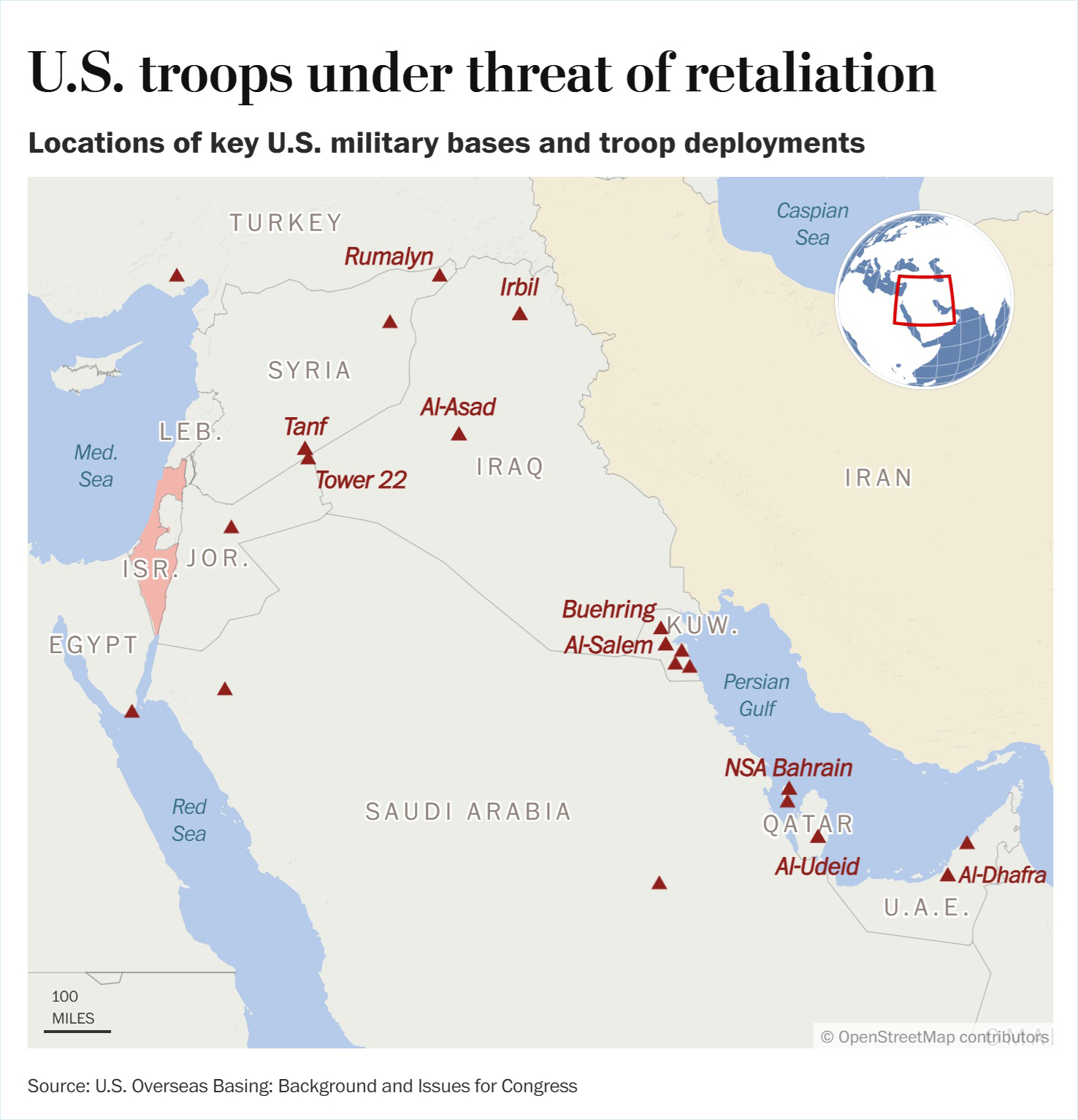
Trump’s decision to enter the conflict raises immediate questions about how Iran or its proxies may react, even as scores of Israeli strikes have left Iranian military capabilities diminished. Iran has threatened to retaliate against U.S. troops, tens of thousands of whom are deployed throughout the Middle East in countries such as Bahrain, Iraq, Kuwait, Saudi Arabia and the United Arab Emirates.
-An extract from Dan Lamothe, Warren P. Strobel and Karen DeYoung’s reporting for the Washington Post
Tens of thousands of U.S. troops are stationed in the Middle East. Al-Asad Air Base, an Iraqi installation 150 miles west of Baghdad that is operated jointly by the Iraqi and U.S. air forces, houses thousands of American troops, the largest U.S. deployment in the country. Iran and its proxies have in recent years attacked it repeatedly. [Map and reporting from the Washington Post]
On his 79th birthday, President Trump spent more than three hours on Saturday taking in the scene at a military parade commemorating the 250th anniversary of the U.S. Army.
The event, which was officially billed as a tribute to service and a showcase of American military history, was hailed by the president’s supporters as a show of strength and a savvy recruitment tactic.
But his critics argued that the event was a further politicization of the military, especially after of a tense week in which Mr. Trump deployed the Marines in Los Angeles to quell protests.
– Zach Montague reporting from Washington D.C. for the New York Times
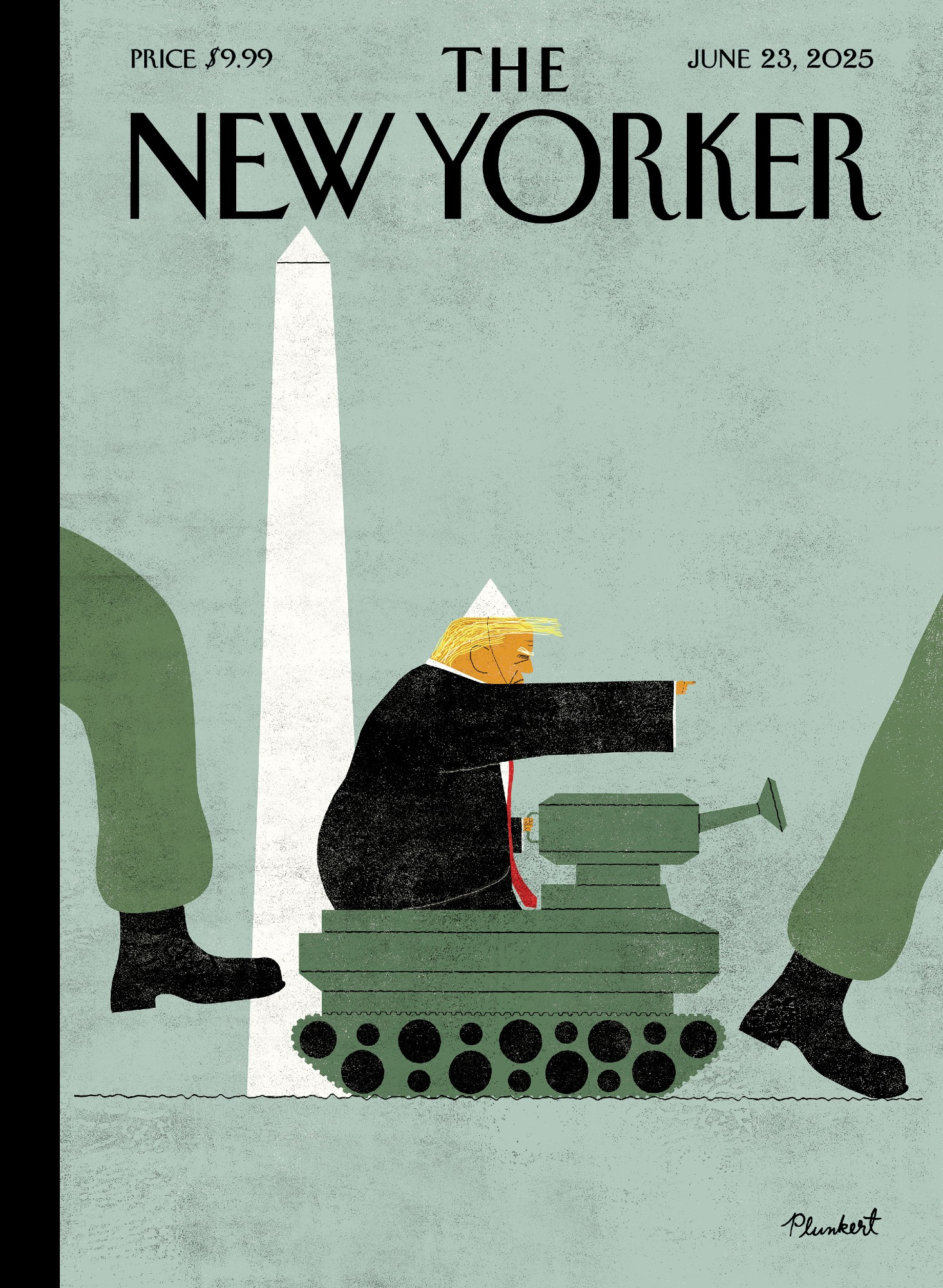
A picture is worth a thousand words. The cover of the upcoming Jun 23 The New Yorker magazine.
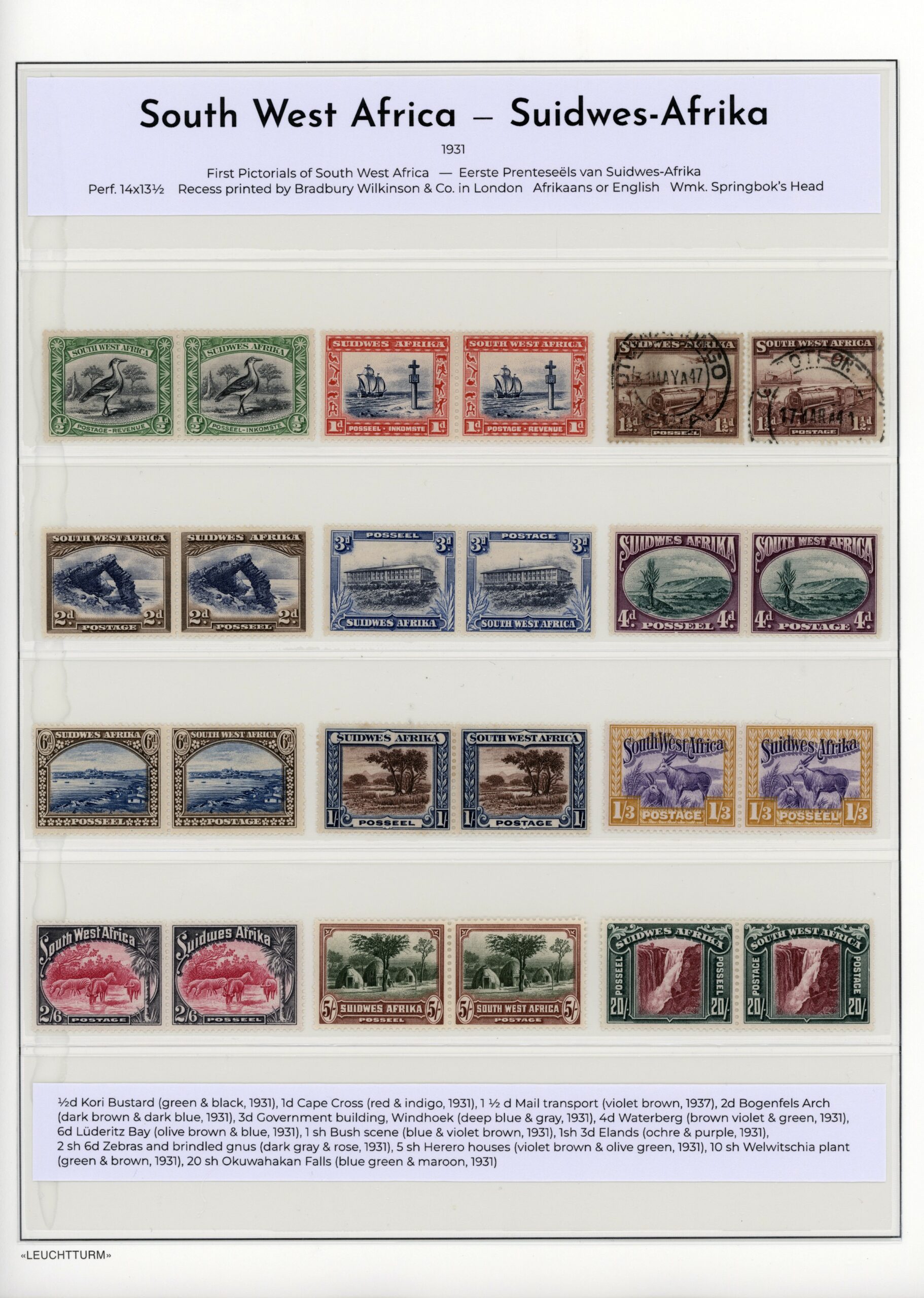
The stamps to complete my 1931 set of South West Africa’s* first definitive stamps arrived in my mailbox today, and I promptly added them into my album.
*Namibia, since 1990. Namibia’s history spans from the arrival of hunter-gatherers like the San and the Bantu-speaking peoples to European colonialism and finally, independence.
Key periods include it as a German colony (1884-1915), a South African mandate (1915-1990), and the struggle for independence during that time, culminating in the nation’s independence on March 21, 1990.
[Source: Google Search Labs | AI Overview]
The 1½ penny was issued later (1937), but I included it in the set .. why not? I have a mint 1½d pair coming, but the used ones that I have now with OTJIEWARONGO and GROOTFONTEIN postmarks are cool, too. What’s unusual with this set is that the country name is in a different font for each denomination. Usually, the lettering for the country name is identical for all the stamps in a definitive set. The 20 shilling stamp denomination at the very end of the set is an extremely high value and must have been intended for very heavy or very large parcels. (20 shillings translates to a modern currency value at least 10x than the highest denominated modern stamps!). Furthermore: The “Okuwahakan Falls” depicted on the 1931 20-shilling stamp of South West Africa is something of a mystery. Despite its prominent appearance on the stamp, there is no well-documented waterfall in present-day Namibia known by this name, either historically or currently. Chat GPT says it is possibly a former or obscure name for a known waterfall: One candidate is Ruacana Falls on the Kunene River (the border with Angola). Another is Epupa Falls, further downstream on the Kunene. Both are among Namibia’s only notable large waterfalls. It is speculative, but “Okuwahakan” could be an old or alternate indigenous name for one of these falls.
It’s the 81st D-Day Anniversary today.
The wars in Ukraine and Gaza are dragging on.
And we are left with the smoldering wreckage of the Trump-Musk bromance.
‘I HATE MY X!‘ ‘says’ Trump of Musk on the cover of today’s New York Post .. and ‘Big, beautiful break-up—Trump-Elon bromance explodes into insults, threats*.
*X is formerly Twitter, now owned by Musk, from where he flung insults and allegations. (Trump fired back on his social media platform, called Truth Social). The big, beautiful is a reference to the The ‘One Big Beautiful Bill’, the massive and garbage federal bill proposed by Trump and his Republicans that includes tax cuts for the rich, debt ceiling increases, and changes to social programs. The Committee for a Responsible Federal Budget estimates that by Fiscal Year (FY) 2034 the bill would increase America’s debt by nearly $3 trillion.
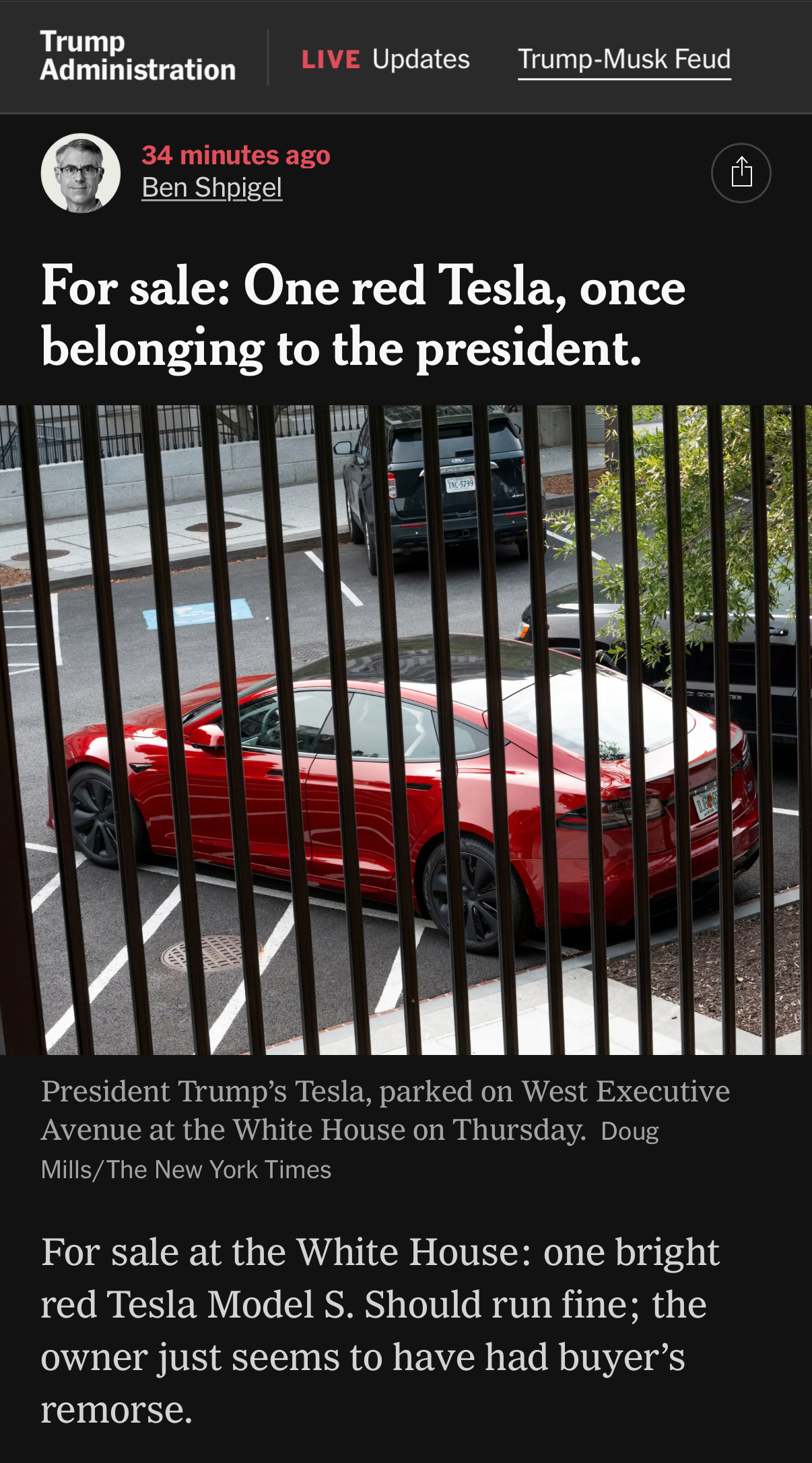
Reporting from the New York Times. One wonders if Trump took even one turn at the wheel of this Tesla Model S. (Definitely not on a public road, but presidents ARE permitted to drive on private property, such as golf courses or within controlled estates.)