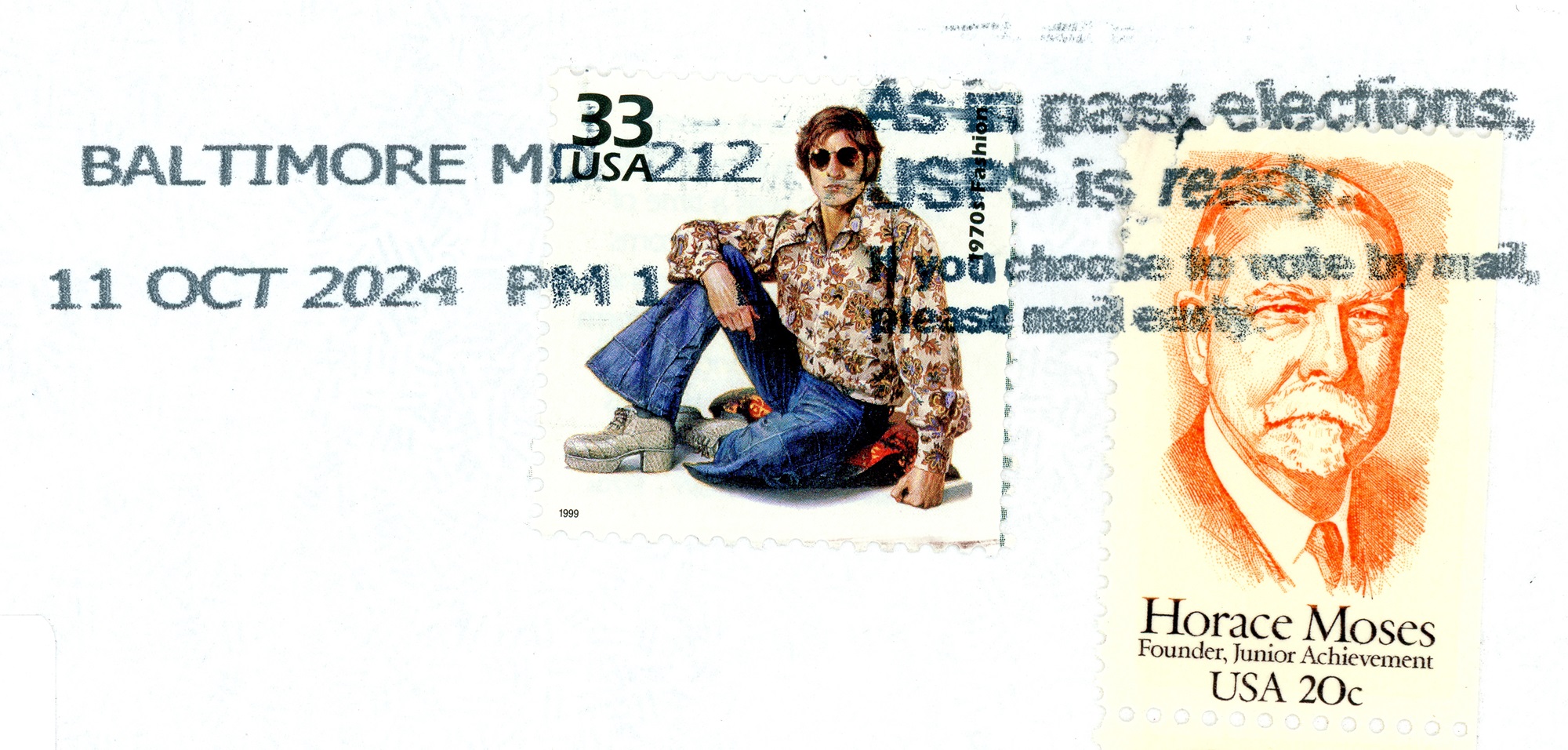
There was mail from Maryland in my mailbox today.
The cancellation says that ‘As in past elections, the USPS is ready. If you choose to vote by mail, please mail early.’
(Early voting has started in some states, and here in Washington State we will get our mail-in ballots by Friday, or by early next week).
Let’s check out the stamps.
1999 Celebrate the Century, 1970s – Bicentennial, Watergate, and Earth Day Issued Nov. 18, 1999 Perf. 11½| Offset, Intaglio printing | Wmk. None No 3321| 33c| Multi-colored | 1970s Fashion
1984 Horace Moses Issued Aug. 6, 1984 Perf. 11 |Engraved printing (combination press) |Wmk. None No 1845| 20c| Orange & dark brown | Junior Achievement founder, Horace Moses [Sources: stampworld.com, mysticstamp.com]
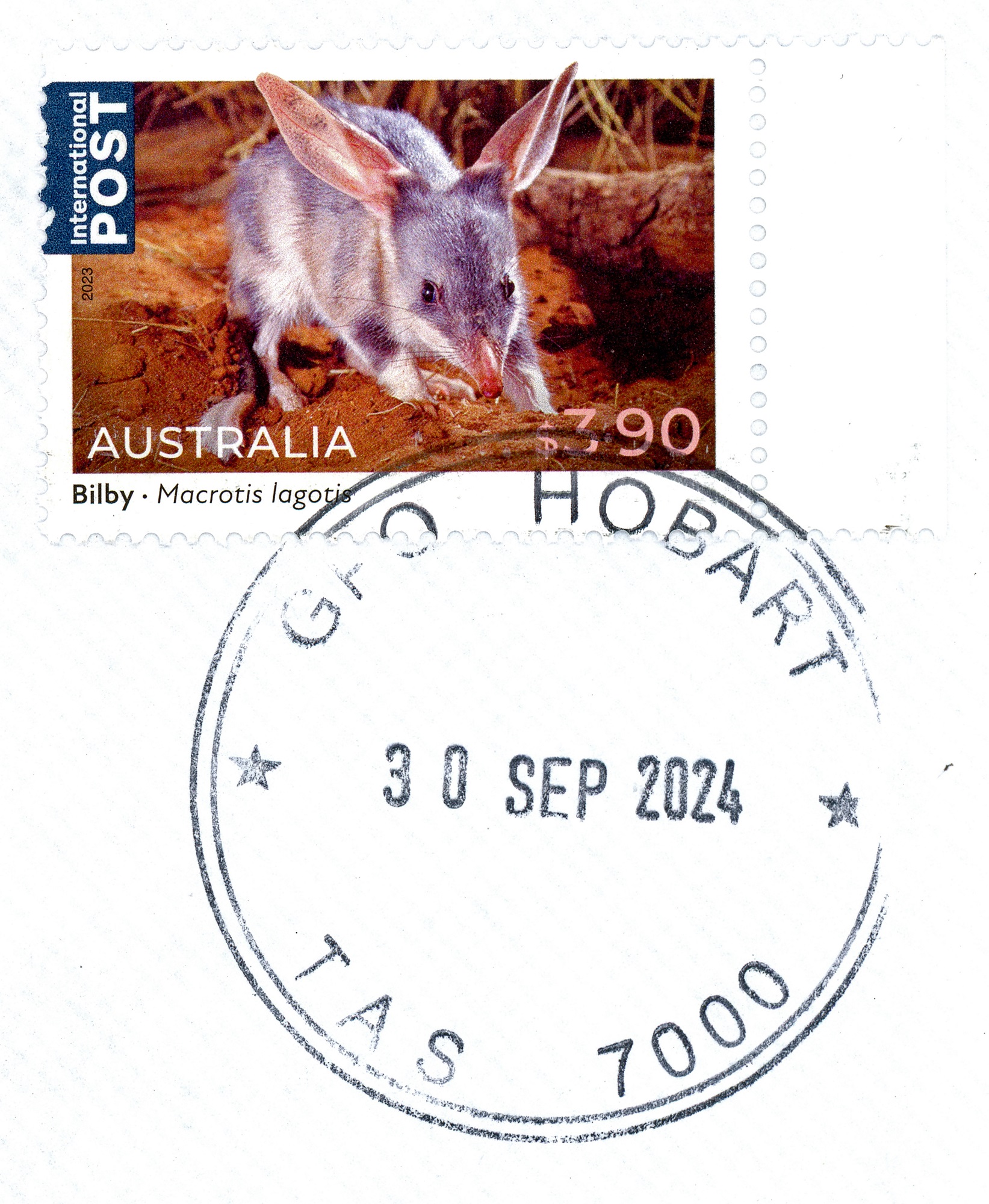
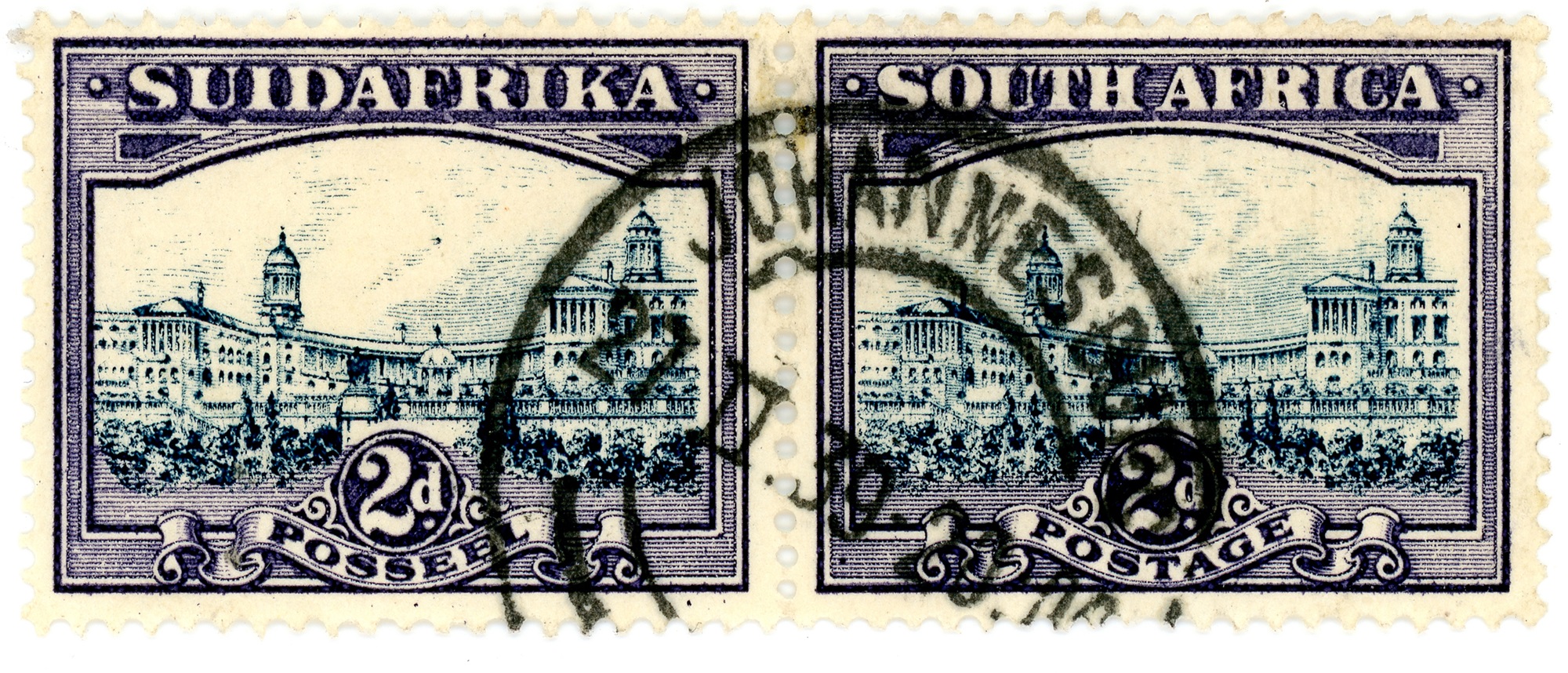
There was mail from an Ebay seller in Tasmania, Australia, in my mailbox today— with a single pair of South African stamps inside.
2023 Australia’s Native Animals – International Stamps Issued Jun. 26, 2023 Perf. 13¾ x 14½ |Design: Jason Watts Engraving/RA Printing | No watermark No. 4205 AUS$ 3.90 |Multi-colored |Bilby (Macrotis lagotis) Notes: The bilby (Macrotis lagotis) is a desert-dwelling marsupial about the size of a rabbit. It was once widely distributed through arid and semi-arid Australia, but wild populations are now restricted to spinifex grassland in Western Australia and the Northern Territory, and to a small region of southwestern Queensland. [Sources:stampworld.com, Australia Post Stamp Bulletin No 384]1930-1945 South Africa Definitive Issue (designs redrawn) Issued Sep. 1, 1938 Perf. 15×14 |Photogravure |Wmk. Multiple Springbok heads Se-tenant pair of Afrikaans & English inscribed stamps SACC 43c 2d |Blue and violet |Union Buildings, Pretoria [Source: The South Africa Stamp Colour Catalogue, 1988]
Here’s a Cybertruck clad in white wrap, that we had spotted in Columbia City today.
There is absolutely nothing wrong with a classic ice white look for one’s wheels— but how about a whitish wrap with a little pizzazz, such as the Satin Flip Ghost Pearl (from the website buywrap.com)?
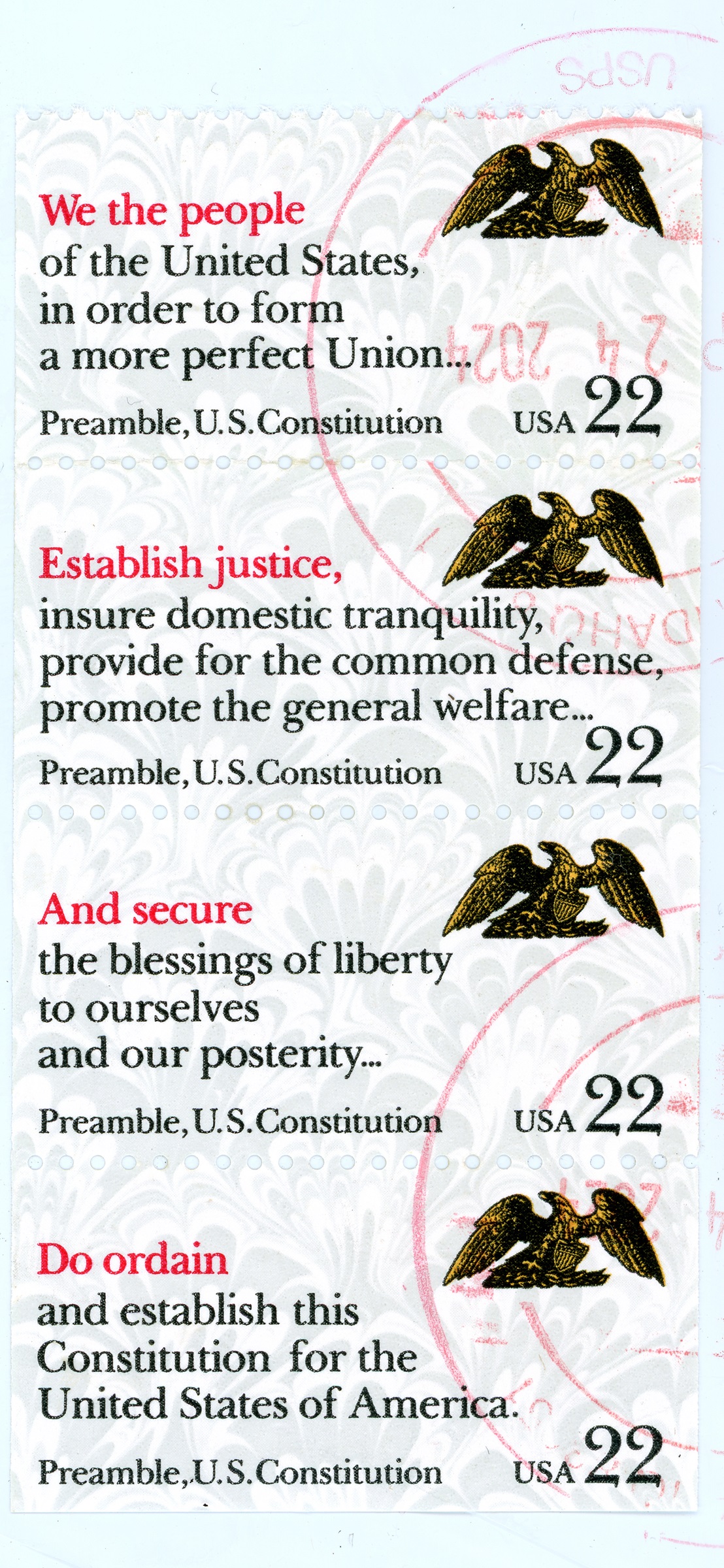
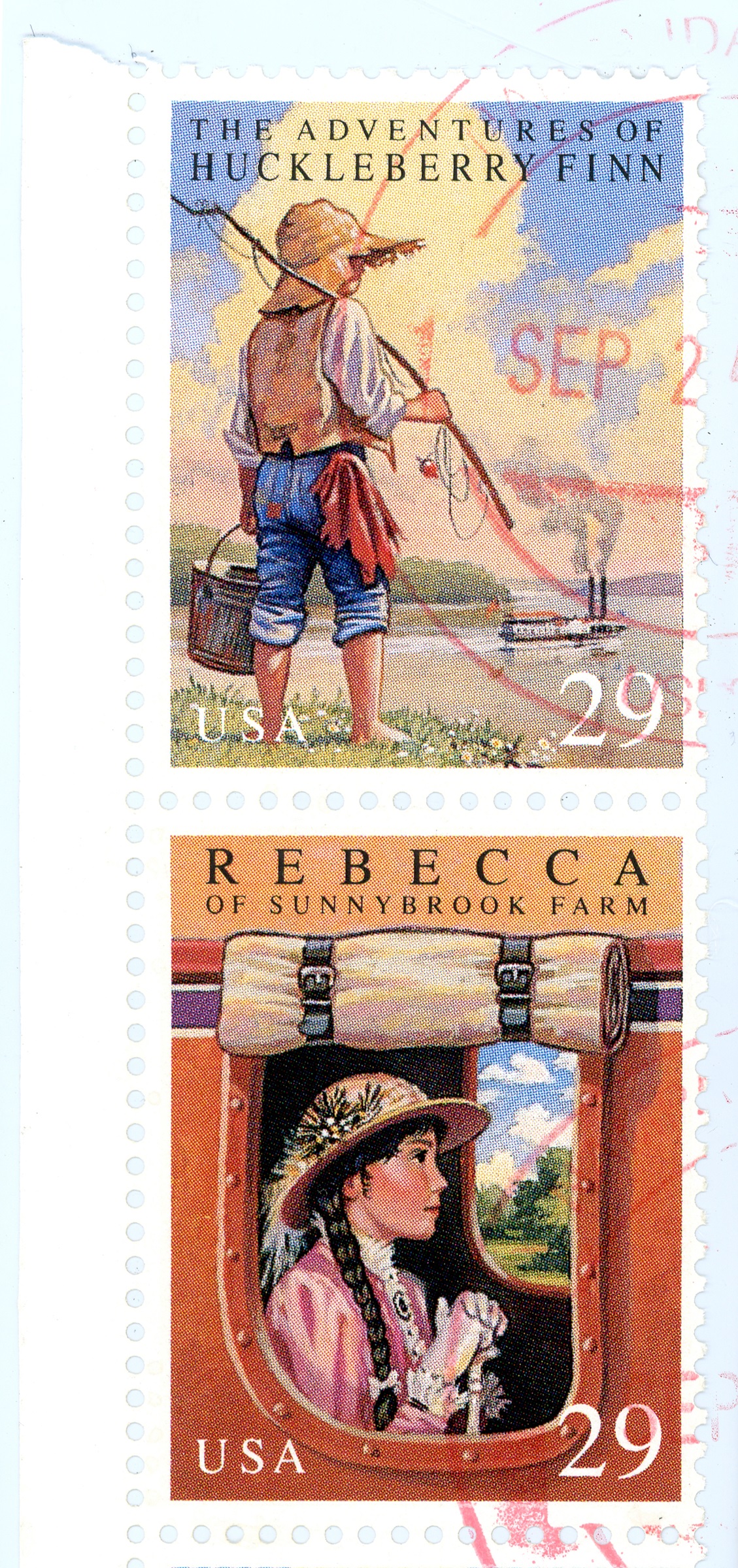
These stamps from the USA landed in my mailbox (on an envelope from an Ebay seller that I had bought stamps from).
200th Anniversary of the US Constitution Issued Aug. 28, 1987 Perf. 10 hor. on 1 or 2 sides Photogravure Booklet with 4 panes of 5 stamps printed in cylinders of 120 2355 A1720 22c |Multi-colored |Preamble to the US Constitution 2355 A1721 22c |Multi-colored |Preamble to the US Constitution 2355 A1722 22c |Multi-colored |Preamble to the US Constitution 2355 A1723 22c |Multi-colored |Preamble to the US Constitution [Source: 2003 Scott Stamp Catalogue Vol. 1]Classic Books Issued Oct. 23, 1993 Perf. 11 Litho. & Engr. Booklet with 4 panes of 5 stamps printed in cylinders of 120 2787 A2126 29c |Multi-colored |The Adventures of Huckleberry Finn* 2785 A2124 29c |Multi-colored |Rebecca of Sunnybrook Farm** [Source: 2003 Scott Stamp Catalogue Vol. 1]
*The Adventures of Huckleberry Finn is a novel by American author Mark Twain that was first published in the United Kingdom in December 1884 and in the United States in February 1885. [From Wikipedia] **Rebecca of Sunnybrook Farm is a classic American 1903 children’s novel by Kate Douglas Wiggin that tells the story of Rebecca Rowena Randall and her aunts, one stern and one kind, in the fictional village of Riverboro, Maine. {From Wikipedia]
I had business downtown and missed the No 10 bus on the way back.
Oh well, I thought, it’s such a beautiful day— let’s just walk back up to Capitol Hill.
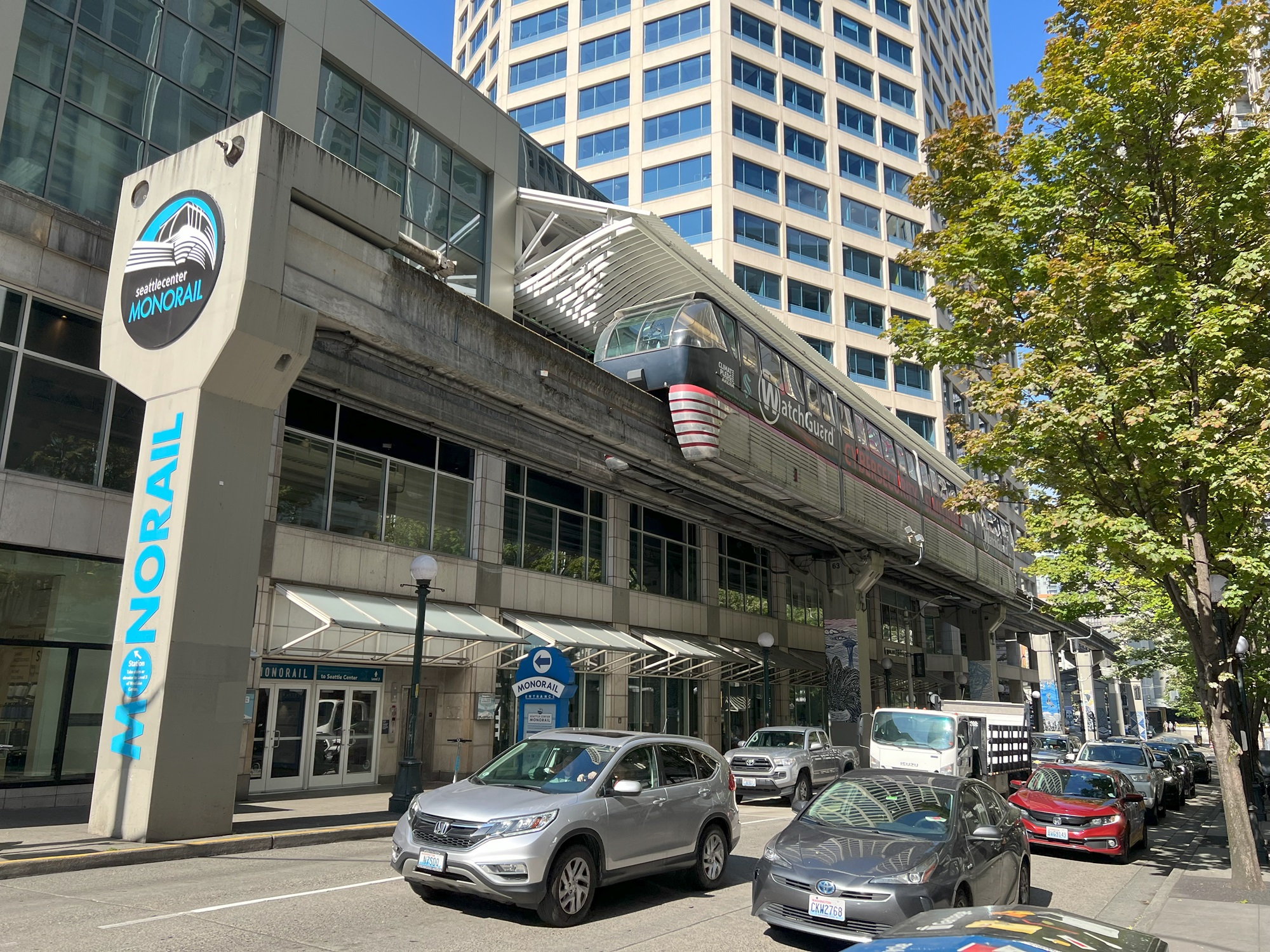
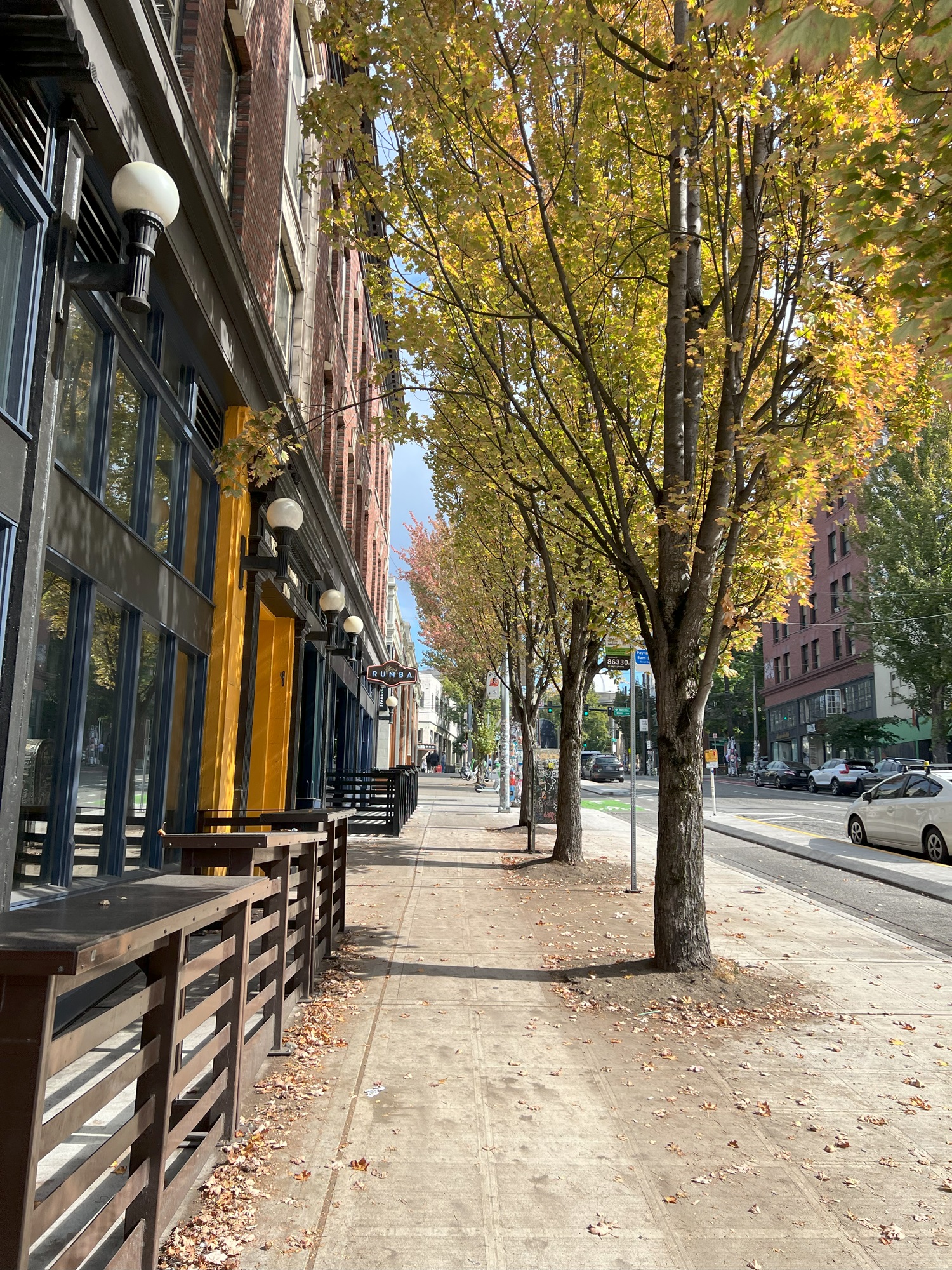
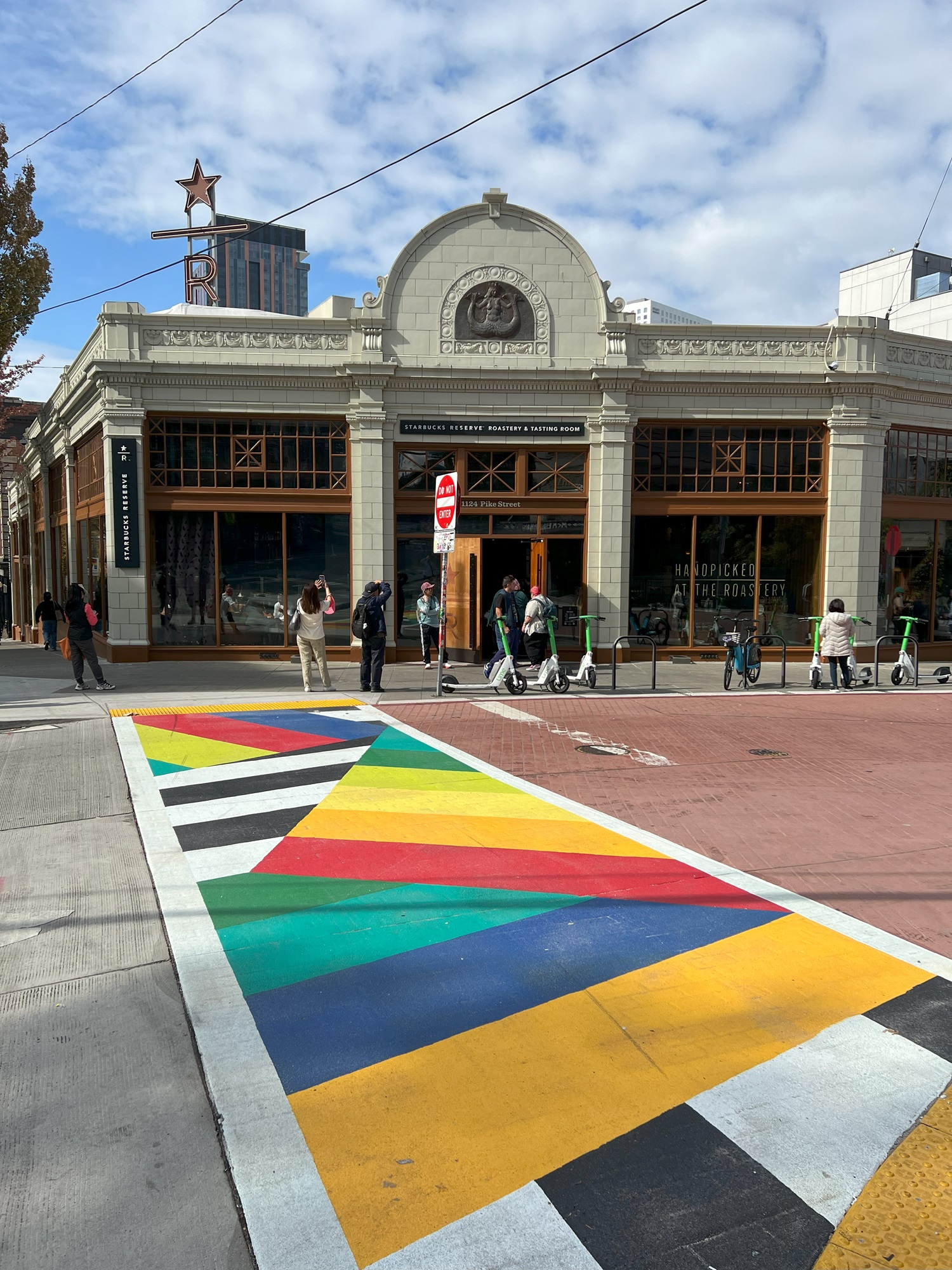
Top to bottom: The monorail station at Westlake Center. The Summit Convention Center, the addition to the original Seattle Convention Center. (The Arch + Summit Convention Centers hosted 160 events in 2023, up from 114 in 2022, but still came in with an operating loss of $23 million for 2023). Fall leaves at East Pike Street and Boren Avenue. The Starbucks Roastery at East Pike Street and Melrose Avenue. The pooch is wearing booties. Beer truck from Ninkasi Brewing Company in Eugene, Oregon. Korean Restaurant on Denny Way. (And now you know how to write Korean Restaurant in Korean!).
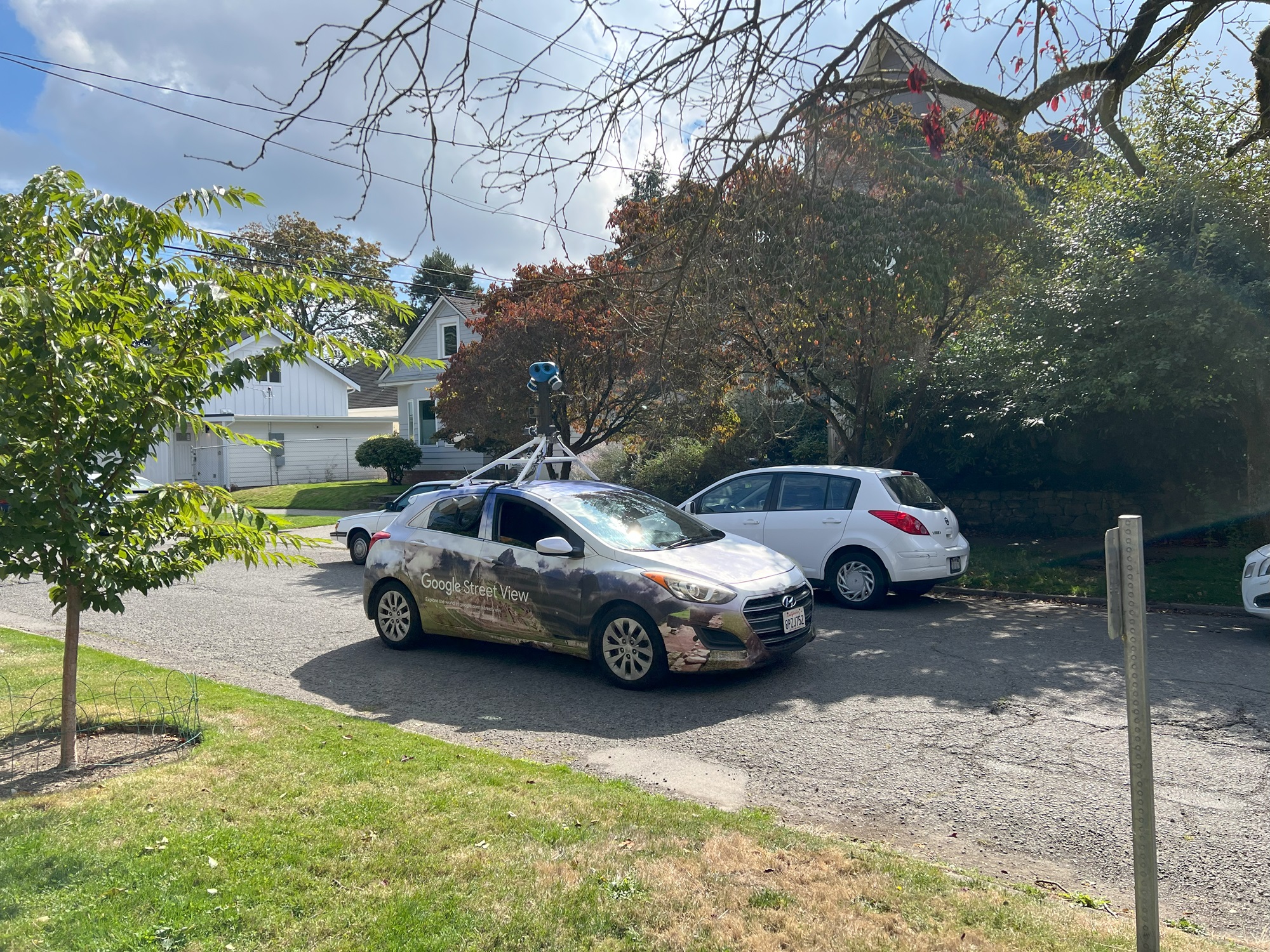
Hey! And here’s the Google Street View car at work. Maybe an image of me will make it onto the next update for Capitol Hill. 😆
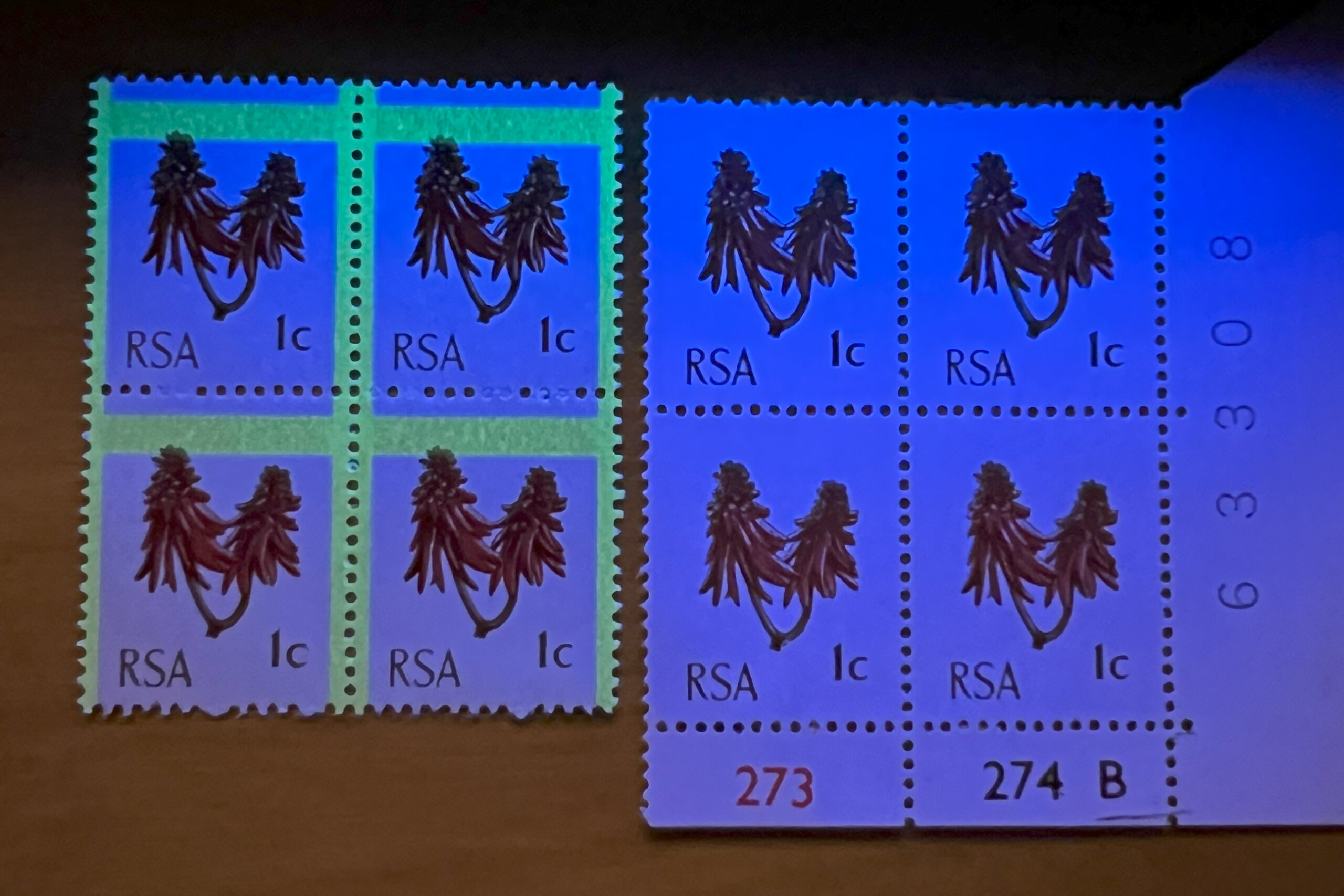
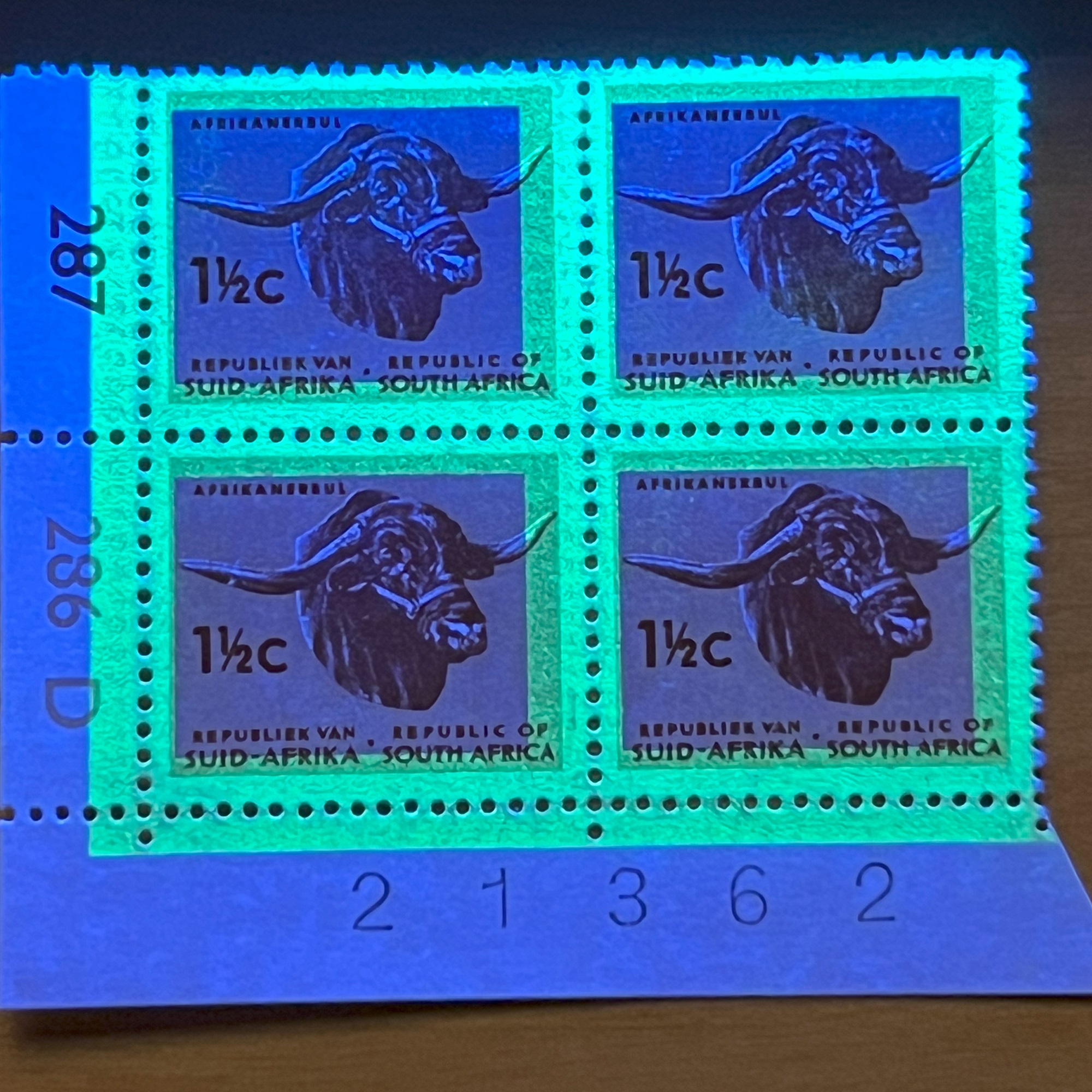
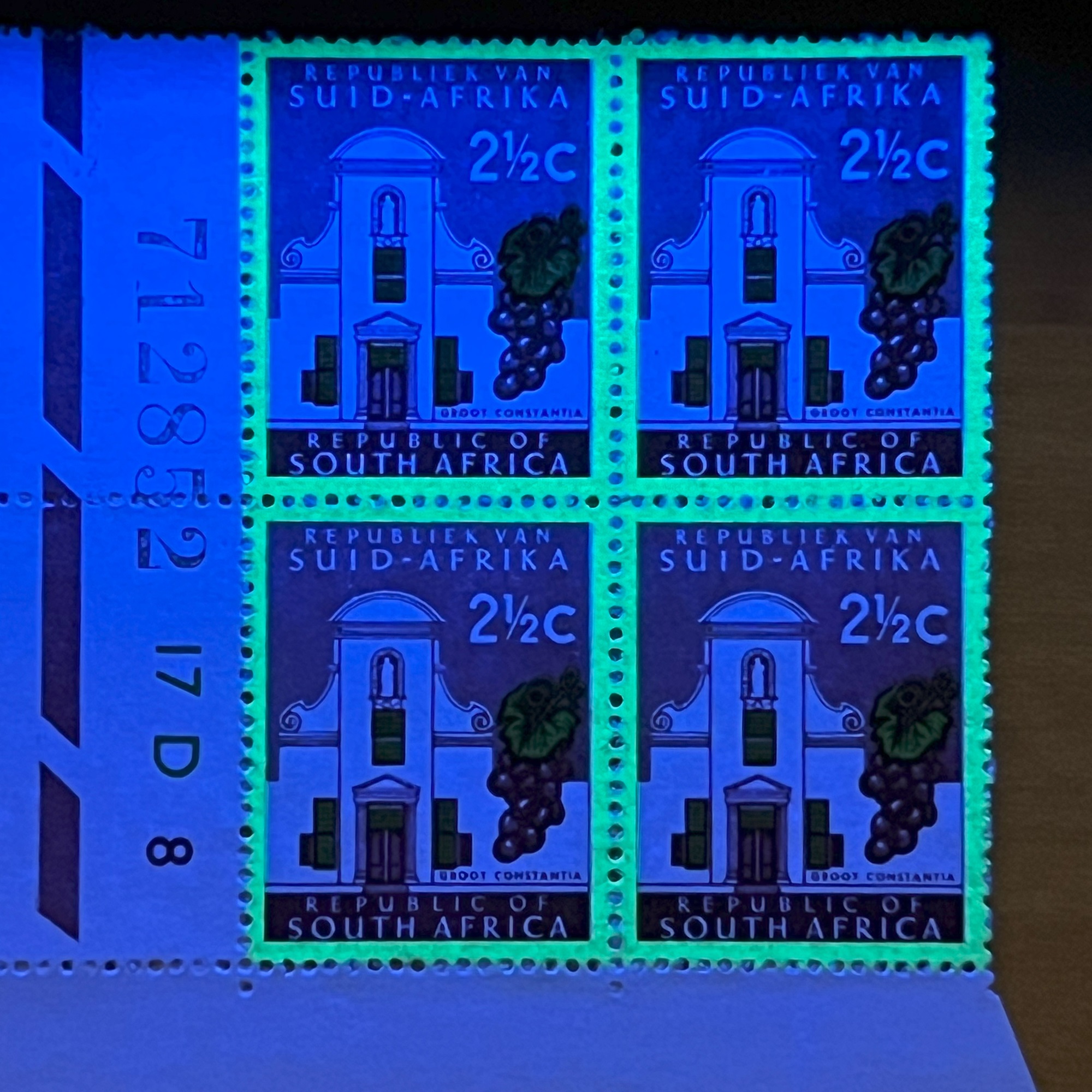
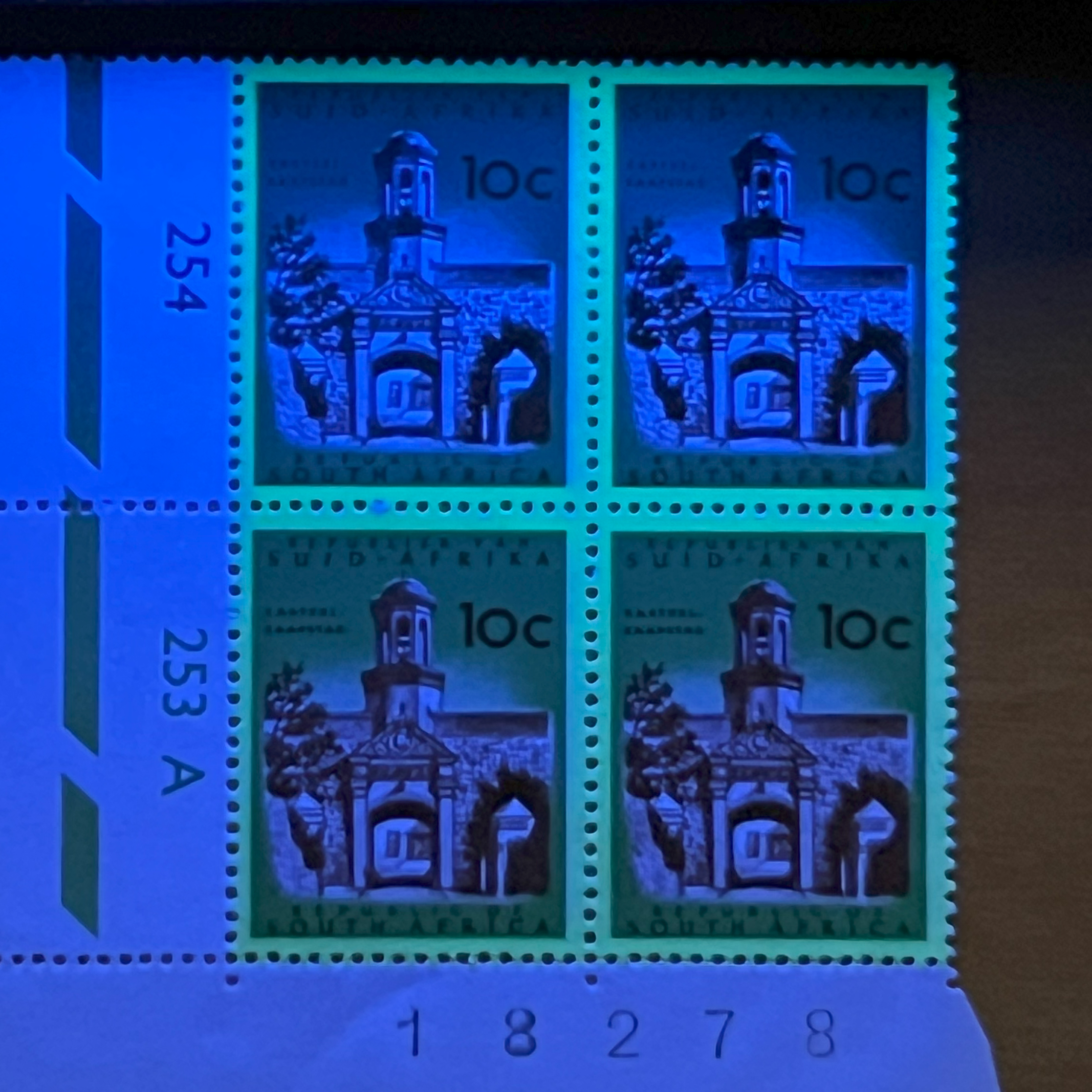
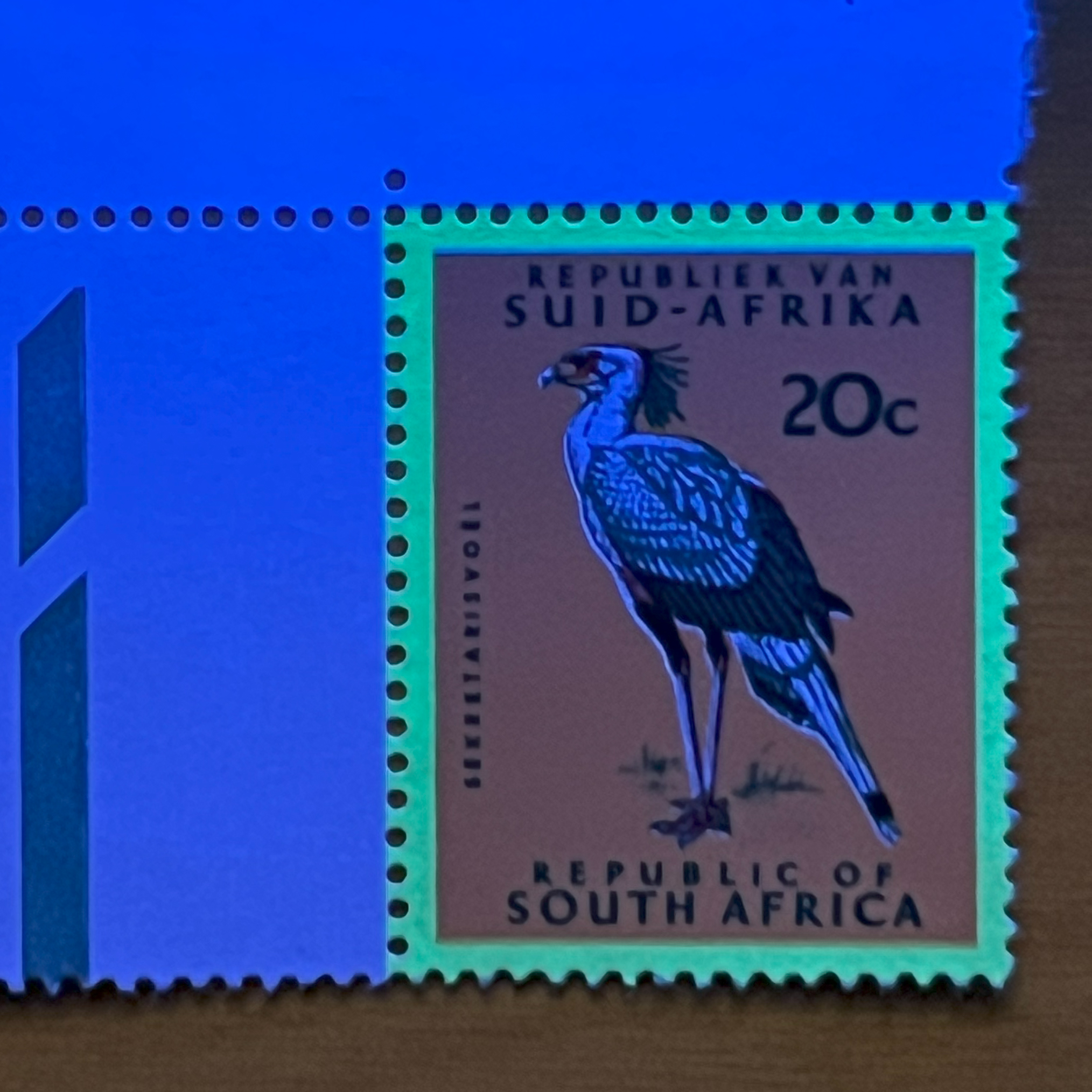
My little ultraviolet lamp arrived today: one that is specifically designed to inspect postage stamps. (My pictures below).
Starting in 1969, South Africa began to add phosphorescent frames to stamps from its first definitive series of stamps*. Starting in 1971, the phosphorescent element appeared throughout the paper. It is almost impossible to distinguish between these two types of stamps without the aid of an ultraviolet lamp.
*Definitive series of stamps for the Republic of South Africa. The Union of South Africa became the Republic of South Africa in 1961 when it gained its independence from Great Britain.
Republic of South Africa First Definitive Series, Redrawn Issued 1969-1972 Perf. 14×13½ Photogravure, chalk-surfaced paper, printed with phosphor bands 282 168 ½c New blue, carmine-red and yellow ochre | African Pygmy Kingfisher [Source: Stanley Gibbons Stamp Catalogue: Commonwealth & British Empire Stamps, 2016 Edition]Republic of South Africa First Definitive Series, Redrawn Issued 1969-1972 Perf. 13½x14 Photogravure, chalk-surfaced paper, printed with phosphor bands (LEFT, issued 1969, with bands badly misplaced! ) and without phosphor bands (RIGHT, issued 1971) 277 169 1c Rose-red & olive brown | Coral tree flowers [Source: Stanley Gibbons Stamp Catalogue: Commonwealth & British Empire Stamps, 2016 Edition]Republic of South Africa First Definitive Series, Redrawn Issued 1969-1972 Perf. 14×13½ Photogravure, chalk-surfaced paper, printed with phosphor bands 284 132 1½c Red brown and light purple | Afrikaner bull [Source: Stanley Gibbons Stamp Catalogue: Commonwealth & British Empire Stamps, 2016 Edition]Republic of South Africa First Definitive Series, Redrawn Issued 1969-1972 Perf. 14 Photogravure, chalk-surfaced paper, printed with phosphor bands 285 133 2c Ultramarine and yellow | Pouring gold [Source: Stanley Gibbons Stamp Catalogue: Commonwealth & British Empire Stamps, 2016 Edition]Republic of South Africa First Definitive Series, Redrawn Issued 1969-1972 Perf. 14 Photogravure, chalk-surfaced paper, printed with phosphor bands 286 134 2½c Violet and green | Groot Constantia wine estate [Source: Stanley Gibbons Stamp Catalogue: Commonwealth & British Empire Stamps, 2016 Edition]Republic of South Africa First Definitive Series, Redrawn Issued 1969-1972 Perf. 14 Photogravure, chalk-surfaced paper, printed with phosphor bands 287 135 3c Red and deep blue |Burchell’s gonolek [Source: Stanley Gibbons Stamp Catalogue: Commonwealth & British Empire Stamps, 2016 Edition]Republic of South Africa First Definitive Series, Redrawn Issued 1969-1972 Perf. 14 Photogravure, chalk-surfaced paper, printed with phosphor bands 293 138 10c Brown and pale green | Cape Town Castle gate [Source: Stanley Gibbons Stamp Catalogue: Commonwealth & British Empire Stamps, 2016 Edition]Republic of South Africa First Definitive Series, Redrawn Issued 1969-1972 Perf. 14 Photogravure, chalk-surfaced paper, printed with phosphor bands 294 139 20c Turquoise-blue, carmine and brown orange| Secretary Bird [Source: Stanley Gibbons Stamp Catalogue: Commonwealth & British Empire Stamps, 2016 Edition]
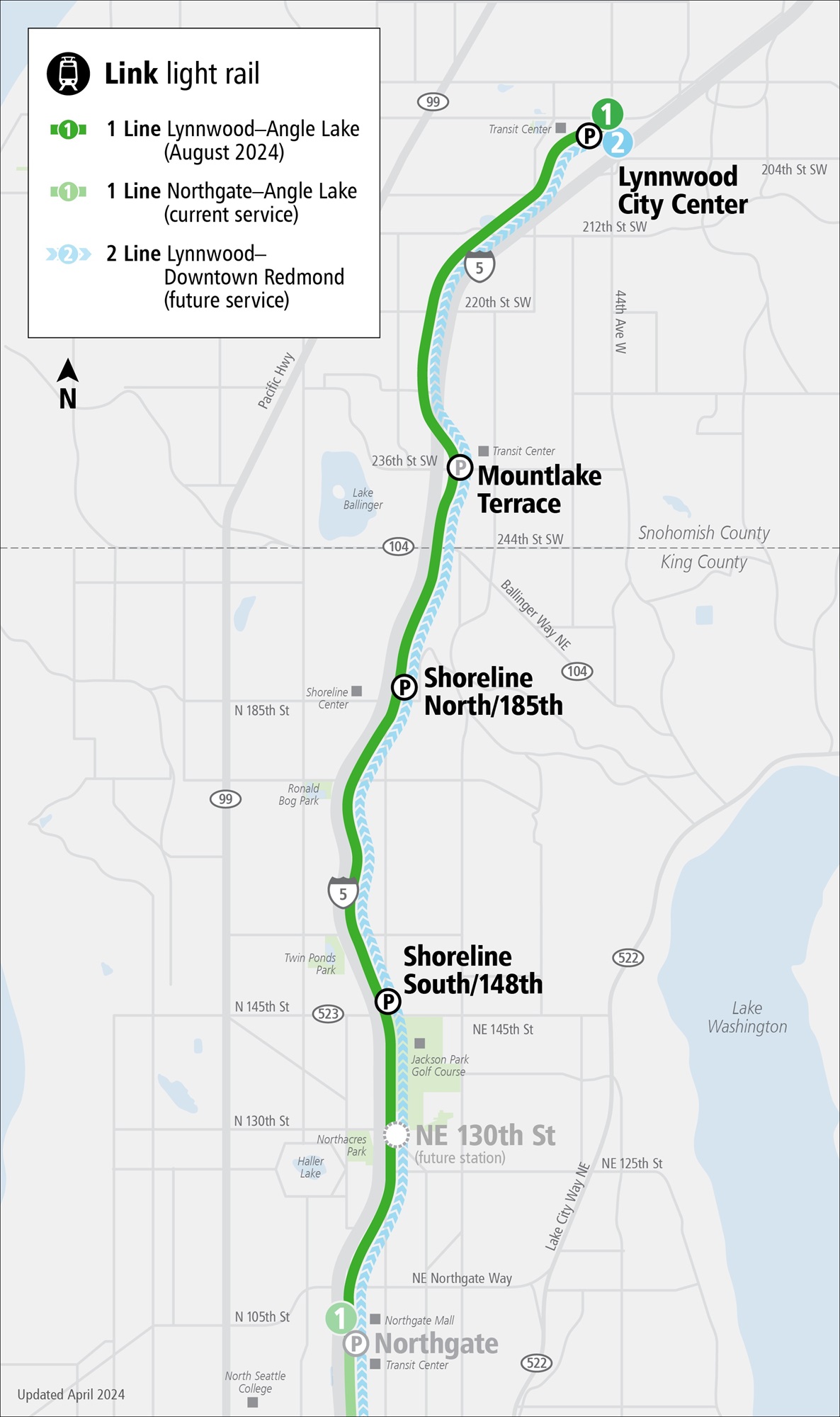
Here are my pictures of a ride today on the new northbound extension of the Sound Transit light rail system to downtown Lynnwood.
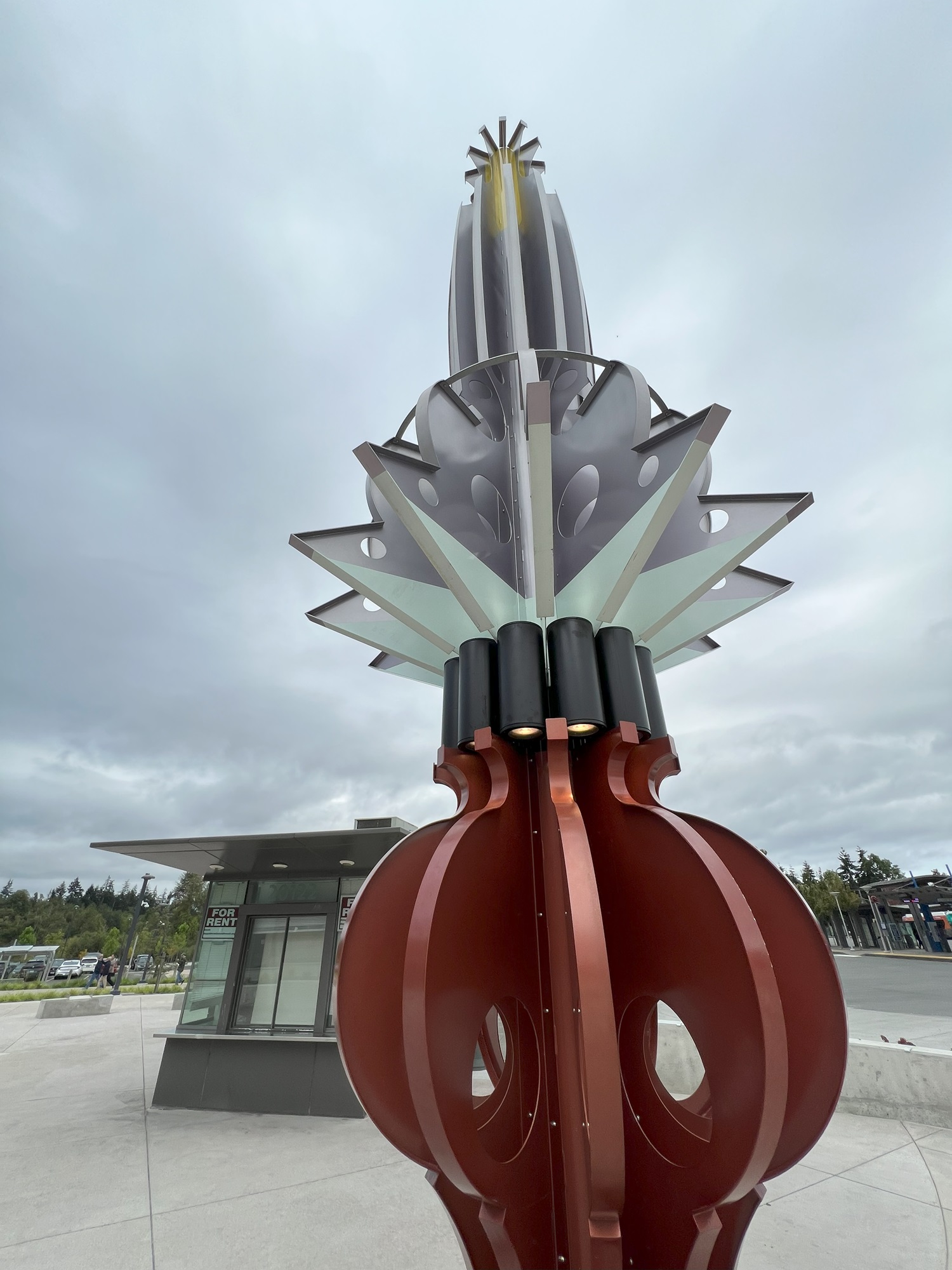
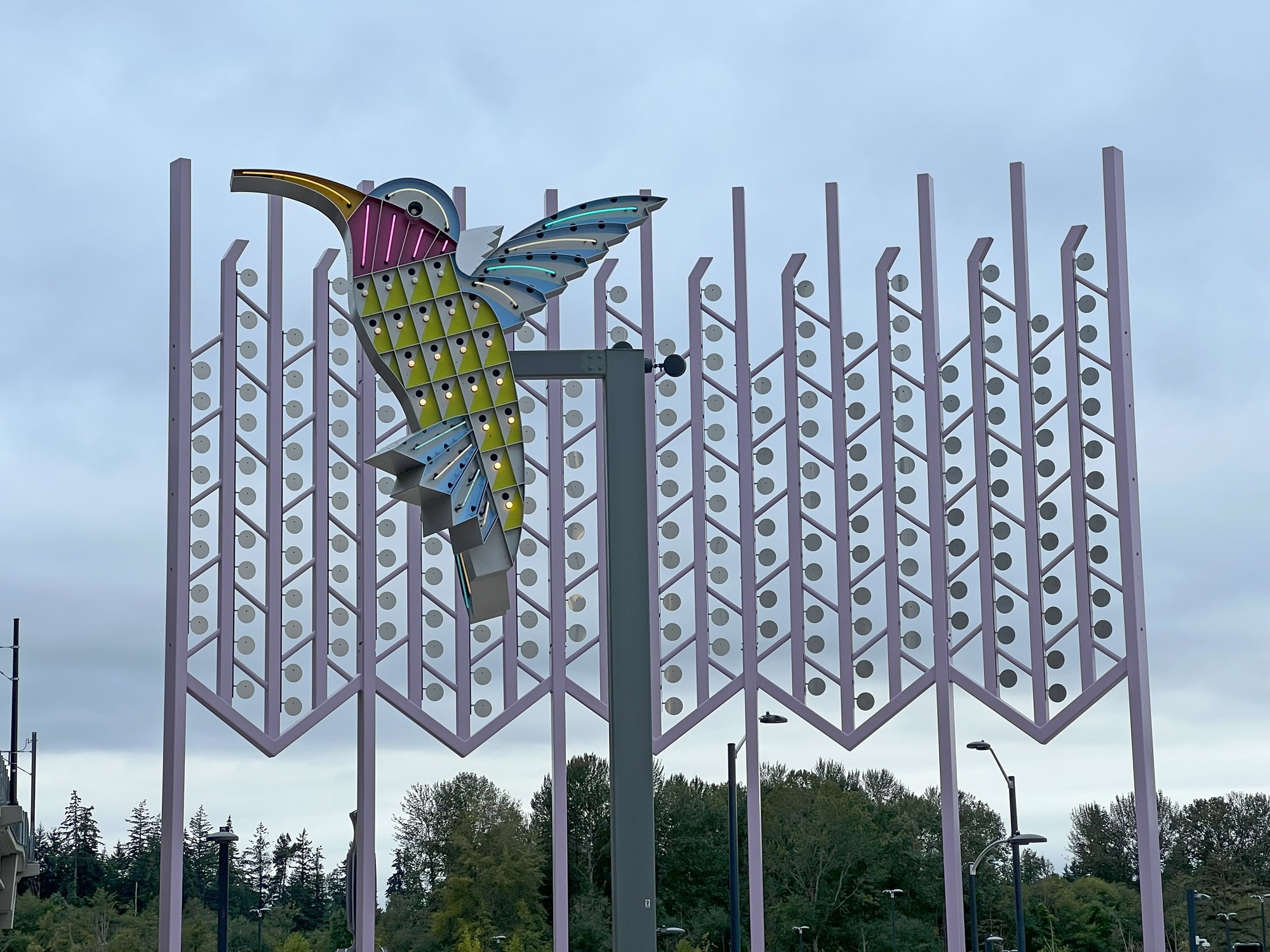
Here it is: the $3 billion extension from Northgate to Lynnwood with four new stations, 16 years in the making. Voters approved it with along with Obama’s election in 2008; planning was done from 2010-2016, design from 2016-2019, and construction from 2019-2024. The 1 Line extension hugs 8½ miles of Interstate 5 and crosses over it north of the Mountlake terrace station. A fifth station will open in 2026 at NE 130th Street. [Map from Sound Transit website]Northbound and approaching the existing Northgate station here. Interstate 5 traffic on the left. Much of the extension is elevated compared to Interstate 5, though, due to the uneven terrain there.Here is the view from the elevated rail and platform at the Lynnwood City Center station. There is a large parking garage at the back (not visible here), a parking lot on the left, and the canopies and bus stops of the Lynnwood Transit Center. Buses can be taken from here to Everett in the north, or to either of the ferry terminals at Edmonds and Mukilteo.Glass mural artwork on the boarding platform at the Lynnwood City Center station. The artist is Preston Singletary. The art was inspired by his Tlingit heritage and family, and influenced by his father’s recent death.Here’s the train at the Lynnwood City Center station, with the parking garage at the back of it.One of two identical sculptures called “Shift” down on the grounds below. The artist is Claudia Fitch and are a nod to the lamps from Lynnwood’s Interurban trolley system, which operated from 1910 to 1939.Here is Claudia Fitch’s “City Hummingbird” and “Kitchen Window Curtain” at Lynnwood City Center Station, to honor the history of neon road signs that once lined Highway 99 as well as the nature Pacific Northwesterners see in their own backyards. [Description of artwork and text from Seattle Times]Getting ready for the 30-minute ride back to Capitol Hill train station. The overhead graphic of the 2 Line (blue) and 1 Line (green) shows that more stations will open in the near future. Stations have numeric identifiers as well, which should make it easier for foreign language speakers and visitors to find the stations that they need to use.A peek into the future, looking at a little section of rail north of Lynnwood City Center station that has already been constructed. The next push north is scheduled for 2037 with stops at West Alderwood near the mall, Ash Way, Mariner, Highway 99 in South Everett (possibly) and Southwest Everett Industrial Center near Paine Field. Two final stations at Evergreen Way and downtown Everett are aimed for 2041, depending on funding.
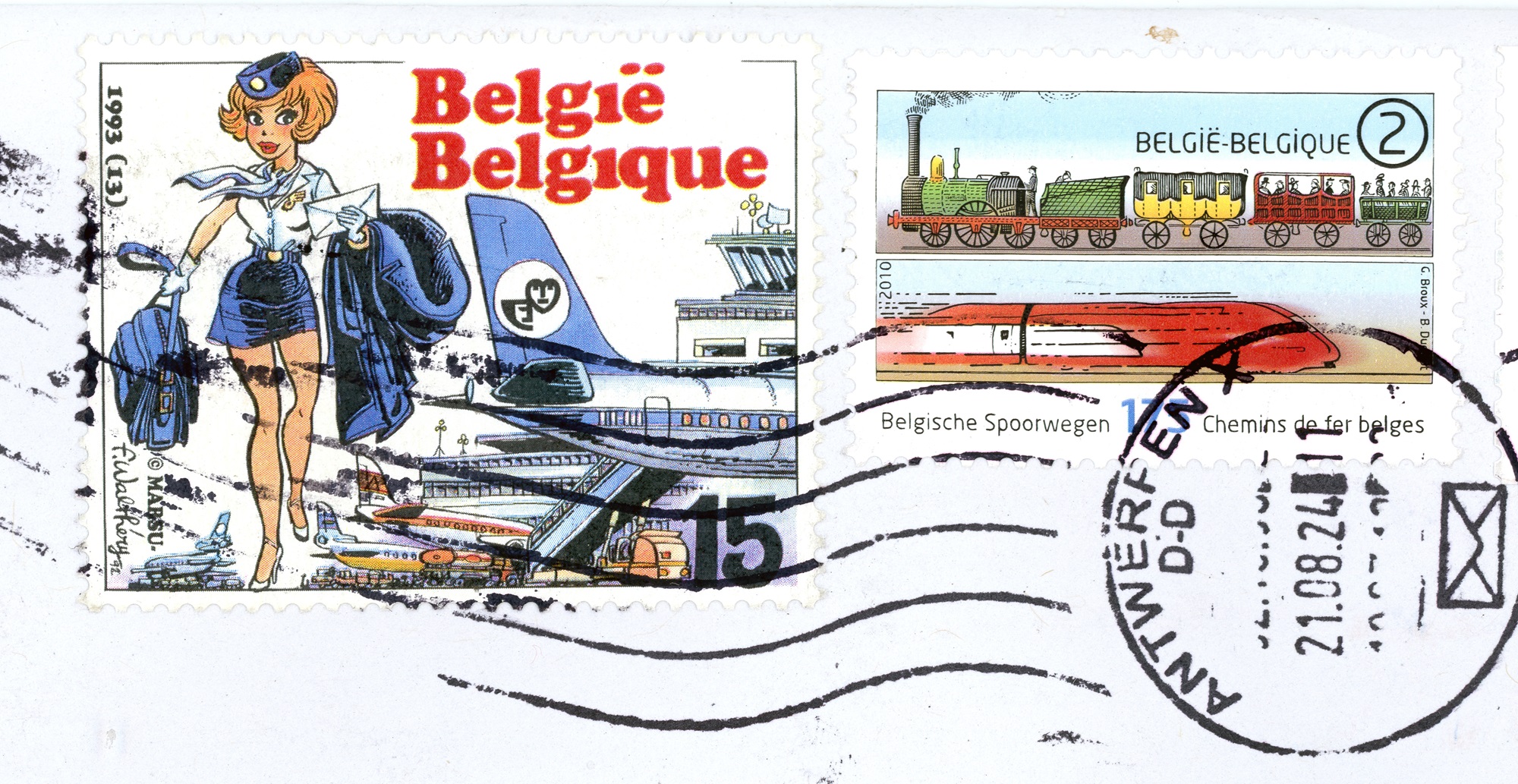
A letter arrived today from Antwerp, with more South African stamps inside.
Youth Philately Issued 1993, Oct.18 Perf. 11½| Photogravure 1508 Air Hostess Natacha, by François Walthéry| 15fr | multi-colored [Source: 2018 Scott Standard Postage Stamp Catalogue, Vol. 1B] From Wikipedia: Natacha is a Belgian comics series, created by François Walthéry and Roland Goossens. The series tells the adventures of Natacha, a young sexy flight attendant in the service of the flight company Bardaf, and her clumsy, hot-tempered colleague and friend Walter, with occasional participation by her flight captain Turbo and his co-pilot Legrain. Natacha was first published in the Franco-Belgian comics magazine Spirou on February 26, 1970.
Belgian Railways 175th Anniversary Issued 2010, May 10 Perf. 11½| Photogravure & Engraving 2438 Belgian Railways 175th Anniversary| €1.18 | multi-colored [Source: 2018 Scott Standard Postage Stamp Catalogue, Vol. 1B]
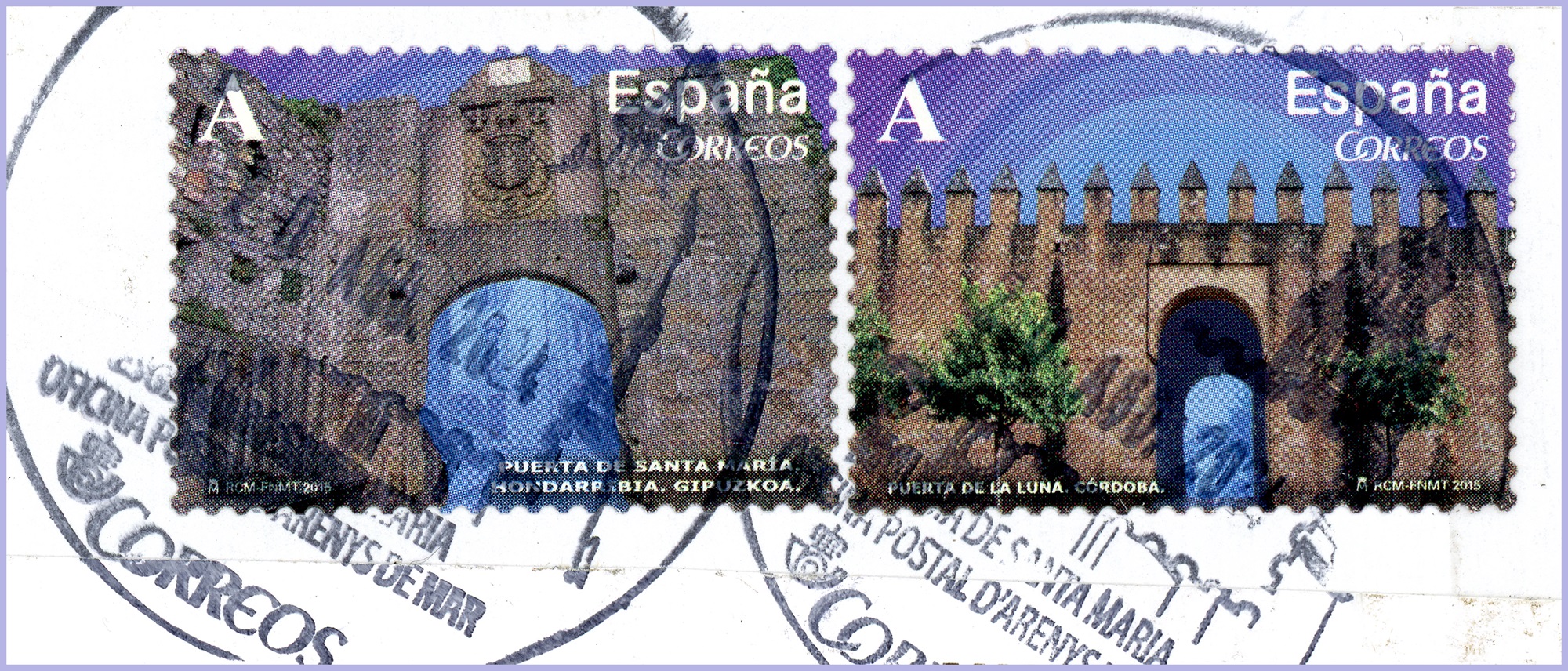
Let’s see what’s on these stamps from Spain.
They were put on an envelope sent to me from an Ebay seller from Barcelona.
There was a single stamp from South Africa inside, to add to my collection ☺️.
Architecture of Gates in Spain Issued 2015, Jan. 2 Die Cut Perf. 13 | Booklet Stamps | Lithography 4010a Moon Gate, Cordoba | 42c | multi-colored 4010c St. Mary’s Gate, Hondarribia | 42c | multi-colored [Source: 2021 Scott Standard Postage Stamp Catalogue, Vol. 6A]
Cartoon by David Horsey, a two-time Pulitzer Prize-winning editorial cartoonist for The Seattle Times. Toto, I’ve got a feeling this isn’t Trump’s show anymore, says the heading on the opinion piece that accompanies the cartoon. .. and then there is Tom Nichols from The Atlantic that says about Trump’s press conference (‘press conference’ is flattering Trump) at Mar-a-Lago this week ‘His obvious emotional instability is frightening, not funny’.
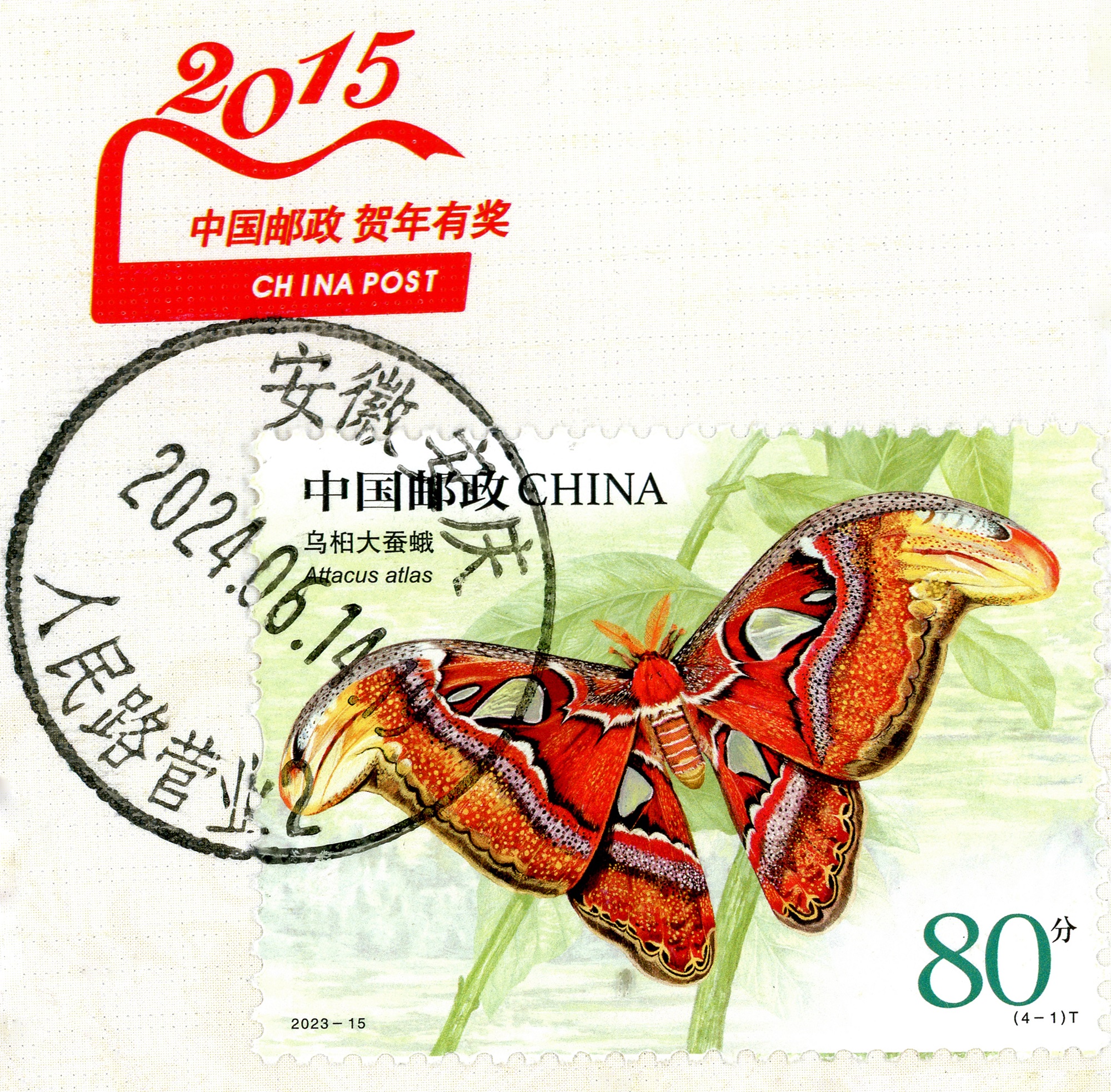
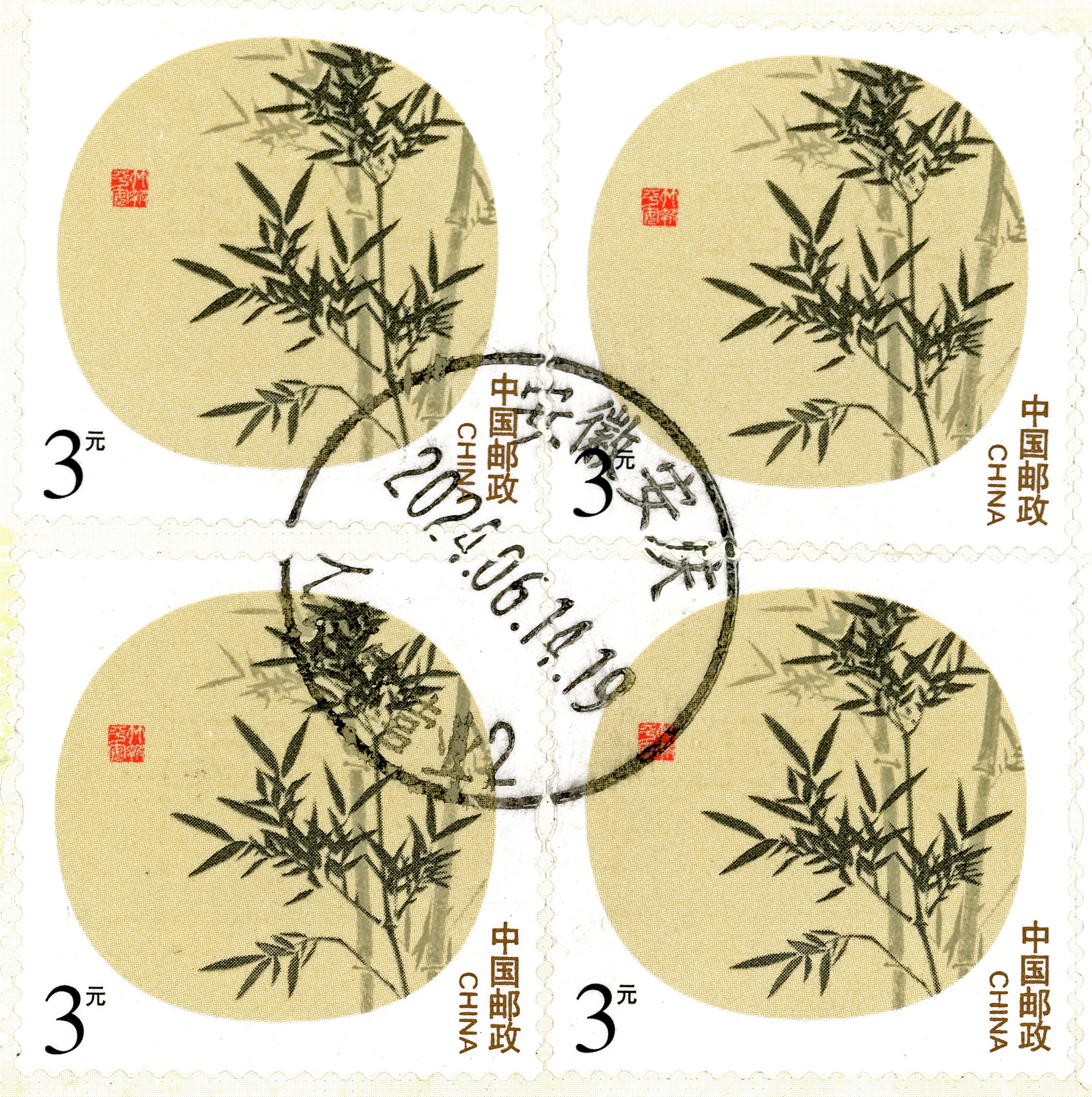
Stamps (from South Africa) that I had bought in March (on Ebay) from a seller in China, showed up in my mailbox today.
The sender used a greeting card envelope with a preprinted red stamp on (far right). The cancellation mark shows that the envelope was sent on June 14 from the city Anqing (pop. 4 million) in Anhui province. Anqing is some 250 mi due east of Shanghai. My name and address were very neatly written in print style. At the end, a nice reminder for me as to how to write ‘USA’ in Chinese: 美国 Měi guó (or ‘Beautiful country’, literally translated).Let’s take a closer look at the stamps: Insects (II) From a set of 4 stamps issued Aug. 23, 2023 by China Post in the People’s Republic of China Perf. 13 with syncopated perf. left and right edge (one larger hole) |40 x 30 mm |Offset lithography printing Colnect Code:CN 2023.08.23-01 |80 分 (fēn) |Multi-colored |Atlas moth (Attacus Atlas)Special Greeting Card Stamp Issued Aug. 8, 2013 by China Post in People’s Republic of China Perf. Die Cut 13½ x 13 with syncopated perf. left and right edge (one larger hole) |30 x 30 mm |Photogravure printing Cat.Code Mi:CN 4501 |3 ¥ (yuan) |Multi-colored |Bamboo plant
.. being President of the United States*— or to collect stamps. *President Biden sent a cease-and-desist letter of sorts to House Democrats today, telling them to support him in the election.
In the mean time it’s Christmas in July for me, because my latest two purchases from the UK landed on my porch today.
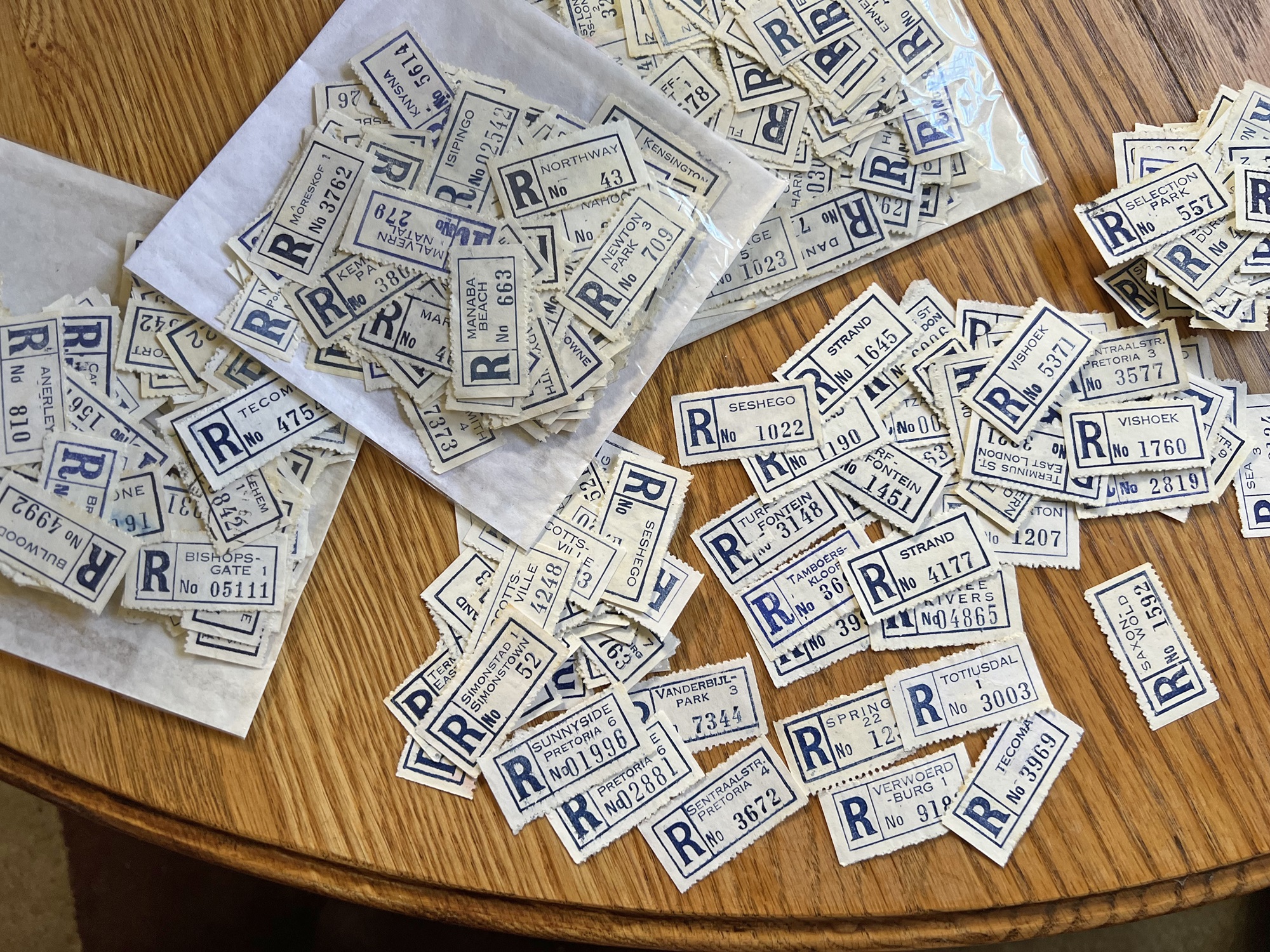
These are old labels used for registered letters or mail pieces in South Africa. (Obsolete: printed barcodes without the sending city or town’s name on the label, are used nowadays). I am still deciding if some of them will make it into one of my stamp albums. Look for the label VERWOERD- BURG 1 at the bottom of the picture. Verwoerdburg in Gauteng Province, now goes by Centurion. It was named for H.F. Verwoerd, prime minister of South Africa widely seen as the architect of apartheid. Verwoerd was assassinated in 1966. Then there is TECOMA— not to be confused with Tacoma, Washington State 😁— a post office in East London, Eastern Cape Province, that has been permanently shuttered.This is just part of a massive collection of mint issues from the 50s , 60s and 70s for South Africa and South West Africa (now Namibia). I have almost all of these already, but some in my album are used stamps with heavy cancellation marks, and I can add a few control blocks to my collection (four stamps with the margins from the original printed sheet).
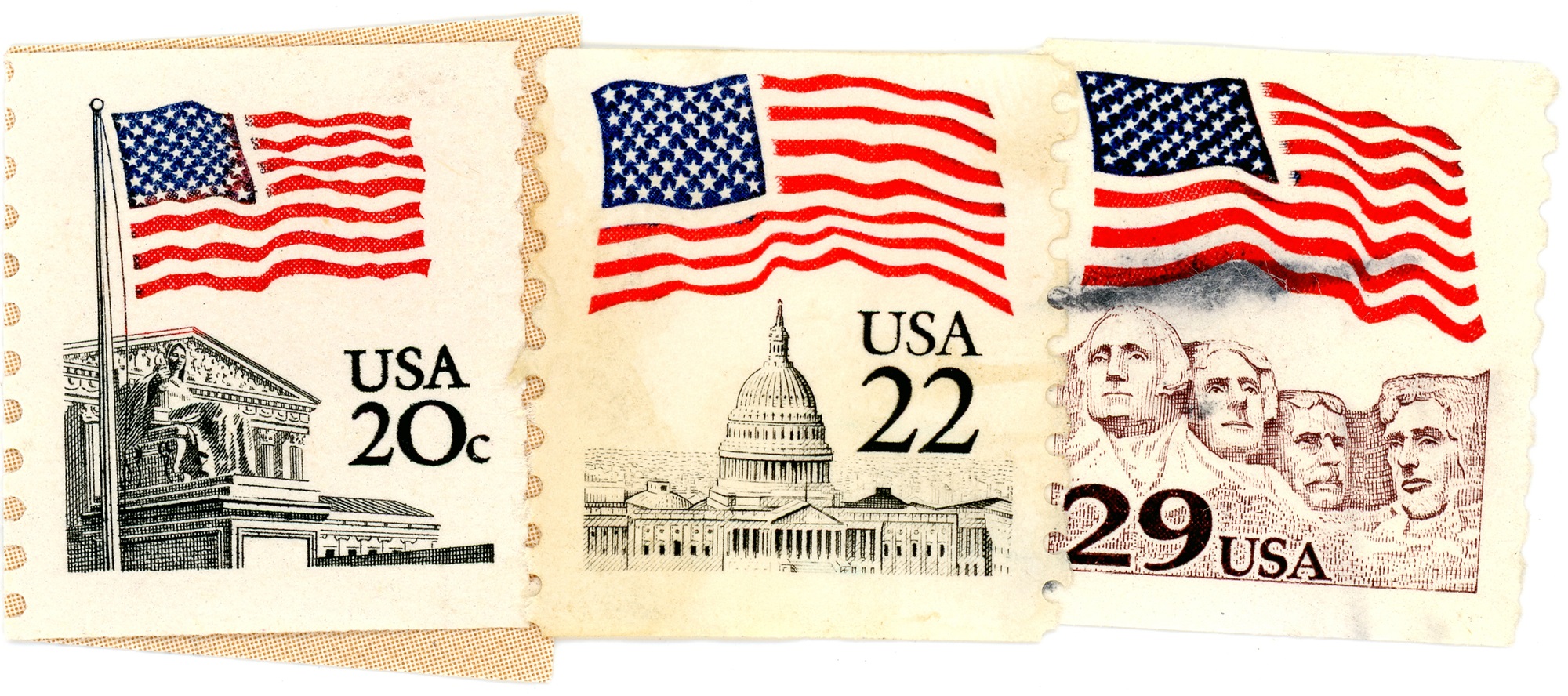
These are from my small collection of US stamps.
These coil stamps were still printed with engraved plates. Nowadays the vast majority of American-issued postage stamps are printed by using offset-lithography.
Flag Over US Supreme Court Coil stamp Issued Dec.17, 1981 Perf. 10 vert. |Engraved |No Watermark 1895 A1281 20c Black, dark blue and red
Flag Over Capitol Dome Coil stamp Issued Mar.29, 1985 Perf. 10 vert. |Engraved |No Watermark 2115 A1498 22c Blue, red and black
Flag Over Mt. Rushmore Coil stamp Issued Mar.29, 1991 Perf. 10 vert. |Engraved |No Watermark 2523 A1878 29c Blue, red and claret [Source: Scott 2003 Standard Postage Stamp Catalogue, Vol. 1]
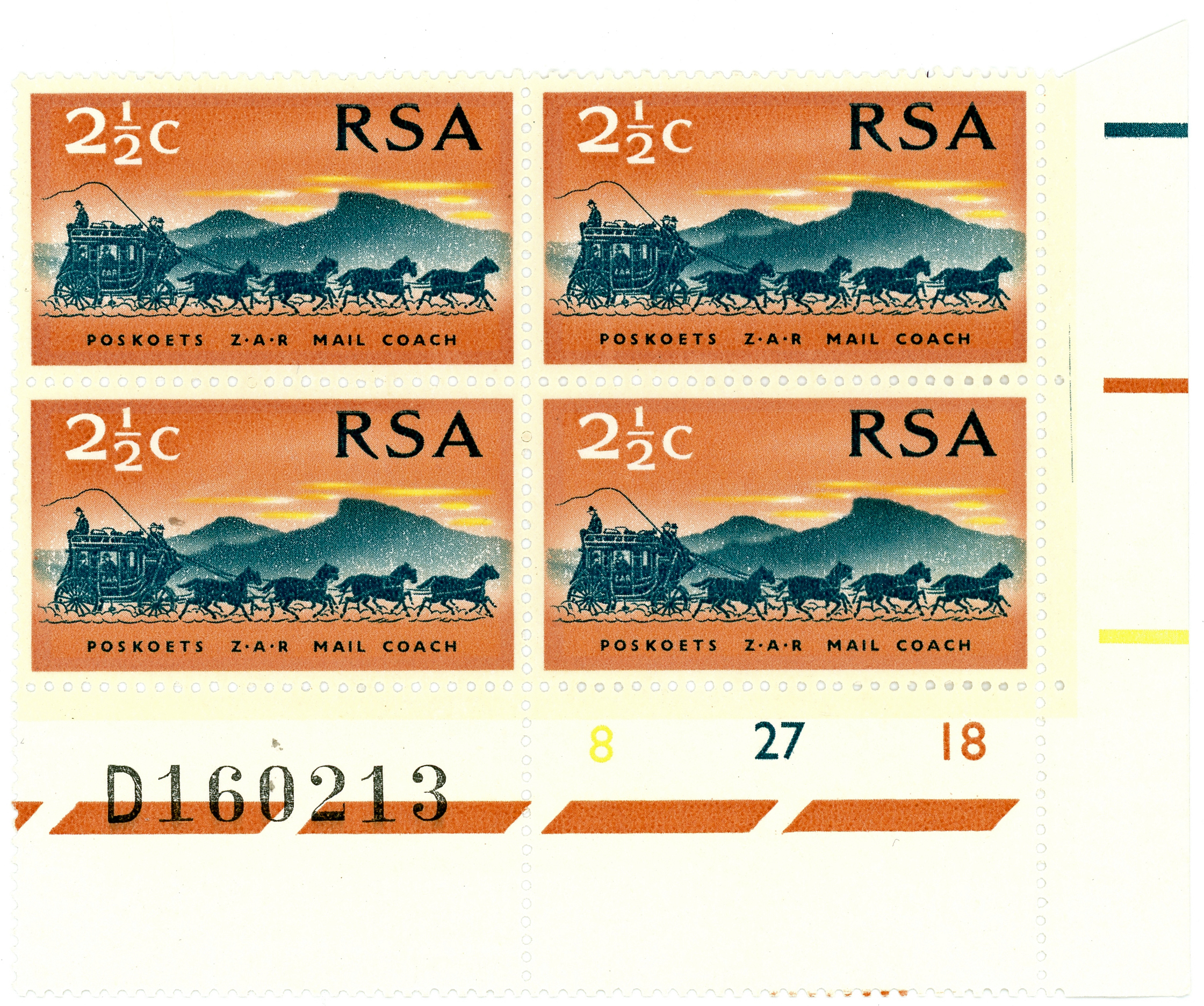
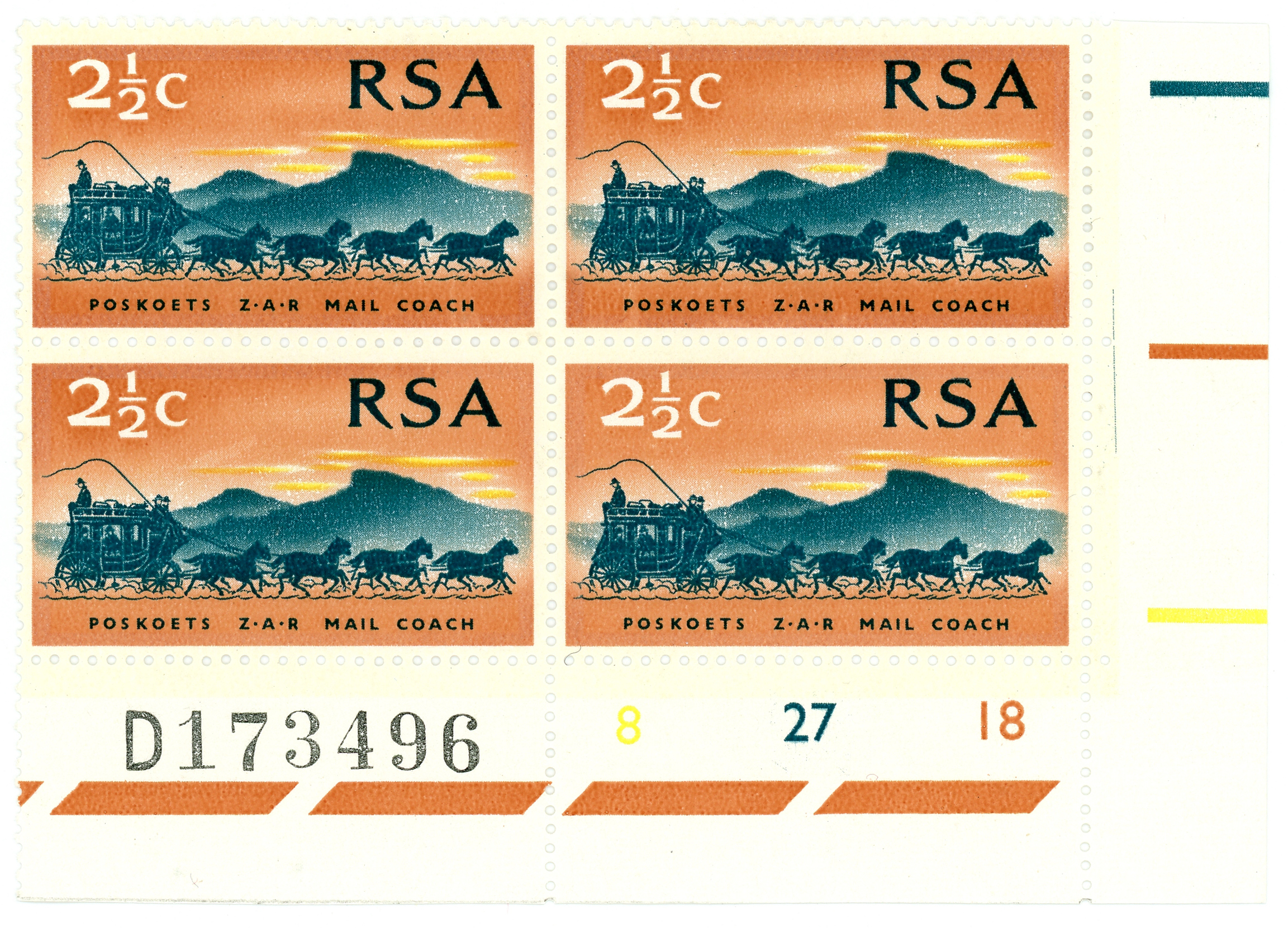
I already had this 1969 stamp from South Africa, but these control blocks were for sale for just a few dollars, and I bought them.
The two control blocks were printed on different types of postage stamp paper.
(Are these two distinctly different postage stamps— and should the philatelist put one of each in his or her album? I say yes: if you have both types, put both in your album.)
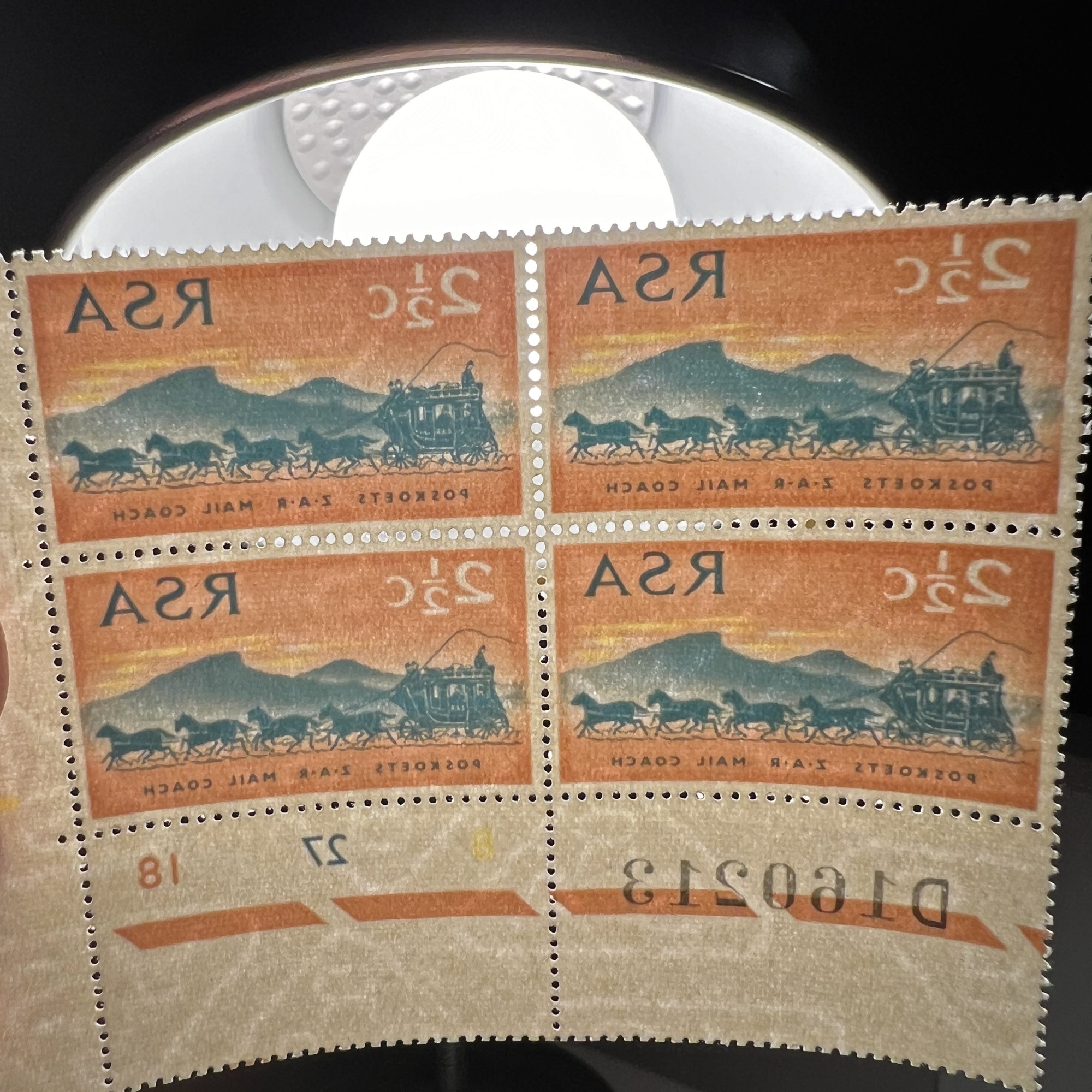
When the stamps are held up against a light, it’s easy to see the watermark clearly, in the white margins of the block.
These are some of the last South African stamps issued with watermarks.
In the United States, stamps with watermarks were issued only for a short time— from 1895 to 1916.
Stagecoach of 1869 on Harrison Paper Issued Oct 6, 1969 Perf. 13½x14 | Photogravure printing on Harrison paper | Watermark RSA in triangle 357 A140 2½c Ocher, Prussian blue & yellow Harrison paper has a grey or fluorescent back.Stagecoach of 1869 on Swiss Paper Issued Oct 6, 1969 Perf. 13½x14 | Photogravure printing on Swiss paper | Watermark RSA in triangle 357 A140 2½c Ocher, Prussian blue & yellow Swiss paper has a dull pink non-fluorescent back. It’s hard to tell from these scanned images, but comparing the physical paper with the Harrison paper, the Swiss paper seems to look just a touch whiter.Watermark is a tiled pattern of tête-bêche* rounded triangles with R inside at the top and SA at the bottom. RSA for Republic of South Africa. *Upright and upside down next to each other
My stamps from a seller in Poland arrived today.
There were no Polish stamps on the outside (international registered mail is franked by machine), but the seller put some Polish stamps inside for me.
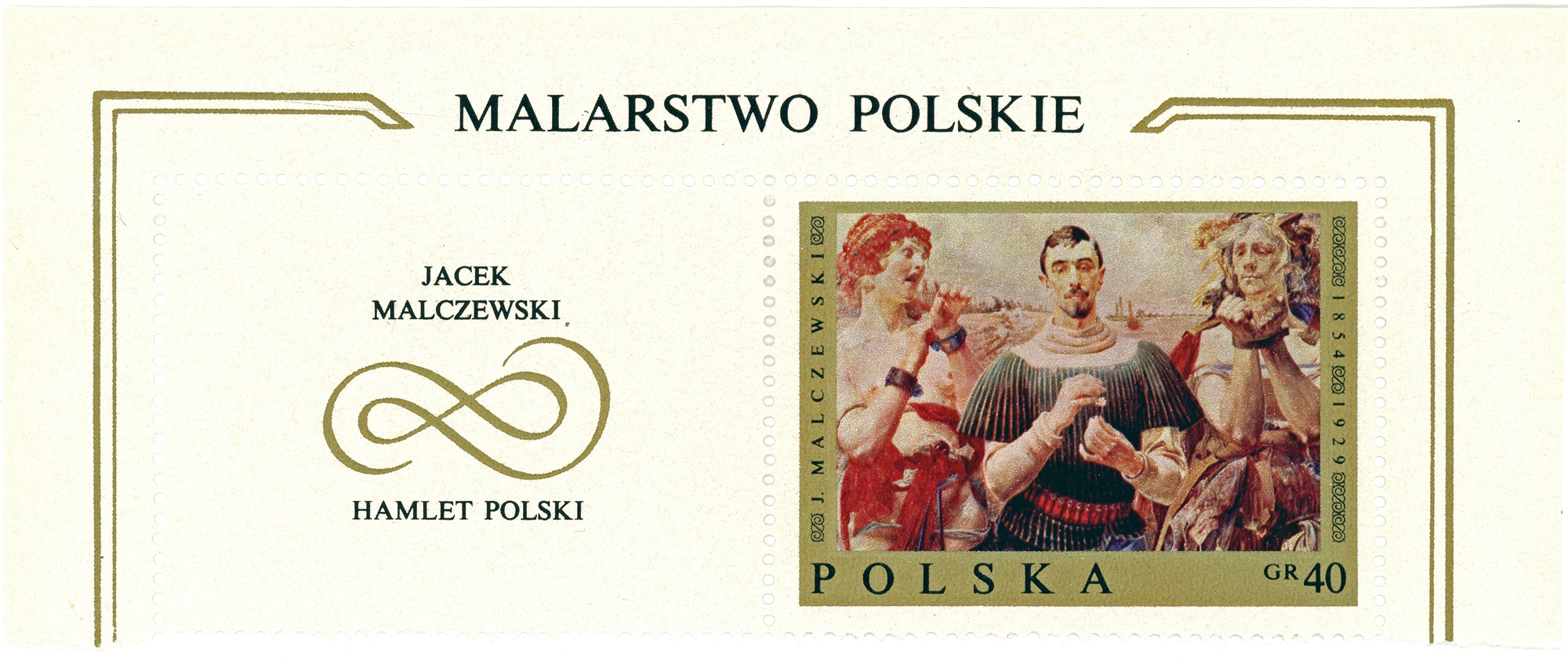
Polish Paintings Issued 1969, Sept 4. One of a set of 8, with a label inscribed with the painter’s name Perf.11×11½ |Photogravure printing |No Watermark 1676 585 |40 grosz |Gold & multi-colored |”Hamlet” by Jacek Malczewski [Source: Scott 2003 Standard Postage Stamp Catalogue: Countries of the World, P-SI]
[From Wikipedia] “Polish Hamlet” was painted in 1903, and is one of the most famous works of Malczewski. It presents the grandson of Aleksander Wielopolski – Polish politician, a member of the Polish Kingdom government in the early 1860s, who tried to maneuver between the interests of the invaders and the Polish population – in the act of considering his grandfather’s legacy. The painting is symbolic and patriotic, it can be read in several ways. The women placed on both sides of the picture are an allegory of two different visions of the fate of their homeland. Located to the right is an elderly woman with white hair, dressed in dark robes, her hands cuffed by shackles, and her face takes on an expression of sadness, despair and awareness of their situation. She embodies Poland enslaved, experienced by fate, remaining under the yoke of others, and who can not be liberated. On the left side there is a young girl, half-naked, shown at the time of breaking the shackles. She is full of energy, and her face is very expressive. It symbolizes the “young Poland” – capable of action and being able to release from the long-term captivity.
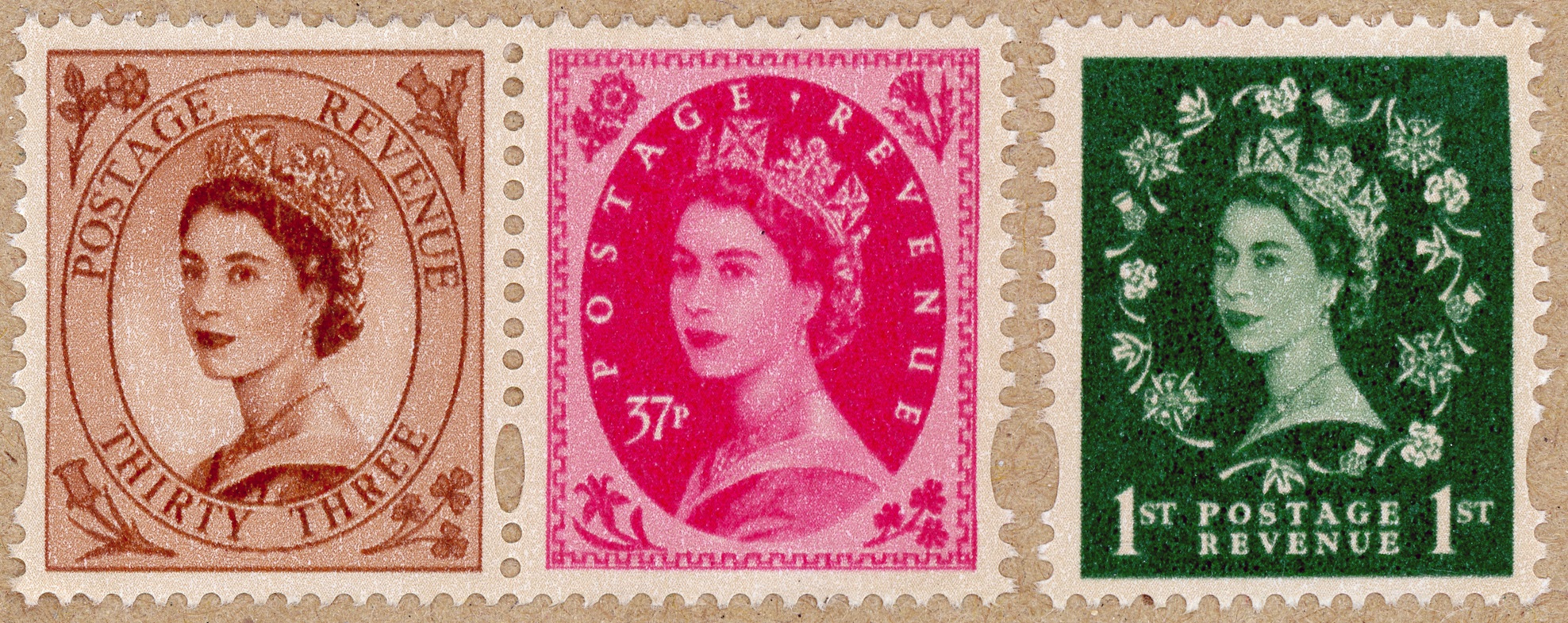
These UK stamps arrived on the outside envelope of my latest order of South African stamps from a seller in Great Britain.
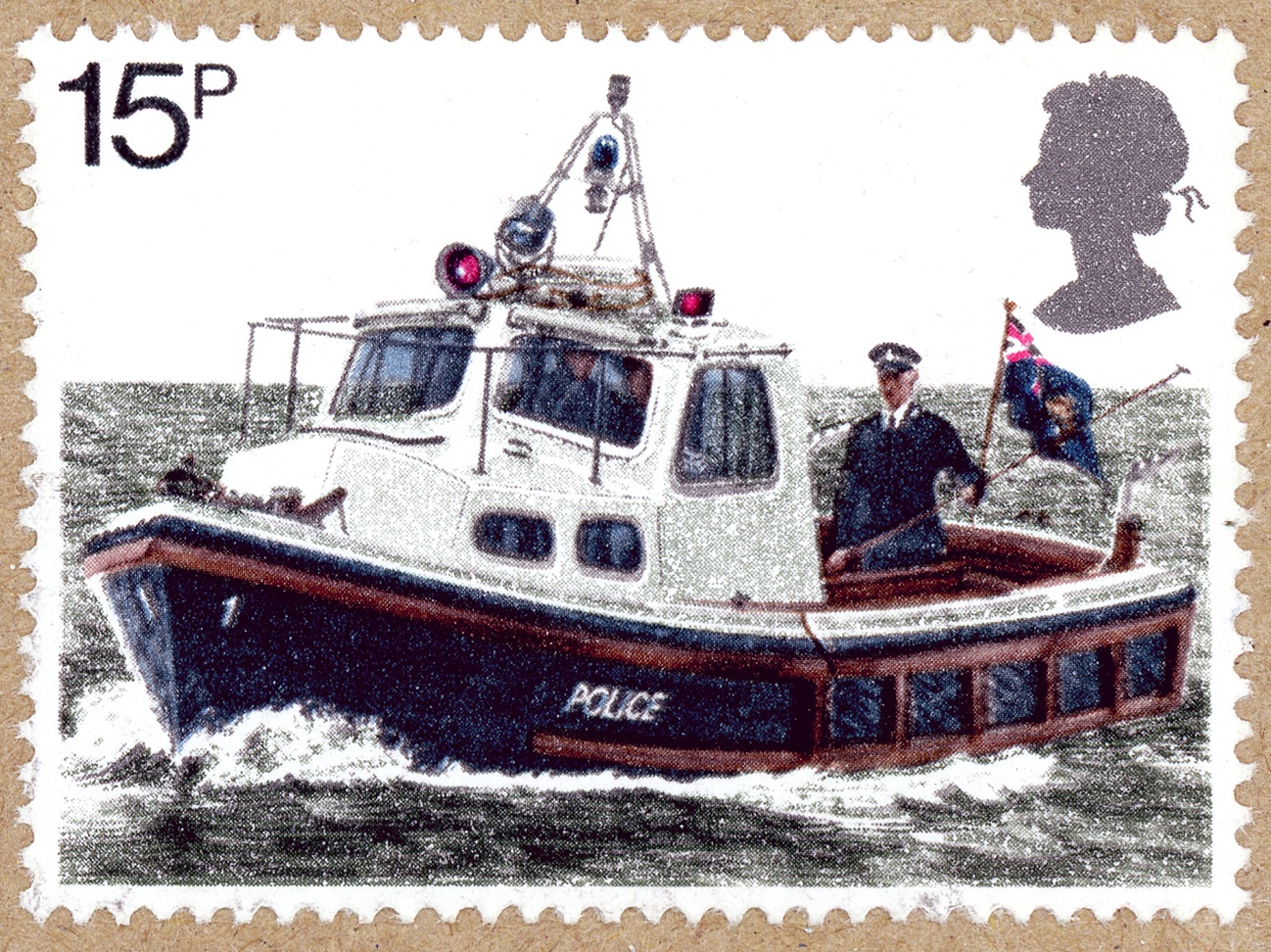
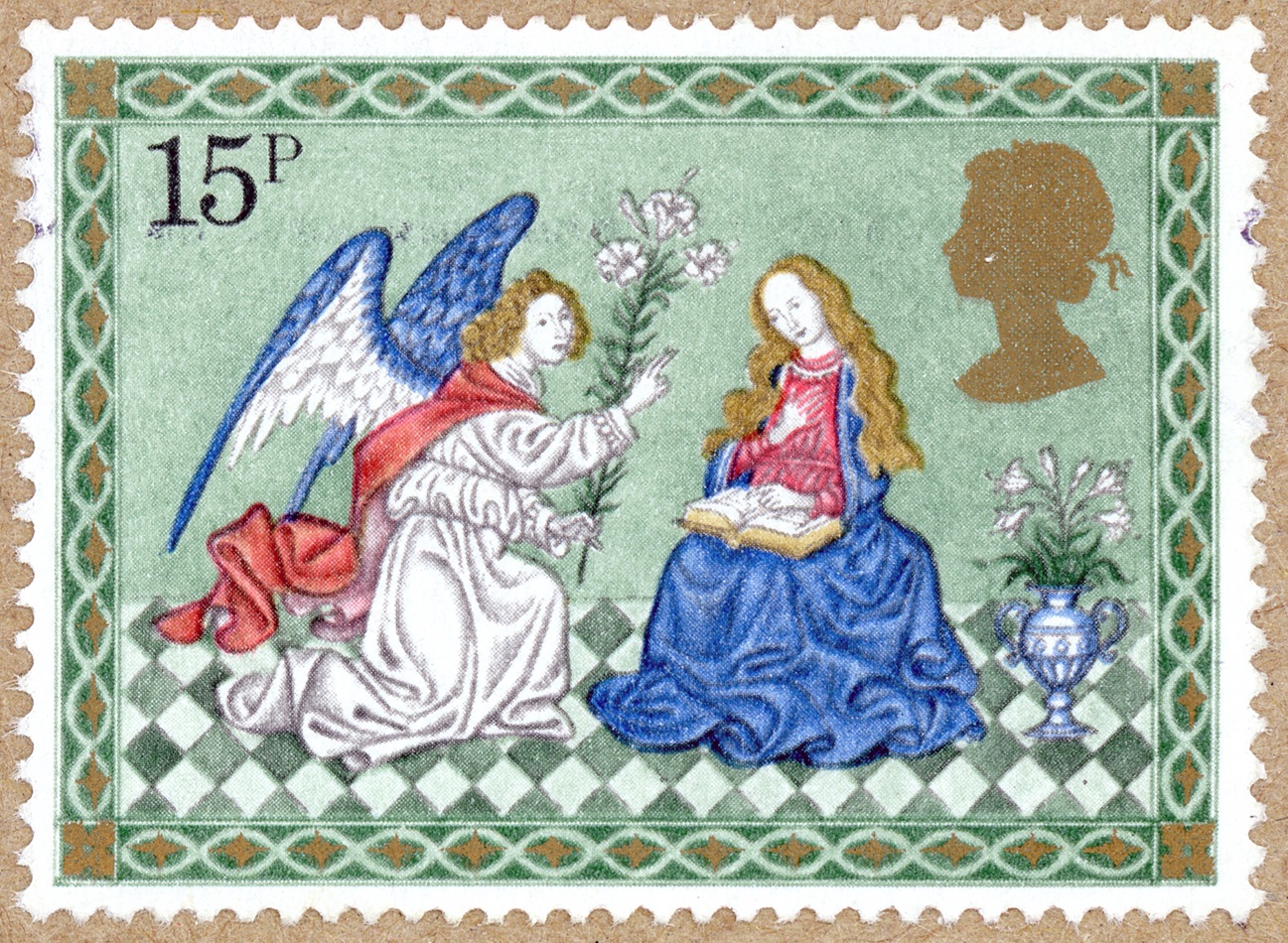
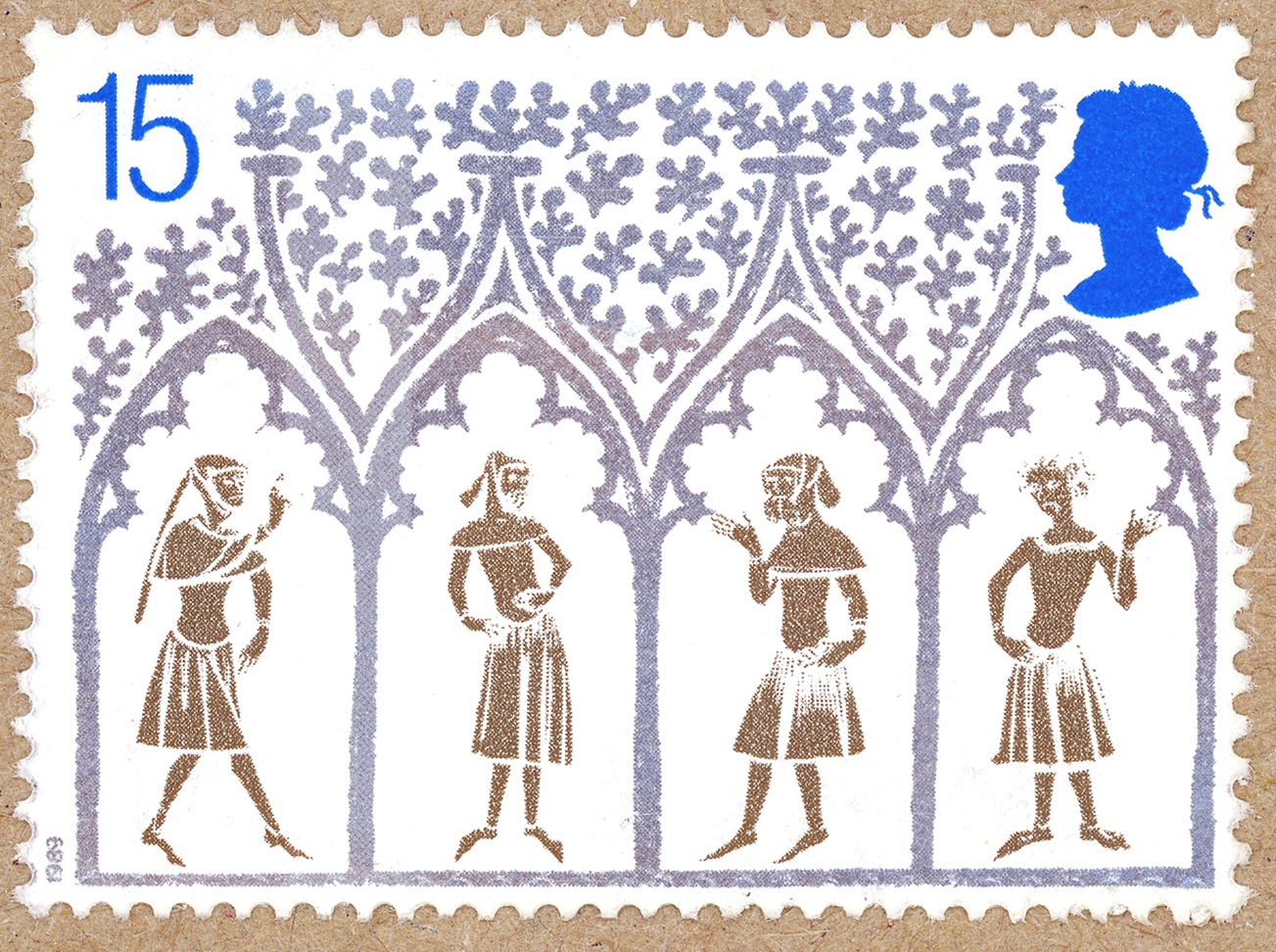
150th Anniversary of Metropolitan Police Issued 1979, Sept.26 Perf.15×14 Phosphorised paper 1108 585 |15p |Grey-black, magenta, brown, slate-blue, deep brown & Greenish black |River Patrol Boat [Source: Stanley Gibbons Stamp Catalogue Part I British Commonwealth Volume 1]Christmas 1979 Issued 1979, Nov.21 Perf.15×14 Phosphorised paper 1108 585 |15p |Orange-vermilion, steel blue, drab, grey-black, deep blue-green & gold |The Annunciation [Source: Stanley Gibbons Stamp Catalogue Part I British Commonwealth Volume 1]Christmas 1989— 800th Anniversary of Ely Cathedral. Issued 1989, Nov.14 Perf.15×14 One phosphor band 1462 924 |15p |Gold, silver and blue |14th-century Peasants from Stained-glass Window [Source: Stanley Gibbons Stamp Catalogue Part I British Commonwealth Volume 1]Queen Elizabeth II Definitives Issued 2002, Feb.6 Re-issue of 1952-54 definitive series stamps of Dorothy Wilding portrait of QE II Booklet sheets w. new values & syncopated perforation (elliptical holes) 522 T157 33p Brown |George Knipe design 525 T158 37p Magenta |Mary Adshead design 530 T160 1st Class |Green |E. Dulac design [Source: Stanley Gibbons Great Britain Concise Stamp Catalogue 2009]
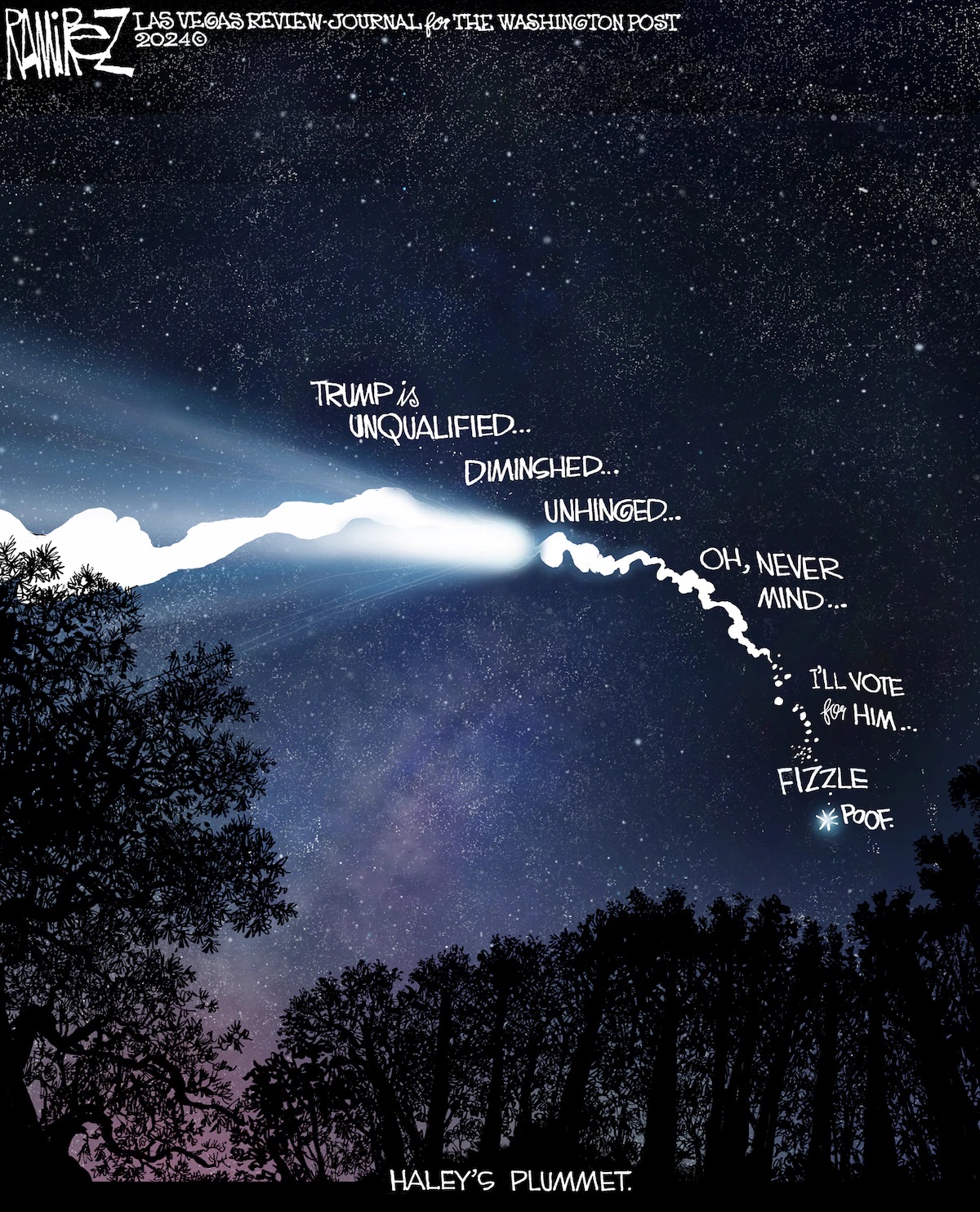
So Nikki Haley* will vote for Trump, she said on Wednesday. She had called him ‘bad’, ‘unqualified to be President’, ‘do not trust him’ blah blah blah.
She didn’t bother to wait for the outcome of Trump’s first criminal trial— 34 felony counts over allegations that he falsified business records to conceal a $130,000 hush-money payment to adult film actress Stormy Daniels before the 2016 election. (Closing arguments for Trump’s case are on Tue May 28 and then the case goes to the jury).
*Former governor of South Carolina, U.S. ambassador to the United Nations in the Trump administration, and the last remaining challenger to Trump in the 2024 Republican primaries until she dropped out of the race after Super Tuesday in March.
Cartoon by Michael Ramirez/Las Vegas Review-Journal for The Washington Post.
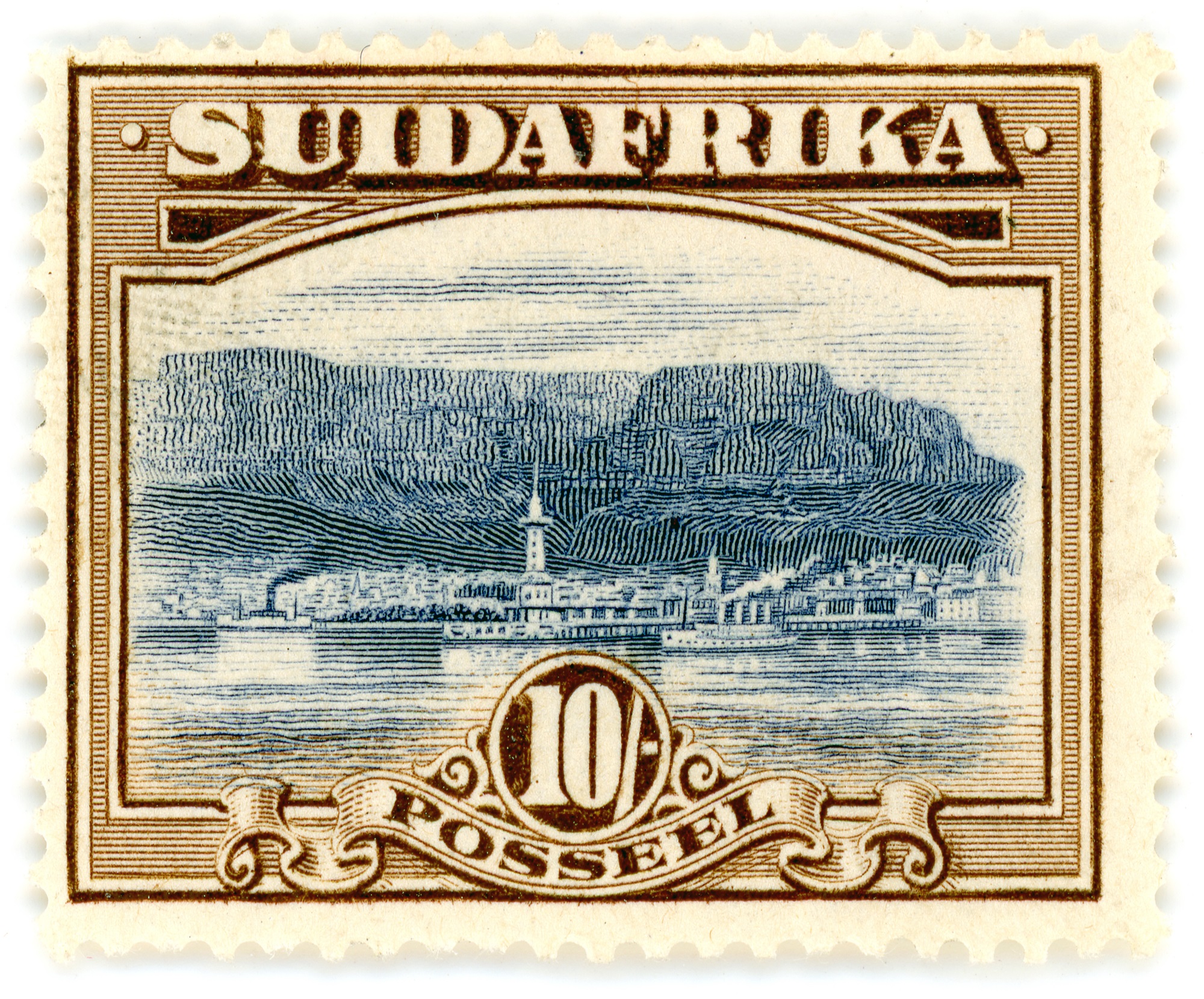
I bought this single stamp from a seller in Canada.
It’s the highest value stamp (10 shillings) in the series known as the 1927-1930 London Pictorials; the last South African stamps printed in London.
(After that stamps were printed in South Africa).
The Afrikaans-English se-tenant (joined) stamp pairs are very expensive (up to $200), but the single ones are $10 or so.
I’m still looking for an English one with ‘SOUTH AFRICA’ inscribed at the top.
From the 1927-1930 London Pictorials Issued 1927, Mar. 1 Perf. 14 | Engraved printing | Wmk. Multiple springbok’s heads 29 16 | 10sh | Bright blue and brown | Cape Town, Table Mountain and Table Bay [Source: 2016 Stanley Gibbons Stamp Catalogue for Commonwealth & British Empire Stamps 1840-1970) My notes: The prominent white tower might be Mouille Point Lighthouse— built in 1842 but demolished in 1908. To its right and further back would be Cape Town City Hall, a large Edwardian building built from honey-colored oolitic limestone imported from Bath in England, and located on the Grand Parade. It was completed in 1905 and is still there today.
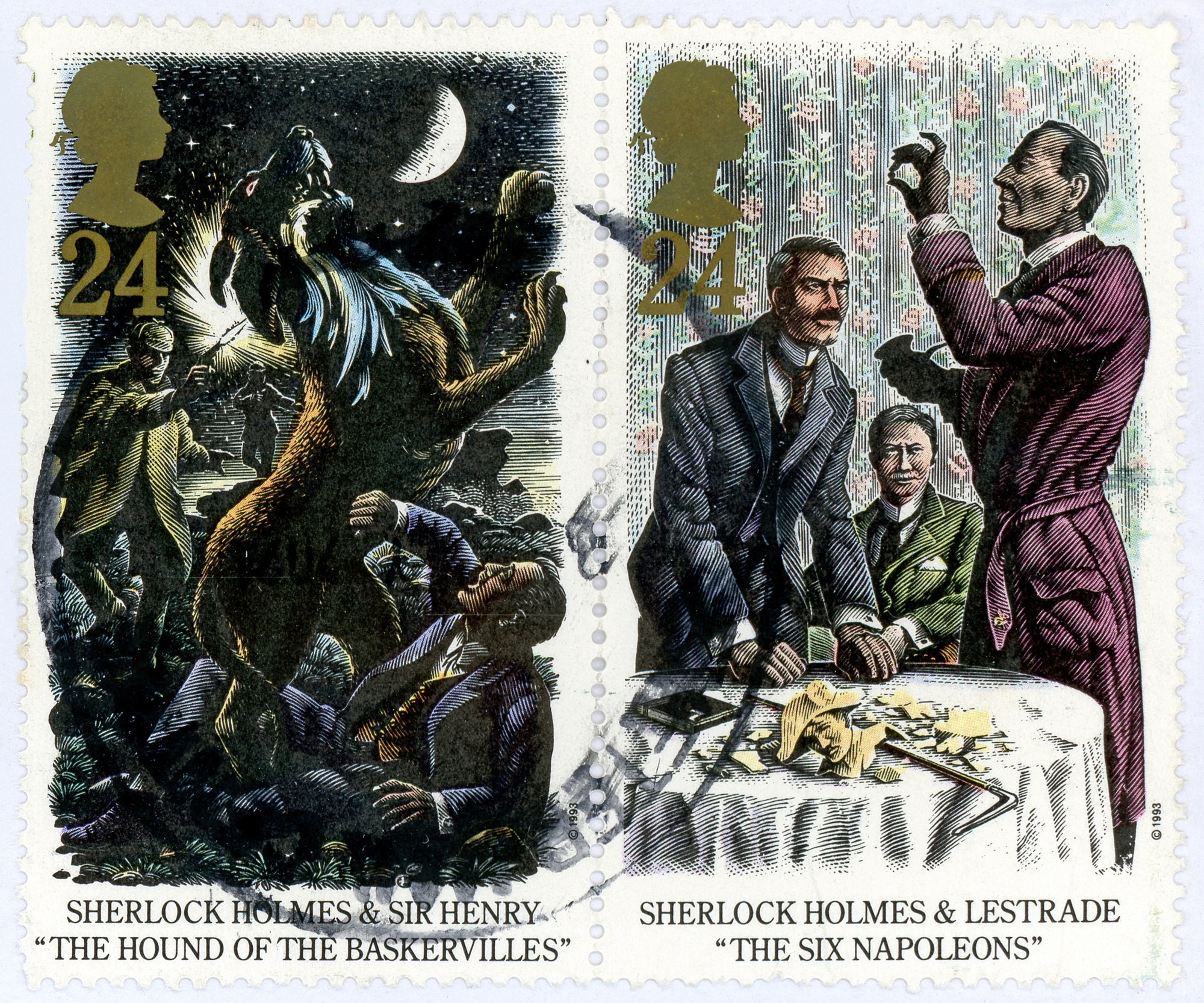
Mail from Great Britain with Sherlock Holmes stamps on the outside, and South African stamps inside, arrived yesterday.
I am hounding down the last ones I need to complete my Union of South Africa (1910-1961) collection.
Sherlock Holmes: Centenary of the Publication of The Final Problem. Issued 1993, Oct. 12 Perf. 14×14½ Phosphorized paper Colors: blue, greenish yellow, magenta, black & gold 1785 1112 24p The Hound of the Baskervilles 1786 1113 24p The Six Napoleons [Source: Stanley Gibbons Stamp Catalogue Part I British Commonwealth Volume 1]