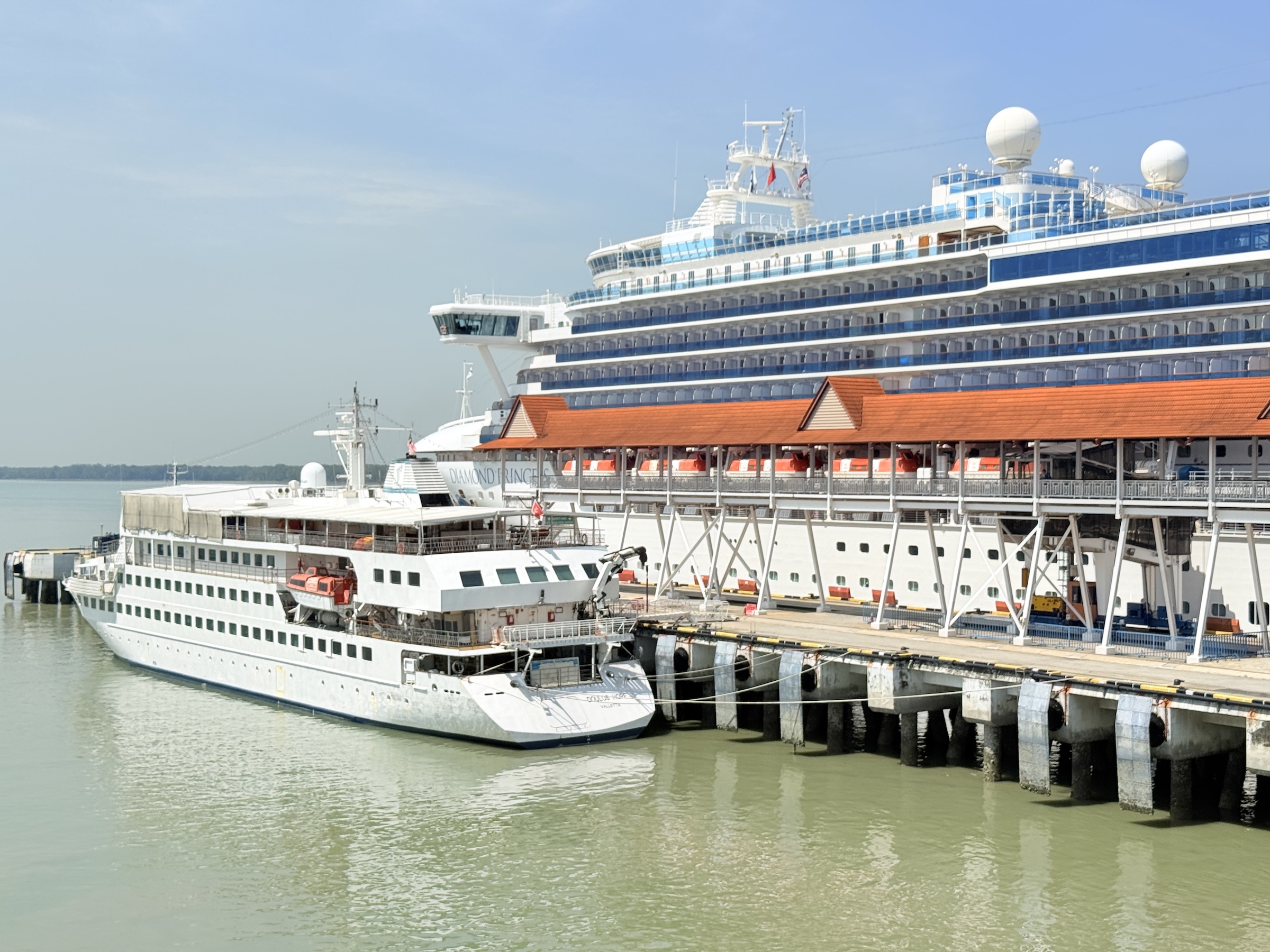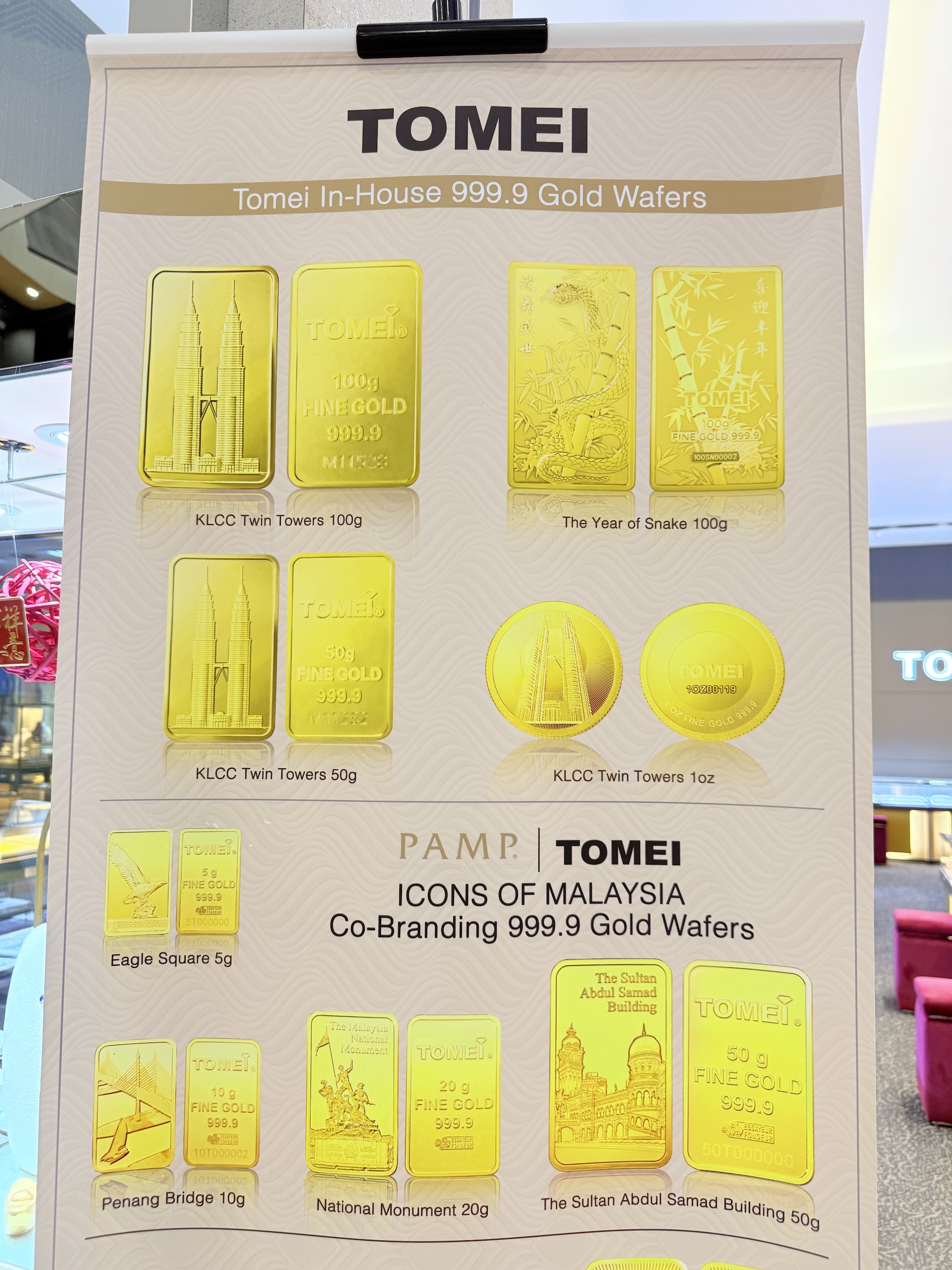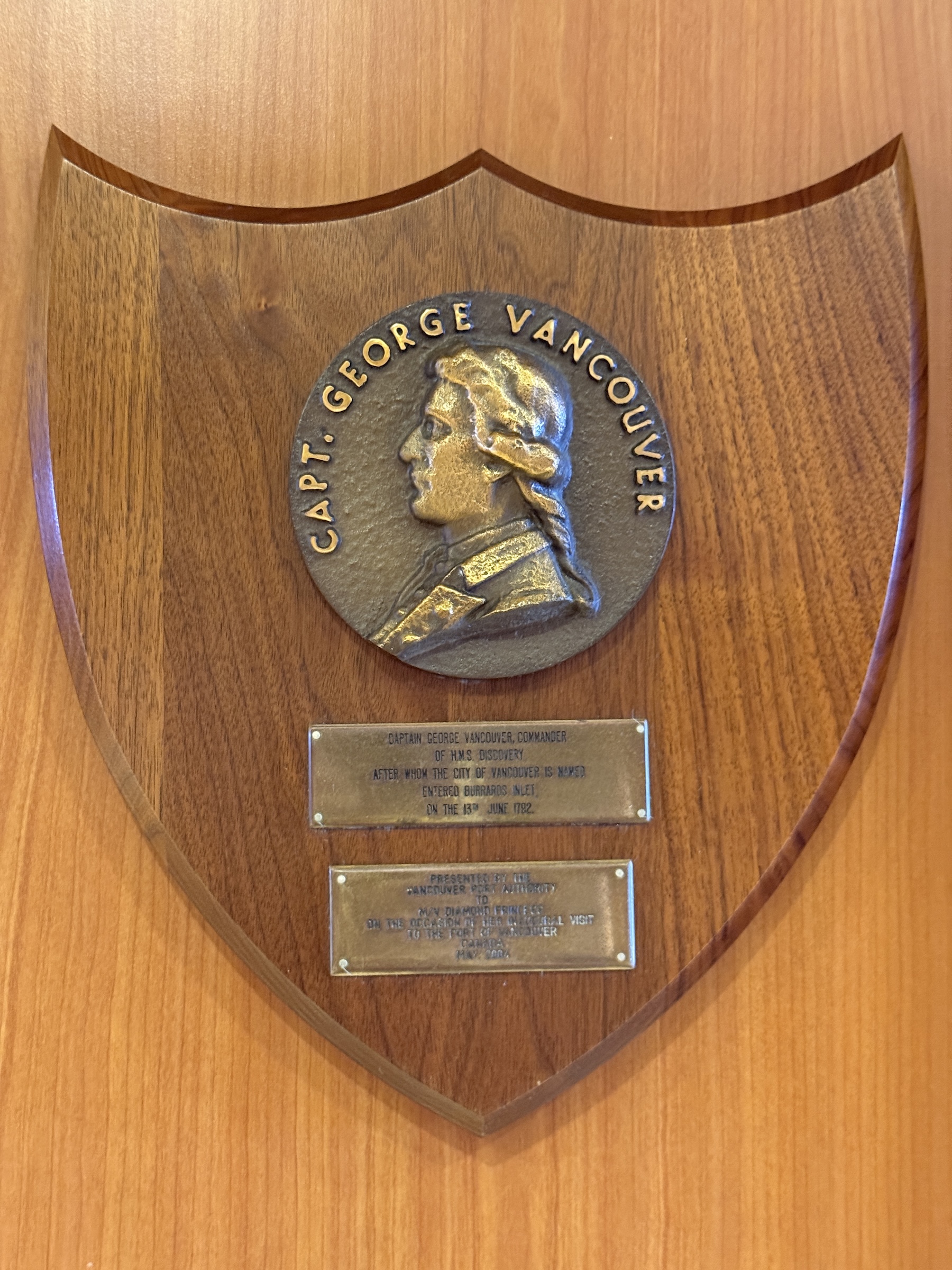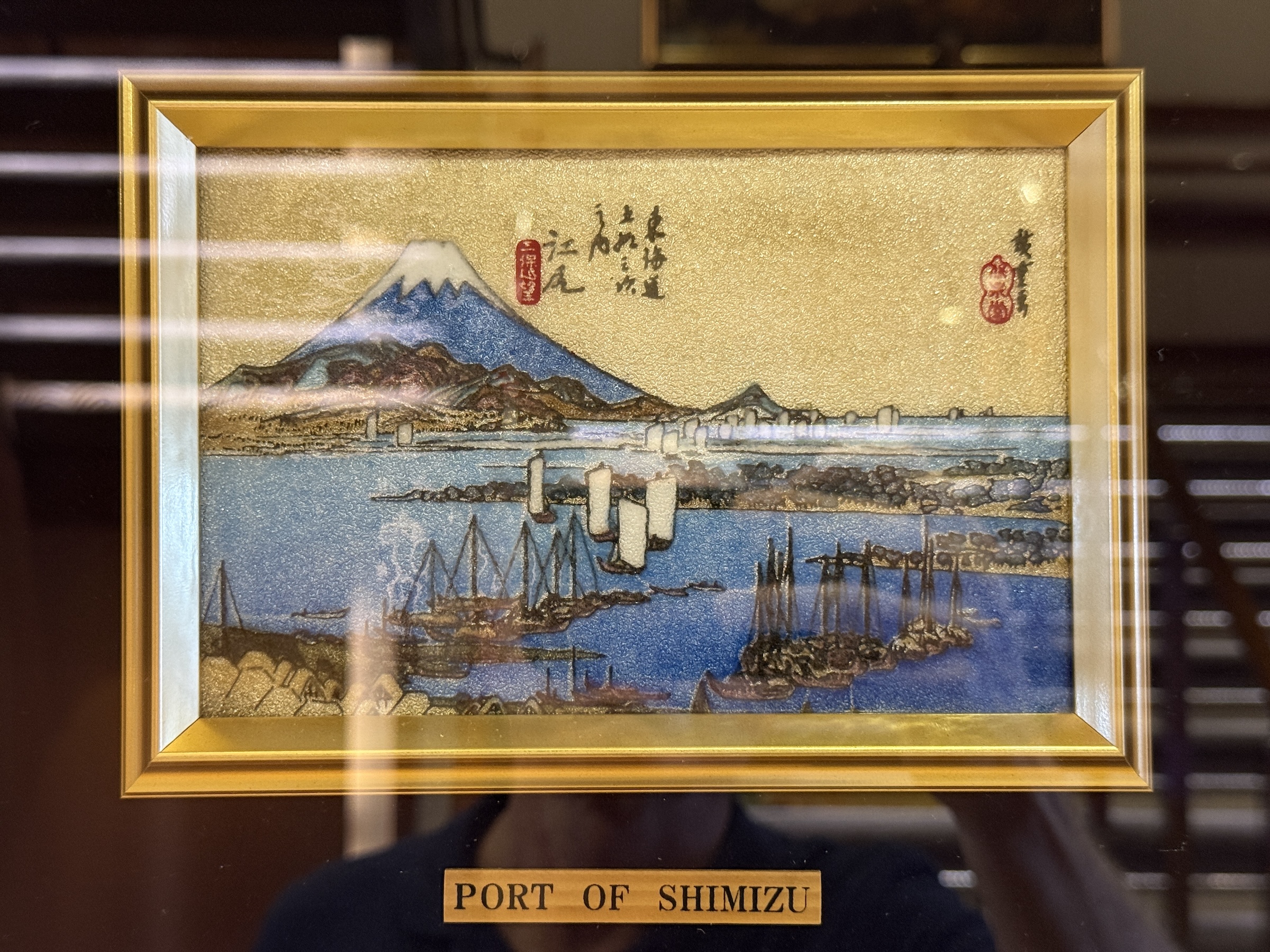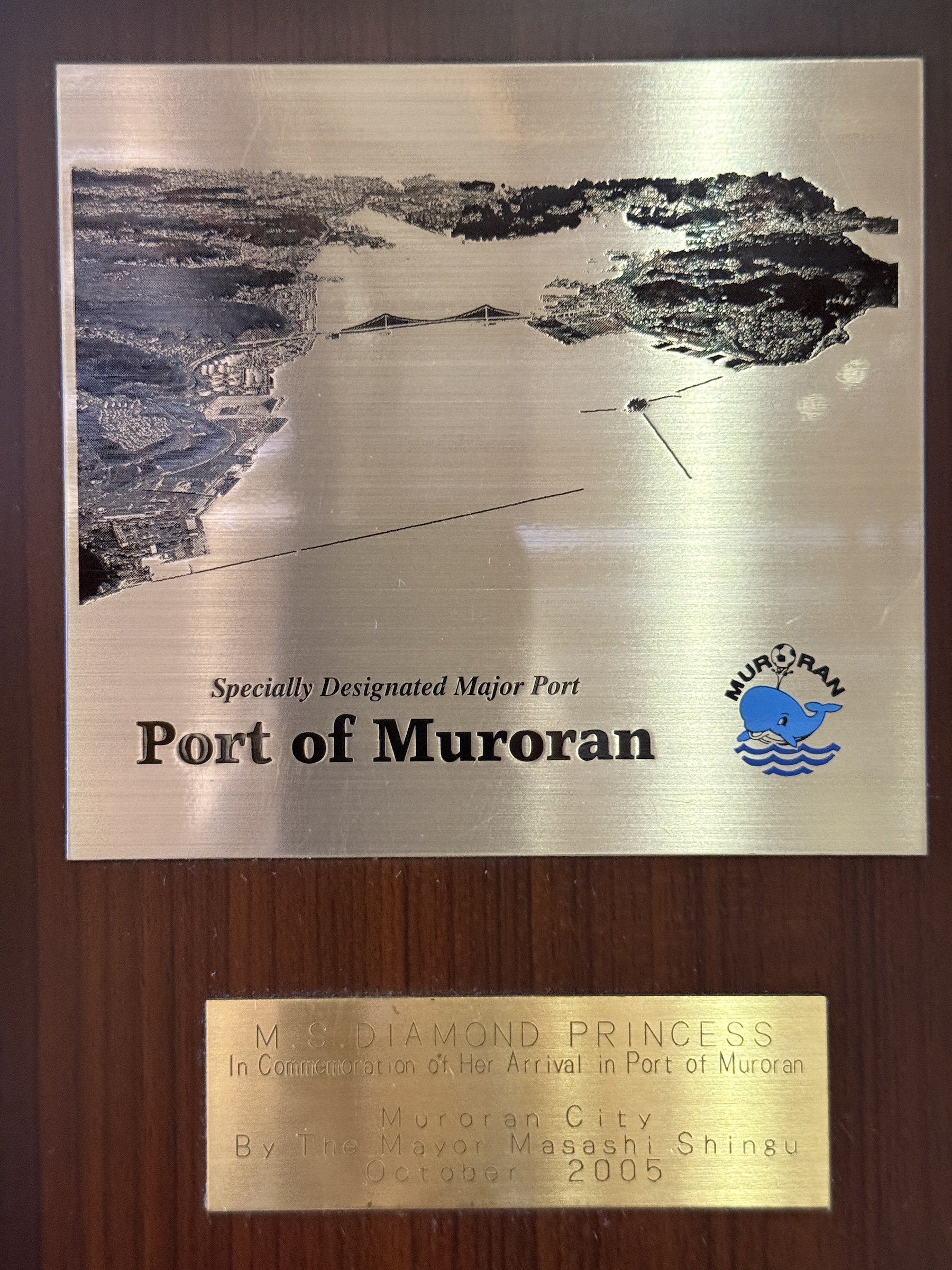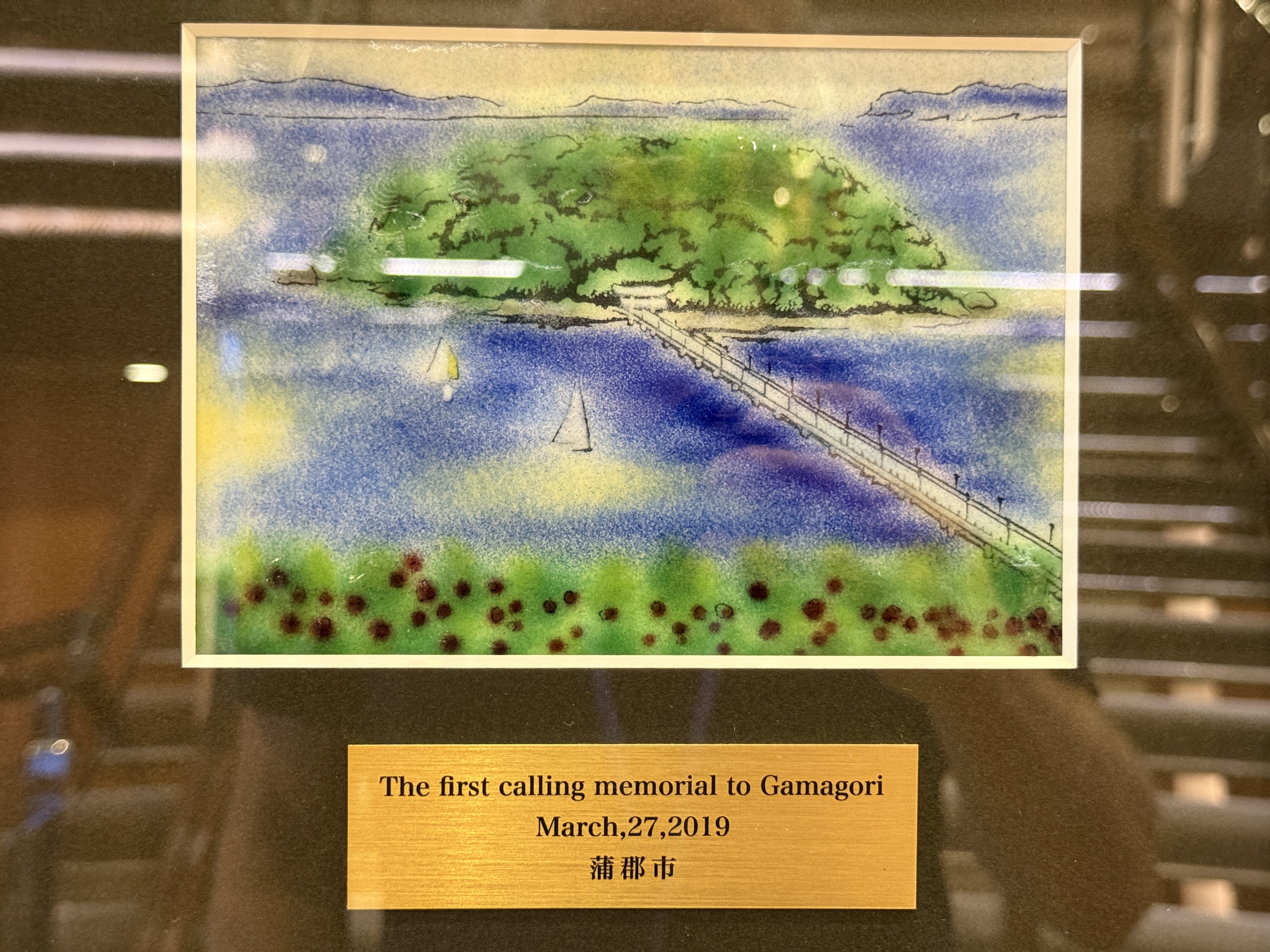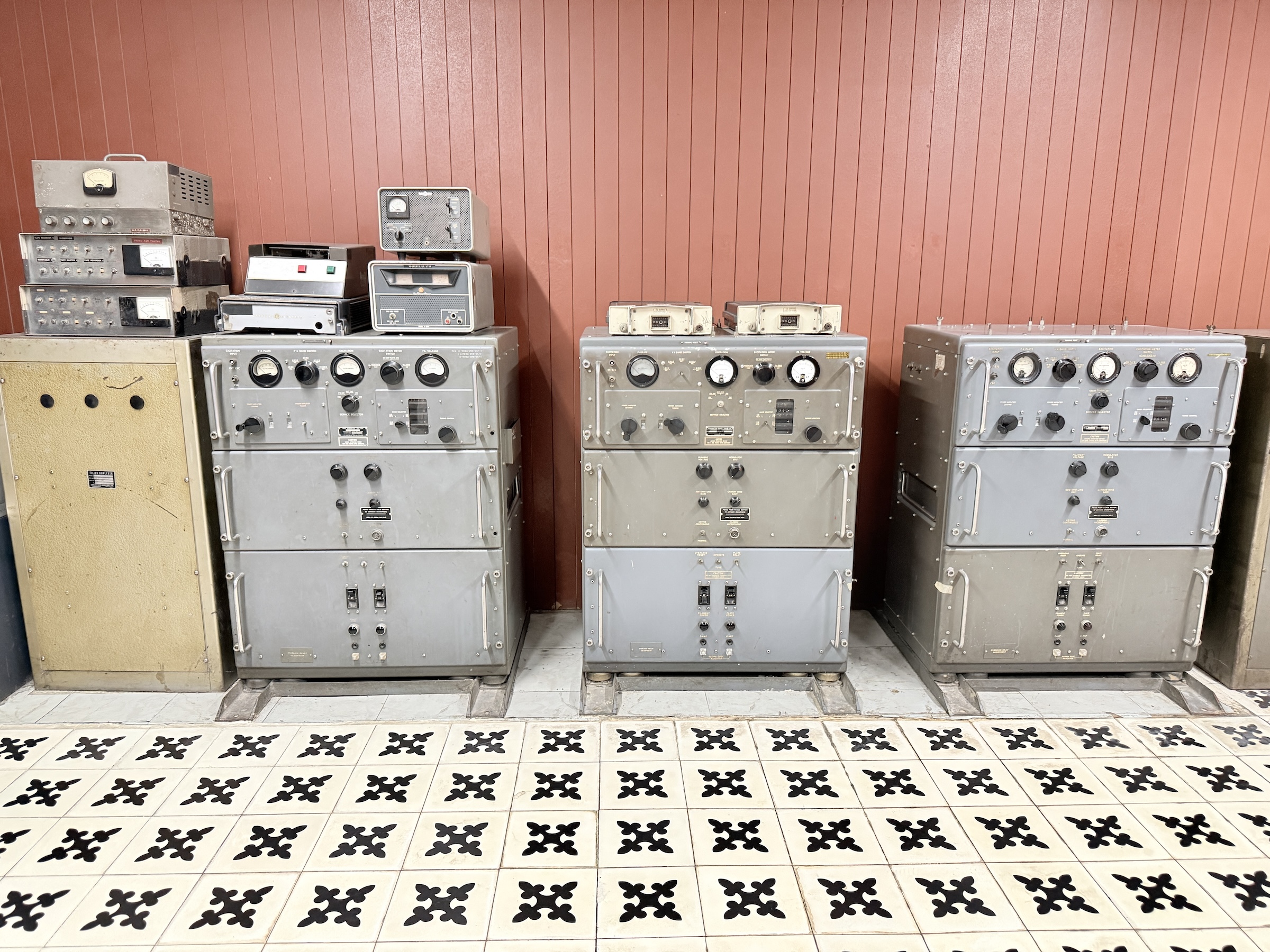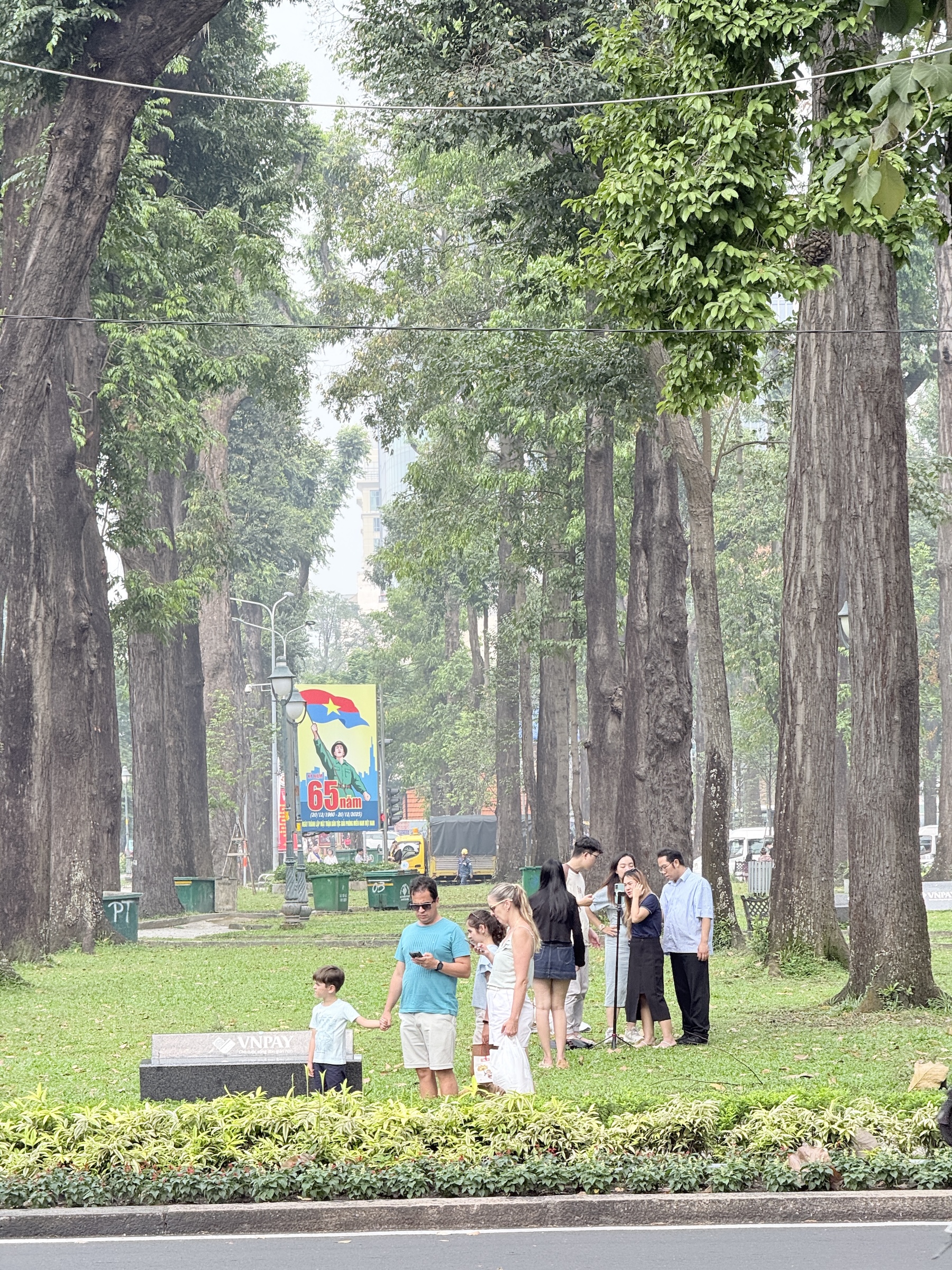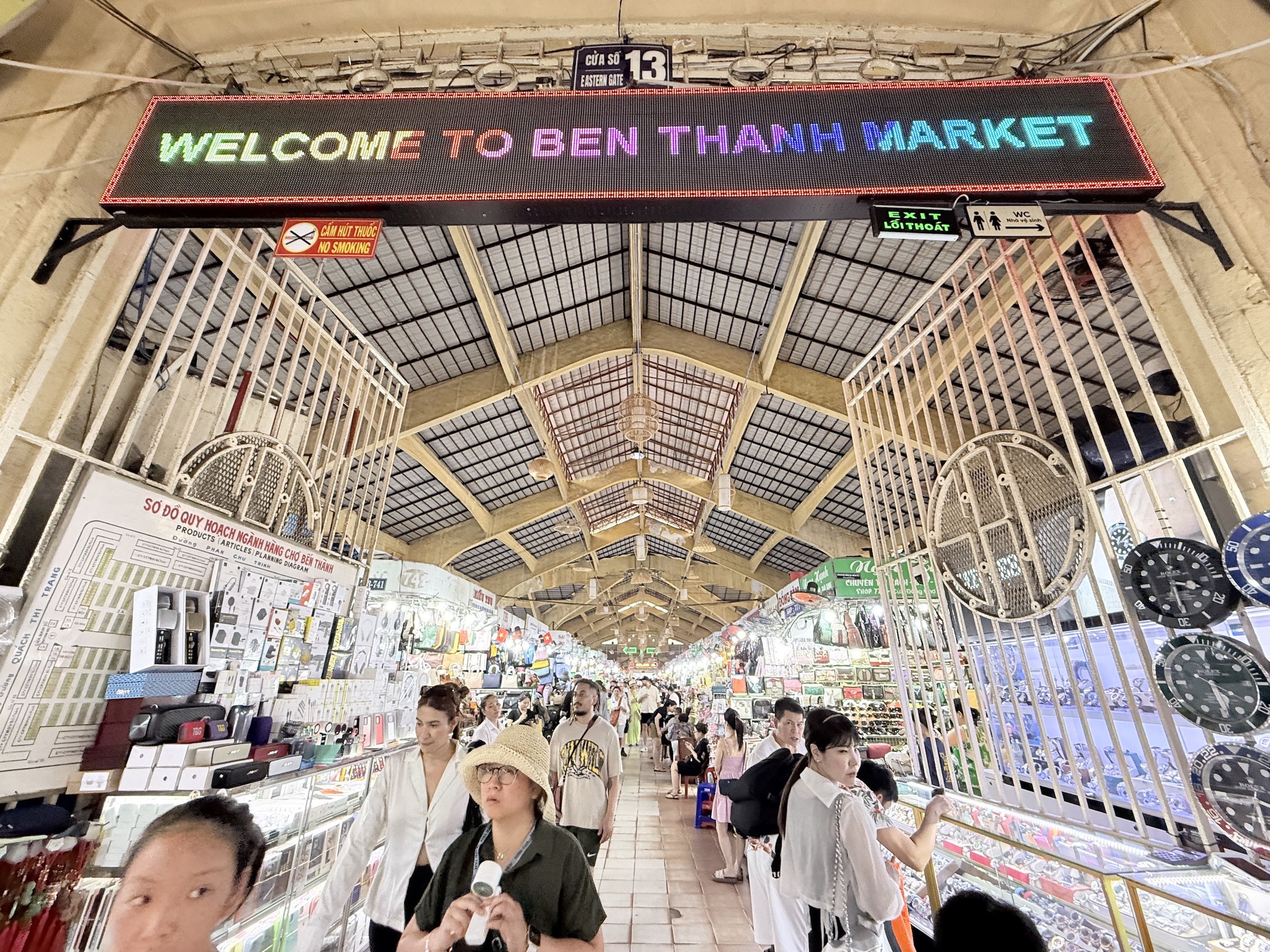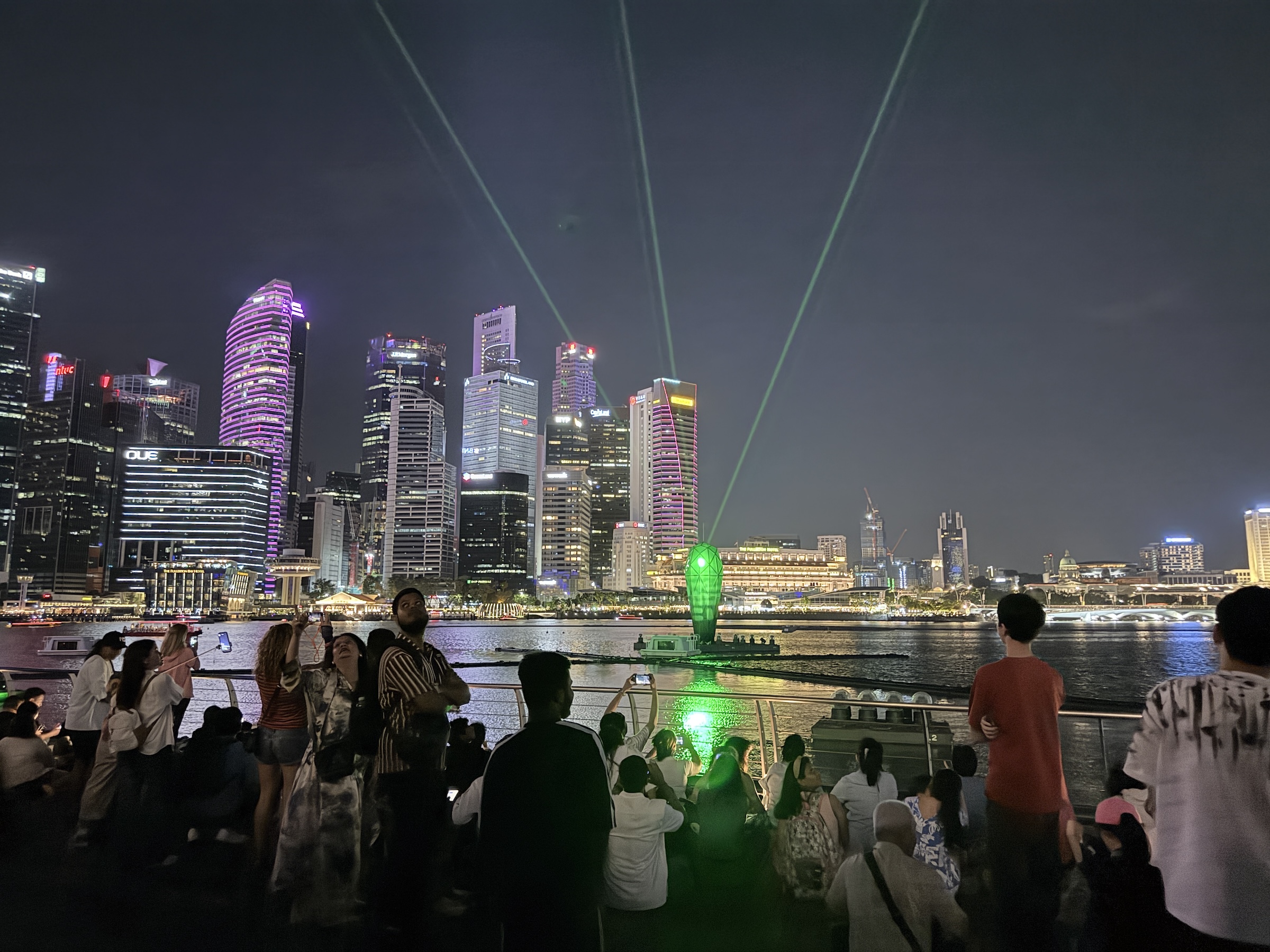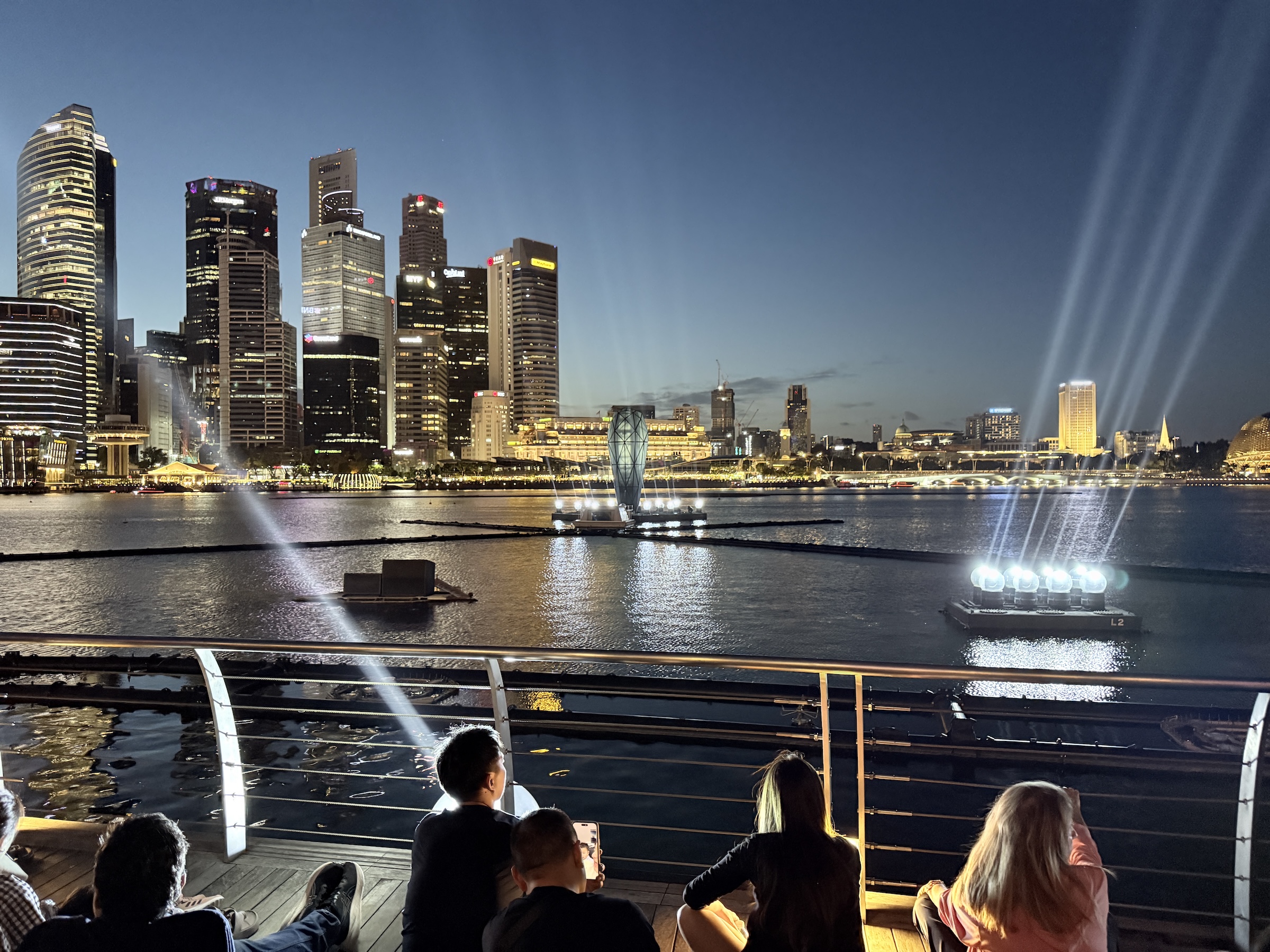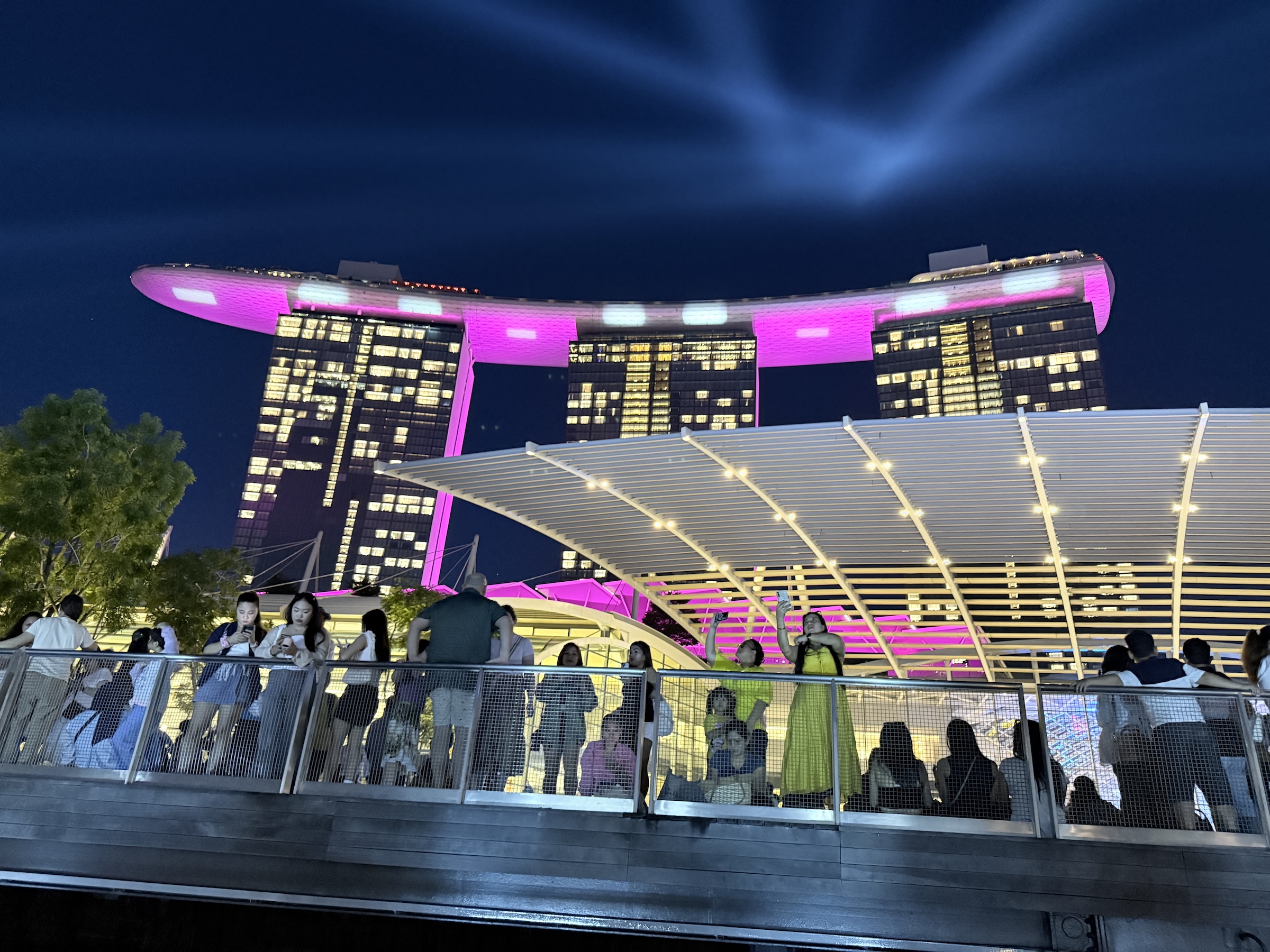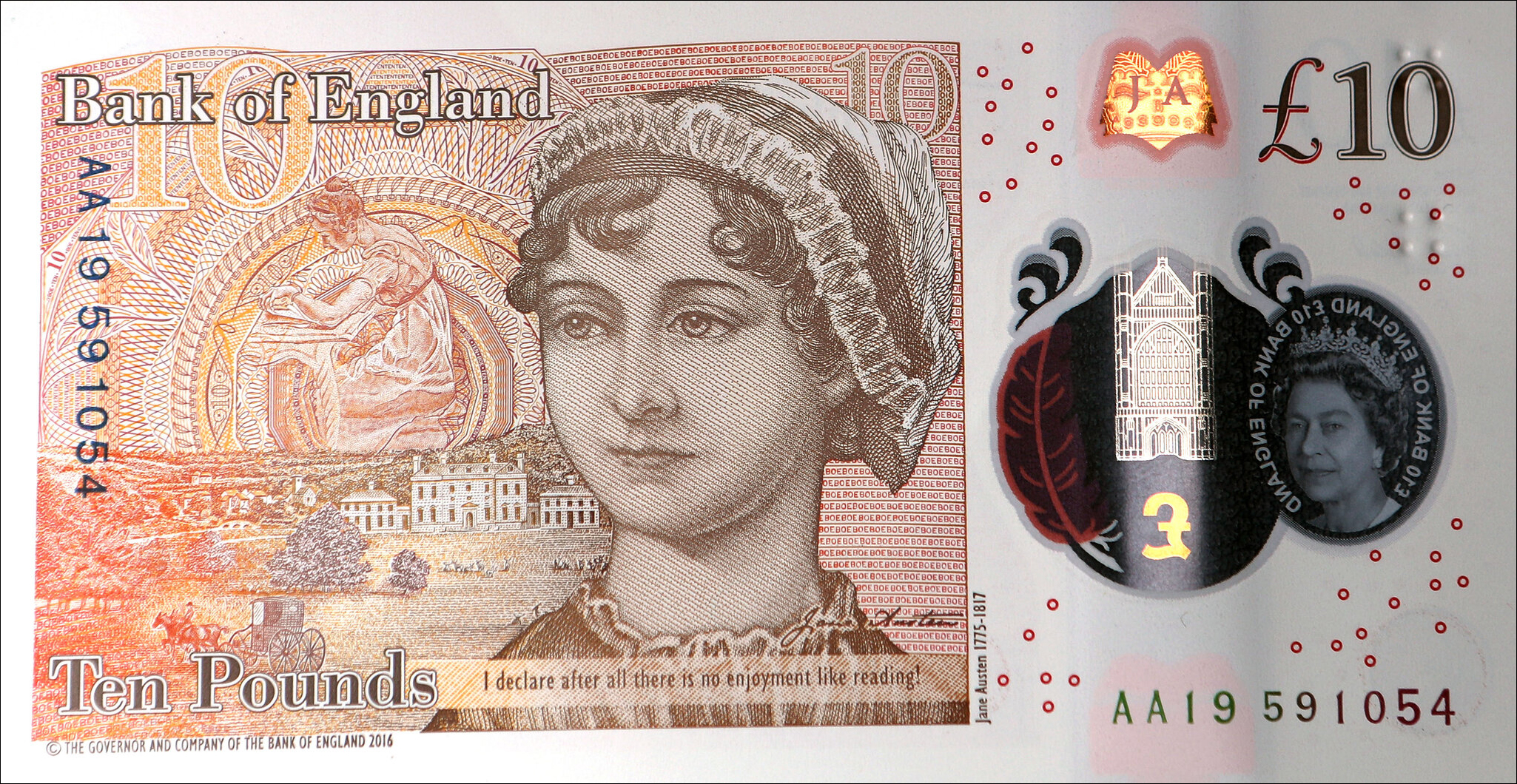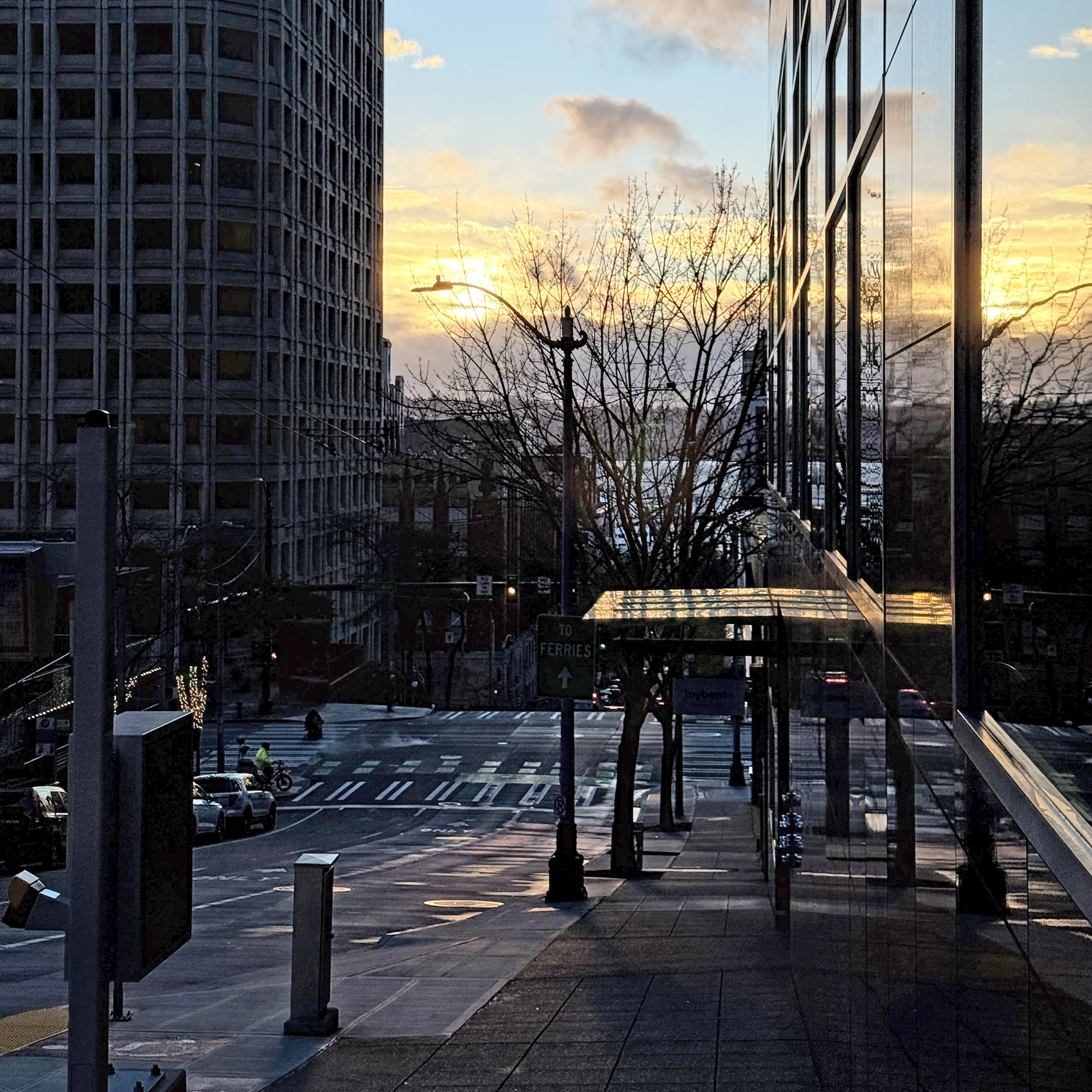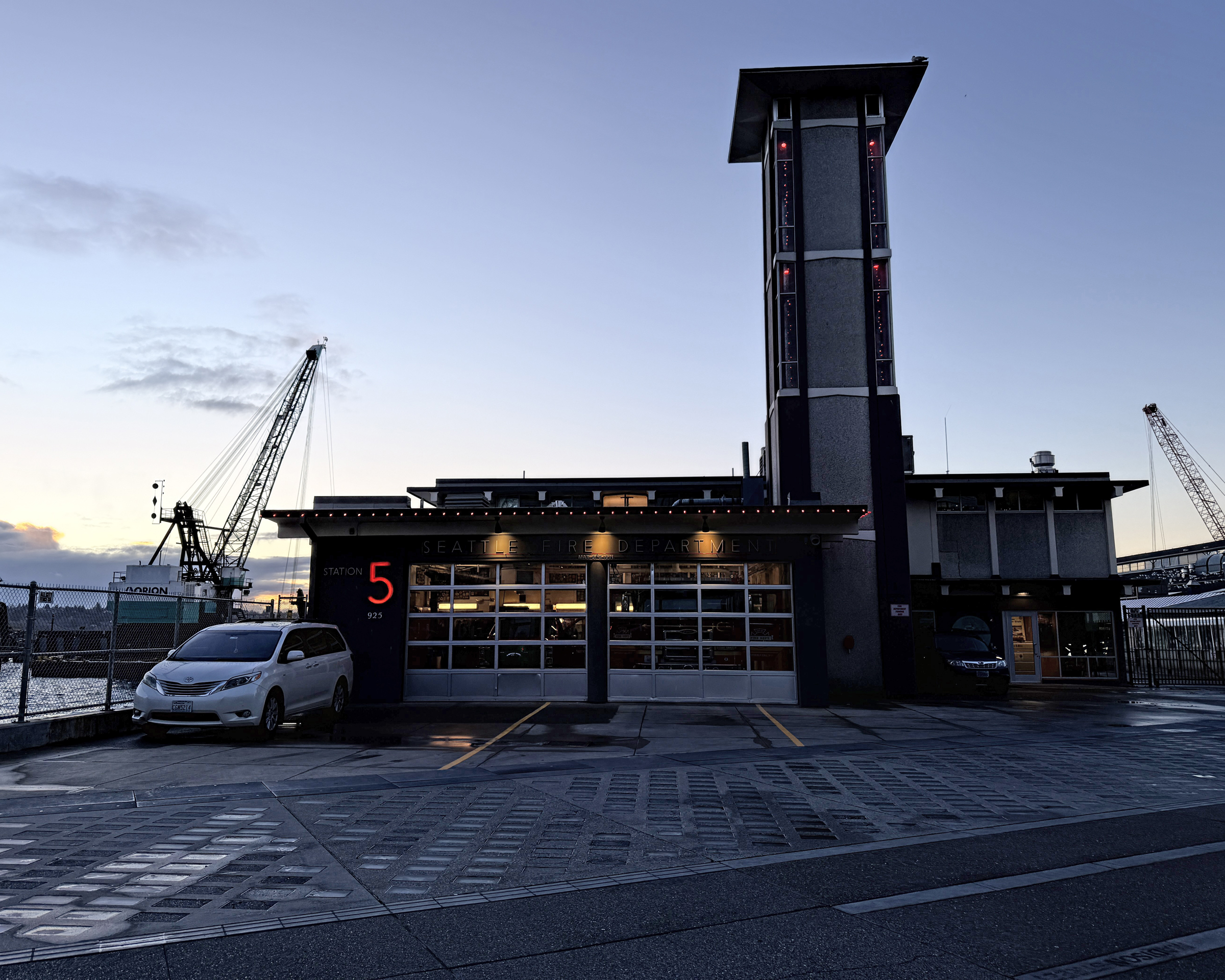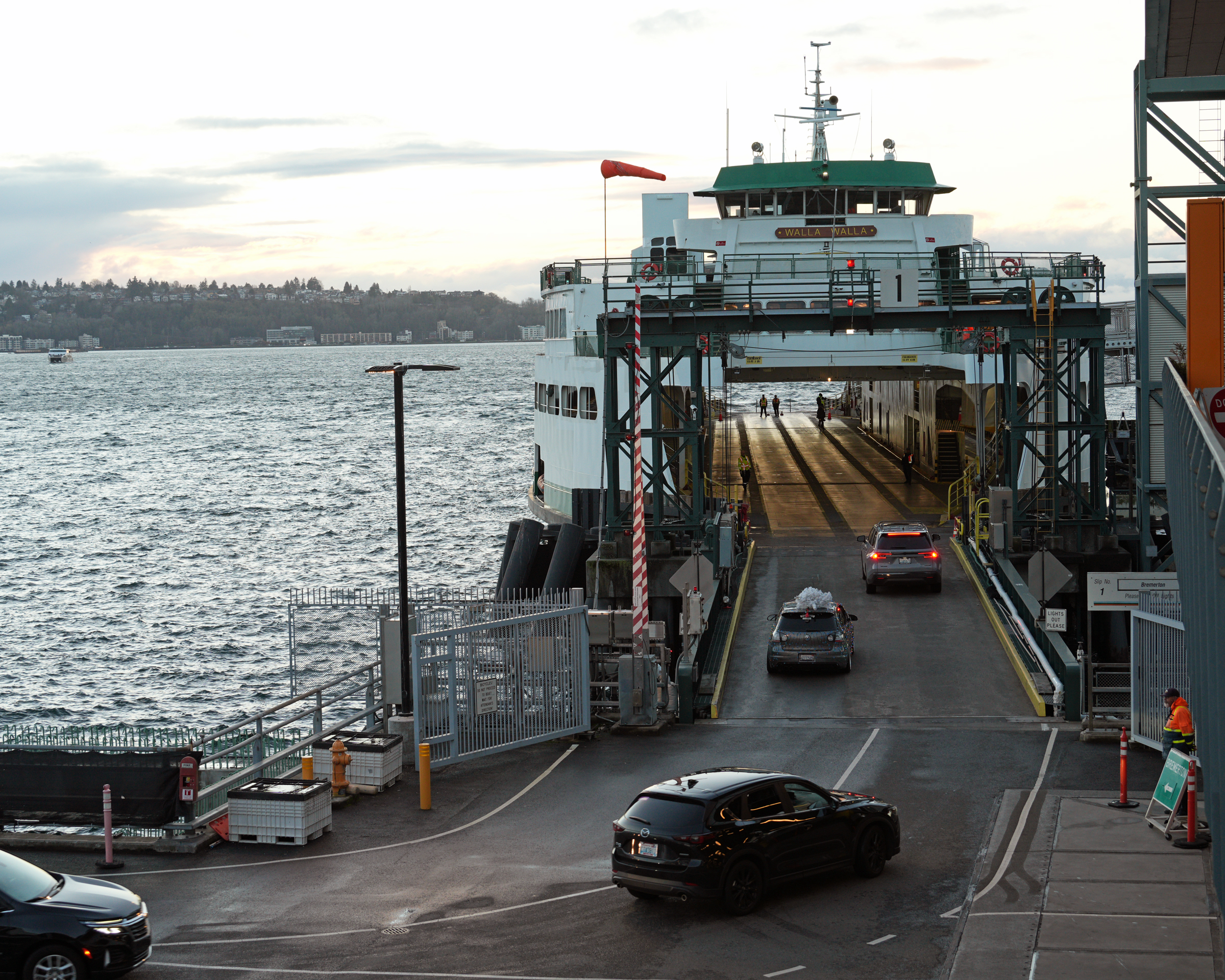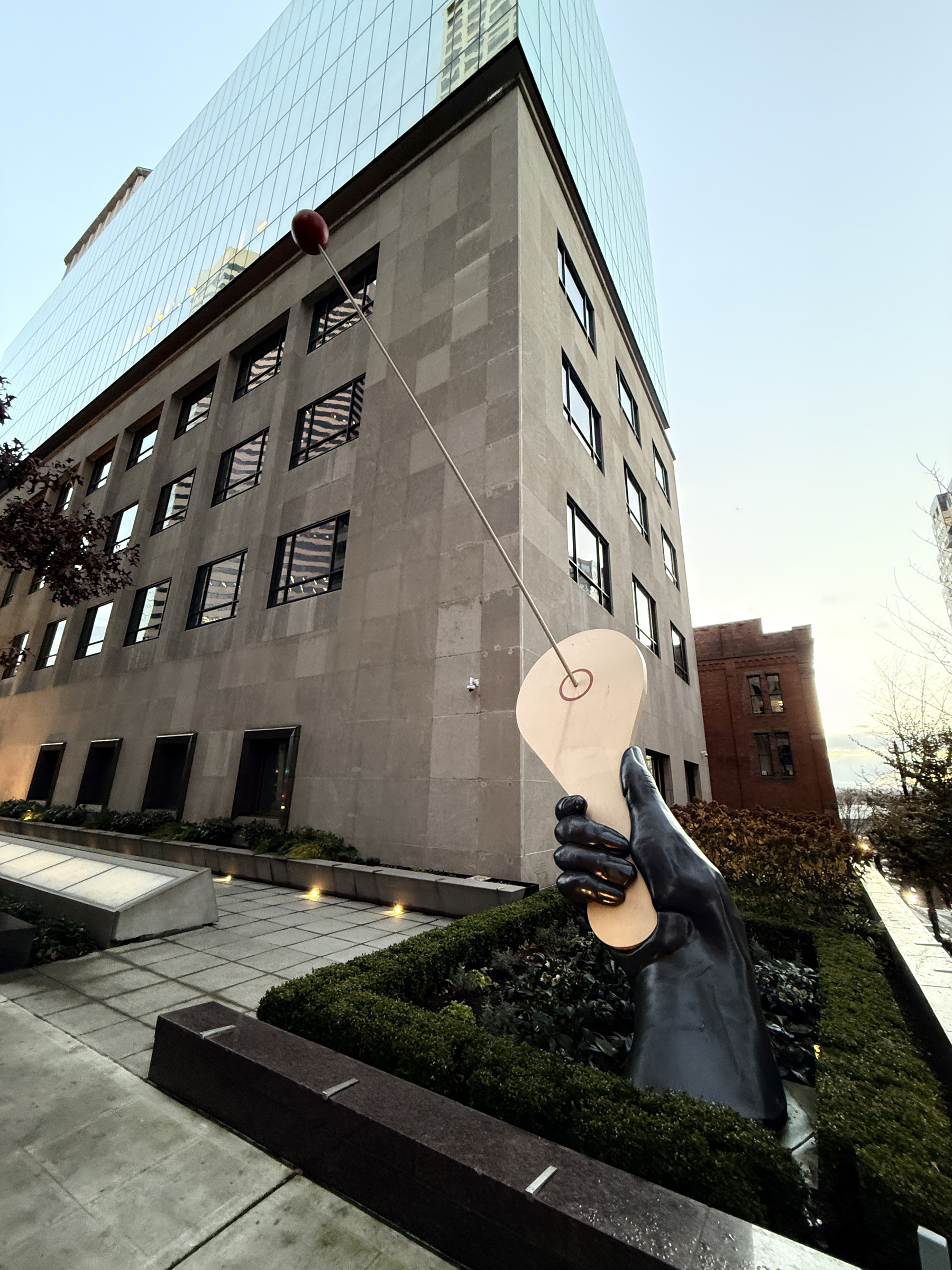
The rain was relentless on Friday here in Tokyo.
I ran out to Shinjuku train station in the morning and got lost inside the enormous station— before getting soaked in the torrential rain outside of it. 😱
Come early evening the rain was over, though, and I went back to see if I could navigate the station better, and to take a few photos.
The view outside my hotel room in the morning. The top of Tokyo Tower is hidden in the low clouds.Ooh! .. not looking good out here on the ground, I am thinking. It is mid-morning and I am on the way to Shinagawa station on the hotel’s shuttle bus.A colorful mural inside Shinjuku station.There is no lack of directions to the myriad train lines and exits in Shinjuku station, but Shinjuku Station has over 200 exits and many platforms of different shapes, spread out over a large area, along with department stores covering nearly all sides. I tried to have Google Maps give me walking directions, and it worked— until it said ‘If there is no GPS signal, navigation may stop working’. Yes. No sh**.A mural inside Shinjuku. Looking for a used car? Use the Car Sensor app. The characters and manga style are from the iconic series City Hunter, which is being used here in a parody/comedic fashion to draw attention.All right! By sunset (6.02 pm) the rain was gone, and now I’m going to run out to Shinjuku one more time.This is the exit I had looked for in vain this morning: the South East Entrance by the Lumine 2 store. I am on my way to Takashimaya Times Square nearby.A street-level view of the pedestrian crossing at the South East Entrance.I walked several hundred yards now, further to the south, where there is an overlook of the railway lines going into the station.The clock tower located near Takashimaya Times Square is on the NTT Docomo Yoyogi Building. It’s just a day or two until September’s full moon.I made it back to Shinagawa Station and now heading back to the hotel. No rain! Check out the sleek billboard above the Hollywood pachinko parlor. It advertises an even sleeker, faster bullet train that is coming— able to fly at 500 km/h (311 mph) on the tracks.The almost-full moon over a gate in the Japanese garden on the hotel grounds.
There was drizzle on and off here in Tokyo on Thursday, at a damp 85°F (30 °C).
Outside, I could only take pictures here and there with my big camera, but managed to get a few of the iconic 1914 Tokyo Station building (extensively renovated and restored in 2012).
I also made my first run to the Yodobashi Akiba store in Akihabara.
Nice infographic from the hotel room TV. The pink blobs are Japan’s main islands. That’s Tokyo in the bottom right corner, showing that the 30 °C is down 7°C from yesterday (85 °F , down from 99 °F). Yay! .. even though it still feels very warm and humid. (And are those little characters chickens?)This is about 9.30 am and I caught the tail end of the morning rush hour into, and out of Shinagawa station.Office workers and a few others (me) streaming out of Shinagawa station. Walk on the sides, if you are coming into the station, said the display screen.All right, now I’m heading down to the Yamanote Line— the loop line with Shinagawa station on it, near my hotel. This line has been in service for 140 years now (constructed 1885) and is used by some 4 million people every day. The train had left just a minute ago.Hello, Yodobashi Akiba! It is by Akihabara station, 8 stops to the north of Shinagawa station.The toys for kids of all ages are on the 6th floor. The bank of pink claw machines was not there two years ago when I last visited. In Japan, claw machines are most commonly called “UFO catchers” (ユーフォーキャッチャー) or “crane games” (クレーンゲーム). The term “UFO catcher” comes from the appearance of the claw mechanism, which resembles a UFO descending to capture a prize, a term popularized by Sega when they introduced the game in 1985. [From Wikipedia]I bought a few of these Takara Tomy animal figures: the lion, the cheetah, a gorilla, a peacock, a shoebill stork.Help! The shoebill stork fell down (is its bill too big and heavy?) and someone needs to come and fix the display case. The chameleon figure (bottom) has a movable tongue that can be pulled out and pushed back in. Nice. I now regret I did not get the chameleon, as well.On the way back on the Yamanote line, I saw Tokyo Tower out of the train window by Hamamatsucho station. It seemed nearby and I stepped out and walked the five or six there— kind of regrettting it, because it started to drizzle. This green space near the Tower is called Shiba Park.I’m standing under a Himalayan cedar, and that’s the Buddhist temple called Zojo-ji Temple. From Wikipedia: At its peak the temple grounds had more than 120 buildings, but following the decline of Buddhism during the Meiji period (1868-1912), most of them burned down during the bombing of Tokyo in World War II. Reconstruction began after the war, with the Daiden (great hall) being rebuilt in 1974.Here’s the Himalayan cedar. A plaque by the tree notes that General Grant (18th President of the United States) planted this tree when he visited Zojo-ji Temple as a guest in 1879 (that’s 146 years ago). The main gate to the grounds is under renovation and enclosed in a sheet metal building behind the tree.A cemetery by the temple, presumably with ashes from the deceased. The cemetery at Zojo-ji Temple holds the mausoleums of six Tokugawa shoguns* and their families, serving as the family temple for the Tokugawa clan. *The shogun (short for Sei-i Taishōgun, 征夷大将軍) was the supreme military and political leader of Japan, ruling for nearly 700 years. The rule of the shoguns ended in 1868 with the Meiji Restoration, which was triggered by growing internal discontent and the disruptive arrival of Western powers.Dai-Nokotsudo, or Shariden, is where the bones of deceased are stored. It is made of stone and was created in 1933.Here are several pictures of the Tokyo station building, taken late afternoon and early evening. Tokyo Station is surrounded by many modern glass and steel office towers.
It was a smooth and uneventful flight and we arrived 30 minutes early at Tokyo’s Haneda airport.
It was a short ride (20 mins) on the Keikyu train line to get me to Shinagawa station. I had set up my transit card (Suica card) from my visit two years ago as a digital transit card in my iPhone’s wallet. That way I can tap the reader at the gate with my phone, without even needing to unlock it.
Even though it was only a 6 or 7 minute walk to the hotel from Shinagawa station’s exit, I waited for the hotel’s shuttle bus.
The heat was still oppressive at 8 o’clock— 85 °F (30 °C) and high humidity.
P.S. I turned on my eSIM phone line from global mobile data service provider Ubigi and it works great— a first for me, to use an eSIM phone line for international travel on my iPhone. So it’s farewell to the expensive international service provided by AT&T (expensive, as in 3x or 4x more expensive! Yikes).
Top to bottom:
Smoky skies over Washington State;
Flying almost due west for 10 hours across the Pacific Ocean;
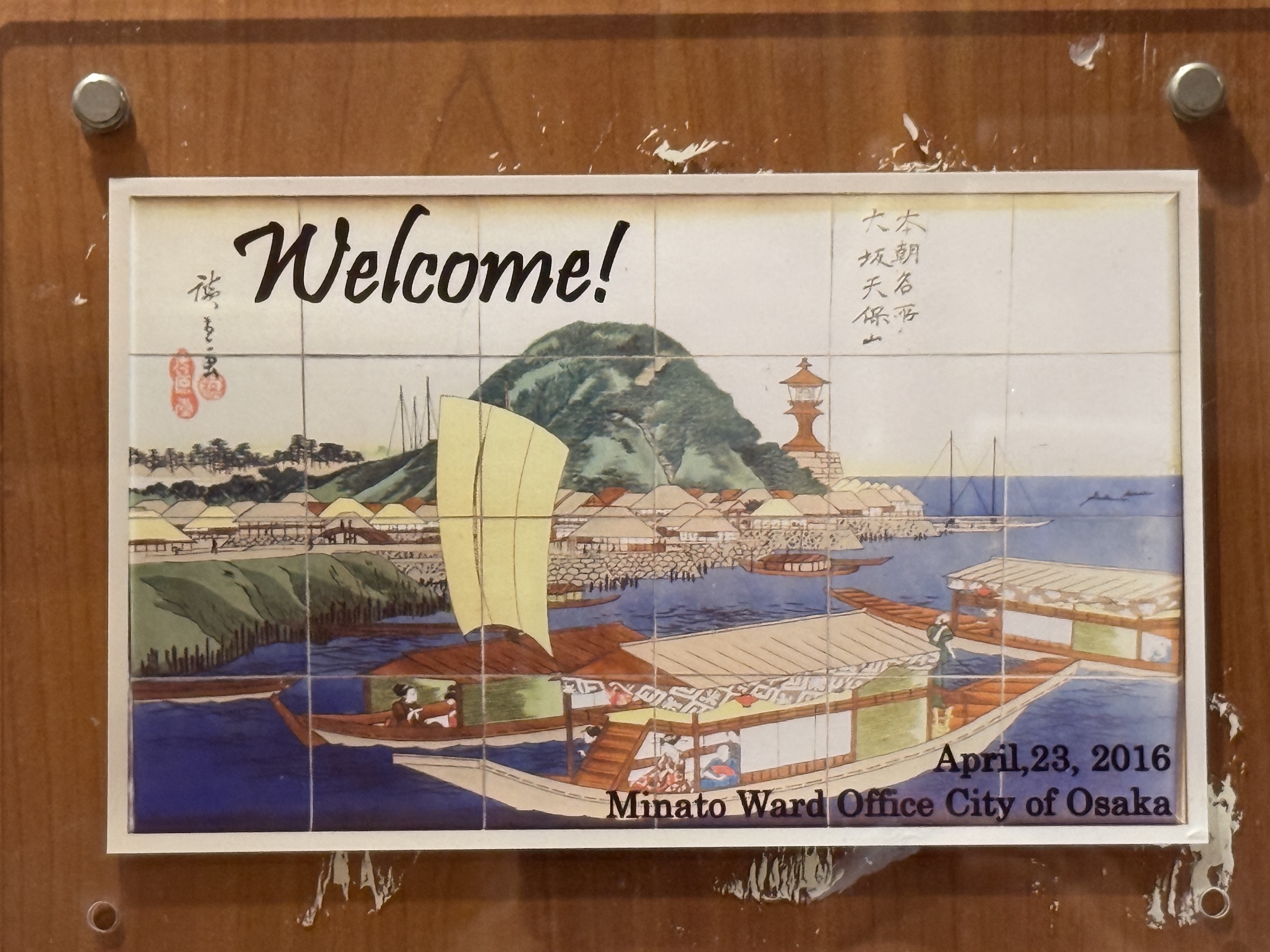
Welcome signs at the exit of the arrivals hall at Haneda airport.
At the gate at Handa airport’s Terminal 3
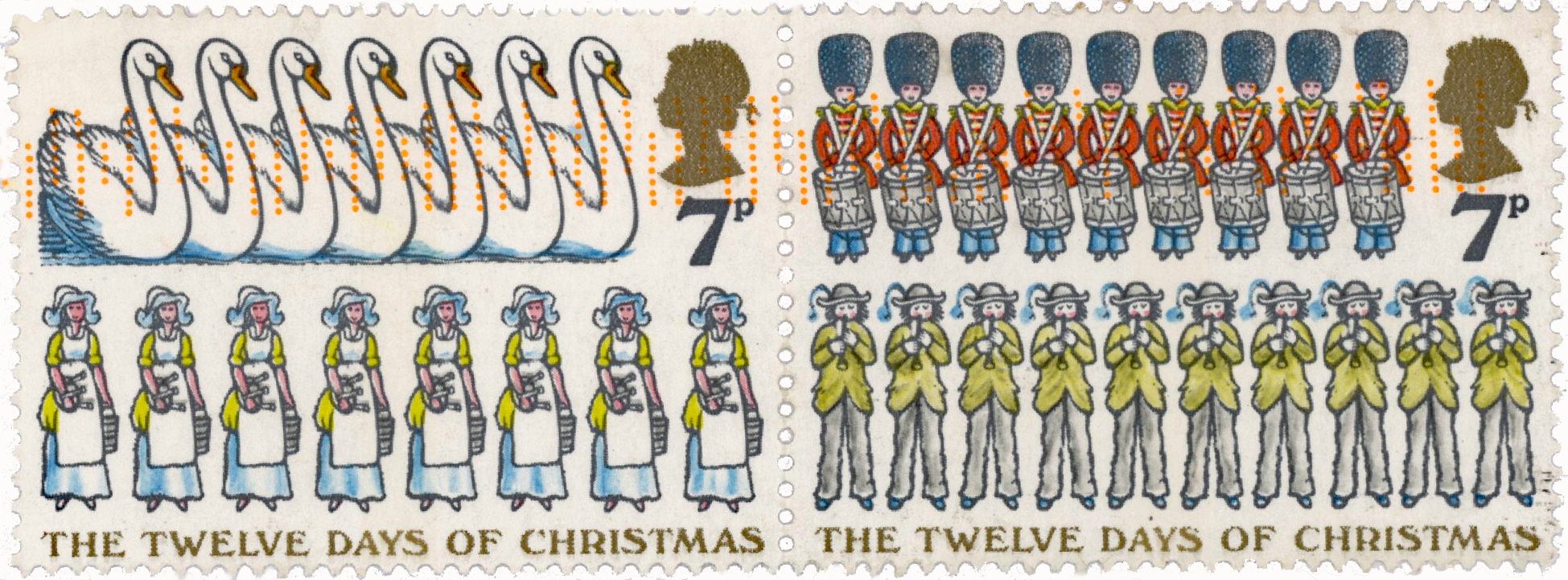
Here’s the stamp catalog information for two sets of stamps from the Netherlands that each feature a 150th anniversary.
The Netherlands: The 150th Anniversary of the Royal Netherlands Meteorological Institute, KNMI Issued Jan. 31, 2004 Perf. 14¼x14¾ |Se tenant pair |Litho.|No watermark #1165 A455 0.39€ Multicolored |Rain (‘regen’, rainbow at left) #1166 A455 0.39€ Multicolored |Sun (‘zon’, rainbow at right), showers (‘buien’) in margin Note: The seven colors of the rainbow, listed from longest to shortest wavelength, are Red, Orange, Yellow, Green, Blue, Indigo, and Violet.
The Netherlands: The 150th Anniversary of the Birth of Vincent Van Gogh Issued Jan. 2, 2003 Perf. 14¾ |Sheets of 10 different stamps |Design: Gracia Lebbink |Litho.|Engraving: House of Questa |No watermark #1142i A438 0.39€ Multicolored |View of Auvers, 1890 #1142j A438 0.39€ Multicolored |Wheat Field with Crows, 1890 [Sources: stampworld.com, Scott 2018 Standard Postage Stamp Catalogue, Vol. 5]
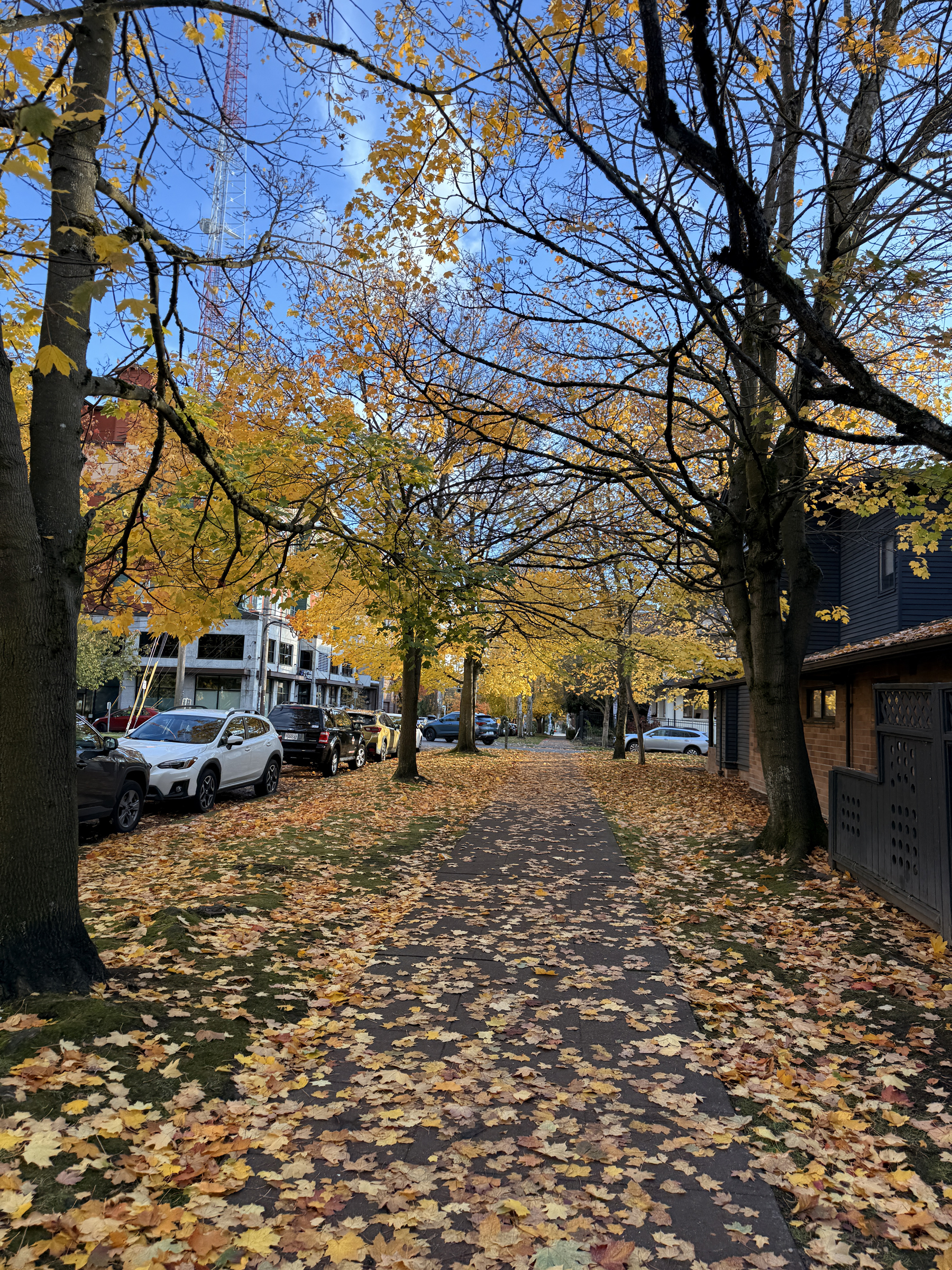
The warm weather of the last four or five days is behind us here in Seattle.
The high was 78°F (26°C) today.
These stills are from a Japanese anime called The AC Is Broken EP 392 | Atashin’chi | [ENG sub]
[Anime] Atashin’chi Official Channel on YouTube
Background (from the YouTube page): The Tachibanas are the quintessential Japanese family, unassuming and infinitely relatable. There’s Mother, who isn’t the best cook, and is quite lazy, and Father, who always leaves the bathroom door ajar. The high school daughter Mikan seems a bit of a buffoon, and the middle schooler son Yuzuhiko appears to be quite the cold fish at first glance. They’re a bit peculiar— but they are a family everyone could relate to.
In this episode, Father comes home to find Mother exhausted on the sofa.
The AC is broken, and the repairman can only come out tomorrow.
Luckily, the ACs in the kids’ rooms still work, and Father could sleep in son Yuzuhiko’s room, and Mother in daughter Mikan’s room.
There were several stamps from Belgium on the outside envelope from my Ebay vendor in Antwerp, and I looked them up in the Scott stamp catalogue.
P.S. —The stamps that I buy on Ebay from overseas still come through without getting a tariff slapped on them. The de minimis exemption* for goods purchased from overseas suppliers will end soon, though.
*Historically, the US has had a de minimis exemption that allowed goods valued below a certain amount (currently $800, subject to change) to enter duty-free. However, the US eliminated the de minimis exemption for products from China and Hong Kong on May 2, 2025, and plans to eliminate it for all countries on August 29, 2025.
– Google AI Overview
1989 Belgium: Young Philatelists Issued Oct 9, 1989 Perf. 11½ |Photogravure |No watermark #1328 A575 9Fr Multicolored |Mr. Nibbs *”The Adventures of Nibbs” is a Belgian cartoon series that was also adapted into a Brussels cartoon mural by the cartoonist Marc Sleen. 1991 Belgium: Tourism Issued Jun. 17, 1991 Perf. 11½ |Design: Jacques Doppée & Paul Deweerdt |Photogravure & Engr. |Engraving: Patricia Vouez & Guillaume Broux |No watermark #1406 A603 14Fr Multicolored |Neptune’s Grotto, Couvin 2016 Belgium: Qualifying Education (from minisheet of 5) Issued Mar. 14, 2016 Perf. 12 |Design: Bart Van Leuven & Wim Vandersleyen |Litho. |No watermark #2791a A1370 1.00€ Multicolored |Dredge near island, Abu Dhabi [Sources: stampworld.com, Scott 2018 Standard Postage Stamp Catalogue, Vol. 1]1976 The 25th Anniversary of King Baudouin’s Regency Issued Jun. 26, 1976 Perf. 11½ |Design: Anton Luyckx |Photo. |No watermark Se-tenant pair from mini-sheet #952a A374 20Fr Yellow-green |King Baudouin, in profile #952b A374 30Fr Prussian blue |King Baudouin, in profile [Sources: stampworld.com, Scott 2018 Standard Postage Stamp Catalogue, Vol. 1]1999 Belgium: Greeting Stamps Issued Jan. 23, 1999 Perf. 11¾ |Design: Karl Meersman |Photogravure & Engr. |Engraving: De Schutter |No watermark #1722 A738 17Fr Multicolored |Heart-shaped head on woman ‘Happy birthday Mama/ Long live Mama’ #1723 A738 17Fr Multicolored |Heart-shaped head on man ‘Long live Papa/ Happy birthday Papa’ [Sources: stampworld.com, Scott 2018 Standard Postage Stamp Catalogue, Vol. 1]2005 Belgium: Greeting Stamps Issued May 9, 2005 Perf. 9 ¼ on 2 or 3 sides |Booklet panes of 10 |Design: Myriam Voz & Thierry Martin |Photogravure |Engraving: Offset |Self-adhesive |No watermark #2095 A915 0.80€ Multicolored |Doves and wedding rings #2096 A916 0.80€ Multicolored |Wedding rings [Sources: stampworld.com, Scott 2018 Standard Postage Stamp Catalogue, Vol. 1]
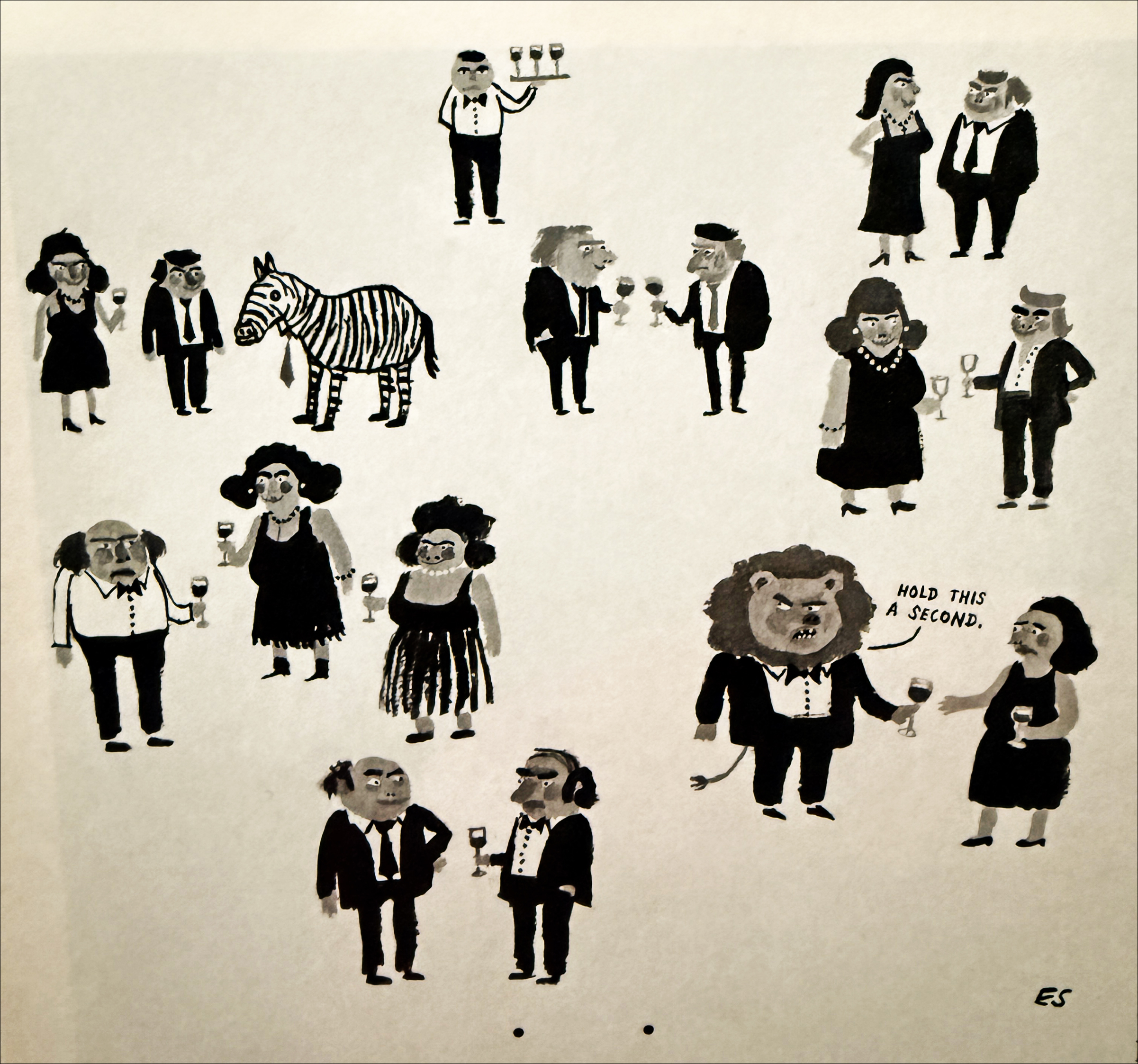
World Lion Day is celebrated annually on August 10th.
It’s a day dedicated to raising awareness about the challenges lions face in the wild and supporting their conservation. The day was founded in 2013 by Derek and Beverly Joubert to highlight the declining lion populations and the threats they face, such as habitat loss and poaching.
The Lion Hotel in the city of Springs in South Africa, advertising Lion Beer, circa 1954. Lion Beer would later become Lion Lager. Lion Lager is a popular choice for various gatherings and social events to this day. It’s often enjoyed during braais (South African barbecues), sports matches, and family celebrations.Lion safety matches. There was a time in the ’50’s in South Africa when an entire little box of 50 matches could be bought for one penny.I had been to Botswana with my family for more than a dozen times by 1993, and even by then had never seen a lion in the wild from up close there. When we were there in July 1993, though, one of the locals came to tell us of a lion that they had spotted nearby. Seven or eight of us piled into an open-top Jeep ( ! ), and I took this picture through the mopane leaves with a telephoto lens.2018 Austria Copper €5 New Year’s ‘A Lion in Winter’ coin.Artwork by David Pollack, used in Jell-o’s campaign of printed ads in LIFE magazine and others in the 1950s. The lion and a plate of Jell-O appeared in the ads, with the words “When I’m eating Jell-O, I wish I were a lion .. because then I could roar for more of my favorite dessert! (Jell-O, of course!)”I took this picture in New York City in 1999.The Pleistocene Epoch, often referred to as the Ice Age, in Alaska, as with the rest of the world, extended from approximately 2.6 million years ago to 11,700 years ago. Look at the center of the picture for the lions that once roamed in North America. The North American lion, also known as the American lion, became extinct around 10,000 years ago along with several other large mammals. [Picture taken inside University of Alaska Museum of the North, Fairbanks in 2023]A ‘Hungry Lion’ fast food franchise in Stellenbosch, South Africa, in 2017.A pride of lionesses inspect a remote controlled camera buggy. I believe the photographer is Chris McLennan and that the pictures were taken in 2019. I’m sure it is in Africa, but I don’t have the specific location.On a South African bank note from 1992: lionesses at the water hole, and a regal stare from the king of the beasts.Luggage locker in Tokyo Station, Japan.Lion figurine (model #17107) by toymaker Schleich.
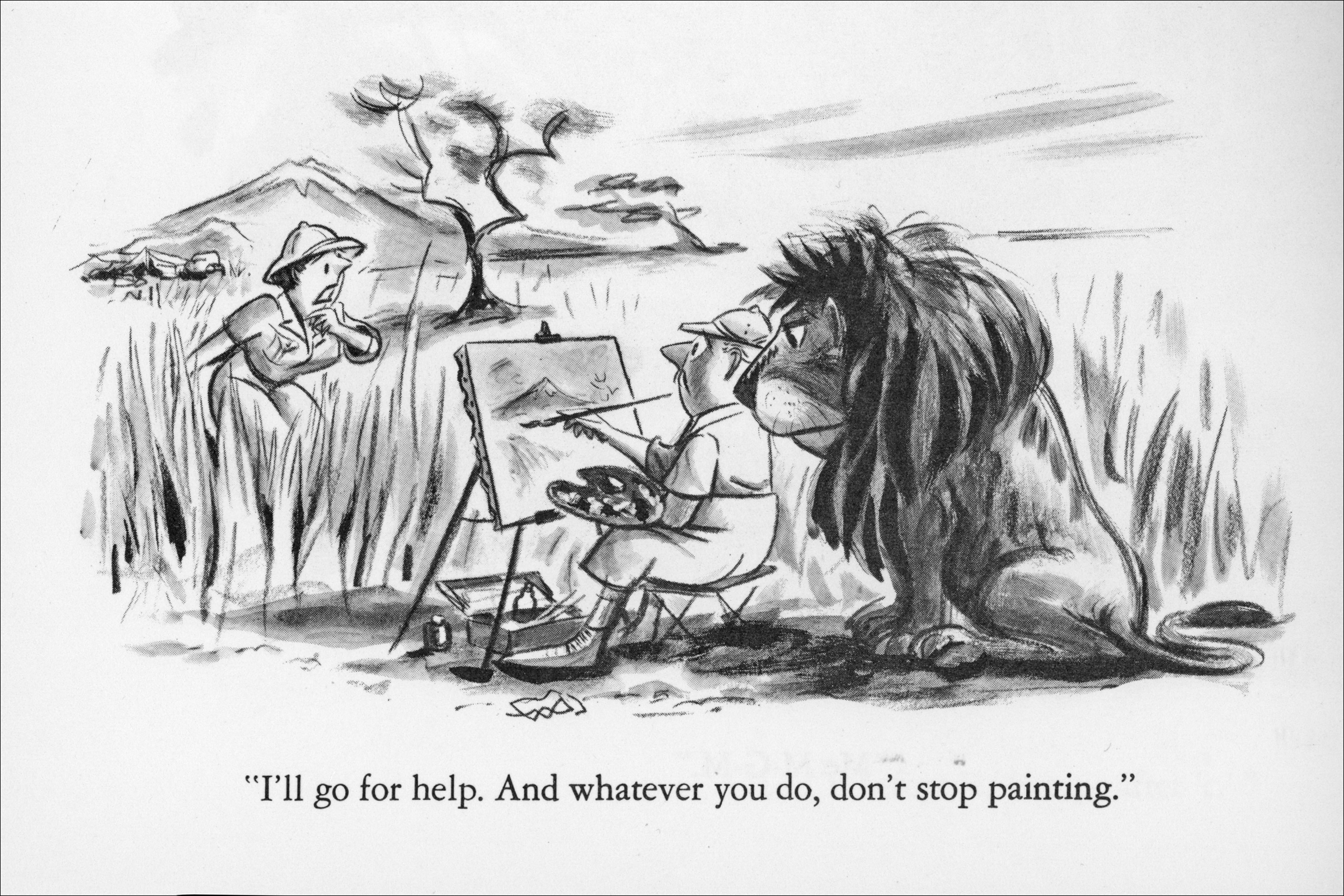
Here’s a cartoon from today’s Seattle Times— the ‘Loose Parts’ cartoon by Dave Blazek that frequently features animals.
I added a few notes. 😉
Vultures have special digestive systems adapted for consuming carrion (dead animals). Their digestive system is unique due to the presence of extremely strong stomach acid*, which helps them break down bacteria and toxins present in decaying meat. They also have specialized gut microbiomes: despite the harsh stomach acid, some bacteria survive and thrive in the vultures’ lower intestines (high levels of Clostridia and Fusobacteria, which are pathogenic to most vertebrates). *The most acidic stomach acid in the animal kingdom, in fact, with a pH level that can be as low as 1.0. This high acidity is crucial for neutralizing harmful bacteria and pathogens that are often abundant in decaying flesh. [Source: Google AI Overview]
Check out this cool 1979 envelope.
It was mailed paquebot off Gough Island, with all kinds of outrageous postmarks on the envelope.
Paquebot cancellations on postage stamps indicate that the mail was posted on a ship at sea and canceled at the ship’s next port of call. The term paquebot is French for “packet boat” (steam ship, steam vessel) and signifies that the mail was handled according to international regulations for mail posted on vessels. These cancellations are distinct from regular postmarks and are often sought after by collectors.
Postmarks and stamp on envelope— S.A. Agulhas is a South African ice-strengthened training ship and former polar research vessel. She was built by Mitsubishi Heavy Industries in Shimonoseki, Japan, in 1978. S.A. Agulhas retired from Antarctic service in April 2012 when the replacement vessel, S. A. Agulhas II, was commissioned. She was transferred to the South African Maritime Safety Authority as a training ship. Mailed paquebot off Gough Island on Nov. 2, 1979. Penguin and Gough Island coordinates. Gough Island is home to northern rockhopper penguins (Eudyptes moseleyi). Neutron research postmark from University of Potchefstroom in South Africa. The main scientific station on Gough Island is a South African weather station, which has been in operation since 1956. The Physics department at Potch University studied cosmic rays. Cosmic rays are primarily composed of high-energy particles, with about 90% being protons (hydrogen nuclei). Neutrons are secondary particles that are knocked out of atoms in the earth’s atmosphere. The blue helicopter postmark is most likely a commemorative or mission-specific cachet used on mail handled during the 1979 Gough Island expedition. The 22 might refer to a flight number or a team identification. The Cape Town postmark of Nov. 17, 1979 likely marks the arrival of the vessel there, at which time it was dispatched to the street address in Stellenbosch. The 4c stamp is from South Africa’s Third Definitive Series Issued May 27, 1977 |4c Protea longifolia |Perf. 12½ |Photogravure |Fluorescent paper |No watermarkLook at the bottom of this map for Gough Island. The island is also known historically as Gonçalo Álvares, and is a rugged volcanic island (area 35 mi²) in the South Atlantic Ocean. It is a dependency of the Tristan da Cunha island group and part of the British overseas territory of Saint Helena, Ascension and Tristan da Cunha. Nobody lives on Gough Island except for the workers of a weather station, which is usually six people. The South African National Antarctic Programme has maintained the island with British permission since 1956. [From Wikipedia] [Map in Lambert azimuthal equal-area projection by Rand McNally and published in 1984 in an atlas by Encyclopdia Britannica]One of these stamps would have fitted the envelope perfectly. Unfortunately, it would be 18 more years after 1979 before these stamps featuring the Antarctic skua would be issued.
South Africa Sixth Definitive Series (Endangered Fauna, Redrawn) Issued Aug. 27, 1997 |R1.20 Antarctic skua (additional value to series first issued in 1993) |Perf. 14×14¼ |Lithography |Coated paper |No Watermark
This series is still called the sixth definitive series of South African postage stamps— but the redrawn version of it.
The images of animals and birds are larger and without frames.
Up to four different kinds of paper were used in the printing process for some denominations.
I still don’t have all the combinations, but this is a great start.
It was a beautiful summer day here in the city (77°F/ 25°C).
I went down to the waterfront to check out the newly renovated Pier 58 that had opened on Friday.
I took the No 12 bus to downtown and walked to Pike Place Market. I am taking just a quick look here at the overlook towards the Ferris wheel and the aquarium before I head down to the waterfront promenade.Incoming! Watch out little sail boat! I did not hear the ferry blare its horn at it, so I suppose it was OK. If I read the ferry schedules right, this was the Kaleetan coming in from Bremerton.Here is the new play park on Pier 58 with its octopus slide.The Wings Over Washington theater (with its tilting seats to ‘fly’ over beautiful scenery and mountains) is still there, and popular this time of year with a line of people outside waiting their turn.The display case at the entrance to the Miner’s Landing arcade with its carousel and video games inside.Here’s the Pier 57 Historic Carousel inside the Miner’s Landing arcade.One of several totem poles around the waterfront. This one is on Pier 57.The Salish Sea Tours boat with its catamaran hull, just arriving back at Pier 57 from its cruise around Elliott Bay.A display case inside Ye Olde Curiosity Shop on Pier 54. I love the alphabet book that the kids are looking at: L for Loon and M for Moose.All done! Walking back with the pedestrian overpass over Alaskan Way to 1st Avenue to catch the G-line bus.
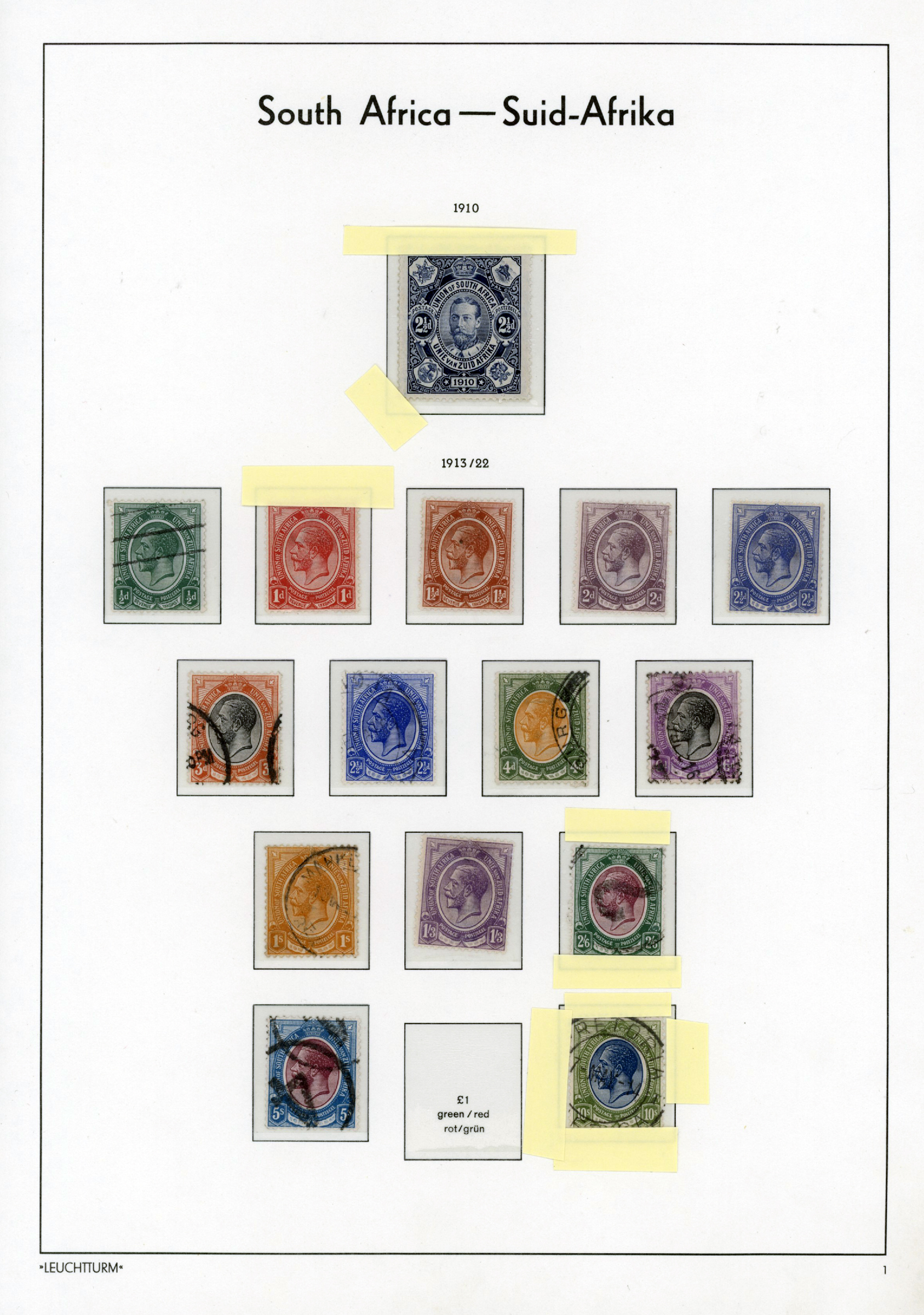
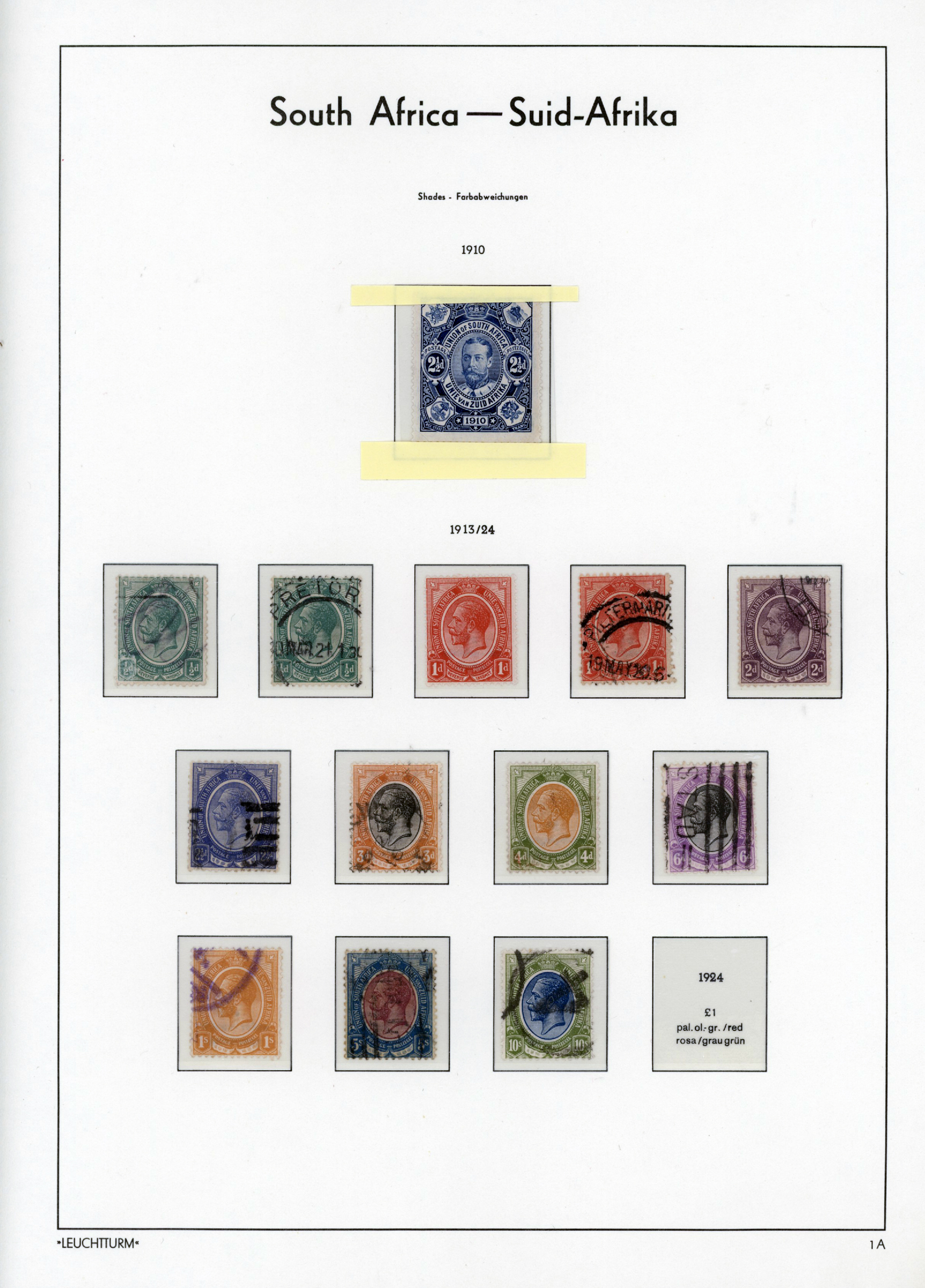
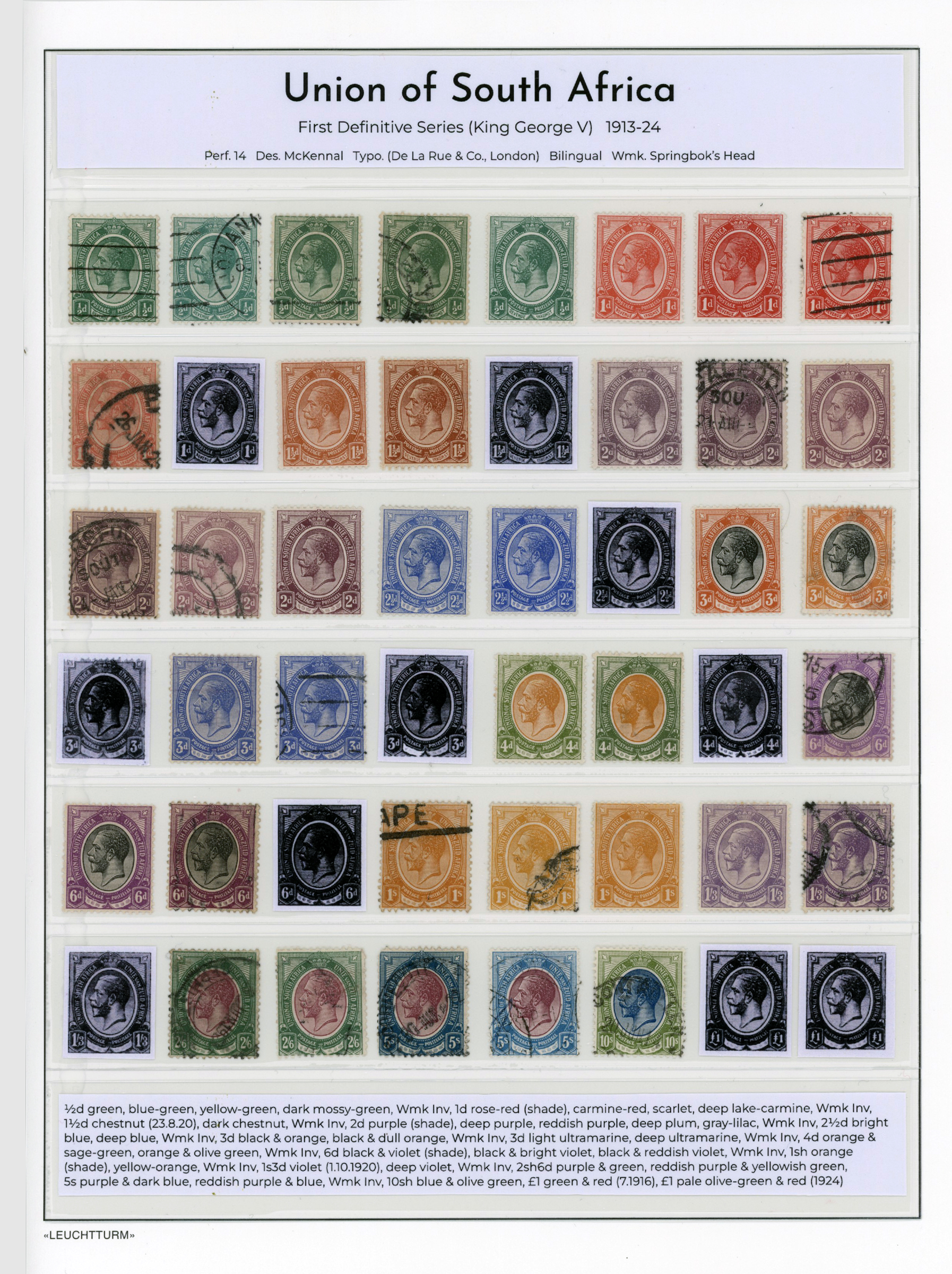
I reworked my pages with the sixth definitive series of South African postage stamps.
The inscriptions with the animal names were first in Latin (1993).
A new set with additional denominations was issued later, with inscriptions in English (1996).
These pages with 8 pockets (rows) allows me to display all the stamps in one set on one page— very nice.
P.S. Some of the pairs of stamps look the same but they are printed on different paper, with slightly different shades of white. That makes the ink colors look different as well. And of course I cannot just choose one. I need to put both in.
As part of the ever-expanding scope of my collection of South African stamps, I have started to collect revenue stamps of the South African colonies.
(Before the establishment of the Union of South Africa in 1910, South Africa consisted of four British colonies: the Cape Colony, Natal, Transvaal, and the Orange Free State.)
Location of the Orange Free State c. 1890 [Source: Wikipedia]From 1854 to 1902, the Orange Free State was an independent Boer-ruled sovereign republic under British suzerainty* in Southern Africa during the second half of the 19th century. It ceased to exist after it was defeated and surrendered itself to the British Empire at the end of the Second Boer War in 1902. It is one of the three historical precursors to the present-day Free State province in South Africa.
*A suzerain is a person, state or polity who has supremacy and dominant influence over the foreign policy and economic relations of another subordinate party or polity, but allows internal autonomy to that subordinate.
This yellow revenue stamp with green ink from the Cape Colony is affixed to a checque (using the queen’s English— Queen Victoria) that was issued in 1897 by the Harrismith branch of the National Bank of the Orange Free State.
The Revenue Stamp First issued in 1865 by the Cape Colony | Perf. 14 |Rotogravure One penny (1d) | green on yellow paper| Queen Victoria’s profile in classical style* surrounded by grapevine and vine leaves in the corners, symbolizing the Cape Colony’s viticulture | Crown at the top, denoting British authority *Queen Victoria of the United Kingdom of Great Britain and Ireland, queen from 1837 until her death in January 1901.
The Cheque Written by the treasurer (Charles Truter) of the Dutch Reformed Church on Nov. 9, 1897 to Esquire J. Theron. (Esquire here is the title of a young nobleman). The cheque is from the Harrismith branch of the National Bank of the Orange Free State, written for an amount of 11 Orange Free State pounds*, 8 shillings, 6 pennies. *Like the South African pound, it was divided into 20 shillings, and a shilling into 12 pennies. On the far left of the check is the coat of arms of the Orange Free State. The cheque was printed by William Brown & Co. of Old Broad Street in London. Security features at the time included the fine print at the bottom of the check, and so-called fugitive printing, that would use ink that would change, fade, or disappear under specific conditions, if it was tampered with. The revenue stamp was affixed to the cheque on Nov. 15. The check was stamped ‘Paid’ on Nov. 19. It seems Esquire Theron had the amount of the check paid into his account at the African Banking Corporation Ltd. in the town of Worcester in the Cape Colony. A hole was punched in the check to also indicate it has been cashed.
The signature of Esq. J. Theron on the back of the checque.Let’s take a closer look at the coat of arms of the Orange Free State printed on the far left of the check. VRYHEID (freedom) at the top, and GEDULD EN MOED (patience and courage) on the ribbon. IMMIGRATIE (immigration) at the bottom, presumably a call to Europeans, or settlers from other South African colonies to emigrate to the Orange Free State colony. The livestock look like cattle (the OFS coat if arms image on Wikipedia shows sheep). The lion on the right must mean ‘courage’, right? The ox wagon signifies the trek that the pioneers made from the Cape Colony to escape British rule, to establish their own independent Orange Free State republic.
The stamps of last of the four South African homelands that issued stamps, made it into my album: those of Venda. (A sample below).
South African President Cyril Ramaphosa’s parents were of the Venda ethnicity. The Venda people reside primarily in the Limpopo province of South Africa, near the border with Zimbabwe. They have a rich and distinctive culture, including a unique language called Tshivenda or LuVenda (I see it is simply called ‘Venda’ on Google Translate).
Venda, officially the Republic of Venda, was a Bantustan that was declared independent by the apartheid regime of South Africa in 1979. (In the far north of South Africa on the map). On 27 April 1994, independent Venda ceased to exist as it was reintegrated into South Africa to became part of modern-day Limpopo Province. Venda’s stamps were still valid for postage, though— the 16c stamp below on the last page has a 1997 cancellation.
My set of Bophuthatswana stamps are in the stamp album.
Below are the first two pages of stamps, including the colorful set of first definitives that feature stylized African animals as totems for Bophuthatswana clans.
Bophuthatswana was a homeland in South Africa that gained nominal independence in 1977.
Its citizens suffered a number of political crises during its existence (see below).
By 1994 the homelands experiment was over, and Bophuthatswana was reincorporated into South Africa along with all the other homelands.
• Self-government 1 June 1972
• Nominal Independence 6 December 1977
• Coup d’état 10 February 1988
• Coup attempt 1990
• 1994 Bophuthatswana crisis
• Dissolution 27 April 1994
Bophuthatswana (lit. ’gathering of the Tswana people’), officially the Republic of Bophuthatswana (Tswana: Repaboleki ya Bophuthatswana; Afrikaans: Republiek van Bophuthatswana), and colloquially referred to as ‘Bop’ was a Bantustan (also known as “Homeland”, an area set aside for members of a specific ethnicity) that was declared (nominally) independent by the apartheid regime of South Africa in 1977. However, like the other Bantustans of Ciskei, Transkei and Venda, its independence was not recognized by any country other than South Africa. [Source: Wikipedia]
U.S. commemorative stamp from the “Special Occasions” definitive series Issued Apr. 20, 1987 Perf. 10 on 1, 2, or 3 sides |Booklet panes of 10 |Quantity Issued: 76,303,125 |Design: Corita Kent |Photogravure |Engraving: Bureau of Engraving and Printing |No Watermark U.S. #2267 |22c First-class rate |Yellow, deep blue, light blue, white and pink |Fireworks and ‘Congratulations!’ Postmark from Buffalo, NY, July 2024. [Source: mysticstamp.com]
Five amigos went out to the Greenwood Car Show today.
The informal car show is organized by a local non-profit organization and raises money for local organizations and automotive scholarships.
The show is made up of vintage cars, with newer ones thrown into the mix— all parked along twenty-or-so street blocks along Greenwood Ave N in Seattle’s Greenwood neighborhood.
Happy Friday.
It’s Pride weekend in Seattle, with the annual Pride parade scheduled for Sunday along 4th Avenue, downtown. Time flies, and it’s been ten years since same-sex marriage became legal nationwide in the United States (on June 26, 2015).
The artwork below is from an art exhibition— one of the main events of Tokyo Pride 2025— on the third floor of Tokyu Plaza Harajuku shopping mall’s Harakado space.
I have expanded my South African stamp collection to include the four Bantustans (homelands) that had issued postage stamps from 1976 to 1994. Technically these are not stamps from South Africa.
Although these stamps were denominated in South African Rand, they were not valid for mail that was sent from outside the homelands.
Below is a sampler of pages from my collection for Ciskei.
First, a little history. This is what South Africa looked like before the first democratic election of 1994. The four main provinces were established in 1910, and the Bantustans (homelands) were established by the South African apartheid government. After the 1994 election, the Bantustans ceased to exist, and were reincorporated into South Africa. Nine new provinces were established: Eastern Cape, Free State, Gauteng, KwaZulu-Natal, Limpopo, Mpumalanga, Northern Cape, North West, and Western Cape.
[More from Wikipedia: Bantustan]- A Bantustan (also known as a Bantu homeland, a black homeland, a black state or simply known as a homeland) was a territory that the National Party administration of the Union of South Africa (1910–1961) and later the Republic of South Africa (1961–1994) set aside for black inhabitants of South Africa and South West Africa (now Namibia), as a part of its policy of apartheid. The government of South Africa declared that four of the South African Bantustans were independent—Transkei, Bophuthatswana, Venda, and Ciskei (the so-called “TBVC States”), but this declaration was never recognized by anti-apartheid forces in South Africa or by any international government. Other Bantustans (like KwaZulu, Lebowa, and QwaQwa) were assigned “autonomy” but never granted “independence”.
A deadly, record-setting heat wave was continuing to blast most of the eastern U.S. on Tuesday, June 24, forecasters said, with temperatures soaring to near 100 degrees for tens of millions of people.
– USA Today
We’re still escaping the heat here in Seattle, with a relatively mild high of 79°F (26°C) here today.
Here is a mathematics-and-ice-cream cartoon from today’s Seattle Times, from cartoonist Bob Thaves.
Euclid is generally considered with Archimedes and Apollonius of Perga to be among the greatest mathematicians of antiquity. Euclid’s book ‘The Elements’ was a comprehensive compilation and explanation of all the known mathematics of his time, and the earliest known discussion of geometry. The Elements is often considered after the Bible as the most frequently translated, published, and studied book in the history of the Western World. [From Wikipedia]