My bags are packed, and I will fly west across the International Date Line to Tokyo tomorrow.
It’s already Tuesday in Japan, and the highs are going to touch 99°F (37°C) in Tokyo. By the time I arrive there on Wednesday evening, there will be a little respite from the heat, with rain on Thursday and Friday.
The Japan Meteorological Agency says the average nationwide temperature for the three months of June, July, and August was 2.36 °C (4.3 °F) higher than normal — the largest increase on record since comparable data became available in 1898.
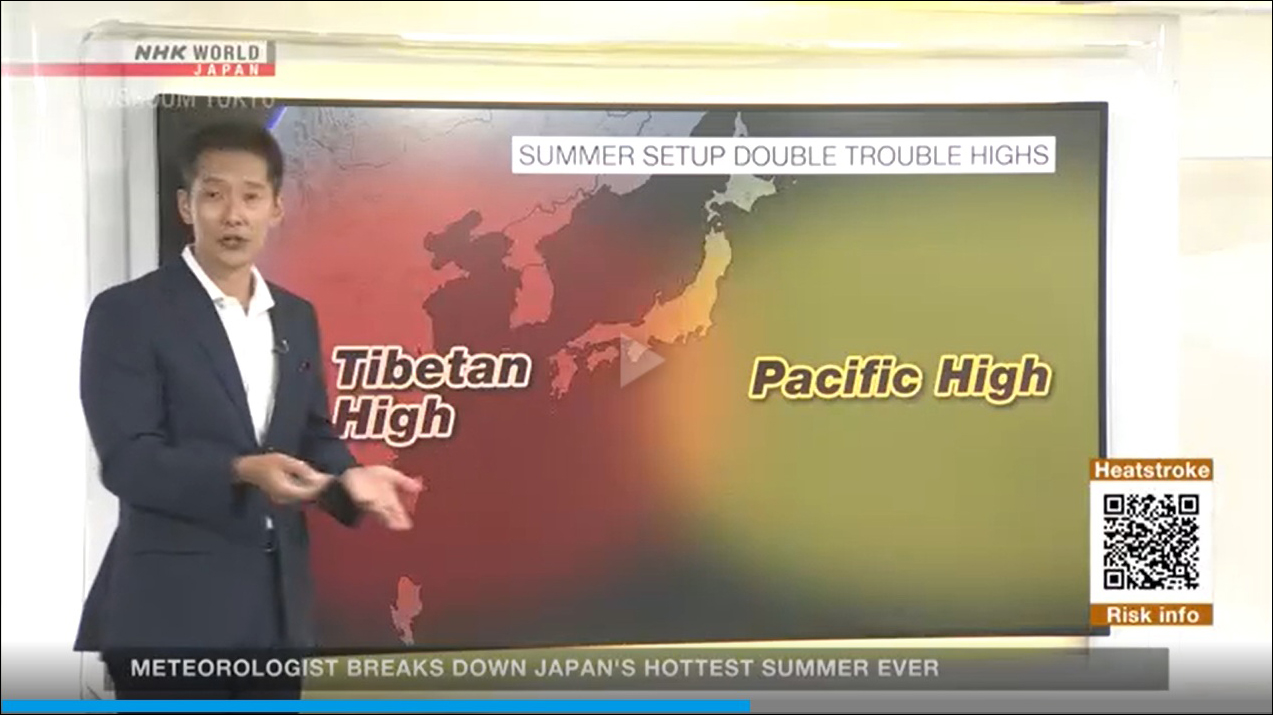
From Google AI Mode, answering the question ‘Why is it so warm in Japan this summer?” Specific meteorological patterns contributed to the long, intense heat this summer. High-pressure systems: The Pacific High and the Tibetan High, two powerful high-pressure systems, extended over Japan during the summer. When they occur simultaneously, they create a “tall” high-pressure zone that suppresses cloud formation and produces prolonged periods of clear skies and sunny conditions. Warming ocean currents: The ocean surrounding Japan has been abnormally warm. The Kuroshio (Japan Current), a warm current flowing northward from the Philippines, has been particularly active, holding the country in a “vice grip of warm water” and driving up temperatures even well into autumn. [Still from national broadcaster NHK World with a meteorologist explaining the effects of the two overlapping high-pressure systems]
There goes August.
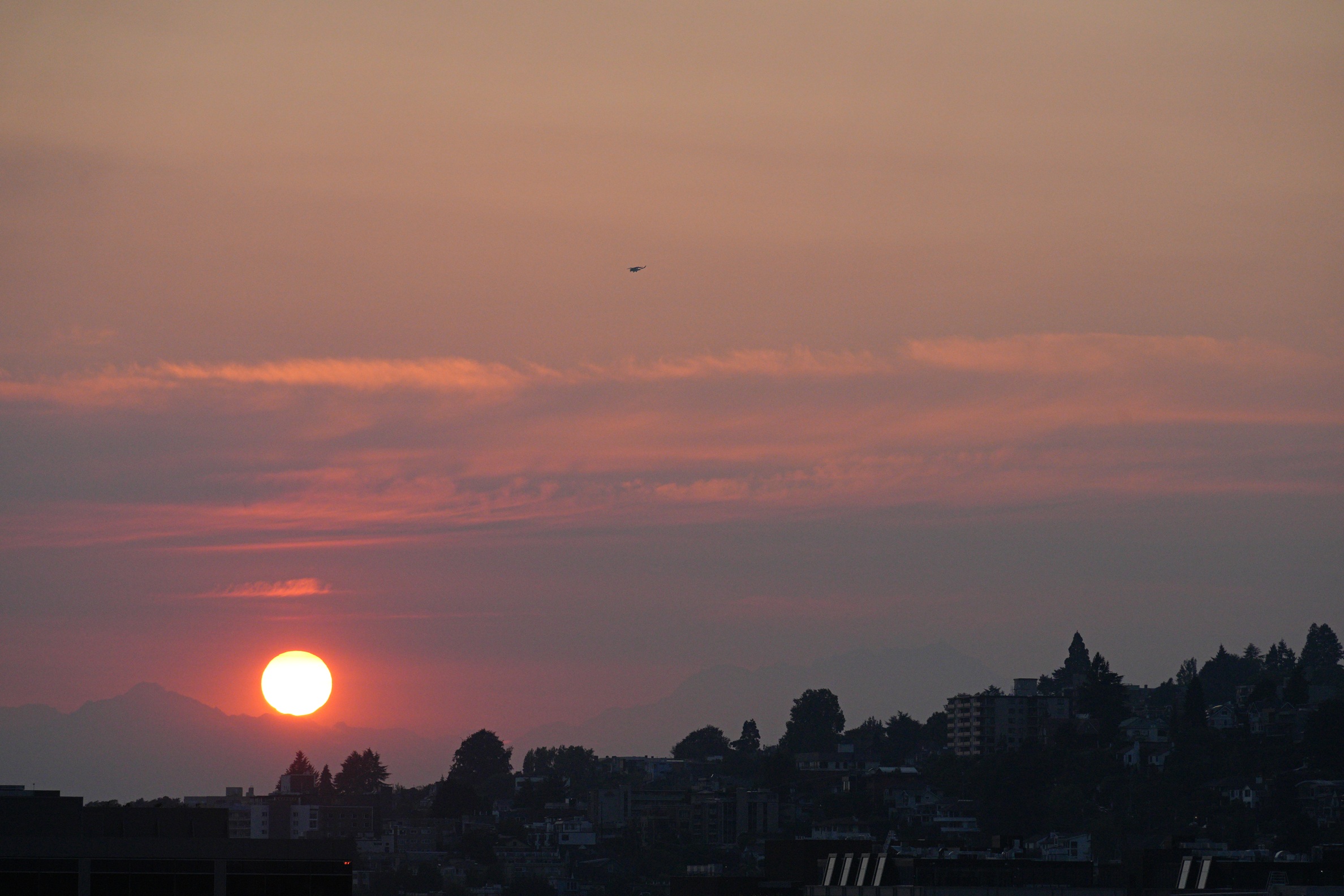
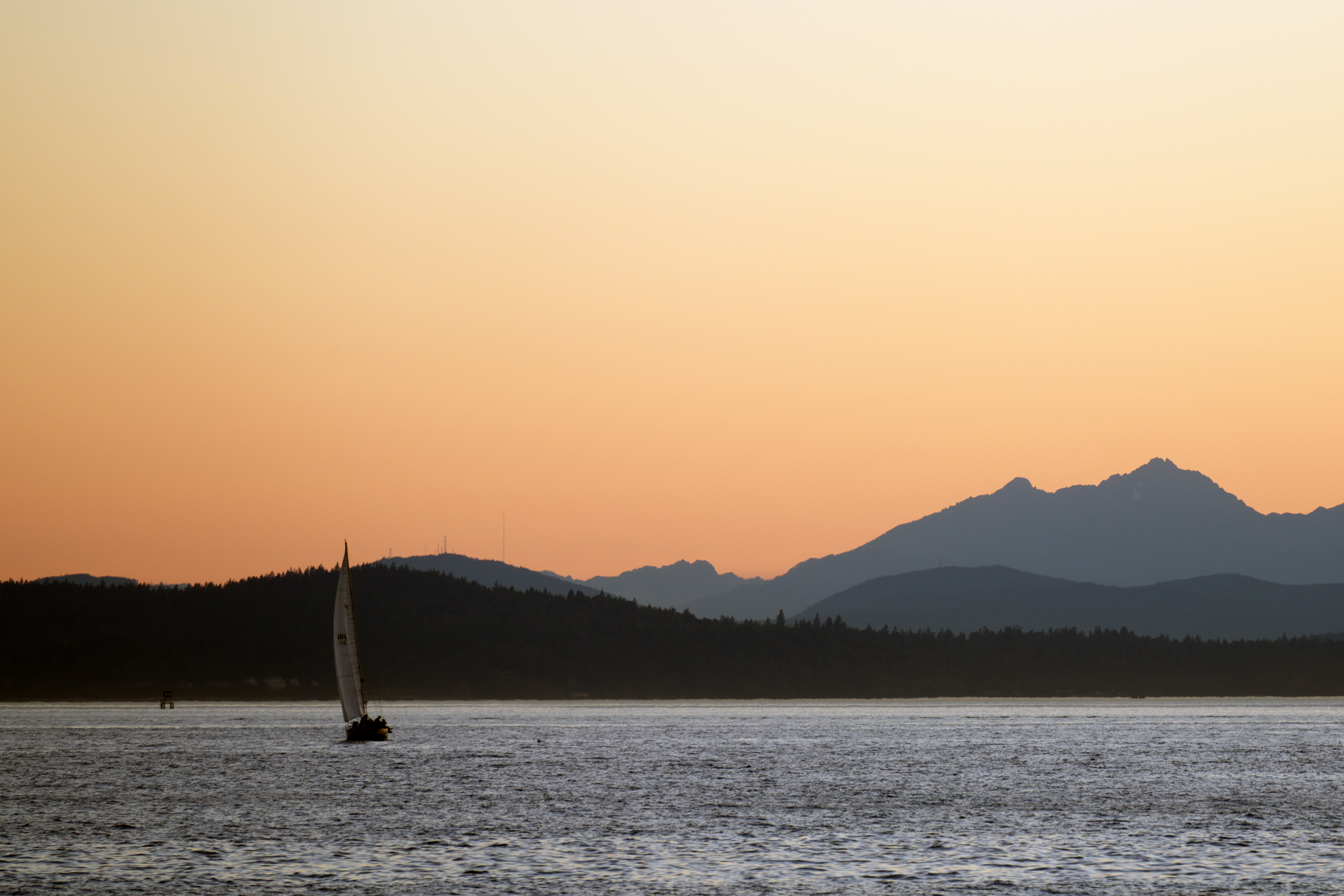
I walked down to the Melrose Avenue overlook at sunset to take a few photos of the sun setting behind the Olympic Mountains in the hazy sky.
The high was 76°F (24°C) here in the city today, air quality Moderate.
P.S. This is the last of the sunset photos for now!
I will soon travel to the Far East— and take all kinds of pictures with my new camera.
From the New York Post by reporters Chris Harris, Bridget Reilly, Anna Young and Shane Galvin:
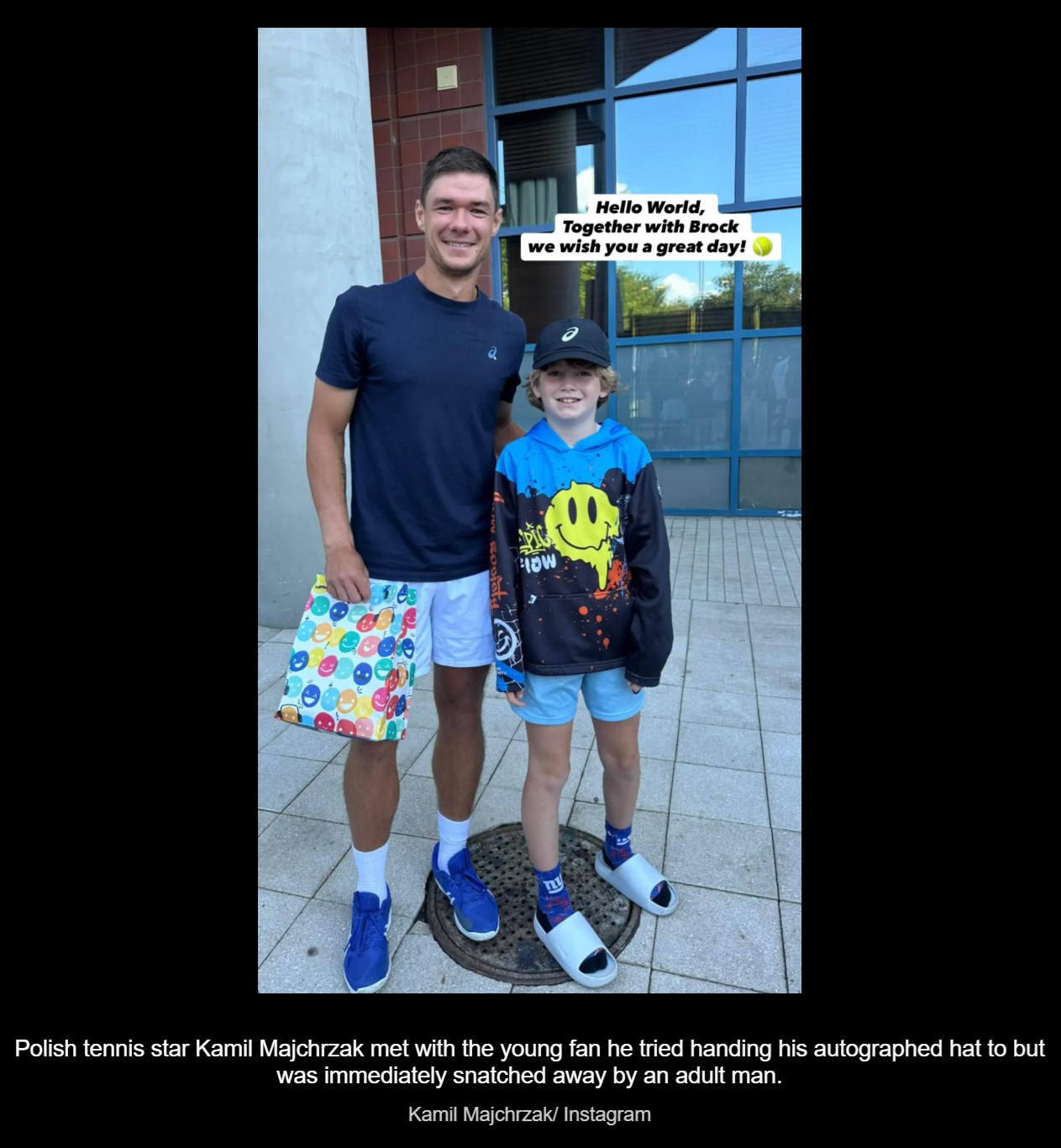
The “entitled” jerk who seemingly snatched a hat autographed by tennis star Kamil Majchrzak from a young boy at the US Open has been identified as a Polish millionaire. (My note: I edited out his name).
Majchrzak, fresh off his victory over ninth seed Karen Khachanov when the incident unfolded Thursday night, confirmed his identity to The Post on Saturday and said he was initially oblivious to the now-viral snafu.
“Obviously it was some kind of confusion,” the tennis pro said, adding that the millionaire sponsors his tennis federation in Poland.
Happy Friday.
It’s Labor Day weekend here in the United States— the unofficial end of summer.
There was plenty of action on Day 6 of the US Open. Ben Stiller and Steve Carell were seen in the stands today.
Coqodaq is an upscale NYC restaurant that serves Korean-style fried chicken and champagne from a location in the lower bowl concourse of Arthur Ashe Stadium.
Reportedly one of the most sought-after food items at this year’s Open, is their chicken nuggets garnished with caviar ($100).
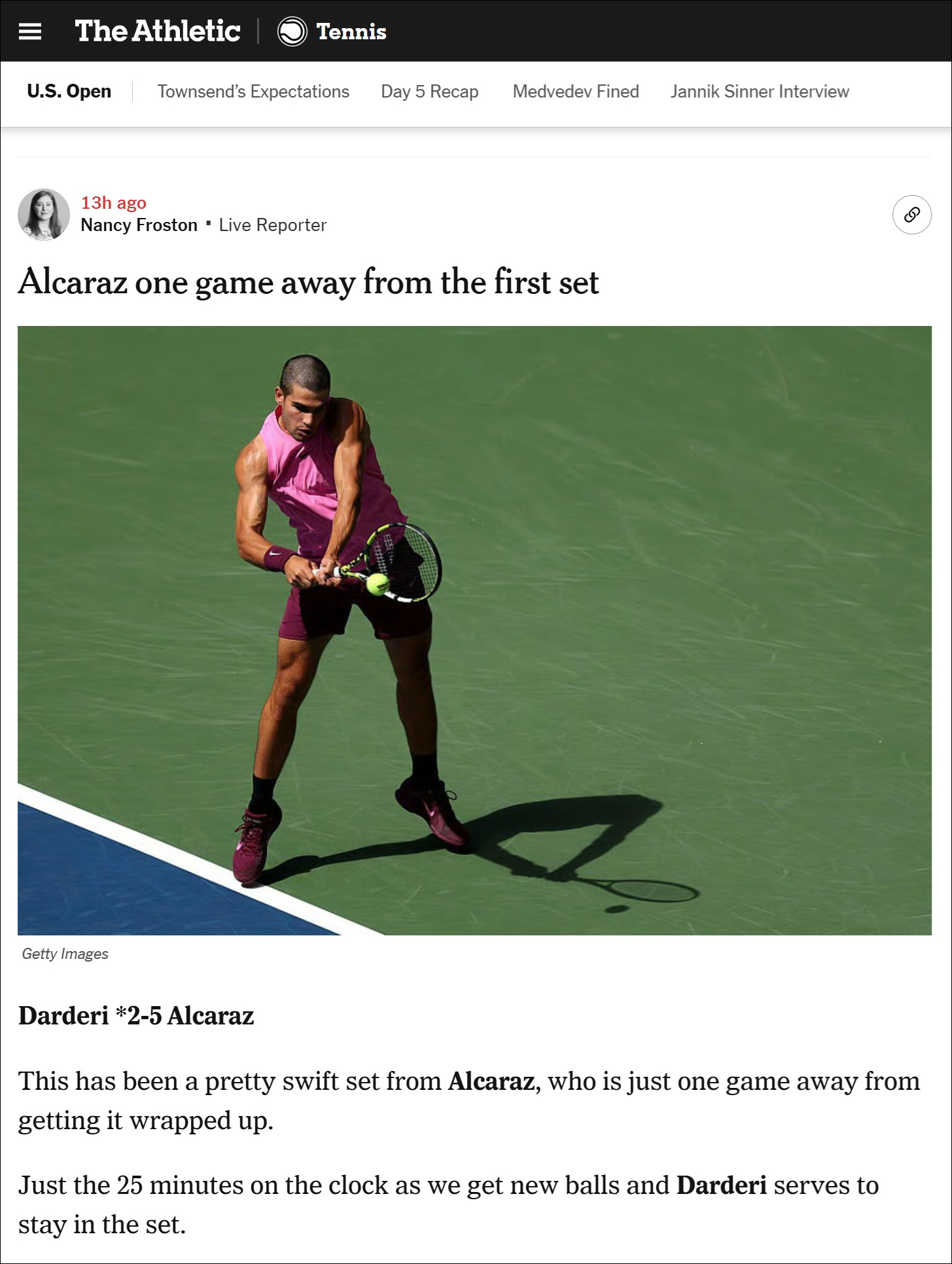
Here is the Carlos Alcaraz 2025 US Open look: a buzz cut, a pink tank top and plum shorts and shoes. He is through to the Sweet Sixteen without dropping a set, so far. P.S. Medvedev was fined $42,000 for his conduct in his first-round match on Sunday. (Should it not have been a much bigger fine?) [Live update reporting from The Athletic/ The New York Times, photo by Getty Images]
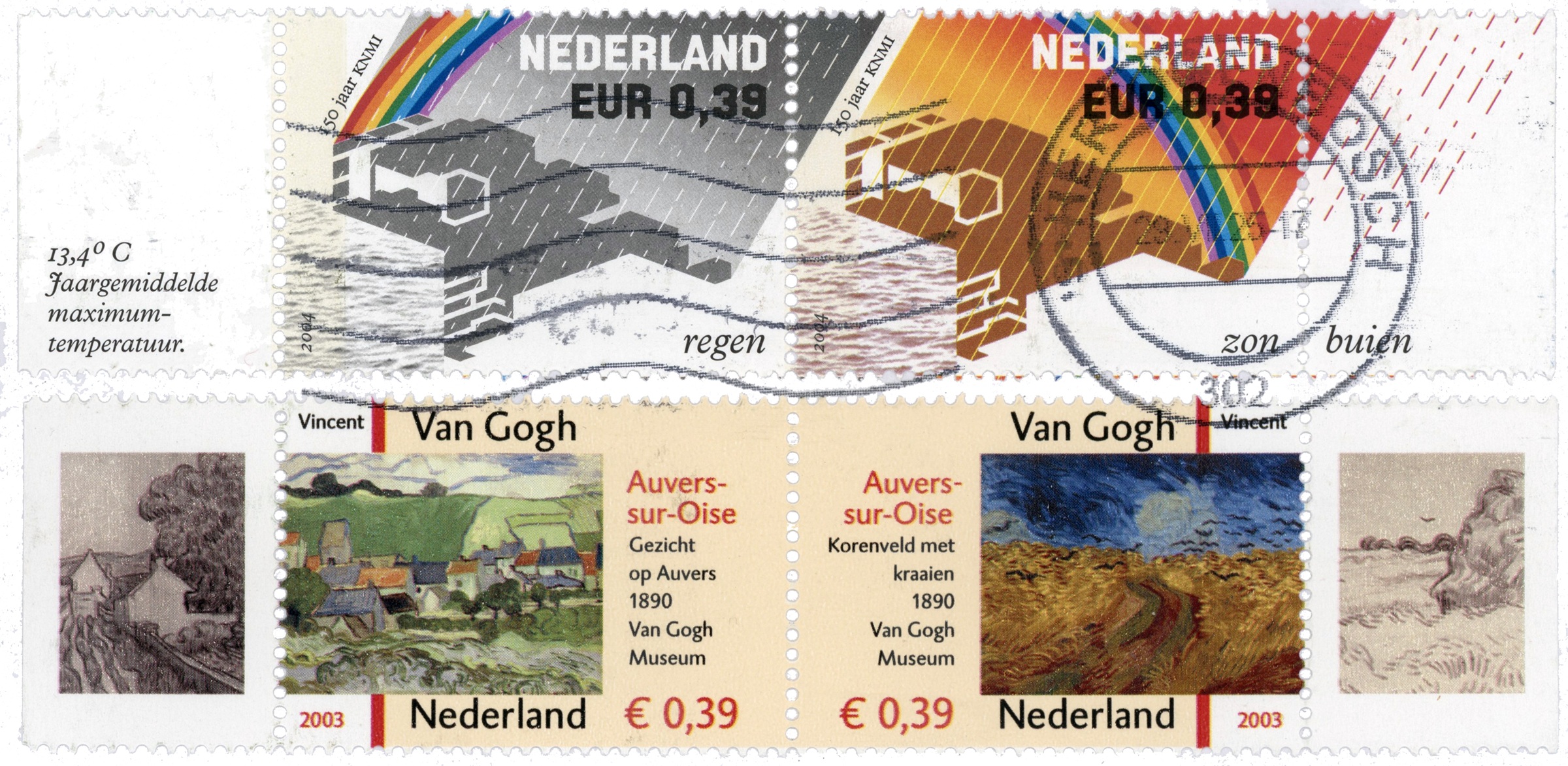
Here’s the stamp catalog information for two sets of stamps from the Netherlands that each feature a 150th anniversary.
The Netherlands: The 150th Anniversary of the Royal Netherlands Meteorological Institute, KNMI Issued Jan. 31, 2004 Perf. 14¼x14¾ |Se tenant pair |Litho.|No watermark #1165 A455 0.39€ Multicolored |Rain (‘regen’, rainbow at left) #1166 A455 0.39€ Multicolored |Sun (‘zon’, rainbow at right), showers (‘buien’) in margin Note: The seven colors of the rainbow, listed from longest to shortest wavelength, are Red, Orange, Yellow, Green, Blue, Indigo, and Violet.
The Netherlands: The 150th Anniversary of the Birth of Vincent Van Gogh Issued Jan. 2, 2003 Perf. 14¾ |Sheets of 10 different stamps |Design: Gracia Lebbink |Litho.|Engraving: House of Questa |No watermark #1142i A438 0.39€ Multicolored |View of Auvers, 1890 #1142j A438 0.39€ Multicolored |Wheat Field with Crows, 1890 [Sources: stampworld.com, Scott 2018 Standard Postage Stamp Catalogue, Vol. 5]
The warm weather of the last four or five days is behind us here in Seattle.
The high was 78°F (26°C) today.
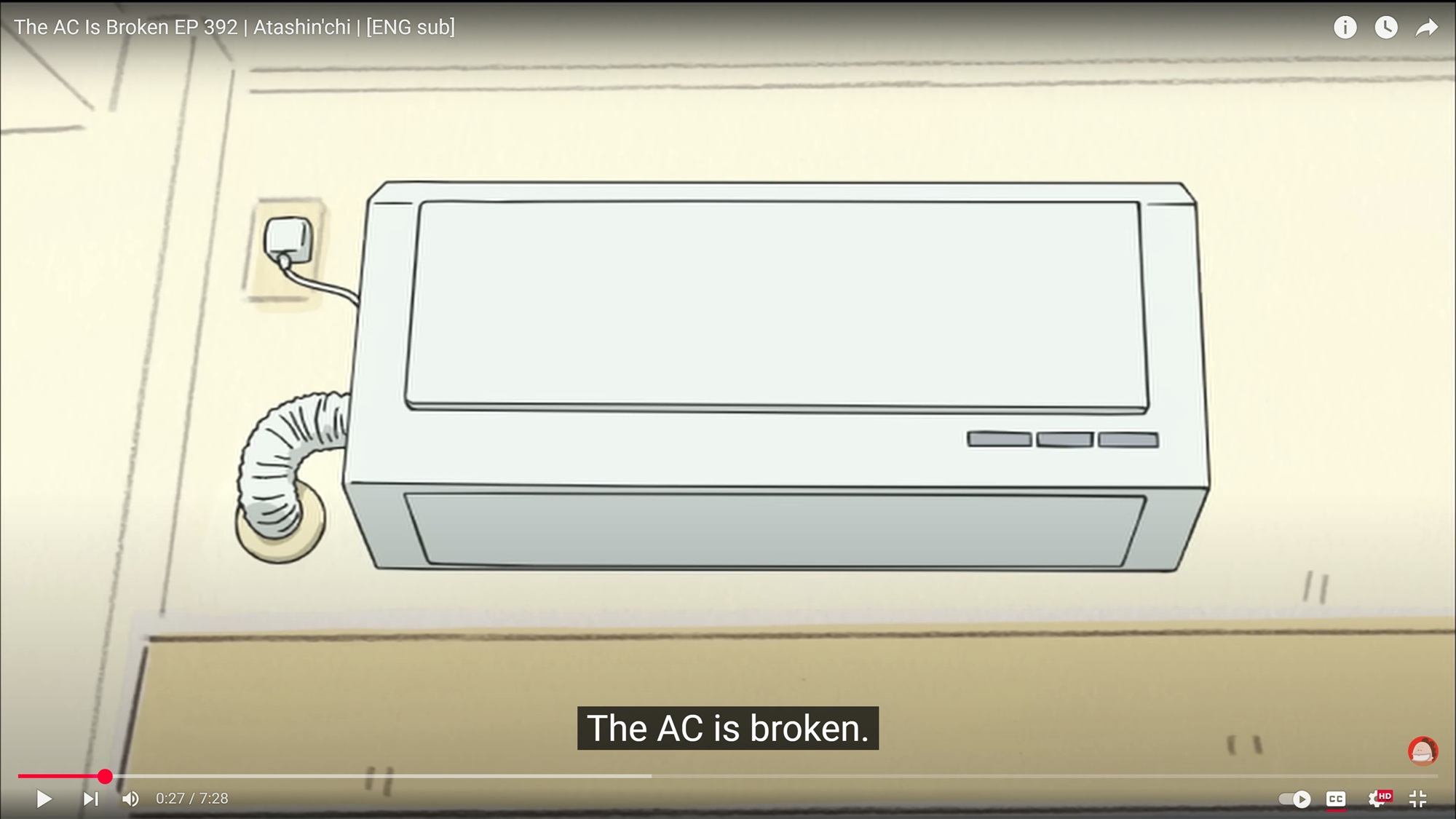
These stills are from a Japanese anime called The AC Is Broken EP 392 | Atashin’chi | [ENG sub]
[Anime] Atashin’chi Official Channel on YouTube
Background (from the YouTube page): The Tachibanas are the quintessential Japanese family, unassuming and infinitely relatable. There’s Mother, who isn’t the best cook, and is quite lazy, and Father, who always leaves the bathroom door ajar. The high school daughter Mikan seems a bit of a buffoon, and the middle schooler son Yuzuhiko appears to be quite the cold fish at first glance. They’re a bit peculiar— but they are a family everyone could relate to.
In this episode, Father comes home to find Mother exhausted on the sofa.
The AC is broken, and the repairman can only come out tomorrow.
Luckily, the ACs in the kids’ rooms still work, and Father could sleep in son Yuzuhiko’s room, and Mother in daughter Mikan’s room.
Here’s a weird chess game: one in which I ended up with three queens.
I kept thinking Oscar (the Duolingo chess program bot) would throw in the towel and resign, but no.
He let me promote two pawns to become queens, and then let me checkmate him.
(Note: Yes, Oscar is obviously not a grandmaster. I will have to keep playing and be patient. He is supposed to improve his chess prowess if he gets beaten too frequently by me.)
I had a queen and a rook, (and an extra pawn), and Oscar had nothing. He should have already resigned three or four moves ago, before two of my pawns reached the eighth row, and were promoted to queens.So I simply boxed his king in with two queens, and then delivered check mate. The player with an overwhelming advantage need to be careful to avoid a stalemate (a draw). A stalemate happens if the player whose turn it is has no legal moves (such as a move that will put the king in check).
On day one of the 2025 tournament, 2021 champion Daniil Medvedev provided a signal example by inciting the crowd to delay his match against France’s Benjamin Bonzi for six minutes — while he was down match point. A photographer walked onto the court between Bonzi’s first and second serves. Umpire Greg Allensworth ruled that Bonzi should get a first serve. Irate, Medvedev approached Allensworth’s chair, whipping up the crowd to boo and chant. After berating Allensworth, Medvedev returned to the baseline. Bonzi got ready to serve. The crowd didn’t stop.
– Matthew Futterman writing for The Athletic in the New York Times, saying that the Medvedev incident is a signal example of the complete absence of tennis etiquette at the US Open
What also happened— after Medvedev had lost the first-round match against Bonzi in five sets on Sunday— is that he smashed his racket on the court and against the bench that he sat on. Still enraged and not satisfied with the damage to it, he went on and smashed the broken frame for a few minutes more, to smithereens.
By the way: Medvedev was fined AUD 76,000 ($49,000) in this year’s Australian Open for smashing a tennis net camera in the first round, and for unsportsmanlike conduct in the second round.
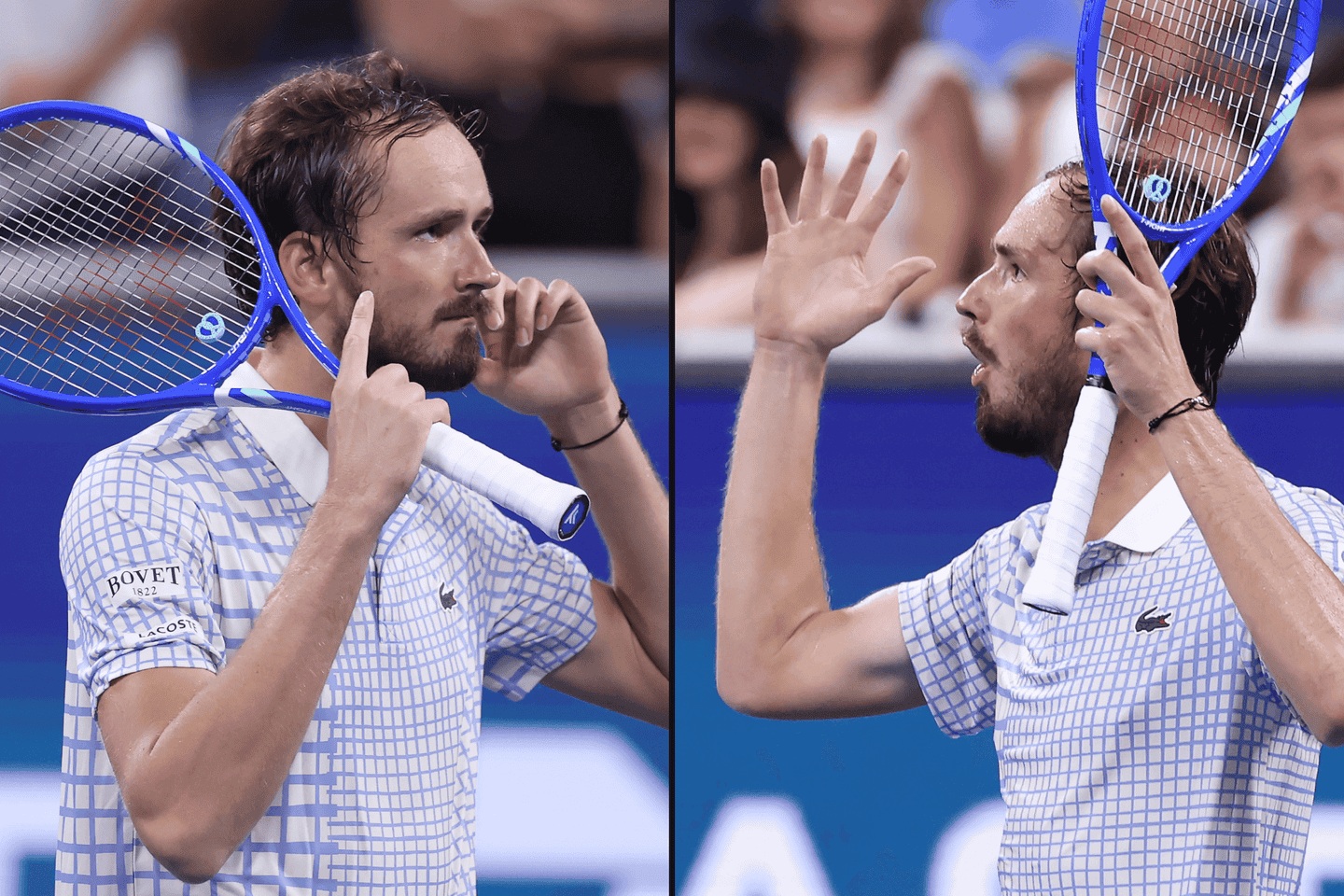
Medvedev getting the crowd riled up at the end of the third set, tennis racket still intact. At the post-match press conference, Medvedev refused to speak about his outburst against the umpire, his taunting of the booing fans, and destroying his racket. He said “I’m getting a big enough fine. So if I speak I’m in big trouble, so I’m not going to speak”. [Picture posted on The Athletic/ The New York Times]
Since it is Sun-day, I guess I am permitted to post more sunset pictures.
And it was too warm to go out in the middle of the day!
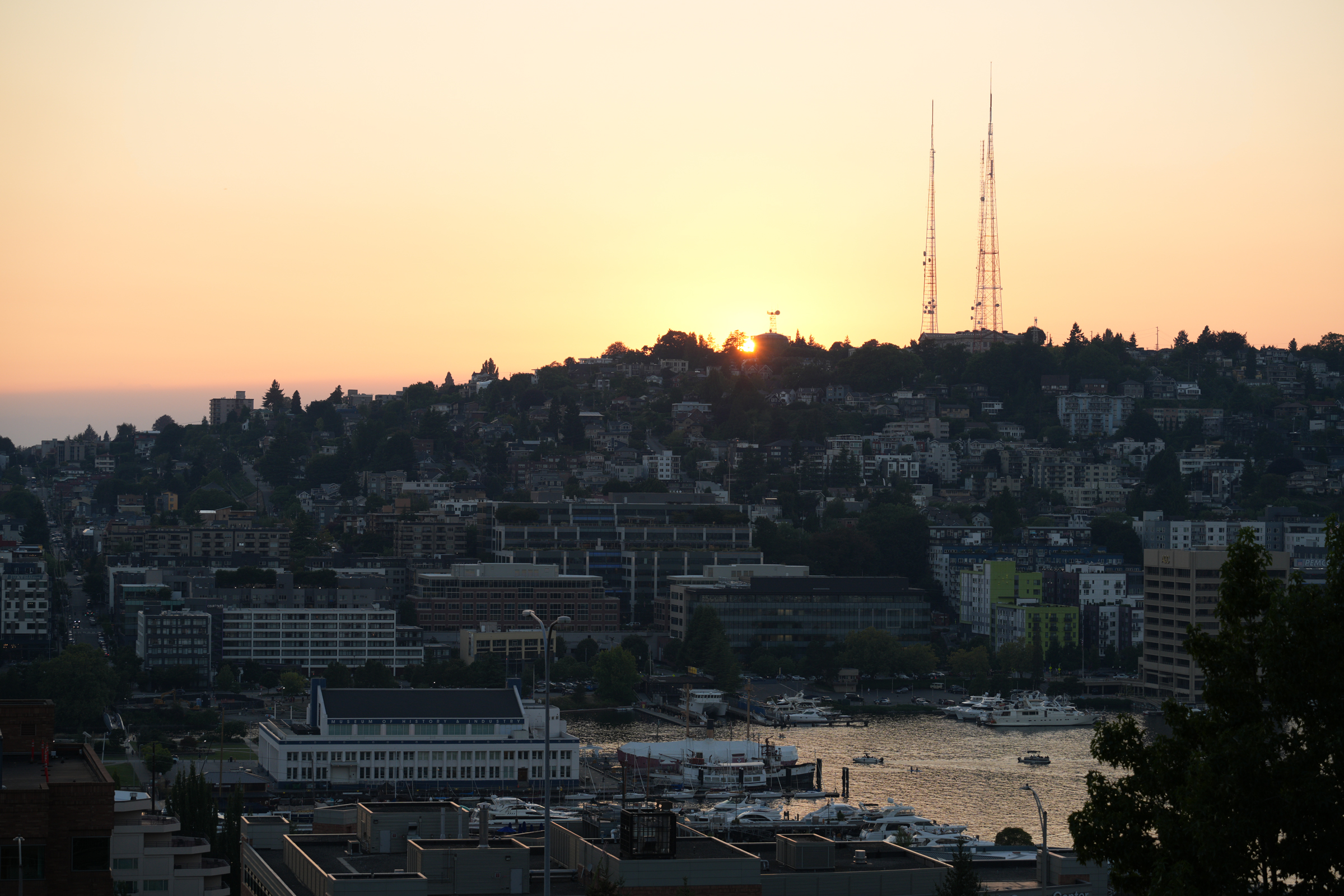
This is tonight’s sunset over Seattle’s Queen Anne Hill, that I took from a spot on Bellevue Ave East that overlooks the south end of Lake Union.
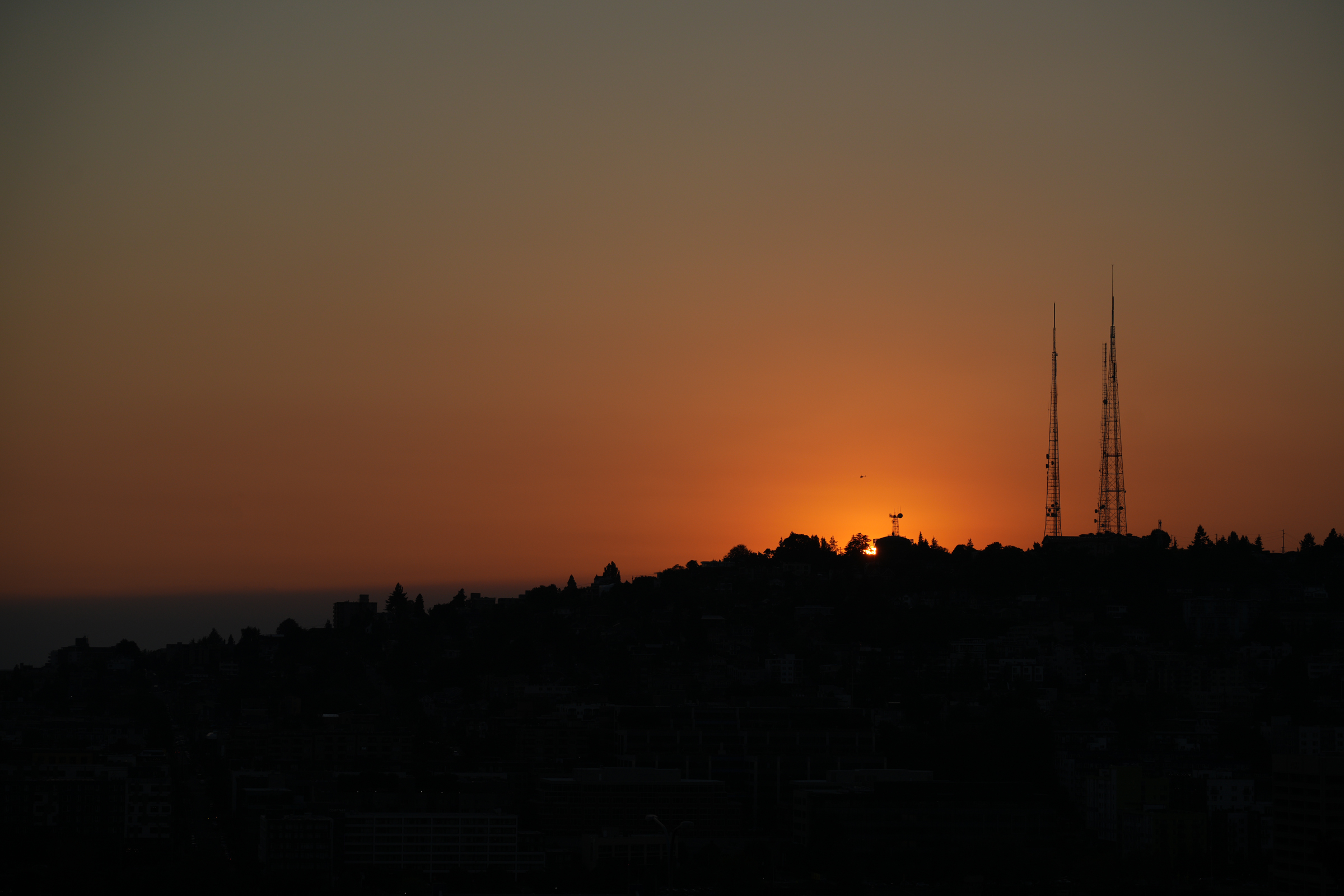
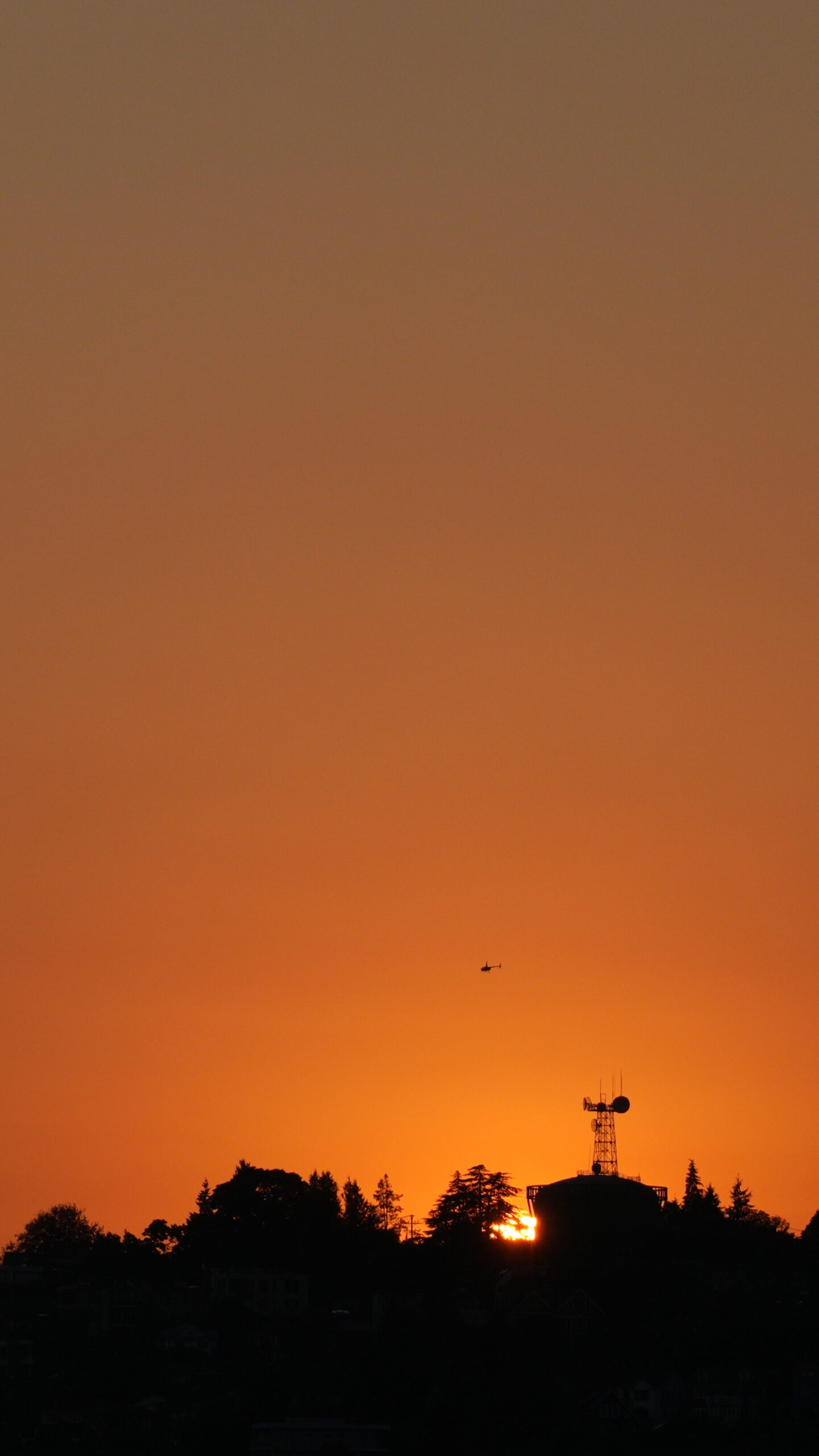
Shot with Sony α7CR w. Tamron 28-200mm F2.8-5.6 lens f-stop: f/5.6 |Exposure time: 1/200 s |ISO speed: ISO-200 |Focal length: 85 mm | Max aperture: 4.3359375 |Metering mode: Spot Out-of-camera .jpg (9,504 x 6,336 pixels) reduced to 2,400 x 1,600 pixels.One more picture, this one taken with the exposure dialed down to make the image ‘black and light’. Shot with Sony α7CR w. Tamron 28-200mm F2.8-5.6 lens f-stop: f/5.6 |Exposure time: 1/2000 s |ISO speed: ISO-200 |Focal length: 85 mm | Max aperture: 4.3359375 |Metering mode: Spot Out-of-camera .jpg (9,504 x 6,336 pixels) reduced to 2,400 x 1,600 pixels.This is a 1,656 x 2,944-pixel crop from the above image (but from the full-frame image captured by the sensor). It reveals that the little gnat above the setting sun is actually a helicopter.
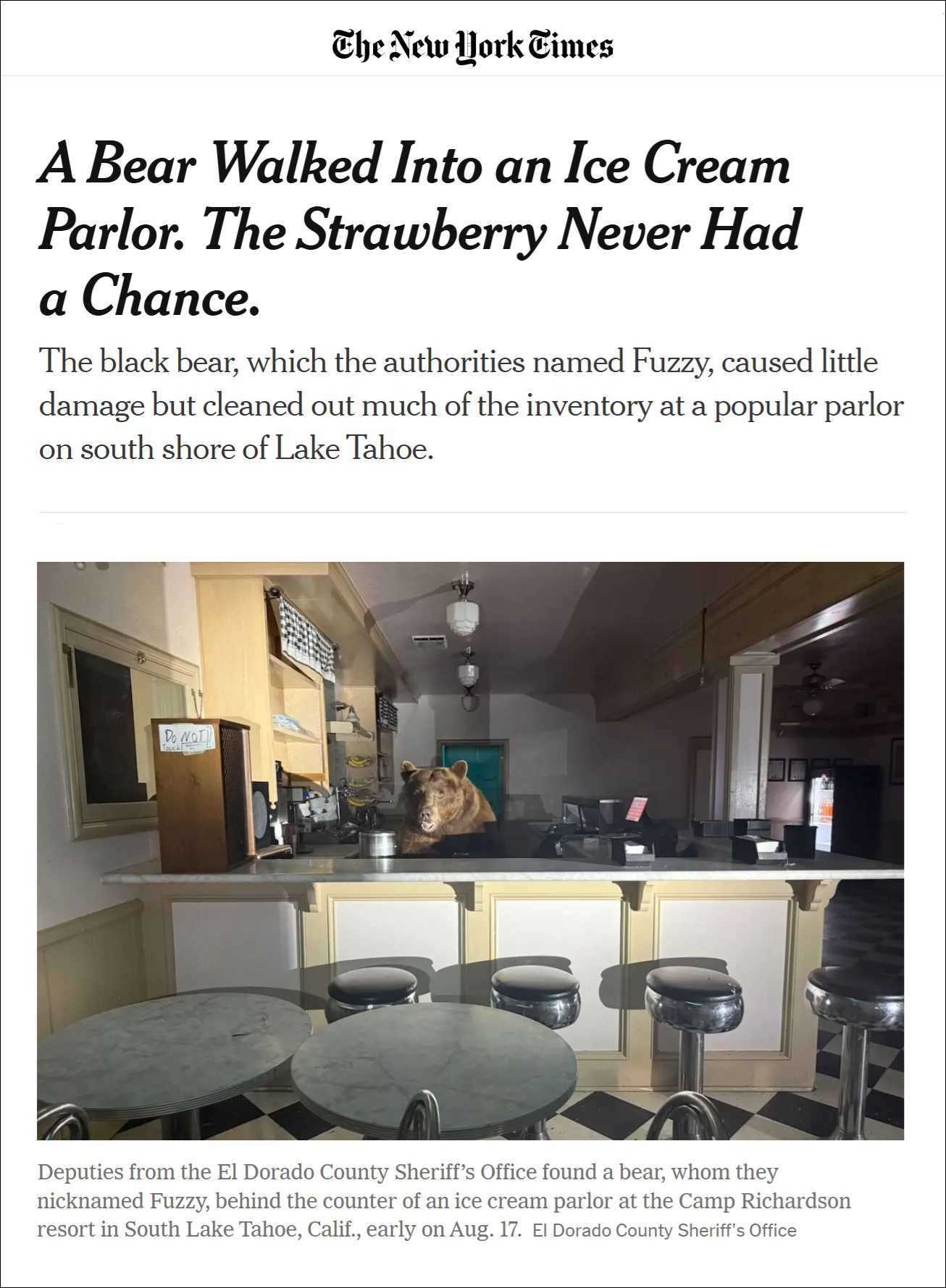
Headlines and text by the New York Times. Photo by El Dorado County Sheriff’s Office.
The bear, which the sheriff’s office nicknamed Fuzzy, sampled as many flavors as it could get its paws on, the authorities said.
Tubs lay overturned, ice cream half eaten, the authorities said. Paw prints stretched across the black-and-white floor like stick stamps.
The deputies startled the bear, which stopped eating but could not find the exit. They shouted and shined their lights. Finally, the animal lumbered through the front door and back into the dark, the authorities said. The deputies followed to shoo it away from nearby buildings and into the forest.
—Mark Walker writing for the New York Times, about a bear found in the ice cream parlor at 4 am in the morning at Camp Richardson, a 128-acre resort in South Lake Tahoe, California.
Happy Friday.
We are into another stretch of warm and sunny days.
The high today was 86°F (30°C).
I went down to the Seattle waterfront for sunset— now at 8.08 pm.
Looking out over Elliott Bay from Pier 56 on the Seattle waterfront, right after the sun disappeared behind the Olympic Mountains (to the right, out of the picture’s frame). Shot with Sony α7CR w. Tamron 28-200mm F2.8-5.6 lens f-stop: f/5.6 |Exposure time: 1/125 s |ISO speed: ISO-200 |Focal length: 200 mm | Max aperture: 4.96875 |Metering mode: Spot Out-of-camera .jpg cropped and reduced to 30% of original size.
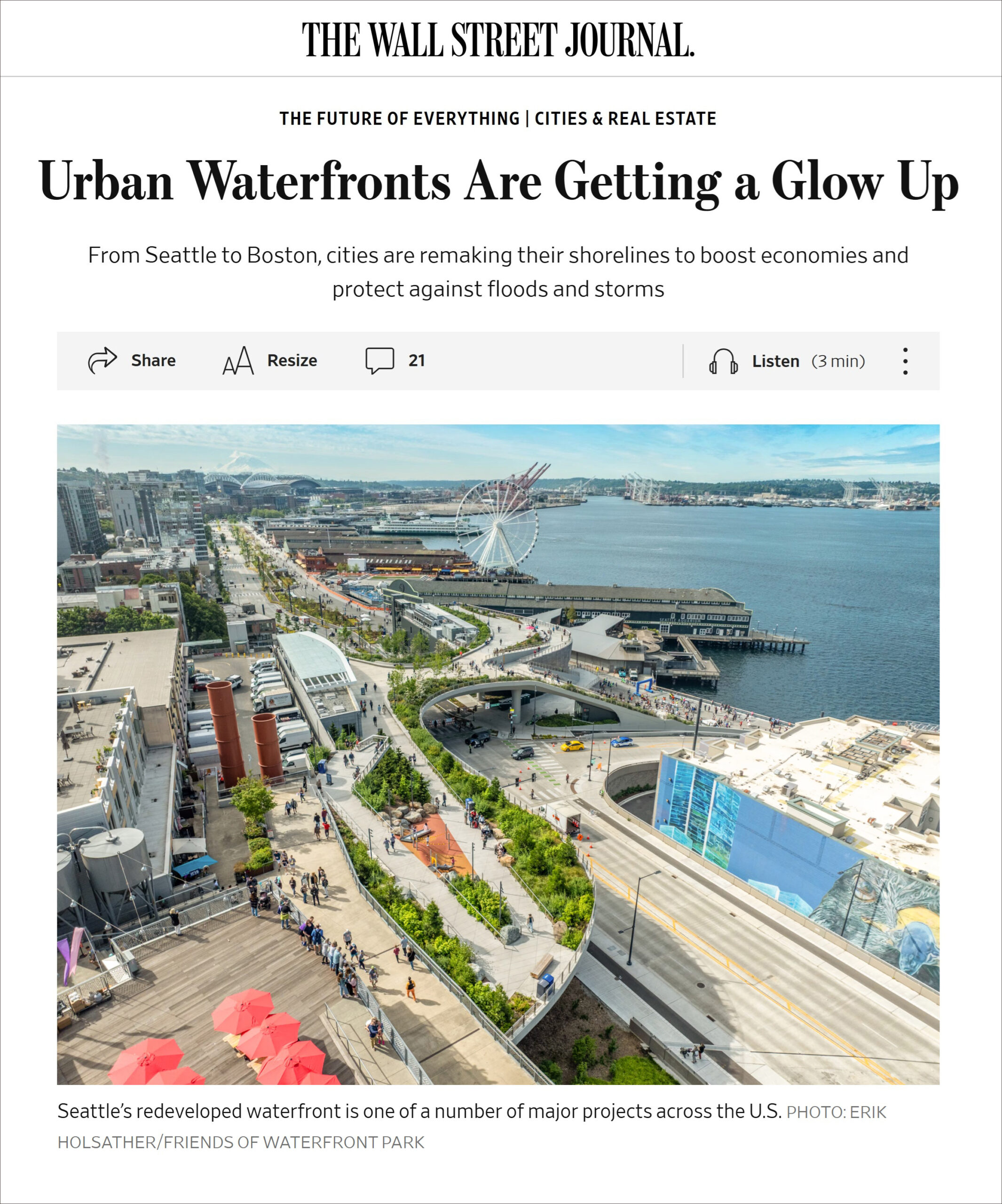
Here’s a bird’s-eye view picture of Seattle’s waterfront, that appeared in today’s Wall Street Journal.
Laura Landro writes: Seattle has largely completed a more than $1 billion redevelopment of the 26-block stretch along Puget Sound’s sweeping Elliott Bay, which includes the replacement of a 100-year-old sea wall that had been badly damaged by an earthquake and erosion. Waterfront redevelopment projects are in various stages of planning, design and construction in large metropolitan areas including New York, Boston, Chicago and Washington, D.C., as well as midsize and smaller cities like Norfolk, Va., Cedar Rapids, Iowa, Cleveland and Kansas City, Mo.
It’s been 50 years since the launch of Viking I, the first US spacecraft ever to land successfully on Mars.
Research from recent years suggests that the lander touched down where a Martian megatsunami deposited materials 3.4 billion years ago.
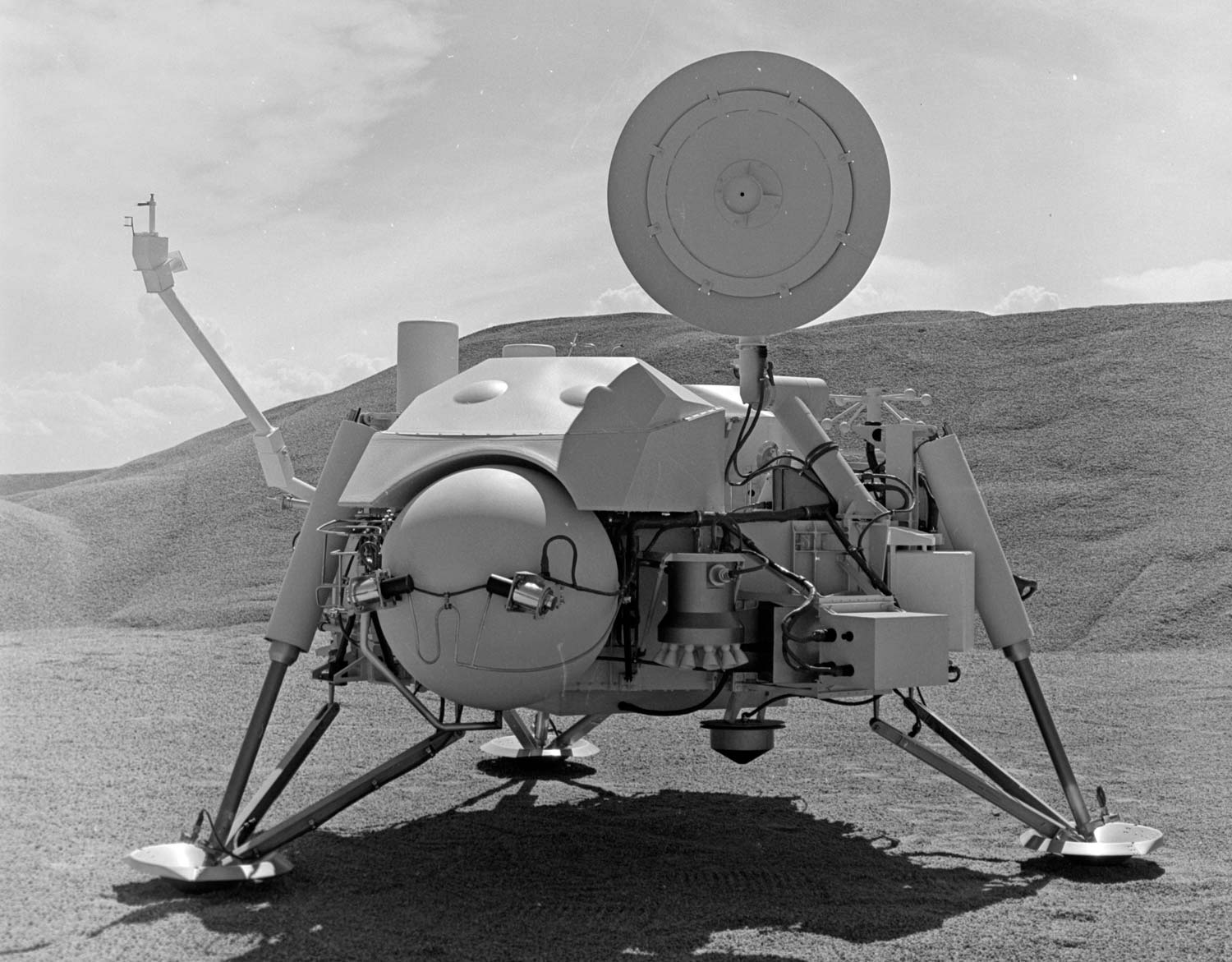
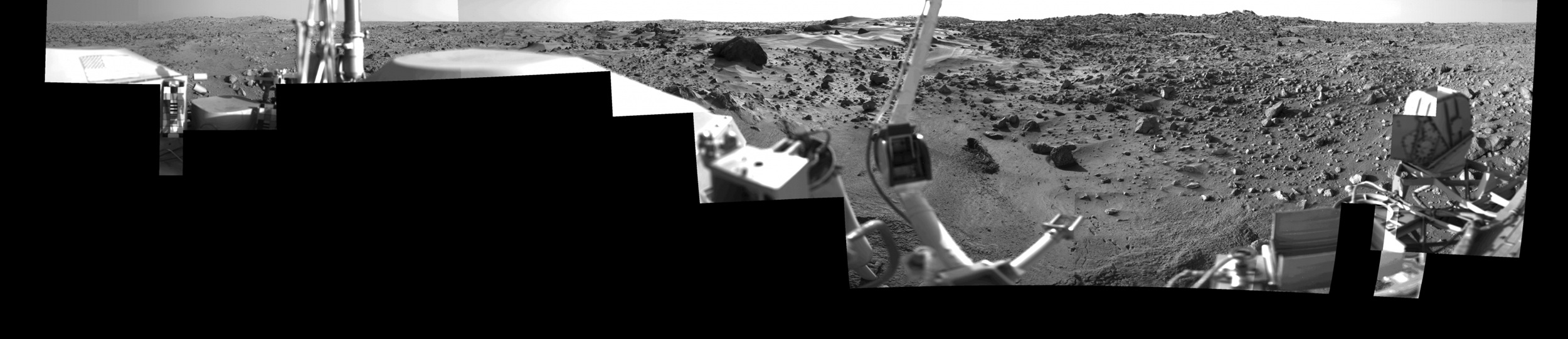
A model of Viking 1. (The remains of the original Viking 1 lander are on the surface of Mars, where it had landed on July 20, 1976. It was a stationary lander and did not roam around. It did have an orbiter with solar panels that completed 1,485 orbits around Mars. While it no longer transmits data, the orbiter continues to orbit the planet!) Construction of the Viking 1 spacecraft was done primarily by the private company Martin Marietta (now Lockheed Martin). The team worked for six years to build the ground-breaking spacecraft. The cost came to roughly $1 billion— about $6 billion in today’s dollars. [Image from Lockheed Martin, posted on space.com]The Mars landscape, as seen from the camera of the Viking I lander. [Image from California Science Center website]This timeline was compiled for MSN online by Dede Wilson:
1. The Historic Liftoff
The countdown ended in a roar of fire and smoke as Viking 1 lifted off from Cape Canaveral on August 20, 1975. The Titan IIIE-Centaur rocket carried both an orbiter and a lander, marking NASA’s boldest step toward exploring Mars.
2. The Long Cruise to Mars
Viking 1 traveled nearly 11 months through space before arriving at Mars. This interplanetary cruiseinvolved careful navigation to ensure the spacecraft reached its target orbit with pinpoint accuracy.
3. Mars Orbit Arrival
On June 19, 1976, Viking 1’s orbiter fired its engine to settle into orbit around Mars. From this vantage point, it began photographing the surface to find a safe and scientifically valuable landing site.
4. The First Soft Landing on Mars
On July 20, 1976, exactly seven years after Apollo 11’s Moon landing, Viking 1’s lander touched down in Chryse Planitia, becoming the first fully successful Mars lander in history.
5. Stunning Panoramas of a New World
Viking 1 sent back the first high-resolution panoramic photos of Mars, revealing a rocky, rust-colored landscape beneath a salmon-pink sky, images that captured the imagination of people worldwide.
6. Searching for Life
Equipped with biology experiments, Viking 1 attempted to detect signs of life in Martian soil. The results were puzzling: some tests gave unexpected positive readings, but most indicated no organics, sparking debates that continue to this day.
7. Mapping Mars from Above
The orbiter mapped vast swaths of the planet, from giant volcanoes like Olympus Mons to canyons deeper than Earth’s Grand Canyon. These images shaped our understanding of Martian geology.
8. Years of Operation
Viking 1’s lander operated for over six Earth years (2,245 Martian sols) making it the longest-running Mars surface mission until 2010, when NASA’s Opportunity rover broke the record.
9. A Sudden Goodbye
In November 1982, a faulty command ended communications with the lander. The orbiter had already completed its mission, but Viking 1’s contributions to science remained secure.
10. Inspiring Future Mars Missions
From Pathfinder to Perseverance, every Mars mission since Viking 1 has built on its legacy. It proved we could land safely, operate for years, and study Mars in depth.
I take my new camera with me now, every time I go for a walk.
I’m still learning to adjust the exposure and the auto-focus mode.
I also paired the camera with my iPhone (via Bluetooth) so that that the GPS coordinates of my location for each picture can be recorded in the camera on the metadata for the image.
There is a drawback, though: the camera’s battery runs down much more rapidly if it is connected to the phone all the time.
The camera actually has an airplane mode, but it’s a pain to switch it on and off multiple times while walking around.
Better to carry one or two spare batteries to pop into it when one runs out.
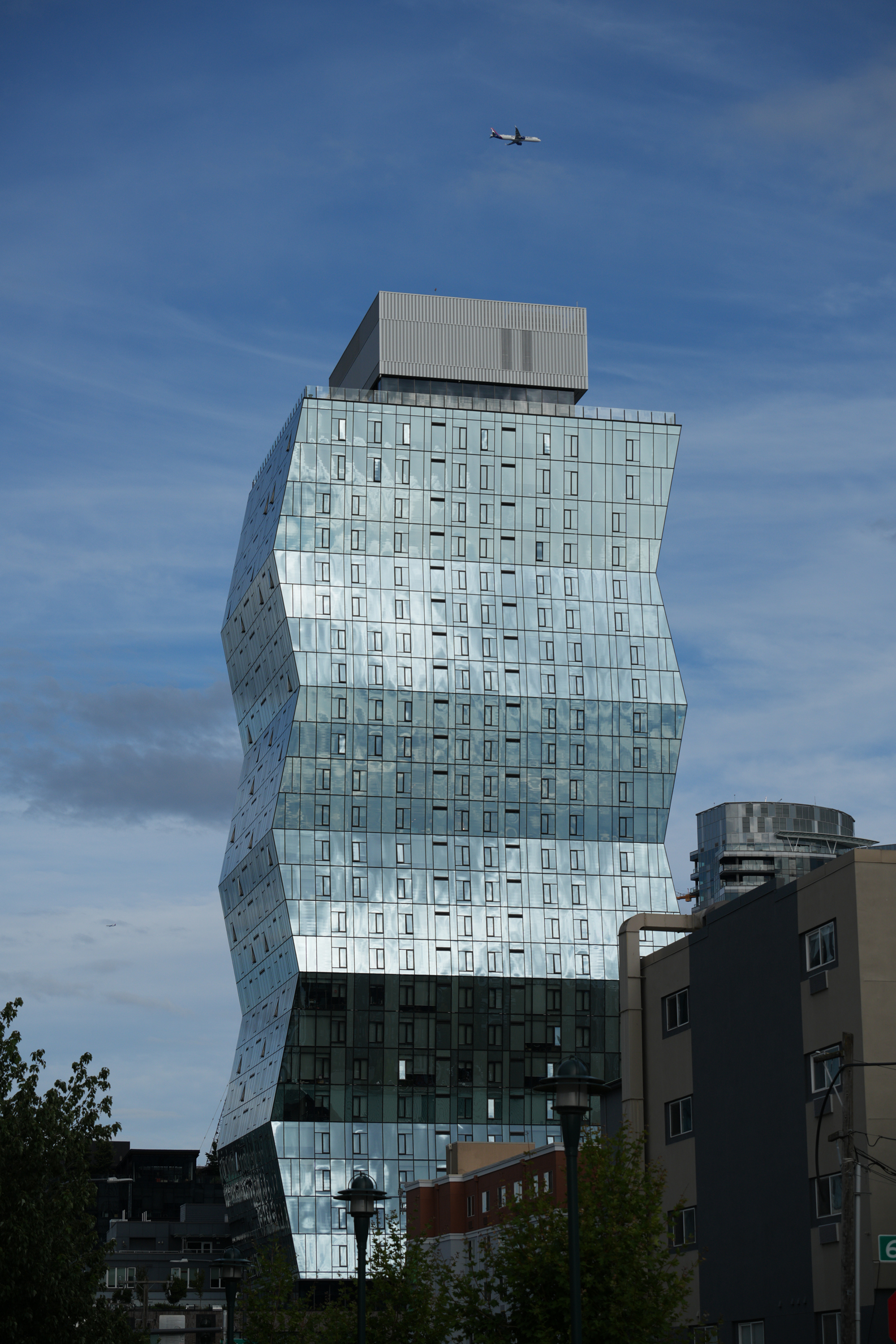
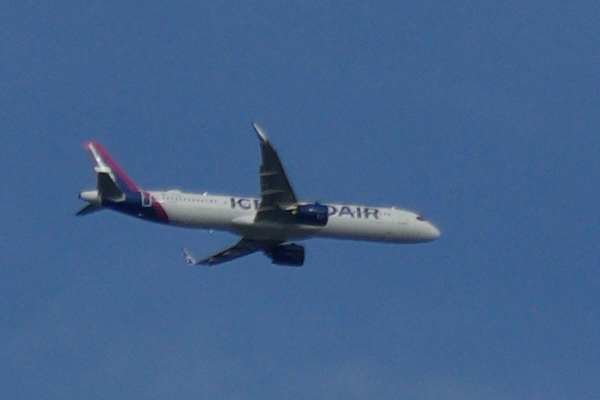
I took this picture on Sunday. It is of The Emerald, a 40-story residential skyscraper located at 121 Stewart Street. Its distinctive glass façade and slightly twisting design makes it stand out in the Seattle skyline. It was completed in 2020. (This picture is a downsized version, 25% of the size of the out-of-camera picture). Shot with Sony α7CR w. Tamron 28-200mm F2.8-5.6 lens f-stop: f/5.6 |Exposure time: 1/2000 s |ISO speed: ISO-250 |Focal length: 73 mm | Max aperture: 4 |Metering mode: PatternAnd what airline might the airplane belong to? A 600×400 pixel crop of the airplane from the 6,336 x9,504 out-of-camera image reveals that it belongs to Iceland Air.
The European leaders in the State Dining Room were there to manage a global crisis. Which meant they also had to manage the mood of one famously mercurial man. The subject of this high-level diplomatic summit was diplomacy mixed with psychology.
Adding to the surreal nature of the thing was the way that President Vladimir V. Putin of Russia hovered over it all, just out of sight, like a character offstage. Mr. Trump kept bringing up Mr. Putin’s perspective. “Vladimir Putin wants it to end,” he claimed. He repeatedly mentioned that he needed to call Mr. Putin to update him on how the meetings were shaping up.
The Europeans looked stoic at every mention of Mr. Putin, as though they hardly needed to be reminded of the Russian leader’s viewpoint.
-Shawn McCreesh, a White House correspondent for the New York Times. He reported from Washington.
I have a new camera, after eight years: a Sony α7CR.
It is a mirrorless, full-frame digital camera that takes 61-megapixel pictures— so it is able to capture stunning detail.
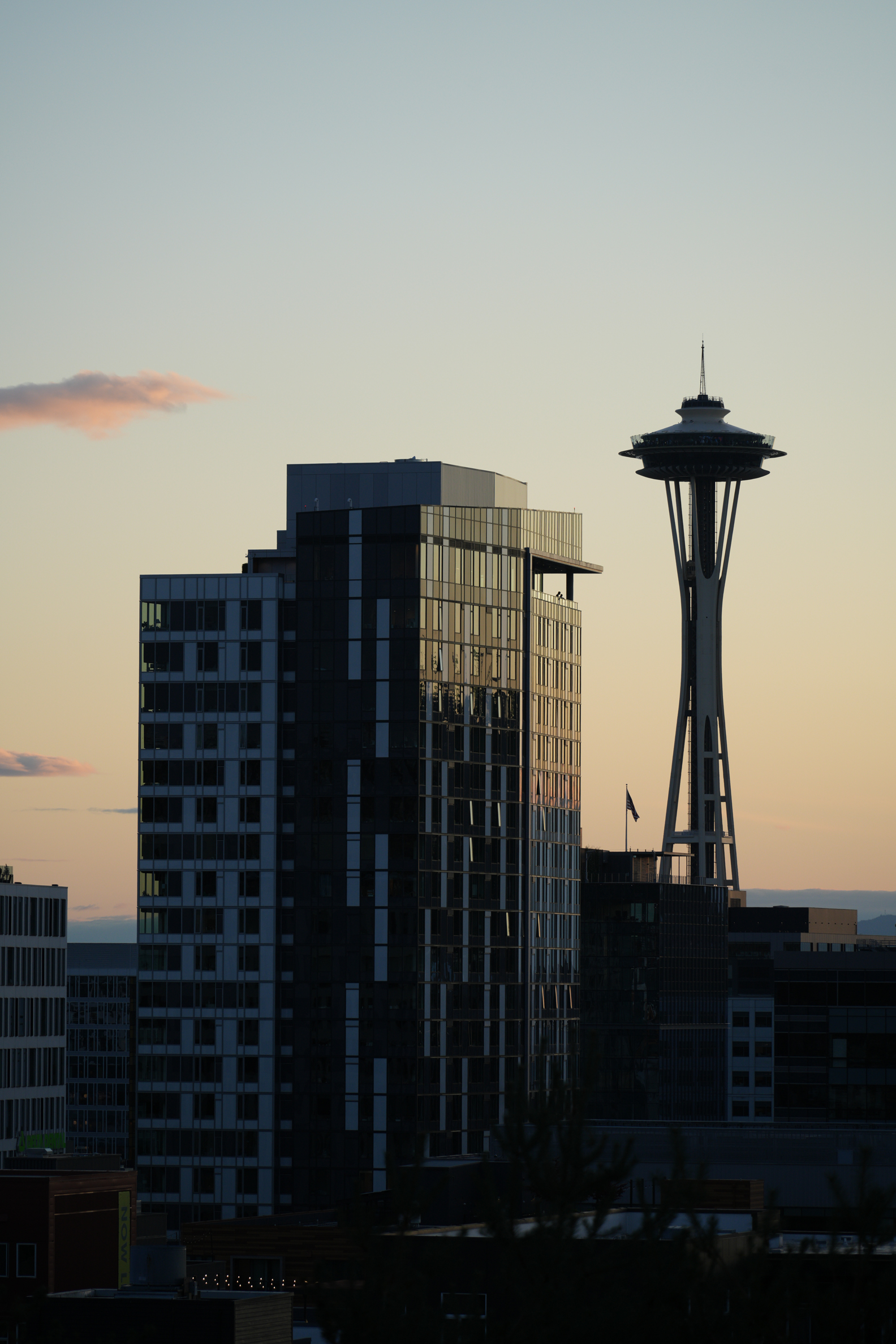
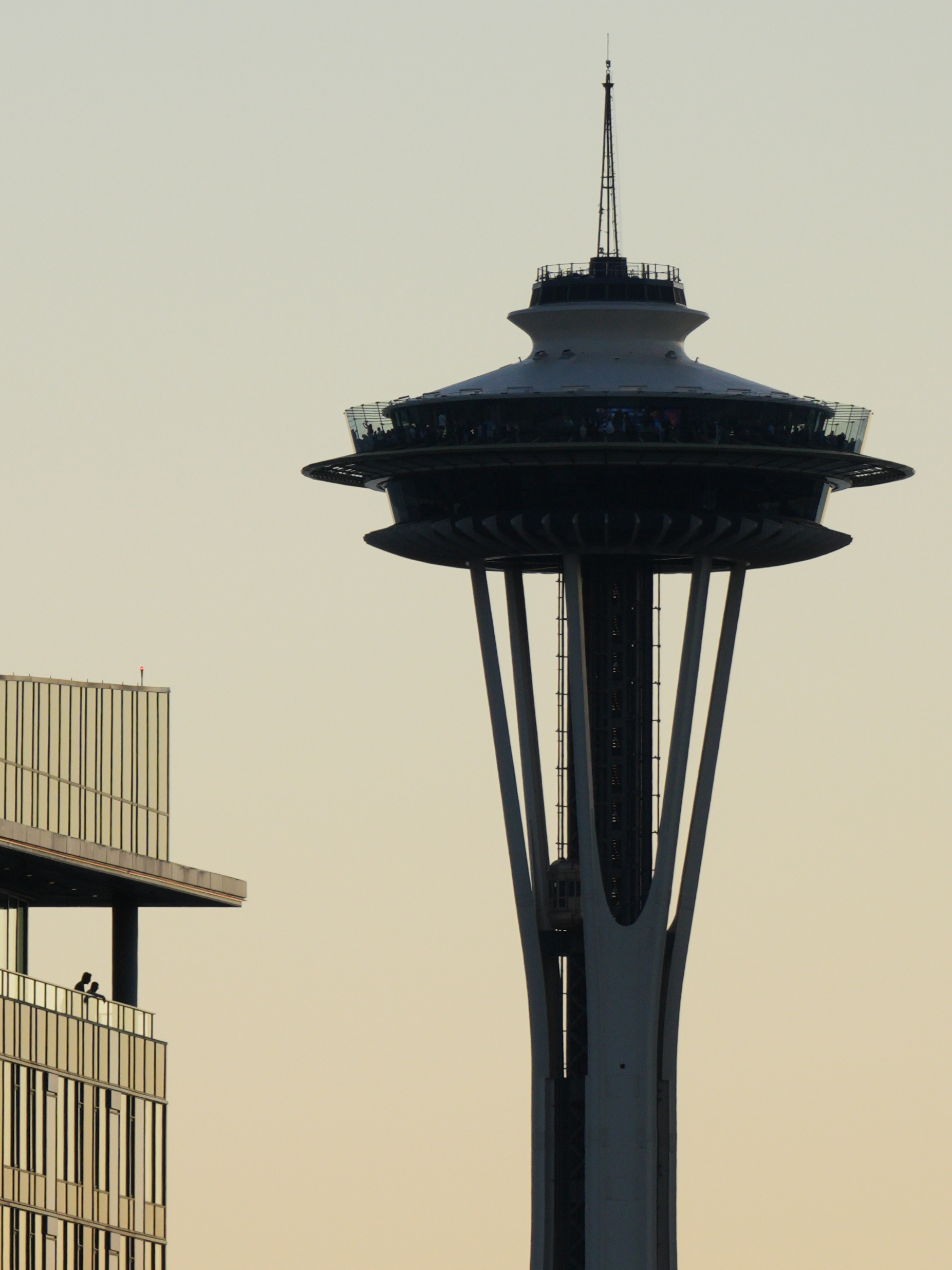
Shot with Sony α7CR w. Tamron 28-200mm F2.8-5.6 lens from the Melrose Ave E overlook towards South Lake Union f-stop: f/5.6 |Exposure time: 1/320 s |ISO speed: ISO-250 |Focal length: 171 mm | Max aperture: 4.96875 |Metering mode: Spot The 35 mm (35.7 x 23.8 mm) full frame Exmor R CMOS sensor captures 6,336 x 9,504 pixels (a 2:3 ratio). In order to post all of the out-of-camera .jpg on this WordPress blog, I reduced it to 25% of its original size. For right now, I have the camera set to ‘Program Auto’ mode. So I just framed the image with my Tamron 28-200 mm zoom lens, and the camera picked the exposure and all the other settings.Here is a 1,853 x 2,471 pixel crop out of the original 6,336 x 9,504 pixel out-of-camera picture, showing the very fine detail that was captured.The same picture as above, but adjusted with Adobe Photoshop Elements to increase the brightness of the shadows by 35% (revealing the golden elevator car).
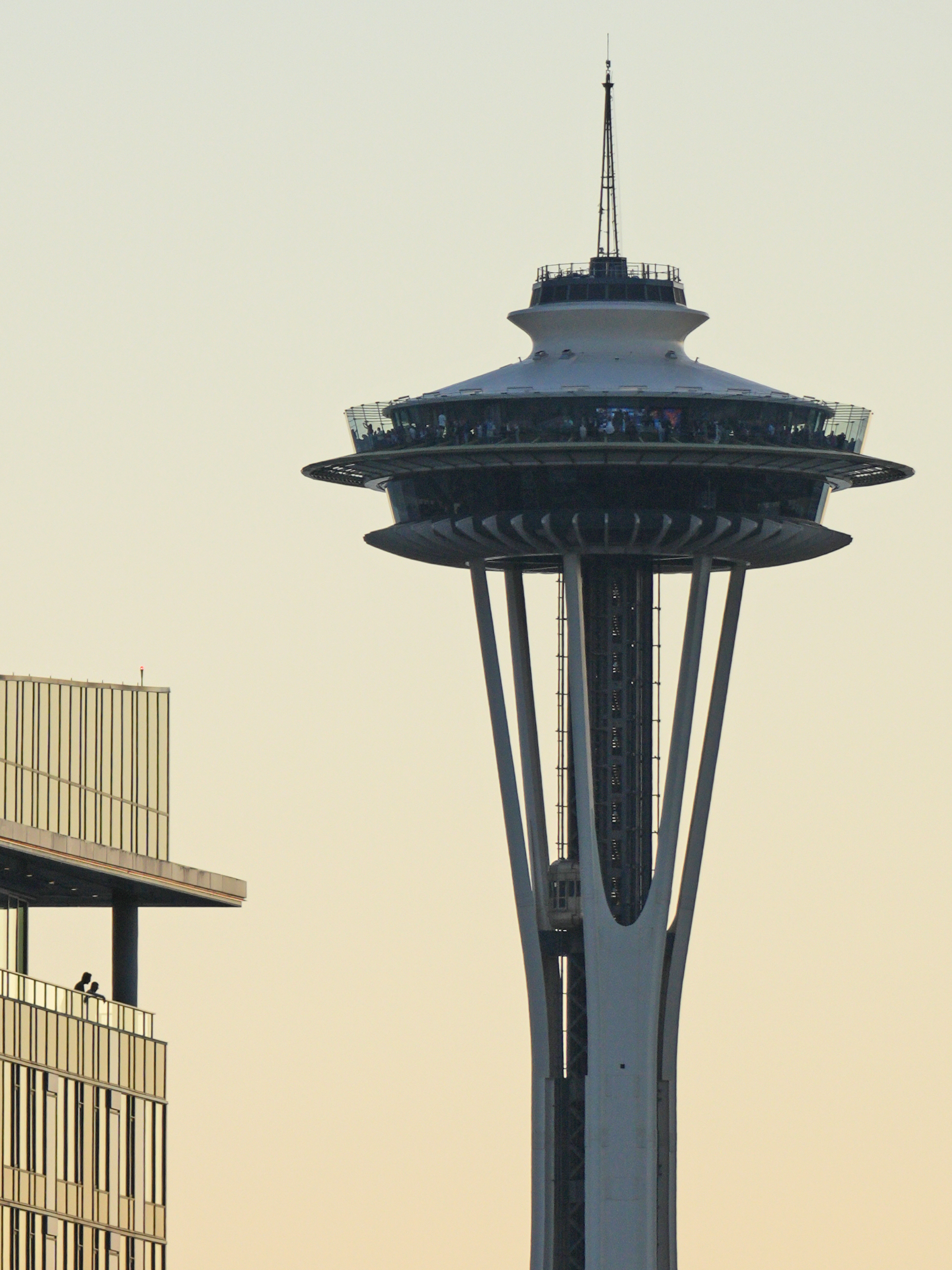
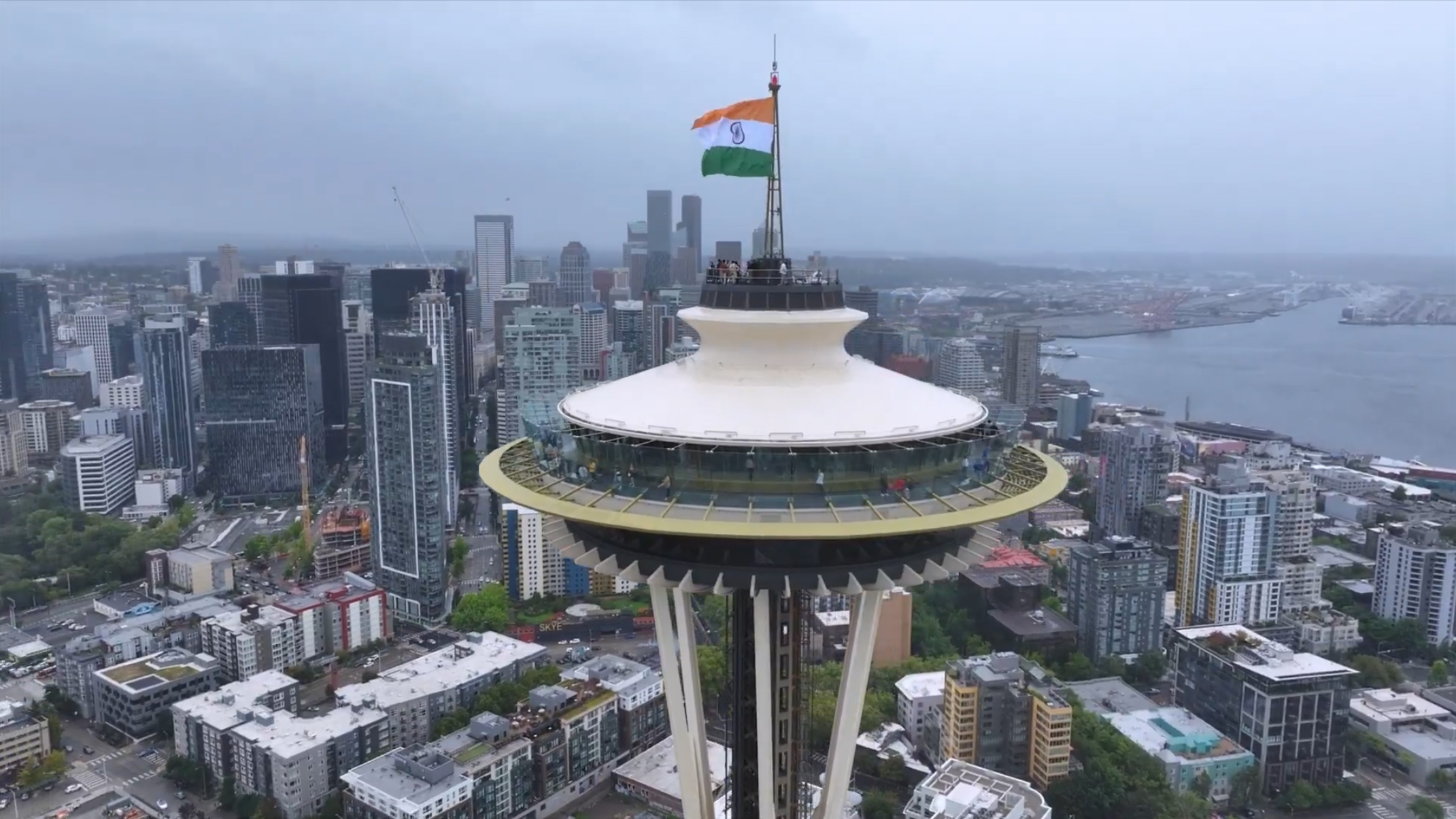
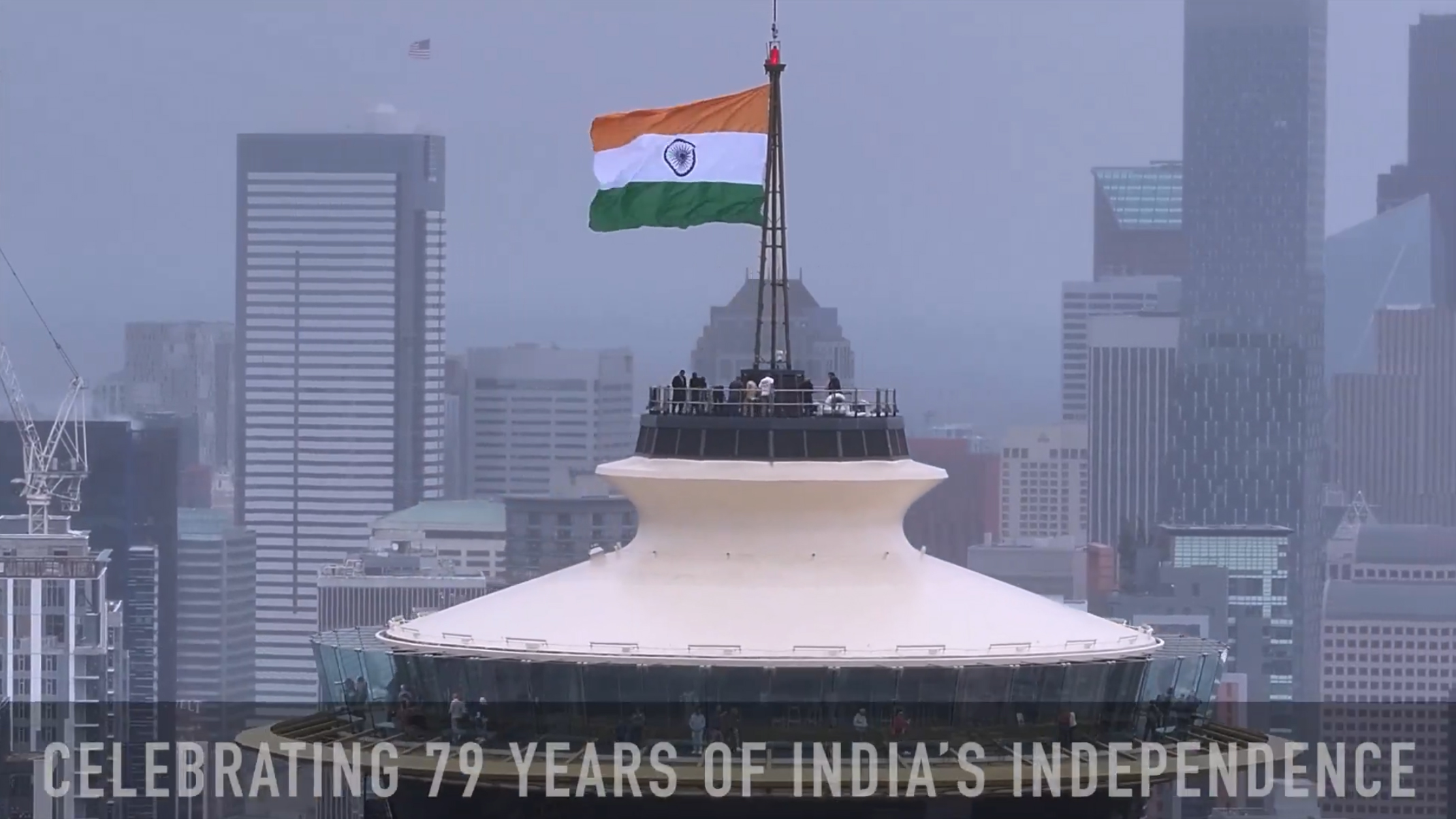
India’s flag was hoisted up on top of the Space Needle for the first time on Friday.
It is a nod to India’s Independence Day, celebrated annually on August 15 as a public holiday.
The day commemorates the nation’s independence from the United Kingdom on August 15, 1947.
Approximately 83,000 King County residents were born in India, constituting 14% of the foreign-born population. China closely follows at approximately 80,000 residents, and the list continues with Vietnam securing the fourth position, the Philippines at fifth, South Korea at sixth, and Taiwan ranking ninth. [Northwest Asian Weekly, Dec. 11, 2023][Stills from a video posted @IndiainSeattle on X]
The Alaska Purchase was the purchase of Alaska from the Russian Empire by the United States for a sum of $7.2 million in 1867.
The purchase of Alaska marked the end of Russian efforts to expand trade and settlements to the Pacific coast of North America, and became an important step in the United States’ rise as a great power in the Asia-Pacific region. -Office of the Historian (.gov) and Wikipedia
Happy Friday. It is wet here in Seattle with drizzly rain that started last night and continued on and off all day.
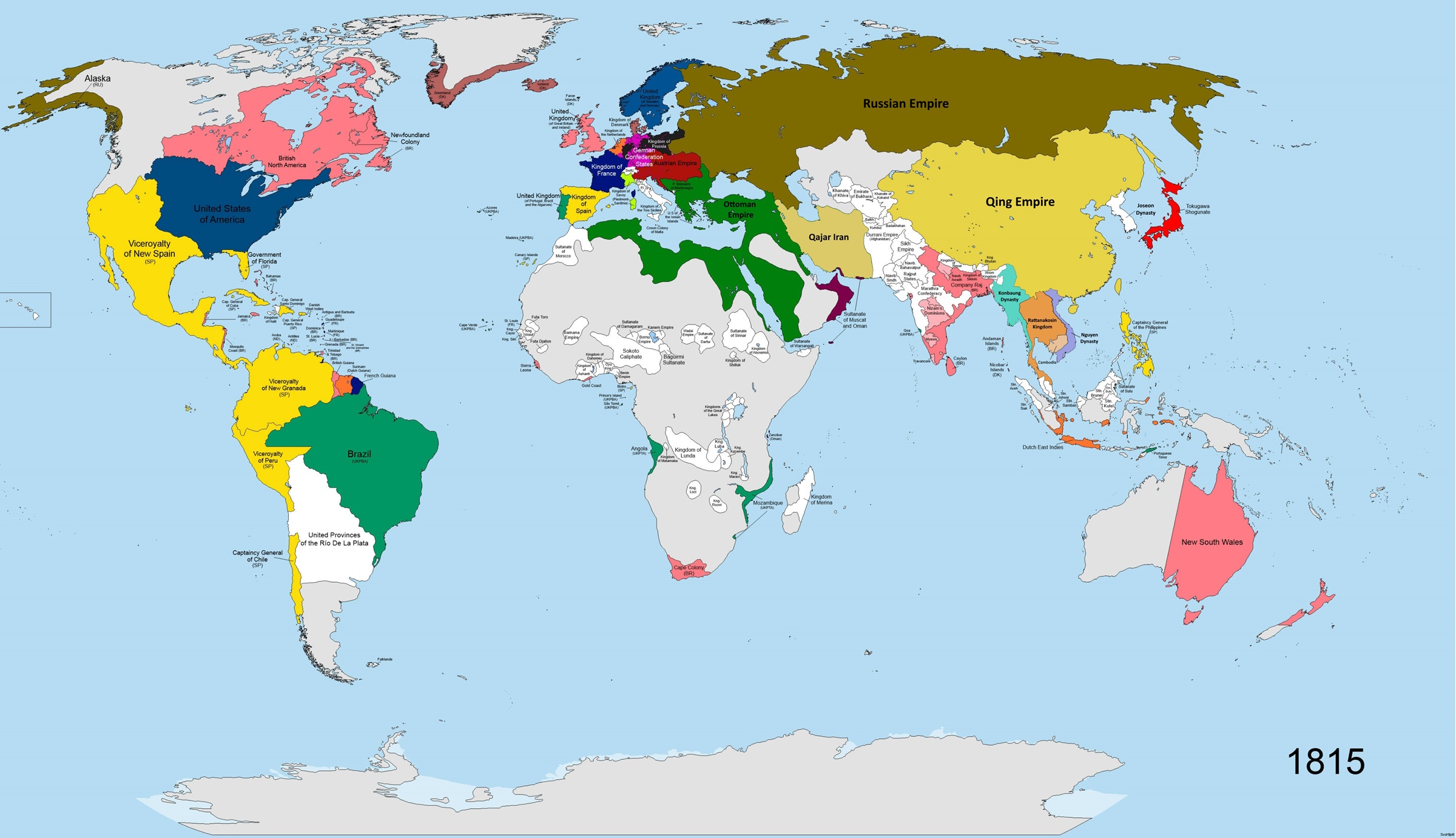
With Trump and Putin’s meeting in Anchorage today, I was reminded that Alaska was bought from the Russian Empire (in 1867).
Here is a map from 1815 that showed the empires of the world at that time .. and why it was said ‘the sun never sets on the British Empire’.
Full resolution of this map online at ‘Wikimedia Commons World Map 1815’. The saying “The sun never sets on the British Empire” refers to the vast geographical reach and global dominance of the British Empire at its peak. It means that at any given moment, the sun would be shining on at least one part of the British Empire’s territories around the world. This was due to the empire’s extensive colonies and possessions across multiple continents and time zones. – Google AI Overview
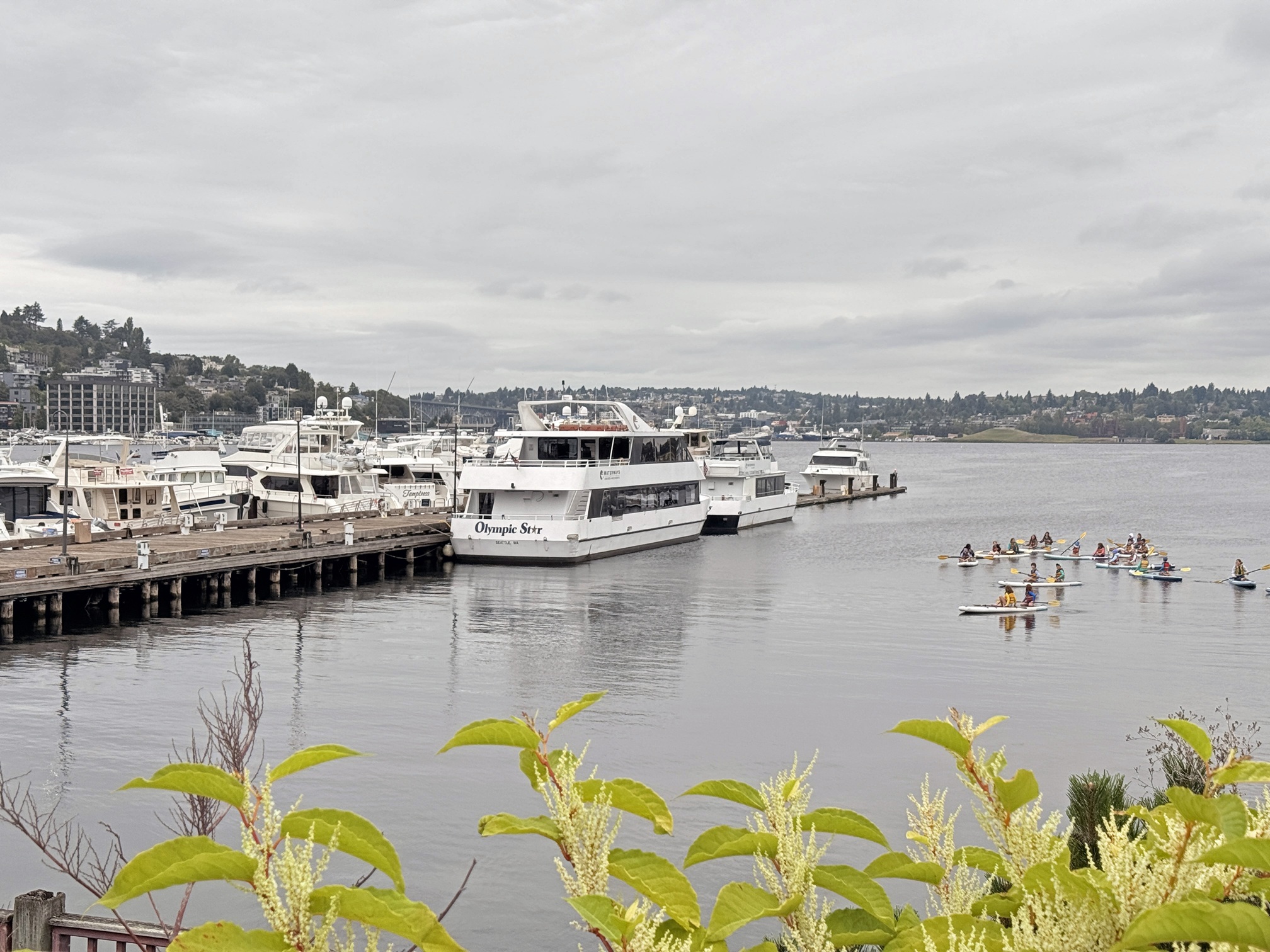
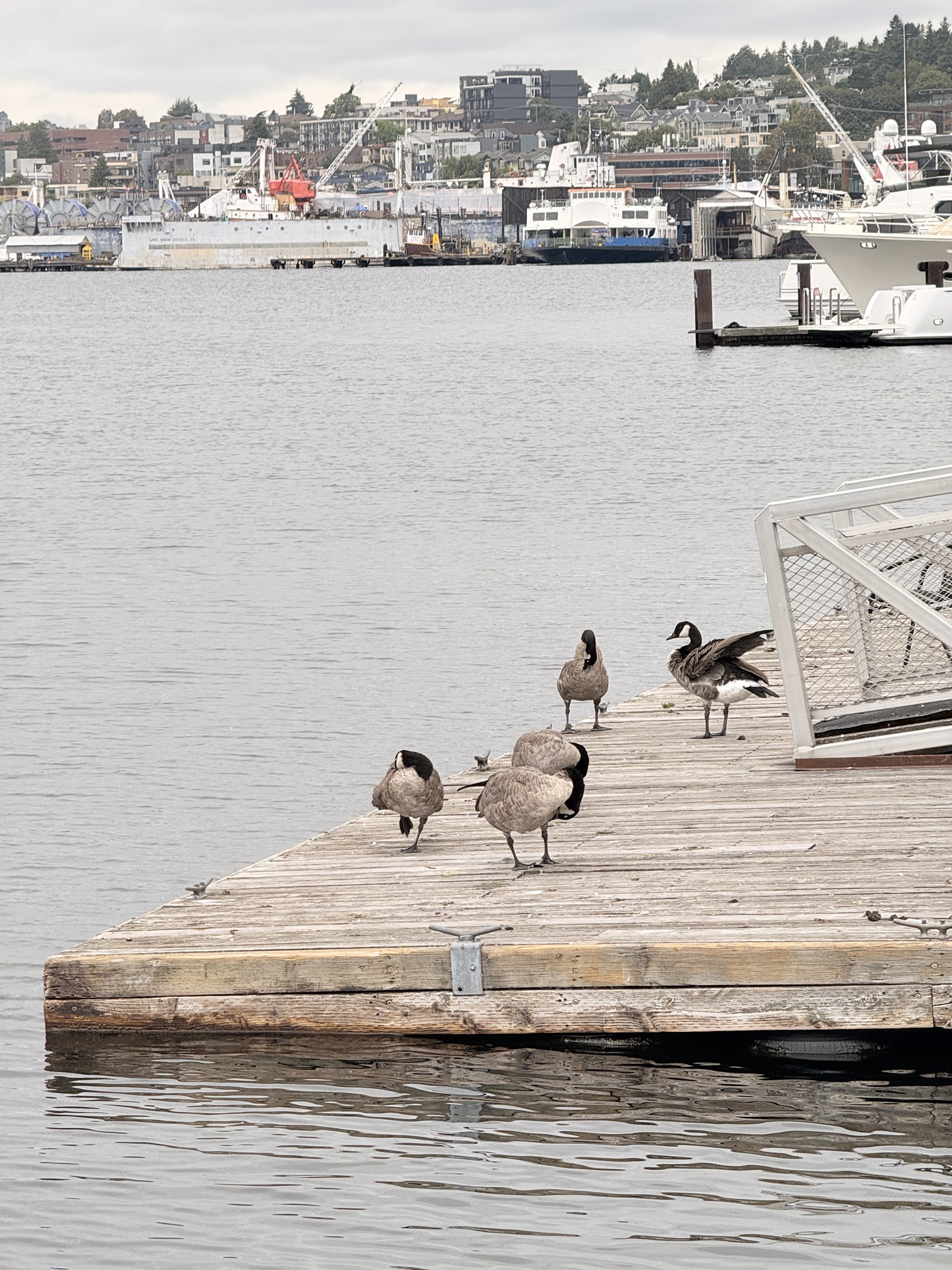
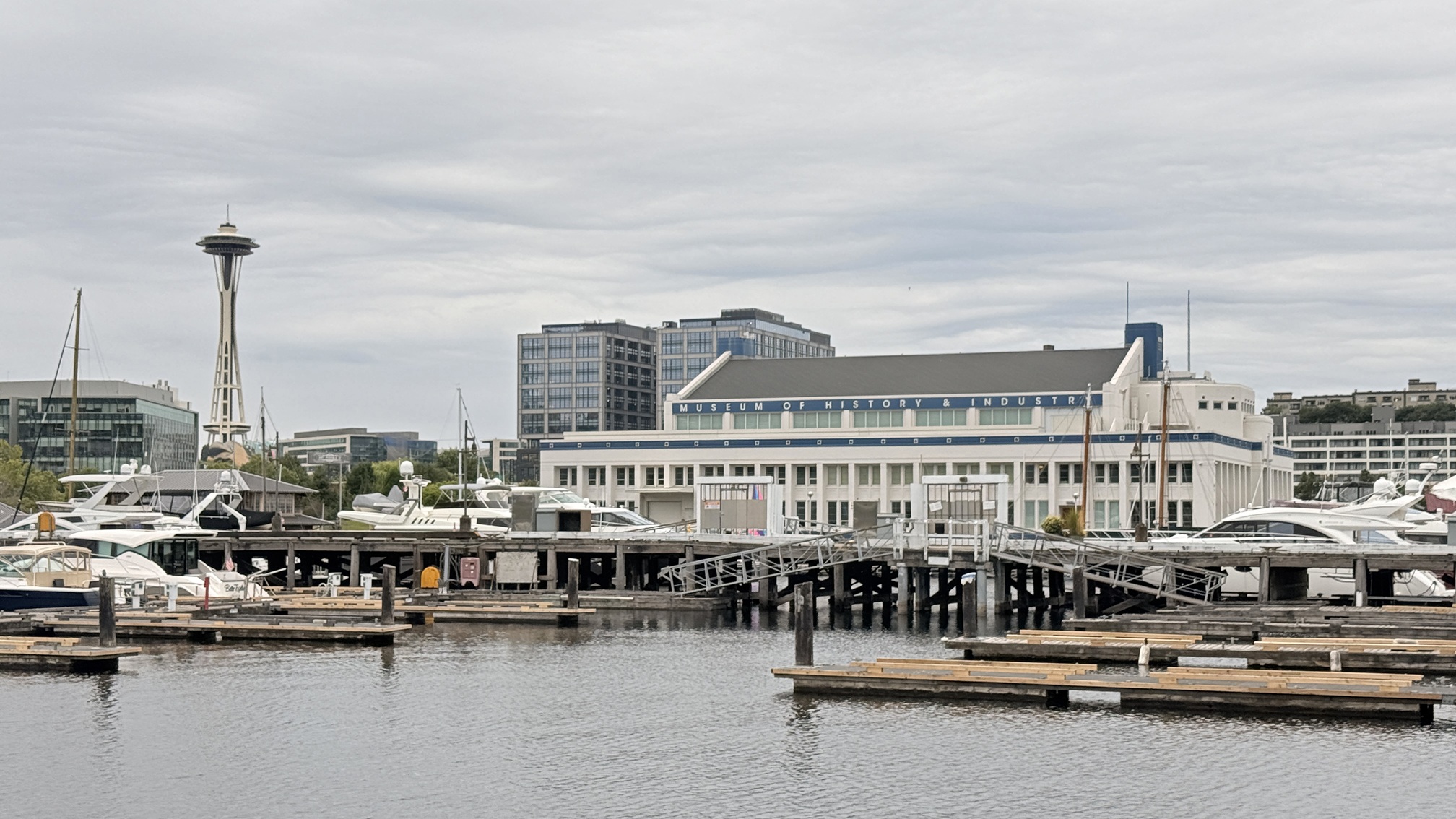
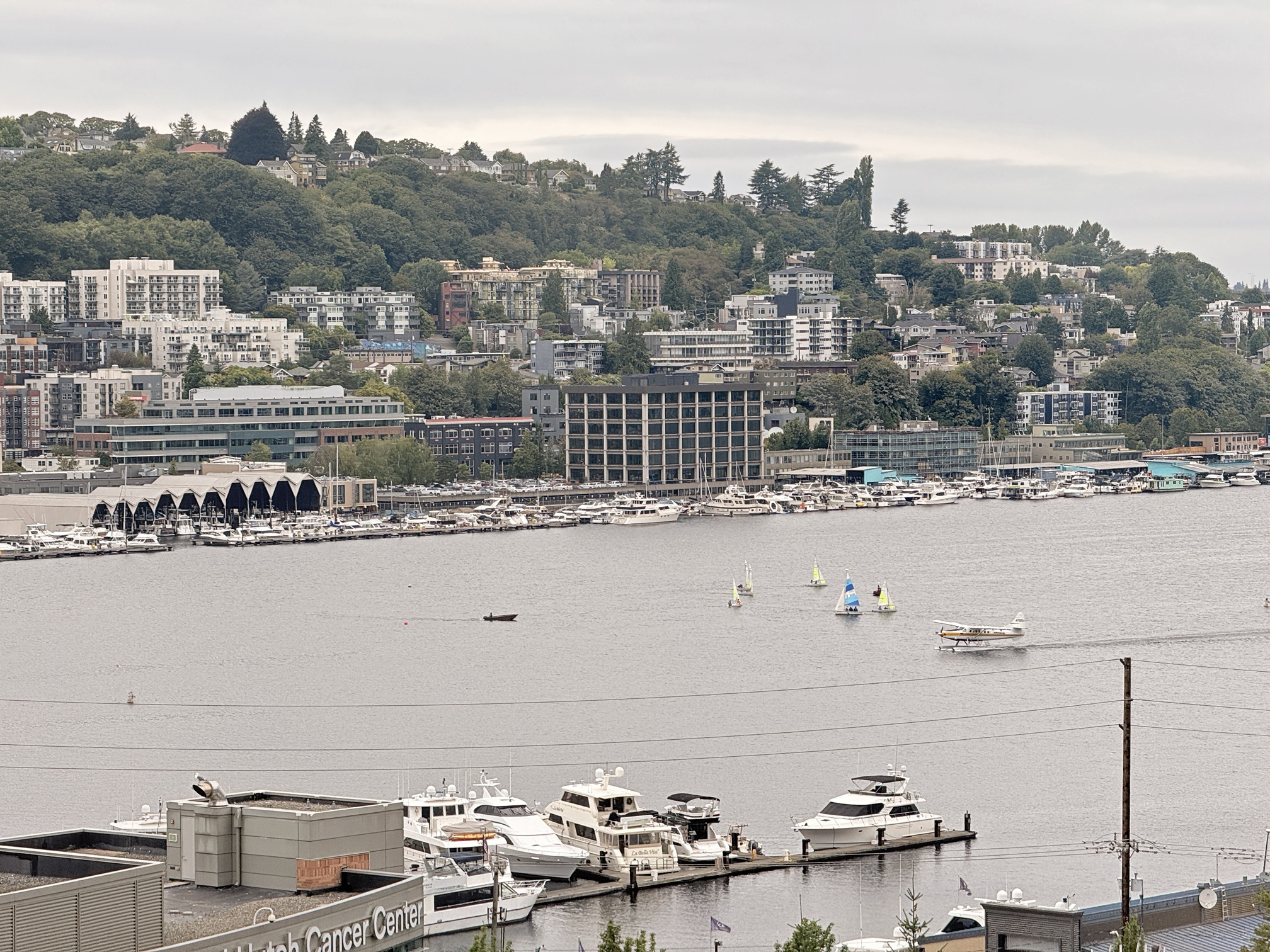
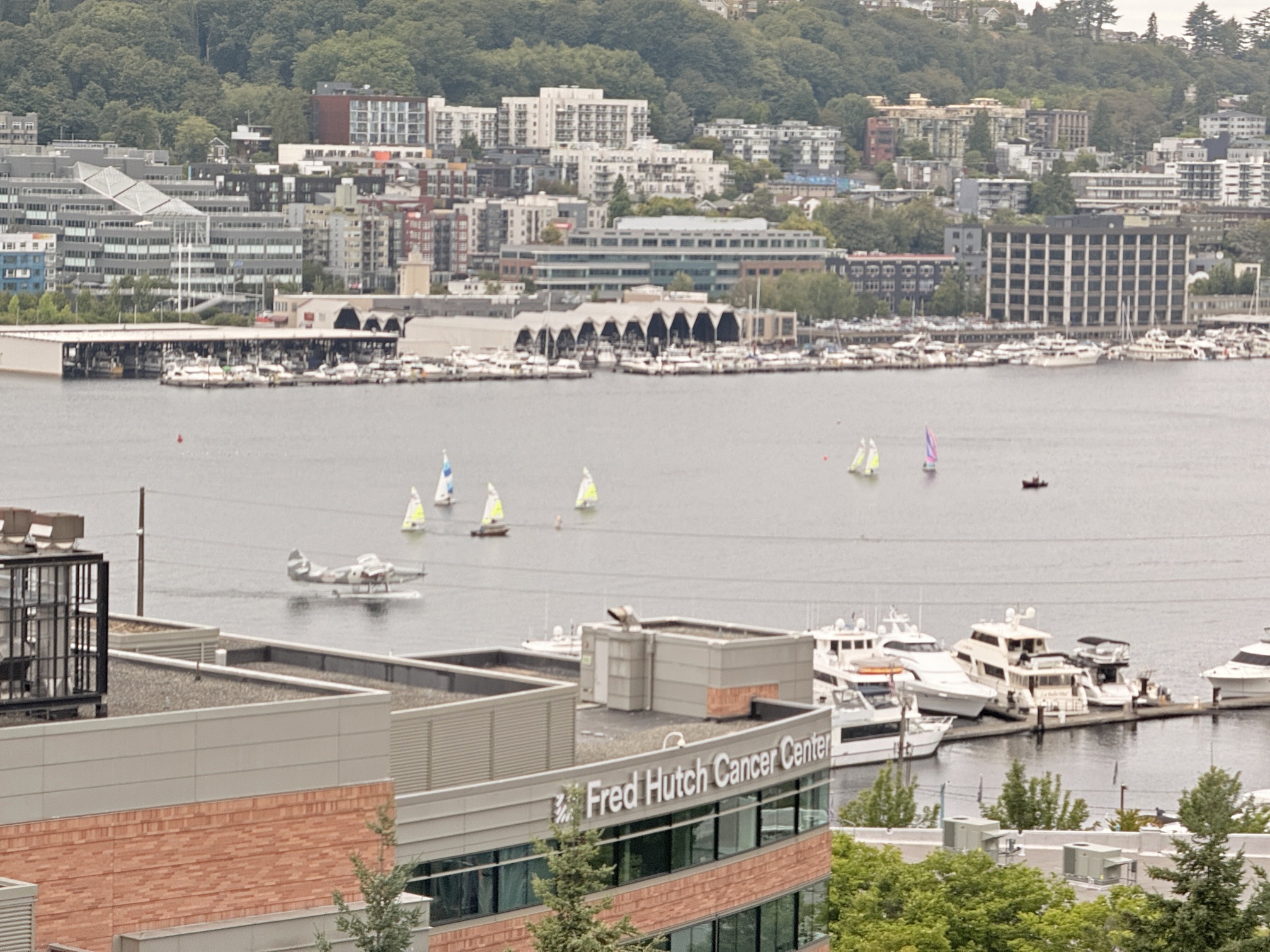
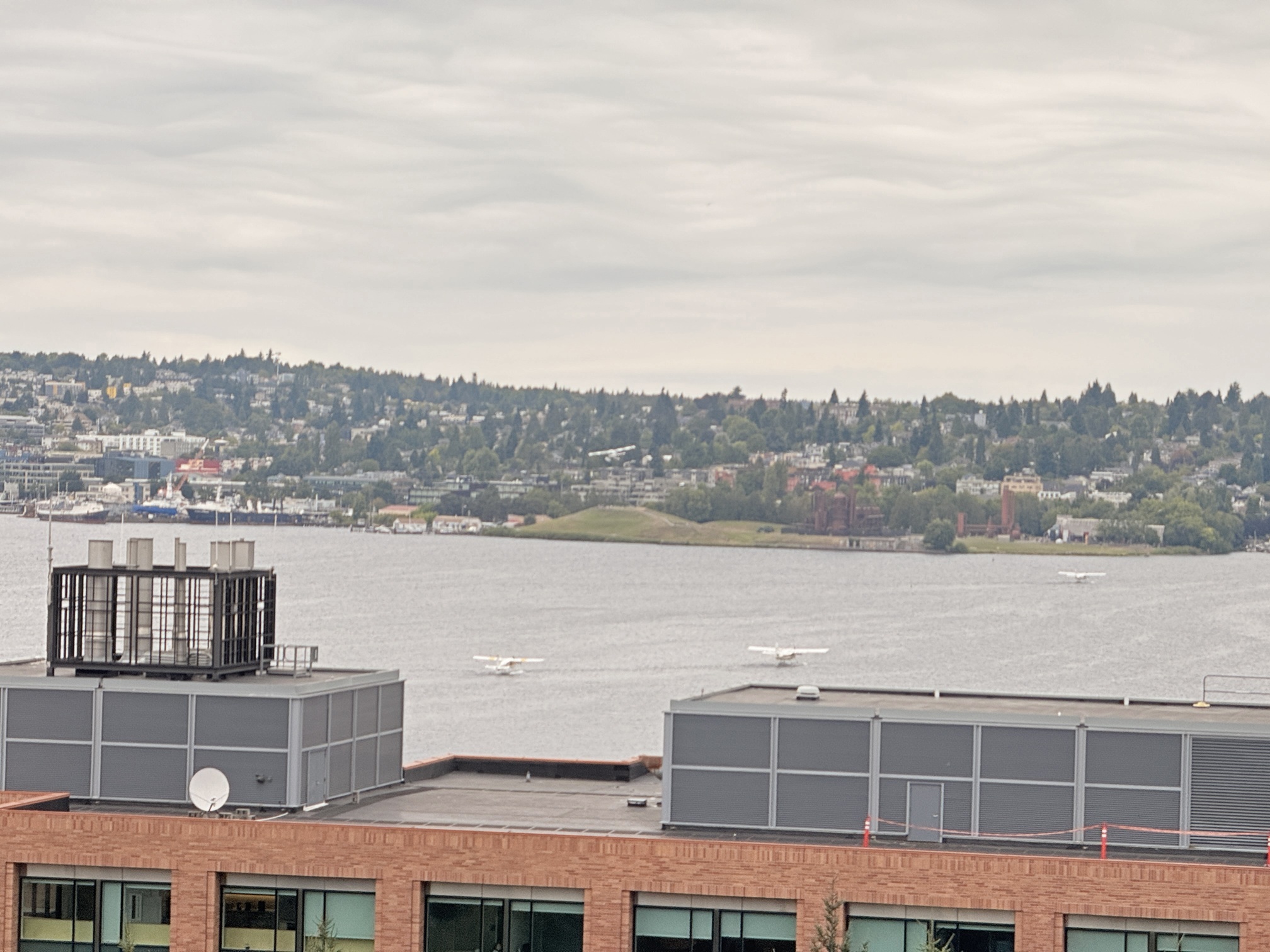
I was near Lake Union for two appointments this morning and took these pictures.
Top to bottom—
Rowing lessons for kids near a flotilla of moored yachts;
Troublemakers (Canadian geese) on the docks;
Space Needle and Museum of History & Industry (MOHAI);
Incoming floatplane;
Departing floatplane— the last one of four in a row— but then the first to become airborne (in the center of the last picture).
We’re out of the latest heatwave here in the city.
We had 91°F (33 °C) on Tuesday, but only 75°F (24 °C) today.
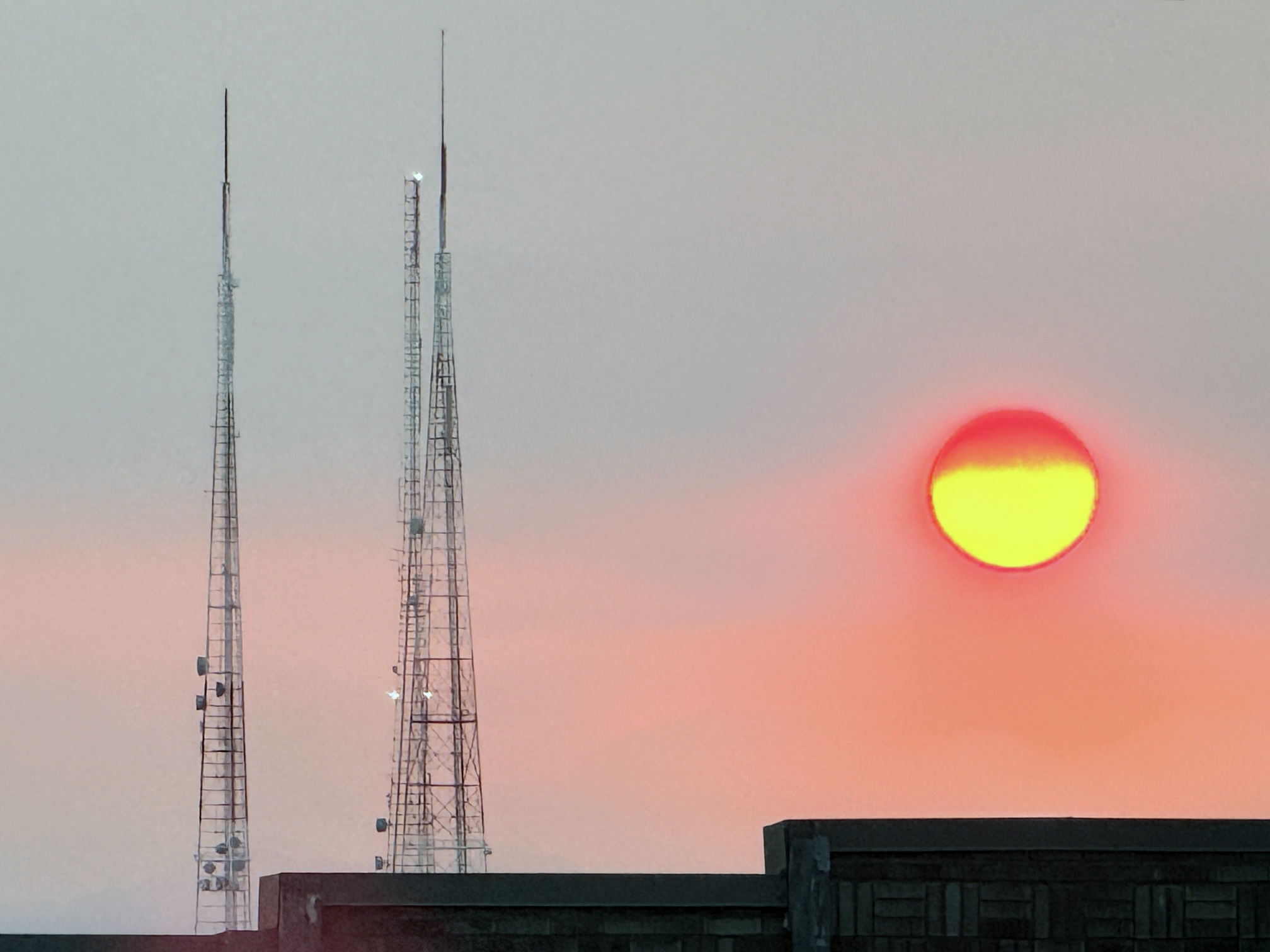
The smoke and fine, fine ash flakes in the air have not gone away, though. Officials now say the Bear Gulch fire will burn until winter— one of seven large wildfires in Washington State. It continues to grow and is still only 3% contained.
Smoky skies as the sun sets on Tuesday night. I’m looking out from Seattle’s Capitol Hill towards the TV antenna towers on Queen Anne Hill.