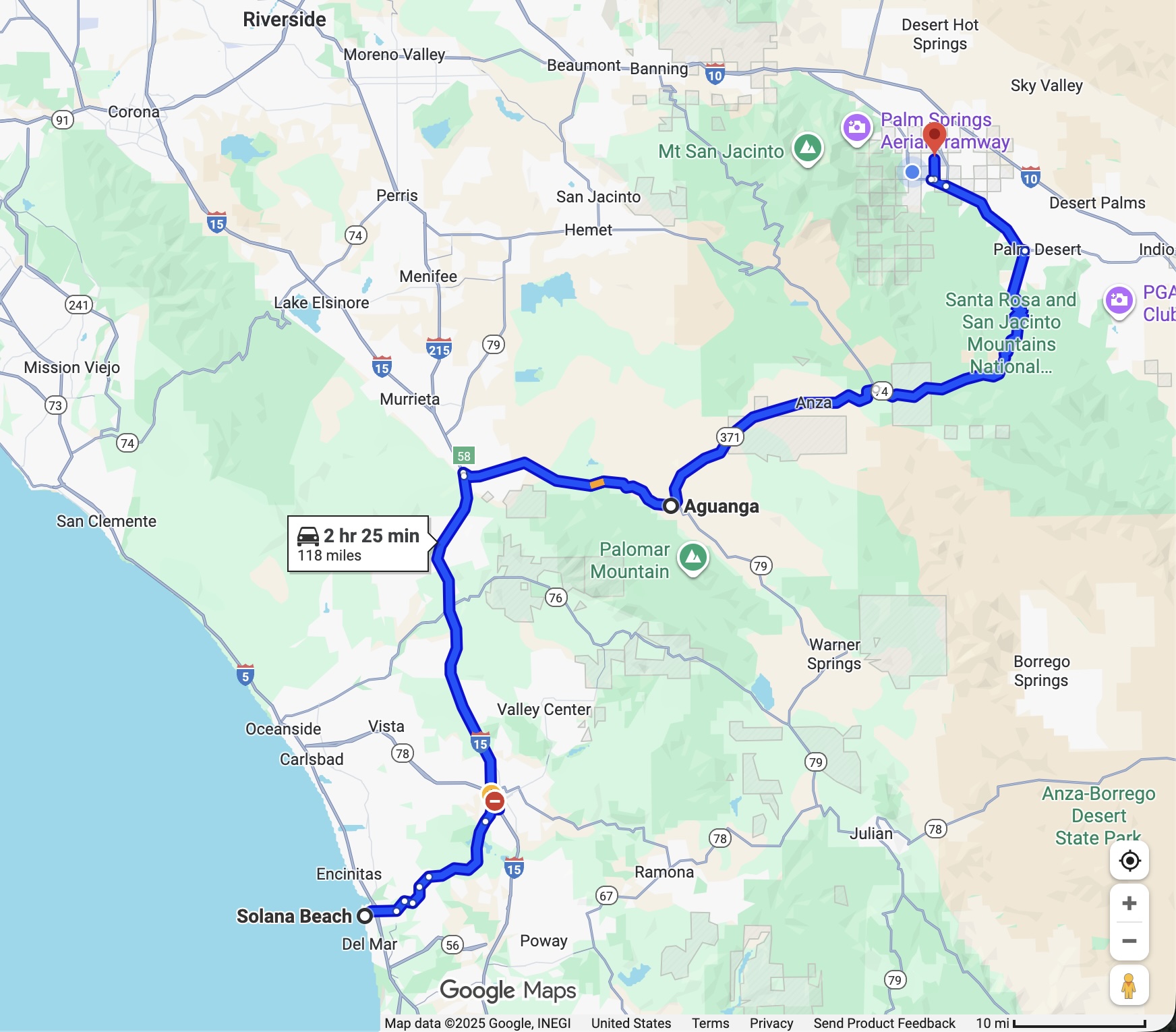
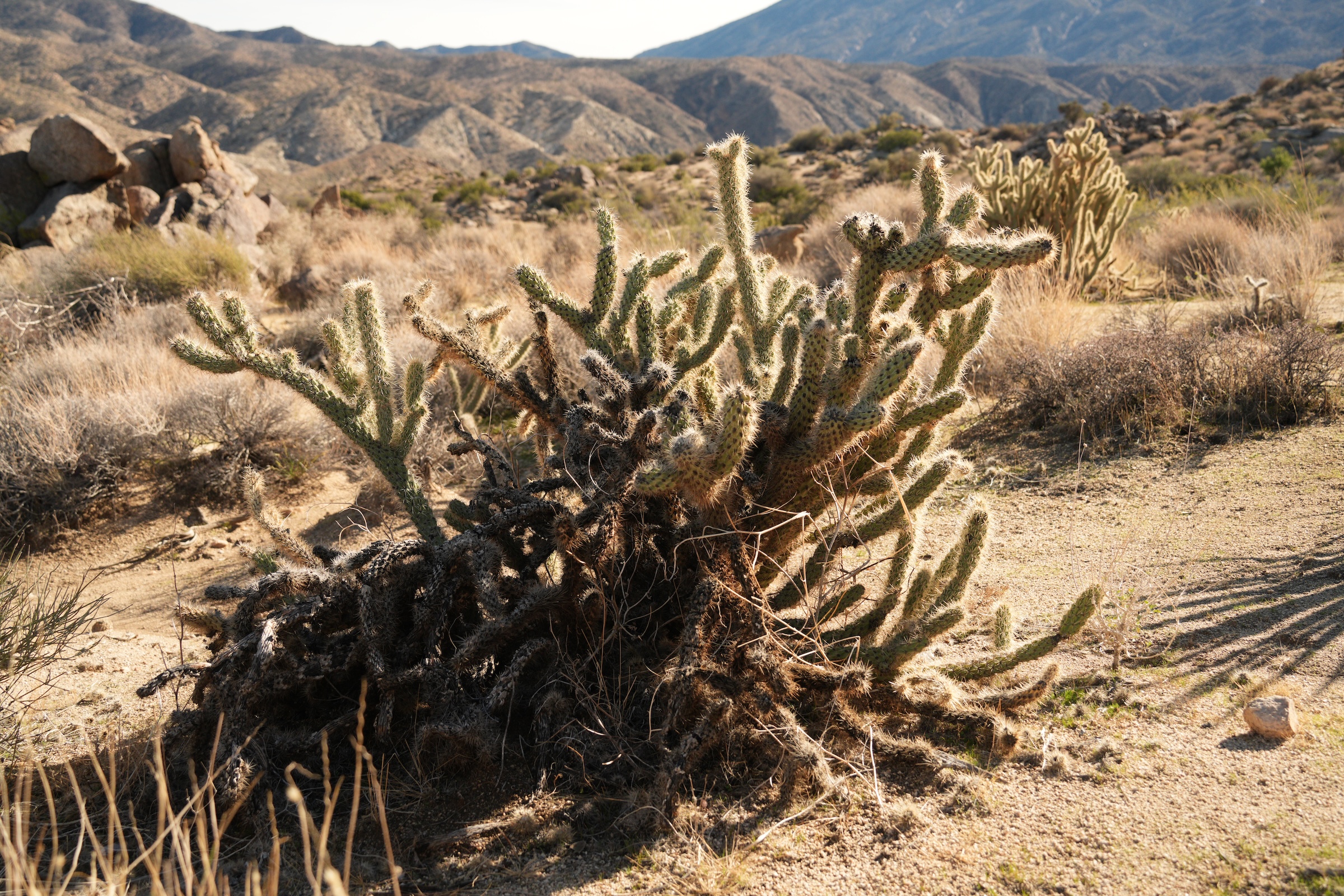
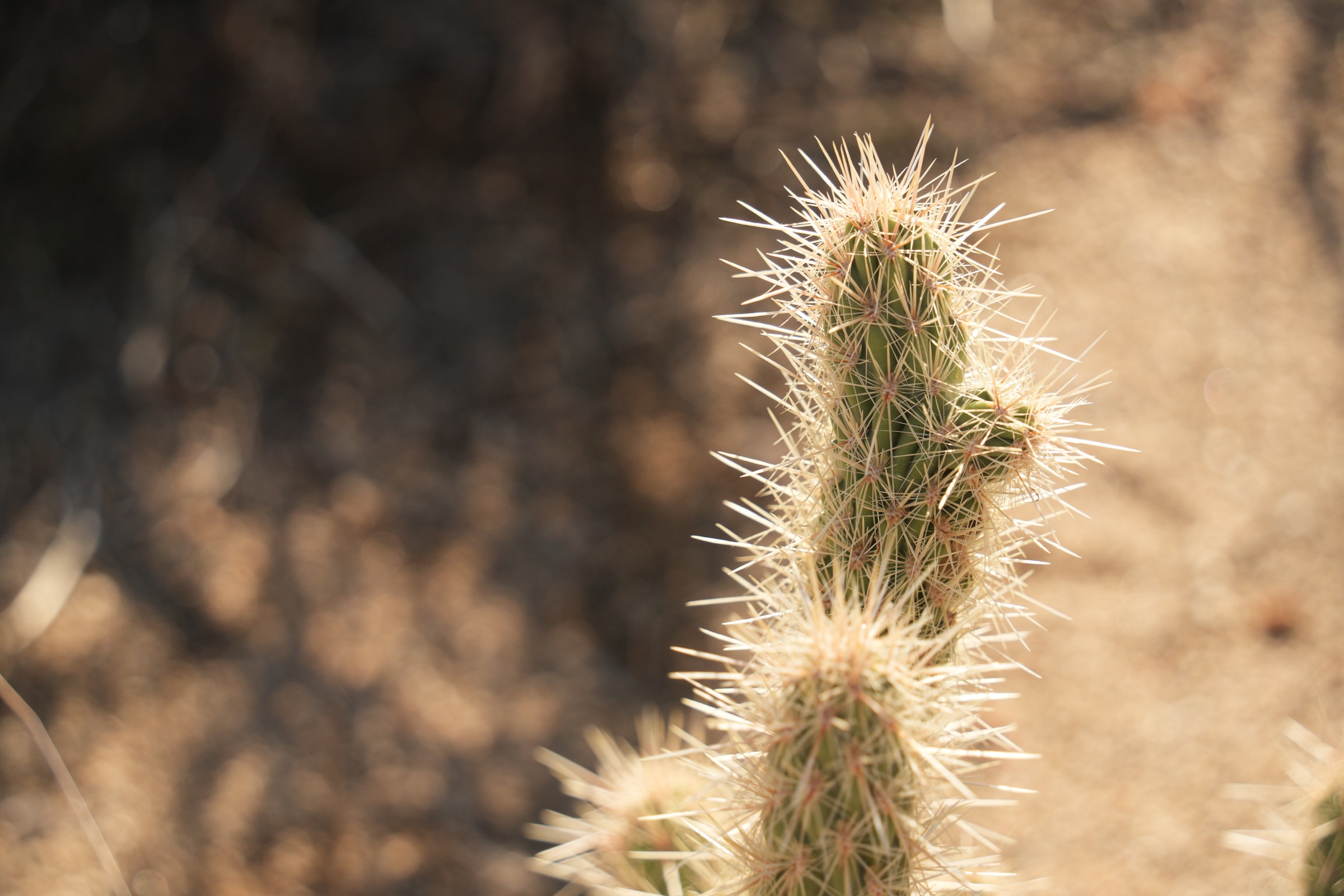
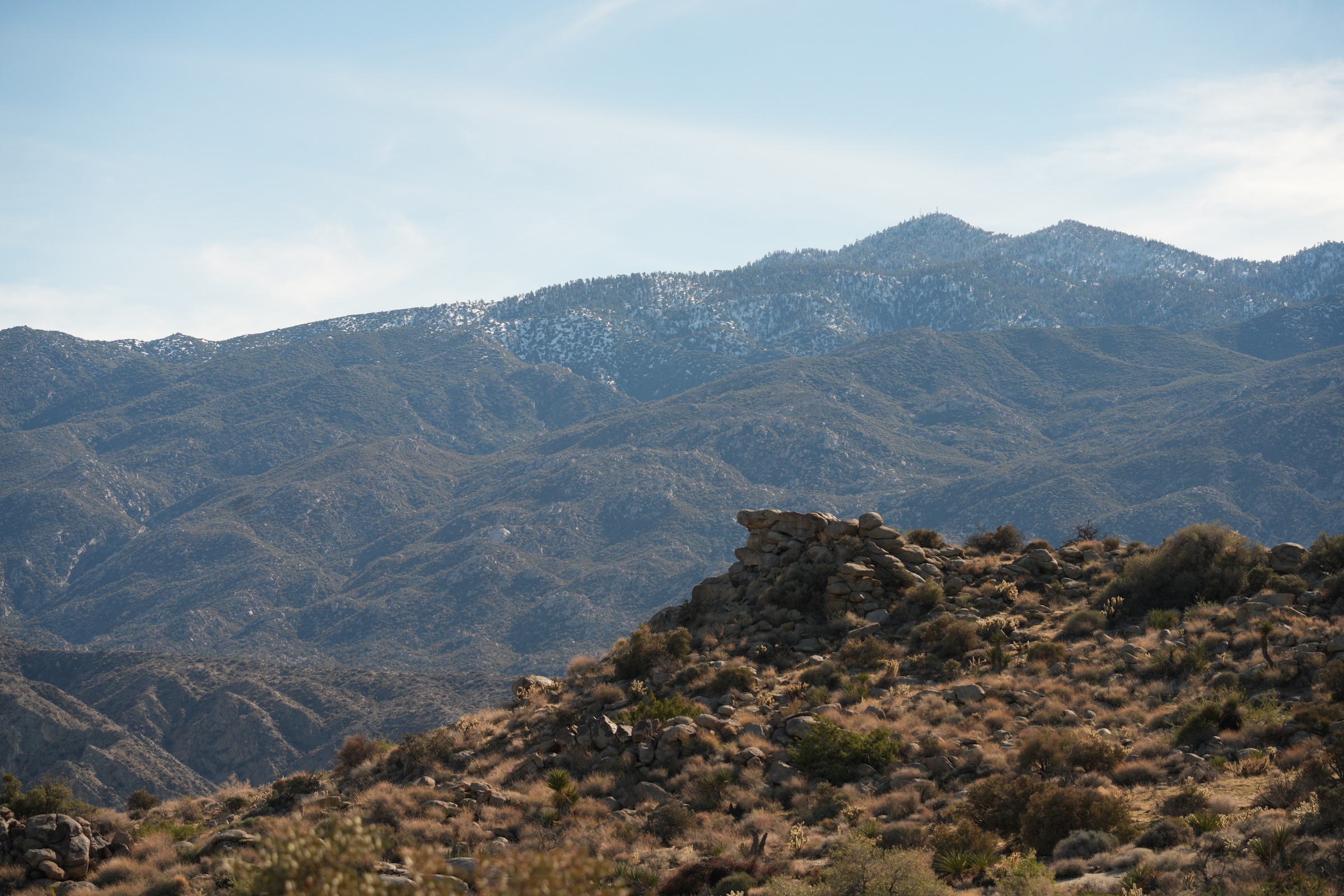
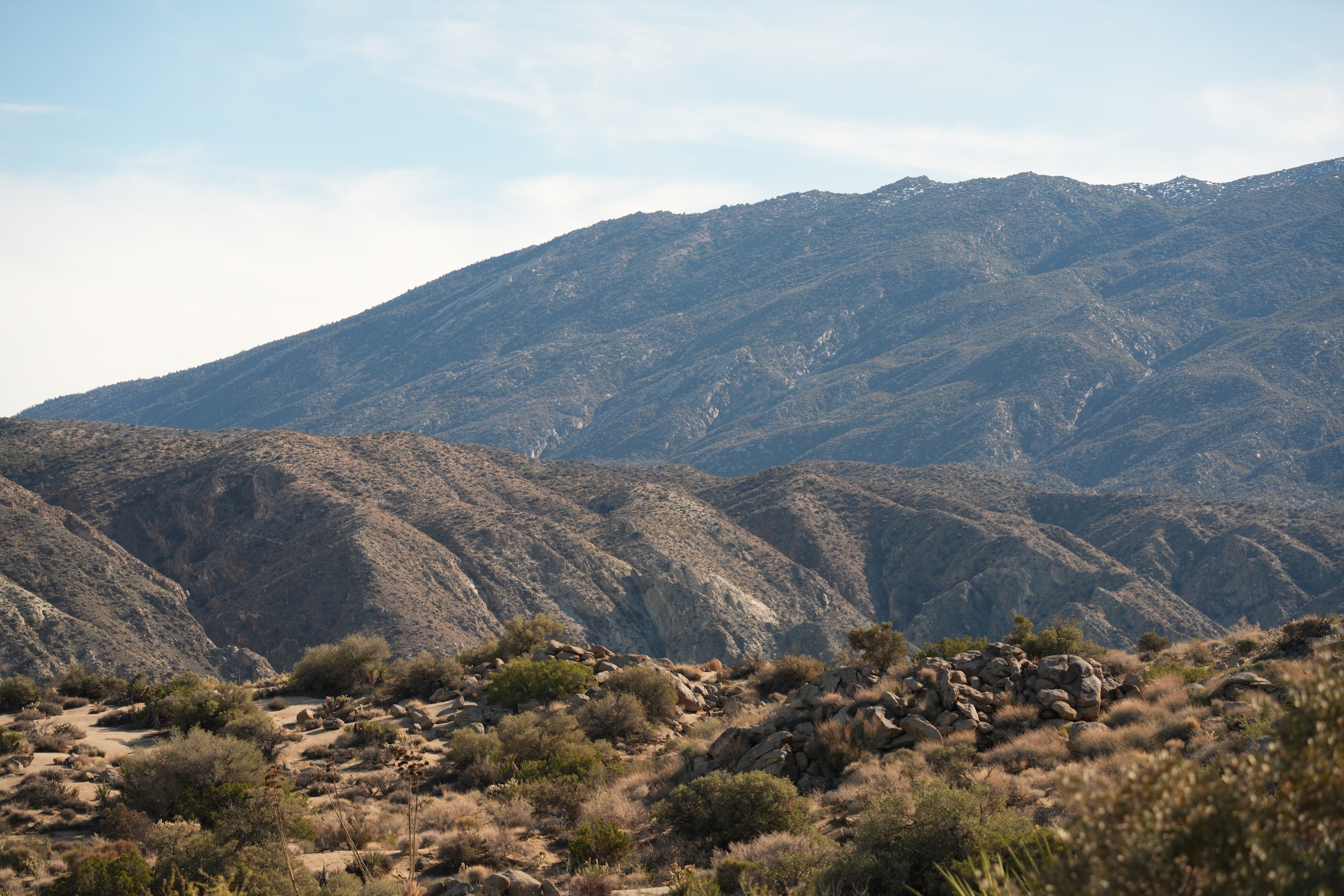
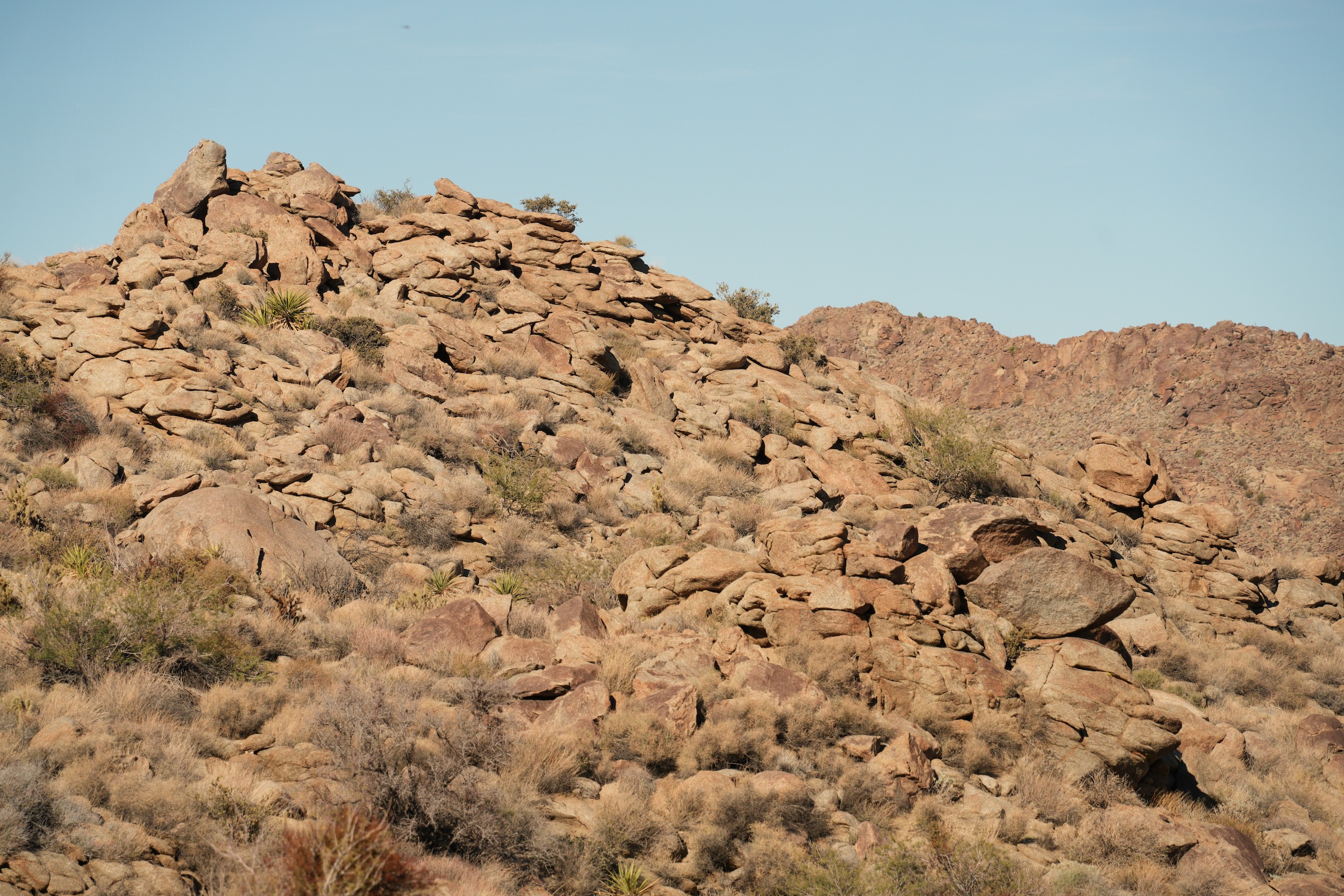
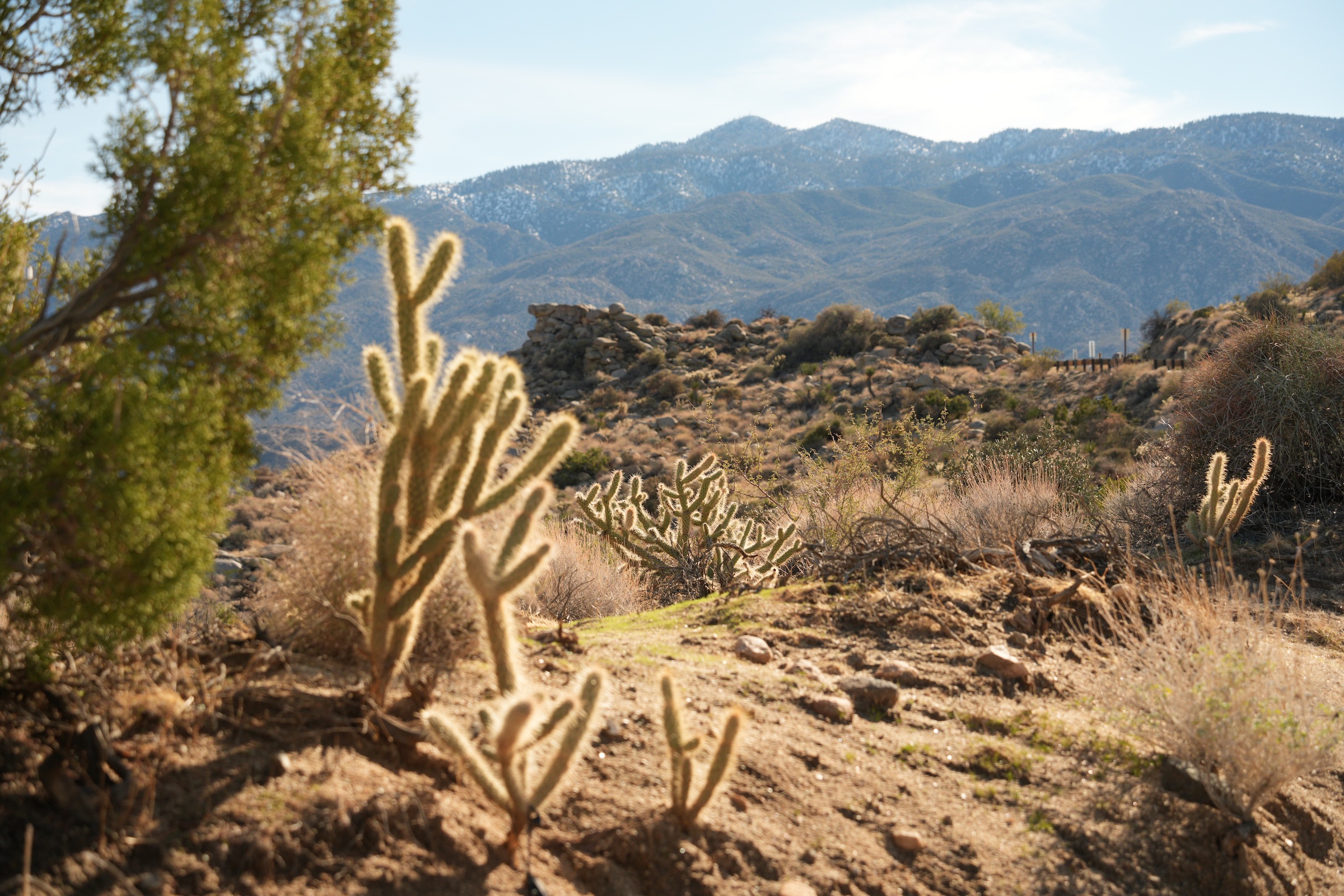
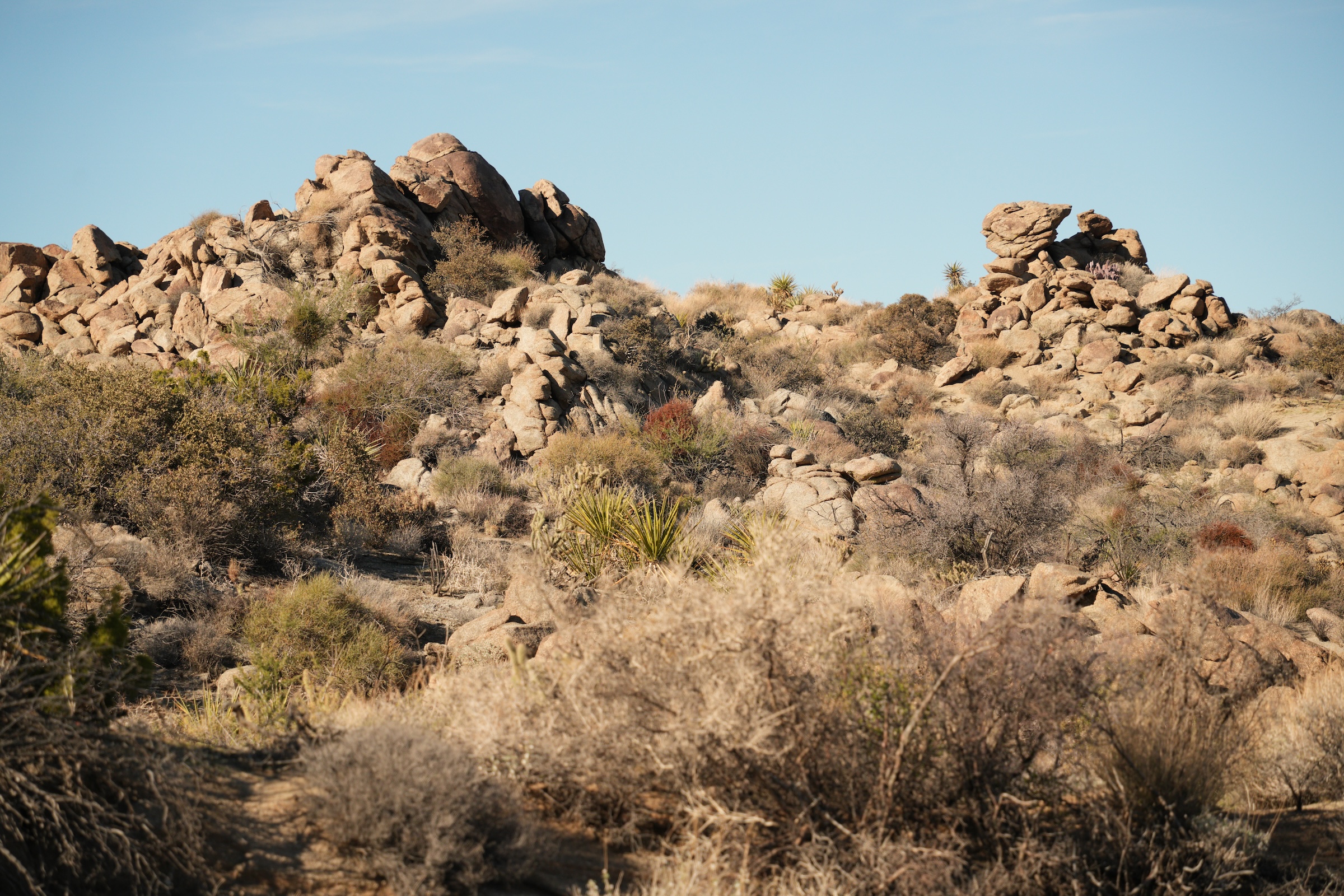
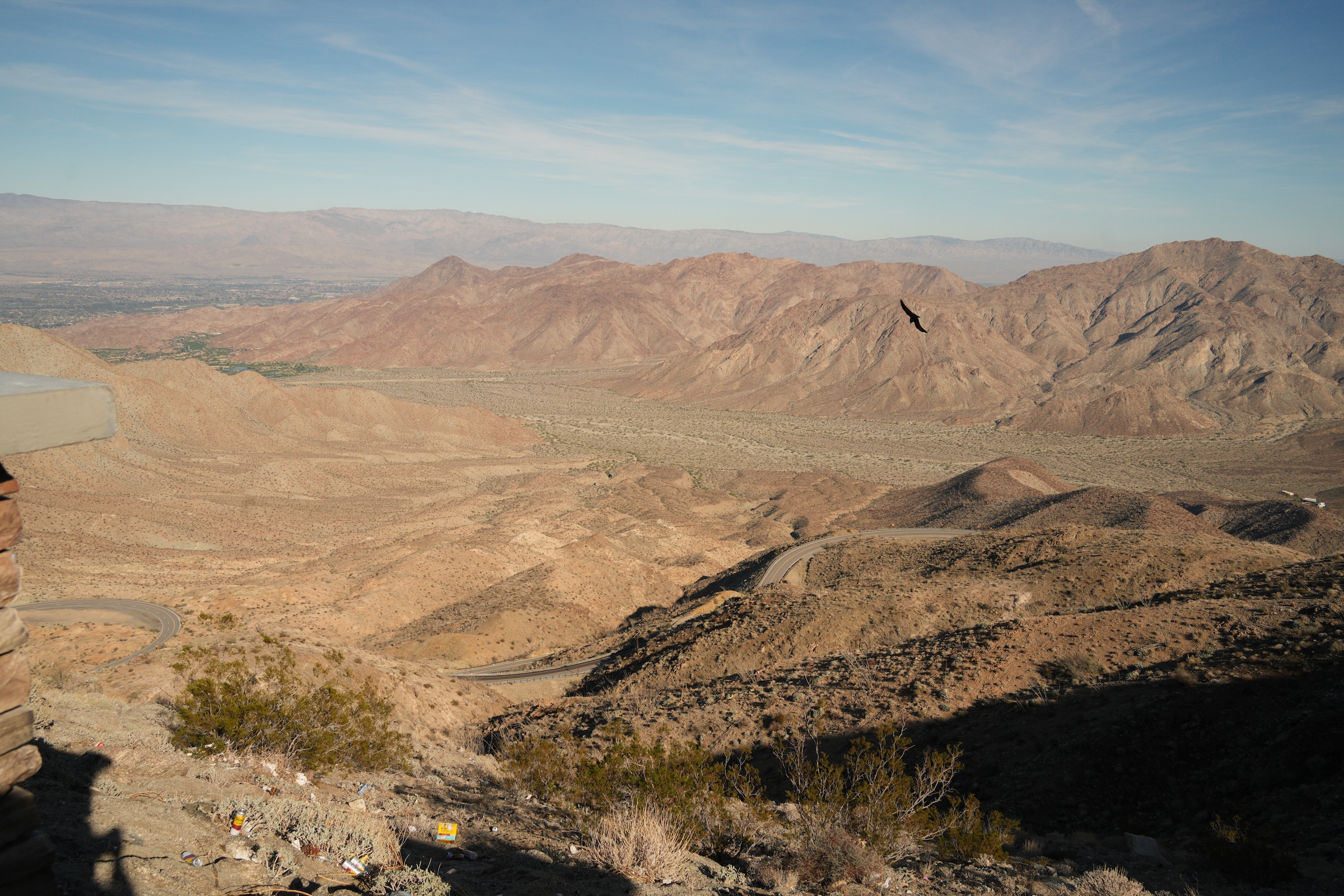
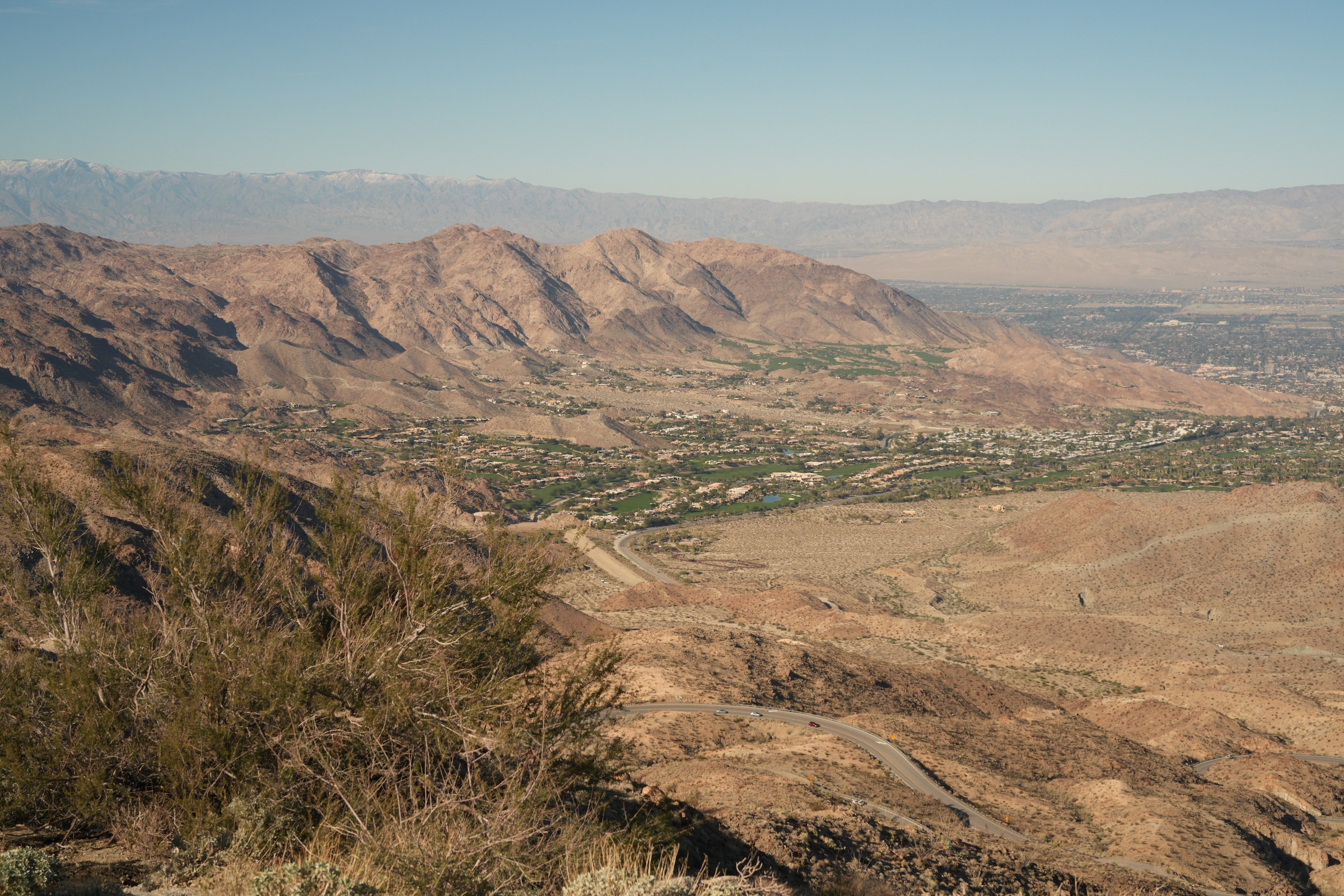
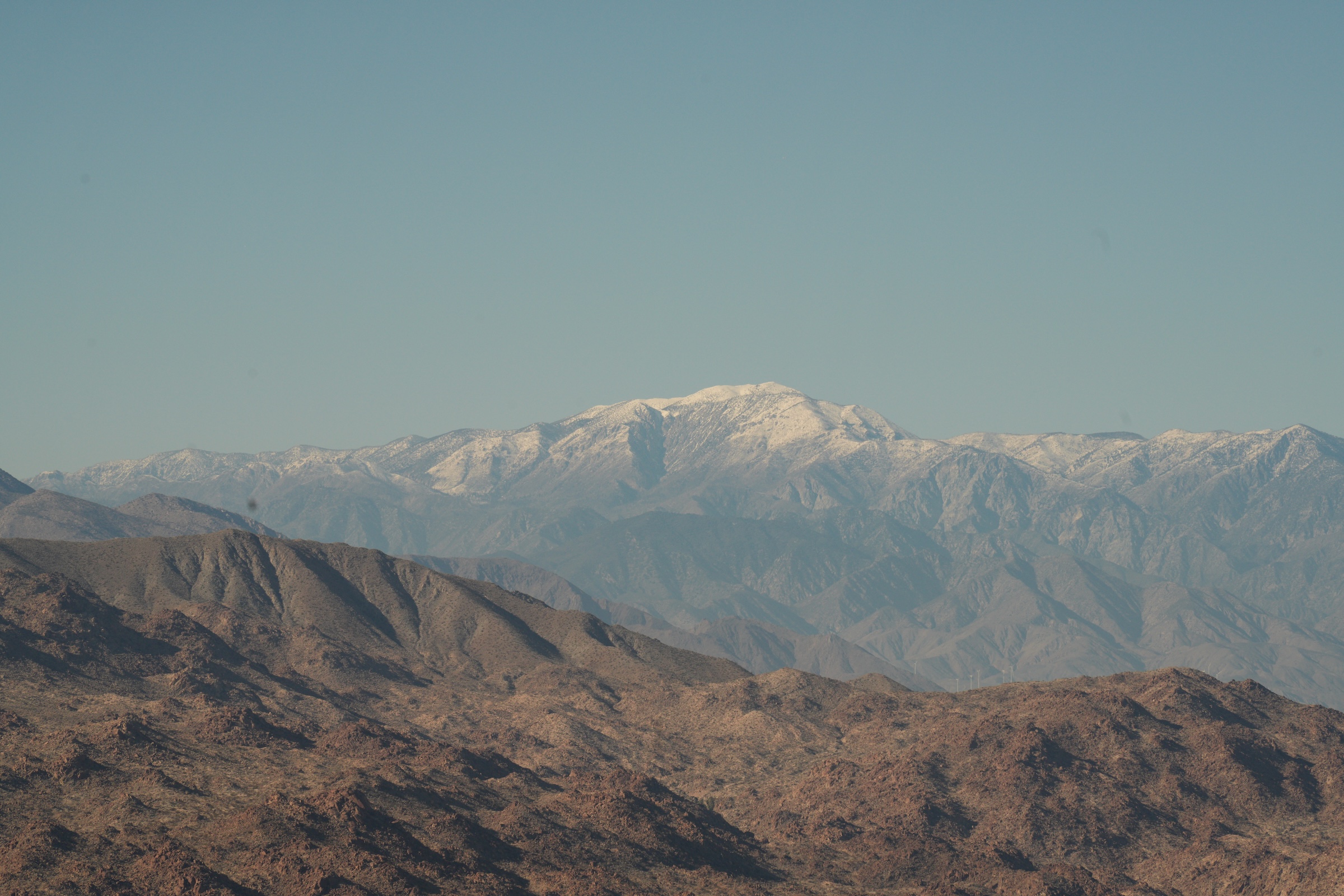
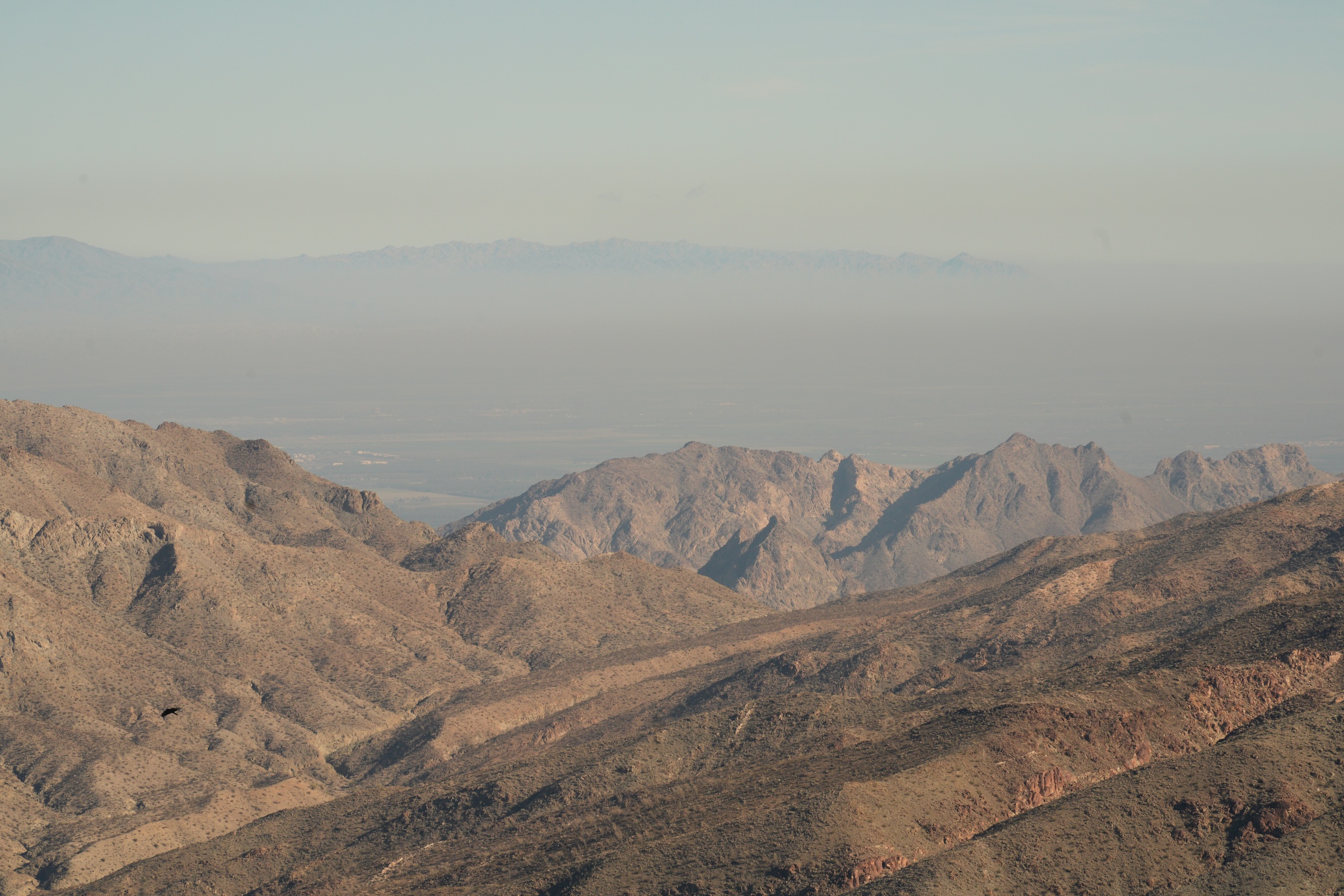
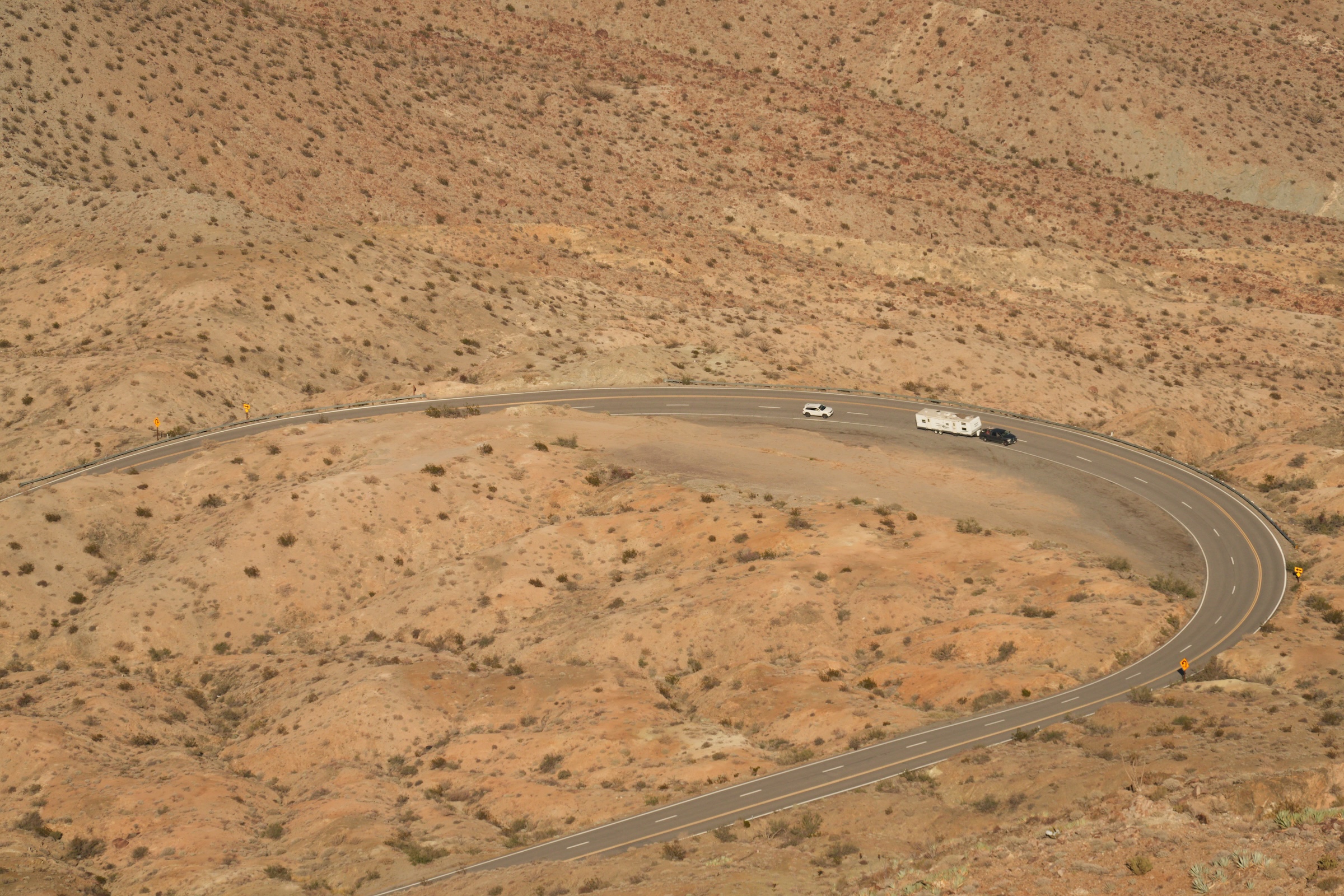
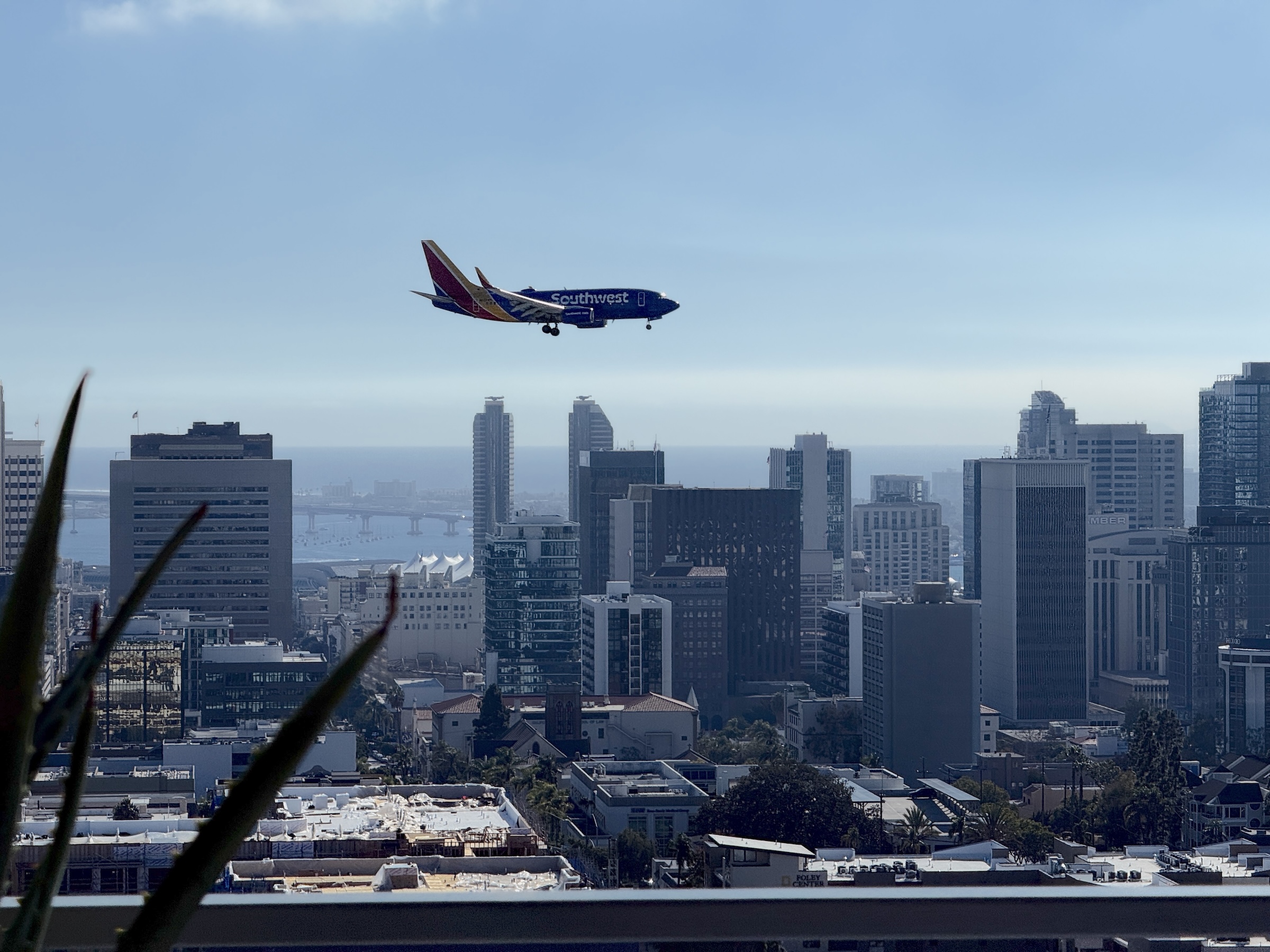
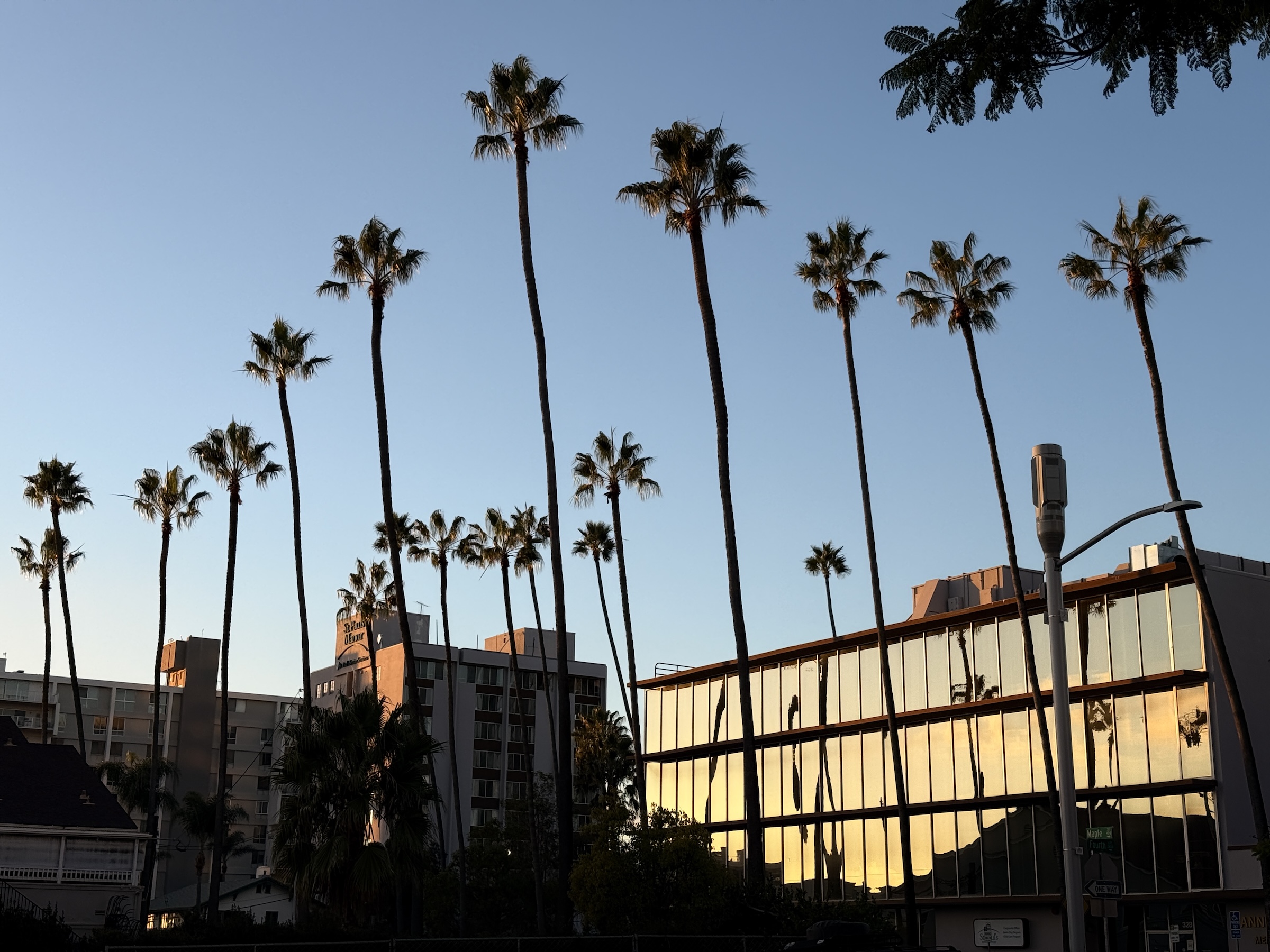
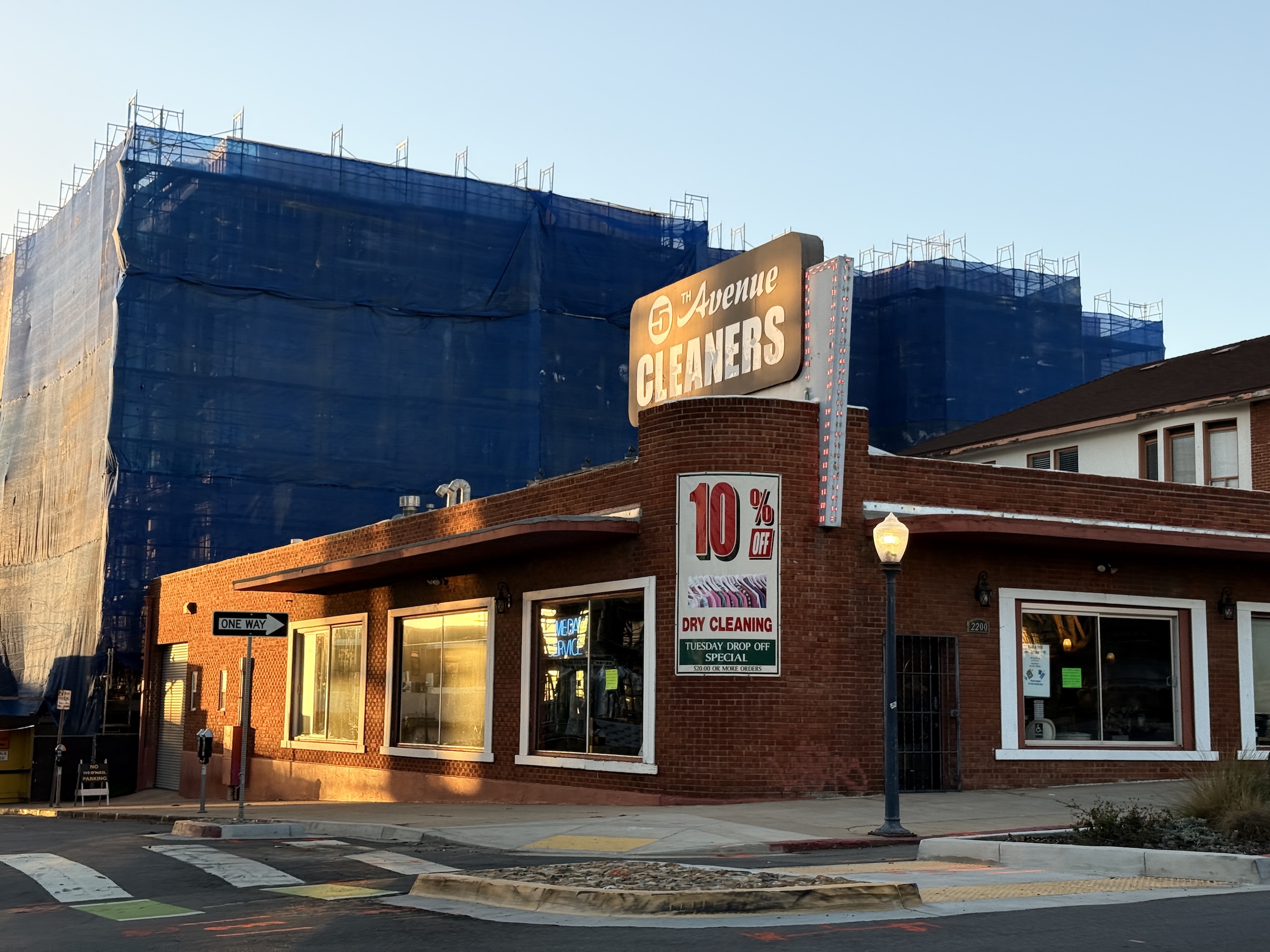
I took the scenic route from Solana Beach to Palm Springs today, driving across the Santa Rosa and San Jacinto mountains.
The first few pictures are from a turnout point a few miles after Ribbonwood (elevation 4,397′) on Highway 74.
The last ones were taken from the Coachella Valley Vista Point on Highway 74, with Palm Desert visible down below in the valley.
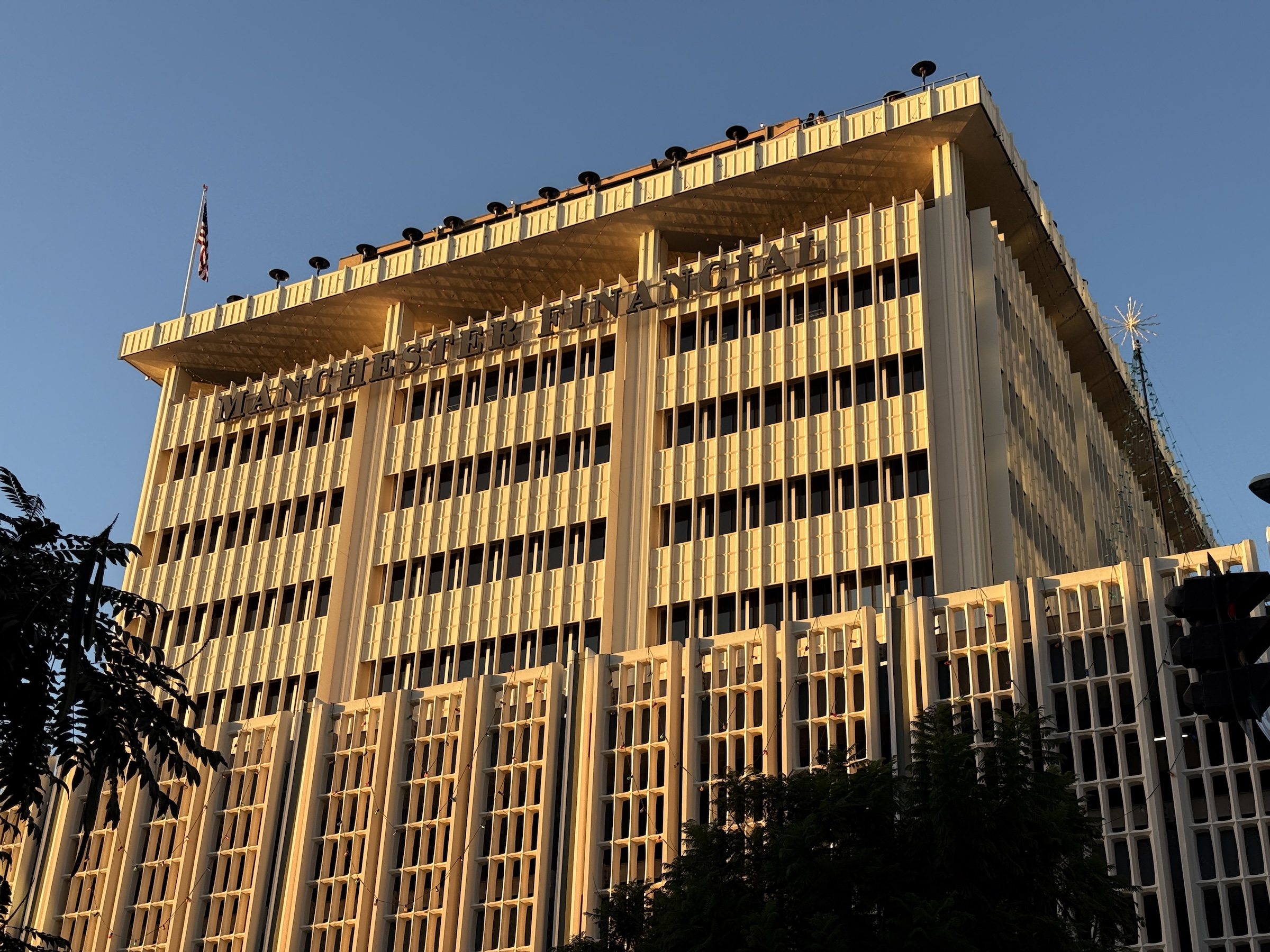
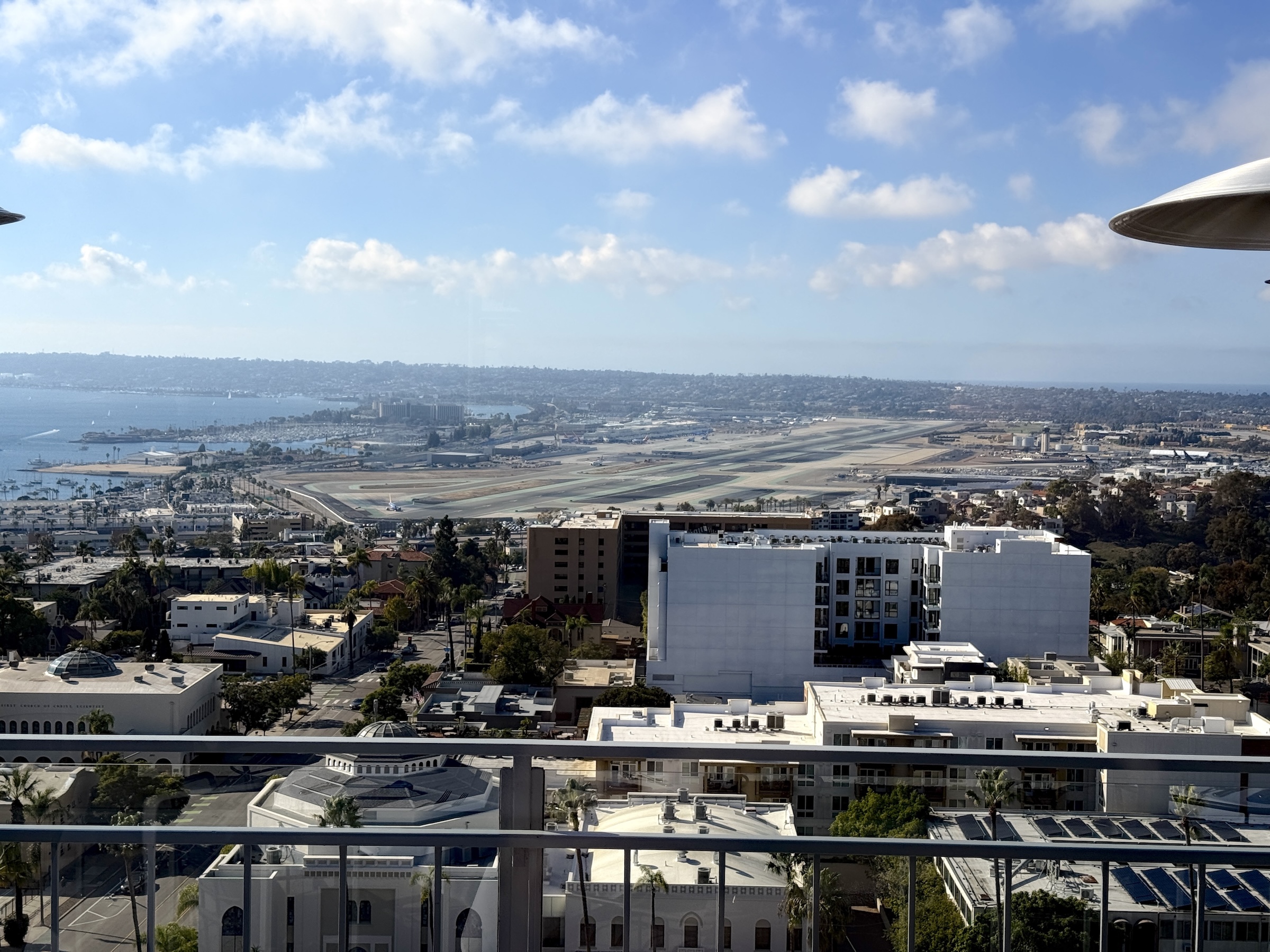
Three of us had a lovely lunch at Mister A’s restaurant in downtown San Diego. The restaurant is on the 12th floor of the Manchester Financial Building and offers great views of downtown, the Coronado Bridge and even the runways at San Diego International airport.
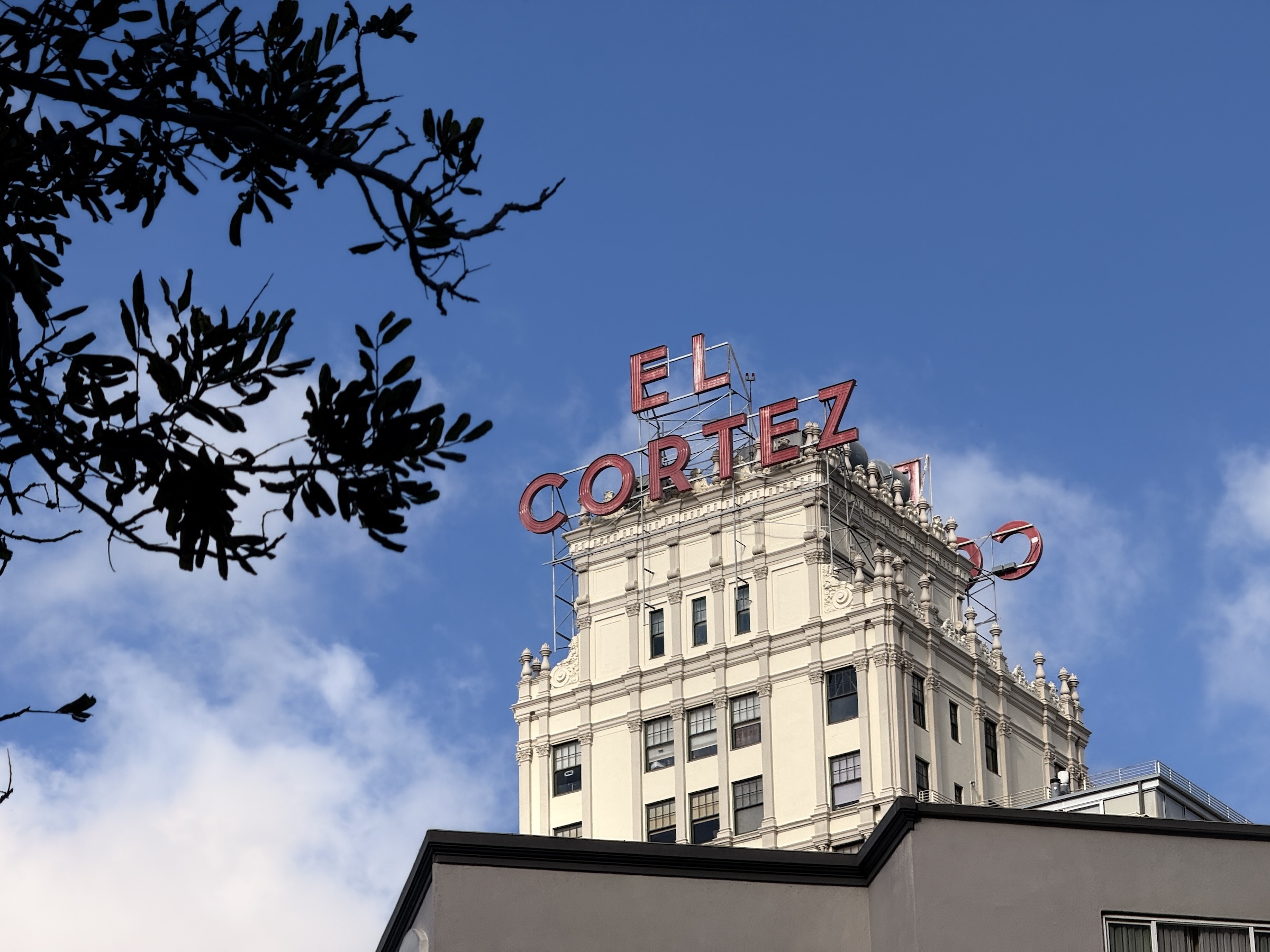
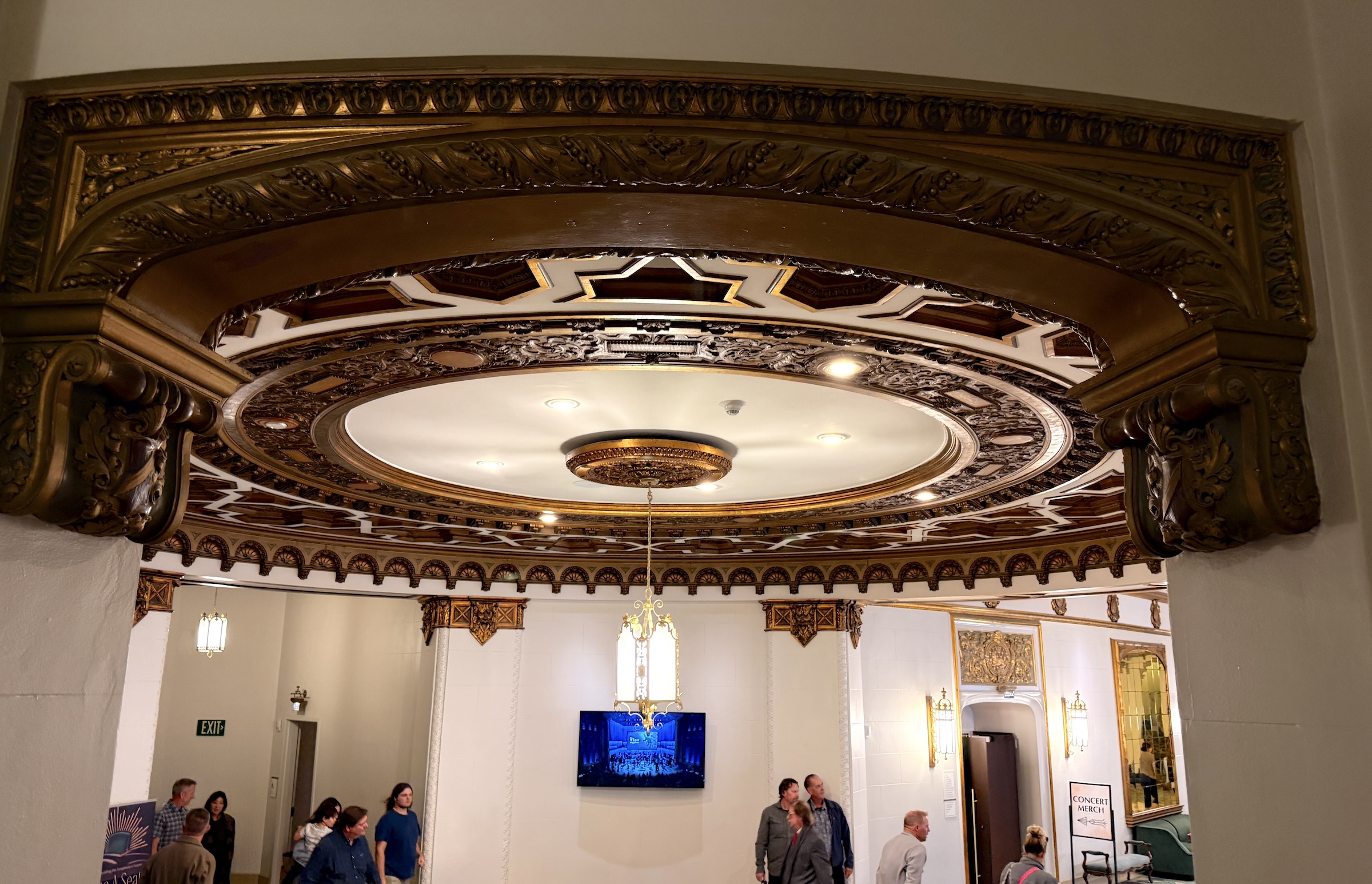
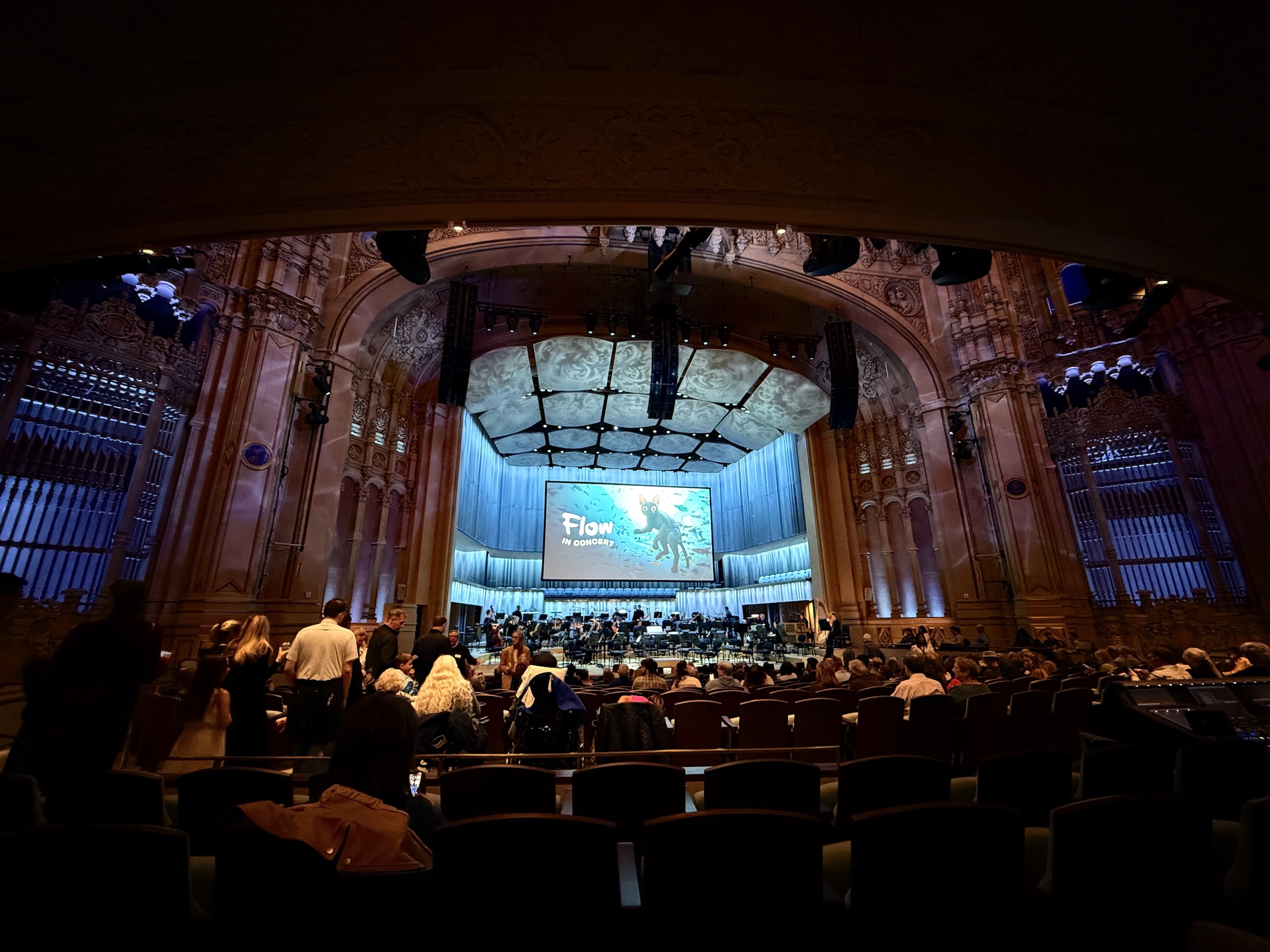
After lunch* we made our way down 5th Avenue to Jacobs Music Center to attend a live performance by the San Diego Symphony of the music that was composed for the animated movie Flow (released 2024).
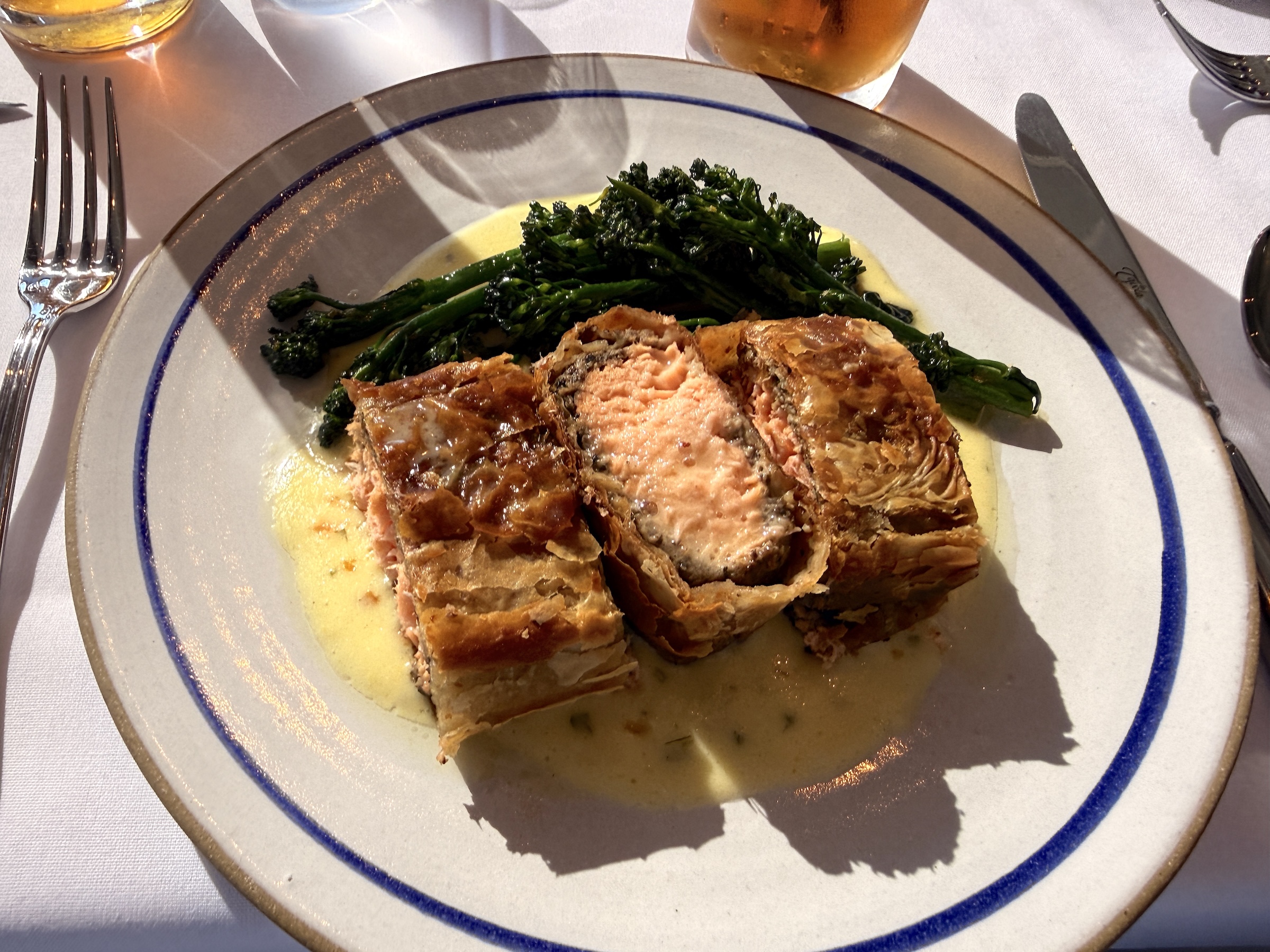
*Mine was a king salmon ‘Wellington’ (shown below).
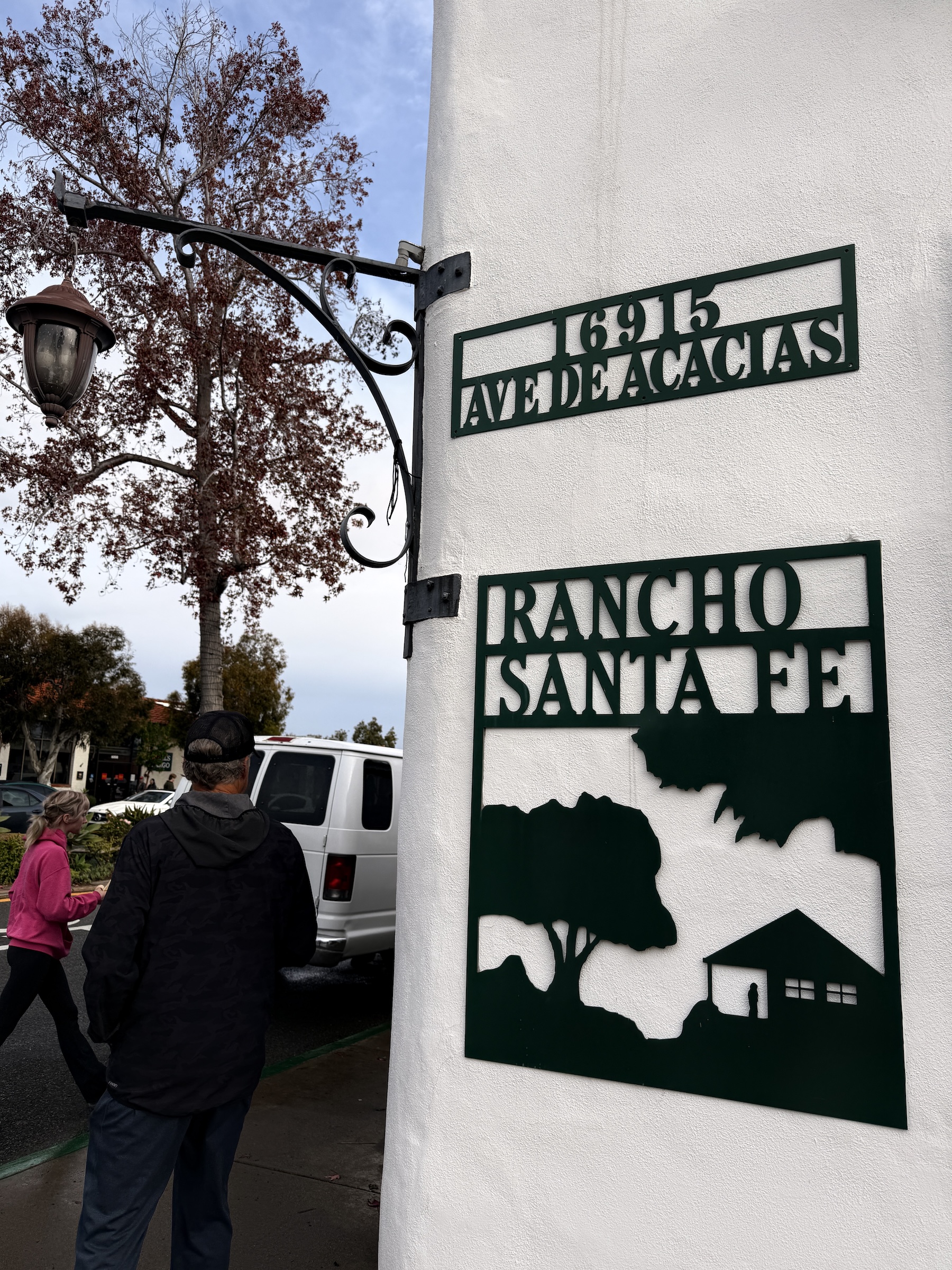
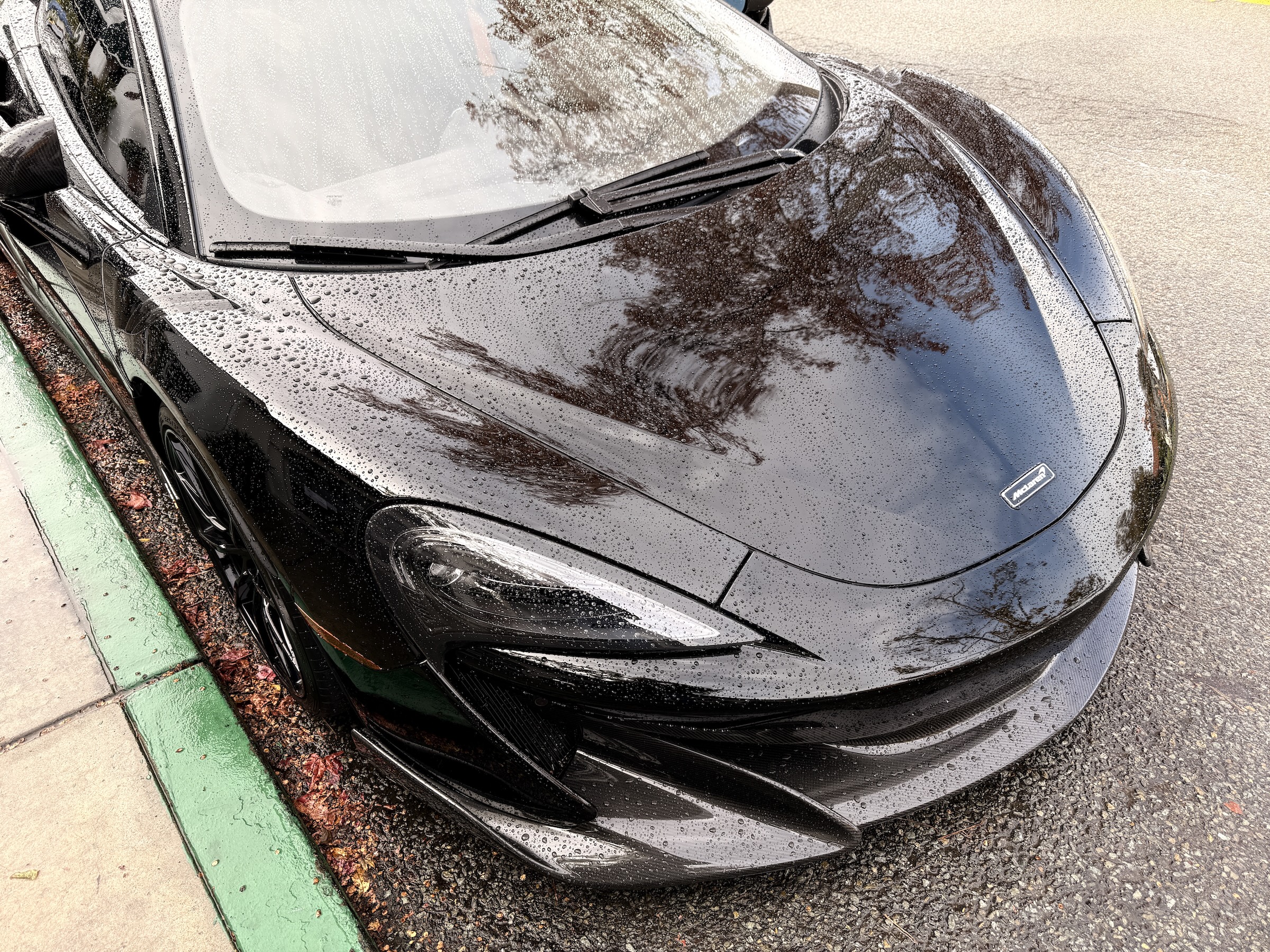
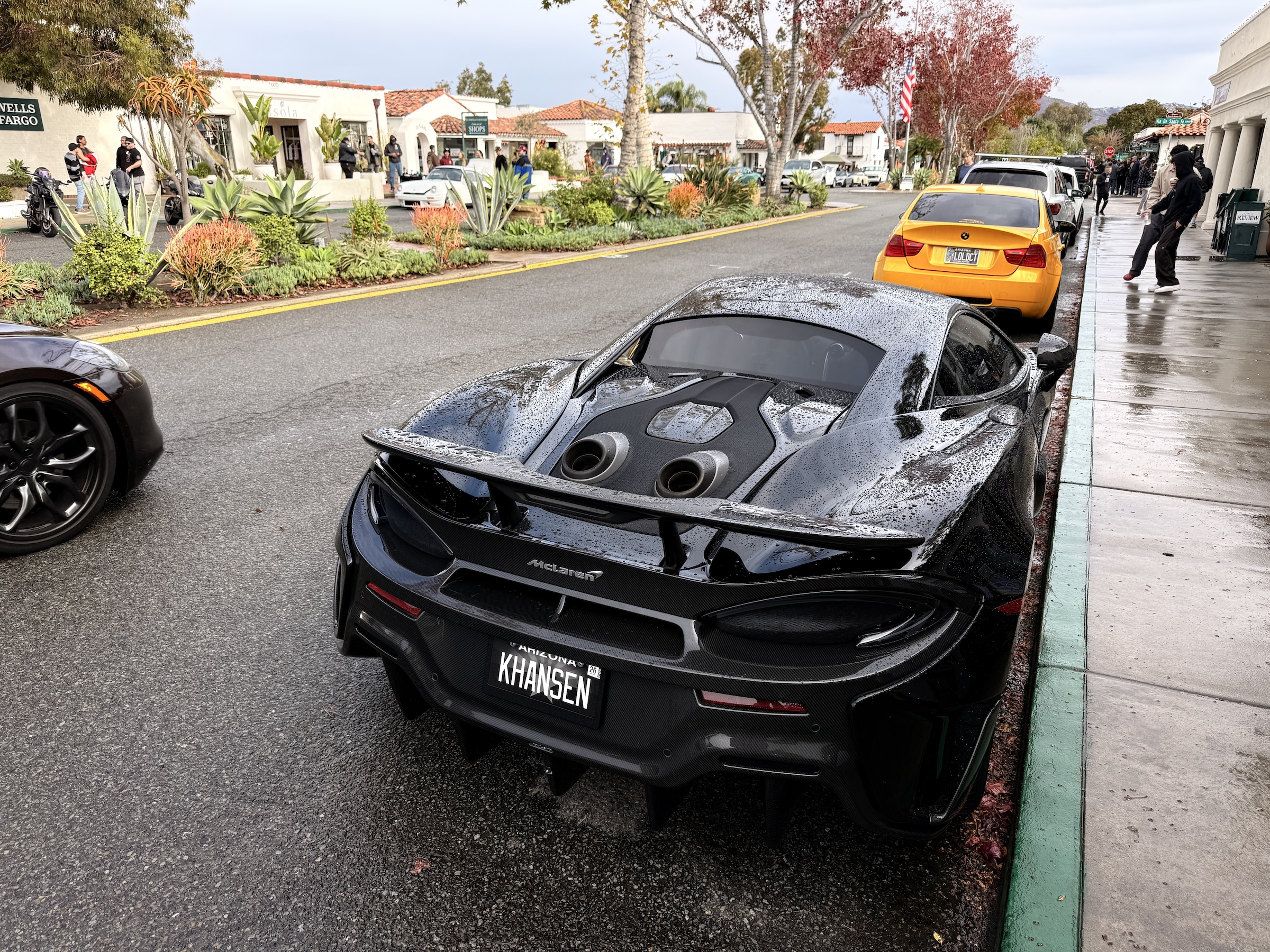
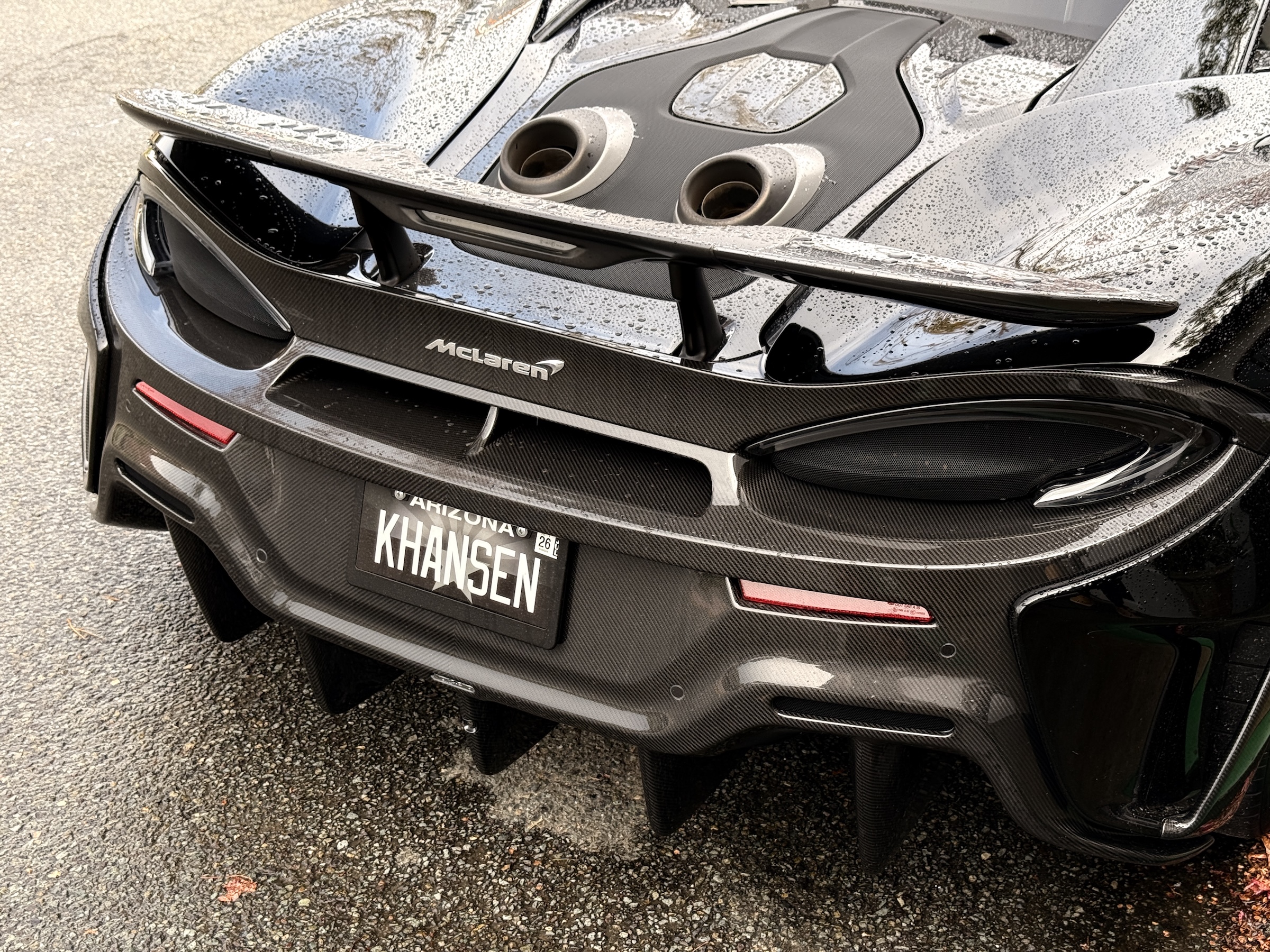
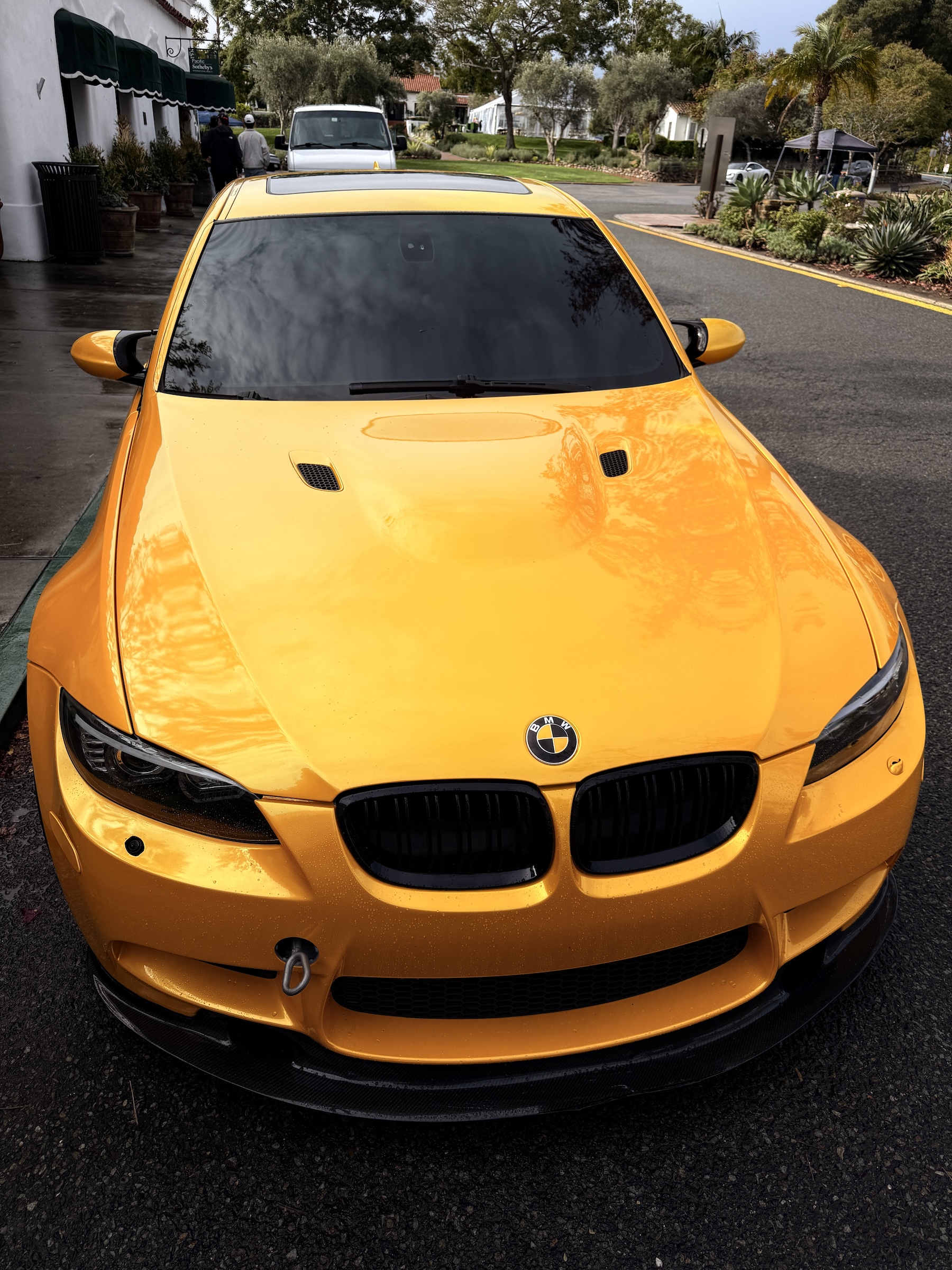
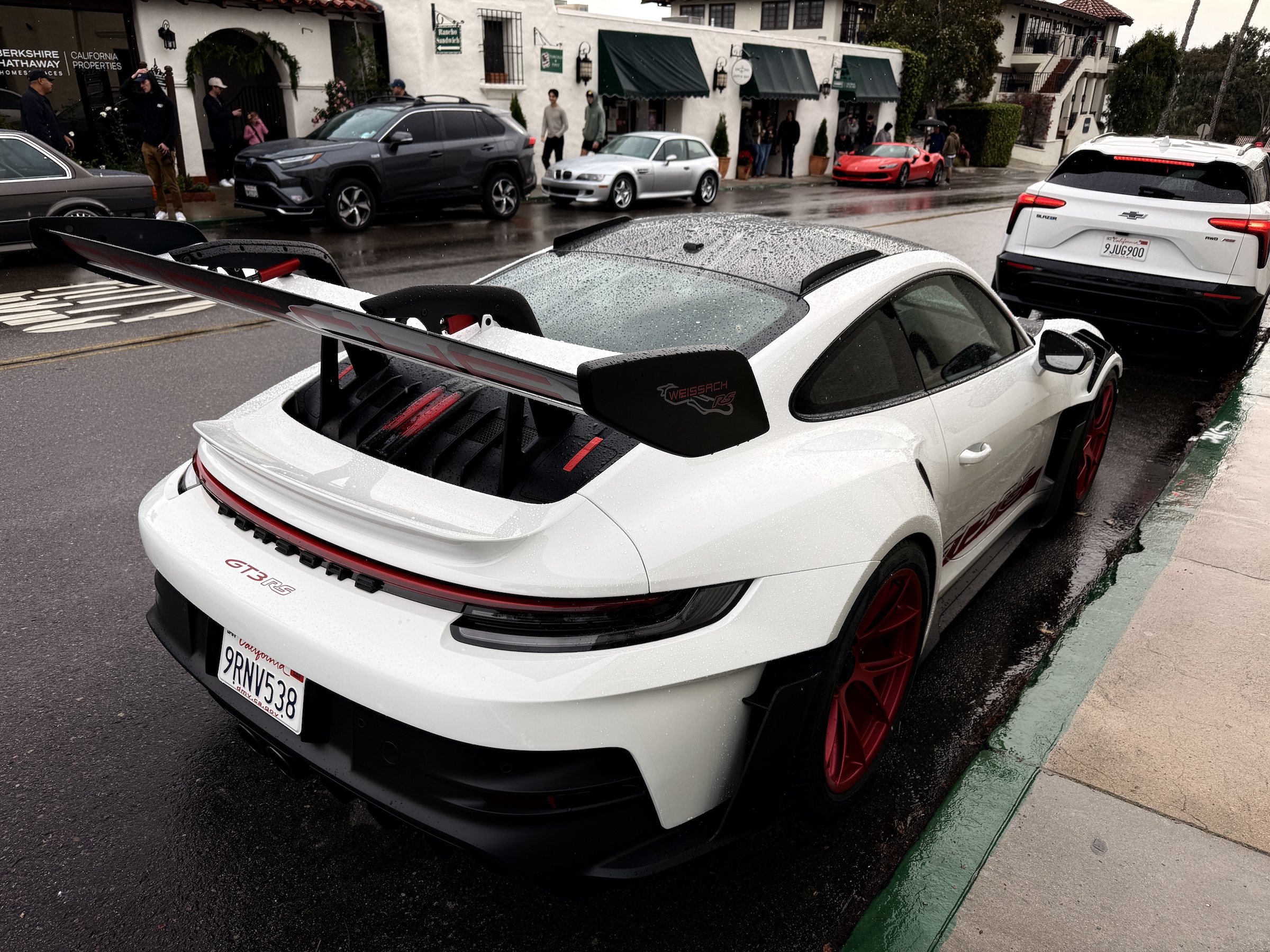
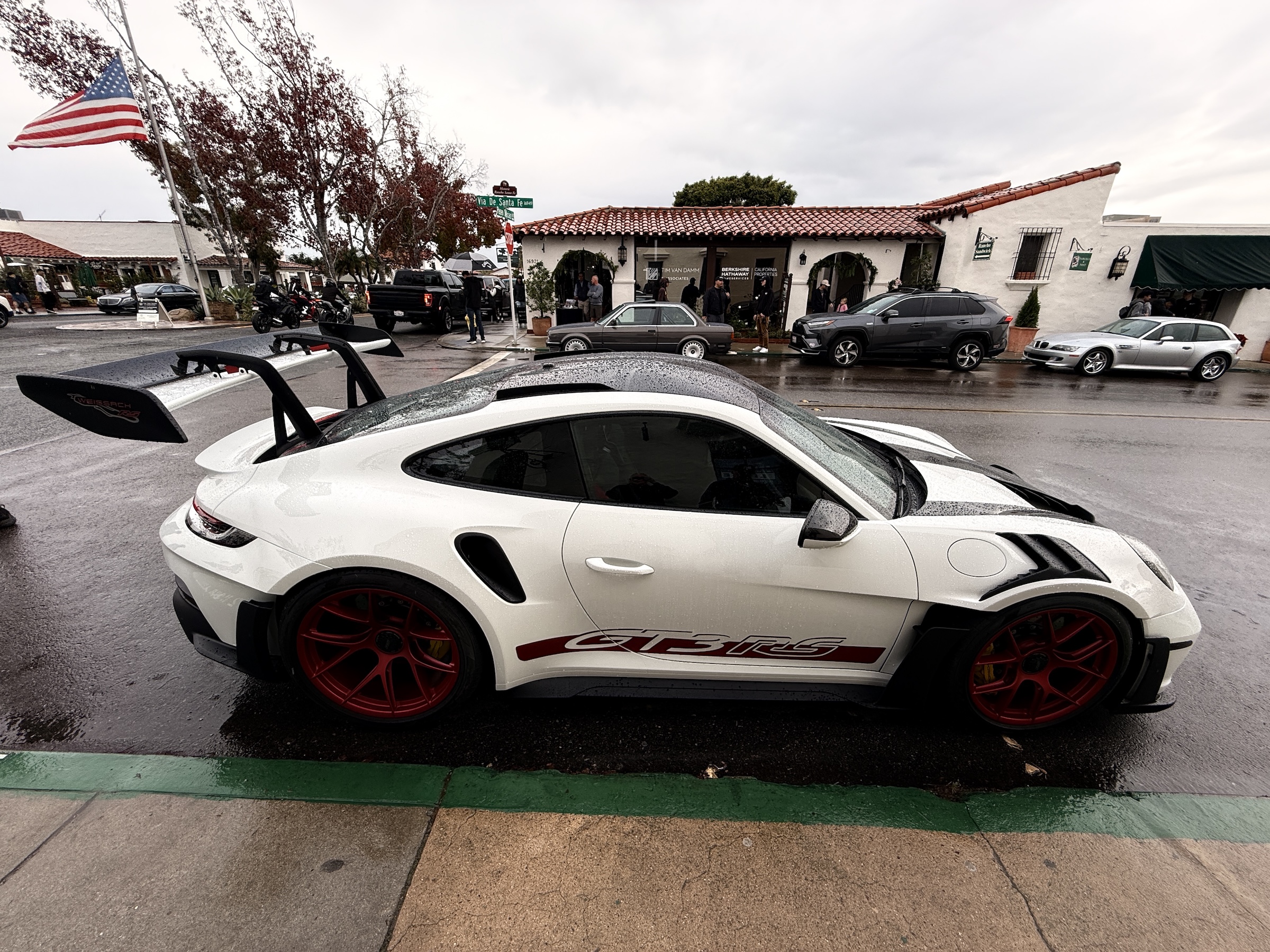
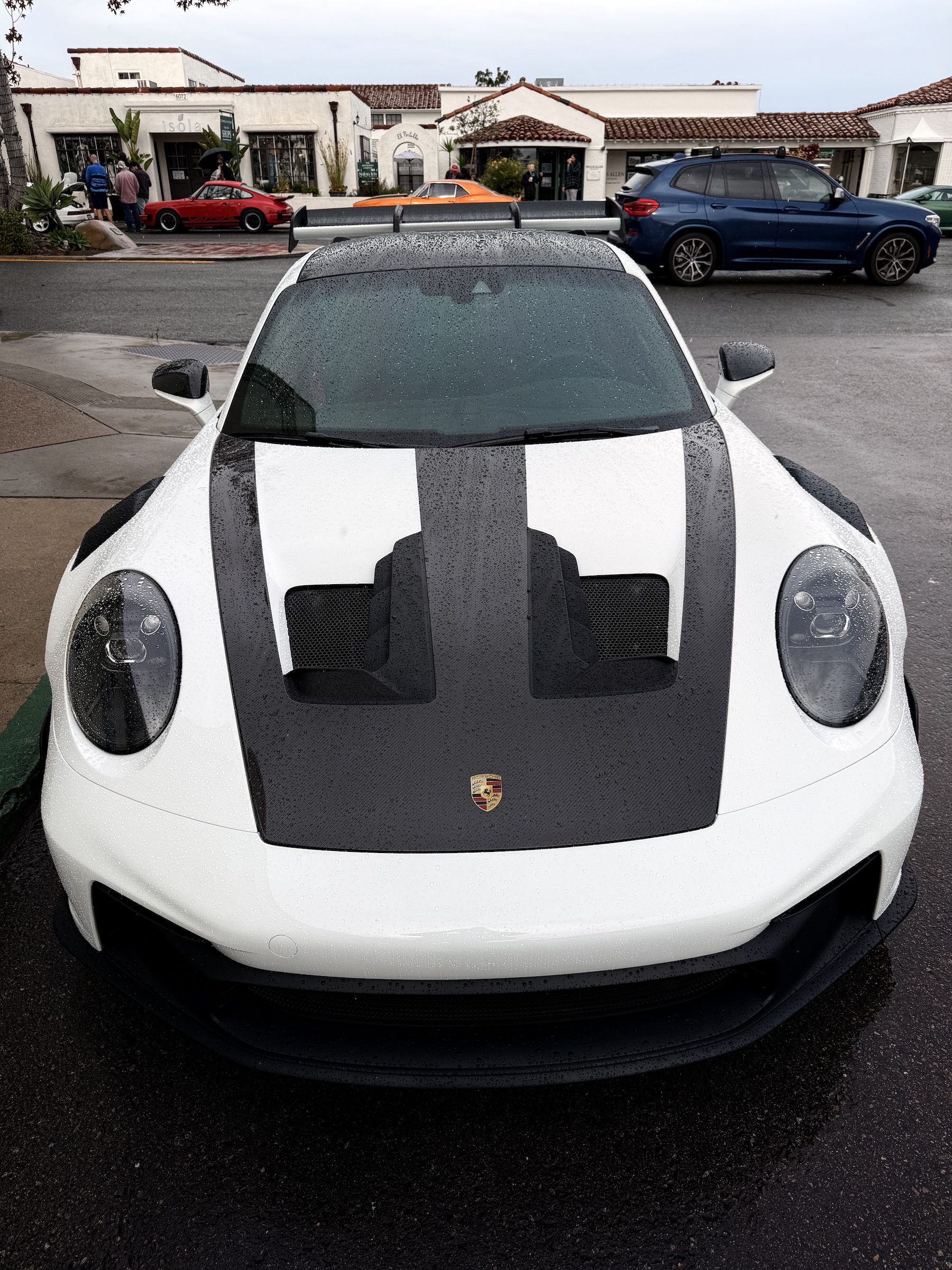
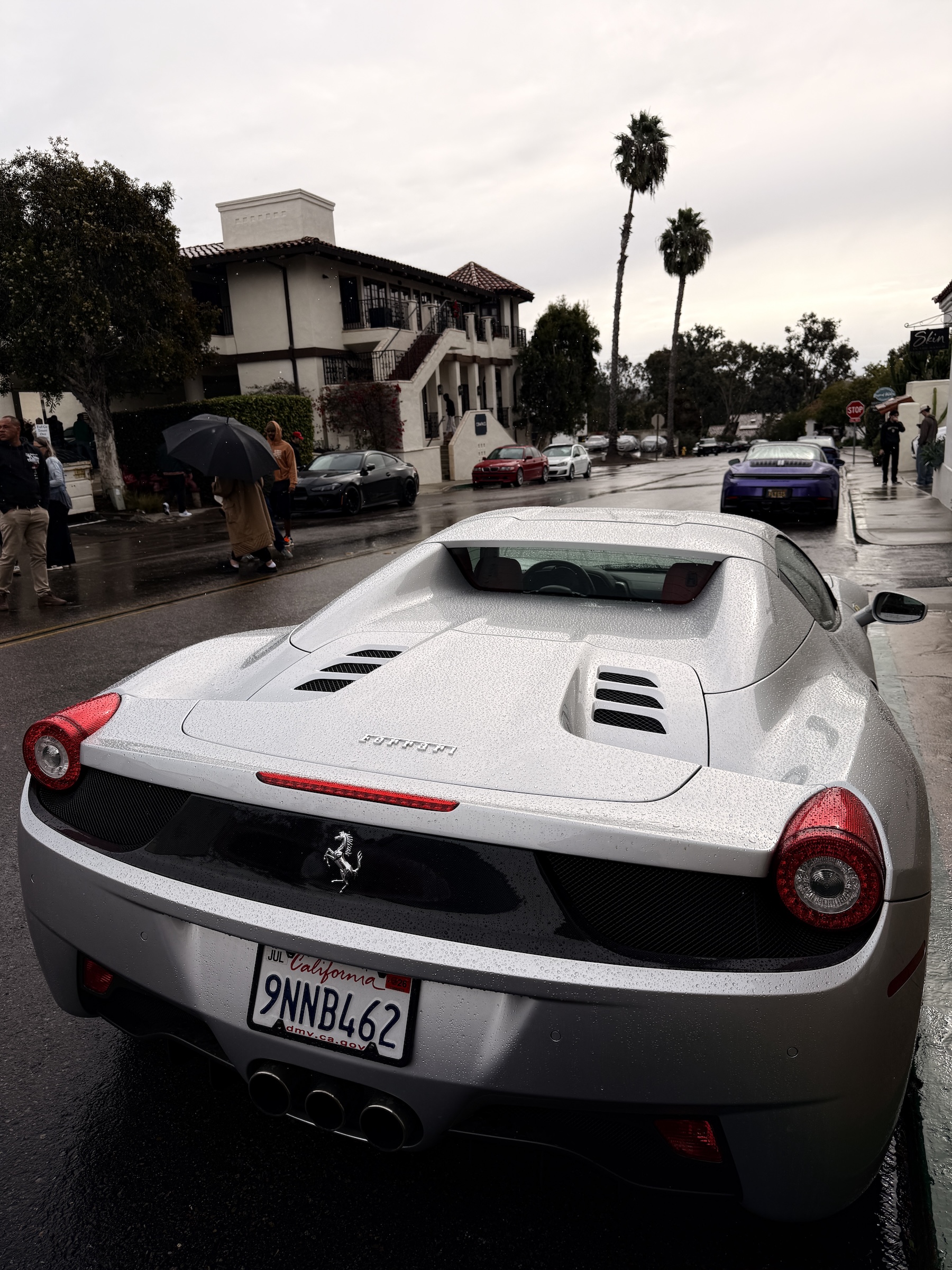
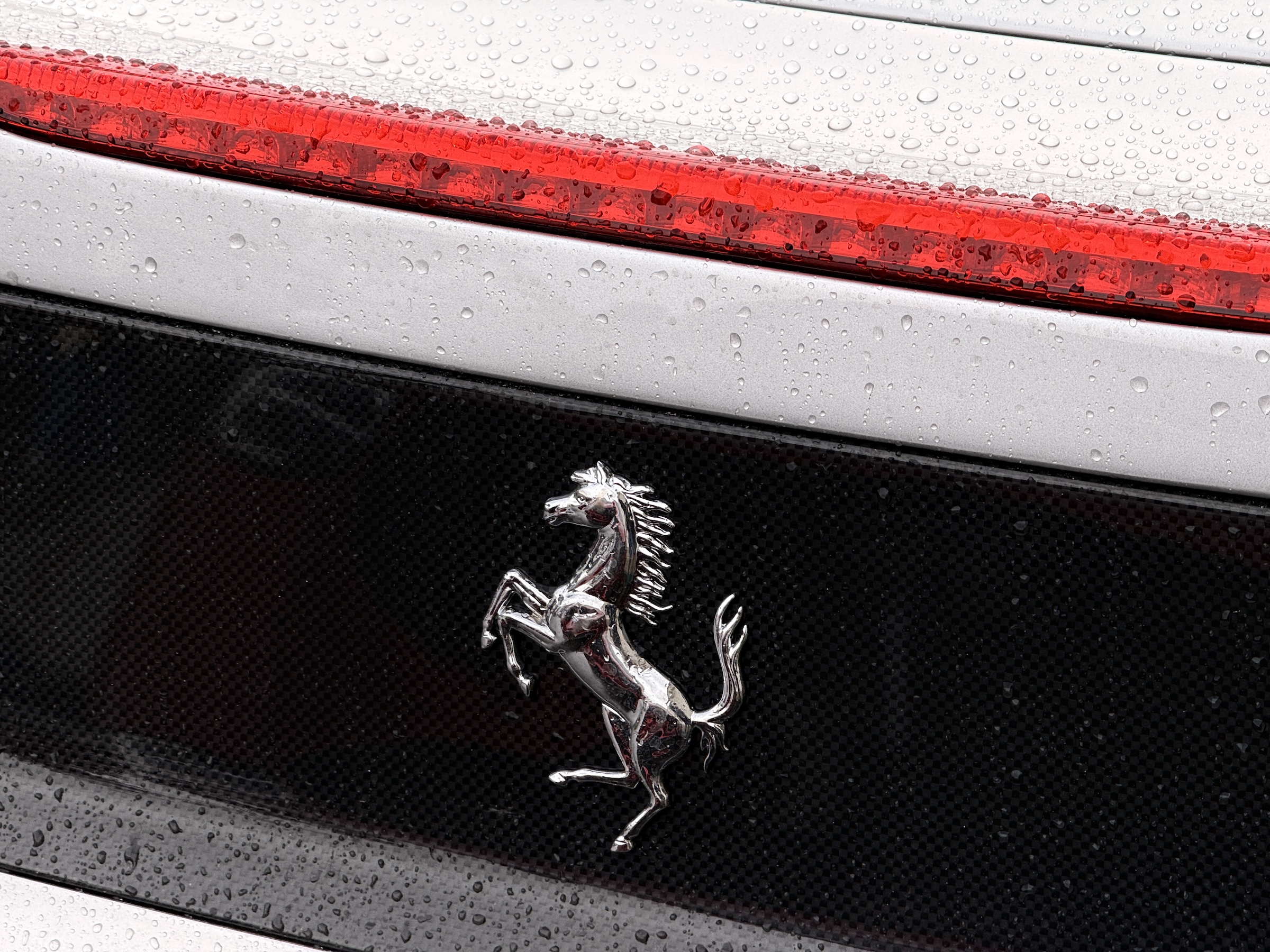
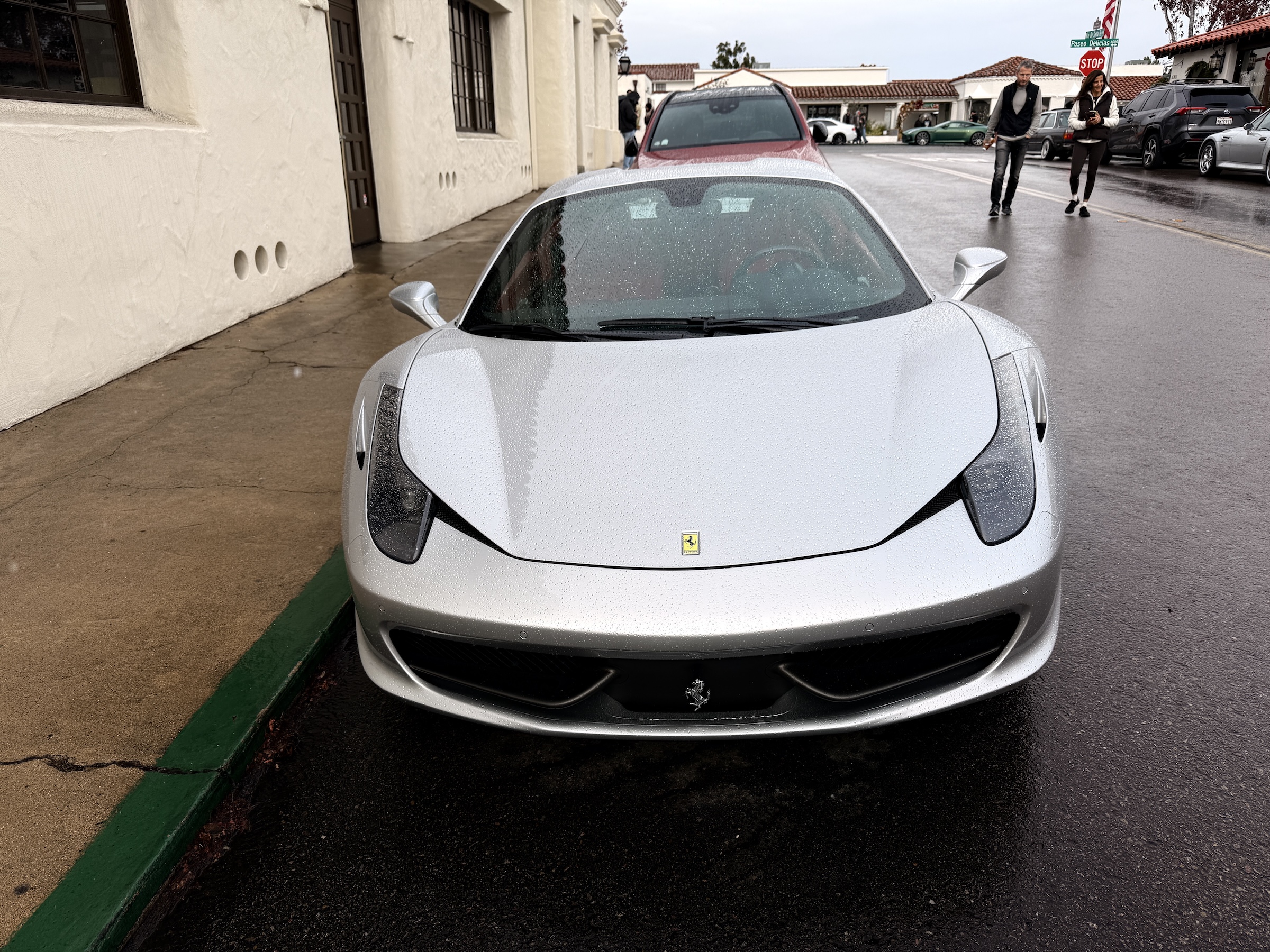
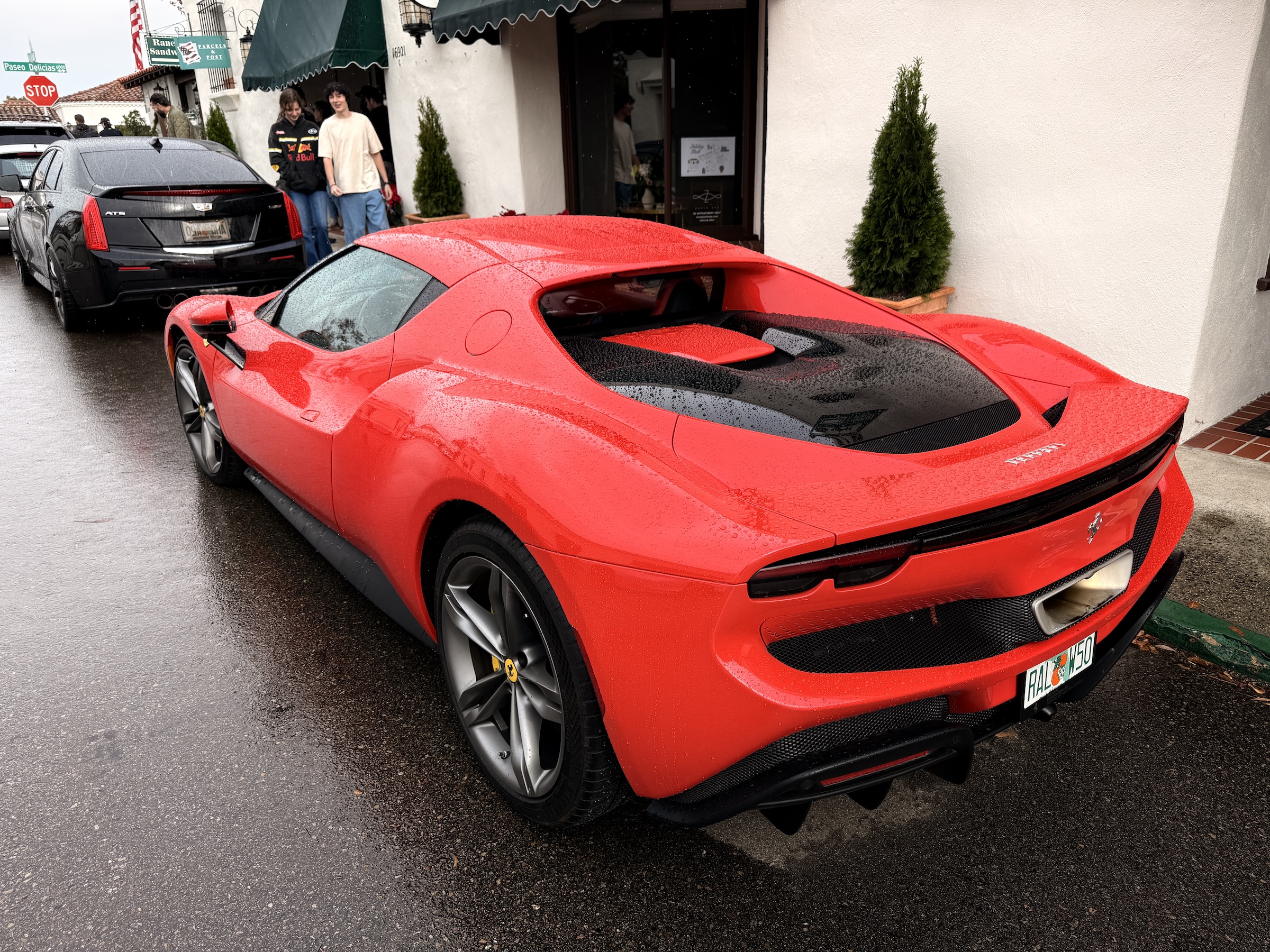
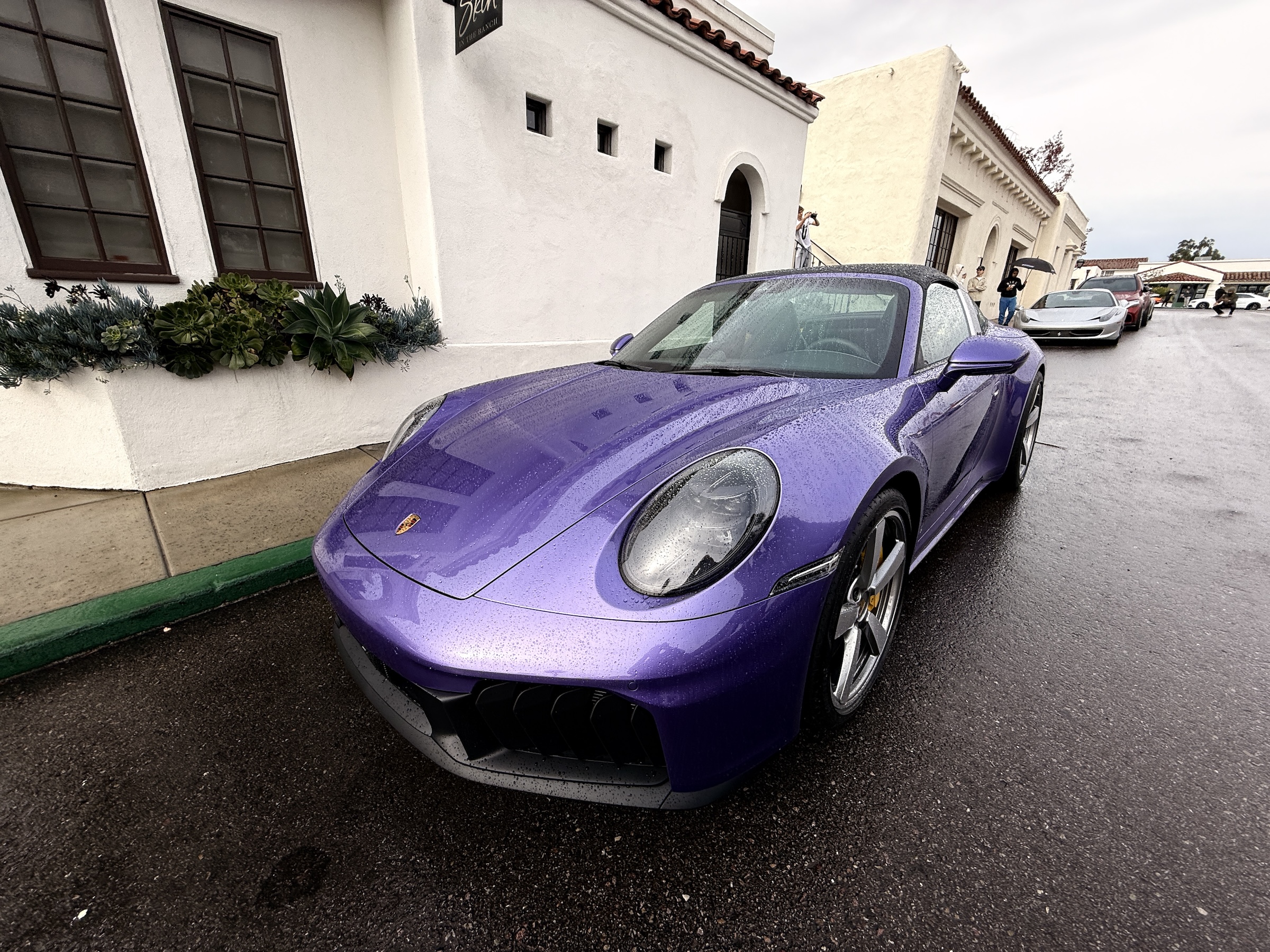
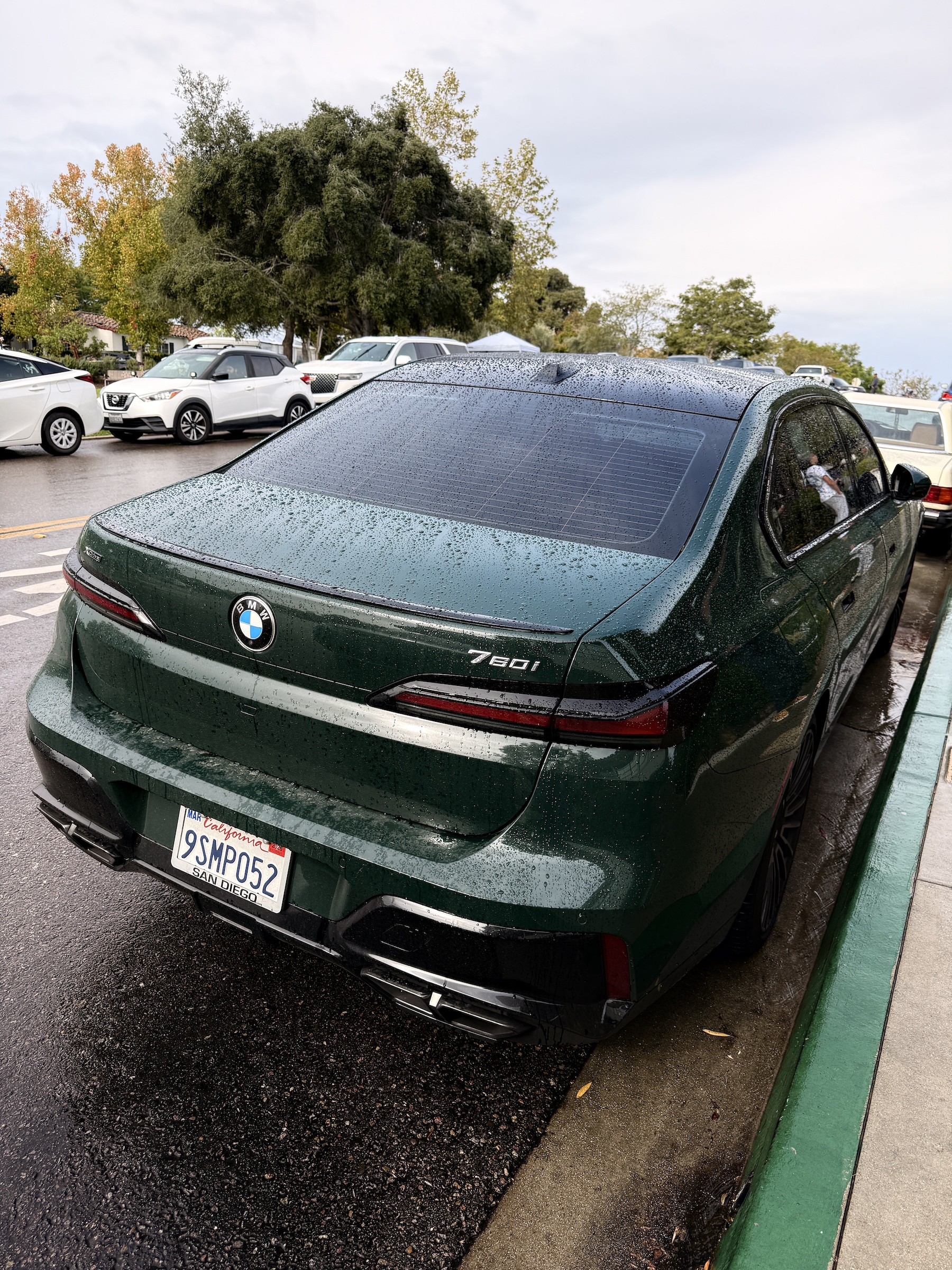
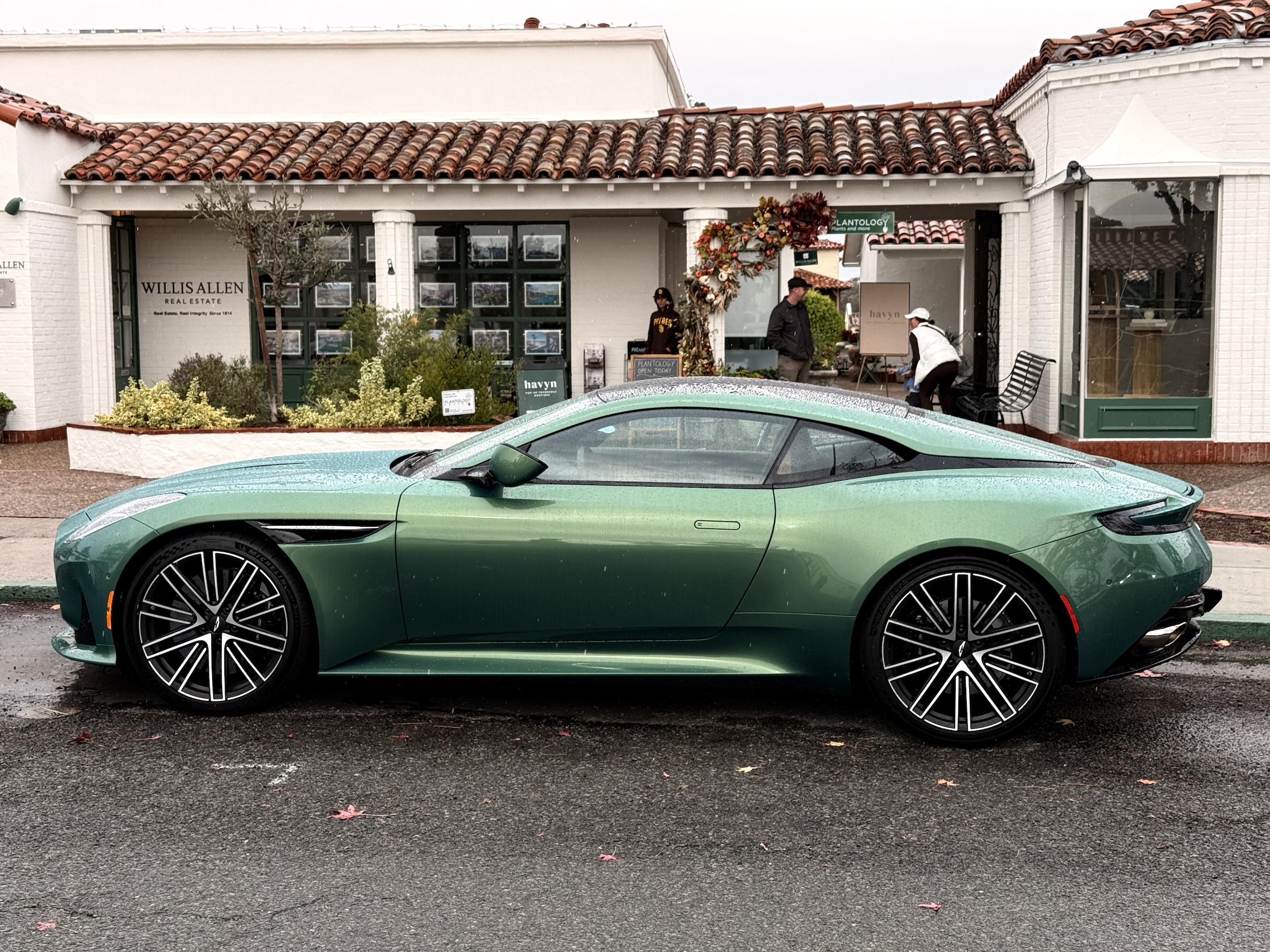
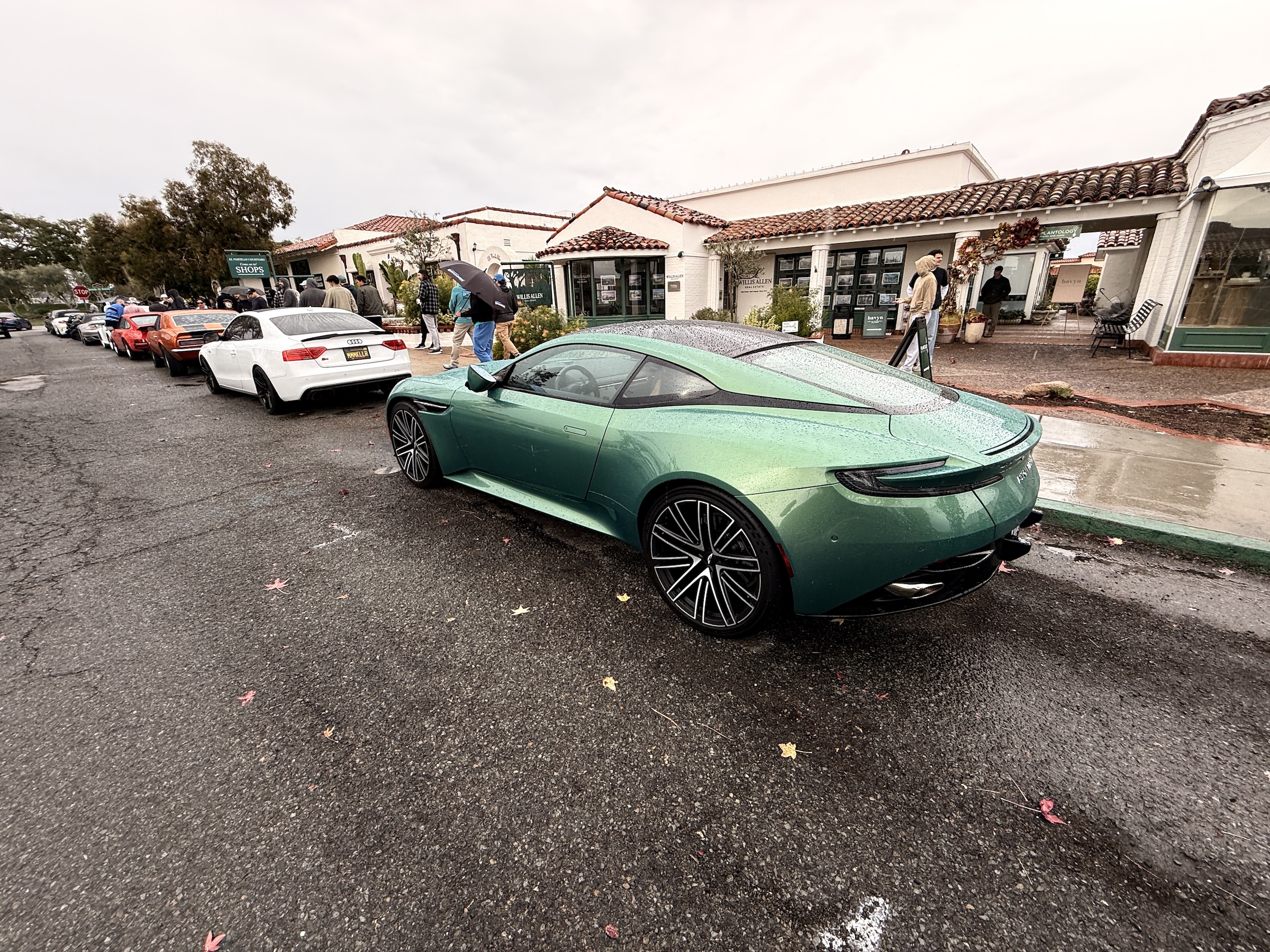
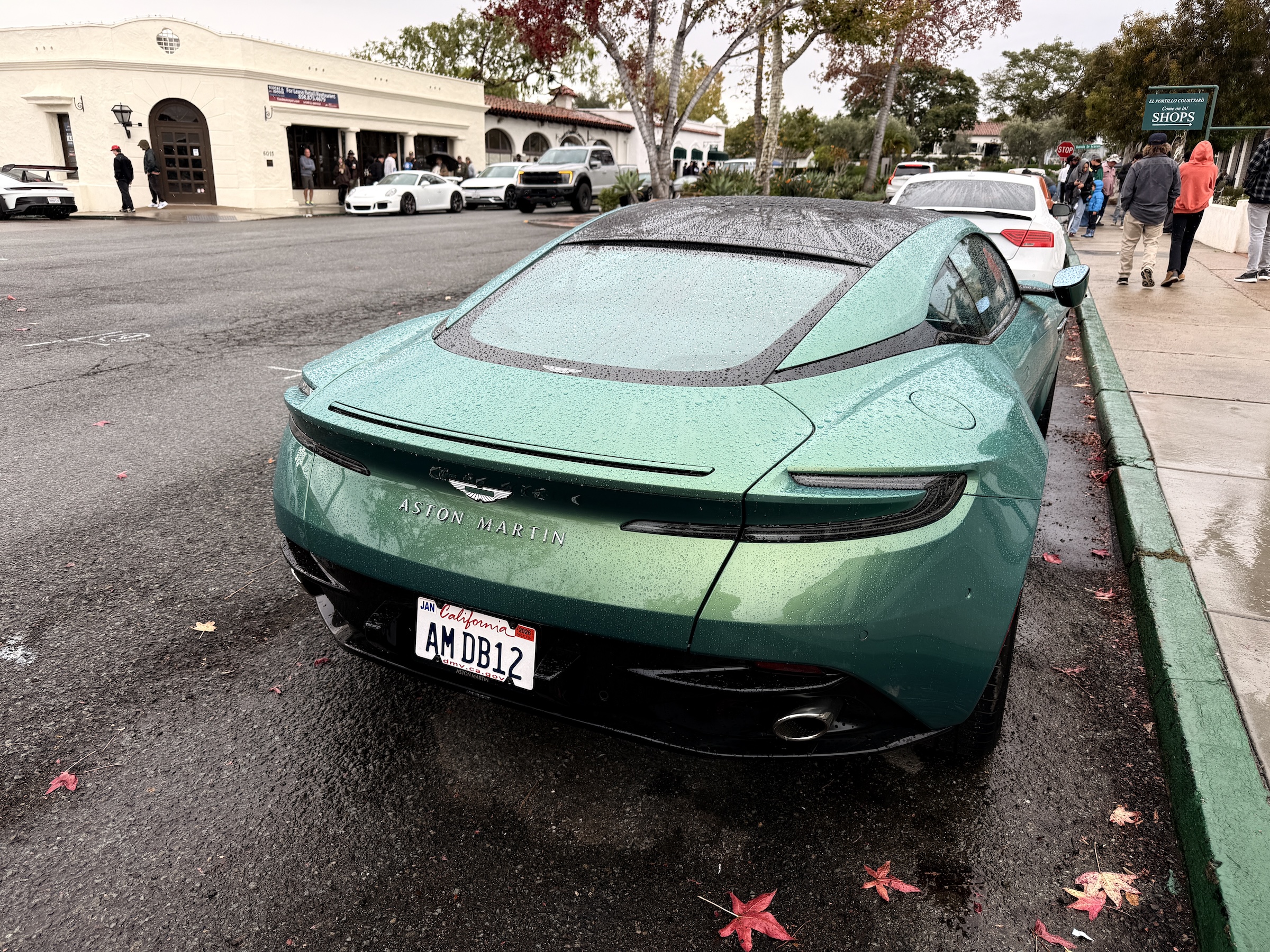
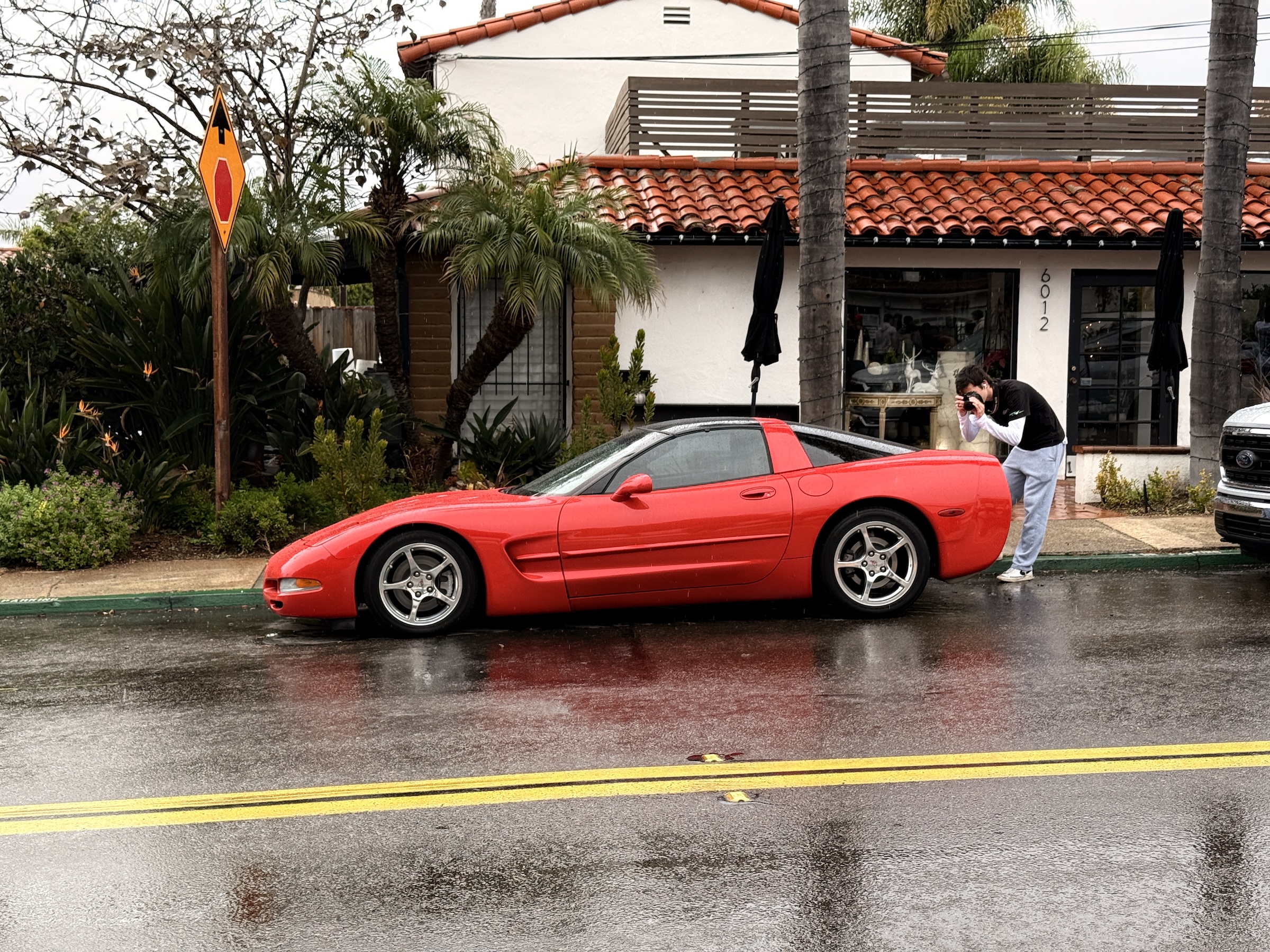
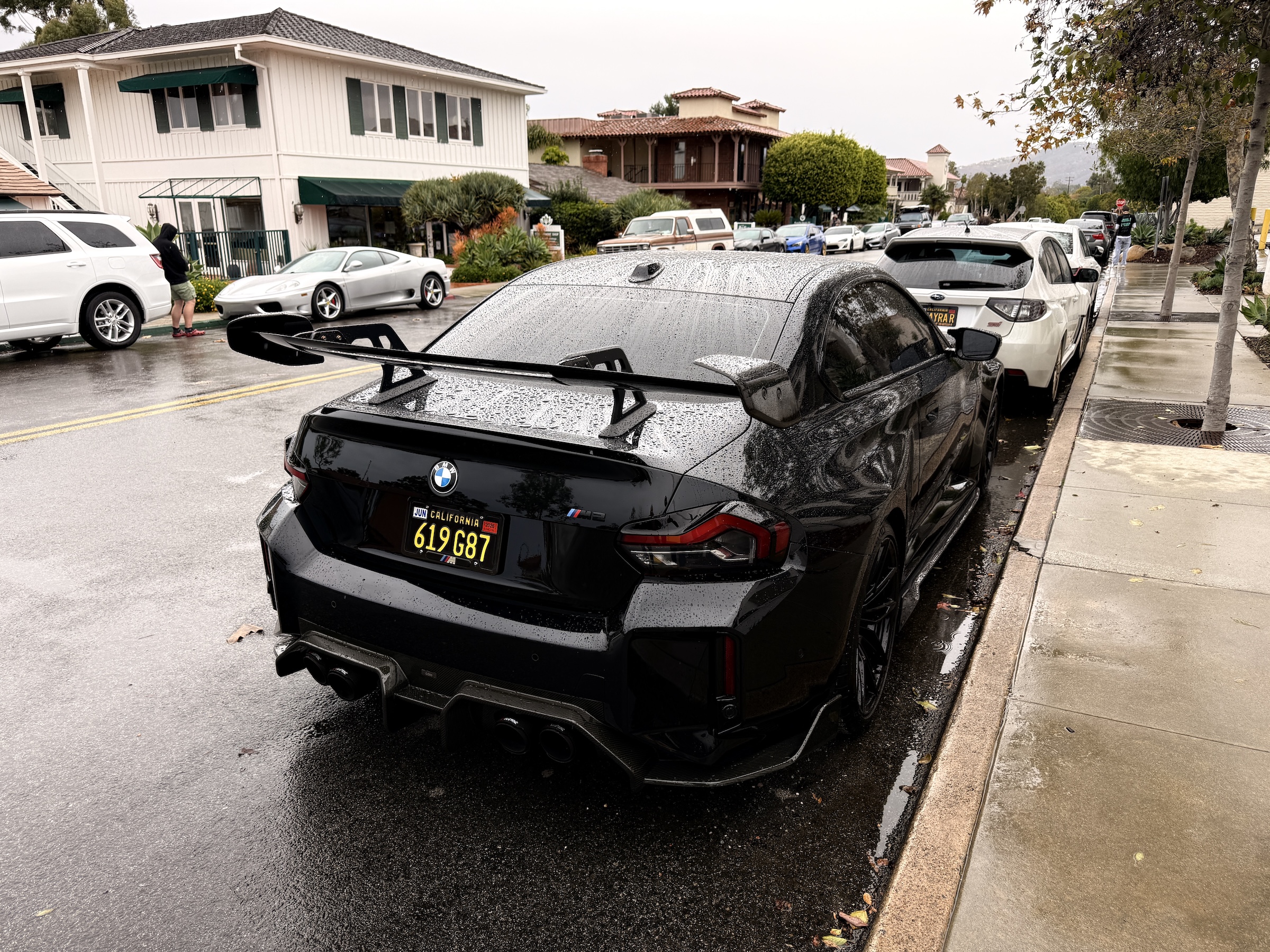
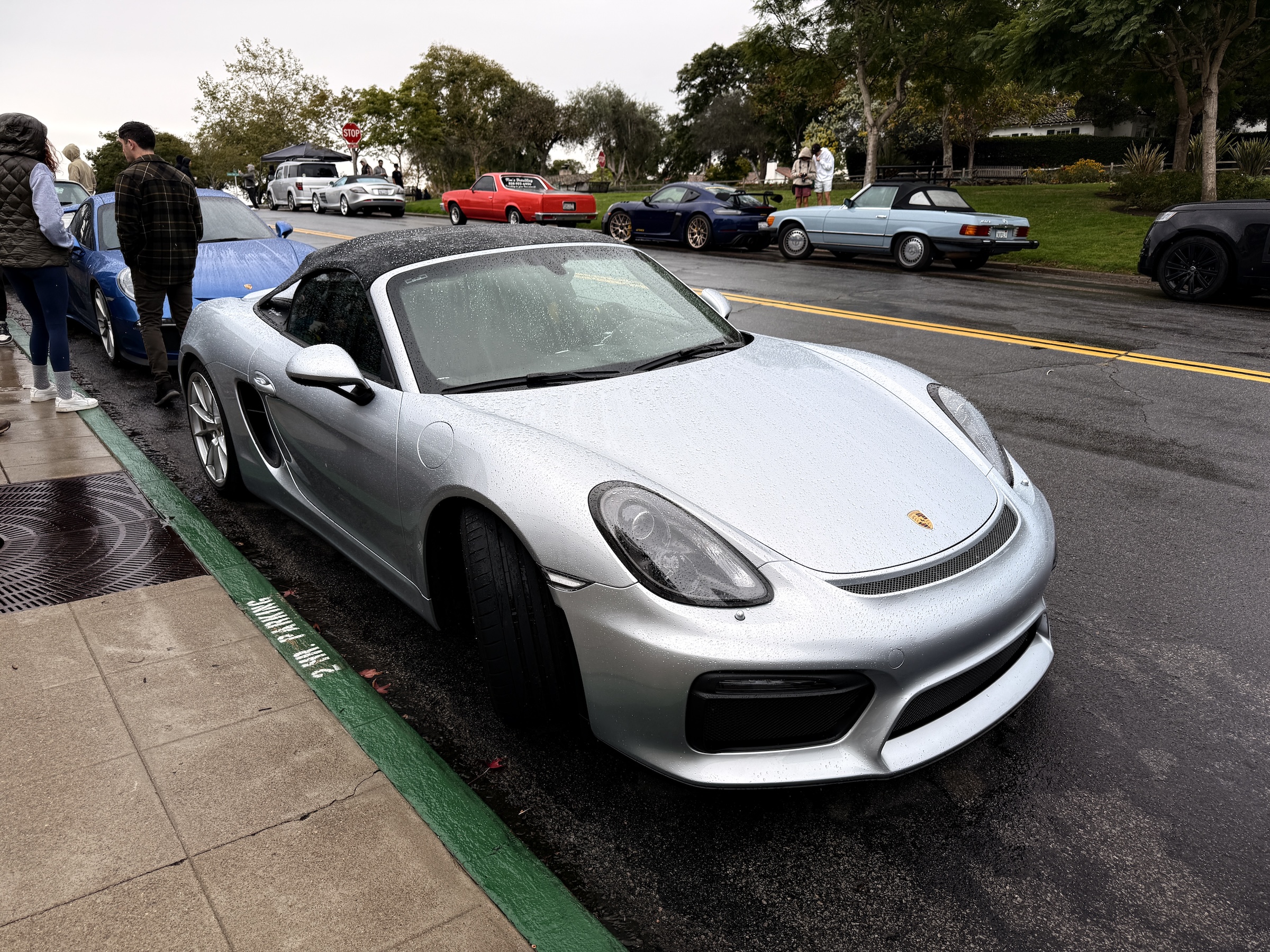
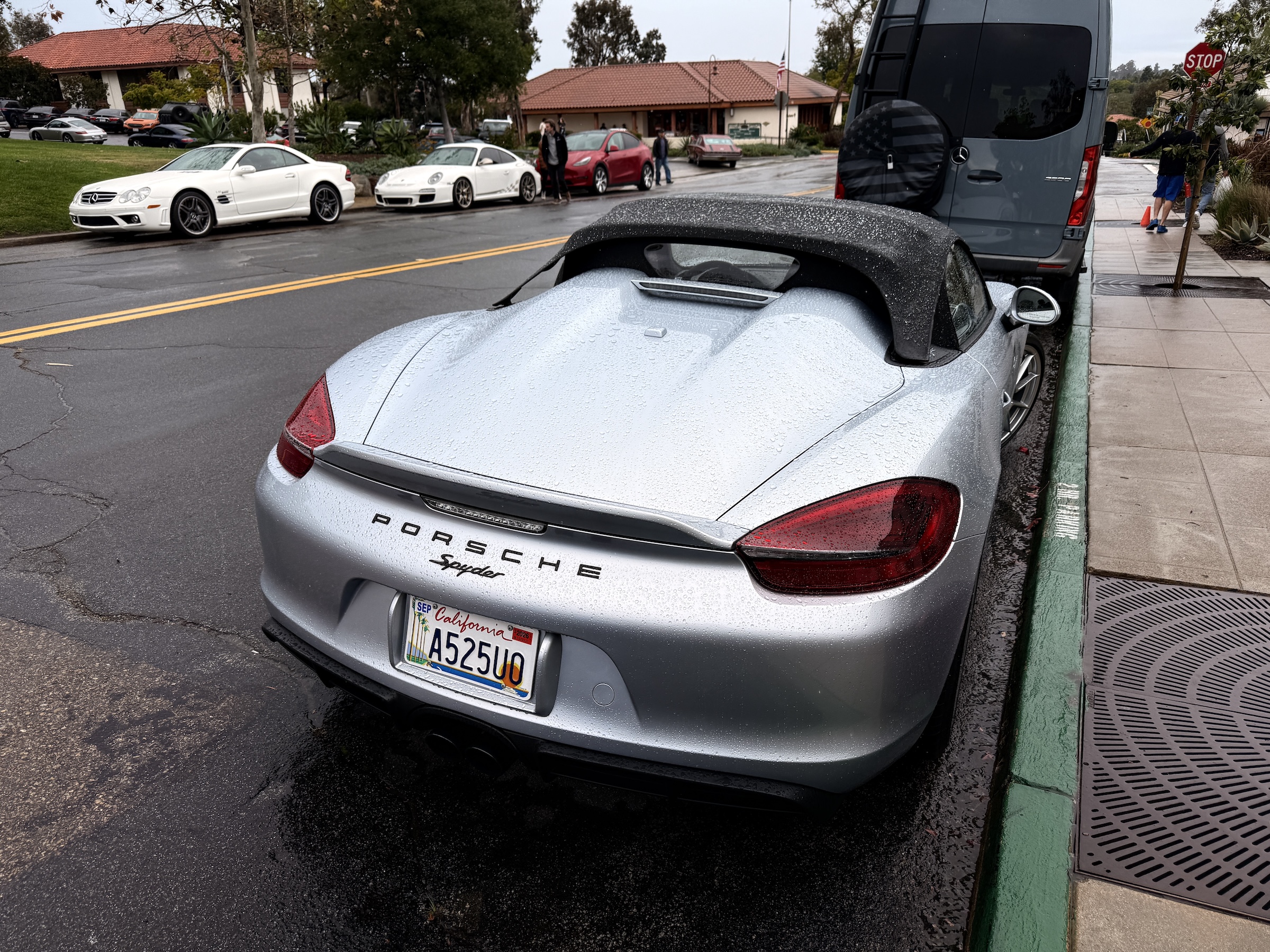
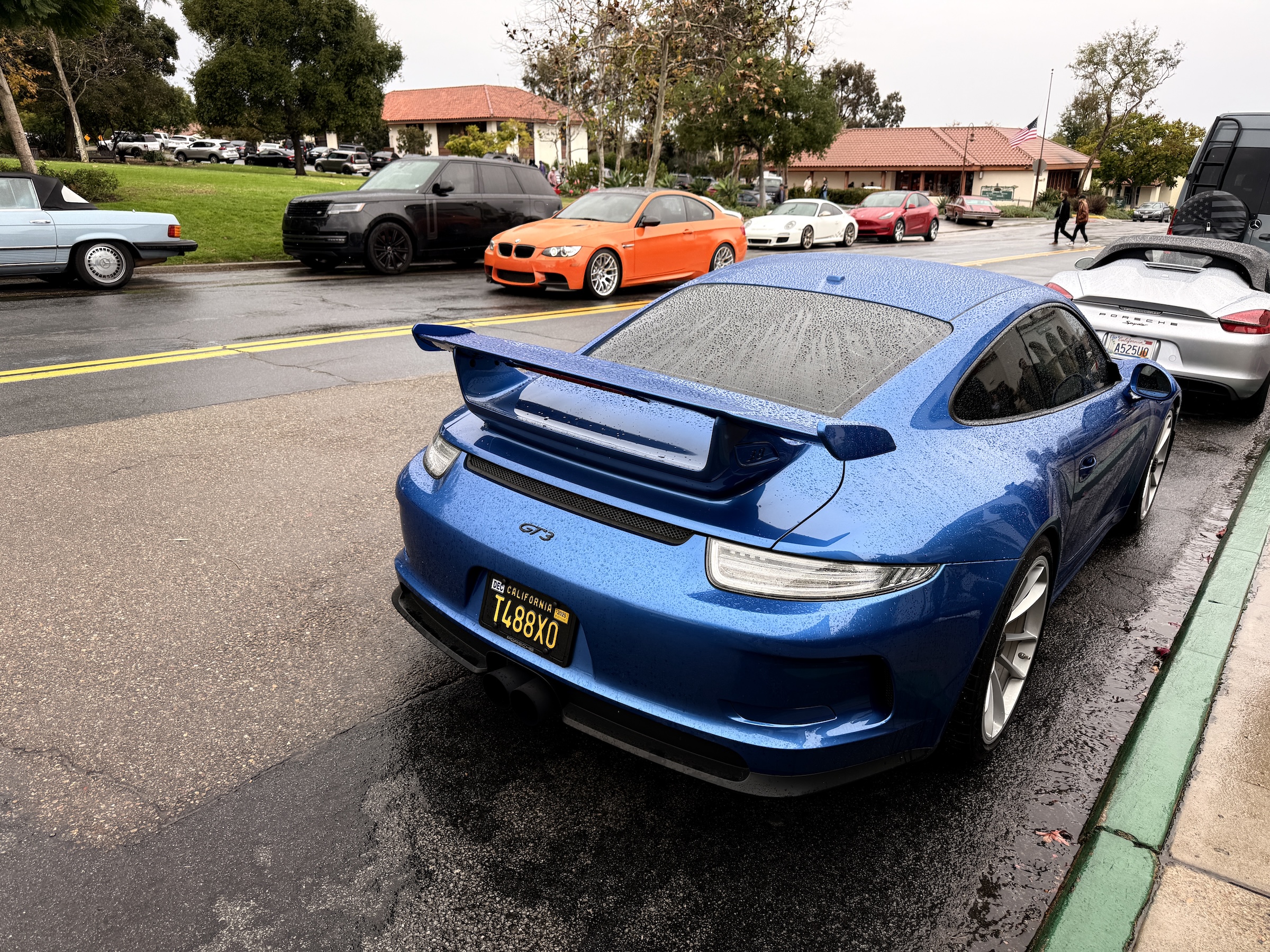
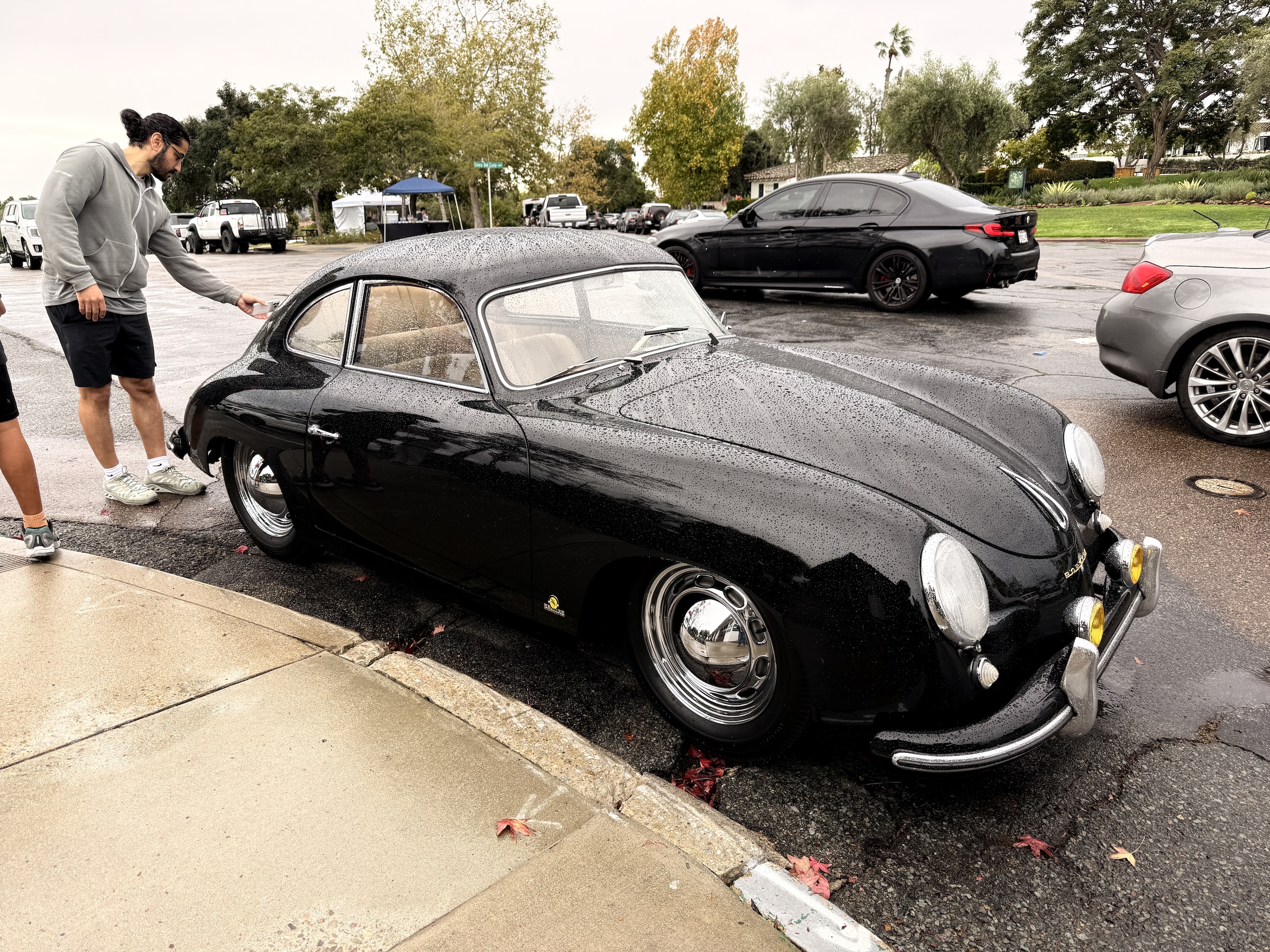
It was raining this morning, and we drove out to see the supercars and other classic cars that are parked in downtown Rancho Santa Fe on Paseo Delicias and Avenida de Acacias.
They are there every Saturday morning for the Rancho Santa Fe Cars and Coffee event, which runs from 8:00 AM to 11:00 AM.
The green Aston Martin Vantage (MSRP: $245,750) is my favorite, even though I am 99.999% sure will never own one.
Happy Friday.
I took a flight out to San Diego this morning to visit my brother and his family, and to catch some California sun.
Top to bottom:
A gorgeous sunrise in Seattle;
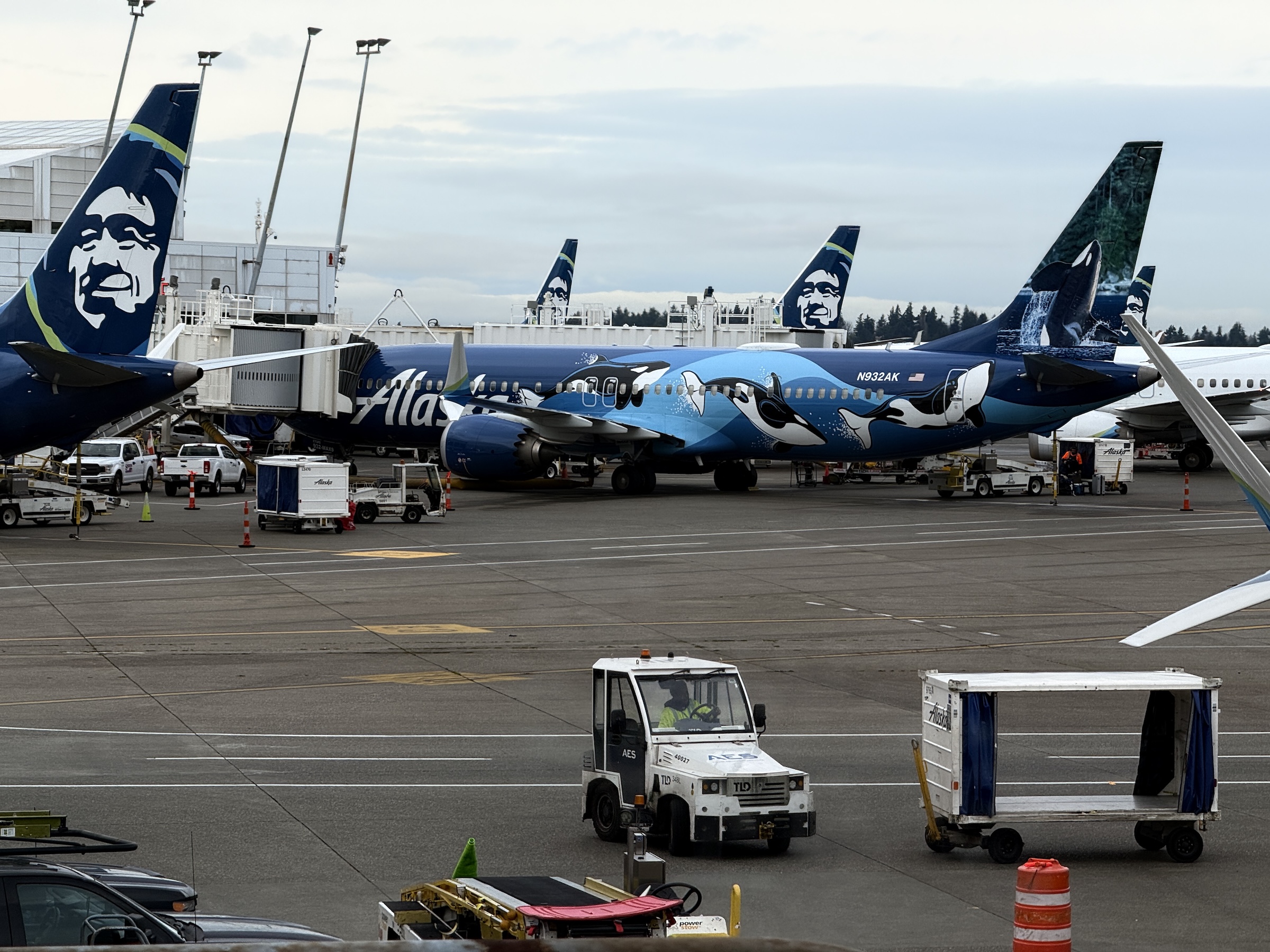
Alaska Airlines Boeing 737 MAX 9 with orca livery at Seattle-Tacoma airport;
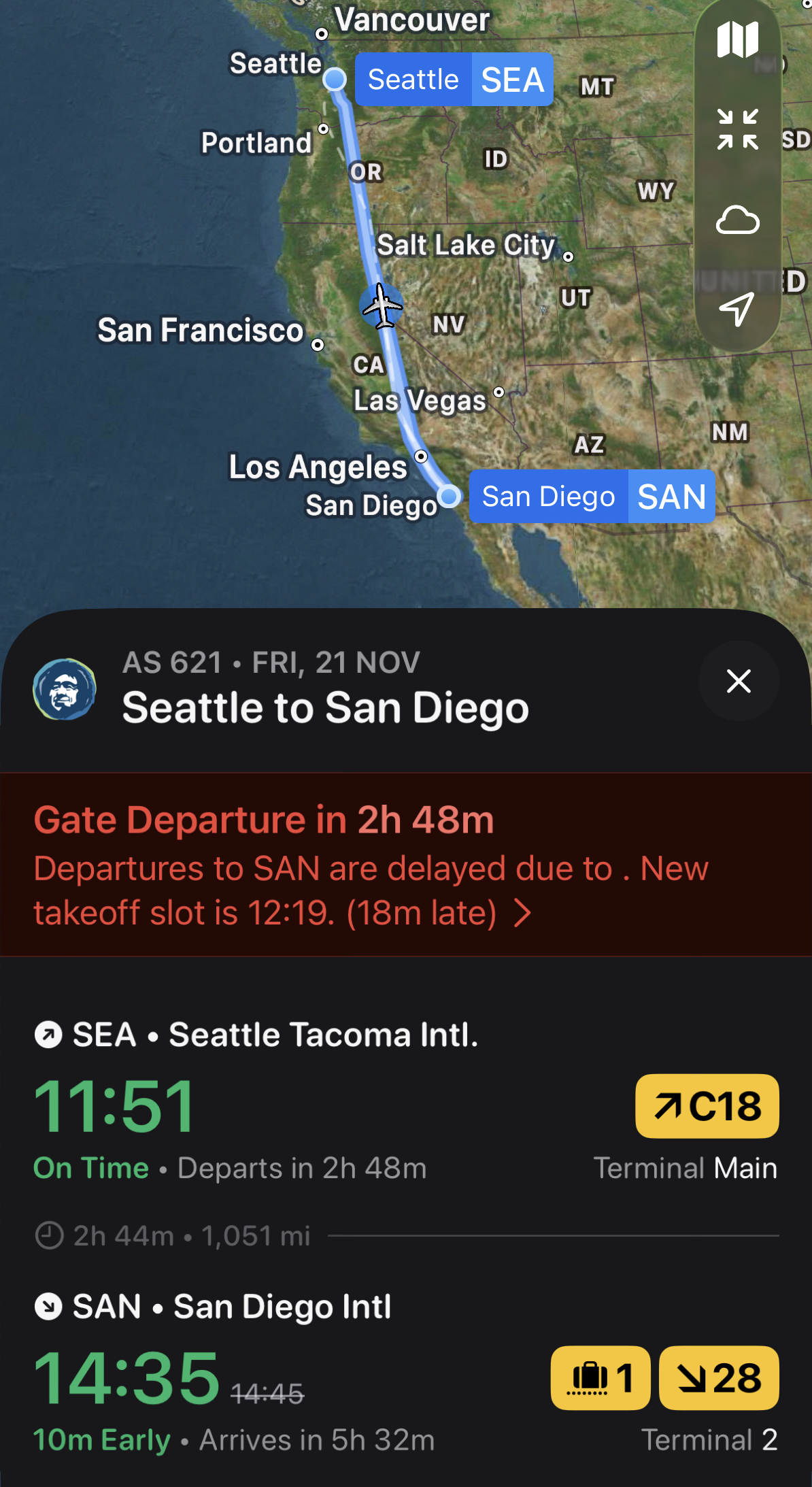
Screenshot from my Flighty app warning that we will have an on-time departure (pushback from the gate), but that there will be an 18 min delay in taking off (which was exactly what happened, but we still arrived 10 mins early);
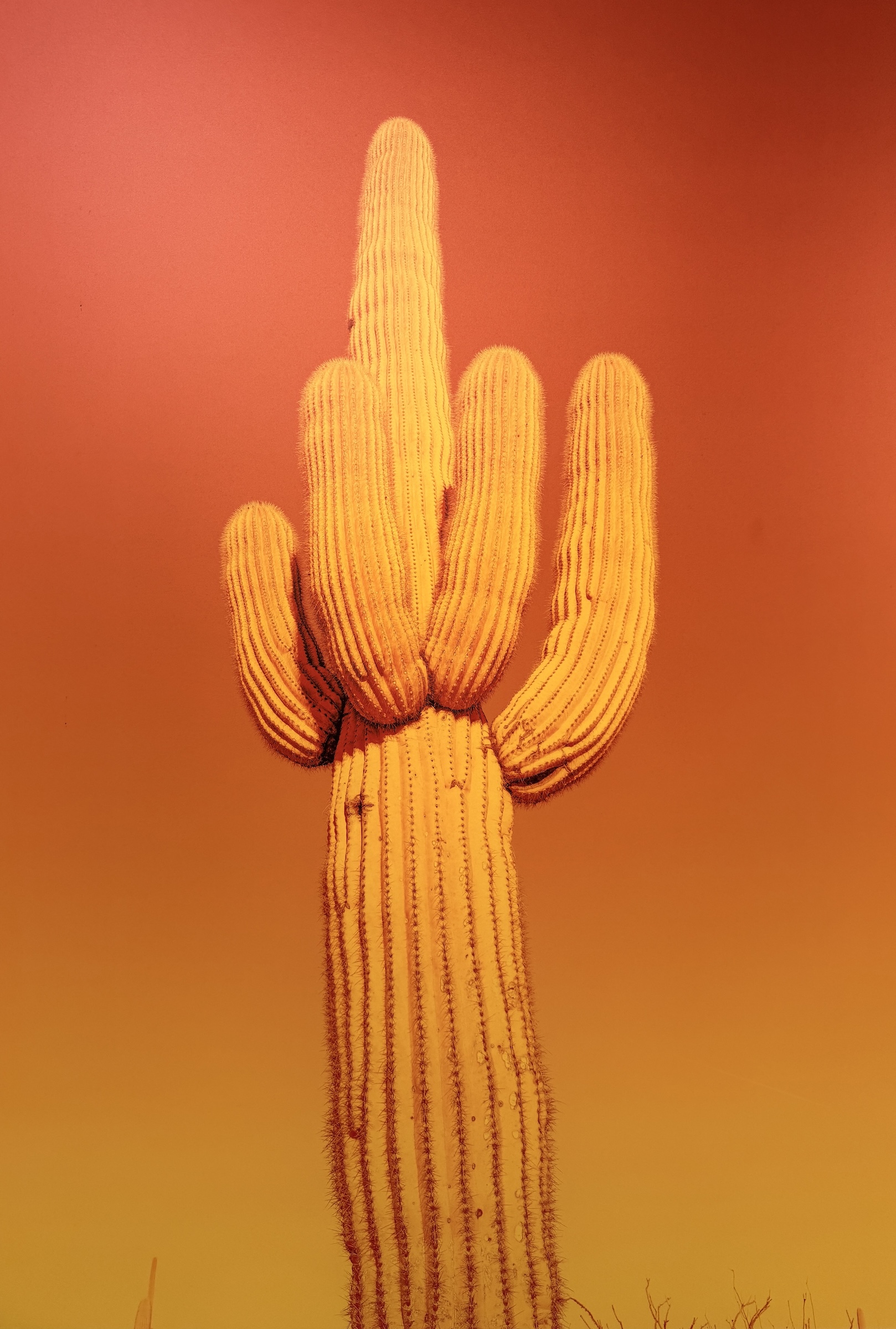
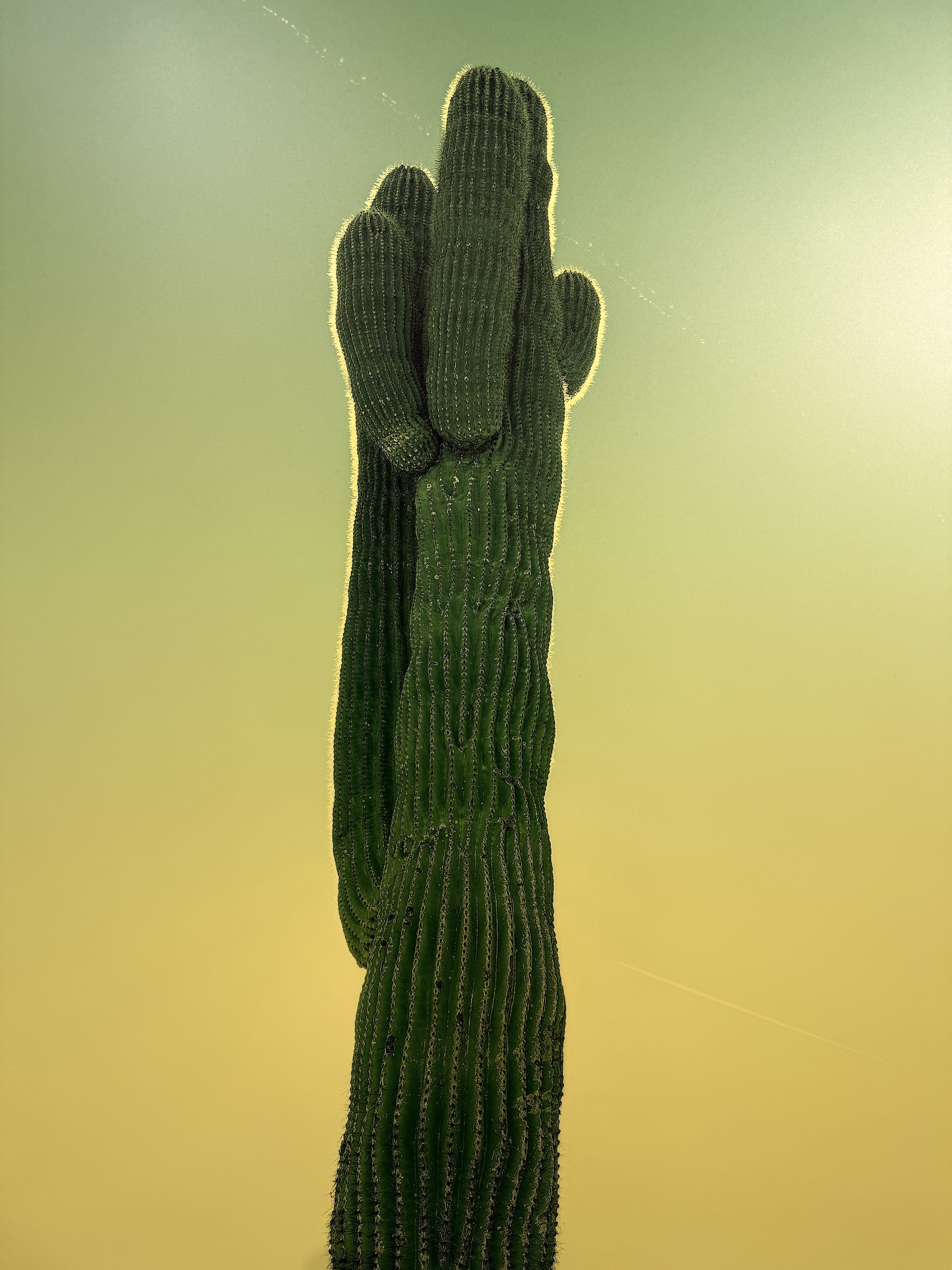
Beautiful gel photos of saguaros in the arrival concourse in San Diego airport (I forgot to take note of name of the photographer);
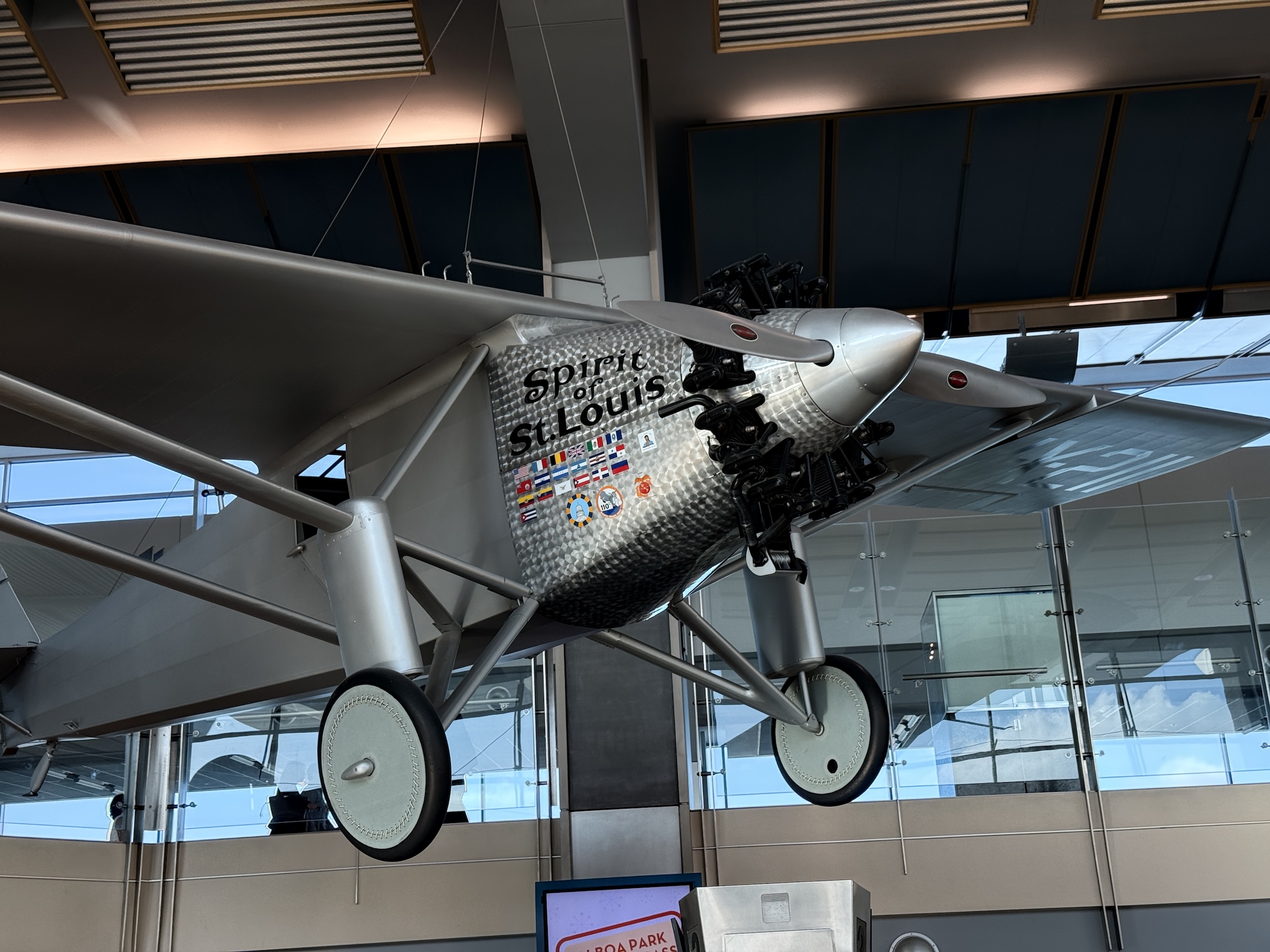
The Spirit of St Louis airplane is still in the baggage claim hall in San Diego airport’s Terminal 2.
Here is the sun today, with about 45 minutes of daylight remaining.
The days are now 9 hours 5 minutes long, with sunset at 4.27 pm.
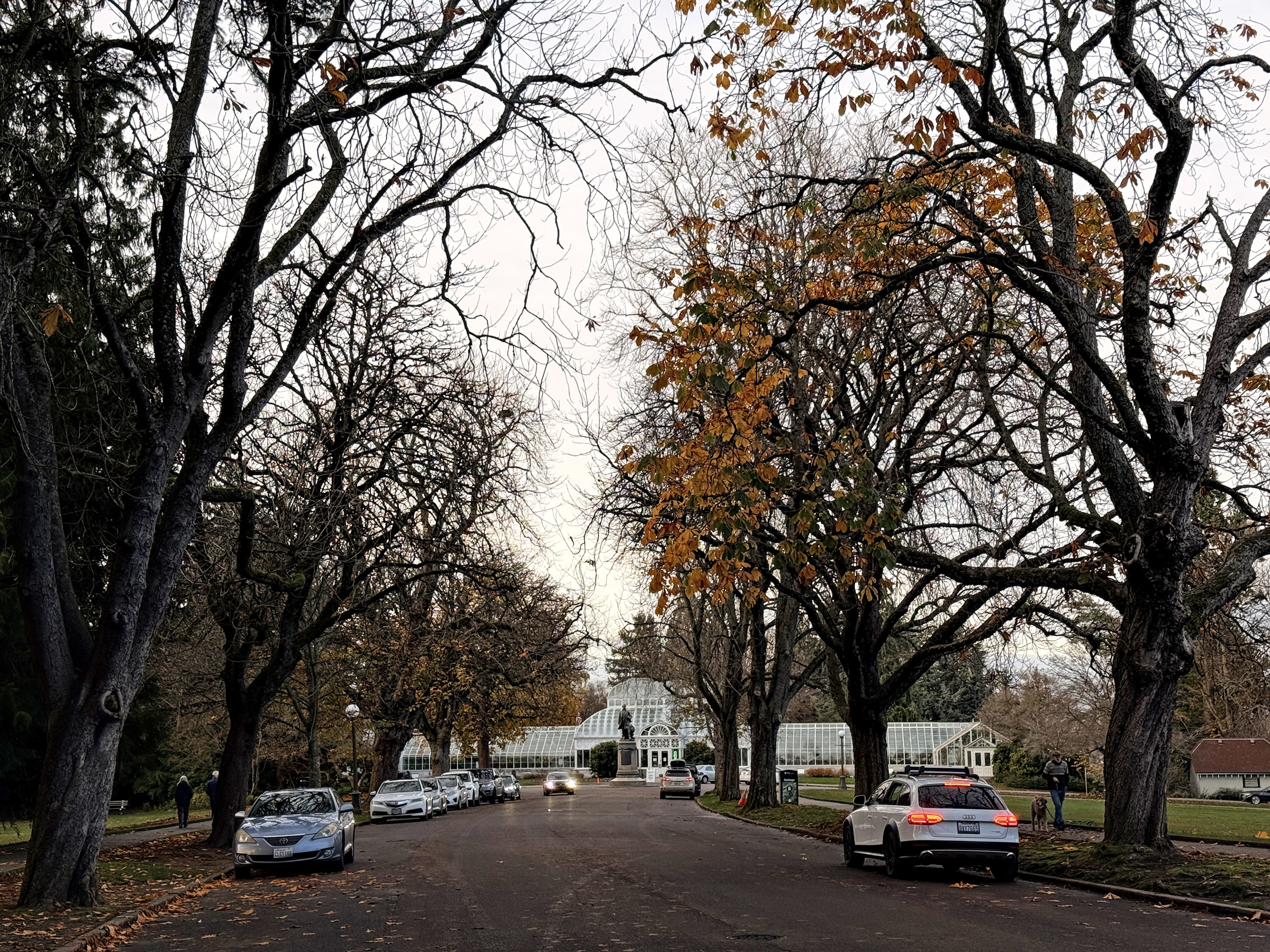
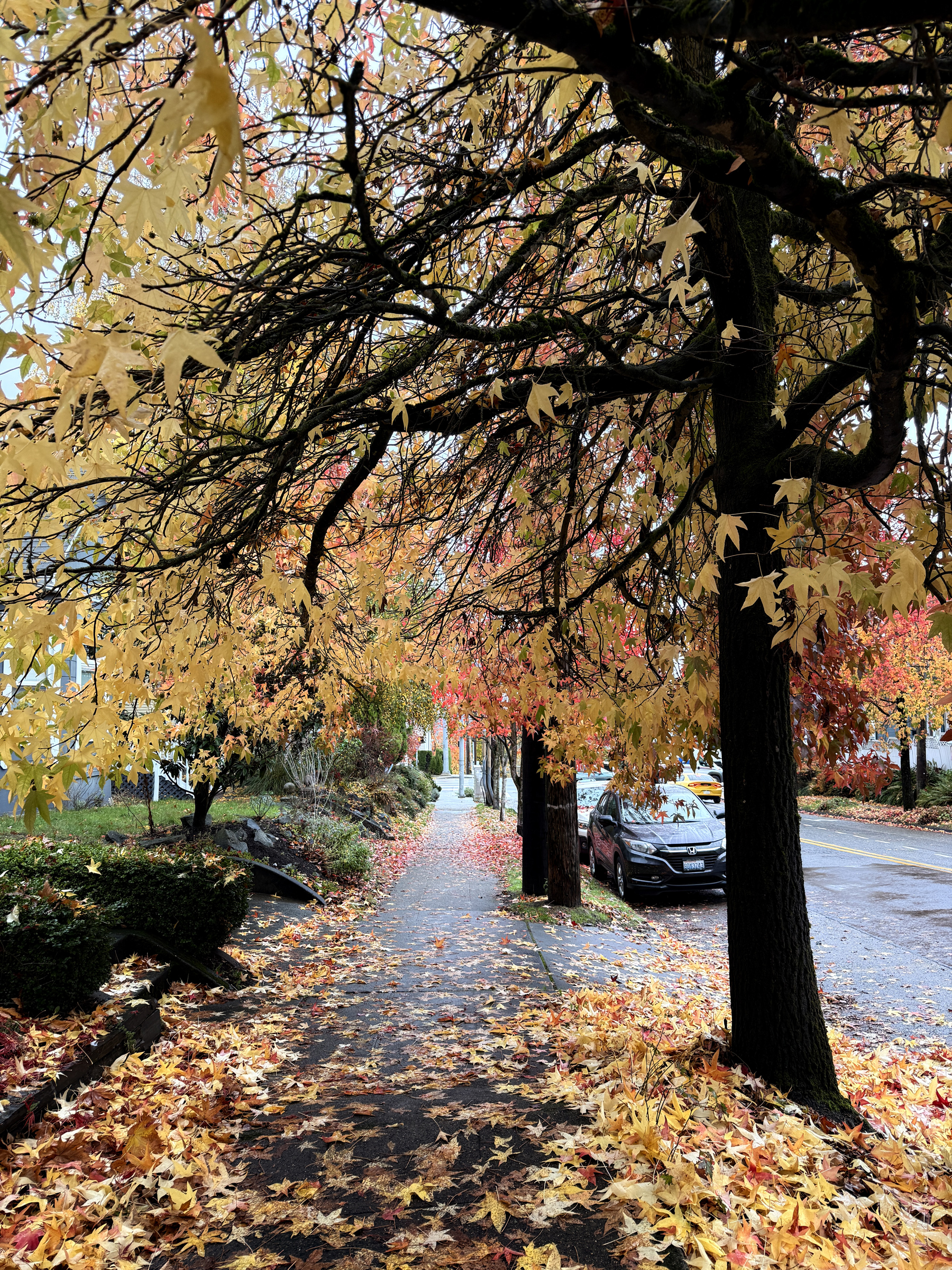
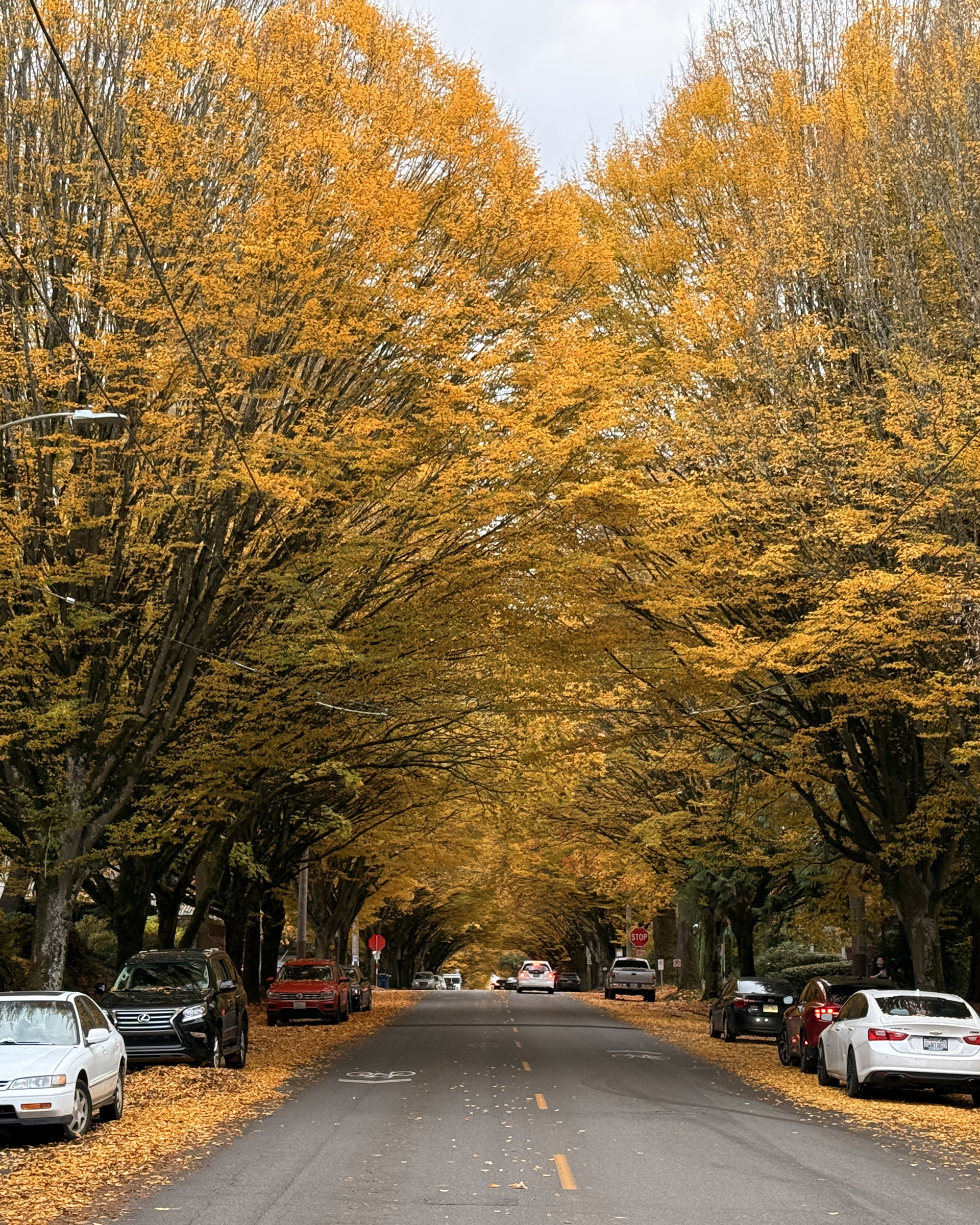
The trees that lead to the Volunteer Park Conservatory are now mostly bare of their leaves.
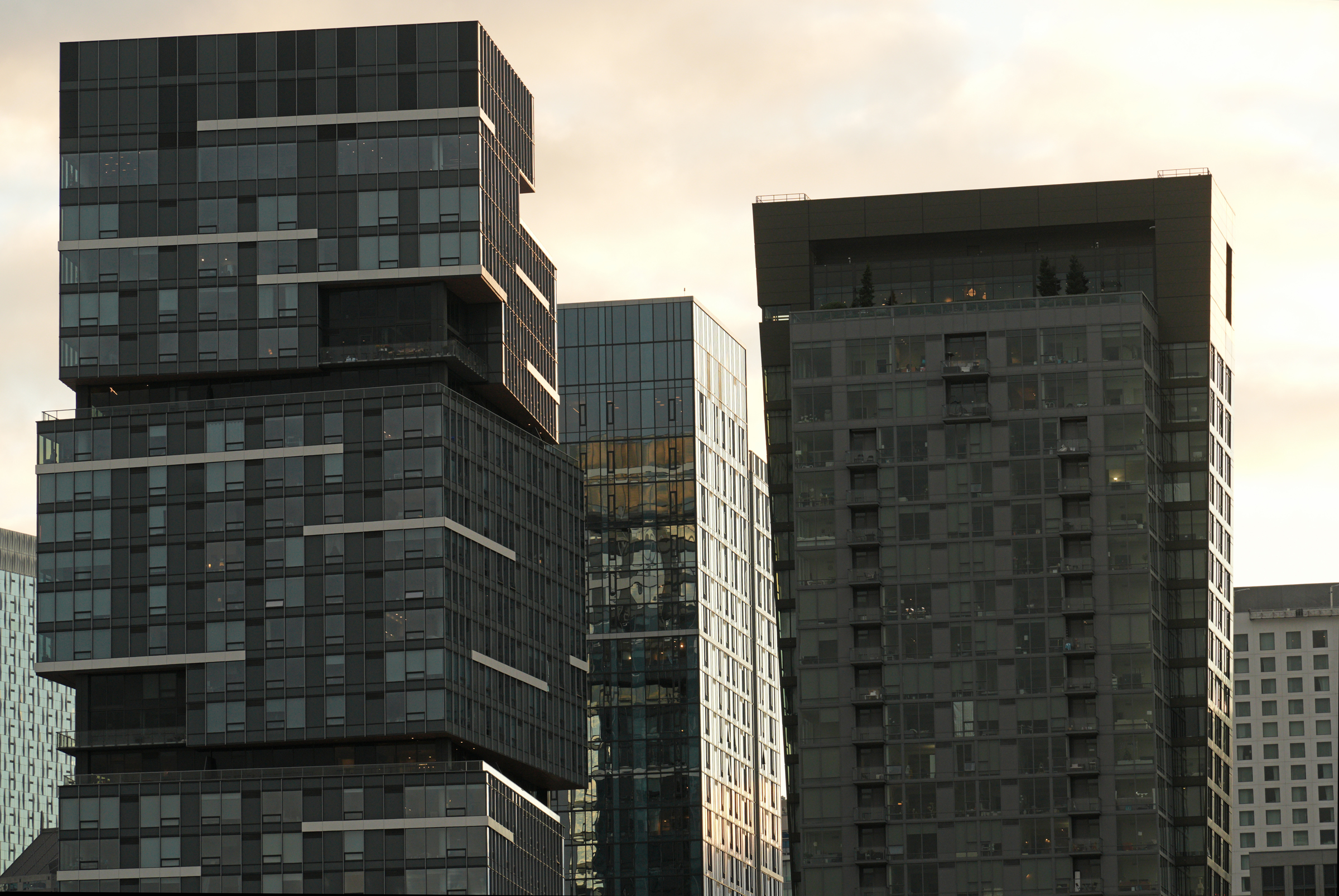
Here’s another picture from last night, taken from the Melrose Avenue overlook.
It’s a study of the cubes and rectangles that make up the Nexus Seattle condominium tower (on the left) and the Kinects Tower apartment complex to its right.
Well he was Thailand based
She was an Air Force wife
He used to fly weekends
It was the easy life
But then it turned around
And he began to change
She didn’t wonder then
She didn’t think it strange
But then he got a call
He had to leave that night
He couldn’t say too much
But it would be alright
He didn’t need to pack
They’d meet the next night
He had a job to do
Flying to Cambodia
– Lyrics from the single ‘Cambodia’ by British singer Kim Wilde, released Nov. 2, 1981
The song “Cambodia” by Kim Wilde is about a woman whose pilot husband is sent on a mission to Cambodia and never returns, leaving her in a state of longing and unanswered questions. Written by her father, Marty Wilde, and her brother, Ricky Wilde, the song is a tragic love story about loss, separation, and the enduring pain of waiting for someone who is gone. The lyrics depict the woman’s emotional journey from hope to the realization that her partner is never coming back. [Google AI Overview]
Cambodia is on the itinerary for my upcoming Princess cruise out of Singapore.
We will stop at the port by the city of Sihanoukville for only one night and one day, though.
I signed up for the excursion to Ream National Park with its mangrove forests, wildlife and pure stretches of white beach.
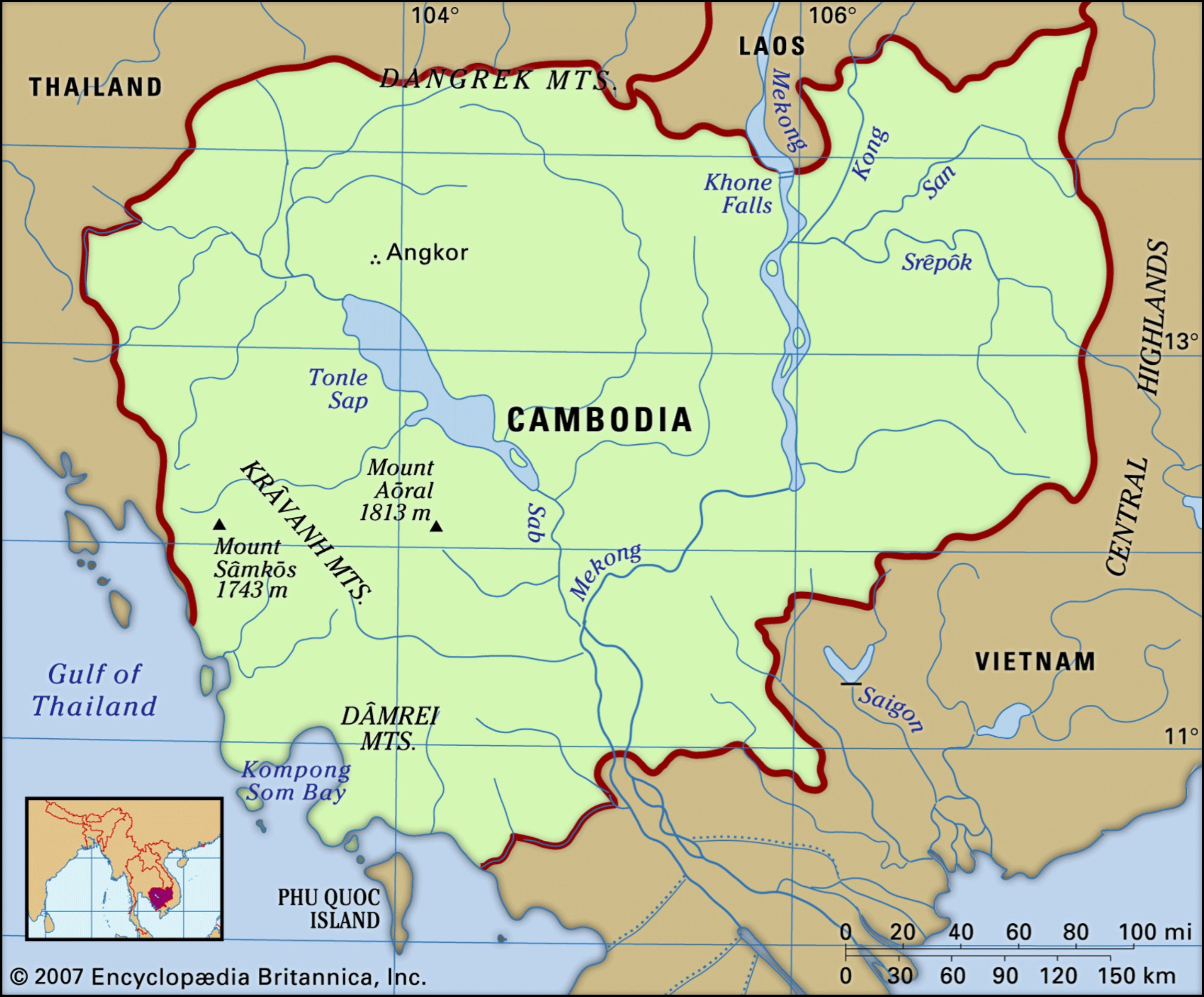
C A M B O D I A Capital: Phnom Penh Currency: Cambodian riel Official language: Khmer Population: 17.6 million Government: Unitary state, Parliamentary system, Constitutional monarchy, One-party state, Elective monarchy King: Norodom Sihamoni
Cambodia—officially the Kingdom of Cambodia— is somewhat larger than the U.S. state of Missouri. It is bordered to the west and northwest by Thailand, to the northeast by Laos, to the east and southeast by Vietnam, and to the southwest by the Gulf of Thailand. The Khmer language is one of the major tongues of the Mon-Khmer subfamily of the Austroasiatic language family and is spoken by nearly all people in Cambodia, including the Cham-Malay.
The people of Cambodia suffered under the Khmer Rouge, the radical communist movement that ruled Cambodia from 1975 to 1979 after winning power through a guerrilla war. The Khmer Rouge government under Pol Pot was responsible for the Cambodian genocide (1976-78), during which up to three million people were murdered.
Tourist-wise (‘Quick Facts’ from Google Maps): Cambodia has a landscape that spans low-lying plains, the Mekong Delta, mountains and Gulf of Thailand coastline. Phnom Penh, its capital, is home to the art deco Central Market, glittering Royal Palace and the National Museum’s historical and archaeological exhibits. In the country’s northwest are the ruins of Angkor Wat, a massive stone temple complex built during the Khmer Empire.
There was light rain on and off all weekend here in the city, and a little fog in the Seattle’s low-lying areas this morning. Some trees still have leaves on, but a lot have now shed it all.
Elsewhere in Washington State, in the Yakima River Basin, the severe drought conditions continue. Conrad Swanson writes for the Seattle Times ‘This might be the driest year in recent memory, fresh on the heels of severe droughts last year and the year before’.
I was not 100% sure if I understood all the subtle humor in this cartoon, and enlisted the Chat GPT chatbot’s help to explain it to me.
The cartoonist is Edward Steed (born 1987), a British cartoonist and illustrator, best known for his work for in The New Yorker magazine.
Here is the explainer from Chat GPT: The humor comes from the contrast: ‘Polite cocktail-party etiquette’ versus ‘Wild-animal behavior’. It’s the absurd mix of manners (“Could you hold my drink?”) with the expectation that something ferocious is about to happen (such as the lion devouring the zebra). The rest of the party acting like all this is totally normal adds to the surreal deadpan comedy. [From The New Yorker magazine, the Dec 18 & 25, 2017 issue].
Happy Friday.
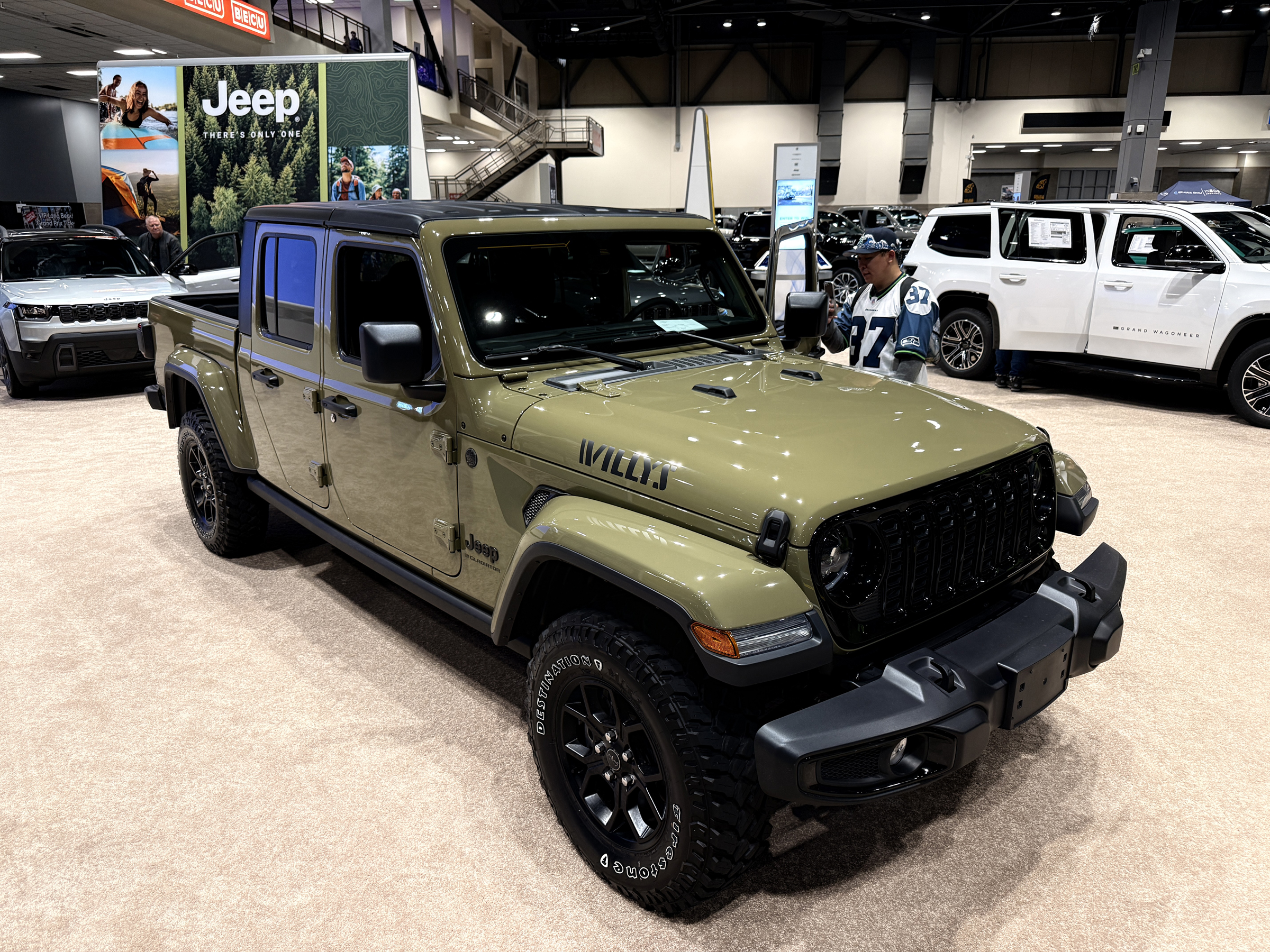
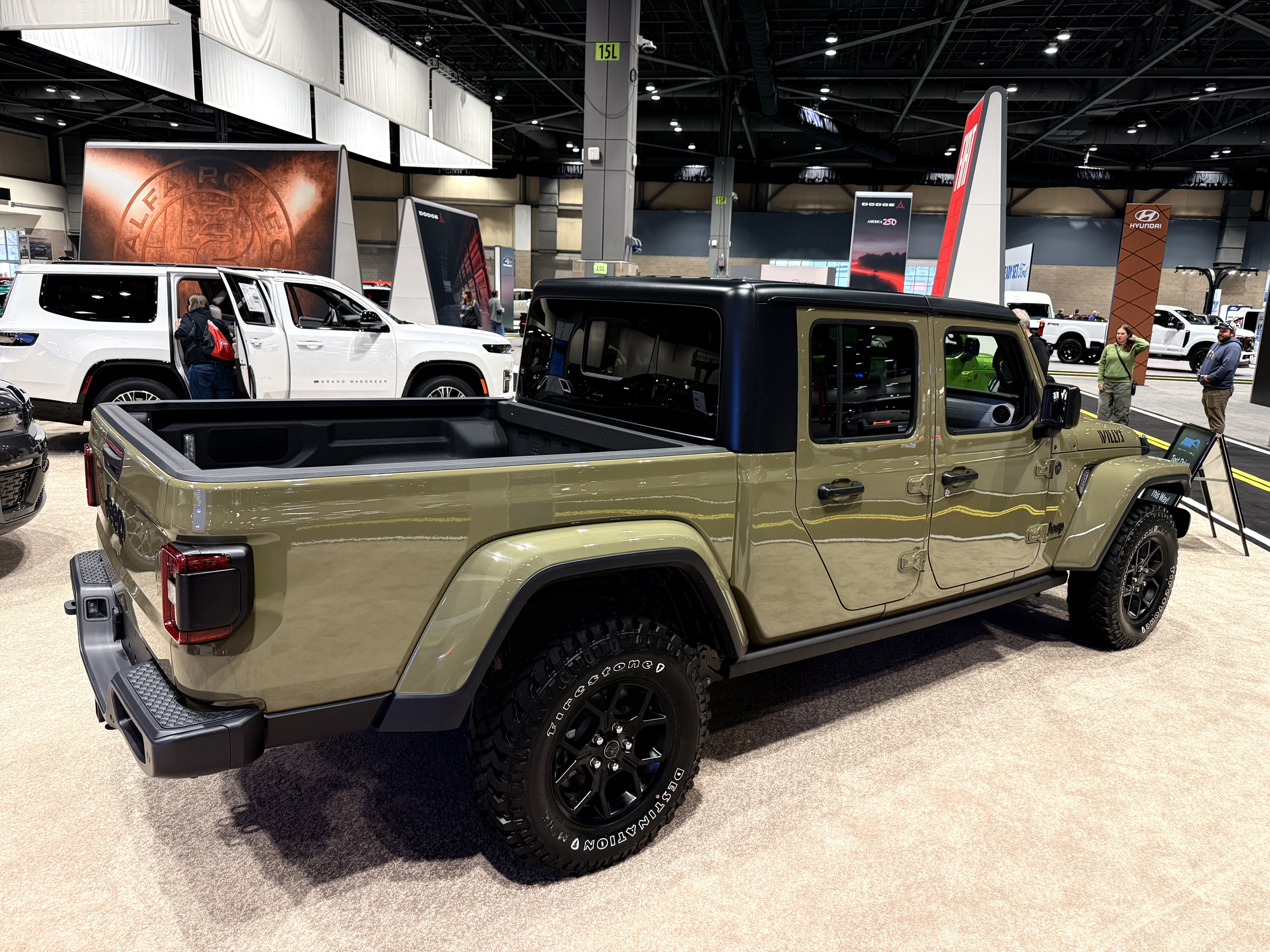
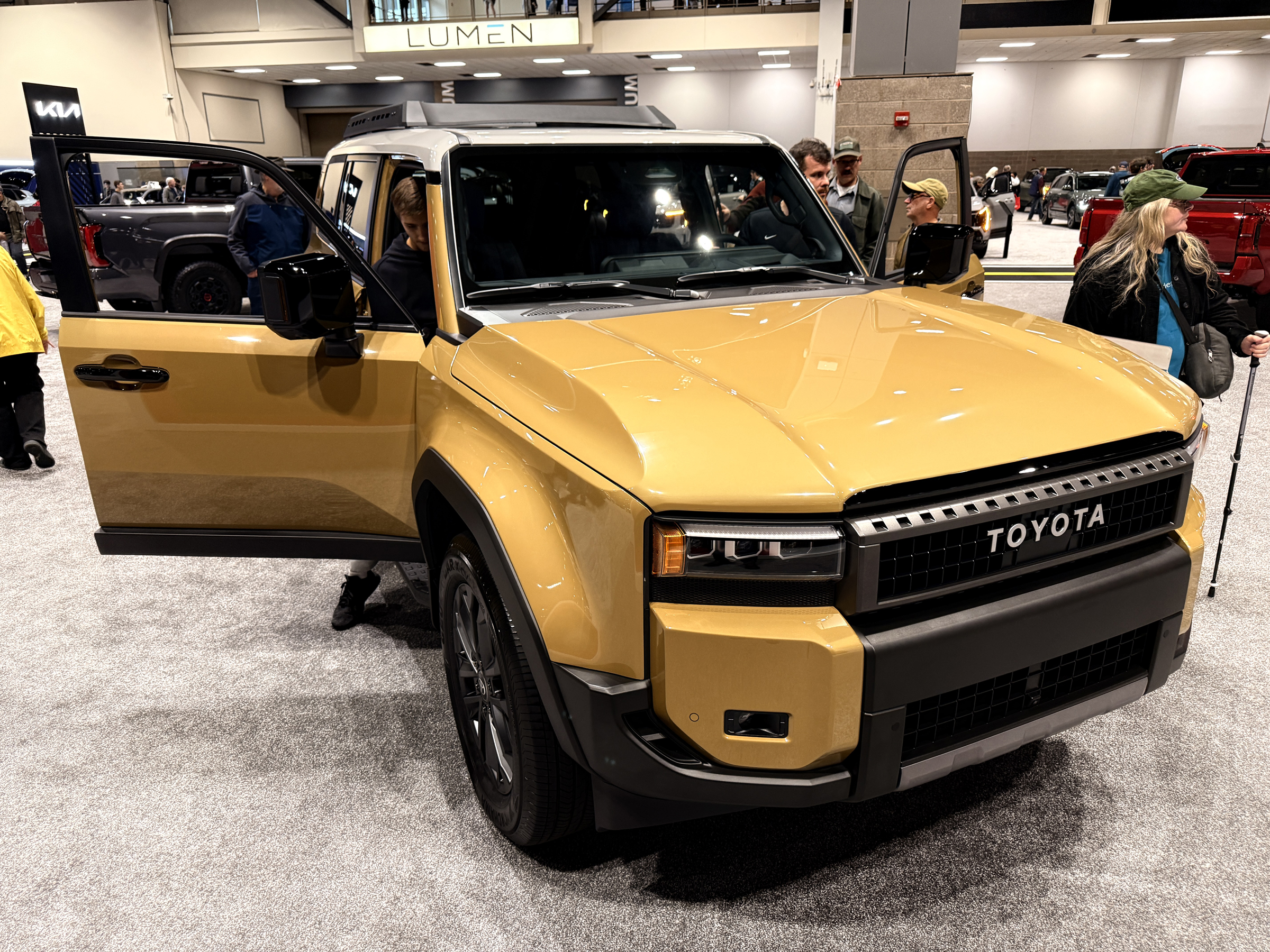
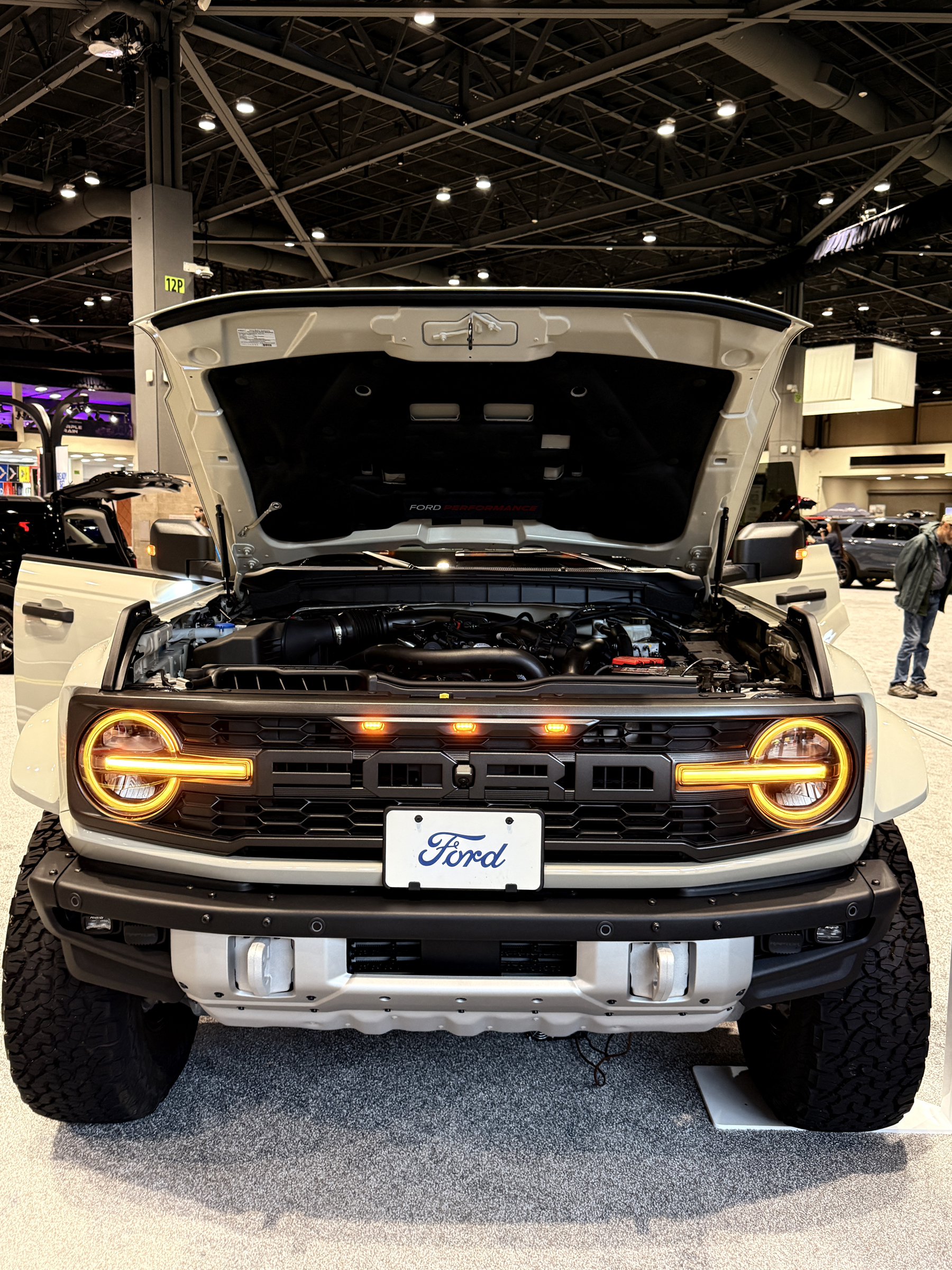
I checked in at the Seattle International Auto Show today.
Here is a sample of the dream machines that were on display.
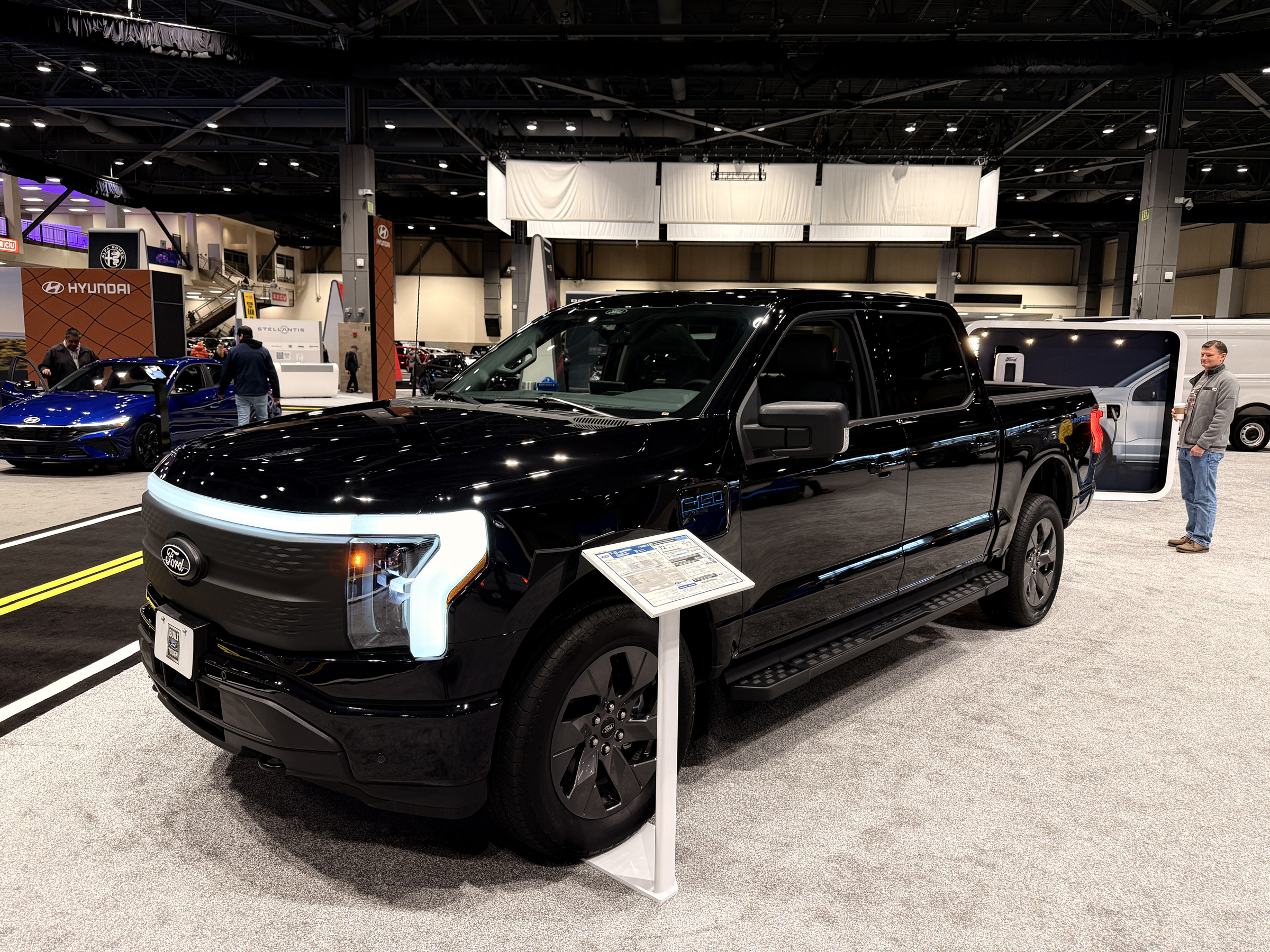
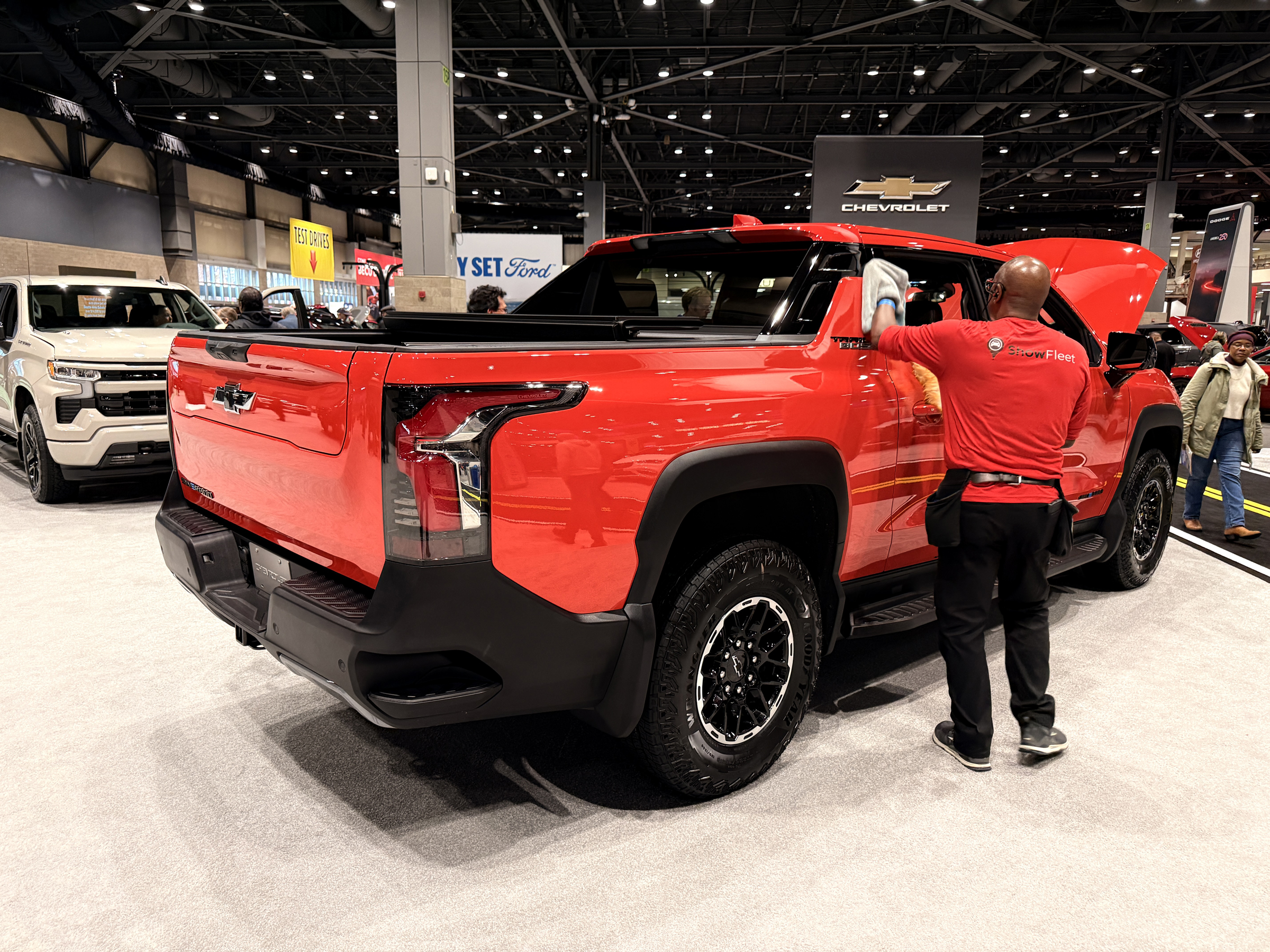
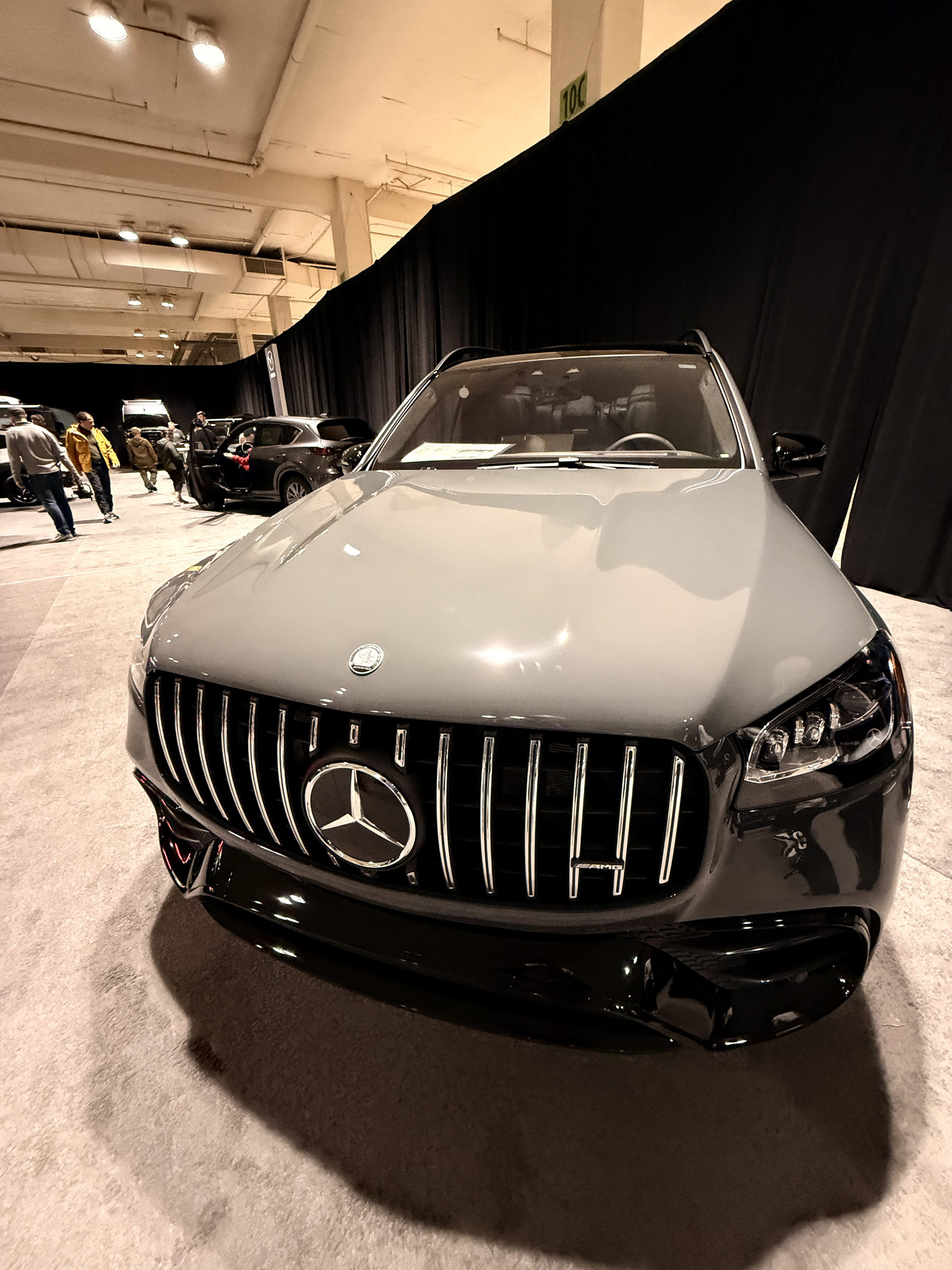
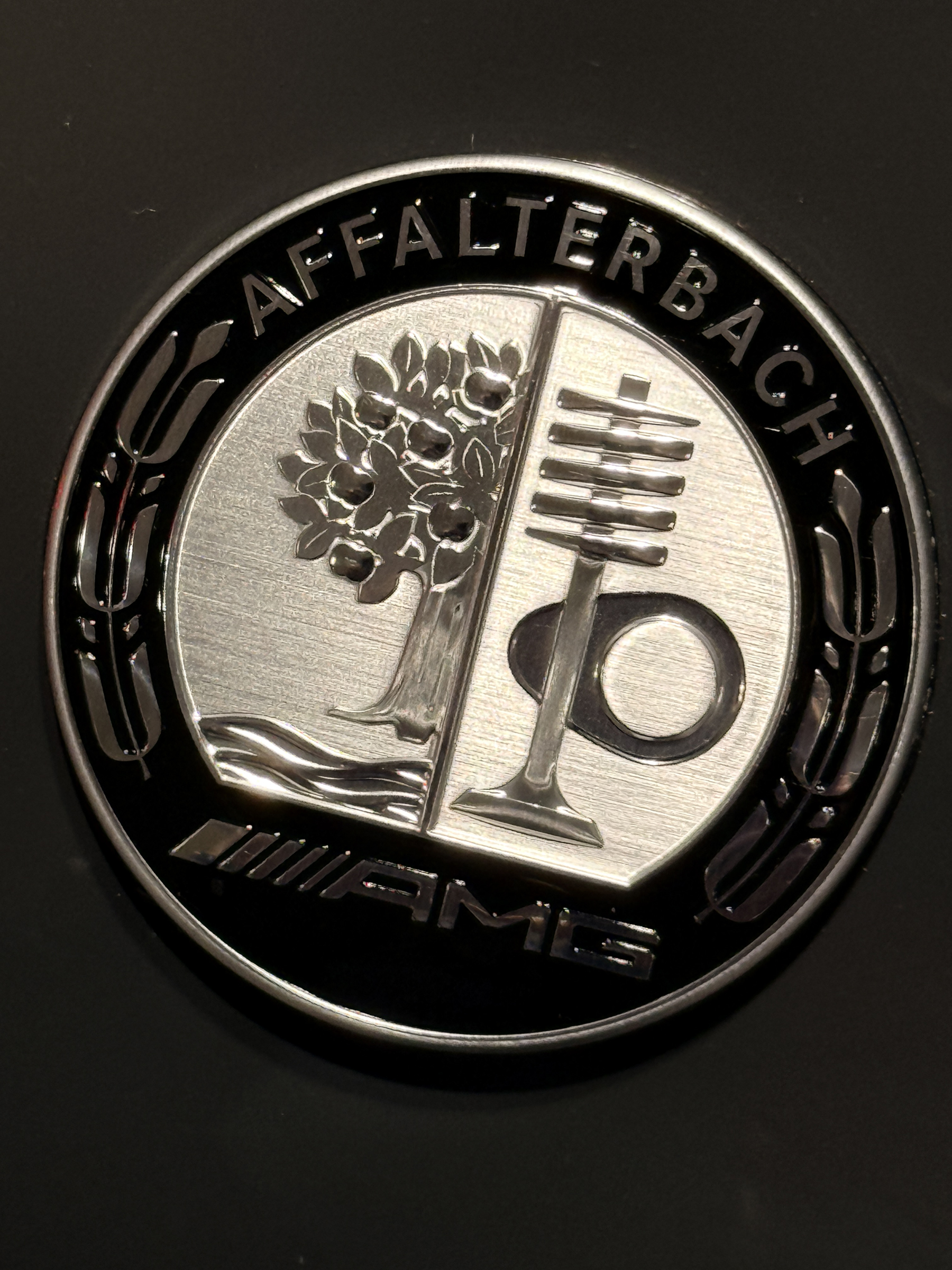
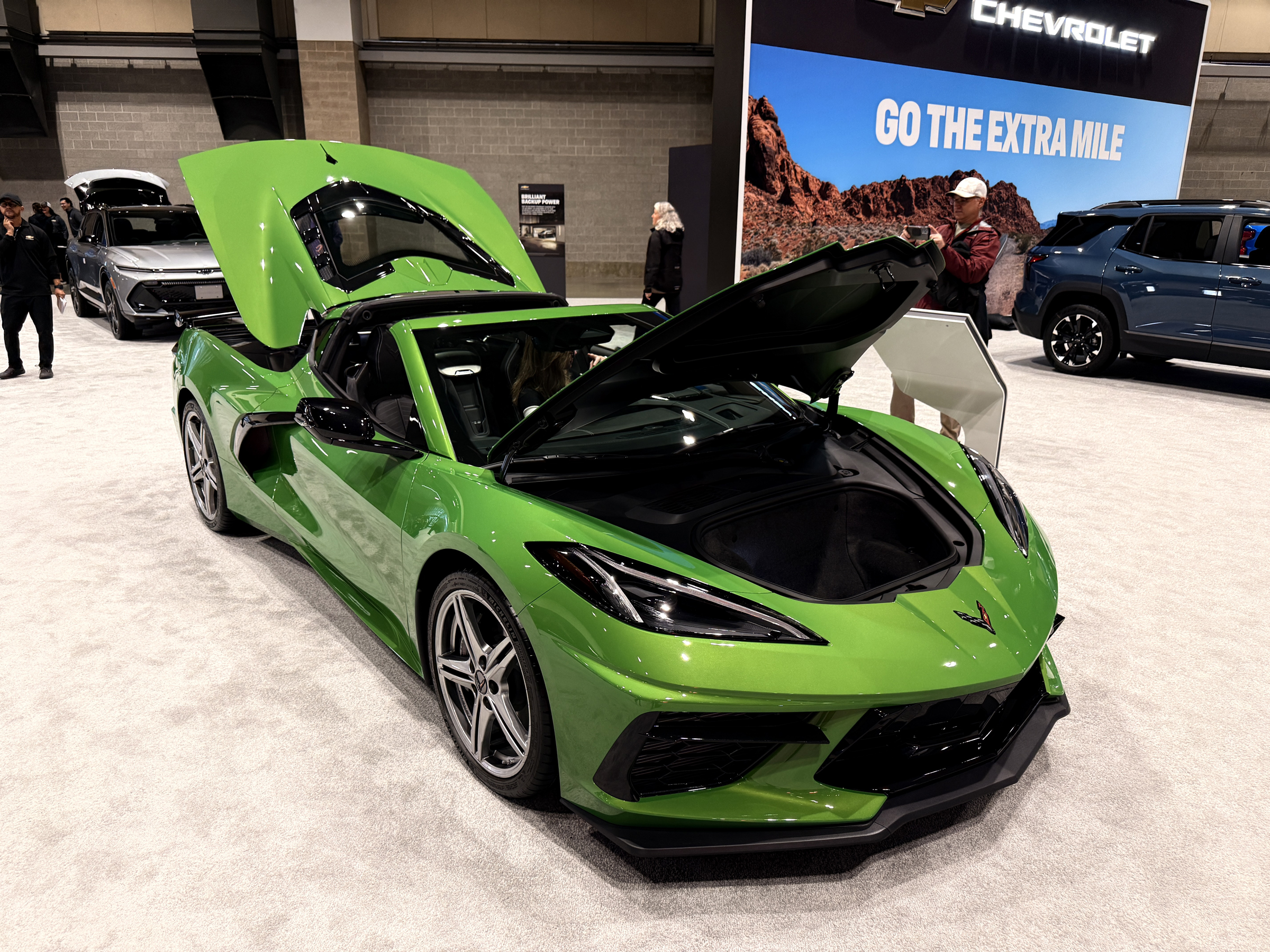
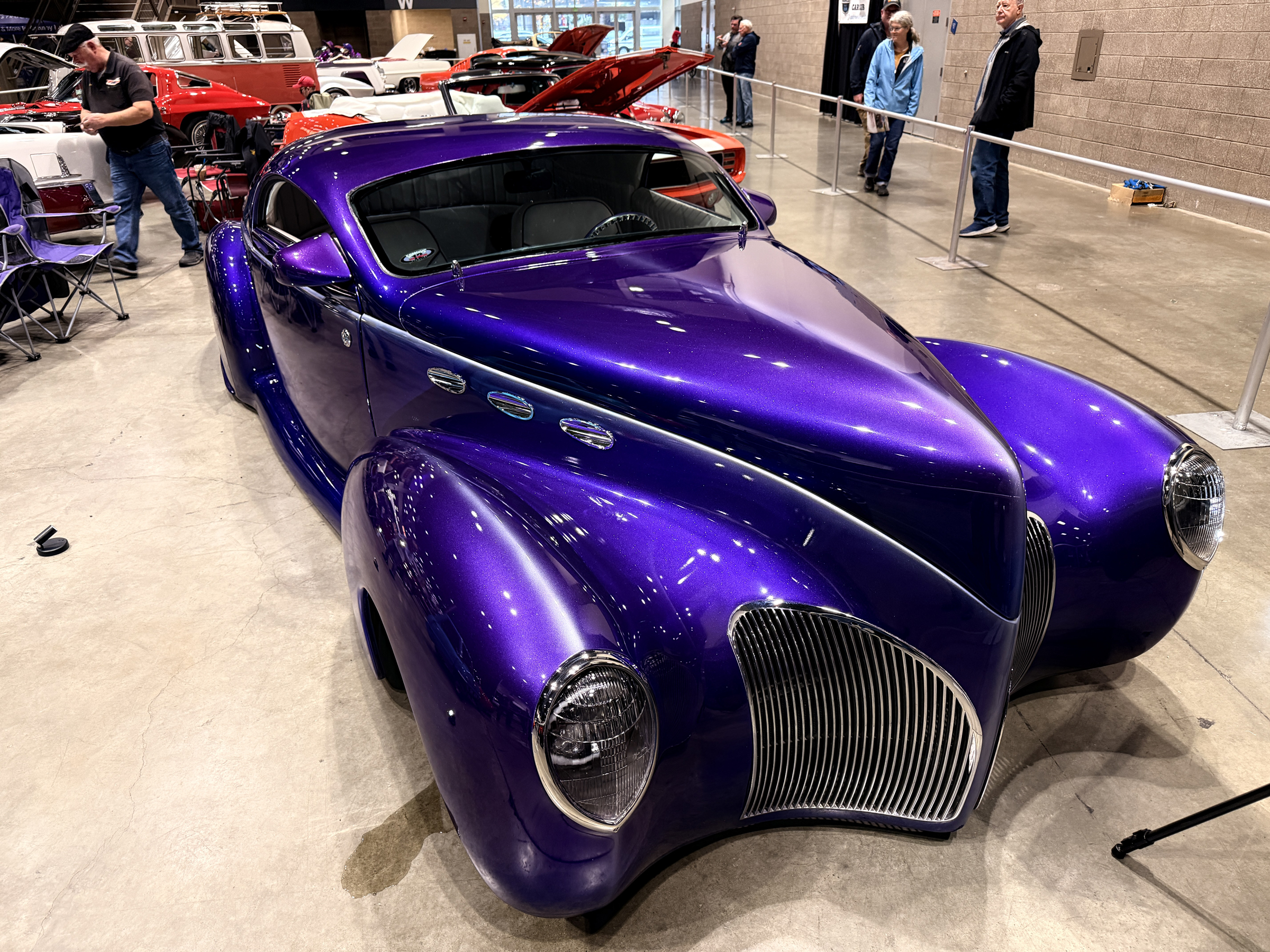
The all-electric Ford F-150 Lightning, MSRP $72,905. There was a salesperson nearby with a mike, promoting it, but these EV trucks are not selling well at all. Ford has stopped production of these for now, with rumors that its production might be canceled altogether.The 2026 Jeep Wrangler 4-door (there is a 2-door as well), outfitted with the Willys package (MSRP $45,305).Another look at the 2026 Jeep Wrangler 4-door.The largest of Volkswagen’s SUV offerings, the Atlas Cross Sport (MSRP starting at $38,300).The Toyota LandCruiser’s storied history began in 1951 with the “Toyota BJ,” a military-style vehicle developed for the Korean War and the Japan’s National Police Reserve. It was officially renamed the LandCruiser in 1954, inspired by the “Land Rover”. [Source: Google AI Overview] 2026 Toyota Land Cruiser has an MSRP of $57,200 for the entry-level 1958 trim, and the premium trim starts at $63,275.The 2026 Ford Bronco Raptor is a high-performance off-road SUV with an MSRP of around $80,000.The 2026 Chevy Silverado EV truck in the new Trail Boss trim, with the Extended Range starting at $72,095 and the Max Range at $88,695 MSRP.The 2026 Hyundai Palisade Hybrid is a new option from the Hyundai lineup, featuring a 2.5L turbocharged 4-cylinder engine, two electric motors, and a 1.7 kWh battery to produce a combined 329 horsepower. [Source: Google AI Overview]The 2025 Mercedes-AMG GLS 63 is a luxury performance SUV that will blow a $150,000 hole in your bank account. It has a hybrid-assisted* 4.0L twin-turbo V8 engine producing 603 horsepower and 627 lb-ft of torque. *With a small electric motor and a low-voltage battery to improve fuel efficiency and performance.A close-up of the badge on the hood of the Mercedes-AMG GLS 63.The 2026 Volkswagen ID. Buzz is an electric vehicle with a combination of retro style and modern technology, featuring an updated interior with enhanced materials and larger digital displays. MSRP around $60,000. [Source: Google AI Overview].The 2026 Chevrolet Corvette Stingray Convertible (MSRP for this car and its trim about $91k).And the grandest of all the vintage cars on display: a 1939 Lincoln Zephyr. The Lincoln-Zephyr is a line of luxury cars that was produced by the Lincoln division of Ford from 1936 until 1942.
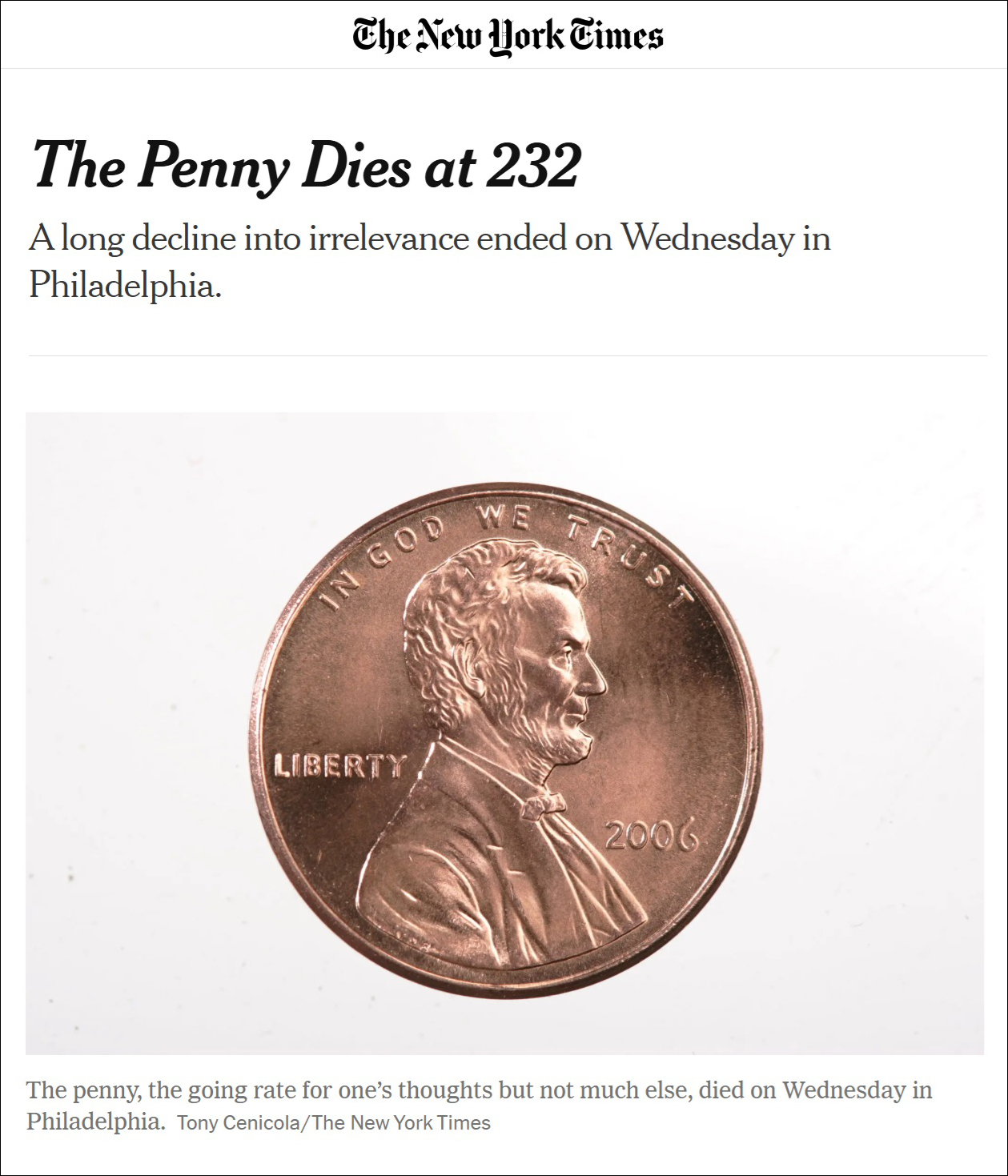
The American penny died on Wednesday in Philadelphia. It was 232.
The cause was irrelevance and expensiveness, the Treasury Department said.
Nothing could be bought any more with a penny, not even penny candy. Moreover, the cost to mint the penny had risen to more than 3 cents, a financial absurdity that doomed the coin.
The final pennies were minted on Wednesday afternoon in Philadelphia. Top Treasury officials were on hand for its final journey. No last words were recorded.
Happy Veterans Day to all veterans of the United States Armed Forces.
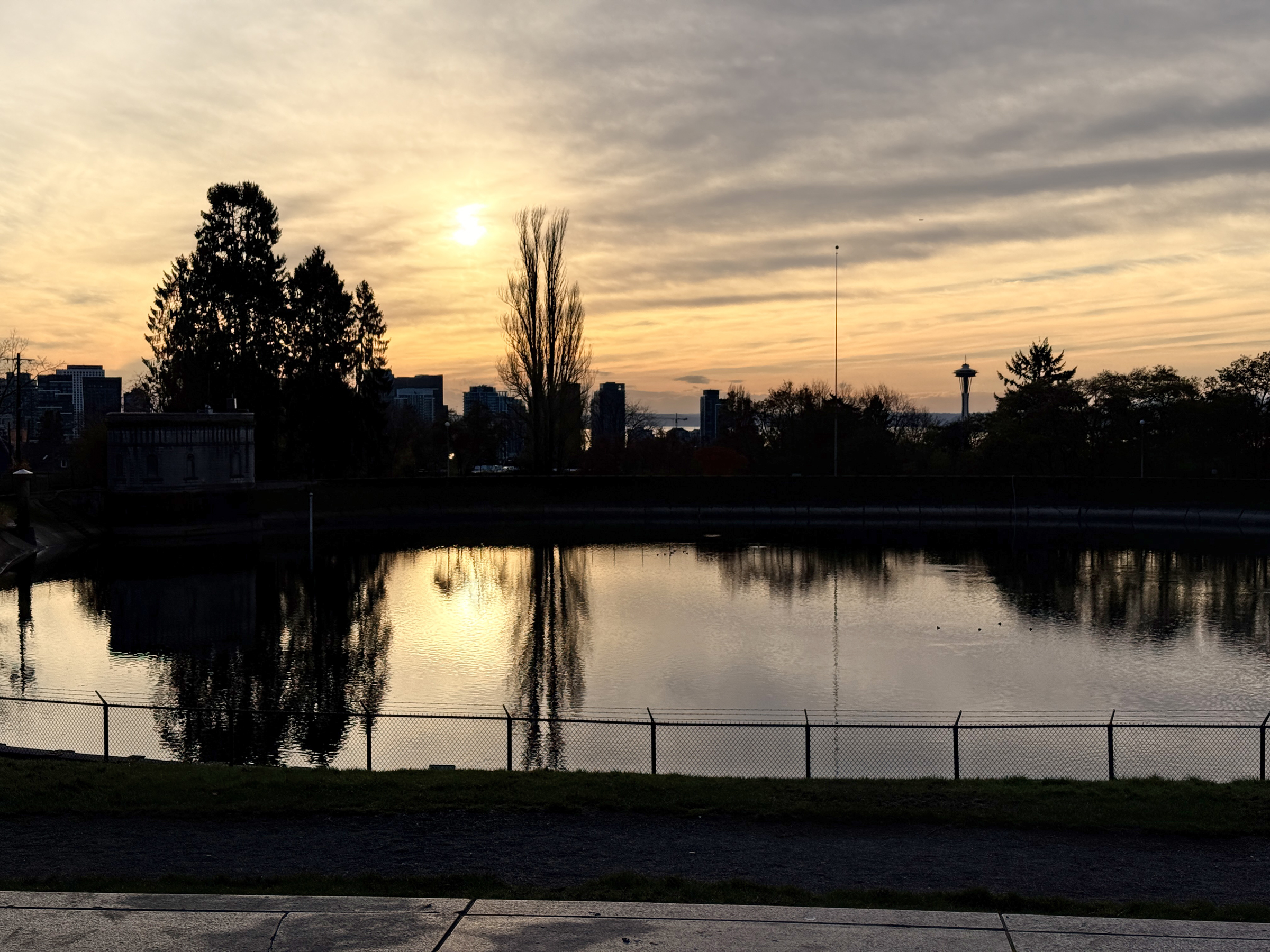
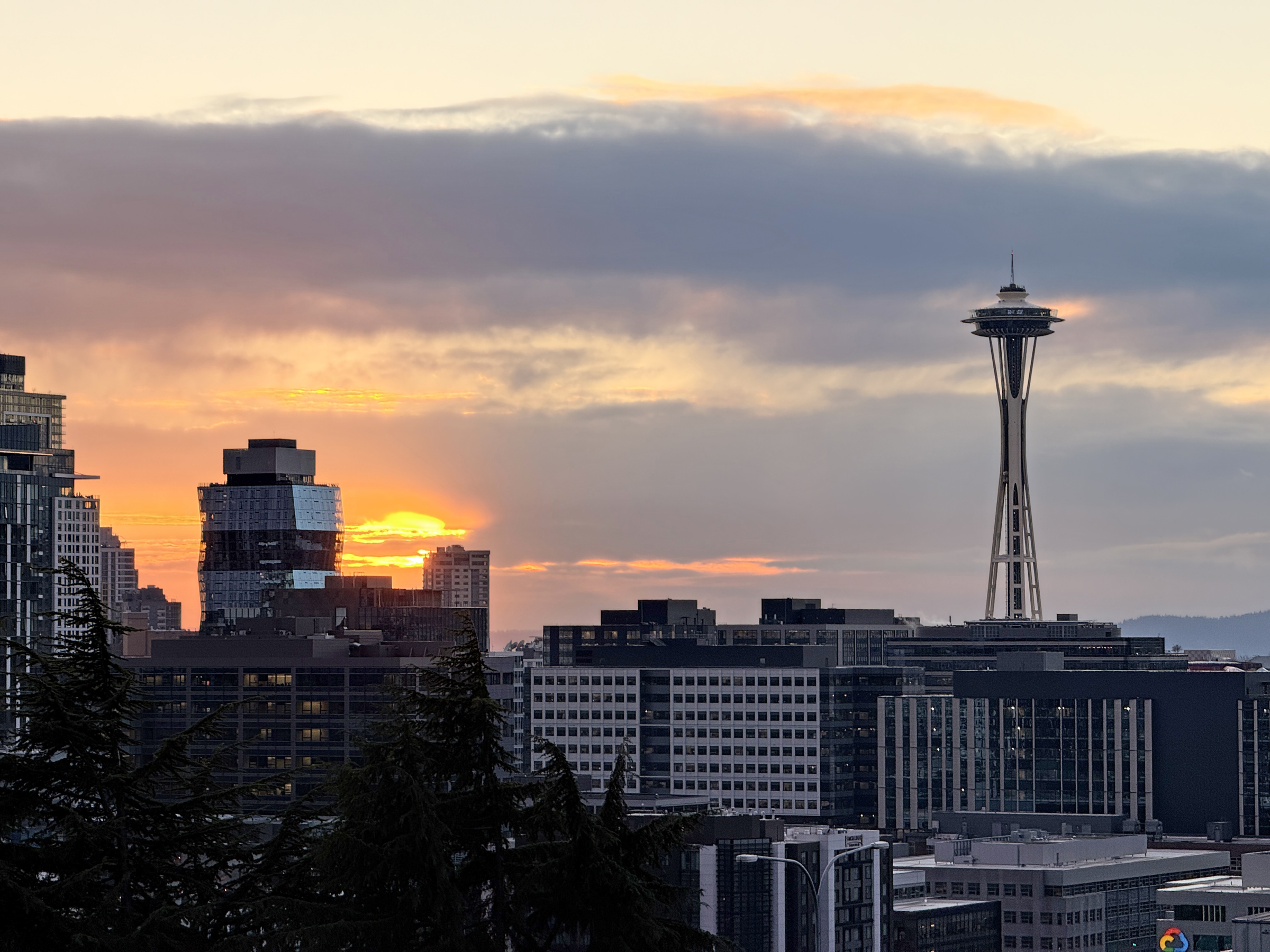
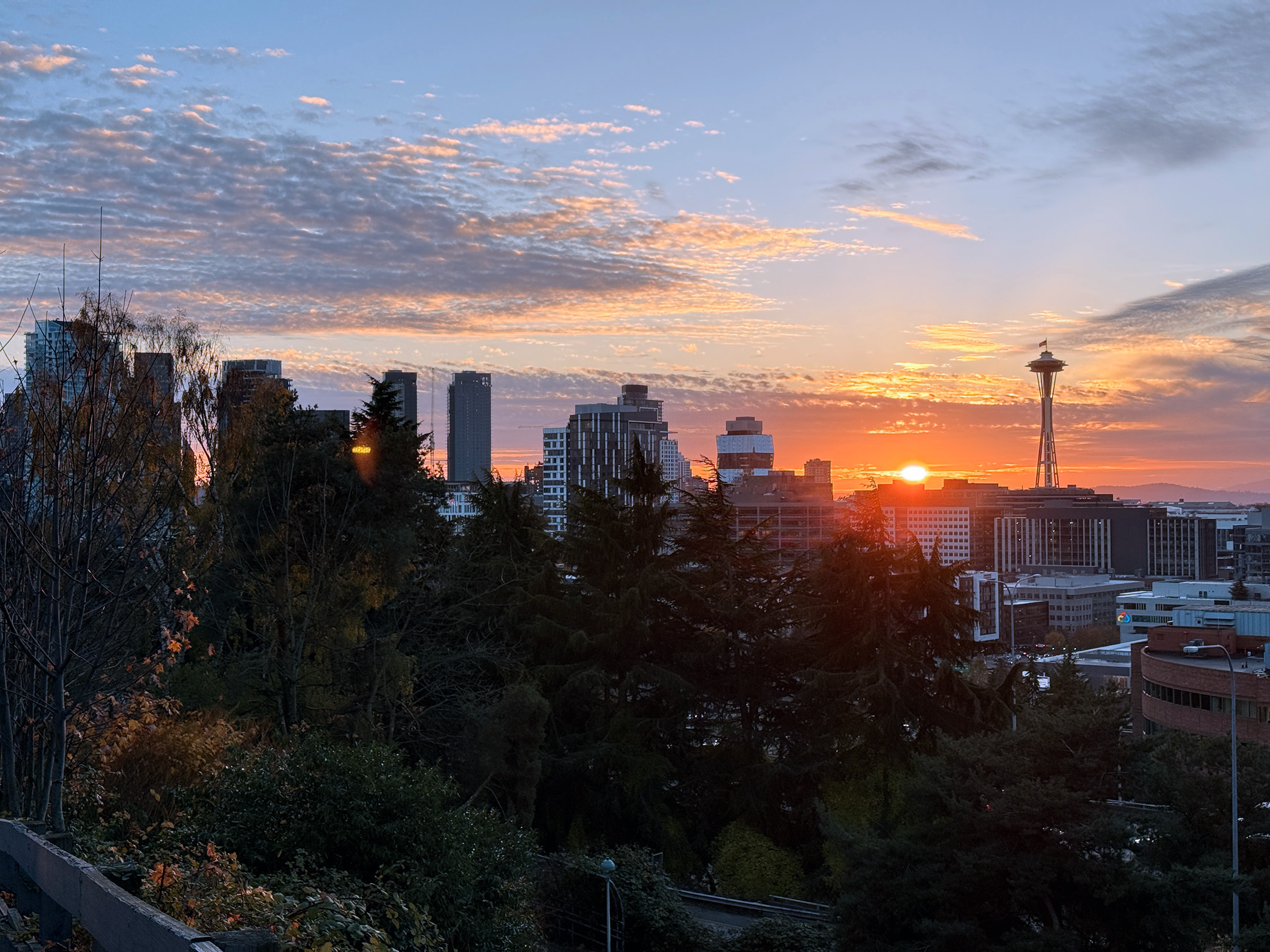
Sunset tonight (now at 4.37 pm), from my vantage point on the Melrose Avenue overlook near Interstate 5. The Stars and Stripes (the American flag) flies from the Space Needles’s flagpole.
The shutdown of the US government is going to end*, after eight Democratic senators broke with their party’s blockade to make a deal.
*For now. Most of the government is funded only until the end of January.
It seems to me the Democrats should have let the Republicans own the Republican shutdown.
A lot of people are being hurt right now with the shutdown, though. Of the eight senators that supported the deal with the Republicans, two are retiring, and the rest are not up for reelection in 2026.
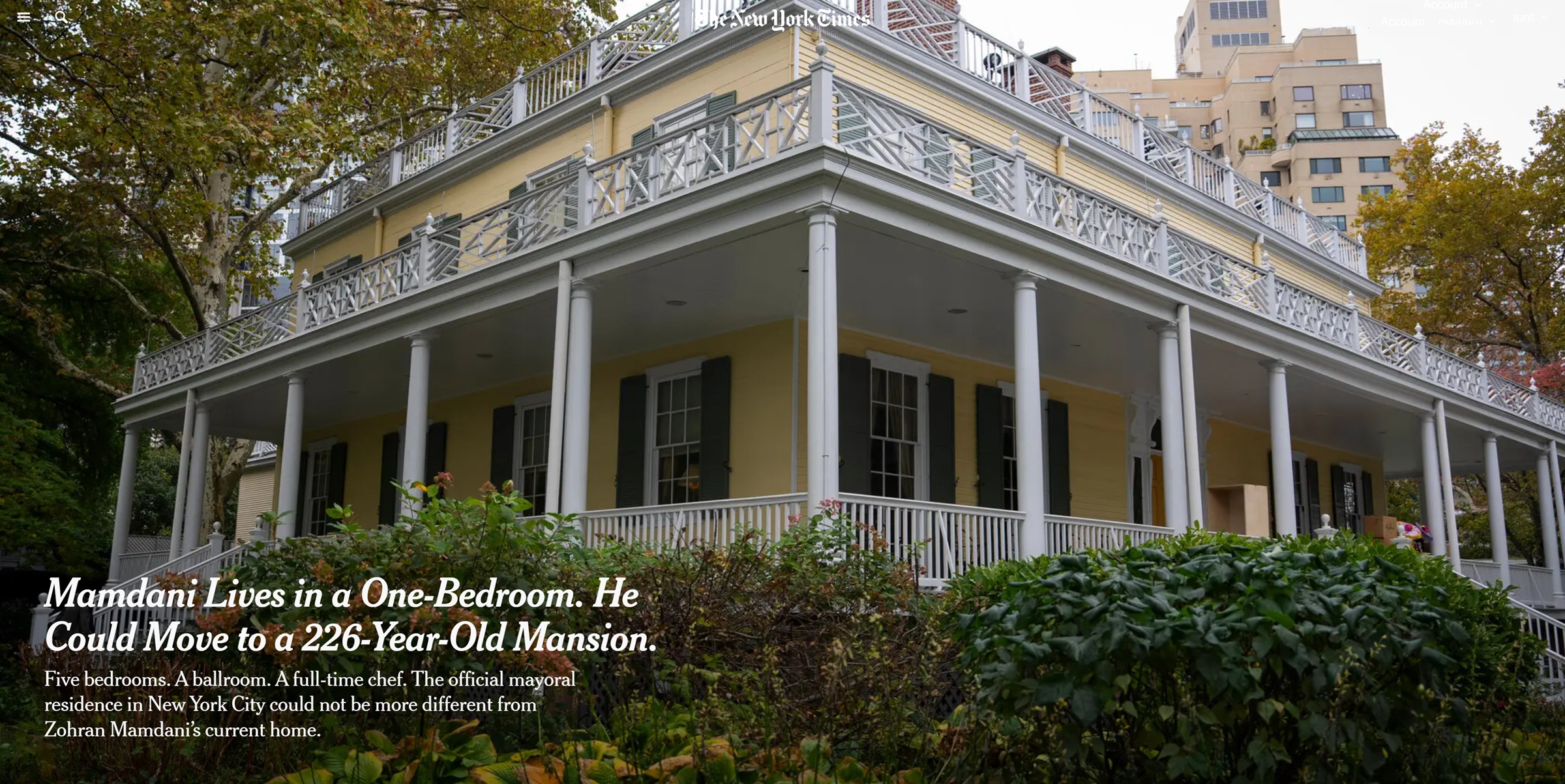
Reporter Eliza Shapiro writes for the New York Times: Zohran Mamdani, the mayor-elect of New York City, recently spent a weekday morning blanketing the floor of his $2,300-a-month apartment with towels. The sink was leaking, and the super had been summoned.
That wasn’t the only frustration.
“My wife and I have just talked about the fact that a one-bedroom is a little too small for us now,” he said recently on “The New Yorker Radio Hour,” after detailing the plumbing troubles.
Assuming Mr. Mamdani decides to move into Gracie Mansion, New York City’s official mayoral residence, he is unlikely to be dealing personally with such workaday problems much longer. Nor will his new digs feel quite so snug.
It is hard to overstate the difference between Mr. Mamdani’s current home, a modest rent-stabilized apartment in Astoria, Queens, and Gracie Mansion, a 226-year-old, 11,000-square-foot home on the Upper East Side, with gleaming mirrors reflecting the light of chandeliers, faux mahogany doors, a vast lawn with apple and fig trees and a vegetable garden occasionally plagued by rabbits.
‘Gracie Mansion, on the other hand, was once described by a New York Times reporter as a “pale lemon cake of a house.” It sits at the top of Carl Schurz Park, abutting the F.D.R. Drive, and offers sweeping views of the East River from its summertime veranda.’ – from Eliza Shapiro’s report for the NYT _________________________________________________________________________ The federal-style mansion was built in 1799 and consists of the original two-story house and an annex built in 1966. The original house is a New York City designated landmark and is listed on the National Register of Historic Places.
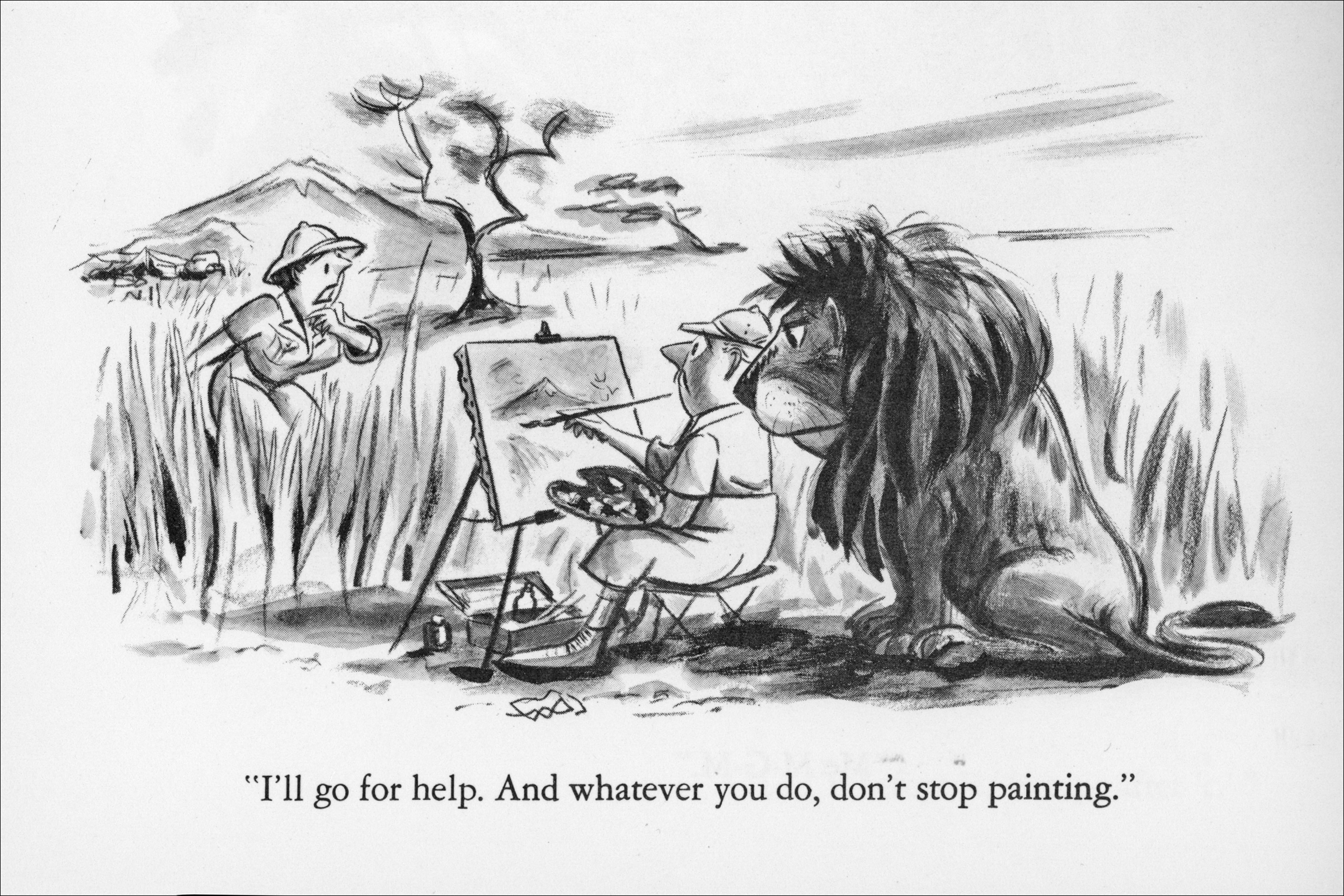
Cartoon by Eldon Dedini. (That must be Mount Kilimanjaro in Tanzania in the distance, and on the canvas— elevation 19, 341’/ 5,895 m). From a hardcover book called ‘The Dedini Gallery’, published by Holt, Rinehart & Winston, New York (1961). The cartoon first appeared in The New Yorker magazine in 1959.
Good morning.
It’s not a happy Friday here in the United States.
We are 37 days into this stupid shutdown of the US government.
A sample:
CNBC: Jobs Friday won’t be happening again this week as the record-long government shutdown has resulted in a lack of official data on the labor market as well as a host of other important indicators.
CBS: The American Federation of Government Employees, a labor union that represents more than 800,000 federal and D.C. workers, is urging senators to back Johnson’s legislation that would provide funding to pay members of the military and federal workers during the shutdown.
CBS: A Rhode Island judge on Thursday ordered the Trump administration to provide full federal food benefits to states by Friday and admonished the government for what he said is its defiance of an earlier order.
The Seattle Times: The Federal Aviation Administration’s order to reduce up to 10% of flights to bring relief to air traffic controllers at the country’s busiest airports takes effect Friday.
Transportation Secretary Sean Duffy said that flights will be reduced until the government shutdown ends.
Chris Hayes, host of political talkshow ‘All In’ on MSNBC, showed this picture yesterday on his show. It’s of a radioactive George W. Bush, videoconferencing in to the 2008 Republican National Committee (instead of attending in person). The outcome of the 2008 election in favor of the Democrats was actually a forgone conclusion (looking back now with the benefit of hindsight). It sure seems that we are headed that way with the 2028 election, even though it is still three long years away.
There was more rain today (another inch or so).
I ventured outside with my umbrella before the gray outside tuned into black.
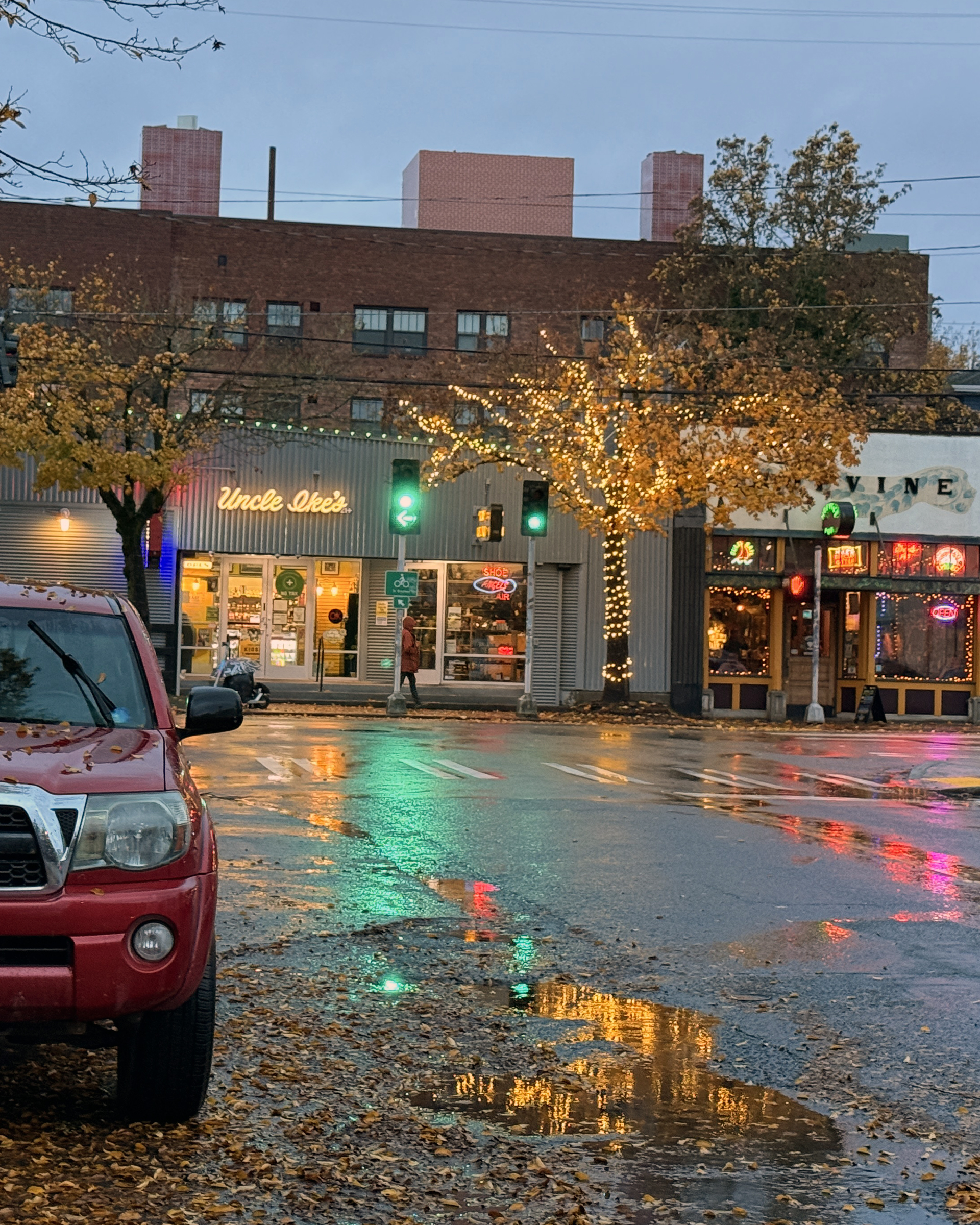
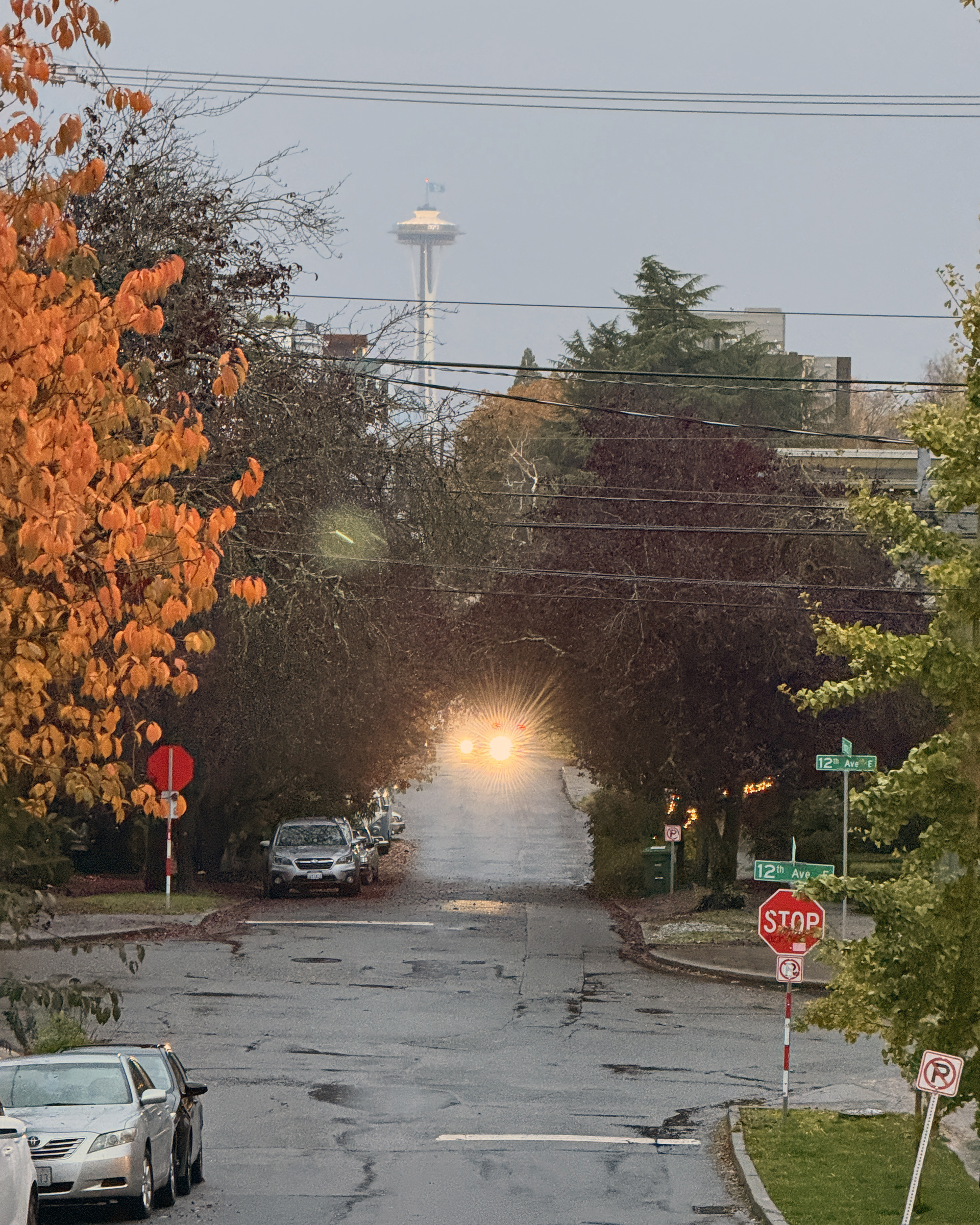
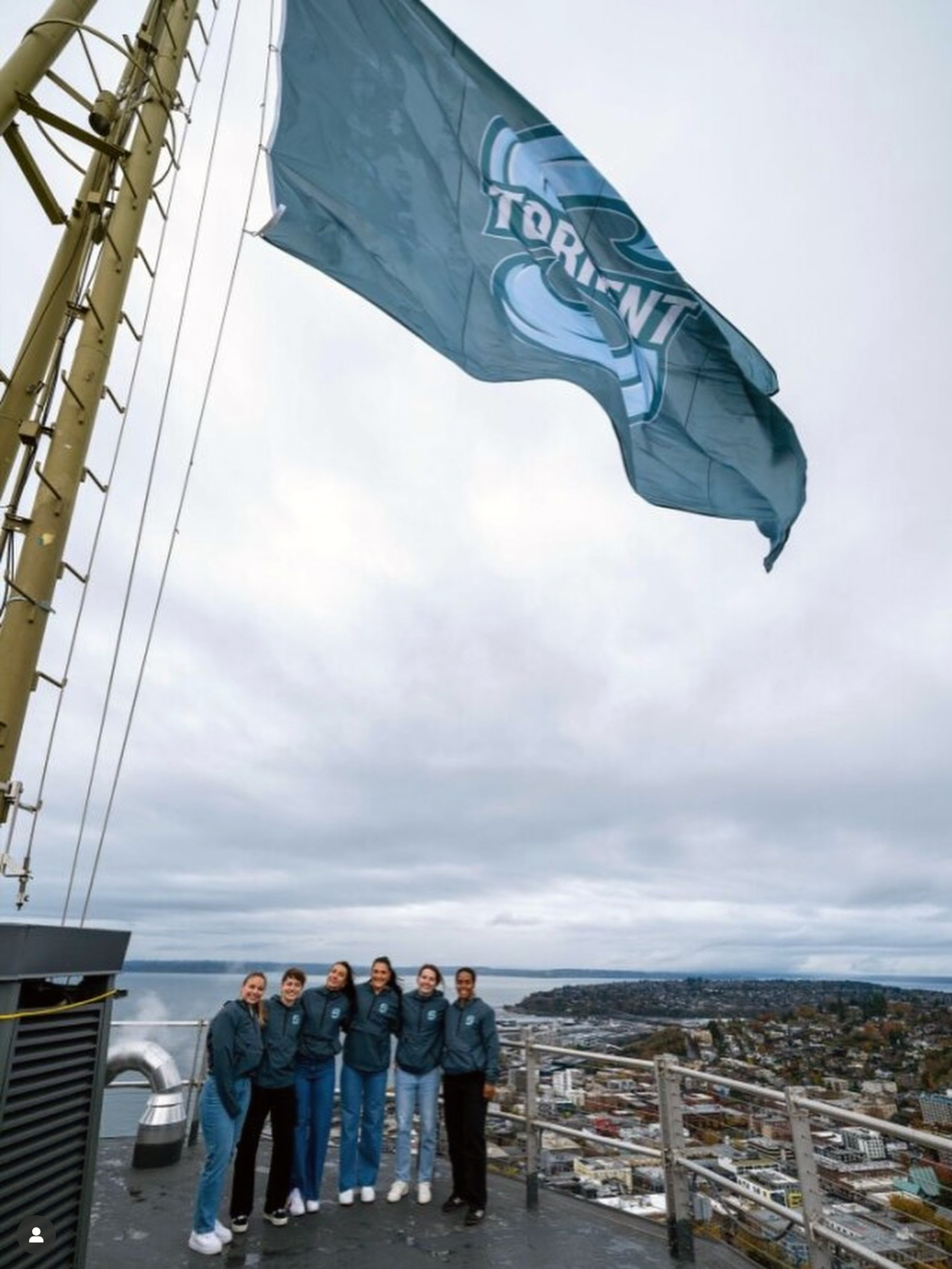
Here’s Republican Street and 15th Avenue East on Capitol Hill. The holiday lights on the trees are on already, to bring a little cheer to the gray outside.Looking down Thomas Street at 12th Avenue. The red beacon light is already blinking on the Space Needle’s flag post .. and is that an S on the flag? I wondered.And here’s the answer: yes, it’s an S for Seattle Torrent, the name for Seattle’s new women’s ice hockey team. They will play in Climate Pledge Arena. The eight teams in the Professional Women’s Hockey League (PWHL) are the Boston Fleet, Minnesota Frost, Montréal Victoire, New York Sirens, Ottawa Charge, Seattle Torrent, Toronto Sceptres, and Vancouver Goldeneyes. [Picture posted on Space Needle’s Instagram, but without any names]