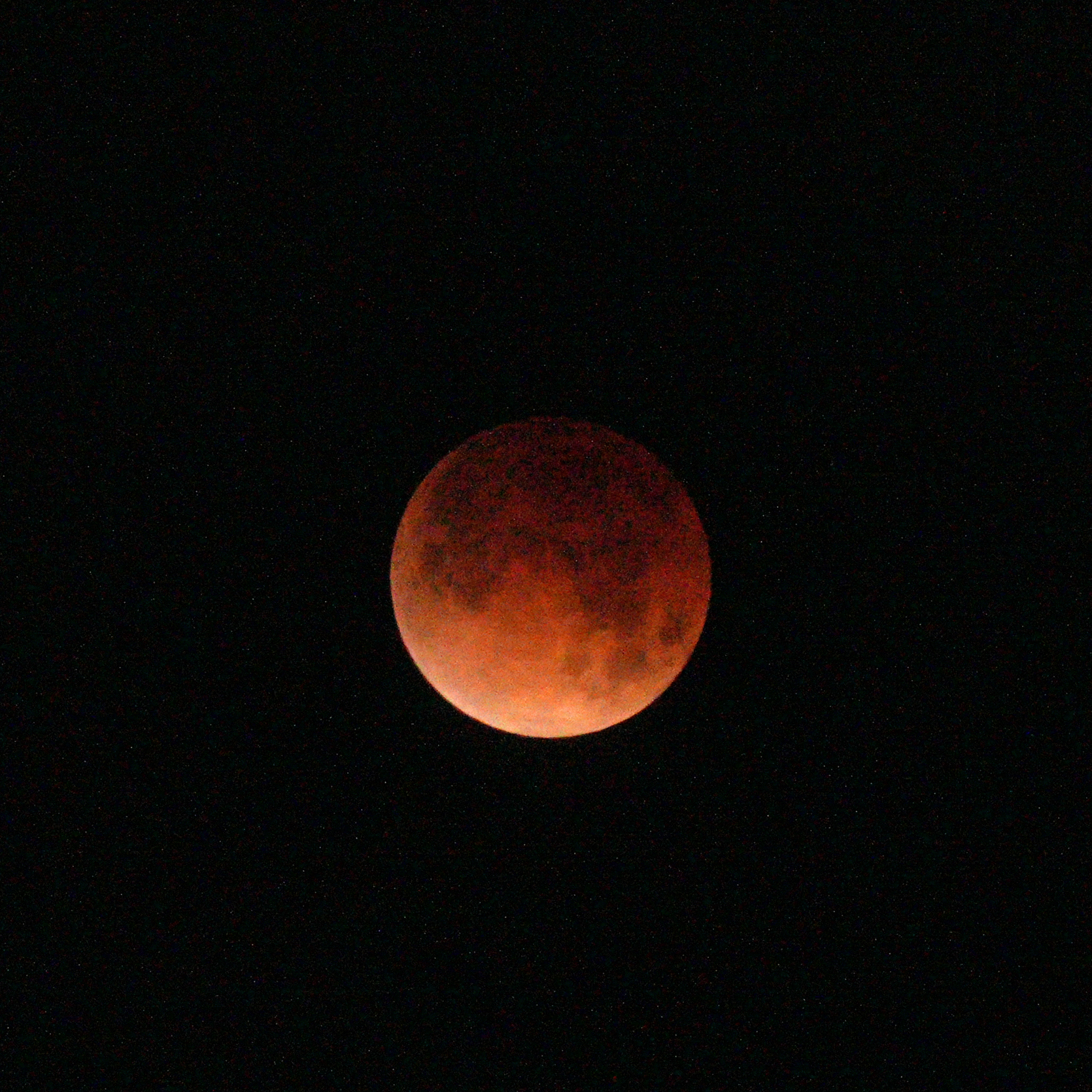
Here are my amateur pictures of the early morning hours’ total lunar eclipse, taken with my Sony a7CR and Tamron lens at 5 times zoom (200 mm).
The next total lunar eclipse will be in 2028.
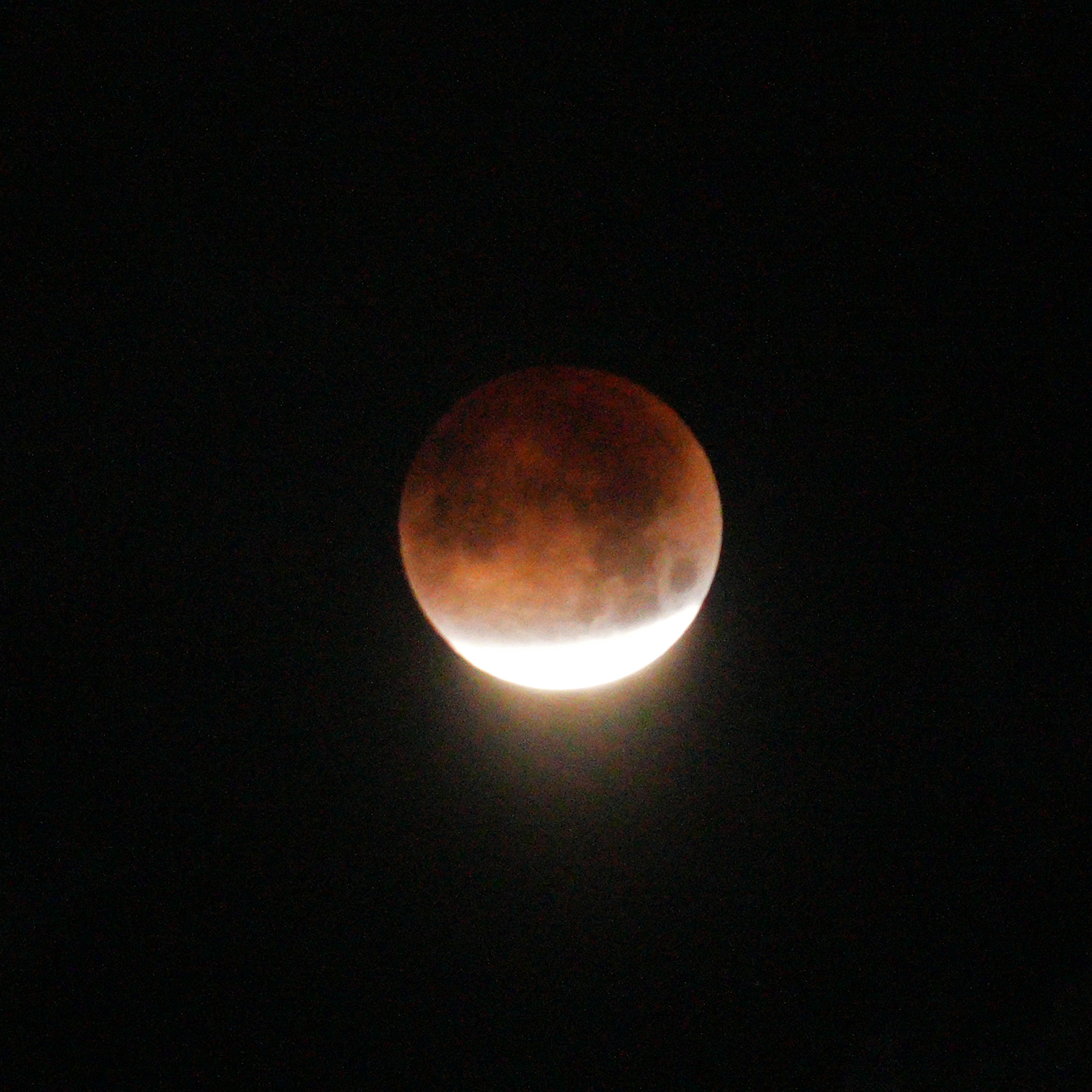
A total lunar eclipse occurs when the entire moon slips into the umbra, during which most of the sunlight illuminating the lunar surface is blocked by Earth. But some sunlight spills over the edges of Earth and through its atmosphere, which more readily scatters blue light. That leaves red light, which has an easier time passing through the atmosphere, lighting up the face of the moon and causing it to shine scarlet.