
Happy Friday The Thirteenth.
The postage stamps I had bought from an Ebay seller in Mumbai, India, made it into the mailbox on my porch this morning.
Here are some of my favorite ones.
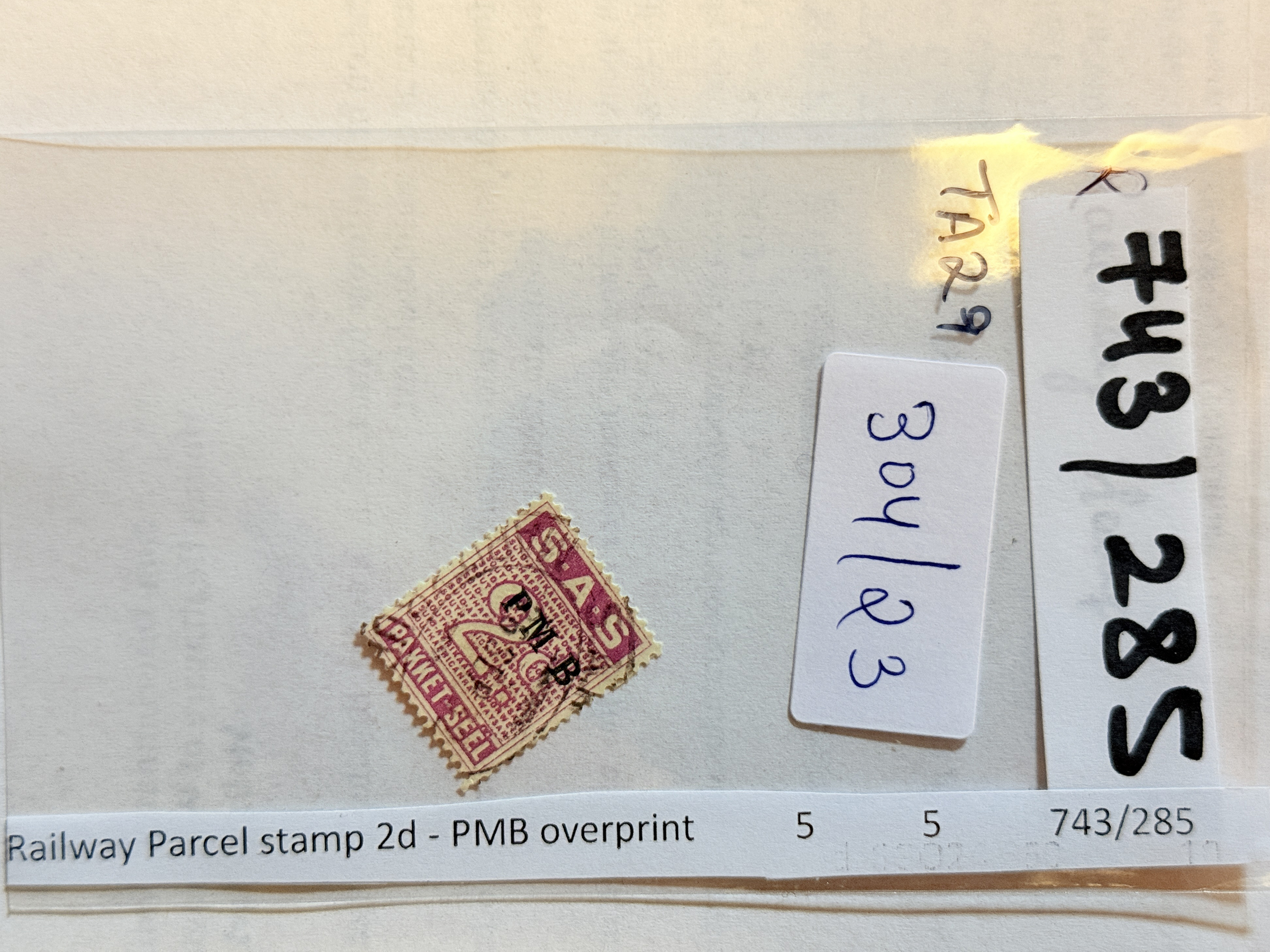
Issued 1929 | Perf. 14 | Size 18×22½ mm | Afrikaans or English inscriptions | Background 14 vertically aligned rows of text | No watermark
PS 6.2 | 2d Pale mauve | Afrikaans text
Overprinted PMB (code for Pietermaritzburg, Natal railway station)
Postmarked Sept. 6, 1932
[Source: Railway Stamps of South Africa, 1985, by H.S. Hagen and S.P.Naylor]
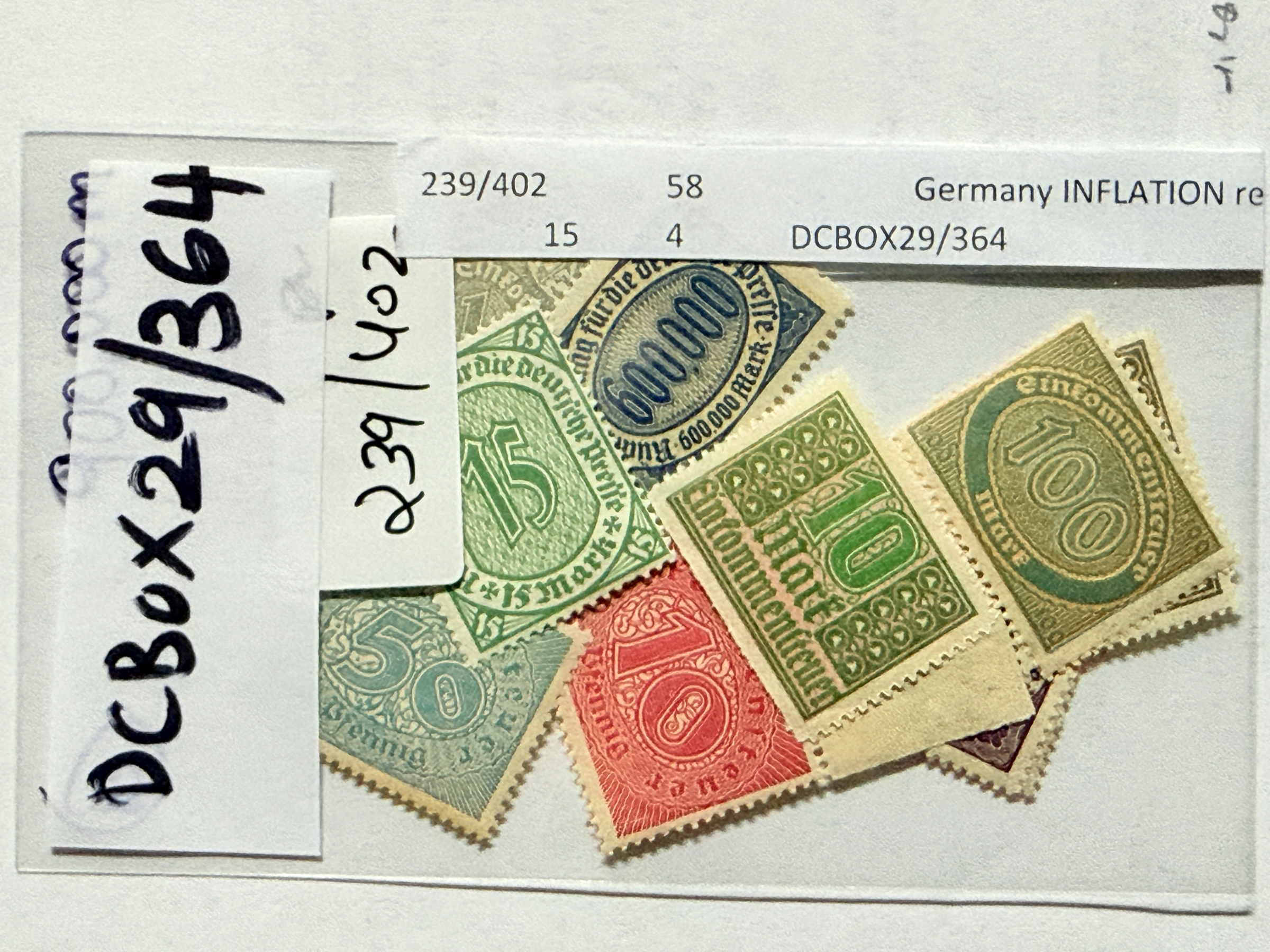
These represent a period of hyperinflation where postage costs skyrocketed from 20 marks to 50 billion marks in less than a year.
(Confession: I don’t have a collection of stamps from Germany, but I love the elaborate numeral designs on these, and added them into my purchase).
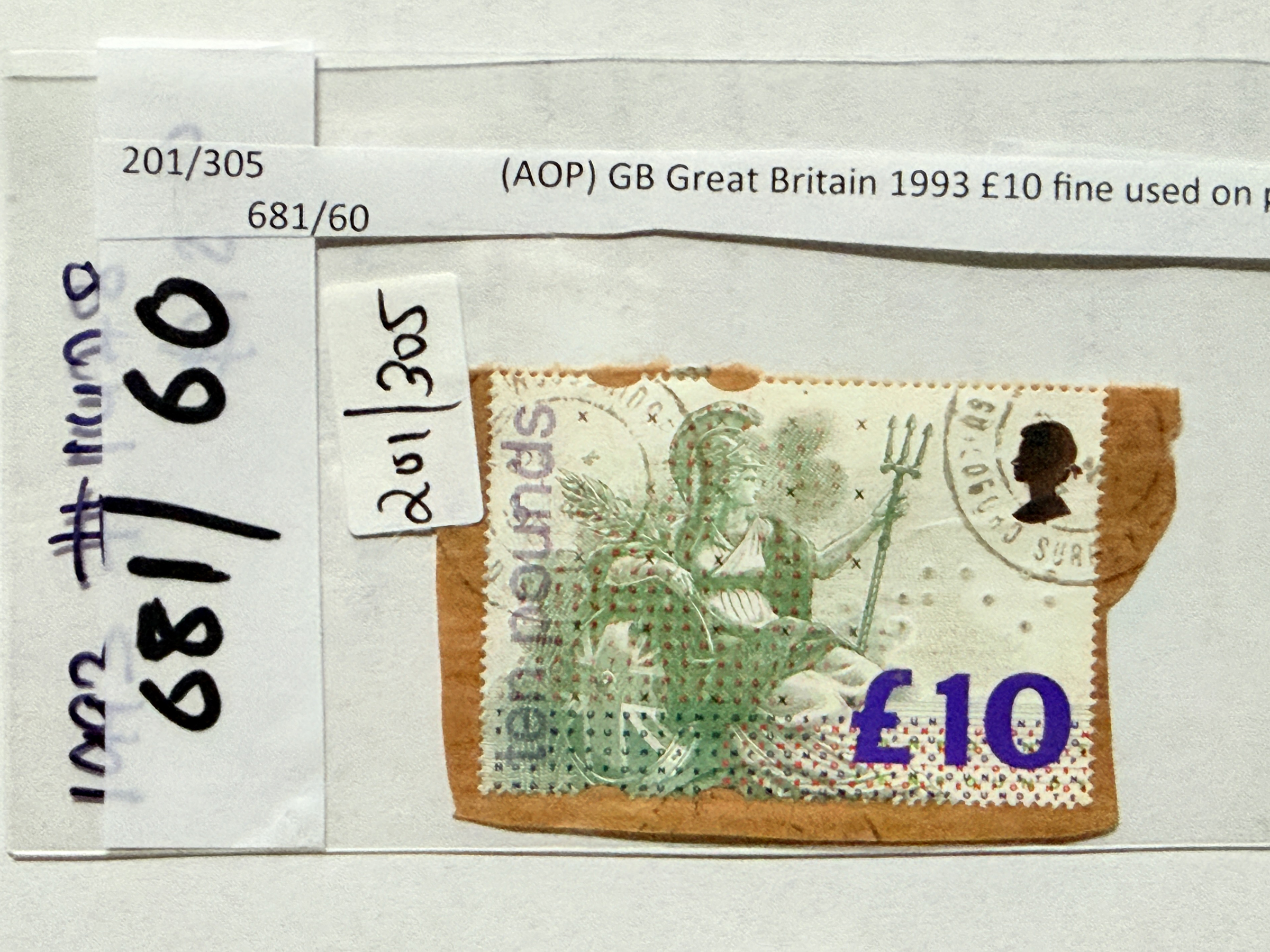
Issued by Royal Mail, Great Britain, Mar. 2, 1993 | Perf. 14 | Design B. Craddock | Lithography | Printer: House of Questa | Silver die-stamped w. Braille symbol for “10” embossed | Paper contains fluorescent colored fibers which, together with the ink on the shield, react under ultraviolet light
1658 1088| £10 Greenish grey, rosine, yellow, new blue, reddish violet, vermilion, violet, bright green and silver
[Source: Stanley Gibbons stamp catalogue Part 1, British Commonwealth 1997, Vol.1]
Britannia is the ancient Roman name for Great Britain and the national personification of the United Kingdom, often depicted as a helmeted woman with a trident and shield. Originating from the 1st century BC, it became a enduring symbol of British strength, power, and identity. It frequently appears on coins, on stamps and on artwork.
– Google AI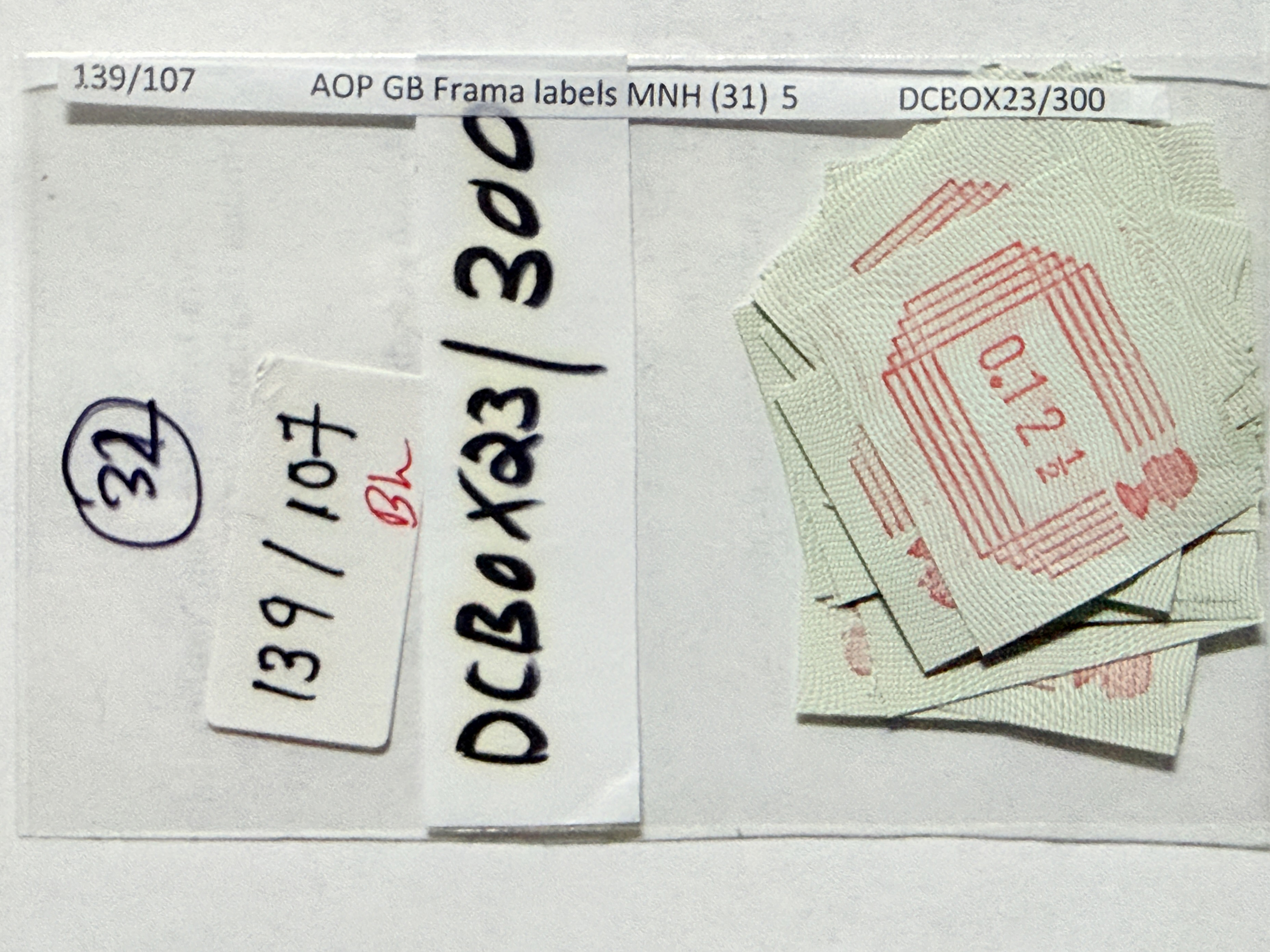
These imperforate labels, printed in red on phosphorized paper with grey-green background design, were first issued on 1 May 1984 as an experiment by the Post Office. Special microprocessor controlled machines were installed at post offices in Cambridge, London, Shirley, (Southampton) and Windsor to provide an after-hours sales service to the public.
The machines printed and dispensed the labels according to the coins inserted and the buttons operated by the customer.
Values were initially available in ½p steps to 16p.
In addition, the labels were sold at philatelic counters in two packs containing either 3 values (3½, 12½ or 16р) or 32 values (½p to 16p).
From 28 Aug. 1984 the machines were adjusted to provide values up to 17p.
After 31 Dec. 1984 labels ending in ½p values were withdrawn.
On 30 Apr. 1985, the machines were withdrawn from service.
P.S. I asked Google AI why these stamp labels were discontinued. The answer: Automated stamp label machines generally failed to achieve widespread success due to high operational costs, inconsistent print quality, and frequent technical failures.
[Source: Stanley Gibbons stamp catalogue Part 1, British Commonwealth 1997, Vol.1]