
It’s been 50 years since the launch of Viking I, the first US spacecraft ever to land successfully on Mars.
Research from recent years suggests that the lander touched down where a Martian megatsunami deposited materials 3.4 billion years ago.
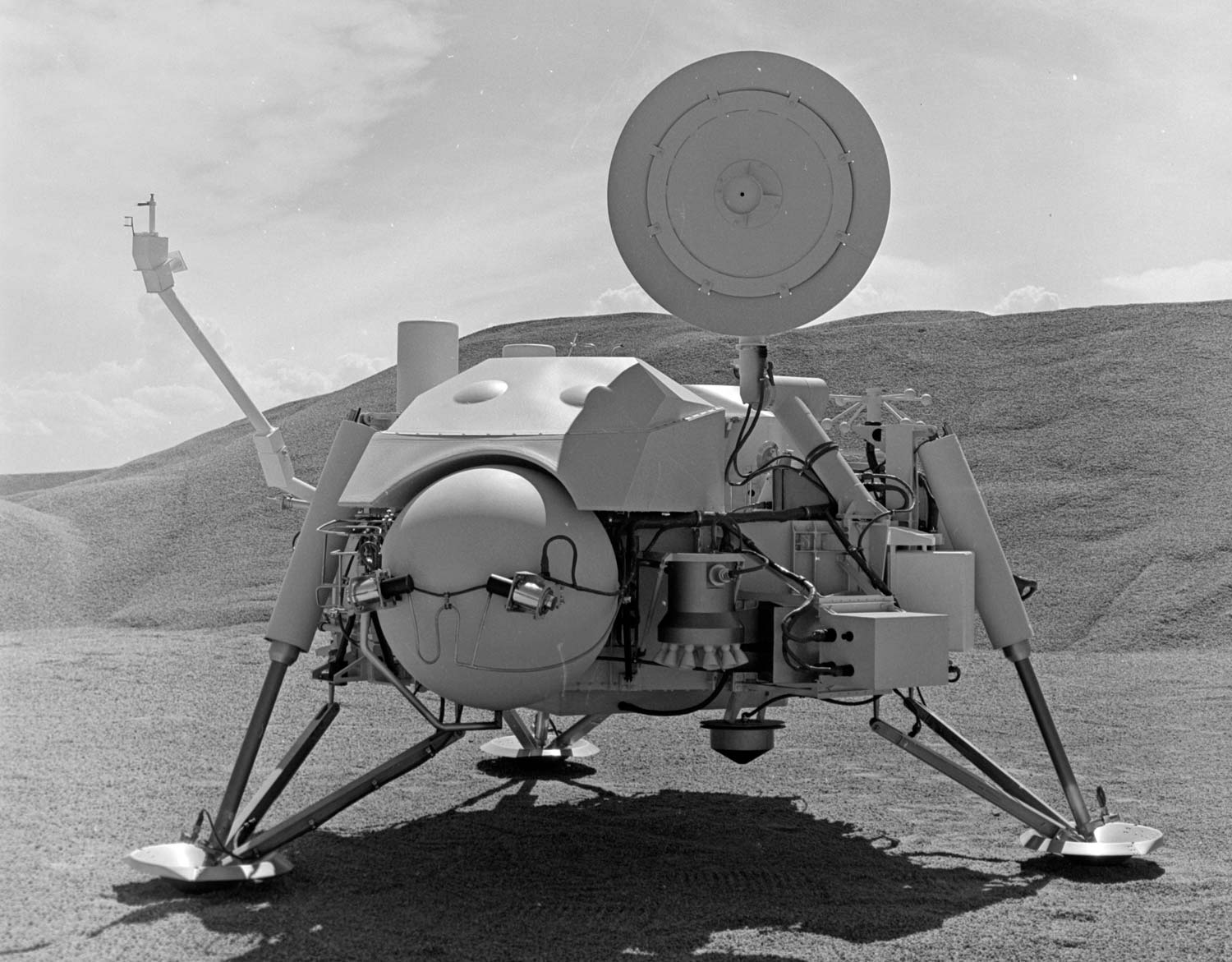
(The remains of the original Viking 1 lander are on the surface of Mars, where it had landed on July 20, 1976. It was a stationary lander and did not roam around. It did have an orbiter with solar panels that completed 1,485 orbits around Mars. While it no longer transmits data, the orbiter continues to orbit the planet! )
Construction of the Viking 1 spacecraft was done primarily by the private company Martin Marietta (now Lockheed Martin). The team worked for six years to build the ground-breaking spacecraft. The cost came to roughly $1 billion— about $6 billion in today’s dollars.
[Image from Lockheed Martin, posted on space.com]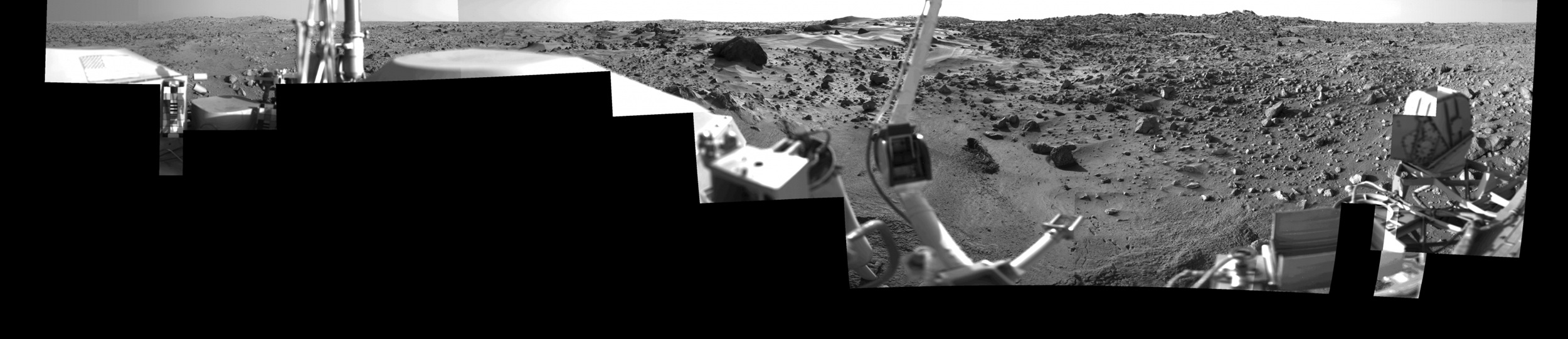
[Image from California Science Center website]
1. The Historic Liftoff
The countdown ended in a roar of fire and smoke as Viking 1 lifted off from Cape Canaveral on August 20, 1975. The Titan IIIE-Centaur rocket carried both an orbiter and a lander, marking NASA’s boldest step toward exploring Mars.
2. The Long Cruise to Mars
Viking 1 traveled nearly 11 months through space before arriving at Mars. This interplanetary cruiseinvolved careful navigation to ensure the spacecraft reached its target orbit with pinpoint accuracy.
3. Mars Orbit Arrival
On June 19, 1976, Viking 1’s orbiter fired its engine to settle into orbit around Mars. From this vantage point, it began photographing the surface to find a safe and scientifically valuable landing site.
4. The First Soft Landing on Mars
On July 20, 1976, exactly seven years after Apollo 11’s Moon landing, Viking 1’s lander touched down in Chryse Planitia, becoming the first fully successful Mars lander in history.
5. Stunning Panoramas of a New World
Viking 1 sent back the first high-resolution panoramic photos of Mars, revealing a rocky, rust-colored landscape beneath a salmon-pink sky, images that captured the imagination of people worldwide.
6. Searching for Life
Equipped with biology experiments, Viking 1 attempted to detect signs of life in Martian soil. The results were puzzling: some tests gave unexpected positive readings, but most indicated no organics, sparking debates that continue to this day.
7. Mapping Mars from Above
The orbiter mapped vast swaths of the planet, from giant volcanoes like Olympus Mons to canyons deeper than Earth’s Grand Canyon. These images shaped our understanding of Martian geology.
8. Years of Operation
Viking 1’s lander operated for over six Earth years (2,245 Martian sols) making it the longest-running Mars surface mission until 2010, when NASA’s Opportunity rover broke the record.
9. A Sudden Goodbye
In November 1982, a faulty command ended communications with the lander. The orbiter had already completed its mission, but Viking 1’s contributions to science remained secure.
10. Inspiring Future Mars Missions
From Pathfinder to Perseverance, every Mars mission since Viking 1 has built on its legacy. It proved we could land safely, operate for years, and study Mars in depth.