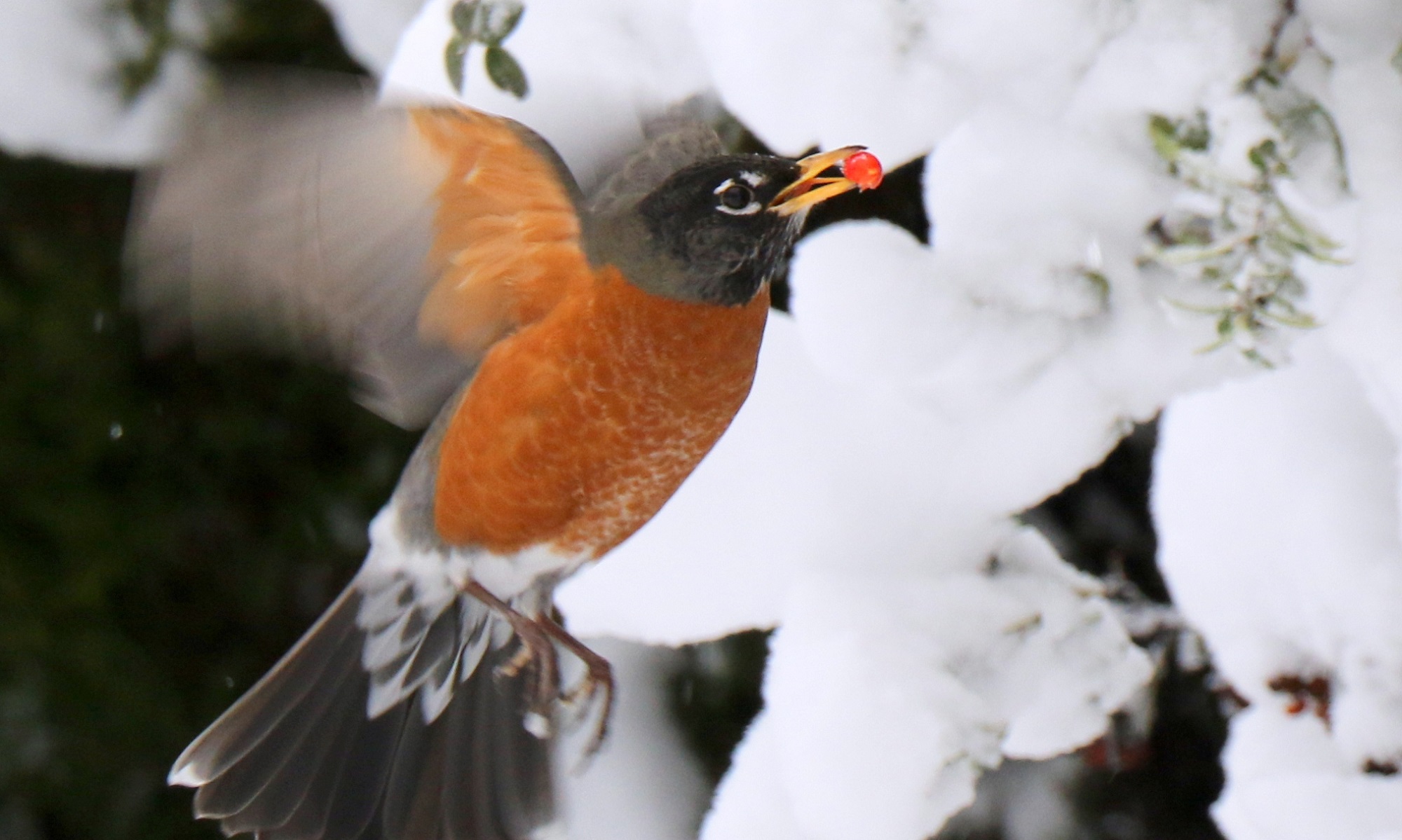
Monday night/ arrival in Oslo

My Norwegian Air flight had an hour delay out of Hamburg. There was a baggage mix-up in the airplane cargo hold that had to be resolved, but we made it into Oslo with no incident, after that.

The express train from Oslo Gardermoen airport to Oslo Sentralstasjon (central station) took only 21 minutes. The central station is so modern and sleek inside, that it has the same feel as an airport.
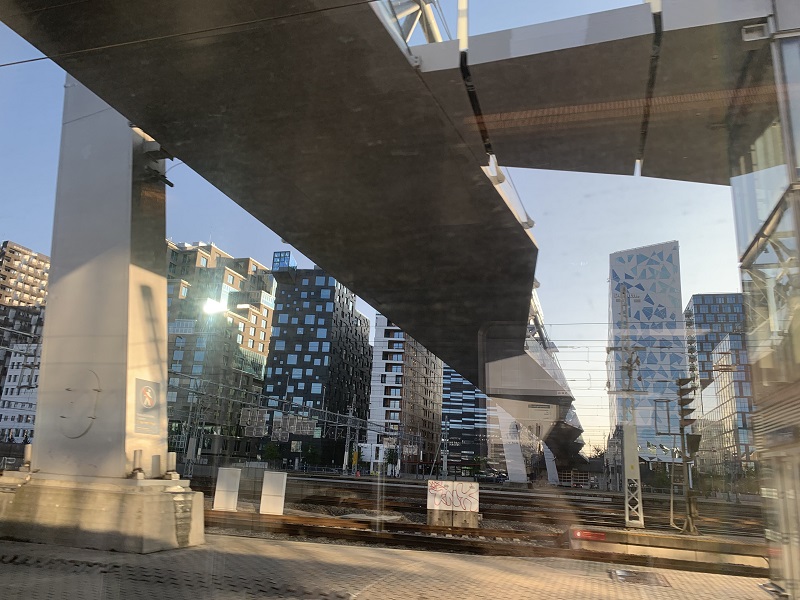
Here’s the view from the train coming into Oslo central station, some modern buildings lined up in the background.
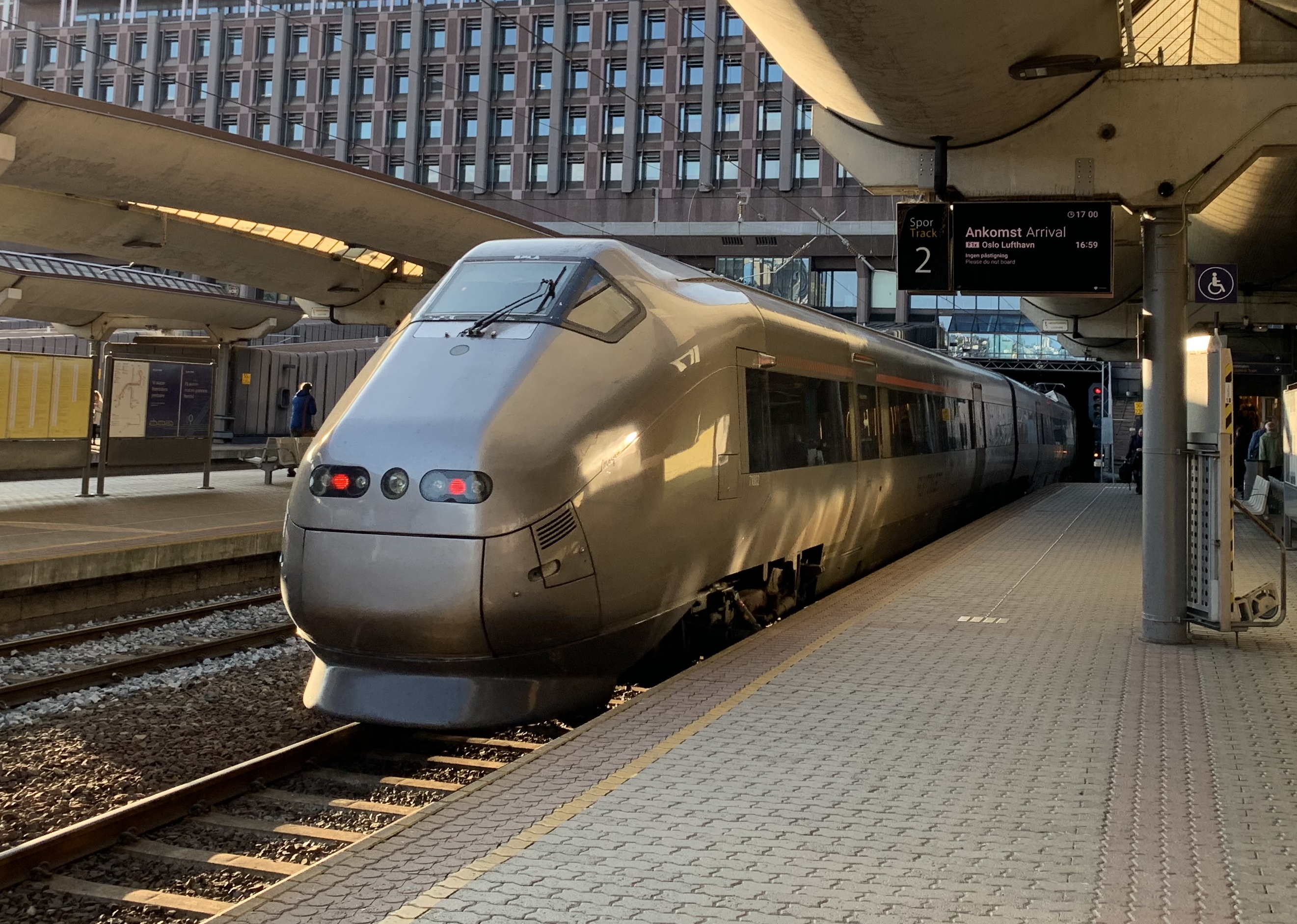
Here’s our sleek express train called Flytoget at Oslo Central Station. It’s a GMB Class 71 electric train, capable of 130 mph (210 km/h). It is the only high-speed rail service in Norway, though.
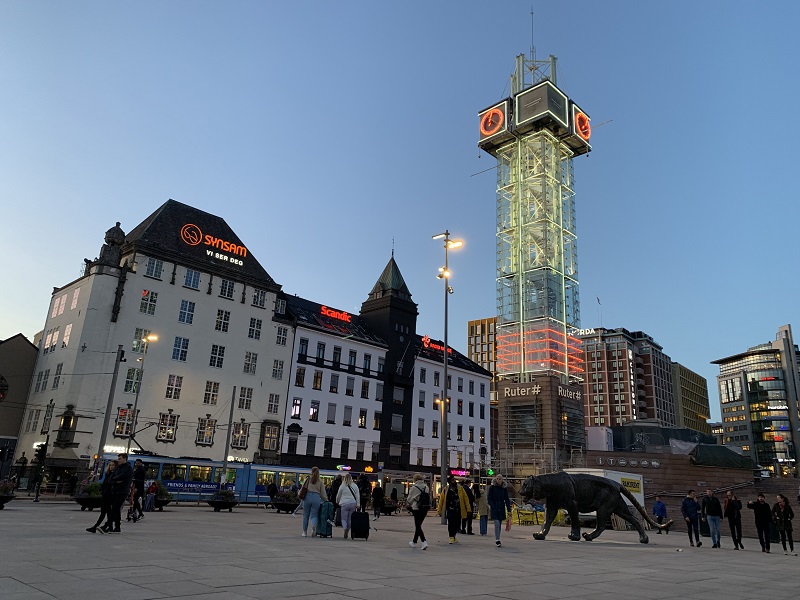
I took a quick walk around the central station before the sun set completely. This is the town square right by the central station. Look for a big bronze tiger at the bottom right.

Monday morning/ last stop: Oslo

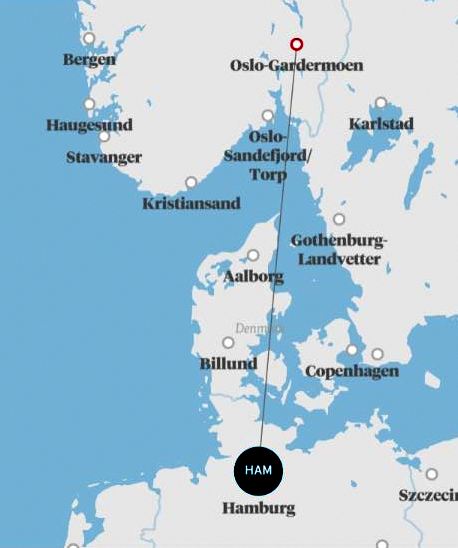
The flight to Oslo on Norwegian Airlines is almost due north, and 1 hr 25 mins.
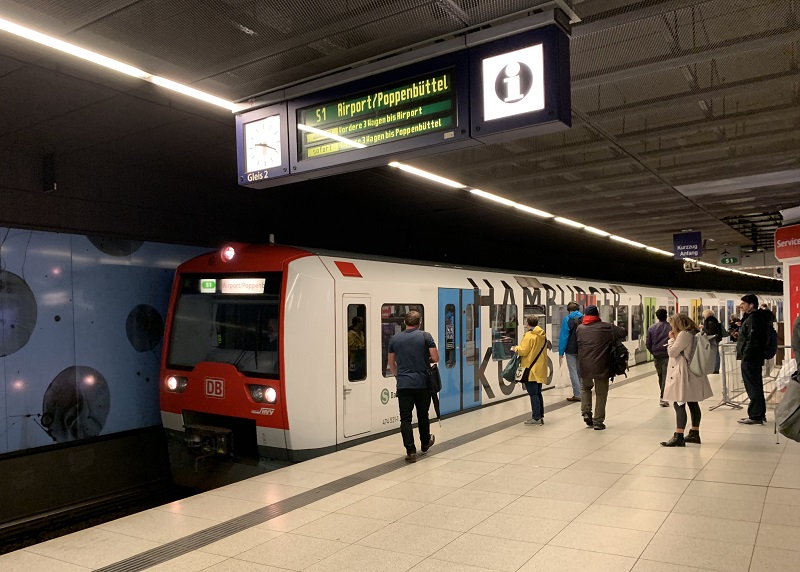
The S-bahn (regional) train at Jungfernstieg station. It pays to read the overhead sign: it says the first three cars go to the airport, and the others to Poppenbuttel.
Der Spiegel cover at the newsstand: ‘One Deal Too Many: Why The Ukraine Affair Could Cost Trump The Presidency’.

I am at Hamburg airport, on my way to Oslo for a few days. It will be my final stop before going home.


Sunday/ the Deichtorhallen

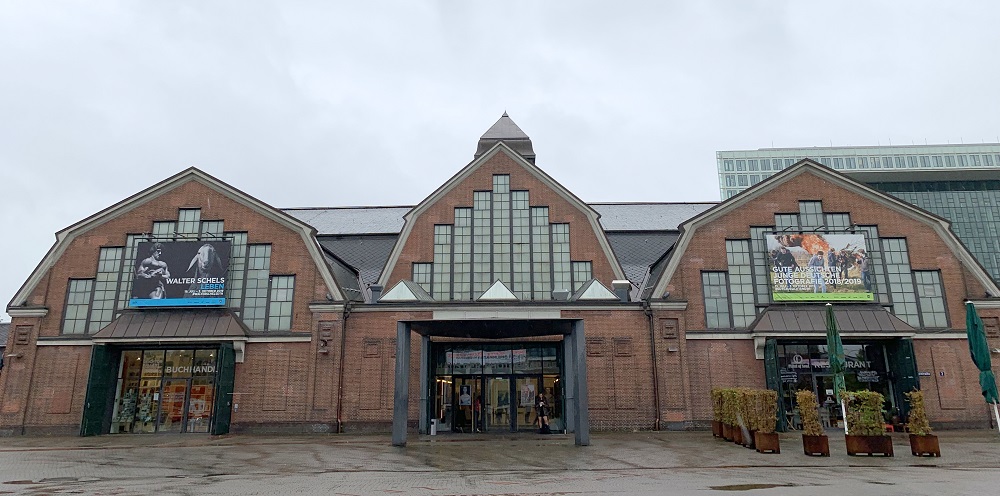
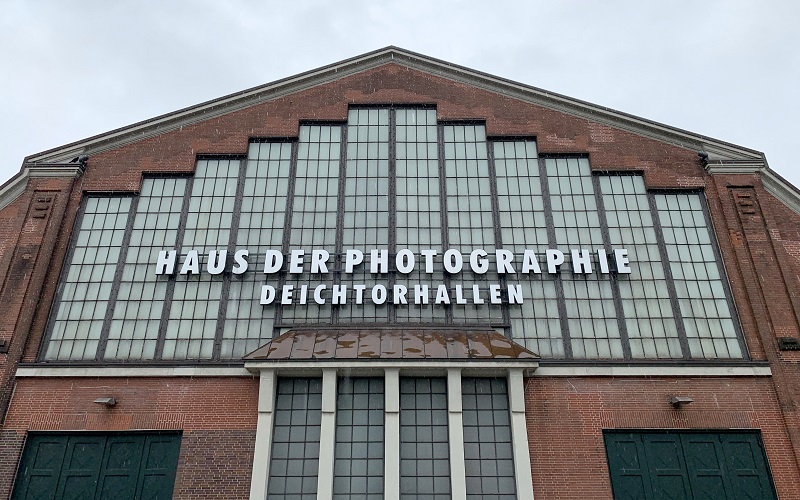
There was a persistent rain today, that made walking around without an umbrella, and not getting really wet, impossible. So I checked into the Deichtorhallen (“the levee gate halls”) art & photography museum.
These halls were built from 1911 to 1914 as market halls, on the grounds of the former Berliner Bahnhof railway station (Hamburg’s counterpart to Berlin’s Hamburger Bahnhof). Wikipedia says they ‘constitute one of the few surviving examples of industrial architecture from the transitional period between Art Nouveau and 20th century styles’.

This is a side view of the Deichtorhalle (‘levee gate hall’) that houses the art collection ..
.. and a view of the Deichtorhalle that houses the photography collection.
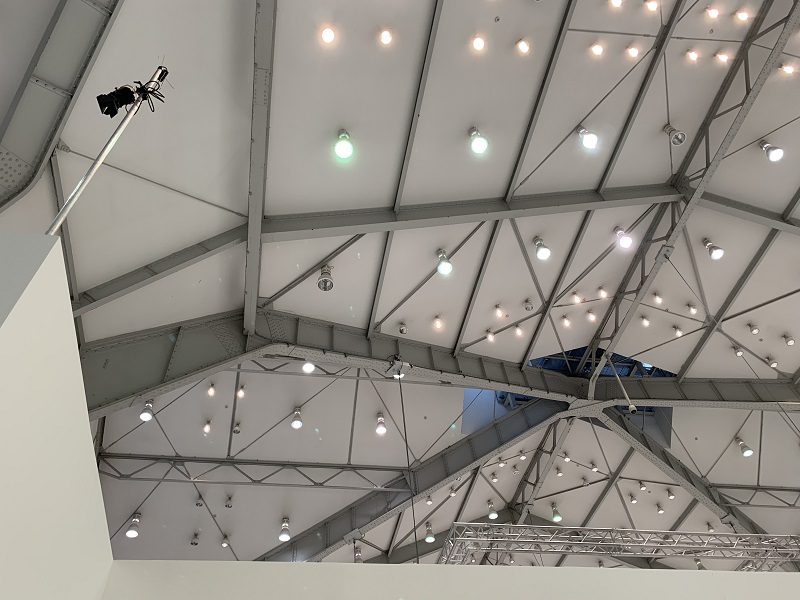
The ceiling of the art collection hall is in itself a work of art (as it should be, right?).
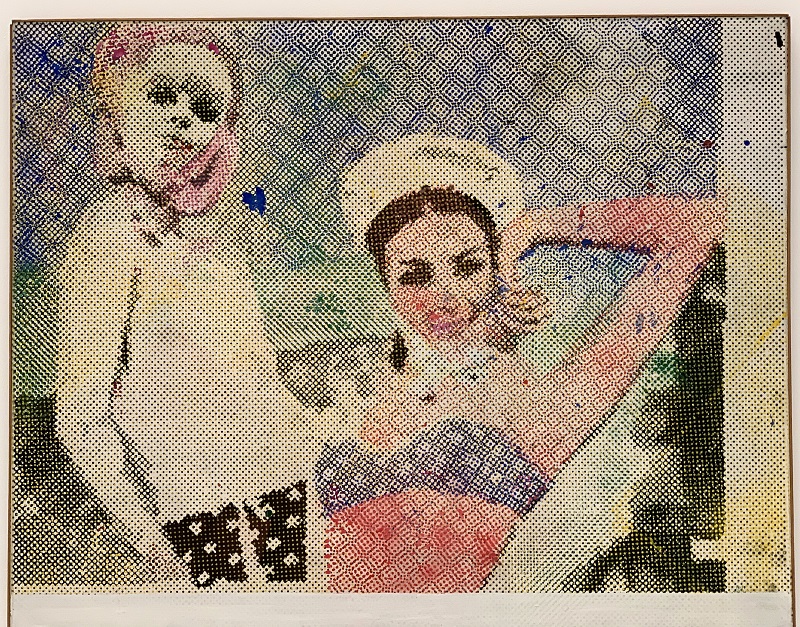
‘Freundinnen (Friends)’ (1965/1966) by Sigmar Polke, large oil on canvas made with raster scan dots. The artist used a paint pistol and a template to create the overlapping dots in different colors. This results in moiré patterns: large-scale interference patterns produced when an opaque ruled pattern with transparent gaps is overlaid on another similar pattern.
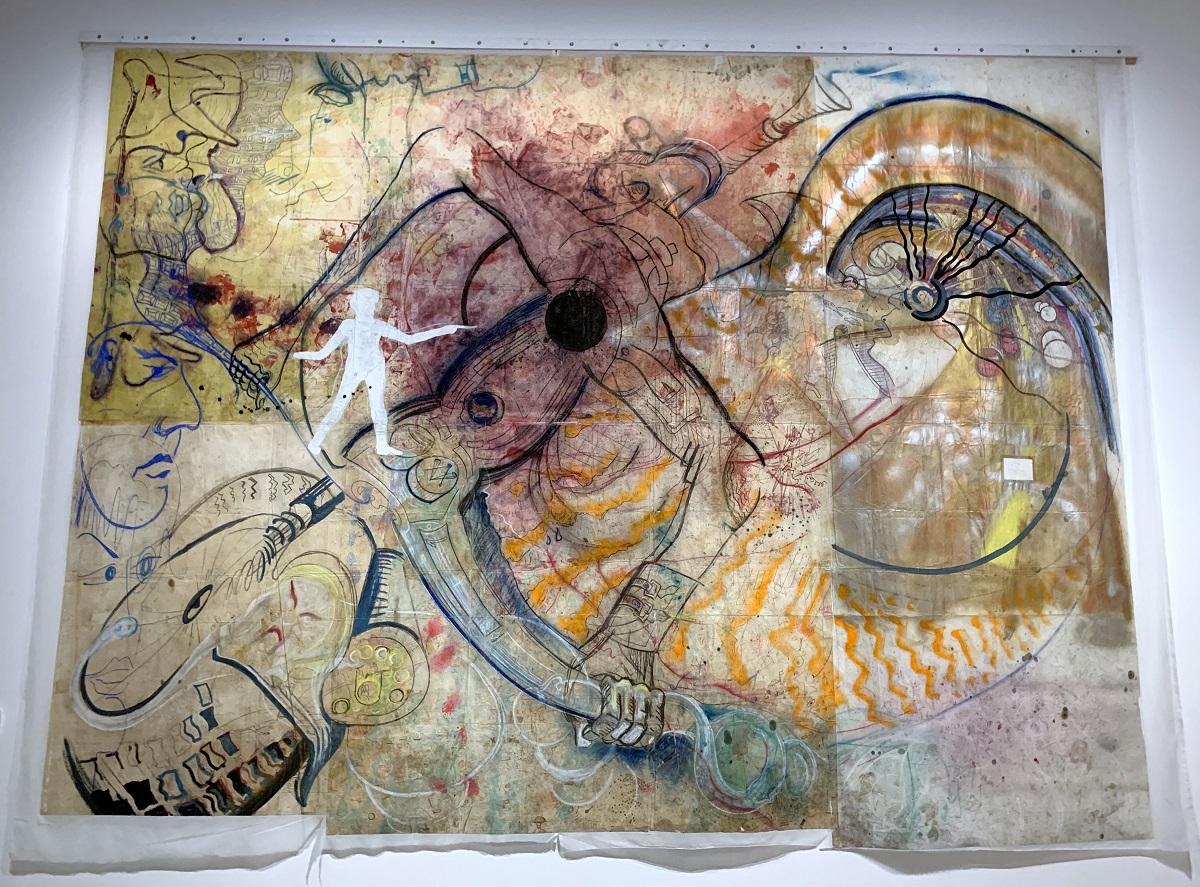
This giant work of mixed media on paper covers an entire wall in a small room. It is also by Sigmar Polke (1968-1971) with the strange title ‘Die Fahrt Auf Die Undendlichkeits-acht (Der Motorfahrrader)’ Eng. The Ride On the Eight of Infinity (The Motorcyclist)‘.
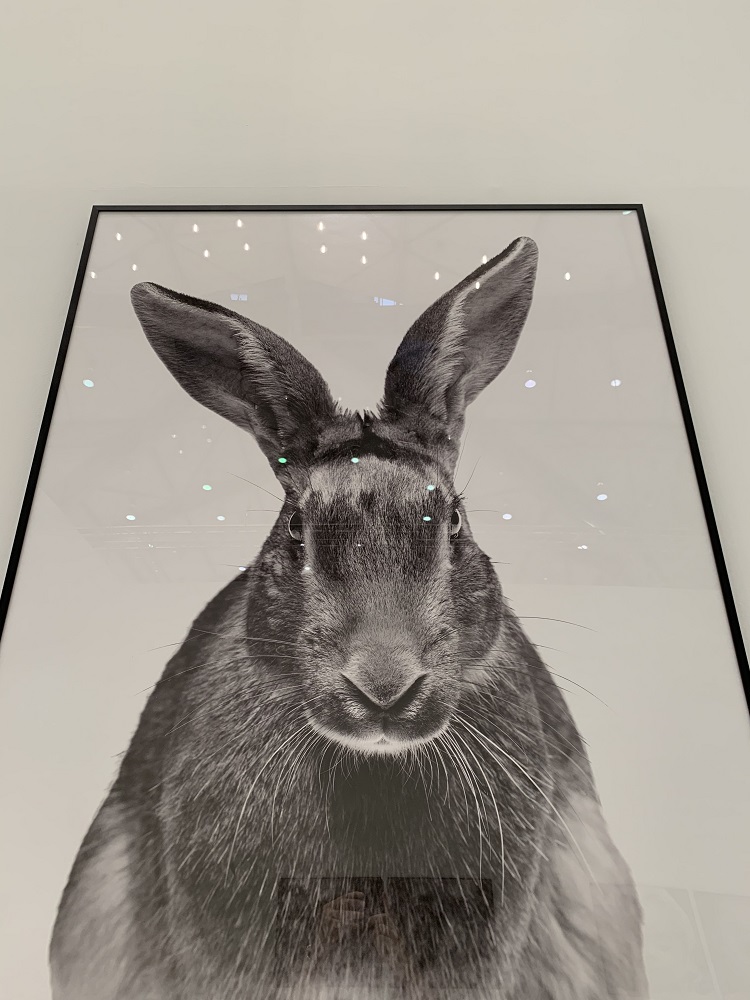
I thought the photography hall’s pictures were weird. (Should they be?). It had a lot of interesting/ ugly human face photos, and new-born babies, and other strange, strange pictures. I liked this scary hare staring down the camera, though. The artist was not noted, only that it is a gelatin print on paper, of a hare, made in 2000.

Saturday/ the Elbbrücken station

Well, I did run out to the Elbbrücken station on the U4 line today.
It opened in Dec 2018.
I also went up to the viewing platform of the St. Nikolai Memorial.
The city’s 1968 Heinrich Hertz Tower (280 m/ 918 ft) has long been closed to visitors, but it might reopen in a few years.

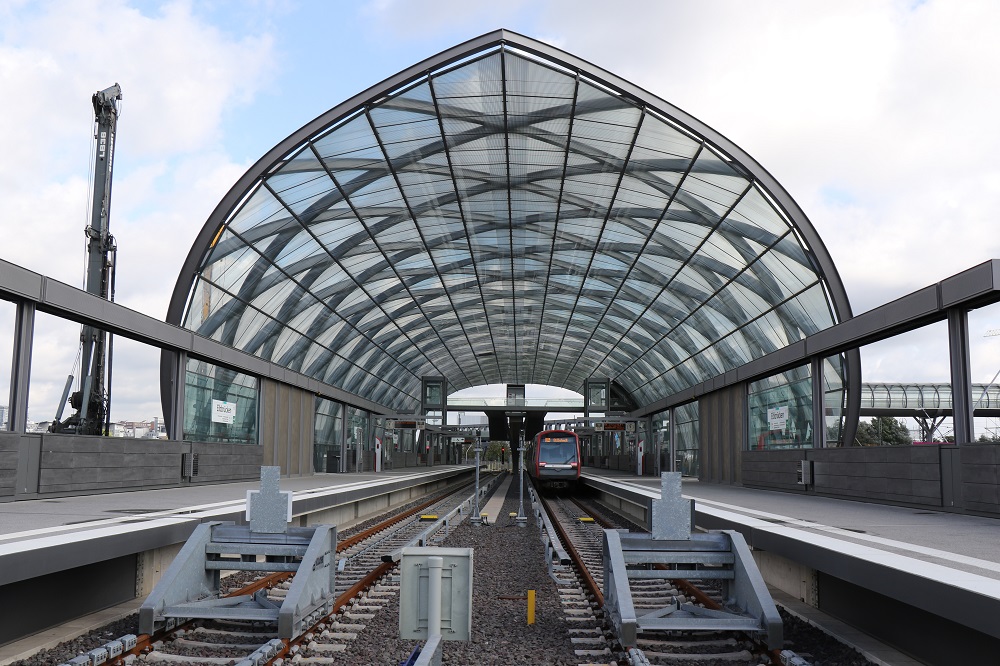
Here’s the new end of the U4 line: the Elbbrücken station. It’s right by two steel truss bridges that go over the Elbe river: one for road traffic and one for rail.
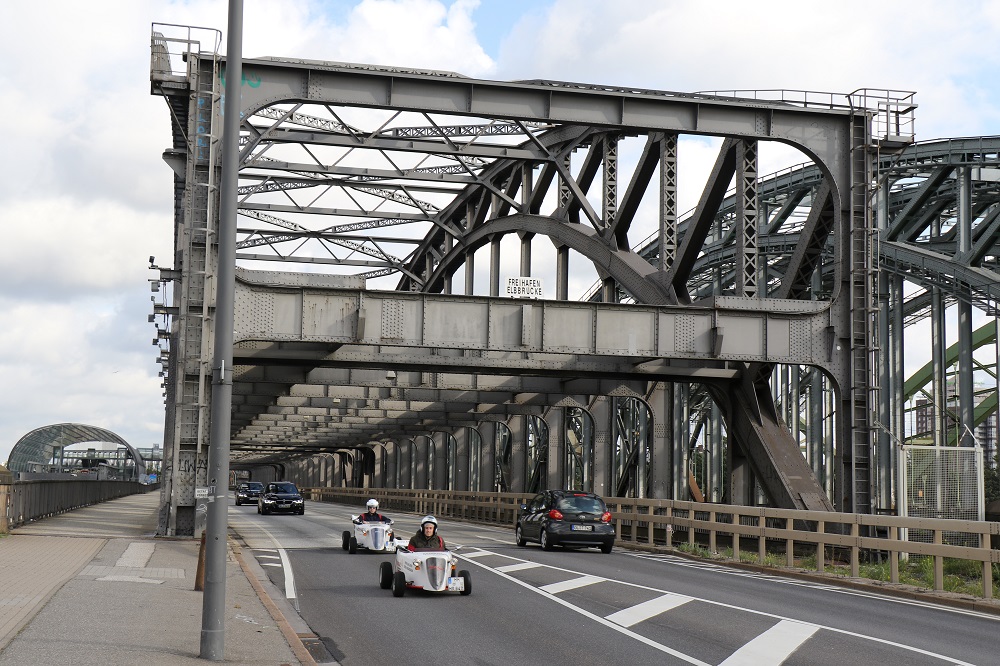
There’s the U4 station in the distance on the left, then the steel bridge for cars*, and on the right edge, the train bridge.  These are the Freihafenelbbrücke, constructed in 1926. (The Elbe river has a north and a south branch, with at least a dozen bridges). *And what are these go-carts doing on the road? Best I could tell, is that it is a group that did a jolly ride circuit around Hafencity. Shortly afterwards, all of them headed back from where they came from.
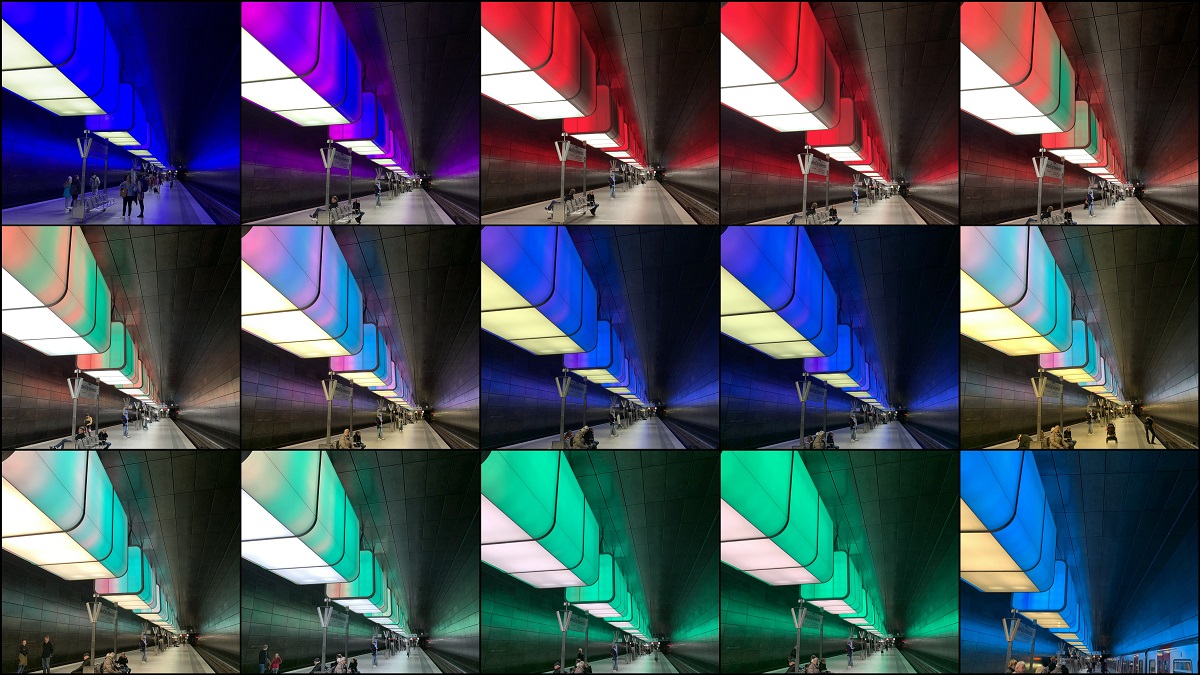
Here is a collage of images taken at different intervals, of the LED light boxes at the HafenCity Universität U-bahn station one stop down from the Elbbrücken station.
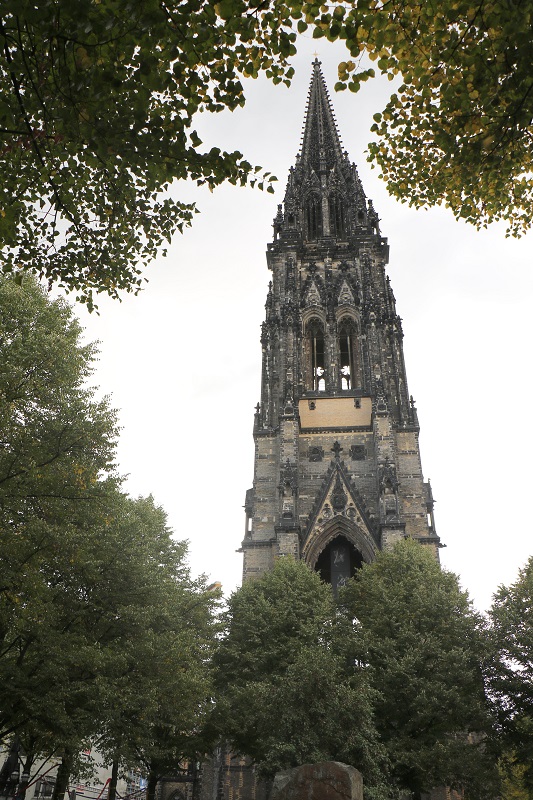
Here is the neo-Gothic St. Nikolai Memorial. At its completion in 1874 as St. Nikolai Kirche with a 147 m/ 482 ft spire, it was the tallest building in the world. Central Hamburg and its surroundings suffered terrible damage during WWII, though. In 1943 the church building was destroyed during Operation Gomorrah, but the spire escaped relatively unscathed. Today there is a plaza where the church building used to be, and a museum in the basement of the tower.
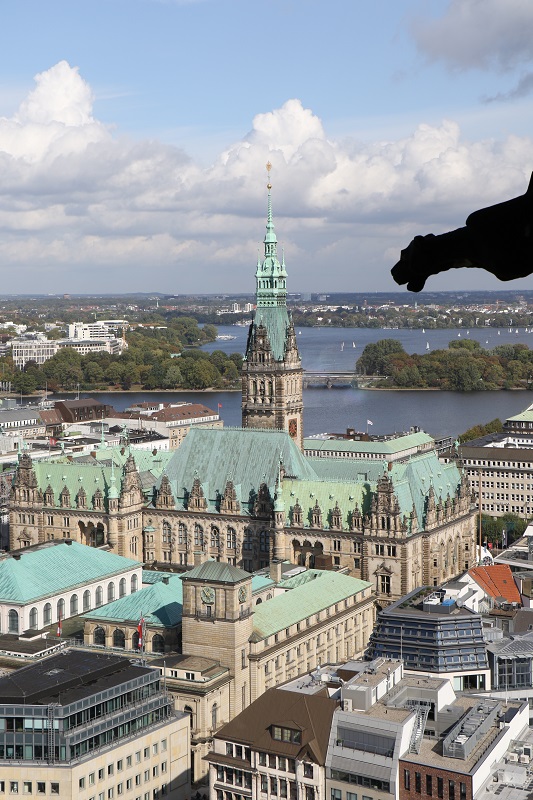
A gargoyle from St Nikolai looking over the Rathaus (city hall) from the spire’s viewing platform at 76 m/ 250 ft ..
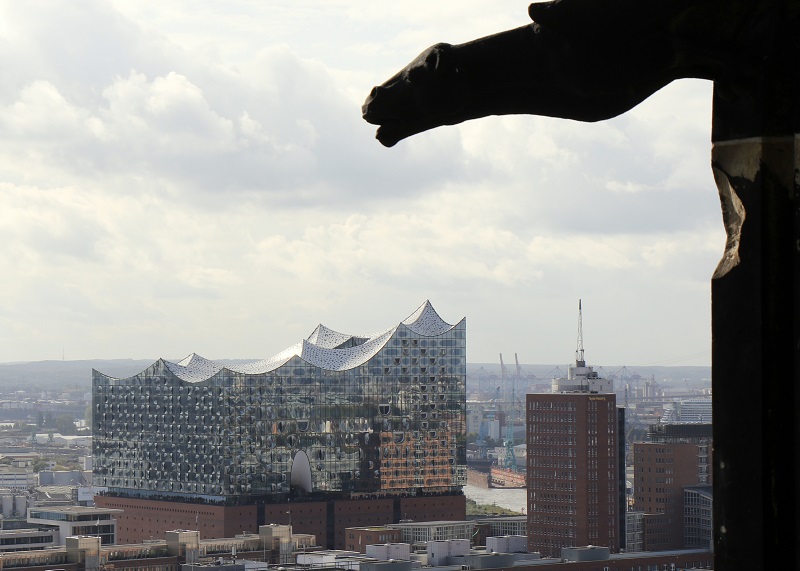
.. and another view, revealing the rooftop of the Elbphilharmonie concert hall.

Friday/ U-bahn stations

Here are my favorite U-bahn station photos, so far.
There is a brand new station at the end of the U4 line that I will go and check out tomorrow.

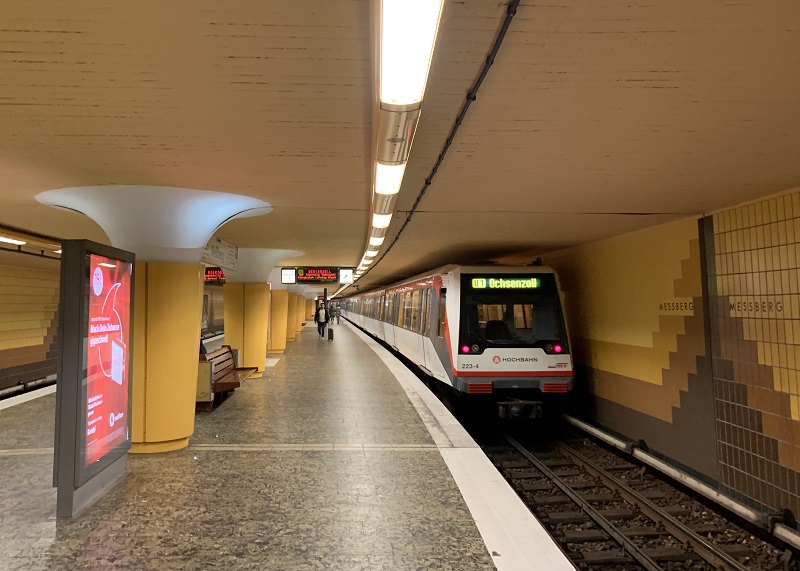
Messberg station on the U1 line.
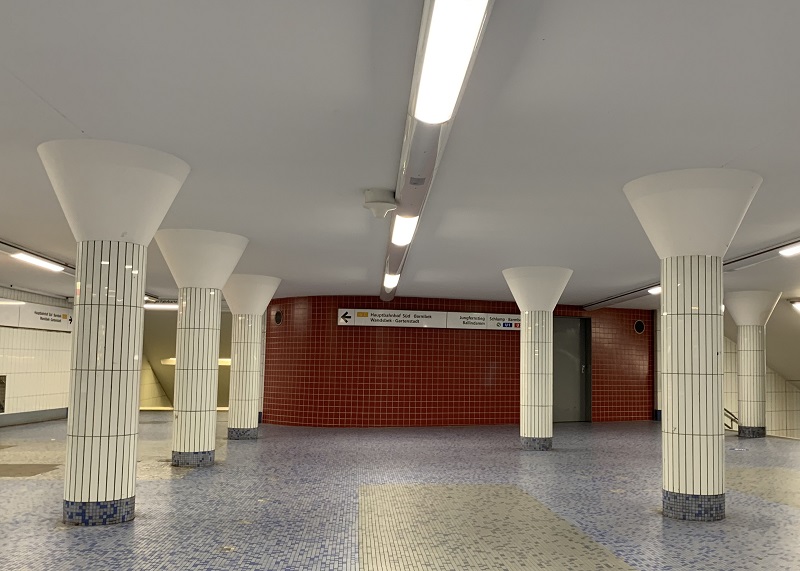
The entrance hall at Rathaus station on the U3 line.
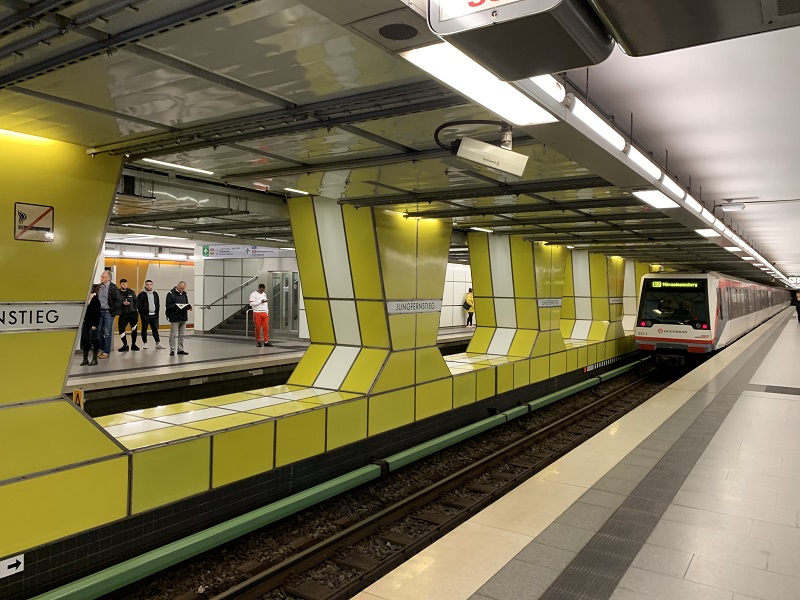
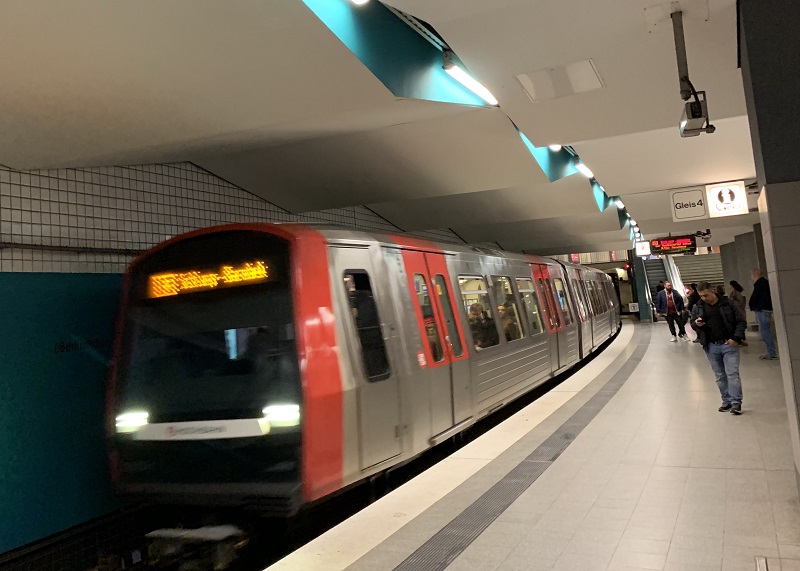
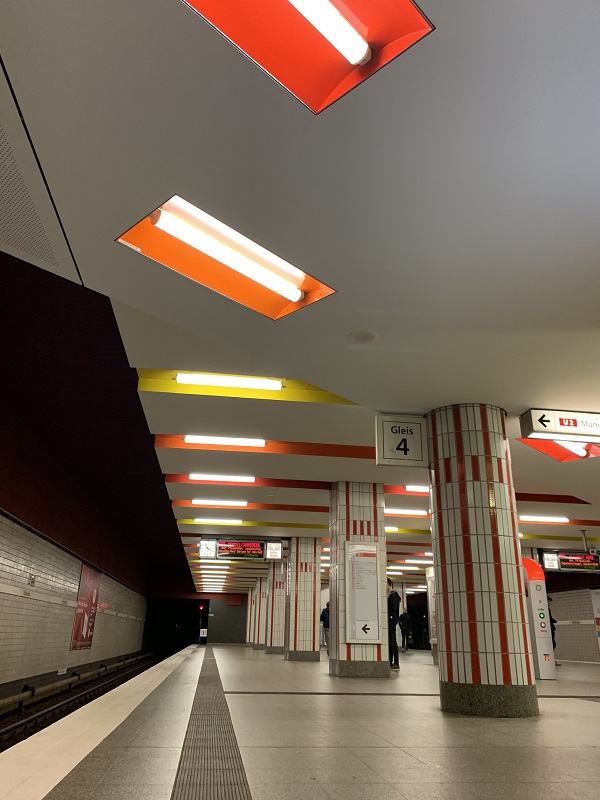
Jungfernstieg station on the U2 and U4 lines.
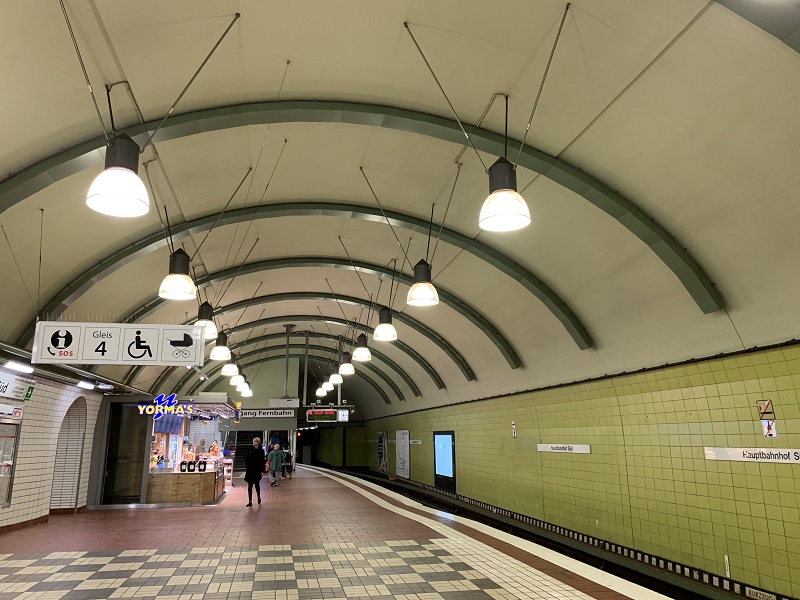
Hauptbahnhof Süd station on the U3 line.
Berliner Tor station on the U2, U3 & U4 lines.
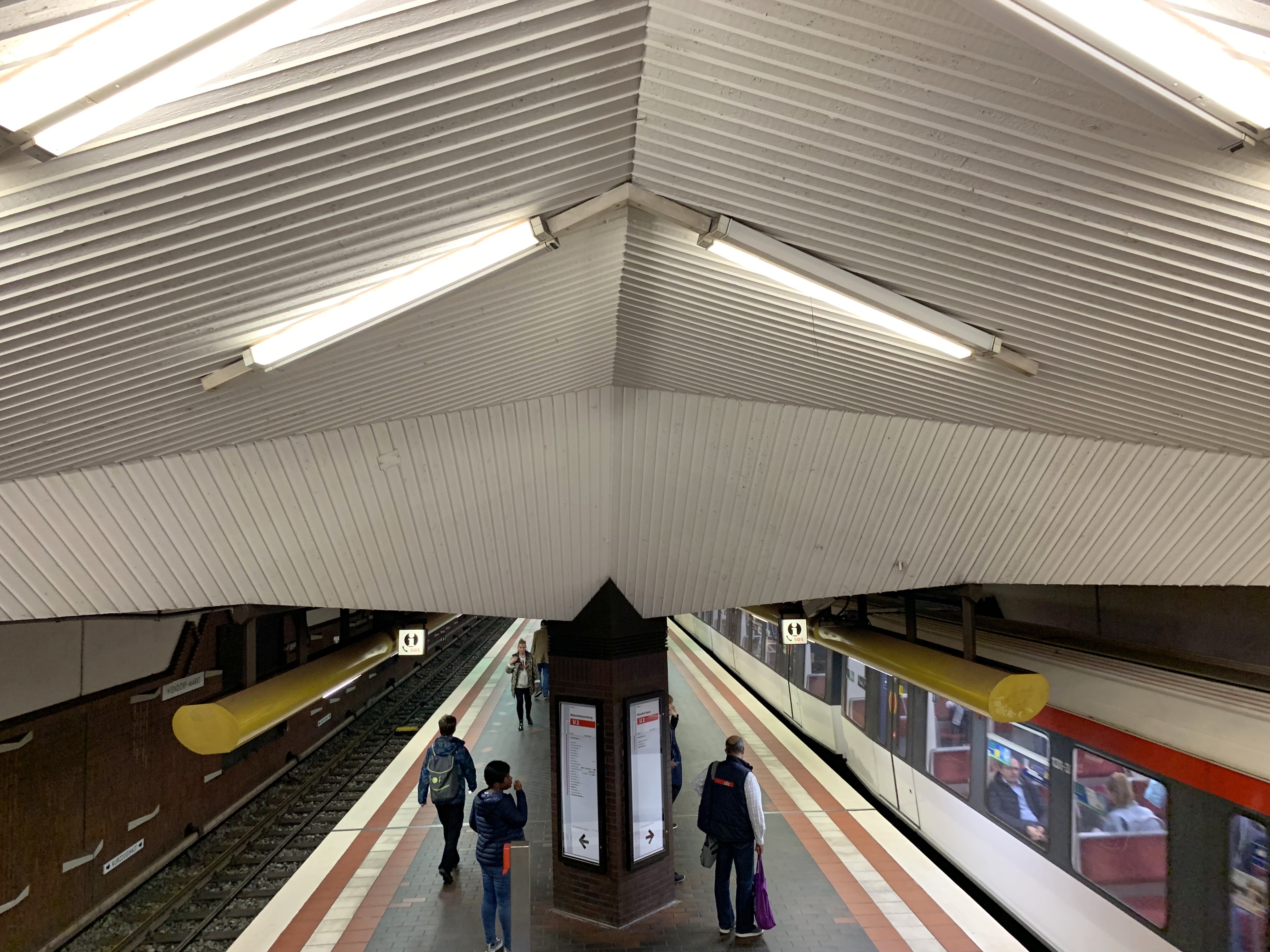
Niendorf Markt station on the U2 line, northeast of the city.
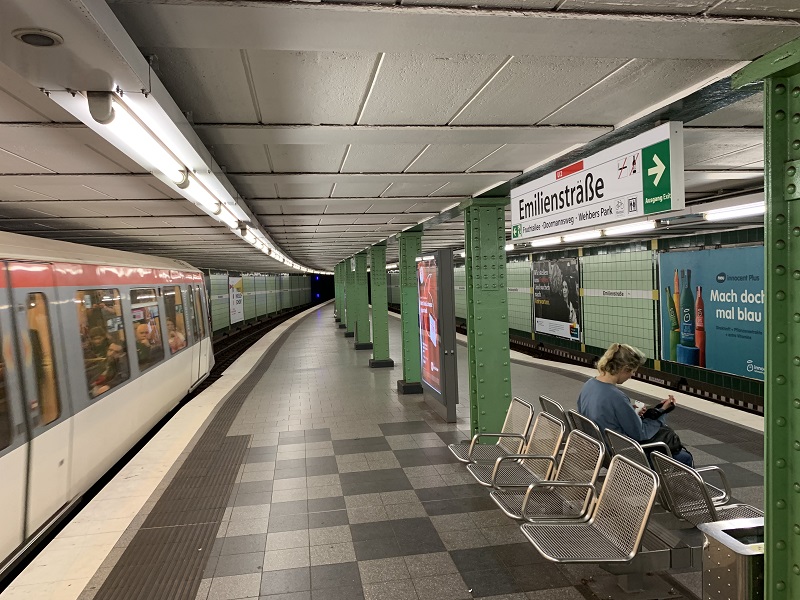
Emilien Strasse station on the U2 line.
Schlump station on the U2 and U3 lines.
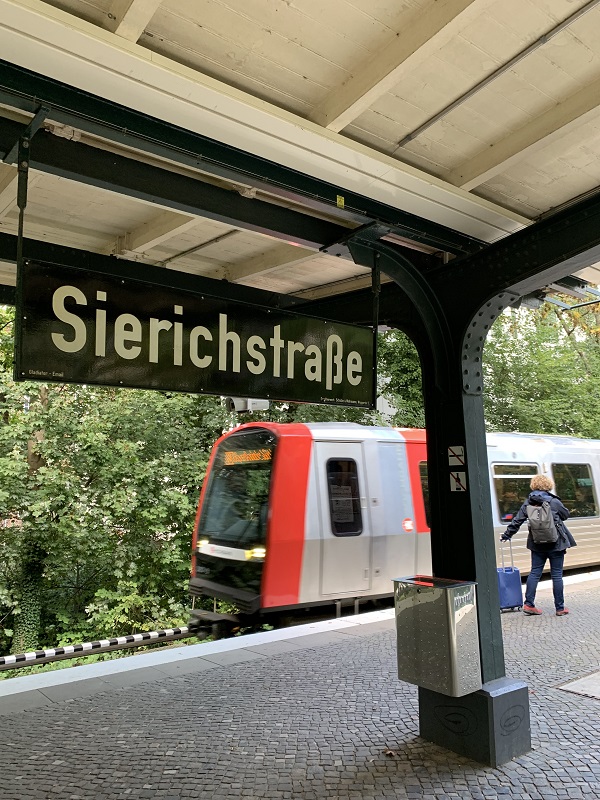
Sierich Strasse station on the U3 line. The train cars are model DT5’s, made by Alstom & Bombardier. The DT5’s were put in service in 2012 and were the first cars to have air conditioning and gangways between cars. And yes: there is a DT6 in the works, that will be able to be operated without a driver.
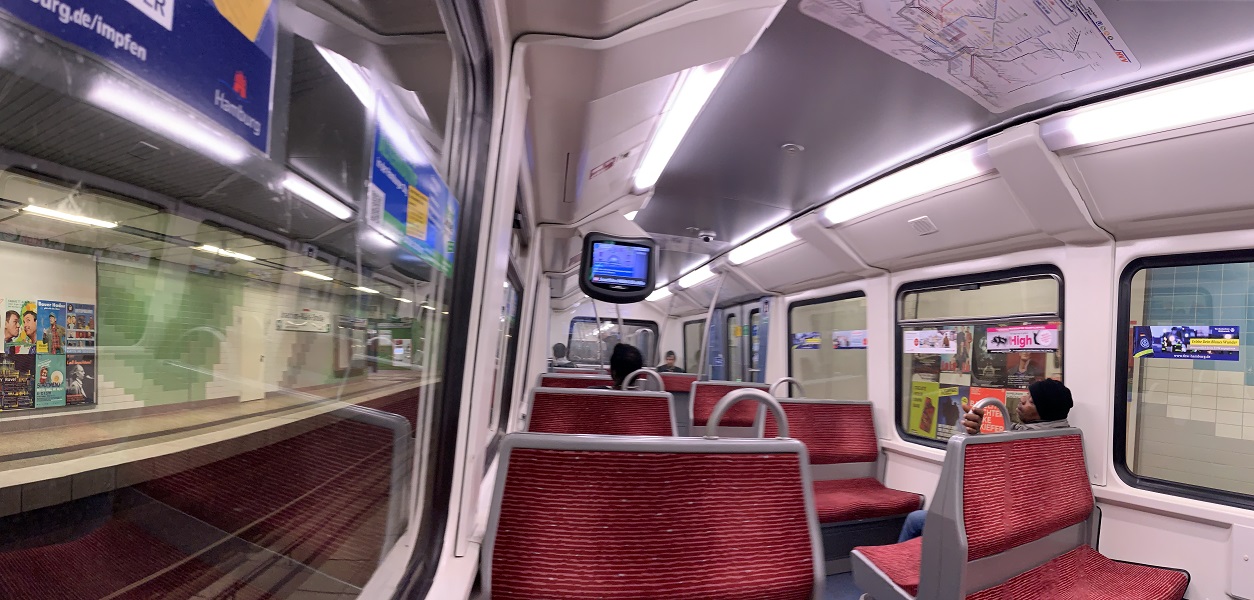
Here is an inside view from my seat in a DT5 car. Hamburger Hochbahn AG, founded in 1911, operates most of the underground train lines in Hamburg.
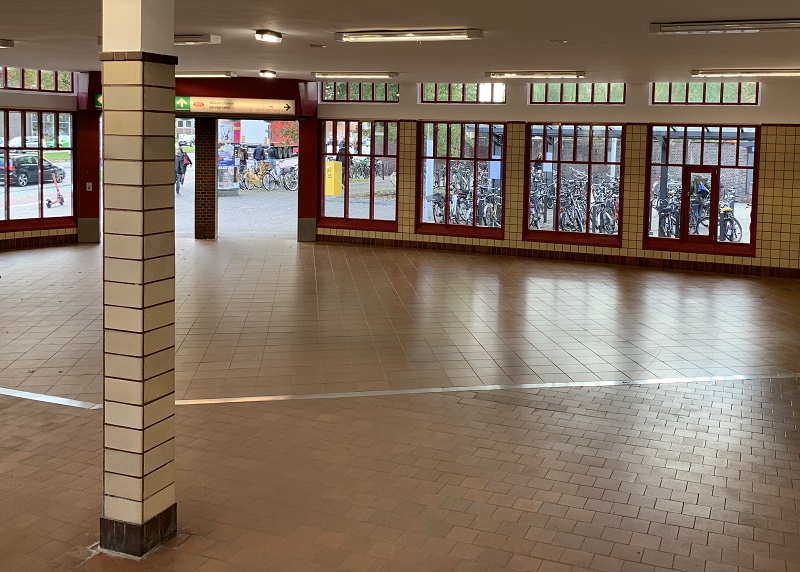
The entrance hall to Saarland Strasse station on the U3 line features squares and rectangles.
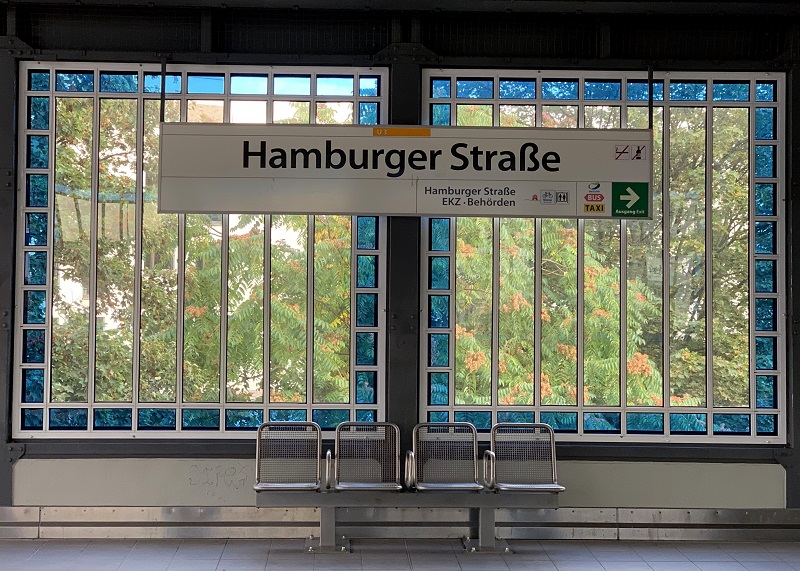
I love the blue glass panes at Hamburger Strasse station. (Yes, people living in Hamburg are Hamburgers! – but not the kind that we eat!).
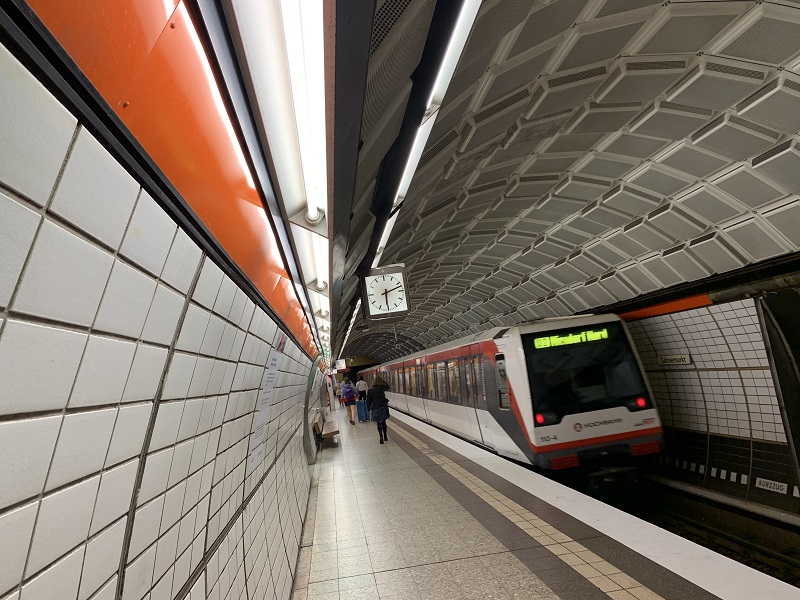
I had just stepped off the train at Gänsemarkt station on the U2 line, and there it went, sucked in by the end of the tunnel.
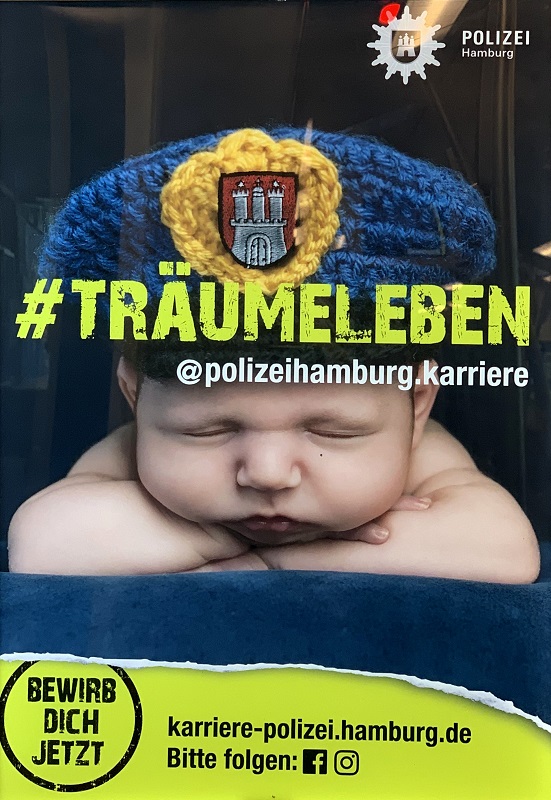
Aw. Live a dream – a career in the Hamburg police force, says this recruitment poster for the Hamburg police force.
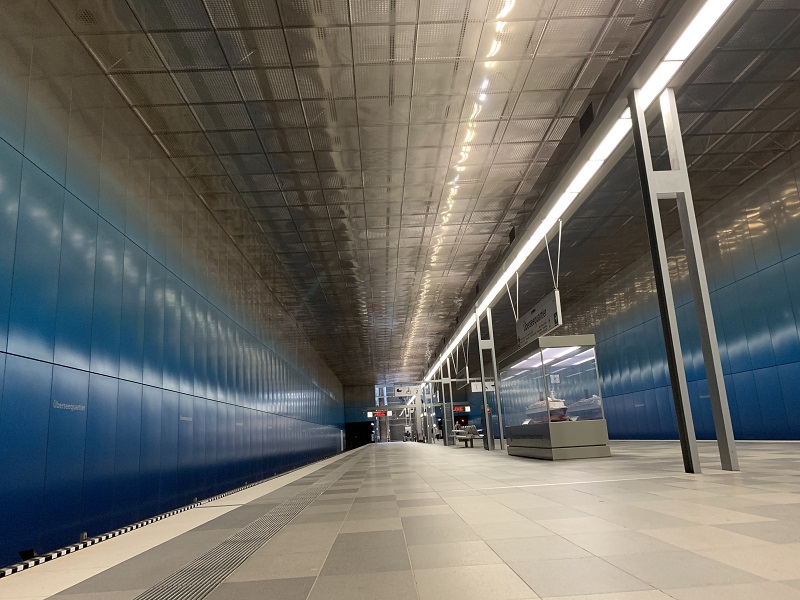
Shades of blue and gray at the Überseequartier station on the U4 line.
And here is the platform of Überseequartier station on the U4 line.
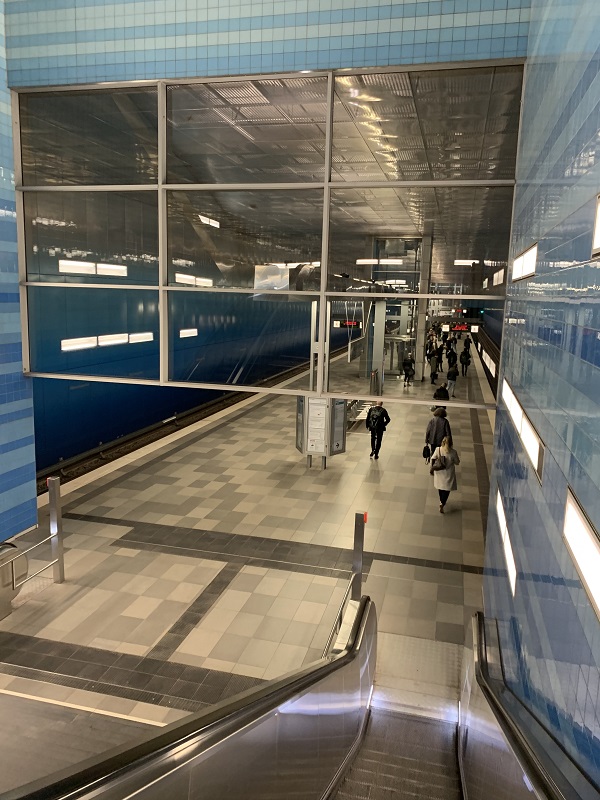
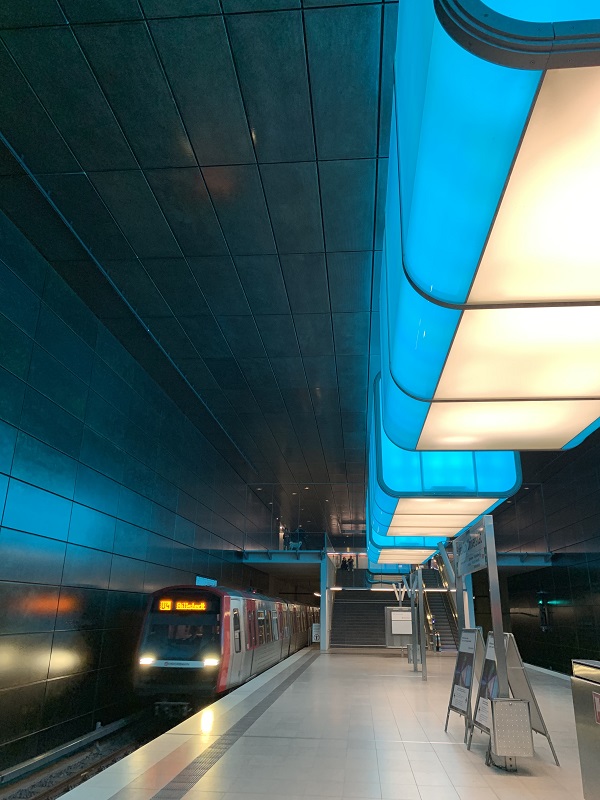
This is HafenCity Universität station. The color of the boxes of overhead lights changes all the time.

Thursday/ more Hamburg

I walked around Altstadt (Old City) and Hafencity today.
There is still a lot of new construction going on in Hafencity.

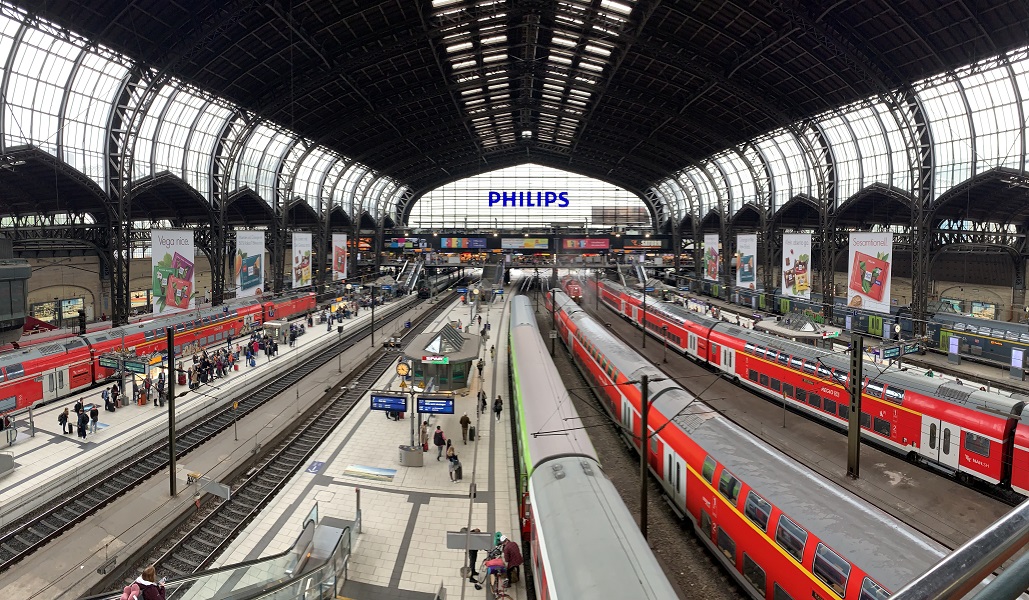
Trains and platforms inside the cavernous Hamburg Hauptbahnhof (main train station).
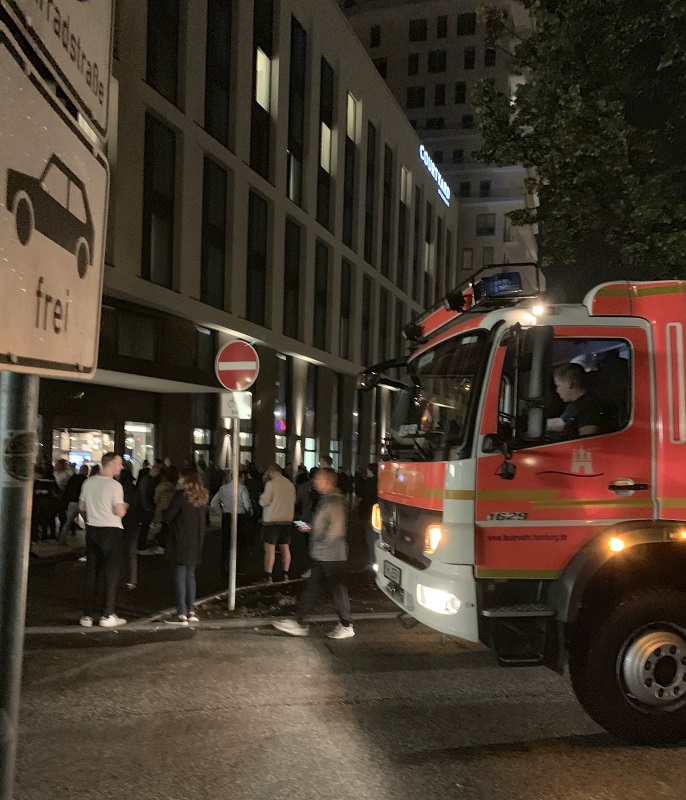
The hotel’s fire alarm roused all of us just before midnight, and soon the Feuerwehr (fire brigade) arrived as well. There was no fire, though .. and we got to go back in after 15 minutes. We were not told why the fire alarm went off.
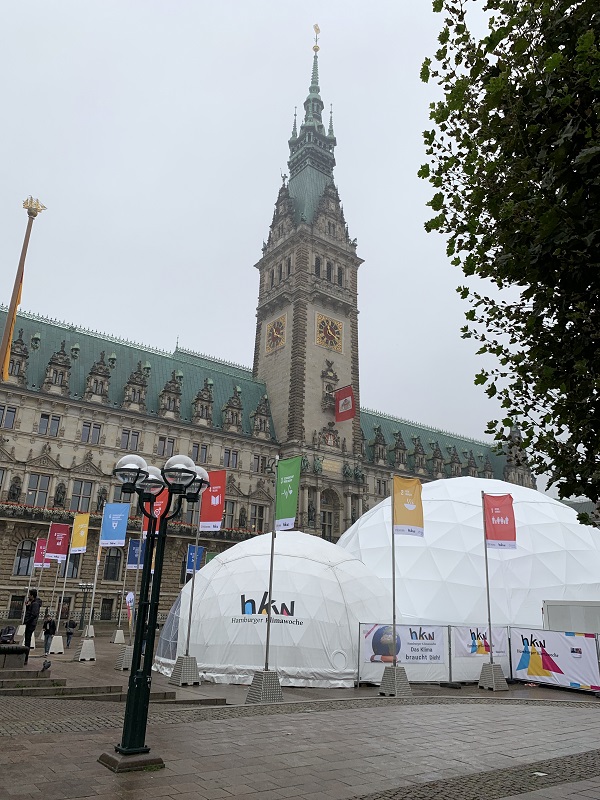
Here is the neo-Renaissance Hamburg Rathaus (city hall), completed in 1897. The white globes are part of a display for Hamburger Klimawoche (climate week), promoting Klimaschutz (climate security) and sustainable policies for Earth’s resources.
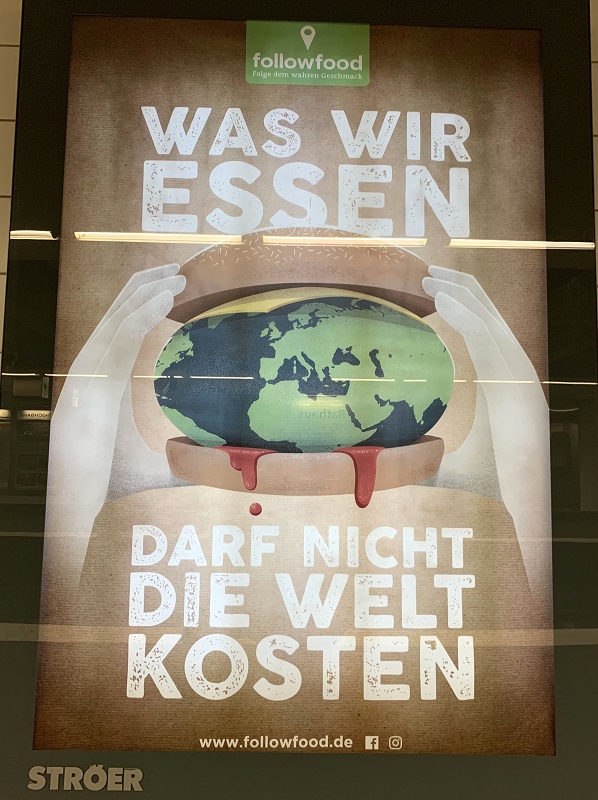
Poster in the subway: ‘What We Eat Must Not Cost The World’.
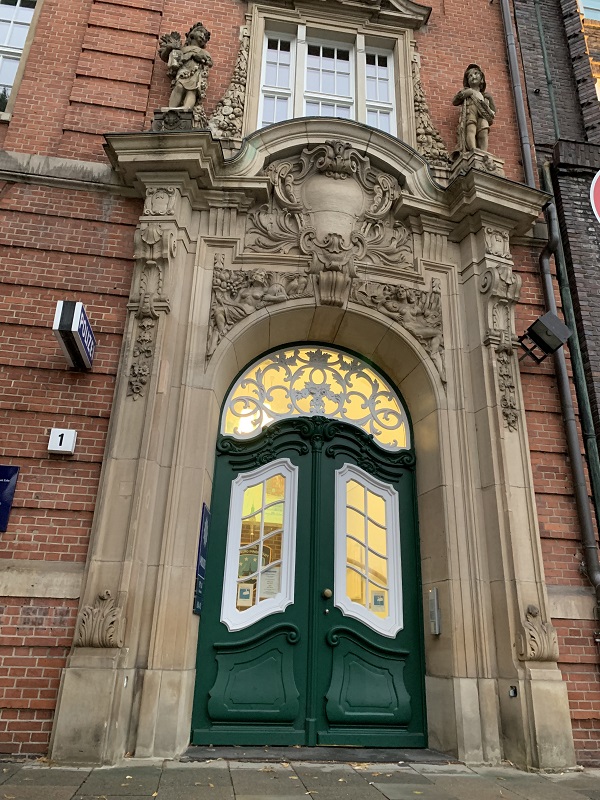
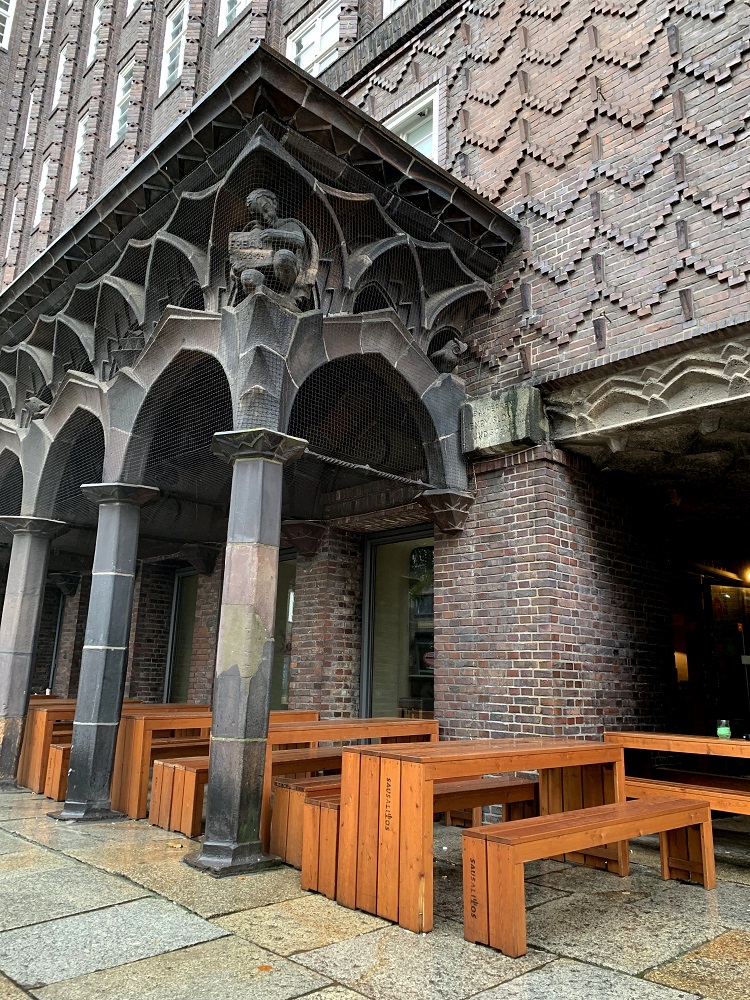
Beautiful Baroque entrance to a police station in a building constructed in 1907. This is near the Chilehaus from yesterday.
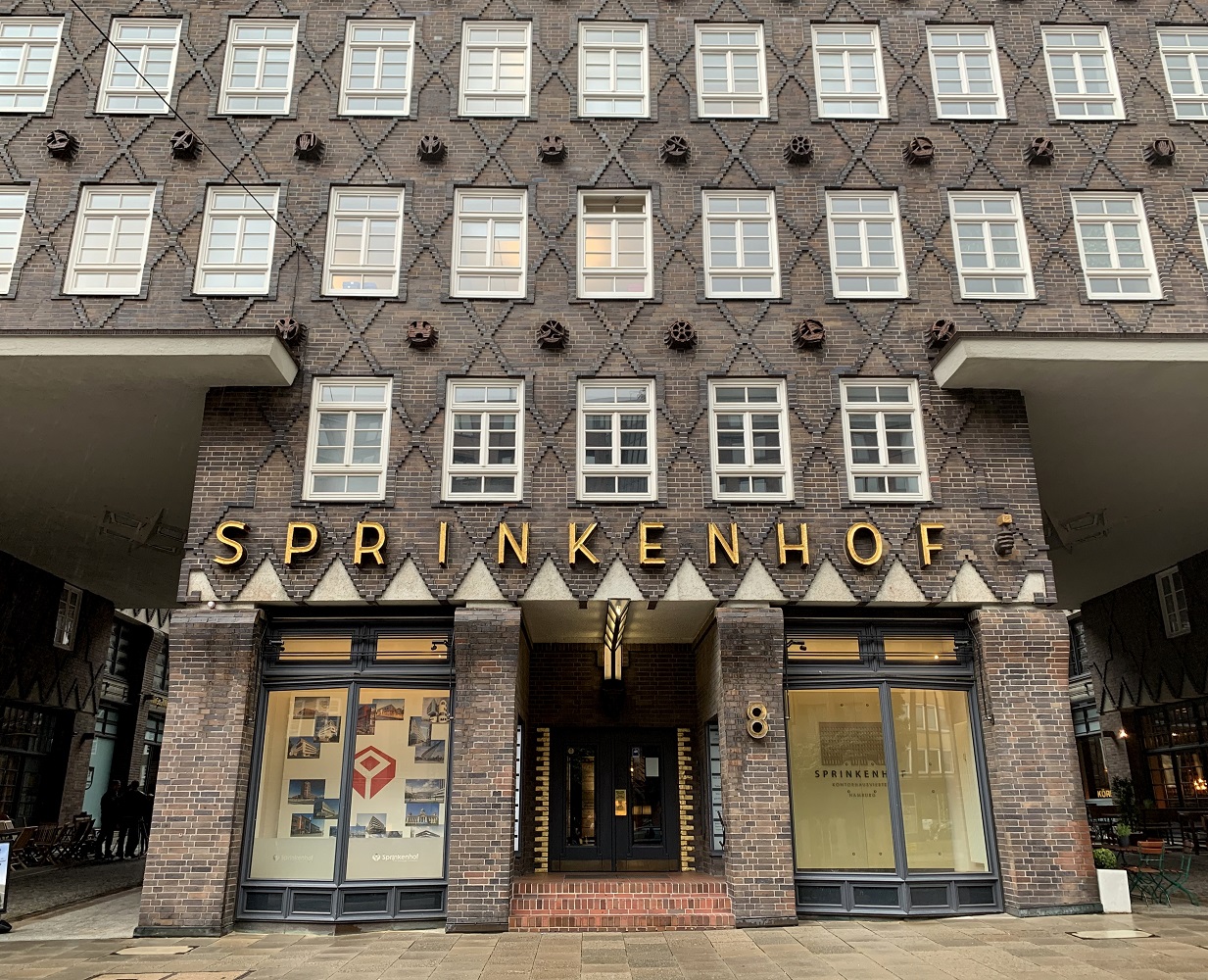
Beautiful brickwork and decorations on the Sprinkenhof office building. It is right across the Chilehaus in Hamburg’s Kontorhausviertel. It was built in three phases from 1927 to 1943.
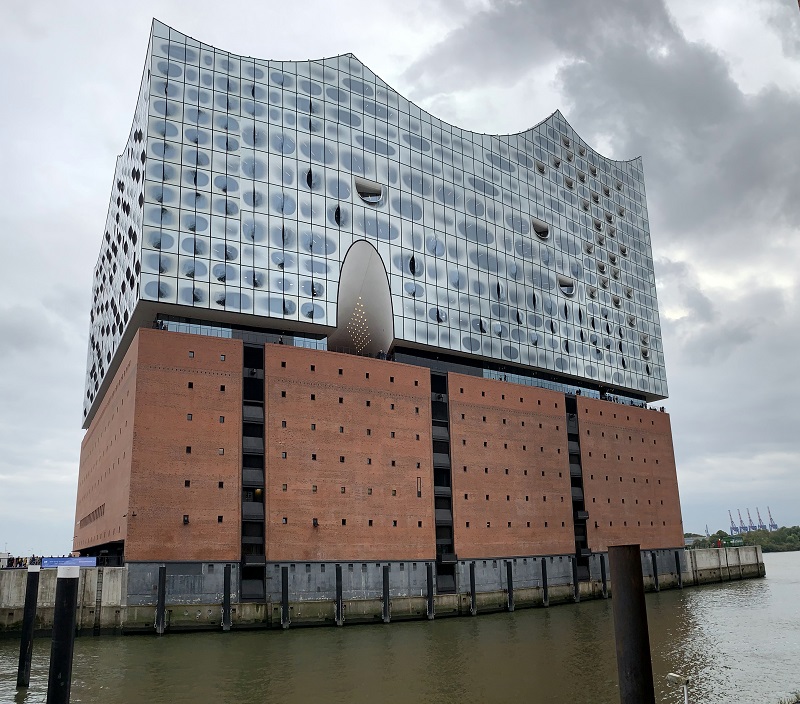
Here’s the spectacular and landmark Elbphilharmonie Hamburg: one of the world’s largest and most acoustically advanced concert halls. It opened in January 2017.
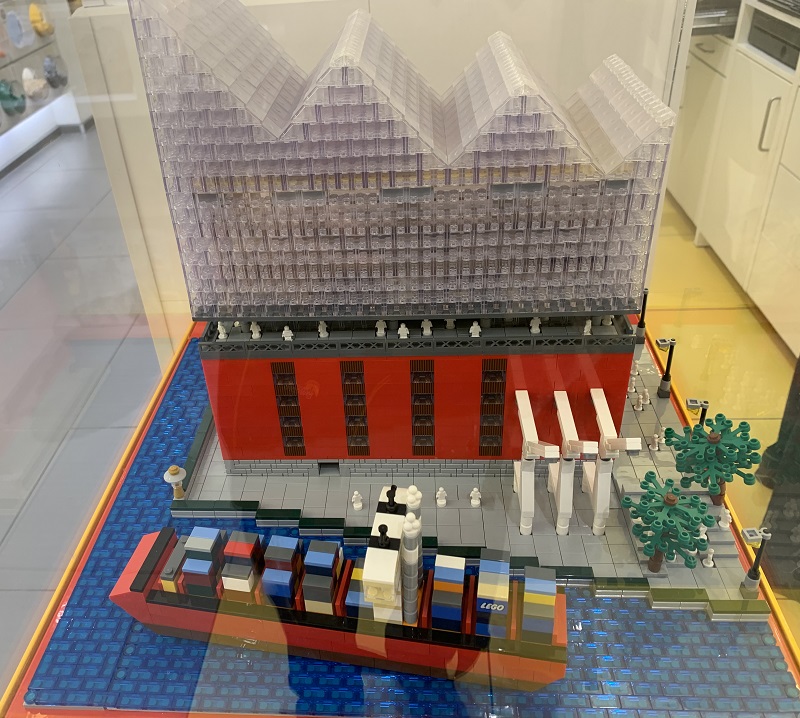
And here is the LEGO model of the Elbphilharmonie, at a LEGO store.
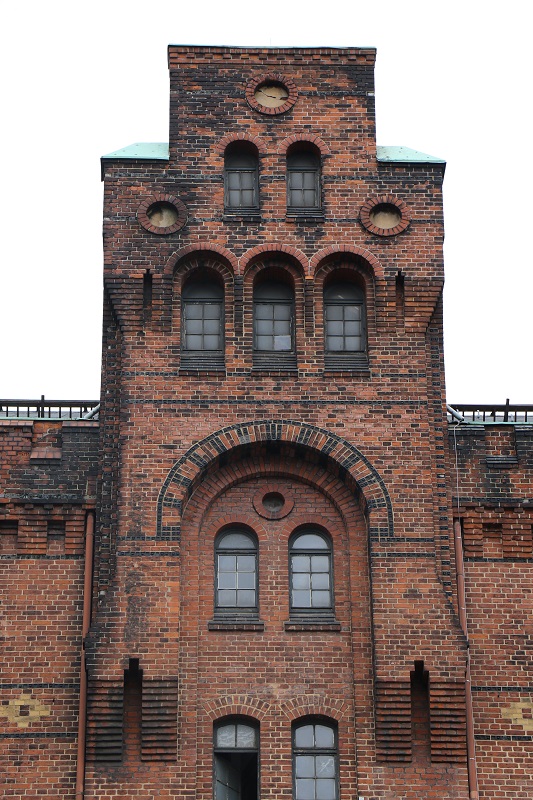
There is a lot of old and beautiful brickwork to be seen in the old restored warehouses in the Hafencity ..
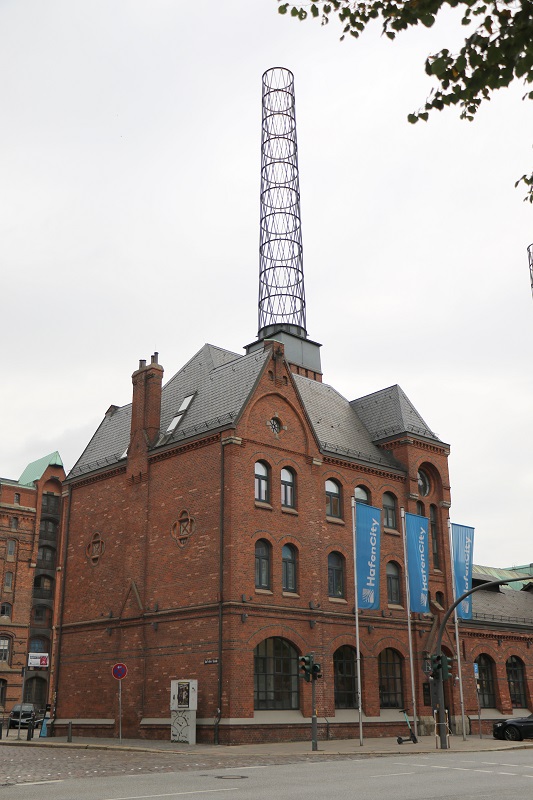
.. and I like the outline of the old smokestack that was put in, as a nod to the building’s past, I assume.

Wednesday/ Chilehaus

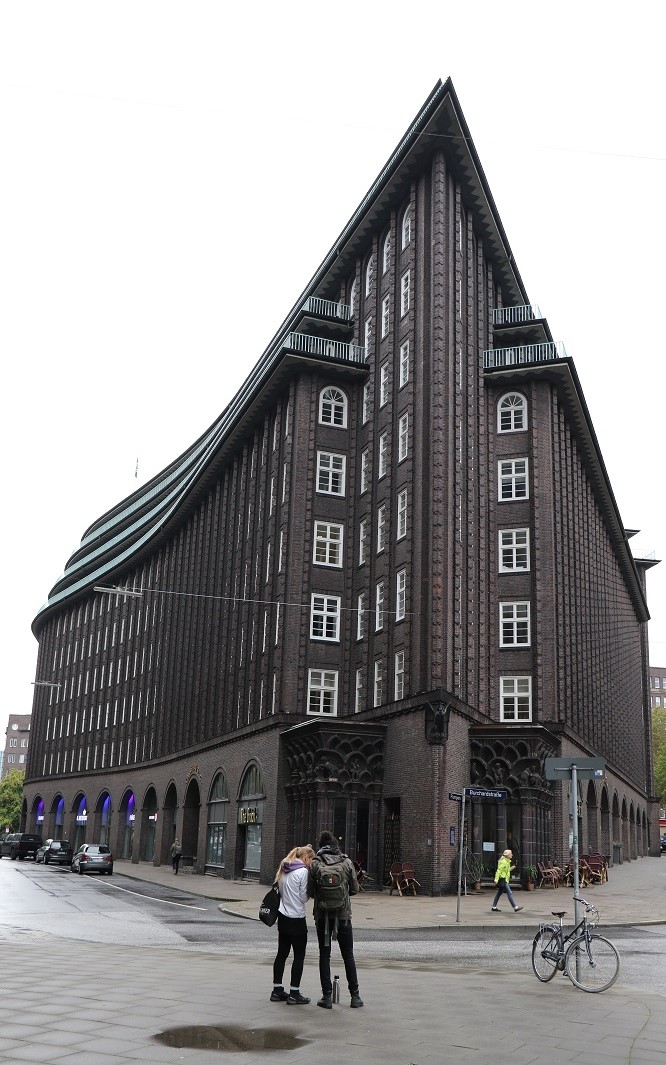
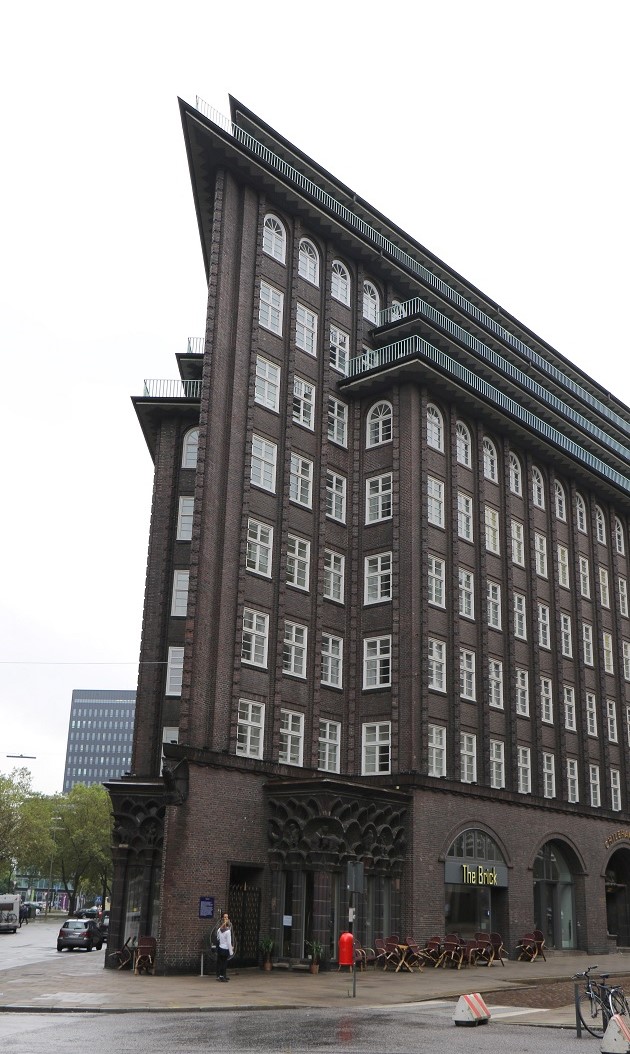
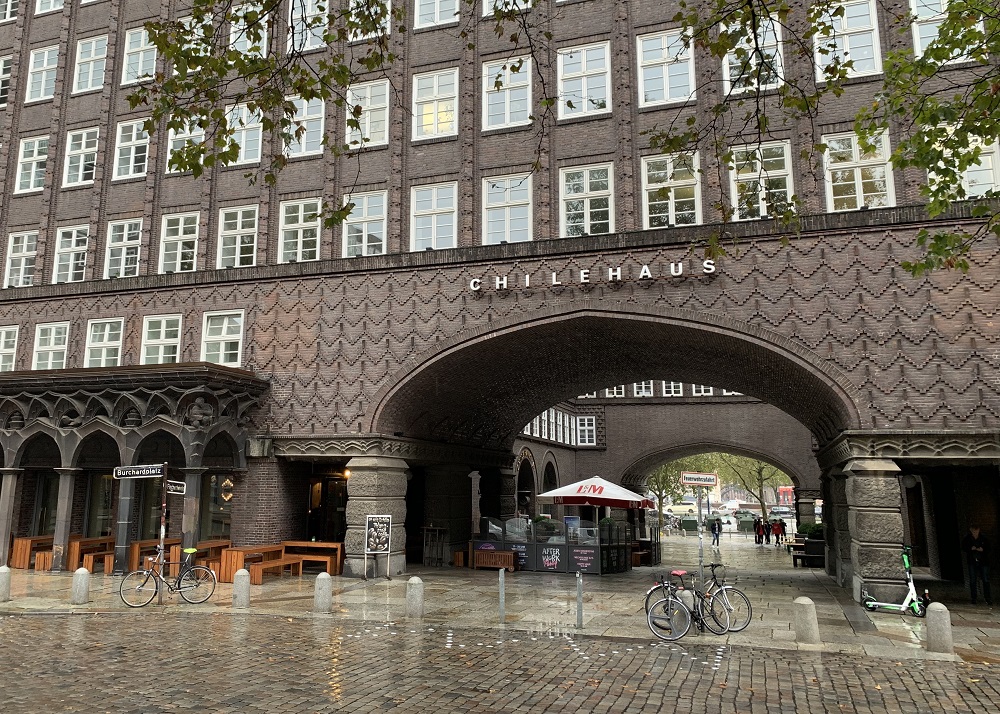
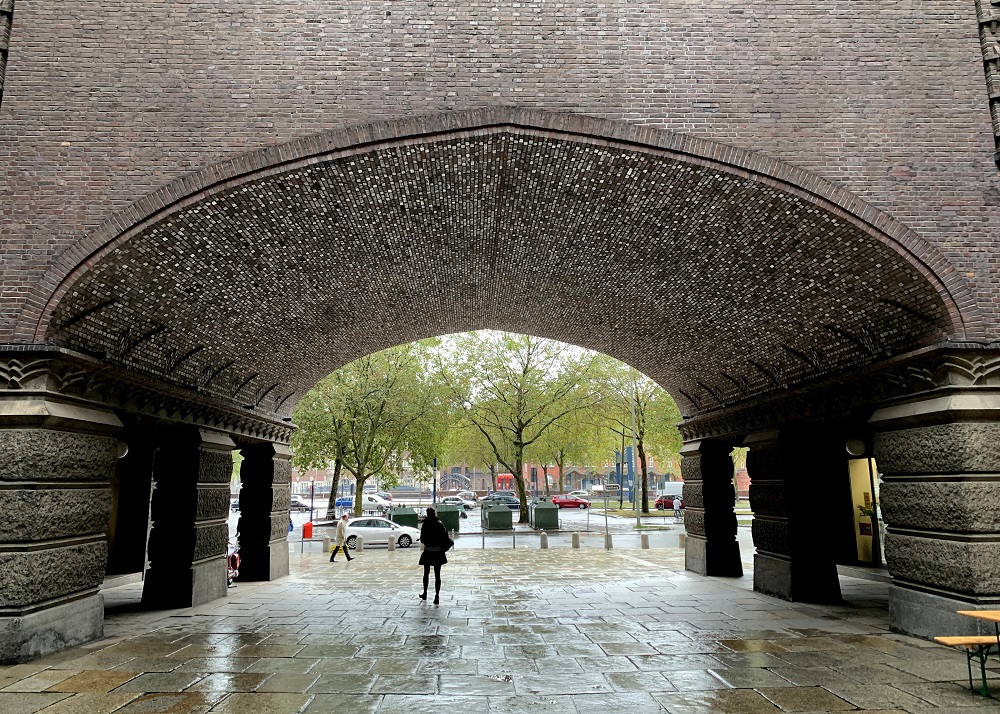
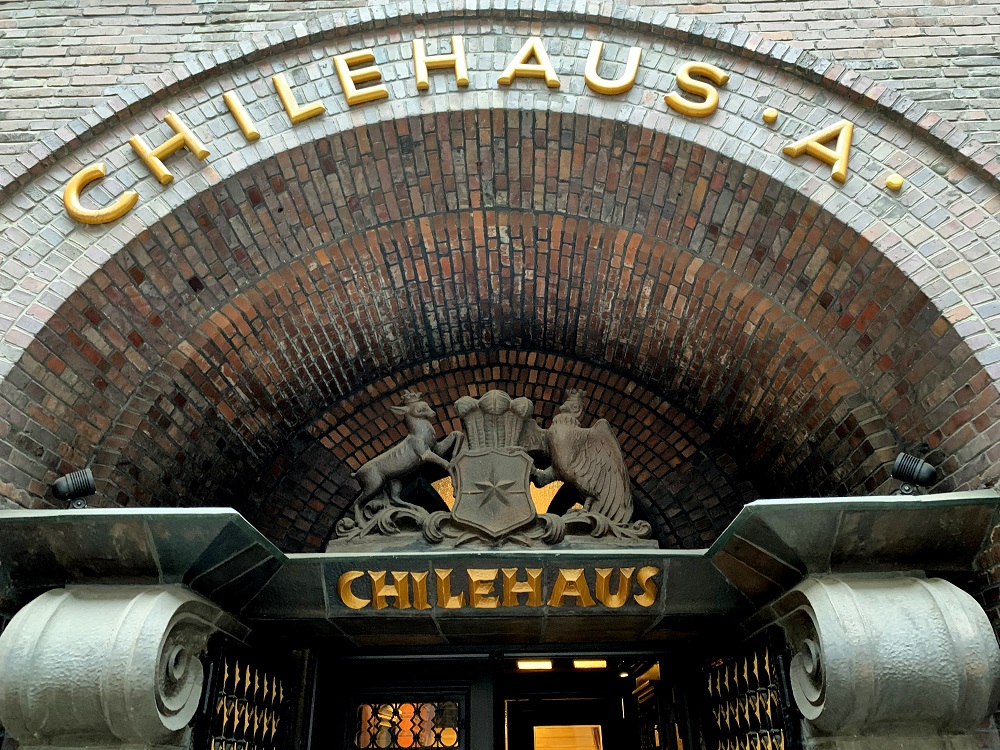
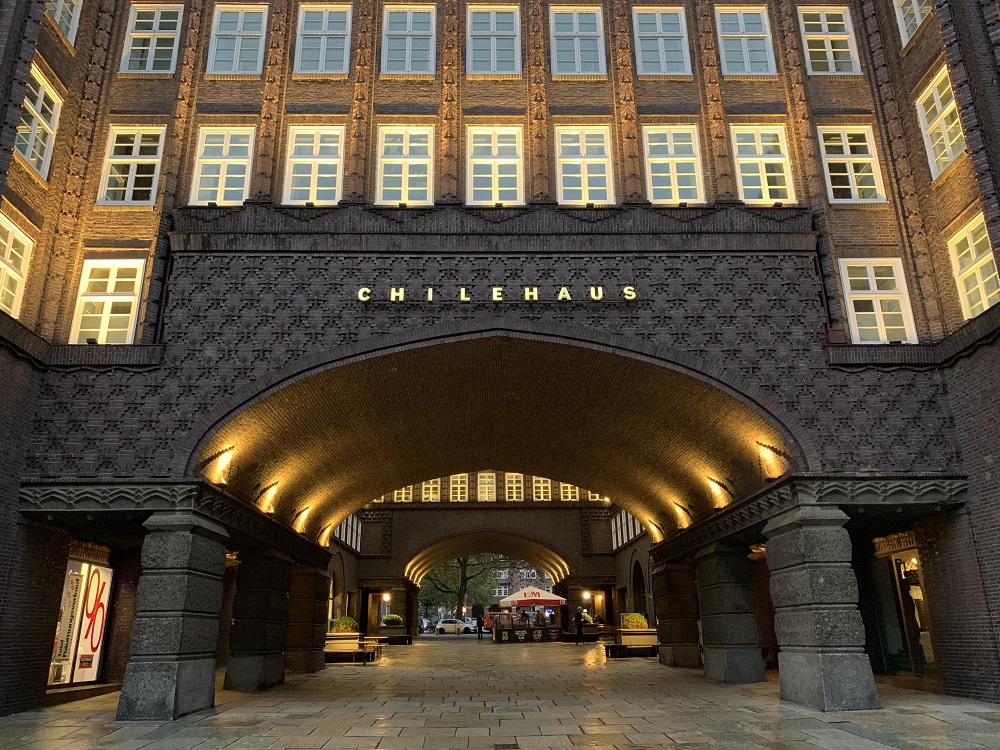
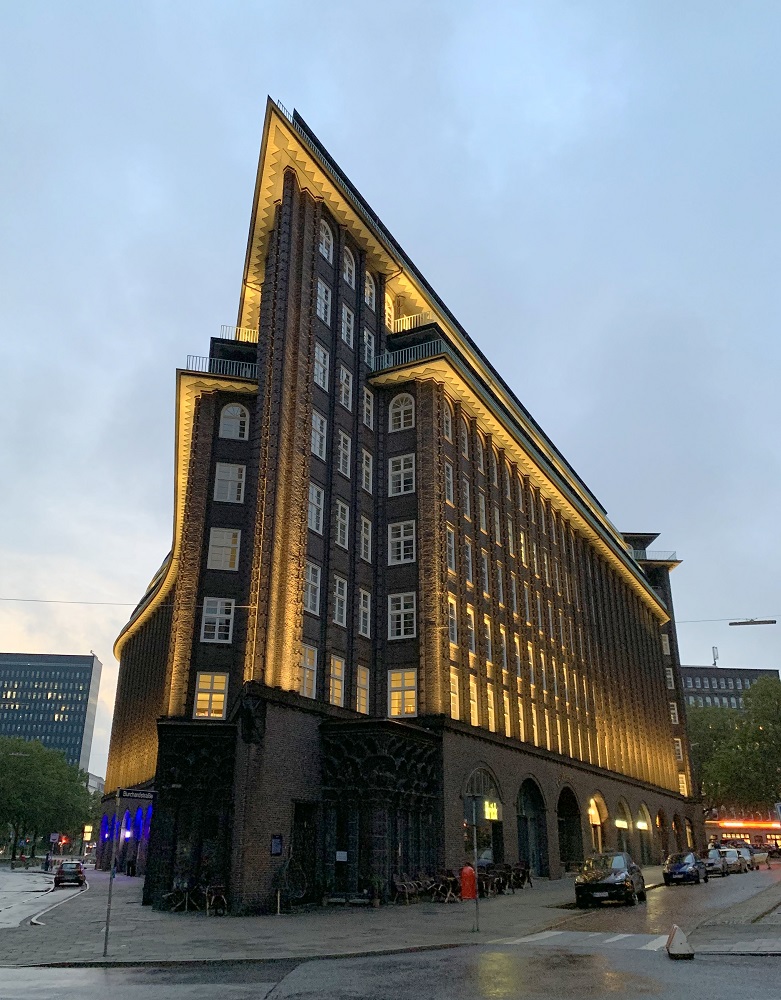
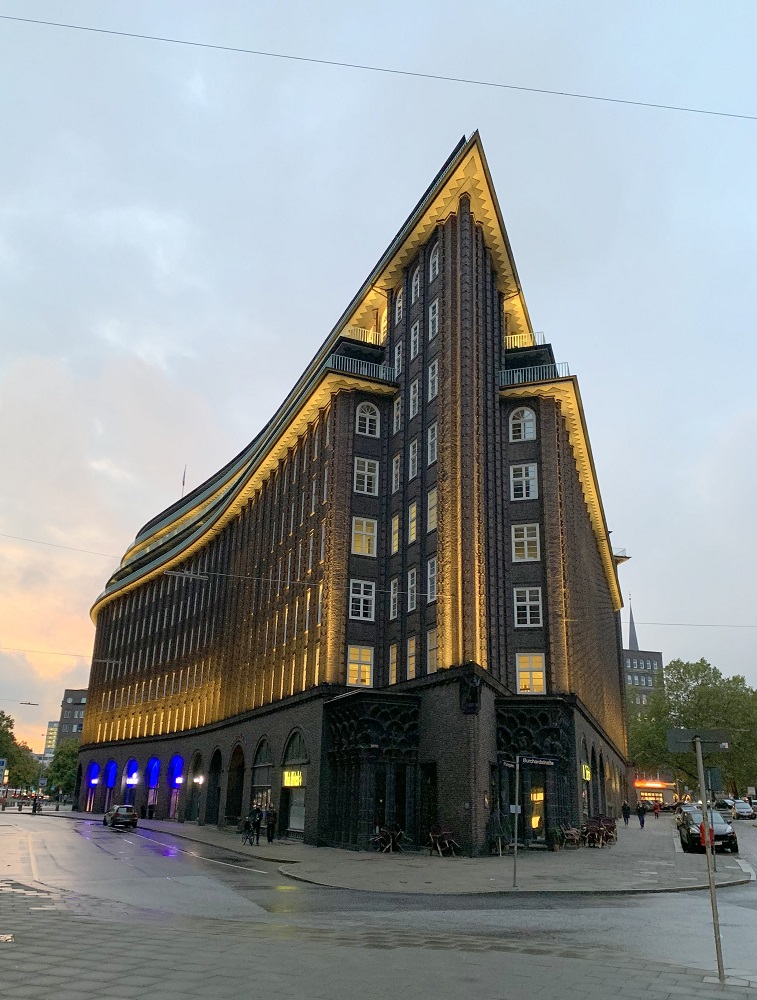
The highlight of my day was to walk around the Chilehaus (Chile House) building, inside and out, and admire it.


From Wikipedia: The building was designed by the architect Fritz Höger and built between 1922 and 1924. It was commissioned by the shipping magnate Henry B. Sloman, who made his fortune trading saltpeter from Chile, hence the name Chile House.

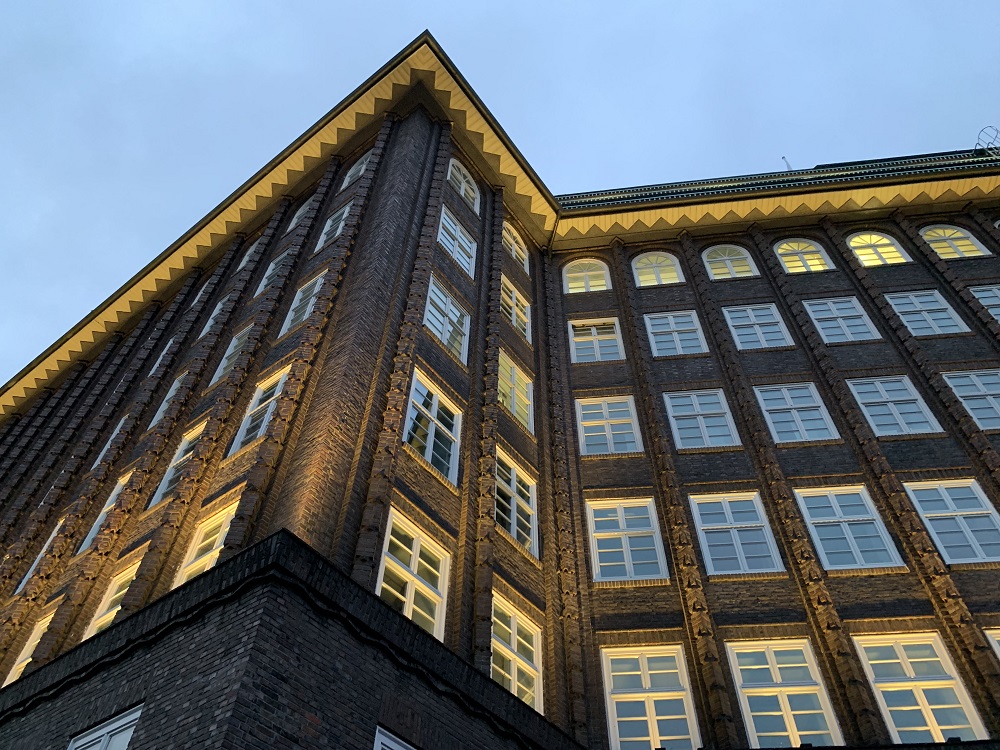
It is an exceptional example of the 1920s Brick Expressionism style of architecture. The Chilehaus building is famed for its top, which is reminiscent of a ship’s prow, and the facades, which meet at a very sharp angle at the corner of the Pumpen- and Niedernstrasse.


Tuesday/ arrival in Hamburg

It was a long night & day of travel, but I made it into Hamburg early Tuesday evening without too much trouble.
The 5 hr train ride proved to be little long after that 11 hr red-eye flight into Amsterdam, but hey – now I will know better next time.

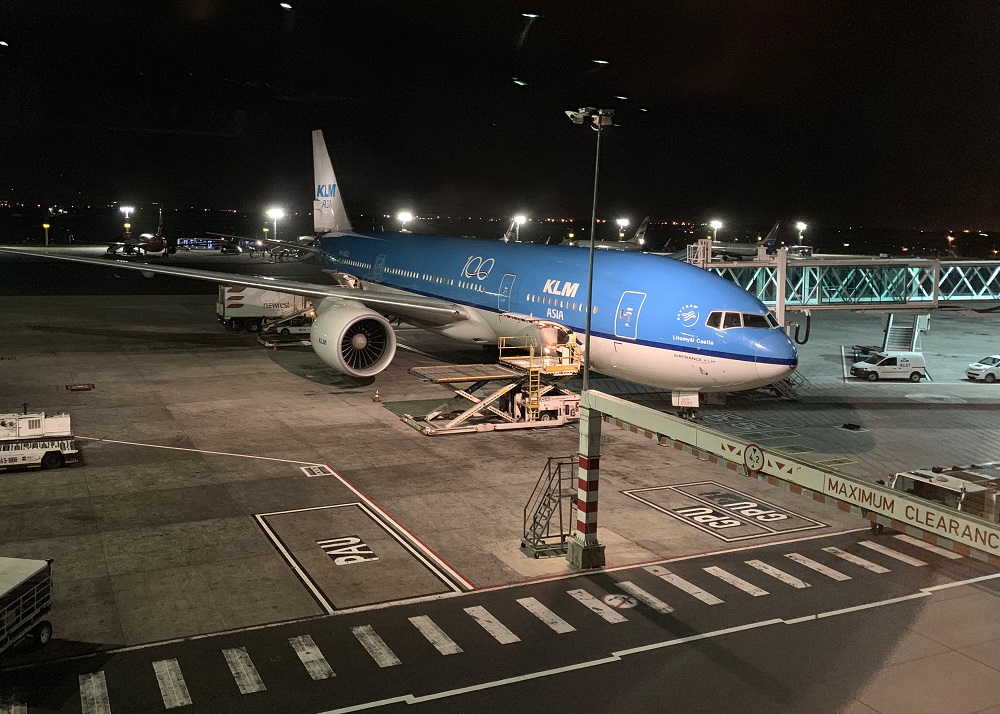
Here’s the Boeing 777-200ER from KLM, named ‘Litomyšl Castle’ at the gate at Cape Town International Airport just before we started boarding. Litomyšl Castle is a large Renaissance castle in the Czech Republic.
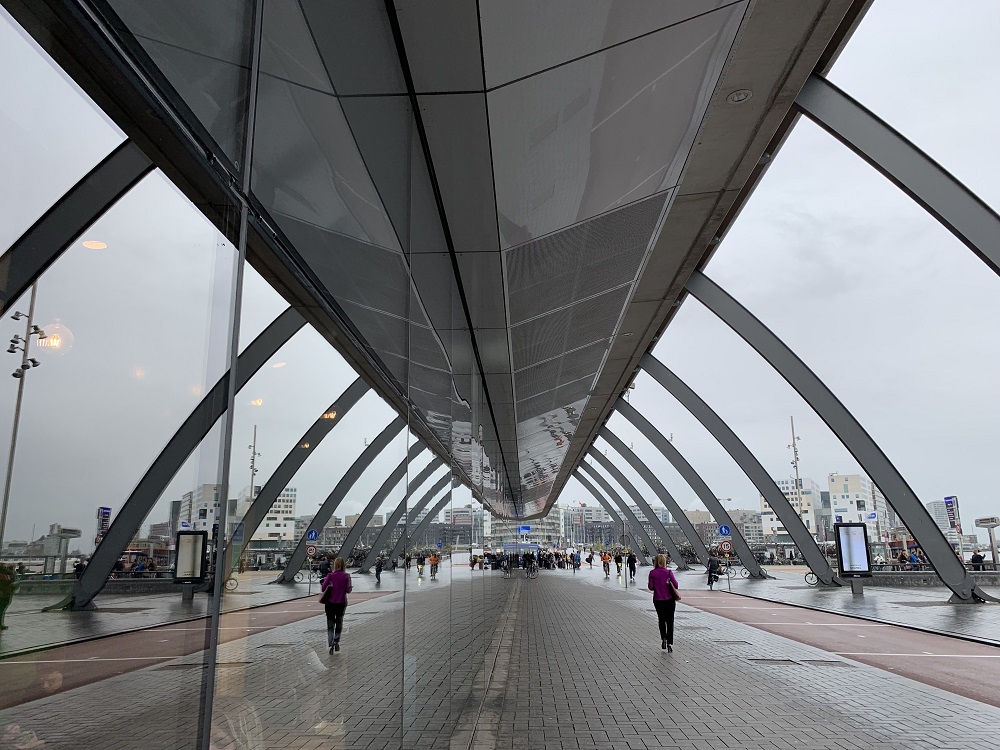
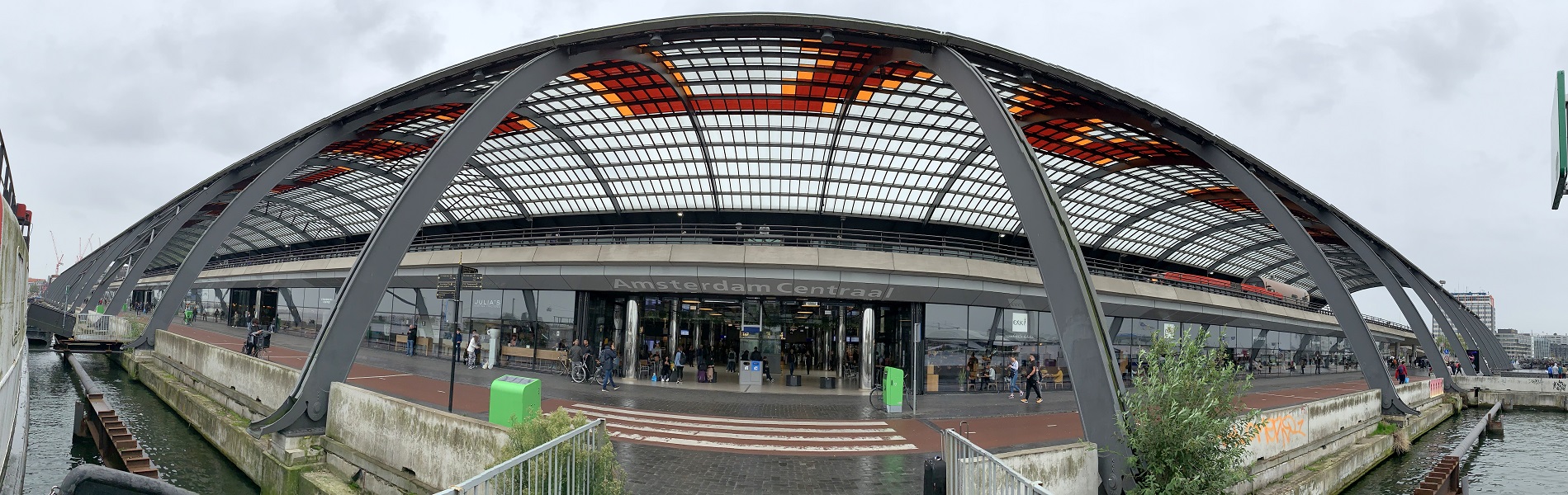
Here’s the ‘backside’ of Amsterdam Centraal Station: the side that faces Lake Ijssel (IJsselmeer). I created an optical illusion by using the glass panes on the left as a mirror.
Here’s a panorama shot. The upper deck (for buses) and the roof structure is a straight line, bent into a curve by panning the camera.
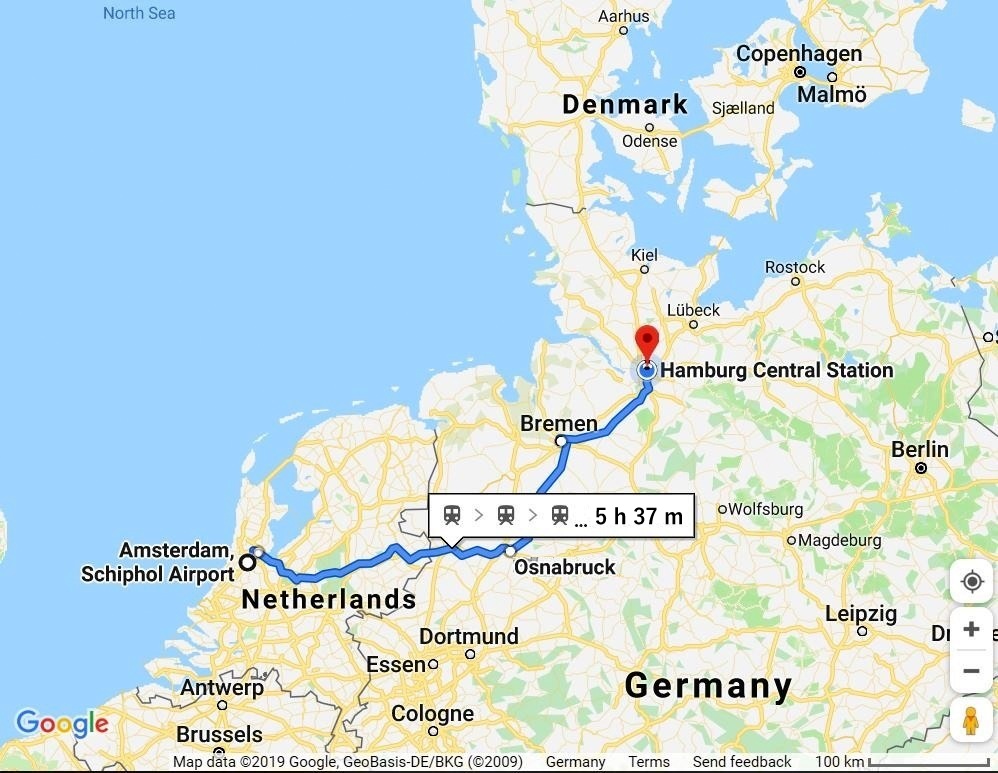
Here’s my train route from Schiphol Airport to Hamburg Central Station. 5 h 37 mins in all; three segments, so two transfers to other trains. A little bit of a pain if you have as much luggage as I have!
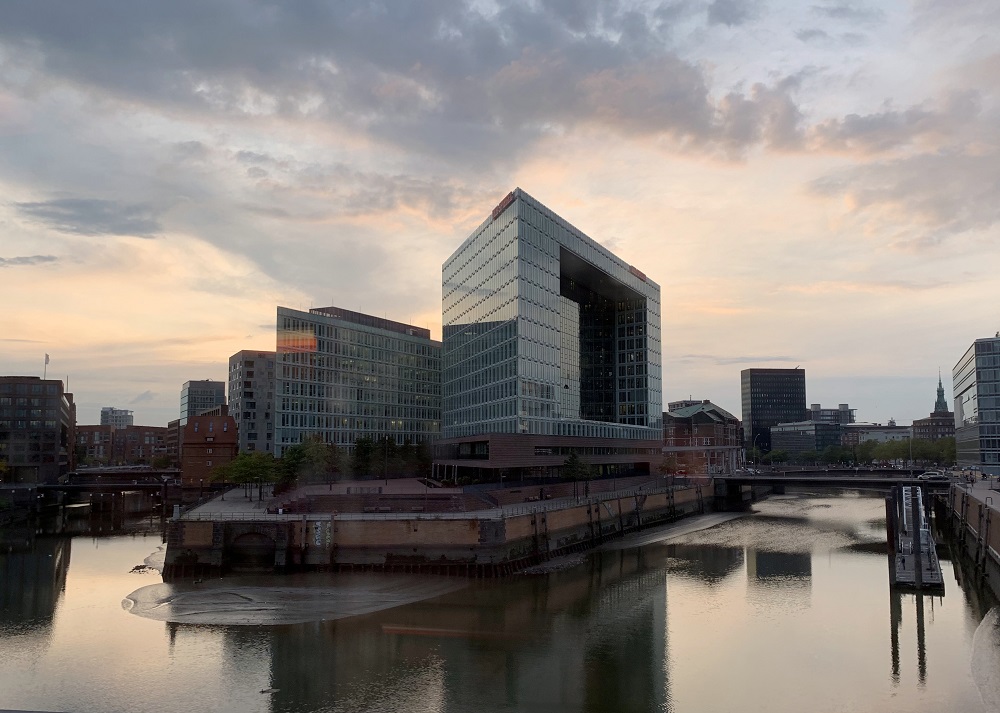
This is Hamburg’s Hafen City district, the sun just setting as our train arrived into Hamburg Central Station.

Monday/ back to Amsterdam

It’s Monday night, and I’m about to go to Cape Town airport to make my way back to Amsterdam. I plan to take the Inter City Express train from there, to make it into Hamburg by Tuesday night.

‘Everything you need to support the (Spring)bokke’ (the national rugby team competing in the 2019 Rugby World Cup), says this print advertisement. Tuesday is National Heritage Day in South Africa, also known as Braai Day (Barbecue Day) – hence the sausage and meats for the grill.  I should have postponed my journey back with a day or two!

Sunday/ another weaver

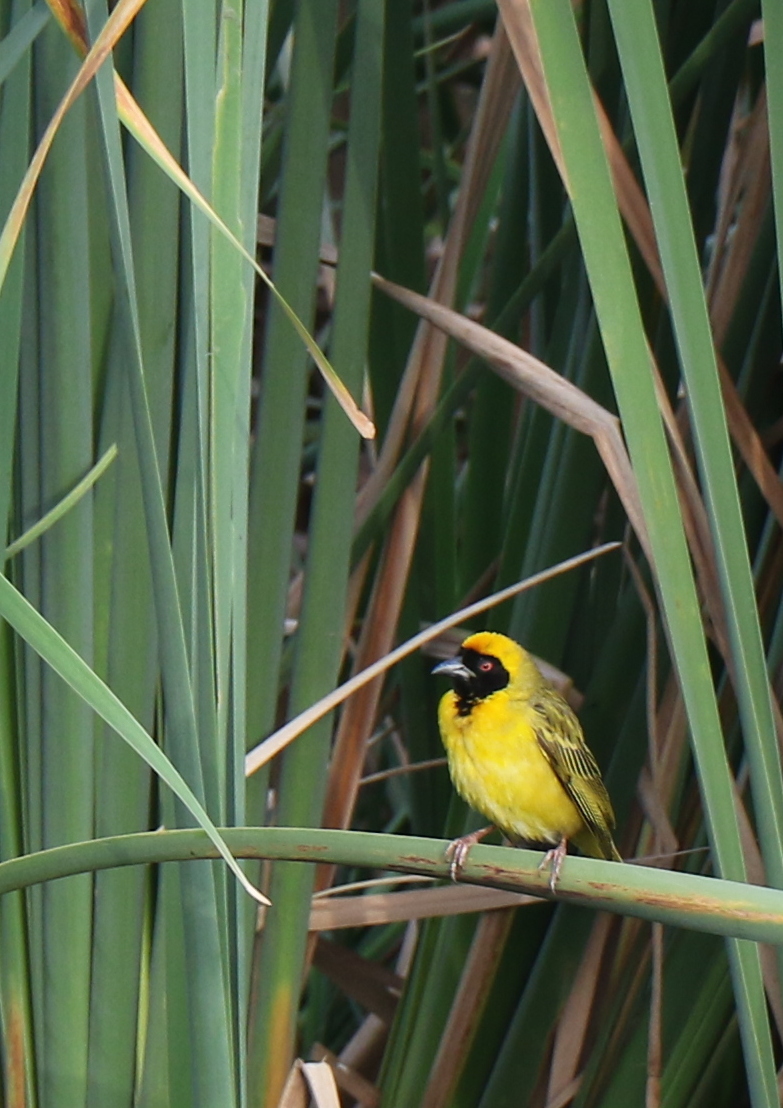
This is the southern masked weaver.
I found it in the green space adjacent to my AirBnB aparment, today.

The southern masked weaver (Ploceus velatus) is common throughout southern Africa. It eats insects, seeds and nectar, and weaves its nest from reed, palm or grass.

Saturday/ book store treasure hunt

My friend and I went on a second-hand bookstore treasure hunt on Saturday.
I am looking for a few out-of-print Afrikaans books from my childhood.
It looks like I will have better luck scouring the offerings of  local online booksellers – but it is still fun to browse through the shelf inventory of second-hand booksellers!

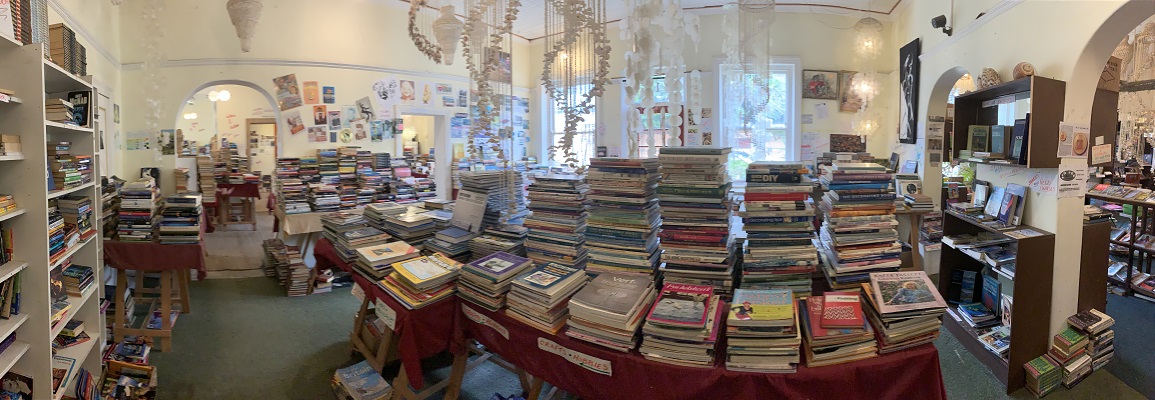
Here’s the inside of Bikini Beach Books in Gordon’s Bay. It has an unusual, somewhat unorganized, selection of local and international books and publications.
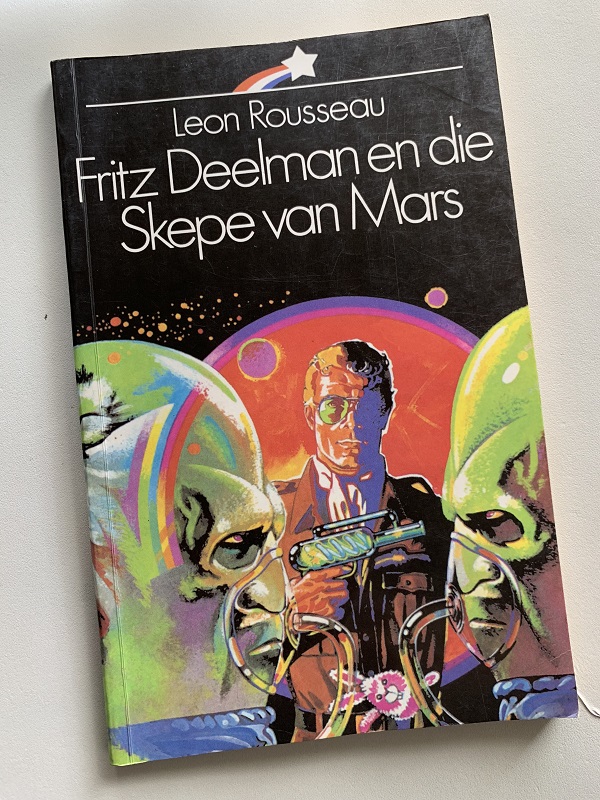
Here’s a prize book that my friend had bought online for me. I just love the artwork on the cover, as well. ‘Fritz Deelman and the Space Ships from Mars‘ by Leon Rousseau. The protagonist is a James Bond of sorts, an international agent working for the South African Special Forces. The book was published in 1957, so even before man first set foot on the moon.

Friday/ sunbirds and sugarbirds

I caught several beautiful birds on camera while roaming the gardens during my visit at Kirstenbosch.
The most striking ones were sunbirds and sugarbirds.
Sunbirds (family Nectariniidae) are not hummingbirds ⁠(family Trochilidae) — even though both have sharp, curved bills and iridescent feathers.
Hummingbirds are native to the Americas and are related to swifts.
Sunbirds are native to Africa, Asia and Australia and are related to swallows.

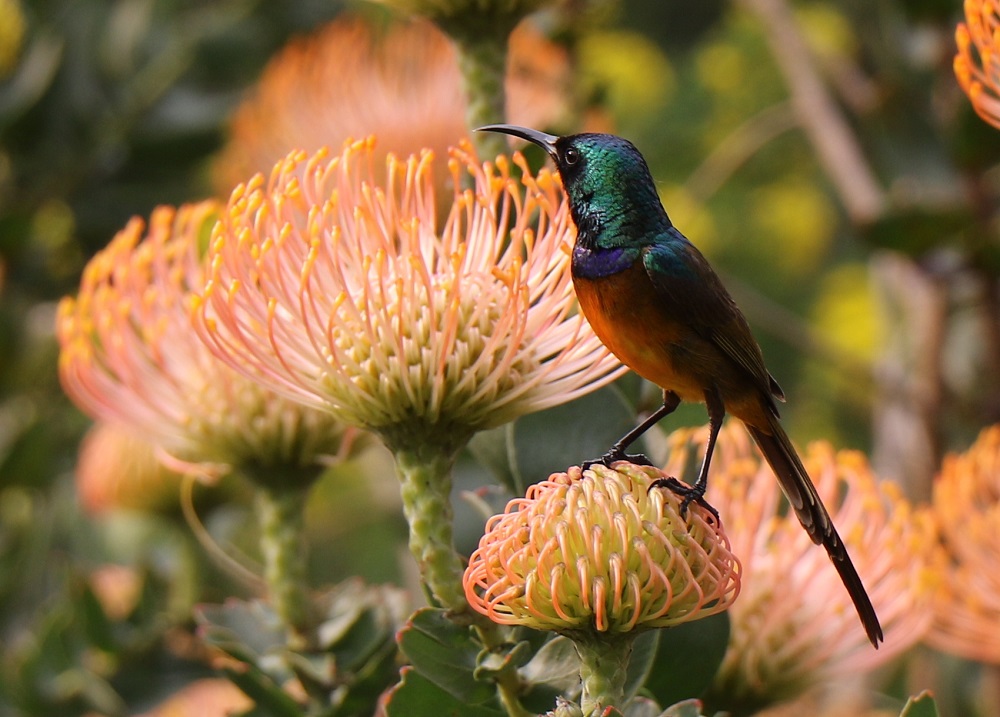
An orange-breasted sunbird (Anthobaphes violacea) on a pin-cushion protea. These birds are found only in fynbos. They love flowers such as tube-shaped heaths, pin cushion proteas, pagodas and cape honeysuckle.
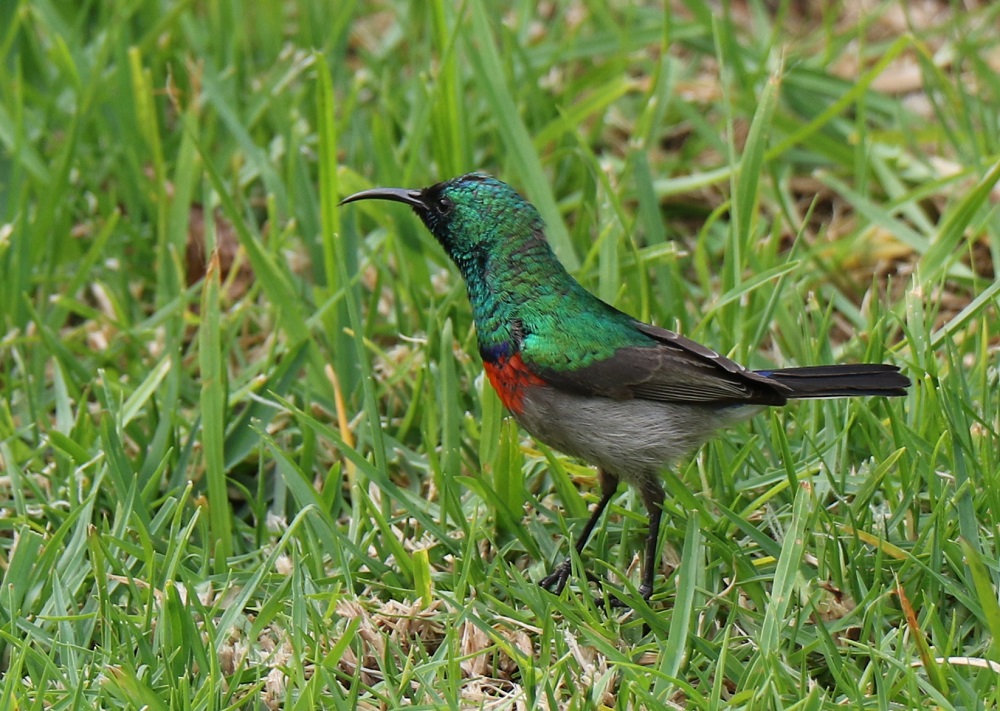
The male southern double-collared sunbird (Cinnyris chalybeus) has a brilliant red band across its chest, and a narrower metallic blue band below its green neck and head.
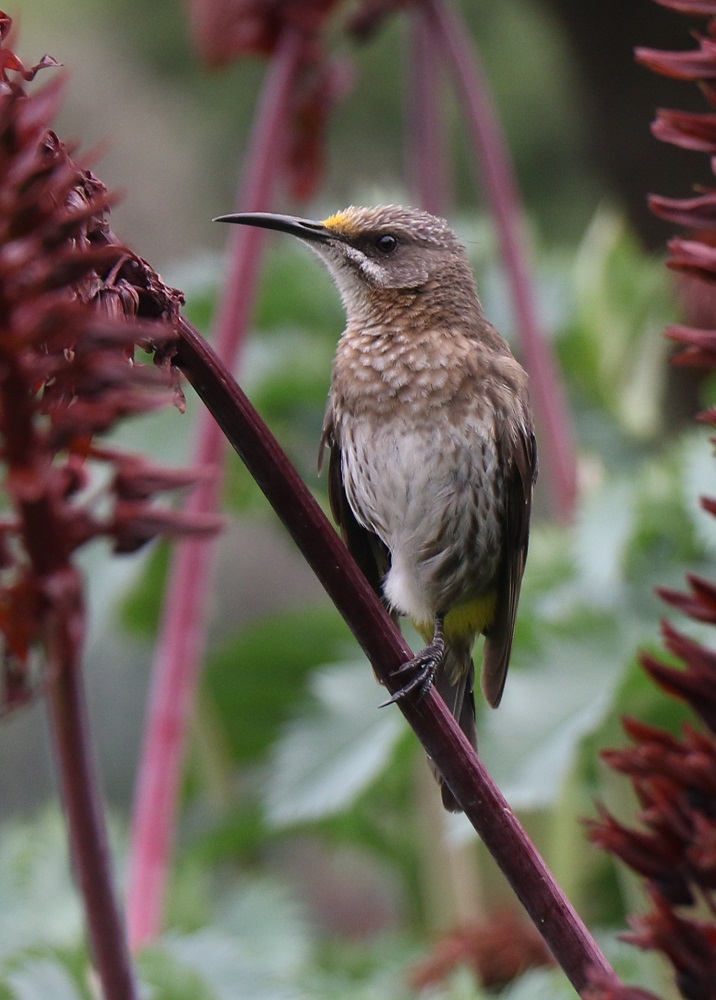
This is a female Cape sugarbird (Promerops cafer). Males have really long tail feathers. Their diet consists mainly of nectar, but also of small insects.
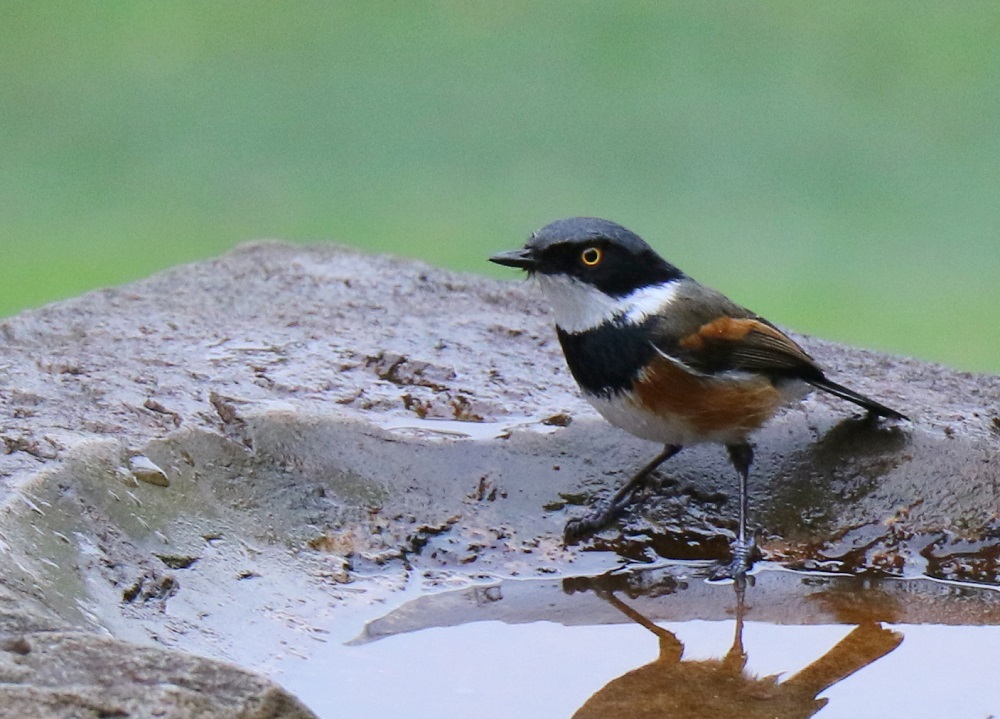
A male Cape batis (Batis capensis) with its striking eye-mask, white throat and black chest pattern, taking a bath at a water fountain. These are small but stout insect-eating birds.
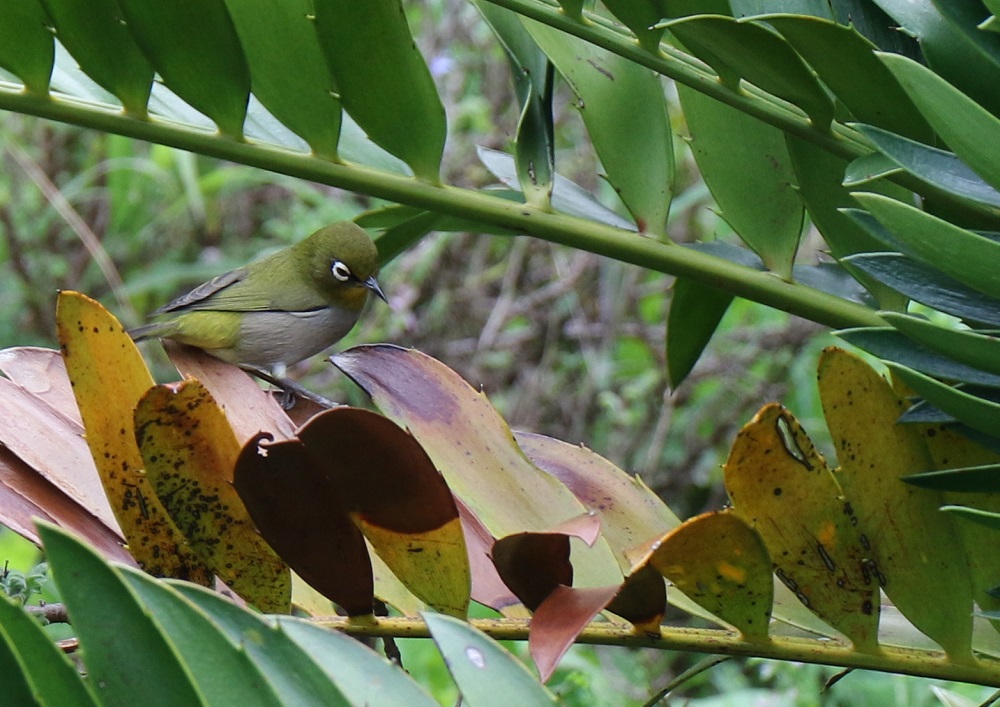
A Cape white-eye (Zosterops virens) in the cycad garden in Kirstenbosch. They eat insects, soft fleshy flowers, nectar, fruit and small grains.
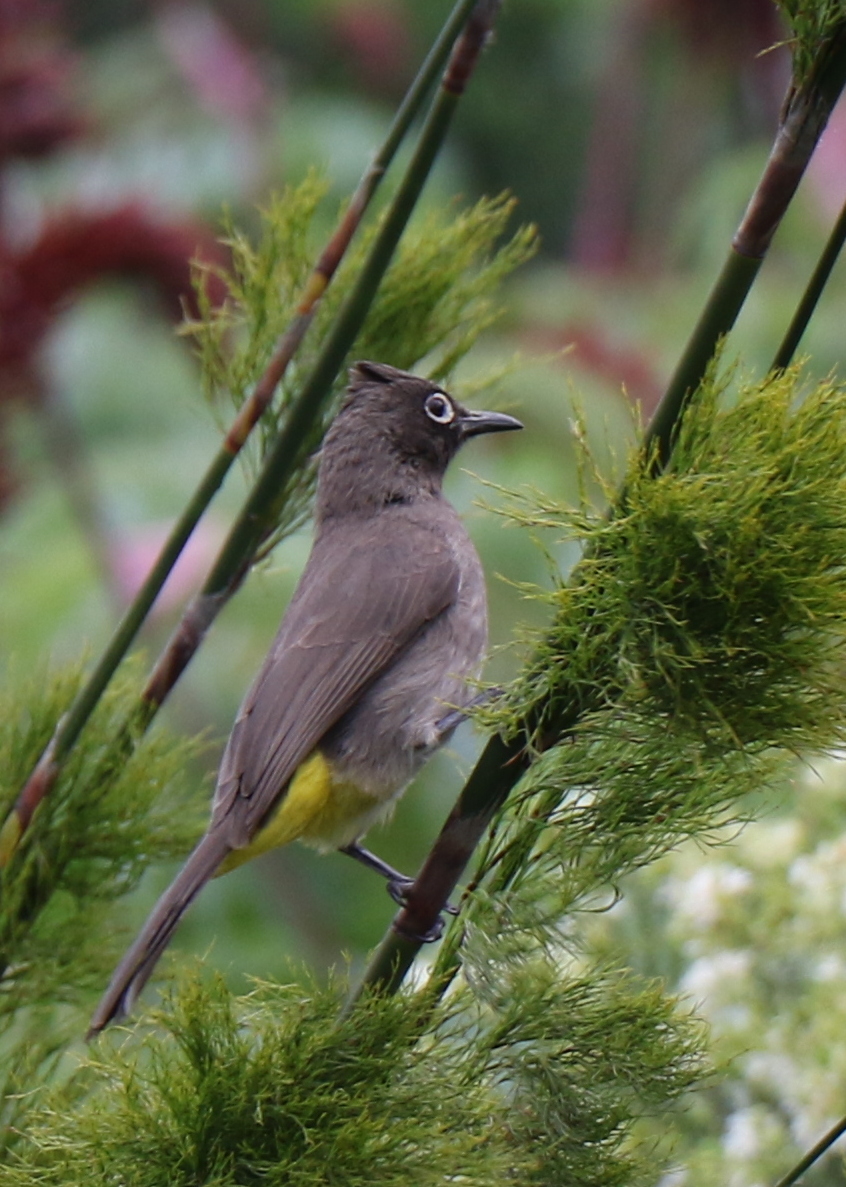
A Cape bulbul (Pycnonotus capensis, Afr. ‘Kaapse tiptol’). They are active and noisy, and tend to perch at the top of a bush.

Thursday/ koeksister

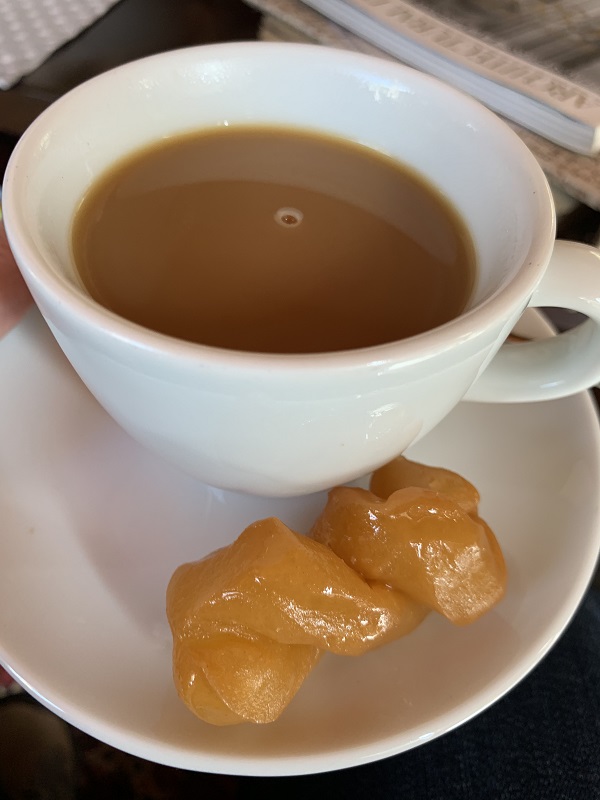
A koeksister is a traditional Cape Malay confectionery made of fried dough infused in syrup or honey.

I no longer put sugar in my coffee .. but hey, nothing wrong to have a sweet koeksister with it when in South Africa. Koeksisters have a golden crunchy crust and liquid syrup centre, are very sticky and sweet, and taste like honey.

Wednesday/ here’s Kirstenbosch

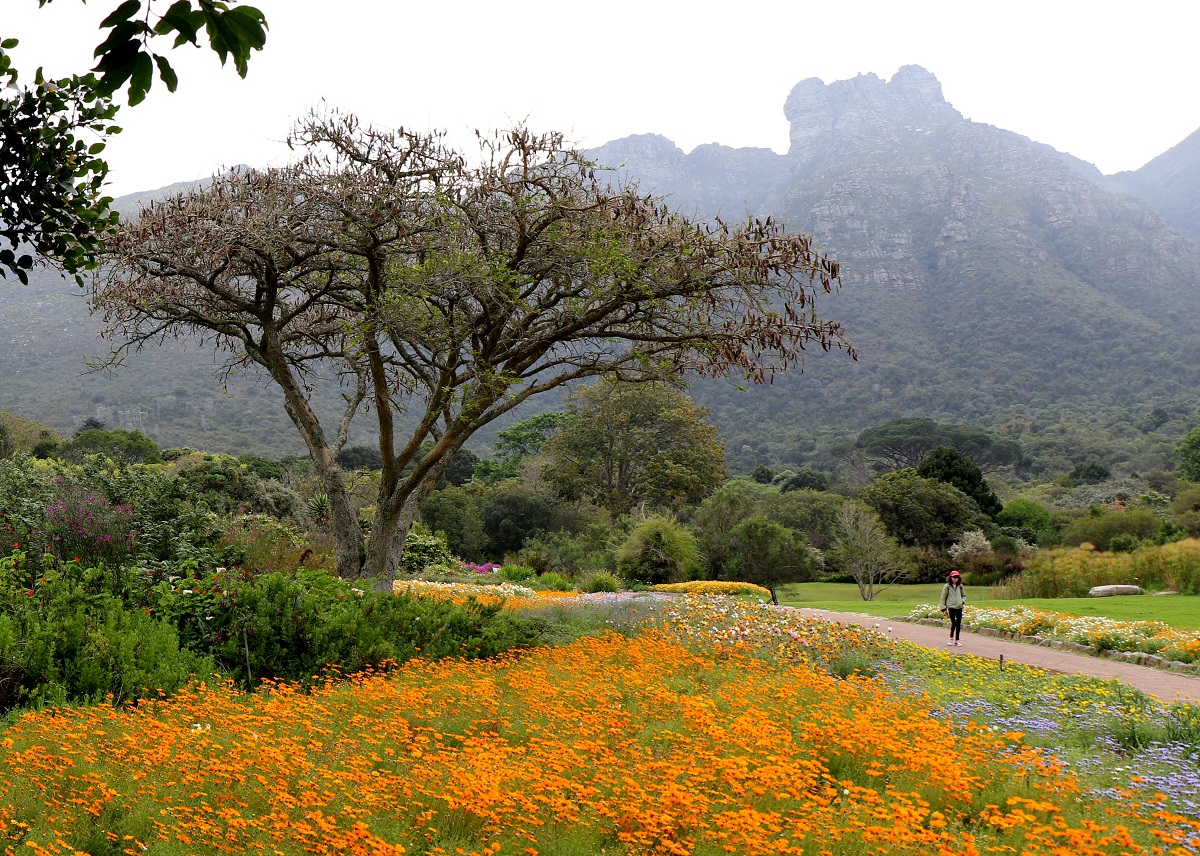
It is spring in South Africa, and I just had to stop by Kirstenbosch: one of the world’s finest botanical gardens.

All kinds of Namaqualand daisies are in bloom in September and October in Kirstenbosch, on the southeastern slopes of Table Mountain.
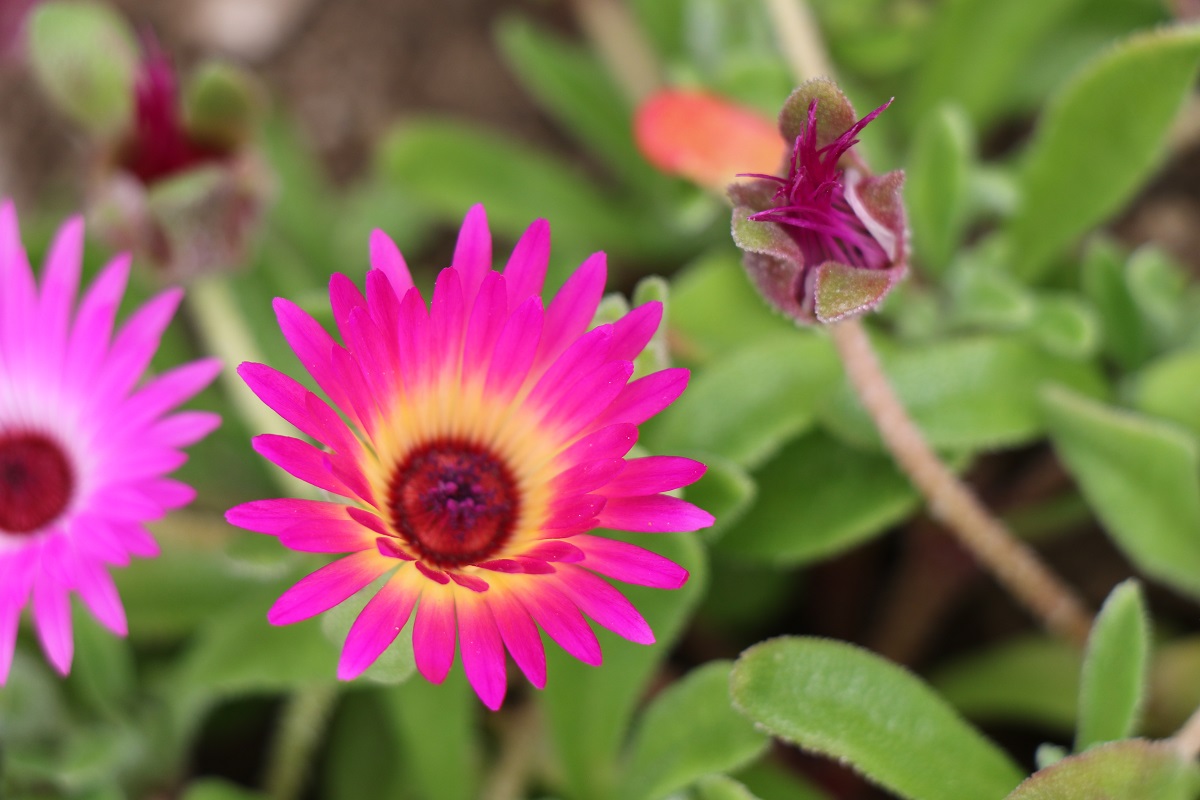
These are Livingstone daisies (Cleretum bellidiforme), also called Bokbaaivygie (Afr.), a flowering plant in the family Aizoaceae, native to the Cape Peninsula in South Africa.
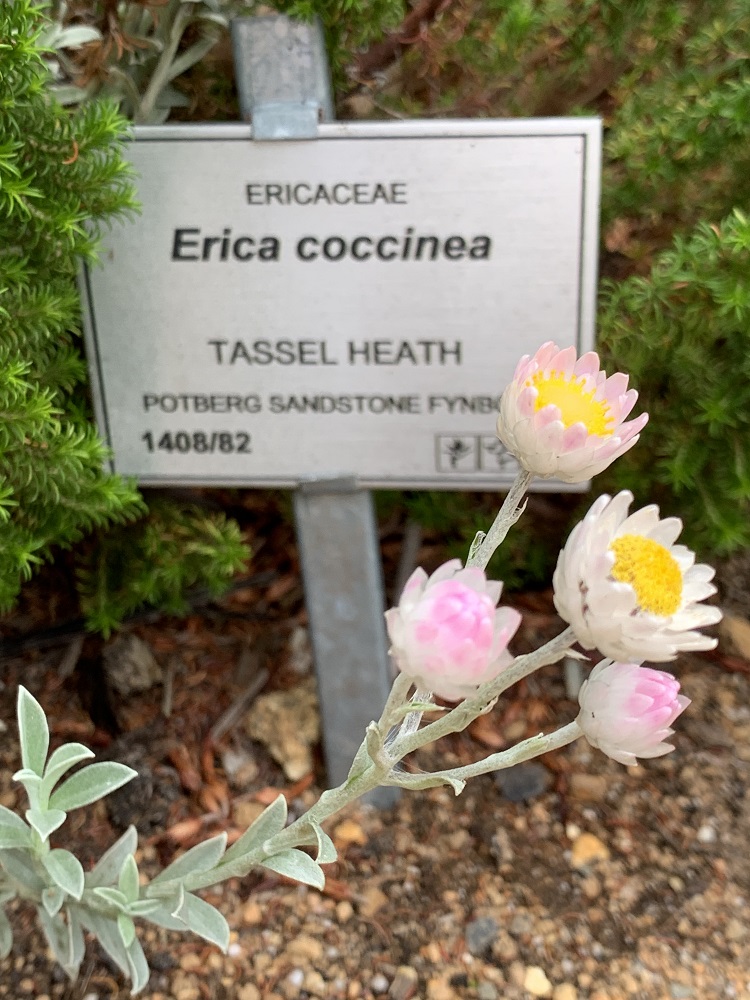
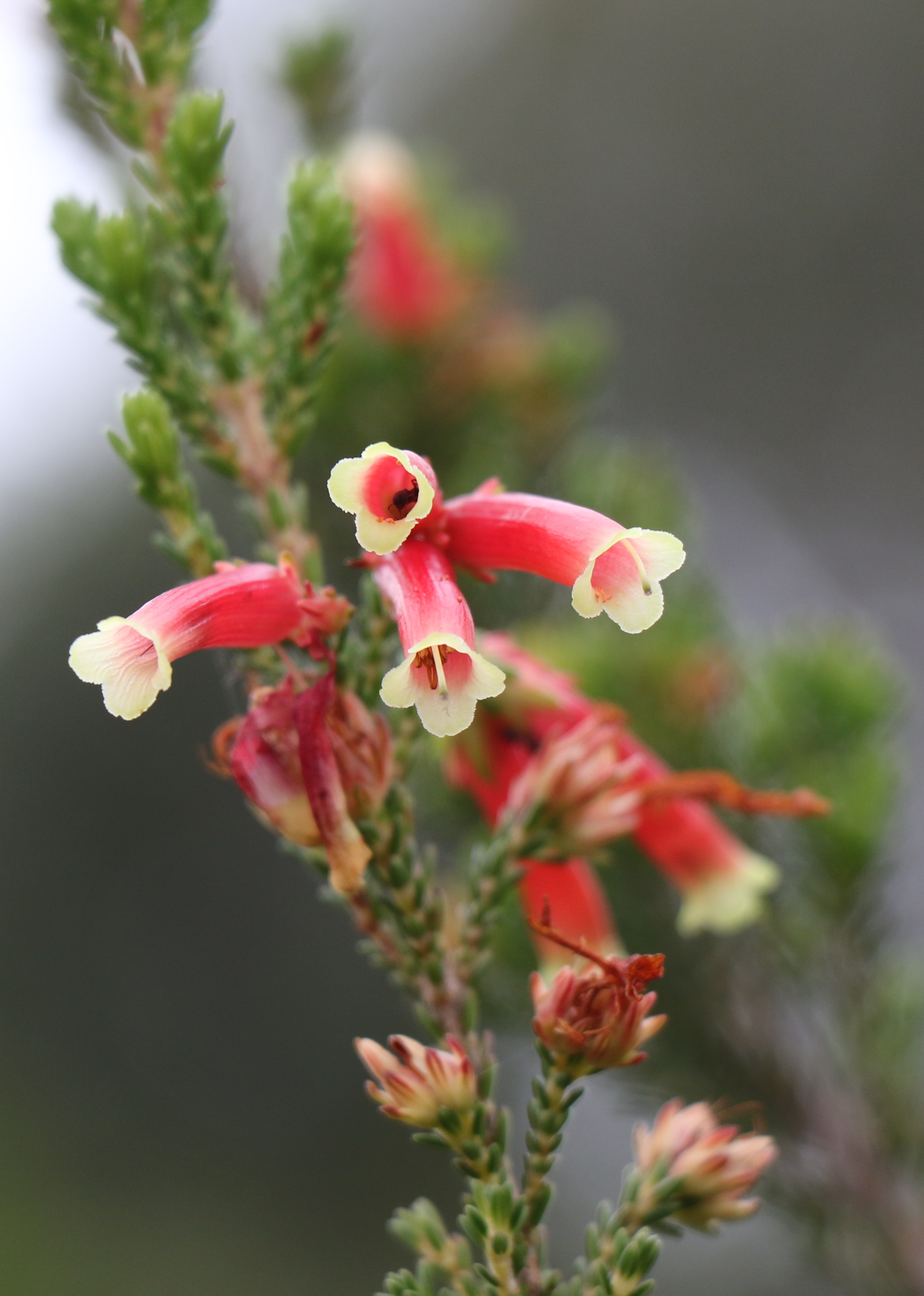
I love the soft pinks, whites and yellows of the tassel heath (Erica coccinea). It’s a type of fynbos native to Potberg north of Cape Town.
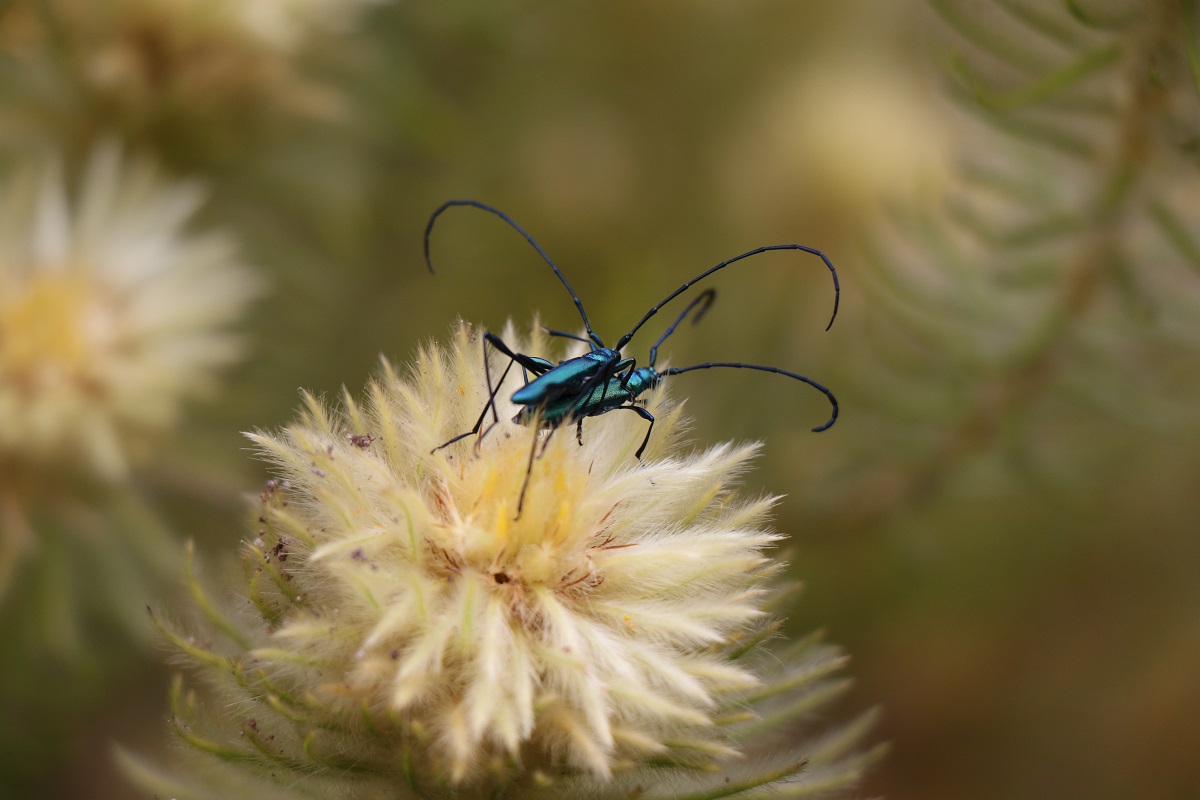
The bees and the birds do it .. and so do long-horned beetles!
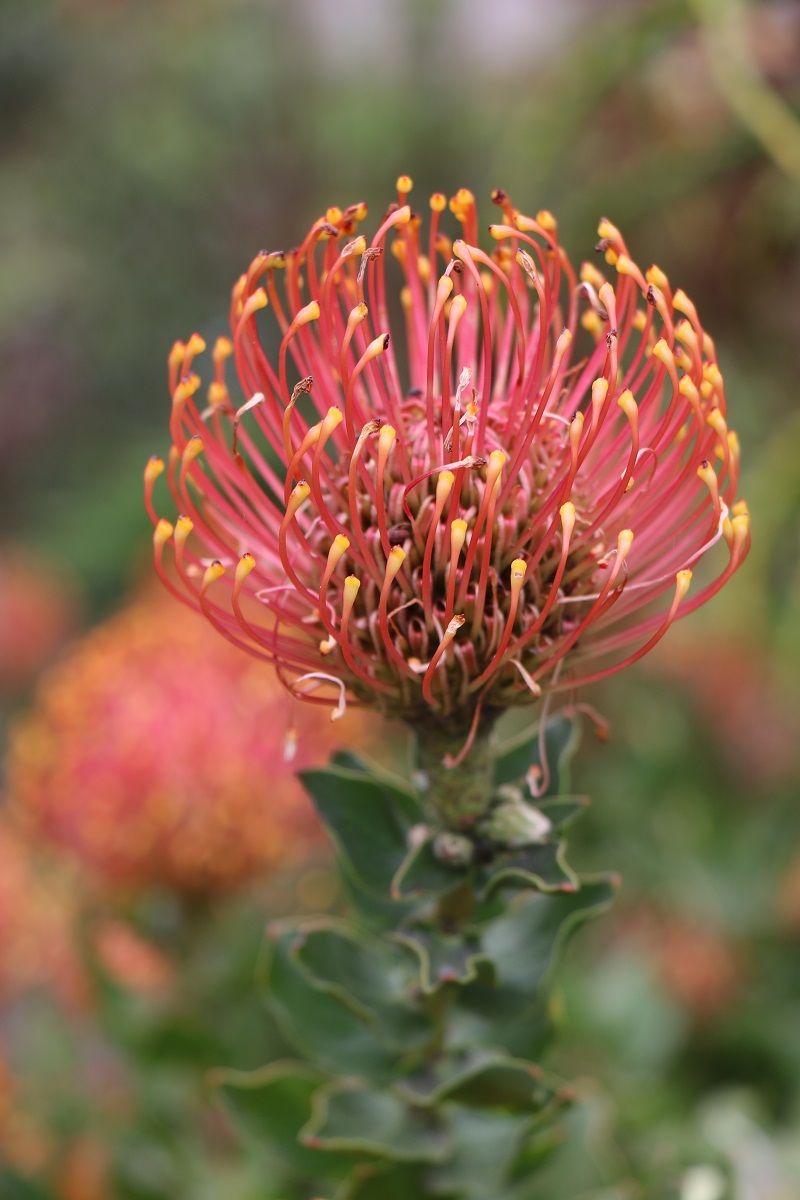
Pincushion protea (genus: Leucospermum), one of some 48 such species with the flowers in variations of oranges, reds and yellows. The plants are evergreen upright or creeping shrubs.
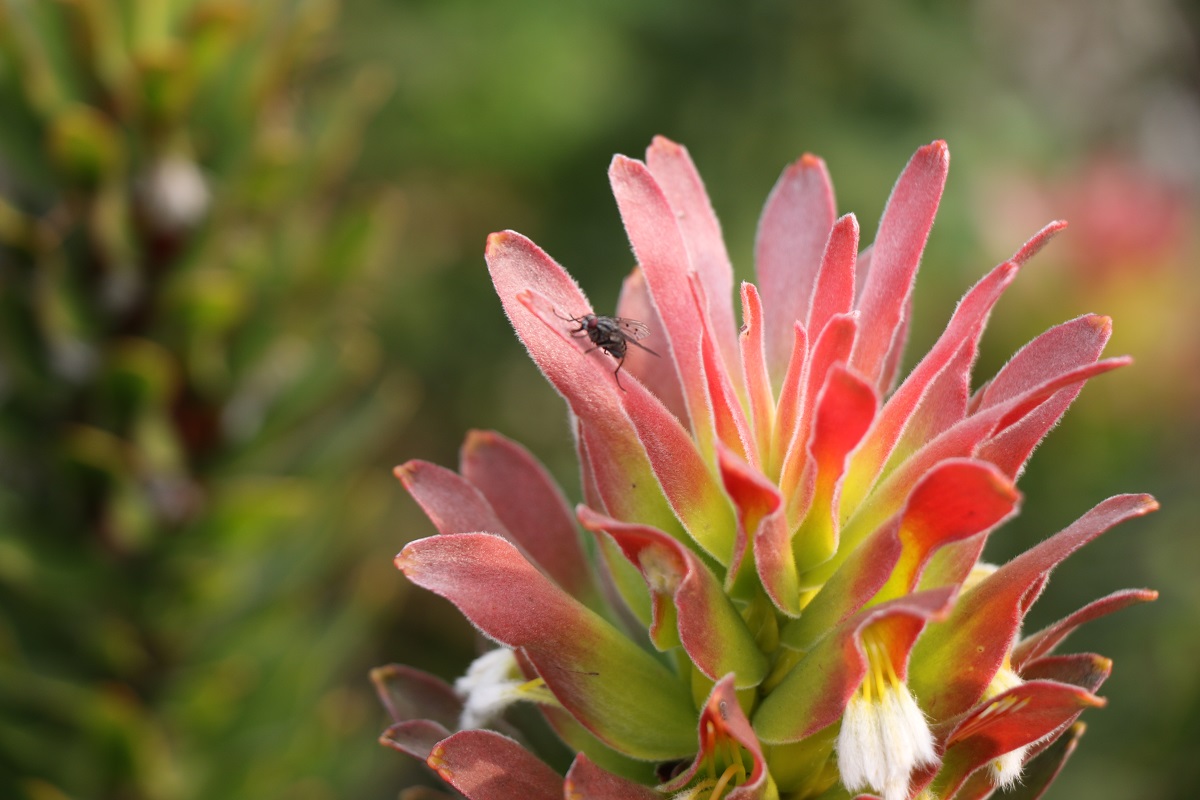
Here’s a red-eyed fly on a common pagoda (Mimetes cucullatus). This is a type of fynbos found on the Cape Peninsula.
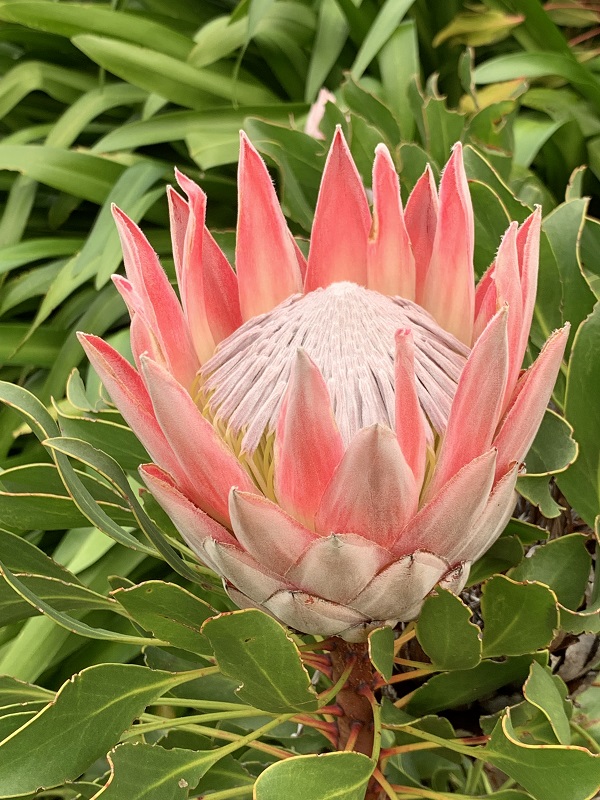
The king of all the proteas, the iconic and beautiful King Protea (Protea cynaroides). It has the largest flower head of all the proteas.
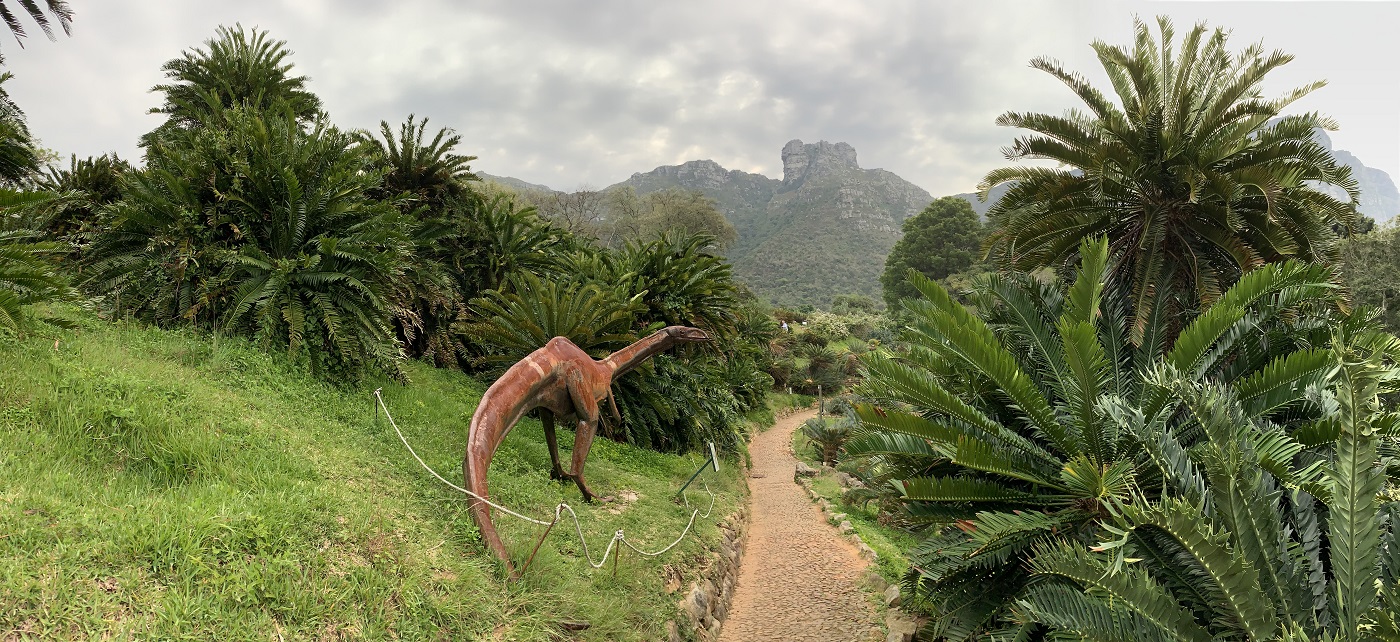
This could be a scene from 200 million years ago on the slopes of Table Mountain. Most of these plants are Eastern Cape Giant Cycads (Encephalartos altensteinii). The dinosaur is a model of Aardonyx celestae ‘Earth Claw’, fossils of which were discovered in 2005 in rock in South Africa. Aardonyx was 7 m (21 ft) long and 1.5 m (5 ft) tall at the hips.
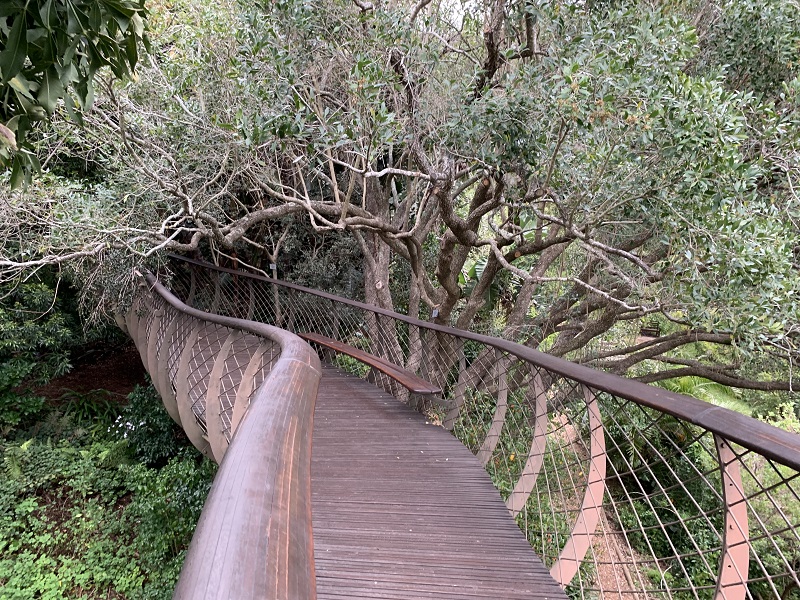
Here is the Tree Canopy Walkway, new-ish addition to Kirstenbosch (May 2014) of a curved steel and timber bridge that winds and dips its way through and over the trees of the Arboretum.
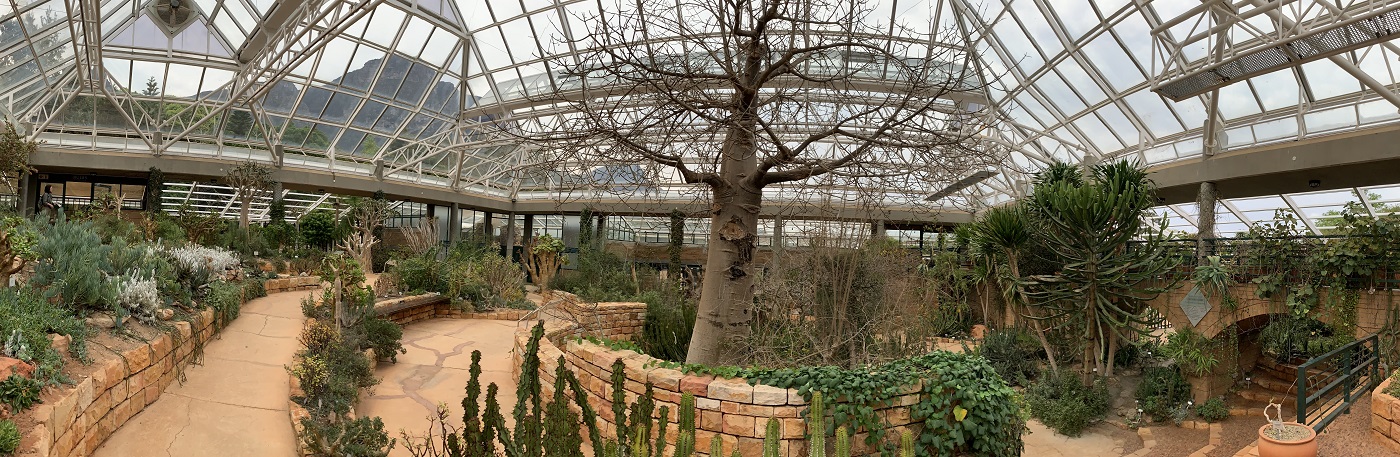
Here is the Conservatory by the main entrance to the gardens, with Africa’s southern-most boabab tree specimen.
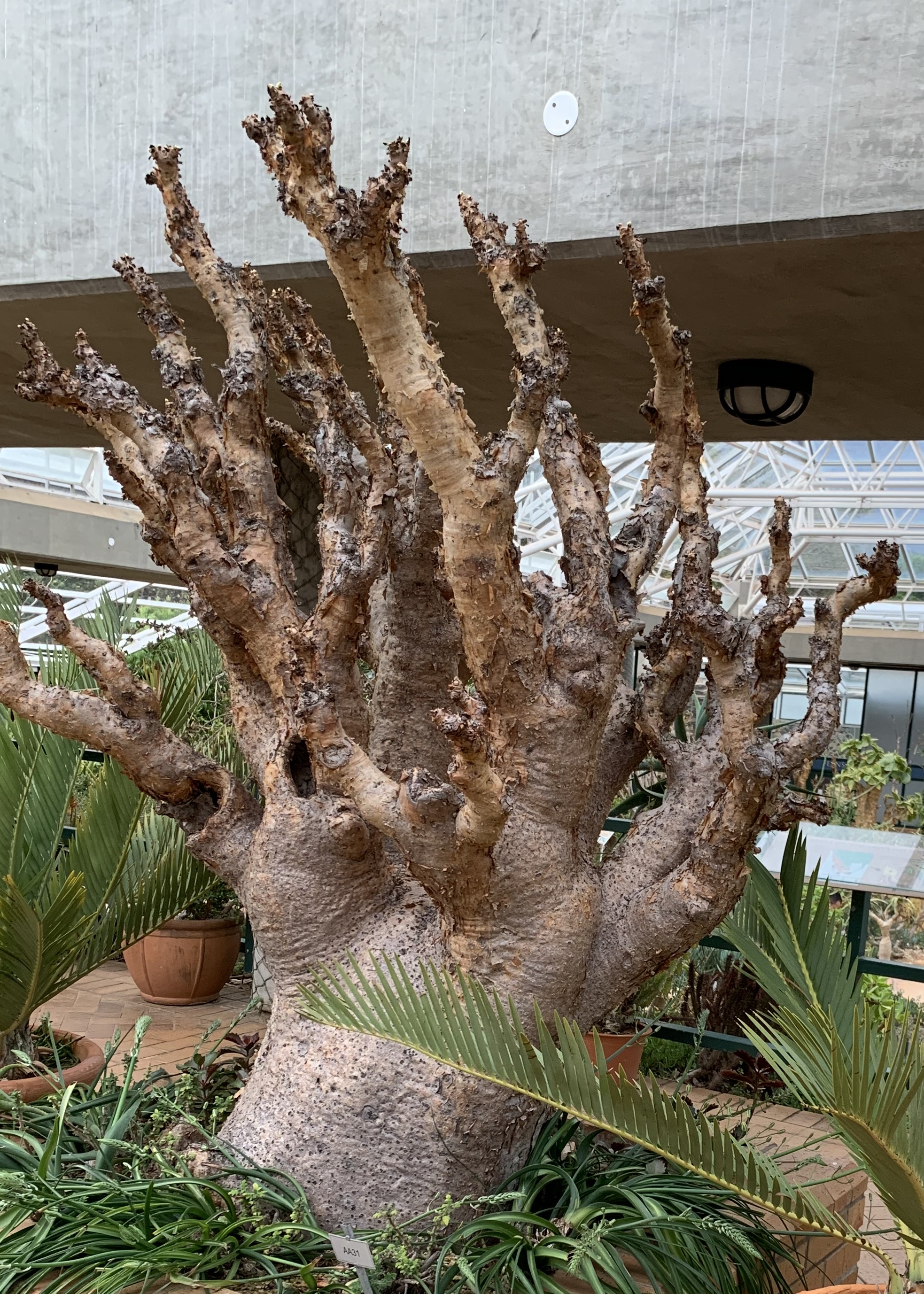
The Conservatory houses a large collection of Namibian desert plants. This one is a Kobas (Cyphostemma currorii).
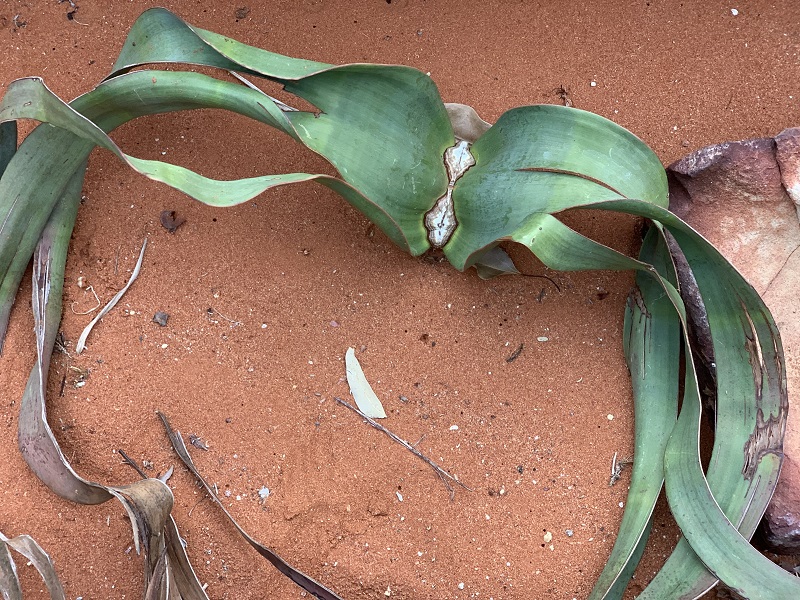
The curators have also gone to great lengths to cultivate a number of the weird and wonderful Welwitschia mirabilis desert plant. The enclosures are heated, as is the soil, so as to mimic desert conditions. Some specimens in the Namib desert are estimated to be 1,000 to 1,500 years old.
Heath (genus Erica) type fynbos vegetation. Fynbos (‘fine bush’) is a small belt of natural shrubland or heathland vegetation located in the Western Cape and Eastern Cape.

Tuesday/ more feathered friends

Here are some more feathered friends, spotted from my apartment’s balcony in the trees nearby.

The rosy-faced lovebird (Agapornis roseicollis), is a species of lovebird native to arid regions in southwestern Africa such as the Namib Desert. They are very social and constant chirpers, and like to congregate in small groups in the wild. The coloration can vary widely among populations, but plumage is identical in males and females.
A little lovebird kerfuffle on the tree branch? ‘Hey! Watch it!’ the middle one seems to say, while the one on the right is looking on.
Here’s the Cape weaver (Ploceus capensis) working on its nest. The nest makes it hard for predators (especially snakes) to get to the eggs or the chicks. Their diet consists mostly of flowers, small fruits and seeds.
The ring-necked dove (Streptopelia capicola) is also known as the Cape turtle dove or half-collared dove. Here’s one with its feather coat all fluffed up to ward off the chilly morning air.
And it seems a little later, that it felt it was OK to go back to ‘ops normal’ with its feather coat.

Monday/ the National Library of South Africa

I spent a little time in the Cape Town branch of the National Library of South Africa today.
I was hunting down some of my favorite childhood books and magazines copies, but it turned out to be harder than I thought it would be.
I had all the information handy, gleaned from their online catalog. The public is not allowed in that section of the library, though – so the librarian had to retrieve the books for me.
Alas, the book I wanted most, could not be found immediately.  They will let me know if they have it.

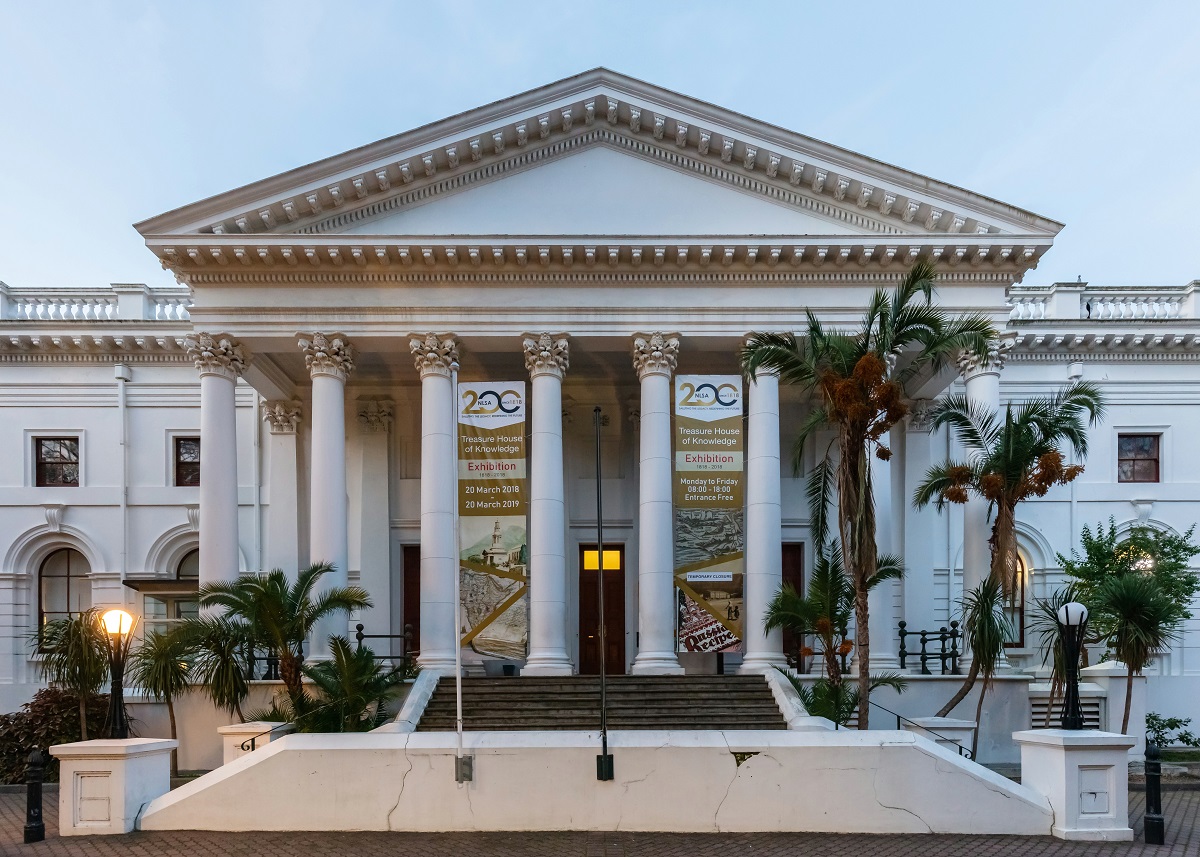
The neoclassical main building of the National Library of South Africa in Cape Town on Government Ave. Its design by W.H. Kohler is based on the Fitzwilliam Museum at the University of Cambridge. As it happens, the building was opened on this day, Sept. 16, in 1860 .. 159 years ago to the day. [Picture: Wikipedia]
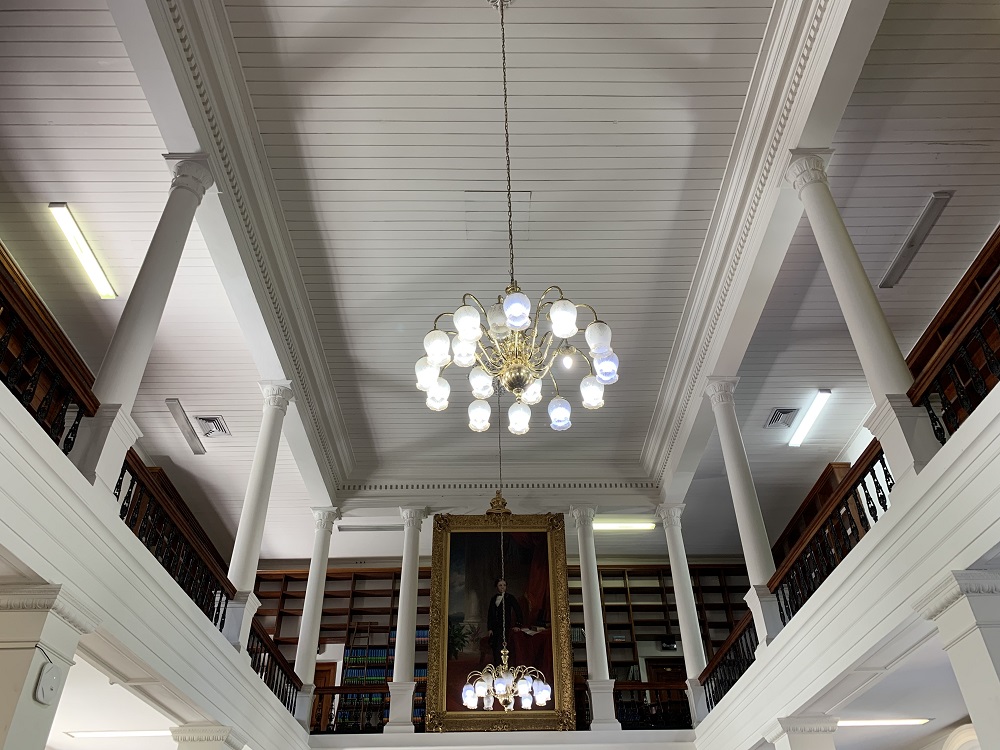
This is the hall inside the National Library’s main building on Government Ave.
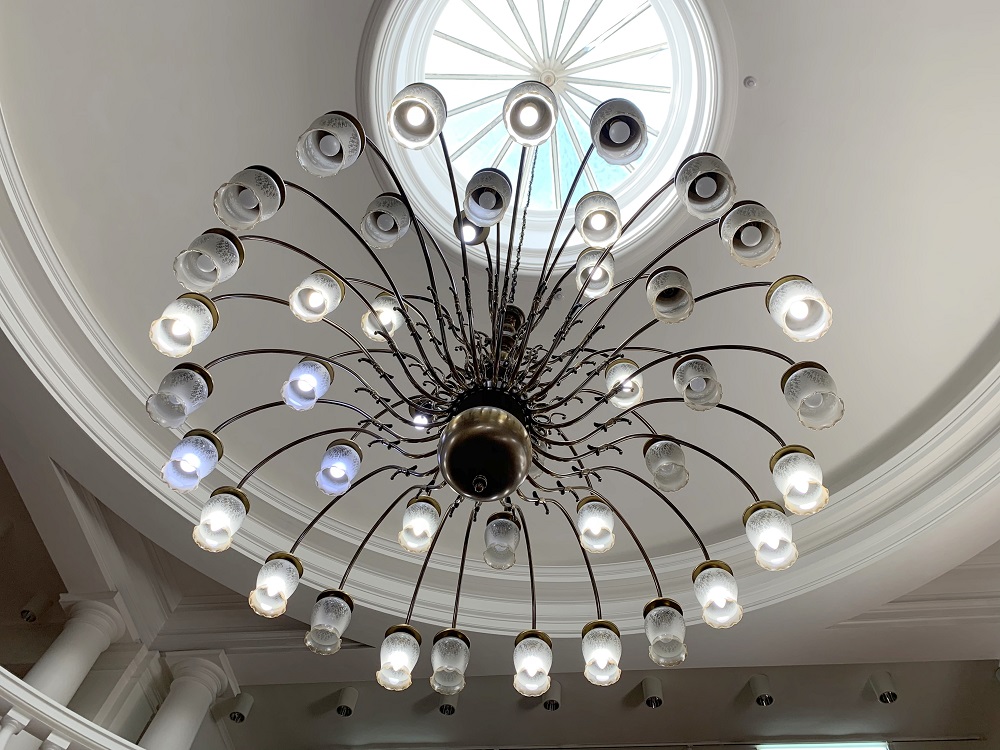
Detail of a chandelier in one of the reading rooms, with a beautiful round skylight. (Just getting to the point where someone is going to have to replace those dead light bulbs, right?)
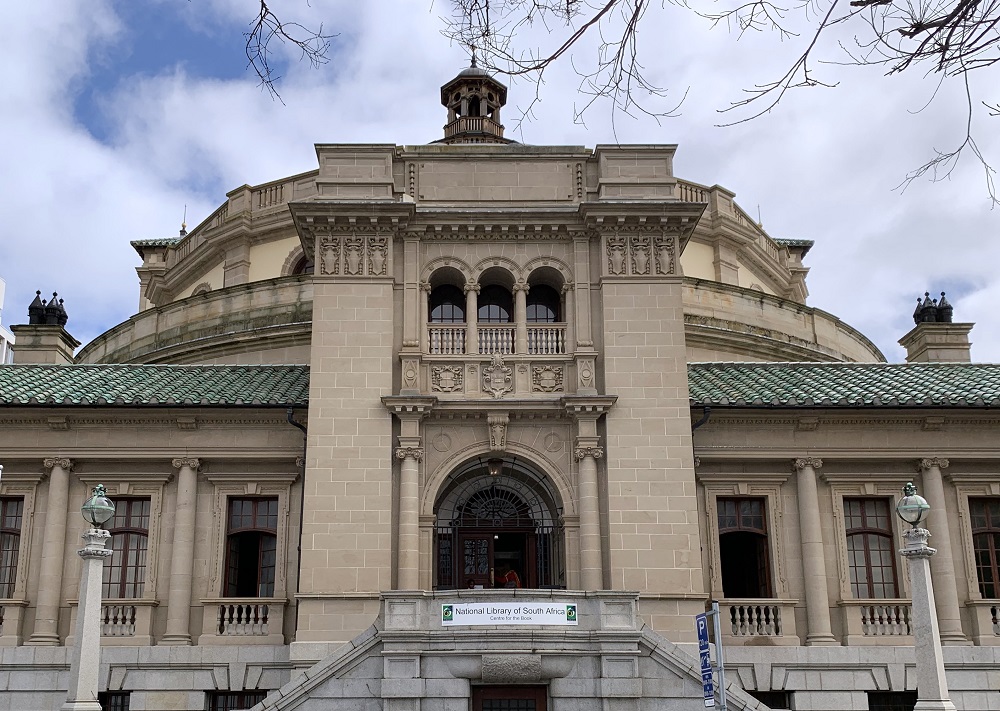
This is the Center for the Book Building at 62 Victoria Street. It was designed by British architects Hawke and McKinley in the Edwardian style, and completed in 1913.
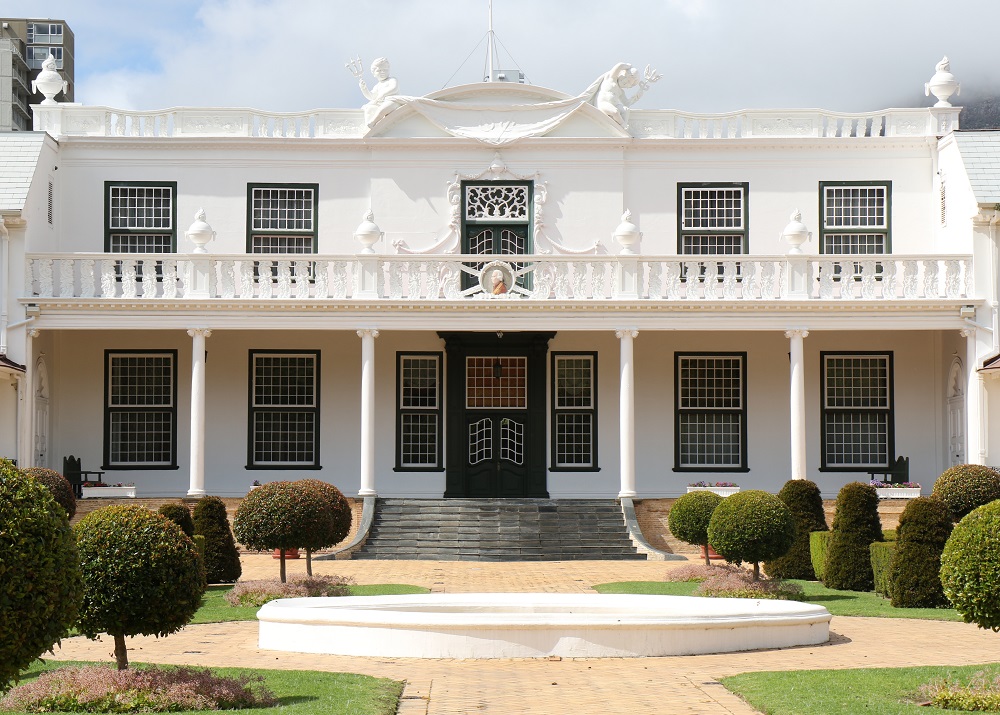
Just around the corner is De Tuynhuys (Garden House), completed in 1790 in the Cape Dutch style. Tuynhuis the Cape Town office of the Presidency of the Republic of South Africa.

Sunday/ Stellenbosch

I was in Stellenbosch today and took a few pictures (of course).
Here is a little bit of the town’s Cape Dutch Period origins and history, from a 2015 post.

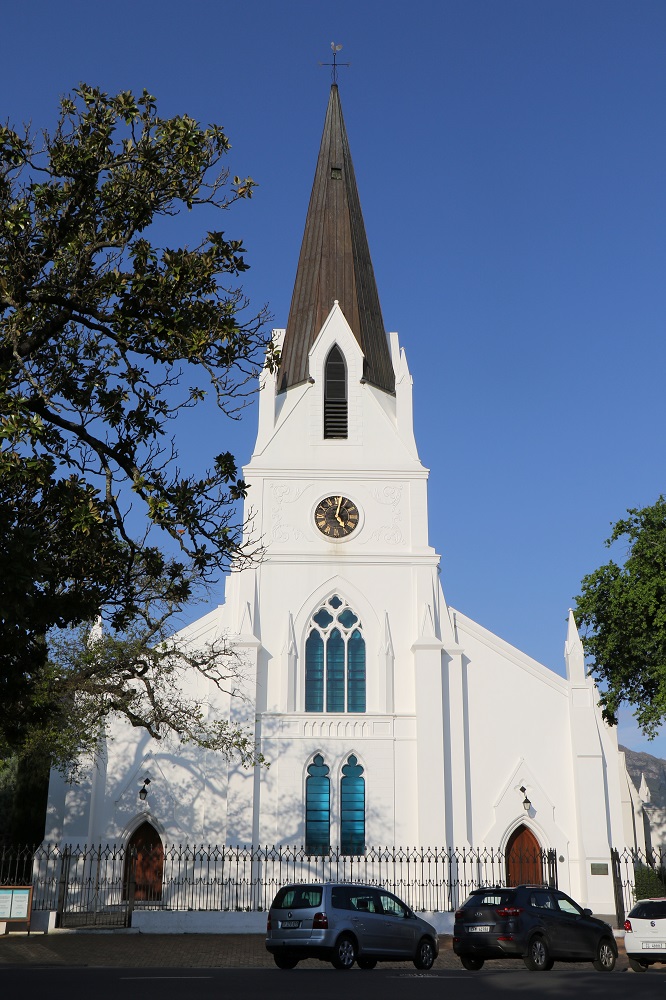
The bell was tolling at 5 o’clock while I was taking this picture of the Moederkerk building (‘Mother Church’), of the Dutch Reformed church. It has a Neo-Gothic Tower designed by Carl Otto Hager from Dresden in Germany. The building was completed in 1863.
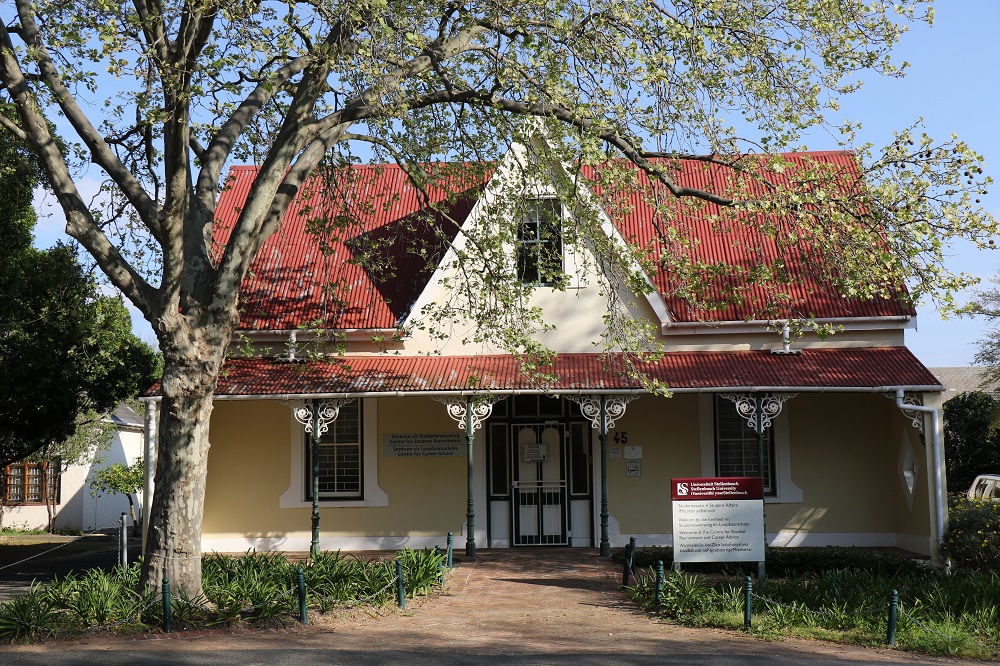
This is 43 Victoria Street, housing the offices of Student Career Services, and an appropriate address for a Victorian-style building. I could not find the year in which it was built, though.
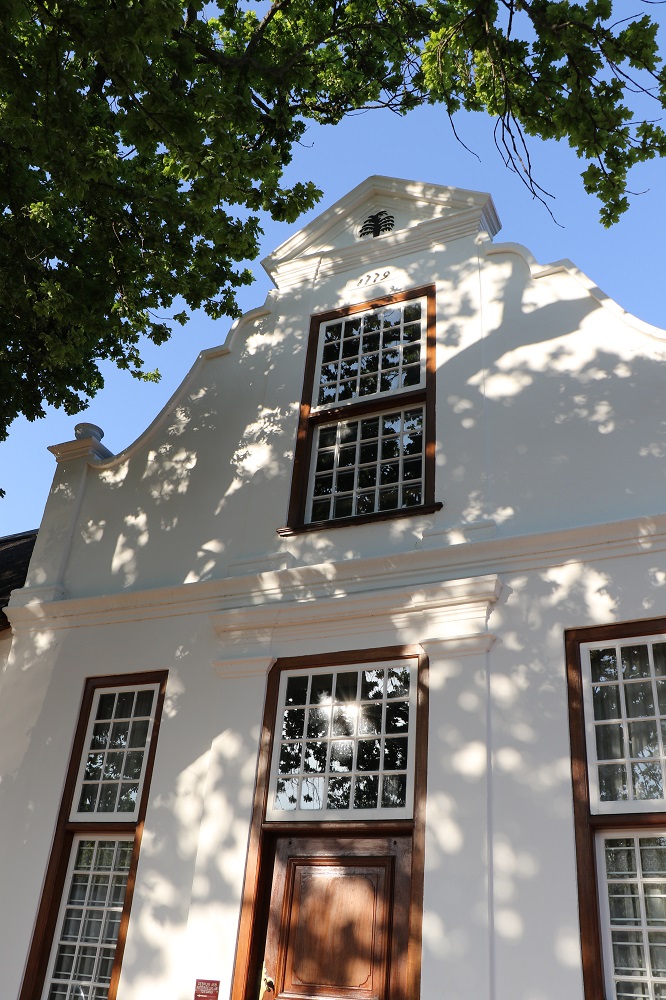
This building dates back to 1779 (inscribed below the triangular gable), when it was built by building contractor Philip Hartog as his own home. Currently it serves as the offices of the Mother Church nearby.
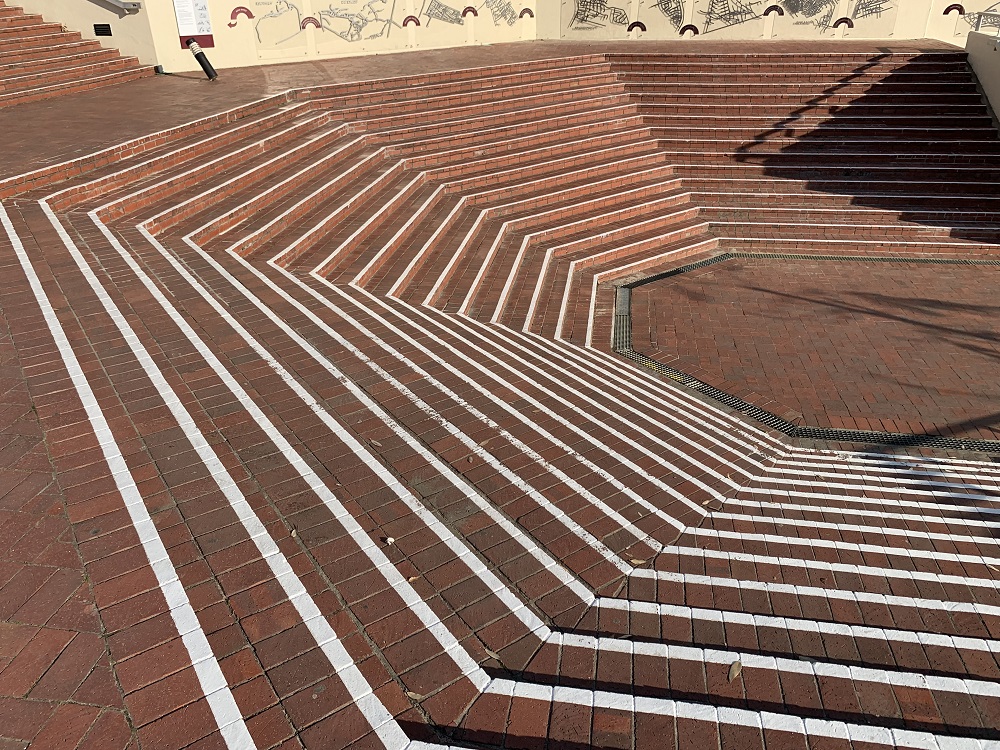
These steps are on JS Marais Square (Red Square’), leading down to the entrance to the subterranean library of the University of Stellenbosch.
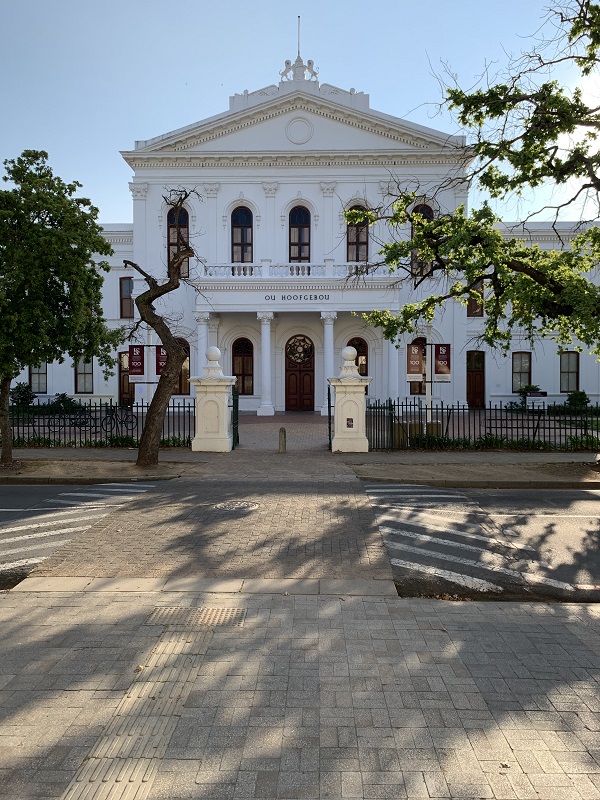
The Old Main Building of the University of Stellenbosch was also designed by architect Carl Otto Hager. The building was completed in 1886.
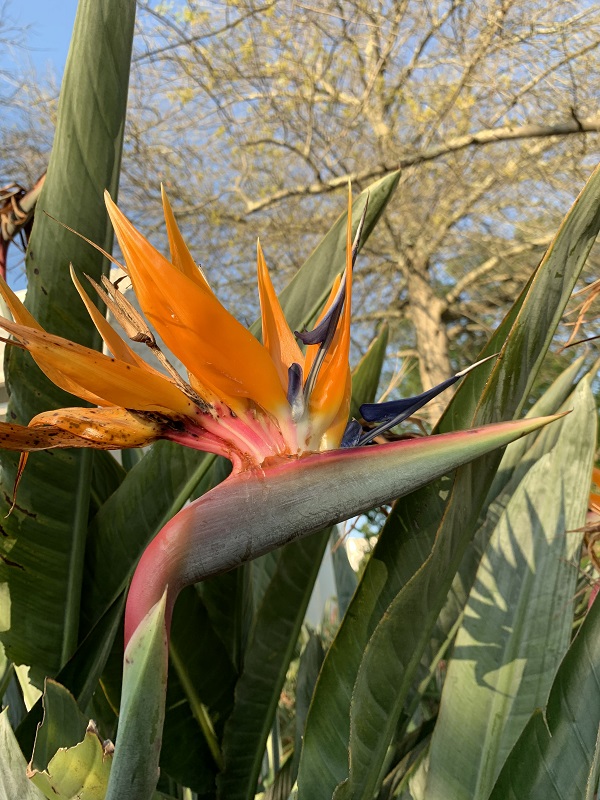
The campus of the University of Stellenbosch has plenty of Strelitzia (‘Bird of Paradise’) flowers. These are native to South Africa.

Saturday night

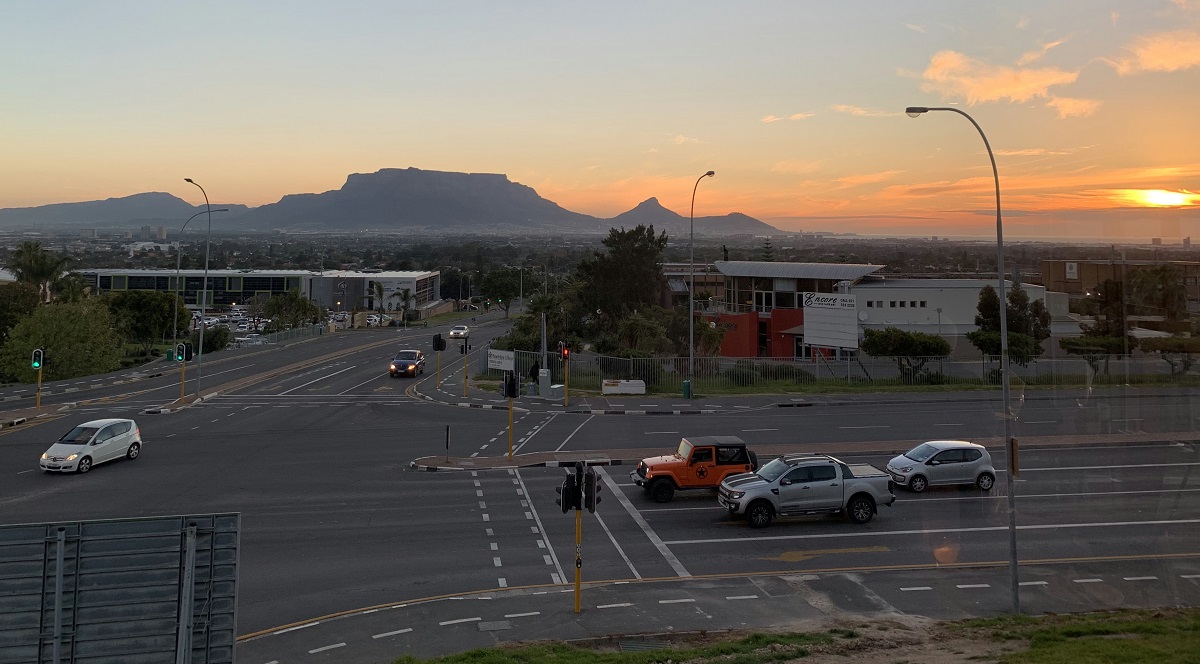
We had a nice view of Table Mountain at sunset, from where we were sitting in a restaurant in Plattekloof.

The view at sunset tonight, looking southwest from the corner of Olienhout Ave and Plattekloof Rd. From left to right in the distance: Table Mountain (1 085 m/ 3,560 ft), Lion’s Head (669 m/ 2,150 ft) and Signal Hill (350 m/ 1,150 ft).

Friday/ look! a mousebird

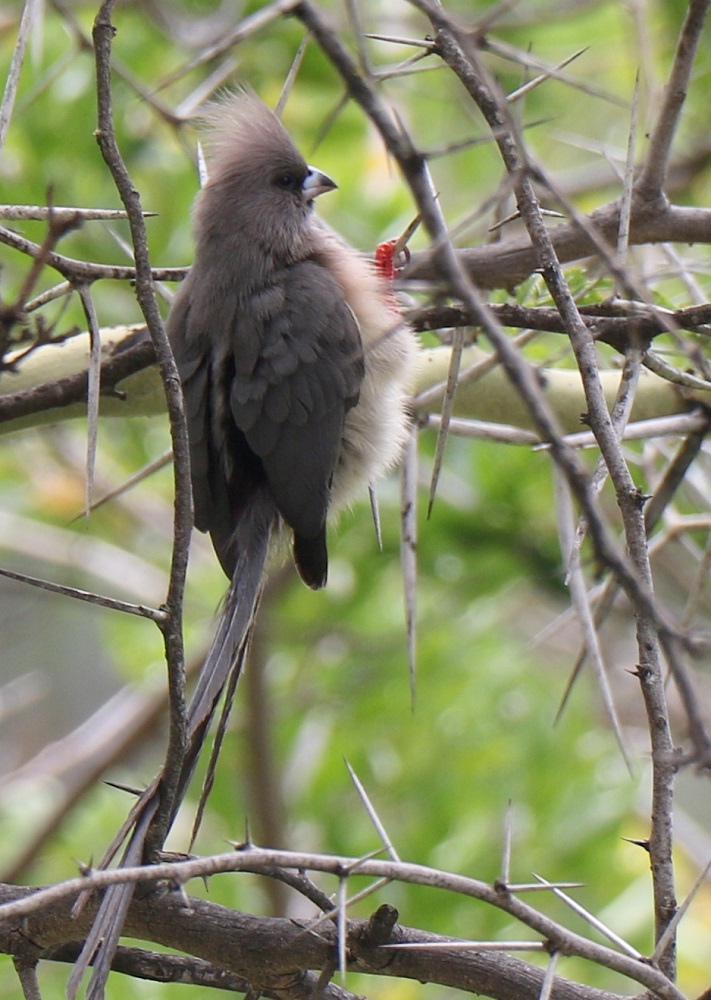
Here is a mousebird that I spotted in a tree across from my  second-floor Airbnb apartment.

Per Wikipedia: Mousebirds are slender greyish or brown birds with soft, hairlike body feathers. They are arboreal (live in trees) and scurry through the leaves like rodents, in search of berries, fruit and buds. This habit, and their legs, gave rise to the group’s English name. They have strong claws and reversible outer toes (pamprodactyl feet). They also have crests and stubby bills.

The mousebirds are Coliiformes (their order). They could be considered ‘living fossils’, as the 6 species existing today are merely the survivors of a lineage that was massively more diverse in the early Paleogene period (up to 23 million yrs ago) and Miocene period (up to 5 million years ago).

The White-backed Mousebird (Colius colius). Check out its long tail-feathers. This species prefers scrubby dry habitats, such as thornveld, fynbos scrub and semi-desert.
Thursday/ here comes Rugby World Cup 2019

There Rugby World Cup 2019 starts in a week on Fri Sept. 20 in Japan. It starts out with four pools (A B C and D) with five teams in each. The top two teams in each will go through to the final rounds.
Ireland is at the top of the world rankings, South Africa is #4, and the United States (yes, there is a team, actually), is a definite underdog at #13.  South Africa will play New Zealand in its first match; the USA will play England.

Do I want some Rugby World Cup cards? asked the lady at the grocery store check-out today. Um -yes, sure, was my response. Confession: I barely know any of the South African rugby players .. looks like the guy in the middle here is Tendai ‘The Beast’ Mtawarira (36), though. Some years ago the Seattle Seahawks (American football) had a running back called Marshawn ‘Beast Mode’ Lynch.